Search:two phase u

Styles
All
Various - Various 1

Various

Various 1

12inchALT014
Altered Circuits
23.12.2024

For ALT014, Altered Circuits presents its first Various Artists release. In addition to the label's co-founder, three friends of the label appear on this heterogeneous, club-oriented 12''. Portal, with its breakbeat layered drum section and spartan bass hook, sounds like classic Innershades from the start. When the angular leads and slowly phased, ominous chords hit, we are reminded of the artist's fondness for the new beat genre and his ability to translate its tropes and conventions to the present. On Show You Love, Mr. Ho combines skippy two-step drums with an MS20 type of flat bass. After introducing a one-bar mid-bass arpeggiator, gently swelling pads, leisurely spread side riffs and reverb-drenched musings join, calibrating the vibe to lush and groovy. On the other side, Oshana treats groove as the focal point with her Hey Kiss Kiss contribution. Over its 6-minute course, the snappy 909 kick rarely relents while a bunch of often short, many a time looped sequences emerge and disappear, unfolding a hypnotic tapestry of textures. Rising talent Salomee closes the VA with Late Night Summer, a track capable of setting the floor in motion at any moment. It revolves around a portamento-heavy, neon-tinged lead that lingers long after the track ends and a sturdy, efficient one-note bass pulse.

In Stock

On Stock and ready to ship

TRIOROX (Dj Rocca, Giovanni Guidi, Joe Rehmer) - MOODS

TrioRox is a project born from the meeting of three protagonists of the Italian music scene (and not only): pianist Giovanni Guidi, bassist Joe
Rehmer and electronic musician DJ Rocca (Luca Roccatagliati). Three characters who boast an eclectic and consistent curriculum. Guidi, enfant prodige of Jazz piano, has published several albums for the prestigious ECM label, and has collaborated with the best jazz and electronic musicians, from Enrico Rava to Matthew Herbert, from Joe Lovano to Ricardo Villalobos. Joe Rehmer, an American transplanted to Italy, is one of the most sought-after bass players, sharing stages and recording studios together with authorities such as Bob Mintzer, James Moody and Danny Gottlieb.

DJ Rocca is a DJ and musician active since the nineties, and boasts numerous albums, singles and remixes with, and for key protagonists of the alternative dance scene (Andrew Weatherall, Dimitri From Paris and Howie B), as well as a militancy in the jazz scene with several albums together with Franco D’Andrea.

The music that the trio proposes is a mix of electronic, dance, Jazz and pop, with groove impulses in the field of house and techno music, without neglecting mixes between electro, classical and minimalism. A melting pot of styles between Keith Jarrett and Carl Craig.

Album to be released by IRMA Records in October 2024, with guests Luigi Di Nunzio, Gianluca Petrella, Dan Kinzelman and Jacopo Fagioli.
“Moods” is the debut album of Triorox that represents the photograph of the ‘Here and Now’. All the music was born from a studio session that lasted a few days, in which the mood of the three musicians gave the album its sound imprint. What came out of it became incandescent material to elaborate the musical flow of the entire work, which had three different phases.

The first, in which the tracks were born from the recordings, some developed as creations with a common denominator (the three moments of Mood), some as thematic suggestions (Angels, Corea and Next To Canada), and others as a stylistic challenge (the techno of Space Rain, or the drum and bass of Sax & The City).

The second phase, where the compositions were subjected to the test of live concerts, in which it was understood how the tracks could be better arranged, optimizing them and keeping the best ones. The last phase was the choice and insertion of the guests, reasoning according to the type of suggestion that we wanted to give to the specific song. So we gave free rein to Luigi Di Nunzio, who also participated in phase two, playing with us on stage on some occasions. In the same way, Gianluca Petrella chose the piece where he felt most at ease, also contributing to the arrangement.

Dan Kinzelman, a historic collaborator of both Guidi and Rehmer, was included because we wanted his bass clarinet in a specific suggestive situation. Finally, we wanted Jacopo Fagioli (the Tuscan reincarnation of Don Cherry), we wanted him in a specific episode of Mood, for his particular style, impeccable in determining the mood that the piece needed.

In Stock

On Stock and ready to ship

Trentemøller - Dreamweaver LP

In May, fans were treated to the first new music from Trentemøller since 2022. A new single, "A Different Light," showcased a stunning blend of prismatic space rock and folk. For anyone wondering if it foreshadowed the release of a full-length, Dreamweaver will drop in September, on Friday the 13th.
Featuring 10 tracks that traverse Trentemøller's many musical strengths, Dreamweaver also represents an obvious artistic leap, treading new ground while retaining the overall plot. Tracks featuring vocals come courtesy of of Iceland's Disa, who has been in Trentemøller's fold since the Memoria tour.
Dreamweaver's nylon string-led opening track, and first single from the album, "A Different Light," contains many of Trentemøller's trademarks: exploring dichotomies, musical shadowplay, Nordic frigidity, and warm waves. It opens the door for the steady, hypnotic "Nightfall," with its tetherless vocal, wistful guitars, and early morning desert chill. The third track in the opening trifecta, "Dreamweavers" finds its footing with a percussive soft trot, which starts after what feels like a shortwave radio scan in search of the right chords, eventually dialing in a weightless voice. Ostensibly keeping a ruminative pace with the previous two tracks, the song and, by extension, album soon opens up as the rest of the elements drop into place with a grand, luxurious burst.
Dreamweaver is about to enter its next phase. With the hatch blown off of the portal, the noisy "I Give My Tears," driven by its glissed and fuzzy bass line, pours into the void. It's followed by its sibling, the most chaotic track on Dreamweaver, "Behind My Eyes." Arriving as a piece of noise rock pandemonium, "Behind My Eyes," can't be contained in its plush vault. A whip-crack snare and convulsing guitars smash against each other in the song's verse chamber. The tension builds, as the particles collide, pushing past the point of critical mass, kicking off the chain reaction which is the chorus. At times it harkens back to the proto-gaze tracks that gave birth to dream pop, at others it newly defines what that is. There's no time to contemplate it, though, as the song disintegrates in a microphonic feedback instant.
A respite follows with the somnambulistic pair of "Hollow" and "Empty Beaches." Then, a moment of intensity returns as the soaring textures and tribal drum bursts of "In A Storm" take control, before being taken out with the ambient slo-core of "Winter's Ghost" and "Closure." This diptych wraps up an album which certainly feels on-script for Trentemøller, but is also much more psychedelic than previous offerings.
Dreamweaver will be released on Trentemøller's own In My Room label. It is an exceedingly immersive experience, bound to release any dormant hallucinations you may be harboring.

In Stock

On Stock and ready to ship

Teen Daze - Elegant Rhythms

DJ support: Tim Sweeney, Make A Dance, Parris, Pleasure Voyage, Camillo Miranda

Back yard - Back yard is the first single from the new Teen Daze album, Elegant rhythms, and features singer-songwriter Andy Shauf on drums, and LA jazz staple, Sam Wilkes, on bass. This is a stark change in sound for Teen Daze, who’s last album Interior was an exploration of neon-lit House music. Back yard is a mellow groover, conjuring up images of Laurel Canyon in the 70s, yet still with its flourishes of contemporary sounds.

We’re out of phase again - We’re out of phase again is another vulnerable glimpse into the inner world of Teen Daze, and marks the release of his most personal album to date, Elegant rhythms. In contrast to the synthesized, digital world of his prior album, Interior, here we’ve been brought into a lush, organic arrangement, brought to you in large part to the stunning bass playing by Sam Wilkes. While the verses pulse forward, the chorus slows things down, and evokes the sophisti-pop sounds of The Blue Nile. This track is a stunning showcase of the world of Elegant rhythms.

Nothing’s gonna change my love - Teen Daze returns with his second single of the year, Nothing’s gonna change my love. The stark change in sound, as heard on previous single Back yard, is on display here again: a smouldering, 2 and a half minutes of slow jazz-pop, indebted to the great Sade, or perhaps the feeling of leaving downtown LA at 2 AM. Lyrically, we hear a story of a love, challenged by the unpredictable nature of our lives. This may be Teen Daze’s smoothest song to date.

Neighbourhood - Neighbourhood is the third single from the recently announced LP from Teen Daze, Elegant Rhythms. Along with Andy Shauf on the drums, and Sam Wilkes on the bass, Teen Daze gives us a languid tour of his quiet neighbourhood. The sun has set on the pleasant, tree-lined streets, and a stranger, more surreal environment presents itself. The song plods forward at an extremely comfortable pace, held down by the paradoxically loose-yet-tight rhythm section. Lyrically, we walk around the Neighbourhood at night, and while the chorus reveals a type of sobriety, the vibe of the song makes it easy to feel a little…effected.

Fade away - Fade away sets the tone for Elegant Rhythm’s side B: a deeply personal, though somewhat veiled, confession of loss. How does it feel to grieve something that was never really here? A smouldering, slowly progressing first half erupts in synthetic noise, and then fades into the ether with it’s repeating refrain, “I can feel you / feel you fade away / when there’s nothing / nothing left to say”.

Fall ahead - A sweet piano tune which serves as a quiet break in the record, intended to help the listener reflect and take a moment of pause before we reach the final two songs on the album.

HST underwater - The penultimate track on the record tells a story where the narrator finds themself in an alien, yet oddly familiar place. Arpeggios soaked in crystal blue water flow through the stereo field, while the narrator, vocoded and drenched in autotune, searches for meaning and purpose in a confusing world. This is one of Teen Daze’s most cinematic, emotional songs yet.

In the rain - It’s never really made explicitly clear on this record, but a lot of these songs find Teen Daze wrestling with life as a new father, and this song, the final on the album, expresses the fears of generational trauma. A touching, tender ode to his children, we hear Teen Daze at his most personal and vulnerable. The falling rain surrounds some absolutely breathtaking bass playing from Sam Wilkes, and Teen Daze’s signature ambient keyboard sounds.

Radio Support: Ruf Dug (Soup To Nuts on NTS)

In Stock

On Stock and ready to ship

Dzc. - Conversations with Birds

Dzc.

Conversations with Birds

12inchFORTUNEA032
fortunea
23.08.2024

In recent years, Dzc. has emerged as a highly sought-after DJ, leaving her mark in Austria with performances at numerous venues. As a key member of the Acid Lambada crew, she has been featured in well-established curated festivals and events, both locally and internationally. Her productions mirror her passion for synth-driven dance music, characterized by dreamy pads and playful melodies.

No stranger to Fortunea Records, having already been featured in two editions of the Fortunea Cookies VA-Series, she is set to present her first 4-track EP in February.

The 'Conversations with Birds' EP is a meticulously balanced collection of tracks designed for each phase of a club night. Drawing inspiration from elements of 90s House and progressive sounds, 'Visual Mind' and 'In Sight' are dreamlike journeys with lively synth melodies, joyful basslines, and captivating pads and textures. The latter has also been reworked by Fortunea regular Peletronic, infusing crisp minimalistic rhythms into his 'Blurred Vision' Mix.

The standout piece of the EP is the title track on the B-side, a beautiful composition that elicits uplifting moments and feelings of euphoria.
It features emotive chords, airy strings, and soothing sustained tones that enhance the powerful groove.

The record promises to immerse listeners in an engaging journey that captures Dzc.'s distinctive vision.

’Conversations with Birds' will be digitally released on February 22, followed shortly by a limited vinyl edition.

In Stock

On Stock and ready to ship

Harvestman - Triptych : Part Two LP

Ruby Red - Transparent - Galaxy effect vinyl in dub style jacket (jacket sleeve with center hole cut out so label of LP shows through) a black paper inner sleeve and poly bag.

PART ONE’ METAL HAMMER - 8/10 review. FOR FANS OF : Lustmord, Om, Sunn O))) . “An exercise in freeform ambience, ritualistic repetition and the rapturous, womb-like power of bass…strange and affecting. We remain lucky to share in the great man’s vision.”


At its heart, music has always been a questioning of inheritance – a dialogue with predecessors and forebears, the forging of one’s own perspective in relation to what has come before, and for some, a plunge into the boundless realms between. For Steve Von Till, that process has always taken on an added dimension to become the most sacred of tasks. Whether through the apocalyptic uprising of Neurosis, the sonic deconstructions of their sister project, Tribes of Neurot, the invocatory intimacy of his eponymous solo albums or his instrumental psychedelic reveries in the guise of Harvestman, that dialogue has never just been with musical influences, but with what underpins them: the primordial, elemental forces now banished to the peripheries of our contemporary consciousness, yet still broadcasting a signal for all who will listen.
Drawn to the megaliths, ruins and ancient sites mapped out along the British and European mainland’s geographical and psychic landscapes, the folklore and apocrypha forever resurfacing as portals from a rational world, “Triptych” is a meditation forged from traces and residues, and an hallucinatory recollection of artists who have tapped into that enduring otherworldliness embedded within us all. It’s a dream diary narrating a passage through Summer Isle where Flying Saucer Attack are wafting out of a window, a distant Fairport Convention are being remixed by dub master Adrian Sherwood, celestial scanners Tangerine Dream are trying to drown out Bert Jansch and Hawkwind are playing Steeleye Span covers, all prised out of time yet bound to its singularity.
Woven together from home studio recordings that span two decades, this latest outing as Harvestman finds parallels with nature’s cycles not just in its release dates but in the repeated structure that binds each album, like an imprint refracted through three separate strata. As with April’s “Part One” and the forthcoming “Part Three”, “Part Two”, starts on a collaboration with Om bassist and long-term friend of Steve’s, Al Cisneros, with a dub take opening the B-Side. Here, the opening track, “The Hag Of Beara Vs The Poet”’s languid, tribal groove expands into a chromatic wash, like an endless drip of oil spreading out under a midsummer haze.
A filtering of the alpha-state travelogues of its predecessor, “Part Two” reaches even deeper into primal yet pristine states. It journeys from the undulating drone and slow-thawing wonder of “The Falconer”, as if the Myst soundtrack were being broadcast from outer space, through “Damascus”’s perpetual-motion, dreamtime bazaar and “Vapour Phase”s seismograph frequencies measuring supernatural tremors to “The Unjust Incarceration”s distorted bagpipes, sounding a noise-frayed lament
If “Triptych” is a multi- and extra-sensory experience, it extends to the remarkable glyph-style artwork of Henry Hablak, a map of correspondences from a long-forgotten ancient and advanced civilization. As with “Triptych” itself, it’s an echo from another time, an act of binding, a guide to be endlessly reinterpreted, and a signpost to the sacred that might not indicate where to look, but how.

In Stock

On Stock and ready to ship

22 Beaches - Dust: Recordings 1980-1984 LP

Glasgow based Seated Records return with more 1980s Scottish Post-Punk / New Wave material. In this 8-track mini compilation the label introduces the work of Stirling band 22 Beaches, offering a deep dive into music recorded between 1980-1984 - the majority of which has never seen the light of day!
22 Beaches formed in Stirling in the late 1970s as an evolution of the short lived group ‘Alone at Last’ - drummer Fred Parson’s and guitarist Stephen Hunter being the two who spanned the divide. Out of the six members of 22 Beaches, many were school friends, and the rest naturally fell together. The band toured extensively and played at a truly diverse set of venues across the UK: from a local swimming pool boiler room, to small nightclubs and university parties, to several fundraisers for the miners strike. Maybe most notably of all, drummer Fred Parsons described playing at what he calls “the Grangemouth International”, organised by local promoter Brian Guthrie and which featured an all-star lineup of 22 Beaches, The Exploited and the first incarnation of The Cocteau Twins. A coach was hired to ship the audience to Grangemouth from Stirling, the cost of which was included in the ticket. The gig then paused halfway through for a 'help yourself' buffet. Young promoters take heed. This is how it's done!

Over the course of the 80s the band released music on three different, and now sought after, various artists compilation cassettes. “What Day Is It?” and “Sadie When She Died” were released on a compilation of local Stirling artists 'The A.N.K.L.E File'. The track from which the current record takes its namesake - “Dust” - was initially released on a compilation-tape for the fanzine 'Another Spark'. And ‘‘Zoo” (also featured on this record) was first released on Glasgow label Pleasantly Surprised via compilation, 'An Hour Of Eloquent Sounds', where 22 Beaches rubbed shoulders with early music from Scottish names Primal Scream, Cocteau Twins, The Wake and Sunset Gun. Unfortunately, 22 Beaches never met the same level of commercial success as these others and decided to retire the project in 1984 - leaving their recordings and demos to gather dust (hehe)…until now!

This compilation, “Dust: recordings 1980-1984” follows the band's journey and the changes in their sound over the years. It moves from the raw, punk energy of early DIY recordings through to the A Certain Ratio style Balearica of their later pieces. The record's opener and title track “Dust” is perhaps the most shining example of the latter. Characterised by the plenitude of sonic space in the mix, “Dust” has an almost dub sensibility that is communicated through centrality of Parsons’ drums, McChord’s percussion, and Fildes’ Bass while the harmonising vocals of Sharkey and McGregor chant over the top to give the track its distinctive psychedelic edge. This is an atmosphere only exacerbated by the lofi quality of the recording which sits the vocals in the same aural realm as much 1960s psych-folk. On “Cartoon Boy”, the band strips things down further. A droning bass line persists through the tape fuzz and is accompanied by the sounds of a sole looping guitar chord sequence and McGregor and Sharkey’s vocals - respectively and carefully dancing around one another before harmonising in the most beautiful way. The result is a haunting and abstract Marine Girls style heartbreaker. ‘That Girl’ again delivers a dub adjacent rhythm section similar to that of “Dust”. However, on this instance crisp guitar chords, a distant, phased organ and blue-eyed soul vocal delivery, produce a track that could easily have been a lost Orange Juice recording from their sessions with Dennis Bovel. On “Somebody Got It Wrong” and “One Of Us” the band employ a more macro approach where a jangling guitar with an almost highlife-influenced tone, vocal ad-libs and syncopated percussion give the music a Talking Heads-esque swagger.

Taken together these tracks illustrate a clear trajectory in the band's sound, moving from from the high energy no-wave quality of early recordings towards a more dub influenced, and stripped-back sound - a sonic trajectory followed by so many bands of the time, not least those emerging from the diaspora of Manchester’s Factory Records.

On “Breathing’’ we hear the beginning of this transition, with the strong influence of the oddball NYC disco styles of Was (Not Was) and ZE records. All of this is meshed together with the residual punk rock energy of 1980s UK. This combination is employed to excellent effect with the addition of the distinctly Scottish (and what the band confirmed to me to be spontaneous) vocal delivery of: “Do you love me? Do you want me?” “Aye!” “Do you love me? Do you need me?” “Naw!”.

On the record’s closing tracks, “Zoo” and “Talent Show”, we hear early examples of the band’s work, playing with their rawest all-in-one-take live energy where Hunter’s spiralling guitar riffs and McGregor's distorted vocal exclamations lead the charge. The band recalls that these initial-forays did not always translate so well into multitrack recording and overdubbing: “the deconstruction took away some of the band's natural feel”. On “Talent Show” the record ends with Sharkey delivering an almost unintelligible spoken word section over the top of the track, making for one final, disorientating, almost manic slice of post-punk.

These tracks from 1980-1984 chart the progress of a unique contribution to the world of Scottish Post-Punk and New Wave, encapsulating not only the musical trajectory of 22 Beaches but also echoing the broader sonic landscape of 1980s UK, a testament to the adaptability and creativity of the UK’s underground music of the time.

In Stock

On Stock and ready to ship

Various - Art Boi Sin

Various

Art Boi Sin

12inchLAP002
LAP
16.04.2024

LAP records is proud to present a new split EP, available on 12inch vinyl, featuring two very promising combos. The A-side kicks off with “Art Boi Sin<”by Click Click & Najeh, a hard-hitting club gem that pays tribute to the New York gay scene. With its catchy vocal samples and driving acid bassline, this track will make you feel like you are in the middle of a wild night out. The B-side starts with “Tabu Subject” by aitch & Brut, a groovy techno tool that samples alluring phrases. This track is a playful and seductive affair that mixes crisp drums, bouncy bass, and cheeky vocals. This EP is a showcase of a timeless sound and a testament to the talent and passion of LAP records. LAP records is a division of PAL Hamburg.

In Stock

On Stock and ready to ship

Stefan Neville & Greg Malcolm - Don't Drown LP 2x10"

Two mavericks, out on the weekend, trying to make it pay...

"Maverick was the word that came to mind when I listened to this music. A slightly wayward independence of spirit and outlook. The word originally referred to an unbranded male calf that had become separated from the herd (because Texan rancher Sam Maverick was so negligent in his branding - ‘if it ain’t branded, it’s a Maverick’). But Sam’s grandson Maury Maverick gave it a different twist in his short but stormy Congressional career as the only liberal member of the Southern Democratic caucus. Maury was so out of step with his own folks that he not only voted in 1937 to make lynching a federal crime, he even addressed the House to condemn the practice as barbaric. His attempt to ban racist mob murder sadly failed, but it’s that refusal to march in step which distinguishes the two ‘mavericks’ who made this record.

Who would attempt to combine cunning ethnological forgery, Scottish folk songs, claw-hammer guitar, untutored horn-tootling, elastically relaxed drumming and garage electronic fuckery? Only Greg and Stefan, high on sea, sunshine and mis-judged micro-dosing – that’s who. ‘Don’t drown’ was offered as practical advice during the self-described ‘Yellow Submarine’ phase of making this record. And while they managed to avoid literally doing so (phew), they sound here like they got pretty ‘deep in’ to an Octopus’s sound world all their own. This surprisingly clear analogue recording has just enough Bikini Bottom grit to ensure traction. The tunes are inviting, and the sonic disruptions are too good-natured and goofy to upset even the most delicate digestion.

The sessions have had a couple of years to marinate, courtesy of some pandemic, and are here offered in that most Archducal of vinyl formats, the double ten inch. What are you waiting for, a side of Crabby Patties? Get your water-wings and dive in (unless you’re tripping)!" - Bruce Russell (The Dead C)


Pumice is the long-running, endlessly inventive project of New Zealand native Stefan Neville (1974), whose shambolic music is equally reminiscent of Kiwi pop groups such as The Clean and Tall Dwarfs as well as the country's experimental noise-rock bands like the Dead C. Largely recorded solo by himself on junky equipment, his songs typically feature blown-out guitars, wheezing chord organs, and vocals disguised by tape hiss and static.

Greg Malcolm (1965) is a guitarist from New Zealand who has played everywhere on the globe and with all most everyone, including Rosy Parlane, Toshimaru Nakamura, Tetuzi Akiyama and Bruce Russell, as well as solo releases on his own label, Corpus Hermeticum, Kraak and Celebrate Psi Phenomenon.

In Stock

On Stock and ready to ship

Funkadelic - Hardcore Jollies LP

Funkadelic

Hardcore Jollies LP

12inchCHLP2973C
CHARLY
12.06.2023

‘Hardcore Jollies’ was Funkadelic’s ninth studio album and their debut on Warner Bros Records. Released in October 1976 and dedicated to “the guitar players of the world”, it showed Funkadelic was the heaviest black rock band since Jimi Hendrix’s Band Of Gypsies (even featuring Buddy Miles on one track). With lead guitarists Michael Hampton and Eddie Hazel dazzling, the personification of funk Bootsy Collins on bass, Bernie Worrell’s keyboard wizardry and many more, the album was helmed by the genius of George Clinton. Reaching no.12 on the US R&B chart, the album spawned singles ‘Comin’ Round The Mountain’ (US R&B No.54) and ‘Smokey’ (US R&B No.96) and a live remake of 1973’s ‘Cosmic Slop’ from the album of the same name. Recorded during rehearsals for 1976’s P-Funk Earth Tour, this version features a vocal introduction dropped from the 1973 studio cut. Over 45 years since its original release, ‘Hardcore Jollies’ is among Funkadelic and George Clinton’s best-ever albums and remains a masterful example of their creative genius. FUNKADELIC Masterminded by the larger-than-life figure of George Clinton, Funkadelic was a key component of his influential P-Funk empire. Funkadelic’s unique combination of Rock, Psychedelia, R&B & Soul led to the band crossing over to the pop mainstream & gaining a vast international following, becoming one of the most important & influential groups in music. On 6 May 1997, Parliament / Funkadelic were inducted into the Rock & Roll Hall Of Fame by Prince. To commemorate six decades of thrilling & delighting fans, George Clinton returned to the stage in 2022 for a series of concerts. To celebrate, Charly have reissued Funkadelic’s classic four albums ‘Hardcore Jollies’; ‘One Nation Under A Groove’; ‘Uncle Jam Wants You’; & ‘The Electric Spanking Of War Babies’ (originally released by Warner Bros during a golden period for the band between 1976-1981). Each album will be available as deluxe gatefold Digi-Sleeve CDs in PVC wallets + obi-strip & facsimile-edition gatefold LPs on 180-gram black vinyl & limited edition 180-gram coloured vinyl + 1970s-style obi-strip in a protective PVC sleeve. “They played a HUGE role in creating the future of music.” PRINCE

In Stock

On Stock and ready to ship

Iced Earth - Hellrider LP

Fans of American metal act Iced Earth have long hoped for a new sign of life from their icons. On 28 April 2023, the wait will be over at last: Guitarist and founder member Jon Schaffer has announced the release of two new EPs on ROAR! Rock Of Angels Records. Entitled 'Hellrider' and 'I Walk Among You', these releases will include rare recordings from the transition phase between singer Tim 'Ripper' Owens' and predecessor/successor Matt Barlow in 2007 and 2008, a particularly exciting and eventful period in Iced Earth's band history. The 'Hellrider' EP consists of the songs 'Prophecy', 'Birth Of The Wicked' and 'The Coming Curse', originally from the album 'Something Wicked This Way Comes' (1998), voted one of the best power metal records of all time by Metal Hammer. In late summer 2007, all three tracks were re-recorded, featuring Tim 'Ripper' Owens. Schaffer: "Before now, these releases hadn't been issued on anything other than CD. Now they've been remastered, with new artwork, new mastering, new formats on vinyl, picture disc, and they'll be available for digital download for the first time."

In Stock

On Stock and ready to ship

Elías Sternin & Artesano Titer - Detective of Perspective

On this second delivery of Uruguayan Sound, Mephis presents us with two like-minded producers with a love for machines and their sound.

On the A side we have Elias Sternin, with his particular nostalgic, mysterious and trance-inducing sound. The EP opens up with Wah Wah y Phaser, evoking the feeling of a spaceship lifting off, into the big Other. Bass rolls into the stratosphere, whilst sharp and poignant synths push us past the space rubble that surrounds our planet. The second Track is a proper mood work, landing us in an uncharted yet familiar alien landscape. You can breathe the mystery in, whilst closing your eyes and embracing the unknown.


On the B side we continue travelling through a path of esoteric and questioning vibes. Artesano Titer delivers an ominous mind trip with Science to Music, an utterly mesmerising soundscape to question yourself and your Umwelt. Closing off the EP, we have White Rabbit, a profoundly narcotic trip to the centre of our own perception. Slides, breaks, smooth lines and an acidic bass that spiral down to the core of the self.

Detective of Perspective; Need to try and get a bigger eye, Open wide.

In Stock

On Stock and ready to ship

TECHNOLOGY & TEAMWORK - WE USED TO BE FRIENDS LP

*MILKY CLEAR VINYL - 300 COPIES ONLY FOR WORLD!!* Technology + Teamwork’s fizzling synths, interweaving textures and punchy rhythms are beguiling on their long-awaited debut album We Used To Be Friends. However, at the heart of it all it’s the connection between the group’s two members, Anthony Silvester and Sarah Jones, the friendship the much-travelled duo have managed to maintain for nearly 15 years and a showcase of the slow-burning construction of the electronic world that they’ve surrounded themselves with. We Used To Be Friends is ultimately the tale of two storied artists in their own right, holding onto each other through personal and career twists and turns, relocations and broader movements through respective phases of their lives. Silvester and Jones first met and then collaborated as part of biting post-punk five-piece XX Teens in 2008, eventually breaking off to forge their own path together even as the latter’s demand as a drummer grew. Performing with everyone from Hot Chip, Harry Styles and Bloc Party among many others, Jones has been a constant percussive presence across the sphere of alternative UK pop music – she’s also found time for her own solo project Pillow Person and played on records by the likes of Puscifer and Kurt Vile. Silvester meanwhile has performed in art galleries across Europe including: Fridericianum in Kassel, Kölnischer Kunstverein in Cologne, and Vleeshal in Middelburg, as well as providing sound design and composing work for several art films. Technology + Teamwork is the constant throughout all of that though. “Technology + Teamwork's name perfectly describes how we work” Silvester explains. “Sometimes the teamwork is between each other and sometimes it’s between us and the technology.” Although going by the name Technology + Teamwork as far back as 2014, two events conspired that pulled the project into focus for the pair of them: firstly, Silvester spent a year constructing a soundproof studio shed on the border of London and Essex where he lives. Secondly, inevitably, the pandemic brought the globe-trotting Jones back home to just seven miles away from her long-time collaborator and friend. “We probably hung out more than we had for a few years” says Silvester. “Also, after all her Pillow Person releases Sarah had gotten really good with recording vocals and knowing what did and didn’t work and had a really good home studio set up. We still worked separately though, exchanging ideas via email and WhatsApp.” As with many artists through 2020 and early 2021, working separately was a new necessity that they were forced to adapt to. However, it became clear that there were creative benefits to it. “It really changed our sound and our sounds became a lot more focused as a result” Jones says. “I wanted to use the same ideas of improvisation that I might use while playing the drums for myself and apply that to melodies and lyrics.” The album bristles with hyperpop modernity. You can hear it in the manipulated vocals most prominently on Big Blue’s disco strut and on Moving Too’s heady mix of pitched up voice and burrowing sub bass. However, the pair also looked to San Francisco and the West Coast synthesis movement of the 60s, Silvester inspired by the likes of Suzanne Ciani and Don Buchla. The plaintive lo-fi and melancholy of Amsterdam incorporates Mutable Instrument’s Marbles by Émilie Gillet which – inspired by Buchla’s own synthesis work – outputs random voltages to give the track an air of unpredictability. It’s something that occurs throughout the album, the duo revelling in the happy accidents that disrupt the flow of their hook-laden pop. “The ‘Buchlian’ ideas of music having randomness and uncertainty, completely freed us up” Silvester explains. “It felt a bit like having more members in the band, machines that didn't do what you expected or intended.” Perhaps more subtly, is the influence of 17th and 18th century Baroque music, with Silvester drawing a line between it and the 90’s R’n’B he and Jones both love – exemplified perhaps best on K+B’s percussive claps and sultry grooves. The portentous juddering synthpop of the title track, meanwhile, alludes specifically to Handel’s Sarabande. It’s typical of an album that only needs a scratch of its seemingly glossy surface to unearth a myriad of contorted touchstones and reference points that’ve fermented beneath it. Thematically there’s an anxious sense to the record, with tracks often balancing above a quiet sense of unerring tension even at their most bombastic. Moving Too is the result of an existential doubt that hit Silvester while out cycling, with the outro refrain "it's not enough to die you also have to be forgotten" a take on something Samuel Beckett once said. These worries are echoed on the album’s closing track What A Year, which borrows a lot of lines from the late drag performer and fashion designer Dorian Corey including the grimly defiant "you're gonna leave your mark somewhere in this world just by getting through it”. Those clouds offer a counter point to We Used To Be Friends, but then isn’t that what great pop albums do? Technology + Teamwork undoubtedly love the craft of the hook and the song, but they always position themselves left of centre, prepared to scuff things up, pull something out of shape or manipulate something to leave it sounding warped. Much like their friendship, nothing here is particularly linear – and it’s all the better for it. Bio: Anthony Silvester & Sarah Jones first collaborated as part of biting post-punk five piece XX Teens in 2008, eventually breaking off to forge their own path together even as the latter's demand as a drummer grew. Performing with everyone from Hot Chip, Bat for Lashes, Harry Styles and Bloc Party (among many others), Jones has been a constant percussive presence across the sphere of alternative UK pop music - she's also found time for her own solo project Pillow Person and played on records by the likes of Puscifer and Kurt Vile. Silvester meanwhile has performed in art galleries across Europe including Fridericianum in Kassel, Kölnischer Kunstverein in Cologne, and Wleeshal in Middelburg, as well as providing sound design and composing work for several art films. Technology & Teamwork is the constant throughout all of that though. "We Used To Be Friends" proves that Technology & Teamwork undoubtedly love the craft of the hook and the song, but they always position themselves left of centre, prepared to scuff things up, pull something out of shape or manipulate something to leave it sounding warped. Much like their friendship, nothing hear is particularly linear - and it's all the better for it.

In Stock

On Stock and ready to ship

The Krash Band / Oneness - So, I Can Make This Change / Hard To Know

Two tracks from Numero’s Eccentric Soul compilation which documented Bob Abrahamian’s passion and devotion to celebrating unknown Chicagoland group harmony music. His untimely passing in 2014 left a huge hole for many music devotees. SO, I CAN MAKE THIS CHANGE was THE KRASH BAND’s only record, it came out in 1976 and is a revered 45 amongst serious collectors. With it’s crisp bass, phased harmonies and the crowning accomplishment, the seraphic falsetto by Evelyn Holder!ONENESS previously known as The Audition’s recorded HARD TO KNOW in 1977 for Cincinnati’s AMG label, alas this sweet harmony jewel never got released and was only heard by those who tuned into Bob’s Sitting in the Park radio shows until the compilation put that to rights.

Please note this song was rescued / restored and there is tape damage in parts.

In Stock

On Stock and ready to ship

Bart & The Bedazzled - People Person

Bart&The Bedazzled

People Person

7"-VinylLMNKV108
Lovemonk
22.11.2022

BART & THE BEDAZZLED: PEOPLE PERSON + CARBOARD MAN (7")
Bart & The Bedazzled return with a sensational AA-side 45 with the highlife-vibed-plaintive pop of 'People Person' and the layered 'Cardboard Man', featuring the gorgeous guest vocals of Earth Girl Helen Brown. "World dance pop meets '80s indie" LA's northeast side is home to a dizzying number of independent artists and bands. One of the scene's most distinctive sounds emanates from Bart & The Bedazzled, a collaborative group led by talented songwriter Bart Davenport. After debuting in 2018 with the Blue Motel album Bart reconnects with the stellar musicians that make up the Bedazzled for two exclusive new songs of, what he terms, "world dance pop meets 80s indie". Consisting of Los Angeles' highly respected players, the collective are undoubtedly a "musicians' band" playing for joy, performing for and with other artists that inhabit underground haunts such as Zebulon or Permanent Records Roadhouse. This is their sound!
With these new tracks The Bedazzled usher in a new phase, adding a small dose of drum machinery to the mix, resulting in an uplifting, danceable endeavour. On top of this, hand played congas and shakers blend with ultra clean guitars to form a rich context for Bart Davenport's patented, smooth vocal. Newcomer band member and producer Nic Hessler (Catwalk, Captured Tracks) fits these pieces together in seamless mixes.
People Person celebrates the collective human experience, while subtly acknowledging that people often are "the worst". It's an upbeat ode to a beautiful world that sadly may never be saved. Meanwhile, the semi-fictional Cardboard Man critiques a society desperate for truth and a way out of dark times only to find omnipresent, puppet-like heroes offering nothing real. Featuring guest singer Heidi Alexander aka Earth Girl Helen Brown her distinctive tone and phrasing add a much needed weirdo energy to a decidedly consonant pop track.
It comes as no surprise the group have gravitated towards world-dance-ish sounds. Andrés Renteria is an accomplished crate-digger and DJ, as is bassist Jessica Espeleta. She kicks off People Person with a dubby bass line, setting the stage for Wayne Faler's African highlife inspired guitars. It's still Bart & The Bedazzled, but this time they come with a sound somewhat reminiscent of '80s bands that also incorporated international flavors, such as the post Young Marble Giants project Weekend or French electro-obscuros Antena. Like those bands, Bart & The Bedazzled have a wide range of influences and the artistic intention to make something contemporary with them.
Above all, they're a group of friends who enjoy the creative process together. For them the journey is as important as the finished work.

In Stock

On Stock and ready to ship

Mark Broom - 100% Juice LP 2x12"

Mark Broom

100% Juice LP 2x12"

2x12inchREKIDS201
Rekids
25.04.2022

UK techno legend Mark Broom releases ‘100% Juice’ LP on Rekids.

Following the acclaimed ‘Funfzig LP’ on Rekids in 2021 as well as his ‘Mutated Battle Breaks’ series on the techno focussed Rekids Special Projects, Mark Broom returns to Radio Slave’s imprint for his latest full length, ‘100% Juice’, dropping this April.

Title track ‘100% Juice’ leads the charge, barreling forward with phased hats and trippy bleeps, before ‘Slush’ carries the rest of the A-side with dense synths and stereo trickery. ‘Rainbow’ bridge sees muted chords drifting in and out of focus alongside rattling drum programming before ‘Reverse’ mutates dub techno inspired elements with swathes of spacious FX and pitch-perfect processing.

Opening the second disc is the aptly titled ‘Wonky Workout’, which sees hard-hitting kicks meeting freaked out leads, followed by the fast-paced ‘I Want’, which brings crunchy, shuffling percussion and effected vocal samples together to devastating effect. The final side of vinyl is the one-two punch of ‘Boxed In’ and ‘Wiggle Me This’, with the former bringing sharp keys, rumbling low end and glistening pads, while the latter closes out the LP with warped acid lines and crisp drums.
Releasing on labels such as Rekids, M-Plant, and Blueprint, the wildly prolific Broom has consistently beenat the forefront of the techno scene for decades with his gritty, groove-based output while, away from the dancefloor, his The Fear Ratio project with James Ruskin continues to win critical acclaim.

In Stock

On Stock and ready to ship

Feel Fly - Mediterranean Dreams Part 2

With the two-part EP Mediterranean Dreams, Perugia producer and composer Feel Fly revisits his musical roots and pays tribute to the sounds and ‘sun-kissed nostalgia’ that informed his style.


Mediterranean Dreams Part 1 collected four tracks, and added that Feel Fly touch of emotive chord progressions and layered production onto cosmic disco grooves to powerful dancefloor effect. Now with Mediterranean Dream Part 2, Feel Fly switches the tempo both up and down, to fully demonstrate his affinity for club moments of all shapes and sizes.


Nebula flies out the gate with full intent, recalling classic Detroit techno while pushing the vibe even more wide-screen - it’s driving, melodic dance music that delivers on the fine details as much as it does on the life-affirming, big picture sentiment.


Optical Bells opens in meditative style, not unlike a new dawn in a Tibetan monastery, before each element of the track slowly reveals itself and assumes its place. It’s an arrangement technique that Feel Fly employs masterfully, and gives the impression of a camera lens moving into focus, or a storyteller setting the scene. The revolving chord changes pull you in and while whisking you away, you’re compelled to engage with the moment - like being asked to dance by a mysterious stranger.


The B side kicks off with Luce Eterna Ai Sognatori, still keeping the tempo high while cherry-picking disco house drum patterns and piano synths with a slight Italo flavor to create an irresistible slice of dancefloor dessert. This is a soundtrack for Sognatori, in whose dreams anything is possible.


The EP finishes up with a superb cut of echoey balearic dub in the form of Templum Dub. Putting the drums through its mixing desk paces, Feel Fly reanimates the drum kit with delays, phasers and flangers, and wraps it up in hazy drifting pads that could accompany any moment of contemplation - from that morning espresso to a midnight phone call.


Mediterranean Dreams Part 2 acts as the perfect compliment to its prequel Part 1, and shows a producer at the height of his powers, reimagining his musical roots and composing a love letter to the sounds and stories of his youth.

In Stock

On Stock and ready to ship

Lucy And Klock - War Lullaby

Back In Stock!

The debut collaboration between techno alchemists Ben Klock and Lucy will probably provoke quivers of anticipation before a single note has been heard. After all, both producers have carved out names for themselves as scene innovators at what they do, and both have already proven that they can more than capably work in a duo format without sacrificing an iota of their unique aesthetics: in Lucy's case, there has already been the sublime Zeitgeber pairing with Speedy J., and Klock has joined forces with the likes of Marcel Dettmann to craft some of the more memorable output from the Ostgut Ton label. This new release makes good on each producer's talent for working with epically unfolding tracks, maintaining a strong command of both 'drone' and melodicism, and envisioning sound as a kind of inter-dimensional mass transit. As the record indicates, things can get very interesting when the two working methods superimpose perfectly, but can be just as interesting when the two fall slightly out of phase with one another.


Listeners familiar with the classic kosmische feel will be taken immediately by the opening gambit "Bliss," whose feeling of floating through the coldness of space is accompanied here by nicely warm production values. The bassline that introduces the subsequent track ("War Lullaby") is close to being a continuation of the opener's leitmotif sequence, although with a change in atmosphere that will keep curious ears from turning away too soon: an FX-shrouded voice delivers a monologue at once seductive and foreboding, followed by a confident kick thump with ephemeral trailing clatters in tow. This affective orientation pulses through the whole record well, building up to the second rhythmic track ("Santeria") which is the busiest and most engaging of the bunch. Here a variety of sonic flavorings are ritually thrown into the pot and allowed to simmer - fleeting snatches of conga, phasing zaps and rhythmic ricochets all make for a rich concoction that epitomizes the progress that has been made in techno music within this decade. The closing "A Ghost Love story," like the opener, is a non-'dance' piece, but is no less compelling for that fact: as a foam of white noise pans between the listener's ears, a slurred / pitch-bent refrain conjures the feeling of either entering or exiting from some erotically tinged hypnagogic state.


Speaking of which, the overall impression given off by this record is that of a special kind of reciprocity: that is, of dreams influencing reality and reality feeding back into dreams. The rhythmic intensity of these tracks, at once an indicator of a hard and immediate reality, is regularly complemented by oneiric flourishes that make the partitioning line between these two realms of consciousness less distinct. As the next chapter in the Stroboscopic Artefacts saga, and in the personal journeys of both Ben Klock and Lucy, it will contribute to the ongoing mission of all these parties: giving longtime fans what they want while expanding their consciousness and inquisitiveness.

In Stock

On Stock and ready to ship

SHDW & Obscure Shape - Versionen 008 (2x12")

Repress !

From Another Mind celebrates its fifth anniversary with 'Versionen 008’, a mammoth remix package of SHDW & Obscure Shape tracks from Héctor Oaks, Ø Phase, Exium, and more.

Comprising nine remixes of the German producer/DJ outfit, 'Versionen 008' covers four sides of vinyl and features adaptations from a wealth of modern techno talent, rising stars, and scene veterans alike,
with Hadone, MRD, Stigmata, Exium, Héctor Oaks AKA DJKAOS11, Introversion, Ø Phase, and DJ Boss making contributions.

With the influences across the release darting between acid, techno, and rave, 'Versionen 008' is a no holds barred journey into the sounds of dark, cavernous rooms and sweaty basements alike, providing a
keen insight into who SHDW & Obscure Shape are passionate about as artists.

From the fast-paced, dub techno infused MRD version of ‘Der Weg Des Kriegers’, the explosive energy in Exium’s remix of ‘Blick Des Bösen’, to the two versions of ‘Die Augen Des Teufels’ by Stigmata, who effortlessly provides a dose of early 2000’s nostalgia, all aspects of the pair’s musical tastes are covered. Héctor Oaks takes ‘Kein Entkommen’ in an otherworldly direction, painting the track with his
signature voice, while Ø Phase brings his powerful and hypnotic sound to the duos ‘Verlorene Seelen’.

Elsewhere on the release, ‘Die Prophezeiung’ receives a shot of trancey energy from France’s Hadone and Introversion breathes new life into ‘Blisswunden’, developing the track into a melodic dream
amongst metallic percussion. The penultimate ‘Feuersturm’ gets the DJ Boss treatment, as the Slovakian DJ/producer transforms the track into a dynamic late-night roller.

Taking in these variety of moods across the remixes, the compilation sways between different strains of techno, from anthems to DJ tools, covering both modern and vintage to provide a diverse compilation
that will no doubt be warmly welcomed by DJs and listeners alike.
Favouring fiercely high-energy and gritty productions, the duo has used the label as an outlet for their dark, intense sound to the rapturous responses from DJs and dancefloors and 'Versionen 008' sees them celebrate five years of the imprint in typically uncompromising fashion.

In Stock

On Stock and ready to ship

Anna - Galatic Highways

Anna

Galatic Highways

12inchDC215
Drumcode
14.01.2020

ANNA drops a triple dose of heat to mark her first EP on Drumcode. ANNA first debuted on Drumcode with the irresistable groover ‘Portable Paradise’, which highlighted last year’s A-Sides Vol.7 and set up a busy year playing DC events in 2019.

There was the memorable morning set at Space during WMC, two fiery gigs at Drumcode Festival and typically strong performances at the DC takeover at Resistance in Ibiza and Sonar.

Fresh from her collaboration with Kittin ‘Forever Ravers’, she steps up for a maiden EP on Adam Beyer’s flaghship label. ‘Galactic Highways’ is propelled by an arresting peak-time riff and bombastic drums and was a storming addition to Beyer’s set at Drumcode Halloween recently.

‘Dimensions’ is the powerful brain scrambler, as a blistering wall of acid rubs shoulders with undulating bass notes for an dramatic finish. ‘Phase Two’ is a stirring, pad-laden beauty, driven by lustrous melody lines that cascade over the Brazilian’s punchy percussion.

In Stock

On Stock and ready to ship

Foals - Everything Not Saved Will Be Lost Part 1

From playing chaotic house parties in their home city of Oxford to becoming major festival headliners across Europe, Foals' trajectory has been remarkable. They've earned critical acclaim (NME and Q Award wins, plus Mercury Prize, Ivor Novello and BRIT Award nominations) and fan devotion (1.7 million sales of their four Gold-certified albums) in equal measure. And while the majority of contemporaries have fallen by the wayside, Foals continue to hit new peaks.

After more than a decade in the game, Foals again embrace that love for the unconventional with the bravest and most ambitious project of their career: not one, but two astonishing new albums: 'Everything Not Saved Will Be Lost'. A pair of releases, separate but related, they share a title, themes and artwork. 'Part 1' will be released on March 8th, with 'Part 2' following later in the year.

'They're two halves of the same locket,' frontman Yannis Philippakis explains. 'They can be listened to and appreciated individually, but fundamentally, they are companion pieces.

Fundamentally tethered but possessing their own personalities, the two bodies capture the most compelling, ambitious and cohesive creations they've ever produced. Eager to break the traditional pop song structure which they felt they were becoming increasingly tapered to, the 20 tracks defy expectation. There are exploratory, progressive-tinged tracks alongside atmospheric segues which make the music an experience rather than a mere collection of songs. Yet the band's renowned ability to wield relentless grooves with striking power and skyscraper hooks also reaches new heights.

The album's lead single 'Exits' is a case in point, featuring Philippakis conjuring the image of a disorienting world via a contagious vocal melody. It's a fresh anthem for Foals' formidable arsenal, but also an ominous forecast.

'There's a definite idea about the world being no longer habitable in the way that it was,' says Yannis. 'A kind of perilousness lack of predictability and a feeling of being overwhelmed by the magnitudes of the problems we face. What's the response And what's the purpose of any response that one individual can have'

'Exits' signposts what to expect thematically from both instalments of 'Everything Not Saved Will Be Lost'. The title is a warning that anything - from the tiniest fleeting moment of inspiration through to the planet's own biological diversity - can be under threat of being irrevocably erased.

It's a theme that permeates throughout the album's material, as Foal mirror the public neuroses that have been provoked by our current cultural climate. Paranoia of state surveillance Fear of environmental collapse Anxiety over Trump's next potentially cataclysmic move It's all there in these apocalyptic songs.

'Lyrically, there are resonances with what's going on in the world at the moment,' summarises Yannis. 'I just feel like, what's the utility of being a musician these days, if you can't engage with at least some of this stuff These songs are white flags, or they're SOSs, or they're cries for help... each in a different way.'

The new albums' journeys began as the 'What Went Down' era ended. Founding bassist Walter Gervers departed on amicable terms after playing the Festival Paredes de Coura in Portugal in August 2017. Foals felt that he couldn't be replaced - a decision that ushered in a period of recalibration, reorganisation and, ultimately, rejuvenation.

After taking a little time out, Foals - completed by Jimmy Smith (guitar), Jack Bevan (drums) and Edwin Congreave (keys) reconvened - with Yannis on production duties, who, together with Edwin, also covered the bass parts. They began by writing in a rehearsal space before exporting those sketches into the recording phase at 123 Studios, Peckham, with the assistance of engineer Brett Shaw. They'd repeat the cycle between the two spaces, effectively creating an ongoing feedback loop as they sought to push every new idea to the finish line.

1 x 12" black vinyl 180gsm
- label 4/c
- discobag on reverse board with matt varnish
- gatefold on reverse board with matt varnish
- shrinkwrap

In Stock

On Stock and ready to ship

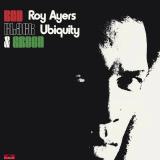
Roy Ayers - Red Black & Green

Roy Ayers

Red Black & Green

12inchVAMPI323
Vampisoul
08.05.2026out soon

After years out of print, we are pleased to present this much-needed vinyl reissue of an essential album in Roy Ayers’ career. Pressed on 180g vinyl.


In the early 1970s, Roy Ayers formed his own band: Roy Ayers Ubiquity. Its lineup included artists well known to funk and soul fans such as Bernard Purdie, James Mason, and Edwin Birdsong.


This 1973 album presents Roy Ayers in the midst of a creative evolution toward a sound increasingly influenced by soul and funk, moving beyond the early phase of his musical career, which was more rooted in orthodox jazz.

On “Red Black & Green”, he teams up with highly accomplished collaborators such as keyboardist Harry Whitaker, arranger and producer William S. Fischer, and Strata-East musicians Charles Tolliver and Sonny Fortune. Here, however, the latter two do not venture into the spiritual jazz sounds so characteristic of their own recordings; instead, together they embrace a sophisticated funk groove where Ayers showcases his extraordinary vibraphone talent.

The album includes outstanding versions of ‘Ain’t No Sunshine’ and ‘Day Dreaming,’ as well as original compositions such as ‘Cocoa Butter,’ ‘Rhythms of Your Mind,’ and the superb title track, ‘Red Black & Green.’

pre-order now

This item has not yet been released. You can pre-order the product now.

Spooky - Lucent LP

Spooky

Lucent LP

12inch49NLP007
49North
04.05.2026

Charlie May and Duncan Forbes return to 49North with a brand-new Spooky record !

Lucent unfolds with the long form Biform, essentially a piece in two halves that perfectly sets the listener up for the lush widescreen sonic journey that follows. The album flows from start to finish building energy as it moves though it’s different phases culminating in the infectious groove of Perpetual.

This is the sound of Spooky back in the room doing what they do best, making beautiful emotive electronic music that transcends boundaries.

out of Stock

Order now and we will order the item for you at our supplier.


Last In: 6 days ago
GOBLIN - The Singles Collection 1975-1979 LP
  • Profondo Rosso
  • Death Dies
  • Roller
  • Chi? - Parte Uno
  • Chi? - Parte Due
  • Suspiria
  • Blind Concert
  • Un Ragazzo D’argento
  • Opera Magnifica
  • Yell
  • Amo Non Amo
  • Funky Top

FOLLOWING THE SUCCESS OF “THE OTHER HELL”, GOBLIN ARE BACK FOR RECORD STORE DAY 2026 WITH AN EXCLUSIVE COMPILATION OF SINGLES RELEASED BETWEEN 1975 AND 1979!

For the very first time on vinyl, this compilation gathers together all the singles released by Goblin during their golden era between 1975 and 1979, a journey that begins with the explosive, legendary debut Profondo Rosso, a true chart phenomenon of its time, and reaches the rare Amo Non Amo, passing through unforgettable milestones of Italian film music and progressive rock.

The collection opens with Profondo Rosso and Death Dies, taken from the soundtrack of Dario Argento’s masterpiece that catapulted Goblin to fame, blending dark atmospheres, virtuosity, and a unique sense of cinematic tension. It continues with Roller and Snip Snap, drawn from the instrumental album Roller (1976), a record not tied to any film, yet considered a cult cornerstone of Italian progressive music for its intricate structures and expressive power.

Chi? and Chi? - Parte Seconda follow; two tracks originally composed as the theme for a 1976 RAI television show, which saw Goblin bring their unmistakable sound to a different medium, experimenting within a shorter, punchier format.

Next comes Suspiria with its haunting counterpart Blind Concert, from the soundtrack of Argento’s 1977 horror classic. This remains one of Goblin’s most iconic and unsettling works, where music becomes an active narrative force: hypnotic, percussive, and filled with eerie vocal layers that made it a cornerstone of horror soundtracks worldwide.

From Il Fantastico Viaggio del Bagarozzo Mark (1978) come Un Ragazzo d’Argento and Opera Magnifica, two tracks that highlight the band’s more conceptual and visionary side, a move away from cinema toward a self-contained narrative and progressive experimentation.

The single Yell stands as another late-decade gem. Originally composed as the opening theme for the RAI television series “Sette storie per non dormire” (1978), it captures Goblin’s ability to merge rock energy with electronic pulse, proving their versatility far beyond the horror realm.

The compilation closes with Amo Non Amo and Funky Top, taken from the soundtrack of the 1979 film Amo Non Amo, one of the group’s lesser-known but fascinating cinematic works.

Far more than a simple anthology, The Singles Collection 1975–1979 maps the evolution of Goblin’s sound, from the worldwide success of Profondo Rosso to their most mature and experimental phase. It finally restores to vinyl a body of work that had long been scattered across rare 45 rpm releases, offering fans and collectors a complete, vivid portrait of one of Italy’s most inventive and influential musical ensembles.

pre-order now18.04.2026

expected to be published on 18.04.2026

Christina Kubisch - TUNING

Christina Kubisch

TUNING

12inchFAIT-41LP
Faitiche
17.04.2026

Faitiche welcomes a new artist: Christina Kubisch belongs to the first generation of sound artists. Her practice ranges from performances, concerts, to works with video and visual art, but she is best known for her sound installations and electro-acoustic compositions.

TUNING brings together three pieces by Christina Kubisch from different periods of her oeuvre. What they have in common is the way they transform sound phenomena originally considered “non-music” into compositions.

Jan Jelinek: Gaming in Silence (2024) is the most recent work on this compilation. It’s a collage of electromagnetic waves, voice, and abstract sound textures. How did this combination come about?

Christina Kubisch: Gaming was commissioned as a fixed-media composition for the Sound Dome at ZKM Karlsruhe. Since Resonances: The Electromagnetic Bodies Project (2005), I’ve been making recordings in the old and new server rooms at the ZKM and in their permanent collection of historical computer games. Computer games like Asteroids (Atari, 1979) and Poly-Play (VEB Polytechnik, 1986) have specially generated analogue electromagnetic waves that interest me in particular on account of their density, rhythms and textures. I originally studied painting and to me the work of composition often feels like painting an abstract picture. I alter my source material as little as possible, layering and overlapping until a distinctive sound space emerges. In recent pieces, I sometimes combine magnetic waves with field recordings or live instruments. In Gaming it’s my recording of a Chinese song about silence.

JJ: Two persons walking through a street in Madrid (2004) is a recording from your Electrical Walks series. Here we should give a brief explanation of one of your best known works: participants in an Electrical Walk move through public spaces wearing prepared headphones that allow them to receive electromagnetic waves from their surroundings – for example from security gates, ATMs or neon signs. They discover a situation that normally is inaudible to the human ear and they can actively shape it by choreographing their movements. I really admire this piece, not least because there’s no clear dividing line between participants and artist. What exactly do we hear in Two persons walking through a street in Madrid (2004)?

CK: With this early work, I wanted to understand what is heard by people participating in an Electrical Walk in the same place but moving in different ways. The Spanish composer Miguel Alvarez-Fernàndez and I set off from opposite ends of a major shopping street in Madrid, met briefly in the middle, and then continued to the end. We both recorded our walks and I then layered them over one another. You might call it a work of electromagnetic conceptualism.

JJ: Diapason (2009 version) is an installation that plays a composition based on sounds from fifteen tuning forks. This setting is audible in the recording: there’s no dramatic arc, no beginning or end – instead, it recalls a piece of aleatoric music focussing on the decay phase. How did you come to make this work and could you tell us something about your compositional method?

CK: Diapason is part of a series of three pieces that deal with “non-instruments” or instruments that no longer exist: electrical mine bells used to send signals to the workers underground; a historical glass harmonica originally used for medicinal purposes; and tuning forks that were used by doctors to test people’s hearing. All of these methods are no longer in use. The sound of the tuning forks, audible only if held close to the ear, was recorded at the electronic studio at Berlin’s Technical University in such a way that even their decay remained audible. The frequencies range between 64 and 2048 Hertz and they can be adjusted at micro-intervals using small movable weights. The sequence and the duration of the pauses are dictated by chance and were not defined in advance. The 2009 version was created for an installation in the historic Holy Cross Church (Korskirken) in Bergen. Visitors could enter and leave the space at any time, deciding for themselves where and for how long they wished to listen to the sounds played back over an array of small loudspeakers placed on the floor of the apse.

Credits:

Gaming in Silence: commission of the ZKM/Hertzlab, Karlsruhe 2023
elektronic sound processing: Tom Thiel
sound engineering and mixing: Eckehard Güther

Diapason: produced at Elektronisches Studio of TU Berlin
rearrangement: Eckehard Güther

Christina Kubisch, published by Edition Christina Kubisch / Random Musick Publishing

image front: Transitionen 2021 by C. Kubisch, sonagrams of electronic waves (courtesy: Galerie Mazzoli Berlin)
image back: Diapason Tuning Fork, property of Folkmar Hein, Photo: Archiv Christina Kubisch

design by Tim Tetzner
mastered by Giuseppe Ielasi
Thanks to Miguel Álvarez-Fernández, Folkmar Hein, Dominik Kautz and Mario Mazzoli

pre-order now17.04.2026

expected to be published on 17.04.2026

Carlos Giffoni & Thurston Moore - IGUANA (TAPE)

Carlos Giffoni reconnects with Thurston Moore for two sides of loose-limbed axe noise, oscillator worship and hard-phased, Spacemen 3-style feedback.

Giffoni’s been on a roll recently. Since the No Fun founder returned to the scene with »Vain¡, a genius set of synth mutations that appeared in iDEAL back in 2018, he’s been slowly ramping up the activity, dropping the celestial »Dream Walker« on Stephen O’Malley’s Ideologic Organ in 2024 and following it with »Pendulum«, a bumper compendium of collaborations, just a few weeks back. For those who remember Giffoni’s first trip round the block, he was always able to hold his own chopping it up in person, not just by mail.

Just scrub through his early catalog and you’ll see collabs with Nels Cline and Chris Corsano, Merzbow, Jim O’Rourke and Lasse Marhaug, and of course, Thurston Moore. The two rekindle their thing on »IGUANA’« picking up where 2001’s fabled »4 Guitars Live« performance left off. Here, Giffoni straddles a tabletop synth and FX while Moore attacks his signature Jazzmaster with a drumstick and a screwdriver – vibes fully intact.

Moore is on blistering form, sounding as if he’s taken a step back to refresh his approach since the early ‘00s when he could be spotted moonlighting on any number of basement-adjacent noise sides. Sawing at his strings and turning the guitar into a shrieking resonator, he leaves only faint vapours of the classic Sonic Youth sound as opiating accents on his animalistic wails and rumbles. On the opening half, his whammy – assisted shreds are balanced out by Giffoni’s off-world whirrs and airlocked vibrations, building a dense wall of noise towards an unexpectedly elegiac conclusion. At some point, Giffoni’s rasping churr transforms into a simmering shudder and Moore’s into hymnal drones – squint a bit and you could almost call it pretty.

Of course, they ramp things up on the flip, dissolving the melancholia with smokey white noise and twangy, post-Derek Bailey chimes that Giffoni accompanies with aggy oscillations. Like every great taped noise set, the recording quality is crucial - »IGUANA« was captured from the pit by Guillermo Hernandez Avendano, the dad of Lia Miranda who provides the cover photo. It’s that kinda show.

pre-order now10.04.2026

expected to be published on 10.04.2026

Bodysnatcher - Hell Is Here, Hell Is Home
  • 1: The Maker
  • 2: Writhe And Coil
  • 3: Plague Of Flies
  • 4: May Your Memory Rot
  • 5: Violent Obsession
  • 6: No Savior
  • 7: Blade Between The Teeth
  • 8: Two Empty Caskets
  • 9: Survive Or Die
  • 10: Hell Is Home

Florida deathcore heavyweights Bodysnatcher return with their most punishing and purposeful statement to date. ‘Hell Is Here, Hell Is Home’, out April 10, is not an escape record, it is a confrontation. Brutal, unrelenting, and emotionally unfiltered, the album captures a band fully locked into its identity while sharpening every weapon in its arsenal. True to their roots, Bodysnatcher deliver a sound steeped in suffocating grooves, bone-crushing breakdowns, and feral intensity. ‘Hell Is Here, Hell Is Home’ pushes beyond pure aggression. The record explores cycles of trauma, self-destruction, survival, and the uncomfortable truth that for many, suffering is not a phase, it is a place.

This is deathcore grounded in lived experience, written from inside the fire rather than in hindsight. Across the album, Bodysnatcher balance sonic violence with a disciplined sense of control. Downtuned riffs grind with oppressive weight, drums hit with mechanical precision, and vocals swing between outright hostility and grim reflection. Each track feels deliberate, built not just to hit hard, but to linger. With this release, Bodysnatcher continue to cement their position as one of modern deathcore’s most uncompromising voices. ‘Hell Is Here, Hell Is Home’ is a record built for the pit, rooted in truth, unflinching and heavy in every sense, delivered with absolute conviction.

pre-order now10.04.2026

expected to be published on 10.04.2026

Various - Djax-Up-Beats 1990-2005: Volume 1 - The Acid Trip LP 3x12"

Delsin is pleased to announce an extensive compilation series combing through the catalogue of landmark Dutch techno label Djax-Up-Beats. The series, curated by Rush Hour co-founder Christiaan Macdonald, launches with a look at the label's legacy in the development of acid music through the 90s. In total, this first entry in the Djax-Up-Beats 1990-2005 series comprises 20 tracks, presented as a main triple-vinyl album plus two additional 12" EPs. The compilation also features all-new illustrations from Alan Oldham, the Detroit-rooted visual artist who gave Djax-Up-Beats a distinctive visual identity from very early on, and design by Lost Communication. Each volume of the series also features liner notes from music journalist Oli Warwick. Crucially, every track featured on the series has been carefully mastered by Johanz Westerman, bringing the best out of tracks that often had very little post-production treatment before they were originally pressed to wax. Volume 1 - The Acid Trip focuses on an area the label is best known for - acid house and techno. After the pioneering breakthroughs Chicago-based producers made with the Roland TB-303 in the late 1980s, acid music creation was starting to become more widespread when Djax-Up started in late 1990. The rebellious, rave-ready sound was an instant draw for label founder Miss Djax, and so her label ended up reflecting the development of acid as it spread from the Chicago roots across the world. Volume 1 - The Acid Trip looks at the diverse approaches to acid taken by artists on Djax-Up. Tracks on the compilation include an early outing from Ludovic 'St Germain' Navarre and Bjorn Torske's Ismistik alias, as well as Dutch pioneers such as Edge Of Motion, Spasms, Random XS and Acid Junkies, and Chicago heavyweights Mike Dearborn and Gene Hunt. With five more, equally extensive, volumes to come in this series, Djax-Up-Beats 1990-2005 is a thorough exploration of a true totem of techno culture - a renegade label that operated on its own terms and carried surprises and slammers in equal measure.

out of Stock

Order now and we will order the item for you at our supplier.


Last In: 32 days ago
Various - Never Eclipsed: Dancehall from Philip Smart's HC&F Studio 1985-1996 LP
  • A1: Philip Smart - Get Smart Theme
  • A2: Sammy Levi - Come Off The Road
  • A3: Lilly Melody - Promotion & Stripe
  • A4: Scion Success - Cry Fi Mi Girl
  • A5: Tom And Jerry Horns - Autumn Leaves
  • B1: Tony Tuff - Hit And Run
  • B3: Shelene - Where Does It Go From Here
  • B4: Frankie Paul - Plastic Smile
  • B5: Half Pint - Don't Try To Use Me

Following our well received "Prince Philip Presents..." 2LP compilation, here's a lovely overview of the second phase of Philip's career, as engineer & producer at his own studio, HC&F. These ten tracks comprise our favorites from his production catalog, spanning the mid '80s when the studio really got going, right up until 1996 and his last set of proper productions. The album holds a mix of well known classics like the Garnett Silk, lesser known album only cuts like the Frankie Paul, NY dancehall 12" staples like the Scion Success or Shelene, as well as some lesser known gems. We'd be remiss in not mentioning that this album also contains two previously unreleased cuts - a wicked mid '80s Tony Tuff, and the wild vocoder laden 1985 theme song for Philip's "Get Smart" radio show, which ran for many many years on New York University's WNYU radio station.

pre-order now30.03.2026

expected to be published on 30.03.2026

Chez Damier / Ralph Lawson - Moments in Time

Chez Damier and Ralph Lawson had a fruitful transatlantic hook-up decades ago in a famous farmhouse studio in West Yorkshire. The fruits of that session gave rise to some timeless jams - most notably on 2015's full length collaborative album Lost In Time - including the ones appearing here, though two have come in all-new forms. 'A Dedication to Jos', named in honour of Lawson's friend and late Back to Basics resident, is a mid-tempo sound with phased vocals pacing about the mix and a classic bassline that gets a slight Wulf Lost Tape edit. 'Thank You' then comes as a Ralph Lawson dub and has a darker energy rising from the moody bassline. Closer 'The Moment' then brings some soul with warm chord injections, supple spoken words and a cool as you like groove. An evergreen EP for sure.

out of Stock

Order now and we will order the item for you at our supplier.


Last In: 41 days ago
Iivana Mišukka & Arja Kastinen - Iivana Mišukka (Tape)
  • 01: Maanitus &Amp; Tšiižik
  • 02: Markka
  • 03: Melkutus
  • 04: Letška
  • 05: Kuuen Parin Hoirola
  • 06: Brišatka
  • 07: Tšiižik
  • 08: Kirkonkellot
  • 09: Kirkonkellot Korkea
  • 10: Hoirola, 3 Parin
  • 11: Lippa
  • 12: Kyngäkiža
  • 13: Ristakondra
  • 14: Vanha Polkka
  • 15: Viistoista
  • 16: Vanha Valssi
  • 17: Kiberä
  • 18: Maanitus Kuokan Kanteleella
  • 19: Tuuti Lasta Nukkumahe
also available

Vinyl


Death Is Not The End present a further volume of Arja Kastinen's eerie amalgamations of 110 year old wax cylinders with her own meticulously transcribed takes, this time focussing in on Armas Otto Väisänen's field recordings of kantele player Iivana Mišukka (b. 1861 d.1919).

"Ivana Mišukka (1861–1919) was one of the Karelian kantele players recorded by the folk music researcher Armas Otto Väisänen on wax cylinders in 1916 and 1917. In the early 20th century, the remote areas of Border Karelia were undergoing the final phase of a transformation in musical culture, with the ancient runo song tradition giving way to newer forms of music. This transition is reflected in Mišukka's repertoire and choice of instrument. The ancient small kantele, hollowed out of a single piece of wood, was already rare at the turn of the century. Mišukka's kantele was a new type of instrument with 26 strings, constructed of several parts, but he played it using the traditional plucking technique. Like other Border Karelian kantele players, his repertoire consisted of music rooted in runosong culture, as well as newer dances and songs from the east and west. Most of the recorded material falls into the latter category.

Ivan Bogdanov Mišukka was born out of wedlock in Suursara village, Suistamo, on 1 May 1861. He began playing the kantele at the age of five or six, quickly mastering the instrument. In adulthood, he was considered one of the area's best master players. Mišukka was landless for most of his life and lived in different parts of the Suistamo parish. His first wife, Tekla Markintytär, died in 1897 at the age of 40, and his second wife, Jevdokia Filipintytär Jeminen, died in 1907 at the age of 50. Seven children were born from the first marriage, two of whom died young. The third wife, Maria Ignatintytär Gurnan (Kuurnanen), was a well-known master of lamentations. Together with Maria, Iivana Mišukka worked as a tenant farmer in the village of Suursara. Mišukka suffered from rheumatism, which prevented him from participating in physical work like Maria. This was apparently partly the reason why Iivana Mišukka went to earn extra money by playing the kantele on gig trips. He often had other traditional artists from Suistamo as his travelling companions, such as the runosingers Konstantin Kuokka and Iivana Onoila. Iivana Mišukka died in Leppäsyrjä village, Suistamo, on 18 May 1919 at the age of 58, and his kantele was donated to Teppana Jänis.

Mišukka only used 14 of the 26 strings on his kantele, playing the same tunes either a fourth higher or lower. He tuned his kantele to the major scale using fifths, except for a low seventh scale degree on the upper strings, but not below the fundamental. Since he did not use the seventh note of the scale on the upper strings at all, he could use the major scale both lower and a fourth higher with this tuning. According to Mišukka, the sound of higher, or 'finer', strings is 'more beautiful', while that of lower ones is 'greater'. Among runosingers, the size of the thirds varied, ranging from major to minor to neutral. A similar phenomenon can be observed in kantele tunings, where the third, sixth and seventh scale degrees vary in a comparable way.

During a meeting, Väisänen suggested that Mišukka play the smaller kantele belonging to Konstantin Kuokka. The idea was to bring it closer to the horn to improve the recording quality. However, the kantele was completely out of tune, and now Mišukka tuned it to the Lydian scale (track 18).

Using the old plucking technique, Mišukka placed his right middle finger on the fundamental tone, his right index finger on the second scale degree, his left middle finger on the third scale degree and his left index finger on the fourth scale degree, and his right thumb on the fifth. The thumb also played the notes above the fifth note of the scale. As Mišukka remarked to Väisänen: 'Peigaloll' tuloo enemb ruadoa' (the thumb has to do more work). However, he did not use the seventh note of the scale on the upper strings at all. Below the fundamental note, he played the seventh and sixth notes of the scale with his right middle finger of and the fifth note of the scale with his right ring finger. This fifth scale degree below the fundamental is almost always used as a drone. Sometimes, when the melody required it, Mišukka, like other players, also varied the fingering. He would also occasionally strike the same string with the side of his fingernail after plucking it.

The wax cylinder recordings of Karelian kantele players are kept in the archives of the Finnish Literature Society in Helsinki, Finland. Copies were made of them onto reel-to-reel tapes in both the 1960s and 1980s. The 1960s copies are mono and the 1980s copies are stereo. However, not all kantele recordings from these decades have survived.

The sound of the kantele is difficult to hear in wax cylinder recordings due to its low volume, and it occasionally becomes completely obscured by noise. During the copying process, the cylinder sometimes rotates unevenly, resulting in breaks or jumps in the music. Additionally, the rotation speed of the cylinder in the copies does not correspond to the performance speed of the original music, which alters the pitch. However, since Väisänen's precise notes are available in the archive, it is possible to deduce the melodies, their speed, and the tuning level of the kantele in the recordings. Of the copies of the original recordings from the 1960s and 1980s, I have selected the one that best met the requirements of this publication and adjusted the speed of the recording to align with Väisänen's notes. To enhance the listening experience, I have replayed the songs, which now partly overlap the old recordings on this release."

— Arja Kastinen

pre-order now27.03.2026

expected to be published on 27.03.2026

Iivana Mišukka & Arja Kastinen - Iivana Mišukka LP

Death Is Not The End present a further volume of Arja Kastinen's eerie amalgamations of 110 year old wax cylinders with her own meticulously transcribed takes, this time focussing in on Armas Otto Väisänen's field recordings of kantele player Iivana Mišukka (b. 1861 d.1919).

"Ivana Mišukka (1861–1919) was one of the Karelian kantele players recorded by the folk music researcher Armas Otto Väisänen on wax cylinders in 1916 and 1917. In the early 20th century, the remote areas of Border Karelia were undergoing the final phase of a transformation in musical culture, with the ancient runo song tradition giving way to newer forms of music. This transition is reflected in Mišukka's repertoire and choice of instrument. The ancient small kantele, hollowed out of a single piece of wood, was already rare at the turn of the century. Mišukka's kantele was a new type of instrument with 26 strings, constructed of several parts, but he played it using the traditional plucking technique. Like other Border Karelian kantele players, his repertoire consisted of music rooted in runosong culture, as well as newer dances and songs from the east and west. Most of the recorded material falls into the latter category.

Ivan Bogdanov Mišukka was born out of wedlock in Suursara village, Suistamo, on 1 May 1861. He began playing the kantele at the age of five or six, quickly mastering the instrument. In adulthood, he was considered one of the area's best master players. Mišukka was landless for most of his life and lived in different parts of the Suistamo parish. His first wife, Tekla Markintytär, died in 1897 at the age of 40, and his second wife, Jevdokia Filipintytär Jeminen, died in 1907 at the age of 50. Seven children were born from the first marriage, two of whom died young. The third wife, Maria Ignatintytär Gurnan (Kuurnanen), was a well-known master of lamentations. Together with Maria, Iivana Mišukka worked as a tenant farmer in the village of Suursara. Mišukka suffered from rheumatism, which prevented him from participating in physical work like Maria. This was apparently partly the reason why Iivana Mišukka went to earn extra money by playing the kantele on gig trips. He often had other traditional artists from Suistamo as his travelling companions, such as the runosingers Konstantin Kuokka and Iivana Onoila. Iivana Mišukka died in Leppäsyrjä village, Suistamo, on 18 May 1919 at the age of 58, and his kantele was donated to Teppana Jänis.

Mišukka only used 14 of the 26 strings on his kantele, playing the same tunes either a fourth higher or lower. He tuned his kantele to the major scale using fifths, except for a low seventh scale degree on the upper strings, but not below the fundamental. Since he did not use the seventh note of the scale on the upper strings at all, he could use the major scale both lower and a fourth higher with this tuning. According to Mišukka, the sound of higher, or 'finer', strings is 'more beautiful', while that of lower ones is 'greater'. Among runosingers, the size of the thirds varied, ranging from major to minor to neutral. A similar phenomenon can be observed in kantele tunings, where the third, sixth and seventh scale degrees vary in a comparable way.

During a meeting, Väisänen suggested that Mišukka play the smaller kantele belonging to Konstantin Kuokka. The idea was to bring it closer to the horn to improve the recording quality. However, the kantele was completely out of tune, and now Mišukka tuned it to the Lydian scale (track 18).

Using the old plucking technique, Mišukka placed his right middle finger on the fundamental tone, his right index finger on the second scale degree, his left middle finger on the third scale degree and his left index finger on the fourth scale degree, and his right thumb on the fifth. The thumb also played the notes above the fifth note of the scale. As Mišukka remarked to Väisänen: 'Peigaloll' tuloo enemb ruadoa' (the thumb has to do more work). However, he did not use the seventh note of the scale on the upper strings at all. Below the fundamental note, he played the seventh and sixth notes of the scale with his right middle finger of and the fifth note of the scale with his right ring finger. This fifth scale degree below the fundamental is almost always used as a drone. Sometimes, when the melody required it, Mišukka, like other players, also varied the fingering. He would also occasionally strike the same string with the side of his fingernail after plucking it.

The wax cylinder recordings of Karelian kantele players are kept in the archives of the Finnish Literature Society in Helsinki, Finland. Copies were made of them onto reel-to-reel tapes in both the 1960s and 1980s. The 1960s copies are mono and the 1980s copies are stereo. However, not all kantele recordings from these decades have survived.

The sound of the kantele is difficult to hear in wax cylinder recordings due to its low volume, and it occasionally becomes completely obscured by noise. During the copying process, the cylinder sometimes rotates unevenly, resulting in breaks or jumps in the music. Additionally, the rotation speed of the cylinder in the copies does not correspond to the performance speed of the original music, which alters the pitch. However, since Väisänen's precise notes are available in the archive, it is possible to deduce the melodies, their speed, and the tuning level of the kantele in the recordings. Of the copies of the original recordings from the 1960s and 1980s, I have selected the one that best met the requirements of this publication and adjusted the speed of the recording to align with Väisänen's notes. To enhance the listening experience, I have replayed the songs, which now partly overlap the old recordings on this release."

— Arja Kastinen

pre-order now27.03.2026

expected to be published on 27.03.2026

Ange - Au-Dela Du Delire LP
  • 01: Godevin Le Vilain
  • 02: Les Longues Nuits D&Apos;Isaac
  • 03: Si J&Apos;Étais Le Messie
  • 04: Ballade Pour Une Orgie
  • 05: Exode
  • 06: La Bataille Du Sucre (Inclus
  • 07: Fils De Lumière
  • 08: Au Delà Du Délire

Magma, is a French cross-genre, jazz-rock rooted, progressive rock and fusion band founded in 1969 by drummer Christian Vander. Magma have existed in two phases, the first was formed in the summer of 1969 and debuted on LP in 1970, continuing through to 1983. Kobaia was released spring 1970 and 1001 Centigrades was released April of 71.

pre-order now27.03.2026

expected to be published on 27.03.2026

Magma - 1001° Centigrades LP
  • 01: Rïah Sahïltaahk
  • 02: &Quot;Iss&Quot; Lanseï Doïa
  • 03: Ki Ïahl Ö Lïahk

Magma, is a French cross-genre, jazz-rock rooted, progressive rock and fusion band founded in 1969 by drummer Christian Vander. Magma have existed in two phases, the first was formed in the summer of 1969 and debuted on LP in 1970, continuing through to 1983. Kobaia was released spring 1970 and 1001 Centigrades was released April of 71.

pre-order now27.03.2026

expected to be published on 27.03.2026

Magma - Kobaïa (2x12")

Magma

Kobaïa (2x12")

2x12inchGME939
GM Editions
27.03.2026
  • 01: Kobaia
  • 02: Aïna
  • 03: Malaria
  • 04: Sohïa
  • 05: Sckxyss
  • 06: Auraë
  • 07: Thaud Zaia
  • 08: Naü Ektila
  • 09: Stoah
  • 10: Mûh

Magma, is a French cross-genre, jazz-rock rooted, progressive rock and fusion band founded in 1969 by drummer Christian Vander. Magma have existed in two phases, the first was formed in the summer of 1969 and debuted on LP in 1970, continuing through to 1983. Kobaia was released spring 1970 and 1001 Centigrades was released April of 71.

pre-order now27.03.2026

expected to be published on 27.03.2026

THE WEDDING PRESENT - MAXI

THE WEDDING PRESENT

MAXI

10inchCLUEB128
Clue Records
27.03.2026

Anfang 1996 veröffentlichte The Wedding Present "Mini" über Cooking Vinyl Records, eine EP mit sechs Titeln, deren Songs alle einen Bezug zum motorisierten Fahren hatten. Fast dreißig Jahre später hat David Gedge dieses Konzept wieder aufgegriffen! "Maxi" enthält sechs weitere Stücke, deren Titel/Inhalte sich alle auf diese Thema beziehen. Maxi erscheint über Clue Records und folgt kurz nach der Veröffentlichung von 40 - der Zusammenstellung, die den komplexen und faszinierenden Katalog von The Wedding Present in einem Box-Set mit vier Vinyl- und/oder vier CDs widerspiegelt. Der letzte Titel der Compilation ist "Hot Wheels" - ein Song, der nun auch auf Maxi zu finden ist, zusammen mit fünf weiteren Stücken. Obwohl Maxi dem gleichen Konzept wie Mini (1996) folgt, klingt The Wedding Present 2025 deutlich größer. Dies ist wirklich eine Band in ihrer kreativsten Phase, die sowohl die Grenzen ihres eigenen Stils/Sounds als auch die Erwartungen der Zuhörer erweitert, während die Texte auf provokative Weise Bilder zeichnen, wie es nur David Gedge kann. "Wie ich in meinen Sleeve Notes zu 40 gesagt habe, wurden die Songs, die wir für Maxi aufgenommen haben, relativ schnell geschrieben, weil ich mich besonders inspiriert fühlte, sowohl textlich - durch Situationen in meinem Leben - als auch musikalisch - durch das Schreiben mit der damals neu hinzugekommenen Rachael. Die daraus resultierenden Tracks wirken größer angelegt und stimmungsvoller als alles, was wir seit langem gemacht haben ... und sie sind dank der neuen Rockqueen von The Wedding Present und ihrem Arsenal an Gitarren und Pedalen auf jeden Fall temperamentvoller!" (David Gedge). Transparente Vinyl-10" oder CD im Digipak.

pre-order now27.03.2026

expected to be published on 27.03.2026

PSYK & ORBE - TEMPORAL RIFT LP 2x12"

Born from the dialogue between two distinct yet complementary visions of techno — Orbe’s futuristic and immersive atmospheres, and Psyk’s hypnotic depth, stripped-back minimalism — the record unfolds as a carefully sculpted sonic journey. Tension, space, and texture take center stage, shaping an evolving narrative that progresses seamlessly from track to track.

More than a collection of individual cuts, the album embodies a cohesive and mature concept: a shared identity refined through countless hours of studio experimentation, critical listening, and synthesis. Here, the core essence of the project crystallizes — a point of convergence between atmosphere and impact, abstraction and functionality, introspection and raw dancefloor energy.

This release not only marks the culmination of an intensive creative cycle, but also signals the beginning of a new phase in their ongoing exploration of techno’s expressive potential.

out of Stock

Order now and we will order the item for you at our supplier.


Last In: 31 days ago
POD & Edward Richards - Temporal Loop Transcendance w/ Pugilist Remix

POD & Edward Richards bring you part two of their journey into languid tempos and sonic explorations following their ‘Polar Phase’ EP. Mixing World Music, Techno, and Bass, the record flows with a deep narrative evoking worlds both illusory and known. Imagine an otherworldly voyage, chanting Shamans and tribal percussion, ayahuasca ceremonies, lifting the veil that separates worlds, the record looks to lift the listener and transcend the mundane plane into other dimensions. Pugilist nails the idea with his remix of the title cut, both invoking the deep tribal atmosphere whilst bridging to the world of club music.

out of Stock

Order now and we will order the item for you at our supplier.


Last In: 46 days ago
Wigwam - Live in Denmark 1976 LP 2x12"
  • 1: Just My Situation
  • 2: Simple Human Kindness
  • 3: Do Or Die
  • 4: Never Turn You In
  • 5: Eddie And The Boys
  • 6: A Better Hold
  • 7: Colossus
  • 8: Grass For Blades
  • 9: Lucky Golden Stripes And Starpose
  • 10: No New Games
  • 11: Bless Your Lucky Stars
also available

Transparent Red Vinyl


Wigwam's previously unreleased rare live recording from 1976 out in February via Svart Records In the summer of 1976, Wigwam performed not only in Finland but also in Sweden, Denmark, the Netherlands, and Germany. However, the pace slowed down afterward. The early autumn tours planned for European countries were cancelled, and even the replacement shows in Finland had to be postponed due to bassist Måns “Måsse” Groundstroem's sick leave. In October 1976 an opening appeared in the schedule for a studio session, during which Jim Pembroke’s third solo album, Corporal Cauliflower’s Mental Function, was recorded. After that, Wigwam played five gigs in Denmark at the end of November, followed by an equal number in Sweden. No exact information has survived about the concert setlists, but the band was in a stable phase, and certain songs had become staples in their live repertoire. Albums from Wigwam's deep-pop era, which began in autumn 1974, as well as Pembroke’s first solo records had already been released, and rehearsals were underway for what would become the Dark Album, released in 1977. It can be said that this concert, recorded for Danish Radio, is a strong representation of the band’s era at the time. The recording took place in northern Denmark, in a district called Lundtofte in Lyngby. Before this, Wigwam had performed in Køge and Århus, and after Lundtofte, gigs in Ballerup and Copenhagen awaited. Lundtofte was home to the Danish Technical University (DTU), where a student venue called “Studenterhuset” (Building 101) hosted a one- to two-day music events known as Polyjoint during the 1970’s. The events typically featured Danish bands, but also visiting acts like Wigwam. Most importantly, Danish Radio was sometimes present at these events. Wigwam had performed a studio concert for Danish Radio the previous year, but this particular recording is considered the more energetic of the two. Details have faded with time — for example, the identity of the second act at the concert is unknown. In any case, both guitarist Pekka “Rekku” Rechardt and keyboardist Pedro Hietanen remember the band being in high spirits, in top form, and highly motivated.

pre-order now13.02.2026

expected to be published on 13.02.2026

Wigwam - Live in Denmark 1976 LP 2x12"
  • 1: Just My Situation
  • 2: Simple Human Kindness
  • 3: Do Or Die
  • 4: Never Turn You In
  • 5: Eddie And The Boys
  • 6: A Better Hold
  • 7: Colossus
  • 8: Grass For Blades
  • 9: Lucky Golden Stripes And Starpose
  • 10: No New Games
  • 11: Bless Your Lucky Stars
also available

Black Vinyl


Wigwam's previously unreleased rare live recording from 1976 out in February via Svart Records In the summer of 1976, Wigwam performed not only in Finland but also in Sweden, Denmark, the Netherlands, and Germany. However, the pace slowed down afterward. The early autumn tours planned for European countries were cancelled, and even the replacement shows in Finland had to be postponed due to bassist Måns “Måsse” Groundstroem's sick leave. In October 1976 an opening appeared in the schedule for a studio session, during which Jim Pembroke’s third solo album, Corporal Cauliflower’s Mental Function, was recorded. After that, Wigwam played five gigs in Denmark at the end of November, followed by an equal number in Sweden. No exact information has survived about the concert setlists, but the band was in a stable phase, and certain songs had become staples in their live repertoire. Albums from Wigwam's deep-pop era, which began in autumn 1974, as well as Pembroke’s first solo records had already been released, and rehearsals were underway for what would become the Dark Album, released in 1977. It can be said that this concert, recorded for Danish Radio, is a strong representation of the band’s era at the time. The recording took place in northern Denmark, in a district called Lundtofte in Lyngby. Before this, Wigwam had performed in Køge and Århus, and after Lundtofte, gigs in Ballerup and Copenhagen awaited. Lundtofte was home to the Danish Technical University (DTU), where a student venue called “Studenterhuset” (Building 101) hosted a one- to two-day music events known as Polyjoint during the 1970’s. The events typically featured Danish bands, but also visiting acts like Wigwam. Most importantly, Danish Radio was sometimes present at these events. Wigwam had performed a studio concert for Danish Radio the previous year, but this particular recording is considered the more energetic of the two. Details have faded with time — for example, the identity of the second act at the concert is unknown. In any case, both guitarist Pekka “Rekku” Rechardt and keyboardist Pedro Hietanen remember the band being in high spirits, in top form, and highly motivated.

pre-order now13.02.2026

expected to be published on 13.02.2026

Items per Page:
N/ABPM
Vinyl