Faitiche Новости

  • 1
Alan & Jan - Take me, I’m yours LP

Alan & Jan

Take me, I’m yours LP

12inchFAIT-42LP
Faitiche
29.05.2026

Take Me, I’m Yours is the first collaboration album between Alan Abrahams and Jan Jelinek. Released through the latter’s faitiche, it builds upon multi-layered vocal sketches by the former. The Paris-based artist, primarily known for his work as Portable and Bodycode, supplied Jelinek with multi-layered song sketches that the German artist subjected to a rigorous process of manipulation, excavating the ambiguities of the original material and transforming its rhythms into subtle pulses. Take Me, I’m Yours is neither a typical Abrahams record nor a classic Jelinek album—it is something third, mediating between the physicality of the voice and the abstraction of electronic sound design.

The two had crossed paths before really getting to know each other after Abrahams invited Jelinek to play at one of his Süd Electronic parties. The idea of a collaboration emerged slowly. “It started as an experiment, and over the past few years grew from a few tracks into this album,” says Abrahams. He describes recording the basic material as a “tantalizing” process, not knowing how Jelinek would transform his material, some of which was based on wordless chanting, while other tracks were working with lyrical content. However, their mutual trust allowed Jelinek to remove the harmonies, radically reduce the rhythms, and concentrate on Abrahams’ voice.

Jelinek heard something “fragile” in this voice, “moments of doubt and dark premonitions.” He points to Forever as an example. “Alan’s original song reminded me of classic vocal house, but his voice seemed to almost break,” he says. “This contradiction made the piece even bigger, because we hear a singer in the moment of an awakening.” He further accentuated such tensions through arrhythmic synth modulations and time-stretching algorithms, while also adding concrete sounds from a variety of sources. With its dedication to both transforming and amplifying the emotional qualities hidden within Abrahams’ pieces, Take Me, I’m Yours functions as a dialogue between those two singular artists.

Сделать предзаказ29.05.2026

он должен быть опубликован на 29.05.2026


Последний логин: 2026 г. назад
Christina Kubisch - TUNING

Christina Kubisch

TUNING

12inchFAIT-41LP
Faitiche
17.04.2026

Faitiche welcomes a new artist: Christina Kubisch belongs to the first generation of sound artists. Her practice ranges from performances, concerts, to works with video and visual art, but she is best known for her sound installations and electro-acoustic compositions.

TUNING brings together three pieces by Christina Kubisch from different periods of her oeuvre. What they have in common is the way they transform sound phenomena originally considered “non-music” into compositions.

Jan Jelinek: Gaming in Silence (2024) is the most recent work on this compilation. It’s a collage of electromagnetic waves, voice, and abstract sound textures. How did this combination come about?

Christina Kubisch: Gaming was commissioned as a fixed-media composition for the Sound Dome at ZKM Karlsruhe. Since Resonances: The Electromagnetic Bodies Project (2005), I’ve been making recordings in the old and new server rooms at the ZKM and in their permanent collection of historical computer games. Computer games like Asteroids (Atari, 1979) and Poly-Play (VEB Polytechnik, 1986) have specially generated analogue electromagnetic waves that interest me in particular on account of their density, rhythms and textures. I originally studied painting and to me the work of composition often feels like painting an abstract picture. I alter my source material as little as possible, layering and overlapping until a distinctive sound space emerges. In recent pieces, I sometimes combine magnetic waves with field recordings or live instruments. In Gaming it’s my recording of a Chinese song about silence.

JJ: Two persons walking through a street in Madrid (2004) is a recording from your Electrical Walks series. Here we should give a brief explanation of one of your best known works: participants in an Electrical Walk move through public spaces wearing prepared headphones that allow them to receive electromagnetic waves from their surroundings – for example from security gates, ATMs or neon signs. They discover a situation that normally is inaudible to the human ear and they can actively shape it by choreographing their movements. I really admire this piece, not least because there’s no clear dividing line between participants and artist. What exactly do we hear in Two persons walking through a street in Madrid (2004)?

CK: With this early work, I wanted to understand what is heard by people participating in an Electrical Walk in the same place but moving in different ways. The Spanish composer Miguel Alvarez-Fernàndez and I set off from opposite ends of a major shopping street in Madrid, met briefly in the middle, and then continued to the end. We both recorded our walks and I then layered them over one another. You might call it a work of electromagnetic conceptualism.

JJ: Diapason (2009 version) is an installation that plays a composition based on sounds from fifteen tuning forks. This setting is audible in the recording: there’s no dramatic arc, no beginning or end – instead, it recalls a piece of aleatoric music focussing on the decay phase. How did you come to make this work and could you tell us something about your compositional method?

CK: Diapason is part of a series of three pieces that deal with “non-instruments” or instruments that no longer exist: electrical mine bells used to send signals to the workers underground; a historical glass harmonica originally used for medicinal purposes; and tuning forks that were used by doctors to test people’s hearing. All of these methods are no longer in use. The sound of the tuning forks, audible only if held close to the ear, was recorded at the electronic studio at Berlin’s Technical University in such a way that even their decay remained audible. The frequencies range between 64 and 2048 Hertz and they can be adjusted at micro-intervals using small movable weights. The sequence and the duration of the pauses are dictated by chance and were not defined in advance. The 2009 version was created for an installation in the historic Holy Cross Church (Korskirken) in Bergen. Visitors could enter and leave the space at any time, deciding for themselves where and for how long they wished to listen to the sounds played back over an array of small loudspeakers placed on the floor of the apse.

Credits:

Gaming in Silence: commission of the ZKM/Hertzlab, Karlsruhe 2023
elektronic sound processing: Tom Thiel
sound engineering and mixing: Eckehard Güther

Diapason: produced at Elektronisches Studio of TU Berlin
rearrangement: Eckehard Güther

Christina Kubisch, published by Edition Christina Kubisch / Random Musick Publishing

image front: Transitionen 2021 by C. Kubisch, sonagrams of electronic waves (courtesy: Galerie Mazzoli Berlin)
image back: Diapason Tuning Fork, property of Folkmar Hein, Photo: Archiv Christina Kubisch

design by Tim Tetzner
mastered by Giuseppe Ielasi
Thanks to Miguel Álvarez-Fernández, Folkmar Hein, Dominik Kautz and Mario Mazzoli

Сделать предзаказ17.04.2026

он должен быть опубликован на 17.04.2026


Последний логин: 2026 г. назад
GRAMM - PERSONAL ROCK (REISSUE)

GRAMM

PERSONAL ROCK (REISSUE)

2x12inchFAITBACK09LP
Faitiche
10.04.2026

Twenty Years Ago, Jan Jelinek's Debut Album Personal Rockwas Released By Source Records. Under The Pseudonym Gramm, It Brings Togethereight Tracks That Have Not Been Available On Vinyl Since Their Original Release.faitiche Is Very Glad To Announce The Re-release Of The Album: Personal Rockwill Appear As A Double Lp Featuring The Original Cover Artwork. What People Wrote About Personal Rock Two Decades Ago: "situated Somewhere Between Jelinek's Much Loved Loop-findingjazz Records, Farben, Move D's Conjoint Project And Atom Heart's Most Immersivework For Rather Interesting, It's A Late Night Album Full Of Subtle Productiontricks And Melodic House Structures That Belong To The Pre-millennial Idmheyday, But Which Transcend Its Overly-masculine Templates." (boomkat) "a Serene Little Masterpiece" (de:bug) "though Many Producers Have Pushed Forward Theclicks-and-cuts Style Of Experimental Ambience Developed By Germanexperimentalists Oval (among Others), Few Have Been Able To Matchtheir Knack For Making Abstract Cuts Into Pieces Of Undeniable Beauty. Janjelinek's First Lp As Gramm Is One Of The Precious Few, And It'sobvious From The Opener." (allmusic) "organized In Organic Structures And Minimal Movements, Thetracks Get Into Utopian States And Super-desirable Moods, Offering Superiorcontentedness And Dependable Taste Of The Kind Seldom Sustained For A Wholealbum. (...) Subway-escalator-soul." (spex)

Сделать предзаказ10.04.2026

он должен быть опубликован на 10.04.2026


Последний логин: 5 г. назад
Jan Jelinek - Loop-Finding-Jazz-Records 2x12"

2024 repress

In February 2021, Jan Jelinek's seminal album "Loop-Finding-Jazz-Records" turned 20. The anniversary repress, a double LP with two bonus tracks (B-sides from the Tendency EP, 2000), is a little late to the party.
What the press said about Loop-Finding-Jazz-Records:
“Don’t be misled by the title, though for there isn’t a finger-snapping rhythm c bebop lead anywhere on the album. Instead, Jelinek chooses to explore the visual effect moiré - two shifting patterns creating an implied third dimension - in the audio realm.” (Alternative Press)
“The title acts as explanation for the studio technique that provided the basis for this album, snippets of other people’s arrangements deconstructed through a sampler into loops and then splashed onto an audio canvas.” (ATM)
“Jelinek’s sound evolved out of his dislike for (and inability to play) keyboards.” (RPM)
“Jelinek has abstracted his sources beyond recognition, looping his millisecond samples into flickering patterns of sonic moiré laid atop a dub Techno framework. (...) Jelinek might as well have sampled a horn player’s hissing intake of breath – it would have been ‘jazz’ enough for his purposes.“ (The Wire)
“It’s a perfect inversion of conventional music, a sonic negative. Everything that would typically be foreground is moved back or pushed off the screen altogether, and the flecks of sonic debris that would normally be covered by other sounds are left to carry the melody and rhythm.” (Pitchfork)
“All you need to know is that these onomatopoeic non-specific songs (...) are warm, paradisical creations”. (NME)
“Listen carefully and you’ll hear textures slowly unfolding and mutating. Presuming you’ve not fallen asleep of course.” (iDJ)
“At times, it’s all a bit dripping tap Japanese water torture; so sedentary it drowns in its own motionlessness” (DJ)
“Loop Finding Jazz Records' is a genuine modern classic whose re-release is anything but a cynical mortgage repayment exercise. Consider this a second chance, then pretend you had it all along.” (Boomkat)
PS:
“I’ve been fortunate enough to see Jan Jelinek live once, at Tonic NYC (...). Wearing a black and white striped shirt, he looked like a nihilistic Charlie Brown.” (beachsloth)

В наличии на складе

Есть у нас в наличии и готов к отправке

Martin Brandlmayr - Interstitial Spaces
 
2

Interstitial Spaces is Martin Brandlmayr’s debut release on Faitiche. In this award-winning radio collage, the well-known drummer and composer (Radian, Polwechsel) explores the quiet moments in music and film recordings.

The last notes of a piece of music fade out in the space. The pianist and the violinist remain frozen in place, holding their breath. The sound engineer sits silently at the desk. Once he has switched off his tape machine, the dull drone of a ship’s horn is heard in the distance. Otherwise, not a sound. Or was there something else hidden in the white noise?

Interstitial Spaces is based on short excerpts from music recordings, films, TV adverts and field recordings. Brandlmayr takes these quiet scenes, intervals in which nothing seems to happen, and brings them into the foreground, subjecting them to a microscopic spotlight. Moments in which one hears only the space itself, or the subtle presence of someone in the space: faint breathing, footsteps and the soft creak of a chair. We also hear preparations for an orchestra rehearsal: the musicians are all busy tuning their instruments, talking to each other, the concert has not yet begun.

This leads to a shift in perception: incidental details hidden in the hubbub of voices or in the silence suddenly take on a leading role. In the empty spaces, we discover various shades of noise, sharpening our awareness of sonic peculiarities. In a gentle rhythm, Brandlmayr’s radio collage offers a sequence of strange, not immediately identifiable sounds that are woven in the second part into a dense structure. At the end, the carefully captured sounds are released back into the empty space. Interstitial Spaces is a bold spectacle that celebrates the eventful uneventfulness.

Сделать предзаказ21.11.2025

он должен быть опубликован на 21.11.2025


Последний логин: 2026 г. назад
Roméo Poirier - Off The Record

Roméo Poirier

Off The Record

12inchFAIT-39LP
Faitiche
02.10.2025

Off The Record (faitiche 39), the new album by French collagist Roméo Poirier, is an amusing romp through the discarded history of recording studios. It contains fourteen miniatures based on accidental recordings of studio talk, revealing things that were never meant for the public: we hear instructions from studio staff, scraps of talk between musicians, or just microphones being adjusted, as well as false notes, false starts: everyone stops. Start again: 1, 2, 3, 4!

Poirier’s approach recalls Accumulation, an artform practiced by Arman, Jean Tinguely and Daniel Spoerri that involved piling up everyday items into assemblages. The objects themselves often remained unaltered, the artistic gesture consisting in the careful curating of a distinctive selection. Poirier’s audio collages explore similar terrain. The fourteen pieces on Off the Record combine more than a thousand found sounds from studio archives into complex miniatures. The audio content of these outtakes is twisted, stretched, cut, reassembled, slowed down and accelerated. Voices cut into a microgroove, from a very old recording, intertwine with digital voices gleaned from YouTube. All of them in dialogue, engaging the listener with the impression of being part of a new music group.

Poirier uses the mundane routine of setting up before the actual recording gets underway to tell a universal story about working in a recording studio. And he manages something few achieve, transforming specialist knowledge into a narrative whose beauty goes far beyond its immediate subject. It speaks to everyone, because the story is told in a musical language that is open and accessible, evoking magical images reminiscent of Oz – a world consisting less of events than of camp hallucinations, captured in grainy black-and-white photographs. En passant, Poirier shows us how the notion of material accumulation can produce great art.

Written and produced by Roméo Poirier, mastered by Stephan Mathieu, photos by Roméo Poirier, graphic design by Tim Tetzner.

нет на складе

Закажите сейчас, и мы закажем товар для вас у нашего поставщика.


Последний логин: 5 мес. назад
Andrew Pekler - New Environments & Rhythm Studies

New Environments & Rhythm Studies finds Andrew Pekler returning to the humid zones he explored on previous albums such as Sounds From Phantom Islands and Tristes Tropiques. Split between longer immersive compositions and shorter glimpse-like sketches, these 12 tracks feature new juxtapositions of Pekler's familiar palette of synthetic field recordings, warm, undulating electronic textures, shifting percussion patterns and serene melodies.

As with much of his recent work, Pekler's compositions here are structured around the beguiling effect of synthetic and non-synthetic sounds mirroring, mimicking and modulating one another. The teeming atmospheres within tracks such as Globestructures, Cymbals In The Mist or Globestructures: Option II are, despite their seemingly anthropogenic nature, entirely synthetic. Elsewhere, the lopsided grooves of Cumbia Para Los Grillos or Fabulation For K are derived from recordings of crickets and other insects which Pekler loops and uses to trigger electronic percussion – producing a pleasantly skewed rhythmic base for the fragments of melody which are layered on top. The six Rhythm Studies also follow the same principle – a playful interweaving of the organic and synthetic.

New Environments & Rhythm Studies is a further attempt to re-describe past tropes which laid claims to authentically represent music and sound from beyond the Western world (exotica, ethnomusicology, field recording) as undertakings of the imaginary.

Written and produced by Andrew Pekler, mastered by Giuseppe Ielasi, artwork by Morgan Cuinet, graphic design by Dmytro Nikolaienko.

нет на складе

Закажите сейчас, и мы закажем товар для вас у нашего поставщика.


Последний логин: 8 мес. назад
Jan Jelinek - Kosmischer Pitch

Jan Jelinek

Kosmischer Pitch

12inchFAIT-BACK06LP
Faitiche
20.01.2025

A long-lost vinyl album is back in stock: for the last 20 years, Kosmischer Pitch by Jan Jelinek, originally released in 2005 on ~scape, existed only as a digital download. Right on time for the 20th anniversary the remastered album is available again on vinyl. The digital version includes two previously unreleased pieces from that period.

What the press said about Kosmischer Pitch back in 2005:

“For Kosmischer Pitch, Jelinek draws from the obsessed-over rock produced by his German countrymen in the 1970s. (…) Trance-inducing repetition is constantly modulated by variations that hover on the threshold of audibility. (…) one of the more remarkable bodies of work in electronic music.” - Pitchfork

„Like the cosmic compositions it delicately references, Kosmischer Pitch is proof that the higher and lower pleasures can triumphantly combine.” - The Wire Magazine

“ The old Jelinek approach can also be heard on the new album - not least the “Pitch” in the title, which, as Martin Büsser explains in the info sheet, refers specifically to Wild Pitch House, generally to manipulation/exploitation of the sense of time - but there are striking differences: clear vintage synth, guitar and drum sounds, very subtle club references.” - Groove

“t's impossible to know how many layers of sound Jelinek has stacked up on any of these eight tracks, but each one seems to take on a shadowy, ghost-like life of its own as it morphs across time and space. Minimalist, yes, in a way, but thick as a wool rug.” - AllAboutJazz

нет на складе

Закажите сейчас, и мы закажем товар для вас у нашего поставщика.


Последний логин: 10 мес. назад
Mark Templeton - Two Verses LP

Mark Templeton

Two Verses LP

12inchFAIT-37LP
Faitiche
18.09.2024

Mark Templeton is a Canadian media artist and the founder of Graphical, an audiovisual label dedicated to publishing his own musical and image based experiments. Mark’s audio compositions are constructed from reel-to-reel tape loops and sampled cassettes that are contrasted with contemporary sound techniques. In his published photobooks, he incorporates his own 35mm pictures and found images, focusing on intangible fantasies and realities. During his audiovisual performances, he utilizes digital instruments while projecting his own photographs, VHS footage, Super 8 film, and other sampled video.


Mark Templeton’s reinterpretation of outdated media as musical instruments makes him a compelling artist for the Faitiche label roster. For his debut on Faitiche, he browsed his old hard drives and invited Andrew Pekler to listen through and co-produce a selection of Mark’s unreleased works. The compositions act as a series of snapshots: a look back at a decade of archived sounds, re-envisioned and re-imaged for Faitiche.
The album contains nine tracks that follow an AB song structure. Each piece begins with verse A, transitions into verse B, and then ends. This simple formula creates a dichotomy that is also present in Mark’s diptych photographs, featured in the artwork. Throughout the album, both juxtaposition and inherent connections are simultaneously at play. One way or another, Two Verses provides a beginner’s guide to Mark Templeton's highly idiosyncratic catalog.

нет на складе

Закажите сейчас, и мы закажем товар для вас у нашего поставщика.


Последний логин: 14 мес. назад
Jan Jelinek - Social Engineering LP

Social Engineering brings together thirteen text fragments from so-called phishing emails.
Using speech synthesis, they are spoken, sung, and/or transformed into abstract textures.
The result is a 36-minute language and sound collage devoted to the dark forces of phishing

нет на складе

Закажите сейчас, и мы закажем товар для вас у нашего поставщика.


Последний логин: 18 мес. назад
Giuseppe Ielasi - Rhetorical Islands LP
  • 1:
  • 2:
  • 3:
  • 4:
  • 5:
  • 6:
  • 7:
  • 8:
  • 9:
  • 10:
 
1

First vinyl edition of the album Rhetorical Islands, originally released by Giuseppe Ielasi in 2012 as a limited-edition CD on his Senufo Editions label, with recordings made in 2011 as a commission for l’Audible Festival, Paris.

The album’s ten tracks have neither titles nor accompanying text, standing for themselves as what Ielasi himself has called “isolated sound worlds”. They are nonetheless unparalleled in their plasticity, acoustic events with a rare degree of tangibility. Ielasi evokes physical objects, some of which seem to have been constructed out of paper and cardboard, others based on a mechanics of elastic materials. Of course these objects are hallucinations, and precisely because Ielasi constructs them so masterfully there’s no need for any further information. Here’s to everyone creating their very own sculptures while listening to Rhetorical Islands!

The front and back cover features 0.058, a work on paper by the artists Thomas & Renée Rapedius. They make sculptures whose form and artistic inspiration are defined by their materials. Like Ielasi’s acoustic islands, their impact derives from self-referentiality, resulting in paradoxical objects that embody both a detailed material study and a potential for free association.

Сделать предзаказ01.03.2024

он должен быть опубликован на 01.03.2024


Последний логин: 2026 г. назад
Giuseppe Ielasi - Rhetorical Islands LP

First vinyl edition of the album »Rhetorical Islands«, originally released in 2012 as a limited-edition CD on Ielasi's Senufo Editions label. The album’s ten tracks have neither titles nor accompanying text, standing for themselves as what Ielasi himself has called ›isolated sound worlds.‹ They are nonetheless unparalleled in their plasticity, acoustic events with a rare degree of tangibility. Ielasi evokes physical objects, some of which seem to have been constructed out of paper and cardboard, others based on a mechanics of elastic materials. Of course these objects are hallucinations, and precisely because Ielasi constructs them so masterfully there’s no need for any further information. read on / listen

Сделать предзаказ28.02.2024

он должен быть опубликован на 28.02.2024


Последний логин: 2026 г. назад
Roméo Poirier & The Exposures - love / hate

The vinyl single LOVE/HATE brings together two sample collages on the theme of good and evil. Often evoked and sung about, but rarely in such concentrated, systematic form, these collages present the words LOVE and HATE in a variegated catalogue of articulations. Poirier’s miniature radio play is anything but misanthropic: never before has the message of hate been conveyed in such a wonderfully warm-hearted manner. The LOVE side features a track originally released by Jan Jelinek in 2005 on the Eastern Developments label under the long-forgotten pseudonym The Exposures.

From the original press release:

Originally intended as the intro to a special edition of the radio broadcast “Abenteuer Forschung” (Adventures in Research) on “sexuality and romance in digital postmodernism”, the composition collages countless “love” samples from the R&B genre. The “collage of digital passion” had a devastating effect, acting as an aphrodisiac that turned the recording session into an orgy. No further details were revealed by the broadcaster. Unfortunately, the programme wasn’t broadcast live so the secret is likely to remain locked away in the station’s archives forever. Nevertheless, Eastern Developments have managed to obtain authorisation for a “toned down” version of the original, providing the listener with a vague idea of the composition’s true impact.

нет на складе

Закажите сейчас, и мы закажем товар для вас у нашего поставщика.


Последний логин: 16 мес. назад
Jan Jelinek & Computer Soup - Improvisations And Edits, Tokyo 26.09.2001 LP

Faitiche releases the album Improvisations And Edits, Tokyo 26.09.2001 on vinyl for the first time. For the original 2002 CD on Soup-Disk and Sub Rosa (Audiosphere), Jan Jelinek and the Japanese trio Computer Soup (Satoru Hori – trumpet, Osamu Okubo - toys & electronics, Kei Ikeda - toys & electronics) presented eight tracks all recorded one afternoon in the trio’s living room in Tokyo. They are excerpts from a joint group improvisation that subsequently underwent rudimentary editing, on which Jelinek and Computer Soup worked separately.

Jelinek met the three musicians at his first concert in Japan in 2001, at Tokyo’s Yellow club, where Computer Soup performed as the support act. Delighted by their free improvisation on pocket-sized electronic toys, trumpet and oscillators, he arranged to meet Hori, Okubo and Ikeda a few days later for a session at their apartment. The resulting three-hour recording, made on their living room floor, formed the basis for Improvisations and Edits. A few days later, Jelinek returned to Berlin. Over the following months, they separately chose passages from the recording that were then edited and assembled into an album.

Formed in Tokyo in 1996 as a quintet (including Shusaku Hariya and Daisuke Oishi), Computer Soup began by performing with acoustic instruments on the streets of Shibuya. Ikeda und Okubo soon switched instruments, and from then on the group’s minimalistic but densely woven sound was defined by electronic toys, oscillators and Satoru Hori’s trumpet. Their first album was released in 1997 on the Japanese label Soup Disk. Eight further releases followed.

From the reviews of Improvisations and Edits, Tokyo 26.09.2001 in 2003:

"The mind-blowing first track Straight Life is perhaps the best example of what the album has to offer. Jelinek's trademark smears and washes occupy the midrange, like ghosted images of Joe Zawinul's electric piano floating quietly in the wind. DSP jazz modes are set against a walking bassline (possibly computer generated) and a gently tooted trumpet complete with Harmon mute, a dead ringer for Miles Davis' Prestige-era ballads. The effect is something like a three-dimensional film, with different realities on each layer; images of what jazz was manage to interact with a real-time demonstration of all it could be."
pitchfork, 2003

"Improvisations and Edits is a warm and mellow Ambient release with beautiful glitch fragments, static noise bursts and real trumpet intersections. However, there are times where it is the exact opposite, mainly effect-laden, overdriven and bouncy with a lack of melodies and focus, so be aware of these specific tracks."
ambientexotica, 2003

"Often deliciously dreamy and hazy, Improvisations and Edits is like listening to an exceptional instrumental jazz performance while half-conscious or under some sort of chemical influence. Computerised blips and bleeps, loops and treatments and murky sonic skips curl up around desolate horn notes and scattered instrumental noises that culminate in elegant music."
exclaim.ca, 2003

нет на складе

Закажите сейчас, и мы закажем товар для вас у нашего поставщика.


Последний логин: 2 г. назад
SG - For Lovers Only / Rain Suite

Sg

For Lovers Only / Rain Suite

12inchFAIT-33LP
Faitiche
06.10.2023

SG is none other than Andrew Pekler returning to faitiche with an album of sentimental guitar escapism. For Lovers Only / Rain Suite features ten tracks made using only an electric guitar and a handful of effects pedals (plus some additional recordings of rain) and finds Pekler once again attempting to reconicile his tendencies towards kitsch, experimentation and minimalism.

What does Pekler's pseudonym SG stand for? Sentimental Guitar? Sound Gallery? Shy Guy? Sad Gnosis? Saudade Glamour? Soft Goth? We don't know, but we asked notorious Chicago romantic Sam Prekop for his take on the album – his reply:

--

It’s a wonder where the rivers go and far, how fast or slow.

Just seconds to remember, who can forget, when you are lost.

I think to recount every step, in both hands, eyes open, the clouds unfold, one two three. Every other step, just as well.

Where the moss is soft, you know strong. How many hours, days? I could have been careful, did I forget?

Never mind. Waking up, in these arms, where the rivers go, slow. One two three, one two three.

Сделать предзаказ06.10.2023

он должен быть опубликован на 06.10.2023


Последний логин: 2026 г. назад
blackbody_radiation - Ultra-Materials LP

Faitiche welcomes Andrew Black aka blackbody_radiation. His debut album Ultra Materials gathers six ghostly drones, created with the help of sound masking.

Andrew Black, who hails from one of the UK's post industrial North West Milltowns has a sensitive feeling for space and its acoustics. Having trained as a designer and operated within the realms of architecture and public space, it was only natural to extend his interest to manipulating field recordings.

The six pieces collected on Ultra-Materials provide an insight into Black's highly sensitive minimalism: they stand for a subtly meandering mediation on room acoustics and place, which are manipulated with the help of sound masking, among other things - that is, the addition and superimposition of artificially generated frequencies to mask unwanted sounds.

Sometimes the pieces are reminiscent of warm engine noise, sometimes one thinks of carefully captured natural phenomena. Their strength lies in their elusiveness: free of concrete attributions or musical location, they can unfold their hypnotic pull without revealing anything about their origins. Harmonics at times shimmer, at times warble and at times coexist. It is an attempt to get in touch with our listening abilities.

Сделать предзаказ08.09.2023

он должен быть опубликован на 08.09.2023


Последний логин: 2026 г. назад
Jan Jelinek - SEASCAPE - polyptych LP

One of the most notorious hatemongers in movie history is Captain Ahab from John Huston’s 1956 classic Moby Dick. His manic monologues cast a spell on generations of viewers. Berlin based musician and sound artist Jan Jelinek has now turned the voice of Ahab into a musical instrument.

Faitiche presents Jan Jelinek's soundtrack for SEASCAPE – polyptych, an audio-visual software developed in collaboration with Canadian new media artist Clive Holden in 2022.

SEASCAPE – polyptych is based on image and acoustic source material from Moby Dick. While Holden works on manipulating film sequences, the voice of Ahab plays a central role in Jan Jelinek’s soundtrack. The dynamic volume and tone of the captain's speech control a synthesizer system that turns Ahabs voice into ten abstract soundscapes.

In this production the voice gives the impulse and controls things but is not the sound of spoken word itself that we hear. Only occasionally can snippets of speech be heard so that syllables or sounds are recognisable. Instead we hear compositions made of hissing, soundscapes and eruptive sounds. The atmosphere is dark and sinister. Still every piece has a clear sonic structure and follows an understandable dramatic composition. This music is abstract but not overwhelming. Quite the opposite, SEASCAPE – polyptych is an invitation to listeners to let themselves be carried by the stream of sonic events. Although part of a media art work, the soundtrack can be enjoyed without any of this connecting superstructure. It works with no previous knowledge. But what happens when one does know that it’s the sonic waves of a human voice that is controlling a network of synthesizers?

If you want to hear Ahab, you will hear a choir of Ahabs in every piece of sound. The subliminal threatening as well as the conjuring Ahab. Finally the Ahab who whips up his crew and tears them with him into their downfall. The majestic „on the quay now, waiting and watching“, the oppressive “drawn towards the whirlpools center” - they are all music as well as sonic discourse.

нет на складе

Закажите сейчас, и мы закажем товар для вас у нашего поставщика.


Последний логин: 2 г. назад
Muellie Messiah & Punk Not Punk - Exq I

Faitiche presents the album Exq I by Berlin underground techno legends Muellie Messiah & Punk not Punk, mainly known under their 100Records moniker. Weighing in at 36 minutes, the track was recorded in 2010, effortlessly intermingling dub, drone and collage, a blend achieved thanks to the duo’s jazz-inspired approach to improvisation.

_

100records is one of the last undiscovered treasures of the Berlin underground of the 1990s and 2000s. Like Elektro Music Department, 100records is unthinkable without techno and the club scene, but with a few exceptions the duo’s tracks are not aimed at the dancefloor. With a claim to universality and a broader frame of reference, 100records developed a more extensive understanding of sound that rests on three pillars: the understated analogue drums of the Roland TR-808, a blurred, dubby sound, and improvisation.

On first hearing, Exq I has little in common with the groovy, detailed, variation-rich sound usually associated with 100records. Recorded at the end of a highly productive decade, it is an echo speaking of exhaustion in which dub, drone and collage converge to form something whose jazz sensibility makes it readily identifiable as the work of 100records.

100records was founded in 1994 by Muellie Messiah (Dirk Budde) and Ekki 808 (Ekkehard Rau), who were joined in 1999 by Punk not Punk (Martin Osti). Around 2002, Ekki departed, leaving Budde and Osti to continue as a duo. Since then, their relationship has shaped 100records: Budde is the driven lone genius doggedly pursuing sounds, Osti the pragmatist who turns ideas into music.

As well as making music, Budde is also a musicologist. In 1997 he published his PhD thesis entitled Take Three Chords... Punk Rock and the Development to American Hardcore. As well as being his specialization, punk is also part of his identity: in the 1980s he sang and played keyboards in various punk bands in Kassel, the best known being Haunted Henschel.

After the fall of the Wall, attracted by the freedom of the newly reunited Berlin, Budde packed his bags and drove to the formerly divided city, having already become acquainted with techno at Kassel’s influential Stammheim club.

Сделать предзаказ03.03.2023

он должен быть опубликован на 03.03.2023


Последний логин: 2026 г. назад
Groupshow - Greatest Hits

Groupshow

Greatest Hits

12inchFAIT-29LP
Faitiche
26.01.2023

Faitiche presents Groupshow’s Greatest Hits: The ten tracks on this first vinyl album by Groupshow (Hanno Leichtmann, Andrew Pekler, Jan Jelinek), recorded between 2005 and 2018, document concert recordings and studio improvisations by the trio.

In improvisation there are no mistakes, only missed opportunities. Groupshow found their first opportunity in the routines of live performance and they used this opportunity to break with these routines. The trio consisting of Jan Jelinek, Hanno Leichtmann and Andrew Pekler came together in the context of Kosmischer Pitch, playing live versions of the music from Jelinek’s 2005 studio album of that name. During this project, the musical interaction between the three participants quickly emancipated itself from the original programme, departing from fixed roles and finding a distinct form in constant change.

Groupshow sessions – rehearsal, concert or recording – are always improvised. The interplay of the various sound sources, converging from the directions of “electronics”, “percussion” and “guitar”, does not follow the Krautrock wave logic of crescendo and morendo. Jelinek, Leichtmann and Pekler have established a method of transparent density in which links and breaks are not concealed but remain audible. The music works through attraction and repulsion, with a loosely organized structure that always leaves enough room for the next intervention.

The principle here, repeated even in the smallest units, is that of duration. Groupshow think of their music in terms of an installation: no starting point, no dramaturgy, and ideally no end. Concerts take place not raised up on a podium, but in the middle of the room on a level with the audience, who only enter the space with the musicians and instruments once their interaction is already underway. In 2008, Groupshow used this approach to create a live soundtrack for Andy Warhol’s film Empire, over the full length of eight hours and five minutes.

Recordings in general and the “Greatest Hits” format in particular are another key aspect of this ongoing work on a collectively modulated continuum. The ten tracks on this first vinyl album by Groupshow, recorded between 2005 and 2018, document the ephemeral capturing of opportunities that were not missed. Extracts and essences of an endless movement of searching. The sprawling form of the whole, suspended in succinct, separate units.
To paraphrase Lao Tzu and Roland Barthes, one might say: Once their work is done, they are no longer attached to it. And because they’re not attached to it, it will remain.

Arno Raffeiner, 2022

нет на складе

Закажите сейчас, и мы закажем товар для вас у нашего поставщика.


Последний логин: 3 г. назад
Jonathan Scherk - Toon!

Jonathan Scherk

Toon!

12inchFAIT-27LP
Faitiche
04.11.2022

As his split album It’s counterpart (faitiche19, 2019) made abundantly clear, Jonathan Scherk is a master of his craft. Toon! immerses us in a highly distinctive world of plunderphonics-sampledelica-variations acousmatiques that’s impossible to classify while feeling familiar nonetheless. Following a strict two-minute format, thirteen complex sound constructions offer a range of experiences – as if the neurosciences had developed an acoustic formula capable of triggering illusions of memory. 13 tracks = 13 déjà-vus.

When department stores dream ... epiphanies appear in elliptical rotations. Afterthoughts recalled on the beach as a child, soft-drawn and befuddling. Are they dreams? Are they metempsychotic leakage? With cup so full-brim, there’s bound to be spillage. Toon! is sleeping on-your-feet, in the light. The pleasure must be more than belletristic, but what’s left to say? Perhaps the sun is simply too bright.
Samuel Dzierzawa/Jan Jelinek, 2021

Сделать предзаказ04.11.2022

он должен быть опубликован на 04.11.2022


Последний логин: 2026 г. назад
farben - textstar+ 2x12"

Farben

textstar+ 2x12"

2x12inchFAIT-BACK12LP
Faitiche
03.06.2022

On textstar+ Jan Jelinek brings together the material from the CMYK series, four EPs he released between 1999 and 2002 under the pseudonym farben (the German word for both colours and paints), on a vinyl double LP for the first time. The selection of tracks has been remastered from the original tapes, joined by two additional pieces that appeared on compilations during the same period.

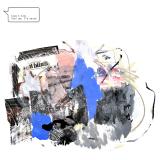
A Polaroid. Still life with tangled leads and consumer electronics, late twentieth century. Black and various shades of dirty white are the dominant non-colours. The image’s spatial depth remains diffuse, the links between its elements speculative. A note stuck to the wall (a legend, perhaps, or an all-explaining blueprint in text form?) is impossible to decipher. You can’t see what connects the picture’s signs. You have to hear it.

farben says: Every sound is a text. A bearer of meaning in search of a reader. Hoping the ideas inscribed in its autonomous existence will be understood as intended. While its beauty lies precisely in misunderstanding, in reading the coded message a new way every time. A thousand colours of sound, a thousand different ways to hear, to see, to understand.

On textstar+ Jan Jelinek brings together the material from the CMYK series, four EPs he released between 1999 and 2002 under the pseudonym farben (the German word for both colours and paints), on a vinyl double LP for the first time. The selection of tracks has been remastered from the original tapes, joined by two additional pieces that appeared on compilations during the same period. Another new element is the Polaroid, showing the origins of a world: Jelinek’s home studio in Berlin at the time.

farben says: Move your body! The project has its roots in Jelinek’s love of house as a reductionist vision of soul. Of four to the floor as a proposition that can be accessed anywhere. Of electronic dance music as a realm of possibility that can be continually expanded. farben was written as contemporary house music. As a text about excitement and euphoria. The arrangements were made directly while recording to DAT, on a twelve-channel mixing desk. Several track titles suggest a link to live concerts, coupled with the context of machine music and bedroom recording. Others affirm pop music’s most extravagant stock phrases about various states of love.

Jelinek produced the tracks with the aim of making music for dancefloors. An idea that failed very productively. In the locations to which it was originally addressed, the project barely figured. But people did listen, and they listened all the more closely to this music that opened up new acoustic and associative scope for house. farben is the opposite of genre: a music spawning new terms (clicks & cuts, micro-house) that never manage to fully capture it.

farben says: Signifiers. The four CMYK EPs are designed as a network of references that cannot be missed but that can also never be precisely deciphered. The vectors of sound, word and image point to Isaac Hayes and Ornette Coleman, to Detroit and the first generation of the Red Army Faction, to Karl Marx and Friedrich Engels. So multifarious that they are distorted to the point of recognition. Overall we hear sonic docufictions whose appealing vagueness derives precisely from this oscillation between clarity and ambiguity, which is also the source of their poetry: the lyricism of the pure circulation of signs.

The artwork is based on photographs of former Red Army Faction members, broken down into the four colours of the CMYK model. The motifs dissolve into individual dots of a single colour, so close to the faces that their expressions are only hinted at. Taken together, the individual colours compose a new whole out of fragmentary material, defying definition and thus maintaining their vibrancy. The same occurs on the level of sound. The sampler Jelinek used for these tracks had to be fed with floppy disks, imposing a memory limit of 1.44 megabytes per audio quotation from soul or jazz records. As a necessary consequence of this, the individual references, like the dots of colour, are dissolved into details and abstractions. They appear as splinters that recombine in new ways to create new meanings. The joy of collapsing metaphors.

farben says: New departures. Even two decades after its original release, textstar+ does not come across as an epitaph to the modern era. Instead, it appears as a euphoric affirmation of the utopias of the twentieth century, translated into new sound texts via the aesthetic strategies of abstraction, collage, networking and speculation. 1.44 megabytes of history, one thousand signifiers, one album. From “Live ...” to “... Love”.

Arno Raffeiner, 2021
нет на складе

Закажите сейчас, и мы закажем товар для вас у нашего поставщика.


Последний логин: 5 мес. назад
Ursula Bogner - Sonne = Blackbox

Ursula Bogner

Sonne = Blackbox

12inchFAIT-05LP
Faitiche
06.05.2022

Three years have passed since the world first learned of Ursula Bogner's work. Since then, her identity has been surrounded by rumours, her graphic work have been exhibited (CEACC, Strasbourg, France, 2011 and elsewhere) and her compositional instructions have been performed (by Mo Loschelder, Andrew Pekler, Kassian Troyer, Jan Jelinek among others). The release of Sonne = Blackbox brings together all of these aspects in one CD and book: compiled by Andrew Pekler, the CD presents Bogner's early experiments with voice and tape music – a previously unknown emotional side of her music is revealed here through her singing. The 126 page book contains, along with drawings, photos and other curiosities from Bogner’s life, an introduction by Jan Jelinek, texts by Momus, Andrew Pekler, Tim Tetzner, and Bettina Klein as well as interviews with the orgone researcher Jürgen Fischer and the ethnographer Kiwi Menrath. Sonne = Blackbox attempts to locate Ursula Bogner, the sound experimentalist within broader cultural history. A central theme is the phenomenon of fake: how did the erroneous suspicion of fakery come about in the case of Ursula Bogner and what is a post-fake? Answers in this book.

нет на складе

Закажите сейчас, и мы закажем товар для вас у нашего поставщика.


Последний логин: 3 г. назад
Beispiel - Muster

Beispiel

Muster

12inchFAIT-26LP
Faitiche
11.03.2022

Faitiche presents Beispiel (German for "example", also suggests playing together), a joint project by Frank Bretschneider and Jan Jelinek. Muster is their first album.

Free electronic music, the result of spontaneous improvisations.

“Meaning” is a concept that is overused in connection with music. Muster does not call for the same kind of air quotes. With its title, German for patterns/exemplars, Beispiel’s album frees itself from the ballast of teleological semantics. There is no overarching theme, no preparation, no reading list, no reason for this music. Just two facts: Frank Bretschneider and Jan Jelinek have known each other a long time and appreciate each other’s work; and they share a love of modular synthesizers and of experimental set-ups designed to capture surprise.

Bretschneider and Jelinek got together for their first joint session in 2016 and the years that followed brought more such meetings at Jelinek’s studio for open-ended musical dialog – at irregular intervals and with no clear objective. The improvisations were recorded in two stereo tracks: one track for Bretschneider’s audio, one for Jelinek’s. After each session, the recordings were processed separately, the options essentially limited to cutting and altering the frequency range. The nine pieces for Muster were selected from the resulting material.

This approach reflects an ideal: music is when you play your first note without knowing what the third or fourth will sound like. When your 290th note still sees you leaving the beaten track, and when curiosity grows as the piece unfolds. Duping is part of Beispiel’s practice. Improvisation is about disagreement. It’s a matter of addressing the right issues. What’s happening here? What’s mine, what’s yours? Are “why” and “where next” legitimate questions?

Muster is an exemplary work. Nine suggestions for what can be. Nine ideas for possibilities of listening.

Arno Raffeiner

нет на складе

Закажите сейчас, и мы закажем товар для вас у нашего поставщика.


Последний логин: 4 г. назад
Trip Shrubb - Trewwer, Leud un Danz

Faitiche presents, for the first time on vinyl, a selection from the 84-track (!!) remix project originally released in 2013 as a three-tape set by Trip Shrubb aka kptmichigan aka Michael Beckett. Known to many from bands like Tuesday Weld or The Schneider TM Experience, Beckett remixed his way through Harry Smith’s famous Anthology of American Folk Music – a compilation of American folk, blues and country recordings released in 1952, soon to become key point of reference for the emerging folk revival movement. Having translated the title into the local dialect of the part of Germany where he lives, Beckett began reinterpreting all of its 84 tracks using sampler, effect pedals and loops – sometimes making several tracks in a single day. A colossal undertaking whose results are beyond accomplished and that is summed up in the selection of thirteen tracks on 'Trewwer, Leud un Danz'.

Murray Royston-Ward writes about 'Trewwer, Leud un Danz':

"Total sacrilege ... A collection of remixes of tracks from Harry Smith’s Anthology of American Folk Music which was originally released in its entirety. The album is titled Trewwer, Leud un Danz (sorrow, song and dance) which is drawn from an endangered ‘Low German’ dialect (lippisch Platt) and is poetically approximating Smith’s volumes Ballads, Social Music and Songs. 

The hardware employed encompasses analogue, virtual analogue and digital. A primordial soup of electrical fields, striated granulation, micro-circuitry, molecular oscillations and mathematical manipulation; communicating directly with the guitars, zithers, mountain dulcimers, fiddles, jaw harps, banjos, harmonicas and human voices of 1930’s America: itself a reterritorialization of African and European folk traditions that reach back farther and farther into our collective pasts. (…)"

нет на складе

Закажите сейчас, и мы закажем товар для вас у нашего поставщика.


Последний логин: 4 г. назад
Jan Jelinek - The Raw and the Cooked

Faitiche releases an album version of the radio piece Vom Rohen und Gekochten (The Raw and The Cooked) originally composed and produced by Jan Jelinek for the state broadcaster SWR2. The album The Raw and The Cooked brings together five sound collages that deal with the consistency of material and its mutability.

Solid, raw, boiling, powdery, liquid, broken and folded - categories which describe the nature of material. They can also be read in a chronological sequence: solid becomes broken becomes liquid becomes powdery... Material tells of its essence as it drifts through its states, always in correspondence with external energies. The Raw and The Cooked observes the artists Thomas & Renée Rapedius as they design their paper and metal objects and the artist Peter Granser as he ritually prepares Japanese tea, it shatters glass, bends metal and burns wood. The resulting audio documents capture processes of material transformation as sound.

The Raw and The Cooked was created with the help of ITO Raum Stuttgart and Thomas & Renée Rapedius. Originally produced for radio broadcast on Südwestrundfunk in 2020 it contains a variation of the collage Zwischen/Raum that was made with funding from Musikfonds. Many thanks to Eckhart Holzboog and Beatrice Theil, as well as Frank Halbig/SWR.

нет на складе

Закажите сейчас, и мы закажем товар для вас у нашего поставщика.


Последний логин: 4 г. назад
Nikolaienko - Rings

Nikolaienko

Rings

12inchFAIT-23LP
Faitiche
06.04.2021

Fortunately for us, Dmytro Nikolaienko agreed to open up the jewellery boxes of his tape-loop archive for his debut album on Faitiche. What came to light was a collection of dreamy glittering gems, masterfully presented using the compositional possibilities of analogue tape machines. Some may consider a tape machine to be limited as a musical instrument, but Rings makes a convincing case with its sure-handed use of the available parameters – moving tape over the tape head mechanically and manually, cutting loops, manipulating timbre and creating noise by means of saturation. The results are eleven blurred, repetitive, rhythmic patterns that can be understood as an intervention against digital precision, as mechanical irregularities and background noise become musical events.

For those familiar with Nikolaienko’s work, his nostalgic approach here will come as no surprise: born in Ukraine and now based in Estonia, he has chosen a historical medium (that has been enjoying a renaissance for some years now) to record historical-sounding sequences. The way he manages his own back catalogue is similarly archival, documenting the chronology of his tape loops in such a way as to leave no doubt as to their advanced age. And then there are his two wonderful labels Muscut and Shukai, the latter being an archival project releasing electroacoustic obscurities from the Soviet past. Which brings us back full circle …

нет на складе

Закажите сейчас, и мы закажем товар для вас у нашего поставщика.


Последний логин: 4 г. назад
Gesellschaft Zur Emanzipation Des Samples - Anthology of American Pop Music

GES: Anthology of American Pop Music

Six great pop standards remembered: five pop songs are dissected by sampler, stretched, compressed, and re-collaged. In this way, their identity is lost. What remains is a vague concreteness: flashes of déjà vu and remote echoes that evoke the original.
GES (Gesellschaft zur Emanzipation des Samples)
-
Active members: Helmut Schmidt, Jan Jelinek
Founded: 2009
Headquarters: Federal Court of Justice, Karlsruhe, Germany
-

GES Glossary

Acoustic Surveillance Series

A 7-inch vinyl record series curated by GES focussing on historical methods of acoustic surveillance. Each record introduces a surveillance system from the past. Starting with Uguisubari in 2017, the series will continue with the release of Orecchio di Dionisio in 2021. GES is open to further suggestions on this subject.

Bundesgerichtshof (German Federal Court of Justice), Karlsruhe

“The use of audio samples as artistic practice may justify the infringement of copyright and intellectual property rights.” (ruling of the German Federal Court of Justice pertaining to Metall auf Metall II, 2016). The court is also the official headquarters of GES.
Circulations

What happens to copyright claims when music from a passing car is captured in a street recording? Is it legal to use this recording freely or is it necessary to obtain licensing rights? Circulations re-enacts this recording situation: audio players are placed in public spaces, where they reproduce the desired sample material. The acoustically choreographed space is then recorded, creating a field recording in which everyday noises circulate together with seemingly incidental music.

Emancipation of Sampling

Fuelled by its criminalization, the act of sampling existing recordings forfeited some of its artistic prestige (see Sampling). GES wishes to rehabilitate and re-emancipate the practice of sampling as a form of art in its own right. Strategy: 1. Name samples and sources explicitly. 2. Choose samples that are as popular and as recognizable as possible (Beatles, Carpenters, etc.). 3. The editing and manipulation of the sample must not compromise its recognizability (negotiable). 4. Use as many samples as possible. 5. Always name more sample sources than were actually used in the composition.

Field Recording

A compositional practice widely used in sound art and ethnomusicology that involves the recording of natural acoustical phenomena. Two additional requirements are usually imposed: The recording process should take place outside a studio environment, i.e. outdoors. And the person recording does not generate any of the acoustic material him/herself. GES expands this definition by introducing the concept of choreographed public space (see Circulations).

Gambling

An acoustic event favoured by GES, already used in numerous sound collages (must take place in public). The most popular option is thimblerig, a cup and ball gambling game commonly played in the street. Compositional instruction by GES: Place an audio playback device in the proximity of a thimblerigger. Play works for orchestra (by Debussy or Mahler). Move slowly towards the gamblers with a microphone.

Helmut Schmidt

Multiple identity and fictional character devised by GES. Figures variously within the semiotic system of GES as member, guest artist or public representative. Following the historical example of Subcommandante Marcos (EZLN).

Kraftwerk

The German band founded by electropop musicians Florian Schneider-Esleben and Ralf Hütter (a.k.a. Die Prozessoren) is the natural enemy of GES. Protected by computer-generated avatars, Kraftwerk operates a quote-hostile cultural hegemony. Their strategy: Install a special brand in the collective consciousness by means of a sophisticated system of quotations and references that may in turn not be quoted by anyone else. Other bands with such delusions of omnipotence: U2, Metallica.

Marcel Duchamp

As the inventor of the readymade, Duchamp may be viewed as a precursor to the art of sampling. However, the artist is appreciated above all for his sonorous qualities, as his vocal silence has often been sampled and processed. It was the inspiration for Jelinek's radio play Zwischen.

Orecchio di Dionisio

This 65-meter-deep limestone cave in the Sicilian town of Syracuse, carved out of a hillside in ancient times, has exceptional acoustics: A person standing at the cave entrance can hear every word whispered deep down inside it. The painter Michelangelo da Caravaggio gave it its name (The Ear of Dionysius) in 1608. The cave indeed resembles an ear and – according to Caravaggio – had a specific function: The tyrant Dionysius I imprisoned his political prisoners in the cave in order to spy on them. Orecchio di Dionisio will be featured in the Acoustic Surveillance Series in the near future.

Sampling

Compositional practice whereby recorded music is fragmented, turned into sound collages and transferred into different contexts of meaning. Since the advent of affordable sampling technology in the 1990s, the music industry has been trying to criminalize and/or promote the practice. Both strategies are driven by the same principle: Profit.

Uguisubari

Sound-making floorboards in Japanese temple and castle complexes, featured in the Acoustic Surveillance Series in 2017. In the Edo period, the “nightingale floor” (literal translation of uguisubari) was a popular acoustic warning system. The principle was straightforward: When someone stepped onto the boards, nails would rub against metal clamps beneath the floor, creating a tell-tale squeaky sound that was said to resemble the chirping of the Japanese nightingale.

Wind

A generator of acoustic events and an amplifier/transmitter of existing sounds. A meteorological form of energy appreciated by the GES on account of its unpredictability. A series about wind as an acoustic phenomenon is planned. Working title: Hotel Corridors.

Zwischen (Between)

Radio play by GES member Jan Jelinek based on recordings of various public interview situations. From the speech of the interviewees (all of them eloquent personalities) the pauses between coherent utterances were extracted and assembled. What we hear is an archaic body language: modes of breathing, word particles and onomatopoeic turmoil. A key question for GES: Which comes first, personal rights or artistic freedom? For Zwischen, Jelinek used only recordings by public figures that were already available to the public.

нет на складе

Закажите сейчас, и мы закажем товар для вас у нашего поставщика.


Последний логин: 5 г. назад
Frank Bretschneider - abtasten_halten

Faitiche presents a new album by Frank Bretschneider. abtasten_halten was made as part of the raster.labor installation first presented at CTM Festival in 2019. It is perhaps the most radical work in Bretschneider’s distinctive oeuvre: abtasten_halten is a self-generating composition for synthesizer modules whose sole sound source is the movement of two VU meter needles. The resulting percussive sounds coalesce into rhythmic combinations – all random, without repetition. The album resembles a meditation on infinite rhythmic variation. abtasten_halten is Frank Bretschneider’s first release on Faitiche.

One sound can give birth to thousands of tones through self-fertilization. Pierre Henry, 1982

Frank Bretschneider on abtasten_halten:
abtasten_halten (sample_hold) is a largely self-generating composition for a modular synthesizer system. Self-generating here means that as soon as a current flows, the various modules interact, but within limits set by the composer via the connections between the modules (patches): timing, tempo, timbres, dynamics. These conditions are kept variable to a certain extent or left to chance, so that the composition created is always similar but never the same. On the one hand, the use of random generators opens up possibilities that would not otherwise have been considered. On the other, it offers the fascination of the unfinished and the unique: totally unexpected musical events that you might hear only once.

abtasten_halten combines my preferences for percussive music in general and electronic music in particular. Largely avoiding repetitive structures, the piece is more like a free improvisation, quiet and diffuse, but also extremely dense, in ever-changing contrasts and transformations.

The tone generators are two modified VU meters whose needles, driven by trigger impulses, create a simple one-bar pattern by hitting against a metal spring that is connected to a piezo element (thanks to Gijs Gieskes / Gieskes.NL). The tempo is continuously varied over a period of about ten minutes by several mutually modulating LFOs, ranging from about 0.06 Hz up to the lower audio range of about 18Hz.
The percussive sounds thus obtained are then passed through low-pass filters with moderate resonance and random frequency modulation to additionally colour the sound. Further processing is then executed by an echo module whose tempo and repetitions are again determined by random parameters. Finally the audio signal is occasionally enriched with reverb to add more spaciousness to the sound.

The concept for the installation raster.labor was developed by Olaf Bender, Frank Bretschneider and David Letellier. Many thanks to raster - artistic platform.

On Frank Bretschneider:

Frank Bretschneider works as a musician, composer and video artist in Berlin, making mainly electronic work based on complex rhythmic structures and interlocking textures, whose many-layered sound is inspired by the experimental set-ups of modern physics, often supplemented by perfectly synchronized computer-generated visualizations. In 1986, he founded AG Geige, one of the most influential underground bands in East Germany. In 1996, he co-founded the label raster-noton and has since released many solo albums.

нет на складе

Закажите сейчас, и мы закажем товар для вас у нашего поставщика.


Последний логин: 5 г. назад
Masayoshi Fujita & Jan Jelinek - Bird, Lake, Objects

Queried on his favourite word in the German language, Masayoshi Fujita will pick ‘getragen’ – without a sliver of hesitation. Further questioning will reveal that he loves the term’s semantic signifiers, its inherent sense of “expansive, deep, quiet and sombre.” And yet, ‘getragen’ leaves plenty of room for interpretation: depending on context, it might also indicate wearing apparel or the state of being carried – two more mundane interpretations that I would rather keep from him. Does Masayoshi’s own definition, however, apply to ‘Bird, Lake, Objects’? Only to a limited extent. Compared to previous Faitiche releases, ‘Bird, Lake, Objects’ is certainly the most ‘getragen’ of them all. Nevertheless, this is by far not the first association that comes to mind. From a distance, these tracks seem rather introspective, cautious even – and reflect the recording situation: deliberately pared down, reduced to a single microphone in space and a separate track for all other instruments, each movement and action is chronicled by the treacherous mike. This confronted me with some unexpected and unfamiliar problems. For example, we had to swap out the seating in the studio as my favoured chair had a characteristic creak. Other, external influences were proved our control: fire engine klaxons, street noise and footfall became part of the recordings and their improvisatory nature. Each movement required careful orchestration, fully aware of its irrevocable nature. Space itself was always present and an audible entity, except on ‘Stripped to RM’ (recorded without a microphone or vibraphone track). After extensive deliberations, we decided to forgo the vibes on this piece – a very similar version had already been released in 2008 (on the compilation ‘Enjoy The Silence’, Mule Electronic, 2008). Jan Jelinek, February 2010

нет на складе

Закажите сейчас, и мы закажем товар для вас у нашего поставщика.


Последний логин: 5 г. назад
MASAYOSHI FUJITA & JAN JELINEK - BIRD, LAKE, OBJECTS

Queried on his favourite word in the German language, Masayoshi Fujita will pick 'getragen' - without a sliver of hesitation. Further questioning will reveal that he loves the term's semantic signifiers, its inherent sense of "expansive, deep, quiet and sombre." And yet, 'getragen' leaves plenty of room for interpretation: depending on context, it might also indicate wearing apparel or the state of being carried - two more mundane interpretations that I would rather keep from him. Does Masayoshi's own definition, however, apply to 'Bird, Lake, Objects'? Only to a limited extent. Compared to previous Faitiche releases, 'Bird, Lake, Objects' is certainly the most 'getragen' of them all. Nevertheless, this is by far not the first association that comes to mind. From a distance, these tracks seem rather introspective, cautious even - and reflect the recording situation: deliberately pared down, reduced to a single microphone in space and a separate track for all other instruments, each movement and action is chronicled by the treacherous mike. This confronted me with some unexpected and unfamiliar problems. For example, we had to swap out the seating in the studio as my favoured chair had a characteristic creak. Other, external influences were proved our control: fire engine klaxons, street noise and footfall became part of the recordings and their improvisatory nature. Each movement required careful orchestration, fully aware of its irrevocable nature. Space itself was always present and an audible entity, except on 'Stripped to RM' (recorded without a microphone or vibraphone track). After extensive deliberations, we decided to forgo the vibes on this piece - a very similar version had already been released in 2008 (on the compilation 'Enjoy The Silence', Mule Electronic, 2008). Jan Jelinek, February 2010

нет на складе

Закажите сейчас, и мы закажем товар для вас у нашего поставщика.


Последний логин: 5 г. назад
Asuna & Jan Jelinek - Signals Bulletin

Asuna&Jan Jelinek

Signals Bulletin

12inchFAIT-18LP
Faitiche
22.05.2019

Repress available in early May.

Faitiche releases a new collaboration between the Japanese sound artist ASUNA and Jan Jelinek: the album Signals Bulletin brings together joint improvisations and compositions made over a period of three years in Berlin, Kyoto and Kanazawa. ASUNA’s meandering organ drones merge with Jelinek’s pulsating synthesizer and field recording loops to create dense superclusters that span broad harmonic arcs.

"Watching the Japanese sound artist ASUNA playing the organ, some people might be surprised. ASUNA is no virtuoso flying over the keyboard in a rage. Instead, with the calm gestures of an office worker, he cuts strips of adhesive tape to the correct length before sticking them onto the keys of his instrument. In this way, large clusters of keys are held down, creating a dense and sustained range of frequencies, while the sound artist continually prepares further sets of keys or removes tape again. I have rarely seen a more convincing performance concept, with such a power to fascinate.

I first met ASUNA when we both gave a concert at the 21st Century Museum of Contemporary Art in Kanazawa, his home city. He performed the organ drones as described above and I immediately knew I wanted to collaborate with him. Six years and five meetings later, we completed Signals Bulletin. The album includes both joint improvisations and compositions, recorded in Berlin, Kanazawa and Kyoto.

Whether using prepared organ, Casio keyboards or mechanical plastic toys, ASUNA creates rich textures of sound that barely change over long stretches of time. It is a music without breaks. For a while, I was unsure how my loops made using modular synthesizers and live sampling fitted here – until I realized the role I had to take in this duet: I would provide the rhythmically pulsating foundation over which his dense continuums could unfold.

The result is harmonically drifting superclusters that put us into a meditation-like state. It can perhaps be compared to Automatic Writing – a mode of creative expression floating somewhere between concentration and distraction. Both the structure of our pieces and our approach to our instruments allow a similar “absence”: we let the machines play and repeat themselves – while we, in a mild form of trance, adopt the role of observers, intervening only occasionally.

It is no coincidence that ASUNA owns a collection of Doodle Art – drawings jotted down during conversations or while talking on the phone. It is said that works made like this point to the unconscious and reveal pet motifs – because a doodler always inadvertently returns to his or her favourite themes. The artwork for Signals Bulletin features pictures from the collection, in this case sheets of paper from the pads provided in stationery shops to test out pens. The special quality of such doodles is that the jumble of drawings is the work of a collective whose individual members do not know each other. Layer by layer is added, by someone different each time – until it becomes a dense cluster of lines and symbols ..."

Jan Jelinek, Berlin 2018

нет на складе

Закажите сейчас, и мы закажем товар для вас у нашего поставщика.


Последний логин: 6 г. назад
Ursula Bogner - Recordings 1969-1988(Remastered)
  • A1: Begleitung Für Tuba
  • A2: Inversion
  • A3: Proto
  • A4: Metazoon
  • A5: Momentaufnahme
  • A6: 2 Ton
  • A7: Speichen
  • A8: Modes
  • A9: Expansion (Version)
  • A10: Synchronton 2
  • B1: Atmosphäre 1
  • B2: Punkte
  • B3: Expansion
  • B4: Für Ulrich
  • B5: Pulsation
  • B6: Testlauf
  • B7: Soloresonanzen
  • B8: Photosphäre
  • B9: Rhythmus 80
 
2

2018 Vinyl Remaster. Von Jan Jelinek kompilierte Werkschau der legendären musizierenden Pharmazeutin.
Die Geschichte der Entdeckung dieser Aufnahmen klingt abenteuerlich. Es soll Ursula Bogners Sohn
Sebastian gewesen sein, der auf einem Flug seinem Sitznachbarn, dem Elektronikmusiker Jan Jelinek, vom
ungewöhnlichen Hobby seiner Mutter berichtete. Ursula Bogner, 1946 in Dortmund geboren, dann in Berlin
als Pharmazeutin bei einem großen Pharmaunternehmen beschäftigt, hatte ein Faible für elektronische Musik
und die Musique concrète. Ab Ende der 60er-Jahre nahm sie eigene Stücke auf, die sie jedoch nie
veröffentlichte. Bogner war stark von den pseudowissenschaftlichen Energietheorien Wilhelm Reichs
("Orgon") beeinflusst und bastelte sich einen eigenen Orgon-Akkumulator. 1994 verstarb Ursula Bogner.
2008 veröffentlichte Jan Jelinek unter dem Titel "Recordings 1969-1988" eine erste Werkschau Bogners, die
jetzt als remasterte Vinyl Version wieder veröffentlicht wird.

нет на складе

Закажите сейчас, и мы закажем товар для вас у нашего поставщика.


Последний логин: 7 г. назад
Jan Jelinek & Computer Soup - Improvisations And Edits, Tokyo 26.09.2001

Faitiche releases the album Improvisations And Edits, Tokyo 26.09.2001 on vinyl for the first time. For the original 2002 CD on Soup-Disk and Sub Rosa (Audiosphere), Jan Jelinek and the Japanese trio Computer Soup (Satoru Hori - trumpet, Osamu Okubo - toys & electronics, Kei Ikeda - toys & electronics) presented eight tracks all recorded one afternoon in the trio's living room in Tokyo. They are excerpts from a joint group improvisation that subsequently underwent rudimentary editing, on which Jelinek and Computer Soup worked separately.

Jelinek met the three musicians at his first concert in Japan in 2001, at Tokyo's Yellow club, where Computer Soup performed as the support act. Delighted by their free improvisation on pocket-sized electronic toys, trumpet and oscillators, he arranged to meet Hori, Okubo and Ikeda a few days later for a session at their apartment. The resulting three-hour recording, made on their living room floor, formed the basis for Improvisations and Edits. A few days later, Jelinek returned to Berlin. Over the following months, they separately chose passages from the recording that were then edited and assembled into an album.

Formed in Tokyo in 1996 as a quintet (including Shusaku Hariya and Daisuke Oishi), Computer Soup began by performing with acoustic instruments on the streets of Shibuya. Ikeda und Okubo soon switched instruments, and from then on the group's minimalistic but densely woven sound was defined by electronic toys, oscillators and Satoru Hori's trumpet. Their first album was released in 1997 on the Japanese label Soup Disk. Eight further releases followed.

From the reviews of Improvisations and Edits, Tokyo 26.09.2001 in 2003:

"The mind-blowing first track Straight Life is perhaps the best example of what the album has to offer. Jelinek's trademark smears and washes occupy the midrange, like ghosted images of Joe Zawinul's electric piano floating quietly in the wind. DSP jazz modes are set against a walking bassline (possibly computer generated) and a gently tooted trumpet complete with Harmon mute, a dead ringer for Miles Davis' Prestige-era ballads. The effect is something like a three-dimensional film, with different realities on each layer, images of what jazz was manage to interact with a real-time demonstration of all it could be."
pitchfork, 2003

"Improvisations and Edits is a warm and mellow Ambient release with beautiful glitch fragments, static noise bursts and real trumpet intersections. However, there are times where it is the exact opposite, mainly effect-laden, overdriven and bouncy with a lack of melodies and focus, so be aware of these specific tracks."
ambientexotica, 2003

"Often deliciously dreamy and hazy, Improvisations and Edits is like listening to an exceptional instrumental jazz performance while half-conscious or under some sort of chemical influence. Computerised blips and bleeps, loops and treatments and murky sonic skips curl up around desolate horn notes and scattered instrumental noises that culminate in elegant music."
exclaim.ca, 2003

нет на складе

Закажите сейчас, и мы закажем товар для вас у нашего поставщика.


Последний логин: 7 г. назад
Gesellschaft Zur Emanzipation Des Samples - Uguisubari

Faitiche announces the launch of its new Acoustic Surveillance Series. Each 7" vinyl single in the series presents a historical system for acoustic surveillance, beginning with uguisubari by G.E.S.. The pieces on the record feature recordings of uguisubari - special floors in Japanese temples and castles.

нет на складе

Закажите сейчас, и мы закажем товар для вас у нашего поставщика.


Последний логин: 8 г. назад
Jan Jelinek - faitiche edition no.2 (TAPE)

Jan Jelinek

faitiche edition no.2 (TAPE)

CassetteFAIT-EDITION-02
Faitiche
29.04.2025

Jan Jelinek plays The Carpenters, concert by Jan Jelinek for four loudspeakers, 20th July 2022 at Uferstudio 1, Berlin.

For this live performance, Jelinek used a sample from the song “’ * ***” by The Carpenters. Towards the end of the 1st half, the original source sample emerges from the dense arrangement of processed loops and reveals its identity, a moment that recalls awakening from deep hypnosis. The 2nd half of the performance zooms in further on the source material, leading to a complete dissolution of any referentiality.

faitiche edition is a series of concerts on tape cassette. The recordings are NOT available digitally. Buyers/owners of the tape can send a photo of their cassette by email to info@faitiche.de (Subject: “das digitale Konzert”) to receive a Bandcamp download code free of charge.

The concert was part of “TetraTon - A concert evening in quadraphonic”. The same evening, there was also a concert by Liz Allbee & Sabine Ercklentz entitled “Close-Up”. The event received support from the Initiative Neue Musik Berlin.

sound recording: Jan Jelinek
drawings: Vincent Klingelhöfer
photo: Udo Siegfriedt
layout: Tim Tetzner

нет на складе

Закажите сейчас, и мы закажем товар для вас у нашего поставщика.


Последний логин: 10 мес. назад
  • 1
Продуктов на странице:
N/ABPM
Vinyl