debe ser publicado en 01.06.2024
Ültimo hace: 2026 Años
debe ser publicado en 01.06.2024
Recorded Live in Italy in October 1985 and mastered directly from the old dusty cassette, here's a previously unheard Steve Lacy recording from a rare duo appearance with pianist Martin Joseph, a little known yet fascinating British musician who had worked with Harry Beckett, John Surman, Ian Carr, Tubby Hayes among others, and who later became a regular presence on the Rome mid 70's creative Jazz scene. This recording gives us an opportunity to listen to the soprano sax giant in a repertoire not frequently found on his other duo recordings with pianists. The set list includes some of Lacy's finest compositions like "Prospectus", "Flakes" and "Coastline", plus Thelonious Monk’s classic "Bemsha Swing" a tribute to Monk's visionary mastery where Joseph’s contrapuntal response to Lacy's angular lines leads the music towards a multidimensional space, a quality to be found throughout the whole album, This is a wonderful discovery! and a significant addition to Lacy's discography and legacy.
Contains printed inner sleeve with archival photos and extensive liner notes by two Italian soprano saxophone specialists Roberto Ottaviano and Eugenio Colombo, and pianist Martin Joseph himself.
debe ser publicado en 01.12.2023
The "straight horn" referred to in the title of this superb album from 1961
is the soprano saxophone, and Lacy is recognized as one of the greatest
to ever play the instrument, ranking alongside John Coltrane and Sidney
Bechet
Because of the difficulty involved in mastering it's pitch challenges, very few
jazzmen concentrated on it. Lacy is widely considered the first "modern" musician
to specialize on the instrument. Lacy had long and prolific career and a
fascinating style trajectory. At sixteen he began playing Dixieland with the likes of
Pee Wee Russell. In the mid 1950's he played free jazz with Cecil Taylor, and
appeared with his groundbreaking quartet at the 1957 New Port Jazz Festival. He
made a notable appearance on the 1959 Gil Evens, Great Jazz Standards album.
Along the way, Lacy became obsessed with the music of Thelonious Monk,
working with him several times including the 1963 Big Band and Quartet in
Concert album, and devoted much of this life's work to the interpretation of
Monk's materiel
debe ser publicado en 04.08.2023
Haga su pedido ahora y le encargaremos el artículo en nuestro proveedor.
Playing in Dixieland jazz bands during his teens and then passing through some Kansas City jazz acts, New York-born alto saxophonist Steve Lacy became associated with the avant-garde jazz movement from the mid-1950s, playing on free jazz pianist Cecil Taylor’s influential debut LP and early work by the Canadian pianist Gil Evans, before serving a long tenure with the idiosyncratic improv pianist Theolonius Monk, whose work he would continue to reference throughout his career. Visiting Europe from the md-1960s, starting with a trip to Copenhagen with pianist Kenny Drew (who made the Danish city his home thereafter), Lacy later travelled to Italy to form a quartet with Italian trumpeter Enrico Rava (who had earlier played in Argentinian sax player, Gato Barbieri’s group), plus South African exiles and former Blue Notes members Johnny Dyani on double bass and Louis Moholo on drums. Lacy subsequently moved to Paris, which became his permanent base from 1970, leading a sextet there whilst also exploring the limits of the alto saxophone as a solo instrument. The disparate and often discordant album Threads was recorded in Rome at Mama Dog studio in 1977 for filmmaker-turned-record producer Aldo Sinesio’s Horo Records label; comprised of six of Lacy’s own compositions, the album saw Lacy supported by Alvin Curran on piano and Frederic Rzewski on flugelhorn, synthesizer and percussion, the pair both longstanding members of the experimental group, Musica Elettronica Viva.GO
debe ser publicado en 30.06.2022
Steve Lacy (July 23, 1934 – June 4, 2004) was an American jazz saxophonist and composer recognized as one of the important players of soprano saxophone. Lacy worked extensively in experimental jazz and to a lesser extent in free improvisation, but his music was typically melodic and tightly-structured. Lacy also became a highly distinctive composer, with compositions often built out of little more than a single questioning phrase, repeated several times. In 1977 he released a one-off record titled "Straws" for the Italian Cramps Records label, as the 6th volume of the DIVerso series (which included, among others, Demetrio Stratos' solo albums) dedicated to contemporary avant-garde composers. "Straws" is now made available again on Dialogo in a faithful reproduction of the original gatefold cover artwork and inner sleeve.
Haga su pedido ahora y le encargaremos el artículo en nuestro proveedor.
Originally released in 1961 on Prestige label, this album stands as one of Steve Lacy's earliest Monk's music explorations. A reflective journey through the visionary world of the high priest of Bop
featuring the great Don Cherry on trumpet, the solid Carl Brown on bass and the marvelous Billy Higgins on drums. An historical studio session based on a Monk/Ellington split track list including four Monk's compositions and two lesser known Ellington pieces. After sixty years, it's still pure joy, listening to the soprano sax master matching with Cherry's harmolodic pocket trumpet.
debe ser publicado en 30.04.2021
Haga su pedido ahora y le encargaremos el artículo en nuestro proveedor.
Producer, multi-instrumentalist, composer, songwriter and vocalist Devonté Hynes returns with his fourth album as Blood Orange, Negro Swan, released on Domino on August 24, 2018.
Raised in England, Hynes started out as a teenage punk in the UK band Test Icicles before releasing two orchestral acoustic pop records as Lightspeed Champion. In 2011, he released Coastal Grooves, the first of three solo albums under the moniker Blood Orange. His last album, Freetown Sound, was released to critical acclaim in 2016, and saw Hynes defined as one of the foremost musical voices of his time, receiving comparisons to the likes of Kendrick Lamar and D'Angelo for his own searing and soothing personal document of life as a black man in America. He has collaborated with Solange Knowles, Skepta, fka twigs, Carly Rae Jepsen, A$AP Rocky, Charlotte Gainsbourg, Blondie, and many other artists, and was recently one of four artists invited to the Kennedy Center to perform alongside Philip Glass. In addition to his production work, he scored the film Palo Alto, directed by Gia Coppola.
Negro Swan was written and produced by Hynes. Says Hynes:
'My newest album is an exploration into my own and many types of black depression, an honest look at the corners of black existence, and the ongoing anxieties of queer/people of color. A reach back into childhood and modern traumas, and the things we do to get through it all. The underlying thread through each piece on the album is the idea of HOPE, and the lights we can try to turn on within ourselves with a hopefully positive outcome of helping others out of their darkness.'
Haga su pedido ahora y le encargaremos el artículo en nuestro proveedor.
‘Distracted’ is Thundercat’s fifth studio album, featuring contributions from an incredible cast of friends including A$AP Rocky, WILLOW, Tame Impala, Lil Yachty, Channel Tres, and a long awaited collaboration with the dearly departed Mac Miller. The record was primarily created in close collaboration with a new creative partner – the super-producer Greg Kurstin – plus Flying Lotus, Kenny Beats (Kenneth Blume) and The Lemon Twigs. In the six years since his GRAMMY-winning album ‘It Is What It Is’, Thundercat’s star has risen: playing stadiums worldwide with Red Hot Chilli Peppers with Flea naming Thundercat “the best bass player on the planet”; performing live with A$AP Rocky, Steve Lacy, Tame Impala, Gorillaz, Silk Sonic, Erykah Badu, Spinal Tap, Yo Gabba Gabba; collaborating with Haim, Smino, Kaytranada, Kamasi Washington and Justice. He also branched out into acting with a role in Star Wars: The Book of Boba Fett. His warm, playful presence is never too far away, and life’s all the more enlivened by it.
debe ser publicado en 03.04.2026
‘Distracted’ is Thundercat’s fifth studio album, featuring contributions from an incredible cast of friends including A$AP Rocky, WILLOW, Tame Impala, Lil Yachty, Channel Tres, and a long awaited collaboration with the dearly departed Mac Miller. The record was primarily created in close collaboration with a new creative partner – the super-producer Greg Kurstin – plus Flying Lotus, Kenny Beats (Kenneth Blume) and The Lemon Twigs. In the six years since his GRAMMY-winning album ‘It Is What It Is’, Thundercat’s star has risen: playing stadiums worldwide with Red Hot Chilli Peppers with Flea naming Thundercat “the best bass player on the planet”; performing live with A$AP Rocky, Steve Lacy, Tame Impala, Gorillaz, Silk Sonic, Erykah Badu, Spinal Tap, Yo Gabba Gabba; collaborating with Haim, Smino, Kaytranada, Kamasi Washington and Justice. He also branched out into acting with a role in Star Wars: The Book of Boba Fett. His warm, playful presence is never too far away, and life’s all the more enlivened by it.
debe ser publicado en 03.04.2026
Parsley Sounds was the glorious debut album for Mo Wax by Parsley Sound. The album was one of the iconic label’s final releases before it closed in 2003 and locating a clean copy has been extremely tricky of late, unless you're flush enough to drop 150 notes on it. Mercifully, the Be With reissue, put together with invaluable assistance from the group, should remedy this situation. It's a lo-fi, bass-heavy, blunted beat treat, warped with heat haze and dreamy soft-psych and has been criminally under-heard for far too long.
As with most cult-like records, Parsley Sounds has many influential fans, far and wide. From Four Tet and Caribou to NTS's modern day breakfast hero Flo Dill, its reputation has only grown in stature. At the time, the notoriously hard-to-please Pitchfork garlanded it with a scarcely achievable 8.8 whilst, just recently, the Numero Group's Rob Sevier described it as a "visionary bit of proto-Salvia Palth (or Steve Lacy)" via a Ghostly International missive.
Parsley Sound comprised super-talented duo Preston Mead and Dan Sargassa. They released an early single (the perfect "Twilight Mushrooms", featured here) on Warp Records as Slum, before signing to Mo Wax. Hidden behind a wall of sound - fuzzy layers of beats, bleeps and symphonic synths - they were convinced they made mainstream pop music. And, in many respects, Parsley Sounds really is a beautiful pop album. It overflows with memorable, gorgeous melodies and inspired songcraft. As the contemporaneous Pitchfork review correctly had it: "Parsley Sounds is one of those rare records that manage to sound modest while frequently pushing the sonic envelope."
Killer opener "Ease Yourself And Glide" is a thing of aching, soft-psych, wonky beat-beauty. A melodic masterpiece, part Crosby, Stills & Nash, part proto-Koushik, it presents a melancholy falsetto, surging bass and blunted lead guitar. As it climaxes, gorgeous strings are ushered in to see us out. Sublime. "Twilight Mushrooms" is up next and it's an acid-drenched, strung-out acoustic-led campfire wonder. Amid layers of tape-hiss and beautiful, sun-dappled strings, its understated vocal track provides a haze of wistful innocence.
The breezy "Spring's Near" is a krautrock-inspired chiming instrumental of heavenly excellence, its warm, skipping, motorik groove and dreamy synths completely infectious. Another total highlight, the technicolour "Yo Yo" initially presents itself as a more abstract, bleepy offering but as it organically swells into ever more beautiful places, with the addition of a choppy insistent drum loop, flute bursts, horns and sweeping strings, it puts one in mind of early Manitoba and Four Tet releases. Shimmering, blissed-out greatness.
The celestial harmonies and glistening harps of the wonderfully beatless, serenely sullen "Ocean House" are very much in conversation with late-60s meditative psych whilst, closing out Side A, the jaw-dropping, lushly experimental effort "Find The Heat" comes on like Arthur Russell meets Brian Wilson. Yep, *that* good.
Side B opens with the warped, bleepy "Stevie", a brief but beautifully wonky, soulful and intricate instrumental. The more upfront vocals that propel the fuzzy "Platonic Rate" have a refreshing swagger to them, the heavy bass and neck-snapping in-the-red beats too much for any system to deal with whilst the guitars and strings have a sweeping, cinematic feel which just beguiles. The slow, urbane soul of "Candlemice" will stop you in your tracks, no matter what you're doing. It carries a delicate sadness, as does much of the album in that classic "down lifting" style we so love here at Be With.
The fuzzing, buzzing "Templechurchmansions" is a searing, soulful dubwise detonation. Heavily stoned with slow-burning jazzy snatches and a tense, moody atmosphere, it's a Tricky-adjacent gem. The album rounds out brilliantly with the ominous instrumental "Neon Breeze" before giving way to the propulsive, almost incongruous punk-funk / disco-dub of secret "untitled" track "Caution", a scratchy, smacked-out groove-fuelled workout with a female vocal dripping with 'tude. Just sensational.
Under the watchful eye - and attentive ears! - of Parsley Sound themselves, the audio for Parsley Sounds has been carefully mastered by Be With regular Simon Francis, with a few much needed tweaks here and there, according to the artist's wishes. Cicely Balston's expert skills have made sure nothing is lost in the cut whilst the records have been pressed to the highest possible standard at the always stellar Record Industry in Holland.
Preston and Dan always thought the colours on the first vinyl pressing looked a bit "washed out" vis-a-vis the original artwork which was way more vibrant. We feel we've got it popping back to the original intention with the restoration work here at Be With HQ. So with the audio and artwork now approaching completeness after 20 years, this long overdue re-issue could be considered its definitive vinyl release.
En el almacen y preparando para el envío
Wewantsounds is delighted to release for the 1st time on vinyl Brion Gysin's cult recordings, produced by Ramuntcho Matta in the 80s and early 90s. The release features the hypnotic 32-minute journey "Dreamachine," which transforms the effects of Gysin's legendary light art device into a mesmerizing audio experience, alongside the track "The Door," featuring the visionary saxophonist Steve Lacy. A towering figure in avant-garde art, literature, and sound, Gysin influenced generations of creators, from William Burroughs to David Bowie and Laurie Anderson. Newly remastered and accompanied by liner notes by Gysin scholar Jason Weiss, this LP edition coincides with a major exhibition dedicated to Gysin at the Museum of Modern Art in Paris, opening Spring 2026, underscoring his lasting impact on contemporary culture.
debe ser publicado en 13.03.2026
‘Butter’ is 10-tracks of intricately crafted modern soul from CHERISE and testament to CHERISE’s ability for creating gorgeous, honeyed Wonky Soul that’s the perfect soundtrack for chilled evenings in company of Steve Lacy, Moses Sumney, and Tierra Whack.
Showcasing CHERISE’s passion for collaboration, the project features rising artists Frida Touray and Meduulla and follows CHERISE’s acclaimed debut album ‘Calling’ - a sonic homage to her elders who journeyed to England as part of the Windrush generation.
A truly multi-faceted artist, CHERISE is fast proving herself to be one of the most fiercely talented young musicians in the UK. Her effortless, irresistible vocals, alongside her honest, soulful songwriting manage to be simultaneously both contemporary and timeless. In everything, she’s guided by knowing who she came from, who she is, and what she has to say. Now with ‘Butter’, CHERISE embraces her impulses and redefines what it means to be a modern day Soul artist.
Haga su pedido ahora y le encargaremos el artículo en nuestro proveedor.
An electrified meeting of minds, Candy Girl is a lost 1975 session by jazz pianist Mal Waldron, recorded in Paris with core members of the mighty Lafayette Afro Rock Band, the American funk unit who had made France their home and whose deep grooves would later be mined by generations of hip-hop producers.
By 1975, Waldron was a decade into his self-imposed exile from the United States—a transformed musician who had reassembled his sound in Europe and Japan after a devastating breakdown in the early '60s. His post-1969 output had stripped jazz down to its core elements: modal intensity, locked grooves, and hypnotic repetition. Candy Girl doesn’t interrupt this trajectory—it extends it, wrapping Waldron’s minimalist mantras around the funked-up chassis of the Lafayette rhythm section.
Originally released in microscopic quantities on the Calumet label and long shrouded in obscurity, Candy Girl was recorded spontaneously in the studio of French producer Pierre Jaubert, whose Paris HQ had become the workshop for both avant-garde jazz (Archie Shepp, Art Ensemble of Chicago, Steve Lacy) and psychedelic funk (Lafayette Afro Rock Band AKA Ice). This session finds Waldron jamming freely with bassist Lafayette Hudson, drummer Donny Donable, and keyboardist Frank Abel on clavinet, Moog and more—laying down raw, unfiltered instrumental funk with an experimental edge.
Highlights include the low-slung vamp of “Home Again”, the crisp, break-laden groove of “Red Match Box”, and the mesmeric swirl of the title track “Candy Girl” —a minor-key electric piano waltz with hints of cosmic soul. There's even a deep cut for the crate diggers: the somber yet meditative “Dedication to Brahms”, where Waldron deconstructs the Romantic composer’s third symphony into a sparse jazz reverie.
Unlike his polished sessions for Japanese labels or the avant-garde swing of his earlier Prestige work, Candy Girl feels more spontaneous, even accidental — and that’s part of its power. It’s a document of Waldron as bandleader, collaborator, and explorer, captured in the midst of a vibrant, cross-cultural scene in mid-70s Paris. Never officially issued with a cover and barely released at all, Candy Girl is a rare convergence of two underground traditions: Waldron’s Euro-exile electric jazz and the raw, sampled-future funk of the Lafayette Afro Rock Band. Now finally resurfaced, it deserves its rightful place in both stories.
Haga su pedido ahora y le encargaremos el artículo en nuestro proveedor.
John Carroll Kirby brings his signature sound tofilm scoring with the official soundtrack album forfeature film ‘The Luckiest Man in America’, whichpremiered at the Toronto Film Festival andreceived a wide theatrical release.
John Carroll Kirby’s background is steeped in jazz,but his signature sound blends genres and styles.He has collaborated with artists ranging fromsuperstars Solange, Frank Ocean, Harry Stylesand Steve Lacy (earning him a GRAMMY nod forthe smash hit ‘Bad Habit’) to beloved indiemusicians like Connan Mockasin, Yves Tumor,Eddie Chacon and Liv.e.
John Carroll Kirby has released several recordswith Stones Throw, most recently ‘Blowout’ in2023, which Pitchfork called “endlessly vibey… hismost energetic and immediately enjoyable releaseyet.”
His records have received previous support fromPitchfork, The FADER, LA Times, The Guardian,BBC Radio 1, BBC 6 Music, MOJO, Clash andVICE, among many others.
Kirby has toured extensively across NorthAmerica, Europe, Australia / NZ and Asia, and ison tour throughout Summer 2025 with Khruangbinin the US.
For fans of Duval Timothy, Sam Gendel, AlabasterdePlume
debe ser publicado en 01.08.2025
Liebe existiert nicht isoliert - sie verweilt, verändert sich und taucht auf eine Weise auf, die wir nicht immer erwarten. So auch der 27-jährige Sänger, Songwriter und Multiinstrumentalist Brandon, der all das und mehr auf seinem Debütalbum „Before You Go“ erforscht, das am 9. Mai bei Secretly Canadian erscheint. „Before You Go“ ist eine grenzenlose Sammlung von Soul- und R&B-beeinflussten Alternative-Pop-Gitarrensongs. Heute stellt Brandon auch die Leadsingle „Right Back“ vor, ein gitarrengetriebener Alt-R&B-Song mit warmem Gesang und synkopierten Beats.
Brandon Joseph - einfach Brandon genannt - ist aus der reichhaltigen kreativen Landschaft Südkaliforniens mit einem Sound hervorgegangen, der eine Mischung aus unaufdringlicher Verletzlichkeit und genreübergreifendem Ehrgeiz darstellt. Brandon hat seine Stimme durch Ausprobieren, Beharrlichkeit und Visionen gefunden, und seine Songs tragen die Spuren seines Einfallsreichtums: Brandon hat sich das Gitarrenspiel selbst beigebracht, er spielt jedes Instrument auf praktisch jedem Track, und er hat sein Debüt nicht nur selbst produziert, sondern auch jeden Song selbst gemischt und die Harmonie in ihren unzähligen Schichten gefunden. Nach dem Erfolg der zwei EPs „Coming Clean“ und „Blush“ ist Brandons Debütalbum bei Secretly Canadian sowohl sehr persönlich als auch klanglich anspruchsvoll. Einige der Songs auf „Before You Go“, die er komplett in seinem Heimstudio geschrieben und aufgenommen hat, brüteten jahrelang vor sich hin, während Brandons Talent und Ressourcen den Visionen in seinem Kopf entsprachen. Eine erste Reise in die Heimat seiner Familie in Trinidad erwies sich ebenfalls als prägend. Dort wurde Brandons Weltanschauung entspannter und friedlicher, und seine Musik folgte ihm. „Ich habe gelernt, mir Zeit zu nehmen“, erklärt er, „das Leben anders zu betrachten und die Menschen nicht mehr nur aus dem Blickwinkel der Transaktion zu sehen“. Das Ergebnis ist eine Sammlung von Songs, die sich nicht davor scheuen, selbstbewusst und zurückhaltend zu sein. Die Leadsingle „Right Back“ verkörpert dies mit einer hellen, minimalen Akustikgitarre unter Brandons warmem, romantischem Gesang. Der Song beginnt als Kreuzung aus Folk und R&B (man denke an den frühen Frank Ocean oder Steve Lacy), aber er öffnet sich zu etwas Größerem - ein nach unten gerichteter, in Dur-Tonarten gehaltener Floater mit wehmütigem Text, einem federleichten, synkopierten Beat und einem unwiderstehlichen, hymnischen Gefühl. Brandon ist bekannt für seine magnetischen Auftritte an der Seite von Omar Apollo und Mac Ayres und seine gefühlvolle Stimme zementiert seinen Platz als einer der fesselndsten neuen Singer-Songwriter, die in den letzten Jahren aufgetaucht sind.
debe ser publicado en 09.05.2025
Luke Titus is a Chicago-born drummer, songwriter, producer, and multi-instrumentalist known for his remarkable versatility and genre-spanning artistry. With deep roots in jazz and a knack for blending it seamlessly with experimental music, drum & bass, and beyond, Titus has earned a reputation as a world-class drummer and a dynamic force across the national musical landscape. Growing up in Chicago's vibrant music scene, Titus flourished alongside fellow young artists in the early 2010s. His work quickly positioned him as a key figure in the city's jazz, hip-hop, and R&B communities, leading to collaborations that propelled him to national recognition. Continue to follow the thread of Luke Titus' many contributions to jazz and alternative scenes across America, and what emerges is a singular weave between his roots in Chicago, LA and New York communities. From What Was Will Grow A Flower is the second LP from the prolific young songwriter and producer, codifying his many musical leanings into an emergent, nearly clairvoyant statement of musical intent. Blooming and innovative songwriting, effervescent vocal hooks, virtuosic instrumental passages, and meticulously studied production techniques abound. About the album, Titus says "This album is about spirituality and connectivity, both with the universe and the self, as told through my personal journey. It questions reality as a way to deepen one's connection to it. I dedicate this album not only to anyone who has been through hard times, but to anyone who relates to the cyclical nature of the human experience. And more than that, I dedicate this album to my mom." As a producer and songwriter, Titus' fingerprints can be found on numerous acclaimed projects, including Noname's Room 25, Luke Titus & Cisco Swank's Some Things Take Time, Orion Sun's Orion, and Ravyn Lenae's Hypnos. His co-production credits span across a roster of innovative talents like Steve Lacy, Monte Booker, Brian Sanborn, Teo Halm, Phoelix, Cisco Swank, Saba, Kiefer, Elijah Fox, and Itai Shapira. Titus has taken his talents to the global stage, performing at high-profile festivals and venues such as Lollapalooza, Coachella, Pitchfork, Blue Note NYC, North Sea Jazz Fest, Smoking Grooves, Fuji Rock Festival, Blue Note Tokyo, and NYC Winter Jazz Fest, amongst many others.
debe ser publicado en 25.04.2025
Luke Titus is a Chicago-born drummer, songwriter, producer, and multi-instrumentalist known for his remarkable versatility and genre-spanning artistry. With deep roots in jazz and a knack for blending it seamlessly with experimental music, drum & bass, and beyond, Titus has earned a reputation as a world-class drummer and a dynamic force across the national musical landscape. Growing up in Chicago's vibrant music scene, Titus flourished alongside fellow young artists in the early 2010s. His work quickly positioned him as a key figure in the city's jazz, hip-hop, and R&B communities, leading to collaborations that propelled him to national recognition. Continue to follow the thread of Luke Titus' many contributions to jazz and alternative scenes across America, and what emerges is a singular weave between his roots in Chicago, LA and New York communities. From What Was Will Grow A Flower is the second LP from the prolific young songwriter and producer, codifying his many musical leanings into an emergent, nearly clairvoyant statement of musical intent. Blooming and innovative songwriting, effervescent vocal hooks, virtuosic instrumental passages, and meticulously studied production techniques abound. About the album, Titus says "This album is about spirituality and connectivity, both with the universe and the self, as told through my personal journey. It questions reality as a way to deepen one's connection to it. I dedicate this album not only to anyone who has been through hard times, but to anyone who relates to the cyclical nature of the human experience. And more than that, I dedicate this album to my mom." As a producer and songwriter, Titus' fingerprints can be found on numerous acclaimed projects, including Noname's Room 25, Luke Titus & Cisco Swank's Some Things Take Time, Orion Sun's Orion, and Ravyn Lenae's Hypnos. His co-production credits span across a roster of innovative talents like Steve Lacy, Monte Booker, Brian Sanborn, Teo Halm, Phoelix, Cisco Swank, Saba, Kiefer, Elijah Fox, and Itai Shapira. Titus has taken his talents to the global stage, performing at high-profile festivals and venues such as Lollapalooza, Coachella, Pitchfork, Blue Note NYC, North Sea Jazz Fest, Smoking Grooves, Fuji Rock Festival, Blue Note Tokyo, and NYC Winter Jazz Fest, amongst many others.
debe ser publicado en 25.04.2025
Luke Titus is a Chicago-born drummer, songwriter, producer, and multi-instrumentalist known for his remarkable versatility and genre-spanning artistry. With deep roots in jazz and a knack for blending it seamlessly with experimental music, drum & bass, and beyond, Titus has earned a reputation as a world-class drummer and a dynamic force across the national musical landscape. Growing up in Chicago's vibrant music scene, Titus flourished alongside fellow young artists in the early 2010s. His work quickly positioned him as a key figure in the city's jazz, hip-hop, and R&B communities, leading to collaborations that propelled him to national recognition. Continue to follow the thread of Luke Titus' many contributions to jazz and alternative scenes across America, and what emerges is a singular weave between his roots in Chicago, LA and New York communities. From What Was Will Grow A Flower is the second LP from the prolific young songwriter and producer, codifying his many musical leanings into an emergent, nearly clairvoyant statement of musical intent. Blooming and innovative songwriting, effervescent vocal hooks, virtuosic instrumental passages, and meticulously studied production techniques abound. About the album, Titus says "This album is about spirituality and connectivity, both with the universe and the self, as told through my personal journey. It questions reality as a way to deepen one's connection to it. I dedicate this album not only to anyone who has been through hard times, but to anyone who relates to the cyclical nature of the human experience. And more than that, I dedicate this album to my mom." As a producer and songwriter, Titus' fingerprints can be found on numerous acclaimed projects, including Noname's Room 25, Luke Titus & Cisco Swank's Some Things Take Time, Orion Sun's Orion, and Ravyn Lenae's Hypnos. His co-production credits span across a roster of innovative talents like Steve Lacy, Monte Booker, Brian Sanborn, Teo Halm, Phoelix, Cisco Swank, Saba, Kiefer, Elijah Fox, and Itai Shapira. Titus has taken his talents to the global stage, performing at high-profile festivals and venues such as Lollapalooza, Coachella, Pitchfork, Blue Note NYC, North Sea Jazz Fest, Smoking Grooves, Fuji Rock Festival, Blue Note Tokyo, and NYC Winter Jazz Fest, amongst many others.
debe ser publicado en 25.04.2025
‘4th DIMENSION’ is the last and probably greatest album ever recorded by Italian piano Maestro Mario Rusca. This monumental music produc"on features tracks in Nonet, Quintet and Trio. Along with the faithful rhythm sec"on composed by Riccardo Fioravan" on bass and Maxx Furian on drums, on this slamming cinema"c jazz album Mario Rusca teamed up with two extraordinary wind players: legendary Flavio Boltro (of Michel Petrucciani Quintet fame) on trumpet and Gabriele Comeglio on sax alto.
As far as the choruses are concerned, Nicole4a Tiberini, Mar"na Rossi and Alice Macchi, from Maestro Rusca’s ensemble music courses at the Civica di Jazz School, provide inspired and swinging backing vocals. The cherry on the cake, the element that gives to ‘4th DIMENSION’ a pulsa"ng and swinging’ drive, is the par"cipa"on on the album of Marco Fadda, one of Italy’s leading percussion players.
This heterogeneous ensemble has shaped, during 5 days of intense studio recordings, an absolute masterpiece full of swinging rhythms along with a few magical in"mate moments. In his 65 years career, Italian piano legend Mario Rusca has shared the stage and recording studios with luminaries such as Chet Baker, Cur"s Fuller, Gerry Mulligan, Lou Donaldson, Art Farmer, Lee Konitz, Dusko Gojkovic, Enrico Rava, Tullio De Piscopo, Kenny Clarke, Stan Getz, Toots Thielemans, Gianni Basso, Pepper Adams, Steve Lacy and Tony Sco4 (with whom he formed an indissoluble partnership).
Being accompanied in this album by extraordinary musicians, Rusca chooses to flow in a repertoire that, like in his most recent records for Mono Jazz, bridges between original pieces and revisited standards from the American Jazz Songbook, approached with unprecedented sensi"vity and depth.
The journey of ‘4th DIMENSION’ is an extraordinary cinema"c musical voyage across various styles ranging from Bop, Hard Bop, Cool, Funk and La"n Jazz. ‘4th DIMENSION’ is a perfect follow up to the interna"onally acclaimed Easy Tempo legacy! In these 13 tracks, “il Maestro” embraces and enhances a ‘cinema"c’ component in his music - an a4ribute he has long cul"vated through original soundtracks and library albums recorded for diverse cult Italian labels.
This, as we were saying, is achieved through the addi"on of percussionist Marco Fadda, who introduces a series of rhythmic nuances across several tracks, and of the extraordinary female vocal trio reminiscent of I Cantori Moderni of Alessandro Alessandroni & Edda Dell'Orso, used in the tradi"on of Italian composers of ‘60s and ‘70s film music.
This natural progression reflects Italy's history, where jazz musicians have long been involved in soundtracks and film scoring since the late ‘50s. Italian jazz has integrated this approach into its composi"on and arranging styles, as demonstrated in the first 10 volumes of the Easy Tempo series. A spirit and tradi"on that Rusca's ‘4th DIMENSION’ record con"nues. Listening to some of the tracks on the record evokes the legendary works created for cinema by Piero Umiliani, Piero Piccioni, Lelio Lu4azzi, Armando Trovajoli, Gianni Ferrio and others.
debe ser publicado en 21.02.2025
Black vinyl / 505mcn paper / Insert with extensive liner notes by Tony Higgins printed on 200 gram "Shiro Eco"paper and a special Manifesto with exclusive pictures printed on 90 gram Favini recycled paper.
Personnel:
Clarence Peter - Drum
Patrick Gauthier - Piano
Jean-Jacques Avenel - Bass
Steve Potts - Sax
Notes:
We're delighted to announce the reissue one the most sought-after European private press spiritual jazz albums: The Magnetic Atmospher by Clarence Peters Quartet. Never reissued in its entirety before, The Magnetic Atmosphere is a solid album of deep, post modal spiritual jazz that will appeal to fans of the Strata East, Tribe, and Black Jazz labels.
Resident in France since the 1970s, drummer Peter recorded the album with a French rhythm section: Patrick Gauthier on piano, and Jean-Jacques Avenel on bass. On sax is American-born Steve Potts, resident in France since 1970 and, like bassist Jean-Jacques Avenel, alumni of Steve Lacy.
The Magnetic Atmospher features four killer tracks, all composed by Peter. This is an opportunity to hear a truly remarkable record and sells for hundreds of dollars on the collector circuit. Long thought to be missing in action, we tracked Clarence Peter down and secured the license, direct from the man himself. (Tony Higgins)
debe ser publicado en 14.02.2025
The Invisible Road: Original Recordings, 1985–1990 compiles an unheard, previously unreleased body of recordings by Sussan Deyhim and Richard Horowitz, dissidents from diametric backgrounds who met during the heady days of Downtown New York in the 1980s. This collection reveals the creative and life partners’ radical shared vision of avant-garde pop in all of its boundary pushing freedom, combining Deyhim’s singular approach to vocalization, Horowitz’s invention of new musical languages, and touchstones of traditional music from around the world, creating a new music that ultimately retains a voice entirely its own. Despite their difference in backgrounds and respective journeys, at the time of their meeting in the early 1980s in New York City, Sussan Deyhim and Richard Horowitz were both products of the search for freedom and understanding (and resultant awakenings) that swept the globe and helped culturally define the late 1960s and 70s. Deyhim, born and raised in Tehran, spent her teens dancing with Iran’s Pars National Ballet company, performing weekly on Iranian national television, and travelling her home country studying with master folk musicians and dancers, before relocating to Belgium and joining Maurice Béjart’s prestigious Béjart Ballet of the 20th Century. Horowitz, born and raised in Buffalo, New York, had spent much of the decade before abroad, first departing for Paris under the shadows of the Vietnam War, where he studied piano, Eastern philosophy, and became entrenched the city’s free jazz scene, playing with the likes of Steve Lacy, Anthony Braxton, and Alan Silva, before embarking south to Morocco where his friendship with Paul Bowles helped cultivate a deep passion for the country’s musical traditions and a shift in his musical practice.
The pair met by chance sometime in 1981 at Noise New York, a small studio on West 34th Street founded by the musician and recording engineer, Frank Eaton, as a utopian creative laboratory that beckoned artists and bands like Arthur Russell, Christian Marclay, Liquid Liquid and Butthole Surfers into its orbit. Both artists had recently relocated to the city, Horowitz having recently released his debut album, Oblique Sequences (Solo Nai Improvisations), on the legendary Paris based imprint Shandar, and fallen in with members of New York avant-garde like La Monte Young, Jon Hassell, David Byrne, and Brian Eno, and Deyhim having begun to more actively incorporate singing into her practice, notably recording a vocal score for choreography she was doing at La MaMa Experimental Theatre.
Initially bonding over a cassette tape of field recordings made by Paul Bowles that had been given to mutual friend and writer Brian Cullman (seeking answers for Ornette Coleman’s question “what is the sound of sound”), their earliest collaboration was documented on Horowitz’s 1981 album, Eros In Arabia, with Deyhim contributing vocals to the track “Queen Of Saba.” Over the coming years, their deep connection would routinely gravitate them into the studio, culminating in the body of recordings that would appear on their 1986 album for Crammed Discs, Desert Equations: Azax Attra. Unknown to nearly all but the artists, laying in wait over the decades on numerous multi-track and stereo reels, DAT tapes, and reference cassettes, were a vast array of recordings made by Deyhim and Horowitz bookending Desert Equations. The 13 pieces represented on The Invisible Road: Original Recordings, 1985–1990 were recorded largely between Noise New York and Daylight Studio in Brussels, during a period that Deyhim describes the partnership between herself and Horowitz’s as seeking a music “free of any specific cultural reference, with a personal musical signature,” blossoming into a body of sonority that embraced the energy of contemporary boundary pushing pop and the avant garde, filtered through their mutual love and study of various musical traditions from across the globe and deep engagement with the ideas and tactics of experimental music.
Undeniably rooted in Horowitz’s study of the North Africa ney and the music of the Berber and Gnawa cultures during his time in Morocco, Deyhim’s deep engagement with the folk traditions of Iran, and the couple’s immersion in the interconnected Downtown underground music scenes, each piece on The Invisible Road offers its own vision creative and cultural hybridity. Deyhim sings in both English and Farsi, as well as a composite tongue that she developed by drawing upon numerous indigenous vocal techniques from around the world, intuitively responding to Horowitz’s simultaneous sound syntax forming and combining a wide range synthetic and acoustic instrumentation, and experimental tape techniques, within a visionary series of free-standing expressions.
Haga su pedido ahora y le encargaremos el artículo en nuestro proveedor.
2024 Repress
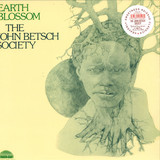
180 Gram, Tip On Sleeve RSD version of this classic. One of the rarer records of the mythical Strata East albums is finally reissued for the first time on Heavenly Sweetness!
The recording of Earth Blossom, the John Betsch Societys one and only album, seems something of an enigma nowadays. For even though Nashville is clearly one of the towns in the US with the highest number of recording studios, who would have thought that the capital of country music would give birth to one of the forgotten masterpieces of 1970s spiritual jazz. The path leading to the album starts in 1963 when John Betsch, originally from Jacksonville in Florida, arrives in Nashville to study at Frisk University. He is a young drummer and joins Bob Holmes trio. Holmes is one of the towns major jazz organists and pianists; he becomes Betschs mentor and, over the space of two years, John will play alternately with him and with the trumpeter Louis Smiths group. However, in 1965, John leaves town to go to the prestigious Berkeley University in Boston and do a two-year course along with his fellow debutants with names like John Abercrombie, Ernie Watts and Alan Broadbent. Two years later, he is invited by a pianist friend, Billy Chilf, to join the legendary singer/songwriter Tim Hardins group. Just after Woodstock, John Betsch and Tim record a psychedelic album Columbia will never release together with the members of the future group Oregon: Colin Walcott, Glen Moore, Paul McCandles and his friend Billy Chilf. But he soon leaves this group to return to Nashville where he hooks up again with his friend Bob Holmes. Two years later, he is accepted on Archie Shepp and Max Roachs famous course at the University of Massachusetts Amherst (UMASS) and for the next four years he participates in this collective of intellectuals and musicians under the aegis of the two masters.
During this period he returns to Nashville to form his Society whose music is obviously influenced by the Afrocentric ideas of the UMASS student and political movement. However, the album, recorded in one day and in one take, also bears the hallmark of their generations psychedelic experiences, and in the themes and playing of the musicians we can hear a less violent form of music than the radical free jazz of New York or Chicago. Nature and environmental themes are the inspiration behind tracks touched by the spirit of Coltrane but also of Flower Power.
After Amherst, John Betsch joins Marion Browns group in 1976, leaves Tennessee for good and makes his home in New York over the next ten years or so. He plays and records with Dollar Brand, Kalaparusha Maurice McIntyre and many others, before heading off to France. He has lived in Paris for the last twenty years and played in Steve Lacy, Mal Waldron and Archie Shepp bands, as well as forming groups of his own. He now lives in Paris and plays with many musicians/bands.
Haga su pedido ahora y le encargaremos el artículo en nuestro proveedor.
Mario Rusca is most probably the biggest living Italian jazzman. His major influences are Duke Ellingtons composing abilities and Hampton Hawes' brilliant sound. He immersed himself in the harmonic inventions of the incredible pianists of the 60s and 70s: from Bud Powell to Bobby Timmons, Wynton Kelly and Bill Evans. Mario Rusca has been the house pianist of Capolinea, the most important Italian jazz club of the 70s and 80s. He went on to perform in important national and international settings-representing Italy in the "Piano Solo'' category of the "International Festival of Varsavia" and participating with his quintet at the "International Festival of Montreal". He has collaborated with a multitude of prestigious names: Chet Baker, Tony Scott, Curtis Fuller, Gerry Mulligan, Lou Donaldson, Art Farmer, Bob Berg, Lee Konitz, Dusko Gojkovic, Al Gray, Kay Winding, as well as Stefano Bagnoli, Enrico Rava, Tullio De Piscopo, Kenny Clarke, Stan Getz, Jimmy Owens, Toots Thielemans, Gianni Basso, Pepper Adams, Steve Lacy, Steve Grossman, Franco Ambrosetti, Woody Shaw, and Eddie "Lockjaw" Davis. With Gerry Mulligan, in particular, he toured in 1976 and with Lee Konitz, he recorded Wheres The Blues? at the end of the 90s. In this regard, Suspension in 1975 with Tullio De Piscopo and Recreations in 1976 with the phenomenal Larry Nocella playing saxophone are still very beautiful and modern recordings. As Mario says, "In jazz, you choose the companions that you can dialogue the most with.there needs to be an interplay, there needs a...a way of feeling, which is why you choose musicians because they feel like you, or, if nothing else, they follow you". The chemistry between the three of them is perfectly aligned, synergistic. Tonys drums and Riccardos bass create a soft and essential rhythmic tapestry that never hinder the creative prowess of the band leader. Here Mario Rusca is interpreting the most dynamic jazz standards. Blues for Gwen by McCoy Tyner, Blues Walk by Lou Donaldson, Blue Minor by Sonny Clark, Turnaround by Ornette Coleman, Bass Blues by John Coltrane or even Super Jet by Tadd Dameron. You cant help but imagine yourself on top of a convertible, smiling and carefree, while they travel through the soloist progressions of Turnaround and Super Jet. We need to underline the four originals included in this recording: Blue Dream (for Allerim), Tempo Blues, Double Horn e Monochrome Blues, extremely suggestive compositions, rich of intuitions and which well exhibit Mario Rusca composition skills and his ability to play the blues. MONOCHROME BLUES is a winning trio album which will deeply please the most demanding jazz hears. The musicians Mario Rusca (piano) Riccardo Fioravanti (bass) Tony Arco (drums)
debe ser publicado en 05.07.2024
BBE Music is thrilled to present J Jazz: Free and Modern Jazz From Japan 1954-1988, a
remarkable large-format book covering some of the deepest, rarest, and most innovative
jazz music released anywhere in the post-war era. Compiled by Tony Higgins and Mike
Peden, co-curators of BBE Music's acclaimed J Jazz Masterclass Series, the book also
features a foreword by Japanese jazz icon, Terumasa Hino.
This is the first time a book of this type has been published outside of Japan and the first
anywhere of this size and scale. It is a unique collection of over 500 albums of free and
modern jazz released in Japan during a period of radical transformation and constant
reinvention. An era that saw Japan return from the ravages of World War Two to become a
global economic power and emerge as both a technological leader and an international
cultural force.
Through a unique gallery of albums, J Jazz charts the development of jazz in Japan from the
first stirrings of the modern jazz scene in the mid to late 1950s and on through the hard bop
and modal jazz of the 1960s. It steers the reader into the radical directions of the 1970s when
free jazz, fusion, post-bop, and jazz-funk opened up a growing number of Japanese jazz
artists to a new global audience before consolidating in the mid to late 1980s with a musical
scene that laid the path for the contemporary jazz generation to follow.
Over 500 full-colour sleeves from many of the leading names in Japanese jazz sit alongside
rare and private pressings that tell a story of constant change and musical exploration. J
Jazz includes profiles of several leading record labels such as East Wind, Frasco, King
Records, and Nippon Columbia as well as critical independents such as Three Blind Mice,
ALM, and Aketa’s Disk.
J Jazz includes interviews with celebrated jazz photographer Tadayuki Naito, and pianist
Tohru Aizawa, bandleader on the totemic spiritual jazz album, Tachibana Vol 1, as well as
free-jazz record collector and jazz musician Mats Gustafsson.
The book also features a chapter on albums by non-Japanese artists that only received a
Japanese release, with collectible, rare, and obscure releases by figures such as Herbie
Hancock, Miles Davis, Mal Waldron, Steve Lacy, and Art Blakey. J Jazz includes Japanese
jazz charts from some of the world's leading jazz DJs including Gilles Peterson, Toshio
Matsuura, Paul Murphy, and Shuya and Yoshihiro Okino. Among the specialist content is a
feature on obi strips by record dealer and Japanese jazz expert, Yusuke Ogawa, plus a
special article on Japanese Blue Note albums.
Across its 300-plus pages, J Jazz includes a detailed introduction contextualising the music,
tracing the story of Japan's fascination with jazz back before the war. It also features
biographical information on many of the key artists involved in shaping the post-war
Japanese jazz scene including Sadao Watanabe, Toshiko Akiyoshi, Masabumi Kikuchi,
Masahiko Togashi, Terumasa Hino, Yosuke Yamashita, Fumio Itabashi, Masayuki
Takayanagi, Takeo Moriyama, Isao Suzuki, and many more
debe ser publicado en 31.05.2024
Black Truffle is thrilled to announce a major archival release from legendary American composer and live electronics innovator Richard Teitelbaum, centred around his soundtrack for Suzan Pitt’s cult 1978 animation Asparagus. Best known to some listeners for introducing Europe to the Moog synthesizer as a founding member of Musica Elettronica Viva in Rome, Teitelbaum’s extensive and radically experimental body of work includes collaborative recordings with master improvisers like Anthony Braxton, Andrew Cyrille and George Lewis, intercultural experiments combining electronics with non-Western instruments such as the shakuhachi, works for computer controlled piano, and large-scale multi-media operas. Recorded at York University, Toronto in 1975–1976, ‘Asparagus (European Version)’ sprawls across both sides of the first LP. Discovered by composer Matt Sargent in Teitelbaum’s tape archive, this is a previously unheard major work for Moog modular and Polymoog synthesizers, unique in Teitelbaum’s oeuvre for its lushness and gently melodic quality. The music unfolds slowly, submerging lyrical melodies and burbling arpeggios into uneasy, glacially shifting harmonic swells, the luscious texture thickened with subtle changes of modulation and phase, calling up the shifting layers of Costin Miereanu’s classic Derives or the kosmische Musik tradition more than any academic synthesizer exercise. Teitelbaum incorporated much of this material into his soundtrack for Suzan Pitt’s Asparagus, which receives its first official release here. Asparagus, famously paired with David Lynch’s Eraserhead for a two-year run of midnight screenings at New York’s Waverly Theatre, uses hand-drawn and stop animation to unfurl an oneiric succession of images, beginning with a sequence in which the female protagonist defecates two stalks of asparagus, which multiply and float out of the toilet bowl to form the letters of the title. Teitelbaum’s soundtrack interweaves delicate drifting tones from the ‘European Version’ with contributions from Steve Lacy and Steve Potts on saxophones, George Lewis on trombone and Takehisa Kosugi on violin. Edited closely to the film, even without images the soundtrack proposes a surreal journey through floating synth tones, squealing horns, propulsive arpeggios, distant chatter, and an old-timey waltz. The final side of the set presents a new realisation of Teitelbaum’s text score ‘Threshold Music’, performed at a memorial concert at Roulette, New York in 2022 by Leila Bourreuil (cello), Alvin Curran (sampler and objects), Daniel Fishkin (daxophone), Miguel Frasconi (glass objects) and Matt Sargent (lap steel). The piece asks musicians to match their instrumental volume to that of the sounds of the environment in which they play, sometimes with the addition of recorded environmental sounds, reinforcing frequencies they encounter in listening deeply to their surroundings. Here the players use a field recording taken at Teitelbaum’s home in Bearsville, New York, their long tones and shimmering, glassy textures delicately emerging from the white noise of the location recording. Released with the full approval of both Richard Teitelbaum and Suzan Pitt’s estates, Asparagus is illustrated with striking images from Pitt’s film and accompanied by detailed liner notes by Francis Plagne. These previously unheard pieces shed new light on the work of a key composer in the American experimental tradition, offering up some of Teitelbaum’s most beautiful and engaging music.
Haga su pedido ahora y le encargaremos el artículo en nuestro proveedor.
High Llamas present Hey Panda - a modern pop music/deep listening experience that could only issue forth from their personal quadrant of the galaxy. Hey Panda projects soulfully through an enervating abstract of today"s popular music; the sound of the Llamas" stately melodies and expressive ditties laid open - blissfully shattered - with drums and vocals hitting different, burning sounds and contemporary production twists pulling the ear at every turn. For the past few decades, High Llamas have trafficked in contemporary pop sounds directed toward the avant end of the spectrum as much as not. But here the message was clear. Llamas" composer-in-residence Sean O"Hagan was determined to let go. Hey Panda does just that, with a set of tunes reflecting on multiple levels how definitions change over the course of a lifetime, radiating an optimism derived from the diverse conundrums of today. Eight years since their last release, the pop musical Here Come The Rattling Trees, High Llamas have reinvented themselves again, mixing their peerless harmonic voice with what Sean regards as the "extraordinarily good" production sounds of today on Hey Panda. Choosing not to look backward to former golden ages celebrated in earlier Llamas eras, Sean"s instead found himself opened up by the sounds of music brought into the house by his adult children and the sounds encountered at sessions for which he"s recently written arrangements. In addition to the more traditional contributions he made to The Coral"s Sea of Mirrors album, plus his score for the Safdie brothers" 2022 film production, Funny Pages, Sean"s drawn great inspiration through working with Fryars, Rae Morris, King Krule, Pearl and The Oyster, while also soaking up the work of Tierra Whack and Chicago"s Pivot Gang, and being cheered on from a distance by longtime admirer Tyler The Creator. Thus, Sean"s producer procedural has evolved again, with upgrades first detected in his 2019 solo effort, Radum Calls, Radum Calls. With a cover of Billie Eilish"s "Wish You Were Gay" arranged for Bill Callahan and Bonnie Prince Billy"s Blind Date Party, along with his COVID-era solo single, "The Wild Are Welcome", Sean has leveled up again and again, leading to the delirious revelations of Hey Panda. Hey Panda"s wide reach is aided by two co-writes from Bonnie "Prince" Billy, (who bonded with Sean over a shared love of gospel soul during writing sessions), guest vocals from Rae Morris and Sean"s daughter Livvy, production twists from Fryars and the stalwart, flexible presence of High Llamas. For all of its sense of departure, Hey Panda is a movement in the High Llamas oeuvre that"s been a long time in development. Aspects of soul music were addressed at the time of Can Cladders; similarly, aspects of electronic dance music were in the mix in the late 90s, around the time of Cold and Bouncy. But nothing up to now has refocused the music of High Llamas so completely. Sharing the impulse of late-period Miles Davis and Quincy Jones, with further inspiration from Steve Lacy, SZA, Sault, No Name and Ezra Collective, among many others, Sean O"Hagan and High Llamas are living joyfully in the new and the now, with Hey Panda.
debe ser publicado en 29.03.2024
Miles Davis is regarded to be one of the most influential and acclaimed figures in the history of jazz and 20th-century music. Quiet Nights is the fourth and last studio album that Davis collaborated on with Gil Evans. The 1963 release took inspiration from the bossa nova genre that rose to popularity during the time.
Quiet Nights is a mix of situations and sources: Brazilian folk (“Prenda Minha”, titled “Song #2” on the album), Spanish classical (“Adelita” by guitar pioneer Francisco Tárrega, here called “Song #1”), and a few ballads, including one that stands out from the rest of the big band album: “Summer Night,” a quintet take featuring Miles playing muted then open trumpet and the start of a new band: tenor saxophonist George Coleman, pianist Victor Feldman, bassist Ron Carter, and drummer Frank Butler.
The album was produced by Teo Macero. Some of the additional performers on this album include Paul Chambers, Bill Barber, Steve Lacy, Jimmy Cobb, Willie Bobo, and George Coleman amongst others.
debe ser publicado en 22.09.2023
Everything becomes fluid when you can pass through time and space like a ghost, a story, a melody. Boy Golden manifests all three on For Jimmy. When listening to his music, it feels easy to dissolve into the ether. Everything flows. From classic country to psych-folk, Alternative to roadhouse pop to Appalaichan bluegrass, Boy Golden’s music is easy, breezy, warm and gritty. And don’t it just feel good to listen to it. Since releasing his debut album, Church of Better Daze, in 2021, he’s played every summer festival on your list, produced a number of albums with friends, released a dozen videos, curated and directed an art show and music video for “KD & Lunchmeat”, the Seth-Rogenesque hit single that charted to #1 on Alternative Radio, and toured with The Sheepdogs on their most recent North American tour. Introspective and vulnerable, traditional and queer, hard-headed and sensual, Boy Golden’s everyman-aesthetic can appeal to all of us. This ability lies in his songwriting: the songs your friends tell you about, the stories you hear from your neighbours, your community. He’s comfortable both in the spotlight and just outside it, sharing the moments with other artists, lifting others up along with him. He’s a genuine student of Townes Van Zandt and Willie Nelson as much as Dwight Yoakam and Stevie Ray Vaughan . Plus his C.O.B.D philosophy, “You can blaze and still get paid” might help us all to blur borders and old definitions of genres we thought we knew, like Steve Lacy or Justin Vernon do for Pop music. Boy Golden is able to maintain his own unique blend of Boy Golden using whatever frame of mind he’s in to fit us into this time. We’re here right now.
debe ser publicado en 22.09.2023
Thelonious Monk could walk from his flat to New York’s famous Philharmonic Hall on the corner of 64th Street and Broadway when he made his very first appearance there with his Big Band in December 1963. And the other musicians could get there on the underground: Phil Woods, Steve Lacy, Thad Jones – all of them were members of Monk’s closest circle of collaborators.
It is no wonder then that the well-known themes were highly agreeable and harmonious. "I Mean You", "Four In One" and "Epistrophy" resounded through the auditorium, the audience was thrilled, Thelonious laughed and danced and a short while later fans could listen to parts of the concert on a recording released by Columbia Records. In a break for a smoke, Monk sat himself down at the piano and played "Darkness On The Delta" – nocturnal atmosphere pure.
Does it bear the patina of times long past? Absolutely not! Thelonious Monk is as red-hot as he ever was.
debe ser publicado en 31.08.2023
'Blowout', das neue Album von John Carroll Kirby - GRAMMY Award nominierter Produzent, Komponist und Keyboarder aus Los Angeles - wurde von den Menschen, der Musik und der Natur Costa Ricas inspiriert.
'Blowout' enthält alle Merkmale des charakteristischen Sounds, den John Carroll Kirby im Laufe von sechs Soloalben und Dutzenden von Kollaborationen entwickelt hat - Verspieltheit, Humor und Überschwänglichkeit.
Kirby hat mit Superstars wie Solange, Frank Ocean und Harry Styles sowie mit Indie-Künstlern wie Yves Tumor, Liv.e, Remi Wolf, Eddie Chacon und YuSu zusammengearbeitet. Für seinen Beitrag zu Steve Lacys Gemini Rising und die Leadsingle 'Bad Habit' wurde er für einen GRAMMY nominiert.
Haga su pedido ahora y le encargaremos el artículo en nuestro proveedor.
Black Truffle is pleased to announce Symphony No. 107 –The Bard, a previously unheard archival recording of the legendary improvising ensemble MEV (Musica Elettronica Viva), captured in concert at Bard College, New York in 2012. Formed by a group of American expat composers in Rome in 1966, the MEV ensemble played an important role in the development of free improvisation, bridging the live electronics tradition begun by Cage and Tudor and the high-energy squall of free jazz. Early recordings like Spacecraft or The Sound Pool unleash volleys of metal and glass amplified with contact microphones, howling winds, primitive synthesizer bleep and raucous audience participation, the intensity of which puts much later ‘noise’ to shame. In later decades, the ensemble would go through many iterations, often including legendary free players like Steve Lacy and George Lewis. In its final years, MEV settled into the core trio of founding members heard here: Alvin Curran, Frederic Rzewski, and Richard Teitelbaum, using piano, electronics, and small instruments.
Curran, Rzewski, and Teitelbaum were life-long friends blessed, as Curran says, with ‘incompatible personalities’: major figures in the post-Cagean experimental tradition, they explored countless divergent and even contradictory paths as composers and performers, from agitprop songs to brainwave-controlled synthesis. MEV is the sound of these three personalities coming together, their contributions radically individual yet attaining a state of ‘fundamental unity’ that Rzewski, in a text written in the collective’s earliest years, defined as the ‘final goal of improvisation’. Of course, listeners familiar with aspect of the trio’s individual works might hazard some guesses about who is doing what: the crisp piano figures are probably Rzewski’s, the cut-up hip-hop samples most likely Curran’s, the sliding, squelching synth possibly Teitelbaum’s. But often these identities are dissolved in a constantly shifting hall of mirrors, the listener unable to tell which of these pianos is live and which is a sample of a past virtuoso, or whether a horn blast derives from ethnographic documentation or Curran cutting loose on Shofar. The two side-long sets here occupy a similar terrain of constantly shifting texture and instrumentation, unexpected interruptions, and moments of sudden beauty. The first set is sparser, at times almost ominous, as a bell repeatedly sounds across wheezing harmonica, seasick orchestral textures, and creaking wood, making room for episodes of yodelling and delicate prepared piano before exploding into a storm of buzzing synth and piano fragments. The second set is more frenetic, moving rapidly across centuries and continents: cars crash into post-serial piano pointillism, wailing voices collide with chopped and screwed hip-hop samples, Hollywood strings are buried under layers of electronic gurgles. The performance slows in its final moments, making way for a sampled voice repeating the phrase ‘protest and the good of the world’, reminding us that MEV’s idea of freedom was always more than musical. Symphony No. 107 –The Bard is a beautifully recorded example of the endlessly multi-layered later MEV sound, accompanied by new liner notes by Alvin Curran (now the only surviving member of the group) and a selection of previously unseen photographs from across the many decades of the group’s activity. Arriving in an elegant sleeve bearing a beautiful photograph by Francis Zhou of the Olin Hall at Bard College where the concert was recorded, this is an essential document from a major group in the history of experimental music. As Rzewski wrote, this music is ‘like life, unpredictable, sometimes making sense, mostly not’.
Haga su pedido ahora y le encargaremos el artículo en nuestro proveedor.
Giovanni Tommaso is an Italian Jazz bassist and founder and member of the important Italian Jazz Rock ensembles, the Perigeo band.
He composed »Indefinitive Atmosphere« at the end of 1969, recorded it at Rca studios in Rome & released a few months after in 1970 on Sermi label. »Indefinitive Atmosphere« was the first album, he released as a sole composer/artist. The Maestro dug in personal archive for us and finally found a copy of the original master tape containing part of the recordings. Besides the misspelled title »Indefinitive« instead of »Indefinite«, that became part of the legend here, this album was incredibly ahead of his time, with the young Maestro Tommaso playing electric bass and contrabass a in studio ensemble composed of 3/4 elements plus the strings section, with plenty of stunning Jazz-Funk, Jazz-Rock and Free Jazz tracks. The session is also known for including the legendary American Jazz soprano sax Steve Lacy on the track called »Steve"«, where he plays a sax solo.
We entirely restored the full session from the original tapes found, and digitally remastered the sound for a greater sound experience, chasing the original analog source.
debe ser publicado en 12.05.2023
The axolotl is a species of salamander native to Mexico, living in a state of larva and having the capacity to regenerate damaged organs. This brief introduction doesn’t tell us if the axolotl sings. But, for the one that concerns us here: yes indeed.
In Paris, at the end of the 1970s, Etienne Brunet and Marc Dufourd would improvise regularly, inspired by some other saxophone-guitar duos: Claude Bernard-Raymond Boni firstly, then Evan Parker-Derek Bailey. When Jacques Oger (a saxophonist whom Brunet had met at a workshop given by Steve Lacy at the Châteauvallon festival in 1977) joined the duo Brunet-Dufourd, Axolotl was born.
Iconoclastic, the trio was bound to please Jac Berrocal, and he proposed to record their first album on the label ‘D’avantage’. In spring 1981 three days were just enough for Oger (tenor and barytone saxophones), Brunet (alto saxophone, bass clarinet and ‘things’) and Dufourd (electric guitar) to complete Axolotl, the first album by a group which would record ... two.
If there was a collective of iconoclasts, the trio would be there with some relatives: Alterations, Fred Frith, John Zorn, the ROVA Saxophone Quartet... and then because we mention a collective, Axolotl steps (considerably) beyond the domain of free improvisation to lean towards jazz (“Illusion”, “Paris, froissé”), No Wave (“Ombre pilée”, “Trottoirs défunts”), contemporary (“Oreiller”, “D’autres seuls”), and even what we could call ... acid fun (“Dehors”).
Above all, Axolotl wanted to really get to grips with sound via an expression as direct as it was liberating, as can be heard on “Ozone, flocon, torsion”, producing a noise that, even today pierces the brain. All we can hope is that now, thanks to this wonderful reissue, listeners will be able, like the axolotl, of regeneration.
debe ser publicado en 31.03.2023
Dickie Landry & Lawrence Weiner's Having Been Built on Sand was conceived as a vinyl edition and released by the Rüdiger Schöttle gallery in Munich with sleeve design by Weiner. The piece consists of eight untitled tracks. Lawrence Weiner, Tina Girouard, and Britta Le Va recite text with Dickie Landry’s woodwinds, all recorded in the natural reverb of Robert Rauschenberg’s studio, a former mission and chapel in Lower Manhattan. Layering Girouard in English, Le Va in German, and Weiner in English and German blocks of related or physically proximal texts repeat, invert, and intersect with Landry’s music as a constant. The layers of text and sound have meanings that fluctuate in complexity and scope, and like much of Weiner’s work, beyond mere facts.
The first piece is a trio for Landry’s keening tenor, repeating winnowed but breathy lines that contrast with and buoy Le Va’s clear, husky phrases, building in intensity as Weiner, in English, offers statements that are caught just off mic. The third cut adds Girouard, and one can hear woven parallels in the two women’s voices, cadences, and pitches, with Weiner’s cutting inflection dancing amid them. Landry’s bass clarinet is rich in its warble, full and gentle with woody footfalls that demarcate shapes through the chorus. Vocal rhythmic cycles, wordless in nature, are the energy that courses through the fourth song, urgent and sweaty as Weiner recites statements of political position in the Middle Ages, Le Va declaiming alongside in German. On soprano saxophone for the fifth tune, Landry pierces and darts in a bright manner in a private dialogue with himself, echoing Steve Lacy as female voices nearly bury one
debe ser publicado en 18.11.2022
Produced by Fussell and co-founder Alana Pagnutti and
mixed by Joel Ford (Ford & Lopatin, Yes/And), ‘Honey
Harper & The Infinite Sky’ features the premiere of The
Infinite Sky, a stacked backing band consisting of longtime
bassist and contributing writer Mick Mayer, pianist John
Carroll Kirby (Solange, Steve Lacy), Spoon keyboardist
Alex Fischel, guitarist Jackson MacIntosh (Drugdealer,
Jessica Pratt), pedal-steel player Connor Gallaher (Black
Lips, Calexico), and TOPS drummer Riley Fleck.
Within the first few moments of the self-titled new album,
Honey Harper and The Infinite Sky deliver a dashed-off
statement on the trappings of country music. Despite the
high level of conceptualization that went into its creation,
the record embodies an irresistibly loose and grooveheavy sound that hits with an immediate impact. While
previous album, ‘Starmaker’, was touted as “country music
for people who don’t like country music,” ‘Honey Harper &
The Infinite Sky’ is “country music for everyone.”
debe ser publicado en 28.10.2022
Kari Faux is a multi-faceted artist - rapper, singer, producer, DJ and
clothing designer - from Little Rock, AR - She is known for her bold
fashion and genre-bending music, fusing elements of southern hip-hop,
funk, and alternative soundscapes
Her unique style of rhyming, dashes of sultry vocal harmonizing and confidence
have helped garner a cult following and make her a force amongst the new
generation of hip-hop's most fearless and outspoken female voices. At the start
of her career, Kari's hit 'No Small Talk' was remixed by Childish Gambino and
featured on HBO's Insecure. Since then, she has made an imprint on the music
industry as an independent artist who has released four projects, headlined tours,
opened for acts such as Steve Lacy and Mick Jenkins, and has written or
produced on tracks for artists such as The Internet. Kari Faux's forthcoming
album, Lowkey Superstar Deluxe, drops September 24 and features fellow heavyhitters Smino, J.I.D, Yung Baby Tate, Jazz Cartier and Deante' Hitchcock. Lowkey
Superstar represents a new chapter along Kari Faux's creative journey. What
started as a phrase has turned into two independent albums, a record label,
clothing line and identity representative of Kari's innate superstar qualities mixed
with her lowkey demeanor. The Lowkey Superstar Deluxe album is a sonic
conglomeration of Kari's longtime influences, including funk, alternative, and
southern rap soundscapes and covers a range of topics from self-preservation to
dating to braggadocious raps.
debe ser publicado en 07.07.2022
'Mellow Moon' is the debut album from Alfie Templeman - an album that
"feels like something of a miracle, landing somewhere between an
otherworldly trip and a joy-filled ode to life back on earth"
Like all journeys, the change in mood is palpable throughout Mellow Moon, with
songs like the nostalgic '3D Feelings' or 'Broken', which is about "all the little
wobbles of being a teen and figuring yourself out," that bristle with the energy of a
life being lived again.
There's nuance in there, too. Candyfloss suggests that life can sometimes appear
too good to be true, something Alfie has felt since was a kid. "There's always a
downside to the cool shit," he says. "Candyfloss is what it all appears to be until
you get deeper into it."
The result is an easily accessible comfort place. Across 14 tracks Alfie closes his
eyes and imagines another world, one where he's at ease and not distracted by
life's many challenges.
Inspired by modern influences like Steve Lacy, Khruangbin and Leon Bridges, as
well as Alfie's constant cosmic guide Todd Rundgren, Mellow Moon flows with an
ease that belies its difficult creation. "It's a moment in my life that I want to
remember forever. I've put so much effort into this and it's a real experience to
listen to."
Acting as both an intimate diary entry and a communal call to arms, Mellow
Moon is Alfie's most complete work to date and a platform from which he will
surely use to propel himself further into the stratosphere. If ever proof were
needed that music is a salvation or a transportative force, this is it.
Live sessions with Radio 1, Radio 2 and Virgin have now aired.
TV performances confirmed with Sunday Brunch (22 May) and Blue Peter (20
May), the week prior to album release (EMBARGOED!!!!!).
135M total global career streams
debe ser publicado en 25.06.2022
To write these few lines, we spoke to saxophonist François Jeanneau, an old friend of Jacques Thollot who also played on several of his albums, including the “Watch Devil Go” which interests us here. He told us a story which, according to him, sums up the personality of Thollot. A noted studio had reserved three days for a Thollot recording session. The first morning was devoted to sound checks and putting some order in the score sheets which Jacques would hand out in a somewhat anarchic manner. Then everyone went for lunch. When the musicians returned to the studio, Thollot had disappeared. He wasn’t seen again for the three days. When he reappeared, he had already forgotten why he had left, The music of Jacques Thollot is in the image of its’ author: it takes you somewhere, suddenly escapes and disappears, returning in an unexpected place as if nothing had happened.
Four years after a first album on the Futura label in 1971, Jacques Thollot returned, this time on the Palm label of Jef Gilson, still with just as much surrealist poetry in his jazz. In thirty-five minutes and a few seconds, the French composer and drummer, who had been on the scene since he was thirteen, established himself as a link between Arnold Schoenberg and Don Cherry. Resistant to any imposed framework and always excessive, Thollot allows himself to do anything and everything: suspended time of an extraordinary delicacy, a stealthy explosion of the brass section, hallucinatory improvisation of the synthesisers, tight writing, teetering on the classical, and in the middle of all that, a hit; the title-track - that Madlib would one day end up hearing and sampling.
“Watch Devil Go” was in the right place in the Palm catalogue, which welcomed the cream of the French avant-garde in the 70s. But it is also the story of a long friendship between two men. Jacques Thollot and Jef Gilson had known and respected one another for a long time. Though barely sixteen years old, Thollot was already on drums on the first albums by Gilson starting in 1963 and would play in his big band (alongside François Jeanneau once again), ‘Europamerica’, until the end of the 70s.
In a career lasting half a century and centred on freedom Jacques Thollot played with the most important experimental musicians (Don Cherry, Sonny Sharrock, Michel Roques, Barney Wilen, Steve Lacy, François Tusques, Michel Portal, Jac Berrocal, Noël Akchoté...) and they all heard in him a pulsation coming from another world. (Jérôme "Kalcha" Simonneau)
debe ser publicado en 26.11.2021