Search:spiritual south

Styles
All
Barrio Lindo - Espuma de Mar

Barrio Lindo

Espuma de Mar

12inchLPSHSH050C
SHIKA SHIKA
18.11.2022

Buenos Aires-based producer, luthier and musician Barrio Lindo presents
his fourth LP - Espuma de Mar - and his first recorded in a band format
The eight-track album represents a departure for the producer, embracing a much
more acoustic sound, inspired by a period of deep listening. The result is an
unforgettable journey that skillfully navigates between Spiritual Jazz and LatinAmerican popular music like Tango or Bolero, all embellished by subtle touches
of electronica. Unlike anything else, it is a glimpse into the future of the everevolving and bubbling South American music scene. Pressed on 180-gram White
color vinyl.

pre-order now18.11.2022

expected to be published on 18.11.2022

SARATHY KORWAR - KALAK LP

Sarathy Korwar

KALAK LP

12inchBAYVX125
Leaf
11.11.2022

Sarathy Korwar returns with new album KALAK. The follow up to the politically charged, award-winning More Arriving is an Indo-futurist manifesto - in rhythmic step with the past and the present, it sets out to describe a route forward. It celebrates a rich South Asian culture of music and literature, which resonates with spirituality and community, while envisaging a better future from those building blocks. Recorded at Real World studios with meticulous production by New York electronic musician, DJ and producer Photay, who translates these communal rhythms and practices into a timeless and groundbreaking electronic record. There"s a spirituality and warmth at play in the polyrhythms, group vocals and melodic flourishes. The KALAK rhythm is the fulcrum upon which the 11-track project balances. After an intense lockdown induced period of reflection and meticulous note-making, Korwar boiled this down to the circular KALAK symbol which he then presented to his band before recording began. With the symbol projected on the walls in order to de-code and improvise around, Korwar had utter faith in the musicians he"d assembled and conviction in the concept.

pre-order now11.11.2022

expected to be published on 11.11.2022

Southside Johnny & The Asbury Jukes - Live In Cleveland '77 (2LP)

Before Southside Johnny and the Asbury Jukes even had an album on the shelves, they were being played on the radio in Cleveland. That’s how far back the New Jersey band’s relationship goes with the city. As the “Jukes” part of their name would suggest, Southside Johnny and his group were spiritually a band from another time. They had a big sound (and a full horn section, courtesy of The Miami Horns) that conjured a vision of a large band, jammed together on the bandstand. Which was hardly far from the truth on a number of nights. Mixing carefully chosen blues and soul covers with their own originals (and some choice songwriting contributions from Bruce Springsteen), they had a live show that was even more potent than what had been laid to tape in the studio. This 1977 performance at the Cleveland Agora was the group’s second outing at the legendary venue in less than a year. Live in Cleveland ‘77, the recorded evidence of that night, presented here for the first time by Cleveland International Records, shows exactly why they would become frequent visitors and really, honorary Clevelanders. Songs like “I Don’t Want to Go Home,” Springsteen’s “The Fever,” “Havin’ a Party” and “Without Love” were already well-loved favorites with the local audience, thanks to frequent airplay on WMMS long before they even had an album. Cleveland got a special bonus round that other cities would have killed for. Ronnie Spector had joined the group in the studio as they recorded that debut and came to Cleveland to share the stage with the Jukes, sharing her soon-to-be-legendary take on Billy Joel’s “Say Goodbye to Hollywood” with the Agora crowd. As she did with so many songs, Spector made it her own. Southside Johnny and the Jukes continue to thrill audiences with their live performances worldwide to this day. Now, thanks to the release of Live in Cleveland ‘77, you can be in the audience to hear a bit of the early magic as they were on their way to the top.

pre-order now04.11.2022

expected to be published on 04.11.2022

Ndikho Xaba And The Natives - 50th Anniversary Remaster (2022)

Ndikho Xaba was born in 1934 in Pietermaritzburg, KZN, South Africa. For thirty-four years — 1964 -1998 — he lived in exile in the US, Canada and Tanzania. Originally issued by Trilyte Records out of Oakland, California, this 1970 recording is bracing, freewheeling Now Thing, suffused with SA idioms, and focussed by a political urgency wiring together US Black Power, Black Aesthetics and the anti-apartheid front-line like nothing else. You can hear Trane from the off — 'a spiritual offering to my ancestors' — and plenty of Sun Ra, with whom The Natives several times shared double-bills. (Xaba was to become close with Phil Cohran and the AACM.) Freedom is a gutbucket-soul rendition of the people's anthem; Nomusa is dedicated to Xaba's new wife, a poet and CORE activist from Chicago. The thunderous finale Makhosi features drummer Keita from the West Indies, and Baba Duru, who studied percussion in India, before winding up with Xaba blowing eerily through a horn made from a giant piece of tubular seaweed. Hats off to Matsuli for this outstanding reissue.

out of Stock

Order now and we will order the item for you at our supplier.


Last In: 3 years ago
Lee Tracy & Isaac Manning - Is it What You Want

As the sun sets on a quaint East Nashville house, a young man bares a piece of his soul. Facing the camera, sporting a silky suit jacket/shirt/slacks/fingerless gloves ensemble that announces "singer" before he's even opened his mouth, Lee Tracy Johnson settles onto his stage, the front yard. He sways to the dirge-like drum machine pulse of a synth-soaked slow jam, extends his arms as if gaining his balance, and croons in affecting, fragile earnest, "I need your love… oh baby…"

Dogs in the yard next door begin barking. A mysterious cardboard robot figure, beamed in from galaxies unknown and affixed to a tree, is less vocal. Lee doesn't acknowledge either's presence. He's busy feeling it, arms and hands gesticulating. His voice rises in falsetto over the now-quiet dogs, over the ambient noise from the street that seeps into the handheld camcorder's microphone, over the recording of his own voice played back from a boombox off-camera. After six minutes the single, continuous shot ends. In this intimate creative universe there are no re-takes. There are many more music videos to shoot, and as Lee later puts it, "The first time you do it is actually the best. Because you can never get that again. You expressing yourself from within."

"I Need Your Love" dates from a lost heyday. From some time in the '80s or early '90s, when Lee Tracy (as he was known in performance) and his music partner/producer/manager Isaac Manning committed hours upon hours of their sonic and visual ideas to tape. Embracing drum machines and synthesizers – electronics that made their personal futurism palpable – they recorded exclusively at home, live in a room into a simple cassette deck. Soul, funk, electro and new wave informed their songs, yet Lee and Isaac eschewed the confinement of conventional categories and genres, preferring to let experimentation guide them.

"Anytime somebody put out a new record they had the same instruments or the same sound," explains Isaac. "So I basically wanted to find something that's really gonna stand out away from all of the rest of 'em." Their ethos meant that every idea they came up with was at least worth trying: echoed out half-rapped exhortations over frantic techno-style beats, gospel synth soul, modal electro-funk, oddball pop reinterpretations, emo AOR balladry, nods to Prince and the Fat Boys, or arrangements that might collapse mid-song into a mess of arcade game-ish blips before rallying to reach the finish line. All of it conjoined by consistent tape hiss, and most vitally, Lee's chameleonic voice, which managed to wildly shape shift and still evoke something sincere – whether toggling between falsetto and tenor exalting Jesus's return, or punctuating a melismatic romantic adlib with a succinct, "We all know how it feels to be alone."

"People think we went to a studio," says Isaac derisively. "We never went to no studio. We didn't have the money to go to no studio! We did this stuff at home. I shot videos in my front yard with whatever we could to get things together." Sometimes Isaac would just put on an instrumental record, be it "Planet Rock" or "Don't Cry For Me Argentina" (from Evita), press "record," and let Lee improvise over it, yielding peculiar love songs, would-be patriotic anthems, or Elvis Presley or Marilyn Monroe tributes. Technical limitations and a lack of professional polish never dissuaded them. They believed they were onto something.

"That struggle," Isaac says, "made that sound sound good to me."

In the parlance of modern music criticism Lee and Isaac's dizzying DIY efforts would inevitably be described as "outsider." But "outsider" carries the burden of untold additional layers of meaning if you're Black and from the South, creating on a budget, and trying to get someone, anyone within the country music capital of the world to take your vision seriously. "What category should we put it in?" Isaac asks rhetorically. "I don't know. All I know is feeling. I ain't gonna name it nothing. It's music. If it grabs your soul and touch your heart that's what it basically is supposed to do."

=

Born in 1963, the baby boy of nine siblings, Lee Tracy spent his earliest years living amidst the shotgun houses on Nashville's south side. "We was poor, man!" he says, recalling the outhouse his family used for a bathroom and the blocks of ice they kept in the kitchen to chill perishables. "But I actually don't think I really realized I was in poverty until I got grown and started thinking about it." Lee's mom worked at the Holiday Inn; his dad did whatever he had to do, from selling fruit from a horse drawn cart to bootlegging. "We didn't have much," Lee continues, "but my mother and my father got us the things we needed, the clothes on our back." By the end of the decade with the city's urban renewal programs razing entire neighborhoods to accommodate construction of the Interstate, the family moved to Edgehill Projects. Lee remembers music and art as a constant source of inspiration for he and his brothers and sisters – especially after seeing the Jackson 5 perform on Ed Sullivan. "As a small child I just knew that was what I wanted to do."

His older brother Don began musically mentoring him, introducing Lee to a variety of instruments and sounds. "He would never play one particular type of music, like R&B," says Lee. "I was surrounded by jazz, hard rock and roll, easy listening, gospel, reggae, country music; I mean I was a sponge absorbing all of that." Lee taught himself to play drums by beating on cardboard boxes, gaining a rep around the way for his timekeeping, and his singing voice. Emulating his favorites, Earth Wind & Fire and Cameo, he formed groups with other kids with era-evocative band names like Concept and TNT Connection, and emerged as the leader of disciplined rehearsals. "I made them practice," says Lee. "We practiced and practiced and practiced. Because I wanted that perfection." By high school the most accomplished of these bands would take top prize in a prominent local talent show. It was a big moment for Lee, and he felt ready to take things to the next level. But his band-mates had other ideas.

"I don't know what happened," he says, still miffed at the memory. "It must have blew they mind after we won and people started showing notice, because it's like everybody quit! I was like, where the hell did everybody go?" Lee had always made a point of interrogating prospective musicians about their intentions before joining his groups: were they really serious or just looking for a way to pick up girls? Now he understood even more the importance of finding a collaborator just as committed to the music as he was.

=

Isaac Manning had spent much of his life immersed in music and the arts – singing in the church choir with his family on Nashville's north side, writing, painting, dancing, and working various gigs within the entertainment industry. After serving in the armed forces, in the early '70s he ran The Teenage Place, a music and performance venue that catered to the local youth. But he was forced out of town when word of one of his recreational routines created a stir beyond the safe haven of his bohemian circles.

"I was growing marijuana," Isaac explains. "It wasn't no business, I was smoking it myself… I would put marijuana in scrambled eggs, cornbread and stuff." His weed use originated as a form of self-medication to combat severe tooth pain. But when he began sharing it with some of the other young people he hung out with, some of who just so happened to be the kids of Nashville politicians, the cops came calling. "When I got busted," he remembers, "they were talking about how they were gonna get rid of me because they didn't want me saying nothing about they children because of the politics and stuff. So I got my family, took two raggedy cars, and left Nashville and went to Vegas."

Out in the desert, Isaac happened to meet Chubby Checker of "The Twist" fame while the singer was gigging at The Flamingo. Impressed by Isaac's zeal, Checker invited him to go on the road with him as his tour manager/roadie/valet. The experience gave Isaac a window into a part of the entertainment world he'd never encountered – a glimpse of what a true pop act's audience looked like. "Chubby Checker, none of his shows were played for Black folks," he remembers. "All his gigs were done at high-class white people areas." Returning home after a few years with Chubby, Isaac was properly motivated to make it in Music City. He began writing songs and scouting around Nashville for local talent anywhere he could find it with an expressed goal: "Find someone who can deliver your songs the way you want 'em delivered and make people feel what you want them to feel."

One day while walking through Edgehill Projects Isaac heard someone playing the drums in a way that made him stop and take notice. "The music was so tight, just the drums made me feel like, oh I'm-a find this person," he recalls. "So I circled through the projects until I found who it was.

"That's how I met him – Lee Tracy. When I found him and he started singing and stuff, I said, ohhh, this is somebody different."

=

Theirs was a true complementary partnership: young Lee possessed the raw talent, the older Isaac the belief. "He's really the only one besides my brother and my family that really seen the potential in me," says Lee. "He made me see that I could do it."

Isaac long being a night owl, his house also made for a fertile collaborative environment – a space where there always seemed to be a new piece of his visual art on display: paintings, illustrations, and dolls and figures (including an enigmatic cardboard robot). Lee and Issac would hang out together and talk, listen to music, conjure ideas, and smoke the herb Isaac had resumed growing in his yard. "It got to where I could trust him, he could trust me," Isaac says of their bond. They also worked together for hours on drawings, spreading larges rolls of paper on the walls and sketching faces with abstract patterns and imagery: alien-like beings, tri-horned horse heads, inverted Janus-like characters where one visage blurred into the other.

Soon it became apparent that they didn't need other collaborators; self-sufficiency was the natural way forward. At Isaac's behest Lee, already fed up with dealing with band musicians, began playing around with a poly-sonic Yamaha keyboard at the local music store. "It had everything on it – trumpet, bass, drums, organ," remembers Lee. "And that's when I started recording my own stuff."

The technology afforded Lee the flexibility and independence he craved, setting him on a path other bedroom musicians and producers around the world were simultaneously following through the '80s into the early '90s. Saving up money from day jobs, he eventually supplemented the Yamaha Isaac had gotten him with Roland and Casio drum machines and a Moog. Lee was living in an apartment in Hillside at that point caring for his dad, who'd been partially paralyzed since early in life. In the evenings up in his second floor room, the music put him in a zone where he could tune out everything and lose himself in his ideas.

"Oh I loved it," he recalls. "I would really experiment with the instruments and use a lot of different sound effects. I was looking for something nobody else had. I wanted something totally different. And once I found the sound I was looking for, I would just smoke me a good joint and just let it go, hit the record button." More potent a creative stimulant than even Isaac's weed was the holistic flow and spontaneity of recording. Between sessions at Isaac's place and Lee's apartment, their volume of output quickly ballooned.

"We was always recording," says Lee. "That's why we have so much music. Even when I went to Isaac's and we start creating, I get home, my mind is racing, I gotta start creating, creating, creating. I remember there were times when I took a 90-minute tape from front to back and just filled it up."

"We never practiced," says Isaac. "See, that was just so odd about the whole thing. I could relate to him, and tell him about the songs I had ideas for and everything and stuff. And then he would bring it back or whatever, and we'd get together and put it down." Once the taskmaster hell bent on rehearsing, Lee had flipped a full 180. Perfection was no longer an aspiration, but the enemy of inspiration.

"I seen where practicing and practicing got me," says Lee. "A lot of musicians you get to playing and they gotta stop, they have to analyze the music. But while you analyzing you losing a lot of the greatness of what you creating. Stop analyzing what you play, just play! And it'll all take shape."

=

"I hope you understood the beginning of the record because this was invented from a dream I had today… (You tell me, I'll tell you, we'll figure it out together)" – Lee Tracy and Isaac Manning, "Hope You Understand"

Lee lets loose a maniacal cackle when he acknowledges that the material that he and Isaac recorded was by anyone's estimation pretty out there. It's the same laugh that commences "Hope You Understand" – a chaotic transmission that encapsulates the duality at the heart of their music: a stated desire to reach people and a compulsion to go as leftfield as they saw fit.

"We just did it," says Lee. "We cut the music on and cut loose. I don't sit around and write. I do it by listening, get a feeling, play the music, and the lyrics and stuff just come out of me."

The approach proved adaptable to interpreting other artists' material. While recording a cover of Whitney Houston's pop ballad "Saving All My Love For You," Lee played Whitney's version in his headphones as he laid down his own vocals – partially following the lyrics, partially using them as a departure point. The end result is barely recognizable compared with the original, Lee and Isaac having switched up the time signature and reinvented the melody along the way towards morphing a slick mainstream radio standard into something that sounds solely their own.

"I really used that song to get me started," says Lee. "Then I said, well I need something else, something is missing. Something just came over me. That's when I came up with 'Is It What You Want.'"

The song would become the centerpiece of Lee and Isaac's repertoire. Pushed along by a percolating metronomic Rhythm King style beat somewhere between a military march and a samba, "Is It What You Want" finds Lee pleading the sincerity of his commitment to a potential love interest embellished by vocal tics and hiccups subtlely reminiscent of his childhood hero MJ. Absent chord changes, only synth riffs gliding in and out like apparitions, the song achieves a lingering lo-fi power that leaves you feeling like it's still playing, somewhere, even after the fade out.

"I don't know, it's like a real spiritual song," Lee reflects. "But it's not just spiritual. To me the more I listen to it it's like about everything that you do in your everyday life, period. Is it what you want? Do you want a car or you don't want a car? Do you want Jesus or do you want the Devil? It's basically asking you the question. Can't nobody answer the question but you yourself."

In 1989 Lee won a lawsuit stemming from injuries sustained from a fight he'd gotten into. He took part of the settlement money and with Isaac pressed up "Saving All My Love For You" b/w "Is It What You Want" as a 45 single. Isaac christened the label One Chance Records. "Because that's all we wanted," he says with a laugh, "one chance."

Isaac sent the record out to radio stations and major labels, hoping for it to make enough noise to get picked up nationally. But the response he and Lee were hoping for never materialized. According to Isaac the closest the single got to getting played on the radio is when a disk jock from a local station made a highly unusual announcement on air: "The dude said on the radio, 107.5 – 'We are not gonna play 'Is It What You Want.' We cracked up! Wow, that's deep.

"It was a whole racist thing that was going on," he reflects. "So we just looked over and kept on going. That was it. That was about the way it goes… If you were Black and you were living in Nashville and stuff, that's the way you got treated." Isaac already knew as much from all the times he'd brought he and Lee's tapes (even their cache of country music tunes) over to Music Row to try to drum up interest to no avail.

"Isaac, he really worked his ass off," says Lee. "He probably been to every record place down on Music Row." Nashville's famed recording and music business corridor wasn't but a few blocks from where Lee grew up. Close enough, he remembers, for him to ride his bike along its back alleys and stumble upon the occasional random treasure, like a discarded box of harmonicas. Getting in through the front door, however, still felt a world away.

"I just don't think at the time our music fell into a category for them," he concedes. "It was before its time."

=

Lee stopped making music some time in the latter part of the '90s, around the time his mom passed away and life became increasingly tough to manage. "When my mother died I had a nervous breakdown," he says, "So I shut down for a long time. I was in such a sadness frame of mind. That's why nobody seen me. I had just disappeared off the map." He fell out of touch with Isaac, and in an indication of just how bad things had gotten for him, lost track of all the recordings they'd made together. Music became a distant memory.

Fortunately, Isaac kept the faith. In a self-published collection of his poetry – paeans to some of his favorite entertainment and public figures entitled Friends and Dick Clark – he'd written that he believed "music has a life of its own." But his prescience and presence of mind were truly manifested in the fact that he kept an archive of he and Lee's work. As perfectly imperfect as "Is It What You Want" now sounds in a post-Personal Space world, Lee and Isaac's lone official release was in fact just a taste. The bulk of the Is It What You Want album is culled from the pair's essentially unheard home recordings – complete songs, half-realized experiments, Isaac's blue monologues and pronouncements et al – compiled, mixed and programmed in the loose and impulsive creative spirit of their regular get-togethers from decades ago. The rest of us, it seems, may have finally caught up to them.

On the prospect of at long last reaching a wider audience, Isaac says simply, "I been trying for a long time, it feels good." Ever the survivor, he adds, "The only way I know how to make it to the top is to keep climbing. If one leg break on the ladder, hey, you gotta fix it and keep on going… That's where I be at. I'll kill death to make it out there."

For Lee it all feels akin to a personal resurrection: "It's like I was in a tomb and the tomb was opened and I'm back… Man, it feels so great. I feel like I'm gonna jump out of my skin." Success at this stage of his life, he realizes, probably means something different than what it did back when he was singing and dancing in Isaac's front yard. "What I really mean by 'making it,'" he explains isn't just the music being heard but, "the story being told."

Occasionally Lee will pull up "Is It What You Want" on YouTube on his phone, put on his headphones, and listen. He remembers the first time he heard his recorded voice. How surreal it was, how he thought to himself, "Is that really me?" What would he say to that younger version of himself now?

"I would probably tell myself, hang in there, don't give up. Keep striving for the goal. And everything will work out."

Despite what's printed on the record label, sometimes you do get more than one chance.

out of Stock

Order now and we will order the item for you at our supplier.


Last In: 3 years ago
Lee Tracy & Isaac Manning - Is it What You Want LP

As the sun sets on a quaint East Nashville house, a young man bares a piece of his soul. Facing the camera, sporting a silky suit jacket/shirt/slacks/fingerless gloves ensemble that announces "singer" before he's even opened his mouth, Lee Tracy Johnson settles onto his stage, the front yard. He sways to the dirge-like drum machine pulse of a synth-soaked slow jam, extends his arms as if gaining his balance, and croons in affecting, fragile earnest, "I need your love… oh baby…"

Dogs in the yard next door begin barking. A mysterious cardboard robot figure, beamed in from galaxies unknown and affixed to a tree, is less vocal. Lee doesn't acknowledge either's presence. He's busy feeling it, arms and hands gesticulating. His voice rises in falsetto over the now-quiet dogs, over the ambient noise from the street that seeps into the handheld camcorder's microphone, over the recording of his own voice played back from a boombox off-camera. After six minutes the single, continuous shot ends. In this intimate creative universe there are no re-takes. There are many more music videos to shoot, and as Lee later puts it, "The first time you do it is actually the best. Because you can never get that again. You expressing yourself from within."

"I Need Your Love" dates from a lost heyday. From some time in the '80s or early '90s, when Lee Tracy (as he was known in performance) and his music partner/producer/manager Isaac Manning committed hours upon hours of their sonic and visual ideas to tape. Embracing drum machines and synthesizers – electronics that made their personal futurism palpable – they recorded exclusively at home, live in a room into a simple cassette deck. Soul, funk, electro and new wave informed their songs, yet Lee and Isaac eschewed the confinement of conventional categories and genres, preferring to let experimentation guide them.

"Anytime somebody put out a new record they had the same instruments or the same sound," explains Isaac. "So I basically wanted to find something that's really gonna stand out away from all of the rest of 'em." Their ethos meant that every idea they came up with was at least worth trying: echoed out half-rapped exhortations over frantic techno-style beats, gospel synth soul, modal electro-funk, oddball pop reinterpretations, emo AOR balladry, nods to Prince and the Fat Boys, or arrangements that might collapse mid-song into a mess of arcade game-ish blips before rallying to reach the finish line. All of it conjoined by consistent tape hiss, and most vitally, Lee's chameleonic voice, which managed to wildly shape shift and still evoke something sincere – whether toggling between falsetto and tenor exalting Jesus's return, or punctuating a melismatic romantic adlib with a succinct, "We all know how it feels to be alone."

"People think we went to a studio," says Isaac derisively. "We never went to no studio. We didn't have the money to go to no studio! We did this stuff at home. I shot videos in my front yard with whatever we could to get things together." Sometimes Isaac would just put on an instrumental record, be it "Planet Rock" or "Don't Cry For Me Argentina" (from Evita), press "record," and let Lee improvise over it, yielding peculiar love songs, would-be patriotic anthems, or Elvis Presley or Marilyn Monroe tributes. Technical limitations and a lack of professional polish never dissuaded them. They believed they were onto something.

"That struggle," Isaac says, "made that sound sound good to me."

In the parlance of modern music criticism Lee and Isaac's dizzying DIY efforts would inevitably be described as "outsider." But "outsider" carries the burden of untold additional layers of meaning if you're Black and from the South, creating on a budget, and trying to get someone, anyone within the country music capital of the world to take your vision seriously. "What category should we put it in?" Isaac asks rhetorically. "I don't know. All I know is feeling. I ain't gonna name it nothing. It's music. If it grabs your soul and touch your heart that's what it basically is supposed to do."

=

Born in 1963, the baby boy of nine siblings, Lee Tracy spent his earliest years living amidst the shotgun houses on Nashville's south side. "We was poor, man!" he says, recalling the outhouse his family used for a bathroom and the blocks of ice they kept in the kitchen to chill perishables. "But I actually don't think I really realized I was in poverty until I got grown and started thinking about it." Lee's mom worked at the Holiday Inn; his dad did whatever he had to do, from selling fruit from a horse drawn cart to bootlegging. "We didn't have much," Lee continues, "but my mother and my father got us the things we needed, the clothes on our back." By the end of the decade with the city's urban renewal programs razing entire neighborhoods to accommodate construction of the Interstate, the family moved to Edgehill Projects. Lee remembers music and art as a constant source of inspiration for he and his brothers and sisters – especially after seeing the Jackson 5 perform on Ed Sullivan. "As a small child I just knew that was what I wanted to do."

His older brother Don began musically mentoring him, introducing Lee to a variety of instruments and sounds. "He would never play one particular type of music, like R&B," says Lee. "I was surrounded by jazz, hard rock and roll, easy listening, gospel, reggae, country music; I mean I was a sponge absorbing all of that." Lee taught himself to play drums by beating on cardboard boxes, gaining a rep around the way for his timekeeping, and his singing voice. Emulating his favorites, Earth Wind & Fire and Cameo, he formed groups with other kids with era-evocative band names like Concept and TNT Connection, and emerged as the leader of disciplined rehearsals. "I made them practice," says Lee. "We practiced and practiced and practiced. Because I wanted that perfection." By high school the most accomplished of these bands would take top prize in a prominent local talent show. It was a big moment for Lee, and he felt ready to take things to the next level. But his band-mates had other ideas.

"I don't know what happened," he says, still miffed at the memory. "It must have blew they mind after we won and people started showing notice, because it's like everybody quit! I was like, where the hell did everybody go?" Lee had always made a point of interrogating prospective musicians about their intentions before joining his groups: were they really serious or just looking for a way to pick up girls? Now he understood even more the importance of finding a collaborator just as committed to the music as he was.

=

Isaac Manning had spent much of his life immersed in music and the arts – singing in the church choir with his family on Nashville's north side, writing, painting, dancing, and working various gigs within the entertainment industry. After serving in the armed forces, in the early '70s he ran The Teenage Place, a music and performance venue that catered to the local youth. But he was forced out of town when word of one of his recreational routines created a stir beyond the safe haven of his bohemian circles.

"I was growing marijuana," Isaac explains. "It wasn't no business, I was smoking it myself… I would put marijuana in scrambled eggs, cornbread and stuff." His weed use originated as a form of self-medication to combat severe tooth pain. But when he began sharing it with some of the other young people he hung out with, some of who just so happened to be the kids of Nashville politicians, the cops came calling. "When I got busted," he remembers, "they were talking about how they were gonna get rid of me because they didn't want me saying nothing about they children because of the politics and stuff. So I got my family, took two raggedy cars, and left Nashville and went to Vegas."

Out in the desert, Isaac happened to meet Chubby Checker of "The Twist" fame while the singer was gigging at The Flamingo. Impressed by Isaac's zeal, Checker invited him to go on the road with him as his tour manager/roadie/valet. The experience gave Isaac a window into a part of the entertainment world he'd never encountered – a glimpse of what a true pop act's audience looked like. "Chubby Checker, none of his shows were played for Black folks," he remembers. "All his gigs were done at high-class white people areas." Returning home after a few years with Chubby, Isaac was properly motivated to make it in Music City. He began writing songs and scouting around Nashville for local talent anywhere he could find it with an expressed goal: "Find someone who can deliver your songs the way you want 'em delivered and make people feel what you want them to feel."

One day while walking through Edgehill Projects Isaac heard someone playing the drums in a way that made him stop and take notice. "The music was so tight, just the drums made me feel like, oh I'm-a find this person," he recalls. "So I circled through the projects until I found who it was.

"That's how I met him – Lee Tracy. When I found him and he started singing and stuff, I said, ohhh, this is somebody different."

=

Theirs was a true complementary partnership: young Lee possessed the raw talent, the older Isaac the belief. "He's really the only one besides my brother and my family that really seen the potential in me," says Lee. "He made me see that I could do it."

Isaac long being a night owl, his house also made for a fertile collaborative environment – a space where there always seemed to be a new piece of his visual art on display: paintings, illustrations, and dolls and figures (including an enigmatic cardboard robot). Lee and Issac would hang out together and talk, listen to music, conjure ideas, and smoke the herb Isaac had resumed growing in his yard. "It got to where I could trust him, he could trust me," Isaac says of their bond. They also worked together for hours on drawings, spreading larges rolls of paper on the walls and sketching faces with abstract patterns and imagery: alien-like beings, tri-horned horse heads, inverted Janus-like characters where one visage blurred into the other.

Soon it became apparent that they didn't need other collaborators; self-sufficiency was the natural way forward. At Isaac's behest Lee, already fed up with dealing with band musicians, began playing around with a poly-sonic Yamaha keyboard at the local music store. "It had everything on it – trumpet, bass, drums, organ," remembers Lee. "And that's when I started recording my own stuff."

The technology afforded Lee the flexibility and independence he craved, setting him on a path other bedroom musicians and producers around the world were simultaneously following through the '80s into the early '90s. Saving up money from day jobs, he eventually supplemented the Yamaha Isaac had gotten him with Roland and Casio drum machines and a Moog. Lee was living in an apartment in Hillside at that point caring for his dad, who'd been partially paralyzed since early in life. In the evenings up in his second floor room, the music put him in a zone where he could tune out everything and lose himself in his ideas.

"Oh I loved it," he recalls. "I would really experiment with the instruments and use a lot of different sound effects. I was looking for something nobody else had. I wanted something totally different. And once I found the sound I was looking for, I would just smoke me a good joint and just let it go, hit the record button." More potent a creative stimulant than even Isaac's weed was the holistic flow and spontaneity of recording. Between sessions at Isaac's place and Lee's apartment, their volume of output quickly ballooned.

"We was always recording," says Lee. "That's why we have so much music. Even when I went to Isaac's and we start creating, I get home, my mind is racing, I gotta start creating, creating, creating. I remember there were times when I took a 90-minute tape from front to back and just filled it up."

"We never practiced," says Isaac. "See, that was just so odd about the whole thing. I could relate to him, and tell him about the songs I had ideas for and everything and stuff. And then he would bring it back or whatever, and we'd get together and put it down." Once the taskmaster hell bent on rehearsing, Lee had flipped a full 180. Perfection was no longer an aspiration, but the enemy of inspiration.

"I seen where practicing and practicing got me," says Lee. "A lot of musicians you get to playing and they gotta stop, they have to analyze the music. But while you analyzing you losing a lot of the greatness of what you creating. Stop analyzing what you play, just play! And it'll all take shape."

=

"I hope you understood the beginning of the record because this was invented from a dream I had today… (You tell me, I'll tell you, we'll figure it out together)" – Lee Tracy and Isaac Manning, "Hope You Understand"

Lee lets loose a maniacal cackle when he acknowledges that the material that he and Isaac recorded was by anyone's estimation pretty out there. It's the same laugh that commences "Hope You Understand" – a chaotic transmission that encapsulates the duality at the heart of their music: a stated desire to reach people and a compulsion to go as leftfield as they saw fit.

"We just did it," says Lee. "We cut the music on and cut loose. I don't sit around and write. I do it by listening, get a feeling, play the music, and the lyrics and stuff just come out of me."

The approach proved adaptable to interpreting other artists' material. While recording a cover of Whitney Houston's pop ballad "Saving All My Love For You," Lee played Whitney's version in his headphones as he laid down his own vocals – partially following the lyrics, partially using them as a departure point. The end result is barely recognizable compared with the original, Lee and Isaac having switched up the time signature and reinvented the melody along the way towards morphing a slick mainstream radio standard into something that sounds solely their own.

"I really used that song to get me started," says Lee. "Then I said, well I need something else, something is missing. Something just came over me. That's when I came up with 'Is It What You Want.'"

The song would become the centerpiece of Lee and Isaac's repertoire. Pushed along by a percolating metronomic Rhythm King style beat somewhere between a military march and a samba, "Is It What You Want" finds Lee pleading the sincerity of his commitment to a potential love interest embellished by vocal tics and hiccups subtlely reminiscent of his childhood hero MJ. Absent chord changes, only synth riffs gliding in and out like apparitions, the song achieves a lingering lo-fi power that leaves you feeling like it's still playing, somewhere, even after the fade out.

"I don't know, it's like a real spiritual song," Lee reflects. "But it's not just spiritual. To me the more I listen to it it's like about everything that you do in your everyday life, period. Is it what you want? Do you want a car or you don't want a car? Do you want Jesus or do you want the Devil? It's basically asking you the question. Can't nobody answer the question but you yourself."

In 1989 Lee won a lawsuit stemming from injuries sustained from a fight he'd gotten into. He took part of the settlement money and with Isaac pressed up "Saving All My Love For You" b/w "Is It What You Want" as a 45 single. Isaac christened the label One Chance Records. "Because that's all we wanted," he says with a laugh, "one chance."

Isaac sent the record out to radio stations and major labels, hoping for it to make enough noise to get picked up nationally. But the response he and Lee were hoping for never materialized. According to Isaac the closest the single got to getting played on the radio is when a disk jock from a local station made a highly unusual announcement on air: "The dude said on the radio, 107.5 – 'We are not gonna play 'Is It What You Want.' We cracked up! Wow, that's deep.

"It was a whole racist thing that was going on," he reflects. "So we just looked over and kept on going. That was it. That was about the way it goes… If you were Black and you were living in Nashville and stuff, that's the way you got treated." Isaac already knew as much from all the times he'd brought he and Lee's tapes (even their cache of country music tunes) over to Music Row to try to drum up interest to no avail.

"Isaac, he really worked his ass off," says Lee. "He probably been to every record place down on Music Row." Nashville's famed recording and music business corridor wasn't but a few blocks from where Lee grew up. Close enough, he remembers, for him to ride his bike along its back alleys and stumble upon the occasional random treasure, like a discarded box of harmonicas. Getting in through the front door, however, still felt a world away.

"I just don't think at the time our music fell into a category for them," he concedes. "It was before its time."

=

Lee stopped making music some time in the latter part of the '90s, around the time his mom passed away and life became increasingly tough to manage. "When my mother died I had a nervous breakdown," he says, "So I shut down for a long time. I was in such a sadness frame of mind. That's why nobody seen me. I had just disappeared off the map." He fell out of touch with Isaac, and in an indication of just how bad things had gotten for him, lost track of all the recordings they'd made together. Music became a distant memory.

Fortunately, Isaac kept the faith. In a self-published collection of his poetry – paeans to some of his favorite entertainment and public figures entitled Friends and Dick Clark – he'd written that he believed "music has a life of its own." But his prescience and presence of mind were truly manifested in the fact that he kept an archive of he and Lee's work. As perfectly imperfect as "Is It What You Want" now sounds in a post-Personal Space world, Lee and Isaac's lone official release was in fact just a taste. The bulk of the Is It What You Want album is culled from the pair's essentially unheard home recordings – complete songs, half-realized experiments, Isaac's blue monologues and pronouncements et al – compiled, mixed and programmed in the loose and impulsive creative spirit of their regular get-togethers from decades ago. The rest of us, it seems, may have finally caught up to them.

On the prospect of at long last reaching a wider audience, Isaac says simply, "I been trying for a long time, it feels good." Ever the survivor, he adds, "The only way I know how to make it to the top is to keep climbing. If one leg break on the ladder, hey, you gotta fix it and keep on going… That's where I be at. I'll kill death to make it out there."

For Lee it all feels akin to a personal resurrection: "It's like I was in a tomb and the tomb was opened and I'm back… Man, it feels so great. I feel like I'm gonna jump out of my skin." Success at this stage of his life, he realizes, probably means something different than what it did back when he was singing and dancing in Isaac's front yard. "What I really mean by 'making it,'" he explains isn't just the music being heard but, "the story being told."

Occasionally Lee will pull up "Is It What You Want" on YouTube on his phone, put on his headphones, and listen. He remembers the first time he heard his recorded voice. How surreal it was, how he thought to himself, "Is that really me?" What would he say to that younger version of himself now?

"I would probably tell myself, hang in there, don't give up. Keep striving for the goal. And everything will work out."

Despite what's printed on the record label, sometimes you do get more than one chance.

out of Stock

Order now and we will order the item for you at our supplier.


Last In: 3 years ago
Alhaji Waziri Oshomah - World Spirituality Classics 3: The Muslim Highlife LP (2x12")

3rd volume in Luaka Bop’s critically acclaimed World
Spirituality Classics series, illuminating the relationship between
music and belief following Alice Coltrane and “Time For Peace Is
Now”

Alhaji Waziri Oshomah begins his sermon before a dancing crowd. His
lyrics warn about the vice of jealousy but the congregation is here to get down. We’re in a small part of Edo State in southern Nigeria called
Afenmailand, which is known for being a harmonious region where Muslims and Christians live and dance together. The atmosphere is one of enjoyment, excitement, and pleasure, because to see Waziri perform is to be addressed, body and soul. He’s the creator of a unique dance music that’s fused with local folk styles, highlife, and Western pop, and imbued with Islamic values— and he’s the greatest entertainer in all of Edo State.

They call him the Etsako Super Star.

pre-order now23.09.2022

expected to be published on 23.09.2022

Don Cherry - New Researches LP 2x12"

Note price increase and cat number change from last time around. In the late 1960s, the American trumpet player and free jazz pioneer Don Cherry (1936-1995) and the Swedish visual artist and designer Moki Cherry (1943-2009) began a collaboration that imagined an alternative space for creative music, most succinctly expressed in Moki's aphorism "the stage is home and home is a stage." By 1972, they had given name to a concept that united Don's music, Moki's art, and their family life in rural Tagårp, Sweden into one holistic entity: Organic Music Theatre. Captured here is the historic first Organic Music Theatre performance from the 1972 Festival de jazz de Chateauvallon in the South of France, mastered from tapes recorded during its original live broadcast on public TV. A life-affirming, multicultural patchwork of borrowed tunes suffused with the hallowed aura of Don's extensive global travels, the performance documents the moment he publicly jettisoned his identity as a jazz musician, and represents the start of his communal "mystical" period, later crystallized in recordings such as Organic Music Society, Relativity Suite, Brown Rice, and the soundtrack for Alejandro Jodorowsky's The Holy Mountain. The musicians in Don Cherry's New Researches, hailing from Brazil, Sweden, France, and the US, converged on Chateauvallon from all over Europe. The five-person band Don and Moki Cherry, Christer Bothén, Gérard "Doudou" Gouirand, and Naná Vasconcelos performed in an outdoor amphitheater and were joined onstage by a dozen adults and children, including Swedish friends who tagged along for the trip and Det Lilla Circus (The Little Circus), a Danish puppet troupe based in Christiania, Copenhagen. The platform was lined with Moki's carpets and her handmade, brightly colored tapestries, depicting Indian scales and bearing the words Organic Music Theatre, dressed the stage. As the musicians played, members of Det Lilla, led by Annie Hedvard, danced, sang, and mounted an improvised puppet show on poles high up in the air. The music in the Chateauvallon concert aspired to a universal language that would bring people together through song. In a fairly unprecedented move, Don abandoned his signature pocket trumpet for the piano and harmonium, thereby liberating his voice as an instrument for shamanic guidance. The show opens with him beckoning the audience to clap their hands and sing the Indian theta "Dha Dhin Na, Dha Tin Na," and the set cycles through uplifting and sacred tunes of Malian, South African, Brazilian, and Native American provenance including pieces that would later appear on Don's albums Organic Music Society and Home Boy (Sister Out) all punctuated by outbursts of possessed glossolalia from the puppeteers. "Relativity Suite, Part 1" notably spotlights Bothén on donso ngoni, a Malian hunter's guitar, prior to Vasconcelos taking an extended solo on berimbau. A vortex of wah-like microtonal rattling, Vasconcelos's masterful demonstration of this single-stringed Brazilian instrument is a harbinger of his work to come as a member, with Don, of the acclaimed group Codona. The sounds of children playing on the ensemble's achingly tender rendition of Jim Pepper's oft-covered beacon of spiritual optimism, "Witchi Tai To," lends the proceedings an especially intimate, domestic glow. Given the context of the star-studded international jazz festival, the concert's laid back, communal vibe feels like an attempt by the Cherrys to show Don's jazz audience that he was moving on. At the same time, however, Don was extending a warmhearted invitation for them to come along for the ride. With liner notes by Magnus Nygren. Track list: 1. Intro: Dha Dhin Na, Dha Tin Na 2. Butterfly Friend 3. Elixir 4. Amazwe 5. Interlude with Puppets 6. Ganesh 7. Elixir Reprise / Witchi Tai To 8. Resa 9. Relativity Suite, Part 1 10. Berimbau Solo 11. Interlude / North Brazilian Ceremonial Hymn 12. Elixir Reprise / Ganesh 13. Ntsikana's Bell / Traditional Melody

pre-order now02.09.2022

expected to be published on 02.09.2022

Lee Bains + The Glory Fires - Old-Time Folks

Since releasing their first album There Is a Bomb in Gilead in 2012, the
road-worn Birmingham, Alabama band has built a reputation as being
what NPR calls 'punks revved up by the hot-damn hallelujah of Southern
rock' who carry on 'the Friday-night custom of burning down the house,' a
raw live sound that they captured with Texas punk producer Tim Kerr on
studio albums Dereconstructed (2014) and Youth Detention (2017)
before recording a full-on live album at their favorite hometown dive, Live
at the Nick (2019)
While the Glory Fires have spent a decade propagating what the New York Times
calls 'pandemonium with a conscience,' they've long talked about wanting to
make a classic record'not a transparent document of their playing live with the
occasional embellishment'but a record. So, that's what they did. They contacted
Athens, Georgia's David Barbe, whose work with the Drive-By Truckers, Sugar, Son
Volt, Vic Chesnutt and countless other artists has earned him a legendary
reputation amongst Southern independent rockers, and they agreed to set about
bringing this vision to fruition. While tackling such lofty political, historical and
philosophical concepts, the album is also the band's most intimate, vulnerable
and spiritual to date. The perspective is both outward- and inward-facing, Bains
never taking on the persona or experience of others, but rather writing about the
way his own limited experience and perspective of the band's place can lift the
veils of false narratives, and uncover 'piles of winding stories' through time. In an
age characterized by individualism, and at a time when the past seems to be the
sole domain of the status quo, Old-Time Folks illustrates the deep, thick, tangled
roots of liberation, collectivism, mutuality and solidarity in the Deep South, and
where they are flowering and bringing forth fruit today.Packaging: CD Old- Style
Stoughton-Tip on Jacket

pre-order now30.08.2022

expected to be published on 30.08.2022

MBULELO - KALIBRE EP

Mbulelo

KALIBRE EP

12inchHK35
Hakuna Kulala
19.08.2022

Twenty-six year old South African producer Mbulelo Mehlomakhulu grew up with a passion for house music. He began releasing music early at only 18, working with Blaque Core's Profound Nation and issuing a slew of records under the Xerophytic Soul moniker. Achieving local and global success with tracks like 'Ancient Cultures', he began to pioneer a more experimental sound - a cross between Durban's dark, propulsive gqom sound and vintage Detroit techno. This forward-thinking composite didn't go unnoticed, and Mehlomakhulu was tapped by Derrick May to release "The Robotics People" EP on Transmat in 2018. Now Mehlomakhulu returns with four stargazing hybrid compositions that again dance in the shared sonic space between Detroit and Durban. Gqom's slow, sensual pulse carries 'Play the Beat' with chants and echoing cowbell smacks swallowed into a wormhole of squashed analog bass and reverberating Underground Resistance stabs. Title track 'Kalibre' is less florid, but commands the dancefloor with clattering South African drums, ballroom slams and the ticking urgency of Chicago's DJ Sneak. 'Uranus' and 'God's Groove' lift the dancefloor to a higher plain, spiritually connecting with Carl Craig's historic early run and layering synthetic neon pads and cinematic shimmering effects. Mbulelo's sound is smart and poignant, and completely his own. By linking contemporary South African dance music to Detroit's pioneering 1980s techno vision, he makes a connection that's never felt more current.

out of Stock

Order now and we will order the item for you at our supplier.


Last In: 3 years ago
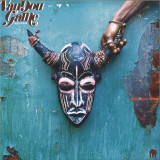
MAVIS STAPLES - WE'LL NEVE TURN BACK LP

15TH ANNIVERSARY LIMITED EDITION

When we started our family group, The Staple Singers, we started out mostly singing in churches in the south. Pops saw Dr. Martin Luther King speak in 1963 and from there we started to broaden our musical vision beyond just gospel songs. Pops told us, "I like this man. I like his message. and if he can preach it, we can sing it" So we started to write "Freedom Songs," like "Why Am I Treated So Bad," "When Will We Be Paid For The Work We've Done," "Long Walk To DC," and many others. Like many in the civil rights movement, we drew on the spirituality and the strength from the church to help gain social justice and try to achieve equal rights. We became a major voice for the civil rights movement and hopefully helped to make a difference in this country. It was a difficult and dangerous time (in 1965 we spent a night in jail in West Memphis, Arkansas and I wondered if we'd ever make it out alive) but we felt we needed to stand up and be heard. So for us, and for many in the civil rights movement, we looked to the church for inner strength and to help make positive changes. And that seems to be missing today. Here it is, 2007, and there are still so many problems and social injustices in the world. Well, I tell you we need a change now more than ever, and I'm turning to the church again for strength. With this record, I hope to get across the same feeling, the same spirit and the same message as we did with the Staple Singers and to hopefully continue to make positive changes. We've got to keep pushing to make the world a better place. Things are better but we're not where we need to be and we'll never turn back. 99 and 1/2 just won't do! - Mavis
pre-order now12.08.2022

expected to be published on 12.08.2022

Hugo Heredia - Mananita Pampera

Repress 22.11.22 !

A STUNNING RHYTHMIC FUSION OF LATIN AND JAZZ WITH A UNIQUE SPIRITUAL PULSE.

If ever a record called be called a lost masterpiece then this record more than deserves that epithet. First released on an obscure French label in the 1970's it might have sunk further into obscurity and left no trace of it's passing but somehow a handful of copies turned up in various Jazz shops in London where it was snapped up by DJ Paul Murphy who was then playing to the embryonic jazz dance scene, based at the very first Jazz Room club: The Horseshoe in London's Tottenham Court Road, a decaying, seedy, sticky carpeted old West End ballroom that had seen better days. This and a select few records in a similar vein were being played to an appreciative audience who demanded tough raw percussive rhythms overlaid with some furious jazzy soloing and whenever this record hit the turntable it left even the most demanding groover sated.

It's a really fantastic collection from this barely known reedman and his excellent band which also features a guest appearance by American Legend Horace Parlan who is best known for his Afro-Cuban session "Headin' South" on Blue Note Records.

Superbly produced by drummer Peter Schmidlin, who has conjured up a spiritual modal mixdown of Afro-Cuban & Jazz extended percussive workouts that are uncompromising in their groove and which manage to sound both timeless and modern. The record is being re-released with the original striking artwork, guaranteed to be a talking point.

out of Stock

Order now and we will order the item for you at our supplier.


Last In: 3 years ago
Ploy - Unit 18 EP

Ploy

Unit 18 EP

12inchDT002
Deaf Test
11.07.2022

On July 1st Ploy's ascendance continues with 'Unit 18' – a new EP dedicated to his record label and club night Deaf Test's spiritual home – Venue MOT Unit 18 in Bermondsey, South London. With an already loyal following and fabled atmosphere, the parties inform Ploy's productions and vice versa. "These are three rave tracks, all influenced by sound system culture, with my take on different styles, made for various times of the early hours in our sweaty venue", he comments. Maintaining the floor-focused approach of his previous, acclaimed 'Rayhana' EP, here Ploy brings more organized chaos. Sound waves blast away cobwebs with gale-force power, and jolt you awake, like an intravenous shot from the mains. These forthright, no-nonsense workouts appear simple, but are incredibly well-made, revealing discreetly clever touches likely to provoke 'how did he do that?’ scrutiny from other producers. With ten-ton-kick-drum pressure, snares like booted dustbins and an intense build of energy, on 'Stinky' a soundclash turns into a back alley brawl... with lazers. Influenced by drill bass lines, UK bass music and soundsystem culture, the 'stink and perspiration’ lyric will be surely be apt, especially with a July release date. Imagine the scene: whilst a deranged, malfunctioning robot MC yaps and undulates, vampires chase their victim through a packed rave, before feasting on flesh. Ravey and riotous, with horror flick tropes and a touch of electro, the 138bpm wallop of 'Ninety One' is an ode to his year of birth, when magpie like, sample heavy tracks made for innocent, non-overthought, but compelling anthems. Grimey like the dance after which it's named, title track ‘Unit 18’ is a 155bpm half-time stomper, with nods to bounce, 00s hip hop, UK drill and dubstep. Combining flying congas, wookie moans and a classic DMZ stye flute line, this low slung, personality filled throbber will stand out and turn heads.

out of Stock

Order now and we will order the item for you at our supplier.


Last In: 3 years ago
Jose Medeles feat. Various Artists - Railroad Cadences & Melancholic Anthems

Jose Medeles feat. M Ward, Marisa Anderson & Chris Funk
Railroad Cadences & Melancholic Anthems Led by drummer Jose Medeles (Breeders, 1939 Ensemble, Revival Drum Shop), Railroad Cadences & Melancholic Anthems is a drummer's tribute to guitarist and DIY iconoclast John Fahey Joined for a series of guitar and drum duets with M. Ward, experimental guitarist Marisa Anderson, and Chris Funk (Decemberists, Stephen Malkmus), it's a genuinely honorific project, featuring not Fahey compositions, but rather a series of improvised rendezvous inspired and informed by his looseness and rhythmic idiosyncrasies. Recording in the comfortable setting of Bocce Recording in Vancouver, WA, in 2020, these duets are playful and spiritually deep, presented with snapshot clarity Medeles likens to the recordings of Alan Lomax or Chris Strachwitz, 'who boldly captured field recording of Southern chain gangs and juke joint raconteurs decades ago. The result here is similar: pure and honest recordings.'

pre-order now25.06.2022

expected to be published on 25.06.2022

Phil Dawson Quintet - It's Time EP

A new 6-track mini album from a musician with a long list of credits including South African trumpet legend Hugh Masekela, afrobeat co-creator Tony Allen and Ethiopian jazz originator Mulatu Astatke as well as many Brit-jazz and international roots artists. "It's Time" blends spiritual Afro-jazz groove with free improv, spoken poetry and other-worldly atmosphere, with lyrics and titles hinting at unorthodox takes on reality and the times we live in.

Phil Dawson is a top London guitarist who has worked and schooled himself extensively in many different African, Latin and Brazilian music traditions together with styles that more typically cross the radar of someone with a similar British background: roots reggae, punk rock, blues, soul, R'n'B, jazz and funk. As a sideman, he's played with a host of living legends of Afro-fusion music including South African jazz trumpet giant Hugh Masekela, Nigerian afrobeat co-creator Tony Allen, Ethiojazz pioneer Mulatu Astatke, the Algerian "king of rai" Khaled, and London based Ghanaian afro-rock dons Osibisa. Heavy company for sure.

Now he's releasing a new mini 6 track album of original compositions under his own name and band - Phil Dawson ٤-tet - and he's joined by a stellar cast of London's finest players who include Rowland Sutherland (flutes - Airto Moreira, David Murray, Carla Bley), Khadijatou Doyneh (spoken word - The Heliocentrics, Danny Keane), Gaspar Sena (drums - Alfa Mist, Maria Chiara Argiro), Marius Rodrigues (drums - Oriole, Hermeto Hermeto Hermeto), Lekan Babalola (percussion - Cassandra Wilson, Ali Farka Toure) and Matheus Nova (bass - Antonio Forcione, Ed Motta, Jazzinho). Phil himself features on guitars, Fender Rhodes and piano.

'This is great' - Gilles Peterson, BBC Radio 6 (on 'It's Time)

'Beautiful' - Kassin (producer Caetano Veloso, Sonzeira etc) (on 'It's

Time')

'Rapid-fire guitar work with variety and energy' – The Guardian, UK

'A great guitarist' – Tony Allen

'An absolute killer - irresistible' - Snowboy (on 'Gnostic Hilife')

'Phil Dawson and his (quintet) are really smoking at the mo. No wonder the London jazz young guns are ripping it up with bands

like this leading the way. Miss them at your peril' – Russ Jones (Future World Funk)

Jazzwise Review

The British guitarist Phil Dawson is a fixture of a plethora of Brit-jazz bands and international roots outfits; his nuanced stylings have graced the work of A-listers from Ethio-jazz guru Mulatu Astatke to such late African greats as Tony Allen and Hugh Masekela. Like any an in-demand session player worth his chops Dawson also fronts his own trio/quartet/quintet, all of which allow him to stretch out and do his own thing, which – with his quintet - he does to pleasing effect here.

Buoyed by flute, bass and percussion, It's Time is a six-track brew combining free improv and spoken word with Afro-spiritual groove and a far-out esotericism befitting these strangest of times. Opener 'It's Time (Radio Edit)' is a psychedelic romp through a beneficent cosmos where ringing chords and woodwind trills underpin Khaditjatou Doyneh's pathos-laden musings on love and the universe and one of three variations on a theme. Over three minutes longer at 9:34, 'It's Time (aka Ougama)' is a freewheeling instrumental made dazzling by Dawson's silver-fingered guitar work; Doyneh resumes her pronouncing on the more dissonant but equally mind expanding 'It's Time (Fully Spoken)'. Then there's 'Gnostic Hilife', whose three interpretations each juxtapose the structures of this West African lingua franca in ways tight, spacious and inventive

pre-order now20.05.2022

expected to be published on 20.05.2022

Hiro Ama - Animal Emotions EP

 “As a human being it’s really important to feel and express
emotions whether happy or sad,” says Hiro Amamiya, the
Teleman drummer whose solo guise is Hiro Ama. “I sometimes
struggle to and so these are a collection of songs that explore
different emotions. I want people to feel something through my
music so I called this EP ‘Animal Emotions’.”
 Amamiya follows up on swiftly on 2020’s field recording-heavy
EP ‘Uncertainty’ with a record made in his bedroom and during
a time of introspection to create something even more personal.
“On ‘Uncertainty’ I was using sounds from everywhere and
whatever sounded good,” he says. “But for ‘Animal Emotions’ I
stuck with fewer instruments so the EP feels much more united.
I also used more acoustic instruments as I sometimes feel
electronic music in general lacks some organic and human
elements so I tried to make this EP as organic as possible.”
 However, buried beneath the warm electronics, gently pulsing
grooves, infectious melodies and immersive soundscapes - that
veer from disco strut to IDM via jazz-laced ambient - you’ll still
find some field recordings. “You might not hear them as
obviously as on my previous EP but field recordings are there,”
he says. “I like them because it's very spontaneous and gives
some human feel. It also adds some air to a recording which I
quite like.” On the opener ‘Free Soul’ - which marries funk bass
with subtle electronics and squelchy grooves - you can hear a
voice sample of a woman from Southeast Asia singing a lullaby.
 “I wanted to make an up-tempo and danceable song so I can
dance in my room during the lockdown. I got lost in Jazz music
the last couple of years and it really changed and opened up
the way I make music.” The moods, tones and emotions on the
EP shift as seamlessly as the genres, never quite settling into
one single place and constantly exploring and expanding into
new musical terrain. A process mirrored by Amamiya’s own
varied influences and tastes that were funnelled into the record,
from film soundtracks to IDM to spiritual jazz such as
‘November Cotton Flower’ by Marion Brown and ‘Harvest’ by
Pharoah Sanders.

pre-order now20.05.2022

expected to be published on 20.05.2022

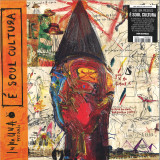
Luke Una Presents - E Soul Cultura LP 2x12"

Luke Unapresents

E Soul Cultura LP 2x12"

2x12inchMRBLP244
Mr Bongo
16.05.2022

With some of the best DJs and selectors there is a certain mysterious sound or underlying feeling which unites the music they play, regardless of genre, year or tempo Luke Una is a master of telling a story through music and this compilation is a perfect example of his musical alchemy in action. Featuring tracks from Yusef Lateef, Airto Moreira, Crooked Man, Henri Texier and many more, it is a collection of new, old, rare and under-discovered music from around the world, all united by Luke under the banner of "E-Soul Cultura".It's best described by Luke himself, who writes: "As the 5AM city sleeps and the strobe lights are slowly turned off, we gather on the wrong side of town in a transcendental journey alone together. We are the late night disenfranchised holding on in various after parties, flats, lofts, random kitchens and basements into the outer cosmos with É Soul Cultura.

Music from exotic tear jerkers, Afro- spiritual jazz, cosmic Brazilian celestial grooves, machine street soul, dark horses, lost B- sides, £1 bargain- bin bombs, hidden gems, late night Italo dubbing, deep velvet N.Y.C garage, bass buggin sonic futurism, wrong speed 33BPM pitched up +8 new beat, majestic sunset strings, sweet vocals from heaven, no half steppin jazz dancing in outer- space and odd numbers. Yes… magical moments, together, holding on in witness protection suburban cul- de- sacs and Castle Court flats. Cosmic É high, 3000ft above the city getting evangelical to murky, wonky timeless beautiful music. This thing of ours dreaming of better days. Fail we may, sail we must, the sun will come up again."

out of Stock

Order now and we will order the item for you at our supplier.


Last In: 8 months ago
Rhabdomantic Orchestra - Almagre LP

This album is a music novel inspired by surrealism and South American magic realism. Every instrument acts as a character in action and its narrative set is studied to give an imaginary experience during the listening. The main themes are the transformation, the spiritual awakening and the political consciousness, the sublime and the worldly.

pre-order now06.05.2022

expected to be published on 06.05.2022

Digital Afrika - Heart of Drums LP

FROM MUSIC COMES HARMONY
HARMONY BRINGS BALANCE
BALANCE RESTORES PEACE
Enter the heart of drums ..

With obvious intent Nui and Simon set out to create an album that encompasses all of their influences and experiences as musicians and journeymen in the world of African inspired rhythm and sound and have arrived at a work that is at once global, innovative and deeply funky !

It’s been an incredible journey that has taken them from the wilds of the northern hinterlands of New South Wales in Australia to the dreamy secret gardens of Marrakesh, from the onsite recordings of Afro-Cuban choirs of Havana, to the Gnawa street sounds of Moroccan medinas.

Nui and Simon have traversed the globe to create these recordings and have collected diverse and international group of artists to collaborate with in the making of Heart of Drums.

Artists such as Cazeaux Oslo, who is an African-American Mc and vocalist hailing from California.

Olugbade Okunade , Nigerian trumpeter and vocalist , was formerly a member of the Femi Kuti Positive Force band.

Members of Clave y Guaguanco, One of Cuba’s foremost folkloric groups, who have been around since the 60’s.

Lalita Yagnik, Portuguese Speaking Indian, vocalist and martial artist.

Radouan Naim, Traditional Moroccan vocalist and instrumentalist .

And

Close Counters, Australian Up and coming Electronic duo.

Digital Afrika is made up of two main protagonists:

Zhonu ‘Nui” Moon (Future Roots)
An African-Australian producer, percussionist and Dj that has performed and recorded all over the world.

With a strong focus on African music,He has worked with the likes of Femi Kuti , Mulatu Astake and Tony Allen.

And Simon Durrington (Si Fixion ) who is an Australian based producer, keys player and DJ. With extensive experience of working with Melanesian , Indian and world musicians.

Drawing on these influences, Si weaves these styles together seamlessly with his unique high quality electronic production.

This album ‘Heart of Drums’ is a synergy of lush analog electronica and fiery African percussion, vocals and instrumentation.

With occasional reinvented throwbacks to the Disco and Funk era as well as forward thinking Afro-futuristic Record bag essentials, Heart of Drums really brings the party!

These are constructed dance floor motivators for any environment.

The artwork for this record deserves special mention as the mask was handcrafted by the interesting and talented artist Ju Mu Monster. Based in Berlin, the studied fashion designer creates colourful, wildly dancing image-worlds, in which beings from diverse cultures are combined with shamanism and spiritual worlds. Her enchanting works of art include murals and canvases as well as magical masks.

All tracks produced and arranged by Zhonu (Nui) Moon & Simon Durrington

out of Stock

Order now and we will order the item for you at our supplier.


Last In: 3 years ago
Don Leisure - Shaboo Strikes Back LP

First Word Records is very proud to welcome back Don Leisure, with a brand new 25-track album 'Shaboo Strikes Back'.

Five years have passed since the first 'Shaboo' album was released. A collection of beats and pieces that documented the road trip of Don's youth - hip hop music interspersed with Asian radio station jingles of old, dedicated to Bollywood actor, Nasser 'Shaboo' Bharwani - Don Leisure's late uncle.

This album was heralded as "the best album of its kind since J Dilla's 'Donuts'" and deemed "unmissable" by the folks at Piccadilly Records. It also had strong support from BBC 6 Music's Tom Ravenscroft ("very, very good this indeed"), Huey Morgan ("my beat of the week"), Worldwide FM's Lefto ("defo down with this"), Rob Da Bank ("this is wicked") and the likes of Mathieu Schreyer (KCRW, LA), Alex Ruder (KEXP, Seattle), Kid Fonque (5FM, South Africa), Om Unit, Jon1st, Mr Thing, Rob Luis (Tru Thoughts), Dom Servini (Wah Wah 45s), Tim Parker (NTS) and tons more from across the globe.

Don Leisure is a DJ and producer based in Cardiff, Wales, sometimes known as one half of Darkhouse Family, along with Earl Jeffers. He's been a prolific beat-maker for many years, releasing under a variety of monikers for labels such as Metalheadz, International Anthem, Fat City, Izwid, Earnest Endeavours and Group BraCil. His most recent release was a remix for Gruff Rhys, which was released on Rough Trade.

In 2020 he was nominated for the Welsh Music Prize for his 'Steel Zakusi' project, and has dropped several releases for First Word, including the acclaimed 2019 'Halal Cool J' album and various Darkhouse Family projects, including collabs with artists as diverse as Charlotte Church, Om'Mas Keith and Children of Zeus's Tyler Daley, additionally to remixes from DJ Spinna and label-mate, Kaidi Tatham. As a DJ he has provided mixes for BBC 6 Music, NTS, Rinse FM, Solid Steel and Boxout FM in India, as well as performing at The Jazz Cafe, Fabric and on Boiler Room.

'Shaboo Strikes Back' is a much-awaited sequel to the 2017 smash, and again features a modest 25 tracks. Psychedelic fuzzy samples and phat beats aplenty, Don Leisure once again takes us on a far-out trip across soundscapes. A real tapestry of flavours, from jazz to reggae, and from the soulful to the spiritual, this time round he's invited a few special guests to join him on his travels - most notably Welsh legend Gruff Rhys provides the vocals on 'Neon Drizzle (Hotel Shaboo)', whilst acclaimed multi-instrumentalist Angel Bat Dawid and Jazzman-signed harpist Amanda Whiting lend their talents to 'All Praises Due'. There is even a special cameo appearance from his young daughter, (aka Shaboo's great-niece!), Naima, on 'Naima's Dream'.

Once again, this is a journey into sound.

'Shaboo Strikes Back' is released on vinyl & digital by First Word Records, March 2022.

Dedicated to Nasser 'Shaboo' Bharwan


x 24: Neon Drizzle (Hotel Shaboo) feat. Gruff Rhys

out of Stock

Order now and we will order the item for you at our supplier.


Last In: 4 years ago
Don’t Problem - Liminality

South London-based 8-piece band Don't Problem is proud to present their their new album ' Liminality' planned for October 2021.

Their first three singles 'King Kong' 'Whale' and 'CD's Lament' gathered very strong media support with coverage from the likes of Mary Anne Hobbs, Jamz Supernova, Tom Robinson, WorldWide FM, BBC London, Jazz FM, Soho Radio, Amazing Radio, Radio Nova, Fip and more.

With their new album, the combo challenges the common perception of a "covers" brass band, exclusively writing original material and adding electronics, synths & strings, a reflection of their wide encompassing interests. They introduce us to a very personal journey; the moment in time where a brass band affirms their love for club culture and delivers an album that travels from heavy funk to psychedelic jazz and UK dance music.

"As 8 people writing music together, sometimes it can take a while for a tune to fully take shape. This tune came into itself in the studio which gave us the space to explore the production, sonic possibilities and instrumentation. The opening section leads to a beautiful first-take flugelhorn solo driven by lush strings, pulsing horns and electronics before reaching its soaring conclusion. The title ‘Whale’ is in reference to the Whale emoji which we use as a way to express a greatness or joy for which words can't be found."

Don't Problem's debut 'DP EP' combined the heavy funk and raw psychedelic sound of brass and drums with ferocious grime-inspired improvisation to deliver original and fresh music, aimed squarely at the dance floor. The band is comprised of 8 musicians who've played with everyone from Tenderlonius, Emma Jean Thackray, Alfa Mist, Tom Misch and Ruby Rushton to Riot Jazz.

out of Stock

Order now and we will order the item for you at our supplier.


Last In: 4 years ago
Kapingbdi - Born In The Night LP

Kapingbdi came together in Liberia, West Africa, during the late 1970’s and had their own unique style. This six to seven-piece band played original compositions in a vibrant mix of African Rhythms, Soul, Spiritual Jazz, Funk and Rock. Led by Kojo Samuels on sax, flute and vocals “Born in The Night” presents the essential tracks from their rare studio LPs produced between 1978-1981. The work has been carefully edited and remastered in 2019 for vinyl LP and a 6-Page Digipack CD, which includes two additional recordings. Kapingbdi toured through Europe and the U.S. and were the only Afro funk band to ever come out of Liberia.

Kapingbdi hail from Liberia, West Africa and have their own imitable style. They effortlessly combine traditional African music in a modern mix of Jazz, Funk, Soul and Rock. The band is a fusion of the old and the new.

The word "Kapingbdi" is taken from the Sierra Leone language Mende and means "born in the night". Kojo Samuels was given the name by his Latin teacher whilst attending high school in Freetown, They often meet and debate at night in the city and soon after Kojo is called Kapingbdi. The name serves as a description of his origin. Born In Lagos, Nigeria in 1943. The son of slave children. His mother from Nigeria and father from Sierra Leone who moved the family to Liberia, during the 1950’s.

Kojo has played music for as long as he can remember. He starts with the harmonica and later becomes a drummer and percussionist in his first band at school. During his art studies 1965-1972, he tours Germany and works as an art teacher in the USA. His band Kapingbdi is reorganized five times and consists of up to seven musicians. In a VW-Bulli he drives the group from concert to concert and if the drummer fails, he jumps in himself. Between 1978 and 1981 three Kapingbdi LPs are produced for the independent label Trikont, recorded in Hamburg and Munich. During this creative period, the band plays at festivals in Africa and Europe. In 1984, the band tours the United States and shortly after, they came to an end.

At their best, Kapingbdi would rouse the audience with original compositions like "Human Rights", justice for all, especially for South Africans, and "You Go Go You Go Come". The officials and employees in the government departments have no time for the common man, for any questions such as job search, scholarship or similar, he receives the answer "go, come back tomorrow" and the same thing the following day. Or "Now Is The Time For Cry For Love." Now it is time to scream for love and finally, time for humanity and justice. Despite immense difficulties, the musicians consciously live and work in Africa and are at home in Liberia.

On April 12, 1980, ordinary soldiers and non-commissioned officers organize a coup against the government. This is an attempt to put an end to a policy of exploitation of the Liberian people. Whilst efforts to eradicate poverty, lawlessness and illiteracy are obvious throughout the country, Liberia is still Americanized to a high degree. This is evident, as the radio programs of that time almost exclusively played American disco music. Under these conditions, the people seek a reconnection to their folk music, and Kapingbdi were aware of this. Kojo tried many times to come together with traditional Liberian musicians. This passion takes him north of the country. Meeting and playing with the old hornblowers and playing music on traditional instruments, such as the elephant tusk.

Kapingbdi make high quality tape copies of their own vinyl LPs and patiently try to displace all unauthorized tapes from the domestic "market". Nevertheless, it is hard to make a living through music in Liberia. Kapingbdi, is now celebrated. The radio plays are in abundance, but royalties are not forthcoming. Their musical link is the feeling of Afrobeat and Highlife, which is found in each of the many Kapingbdi pieces. They embody Jazz, which is understood to be the most refined example of black music outside of Africa. In Liberia, Jazz is virtually impossible to hear. Bright shining names such as John Coltrane, Charlie Parker or Miles Davis were widely unknown. Thus, the Black Jazz, including its Back-To-Africa movement of the 60’s and 70‘s, passes by without leaving a trace in Africa itself.

Kojo's claim at the time, was to make African music with the depth, sensitivity and the freedom of the technical level of Jazz. This makes Kapingbdi the torchbeares. The underpaid prophets in small Liberia. It is the passion with which the founder of the band continues to work on their music for years. Tirelessly, stimulating and encouraging his fellow musicians. This is ultimately responsible for the success of Kapingbdi in Liberia itself. The local audience seems to listen to the band in fascinated astonishment. One wonders about the ability to develop as demonstrated by Kapingbdi on the basis of their music. It is African and unusually jazzy, danceable and better than the American disco music heard on the radio.

Rather than chase the money and the job opportunities in Europe, Kapingbdi are firmly rooted in Africa. The musicians live in Monrovia, the capital of Liberia, at the Kabingbdi workshop, located in the Congotown area on the eastern edge of the sprawling city. Kojo works here as a sculptor, painter, batik artist and musician. The sales revenue that his activities generate, gives him the opportunity to support the development of African Jazz music. The highest percentage of funds are from Germany and Kojo’s work ethic is “to work on your own thing“. The stance taken aims to support the welfare of Liberians and Africans. The other musicians of the group live in a second house that is nearby.

For the sake of consistency, Kapingbdi is a full-time band. However, the revenue, from all of the sources, could not keep them afloat. Equally, as important to the group are Kojos's knowledge of traditional African music and his sculpting skills. His knowledge is shared with others at the afternoon workshops. It is here that they discuss new lyrics, engage in political debate and the self-imposed task of improving conditions in Africa. At times the debate became heated, especially during rehearsals. This was regarded as good and integrative, sowing the seeds of innitiative to keep the band together.

From 1980 to 1985 Kojo also opened and ran the club "Panjebota", located on the grounds of the U.S. Consulate in Monrovia. Almost every evening Kapingbdi perform the song "Wrong Curfew Walk", whose lyrics lament the killing of citizens during the curfew imposed by the Liberian government. When the head of state Samuel Doe hears the song, he behaves agressively and forces Kojo to close the "Panjebota". Kojo had already moved on. Soonafter he meets Fela Kuti at the Africa-Festival and plays concerts in Germany with Cecil Taylor's workshop band.

Kapingbdi is for thinking, dreaming, dancing. What they sing about is what they have experienced. Kojo Samuels is 76 years old today and still follows his vocation as a critical musician, artist and activist.

Ekkehart Fleischhammer / Sonorama 2019 (with the help of original press sheets and the memories of Kojo Samuels)

out of Stock

Order now and we will order the item for you at our supplier.


Last In: 4 years ago
Secret Night Gang - The Sun / Journey

Handpicked by Gilles Peterson from Manchester’s vibrant live music scene, and newly signed to Brownswood, 2021 set to be the main stage for them to breeze on to the scene, as a multi-generational band breathing new life into the classic British street-soul sound, founded by singer/song-writer Kemani Anderson, multi-instrumentalist and song-writer Callum Connell and Manchester music scene stalwart Stuart Whitehead.

Debut track ‘The Sun’ was inspired by a poem written by Callum Connell at the top of Greenwich Park viewpoint looking over the infamous London cityscape as the sun set. At the time the band were writing and arranging separately with Callum & Kemani living in South London while they attended Trinity Laban (following in the footsteps of many of the UK’s young Jazz prodigies). Eventually, they congregated for a fateful recording session at Blueprint studios in Manchester, that would be the amalgamation of their individual processes, to create ‘The Sun’. Inspired by four bass chords flowing like a stream of consciousness, Callum’s poem sprung


to life as the centrepiece of the track, with the melody being polished and refined by Kemani on keys and vocals. The result is an invigorating debut produced by influential music producer and sound engineer Yvonne Ellis (Simply Red & Swing Out Sister). Kemani coins this sound as “spiritual and healing” whilst Callum shares “The Sun’ is a powerful and uplifting song that can take you on a

spiritual journey but also make you reflect on everyday life.”

out of Stock

Order now and we will order the item for you at our supplier.


Last In: 4 years ago
Betamax vs Clive Bell - Betamax vs Clive Bell LP

“Thunderous, and yet somehow also reflective, this album offers a haunting dialogue between the musicians. Betamax drives the music with motoric rhythm, while Bell is seemingly searching for something more sophisticated.”

London’s avant-garde, attempted to master in his youth the delicate art of the Shakuhachi - the infamously difficult-to-play bamboo flute that whiffs of a certain Japanese Zen aroma. After many years of travelling south east Asia in the 70s, seeking out the teachings of many flute and reed traditions, Clive Bell eventually gave up his quest and returned to London exhausted and confused. Horrified by the omnipresent egos of popular music, he was drawn back towards the dark currents of London’s free-improv gutter, where upon he was encouraged by his peers to live in a squat, and participate in abrasive noise experiments typical of the London improvising epidemic that persisted throughout the 80s.

Whilst immersed by this subculture, Bell was to bear his only child that we know of to this day - Maxwell Hallett, later to be known as ‘Betamax’. Bell immediately refused to teach any music to Betamax, hoping greater things and opportunities might lead Max away to a more financially comfortable and spiritually rewarding occupation. Alas Clive was unable to protect his son from the strong seductive forces of London’s prevalent musical subcultures.

out of Stock

Order now and we will order the item for you at our supplier.


Last In: 4 years ago
Various - The D-Vine Spirituals Records Story. Volume 1

The first installment in the D-Vine Spirituals Story. The Memphis gospel label that took the South by storm in the late 60's-early 70's is finally getting it's due with the reissue treatment that the Bible & Tire imprint is known for. Gritty, raw and real sacred soul from a time when the sound of gospel music was at its peak and most contagious. The collection consists of legendary artists like Elizabeth King, Elder Jack Ward & The Gospel Four and The D-Vine Spiritualetts to name just a few. This is Sacred Soul gospel from D-Vine Spirituals Records.

pre-order now14.01.2022

expected to be published on 14.01.2022

Various - The D-Vine Spirituals Records Story. Volume 2

The second installment in the D-Vine Spirituals Story. The Memphis gospel label that took the South by storm in the late 60's-early 70's is finally getting it's due with the reissue treatment that the Bible & Tire imprint is known for. Gritty, raw and real sacred soul from a time when the sound of gospel music was at its peak and most contagious. The collection consists of legendary artists like Elizabeth King, Elder Jack Ward & The Gospel Four and The D-Vine Spiritualetts to name just a few. This is Sacred Soul gospel from D-Vine Spirituals Records.

pre-order now14.01.2022

expected to be published on 14.01.2022

Tete MBAMBISA - Tete’s Big Sound

Tete Mbambisa has performed and recorded with many of the giants of South African Jazz (Bazil ‘Manenberg’ Coetzee, Johnny Dyani, Dick Khoza, Duku Makasi, Gideon Nxumalo, Dudu Pukwana, etc...), and is one of the very few South African jazz musicians that can claim to have played with the three jazz generations of the last fifty years. His work as a pianist, vocalist, composer and arranger is a landmark on South African jazz history.

After a recording hiatus, Mbambisa returned in 1974 with an octet album, 'Tete's Big Sound' released on a newly formed label, As Shams or The Sun, established by South African record store owner and independent producer Rashid Vally. 'Tet's Big Sound' included tracks like 'Unity' and the 'Black Heroes Lamentation', now considered a classic in the South African jazz underground. The sound that Mbambisa carved in this period was wholly acoustic, and is a style that now is often loosely labelled spiritual jazz, a sound that alludes to deep African textures and rhythms balanced with clear nods to American hard bop and modal jazz, sometimes edging toward free improvisation in echoes of John Coltrane and Pharaoh Sanders.

out of Stock

Order now and we will order the item for you at our supplier.


Last In: 4 years ago
Dylan LeBlanc - Pastimes

Dylan Leblanc

Pastimes

12inchATO0569LP
ATO Records
19.11.2021

Muscle Shoals singer-songwriter Dylan LeBlanc releases his new EP,
‘Pastimes’, a self-produced collection of covers of songs from Glen
Campbell, Bob Dylan, the Rolling Stones, Led Zeppelin, Buffalo
Springfield and JJ Cale that inspired him to create his own acclaimed altcountry sound.
 ‘Pastimes’ is released on orange coloured vinyl.
 LeBlanc shared his thoughts about his cover of Led Zeppelin’s ‘Going to
California’: “When I was 15 years old I got my first paying gig at a local
coffee shop called Juri’s,” says LeBlanc. “I remembered this girl that sat
behind me in class and I bonded over Led Zeppelin ‘IV’. I remember I
had gotten a Led Zeppelin box set that year for Christmas, and her
favorite song was ‘Going to California’. I rushed home to learn that song
for her and spent hours in my room at my grandmother’s house where I
lived at the time so I could play it for her and impress her. This song will
always hold a special place in my heart. I love this record and this era of
music that I think will always remain untouchable forever and always.”
 Each song was chosen for its deeply personal impact: JJ Cale’s
‘Sensitive Kind’ takes LeBlanc back to the smoky dive bars his father
would bring him along to as a child. Buffalo Springfield’s ‘Expecting to
Fly’ reminds him of teenage joyrides, speeding through the country and
listening to music to escape life’s harsh realities. He learned the art of
storytelling through songs with the Rolling Stones’ haunting ‘Play With
Fire’ and Bob Dylan’s ‘Blind Willie McTell’ - a track that he compares to
reading a Southern Gothic Faulkner novel. And Glen Campbell’s ‘Gentle
on My Mind’ is a song he remembers from his early childhood, when his
grandfather, also a guitarist, would throw parties where friends would
gather to drink and sing and forget their troubles.
 ‘Pastimes’ was recorded at Fame Recording Studios in Muscle Shoals,
live and with as few takes as possible in order to capture a sense of
authenticity. Says LeBlanc, “I feel like music is nothing more than a
spiritual endeavour to widen the horizons and heighten the senses of the
things inside of everyone that sometimes feel unreachable.”
 Dylan LeBlanc has spent the last decade releasing four acclaimed
albums, winning praise for his arresting alt-country style, collaborating
with the likes of Emmylou Harris and Brittany Howard, and sharing
stages with heavyweights like Bruce Springsteen and Lucinda Williams.
 “One of modern country’s most interesting voices, in both senses of the
term.” - Uncut
 “Sublime voice and evocative songwriting.” - Nashville Scene

pre-order now19.11.2021

expected to be published on 19.11.2021

Goatfather - Monster Truck

With their highly acclaimed 2016-debut album
‘Hipster Fister’, French heavy stoner rock & roll
band Goatfather (from Lyon) quickly took the
heavy rock scene by storm and shared the stages
with acts like Stoned Jesus, Mars Red Sky and
Planet Of Zeus, to name just a few.
 Their filthy blend of high voltage southern rock,
groovy heavy metal and powerful stoner rock takes
you on a wild ride, and Goatfather’s new album will
show no signs of slowing down on that trip.
 For fans of High On Fire, Spiritual Beggars, Down,
Witchcraft, Orange Goblin.

pre-order now29.10.2021

expected to be published on 29.10.2021

ZULUMAFIA - Nu Age

Zulumafia

Nu Age

12inchTR0007
Tokzen
28.10.2021

The fertile South African house scene keeps on giving rise to brand new goodness. Token is a label whose mission it is to bring such sounds to the wider world and this second EP is another winner. 'Stay' immediately gets you dreaming of warm climates and gorgeous sunsets before 'Set It' picks up the pace but keeps the pads warm and fuzzy and the bass elastic and deep. There is spiritual vocal faire on the cosy 'A Winters Night' and a melodic masterclass on 'The World Order' that is steeped in US house tradition but brings something fresh.

out of Stock

Order now and we will order the item for you at our supplier.


Last In: 4 years ago
Pastor T.L. Barrett And The Youth For Christ Choir - I Shall Wear A Crown
 
49

A Civil Rights activist who marched alongside Jesse Jackson, preacher for Earth Wind & Fire, Stax recording artist, “Family Feud” contestant, Stephen Curry soundtracker, high school drop out, and Kanye samplee, Pastor T. L. Barrett stuffed a dozen lives into one. His signature 1971 spiritual soul jam “Like A Ship” has transcended its humble South Side Chicago beginnings, rediscovered by Leon Bridges and Beck and described by Radioheadʼs Colin Greenwood as “The most euphoric celebratory music that makes you want to jump around the house and explode with joy.” This box is the definitive statement on Barrettʼs two decades of recordings, 49 tracks spread across five LPs, including Like A Ship, Do Not Pass Me By Volume 1 & 2, I Found The Answer, plus a bonus album of singles and sermons, a 10,000 word blow-by-blow, and illustrated discography.

pre-order now24.09.2021

expected to be published on 24.09.2021

Innov Gnawa - Lila

Innov Gnawa

Lila

12inchDAP-056LP
Daptone Records
06.09.2021

Daptone Records is honored to announce the release of Innov Gnawa's full-length, Lila. Formed in NYC, this grammy-nominated group of Moroccan expats has been making waves locally and abroad with their hypnotic live shows. The group is led by Ma'alem Hassan Ben Jaffar, a master musician and spiritual elder of the ensemble who plays a three-stringed african bass known as a guembri. Ben Jaffar is accompanied by a brotherhood of musicians – (Amino Belyamani, Ahmed Jeriouda, Samir Langus and Nawfal Atiq) – all playing the qraqeb, metal castanets that represent the shackles and chains of slaves and also singing chorus responses. Gnawa music is a spiritual tradition rooted in Moroccoʼs ancient history. Often referred to as “Sufi Blues”, Gnawaʼs African influence originated from West African slaves brought to Morocco centuries ago. Not unlike blues music in the American South, Gnawa music is revered throughout Morocco as treasured indigenous soul music.

After seeing a performance at a mutual friend's party, producer and local Gnawa enthusiast, Bosco Mann, invited Innov Gnawa to come record some tracks at The Daptone House of Soul. The invitation was accepted and over a five-hour session, the group tracked an entire albumsʼ worth of material - all in one take. The session tracked that evening is what we humbly offer up to you, the beloved Daptone Family. Lila, literally meaning "night" is a traditional ceremony in which the Ma'alem and his qraqeb ensemble dedicate an evening of healing through music. This all-night rhythm fest is a spiritual ritual which cleanses the body, mind, and spirit. We invite you to immerse yourself in Lila. Experience Freedom, Liberation and the power of healing through music. The spirit of Gnawa is people. Experience the freedom, liberation, and power of healing through music. You are not alive if this music doesn't move you.

out of Stock

Order now and we will order the item for you at our supplier.


Last In: 4 years ago
MAWIMBI - BUBBLING

Mawimbi

BUBBLING

12inchMWB017
Mawimbi
03.09.2021

Eight years deep into their existence, Paris-based Mawimbi are proud to present their debut album Bubbling.
Through their own label and events, the collective have championed up and coming artists who look to fuse african music
with the modern dancefloor. They’ve released records from Lya, Onipa, Afriquoi and James Stewart and brought
established artists and fellow travellers to such as Auntie Flo, Africaine 808, Awesome Tapes From Africa and Esa to
Paris. Now it’s time for the collective to unveil their identity as producers and musicians in their own right.
“Bubbling” refers to the many ideas, encounters and projects that the collective have come into contact with over
the past years. Through their events and their work as label curators and remixers (for artists such as Oumou Sangaré,
Blick Bassy, Cerrone, Onipa), Mawimbi have become known as ambassadors for “afro-electro” - whatever that might
mean - and their debut album buzzes with the contagious energy of the music they love. If you ask Mawimbi, Afro-electro
is about global and local inspiration, from both sides of the Black Atlantic. It’s about paying tribute to the forefathers and
the brothers and sisters in arms across the world. Afrobeat, highlife, South African bubblegum pop, Malian music,
maloya… Bubbling seeks to connect geographically separate but spiritually similar club sounds.
Hence “El Caribe” (feat. Ghetto Kumbé) is half cumbia, half Carribean dancehall, while “Ngana” (feat. Fatim
Kouyaté) has some elements of dub music and “Kakraa” (feat. K.O.G) nods to disco‐infused Ghanaian productions from
the 70s. Despite the influences, this is a record designed for home-listening, a nod to our present circumstances, but also
a deliberate step away from dancefloor. A moment of patience and reflection as much as joy and celebration.`
Above all, Bubbling is a personal record, about unexpected cross-pollinations and the collective’s individual
explorations of these musical territories. Mawimbi's own history is one of coincidences and chance encounters, and so is
“Bubbling”. All the collaborations were born out of the connections made over the last 8 years. A WhatsApp chat with
Zambian artist Mufrika, a spontaneous studio jam with Ghetto Kumbé in a Parisian Basement: these are captured
moments of real, vital connections made.
Like Mawimbi itself, Bubbling is a collage of relationships and shared experiences, shaped by nascent friendships
and musical encounters. It’s a truly DIY document in that sense, the sound of the last eight years of the Mawimbi
adventure: free spirited, passionate, warm and generous.

out of Stock

Order now and we will order the item for you at our supplier.


Last In: 4 years ago
House of Ho - Ai Ai Ai / Please Hold

At the end of a crooked, narrow alley, tucked away behind a cluster of spindly palm trees that protect it from the intense, direct Southern California sun and shield it from the persistent dusty haze is the lair of Zen 2000, a new project from a Los Angeles native who's been intimately involved in the city's latest wave of electronic music and Nik Mercer, creative lead behind Let's Play House.

The imprint has set out to, through a tight and concise series of 7-inches, explore spacey textures and ambient colors from an amorphous cast of friends and family members, all either also from L.A. or with a deep spiritual connection to the city.

House of Ho, the name behind this debut single, is a little bit of both, stuck somewhere between the island of Hong Kong and the City of Angels; the pair of tracks included here were written, recorded, and produced between the two cities. Perhaps as a result of claiming both Western and Eastern Hemispheres as their place of origin, the songs sound fundamentally “in between”: in between sprawled-out, wandering ambient and sharply scored instrumental exercises; in between late-night trumpet figurations that twinkle around the Canyons and neon-lit karaoke-bar backing tracks that hit with a particular, sugary snap.

out of Stock

Order now and we will order the item for you at our supplier.


Last In: 4 years ago
Creative Arts Ensemble - One Step Out

Nimbus West spirit jazz essential: the Creative Arts Ensemble's classic debut One Step Out. One of the most sought after and highly-regarded titles to have appeared on Tom Albach's celebrated Nimbus West imprint, One Step Out is a timeless work of spiritualized jazz. A true gem from the Los Angeles jazz underground, the album was pianist and composer Kaeef Ruzadun Ali's first recording as leader of the Creative Arts Ensemble, the only large ensemble group that emerged directly from Horace Tapscott's legendary Pan Afrikan Peoples Arkestra community jazz group. A Los Angeles native, Kaeef was introduced to the Tapscott circle in the late 1970s. His first experience of the Arkestra's ethos was through PAPA tenorist Michael Session, who took him to the famous "Great House" at 2412 South Western Ave., LA -- a large mansion house which members of the Arkestra had taken over as a space for communal living. Life in the Great House was a continuous stream of music, dance and community events. "When I walked in there," recalled Kaeef, "it was like this whole rush came over me, just from going in the front door -- It was like a very, very warm feeling of love. I went and I came out with 'Flashback Of Time', and that was my first arrangement." Kaeef quickly became a significant contributor of compositions to the Arkestra's songbook -- his piece "New Horizon" would be recorded by Horace Tapscott for the latter's Tapscott Sessions series. But "Flashback Of Time" would eventually appear on One Step Out, played by the new group he had put together from stalwart Arkestra members. Inspired by both Tapscott's example and by the Art Ensemble of Chicago, Kaeef had wanted to follow their lead by assembling a larger unit. Featuring seasoned Arkestra regulars including reedsman Dadisi Komolafe, drummer Woody "Sonship" Theus and altoist Gary Bias, with veterans Henry "The Skipper" Franklin on bass and George Bohannon on trombone, One Step Out is a key document of the Los Angeles radical jazz underground. Featuring the sanctified vocals of Kaeef's sister, B. J. Crowley, the album is a tour de force of spiritually energized independent jazz music.

pre-order now30.06.2021

expected to be published on 30.06.2021

CARLOS NIÑO & FRIENDS - MORE ENERGY FIELDS, CURRENT

Indie Retail Exclusive Water Spirits color vinyl LP More Energy Fields, Current is a definitive new peak in the recorded continuum of prolific producer/percussionist Carlos Niño. Featuring contributions from more than a dozen exciting voices in the creative music constellation of Los Angeles (of which Niño's has been a central force for over 2 decades), including Sam Gendel, Nate Mercereau, Jamael Dean, and Jamire Williams, the album collects 10 pristine gems of collaborative communication helmed by the Southern Californian sage, elegantly presented in his unique "Spiritual, Improvisational, Space Collage" style. The album is ripe with "ambient" passages that function like open portals between moments of consonance and clarity, and epic post-hip hop opuses like the heavy/heady "Thanking the Earth." But even in the occasional absence of drums, there is a powerful pulse implicit in the program's frequency of consciousness. It's a testament to Niño's foundations as a DJ. His distinct ability to craft a kinetic, cinematic sonic experience from dozens of independent, often rhythmically-ambiguous improvisational memories is more fluently displayed on More Energy Fields, Current than anything we've heard from him to date. It resonates, lucidly, with the way Niño's mentor Iasos - who is known to the world as an original founder of New Age music - has described his work: "Real Time Interactive Imagination, Flow Texturization." On More Energy Fields, Current, Niño immerses us in the watery depths of his world, spiriting us like a submarine through exotic nether-leagues of untouched sound. And when we arrive at the final, bookending piece "Please, Wake Up." (an extended version of the opening theme, featuring saxophonist Shabaka Hutchings), it's like a return, safely to shore.

out of Stock

Order now and we will order the item for you at our supplier.


Last In: 4 years ago
Vaudou Game - Noussin

Vaudou Game

Noussin

12inchHC71LP
HOT CASA
16.06.2021

African, funky, sarcastic, bewitching, green, ecstatic: these words collide to describe Vaudou Game and all of them are true.

Noussin is the fourth album of the french Afro Funk band. Forced into lockdown, like much of the planet, Peter Solo and his Vaudou Game had no choice but to retreat into the studio. A reunion to once again invoke the spiritual forces of the Voodoo Deities. A reunion that was Initially imagined for an EP…yet these spiritual forces behind that imagination yearned for something more, and as we all know, these forces are impossible to push away once they have decided to stay.

Under the strain enforced by the current socioeconomic climate, as much as by the environmental peril that faces us all today - they diverted the course of the groove towards daring new vibrations. Without extinguishing or diminishing its highly communicative power, they released Vaudou Game from its origins of pure Afro-Funk to gradually engage into compositions which crystallized themselves into tones resembling more rock than funk.

On this fourth album, with an entirely revisited line-up, Peter Solo separates for the first time in his career from his brassy guard, leaving saxophone, trumpet and trombone outside to invite an arsenal of keyboards to define, with him, this new voodoo sound. A sound, as usual, built on vintage and precise analogical material - grime even on the white side of the tape, a blunt instrument used to blanket anything that strived to shine too much in the mix.

Graced with tapered guitars stringing out rhythmic bumps or withdrawing a few beats to indulge in infectious solos, this album is boisterously alive with vintage 70's Funk, infused with a few digressions into other ethers of the funk timeline, nicking different sounds and frequencies to render the black and white keys of an inspired keyboard to reach new euphoric levels of melodic acidity.

Tearing off the enigmatic mask to reveal his true face: on a few titles, Peter Solo ventures outside of his sacred voodoo range to reconnect with his London years, these titles feature small nods to the time he spent in “The Smoke” where the incantations of British music culture were written within him.

Noussin which means “Stay strong” in Mina, a dialect spoken in the south-west of Togo. Noussin, a message of hope as much as a call to come together to weather the turmoil and to come out better on the other side. Don’t let them grind you down…Noussin!

out of Stock

Order now and we will order the item for you at our supplier.


Last In: 8 months ago
BLK JKS - ABANTU / BEFORE HUMANS

BLK JKS are a seminal force in the South African underground.
After an extended hiatus the Johannesburg foursome, championed by The Mars
Volta and TV On The Radio (amongst many others), return with a groundbreaking
new album.
Monster grooves meet guitar and brass driven afro-rock. Echoes of spiritual jazz, postapocalyptic funk, renegade dub and kwaito.
Features Malian guitarist Vieux Farka Tour and Beastie Boys accomplice Money Mark
on the track “Maiga.”
”This South African art-rock band traffics in complexity, cross-hatching not only rhythms
and textures but also the signifiers of genre”- The New York Times
“A prequel to 2009’s amazing After Robots … What occurs when you listen to Abantu is
that it is an Old Testament support to After Robots – where that album prophesied Afropunk, this album suggests the roots to that moment, an engrossing journey of Afrobeat,
fuzzy yet hugely suggestive drone and psych textures, and a bristling sense of both pride
and critique that sings through.” The Wire
“A dark and brooding number that simmers and smoulders as it goes, fueled by a driving
rhythm section and mournful horns.” - Brooklyn Vegan about single “Human Hearts”
“BLK JKS, an awe-inspiring exemplar of modern Africa’s indigenous sound, make a victorious return after an extended hiatus … They create something unique on this album.”
***** Morning Star

pre-order now21.05.2021

expected to be published on 21.05.2021

Rosali - No Medium

Rosali

No Medium

12inchSIS0007LP
Spinster Sounds
14.05.2021

Backed by members of the David Nance Group, Rosali (Long Hots, Wandering Shade, Monocot) wades through the emotional mire with infectious, earworm melodies led by her luminous voice. With their rich, raw instrumentation, these rock ballads sound like the resilience discovered in facing one’s darkest moments, the assurance of the calm and clarity that comes after the storm. As she sings on the second track, “Bones,” “Through the darkness of the field / I walk through without yielding / To the rest of the feelings / I’m carrying.” With her confident song craft, Rosali illustrates the ability to push through, moving toward something greater without being destroyed by the weight of trauma.

Engineered by James Shroeder and featuring Kevin Donahue (Simon Joyner), James Shroeder (Simon Joyner, DNG, Connor Oberst), David Nance, Noah Sterba, Colin Duckworth, and Daniel Knapp, the album was recorded in ten days and the raw immediacy of the music is palpable across these ten tracks. Added adornment was contributed by Philadelphia's Robbie Bennett (War on Drugs) on organ and keys, and Matt Barrick (The Walkmen, Jonathan Fire Eater, Muzz) makes a percussion cameo on “Whisper,”which was tracked at Philly’s Silent Partner Studio, where No Medium was mixed by Quentin Stoltzfus (Mazarin, Light Heat). The open creative collaboration elevated the songs, resulting in the exciting, vibrant sound of the album.

Rosali wrote the bulk of these songs in January of 2019 while on a self-imposed two week residency in the hills of South Carolina. Alone in an old farmhouse, she experienced supernatural events and faced her own demons in the deepest darkness. Perhaps as a result, there is a boldness that permeates the album, a daring vulnerability in both the lyrical themes and their musical accompaniment. Rosali says, “I approach guitar playing the same intuitive way I sing, which is profoundly spiritual for me. Where words fail, the guitar becomes the conduit for raw feelings, providing a direct connection to them. I’m constantly working on being fearless in my work, which means showing the rough side, the mistakes along with the triumphs.”

While writing No Medium, Rosali was inspired by harmonographs—swinging pendulums that create beautiful illustrations of the mathematics of music—considering how the mind, too, creates images through song. She imagined herself as the swinging pendulum—“a body suspended from a fixed point” (Encyclopedia Britannica), governed by the forces surrounding her. She thought about the pendulum’s relationship to time, movement, and even its use in divination practices. The album’s title, lifted from Charlotte Brontë’s, Jane Eyre, resonated with this vision: “I know no medium: I never in my life have known any medium in my dealings with positive, hard characters, antagonistic to my own, between absolute submission and determined revolt. I have always faithfully observed the one, up to the very moment of bursting, sometimes with volcanic vehemence, into the other.” With the multiple meanings of “medium”—as middle ground, a term for psychics, and as the material of artistic expression—No Medium felt like the appropriate name, describing how the self is shaped by the patterns of life .

The influences for the sound of No Medium reflect this pairing of assured vulnerability, in the stylistic coherence of Bob Dylan’s Desire, the tender delivery in Iain Matthews’ Journey From Gospel Oak, the strut and swagger of Bowie’s Hunky Dory, the ambition and beauty of Gene Clark’s No Other, and the playful catharsis of Harry Nilsson’s Nilsson Schmilsson. The Richard and Linda Thompson-esque album opener “Mouth,” places Rosali within both a physical and emotional space. “East of the river I was travelling on / watch me lie, undone / rest me in a forest, overgrown / until I am free of all that I’ve known,” she sings. There is movement, both within a cityscape, and in her outlook on love. Speaking of her thought process when writing the song, she says, “I imagine confidently walking away from the past, toward a new approach to love and intimacy to achieve a closer relationship with myself.”

In “Pour Over Ice,” Rosali explores her relationship with alcohol and her former reliance upon it as a social lubricant to quell her social anxiety, an energizer to keep moving, a means to cope and self-medicate, and most addictively, to lure out her wild side as a free flowing, good time girl. While drinking helped her through some shitty times, it eventually got the upper hand and became an insatiable hole within. She says, “The ‘you’ in the song is really me, talking to that component of myself struggling with drinking and self-sabotage, caught up in the cycle, and all the bad choices I made.” She sings, “Maybe I didn’t care enough / or can’t remember / chasing small pleasures / making fire from embers.” Rosali wanted her lead guitar on this track to simultaneously sound like a slow motion car crash propelling her through the day, and the sound of a gnawing hunger for something more.

Rosali’s alliance with the Omaha musicians that orbit David Nance Group (including Nance himself) came about while on a Long Hots / DNG tour in the summer of 2019. Great friendships formed and one night after playing in Detroit, Dave suggested they be her backing band. The pairing was effortless and natural, and in November of the same year, they were recording No Medium in a basement in Omaha.

pre-order now14.05.2021

expected to be published on 14.05.2021

NYSSA MUSIQUE - COMME AU MOULIN

After NEF's album in 2019, Ici Bientôt is happy to present today the reissue of Comme Au Moulin by Nyssa Musique.

Paris 1985... ‘Extra-European’ Traditions meet Jazz and Minimal Music. An unusual array of instruments turn music into a dialogue. For a unique record ... vivid, full of texture, somewhere between Midori Takada, Don Cherry and Jon Hassell.

Beginning of the eighties, 5 musicians rehearse in a contemporary dance class hall, upstairs from the ‘’New Morning", renowned Music venue in Paris. Nyssa Musique is born. Passionate for a long time about traditional music, like those of the Middle East, India and East Asia, but also about African traditions, they throw a bridge between Jazz and ‘Extra-European’ traditions, resulting in what would be called "Spiritual Jazz" today, a little bit in the style of Don Cherry's Organic Music or Pharoah Sanders. With the notable difference, however, that their creations are strongly infused by contemporary classical and repetitive music, notably Steve Reich's work with whom they share a great interest for the traditional cultures of Southeast Asia, particularly Indonesia and its gamelans.

In the original group we have Armand Amar, Ballet Music composer and John Boswell. Both specialists of traditional hand percussion which they had been studying for a long time in India and the Middle East, they are also very fond of synthesizers. Three other talented musicians quickly join them: Jean-François Roger, percussionist, marimba and vibraphone specialist, Henri Tournier, multi-flutist and Renaud Garcia-Fons, double bass player, who has a passion for the Middle East and has developed a virtuosic play of the bow, reminding that of Cecil Mc Bee.

Each of them enriches the ensemble with their personality, originality and musical generosity. The rehearsal hall is rapidly invaded by the phenomenal instrumentarium put together by Armand Amar. A great opportunity for the musicians, for the dancers, to have access to an endless choice of instruments, offering infinite possibilities for mixing different colors and timbres. Their sense for being a group and their great capacity for improvising culminates, in 1986, in the composition of their first and only album Comme au Moulin (« As by the windmill"), testimony of years of creating without hidden agenda.

Authentic, free and vibrant, still today, this album has no real equivalent. Even though it recalls the Fourth World current by its combination of traditional instruments with a subtle use of synthesizers, Comme au moulin gives more space to improvisation. It may also recall those of Midori Takada, less the New Age esthetics. An album that should delight as well lovers of "Love Supreme" by John Coltrane, of "Vernal Equinox" by Jon Hassell, as those of Moondog, an artist who, like them, invented a music based on the use of untypical percussions, at the confluence of 'Extra-European' traditions, Jazz and Classical, all together complex and hypnotic.

out of Stock

Order now and we will order the item for you at our supplier.


Last In: 4 years ago
Items per Page:
N/ABPM
Vinyl