Cerca:creative arts ensemble

Generi
Tutto
  • 1
Creative Arts Ensemble - One Step Out

Nimbus West spirit jazz essential: the Creative Arts Ensemble's classic debut One Step Out. One of the most sought after and highly-regarded titles to have appeared on Tom Albach's celebrated Nimbus West imprint, One Step Out is a timeless work of spiritualized jazz. A true gem from the Los Angeles jazz underground, the album was pianist and composer Kaeef Ruzadun Ali's first recording as leader of the Creative Arts Ensemble, the only large ensemble group that emerged directly from Horace Tapscott's legendary Pan Afrikan Peoples Arkestra community jazz group. A Los Angeles native, Kaeef was introduced to the Tapscott circle in the late 1970s. His first experience of the Arkestra's ethos was through PAPA tenorist Michael Session, who took him to the famous "Great House" at 2412 South Western Ave., LA -- a large mansion house which members of the Arkestra had taken over as a space for communal living. Life in the Great House was a continuous stream of music, dance and community events. "When I walked in there," recalled Kaeef, "it was like this whole rush came over me, just from going in the front door -- It was like a very, very warm feeling of love. I went and I came out with 'Flashback Of Time', and that was my first arrangement." Kaeef quickly became a significant contributor of compositions to the Arkestra's songbook -- his piece "New Horizon" would be recorded by Horace Tapscott for the latter's Tapscott Sessions series. But "Flashback Of Time" would eventually appear on One Step Out, played by the new group he had put together from stalwart Arkestra members. Inspired by both Tapscott's example and by the Art Ensemble of Chicago, Kaeef had wanted to follow their lead by assembling a larger unit. Featuring seasoned Arkestra regulars including reedsman Dadisi Komolafe, drummer Woody "Sonship" Theus and altoist Gary Bias, with veterans Henry "The Skipper" Franklin on bass and George Bohannon on trombone, One Step Out is a key document of the Los Angeles radical jazz underground. Featuring the sanctified vocals of Kaeef's sister, B. J. Crowley, the album is a tour de force of spiritually energized independent jazz music.

pre-ordina ora30.06.2021

dovrebbe essere pubblicato su 30.06.2021

Creative Arts Ensemble - One Step Out

'Sounds from the Great House! Outernational Sounds proudly presents a Nimbus West spirit jazz essential: the Creative Arts Ensemble's classic debut One Step Out. Mastered at 45rpm on double vinyl for enhanced sound, this release features all tracks at full length for the first time on wax.

One of the most sought after and highly regarded titles to have appeared on Tom Albach's celebrated Nimbus West imprint, the Creative Art Ensemble's One Step Out is a timeless work of spiritualised jazz. A true gem from the Los Angeles jazz underground, the album was pianist and composer Kaeef Ruzadun Ali's first recording as leader of the Creative Arts Ensemble, the only large ensemble group that emerged directly from Horace Tapscott's legendary Pan Afrikan Peoples Arkestra community jazz group.

A Los Angeles native, Kaeef was introduced to the Tapscott circle in the late 1970s. His first experience of the Arkestra's ethos was through PAPA tenorist Michael Session, who took him to the famous 'Great House' at 2412 South Western Ave., LA - a large mansion house which members of the Arkestra had taken over as a space for communal living. Life in the Great House was a continuous stream of music, dance and community events. 'When I walked in there,' recalled Kaeef, 'it was like this whole rush came over me, just from going in the front door...It was like a very, very warm feeling of love. I went and I came out with 'Flashback of Time', and that was my first arrangement.'

Kaeef quickly became a significant contributor of compositions to the Arkestra's songbook - his piece 'New Horizon' would be recorded by Horace Tapscott for the latter's Tapscott Sessions series. But 'Flashback of Time' would eventually appear on One Step Out, played by the new group he had put together from stalwart Arkestra members. Inspired by both Tapscott's example and by the Art Ensemble of Chicago, Kaeef had wanted to follow their lead by assembling a larger unit. 'I would like to form a group that would be an extension of the Pan Afrikan Peoples Arkestra,' he told Tapscott. The group was to be known as the Creative Arts Ensemble, and One Step Out, released in 1981 by Nimbus West, was their debut.

Featuring seasoned Arkestra regulars including reedsman Dadisi Komolafe, drummer Woody 'Sonship' Theus and altoist Gary Bias, with veterans Henry 'The Skipper' Franklin on bass and George Bohannon on trombone, One Step Out is a key document of the Los Angeles radical jazz underground. Featuring the sanctified vocals of Kaeef's sister, B. J. Crowley, the album is a tour de force of spiritually energised independent jazz music. Community uplift and sacred vision straight from the Great House, back on vinyl for the first time since 1981!

non in magazzino

Ordina ora e ordineremo l'articolo per te presso il nostro fornitore.

Various Artists - Spiritual Jazz 19 - West Coast USA Pt.1: 50s & 60s LP 2x12"
  • 01: Chico Hamilton Quintet - Blue Sands
  • 02: Victor Feldman - New Delhi
  • 03: Hank Bagby - Iborian
  • 04: Les McCann - Damascus
  • 05: Ken Jensen Quartet - Cheap Blue
  • 06: Buddy Collette - Jungle Pipe
  • 07: Earl Anderza - Outa Sight
  • 08: Curtis Amy - Shaker Heights
  • 09: Roy Haynes - Wives And Lovers
  • 10: Native LandCurtis Amy & Dupree Bolton - Native Land
  • 11: Mills Monarchs Of Jazz - My! Oh! My!
  • 12: Harold Land - Timetable
  • 13: Now Creative Arts Ensemble - Pretty Good
  • 14: Charles Lloyd - Dervish Dance
disponibile anche

Part 2


"Spiritual Jazz 19" besteht aus zwei Doppel-LP-Sets, die den Einfluss und die Ausdrucksformen jenes Underground-Jazz beleuchten, der sich in der zweiten Hälfte des 20. Jahrhunderts in Kalifornien und den angrenzenden Bundesstaaten entwickelte. Die insgesamt 24 Titel erscheinen in Gatefolds und enthalten Liner Notes, Fotos und Download-Codes.

Die US-Westküste wird oft mit dem Boom des Cool Jazz in den 1950er Jahren in Verbindung gebracht; doch überall dort, wo Jazz gespielt wurde, florierten auch modale, afrozentrische und spirituell geprägte Strömungen – und die Westküste bildete da keine Ausnahme. In der Nachkriegszeit rangierte die Central Avenue in L.A. als bedeutendstes Jazz-Viertel Amerikas direkt hinter Manhattan. Auch wenn Manhattan in jenen Jahren das faktische Zentrum des Jazz-Universums war, übte Kalifornien eine stärkere Anziehungskraft auf die Kultur im Allgemeinen aus und zog Menschen aus dem ganzen Land in den Bann seiner aufkeimenden Gegenkultur der 1960er Jahre.

Hier untersuchen wir die Auswirkungen dieser Gegenkultur auf den Jazz. Wir beleuchten den Einfluss der Black Panthers – der prägendsten Kraft innerhalb der schwarzen politischen Bewegung nach der Ära der Bürgerrechte – und widmen uns den neuartigen spirituellen Praktiken und Religionen des aufkommenden New Age. In Kalifornien waren zahlreiche eigenwillige Independent-Labels wie Arhoolie, Theresa und Nimbus sowie viele weitere private Unternehmungen ansässig; wir präsentieren die Ergebnisse ihres Strebens nach musikalischer Freiheit. All diese Faktoren beeinflussten die Entwicklung und Blütezeit des Jazz und der Jazzmusiker an der Westküste – und die Evolution des Spiritual Jazz in dieser Region wird hier eingehend betrachtet.

pre-ordina ora02.10.2026

dovrebbe essere pubblicato su 02.10.2026

Dennis Egberth - The Dennis Egberth Dynasty

Respected Swedish drummer and composer Dennis Egberth introduces new sextet in his first album with 577 Records.


"If you love the era in which electronic elements began to enter contemporary jazz, you’ll love what Sweden’s Dennis Egberth has been creating. The esteemed drummer/composer introduces us to his hand-chosen ensemble, The Dennis Egberth Dynasty, in the artist’s first album with 577 Records. The self-titled release highlights his creativity, painting a hypnotic soundscape that soothes the soul.

Experimental wizard Dennis Egberth is known for his distinguished approach to experimental music, free improv, and alternative pop, as well as his fascinating skills in blending cosmic composition and chilled ambient and electronic sounds. He presents floating melodies of irresistible bass lines and long, modal buildups that come alive with exploding lyricism. His new record highlights his compositional roots and was inspired by the evolution of electronics in this genre during the late ‘60s and ‘70s.

Egberth fused his talents with those of Fredrik Ljungkvist on tenor sax and clarinet, Niklas Barnö on trumpet, Alexander Zethson on Wurlitzer, Linus Hillborg on electronics, and double bassist Joe Williamson, forming an unforgettable sextet. Together, they’re more like a thriving ecosystem than anything else. Each member brings critical elements from their dynamic roles in the Swedish and European creative music scene and contributes them to the manifestation of a higher wave of sound unlike any other."

Tenor saxaphone and clarinet by Fredrik Ljungkvist.
Trumpet by Niklas Barnö.
Wurlitzer by Alex Zethson.
Electronics by Linus Hillborg.
Double bass by Joe Williamson.
Drums by Dennis Egberth.

Recorded by Niclas Lindström on December 14, 2023 at Atlantis Studio, Stockholm, Sweden.
Mixed by Anders af Klintberg.
Mastering by Kristofer Göransson.
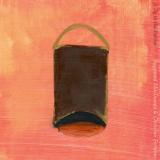
Cover painting by MiHee Kim Magee.
Graphic design by Mark Smith.
All music by Dennis Egberth.

This record was made with support from the Swedish Arts Council.

In Stock

Disponibile in Stock e pronto per la spedizione

Last In: 16 months ago
Isaiah Collier - Joy

Isaiah Collier

Joy

12inchBWOOD455LP
Brownswood Recordings
03.08.2026
 
3

In a world currently defined by unrest, uncertainty, and cultural fracture, acclaimed saxophonist, composer, and bandleader Isaiah Collier returns with Joy, a 5-track EP that reframes one of humanity’s most nuanced emotions both as a devotional grounding and political act.

Collier’s deeply personal compositions present joy as an act that isn’t rooted in escapism or abstraction, but rather, as something hard-won rooted in lived experience, shaped by transformation, and sustained through connection. Throughout the album’s five compositions, Collier positions joy as a guiding light during challenging times, an expression of challenging yourself to utilize your gifts, an affirmation of love and discovery, and as an affirmative source of reassurance.

“We are in a paradoxical time, where so much is being revealed to us,” Collier shares. “Everything feels political from every scope… our collective hearts feel the heaviness in the air. Yet I say to you all—don’t despair. For right now, the most political thing we can do is share joy.”

That ethos is made clear in the opening title track and lead single “Joy.” A pulsing rhythmic motif anchors the melody with a sense of both searching and certainty. Collier conceived the piece around 3 years ago reflecting on a time where many people in his life were experiencing loss of family and friends and experiencing profound life transitions. “Everything just felt like it was falling apart with no aim in sight,” he reflects. “Yet, there is a light at the end of it all.”

As he played the chords with a sense of urgency, he could feel the vibration of yellow in the piece. That initial triplet motif serves as the guiding light on the piano and the only word Collier could hear was Joy. In addition to Collier at the helm singing and playing piano and tenor sax on the track, it features an expansive 11-piece ensemble with a full horn and string section allowing Collier’s propensity for composition and arrangement to shine with an eclectic sonic palette.

“Landscape of Dreams” finds Collier serendipitously leaning into utilizing his gifts as a multi-instrumentalist. While he had a sketch of the piece going into the studio, a traffic delay caused musicians to be late arriving at the studio. Never one to waste time in the studio environment, Collier stepped into new creative territory and took up the challenge of executing playing all instruments himself as an act of trust and experimentation. “I’ve never done this before, and so it was a leap of faith for me,” he asserts. “I always dream of doing stuff like this, and being part of the small percentage of people who can do it like Prince, Steve Lacy, Frank Zappa, and Stevie Wonder. The end result finds Collier immersed in a hypnotic soundscape playing layered flutes, drums, Metatron, Wurlitzer, and auxiliary percussion.

Another layer of joy is revealed in “Where I’m Loved” that serves as a love letter and leaning into the process of stepping into the willingness to explore life and love with a partner. On the intimate meditation of vulnerability and connection, Collier's vocal prowess is on full display, exerting effortless falsetto reminiscent of D’Angelo over soulful Wurlitzer and guitar as he crosses over into more R&B-inspired realms. “I believe everyone deserves this feeling or to honor the memories of it. Furthermore, I believe you should also go where you’re celebrated and not tolerated.”

“When the Dust Settles” captures the electricity of live collaboration and Collier further steps out of being confined to any specific genre. He had just gotten a microKORG keyboard from co-producer Sonny Daze and was exploring the vast array of sounds on the instrument. Collier plays synth bass on the microKORG joined by the electrifying improvisation of Cole Runge on guitar and the combustible rhythm of his brother Jeremiah Collier on drums with additional post-production work from Sonny Daze.

The album’s final track “God’s By Your Side” reflects on perseverance and artistic legacy, directly inspired from the passing of D’Angelo, whose life’s work was a huge part of Collier’s childhood growing up in the late 90s and early 00s. With gospel flavor and direct influence both from D’Angelo’s vocal and instrumental arrangements, the track speaks to resilience and persistence in the face of obstacles—an affirmation of source and reassurance. “And what’s better than having God by your side, right?” asserts Collier.

Joy is a through-and-through expression of the arc of joy in its truest form. Joy transcends fleeting happiness and is conscious gratitude shaped by taking chances, leaning into your gifts, fostering community, and lived experiences.

“Joy is partially happiness,” Collier explains. “But to me it means happily being grateful for family, friends, lovers, teachers, and good times. These are the things that anchor us.”

The release of Joy comes off the heels of significant momentum for Collier, whose work continues to garner accolades and resonate across cultural spheres. He was featured on the cover of DownBeat’s April 2025 issue, where he was named “The Next Sax Giant,” and profiled on NPR’s Jazz Night in America for his ambitious 13-movement interdisciplinary suite The Story of 400 Years, that traces 400 years of Black American History. He released two full-length albums in 2024 with The World Is on Fire highlighted in The New York Times’ Fall Arts Preview and The Almighty named among the publication’s Best Jazz Albums of the year.

Beyond performance and recoding, Collier’s influence is recognized in broader cultural and intellectual spaces as he was the recipient of the Jazz Journalists Association’s 2025 Up and Coming Artist of the Year Award, the 2024 Chicagoan of the Year in Jazz, and was named a Steve Jobs Archive Fellow joining an elite cohort of the next generation of artistic visionaries through a yearlong program.

In addition to the release of Joy, Collier is touring his “Collier Plays Coltrane” program throughout 2026 in honor of John Coltrane’s centennial. Rather than presenting Coltrane’s expansive catalog as repertory, Collier approaches this music as something living, reshaping it in real-time with a sense of space and improvisational dialog reflecting both reverence to the past and present times.

non in magazzino

Ordina ora e ordineremo l'articolo per te presso il nostro fornitore.

Last In: 49 days ago
Raymond MacDonald & Christian Ferlaino - A Jig in the Future

"All the tracks on this release come from a live concert at Sharmanka, a beautiful and unique museum of kinetic sculptures in Glasgow, and throughout the record, the sounds of the sculptures moving and emitting noises are incorporated into the music performed. The four pieces presented are entirely improvised. There was no discussion beforehand of what instruments or what approach would be taken, and each piece evolved as a musical negotiation as the performers individually made choices about what instruments to play and how to support and meet each other within the unfolding musical narrative. While Macdonald and Ferlaino both share a lifetime of work with their chosen primary instrument, the saxophone, they also share a passion for exploring other instruments and objects for their sonic and socio-creative potential. This record foregrounds both these aspects of their work: they use saxophones, but also incorporate bells, toys, bagpipes, accordions, percussion instruments and voice.
"Raymond MacDonald is a saxophonist and composer with an extensive career in music, cross-disciplinary arts and academia. He has played on and released over 100 albums, toured and broadcast worldwide and has composed music for film, television, theatre, radio and art installations. He is a founding member of the Glasgow Improvisers Orchestra, and his work is informed by a view of improvisation as a social, collaborative, and uniquely creative process that provides opportunities to develop new ways of engaging musically.
"Christian Ferlaino is an Italian saxophonist, bagpipe player, improviser, composer and ethnomusicologist. He composes for ensembles of improvisers, both from the jazz and improvised music scene, as well as for contemporary music ensembles. His work explores the relationships between composition and improvisation, and the expressive potential of improvised music. His musical research also focuses on creatively engaging with the sonic and musical realm of Calabria, with special attention to its performing techniques and approach to sound and music generation."

pre-ordina ora30.05.2026

dovrebbe essere pubblicato su 30.05.2026

Doris Dennison - Earth Interval

The discovery of Doris Dennison's score represents a genuine musicological breakthrough—what once would have been "a tree falling in the woods" thirty years ago now holds the potential to render "a thunderous clap in our minds." While researching Anna Halprin's lesser-known collaborators, scholar Tom Welsh uncovered the archives of AA Leath, one of Halprin's principal dancers. Buried within these materials was Dennison's handwritten score for Earth Interval, dated May 1956. Born in Saskatchewan, Canada, in 1908, and raised near Seattle, Dennison (1908-2009) encountered John Cage while teaching Dalcroze eurythmics at the Cornish College of the Arts. She joined Cage's earliest percussion quartet—alongside Margaret Jansen, the composer and his wife Xenia—in the group widely regarded as having performed the first complete concert of percussion music in the United States. This historic December 1938 concert was followed by tours and the landmark May 1941 performance at the California Club, comprising Cage and Lou Harrison's Double Music, the premiere of Cage's Third Construction, and Harrison's 13th Simfony.

As Bradford Bailey observes in his extensive liner notes, Earth Interval demonstrates "an extraordinary balance of elements that imbues the piece with a sense of clarity, directness, and constraint that is both distinct and ahead of its time." The work's most remarkable innovation lies in its approach to extended techniques, particularly Dennison's notation for the central movement: "In 2nd movement, 1st player lowers + raises a gong into a tub of water while beating." This technique, absorbed from Cage's experimental vocabulary, generates what Bailey describes as "fields of acoustic abstraction that bend and warp time through sustained resonances, beat, and space." The temporal sophistication of these manipulations anticipated Karlheinz Stockhausen's Mikrophonie I (1964) and Annea Lockwood's water-based sound investigations by over a decade. After joining Mills College as dance accompanist, Dennison maintained crucial connections to the Bay Area's experimental scene, collaborating with figures like Merce Cunningham and programming Cage's music throughout the 1950s.

Comprising three movements—Land Form, Air Tide, and Earth Play—Earth Interval is scored for recorder, drums, gongs, maracas, muted gongs, and bowl gongs. In total, the piece is just under eight minutes: "a fleeting glimmer of moment in time, a life spent at the cutting edge, and a singular creative vision that packs a powerful punch." When viewed in historical context, placed in contrast to roughly contemporaneous avant-garde percussion works by Cage, Harrison, Louis Thomas Hardin (Moondog), and Harry Partch, or important precursors like Edgard Varèse's Ionisation (1931) and Henry Cowell's Ostinato Pianissimo (1934), it's clear that Dennison was following her own path. Earth Interval is not derivative. It is a precursor to what was yet to come, alluding to developments of avant-garde and experimental music that wouldn't begin to appear on the cultural landscape until the 1970s and '80s, with the emergence of Post-Minimalism and more idiosyncratic artists and ensembles like Midori Takada, Ros Bandt, Peter Giger, Frank Perry, Christopher Tree, Michael Ranta, Gamelan Son of Lion, and Niagara.

This recording by Chicago's Third Coast Percussion, captured in March 2022, represents the first complete documentation of this pioneering work. The ensemble's interpretation reveals the piece's remarkable contemporaneity while maintaining its historical specificity. Where Cage, Harrison, and Partch employed "self-consciously off-kilter polyrhythms," Dennison's rhythmic sensibility anticipates minimalist developments by nearly a decade, yet integrates "forceful rests, as well as sharp shifts in sonic character, tempo, and meter, that break the momentum and breathe a sense of life into the piece's structure." This positions her work closer to Post-Minimalism decades before its emergence. The architectural approach demonstrates Dennison's understanding that "the composer almost entirely disappears" in favor of phenomenological listening experience, creating what might be called an egoless music that places its realities and meaning entirely in the ear of the beholder. The present recording, realized by Chicago's distinguished Third Coast Percussion ensemble, represents a significant achievement in experimental music scholarship and performance practice. As specialists in the Cage tradition and contemporary percussion repertoire, Third Coast Percussion approached Earth Interval with the historical sensitivity and technical precision required to illuminate Dennison's subtle compositional innovations. The March 2022 recording sessions, engineered by Colin Campbell, capture both the work's intimate chamber music qualities and its bold exploration of extended techniques. The ensemble's interpretation reveals the piece's remarkable contemporaneity—its ability to speak directly to current musical concerns while maintaining its historical specificity.

This recording serves multiple scholarly functions: it provides the first complete documentation of Dennison's compositional voice, offers insight into the broader network of experimental music practitioners surrounding Cage and Harrison, and demonstrates the sophisticated level of compositional thinking that was occurring within the Bay Area's dance-music collaborations of the 1950s. The work's emphasis on phenomenological listening—what might be called an "egoless" approach to musical experience—places it within a lineage of American experimental music that prioritizes perceptual process over compositional personality. The work's original obscurity—limited to AA Leath's performances at venues like the 1957 Pacific Coast Arts Festival at Reed College—paradoxically allowed it to remain "entirely on its own terms," free from the constraints of historical categorization. Drawing on Jacques Derrida's Archive Fever, the argument emerges that "the archive can acknowledge, celebrate, and resurrect" overlooked voices, transforming our understanding of experimental music history. The present Blume edition, featuring Third Coast Percussion's authoritative interpretation, includes a lavishly illustrated 16-page booklet designed by Bruno Stucchi / dinamomilano, containing complete scholarly apparatus, historical photographs, and detailed production notes. This recording enables "cross-temporal intersectionality," allowing Dennison to "belong to a newly formed and more dynamic understanding of the present and past," demonstrating how forgotten voices can reshape entire historical narratives when given proper scholarly attention and performance advocacy.

pre-ordina ora01.08.2025

dovrebbe essere pubblicato su 01.08.2025

Atrás Del Cosmos - Cold Drinks, Hot Dreams LP

RIYL: Don Cherry, Alice Coltrane, Remi Álvarez, Juma Sultan's Aboriginal Music Society, Horace Tapscott. Atrás del Cosmos were a central force in Mexico City's creative arts community, and often considered the first free jazz group in the country. Founded by a trio composed of pianist Ana Ruiz, percussionist Evry Mann, and saxophonist Henry West, the ensemble was prolific in mentoring a generation of improvisers, cultivating an expanded additive roster, and organizing workshops in downtown Mexico City including inviting Don Cherry to play and instruct on his "organic music" approach in 1977. Between 1977 and 1983, the group lived and rehearsed in a residential space behind the Cosmos theater, hence their celestial-tinged name. But despite their central importance to the local scene, Atrás was rarely recorded and had a scant international presence, leaving behind just a single cassette before their disbandment. Now issued on LP for the first time, the aforementioned tape Cold Drinks, Hot Dreams is a red-hot recording documenting the core group plus double-bassist Claudio Enriquez performing live in 1980, a delirious improvisation with high peaks and low valleys, sucking in an amalgam of influences including New York loft style, Mexican folk music, and the surrealism of Alejandro Jodorowsky into its heady gravitational pull. Ruiz's playing style is virtuosic and expressive, pulling off monumental chords and using the piano's whole register, recalling Cecil Taylor's percussive approach, Matthew Shipp's emotive voicing, and Duke Ellington's mystifying arabesques. Evry Mann dabbles in polyrhythms in tracks like the solo marimba meditation "Clapping Music II," and Henry West wails heavy in the show-stopping cut "M.D." Now finally available after forty years, the music of Atrás del Cosmos will be sure to stun spiritual jazz veterans and newcomers alike3

pre-ordina ora25.10.2024

dovrebbe essere pubblicato su 25.10.2024

LUTHER THOMAS HUMAN ARTS ENSEMBLE - FUNKEY DONKEY VOL.1

Wewantsounds is delighted to reissue, in collaboration with Corbett vs. Dempsey, one of the great albums out of the BAG galaxy recorded by Luther Thomas and a cohort of musicians including Joe Bowie, Charles Bobo Shaw, Floyd LeFlore and Lester Bowie. Recorded live in 1973 at The Berea Presbyterian Church in St. Louis, the album consists of two tracks, the formidable, aptly titled "Funky Donkey" and the spiritual "Una New York." Released as a private press on Thomas" own Creative Consciousness Records, it"s reissued here for the first time since the 70s, marking the recording"s 50th anniversary, and features original artwork, remastered audio and new liner notes by Howard Mandel.

pre-ordina ora10.11.2023

dovrebbe essere pubblicato su 10.11.2023

Maliks Emerging Force Art Trio - Time & Condition
disponibile anche

Black Vinyl


Original self-released by Malik king this lp has been on many peoples lists of holly grail private-press jazz wants for years , very rarely turning up on ebay and the like.. selling for up to $500.

Malik King was an important part of the St Louis jazz scene of the 70's & 80's.

He studied under Albert Ayler in NY in the early 70s before returning to the Midwest. He was a member of; The Human Arts Ensemble, the Shirley Le Flore's ensemble "Free N' Concert". He also served as musical director of The Creative Arts & Expression Lab, The African Peoples Continuum, & The Black Arts Alliance, The worrier poets, as well as various Emerging Force Ensembles.

Zimbabwe Nkenya (1953-2022), a creative artist and innovative musician, was brought up on army bases in the USA and Spain. He spent 30 years traveling and performing in New York, New Mexico, Arizona and St Louis. playing with a who's who of jazz. In New Mexico he became an integral part of the scene, producing and hosting the KUNM'S radio show "THE HOUSE THAT JAZZ BUILT" .

Luckily Malik self-released "Time & Condition" in 1982, capturing his work together with Qaiyim Shabazz. It's not just a crate diggers Holy Grail, but an important artistic and historic document of the St Louis scene. Time & Condition stands alone as a (very) individual, spiritual jazz classic.

We hope this reissue will finally grant these musicians the wider acknowledgement & credit they deserved during their life time.

pre-ordina ora29.09.2023

dovrebbe essere pubblicato su 29.09.2023

Maliks Emerging Force Art Trio - Time & Condition
disponibile anche

Yellow coloured LP


Original self-released by Malik king this lp has been on many peoples lists of holly grail private-press jazz wants for years , very rarely turning up on ebay and the like.. selling for up to $500.

Malik King was an important part of the St Louis jazz scene of the 70's & 80's.

He studied under Albert Ayler in NY in the early 70s before returning to the Midwest. He was a member of; The Human Arts Ensemble, the Shirley Le Flore's ensemble "Free N' Concert". He also served as musical director of The Creative Arts & Expression Lab, The African Peoples Continuum, & The Black Arts Alliance, The worrier poets, as well as various Emerging Force Ensembles.

Zimbabwe Nkenya (1953-2022), a creative artist and innovative musician, was brought up on army bases in the USA and Spain. He spent 30 years traveling and performing in New York, New Mexico, Arizona and St Louis. playing with a who's who of jazz. In New Mexico he became an integral part of the scene, producing and hosting the KUNM'S radio show "THE HOUSE THAT JAZZ BUILT" .

Luckily Malik self-released "Time & Condition" in 1982, capturing his work together with Qaiyim Shabazz. It's not just a crate diggers Holy Grail, but an important artistic and historic document of the St Louis scene. Time & Condition stands alone as a (very) individual, spiritual jazz classic.

We hope this reissue will finally grant these musicians the wider acknowledgement & credit they deserved during their life time.

pre-ordina ora29.09.2023

dovrebbe essere pubblicato su 29.09.2023

Jussi Reijonen - Three Seconds | Kolme Toista

"As I write these notes sitting on my balcony in July 2022, it has been more than 9 years since the release of my debut album and more than 11years since it was recorded, the time since has been a personally tumultuous period of twists and turns - retreat, reflection, realization, reassessment, therapy, triumph, trial and error - entangled in a decade-long creative block that had me questioning whether
I would ever be able to compose again and though I felt there was so much I wanted and needed to say, I felt I had lost my voice, or perhaps never had one in the first place. A constant knot had grown tighter and tighter within me over time, but I did not understand what had created it or how it might be undone. In 2018, shaken awake by the collision of two transients, I suddenly saw in a new light old
patterns whose familiar presences I realized I had felt for much of my life, but had until then never seen for what they were. Following a third, I finally found the humility to surrender, and as I began re- examining and confronting myself, I slowly started to discover new answers - and new questions to ask.

Then the Covid-19 pandemic happened, and the world stopped. Like so many of us caught in the new eerie calm, I retreated into inner spaces. I began revisiting sketches of ideas I had accumulated over the years, and finally, very, very slowly, new music started to come. " - Jussi Reijonen.

"Electrifying and deeply resonant, monumental and profoundly personal, Reijonen's five- movement suite is a beautifully crafted, remarkable journey of sound and emotion performed by a knockout nine-piece ensemble." - Monarch

"He's written one hell of a piece." - The Arts Fuse

"On this remarkable and ambitious new recording, Reijonen delivers an epic transcultural suite that feels as deeply personal as it is expansive and farreaching." - All About Jazz "a remarkable sophomore album" -The Boston Globe

"This is an album meticulously pulled together into a dense fabric of diverse musical threads. It merits repeated listening; with each fresh listen, the richness of Reijonen's intercultural vocabulary becomes more apparent." London Jazz News

"Even in our present jazz moment, when the art form is worldwide and vital, albums that come as complete surprises are relatively rare. Three seconds Kolme Toista is a stunner." Jazz Times

"Three seconds Kolme Toista is spellbinding from beginning to end, and full of virtuoso performances." All About Jazz

pre-ordina ora26.05.2023

dovrebbe essere pubblicato su 26.05.2023

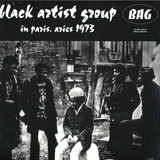
Black Artist Group - In Paris, Aries 1973

Repress!

Outstanding free jazz session recorded in 1973 in Paris by Chicago outfit BAG.

It was Lester Bowie, trumpeter with the Art Ensemble of Chicago, who suggested that the Black Artists' Group (BAG) should head for Paris. In 1972 several members of BAG took his advice and flew to France for an extended stay. The following year a concert featuring saxophonist Oliver Lake, trumpeters Baikida Carroll and Floyd LeFlore, drummer Charles Bobo Shaw and trombonist Joseph Bowie (Lester's younger brother) was recorded and subsequently issued as In Paris, Aries 1973, a strictly limited edition LP on the group's own label.

Since the formation of Black Artists' Group in 1968, the home of this multidisciplinary arts collective had been St Louis, Missouri, the city where the Bowie brothers had grown up. It was there that Lester Bowie had started to investigate the expanding horizons of jazz before moving, in 1966, to Chicago where he joined the recently established Association for the Advancement of Creative Musicians (AACM). His close friend Oliver Lake visited Bowie, attended AACM concerts and meetings and was inspired not only by their artistic vision and integrity but also by their efficient organisation. In Chicago musicians were making things happen for themselves, taking control of their own destinies and giving shape to their lives as creative artists.

In June 1969, the Art Ensemble of Chicago had taken their music to France. During the preceding decade Paris had established a reputation for audiences that were unusually well-informed and open-minded, receptive to the uncompromising music of black American innovators such as Cecil Taylor, Ornette Coleman, Albert Ayler and Sun Ra. The city that had nurtured not only Cubism and Surrealism, but also Jean-Luc Godard and contemporary cinema's Nouvelle Vague was well prepared for the sonic collage forms and stylistic dislocations of the Art Ensemble. During that same month violinist Leroy Jenkins, trumpeter Leo Smith and saxophonist Anthony Braxton also arrived in Paris, three further emissaries from the AACM.

The adventure of collective improvisation resonated with the Parisian zeitgeist. Enthusiastic audiences attended their concerts and coverage in the media. In Paris, Aries 1973 offers an isolated and fascinating glimpse into that phase of the group's existence. The album is dedicated to the memory of Kada Kayan, a bassist who had hoped to make the trip from St Louis to France but, tragically, had grown ill and died. His absence adds special poignancy to the sound of the bass when it appears on this recording, played by Baikida Carroll. Listeners keen to hear Kayan himself in the company of Lake, Bowie, Shaw, LeFlore and Carroll should seek out Red, Black and Green by the 10-piece Solidarity Unit, Inc. That album, recorded on 18th September 1970 and dedicated to Jimi Hendrix, who died on that day, features an earlier version of Shaw's composition 'Something to Play On.'

In Paris, Aries 1973 reveals BAG's musical affinities with the Art Ensemble of Chicago. Both groups preserved an independently minded approach to the notion of free jazz and a carefully filtered awareness of pan-African musical practices, while their creative interest in space, mobile structure, chance occurrences and simultaneity also suggests parallels with the concerns of leading experimental composers working at that time. These performances in Paris of Shaw's 'Something to Play On' and Lake's 'Re-Cre-A-Tion,' plus two collective compositions/improvisations, display the dedication to structural fluency and sensitivity to coloration that accompanied BAG's unorthodox group dynamics and their unconventional instrumental combinations. In this case the musicians embrace congas, log drums, marimbas, woodblocks, cowbells and gongs. This is not a showcase for solos, but a shape-shifting and multi-centred statement of togetherness, quest and discovery. Removed from BAG's original multidisciplinary context the music still exudes an exhilarating spirit of collaborative exploration and shared excitement.

non in magazzino

Ordina ora e ordineremo l'articolo per te presso il nostro fornitore.

LOS ANGELES PHILHARMONIC & SUSANNA MÄLKKI - STEVE REICH: RUNNER / MUSIC FOR ENSEMBLE AND ORCHESTRA

‘Runner is a calmly luminous orchestral piece with the pulsating, propulsive
rhythms that animate much of Mr. Reich’s music.’ – New York Times

‘Reich interweaves the two groups to create a dense textural tapestry that sounds like his most native orchestral thinking to date. A beautiful and dramatically charged masterpiece.' – San Francisco Chronicle

Nonesuch Records releases the first recordings of Steve Reich’s Runner (2016) and Music for Ensemble and Orchestra (2018), performed by the Los Angeles Philharmonic and conducted by Susanna Mälkki.

Reich says Runner is written “for a large ensemble of winds, percussion, pianos, and strings. While the tempo remains more or less constant, there are five movements, played without pause, that are based on different note durations. First, even sixteenths, then irregularly accented eighths, then a very slowed-down version of the standard bell pattern from Ghana in quarters, fourth a return to the irregularly accented eighths, and finally a return to the sixteenths but now played as pulses by the winds for as long as a breath will comfortably sustain them. The title was suggested by the rapid opening and my awareness that, like a runner, I would have to pace the piece to reach a successful conclusion.”

“Music for Ensemble and Orchestra is an extension of the Baroque concerto grosso where there is more than one soloist,” the composer continues. “Here there are twenty soloists – all regular members of the orchestra, including the first stand strings and winds, as well as two vibraphones and two pianos. The piece is in five movements, though the tempo never changes, only the note value of the constant pulse in the pianos. Thus, an arch form: sixteenths, eighths, quarters, eighths, sixteenths. Music for Ensemble and Orchestra is modeled on my Runner, which has the same five movement form.”

Nonesuch has recorded every new piece of music by Steve Reich since 1985, beginning with The Desert Music and continuing through 2018’s Pulse/Quartet, resulting in 22 albums and the two box sets Phases in 2006 and Works: 1965-1995 in 1997. Most recently, the label released his Reich/Richter, performed by Ensemble intercontemporain and conducted by George Jackson, in June 2022. The Times said, ‘What a delight to be able to focus on the music, delivered here with a clever mix of pinprick precision and reverberant haze by 14 members of Ensemble Intercontemporain. The more intently you listen, the more subtleties emerge among the shifting, criss-crossing textures and phrases, sometimes coloured with gentle melancholy but decisively upbeat by the end. Reich/Richter is an ear-tickling tonic and a happy companion to Reich’s newly published book, Conversations.’ Nonesuch will put out a collection of Reich’s complete works in 2023.

Reich released a book earlier this year, Conversations, that includes dialogues with past collaborators, fellow composers, musicians, and visual artists who have been influenced by his work, including: David Lang, Brian Eno, Richard Serra, Michael Gordon, Michael Tilson Thomas, Russell Hartenberger, Robert Hurwitz, Stephen Sondheim, Jonny Greenwood, David Harrington, Elizabeth Lim-Dutton, David Robertson, Micaela Haslam, Anne Teresa de Keersmaeker, Julia Wolfe, Nico Muhly, Beryl Korot, Colin Currie, and Brad Lubman. The Wall Street Journal called the book ‘a testament to the influence of an idea – one that triggered a cultural turning point,’ and the New York Times said, ‘The joy of the book is to hear artists from a variety of disciplines and backgrounds rhapsodizing about their relationship to Reich’s music and how it influenced their own creative processes.’

Steve Reich has been called ‘America’s greatest living composer’ (Village Voice), ‘the most original musical thinker of our time’ (New Yorker), and ‘among the great composers of the century’ (New York Times). His music has influenced composers and mainstream musicians all over the world. Music for 18 Musicians and Different Trains have earned him two Grammy Awards, and in 2009, his Double Sextet won the Pulitzer Prize. Reich’s documentary video opera works – The Cave and Three Tales, done in collaboration with video artist Beryl Korot – have been performed on four continents. His recent work Quartet, for percussionist Colin Currie, sold out two consecutive concerts at Queen Elizabeth Hall in London shortly after tens of thousands at the Glastonbury Festival heard Jonny Greenwood (of Radiohead) perform Electric Counterpoint followed by the London Sinfonietta performing his Music for 18 Musicians.

In 2012, Reich was awarded the Gold Medal in Music by the American Academy of Arts and Letters. He has additionally received the Praemium Imperiale in Tokyo, the Polar Music Prize in Stockholm, the BBVA Award in Madrid, and the Golden Lion at the Venice Biennale. He has been named Commandeur de l’Ordre des Arts et des Lettres and has been awarded honorary doctorates by the Royal College of Music in London, The Juilliard School, and the Liszt Academy in Budapest, among others. ‘There’s just a handful of living composers who can legitimately claim to have altered the direction of musical history and Steve Reich is one of them,’ states the Guardian.

Redefining what an orchestra can be, the Los Angeles Philharmonic (LA Phil) is as vibrant as Los Angeles, one of the world's most open and dynamic cities. Led by Music & Artistic Director Gustavo Dudamel, this internationally renowned orchestra harnesses the transformative power of live music to build community, foster intellectual and artistic growth, and nurture the creative spirit. This is the third recent recording by the orchestra on the label; the others were the Louis Andriessen pieces The only one and Theatre of the World. Additionally, the Los Angeles Philharmonic’s recordings of The Gospel According to the Other Mary and Must the Devil Have All the Good Tunes?, with Yuja Wang, released on Deutsche Grammophon, are included in this year’s John Adams Collected Works boxed set. Nonesuch also released an LA Phil recording of Adams‘ Naïve and Sentimental Music in 2002.

Susanna Mälkki is sought-after at the highest level by symphony orchestras and opera houses worldwide. About to embark on her final season as Chief Conductor of the Helsinki Philharmonic Orchestra, she concludes a seven-year tenure with a distinctive dynamism and imaginative flair to her programming. In addition to a full season in Finland, she will lead the Helsinki orchestra on tour to the prestigious Lucerne and Edinburgh festivals, New York’s Carnegie Hall, and Washington’s Kennedy Centre this season.

pre-ordina ora02.12.2022

dovrebbe essere pubblicato su 02.12.2022

PETR KOTIK - THE PLAINS AT GORDIUM (PERFORMED BY TALUJON) LP

A premiere recording from the Talujon percussion ensemble of The Plains at Gordium by composer Petr Kotik, whose pioneering work as founder and leader of the S.E.M. Ensemble has been a stalwart champion of the Avant-Garde from its inception, at the Center of the Creative and Performing Arts, SUNY/Buffalo, in 1970 to present day. Well-loved recordings by the S.E.M. Ensemble (Julius Eastman: Femenine, The Entire Musical Work of Marcel Duchamp, Morton Feldman: For Philip Guston) are easy to find. That has not been the case for Kotik's own music. This beautiful recording of a relatively recent work by Kotik provides a beguiling, labyrinthian entry into Kotik's own musical vision.

pre-ordina ora07.10.2022

dovrebbe essere pubblicato su 07.10.2022

ESMERINE - EVERYTHING WAS FOREVER UNTIL IT WAS NO MORE LP

Deluxe 180gram vinyl edition comes in a foil-embossed and die-cut cardstock jacket with printed inner sleeve and additional 12x12 art cards featuring the collages of Maciek Szczerbowski. All the art interacts with the die-cut jacket framing. Edition of 300. Rooted in a distinct and immediately identifiable sound_with the cello of Rebecca Foon (Saltland, Set Fire To Flames, Thee Silver Mt Zion) and the marimba of ex-Godspeed You! Black Emperor percussionist Bruce Cawdron at its core_Esmerine has long embroidered emotive chamber works using threads of post-classical, post-rock, Minimalism, neo-Baroque, jazz, pop and a wide array of folk traditions. Multi-instrumentalist Brian Sanderson, who joined the group in 2012, has furthered Esmerine's melodic and ethnomusicological sensibility ever since, expanding the ensemble's palette as its third core member with guitars, ngoni, ekonting, hulusi, brass horns of all sorts, and more. Since 2003, six stately and filmic instrumental albums have inscribed compositional landscapes through epigrammatic miniatures, longform multi-movement chronicles, and all manner of evocative musical prosody between. Marked by an inimitably turbid yet tempered pastoralism, alternately lit by dappled dawn and disquieted dusk, Esmerine's musical narratives balance asceticism and romanticism, melancholy and hope, stillness and wanderlust. Esmerine now shares Everything Was Forever Until It Was No More, its seventh full-length album and first in five years. The band surprise-dropped the full album digitally on 06 May 2022, with the CD and Deluxe 180gram LP editions hitting stores on official release date 26 August 2022. Following an acclaimed run of mid-career records on Constellation through the 2010s_the last three of which have all been finalists or winners of Juno Awards for Instrumental Album of the Year and/or Album Packaging of the Year_Esmerine began working on new music at decade's end. Under the auspices of a grant from the Canada Council for the Arts, and a summer 2019 residency at Le Château de Monthelon (an artist commune in France where the band has cherished long-standing spiritual, creative, and personal connections), compositional seeds were planted_and then pandemic rooted everyone in place. In between lockdown waves, at the respective rural Québec homesteads of Cawdron and Foon, longtime co-producer Jace Lasek (The Bernard Lakes) began capturing the band in various stripped-down configurations with spartan remote equipment. More fulsome arrangement and overdub sessions at Foon's converted barn during the summer of 2021 brought the album to full fruition_where a notable increase in the use of acoustic piano also poured forth, with just about every band member having a go. The record also signals the definitive integration of bassist Philippe Charbonneau_having joined Esmerine as a touring member pre-pandemic, he plays throughout the album on upright and electric bass, with turns on piano and synth, as well as sound design contributions via tape echo and other processing. Everything Was Forever Until It Was No More grapples with the existential tensions between atmosphere and airlessness, seclusion and claustrophobia, forbearance and coalescence. In many ways it is one of Esmerine's most restrained records. Only a few passages are driven by full percussion. There is palpably less Sturm and Drang or overt crescendos compared to its recent predecessors. The new album roils with a different sort of dynamic intensity, where instrumental densities ebb and flow within an overtonal centre, melding into each other with gauzy timbral warmth, sometimes tracing fleeting tendrils outwards, but always rotating around a saturnine gravitational force. Everything Was Forever Until It Was No More is like a dark forest lit by a closely-orbiting opalescent planet; it could be the alternate score to Von Trier's Melancholia or Cormac McCarthy's The Road.

pre-ordina ora02.09.2022

dovrebbe essere pubblicato su 02.09.2022

Ensemble intercontemporain - Steve Reich: Reich/Richter

‘Reich’s music expands from minimalist austerity to more full-bodied passages and back again. Reminiscent of his earliest work, it is very beautiful.’ – Financial Times

‘The music has tender energy, and an undercurrent of melancholy. Its droning tones sometimes seem to be pulling apart – like taffy, or like Richter’s stretching spaghetti stripes of color.’ – New York Times

Nonesuch Records releases the first recording of Steve Reich’s Reich/Richter, performed by Ensemble intercontemporain and conducted by George Jackson. The composition was originally written to be performed with German visual artist Gerhard Richter and Corinna Belz’s film Moving Picture (946-3).

Reich describes Richter’s book Patterns, which served as source material for the film: “It starts with one of his abstract paintings from the ’90s. He scanned a photo of the painting into a computer and then cut the scan in half and took each half, cut that in half and two of the four quarters he reversed into mirror images. He then repeated this process of ‘divide, mirror, repeat’ from half to quarter, eighth, sixteenth, thirty-second, all the way up to 4096th. The net effect is to go from an abstract painting to a series of gradually smaller anthropomorphic ‘creatures’ (since the mirroring produces bilateral symmetry) to still smaller very fine stripes.

“Belz described the film in terms of ‘pixels’. It begins with two-‘pixel’ stripes and the music begins with a two-sixteenth note oscillating pattern. When the film moves to four ‘pixels’, the music moves to a four-sixteenth note pattern, then to eight, and sixteen,” the composer continues. “After that, I began introducing longer note values – initially eighth notes, and later to quarter notes. By the middle of the film, when the images move from 512 to 1064 pixels, the music really slows to dotted half notes. Finally, as the ‘pixel’ count begins to diminish, the music moves back into more rapid eighths and then ending with the most intense rapid sixteenth movement.”

After more than one hundred performances of Reich/Richter at The Shed in New York in 2019, it was performed in London at the Barbican by the Britten Sinfonia conducted by Colin Currie and then in Paris at the Philharmonie, where this recording was made. The Austrian ensemble Windkraft Tirol, led by Kasper de Roo, will perform Reich/Richter on September 8 at Szentrum, Silbersaal in Schwaz, and the LA Phil New Music Group, led by Brad Lubman, performs the piece, accompanied by Richter and Belz’s film, at Walt Disney Concert Hall in Los Angeles on April 1, 2023.

Nonesuch has recorded every new piece of music by Steve Reich since 1985, beginning with The Desert Music and continuing through 2018’s Pulse/Quartet, resulting in twenty-two albums and the two box sets Phases in 2006 and Works: 1965-1995 in 1997. The label will put out a collection of his complete works in 2023.

Reich released a book last month, Conversations, that includes dialogues with past collaborators, fellow composers, musicians, and visual artists who have been influenced by his work, including: David Lang, Brian Eno, Richard Serra, Michael Gordon, Michael Tilson Thomas, Russell Hartenberger, Robert Hurwitz, Stephen Sondheim, Jonny Greenwood, David Harrington, Elizabeth Lim-Dutton, David Robertson, Micaela Haslam, Anne Teresa de Keersmaeker, Julia Wolfe, Nico Muhly, Beryl Korot, Colin Currie, and Brad Lubman. Booklist said in its review, ‘Iconoclastic American composer Steve Reich is singular in his own right, and when he is in conversation with other equally iconoclastic composers, conductors, sculptors, musicians, percussionists, and video artists, sparks not only fly, they sparkle. Reich and his colleagues conduct lovely give-and-takes during which they share stories, creative approaches, and viewpoints. Reich's Conversations is the best kind of eavesdropping.’

Steve Reich has been called ‘America’s greatest living composer’ (Village Voice), ‘the most original musical thinker of our time’ (New Yorker), and ‘among the great composers of the century’ (New York Times). His music has influenced composers and mainstream musicians all over the world. Music for 18 Musicians and Different Trains have earned him two Grammy Awards, and in 2009, his Double Sextet won the Pulitzer Prize. Reich’s documentary video opera works – The Cave and Three Tales, done in collaboration with video artist Beryl Korot – have been performed on four continents. His recent work Quartet, for percussionist Colin Currie, sold out two consecutive concerts at Queen Elizabeth Hall in London shortly after tens of thousands at the Glastonbury Festival heard Jonny Greenwood (of Radiohead) perform Electric Counterpoint followed by the London Sinfonietta performing his Music for 18 Musicians.

In 2012, Reich was awarded the Gold Medal in Music by the American Academy of Arts and Letters. He has additionally received the Praemium Imperiale in Tokyo, the Polar Music Prize in Stockholm, the BBVA Award in Madrid, and the Golden Lion at the Venice Biennale. He has been named Commandeur de l’Ordre des Arts et des Lettres and has been awarded honorary doctorates by the Royal College of Music in London, The Juilliard School, and the Liszt Academy in Budapest, among others. ‘There’s just a handful of living composers who can legitimately claim to have altered the direction of musical history and Steve Reich is one of them’, states the Guardian.

Pierre Boulez founded the Ensemble intercontemporain in 1976 with the support of Michel Guy (who was France’s Minister of Culture at the time) and the collaboration of Nicholas Snowman. The Ensemble’s thirty-one soloists share a passion for twentieth and twenty-first century music. Under the artistic direction of Matthias Pintscher, the musicians work in close collaboration with composers, exploring instrumental techniques and developing projects that interweave music, dance, theater, film, video and visual arts. In collaboration with IRCAM (Institut de Recherche et Coordination Acoustique/Musique), the Ensemble intercontemporain is also active in the field of synthetic sound generation. New pieces are commissioned and performed on a regular basis. Resident of the Cité de la musique – Philharmonie de Paris, the Ensemble performs and records in France and abroad, taking part in major festivals worldwide.

George Jackson, winner of the 2015 Aspen Conducting Prize, came to attention after stepping in at short notice with Orchestre de Paris, where he stepped in for Daniel Harding. Recent highlights include leading Ensemble intercontemporain at Festival Romaeuropa, the Rainy Days Festival in Luxembourg, and Festival D’Automne in Paris, as well as conducting the RTÉ National Symphony Orchestra, the orchestra of Opéra de Rouen and the world premiere of Tscho Theissing’s Genia with Theater an der Wien. His varied operatic experience includes performances at Opera North, Hamburg State Opera and Opera Holland Park, as well as conducting a new production of Hänsel und Gretel at Grange Park Opera.

non in magazzino

Ordina ora e ordineremo l'articolo per te presso il nostro fornitore.

Last In: 4 years ago
FRANCISCO MORA CATLETT - MORA! II

Far Out Recordings is delighted to present Mora!, and for the first time ever on vinyl Mora! II. Mexican-American percussionist and former member of the Sun Ra Arkestra, Francisco Mora Catlett originally recorded and released his debut solo LP as a private press in 1987, but the sequel he recorded over the course of the next few years with an expanded Detroit jazz brass section was shelved for decades to follow. A pan-American melting pot of hypnotic afro-cuban rhythms, frenetic batucadas and fiery sambas, Mora I & II are holy grails of latin jazz, masterminded by an unsung hero of the genre.

Born in Washington DC, 1947, Francisco Mora Jr is the eldest child of two highly prominent Mexican artists, Francisco Mora Sr and Elizabeth Catlett, to whom this project was dedicated. Being born into a mixed heritage bohemian family provided Mora Jr with what he called a “creative, progressive, and healthy arts environment”, building the foundations for a fascinating career journey ahead. Mora grew up in Mexico City where he began working as a session musician for Capitol Records in 1968, before moving to study at Berklee Music College in Boston, MA in 1970. Once he’d completed his studies in 1973, he very briefly returned to Mexico City with the best intentions of cultivating an avant-garde movement in the city, but when the Sun Ra Arkestra came to perform, Mora ended up leaving with the band to tour the world for the next seven years, a decent innings within a group famous for its constantly evolving line up.

Settling in Detroit after his years with the Arkestra, Francisco set to work on his self-titled debut, gathering an ensemble of musicians that included keyboardist Kenny Cox, founder of the legendary Strata Records, esteemed bassist Rodney Whitaker of the Roy Hargrove Quintet and percussionists Jerome Le Duff, Alberto Nacif, and Emile Borde. The album openly embraces and unites the broad spectrum of improvisation, rhythm, and jazz that has thrived throughout the American continents for centuries. In Mora’s own words the album intended to “manifest the African heritage presence in the American continent.” Epitomising this outlook, album opener ‘Afra Jum’ deploys a melody based on Haitian, African and Native American motifs, which is expanded upon by the soulful excellence of the Detroit veterans Cox and Whitaker, amidst a backdrop of afro-cuban inspired percussion.

The sequel Mora II was recorded shortly after with an expanded line up that included trumpet legend Marcus Belgrave, famed for his work with Ray Charles, Charles Mingus, Hank Crawford, Eddie Russ and Wendell Harrison. Continuing the concept of the first album, the follow up moves deeper into South America with the samba jazz dance belter ‘Amazona’, led by the rich vocals of Francisco’s wife Teresa Mora. The ‘Afra Jum’ concept is further explored, with the original motifs beefed up by the additional horns, and interspersions of Sun Ra inspired rumbling free improvisations. This follow up album remained shelved until 2005, when Mora put it out as a now obscure CD titled River Drum, but only now has it been given the high quality vinyl treatment it so deserves, presented as the sequel to Mora! as originally intended.

Through the 90s and into the the 21st century Mora would continue his Pan-American explorations, moving toward a more electronic afro-futurist direction as part of Detroit techno pioneer Carl Craig’s Innerzone Orchestra. Mora also worked with Carl Craig, moog synth wizard Craig Taborn, and his former Arkestra colleague, the legendary Marshall Allen, to form the Innerzone Orchestra spin-off Outerzone, released in 2007 on Premier Cru Records. Mora I & II will be out as two vinyl LPs, CD and digitally 16th April 2021.

non in magazzino

Ordina ora e ordineremo l'articolo per te presso il nostro fornitore.

Last In: 5 years ago
  • 1
Articoli per pagina:

Language

N/ABPM
Vinyl