
also available
pre-order now17.10.2025
expected to be published on 17.10.2025
expected to be published on 17.10.2025

expected to be published on 17.10.2025

. The Classic Example were a Los Angeles singing duet consisting of Curtis Colbert and Harriet Hurst. Their eponymous LP was released in 1972 on GSF Records alongside infamous acts such as Skull Snaps and The Whatnauts. Very little is known about the duo, only one LP was recorded and the group disbanded shortly after release. The backing band for the entire album is none other than Hodges, James, Smith, and Crawford. Newly remasted and pressed on audiophile virgin vinyl.
expected to be published on 01.03.2024

• The Classic Example were a Los Angeles duo - possibly the song-writing team of Curtis Colbert and Harriet Hurst who provided four of the songs on the eponymous 1972 GSF LP. Inexplicably the superb dance track ‘Right On’ was the only one omitted from the album, but Kent’s licensing deal with Mickey Stevenson’s Stevenson International revealed this gem.
• It was finally released as a promo 100 Club Anniversary 45 in 2021 and has been in demand ever since. Now it can be purchased at a reasonable price with the duet’s excellent harmony ballad ‘I Found Me A Girl’ added on the B side. The backing group is none other than Hodges, James, Smith & Crawford.
expected to be published on 24.02.2023

On the brink of releasing his eighth album, Example is beginning a new chapter. Having spent well over a decade in the game, the UK mainstay has crafted a career drenched in accolades: Platinum albums, chart-topping singles, headline festivals slots, and a lengthy stint releasing inescapable anthems that bridge the gap between electronic, rap and pop. Still, Example isn't ready to hang up his boots just yet; rather, he's preparing for the most important release of his career.
Order now and we will order the item for you at our supplier.

After amazing releases on Moan, Serkal, Zoo Lab and his own Innocent Music, Aney F. lands on Cellaa Music with a smashing EP titled New System'.
All tracks are designed to cause maximum damage on the dancefloor that is set to take the world by storm.
He blend warm house flavours with sharp techno beats and creating harmonic coherence from elements that seem to be contrary. 4 killer dance floor workouts, big enough for the main rooms, groovy for the back rooms which let's everybody start dancing - anytime, anywhere!
It's for sure that you have to take this trip through sound - better now than later.
Order now. Collecting orders for repress.

Back In Stock!
a special 2x12" with some funky old school house classics !! limited re-stock !!!!
Order now and we will order the item for you at our supplier.

Eno Williams, frontwoman of Ibibio Sound Machine, uses both English and the Nigerian language from which her band's name is derived for the dazzling new album Doko Mien. Long lauded for jubilant, explosive live shows, Ibibio Sound Machine fully capture that energy on Doko Mien, the followup to their Merge debut Uyai.
In a glowing piece in the New York Times, those songs were praised for following 'in the tradition of much African music, [making] themselves the conscience of a community.' By pulsing the mystic shapes of Williams' lines through further inventive, glittering collages of genre, Ibibio Sound Machine crack apart the horizon separating cultures, between nature and technology, between joy and pain, between tradition and future. That propensity for duality and paradox seems common in people whose lives span continents.
Williams was born in the UK, but grew up in Nigeria, always steeped in her family heritage. She obsessed over West African electronic music, highlife, and the like, but was equally empowered by Western genres such as post-punk, disco, and funk. The London octet have enveloped themselves in that maximalist quilt proudly since their 2013 formation. Though it can often bring with it news of stress and uncertainty, the modern world further brings all these disparate traditions into connection.
'Everyone has everything now,' says multi-instrumentalist Max Grunhard. 'Everyone has immediate access to every genre, picking things up from everywhere—like magpies.' And while they haven't suddenly left their African roots behind, Doko Mien does find increased representation of English lyrics in the ratio. By sharing more directly with more universal lyrics, the record feels more anthemic, reaching for grander heights.
'We wanted to give people a reason to sing along, to find their soundtrack every day,' Williams says. 'We wanted everyone to feel as if they're part of the music as well.'
Late album highlight 'Guess We Found a Way' addresses the change with a coy smile. 'Guess we found a way to speak to you/ Guess we found a way to say what's true/ To say what's real,' Williams coos over glistening chains of reverberant synth and diamond dust percussion, before returning to Ibibio in the chorus. Perhaps the best example of the group's ability to convey meaning across language and tradition, to blend past and future into a singular present comes on 'She Work Very Hard'. The traditional Ibibio folk tale bobs over the waves of tuned percussion, chunky synth, and pinprick highlife-esque guitar, while Jose Joyette's drums and Derrick McIntyre's bass funk groove bring everyone to the dance floor. 'These stories won't be forgotten. Feel the music: it speaks to everybody,' Williams says. 'We can travel back in time together, while convening on a futuristic, present tense. We hope that we can give people that reason to wake up, that one song to sing and dance and be happy.'
Doko Mien: Tell me everything. On their new album, Ibibio Sound Machine provide the perfect companion, ready to digest as much as possible and then further unfurl beauty and hope. They remember and honor the past and charge forward toward the future, all while intensely expanding the present.
Order now and we will order the item for you at our supplier.

Tourist Kid's first release for Melody As Truth. Recorded in Perth and Melbourne between 2016 and 2017. Though the idea of movement between two places could be a somewhat romantic afterthought, a more palpable sense of dislocated unease creeps up on the listener throughout the album.
.
On "Discourse II", stutters of digital trash segue seamlessly into a plateau of serene, glassy ambience - and on "Bacterial", the hiss and sting of rehashed foley seems to dance around a plaintive, oh-so delicate piano solo. These striking contrasts are deftly managed, playing upon notions of digital noise and ambient, while never feeling weighed down by the limits of reference or gesture. Indeed, numerous touchstones to Tourist Kid's earlier work - and to that of contemporaries - are synthesised and expanded upon to great detail and atmosphere. "Crude Tracer" sits in its own adeptly nuanced and assured space.
Tourist Kid's production encompasses all manner of tangible and otherworldly sounds as a vehicle to explore something far more intriguing than a simple instrumental fetish - so much so that the
overwhelming sting of blasted detritus or a broken and bent vocal is capable of eliciting such delicate impulses as glistening, heart-wrenching piano chords. It's a unique - and very special - kind of beauty that Tourist Kid gracefully achieves with "Crude Tracer'.
Order now and we will order the item for you at our supplier.

The Bratislava-based band 52 Hertz Whale release their new album Present Sense Impression in a collaboration of the labels Weltschmerzen and Full Moon Forum.
Three years since their album I've Met a Lot of People, the band brings forth a lot of new ideas, finding a new resonant space, and utilising the fierceness // savageness of their live shows, in an intimate stare at contemporary guitar music.
52 Hertz Whale is a band well known in the Central European music context. Their ferocious sound, mixing the intensity of post-punk, heavy guitar wails, and melancholic // stark vocals of Dominik Prok has been tearing down the fixtures of many festivals and venues, all the while being a great example of a band driving at 200mph nonstop. On Present Sense Impression, the band, composed of Dominik Prok, Dominik Fabian, Patrik Nagy, Tomáš Tabiš and Adrián Krišák, have arrived at a record full of manifold manifestations of their live sound, but at times recalling the more marginal waves of 80s pop // rock sound. Resolute drums, heavyweight guitar and bass riffs now deem closer to the lightness of early ethereal darkwave, just to indulge in the classic melancholic heaviness they are known for only seconds after.
Some of the songs have been produced by "Prague's favorite rock'n'roll enfant terrible" Lazer Viking as well as Pulp Studio's Jakub Hríbik, and one features a special guest - the cemballo virtuoso Marcel Comendant. The traditionally stunning artwork was created by the accomplished Martin Mesaroš.
Present Sense Impression is the 20th album released under the Slovak romantic // experimental label Weltschmerzen focused on emotionally hypercharged, humanely intertwined, and acutely sounding contemporary music. This time in collaboration with the czech label Full Moon Forum. It releases August 26th on limited edition baby pink, standard edition black vinyl and on all streaming platforms.
The creation and release of this record have been supported using public funding by the Slovak Arts Council, and SOZA. Fullmoon Forum project was supported by the Ministry of Culture of the Czech Republic.
The item is already on it's way to us and is expected to be shipped from 01.10.2026.
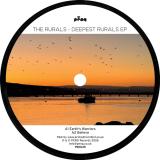
The Rurals first love is DEEP HOUSE!
Deepest Rurals E.P dives beneath the surface to explore the essence of The Rurals' unmistakable sound. Rich in soul, jazz-infused textures, and deep house sensibilities, this release delivers a collection of warm, organic grooves crafted with depth, elegance, and musical integrity.
Flowing effortlessly between atmospheric keys, fluid basslines, live instrumentation, and intricate rhythms, each track captures the timeless spirit of underground house music. The Rurals blend soulful expression with dancefloor functionality, creating moments that are equally suited to intimate listening sessions and late-night club journeys.
Here’s the first instalment of some fine examples, previously only available digitally!
expected to be published on 02.10.2026

2026 Repress
Oh yes! First ever official reissue of the positively sublime and very rare Butterfly LP, recorded in Tokyo in 1979 by Japanese songstress Kimiko Kasai and jazz legend Herbie Hancock.
Due to it's super-rare status as a Japan-only release, this exquisite collection of covers never got the recognition it deserved at the time, despite incredibly inspired performances from Kimiko, Herbie and the supremely talented musicians assembled for the project. From heavenly drummer Alphonse Mouzon and renowned organist Webster Lewis to bassist Paul Jackson, reedman Bennie Maupin and the master percussionist Bill Summers, the legendary performers crafted amazingly good vocal versions of Herbie / Headhunters jazz-funk. Unsurprisingly, it has been heavily in demand for many years.
The LP opens with Kimiko's highly desirable version of "I Thought It Was You", an elegant take on Herbie's own anthem. Other superb re-workings include the delicately soulful "Butterfly", jazzy groover "Sunlight", the smooth and sexy "Tell Me A Bedtime Story" and the beautiful ballads "Maiden Voyage" and "Harvest Time". A wonderful example of perfectly understated and masterful jazz-funk soul fusion that shouldn't be missed, the set closes with a jaw-dropping version of Stevie Wonder's "As".
This lovingly curated reissue enables a long overdue reappraisal of this hitherto unavailable masterpiece. The stunning artwork which adorned the original jacket - complete with OBI strip and sumptuous
4 page folded insert - has been faithfully restored. Simon Francis' sensitive mastering elevates the sound throughout and, as ever, it has been pressed at a reassuringly weighty 180g. Essential.
expected to be published on 02.10.2026
YARN welcomes René Audiard for its tenth release with "Makes Me Feel", a four-track EP from one of underground electronic music’s most singular voices.
Across years of dub techno, minimal and leftfield electronic experimentation, René has developed an approach to stripped-down music that feels anything but limited. Where minimalism can often become an exercise in taking things away, his work finds possibility in what remains. "Makes Me Feel" is a particularly fitting example: immersive, at times strange, but always full of feeling.
‘Lovin’ opens the EP in familiar Audiard territory: murky low-end, locomotive groove, reduced rhythmic compositions and an understated framework swimming in a pool of detail. 'Possession' lets in more light. Vocal echoes, persistent rhythms and occasional string phrases give it a cinematic quality, while a groove that seems to circle endlessly takes on an almost shamanistic pull. The EP’s 11-minute behemoth, 'Flesh', fills most of the release’s B-side while making a convincing case for patience and sophistication. There are echoes of minimal’s golden age here, but Audiard never mistakes repetition for standing still. Tiny rhythmic fragments sit alongside expansive orchestral gestures, with samples working at every scale of the arrangement. Warmth and cinematic drama run through the track, but it's the playful programming underneath that keeps it moving. 'Night' closes the record on a different note, recalling Audiard’s work with Ali Çakır in Düve. Percussive samples, accordion and Middle Eastern guitar phrases bring a more acoustic character to his reduced 808-infused broken beats, making for a playful, occasionally melancholic ending with a distinctly microtonal feel.
What makes René Audiard’s music so rewarding is how readily you recognize his hand in it. There is a particular grain to the sounds, a way of placing details within a groove, and a willingness to follow an idea wherever it leads. Across “Makes Me Feel”, those instincts give four quite different tracks a shared identity. Even when working within familiar forms, Audiard makes them sound entirely his own. It’s the holy grail of music production: a personal sound signature. And a thoughtful addition to YARN’s growing repertoire of reduced, sophisticated dancefloor music.
expected to be published on 02.10.2026
Y-3, the pioneering sports-fashion collaboration between adidas and Yohji Yamamoto, has for three decades dwelled calmly within the ''tensions of existence''. In conceiving the brand's long-awaited return to runway format at Paris Fashion Week, these codes laid the groundwork leading up to the Spring/Summer 2025 season. Whilst the focus for runway is traditionally placed on garments, models, styling, environment, and the pageantry in between, it was crucial that music play an integral role in the conversation. Three seasons later, sound has informed creative direction from the very earliest phases of ideation. Commissioning all-original compositions has become a natural part of this ideology. The return to runway has invited the opportunity to define a new sonic palette for the brand, and beyond that, to usher in a new era of sound for Y-3 that echoes across music & culture. Following this ethos, and with a mandate to support obscure talent, Montreal duo Solitary Dancer have emerged as the first collaborators in shaping the intimate brand architecture of noise & feeling. With a body of work now spanning over a trilogy of seasons, the genre-defying Y-3000 imprint provides an outlet to disseminate & recontexualize the original compositions beyond the traditional runway. The label embodies Y-3's enduring commitment to explore innovation within opposing cultural forces. The works, originally released on Y-3000 as a series of white labels, are now being featured as a 6x 12'' vinyl compilation. Designed by Trevor Jackson and limited to just 99 examples, the recordings will also be made available both digitally and on streaming services for the very first time.
On Stock and ready to ship
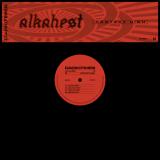
Hidden Sounds Record store – with the help of Emotional Recordings – launches the Dark Times label with the first of two club orientated EPs from Canadian brother-production duo Lex and Rew MacCrimmon and their project Alkahest.
Released on their own Post Contemporary label between 1994 – 1996, Alkahest contrasted with the spacious electronica of their influential and still on-going project, Legion Of Green Men.
Growing up in suburban city life in Burlington, Ontario, the MacCrimmon brothers’ interest in music and collecting records started early, always looking for interesting sounds in new places. With a limited local music scene or record stores, the alternative and college radio stations were the only way to discover new music or the type of music they sought.
The German electronic sounds of Kraftwerk, Klaus Schulze and Tangerine Dream were early obsessions, alongside Neu, Cluster (& Eno) and the post punk and synth pop emanating from Britain. The Flying Lizards, John Foxx / Ultravox, Gary Numan and The Normal were favourites, before diving into the 80s industrial experiments of Cabaret Voltaire, Severed Heads, Nurse With Wound and Throbbing Gristle.
Making their own music soon followed, first experimenting with 4 track cassette and digital delay, drum machines and synths soon followed, steadily building their own studio. All these influences merged in the early 90s with the dawn of house and techno and the progression to start the Post Contemporary label launched in 1992.
With the project Legion Of Green Men achieving early success, their diversion with Alkahest explored a post-industrial techno hybrid. Unsubtle, night music, the rhythm and sonic textures are more prominent over melody.
Contact High covers this Alkahest sound, from the 133 bpm trippy, psychedelics of opener Black Tabs, the acid breaks of Ground Zero or the charging nature of closing Séance 333, where all bets are off – together this 4 track EP perfectly captures the early spirit of Canada’s electronic music scene finding its place in dance culture, from the raves of the Toronto’s outer rim to the beaches of Anjuna.
However, in the title cut Contact High, there is something else happening, as electronic dub is explored, where the space in the music, between the beats, is as important at what happens on the surface. A love of this ethereal feeling would lead the brothers to head further in this direction and here is a perfect example of that early journey.
expected to be published on 05.10.2026
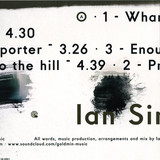
Ian Simmonds presents his new album "The right side of kind" on Goldmin Music. Ian Simmonds is one of the most creative Nu-Jazz/Downtempo producers of the last 20 years.
Although these words can't describe his music properly as the man is always looking for an innovative sound that could cross the boundaries of musical styles. The Welsh-born found his inspiration in music from all over the world and his songs don't only express one clearly defined feeling. They are more of a subtle mix of emotions that let the listener interpret it his way. As Ian said himself: "I think there's a lot of beauty in melancholy". For example, he spent over a year living in a castle in Germany to record his last album " The Burgenland dubs" in a solitary atmosphere where he could really think, breathe, make a plan. That's the point, Ian is always re-thinking things over, looking for a new source of inspiration which results in a constant evolution. He had the chance to collaborate both with amazing musicians like Goldfrapp and electronic music heads like Mathias Kaden, Soulphiction, Krause Duo..
expected to be published on 09.10.2026
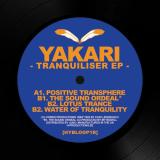
Cari Lekebusch is one of the architects of the Swedish techno scene whose influence naturally spilt out over the wider European landscape as part of the second wave in the late 80s and early 90s. Under his Yakari alias, he explored a tear-jerking and trance-infused style that was about looking outward to distant worlds beyond our own. This EP is a classic example and was originally released in 1994 on Loop Records. 'Positive Transphere' is an absorbing opener with dirty bass offset by sprawling synths, 'The Sound Ordeal' gets darker and more involving emotionally, before 'Lotus Trance' explodes in bright colours and new age love. 'Water Of Tranquility' is a more deep, insular closer. An EP that has aged perfectly and will still turn heads 30 years on.
expected to be published on 12.10.2026

The Comfort enters the double digits of its catalogue with the label’s most ambitious release to date by Saudi Arabian artist Noboot, titled “Call and Pulsate”.
Fluid in genre yet wholeheartedly electro in spirit, Noboot’s creative output shapeshifts across the record: from four-to-the-floor acid-tinged propulsion to time-freezing illuminations, with neon-coloured synths, body-twisting low ends and piercing drum hits mutating throughout the album, and often within the tracks themselves.
Noboot’s capacity for sonic manipulation is on full display here with the pieces moving with a captivating direction and command. Sometimes gentle, sometimes dramatic, but always carried with a particular elegance and poise. To listen to the record from start to finish is to step into Noboot’s own conceptual world, one in which the artist has the confidence to take floor-oriented dance music and elevate it both in spirit and form.
There is composure and ambition in this approach. Tracks move the listener from one emotional state to another in the span of six minutes: not merely teasing transformation, but by fully taking the listener there. To deliver on that ambition requires control and idiosyncratic intuition. If “Desolated Delay” and “Timer Set” are striking examples of Noboot’s capacity for propulsion, “Meter Tired” shows the other side of their talent: the ability to make time feel briefly suspended in a weightless flux of cybernetic psychedelia.
To achieve this once or twice would already be impressive. To sustain it across an album of this scale is rare in electronic dance music, and makes The Comfort’s tenth release a defining moment in the label’s catalogue.
On Stock and ready to ship

*COMES IN GATEFOLD 2LP WITH LINER NOTES*
The premise of this compilation is simple: music we’d like to hear at the airport.
The idea came after learning that Honolulu’s international airport has been playing AI-generated music over its speakers since November 2025. First reported by Civil Beat, the news has caused frustration and disappointment among residents and visitors, as well as within the local music community.
Everyone knows Hawaii is one of the most musically rich regions in the world — why then is the airport using AI music? 'Music For The Airport' is our response.
Located in the middle of the Pacific at the outskirts of one the most remote cities on the planet, Honolulu’s Daniel K. Inouye International Airport (HNL) is for most people the first place they encounter when they arrive in Hawaii. Warm sun, tropical tradewinds, playful palm trees and majestic mountains welcome every traveler, as do the sounds of birds, familiar music from Hawaiian artists like Aunty Genoa Keawe and Israel Kamakawiwo’ole, and—at least for now—seventeen “island-themed” AI-generated songs.
In late 1977, while sitting in Germany’s Cologne Bonn Airport on a Sunday morning, Brian Eno noticed how terribly uncomfortable he felt hearing the airport’s “muzak” overhead. For a harried, hurried place like the airport where travelers scramble to their gates, stand in long border control lines, and wait impatiently for their luggage at the carousels, music can create more anxiety than calm. Asking himself, "What should we be hearing here?", Eno soon created ‘Ambient 1: Music For Airports’, a sonic remedy aimed at reducing nervousness in public spaces.
When we heard the news that HNL airport is playing AI-generated “muzak”, we were immediately reminded of Eno’s genre-defying 1978 album. And we were similarly inspired to react. But how? Recreating an ambient masterpiece wasn’t in our wheelhouse. We started digging through our catalog of licensed music which we haven’t yet re-released. We quickly realized this was our chance to highlight some of favorite songs from the so-called CD era: the 1990s and 2000s (with a few exceptions). In less than 20 minutes, we pulled 17 original songs recorded by local artists between 1984 and 2017.
The speed at which this project came together surprised us; reactionary gut instinct often produces swift and lasting results. Ironically, our new compilation likely took less time than it did for the state Department of Transportation to commission its AI songs in question. But even though ‘Music for the Airport’ came together in less than one week, the truth is that this collection of 17 songs is the result of years of hard work, trust, sacrifice, patience, and understanding. Building relationships with and licensing music from artists doesn’t happen overnight, but more importantly: these songs are the result of people pouring their hearts and souls into something they believe in. This music wouldn’t exist today without the artists and their loved ones who supported them along the way.
As of this writing, the DOT states its intention in creating AI-generated songs is to “highlight different aspects of the islands, aviation and the airport” and that “no state funds were used to produce them”. Okay, but at what cost? Technology disrupting the music industry isn’t news to anyone. AI music in public spaces are cost-saving measures, since its users (airports, for example) don’t have to pay the licensing fees typically required, which can be a worthwhile source of revenue for artists. But what happens when a place like HNL airport, which hosts more than 21 million passengers annually, uses music created by machines instead of people to represent Hawaii? The identity of a place beings to erode, diluted by a language learning model’s conceptual summary of what a people and its culture sounds like. To echo Brian Eno: what should we be hearing here? In other words: what should the music of Hawaii sound like?
We believe in the power of music, especially when it comes from the soul. We believe in supporting artists, especially as AI disrupts our lives. We believe that Hawaii must be represented authentically, especially when it comes to song. And of course we believe in vinyl, especially since it was a record from 1978 (Mackey Feary Band’s debut LP) that inspired Aloha Got Soul’s origins in 2010.
We hope you find as much joy in this compilation as we have. Perhaps it’ll soundtrack your next journey to Hawaii. At the very least, we hope some people take a moment to hear these sounds: in your headphones for now‚ maybe someday overhead at the airport in Honolulu.
expected to be published on 16.10.2026

Corps Perdu emerges from Lamin Fofana’s ongoing practice of creating immersive and multisensory sound environments, informed and inspired by the historically rich texts of scholars and poets working in the tradition of Black Studies. The words of W.E.B. Du Bois, Sylvia Wynter, Dionne Brand, Fred Moten, Édouard Glissant, Suzanne Césaire and Aimé Césaire are transmuted and circulated as sound, offered to listeners through radio, live events, albums and installations. Fofana honours his sources with an audible historical awareness, yet his sounds always simultaneously open out into the turbulent uncertainties of the present.
The music we hear on the album Corps Perdu was previewed within a series of collective reading and listening sessions carried out in Paris, Barcelona, Tunis and New York City, where voices from the audience read aloud fragments from a body of texts Fofana had selected. The spontaneous unfolding of close reading and listening, mixed live by Fofana in these collective listening experiences, speaks to the open-ended quality of Corps Perdu. The album, now published, is but one iteration of this ongoing inquiry into the relationship between sound and text.
Corps Perdu presents an introspective journey with no return, and as such is full of omens of all kinds. Across ten tracks Lamin Fofana creates a sibling or companion to the transformation he initiated in his previous album Works in Metal, building a narrative that takes us into Krakatoa prior to its eruption, and lets us listen to Césaire’s ‘flying seed dreaming very loudly’. The album’s track titles and narrative arc hum in and out and alongside Césaire’s poetry, mainly Césaire’s 1950 collection Corps Perdu, in which the ten poems are accompanied by engravings by Picasso merging fragments of bodies and plants—a collaboration that emerged from their first encounter two years earlier, at the Communist-led World Congress of Intellectuals for Peace, in Wroclaw, Poland.
The music on Corps Perdu labours intuitive hand-held melodies through dense processing. There are many rhythms throughout, though these never surrender to the density of the dancefloor grooves we’ve heard Fofana craft on previous albums (think of the ‘Obscure Light’ pair from Works in Metal for example). Instead, Fofana gently releases the clenched hands Césaire’s Corps Perdu begins with: ‘Among me, from myself, to myself, outside any constellation, clenched in my hands only, the rare hiccup of an ultimate raving spasm, keep vibrating word’. The album carries through sound the scattering and liquid fragmentation that shape the desperate metamorphosis of a ‘lost body’.
expected to be published on 16.10.2026
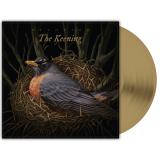
Richly progressive folk-informed heavy post-rock and a sick burn to boot. - The Obelisk Rebecca Vernon (SubRosa), the driving creative force behind THE KEENING returns with her second album, Devotion. The new album sees Vernon and company releasing one of the year's most evocative albums; a truly compelling mix of slow burning, ethereal post-rock, folk, goth, and soaring doom. For Vernon, the writing process for Devotion took place in two starkly different environments. It ranged from the contemplative solitude of a friend’s cabin in a deserted Idaho ski resort, to the hectic reality of a 55+ senior living community in Spokane, Washington, where she was staying with her father. This shift resulted in an explosive album with a subtle duality that resonates throughout its most poignant moments. Take the lead single, "A Little Bit of Blood," for example. Quiet, acoustic guitar strums give way for Vernon's haunting vocals, before the backing instrumentation explodes into a soaring chorus reminding the listener that sometimes the best paths taken are the most difficult. "You drew a little bit of blood to show me Just a little bit of blood to make me see It took a little bit of blood to wake me Just a little wound in the night to free me" In a 2024 interview with Decibel Magazine, Vernon discussed the drastic shift in heavy music's themes in recent years, highlighting a willingness to convey raw emotion: "Metal is beginning to share more vulnerable things, more confessional things. Metal has almost become a safe place to talk about those things. People are being open with their struggles. Twenty years ago, they wouldn't have." Devotion lays these emotional confessions bare and showcases a truly bright burn. Devotion was recorded in April 2022, again at Hallowed Halls in Portland, with Billy Anderson and Nathan Carson featured in their same roles as heard on Little Bird. Once again, Vernon showcases her writing prowess, having a heavy hand on all the instrumentation for Devotion; Vernon played drums, guitar, piano, organ, and hammered dulcimer, and provided most of the vocals on both albums, with a few guest vocalists added to the mix.
expected to be published on 16.10.2026
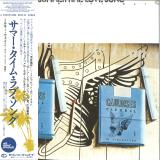
Wewantsounds is delighted to present the first official reissue of the highly sought-after 1979 classic, Summer-Time Love Song by The Milky Way. Originally released on the Seven Seas label in Japan and produced by the legendary Makoto Matsushita-the visionary behind the cult album First Light -the album is a premier example of the sophisticated sound that defined the era. Featuring the cream of Japanese musicians, including Yasuaki Shimizu, the record offers a superb mix of AOR, jazz fusion, funk, and bossa nova. Remastered for vinyl by Colorsound Studio, this deluxe reissue features the original artwork, an OBI strip, and a 4p booklet with a new introduction by Paul Bowler.
On Stock and ready to ship
Compiled onto one vinyl album for the first time, Landlocked (Numbers, 2026) presents Hallucinator’s 1999 debut album originally released under Mark Ernestus and Moritz von Oswald’s label Chain Reaction. Writing much surrounding the culture of what would be later considered ‘Dub Techno’ and its’ primary distribution center, Hard Wax, leads one down roads of shifting primary sources and decades old overheard smoke break recollections. Maybe brevity primes the listener to the paralinguistic to approach the sound on its terms; focusing on how things are uttered and not what.
This theory will remain unconfirmed. Hallucinator original press release left us with three or so gestures to consider over the years since:
“A new act on CHAIN REACTION”s distinct productional thesis. HALLUCINATOR are 3 people from he UK/London and this their first release ever- that’s all what the artists want to let us know…. This record is dedidacted to the memory of Stephen Lawrence!”
The first gesture is one of personnel. Since ’99, we’ve gotten to learn a bit more about the artists behind the Hallucinator project. All London-based, all writers, composers, and sound-designers— Anna Piva, Edward George, Trevor Mathison. These three seem to flow between parameters as aesthetic tactic and tacit structure to the work itself. For example, other collaborative shapes have come from this lineup including Flow Motion (Piva, George and Mathison) as well as the now defunct Black Audio Film Collective of which George and Mathison are founding members.
The second gesture is in the second line of the previous press release, “distinct productional thesis.” Much of Landlocked’s affect and sequencing seems to suggest an emotional study of entropy at the level of sediment. Rhythms play with space and capacity through polyvalence. The production chose subtractive vertigo, often switching and bringing back in elements that vanished from the track 6 minutes ago. Dubbing out so much of a track, one begins to associate sound akin to memories held in the experience of running your hand across a concrete block as a child. Felt (re)memberance in lieu of narrative tale. Using textures that flicker between colour and percussion, Hallucinator’s 12-tracker of loudspeaker perception music might be a mediation on the psychic wake of the Cold War. Intermittent strata of ambience and groove convects an active margin rifting event underneath a scorched geology of power in Western Europe. Again, this is all grapevine hearsay.
But it’s silence that voices the third gesture. The album’s sparse application of the written word touches on the ennui paradox of being landlocked on an island. Stuck. Trapped in the psychosis of occidental hypercentricism. A looping silence of Black British tragedy: “to the memory of Stephen Lawrence”. 18 year-old Lawrence was stabbed to death at a bus stop in southeast London by six white men in 1993. The rift of grief and implicit reiteration of modern subordination left by this hate act went legally silent for almost two decades until Lawrence’s killers were ultimately sentenced to virtually life in jail in 2012. Only six years removed at the time of Hallucinator’s initial invocation of rememory, the mind-numbing accretion of what Black Studies Professor Denise Ferreira da Silva might call “unpayable debt”, finds demonic ground across Landlocked, forming an aural sense of what continues to be refused.
The album ventures through spaces of overactive non-happenings: ‘Red Angel’’s factory floor dub flashes between smokestack and jungle visions, or the halfway mark’s stilted breath of ‘Dusk’ lending its mood to the sort of sedated dreams built from daily life under colony rule for instance. That linked rhythm links us back to our linked fates across Black and Brown folk is real, thus the syncopated signals through this work behave on the level of transnational radiotelegraphy, sounding out its windswept tension of a body negotiating a meat-grinder schema of linear production and wage for others to know that unspeakable thing can be broadcast in every drum tongue.
As the silence continues to reverb, we return to the sort of meaning-making that cannot be told but felt. Soothing to some, disturbing to others. Landlocked, a Rorschach test for a crumbled empire.
expected to be published on 19.10.2026

The most beautiful thing we’ve ever released?
It is virtually impossible to describe with mere words how emotionally powerful this work of art is. Just listen. Listen, listen, listen...
A blissed-out 80-minute epic, Hatchback's Phaser For The Ocean, Chorus For The Moon is his magnum opus, a sprawling masterwork that encompasses ambient, new age and environmental music to wondrous effect. Moving, hypnotic and deeply meditative, it's FFO Mike Brooks, Deuter, Klaus Weiss, Innovative Communication, Harmonia, Cluster, Ashra's New Age of Earth, Stomu Yamashta, Haruka Nakamura, Yoshimura, Hosono, the works.
A record truly deserving of the deluxe Be With treatment, the vinyl was specially cut at Abbey Road Studios whilst the original stunning artwork has been pleasingly expanded. Now, an eye-catching holographic-foil layer moon is set against the original tones, wrapped up in a sumptuous double-gatefold jacket.
Soaked in Californian consciousness and limited to a run of just 500 copies for the world, this release is a treasured balm like no other for these troubled times.
Hatchback is the atmospheric, melodious ambient alias of California-based artist Samuel Milton Grawe. Sam creates music that sings of the Cosmos, full of deep resonant tones, glistening arpeggios, lush pads and harmonic motifs.
"When I first was getting into the creative side of music making in my teens, I was heavily influenced by concept albums like Quadrophenia and The Lamb Lies Down on Broadway, as well as epic pieces that took up an entire side of a record: Pink Floyd’s Echoes, Yes’ Close To The Edge, Klaus Schulze’s Nowhere Now Here, Miles Davis' Shhh/Peaceful and He Loved Him Madly. In the extreme, these ideas coalesced in double albums where each side of each record is occupied by a single title - Yes’ Tales From Topographic Oceans and Tangerine Dream’s Zeit being primary examples. When I returned to making music after moving back to Northern California in 2020, the first piece I recorded landed around the 20-minute mark, and the idea of creating three other long pieces to realize a full album felt like a natural - if indulgent - goal. From there, each new piece followed sequentially. Four songs. My fourth album." - Sam Grawe
Phaser For The Ocean Chorus For The Moon is a pure expression, informed by a lifetime of deep listening unbound by algorithms or AI. These are songs for the sunrise and the sunset - and every colour in between.
On Stock and ready to ship
Tokyo-based producer aus debuts on Squama with his new album Mere Meer.
Grounded in the question of how a specific environment can emerge through voice and memory, rather than through recording of an objective reality, the album stands in the tradition of modern Japanese Ambient and Kankyo Ongaku.
aus is the solo project of composer, producer, and curator Yasuhiko Fukuzono. His music is characterized by a precise combination of cinematic strings, acoustic instrumentation, and concrete sound design derived from everyday life.
In recent years, he released music on EM Records, WRWTFWW and his own flau imprint. As a remixer, he put his touch on tracks by Matthew Herbert, Tenniscoats and Craig Armstrong, among others.
His sonic research also extends beyond traditional formats into spatial sound installations and site-specific works, collaborating with experimental figures like Ulla, Li Yilei, and Hinako Omori for institutions such as the Tokyo National Museum.
Much of the album consists of sketches made with synthesizer and voice. Sampled from social media clips, field recordings or a heavily processed version of Fukuzono's own vocals, the voice became a central element of the record. "I have long been interested in the relationship between words and melody.", aus says. In his former work as a speech therapist, he witnessed patients with severe dementia or aphasia, who all of a sudden could recall lyrics when they were sung with familiar melodies. An experience that left a deep impression on him.
During the Covid years, when hearing voices of friends and family sometimes was the only way to feel connected to the outside world, aus began reflecting on the connection between voice and environment. "Every voice represents an encounter with a person, but it's also an encounter with a place."
Unable to travel as freely as before, that limitation became part of his method: rather than just recording actual field material capturing the real world, he would write and perform melodies that simulate a sense of place - an imagined room, an imagined street.
"My interest lies not in the dichotomy between artificial and environmental sounds, but in how they collectively shape a single perceptual field."
By observing and mapping our world, aus creates his own and his new record is a prime example of that process.
expected to be published on 23.10.2026
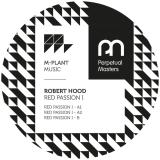
Continuing M-Plant's Perpetual Masters series, October sees the vinyl release of Robert Hood's "Red Passion I".
"Red Passion I" was original released in 1999 on his Duet label featuring three tracks of Minimal Techno at its most hypnotic and effective, stripped back to the essentials. It layers taut rhythms, subtle modulation and deep Detroit groove. Hood's mastery lies in making tiny shifts feel monumental, creating sustained tension and movement without excess.
A timeless example of minimalism achieving maximum impact, which is now remastered for 2026 by Thomas P. Heckmann.
expected to be published on 23.10.2026
DJ Rasoul has a knack for crafting stripped-back grooves that pack a serious emotional punch. Samples are often key to it - as well as the way they are deployed - and 'Flight' is a perfect example. The drums are raw with a subtle stumble that keeps you locked, while the vocals are smeared in painterly fashion through the mix. The Paka Project remix is a little brighter while Andrew Macari sinks into vast kicks for a deeper trip. The Natural Rhythm remix is more sleek and sunny with extra vocal fragments and a warmer edge.
expected to be published on 30.10.2026
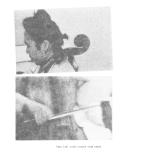
Faitiche presents the debut solo album by cellist, sound artist, and composer Topu Lyo: “quiet scenes from tokyo” brings together sixteen miniatures for solo cello and tape echo that oscillate between abstracts drones and rhythmic pizzicato sketches – all recorded at Topu’s Tokyo apartment. The constant traffic noise from a nearby highway has become an accompanying soundtrack for his compositions and can be heard on the recordings. Topu’s playing is marked by a distinctive idiom oriented more towards abstract electronic studio effects than classical technique.
The artist spoke to Jan Jelinek about his work:
JJ: A solo cello album may seem like an odd fit for a label that has to date released only music that is electronic in the broadest sense. But I think “quiet scenes from tokyo” complements the Faitiche repertoire exceptionally well. Its sixteen miniatures showcase the cello in all its complexity: the bowed passages sometimes recall a tape feedback drone; the pizzicato playing conjures up the percussion recordings of Moondog; and the abstract textures might be mistaken for the product of a granular sampler rather than rapid finger work on the cello. I’m constantly surprised by just how rich and varied this album is – without ever losing the charm of its sketch-like quality. Could you say a few words about the making of your album – first of all, from a rather technical perspective: what production tools did you use, and why?
TL: My production tools were very sparse. Just a solo cello and my Roland 301 Space Echo, which I only used at the end, running everything through it during mixing, tape only. After years of working with electronics, pedals, and synthesizers, moving to Tokyo pushed me toward minimizing my setup. But my aesthetics shifted too, toward simplicity. I wanted to strip everything back to just the acoustic cello and see how far I could push it — replicating some of my favorite electronic effects through extended technique: slow portamento, LFOs, filters, detune, noise. I’d also been listening to a cassette of ocean sounds for years. When I moved to Tokyo I was horrified to find myself living directly across from a freeway. Eventually the freeway started sounding almost identical to the ocean — and that ended up playing a prominent part in the recording.
JJ: That’s super interesting: mimicking electronic production as a compositional idea for the cello! You say the sound of the freeway is crucial to the album: I, too, tend to interpret steady traffic noise as a positive soundscape – do we hear the freeway on the album? I can also hear other field recordings, for example on “a street car with announcements”. Can you say a bit about how these field recordings influence your playing?
TL: Yes, you can hear the freeway on the album! The freeway is most prominent in “old trees in lonely spring”, “yuyake koyake”, and “the moon” (you can clearly hear individual cars). When I first began recording I had my balcony door shut tightly, but after a while I began leaning into the highway sound and slowly opening the door little by little to control the amount of noise. “streetcar with announcements” was a moment I was recording and a car passed by making announcements in the background. I loved how it sounded! Same thing with “yuyake koyake”, and later I realized that every day at 5pm the same song plays to mark sunset, telling children it’s time to go home. Having this bedrock of sound puts less pressure on me to put music on top or to play more notes.
JJ: It’s astonishing how much this differs from what I’d imagined: I’d been picturing peaceful landscape recordings, but had never thought of a freeway. Which goes to show how open to interpretation traffic noises are. So the room by the freeway had a major influence on the album – how are you going to perform it live?
TL: The contrast between the freeway and the beautiful landscape in my head couldn’t have been starker. I too was imagining a beautiful landscape in which to create the album, but somehow it still worked out. I've been going back and forth a lot on live shows and I think the most honest way is to have it the most stripped down. I was thinking of using traffic samples etc., but I think the duet really comes from the background sounds from every unique venue/environment. So as it stands, I’ll just be doing acoustic solo cello.
expected to be published on 06.11.2026

“I am not sure which of us it is that's writing this page” - Jorge Luis Borges. There are places where a river runs through the story even when you cannot see it. Austin Cash grew up in the Arkansas Delta, and Nathan Smerage in the Chicago suburbs, their paths crossing years later in Fayetteville, Arkansas, where both became members of the Ozark Free Music Society, a loose congregation of musicians who made free and experimental music in non-traditional venues across the city. ‘River Season’ began as an impulsive text sent to Smerage in the summer of 2024, Cash suggesting they should make an album of guitar duets. Calling his bluff, Smerage returned a folder of recordings within a week. Cash had a handful of pieces of his own, originally written for an unreleased film about an Ozarks ceramicist. The songs began traveling back and forth between them by email, however, after opening for the Magic Tuber String Band and playing the compositions live for the first time together, realised the decision to record them live was the only true option. For four days, in the basement apartment where Cash lived, they recorded River Season live. The result is a meticulously composed collection of steel-string guitar music: part folk record, part road map.
Fahey and Ackerman are somewhere in the distance, alongside Bert Jansch, Nick Drake, Marisa Anderson, Nathan Salsburg, Loren Connors, and others. But River Season belongs to neither Arkansas nor Chicago entirely. Cash grew up in Arkansas before moving to Chicago, whereas Smerage grew up in Illinois before moving to Arkansas. River Season catches the two musicians at an intersection in their paths; it belongs to the stretches of road and rivers between them, real and imagined. "This new collaboration between Austin and Nathan is intimate and tonally diverse. Many of the tracks see Austin playing acoustic and Nathan on electric. The statements are succinct (all but two clock in under four minutes) and idiosyncratic. "Bell Harp" and "Painting Friend" are two stand out examples for me in which the textures of the electric/acoustic pairing play off each other in a way that I can't say I have encountered before." -Evan Morgan (Magic Tuber Stringband)
expected to be published on 06.11.2026
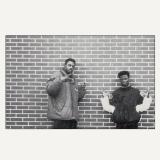
Initially recorded in 1996 and officially released February 1997, 2nd Family's Killaz from the Blackside tape is one of the most distinctive examples of unpolished, stripped-back & paranoid mid-90s Memphis rap. Recorded by King JC together with 2nd Family MCs Pistol Grip & Killa Chrome in a home-studio set up at the group's base in Southern Hills Apartments in Whitehaven, South Memphis (known locally as Blackhaven or the Blackside, a short trip from Graceland) the sparse, brooding and somewhat introspective production sets the record apart from the more raucous, overdriven precedent of the period. Pressed on vinyl for the first time via Death Is Not The End in an edition of 300 copies.
expected to be published on 06.11.2026
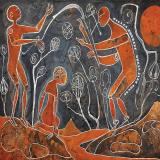
Swiss saxophonist Gilles Torrent may have been initially smitten by the sounds of US jazz giants like Coltrane, Shepp and Sanders, but as he’s developed and matured he’s cast his creative net much wider. After teaching himself the sax at 21 he spent the next 11 years studying the concepts and innovations of Coltrane before moving on to take the next logical step - exploring and soaking up the many styles music from around the world, and incorporating them into his Coltranesque vision of jazz.
Atestament to that workis the opening theme,‘La Longue Traversée Du Désert’whereTorrent directs an impressive ensemble of musicians – known collectively as World Jazz Sound - on a global trip from the plains of Africa to the pastures of England and even the mountains of his homeland Switzerland. Tracks like ‘Osso Varourn Ta Sidhera’, which pairs Beuna Vista-style Cuban rhythms with Grappelli-esque violin, or the transcendental calm of ‘Fridhia Mou’, complete with dainty harp and sultry Indian female vocal part, see the ensemble immersing themselves in the traditions and atmospheres of a panorama of different cultures, joining the dots between them all and gathering them up into one cohesive whole.
From the ancient and traditional – their effortlessly swung take on ‘Scarborough Fair’ for example – to the inspired but unconventional use of yodelling on ‘Chant des Alpes’, eventually giving way to a sensational modalworkout, this is an album full of widescreen freshness, surprises and, above all, the joy of discovery and experimentation. Originally released onCD in 2010, the sheer overwhelming beauty of the music withinhas compelled us at Jazzman to deliver these sanctified sounds onaudiophile standard 180g vinyl, for all to enjoy.
2x180g LPs featuring 8 tracks in total, housed in a single sleeve + download code.
expected to be published on 06.11.2026

We know there are copious amounts of PFAS in the water supply of Rotterdam, but there must be more! What else could explain the amount of talent this city provides? Foobar is yet another prime example of this phenomenon. coming of age in Burgundian Brabant and cultivated in the grimy streets of our beautiful harbour city, Foobar just has a way of looking beyond its imperfections and translating the warmer hidden sides of the city whilst still tapping into its more rugged edges in this 4 track EP, for his debut release "Shifting Phases" on WAXRDM. The title track Shifting Phases just eases you into the whole, getting you ready to face another day on the grind, that's Rotterdam baby! We work hard and we play hard, and when we play, these are the sounds we wanna play too. Proper House Music. Some serious anger management issues on Parallel Motion, hitting hard from the get go, starting off with some intimidating drums, in your face bass lines, enticing melodies & alluring vocals. All of a sudden you're 3 minutes in, and you can't even remember what got you so upset in the first place. Who said you needed to be loud to be powerful? Not us, that's for sure, and definitely not Foobar. Quiet Strength proves that point yet again, laced with the sultry vocals by ES-V, this jam just takes you even further into your own headspace, drums that keep you in motion, melodies that keep you grounded but bass lines that let you float off into the atmosphere. It's Monday again, another day at the office, cleaning apartments, trading cryptocurrencies or whatever the hell you do to make ends meet. Ahh damn, and now you remember what irritated you. Colleagues, employers, pay or the lack of it. It is a good thing you have Back on the grind to make it all sound relative, helping you forget and looking ahead at the weekend. The perfect come down track that moves forward.
expected to be published on 09.11.2026

Katsunori Ishida’s vision of true crossover music reaches its peak. Powerful grooves and striking sound define the resurrection of Zerosen’s legendary first album.
Zerosen was a group led during the 1970s by Katsunori Ishida, who would later gain recognition as a producer, composer, and arranger of numerous television and film soundtracks. With a fluid lineup and only a brief period of activity, the group disappeared almost as quickly as it emerged. The only recordings left behind were two albums originally produced as audio component test records. Yet these recordings would later gain worldwide attention as landmark examples of Japanese rare groove.
Remarkably, this debut album already presents a fully realized concept and sound. Highlights include the rolling groove and vibrant keyboard work of “Scramble”, the hard-driving beat of “Circuit”, and the mellow Caribbean-infused groove of “Majo no Sasayaki”. There is not a weak moment to be found.
Outstanding arrangements and performances generate a groove of exceptional power, while the album’s origins as an audio component test record contribute to its vivid and dynamic sonic character. Here lies crossover music in its truest sense—a timeless fusion of musicianship, groove, and sound quality.
expected to be published on 13.11.2026
RADYO BOMBERO - ABOUT THE LABEL
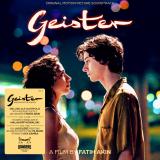
Radyo Bombero is the record label founded by acclaimed filmmaker, author, DJ and record collector Fatih Akin. Born out of his personal passion for vinyl and film music, the label will initially focus on soundtracks from his films: previously unavailable works will be released on vinyl for the first time, while out-of-print titles will return as carefully produced reissues. Its inaugural release is the soundtrack to Akin's new film Geister, scheduled for release in November 2026. Further projects are already in development.
ABOUT THE RELEASE
MALAKOFF KOWALSKI - GEISTER
ORIGINAL MOTION PICTURE SOUNDTRACK
Composed by Malakoff Kowalski, the soundtrack to Fatih Akin's Geister is the inaugural release on Radyo Bombero.
Born in the United States, raised in Hamburg and now based in Berlin, Kowalski is a composer, pianist and multi-instrumentalist whose work moves between film music, contemporary classical composition, theatre and pop. He composed the music for eleven films by Klaus Lemke, as well as for productions including Schweigend steht der Wald and Stasikomödie. His solo work has been released by MPS and Sony Classical, and he has collaborated with artists including 2raumwohnung, Igor Levit, Chilly Gonzales and Nils Frahm. His sound combines elegiac melodies with a warm, cinematic atmosphere and a subtle sense of unrest beneath the surface.
For Geister, this distinctive musical language meets Fatih Akin's vision of a deliberately anachronistic and romantic score: a tribute to Ennio Morricone's great love themes that plays a defining role in the film's tragic love story and atmosphere.
LP 1 contains Kowalski's complete original film score.
LP by JUGGLERZ opens up a second musical world, bringing together four productions by the internationally successful Jugglerz on a four-track 12-inch disc at 45 RPM: the film's title song Ya Mami, performed by Aya Samra; Mood by Cloudee, Milaa and Jugglerz; Tip by Jugglerz, Limitlezz, Maureen and Demarco; and Beirut Nights Riddim. The four tracks bring Arabic tarab and contemporary Levantine pop together with hip-hop, urban beats and dancehall rhythms.
FATIH AKIN ON RADYO BOMBERO
"Radyo Bombero is on the air. Don't miss a tune!
"
Music is - alongside cinema and literature - a fundamental source of inspiration for me. Having grown up in the 1980s, the way I listen to music has hardly changed: I buy records, listen to them carefully and then copy them onto a portable device. It used to be a Walkman, then an iPod - today it is my smartphone with my playlists.
I do not use Spotify or any other streaming services. Why that is, I do not know. In most other areas, I try to keep up with technological developments. Not with music. I like unpacking a record, cleaning it before listening, holding the sleeve in my hands and reading who worked in the studio, who wrote the music and where the record was made. These things interest me. And they lower my cortisol levels.
Music plays a major role in my films. It is not that, as a director, I want to impose my favourite music on the audience. The music must always serve the story. In Head-On, for example, it tells us something about the characters and their biographies. Crossing the Bridge - The Sound of Istanbul is the musical portrait of a city. Its music tells us about the people who live there: where they come from, the cultures they brought with them and how those cultures have merged with local traditions. The Cut was conceived as a Western, and the music had to help reinforce that idea.
Geister tells a tragic love story. The music was meant to be gloriously anachronistic. And romantic. Just like the light and colours, it had to shape the atmosphere of the film. My films are often about cinema itself, and Geister is no exception. Its music is a tribute to Ennio Morricone's great love themes.
In Malakoff Kowalski, I found the perfect creative partner. He immediately understood my idea and realised it brilliantly. That made it all the more painful when I was told by the music industry that there could be no soundtrack release for Geister because soundtracks were too expensive to produce and would simply sit on the shelves.
It is not as though I am a spoiled child who absolutely has to have a lollipop. But this music is simply too good to withhold from the audience. The idea that there would be no soundtrack release felt like a great injustice.
Then several friends and collaborators advised me to release the record myself. No sooner said than done. But Radyo Bombero is not a one-off project. Geister is only the beginning.
Finally, I have the opportunity to gradually release all the soundtracks from my films that have remained unavailable. Soundtracks that were previously released but have since gone out of print will also return as reissues.
Hainbach's soundtrack to Amrum is already in development, as is a double album featuring the unforgettable German pop songs from The Golden Glove. And, finally, a vinyl soundtrack to Head-On.
Fatih Akin
expected to be published on 13.11.2026

This disparate collection of material formed Kold Funk Vol. 1, showcasing The Surfers’ sweeping palette developed through 15 years of playing music. Igor Zhukovsky, the band’s frontman, himself selected the tracks. Enjoy your trip to the enchanting world of The Soul Surfers! TSS are the ground-breakers and a vivid example of how authentic world-class groove may be produced anywhere — what matters is the right feeling and the concept.
On Stock and ready to ship

Aural Imbalance returns to Curvature for the first time since the label’s very first release with an EP of stunning atmospheric and old school bliss. A1 - Ghosts of Midi - String Theory (Aural Imbalance remix) Kicking the EP off with a spirited remix of the immense Ghosts of Midi track String Theory, delicate padwork and subtle hats open proceedings before Aural Imbalance deploys a brisk, heavily chopped and spliced Circles break to drive the luscious atmospherics atop a deep, moody 808 bassline. Synths, pads and strings jostle playfully across the soundscape before the breaks fall back before we are treated to a blissful extended ambient outro. A2 - High Time Taking us right back to the early 90’s with crunchy, rustic amen breaks that immediately burst into the mix, Aural Imbalance flexes his old school muscle with a flurry of thumping, distorted breakbeats with an earthy analogue sub bass rumbling below. Synths and light strings add character and juxtaposition to the track to complete an enjoyable and very dancefloor friendly throwback classic in the making. B1 - Magnetism Chunky, belligerent breaks smash their way into a drum-riddled intro as Aural Imbalance unleashes an old school amen workout for the ages. Punctuated by cheerful, swirling sounds of sonic phosphorescence, the drums are chopped and filtered liberally as an earworm melody works its way into the mix. Magnetism is a perfect example of how old school breakwork and atmospheric ambience are such a perfect match. B2 - Night Vision Switching things up with a more introspective vibe, Night Vision sees Aural Imbalance opening with trancey synths before thick drums with metallic snares and dense kicks are introduced - carefully and elegantly arranged with a thoughtfully constructed pattern. The synths continue to surf the audio waves with deep 808 bass accompanying the beats and micro melodies layering throughout.
On Stock and ready to ship

A legend returns as the alias of scene stalwart DJ Levi and Curvature co-creator Ghosts of MIDI unleashes an EP of seismic tracks backed with remixes from ASC and Aural Imbalance. A1 - Iron Dinosaurs Opening a fine Curvature debut for the label’s very own Dan Azimuth, Iron Dinosaurs is an epic piece of atmospheric goodness introduced with a long, elegant intro of synths and luscious female vocals. Before long, classy, energetic metallic breaks kick in, set to an immensely memorable key melody and a room-filling bassline, creating a breathtakingly fluid and captivating piece. A2 - Iron Dinosaurs (ASC remix) Taking an incredibly evocative track and lacing it with sprinkles of ASC goodness to create a true gem is the order of the day here, as the heart of the original courses through an ominous intro, quickly beset by fine analogue amens that hit hard for the dancefloor, while allowing the soul of the piece to breathe, syncing in harmony with the distinctive vocal samples and swirling synthwork that colour the atmosphere so perfectly. B1 - Deadly Dimensions A DJ-friendly intro of hi hats gradually ushers in epic, bassy melodies gliding through serene vocals and airy pads, before the drop reveals exquisite breaks with just the slightest hint of an apache in there. Very danceable, the breaks are chopped and diced at will, driving a determined pace for another superbly epic, ethereal piece of atmospheric drum & bass from one of the OG’s of the scene. B2 - Deadly Dimensions (Aural Imbalance remix) The EP closes with a real treat - this is as close as an example you’ll hear to a match made in heaven as the eerily epic production of Ghosts of Midi collides with the inimitable ambient mastery of Aural Imbalance. Intersecting the thoughtful vibes of the original, this remix sees playful old school breaks jostle with swathes of fluid synthwork and delicate pads, creating a unified expression of atmospheric purity.
On Stock and ready to ship

Younger Brother Live, with Shpongle and The Orb at Troxy, London 9th May
Twisted Records is thrilled to announce the release of the long-awaited fourth album by Younger Brother: Mutually Assured Distraction.
The first full-length release by the fabled electronica project in a decade features nine sumptuous tracks that each embody the project’s intoxicating fusion of profoundly human sonorities and etheric electronic soundscapes.
The title is a subversive reframing of the Cold War doctrine “Mutually Assured Destruction,” pointing to a world currently frozen not by the geopolitical threat of a Nuclear Winter but by a Digital Summer of mindless overstimulation. Mutually Assured Distraction is a sonic salve for the pervasive numbness induced by an emotionally disconnective artificiality that seeks to pacify with counterfeit happiness; the album offers an antidote to mundane superficiality with nine musical masterpieces that convey the depth of human experience and authentic creative expression.
The progression of track titles symbolically represents the arc of this soulful journey through an evocative auditory landscape of moods, harmonies, and textures, progressing from the haunting opening “I Belong to Nowhere” to the penultimate “Home In This World” before arriving at the concluding “Endless Drift.”
The synthesised musical mastery of renegade musicians Simon Posford and Benji Vaughan is complemented by the contributions of some supremely skilful musicians, with beguiling vocals by MiraBelle Rose and Jay Marsh and the rich cello of Rena Jones. With poignant lyrics that speak to the universal human condition in a world where voices are amplified yet so many feel unheard,
Mutually Assured Distraction provides, through its fusion of electronic and real-world music- making, an example of how technology can pair harmoniously with our humanity - an energetic homecoming as the music draws us away from the unconscious scroll into an open field where we can embody our essential nature.
The album stands as both a reflection of our times and a timeless reminder that beneath the noise, a deeper presence continually exists, waiting to be felt, heard, and expressed.
On Stock and ready to ship

Younger Brother Live, with Shpongle and The Orb at Troxy, London 9th May
Twisted Records is thrilled to announce the release of the long-awaited fourth album by Younger Brother: Mutually Assured Distraction.
The first full-length release by the fabled electronica project in a decade features nine sumptuous tracks that each embody the project’s intoxicating fusion of profoundly human sonorities and etheric electronic soundscapes.
The title is a subversive reframing of the Cold War doctrine “Mutually Assured Destruction,” pointing to a world currently frozen not by the geopolitical threat of a Nuclear Winter but by a Digital Summer of mindless overstimulation. Mutually Assured Distraction is a sonic salve for the pervasive numbness induced by an emotionally disconnective artificiality that seeks to pacify with counterfeit happiness; the album offers an antidote to mundane superficiality with nine musical masterpieces that convey the depth of human experience and authentic creative expression.
The progression of track titles symbolically represents the arc of this soulful journey through an evocative auditory landscape of moods, harmonies, and textures, progressing from the haunting opening “I Belong to Nowhere” to the penultimate “Home In This World” before arriving at the concluding “Endless Drift.”
The synthesised musical mastery of renegade musicians Simon Posford and Benji Vaughan is complemented by the contributions of some supremely skilful musicians, with beguiling vocals by MiraBelle Rose and Jay Marsh and the rich cello of Rena Jones. With poignant lyrics that speak to the universal human condition in a world where voices are amplified yet so many feel unheard,
Mutually Assured Distraction provides, through its fusion of electronic and real-world music- making, an example of how technology can pair harmoniously with our humanity - an energetic homecoming as the music draws us away from the unconscious scroll into an open field where we can embody our essential nature.
The album stands as both a reflection of our times and a timeless reminder that beneath the noise, a deeper presence continually exists, waiting to be felt, heard, and expressed.
On Stock and ready to ship

Younger Than Me announces his debut full length "The Golden Age Of Love", to be released on 90's Wax this coming March 2024. The record is the perfect example of the breadth of his irrepressible and unique sound. Featuring collaborations with Massimiliano Pagliara, Brame & Hamo and Pablo Bozzi. The artist is an Italian native known for a modern interpretation of '90s club music' - a dynamic blend of Progressive House, Trance, EBM, Breakbeat, and Techno ideas. This first album is a love letter to a deep-rooted passion for the idiosyncrasies of rave culture and the crossover points with contemporary electronic music.
Younger Than Me, an artistic project by Francesco Mingrino that is steeped in the nostalgia of ‘90s rave, yet not at all trapped in that past. A project that has cemented a special place in the electronic music scene with a string of records on labels like Bordello A Parigi, Amsterdam-Utrecht based platform XXX, Rotterdam’s Bar and Jennifer Cardini’s Dischi Autunno. To this point Francesco has pushed his fun yet forceful sound, with many releases on his own 90's Wax, and collaborations with people like Skatebård, Francesco Farfa, Timothy Clerkin and Curses (as Y2C).
"The Golden Age Of Love" as a package is curated in Younger Than Me's characteristic style. Opening with "Long Life Death", a track that sets the stage with a cinematic soundscape in a classic Carpenter vibe. Picking up the tempo "Zarathustra Dance" takes you right into the golden age itself, its low slung beat and carefully sequenced lead line pushes an ever building tension designed to crack any dancefloor. The track with Massimiliano Pagliara, "Eternal Sunshine Of Solitary Mind", is one of the highlights, perfectly building around a catchy lead with tight arpeggio and sequenced acid. Leading us into the 2nd half of the record "Sadness Is The Only Way To Happiness" is a proto-trance beast, inspired by that period in the early 90s when Trance was less bright lights and big stages and more dark rooms and smoke filled spaces, an ever building progressive run of haunting vocals, rave stabs and rolling bass.
Whilst YTM is at home presenting dancefloor focussed material, we see him explore the other side too, with "Memory Is A Clock" like the earlier "Vortix", he ditches the 4x4 for breakbeat territory. Whilst the bass keeps the solid metronome you would expect, "Memory Is A Clock" is a track that takes a few moments, contemplative melody and trademark arpeggios take the lead. When it comes to the other collaborations on the record, the appearance of Brame And Hamo on "Raver's Heart Is A Mess" sees them lean into the Progressive nature both artists love so much. Then Pablo Bozzi lends his own unique outlook to "We Don't Know The Way, We Just Stay" in one of the standout tracks, epitomising Younger Than Me’s ability to create profound experiences.
The album concludes with "Music Will Never Stop, Heartbeat Will Never Fade, Party Will Never End", less of a title and more of a personal philosophy – the perpetual essence of rave culture and its timeless impact on music. A rhythmic belter, juxtaposed with incendiary synth-lines and staple catchy sequence work, finishing the record with one of the true highpoints. In addition the release also features four digital bonus tracks, including "The Other Face Of Loneliness" and a Prog Dance Reshape of one of the records more eclectic cuts "Zarathustra Dance" all offering an extended exploration into the creative landscape YTM inhabits.
"The Golden Age Of Love" is a debut album that ticks all the boxes; it's a celebration of a bygone era through the lens of the contemporary. Younger Than Me stands as a testament to the enduring spirit and evolving nature of the music that began in the ‘90s rave scene, with an LP that pushes Love, Progression and Fun to the forefront.
On Stock and ready to ship
