Suche:dialog

Styles
Alle
KRAMER - MUSIC FOR FILMS EDITED BY MOTHS LP

A legendary indie audio artist blurring his lifelong attachments, from spontaneous composition (in the late 70's with John Zorn) to experimental rock (with Bongwater and other bands in the 80's) alongside his recent inquiries into the intricacies of ambient-folk songcraft (with his most recent solo LP, "And The Wind Blew It All Away"), Kramer continues to explore the possibilities of shaping naturally occuring aural landscapes into intoxicatingly affecting music. Sound and language - not just melody and ambient textures - has been his raw material for decades. He nowjuggles them more deftly than ever on his newest ambient opus. In the ten compositions that comprise this new LP, mournful at times yet mysteriouslylife-affirming and generous in their scope, Kramer sees films where there arenone, and composes his accompanying ambient soundtracks in a state of interrupted grace. Words, text, complete screenplays, character arcs, shooting scripts and storyboards swirl through his head as he puts his imagery to sound, and the results evoke a world in which moths, drawn to the bright flickering lightsof Cinema and the low humming lights of Dreams, in Kramer's own words, "...might never die". The LP's nature reveals an interior dialogue between musician and choice. Each piece represents Kramer's encounter with the blank canvas of silence that greets him as a composer. Embracing sounds as objects and instruments of Truth, the end result of his process is as much about what is absent and what has been removed or edited away than what is left in its wake as artifacts of emotion. These pieces are the Spring frost of lost imaginings, vanitas to broken connections, visions nearly unrecordable by the human eye. Kramer envisions a music that functions to stoptime, as an event that always plays in the present and never needs a past to give it a reference point. It is music that communicates in the most intimate way possible, as intricately and as deeply as the way it blossoms and shifts and evades categorizationwhen exposed to thin air. Drawn toward the light of a multitude of influences, we hear echoes of the feverishly frozen dreams of composers Morton Feldman, Terry Riley, Brian Eno and Arvo Part, melting alongside the surreal cinemas of David Lynch and The Brothers Quay, all parts converging to evoke a time and place that does not exist outside of the mind's eye of the listener. These ten works are fluid adventures in fathomless landscapes, emotions distilled and offered as a paintless painting without a physical home. Each individual composition is an offering to a future memory, a chalice to be filled with the listener's own reactions to them. As a whole, the ten pieces form an image of ten circling planets in an expanding galaxy that colors itself anew with each subsequent listen. Movement, grace, and Peace.

vorbestellen09.09.2022

erscheint voraussichtlich am 09.09.2022

ZEMI17 - GAMELATRON BIDADARI LP

The Gamelatron is many things; one could call it a sculpture, a multimodal installation, an instrument, a robot, a feat of engineering, a vision—and it is all of these things. More importantly, though, it is a concept sustained by Aaron Taylor Kuffner, aka Zemi17, whose Gamelatrons are “sound producing kinetic sculptures” designed to create an immersive, visceral experience for the listener. Not a small feat, and yet the ambitions of Zemi17 are absolutely realized in this long-standing project, culminating now in his third release for The Bunker NY: Gamelatron Bidadari.

The Gamelatron Bidadari is not just a name—it is one of seventy-plus musical sculptures that Zemi17 has conceptualized, designed, and fabricated. Therefore, it would be inaccurate to think of this release as simply a series of arrangements composed in a finite period of time. Rather, it’s a window into a project and a process that is much larger than any single album can encapsulate. Gamelatron Bidardi is the culmination of more than a decade of work, and is central to Zemi17’s evolution, not only as a musician but as an artist.

Having studied gamelan for many years in Indonesian villages and at the Institut Seni Indonesia in Yogyakarta, Kuffner is a musician, an artist, technologist, and craftsman. The gongs in his sculptures are co-created with master Indonesian artisans. Each Gamelatron composition is site-responsive, meaning its sounds are composed for the acoustics and intentions of the space it inhabits, whether it’s an art gallery, a wooded landscape, or the inner temple of Burning Man. The Gamelatron does not stand alone: it is in constant co-creation with its physical environment, and in dialogue with gamelan’s long-standing history.

Originally exhibited at the Smithsonian Renwick as part of a show entitled, No Spectators: The Art of Burning Man, the Gamelatron Bidadari produces sounds that are delicate yet strong, and deeply hypnotic. Textured chiming creates intricate polyrhythmic patterns that are both complex and simple, or in a word, elegant. On Gamelan Bidadari, Zemi17 refrains from adhering to the strict musical structures; his approach to composition is free flowing.

He says, “I want to evoke what the music tells me it has to offer. It is like following water to its conclusion (or non-conclusion).” The arrangements on this album, written by Zemi17 and performed by the robotic arms of the Gamelatron, leaves the listener feeling enchanted, nourished and enriched.

A sense of the mystical comes through in the tonal quality of the instrument, and is conceptually felt in the sculpture’s name: the Bidadari, which loosely translates to “forest nymph.” The music conjures up natural wonder, and the four sculptures that make up the Gamelatron Bidadari, in fact, resemble trees. They are four independent yet connected entities, each with a large gong situated at their structural base—the sonic “roots” of the sculpture—while smaller gongs branch off of a golden, trunk-like spine. The Gamelatron Bidadari is as physically stunning as it is mesmerizing to the ear. A kind of divinity is invoked through its sound, or a sacred cohesion between past and present, tradition and new form. Meant to be viscerally experienced, the sounds of the Gamelatron call for sublime togetherness. Gamelatron Bidadari is not just an album but the crystallization of Kuffner’s work; it is a condensed yet spacious glimpse into the sonic power of Zemi17’s Gamelatrons, which have already been heard and experienced live by over a million people.

nicht am Lager

Bestelle jetzt und wir bestellen den Artikel für dich beim Lieferanten.

Last In: vor 4 Jahren
Ensemble intercontemporain - Steve Reich: Reich/Richter

‘Reich’s music expands from minimalist austerity to more full-bodied passages and back again. Reminiscent of his earliest work, it is very beautiful.’ – Financial Times

‘The music has tender energy, and an undercurrent of melancholy. Its droning tones sometimes seem to be pulling apart – like taffy, or like Richter’s stretching spaghetti stripes of color.’ – New York Times

Nonesuch Records releases the first recording of Steve Reich’s Reich/Richter, performed by Ensemble intercontemporain and conducted by George Jackson. The composition was originally written to be performed with German visual artist Gerhard Richter and Corinna Belz’s film Moving Picture (946-3).

Reich describes Richter’s book Patterns, which served as source material for the film: “It starts with one of his abstract paintings from the ’90s. He scanned a photo of the painting into a computer and then cut the scan in half and took each half, cut that in half and two of the four quarters he reversed into mirror images. He then repeated this process of ‘divide, mirror, repeat’ from half to quarter, eighth, sixteenth, thirty-second, all the way up to 4096th. The net effect is to go from an abstract painting to a series of gradually smaller anthropomorphic ‘creatures’ (since the mirroring produces bilateral symmetry) to still smaller very fine stripes.

“Belz described the film in terms of ‘pixels’. It begins with two-‘pixel’ stripes and the music begins with a two-sixteenth note oscillating pattern. When the film moves to four ‘pixels’, the music moves to a four-sixteenth note pattern, then to eight, and sixteen,” the composer continues. “After that, I began introducing longer note values – initially eighth notes, and later to quarter notes. By the middle of the film, when the images move from 512 to 1064 pixels, the music really slows to dotted half notes. Finally, as the ‘pixel’ count begins to diminish, the music moves back into more rapid eighths and then ending with the most intense rapid sixteenth movement.”

After more than one hundred performances of Reich/Richter at The Shed in New York in 2019, it was performed in London at the Barbican by the Britten Sinfonia conducted by Colin Currie and then in Paris at the Philharmonie, where this recording was made. The Austrian ensemble Windkraft Tirol, led by Kasper de Roo, will perform Reich/Richter on September 8 at Szentrum, Silbersaal in Schwaz, and the LA Phil New Music Group, led by Brad Lubman, performs the piece, accompanied by Richter and Belz’s film, at Walt Disney Concert Hall in Los Angeles on April 1, 2023.

Nonesuch has recorded every new piece of music by Steve Reich since 1985, beginning with The Desert Music and continuing through 2018’s Pulse/Quartet, resulting in twenty-two albums and the two box sets Phases in 2006 and Works: 1965-1995 in 1997. The label will put out a collection of his complete works in 2023.

Reich released a book last month, Conversations, that includes dialogues with past collaborators, fellow composers, musicians, and visual artists who have been influenced by his work, including: David Lang, Brian Eno, Richard Serra, Michael Gordon, Michael Tilson Thomas, Russell Hartenberger, Robert Hurwitz, Stephen Sondheim, Jonny Greenwood, David Harrington, Elizabeth Lim-Dutton, David Robertson, Micaela Haslam, Anne Teresa de Keersmaeker, Julia Wolfe, Nico Muhly, Beryl Korot, Colin Currie, and Brad Lubman. Booklist said in its review, ‘Iconoclastic American composer Steve Reich is singular in his own right, and when he is in conversation with other equally iconoclastic composers, conductors, sculptors, musicians, percussionists, and video artists, sparks not only fly, they sparkle. Reich and his colleagues conduct lovely give-and-takes during which they share stories, creative approaches, and viewpoints. Reich's Conversations is the best kind of eavesdropping.’

Steve Reich has been called ‘America’s greatest living composer’ (Village Voice), ‘the most original musical thinker of our time’ (New Yorker), and ‘among the great composers of the century’ (New York Times). His music has influenced composers and mainstream musicians all over the world. Music for 18 Musicians and Different Trains have earned him two Grammy Awards, and in 2009, his Double Sextet won the Pulitzer Prize. Reich’s documentary video opera works – The Cave and Three Tales, done in collaboration with video artist Beryl Korot – have been performed on four continents. His recent work Quartet, for percussionist Colin Currie, sold out two consecutive concerts at Queen Elizabeth Hall in London shortly after tens of thousands at the Glastonbury Festival heard Jonny Greenwood (of Radiohead) perform Electric Counterpoint followed by the London Sinfonietta performing his Music for 18 Musicians.

In 2012, Reich was awarded the Gold Medal in Music by the American Academy of Arts and Letters. He has additionally received the Praemium Imperiale in Tokyo, the Polar Music Prize in Stockholm, the BBVA Award in Madrid, and the Golden Lion at the Venice Biennale. He has been named Commandeur de l’Ordre des Arts et des Lettres and has been awarded honorary doctorates by the Royal College of Music in London, The Juilliard School, and the Liszt Academy in Budapest, among others. ‘There’s just a handful of living composers who can legitimately claim to have altered the direction of musical history and Steve Reich is one of them’, states the Guardian.

Pierre Boulez founded the Ensemble intercontemporain in 1976 with the support of Michel Guy (who was France’s Minister of Culture at the time) and the collaboration of Nicholas Snowman. The Ensemble’s thirty-one soloists share a passion for twentieth and twenty-first century music. Under the artistic direction of Matthias Pintscher, the musicians work in close collaboration with composers, exploring instrumental techniques and developing projects that interweave music, dance, theater, film, video and visual arts. In collaboration with IRCAM (Institut de Recherche et Coordination Acoustique/Musique), the Ensemble intercontemporain is also active in the field of synthetic sound generation. New pieces are commissioned and performed on a regular basis. Resident of the Cité de la musique – Philharmonie de Paris, the Ensemble performs and records in France and abroad, taking part in major festivals worldwide.

George Jackson, winner of the 2015 Aspen Conducting Prize, came to attention after stepping in at short notice with Orchestre de Paris, where he stepped in for Daniel Harding. Recent highlights include leading Ensemble intercontemporain at Festival Romaeuropa, the Rainy Days Festival in Luxembourg, and Festival D’Automne in Paris, as well as conducting the RTÉ National Symphony Orchestra, the orchestra of Opéra de Rouen and the world premiere of Tscho Theissing’s Genia with Theater an der Wien. His varied operatic experience includes performances at Opera North, Hamburg State Opera and Opera Holland Park, as well as conducting a new production of Hänsel und Gretel at Grange Park Opera.

nicht am Lager

Bestelle jetzt und wir bestellen den Artikel für dich beim Lieferanten.

Last In: vor 4 Jahren
KAMIKAZE PALM TREE - MINT CHIP LP

For their Drag City debut, the enigmatic duo expand into eight-armed wonder; all the better to reach ever-deeper into their bag o' tricks. Slinky and sliding elegantly, the kids forge tunes with a harmony of ambiguity and nostalgia, effortless yet precise, and rounded with thick bottom - a dancing clash of cognition and dissonance! Since 2015, Kamikaze Palm Tree have been a relative mystery. Now, in times no less mysterious, Drag City welcomes them, celebrating the energy of their second LP, where KPT play their offbeat strain of 21st century rock. Making MINT CHIP, Dylan Hadley and Cole Berliner reach deeper into their bag of tricks than ever before, dialoguing with an absurd shared intent they haven't yet paused to question. The off-center pieces gathered together for Good Boy have given way to pulsing aquatic compositions on MINT CHIP. Cole's guitar tones, wire thin, bell-like, bluesily downtuned, slinky and sliding elegantly, arc purposeful around their peripherals. Dylan's kit work, effortless yet precise, grounded with heavy bottom, drives and interacts organically with all the emerging structure, nailing down finely detailed frames and canvases to backdrop her singing and the unremitting landing of melodies and songs. With the addition of Josh Puklavetz, things that didn't make sense before - like bass - are now on the beach, fully lotioned, essence to essence. Violin and clarinet (Laena Myers Ionita and Brad Caulkins, respectively) round out the tonal spectrum. All strung together in the foothills of Altadena's Wiggle World Studios with Hartling back in the engineer's seat and Tim Presley producing the proceedings!

vorbestellen12.08.2022

erscheint voraussichtlich am 12.08.2022

KAMIKAZE PALM TREE - MINT CHIP LP

Kamikaze Palm Tree

MINT CHIP LP

CassetteDC843MC
DRAG CITY
12.08.2022

For their Drag City debut, the enigmatic duo expand into eight-armed wonder; all the better to reach ever-deeper into their bag o' tricks. Slinky and sliding elegantly, the kids forge tunes with a harmony of ambiguity and nostalgia, effortless yet precise, and rounded with thick bottom - a dancing clash of cognition and dissonance! Since 2015, Kamikaze Palm Tree have been a relative mystery. Now, in times no less mysterious, Drag City welcomes them, celebrating the energy of their second LP, where KPT play their offbeat strain of 21st century rock. Making MINT CHIP, Dylan Hadley and Cole Berliner reach deeper into their bag of tricks than ever before, dialoguing with an absurd shared intent they haven't yet paused to question. The off-center pieces gathered together for Good Boy have given way to pulsing aquatic compositions on MINT CHIP. Cole's guitar tones, wire thin, bell-like, bluesily downtuned, slinky and sliding elegantly, arc purposeful around their peripherals. Dylan's kit work, effortless yet precise, grounded with heavy bottom, drives and interacts organically with all the emerging structure, nailing down finely detailed frames and canvases to backdrop her singing and the unremitting landing of melodies and songs. With the addition of Josh Puklavetz, things that didn't make sense before - like bass - are now on the beach, fully lotioned, essence to essence. Violin and clarinet (Laena Myers Ionita and Brad Caulkins, respectively) round out the tonal spectrum. All strung together in the foothills of Altadena's Wiggle World Studios with Hartling back in the engineer's seat and Tim Presley producing the proceedings!

vorbestellen12.08.2022

erscheint voraussichtlich am 12.08.2022

Romperayo - Asi no se puede Muchaches

Romperayo is back, with a brand new tropical 9 track album full of tropical riddims and humid Caribbean jams.

After two long sold out albums, Romperayo (Discrepant, 2015) and Que Jué? (Souk, 2019), Pedro Ojeda’s unique update on classic Colombian music returns for a full long player of future tropical instrumental tunes, heavy on the drum grooves mixed with slow, languid experimental interludes.

This is 21st century Colombian popular music taken to the next level by one of the most singular figures currently active on the Colombian scene. Romperayo’s, aka Pedro Ojeda (Los Pirañas, Chupame el Dedo) solo project uses his irreverent drumming techniques and filters them through a lens of new school psychedelia, historical sampling and acid synth solos.

With his sound obsessions clearly present over all of his work (and this record), Pedro effortless mixes the old school with the new with an avant-garde collage approach to composition, never forgetting his academic studies on Latin American drumming styles. The result expands the frontiers of Colombian tropical music and provides a new, multicultural dialogue whilst using many of the rhythms and melodies of the Colombian historical repertoire to a new generation. The Colombian Caribbean coast sonido never sounded so fresh!

nicht am Lager

Bestelle jetzt und wir bestellen den Artikel für dich beim Lieferanten.

Last In: vor 4 Jahren
Nocow a.k.a. Aleksei Nikitin - Iles

Smokey Vinyl

Dynamic Reflection proudly presents a new vinyl release on their Limited Series (vinyl only) from a Saint Petersburg-based producer Aleksei Nikitin, better known as Nocow. In true Nocow's fashion, the album encapsulates an array of intertwined genres that goes beyond techno and results in a refreshing take on techno music.

Ambient drones, tribal undertones, UK garage influences and 90's aesthetics are among some of the impressions we've gotten from the project. On "ILES" he shows such a diverse spectrum of electronic music sub-genres is something that comes naturally for the artist, who is known for his versatility in music production. In the words of Nocow himself, this allows him to express his ideas to a higher degree of freedom.

The music on "ILES" serves as a language of subconscious that simultaneously brings out thoughtful reverie and the feeling of saudade. It is an emotional experience that connects the sense of nature's mysticism with the notion of human self, which allows for the listener's inner dialogue in a moment of reflection.

Nocow's music solidified him as a prominent artist within the contemporary techno scene and his new album is yet another proof of it. We are fascinated by the project and feel certain you will be mesmerized by the sonic world of "ILES" as well. We hope you enjoy this as much as we do.

Love,

Paul & Dave

nicht am Lager

Bestelle jetzt und wir bestellen den Artikel für dich beim Lieferanten.

Last In: vor 19 Monaten
EVARISTE - IL NE PENSE QU'A CA - 1967/1971 LP

Évariste is one of the rare specimens of artist-cum-scientists. Among his kind stand others like Pierre Schaeffer, a Polytechnique graduate (an engineer but also the father of musique concrète) and the eccentric Boby Lapointe (graduate of the École centrale and inventor of the Bibi-binaire system, patented in 1968). Évariste's songwriting, joyful and full of energy (albeit extremely critical), shrouds an original tragedy: born in 1943 among résistants, Joël Sternheimer (aka Évariste) grew up without a father, lost to Auschwitz. Although he makes little reference to Jewish culture in his music, his origins leave their mark: in 1974, he sings a Hebrew song on television. In 1966, the young Joël sports Princeton's colourful paraphernalia - that's because he's freshly returning from the US, where he was sent to pursue his research on "particle mass and the interpretation of observed regularities, such as the effects of a wave" (will understand who may). When he gets there the country's in the midst of the Vietnam War. With McNamara keen to find an alternative to the nuclear weapon and calling upon the country's biggest brains to undertake the task, there's a "fund shift" within the university - a diplomatic way to give notice to whoever may not be disposed to follow the government's scheme. Joël, who's under the supervision of a rebellious physician, is dismissed. He regardless keeps following the prestigious seminaries of the Institute for Advanced Study, chaired by Oppenheimer, inventor of the atomic bomb. Likely inspired by the hippie movement and music, Joël buys a guitar and starts playing in Washington Square - after all, Bob Dylan himself started there. He blithely skips Oppenheimer and receives a warm (though surprised) welcome from a crowd thoroughly unfamiliar with French. When the ageing physicist questions him about his decreasing attendance, Joël explains how drawn he is to music, and how he thinks it could help him in self-financing his research. Évariste recalls seeing the sickened man, his face torn by remorse, lighten up to his words and say: "What's keeping you - go for it! If I was still young that's exactly what I'd do." The student takes these words as a testimony from his professor - and it's enough to convince him . And so he takes the leap during the Christmas vacations he spends in Paris. A journalist friend he often sees around the Sorbonne introduces him to the artistic director of Disques AZ. The latter passes the tapes on to the label's boss, Lucien Morisse, also program manager on Europe N°1. Morisse is blown away - and signs him onto the label right away. Michel Colombier, arranger for Serge Gainsbourg and co-author of "Psyché Rock", with Pierre Henry, contributes some of his original ideas to the 7 inch "E=mc2": Évariste's preoccupation with the percussion sound on the track "Le calcul intégral" is that it goes "poom poom" and not "tock tock" - Colombier is aware of the issue and records Évariste's guitar like a percussion in an isolated booth. The organist Eddy Louis, who is to participate, in 1969, to the success of Claude Nougaro's "Paris mai", also appears on the record. It's 1966 and the Antoine phenomenon (signed on Vogue) storms through France. The two singers share similarities: Antoine is an engineer of the École centrale, gifted with a great originality in his song-writing. A godsend for the two labels who turn this resemblance into a commercial strategy, setting them out as rivals. To this day though, Évariste still denies what was little more than slushy tabloïd gossip. Success comes around swiftly and in 1967 Évariste launches into a second 7 inch, "Wo I nee", again arranged by Michel Colombier. Quantum mechanics fans finally get their anthem with "La Chasse Au Boson Intermédiaire" (or the "Intermediary Boson Pursuit"). To sum up what's a boson, say he's a close pal of the meson, photon and other gluons. A few months later, it's May 68 and everything's turned upside down. Évariste writes a series of songs inspired by the events, which he immediately submits to Lucien Morisse. When the man behind "Salut les copains", once married to Dalida, hears the song "La révolution" - a father and son dialogue - he can't take any more: AZ simply cannot release this. But there and then Lucien Morisse makes a gesture which will remain engraved in French music's history: sorry to be unable to officially stand by the singer, he encourages him to self-produce the record, but with his tacit support. He calls the pressing factory and asks they apply the same rate for Évariste as they would for AZ. The singer and his musicians use the same studio as for the previous record, all of them playing for free awaiting a return on investment. Évariste keeps singing at the Sorbonne with "Jussieu's gang" and "the young Renaud" he nicknames "le p'tit gavroche" (or "street urchin"). Renaud volunteers to type the lyrics of the song "La révolution" so that the chorus can be sung and recorded. A boy in the group is related to Wolinski and introduces them. The two get along so well that Wolinski ends up drawing the cover for the record "La révolution", for free. The self-released 7 inch "La révolution / La faute à Nanterre" is sold under the table and door-to-door for half the price of a standard record, on and around the boulevard Saint-Michel; and it runs out fast. In the end, there will be 6 releases of the record, and 25000 copies sold. When the theatre director Claude Confortès decides to adapt Wolinski's drawing series titled "Je ne veux pas mourir idiot" ("I don't want to die a fool"), he asks Évariste to write the original soundtrack. His friend, now cartoonist for Hara-Kiri Hebdo, often promotes him in accordance with a principle dear to him by virtue of which he gives a special place to his friends. Dominique Grange (writer of the song "Nous sommes les nouveaux partisans") soon joins the team. After 150 performances, Évariste leaves his place to Dominique Maurin (brother of Patrick Dewaere). Évariste composes the songs for Claude Confortès' next play, "Je ne pense qu'à ça" ("That's all I think about"), co-wrote with Wolinski in 1969. The comedians of the play record the songs on a 7 inch, with a cover signed, again, by Wolinski. In 1971, French television produces the documentary "Évariste et les 7 dimensions", but doesn't air it. Indeed, the scientific sub-comity of the programming comity (sic) censors the show. The given justification is that "Évariste dangerously mixed science with science-fiction, numerology and other non-scientific disciplines". The underlying motive might have been a will to censor the singer-mathematician's political discourse. In the documentary and among other things, Évariste discusses hierarchy, alienation and revolution. Half a century later the documentary remains invisible, though some excerpts resurfaced in 1992 in the cult show "L'oeil du cyclone", on Canal +. Though flourishing, Évariste's career is nearing its end. 1970 is the beginning of a decade in the course of which he is to make a decisive discovery in the musical and scientific domains. Following this breakthrough, he moves away from self-produced music and gaucho magazines to focus on science. He keeps Oppenheimer's encouraging words in mind, now freely pursuing his research thanks to the sales of his records. Joël realises that when decoding protein sequences, one finds musical sequences recognisable to humans. He names them "proteodies". If, when listening to a proteody, one responds by being so sensitive as to finding it beautiful, then it reveals a deficiency of the related protein - and this peculiar music may be the cure. We could trace back the music history in light of proteins lacking in a given artist, or within a public's majority. You always thought these hysterical groupies who'd throw their underwear with passion and faint in the pit had miraculously appeared because they had never heard anything as wonderful as the Beatles? Make no mistake! For Évariste, it all boils down to an intro's protein content. Indeed, the beginning of their first hit "Love Me Do" corresponds to dopamine, the neurotransmitter linked to compulsive buying. An intro like this could only unleash the fervour of groupies, victims of fashion and biology. Évariste's success is such that the income from his sales gives him the autonomy to which he had aspired when confiding to Oppenheimer. It made it possible for him to pursue his research without any institutional constraints. He now devotes himself to his proteodies, sat in the offices of the European University for Research, just around the corner from the Sorbonne he knew so well. Évariste is no more. Joël regained control of this strange and comical beast.

vorbestellen15.07.2022

erscheint voraussichtlich am 15.07.2022

Félicia Atkinson - Image Langage

Félicia Atkinson

Image Langage

12inchSHELTER140LP
Shelter Press
08.07.2022

Felicia Atkinson’s music always puts the listener somewhere in particular. There are two categories of place that are important to »Image Langage«: the house and the landscape. Inside and outside, different ways of orienting a body towards the world. They are in dialogue, insofar as in the places Atkinson made this record—Leman Lake, during a residency at La Becque in Switzerland, and at her home on the wild coast of Normandy—the landscape is what is waiting for you when you leave the house, and vice-versa. Each threatens—or is it offers, kindly, even promises? —to dissolve the other. Recognizing the normalization of home studios these days, she revisited twentieth-century women artists who variously chose, and were chosen by, their homes as a place to work: the desert retreats of Agnes Martin and Georgia O’Keefe, the life and death of Sylvia Plath. Building a record is like building a house: a structure in which one can encounter oneself, each room a song with its own function in the project of everyday life.

At times listening to »Image Langage« is immediate, something like visiting a house by the sea, sharing the same ground, being invited to witness Atkinson’s acts of seeing, hearing, and reading in a sonic double of the places they occurred. In an aching moment of clarity in »The Lake is Speaking,« a pair of voices emerge out of the primordial murk of piano and organ, accompanying the listener to the edge of a reflective pool that makes a mirror of the cosmos. "I open my feet to fresh dirt, and the wet grass. I hold your hand. You hold his hand. In the distance without any distance. The comets, the stars." At other times, listening to »Image Langage« is more like being in a theatre, the composition a tangle of flickering forms and media that illuminate as best they can the darkness from which we experience it. On »Pieces of Sylvia,« a noirish orchestra drones and clatters beneath and around a montage of vocal images, stretching the listener across time, space, subjectivities. Atkinson says that "Image Langage" is like the fake title of a fake Godard film. There is indeed something cinematic about Atkinson’s work—not cinematic in the sense that it sounds like the score for someone else’s film, but cinematic in the sense that it produces its own images and langage and narratives, a kind of deliberate, dimensional world-building in sound.

»Image Langage« is built from instruments recorded as if field recordings, sound-images of instruments conjured from a keyboard, instruments Atkinson treats like characters, what she calls “a fantasy of an orchestra that doesn’t exist.” And then, speaking of Godard, there are the monologues, operating as both experimental-cinematic device and a literary style of narration. Voice can be a writerly anchor or a wisp of a textural presence. Atkinson’s capacious and slippery speech plunges into and out of the compositional depths, shifting shapes, channelling the voices of any number of beings, subjectivities, or elements of her surroundings—not unlike her midi keyboard, able to speak as a vast array of instruments.

»Image Langage« is an environmental record, in the vastest sense of the world. It is about getting lost in places imagined and real; it registers, too, the dizzying feeling of moving between such sites. It puts forth a concept of self that is hopelessly entangled with the rest of the world, born of both the ache of distance and the warmth of proximity.

For Félicia Atkinson, human voices inhabit an ecology alongside and within many other things that don’t speak, in the conventional sense: landscapes, images, books, memories, ideas. The French electro-acoustic composer and visual artist makes music that animates these other possible voices in conversation with her own, collaging field recording, MIDI instrumentation, and snippets of essayistic langage in both French and English. Her own voice, always shifting to make space, might whisper from the corner or assume another character’s tone. Atkinson uses composing as a way to process imaginative and creative life, frequently engaging with the work of visual artists, filmmakers, and novelists. Her layered compositions tell stories that alternately stretch and fold time and place, stories in which she is the narrator but not the protagonist.

vorbestellen08.07.2022

erscheint voraussichtlich am 08.07.2022

Bon Voyage Organisation - (Loin des) Rivages LP

FRENCH COMPOSER, PRODUCER AND MULTI INSTRUMENTALIST ADRIEN DURAND’S THIRD ALBUM

"Our last album, “La Course” was released in 2020 during the lockdown. Inspired by the feedback from listeners, who received the music with special attention, the idea and need for “(Loin des) Rivages” was born.” - Adrien Durand

Bon Voyage Organisation is the story of the construction of an ensemble, the quest for harmony, through music, between beings. This story has been the central leitmotif in Adrien Durand's composition and production work for almost ten years. Adrien Durand is a renowned Parisian bass keyboard player, composer, producer and mixing engineer having worked with noteworthy projects such as Amadou & Mariam and Papooz among others. Known for his knowledge of ensemble recording and arrangement techniques, BVO is his attempt at meticulously creating a musical dialogue around his compositions with a distinguished cast of musicians from di?erent backgrounds without the pressure associated with pop music recordings reminding us of the musical ensembles of the 70’s such as that of Carla Bley, Soft Machine or Irakere. (Loin des) Rivages was recorded over five days in June 2020 at Studio Atlas, the studio of Air’s Jean- Benoit Dunckel and mixed the following summer by Adrien Durand in his Parisian studio, Bureau 12. It was an orchestrated performance considering that all ten tracks of the album were played live, gathering up to thirteen musicians in the same room. The album follows what was initiated with BVO’s previous album La Course: an entirely instrumental sound free from any constraints. The close collaboration between Adrien Durand and the members of the ensemble allowed for an exquisite completion. Together, they deliver the incredible energy of "Le Sentier des Orpailleurs", the depth of melancholy of "Apacheta", and the originality of "Et s’éveillent"... Inspired by the great explorers of the soul: Sun Ra, Moondog and Coltrane - a cover of his Naïma actually opens the album - Adrien Durand mixes humanity’s first instruments (percussion and the wind) with its latest ones (mixing desks and synthesizers). Thus, he continues the most interesting yet rewarding artistic journey: The journey inward, far from the standards of civilization, in the heart of what some can take for madness, reaching into a jungle of the soul so marvelously represented in Clément Vuillet’s artwork. This is not an intellectual record but rather a spiritual e?ort, because, as Adrien Durand likes to repeat in his concerts: "Let us step into music as we step into a sanctuary."

vorbestellen24.06.2022

erscheint voraussichtlich am 24.06.2022

DJ ALI / DJ Lily / Enmetertre - LILIES10

Dj Ali/Dj Lily/Enmetertre

LILIES10

12inchLILIES10
LILIES
24.06.2022

On this anniversary release, Lilies invites DJ Ali (Al Gharib / Falling Apart / Mutual Pleasure) for two heavyweight tracks with his pedal to the metal signature sound.

On the B-side a production dialogue / live recording takes place between Gothenburgers Enmetertre (founder of Jens Records / GBG Wax Trax) and DJ Lily, who release their first song together after their joint vinyl in 2018 (BRORX1/JENS009). The 909 on the track is actually Ace Of Base's old workhorse! The second track on the B-side is presented by DJ Lily who brings out "Brukstechno" in 150 bpm.

nicht am Lager

Bestelle jetzt und wir bestellen den Artikel für dich beim Lieferanten.

Last In: vor 16 Monaten
Graeme Miller - Comet In Moominland LP

From deep in the heart of Moomin Valley, frozen in time for many
midwinters passed, comes a genuine treasure chest of never
heard Moomin melodies and instrumental comet songs composed
for the continued animated adventures of our Fuzzy-Felt freak folk
friends who disappeared from UK TV pastures in the mid-1980s.
From the top of the Hobgoblin’s Hat and the bottom of Snufkin’s
satchel, original Moomins composer Graeme Miller (‘The Carrier
Frequency’) kindly shares this patchwork selection of spellbinding
sound poems and percussive peons made using the very same
selection of ocarinas, kalimbas, miniature squeak boxes, Waspy
synths, cornflake box shakers and a seemingly endless array of
talent and lo-fi home studio trickery.

Regarded as one of the most enigmatic, beguiling and haunting
imported children’s programmes to ever grace UK TV screens,
‘The Moomins’ was one of the first-ever commissions by Anne
Wood (‘The Teletubbies’) who ingeniously replaced the original
Polish/Austrian/Finnish soundtrack with homemade music
experiments by unknown post-punk theatre students Graeme
Miller and Steve Shill (aka The Commies From Mars) who, after
the screening of two unforgettable series in 1983 and 1985, were
left in eager anticipation of rescoring further Moomin adventures
with new melodies, arrangements and sound designs, which then
lingered in the ether waiting until the Groke awoke and
Snorkmaiden sang once more.

With future felt adventures screened exclusively in Poland and
Germany for many years (often as feature films) these unheard
recordings are the only genuine musical sequel to the bizarre UK
version of ‘The Moomins’ and stand as important inclusions in
Graeme Miller’s own portfolio of theatrical theme music and sound
installations as part of The Impact Theatre Cooperative, including
collaborations with artists and writers such as Russell Hoban.

Witnessed in fragmented form during a short run of incredible rare
live screenings at The Barbican Theatre and various film festivals,
this record marks the first time this music has been heard in its
original full-length form, free from sound effects, dialogue and
whimpers of euphoric joy and nostalgia from those who have
continued to crave the company of our Moomintrolls and their
mysterious music over the last five decades.

vorbestellen17.06.2022

erscheint voraussichtlich am 17.06.2022

Steven Price - Last Night In Soho: Original Motion Picture Score (2x12")

Mondo, in partnership with Back Lot Music Wright, are proud to present the premiere physical release of Steven Price's electrifying score to LAST NIGHT IN SOHO, the latest film by Edgar Wright.

Edgar Wright wanted a score to soundtrack the two eras of Last Night in Soho and tie together the stories of these two very different young women. To achieve this, Wright turned once again to his now-regular composer, Academy Award® winner Steven Price, who successfully scored both Baby Driver and The World’s End.

While Price’s influences for the score included contemporary film music by the likes of Ennio Morricone and John Barry, a “’60s session band” sound with echoing fragments of dialogue add a different and sometimes subliminally sinister edge to the score. The sounds of ‘60s Soho blend into the present-day London scenes as Eloise is sucked further into the past. “The idea is that Sandie’s voice becomes part of the film, so you hear her siren song from the ‘60s coming through, and Anya became an intrinsic part of it… I was pleased that the lead actress is also the lead singer in the film score; the whole thing knitted together.”

The album also features songs performed by Anya Taylor-Joy, including the lead single from the film "Downtown (Downtempo Version)"

vorbestellen10.06.2022

erscheint voraussichtlich am 10.06.2022

Ty Segall - Whirlybird (Original Motion Picture Soundtrack)

 Ty Segall meets a new non-rock challenge head-on; soundtrack music for
Matt Yoka’s compelling documentary film ‘Whirlybird’. A variety of synth
sounds, electric keyboards, drums, percussion and saxophone (and yeah, a
few guitars) form a shifting impressionist counterpart, instrumental music that
dialogues with and serves to frame the film’s compulsive themes and
images.
 Released to great acclaim in Summer 2021, ‘Whirlybird’ tells the story of
Zoey Tur and Marika Gerrard, former partners and founders of the Los
Angeles News Service, and deftly tracks their extraordinary and oftenreckless pursuit of breaking news throughout the 80s and 90s - a time in
which they pioneered the use of a helicopter to report on Los Angeles at its
most chaotic, capturing historical moments like the 1992 riots and the OJ
Simpson slow speed pursuit.
 Through striking interviews and one-of-a-kind archival footage, Yoka’s
documentary expertly tells the story of Zoey and Marika’s unravelling
marriage as they singlehandedly changed broadcast news forever. These
two arcs intertwine to create an electric view of the encroaching intensities of
that era, when the 24-hour news cycle first rose to dominate our national
consciousness.
 Ty Segall has previously scored scenes and interstitial bits for film and video
things here and there - but this is his first full-on feature film score, a work
done in collaboration with the director, whose friendship and creative
partnership with Ty has grown over a decade-plus of music videos and other
projects. Working off notes and feels from Matt and responding to the images
and story on screen, Ty crafted some of his most creative arrangements to
date, using synth, drum machine, Wurlitzer keyboard, guitars, drums and
percussion (plus saxes played by Mikal Cronin, who also cowrote the title
track with Ty) to articulate a multitude of tones running through the film.
 For a shape-shifter like Ty, this apex of tone colour is no mean feat, an
achievement further highlighted by the full set of pieces. Rather than simply
throw a bunch of songs-with-singing at the project, Ty’s score perfectly
epitomizes the film’s ethos, providing an instrumental counterpart that
dialogues with and helps frame the film’s provocative themes and images.
 As both Matt and Ty are natives to the Southern Californian milieu,
particularly the era ‘Whirlybird’ depicts, their collaboration involved a journey
through their past. In realizing the music, they revisited their own Los
Angeles awakenings, adding another personal layer to the deeply felt
meditations and elegies sighted by the remarkable ‘Whirlybird’ - now an
equally thrilling counterpart to be experienced through the original
soundtrack.

vorbestellen27.05.2022

erscheint voraussichtlich am 27.05.2022

OLDBOY / XANDER / LONGEEZ - Blackbird

The latest from Burnski's Vivid label is a three way split, six track affair with Oldboy, Xander and Longeez each dispatching a pair of tunes in the label's trademark roughneck breakbeat style. - Oldboy kicks off proceedings with the speedy junglisms of 'Blackbird' before the chunkier, funkier and a little more traditionally paced breaks heft of 'Walrus Party'. Xander's 'If I Tell EM' and 'Get To The Point' both plays off two step rhythmic twists and menacing bass against dreamy synths and more breakbeaty flourishes, before Longeez closes proceedings with the slightly sparser 'Evermore' - super sharp hi hats and echoing rasta dialogue - and the appropriately spinback-peppered 'Wheel Up'.

nicht am Lager

Bestelle jetzt und wir bestellen den Artikel für dich beim Lieferanten.

Last In: vor 4 Jahren
Keith Fullerton Whitman - GRM (Generators) - Parts 1 & 2 Nakid

Fractal head rearrangement from Keith Fullerton Whitman on his first vinyl release in what feels like years, here blessing Japan’s NAKID label with a new instalment in his forever-evolving Generators project, arcing from bleeping post-Kosmische sounds into completely unexpected drum mutations in footwork and grime modes. It’s properly head melting gear that links the algorithmic mind-fukkery of Laurie Spiegel with the floor-bending rhythmic experimentation of Mark Fell, Rian Treanor or Jana Rush, and the first in a three part series that offers some of the strongest gear we’ve heard from one of the very best in the game.

Modular synth scientist, critic and historian Keith Fullerton Whitman first debuted his »Generators« set in 2009, using a modular setup to create non-repeating melodic patterns that basically came close to generating themselves. Over the course of hundreds of live shows (and a handful of releases on Root Strata, Editions Mego and other labels), Whitman glacially honed his process and allowed the concept to slither down different avenues, mutating as it picked energy from the various venues it was situated in. His rigorous method meant ‘Generators’ was never played out the same way twice, veering from psychedelic Kosmische experimentation to obliterated, off-grid Techno.

In 2019, on the tenth anniversary of the project, Whitman was invited by the GRM in Paris to set up in Studio C, where he avoided the arsenal of pristine, museum-worthy modular synthesizers and instead reprogrammed his classic ‘Generators’ patch. Recorded in a single take using luxe analog- to-digital convertors, the result is a 45-minute durational piece, split into two distinct sides for this release.“Very little manual interaction happened,” Whitman explains. The music is, as its title suggests, generative, and at this point basically sounds as if it reached its most advanced, final form. The first few minutes of the opening side mine the original theme, with clocked LFO shapes triggering oscillator blips in mind-expanding non-looping patterns. Soon, percussion enters the matrix, at first wrong-footing us with a 4/4 fake-out - possibly nodding to the piece’s 2010 Root Strata iteration - before splitting into staccato polyrhythmic abstractions of the most loose- limbed and deadly variety.

General MIDI drums can sound almost hilariously boxed-in, but handled by Whitman they show off a plastic cultural sheen to piercing effect, deployed in a way that re-draws the rhythmic bass music of someone like Jlin while nodding to Mark Fell and Rian Treanor’s quasi-generative dance explorations. These comparisons take on even more weight on the second side, where Whitman opens up his filters to allow the synth bleeps to sing even more loudly, introducing that all- important clap/hat interplay that dialogues with Atlanta and Chicago simultaneously.

vorbestellen20.05.2022

erscheint voraussichtlich am 20.05.2022

Zeiner I-Wolf - Magic Wall LP

Verena Zeiner und Wolfgang Schlögl lassen auf ihrem Album 'Magic Wall' das akustische Instrument in einen Dialog mit elektronischer Ästhetik treten.
'Magic Wall' ist das gemeinsame Album von Wolfgang Schlögl alias I-Wolf und der Pianistin und Komponistin Verena Zeiner. Zwischen instrumentaler Virtuosität und technologischem Ansatz entwickelt das Duo Zeiner I-Wolf eine zeitlose Musik, die Jazzreferenzen mit zeitgenössischen Klangstrukturen verbindet. Die Musikstücke des Albums fügen sich wie Szenen eines Films aneinander und erzeugen eine schwebend surreale Spannung.

vorbestellen13.05.2022

erscheint voraussichtlich am 13.05.2022

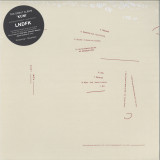
LNDFK - Kuni LP

LNDFK (aka Linda Feki) presents her ground-breaking debut album, "Kuni" on Brooklyn-based Bastard Jazz Recordings. Undeniably on the rise after her 2019 breakout performance at Primavera Sound, LNDFK has already caught the attention of Pitchfork, Rolling Stone, Clash Magazine, Noisey, and Brooklyn Vegan (among many others) while being championed by the likes of Gilles Peterson, Tom Ravenscroft, and Jamz Supernova & landing spots on tastemaker playlists like Spotify's "Pollen" and "Fresh Finds."

"Kuni" is a spellbinding exploration of dichotomies: Love & Death (Eros & Thanatos), Flower & Fire, Delicacy & Violence, Poetry & Realism, Purification & Destruction. These opposites are reified in the 10-track LPs multifarious and multifaceted sounds, elegantly meandering through a variety of styles and genres, spearheaded by Linda and features the production wizardry of Darrio Bassolino who co-wrote the album.

"Kuni" opens with "Hana-bi," an ambient instrumental piece that sets the tone for the album. Inspired by the Takeshi Kitano 1997 film of the same name – particularly Joe Hisaishi's stunning soundtrack, as well as Kitano's paintings which appear in the film. "Hana-bi" expresses the dialoguing opposites of flowers and fire, the first of many dichotomous representations throughout the album. "Takeshi" acts as an extension and to "Hana-bi," albeit one of opposing sound, with its driving, highly syncopated drums (which reappear throughout "Kuni") – à la Karriem Riggins, Questlove, or Yussef Dayes – frenetic bass line, and jazz chords. Linda's sultry voice is interspersed, initially jumping around in scat fashion, being triggered as if a sample, before her lyrics come in; her vocals are used like an additional instrument, adding to the song's rich texture. "Kuni" truly hits its stride with the next song, "Smoke – a moon or a button" (its title lifted from the 1959 book by Ruth Krauss and Remy Charlip), which is structured like a jazz standard yet flows into neo-soul territory sonically with those prodigious drums a highlight once again.

LNDFK touches on experimental hip hop in two songs on the record (both of which were released as singles in 2021): "Don't Know I'm Dead or Not (feat. Chester Watson)" – track #4 – and "How Do We Know We're Alive (feat. Pink Siifu)" – track #9. Although they embrace a more hip hop-leaning sound, these songs by no means shy away from the exploratory theme, and feature two of the alt-rap scenes rising stars with Chester Watson and Pink Siifu who offer provocatively impressing verses, combining dense word play with unconventional flows. While these tracks may first appear to be outliers on the album, they are undeniably in tune with "Kuni's" message and sonic palette, acting as testaments to LNDFK's willingness to explore and experiment.

Meanwhile, "Ku" – the third and last single before the album release – furthers the pre-established future soul sound while meandering through nu jazz and left-field electronic. Inspired by the graphic novel and film, "Sin City," and its female assassin protagonist Miho, "Ku" is a musical interpretation of Miho's story, incorporating both her beauty – the first half of the song – and murderous tendencies – the second half – to create a stunning juxtaposition, culminating in an ambient finale that suggests the character's vulnerability and inner peace. The song gracefully bridges the gap between Hiatus Kaiyote-esque songwriting, Dilla's rhythmic syncopation, and Thundercat's instrumental prowess (LNDFK has shared a stage Brainfeeder labelmate Kamasi Washington).

Mixed in throughout "Kuni" are a series of instrumental pieces that function as something akin to an interlude. The aforementioned intro, "Hana-bi," and the album closer "se mi stacco da te, mi strappo tutto:" act as bookends, while "Om" indicates the half-way mark, and "Ktm" sees Jason Lindner add his sound the album. These tracks are the ambient foundation of "Kuni," representing the thematic duality of the work. Clocking in at only 24 minutes, "Kuni" packs an astonishingly diverse array of sounds, styles, and themes, all while showcasing virtuosic musicianship and instrumental prowess.

Appearing on "Hana-bi" and "Ktm," renowned international artists Asa-Chang and Jason Lindner add an additional perspective to "Kuni": Asa-Chang on "Hana-bi," and Jason Lindner on "Ktm." Asa-Chang - famously of the Japanese avant-garde group Asa-Chang & Junray - provides vocals and percussion to an alternate version of the instrumental opener, while the acclaimed keyboardist Jason Lindner offers his synth expertise on "Ktm." These features highlight the spirit of collaboration found in LNDFK's music, always willing to try out new ways of working.

LNDFK is a singer and songwriter, born of two cultures – an Italian mother and Arab father. She grew up in Naples, away from her father, the Sahara, her homeland and traditions, which has helped nourish the desire to rediscover – through art – an engagement to her roots. Her music melts with jazz, neo-soul and hip-hop influences, filtered through her experiences and sensibility.

Her first EP, "Lust Blue," was composed with the artistic production of Dario Bass and released by Feelin' Music; after that she released several singles that saw international radio support (BBC, NTS, Wordwide FM) and gained a massive audience on digital platforms. Together with her band, she toured around Europe, performing alongside such notable artists as Kamasi Washington and Mndsgn, among others. Most recently she toured Italy, and performed at Primavera Sound Festival 2019 in Barcelona.

"Kuni," is due out on NYC label Bastard Jazz Recordings in February, 2022, while the vinyl LP will follow shortly after.

nicht am Lager

Bestelle jetzt und wir bestellen den Artikel für dich beim Lieferanten.

Last In: vor 4 Jahren
Deniro - Mendoza LP 2x12"

Deniro

Mendoza LP 2x12"

2x12inchTRP016
TRIP
25.04.2022

Repress
Rising Dutch talent Deniro (aka Reynier Hooft van Huijsduijnen) returns to with a
double EP of original works. The Tape Records member previously appeared on the label as part of the concept albums.

'Mendoza' is an 8-track quest into the spheres of polarity and tension. Anxious distortions jitter in controlled spaces, angular melodies disfigure warm tones and frenetic cross rhythms flutter through minimalist forms. Contrasting messages are weaved together with precision to facilitate a dialogue where dancefloor function and cerebral stimulation interact.

Deniro navigates his way round vintage gear with a meticulous accuracy, held together by an intuitive ear for timbre, an ingrained passion for Detroit soul, and a firm understanding of sonic balance.

"Deniro is able to transmit emotion in his music like no other. His soft spoken live cuts are sparse and trippy and you can always feel that it's Reynier behind them' - Nina Kraviz

nicht am Lager

Bestelle jetzt und wir bestellen den Artikel für dich beim Lieferanten.

Last In: vor 6 Monaten
LOS PASHMINAS - WHITE SERIES #2 EP

Limited to 100 copies!

For the second release on Subject To Restrictions Discs’ White Series, Los Pashminas from Fribourg deliver a four-track sound experience for dance floors.

The complexity of the human experience has led to many theories, which tried to explain the emotional activity of our everyday experiences. In the ’60s Paul MacLean formulated the ‘Triune Brain’ model. This theory proposes a very simplistic organisation of our brain, which would be too easy to accept since the very notion of ‘change’ is difficult to give credence to. The wiring between our primary and emotional behaviour is much more complex and subject to plasticity and transformations. What if the very essence of music could follow the same path? Maybe music could take conscience of its own environment and develop its own wave, independently from the human will.

This EP is an essay in which symbolic samples are organising themselves into the genesis of a new form of conscience, a result of a survival-mode experience that pushes the music itself to create its new form. This sound journey was created during the 2020 Pandemic.

nicht am Lager

Bestelle jetzt und wir bestellen den Artikel für dich beim Lieferanten.

Last In: vor 3 Jahren
DJ Crisps - Today EP

Dj Crisps

Today EP

12inchTIN031
Time Is Now
08.04.2022

Back by popular demand is DJ Crisps with his third solo contribution to the Time Is Now catalogue: the fierce 4-tracker which explores the many flavours of garage and justifies the Rotterdam producer's ever-growing ubiquity in today's UKG circuit.

Kicking off proceedings is "Keep It Up" - a high-octane speed garage banger, prepped with intervals of slamming reverse sweeps which carry their own rhythm. After "Alright's" unique blend of old skool grime samples and diva-esque vocals which play in dialogue beneath a sharp two-step beat, "Today" strips things back a little with a modest bassline melody and ragga vocals. Finally, with pitched-up, syrup smooth vocal licks "Bounce" captures UKG at its most soulful.

nicht am Lager

Bestelle jetzt und wir bestellen den Artikel für dich beim Lieferanten.

Last In: vor 4 Jahren
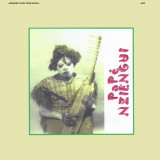
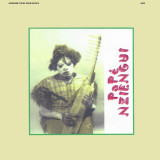
Papé Nziengui et son Groupe - Kadi Yombo LP 2x12"

Kadi Yombo, published in 1989, is the most successful album in the quest for a fusion between tradition and modernity in Bwiti harp music of the Tsogho people of Gabon. Combining beating rattles with a layer of synthesizers, Papé Nziengui blends in a contrapuntal dialogue characteristic of harp playing: male song in appeal and female choir in response, male voice of the musical arc and rhythms of female worship. But above all it’s Tsogho ritual music and modern studio orchestration. The result is an initiatory itinerary of 10 musical pieces which are all milestones likely to be simultaneously listened to, danced, meditated on, and soon acclaimed. In the years since, Nziengui has traveled he world from Lagos to Paris, from Tokyo to Cordoba, from Brussels to Mexico City to become a true icon, the emblem of Gabonese music.

Like Bob Dylan, "electrifying" folk and Bob Marley mixing rock with reggae, some purists have criticized Nziengui for having distorted the music of harp by imposing a cross with modern instruments. They even went so far as to claim that Nziengui was just an average harpist covering his shortcomings with stunts that were only good for impressing neophytes; like playing a harp placed upside down behind his back or playing two or three harps simultaneously. Sincere convictions or venomous defamations, in any case, Nziengui never gave in to such attacks, imposing himself on the contrary to pay homage to the elders (Yves Mouenga, Jean Honoré Miabé, Vickoss Ekondo) while instructing the maximum of young people. He is thus the promoter of many young talents, the most prominent of which is certainly his nephew Jean Pierre Mingongué. In a conservative society where the sacred is confused with secrecy, exposing the mysteries of Bwiti in broad daylight can be punished by exclusion or even execution.

Papé Nziengui has always claimed that he faces such risks because he never felt enslaved to a community that governs his life, that regulates his conduct, that has a right of censorship over his activities. Like Ravi Shankar, the famous sitarist, Papé Nziengui is a man of rupture but also of openness, a transmitter of culture. As proof, he has established himself in Libreville, Gabo’s capital, as the main harpist for sessions and concerts, accompanying the greatest national artists (Akendengué, Rompavè, Annie-Flore Batchiellilys, Les Champs sur la Lowé, etc.) as well as foreign artists (Papa Wemba, Manu Dibango, Kassav', Toups Bebey, etc.). In 1988, he was the first harpist to release an album in the form of a cassette produced by the French Cultural Center (Papé Nziengui, Chants et Musiques Tsogho). At the same time, he created his own group (Bovenga), combining traditional music instruments (musical bow, drums, various percussion instruments, etc.) in the framework of a true national orchestra, which gave the first concert and the first tours of a traditional music that was both modern and dynamic, thus "democratizing" the harp, to the dismay of certain purists.

On the other hand, in modern music, dominated by the logic of profit or even commercialism, artistic creation must often be adjusted for a specific audience based on reason rather than heart. But instead of allowing himself to be distorted, Papé Nziengui has always tried to produce music that is not a caricature, worthy in its expression as in its content, of the sacredness and transcendence of the music of the Origins. This is what makes Nziengui not only the musician, but the man someone whose age hasn’t altered any of his freshness or authenticity

vorbestellen08.04.2022

erscheint voraussichtlich am 08.04.2022

Papé Nziengui et son Groupe - Kadi Yombo LP

Kadi Yombo, published in 1989, is the most successful album in the quest for a fusion between tradition and modernity in Bwiti harp music of the Tsogho people of Gabon. Combining beating rattles with a layer of synthesizers, Papé Nziengui blends in a contrapuntal dialogue characteristic of harp playing: male song in appeal and female choir in response, male voice of the musical arc and rhythms of female worship. But above all it’s Tsogho ritual music and modern studio orchestration. The result is an initiatory itinerary of 10 musical pieces which are all milestones likely to be simultaneously listened to, danced, meditated on, and soon acclaimed. In the years since, Nziengui has traveled he world from Lagos to Paris, from Tokyo to Cordoba, from Brussels to Mexico City to become a true icon, the emblem of Gabonese music.

Like Bob Dylan, "electrifying" folk and Bob Marley mixing rock with reggae, some purists have criticized Nziengui for having distorted the music of harp by imposing a cross with modern instruments. They even went so far as to claim that Nziengui was just an average harpist covering his shortcomings with stunts that were only good for impressing neophytes; like playing a harp placed upside down behind his back or playing two or three harps simultaneously. Sincere convictions or venomous defamations, in any case, Nziengui never gave in to such attacks, imposing himself on the contrary to pay homage to the elders (Yves Mouenga, Jean Honoré Miabé, Vickoss Ekondo) while instructing the maximum of young people. He is thus the promoter of many young talents, the most prominent of which is certainly his nephew Jean Pierre Mingongué. In a conservative society where the sacred is confused with secrecy, exposing the mysteries of Bwiti in broad daylight can be punished by exclusion or even execution.

Papé Nziengui has always claimed that he faces such risks because he never felt enslaved to a community that governs his life, that regulates his conduct, that has a right of censorship over his activities. Like Ravi Shankar, the famous sitarist, Papé Nziengui is a man of rupture but also of openness, a transmitter of culture. As proof, he has established himself in Libreville, Gabo’s capital, as the main harpist for sessions and concerts, accompanying the greatest national artists (Akendengué, Rompavè, Annie-Flore Batchiellilys, Les Champs sur la Lowé, etc.) as well as foreign artists (Papa Wemba, Manu Dibango, Kassav', Toups Bebey, etc.). In 1988, he was the first harpist to release an album in the form of a cassette produced by the French Cultural Center (Papé Nziengui, Chants et Musiques Tsogho). At the same time, he created his own group (Bovenga), combining traditional music instruments (musical bow, drums, various percussion instruments, etc.) in the framework of a true national orchestra, which gave the first concert and the first tours of a traditional music that was both modern and dynamic, thus "democratizing" the harp, to the dismay of certain purists.

On the other hand, in modern music, dominated by the logic of profit or even commercialism, artistic creation must often be adjusted for a specific audience based on reason rather than heart. But instead of allowing himself to be distorted, Papé Nziengui has always tried to produce music that is not a caricature, worthy in its expression as in its content, of the sacredness and transcendence of the music of the Origins. This is what makes Nziengui not only the musician, but the man someone whose age hasn’t altered any of his freshness or authenticity

vorbestellen08.04.2022

erscheint voraussichtlich am 08.04.2022

Count Basie Orchestra - High Voltage

Reissue of the Count Basie Orchestra's 1970 album 'High Voltage',
arranged by Chico O'Farrill and featuring Eddie "Lockjaw" Davis, Cecil
Payne, Joe Newman, Freddie Green and Harold Jones among others
When in January, 1970 Count Basie entered the studio with his 17-piece big band
to record 'High Voltage', he ushered in the last full decade as bandleader of his
Orchestra. The Orchestra had left its imprint on the sixties by recording with the
likes of Frank Sinatra and Ella Fitzgerald. There would be more great albums with
star vocalists in the seventies, but the band's purely instrumental works, which
had begun in 1965, would also continue. Back then Basie had engaged acclaimed
Cuban composer/arranger Chico O'Farrill to arrange the music for such concept
albums as "Basie Meets Bond" and "Basie's Beatle Bag", transforming them into
crossover gems.
On 'High Voltage' O'Farrill demonstrates his affinity to Basie's big band sound, this
time with a repertoire of standards. For this album, Basie specifically chose
pieces the band had never recorded in their more than 30-year existence. This is
saying something, since the band covers such an impressive span of jazz history,
from the beginning of the swing era to the bop-influenced bands of the 50's on
through to the present album.
The Count's new drummer Harold Jones propels Fred Fisher's "Chicago" with a
tremendous drive. The Rogers and Hart classic "Have You Met Miss Jones"
features beguilingly dense deep- register horn lines and an almost languorous
piano, and Eric Dixon's tasty flute solo spices up "The Lady Is A Tramp". With its
smoky sophistication, Eddie Lockjaw Davis' Tenor dominates "Bewitched",
whereas guest trumpeter Joe Newman's muted tongue-in-cheek solo highlights
"Day In Day Out". Of course, Basie himself also steps forward: for instance, on the
Fats Waller-like intro to "I'm Getting Sentimental Over You", and with the playful
grace notes on "If I Were A Bell"." Reminiscent of the Las Vegas shows the band
performed with Frank Sinatra, "Get Me To The Church On Time" is also a
masterful dialogue between the horn sections.

vorbestellen08.04.2022

erscheint voraussichtlich am 08.04.2022

Papé Nziengui et son Groupe - Kadi Yombo LP

Kadi Yombo, published in 1989, is the most successful album in the quest for a fusion between tradition and modernity in Bwiti harp music of the Tsogho people of Gabon. Combining beating rattles with a layer of synthesizers, Papé Nziengui blends in a contrapuntal dialogue characteristic of harp playing: male song in appeal and female choir in response, male voice of the musical arc and rhythms of female worship. But above all it’s Tsogho ritual music and modern studio orchestration. The result is an initiatory itinerary of 10 musical pieces which are all milestones likely to be simultaneously listened to, danced, meditated on, and soon acclaimed. In the years since, Nziengui has traveled he world from Lagos to Paris, from Tokyo to Cordoba, from Brussels to Mexico City to become a true icon, the emblem of Gabonese music.

Like Bob Dylan, "electrifying" folk and Bob Marley mixing rock with reggae, some purists have criticized Nziengui for having distorted the music of harp by imposing a cross with modern instruments. They even went so far as to claim that Nziengui was just an average harpist covering his shortcomings with stunts that were only good for impressing neophytes; like playing a harp placed upside down behind his back or playing two or three harps simultaneously. Sincere convictions or venomous defamations, in any case, Nziengui never gave in to such attacks, imposing himself on the contrary to pay homage to the elders (Yves Mouenga, Jean Honoré Miabé, Vickoss Ekondo) while instructing the maximum of young people. He is thus the promoter of many young talents, the most prominent of which is certainly his nephew Jean Pierre Mingongué. In a conservative society where the sacred is confused with secrecy, exposing the mysteries of Bwiti in broad daylight can be punished by exclusion or even execution.

Papé Nziengui has always claimed that he faces such risks because he never felt enslaved to a community that governs his life, that regulates his conduct, that has a right of censorship over his activities. Like Ravi Shankar, the famous sitarist, Papé Nziengui is a man of rupture but also of openness, a transmitter of culture. As proof, he has established himself in Libreville, Gabo’s capital, as the main harpist for sessions and concerts, accompanying the greatest national artists (Akendengué, Rompavè, Annie-Flore Batchiellilys, Les Champs sur la Lowé, etc.) as well as foreign artists (Papa Wemba, Manu Dibango, Kassav', Toups Bebey, etc.). In 1988, he was the first harpist to release an album in the form of a cassette produced by the French Cultural Center (Papé Nziengui, Chants et Musiques Tsogho). At the same time, he created his own group (Bovenga), combining traditional music instruments (musical bow, drums, various percussion instruments, etc.) in the framework of a true national orchestra, which gave the first concert and the first tours of a traditional music that was both modern and dynamic, thus "democratizing" the harp, to the dismay of certain purists.

On the other hand, in modern music, dominated by the logic of profit or even commercialism, artistic creation must often be adjusted for a specific audience based on reason rather than heart. But instead of allowing himself to be distorted, Papé Nziengui has always tried to produce music that is not a caricature, worthy in its expression as in its content, of the sacredness and transcendence of the music of the Origins. This is what makes Nziengui not only the musician, but the man someone whose age hasn’t altered any of his freshness or authenticity

vorbestellen08.04.2022

erscheint voraussichtlich am 08.04.2022

Jóhann Jóhannsson - 12 Conversations With Thilo Heinzmann LP

Als Jóhann Jóhannsson im Winter 2018 überraschend in Berlin starb, endete auch ein hochinteressantes Zusammenspiel der Künste. Jóhann Jóhannsson hatte es gewagt, hatte Musik und Literatur, Musik und Theater, Musik und Film in seinen Kompositionen miteinander kommunizieren lassen, sehr innovativ, oft melancholisch, immer tiefgründig, klassische und elektronische Elemente verschmelzend.
Den Philanthropen und Kunstsammler Richard Thomas interessierten genau solche Grenzgänge. Er stellte sich vor, dass ein Werk entsteht, bei dem die bildende Kunst und die Musik in einen Dialog treten, sich
jedoch nicht gegenseitig übermalen, einander in Produktion und Interpretation nicht nachlaufen, sondern eins werden. Und er hatte einen Künstler vor Augen, den Berliner Maler Thilo Heinzmann, der seinerseits sofort an Jóhann Jóhannsson dachte.

nicht am Lager

Bestelle jetzt und wir bestellen den Artikel für dich beim Lieferanten.

Last In: vor 4 Jahren
VAxBY - Dual 10"

Vaxby

Dual 10"

10inchR-M191
Raster
01.04.2022

dutch sound artist albert van abbe now joins the raster family, with an unexpected collaboration with founder olaf bender aka byetone titled DUAL. having spent time working side by side in ’s-hertogenbosch at the willem twee studio, the result of their collaboration is both smooth and haptic, rounding out as an expressive camaraderie between the two veteran producers. jovial and innocent, DUAL alludes to the experimental research process of finding common ground. fully embracing the haphazard richness of live recordings, the result is a remarkable fusion of contrasting outputs; intricate collaborative efforts and byproducts woven together with an eager indifference towards expectation. the artists embrace a skewed navigation through pronounced highlights, intricate lulls and moments of temporal stasis, intermittently punctuated as a means of intentionally avoiding notions of rigid perfection. with ‘real-time’ approach directing DUAL’s creation, the pair effectively shies away from any meticulous planning, and the music runs free and negates any rigid parameters one might have expected. quirky titles exude the collaged form of the release, and underline its innocent charm. as a whole, DUAL focuses on the creative process and fully engages listeners with its own dialogue, though it is very outspoken, at times even abrasive.

nicht am Lager

Bestelle jetzt und wir bestellen den Artikel für dich beim Lieferanten.

Last In: vor 4 Jahren
Quelle Chris & Chris Keys - Innocent Country 2
 
4

If now the time for voodoo amulets and protective talismans, sharpened swords and unbreakable shields, it’s also a moment for music to assume its highest form as a healing art, a source of benevolent spells, and a refuge from the chaos. After all, the best creators are always those that tap into the telluric current that exists below the surface. Those who delve into the collective unconscious so that timeliness is a happy accident; timelessness was always the intent. If Quelle Chris and Chris Keys’ Innocent Country 2 sounds like an antidote for a moment of surreal anxiety, the same could be said of it a decade from now. It’s an album best understand in a dialogue with the first volume of the series. Released in 2016, the initial Innocent Country focused on isolation, pessimism, and the notion of finding peace within pain. At a time when those feelings convey the mood of the moment, Quelle and Keys have responded with a soundtrack that offers soothing light in a bleak timeline. A hopeful record in a hopeless moment, precisely when it’s needed most.

vorbestellen01.04.2022

erscheint voraussichtlich am 01.04.2022

SUSANNA - ELEVATION

Susanna

ELEVATION

12inchSONATA666
SusannaSonata
25.03.2022

For Susanna, nothing happens in a vacuum. Every creative act responds to what's come before. And by exploring this dialogue, we can learn new things about ourselves and the world. This idea has inspired the Norwegian artist throughout her near two1decade career. It's behind her unforgettable covers of classic songs and her interpretations of the paintings of Hieronymous Bosch. And it found its purest expression on 2020's Baudelaire & Piano, a stripped back song cycle setting texts from the 19th century French poet's The Flowers of Evil. In Elevation, its followup, Susanna's engagement with Baudelaire's work blossoms into a collaborative enterprise, combining tape, spoken word and song. The result is a unique musical conversation spanning centuries and disciplines; a "time travelling" project, as Susanna puts it, that moves between creative dimensions. She brings collaborators back into the process, nurturing connections made over a series of Baudelaire & Piano live shows presented in 2020 and 2021. Composer1improviser Delphine Dora offers teasing renditions of the original French texts, layering spoken recitation and otherworldly singing in a set of atmospheric vignettes. And tape recorder soundscapes from Stina Stjern-familiar from Susanna's Hieronymous Bosch project Garden of Earthly Delights (2019)-frame the album with hiss, hum and soft fingers of melody, like mist settling on a landscape. These contributions deepen the album's mystery and its evocative power. The result is an engrossing interleaving of sounds and registers; and, as Susanna describes it, "an intuitive and collective ceremony of the ethereal and mystical in life." Elevation features work by American occultist artist Cameron (1922-1995), an adherent of Aleister Crowley's Thelema movement. Her illustrations "Witch Woman", "Pan" and "Danse" adorn the release, which will be available on cassette as well as in the usual digital, CD and vinyl formats.Oslo-based artist Susanna has released music as Susanna and the Magical Orchestra and 'just' Susanna since 2004, through labels like Rune Grammofon, ECM Records and her own outlet SusannaSonata. She has collaborated with artists like Jenny Hval, Bonnie 'Prince' Billy and John Paul Jones, highly active with different projects, songwriting/composing, and making personal interpretations of other people's songs.

vorbestellen25.03.2022

erscheint voraussichtlich am 25.03.2022

SIMONE AHÀ - CONSTRUCTIONS EP

Constructions seeks to explore the world of pulsing rhythms, gritty synth lines and corny vocals. Through a nostalgic glance towards the 80’s italo disco era Love a la Carte attempts to recreate the almost naive atmosphere that was unavoidable through 80’s music charts, while Over These Hills is a contemporary boogie tune partly inspired by the likes of Sade, Chic and even Tears For Fears. Assault, a synth dominated piece of storytelling, samples dialogue from John Carpenter’s 1976 cult classic Assault on Precinct 13, and Mechanical Bird is an instrumental journey through various electronic soundscapes.

nicht am Lager

Bestelle jetzt und wir bestellen den Artikel für dich beim Lieferanten.

Last In: vor 3 Jahren
VARIOUS - SONG EDUCATION 3 LP

Song Education brings together some of the pivotal songs from these series, showcasing great music from the Sixties until the Nineties resurrecting through trending series like La Casa De Papel, American Horror Story, Sex Education and Breaking Bad. And what’s a better way to rediscover old gems than by listening to them on a classic vinyl record

vorbestellen25.03.2022

erscheint voraussichtlich am 25.03.2022

Suzanne Santo - Yard Sale LP

Suzanne Santo has never been afraid to blur the lines. A tireless creator, she's built her sound in the grey area between Americana, Southern-gothic soul, and forward-thinking rock & roll. It's a sound that nods to her past — a childhood spent in the Rust Belt; a decade logged as a member of the L.A.-based duo HoneyHoney; the acclaimed solo album, Ruby Red, that launched a new phase of her career in 2017; and the world tour that took her from Greece to Glastonbury as a member of Hozier's band — while still exploring new territory. With Yard Sale, Santo boldly moves forward, staking her claim once again as an Americana innovator. It's an album inspired by the past, written by an artist who's only interested in the here-and-now. And for Suzanne Santo, the here-and-now sounds pretty good. Yard Sale, her second release as a solo artist, finds Santo in transition. She began writing the album while touring the globe with Hozier — a gig that utilized her strengths not only as a vocalist and multi-instrumentalist, but as a road warrior, too. "We never stopped," she says of the year-long trek, which often found her pulling double-duty as Hozier's opening act and bandmate. "Looking back, I can recognize how much of a game-changer it was. It raised my musicianship to a new level. It truly reshaped my career." “Defiant” - American Songwriter “a bluesy ripper that gets its sizzle not just from her dynamic vocals but from a dirty, undulating guitar line from Gary Clark Jr” - Buzzbands “On “Fall For That,” she digs deep to sing about the push and pull between needing human connection and solitude, chaos and calm” - Buzzbands “bold storytelling and introspective reflection” - CMT “Catchy-as-hell” - Glide “she digs deep” - KCRW “Suzanne Santo is one of those musicians that come along every once in a blue moon.” - National Rock Review “Santo takes ownership and power back with crass and candor, introducing shameless, self aware dialogue that opens the door for conversation that leads to real healing.” - Paste "spunky" - Premier Guitar “Southern-gothic soul” - Rolling Stone Country “vivid musical portraits” - San Diego Union-Tribune

vorbestellen25.03.2022

erscheint voraussichtlich am 25.03.2022

Tarta Relena - Fiat Lux LP

Tarta Relena

Fiat Lux LP

12inchLC80LP
La Castanya
18.03.2022

Fiat Lux is the debut album by Tarta Relena, a Barcelona-based project featuring Marta Torrella and Helena Ros. The group approaches the oral traditions of the Mediterranean from a contemporary perspective using a unique combination of ancient vocal melodies and subtle electronic textures.

Tarta Relena’s inspiration for Fiat Lux comes from historical characters, such as the Virgin Mary and Hildegard of Bingen, and timeless verses that deal with the cyclic nature of the human experience: “E suïcidi i el cant” (1) is an adaptation of a traditional poem by Pashtun women in Afghanistan; “Esta montanya d’enfrente” (3) is a traditional Sephardic song; “Safo” (9) is based on the love poems by Sappho of Lesbos.
Singing in Catalan, Spanish, Greek, Latin, English, and even Sephardi, the language of Hispanic jews, Tarta Relena explore a complex array of Latin cultures through the simplicity of voice. They draw from vocal techniques that range from flamenco to jazz, introducing elements of electronic music to redefine the melodies.
In January 2019, Tarta Relena released their first EP, Ora Pro Nobis: eight a cappella songs with minimal electronics. In April 2020, they released their second EP, Intercede Pro Nobis: a five-song dialogue between voice and electronics.
Fiat Lux expands on past experimentations, moving away from organic harmonies to embrace digital textures and distortions. The musical production of Juan Luis Batalla and Òscar Garrobé is remnant of Holly Herndon or Eartheater.
Tarta Relena have perhaps been best described by Pitchfork in their review of Pack Pro Nobis: “Tarta Relena is a celebration of musical exchange. At a time of rising nationalisms across Europe, Tarta Relena’s songs are a testament both to the porousness of borders and the ideas that unite disparate cultures, running beneath the centuries like a pedal tone”.

vorbestellen18.03.2022

erscheint voraussichtlich am 18.03.2022

Beispiel - Muster

Beispiel

Muster

12inchFAIT-26LP
Faitiche
11.03.2022

Faitiche presents Beispiel (German for "example", also suggests playing together), a joint project by Frank Bretschneider and Jan Jelinek. Muster is their first album.

Free electronic music, the result of spontaneous improvisations.

“Meaning” is a concept that is overused in connection with music. Muster does not call for the same kind of air quotes. With its title, German for patterns/exemplars, Beispiel’s album frees itself from the ballast of teleological semantics. There is no overarching theme, no preparation, no reading list, no reason for this music. Just two facts: Frank Bretschneider and Jan Jelinek have known each other a long time and appreciate each other’s work; and they share a love of modular synthesizers and of experimental set-ups designed to capture surprise.

Bretschneider and Jelinek got together for their first joint session in 2016 and the years that followed brought more such meetings at Jelinek’s studio for open-ended musical dialog – at irregular intervals and with no clear objective. The improvisations were recorded in two stereo tracks: one track for Bretschneider’s audio, one for Jelinek’s. After each session, the recordings were processed separately, the options essentially limited to cutting and altering the frequency range. The nine pieces for Muster were selected from the resulting material.

This approach reflects an ideal: music is when you play your first note without knowing what the third or fourth will sound like. When your 290th note still sees you leaving the beaten track, and when curiosity grows as the piece unfolds. Duping is part of Beispiel’s practice. Improvisation is about disagreement. It’s a matter of addressing the right issues. What’s happening here? What’s mine, what’s yours? Are “why” and “where next” legitimate questions?

Muster is an exemplary work. Nine suggestions for what can be. Nine ideas for possibilities of listening.

Arno Raffeiner

nicht am Lager

Bestelle jetzt und wir bestellen den Artikel für dich beim Lieferanten.

Last In: vor 4 Jahren
George Duke - Liberated Fantasies LP

Reissue of George Duke's classic 1976 jazz-funk-fusion album 'Liberate Fantasies'

This 1976 album, the last one of the MPS fusion series, continues George Duke's tendency to couple his fusion world with accessible R&B songs. Once again, he shows a discernible vocal development. In "Tryin' And Cryin" the Californian together with rock singer Napoleon Brock overlays multiple vocal tracks.
On "Seeing You" Duke lays on a glaze of soulful tenderness, whereas "What The…" is 30 seconds of frivolous funning around. "Back to Where We Never Left" is a witty gem in which Duke bundles his pool of synthesizers into a united groove, whereas "I C'n Hear That" shows off synth and marimba tonal colors in dialogue, with the bass riffing on the bottom.

The album flows into the final bend carrying along the sonorous richness of Brazil. "After the Love" plays with the languorous erotic colours of the tropics, whereas all the band members are allowed to shine on the epic circa ten minute title track with its hot samba flair: the rhythm section with "Ndugu", Al Johnson, and Airto Moreira's percussion arsenal, Daryl Stuermer with his rock interludes on guitar, and Duke himself with inspired virtuosity on all sorts of synths and
keyboards.

nicht am Lager

Bestelle jetzt und wir bestellen den Artikel für dich beim Lieferanten.

Last In: vor 4 Jahren
Equations Collective - The Helicon Sessions LP

The Equations Collective is an experimental sound project formed by a multi-disciplinary group of artists, active in the fields of music, photography, sound design & software development.

In 2018, the collective set up a temporary outdoor recording studio, 1130 meters above sea level, on the slopes of Mount Helicon in Greece, with the ambition of recording their work in a natural environment. A 'mobile and modular' construction, fully powered by solar panels, the design of the studio showcases the possibilities of a progressive, environmentally sustainable future through renewable energy.

Embodying ecological incentives, and representing an immersive engagement with the landscape, the 'Helicon Sessions' document this extraordinary residency, capturing a profound dialogue with the eponymous mountain region.

Situated in Boeotia, Central Greece, Mount Helicon has a prominent archaic significance. A historic location where stories of sacred springs and the epic origins of the Muses and Narcissus converge. Steeped in the heritage of ancient narratives, Helicon is seen as a principal symbol of poetic inspiration.

On the 'Helicon Sessions' the collective draw upon the inspiring topography and fabled mythological resonances of the area, unfurling an expansive, hypnotic suite of abstract electronics. Liberated by an open-ended, improvisational dynamic, the collective move through a mysterious, elemental cycle that mirrors the imposing scale and dramatic atmospheres of the setting.

Across an entrancing, fluid sequence of five designated 'cuts', the collective traverse the borderlands of drone, techno, dub, and acid, amplifying the acoustic traces of Helicon by integrating field recordings collected at the site into this arresting body of work. With these recordings, the collective delineate an odyssey of subverted 303s, sputtering drum machines and formidable, oscillating low end that drifts and coalesces like an amorphous mirage; a spellbinding sound world of clarity and shadow.

The 'Helicon Sessions' signify a symbiosis (between the terrestrial and the engineered, between wildlife and futurism, between the intrinsic and the synthetic, between the innate and the manmade) And with their conception of a portable, eco-friendly studio The Equations Collective focalize valuable ideas centred on ingenuity and evolution. The outcome of this project illustrates a unique collaborative exchange which acknowledges the deep nuances of environment and the enduring echoes of history.

The Equations Collective is a collaboration between Artefakt, Aroma Pitch, Aphelion and Sphera De Noumenon across Berlin, Amsterdam, Cologne and Hamburg. Together they have established an all night long live event in Berlin, starting at Sameheads and Acud Macht Neu, which eventually lead to their residency at OHM (Tresor).

For this format they have collaborated with the following artists: Alex The Fairy, Anna Z, D-IX, Eliad Wagner, Jón Friđgeir Sigurđsson, Orson Wells, Phillip Jondo, Philipp Matalla, PRSMC, Rabih Beaini, Sabrina Gricourt, Sébastien Robert, and Vida Vojić.

The respective members of The Equations Collective have released a range of output on the likes of Field Records, Delsin, Semantica Records, De Stijl, & Soul People Music.

Since 2018 their visual identity has been shaped by Elias Hanzer.

The 'Helicon Sessions' is their debut release.

nicht am Lager

Bestelle jetzt und wir bestellen den Artikel für dich beim Lieferanten.

Last In: vor 4 Jahren
Oscar Peterson - Motions & Emotions

Reissue of Oscar Peterson's 1969 album 'Motions & Emotions' pressed
on blue vinyl
On 'Motions & Emotions' Oscar Peterson presents jazz versions of popular pieces
from pop, easy listening and classic songwriters, as the quartet of long- time
companions are washed in rich orchestral colours. Arranged and conducted by a
magician of the guild, the great Claus Ogerman, who had previously worked for
Tom Jobim. The Brazilian is also represented with his standard "Wave", in which
the orchestra builds a luminous tropical backdrop for Peterson's fantastically
dragged phrasing. Peterson and Ogerman pay tribute to another great orchestra
leader, Henry Mancini, in "Sally's Tomato" with feather- light trilling brilliance.
Jimmy Webb's "By The Time I Get To Phoenix" experiences a metamorphosis
almost into the classical - Ogerman opens infinite sound spaces here with the
distantly indulging strings. Bobby Gentrys "Ode To Billy Joe" cleverly abducts
Countryfolk into Bigband Jazz by means of fiery keyboard playing.
Finally the hits: from soul comes Bobby Hebb's "Sunny", whose theme the pianist
here cleverly harmonises out to then decorate it bluesy in dialogue with the wind
instruments. Burt Bacharach's "This Guy's In Love With You" shines with a
leisurely late night mood and a pompous finale. Yesterday" is provided with a
sparkling bossa substructure, while the second Beatles homage "Eleanor Rigby"
oscillates between loose groove, deep melancholy and swing. Peterson plus
quartet plus orchestra: Enthusiastic detail work also in the popular sector.
"The question about favourite albums is basically not an easy one, except in my
case, because Motions & Emotions by Oscar Peterson is actually my absolute
favourite album. I think Motions & Emotions might even be the perfect
instrumental album." - Till Brönner (German Jazz trumpeter and professor)

vorbestellen04.03.2022

erscheint voraussichtlich am 04.03.2022

Oscar Peterson - Motions & Emotions

Reissue of Oscar Peterson's 1969 album 'Motions & Emotions' pressed
on blue vinyl
On 'Motions & Emotions' Oscar Peterson presents jazz versions of popular pieces
from pop, easy listening and classic songwriters, as the quartet of long- time
companions are washed in rich orchestral colours. Arranged and conducted by a
magician of the guild, the great Claus Ogerman, who had previously worked for
Tom Jobim. The Brazilian is also represented with his standard "Wave", in which
the orchestra builds a luminous tropical backdrop for Peterson's fantastically
dragged phrasing. Peterson and Ogerman pay tribute to another great orchestra
leader, Henry Mancini, in "Sally's Tomato" with feather- light trilling brilliance.
Jimmy Webb's "By The Time I Get To Phoenix" experiences a metamorphosis
almost into the classical - Ogerman opens infinite sound spaces here with the
distantly indulging strings. Bobby Gentrys "Ode To Billy Joe" cleverly abducts
Countryfolk into Bigband Jazz by means of fiery keyboard playing.
Finally the hits: from soul comes Bobby Hebb's "Sunny", whose theme the pianist
here cleverly harmonises out to then decorate it bluesy in dialogue with the wind
instruments. Burt Bacharach's "This Guy's In Love With You" shines with a
leisurely late night mood and a pompous finale. Yesterday" is provided with a
sparkling bossa substructure, while the second Beatles homage "Eleanor Rigby"
oscillates between loose groove, deep melancholy and swing. Peterson plus
quartet plus orchestra: Enthusiastic detail work also in the popular sector.
"The question about favourite albums is basically not an easy one, except in my
case, because Motions & Emotions by Oscar Peterson is actually my absolute
favourite album. I think Motions & Emotions might even be the perfect
instrumental album." - Till Brönner (German Jazz trumpeter and professor)

vorbestellen04.03.2022

erscheint voraussichtlich am 04.03.2022

Charlie Mingus - Oh Yeah

Charlie Mingus

Oh Yeah

12inchATLANTICSD1377
Atlantic
28.02.2022

Oh Yeah" - Charles Mingus (p, voc); Booker Ervin (ts); Roland Kirk (fl, ts, siren, manzello, stritch); Jimmy Knepper (tb); Doug Watkins (b); Dannie Richmond.

Commenting on this album in 1962, Billboard magazine wrote: »He seems to be everywhere, everywhere that is but on his usual instrument«. Charles Mingus, one of the most impressive musicians in the history of jazz, doesn’t play a single note on the bass for a change, but leads the band from his (blues-)piano – the instrument that he always used for composing. He hits the keys, he sings the blues, he shouts and he encourages – apparently Mingus really found the need to express himself loudly in this album. (Doug Watkins stood in for him on the contrabass.) "Oh Yeah" is definitely Mingus’s most powerful and passionate album. He calls on two hot, intensive saxophonists – Roland Kirk and Booker Ervin – as well as Jimmy Knepper on the trombone. Kirk is the main soloist, but all three wind-players deliver expressive improvisations, carrying out a non-stop dialogue with one another, and pushing one other to achieve maximum energy. The music is wild and ecstatic, but it’s not free jazz, remaining – as it does – grounded in blues and gospel. "Hog Callin’ Blues" is an enthralling shuffle with a wealth of riffs, "Devil Woman" a clever slow blues with inventive wind figures. "Ecclusiastics", with its constant change of rhythm and expression alternating between gospel and blues has the most complex form. Blues has always been a part of a black church service, said Mingus. "Eat That Chicken" (a homage to Fats Waller and his favourite food) even plays around with an old-time, Dixie feeling. Humour is never far away. Even in the atomic bomb song (this too, a sort of churchy blues) one hears the words: »Don’t let ’em drop it! Stop it! Be-bop it!«

vorbestellen28.02.2022

erscheint voraussichtlich am 28.02.2022

Artikel pro Seite:

Language

N/ABPM
Vinyl