
pre-order now23.10.2025
expected to be published on 23.10.2025
expected to be published on 23.10.2025

expected to be published on 18.09.2025

expected to be published on 11.09.2025

expected to be published on 26.06.2025

expected to be published on 23.06.2025

expected to be published on 23.06.2025

expected to be published on 20.06.2025

expected to be published on 20.06.2025

expected to be published on 20.06.2025

expected to be published on 20.06.2025

expected to be published on 20.06.2025

Carving an unlikely and elaborate niche in the stoney academic landscape
which she once shared with the likes of Phill Niblock, John Cage and Sorel
Hayes, the excitable proto-punk poèmes sonores of the linguistic loose
cannon known as Beth Anderson first rolled through New York in the mid-
1970s (from Kentucky via San Francisco) like a jumbled tumbleweed of lost
Letterism, face paint and threadbare drummy funk to astonish gallery floors,
lecture theatres and loft apartment stages.
One thousand leagues under the radar of the commercial music industry,
with a sense of humour that elevated way above her highbrow peer group,
the music of Beth Anderson has successfully evaded the pressing plant for
most of her creative career, and not unlike fellow New York gallery actionist
Suzanne Ciani, it has taken decades to successfully collect and contextualise
these early recordings - expanding her elusive discography beyond the rare
and mysterious solo single entry in the process.
When uttered amongst the type of vinyl vampires that haplessly gravitate
between both art school vintage vanity pressings and family funded plunder
funk, there’s an outside chance that the name Beth Anderson might muster
some vague recognition on account of her one and only solo wax sojourn
into the expansive DIY market. In 1980 the 45rpm single, ‘I Can’t Stand It’,
combusted into the consciousness of adventurous participants with its deep
rhythmic backbeat (courtesy of future Sonic Youth / Dinosaur Jr producer
Wharton Tiers, member of the new wave band Theoretical Girls), climaxing
with two colourful and commanding linguistic tantrums before disappearing in
a puff of smoke leaving would-be fans dumbstruck without so much as a
label name or distribution contact to explain what they had just heard.
For those who have spent the subsequent years on the edge of that same
seat, it might come as some comfort knowing that somewhere out there,
there is also a contrasting world of gallery patrons and experimental sound
poetry enthusiasts that similarly didn’t know that their regular performance
poet Beth Anderson even made the ambitious pop record. For the uninitiated,
the enigmatic Beth Anderson has straddled both sides of the art / rock fence
placed between two equally niche pastures.
Hopefully this first ever vinyl compendium will succeed in joining the dots,
loops, yelps, squeaks, beats and repeats. Let us follow Beth’s lineage, along
her magnetic tape highways crossing multiple boundaries in a hope to bridge
unlikely anti-genres like ‘yoga punk’, ‘ramble rap’, ‘combustion pop’ and
‘formroom funk’… all of which were officially neatly bracketed under the
curious Text-Sound movement where Beth garnered utmost respect as a key
practitioner.
expected to be published on 06.09.2024

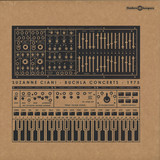
The very first Buchla synthesiser performance by revolutionary composer Suzanne Ciani finally makes its fifty year journey from its switch-on New York art gallery to its long deserved and discerning global phonographic audience.
With this previously unheard vinyl pressing, Finders Keepers Records are proud to present an archival project of ‘art music’ that not only redefines musical history but lays genuine claim to the overused buzzwords such as pioneering, maverick, experimental, groundbreaking and esoteric, while questioning social politics and the evolution of music technology as we have come to understand it. To describe Italian-American composer Suzanne Ciani’s resurrected Buchla concert records as genuine gamechangers would be a gross understatement. These records represent a musical revolution, an artistic revelation, a scientific benchmark and a trophy in the cabinet of counterculture creativity. This sonic installation album, alongside her recently liberated WBAI/Phill Niblock 1975 sessions (FKR082), are triumphant yardsticks in the synthesiser space race and the untold story of the first woman on the proverbial musical moon. While pondering the early accolades attached to these golden era New York recordings it’s daunting to learn that these records were in fact not even records at all.
What exists on this disc now was a manifesto and a one-time gateway to a new world, which somehow was only partially pushed ajar. Captured here is a genuine live act exploring new territories with a fully performable music instrument. If the unfamiliar, modernistic, melodic pulses, tones and harmonics found on these 1970’s artistic gallery collaborations/ live presentations (then soon to be followed by academic grant applications and educational demonstrations) had been placed in a phonographic context alongside the widely marketed work of Morton Subotnick, Walter Carlos or Tomita, then the name Suzanne Ciani and her infectious influence would have already radically changed the shape, sound and gender of our record.
With the light of Buchla and Ciani’s initial flame Finders Keepers continues the journey through the vaults of this increasingly celebrated music legacy, illuminating these ‘non-records’ that evaded the limelight for almost half a century. You can’t write history when you are too busy making it. With fresh ink in the bottomless well, let’s start at the beginning. Again
expected to be published on 01.09.2024

As one of the most enigmatic figures of the 1970's Italian soundtrack and library music network Emma De Angelis and her short recording career provides thirsty fans of speedball psychedelic rock and drum heavy instrumental funk with a tight discography rivalling many of the long-standing bastions of the otherwise male-orientated business. * Strictly limited to 1000 copies.*
.
Born in Rocca di Papa, near Rome, into a flourishing musical environment Emma was the younger sister of future award-winning composers Guido And Maurizio De Angelis, a duo, who under names like Oliver Onions and Dream Bags, would write chart-topping lyrical theme tunes for a wide range of Italian crime, Giallo and Spaghetti Western films featured alongside full scores by Ennio Morricone and the Magnetic System composers (Bixio Frizzi Tempera).
With encouragement from her brothers, Emma, who would also write music under the pseudonym of Juniper, would record a tight clutch of solo-penned material and seldom credited studio contributions to Guido And Maurizio's film commissions, such as the score for Giuliano Carnimeo's Simone e Matteo: Un gioco da ragazzi (aka Convoy Buddies). While simultaneously pursuing a career as an illustrator and set designer the De Angelis family contacts would lead Emma to the offices of Romano Di Bari, whose up-and-coming Flirt label was finding success providing custom built mood music for use in TV and film. Alongside important composers like Alessandro Alessandroni, Gerardo Iacoucci and A. R. Luciani, the young Emma Di Angelis would record a small number of tracks for a compilation called Underground Mood (credited in the small print to E De Angelis - not to be confused with Italian singer Edoardo De Angelis). It is from this rare LP that the record you are now holding is compiled. Within the Flirt family of labels Emma De Angelis would also share schedules with other important female composers such as Daniela Casa and Giulia Kema' De Mutiis - both of whom have appeared on dedicated Finders Keepers releases.
The tracks on this record provide us with a rare glimpse into Emma De Angelis' short musical career before she became a full-time visual artist. With an unknown personnel or studio date it is easy to speculate a potential family jam in Piero Umiliani's Sound Workshop studio in 1972. One only has to take a listen to Guido And Maurizio's instrumental theme Gangster Story from Enzo G. Castellari's 1973 thriller High Crime (which later appeared on Tarantino's Death Proof soundtrack) or the trippy title theme to Paolo Poeti's kinky 1976 drama Inhibition to spot the family resemblance
Order now and we will order the item for you at our supplier.
2024 Repress
Finders Keepers invite you to witness the incredible first ever Buchla synthesiser concerts/demonstrations providing a distinctive feminine alternative to The Silver Apples Of The Moon if they had ever been presented in phonographic form. This is history in the remaking.
This spring Finders Keepers Records are proud to release an archival project that not only redefines musical history but boasts genuine claim to the overused buzzwords such as pioneering, maverick, experimental, groundbreaking and esoteric, while questioning social politics and the evolution of music technology as we've come to understand it. To describe this records as a game-changer is an understatement. This record represents a musical revolution, a scientific benchmark and a trophy in the cabinet of counter culture creativity. This record is a triumphant yardstick in the synthesiser space race and the untold story of the first woman on the proverbial moon. While pondering the early accolades of this record it's daunting to learn that this record was in fact not a record at all... It was a manifesto and a gateway to a new world, that somehow never quite opened. If the unfamiliar, modernistic, melodic, pulses, tones and harmonics found on this 1975 live presentation/grant application/educational demonstration had been placed in a phonographic context alongside the promoted work of Morton Subotnick, Walter Carlos or Tomita then the name Suzanne Ciani and her influence would have already radically changed the shape, sound and gender of our record collections. Hopefully there is still chance.
In short, Suzanne was a self-imposed twenty-year-old employee of the Buchla modular synthesiser company, San Francisco's neck and neck contender to New York's Moog. Buchla was run by a community of festival freaks and academic acid eaters whose roots in new age lifestyles and the reinvention of art and music replaced the business acumen enjoyed by its likeminded East Coasters. In the eyes of the consumer the creative refusal to adopt rudimentary facets like a piano keyboard controller rendered the Buchla synthesiser the more obscure stubborn sister of the synth marathon, steering these incredible units away from the mainstream into the homes and studios of free music aficionados, art house composers and die-hard revolutionaries. Championed and semi-showcased by composer Morton Subotnick on his albums The Bull and Silver Apples Of The Moon, Buchla's versatility began to open the minds of a new generation, but the high-end design features and no-compromise modus operandi was often confused with incompatibility and, in the pulsating shadow of Moog's marketing, the revolution would not be televised nor patronised. Suzanne Ciani, as one of the very few female composers on the frontline (and also providing the back line) did not lose faith.
These concerts' are the epitome of rare music technology historic documents, performed by a real musician whose skills and academic education in classical composition already outweighed her male synthesiser contemporaries of twice her age. At the very start of her fragile career these recordings are nothing short of sacrificial ode to her mentor and machine, sonic pickets of the revolution and love letters to an absolutely genuine vision of and 'alternative' musical future. In denouncing her own precocious polymathmatic past in a bid to persuade the world to sing from a new hymn sheet, Suzanne Ciani created a bi-product of never before heard music that would render the pigeon holes ambient' and futuristic' utterly inadequate. Providing nothing short of an entirely different feminine take on the experimental records' of Morton Subotnick and proving to a small, judgmental audience and jury the true versatility of one of the most radical and idiosyncratic musical instruments of the 20th century. These recordings have not been heard since then.
The importance of these genuinely lost pieces of electronic musics puzzle almost eclipses the glaring detail of Suzanne's gender as a distinct minority in an almost exclusively male dominated, faceless, coldly scientific landscape. Those familiar with Suzanne's work, a vast vault of previously unpublished non-records', will already know how the creative politics in her art of being' simultaneously reshaped the worlds of synth design, advertising and film composition before anyone had even dropped a stylus in her groove. Needless to say this record, finally commanding the archival format of choice, courtesy of the Ciani and Finders Keepers longstanding unison, was not the last first' with which this hugely important composer would gift society, and the future of a wide range of exciting evolving creative disciplines.
You have found a holy grail of electronic music and a female musical pioneer who was too proactive to take the trophies. With the light of Buchla and Ciani's initial flame Finders Keepers continues to take a torch through the vaults of this lesser-celebrated music legacy shining a beam on these non-records' that evaded the limelight for almost half a century. You can't write history when you are too busy making it. With fresh ink in the bottomless well, let's start at the beginning. Again. You, are invited!
Order now and we will order the item for you at our supplier.

The lost Belgian blueprint of Brussels based jazz fusion and how free form Franco-Flemish punk put Zeuhl school in the Classroom via to the conception of COS.
Emerging from behind the same clouds that kept formative Belgian progressive jazz records like Brussels Art Quintet and Kiosk’s Mona Call in tangible obscurity, these impossibly rare early Euro jazz recordings shed a new ray of light on the intricate foundations of the scene that elevated COS, Marc Moulin, Placebo, Marc Hollander and Telex to Zen master status, while also capturing one of Europe’s best female vocal artists in the midst of her wide eyed and uninhibited prime.
Never before released on vinyl, these tracks provide us with a sonic chalkboard of Daniel Schell’s ambitious musical equations, recalculated by precocious polymaths, then conveyed via Pascale Son’s inquisitive child-like vocal explorations. For those keen to learn the Histoire De Melody COS? The classroom door is open - prepare to be schooled!
expected to be published on 29.09.2023

As one of the most triumphant and beguiling directorial debut features to emerge from the fruitful Polish New Wave, Andrzej Zulawski’s 1971 film Third Part Of The Night not only earned the thirty-year-old filmmaker a place next to other radical Polish directors such as Polanski, Skolimowski and Has, but also galvanised a creative bond with long running collaborator and composer Andrzej Korzyński, providing fans of foreign abstract/suspense cinema with a potent creative fusion to match those of Polanki/Komeda, Fellini/Rota and Argento/Goblin, amongst others.
Quite simply one of the heaviest psych rock film soundtracks of all time Andrzej Korzyński’s short and unreleased score matched the blueprint that adorned the drawing boards of conceptual French jazz orch rock composers like Jean-Claude Vannier, Francois De Roubaix and Alain Gourageur, creating a soundtrack that unknowingly begs comparison to Masahiko Satô’s Belladonna Of Sadness and Billy Green’s Stone. As one of the first progressive pop writers to come out of the vibrant (but carefully scrutinised) Polish beat scene with his bands Ricecar 64 and later Arp Life (and composing for national heroes such as Czeslaw Niemen, Niebiesko-Czarni and Test) Korzyński’s growing passion for conceptual rock and jazz music soon lead to instrumental composition and soundtrack scores.
His cinematic debuts scoring two consecutive transitional new wave films for Andrzej Wajda (in collaboration with the radical Polski pop groups Trubadurzy and Grupa ABC) also provided Korzyński with another significant cinematic muse in that of the stunning actress Malgorzata Braunek with whom they would both eventually achieve their finest performances under the direction of the ravenous first-timer Żuławski. Third Part Of The Night (1971) perhaps epitomises that triangular on-screen unison in its vibrant youth and feeds it through a hallucinogenic mangle finding astonishing beauty (within a repulsive synopsis) against a bleak and shattered backdrop and accompanied by progressive, psychedelic orchestral rock music – elements which would intensify for all three creatives with the next film, Diabel, which was banned by the Polish government the following year until 1988.
Third Part Of The Night also marks the public unison of Żuławski and Braunek whose later private romantic relationship is said to form the basis for another defining Żuławski/Korzyński defining endeavour with the 1981 film Possession exactly a decade later, encapsulating a period that bequeaths a previously unopened vault of some of the composers finest and most inspired sonic adventures.
expected to be published on 29.09.2023

Twenty-two rare and unreleased vintage tracks from the secret vaults of one of the most enigmatic composers in 60s/70s/80s European cinema. Originally recorded in the best studios in Poland, Italy and France for experimental film, political allegories, lost television shows, sound libraries and radio – these tracks have been hidden behind the Iron Curtain on lost master tapes and film reels until now! »Secret Enigma«, the first ever dedicated anthology of this great composer’s work, is now back in print.
Originally released exactly 30 years ag In artistic cinema Andrzej Korzyński’s unique experiments with jazz, pop, rock, orchestral and electronic music make his name synonymous with the most praised (Andrzej Wajda) and the most provocative (Andrzej Żuławski) Polish filmmakers (counting many more in between). As an early patron of the Polish New Wave and a key exponent of the development of conceptual Polish pop music his expansive portfolio has remained commercially unreleased and untravelled (like many of the original socialist era Polish made films) and has yet to find its deserved place next to the work of Ennio Morricone, François de Roubaix and John Barry. Now enhanced by a renewed interest in vintage art house film and a subculture of open minded music collectors many Easter European artists, such as Krzysztof Komeda (Poland), Zdeněk Liška (Czechoslovakia) and now Andrzej Korzynski,have finally begun to earn their place alongside their Central European peers.
For lovers of film music and experimental pop this debut anthology and appraisal of Andrzej Korzyński.
expected to be published on 29.09.2023

Part fantastical historic sonic biopic, part anthropologic
journey into the deep roots of Belgium’s monstrous
cosmic rock sound, this wholly individualistic concept
album combines the lead members of the mighty COS
(Daniel Schell and Pascale Son) with studio genius
Alain Pierre (Ô Sidarta / Des morts) and celebrated
Dutch progressive rock singer Dick Annegarn, for what
many consider to be both the overlooked hiding place
of Belgium’s deepest psychedelic moment and
European prog’s lost map to the ‘Franco-Flemish
Boom’.
Emerging from the wider musical family that counted
Marc Moulin, Placebo and Marc Hollander amongst its
creative kin, Daniel Schell’s most profound conceptual
project ambitiously combines the tale of the heroic
historical figure of Count Egmont (1522–1568), while
simultaneously tracing the evolution of the ud, or oud,
(‘the grandfather of the guitar’) in this multifarious
hallucinogenic epic.
Featuring key members of other collectable groups
such as drummer Felix Simtaine from Solis Lacus and
bass player Jean-Louis Baudoin from the mythical
Classroom (COS predecessor), this best-kept secret
vinyl release also harbours the voices of Dirk Bogaert
(of Belgian hard rockers Waterloo), as well as Catalan
singer Ilona Chale (Marc Hollander / Aksak Maboul)
before her later tenure as the COS front woman.
Initially released in 1978 via Zeuhl school distributors
Free Bird alongside French pressings of Don Cherry,
Jacques Thollot and CAN, it is plain to understand the
niche nature of this maligned ‘lost COS’ LP as it finally
blooms from between the cracked branches of
European jazz-rock-synth-psych-prog-pop history…
and beyond
expected to be published on 07.07.2023

expected to be published on 24.03.2023

Red Vinyl
It has been exactly ten years since Finders Keepers first intrepidly entered Andrzej Korzyński’s cavernous musical vault, but it is only today that we are able to proudly announce the safe retrieval on what we consider the true heavy psych holy grail of the Polish composer’s mind-bending oeuvre. By cruel coincidence this welcome event has sadly come during the same year as the composer’s tragic passing. However, in true Korzyński style, alongside his previous Finders Keepers releases, the legacy he has left behind in this one final lost soundtrack project alone has come with musical riches beyond anyone’s wildest expectations.
The comprehensive elusive archive of the deeply psychedelic soundtrack to Andrzej Żuławski’s forbidden film Diabeł (The Devil) is perhaps the most detailed dossier one could wish to find – including audio sketches, rejected proposals and pre-butchered variations that play out like an intense and veritable creative conversation between the director and the maestro, both of whom are widely recognised as true mavericks of socialist-era Poland’s fertile artistic landscape. Never intended for anything as conventional as a straightforward movie tie-in promotional disc (state owned Eastern European record labels rarely did this), the music in this archive has required special forensic inspection. Let’s say the devil is in the detail. The 7” record you are now holding is more than just a companion piece, and it is far from a selection of the (non-existent) poppy title themes to promote a full feature-length album. This standalone release is wholly unique in its own right, giving Finders Keepers listeners a final access all areas snoop into the mind of one of the pillars of our alternative musical community.
As those familiar with Żuławski and Korzyński’s long-running relationship will understand (a methodology best exemplified in the schizoid soundtrack to the film Possession), their exchanges were deeply nuanced and often complicated, with lots of artistic “tennis” thrown into the mix. The key plot in this behind-the-scene fable is that after delivering his original off-kilter psychedelic score to the director, maestro Korzyński was asked to make the music “totally unique, like something from another planet”, to which Korzyński took his tapes, pulled down the vari-speed to a guttural grind and continued to recompose over the top using avant-garde electro-acoustic techniques while deploying psychedelic skills of guitarist Winicjusz Chróst. This limited record release proudly boasts Korzyński’s original uptempo awkward psychedelic pop music prior to the doom laden growls that make the official films soundtrack a true Goliath of Eastern European soundtrack composition. Which, when recontextualised, will stand as a veritable face-melter for stoner rock fans. As one of Finders Keepers deepest conquests, we are delighted to share The Devil Tapes… What is a grail without the wine.
expected to be published on 20.01.2023

The first progressive girl group of the French Occitan language
pop scene bring you folk funk, sun-baked bossa, Coltrane jazz and
their own brand of punky ‘Dizco Rural’ against an untouched
French Balearic backdrop spanning the late 70s and 80s.
If even the most assiduous of European record collectors consider
the Occitan language music scene to be France’s best-kept secret
then it’s as fair to say that the incredible multifaceted recordings of
langue d’oc prog girl group Lei Chapacans have spent the last four
decades hiding in plain sight. In all fairness this overlooked
treasure chest of minority language excursions into folk funk,
Balearic, bossa, John Coltrane-penned jazz, baroque psych,
Palestinian poetry, comedic synth skits (and even the rawest form
of femme-fronted multilingual punky disco) has been stowed away
in inconspicuous photographic record sleeves, falsely evoking
something closer to contemporary C&W while oft-misplaced in
record shop cassette racks alongside ‘traditional’ spoken-word and
scholastic albums.
So, for the uninitiated, don’t be too hard on yourself. The fun starts
here. For those who are familiar with the rare and sought-after
one-off solo album by Occitan singer Miquela and have craved for
more, then you’ve come to exactly the right place. Lei Chapacans
(a name that roughly translates to The Vagabonds) is the all-girl
vocal group assembled by Miquela herself just two years after her
debut release, having toured the word and snubbed major label
record deal offers with a steadfast allegiance to the protection of
the Occitan language in which this album is primarily penned and
performed (minus a small amount of German and sarcastic
English in one rebellious instance).
For European collectors with a penchant for French savoir faire,
but have further yearnings for folkloric femme funk, then it’s time
to look towards the Occitan sunset where you will meet Lolo,
Miquela, Sophie, Irena and Denise.
These amazing, and undeniably culturally important recordings
might have taken some time to find a wider audience, but for
music lovers, crate diggers and vinyl vultures alike there are still a
lot of tasty morsels out there to be scavenged and devoured, ask
any self-respecting Chapacan and they’ll concur wholeheartedly.
expected to be published on 14.10.2022

With a discography held in such high esteem amongst fans of conceptual French pop and soundtrack composition, the likelihood of finding an unturned stone amongst maestro Jean-Claude Vannier’s fertile psychedelic rockery falls somewhere between slim and skeletal. Even the most intrepid explorers of the most fearless and fastidious nature should naturally expect to encounter one or two shadowy characters when braving the oblique corners of the Vannier vault, but few lost souls cast a darker silhouette than the cinematic obscurity known only as La Bête Noire (The Black Beast).
Lost and presumed missing for decades the soundtrack tapes to this lesser-known 1983 French thriller (featuring a cast culled from films such as Alphaville, The Modern Couple and Sweet Movie) captures the revered composer and arranger of Serge Gainsbourg’s Histoire De Melody Nelson embarking on a darker exploration of free jazz, frenzied batucadas and cyclic carousel psychedelia. Counting key players of the French jazz scene within its ranks, The Insolitudes group comprises a crack team of Palm/Futura/Actuel/Saravah regulars such as saxophonist Philippe Mate´ (Acting Trio/Mate´-Vallancien/Tacet) alongside drummer Bernard Labat (Mad Ducks) and legendary Arpadys/Voyage rhythm masters Marc Chantereau and Pierre-Alain Dahan (Brutus Drums) all of whom alongside Michel Zanlonghi (Ensemble De Percussion De Paris) make up this thunderous, tumultuous, four-headed rhythm machine bridging an authentic gap between The Jef Gilson Groups and France’s signature “cosmic” revolution. Naturally these previously unheard compositions are spearheaded by lead pianist and composer Vannier and for devotee’s of his 1972 concept album L’Enfant Assassin Des Mouche there is much to admire and cross-reference herein.
Having been the most loyal and long-running guardians of Jean-Claude’s monster archive over the past two decades Finders Keepers Records are proud to present this first catch of newfound vintage Vannier discoveries on this limited and unlikely free jazz 45 single (which should find a perfect home between coveted Euro jazz 7”s by Krzysztof Komeda, Franc¸ois Tusques and Brussels Art Quintet). Almost 15 years since Finders Keepers once liberated the
expected to be published on 16.09.2022

Eighteen sacred psychedelic suppositories from the laboratory of mad scientist and scalpel-happy pop mutilator Jean-Pierre Massiera. Includes
the rarest and most sought after fuzz funk, spooked surf and
interplanetary prog from ‘The French Joe Meek’ and all his schizoid splitpersonalities and freakish friends - The Maledictus Sound, Chico
Magnetic Band, Visitors, Human Egg, The Pirhana Sound and Jesus
himself.
Let Finders Keepers introduce you to some old friends of theirs - Charlie Mike Sierra, Jean-Pierre Areisam, JPM and Co. Erik, The Horrific Child, Jesus, Les Maledictus Sound, Human Egg... This might sound like they’re flicking through the imaginary LP racks in the record shop from ‘A Clockwork Orange’ or perhaps congratulating the runners up in a
Halloween fancy dress competition but for the previously uninitiated you
have just been ordained into the congregation of the many split
personalities of one Mr. Jean-Pierre Bernard Massiera. Bow down to the
nine-headed monster as he mutates and shape-shifts back through time
to his humble beginnings in a Buenos Aires province ravaging and
pillaging the music of the European people for his own twisted
benediction along the way.
This might, as intended, sound a little bit dramatic but if there is one
single ingredient that gives the eccentric Jean-Pierre Massiera his
distinct flavour it’s a large dollop of drama. Add sprinklings of
schizophrenia, shock, myth and macabre and you are on the way to a Bmovie broth with an acquired taste that has, like all the best cheese,
taken over thirty years to mature to perfection. Like all the best monsters,
his split personality is the key to his infamy and the secret of his blood
sucking success.
This is why Jean-Pierre Massiera is (un)commonly known for two key
periods in his career which, like a worm, can be split down the middle to
thrive and flourish independently. To cut a long story short, Massiera is,
above all, a lover and purveyor of musique fantastique, and is willing and
able to hijack whichever stylistic vehicle that passes him buy in order to
do feed his lust. In the earlier part of his career he honed his sordid craft
amongst psychedelic circles in Nice and Quebec. From late 1972
onwards he moved to Antibes and started a disco revolution and
became an in demand cosmic record producer. For years, prog rock
obsessives and disco aficionados have wondered if there was two
unrelated freak merchants called Jean-Pierre Massiera but, in this rare
instance, exploito-maniacs from both sides of the cosmic coin are united
by the work of this singular, single-handed monstrous music
manufactory.
Remastered and available once again on deluxe black vinyl since the
initial Finders Keepers limited edition 2009 pressing
expected to be published on 08.07.2022

From deep in the heart of Moomin Valley, frozen in time for many
midwinters passed, comes a genuine treasure chest of never
heard Moomin melodies and instrumental comet songs composed
for the continued animated adventures of our Fuzzy-Felt freak folk
friends who disappeared from UK TV pastures in the mid-1980s.
From the top of the Hobgoblin’s Hat and the bottom of Snufkin’s
satchel, original Moomins composer Graeme Miller (‘The Carrier
Frequency’) kindly shares this patchwork selection of spellbinding
sound poems and percussive peons made using the very same
selection of ocarinas, kalimbas, miniature squeak boxes, Waspy
synths, cornflake box shakers and a seemingly endless array of
talent and lo-fi home studio trickery.
Regarded as one of the most enigmatic, beguiling and haunting
imported children’s programmes to ever grace UK TV screens,
‘The Moomins’ was one of the first-ever commissions by Anne
Wood (‘The Teletubbies’) who ingeniously replaced the original
Polish/Austrian/Finnish soundtrack with homemade music
experiments by unknown post-punk theatre students Graeme
Miller and Steve Shill (aka The Commies From Mars) who, after
the screening of two unforgettable series in 1983 and 1985, were
left in eager anticipation of rescoring further Moomin adventures
with new melodies, arrangements and sound designs, which then
lingered in the ether waiting until the Groke awoke and
Snorkmaiden sang once more.
With future felt adventures screened exclusively in Poland and
Germany for many years (often as feature films) these unheard
recordings are the only genuine musical sequel to the bizarre UK
version of ‘The Moomins’ and stand as important inclusions in
Graeme Miller’s own portfolio of theatrical theme music and sound
installations as part of The Impact Theatre Cooperative, including
collaborations with artists and writers such as Russell Hoban.
Witnessed in fragmented form during a short run of incredible rare
live screenings at The Barbican Theatre and various film festivals,
this record marks the first time this music has been heard in its
original full-length form, free from sound effects, dialogue and
whimpers of euphoric joy and nostalgia from those who have
continued to crave the company of our Moomintrolls and their
mysterious music over the last five decades.
expected to be published on 17.06.2022

The music world is most fortunate that the past two decades have witnessed the rediscovery of mind-opening music that went under-recognized when originally released, and the wellspring of musical content produced by a generation of brilliant musicians. One such musician was the late great drummer Steve Reid, whose reissued eclectic recordings on his own Mustevic Sound label gave his career a second wind.
Though teased on a well-received compilation, one Mustevic release never saw reissue: New Life Trio’s Visions Of The Third Eye, a tremendous collaborative effort between Reid, guitarist Brandon Ross and bassist David Wertman.
Due to overwhelming demand, Early Future Records and Finders Keepers Records are proud to announce a second limited edition pressing of the classic and final Mustevic recording. The release also includes a 20-page written zine featuring an in-depth testimonial and interview with Brandon Ross, and an explorative essay by Finders Keepers’ Andy Votel, as well as a wealth of archival photos, scores and reviews.
Reid’s long and varied career began in his native New York City, where he was involved early on as a member of the Apollo Theater House Band and the R&B scene of the 1960s, including recordings with Martha Reeves and James Brown. In the late 1960s, Reid spent three years in West Africa absorbing musical traditions and experimenting with artists such as Fela Kuti, Guy Warren and Randy Weston. After a stint in prison for dodging the draft as a conscientious objector, the drummer came out swinging in the 1970s. He worked regularly as a session and Broadway musician even while immersing himself into the jazz world, from the straight-ahead styles of Freddie Hubbard and Horace Silver to the otherworldly sounds of Sun Ra and Charles Tyler.
The do-it-yourself ethos of the New York Loft Scene inspired Reid to create his own label, Mustevic Sound, on which he began releasing his own recordings and those of a couple of friends. One of these trusted friends was David Wertman, a young bassist from New York who released his own Kara Suite on Mustevic in 1976.
New Life Trio’s story began when Wertman moved from New York to the more sedate but creatively vibrant town of Northampton, Massachusetts. Here Wertman met Brandon Ross, a young guitarist from New Jersey who had relocated there with his brother to join a coterie of New York expats who had found a comfortable, collaborative environment amidst the liberal college towns in the area, including avant-garde legends Archie Shepp and Marion Brown. Wertman and Ross became friends and began to perform together regularly, both formally and informally.
A string trio of Wertman, Ross and violinist Terry Jenoure was set to record, but Jenoure dropped out just prior to the date. This led Wertman to call his friend Steve Reid to come join the two at the Tin Pan Hollow Studios in Vermont to record what would become Visions Of The Third Eye on December 6, 1978. Originally conceived as an all-acoustic date, the recording would morph slightly when Ross added electric guitar muscle on a number of pieces. Reid would then take the helm and release the recording in 1980, giving a very auspicious birth to what has now become a classic spiritual jazz recording.
Fast forward to 1995…..New Life Trio gets a belated second wind from Stuart Baker’s inclusion of the Ross-voiced “Empty Streets” on his Universal Sounds of America compilation. The brief, haunting lead track just hinted at what the full Visions Of The Third Eye album had to offer. Audience awareness resulted in the pursuit of out-of-print original LPs, thus the rarity of Visions Of The Third Eye led to it becoming a kind of “holy grail” record for collectors of jazz and creative music. The album’s cover image was even incorporated into the cover of Freedom, Rhythm & Sound (SJB, 2009), a wonderful coffee table book presenting album covers from those revolutionary decades in Black creative music. The recording’s legend was cemented.
New Life Trio’s legend continues to grow partly due to the brevity of its existence. The triumvirate of Reid, Ross and Wertman would never work together again. Each member would continue along his own path, finding success in numerous projects. Reid’s career was reinvigorated with the reissue of the bulk of his Mustevic Sound recordings in the early 2000s, which led him to a rewarding partnership with Four Tet’s Kieran Hebden until Reid’s untimely passing in 2010. Wertman balanced life between Florida and Massachusetts as a regular in the local jazz scene, recording numerous projects with his wife, Lynne Meryl, before passing away in 2013. The fantastically creative Ross has remained active in the New York creative music scene with a number of projects, most notably with Henry Threadgill, Cassandra Wilson and Harriet Tubman, a wildly eclectic co-led band with underpinnings of rock, dub and free jazz.
expected to be published on 10.06.2022

Back in 1968, a pair of Germanic behind-the-scenes sound
librarians called Horst Ackermann and Heribert Thusek left a
tiny but indelible pinprick on the history of German Pop in the
misshaped form of a sexy horror cash-in concept album called
‘Dracula’s Music Cabinet’. Shelved at a micro-cosmic axis
where Krautrock meets lesbian vampire Horrortica and easy
listening meets psychedelia, the delayed reaction of this mutant
concoction eventually exploded in the mid-1990s in the hands of
a generation of ‘record diggers’ sending currency-crushing
tremors through the wallets of mods, rockers, hip hoppers and
psych nuts around the plastic-pillaging planet. The vinyl junkies
had resurrected a monster but, like addicts do, they ravenously
sucked it dry and moved on looking for the next fix to feed their
habit.
Luckily for some, Ackermann and Thusek were also creatures
of habit. And it wouldn’t take a genius to figure out that they
were holding the next dose, but by the turn of the millennium
the mad scientists had been given a thirty-five-year head start
on the pop archaeologists and their mythical sequel was literally
light-years ahead of their previous draconian instalment.
Encouragingly, the unclosed cabinet left a shiny white clue in
the form of its closing track ‘Frankenstein Meets Alpha 7’.
The Ackermann and Thusek duo were far from dynamic. They
were undercover agents hiding behind user-friendly mock-rock
monikers and, like most B-Musicians, the only way to sniff them
out would be to read the small print. But when an unidentified
record on an unknown label with a title like ‘Science Fiction
Dance Party’ crops up in the Eins Deutschmark crates it’s not
exactly rocket science - although the track titles might suggest
otherwise. ‘The End Of A Robot’, ‘Monster On Saturn 1’,
‘Galactic Adventures Of The Outer Space Fleet’, ‘The Whistling
Astronauts’, ‘Death Rays Out Of The Universe’… The tell-tale
signs are all there and if that doesn’t clench the deal then what
will?
Even rarer than its horror counterpart, this ultra-rare record
regularly reaches sums in excess of €400 plus online.
Order now and we will order the item for you at our supplier.

Finders Keepers present this uber-rare soundtrack to a
film that never existed, performed by an imaginary pop
group. Incredible Polanski-inspired German hip-hop
psychsploitation beats from 1969.
This is the movie soundtrack to a film that never existed.
This is the movie soundtrack by the band that was never
requested. These were the sound library musicians who
had to invent their own clients and imaginary cast, crew
and plot to get their music heard, by a niche audience,
before floating deep into the depths of the rare record
reservoir gasping for breath.
To take a cinematic cue the record in question is the
Eurotrash pop equivalent of Jean Renoir’s
tragic/triumphant Boudu character who as a homeless,
confused and desolate down-and-out plunged to the
depths to be unwillingly rescued, resuscitated then after
gradually winning the hearts of an entire family becomes
respected and revered as royalty. Over twenty years after
the mad scientists, Dr. Horst and Ackermann, first
breathed life into this short-lived beast, brave and intrepid
vinyl explorers have sporadically returned to the doors of
Dracula’s Music Cabinet to resurrect the sonic spooks and
mutated melodies to share with nerds, mods, rockers, hiphoppers, psych nuts and Krautsiders alike. The lifeless
corpses of The Vampires Of Dartmoore that lay six feet
beneath the belly of the Eins Deutschmark bins has since
crept through the record collections of the aforementioned
social circles devouring continental currencies and
demanding random ransoms of €250 plus, not to mention
sweat, tears (of laughter) and a lot of blood.
Revamped, remastered, and re-presented! Available once
again since the initial Finders Keepers’ limited edition 2009
pressing.
Order now and we will order the item for you at our supplier.

Cult jazz soundtrack to supernatural Soho
strangler epic ‘Der Wurger Vom Tower’ by Swiss
electronic pioneer Bruno Spoerri that has been
locked away since 1966.
Translated as ‘The Strangler In The Tower’, this
lesser-known thriller possibly stretched the
imaginations of cinematic crime buffs beyond the
genre’s parameters before disappearing into
obscurity.
Liberated from Bruno Spoerri’s meticulous master
tape vault this, his first-ever feature-length
soundtrack commission, can finally take its place
alongside other recently resuscitated oblique jazz
scores by the likes of Basil Kirchin, Krzysztof
Komeda (Cul-De-Sac), Roger Webb and Jonny
Scott.
The real sacred jewel in Bruno Spoerri’s crown as
the leader and pioneer of Switzerland’s electronic
underground (not to mention sample source
amongst rap royalty) and a mysterious monarchial
figure in European jazz and music technology
expected to be published on 24.09.2021

COS might not be the first genre defying progressive music group you’ve heard who share both wordless onomatopoeic vocals and a snappy three letter title (complete with philosophical leanings and alchemic penchants) but on listening to this first ever custom Cos compendium you might have just discovered a new favourite!
Perhaps it’s no coincidence that COS share close spiritual, stylistic or social connections to the aforementioned bands, as one of the few long-withstanding single-syllable ensembles to remain utterly idiosyncratic and incomparable within their hyper-focussed and impenetrable creative bubble. But as a 1970s group that effortlessly MIX head-nod prog, synth-driven jazz, cinematic sound-designs, dislocated disco, arkestral operatics and high-brow conceptual anti-pop grooves, it’s easier to remember the name COS than thumb the vast amount of genre-dividers in your local record shop which COS COULD occupy. With the crème de la crème of Belgian jazz/prog/psych/funk within their ranks, their combined idea-to-ability ratio litters the Cos-ography with concepts that aficionados, future fans, collaborators and critics still haven’t began to unravel.
With their earliest roots in the compact jazz group Brussels Art Quintet the group spent their sapling years creating art-school prog under the name Classroom, this flourishing collective, cultivated by multi-instrumentalist mainstay Daniel Schell, would soon shed its leaves, dropping band-members and typographics reducing its moniker to simply COS (a multi-purpose, globally recognised word, with links to Alchemy and philosophy, with a hard phonetic delivery to suit the groups heavier rhythmic approach). In it’s new skin COS also shed all forms of orthodox language to find its true exclusive voice. Fronted, in the conventional sense, by the daughter of author and part-time jazz player Jean De Trazegnies, the bands wordless singer changed her name to Pascale SON, to accentuate the French word for “sound”. Drawing comparisons with sound poets like Polish jazz legend Urszula Dudziak or Hungarian Katalin Ladik, but retaining the crystalline femininity (and funk) of Flora Purim, while effectively sharing an imaginary lyric book of non-words with Damo Suzuki, Magma or a future Liz Fraser... To use the word “unique” would, by COS academic standards, be lazy journalism.
expected to be published on 16.07.2021

With his ongoing commitment to like-minded archivist label Finders Keepers Records, industrial music pioneer Steven Stapleton further entrusts us to lift the veil and expose “the right tracks” from his uber-legendary and oft misinterpreted psych/prog/punk peculiarity shopping list known as The Nurse With Wound List.
Following the critically lauded first instalment and it’s exclusively French tracklisting both parties now combine their vinyl-vulturous penchants to bring you the next ‘Strain Crack & Break’ edition which consists of twelve lesser-known German records that played a hugely important part in the initial foundations of the list which began to unfold when Stapleton was just thirteen years old.
From the perspective of a schoolboy Amon Düül (ONE) victim, at the start of a journey that commenced before phrases like kosmische and the xeno-ignant Krautrock tag had become mag hack currency, this compendium is devoid of the tropes that united what many would accurately argue to be the greatest progressive pop bands in Europe
(namely CAN, Neu! and Kraftwerk) and rather shatters the ingredients across a ground zero landscape for both inquisitive fans and socially rehabbing musos to begin to assemble a unique self-styled identity. If Krautrock was the music that journalist told us lurked behind schlager (German pop) in the 1970s, then this record includes the music that skulked behind Krautrock and perhaps refused to polish its backhanded name belt.
Including lesser-known artists like the late Wolfgang Dauner, whose career proceeded and outlived the kosmische movement while consistently informing and outsmarting them whenever they got stuck in their metronomic ruts, or how about Fritz Müller, the man who
was to Kraftwerk what Stuart Sutcliffe was to The Beatles but had more in common with Yoko and quite rightly couldn’t give a stuff about the Fab Four’s Hamburg roots.
Elsewhere we have a plethora of German bands made for German audiences as they try and shed secondhand flower power Americanisms and feel the benefits of much harder drugs and the realisations of difficult second album budgets while Kommune 1
newsflashes wipe smiles from everybody’s faces and replace them with opioid chic or acid-sarcastic grins. Bonzo Cockettes show us their Big Muffs and drummers ask for extra mics while Conny Plank goes for parliamentary office and gives babies good firm handshakes for the camera.
‘Strain Crack & Break: Volume Two’ is the sound of Steve Stapleton’s sponge-like mind and the dividends of anyone who was brave enough to even peek inside those brick-thick gatefold covers never mind drop the needle.
Over forty years since Nurse With Wound’s first album was released, Finders Keepers Records and Steve Stapleton take connoisseurs of our kind of music back to the disused elevator shaft towards ground zero. Arriving at the same checkout from different departments, Finders Keepers and Nurse With Wound continue to sing from the same hymnal with this ongoing collaborative attempt to officially, authentically and legally compile the best tracks from Steve’s list, where many overzealous erds have faltered (or simply, got the wrong end of the stick).
After ‘Strain Crack & Break: Volume One’ merely scratched the surface of this DIY dossier of elongated punk-prog peculiarities, this second lavish metallic gatefold double vinyl compendium drives a much deeper groove which, in accordance with Steve’s wishes, focusses exclusively on individual tracks of German origin - the country whose music forged the prototype of the NWW inventory in the form of his secondary school vinyl wantlist in the early 1970s, comprised of disassembled free jazz, unshowered stoner psych, hypnotic prog, deranged monk funk and fuzzed out Deutschmark bin bonzo beats.
Order now and we will order the item for you at our supplier.

2023 Restock
Within the elusive confines of this film awaits an unreleased album that defies categorisation by a musician who in a different time and space would be revered amongst some of the most important exponents of progressive rock, dark ambient, Krautrock and pioneering synthesiser composition - not to mention sound design and art-house film scores. As a protégé of François Bayle and Luc Ferrari who had studied classical music before immersing himself in found-sound manipulation and oscillators, Alain Pierre quickly became an enthusiastic go-to man for sound sculpture and technical studio proficiency in Belgium’s small film industry.
To the many generations of dedicated fans of the visual work of Philippe Druillet it might seem virtually impossible to adequately “score” the alien, futurist landscapes of the man who many called the “space architect” (on account of his space age reductions of Gothic cathedrals, Art Nouveau, and Indian temples), but once you have heard the sonic reactions of Alain Pierre on this the first-ever dedicated Druillet documentary, Ô Sidarta, complete with his own equivalent sound palette, it will be difficult to “hear” Druillet’s world via any other composer. Despite Druillet’s truly incredible record sleeve designs for projects like cosmic disco ensemble Black Sun, concept albums such as Attention by Jean-Pierre Mirouze (composer of Le Mariage Collectif), Parisian metal bands like Sortilège, gatefold portraits of Jimi Hendrix, later period albums by William Sheller and most relevantly on albums by Igor Wakhévitch (Docteur Faust, 1971) as well as separate releases by both Richard Pinhas and Georges Grünblatt (both from the cosmic prog outfit Heldon), it is fair to say that this criminally unreleased album by Alain Pierre would conjure up the closest synergy between sound and vision that either artist would come close to.
The almost twelve of continuous music that Alain Pierre supplied for Ô Sidarta in 1974 fortunately appears in its entirety, unedited, as it does here for the first time ever away from its original broadcasts. Broadcast on Belgian and French TV that autumn, the film received a warm reception from Druillet fans, prospective film producers and space rock fans lucky enough to catch the short feature.
Throughout his career Alain’s commitment to conceptual music excelled within both cinematic realms as well as with the live arena. Never shying away from the constraints of transporting heavy synthesiser technolog and unpredictable analogue equipment to public spaces, Alain took his self-initiated “live” work very seriously. It was within his lesser-documented performances that you would find the closest sound to the music on Ô Sidarta, proving that the Druillet collaboration was naturalistic and conceptually close to Alain’s personal stylistic agenda. A rare recording of a one-off concert at the Université libre de Bruxelles in October 1976 reveals a very similar set of movements and soundscapes found on Ô Sidarta. This rare artefact has been included on the second side of this record under its original title Notions de physique intérieure (Notions Of Interior Physics) and stands as a perfect companion piece to Ô Sidarta - complete with a very similar “kit list” including the welcome addition of an Arp Sequencer, a Korg Vocoder and a Theremin (a back line whose total would far surpass any stationary studio of the era never mind a live show!).
By looking back at his original composition for one of his very first solo soundtrack commissions, Ô Sidarta, you can hear that back in 1974 Alain had already successfully managed to combine more unlikely musical influences, experimental techniques, and previously unheard soundscapes and studio tricks in to one twelve-minute score than most musicians fail to cram in to a whole discography. But still there is so much music yet to be discovered and Ô Sidarta is just the tip of the iceberg in the middle of a cosmic sea. Much like a character from one of Philippe Druillet’s books, Alain Pierre is a rogue pilot, steering his own ship in to the unknown, uncharted, unnoticed and quite unbelievable.
expected to be published on 11.12.2020

2020 PRESS
The original orchestral/electronic score from Karel Kachyna’s 1976 Czech film adaptation of Hans C. Anderson’s The Little Mermaid, composed by Zdenek Liska (The Cremator / Fruits of Paradise) featuring Lenka Korinkova. Available for the first time since being originally pressed in 2011 as part of the ongoing Finders Keepers’ 15th anniversary retrospective. Check!
Liska's legacy in the history of European cinema is huge in volume but relatively modest in it’s celebrity. Having already composed nine scores for Kachyna’s films to add to his 1976 filmography of 150 completed soundtracks.
Back in 2005, five years before Finders Keepers Records released Zdenek Liška’s soundtrack to Malá morská víla for the first time, folklore and fairy tale fanatics around the globe celebrated the 200 year anniversary of the birth of one of the world’s most celebrated children’s authors of the published era. This Danish born writer’s stories have been translated into over 150 languages and have continued to enchant and inspire children and adults, arts and crafts, film and theatre, providing a creative binding substance in modern society’s social fibre. With a life story that entwines equal measures of tragedy, mystery, intensity and majesty to that of his own written work, Hans Christian Andersen’s early years balancing contradictory roles as a weaver’s apprentice, a soprano singer, a fledgling poet and an abused grammar school pupil with speculative links to the monarchy, manifested themselves in his written world of fantasy and fiction. His running themes of mutation, metamorphosis, rebirth, prejudice and class distinction are none more prevalent than in what are perhaps his two best known tales The Ugly Duckling, first published 11th November 1843, and the bittersweet surrealist tale of The Little Mermaid, printed in the third booklet of the first volume of Eventyr, Fortalte For Børn (Tales, Told For Children) in 1837.
One of the most idiosyncratic and haunting undiscovered scores in the annals of European cinematic history, Liska’s forward thinking score has all the hallmarks of a Broadcast record, some 20 years before the band first committed sound to vinyl..
Beautifully remastered with updated liner notes including rare photos ith the full cooperation of the seminal Barrandov studios in Prague.
Order now and we will order the item for you at our supplier.

Five track EP of previously unreleased drum heavy Gallic hard-bop and risqué acidic folk.
The long-lost Parisian skin flick ‘Jeunes Filles Impudiques’ (AKA ‘Schoolgirl Hitchhikers’) marks a particularly vulnerable period in the career of one of the most underrated and misunderstood directors to emerge from the rising smoke of the 1968 Parisian social explosion.
From a director with early links with the Paris underground, the letterists, the surrealists, improv theatre and the free-press comes the reclaimed audio tracks from one of his rarest celluloid moments - but let’s not confuse this for high-art. Finders Keepers make no bones, this is Jean Rollin’s maiden voyage into adult entertainment, directed under the pseudonym of Miche Gentil with a flimsy plot, questionable acting skills and an awesome little schizophrenic soundtrack.
This long-lost movie has been buried for some 40 odd years, with a musical score bursting to jump out of the can and down your tone arm, now made possible by a recently renovated negative print and new source material. These original Pierre Raph (of ‘Requiem For A Vampire’ infamy) compositions from the publishing Library Of Paris’ Musicale Editions Dellamarre (of Acanthus / Unity fame) come straight from Rollin himself as an introduction to Finders Keepers’ new Rollinade series documenting some of the finest musical moments of the director’s career as an avant-gardener, counter-culture vulture and Gallic vamptramp, all housed in their original hand-painted promotional artwork.
Order now and we will order the item for you at our supplier.

From the cosmic creative musical mind of Swiss/Catalan studio whizz, Zeleste Nightclub engineer, video nasty film composer, occasional Jaume Sisa (Muìsica Dispersa) collaborator and future electronic music therapy pioneer J. M. Pagaìn comes the synth-ridden, vocoder-loaded 1984 sci-funk soundtrack to Barcelona’s daytime TV response to the universal E.T. phenomena. Get ready to meet your new alieniìgena amic and the unidentified flying object of thousands of Catalonian kids’ affections through the 1980's as Finders Keepers present Pagaìn’s lost lunar modular synth score to ‘Kiu I Els Seus Amics’ (Kiu And Friends aka Kiu Is Your Friend).
From the same intergalactic phenomenon that brought such delights as Turkey’s exploito cash-in ‘Badi’ or South Africa’s lo-rent homage ‘Nukie’ to our unregulated small screens and the same craze which filled international airwaves with the likes of Extra T’S electro smash single ‘E.T. Boogie’ or the million selling Columbian ‘Cumbia De E.T. El Extraterrestre’ smash hit... not to mention a wide range of unofficial theme-tune cover versions from Holland, Austria, France and Germany (lest we forget an inspired late period Lee Scratch Perry Album).
In 1982 the diaspora from Steven Spielberg’s small fictional mid-American neighbourhood that played host to everyone’s favourite torch fingered, three toed, Skittle-scoffing space goblin touched virtually every family home in every major city resulting in one of the biggest cinematic merchandise phenomenas of the 21 st Century, resulting in an unexpected high-demand / short-supply play-off in which bootleggers, copyists and counterfeiters rose to the challenge like never before.
When Spielberg regrettably told interviewers that he had no intention of making a sequel to ‘E.T. The Extra Terrestria’ it instantly became open-season for the imitators... but way before somebody squeezed-out ‘Mac & Me’, ‘ALF’ and ‘The Purple People Eater’, a team of kid’s TV executives in Catalunya were ready to fill the widening gap in the market without haste. Created in 1983 by Luna Films and Televisioì de Catalunya (TV3) and screened exclusively in Catalunya, ‘Kiu I Els Seus Amics’ was one of the first E.T. ‘tributes’ to make it out of the gate and with a crew of five individual directors and writers to ensure that the five episode, one-off series hit the wave of phone-home-fever, Kiu has since remained a short but sweet micro- memory in the hearts of an entire generation of Catalonian cosmonauts.
This special Finders Keepers edition comes complete with all of Pagaìn’s cosmic synthesiser soundscapes fully intact (barring striking comparisons with the likes of Tangerine Dream, John Carpenter, Vangelis and the soundtrack music of Suzanne Ciani), as well as some rare, unreleased, incidental TV edits. The bulk of this LP is made up of tracks taken from the rare full-length album, which was released after the TV programme had already been aired and coincided with sales of jigsaws and rubberised play figures in an attempt to catch-up with the unexpected mega-success of the show, needless to say, with a short promotional window, the LP (and cassette edition) did not benefit a re-press and with most copies sold to children, few vinyl pressings have escaped repeat needle scratches and decorated sleeves.
Order now and we will order the item for you at our supplier.

After years of mythology, misinterpretation and procrastination Nurse With Wound’s Steven Stapleton finally chooses Finders Keepers Records as the ideal collaborators to release “the right tracks” from his uber-legendary psych/prog/punk peculiarity shopping list known as The Nurse With Wound List, commencing with a French specific Volume One of this authentically titled Strain Crack Break series. Featuring some Finders Keepers’ regulars amongst galactic Gallic rarities (previously presumed to be imaginary red herrings) this deluxe double vinyl dossier demystifies some of the essential French feee jazz and Parisian prog inclusions from the alphabetical “dedication” inventory as printed the anti-bands 1979 industrial milestone debut.
When Steven Stapleton, Heman Pathak and John Fothergill’s anti-band Nurse With Wound decided to include an alphabetical dedication to all their favourite bands on the back of their inaugural LP the notion of creating a future record dealers’ trophy list couldn’t have been further from their minds. By adding a list of untravelled European mythical musicians and noise makers to their own debut release of unchartered industrial art rock they were merely providing a suggestive support system of existing potential likeminded bands, establishing safety in numbers should anyone require sonic subtitles for Nurse With Wound’s own mutant musical language. Luckily for them, the record landed in record shops in the midst of 1979’s memorable summer of abject apathy and its sound became a hit amongst disillusioned agit-pop pickers and artsy post-punks, thus playing a key role in the bourgeoning “Industrial” genre that ensued. On the most part, however, the list , like most instruction manuals, remained unreadable, syntactic and suspiciously sarcastic... As potential “real musicians” Nurse WIth Wound became an Industrial music fan’s household name, but in contrast many of the names on The Nurse With Wound List were considered to be imaginary musicians, made-up bands or booby traps for hacks and smart-arses. It took a while for the rest of the record collecting community to catch on or finally catch u
Since then, many of the rare, obscure and unpronounceable genre-free records on The Nurse With Wound List have slowly found their own feet and stumbled in to the homes of open-minded outernational vinyl junkies, D’s and sample hungry producers, self-propelled and judged on their own merit, mostly without consultation of the enigmatic NWW map. But, to the inspective competitive collector’s chagrin, one resounding fact recurs, NWW got there first! Via vinyl vacations, on cheap flights and Interrail tickets, buying bargain bin LPs on a shoestring while oblivious to the pending pension worthy price tags after their 40 year vintage, Stapleton and Fothergill, even if you’ve never heard of them, were at the bottom of the pit before “digging” became paydirt. And NOW at huge international record fairs that occur in massive exhibition halls (or within the confines of your one-touch palm pilot) amongst jive talk acronyms such as SS, PP, BIN, DNAP and BCWHES the coded letters NWW have begun to appear on stickers in the corner of original copies of the same premium progressive records accompanied by a customary 50% price hike to titillate/coerce the initiated as dealers extort the taught. Like “psych” “PINA” or “Krautrock” did before, “NWW” has become a buzzword and in the passed decades since its first publication The List has been mythologised, misunderstood and misconstrued. It’s also been overlooked, overestimated and under-appreciated in equal measures, but with a growing interest it has also come to represent a maligned genre in itself, something that all members of the original line-up would have deemed sacrilegious. Bolstered by the subtitle “Categories strain, crack and sometimes break, under their burden,” all bands on the inventory (many chosen on the strength of just one track alone) were chosen for their genre-defying qualities... A check-list for the unchart
Forty years after Nurse With Wound’s first record, Finders Keepers Records, in close collaboration with Steve Stapleton remind fans of THIS kind of “lost” music, that there once existed a feint path which was worn away decades before major label pop property developers built over this psychedelic underground. As long-running fans and liberators of some of the same records, arriving at the same axis from different-but-the-same planets, Finders Keepers and Nurse WIth Wound finally sing from the same hymn sheet resulting in a collaborative attempt to officially, authentically and legally compile the best tracks from the list, succeeding where many overzealous nerds have deferred (or simply, got the wrong end of the stick). Naturally our lavish metallic gatefold double vinyl compendium would only scratch the surface of this DIY dossier of elongated punk-prog peculiarities hence out decision to release volume one in a series which, in accordance with Steve’s wishes, focusses exclusively on individual tracks of French origin, the country that unsurprisingly hosted the highest content of bands on the list. Comprising of musique concrète, free jazz, Rock In Opposition, Zeuhl School space rock, macabre ballet music, lo-fi sci-fi, and classic horror literature inspired prog, this first volume of the series entitled Strain Crack And Break throws us in at the deep end, where the Seine meets the in-sane, introducing the space cadets that found Mars in Marseilles.
Like the Swedish flat-pack record shelves that attempt to house the vast amounts of vintage vinyl that goes into a multi-volume compilation like this, its time to prepare your own musical penchants and preconceived ideas about DIY music and hear them slowly strain, crack and b
Order now and we will order the item for you at our supplier.

Untameable Anatolian feline fuzzy folk funk finally uncaged. A spontaneous Turkish-Norwegian-Dutch expedition, where seafaring jazz cats entangled with fugitive roadies and Tee-Set mods, makes the story of Durul Gence’s highly anticipated/ill-fated Asia Minor Mission group the stuff of lost-rock legend and remains one of Turkish music’s great “what ifs?” The black cat is finally out of the bag...
Having forged a celebrity status as one of Turkey’s premier percussionists and bandleaders, Durul Gence assembled the underground fusion group known as Asia Minor Mission (AMM) in early 1972 (with Irfan Sumer, Oguz Durukan and Ugur Dikmen) while trying to escape the constant daze of paparazzi camera flashes that followed him across Turkey. During a far-fetched post-gig brainstorm the group pondered relocating to Norway (based on fact that none of them had ever visited the country) when a local seaman who claimed to have recording studio connections in Oslo overheard them. Enlisting the roadie services of a streetwise Istanbul taxi driver friend on the run from the police AMM took the plunge, accepting the sailor’s offer of passage on his next sailing.
In these new idyllic surroundings, the same region that played host to fellow Turkish percussionist Okay Temiz, Durul found the peace he desired discovering a muse in Norway’s welcoming creative climate. Much like Barıs Manço and Mogollar in France, Cem Karaca and Gökçen Kaynatan in Germany, Gence’s relationship with Norway rekindled a passion for composition in ways he couldn’t have imagined in his homeland, opening doors thought previously unreachable. As a potential prodigal son for Anadolu pop Durul joined a wider pop-cultural diaspora alongside electronic pioneer Ilhan Mimaroglu, Tülay German (aka Tuly Sand) Kardasllar’s “Alex” Wiska (collaborator with Krautrockers Can) and Maffy Falay from the band Sevda.
Despite a blooming fan base and original repertoire the Nordic dream was not to be and after two years without a studio session, AMM called it quits during a tour of Holland after which Durukan and Dikmen went home to join Cem Karaca’s band Dervisan - Dikmen’s keyboards feature on Finders Keepers releases by Turkish singer Selda (FKR011). Retreating to the city of Delft to ponder his next move, Durul met Peter Tetteroo, former vocalist from successful Dutch psych-pop combo Tee-Set, who also found himself in a lonely boat after the demise of his long-running group. As an AMM fan, Tetteroo suggested they record two Gence penned AMM demos for Dutch Philips signed exotic songbird Sasi Naz at Peter’s home studio. A session was hastily arranged and a talented, yet unconfirmed, guitarist was enlisted. Durul maintains it was the work of Ferry Lever from Tee-Set/After Tea, something Ferry has denied, and with Tetteroo having died in 2002 the question remains. Upon entering the humble studio Durul stumbled upon a skeletal drum kit. Lacking hi-hat, toms or even a snare he cobbled together a bongo and a tambourine and set to work. Together, under the watchful eye of Tetteroo, the pair jammed stripped back versions of the AMM live staples Black Cat and Boo Song, with an added freak factor otherwise missing from their jazzier approach. Laid down in just 30 minutes, with Gence’s accomplished guide vocals and fuzzy overdubs, the rudimentary but professional recordings never made it to Philips execs and the tapes returned to Turkey under Durul’s arm as one of only two documented AMM recordings (the other being a live performance in Oslo’s Hennie-Onstad Art Centre in May 1973).
Unintended for commercial release, curiouser and curiouser, Finders Keepers proudly present these previously unheard tracks sourced directly from original tapes, which stand as a testament to the inimitable talent of Gence and the only studio document of the mythical AMM Turk jazz funk troubadours, representing a pop-psych Hollandaise holiday postcard which has taken five decades to be delivered. 45 revolutions later... The cat’s got the cream.
Order now and we will order the item for you at our supplier.

In her varied career that would combine art gallery installations, major film soundtrackings and commissions for Atari, Suzanne Ciani’s earliest experiments remain some of her most challenging, beguiling and timeless... Flowers Of Evil ticks all the above boxes and flicks switches that would power-up a new uncharted universe of her own musical modernité. Finders Keepers present the first-ever release of these vital archive recordings.
As a genuine vanguard of electronic music composition at the forefront of the modular synthesiser revolution in the late 1960s, Suzanne Ciani’s forward-thinking approach to new music would rarely look to the past for inspiration, which makes this unheard composition from 1969 a rare exception to the collective futurist vision of Ciani and synthesiser designer Don Buchla. In choosing to adapt the controversial prose of French poet Charles Baudelaire, Suzanne would join the ranks of ongoing generations of pioneering musicians like Olivier Messiaen, Karlheinz Stockhausen, Serge Gainsbourg, Etron Fou Leloublan, Celtic Frost and Marc Almond (not forgetting Star Trek’s William Shatner!), all equally inspired by the 19th century writer’s works of “modernité” (modernity), a self-coined term dedicated to capturing the fleeting, ephemeral experience of life in an urban metropolis, best exemplified in his symbolic, erotic and macabre ode to Parisian industrialisation, Les Fleurs du mal (Flowers Of Evil).
In her varied career that would combine art gallery installations, major film soundtrackings and commissions for Atari, Suzanne Ciani’s earliest experiments remain some of her most challenging, beguiling and timeless... Flowers Of Evil ticks all the above boxes and flicks switches that would power-up a new uncharted universe of her own musical modernité. For the many enthusiasts that have already drawn the parallels between Baudelaire’s writings and experimental/electronic music (a relationship rivalled only by the likes of J. G. Ballard and Aldous
Huxley) some might instantly recognise an unconscious sistership between this recording and another 1969 electronic adaptation of Flowers Of Evil by celebrated female electronic composer Ruth White. An interesting distinction of White’s excellent version of Flowers Of Evil (released via Limelight records, home to the likes of Fifty Foot Hose and Paul Bley) is that its dark tone generation and vocal manipulation was created with a Moog synthesiser, the commercially triumphant
rival to Suzanne and Don’s Buchla Systems (Buchla and Moog’s historic, simultaneous, neck-and-neck synth developments are well documented.) The fact that Ciani’s version was never intended for commercial release (not unlike her 1975 Buchla concerts, which could easily have taken Morton Subotnick’s Bull by the horns!) is also poetically reflective of the nature of Ciani and Buchla’s alternative perspective. The choice to present this extract from Flowers Of Evil in its intended French language further distances Ciani’s faithful reaction from some of its better-known variations. Having attempted to voice the poem herself, the multilingual Italian-American composer’s French accent did not meet her own standards, resulting in the request for a fellow unnamed French student who lived on campus at Mills College in Oakland to accurately verbalise the section of Baudelaire’s collection entitled Élévation.
Order now and we will order the item for you at our supplier.

With a discography held in such high esteem amongst fans of conceptual French pop and soundtrack composition, the likelihood of finding an unturned stone amongst maestro Jean-Claude Vannier’s fertile psychedelic rockery falls somewhere between slim and skeletal. Even the most intrepid explorers of the most fearless and fastidious nature should naturally expect to encounter one or two shadowy characters when braving the oblique corners of the Vannier vault, but few lost souls cast a darker silhouette than the cinematic obscurity known only as La Bête Noire (The Black Beast).
Lost and presumed missing for decades the soundtrack tapes to this lesser-known 1983 French thriller (featuring a cast culled from films such as Alphaville, The Modern Couple and Sweet Movie) captures the revered composer and arranger of Serge Gainsbourg’s Histoire De Melody Nelson embarking on a darker exploration of free jazz, frenzied batucadas and cyclic carousel psychedelia. Counting key players of the French jazz scene within its ranks, The Insolitudes group comprises a crack team of Palm/Futura/Actuel/Saravah regulars such as saxophonist Philippe Mate´ (Acting Trio/Mate´-Vallancien/Tacet) alongside drummer Bernard Labat (Mad Ducks) and legendary Arpadys/Voyage rhythm masters Marc Chantereau and Pierre-Alain Dahan (Brutus Drums) all of whom alongside Michel Zanlonghi (Ensemble De Percussion De Paris) make up this thunderous, tumultuous, four-headed rhythm machine bridging an authentic gap between The Jef Gilson Groups and France’s signature “cosmic” revolution. Naturally these previously unheard compositions are spearheaded by lead pianist and composer Vannier and for devotee’s of his 1972 concept album L’Enfant Assassin Des Mouche there is much to admire and cross-reference herein.
Having been the most loyal and long-running guardians of Jean-Claude’s monster archive over the past two decades Finders Keepers Records are proud to present this first catch of newfound vintage Vannier discoveries on this limited and unlikely free jazz 45 single (which should find a perfect home between coveted Euro jazz 7”s by Krzysztof Komeda, Franc¸ois Tusques and Brussels Art Quintet). Almost 15 years since Finders Keepers once liberated the Mouches it is now time to set free another Black Beast amongst discerning listeners.
Order now and we will order the item for you at our supplier.

B-movie junkies, gather round and prepare yourselves for what could only be described as a cinematic speedball. Take a combined hit of two of the most potent strains of toxic cinema, dress it up in ritualistic robes and make it dance to the beat of a stoned, motoric, country commune soundtrack. Like an exploito double bill where both films merge into a single feature, this directorial debut by an ex-Roger Corman protege and future Russ Meyer art director (another heady cocktail) is the product of one writing duo's fleeting time in the driving seat as the moviedrome marathon approached its dwindling finish line.
Werewolves On Wheels emerged in 1971 in a climate where the B-movie genre of the previous two decades began to make way for the early glimpses of imported slasher films and video nasties. Entirely out of popular context in 1971, the soundtrack music of Don Gere would perhaps reveal him as the most versatile actor involved in the whole production. Until this point, Don Gere had been a pop folk songwriter and a country music devotee, but while riding with the werewolves, Don Gere became a disjointed psych rock stoner making ritualistic commune country with more coincidentally in common with Germany's emerging Krautrock scene or the more localised stoner psych of Skip Spence (whose radically ahead of its time LP OAR was recognised by Columbia Records as their lowest selling record in the company's history). Imagine guitarist Sandy Bull jamming with Munich's Amon Duul 1 or some Swedish prog outfits like Trad, Gras och Stenar or a sedated Kebnekaise. In comparison to the Curb/Allan scores, for films like Wild Angels, Devil's Angels, Thunder Alley, and Born Losers (often released on Curb's own Sidewalk or Tower records), the new music made by Don Gere, only three years down the line, sounds like it's from an entirely different generation...
"Pre-certified biker psych from the hillbilly Haxan. Amazing!" - SEAN CANTY (DEMDIKE STARE)
Order now and we will order the item for you at our supplier.
