quête:design a wave

Genres
Tout
Scrimshire - Paroxysm LP

Albert’s Favourites label founder Scrimshire is set to release bold new album 'Paroxysm'. In the last few weeks of October 2022, Scrimshire wrote a new collection of songs with the descriptive working title "Scream". A direct response to the absurdity of the breakdown in the UK government, the horror of the treatment of refugees arriving on our shores and the callous disregard for the trauma being caused to low-income people or anyone considered "other". While self-preserving Conservative MPs fought for their jobs, record profits were announced by energy companies as they were gouging crippling amounts of money from people's pockets. The anger, sadness, mourning, and frustration he felt was poured into these recordings.

Originally named “Scream 8”, ‘Unity Gain’ was one of the early outpourings from those sessions. Piano and drums bubble up until it fully boils over with huge stabbing synthesiser and string sounds in an outburst of frenetic energy. "Division seems to characterise our daily experience”, says Scrimshire. “How does a society stop the callousness and corruption from seeping into its bones?".

Singer Faye Houston features on both ‘Eyes Shut’ as well as, alongside saxophonist, composer, and multi-wind instrumentalist Tamar Osborn, on ‘Flames’. About the latter Scrimshire explains, “One person can breathe fire into your life and the world, leaving an indelible mark. The album was influenced hugely by a friend we sadly have lost. I think of it like the heat you still feel after a fire has gone out”.

London-based poet and emcee The Repeat Beat Poet captures moments of time, thought, and feeling on ‘What Is The State Of Our State’, a furious yet succinct stream-of-consciousness diatribe in two parts. From afrobeat and reggae-influenced London band Soothsayers, clarinetist and saxophonist Idris Rahman features on ‘Your Invasion Is A Lie’, an ever-progressing, cosmic-jazz track.

The elegiac ‘Unforgotten, Unforgiven’ features saxophonist Nat Birchall, on which Scrimshire says "This is dedicated to the politicians who have forced refugees into life-threatening decisions. Pushing people into the hands of traffickers, into small boats and too many beneath the waves of our seas. Who force the lives of men, women, and children into more danger, in the hope of escaping war, poverty and persecution only to meet more cruelty and persecution. It won't be forgotten, and it won't be forgiven".

Scrimshire’s last album, 2021’s 'Nothing Feels Like Everything', received an Album of the Year nomination at the Gilles Peterson Worldwide Awards and last March he was named by the Guardian as one of three producers behind the new wave of UK soul, alongside Inflo (Michael Kiwanuka, Sault, Lil Simz) and Swindle (Joel Culpepper, Greentea Peng, Kojey Radical). Albert’s Favourites was formed by Adam, Dave Koor, and Jonny Drop, who designed the logo and artwork, and has released records by The Expansions, Hector Plimmer, Huw Marc Bennett, Pie Eye Collective, Qwalia, Ronin Arkestra.


Early support from Huey Morgan, Amazing Radio specialist playlist, Gideon Coe. Previous support from Gilles Peterson, Mary Anne Hobbs, Jamz Supernova

pas en stock

Commandez maintenant et nous commanderons l'article pour vous chez notre fournisseur.


Last In: 2 years ago
BIONDA E LUPO - LA DEUTSCHE VITA LP 2x12"

A warm rain in August, the cool feeling of soft ice cream on the lips, golden light and tender smiles. The sweet scent of strawberries, people laughing in the backyard and autumn is already in the air. This is how the music of Bionda e Lupo feels. Joy and melancholy, warmth and goosebumps – that is “La Deutsche Vita”.

Six summers – ten songs for the double album by the Berlin couple. Lively German lyrics allowing us to immerse ourselves in the world of Gertalo, as we surf on synths in the New German Wave and refresh ourselves with a splash of cheeky Schlager pop.

The private pressing, only available on heavy vinyl, enchants with its lavish presentation. In the colorful gatefold, with a huge sticker, you will not only discover artistically designed inner sleeves with all of the lyrics, but also a greeting card and a secret little surprise.

Limited to 300 copies, “La Deutsche Vita” is sinfully sweet seduction for lovers and fetishists of the black gold. Hmm … delicious!

pas en stock

Commandez maintenant et nous commanderons l'article pour vous chez notre fournisseur.


Last In: 2 years ago
Wata Igarashi - Agartha LP

Wata Igarashi

Agartha LP

12inchKOM461
Kompakt
26.05.2023

‘Where is Agartha? What is the specific region in which it lies? Along what road, through what civilizations, must one walk in order to reach it?.’ Saint-Yves d’Alveydre in 1886

Agartha, the debut full-length album by Japanese producer Wata Igarashi, is a mysterious, divine thing. Named for the mythical secret kingdom, understood as a complex maze of underground tunnels, perhaps designed by Martians who colonised the Earth tens of thousands of years ago, it’s a similarly mystical, perhaps even cosmic trip – but this time, exploring an inner, deeply personal cosmos. Beautifully detailed and bustling with rich incident, it takes Igarashi’s music to new places, which still retaining his unique sonic imprimatur; in this respect, it’s perfectly at home with Kompakt, a label that’s always encouraged artists to make the visionary music they need to create, to take risks and make sideways steps into uncharted territory.

An eloquent producer and DJ, Igarashi has been releasing techno for eleven years now, appearing on such imprints as The Bunker NY, Delsin, Midgar, and Time To Express; he has also self-released his productions via his WIP net label. Throughout, Igarashi has consistently explored his unique approach to techno and electronic music, one that’s eloquent and poised, even when it shifts into more psychedelic terrain; he’s a master at balancing the sensual and the functional, and he has an unerring ear for the right texture, the right tone, at the right time. He brings all of this into Agartha, his most thorough-going expression of self to date.

For Agartha, Igarashi had a strong concept he wanted to explore. Visualising specific scenes from an imaginary film based on the titular secret kingdom, he created soundtracks for those scenes, spending time during the pandemic in his studio, working away carefully at the ten tracks here. Given his background in creating music for television and advertisements, Igarashi is well-placed to explore the marriage of the sonic and the visual in such intimate ways, but freed from commercial concerns, he let his imagination run riot. He also drew on a rich palette of musical influences – techno is in there, of course, but you can also hear the smoky, improvised jazz of the likes of Miles Davis (to whom the album’s title is an indirect nod), and the minimalism and systems music of Steve Reich.

The latter is particularly pronounced on the gorgeous, beatless drift of “Floating Against Time”, where an arpeggiated sequence lingers, lovingly, around your ears for nine blissful minutes, coasting across swooning drones and waves of ambient noise. “Ceremony Of The Dead”, originally composed as part of a Sony 360 Reality Audio spatial sound concert, is a deep pass into systems composition, with various patterns overlaid and interlocking, before a wordless vocal rises from the depths, a gorgeous counterpoint to the swarming textures that gather across the track. On the other hand, tracks like “Burning” and “Subterranean Life” nudge toward Fourth World territory, painting deluxe dreamscapes of uncertain provenance; the title cut is an abstract drift-world, Igarashi painting an alien tableau dotted by shape-shifting creatures.

Agartha’s conceptual framework means that everything on the album sits perfectly together; listening to it in one sitting is a dizzying, lush experience. Its imaginings of inner landscapes recall, in some respects, the nautical, aqueous mythologies of the Drexciyan universe, though from different perspectives. But the result is Igarashi’s own creation, a deluxe, enchanting trip through the visionary Agartha of this unique producer’s cinematic mind’s-eye.

Wo liegt Agartha? In welcher spezifischen Region liegt es? Auf welchem Weg, durch welche Zivilisationen muss man gehen, um dorthin zu gelangen?'

Saint-Yves d'Alveydre im Jahr 1886

Agartha, das Debütalbum des japanischen Produzenten Wata Igarashi, ist ein geheimnisvolles, göttliches Ding. Benannt nach dem mythischen, geheimen Königreich, das als ein komplexes Labyrinth unterirdischer Tunnel verstanden wird, die vielleicht von Marsmenschen angelegt wurden, die vor Zehntausenden von Jahren die Erde kolonisierten, ist es eine ähnlich mystische, vielleicht sogar kosmische Reise - aber dieses Mal erforscht es einen inneren, zutiefst persönlichen Kosmos. Wunderschön detailliert und voller reichhaltiger Begebenheiten, führt es Igarashis Musik an neue Orte, die dennoch seine einzigartige klangliche Handschrift bewahren. In dieser Hinsicht hat es bei Kompakt ein perfektes Zuhause gefunden - einem Label, das Künstler immer ermutigt hat, jene visionäre Musik zu machen, Risiken einzugehen und seitwärts Schritte in unbekanntes Terrain zu tun.

Der eloquente Produzent und DJ Igarashi veröffentlicht seit elf Jahren Techno auf Labels wie The Bunker NY, Delsin, Figure und Time To Express; außerdem hat er einige Produktionen über sein Label WIP net selbst veröffentlicht. Dabei hat Igarashi stets seinen einzigartigen Ansatz für Techno und elektronische Musik verfolgt, der kontrolliert und ausgeglichen ist, selbst wenn er sich in psychedelisches Terrain begibt; er ist ein Meister der Balance zwischen dem Sinnlichen und dem Funktionalen und hat ein untrügliches Gespür für die richtige Textur, den richtigen Ton zur richtigen Zeit. All das bringt er in Agartha ein, dem bisher umfangreichsten Ausdruck seiner selbst.

Für Agartha hatte Igarashi ein starkes Konzept, das er erforschen wollte. Er stellte sich bestimmte Szenen eines imaginären Films vor, der auf dem titelgebenden geheimen Königreich basiert, und schuf Soundtracks für diese Szenen. Während der Pandemie verbrachte er Zeit in seinem Studio und arbeitete sorgfältig an den zehn Tracks. Mit seinem Hintergrund als Komponist von Fernseh- und Werbemusik ist Igarashi prädestiniert dafür, die Verbindung von Klang und Bild auf solch intime Weise zu erforschen, aber frei von kommerziellem Dünkel ließ er seiner Fantasie freien Lauf. Er schöpfte auch aus einer reichen Palette musikalischer Einflüsse - Techno ist natürlich dabei, aber man hört auch den rauchigen, improvisierten Jazz von Miles Davis (an den der Titel des Albums eine indirekte Anspielung ist) und den Minimalismus und die Systemmusik von Steve Reich.

Letzteres ist besonders ausgeprägt in dem wunderschönen, beatlosen "Floating Against Time", wo eine arpeggierte Sequenz neun Minuten lang liebevoll um die Ohren fliegt und über schwelende Drones und Wellen von Umgebungsgeräuschen gleitet. "Ceremony Of The Dead", ursprünglich als Teil eines Sony 360 Reality Audio-Raumklangkonzerts komponiert, ist ein tiefes Eintauchen in eine Systemkomposition, bei der sich verschiedene Muster überlagern und ineinander greifen, bevor sich ein wortloser Gesang aus der Tiefe erhebt, ein wunderschöner Kontrapunkt zu den wimmelnden Texturen, die sich über den Track legen. Andererseits bewegen sich Tracks wie "Burning" und "Subterranean Life" in Richtung der Vierten Welt und malen luxuriöse Traumlandschaften ungewisser Herkunft; der Titeltrack ist eine abstrakte Scheinwelt, in der Igarashi ein außerirdisches Tableau malt, das von formwandelnden Kreaturen übersät ist.

Der konzeptionelle Rahmen von Agartha ermöglicht, dass alles auf dem Album perfekt zusammenpasst; es in einem Zug durchzuhören ist eine schwindelerregende, opulente Erfahrung. Wata's Vorstellungen von inneren Landschaften erinnern in gewisser Hinsicht an die nautischen, wässrigen Mythologien des drexciyanischen Universums, wenn auch aus einer anderen Perspektiven betrachtet. Aber das Ergebnis ist Igarashis ureigene Schöpfung, ein luxuriöser, bezaubernder Trip durch das visionäre Agartha dieses einzigartigen Produzenten mit seinem cineastischen Blick.

pas en stock

Commandez maintenant et nous commanderons l'article pour vous chez notre fournisseur.


Last In: 8 months ago
MEMOTONE - HOW WAS YOUR LIFE LP

Bristol multi-instrumentalist, producer and nature freak Will Yates offers a new record from his Memotone alias, an expansive, hypothetical revue titled How Was Your Life?

Launching from terrains recognizable to fans of Will’s extensive, restless discography, How Was Your Life? packs up his penchant for baroque druid folk, homespun electronics and weightless woodwinds and explodes them into glistening, fractal star dust.

Instigated by the purchase of an antiquated Y2K era guitar synthesizer, the record was produced over the first half of 2022, in a large part a result of in-studio improvisation and carved by equipment that offered both possibilities and parameters that Will relished and explored to the nth degree. The Roland GR33 not only provided sublime guitar sounds but also empowered the guitar to convincingly mimic fretless bass, tabla and a vast percussive array, also summoning an artillery of uniquely outre atmospheres over the course of the record. The resulting concoction sounds familiar yet subtly, unshakeably otherworldly, shaping up as perhaps the most honed, energized and beatific Memotone album to date.

Paradise Drips gently lifts off with wobbly guitar, randomized sequences and unidentifiable percussive elements situating us somewhere in an unearthly realm, before Open World zaps the serotonin receptors and gushes with ecstatic warmth, it’s quietly insistent soft disco shuffle and levitational fretless driving towards a totally blissed and very soft “drop”. Forest Zone sees Memotone deep in the green, with a loose, propulsive groove and dancing flutes stumbling into a medieval ritual in the clearing halfway through, and Glow In The Dark deftly bounces between spacey ambience and an undulating no wave vamp. Carved By The Moon is a delightfully melted classical cut, while Canteen Sandwich offers the record’s most explicitly nod to modernity in the form of a nimble drum workout with samurai synths and melodic percussion that heaves towards a genuine peak. Lonehead immediately backs right off, viscerally melancholic clarinet and bubbling fx making for the records most hefty introspective moment, before Walking Backwards simmers all the way down on an wistful arpeggio, rooting back in earthly reality with charmed rhythms and jazzy tunings. Catharsis complete, Memotone is onto the next incarnation.

Will Yates has been making music as Memotone since 2010, releasing music on labels like Black Acre, Disktopia and Accidental Meetings, also releasing music as O.G. Jigg and Half Nelson. He’s worked as a producer, session musician and live performer on a broad spectrum of projects, and recently provided source sounds that made up Batu’s “Opal” on Timedance.

How Was Your Life? was written, produced and mixed by Will Yates. It was mastered by Chris Wang. Art and design by Hugo Bernier.

pas en stock

Commandez maintenant et nous commanderons l'article pour vous chez notre fournisseur.


Last In: 3 years ago
MD Pallavi & Andi Otto - Songs For Broken Ships

MD Pallavi & Andi Otto first crossed paths on a theatre stage in India ten years ago. They started collaborating instantly and in 2016 MD Pallavi's mesmerizing vocals for the downtempo raga Bangalore Whispers warmed hearts and ears. Their musical relationship flourished with artistic residencies in Bangalore and Hamburg, their respective hometowns, and a concert tour in Japan. The collaborative track Six made ears turn again on Andi’s album Bow Wave (Multi Culti 2019). And now, years later, the fruits of this artistic endeavour are fully formed here on Songs for Broken Ships - the debut album of the duo.

The album presents an interwoven pop-aesthetic vision of the two artists with their contrasting musical backgrounds. It ranges from organically woven folktronica to cut-up disco tracks and acoustic ballads. Reminiscent of, but not akin to Nicola Cruz, Beach House or Four Tet’s early productions the music is experimental but focused on the listener and their experience.

MD Pallavi is a singer, actress, filmmaker and performer from Bangalore, South-India, where she trained in Hindustani music and poetry since childhood. On Songs for Broken Ships, poems in her native tongue Kannada*, one of India's many languages, are performed over Andi’s alluring production, translating the stories into musical narratives. The poems address topics that are as timeless as the music itself. Social equality is touched upon in Bayalu (written by Bontadevi in the 12th century). Artistic struggles - communicated on An Unwritten Word (Gangadhar Chittala, 1865) - are almost prophetic and the surreal, dreamlike scenario of Clockshop (KS Narasimhaswamy,1958) brings you further inside the sonic journey.

Andi Otto is a composer, cellist and DJ based in Hamburg, Germany, He is known for his idiosyncratic and unconventional dance music productions on labels such as Multi Culti, Shika Shika and Pingipung (which he co-runs and curates). For this collaborative experience his dubbed out basslines gently interlock with the 7/4 and 5/4 beats to create a backbone for the instrumentation and expressive vocal timbres of MD Pallavi. His sound design combines graceful acoustic recordings, juxtaposed against modern drum machines, computer generated noise and vintage synthesizers.

*The LP comes with a text sheet containing all Kannada lyrics - which have their own vocabulary and script - together with the phonetic transcription and English translation.

pas en stock

Commandez maintenant et nous commanderons l'article pour vous chez notre fournisseur.


Last In: 3 years ago
Howie Lee - Birdy Island LP

Howie Lee

Birdy Island LP

12inchMAIS042LP
Mais Um Discos
02.05.2023

"Morphing Chinese traditional music with bass, Chicago footwork and AI-manipulated birdsong. It's quite a feat to sound this ancient and futuristic simultaneously." The Guardian

"The album presents a world where flute and guanzi find common ground with choral vocals, ambient and AI- manipulated birdsongs." Vinyl Factory

"There has never been a record that sounds like this. And, very possibly, never will be again" Bandcamp

'At once fine-grained and expansive, Lee's work combines traditional Chinese music and historical references with wild electronic experimentation" Pitchfork, 7.6

'Island Birdy' samples Bollywood vocals, 'Foreign Flowers' has hints of warped drum & bass and 'Feather Signifier' is steeped in jazz fusion....Lee's most organic work has plenty of diverse influences" Resident Advisor, Album Of The Day

Swirling layers of OST-style sound design, dreamy choir vocals and traditional Chinese folk combine across eight dynamic and transportive tracks on Birdy Island, the latest album by Beijing-based producer/artist, Howie Lee.

On Birdy Island Lee's intricate brand of traditional pan-asian exploration meets experimental bass weight sound via stripped-back UK Grime sonics and ceremonial taoist music.

pas en stock

Commandez maintenant et nous commanderons l'article pour vous chez notre fournisseur.


Last In: 3 years ago
Domenico Lancellotti - sramba. LP

Tom Zé and Faust collide in Domenico Lancellotti's "machine samba"

Domenico Lancellotti's SRAMBA reaches back to the roots of samba whilst completely revamping its blueprint, indoctrinating guitar and percussion-led rhythms with analogue synthesisers, courtesy of album producer Ricardo Dias Gomes.

The majority of SRAMBA was recorded over two months in The Cave - Domenico's home studio in Lisbon, the city both Brazilian ex-pats reside in, where the arrival of a couple of Russian-designed synths purchased by Ricardo influenced the direction of their initial experimentation: "Ricardo had these instruments, modular machines" remembers Domenico, "and I had my guitar, some percussion instruments. On the first day we started making sounds and recording them, and songs started to appear, sambas started to appear."

The son of a renowned samba songwriter, at home Domenico would watch his father play and compose. At parties, the adults would hand his father a tamborim (a small tambourine) and ask him to play along. "I grew up inside samba, it's my roots", he says. "For me, everything is samba, I bring it into whatever style of music I am making".

Domenico and Ricardo instantly saw how the synthesisers were not at odds with the sambas they were playing, instead they had a similar sound to its typical percussion instruments (ganza, repinique, surdo, tarol). What's more, they saw a connection with roots samba, the samba that existed before bossa nova and samba jazz came along. This was rhythmic samba, with grooves that could go on ad infinitum. "It's samba de clave, geometrically structured" says Domenico. "It's ostinato samba", adds Ricardo.

"Diga" is a great example of what their proposal is capable of, as what begins as a glitchy machine whirring into action soon turns into a glorious samba in which the gurgles and scratchy beats coming from the analogue equipment only add to the arrangement. Likewise, on "Tá Brabo" it's an aching melody from one of the synths that gives the guitar rhythm its needed counterpoint, and shows how the duo's greatest accomplishment is not in invention alone, but in creating a great samba album. It's an album that can go from the opening track "Ere" with its reverberant bass thud, mantra-like vocals and staccato rhythms to the string-accompanied "Nada Sera de Outra Maneira", a swooning samba that pays tribute to the Brazilian ensemble Tamba Trio, who along with Tom Zé's Estudando O Samba, Domenico names as the biggest influence on their treatment of samba.

Other important reference points are made clear on "Um Abraço No Faust". One of three instrumentals on the album its title riffs off a JoãoGilberto song, "Um Abraço no Bonfá", but whereas JoãoGilberto was giving a hug (um abraço) to bossa nova guitarist Luiz Bonfá, Domenico and Ricardo are giving theirs to the German avant-gardists Faust. "Quem Samba", with its horn section and dramatic melody give a whiff of Domenico's Italian ancestry, while "Descomunal" is devoid of rhythm whatsoever, guest vocalist Tori singing over a bed of electronic drums, cello and swirling synths, that highlights the duo's unwillingness to stick to a particular formula.

Both Domenico Lancellotti and Ricardo Dias Gomes are revered names within Brazilian music over the past 20 years. As a member of the +2's, with Moreno Veloso and Kassin, Domenico released a trio of albums on Luaka Bop in the early 00s that pioneered a new Rio samba sound with elements of funk and psychedelia. With Veloso and Kassin he would later form Orquestra Imperial, a big band intent on reviving ballroom (gafieira) samba, and that has worked with guest vocalists such as Seu Jorge, Elza Soares and Ed Motta. SRAMBA is his fourth solo album. Multi-instrumentalist Ricardo Dias Gomes first came to notice as a member of Caetano Veloso's band Cê which helped reinvigorate Caetano's career with a sound influenced by British new wave. As well as collaborations with Lucas Santtana, Negro Leo and Thiago Nassif, and work with his own group Do Amor, he has released a series of acclaimed solo albums that reveal a restless music-maker.

SRAMBA is a glorious showcase of the duo's style, uniting Domenico's playful lyrics and rhythmic, samba-rooted songs with with Ricardo's assured accompaniment of unorthodox textures and instrumentations. It may be a new language for samba, machine samba (samba de máquina), but as Domenico says, "samba da máquina is samba".

pas en stock

Commandez maintenant et nous commanderons l'article pour vous chez notre fournisseur.


Last In: 2 years ago
Gianni Safred - Electronic Designs LP

Entirely remastered from the original analogue tapes and featuring brand new artwork designed by Luke Insect, this Four Flies reissue finally brings back to life one of the most surprising albums from the strange phenomenon that was the Italian library music of the Seventies.

Gianni Safred's Electronic Designs was released in 1977 on the Milanese label Jump, in their "Music Scene" series, simply as a collection of musical pieces intended for use in television programmes. However, hidden behind a nondescript cover were twelve electronic music tracks revealing a recognizable style of composition; twelve little gems masterly combining experimentation, catchiness and practical functionality thanks to a unified and unique style. Each through a specific mood, these tracks give expression to Safred's distinctive sound, where irresistible mechanical grooves are over-layered with melodic lines perfectly played on a Polymoog or ARP Odyssey.

A native of Trieste, Safred started out with little swing bands soon after WW2, before eventually playing with great soloists like Django Rheinhardt. Ultimately, it is his background as a jazz pianist that makes Electronic Designs so special. As with other Italian jazzmen who got into synthesizers (above all, Piero Umiliani), Safred's blend of complex harmonies and (quasi-) bebop virtuoso flourishes, with its obsessive repetitions and refined tone colours, gives a retro-futuristic quality to this library album, whose electronic music islight-years ahead ofthe 'pop' electronic music of the time and, in many ways, anticipates the best stylistic features of early-Nineties dance music.

Safred best expresses his experimental verve – and does a great job in creating the 'electronic designs' of the title – in "Mystification", "City Problems", "Trapdoor", "Planetarium" and "Poe's Clock", all of which unfold through hypnotic beats and sinusoid or square wave explosions. In other tracks, however, the compositional style is less unconventional, with relaxed yet not banal atmospheres ("Spheres", "Elastic Points", "Sacred Interlude"), as well as flashes of irresistible groove inspired by Herbie Hancock's more pop-oriented work ("Automation Age", "Jazz Motion Study", "Bottom Up"). The album's masterpiece is arguably "Hasty Chant", a detective-funk ride with an unforgettable theme, which manages to pull all of the album's various strands into a cohesive whole – as a side note, the allusive and apt description of the song on the back cover reads: "Things are happening".

pré-commande28.04.2023

il devrait être publié sur 28.04.2023

Various - Hidden Waters:Strange & SublimeSounds Of Rio De Janeiro 2x12"
 
22

The popularity of Brazilian music from the 60s, 70s and 80s has experienced quite the renaissance; artists such as Gal Costa, Gilberto Gil, Arthur Verocai, Joyce et al, have become household names to an international audience passionate about global sounds. However, even for die-hard fans and collectors of Brazilian music of the past, discovering contemporary Brazilian artists is not always easy, nor accessible. But, if you know where to look, you will see that there is a resurgence well underway that can be epitomised by an exciting new wave of Brazilian artists beginning to break through and gather momentum overseas. It’s with thanks to Sound and Colours, a website devoted to promoting Latin American music and culture, that we can help shine a light on one particular collective, bursting with creativity and camaraderie.

‘Hidden Waters: Strange and Sublime Sounds of Rio de Janeiro’ is compiled by Joe Osborne (founder of specialist Brazilian music platform Brazilian Wax) and Russ Slater (editor at large of Sounds and Colours). Focusing solely on the 'Rio Scene', rather than taking on the mammoth task of tackling Brazil as a whole, this collection presents 20-plus ground-breaking artists selected from Rio’s resurgent music scene. By presenting a snapshot into the pulse of the city and the vibrant musicians that live in it, ‘Hidden Waters’ collates tracks from a wide spectrum of musical genres from the avant-garde edge to bossa nova, samba, Candomblé, lo-fi rock, jazz and funk.

‘Hidden Waters’ showcases musicians such as iconic Rio mainstays Negro Leo & Ava Rocha, Brazilian jazz upstart Antônio Neves, critically lauded Avant-pop trailblazer Thiago Nassif, breakthrough artists Ana Frango Elétrico and Letrux, lo-fi psych rocker Lê Almeida, plus the Latin Grammy-winning Bala Desejo who are set to explode onto the world stage. The music featured on ‘Hidden Waters’ is unequivocally Brazilian, swelling with samba, bossa nova, funk, and jazz. But it’s within the album's blend; from sunny psychedelia to dusky synth-pop via experimental electronics, that marks the compilation as the sound of modern, multicultural Rio.

This comprehensive compilation comes with album artwork designed by Rio music’s leading album artwork designer, Caio Paiva. It features essays by professor and music critic Bernardo Oliveira and music journalist Leonardo Lichote, plus extensive notes on each track by the artists themselves.

pas en stock

Commandez maintenant et nous commanderons l'article pour vous chez notre fournisseur.


Last In: 3 years ago
Kuniyuki - Newwave Project LP 2x12"

2023 Repress

it was in february 2015 when japanese producer and sound designer kuniyuki takahashi, sometimes known as koss, releases with the ep 'newwave project '2' a record, that tapped some roots of his musical education: new wave, german electro punk from bands like a daf, ebm from acts like front 242 as well as industrial music.

styles, about kuniyuki claims that they are his 'favourite music'. now, nearly two years after his first newwave project ep, he drops an album that is leaning towards his musical love from the past. compared to his former work, that was rooted in worlds of classic, jazz, house, ambient, and electronic song-writing, his new tunes are full of melodic drifts and rhythmical shifts.

as usual all is loaded with tones and rhythms straight from the heart that filter and modulate human emotions without losing their natural source. to get a sound that is fresh but still leaning to the 1980ees, he used some old synthesisers like a roland jupiter 8, a juno 60, a korg ms 20, an old tape echo machine but also new instruments like the roland aira. furthermore, his modular synthesizers talk too.

instead of having a masterplan, kuniyuki just made sound, drifted on his machines and moved into a territory, that his far away from his former sound. also the use sampled voices and other alienated sound sources of unknown origin inject his new tunes otherworldly atmospheres.

his skills as a fine instrumentalist is evidence as kuniyuki also played the piano, percussions or flute, if he felt their warm sound is needed for his freely grooving tracks. some dance in a house or techno outfits.

other slam like a mix of funk and ebm. tunes like 'puzzle' or 'body signal' are twisted treasures that bemuse deeply. in-between you hear the echoes of cosmic spheres, the darkness of the cold war days and some bewitching tribal jungle vibes. a new, moving, unorthodox and yet catchy side of kuniyuki takahashi.

it is not totally novel to him, as he already released some industrial, ebm and electronic with the project drp in 1990 on the belgium label body records. but for his listeners, that know him for detailed house, jazz and classic or that love him as a man of collaborations who already worked together with artists like innervisions jazz house heavyweight henrik schwarz, the famous japanese pianist fumio itabashi or the british synth-pop protest spoken word icon anne clark, the 'newwave project' sheds a light on a different artistic side of kuniyuki takahashi.

it is diversified, has many rhythmical and atmospheric turns but stays stirring and compelling in all twelve tracks. a true new wave, formed, played in and envisioned with a view on the past that was filtered through the now while feeling the future. the cover art work comes from the swiss artist augustin rebetez - a man who also loves to generate unknown poetic universes in his drawings, sculptures, videos and installations.

pas en stock

Commandez maintenant et nous commanderons l'article pour vous chez notre fournisseur.


Last In: 2 years ago
Dampé - Glow

Dampé

Glow

12inchHPOG015
High Praise Edits
03.04.2023

London based imprint High Praise are proud to announce the last addition to their roster. Having released a slew of heralded 12”s on Capitol K’s Faith And Industry Records, Darker Than Wax & XVI Records, London based producer & sound designer Dampé prepares to release his expansive and head-spinning new 12” ‘Glow’. With previous support coming from the likes of Tom Ravenscroft, Dummy, Bandcamp, Boiler Room, Mixmag, DJ Mag and Keep Hush, Dampé showcases why he’s making a name for himself as one to watch in the UK’s vibrant Electronic music scene.

Opening with the hypnotic arpeggio of title track ‘Glow’, the EP launches headfirst into a spinning world of driving rhythms and grainy synth textures. ‘Ravey Emo Tool (Like Me)’ provides a welcome moment of cloud parting serenity. ‘Twenty Two Savanna’ utilizes twisting, contorted breakbeats colliding against trance-like euphoria inducing synth patterns and shuttered vocals. On the flip, second single ‘Clay’ brings a dose of 2-step bounce to the proceedings, with an off-kilter but rock-steady groove. Atmosphere builds steadily as the gated notes and industrial effects of ‘Through The C10’ spill out of the speakers, before ‘King Tide’ brings the 12” to a powerful close with its rippling keys and avalanching waves of low end pressure. A truly impressive offering with incredible attention to detail.

pas en stock

Commandez maintenant et nous commanderons l'article pour vous chez notre fournisseur.


Last In: 3 years ago
ASC - Hiding In Plain Sight 3x12"

marbled vinyl in 3 different colours

Four years on from the release of Astral Projection, ASC's last LP for Horo, a re-listen reveals a body of work that still sounds prescient and current, mapping out a simmering landscape that stood proudly on it's own in the crowded world of electronica.

Hiding in Plain Sight takes the musical baton left by Astral Projection and expands the environment. The two opening tracks (No Mask, A Whisper In Your Ghost) are sumptuous palette cleansers that paint the walls with bliss. As we continue on, mesmerising waves of melancholy wash over Grey Area themed constructions, sometimes jagged (No Mask, Dying Star, Centrifuge, Galaxies), other times propulsive (Dreadnought, Surface Encounters). Pensive, frozen constructions that come off as soundtracks to movies only James has seen pepper the LP (Overscan, Dying Star, Mirrored Sequence) while the centrepiece of the LP soars unbound over stuttered, sculpted breaks (Orbiting Neptune).

ASC's great gift is his ability to create worlds of music that are densely layered and complex and yet project a sense of perfect effortlessness while they assimilate into your psyche.

Hiding In Plain Sight is not so much a journey, as a destination. A rich, full bodied alien planet intricately designed to envelop your senses.

pas en stock

Commandez maintenant et nous commanderons l'article pour vous chez notre fournisseur.


Last In: 2 years ago
Blutch - Condate

Blutch

Condate

12inchAR16
Astropolis Records
31.03.2023

French electronic producer Blutch is back with another supremely trippy EP “Condate” on home label Astropolis Records, featuring a remix from Azo.

This Brittany native has a broad, borderless sound that mixes up electronica, breakbeat, house and IDM with stirring emotional undercurrents that range from nostalgia to melancholy. Last year he served up his superb ‘Terre Promise’ album on the label, and once again, it combined a raft of different sounds on one majestic record. He again shows off his ability to layer captivating melodies over compelling rhythms on this fresh new EP which extends his LP released last year with a more dancefloor suite. "Condate" is the original name of the city of Rennes in Brittany, France, where he lives. A city he loves passionately. The tracks featured in this EP are mainly taken from his live act "Terre Promise". The cover artwork also comes from the audiovisual live act: a motion design work made by Romain Navier, mixing landscapes from Brittany and hallucinated 3D creations, dressing Blutch's stage with a fabulous work around the album's theme. These tracks represent the more festive part of the live show, just as Blutch's love for Rennes is also linked to its festive character.

First single ‘Condate’ is a physical cut driven by a slick breakbeat. Melodic rain falls down the face of the track as booming bass roots you to the dance floor, and once again, the whole track is doused in heavenly synth work and subtle waves of euphoria.

‘Condate’ is a perfectly impactful EP, both physically and emotionally. The EP drops on the 24th March (vinyl/digital).

pas en stock

Commandez maintenant et nous commanderons l'article pour vous chez notre fournisseur.


Last In: 2 years ago
Dolly Mixture - Demonstration Tapes LP 2x12"
  • A1: Dream Come True
  • A2: Ernie Ball
  • A3: He's So Frisky
  • A4: The Didn't Song
  • A5: Will He Kiss Me Tonight
  • A6: Miss Candy Twist
  • A7: Shonay Shonay
  • B1: How Come You're Such A Hit With The Boys, Jane?
  • B2: Side Street Walker
  • B3: Treasure Hunt
  • B4: Never Let It Go
  • B5: Angel Treads
  • B6: Welcome To The Perfect Day
  • B7: Step Close Now
  • C1: Stareaway
  • C2: In Your Eyes
  • C3: Understanding
  • C4: Never Mind Sundays
  • C5: Spend Your Wishes
  • C6: Day By Day
  • C7: Wave Away
  • D1: Sorry To Leave You
  • D2: Winter Seems Fine
  • D3: Grass Is Greener
  • D6: Whistling In The Dark
  • D4: Round The Corner
  • D5: Remember This

The return of the classic Demonstration Tapes double LP on vinyl from the one and only Dolly Mixture. Originally self released in 1984 - this 27 track set collects the band's demos from 1979 to 1983 of perfectly executed pop, indie pop and '60s girl group gems. The sound is raw but the charm and pure-pop songcraft manages to shine through.

Dolly Mixture should have been massive - so just sit back and enjoy these charming songs that have aged like a fine wine. Original copies sell for silly money and even the Germs of Youth reissue sells for over £100. This reissue comes with a brand new sleeve design.

pré-commande31.03.2023

il devrait être publié sur 31.03.2023

MAMMAN SANI - TAARIT LP

Mamman Sani

TAARIT LP

12inchSSLP23
Sahel sounds
22.03.2023

Cosmic synth. Polyphonic analog synthesizers and drum machines interpret ancient Saharan folk ballads in an imagined science fiction future. A proposed relaxation guide, sonically lying somewhere between ambient library music and minimal wave. Recorded in Niger and France in the late 1980s. All Recordings by Mamman Sani Abdoulaye. Recorded 1985 - 1988 at Studio Samira in Niamey, Niger and Studio Kham Mai in Paris, France. Instruments include Crumar Bit 99, RCA Victor 70, Yamaha RX5, and Roland TR-505. Painting by Maria Joan Dixon. Layout and design by Christopher Kirkley.

pas en stock

Commandez maintenant et nous commanderons l'article pour vous chez notre fournisseur.


Last In: 2 years ago
Maral - Ground Groove

Maral

Ground Groove

12inchLR232
Leaving Records
17.03.2023

Ground Groove, the third full-length release from the LA-based, Iranian-American producer and DJ, Maral, begins with an invocation: the sprawling, achingly heavy Feedback Jam opens the floodgates of history. Conventional (linear) spacetime collapses, crushed beneath the track’s lumbering 4/4 heartbeat and successive waves of distortion. As each wave recedes, samples trickle forward in the mix — seeking, perhaps, to fill the void. Voices and instruments rise and fall in uncanny reverse. Overlapping, implied melodies flicker into focus, then flit away. Feedback Jam is at once an initiation ritual, and a thesis statement for the record that follows.

Drawing upon a vast personal archive of Iranian folk, classical, and pop recordings (some sourced from mixtapes made by her parents in the eighties/nineties), Maral presents, on Ground Groove, a further refinement of the signature “folk club” sound she developed as a live DJ— a sound she would later codify on Mahur Club (2019) and Push (2020). By collecting, dissecting, and re/presenting sonic fragments from Iran, Maral practices a kind of dance-floor ethnomusicology. The subject of her inquiry: Iranian


culture and contexts, throughout history and in the present. But, crucially, this inquiry is instantiated within and throughout the body of the listener, whether this listener is dancing in the club, or riding the train, nodding along with headphones on.

Maral speaks of being in collaboration with her samples, treating each as a distinct bandmate, often consulting with an artist’s catalog (or even a single recording) as one would a trusted creative partner. In so-doing, Maral claims to seek to transcend the self. In this regard, her output neatly triangulates contemporary dance and heavy music with much of the traditional religious music that she samples. Broadly speaking, each of these idioms addresses a desire —shared by audience and performer alike—to transcend the self through volume, repetition, and movement.

Having, in her youth, studied the Setar under Nader Majd (the founder of Virginia’s Center for Persian Classical Music), Maral cycled through various genres (ex: punk, emo, dub) in her adolescence and early twenties, all the while expanding her knowledge of, and appreciation for, Iran’s diverse musical traditions during regular summer trips to Tehran. In college, Maral taught herself to make beats with a ripped copy of Ableton (which remains her DAW of choice), eventually transitioning to playing and hosting various club nights. Forever abiding by an autodidactic, DIY impulse to create art and foster community, Maral relocated to Los Angeles in 2013, where she quickly immersed herself in the city’s numerous overlapping music scenes.

Collaboration (beyond sampling) has proven an important component of her process, with notable spoken word contributions from the likes of Lee Scratch Perry and Penny Rimbaud, as well as a 2021 Panda Bear collab track (On Your Way), which the Animal Collective founder co-produced. Maral is equally attentive to the visual components of her records (album art, music videos, etc.), drawing upon the work of peers and friends for inspiration.

Indeed, the genesis of Ground Groove can be traced back to an audio-visual collaboration between Maral and the artist Brenna Murphy, originally commissioned for the 2021 Rewire Festival — a project that would eventually serve as the album’s foundation. Tracks eight through eleven on Ground Groove comprise Maral’s half of this installation, with tracks one through seven composed afterwards, inspired by the fruits of Maral and Murphy’s collaboration. Murphy’s visuals will be released alongside Ground Groove as a visual accompaniment. Additionally, Murphy designed the album’s art, directed the video for the lead single (the aforementioned Feedback Jam), and is featured on track six, Shy Night.

Composed largely on Ableton, Ground Groove features more frequent and more prominent live recordings from Maral (guitar, bass, and vocals) than either Push or Mahar Club. The cult favorite Roland MC-909 groovebox rears its head on Mari’s Groove. Mixed by Trayer Tryon (Hundred Waters) and mastered by Daddy Kev, the attention to sonic quality on Ground Groove constitutes another significant step in Maral’s development as a studio artist.

Ground Groove’s eleven tracks are “grooves” in the obvious sense, in that they are each driven by a persistent, propulsive rhythm, but the album’s title may just as well suggest the glacial passage of time—the scope of human history, in which individual voices, like streams, carve paths (impossibly) through earth and stone, winding their way to the vast sea of the present.

pré-commande17.03.2023

il devrait être publié sur 17.03.2023

Aboriginal Voices - Instant Music

For a quarter of an hour, Zürich was the navel of the world. Let's look back: at New York's CBGB's, pre-punks were shredding away, Malcolm McLaren, as a man with a fine-tuned taste for the hip, imported the sound to London, where his sweetheart Vivienne Westwood dressed the test-tube band The Sex Pistols. A few pop magazines later (we are in an analog world!) punk bands sprouted everywhere, like shiny pimples on poorly fed teenagers. Contrary to legend, even back then, it was often those with a musical background who were the most successful. One such example, Henrich "Wüste" Zwahlen, who had learned the violin, attended a jazz school and went into prog-rock before joining the Nasal Boys, one of the first punk bands in Zürich. The scene included the female band Kleenex (cover: Fischli of art heroes Fischli/Weiss), whose minimalism was praised by the London music press, while the world's most important rock theorist, Greil Marcus, wrote an ode highlighting Zürich's role as the birthplace of Dadaism. A fertile ground for the militant youth movement that exploded in 1980 and stirred up the city of banks, protestantism and boredom with raw wit and expressive violence. Gathering at concerts of local bands and fueled by endogenous and artificial substances - they paid homage to exuberance and self-indulgence.
The mantra of "everything-is-possible" was driven forward on the musical front by progress in terms of means of production: analog electronic instruments were no longer reserved for hippie nerds, who sat in front of large plug-in boards like autistic-psychedelic switchboard operators connecting cables for their sound carpets. Now snazzy stage personnel elicited fast-paced sounds from handy devices often made in Japan. Kraftwerk was fashionable, the Zurich duo Yello experimented with new synthetic sounds, and the groundbreaking album "Alles Ist Gut" by the Düsseldorf based duo D.A.F. (Deutsch Amerikanische Freundschaft) was released, which chanted its program of provocation times danceability with lines such as "Tanz den Jesus Christus, tanz the Mussolini, tanz the Adolf Hitler." In England meanwhile, electronically backed New Romantic bands were replacing New Wave. The Human League, Heaven 17, Duran Duran, OMD, Depeche Mode or Visage stormed the charts.
In Zürich's underground, the duo Aboriginal Voices caused a stir at that time. A couple, good-looking, styled, looking cool into the cold neon light, with a danceable beat and sequenced electro sounds, to which Micheline gave a very unique touch when she sang in French and English. Micheline had a classical piano education, had left home early, worked as a lighting technician in a strip joint and at Booster, the hottest boutique in town (one of the relicts that still exists). Voilà: a musician who was as stylish as she was tough. She was already playing with Wüste in the band "Doobie Doos", a band where everyone played an instrument they didn't master. In 1980 the Aboriginal Voices were formed, initially with vocalist Magda Vogel (of later UnknownmiX fame), who was trained as a classical singer.

Frustrated by organizational friction and constant hassles with band lineups, Wüste and Misch decided to do everything as a twosome: self-mixed, self-styled, self-produced. With the top-of-the-line Linn drum machine clocking the beat, Wüste's guitar and Micheline on the Yamaha synthesizer created a unique sound of danceable electronic music. Whereby the Aboriginal Voices acted as a kind of proto-influencer, receiving the latest equipment to try out, especially since they made it a point not to work with tapes, but to design everything for live shows. They had an interface built for the legendary Roland MC-4B, who sequenced the modular Roland System 100M but where one output controlled a light show synchronized with the sound. A pioneering act that fit well into the DIY spirit of punk, with its self-distributed tapes and fuck-you attitude towards the cretins of the music industry. Consequently only two cassettes and an EP were released. There was something futuristic about the sound, the vestiary style and the electronics, while the attitude remained rebellious. Of course something so deeped in the Zeitgeist wasn't meant to last. Wüste moved to New York, Micheline stayed in Zurich, both still active in the music scene to this day.

Sven Regener, head of the band Element of Crime and one of Germany's most successful pop writer said a few years ago when asked if he knew of any Swiss music: "Of course! In 1983, a Swiss band called Aboriginal Voices played with us at a festival in Zurich. Great, avant-garde electro-pop. That was my first encounter."

If you ever saw them live, you never forgot them, and so over the years you belonged to a teeny-tiny circle of insiders, happy to be joined after all these years by new aficionados who appreciate the sound of that quarter-hour, when Zurich was ravishing, creative and exciting.

- Thomas Haemmerli

pas en stock

Commandez maintenant et nous commanderons l'article pour vous chez notre fournisseur.


Last In: 3 years ago
Claude Francois - Les Annees Yeye

After a stay on the Côte d'Azur, Claude François moved to Paris in 1961. Determined to take the Capital, the young performer recorded new songs for the Fontana label. A few months later, the stunning success of “Belles! Belles! Belles! is soon followed by that of “Si j’avais un marteau”, an adaptation by folk songwriter Pete Seeger. At the dawn of the 1960s, Claude François joined the closed circle of yé-yés idols. Appeared under the pen of the sociologist Edgar Morin, the name "yéyé" designated a generational movement inspired by Anglo-Saxon pop culture. Adored by post-war baby boomers, his protagonists caused a veritable popular tidal wave and shake up the charts. Here starts the yé-yé revolution, and the legend of Claude Francois Ads –London Macadam Reviews –London Macadam, R2

pré-commande10.03.2023

il devrait être publié sur 10.03.2023

P16.D4 - Kühe in 1/2 Trauer

“This music is staggeringly original and innovative, and while it’s possible to locate it in a chain of circumstance that links it to ‘Industrial’ music, P16.D4 indulged in none of the empty cliches associated with the genre, worked incredibly hard, and seem to have been aiming at a form of sound art that was much more profound, varied, subversive, and potentially dangerous. Kuhe In 1/2 Trauer’s accompanying credits indicate their radical approach to making music: lots of improvisation, lots of live electronics, extensive use of tape-loops, some conventional instrumentation, and much that isn’t – like the milk churn on ‘Paris, Morgue’ or the use of baking tray and washing machine elsewhere. Even when guitars, drums or keyboards are used, they’re played very weirdly. It’s not even made clear who was doing what; the main credit is ‘Concept,’ which I assume means that one of the three devised the framework in which the noise would operate itself, and while RLW gets the lion’s share of these credits, a lot of the cuts are evenly divided among the team and I have no doubt that the group operated in a very democratic or libertarian manner. None of this prepares you for the insane and troubling sounds that reach your ears, composed with scant regard for conventional logic and following an exciting, absurdist path, especially in the matter of tape edits and juxtapositions of recordings.” - Ed Pinsent, The Sound Projector.

“Though this German group started out as a the new wave band P.D., by the time of Kuhe in 1/2 Trauer, their first LP under the P16.D4 name from 1984, they had developed far beyond into extremely experimental music similar to other post-industrial artists working with abstract avant-garde soundscapes. There’s a bleak industrial feel to the gritty, lo-fi electronics and tape loops, while the group throws in enough curve balls to keep it interesting. On some pieces, strange, looped choirs bubble out of throbbing pulses and drones of feedback, while others have clanging and clattering, and elements of musique concrète and improvisation blur the boundaries even further. The opening track, “Default Value,” is one of those disorienting pieces with noises flying everywhere, while “Paris Morgue” takes excerpts from one of their old P.D. tracks and messes it up with additional instruments, while the ungainly titled fourth track throws in a heavy texture of percussive noises to create an edgy ambience about to teeter off the edge, and the even darker and more ambient title track takes the tension even further. Arrhythmic and amorphous and capable at moments of becoming quite noisy and abrasive, while at others far more somber and quiet, Kuhe in 1/2 Trauer is quite a fascinating release.” - Rolf Semprebon / AMG

P16.D4 was a German electronic noise music collective, active primarily from 1980 to 1988. P16.D4 embraced tape cut-ups, musique concrète, endless recycling and transformation of previously published material, and many long-distance collaborations with like-minded artists such as DDAA, Vortex Campaign, Nurse With Wound, and Merzbow. Their active participation in the international industrial tape scene yielded collaborative output such as their release Distruct, where bands such as Nurse with Wound, Nocturnal Emissions, Die Tödliche Doris, and The Haters provided the source material. The longest-term collaboration was with the installation and conceptual artist Achim Wollscheid, who used P16.D4 sounds as the basis for LPs he recorded under the name SBOTHI. Ralf Wehowsky, the only constant member of the group, later released solo material under the alias RLW.

Members of P16.D4 were also involved with Selektion, a collective of people involved with sound as well as the visual arts. Selektion published LPs, CDs, books, visual art and design.

The collective worked in a strongly improvised, spontaneous and anti-professional way, using acoustic and electronic instruments, using existing sound fragments, duplicating and alienating them, using repetition, distortion, changes in speed and playing direction. For this they used not only sounds of other artists but also their own material from earlier productions. Late works of the collective are associated with musique concrete.

pré-commande03.03.2023

il devrait être publié sur 03.03.2023

Grand River - All Above

Grand River

All Above

12inchEMEGO308V
Editions Mego
01.03.2023

On her third album, Berlin-based Dutch-Italian composer and sound designer Aimée Portioli, aka Grand River, asks what guiding forces might be driving, enticing, and affecting us. “All Above” is rooted in her deeply personal philosophy as an artist, blurring the boundaries between electronic music and acoustic music and sculpting familiar ambient forms into personal themes painted with rich emotional colours. Written painstakingly over the last two years, the album is the most ambitious and divergent set of music Portioli has assembled so far, with a wide variety of instrumentation (including voices, strings, organs, guitars, and synthesisers) focused around the piano. She‘s keen to assure listeners that while that instrument isn‘t always heard, it‘s constantly at the forefront of the album, shepherding its emotions and anchoring its mood. It makes sense then that on the opening track ‘Quasicristallo’, the acoustic piano is the first element we hear, recorded closely, so its characteristic rattle and creak can speak as loudly as the familiar tones themselves. When the music blooms into abstraction and processed electronics, it‘s almost imperceptible: reverb mutates into ghostly vapour trails, and distortion forms the keys into another instrument entirely.

“All Above“ follows 2020‘s acclaimed “Blink A Few Times To Clear Your Eyes“ and 2018‘s “Pineapple” released on Donato Dozzy and Neel‘s Spazio Disponibile imprint. Having garnered praise from outlets like Resident Advisor, XLR8R, The Quietus, Inverted Audio, and The Verge, Portioli operates in a unique space within the electronic music scene, straddling the art world and the wider electronic music scene. She‘s developed sound art installations for Rome‘s La Galleria Nazionale and the Terraforma Festival-related Il Pianeta, and has appeared at Barbican, MUTEK, Le Guess Who?, Kraftwerk, and other internationally renowned venues and festivals, often collaborating with Marco Ciceri on A/V presentations. Ciceri also maintains the visual identity of Portioli‘s label One Instrument, a concept imprint that asks artists to create music only using a single device. All this experience is poured into “All Above”, a richly visual album that‘s far more than just an imaginary film score. While on ‘Human’, her piano punctuates a rhythmic synthesised bassline and smudged choirs that can‘t help but trace out the silver screen. The composer is keen to clarify that she doesn‘t think of her music (or sound in general) in visual terms.

Portioli studied as a linguist and used her art to develop an emotional language that‘s not bound by expected cultural constraints. When she adds a different instrument or process, it‘s not to reference a visual cue but to mark a journey through different states of being. Each element embodies a different emotion or mood: the electric guitar represents strength or violence, synthesisers shuttle us into the dream world, and the acoustic instruments highlight intimacy and warmth – even heart. Read like this, the tracks are like meditative poems rather than cinematic vignettes: ‘The World At Number XX’ is seemingly centred around a chugging synthesised arpeggio, but the cosmic, Klaus Schulze-esque pads, strangled guitar and evocative organ tones hint at the open-hearted, literate psychedelia of the 1970s; ‘In The Present As The Future’ meanwhile is breathy and windswept, juxtaposing urgent rhythmic phrases with light, flute-like gusts of harmony.

Dedicated to Editions Mego founder Peter Rehberg, who died suddenly last year, “All Above” demands engagement and refuses to evaporate into the background. The album asks listeners not just to absorb the album as a whole but notice the cracks in the structure and discern the tension they cause. That‘s never more evident than on the closing track ‘Cost What It May’, a piece of music almost jarring when Portioli chops into noisy waves of electric guitar. In the wrong hands, this might sound like a power move – some rock posturing to act as a finale. But Portioli‘s expression is different. She‘s forcing a level of engagement that perceives the negative space as just as necessary as the saturated positive, and what could be more haunting and emotionally resonant than that?

Composed, produced and mixed by Aimée Portioli.
Mastered by Stephan Mathieu.
Cut by Andreas Kauffelt at Schnittstelle, Berlin.
Photography by Federico Boccardi.
Design and layout by Riccardo Piovesan.

pas en stock

Commandez maintenant et nous commanderons l'article pour vous chez notre fournisseur.


Last In: 4 months ago
ELSKAVON - ORIGINS

Elskavon

ORIGINS

12inchWV241LP
Western Vinyl
17.02.2023

On Origins Chris Bartels takes on the role of singer-songwriter for the first time under his Elskavon moniker, unveiling a voice that wouldn't sound out of place next to vocal-forward artists like Justin Vernon, Jónsi, or Baths, who master the balance between conventional songcraft and bold, idiosyncratic experimentation. Origins is vast yet intimate, fluttering yet cohesive, tattered yet clean, a little like rainfall during sunlight. Shedding the ambient-classical confines of his previous output, the album's opener and title track, offers a swirling mosaic of acoustic textures that recall the beloved duo The Books, laced with warped vocal utterances flitting in and out of a club-friendly beat. "Origins" is followed by the equally danceable "Coastline," which drives home the smiling melodies and intricate sound-design that form the spine of Origins, keeping Bartels' voice in a largely decorative and impressionistic role up to this point. "Blossom and the Void" dissolves the introductory tension as Bartels comes out lyrically swinging, his digitized voice chanting widely over the mutated New Wave-esque anthem. Here, Bartels shows his instinct for dynamics by rising to bombast and quickly dispelling it, making steep yet grace- ful descents into skillfully delicate sound-design. Throughout Origins, the patient glacial aesthetic of his previous work is still discernible-- there are wordless, expansive panoramas that stretch out patiently for minutes at a time and smartly resist the impulse to pack each moment with a persona made even more impactful when Bartels chooses to wield it. At other times, his spokesmanship is woven discreetly into a larger tapestry, like on "See Out Loud" (and its ambient reprise) where Bartels' voice shimmers from a distance, covering the scene in diffuse splendor. "There is so much warping, mangling, re-sampling, reversing and pitching," Bartels says of his intricate vocal manipulations. "I printed a lot of the vocal recordings onto a tape machine from the `60s, first at one speed, and then I'd halve, or double the speed going back into my comput- er," he elaborates, illustrating how this kind of analog processing freed him from his habits. "Sometimes I'd do this multiple times on one recording or layer-- it gave me such a unique and unexpected sound. At this point, I threw away any inhibition on what type of vocals to have, or not have, on the album." This newfound freedom is palpable in the peaks of soaring grandeur that dot the emotional landscape of Origins. "All These Years" cathartically reaches one such summit in its second half after laying a path of gently plodding indie-IDM in its first. The cinematic vignette "Dreymur Aftur" provides pause for reflection amid its brisk procession of string plucks and rhythmic synthesizer while marching wordlessly into album-closer "This Won't Last Forever." Here at the end, Bartels' guitar playing is laid bare in the mix, skeletally framing a single ribbon of his voice as it unfurls into the atmosphere. Though the track isn't expressly lyrical, its starkness still exemplifies the new leaf of vulnerability Bartels has turned over on Origins, an album that documents his hard-won evolution from musician, to producer, to composer_ and finally_ his confident arrival in the role of songwriter.

pré-commande17.02.2023

il devrait être publié sur 17.02.2023

Bolt Ruin - Ehkta

Bolt Ruin

Ehkta

12inchIM099
Infinite Machine
14.02.2023

Infinite Machine is proving again it's a label that refuses to sonically sit still. Having released everything from code-based compositions to bass-heavy techno in 2022, the imprint is readying the release of the black metal-tinged Ehkta by BOLT RUIN later this month. A musician whose work has been described as 'apocalyptic' more than once, on this new mini-album, the Belgian producer blends field recordings, twisted samples and rave signifiers with an eerie tonality born out of his nocturnal production sessions and time spent absorbing the silence of his studio garden.

Bridging the gap from his previous record to this one, 'Sktone' is a cinematic opener that unfolds like a bad dream in slow motion. Warped samples of Bulgarian choirs glide over synths wired in closed-circuit loops which feed back on themselves, degrading for infinity. Texture and space is added via field recordings of waves crashing over the ruins of Brighton West Pier. This track exemplifies the unexpected influence BOLT RUIN took from the wildlife he witnessed in the garden of his urban studio when working on Ehkta. Adapting to the material at their disposal, weasels and blackbirds create nests from organic waste and human trash - an astute metaphor for the Belgian producer's compositional approach.

Next up, BOLT RUIN drives up the tempo with the rave-ready 'Nehng', where a frenzy of trance arpeggios and frantic drum programming builds and intensifies over its 5-minute duration. Inspired by Yves Klein's 'Leap Into a Void', 'Nehng' definitely evokes that bodily rush of freefalling into the unknown. 'Nehng''s driving rhythm is switched out for the brooding 'Tzarhk' - an ode to the soundtracks of B-movies composed on a vintage Roland SH-2 (a prominent character of the Stranger Things soundtrack). BOLT RUIN runs thick, syrupy synth slabs and punishing drum patterns through a rain-soaked limiter the producer found lying on the street by chance.

Another master-class in self-destructive arrangements comes in the form of 'Rfohmdrá' as delicate pianos and synth tones atrophy through daisy chained pedals which erode the signal. Valgeir Sigurðsson's mastering skills shines through here, taking BOLT RUIN's sci-fi-meets-metal sonics and amping them up to a scale on par with the Björk or Ben Frost records he's previously worked on.

Conceived of as the mirror reflection of the LP's opener, 'Maevr' pushes the approach of 'Sktone' to an even more nightmarish extreme. Embracing chance, the clattering layers of beats are sampled of a knocked mic on a window as BOLT RUIN attempted to capture a recording of rain from his studio. A happy and very effective accident for the foreboding mood of the track!

BOLT RUIN rounds off Ehkta with 'Ekztamnh'; an ode to that specific sensation of entering through a corridor to a rave and hearing the rumble of a soundsystem from afar. Snarling melodies are run through a reverse granular delay effect which fragments the signal, reverses it and plays them back in irregular order; much like the shattered memories of a late night in a warehouse.

A musical magpie who finds inspiration in the most unlikely of sources, Ehkta is a restless exploration of salvage-punk aesthetics where doom-laden black metal melodies, amen breaks and an experimental approach to sound design sit in an irregular and uneven musical apocalypse. For fans of Blanck Mass or Caterina Barbieri - this is a must-listen material from a fresh producer establishing himself with a singular musical voice.

pas en stock

Commandez maintenant et nous commanderons l'article pour vous chez notre fournisseur.


Last In: 3 years ago
Desireless - Voyage, voyage LP

Imagine a designer, who, after having traveled around the world, cuts her hair in a crew cut, sings « Voyage, Voyage » and will thus become number 1 in more than fifty countries including France, Germany, Spain, Russia, Israel, and many Asian
countries ! A real media phenomenon, Desireless hits a second hit with « John » before bowing out and heading off to other horizons.
We were no longer going to be deprived of the desire to listen to these now cult titles which met with dazzling success in the firmament of the Top 50 and European hit parades. This album, which includes 10 fully remastered tracks, is the ultimate testimony to the dazzling career of the New Wave diva and her collaboration with talented producers, such as her friend DJ Esteban, who delivers a super International Club Remix. The pop icon also offers an amazing acoustic version of her favorite hit, for the first time
on vinyl !
Limited Series, Colored Vinyl, including 2 versions of Voyage, Voyage.

pas en stock

Commandez maintenant et nous commanderons l'article pour vous chez notre fournisseur.


Last In: 3 years ago
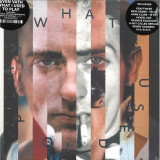
Sven Väth - What I Used To Play (12x12" boxset)
 
36

For this uniquely personal retrospective spread over twelve vinyl discs, Sven Väth takes us back to the early days of his DJ career. On What I Used To Play we meet great pioneers of electronic music, gifted percussionists, obscure wave bands, and innovative producers of a bygone 'new electronic' era. Rough beats and irresistible grooves from the identification stage of house, techno, and acid remind us not just how far electronic music has evolved over the past four decades, but how great it was to dance to EBM, techno, and house for the very first time.

If there is one protagonist of the electronic music scene who has remained curious, innovative and at the very cutting edge of music for over four decades, it's Sven Väth. His multi-layered artist albums and Sound of the Season mix compilations have been defining the genre for over two decades, and even today, he is constantly on the lookout for the next top tune to add to the highlights of his next set. At least, that's the case when he's not producing them himself as an artist or remixer. "Actually, it's always been part of my DNA to think ahead," and nothing had been further from his mind than looking back at his past, but when in spring of 2020 the international DJ circuit had to be scaled down to virtually zero, the 'restless traveler' suddenly had time. Time to stop and reflect on "how it actually was back then, at the very beginning of my career..."

"It was a great trip and with every track, beautiful memories came flooding back".
In the London apartment, he had just moved into, Sven has set up a "little music room", where he cocooned himself for several days, "to look way back for the first time and review my musical journey through the eighties, so to speak."

The interim result was six thematically oriented playlists with a grand total of 120 tracks from 'early 80s' to 'Balearic late 80s', together with excursions into afrobeat, European new wave, and EBM sounds and a few epochal techno/house tracks from the USA in between. From these 'Best of Sven Väth's favorites', the project What I Used To Play crystallized. Sven remembers how the Cocoon team reacted to his proposal: "They found the idea of making a compilation out of it MEGA from the beginning and everyone said 'Sven, go for it', but then, of course, the work really started, namely, to clear the rights and to get clean sounding masters of the up to 40-year-old tracks. There was also disappointment, of course. We couldn't clear certain titles because the rights holders in the USA had fallen out with each other or simply disappeared from the scene. In short, it wasn't easy, but now I can safely say we got the most important tracks."

Finally, after two years of research, curation, design, and administrative fine-tuning, the "little retrospective" from 1981 to 1990 is available. The exquisitely packaged, and three-kilo heavy box set is not only physically impressive, WIUTP is also the definitive record of Sven Väth's musical development. On each of the twenty-four sides of vinyl, you can trace track by track, what influenced him during which phase, and how he took off as a DJ from his parents' Queen's Pub straight into the spotlight at Dorian Gray. There and at Vogue (later OMEN), Sven became the style-defining player in the DJ booth that he still is today.


1981 - 1990: Future Sounds of Now

In the early eighties, the crowd in clubs like Vogue and Dorian Gray danced to what nowadays we call 'dance classics' - mainly disco, funk, soul, and chart pop. It was up to a new generation of DJs, including Sven Väth, the youngest protagonist in the Rhine-Main area at the time, to create their own club-ready music mix. Good new tracks and potential floor-fillers were rarities that had to be sought out and found, in order to prove oneself worthy.
Without MP3s, internet streaming, or other digital download possibilities, music didn't just gravitate to the DJ, instead, it had to be tracked down. In well-stocked record stores in Frankfurt and Wiesbaden or even in Amsterdam, London, or New York, Sven and friends sourced the material for countless magical nights. On WIUTP we can follow Sven's very personal journey through this wild, innovative era in which synth-pop, funk, hip-hop, and disco were successively replaced as 'club music' by house, techno, acid, and breakbeat. By the end of the decade, it was clear to see that these once exotic 'fringe' phenomena would soon become 'mass' phenomena.


Early 80s

Dirty Talk by the Italian-American duo Klein & M.B.O. represents the most innovative phase of the Italo-disco genre in the early eighties like no other track. Mario Boncaldo (I) and Tony Carrasco relied entirely on the original synthetic drum and percussion sounds of the Roland TR-808, coupled with the raunchy vocals of Rossana Casale and guitar accents of Davide Piatto. Of course, other tracks from this period were also influential in style, most notably Unit by Logic System, which worked as the perfect soundtrack to the laser lighting system at the legendary Dorian Gray club. With stomping beats and robotic rap interludes, Bostich by Yello also belongs on Sven's eternal playlist - after all, it caught the attention of Afrikaa Bambaataa, who invited the Swiss duo to perform at the Roxy in New York in 1983.


EBM Wave - Mid 80s

From today's point of view, the almost ten-minute-long, downtempo track Giant by Matt Johnson's band project The The, would probably not be considered an obvious club classic. However, a closer (re)listen reveals the rhythmic intricacies of the percussion overdubs by JG Thirlwell (aka Foetus) on Johnson's composition, and it becomes clear why this exceptional piece of music is one of Sven's absolute favorites. Other classics from this phase include Kaw-Liga by the mysterious The Residents, the hypnotic-synthetic Our Darkness by Anne Clark (and David Harrow), and last but not least, the somber, monotonous anthem Where Are You? by 16Bit, one of Sven Väth's projects together with Michael Münzing, Luca Anzilotti from 1986.


US House - Late 80s

You certainly can't talk about Chicago house without mentioning Frankie Knuckles. The resident DJ at the Warehouse not only gave the name to an entire genre, but also produced epochal floor fillers on the Trax label like the timeless Your Love, sung (and moaned) by Jamie Principle. Acid house protagonists Phuture also hail from Chicago, and on We Are Phuture (also released on Trax) we hear the chirping acid sounds of the legendary Roland TB-303 in full effect. Another featured classic is No UFO's by Detroit's Model 500 aka Juan Atkins, who is rightly considered the 'Godfather of Techno' even if the genre-defining track from 1985 still breathes with the spirit of hip-hop and electro from the first breakdance era.


Afrobeat

Le Serpent, by Algerian-born Abdelmadjid Guemguem, is a track that sounds completely different from everything else on WIUTP. Made in 1978, it's a monumental, rousing groove created without bass or synths, just with five congas! Even though Guem sadly passed away in 2021, his immortal, acoustic beats are understood all over the world and will continue to enrich many thousands of DJ sets for years to come. Another classic that not only Sven appreciates beyond measure is Hugh Masekela's Don't Go Lose it, Baby. In addition to being one of the most important jazz pioneers, the trumpeter and freedom fighter from Johannesburg was very experimental, integrating electronic sounds into his music in later years, in a similar vein to Miles Davis and Herbie Hancock. Dutch jazz pianist Jasper van't Hof's afrobeat project Pili Pili has also aged well. The trance-like, almost sixteen-minute-long track of the same name, manages to fill a whole side on the seventh of twelve vinyl discs in the WIUTP box.


UK-US-Euro - Late 80s

Time for a change of scene, in the truest sense of the word, and from a musical perspective, this section is like landing on another planet. First up is Andrew Weatherall's classic remix of Primal Scream's Loaded, featuring the iconic Peter Fonda sample (lifted from the 1966 biker film Wild Angels) that came to personify the mood triggered by the British Second Summer of Love in the late eighties: "We wanna be free to do what we wanna do, and we wanna get loaded...". This period also saw the emergence of M/A/R/R/S whose only single, 1987's Pump Up The Volume, became a club classic with support from DJ legend CJ Mackintosh. In this most eclectic of sections, we also encounter New York house and reggae producer Bobby Konders and his seminal Nervous Acid.


Balearic - Late 80s

Those who know him, know that Sven had already lost his heart to the 'magic island' of Ibiza as a teenager, so with that in mind, the WIUTP project couldn't end without a Balearic chapter. Inspired by Manuel Göttsching's E2-E4, the immortal, eponymously titled Sueño Latino belongs in there without question. Equally popular on the island was, and still is Break 4 Love by Raze, which thinking about it, would also fit perfectly into the house chapter. Last, but not least, there's an overdue reunion with Sven Väth himself, in his role as frontman of the successful Frankfurt trio OFF. Together with Michael Münzing and Luca Anzilotti (later of Snap!) this 'Organization For Fun' created the off-the-wall club hit Electric Salsa in 1986 which incidentally turned into an international chart smash, putting Sven in the enviable position of having to decide between pop stardom and a DJ career. Well, we all know how that decision turned out and the rest, as they say, is history. A not insignificant part of his story is What I Used To Play. Enjoy!

pas en stock

Commandez maintenant et nous commanderons l'article pour vous chez notre fournisseur.


Last In: 10 months ago
Idealism x Lucid Green - Undone

Idealism X Lucid Green

Undone

12inch823R007LP
823 Records
03.02.2023

Perth-based artistic hub 823, led by producer / creator-extraordinaire Taku, joins forces with producers Idealism & Lucid Green for “Undone,” a genre-melting LP that bridges sonic comfort, textured tones and lush timbres into one serene, 10 track experience. LP arriving February 3rd, 2023 via 823 x Jakarta Records.

Finnish-born producer and pianist Idealism (1.5mil Spotify Monthly Listeners - SML) and French transplant Lucid Green (568k SML) are no strangers to each other’s subtle, yet potent productions. Having worked together on a number of past releases, their upcoming, fully collaborative LP “Undone” is a natural journey into the beautiful ambient, downtempo, lo-fi worlds they’ve each created. Through visits to Lucid’s flat in Paris and ideas being exchanged remotely, the duo experimented with different sounds, instruments and aural environments, in the process crafting a natural partnership that sits in a comfortable, melancholic pocket. With lulling guitar and poignant piano progressions that provide a pillow to rest your ears, and downtempo percussions that keeps you ebbing and flowing along on a subtle current, unsure where one wave ends and the next begins, only the albums progressions dictate the head-nod. Featuring the likes of Yutaka Hirasaka (220k SML) and Charlie Kurata (aka Charlie – 200k SML; Duumu – 109k SML), the album soars, reminiscent of life’s simple, yet wholly memorable moments that bring you a nostalgic pause.
As with all 823 releases, the project is a visual one as much as it is a musical project. The first singles visualizers are a fusion of Hopes & Dreams Club & 823’s design aesthetics with personal super8 footage captured by Idealism & Lucid Green, beautifully expressed from Hopes & Dreams Club member Mindi Ossi. Each visualizer and single art will easily stand on its own, transporting you to worlds familiar, yet undeniably groovy and sonically comfortable.
823 is a multifaceted Perth-based record label, fashion brand, and artistic community, founded by Australian producer and all-around creative, Ta-ku (852k SML). With an astute attention to detail and an ethos that appreciates the everyday things in life, 823 doesn’t stick to any particular genre. Past 823 releases include “So Far To Go” EP via Cabu (753k SML), Ta-ku and matt mcwaters’s duo project “Black and White,” featuring Masego collaboration “Flight 99” (17mil streams on Spotify), the “All Things Considered” compilations, a curated, collaborative series featuring both budding and wellestablished artists around the world and have included Idealism, Wun Two, pastels, L.Dre, Flobama, SwuM, Jinsang, Tenderlonious, among a host of others, as well as multiple sold out clothing capsules.

pas en stock

Commandez maintenant et nous commanderons l'article pour vous chez notre fournisseur.


Last In: 3 years ago
Sina XX - Body To Body II Paris-Berlin

Following up on its first edition, a sold-out record that gained more than half a million streams, Sina XX strikes back with the second chapter of Body to Body, his collaborative platform dedicated to the harder edges of club music. This new edition named "ParisBerlin" connects the two techno cities with four original productions.

In Berlin, the artist teams up with the glamorous cyberpunk Dance Divine, whose tantric voice shines through Sina XX's industrially rooted techno beats. The second collaboration involves multi-faceted artist Metaraph. > proves to be the EPS most cinematic track, taking us on an emotional and narrative journey. In Paris, the label is hosting its first ever trio. Lessss and Enham are two of the most promising producers of the new wave of hard techno. Together, the trio deliver a rough, punk-gabba banger of a track which acts as a perfect boomer antidote. To close things off, Lacchesi joins in for a trippy, futuristic club track where mutant sound designs blurs the lines between techno and psy-tech.

pas en stock

Commandez maintenant et nous commanderons l'article pour vous chez notre fournisseur.


Last In: 2 years ago
Worg - Il Piano Di Medea EP

With this release the label celebrates the return to the ranks of the founder Worg. A triumphant homecoming comparable to that of Jason, the main character of the Argonautica, who travelled in search of the Golden Fleece (Il Vello d'Oro) aboard the ship Argo. After many vicissitudes, the hero returned to Iolco, his homeland, to reclaim the throne usurped by his half-brother Pelias.

This new chapter in the Lykos saga focuses on the deeds of Jason and the Argonauts, but also on a key figure who was indispensable to the success of this quest, Medea. Thanks to her and her magical skills, the fellowship of heroes succeeded in grabbing the Golden Fleece. Through careful sound design, hinted melodic cells and complex rhythms, Il Piano di Medea by Worg, sums up details and facts related to this extraordinary legend. Starting from the prophecies of the Oracles, to the tragic and bloody ending of the epic poem, which took place with the death of King Pelias by his own daughters, hypnotized and manipulated by Medea's magic.

The narrative begins with the track Oracolo, characterized by a syncopated groove, nebulous atmospheres and the presence of a dark anthropomorphic synth, which alludes to the solemn, grave and authoritative voice of an entity. A prophetic spirit that warns the listener of the dangers that lurk for those who dare to enter this new sonic adventure. In order to foretell the future and to spread their word, the gods took possession of the bodies of priests who had fallen into ecstasy, using them as intermediaries. In his reinterpretation of Oracolo Neel, the grand Maestro of techno, in a similar way uses musical elements such as a harsh and acid bass line or a tight rhythm to lead the listener into a psychic state of suspension and mystical elevation.

In the music piece Il Vello d'Oro, Worg draws attention to the rare preciousness of this magical relic, rumored to have the power to heal all wounds and for this reason longed by Jason. To evoke the purity of the golden mantle, the artist uses shimmering percussion, radiant textures and the omnipresence of an FM synth bass, full of brilliant harmonics. All enhanced by sound details scattered throughout the arrangement.

Eryx, the record's final track, has a fluid and sinuous flow, with sound elements that recall water, a natural element, protagonist of the Argonauts' journey to the remote Colchis. A melody echoes in the distance, disappears and resurfaces to then collide, like waves on the rocks, with the complex and jagged rhythms that mark the gradual evolution of the
track.

pas en stock

Commandez maintenant et nous commanderons l'article pour vous chez notre fournisseur.


Last In: 2 years ago
Various - Artificial Intelligence

Various

Artificial Intelligence

12inchWARPLP6R
WARP
11.01.2023

+DOWNLOAD Code

Seit 30 Jahren zum ersten Mal wieder auf Vinyl erhältlich: die legendäre 'Artificial Intelligence' Compilation - die erste Veröffentlichung der Warp Artificial Intelligence Serie 1992-1994, die aus 'Artificial Intelligence', 'Surfing On Sine Waves' von Polygon Window, 'Bytes' von Black Dog Productions, 'Electro-Soma' von B12, 'Dimension Intrusion' von F.U.S.E., 'Ginger' von Speedy J, 'Incunabula' von Autechre und 'Artificial Intelligence II' bestand und das Electronic Listening-Genre definierte. Mit frühen Raritäten von Aphex Twin (als The Dice Man), Autechre, Richie Hawtin (als UP!), B12 (als Musicology) und Alex Paterson (The Orb), letzterer als Co-Produktion mit Jimmy Cauty (The KLF). Das Original-Gatefold-Sleeve wurde von The Designers Republic rekonstruiert, während die LP von Beau Thomas bei Ten Eight Seven Mastering auf klassisch-schwarzem Wachs neu geschnitten wurde.

pas en stock

Commandez maintenant et nous commanderons l'article pour vous chez notre fournisseur.


Derniere entrée: 30 jours
PUPPIES IN THE SUN - IGHT BECAME LIGHT

Light Became Light is the debut album from Puppies in the Sun, a project composed of Alberto Cendra (synthesizers) and Cristóbal Pereira (drums), both originally from Peru and currently based in Rotterdam. Friends since childhood, they crossed paths again in Barcelona by sheer coincidence. This spontaneous pulse is also what dictated the beginnings of the project's characteristic sound: lengthy improvisational and sound exploratory sessions which are summed up in the project's first two EP's (Unheard EP and The Church of Puppies in the Sun, 2018). Like other well-known duos, Puppies in the Sun maximizes their compact instrumentation to establish themselves as a (noise) rock band without the presence of guitars or bass guitars. Far from being a limitation, this has provided them with great freedom. The lower end of the album's soundscape is triggered on Cendra's synthesizer scheme by Pereira's drums. This being one of the characteristics that emerge from the organic, minimal and spontaneous style of the band. As if it was a rocket, Light Became Light takes off in search of a sound and a space that pays tribute to cosmic rock and synthesizer music without leaving the melodic rawness of noise rock or even black metal behind. Some might also perceive an atmosphere that owes its existence to techno parties and a slight wink towards folk imagery. If there is anything that makes their sound iconic is the call for constructing wild and festive ambiances, state of trance and agitation. Light Became Light was recorded and mixed by Oscar Moreno at El Purgatorio (Madrid, Spain). In the middle of an intense heat wave, Puppies in the Sun locked themselves through the course of two weeks to record and process various analog and digital synthesizers, pianos, drums and vocals, to later mix Light Became Light in a classic analog console. Light Became Light is being published by Buh Records on 12" Vinyl in a limited edition of 300 copies. The artwork was done by the band itself and designed by Fernanda Binvignat.

pré-commande23.12.2022

il devrait être publié sur 23.12.2022

Melvin Gibbs - Anamibia Sessions 1: The Wave

A potentially surprising release on Editions Mego. Another planned prior to the untimely passing of Peter Rehberg in 2021.

Melvin Gibbs is the renowned bass player and producer from Brooklyn who’s vast resume includes playing with Sonny Sharrock, John Zorn, The Rollins Band, Dead Prez, Caetano Veloso and Femi Kuti amongst others. A solid resume, no doubt, but what is Gibbs doing on Editions Mego?

Behind the scenes, those who know Gibbs knew that amongst all this he was also tinkering away at another form of music, one which skirts around the border between music and sound design. The Wave is the first release that reveals this side of Gibbs’ creative output to those outside his inner circle.

The driving force for this output is Gibbs’ multi-decade friendship with acclaimed American video artist and cinematographer Arthur Jafa. Over the course of time Gibbs and Jafa have had many conversations about music and the connection between film and music. Jafa’s desire to make film that worked the way Black (as in Black/African-American/ Afro-diasporic peoples) music worked inspired Gibbs to study the filmmakers Serge Eisenstein and Dziga Vertov and incorporate their philosophies and tactics when recording his own music. The two discussed sound design which directly informed Gibbs’ choice of music making tools and led to him acquiring Symbolic Systems Kyma software and hardware, incorporating this as a composition tool and sound design and component in his work. These conversations bore concrete fruit through Gibbs’ work for TNEG, the film studio Jafa ran with filmmakers Malik Sayeed and Elissa Blount Moorhead. Gibbs created the soundtrack for their very first project, the short film “Deshotten 1.0” (2009 - directed by Jafa and Sayeed) as well as their Martin Luther King-inspired meditation on Black life “Dreams Are Colder Than Death” (2013, directed by Jafa)

The bass-forward music, or ‘sonics’ as Gibbs calls it, emerged from an alternative mode of contemplation, a mode that he sees as closer to the mindset of a rootworker, an African-American herbal doctor who cures psychic ailments using means derived from African spiritual practice, entering a forest to find the right plants for a suffering client than a mediator attempting to invoke mindfulness. Gibbs says this practice yields results that suggest an aural form of creation akin to coagulation, a formal movement that gives the sense that a flow of sounds can emit something bearing resemblance to solidifying objects.

In 2020 Jafa asked Gibbs to work on the soundtrack for a work in progress called “The Wave''. When they got together to work on the soundtrack, Jafa played Gibbs a selection of sounds that included random moments of (probably unwanted) feedback on 70's Miles Davis records, Pop Smoke's Brooklyn drill, the music of Bernard Gunter and Darmstadt-style compositions made with test equipment. Those sounds, filtered through years of conversation with Jafa about Black creativity and the possible evolution of Black music, formed the sonic vocabulary of “The Wave”.

pas en stock

Commandez maintenant et nous commanderons l'article pour vous chez notre fournisseur.


Last In: 3 years ago
w1b0 - When Humans Ruled The Earth LP 2x12"

Debut album by Dutch producer w1b0, who passed away in August, to be released in November on U-TRAX.

Wibo Lammerts' sudden death on August 15thshocked the worldwide electro community, and also left the record label, that had been working on the debut album with the artist known as w1b0 for the past two years, dumbfounded and in grief.

Wibo had jokingly always called his upcoming debut album 'his legacy', which now sadly has become a painful truth. With the support of Wibo's family, U-TRAX is now doing the only thing that doesn't feel totally wrong: proceed as planned, and release 'When Humans Ruled The Earth' on November 11.

W1b0 made quite a name for himself with heavy electro tracks that he released on labels like Bass Agenda, Hilltown Disco and Discos Antónicos. Standing at 202 meters, and combined with a cheerful character, most people remember him as the gentle giant of electro.
For this album, Wibo wanted to steer away from the dark and heavy electro he mostly made until then. The idea of having a platform to create delicate electronic music in different styles, and make it a showcase of his versatility, was very appealing to him. And that is where he and U-TRAX found each other.

The full-length album (over 75 minutes on cd and digital) comes after 'The Pilex Program EP', released in October, that featured a remix by Detroit's Ectomorph of 'Pilex Driver' and saw 'Program Yourself To Feel' remixed by a well-known Dutch producer that recently created the new 'techno alias' Human Form.
As usual with U-TRAX, the album comes in three different editions, with the 11-track double vinyl version containing the Ectomorph and Human Form remixes. The CD and digital version boast original versions only, plus four additional tracks: 'Alternate Reality Interface', 'Mixed Matter Fluctator', 'Synthetic', and 'In There'. The cassette version more or less has the same track list as the CD/digi version, but has both aforementioned remixes and a bonus track in the incredibly hypnotizing 'I Wanted You', a track that unfortunately couldn't be on the CD and vinyl versions.

Buyers of the physical releases get treated on superior quality products, another trademark of U-TRAX. The vinyl edition boasts over one hour of music, on two 180 grams, green vinyl discs, in a black & white & neon green gatefold sleeve. The eye-catching artwork is created by Utrecht artist Leffe Goldstein, known amongst others for his psychedelic beer can designs for Utrecht brewery Maximus. Wibo, being the beer lover he was, had zero doubts about having Leffe Goldstein do the cover for his album. The CD has a total playing time of 75 minutes and comes in a beautiful 6-panel digipack, while the cassette will have full-color on-body print and comes in a plastic-free Maltese cross fold-up sleeve.

Buyers of the physical releases get treated on superior quality products, another trademark of U-TRAX. The vinyl edition boasts over one hour of music, on two 180 grams, green vinyl discs, in a black & white & neon green gatefold sleeve. The eye-catching artwork is created by Utrecht artist Leffe Goldstein, known amongst others for his psychedelic beer can designs for Utrecht brewery Maximus. Wibo, being the beer lover he was, had zero doubts about having Leffe Goldstein do the cover for his album. The CD has a total playing time of 75 minutes and comes in a beautiful 6-panel digipack, while the cassette will have full-color on-body print and comes in a plastic-free Maltese cross fold-up sleeve.

Opener 'Acid Whip' is one of the oldest compositions on this album, in which a dark 303 bassline hums over layers of spacey strings. Wibo named it after the legendary Whip It party in Amsterdam's De Melkweg. 'Alternate Reality Interface' then presents bouncy rhythms toying around with all sorts of analog (bass) synthesizers, before we go really deep with the epic ambient techno track 'Wandering Souls'.
Then things get a little lighter spirited: 'Mixed Matter Fluctator' is an electro track that builds on sounds created by Matt Buggins. It has very strong Detroit influences, the city Wibo loved so much and that he made a pilgrimage to with a group of friends that called themselves 'The Techno Tourists'. The tempo goes up a notch in 'Program Yourself To Feel', that halfway opens up in wide science fiction strings that evoke memories of Star Wars, the movie series that Wibo was a great fan of, and that was the source of many of his tracks' names. The Human Form remix opens the vinyl edition of this album and is a downright belter of a track.

Next is a somewhat experimental intermezzo named 'Synthetic'. Erratic beats and pounding bassdrums get accompanied by very subtle eerie-sounding strings, before melancholic synthesizers and piano chords take over. This is an excellent prelude to the epic 'Hologram Computing', a track that is one of our favorites. It slowly and softly builds and builds, before a pounding bassdrum breaks loose and a hypnotic arpeggio takes you to higher planes.
Not ready to letting the listener relax, w1bo then serves 'Beilstein Reference', which again presents his trademark cocktail of down-to-earth electro rhythms and catchy melodies, covered in all sort of little sounds and noises, giving the song a lot of energy. What follows is 'Hit me', a track loosely based on a song by Dutch indie rock band Mr. Joe Abe. Wibo met the band's singer on a camping site while being on holidays and the two decided Wibo should do a remix of one of their songs. Nothing was left of the original except the vocals, and the result is a remarkable cheerful, poppy electro song.

'Anticipated Input' is one of the more recent tracks Wibo made for this album, combining electro, acid and, yes: epic strings. But not all is peace and quiet on this album, as 'Pilex Driver' shows. This is w1b0 going experimental in a danceable fashion: Industrial sounds make the track sound like we're passing a construction site that is playing loud electro music. On the vinyl version of this album, Ectomorph totally decomposed the original and made it into a mysterious, almost subdued, and totally brilliant electro track that sees a main role for the retro Roland CR drum machines sounds.

TFHats, Wibo's fellow member of the Transhumanism collective, added lyrics to 'Cartesian Coordinates'. His vocals add a pleasant New Wave flavor to this song, that has breaks that remarkably reminds one of Nirvana's 'Smells Like Teen Spirit'. What follows is the most personal track on this album. 'Fornan' is a song that Wibo made for his wife Nanette, and was added as the last piece of the puzzle that creating an album is. The warm Detroit techno atmosphere in this electro song couldn't be a more beautiful tribute to his love, and mother of their two young boys.
The album then takes a surprising detour through a 1980s landscape with 'In There', that features the Joy Division-esque vocals of another one of Wibo's friends, indicated only as Vincent. The super slow and gloomy track is a treat for anyone that loved the darker side of New Wave. The album has a worthy closer in the sensitive, yet playful 'Schlegel Diagram'.


h 08: Hit Me (w1b0's Slugfest Assault Dub) feat. Mr Joe Abe

pas en stock

Commandez maintenant et nous commanderons l'article pour vous chez notre fournisseur.


Last In: 3 years ago
Various - Dust Of Life LP 2x12"

Various

Dust Of Life LP 2x12"

2x12inchHRDF019
Hard Fist
02.12.2022

Creative offspring of Tushen Rai and Cornelius Doctor’s musical fantasies, Hard Fist has been a non-profit project encompassing producers, graphic designers, djs and dreamy party worshippers since its inception in 2017.

“We would never have thought that this collective story would bring us this far, that it would take such a place in our lives and that it would bring us so many beautiful encounters. It was only possible to celebrate our 5th anniversary with the unreasonable idea of making something out of the ordinary.

So we thought big, a digger’s dream: a double vinyl in limited edition with 20 artists from 17 countries gathered around exceptional collaborations: producers who have marked the history of the label these last 5 years, friends, but also peers, people who inspired us and gave us the desire to create Hard Fist.

In this Unidentified Noisy Object (U.N.O), you can expect borderless music flirting with Nu-Rave and No Wave, Cosmic Dub and Post-Punk, a slice of Psychedelic Electronica, a lot of Acid and a bit of Slow Goa Trance. As well as some beats of Krautrock played with an Afrobeat groove and a few Darkwave’s synths. But not only that. It’s never only that. But what is it then? Just a label without label, to dance and to explore.

pas en stock

Commandez maintenant et nous commanderons l'article pour vous chez notre fournisseur.


Last In: 2 years ago
ISIK KURAL - IN FEBRUARY (LTD. ROSE RED VINYL)

On in february, Isik Kural works like a photographer of sound, documenting the passing and returning of time as if material snapshots of life's temporality. Across the album's twelve songs, each composed from chance loops and cocooned within the soft container of Isik's memorable voice and melody play, time is held on to hopefully, impossibly, eternally.
Born in Istanbul, Isik studied music engineering at the University of Miami, alighted in New York City, and eventually settled in Glasgow, immersing in a sound design masters and audiovisual practice. While these paths guided him between different projects and cities, a voice was simultaneously growing inside the artist, informed by a vision of the world in its everyday luminosity. This voice was expressed in the lyrical and instrumental waves of 2019's As Flurries, a cassette collection for Italian label Almost Halloween Records.
Isik Kural's in february will be released on October 15, 2021 on vinyl, cassette, compact disc, and digital formats. On behalf of Isik, a portion of the proceeds from this release will benefit Turkiye Egitim Gonulluleri Vakfi, an organization that creates and conducts workshops, educational training programs and after school programs for children across Turkey.

pré-commande02.12.2022

il devrait être publié sur 02.12.2022

Charbel Haber - A Common Misunderstanding of the Speed of Light

Charbel Haber is Lebanese musician, performer, visual artist and composer from Beirut. His work has seen him collaborate with artists from a wide range of disciplines - film, video art, visual art, theatre, dance - both in Lebanon and abroad.

As a solo artist and as a member of post-punk band Scrambled Eggs, he has composed music for directors Khalil Joreige and Joana Hadjithomas, Ghassan Salhab, Mohamad Malas, video artists Lamia Joreige and Akram Zaatari, Maqamat dance company and playwrights Rabih Mroueh and Lina Saneh, to name but a few. His prolific and collaborative career includes free improv group Johnny Kafta Anti-Vegetarian Orchestra, psychedelic Arabic music ensembles Malayeen and Orchestra Omar, cold wave band The Bunny Tylers and minimal ambient duo Good Luck In Death. He is the founder of Those Kids Must Choke and co-founder of Johnny Kafta's Kids Menu - two experimental record labels - and he has recorded and collaborated with notable artists from the fields of free rock and improv such as Oiseaux-Tempête, Radwan Moumneh, Tarek Atoui, Jean Francois Pauvros, The Ex, Michael Zerang, Mats Gustafson, Eddie Prevost, Xavier Charles and Tony Buck.

And once again, here I am telling you to go look for the truth and its beauty in the words of dead poets, in the little tales of ravaged cities, in aborted dreams, in the melancholy of the ruins of tomorrow, in meaningless plastic totems, in the enigmatic end of restless fools.

I'll be here long after you all disappear.

These are the first and last sentences from Charbel Haber's latest offering, A Common Misunderstanding of the Speed of Light: a multi-media musing on the chronic and the chronological, the subversive nature of time. This combination of a record and book observes the slow passing of life and the illusion of retrogradation in his every day. Simply by documenting - via image, text and tune - Haber assigns value to everything that is cast in amber by this project. There's an acceptance and appreciation of the destitution he witnesses, it is an homage given in overlapping forms.

ACMOTSOL has two parts. The book, hardcover in an embossed orange, features photographs and texts taken from Haber's personal digital diary spanning from 2020 to the start of 2022. Broken into six chapters - named for the six tracks on the record - the entries are an artist's log of sorts during a peculiar period of global hyper stagnation and navigating the aftermath of the Beirut explosions. The 96 pages highlight Haber's interest in decay, negative space and the temporality of the human condition. Instead of presenting the images and texts as they were originally paired online, they're reordered and recontextualized in the book. New connections are formed, as tenuous and fleeting as the content they surround. The images interrupt the texts in many instances, forcing pauses and inviting distraction.

At the center of the book is a sudden burst of orange pages, with stylized pluckings of the text framing a QR-code that grants access to the record. With the brilliant orange covers and matching innards, pregnant with the music at the core, it's almost as if these central pages act as a way to turn the book inside out. There, the book's purpose is altered, fixated on a mirror image of itself. It forms a self-completing arc for the project, a loop.

ACMOTSO's second half is that mirrored album. Six tracks totalling just under 52 minutes. The music could be a continuation of his solo albums Of Palm Trees and Decompositions (2016) and It Ended Up Being a Good Day Mr. Allende (2012), an exploration into the expansiveness of seemingly simple loops of a lilting guitar. Careful electronic effects add dimensions or reground the listener. There's a swelling of sound, the illusion of the push of space before it retracts back into itself or fades into the distance. Much like the images and texts the music complements, the songs challenge the purity of cycles. Endings are beginnings, beginnings are endings or is everything just the middle? Haber is quietly and elegantly grappling with the troublesome act of place-making. In music, in words and in visual storytelling.

ACMOTSOL is a work that can be calming or disorienting, depending on what is requested of it. Similar to the way loops and cycles can signify both meditation and mania. The tendrils of Haber's past - his home of Beirut, fictional and real characters encountered, authors read, films watched, composers listened, walks taken - knit themselves together for a presentation of our immediate present. An evidence of a happening. A considered project of time.

All photographs, texts and music by Charbel Haber. Album mixed by Radwan Ghazi Moumneh. Design by Maziyar Pahlevan. Printed by Albe De Coker in Belgium.

This dual-part project will be released on XX XXX 2022 on 'Other People.'

Description by Nereya Otieno.

pré-commande11.11.2022

il devrait être publié sur 11.11.2022

Eros - A Southern Code

Eros

A Southern Code

12inchDNLP100
Downwards
07.11.2022

Einstürzende Neubauten producer Boris Wilsdorf, Karl O’Connor aka Regis and MY DISCO's Liam Andrews assemble as EROS, bottling no-wave/industrial lightning with a tight set of pulverized, widescreen torched-songs that rasp, grate and throb somewhere between This Heat, The Cure, Cabaret Voltaire, Alva Noto x Pan Sonic.

An industrial fantasy of flesh and steel, ‘A Southern Code’ is the stunning continuation of the trio’s work at Wilsdorf’s pivotal Anderesbaustelle studio on Regis’ watershed album, ‘Hidden In This Is The Light That You Miss’. Rejoined by another key muse, Anni Hogan, and Einstürzende Neubauten’s Jochen Arbeit, they effectively galvanised a new band, EROS, during long days and nights in the studio across 2020 and into 2021. The sound they make is fiercely lean, shaped by Wilsdorf’s manacled mixing and anchored in the frankly sexy as f#ck swerve of Regis vocals and his snake-hipped rhythm section.

The first songs issued from those sessions form a lustrous new high point of contemporary industrial and dance music, one porous to Kurdish dabke as much as archetypal goth, pulsing with a metallic bloodlust and spatialized by Wilsdorf’s genre-forming tekkerz in a way that seriously rewards with proper amplification. Judged on its immediate merits, it’s the sort of record that could have feasibly come out at any point between the ‘80s and now, but closer inspection reveals a discreet framework of sculpted subbass and sleekly rolling traction that betrays the modernity of minimalist D&B physics and up-to-the-second sound design that places ‘A Southern Code’ in a timeless echelon.

Registering the venomous drums and over-the-shoulder whispers of its title track, plus the incendiary middle eastern horns of ‘The Crawling Man’ - a real parallel dimension take on The Cure’s ‘The Top’ - to the post-apocalyptic lounge lizard styles of ‘In This Place’, and the unheimlich creep to ‘Nature Unborn (From Sun to Sun)’, the band’s first album plants a vital stake in the ground for industrial musick at the crest of a new decade.

pas en stock

Commandez maintenant et nous commanderons l'article pour vous chez notre fournisseur.


Last In: 3 years ago
Levon Vincent - Silent Cities LP (Tape)

repress

Levon Vincent returns with his fourth full-length studio album Silent Cities a striking departure from his previous records. This, his first release experimenting with the cassette format, Silent Cities is a kind of mixtape through more private moods and personal pitches (literally given Levon’s non-standard tunings).

While Levon has always pro
duced dance floor jams with the intention of raising people’s heart rates, Silent Cities began with 72 bpm: his average resting heart rate, and the concept of tuning the music he was making to his own body rather than increasing anything. This brought the tempos down to 72 bpm or even half of that, at 36bpm. Programming the record during the empty cityscape of Berlin lockdowns, this is the first time Levon’s created an album for the home stereo or for headphone listening whilst navigating through a city. A mixtape specialist in his youth; he was always wanted to play with the cassette format. The results are sure to delight any listener, with the ever-present ambient, krautrock, shoegaze, hip-hop and electro influences coming to the foreground on this work.

“I was expanding further along the lines of a surprise favourite from my previous LP, a song called She Likes To Wave To Passing Boats which was not a 4 on-the-floor piece to play in clubs but a more impressionistic piece of music that I wrote to expound some emotions one day” says Levon. “It was a song written using just intonation. I really love how warm the pure 4ths sound, so when working on the new LP Silent Cities I decided to use my own tunings”.

Historically, the use of just intonation has meant that such instruments could sound "in tune" in one key but at the expense of more dissonance in the other keys. None of the songs on Silent Cities use standard Western equal temperament, Levon created his own scale designs coupled with the ancient ratios found in just intonation.

Born in Houston in 1975, Levon’s life changed dramatically when his parents moved their family to New York in 1981, uprooted from what he knew, the shock, the change from Houston to New York at 6 years old, is referred to constantly in Levon’s Musical output over the years. Levon's family moved houses in and around NYC from 1981 -2010, never more than a mile or two from the WTC. He lived on the Lower East Side during his teenage years and early 20s. This time period and this locale are also a big theme recurrent in his music as he tries to convey how the "downtown" lifestyle and culture-melding affected him so much at a tender age. He cut his teeth working in record shops around lower Manhattan, and while working at the Halcyon Record shop in Brooklyn he (alongside DJ Jus-Ed) was instrumental in creating the wave that came to be known as the "NYC House Renaissance" circa 2010. During the Y2K years he studied 20th C post-minimalism at Purchase college of New York under James McElwaine (who tangentially produced Man Parrish’s Self-Titled proto-hip-hop debt LP). Levon was fortunate to study theory with avant-garde composer Dary John Mizelle and orchestration under conductor Joel Thome. He undertook masterclasses with Philip Glass and also served as intern for John Kilgore, engineer for Steve Reich, where he was present for notable mix sessions such as “Violin Phase.”

Post-minimalism clearly remains an influence not to mention the early sampler stars of 80s freestyle and synth pop. Mixing such far-reaching influences is something Levon executes tremendously well. The first track Everlasting Joy moves at a head nodding 96 BPM tempo, reflecting formative influences like Paul Hardcastle’s Rainforest or Art Of Noise’s Moments in Love. “Those types of songs were a big eye opener for me as a youth, because it was where I realised songs in popular culture didn’t have to be kept to just 3 minutes, and they didn’t require vocals either. So, Everlasting Joy is a song with that intention, one that might be radio-friendly, despite the long arrangement and without vocals. You could say it was inspired by 107.5 in NY because that was a station I listened to a lot in the 1980’s.”

The majority of demos on Silent Cities were recorded before Covid-19 hit the world - when Levon had found a studio space outside of home in his adopted city of Berlin. It was a career first - working on music outside the bedroom. This riding the train or bicycling ‘going to work’ in Berlin opened up a new mood in his music, using the time back and forth to be inspired - commuting as an NYC transplant who still feels as a tourist in Berlin, with a pair of headphones, looking out the window on the train, or stopping on bridges and parking his bike to enjoy Berlin's skyline and horizon. Then, the pandemic struck and “work” came to a halt. Levon had recorded so much material during that year in the studio out of house it seemed like an inflection point for him to lighten the burden of the possessions he was carrying.

“People close to me have watched me give away synths and hardware regularly and I have given away my record collection every few years for my whole life. As a struggling artist in my 20s who had worked in record stores that whole time, I learned that moving constantly with 12k records just wasn't the way to live. So, in light of the pandemic, I set up a shop online, and sold all my music equipment. I also created a separate shop for all my sneakers and clothes. Easy come, Easy go. This provided me with a slow drip type of income that carried me quite well through the pandemic and it allowed me to focus on my own art and music. Getting rid of all my possessions felt like a weight being lifted from my shoulders and I was able to stay the course and remain committed to the music. I needed a further 2 years to mix and arrange the LP. If it weren’t for the pandemic, I would not been able to make this type of LP, so in light of everything, I was able to turn a depressing time in to something lasting and musically very positive.”

You can hear how his approach to a cassette release retains the "Medium is the Message." ethos. Silent Cities is a spooling, warm piece about life memories and embodiment.

pas en stock

Commandez maintenant et nous commanderons l'article pour vous chez notre fournisseur.


Last In: 21 months ago
Kasper Bjørke Quartet - Mother 2x12" + DL

For over two decades Bjørke has cut his own path, as a solo artist and enthusiastic collaborator. Bjørke’s Copenhagen home may be one of Europe’s great cultural hubs, and he’s certainly added a paragraph or two to that story, but his music is distinctly international. Even a cursory listen exposes an impressive, ever-evolving career. However, few expected him to initiate the collaborative ambient / neo-classical project Kasper Bjørke Quartet. In 2018 The Fifty Eleven Project was released on Kompakt Records, a deeply personal record that musically documents Bjørkes encounter with, and triumph over, cancer. The album topped many critics' lists, and was included among The Guardian’s Best Contemporary Albums of the year.

Mother, which will be released on October 28th, represents a quantum leap forward. Literally, when you consider the terrestrial shifts that informed it. Six compositions explore what the evolution of our planet sounds like. While Holst may have gotten there first, Mother singularly focuses on the orb where we reside, from its formation, to its likely conclusion. Other artists have tackled song cycles that parallel a day, a year, or even a lifetime. Mother spans a timeframe from 4.5 billion years ago up to humankind’s impending demise. It hints at how that may be sooner than we think, as well as the earth’s resilience, and the promise of another chapter.

Additional gravity comes courtesy of evocative choir arrangements - - and marimba recorded at the Copenhagen Opera House. “Formation” condenses 20 million years of runaway accretion into 20 minutes. It is sublimely padded by feature artist Sofie Birch’s gentle synths. “Abiogenesis” intimates a different type of emergence: the first life to inhabit our nascent planet. The entire cosmos is condensed into the layered vocals of Philip|Schneider. Birch returns on “Miocene,” which signals the divergence of proto-humans from primates not with foreboding, but rather cascaded notes and swells adumbrating a pure and curious being, revealing nothing of what the Catch-22 of knowledge will bring. That’s addressed in the diptych of “Anthropocene” and “Tipping Points,” respectively marking the dawn and foreshadowing the probable downfall of homosapians, through wondrous advancements and their climate damaging byproducts. It’s tempting to think the album’s finale, “Requiem,” implies only a dark conclusion, owing to its sparkling verrillon’s coronach, and the return of Philip|Schneider’s empyrean vocals, but its juxtaposition with revolving, enigmatic piano chords infers the earth will enter its next act.

Mother is a staggering achievement, encouraging contemplative thought. The album is released October 28th on Kompakt Records, both digitally and on limited edition double vinyl. The atwork is designed by multidisciplinary artist Trevor Jackson.

Seit mehr als zwei Jahrzehnten folgt Kasper Bjørke seinem ganz eigenen Weg, sowohl als Solokünstler als auch als umtriebiger Kollaborateur, während er gleichzeitig das Beste aus Techno, Pop, Elektro, New Wave, House, Ambient, Italo und klassischer Disco aufgreift und in seinen Produktionen zusammenfügt. Bjørke’s Heimat Kopenhagen gilt als eines der großen kulturellen Zentren Europas, und die Stadt hat dieser Geschichte sicherlich den einen oder anderen Absatz hinzugefügt, aber Kasper’s Musik ist eindeutig international. Schon ein flüchtiges Hineinhören gibt den Blick frei auf eine beeindruckende, sich ständig weiterentwickelnde Karriere. Nur wenige hätten jedoch erwartet, dass dieser Werdegang 2018 in der Gründung eines neoklassischen Quartetts gipfeln würde. In diesem Jahr wurde “The Fifty Eleven Project” auf KOMPAKT veröffentlicht. Ein sehr persönliches Album, das musikalisch dokumentierte, wie Bjørke seinen Kampf gegen den Krebs gewonnen hatte. Es wurde unter anderem in die Liste der besten zeitgenössischen Klassik-Alben des Jahres von The Guardian aufgenommen.

“Mother”, das am 28. Oktober erscheint, ist ein Quantensprung für das Kasper Bjørke Quartett. Im wahrsten Sinne des Wortes, wenn man die tektonischen Bewegungen bedenkt, die dem Album zugrunde liegen. Sechs Kompositionen erforschen, wie sich die Evolution unseres Planeten anhört. Gustav Holst (englischer Komponist, dessen bekanntestes Werk die Orchestersuite “Die Planeten” darstellt; Anm. des Übersetzers) war vielleicht zuerst da, aber “Mother” konzentriert sich ausschließlich auf die Erdkugel, auf der wir uns befinden, von ihrer Entstehung bis zu ihrem wahrscheinlichen Ende. Andere Künstler haben sich mit Songzyklen beschäftigt, die einen Tag, ein Jahr oder sogar ein ganzes Leben abdecken. “Mother” umfasst etwa 4,5 Milliarden Jahre, vom Anfang aller Zeit bis zum bevorstehenden Untergang der Menschheit. Das Werk deutet an, dass dies schneller geschehen könnte, als wir alle denken, aber auch die Widerstandsfähigkeit der Erde und das Versprechen auf ein neues Kapitel.

Für zusätzliche Erdanziehung sorgen stimmungsvolle Chor Arrangements und eine Marimba-Sektion, die im Kopenhagener Opernhaus aufgenommen wurde. "Formation" verdichtet 20 Millionen Jahre unkontrollierter Akkumulation in 20 Minuten, subtil untermalt von den sanften Klängen der Ambient-Künstlerin Sofie Birch. "Abiogenesis" beschreibt das erste Leben, das entsteht und unseren Planeten besiedelt. Der gesamte Kosmos verdichtet sich hier in den vielschichtigen Vocals von Philip|Schneider. Birch taucht erneut im Track "Miocene" auf, in dem das evolutionäre Streben des Proto-Menschen weg vom Primaten noch keine böse Vorahnung enthält, sondern mit kaskadenartigen Sounds und langsam anschwellenden Klängen musikalisch vom reinen und neugierigen Wesen des Menschen erzählt, in dem noch nichts von der Zwickmühle zum Vorschein kommt, in die ihn sein Wissen bringen wird.

Das wird im Diptychon "Anthropocene" und "Tipping Points" thematisiert, die den Anfang vom Ende, den Beginn des wahrscheinlichen Untergangs des Homo sapiens durch die Folgen des Fortschritts und seiner klimaschädlichen Nebenprodukte vorhersagen. Es ist naheliegend zu denken, dass das Finale des Albums, "Requiem", nur das düstere Ende von allem darstellt. Doch as funkelnde Glockenspiel und Philip|Schneiders eindringlicher Gesang in Gegenüberstellung mit sich windenden und erratischen Klavierakkorden deuten an, dass die Geschichte der Erde ein neues Kapitel aufschlagen wird.

Mother ist eine beeindruckende Performance, die zum Nachdenken anregt.

pas en stock

Commandez maintenant et nous commanderons l'article pour vous chez notre fournisseur.


Last In: 12 months ago
Skinny Puppy - Bites (150 Gram)

Skinny Puppy exploded onto the electronic industrial music scene with
1984's Remission, fusing elements of new wave, techno dance, film noir,
and innovative sampling
Lead by cEvin Key and Nivek Ogre, the band quickly garnered an international
fanbase and followed up their new success with 1985's Bites, which produced
their first underground hit, "Assimilate." Restored to their original track listing and
design, Remission and Bites are now available on vinyl for the first time in over 25
years.

pré-commande31.10.2022

il devrait être publié sur 31.10.2022

Cartridge - Banada LP

Cartridge

Banada LP

12inchKZN009
Kaizen
30.10.2022

After a 2 year hiatus, Madam X's KAIZEN imprint comes back full force, with an upgraded aesthetic and brand new wave of leftfield, off-kilter club music. KZN009 sees one of Manchester's most exciting up & coming producers, Cartridge, mark his debut with a fierce 2 tracker, loaded with soundsystem pressure and gully 130 artillery in the Banada EP. Melodic Grime, moody Dubstep, and sub-heavy textures sprinkle this wobby release, designed for dark rooms, splintered basements and heavy soundsystems. With an impressive back catalogue on Deep Dark & Dangerous, Albion Collective & one half of Regents alongside Manchester kingpin Strategy (Broke'n'£nglish), Cartridge is no stranger to the UK's burgeoning bass music scene.

On the A side, we have Banada, a melodic eastern-flavoured instrumental, with elements of Grime and Dubstep carrying the tune to its arpeggiated crescendo.

A singing voice and raspy melody build the tension before a heavily distorted switch up catches you off guard, leading you further down a Dubstep rabbit hole, and into a world of shady and sinister drops, sitting perfectly alongside the label's strictly hoods-up, heads-down tip.

Teaming up with KAIZEN heavyweight and local scene hero Biome on the B-Side, Ricky Rosé has proved a firm favourite for those peak-time, no-holds-barred, bass-in-your-face, power hour moments. Relentless in its metallic bassline and thumping 808 drums, this explosive club tool comes with a solid side-serving of gunfingers and screwfaces.

pas en stock

Commandez maintenant et nous commanderons l'article pour vous chez notre fournisseur.


Last In: 2 years ago
Articles par page:
N/ABPM
Vinyl