
4
pas en stock
Commandez maintenant et nous commanderons l'article pour vous chez notre fournisseur.
Last In: 18 months ago
Commandez maintenant et nous commanderons l'article pour vous chez notre fournisseur.

Featuring new mixes of "2 Another Planet". Delicate Instruments escapes in the spaceship and floats in outer space for the breakdown.
Introducing Memory0, a 'West Coast Electro' project launched on leap year 2024. Only problems when looking back at earth for mixes of "Solamente".
Forward and back 5seconds...
Commandez maintenant et nous commanderons l'article pour vous chez notre fournisseur.

After several releases on the Shewey Trax label, Delicate Instruments takes on a more psychedelic approach into the thoughts about escaping the fractured American world view. This is record one from the forthcoming full length LP "MEMORY-0". Memory-1 "MEM-1" available first as a single 180gram vinyl limited edition and will also be included with the album followup release towards the end of year. Part 1's theme: "Withdraw from the world around you, into your own innerworld..."
Label established 1994 - past vinyl releases include: Delicate Instruments (several 12" EP singles 2013-present), Live Better Electrically (1990s to present). Various 12” remixes on Sheweytrax label include: Bassbin Twins (aka Peter Tall), Oricom Technologies (West Coast 90's), Octo Octa remix (2017).
Commandez maintenant et nous commanderons l'article pour vous chez notre fournisseur.

„Öd“ marks the long-awaited return of Institut für Feinmotorik - the Black Forest collective known for using eight prepared turntables to investigate acoustic micro-phenomena generated by everyday objects - with a new album and their first full-length release on Faitiche. It is also the return of their almost comical understatement as personal artistic principle: „making almost nothing out of almost nothing,“ compressed into the dots on an umlaut.
The Öd-nis, the wasteland, is a field that the collective has been ploughing in sound since their first release in 1997. Eight prepared turntables, four mixers, no records, six hands (give or take) merge into what they call the „Octogrammoticum“. A rotating organism of surfaces in friction, fed with the clutter from a drawer: rubber bands or tin foil, CDs, a discarded socket board. Under IFF's scrutinizing stylus, mundane almost-nothings get scratched open to reveal the acoustic density of negative space itself.
Last year’s „Adhesive Tape“ drew IFF closer together after an almost ten-year hiatus. An eponymous event series at Berlin's silent green set in motion what would become their most twistedly funky release since „Penetrans“ on Staubgold in 2002.
The only thing öd about „Öd" (meaning „barren" or „boring“ in German) may well be its title: layers of improvised play and randomized loops convolve around porous, dubby groove locks, tugging at each other in a call-and-response with howling static that cuts through bulbous ambient techno into a scrap-metal Dixieland phantasm. Stratified yet spacious, these sonic double exposures always hover on the verge of collapsing. What you think you hear might not be what you actually hear.
The album’s track titles resemble Conceptual Poetry, extending this psycho-phenomenological gesture into the realm of spoken language. Conceived by renowned poet Dagmara Kraus, they become word molecules - „stern,” „dies,” „lose“ - tilting delicately between German and English, constantly changing depending on the ear’s perspective and pointing back to the deeply unstable fabric connecting meaning and sound. Which also makes „Öd“ an unusual cross-disciplinary collaboration - at least in the field of electronic music.
PS: Since its beginnings in Bad Säckingen, IFF has always been more than the sum of its rotating parts, moving tirelessly between multimedia art, theory, solo projects and collaborations. With IFF Expanded, the collective now opens its eight-doored apparatus, inviting artists working with CDJs or samplers to join - an ambitious live format that loosens its former purity law while carrying forward a long-standing curatorial practice. The same thread also runs into the related event series Acephalic Headspace.
Institut für Feinmotorik (*1997), artist-group originating from Black Forest working in various fields. In musical context known for transforming turntables into instruments by removing the records and instead applying rubber bands, paper scraps, household materials – resulting in a vivid laboratory for the productive misuse of everyday objects. This approach is documented in record releases and performed live.
il devrait être publié sur 09.10.2026
A quiet intensity permeates Chantal Michelle’s music, like a veiled flame. Even at its most spare and delicate, an undulating tension unsettles the ear through wavering microtonal interference and uncanny spatial juxtaposition. She takes seriously the mandate of the composer to foster new relationships between various types of sounds, bringing together disparate field recordings, instrumental stems, and the sounds of circuitry in unheard configurations. Resolution is elusive, in its place a sense of oblong cyclicality and prickly uncertainty. When the veil is pulled back, we find more depth, more complexity, and more mystery.
Unit of Heart, Michelle’s second album of 2026, presents two interrelated pieces that highlight diverging compositional modes. Here she brings in two key collaborators: Patrick Shiroishi, who contributes flutes and saxophones throughout, and poet Funto Omojola, whose words and voice bookend the title composition. Both compositions unfold gradually, but where the album’s a-side “Sudden Oceans” presents a minimal tonal palette focused entirely on the subtle grain of wind instruments, “Unit of Heart” proceeds linearly, moving through passages of synthesizer, environmental recordings, and full-cheeked wails of saxophone. Both encourage a state of focused listening as the scope of the music deepens and widens.
“Sudden Oceans” allows the listener to hover in rippling currents of air, breath overlapping breath in a shimmering patchwork. All flutes and saxophones on the piece are played by Shiroishi, which are molded by Michelle into a pattern that resembles the flow of tidal waters, surging and receding moment to moment as the tonal density increases. Expansive and recursive, it reflects both the restorative awe and eerie disquiet of encountering the sublime. The first and last sounds we hear are the gentle rush of unmediated breath as Shiroishi connects and disconnects from his flute.
Michelle’s skill at presenting the familiar as preternatural comes to the fore on “Unit of Heart, ” one of her most ambitious works. Omojola’s voice begins with a melody that could be a lullaby, but as it’s bounced around the stereo field it takes on a haunted quality. Their poem, reprinted on the LP’s inner sleeve, hints at a similar type of transformation: “I mean this is where our mouth turns saliva into spears only a throat can recognize. ” Pads of downy synthesizer billow and are subsumed by a discordant ringing. The climactic section features atonal electronics and field recordings, first of water and then the evening call of insects, processed in such a way to transform them into pulsating bursts of noise. What we think we know about the world, what is elemental, can change with even the slightest adjustment of the lens.
il devrait être publié sur 06.11.2026
FELT wade deeper into the murky waters of contemporary Scandinavian electroacoustic music following the recent reissue of Johan Wieth’s Health & Safety project on sub-label LEFT and established gems from the likes of Civilistjävel!
Gintė Preisaitė, a Lithuanian artist and graduate of Copenhagen’s Rhythmic Music Conservatory, reveals her first solo release under her own name, following a collaborative effort with Toshimaru Nakamura in 2025 and a number of cassettes as “Baraboro”. The deliberately genre-blurring sound Preisaitė deploys works with composed pop vignettes, sustained drones, FX manipulations and guttural bursts of noise. Sparse piano movements, sample-laden psychedelia and moments of big beat/trip-hop rhythms gel with crowd noise, close mic’d intimacy and experimental percussion with a focus on instrumental timbres and extended techniques.
With a background in composing for large ensembles, Preisaitė's multi-instrumental approach is evident across the eight tracks, moments of dense concrète-style sound collages anchored by the human voice never being far away. She laments on fantasy, absurdity and relationships as a cast of players contribute string, brass, accordion, and guitar parts. Passages move from delicate acoustic folk motifs through to wide-eyed, cut-and-paste glitch electronics and spectral melodic riffs, making the album an unorthodox and welcome addition to Denmark's current world-class music scene.
Disponible en stock et prêt pour l'expédition
Wind of Oirat is the full length debut by Mongolian independent musician and sound artist Ts Bayandalai. Following his acclaimed 2020 EP Kimel, he now presents a further matured, composed and refined version of his signature sound, which combines traditional Mongolian music and instruments with influences from experimental music and post-rock. Deeply rooted in the cultural traditions of his homeland, Ts Bayandalai, who grew up in a nomadic family in the Mongolian steppe, explores nature and its myths, his ancestral roots, and the relationship between humans, animals and nature.
Artist Bio:
Ts Bayandalai is a Mongolian independent musician and sound artist. His childhood on the steppes shaped a deep sensitivity to natural and ethnic sound. To create his individual, deeply rooted yet modern soundscape, he combines traditional Mongolian musical elements with post-rock, experimental and electronic music, as well as from outernational music influences.
Born into a nomadic family on the steppes, Ts Bayandalai grew up wandering the vast grasslands with shepherds, absorbing the resonances of the horse fiddle and guitar — experiences that remain a primordial source of inspiration in his work.
Founder of the avantgarde band Horse Radio (2012) and the experimental project December3AM (2015), his compositions navigate cultural memory and contemporary aesthetics, reconstructing pastoral landscapes, temporal layers, and emotional spaces through sound.
His EP Kimel, released in 2020, manifested a delicate sculpting of sound, space, and cultural motifs, presenting a listening experience that is at once primal and modern.
Ts Bayandalai’s performances span China, Mongolia, and major independent music venues and festivals across Asia. His artistic vitality and creative autonomy have earned him critical acclaim and a devoted following in the international folk music and experimental music communities.
Disponible en stock et prêt pour l'expédition

Black Truffle is pleased to present Radis, the first recording by the Oslo-based trio of Andrea Giordano (voice and organetto), Kalle Moberg (accordion) and Jo David Meyer Lysne (guitar and snare drum). Now based in Norway, Giordano is a native of Cuneo, in the Piedmont region in the north-west of Italy and her exploration of the Piedmontese language provides the starting point and conceptual anchor of the trio improvisations heard on Radis, which make use of the words of 20th century Piedmontese poets Nino Costa, Bianca Dorato and Oreste Gallina. As the musicians explain, the project is an attempt to preserve the beauty and singularity of a language at risk of extinction.
Fittingly, the first sound we hear on the opening piece ‘Fiorìa’ is Giordano’s unaccompanied voice. She sings a poem from Oreste Gallina as a kind of floating cadenza, the accompanying silence sensitizing the listener to the pellucid quality of Giordano’s voice and the unique sound of the Piedmontese language. The voice dies away and into the silence swells a single tone, sounded by Moberg’s accordion and—special guest on this opening piece—the alto saxophone of Mario Gabola. Extended techniques and preparations create unexpected timbres from the acoustic instruments: Gabola’s saxophone is augmented with tin cans and springs and Moberg’s unorthodox techniques allow the accordion to generate wheezing, buzzing textures and patterns of microtonal beating. Giordano’s voice returns, picking up the thread of the languorous opening melody, coexisting for a while with the shifting drone before the piece takes an unexpected yet organic left-turn into a delicate saxophone solo of sorts.
Recorded in several locations across Italy and Norway over the course of three years, Radis documents an ensemble who have developed both a distinctive sound-world and a remarkably sensitive group dynamic. Moving from folkish duets between accordion and Giordano’s organetto (the small accordion used in Italian folk music) to episodes of metallic guitar scraping from Meyer Lysne, the music is both quietly contemplative and gently chaotic. Ensemble roles shift with disarming ease. If on ‘Profij dëspers’ Meyer Lysne’s prepared guitar adds a haywire noise element to a lyrical episode of organetto and accordion, the next piece, ‘D’antorn a lor’, is grounded in chiming guitar chords of stunning beauty; once Giordano’s joins, the result calls up the most spacious moments of Maria Monti’s Il Bestiario. Throughout the seven pieces, the trio explore countless possibilities of group interaction and the margin between conventional euphony and pure abstraction: at times the voice floats against silence or seems almost disconnected from the gentle clatter of the instruments (sometimes reminiscent of Nikiforas Rotas’ haunting settings of Cavafy), while at other points the instruments touch on conventional harmonic accompaniment. What is perhaps most striking of all is the way that voice and instruments relate to each other, the extended technique reframing the voice as a kind of abstract sound object, while the melodic beauty of Giordano’s voice lends a contemplative, almost melancholic air to the wheezing and scraping of accordion and guitar.
Captured in gorgeously intimate recordings, Jim O’Rourke’s careful and beautifully spacious mix highlights the wealth of textural detail in each element. Accompanied by notes, session photos and the text of the Piedmontese poems, Radis is a work of stunning beauty that demonstrates the vitality of exploratory music in Norway today.
Disponible en stock et prêt pour l'expédition

'Yara Asmar’s new album presents 11 pieces recorded over the past year between the small town of Alfred in upstate New York and Beirut. These sometimes fragile and tentative sound sketches reflect the times as Yara steps out, as if onto ice, into a new life on a new continent during a time of tragedy, turmoil and upheaval. She works with unfamiliar instruments, new materials and new sounds to build on her intimate style; homemade mechanical music boxes and a personal archive of family recordings form the backbone of its delicate textures. Asmar explores the peculiar resonance of the metallophone and her collection of deconstructed toy pianos, and guides her music into ever more surreal territories. The result is a work that is dreamlike, fragmentary and strangely timeless.'
Disponible en stock et prêt pour l'expédition

Now a regular on the label, scene stalwart Chronicle continues his joyful journeythrough a landscape of dancefloor-friendly atmospherics.
A1 - Air Temple
Chronicle opens the EP with Air Temple, an immensely playful track with a superb 2-step hot pants break, programmed superbly with layers of depth generating anenergetic and immensely danceable tone, following the deliciously smooth late 90'sGLO-style intro. Lush female vocal samples perfect for the vibe are present and correctwhile micro melodies pan across the mix adding a wonderful texture.
A2 - Everblue
A delicately ominous intro with pads, whooshing samples and rustic synths precede adensely crafted slew of old-school analogue breakbeats laid in a subtle arrangement,bringing a blend of energy perfect for dancefloors and home listeners alike. Vocalsamples are programmed and twisted like instruments as Chronicle embarks on aspace odyssey with memorable melodies you'll keep discovering listen after listen.
AA1 - Encarta
Next up we have Encarta, which sets out intentions quickly in the introduction with abouncy, clean breakbeat which is quickly bolstered by a superb 2-step old school drumloop to create a pulsating energy. A myriad of samples are collected and fleckedthroughout the mix, while Chronicle's editing techniques mimic a skilled DJ cuttinganother break in and out to satisfying effect towards the back end of the main phases.
AA2 - Angular Momentum
Closing a diverse and uniquely atmospheric EP, Chronicle opens Angular Momentumwith a patchwork of synths and pads, ushering in a serene, simple high note melodyabove the driving breaks - detailed with distinctive cymbals that give the track's nameserious validity. With a slew of samples darting in both the foreground and backgroundfor the listener to enjoy, this is a piece which will live long in the memory.
Words by Chris Hayes (Spatial / Red Mist)
Disponible en stock et prêt pour l'expédition

Released in 1979, "Tutti Fluti" is undoubtedly one of Teddy Lasry’s most unique and poetic albums.
Entirely centered on flutes, of which he is an undisputed master, this record offers a dreamlike dive into
ethereal jazz, naturalistic ambient, and subtle electronic experimentation.
Teddy Lasry, an original member of Magma, is known for his distinctive approach to wind instruments
and synthesizers. As a composer, performer, and texture inventor, he builds here a delicate,
contemplative, and timeless sound world.
On Tutti Fluti, flutes become voices, breath, wind, and a call to the imagination. Accompanied by
luminous keyboards and subtle rhythms, they shape an organic, soft, and introspective music—perfect
for active meditation or immersive listening.
A rare and atypical album, Tutti Fluti now finds its place among the great classics of auteur library
music, between spiritual jazz and the imagined soundtrack of a film never made.
Limited edition – A precious reissue for collectors, dreamer flutists, and sonic explorers.
Disponible en stock et prêt pour l'expédition

Released in 1979, "Tutti Fluti" is undoubtedly one of Teddy Lasry’s most unique and poetic albums.
Entirely centered on flutes, of which he is an undisputed master, this record offers a dreamlike dive into
ethereal jazz, naturalistic ambient, and subtle electronic experimentation.
Teddy Lasry, an original member of Magma, is known for his distinctive approach to wind instruments
and synthesizers. As a composer, performer, and texture inventor, he builds here a delicate,
contemplative, and timeless sound world.
On Tutti Fluti, flutes become voices, breath, wind, and a call to the imagination. Accompanied by
luminous keyboards and subtle rhythms, they shape an organic, soft, and introspective music—perfect
for active meditation or immersive listening.
A rare and atypical album, Tutti Fluti now finds its place among the great classics of auteur library
music, between spiritual jazz and the imagined soundtrack of a film never made.
Limited edition – A precious reissue for collectors, dreamer flutists, and sonic explorers.
Disponible en stock et prêt pour l'expédition

Portland's finest practitioners of Great Black Music offering to the planet! All Is Sound could not be a more apt title for this. Through saxophone, cello, piano, and flutes The Cosmic Tones Research Trio created a truly beautiful record. All Is Sound breaks new ground. At its heart, it's healing/meditation music, but the Gospel and Blues roots are in there too...as well as hints of forward-looking Spiritual jazz.
As sincere a record as you could ever hope for. Music is indeed the healing force of the universe. Formed by alto sax player and composer Roman Norfleet, cellist and multi-instrumentalist Harlan Silverman, and pianist Kennedy Verrett—who also plays a wide variety of wind instruments—, The Cosmic Tones Research Trio focuses on healing music. In All is Sound, delicate, profound melodies create peaceful, immersive soundscapes, which the group develops through their combined background in acoustic ecology, sound meditation, mindfulness, and active community involvement.
A noteworthy follow up to Norfleet’s first length with Mississippi Records (the self-titled Roman Norfleet and Be Present Art Group, from 2023), All is Sound offers the chance to engage with songs intended for healing. Following the steps of musicians such as Sun Ra, Alice Coltrane, and Pharoah Sanders, The Cosmic Tones Research Trio delivers music that is both restorative and sonically rich—each tone falling into perfect place, as if by magic. Praise for Roman Norfleet and Be Present Art Group: “A free-flowing suite.” — The Quietus // “Life-affirming music.
Disponible en stock et prêt pour l'expédition

A sense of destiny hangs over Sentir Que No Sabes, Mabe Fratti’s fourth solo-credited album released in a five year span. Her work has always possessed a finely tuned sense of drama capable of expressing a range of emotional states, and across this new album, she conveys the struggle to process various relationships or situations–and the actions that come next. Sentir Que No Sabes is urgent and clear, poppy, generous and approachable, while showcasing a considerable emotional hinterland. It is also, as Fratti is quick to mention, “groovy.”
Written and recorded with her partner, multi-instrumentalist, and co-composer Héctor Tosta (I.La Católica, Titanic), Sentir Que No Sabes is the result of an intense, detail-oriented process. Fueled by a new confidence gained in their collaborative project, Titanic, and its critically acclaimed 2023 LP, Vidrio, the two hunkered down in the familiarity of their studio (aka Tinho Studios) to bash out the initial sonic coordinates of her new record. “We talked and talked, and discussed ways of playing and recording, until things became inevitable,” Fratti explains. “We recorded a bunch of demos at our home studio and that meant we had a lot of time to re-edit and experiment. We really dug in. We were super focused on detail.” Tosta also took up the controls as producer and arranger-in-chief for all additional instruments. The album was later completed at Willem Twee Studios in Den Bosch in the Netherlands, and Pedro y el Lobo Studios and Soy Sauce Studios, in Mexico City.
For the final studio recordings, the pair were joined by drummer Gibran Andrade and trumpetist Jacob Wick to fill out and expand on Tosta’s percussion and brass arrangements. This small group of friends were able to work quickly and openly, and without fear: a testament to the exhaustive groundwork put in at Tinho Studios. This can be heard in three short, intermediary tracks that also manage to be the most aggressive on the record: “Kitana” (a scratch-laden instrumental that acts as a strange prelude for the last track, “Angel nuevo”) and a pair of two-minute instrumental interludes, “Elastica” I and II. None are throwaway mood pieces; rather they act as emotional cue cards, and hint at the way Fratti and Tosta created the overall atmosphere of Sentir Que No Sabes.
A strong sense of rhythm irrigates the sound from the jump, as heard on the glorious opening track, “Kravitz.” Here, the brilliant plucked cello line acts as a bassline and props up the steady thump of the kick drum. The cello’s growl serves as a conduit for a set of slightly paranoid lyrics that tell us “Quizás haya oídos en el techo” (“maybe there are ears in the ceiling”), while the song also introduces another staple of the record: the clever brass stabs, whistles, parps, and other interjections that paint a canvas of traffic in a city. It’s a postmodern, widescreen sound that for some might recall The Blue Nile’s Hats.
Sentir Que No Sabes is a record full to the brim with a modern pop sensibility, invoked by the sort of magpie spirit that ensnares anything it can find, repositioning sounds for the here and now. The keys and melody on the melancholy “Pantalla azul” (“Blue screen error”) transport us back to the glossy mid-1980s. “Oídos” (“Ears”) is a beautiful slice of contemporary, hybrid pop, in which Fratti’s vocal lines delicately spin themselves around the lean structures erected by the brass and drums, and the descending “plink” of a set of piano chords. Then we have a gloriously strong ending with the swell of “Angel nuevo” (“New angel”), another cinematic track full of gentle, instrument-rich swells and eddies that manages to be almost endless in its range–and yet intensely personal, as Fratti’s voice is close, almost whispering in your ear. A much needed lullaby for our fractious times.
The lyrics, for their part, have a stop-start quality to them, and hint at the small, incremental emotional taxes we pay through just living our lives. They circle around the music like birds waiting to swoop. There is something of the spiritual in all of Fratti’s work that expresses itself in a form of yearning: she looks to new horizons while personal dramas find themselves internalized, contextualized, and then dealt with through metaphor. Here, she was keen to mention Tosta’s constant encouragement in her finding a path to best sing or phrase her words to impart their maximum effect. “Hector was super inquisitive about my lyrics and asked me questions about what I meant, which sometimes is something you don't wonder so much about in isolation,” Fratti explains. “Besides, he is a great poet, and you can see that in what he did on the Titanic record. This made me go deeper into my lyric writing and definitely transformed it into something that I feel super happy about now.”
Take “Enfrente” (“In Front”), a track that initially comes across as a languid, glossy number, with plucked cello strings standing in for a bass line and brittle synth parts. Soon we catch on to a brilliant minor chord switch, which mirrors the fear and doubt expressed in the lyrics as someone “trembles up to the podium” in a “search for meaning.” There’s also the startling introduction of a vocoder in “Quieras o no” (“Whether you want it or not”); it comes precisely at the point Fratti sings “Quieras o no es un desastre” (“Whether you want it or not, it's a disaster”). Moments like these leave room for interpretation and, over time, create a strong bond between the listener and the record.
In fact, across Sentir Que No Sabes, each phrase–whether instrumental or vocal–becomes at some level emblematic of acts and moods that impart deep emotional significance. We see this best on “Intento fallido” (“Failed attempt”), which could be the score to feeling trapped in self-doubt, only to suddenly be sprung free by the song’s gloriously upbeat ending. On “Márgen del índice” (“Index margin”), the quicksilver switch between initial disharmony and a beautiful melody is breathtaking, all augmented by evocative arrangements, textured production, and the slightly playful, gnomic lyrics. The track’s emotional ecosystem allows another brilliant ending, which uses the simple repeated phrase, “Cómo lo va a ver?” (“How are you going to see it?”).
So what to make of Sentir Que No Sabes? High gloss Pastoralism? The sound of a city-bound, post-post modern soulscape? No matter the emotions evoked, it's the work of an artist coming into their own, and creating a benchmark record.
Disponible en stock et prêt pour l'expédition
repress !
Four years after Nuova Napoli, Nu Genea are back with Bar Mediterraneo, a new album and journey, which projects the sounds of the Neapolitan duo formed by Massimo Di Lena and Lucio Aquilina even further.
Nu Genea's Bar Mediterraneo is an idea of a shared place where people meet and fuse together; a space that leaves its doors open to travellers and their lives, always exposed to the whims of fate. Some of this can be experienced through the multitude of sounds that come together in the tracks, layers of different acoustic instruments, voices and synthesizers merging in a unique musical blend.
Opening up to the voices of many different people, separated by languages but united by the sea and the music, Nu Genea's hometown, Napoli, becomes a true place of encounter.
You can hear this all along. In "Gelbi", a gorgeously deep and propulsive Ney flute plunges into murky waters of the melancholic Tunisian dialect sung by Marzouk Mejri. In "Marechia'", unbridled happiness and sun ooze from the delicate vocals of Célia Kameni and create an acrobatic bridge between French and Neapolitan language. In "Straniero", your soul is arrested from the moment the slow spell-binding mandolin ignites the hypnotic patterns recorded by the legendary Afrobeat drummer Tony Allen. In "Bar Mediterraneo", the title track, bittersweet guitar’s riffs, analog waves and choirs are overwhelming the song giving you what you would like to hear on a boat trip along the Amalfi Coast.
Nu Genea couldn't afford to overlook their firmly anchored roots into the Neapolitan culture and its dialect with "Tienaté", where the power of neapolitan language (interpreted by Fabiana Martone) supports those quarter-tone strings and the uncessant folk-disco groove that spreads to the entire song. In "Praja Magia", repetitive mandolin riffs lead the song, giving space to a choral yet tight vocal line that speaks of Varcaturo, a village close to Napoli. In "Rire", a volley of poetic, deceptively laidback, lyrical fury interpreted by Sicilian Marco Castello intimately combines with a highly musical, multi-textured instrumental backbone and the swoon of a chanson in its heart. In "La Crisi'', the lyrics of a Raffaele Viviani’s poem from 1930 have been adapted to a laidback jazz-funk groove in full NG style. In "Vesuvio", revaluing the evocative verses and powerful mantra of Vesuvio, Nu Genea re-adapted to the dancefloor a folk song by the working-class band E’ Zezi from Pomigliano D'Arco, combining the voices of a school choir with Jupiter-6 arpeggios and bold percussions.
Bar Mediterraneo is the place where people constantly return to transform curiosity into participation, tradition into sharing, unfamiliar into familiar. When travellers come through its “doors”, carrying their treasures of words and emotions, they aren’t strangers any more. They take part in a shared experience, enriching themselves and others by leading to unexpected musical journeys.
Disponible en stock et prêt pour l'expédition

Bad Info is a new label set up primarily to reissue the music of Corker Conboy released first in the early 2000's mainly on London's Vertical Form which also released music by Pub and Pan American.
"Rich with cinematic overtones. 'Light...' carries echoes of tortoise, Ennio Morricone & Talk Talk, but its hardly just another remake, Slip into a world where the screen never goes dark"-XLR8R
"I discovered this album in 2007..The instruments felt small and delicate but collectively they elicited a heavy emotional response: a seductive moodiness, a soporific joy, soundtracking both post-party mornings and late night writing. it remains a record that still inspires me to this day." Adam janota Bjowski ( Composer- Black Mirror, Saint Maud, Femme, Out of Darkness)
Post-rock.electronic duo Corker Conboy aka Adrian Corker & Paul Conboy announce a newly remastered reissue of the project's debut album 'In Light Of That Learnt Later'.
Originally released in 2003, and available for the first time digitally, featuring new artwork by graphic designer Joe Gilmore. Alongside the reissue, Corker Conboy will release a limited edition 12" /digital single featuring a track from the album, backed with a new remix, sampling multiple tracks from the album, by acclaimed New York-based ambient dub trio Purelink (The 50 Best Albums of 2023 Pitchfork,'Ambient Dub that glows from within 'Philip Sherburne).
The album is remastered by Paul Conboy, with the remix single mastered/remastered by Stephan Mathieu.
Disponible en stock et prêt pour l'expédition

"We find ourselves venturing into the depths of a rugged terrain. In our hands, we hold stones and minerals, each possessing its own distinct texture, weight, and sonic potential. It is through the artistic touch and through the musical instruments that these earthly treasures, once dormant, are awaken to life." — Sara Oswald + Feldermelder
The 3rd collaboration of prolific cellist Sara Oswald and electronic musician Feldermelder evokes captivating sensations that oscillate between impending doom and hope. The albums' sonic journey is highly immersive, transporting the listener from one cerebral landscape to another. The transformative nature of metallic elements being integrated in sustained orchestral tones weaves the sonic tapestry, resulting in a captivating experience for the listeners. The organic sounding — reminiscent of minerals' timbres — brings a touch of brightness and a distinctive edge, while the orchestral harmonic structures lend a sense of grandeur and continuity. The origins of this music remain enigmatic, while the tracks of the album gradually unveil concealed aspects and the hidden truth.
One can step into a realm where melodies are reborn, as Sara Oswald's cello spins tales and emotions burst forth. Nature's eternal splendor intertwines with the essence of music, as she infuses harmonies with the soul of mountains. Vibrant hues come alive with delicate strokes, and cascading notes resonate with a select few. Feldermelder conjures profound echoes that swirl like ancient whispers of the earth's primordial past. He sculpts textures, from fragmented glitches to expansive atmospheres, that warp the fabric of reality. The two musicians merge together harmoniously, blending the acoustic and electronic worlds into a transcendent unity. This fusion of contrasting elements adds a unique and intriguing quality to the music. The cello's warmth merges with pulsating electronic beats, creating a symphony of contrasts and sonic upheaval. Each composition is woven in intricate layers, combining electroacoustic architecture with delicate precision. A subtle balance of chaos and control permeates the music as it meanders through the labyrinth of the mind. The soundscape unfolds like a grand tapestry, distant echoes murmuring like grains of sand.
Trained in baroque cello and advocating improvised music, Sara Oswald is the perfect match for sound artist and electronic musician Feldermelder. She plays solo, composes for film and theatre and collaborates with musicians like The Young Gods, Pascal Auberson, Sophie Hunger and Julian Sartorius. Feldermelder is a polymathic creative whose artistry spans composition, sound design, installation and code. He is co-founders of -OUS and part of Encor.studio, a collective of artists who specialise in creating immersive audio-visual installations. Through his work, he explores the idea of secrecy and its impact on our lives, using music and sound to create a thought-provoking and immersive experience for his audience.
Disponible en stock et prêt pour l'expédition
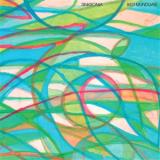
Iker is back with "Sinkronia". A gripping takes on Eastern and Western minimalist traditions influenced by the likes of Steve Reich, Suso Saiz or Midori Takada. Transcendental and esoteric rhythmic wonders that take time to unfold. A young percussionist and guitar player with electronic interests displaying a rich sonority and a great sense of structure and arrangements. This record shows the refinement of Iker's attributes, who initially worked in the noise/punk scene and now is part of the local Free Jazz/Improv landscape of San Sebastian, although he currently lives in New York where he has been playing several gigs including a rendition of Glenn Branca's Symphony No.13 at Lincoln center with 100 guitarists. For this new album he uses Xylophone, hand drums, electric guitar, synths and percussion instruments that guide us in an energetic way to territories somewhere between Italian avant-garde, Japanese New Age and American Minimalism. Iker Munduate Thusberg is a Basque multi-instrumentalist born and raised in San Sebastian and with strong ties to Mikkeli in Finland, where half of his family are from. A fine arts student at Bilbao's UPV (Basque university), his interest in sound, art and design has led him to combine all these different disciplines and convey them into his music and his work. "Iker Munduate is an artist and musician who brings a delicate sense of composition and design_ Inspired in part by new age music, Its rippling melodies and frictionless glide recall the futuristic utopias of Detroit Escalator Company and the interior reverie of Nobukazu Takemura (Derek Walmsley, The Wire Dec'24)"
il devrait être publié sur 25.09.2026

With the release of "Wildnis" in autumn 2026, Klangwart celebrate 30 years of the group"s existence. During numerous sessions in their own Inkiek studio in Unna/Germany and a residency in Montoriol/France in 2025, Klangwart have created their new work "Wildnis" ("wilderness"), inviting Sébastien Del Grande to add tenor and alto saxophone, drums, marimba and other various percussion instruments to their electronic textures. Catalan composer and performer Ivan Chin aka Ivan Telefunken also participated in the recording sessions by contributing to a Catalan version of Swiss group Grauzone"s famous new wave hit "Eisbär" under the title "Os Polar". Timo Reuber"s arrangements, production and mastering gave the album its final touch. Klangwart started their musical expedition into for them unknown territories already in 2014 when they went to Bogotá/Colombia in order to record with protagonists of the local music scene: Damián Ponce (drums), César Quevedo (bass) and Eblis Alvarez (violoncello), members of The Meridian Brothers, and singers Juanita and Valentina Añez Rothmann a.k.a. Las Añez. The result, released on Markus Detmer"s Staubgold label in 2019, was Klangwart"s trademark sound permeated by a Latin American pulse and pitch. With "Wildnis" the story continues: field recordings from Latin America are interwoven with delicate electronic structures, Del Grande"s iconoclastic approach to the saxophone meets Klangwart"s familiar organ drones, Catalan folk meets German Krautrock.
il devrait être publié sur 18.09.2026

Listen!
Klara Lewis’ distinctive talent for disfiguring sound into forms that remain recognisably song-like reaches a new peak here. Her new album Opening is a deceptive recording with veiled melodies and clandestine bangers.
Lewis, creator of worlds, treats music as a mirror that reflects a perspective misaligned with the real image. Her music moves in unusual and often startling ways. Acoustic instruments such as ukulele and piano are subjected to processes of deconstruction and reconstruction, their original forms continually reshaped.
The tracks within Opening offer an array of disorientating tactics; damaged field recordings are suddenly sliced into ominous rhythmical patterns whilst deceptively simple tactics provide foreboding dread. Often alien on entry, the progression of a piece can land in a surprising tenderness, or the other way around. The momentum grows as a physical state but also one which is questioning, desiring, encapsulating a feeling, to explore a further way of expression and ultimately connecting: A new closeness, a new perspective.
Opening is an album in which the protagonist’s manipulation of sonic matter seems to extend beyond the music itself, resulting in a corresponding manipulation of the active listener. Sounds shift, dissolve, and re-emerge in altered forms, creating an experience that feels both intimate and disorienting. Lewis maintains a delicate balance between abstraction and emotional immediacy, drawing the listener into a world where familiar musical gestures are constantly reconfigured in surprising ways.
The works on Opening are refracted through an exploratory and transformative lens, suggesting an artist continuing to redefine the possibilities of musical language as a space where the instantaneous and the eternal come together.
Music by Klara Lewis. Mastered by Stephan Mathieu. Cut by Andreas Kauffelt at Schnittstelle, Berlin. Artwork by Klara Lewis. Design by Klara Lewis & Nik Colk Void. Images from ”En Masse” by Circa, directed by Yaron Lifschitz. Dancer Holly-Rose Boyer.
Published by Mute Song. Released by Editions Mego© 2026
”Tide” commissioned for compilation album "Dissolving Strawberry" (2020), released by Irrlicht. ”Drip” and ”Feel” originally composed for the film ”Failed Emptiness” (2024) by Mika Taanila.
Partner in crime: Hampus Högberg.
il devrait être publié sur 04.09.2026

Crossing borders between traditions, sonic territories, and instruments, musicians Tomáš Niesner and Aldana Duoraan created their first collaborative album Plot. The sound of khomus meets guitar melodies simplified into pentatonic scales, intertwining in a dialogue that remains playful while moving between meditative passages and bewitching, hypnotic moments. Solid yet ever-changing, these melodies explore a delicate relationship between the present interactions, their past, and possible futures. “I feel that the essence of our collaboration is not to close the songs off, but to leave them open so that they can develop and be interpreted a little differently each time, depending on the circumstances,” Niesner explains when describing the duo’s artistic approach. The recording therefore captures only the most essential moments and ideas, which continue to unfold in new directions during live performances.
Each segment of Plot, word meaning “fence” in Czech, while also referring in English to a narrative structure or hidden plan, represents a different constellation shaped by the pairing of specific khomuses and guitar tuning. The track titles, such as The Key of Radiance or The Key of Humbling, are inspired by the ancient Chinese text I Ching (usually translated as Book of Changes). Like the classical cosmological text itself, the compositions meditate on similar fundamental principles. The ideas explored in the chapters of the I Ching are thus loosely translated into musical language. Themes of Radiance, Attending, or Nearing thus loom over the reflective realm of Aldana and Tomáš.
The two musicians first met in 2021 through a collaboration organized by Konektiv, an event series that aims to create new connections between genres and musicians with diverse backgrounds. Aldana Duoraan is a Prague-based artist born in the Sakha Republic, whose experiments with the khomus (also known as the jaw harp) draw on the traditional music of her homeland. Tomáš Niesner, a sound artist and guitarist based in Brno, navigates the realms of American primitive guitar while incorporating influences ranging from folk to drone. Because the duo rarely finds themselves in the same city, an important moment in the development of Plot was a showcase at Cafe OTO, organized by mappa. The album, capturing the fleeting energy of this encounter and several others, has now been released on the Slovak experimental label, which helped bring the collaboration to life.
il devrait être publié sur 14.08.2026

To mark its 10th Anniversary,
discover Awa Ly's Album "Five And A Feather" (Including one previously unreleased track) On Vinyl For The First Time !
One night, Awa had a dream.
The atmosphere was enchanted, almost mystical, enveloped in a setting that summoned the moon, the Earth, and the elements. An ancestral blend of Native American and African cultures, a shamanic being was there, speaking in an unknown language, narrating stories both real and imagined. She received these tales from others, made them her own, absorbed them, shared their joy, and soothed their harbored pain or sadness.
Upon waking, the shamanic narrator had vanished, but her presence was still palpable; Awa made her the storyteller of this new album: Five and a Feather.
Five, like all things counted by fives: the senses, the oceans, the lines of a musical staff, the fingers on a hand. And feather, the magical element that connects them-the very one Awa used to write and compose the ten tracks of this new album where, under the brush of SainaSix, she becomes the first Black woman immortalized in Mucha's Art Nouveau aesthetic.
Ballaké Sissoko's kora, Paco Sery's senza, Greg Cohen's double bass, Faada Freddy's vocals, the steel guitar, or the erhu (Chinese violin) are all elements that illuminate the shamanic storyteller's tales.
Produced alongside the duo Jean Lamoot and Pascal Danae (winners of the 2015 Victoires de la Musique in the World Music category with their band Rivière Noire), Five and a Feather faithfully captures the warm atmosphere of live-recorded sessions where instruments answer and interlock with one another, creating the perfect showcase for the album's principal instrument: Awa's voice.
Words that she delicately places or lets fall onto the notes like tears of joy or sadness, flowing from that source called love.
An album written, composed, and recorded like fine lace, starry with details that only reveal themselves to those who know how to seek them out.
il devrait être publié sur 31.07.2026

In 2016, with the blessing of David Lynch and Angelo Badalamenti, Xiu Xiu released and toured the surprisingly successful album and concert, Plays the Music of Twin Peaks. Out of respect and deference to the beloved series, the band decided to put the concert to rest in 2018. After the recent and untimely passing of David Lynch, Xiu Xiu began to receive several high-profile requests to revive their interpretation of this iconic music. However, in wanting to always try to follow, honor, and continue to be inspired by the incredibly high bar of artistic challenge set by Lynch, Xiu Xiu is instead going deeper. Eraserhead Xiu Xiu is a new live concert with an accompanying film and full-length album that uses field recordings, concert-specific homemade instruments, organ, modular synths, vocals, flashlights, electrical interference, and elements of musique concrète to express the bizarre emotionality, conflicted sexuality, relentless darkness, and singularly unsettled moonscape of this most incredible of midnight masterpieces. The album itself is a masterpiece in sound collage and experimentation, with tracks like “Tetra” and “Sleep Synth” shifting from minimal auditory sensations to a clobbering, grotesque cacophony. The album’s closing track, “In Heaven,” is a beautiful rendition of Peter Ivers’ original composition, with Stewart’s delicate and soft vocals showcasing the elegance and wonder found in Lynch’s directorial debut, Eraserhead. Eraserhead’s original sound design and score by Alan Splet and Lynch guide Xiu Xiu’s expanded interpretation, reflecting their influence as fans and musicians. The original film gives birth to Xiu Xiu’s visual lens, through which audiences are baffled and pummeled by the band’s imaginary unused auxiliary footage.
Is it a short-term art installation, an exploded tribute to a cinematic triumph, an epitaph to an idol via an entirely new work? Yes. Is it intense, odd, curious, and shrouded in the gloomiest of nights? Of course. After all, it is Eraserhead.
il devrait être publié sur 17.07.2026

New from Ulla’s 28912 label comes a gorgeous bouquet of lowercase wonders from Justin Cantrell aka J and the Woolen Stars, part of Picnic, and the brains behind the excellent Daisart and se Dessaisir Publishing labels.
»Puff« is a glistening pool of lush refractions and music-box lullabies, featuring an array of acoustic instruments and fragile foley sounds that are gently peeled away until all we’re left with are the faded outlines of half-remembered songs.
A sound that roots itself in the prophetic machinations of artists like Fennesz and the languid Japanese minimalism of Fourcolour or Moskitoo, »Puff« strikes a delicate balance, sounding as bewitchingly informal as a Tenniscoats set, but also consistently muddling the perception of high and low-brow sound. Cantrell’s skill lies in a sort of sonic conjuration, bamboozling the brains of those of us who grew up listening to stepped-on audio via ramshackle RealMedia streams by alchemising the content, turning found sound into gold. Just tell us you don’t get chills from hearing the bitrate-impaired acoustic guitar on »Dirty like an angel«, set against a backdrop of windy, harmonic detritus. It’s both meticulously contrived and gloriously off-the-cuff, like one of Vincent Gallo’s classic »When«-era demos reduced down to 96kbps.
Similarly, »She knows just what to say« provokes faint memories of folk music, with impromptu fiddle parts gently steamrolled to create a sound that’s nothing short of exquisite, like pressed flowers rediscovered in an old, discarded book. Even the more palpably electronic elements are hand sculpted in a way that belies the era we’re living in - it’s music for a digital age that sounds oddly unplugged, flawed and human. An unmistakably lovely antidote to the opiating nostalgia of our time.
il devrait être publié sur 12.06.2026

Solid Red Vinyl Edition - 10@ Mini album. Originally release in 2025 in a painfully limited 2x7" + Book edition.
"Dream of the Egg" is the debut solo album by Tomo Katsurada, known for his work with the Japanese psychedelic band Kikagaku Moyo. This project is a unique fusion of music and visual art, inspired by the Japanese 1920s children's book “Yume No Tamago (Dream of the Egg)”. It reveals a deeply personal journey, reflecting Tomo's dreams and the numerous rebirths experienced in 2024—a year marked by profound new beginnings in every facet of his life.
This mini album was driven by a passion for raw and immediate expression. Every song was crafted and recorded with only the materials available to him at the time, embracing an organic and handmade atmosphere. By eschewing rhythm clicks and standard instrumental tunings, a spontaneous sound emerged, capturing the essence of both uncertainty and immediacy. Adding to this distinctive sonic landscape, guest musician Jonny Nash (UK) contributed ethereal guitar sounds on the first and final tracks, enriching the record's dream-like quality.
The journey begins with the opening track, "Moshimo," which means "If..." in Japanese. Here, Jonny's guitar weaves seamlessly with the vocal melody, creating a harmonious dialogue. The first half of the album concludes with "Zen Bungalow" a cover of Gabriel Yared's “Bungalow Zen” from the soundtrack of the film “Betty Blue 37°2 Le Matin”. This particular track is his partner’s favourite song to listen to every morning and left a profound impression on him. One day, he heard a song in his dream that combined both of these tracks and loved how they blended together. This experience inspired him to create a new arrangement, "Zen Bungalow," which has become a central piece of the “Dream of the Egg” album.
The third track serves as an interlude, printed on a flexi disk attached to the middle of a picture book. This interlude transitions the listener into"Inner Garden," a bittersweet folk song that explores themes of love. The EP's narrative spans 20 minutes, culminating in the final title track “Dream of the Egg”. This piece features a delicate session between Tomo & Jonny, combining cello and guitar to create a spectrum of tones that evoke the imagery of a rainbow. The focus on smooth dynamics and meticulous play reflects an intent to convey a sense of physical trembling. This track sounds like the beginning of a new dream; as if the egg of one’s dream is about to hatch, bringing a sense of anticipation and wonder to the listener. Throughout the album, a variety of instruments come into play, drifting between notes and embracing the beauty of imperfection. By incorporating free-form sounds in a highly technological age, the record aims to reconnect listeners with the tangible, human-made quality of sound.
Special Thanks
Jonny Nash – Guitar
il devrait être publié sur 15.05.2026

''Stealth' is certainly an apt title for this disarming collection of crypto-New Age. From its opening, one might be forgiven for assuming that what follows is a tableau of digital disruption, and noise in one of its less offensive iterations.
However, Takao instead presents a rich and detailed tapestry of compositions that take New Age affectations, fashioning them into something far grander. There's a penchant for the nai¨ve, the more garish of digital instruments in the vein of James Ferraro - but importantly, Takao steers away from submitting to gestures themselves nai¨ve or garish, opting instead to focus attention to a more nuanced, delicate style.
Indeed, a more intrinsic tradition to posit 'Stealth' as an inheritor of would be the Impressionism of Debussy, or even Satie, with Takao's approach drawing light and composure from his instruments at their most bare and unadorned. Ever so pleasing and atmospheric, 'Stealth' is remarkably affecting in its subtlety.' (Nico Niquo)
Commandez maintenant et nous commanderons l'article pour vous chez notre fournisseur.
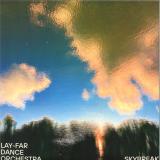
DJ Support: Garnier, Opolopo, Worldwide FM, Marcia Carr, Bill Brewster, Timeout Moscow, Craig Smith, Delfonic, Tony Nwachukwu, Marcel Dettmann, DJ Rocca, Shuya Okino, Borrowed Identity, Titonton Duvante, Alex Attias, Rainer Truby, Sol Power All-Stars, Kyri R2, Robert Luis, Severino Panzetta, Lars Behrenroth, Kassian, Alkalino, Getdown Edits, Moodymanc, Gerd, Lea Lisa, Young Pulse, Mark de Clive-Lowe, Mark Grusane, Alex Barck….
International dance music heavyweight, producer and DJ Alexander Lay-Far returns with a powerful new chapter - Lay-Far Dance Orchestra (LFDO) - a fully-fledged live band project that reconnects him with his jazz-funk and fusion DNA while pushing dance music forward with unmistakable groove, musicianship and emotional weight. Formed in early 2024, LFDO is no nostalgia exercise. With Lay-Far at the helm as bassist, bandleader, composer, arranger and sound engineer, the orchestra has already been turning heads with explosive live performances, reinventing classic Lay-Far cuts, and now unveil their first album “Skybreak” with all new and original material written and produced by Lay-Far together with his bandmates and star guests, including Lipelis, Antoha MC and Seven Davis Jr. This work shows the departure from the predominantly electronic sound of Lay-Far's previous solo albums in favour of live instrumentation recorded to analogue tape and effortlessly bridging the gap between Jazz, Library Music, Disco-Funk, House, Broken Beat and Drum’n’Bass. “Skybreak” is dynamic, passionate, spiritual, cinematic, playful, heartfelt, life-affirming, dreamy and deeply romantic. Ultimately, there’s something profoundly romantic in recording and releasing such music in this day and age!
“Take Flight (Part 1)” is opening the album with style. It takes us on a beautifully orchestrated journey, blending the sensuality of Library Music with high-octane Jazz-Funk and raw b-boy breaks, propelled by breathtaking flute and Rhodes solos of Timur Nekrasov and Maxim Glonti. This aural symbiosis of “beauty and the beats” will become more and more prominent as the album unfolds.
It’s time for “Aquarius Love” created with the inimitable artist and vocalist Seven Davis Jr. (Secret Angels, Ninja Tune). In this composition cinematic soul and heavy jazz meet the restless energy of live drum & bass with deep and heartfelt vocals - timeless sound combined with a timeless message about love and life!
Next is “Head In The Clouds” - a theme for an imaginary rom-com, an ode to all the dreamers - sweet, light, naive and heartwarming. Space-Disco-Funk at its best!
“Where You From” is a fiery Soulful House number with heavy Afro-Latin influences recorded in collaboration with Lipelis. It’s full of Sun, joy and passion. Its irresistible rhythm is emphasised by funky octave bass, wah-wah guitar, catchy piano riffs, guitar solo by Lipelis and seemingly light conscious message delivered by Lay-Far and Maryag. Summer is here!
Now the album takes an unexpected twist in the form of “The Harp of Boom” which at first glance appears to be a classic-sounding Boom-Bap banger. Yes, It’s loud, raw, and gritty, yet it gradually evolves into something delicately-touching and deeply-soulful thanks to a memorable flute melody and lush string arrangement. Definitely recorded with tongue in cheek.
Next is “Feel The Moment” a remarkable collaboration with one of the most recognisable and distinctive Russian artists, singer, trumpeter and cultural icon Antoha MC. It’s a feel-good song, hopeful, life-affirming and bittersweet. A stylish excursion into Brit-Funk and Soviet Jazz-Fusion sound, drawing inspiration from the likes of Atmosfear, Light Of The World or Soviet Jazz bands like Allegro and Arsenal, but reimagining the influences through the modern West London broken beat lens.
The spectacular music journey continuous with “Take Flight (Part 2)” - it’s all about the deep infectious jazz-funk groove, heavy beats, rolling percussion and the glory of the soloing instruments - saxophone and flute by Timur Nekrasov, demonstrating the wide range of emotions from thoughtful and lyrical to restless and borderline vicious. One for freestyle dancing!
As the album draws to an end a vibrant musical triptych “Soul Constant” awaits, mixing together the deep and sensual mood of spiritual jazz with heavy syncopated drum’n’bass rhythms by Michail Fotchenkov, lush orchestration, expressive saxophone solos and the ending which can simply be described as “aural bliss”. It’s breath-taking!
A pleasant bonus is the exclusive version of “Where You From” by Lipelis himself, who is taking it into dub territories, further enhancing the rhythm section and enriching the song with his trademark playful synth flourishes and dreamy guitar solos for maximum effect (and appeal).
The album “Skybreak” by Lay-Far Dance Orchestra is the work of real artistry and craftsmanship with timeless sound that’s not only deeply-rooted but also forward-thinking.
Commandez maintenant et nous commanderons l'article pour vous chez notre fournisseur.
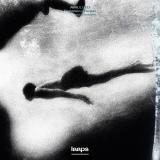
Becoming Forest is the fifth full-length record by Amuleto. It comes from an encounter between the group’s core duo, Francesco Dillon and Riccardo Wanke, and multi-instrumentalist performer and composer Stefano Pilia (Mike Watt, Rokia Traoré, 3/4HadBeenElminated, Massimo Volume, Afterhours, Zaire).
This meeting — developed from long-term parallel collaborations and converging musical paths — produced a set of tracks that combine acoustic and traditional instruments (cello, guitar, harmonium, voice) with electronics, natural sounds and unconventional sound manipulations.
Drawing on literature, travels, drawings, poetry and little-known traditions from around the world, the tracks of Becoming Forest sit in a subtle equilibrium between contemporary composition, folk themes and electronic music.
This is a journey through memories of the past and echoes of the future — intimate and aggressive; music that combines minimal textures with distorted progressions, with delicate vocal lines inhabiting post-digital, noisy environments — a reminder that individual voices form part of a larger, living forest.
il devrait être publié sur 06.03.2026

"Eau" is the lovely new album from aus, the solo project of Tokyo-born composer and producer Yasuhiko Fukuzono, who has gained attention, in Japan and overseas, for his thoughtfully paced and sensitively skillful music as well as his intriguing sound design for exhibitions and experimental cinema. Having worked primarily with keyboards and electronic sound up to this point, "Eau" is a slight yet fascinating shift for aus; the album, while still primarily an electronic work, revolves around the sonic world of a stringed acoustic sound source, the koto, that most characteristically Japanese of musical instruments. The very accomplished Eden Okuno provides the delicate-yet-rich koto sounds on offer here; Fukuzono, in the liner notes, acknowledges the importance of Okuno's artistry to the project.
The compositions on the album are designed to balance the sound of the koto, with its subtly variable attack and flickering resonance, with the timbre of other instruments. The delicate decay and metrical flexibility of the koto is enveloped by sustained synthesizer sounds and contrapuntally constructed piano melodies, creating a flowing ambience with absorbing undercurrents, a languid and liquid quality that reveals the suitability of the title.
Avid fans of contemporary Japanese music might hear the influence of pioneering works such as the the 1979 Hiroshi Yoshimura composition "Clouds for Alma", realized by koto player Tadao Sawai, and the 1993 album "Koto Vortex I: Works by Hiroshi Yoshimura" which featured performances of Yoshimura's works by the Japanese koto quartet Koto Vortex. These works attempted to remove the koto from its traditional context and place it within the context of ambient and techno. "Eau" is available on CD/LP/cassette/digital, with E/J liner notes by aus. "Eau" is the first collaborative release by EM Records and FLAU, the label run by Yasuhiko Fukuzono (aus).
Commandez maintenant et nous commanderons l'article pour vous chez notre fournisseur.

Do you believe in spring? Simon Wangen (cello) and Philipp Sutter (piano) pose this question as the title for their new project. Whereas Bill Evans made a demand in 1981, the two Cologne-based musicians believe that in times of uncertainty, crisis, and environmental destruction, it is ok to set a questin mark here. But politics and world events aside: Do you believe in spring? Of course! It's never too late to start something new, get creative, and test your own limits. Simon Wangen is a classically trained cellist, Philipp Sutter a trained jazz pianist. Their different musical roots merge on this instrumental album into a lively mix of neoclassical, new jazz, and Cinéma Nordique. Ten pieces come across as sometimes dark, sometimes wild, sometimes delicate, always focusing on the dialogue between the two instruments that harmonize so well. The subtle use of electronic effects constantly opens up new perspectives and builds a bridge to contemporary sound aesthetics. Cello and piano—this combination has been established for centuries, but can still add new facets today. Do you believe in spring? begins stormily and turbulently, oscillating between romantic, sad, and beautiful moments, and leads from a rather dark beginning to the final and eponymous piece in C major, which leaves the listener with a glimmer of hope. Do you believe in spring? From October 24, 2025!
Do you believe in spring? Simon Wangen (Cello) und Philipp Sutter (Klavier) werfen den Titel für ihr neues Projekt als Frage in den Raum. Wo Bill Evans 1981 eine Forderung formulierte, sind die beiden Kölner Musiker der Ansicht, in Zeiten der Unsicherheit, der Krisen und Umweltzerstörung durchaus ein Fragezeichen setzen zu können. Aber abgesehen von Politik und Weltgeschehen: Do you believe in spring? Natürlich! Es ist nie zu spät, etwas Neues zu beginnen, kreativ zu werden und die eigenen Grenzen zu testen. Simon Wangen ist klassisch ausgebildeter Cellist, Philipp Sutter studierter Jazzpianist. Die unterschiedlichen musikalischen Wurzeln verschmelzen auf diesem Instrumentalalbum zu einer lebendigen Mischung aus Neoklassik, New Jazz und Cinéma Nordique. Zehn Stücke kommen mal düster, mal wild, mal zart daher, stets die Zwiesprache der beiden so gut harmonierenden Instrumente im Fokus. Der dezente Einsatz elektronischer Effekte öffnet immer wieder neue Perspektiven und schlägt eine Brücke zur zeitgenössischen Klangästhetik. Cello und Klavier - diese Besetzung ist seit Jahrhunderten etabliert, aber kann auch aktuell immer wieder neue Facetten hinzubekommen. Do you believe in spring? beginnt stürmisch und aufgewühlt, changiert zwischen romantisch - traurig - schönen Momenten und führt von einem eher düsteren Beginn hin zum letzten und namensgebenden Stück in C-Dur, das die Zuhörenden mit einem Hoffnungsschimmer entlässt. Do you believe in spring? Ab 24.10.2025!
il devrait être publié sur 21.11.2025

In between the folds of ceremony and commonality lies a perennial spring of musical expression.
A statement along the time continuum, or a testament to the resilient resourcefulness embedded in that truth, forms the philosophical approach of this album – the first outing of Dídac.
Studying an extensive archive of instruments, artifacts, and field recordings at the Musée d’ethnographie de Genève—a space steeped in folkloric gesture – Dídac encountered a cosmos of liturgical music and folk song. Anchored in reverance for tradition and transformation alike, this album navigates the old-world Mediterranean lore through a post-modern ambient lens, threading drone, gentle rhythm, electroacoustic textures and the crude tactility of archival material into one woven tapestry.
Under the guidance of Dr. Madeleine Leclair, Dídac was invited to work within one of the world’s most extensive ethno- musicological archives—L’AIMP. In the saturated basements and tape-lined backrooms of the museum, he submerged himself in the sounds of ritual and rural life: wax cylinders from the Eastern Mediterranean, tapes of liturgical hymn, the worn edges of communal song.
In a makeshift studio on the fourth floor of the museum, he sifted through the hours of material he collected, gradually discovering that the archive was no static source – It did not dictate; rather, it served as a companion—offering not answers, but questions. Not a beaten track, but a cluster of sonic clues and riddles. Samples do appear occasionally, tenderly interwoven into the dialogue of the songs. In Dídac’s self-titled debut, the past is not worn as ornament or kitsch; it is listened to and responded to. The museum, its archives, and the visit to Geneva became a foundational culisse of sorts, igniting a myriad of rough cuts and improvisational outtakes.
Dídac, or Diego Ocejo Muñoz, was born in Madrid in 1994 to a family of both Catalan and Castilian origin.
Brought up in a religious household, the influence of the Catholic Church innately shaped the social fabric, schooling and daily life. This lingering dominance led the adolescent Diego into a path of rejection of everything sacramental, promptly resorting to subversion in the shape of grafitti, skateboarding and underground music. Only later in life, after a rigorous venture as an acid and electro producer, the Church re-emerged before him in new light, invoking a deep fascination for its mysticism, iconography and choral tradition.
Spain in general and Catalonia in particular, has long served as a crossroads of the eastern–western Mediterranean continuum, with many of its cultures sharing aspects of way of life and ceremony. At the MEG, Diego found himself puzzled with this realization, resulting in a sonic amalgamation that reaches farther away from the rugged mountains of Catalonia than you might perceive at first encounter.
The deeply embedded memory of rite and public ceremony, religious hymn and landscape—sieved through the undercurrent of personal re-emergence, forms the emotional topography of this album. The record does not trace this landscape; it inhabits it. Its repetitive mysticism and ambient, wide-eyed gaze could possibly evoke (perhaps redundant) comparisons to artists such as Dimitris Petsetakis, or Popol Vuh’s late 70’s cinema scores.
The delicate lines between the sacred and the secular – between memory and re-invention – serve as a cipher to understanding this album in its entirety. Titles like Malpàs Mines or Pantocrator’s Portal Outro nudge toward a folkloric and devotional bedrock—places where labor and spirituality coexist, where names preserve both dust and veneration.
Nevertheless, this is far from mere nostalgia. It is a reclamation — singing alongside the spirits of the past, nurturing what still hums beneath the soil. It is an intimate reflection on tradition, rebellion, adolescence, ceremony and fantasy – a pastoral contemplation on what once was and what is to be.
Commandez maintenant et nous commanderons l'article pour vous chez notre fournisseur.

Returning to Die Schachtel with his fourth full-length with the label, the Genoa born, Bologna based, guitarist and electroacoustic composer, Stefano Pilia, delivers “Lacinia”, a new, immersive cycle of compositions, delving deeper into the realm of metaphysical, spiritual, and divine meaning, weaving astounding arrangements of sonority from a palette of synths, strings, brass, organ, various electroacoustic instruments, and percussion. Resting at a refined intersection of the acoustic and electroacoustic, drone, and chamber music - overwhelmingly beautiful, delicate, and bold, - “Lacinia” stands as a high-water mark in Pilia’s already remarkable and forward-looking career.
Since its founding in Milan during the early years of the new millennium, Die Schachtel has occupied a singular place in the landscape of experimental music, issuing a carefully curated body of reissues and archival releases by historically significant figures and projects like Christina Kubisch, Luciano Cilio, Marino Zuccheri, Prima Materia, Claudio Rocchi, Lino Capra Vaccina, Gruppo di Improvvisazione Nuova Consonanza, Roland Kayn, and numerous others, balanced against bristling contemporary counterparts by the likes of Jim O'Rourke, Giovanni Di Domenico, Nicola Ratti, Luigi ArchettI, Valerio Tricoli, etc. Running like a spine through the label’s output is a deep dedication to the work of the Italian guitarist and electroacoustic composer Stefano Pilia. Now Die Schachtel returns with “Lacinia”, Pilia’s forth full-length with the label and their first release of 2024. Building on the ground of deeply personal engagement with metaphysical, spiritual, and divine meaning, explored within his previous LP with Die Schachtel, 2022’s “Spiralis Aurea”, “Lacinia” encounters the composer working in close calibration with various ensembles, including the Bologna based Ensemble Concordanze and Comunale di Bologna String Orchestra, weaving synths, strings, brass, organ, various electroacoustic instruments, and percussion into an astounding reconfiguration of immersive, contemporary minimalism that stands among Pilia’s most noteworthy releases to date. Issued by Die Schachtel in two special double vinyl editions and a CD edition, “Lacinia” features artwork by Bruno Stucchi/Dinamomilano, and is an absolute marvel that draws you in and doesn’t let go.
First emerging during the early 2000s, over the past two decades – via solo releases and numerous collations with artists like Oren Ambarchi, Valerio Tricoli, Alessandra Novaga, Z'EV, Andrea Belfi, David Grubbs, and numerous others - the Genoa born, Bologna based, guitarist and electroacoustic composer, Stefano Pilia has presented a singular voice within Italian experimental music, harnessing visceral energy and hands-on immediacy within delicately woven tapestries of sonority, each investigating the sculptural properties of sound and illuminating its relationship to space, memory, and the suspension of time. “Lacinia”, Pilia’s forth solo venture with Die Schachtel, encounters the composer reentering his longstanding practice of collaboration with various ensemble forms, including the Bologna based Ensemble Concordanze, for the albums central piece, “Lacinia Off Axis”, spinning stunning string confirmations by Pietro David Carami and Elena Maury on violin, Alessandro Savio on viola, and Mattia Cipolli on cello.
A new, important cycle of compositions by Pilia, “Lacinia” (meaning "lace" in Latin) builds upon the exploration of the metaphysical, spiritual, and divine dimensions through numbers, geometry, and the creation of tonal forms explored by 2022’s “Spiralis Aurea”, mirroring archetypal, immutable forms at the juncture of the abstract realm of mathematics and architectural structures in the physical world, expands the poetics and compositional ideas featured in its predecessor. Regraded by Pilia as both a series of individual compositions and a single work, “Lacinia” was conceived to “define a circular path (a sort of "rhizomatic lace") where the beginning and end touch, suggesting the concept of time not only as linear but also cyclical and ritualistic—an eternal return, a process of transformation where matter changes, its state changes, but without altering the invisible internal principle of mutation”, embarking upon a a series of “steps, degrees, and energetic quanta in a progression of archetypal whole numbers and transcendent creation.”
The resulting 16 tracks unfold as a series of complex sonic meditations. While deeply resonant with the minimalism of composers like Arvo Pärt, LaMonte Young, Pauline Oliveros, and Eliane Radigue, Pilia digs deep and moves far beyond the predictable tonal relationships and structures of that idiom, echoing the ancient liturgical and devotional music of composers like Gesualdo da Venosa, Monteverdi, and John Dowland, at a refined intersection of the acoustic and electroacoustic, drone, and chamber music.
Fascinatingly structured as a whole to include a number of motif returns, across which we encounter works like “Lacinia Off Axis” appearing in slightly different rendering, states, or evolutions three times, and compositions like “Eve” appearing twice in subtly different forms and arrangements - first for four oscillators, guitar and voice and then for string orchestra - as well “Maris Stella”, which similarly makes two appearances, first for horn trio, organ and percussion, and then for string orchestra, with “Lacinia” Pilia delves further into the world of chamber music than ever before, creating a deeply inward, mediative body of work the totality of which, guided by its rich string arrangements of arching, sorrowful tone, feels almost like a mass for some unproclaimed loss; simultaneously locked in the nuances of a moment, while managing to suspend time.
Perhaps most remarkable is Pilia's ability to create a remarkable sense of sonic cohesion while using such a varied number of ensembles and instrumentation. From the sprawling string arrangements delivered by Comunale di Bologna String Orchestra, under the direction of Paolo Mancini, and Ensemble Concordanze, and a flute trio (Cadux / Plectere) brilliantly played by Manuel Zurria, to pieces for sax, organ and percussion, violin duo and percussion, organ and percussion, Pilia manages to create a sense of singular, encompassing world that flows forward like a shifting stream.
Overwhelmingly beautiful, delicate, and bold, “Lacinia” is unquestionably a high-water mark in Stefano Pilia’s already remarkable, forward-looking career. Nothing short of a marvel of contemporary Minimalism that, through its shifting arrangements of harmonics, tonality, and texture draws flickering images of ancient forms of music into the present day, “Lacinia” is Issued by Die Schachtel in two special editions on double vinyl and a CD edition, featuring artwork by Bruno Stucchi/Dinamomilano. This is an immersive all-consuming listen that can’t be missed.
Commandez maintenant et nous commanderons l'article pour vous chez notre fournisseur.

Returning with its final instalments, Die Schachtel's Decay Music series extends its explorations of inspired contemporary experimental efforts of the ambient, ethereal, and emotively abstract with Luigi Turra and Elio Martusciello’s “Liminale” and Sergio Armaroli and David Toop’s “And I Entered Into Sleep”, two astounding electroacoustic gestures of blurred space and time, plumbing complexity of meaning bound to sonority. Creatively groundbreaking and inspired, radically rethinking the terms of what ambient music can be perceived to be, they stand among the most striking efforts to appear within the series to date.
Reconfiguring the notion of bridge building on a multitude of terms, it feels fitting that the tenth and final installment of Die Schachtel’s Decay Music series, Sergio Armaroli and David Toop’s “And I Entered Into Sleep”, was co-created by an artist whose work featured in the first suite of LPs issued by Brian Eno’s Obscure Records in 1975, the groundwork toward which Decay Music’s own efforts nod. Since that auspicious debut, “New and Rediscovered Musical Instruments” — his split with Max Eastley — David Toop has been regarded as a pioneer in British experimental and improvised music: a sonic voyager who has continuously challenged the sources and materiality of sound through rigorously thoughtful performances, a vast catalog of recordings, and a steady flow of highly influential texts. Be it as a member of Alterations, his group breaking group with Peter Cusack, Terry Day, and Steve Beresford that ran between 1977 to 1986, or through is noteworthy work with artists like Rie Nakajima, Thurston Moore, Paul Burwell, Rhodri Davies, Lee Patterson, Ryuichi Sakamoto, Akio Suzuki, Elaine Mitchener, and numerous others, collaboration has always played a central role within Toop’s singular practice, but few can claim the sprawling sense of beauty and intimacy that’s achieved by “And I Entered Into Sleep”, his first recorded outing with Sergio Armaroli.
A composer, percussionist, vibraphonist, and multidisciplinary artist, Armaroli has been issuing radical and forward-thinking musical gestures for decades, working as one of Italy’s most noteworthy interpreters of composer’s like Giacinto Scelsi, John Cage, Franco Evangelisti, Giancarlo Schiaffini, and Walter Branchi, as both a solo performer and member of the highly regarded Rib Trio, as well as forging a singular practice as a composer, intertwining his efforts as a painter, concrete percussionist, fragmentary poet and sound artist, within a total art, rooted “within the language of jazz and improvisation” as an “extension of the concept of art”. Like Toop, Armaroli’s career has been populated by many collaborators, notably with Riccardo Sinigaglia, Alvin Curran, and Walter Prati, among others, setting the stage for a remarkable meeting between the pair.
Featuring Armaroli on vibraphone and prepared vibraphone and Toop on electronics, “And I Entered Into Sleep” is “a sonic journey, a Proustian suggestion à la Recherche, into the unconscious between electronic and acoustic sounds”. Using a bell that sounds at the beginning of Proust’s “À la Recherché du Temps Perdu”, which reappears more than 3,000 pages later — signaling a transition of phases, as well an auditory trigger of memory — as a departure point, as an association to the percussive vibraphone pulses that thread the album’s two sides, the pair weave a striking interior world of immersive psychological depth. Feeling almost subaquatic at times, like captured glimpses of rumbling, shadowy ecosystems lost within murky ambiences, before washing ashore in a series of pointillistic, highly detailed alien landscapes of the mind, each artist’s markedly different sound-sources, and treatment of the subsequent material elements, dance in abstract grace, incorporating subtle nods to minimalism, free jazz, and musique concrète within its seamless total form of sparse texture and tone.
Easily one of the most striking and memorable releases by either artist to appear in recent years, Sergio Armaroli and David Toop’s “And I Entered Into Sleep” traverses uncharted realms at the borders of literary reference, sound art, ambience and abstraction through delicately musical sounds, revealing new depths at every turn. Issued as the tenth and final album in Die Schachtel’s Decay Music series, highlighting inspired contemporary experimental efforts of the ambient, ethereal, and emotively abstract.
Commandez maintenant et nous commanderons l'article pour vous chez notre fournisseur.

Italian producer, musician, DJ, and groove architect Sam Ruffillo drops his long-awaited debut album Tipo Così on Toy Tonics – a sun-drenched, genre-blurring statement that blends classic house with Mediterranean flair, romantic funk, and tongue-in-cheek Italo vibes. Over 11 expertly crafted tracks, Ruffillo delivers a dancefloor-ready, emotionally rich LP that connects deep musicality with irresistible rhythm and light-hearted elegance.
After three acclaimed EPs and collaborations with revered artists such as Barbara Boeing, Kapote, and Fimiani, Ruffillo has firmly cemented himself as a core artist on the Berlin-based label. Known for his unmistakable signature sound — a warm mix of vintage disco, 90s house, and Italian vocals — Sam’s music has garnered widespread DJ support from tastemakers like Gerd Janson, Palms Trax, Seth Troxler, and DJ Tennis, while becoming a staple on Italian airwaves. His infectious summer anthems like Danza Organica and Perfetta Così have soundtracked countless club nights and festivals, creating a loyal following that eagerly awaited this full-length debut.
Tipo Così is the natural culmination of a musical journey that’s both playful and profound — a travel diary written in grooves, synth stabs, and melodies that feel like postcards from a parallel Mediterranean universe. The album expands and deepens Ruffillo’s world into a fully immersive experience: lush emotional chords meet tight syncopated grooves, vintage synth textures collide with irresistibly catchy pop refrains, and the boundary between sincerity and playful irony is exquisitely blurred.
Entirely written, produced, and recorded in Italy, in his beloved hometown of Bologna, the album finds Ruffillo at the helm on keys, drum machines, and production, supported by a talented cast of musicians contributing live bass, guitar, and other organic elements — further enriching his trademark fusion of electronic grooves and natural instrumentation. There’s a tactile warmth in these tracks, a hands-on feel that adds soul and depth to every beat.
This album also marks Ruffillo’s heartfelt return to singing in Italian, with standout tracks like House Tipo Così, Mi Fa Volare, Ancora, and Dentro Di Me, where romantic naïveté meets pulsing club energy in a way that feels both timeless and refreshingly new. The vocal performances add an intimate, human touch to the music, reinforcing the personal stories woven into each song. There’s poetry in the casual, a bittersweet elegance in the way the lyrics float over groove-heavy production.
Having toured extensively across Europe, Australia, Indonesia, New Zealand, and Mexico — with sets at iconic venues like Panorama Bar and festivals such as Sónar Barcelona — Ruffillo has fine-tuned much of this album in front of live audiences. The real-world testing ground infused the record with a dynamic energy and immediacy that only comes from genuine crowd interaction. These songs weren’t just made in the studio — they were lived on dancefloors around the world.
Tipo Così is not just a collection of tracks. It’s a philosophy — playful, stylish and unmistakably personal. A modern club album bursting with heartfelt emotion and sophistication. Music for dancers with taste; for lovers of beauty, rhythm, and the little imperfections that make things feel real.
But what exactly is Tipo Così? More than just a phrase, it’s a way of being. It’s about embracing elegance without effort, mixing irony with sincerity, and letting nostalgia slip into the room without taking over the party. It’s Sam Ruffillo’s signature language: relaxed, confident, meticulous yet never rigid — where a chord progression can say as much as a lyric, and every beat carries intention.
The album’s visual identity complements this vision perfectly. The artwork and promotional materials lovingly reference Italian design from the ’80s and ’90s, combining bold graphic elements with playful pop culture nods. This aesthetic mirrors Ruffillo’s music — a fusion of vintage warmth and contemporary freshness, delivered with authenticity and charm.
Sam Ruffillo belongs to a new generation of European artists who are reshaping electronic music by blending past and present, analog and digital, groove and emotion — without nostalgia or pose. His artistic universe is coherent, vibrant, and alive; a rich tapestry of sound, images, and stories that coexist with lightness, precision, and a distinctive voice.
Reflecting on his artistic journey, Sam describes music as a vital, deeply human impulse — a tribal connection to rhythm and body that has driven him since he was a teenager. His creative process balances meticulous planning with room for spontaneity, usually sparked by clear melodic ideas that evolve naturally. Collaborations with close friends, especially vocalists like Ninfa, add warmth and authenticity, exemplified in tracks like “House Tipo Così.” For Sam, music is honest self-expression — crafted for listeners who crave memorable melodies and rhythms imbued with genuine feeling.
While technical perfection is tempting, Sam prioritizes emotion, knowing that what truly resonates is the soul behind the sounds. His long-standing partnership with Toy Tonics has been key in nurturing his vision, offering a blend of creative freedom and professional support. Looking ahead, Sam Ruffillo is excited to broaden his live performances, and release new projects that continue to blend electronic grooves with organic, heartfelt sounds — maintaining the delicate balance between playful irony and sincere emotion that defines Tipo Così.
Kurzversion:
Italian DJ, producer and musician Sam Ruffillo drops his debut album Tipo Così on Toy Tonics - a sunny blend of house, funk, Italo and pop, full of groove and emotion. Written and recorded in Bologna with live instruments and Italian vocals, it’s a playful, elegant journey shaped on dancefloors worldwide. A stylish, sincere club album where nostalgia, irony and rhythm meet in perfect harmony.
- Mi Fa Volare
Road-tested across continents and now finally released, “Mi Fa Volare” channels 90s uplifting euphoria with big breakbeats, lush chords, and Italian vocals built to stick. Somewhere between balearic bliss and piano house nostalgia, it’s a feel-good club weapon made for peak-time moments - already sung back by crowds after just one listen.
- Ancora
“Ancora” is a vibrant hi-NRG track inspired by 80s Italo disco, sung entirely in Italian. It blends driving rhythms with dreamy melodies, capturing the radiant spirit of the decade. This fresh yet nostalgic song delivers euphoric vibes and timeless energy, making it a perfect fit for both dancefloors and reflective listening moments worldwide.
- Dentro Di Me
“Dentro Di Me” channels ‘90s sensuality through a fast-paced, UK house-inspired lens. Entirely in Italian, it’s a bold and contemporary dance track where hypnotic vocals meet high-energy grooves. Blending nostalgic textures with forward-thinking production, the result is a seductive and euphoric trip - equal parts emotional and club-ready.
- Amigo
“Amigo” blends Latin groove, acoustic guitar-driven rhythm, and Mediterranean flair into a warm, magnetic, cross-cultural dance anthem. Sung in Spanish and Italian, it celebrates connection, inclusivity, and the joy of moving together - whether stranger or friend. With its unstoppable rhythm and vibrant energy, it’s a feel-good track with a unifying spirit.
- Ma Sei Fuori
“Ma Sei Fuori” is a tongue-in-cheek dancefloor bomb blending raw house energy with catchy vocal phrases and a nod to classic French touch. Driven by hypnotic vocal lines and a playful attitude, it doesn’t take itself too seriously - while still proving serious club impact. Built for late-night moments, it’s bold, bouncy, and impossible to ignore.
Commandez maintenant et nous commanderons l'article pour vous chez notre fournisseur.

Shhh. The command to be quiet is not just part of the title of one of the two sprawling compositions on this pioneering album. It's also an apt metaphor for the relaxed hypnotism and spaced-out atmosphere that define In a Silent Way, a record that pushes the boundaries of studio possibilities, artist-producer relationships, and rock-jazz chasms. Recognized as Miles Davis' first full-on fusion effort and part of his "electric" era, the 1969 landmark claims a Who's Who line-up that sends the music into an ethereal stratosphere.
Mastered from the original master tapes and pressed at RTI, this unsurpassed 180g LP edition lifts the veil on the cutting-edge assembly process that created the pair of lengthy suites. Helmed by three electric instruments, the bevelled compositions melt away all preconceived notions of "jazz," ˜rock," and "ambience," following a loose theory Davis dubbed "New Directions."
Few albums are so delicately textured. And on Mobile Fidelity's meticulous reissue, such sulcate elements pour over ink-black backgrounds on a canyon-wide soundstage. In particular, Tony Williams' inventive percussive touch – he causes the cymbals to shimmer as a pieces of silver tend to do when exposed to sunlight – is broadcast with lifelike three-dimensional qualities, the panoramic view extending to Davis' nocturnal trumpet, Wayne Shorter's ribbon-unfurling saxophone, Dave Holland's extrapolative bass, and the mosaic of keys.
If the record's only accomplishment is its introduction of guitarist John McLaughlin to the world, it alone would be enough. Yet In a Silent Way continues to bedazzle, puzzle, and inspire for myriad reasons – not the least of which is the seemingly telepathic communicative methods employed by the group's members. The line-up is great on paper, but, if it's even possible, the octet sounds even better in practice, with the instruments and tonalities conjoining in avant-garde communion like hyper-sensitive tentacles exploring the stippled landscapes of an undiscovered planet.
Diverting from expectation, tubular grooves twist, turn, and spin, sometimes piling atop of each other, always shying away from structure and melody. Ellipsoidal solos provide hesitant guidance, ranging from Chick Corea's Fender Rhodes phrases to Davis' decorative spirals. And as colour is the primary unit of currency on Davis' Sketches of Spain, laid-back episodes, geometric spaces, and quiet sensuality reign here, with the set's maverick reputation attained via musings on solitude rather than explosions of noise.
Controversial for the period, the heavily edited production of In a Silent Way blew open the once-locked doors on what producer's could attempt – and how artists could assist them. Knitted together as one would construct a cross-hatched quilt, songs contain grafts of repeat passages that provide unifying structure and experimental continuity. What a statement.
Commandez maintenant et nous commanderons l'article pour vous chez notre fournisseur.

Georgette Sayegh & Melhem Barakat – Belghi Kull Mawaidi & Instrumental:
Finally, hopping across from Egypt to Lebanon for this infectious number, Georgette Sayegh delivers what some consider her magnum opus in a captivating duet together with Melhem Barakat, and on the flipside a stripped-down instrumental version that’s equally catchy.
Georgette Sayegh is a legendary Lebanese singer and actress known for her tender and dulcet voice that echoed the grace and beauty of the inimitable Fairuz yet carried its own unique warmth. Her passion for collecting vinyl at an early age formed her eclectic musical palette, and she eventually caught the eyes of the Rahbani brothers and played the lead role in a monthly play written by Fairuz’s son, Ziad. Georgette’s household classic "Yay Yay Ya Nassini” shot her to stardom across the Arab world in the 1970’s, and till this day carries the exact same nostalgia of a Lebanese summertime anthem – flirtatious, jolly, and unfettered. In Belghi Kull Mawaidi (I cancel all my appointments), Sayegh’s voice entwines with compatriot and fellow household staple, Melhem Barakat in an emotional display of longing and depth - her voice delicate yet powerful, effortlessly blending with Barakat's commanding baritone.
The instrumental version on the flipside (surprisingly a stereo mix) reveals a highly catchy arrangement that is lush and emotive, driven by strings that glide smoothly through the melody, while brass instruments add a touch of drama. The rhythm section, punctuated by a steady percussion, anchors the track, allowing the interplay of instruments to build a sense of urgency and longing, accurately reflecting the struggles and emotional resilience that defined Sayegh’s own life.
This reissue, remastered with painstaking care, brings both versions of Belghi Kull Mawaidi back to life, making it an essential addition to any avid listener, DJ or collector’s shelf. It captures the timeless beauty of two of Lebanon's most cherished musical icons, their voices and instruments merging to create a track that resonates through the ages.
Muhammad Al-Najjar
London, April 2025
credits
Audio restoration and vinyl mastering: Colin Young
Lacquer cut: Timmion cutting lab
Sleeve and label artwork: Grotezk Studio
Under License of Voix de L'Orient
Commandez maintenant et nous commanderons l'article pour vous chez notre fournisseur.

Teresa Rotschopf, a musician and composer from Vienna, presents her second solo album, »Currents and Orders« – a radical, delicate, yet grandiose sonic journey between experimental pop, new music, and improvised composition. The album will be presented live on August 27 as part of the »Pop-Kultur« festival (silent green, Berlin) and at the »ORF RadioKulturhaus« (Vienna) on 12 September.
»Currents and Orders« was recorded in an unusual location: a stalactite cave in Styria, Austria. Together with a small group of musicians (Maria Gstättner: bassoon, contraforte; Alex Kranabetter: tuba, trumpet, French horn; Patrick Dunst: saxophone, duduk; Florian Klinger: marimba, vibraphone, glockenspiel, cymbals, gong, stalactite; Patrick Pulsinger: gong, stalactite; Ulrich Schleicher: gong) and in co-production with Patrick Pulsinger, Rotschopf recorded the album in June 2023 – deep underground, far from daylight, but all the closer to archaic sounds and resonances.
The cave becomes not only an acoustic stage, but also a symbolic space of memory, retreat, and transformation. The album comprises four pieces – including two large-scale tracks:
- the opening, mantra-like title track »Currents and Orders« (over 10 minutes)
- the final, free-jazz, expressive »I Open My Gates (for You)« (over 20 minutes)
With a minimalist structure, choral voices, vibraphone, percussion, and wind instruments, fragile yet powerful soundscapes emerge, whose spatial depth is also palpable through the cave reverberation.
Rotschopf first developed the desire to record in a cave in the summer of 2022. What began as a visual and sonic image became a concrete project – supported by the Austrian Cave Association. In June 2023, Rotschopf and her musicians spent three days in a cave in the Styrian forest. Almost a kilometer of cable was laid, and equipment and instruments were carried deep underground. Rotschopf describes the recording situation as a kind of return to herself: »I descended into this cave, as if I could descend into myself, into my own womb ... What we did in the cave could just as easily be called ›recording music,‹ but it could also be called ›remembering‹ – remembering the earth, the cave, and humanity.«
»Currents and Orders« is an album like a ritual: haunting, atmospheric, bold in its form, and deeply rooted in both physical and emotional space. Music that takes its time, uses space, and pushes boundaries.
The pre-release single »O Please My Soul (Rest On My Back)« (release: July 17, 2025) is accompanied by a striking music video shot by Antoinette Zwirchmayr on 16mm film: Teresa Rotschopf holds a real owl in her hand – an image that is as magical as it is enigmatic.
Label owner Martin Hossbach read a review of Rotschopf's first solo album, »Messiah,« in 2018 and contacted the artist. Joint releases followed, including a drone album on the sub-label Martin Hossbach Score and a Pet Shop Boys cover version on Martin Hossbach Cover.
Teresa Rotschopf, Musikerin und Komponistin aus Wien, präsentiert mit »Currents and Orders« ihr zweites Soloalbum – eine radikale, zarte und zugleich groß angelegte Klangreise zwischen experimentellem Pop, Neuer Musik und improvisierter Komposition. Das Album wird am 27.8. im Rahmen des Festivals »Pop-Kultur« (silent green, Berlin) und am 12.9. im »ORF RadioKulturhaus« (Wien) live vorgestellt.
»Currents and Orders« entstand an einem ungewöhnlichen Ort: in einer Tropfsteinhöhle in der Steiermark, Österreich. Gemeinsam mit einer kleinen Gruppe von Musiker:innen (Maria Gstättner: Fagott, Kontraforte; Alex Kranabetter: Tuba, Trompete, Waldhorn; Patrick Dunst: Saxophon, Duduk; Florian Klinger: Marimbaphon, Vibraphon, Glockenspiel, Becken, Gong, Stalakmit; Patrick Pulsinger: Gong, Stalakmit; Ulrich Schleicher: Gong) und in Ko-Produktion mit Patrick Pulsinger nahm Rotschopf das Album im Juni 2023 auf – tief unter der Erde, fern von Tageslicht, dafür umso näher an archaischen Klängen und Resonanzen.
Die Höhle wird nicht nur zur akustischen Bühne, sondern auch zum symbolischen Raum der Erinnerung, des Rückzugs, der Transformation. So umfasst das Album vier Stücke – darunter zwei großformatige Tracks: - das eröffnende mantraartige Titelstück »Currents and Orders« (über 10 Minuten) - das finale, free-jazzig-expressive »I Open My Gates (For You)« (über 20 Minuten)
Mit minimalistischer Struktur, Chorstimmen, Vibraphon, Schlag- und Blasinstrumenten entstehen fragile und zugleich mächtige Klangwelten, deren räumliche Tiefe auch durch den Höhlenhall spürbar wird.
Der Wunsch, in einer Höhle aufzunehmen, kam Rotschopf im Sommer 2022. Was als visuelles und klangliches Bild begann, wurde zu einem konkreten Vorhaben – unterstützt vom Österreichischen Höhlenverein. Im Juni 2023 begab sich Rotschopf mit ihren Musiker:innen drei Tage lang in eine Höhle im steirischen Wald. Fast ein Kilometer Kabel wurde verlegt, Equipment und Instrumente tief unter die Erde getragen. Rotschopf beschreibt die Aufnahmesituation als eine Art Rückkehr in sich selbst: »Ich stieg in diese Höhle hinab, so als ob ich in mich selbst hinabsteigen könnte, in meinen eigenen Schoß [...] Was wir in der Höhle taten, könnte man ›Musik aufnehmen‹ nennen, genauso gut aber auch ›Erinnern‹ – Erinnern von Erde, Höhle und Menschsein.«
Currents and Orders ist ein Album wie ein Ritual: eindringlich, atmosphärisch, mutig in der Form und tief verwurzelt im physischen wie emotionalen Raum. Musik, die sich Zeit nimmt, Raum nutzt und Grenzen sprengt.
Die Vorab-Single »O Please My Soul (Rest On My Back)« (VÖ: 17.7.205) wird begleitet von einem eindrücklichen Musikvideo, das Antoinette Zwirchmayr auf 16mm-Film drehte: Teresa Rotschopf hält darin eine echte Eule auf ihrer Hand – ein Bild, das genauso magisch wie rätselhaft wirkt.
Labelbetreiber Martin Hossbach las im Jahr 2018 eine Rezension des ersten Rotschopf-Soloalbums »Messiah« und nahm Kontakt zu der Künstlerin auf. Es folgten gemeinsame Veröffentlichungen – etwa ein Drone-Album auf dem Sub-Label Martin Hossbach Score und eine Pet-Shop-Boys-Coverversion auf Martin Hossbach Cover.
il devrait être publié sur 12.09.2025

2025 Repress
Ash Ra Tempel is the eponymous debut studio album by the Krautrock band Ash Ra Tempel. It features guitarist Manuel Göttsching with drummer Klaus Schulze and bassist Hartmut Enke.
Engineered by Conny Plank it was recorded in March 1971 and released in June 1971 on Ohr Records.
This 50Th Anniversary Album will be Released in Memoriam of all the Musical Contributors to this Release and on Manuel Göttsching´s MG.ART label. It´s the fourth and headlining edition in this series and was finalised, carefully overseen by Manuel Göttsching himself in the late Autumn of 2022.
Much has been written about the record and band.
Having finished a first musical chapter with their Steeple Chase Bluesband and still at very young age of only 17 and 18 years old Manuel Göttsching and Hartmut Enke met Klaus Schulze. Together they started to write and and compose what, to many, became one the holy grails of Psychedelic Rock and early Electronic Music -
the German variant which was later also named "Krautrock":
Ash Ra Tempel´s self-titled first album "Ash Ra Tempel".
"The trio of Klaus Schulze, Manuel Göttsching and Hartmut Enke decided to abandon conventional composition and song writing, in favour of free-form improvising and developing a new musical language. As such, they became notorious for jams that could exceed 30 minutes." Says Discogs. "Some of these recordings can be found on Manuel Göttsching´s "The Private Tapes" releases", which will be re-released on MG.ART as well, following this edition.
"Krautrocksampler" author Julian Cope mentioned it to be "… one of the greatest rock 'n' roll LPs ever made." (Julian Cope Presents Head Heritage | Unsung | Reviews | Ash Ra Tempel - Ash Ra Tempel". 15 March 2000.)
AllMusic called the album "both astonishingly prescient and just flat out good, a logical extension of the space-jam-freakout ethos into rarified realms."
Here we would like the Band to be heard, for what can easily be said as the first time in 50+ years, with the exception of some early Journalists for whom the young Manuel Göttsching wrote a statement of intent (the original text can be found inside this edition) as following:
"Our musical concept is based on a combination of blues rock and delicate collages of electronic sound. These two elements should remain inseparable. And in their complex unity, the different musical philosophies of each musician find a common sweet spot. Our music is a permanently impulsive experience left to develop as it will, starting from a common fixed point of departure. This is where the difficulty of the music begins: No standardized formulation of our music can and should be possible. Only the constant reaction within the band can determine the musical result. And this requires constant listening with full concentration on the part of the creators. The idea of a particular musician will be - if flexible enough - absorbed by the others, transposed to their own instrument, and reflected back into the music as an individual contribution. This reciprocity within the band is then transferred over to the audience. And this process means that their reaction is not only a contribution to the end result; it actually makes them jointly responsible for the creation of the final musical product.
…
On our album, the track "Amboss" represents the first layer. Conventional instruments communicate familiar music which is in part expanded through electronic means. In the second track of the album - "Traummaschine" - the actual basic sound approach is dissolved into an electronic Nirvana which no longer allows the concrete identification of actual instruments. Innocent, virgin listening, free from any and every association, can finally begin - and the music can be absorbed and processed free from the limitations of categorization. That is the purpose of our music: To convey freedom without any predetermined criteria or traditions.
Thank you for your attention."
(Taken from the original A-R-T Bio 1970)
Hartmut Enke, Manuel Göttsching and Klaus Schulze aka. Ash Ra Tempel travelled to Hamburg in March 1971 to record their debut, with assistance of another Icon, legendary engineer Conny Plank.
The rest is history.
Commandez maintenant et nous commanderons l'article pour vous chez notre fournisseur.

2025 Repress
Ash Ra Tempel is the eponymous debut studio album by the Krautrock band Ash Ra Tempel. It features guitarist Manuel Göttsching with drummer Klaus Schulze and bassist Hartmut Enke.
Engineered by Conny Plank it was recorded in March 1971 and released in June 1971 on Ohr Records.
This 50Th Anniversary Album will be Released in Memoriam of all the Musical Contributors to this Release and on Manuel Göttsching´s MG.ART label. It´s the fourth and headlining edition in this series and was finalised, carefully overseen by Manuel Göttsching himself in the late Autumn of 2022.
Much has been written about the record and band.
Having finished a first musical chapter with their Steeple Chase Bluesband and still at very young age of only 17 and 18 years old Manuel Göttsching and Hartmut Enke met Klaus Schulze. Together they started to write and and compose what, to many, became one the holy grails of Psychedelic Rock and early Electronic Music -
the German variant which was later also named "Krautrock":
Ash Ra Tempel´s self-titled first album "Ash Ra Tempel".
"The trio of Klaus Schulze, Manuel Göttsching and Hartmut Enke decided to abandon conventional composition and song writing, in favour of free-form improvising and developing a new musical language. As such, they became notorious for jams that could exceed 30 minutes." Says Discogs. "Some of these recordings can be found on Manuel Göttsching´s "The Private Tapes" releases", which will be re-released on MG.ART as well, following this edition.
"Krautrocksampler" author Julian Cope mentioned it to be "… one of the greatest rock 'n' roll LPs ever made." (Julian Cope Presents Head Heritage | Unsung | Reviews | Ash Ra Tempel - Ash Ra Tempel". 15 March 2000.)
AllMusic called the album "both astonishingly prescient and just flat out good, a logical extension of the space-jam-freakout ethos into rarified realms."
Here we would like the Band to be heard, for what can easily be said as the first time in 50+ years, with the exception of some early Journalists for whom the young Manuel Göttsching wrote a statement of intent (the original text can be found inside this edition) as following:
"Our musical concept is based on a combination of blues rock and delicate collages of electronic sound. These two elements should remain inseparable. And in their complex unity, the different musical philosophies of each musician find a common sweet spot. Our music is a permanently impulsive experience left to develop as it will, starting from a common fixed point of departure. This is where the difficulty of the music begins: No standardized formulation of our music can and should be possible. Only the constant reaction within the band can determine the musical result. And this requires constant listening with full concentration on the part of the creators. The idea of a particular musician will be - if flexible enough - absorbed by the others, transposed to their own instrument, and reflected back into the music as an individual contribution. This reciprocity within the band is then transferred over to the audience. And this process means that their reaction is not only a contribution to the end result; it actually makes them jointly responsible for the creation of the final musical product.
…
On our album, the track "Amboss" represents the first layer. Conventional instruments communicate familiar music which is in part expanded through electronic means. In the second track of the album - "Traummaschine" - the actual basic sound approach is dissolved into an electronic Nirvana which no longer allows the concrete identification of actual instruments. Innocent, virgin listening, free from any and every association, can finally begin - and the music can be absorbed and processed free from the limitations of categorization. That is the purpose of our music: To convey freedom without any predetermined criteria or traditions.
Thank you for your attention."
(Taken from the original A-R-T Bio 1970)
Hartmut Enke, Manuel Göttsching and Klaus Schulze aka. Ash Ra Tempel travelled to Hamburg in March 1971 to record their debut, with assistance of another Icon, legendary engineer Conny Plank.
The rest is history.
Commandez maintenant et nous commanderons l'article pour vous chez notre fournisseur.

Vines, the solo project of New York-based multi-instrumentalist and composer Cassie Wieland, offers a window into her inner world through expansive swaths of sound. She pieces together a celestial mix of synths, percussion, strings, and vocoded voice, making music that is at once deeply personal and cinematic in scope. This diaristic approach first took shape with her 2023 EP Birthday Party, and is crystallized on her debut LP, I’ll be here. With the sweeping and vulnerable I’ll be here, Vines arrives fully formed as an artist who crafts deeply resonant and open music–the kind that invites listeners in to listen, reflect, and share in the journey of learning through living.
“It was through making music that I was able to meet myself,” Wieland said. “Anything I’m going through or feeling is something that somebody else out there can relate to, and that’s really special to me.”
I’ll be here is both a culmination of years spent creating gossamer soundscapes and an opening to a new journey for Wieland as an artist. The album grew out of her years as a composer and songwriter, and builds on the language she developed on Birthday Party, which transformed the tumultuous feelings of the passing of time into minimalist meditations. It was just a start, though–a prologue, a development of the kind of language and ideas she wanted to express. With I’ll be here, she digs deeper and writes music that feels more sprawling, further solidifying her singular voice.
Wieland’s musical composition process is similar to journaling, lending itself to the music’s honesty. When she writes, she makes room for all the ideas she has; in these sessions, there are no wrong ideas, and she allows the music to be attuned to the experiences she’s having at the time. With I’ll be here, Wieland zeroes in on themes of anxiety, loneliness, navigating human connection, and having to grow up from a young age, ultimately coming to a place of acceptance. And though it began as a journal written in solitude, her collaborators shape the music with her.
Working with friends, in fact, was a crucial part of bringing the record to life. “Everything that was supposed to happen came together so easily because of the people involved,” Wieland said. I’ll be here was co-produced and recorded with Wieland’s longtime collaborator Mike Tierney, a four time Grammy-nominated engineer who has worked with artists across the contemporary classical and experimental scene like minimalist pioneer Steve Reich, LA’s preeminent classical ensemble Wild Up, and various bands on Bang on a Can’s Cantaloupe Music label. Percussionist and composer Adam Holmes and violinist Adrianne Munden-Dixon are two other longtime collaborators who are frequent fixtures of her live show. Holmes plays synths, drums, and banjo; in live settings, his kit is loaded with elements of the songs that are then triggered by MIDI, making the music an interactive, evolving experience. The album’s gentle, filamented edges are colored by Munden-Dixon, whose poignant string melodies elevate Wieland’s introspective compositions, as well as cellist Helen Newby, saxophonists Julian Velasco and Jordan Lulloff, and bassist Pat Swoboda.
Wieland takes an economic approach to writing music, building the swirling and immersive landscapes of Vines through short melodies, lyrics, and phrases. As each element layers and interweaves, they grow into sprawling webs of ghostly sound. Prior to Vines, Wieland composed pieces for other people to play using a minimalist’s sensibility, writing slowly unfolding melodies for instruments like violin and saxophone. In recent years, she sharpened her solo style across a variety of singles and covers which have garnered significant attention on social media for their emotional resonance (“being loved isn't the same as being understood” in particular went massively viral on TikTok in 2024). Birthday Party, her debut as Vines, brought her writing to a much more intimate space, centering on her vocoded voice cloaked in feathery reverb. A series of recent singles, meanwhile, including “I am my home,” showcase the way that Wieland’s music is born from the story of her innermost feelings, extending far beyond just the self.
Though Wieland’s music often deals with dark themes, it unfolds with tender melancholy, the kind that feels like a warm embrace. On “Evicted,” Wieland wonders if she’s getting sick or moving on, if she’s lost or found. Her vocals expand with each lyrical repetition, as the instrumentals slowly encircle and the music’s rhythm grows and bursts into a heart-wrenching, yet radiant wave reminiscent of post-rock bands like Explosions in the Sky. “Tired” follows a similar trajectory, building from a looping, melancholy rhythm and floating lyrics into a solemn resignation. Elsewhere, Wieland takes a more ruminative approach: “Omw” begins with twinkling piano and melancholy strings that gradually transform into an undulating mass. It is a song born out of the warm feeling of reminiscence, the slight return of hope that comes with nostalgia.
With any searching journey, there is also a point of understanding. The title track closes the album with the freedom of acceptance. A marching drum beats steadily beneath Wieland’s open vocals, moving forward, ever onward as it flies into the ether. In Wieland’s delicately textured music, there is room to come into yourself, and learn to love whomever that is. I’ll be here is a special space that can be all your own, one in which to feel what needs to be felt. “This is music for your story,” Wieland said. “I want you to use it how you need it.”
il devrait être publié sur 01.08.2025
