
DENA , A new release series from Denaila.
Reservar
El artículo no se ha publicado. Tú puedes reservar ahora el artículo y después de ser pagado se te será enviado.
DENA , A new release series from Denaila.
El artículo no se ha publicado. Tú puedes reservar ahora el artículo y después de ser pagado se te será enviado.

2026 Repress !
Prepare yourselves for an electrifying journey as Temudo makes his mark on Sciahri's label Sublunar, with a mesmerizing EP that encapsulates the essence of the artist's multifaceted techno mastery.
Hailing from Portugal and renowned as the co-owner of Hayes, Temudo has left an indelible mark on the techno landscape, affiliating with illustrious labels such as Klockworks and Blueprint. With a distinctive sonic signature, this EP, unveils the various dimensions of Temudo's sonic vision.
The sonic odyssey commences with 'U where my first second choice,' a pulsating blend of energy and hypnotic allure. Transitioning seamlessly into 'Asset 2,' the track resonates with an authentic, relentless stomping groove that is nothing short of captivating.
On the flip side, the EP unveils the warmer and groovier sounds of '2029' alongside the minimalistic and unforgettable tones of 'Affection.' These tracks beckon listeners to transcend to an alternate dimension, where the boundaries of techno are pushed to their limits.
El artículo no se ha publicado. Tú puedes reservar ahora el artículo y después de ser pagado se te será enviado.
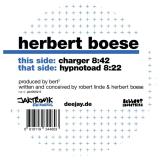
Two decades after its original release, Herbert Boese’s “Charger“ / „Hypnotoad” returns to vinyl.
Originally released as the second record on Jaktronik, the label Herbert Boese ran together with Marc Romboy, the two-tracker captures a very particular moment in German electronic music: stripped back, physical and functional, yet deeply rooted in the sound of Detroit.
At the time Boese was a resident DJ at Düsseldorf’s legendary Harpune club and one of the people shaping the city’s underground electronic music scene. His Jaktronik productions became an extension of that world, music made by a DJ, for the dancefloor.
“Charger” was an immediate standout. Marc Romboy selected the record for his chart at the time, describing its combination of heavy bass and Detroit-influenced strings as a track that made dancefloors scream.
On the flip, “Hypnotoad” goes deeper and more hypnotic: reduced, trippy and relentlessly effective, built around repetition, tension and groove.
Twenty years later, neither track sounds like a museum piece. Quite the opposite. In a time when a new generation is rediscovering the raw, minimal and machine-driven sound of the mid-2000s, “Charger“ / „Hypnotoad” feels remarkably current again.
The original tracks, remastered and finally back on vinyl.
El artículo no se ha publicado. Tú puedes reservar ahora el artículo y después de ser pagado se te será enviado.
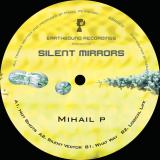
For the third release on Earthbound, Mihail P steps into a slightly different frame of mind with Silent Mirrors — an EP that pulls his atmospheric, emotive sound toward the rougher edges of 90s tech house, breakbeat and electro.
While Mihail P has become known for spacious productions, warm pads and mellow melodic detail, Silent Mirrors is about merging that side of his sound with something more direct and club-focused. There is a clear nod here to the halcyon days of UK tech house and labels and artists such as Primitive Urges and Pure Science, but filtered through Mihail P’s own sensibility rather than treated as an exercise in nostalgia.
El artículo no se ha publicado. Tú puedes reservar ahora el artículo y después de ser pagado se te será enviado.

Collecting orders for repress
If there is one thing that WAX RDM loves to do, it is split, they love splitting bills, middle splits, banana splits and most of all a good old split EP, and they made sure to deliver on their first one. Not only is he responsible for saving the Netherlands from becoming an aquatic civilisation, the land creature known as Deltaplan also claimed the whole A side for his boombastic electrofied vinyl only rendition of Sexual Seduction, which could get any dance floor drenched in dripping sweat. The Hague city's APK Boys have split the split in 2 on side B. If Flipper was a fun loving dolphin who always dreamt of moving to The Hague City, this is what he would sound like, hard hitting, just a tad frustrated and ready to snap at any moment. Yes Yes finishes of the split with a sure-shot Electro heater which will take your mind into a dreamlike state, thinking of ways to make Flippers dreams come true. And if you think things couldn't get any better, APK provided us with a 3rd digital only track for good measure. Stay dry and keep swimming.
El artículo no se ha publicado. Tú puedes reservar ahora el artículo y después de ser pagado se te será enviado.

Gorizont Sobytiy (Event Horizon), the duo of veteran electronic musician Nocow and his wife, DJ Designer, mark the project's debut with an album worth of material of 'frogg-step' / Pankratov Step. It's safe to say this is an intriguing proposition for even those well-initiated into the world of the contemporary Russian underground. What is perhaps most immediately obvious across the 11 tracks is a clear appreciation for golden-era Rephlex records, as if the duo are reflecting on how the iconic label was perceived in the Eastern bloc at the time. There's a nostalgic touch tugging at the heart strings with the warm ambient tones of 'Bananoivy Twist' or even the ballroom-esque organ melodies of follow up 'Chacha', both swiftly followed by a switch back into frantic gabber style kicks that recur across the album.
To give a little more away in terms of a background story, Nocow and DJ Designer draw influence from a film called Winter Evening in Gagra, a somewhat distant feeling artefact of late-Soviet cinema about a tap dancing champion's late nights spent gallivanting across the glitz of Moscow's pop music scene in the 1980s. Maximalist in its sound design, Pankratov Step draws its name from actor-protagonist Pankratov, not quite an out-of-time soundtrack as such but at the least a wry nod to the former world in which the film takes place. The cascading, brittle synthesis of 'Cemetry's Boss' forms an icy cinematic fusion again with a gabber influence at play whilst a fierce acid line works alongside myriad glitch rhythms and repeating keys on 'Octopus Werk'. Influenced by the local humour and sentimentality surrounding the film, a melodrama with themes of lost art and a kind of old-world transcendence the young circus performer yearns for, the duo use it as a vessel to describe the projects sound - a coalescing of vintage Soviet soundtracks, early IDM, Jake Slazenger and Expert Knob Twiddlers album. 'Pankratov-Step' becoming their own fictional genre. The LP marks another avant-garde chapter in Nocow's long back catalogue, as well as a fully formed collaborative debut for the currently enigmatic DJ Designer. Pankratov Step is the second release on GOST ZVUK sub-label MEMONT, curated by Kuzma Palkin.
En el almacen y preparando para el envío

The 41st release on TECHNO Records marks a defining milestone: the first full- scale solo record by the label’s founder, Nastia, in her music career. It opens up a new depth of detail within the character and identity of both the artist and the catalogue.
Rather than making a loud statement, Nastia focuses on a restrained and functional approach to techno, shaped through subtle shifts in tension, texture, and rhythm. The tracks move with intention, avoiding obvious peaks in favour of gradual development and controlled energy—a familiar methodology and a direct analogy to the evolution of the label itself. Crafted with dancefloor energy in mind but not bound by it, the release offers a fresh perspective on the author’s persona, stripping away excess and overexplanation. It leaves ample room for the listener’s imagination and a versatile, expert application within a DJ set.
The trajectory of ascents and shifting attention in an artist’s career is the only honest path, providing material for reflection and the anchoring of values. This depth of experience cannot be replicated by overnight success or short-lived peaks—only decades of exploration, trial, and error can forge a work built to endure. Studio work becomes a new instrument for Nastia to build value capital, while her debut solo EP stands as an artefact marking a historic point for the author and the label.
TECH041
A1 “Indoctrinated” — a masterclass in rhythmic interplay used as a narrative device. It functions as a sonic manifesto: universally accessible yet distinctly individual. A process-driven track, its strength lies in its ability to repeatedly shift the listener’s focus. It serves as an ideal transitional tool, offering a calculated awakening from a hypnotic state.
A2 “Ignorance Is Keelleeng” — a structured dancefloor powerhouse built on a precise understanding of peak-time energy. Functioning as a set-defining anchor, it allows the DJ to pivot the mix in any direction without losing momentum. A true catalyst track that opens up new sonic horizons.
B1 “True Majority” — the most forward-thinking cut on the record, providing a definitive blueprint for the hypnotic techno sound of summer 2026. It presents a multi-layered, all-encompassing sonic tapestry that interacts with the listener while maintaining a strictly restrained narrative. A motif-driven track that subtly exposes an underlying tension.
B2 “Additive Integration” — best conceptualised within an extended set where the goal is to gradually establish the atmosphere and dictate the rules of the journey. A track built on anticipation, it conserves energy and conceals its inner mechanics until the final acts. It compels the listener to decode its sonic language for full comprehension.
En el almacen y preparando para el envío
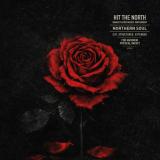
Hit the North is a DJs’ movement
Not a label. Not a revival. A discipline.
Over the years, the collective travelled across multiple states in the US and parts of the UK, digging deep into private collections, basements, garages, storage rooms and forgotten boxes.
They weren’t looking for classics.
They weren’t looking for hits.
They were looking for attempts.
Artists chasing something bigger than themselves.
Trying to sound like Motown.
Trying to sound like Detroit.
Trying to sound like the records that saved them.
Many of them dreamed — at best — of becoming a one hit wonder.
Most never got that far.
Some never crossed a state line.
Some never crossed the street at the end of their block.
Some never played outside their hometown.
Some never played at all.
What they left behind were fragments.
Raw versions.
Unfinished recordings.
Alternate takes.
Rejected mixes.
Test pressings.
Acetates passed quietly from hand to hand.
Sometimes with real credits.
Sometimes with fake ones.
Sometimes with handwritten labels leading nowhere.
Titles that didn’t match the music.
Stories that changed every time you asked.
Often, the trail simply disappeared.
What remained was intention.
Energy.
Urgency.
Hope pressed into sound.
So the collective worked on it.
They edited certain parts.
Extended others.
Cut what didn’t serve the floor.
Not to modernise.
Not to rewrite history.
But to unlock the power that was already there.
The result sounds like Northern Soul pushed to its breaking point.
Fast. Physical. Emotional.
Built for movement.
Some circulated privately.
Others were never pressed at all.
Recorded in personal studios, borrowed studios, friends’ rooms, temporary spaces.
Always outside the system.
This is not nostalgia.
This is unfinished business.
En el almacen y preparando para el envío
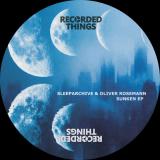
Sleeparchive and Oliver Rosemann present a collaborative EP built as a shared system rather than a dialogue.
It is procedural: reduction, iteration, feedback.
Elements are introduced to be tested against the system. Changes occur slowly, often at the edge of perception, creating tension through persistence. This record documents convergence. A temporary alignment of processes, tools and timing.
The Sunken EP is cut for long-form playback, where variation becomes noticeable through duration to put you into a hypnotic state.
En el almacen y preparando para el envío

After a brief hiatus, Cosmocities returns in 2026 with Tech Rico EP, the final release from longtime collaborator, visionary artist, and producer Erik Rico. Completed shortly before his passing last year, the EP stands as both a creative evolution and a tribute to an artist whose influence crossed genres and generations.
Erik Rico first connected with Cosmocities founder Matt Soulie through Inkswel during the release of Cosmic Love Affair EP in 2022, leading to further collaborations including The Rare Groove Project. Following that release, Soulie encouraged Rico to explore a more techno driven sound, which became the foundation for Tech Rico EP.
The EP sees Rico stepping into new sonic territory while maintaining the rich musicality that defined his career. “Tokyo By Train” marks his first full dive into techno with driving rhythms and atmospheric textures, while “Afro Beatdown (Let’s Go)” blends Afro rhythms and broken beats inspired by the spirit of Fela Kuti. “Summer In Chi Town” pays tribute to Chicago house with warm synths and skippy drums, later reworked by Inkswel with additional vocals from Erin Buku and Marley Love into a soulful bruk infused remix. Closing track “Madrid or Manhattan” delivers a hypnotic house groove layered with trippy vocoder vocals.
A singer, songwriter, multi instrumentalist, producer, and DJ, Erik Rico spent more than two decades shaping a sound that bridged soul, house, hip hop, and Afrobeats. His career included collaborations with Tupac Shakur, Q Tip, Ladybug Mecca, and Jurassic 5, as well as scoring work for HBO, MTV, and PBS.
More than just a release, Tech Rico EP celebrates Erik Rico’s artistic spirit, fearless evolution, and the deep musical connections he built throughout his life. Cosmocities is honoured to share this final chapter with the world.
En el almacen y preparando para el envío

Bella Boo lands on Aus Music with a mix of party-starting and heart-racing house jams
Swedish artist KURT. brings her characterful style to the title cut
Bella Boo has lit up the house world since breaking through in 2018. She has become a Studio Barnhus mainstay with a sound that is both emotional and energetic in the way it contrasts light and dark. It's built on solid grooves with fresh sound designs and has taken her to dj everywhere from Panorama Bar to Printworks. Her debut LP, as well as follow-up EPs, have seen her nominated for several Swedish Grammys and seen her profile grow around the world. KURT. is a rising star from Stockholm with an electric sound that blends club, r&b, pop and soul. It's high on attitude and laced with her own provocative vocals. She guests on opener 'Shake Down', which is a chunky, bass-first rhythm packed with character: hints of jungle breaks, heat-damaged synths and blasts of gloopy bass all bring the fun before KURT.'s vocal motifs - which are variously sultry, whispered and visceral - inject even more heat. The Regrette Rien Mix takes on a late-night feel with sustained chords and a silky smooth vocal from KURT. that turns you inwards. Bella Boo then goes solo for the super vibey 'Atlas', a deep, cruising house cut with catchy percussion and lush, layered bells. The golden chords and shimmering pads are immersive and expansive as the bass powered on. Lastly, '8Ball' quickens your step with bumpy kicks and increasingly detuned, wonky synths that bring a future feel to a punchy yet cuddly and feel-good groove.
En el almacen y preparando para el envío

Transamericas reissues Atom™’s Kraftwerk-goes-chachachá classic
After 25 years out of print, El Baile Alemán — the cult album by Señor Coconut (one of Atom™’s many aliases) — returns on vinyl via Transamericas. What began as a half-joke (“The only way I’d cover Kraftwerk is as chachachá or death metal…”) became a fever-born epiphany: Kraftwerk’s electronic minimalism recast through a tropical imagination — where chachachá, mambo, and cumbia intertwine with glitch, breakbeats, and distressed samples.
Long before reggaeton and trap filled stadiums and playlists, Señor Coconut was already mapping the fault lines between Latin rhythm and electronic form.
Originally released in Japan in 2000, El Baile Alemán caught the ear of Kraftwerk’s Florian Schneider, who unexpectedly championed the project. This reissue has been cut from Atom™’s 2022 remasters, preserving the album’s detail for a new generation of listeners. In the second half of 2026,
Transamericas will also reissue El Gran Baile (1997), his first outing — a rawer but equally idiosyncratic fusion of what Atom™ was going to frame as electrolatino.
En el almacen y preparando para el envío

Welcome to THE VAULT for 1985. A collection that digs deeper into the year’s musical landscape – uncovering singles that may not have always reached the highest chart positions but remain essential to the rich and diverse pop story of 1985. Some were overshadowed at the time, some were highlights from albums that had already sold huge amounts, some found greater success internationally – but all deserve their place in this continued celebration of 80s pop.
45 tracks across 3-LPs – pressed in gorgeous green vinyl – NOW Yearbook – The Vault: 1985.
LP1 opens with a trio of tracks from huge-selling albums:- Bruce Springsteen’s ‘My Hometown’, the sixth single in the UK from ‘Born in the U.S.A’ - one of the best-selling albums of the decade, followed by Bryan Ferry with the stunning ‘Windswept’ from ‘Boys And Girls’ and Sting’s ‘Love Is The Seventh Wave’, taken from his solo debut ‘The Dream Of The Blue Turtles’. Next up, Go West with a U.S single release ‘Eye To Eye’, Scritti Politti with ‘Perfect Way’ – their biggest hit in America, and ABC with ‘Be Near Me’. The first side closes with two established bands; Heaven 17 and Orchestral Manoeuvres In The Dark… Flip the LP over for Adam Ant with ‘Vive Le Rock’, Midge Ure, Blancmange and the second collaboration between Philip Oakey & Giorgio Moroder with ‘Good-Bye Bad Times’. The Style Council’s ‘Welcome To Milton Keynes’ leads to LP1’s closer’s from Simply Red and Fine Young Cannibals who followed their debut ‘Johnny Come Home’ with ‘Blue’.
LP2 opens with Cocteau Twins and the dream-pop atmospherics of ‘Aikea-Guinea’, ahead of The Jesus And Mary Chain with ‘Just Like Honey’, and The Dream Academy with ‘The Love Parade’.
Brilliant with their cover of James Brown’s ‘It’s A Man’s Man’s Man’s World’ and jazz-influenced pop from Matt Bianco are up next ahead of the sublime ‘Castles In The Air’ from The Colourfield and Elvis Costello & The Attractions, who released the 1979 track ‘Green Shirt’ to promote their ‘Best Of’ collection … and the side closes with The Clash’s ‘This Is England’ which would become their last originally released hit…whilst on the other side…celebrate the dancefloor, with a vibrant mix of Hi-NRG, soul, electro and club-influenced pop:- Opening with Sheryl Lee Ralph’s ‘In The Evening’ and Barbara Pennington’s equally superb ‘On A Crowded Street’, the hi-energy continues with Miquel Brown and Hazell Dean ahead of a US hit from Laura Branigan (‘Spanish Eddie’) and Divine’s cover of ‘Twistin’ The Night Away’. LP2 finishes with a massive U.S. dancefloor smash for Eddie Murphy with ‘Party All The Time’.
The final LP kicks off with a bunch of singles that achieved bigger hit status in the US than here and opens with Billy Joel’s ‘You’re Only Human (Second Wind)’, a track written exclusively for his ‘Greatest Hits – Volume I & II’ compilation, ahead of pop-rock from John Mellencamp plus an anthemic smash from Bon Jovi. Pat Benatar’s ‘Invincible’ features ahead of The Power Station’s third US Top 40 hit…whilst back in the UK Chris Rea enjoyed his biggest chart hit to date with ‘Stainsby Girls’ and the side is completed by Marillion with ‘Heart Of Lothian’ the third hit from their huge ‘Misplaced Childhood’ album… Flip to the final side for the stellar vocals on ‘Act Of War’, the huge collaboration between Elton John & Millie Jackson ahead of dancefloor smash ‘New Attitude’ from Patti Labelle and ‘Show Some Respect’ a U.S. single from Tina Turner. Sophisticated pop-R&B from Michael McDonald and Daryl Hall & John Oates come ahead of the collection’s closers- and two outstanding vocal performances: Chaka Khan’s ‘Through The Fire’ and the U.S. breakthrough hit from Whitney Houston with ‘You Give Good Love’ – signalling the arrival of one of the decade’s brightest new stars.
NOW Yearbook – The Vault: 1985 – A deeper dive into an unforgettable year in pop.
En el almacen y preparando para el envío

Música para Plátanos takes its name — and much of its inspiration — from the group’s recording studio, situated in the heart of a banana plantation on the humid north shore of Tenerife, Canary Islands. The ever-present sight of the green, sun-drenched fields surrounding their weekly sessions seeped directly into the music: improvised jams that are playful, layered, and deeply connected to place.
This release gathers a distilled selection from those sessions — a kind of “greatest rotten hits” distinct from their ongoing Imaginary Island Music volumes.
The album functions as a living archive bringing together a distilled selection of recordings spanning more than five years: from dusty, long-forgotten sessions to evolving tunes that have become staples of the band's live sets but have never before been committed to record. These long-form sessions served as a petri dish for the Lagoss sound, allowing their experiments to putrefy into their chaotic signature strain of cyber-exotica, unstable kosmische or heavily-corroded dub.
The title obvs nods to Brian Eno’s Music for Airports, but the logic is inverted. Instead of clean, ambient drift, the record inhabits a dense and fertile environment: polyrhythmic structures, Latin-infused electronics, and shifting counter-tempos that feel weighted by the local humidity.
Ultimately, Música para Plátanos is as much about the process as it is the place. Like the plantation outside, the music is subject to the elements; the tracks change shape depending on the heat of the day, what we drank, what we ate. It’s an unstable, honest harvest of sound—shaped by the weather and the state(s) of mind alike.
En el almacen y preparando para el envío

The SuckaSide duo have tagged in label regular LROY once more for another irresistible blend of classics on this crucial new 7". 'Pacific Life' kicks off with a laid-back, deep and elastic fusion of a house classic and a rave staple, reimagining both as blissed-out warmth with instantly recognisable vocals and loon bird samples. On the flip, the beats become even slower and more swaggy, with sunny chords lighting them up and real Caribbean heat fusing with elephantine bass. These tunes are high-level blends that are playful and immediately effective but never cheap or obvious.
debe ser publicado en 04.01.2027

Anyone lucky enough to have lived through the 90s will know that Coco Steel & Lovebomb were a key acid house duo who dropped early tunes on Warp and penned a number of underground anthems including 'Feel It'. Now they are back with new tunes on Coco's Disappear label and the remit, stylise, is wide. This EP opens with gentle breaks and dubby undercurrents on 'El Acido,' which has already become a favourite after its digital release. DJ Rocca remixes with a blissed-out energy and 'Our Thing' (named after Coco's new party in Hastings) then taps into a more expressive sound world with new age pads, affirmation vocals and dusty broken beats plus lashings of bass. A dub version of the same tune, named Dub Thing, closes down with aplomb.
debe ser publicado en 04.01.2027
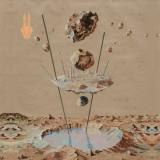
Secret Society is catnip for all the cool cat minimal and tech heads scattered across the global underground and here they mark their first decade in the game with a whopping great big triple album V/A comp that celebrates in style. The label works with exciting talents both old and new, and their 20th outing is the first in a new series, Discipline of Time, featuring six sides of beats. Delphie warps space and time with a lithe, bendy, liquid minimal dub tech twister; Marceline taps into airy, dubby space tech on 'Sale Jugando' and Rh Cher's 'Gwen' (Edward Desert version) is a weird late-night ritual with paranoid voices belting in from the edges. Rhadoo closes with a classic Villalobos-era minimal gem that is wonderfully sparse but for warped lines and abstract FX. "Time is one of our most valuable resources, and how we choose to spend it shapes what we create and who we become" says the label. You could do far worse than spending your time listening and/or dancing to this.
debe ser publicado en 04.01.2027
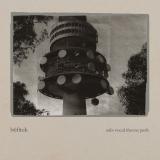
Portal Replica welcomes cult Australian duo, B(if)tek, onto the label with a first-time-on-vinyl release of their debut album ‘Sub-vocal Theme Park’ released in 1996 exclusively onto CD. The 2x12” release includes the original album, plus additional never-heard-before 'lost' tracks from the pair. The album has been mastered by Rashad Becker at Clunk Studios (DE) and pressed to 180g heavyweight vinyl.
Kate Crawford and Nicole Skelty’s pioneering electro-femme outfit ‘B(if)tek’ can be traced back to 1994 in Canberra, where lack of blueprint blossomed their playful and bizarre experimentations in techno — ‘feminism with a wink and a bleep’. Thirty years on, the uniqueness and ingenuity of B(if)tek’s deep analogue exploration endures.
“Monstrous clowns dressed as princes whose role is to laugh at themselves and entertain outlandish beings, suffocated by etiquette, conspiracy and lies, bound by confession and remorse … and beyond that, the auto-da-fe and silence.” – Ferdinand (Pierrot), from the film “Pierrot Le Fou” .
Photography by Kate Crawford.
Design by Jesse Sappell.
Mastered by Rashad Becker at Clunk Studios, DE.
En el almacen y preparando para el envío

ALERT: BIG 90s ITALIAN RAVE COMP - a lot of very in demand tunes on here.
Navigators
Franco Falsini and the Interactive Test Universe
There are musicians who follow their time.
And then there are those who seem to move along a different trajectory—like navigators crossing sonic eras without ever truly belonging to any one of them. The story of Franco Falsini belongs to the latter. It is a story that begins long before raves, before techno, before the word “electronic” had even become a recognizable musical genre. A story that moves across continents, technologies, and sonic visions, eventually arriving at a small creative laboratory born in Italy in the early 1990s: Interactive Test. This compilation is a fragment of that universe. But as often happens with the hidden histories of music, understanding it requires going back. Far back.
The Beginning: Machines, Tape and Space
In the late 1960s Franco Falsini leaves Italy and moves to the United States. It is not merely a geographical journey—it is also a journey into a new idea of music. At the time, synthesizers are only just emerging from research laboratories. Multitrack tape recorders allow musicians to build entire sonic worlds on their own. Technology is still far from standardized: every studio is almost an experimental workshop. In Virginia, Falsini builds one of his own. Among cables, oscillators, electric guitars and reels of magnetic tape, a kind of music begins to take shape that resembles nothing else being made at the time. It is not simply rock, and it is not yet truly electronic. It moves somewhere in the space between the two. Out of these explorations emerges Sensations' Fix, the project through which Falsini releases a series of albums during the 1970s. Records that seem to come from a parallel dimension: cosmic landscapes, electronically treated guitars, synthesizers drifting like satellites. Many years later those albums would be rediscovered as visionary works. But at the time they were simply the result of relentless curiosity. A curiosity that would never fade.
The City That Never Sleeps
In the 1980s Falsini’s trajectory leads him to New York. The city is a sonic organism in constant transformation. In its clubs and recording studios something entirely new is beginning to take shape: music built from drum machines, sequencers, and samplers, created for the body before the living room. It is the dawn of modern dance culture. Falsini works as a sound engineer, producer and experimenter. From close range he observes electronic music transforming into a global language. Machines become more accessible, computers begin entering studios, and rhythm takes on an increasingly central role. Yet even in this phase Falsini does not simply follow what is happening. He absorbs. Observes. Reimagines. When he eventually returns to Italy, he brings back not only technical experience but also a clear vision: the conviction that electronic music is an open space, a territory still waiting to be explored.
Tuscany, Early 1990s
At the beginning of the 1990s something is happening in Italy as well. In clubs, abandoned industrial warehouses and clandestine parties, a new scene is beginning to form. It is rave culture: a spontaneous movement bringing together DJs, producers and listeners in a collective experience driven by rhythm, technology, and creative freedom. It is within this context that Franco Falsini, together with his brother Riccardo, creates Interactive Test.
The name almost sounds like a scientific experiment. In many ways, it is. Interactive Test does not emerge as a traditional record label. It begins as a laboratory—a place where ideas, sounds and musical identities can be tested and explored. Around the Falsini studio in Tuscany a small constellation of artists and DJs begins to gather, helping to shape the sound of Italy’s emerging electronic scene. Among them are Andrea Giuditta, Francesco Farfa, Gabry Fasano, Roby Mastelloni, Roby J and many others. Each brings a different musical sensibility. But they all share the same intuition: electronic music is not a genre. It is a language.
The Laboratory of Identities
One of the most fascinating aspects of the Interactive Test universe is its constant play with identity. Franco Falsini releases music under several different names: Open Space, Youth Wave, Agent Fylfoyt, Man Myth Magic. These are not simply pseudonyms.
They are different sonic perspectives, as if each project were a window opening onto a parallel musical universe. Open Space, for example, explores more atmospheric and visionary territories. Youth Wave moves between electronic groove and club-oriented rhythms. Other projects experiment with digital psychedelia or hypnotic techno textures. Interactive Test becomes something more than a label. it becomes an ecosystem.
Domestic Machines, Infinite Worlds
Looking back today at the technology used in those productions, one might almost smile. Many tracks were created on Amiga computers, MIDI sequencers and analog synthesizers wired together in home studios—tools that appear modest when compared to today’s digital possibilities.
Yet precisely these limitations became a creative force. Every sound had to be built, shaped and reinvented. Sequences developed slowly, almost like living organisms. The tracks did not always follow traditional dance music structures; often they felt like genuine sonic journeys. Music built from space.
A Hidden Constellation
Many of the records released by Interactive Test in the 1990s remained for years almost invisible objects, circulating quietly among DJs, collectors, and devoted listeners. Yet it is precisely this underground existence that helped preserve them. Listening again today, one perceives something rare: the feeling of music that does not fully belong to its own time. Music suspended between different eras. Perhaps because it comes from a vision that both precedes and transcends trends.
Continuing the Journey
Looking at Franco Falsini’s entire path—from the electronic psychedelia of Sensations’ Fix to the rave culture of the 1990s—a surprisingly coherent line emerges.
A line defined by exploration.
Each project, each pseudonym, each record appears as a new route within the same great sonic voyage.
Interactive Test was one of its stations.
A laboratory.
A community.
A creative platform.
This compilation gathers some of its traces.
Not as a simple archive of the past, but as a map of a musical territory that continues to expand even today.
Like all true sonic explorations.
En el almacen y preparando para el envío
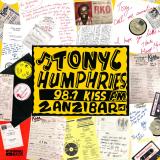
(*Previously unreleased)
Telling a tale of house music’s early days or roots without mentioning Tony Humphries as a club DJ, remixer and radio disc jockey would make it an incomplete, forged and most of all a bit of a yawn.
Born in Brooklyn in 1957, Humphries’ musical journey is synonymous with New York City’s dance music history and the evolution from uptempo soul music to house: from being a dancer at David Mancuso’s infamous Loft parties to becoming a mobile DJ and getting the call from Shep Pettibone to become his right hand at
the then new Kiss FM radio station, followed by countless remix offers and a legendary residency at Newark’s Club Zanzibar. Next to that one, is was especially his work as a radio disc jockey for said station during most of the 1980s until 1994 that gave him majestic clout. Breaking new records week in, week out,
putting New Jersey acts like Adeva and Jomanda or countless up-and-coming producers from there on the musical map, while simultaneously playing the hottest imports from Europe, trax from Chicago, dance classics and all things straight from New York’s music factory that never seemed to stop.
Going to his vast and almost complete archive of radio shows from way back when he graced those airwaves, we at Running Back Records have pickedNew Release Information original recordings that symbolize his importance as an industry giant and ambassador of this style of music.
„But one thing I would like to point out is that, as a DJ, the music I play is not my music. I want to make it perfectly clear that it is music that is released, and it’s everyone’s music. I do not take any other credit than being the middle person exposing this music.“
(Tony Humphries in: What Kind of House Party Is This?, Jonathan Fleming, 1996)
En el almacen y preparando para el envío

Dr. Caligari was notoriously out of his mind — a genius fixated on experiments and a former lecturer at the Department of Experimental Phonetics. His students, Spacelunch included, spoke of him with cautious admiration: “Too smart to be normal; too bold to stop.” His laboratory looked like a hand-welded cosmos: cables everywhere, diodes, and the soft hiss of electricity.
“What’s that?” Spacelunch nodded toward the large glass dome.
“My new invention that allows sound to become tangible. Care to take a look?”
The Professor and Cat carefully stepped inside.
“You’re about to be the first to witness the voice of space!”
“Hey, we didn’t sign up for this!”
“Doesn’t that make the experiment more interesting?”
Caligari smiled and turned a dial. Their bodies stretched like strands of pasta and vanished. An instant later, they found themselves in another dimension: towers of transistors and coils rose into the sky, the air thrummed with low-frequency oscillations, and every flash of light carried the rhythm of a sonic lattice. Almost at once, the image wavered like old film, went black, and then snapped back to the laboratory. Caligari sat at the console, eyes fixed on the monitors. “It worked,” he whispered. “Perfect phase alignment!”
En el almacen y preparando para el envío

The Dead Mauriacs is the project of French artist Olivier Prieur, "Paravents et miroirs, une cérémonie" is a live soundtrack.
The Dead Mauriacs describe their music as "Exotica Concrete" - their music is composed of field recordings made on a daily basis, as well as a diverse collection of sounds, including piano, Indian harmonium, violin, ukulele, didgeridoo, pieces of wood, glass, paper, and metal plates. The album is a spectacular 40-minute sound collage, assembled by sampling Exotica music represented by musicians and arrangers such as Les Baxter and Arthur Lyman, who were active in the 1950s.
"Exotica is a musical genre or sub-genre that emerged in the 1950s in the United States with musicians and arrangers like Les Baxter or Arthur Lyman. It is an extraordinary music because it is false: bird calls imitate bird songs, you can hear the sound of the waves, it is a Western fantasy, particularly North American, of a world and an imagery that never existed. It is a music associated with mass tourism, mass entertainment, consumerism. Arthur Lyman recorded about 30 records in 10 years in Waikiki. With his band, they played and recorded under a geodesic aluminum dome. The dome belonged to the owner of the hotel he played for every night. They did this at night to avoid noise. It's music that is both profoundly naive and totally flawed. In this, it is seductive and intellectually interesting. It is music that could easily be criticized today, but it is an imaginary in itself, like the Italian film music of the 1960s and 1970s." (Excerpt from the calax's interview)
The Dead Mauriacs are not only involved in music, but also in a wide range of other creative endeavors, including video and painting. He also repsonsible for the artwork of this LP. The inside of the product is also accompanied by an 8-page interview with Mauriacs and compiled his amazing artworks.
The Dead Mauriacs
Paravents et miroirs : une cérémonie / Screens and mirrors: a ceremony
Side A
Courte dérive, une ouverture / Short drift, an opening
Le retour des insectes électriques / The return of the electric insects Les oiseaux étranges / The strange birds Tension, terreur factice / Tension, false terror
Dénouement malais / Malaysian ending
Rituels et vanités 1 / Rituals and vanities 1
Rituels et vanités 2 / Rituals and vanities 2
Italiens dʼHambourg / Italians in Hamburg
Side B
Secrets pour piano / Secrets for piano
La suite Monory, Padoue-Le Caire-Nassau / The Monory Suite, Padua-Cairo-Nassau Hommes à découper / Men to cut out Lassitude moite / Clammy weariness
Le soleil artificiel du pont croisière / The artificial sun on the cruise deck
Pirogues et palmiers, vus de la scène / Pirogues and palm trees, seen from the stage La traversée / The crossing Rideau / Rideau
Fields recordings : Semproniano and Siena, Italy, Figueira, Portugal, Charentes, France. An electrical wire with a frequency shifter gave birth to the insects. Real and fake piano. Everything made with a computer and a midi keyboard.
Music premiered at Hörbar, Hamburg, 28th of December 2017. Music (and video) Olivier Prieur.
Thanks to Thorsten Soltau and all people at Hörbar.
Hello to Felix Kubin & Marie-Pierre Bonniol, Julia & Jan Warnke. Kisses to Hélène.
En el almacen y preparando para el envío

LOS ANGELES—To celebrate the 40th anniversary of the celebrated Talking Heads and Jonathan Demme’s concert film Stop Making Sense, the set will be re-released as a 2LP and 2CD/Blu-ray set this summer.
Released last year, the sold-out Deluxe Edition of the soundtrack will return as a 2-LP black vinyl on Rhino and 2-LP crystal clear vinyl at retail. Both variants feature a 12-page booklet with liner notes from all four band members –Tina Weymouth, David Byrne, Chris Frantz, and Jerry Harrison—and band photos. The 2CD/Blu-ray version includes the entire 28-page booklet from last year’s Deluxe Edition and a Dolby Atmos mix of the complete concert, mixed by Jerry Harrison and E.T. Thorngren, who also mixed the original release. Both will be available on July 26. Pre-order now.
The band appeared together for a sold-out screening and Q&A last night at the Pantages Theater, the same theater at which Stop Making Sense was recorded. They were joined by Blondshell, who performed “Thank You For Sending Me an Angel.” Another special screening with the band will occur in Brooklyn at the King’s Theater on June 13, with the Q&A hosted by Questlove and The Linda Linda’s performing “Found a Job.” The two events cap off a banner year of celebrations for what many consider to be the best concert film of all time.
The inspiration for Stop Making Sense came when director Jonathan Demme saw Talking Heads perform during the band’s 1983 tour for Speaking in Tongues. Afterward, he approached them with the idea of making the show into a concert film. They agreed and worked together over the next few months to finalize the details. Ultimately, Demme filmed three shows at Hollywood’s Pantages Theater in December 1983 to create Stop Making Sense.
The concert film presents a retrospective of the band up to that point, with a performance that weaves together songs from all six of its studio albums. The show progresses methodically, opening with Byrne onstage performing “Psycho Killer” alone with a drum machine. After each song, he’s joined by a new band member until Weymouth, Frantz, and Harrison are all on stage with him. The group continues to grow throughout the concert as members of the stellar touring band are added: keyboardist Bernie Worrell, percussionist Steve Scales, guitarist Alex Weir, and backup singers Lynn Mabry and Ednah Holt.
The band performs 18 songs in Stop Making Sense, including its recent single at the time, “Burning Down The House.” That summer, the song was in heavy rotation on radio and MTV, helping the song become the band’s first top 10 hit in America. It was, however, a different song from Speaking in Tongues that was destined to deliver one of the film’s signature moments. Talking Heads would perform “Girlfriend Is Better” wearing the now iconic, oversized suit inspired by costumes worn in traditional Japanese theater. For good measure, a picture of David Byrne in the suit also graces the album cover.
Stop Making Sense focuses mainly on music by Talking Heads but does include a few songs recorded outside the band: “Genius Of Love” by Tom Tom Club, “What A Day That Was” and “Big Business” from Byrne’s 1981 album, The Catherine Wheel. Limited edition vinyl versions of both of these albums, along with Harrison’s The Red And The Black, were released for this year’s Record Store Day.
When it arrived in September 1984, Stop Making Sense was an artistic and commercial triumph. The film had people dancing in theatre aisles, and the soundtrack sold over two million copies. Just last year, the Library of Congress added Stop Making Sense to the National Film Registry in recognition of its cultural, historical, and aesthetic significance.
Weymouth praises Demme as a collaborator: “…Jonathan was a very enthusiastic, highly adaptive, and imaginative guy who was just as good a listener as he was a talker and collaborator. From the get-go you just got the impression he was as flexible as he was disciplined. Being team players, that boded well for a great relationship and a great film!”
Harrison says the film still holds up today: “To me, Stop Making Sense has remained relevant because the staging and lighting techniques could have been created in a much earlier time period. For example, Vari-Lights, lights with motors to re-aim them, had just come into vogue. Had we used them, there would have been a timestamp on the film, and it eventually would have felt dated...The absence of interviews, combined with the elegant and timeless lighting, created a film that can be watched over and over.”
Byrne says it’s interesting that this album was – for many people – an introduction to Talking Heads. “We had done a live album before this, but coupled with the film, and with the improved mixes and sound quality, this record reached a whole new audience. As often happens, the songs got an added energy when we performed them live and were inspired by having an audience. In many ways, these versions are more exciting than the studio recordings, so maybe that’s why a lot of folks discovered us via this record.”
Frantz recalls the sheer joy surrounding the entire Stop Making Sense experience. “I’m talking about real, conscious, transcendent joy… I’m talking about what the Southern gospel people call ‘getting happy,’ which means ‘to be filled with the Spirit.’ That is what happened to us onstage every night, and from my seat behind the drums, I recognized that this was happening to the audience too. Joy was visible in front of me and all around me every night.”
En el almacen y preparando para el envío

The "TRACK TRAX EP" is the new vinyl of the "Computer Controlled Minds"
The yellow vinyl clearly indicates the direction – ACID!
As the name suggests, it will be a fast-paced race.
On the A side, our track days start with a driving track, it quickly becomes clear that this will not be a leisurely Sunday ride. It's going to be a tough race. When approaching the apex, it is always important to remain seated and open the tap slowly.
The second track is a confession of love to Kerb, he wants to be loved and touched. But this love also harbors great dangers. If you drive too hard over the limit, the Kerb will pay back mercilessly.
With B1, the DOWNSIDER brings ecstatic acid acceleration to the slopes. If the braking point is exceeded, it can fall massively to the ground. The experienced technoracer has everything under control and brings the necessary momentum to the next straight.
As the race goes on, the strength dwindles and a clean line becomes more and more difficult, but at the same time it is the key to the thrill. The struggle with body and machine becomes clear, every action makes the body burn. Giving up is out of the question, the race is only over with the chequered flag. But now off to the bar!
Last but not least on the B-side, two short bonus sounds for all mix DJs
The Computer Controlled Minds show their clear roots, ACID and hard RACE.
TCCM can be booked as a live act via insta: __NEXT_DOOR__. You will never forget the race!
En el almacen y preparando para el envío

The Ensemble Al-Salaam, led by saxophonist Kalik Abdul Al-Rouf, released just two albums in the mid- and late-70s, but both have more than punched above their weight in the international jazz canon. The Sojourner was the essential 1974 debut that became one of the Strata-East label's most seminal works and a cornerstone of spiritual jazz's golden era. It draws on modal jazz, Afrocentric rhythms and deep Black musical traditions across highlights like the hypnotic opener 'The Sojourner, 'the Coltrane tribute 'Trace Of Trane' and the dramatic 'Malika', with Beatrice Parker's vocal warmth infusing each sound. A perfect distillation of spiritual jazz.
debe ser publicado en 06.01.2027

The original album + 6 bonus tracks - limited edition pressing on 180g vinyl
The most talented bossa nova group of the '60s, Tamba Trio perfected a breezy,
swinging version of bossa nova vocal jazz that proved incredibly influential in Brazil
and throughout the world.
Comprising pianist Luiz Eca, bassist Bebeto, and drummer Helcio Milito, the trio not
only played a wide range of instruments but also contributed incredibly close vocal
harmonies. Presented here is their debut album, 'O Barquinho' (Little Boat), which was
a huge hit in Brazil and throughout South and Central America.
One of their later recordings, a rendition Jorge Ben's ' Mas, que nada!' ( But That Is
Nothing!) and included here as a bonus, became their best-known hit, and used most
famously by Nike in a 1998 World Cup television commercial.
En el almacen y preparando para el envío
TRANSMISSIONS #1 connects four distinct Skylax signals into a single flow. Each track comes from a precise moment, a specific context, and a clear dancefloor function. Together, they form a transmission built on movement, use and continuity. A1. F.T.G – Tribute ’89 (Fuckthegovernment #001 Mix) is a raw drum-machine workout positioned between dark Chicago house and late-’89 European techno. Stripped, direct and uncompromising, Tribute ’89 quickly became an underground staple, heavily played by Ricardo Villalobos and Raresh — a foundational Skylax signal. A2. Nick Beringer – 57th Corner, taken from Second Floor (Wax Classic, 2016), is a tech-leaning deep house cut marked by restraint, precision and late-night tension, capturing Beringer at a pivotal point in his long-standing relationship with Skylax. B1. Floorfillers – Love Is Growing delivers a powerful house-disco statement rooted in old-school foundations, where filtered disco loops, raw drum programming and uplifting swing echo the lineage of DJ Sneak, Paul Johnson, early Roulé / Crydamoure-era French touch and classic Chicago jack — a modern floor-driver with timeless intent. B2. Nicolas Aftalion – Rue des Wallons brings deep, soulful house with a strong Kerri Chandler influence; warm chords, chunky drums and emotional weight firmly grounded in early ’90s US garage tradition. Supported by Cinthie, it closes the transmission with groove, balance and purpose. TRANSMISSIONS #1 — built to move, built to last, signals in motion. Four tracks. Four signals. Still moving.
En el almacen y preparando para el envío

“Nimm die rosa Brille … sag was Du siehst … alles viel besser”
44 years after its original release, one of the most idiosyncratic DIY minimal electronics / synth / new wave records of the early ’80s returns: the legendary 7” by German group DEUTSCHE SCHÄFERHUNDE (engl. German shepherds)—now remastered and reissued for the first time as a one-sided 12” on Anna Logue Records. Recorded in the winter of 1981/82 between rehearsal space, provincial disco and bar nights, and a humble four-track setup, these tracks capture the raw spirit of a generation that simply started creating—no formal training, but plenty of attitude. Minimalist, uncompromising, and inspired by krautrock, punk, new wave, electronic music and dub, the songs move between raw electronics, percussive noise, new wave experimentation, and sharp social commentary. „Rosa Brille“ (rose coloured glasses) in particular feels as urgent today as it did back then—a track that has lost none of its relevance, „Gasmasken“ tells of gas masks dancing in the woods to the sound of sirens, and a timeless Holger Czukay/Jah Wobble inspired „Mein Herz“ (my heart).
Originally pressed in a small run of just 500 copies and later becoming a sought-after collector’s item now worth 200€, the record now returns in a carefully crafted edition featuring a laser-printed reverse side and additional materials such as original lyric sheets and articles, postcard and poster. DEUTSCHE SCHÄFERHUNDE thrived on paradox—a provocative name paired with a clear stance, and lyrics that still resonate today. Shaped by Cold War tension, political unease, and youthful rebellion, their sound refused to fit into any neat category. Only few other bands, such as Der Musikant, Im Namen des Volkes, Thorax Wach, Klinisch Sauber oder Stephan Eicher spielt Noise Boys come to mind.
This release is more than a reissue—it’s a document of its time that still hits with full force.
12″ features: limited to 400 copies, hand-numbered, one-sided 180g black vinyl, laser-etched B-side, outer sleeve printed on reverse side of the board, printed inner sleeve with original lyrics sheets and original articles, DIN A3 poster, double-sided postcard
En el almacen y preparando para el envío
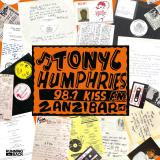
(*Previously unreleased)
Telling a tale of house music’s early days or roots without mentioning Tony Humphries as a club DJ, remixer and radio disc jockey would make it an incomplete, forged and most of all a bit of a yawn.
Born in Brooklyn in 1957, Humphries’ musical journey is synonymous with New York City’s dance music history and the evolution from uptempo soul music to house: from being a dancer at David Mancuso’s infamous Loft parties to becoming a mobile DJ and getting the call from Shep Pettibone to become his right hand at
the then new Kiss FM radio station, followed by countless remix offers and a legendary residency at Newark’s Club Zanzibar. Next to that one, is was especially his work as a radio disc jockey for said station during most of the 1980s until 1994 that gave him majestic clout. Breaking new records week in, week out,
putting New Jersey acts like Adeva and Jomanda or countless up-and-coming producers from there on the musical map, while simultaneously playing the hottest imports from Europe, trax from Chicago, dance classics and all things straight from New York’s music factory that never seemed to stop.
Going to his vast and almost complete archive of radio shows from way back when he graced those airwaves, we at Running Back Records have pickedNew Release Information original recordings that symbolize his importance as an industry giant and ambassador of this style of music.
„But one thing I would like to point out is that, as a DJ, the music I play is not my music. I want to make it perfectly clear that it is music that is released, and it’s everyone’s music. I do not take any other credit than being the middle person exposing this music.“
(Tony Humphries in: What Kind of House Party Is This?, Jonathan Fleming, 1996)
En el almacen y preparando para el envío

Few songs from the late 90s managed to sound simultaneously utopian and paranoid quite like Jamiroquai's 'Virtual Insanity', a track that wrapped ecological anxiety and technological dread inside an absurdly slick jazz-funk strut. Thirty years on, it remains remarkably strange for a global pop hit. Jay Kay glides across bouncing basslines and gleaming Rhodes arrangements with irritating charisma, while the groove itself never stops twitching and mutating beneath him. 'Do You Know Where You're Coming From' goes further into sophisticated acid jazz territory through restless percussion and rich harmonic movement, then 'Bullet' adds a tougher funk bite. Some records become trapped by nostalgia, but this one still sounds futuristic.
En el almacen y preparando para el envío

Ready for take off? Metallic States proudly welcomes Chris Carrier for the label’s first full-length album.
This release reflects the recent evolution of Chris’ sound, following a career that has crossed decades, trends, and the constant mutations of electronic music. He embraced these changes naturally while always remaining faithful to his roots and distinctive identity.
From slow-burning trance excursions and mental dancefloor cuts to rave-driven anthems and soothing downtempo moments, this more psychedelic album could well become a landmark entry in his vast discography.
En el almacen y preparando para el envío

If you’ve been keeping your ears to the ground, chances are this won’t be your first encounter with the glistening, shape-shifting sounds of Yushh. She has spent recent years DJing across the globe and releasing a series of standout tracks and remixes, cementing her status as one of the most vital flag-bearers of the Bristol continuum.
Somehow, it has been three years since her last solo outing. Making up for lost time, we finally welcome Yushh to Timedance for a searing five-track EP, “Full Body AXY”.
Yushh’s sound resists stasis, nothing feels formulaic. Instead, each track moves with an expert sense of detail, striking a rare balance between precision and instinct, dancefloor science and raw emotion. With a natural flair, she bends low-end pressure into something airborne. Heavy sub frequencies dissolve into a feeling of weightlessness that is both physical and elusive.
How can music hit with such precision and still feel like it floats beyond the rules of gravity? Yushh answers in her own language, where tension and release blur, where sounds flicker between density and light, and where the dancefloor becomes a space for both body-centric exploration and emotional catharsis.
En el almacen y preparando para el envío
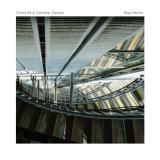
Dewa Alit, master of radical Balinese gamelan, returns to Black Truffle with Baur Bentur. Genetic (2020, BT063) introduced international listeners to the magical sound-world of Alit’s Gamelan Salukat, who perform on instruments tuned to a unique scale derived from modified versions of two traditional Balinese scales. The two pieces heard on Chasing the Phantom (2022, BT093) further demonstrated his radical fusion of tradition and experimentation, with passages where unorthodox techniques make the acoustic ensemble resemble glitching electronics. Baur Bentur now highlights another aspect of Alit’s work, presenting pieces composed in 2024 and 2025 where Gamelan Salukat performs alongside virtuoso pianist Sri Hanuraga. Alit’s music is grounded in deep reflection on the tradition of Balinese gamelan and its place in the contemporary world. His title, ‘Baur Bentur’, which translates as ‘mixing and smashing’, points to his embrace of the intercultural mixture of Eastern and Western elements in the search for innovation. Against the calcification of Balinese music into tourist entertainment, Alit poses his searching, experimental work, which celebrates the communal values and performance practices of traditional gamelan while pushing into startling new directions.
‘Sukat Tacara’ is a study in layered tempos, meters, and polyrhythms, a constantly shifting dialogue between piano and the instruments of Gamelan Salukat. It begins close to a traditional concerto, pairing a brisk sequence of melodic variations from the piano with a spare but propulsive accompaniment of drums and hanging metallophone tones, punctuated by low gong strikes. The piano builds in volume and density across a rapid succession of fragments, at points recalling George Antheil’s ticking wind-up machinery, though Hanuraga’s jazz background shines through in the fluidity with which he navigates the complexities of the score, where chromatic movement co-exists with bluesy phrases. An abrupt change in the piano to patterns of dense clusters introduces a new episode, during which the metallic instruments of the gamelan enter the foreground. The piece dazzles with its inventive rhythms and dynamics, building to a stunning passage featuring the signature heavy muting technique of the Gamelan Salukat metallophones in kinetic patterns that would be at home on a Príncipe release.
The title piece begins at high intensity and rarely lets up, working through bracing unison ensemble melodies and punctuation points where piano and gamelan together seem to become a single, thudding drum. For much of the piece the piano is tightly integrated into the ensemble, the harmonic extensions of the melodic line subsumed into a moving cloud of complex overtones generated by the gamelan instruments. Wildly kinetic on the rhythmic level, the piece swarms with microscopic movements of beating patterns generated by the ‘blend and crush’ of three simultaneous tuning systems: the equal temperament of the piano and the saih cenik (small scale) and saih gede (big scale) used by the gamelan instruments. Accompanied by the composer’s thoughtful liner notes and images of the musicians, Baur Bentur is a stunning next step in Alit’s radical combination of tradition and innovation.
En el almacen y preparando para el envío
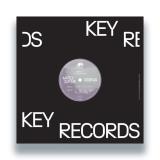
DJ Support: Enzo Siragusa, Traumer, Laidlaw, Voigtmann, Janeret and many more
Mateo Dufour and Cosenza return to Key Records as part of the label’s family, this time joining our second vinyl release with Sweat, representing the Rio de la Plata sound on the dancefloor.
The A-side is led by ‘Sweat’, a high-impact, peak-time track driven by a penetrating vocal and a distinct vintage character. Road-tested over the past months, it has become a true secret weapon in sets by artists such as Traumer and Enzo Siragusa. Following that, ‘Girl (I Want To)’ lowers the intensity, moving into a more groove-driven and sensual territory, creating a natural contrast within the side.
The B-side shifts into a more playful and character-driven territory, suited for transitional moments, whether at sunrise or during deeper phases of the night — perfectly fitting summer settings. ‘Why So Freak?’ stands out for its distinctive synth line and catchy vocal, giving it a strong and recognisable identity. Closing the EP, Dan Ghenacia delivers a deep and refined remix, adding an elegant layer to the release.
From peak time to early morning, just drop it and let it speak.
A record that balances impact and subtlety, reinforcing the connection between the artists and the Key Records universe.
En el almacen y preparando para el envío

Like a meteor striking earth, two forces hit each other. Merkelbach and Nathan Homan found each other in a shared vision in music, and this is the reason they’ve started the label Beau Brummel. Combine the two and you get the alias Merkoman. If you were to take a look at both of their agendas, you’d see Thursday crossed off because that’s Brummel Day. After two years of Thursday evening Brummel sessions, a big vault of music has been filled. The result is The Story of Brooks Pipe, a two-part story of a refreshing new sound that only Merkoman can achieve. In Part 1 you’ll find four tracks strictly made for all sorts of dance floors. An additional injection of creative artwork was given by Sjeng Schupp.
En el almacen y preparando para el envío

Seven - a number steeped in mystery and meaning, woven into the very fabric of time and space. Throughout history, the number seven has stood as an immutable symbol: from the days of the week to the alchemical metals, from the kings of Rome to its seven hills. An archetype that unites astronomy, myth, and ancient civilizations, finding its deepest expression in Rome.
According to legend, the Eternal City guarded seven sacred relics, the Pignora Imperii, objects whose possession ensured divine protection, prestige, and political authority. Ovid referred to them as the "pledges of power": testimonies of Rome's Trojan heritage and its connection with peoples such as the Sabines, Etruscans, and Greeks. These artifacts, now lost, were:
I. Lo scettro di Priamo
II. Il velo di Iliona
III. Il Palladio
IV. Le ceneri di Oreste
V. Lo scudo ancile
VI. La quadriga di Veio
VII. L'ago di Cibele
From this mythology emerges the new project by Lykos Records: a narrative journey in seven chapters, each dedicated to one of these relics, unfolding through the various artists releases corresponding to catalogue numbers 7, 14, 21... up to LYKOS-XLIX.
Chapter I, "Lo scettro di Priamo" LYKOS-VII, is dedicated to the symbol of Troy's power, brought to Latium by Ilioneus on Aeneas' command as a pledge of alliance and reconciliation. It is said to have been kept on the Palatine Hill.
To inaugurate this journey, seven Roman artists - PixFoil, DJ Red, Brando Lupi, Luigi Tozzi, Feral, Sunday Bath, and Worg - will give life to a sonic mosaic celebrating the musical heritage of the capital. Their tracks will form a collective work that bridges generations and diverse artistic visions.
Each double vinyl will feature an original illustration by Roberto Mulliri, wrapping the entire front and back cover and included inside as a poster.
Within the Pignora Imperii lies the strength and power of Rome, witnesses of the city's epic saga; likewise, Lykos Records weaves its destiny into the history of these sacred Roman objects, becoming a messenger of their enduring legends.
En el almacen y preparando para el envío
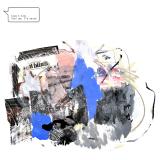
Take Me, I’m Yours is the first collaboration album between Alan Abrahams and Jan Jelinek. Released through the latter’s faitiche, it builds upon multi-layered vocal sketches by the former. The Paris-based artist, primarily known for his work as Portable and Bodycode, supplied Jelinek with multi-layered song sketches that the German artist subjected to a rigorous process of manipulation, excavating the ambiguities of the original material and transforming its rhythms into subtle pulses. Take Me, I’m Yours is neither a typical Abrahams record nor a classic Jelinek album—it is something third, mediating between the physicality of the voice and the abstraction of electronic sound design.
The two had crossed paths before really getting to know each other after Abrahams invited Jelinek to play at one of his Süd Electronic parties. The idea of a collaboration emerged slowly. “It started as an experiment, and over the past few years grew from a few tracks into this album,” says Abrahams. He describes recording the basic material as a “tantalizing” process, not knowing how Jelinek would transform his material, some of which was based on wordless chanting, while other tracks were working with lyrical content. However, their mutual trust allowed Jelinek to remove the harmonies, radically reduce the rhythms, and concentrate on Abrahams’ voice.
Jelinek heard something “fragile” in this voice, “moments of doubt and dark premonitions.” He points to Forever as an example. “Alan’s original song reminded me of classic vocal house, but his voice seemed to almost break,” he says. “This contradiction made the piece even bigger, because we hear a singer in the moment of an awakening.” He further accentuated such tensions through arrhythmic synth modulations and time-stretching algorithms, while also adding concrete sounds from a variety of sources. With its dedication to both transforming and amplifying the emotional qualities hidden within Abrahams’ pieces, Take Me, I’m Yours functions as a dialogue between those two singular artists.
En el almacen y preparando para el envío

The crew behind the freshly minted Secret Vault imprint are keeping their cards close to their chests, with the accompanying press release loosely explaining their desire to prioritise dancefloor "heat" over spoon-feeding information to buyers (and in this case, Juno reviewers). The secrecy makes sense, though, because these uncredited cuts are heavyweight disco edits - and fantastic ones at that. Our shadowy heroes first extend and (we think) lightly speed up a slap-bass-sporting slab of disco-soul gorgeousness full of dewy-eyed female lead vocals, extended breakdowns, glistening guitar solos and punchy. Over on the flip, our scalpel-wielding fiends turn their attention to a bouncy, energetic and infectious disco-funk gem topped off by expressive male lead vocals.
En el almacen y preparando para el envío

"I don’t understand Bernardino. He seems to take pleasure in sabotaging himself."
"Or maybe I’m simply refusing to play the game someone else wrote for me?"
Memoirs of Self-Sabotage unfolds as a musical drift: fragments written and recorded on tour between France and Italy, shaped by precariousness, administrative tension, loss, and paranoia. The tracks emerge like scenes from a psychological film noir—a distorted discotheque of monologues, songs, skits, and anachronisms—where the voice oscillates between seduction and rupture.At its core lies a troubling insight: the most insidious exploitation is that of one’s own intimacy. As emotions and desires become commodities, the project resists absorption. Each track becomes a site of desertion—refusing roles, codes, and systems of control, even those posing as critique. Alliances blur, betrayals loom; lucidity tips into paranoia.Warped echoes of nostalgia, cinematic layers, voices in tension: the music becomes an unstable space, a laboratory of drift and survival. Neither record, manifesto, nor autobiography, it unfolds as a mental disco where desire, fear, and self-sabotage coexist.
En el almacen y preparando para el envío

En el almacen y preparando para el envío
