
pre-ordina ora26.12.2025
dovrebbe essere pubblicato su 26.12.2025
dovrebbe essere pubblicato su 26.12.2025

- Black and Purple vinyl versions.-LP includes download.
-Son of Blue Note legend Bruce Lundvall.
-12 years since his last record to feature vocals.
Dais Records is proud to unveil the new dark pop masterpiece from artist and composer Tor Lundvall. His first vocal album since 2009's Sleeping and Hiding, and following the release of two instrumental albums and three CD box sets since that time, Tor returns with an album of beautifully intricate sadness and reflection: A Dark Place.Born in 1968 in Wyckoff, NJ, Tor Lundvall is a painter and ambient composer.
The son of Blue Note Records legend Bruce Lundvall, Tor was exposed to artwork, music, and creativity from a young age, and began his professional painting and music output in the late 80s. Widely known for his dark imagery and thoughtful, provocative soundscapes, Tor Lundvall's artwork is all-encompassing. His music, when paired with his paintings, creates a world within which one could easily disappear. An intensely private individual, Tor Lundvall eschews the gallery circuit and live performances for his private studio in Eastern Long Island, NY, preferring to show his artwork privately and focus on studio production and writing without the pressures of the audience and all it encompasses.
Dais Records is honored to provide another glimpse into his world through his recordings. We hope you find it as special and as unforgettable as we do. Artist Statement:It's been twelve years since I recorded my last vocal album, "Sleeping and Hiding" (released in 2009, but recorded in 2005). After completing those sessions, I felt that I had said just about everything I wanted to say lyrically. I wasn't sure if another vocal album would ever materialize, but slowly and surely, new lyrics came with new songs to accompany them. Finding the words to describe this album is almost as difficult as the past couple of years. There is a lot of pain, fear and sadness wrapped into these eight songs. More so than usual, I think. The loss of my father in 2015 and coping with his absence certainly hangs heavily here. I recorded this album at night while I stared out from my bedroom window into the shadows of the garden and the neighbor's house next door. The reflections of the flower lights encircling my bedroom window looked like distant, golden constellations through the glass while I worked. A nice memory. A few of the melodies were inspired by, or constructed around some of my earliest riffs and abandoned sketches, one dating all the way back to 1985. The lyrics to the final track, "The Next World", came to me while swimming alone in the bay one clear October afternoon about five years ago. I originally envisioned a lighter, more optimistic song to accompany my first draft of lyrics, but the piece evolved into a song about final reflections, lost dreams and the terrible sadness of the passing of time.
Ordina ora e ordineremo l'articolo per te presso il nostro fornitore.

Der Grundstein für "Quiet The Room" wurde vor zwei Jahren gelegt, als Helen Ballentine einen Song gleichen Namens komponierte und aufnahm. Im Gegensatz zu den meisten anderen Songs von SKULLCRUSHER wurde dieser auf dem Klavier geschrieben, dem erklärten Instrument ihrer Kindheit. Während Ballentine im Sommer 2021 den Rest des Albums schrieb, flogen ihr Visionen aus ihrer Jugend zu, wie die Fledermäuse vom Dachboden, während sie in der schwülen, stickigen Hitze durch ihre Wohnung in Los Angeles lief. Das Bild eines Hauses entstand in Ballentines Kopf, als sie die innere Welt ihrer Songs mit den äußeren Räumen, die sie jetzt umgab, zusammenfügte. Sie dachte dabei viel an ihre Kindheit in Mount Vernon, NY, die sie als größte Inspiration für die Platte bezeichnet. "It's like layers of tracing paper, like someone is trying to make a drawing and you're seeing the entire process", sagt Ballentine über die Entstehung des Albums. Bei der Durchsicht älterer Heimvideos fielen ihr die scheinbar harmlosen Aufnahmen auf, die durch das Fenster gemacht wurden und sie am Klavier oder beim Spaziergang im Garten zeigten. Versteckte Bedeutungen, die über die Ränder der Bilder hinausgingen, eine sich abzeichnende Dunkelheit, die außerhalb des Blickfelds schwebte (ihre Eltern stritten sich, waren auf dem Weg zur Scheidung usw.). Das Haus schaffte es nicht länger, sie alle unter einem Dach zu beherbergen. Ballentine versucht nicht auf "Quiet The Room" die oft zitierte Unschuld der Kindheit einzufangen, sondern will diese in ihrer intensiven Komplexität darstellen. Das Ergebnis ist ein atemberaubendes wie leise bewegendes Werk geworden, das die Reisen widerspiegelt, die wir durch unsere körperlichen und geistigen Sphären unternehmen, um uns der Welt zu präsentieren.
Ordina ora e ordineremo l'articolo per te presso il nostro fornitore.

Der Grundstein für "Quiet The Room" wurde vor zwei Jahren gelegt, als Helen Ballentine einen Song gleichen Namens komponierte und aufnahm. Im Gegensatz zu den meisten anderen Songs von SKULLCRUSHER wurde dieser auf dem Klavier geschrieben, dem erklärten Instrument ihrer Kindheit. Während Ballentine im Sommer 2021 den Rest des Albums schrieb, flogen ihr Visionen aus ihrer Jugend zu, wie die Fledermäuse vom Dachboden, während sie in der schwülen, stickigen Hitze durch ihre Wohnung in Los Angeles lief. Das Bild eines Hauses entstand in Ballentines Kopf, als sie die innere Welt ihrer Songs mit den äußeren Räumen, die sie jetzt umgab, zusammenfügte. Sie dachte dabei viel an ihre Kindheit in Mount Vernon, NY, die sie als größte Inspiration für die Platte bezeichnet. "It's like layers of tracing paper, like someone is trying to make a drawing and you're seeing the entire process", sagt Ballentine über die Entstehung des Albums. Bei der Durchsicht älterer Heimvideos fielen ihr die scheinbar harmlosen Aufnahmen auf, die durch das Fenster gemacht wurden und sie am Klavier oder beim Spaziergang im Garten zeigten. Versteckte Bedeutungen, die über die Ränder der Bilder hinausgingen, eine sich abzeichnende Dunkelheit, die außerhalb des Blickfelds schwebte (ihre Eltern stritten sich, waren auf dem Weg zur Scheidung usw.). Das Haus schaffte es nicht länger, sie alle unter einem Dach zu beherbergen. Ballentine versucht nicht auf "Quiet The Room" die oft zitierte Unschuld der Kindheit einzufangen, sondern will diese in ihrer intensiven Komplexität darstellen. Das Ergebnis ist ein atemberaubendes wie leise bewegendes Werk geworden, das die Reisen widerspiegelt, die wir durch unsere körperlichen und geistigen Sphären unternehmen, um uns der Welt zu präsentieren.
dovrebbe essere pubblicato su 14.10.2022

dovrebbe essere pubblicato su 01.10.2026

GoldFord’s soul music is rooted in truth. His raw, unvarnished songs are a balance of introspection and catharsis, grappling with heartbreak, healing, and the quiet revelations that come with growth. After spending a decade in corporate America, the St. Louis native (now based in Los Angeles) turned to music as a means of survival following a devastating personal loss. “I was more afraid of dying with regret than I was of failing,” he says of his decision to finally choose the path at 30, a choice that set his entire trajectory in motion.
That initial fearlessness has since fuelled extraordinary momentum. With over 4 million monthly listeners on Spotify, GoldFord has rapidly become one of the most compelling emerging voices in contemporary music. His breakout EP, Orange Blossoms (Oct 2024), has surpassed 100M streams, and his latest project, Space of the Heart (Sept 2025), has already generated 90.8M streams, 2.7M saves, and over 153,000 pieces of user-generated content across TikTok and Instagram. The standout track “Easy Does It” has reached 43.5M streams and continues to accelerate with more than 250K new weekly discoveries on Spotify.
GoldFord’s touring trajectory has followed the music's rapid ascent. He began in intimate rooms like Los Angeles’ Moroccan Lounge and New York’s Baby’s All Right before embarking on a debut North American tour that sold over 25,000 tickets. This momentum carried over to his first UK and European run, which required multiple venue upgrades in cities like London and Manchester. The international momentum continued with an Australian debut in March 2026, alongside key festival appearances at Austin City Limits and Noah Kahan’s Out of the Blue. He is currently headlining 1,000+ capacity venues on the Space of the Heart North American tour, including sold out shows in historic rooms like The Fonda and Webster Hall, with upcoming festival slots at Shaky Knees and Oceans Calling.
dovrebbe essere pubblicato su 02.10.2026

Monolink and CIOZ bring a stripped-back electronic edge to Crosstown Rebels with ‘Don’t Talk To Me’. The German multi-instrumentalist makes his Crosstown Rebels debut alongside Italy’s CIOZ, with OMRI. also returning to the label on remix duties. There are few artists in electronic music quite like Monolink. Moving naturally between singer-songwriter, producer and live performer, his music gives as much weight to voice, melody and narrative as it does to electronic production. For ‘Don’t Talk To Me’, he joins Bergamo-born, Berlin-based CIOZ, whose own work is driven by rich musicality and a willingness to move beyond convention. The link-up makes for an intriguing signing to Damian Lazarus’ Crosstown Rebels, bringing together two different approaches to electronic music without either losing their identity.
‘Don’t Talk To Me’ is deliberately pared back, pairing Monolink’s voice and songwriting with sparse textures and gently shifting melodies. Rather than building towards a conventional dancefloor payoff, the track unfolds with a quieter sense of tension, sitting somewhere between alternative songwriting and electronic voyage. An artist whose productions and remixes have quickly made him a recurring presence in the Crosstown Rebels universe, OMRI. takes the track deeper with his remix, adding darker, hypnotic qualities while preserving the original’s restraint. ‘Wasting Time’ closes the release with another sweeping collaboration, built around subtle melodic details and captivating synth flourishes.
The collaboration marks Monolink’s first outing on Crosstown, adding to an impressive career that has seen him craft his distinctive sound via Berlin-based imprint Embassy One and on labels like Cercle Records. Performances have taken that music from Burning Man and Montreux Jazz Festival to Day Zero Bali, where he joined Damian Lazarus for its first edition, as well as sets alongside Lazarus at Club Space, Zamna and more around the world. Meanwhile, CIOZ brings his own expansive approach back to the label, with material also landing via Monaberry, Frau Blau and Stil vor Talent, plus remixes for Diplo, Oliver Koletzki, Patrice Bäumel and the Crosstown head honcho. With both artists comfortable moving between emotional depth and dancefloor function, ‘Don’t Talk To Me’ gives that shared instinct plenty of room to breathe.
dovrebbe essere pubblicato su 09.10.2026

Superfan is the songwriting veil of Kali Priya Flanagan, the Brooklyn-based multi-instrumentalist and producer. While initially imagined as a solo act, ambitious string arrangements crafted in collaboration with cellist Omeed Almassi have come to define Superfan’s noisy and magnetic pop soundscape.
Today, Superfan announces their forthcoming album ‘My Piledriver Heart’ (MPDH), out October 16 via new label home AD 93 (Joanne Robertson, Dagmar Zuniga, YHWH Nailgun). Along with the announcement, Superfan presents his new single “In the Gold Room” paired with the live version filmed by Garrett Winston inside Agger Fish Building in the Brooklyn Navy Yard.
MPDH marks the first release outside of the record deal Flanagan signed at age 14. The album finds Flanagan embracing a more expansive, experimental vision of indie rock - melding deeply tuned acoustic guitar, cello, and Eastern musical influences into what he calls his “Acousticello” sound. Recorded largely live with cellist Omeed Almassi and producer Hudson Pollock, the record explores heartbreak, independence, and hopeful melancholia. Kali says “This time around it was about being (myself) versus becoming myself. This album was made to acknowledge the ebbs and flows in chugging along with life and love, from a place of comfort within the self that opens you up to the beauty in everyday life.” He does so through intimate performances that blur the line between folk, chamber music, pop-rock ballads, and alternative rock. Last year, he released the singles “Apeiron (Fantasy Football)” and “Miss W Jones” and earlier this year he released “Picture of Return.”
Following his acclaimed debut Tow Truck Jesus, Flanagan opened for The Strokes at Red Rocks, and has quietly become a fixture of New York’s DIY scene, performing alongside artists like Horsegirl, Knifeplay, and Quiet Light, while also playing support shows with King Woman and Victoryland this summer. He is also in the rising emo band Holidays in United States.
Before Superfan, Flanagan found success during the pandemic under his first moniker, “KALI.” His initial releases garnered millions of streams and led to collaborations with seasoned high-profile producers and industry teams. Despite his budding career as an indie-pop star, Flanagan was dissatisfied with the conditions of his artistic output and community as he reached adulthood. His coming-of-age years in Los Angeles were marked by an ever-present new-wave pop music oblivion: “hits” made in 5-hour sessions with strangers, a social life suffocated by others’ aspirations for fame, and an absent audience for live music that pushed past the prescriptions of recorded music. On MPDH, Kali says “I can’t help my urge to write these pop-rock ballads, but we really wanted to push the boundary of genre and expressing the sentiments of the songs through experimentation.”
dovrebbe essere pubblicato su 16.10.2026
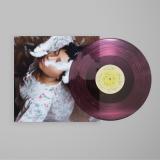
There is a hush most of us only knew as children, the warm drift between familiar household sounds and being carried to bed, a place that belongs to you and to some self you have not met yet. June McDoom’s debut full-length, Follow the Light, lives in that dream space and then keeps walking, slipping out of time and waking somewhere new, barely familiar enough to feel like home yet wholly your own. She came up in a Jamaican household on the edge of the Florida Everglades, an existence built of extended family, communal care, bass and harmonics. Her father, a carpenter and a student of sound, built his own speakers and kept three sound systems going across as many rooms. His low end would rise through her bedroom floor like some wayward cat while she lay above it with folk records, finding harmonies that were new and hers alone. Two musics in one room. Lushness as past and premonition. She found folk on her own, somewhere between the cast recording of The Sound of Music and Simon and Garfunkel, while everyone around her called it sleepy music. She did not mind being the only one. The solitude let her fall for harmony first, before words, before anything else, and harmony is still the thing she reaches for. Generationally speaking, the music was already in the air. Her grandfather, Colin Smith, is a distinguished mento man who played banjo and guitar and built his own rumba boxes, worked to keep Jamaica’s oldest acoustic folk form alive. Mento is the root of all of it: ska, rock steady, reggae, dub and everything after. He is the one who put a guitar in her hands. An inheritance, a gift and a map. Even her name is part of it, though she will tell you she landed on it more by feel than reason. She records as June McDoom, born Alyssa, June being a nickname one of her grandmothers, Joan, went by, a name she thought was cool to carry and simply liked the sound of. An etheric channel that reverberates all the same. A dub all its own.
Made slowly and by hand with her longtime partner Evan Wright, Follow the Light lays the harmony of folk over the rhythm of dub, with Dionne Warwick, Minnie Riperton, Pentangle and the washed guitars of Cocteau Twins haunting its outer edges. Voice and guitar seeking each other out first, then everything else stacked across long days in the studio they keep at home, restraint kept on purpose. The lead single “Without You” is the whole method surfacing, split open and sparkling like a geode in a creek bed. Angelic heroics, and nothing less.
At the heart is family. Her grandmother Aggie, the light behind “Memory,” guiding still. And underneath, the quieter truth the record keeps: none of us are only one person, but a continuum of selves, the ones who shaped us and the ones we have yet to meet. Future you is an ancestor your current self gets to greet. Press play and the same invitation is yours: A few minutes out of time, a place that turns familiar the longer you stay until you surface somewhere new and find it was yours all along
dovrebbe essere pubblicato su 16.10.2026
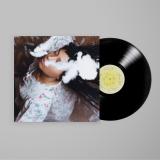
There is a hush most of us only knew as children, the warm drift between familiar household sounds and being carried to bed, a place that belongs to you and to some self you have not met yet. June McDoom’s debut full-length, Follow the Light, lives in that dream space and then keeps walking, slipping out of time and waking somewhere new, barely familiar enough to feel like home yet wholly your own. She came up in a Jamaican household on the edge of the Florida Everglades, an existence built of extended family, communal care, bass and harmonics. Her father, a carpenter and a student of sound, built his own speakers and kept three sound systems going across as many rooms. His low end would rise through her bedroom floor like some wayward cat while she lay above it with folk records, finding harmonies that were new and hers alone. Two musics in one room. Lushness as past and premonition. She found folk on her own, somewhere between the cast recording of The Sound of Music and Simon and Garfunkel, while everyone around her called it sleepy music. She did not mind being the only one. The solitude let her fall for harmony first, before words, before anything else, and harmony is still the thing she reaches for. Generationally speaking, the music was already in the air. Her grandfather, Colin Smith, is a distinguished mento man who played banjo and guitar and built his own rumba boxes, worked to keep Jamaica’s oldest acoustic folk form alive. Mento is the root of all of it: ska, rock steady, reggae, dub and everything after. He is the one who put a guitar in her hands. An inheritance, a gift and a map. Even her name is part of it, though she will tell you she landed on it more by feel than reason. She records as June McDoom, born Alyssa, June being a nickname one of her grandmothers, Joan, went by, a name she thought was cool to carry and simply liked the sound of. An etheric channel that reverberates all the same. A dub all its own.
Made slowly and by hand with her longtime partner Evan Wright, Follow the Light lays the harmony of folk over the rhythm of dub, with Dionne Warwick, Minnie Riperton, Pentangle and the washed guitars of Cocteau Twins haunting its outer edges. Voice and guitar seeking each other out first, then everything else stacked across long days in the studio they keep at home, restraint kept on purpose. The lead single “Without You” is the whole method surfacing, split open and sparkling like a geode in a creek bed. Angelic heroics, and nothing less.
At the heart is family. Her grandmother Aggie, the light behind “Memory,” guiding still. And underneath, the quieter truth the record keeps: none of us are only one person, but a continuum of selves, the ones who shaped us and the ones we have yet to meet. Future you is an ancestor your current self gets to greet. Press play and the same invitation is yours: A few minutes out of time, a place that turns familiar the longer you stay until you surface somewhere new and find it was yours all along
dovrebbe essere pubblicato su 16.10.2026
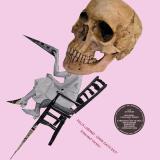
* long version / previously unreleased on vinyl
** exclusive / previously unreleased
Felix Laband's highly acclaimed electronica masterpiece album "Dark Days Exit" (2005) is now available as an Extended Version 2LP vinyl. Originally planned for last year's 20th anniversary, this special edition features a new design by Felix Laband and includes a double-sided DIN A2 art print. Dark Days Exit features four exclusive tracks, alongside five vinyl-only tracks available for the first time in their original long versions. Listening to the key track, Sleeping Household, on Dark Days Exit is unsettling: like being an impostor rambling around an uncanny house, a Lynchian leitmotif in the form of a young girl divulging secrets that you probably shouldn't hear. Dark Days Exit is an album that paints an interior landscape, an invitation to transgress private thresholds. Made with old-school production tools that require hands-on application, Dark Days Exit is a sound-production tour de force. The music is as wide as the savannah and microscopic at the same time, a lesson in what can be achieved when 'music' is placed on an equal footing with sound as a phenomenon, by an artist who decides to apply themselves without reserve. The masterful manipulation of reverb and delays and hyper-detail was a generation ahead of its time, and Dark Days Exit is preferred by audiophiles for testing their systems. Dark Days Exit is intimate, demanding, and a masterclass in tension, and Laband's ability to use all sound without hierarchy to paint a detailed personal vision — one that is less overtly political and streetwise than on subsequent albums — is unsurpassed. Most discerning listeners are into music because, in the hands of a master, it can manipulate our mood and transport us. Felix Laband opens with a sonic portrait of spring happiness and gradually dismantles the atmosphere in front of our ears, as epitomised by the haunting track Black Shoes. No sooner are we afraid than the artist drops us off where we started. In many ways, the intimacy derives from the tight group of friends and believers whom Laband corralled as contributors: Mark van Niekerk (xylophone, "Miss Teardrop"), Jane Rademeyer (clarinet, "Black Shoes," "Radio Right Now"), Brendon Bussy (mandolin, "Black Shoes"), and Derek Gripper (sampled violin, used throughout) and Alex van Heerden on Minka. The difficulty in categorising Dark Days Exit is probably due to Laband listening mostly to ambient and classical music at the time, and consequently registering the album at the lush, cinematic end of the electronic spectrum. There is poise and restraint in the spare use of beats, and when they do appear, they hit hard. Forged in the optimistic post-apartheid years, Dark Days Exit is music about life and death, spanning hope, despair, terror, tension, with humour and empathy. Twenty one years on, the album's gravity endures, due to its almost perverse authenticity, its timeless themes of hope and despair, and its apex level of technical mastery. The additional, immaculately produced tracks add new rooms to the uncanny house we are invited into.
dovrebbe essere pubblicato su 16.10.2026

A document of chill-out room dreamscapes transmitted from San Francisco circa 1993-1994.
Rooted in live improvisation and arriving at the sweet spot where nascent dance music collided with dub tradition, Selene Songs marked an early highpoint for Sunshine and Moonbeam Jones' enduring partnership as Dubtribe Sound System. This collection of dreamy, harmonious grooves and ambient excursions were recorded between November 1993 and January 1994, captured live in the chill-out room at the duo's legendary Come-Unity parties held at their home on Bryant Street in San Francisco.
Selene Songs was originally released on Chicago-based label Organico in 1995 as a CD and abridged 12" EP. Now it receives a full reissue that spreads the blissed-out majesty of the full seven-track album across a double vinyl pressing and CD digipak edition. Across all formats, Kristen Anderson's original artwork has been faithfully reproduced.
“… All the elements of classic ambient dub with the Tribe’s own sense of love wonderment. One from the heart." - Muzik Mag - 1995
“ We have faith that the universally accessible warmth oozing from these tracks will eventually entice a larger audience." - Billboard - 1995
Number 1 on the Eastern Bloc shop chart - Muzik Mag - 1995
dovrebbe essere pubblicato su 30.10.2026

A document of chill-out room dreamscapes transmitted from San Francisco circa 1993-1994.
Rooted in live improvisation and arriving at the sweet spot where nascent dance music collided with dub tradition, Selene Songs marked an early highpoint for Sunshine and Moonbeam Jones' enduring partnership as Dubtribe Sound System. This collection of dreamy, harmonious grooves and ambient excursions were recorded between November 1993 and January 1994, captured live in the chill-out room at the duo's legendary Come-Unity parties held at their home on Bryant Street in San Francisco.
Selene Songs was originally released on Chicago-based label Organico in 1995 as a CD and abridged 12" EP. Now it receives a full reissue that spreads the blissed-out majesty of the full seven-track album across a double vinyl pressing and CD digipak edition. Across all formats, Kristen Anderson's original artwork has been faithfully reproduced.
“… All the elements of classic ambient dub with the Tribe’s own sense of love wonderment. One from the heart." - Muzik Mag - 1995
“ We have faith that the universally accessible warmth oozing from these tracks will eventually entice a larger audience." - Billboard - 1995
Number 1 on the Eastern Bloc shop chart - Muzik Mag - 1995
dovrebbe essere pubblicato su 30.10.2026
Emerging from a suspiciously warm corner of the edit underground, this limited white label press sees NYU & NS (or N-You-Up & Nick Studer) quietly tampering with two choice modern soulful cuts from a certain Mr .P, 'Come' and 'Wrong'.
While the originals do quite a lot of the heavy lifting, these two have been given a little more room to misbehave.
The edits keep the soul, swagger and unmistakable DNA of the originals intact, while adding extra groove, punch and just enough dancefloor mischief to cause problems after midnight
dovrebbe essere pubblicato su 30.10.2026

The final chapter of The Third Room's curator-led series is shaped by GiGi FM, an artist whose work moves fluidly between club functionality, emotional storytelling and immersive sound design. Through her productions and performances, she has developed a distinct language where rhythm, atmosphere and movement exist in constant dialogue. For the closing chapter, the focus lies on cohesion. Bringing together artists connected through a shared sensitivity for groove, detail and space, the release unfolds through percussive structures and atmospheric elements that move with clarity, depth and intention. The Half Bearded Man by Fergus Sweetland opens the record. A rough yet detailed rhythmic framework, syncopated percussion and a rolling bassline create forward motion, while softer elements and a subtle vocal layer introduce a contrasting sense of lightness, drawing the listener into the track. On Shark Attak, D-Leria places percussion at the centre, but with a more restrained approach. Polyrhythmic bleeps and high-frequency sweeps weave around the groove, maintaining depth and tension without becoming intrusive, giving the track a quiet but persistent drive. The B-side opens with one of its defining moments: Anukari, a collaboration between Efdemin and GiGi FM. Bringing together two distinct approaches, the track unfolds as a layered and atmospheric piece: detailed percussion, connecting textures and subtle melodic fragments create a sense of depth that feels both modern and slightly otherworldly, while remaining inviting and grounded. Closing the record, Even by Fireground reduces the elements further. Warm chords and a restrained rhythmic core create an open, enveloping space, balancing softness with tension and allowing the track to unfold with a quiet sense of momentum. Across all four tracks, the release remains tightly cohesive: built on groove, space and carefully placed detail. As the final entry in the series, it shifts the focus from structure to flow, offering a closing chapter that feels immersive, connected and complete. A1 Written and Produced by Fergus Sweetland | A2 Written and Produced by Giuseppe Scaccia | B1 Written and Produced by Giulia Fournier & Philip Sollmann | B2 Written and Produced by Angela Dragonetto & Danielle Paduano Mastered by Ahmet Sisman (The Third Room Studios) Artwork by Charlotte Ernst Design by Daniel Bornmann (STUEDIO.XYZ) Distribution by Clone Pressing by Matter Of Fact
Disponibile in Stock e pronto per la spedizione
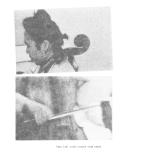
Faitiche presents the debut solo album by cellist, sound artist, and composer Topu Lyo: “quiet scenes from tokyo” brings together sixteen miniatures for solo cello and tape echo that oscillate between abstracts drones and rhythmic pizzicato sketches – all recorded at Topu’s Tokyo apartment. The constant traffic noise from a nearby highway has become an accompanying soundtrack for his compositions and can be heard on the recordings. Topu’s playing is marked by a distinctive idiom oriented more towards abstract electronic studio effects than classical technique.
The artist spoke to Jan Jelinek about his work:
JJ: A solo cello album may seem like an odd fit for a label that has to date released only music that is electronic in the broadest sense. But I think “quiet scenes from tokyo” complements the Faitiche repertoire exceptionally well. Its sixteen miniatures showcase the cello in all its complexity: the bowed passages sometimes recall a tape feedback drone; the pizzicato playing conjures up the percussion recordings of Moondog; and the abstract textures might be mistaken for the product of a granular sampler rather than rapid finger work on the cello. I’m constantly surprised by just how rich and varied this album is – without ever losing the charm of its sketch-like quality. Could you say a few words about the making of your album – first of all, from a rather technical perspective: what production tools did you use, and why?
TL: My production tools were very sparse. Just a solo cello and my Roland 301 Space Echo, which I only used at the end, running everything through it during mixing, tape only. After years of working with electronics, pedals, and synthesizers, moving to Tokyo pushed me toward minimizing my setup. But my aesthetics shifted too, toward simplicity. I wanted to strip everything back to just the acoustic cello and see how far I could push it — replicating some of my favorite electronic effects through extended technique: slow portamento, LFOs, filters, detune, noise. I’d also been listening to a cassette of ocean sounds for years. When I moved to Tokyo I was horrified to find myself living directly across from a freeway. Eventually the freeway started sounding almost identical to the ocean — and that ended up playing a prominent part in the recording.
JJ: That’s super interesting: mimicking electronic production as a compositional idea for the cello! You say the sound of the freeway is crucial to the album: I, too, tend to interpret steady traffic noise as a positive soundscape – do we hear the freeway on the album? I can also hear other field recordings, for example on “a street car with announcements”. Can you say a bit about how these field recordings influence your playing?
TL: Yes, you can hear the freeway on the album! The freeway is most prominent in “old trees in lonely spring”, “yuyake koyake”, and “the moon” (you can clearly hear individual cars). When I first began recording I had my balcony door shut tightly, but after a while I began leaning into the highway sound and slowly opening the door little by little to control the amount of noise. “streetcar with announcements” was a moment I was recording and a car passed by making announcements in the background. I loved how it sounded! Same thing with “yuyake koyake”, and later I realized that every day at 5pm the same song plays to mark sunset, telling children it’s time to go home. Having this bedrock of sound puts less pressure on me to put music on top or to play more notes.
JJ: It’s astonishing how much this differs from what I’d imagined: I’d been picturing peaceful landscape recordings, but had never thought of a freeway. Which goes to show how open to interpretation traffic noises are. So the room by the freeway had a major influence on the album – how are you going to perform it live?
TL: The contrast between the freeway and the beautiful landscape in my head couldn’t have been starker. I too was imagining a beautiful landscape in which to create the album, but somehow it still worked out. I've been going back and forth a lot on live shows and I think the most honest way is to have it the most stripped down. I was thinking of using traffic samples etc., but I think the duet really comes from the background sounds from every unique venue/environment. So as it stands, I’ll just be doing acoustic solo cello.
dovrebbe essere pubblicato su 06.11.2026
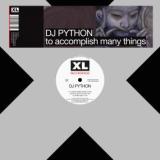
5 track LP
Follow-up to 2025's “i was put on this earth” (“a triumph of gentle reverie and quiet upheaval” - Pitchfork). DJ Python’s music has always occupied the interesting space in between - reggaeton's low pulse, ambient's patience, deep house's forward motion, the abstracted sounds of trip-hop, shoegaze, and pop - and this new EP finds him stretching that even further. A companion to “i was put on this earth”, the new EP shares that project's creative DNA while pulling in its own direction.
DJ Python (aka Brian Piñeyro) steps more fully into the role of singer and songwriter, sharing the mic across a set of collaborators including Ari, Tony Bontana, and Eden, while still carving out room for hypnotic solo songs.
Across five tracks, the project moves fluidly while retaining the captivating melodies, atmospheric textures, and rhythmic innovation that defined Python's earlier recordings - Mas Amable, Angel, and Club Sentimientos Vol 2 - expanding those sounds into something looser, warmer, and harder to categorise.
dovrebbe essere pubblicato su 20.11.2026

Following years of quietly refining her craft, Dilemma now returns with her debut album A River Without Banks, landing this August on Spearhead Records.
Known for her effortlessly deep and soulful approach to drum & bass, Dilemma has become a respected name among listeners who favour atmosphere, musicality and understated emotion over quick trends. A River Without Banks feels like the culmination of that journey, a rich and carefully crafted body of work that moves between warm liquid rollers, deeper late-night textures and moments of genuine introspection.
The album showcases Dilemma’s versatility without ever losing the unmistakable character that has made her music so recognisable. Tracks like “You Do It To Me” capture her signature laid-back soul, while collaborations including “Watch” with BCee and “Days To Come” featuring In:Most & Lauren Archer bring a cinematic and emotional depth to the project. Elsewhere, cuts like “Usurper” and “Vibe Check” reveal a heavier, more stripped-back edge while still remaining rooted firmly in groove and feeling.
Rather than chasing peak-time moments, A River Without Banks unfolds patiently and naturally, rewarding repeat listens and drawing inspiration from across the spectrum of soulful drum & bass culture. There’s a timeless quality to the album, music designed to stay with you long after the final track fades, whether heard in solitary moments or shared across packed rooms and late-night systems.
Released via BCee’s Spearhead Records, A River Without Banks continues the label’s long-standing tradition of championing thoughtful, emotionally rich drum & bass while further cementing Dilemma’s place as one of the scene’s most quietly consistent producers.
Disponibile in Stock e pronto per la spedizione

There is a quiet, seasoned assurance to how Heimyl operates. Perhaps best known under his Lazer Man moniker the Lyon based producer a fixture in France’s undergroove community.
He burrows deep into a groove and lets the room come to him. On this record, that patience yields a formidable four tracker engineered specifically for proper sound systems and slow-burn dancefloors.
The A side sets the trap with "I Want Speak," a masterclass in tension pairing a skippy lock groove rhythm with a fragmented vocal samples.
"Power Cat" maintains the momentum, threading bell-like melodic fragments through a rolling, hypnotic bassline with a light, remarkably effective touch.
The flip is where the record earns its weight, anchored by "Sector 14." Here, pads rise imperceptibly over a relentless groove, mounting a subterranean pressure.
The closer "New Place" shifts gears gracefully, cooling the room down with a looser, sophisticated house sensibility, a natural exhale that hints at Heimyl's broader sonic palette.
Order now. Collecting orders for repress.
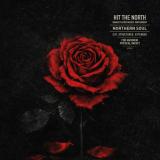
Hit the North is a DJs’ movement
Not a label. Not a revival. A discipline.
Over the years, the collective travelled across multiple states in the US and parts of the UK, digging deep into private collections, basements, garages, storage rooms and forgotten boxes.
They weren’t looking for classics.
They weren’t looking for hits.
They were looking for attempts.
Artists chasing something bigger than themselves.
Trying to sound like Motown.
Trying to sound like Detroit.
Trying to sound like the records that saved them.
Many of them dreamed — at best — of becoming a one hit wonder.
Most never got that far.
Some never crossed a state line.
Some never crossed the street at the end of their block.
Some never played outside their hometown.
Some never played at all.
What they left behind were fragments.
Raw versions.
Unfinished recordings.
Alternate takes.
Rejected mixes.
Test pressings.
Acetates passed quietly from hand to hand.
Sometimes with real credits.
Sometimes with fake ones.
Sometimes with handwritten labels leading nowhere.
Titles that didn’t match the music.
Stories that changed every time you asked.
Often, the trail simply disappeared.
What remained was intention.
Energy.
Urgency.
Hope pressed into sound.
So the collective worked on it.
They edited certain parts.
Extended others.
Cut what didn’t serve the floor.
Not to modernise.
Not to rewrite history.
But to unlock the power that was already there.
The result sounds like Northern Soul pushed to its breaking point.
Fast. Physical. Emotional.
Built for movement.
Some circulated privately.
Others were never pressed at all.
Recorded in personal studios, borrowed studios, friends’ rooms, temporary spaces.
Always outside the system.
This is not nostalgia.
This is unfinished business.
Disponibile in Stock e pronto per la spedizione

The moment the instantly recognizable intertwined guitar passage on the title track to the Eagles' Hotel California begins, the record's genius becomes obvious all over again. Ranked the 118th Greatest Album of All Time by Rolling Stone, certified by RIAA as the third best-selling LP in history, and considered the foundation on which the Golden State's mid-‘70s music scene was built, the 1976 landmark is a music staple immune to shifts in trends, eras, and styles. Fearlessly addressing the chaos and consequences of American life, its songs remain strikingly prescient and gain creedence with each passing day.
Mastered from the original analogue master tapes, pressed on MoFi SuperVinyl, and limited to 17,500 numbered copies, Mobile Fidelity's UltraDisc One-Step 180g 45RPM 2LP vinyl box set ensures you will want to permanently check into and never leave this particular Hotel California. Up to the herculean task of standing head and shoulders above all prior reissues, this collectible edition plays with extreme clarity, organic richness, tube-like warmth, massive dynamics, and microscopic levels of detail. You'll be able to practically smell the colitas and feel the breeze in your hair. Songs come across with an epic sweep and feature immersive, front-to-back soundstages that allow the music unprecedented air, roominess, and separation. As for the noise floor? It's basically as invisible as the spirits that waft in the corridors of the unforgettable title song.
Aesthetically, the premium packaging and presentation of the UD1S Hotel California pressing befit its esteemed status. Housed in a deluxe box, it features gorgeous foil-stamped jackets and faithful-to-the-original graphics that illuminate the splendour of the recording. From every angle, this UD1S reissue exists as a curatorial artefact meant to be preserved, touched, and examined. It is made for discerning listeners that prize sound quality and production, and who desire to fully immerse themselves in the art – and everything involved with the album, from the renowned cover art to the meticulous finishes.
Indeed, the opportunity to zero in on all the particulars of the 26-million-selling Eagles record dubbed "a legitimate rock masterpiece" by vaunted Los Angeles Times scribe Robert Hilburn has never been better. A global phenomenon that marked the band debut of guitarist-singer Joe Walsh, Hotel California continues to resonate and connect with listeners of all generations taken by its narrative depth, stark directness, picturesque melodies, daring majesty, and ardent emotionalism. Adorned with a breathtaking exterior photograph of the Beverly Hills Hotel that serves as the simultaneously haunting and alluring cover art, and rounded out by a rear-cover shot of the Lido Hotel lobby that reinforces a notion that teeters between permanence and transience, Hotel California is brilliantly tied to a specific place that functions as a universally understood metaphor for the American Dream.
Confronting the darker undercurrents and oft-ignored constructs attached to that romantic notion, the record's songs revolve around a host of shared themes: excess, mobility, stability, illusion, fame, destruction, and idealism included. Notably, Hotel California appeared at a crucial junction in American history: During the country's bicentennial and amid escalating controversies related to the Vietnam War, energy crisis, and governmental corruption. That the Eagles manage to channel such cultural, social, and economical matters into a cohesive, stately, big-picture statement is alone a stupendous feat. That the album's reach, boldness, vitality, accessibility, and understated intensity have never waned make it a marvel.
Reflecting on Hotel California 40 years after its original release, and indirectly explaining its enduring appeal and increasing relevance, singer-songwriter Don Henley confirmed the record pertains to the "loss of innocence, the cost of naiveté...the difficulties of balancing loving relationships and work, trying to square the conflicting relationship between business and art; the corruption in politics, the fading away of the Sixties dream of ‘peace, love and understanding.'"
It can be argued that Henley and company squarely hit on and drove home those ideas in the surreal title track, chart-topping "Life in the Fast Lane," and grand "The Last Resort" alone. But that would miss the forest for the trees. Experienced as an unbroken whole, complete with the pristinely shot imagery and physical grooves, Hotel California unfolds like a geography-conscious saga by James Michener and plays like colour-saturated movie shot on 70mm film by Martin Scorsese. It's about our collective and individual decisions – and the shape of our past, present, and future. And, just like that conjured by our imaginations, Hotel California continues to take on a life of its own.
More About Mobile Fidelity UltraDisc One-Step and Why It Is Superior
Mobile Fidelity Sound Lab's UltraDisc One-Step (UD1S) technique bypasses generational losses inherent to the traditional three-step plating process by removing two steps: the production of father and mother plates, which are created to yield numerous stampers from each lacquer that is cut. For UD1S plating, stampers (also called "converts") are made directly from the lacquers. Since each lacquer yields only one stamper, multiple lacquers need to be cut. Mobile Fidelity's UD1S process produces a final LP with the lowest-possible noise floor. The removal of two steps of the plating process also reveals musical details and dynamics that would otherwise be lost due to the standard multi-step process. With UD1S, every aspect of vinyl production is optimized to produce the best-sounding vinyl album available today.
MoFi SuperVinyl
Developed by NEOTECH and RTI, MoFi SuperVinyl is the most exacting-to-specification vinyl compound ever devised. Analogue lovers have never seen (or heard) anything like it. Extraordinarily expensive and extremely painstaking to produce, the special proprietary compound addresses two specific areas of improvement: noise floor reduction and enhanced groove definition. The vinyl composition features a new carbonless dye (hold the disc up to the light and see) and produces the world's quietest surfaces. This high-definition formula also allows for the creation of cleaner grooves that are indistinguishable from the original lacquer. MoFi SuperVinyl provides the closest approximation of what the label's engineers hear in the mastering lab.
Questo articolo non è stato ancora rilasciato. È possibile pre-ordinare il prodotto ora.

Following the release of the digital single, Berlin-based groove collective The Ruffcats and Chicago soul singer Doug Shorts return with a strictly limited 7-inch vinyl edition of “I Ain’t Worried” , pairing the original retro-soul cut with an exclusive remix by none other than Erobique. The original version is a timeless slice of analog soul: laid-back yet confident, driven by a deep pocket rhythm section, warm horn arrangements, and Doug Shorts’ unmistakably smooth, Chicago-rooted vocal delivery. Written by The Ruffcats and Doug Shorts, the song carries a quiet message of resilience and inner calm, echoing the spirit of classic late-’60s and early-’70s soul without ever slipping into pastiche. On the flip side, Erobique brings his unmistakable touch to the track: playful, groove-heavy, and full of character. Known for his ability to bridge deep musicality with infectious dancefloor energy, the Hamburg-based producer reimagines “I Ain’t Worried” as a loose, funk-infused roller, retaining the song’s soulful heart while nudging it firmly toward late-night dancefloors and sweaty club rooms.
Originally created in the wider context of the charitable Soul Rabbi – Shine On project, “I Ain’t Worried” has since taken on a life of its own. This 7-inch release celebrates that journey, honoring the song’s roots in community and friendship while expanding its reach through a fresh, club-ready reinterpretation. Pressed on classic 7-inch vinyl, this release is aimed squarely at soul lovers, DJs, and collectors alike: a record that feels just as at home in a crate next to vintage originals as it does in a contemporary DJ set.
Disponibile in Stock e pronto per la spedizione

ALERT: BIG 90s ITALIAN RAVE COMP - a lot of very in demand tunes on here.
Navigators
Franco Falsini and the Interactive Test Universe
There are musicians who follow their time.
And then there are those who seem to move along a different trajectory—like navigators crossing sonic eras without ever truly belonging to any one of them. The story of Franco Falsini belongs to the latter. It is a story that begins long before raves, before techno, before the word “electronic” had even become a recognizable musical genre. A story that moves across continents, technologies, and sonic visions, eventually arriving at a small creative laboratory born in Italy in the early 1990s: Interactive Test. This compilation is a fragment of that universe. But as often happens with the hidden histories of music, understanding it requires going back. Far back.
The Beginning: Machines, Tape and Space
In the late 1960s Franco Falsini leaves Italy and moves to the United States. It is not merely a geographical journey—it is also a journey into a new idea of music. At the time, synthesizers are only just emerging from research laboratories. Multitrack tape recorders allow musicians to build entire sonic worlds on their own. Technology is still far from standardized: every studio is almost an experimental workshop. In Virginia, Falsini builds one of his own. Among cables, oscillators, electric guitars and reels of magnetic tape, a kind of music begins to take shape that resembles nothing else being made at the time. It is not simply rock, and it is not yet truly electronic. It moves somewhere in the space between the two. Out of these explorations emerges Sensations' Fix, the project through which Falsini releases a series of albums during the 1970s. Records that seem to come from a parallel dimension: cosmic landscapes, electronically treated guitars, synthesizers drifting like satellites. Many years later those albums would be rediscovered as visionary works. But at the time they were simply the result of relentless curiosity. A curiosity that would never fade.
The City That Never Sleeps
In the 1980s Falsini’s trajectory leads him to New York. The city is a sonic organism in constant transformation. In its clubs and recording studios something entirely new is beginning to take shape: music built from drum machines, sequencers, and samplers, created for the body before the living room. It is the dawn of modern dance culture. Falsini works as a sound engineer, producer and experimenter. From close range he observes electronic music transforming into a global language. Machines become more accessible, computers begin entering studios, and rhythm takes on an increasingly central role. Yet even in this phase Falsini does not simply follow what is happening. He absorbs. Observes. Reimagines. When he eventually returns to Italy, he brings back not only technical experience but also a clear vision: the conviction that electronic music is an open space, a territory still waiting to be explored.
Tuscany, Early 1990s
At the beginning of the 1990s something is happening in Italy as well. In clubs, abandoned industrial warehouses and clandestine parties, a new scene is beginning to form. It is rave culture: a spontaneous movement bringing together DJs, producers and listeners in a collective experience driven by rhythm, technology, and creative freedom. It is within this context that Franco Falsini, together with his brother Riccardo, creates Interactive Test.
The name almost sounds like a scientific experiment. In many ways, it is. Interactive Test does not emerge as a traditional record label. It begins as a laboratory—a place where ideas, sounds and musical identities can be tested and explored. Around the Falsini studio in Tuscany a small constellation of artists and DJs begins to gather, helping to shape the sound of Italy’s emerging electronic scene. Among them are Andrea Giuditta, Francesco Farfa, Gabry Fasano, Roby Mastelloni, Roby J and many others. Each brings a different musical sensibility. But they all share the same intuition: electronic music is not a genre. It is a language.
The Laboratory of Identities
One of the most fascinating aspects of the Interactive Test universe is its constant play with identity. Franco Falsini releases music under several different names: Open Space, Youth Wave, Agent Fylfoyt, Man Myth Magic. These are not simply pseudonyms.
They are different sonic perspectives, as if each project were a window opening onto a parallel musical universe. Open Space, for example, explores more atmospheric and visionary territories. Youth Wave moves between electronic groove and club-oriented rhythms. Other projects experiment with digital psychedelia or hypnotic techno textures. Interactive Test becomes something more than a label. it becomes an ecosystem.
Domestic Machines, Infinite Worlds
Looking back today at the technology used in those productions, one might almost smile. Many tracks were created on Amiga computers, MIDI sequencers and analog synthesizers wired together in home studios—tools that appear modest when compared to today’s digital possibilities.
Yet precisely these limitations became a creative force. Every sound had to be built, shaped and reinvented. Sequences developed slowly, almost like living organisms. The tracks did not always follow traditional dance music structures; often they felt like genuine sonic journeys. Music built from space.
A Hidden Constellation
Many of the records released by Interactive Test in the 1990s remained for years almost invisible objects, circulating quietly among DJs, collectors, and devoted listeners. Yet it is precisely this underground existence that helped preserve them. Listening again today, one perceives something rare: the feeling of music that does not fully belong to its own time. Music suspended between different eras. Perhaps because it comes from a vision that both precedes and transcends trends.
Continuing the Journey
Looking at Franco Falsini’s entire path—from the electronic psychedelia of Sensations’ Fix to the rave culture of the 1990s—a surprisingly coherent line emerges.
A line defined by exploration.
Each project, each pseudonym, each record appears as a new route within the same great sonic voyage.
Interactive Test was one of its stations.
A laboratory.
A community.
A creative platform.
This compilation gathers some of its traces.
Not as a simple archive of the past, but as a map of a musical territory that continues to expand even today.
Like all true sonic explorations.
Disponibile in Stock e pronto per la spedizione

Some tracks don’t need fixing. They just need a bit more room. South African composer and keyboard wizard Don Laka has been quietly sitting in DJ bags for years, especially with people who like their synth music warm, slightly
mysterious, and impossible to date properly. Somewhere between jazz funk, township pulse and studio electronics, but really just its own thing.
Stages was an obvious candidate for extension. Prins Thomas what he does best here: opens the arrangement, lets the synth lines breathe, stretches the groove until it starts floating a little higher off the ground. Nothing forced, nothing added for
the sake of it. Just more of a very good thing. I Wanna Be Myself gets a gentle nudge from Gerd Janson. The idea was simple: keep the personality, and give DJs a version that lands naturally in a modern set without losing the original charm. It’s still the same track, just standing a bit straighter.
And because the source matters, the original version of “Stages” is here as well. Always good to remember where the magic started. Three versions, no drama. Just strong music that already knew what it was doing.
Disponibile in Stock e pronto per la spedizione

PLNK007 sees Planka Records return with another Various Artists release, bringing together a selection of producers connected by a shared approach to the underground sound. Tracks shaped by long nights, from intimate rooms and raves to early morning afters.
Across the EP, rolling grooves and subtle tension take the lead. Each cut keeps its own identity, yet a shared feeling runs throughout the record.
This new chapter in the Planka series follows the label’s ongoing interest in collaboration and community, where different voices meet naturally on the floor, aiming to preserve that distinctive sound within the scene.
Disponibile in Stock e pronto per la spedizione
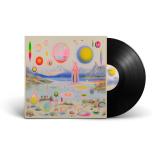
Selection of IKIGAI Album by Nadia Struiwigh. IKIGAI was born in the quiet space between grief and remembering... Made entirely on hardware, from my living room in Berlin near Hermannplatz (my dad's name is Herman -- the odds), in the months my father passed away. Every sound, every sequence, every texture carries his fingerprint. Not because he made music, but because he made me love gadgets. Circuits, signals, blinking lights. He was the man who opened me up to machines and taught me how, eventually, to listen to them and use them for my craft. The name IKIGAI, a Japanese word for ''reason for being,'' found me when I was at a crossroads. The kind where you ask yourself: Why am I still here? What am I still creating for? What part of me still believes in beauty when everything feels like it's falling apart? These pieces came through slowly, on Japanese gear like Yamaha SEQTRAK, KORG, Roland -- like threads weaving a tapestry I didn't know I was making. Each track is a kind of purge... to him, to myself, to the listeners who find themselves in the in-between. The space where you're not who you were, and not yet who you're becoming. I found myself back into soundscapes and Ambient with a touch of Electronica. I weaved in sounds I captured from daily life, memories -- like the laugh of my sister. I built in silence and let the machines cry for me and let them tell the story I couldn't find the words for. IKIGAI is spacious. It's not trying to impress anyone. It's trying to just be, and hold space for all kinds of emotions. It moves like memory... slow, sacred, shifting. This release needs to be close to home, and will be released on my own imprint Distorted Waves, on the day 11.11 -- which refers to my first album that my dad had hanging up in his shed. For my father. Nadia
Disponibile in Stock e pronto per la spedizione

2026 repress
On his sixth album, The Arc of Tension, the Berlin based DJ, label owner and producer OLIVER KOLETZKI yet again presents his remarkable vision of contemporary electronic music, while he assumes the role of a storyteller. The Arc of Tension speaks to its listener as a singular, self contained work, which communicates by way of its natural flow and arc of suspense. The latter is mirrored not only in the multifarious narrative of the actual album, but can also be understood as evidence for its creator's long musical history. While Koletzki focussed on a diverse range of vocal collaborations on his previous long players, he now moves on to a different form of storytelling, rooted in the quiet confidence of a veteran musician, as well as the hectic lifestyle of a globally in demand DJ. The Arc of Tension is the psychonautic journey through the various continents of Oliver's consciousness. The quiet chirps and warbles, which initially unfold on the opener 'A Tribe Called Kotori', thus act as a loose associative bridge to 'Der Muckenschwarm', Oliver's big breakthrough hit of 2005. The first minutes of the album leave no room for doubt - we are immediately locked into an autobiographical world of sound that knows how to captivate from the get go. The dreamy, exotic timbres of the downbeat tracks 'By My Side', Tankwa Town' and 'Byron Bay' penetrate our minds in a subtle yet purposeful manner. But soon the tension tightens and organic sounds one by one evolve towards a sterner, electronic cadence.
Disponibile in Stock e pronto per la spedizione

Suicide AFTR 7 moves deeper into the shadows on this release, stripping things back while letting the groove hit harder. Built on pumping 808s, restless synth lines, and a subtle acid pulse, the project blends electro, cold wave, and leftfield instincts into something leaner and more focused than earlier records. There’s a proto-80s spirit running through it: raw, tactile, and slightly unpolished, where tension lives in the negative space and repetition becomes hypnotic rather than obvious.
For the first time, real bass guitar and drums enter the picture, adding human weight beneath the electronics without diluting Suicide AFTR 7’s core identity. The result feels rawer, more intimate, and quietly confrontational. Music for late nights, dim rooms, and inward motion. Still unmistakably SA7, but closer to the bone.
Disponibile in Stock e pronto per la spedizione

Soul Quest Records reaches a milestone moment with its 20th release, welcoming a debut that feels anything but new. Enter Sean Green… a mysterious new name whose sound suggests deep roots, sharp instincts, and the quiet confidence of a seasoned producer operating under a fresh alias. While details remain deliberately sparse, the music speaks volumes.
Disponibile in Stock e pronto per la spedizione

2025 Reissue.
Münchenbuchsee, a suburb of Bern, Switzerland. Stephan Eicher is the youngest of three children. His father, a radio and TV repairman, is also a jazz violinist and a sound tinkerer in his spare time. In the family home's converted fallout shelter turned studio, Mr. Eicher experiments with homemade sequencers, tortures handcrafted drum machines, and abuses reel-to-reel tape recorders—all under the fascinated gaze of young Stephan.
The boy quickly develops a musical curiosity, exploring sound through various experiments and wanderings. Alongside his younger brother Martin, Stephan crafts audio plays on a homemade multi-track recorder (essentially several cassette decks hooked together!), which they write, record, add sound effects to, and perform for family and friends. Just a couple of nice kids, really...
Then comes 1972, and Lou Reed's Transformer album changes everything for the Eicher kids. For 13-year-old Stephan, it's a revelation—especially "Vicious", the opening track, which he plays on repeat for months. He convinces his father to buy him an electric guitar. Not stopping there, his father also builds him a tube amp using an old radio.
Then comes adolescence. A rough one. Stephan leaves home at 16 and moves to Zurich. With obvious artistic talent, he persuades his art teacher to help him get into F+F, a radical, alternative art school—despite his young age. Accepted, he starts learning video techniques, determined to become a filmmaker.
At F+F, Stephan organizes Dada-style happenings and concerts with a group of friends known as the Noise Boys. Among them: one of his teachers on bass, Veit Stauffer on drums (who would later found ReR/Recommended Records), his girlfriend Sacha on vocals, and Stephan on guitar. In one of their early performances, they release a remote-controlled mouse covered in dull razor blades into the audience to create panic and chaos. Keeping with this aggressive, confrontational spirit, they once played a concert while wearing headphones blasting Tristan and Isolde, trying to perform their own songs simultaneously—to maximize the cacophony. The goal was always the same: clear the room.
Their “songs,” if you can call them that, followed suit. Take "Hungeriges Afrika", for instance—performed entirely with power drills and some drum feedback.
To make ends meet, Stephan returns to Bern on weekends to work as a waiter at the Spex Club, the city’s main punk venue. On September 16, 1980, during a show by proto-electro group Starter, the police raid the club and arrest everyone. Stephan, who manages to avoid arrest, seizes the opportunity to “borrow” Starter’s gear left behind. He suddenly finds himself in possession of a Roland Promars synth, a Korg MS20, and a gorgeous CR78 drum machine, which he runs through a Big Muff distortion pedal to get that perfect gritty sound.
He then sets out to reinterpret some Noise Boys tracks, reworking them during impromptu sessions recorded on a dictaphone (yes, a dictaphone—now the lo-fi sound makes more sense, doesn’t it?). He ironically titles the resulting cassette "Stephan Eicher spielt Noise Boys" ("Stephan Eicher plays Noise Boys"). This gem features seven tracks, which are the ones reissued here.
Back in Zurich, he visits his friends Andrew Moore and Robert Vogel, who have a DIY cassette duplication setup. They make 25 copies of Stephan Eicher spielt Noise Boys for Stephan and his friends. Robert encourages him to visit Urs Steiger of Off Course Records and play him the tape.
Without much hope, Stephan shows up at Urs’s office. But Urs is instantly hooked and suggests releasing a 7” single. Due to space constraints, they reluctantly drop two of the seven tracks ("Hungeriges Afrika" and "One Second"). As for the musical score featured on the cover—it was randomly chosen and remains a mystery to this day. Calling all music theory nerds!
The 7-inch is pressed in 750 copies and released in the first week of December 1980—a date Stephan remembers well, as it’s the same week John Lennon was killed. Smartly, Urs sends a promo copy to François Murner, Switzerland’s answer to John Peel, who hosts a show on alternative station Sounds. Murner falls in love with the record and starts giving it airtime. To Stephan’s surprise, sales follow—and people actually seem interested in his music.
Even this modest underground success scares Stephan a bit. He stops making music for a year and moves to Bologna, where he works as a programmer at Radio Città, a feminist radio station.
Meanwhile, Stephan’s younger brother Martin, who’s also involved in the punk scene, joins the band Glueams as a singer and guitarist. Glueams, named after the fanzine run by two of its members (drummer Marco Repetto and bassist GT), eventually rebrands as Grauzone. Stephan is invited to their shows to project hacked Super 8 visuals live on stage.
Urs Steiger, now working on a compilation titled Swiss Wave – The Album, asks Grauzone to contribute alongside bands like Liliput, Jack and the Rippers, The Sick, and Ladyshave (Fall 1980).
For the album, Martin tasks Stephan with producing their recording sessions. Under Stephan's artistic direction, two tracks emerge: "Raum" and "Eisbär". During "Eisbär", Martin plays a minimalist bass line borrowed from post-punk band The Feelies (just an open string). Drummer Marco Repetto struggles to keep time. Later that evening, unhappy with the takes, Stephan builds a four-bar drum loop from a ¼-inch tape and uses it instead of the flawed original. He then adds bleepy synths and wind sounds to complete the track’s icy vibe before handing it over to Urs.
The Swiss Wave – The Album compilation is released quietly at first, but things snowball thanks to "Eisbär", which eventually becomes a smash hit—selling over 600,000 singles.
Meanwhile, Stephan plays in a rockabilly band called SMUV (named after Switzerland’s social security agency) and begins producing artists, including the debut album of Starter (1981), which includes a more pop-oriented version of "Minijupe".
By early 1982, Stephan starts spending time with the post-punk girl band Liliput (formerly Kleenex). They’re older than him, and he happily drives them around in his Renault Major, acting as their roadie.
By 1983, Grauzone—signed to the major label EMI, which turned out to be a misstep—is falling apart. Stephan begins to pivot toward a more mainstream pop sound with his debut solo album Les Chansons Bleues.
But that... is already another story.
Disponibile in Stock e pronto per la spedizione
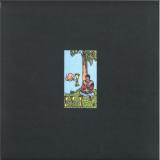
The breakout underground star of the past year, the deservedly hyped Thought Leadership returns with another X ideas: the deck this time chooses the suit of Cups. This new collection is closer to the Post-Punk tonality of Pentacles, than the breezy Balearic Jazz of Swords. Gone are the brushed drum samples and airy synths and in their place are BIG guitars, 808 thumps and a decidedly more prominent use of bass as a melodic device.
As the suit of Cups reflects the emotional heart of the Tarot, presented within are a further X pieces, this time displaying the full range and fervour of Thought Leadership.
You know the drill by now. Originally out on cassette only, we present the first ever vinyl issue. It's a hideously limited pressing of 300 for the world, so don't sleep on this.
Side A explores the emotional levels of consciousness; angst, joy, love, sorrow, relief, regret – they are all represented across the first seven tracks, and often within the same piece. XXI kicks us off with a huge tumbling D minor passage, layers and layers of guitar front and centre, whilst the drums pound away in the distance. Release is provided with a gorgeous G Dorian section, where we hear the bass take flight with a high melodic line.
We’re still in familiar Durutti Column meets Dif Juz territory here, but things switch up with XXII. This piece showcases a darker, more angular palette of guitars; think Alan Rankine (The Associates), or Deb Demure (Drab Majesty) in the unexpected harmonic shifts, knotty arpeggiated patterns and heavy, goth-adjacent modulation. A real love letter to 45+ years of darkly inclined guitar heritage.
XXIII enters the fray with tight, thumping 808s and Marr-esque guitar figures; and again, the bass providing heavy melodic counterpoint to the guitars. Enter chiming, lyrical lead phrasing, reminiscent of the eternal opening to "Everybody Wants To Rule The World". Another accidental perfect pop moment from the Thought Leader. Whilst on the topic of Tears For Fears, XXIV comes swinging out of the gate with some serious Sophisti-chug; we’re reminded of "Shout" in the A section, before being beautifully juxtaposed in the B section with more Vini-eqsue patterns, reminiscent of his timeless classic, Another Setting.
XXV gives us welcome pause to take stock midway through the A side. No drums this time, but instead a heartbreaking conversation between two guitars; think Kevin McCormick and David Horridge’s masterful Light Patterns, or perhaps even the early solo-Bill Connors mid-70s cuts for ECM. The moment of quiet reflection passes, and is quickly shattered by the thudding march of XXVI – this piece comes across like The Associates playing "Wicked Game"; heavy, moody, and utterly compelling. XXVII ends our journey across Side A with more Marr-inspired playing; one for the heads and already featured on mixes, this one is real testament to the vision of Thought Leadership.
Side B again takes us on a trip through three long-form semi-improvised pieces. XXVIII is like those classic Jonny Nash, early Melody As Truth releases, slowly unfurling, additional details introduced deliberately piece by piece, this idea builds across 7+ minutes culminating in some utterly joyous ebow fireworks at the end – well Balearic.
XXIX again, like XXV before it, dispatches the drums with a focus purely on melody and mood. The piece feels like a lost Save Room Theme from the Resident Evil series, pure golden age Capcom Sound Team vibes. Unadulterated aural nostalgia for hours spent with a PS1 in haze of hash.
XXX completes this majestic voyage with another Modal exercise; this time the Thought Leader has opted for the Lydian Mode. Beautifully dreamy, undeniably Soundtrack-y, and arguably the most concise distillation so far of everything this project stands for; drum machines, guitars, pedals, one-take improvised solos – XXX has the lot, and is surely destined for greatness.
So, another X epic statements for guitar, homespun with the humblest of means, for all the dreamers out there. The first ever vinyl release of IV Of Cups has been carefully remastered by Be With's engineer Simon Francis to ensure it sounds better than ever after its initial tape release. Cicely Balston's expert skills have made sure nothing is lost in the cut at Abbey Road Studios whilst the records have been pressed to the highest possible standard at Record Industry, in Holland. The original tape cover artwork, so crucial to Thought Leadership's striking visual aesthetic, has been rejigged for vinyl issue here at Be With.
The last 2 LPs flew. You have been warned.
Disponibile in Stock e pronto per la spedizione
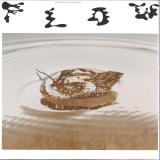
The union of Antwerp synthesist David Edren and Tokyo minimalist Hiroki Takahashi is a fit so natural as to feel preordained. Both traffic in subtle shades of contemplative electronics, marked by patience, space, and poetic restraint. And both have rich histories of curation and collaboration – Edren in the duo Spirit & Form alongside Bent Von Bent, and Takahashi as proprietor of the Kankyō record shop, as well as one fourth of cosmic ambient quartet UNKNOWN ME. Mutual fans of one another’s work, they began sharing stems in the latter half of 2020, which slowly blossomed into a collection of multi-hued compositions inspired by notions of connectivity and impermanence, translated for east and west: Flow | 流れ.
Opener “Dusk Decorum | 黄昏 礼節” maps the mood of what’s to come, elegantly pirouetting and percolating through an expanding vista of looming stars and half-light horizons. Takahashi describes Edren’s arrangements as evoking “a strange feel, something we haven't heard much of before.” The sensation is one of “in-betweenness,” a restless current whispering beneath the beauty, like seasons seen in time-lapse footage: flickering but infinite, transience turned permanent. Takahashi’s signature sculpture garden tones plot spiral patterns over which Edren cascades dazzling pointillist synthesizer coloration. The pieces veer between delicate and dilated, micro and macro, their aperture forever softly in flux.
From the oscillating orchestral lullaby of “Stalactime | 鍾乳石時計” to the sweeping, sparkling dream sequence closer, “Shift Register | シフトレジスタ,” the album achieves the elusive goal of being more than the sum of its parts. This is music of rare air, elevated and amorphous, shimmering just out of reach. Though Edren and Takahashi have yet to cohabitate the same room in person (a fact that should be rectified soon by an astute festival booker), their palettes and poise are perfectly paired, twin fragilities woven into seven radiant and regenerative vibrational states. The cover design of a beatific, beaded leaf rippling on the surface of a hidden pond aptly captures the record’s muted majesty. Takahashi’s quiet pride is justified: “We are very happy with this time-consuming and carefully crafted work.”
Disponibile in Stock e pronto per la spedizione

Drumcomplex & Frank Sonic open their world once again, but this time they let others walk through the same shadows. The remixes of the Lost Echoes album feel like wandering through rooms you can only enter in your mind: quiet, flickering, suspended somewhere between a club night and introspective silence. These remixes are a quiet glance into four mirrors, each showing a different fragment of the same story. A subtle nod to those nights you feel more than you can ever describe.
Disponibile in Stock e pronto per la spedizione

Rochelle Jordan is proudly stepping into her diva era. To those in the know, the Los Angeles-based British-Canadian singer and songwriter has long been an underground force coaxing together the mutually flirtatious scenes of daring alt-R&B and heart-pumping electronic music. With her longtime creative director/producer KLSH, she’s cultivated a singular marriage of sound — mixing soulful sensuality, house bump, DnB wildness, hip-hop swagger, and pure experimentalism — that’s spread not only through certain circles, but also to the mainstream. At the same time that her gauzy 2014 single “Lowkey” was going viral in 2023 — racking up 21 million streams on Spotify alone — she was in the studio cooking with tastemaking beatsmiths like KAYTRANADA and Sango, quietly preparing to melt dance floors and headphones alike.
Now, as the timelines merge, Jordan is approaching success with the sparkle of a brand new star and the stance of someone who’s earned everything she has. Her new musical chapter aims to carry forward the magic that fans feel in her coquettish vocals and bold soundscapes even as she reaches deeper into her pop bag. The fact that her first single of 2025, the darkly dazzling “Crave,” was produced by Chicago house legend Terry Hunter (Janet Jackson, Mariah Carey, Beyoncé) speaks volumes to this exact moment in Jordan’s ascendent trajectory.
“My goal when I first started making music was to bring back something that I felt had started to fade away for me,” says Jordan. “That certain essence or sound that would give me butterflies in my stomach when I’d listen to music — it would unleash some kind of chemical that would make me feel happy and excitable and curious, something that would make my soul shine. My number one goal is always: How do I give people that feeling when they listen to my music?”
Jordan grew up in Toronto raised by British-Jamaican parents. She remembers hearing one of her older brothers cycling through a variety of music at maximum volume in the room next to hers. “Reggae to soul to drum and bass to garage music to gospel,” Jordan recalls. “It was all intertwining for me at such a young age.” She developed her own sound quietly, and soon met KLSH through MySpace. They traded multiple songs back and forth daily until he flew her out to L.A. to record what would become her debut project, 2011’s R O J O. That collaboration hasn’t faltered since, resulting in sonically surprising, subtly infectious sets like Jordan’s breakthrough 2014 album 1021 (with “Lowkey”) and 2021’s dance-steeped revelation, Play with the Changes.
“If you’re talking about Rochelle Jordan, you’re talking about KLSH,” she says. “It’s one and the same. We come from the same inspiration source.” With him at her side to this day, Jordan is crafting new listening experiences as radiant as refracted light glimmering through a prism — an incredible space from within which to explore love in all its iterations — from romantic infatuation to self-affirmation, and strength in womanhood to pride for what she’s accomplished thus far.
More than a decade into her career, Jordan has arrived at a new stage of life and creativity — she’s a seasoned professional, a fully realized woman, and she’s excited to continue growing. “I know my story isn’t necessarily a new one,” she says. “I look at 2 Chainz, who became 2 Chainz way later on in his life. I look at Tina Turner, who became Tina Turner at 40. I want to be another story of resilience for people.” As she prepares to unveil more of her vision, and fans clamber for a long-awaited fourth album, Rochelle Jordan is casting aside self-doubt, and appreciating and underlining her status as a verifiably influential reigning diva in her one-of-one sonic space.
Disponibile in Stock e pronto per la spedizione

On Now Claims My Timid Heart, Harris and Hedrick continue the experiment started on Swann and Odette, crafting closed systems that promote a hushed correspondence between their sonic (Basic Channel, drone metal) and literary influences (Kafka, Sebald, Pynchon).
On this album (their first record since 2017 as well as their first release on NYC’s Quiet Time Tapes), Harris and Hedrick eliminated much of music’s normal dependence on physical space, instead creating hermetically sealed sonic ‘rooms’ where the songs can live by sending samples and loops through convolution reverb. Each of the eight tracks on Timid Heart is fundamentally, thus, a field recording from an inaccessible world.
Disponibile in Stock e pronto per la spedizione

Drawn from years of early-hour sets and the quiet intimacy of the booth before the room fills, Gimme The Sun marks the debut EP of Al-Veez (real name Alvise Marino). A seasoned guitarist raised in Italy with musical roots in funk, boogie, and blues, Marino’s release is a sonic travelogue of his formative years as a selector in a city, NYC, that quietly became home. The prominent guitar captures both the ache of departure and the bright, restless hope of return.
With a wistful blend of beachy, meandering textures, lush synth layers, and a hypnotic pulse, the EP lands in time for another steamy summer in the city—sure to strike a chord with longtime NYC house heads, whether they be behind the booth or lost in the crowd. Arranged in close collaboration with TSoNYC label boss Danilo Braca (also on mixing and mastering duties), theshimmering title track reads like a Dear John letter to New York. Tender, honest, and full of gratitude, it’s the kind of farewell only a true love could inspire—one that dances forward even as it looks back.
As the record warms up, “F Train Boogie” evokes snapshots of bright midsummer mornings gazing out a scratch-blurred train car window at the glistening city, while the track that follows, “Sneaky”, sizzles with cosmic allure—an intoxicating blend of luminous synths, tightly interlaced rhythms, and a commanding kick drum that locks the listener into an entrancing groove from the very first bar. “Underwater”, the fourth and final track, shares some of the same allure and mystery, but features a playful optimism, encouraging the listener to lean into curiosity of what the next chapter, night, or DJ set will hold.
Disponibile in Stock e pronto per la spedizione

Introducing Fleur Sauvage: A New Chapter Rooted in Emotion and Community
The idea for Fleur Sauvage first took shape in 2022, quietly evolving and shared only with a select few. It began with a desire to give new life to the spellbinding improvisations experienced at La Nature—those rare, unrepeatable instants that move us deeply and stay with us long after the sound has faded.
In the spirit of that beginning, the label will open space for a variety of releases: expect intimate solo works, carefully curated compilations, and other sonic offerings from artists close to our he(art).
More than just adding a new label to the world, our purpose is to grow with our community. Community is everything. At the end of the day, what matters most to us are the relationships we cultivate—with artists, supporters, collaborators, and the many spirited souls who help us create these rare and radiant gatherings.
Katatonic Silentio – Live at La Nature 2023
Captured in the immersive cocoon of the Hypnose Room during the 2023 edition of La Nature, this debut release on Fleur Sauvage is a raw transmission of Katatonic Silentio’s improvisational live ritual.
Split into four parts across two 12” records, this work moves between experimental abstraction, textured noise, and cinematic ambient. Tension runs like a thread through each piece—sometimes humming beneath the surface, sometimes rupturing into visceral sonic peaks that leave you breathless. Deep low-end pulses and granular ruptures twist through fleeting moments of stillness, creating a sense of instability that is both electrifying and intimate.
The recording documents more than a performance—it holds space for something elemental, unpredictable, and deeply embodied. As always with Katatonic Silentio, the sound is not just heard—it is inhabited.
Disponibile in Stock e pronto per la spedizione

Tom Esselle, staple of the South London music scene, hits his stride on Rhythm Section release Revolutions and Evolutions. Building on the success of his previous releases (Lou’s Groove on Rhythm Section’s Shouts 2021 compilation, Praise Bes EP on Wolf Music in 2022), his latest EP further showcases the breadth of his sound. Drawing on influences from across the house music spectrum and honing skills developed in the studio with Chaos In The CBD, Revolutions & Evolutions delivers a sound that looks boldly to the future while remaining firmly grounded in the classics.
The A-side is primed for peak dance floor action: Baddies features a mid-2000s RnB vocal that did serious damage when Bradley Zero played it at Circoloco last summer, while Plaything, a big-room tech-house banger, echoes Moon Harbour's tougher catalogue, or a skunked-out Gavin Herlihy.
The B-side is a slice of sunshine with One Of These Days, an uplifting daytime house track featuring a deft keys solo from Dave Koor (Albert’s Favourites, The Expansions, Modified Man). Harmonise rounds off the EP: a smoky, dreamy groover to warm up the party or lock it in during the early hours.
Tom has been producing music since 2010, patiently refining his sound. His 2015 debut, the choppy drum workout Until She Spoke on Wholemeal Music, became a quiet underground success played by luminaries like Ruf Dug and Gilles Peterson, and remains a staple in many a record bag to this day. His productions have also found their way into the collections of DJs from Moxie to Mr Scruff and Osunlade to DJ Harvey
Disponibile in Stock e pronto per la spedizione
The fifth album from H. Hawkline (Huw Evans), ‘Milk For
Flowers’, is released via Heavenly Recordings.
Following the 2017 album, ‘I Romanticize’, and 2015’s ‘In
The Pink of Condition’, the album was produced and
features musical contributions from long-time collaborator
and celebrated solo artist Cate Le Bon. Artwork is
designed by H. Hawkline.
Recorded at Rockfield Studios in Monmouthshire, the
album features a host of musical collaborators - Davey
Newington (Boy Azooga) on drums, Paul Jones (Group
Listening) on piano, Tim Presley (White Fence, DRINKS,
The Fall) on guitar, Stephen Black (Sweet Baboo) and
Euan Hinshelwood (Younghusband, Cate Le Bon) on sax,
Harry Bohay (Aldous Harding) on pedal steel and John
Parish (PJ Harvey, Aldous Harding) on infrequent bongo.
The record was then engineered by Joe Jones (Aldous
Harding, Parquet Courts) and mixed, after an unlikely and
fortuitous crossing of paths, by the Grammy-nominated
Patrik Berger (Charli XCX, Robyn, Lana Del Rey), and
mastered by Heba Kadry (Deerhunter, Cass McCombs,
Cate Le Bon).
‘Milk For Flowers’ is at once visceral and enlightened, its
soundscapes verdant yet delicately rendered, and with this
latest, most intimate work, H. Hawkline bares his blood,
bones and soul beautifully. And quietly, along with the
entrails and rubble held in ‘Milk For Flowers’’ reliquary,
there hides a small, green kernel of life; hope, perhaps,
that today’s decay might nourish tomorrow’s blooms.
Available on CD and LP with rigid ‘tip-on’ sleeve with antiscratch matt lamination and digital download code.
Disponibile in Stock e pronto per la spedizione
Jorja Chalmers enjoys a quiet life. The Australian born mother of two lives in Margate, the Kent coastal town that is turning into something of a cultural hub. Yet there’s another, shadow version of Jorja Chalmers, one that resides in a liminal realm; a saxophonist & composer, a brooding, vampiric, twilight soul who yearns for some sense of aesthetic transformation.
New album ‘Midnight Train’ comes close to severing the two. Constructed during the long winter lockdown, Jorja would put her kids to bed before closing the door in the spare room, building lengthy, undulating passages of cinematic terror, patching together European art-pop glamour with outsider electronics. It’s composed, intense, & challenging – but it’s also utterly exhilarating.
“I feel incredibly proud of this album,” she says. “It feels like a life’s work squeezed into one space. It feels like I’m saying something.”
Disponibile in Stock e pronto per la spedizione
