
out of Stock
Order now and we will order the item for you at our supplier.
Order now and we will order the item for you at our supplier.

Perry Louis is a pivotal figure in the UK jazz dance movement. As a dancer and choreographer, producer, DJ, broadcaster, and founder of the internationally respected jazz dance collective JazzCotech Dancers, he is perfectly placed to curate this collection.
Perry has been at the heart of the scene since the early 1980s, from JAFFAS, the Electric Ballroom, Dingwalls, Acid Jazz, Hi Hat, and Messin’ Around, taking its energy and sound as far as Japan, the USA, St. Lucia, India, Canada, and across Europe.
This compilation celebrates 25 years of Shiftless Shuffle, with Perry as its ambassador and driving force. Over the years, he has collaborated with top DJs including Paul Murphy, Gilles Peterson, Snowboy, Colin Curtis, and Shuya Okino, helping shape the UK jazz dance sound into a global phenomenon.
The album blends deep jazz, fusion, Latin, and groove-driven tracks, reflecting both the scene’s rich heritage and its forward momentum.
From the brand-new exclusive track by Kyoto Jazz Massive, Get It Together (Samba Fusion Mix), to Bunny Brunel’s Fickle Funk appearing on vinyl for the very first time, and the hard-hitting Caribbean Fire Dance by Tom Grant, this compilation tells the story of a movement—an underground culture born on UK dancefloors that has now captured a worldwide audience.
On Stock and ready to ship

Siân Pottok is a citizen of the world.
Born in West Palm Beach, Florida, to a mother of Indian and Congolese heritage and a father of Slovak and Belgian descent, Siân grew up between Belgium and New York before finally letting her travelling wings come to rest in Paris. What could have become a story of fragmentation instead became a source of creative strength. Singer, songwriter, composer and photographer, Siân has always turned borders into bridges.
She first honed her voice in the jazz clubs of Paris and New York, performing alongside renowned artists such as Richard Bona, Jon Batiste and Mike Stern. Yet her path has always extended far beyond the stage. For nearly a decade, she led cultural initiatives with women and children living through exile, violence and poverty across India and Southern Africa, weaving together music, photography and artistic transmission as tools for dialogue and empowerment.
The true turning point came when she discovered the kamele ngoni, the West African harp whose ethereal sound seemed to echo something long buried within her. The instrument became her musical alter ego—the invisible thread binding together her many inheritances. Guided by Malian master Abou Diarra, Siân embarked on an inward journey towards her African roots. Yet this return to her origins was never an act of retreat into identity. Instead, it gave rise to a body of work that remains profoundly open to the world, where Africa enters into conversation with jazz, folk, soul, alternative pop and the rhythms of Brazil.
Along the way, she has crossed paths with remarkable artists including Rogê, Chico César, Fatoumata Diawara, Lokua Kanza, Flavia Coelho, Thomas de Pourquery and Philippe Baden Powell. On stage and in the studio, Siân continues to shape a musical universe that refuses labels. Like artists such as Björk, Joni Mitchell and Laura Mvula, she moves forward as an explorer, guided not by genre but by intuition.
Today, Siân stands as one of the most distinctive voices of the new Francophone music scene an artist capable of uniting musical sophistication with emotional power, introspection with collective celebration, depth with an irresistible urge to dance.
Animal — The New Album
With Animal, produced by British musician Tom Excell (Nubiyan Twist, Africa Express...), Siân delivers her most intimate and assured work to date. Every song feels like a shedding of skin, a quiet metamorphosis, exploring self-acceptance, femininity, the freedom to be oneself, cultural heritage, and the reconciliation of one's own imperfections.
From Stereotype, a fearless manifesto against the expectations imposed on women, to the title track Animal, an anthem celebrating the beauty of imperfection ("I've turned my cracks into a crown"), the album gives a voice to everyone who refuses to fit into predefined boxes. In Terre, je danse sur toi, featuring Fatoumata Diawara, Siân pays tribute to Mother Earth and to the roots that unite us all. Oh! Congo, recorded with Lokua Kanza, reconciles her cultural heritage with an ancestral homeland that feels both distant and intimately familiar. En équilibre, with Flavia Coelho, embraces the exhilaration of risk and the courage to leap, while Put a Mask and I Could Kill confront hidden wounds and the invisible violences that quietly shape who we become.
In ADé, Siân addresses Adenomyosis as though speaking to an unwanted housemate. "My body is your battlefield," she sings, giving voice to an intimate shadow lodged deep within herself. This bittersweet lullaby transforms a pain so often left unspoken into an act of profound tenderness towards oneself.
The album also holds a rare treasure: Reste tel(le), an unpublished text by Pierre Barouh, the founder of the Saravah label. Never before set to music or performed, this elusive poem of free love finds new life through Siân's voice, becoming a dialogue across time between two artists united by the same devotion to freedom, métissage and openness to the world.
Driven by Tom Excell's vibrant Afro-pop pulse, the spiritual breath of the kamele ngoni, organic arrangements and deeply personal songwriting, Animal is an album of liberation. It invites us to lay down our masks, embrace our contradictions and reconnect with the free, instinctive and powerful animal that lies dormant within us all. More than a collection of songs, it is a radiant manifesto for the richness of identity, the passing on of memory, and reconciliation with oneself.
Animal is not simply the title of an album, it is a declaration of independence. An invitation to live fully, unapologetically, and without instructions.
A citizen of the world, travelling freely between continents, languages and memories, Siân Pottok delivers with Animal her most personal, and perhaps her most universal work to date: an album that reminds us that our fragilities, our roots and our differences are, beyond doubt, our greatest strength.
— Christophe Tison
expected to be published on 13.11.2026
![Various - [QR]V.205.DTON.26](https://www.deejay.de/images/l/7/1/1248271.jpg)
K' Alexi Shelby is a prominent figure in electronic music with a career spanning decades. The cultivation of his massive music catalogue has overflowed into albums and the three labels he heads. It's also led to legendary collaborations with artists like The Pet Shop Boys, Robert Owens, Kenny Dixon, Roy Davis Jr., Joe Smooth, Steve Silke Hurley, Tyree Cooper, Ron Trent, Glenn Underground, Larry Heard, DJ Pierre, Carl Craig, Felix da Housecat, Marshall Jefferson and more. He makes a welcome return to COD3 QR with the jazzy house of opening track, "House Music de Chicago".
Voltaire has built his career through passion and a perfectionist approach to music, creating a richly emotional eclecticism, with inspiration from the pioneers of Detroit to the glorious electro decades of the 2000s and 2010s. Today he's a COD3 QR regular and released his debut album, "Echoes" on the label last year. He leans into the realms of house with a deep techy edge, for new track "Some House".
Finder is the alias of Radial (Jeroen Liebregts), originally from The Netherlands but today residing in Spain. He started mixing records around '98 and in 2002 teamed up with Bas Mooy to started the now legendary label, Audio Assault. He's also released on Token, Perc Trax, Mote-Evolver, Numb, Drumcode, Planet Rhythm, Mord, Will & Ink and MDR, alongside his label, Radial Records. As Finder he goes in a new direction with "Team Dream".
Benny Rodrigues a.k.a. ROD's other moniker, The Lost Souldancer has already seen him drop "No More Voices" and "Life and Death" for the label. In his own words, Benny says: "The Lost Souldancer is about coping with the loss of what once was. Finding comfort in the invisible rather than what can be seen. Disconnect to connect in order to be loved rather than liked." He returns with another emotional journey on "Magnolia".
Producer and manager of Slates Records, Squal G is a French artist who has been passionate about electronic music since the '90s. Initially a DJ, he soon turned to machines and computers. This enabled him to progress with his production and remixes. He never tries to stick to a single style, which, depending on his inspiration, can lead him to be more or less hard, while remaining in the spirit of techno. A popular COD3 QR regular, he's back with the intense techno of "Crackle".
French producer, DJ and live artist, Electric Rescue is world renowned. His productions have been signed on labels like Cocoon, Virgo, Arts, F Communications, COD3 QR, Soma, Sci + Tec, Boys Noize and his own Skrypto¨m. Ahead of his forthcoming artist album (to be released on COD3 QR in October) he closes the vinyl with the electro-tech and wonderfully wonky machine funk of "Internet Was an Illusion".
On Stock and ready to ship
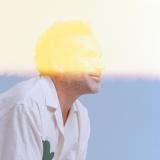
For his sixth solo album, Ezéchiel Pailhès returns with a new collection of songs infused by a sunny wandering spirit.
Within each of the twelve songs on SOL is a thread of melancholic happiness that has permeated much of Pailhès’ music and songwriting. He addresses love, the passing of time, hope, lost illusions, fleeting moments of grace, the temptation of forgetting, a need to escape, and desire. All this is
insulated by understated orchestrations that blend acoustic and electronic instrumentation with deft confidence.
The Portuguese and Brazilian concept of saudade—a form of melancholic longing and nostalgia— pervades, thanks in part to Pailhès decision to record the album in Rio de Janiero and to reinterpret some of the finest works of Música Popular Brasileira (MPB). In particular, he revisits a handful of
lesser known classics from the mid-century samba and bossa nova era—originally written or performed by talents including Vinícius de Moraes, João Gilberto, Tom Zé, Dorival Caymmi, João Donato, Os Tincoãs, and Ataulfo Alves.
The shift from Brazilian Portuguese to French and the decision to adapt rather than perform a straightforward cover versions, allows Pailhès to invent a form of prosody and euphony (the musicality and harmonious combination of words) that feels vibrant and unlike anything else in today’s French
chanson landscape.
“Some lyrics are simple translations from Portuguese, in what I’d call an expanded version. For others, I started from a single word or a single phrase and embroidered an entirely new text that carried me elsewhere,” explains Pailhès. “I allowed myself great interpretive freedom, while preserving the humanist dimension of the original songs. I’ve always been deeply moved by the way Brazilians transfigure reality through heightened emotion. I love this visceral and spontaneous country, which always seems to live through emotion. And above all, I love its music both popular and unifying,
bringing together all social classes. In that sense, it’s very political music, but even more so utopian, made by the people and for the people.”
On this new album, however, the French artist was keen to avoid cliché. Each song is therefore built around a carefully balanced interplay between Pailhès’ piano and synthesizers, alongside restrained arrangements of percussion, brass, bass, and cavaquinho (a small four-string plucked guitar). These parts were recorded in Rio de Janeiro with two musicians who regularly perform alongside the legendary Caetano Veloso—Kainã Do Jêje and Alberto Continentino—joined by Thomas Harres, Antônio Neves, Eduardo Neves, and Gabriel Loddo.
Since the 1960s, France and Brazil have shared a long-standing cultural and musical relationship. Some Brazilian artists, most famously Gilberto Gil, took refuge in France during the dictatorship years (1964–1985). But above all, French chanson quickly fell in love with the richness and ingenuity of
bossa nova and samba, translating and reinventing them in the language of Molière. Throughout the 1960s and 1970s, albums and hits by Henri Salvador, Georges Moustaki, Pierre Barouh, Pierre Vassiliu, and Claude Nougaro all drew from the MPB repertoire.
Fifty years later, with SOL, Ezéchiel Pailhès reinvents this rich Franco-Brazilian musical legacy, bringing to it a personality and modernity that stand confidently alongside those of his forbears.
On Stock and ready to ship

Ray Mono steps up for the fourth release on Birmingham-based imprint TRMNL, with Meander boss DeWalta accompanying on remix duties.
With an increasing number of global shows across Europe, Australia, and North and South America, UK-based DJ/producer Ray Mono is crafting his warm and rich sound in one that is steadily becoming his own. Fresh from music on MOXY MUZIK, Politics Of Dancing, LOCUS, and hedZup Records, he makes his first appearance on TRMNL Records with a trio of slick groove-led cuts spanning minimal and house spheres, backed by a hazy and warping late-hours roller provided by DeWalta to close the show.
DJ Support:
Jamie Jones
Archie Hamilton
Raresh
Joseph Capriati
Franky Rizardo
IULY.B
Jean Pierre
Sakro
Ben Jones
On Stock and ready to ship

The Tenets of Forgetting is the long-awaited follow-up to MSYLMA’s lauded 2019 debut, Dhil-un Taht Shajarat Al-Zaqum. This time he’s joined by fellow musician and producer ISMAEL for seven tracks, built around a lush palette of synths and MSYLMA’s singular voice.
Written and produced in Cairo between 2015 and 2020, The Tenets of Forgetting is the first collaboration between MSYLMA and ISMAEL. Like his first record, The Tenets of Forgetting finds MSYLMA singing in classical Arabic, and the musicians have enlisted Nariman Youssef to provide translations of the lyrics. This gesture of openness runs parallel to the themes of the record; romance and vulnerability; growth and change; pathos and passion. Listeners who aren’t familiar with pre-Islamic poetry or classical Arabic will find the lyrics just as rich and beautiful as the vocal melodies imply, telling a story of love, loss, self-doubt, and grave introspection.
Musically, the album moves in broad, painterly sweeps of 808 kicks, rich synthesizer chords, and MYSLMA’s soaring, plaintive voice. The English translations reveal a second world of mathematically sound rhythmic structures and poetry in the lyrics. The music pushes and pulls in both tempo and timbre, swirling both around and underneath MSYLMA’s voice but never losing a sense of self-contained narrative.
The album is rounded out by Jesse Osborne-Lanthier and Omar El-Sadek’s immersive, esoteric art, and features additional production on track 7 by Osborne-Lanthier, Pierre Guerineau, and Asaël Robitaille.
Limited run of 300. Includes insert + DL code.
On Stock and ready to ship
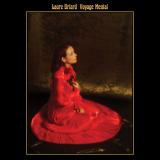
Every so often in music, we come across voices that achieve a certain timelessness, so naturally do they encapsulate both past and present. Laure Briard is one of these voices, retro in form but contemporary at heart, spanning a career rich in aesthetic twists and turns, never without her signature magic, a special kind of eternal filter. Her first album, Révélation (2015), reveals her yé-yé influences, a testament to her love for ‘60s French pop music. Her second studio album, Sur la piste de danse (2016), follows in this vein and finds Laure accompanied as always by her long-time bandmates who share an affinity for warm, catchy arrangements that never lose their appeal. Her tour of Brazil marks a turning point in her career, introducing her to the local indie scene and thus launching her collaboration with the band Boogarins, as well as inspiring the release of multiple EPs composed and performed in Portuguese. Today, her music is embellished by touches of bossa nova and a folk sensibility, boasting increasingly intricate arrangements, as exemplified by her 2019 release, Un peu plus d'amour s'il vous plaît. Several years later, the Californian desert captures the musician’s imagination with Ne pas trop rester bleue, a poignant musical journey inspired by the rich history of Western legends and the role they play in shaping our collective consciousness.
In Voyage Mental, Laure Briard draws upon an inner energy unearthed during a new stage in her life, where the thrill of spontaneous adventure is not accessible in quite the same way. The result is a collection of sophisticated, introspective songs, narrating a young mother’s quest for balance in the face of routine. The album, nostalgic but always tethered to the present moment, is also the fruit of her collaboration with Gaëtan Nonchalant, a talented musician known for coaxing poetry out of the mundane. The two of them co-wrote and recorded five tracks at Studio Nocturne, accompanied by her long-time sidekick Pieuvre, aka Vincent Guyot, Léo Blomov, Pierre-Louis Vizioz, and Hedi Bensalem. The gentle pop opener “Rocking Chair” sways steadily to the rhythm of dynamic drums, followed by “Train,” a ballad that extends an invitation to set sail and daydream alone. The folk escapade continues with “Golden Sun,” a duet featuring the 1960s cult American musician F.J. McMahon, who Laure contacted via the internet on a whim. “Golden Sun” is an unlikely encounter between two generations and two cultures, giving new life to an old forgotten demo on the other side of the Atlantic. And while Laure sings of wide open spaces, cowboys, and sunsets sinking into the sea, we feel the city surrounding her in “Miroir,” a song composed by Hedi Bensalem that laments the suffocation of living in a crowded metropolis where the sky is a distant gray smudge. This pressing need for air, this search for rest and total disconnection, is one of the album's central themes. It may also explain the ever-present sense of nostalgia that pervades the songs, a welcome respite in our current era of doomscrolling and darkness. Along the way, Laure soothes us with melancholy guitar, delivers poetry set to scattered piano notes, and takes us by the hand during lively, uptempo passages. We climb onto her wings, never straying too far from the ground, soaring joyfully above her moods.
expected to be published on 05.06.2026
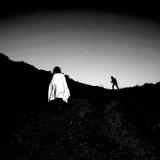
Like its cover, Nicolas Remondino's Hìeratico plays in the rich shades of crepuscular spaces. A night-tuned, percussion led album where prepared drums are accompanied by flickers of spoken word, acoustic instruments and muted electronics,
The title translates to 'hieratic', for Remondino a "black and gold" term laden with dualities and complex connotations. A sense of teetering between sparkling light and richly coloured darkness imbues the music, the compositions simulating a sense of heightened acuity as they convey us through a spooky elemental soundworld. The opening title track begins with a metallic shimmer, a drum skin activated in a way that sounds like it's being smelted. A cushioned rhythm enters, a smothered timbre akin to hearing something lurking around the garden. On "litho non-danse", percussion cracks like branches and dried foliage under foot.
Remondino recorded initial outlines for the pieces at Giuseppe Ielasi's studio in Milan, before fleshing out these ideas with his own additional instrumentation and contributions from a globe-spanning network of collaborators. On "blue hymne", chiming percussion equal parts jubilant and sinister heralds spoken word from Limpe Fuchs. "Tombal" opens with Massimo Silverio whispering in the Carnic dialect, a minority language from the Carnic Alps. Around, Marco Baldini, Pierre Bastien and Remondino construct a somber soundscape that cranks and sighs in the crevices.
Hìeratico is an album of hybrids. Diverse voices, accents and dialects deliver its lyrics, the instrumentation underpinning it crosses idioms. The drumkit at its core is modified to amplify its resonant tones and harmonics. Inspired by natural substances and phenomena: stone, wood, wind, earth, metal, grass, rain, clouds and bark, Remondino explores how percussion could evoke their materiality, treating drums as lucid textural instruments as much as rhythmic timekeepers. It gives the album a finely shaded depth and clarity as it conjures the vibrancies that reside in darkened corners. Hìeratico dwells in a sensation that crosses borders, the speckles of light in the oblique night sky. Listening is an aural equivalent to stepping into a pitch black forest and waiting for your eyes to adjust, a lightless void turning into a spectacular tableau of shadows and glows. Daryl Worthington
Order now and we will order the item for you at our supplier.

The journey through French-speaking pop archives continues with this fifth volume, packed with fuzz, gimmicks, and dissent. Far from the charts, the selected tracks display a great creative freedom, often backed by corrosive humor. Welcome to the surprising, kaleidoscopic, and colorful world of the late sixties and early seventies, Wizzz!
Born in Montauban, Robert Pico stumbled into music by chance when he met René Vaneste, then artistic director at Pathé-Marconi. René brought him to Paris to record his first 45 RPM EP in 1964. A year later, Pierre Perret introduced him to Vogue, where he recorded his second album with Claude Nougaro’s orchestra. Sylvie Vartan then introduced him to RCA, where he recorded four singles, including the astonishing "Chien Fidèle," a track backed by a hair-rising fuzz guitar. Alongside his solo career, he also composed for other artists like Alain Delon (the song was recorded but remains unreleased), Magali Noël, Bourvil, and Georges Guétary. In the Paris of the sixties, he mingled with Mireille Darc, Elsa Martinelli, Marie Laforêt, France Gall, Françoise Hardy, Petula Clark, Régine, Dani, Serge Gainsbourg, Joe Dassin, Franck Fernandel, Charles Level, and Roland Vincent. Despite his efforts and winning a Grand Prix Sacem for his final record, Robert Pico didn’t achieve the expected success in show business and decided to leave Paris and return to the Southwest, where he devoted himself to writing. He is the author of 23 books (including Delon et Compagnie, Jean-Marc Savary Editions 2025, a memoir about his youth and his many encounters). Today, he is relieved to never have become a celebrity and devotes himself to his work with passion.
In 1969, the Franco-Italian movie Erotissimo was released, directed by Gérard Pirès (who later directed Taxi in 1998, written and produced by Luc Besson). This pop comedy features Annie Girardot, Jean Yanne, Francis Blanche, Serge Gainsbourg, Nicole Croisille, Jacques Martin, and Patrick Topaloff. The soundtrack was written by Michel Polnareff and William Sheller, with lyrics by Jean-Lou Dabadie. "La Femme Faux-cils," performed by Annie Girardot. It recounts the feelings of a rich CEO's wife who seeks to develop her sex appeal under the influence of advertisement and magazines. Groovy, sparkling and light, this track, with ITS lush arrangements humorously critiques consumer society and feminine beauty standards.
“Je suis l’Etat” (1967) is the flagship track of the first EP by singer-songwriter Spauv Georges, aka Georges Larriaga, better known as Jim Larriaga (1941-2022). Born into a family of bakers, the young man was initially planning to become a hairdresser when he discovered English-speaking music through Elvis Presley and the Beatles. After this revelation, he decided he would become a songwriter and gave himself five years to succeed. He recorded his first two EP’s independently for RCA under the pseudonym Spauv Georges; meaning “that poor George”, a nickname given to him by the mother of her friend Jean-Pierre Prévotat (future drummer of the Players, Triangle, or Johnny Hallyday). Portraying a depressed and eccentric young man, Spauv Georges created corrosive and amusing songs that didn’t reach a wide audience, despite a TV appearance with Jean-Christophe Averty.
Supported by his loyal friend and fellow songwriter Jean-Max Rivière, Georges Larriaga met the future singer Carlos in the early '70s, then Sylvie Vartan’s assistant. He wrote songs for Carlos, including the popular "La vie est belle," "Y’a des indiens partout," and "La cantine", which went onto become a huge hit in 1972. He also composed for Claude François (“Anne-Marie”, 1971), Charlotte Julian (“Fleur de province”, 1972), helped launch child singer Roméo (who sold 4 million records), and later wrote the hit "Pas besoin d’éducation sexuelle" (1975) for the young Julie Bataille. In 1971, Jim recorded an album for Disc'Az: “L’univers étrange et fou de Jim Larriaga”, which featured pop gems like “La maison de mon père”.
The story of the song "Zoé" began when Pierre Dorsay, artistic director at Vogue Records, asked Swiss singer and musician Pierre Alain to write a song for a new female singer. The inspiration came when he realized that Zoé (the artist's name) was also the name of France's first atomic battery, created in 1948, which consisted of uranium oxide immersed in heavy water! The lyrics reflect a bubbling energy that must be handled with caution, while the instrumentation echoes this atomic theme, notably with the use of a theremin.
Zoé’s career lasted only as long as a single 45 RPM, but it seems Christine Fontane was the vocalist behind this pseudonym, who is known for several EPs, a good "popcorn" album in 1964, and a handful of children’s singles in the '70s. Regardless, the photograph on the cover is of a different girl entirely.
Later, Pierre Alain continued his career, writing songs for himself, Marie Laforêt, Danièle Licari, Alice Dona, Arlette Zola (3rd place in Eurovision 1982), and achieving multiple gold and platinum records in Canada. Also an inventor with several patents, president of the Romande Academy, and head of the French Alliance in Geneva, he now composes atonal music, books, and poetry. Moreover, he is also the host of "Les Mardis de Pierre Alain" at "Le P'tit Music'Hohl" in Geneva.
Filled with oriental choruses and fuzz guitar, "Fou" is from Jacques Da Sylva's only EP released by Vogue in 1967. Despite the quality of this recording, all traces of this singer disappear after this first effort.
Valentin is a baroque pop singer born in Belgium. He is the songwriter and composer of most of the tracks on his three singles released in the late 60s in Canada. A legend says that he reincarnated himself as Jacky Valentin during the 1970s for a rock'n'roll revival career in Belgium, but his older brother sadly debunked this story. Valentin's first two singles were arranged by Claude Rogen, a Parisian session pianist who had come to Canada to promote the song “Mister A Gogo”, a cover of David Bowie’s “Laughing Gnome”, adapted by singer Delphine, his wife at the time. Far from his usual network, Claude Rogen arranged music for Polydor, including the arrangements for “Je suis un vagabond” in 1969, a jerk tune with string arrangements and a furious optimism.
Jacques Malia wrote, composed, and recorded his only 45 EP for Festival in 1966. “Histoire de gitan” is an incredible beat track with bohemian scat that tells the story of a gypsy musician who came to Paris to make it in the Music-Hall, to no avail. The hero of the song and its author probably shared a similar fate, as Jacques Malia faded into anonymity after this remarkable attempt.
Bernard Jamet recorded two EPs for Barclay in the late sixties and co-wrote several songs with Christine Pilzer, Pascal Danel, and prolific songwriters Michel Delancray and Mya Simile. The track “Raison Légale” (1968), his masterpiece, immerses the listener in a courtroom right when a murderer is being judged, with jerk rhythm and free arrangements. A unique, paranoid, judicial, and psychedelic oddity.
Jean-Pierre Lebrot-Millers started his career in show business in 1967 as a singer and songwriter for the Philips label. After three singles, he wrote several songs of a new kind with his friend Pierre Halioche, in the midst of the sexual liberation movement and the democratization of drugs. With provocative lyrics, “Les filles du hasard” and “Barbara au Chapeau Rose” were released on a Philips singles in 1968. The character of Barbara was inspired by a queen of Parisian nightlife during the psychedelic years: model Charlotte Martin, who dated Eric Clapton from 1965 to 1968, then Jimmy Page from 1970 to 1983. Jean-Claude Petit’s arrangements, with a table-filled intro, soul brass, and Hendrixian guitar, emphasize the flamboyance of a hedonistic and sexy character, whose dog is named Junkie because “Junkie est un nom exquis”! The track was recorded live in three takes with a full orchestra.
Upon its release, the record was censored by Europe 1 and RTL due to its references to drug use. Jean-Pierre Lebrot was then banned from the airwaves and later dismissed by his record label. He changed his artist name to Jean-Pierre Millers, while his companion Pierre Halioche became D. Dolby for a new dreamy composition, “Chilla”, which Jean-Pierre produced himself with arrangements by Jean Musy. Once again, the song was immediately censored everywhere. After this setback, he decided to stop singing and started taking on odd jobs to support his Swedish wife and their son until the day he met Jean-Pierre Martin, then production manager at Decca, who had worked with Manu Dibango. Martin offered Jean-Pierre Lebrot-Millers, then employed at Rank Xerox, the position of artistic director at Decca. He accepted and became, a year later, promotion director (radio, press, TV). He worked on Julio Iglesias’s first album for Decca, which became a massive hit and allowed him to meet Claude Carrère. The latter asked him to write new songs and find their performers, much like a “talent scout.” It’s through him that Jean-Pierre discovered Julie Pietri and Corinne Hermès. He composed “Ma Pompadour” for Ringo, Sheila’s husband, and took the microphone again for the syncope hit “Rendez-Vous” in 1982.
That same year, Jean-Pierre Lebrot-Millers tried to release a track for which he had heavily gone into debt: “Si la vie est un cadeau”. Having recorded it in London, he presented it to numerous professionals, all of whom refused to get involved. The same thing happened with Antenne 2 and the Sacem when he proposed the song as France’s entry for Eurovision. He then met Haïm Saban, who was producing cartoon soundtracks and had just launched the Goldorak theme song. Saban, having listened to the song, declared it had the potential to become a hit. He sent Jean-Pierre and Corinne Hermès to meet the CEO of the Luxembourg radio and television network. The latter received them, asked to hear a verse and chorus a cappella in his office, and immediately hired them to represent Luxembourg at Eurovision 1983. They reworked the arrangements and recorded a new version with Haïm Saban as co-producer. The song ended up winning Eurovision 1983, a great comeback for our hero. He continued producing and hung out with the band Nacash in Belgium when a couple came to introduce their daughter for an impromptu audition in a hotel room. The girl sang “Les démons de minuit” while dancing to a radio cassette. Impressed, he had her take singing lessons for a year and composed a song for her (for which he had the melody and title, but no lyrics). This required him to go on the hunt for a lyricist, who ended up being Guy Carlier. They recorded the song, which was initially a ballad, at Bernard Estardy’s CBE studio, and gave the singer a new name: Melody. They showed the song around their industry network without success. Later, Estardy called Jean-Pierre to suggest changing the rhythm and making it pop-rock. Orlando, Dalida’s brother, liked the result and decided to co-produce the track. “Y’a pas que les grands qui rêvent » became a classic hit. The song has since been covered by Juliette Armanet (as a ballad, like the original) and Valentina.
Born into an aristocratic Breton family, Hervé Mettais-Cartier worked as a DJ at Queen Kiss, a nightclub in Poitiers, where he formed the band Les Concentrés with Michel (an actor) and Christian (a radio technician). Together, they created a repertoire of whimsical songs (“Ma bique est morte”, “J’suis un salaud”, “Fils de dégénéré”...) that they performed on stage dressed in white (in homage to “concentrated milk”). They performed at Bliboquet and Olympia in 1968 for the 10th edition of the “Relais de la chanson Française” organized by L’Humanité-Dimanche and Nous les Garçons et les Filles, sponsored by Pepsi Cola. Winners in the author-composer category, alongside Danish singer Dorte, their visibility allowed them to record a 45, and appear on television in Jean-Christophe Averty’s show. The A-side of the disc features Bruno le ravageur, a casatchok dedicated to Bruno Caquatrix, the director of Olympia, nicknamed in the song “Coq Atroce” or “croque-actrices”. The B-side is dedicated to “Fils de dégénéré”, a quirky tribute to Hervé's aristocratic roots, mixing absurdity with sophisticated vocal harmonies.
After Les Concentrés, Hervé Mettais-Cartier formed the duo La Paire et sa Bêtise with his friend Olivier Robert. They performed in Parisian cabarets and toured with Pierre Vassiliu. In the late 1970s, Hervé began a solo career. He recorded two albums for the Motors label in 1978 and 1979, which did not achieve their anticipated success due to lack of promotion. In 1980, he met Bernadette, with whom he started a family and created a “Chansons à voir” (songs to see) show that he performed until his death at the end of 2024.
Publicité comes from the final EP by the Missiles (Ducretet Thomson, 1966), a disc that also includes “La (nouvelle) guerre de cent ans”, featured on Volume 4 of our Wizzz! series. Please refer to the booklet for the story of the band.
“He’s 1.82 meters tall, 28 years old, weighs 135 kg, is black and Belgian”: this is the description of singer Hegesippe on the back of his sole single (Decca, 1967). He appears on the album cover wearing a Greek toga, like a hippie gag – we are at the end of the year 1967. In “Le crédo d’Hegesippe”, this former bodyguard of Antoine and the Charlots plays the delightful card of the thick brute converted to Flower-Power and non-violence, with arrangements by Jean-Daniel Mercier, aka Paul Mille.
“Ethéro-disco” was released on a promotional record for clients of the Maréchal company (Liège, Belgium) for the New Year 1979. Over a funky rhythm, celebrity impersonations (Brigitte Bardot, Jacques Dutronc, Fernandel…) deliver an enigmatic text about pharmaceutical products like ether, bismuth, and aspartate. The track was composed by Dan Sarravah (responsible for Joanna's “Hold-up inusité” featured on Wizzz! Volume 3) and Tony Talado, who was also a singer (one 45 in 1967), songwriter (with over a dozen credits between 1964 and 1985 in various styles from surf music to disco), author (Devenez Végétarien, Dricot Editions, 1985), ad designer, and psychologist.
Décollez-les is on the A-side of Mamlouk's only single, a pseudonym for Marsel Hurten, who is known for his work on several EPs in the late sixties, as well as composing music for Hervé Vilard’s “Capri, c’est fini”, Claude Channes' “La Haine”, Annie Philippe’s “On m’a toujours dit”, and Nancy Holloway’s “Panne de Cœur”.
This strange song, with Afrobeat horns and absurd dialogues between a chef and his kitchen staff, is the result of a collaboration between Marsel Hurten and one of his neighbors, a photographer from Pavillon-sous-Bois (93), where the musician settled after returning from the Algerian War. A music video was shot to promote the record.
Marsel Hurten was born in Tourcoing (59) into a musical family. At a young age, he joined the brass band founded by his grandfather, playing the piston before studying trumpet at the conservatory, as well as teaching himself how to play the guitar. As an orchestra musician, he toured in France, Belgium, Germany, and England. He released a series of solo 45’s between 1965 and 1968 for the DMF and Az labels before stopping recording to focus on working for other artists (Gilles Olivier, Noëlle Cordier…).
“L’amour nu” (Vogue, 1971) is the work of the short-lived Belgian band Mozaïque. The track, written by singer Jacques Albin, closely resembles another of his compositions, “Carré Blanc”, which he recorded in 1969 for Disc’AZ.
Represented by the Lumi Son micro-label based in Marignane (Côte d'Azur), Jean-Marc Garrigues released two 45 RPMs in the late sixties, defending the French jerk sound. The song “Je dis Non” is a short, joyful ode to youth, pop music, and rebellion.
Songwriter and performer Jacques Penuel released three singles. The first one, “Astronef 328” (Fontana, 1969), features a dizzying series of chords punctuated by sound effects, a sci-fi story, and arrangements by Jean-Claude Vannier.
We would like to sincerely thank Pierre Alain, Moon Blaha, Marsel Hurten, Bastien Larriaga, Jean-Pierre Lebrot-Millers, Bernadette Mettais-Cartier, Robert Pico, Olivier Robert, Claude Rogen, Micky Segura.
Order now and we will order the item for you at our supplier.

"Dialogues and Shadows" by Goncalo Almeida & Pierre Bastien invites you on a transcendental musical journey, rising above mere notes and timbres. With mechanical instruments and rich harmonics, their music sparks a conversation where listeners may actively participate. Surprises unfold as melodic phrases emerge from diverse sources, including Pierre Bastien's pocket trumpet and Goncalo Almeida's double bass, along with custom-made instruments.
Order now and we will order the item for you at our supplier.

Im Jahr 2025 veröffentlicht Richard Galliano sein legendäres Album „Viaggio“ bei BMG neu, das ursprünglich 1993 bei Dreyfus Jazz erschien. Eine zeitlose musikalische Reise voller Poesie und Emotionen,
die einen Wendepunkt in der Karriere dieses international bekannten Künstlers markierte.
BMG freut sich, dieses remasterte Juwel präsentieren zu dürfen, angereichert mit bisher unveröffentlichten
Bonusmaterial, das Fans und Neueinsteiger gleichermaßen begeistern wird. „Neues Viaggio“ oder „neue
Reise“: Diese Worte klingen wie ein fernes Echo, eine Einladung, in die Vergangenheit zu reisen und erneut
in die einzigartige Atmosphäre dieses mythischen Albums einzutauchen. Wer hat nicht schon einmal von
Zeitreisen geträumt, davon, kostbare Momente noch einmal zu erleben? Mit der Neuauflage von „Viaggio“
wird dieser Traum Wirklichkeit.
„Als ich die Aufnahmen der Studiosessions wiederentdeckte, empfand ich eine tiefe Emotion, eine Mischung
aus Freude und Nostalgie. Die Präsenz von Pierre Michelot und Charles Bellonzi, diesen außergewöhnlichen Musikern, die uns verlassen haben, ist spürbar. Pierre, Miles Davis’ Kontrabassist (Ascenseur pour
l’échafaud), und Charles, „Lolo“, Nougaros Schlagzeuger (Tu verras), bildeten mit ihrer umwerfenden Sensibilität eine Rhythmusgruppe von seltener Eleganz. Und last but not least war Biréli Lagrène, virtuoser
Gitarrist und langjähriger Freund, immer bei uns und verlieh dem Ensemble eine atemberaubende Magie.
Ich freue mich sehr, diese neue Version von
expected to be published on 03.10.2025

François and Sylvain Rabbath have turned six years of touring into a joint album that patiently and intensely distills a variety of musical flavors gathered from around the world.
Since the early 1960s, François Rabbath's double bass has resonated through enough landmark recordings to fill several shelves in a record collection. As an arranger, composer, and musician, his imprint on music goes far beyond his collaborations with Barbara, Paco Ibáñez, Charles Aznavour, or Édith Piaf. Aspiring double bassists owe him a groundbreaking method for learning the instrument. Born into a lush musical universe that quickly became his own, his son Sylvain first accompanied him on his travels before settling at the piano and sharing stages around the world at his side.
Those years of accumulating visas in their passports were put to good use by father and son. The continents, countries, and cities they passed through became a rich source of inspiration for composing Amall, the album by the Rabbath Electric Orchestra.
Long hours spent in the air or on the road, watching passing landscapes that never stayed the same, were transformed into compositions imbued with the atmospheres of the places they crossed or visited. Inspiration sometimes struck with force, like a green oasis appearing in a desert of stone—unexpectedly, as glowing red rocks suddenly dominated an otherwise open landscape with an endless horizon, while the mind wandered into a state between meditation and introspection.
Born from these travels, the pieces took on their final colors once brought into the studio, refined, and finally arranged to welcome the guitars of Keziah Jones and Matthieu Chedid, the piano of Laurent de Wilde, the bass of Victor Wooten, the saxophone of Raphaël Imbert, and the percussion of Minino Garay. Enhanced by the scale of the jazz-soul orchestrations, by the richness of arrangements bursting from strings, brass, rhythms, or keyboards, the epic breath of vast plains became ingrained. The urban tension of funk, echoing their movements, found its place—alongside more electric expressions or the ambience of a darkened room.
Melancholic and melodious, expressive and edgy, the bowed double bass—played in the high register where few dare to go—emerged as the musical guide. One that draws a path between Seville and Minneapolis, connects François Rabbath's native Syria to France, and bridges South America to Europe. It sets the tone to follow—the emotion that will carry the piece, and if not filled with light, will carry it there nonetheless.
Musical visions packed in luggage, transported in cargo holds, or imprinted in their minds just long enough to cover the distances to the next stop—father and son deepened their bond, beyond family and art. And their hands have never held each other more tightly.
François et Sylvain Rabbath ont fait fructifier six ans de tournées pour un album commun distillant patiemment et intensément la variété de parfums musicaux récoltés autour du monde.
Depuis le début des 60’s, la contrebasse de François Rabbath résonne dans assez de références pour combler plusieurs étagères d’une collection de disques. Arrangeur, compositeur, musicien, l'empreinte laissée dans la musique va bien au-delà de ses collaborations avec Barbara, Paco Ibanez, Charles Aznavour, ou Edith Piaf. C’est à lui que les
apprentis contrebassistes doivent une méthode novatrice pour apprendre l’instrument.
Né dans un univers musical luxuriant qui est vite devenu aussi le sien, c’est d’abord dans ses voyages que son fils Sylvain l’a accompagné, avant de s’installer au piano, et parcourir les scènes du monde à ses côtés. Ces années où les visas se sont entassés sur leurs passeports, père et fils les ont mises à profit. Continents, pays, et villes qui se sont succédés sont devenues un gisement pour composer Amall, l’album du Rabbath Electric Orchestra.
Les longs moments passés dans les airs ou sur la route à contempler un paysage qui défile sans pour autant rester le même, se sont convertis en compositions habitées par les ambiances de ces endroits traversés ou visités. Là où l’inspiration s’est imposée parfois brutalement, sous
la forme d’un oasis de verdure surgissant au milieu d’un désert de pierres. Au hasard d’imposantes roches rougeoyantes s’invitant dans un paysage jusqu’alors dégagé sur un horizon sans fin, quand l’esprit se laisse aller à un mélange de méditation et d'introspection.
Nés de ces pérégrinations, les titres ont pris leurs couleurs définitives une fois ramenés en studio, peaufinés puis, enfin, pensés pour y inviter les guitares de Keziah Jones et de Matthieu Chedid, le piano de Laurent de Wilde, la basse de Victor Wooten, le saxophone de Raphaël Imbert, les percussions de Minino Garay. Sublimé par la dimension des orchestrations jazz-soul, par la richesse des arrangements jaillissant des cordes, des cuivres, des rythmiques ou des claviers, le souffle épique des plaines immenses s’est imprimé.
La nervosité citadine du funk rythmant les déplacements a trouvé sa place, non loin d’une expression plus électrique ou d’une atmosphère de salle obscure.
Mélancolique et mélodieuse, expressive et nerveuse, la contrebasse jouée à l’archet, dans les notes hautes du manche où peu s’aventurent, s’est érigée en guide musical. Celui qui trace le chemin entre Séville et Minneapolis, relie la Syrie natale de François Rabbath à la France,
réduit la distance entre l’Amérique du Sud et l’Europe. Donne la note à suivre, l’émotion qui traversera le morceau qui, s’il n’est pas habité par la lumière, le portera néanmoins jusque là.
Visions musicales mises dans le coffre, transportées en soute ou imprimées dans l’esprit le temps de couvrir les distances qui les mèneront aux prochaines, c’est côte à côte que père et fils ont prolongé leur lien par delà des seules limites familiales et artistiques. Et leurs mains ne se sont jamais serrées aussi fort.
credits
expected to be published on 19.09.2025

Award-winning producer and composer Giorgi Koberidze offers up a head-spinning debut of Georgian modern classical music shot through with 360° electroacoustic textures.
Giorgi Koberidze is an electronic and classical music composer from Georgia. He currently serves as a professor of music at Tbilisi State Conservatoire, as well as at Ilia State University, and the private music school "303 Herz". Giorgi's work is rooted in the Georgian musical tradition, cross-pollinating indigenous instrumentation with electronic and western classical timbres. He recently won first prize in the Tbilisi Conservatoire Composers Awards, and received Georgia's most prestigious cultural gong, the Tsinandali Award.
The Album was premiered in Georgia at the Kutaisi Film Festival, and later showcased at the Tbilisi Film Festival. Working from graphic scores, Giorgi's ensemble includes strings, woodwind and traditional instruments from the Caucasus (doli, chuniri). Fleeting voices, field recordings and skittering percussion converge to paint a storied map of Tbilisi, and its surrounding terrain of forested polyphony and microtonal peaks and crags.
Each listen of the album is projectively rich, like a dizzying series of sonic inkblot images. The piece is designed to be absorbed in the surround sound of darkened movie theatres, conjuring a multiverse of narratives in the half-light of sensory acuity. At home, Giorgi invites listeners to set aside time to experience the record in a dark, comfortable space absent of external stimuli.
This album was made with the support of the Tbilisi State Conservatoire. The recordings were funded by Nicolas Jaar. Thank you. We are beyond proud to present this incredible project.
Recommended for fans of Pierre Bastien, Roméo Poirier, Jan Jelinek.
expected to be published on 25.07.2025

The debut album from Addy Weitzman, ‘Light Months Will Fly Over Us’ explores new-wave, romantic pop and art rock with elegance and ambition, drawing from Weitzman’s scattered network of collaborators, as well as a “frighteningly vast” personal archive of compositions. Sequenced by Seth Troxler and released on his Slacker 85 label, it represents a pivot in musical direction for the imprint, and a showcase for the songwriting craft Weitzman honed as a member of cult electro duo Footprintz, and Montreal synth-pop projects The Beat Escape and Dawn to Dawn.
The title Light Months Will Fly Over Us is derived from a line in a poem by the Russian writer Anna Ahkmatova. Weitzman was immediately struck by its “hopefulness, its mystery… it gives the feeling of being suspended, hanging in a dream-like state”. This interpretation has been translated to the album, rich in memorable songwriting that nonetheless invites the listener to lean in further. Delicately mixed by engineer Pierre Guerineau, known for his work alongside Marie Davidson, each of the eight tracks gently interrogates life’s greater mysteries; fear, love and salvation, each defining and revealing the human soul.
Opener ‘End of The Line’ invites us into an immediately lush space of lounge lizard existentialism, soft brass and piano helping Weitzman introduce “where the journey begins and the fantasy dies”. Across orchestral arrangements arranged by Adam Wilcox, whose sensitive, ambitious compositions are weaved throughout the album, ‘Beyond The Speed of Life’ brings to mind the laments of Scott Walker. Navigating vulnerability via grandeur, Weitzman’s earnest vocals flourish in wide-eyed call-and-response with the object of a transcendent love affair.
Alongside collaborator, Richard Lamb, the next chapter of the LP plunges into contrasting machine-driven moods; the wry, bubbling ‘Entertainment Is All I Wanted (And I Found It)’ is imbued with the playfulness and experimentation of 80s electronic pioneers such as Fad Gadget, while the tougher, icier ‘Stranger To Your Kind’ shifts in a more instrumental direction, recalling Weitzman’s dancefloor experience, as well as contemporaries such as Matthew Dear.
Album centerpiece and striking first single ‘Running & Returning’ is the first of a suite of three tracks in collaboration with Weitzman’s The Beat Escape and Dawn to Dawn bandmate, Patrick Boivin. Blending lush saxophones and angular guitars with a wistful melodic touch and lyrics, its irresistible art-rock rhythm provides the foundation for one of Weitzman’s most involving vocal performances.
It’s followed by an anthem for existential absurdity: ‘Ice Cream Candle’ provides a driving acceptance that “the more and more you learn, the less you understand”; Weitzman submits to this uncertainty with equal grace on ‘No Man’s Land’, as baroque invocations of “words swept through the fields” and meeting “where the water lilies grow” give way to a blistering guitar solo, humbly riding hypnotic percussion.
For the compassionate finale of Light Months Will Fly Over Us, Weitzman narrates the experience of ‘Gabrielle’, a woman slipping between rooms between shuttered blinds in the towering city, “where cigarettes and roses fill the air.”
As lyrically delicate as it is musically ambitious, Light Months Will Fly Over Us is a sublime debut album, enriched with care, love and much-needed enchantment.
Order now and we will order the item for you at our supplier.

There’s a particular magic that happens when seasoned producers with global roots come together under a shared ethos - not for hype, but for connection. That’s precisely what MISINGO represents. A cross-continental studio experiment born out of Covid-era isolation, the group spans hemispheres and histories: Yorkshire's Doorly, L.A. legend Gary Richards (aka Destructo), and Australian duo Colour Castle. Their debut offering, Give You Love, lands via UK House Music institution Hard Times Records, and it’s as emotionally resonant as it is built for the floor.
Anchored by a slow-burning acid line and moody, immersive synthwork, 'Give You Love' carries the DNA of classic house without feeling like pastiche. DJ Rae’s smokey vocal, recorded in Doorly’s Ibiza studio, sets the tone - raw, intimate, immediate. Gene Farris enters with a gravelly, magnetic counterpoint, flipping the call-and-response into something spiritual. It’s a record that feels both new and deeply lived-in, a jam session from afar that somehow lands with unity and purpose.
For the remix suite, Hard Times dig into family ties and deliver a heavyweight lineup that spans generations of dance music lineage.
First up, DJ Pierre, the Phuture pioneer himself, brings a Wild Pitch revision that is pure summer sleaze and shimmer. Glistening keys, kinetic snares, and a syrup-thick bassline collide in a mix that’s tailor-made for golden-hour sets and open-air systems.
DJ Romain brings that New York swing. All velvet chords, stabbing pianos, and organ swells that spiral skyward. It’s gospel-house energy that doesn’t need to shout to be heard, a reminder that soul still moves the dancefloor.
Closing out the package is Charles Lavine of Soul Clap fame, whose Boston-bred funk sensibility steers things into new territory. He strips back the mix, lets Rae’s vocal ride the groove, and injects a subtle bounce that turns heads and hips in equal measure.
With 'Give You Love', MISINGO and Hard Times haven’t just released a single, they’ve bottled a moment: one born of distance, stitched together with soul, and destined for collective release on dancefloors worldwide.
Order now and we will order the item for you at our supplier.

There's iconic. Then there's *iconic*.
A MASSIVE speaker-smashing release, decades overdue. It's been bootlegged - shamefully so, many times over the years - but finally we present the first ever officially licensed reissue of this truly special Afro-disco-not-disco LP from 1979. A favourite of Harvey, Antal, Young Marco and, er, every great DJ to ever play deep records ever, basically. It's not hard to see - or, indeed, *feel* why.
Gem after gem of relentless, irresistibly funky gold, it's an incredibly revelatory album with endlessly complex drum patterns and basslines to dive into, throughout. Truly, this is uniquely FIRE music, unlike anything else you've ever heard, based on Gwo ka music from the gorgeous islands of Guadeloupe and Martinique. A thrilling synthesis of primal, hypnotic drums - the most tribal of percussive elements high in the mix throughout - with the loping synth pyrotechnics of, amongst a whole host of other greats, Wally Badarou and bass power of disco funk don Sauveur Mallia (Arpadys, Spatial & Co.)
Originally released on the seminal French label Barclay, you'd be hard pressed to even find an original copy in nice condition anywhere, let alone for a reasonable price, so it's high time an officially licensed, remastered reissue came around. It's just the latest in a long line of Be With reissues where the music sounds like the - drop-dead dazzling - cover. This here is a true drum attack. BUY ON SIGHT!
Tumblack was a short-lived project, produced and arranged by electronic wizard Yves Hayat and it can certainly be regarded as one of the first examples of Zouk, mixing powerful disco-funk arrangements with Gwo ka, traditional music from Guadeloupe. Gwo ka is an Antillean Creole term for "big drum". You can say that again! It refers to both a family of hand drums and the music played with them, which is a major part of Guadeloupean folk music.Whilst the first side is credited to the exceptional Tumblack band, the flip is given over to "Tumblack & Friends". These weren't just any old friends. Oh no, they were the absolute cream of the French scene (think Arpadys, Voyage, Le Club, Giant, CCPP, Synthesis, Swing Family) such as Sauveur Mallia, Wally Badarou, Marc Chantereau on percussion, Slim Pezin on guitar and Jean-Paul Batailley and Pierre Alain-Dahan handling drum duties.
The urgent, frantic "Fracas" gets things moving straight away with a cavalcade of drums and percussive funk before giving way to the stratospheric "Invocation", one of the album's many, many highlights. It's effectively one long heavenly drum break, a really hard, raw, tribal drum workout without a whole lot else going on - and all the better for it! One to make you sweat, no question. Up next, "Jubilé" is announced with a bellowing accapella voice, chanting the titular name before the heaviest of kicks smashes out your system and lulls you into an absolute state of bliss for nearly 6 minutes. Whoooooosh! Rounding out the sensational A-Side, "Vaudou" is a scratchy, funky patterned drum workout which - yep, yet again - absolutely slays your neck muscles, making them snap and contract in extraordinary fashion. TURN IT UP!
Ushering in the B-Side, the brief, fidgety, African chant-funk of "Parlement" segues seamlessly, beautifully into "Waka", an overwhelmingly rich gem of percussive funk. You do not want this to end, once it hits its stride. For maximum heavenly drum pleasure, you'd need to go a long way than the moment "Waka" feels like it's fading out before it kick-drum-blend into the mighty "Caraïba (Intro)". It's just staggeringly good. It's a minute-long layered drum prelude to the gigantic track which follows. Indeed, "Caraïba" is arguably the best loved and most well-known cut off the LP. And with good reason...featuring that Mallia bass, warm Rhodes and clavs, synth magic, memorably alto sax lines and, of course, tribal chanting.
Another mighty super-ahead-of-its-time classic, the bouncing bass heavy synth funk of "Chunga Funk" deploys Mallia and Wally Badarou (on Mini Moog) exceptionally well. I mean, come on, that bassline is just ridiculous. Try not to move to this one. This extraordinary record closes out with the more traditional Gwo ka sounds of "Bateau La Passé", the tribal chorus making the hairs on the back of your neck stand up.
Tumblack really is a gorgeous late-70s disco-not-disco essential. It's an absolute MONSTER that will completely blow you away; and, yes, it's as compelling and trance-inducing as the cover. The audio for Tumblack has been carefully remastered by Be With regular Simon Francis, ensuring it sounds better than ever. Cicely Balston's expert skills have made sure nothing is lost in the cut whilst the records have been pressed to the highest possible standard at Record Industry in Holland. The cover of Tumblack is so iconic and we sought special permission from original artist Hélène Majera to recreate this at Be With HQ. It absolutely zings off the print and serves as the perfect finishing touch to this long overdue re-issue.
Order now and we will order the item for you at our supplier.

Mannequin Records proudly presents the debut release from Children Of The Night, a dynamic duo whose music is rooted in cinematic soundscapes. The project brings together Mexican techno producer Alejandro Barba, also known as Dellarge, and French documentary/film producer Pierre Labret, forging a distinctive creative partnership. Their collaboration masterfully combines dark, atmospheric elements with driving electronic rhythms, drawing heavily from the worlds of classic horror and psychological thrillers. The result is a collection of soundscapes that are as eerie as they are captivating, creating an immersive and haunting listening experience.
This album stands as an unconventional horror soundtrack for a film that never came to be—a tribute to the legendary Spanish filmmaker Jess Franco, known for his prolific work in the exploitation and horror genres. Born out of the quiet chaos of the pandemic, this project was originally intended to accompany a slasher film that was halted due to financial constraints. Despite the film’s cancellation, the duo pressed forward, turning the unfinished narrative into an imaginative auditory experience. The soundtrack will serve not only as a homage to Franco but also as a nod to Juan Mendez, better known by his alias Silent Servant, whose dark, minimalist electronic productions have left a deep mark on the underground music scene.
Dellarge and Labret’s creative process is shaped by an eclectic array of inspirations, pulling from both literature and cinema. They’ve cited films such as Franco’s "Paroxismus," "Gritos," and "Faceless" as vital to their sonic direction, as well as the eerie black-and-white imagery of F.W. Murnau's "Nosferatu." Additionally, the duo draws on the disturbing psychological tension of Stephen King’s "Carrie" and "Misery," and the surreal dystopian world of Stanislaw Lem's "Congreso de Futurología." The giallo horror aesthetics of Dario Argento's "Deep Red" also serve as a significant influence, merging surreal visuals with nerve-racking, visceral soundtracks—elements mirrored in Dellarge and Labret's own compositions.
The LP is not only rich with atmospheric storytelling but also boasts a range of remarkable remixes by prominent artists in the electronic music scene. Contributions from Alessandro Adriani, David Carretta, Legowelt, and Broken English Club inject new life into the original tracks, offering reinterpretations that span from industrial techno to Italo disco, further enhancing the project’s depth and versatility. Each remix complements the overarching horror theme while adding a modern, avant-garde twist to the duo’s work.
This debut album promises to be more than just a musical release—it's a vivid exploration of the horror genre through sound, creating a sensory experience that brings forgotten films, unrealized visions, and nightmarish stories to life through music. As the lines between fiction and reality blur, Dellarge and Labret invite listeners into a world where the echoes of lost films can finally be heard.
Order now and we will order the item for you at our supplier.

Gambian kora virtuoso Dawda Jobarteh and Danish master drummer Stefan Pasborg join forces to release their exhilarating live album, "Live In Turku"Turku". A captivating fusion of traditional West African sounds and contemporary improvisation. Jobarteh was born and raised in Brikama, Gambia into a musical legacy - his uncle and grandfather before him are recognized as great masters of the kora. Initially learning calabash and all other kinds of percussion at the feet of his uncle, it wasn t until Dawda s travels to Denmark that he picked up the 2121-stringed kora. He s since gone on to tour worldwide with the famous Pierre Dorge & New Jungle Orchestra and release five albums under his own name to rave reviews from leading magazines such as Songlines. Stefan Pasborg, godson and protege of famous Danish drummer Alex Riel, is a world class drummer with a deep understanding of African music few western musicians possess, evidenced by his many collaborations with the likes of Morocco s Majid Bekkas and their joint project Magic Spirit Quartet, as well as Danish trio Ibrahim Electric. Drawing on their rich musical backgrounds and extensive experience, Jobarteh and Pasborg deliver an electrifying performance that transcends borders and genres. Recorded during a mesmerizing live set at a festival in Turku, Finland in April of 2023, the album captures the essence of their collaborative spirit and explorative energy. A followup to their landmark 2016 release "DUO"", at the heart of "Live In lies a deep connection between two extraordinary musicians. Jobarteh brings his soul soul-stirring melodies and innovative approach to the traditional instrument - going electric and drawing from the explosive energy of Jimi Hendrix in jangling improvisations soaked in psychedelic futurism. Meanwhile, Pasborg, renowned for his dynamic drumming style and eclectic musical palette sits somewhere between Art Blakey, Mitch Mitchell and John Bonham, providing a rhythmic foundation that propels the music to new heights. The album"s repertoire spans a diverse range of influences, from traditional West African rhythms to contemporary jazz and beyond. Tracks such as " first recorded in 1979 by a band of Ornette Coleman alumni, pay homage to the Jazz s origins in African music, while originals like "Communication of a Kind" showcase the duo"s improvisational prowess and boundless creativity.
expected to be published on 28.06.2024

First in a series of reissues from Pierre Jaubert’s Parisound studio archive on Strut Record IS Lafayette Afro Rock Band's elusive funk/Afro original album, 'Malik,' originally released in 1974. Transparent blue colored LP
In 1971, an undocumented seven-member Afro-American ensemble known as the Bobby Boyd Congress made a transformative journey from the United States to France. Bandleader Frank Abel recollects, "We sensed that the soul and funk market was saturated back home, and our original plan was a brief 6-month stint in Paris. Surprisingly, we ended up staying for a decade." Upon lead singer Bobby Boyd's return to the U.S., the group rebranded as Ice and crossed paths with independent producer Pierre Jaubert, a seasoned studio professional with credits on groundbreaking recordings alongside Charles Mingus, John Lee Hooker, and Archie Shepp, among others.
Drawing inspiration from Motown's work ethic, Jaubert initiated regular rehearsals with Ice. He recalled, "I didn't want to mimic Berry, but with seven talented musicians collaborating daily, something unique emerged." The band, residing in Paris and immersed in the African-dominated Barbesse district, began infusing African elements into their music frequently performing with Paris-dwelling Camaroonian and legendary composer Manu Dibango.
Under the new moniker Lafayette Afro Rock Band, the group's music transitioned to predominantly instrumental compositions, featuring a denser Afro-funk sound. Their inaugural recording with the new name, 'Soul Makossa,' included a compelling rendition of Dibango's classic and the impactful break in 'Hihache.' The subsequent release a year later, 'Malik,' refined their sound with the percussive Afro party jam 'Conga,' the atmospheric vocoder and piano-led piece 'Djungi,' and the robust funk of 'Darkest Light.' Despite a limited impact upon its initial release, 'Malik' found appreciation as hip-hop culture flourished in the '80s, establishing itself as a rich source of samples and riffs. 'Conga' was featured in the 'Ultimate Breaks And Beats' series, while the opening horn line from 'Darkest Light' became a pivotal hip-hop motif, employed by Jay-Z, Public Enemy, Wreckx 'N' Effect, and many others
Order now and we will order the item for you at our supplier.

The eleventh issue of We Jazz Magazine, "Oni Puladi" for Carla Bley.
All articles presented IN ENGLISH. Carla Bley by Stewart Smith, Gondwana Records by Debra Richards, Ahmed by Seymour Wright, Amirtha Kidambi by Ayana Contreras, Ruth Goller by Daryl Worthington, Abdul Wadud by Pierre Crépon / David Neil Lee, François Jeanneau by Bret Sjerven, Mette Henriette by Debra Richards, Nduduzo Makhathini by Rob Garratt, Discaholic column by Mats Gustafsson, We Jazz Festival 2023 photo essay by Julius Töyrylä, album & live reviews, plus more.
128 pages, 170 x 240 mm in size and printed on 140g Edixion paper with laminated 300g Invercote covers.
expected to be published on 01.06.2024

First in a series of reissues from Pierre Jaubert’s Parisound studio archive on Strut Record IS Lafayette Afro Rock Band's elusive funk/Afro original album, 'Malik,' originally released in 1974. Transparent blue colored LP
In 1971, an undocumented seven-member Afro-American ensemble known as the Bobby Boyd Congress made a transformative journey from the United States to France. Bandleader Frank Abel recollects, "We sensed that the soul and funk market was saturated back home, and our original plan was a brief 6-month stint in Paris. Surprisingly, we ended up staying for a decade." Upon lead singer Bobby Boyd's return to the U.S., the group rebranded as Ice and crossed paths with independent producer Pierre Jaubert, a seasoned studio professional with credits on groundbreaking recordings alongside Charles Mingus, John Lee Hooker, and Archie Shepp, among others.
Drawing inspiration from Motown's work ethic, Jaubert initiated regular rehearsals with Ice. He recalled, "I didn't want to mimic Berry, but with seven talented musicians collaborating daily, something unique emerged." The band, residing in Paris and immersed in the African-dominated Barbesse district, began infusing African elements into their music frequently performing with Paris-dwelling Camaroonian and legendary composer Manu Dibango.
Under the new moniker Lafayette Afro Rock Band, the group's music transitioned to predominantly instrumental compositions, featuring a denser Afro-funk sound. Their inaugural recording with the new name, 'Soul Makossa,' included a compelling rendition of Dibango's classic and the impactful break in 'Hihache.' The subsequent release a year later, 'Malik,' refined their sound with the percussive Afro party jam 'Conga,' the atmospheric vocoder and piano-led piece 'Djungi,' and the robust funk of 'Darkest Light.' Despite a limited impact upon its initial release, 'Malik' found appreciation as hip-hop culture flourished in the '80s, establishing itself as a rich source of samples and riffs. 'Conga' was featured in the 'Ultimate Breaks And Beats' series, while the opening horn line from 'Darkest Light' became a pivotal hip-hop motif, employed by Jay-Z, Public Enemy, Wreckx 'N' Effect, and many others
Order now and we will order the item for you at our supplier.

2024 krempelt Sarah Lesch ihr Liedermacher-Image komplett um und läutet mit dem neuem Album "Gute Nachrichten" und neuem Sound den Anfang einer neuen Ära ein.
Lauter, leichtfüßiger und kantiger als je zuvor dreht sie 2024 so richtig auf! Ihre ansteckende Energie paart sich mit der wunderbaren, neuen und doch vertrauten Mischung aus rockigen Sounds und nachhaltigen Worten.
GUTE NACHRICHTEN ist ein Befreiungsschlag - und was für einer! Sarah lebt genau das, wo für Rockmusik steht: Befreiung, Liebe, Respekt und Diversität. Musikalisch wird es episch, punkig und bluesig. Neuer Sound mit gewohnter Haltung!
Sarah Lesch singt über sich und erzählt damit gleichzeitig viel über uns: Wie wir uns gerade selbst zerfleischen, zweifeln, trauern, lachen, sinnlose Diskussionen fuhren, verzweifeln an der Welt, Liebe machen und wie man überhaupt mit dem ganzen Gefu?hlschaos umgehen kann. Das, was wir alle kennen, worüber wir aber nur ungern mit jemandem sprechen
In pointierte Texten erzählt die Leipzigerin Geschichten, voller Kraft, Botschaft und Lebensfreude. Es ist, als hatten sich endlich die richtigen gefunden: Sarah, Rock und Punk. Definitiv GUTE NACHRICHTEN für 2024!
expected to be published on 22.03.2024

Gwendoline werden nicht gern in Schubladen gesteckt. Wir tun es dennoch: Nu Wave with wit, Synthwave with edge, Postpunk with Pop. Als wenn Benjamin Biolay Molchat Doma vorstehen würde, ,I'm Not In Love" (Chrystal Castles) auf ,Anyway" (OTO) trifft, Ladytron mit DAF in den Urlaub fahren würden. Seit 2017 verfolgt das social medial scheue Duo Micka (a.k.a. Mikoune) und Pierre (a.k.a. Daniel) im eher verborgenen ihre Cold Wave-Vision. Das Debut wurde in reinster DIY-Manier zu Hause im Keller aufgenommen und ohne Umschweife in kurzer Zeit produziert. Lange Zeit gab es kaum was zu Gwendoline zu googlen, aber an den Kennnern ist es natürlich nicht vorbeigegangen. Das spanische Label Dead Wax Records fand das so super, veröffentlichte digital und sehr limitiert auf Vinyl, ein Reissue gab's auf bandeigenem Label 2022. Nun sind sie bei Born Bad gelandet und dabei in bester Gesellschaft mit Vox Low, Frustration und Bracco. Was macht Gwendoline einzigartig? Sicherlich ihre Wut und gleichzeitige Zurückhaltung, die sie mit Selbstkritik, Ironie und Humor vermischen, was sich in den Texten wie auch im Sound wiederspiegelt. LP-Version in klassich schwarz mit Download Code und Digipack-CD.
expected to be published on 01.03.2024

Tony Boninsegna: Notes From The Underground 1986-1994 (Volumes 1 and 2) Cold Blow / Musique Pour La Danse
The story of dance music is littered with hidden heroes and underground activists whose immense contributions have been overlooked, ignored and under-documented. Tony Boninsegna, a producer who made and released countless classic cuts and forgotten gems during the acid house and rave era, is one such example.
Melding elements of all that was popular in underground clubs at the time to create his own dancefloor-friendly sound worlds, Boninsegna amassed a huge catalogue between 1986 and '94, while hiding his involvement via an array of oddball aliases and opaque pseudonyms. Boninsegna's story first came to light four years ago when he appeared in Join The Future: Bleep Techno and the Birth of British Bass Music, Matt Anniss's critically acclaimed alternative history of UK dance music in the rave era. Now Cold Blow has joined forces with Musique Pour La Danse to deliver a much-needed anthology of his greatest productions and
co-productions - many rare or hard-to-find - for the first time.
Featuring 24 restored and remastered tracks stretched across two volumes on vinyl and digital, including a handful of previously unreleased tracks and mixes, and accompanied by detailed sleeve notes by Anniss, Notes From The Underground 1986-1994 is a joyful celebration of one of British dance music's most under-appreciated artists. The full breadth and depth of Boninsegna's rave-ready catalogue, as well as an indication of
the sheer volume of aliases he utilised during the period, is explored in detail across the two-part compilation.
Fittingly, volume one features two previously unreleased recordings that mark his earliest explorations of the emerging house sound (both as The Rhythm Squad, with Richard Compton), alongside touchstone releases such as Zeco's 'The Witch Trials' (a 1989 production that marked his first outing on vinyl), celebrated workouts recorded with regular collaborator Mykey Tee (Lab Technicians' bleep-inspired 'We Gave U Life', Big Showdown's epic 'They're Here' and AEK's mind-mangling, bleep & breaks number 'Lick It'), and genuinely overlooked gems (the proto-tribal house of Pierrepoint's acid-smothered 'Tonnerre' and saucer-eyed rush of Estudiantes' 'Let The Music Into Your Mind').
It all adds up to the definitive musical retrospective of a genuine underground, rave-era hero whose time in the spotlight may finally have arrived.
Order now and we will order the item for you at our supplier.

Claude Sicre ist einer der Pioniere der Verteidigung und Anerkennung der okzitanischen Kultur, französicher Chansonier, auch bekannt als Mitglied der Fabulous Trobadors, und positiver Mensch. Es ist ein Projekt, das Francis Cabrel sehr am Herzen lag. Er wollte ein Lied als Hymne an seine Stadt, seine Region komponieren. Neben dem musikalischen Aspekt hat Francis auch das Cover gemalt, das Video gezeichnet und produziert. Mit der gleichen Logik wird dieses Sammlerstück natürlich auch in einer unabhängigen Struktur (u.a. Label/Vertriebe) veröffentlicht. Hier ein paar Worte von Francis Cabrel: "Das Wortspiel ist so klein, wie die Figur groß ist. Ein Stück von Sicre (Claude), oder "sucre" (Zucker), also Positivität, Wohlwollen, Humor, Gelehrsamkeit all das in deinem schwarzen Kaffee.....ein Tag in Toulouse beginnt." Es ist eine Hommage an diese Stadt, die mir sehr am Herzen liegt. Zwischen der Rue Caraman und der Rue Matabiau habe ich dort meine ersten Lieder gesungen und aufgenommen. Da der Platz nicht ausreicht, möchte ich ihnen hier danken, insbesondere Richard und Daniel Seff, Jean-Pierre Mader, Michel Art Mengo, Émile, Images und Gold, all denen, die das Chanson aus der Region Toulouse so groß gemacht haben, nach dem großen Claude, dem alle folgen. Einseitig bespielte 7'-Vinyl-Single mit dem Titel Une Morceau De Sicre, die Farbe der Platte hier ist Ozean-Blau.
expected to be published on 22.12.2023

Claude Sicre ist einer der Pioniere der Verteidigung und Anerkennung der okzitanischen Kultur, französicher Chansonier, auch bekannt als Mitglied der Fabulous Trobadors, und positiver Mensch. Es ist ein Projekt, das Francis Cabrel sehr am Herzen lag. Er wollte ein Lied als Hymne an seine Stadt, seine Region komponieren. Neben dem musikalischen Aspekt hat Francis auch das Cover gemalt, das Video gezeichnet und produziert. Mit der gleichen Logik wird dieses Sammlerstück natürlich auch in einer unabhängigen Struktur (u.a. Label/Vertriebe) veröffentlicht. Hier ein paar Worte von Francis Cabrel: "Das Wortspiel ist so klein, wie die Figur groß ist. Ein Stück von Sicre (Claude), oder "sucre" (Zucker), also Positivität, Wohlwollen, Humor, Gelehrsamkeit all das in deinem schwarzen Kaffee.....ein Tag in Toulouse beginnt." Es ist eine Hommage an diese Stadt, die mir sehr am Herzen liegt. Zwischen der Rue Caraman und der Rue Matabiau habe ich dort meine ersten Lieder gesungen und aufgenommen. Da der Platz nicht ausreicht, möchte ich ihnen hier danken, insbesondere Richard und Daniel Seff, Jean-Pierre Mader, Michel Art Mengo, Émile, Images und Gold, all denen, die das Chanson aus der Region Toulouse so groß gemacht haben, nach dem großen Claude, dem alle folgen. Einseitig bespielte 7'-Vinyl-Single mit dem Titel Une Morceau De Sicre, die Farbe der Platte hier ist Ozean-Blau.
expected to be published on 22.12.2023

WRWTFWW Records is proud to announce the first ever release of the long-lost original motion picture soundtrack from the 1988 cult horror comedy sensation Ghoulies II by the incomparable Fuzzbee Morse. Digging deep to uncover a true gem of the VHS era, this limited-edition vinyl release (500 copies worldwide) marks history in the making as a piece of film score lore is resurrected from the depths of oblivion. The LP is packed with 39 tracks and features an exclusive artwork by French illustrator Pierre Thyss, as well an obi and composer notes.
The captivating melodies that once played hauntingly in the background of Ghoulies II were long believed to be lost forever. It took over 30 years and Fuzzbee Morse's unwavering determination to dig out the legendary recordings – and restore them for full audio pleasure!
The superb soundscape of Ghoulies II perfectly captures the chilling and wacky essence of the cult movie, as well as its creepy carnival setting. Morse, citing influences such as Bernard Hermann, Frank Zappa, and Igor Stravinsky, flexes his multi-instrumentalist skills, flowing with ease between magical fairground elements (with brilliant use of calliope, tuba, flutes and sparkly sounding synthesizers), dark atmospheres and frightening attacks (tribal percussion, strings, along with dissonant, atonal gongs, bowed cymbals), and goofy moods (bassoon, bass clarinet, glockenspiel, trumpet, clarinet). It’s big cinematic horror movie music with a lighter comedic touch – the 80s live again!
To complete this collector's edition, French illustrator Pierre Thyss (the man behind the WRWTFWW Records logo) lends his (immense) talent to provide awe-inspiring visuals that flawlessly encapsulate the juxtaposition of horror and comedy.
Ghoulies II follows the release of the full uncut soundtrack of Ghoulies (1985) which was released on vinyl for the first time ever by WRWTFWW Records in 2020 alongside soundtracks for other Richard Band-composed, Empire Pictures-produced classics: TerrorVision and Troll. All these 80s horror favorites are still available – complete the collection now!
expected to be published on 23.10.2023

Repress!
Collaboration between French writer Ingrid Astier, actor Pierre Richard and JB Hanak from the band dDamage (Planet Mu, Tsunami-addiction).
JB Hanak is on guitar, bass, synth and rhythmic programming, consumed with a desire to reveal with each changing track a different facet of this imagined nocturnal universe. Ingrid Astier directs the actors as well as the writing of the lyrics, very much as would be found in the cinema.
And then, there is Pierre Richard. At one moment a dreamer, the next a cowboy, suddenly Mafioso and then a nocturnal animal. Thinker, lover, philosopher, astronaut or sandman. Pierre Richard is an actor, an actor of immense presence confined too often to comic roles. “Nuit Jour” offers him roles he has not had in the movies ... And it is breath-taking, both in its register and in a sense of deep renewal.
expected to be published on 20.10.2023

The Bad Guys is a 2022 animation feature film by DreamWorks Animation. Directed by Pierre Perifel, the film stars Sam Rockwell, Richard Ayoade, Zazie Beetz, Alex Borstein and Awkwafina amongst others. The story follows a notorious fun-loving criminal animal crew. After a heist has gone wrong, the pack agree to become model citizens - or at least try to.
The score was composed by Daniel Pemberton who is known for composing the score to Spider-Man: Into the Spider-Verse (2018) and its sequel Spider-Man: Across the Spider-Verse (2023). He has also composed the soundtrack for King Arthur: Legend of the Sword (2017) and The Man From U.N.C.L.E. (2015). Besides the original score, this soundtrack also features the songs "Good Tonight" feat. Anthony Ramos, "Feelin' Alright" by Elle King and "Brand New Day" by The Heavy.
The Bad Guys is available as a limited edition of 500 individually numbered copies on yellow & orange marbled vinyl and includes a 4-page booklet with liner notes by Daniel Pemberton and Pierre Perifel.
expected to be published on 01.09.2023

Marc Richter aka Black To Comm released his debut record 20 years ago. In 2023 he is still busy releasing music under various disguises and is currently signed to the Thrill Jockey label. To celebrate this anniversary his own Cellule 75 label is re-releasing some classic out-of-print vinyl albums that originally came out on the defunct Type and De Stijl labels. The LP will feature a full-colour printed inner sleeve exclusive to this edition.
In 2009 the Type Recordings label run by John Twells had just released seminal records by Grouper, Jóhann Jóhannsson and Yellow Swans when they signed Richter and put out his breakthrough Alphabet 1968 album. The LP sold out within two weeks, receiving a glowing full-page review in The Wire Magazine by the late Mark Fisher (later reprinted in his book Ghosts Of My Life), was selected for Boomkat's Top 10 releases of the year (alongside debut albums by Leyland Kirby, Demdike Stare and Oneohtrix Point Never) and was greeted with universal praise in the underground blog network as well as established magazines such as The New Yorker and Pitchfork.
The music itself played with the notion of nostalgia without being nostalgic itself. It's the sound of half-remembered dreams, a surreal distorted vision of the past, an aural polaroid of long forgotten musics, a ghostly voice from a non-existent era.
From the original Type one-sheet:
"The mission statement for Alphabet 1968 was to write an album of "songs" for want of a better word. Short tracks which represented genre points, the milestones which stuck in Richter's mind when he thought back to his favorite records. What we arrive at is a breathtaking 10-track album which, over the course of 45 minutes, explores world music, techno, noise, avant-garde, ambient music and even exotica. Each track is linked with a loose thread of radio static or environmental sound, dragging you through the album, as if tuning in to a stray broadcast or a particularly adventurous mix. Richter has pieced the album together from hours of recordings made at his studio with home made gamelan, small instruments and loops gathered from a collection of ancient vinyl and 78 records. The scope of the album is admirable, but ignoring this, it is simply a shockingly arresting collection of experimental oddities, with references ranging from Moondog to Basic Channel by way of Bernard Herrmann. It's not hard to fall in love with Alphabet 1968, far harder would be to place exactly where the record should fit into your collection."
Mark Fisher in The Wire:
"But what if we were to take Richter's provocation seriously - what would a song without a singer be like? What would it be like, that is to say, if objects themselves could sing? It’s a question that connects fairy tales with cybernetics, and listening to Alphabet 1968, I’m reminded of a filmic space in which magic and mechanism meet: JF Sebastian’s apartment in Blade Runner. The tracks on the LP are crafted with the same minute attention to detail that the genetic designer and toymaker brought to his miniature automata, with their bizarre mixture of the clockwork and the computerised, the antique and the ultramodern, the playful and the sinister. Richter’s musical pieces have been built from similarly heterogeneous materials - record crackle, shortwave radio, glockenspiels, all manner of samples, mostly of acoustic instruments. ….. JF Sebastian's apartment was itself an update of older spaces in which science and sorcery co-existed: the workshops of ETA Hoffmann's inventor-magicians, or of Pinocchio's creator, Geppetto. I think, too, of Auguste Villiers de l'Isle-Adam's astonishing 1886 tale The Future Eve in which Edison, using the expertise he has recently acquired from inventing the phonograph, sets himself the task of constructing an artificial woman. But if there are songs here, they are sung by the gramophone and other recording and playback machines. Richter so successfully effaces himself as author that it is as if he has snuck into a room and recorded the objects as they played (to) themselves. Rather than simply automating his music, as in the case of Pierre Bastien and his mechanical machines, Richter makes us feel that he has merely recorded the unlife of objects. ….. Indeed, the impression of things winding down is persistent on Alphabet 1968. Entropy has not been excluded from Richter's enchanted soundworld. It feels as if the magic is always about to wear off, that the enchanted objects will slip back into the inanimate again at any moment."
expected to be published on 30.06.2023

First ofcial release of previously-unissued Eric Dolphy studio recordings
in over 30 years, including 85-minutes never before released. The
goundbreaking alto saxophonist, bass clarinetst and autst brought us
iconic LPs such as 'Out to Lunch!' and 'Outward Bound'.
The LP package is beautfully designed and includes an exhaustve 96-page
booklet replete with rare and never-before-published photos by Chuck
Stewart, Jean-Pierre Leloir, Val Wilmer, Hans Harzheim, Lennart Steen, Roger
Marshutz and many others, plus reproductons of the original album covers for
Conversatons and Iron Man.
Includes fve essays that cover dierent aspects of Eric Dolphy and this music
by jazz author/scholar Robin D.G. Kelley, Douglas label manager Michael
Lemesre, Japanese Dolphy scholar Masakazu Sato, and co-producers Zev
Feldman and James Newton, plus words by John Coltrane, McCoy Tyner,
Ornete Coleman and Charles Mingus.
Captured afer leaving Prestge/New Jazz Records, and just before recording
the tmeless classic 'Out to Lunch!' album, 'Musical Prophet' is a 3LP set that
contains the under-appreciated masterpieces 'Conversatons' and 'Iron Man'
recorded in New York City on July 1 and 3, 1963. Originally produced by Alan
Douglas- most well-known for his associaton with Jimi Hendrix, but who also
produced classic jazz albums such as 'Money Jungle' with Duke Ellington,
Charles Mingus and Max Roach- the tapes had been stored in a suitcase with
Dolphy's personal belongings and given to Dolphy's close friends Hale and
Juanita Smith just before he embarked on his fateful European trip in 1964.
Deluxe Limited-Editon, 180-gram 3LP gatefold set released exclusively for
Record Store Day's Black Friday Event on November 23, 2018
expected to be published on 21.04.2023

White Vinyl
300 copies, red cardboard folder, foil embossed, incl. 6 prints & 17-minute digital bonus track
arbitrary presents »Delirious Cartographies« by composer, improviser and synthesist Richard Scott. Part of the Danish imprint’s Framework editions, this release includes three pieces on 12” vinyl and 6 printed drawings – as well as a text by Scott – published as a limited edition portfolio folder.
"These compositions capture aspects of my personal sonic experience of specific times and places. Extending beyond my usual work with analogue synthesizer, these pieces open the doors and windows to the outside world, incorporating field and live recordings made in various locations and situations. Rather than intending any clear sense of narrative, these are molecular dialogues between elements and geographies which do not necessarily share organic points of connection, other than my own incomplete experience and memory of them."
The final piece »6 Graphic Etudes« (included as digital prints) is intended as a set of visual / sonic sketches, each of which describes a discrete kind of movement or texture. These may have a variety of uses; as musical exercises, as scores, combined as parts of scores, or simply as stand-alone visual propositions / artworks.
The pieces were composed between 2017 and 2021 at Sound Anatomy, Berlin, Spektrum Berlin, EMS Stockholm, NOVARS, University of Manchester University, Boliqueime, Portugal and the Electronic Music Studios University of Huddersfield.
As well as various microphones, hydrophones and recorders, the instruments used on this recording are mostly analogue and modular synthesisers: Hordijk Modular, Serge Modular, EMS Synthi A, various Eurorack modules, Buchla Thunder midi controller, Oberheim Xpander, Clavia Nord Micro Modular, CataRT and maxMSP, Rob Hordijk Blippoo box. On “Thunder, actually bicycles...” Axel Dörner plays a Holton Firebird trumpet with additional live-sampling via maxMSP and a controller interface developed by Sukandar Kartadinata.
Written & produced by Richard Scott. Drawings by Richard Scott. Graphic design by Mads Emil Nielsen. Mastered & cut by Kassian Troyer at D&M, Berlin.
Thanks to Axel Dörner, Rob Hordijk, Beatriz Ferreyra, Ricardo Climent, David Berezan, Joseph Hyde, Richard Whalley, Pierre Alexandre Tremblay, Tim Scott, Andy Adkins, Electric Spring Festival, Sines & Squares Festival, Basic Electricity and Sound Anatomy.
Order now and we will order the item for you at our supplier.

"Matasuna Records" musical journey takes the listener this time to "Panama" - a country in Central America, which offers a rich and breath-taking variety of musical treasures. In a first reissue, two songs from the legendary "Loyola Records" label were selected, both released in 1969: one by "Camilo Azuquita" and one by the group "Panama Brass". Two super-rare tunes that fetch crazy prices, if you're lucky enough to find a copy at all. Available for the first time as an official remastered reissue on 7inch vinyl - the song by Panama Brass even makes its 7inch premiere. Don't sleep on it!
The A-side features the killer boogaloo tune "Borombon" by "Camilo Azuquita". Its take of the song composed by "Javier Vasquez" is undoubtedly the best version of this song. The striking piano, driving bass and rich horns are fueled by percussive accompaniment and especially by Azuquita's powerful voice. A terrific song that has also recently gained new notoriety in movies and series - such as "Better Call Saul".
The B-side features the instrumental Latin Jazz/Guaracha tune "Con La Mano En La Biblia" by "Panama Brass" - an orchestra led by the excellent organist "Cristobal Munoz Jr." and consisting of Panama's best musicians. A no less energetic and furious song composed by "G. Garcias". The musicians of the orchestra combine a great musicality and diversity in the song, delivering a special delicacy.
"Camilo Luis Argumédez" is a singer and composer born in "Colon (Panama)" on February 18th 1945. He became world famous under his stage name Camilo Azuquita. He began his career at a young age, when he participated in various competitions organized by local radio stations. He left Panama for the first time for an engagement in "Lima (Peru)" - the prelude tocountlesstrips.
After returning to Panama, another engagement in 1966 took him to "Puerto Rico", where he also recorded music. Due to a tour he was involved in, he ended up in "New York City" where he made new & fruitful acquaintances with other artists that resulted in some more recordings.
In 1968 he returned again to Puerto Rico, where he joined a band to record an album. In the following years, tours and concerts followed, as well as an engagement in a club where he musically accompanied many stars of Latin American music.
Between 1972 and 1976 he spent four years in "Los Angeles", where he performed in night clubs, recorded two albums and toured California with his own band "Melao". In LA, through a brother of the "Fania" boss, he got a contract with "Vaya Records", a subsidiary of the Fania label, which brought him back to New York City in 1976. There he joined the band "Tipica'73" and their two following albums brought him much success.
A tour led him to "Paris", where he met the journalist "Pierre Goldman". A proposed project became reality two years later: Azuquita opened the first Parisian Salsa Club. As this became a complete success and the audience filled the club on each of the evenings, a first engagement of one month was extended to several years. In France, he performed at the world-famous "Olympia Theater "or played at the "Old Bourget airport", opening for a live concert by reggae legend "Bob Marley" in front of 75,000 people. From France, he traveled throughout Europe, where the performances in front of European audiences brought him enormous prestige.
From 1985 to 1987, "Azuquita y su Melao" toured extensively in "California", where he signed a 1-year contract at "Club Candilejas" in "Hollywood" in 1988. In the following decades, he recorded many more albums - in NYC, Cali (Colombia), France or Havana (Cuba), among others. In addition, he was still very active on tours, festivals and concerts around the globe. An extremely remarkable artist, whose activity has brought him to the top.
---
"Panama Brass" was an orchestra directed and orchestrated by the excellent organist "Cristobal Munoz Jr." The orchestra consisted of one of the best musicians of Panama at that time. Munoz was an exclusive artist of "Loyola Records" at the time and was considered a promising or up-and-coming conductor. That this album could be realized at all had only been possible thanks to Hubert J. Pretto. Pretto, then Assistant Vice President & General Manager of "Coca Cola Panama" arranged the funds necessary for the realization of this album and supported the campaign to promote music culture in Panama. This album would remain the only one released by this group.
Order now and we will order the item for you at our supplier.

‘Reich’s music expands from minimalist austerity to more full-bodied passages and back again. Reminiscent of his earliest work, it is very beautiful.’ – Financial Times
‘The music has tender energy, and an undercurrent of melancholy. Its droning tones sometimes seem to be pulling apart – like taffy, or like Richter’s stretching spaghetti stripes of color.’ – New York Times
Nonesuch Records releases the first recording of Steve Reich’s Reich/Richter, performed by Ensemble intercontemporain and conducted by George Jackson. The composition was originally written to be performed with German visual artist Gerhard Richter and Corinna Belz’s film Moving Picture (946-3).
Reich describes Richter’s book Patterns, which served as source material for the film: “It starts with one of his abstract paintings from the ’90s. He scanned a photo of the painting into a computer and then cut the scan in half and took each half, cut that in half and two of the four quarters he reversed into mirror images. He then repeated this process of ‘divide, mirror, repeat’ from half to quarter, eighth, sixteenth, thirty-second, all the way up to 4096th. The net effect is to go from an abstract painting to a series of gradually smaller anthropomorphic ‘creatures’ (since the mirroring produces bilateral symmetry) to still smaller very fine stripes.
“Belz described the film in terms of ‘pixels’. It begins with two-‘pixel’ stripes and the music begins with a two-sixteenth note oscillating pattern. When the film moves to four ‘pixels’, the music moves to a four-sixteenth note pattern, then to eight, and sixteen,” the composer continues. “After that, I began introducing longer note values – initially eighth notes, and later to quarter notes. By the middle of the film, when the images move from 512 to 1064 pixels, the music really slows to dotted half notes. Finally, as the ‘pixel’ count begins to diminish, the music moves back into more rapid eighths and then ending with the most intense rapid sixteenth movement.”
After more than one hundred performances of Reich/Richter at The Shed in New York in 2019, it was performed in London at the Barbican by the Britten Sinfonia conducted by Colin Currie and then in Paris at the Philharmonie, where this recording was made. The Austrian ensemble Windkraft Tirol, led by Kasper de Roo, will perform Reich/Richter on September 8 at Szentrum, Silbersaal in Schwaz, and the LA Phil New Music Group, led by Brad Lubman, performs the piece, accompanied by Richter and Belz’s film, at Walt Disney Concert Hall in Los Angeles on April 1, 2023.
Nonesuch has recorded every new piece of music by Steve Reich since 1985, beginning with The Desert Music and continuing through 2018’s Pulse/Quartet, resulting in twenty-two albums and the two box sets Phases in 2006 and Works: 1965-1995 in 1997. The label will put out a collection of his complete works in 2023.
Reich released a book last month, Conversations, that includes dialogues with past collaborators, fellow composers, musicians, and visual artists who have been influenced by his work, including: David Lang, Brian Eno, Richard Serra, Michael Gordon, Michael Tilson Thomas, Russell Hartenberger, Robert Hurwitz, Stephen Sondheim, Jonny Greenwood, David Harrington, Elizabeth Lim-Dutton, David Robertson, Micaela Haslam, Anne Teresa de Keersmaeker, Julia Wolfe, Nico Muhly, Beryl Korot, Colin Currie, and Brad Lubman. Booklist said in its review, ‘Iconoclastic American composer Steve Reich is singular in his own right, and when he is in conversation with other equally iconoclastic composers, conductors, sculptors, musicians, percussionists, and video artists, sparks not only fly, they sparkle. Reich and his colleagues conduct lovely give-and-takes during which they share stories, creative approaches, and viewpoints. Reich's Conversations is the best kind of eavesdropping.’
Steve Reich has been called ‘America’s greatest living composer’ (Village Voice), ‘the most original musical thinker of our time’ (New Yorker), and ‘among the great composers of the century’ (New York Times). His music has influenced composers and mainstream musicians all over the world. Music for 18 Musicians and Different Trains have earned him two Grammy Awards, and in 2009, his Double Sextet won the Pulitzer Prize. Reich’s documentary video opera works – The Cave and Three Tales, done in collaboration with video artist Beryl Korot – have been performed on four continents. His recent work Quartet, for percussionist Colin Currie, sold out two consecutive concerts at Queen Elizabeth Hall in London shortly after tens of thousands at the Glastonbury Festival heard Jonny Greenwood (of Radiohead) perform Electric Counterpoint followed by the London Sinfonietta performing his Music for 18 Musicians.
In 2012, Reich was awarded the Gold Medal in Music by the American Academy of Arts and Letters. He has additionally received the Praemium Imperiale in Tokyo, the Polar Music Prize in Stockholm, the BBVA Award in Madrid, and the Golden Lion at the Venice Biennale. He has been named Commandeur de l’Ordre des Arts et des Lettres and has been awarded honorary doctorates by the Royal College of Music in London, The Juilliard School, and the Liszt Academy in Budapest, among others. ‘There’s just a handful of living composers who can legitimately claim to have altered the direction of musical history and Steve Reich is one of them’, states the Guardian.
Pierre Boulez founded the Ensemble intercontemporain in 1976 with the support of Michel Guy (who was France’s Minister of Culture at the time) and the collaboration of Nicholas Snowman. The Ensemble’s thirty-one soloists share a passion for twentieth and twenty-first century music. Under the artistic direction of Matthias Pintscher, the musicians work in close collaboration with composers, exploring instrumental techniques and developing projects that interweave music, dance, theater, film, video and visual arts. In collaboration with IRCAM (Institut de Recherche et Coordination Acoustique/Musique), the Ensemble intercontemporain is also active in the field of synthetic sound generation. New pieces are commissioned and performed on a regular basis. Resident of the Cité de la musique – Philharmonie de Paris, the Ensemble performs and records in France and abroad, taking part in major festivals worldwide.
George Jackson, winner of the 2015 Aspen Conducting Prize, came to attention after stepping in at short notice with Orchestre de Paris, where he stepped in for Daniel Harding. Recent highlights include leading Ensemble intercontemporain at Festival Romaeuropa, the Rainy Days Festival in Luxembourg, and Festival D’Automne in Paris, as well as conducting the RTÉ National Symphony Orchestra, the orchestra of Opéra de Rouen and the world premiere of Tscho Theissing’s Genia with Theater an der Wien. His varied operatic experience includes performances at Opera North, Hamburg State Opera and Opera Holland Park, as well as conducting a new production of Hänsel und Gretel at Grange Park Opera.
Order now and we will order the item for you at our supplier.

We used to enjoy presenting Chapelier Fou's work using the idea of music in the form of a treasure hunt. However, while the phrase in itself it still just as relevant today, we would never have imagined that it would become such an integral part of one of his albums. Or two of his albums to be perfectly exact - Méridiens and Parallèles. Two records with twelve songs each which answer each other back in the form of anagrams. They are like the two sides of the same planet - similar but simultaneously so different. They need to be discovered one after the other taking the time necessary to travel through the sound territories produced by his imagination. The starting point is a sombre night in Uqbar… Chapelier Fou's opening reference to Borgès was obviously not made by chance. He subsequently confided in us the objective of his diptych, namely to combine reality with fiction to question certainties and our relationships with the imaginary sphere. He has continued with his traditional classical-contemporary electronic approach which, although now known to a wide audience, has the advantage of opening up a whole range of possibilities right up to the infinite scale. Moving away from an "État Nain" (Dwarf State) to take refuge on an asteroid...Throughout Méridiens, each composition can be seen as a universe in itself or a specific landscape with its own temporality. Proof of this is the introduction to the chamber music format composed for and performed by only strings which can only be given the date we want to give it. This is "État Nain" in which violins are played like guitars. In some parts we find the spirit of the Penguin Cafe Orchestra and the idea of cheering up classical instruments and not taking everything too seriously. In other parts, we find something close to a mischievous and childish unplugged grunge anthem that could be from the French series Les Shadoks. This mischievous view of things is shown to full effect in Am Scharchtensee. The introduction shows Chapelier Fou's whole classical universe and mastery of orchestration in which "modular" electronics provide a subtle and discreet backdrop. Then, the record suddenly switches to a surrealist dialogue between these classical sounds and modular synthesizers with the flavour of the German pioneers Kluster/Harmonia to name but one example. Timelessness and imaginary places. La vie de cocagne confirms this choice of total freedom. It's traditional music with old sounds, a kind of forgotten bourrée (old French dance) in which electronic sounds disturb the established order and thus reach another musical dimension. Le méridien du Péricarde followed by Désert de Sonora push this idea of a trompe l'oreille and a hall of mirrors even further. The latter track ends almost like a catchy 80s melody and we can no longer find any logical meaning. We let ourselves be carried away by this profusion of madness and are a little amazed by this mastery of sound, composition and space. It sometimes all seems like a succession of conjuring tricks. Chapelier Fou takes not being serious very seriously indeed. The end song Everest trail is the perfect conclusion, a deadpan track in which the primary aspect of a totally classical melody in all its straightness is underpinned by a permanent exchange of electronic tweets which mocks the main musical posture. This impertinence harks back to Pierre Schaeffer who directed the ORTF's very serious experimental department in another era and allowed the development of Jacques Rouxel's series Les Shadoks thus introducing the general public to the notion of concrete music. This is also perhaps why Louis Warynski's stage name is French – because he has opted to use his French musical heritage. Thus the first singles selected from this album, Constantinople with its groovy and jazzy allure and Le Triangle des Bermudes evoke composers like Michel Magne or Michel Colombier both of whom have totally open minds and consider all music to have the same importance, namely that of sound. In absolutely all the tracks that make up Méridiens, you will find at least one detail - a pattern, melody, sometimes a simple sound - that will draw you back to explore it a little more. And the words are carefully weighed for sure. It's quite simple. This is undoubtedly his most hypnotizing and catchy album. Chapelier Fou has become a complete master of his own universe. He draws the start and finish lines himself and no one can follow him in a field that now belongs to him alone. Composed imaginary spheres, illustrated territories...Music is just as meaningful as the more visual arts. Therefore the artwork of Méridiens had to project each of the twelve tracks considered individually and not just the whole album as such. Chapelier Fou therefore asked his old friend the contemporary artist Corentin Grossman to create twelve windows to represent glimpses of the twelve worlds composed for the record. Windows or mirrors when it comes to that? You can never be sure of anything...Space OK. But what about time? The years go by and sometimes we forget that fact. But a simple glance back is often enough to gently touch the time that has passed. It is over 10 years since his first official record and he has been composing, recording and sharing his music for almost 20 years. 20 years is a long time. It makes some people look old while others fall into reassuring but sterile nostalgia. Chapelier Fou, on the other hand, has released his most ambitious project and tried to take a higher view of his discography that was itself nevertheless irreproachable. Although the journey is over we can see Parallèles universes on the horizon. Chapelier Fou has announced 12 additional tracks which are like echoes of the compositions on Méridiens' and will be released on the album Parallèles next spring. They are neither twins nor opposites – they are instead totally original new compositions which go further in exploring a universe which is already richly abundant.
expected to be published on 19.11.2021

"The definition of a hidden gem" - John Peel / "The world seems finally to be catching up to Leslie Winer, whose startling intelligence and singular vision shine through her copious recording life." - Max Richter / "She might just be the coolest woman on the planet!" - Boy George "When I Hit You - You'll Feel It" is a 16-track anthology that celebrates the extraordinary work of musician, poet, and author, Leslie Winer. The collection spans Winer's three-decade-long musical career: from her groundbreaking solo work in the early '90s to her latest inspired projects. Featuring musical contributions from Jon Hassell, Helen Terry, Jah Wobble, Renegade Soundwave's Karl Bonnie, and others, the collection also spotlights Winer's diverse collaborations, unearths previously-unreleased recordings and was newly remastered by the GRAMMYr-nominated engineer John Baldwin. The album includes a new interview with Winer, captured by the compilation's co-producer, acclaimed author and critic Wyndham Wallace. Rounding out the package is an insightful essay by the award-winning writer and scholar Louis Chude-Sokei and an original cover collage by the renowned British photographer and artist, Linder, featuring photography by Mondino, and design by designer Christopher Shannon. Musician, poet, iconoclast, model, artist, enigma. Leslie Winer is many things. She grew up in Boston with a voracious appetite for music and the written word and embraced the city's lively jazz and folk scene in the '70s. Moving to New York for art school, she formed an unlikely friendship with writer and artist William S. Burroughs and lived on-and-off with Jean-Michel Basquiat. In London, where Winer began her musical ventures in earnest, she was a regular at Leigh Bowery's underground club Taboo, where she met many of her collaborators, including filmmaker John Maybury, Kevin Mooney (of Adam and the Ants), and Boy George. Winer's striking looks also attracted fashion designers and photographers. Throughout the early '80s, she was an in-demand model-appearing in campaigns for Valentino, Christian Dior, and Yohji Yamamoto, and serving as a muse for a young Jean-Paul Gaultier, who later dubbed Winer "the first androgynous model." She posed for Helmut Newton, Irving Penn, and Pierre et Gilles, and graced the covers of The Face, French and Italian editions of Vogue, and Mademoiselle. But music was Winer's true passion and, at the turn of the '90s, she would unknowingly help invent the massively popular genre known today as trip-hop. On her debut, Witch, Winer masterfully blended the uninhibited sampling of early hip-hop with dancehall basslines and programmed beats, while weaving mesmerizing - and coolly-detached - spoken-word vocals into her ambient tracks. It was unorthodox in the most delicious ways. While Witch was finished in 1990, it wouldn't be released for three years, due to the whims of Winer's label. By the time the album saw the light of day (released under the pseudonym "c"), trip-hop was gaining mainstream traction via acts like Portishead, Massive Attack, and Madonna. Although Winer eventually gained wider acknowledgment (prompting the NME to give her the dubious distinction of "The Grandmother of Trip-Hop"), Witch initially went sorely unnoticed. Winer continued to record, undeterred by the elusive nature of mainstream success in the modern music business. Her network of inspired collaborators continued to grow and expand, yet her influence remained largely a secret except to those in the know, such as Grace Jones and Sinead O'Connor, who would cover her songs. In the modern era, one is hard-pressed to find an artist who continues to push the creative envelope as much as Winer does. And yet, three decades after her revolutionary debut, her work remains just as startling and fresh.
expected to be published on 30.07.2021

The music of porn movies of the 70s became the fad of diggers and Brigitte Lahaie an absolute icon of these years marked by sexual liberation. In 2020, feminist filmmaker Olympe de G. is embarking on the production of an inclusive and ethical
post-porn feature. Brigitte Lahaie, 64, activist for the right to die with dignity, plays the main role, driven by her deep desire to free the bodies and sexualities of women of her age. This film is certainly one of the most beautiful porn movies of the icon Brigitte Lahaie.
The soundtrack of the film is entrusted to Jb Hanak. A figure in the musical underground, this hyperactive has been multiplying projects for more than 20 years. With the group dDamage he formed with his brother Fred, he explored the frontiers of Hip Hop, IDM and electro. With Cobra, a punk rock group to be taken to the 14th degree, they crossed the lands of the absurd. At the end of 2020, he will release an album with actor Pierre Richard. At the same time, he exhibits his plastic works in art galleries ... hyperactive we have said.
expected to be published on 26.02.2021

2023 Restock
Within the elusive confines of this film awaits an unreleased album that defies categorisation by a musician who in a different time and space would be revered amongst some of the most important exponents of progressive rock, dark ambient, Krautrock and pioneering synthesiser composition - not to mention sound design and art-house film scores. As a protégé of François Bayle and Luc Ferrari who had studied classical music before immersing himself in found-sound manipulation and oscillators, Alain Pierre quickly became an enthusiastic go-to man for sound sculpture and technical studio proficiency in Belgium’s small film industry.
To the many generations of dedicated fans of the visual work of Philippe Druillet it might seem virtually impossible to adequately “score” the alien, futurist landscapes of the man who many called the “space architect” (on account of his space age reductions of Gothic cathedrals, Art Nouveau, and Indian temples), but once you have heard the sonic reactions of Alain Pierre on this the first-ever dedicated Druillet documentary, Ô Sidarta, complete with his own equivalent sound palette, it will be difficult to “hear” Druillet’s world via any other composer. Despite Druillet’s truly incredible record sleeve designs for projects like cosmic disco ensemble Black Sun, concept albums such as Attention by Jean-Pierre Mirouze (composer of Le Mariage Collectif), Parisian metal bands like Sortilège, gatefold portraits of Jimi Hendrix, later period albums by William Sheller and most relevantly on albums by Igor Wakhévitch (Docteur Faust, 1971) as well as separate releases by both Richard Pinhas and Georges Grünblatt (both from the cosmic prog outfit Heldon), it is fair to say that this criminally unreleased album by Alain Pierre would conjure up the closest synergy between sound and vision that either artist would come close to.
The almost twelve of continuous music that Alain Pierre supplied for Ô Sidarta in 1974 fortunately appears in its entirety, unedited, as it does here for the first time ever away from its original broadcasts. Broadcast on Belgian and French TV that autumn, the film received a warm reception from Druillet fans, prospective film producers and space rock fans lucky enough to catch the short feature.
Throughout his career Alain’s commitment to conceptual music excelled within both cinematic realms as well as with the live arena. Never shying away from the constraints of transporting heavy synthesiser technolog and unpredictable analogue equipment to public spaces, Alain took his self-initiated “live” work very seriously. It was within his lesser-documented performances that you would find the closest sound to the music on Ô Sidarta, proving that the Druillet collaboration was naturalistic and conceptually close to Alain’s personal stylistic agenda. A rare recording of a one-off concert at the Université libre de Bruxelles in October 1976 reveals a very similar set of movements and soundscapes found on Ô Sidarta. This rare artefact has been included on the second side of this record under its original title Notions de physique intérieure (Notions Of Interior Physics) and stands as a perfect companion piece to Ô Sidarta - complete with a very similar “kit list” including the welcome addition of an Arp Sequencer, a Korg Vocoder and a Theremin (a back line whose total would far surpass any stationary studio of the era never mind a live show!).
By looking back at his original composition for one of his very first solo soundtrack commissions, Ô Sidarta, you can hear that back in 1974 Alain had already successfully managed to combine more unlikely musical influences, experimental techniques, and previously unheard soundscapes and studio tricks in to one twelve-minute score than most musicians fail to cram in to a whole discography. But still there is so much music yet to be discovered and Ô Sidarta is just the tip of the iceberg in the middle of a cosmic sea. Much like a character from one of Philippe Druillet’s books, Alain Pierre is a rogue pilot, steering his own ship in to the unknown, uncharted, unnoticed and quite unbelievable.
expected to be published on 11.12.2020

When Air’s Nicolas Godin released his debut solo album, Contrepoint (2015), he channelled the influence of Bach into a rich, resonant and hugely rewarding spread of musical explorations. One soundtrack (A Very Secret Service) later, Godin builds on equally fertile conceptual foundations for the follow-up. Released through Because Music on 24th January, Concrete and Glass is an exquisitely crafted set of variations on architectural reference points: mounted with minimalist precision and delivered with an abundance of pop warmth, it finds Godin in his element, working seductive wonders with poise and style to spare.
For Godin, the album circles back to his formative work as half of ground-breaking French electronic group Air. Revered modern architect Le Corbusier was an influence on the young architecture graduate’s music, notably on his 1997 debut “Modular Mix”. Twenty-plus years later, Le Corbusier featured on a list of modernist architects Godin was invited to compose tributes for, tributes intended to be heard as the soundtrack to site-specific installations around the world.
In its soft ambient pulse and melting minimalism, lead track “The Border” is a perfect entry-point to Godin’s hymns to buildings, arranged and co-produced with Pierre Rousseau. Its levitating synths, vocoder vocals and scudding bass hove into view with understated elegance, all the better to accommodate the discreet slow-build of delicate details within. As with Air, Godin makes gorgeously light work of every angle: this is music that seems entirely unperturbed by gravity, occupying an elevated atmosphere of its own.
Elsewhere, the title-track’s clean synth lines, crisply apportioned arrangements and tender timpani offer another inviting entry-point, sculpted with architectural clarity. While Godin’s vocoder vocals also hark back to Air’s early work, the album accommodates a diverse spread of guest vocalists elsewhere. Hot Chip’s Alexis Taylor guests on the falsetto-soul dream-pop of “Catch Yourself Falling”, one of Godin’s sweetest melodies yet. Oxnard singer/activist Cola Boyy brings soul to the righteously engaged “The Foundation”; the squelchy synths and buoyant grooves burn slow, allowing the stealthy arrangements and message room to resonate. Psychedelic soul singer Kadhja Bonet sings with measured serenity over tremulous synths on “We Forgot Love”, while Russian experi-pop artist Kate NV brings a gracefully aching romanticism to the blissful swoon-pop of “Back to Your Heart”.
Additionally, Australian conceptual provocateur Kirin J Callinan contributes a vocal of restrained drama to “Time on My Hands”, a midnight-drift soft-pop ballad with a silky allure. One of the quickest tracks to record for the album, it emerged in collaborations between Los Angeles (”During some lively sessions in Mac DeMarco’s studio,” notes Godin) and Paris. After he missed his flight home, Callinan stayed in France for a day as the guitar solos were recorded, complementing the song's air of sleek luxuriousness.
Between its title-track and the sultry, smoky jazz stylings of closer “Cité Radieuse”, Concrete and Glass is an album that truly travels, in tune with its global pitch. For Godin, it marks another milestone in a musical journey that began when Air’s 1998 debut album, Moon Safari, became the sublimely weightless soundtrack of its time. For Concrete and Glass, Godin builds on his storied past with tremendous finesse, charm and fluency, opening fresh windows of perspective at every lovingly executed turn.
Order now and we will order the item for you at our supplier.
