Buscar:ornette coleman

Estilos
Todo
Ornette Coleman - Friends And Neighbors LP

'This is an unusual album in the catalogue of Ornette Coleman, and one that passes by most critics. It is however a unique insight into the ‘free jazz’ pioneer’s way of working in the early 70s. Recorded at his large loft space in downtown New York which inspired a whole scene of experimental musicians who were locked out of playing established venues.

The music is a romp showing Ornette playing trumpet as well as saxophone. His quartet which featured second saxophonist Dewey Redman alongside long term cohorts Ed Blackwell and Charlie Haden prove to be the perfect foil for this short set.

This is the first vinyl reissue in nearly 20 years and utilises a fresh 24/96 transfer from the original production master.'

Disponible

En el almacen y preparando para el envío

The Ornette Coleman Double Quartet - Free Jazz LP
  • A1: Part 1
  • B1: Part 2

Free Jazz: A Collective Improvisation is a studio album by American jazz saxophonist Ornette Coleman, released in September 1961.
The album features what Coleman called a "double quartet," i.e., two self-contained jazz quartets: each with a reed instrument, trumpet, bass, and drums.

The two quartets are heard in separate channels, with Coleman's working quartet at the time in the left channel, and the second quartet, including
the former Coleman rhythm section of Charlie Haden and Ed Blackwell, on the right.

The two quartets play simultaneously. Free Jazz was the first album-length improvisation at thirty-seven minutes, unheard of at the time.

The original LP package incorporated Jackson Pollock's 1954 painting The White Light. The cover is a gatefold with a cutout window in the lower right corner allowing a glimpse of the painting;

opening the cover revealed the full artwork, along with liner notes by critic Martin Williams.
Free Jazz served as the blueprint for later large-ensemble free jazz recordings such as Ascension by John Coltrane and Machine Gun by Peter Brötzmann.

Free Jazz is available as a limited edition of 1000 individually numbered copies on white vinyl.

Reservar14.11.2025

debe ser publicado en 14.11.2025


Ültimo hace: 2026 Años
Ornette Coleman - Ornette!
  • A1: W.r.u
  • A2: T. & T
  • B1: C. & D
  • B2: R.p.d.d

Remastered using pure analogue components only, from the master tapes through to the cutting head.

Ornette Coleman, who died in June 2015 from cardiac arrest, must be counted as one of the most influential musicians in the jazz genre. His importance does not only lie in his ground-breaking recordings in the late Fifties and early Sixties, but lies more significantly in the educational effect of his work – in the fact that he always went beyond himself to the very end.

Just a little more than a month after his ground-breaking release "Free Jazz", Coleman recorded the present album, in which he perhaps distanced himself somewhat from the conceptual idea, but still guided his quartet to ever more richness of detail and creativity. "Ornette!" was the first recording with bass-player Scott LaFaro and Coleman, and the difference in approach between LaFaro and Charlie Haden is noticeable from the very first note of "W.R.U.". His playing is more direct and agile, and one can hear how he drives Coleman and Don Cherry actively onwards and more aggressively than Haden’s warm, languid phrasing.

The tracks, with titles that are taken from the works of Sigmund Freud, are all gems and serve as a wonderful starting point for the musicians’ improvisations. By now, Coleman felt himself comfortable in lengthy pieces, and neither he nor his fellow musicians had trouble in filling out time, never once lacking for new ideas. Ed Blackwell deserves a special mention – he shows himself here at his very best. "Ornette!" is a superb release and an absolute must for all fans of Coleman and creative, improvised music in general.

Reservar10.10.2025

debe ser publicado en 10.10.2025


Ültimo hace: 2026 Años
Ornette Coleman - Change of the Century LP
  • A1: Ramblin
  • A2: Free
  • A3: The Face Of The Bass
  • B1: Forerunner
  • B2: Bird Food
  • B3: Una Muy Bonita
  • B4: Change Of The Century

"Change of the Century" is the second album recorded by Ornette Coleman's quartet featuring Don Cherry on trumpet, Charlie Haden on bass, and Billy Higgins on drums and is considered one of the essential recordings of the avant-garde jazz movement. Ornette Coleman was a revolutionary figure in jazz, known for his innovative approach to improvisation and composition. He pioneered the "free jazz" movement, which broke away from traditional jazz structures and harmonic conventions.

His music often emphasized collective improvisation and thematic development over chord changes. The album's title reflects the spirit of innovation and change that Coleman brought to the jazz world with a significant departure from the bebop and hard bop styles dominant at the time, paving the way for new directions in jazz expression. "Change of the Century" remains a timeless and influential recording that continues to inspire musicians across genres and stands as a testament to Ornette Coleman's Visionary approach to jazz: an essential listening for anyone interested in exploring the outer reaches of improvisation and creativity in jazz.

Reservar10.07.2025

debe ser publicado en 10.07.2025


Ültimo hace: 2026 Años
Ornette Coleman - The Shape Of Jazz To Come LP

Ornette Coleman's hugely influential 'The Shape Of Jazz To Come'
pressed on limited edition 180g premium orange vinyl.

'The Shape of Jazz to Come' was a watershed event in the genesis of avant-guard jazz. The record shattered traditional concepts of jazz harmony, disposing of both the piano player and the whole idea of concretely outlined chord changes. The album includes Coleman's classic tune 'Lonely Woman.'

"The element that pours out of this disc is creativity in strong, concentrated waves. Four of the half dozen Coleman originals in this collection grow out of bop roots, but Coleman hears other things, too. This is not easy music for the listener, but even at its most difficult it remains compelling." - John S. Wilson, DownBeat

Reservar15.11.2024

debe ser publicado en 15.11.2024


Ültimo hace: 2026 Años
Ornette Coleman - The Shape Of Jazz To Come LP

Ornette Coleman's hugely influential 'The Shape Of Jazz To Come'
pressed on limited edition 180g premium orange vinyl.

'The Shape of Jazz to Come' was a watershed event in the genesis of avant-guard jazz. The record shattered traditional concepts of jazz harmony, disposing of both the piano player and the whole idea of concretely outlined chord changes. The album includes Coleman's classic tune 'Lonely Woman.'

"The element that pours out of this disc is creativity in strong, concentrated waves. Four of the half dozen Coleman originals in this collection grow out of bop roots, but Coleman hears other things, too. This is not easy music for the listener, but even at its most difficult it remains compelling." - John S. Wilson, DownBeat

Reservar13.05.2024

debe ser publicado en 13.05.2024


Ültimo hace: 2026 Años
Ornette Coleman - The Shape Of Jazz To Come LP

Ornette Coleman's hugely influential 'The Shape Of Jazz To Come'
pressed on limited edition 180g premium orange vinyl.

'The Shape of Jazz to Come' was a watershed event in the genesis of avant-guard jazz. The record shattered traditional concepts of jazz harmony, disposing of both the piano player and the whole idea of concretely outlined chord changes. The album includes Coleman's classic tune 'Lonely Woman.'

"The element that pours out of this disc is creativity in strong, concentrated waves. Four of the half dozen Coleman originals in this collection grow out of bop roots, but Coleman hears other things, too. This is not easy music for the listener, but even at its most difficult it remains compelling." - John S. Wilson, DownBeat

Reservar

El artículo no se ha publicado. Tú puedes reservar ahora el artículo y después de ser pagado se te será enviado.


Ültimo hace: 2026 Años
Ornette Coleman - The Shape Of Jazz To Come LP

Ornette Coleman's hugely influential 'The Shape Of Jazz To Come'
pressed on limited edition 180g premium orange vinyl.

'The Shape of Jazz to Come' was a watershed event in the genesis of avant-guard jazz. The record shattered traditional concepts of jazz harmony, disposing of both the piano player and the whole idea of concretely outlined chord changes. The album includes Coleman's classic tune 'Lonely Woman.'

"The element that pours out of this disc is creativity in strong, concentrated waves. Four of the half dozen Coleman originals in this collection grow out of bop roots, but Coleman hears other things, too. This is not easy music for the listener, but even at its most difficult it remains compelling." - John S. Wilson, DownBeat

Reservar

El artículo no se ha publicado. Tú puedes reservar ahora el artículo y después de ser pagado se te será enviado.


Ültimo hace: 2026 Años
Ornette Coleman - The Shape Of Jazz To Come LP

Ornette Coleman's hugely influential 'The Shape Of Jazz To Come'
pressed on limited edition 180g premium orange vinyl.

'The Shape of Jazz to Come' was a watershed event in the genesis of avant-guard jazz. The record shattered traditional concepts of jazz harmony, disposing of both the piano player and the whole idea of concretely outlined chord changes. The album includes Coleman's classic tune 'Lonely Woman.'

"The element that pours out of this disc is creativity in strong, concentrated waves. Four of the half dozen Coleman originals in this collection grow out of bop roots, but Coleman hears other things, too. This is not easy music for the listener, but even at its most difficult it remains compelling." - John S. Wilson, DownBeat

Reservar

El artículo no se ha publicado. Tú puedes reservar ahora el artículo y después de ser pagado se te será enviado.


Ültimo hace: 2026 Años
Ornette Coleman - Crisis LP

A superb and under-recognized recording, Crisis is one-third of a trilogy of extraordinary albums -- the others being Broken Shadows and Science Fiction -- by Coleman's small groups of the late '60s and early '70s. A rendition of the piece "Broken Shadows" itself, a dirge of astonishing beauty second only to his "Lonely Woman," opens the live performance and offers solos of deep and poignant probity from Coleman and tenorist Dewey Redman, whose earthy growled tones counterbalanced the leader's so well for so long. Crisis somehow lacks the reputation of the revolutionary Coleman albums from early in his career, but on purely musical grounds it ranks among his most satisfying works.

Reservar29.09.2023

debe ser publicado en 29.09.2023


Ültimo hace: 2026 Años
Ornette Coleman - Friends And Neighbors  LP

Ein ungewöhnliches Album und einzigartiger Einblick in die Arbeitsweise des 'Free -Jazz'-Pioniers in den frühen 70er Jahren. Aufgenommen in seinem großen Loft in der Innenstadt von New York, tobt eine Musikform bei dem Colemann sowohl Trompete als auch Saxophon spielt. Sein Quartett mit dem zweiten Saxophonisten Dewey Redman sowie den langjährigen Kollegen Ed Blackwell und Charlie Haden erweist sich als perfekte Ergänzung zu diesem legendären Set. Die erste Vinyl-Neuauflage seit fast 20 Jahren nutzt eine neue 24/96-Übertragung des ursprünglichen Produktionsmasters.

Reservar22.09.2023

debe ser publicado en 22.09.2023


Ültimo hace: 2026 Años
Ornette Coleman - Tomorrow Is The Question! LP

'Drummer Roy Haynes swings as the leader of this 1962 Impulse! session, featuring A-list jazzmen Roland Kirk (multiple instruments including stritch and nose flute!), Tommy Flanagan (piano) and Henry Grimes (bass). Verve’s Acoustic Sounds Series features transfers from analog tapes and remastered 180-gram vinyl in deluxe gatefold packaging.

Reservar15.09.2023

debe ser publicado en 15.09.2023


Ültimo hace: 2026 Años
ORNETTE COLEMAN - FRIENDS AND NEIGHBORS (LIVE AT PRINCE STREET) LP

• This is an unusual album in the catalogue of Ornette Coleman, and one that passes by most critics. It is however a unique insight into the ‘free jazz’ pioneer’s way of working in the early 70s. Recorded at his large loft space in downtown New York which inspired a whole scene of experimental musicians who were locked out of playing established venues.

• The music is a romp showing Ornette playing trumpet as well as saxophone. His quartet which featured second saxophonist Dewey Redman alongside long term cohorts Ed Blackwell and Charlie Haden prove to be the perfect foil for this legendary set.

• This is the first vinyl reissue in nearly 20 years and utilises a fresh 24/96 transfer from the original production master.

Reservar25.08.2023

debe ser publicado en 25.08.2023


Ültimo hace: 2026 Años
Ornette Coleman - Round Trip: Ornette Coleman on Blue Note

Ein echtes Prachtstück für Blue-Note- und Vinyl-Liebhaber: “Round Trip: Ornette Coleman On Blue Note”
ist das allererste Boxset, das als Teil der audiophilen Tone-Poet-Vinylserie veröffentlicht wird. Das 6-LPSet präsentiert vollanaloge 180g-Editionen aller sechs Blue Note-Alben, auf denen der legendäre Saxofonist
Ende der 1960er Jahre zu hören war: “At The ‘Golden Circle’ Stockholm, Vol. 1 + 2” (1965), “The Empty
Foxhole” (1966), “New And Old Gospel” (1967), “New York Is Now!” (1968) und “Love Call” (1968).
Wie immer bei der Tone-Poet-Serie wurde die Wiederveröffentlichung von Joe Harley produziert und von
Kevin Gray bei Cohearant Audio direkt von den originalen Analogbändern gemastert. Das Vinyl wird
bei Record Technology Incorporated (RTI) hergestellt, die wie immer liebevoll faksimilierten Hüllen stecken
diesmal in einem stabilen Hardcover-Schuber mit einem Booklet mit seltenen Fotos und einem aufschlussreichen Essay des Kritikers Thomas Conrad.

Reservar17.08.2023

debe ser publicado en 17.08.2023


Ültimo hace: 2026 Años
Ornette Coleman - Something Else!!!
  • A1: Invisible
  • A2: The Blessing
  • A3: Jayne
  • A4: Chippie
  • B1: The Disguise
  • B2: Angel Voice
  • B3: Alpha
  • B4: When Will The Blues Leave?
  • B5: The Sphinx

Contemporary Records Acoustic Sounds Series präsentiert diese 180-Gramm-LP-Ausgabe von Ornette Colemans Debütalbum Something Else!!!!. Das ursprünglich 1958 veröffentlichte und vom legendären Tontechniker Roy DuNann aufgenommene Album machte die Welt mit Colemans innovativem Stil bekannt und wurde von seiner Band bestehend aus Don Cherry, Walter Norris, Don Payne und Billy Higgins eingespielt.

Diese Neuauflage wurde von Bernie Grundman von den analogen Originalbändern gemastert, bei QRP gepresst und in einem Tip-On-Jacket präsentiert

Reservar14.07.2023

debe ser publicado en 14.07.2023


Ültimo hace: 2026 Años
ORNETTE COLEMAN - Tomorrow Is The Question!

AN EXCLUSIVE NEW LABEL DEDICATED TO JAZZ, HARD BOP, R&B AND SOUL MASTERPIECE IN STRICTLY LIMITED CLEAR VINYL EDITION.

Limited Clear Vinyl edition, 500 copies! “Bossa Nova Soul Samba” came as Ike Quebec’s best contribution to the fruitful marriage between Jazz and Brazilian music. Recorded in 1962 and released on Blue Note in the same year. this was Quebec’s final recording before his death in January 1963. A beautiful studio session dominated by Quebec’s tenor sax warm tone and the light and gentle groove provided by Kenny Burrell - guitar, Wendell Marshall - bass, Willie Bobo - drums and Garvin Masseaux - chekere.

Reservar16.12.2022

debe ser publicado en 16.12.2022


Ültimo hace: 2026 Años
ORNETTE COLEMAN - Tomorrow Is The Question!

AN EXCLUSIVE NEW LABEL DEDICATED TO JAZZ, HARD BOP, R&B AND SOUL MASTERPIECE IN STRICTLY LIMITED CLEAR VINYL EDITION.

Limited Clear Vinyl edition, 500 copies! “Bossa Nova Soul Samba” came as Ike Quebec’s best contribution to the fruitful marriage between Jazz and Brazilian music. Recorded in 1962 and released on Blue Note in the same year. this was Quebec’s final recording before his death in January 1963. A beautiful studio session dominated by Quebec’s tenor sax warm tone and the light and gentle groove provided by Kenny Burrell - guitar, Wendell Marshall - bass, Willie Bobo - drums and Garvin Masseaux - chekere.

Reservar16.12.2022

debe ser publicado en 16.12.2022


Ültimo hace: 2026 Años
ORNETTE COLEMAN - Change Of The Century LP

Change Of The Century is an album by jazz saxophonist Ornette Coleman, who is regarded as the inventor of free jazz. Change Of The Century was released on Atlantic Records in May 1960. It sold very well soon after its release. Recording sessions for the album took place on October 8 and 9, 1959 in New York City. The album consists of seven compositions, all by Coleman himself. We hear Coleman on alto saxophone, Don Cherry on pocket trumpet, Charlie Haden on bass and Billy Higgins on drums. Change Of The Century was recorded in early October 1959 and was released by Atlantic Records. Some songs could be classified as free jazz, but there are also compositions that could easily be considered as hard bop.

Change Of The Century is available as a limited edition of 1000 individually numbered copies on gold coloured vinyl.

Reservar04.11.2022

debe ser publicado en 04.11.2022


Ültimo hace: 2026 Años
Ornette Coleman - The Shape Of Jazz To Come LP

Ornette Coleman's hugely influential 'The Shape Of Jazz To Come'
pressed on limited edition 180g premium orange vinyl.

'The Shape of Jazz to Come' was a watershed event in the genesis of avant-guard jazz. The record shattered traditional concepts of jazz harmony, disposing of both the piano player and the whole idea of concretely outlined chord changes. The album includes Coleman's classic tune 'Lonely Woman.'

"The element that pours out of this disc is creativity in strong, concentrated waves. Four of the half dozen Coleman originals in this collection grow out of bop roots, but Coleman hears other things, too. This is not easy music for the listener, but even at its most difficult it remains compelling." - John S. Wilson, DownBeat

Reservar25.03.2022

debe ser publicado en 25.03.2022


Ültimo hace: 2026 Años
The Ornette Coleman Double Quartet: - Free Jazz

"Free Jazz " - Ornette Coleman (as); Eric Dolphy (b-cl); Don Cherry, Freddie Hubbard (tp); Charlie Haden, Scott LaFaro (b); Billy Higgins, Ed Blackwell (dr)

The term 'free jazz' was already inexistence – but it had a quite different meaning, namely jazz without paying for an entrance ticket. The album "Free Jazz", however, was intended to lend its name to a quite different style of jazz. 'Free' playing – now this meant that no one was bound to conventions, you could let your imagination run loose. Free jazz gave one the chance to find new rules for every new composition. And it was to be the greatest boost to innovation in the world of jazz. Ornette Coleman’s album from December 1960 stands at the beginning of the free jazz era like a massive portal. Coleman thought big: he brought two quartets into the studio at the same time, both with two wind instruments and no piano, and let them play together for 36 minutes without a break – a collective improvisation. There aren’t any precise themes, although short, fanfare-like motifs do exist in which the winds come together. A continuousdense rhythmic beat underlies the music almost throughout – and the pulse is felt rather than heard. One musician after the other comes into the foreground to improvise, almost like at a jam session. First Coleman, then Dolphy, then the two trumpeters. The other winds, however, never remain silent, then make comments and support one another continually – the energy level is immense the whole time (it was cold in the studio ...). Only when it is the turn of the bass and drum players do the winds remain silent for about eleven minutes. This album is not only a historic caesura, but a truly great experience over andover again.

This Speakers Corner LP was remastered using pure analogue components only, from the master tapes through to the cutting head. More information under pure-analogue

All royalties and mechanical rights have been paid.

Recording: December 1961 in A&RStudios, New York City, by Tom Dowd

Production: Nesuhi Ertegun

Reservar12.11.2021

debe ser publicado en 12.11.2021


Ültimo hace: 2026 Años
Ornette Coleman - The Shape Of Jazz To Come

"The Shape Of Jazz To Come" - Ornette Coleman (as); Don Cherry (crt); Charlie Haden (b); Billy Higgins (dr)

It was John Lewis, pianist of the Modern Jazz Quartet, who brought Ornette Coleman to the renowned Atlantic label, having heard him play in Los Angeles. »Ornette Coleman is doing the only really new thing in jazz …« he reportedly said. The present initial Atlantic album was released just in time to coincide with the New York debut of the Coleman Quartet in November 1959. Lewis was sure that Coleman would open up new paths for jazz, and his opinion is reflected in the title of the album – "The Shape Of Jazz To Come". After the rather worn-out hard bop routine of the past years, this music was like a breath of fresh air. The fast numbers ("Eventuality", "Chronology") remind one of wildly hyped-up bebop. Other numbers ("Congeniality", "Focus On Sanity") juggle with catchy, almost folk like short motifs. This album contains two of Coleman’s most beautiful compositions: "Peace" and "Lonely Woman", which was later given lyrics and often heard in its vocal version. The Mulligan-Baker Quartet provided the model for the pianoless quartet – and when the band swings along once in a while with a moderato tempo, it is truly reminiscent of cool jazz. Be that as it may, the two wind instrumentalists just love the frenetic 'cry' and the intentionally 'imprecise' interplay. Clearly defined stanzas or traditional harmonic forms were not for them. The jazz musicologist Peter N. Wilson wrote: »A record, which is not unjustifiably so entitled« about this LP which was given 5 stars by the magazine Rolling Stone.

This Speakers Corner LP was remastered using pure analogue components only, from the master tapes through to the cutting head. More information under pure-analogue

All royalties and mechanical rights have been paid.

Recording: May 1959 at Radio Recorders, Hollywood, CA, by Bones Howe

Production: Nesuhi Ertegun

Reservar19.07.2021

debe ser publicado en 19.07.2021


Ültimo hace: 2026 Años
Sussan Deyhim & Richard Horowitz - Desert Equations: Azax Attra

When it first appeared in 1986, the 'Desert Equations: Azax Attra' album
was greeted with enthusiasm, awe and disbelief: nobody had done
anything quite like that before, and this dizzying, inspired blend of
Persian tradition, New York avantgarde and electronic music remains
incomparable, powerful and mesmerising to this day
A haunting and futuristic album, it combines the sublime voice of Iranian vocalist
Sussan Deyhim and the electronic wizardry of US composer Richard Horowitz.
'Desert Equations' wonderfully blends the duo's multiple sources, including their
experiences at the epicentre of New York's early 1980s avantgarde music and
theatre scene, Sussan Deyhim's knowledge of traditional Persian music and its
reverberation in modern Iranian arts, and Richard Horowitz's background in jazz,
electronics and Moroccan folk music. This 2021 remastered reissue includes
three previously- unreleased bonus tracks, one included on the LP and two only
available on the CD and digitally, and a rich booklet with photographs and notes
recounting the duo's fascinating life stories.
Sussan Deyhim went on to work with the likes of Peter Gabriel, Jah Wobble,
Bobby McFerrin, Adrian Sherwood, Ornette Coleman, and renowned visual artist
Shirin Neshat. Richard Horowitz has collaborated with David Byrne, was the
original artistic director of the Gnaoua Festival in Essaouira, and has written and
recorded film soundtracks for the likes of Oliver Stone. In April 2021, Deyhim and
Horowitz were invited to perform at the first Nobel Prize Summit.

Disponible

En el almacen y preparando para el envío

Byard Lancaster - The Complete Palm Recordings 1973-1974 (5x12") (BOXSET)

Souffle Continu records presents Byard Lancaster – The Complete Palm Recordings 1973-1974, the definitive package of Philadelphia-born jazz wizard Byard Lancaster including his 4 legendary albums released on Jef Gilson’s Palm Records in the 1970s, Us, Mother Africa, Exactement and Funny Funky Rib Crib, along with the first ever standalone edition of Love Always, a fifteen minute modal jazz beauty plus a 20 page booklet with rare photos and in-depth article about Byard Lancaster’s Parisian years by Pierre Crépon.

At the beginning of the 1960s, at the Berklee College of Music, Byard Lancaster met some feisty friends: Sonny Sharrock, Dave Burrell and Ted Daniel. It is easy to see why he rapidly became involved in free jazz. Once he was settled in New York, he appeared on Sunny Murray Quintet, recorded under the leadership of the drum crazy colleague of Albert Ayler.

In 1968, the saxophonist and flutist recorded his first album under his own name: It’s Not Up To Us. The following year he came to Paris in the wake of... Sunny Murray. He would come back to France in 1971 (again with Murray) and in 1973 (without Murray for a change). This is when he met Jef Gilson, the pianist and producer who encouraged him to record under his own name again. On Palm Records (Gilson’s label), he would release four albums: Us, Mother Africa, Exactement and Funny Funky Rib Crib.

“Us”, the first of the four records was recorded on November 24th, 1973 with Sylvin Marc on electric bass (a Fender... Lancaster?) and the evergreen Steve McCall on drums.

On the album, the trio works from the John Coltrane model; free jazz shook up by the timely contributions of the bassist, followed by a mesmerizing atmospheric music. Then, Lancaster delivers a sinuous solo path, which is a reminder of his unique tone. On the album’s companion single, the trio launches into great black music of a different genre which would lead the clairvoyant François Tusques to claim that Byard Lancaster is an “authentic representative of soul/free jazz”, to sum up this is Great Black Music! A few months after recording “Us”, Lancaster recorded “Mother Africa” along with Clint Jackson III, a trumpeter, partner of Khan Jamal or Noah Howard on other recordings.

On march 8th, 1974, Lancaster and Jackson headed up a group composed of Jean-François Catoire (electric and double bass), Keno Speller (percussion) and Jonathan Dickinson (drums). Together, they create an immediate impression. From the first seconds of “We The Blessed”, they develop a free jazz which rapidly abandons any virulence under the effect of blues and soul based interventions. When Gilson’s composition “Mother Africa” begins, listeners are transported into the studio, listening to the musicians setting up: chatting and joking... Then comes the melody: a dozen or so notes of a repeated theme which is accelerated and deformed according to their whims... The jazz played by the association Byard Lancaster / Clint Jackson III is rare: creative AND recreational. “We the blessed”, is apt listening to this again today!

The recording of “Exactement” required two sessions in the studio: February 1st and May 18th 1974 – in between the two dates, Lancaster recorded, alongside Clint Jackson, the excellent Mother Africa.

Two names appear on the cover of “Exactement”: Lancaster (Byard) and Speller (Keno). Byard Lancaster wanted to be precise, moving regularly from one instrument to another: first on piano, which was the first instrument he learned. On “Sweet Evil Miss Kisianga”, his inspiration is first and foremost Coltrane (even if leaning more towards Alice than John), this announces the storm to follow.

It is Lancaster’s horn-playing which really stands out: on alto (the sound of which is transformed by an octavoice on one track, "Dr. Oliver W. Lancaster") or soprano saxophones, as well as on flute or bass clarinet, the musician walks a tightrope making the most of all the risks he takes. Using the full register of his instruments, he has fun with the possibilities.

Then, Lancaster invokes or evokes Ornette Coleman, Eric Dolphy and even Prokofiev, before going into a danse alongside Keno Speller on percussion. Above all, he has a unique sound. Byard Lancaster, on whatever instrument he plays and by continually seeking, always ends up hitting the right note... ends up by playing exactement the note he had to play.

“Funny Funky Rib Crib” is an unforgettable recording (made up of several sessions dating from the middle of 1974) of creative jazz overwhelmed by funk and soul. If Lancaster had already made successful albums in the same genre – notably New Horizons, under the name Sounds Of Liberation which he co-led with Khan Jamal –, this one is an homage to James Brown and Sammy Davis enjoying the company of a host of guests including François Tusques (electric piano), Clint Jackson III (trumpet), François Nyombo (guitar), Joseph Traindl (trombone)...

Funny Funky Rib Crib’s cover is a three-quarter profile portrait of the saxophonist (who can also be heard on flute, piano and even vocals), however, on the record, it is the whole group, inspired and frenetic, that tests the melodies of “Just Test”, “Dogtown” or “Rib Crib” – the two versions of which display leader Lancaster’s art of nuance. On both sides of the album, the group also moves into a calmer groove, infused by blues and soul, “Work And Pray” and “Loving Kindness” are meditative tracks where listeners can lay back and relax before asking for more: Funny Funky Rib Crib!

The magnificent “Love Always” was originally released on the fourth (and last) volume of the Jef Gilson Anthology series released in 1975.
Recorded on 8th March 1974, it is a beautiful 15-minute-long modal jazz piece. Four notes from the bass (the relentless Jean-François Catoire, who makes up the rhythm section alongside drummer Jonathan Dickinson and percussionist Keno Speller), and the group is up and running!
On piano, Gilson shows the subtle tact of a sideman, leaving the lions’ share of the place to the horns. This allows us to hear the trumpet of Clint Jackson III and the alto (which sometimes sounds almost flute-like) of Byard Lancaster each staking their claim in a long hallucinatory march which moves from moments of direct exaltation to profoundly sensitive collective playing. And if further proof was required of the confidence that Byard Lancaster and Jef Gilson inspire, “Love Always” provides it on this one sided release exclusive to the box set.

Disponible

En el almacen y preparando para el envío

John Carter, Bobby Bradford - Self Determination Music

'The John Carter and Bobby Bradford Quartet/Quintet were critical to the progressive jazz movement around Los Angeles in the late 60s alongside the likes of Horace Tapscott. Both hailed from the Watts area and trumpeter, Bradford played with a woodshedding Ornette Coleman for two years in the early 60s when the legendary free movement leader decided not to record for a while but wanted to hone his trademark sound on the saxophone. Multi-reed player, Carter also worked with Coleman who brought them together to lead their own band.

Their first outing on Flying Dutchman was “Flight For Four” as the Carter Bradford Quartet that was released in 1969. This is the second album they recorded where Carter and Bradford were supported by Tom Williamson (bass), Buzz Freeman (drums) and another uncredited bass player on four extended improvisations – ‘The Sunday Afternoon Jazz Blues Society’, ‘The Eye Of The Storm’, ‘Loneliness’ and ‘Encounter’.'

Disponible

En el almacen y preparando para el envío

Sachi Hayasaka - Free Fight

Sachi Hayasaka

Free Fight

12inchBBE807ALP
BBE Music
13.02.2026
  • 1: The Song Of Yamato-Minzoku
  • 2: Free Fight
  • 3: The Thrilling Corner
  • 4: Ellen David
  • 5: Yellow Monk
  • 6: La Pasionaria
  • 7: Nbagi
  • 8: Monster's Teardrops
  • 9: Another Country

BBE Music’s acclaimed J Jazz Masterclass returns with its 20th release, a super rare private press from one of the more laudable female jazz figures of Japan, saxophonist and composer Sachi Hayasaka, together with her band, Stir Up! Released in 1988 on the private label Mobys, Free Fight was Hayasaka’s debut album and announced the arrival of an essential and primal force onto the Japanese jazz scene. Part free jazz, part post-bop, and part heavy groove, Free Fight is one of the most varied yet engaging albums BBE Music has reissued in the J Jazz Masterclass Series, showcasing Hayasaka’s inventive and muscular playing as well as her highly original and surprising compositional powers. Given the album’s eclectic yet cohesive sound, it’s no surprise that it originally found a home at Mobys, the label established by esteemed jazz critic and promoter Teruto Soejima. Mobys only issued a handful of albums from some of the leading free and open players including J Jazz Masterclass alumnus, pianist Aki Takase, as well as free jazz guitar icon Masayuki Takayanagi, and free jazz figureheads Itaru Oki and the great Masahiko Satoh. Born in Tokyo in 1960, Hayasaka took lessons from saxophonist and recording artist Toki Hidefumi and fully immersed herself in the jazz life, working part-time at various jazz kissas including Peter-Cat, a kissa managed by novelist Haruki Murakami. She has performed regularly across Japan at venues like the famous Pit Inn and formed a strong alliance with the classic Tokyo jazz kissa Paper Moon, which continues to this day. Heavily influenced by players such as Roland Kirk, David Murray and Ornette Coleman, Hayasaka has played with free jazz legend Yosuke Yamashita and performed around the world (as well as up Mount Fuji!). In the late 1980s she moved to New York for several years and worked with notable musicians including drummer Pheeroan akLaff and pianist Cliff Korman. She has recorded a number of albums to her name for Japanese jazz labels such as Three Blind Mice and Kitty as well as leading European imprints such as Enja.

Reservar13.02.2026

debe ser publicado en 13.02.2026


Ültimo hace: 2026 Años
BELLBIRD - THE CALL

BELLBIRD

THE CALL

12inchCSTLP190
CONSTELLATION
06.02.2026
  • Firefly Pharology
  • Murmuration
  • Soft Animal
  • Blowing On Embers
  • Eternity Perspective
  • Phthalo Green
  • The Call
  • Mourning Dove

Bellbird hat seinen Namen und seine musikalische Inspiration von dem Vogel, der für einen der lautesten und markantesten Rufe im Tierreich bekannt ist. Die Band beschäftigt sich mit Themen wie der Verbundenheit zwischen Musikern, Genres und der Natur. Ihr zweites Album und erstes für Constellation, The Call, ist direkt vom Weißglockenvogel inspiriert, dessen extremer, unverwechselbarer Ruf analysiert und direkt in den explosiv schönen Titeltrack des Albums eingewoben wurde. Das in Montréal ansässige Quartett bestehend aus Claire Devlin (Tenorsaxophon), Allison Burik (Altsaxophon, Bassklarinette), Eli Davidovici (Bass) und Mili Hong (Schlagzeug) begann während der Pandemie bei Park-Jams zusammen zu spielen, inspiriert von der Jazz- und Free-Improvisationsszene, die sich um das Café Résonance gebildet hatte. Aber die vier Montrealer Neuzuzügler fanden erst nach einer Einladung zum Ottawa Jazz Festival 2021 als Bellbird zusammen und haben seitdem ihre Harmonie und ihren gemeinsamen Sound durch jahrelanges Touren und Zusammenspiel verfeinert. Das Quartett geht über sein gefeiertes, 2023 selbst veröffentlichtes Debütalbum ,Root in Tandem" hinaus und setzt auf einen stark kollaborativen Kompositionsprozess. Nachdem sie zuvor die Kompositionsaufgaben aufgeteilt hatten, entstanden die acht Songs auf The Call aus musikalischen Workshops und Improvisationsspielen, wobei sie sich auf Gedichte und Gespräche stützten, die sie während ihrer Aufenthalte außerhalb der Stadt ausgetauscht hatten. Das Ergebnis ist ein kraftvolles, stimmiges Statement, das ihre jazzzentrierte Instrumentierung mit Einflüssen aus Rock, Fusion und Folk verbindet, von Mingus und Eric Dolphy bis hin zu Ornette Colemans Prime Time und Indie-Rock. Ein wesentliches Merkmal ihres Sounds ist, wie sie die üblichen Rollen ihrer Instrumente umkehren, wobei die Blasinstrumente rhythmische Muster und unterstützende Texturen einsetzen, während Akustikbass und Schlagzeug die Form bestimmen. Dieser Ansatz ist ein Mikrokosmos der egalitären Ethik der Band: Sie agieren als echtes Kollektiv, ohne ihre individuellen Stimmen zu opfern. Das Album schafft einen Ausgleich zwischen kraftvollen Kompositionen wie dem Titelsong ,The Call" und Momenten, in denen die Band das Tempo drosselt, um sich der thematischen Einfachheit hinzugeben, wie in ,Soft Animal" und ,Phthalo Green". Im Gegensatz zu ihrem Debütalbum, das in der Stadt erarbeitet, aber auf dem Land aufgenommen wurde, wurde ,The Call" im legendären Hotel2Tango in Montréal von der Toningenieurin Sylvaine Arnaud aufgenommen, die die rohe Energie der Live-Auftritte der Band einfängt. Die Produktion verzichtet weitgehend auf eine traditionelle Ästhetik und setzt stattdessen auf kraftvolle Drums und einfallsreiche analoge Bearbeitung, die die viszerale Wirkung der Musik unterstreichen. Obwohl die Musik oft melodisch reichhaltig und zugänglich ist, scheut sich die Band auch nicht vor ,hässlichen" Klängen und nutzt Multiphonics, gestrichenen Bass und metallische Texturen, um eine Klangpalette zu schaffen, die ebenso eindringlich und naturalistisch wie explosiv ist. Das Album ist sozial und politisch engagiert und ein Beweis für die tiefgründige Musik, die nicht von einem einzelnen Leader, sondern von einem zutiefst einfühlsamen Quartett geschaffen wurde, das als Einheit zuhört, reagiert und kreiert. The Call vermittelt die Gefühle der Band zur Klimakrise und zur globalen Solidarität, wobei einer der zentralen Titel des Albums, ,Blowing on Embers", ausdrücklich einem freien Palästina gewidmet ist. The Call ist ein entscheidender Schritt nach vorne, ein einheitlicher Aufschrei einer Band, die ihre kraftvolle kollektive Stimme voll und ganz gefunden hat.

Reservar06.02.2026

debe ser publicado en 06.02.2026


Ültimo hace: 2026 Años
Alder Ego - III

Alder Ego

III

12inchWJLP31
WE JAZZ
06.02.2026

Helsinki quartet Alder Ego, led by drummer/composer Joonas Leppänen, returns with their new album "III" on 9 April on We Jazz Records. A follow up to their successful 2018 We Jazz album, "III" finds Leppänen and his bandmates extracting more depth and punch out of their tenor sax + trumpet + double bass + drums setup, which echoes the greats in the game, such as Ornette Coleman, yet adds a readily identifiable edge to it all. Leppänen's writing is evolving, becoming more and more of a signature of the band and sounding delightfully angular yet easily flowing. On "III", Alder Ego features Leppänen on drums, Jarno Tikka (of OK:KO) on tenor sax, Tomi Nikku (of Bowman Trio) on trumpet and the new addition Nathan Francis on bass.

Kicking off with a key track introducing the band's deep sound, "Love And Maladies", "III" moves through a sonic landscape which is constantly surprising yet identifiable as Alder Ego guided by Leppänen's musical vision at all times. This is true even during moments when the composer himself steps aside, namely in the Tikka–Nikku duo cut "Impermanence" and Nathan Davis's highly memorable solo outing "Nathan's World".

The album's many highlights include singles "November Ghost" and "I Saw It In a Dream", plus the stunning closing track "Ephemeral", featuring Natalia Castrillon on harp.

Alder Ego "III" is available on We Jazz Records on as orange and black vinyl editions, digitally, plus as a bundle bringing together "III" and the band's 2018 album "II".

No en stock

Haga su pedido ahora y le encargaremos el artículo en nuestro proveedor.


Ültimo hace: 4 Años
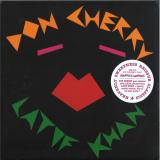
Don Cherry & Latif Khan - Music / Sangam LP

Don Cherry, armed with a voracious musical appetite and boundless imagination, first made a name for himself - though not always fully understood - alongside Ornette Coleman, playing trumpet or cornet. In Los Angeles and then New York, he stood at the heart of a revolutionary approach to improvisation based on melody rather than harmony, later baptized "Free Jazz," the final structural development of American jazz. Over time, he became a champion of improbable fusions - gradually integrating into his style a whole array of "exotic" instruments, and more importantly, the cultures from which they originated. Among them: India, Brazil, Africa, Indonesia, and even China. The time had come for the emergence of "world music": in hindsight, a patchwork rich in imagination and seduction, but once the novelty wore off, often lacking in substance.
In Don Cherry's case, however, the commitment ran deep - tied to his personal engagement with a global vision of art and the human condition. Ustad Ahmed Latif Khan, from the Delhi gharana (a musical lineage), was part of a new generation of accompanists - percussionists, sarangi players, flutists, etc. - who had extended both the technical and conceptual possibilities of their predecessors to gain recognition as soloists and soon to venture onto the international scene. Among them, Latif stood out for his taste for irregular, highly syncopated rhythmic patterns - rich in variety and originality. Don and Latif had never met before the recording session, but the two quickly recognised one another as kindred spirits - calm, focused... and full of laughter. Don clearly knew what he wanted to create, and nothing seemed to pose a challenge for Latif, who grasped the American's intentions immediately, warmed up his fingers at astonishing speed, and with his perfect pitch, naturally took on the role of tuning Don's diverse instrument collection to match whatever was found in the studio - from concert piano and Hammond B3 organ to chromatic orchestral timpani.

No en stock

Haga su pedido ahora y le encargaremos el artículo en nuestro proveedor.

Gilles Peterson & Stuart Baker - Freedom, Rhythm & Sound CHAPTER TWO: Revolutionary Jazz Cover Art

Freedom, Rhythm and Sound showcases the stunning graphic works of independently published jazz record cover designs in the 1960s, 70s, 80s and beyond, from radical jazz musicians such as Sun Ra, John Coltrane, Pharoah Sanders, The Art Ensemble of Chicago and others. This second Freedom, Rhythm and Sound book is a new ‘chapter’, featuring hundreds more unique, rare and beautiful jazz record cover designs.

This book documents the continued development in jazz as African-American artists set out on new journeys to enlightenment, heading out into Europe at the end of the 1960s. The artwork of these (often self-produced) record cover designs during this era reflected their radical agenda, spiritual awareness and singular search for musical and personal freedoms. From raw, DIY aesthetics to lyrical and poetic illustrations, sometimes containing futuristic worlds and ancient landscapes, the designs are always bold, strikingly graphic, and most importantly capture the spirit of the music, giving them a unique beauty. The book also includes sections on African-American poets and writers, Civil Rights and Black Power Movement leaders (Martin Luther King, Malcolm X) and early musical pioneers (Yusef Lateef, Max Roach, Art Blakey and others), all of which helped influence and shape the world of radical and spiritual jazz from the 1960s and onwards to its rebirth today. Since the 1980s, Gilles Peterson has been a pivotal figure in the club scene, renowned for his genre-defying approach to music with jazz at its core. As one of the UK’s most iconic DJs, he has spent over 40 years shaping music trends as a radio presenter, club DJ, producer, and festival curator.

He hosts a flagship show on BBC Radio 6 Music and, in 2016, launched Worldwide FM. He is founder of the Worldwide Festival in the South of France and We Out Here festival in the UK. He runs the label Brownswood Recordings, dedicated to discovering and promoting new talent and bringing fresh voices to the global stage. Stuart Baker founded Soul Jazz Records in 1992. For more than 30 years the record company has released over 500 records covering a genre-defying array of non-mainstream musical worlds – Jazz, Reggae, Punk, Latin, Brazilian, Disco, African, Gospel, Acid House and more.

In 2017, part of Stuart Baker’s jazz record collection (much of which appears in Freedom, Rhythm and Sound) was featured and displayed as part of the Soul of a Nation: Art in the Age of Black Power exhibition at Tate Modern in London, and subsequently at The Broad in Los Angeles (2019) and Brooklyn Museum (2019). Soul Jazz Books launched in 2007, a similarly diverse and critically acclaimed publishing house with graphic art, culture and photography titles that include ‘Voguing and The House Ballroom Scene of New York’, ‘Dancehall – The Rise of Jamaican Dancehall Culture’, ‘Yo! The Early Days of Hip-Hop’, ‘Freedom, Rhythm and Sound – Revolutionary Jazz Cover Art 1965-83’, ‘Punk 45 – The Singles Cover Art of Punk 1976-80’ and others. Reviews of the first Freedom, Rhythm and Sound: “A remarkable book” The New Yorker “If there can be such a thing as a revolutionary coffee table book, Freedom Rhythm & Sound is it―a chance to wallow in the Afrocentric visual language of the non-mainstream black jazz vinyl of this extraordinary fertile and creative period.” Eye “Like the uncompromising music they represent, all the covers broadcast a sense of bold, brazen ideology” Pitchfork “A definitive account of a complex passage of cultural upheaval.” The Independent “For decades, no one was sure how to refer to this extraordinary music.

Calling it ‘fire music’ does justice to its incandescent spirit, still burning from the pages of a book that preserves the memory of a special time.” The Guardian “These sleeves are the original independent legacy to America’s premier art form – Jazz. In terms of African-American cultural expression they are part of a long line of thought that was charged in the 1960s by John Coltrane, Martin Luther King, Ornette Coleman, Malcolm X and others” The Wire “A hefty compendium of radical jazz cover art” Mojo

No en stock

Haga su pedido ahora y le encargaremos el artículo en nuestro proveedor.


Ültimo hace: 6 Días
Jackie McLean - One Step Beyond

Jackie McLean

One Step Beyond

12inch7507951
CM BLUE NOTE
21.11.2025

Inspiriert von Ornette Coleman wagte sich der Altsaxofonist Jackie McLean Anfang der 1960er auf eigene
Faust in die Welt der Avantgarde vor. Dabei gab er dennoch nie seinen feinen Sinn für Swing und musikalische Strukturen auf. Ein Musterbeispiel für diese experimentierfreudige Phase ist sein 1963 erschienenes
Album “One Step Beyond”, das bei AllMusic die Höchstwertung von fünf Sternen erhielt. Darauf schuf
McLean mit einem einzigartigen Quintett einen unverwechselbaren neuen Sound, den er selbst als “InsideOut” bezeichnete.

Reservar21.11.2025

debe ser publicado en 21.11.2025


Ültimo hace: 2026 Años
Don Cherry - Complete Communion

Don Cherry

Complete Communion

12inch5827008
CM BLUE NOTE
05.09.2025

Der Kornettist Don Cherry erlangte ab 1958 als Mitglied der revolutionären Bands von Ornette Coleman weltweite Bekanntheit in der Free-Jazz-Szene. Als eigenständiger Bandleader präsentierte sich Cherry
jedoch erst 1965 auf seinem Blue-Note-Debütalbum “Complete Communion”. Mit einem aus Free-Jazzerprobten Musikern bestehenden Quartett lotete der Kornettist zwei suitenähnliche Kompositionen aus, die
sich jeweils über eine ganze Plattenseite erstreckten und seinen Mitspielern reichlich Raum gaben, sich
ebenfalls solistisch einzubringen.

Reservar05.09.2025

debe ser publicado en 05.09.2025


Ültimo hace: 2026 Años
Artículos por página
N/ABPM
Vinyl