Search:joe pass

Styles
All
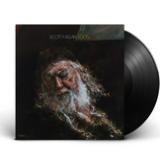
Joe Pass - Virtuoso LP

Joe Pass

Virtuoso LP

12inch7265591
Craft Recordings
28.02.2025
  • A1: Night And Day
  • A2: Stella By Starlight
  • A3: Here's That Rainy Day
  • A4: My Old Flame
  • A5: How High The Moon
  • A6: Cherokee
  • B1: Sweet Lorraine
  • B2: Have You Met Miss Jones?
  • B3: Round Midnight
  • B4: All The Things You Are
  • B5: Blues For Alican
  • B6: The Song Is You

Originally released in 1973 Virtuoso is the 10th album from jazz guitarist Joe Pass, and widely considered his best. Featuring the Pass original “Blues for Alican” along with standards including “’Round Midnight,” the album features Pass playing solo throughout. This new edition of the album is released as part of the Original Jazz Classics Series and is pressed on 180-gram vinyl at RTI with all-analogue mastering from the original tapes at Cohearent Audio and presented in Stoughton Tip-On Jacket.

pre-order now28.02.2025

expected to be published on 28.02.2025


Last In: 2026 years ago
JOE PASS - BETTER DAYS LP

Joe Pass

BETTER DAYS LP

12inchPLP7900
P-Vine Japan
25.07.2024

Long-awaited reissue of an interesting and rare masterpiece by jazz guitar virtuoso Joe Pass, who took on jazz funk! (Made in 1971) This is the first release on Gwyn Records, a minor label in California, and features a very impressive lineup. Paul Humphrey and Earl Palmer on drums, Carol Kaye (label owner) and Ray Brown on bass, J.J. Johnson, Tom Scott, and Conte Candoli on horns, this is truly a historical session that brought together the top musicians of the West Coast at the time. From the cool funk of "Better Days" at the beginning of the session, almost the entire album was a storm of jazz funk. Free Sample" by Joe Sample, "Burning Spear," with its impressive undulating beat, "Head Start," with its too-subtle bass line, and the boogie shuffle "Gotcha! The jazz bossa "Balloons" and the weepy medium soul "It's Too Late" also have an outstanding presence. Not only can you enjoy Pass' intelligent soul-jazz guitar playing that hits all the right notes in a single tone, but the groovy, funky rhythm section is the best you'll hear on the West Coast.

out of Stock

Order now and we will order the item for you at our supplier.


Last In: 19 months ago
JOE PASS - FOR DJANGO

Joe Pass

FOR DJANGO

12inch3538222
Blue Note
04.02.2022

" Joe Pass’ For Django, recorded for Pacific Jazz in 1964, has long been considered a classic of the jazz guitar repertoire with Pass paying tribute to Django Reinhardt without in any way attempting to emulate him. Rather, Pass honours Django using his own masterful guitar style joined by fellow guitarist John Pisano as well as bassist Jim Hughart and drummer Colin Bailey.
Highlights in this program of tunes either composed by or associated with Django include “Rosetta,” “Nuages,” and “Fleur D’ Ennui.”.
Blue Note Records’ Tone Poet Audiophile Vinyl Reissue Series is produced by Joe Harley and features all-analog, mastered-from-the-original-master-tapes, 180g audiophile vinyl reissues in deluxe packaging. Mastering is by Kevin Gray (Cohearent Audio) and vinyl is manufactured at Record Technology Incorporated (RTI)."

pre-order now04.02.2022

expected to be published on 04.02.2022


Last In: 2026 years ago
Carnivore A.D. - Transmutation

Carnivore A.D.

Transmutation

12inch426239083198
Apostasy Records
27.03.2026
  • 1: Prologue
  • 2: Transmutation
  • 3: I Stand Alone
  • 4: Social Decomposition
  • 5: Mine Is The Hand

The Evolution Has Begun. Dedicated with love and honor to the memories of Peter Steele and Keith Alexander, Carnivore A.D. emerged as a post armageddon neo barbaric soundscape - a relentless force keeping the primal energy of Carnivore alive on stages and festivals around the world. Formed by NYC Hardcore and Metal veterans Baron Misuraca (vocals & bass – ex-SHEER TERROR), Chuck Lenihan (guitar – ex-CRUMBSUCKERS), and Joe Cangelosi (drums – ex-KREATOR, WHIPLASH, MASSACRE). Co-founded with full endorsement by original drummer Louie Beateaux, Carnivore A.D. has honored its roots by performing the explosive and brilliant works of Peter Steele with intensity, respect and raw power. But now, with the release of their first-ever studio EP "Transmutation", Carnivore A.D. transcends tribute.

They have challenged themselves to write new material - not to replace the original legacy, but to continue its spirit through their own lens. While the legacy of Carnivore remains sacred, Carnivore A.D. has become something more than its origin - a band with its own scars, its own instincts, and now, its own songs. “Think of Carnivore AD as a renowned dining establishment where it’s Chef passed on years ago but the recipes remain and folks still want to dine there instead of cooking the food themselves. And Chef Pete wouldn’t mind because his friends are making it with love.”- Louie Beateaux.

pre-order now27.03.2026

expected to be published on 27.03.2026


Last In: 2026 years ago
Various - Tchic Tchic: French Bossa Nova 1963-1974  Colored Edition LP 2x12"
  • A1: Les Masques - Il Faut Tenir (1969)
  • A2: Isabelle Aubret - Casa Forte (1971)
  • A3: Christianne Legrand - Hlm Et Ciné Roman (1972)
  • A4: Jean Constantin - Pas Tant D'chichi Ponpon (1972)
  • A5: Billy Nencioli & Baden Powell - Si Rien Ne Va (1969)
  • B1-: Marpessa Dawn - Le Petit Cuica (1963)
  • B2: Jean-Pierre Sabar - Vai Vai (1974)
  • B3: Sophia Loren - De Jour En Jour (1963)
  • B4: Isabelle - Jusqu’à La Tombée Du Jour (1969)
  • B5: Sylvia Fels - Corto Maltesse (1974)
  • C1: Frank Gérard - Comme Une Samba (1972)
  • C2: Ann Sorel - La Poupée Des Favellas (1971)
  • C3: Charles Level - Un Enfant Café Au Lait (1971)
  • C4: Andrea Parisy - Les Mains Qui Font Du Bien (1970)
  • C5: Audrey Arno - Quand Jean-Paul Rentrera (1969)
  • C6: Aldo Frank - T’as Vu Ce Printemps (1970)
  • D1: Christianne Legrand - Cent Mille Poissons Dans Ton Filet (1972)
  • D2: Clarinha - Lemenja (1970)
  • D3: Hit Parade Des Enfants - Aquarela (1976)
  • D4: Jean-Pierre Lang - Tendresse (1965)
  • D5: Magalie Noël - Une Énorme Samba (1970)
  • D6: Françoise Legrand - La Lune

Ever since the late 1950s bossa-nova revolution, Brazil’s influence on French music has been undeniable. Pierre Barouh, Georges Moustaki and a vast array of lesser known artists, all made the Musica Popular Brasileira (MPB) an axis of promotion at the service of a cool and metaphysical, modern and mixed Brazilian lifestyle. Some were seduced by the poetic languors of the bossa, some were looking for fun, and others just loved the American hybridization of jazz-bossa, jazz-samba.


What is bossa nova? One of its creators, Joao Gilberto said: "Its style, cadence, everything is samba. At the very start, we didn't call it bossa nova, we sang a little samba made up of a single note - Samba de uma nota so .... The discussion around the origins of bossa nova is therefore useless”. It is nevertheless useful to remember that these magnificent Brazilian songs, which the guitarist describes as samba, were shifted and balanced around improbable chords. "I like things that lean, the in-betweens that limp with grace," said Pierre Barrouh, quoting Jean Cocteau.


With emotion, arrangements for violin and supple guitar licks, bossa nova rapidly changed. A transformation that can be heard in the Tchic, tchic, French Bossa Nova 1963-1974 compilation, the result of a cultural reappropriation, which traveled through the United States and supplemented itself in France.

A musical revolution that has remained significant, bossa nova was born in Rio. From 1956 to 1961, Brazil lived through its golden years. In five years, the country had invented its modernist style. Elected president in 1956, Juscelino Kubitschek de Oliveira, an elegant man with a broad forehead, brandished a promising slogan: "Fifty years of progress in five years". He quickly got to work. Not worried about increasing debt, he launched the project for a new federal capital, Brasilia, designed by the communist architect Oscar Niemeyer. Volkswagen opened state-of-the-art factories and created the “fusquinha”, the Beetle. In Rio, the Vespa made its first appearance. The Arpoador Surf Club crew run into the “girl” from Ipanema, Helô Pinheiro - the tanned garota ("chick"), between a flower and mermaid, who at 17 walked by the Veloso bar, where the fiery author and composer, Tom Jobim and Vinicius de Moraes, were getting drunk on whiskey. From then on, bossa symbolized cool.

In 1958, Joao Gilberto recorded Chega de Saudade, which the directors of Philips denied, calling it "music for fagots". The marketing director, who believed in it, secretly pressed 3000 78-inch vinyls and distributed them at schools around Rio, creating a tidal wave.

American jazzmen then took over. In particular, trumpeter Dizzy Gillespie and guitarist Charlie Byrd. In November 1962, the Brazilian Ministry of Foreign Affairs funded a "Bossa-Nova" concert at Carnegie Hall in New York, inviting the genre’s pioneers. Unprepared, the show soon turned to disaster. But the troupe was invited to the White House by Jackie Kennedy. The first lady loved "the new beat" and in particular Maria Ninguem, a song by Carlos Lyra, later covered by Brigitte Bardot.

In Brazil, the 1964 military coup quickly ended this euphoria. The destructive atmosphere that ensued pushed many Brazilian musicians to leave, if not to exile. Thus, Tom Jobim, Sergio Mendes and Joao Gilberto arrived to the United States. In New York, Joao Gilberto met saxophonist Stan Getz. At the time, he was married to the Bahianese Astrud Weinert Gilberto, who had a German father. She had never sung before, but she knew how to speak English. Getz therefore asked her to replace her husband on The Girl From Ipanema. The Getz/Gilberto record with Tom Jobim on piano, was released in March 1964. Phil Ramone, the "pope of pop" was in charge of sound.

Bossa nova arrived in Paris through the classic “guitar-voice” channel (Pierre Barouh, Baden Powell, Moustaki…) But France loved jazz and Paris had already welcomed its American contributors. All these good people were to pass through Saint-Germain-des-Prés. The cabaret l'Escale became the Mecca of Latin American sound where one could find Pierre Barrouh and his friends, such as the Camara Trio, samba-jazz aces, whose only record was published by the Saravah label. With a band strangely called Les Masques (a band that included Nicole Croisille and Pierre Vassiliu, among others), the Camara Trio recorded an interesting Brazilian Sound, including the track Il faut tenir which is present on this tasty compilation of rarities.

Other enlightened musicians can also be found on the compilation, such as Jean-Pierre Sabar (songwriter for Hardy, Auffray, Leforestier ...) and the French pop rock organist Balthazar. In 1975, Sabar recorded Aurinkoinen Musiikkimatka on a Finnish label, which featured the crazy Vai, Vai, included on this record. We are now following the footsteps of Brazilian electronic musicians such as Sergio Mendes, Eumir Deodato or Marcos Valle who created funk and disco sounds on their keyboards and synthesizers. A style that influenced Véronique Sanson when she wrote Jusqu’à la Tombée de la nuit in 1969 for Isabelle de Funès, the niece of Louis and a great friend of Michel Berger - Sanson did end up singing this track on her 1992 Sans Regret record.


The pinnacle of exoticism and travel, Sylvia Fels’ Corto Maltese includes bongos, sea mist and ocean sounds. The title was taken from Jacky Chalard’s concept album written in 1974, Je suis vivant, mais j’ai peur (I am alive, but I am scared), based on Gilbert Deflez’s science fiction novel.


However, bossa nova extended the scope of popularity. "In the 1970s, I was a fan of Sergio Mendes, Getz / Gilberto. I fell in love with this music that I knew because I had been an orchestral singer, " explained Isabelle Aubret, who in 1971 delivered a composite record of covers by the very funky Jorge Ben, Orfeu Negro, Tom Jobim, Vinicius de Morais and Jean Ferrat. "I recorded this album for Meys Records in Paris, far from Brazil, with wonderful musicians, François Raubert, Roland Vincent, Alain Goraguer...". The latter wrote the arrangements for Casa Forte, a very percussive title borrowed from Edu Lobo, one of the initiators of the bossa who spent time in California. "Jazz and bossa came together and produced very rhythmic music. I love singing, it allows me to dream, to have fun, to feel a high on stage, and these songs brought me joy, made me swing, my singing felt like a dance.”


The world tours of French singers and their desire for the tropics, often brought them to Rio with its hills, forests, caipirinhas and tanned bodies. There are surprises though, like this Iemenja (Iemenja is the goddess of the sea in the Afro-Brazilian candomblé religion). Not unlike the composer and musician Jean-Pierre Lang, based in Sao Paulo, Claire Chevalier taught Brazil to Brazil. In 1970, the singer and painter published a 45-inch vinyl, Mon mari et mes amants (My husband and my lovers), under the improbable pseudonym of Clarinha (little Claire). She was then living in Rio, with her husband, Joël Leibovitz, who founded a band called Azimuth, and who owned a record label specialized in "sambas enredos" songs for samba school parades.


For its B side, she asked Pierre Perret to come up with lyrics for a song composed by Carlos Imperial: "Oh goddess of the sea, o goddess Iemenja, I bring a white rose to adorn your long hair ..." . "Perret came to see us, and we had fun, remembers Joël Leibovitz. We wrote Lemenja for fun, we recorded it at the Havaí studio, behind the Central do Brasil the central station. Erlon Chaves, the arranger who worked with Elis Regina, joined us" adding his share of Afro-Brazilian percussions and funky brass to the mix.

There is a common misunderstanding in Franco-Brazilian history: that bossa, admittedly hedonistic, is perceived as funny, even though the poets who wrote the texts are often philosophizing on the human condition. Its French interpreters pull it towards a carnival inspired universe, far removed from its fundamental essence. Thus, Jean Constantin covered the famous Samba da minha terra, an ode to the art of samba written by the classic Bahian composer Dorival Caymmi, renaming it with the enticing title of Pas tant de tchi tchi pompon: "On your pier there is no tchi tchi / when you arch your back, you know everything is alright ”(lyrics by Gérard Calvi). This expedited bossa aims for the absurd, but retains a certain elegance.

Indeed, Jean Constantin was not an idiot, the rather large man had a huge mustache and liked fantasy, (Les pantoufles à papa, Le pacha, inspired by cha-cha-cha-cha, salsa and jazz) but he was also the lyricist of Mon manège à moi interpreted by Edith Piaf, the composer of Mon Truc en plume by Zizi Jeanmaire and the soundtrack of François Truffaut’s 400 Blows. Le Poulpe, published in 1970, from which this bossa is extract, was arranged by Jean-Claude Vannier, an accomplice of Serge Gainsbourg’s Melody Nelson. In short: "There is enough of samba / By looking at the parasol / Because my poor cabeza / Is going to die in the sun".

Even the American actress Marpessa Down, who was at the heart of the bossa nova revolution with her role as Euridyce in Marcel Camus’ film Orfeu Negro, winner of the 1959 Cannes Palme d'or, fed the clichée with Je voudrais parler au petit cuica - "Tell me how you manage to always make people want to dance / It's true, I must admit that I cannot resist your magic" - in consequence, once can hear the cuica, a little drum inherited from the Bantu.


But bossa nova had many angles. Societal, of course, pushing actresses who were symbols of women's liberation like Brigitte Bardot, Jeanne Moreau, or Sophia Loren to engage in the exercise of accelerated bossa. In February of 1963, Sophia Loren made a record in French in Rome, Je ne t'aime plus, featuring the song De jour en jour, a bossa written by two Italians, Armando Trovajoli and Tino Fornai, which was released a little later by Barclay. Bossa accompanied the 1960s, a decade of moral liberation. Ann Sorel, who interpreted La Poupée des favellas, caused a sensation with L’amour à plusieurs, a provocative song written by Frédéric Bottom and Jean-Claude Vannier. As for the actress Andrea Parisy, she displayed her bourgeois cheekiness in Marcel Carné's Les Tricheurs before interpreting Les mains qui font du bien. And Magalie Noël, the friend of Boris Vian, who sung Johnny fais-moi mal, was hired to sing Une énorme Samba, composed by Alain Goraguer (arranger to Gainsbourg, Bobby Lapointe and Jean Ferrat) with lyrics by Frédéric Botton.

But in the end, of what wood is bossa nova made of? The answer is given by Christianne Legrand, daughter of Raymond the conductor, and sister to Michel the composer: "With me, with jà" - jà means "immediately" in Portuguese. In 1972, the singer, an expert in vocal jazz and a member of the Double Six, published Le Brésil de Christianne Legrand. Two songs included on the Tchic Tchic compilation that demonstrate how bossa, jazz, funk, rock, etc. work like a swiss army knife: the music is used to denounce broken systems, or miracles, HLM et ciné roman, Cent mille poissons dans ton filet, two songs from the O Cafona soundtrack, a successful telenovela broadcast, at the time in black and white, on TV Globo. The first was adapted in French by the fighter and friend of the Legrand tribe, Agnès Varda. The second is content with a play on words, jostling them into a summer fun.


Véronique Mortaigne

pre-order now17.04.2026

expected to be published on 17.04.2026


Last In: 2026 years ago
HEDVIG MOLLESTAD WEEJUNS - BITCHES BLUES
  • 1: Bitches Blues
  • 2: Kompet Blir
  • 3: For A Moment I Thought I Could Hear You
  • 4: Limite
  • 5: Dynamax
  • 6: Recollection Of Sorrow

"Weejuns is all about interplay,"erklärt Gitarristin Mollestad. ,Bitches Blues besteht aus sechs Instrumentalstücken oder Musikabschnitten mit einer extremen Bandbreite an Dynamik. Einige basieren auf kräftigen Beats, während andere Stücke weitaus lyrischer und rubato sind. Die Bandbreite reicht von riffbasierten rockigen Stücken über lautes Chaos bis hin zu melancholischen Balladen und sogar völlig freien Improvisationen." Mit einem kultivierten und dennoch erfrischend instinktiven Ansatz, Instrumente und Einflüsse miteinander zu verflechten, wechselt Bitches Blues (ein ironischer Verweis auf Miles Davis' Album Bitches Brew) unvorhersehbar zwischen langsamen und sanften, klar gegliederten Songs mit disziplinierten Akkordfolgen und explosiven Ausbrüchen kathartischer und komplexer Strukturen. Weejuns (eine Slang-Abkürzung für ,Norwegians") stellten sich 2023 mit einem selbstbetitelten Doppel-Live-Album vor. Ursprünglich von Mollestad für das Kongsberg Jazz Festival zusammengestellt, wo sie mit dem renommierten Musicians Prize ausgezeichnet wurde, hat sich die Chemie innerhalb von Weejuns als dauerhaft und verlockend erwiesen, auch als Gegenpol zum bisher härtesten Album des Hedvig Mollestad Trios, Bees in the Bonnet aus dem Jahr 2025. Mollestad hat mit ihrem gleichnamigen Trio acht gefeierte Alben veröffentlicht. Das Markenzeichen ihrer 15-jährigen Karriere ist die Verschmelzung von ernsthaftem Können mit einem offensichtlichen Fokus darauf, Spaß am Klang zu finden. Als Tochter eines Jazzmusikers vertiefte sie sich in dessen Plattensammlung und studierte klassische Werke von Miles Davis, Charlie Parker, Joe Pass und Jim Hall, bevor sie in ihren 20ern Riff-gewaltige Titanen wie Led Zeppelin, Black Sabbath und Mahavishnu Orchestra entdeckte. Dies führte zur Gründung des Hedvig Mollestad Trios, dessen unermüdlicher Aufnahme- und Tourneeplan seit Anfang der 2010er Jahre der Gitarristin eine Reihe von Auszeichnungen einbrachte, darunter zwei norwegische Grammys (Spellemannprisen) und die Ernennung durch das DownBeat-Magazin zu einer der 25 Künstlerinnen, die ,den Jazz für Jahrzehnte prägen könnten". Ståle Storlokken (Bass, Synths) ist Gründer und langjähriges Mitglied von Supersilent und Elephant9, seit Mitte der 90er Jahre die ,rechte Hand" von Terje Rypdal und hat mit Motorpsycho auf Platte und auf der Bühne sowie mit unzähligen anderen zusammengearbeitet. Ole Mofjell (Drums) ist das jüngste Mitglied und spielt bei Krokofant, Signe Emmeluths Amoeba und seinem eigenen Free-Jazz-Trio 3 Days Of Maceration.

pre-order now17.04.2026

expected to be published on 17.04.2026


Last In: 2026 years ago
Joe Fujinoki - Glass Torso LP

Joe Fujinoki

Glass Torso LP

12inchENMB-19
enmossed
23.04.2026

Joe Fujinoki centered the compositions of his latest album Glass Torso round the idea of the fragility of the human body. Fujinoki described the narrative thread of the album as that of “holding the shape of a human body as if it might shatter like glass”. The precariousness of the body, the essence of the body as defined by Fujinoki as the torso, and the object relations between the boundaries of dialectical exercises pack themselves into his creative process.

Fujinoki recorded Glass Torso exclusively with analog synthesizers, stumbling in and out of structural loops to find space for accidental discoveries. The ten pieces of recorded material feel somewhere on the edge of typified form, feeling like a vascular system pumping in and out its undulating liquidities. Maybe this is the hollowed space held together by Fujinoki’s notion of the torso where you hear a microscopic world, dubby and generative. Fujinoki is adept at organizing this realm of subtle sound sources, giving proper considerations of shared tonal space. Seemingly, this handling of the precarity of sonic material elucidates Fujinoki’s mature attention to detail.

Ambient music genre tropes often affirm the listeners vessel for escape and dissociation. It provides an intoxicating allure by respite from an overwhelming exterior reality far outside the listeners controls. Here this space becomes apolitical, or its protest vocabulary softer and subtle. Fujinoki does not aim to tackle hyperobject topics on how to course correct the world, but he does something increasingly rarer to come across. On Glass Torso an alternative space is created not as shelter, but as a meditation on negotiation and compromise. This twenty eight minutes of audio lays down a foundation for imagination, for imagining how to negotiate the fragility of the self. Zoomed out, the implications of his negotiative sonics can be a playground for broader reflections on distributive care and attention.

Fujinoki says he feels “alert” to his physicality and placement in the world amidst vast digital cultures creating impositions on him and his surroundings. On Glass Torso he creates a concretized space on a vinyl record, where the virtual and the tangible antagonize one another that create the spectacle of the listening experience. This spectacle is a soft one, a considered one, and an utmost enjoyable one. Fujinoki juggles opposing forces brilliantly, and formulates an exquisite palette of soft passing music so he can also help the listener with the exquisite burden of their own Glass Torso.”

- Nick Klein, January 2026

pre-order now23.04.2026

expected to be published on 23.04.2026


Last In: 2026 years ago
FLYING MOJITO BROS - JUST PASSING THROUGH
  • 1: Area 54
  • 2: Wild Mountain Honey
  • 3: Take The Long Way
  • 4: New Mexico '76
  • 5: Just Passing Through
  • 6: Glitter
  • 7: Daniel's Disco
  • 8: Catch Me
  • 9: Lost To The Desert
  • 10: Slow Train Fuego
  • 11: Thunder Exchange

Das erste Album mit Originalmusik von den englischen Künstlern Flying Mojito Bros., die total auf Americana und Dance-Musik stehen. FMB hat dank seines einzigartigen Stils, der als Desert Disco und Outlaw House bezeichnet wird - ein neu definierter Americana-Sound, der von Poolside-Vibes bis zur Tanzfläche reicht -, eine wachsende Fangemeinde in den USA gewonnen. Das Album bietet eine hochkarätige Besetzung mit Künstlern wie Scott Hirsch, Will Worden und Rob Chaney (weitere werden noch bekannt gegeben!) und hat die Unterstützung von einflussreichen Persönlichkeiten wie Diplo, Phish, Pretty Lights, BBC 6 Music und KEXP erhalten. Just Passing Through zeigt die Entwicklung von FMB und kombiniert ihre charakteristischen Re-Edits und Remixe mit Live-Band-Aufnahmen. Es ist ein mutiger Schritt in ihrer Karriere, bei dem sie von den 1970er Jahren inspirierten Rock und elektronische Rhythmen mit Kollaborationen von Top-Musikern wie Shawn Lee (Young Gun Silver Fox), Joe Harvey-Whyte (The Hanging Stars) und Joe Stoddart (ABBA Voyage) verbinden. Dieses Album markiert ein neues Kapitel in der kreativen Reise von FMB und fängt ihre Erkundung der neu definierten Americana und den interkulturellen Rock-Austausch zwischen den USA und Großbritannien ein.

pre-order now24.04.2026

expected to be published on 24.04.2026


Last In: 2026 years ago
Joey Beltram - Beltram Vol. 1

What can be said about Joey Beltram’s ‘Energy Flash’ that hasn’t be said already! The track still gets rinsed, week in, week out, across radio stations, clubs and festivals, testimony to the sheer importance of this techno classic.

Released originally in 1990 on the R&S Records label, ‘Beltram Vol. 1’ included the aforementioned ‘Energy Flash’, alongside three equally ground-breaking dance tracks that possibly get overshadowed by the big lead track. But tracks like ‘Subsonic Bass’ broke the mould and went on to influence a raft of rave and drum ‘n’ bass tunes, thanks in part to its use of the now legendary ‘hoover’ bass sound. The sinister acid of ‘Jazz 3033’ still sounds as fresh today as it did 33 years ago, and the menacingly titled ‘Psycho Bass’ reveals the EP’s most passive moment, as its solid breakbeat cuts through ethereal tones and chugging synths.

‘Beltram Volume 1’ has been remastered by Beau Thomas at Ten Eight Seven Mastering, and the release comes in an updated sleeve, faithfully recreating the 1990 packaging.

‘Beltram Volume 1’ by Joey Beltram is available on R&S Records from 10th February 2023.

In Stock

On Stock and ready to ship

Guilty Razors - Complete Recordings 1977 - 1978
  • A1: Hurts And Noises
  • A2: Wake Up
  • A3: I Don't Wanna Be A Rich
  • A4: Terrorist Bad Heart
  • A5: Provocate
  • A6: Lucifer Sam (Pink Floyd)
  • B1: Happy!?
  • B2: So Lazy
  • B3: I Feel Down
  • B4: Stupido
  • B5: Guilty
  • B6: Caroline Says (Loo Reed)

UILTY RAZORS, BONA FIDE PUNKS.


Writings on the topic that go off in all directions, mind-numbing lectures given by academics, and testimonies, most of them heavily doctored, from those who “lived through that era”: so many people today fantasize about the early days of punk in our country… This blessed moment when no one had yet thought of flaunting a ridiculous green mohawk, taking Sid Vicious as a hero, or – even worse – making the so-called alternative scene both festive and boorish. There was no such thing in 1976 or 1977, when it wasn’t easy to get hold of the first 45s by the Pistols or the Clash. Few people were aware of what was happening on the fringes of the fringes at the time. Malcolm McLaren was virtually unknown, and having short hair made you seem strange. Who knew then that rock music, which had taken a very bad turn since the early 1970s, would once again become an essential element of liberation? That, thanks to short and fast songs, it would once again rediscover that primitive, social side that was so hated by older generations? Who knew that, besides a few loners who read the music press (it was even better if they read it in English) and frequented the right record stores? Many of these formed bands, because it was impossible to do otherwise. We quickly went from listening to the Velvet Underground to trying to play the Stooges’ intros. It’s a somewhat collective story, even though there weren’t many people to start it.
The Guilty Razors were among those who took part in this initial upheaval in Paris. They were far from being the worst. They had something special and even released a single that was well above the national average. They also had enough songs to fill an album, the one you’re holding. In everyone’s opinion, they were definitely not among the punk impostors that followed in their wake. They were, at least, genuine and credible.

Guilty Razors, Parisian punk band (1975-1978). To understand something about their somewhat linear but very energetic sound, we might need to talk about the context in which it was born and, more broadly, recall the boredom (a theme that would become capital in punk songs) coupled with the desire to blow everything off, which were the basis for the formation of bands playing a rejuvenated rock music ; about the passion for a few records by the Kinks or the early Who, by the Stooges, by the Velvet mostly, which set you apart from the crowd.
And of course, we should remember this new wave, which was promoted by a few articles in the specialized press and some cutting-edge record stores, coming from New York or London, whose small but powerful influence could be felt in Paris and in a handful of isolated places in the provinces, lulled to sleep by so many appalling things, from Tangerine Dream to President Giscard d’Estaing...
In 1975-76, French music was, as almost always, in a sorry state ; it was still dominated by Johnny Hallyday and Sylvie Vartan. Local rock music was also rather bleak, apart from Bijou and Little Bob who tried to revive this small scene with poorly sound-engineered gigs played to almost no one.
In the working class suburbs at the time, it was mainly hard rock music played to 11 that helped people forget about their gruelling shifts at the factory. Here and there, on the outskirts of major cities, you still could find a few rockers with sideburns wearing black armbands since the death of Gene Vincent, but it wasn’t a proper mass movement, just a source of real danger to anyone they came across who wasn't like them. In August 1976, a festival unlike any other took place in Mont-de-Marsan – the First European Punk Festival as the poster said – with almost as many people on stage as in the audience. Yet, on that day, a quasi historical event happened, when, under the blazing afternoon sun, a band of unknowns called The Damned made an unprecedented noise in the arena, reminiscent of the chaotic Stooges in their early adolescence. They were the first genuine punk band to perform in our country: from then on, anything was possible, almost anything seemed permissible.

It makes sense that the four+1 members of Guilty Razors, who initially amplified acoustic guitars with crappy tape recorder microphones, would adopt punk music (pronounced paink in French) naturally and instinctively, since it combines liberating noise with speed of execution and – crucially – a very healthy sense of rebellion (the protesters of May 1968 proclaimed, and it was even a slogan, that they weren’t against old people, but against what had made them grow old. In the mid-1970s, it seemed normal and obvious that old people should now ALSO be targeted!!!).
At the time, the desire to fight back, and break down authority and apathy, was either red or black, often taking the form of leafleting, tumultuous general assemblies in the schoolyard, and massive or shabby demonstrations, most of the time overflowing with an exciting vitality that sometimes turned into fights with the riot police. Indeed, soon after the end of the Vietnam War and following Pinochet’s coup in Chile, all over France, Trotskyist and anarcho-libertarian fervour was firmly entrenched among parts of the educated youth population, who were equally rebellious and troublemakers whenever they had the chance. It should also be noted that when the single "Anarchy in the UK" was first heard, even though not many of us had access to it, both the title and its explosive sound immediately resonated with some of those troublemakers crying out for ANARCHY!!! Meanwhile, the left-wing majority still equated punks with reckless young neo-Nazis. Of course, the widely circulated photos in the mainstream press of Siouxsie Sioux with her swastikas didn’t necessarily help to win over the theorists of the Great Revolution. It took Joe Strummer to introduce The Clash as an anti-racist, anti-fascist and anti-ignorance band for the rejection of old-school revolutionaries to fade a little.

The Lycée Jean-Baptiste Say at Porte d’Auteuil, despite being located in the very posh and very exclusive 16th arrondissement of Paris, didn’t escape these "committed" upheavals, which doubled as the perfect outlet for the less timid members of this generation.
“Back then, politics were fun,” says Tristam Nada, who studied there and went on to become Guilty Razors’ frontman. “Jean-Baptiste was the leftist high-school in the neighbourhood. When the far right guys from the GUD came down there, the Communist League guys from elsewhere helped us fight them off.”
Anything that could challenge authority was fair game and of course, strikes for just about any reason would lead to increasingly frequent truancy (with a definitive farewell to education that would soon follow). Tristam Nada spent his 10th and 11th unfinished grades with José Perez, who had come from Spain, where his father, a janitor, had been sentenced to death by Franco. “José steered my tastes towards solid acts such as The Who. Like most teenagers, I had previously absorbed just about everything that came my way, from Yes to Led Zeppelin to Genesis. I was exploring… And then one day, he told me that he and his brother Carlos wanted to start a rock band.” The Perez brothers already played guitar. “Of course, they were Spanish!”, jokes their singer. “Then, somewhat reluctantly, José took up the bass and we were soon joined by Jano – who called himself Jano Homicid – who took up the rhythm guitar.” Several drummers would later join this core of not easily intimidated young guys who didn’t let adversity get the better of them.

The first rehearsals of the newly named Guilty Razors took place in the bedroom of a Perez aunt. There, the three rookies tried to cover a few standards, songs that often were an integral part of their lives. During a first, short gig, in front of a bewildered audience of tough old-school rockers, they launched into a clunky version of the Velvet Underground's “Heroin”. Challenge or recklessness? A bit of both, probably… And then, step by step, their limited repertoire expanded as they decided to write their own songs, sung in a not always very accurate or academic English, but who cared about proper grammar or the right vocabulary, since what truly mattered was to make the words sound as good as possible while playing very, very fast music? And spitting out those words in a language that left no doubt as to what it conveyed mattered as well.
Trying their hand a the kind of rock music disliked by most of the neighbourhood, making noise, being fiercely provocative: they still belonged to a tiny clique who, at this very moment, had chosen to impose this difference. And there were very few places in France or elsewhere, where one could witness the first stirrings of something that wasn’t a trend yet, let alone a movement.

In the provinces, in late 1976 or early 1977, there couldn’t be more than thirty record stores that were a bit more discerning than average, where you could hear this new kind of short-haired rock music called “punk”. The old clientele, who previously had no problem coming in to buy the latest McCartney or Aerosmith LP, now felt a little less comfortable there…
In Paris, these enlightened places were quite rare and often located nex to what would become the Forum des Halles, a big shopping mall. Between three aging sex workers, a couple of second-hand clothes shops, sellers of hippie paraphernalia and small fashion designers, the good word was loudly spread in two pioneering places – propagators of what was still only a new underground movement. Historically, the first one was the Open Market, a kind of poorly, but tastefully stocked cave. Speakers blasted out the sound of sixties garage bands from the Nuggets compilation (a crucial reference for José Perez) or the badly dressed English kids of Eddie and the Hot Rods. This black-painted den was opened a few years earlier by Marc Zermati, a character who wasn’t always in a sunny disposition, but always quite radical in his (good) choices and his opinions. He founded the independent label Skydog and was one of the promoters of the Mont-de-Marsan punk festivals. Not far from there was Harry Cover, another store more in tune with the new New York scene, which was amply covered in the house fanzine, Rock News (even though it was in it that the photos of the Sex Pistols were first published in France).
It was a favorite hang-out of the Perez brothers and Tristam Nada, as the latter explained. “It’s at Harry Cover’s that we first heard the Pistols and Clash’s 45s, and after that, we decided to start writing our first songs. If they could do it, so could we!”
The sonic shocks that were “Anarchy in the UK”, “White Riot” or the Buzzcocks’s EP, “Spiral Scratch” – which Guilty Razors' sound is reminiscent of – were soon to be amplified by an unparalleled visual shock. In April 1977, right after the release of their first LP, The Clash performed at the Palais des Glaces in Paris, during a punk night organised by Marc Zermati. For many who were there, it was the gig of a lifetime…
Of course, Guilty Razors and Tristam were in the audience: “That concert was fabulous… We Parisian punks were almost all dressed in black and white, with white shirts, skinny leather ties, bikers jackets or light jackets, etc. The Clash, on the other hand, wore colourful clothes. Well, the next day, at the Gibus, you’d spot everyone who had been at this concert, but they weren’t wearing anything black, they were all wearing colours.”

It makes sense to mention the Gibus club, as Guilty Razors often played there (sometimes in front of a hostile audience). It was also the only place in Paris that regularly scheduled new Parisian or Anglo-Saxon acts, such as Generation X, Siouxsie and the Banshees, the Slits, and Johnny Thunders who would become a kind of messed-up mascot for the venue. A little later, in 1978, the Rose Bonbon – formerly the Nashville – also attracted nightly owls in search of electric thrills… In 1977, the iconic but not necessarily excellent Asphalt Jungle often played at the Gibus, sometimes sharing the bill with Metal Urbain, the only band whose aura would later transcend the French borders (“I saw them as the French Sex Pistols,” said Geoff Travis, head of their British label Rough Trade). Already established in this small scene, Metal Urbain helped the young and restless Guilty Razors who had just arrived. Guitarist for Metal Urbain Hermann Schwartz remembers it: “They were younger than us, we were a bit like their mentors even if it’s too strong a word… At least they were credible. We thought they were good, and they had good songs which reminded of the Buzzcocks that I liked a lot. But at some point, they started hanging out with the Hells Angels. That’s when we stopped following them.”

The break-up was mutual, since, Guilty Razors, for their part, were shocked when they saw a fringe element of the audience at Metal Urbain concerts who repeatedly shouted “Sieg Heil” and gave Nazi salutes. These provocations, even still minor (the bulk of the skinhead crowd would later make their presence felt during concerts), weren’t really to the liking of the Perez brothers, whose anti-fascist convictions were firmly rooted. Some things are non-negotiable.
A few months earlier (in July 1978), Guilty Razors had nevertheless opened very successfully for Metal Urbain at the Bus Palladium, a more traditonally old-school rock night-club. But, as was sometimes the case back then, the night turned into a mass brawl when suburban rockers came to “beat up punks”.

Back then, Parisian nights weren’t always sweet and serene.

So, after opening as best as they could for The Jam (their sound having been ruined by the PA system), our local heroes were – once again – met outside by a horde of greasers out to get them. “Thankfully,” says Tristam, “we were with our roadies, motorless bikers who acted as a protective barrier. We were chased in the neighbouring streets and the whole thing ended in front of a bar, with the owner coming out with a rifle…”
Although Tristam and the Perez brothers narrowly escaped various, potentially bloody, incidents, they weren’t completely innocent of wrongdoing either. They still find amusing their mugging of two strangers in the street for example (“We were broke and we simply wanted to buy tickets for the Heartbreakers concert that night,” says Tristam). It so happened that their victims were two key figures in the rock business at the time: radio presenter Alain Manneval and music publisher Philippe Constantin. They filed a complaint and sought monetary compensation, but somehow the band’s manager, the skilful but very controversial Alexis, managed to get the complaint withdrawn and Guilty Razors ended up signing with Constantin with a substantial advance.

They also signed with Polydor and the label released in 1978 their only three-track 45, featuring “I Don't Wanna be A Rich”, “Hurts and Noises” and “Provocate” (songs that exuded perpetual rebellion and an unquenchable desire for “class” confrontation). It was a very good record, but due to a lack of promotion (radio stations didn’t play French artists singing in English), it didn’t sell very well. Only 800 copies were allegedly sold and the rest of the stock was pulped… Initially, the three tracks were to be included on a LP that never came to be, since they were dropped by Polydor (“Let’s say we sometimes caused a ruckus in their offices!” laughs Tristam.) In order to perfect the long-awaited LP, the band recorded demos of other tracks. There was a cover of Pink Floyd's “Lucifer Sam” from the Syd Barrett era – proof of an enduring love for the sixties’ greats –, “Wake Up” a hangover tale and “Bad Heart” about the Baader-Meinhof gang, whose actions had a profound impact on the era and on a generation seeking extreme dissent... On the album you’re now discovering, you can also hear five previously unreleased tracks recorded a bit later during an extended and freezing stay in Madrid, in a makeshift studio with the invaluable help of a drummer also acting as sound engineer. He was both an enthusiastic old hippie and a proper whizz at sound engineering. Here too, certain influences from the fifties and sixties (Link Wray, the Troggs) are more than obvious in the band’s music.

Shortly after a final stormy and rather barbaric (on the audience’s side) “Punk night” at the Olympia in June 1978, Tristam left the band ; his bandmates continued without him for a short while.

But like most pioneering punk bands of the era, Guilty Razors eventually split up for good after three years (besides once in Spain, they’d only played in Paris). The reason for ceasing business activities were more or less the same for everyone: there were no venues outside one’s small circuit to play this kind of rock music, which was still frightening, unknown, or of little interest to most people. The chances of recording an LP were virtually null, since major labels were only signing unoriginal but reassuring sub-Téléphone clones, and the smaller ones were only interested in progressive rock or French chanson for youth clubs. And what about self-production? No one in our small safety-pinned world had thought about it yet. There wasn’t enough money to embark on that sort of venture anyway.

So yes, the early days of punk in France were truly No Future!

pre-order now22.05.2026

expected to be published on 22.05.2026


Last In: 2026 years ago
Various - Straight Outta Tenggara: Southeast Asian Hip-Hop, 1990s-2000s MC (TAPE)
  • A | Side A
  • B | Side B

Another DINTE tape curated by cult WFMU show and blogger Bodega Pop; Gary Sullivan's long-running project rooted in a passion for digging for music in bodegas and cell-phone stores across NYC's boroughs. This edition focuses in on late 1990s and early 00s hip-hop & rnb from across Southeastern Asia.

"While on a work trip to Chicago in the mid-2000s, I was craving a bowl of pho. A bit of sleuthing led me to hop on the red line "L" up to Argyle Street, ground zero of Chicago's Little Saigon. In the 1960s, Chicago restaurateur Jimmy Wong invested in property on Argyle Street with a vision to build the city's new Chinatown, a kind of mall with pagodas, trees, and reflecting pools. In 1971, the Hip Sing Association, a labor/criminal organization, established itself in the area, and along with Wong, they bought up 80% of the buildings on a three-block stretch of the street. Wong reportedly broke both hips in an accident, leaving his dream to wither; in 1979, Charlie Soo of the Asian American Small Business Association brought it back to life.

Soo expanded the area into a vibrant mix of Chinese, Vietnamese, and other Southeast Asian businesses, pushing for renovations, including an Argyle station facelift and the Taste of Argyle festival. At the time I exited the station and crossed the street to get a better look at a shop with a poster for A Vertical Ray of the Sun in the window, the area was home to some 37,000 Vietnamese residents.

Opening the door, I was gobsmacked by a cavernous Southeast Asian media store, bigger than any I'd been to in Dallas, Montreal, New York, or Seattle. I spent some time at the bins, pulling out collections by some of my then-favorite singers — Giao Linh, Khánh Ly, Phương Dung — before approaching the register to ask the young woman behind the counter if the they carried any Vietnamese rap. It was a longshot, I knew, but if such a thing existed on physical media and anyone carried it, it would be this place.

'Have you heard Vietnamese rap?' she replied, her tone of voice and facial expression betraying a comically exaggerated level of distaste. I admitted my ignorance but assured her that I had long cultivated a high threshold for cheesy pop music of all kinds and genuinely tended to like hip hop from around the world.

She rolled her eyes and pointed to an area I had missed. I walked toward a far corner of the store and knelt over a small box on the floor sparsely populated with CDs, VCDs, and cassettes. I pulled out half a dozen Vietnamese hip hop compilations and a strange-looking CD with a cavalcade of odd typefaces in a queasy multitude of colors: THAILAND RAP HIT, it boasted, with 泰國 "燒香" 勁歌金曲 below it. The information on the back provided an address in Kuala Lumpur and the titles in Thai and English translation. The first track included three simplified Chinese characters after the English-language version of the title, "The Chinese Association": 自己人.

WTF was going on here? Walking back to the register, I waved the CD, asking "What's up with this one?" She gave me a look. I placed it on the counter so she could bask in the cover's full glory. She shrugged. "I'm guessing it's Thai rap?" She looked disappointed in me when I said I'd take it.

It turned out to be a Malaysian pressing of half-Chinese Thai hip hop artist Joey Boy's third album, Fun Fun Fun from 1996, and it completely changed my sense what the genre could sound like. The rapper's self-assured, effortless, silly-but-cool rapid-fire delivery weaved in and out of the most bizarre, antic beats I'd ever heard. The six Vietnamese hip hop CDs were a mixed bag, mostly "serious" sounding mimicry of US rapping over predictable production, but the highs were very high. When I got home and listened to it all, I made a point to find as much hip hop from this part of the world as I could.

The tracks collected here provide a limited but potent reflection of the two-decade ascendency
and ultimate world-takeover of hip hop, as it displaced rock and its endless variants for millions of listeners. This not a fair and balanced overview of regional production: I've only included tracks from Cambodia, Indonesia, Myanmar, Philippines, Thailand, and Vietnam. Nor is this a biggest or most important artists collection; instead, I've tried to recapture the pure visceral thrill of that first time I heard Joey Boy, choosing bangers that sound like nothing else, from nowhere else."

—Gary Sullivan

In Stock

On Stock and ready to ship

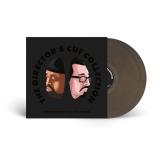
Frankie Knuckles & Eric Kupper - The Director’s Cut Collection LP 2x12"
 
8

Limited Edition Transparent Black Vinyl Version - 500 Units Only

There are few people across the globe, who will have not been touched by the work of Frankie Knuckles. Forever regarded as ‘The Godfather of House’ for his unrivalled contribution to the house music we know today; what started as an underground movement in Chicago has grown to international heights thanks to Frankie. His records earned him recognition on a global scale, allowing him to work with some of the globes biggest names including the likes of Diana Ross, Whitney Houston and Michael Jackson.

Five years ago, Frankie passed away in Chicago on 31st March 2014 leaving behind one of the greatest house music legacies spanning almost four decades. Now he is commemorated by long time writing and production partner Eric Kupper. Eric, himself a seasoned DJ producer and writer, has worked on over 116 Billboard #1 Dance Records and played a pivotal role in a many of Frankie’s productions. Having both worked together for many years they established themselves at ‘Director’s Cut’ from 2011 and set about producing original releases and remixes based on the classic ‘Def Mix’ sound while sharing equal credits for their creations.

Together they re-produced and re-purpose classic cuts for modern dancefloors, with reworks including tracks from Marshall Jefferson, Ashford & Simpson, Artful & Ridney and The Sunburst Band, alongside Frankie Knuckles originals. These releases have now been brought together by Eric to feature on special album called ‘The Directors Cut Collection’ on SoSure Music. It includes the Director’s Cut reworks of Frankie’s classic cuts such as ‘Your Love’ and ‘Take You There’ with Jamie Principle, alongside Frankie’s first #1 single - ‘The Whistle Song’ on which Eric shares writing credits.

Within a multitude of classic reworks, highlights include a previously unreleased version of Ashford & Simpson’s ‘Bourgie Bourgie’ and a huge Director’s Cut Retro Signature mix of Marshall Jefferson’s The House Music Anthem (Move Your Body) featuring Curtis McClain.

The Director’s Cut Collection is a fitting tribute to commemorate the fifth anniversary of Frankie’s passing whilst giving Eric a platform to tell his side of the creative story. This album is to be released in collaboration with The Frankie Knuckles Foundation who work to continuing Frankie’s legacy well into the future.

In Stock

On Stock and ready to ship

Arno E. Mathieu - Phoenix / L'Amoragie

After a first cosmic cruise through Mediterranean Space Disco by TORRE, Musiq Voyage returns with its second release — this time from one of its own founders, Arno E. Mathieu.
Known for his label collaborations with NYC legend Joe Claussell, for his acclaimed Circumstances Of Chaos LP, and many releases on iconic labels like Compost, Yoruba, Real Tone, Deeply Rooted and Africanism, Arno has spent over two decades jamming & crafting deep, balearic & psychedelic journeys across house and electronic realms.
With MV002, he comes home, channeling the spirit of his native Provence and the sun-drenched pulse of the Mediterranean.
Arno delivers two evocative tracks:
“Phoenix” – an 80’s-inspired electronic resurrection, rising from the ashes on waves of funky basslines, soaring synths, and cosmic guitars.
“L’Amoragie” – a cosmic disco odyssey blending “Amore” and “Hémorragie” into one passionate eruption of love and sound — powered by hypnotic drums, anthemic synths, and euphoric choirs.
Mediterranean soul, space disco energy, and emotional storytelling — Musiq Voyage continues its journey.
Enjoy the trip.

In Stock

On Stock and ready to ship

DOWNTOWN BOYS - PUBLIC LUXURY

DOWNTOWN BOYS

PUBLIC LUXURY

12inchSPLP1733
Sub Pop
26.06.2026
  • 1: No Me Jodas
  • 2: The City Begins
  • 3: Sirena
  • 4: Yellow Sun
  • 5: Viva La Rosa
  • 6: Enemy Without
  • 7: You're A Ghost
  • 8: Albuterol
  • 9: Mi Concha
  • 10: Public Works
  • 11: Public Luxury

Downtown Boys have pushed relentlessly forward as an artistic and political project since their founding. Singer Victoria Marie and guitarist/singer Joey La Neve DeFrancesco first met at union meetings while working together at a hotel in Providence, RI, writing many of the band's early songs about labor organizing and exploitative workplaces. The quintet is completed by Joe DeGeorge (sax/synth), Mary Jane Regalado (bass), and Joey Doubek (drums). Over years of touring, and three acclaimed albums, Downtown Boys have continued to grow as artists, musicians, and organizers. Now, the band has arrived with Public Luxury, an enthralling album that keeps politics front and center while summoning the band's most urgent and powerful sound to date. The definition of Public Luxury falls very much in line with that of the title of the second Downtown Boys LP, Full Communism. Straight up, Public Luxury means, "everything for everyone." It's the stubborn insistence that a better world is possible, while fully recognizing the horrors we witness daily, and the individual and collective responsibility to resist the nihilism and hopelessness we all feel. Sentiments like "everything for everyone," and "we will have it all" perfectly represent the cathartic, communal live experience this cadre of multi-instrumentalists create. These sentiments also encapsulate the inclusive, joyful sonic fusion that defines the album: anthemic punk and indie rock mix with Latin traditions, drum machines blend with acoustic drums, saxophones punctuate riffs, and layers of synths add flourishes from new-wave to industrial. The amount of ground covered on Public Luxury can't be overstated, and yet the album feels totally vital and cohesive. Public Luxury is a revisitation of the band's past for the sake of their future. It was co-produced by DeFrancesco with recording engineer and longtime Downtown Boys supporter Seth Manchester (Lambrini Girls, Lightning Bolt, Model/Actriz) at the Pawtucket, RI studio and arts space Machines With Magnets, not far from the band's first home of Providence, RI. Victoria Marie's grandmother-a monumental figure for the band throughout their existence-passed away in May of 2025, and her influence looms large over the album; the songs "No Me Jodas" and "Sirena" are crystallized representations of the love between a woman and her ancestor. Beyond the loss, rage and frustration of the present, Public Luxury points boldly towards a vibrant, open-hearted vision of both music and the world: "Our music is simply for anyone and everyone who believes in the new future we can make together," Victoria Marie declares. "A world that will be awkward, inconsistent, yet truly free when it comes to all that matters."

pre-order now26.06.2026

expected to be published on 26.06.2026


Last In: 2026 years ago
Scientist - Watch This Dubbing At Tuff Gong

2025 Repress

When people think of Tough Gong they usually think of Bob Marley and rightly so, as he was nicknamed and often called Tough Gong and from this his early releases which came out on the Tough Gong label. But Tough Gong was also the name of a recording complex named after Bob Marley hat included a top level recording studio, pressing plant and distribution centre that would allow reggae music to carry on many years after his sad and too early demise.

Bob Marley had take over the former residence of Island Records boss Chris Blackwell the Island House, 56 Hope Road around 1974. Just before the 'Smile Jamaica' concert on 03rd December the same year the house was ambushed by gunmen. Bob's manager Don Taylor was hit 5 times AND Bob was shot in the arm and his wife Rita Marley was hit in the head by a stray bullet. How no one was fatally injured is staggering. Immediately after the concert Bob Marley started his self imposed exile from Jamaica, settling in London, England. This would lead to the aptly named exodus album being recorded there in the summer of 1977. It would not be until the 'One Love' peace concert in Kingston's national arena on the 22nd April 1978 that would see Bob's return to the island. Marley felt is was important to show his commitment to the people of Jamaica and on his return to 56 Hope Road he began construction of his own recording studio with the help of music mogul Tommy Cowen. Unfortunately Bob Marley's short life would end on the 11th May 1981 from cancer which originated form a football injury. His passing would lead to 56 Hope Road being turned into a museum to the legend of reggae music.

A new location would have to be found to carry on Bob's work which was 220 Marcus Garvey Drive, Kingston 11. The buyer would be Rita Marley and the Tough Gong International Organisation.

Engineers working at the new facility included Errol Browne who had worked at Treasure Isle studios and Hopeton Overton Browne known as 'Scientist', named by the great producer Bunny 'Striker' Lee who worked with him previously at King Tubbie's and Channel One's studios described his ground breaking style as being like that of a scientist.

We focus for this release on the work carried out by the great Scientist on the songs of the Black Solidarity Label run by Ossie Thomas (aka Joe The Boss) recorded at Tough Gong studios. One of the foremost recording, pressing and distribution facilities on the Jamaican island set up from the work of Bob Marley to carry forward reggae music. Hope you enjoy this set......

In Stock

On Stock and ready to ship

Various - Italo Disco New Generation Vinyl Box
 
40

ZYX Italo Disco New Generation – Limited 5LP Box

Ein echtes Sammlerstück für alle Italo Disco Fans!

Diese streng limitierte 5 LP Box vereint gleich fünf Alben aus der erfolgreichen „ZYX Italo Disco New Generation Vinyl Serie“ – erstmals als exklusives Box-Set erhältlich. Auf insgesamt 5 hochwertigen Vinyl erwartet dich eine einmalige Zusammenstellung von Klassikern und modernen Hymnen im typischen Italo-Disco-Sound, der weltweit Fans begeistert. Tauche ein in die Welt des Italo Disco – mit dieser Box sicherst du dir ein Stück Musikgeschichte zum unschlagbaren Preis!

In Stock

On Stock and ready to ship

MUZIC FAMILY vs STYLÒO - Sweet

Aer making everyone dance with "I'm Gonna Dance," Muzic Family Vs. Stylóo is ready to ignite the
dancefloors again with "Sweat," an adrenaline-fueled track that unites the tradi!on of Italo Disco with a
modern pop-dance sound.
At the helm of "Sweat" is Roberto Tura, one of the most influen!al producers in the Italian and
interna!onal dance scene. A key figure of 80s Italo Disco, Tura( has shaped !meless hits for ar!sts like Den
Harrow, Joe Yellow, Albert One, and Stylóo themselves, helping to define the sound of an era that s!ll
makes fans' hearts beat faster all over the world. With "Sweat," Tura( once again proves his ability to
merge the magic of those years with a modern, powerful sound, capable of winning over new genera!ons of
listeners and ge(ng everyone dancing.
By his side is Silvio Melloni, a top-level musician and arranger, who is now part of the historic band Ma"a
Bazar. Melloni brings his experience and musical sophis!ca!on to the project, cura!ng arrangements rich in
detail and nuance, where every element is calibrated to maximize the emo!onal and rhythmic impact of the
track. His ar!s!c sensi!vity perfectly matches Tura('s energy, crea!ng a winning combina!on of technique,
passion, and crea!vity.
The release of "Sweat" doesn't stop at the original version: two exclusive remixes are included to enrich the
project, promising to make the track explode on the most demanding dancefloors.
 Italoconnec"on Remix – The duo formed by Fred Ventura and Paolo Gozze( (aka Italoconnec!on)
transforms "Sweat" with their characteris!c touch: sonic elegance, pulsa!ng energy, and a refined
sound that blends dance-pop rhythms with the vibrant nostalgia of Italo Disco. It's an interpreta!on
that leaves no room for rest and pushes you to listen and move.
 A.P. Mono Remix – A.P. Mono infuses an 80s-flavored electro-disco soul: funk syncopa!on,
enveloping synths, and an irresis!ble groove. His reinterpreta!on turns the track into a true
energe!c vortex, perfect for making anyone who dances to it sweat.

In Stock

On Stock and ready to ship

AZYMUTH - MARCA PASSO

Azymuth

MARCA PASSO

12inchFARO251LP-BLUE
FAR OUT RECORDINGS
05.09.2025

In an ever-expanding musical universe, Azymuth have long existed as a celestial giant, drawing countless artists, musicians and followers into their orbit. Marking fifty years since their 1975 debut album Azimuth, their new album Marca Passo proves that the band’s alchemic brew of Brazilian jazz-funk and cosmic samba soul remains as vital as ever, as the group honours the profound legacy of their departed founders.

Recorded in Rio de Janeiro, Marca Passo is the first full-length release since the passing of founding drummer Ivan "Mamão" Conti in 2023, following the earlier loss of keyboardist José Roberto Bertrami in 2012. Alex Malheiros, the sole remaining original member, sees his stewardship of the band’s musical legacy as his spiritual duty. He is joined by the equally devoted Kiko Continentino (Milton Nascimento, Djavan) on keyboards, who has been with the group since 2016, and new recruit Renato Massa (Marcos Valle, Ed Motta) on drums.

Yet since their earliest recorded music, Azymuth have always been far greater than the sum of their parts. The "three-man orchestra’s" unmistakable sound is rooted in Brazil's MPB studio scene of the 1970s and early 1980s—a time when artists blended traditional Brazilian rhythms with global jazz, rock, and emerging psychedelic and progressive elements. Marca Passo continues this legacy, seamlessly fusing Brazilian musical traditions with global influences while showcasing the exceptional musicianship that powers Azymuth's distinctive, multi-dimensional sound.

The album is produced by studio mastermind Daniel Maunick, responsible for Azymuth’s two previous studio albums, Fênix in 2016 and Aurora in 2011. Daniel’s credits also include albums by Marcos Valle, Sabrina Malheiros and Terry Callier. Azymuth also invited Daniel’s father, British jazz-funk royalty Jean Paul “Bluey” Maunick, of Incognito, to play guitar on a new version of Azymuth’s eighties classic “Last Summer In Rio”, in tribute to the song’s composer, José Roberto Bertrami. Equally, “Samba Pro Mamao” is a new composition dedicated to Azymuth’s beloved original drummer, Ivan “Mamão” Conti.

Credits:

Alex Malheiros - Bass, Acoustic Guitar & Vocals: 1,2, 3, 4, 5, 6, 7, 8, 9, 10
Kiko Continentino - Keyboards, Organ, Vocoder & Vocals: 2, 3, 4, 5, 6, 7, 8, 9, 10
Renato Massa - Drums & Vocals: : 2, 3, 4, 5, 6, 8, 9, 10
Ian Moreira - Percussion: 1, 2, 3, 4, 5, 6, 8, 9, 10
Sidinho Moreira - Percussion: 1, 2, 3, 4, 5, 7, 8, 9, 10
Dudu Viana - Keyboards & Vocals: 1
Victor Bertrami - Drums: 1
Mangueirinha - Repinique: 3
Jean Paul ‘Bluey’ Maunick - Electric Guitar: 5
Jose Carlos Bigorna - Soprano Sax: 9
Daniel Maunick: Additional Percussion, Synths & EFX: 1, 2, 3, 4, 5, 6, 7, 8, 9

Produced, Engineered, Mixed & Arranged by Daniel Maunick
Co-Produced & Arranged by Alex Malheiros
Executive Producer: Joe Davis


Recorded by:
Daniel Maunick & Leonardo Vieira @ Estúdio Nos Trilhos, Santa Teresa, Rio, Brazil
Daniel Maunick & Amadeu Signorelli @ Sigstudio, Niterói, Rio, Brazil
Daniel Maunick & Alex Malheiros @ Estúdio Basslab, Piratininga, Rio, Brazil
Mixed by Daniel Maunick @ The Sugar Shack, Carluke, Scotland


Artwork & Design: Tyler Askew

In Stock

On Stock and ready to ship

Marcos Valle - Contrasts LP 2x12"

Originally released in 2003, Marcos Valle’s Contrasts combined early noughties production techniques with his trademark Brazilian songwriting brilliance. The album quickly became one of Valle’s most in-demand, with tracks like the triumphant “Parabéns” (which was sampled by Childish Gambino, covered by Tom Misch and remixed by Misa Negra) and bossa beach classic “Agua de Coco”, both becoming firm fan favourites.

Produced by Roc Hunter, and executive produced by Joe Davis, with musicians including Robertinho Silva (percussion), Alex Malheiros (bass), and Marcos’ wife Patricia Alvi (vocals), Contrasts encapsulated Valle’s ever evolving musical vision, bringing together samba, baião, bossa pop, broken beat, house, trip-hop and more, on one era-defining record.

After 22 years, Contrasts is finally set for a double LP vinyl and CD reissue, with the original mix of “Valeu” and “My Nightingale” making it onto the vinyl edition for the first time.

In Stock

On Stock and ready to ship

Tunnel - Tunnel Light / Speed Up

Tunnel was made in Naples in 1978 by Giorgio Verdelli and Danilo Rustici only on 7inch and it was the theme song for two RAI radio programs. Going through the names of the musicians we begin with the inimitable voice and the splendid guitars of Danilo Rustici, then passing through the saxophones of Enzo Avitabile we arrive at the keyboards of Joe Amoruso, musician-arranger who left a great void with his untimely death. For Joe, who crossed his experience with Premiata Forneria Marconi, Zucchero, Vasco Rossi, Mauro Pagani and was part of that 'dream team' of Pino Daniele - made up of technically extraordinary musicians, but above all gifted with an inimitable sound - this one-off project represented his recording debut. 'Tunnel Lights' and 'Speed Up' have been brought to light by Dario Di Pace and Claudio Casalini, two visionaries who believe that Neapolitan music is a sonic mixture of ancient and modern musical registers even if it sometimes develops a conflict between tradition and modernity as the recovery of popular tradition is strongly opposed to the push for innovation. This therefore is the reason for a 12" reissue in which the evocative original songs - from almost 50 years ago - are reflected in the new versions created by a bevy of talented DJ-arrangers including Massimo Berardi (with the bassist Luca Andreozzi) and by the industrious and passionate Francisco & Malkuth (ed: Francesco De Bellis and Cosimo 'Cosmo' Mandorino in disguise) in turn assisted by other zealous musicians and dee-jays - including the very good and always very collaborative Raffaele Arcella - who took part in a remix of this EP with enormous fervor The 12" reissue of Tunnel was released both on the classic black vinyl and in the very limited red vinyl version, in order to reflect the lips of the extravagant cover, a graphic work by another brilliant and multifaceted artist: Lino Vairetti, legendary singer of the historic prog rock band Osanna. The envelope developed by Best Record is embossed (front and back cover) to further enhance the passion that Neapolitan musicians have always had in knowing how to combine their roots with all the other musical genres of the world.

In Stock

On Stock and ready to ship

Various - The Sunset Manifesto Volume 2 2x12"

lim. 2xLP colored yellow and oxblood vinyl with Poster, Sticker & Mp3 Download!

We are back with another chapter in our ongoing series of unearthing smooth vibes from all over the world, this time we go back to the FUTURE for you with: THE SUNSET MANIFESTO Volume 2. After a five year break mainly concentrating on the late 70s/early 80s Westcoast Soul/Yacht/AOR sound, we finally dive deep into the modern world of our beloved sister-label Too Slow To Disco NEO (for the third time after 2018s TSTD NEO - En France and 2020s The Sunset Manifesto excursions). But of course it wasn't a real 5 year break since the first Sunset Manifesto compilation, as in the meantime we also released a few digital TSTD Neo singles, and - more importantly - our "Too Slow To Disco NEO - FM" playlist on spotify (handcurated by Dj Supermarkt every week and now hosting more than 1500 tracks of mellow, modern sunshine vibes) was growing steadily and becoming a new, important fixpoint in the TSTD musical universe. TSTD NEO is the outlet Dj Supermarkt is using to unearth modern laidback, smooth, sunny slow disco vibes with a soulful Westcoast/Balearic touch. For him TSTD always has been about a laidback vibe/feeling, not a certain time period in musical history. And that sunny Westcoast vibe we dug out on those traditional TSTD compilations has become a huge influence to so many modern artists. So it makes sense that we present the cream of new slo/mo NuDisco/Sunset Disco/Daytime Disco acts in the TSTD format, a luxurious compilation, with artists from all across the globe: Not only from the two homelands of that modern slow disco sound, Los Angeles/California and France, but also from Beijing, Montreal, Mexico, London, New York, Stockholm, Rotterdam… the moon, you name it! This music is more a state of mind, a feeling, then a geographical thing. We are happy and really excited to annouce the following passengers are on board with exclusive tracks: Poolside, Woolfy, Prep & Eddie Chacon, Turbotito, Young Gun Silver Fox, Lovetempo, Kimchii, Goodvibes Sound a.m.m.

In Stock

On Stock and ready to ship

Various - Cocoon Compilation V (LP 6x12")

Limited Vinyl Box Set including 6x olive 12” vinyl & download code

Cocoon Recordings presents: Cocoon Compilation V

Back for the summer season, Cocoon Recordings proudly unveils the next chapter in its iconic compilation series. With its 22nd edition, Cocoon Compilation V once again bridges past and future, showcasing the essence of electronic music’s constant evolution. True to the spirit of the label, this handpicked collection delivers a diverse, emotional, and forward-thinking selection that drifts through shimmering currents, pulsating machinery, and moments of pure release.

Delenz & Zeitstill set the tone with “Place To Be”, a smooth and warm opener that invites the listener into a meditative microcosm. What starts as dreamy minimalism steadily unfolds into deep, shimmering depth. A sublime invitation to get lost in sound. Superpitcher takes us further into the mist with “Dream B”, an ethereal and cinematic dreamscape that floats between melancholy and magic. Its stretched textures and hypnotic pacing form a gentle passage into inner space.

The energy intensifies with Patrice Bäumel’s “Nat”, a sophisticated tension-builder with a subtle pulse and haunting atmospheres. Sound waves that breathe, evolve, and subtly command movement. Sawlin switches gears with “Der Jasager”, a deep technoid beast that hits with low-end pressure, modulated percussions, and gritty textures and spooky features. Raw, physical, and unrelenting.

A bright contrast comes from DC Salas and his track “Escapism.” Psychedelic, synth-heavy, and effortlessly groovy, it channels the playful side of electronic storytelling. It channels a trancy 90s flair with its vibrant energy, brilliant use of choir bits, and irresistible vibe that transports you back to a golden era. With Tal Fussman’s “Eyes”, we’re taken into euphoric territory. This stomper is a conversation between piano and strings, rising above crisp grooves, weaving emotion and momentum with finesse.

On the second half of the journey, legendary Ken Ishii teams up with Yuada to deliver “Split Second,” a bold, wild and crazy techno excursion full of mechanical grace and Japanese precision. An ode to organized chaos. Marcel Fengler’s “Aura” follows, powerful and deep, pushing air like an engine through tunnels of tension and light. The blend of rhythm and sentiments is a masterclass in functional elegance and states of mind.

Impérieux brings us “Kala,” a track both twisted and beautiful. Its detuned hypnotic melodies and skewed harmonics are unsettling in the best way while the unconventional rhythms cloak the entire track in a mysterious aura. It creaks and twists toward transcendence, underscored by primordial flute sounds. A fractured lullaby for the club. Joe Metzenmacher injects wildness and attitude into the mix with “Da Freak.” Fuzzy, distorted synths collide with a funky bassline, sharp guitar stabs, and mad bleep effects, bringing the raw groove and dancefloor chaos of a bygone funk era into a futuristic setting.

Joseph Capriati debuts on Cocoon with “Cosmopop” and surprises with an unexpected stylistic shift. Capriati explores a more melodic, emotionally driven sound. Subtle harmonies meet a warm, rolling groove. It’s a bold and personal statement, showing a new side of an artist who continues to evolve beyond expectations. To close, Matthias Schildger offers “Distorter,” a raw and emotional cut that leaves room to breathe while keeping the mind spinning. It begins with beautiful pads, before distorted kicks drop in, yet the track retains a certain tenderness, like the feeling of sitting at a tranquil, untouched nature spot, surrounded by the beauty of the world. A grand finale to a compilation that refuses to settle.

From sunrise moments to peak-time madness, Cocoon Compilation V captures the full spectrum of what dance music can be. Transcendent, visceral and endlessly evolving. This isn’t just a collection of tracks. It’s a curated experience for the body, the mind and the soul.

In Stock

On Stock and ready to ship

Eagles - Hotel California LP 2x12"
  • Hotel California
  • New Kid In Town
  • Life In The Fast Lane
  • Wasted Time
  • Wasted Time (Reprise)
  • Victim Of Love
  • Pretty Maids All In A Row
  • Try And Love Again
  • The Last Resort

The moment the instantly recognizable intertwined guitar passage on the title track to the Eagles' Hotel California begins, the record's genius becomes obvious all over again. Ranked the 118th Greatest Album of All Time by Rolling Stone, certified by RIAA as the third best-selling LP in history, and considered the foundation on which the Golden State's mid-‘70s music scene was built, the 1976 landmark is a music staple immune to shifts in trends, eras, and styles. Fearlessly addressing the chaos and consequences of American life, its songs remain strikingly prescient and gain creedence with each passing day.

Mastered from the original analogue master tapes, pressed on MoFi SuperVinyl, and limited to 17,500 numbered copies, Mobile Fidelity's UltraDisc One-Step 180g 45RPM 2LP vinyl box set ensures you will want to permanently check into and never leave this particular Hotel California. Up to the herculean task of standing head and shoulders above all prior reissues, this collectible edition plays with extreme clarity, organic richness, tube-like warmth, massive dynamics, and microscopic levels of detail. You'll be able to practically smell the colitas and feel the breeze in your hair. Songs come across with an epic sweep and feature immersive, front-to-back soundstages that allow the music unprecedented air, roominess, and separation. As for the noise floor? It's basically as invisible as the spirits that waft in the corridors of the unforgettable title song.

Aesthetically, the premium packaging and presentation of the UD1S Hotel California pressing befit its esteemed status. Housed in a deluxe box, it features gorgeous foil-stamped jackets and faithful-to-the-original graphics that illuminate the splendour of the recording. From every angle, this UD1S reissue exists as a curatorial artefact meant to be preserved, touched, and examined. It is made for discerning listeners that prize sound quality and production, and who desire to fully immerse themselves in the art – and everything involved with the album, from the renowned cover art to the meticulous finishes.

Indeed, the opportunity to zero in on all the particulars of the 26-million-selling Eagles record dubbed "a legitimate rock masterpiece" by vaunted Los Angeles Times scribe Robert Hilburn has never been better. A global phenomenon that marked the band debut of guitarist-singer Joe Walsh, Hotel California continues to resonate and connect with listeners of all generations taken by its narrative depth, stark directness, picturesque melodies, daring majesty, and ardent emotionalism. Adorned with a breathtaking exterior photograph of the Beverly Hills Hotel that serves as the simultaneously haunting and alluring cover art, and rounded out by a rear-cover shot of the Lido Hotel lobby that reinforces a notion that teeters between permanence and transience, Hotel California is brilliantly tied to a specific place that functions as a universally understood metaphor for the American Dream.

Confronting the darker undercurrents and oft-ignored constructs attached to that romantic notion, the record's songs revolve around a host of shared themes: excess, mobility, stability, illusion, fame, destruction, and idealism included. Notably, Hotel California appeared at a crucial junction in American history: During the country's bicentennial and amid escalating controversies related to the Vietnam War, energy crisis, and governmental corruption. That the Eagles manage to channel such cultural, social, and economical matters into a cohesive, stately, big-picture statement is alone a stupendous feat. That the album's reach, boldness, vitality, accessibility, and understated intensity have never waned make it a marvel.

Reflecting on Hotel California 40 years after its original release, and indirectly explaining its enduring appeal and increasing relevance, singer-songwriter Don Henley confirmed the record pertains to the "loss of innocence, the cost of naiveté...the difficulties of balancing loving relationships and work, trying to square the conflicting relationship between business and art; the corruption in politics, the fading away of the Sixties dream of ‘peace, love and understanding.'"

It can be argued that Henley and company squarely hit on and drove home those ideas in the surreal title track, chart-topping "Life in the Fast Lane," and grand "The Last Resort" alone. But that would miss the forest for the trees. Experienced as an unbroken whole, complete with the pristinely shot imagery and physical grooves, Hotel California unfolds like a geography-conscious saga by James Michener and plays like colour-saturated movie shot on 70mm film by Martin Scorsese. It's about our collective and individual decisions – and the shape of our past, present, and future. And, just like that conjured by our imaginations, Hotel California continues to take on a life of its own.

More About Mobile Fidelity UltraDisc One-Step and Why It Is Superior
Mobile Fidelity Sound Lab's UltraDisc One-Step (UD1S) technique bypasses generational losses inherent to the traditional three-step plating process by removing two steps: the production of father and mother plates, which are created to yield numerous stampers from each lacquer that is cut. For UD1S plating, stampers (also called "converts") are made directly from the lacquers. Since each lacquer yields only one stamper, multiple lacquers need to be cut. Mobile Fidelity's UD1S process produces a final LP with the lowest-possible noise floor. The removal of two steps of the plating process also reveals musical details and dynamics that would otherwise be lost due to the standard multi-step process. With UD1S, every aspect of vinyl production is optimized to produce the best-sounding vinyl album available today.

MoFi SuperVinyl
Developed by NEOTECH and RTI, MoFi SuperVinyl is the most exacting-to-specification vinyl compound ever devised. Analogue lovers have never seen (or heard) anything like it. Extraordinarily expensive and extremely painstaking to produce, the special proprietary compound addresses two specific areas of improvement: noise floor reduction and enhanced groove definition. The vinyl composition features a new carbonless dye (hold the disc up to the light and see) and produces the world's quietest surfaces. This high-definition formula also allows for the creation of cleaner grooves that are indistinguishable from the original lacquer. MoFi SuperVinyl provides the closest approximation of what the label's engineers hear in the mastering lab.

pre-order now

This item has not yet been released. You can pre-order the product now.


Last In: 2026 years ago
Stevie Nicks - Rock a Little (2x12")
  • A1: I Can't Wait
  • A2: Rock A Little (Go Ahead Lily)
  • A3: Sister Honey
  • B1: I Sing For Things
  • B2: Imperial Hotel
  • B3: Some Become Strangers
  • C1: Talk To Me
  • C2: The Nightmare
  • D1: If I Were You
  • D2: No Spoken Word
  • D3: Has Anyone Ever Writen Anything For You

Looking back on her career in the early 90s, Stevie Nicks described the first track of Rock a Little as “the most exciting song that I had ever heard.” This coming from a superstar who was already closely affiliated with several bajillion-selling Fleetwood Mac albums — to say nothing of her own benchmark solo debut. Her remarks attest to the enthusiasm and effort she invested in her third record, a 1985 work that quickly furthered Nicks’ profile and cemented itself as a piece of 80s pop lore.

Mastered at MoFi’s California studio, pressed at Fidelity Record Pressing in California, strictly limited to 4,000 numbered copies, and housed in a Stoughton gatefold jacket, Mobile Fidelity’s 180g 45RPM 2LP set presents Rock a Little in audiophile sound for its 40th anniversary. Helmed by a cadre of producers and engineers, and recorded for a reported one million dollars, the platinum-certified album teems with a head-spinning array of colors, tones, dreamscapes, and accents. This reference-grade reissue marks the first time they are all brought to light and conveyed with proper balance, dimensionality, and positioning.

Though Rock a Little doubtlessly has period characteristics of a mid-80s LP, Nicks and company spare no expense when it comes to distinguishing the music with expansive sonics distinguished with lush melodies, high-tech percussion, echoing vocals, sampled keyboards, and layers of sophisticated accents. The degrees of spaciousness, headroom, and dynamics are nothing less than inspiring, while the newly enhanced detail, texture, and clarity make the songs sing like never before. As for Nicks’ voice? Wait ’til you experience the transparency and depth.

Those advantages extend, of course, to the aforementioned “I Can’t Wait,” a statement-making opener shot through with modulating synthesizers, splashy drums, metallic guitars, and serious drama. Holed up in a massive studio, Nicks required just one take to nail her part, which she called “magic and simply not able to beat.” The singer-songwriter also distilled the reverberating emotional essence of the Top 20 tune, stating “when I hear it on the radio, this incredible feeling comes over me, like something really incredible is about to happen.”

The same can be said for nearly all of Rock a Little. Crafted by the likes of Songwriters Hall of Fame multi-instrumentalist/producer Rick Nowels, Heartbreakers organist Benmont Tench, bassist Bob Glaub, jack-of-all-trades Greg Phillinganes, and session-pro guitarists Waddy Watchel, Les Dudek, and Danny Kortchmar — along with another two dozen or so participants — the record spills with diverse ideas, shapes, and moods. Everything is in the right place, as evidenced by the swirling glide and sensual undertow of the slightly funky title track to the snapping rhythmic pace and big hooks of “Imperial Hotel,” one of Nicks’ standout moments.

“What was it she wanted?” Nicks queries on “No Spoken Word,” continuing a theme of contemplation that runs through the narratives. Nicks never lands on a definite answer, but hearing her explore loneliness, love, and the secrets we keep to ourselves proves continuously rewarding. Take her passionate performance on a cover of Chas Sanford’s “Talk to Me,” a Top 5 smash furthered by tasteful saxophone lines and understated folk elements. Immersive yourself in the grand sonic corridors of “If I Were You,” laden with Nicks’ signature mysticism.

Moreover, surrender to the gravitas of the closing “Has Anyone Ever Written Anything for You,” a piano ballad composed about the death of Joe Walsh’s three-year-old daughter. As Nicks asserts earlier on the album, she sings for things money can’t buy.

So, rock a little, yes, but dare to feel even more.

pre-order now

This item has not yet been released. You can pre-order the product now.


Last In: 2026 years ago
AZYMUTH - MARCA PASSO

Azymuth

MARCA PASSO

12inchFARO251LP
FAR OUT RECORDINGS
04.06.2025

In an ever-expanding musical universe, Azymuth have long existed as a celestial giant, drawing countless artists, musicians and followers into their orbit. Marking fifty years since their 1975 debut album Azimuth, their new album Marca Passo proves that the band’s alchemic brew of Brazilian jazz-funk and cosmic samba soul remains as vital as ever, as the group honours the profound legacy of their departed founders.

Recorded in Rio de Janeiro, Marca Passo is the first full-length release since the passing of founding drummer Ivan "Mamão" Conti in 2023, following the earlier loss of keyboardist José Roberto Bertrami in 2012. Alex Malheiros, the sole remaining original member, sees his stewardship of the band’s musical legacy as his spiritual duty. He is joined by the equally devoted Kiko Continentino (Milton Nascimento, Djavan) on keyboards, who has been with the group since 2016, and new recruit Renato Massa (Marcos Valle, Ed Motta) on drums.

Yet since their earliest recorded music, Azymuth have always been far greater than the sum of their parts. The "three-man orchestra’s" unmistakable sound is rooted in Brazil's MPB studio scene of the 1970s and early 1980s—a time when artists blended traditional Brazilian rhythms with global jazz, rock, and emerging psychedelic and progressive elements. Marca Passo continues this legacy, seamlessly fusing Brazilian musical traditions with global influences while showcasing the exceptional musicianship that powers Azymuth's distinctive, multi-dimensional sound.

The album is produced by studio mastermind Daniel Maunick, responsible for Azymuth’s two previous studio albums, Fênix in 2016 and Aurora in 2011. Daniel’s credits also include albums by Marcos Valle, Sabrina Malheiros and Terry Callier. Azymuth also invited Daniel’s father, British jazz-funk royalty Jean Paul “Bluey” Maunick, of Incognito, to play guitar on a new version of Azymuth’s eighties classic “Last Summer In Rio”, in tribute to the song’s composer, José Roberto Bertrami. Equally, “Samba Pro Mamao” is a new composition dedicated to Azymuth’s beloved original drummer, Ivan “Mamão” Conti.

Credits:

Alex Malheiros - Bass, Acoustic Guitar & Vocals: 1,2, 3, 4, 5, 6, 7, 8, 9, 10
Kiko Continentino - Keyboards, Organ, Vocoder & Vocals: 2, 3, 4, 5, 6, 7, 8, 9, 10
Renato Massa - Drums & Vocals: : 2, 3, 4, 5, 6, 8, 9, 10
Ian Moreira - Percussion: 1, 2, 3, 4, 5, 6, 8, 9, 10
Sidinho Moreira - Percussion: 1, 2, 3, 4, 5, 7, 8, 9, 10
Dudu Viana - Keyboards & Vocals: 1
Victor Bertrami - Drums: 1
Mangueirinha - Repinique: 3
Jean Paul ‘Bluey’ Maunick - Electric Guitar: 5
Jose Carlos Bigorna - Soprano Sax: 9
Daniel Maunick: Additional Percussion, Synths & EFX: 1, 2, 3, 4, 5, 6, 7, 8, 9

Produced, Engineered, Mixed & Arranged by Daniel Maunick
Co-Produced & Arranged by Alex Malheiros
Executive Producer: Joe Davis


Recorded by:
Daniel Maunick & Leonardo Vieira @ Estúdio Nos Trilhos, Santa Teresa, Rio, Brazil
Daniel Maunick & Amadeu Signorelli @ Sigstudio, Niterói, Rio, Brazil
Daniel Maunick & Alex Malheiros @ Estúdio Basslab, Piratininga, Rio, Brazil
Mixed by Daniel Maunick @ The Sugar Shack, Carluke, Scotland


Artwork & Design: Tyler Askew

In Stock

On Stock and ready to ship

Oren Ambarchi & Eric Thielemans - Kind Regards LP

The record captures an expansive performance in Poitiers, France in November 2023. First working together in an unpredictable trio with minimalist legend and eccentric extraordinaire Charlemagne Palestine, Ambarchi and Thielemans quickly established a remarkable musical chemistry that led to an ongoing series of duo concerts, including the performance documented on their LP Double Consciousness (Matière Mémorie, 2023).

Kind Regards finds the duo refining their shared language while continuing to take risks, allowing the music’s gravitational pull to lead them from meditative calm to unexpectedly expressive passages of melodic invention and rhythmic drive.

Recorded in sparkling fidelity and carefully mixed by Ambarchi’s longtime collaborator Joe Talia, the LP contains a single unbroken performance, stretching out for over 45 minutes. Guitar and drums weave together into a symbiotic whole that nevertheless affords us ample opportunity to marvel at the highly personal approaches these two musicians have developed to their chosen instruments through decades of diverse collaboration and prolific performance. The set begins with Thielemans’ hypnotic tom patterns, around which Ambarchi’s wavering, shimmering guitar tones—achieved with the help of the rotating speaker of a Leslie cabinet—flurry and swirl. Thielemans’ drums play subtle tricks with time and perception, adding and dropping beats within repeated patterns to create an effect at once rhythmically insistent and liquified. Growing at first into a rapidly pulsing texture of brushed drums and flickering harmonics, the music builds momentum into an irregular groove over which Ambarchi’s guitar is transformed into haunting, monumental electric organ chords, strikingly recalling the Wurlitzer work of Alice Coltrane, before settling into a section of gentle portamento melody embedded into the tactile clicks and clangs of Thielemans’ percussion.

When Thielemans adopts a more traditional jazz approach to the kit in some of the set’s second half, the results are stunning, demonstrating a feel for shifting accents and sensibility to the touch of the stick on the drum or cymbal that recalls greats like Jack DeJohnette or Billy Hart (one of Thielemans’ mentors). And when Ambarchi turns up the heat, he does so in an unexpected and delightful way, letting loose a swarm of jittering delayed tones straight out of Henry Kaiser’s classic It’s a Wonderful Life, with a more active use of the guitar’s fretboard than his usual approach to the instrument allows. As the performance draws to a close after a climactic episode of distorted harmonic groans and crashing cymbals that manages to be at once thunderous and carefully attuned to detail, it is clearer than ever that, for these two serial collaborators, this is a very special pairing.

Kind Regards shows us the kind of magic that can happen when two masters who have dedicated decades to reimagining their instruments simply begin to play, following the music wherever it goes.

In Stock

On Stock and ready to ship

John Coltrane - Blue Train

John Coltrane

Blue Train

12inchVPL80099
Vinyl Passion
19.02.2025

This album was recorded September 15, 1957, in Hackensack, New Jersey. The personnel includes Coltrane's Miles Davis bandmates, Paul Chambers on bass and Philly Joe Jones on drums - both of whom had worked before with pianist Kenny Drew - and trumpeter Lee Morgan and trombonist Curtis Fuller, who were then up-and-coming jazz musicians and would go on to join Art Blakey's Jazz Messengers. All of the compositions were written by John Coltrane, with the exception of the standard "I'm Old Fashioned". The title track is a long, rhythmically variegated blues with a sentimental theme that gradually shows the major key during Coltrane's first chorus. "Locomotion" is also a blues riff tune, in forty-four-bar form.

In Stock

On Stock and ready to ship

Various - I'm Glad About It: The Legacy of Gospel Music in Louisville LP 2x12"
 
26

Hardcover Book which includes a 208-page book documenting Louisville's rich Black Gospel music legacy and access to a comprehensive digital archive.

In the mid-20th century, Louisville gospel music was occasionally recorded when members of the local gospel community pressed 45rpm records and LPs, and released them through grassroots record labels such as Sensational Sounds, Grace, Blessed, and D.J.S. Over the years, a substantial body of work was produced in our city, but those recordings are in danger of being lost forever.

The Louisville Story Program has been working with dozens of people in the local gospel music community to locate, digitize, and preserve hundreds of these recordings and to develop a book that documents and honors the legacies of the people and communities that produced them.

For decades, the passion, hard work, and support of countless people across dozens of Black church communities in Louisville have nurtured and sustained a rich gospel music ecosystem. This music has served as a central part of people's religious practice and as an expression of Black pride, joy, affirmation, love, dignity, determination, and hope. This legacy continues to this day.

With support from The Owsley Brown II Family Foundation and Owsley Brown III Philanthropic Foundation, LSP has partnered with members of the gospel community and a local advisory group of local gospel historians and luminaries:

To locate, clean, and digitize gospel records of local artists released by small local labels
To accompany the local Black gospel music community in developing a 4 CD box set that includes a 200+ page hardcover book with first-person documentation of their rich history
To create an accompanying double LP featuring 26 of those songs
To create and maintain a public-facing digital archive of 1,000 songs and 1,000 photographs
To celebrate the final release with a large concert at the Brown Theatre (September 28, 2024)

In Stock

On Stock and ready to ship

Purple Disco Machine - Paradise LP 2x12"

Purple Disco Machine's third studio album "Paradise" will be released on September 20th. On the album, Purple Disco Machine has collaborated with artists such as Metronomy, Jake Shears, Duke Dumont, Sophie and the Giants, Nothing But Thieves and many more.

With over 1.8 billion streams worldwide, a Grammy win for Best Remix for Lizzo's "About Damn Time" in 2023 and being named Beatport's #2 artist of all time, Purple Disco Machine continues to dominate the global dance music scene with each new release. His recent successes include collaborations with international superstars Nile Rodgers, Benjamin Ingrosso and Shenseea on 'Honey Boy'.

Purple Disco Machine grew up in Dresden and developed his passion for disco and house music, which has seen him become a worldwide radio and streaming sensation with hits such as "Hypnotized", "Fireworks", "Dopamine", "In The Dark" and "Substitution". Beyond radio, Purple Disco Machine is a respected force among DJs worldwide, while the tracks 'Body Funk', 'Dished (Male Stripper)', 'Playbox' and 'Devil In Me feat. Duane Harden & Joe Killington' continue to dominate dance floors. Purple Disco Machine has remixed tracks for Dua Lipa, Mark Ronson, Calvin Harris, Sir Elton John & Britney Spears, Fatboy Slim, the Rolling Stones, Ryan Gosling's "I'm Just Ken" and many more

The maestro of nu disco is also a dedicated performer. His energizing festival appearances include Coachella, Tomorrowland, Lollapalooza, Ibiza and many more. Purple Disco Machine will embark on his own sold-out PARADISE tour of mainland Europe in the fall.

Purple Disco Machine's influence on the global dance scene is undeniable. His tireless commitment to inclusion and diversity in music ensures that his legacy will endure for generations to come.

The album PARADISE is another homage to the new age of disco and surprises with numerous top-class dance features, as well as of course the big hits of recent months.

In Stock

On Stock and ready to ship

Various - Toolroom Sampler Vol. 12

DJ Support: Danny Howard, Annie Mac, Mistajam, Pete Tong, Charlie Hedges, Kraak & Smaak, Maxinne, Todd Terry, Alex Preston, Full Intention, GW Harrison, DJ Rae, Rudimental, Alaia & Gallo, Illyus & Barrientos, Johan S, David Penn, Sam Divine, Riva Starr, Claptone, Nice7, Dario D’Attis, Mousse T, S-Man, Huxley, KC Lights, Friend Within, Dombresky, Gorgon City, Chris Lake, Format:B, Pirupa, TCTS, Alan Fitzpatrick, Low Steppa, Mat.Joe, Raumakustik, Eskuche


Kicking things off on our next 4-track vinyl sampler series is Toolroom's very own Martin Ikin who returns to the label with ‘Make U Sweat’! He was the Best-selling Tech House artist on Beatport in 2020 and 2021 and has over 1m monthly listeners across streaming platforms. Recent studio collabs have included Noizu and Joshwa and tours have seen him travel far and wide to the US, Brazil, Bali, Ibiza, Italy, Croatia and of course, his hometown of London. This new record is the follow up to 'Oscill8' that dropped in March 2023 and sits in a similar lane, in that it's pure, unadulterated club weaponry! Next up is Italian house legend Flashmob with the frenetic, high-energy club vibe of new cut ‘My Body’. Flashmob's sound, production and go-for-broke DJ sets have changed with the game, embracing the vitality of new house music rather than hankering after sentimental sunsets. His ethic and aesthetic move relentlessly forward, using the old and new to craft unique sonic alchemy from big festivals like Tomorrowland to the intimacy of small clubs on the international circuit. ‘My Body’ is typical of Flashmob's current sound, combining solid drums and some insane synths and fx, alongside an earworm vocal sample that results in yet another memorable club cut from an established master. Canadian Tech House maestro Nathan Barato debuts on Toolroom kicking off the B-side to the vinyl alongside studio partner, Matheo Velez with 'Weapon'. A record that has already caught the attention of the underground elite with Michael Bibi premiering the track at his first appearance back at DC-10 in Ibiza last Summer. Both artists are enjoying great success across key labels such as Viva, Circus, Snatch and RAWthentic. This is an addictive, bumpy club track

that packs a huge punch on the dance floor and actually features Nathan's very own 'Move me… Rock me' vocals! Rounding things off is UK DJ/producer duo, Jenn Getz & Alfie who are residents at Dubai's #1 nightlife destination, Soho Garden, where they warm up for legends such as Sonny Fodera, MK, Claptone, Solardo & Fisher on a weekly basis. In their relatively short 3 year career they have already released on Solotoko, Abode and Toolroom Trax and now debut on Toolroom with 'Vibration'. Both girls are incredibly passionate about house music and are also big advocates for a life centered around well-being and meditation, and the idea of this record was to combine their 2 passions in life, so they proceeded to co-write these original lyrics to accompany the track, which in itself is very inspiring! This is a super cool club record that will excite fans and DJ's alike, welcome to the Toolroom Family, Jenn Getz & Alfie!

Countless radio plays on Radio 1 from Danny Howard, Sarah Storie, Pete Tong Other notable radio plays – Kiss FM, Toolroom Radio, Sirius XM, Data Transmission Radio, Radio 1 Dance Anthems, Radio 1 Party Anthems, Rinse FM, Select Radio, Tomorrowland Radio

In Stock

On Stock and ready to ship

Various - Toolroom Trax Sampler Vol. 3

DJ Support: Danny Howard, Annie Mac, Mistajam, Pete Tong, Charlie Hedges, Kraak & Smaak, Maxinne, Todd Terry, Alex Preston, Full Intention, GW Harrison, DJ Rae, Rudimental, Alaia & Gallo, Illyus & Barrientos, Johan S, David Penn, Sam Divine, Riva Starr, Claptone, Nice7, Dario D’Attis, Mousse T, S-Man, Huxley, KC Lights, Friend Within, Dombresky, Gorgon City, Chris Lake, Format:B, Pirupa, TCTS, Alan Fitzpatrick, Low Steppa, Mat.Joe, Raumakustik, Eskuche

Leading the charge with the next Toolroom Trax vinyl series is Mark Knight’s remix on a euphoric dance anthem from Dave Spoon (aka Shadowchild) & Nick Reach Up who update Elaine Mai & MuRli's track 'Ready'. An underground House work-out that's been tried & tested on the dancefloor throughout 2023 and inspired by the euphoric House sound of the 90's, Mark’s mix makes use of the original's hypnotic vocal, combined with driving bass and big euphoric synths. House heavy-weight CASSIMM lands back on our Trax vinyl series with another essential club cut 'Wanna Feel Something'. The Italian, London based hit machine rose to new heights in 2023 with a Beatport House #1 'LOVE DESIRE' on Claptone's Golden Recordings, and chart-topping releases on Toolroom, Spinnin', Myth Of NYX and more. Full of fun, funk and house goodness, CASSIMM yet again delivers another irresistible party starter! Label favourite, Crusy steps up on remix duties for this next offering and a milestone 300th release for the label with an updated mix of Superchumbo & Victoria Wilson James’ ‘The Revolution’. An influential anthem from 2001 'The Revolution' spent over two decades in clubland since icon Danny Tenaglia originally broke the record at the infamous WMC Miami, later going on to recieve support from global superstars such as Pete Tong, X-Press 2, Roger Sanchez and more. Crusy’s signature drums, percussion and grooves drive through

that Latin influenced energy throughout. Last but definitely not least, James Hurr and Electro pioneer Arthur Baker team up with their unique blend of underground house and 80's hip-hop in new club controller, 'Powder In The Nose'. This collaboration marks a triumphant return for James Hurr on Trax who has previously released successful club cuts on the label, and an exciting debut for Arthur Baker, an artist who needs no introduction. The Boston-born producer is widely recognized as one of the pioneers of the Electro genre, with a career spanning over four decades. Baker's unique sound, which fuses elements of hip-hop, funk, and electronic music, has made him a household name and a highly sought-after collaborator. Together, Hurr and Baker are a powerhouse duo, with their combined expertise and passion for dance music 'Powder In The Nose' is nothing short of spectacular.

ountless radio plays on Radio 1 from Danny Howard, Sarah Storie, Pete Tong Other notable radio plays – Kiss FM, Toolroom Radio, Sirius XM, Data Transmission Radio, Radio 1 Dance Anthems, Radio 1 Party Anthems, Rinse FM, Select Radio, Tomorrowland Radio

In Stock

On Stock and ready to ship

SaPu - Deep Cuts EP

Sapu

Deep Cuts EP

12inchRBN002
Rhythm By Nature
24.05.2024

Following the resounding success of Rythm by Nature's first release by Nail, the imprint's second outing, "Deep Cuts", builds upon the previous momentum and introduces label owner SaPu for his first solo EP. "Deep Cuts" features three groove-drenched original works and a foot-stomping remix from Berlin-based groove master and sound wizard Tripmastaz.

Drawing from his 15+ years of experience in the scene, "Deep Cuts" displays SaPu's impeccable production skills and evident passion for deeper house grooves and hypnotic rhythms — the ideal music for extended dancing marathons. The EP's first track, 'Roll Out' (A1), is a classic, tech-house-infused banger: funky bass, filtered samples, and snappy percussion elements. Tripmastaz's version, 'Don't Let Joe Change the Name Dub' (A2), adds new layers of depth to the original, infusing it with dubby, sample-based elements and warm chords. SaPu's inclination for old-school grooves shines through on 'Clappin Iron' (B1), delivering Detroit tribal vibes punctuated by stabby synths and rolling basslines. Closing off the EP, 'Keep it Trill' (B2) provides a relatively stripped-down approach, allowing SaPu to demonstrate his innate skill in dubby sample manipulation.

In Stock

On Stock and ready to ship

Gee Lane - Synesthesia EP

Gee Lane

Synesthesia EP

12inchTOYT159
TOY TONICS
26.04.2024

A new Toy Tonics EP. It’s the second by Venezuelan house DJ and producer Gee Lane. Including amazing remixes by NYC mainstay musclecars!

Gee Lane’s debut EP Metamorphosis (with remixes by Demi Riquísimo and Divorce From New York Remix & PIEK ) came out last October.
But as Virginie (her real name) is a steady name of tue Toy Tonics crew now and plays almost every weekend at one of the worldwide Toy Tonics Jams it makes sense to put out a follow up fast.

Gee Lane originally from Caracas now in Barcelona is a passionate DJ and vinyl digger with an extraordinary positive energy and attitude. A DJ diva in a positive way. A unique personality with a very strong style (in music but also as a person) and very elaborated ability to read and play with the dancers. Like the first EP also this one was recorded in Barcelona and Berlin with a little help by Robin Braum from Athlete Whippet. The music reflects well her roots and passion for everything what came out from New York’s dance culture. You can hear influences from the 80‘ promo disco scenes as well as the 1990 Body & Soul/ Francois Kervorkian / Joe Claussell universe. In fact Gee Lane after being raised in Caracas and musically educated by her father from a very early age, (a composer and musician) she moved to New York at a very young age in the late 90's where she fell in love with the HOUSE scene. And especially everything that happened at the famous and influential ’Body & Soul’ club.

This culture increased her curiosity to become a DJ (and vinyl digger herself) who is not just interested in house music but wants to explore other genres such as funk, Hip-Hop, jazz and Latin sounds and include these vibes into her DJ sets. A vinyl collector (and long time record shop employee) since then, she is known for her musical eclecticism that leads her to mix everything what she wants ...

Gee Lane now is a steady member of the Toy Tonics Krew and is already playing the Toy Tonics Jams all around Europe.

In Stock

On Stock and ready to ship

EL CLAN ANTILLANO - EL CLAN ANTILLANO LP

Debut album of heavy Colombian salsa by the obscure and short-lived El Clan Antillano. Founded in 1975 by singer Jacky Carazo and radio personality / composer Mike Char and backed by a studio orchestra comprised mostly of Fruko Y Sus Tesos band members. The record has been remastered from the original tapes, with an additional three bonus cuts taken from two rare 45 singles, including the sought after track ‘Alma’. First time reissue. 180g Vinyl.

El Clan Antillano was an obscure, short-lived salsa group started in 1975 by singer Jacky “El Caballo” Carazo, originally from Cartagena, and radio host / song composer Mike Char, from Barranquilla. The band was active only until 1977, with a mere two albums to its name. Carazo and Char, “los amigos costeños” (friends from the Caribbean coastal area) created El Clan Antillano as a fresh start after the previous group Carazo had been the lead singer for, El
Afrocombo, had become inactive.

Char primary passion was music, especially songwriting. One of his skills in this area was adapting foreign songs, often in a different language, rhythm, arrangement or genre, and refashioning the tune in an uptempo Caribbean dance mode as a salsa or cumbia. This formula, as well as his own original compositions, soon brought him success not only with costeño friends like Carazo and Vicentini, but also with Medellín’s Fruko, allowing him to make a name for himself with record labels in that city. It was at this juncture, in 1975, that El Clan Antillano was born. This is their first album and was recorded with local studio musicians. It’s been said that most on the first album were from Fruko Y Sus Tesos (the voice of Joe Arroyo can be heard on coro) as well as others involved with various groups like La Protesta (de Colombia) and Juan Piña’s La Revelación.

The album kicks off with ‘Donde ‘sta? Donde ‘sta?’, a medley of costeño lyrical phrases quoting various popular porros. Gradually changing the vibe, this is followed by Enrique Aguilar’s ‘El baile del
ratón’, a humorous cumbia that changes into a salsa halfway through. As if El Clan Antillano were not entirely confident about featuring purely salsa from the start, the same cumbia/salsa hybrid formula is used in the third piece, a faithfully rendered version of Eddie Palmieri’s ‘Mi cumbia’.

‘Estás equivocada’ rocks hard like the best Venezuelan salsa of the time. ‘Esta mañana’ is a cover version of an obscure bolero from Curaçao’s Erwin Castaneer with Super Combo Castaneer. ‘En la oscuridad’ is an interesting mashup of Puerto Rican bomba and New York style pachanga. ‘El despertar’ is a sunny sounding pop song reinvented as a Nelson y sus Estrellas style salsa/cumbia hybrid with a fantastic ‘montuno’ section.

Up next is a hard salsa jam in the ‘pregón’ (street vendor’s cry) genre, written by Fruko Y Sus Tesos percussionist Álvaro Velásquez (composer of ‘El preso’). The original album track list closes out with a fantastic rendition of Puerto Rican singer/composer Bobby Capó’s classic ‘El negro bembón’ that the world first leaned to love through Cortijo y Su Combo. Three bonus tracks have been added to the album as it was originally very short. Interestingly, there were four songs from two 45 singles cut by the band that were never included on either long play. While the ephemeral El Clan Antillano may not be as well known as the groups it’s related to, namely El Afrocombo and Fruko Y Sus Tesos, it certainly deserves credit as a worthy participant in the historical evolution of salsa colombiana.

In Stock

On Stock and ready to ship

Iggy Pop - Apres LP

Iggy Pop

Apres LP

12inchGME999
GM Editions
21.08.2023

10th year anniversary reissue of Iggy Pop's Après cover album with a bonus track, Sacha Distel's La Belle Vie and new artwork, and an exclusive poster. Originally released only in France in 2012, Après is being reissued for the first time and is now finally available outside of France.

In Stock

On Stock and ready to ship

Tunnie Smith - Join Together / U And Me Together

During the summer youth program of 1970 and '71 at St Paul's Catholic church a young Tunnie Smith was singled out by Father George Artist for his outstanding singing abilities. He was soon introduced to Joe Delpit and Reginal Brown to sing along with their show and dance band "The 13Th Amendments. It didn't take long before Tunnie was a full member of the band and became a featured singer performing throughout Louisiana. After a year and a half of performing at nightclubs, military bases and universities Tunnie landed a record deal with Rick Hall's Fame/UA record label. His first single from 1973 was a wonderful mid-tempo number entitled "Finders Aren't Always Keepers" flipped with "Do That To Me"It gained National distribution and had some good success. Tunnie left Fame records and was introduced to Stax record executives Al Bell and John Smith. After signing with Stax, Tunnie met legendary writer and performer David Porter where they recorded an album which was scheduled for release around 73/74.Unfortunately Staxs association with CBS came to a halt and the project got shelved. From those session arose the wonderful "U And Me Together", leading on from the well produced "Finders Keepers" cut the song builds up with an epic 1:30 string and drum arrangement that really sets the picture for Tunnie to arrive with vocals way above his young age would suggest. A story of a boy and girl determined to make it and be the great combination that their love affair deserves. We can’t believe a gem like this has been waiting to come out and should have catapulted Tunnie to the next level or artist rosters. Alas, Tunnie went home and carried on performing around the Louisiana area with his new band Sweet Music Orchestra Fast forward to 1983 Tunnie whilst recording some vocals at River City Recording met Chicago producer and arranger George "Paco" Patterson. George was musical director and had worked with The Isley Brothers Wilson Pickett and many other well known artists. During this period Tunnie along with George formed a great partnership and along with some top session musicians record some incredibly lush, well produced and atmospheric songs The A Side "Join Together " is from the same session as "Dancing On Da Clouds" and could have easily be picked for his first single on Pass The Baton records. It oozes the same heavy production with opening piano cords and layered scatting then bosh, in comes the drums and Vox taking you on a mesmerising space like 2 step extravaganza. So, there you have it, once again two amazing slices of soul on one single from Tunnie Smith. Let’s hope this artist finally reaches his potential from that young man who started recording in 1973.

In Stock

On Stock and ready to ship

Items per Page:
N/ABPM
Vinyl