Cerca:joe pass

Generi
Tutto
Leo Anibaldi - Noise Generation

Leo was born in 1972 and at the age of 15 discovered his passion for electronic music creating his first loops thanks to his Commodore Vic 20 and 64, spreading his own sound in the city when it was impossible to find in Rome any trace of electronic beats.

Soon after he became a true collector of analogue synthesizers with a serious approach in the study of modular synthesis which led him to develop unique skills as we have recognition of them from his early works for ACV records: Attack Random, Riders Of the Future, Noise Generation, Muta, Cannibald and Aeon are still a milestones for nowadays electronic music aficionados.

1989 marked the birth of The Sound of Rome, when Leo met Lory D in a small garage bringing life to a universal and alternative music movement who diffused Techno Music in Rome and all over Italy, pushing these two wizards behind the decks playing along the like of Dave Clarke, Joey Beltram, Robert Armani and UR among others.
In 1995 Leo decided to cut his relationship with ACV records and moved to Rephlex, Aphex Twin’s record label, starting touring with the Rephlex group after the Void album.

Ten years later Leo recorded his first single for a new project: Cannibald Records. Back to Life main target is to focus on house and techno classics reissue, and the mission continue with the official reissue of 1991 Leo's Noise Generation, a true special record that snaps an unforgettable highlight in the rave scene. BTL004 will be available with a special insert, black version and very limited white press to delight every serious vinyl collector.

In Stock

Disponibile in Stock e pronto per la spedizione

FLYING MOJITO BROS - JUST PASSING THROUGH

Das erste Album mit Originalmusik von den englischen Künstlern Flying Mojito Bros., die total auf Americana und Dance-Musik stehen. FMB hat dank seines einzigartigen Stils, der als Desert Disco und Outlaw House bezeichnet wird - ein neu definierter Americana-Sound, der von Poolside-Vibes bis zur Tanzfläche reicht -, eine wachsende Fangemeinde in den USA gewonnen. Das Album bietet eine hochkarätige Besetzung mit Künstlern wie Scott Hirsch, Will Worden und Rob Chaney (weitere werden noch bekannt gegeben!) und hat die Unterstützung von einflussreichen Persönlichkeiten wie Diplo, Phish, Pretty Lights, BBC 6 Music und KEXP erhalten. Just Passing Through zeigt die Entwicklung von FMB und kombiniert ihre charakteristischen Re-Edits und Remixe mit Live-Band-Aufnahmen. Es ist ein mutiger Schritt in ihrer Karriere, bei dem sie von den 1970er Jahren inspirierten Rock und elektronische Rhythmen mit Kollaborationen von Top-Musikern wie Shawn Lee (Young Gun Silver Fox), Joe Harvey-Whyte (The Hanging Stars) und Joe Stoddart (ABBA Voyage) verbinden. Dieses Album markiert ein neues Kapitel in der kreativen Reise von FMB und fängt ihre Erkundung der neu definierten Americana und den interkulturellen Rock-Austausch zwischen den USA und Großbritannien ein.

non in magazzino

Ordina ora e ordineremo l'articolo per te presso il nostro fornitore.


Last In: 12 days ago
FLYING MOJITO BROS - JUST PASSING THROUGH

Das erste Album mit Originalmusik von den englischen Künstlern Flying Mojito Bros., die total auf Americana und Dance-Musik stehen. FMB hat dank seines einzigartigen Stils, der als Desert Disco und Outlaw House bezeichnet wird - ein neu definierter Americana-Sound, der von Poolside-Vibes bis zur Tanzfläche reicht -, eine wachsende Fangemeinde in den USA gewonnen. Das Album bietet eine hochkarätige Besetzung mit Künstlern wie Scott Hirsch, Will Worden und Rob Chaney (weitere werden noch bekannt gegeben!) und hat die Unterstützung von einflussreichen Persönlichkeiten wie Diplo, Phish, Pretty Lights, BBC 6 Music und KEXP erhalten. Just Passing Through zeigt die Entwicklung von FMB und kombiniert ihre charakteristischen Re-Edits und Remixe mit Live-Band-Aufnahmen. Es ist ein mutiger Schritt in ihrer Karriere, bei dem sie von den 1970er Jahren inspirierten Rock und elektronische Rhythmen mit Kollaborationen von Top-Musikern wie Shawn Lee (Young Gun Silver Fox), Joe Harvey-Whyte (The Hanging Stars) und Joe Stoddart (ABBA Voyage) verbinden. Dieses Album markiert ein neues Kapitel in der kreativen Reise von FMB und fängt ihre Erkundung der neu definierten Americana und den interkulturellen Rock-Austausch zwischen den USA und Großbritannien ein.

pre-ordina ora24.04.2026

dovrebbe essere pubblicato su 24.04.2026

Joe Fujinoki - Glass Torso LP

Joe Fujinoki

Glass Torso LP

12inchENMB-19
enmossed
23.04.2026

Joe Fujinoki centered the compositions of his latest album Glass Torso round the idea of the fragility of the human body. Fujinoki described the narrative thread of the album as that of “holding the shape of a human body as if it might shatter like glass”. The precariousness of the body, the essence of the body as defined by Fujinoki as the torso, and the object relations between the boundaries of dialectical exercises pack themselves into his creative process.

Fujinoki recorded Glass Torso exclusively with analog synthesizers, stumbling in and out of structural loops to find space for accidental discoveries. The ten pieces of recorded material feel somewhere on the edge of typified form, feeling like a vascular system pumping in and out its undulating liquidities. Maybe this is the hollowed space held together by Fujinoki’s notion of the torso where you hear a microscopic world, dubby and generative. Fujinoki is adept at organizing this realm of subtle sound sources, giving proper considerations of shared tonal space. Seemingly, this handling of the precarity of sonic material elucidates Fujinoki’s mature attention to detail.

Ambient music genre tropes often affirm the listeners vessel for escape and dissociation. It provides an intoxicating allure by respite from an overwhelming exterior reality far outside the listeners controls. Here this space becomes apolitical, or its protest vocabulary softer and subtle. Fujinoki does not aim to tackle hyperobject topics on how to course correct the world, but he does something increasingly rarer to come across. On Glass Torso an alternative space is created not as shelter, but as a meditation on negotiation and compromise. This twenty eight minutes of audio lays down a foundation for imagination, for imagining how to negotiate the fragility of the self. Zoomed out, the implications of his negotiative sonics can be a playground for broader reflections on distributive care and attention.

Fujinoki says he feels “alert” to his physicality and placement in the world amidst vast digital cultures creating impositions on him and his surroundings. On Glass Torso he creates a concretized space on a vinyl record, where the virtual and the tangible antagonize one another that create the spectacle of the listening experience. This spectacle is a soft one, a considered one, and an utmost enjoyable one. Fujinoki juggles opposing forces brilliantly, and formulates an exquisite palette of soft passing music so he can also help the listener with the exquisite burden of their own Glass Torso.”

- Nick Klein, January 2026

pre-ordina ora23.04.2026

dovrebbe essere pubblicato su 23.04.2026

Various - Tchic Tchic: French Bossa Nova 1963-1974  Colored Edition LP 2x12"
  • A1: Les Masques - Il Faut Tenir (1969)
  • A2: Isabelle Aubret - Casa Forte (1971)
  • A3: Christianne Legrand - Hlm Et Ciné Roman (1972)
  • A4: Jean Constantin - Pas Tant D'chichi Ponpon (1972)
  • A5: Billy Nencioli & Baden Powell - Si Rien Ne Va (1969)
  • B1-: Marpessa Dawn - Le Petit Cuica (1963)
  • B2: Jean-Pierre Sabar - Vai Vai (1974)
  • B3: Sophia Loren - De Jour En Jour (1963)
  • B4: Isabelle - Jusqu’à La Tombée Du Jour (1969)
  • B5: Sylvia Fels - Corto Maltesse (1974)
  • C1: Frank Gérard - Comme Une Samba (1972)
  • C2: Ann Sorel - La Poupée Des Favellas (1971)
  • C3: Charles Level - Un Enfant Café Au Lait (1971)
  • C4: Andrea Parisy - Les Mains Qui Font Du Bien (1970)
  • C5: Audrey Arno - Quand Jean-Paul Rentrera (1969)
  • C6: Aldo Frank - T’as Vu Ce Printemps (1970)
  • D1: Christianne Legrand - Cent Mille Poissons Dans Ton Filet (1972)
  • D2: Clarinha - Lemenja (1970)
  • D3: Hit Parade Des Enfants - Aquarela (1976)
  • D4: Jean-Pierre Lang - Tendresse (1965)
  • D5: Magalie Noël - Une Énorme Samba (1970)
  • D6: Françoise Legrand - La Lune

Ever since the late 1950s bossa-nova revolution, Brazil’s influence on French music has been undeniable. Pierre Barouh, Georges Moustaki and a vast array of lesser known artists, all made the Musica Popular Brasileira (MPB) an axis of promotion at the service of a cool and metaphysical, modern and mixed Brazilian lifestyle. Some were seduced by the poetic languors of the bossa, some were looking for fun, and others just loved the American hybridization of jazz-bossa, jazz-samba.


What is bossa nova? One of its creators, Joao Gilberto said: "Its style, cadence, everything is samba. At the very start, we didn't call it bossa nova, we sang a little samba made up of a single note - Samba de uma nota so .... The discussion around the origins of bossa nova is therefore useless”. It is nevertheless useful to remember that these magnificent Brazilian songs, which the guitarist describes as samba, were shifted and balanced around improbable chords. "I like things that lean, the in-betweens that limp with grace," said Pierre Barrouh, quoting Jean Cocteau.


With emotion, arrangements for violin and supple guitar licks, bossa nova rapidly changed. A transformation that can be heard in the Tchic, tchic, French Bossa Nova 1963-1974 compilation, the result of a cultural reappropriation, which traveled through the United States and supplemented itself in France.

A musical revolution that has remained significant, bossa nova was born in Rio. From 1956 to 1961, Brazil lived through its golden years. In five years, the country had invented its modernist style. Elected president in 1956, Juscelino Kubitschek de Oliveira, an elegant man with a broad forehead, brandished a promising slogan: "Fifty years of progress in five years". He quickly got to work. Not worried about increasing debt, he launched the project for a new federal capital, Brasilia, designed by the communist architect Oscar Niemeyer. Volkswagen opened state-of-the-art factories and created the “fusquinha”, the Beetle. In Rio, the Vespa made its first appearance. The Arpoador Surf Club crew run into the “girl” from Ipanema, Helô Pinheiro - the tanned garota ("chick"), between a flower and mermaid, who at 17 walked by the Veloso bar, where the fiery author and composer, Tom Jobim and Vinicius de Moraes, were getting drunk on whiskey. From then on, bossa symbolized cool.

In 1958, Joao Gilberto recorded Chega de Saudade, which the directors of Philips denied, calling it "music for fagots". The marketing director, who believed in it, secretly pressed 3000 78-inch vinyls and distributed them at schools around Rio, creating a tidal wave.

American jazzmen then took over. In particular, trumpeter Dizzy Gillespie and guitarist Charlie Byrd. In November 1962, the Brazilian Ministry of Foreign Affairs funded a "Bossa-Nova" concert at Carnegie Hall in New York, inviting the genre’s pioneers. Unprepared, the show soon turned to disaster. But the troupe was invited to the White House by Jackie Kennedy. The first lady loved "the new beat" and in particular Maria Ninguem, a song by Carlos Lyra, later covered by Brigitte Bardot.

In Brazil, the 1964 military coup quickly ended this euphoria. The destructive atmosphere that ensued pushed many Brazilian musicians to leave, if not to exile. Thus, Tom Jobim, Sergio Mendes and Joao Gilberto arrived to the United States. In New York, Joao Gilberto met saxophonist Stan Getz. At the time, he was married to the Bahianese Astrud Weinert Gilberto, who had a German father. She had never sung before, but she knew how to speak English. Getz therefore asked her to replace her husband on The Girl From Ipanema. The Getz/Gilberto record with Tom Jobim on piano, was released in March 1964. Phil Ramone, the "pope of pop" was in charge of sound.

Bossa nova arrived in Paris through the classic “guitar-voice” channel (Pierre Barouh, Baden Powell, Moustaki…) But France loved jazz and Paris had already welcomed its American contributors. All these good people were to pass through Saint-Germain-des-Prés. The cabaret l'Escale became the Mecca of Latin American sound where one could find Pierre Barrouh and his friends, such as the Camara Trio, samba-jazz aces, whose only record was published by the Saravah label. With a band strangely called Les Masques (a band that included Nicole Croisille and Pierre Vassiliu, among others), the Camara Trio recorded an interesting Brazilian Sound, including the track Il faut tenir which is present on this tasty compilation of rarities.

Other enlightened musicians can also be found on the compilation, such as Jean-Pierre Sabar (songwriter for Hardy, Auffray, Leforestier ...) and the French pop rock organist Balthazar. In 1975, Sabar recorded Aurinkoinen Musiikkimatka on a Finnish label, which featured the crazy Vai, Vai, included on this record. We are now following the footsteps of Brazilian electronic musicians such as Sergio Mendes, Eumir Deodato or Marcos Valle who created funk and disco sounds on their keyboards and synthesizers. A style that influenced Véronique Sanson when she wrote Jusqu’à la Tombée de la nuit in 1969 for Isabelle de Funès, the niece of Louis and a great friend of Michel Berger - Sanson did end up singing this track on her 1992 Sans Regret record.


The pinnacle of exoticism and travel, Sylvia Fels’ Corto Maltese includes bongos, sea mist and ocean sounds. The title was taken from Jacky Chalard’s concept album written in 1974, Je suis vivant, mais j’ai peur (I am alive, but I am scared), based on Gilbert Deflez’s science fiction novel.


However, bossa nova extended the scope of popularity. "In the 1970s, I was a fan of Sergio Mendes, Getz / Gilberto. I fell in love with this music that I knew because I had been an orchestral singer, " explained Isabelle Aubret, who in 1971 delivered a composite record of covers by the very funky Jorge Ben, Orfeu Negro, Tom Jobim, Vinicius de Morais and Jean Ferrat. "I recorded this album for Meys Records in Paris, far from Brazil, with wonderful musicians, François Raubert, Roland Vincent, Alain Goraguer...". The latter wrote the arrangements for Casa Forte, a very percussive title borrowed from Edu Lobo, one of the initiators of the bossa who spent time in California. "Jazz and bossa came together and produced very rhythmic music. I love singing, it allows me to dream, to have fun, to feel a high on stage, and these songs brought me joy, made me swing, my singing felt like a dance.”


The world tours of French singers and their desire for the tropics, often brought them to Rio with its hills, forests, caipirinhas and tanned bodies. There are surprises though, like this Iemenja (Iemenja is the goddess of the sea in the Afro-Brazilian candomblé religion). Not unlike the composer and musician Jean-Pierre Lang, based in Sao Paulo, Claire Chevalier taught Brazil to Brazil. In 1970, the singer and painter published a 45-inch vinyl, Mon mari et mes amants (My husband and my lovers), under the improbable pseudonym of Clarinha (little Claire). She was then living in Rio, with her husband, Joël Leibovitz, who founded a band called Azimuth, and who owned a record label specialized in "sambas enredos" songs for samba school parades.


For its B side, she asked Pierre Perret to come up with lyrics for a song composed by Carlos Imperial: "Oh goddess of the sea, o goddess Iemenja, I bring a white rose to adorn your long hair ..." . "Perret came to see us, and we had fun, remembers Joël Leibovitz. We wrote Lemenja for fun, we recorded it at the Havaí studio, behind the Central do Brasil the central station. Erlon Chaves, the arranger who worked with Elis Regina, joined us" adding his share of Afro-Brazilian percussions and funky brass to the mix.

There is a common misunderstanding in Franco-Brazilian history: that bossa, admittedly hedonistic, is perceived as funny, even though the poets who wrote the texts are often philosophizing on the human condition. Its French interpreters pull it towards a carnival inspired universe, far removed from its fundamental essence. Thus, Jean Constantin covered the famous Samba da minha terra, an ode to the art of samba written by the classic Bahian composer Dorival Caymmi, renaming it with the enticing title of Pas tant de tchi tchi pompon: "On your pier there is no tchi tchi / when you arch your back, you know everything is alright ”(lyrics by Gérard Calvi). This expedited bossa aims for the absurd, but retains a certain elegance.

Indeed, Jean Constantin was not an idiot, the rather large man had a huge mustache and liked fantasy, (Les pantoufles à papa, Le pacha, inspired by cha-cha-cha-cha, salsa and jazz) but he was also the lyricist of Mon manège à moi interpreted by Edith Piaf, the composer of Mon Truc en plume by Zizi Jeanmaire and the soundtrack of François Truffaut’s 400 Blows. Le Poulpe, published in 1970, from which this bossa is extract, was arranged by Jean-Claude Vannier, an accomplice of Serge Gainsbourg’s Melody Nelson. In short: "There is enough of samba / By looking at the parasol / Because my poor cabeza / Is going to die in the sun".

Even the American actress Marpessa Down, who was at the heart of the bossa nova revolution with her role as Euridyce in Marcel Camus’ film Orfeu Negro, winner of the 1959 Cannes Palme d'or, fed the clichée with Je voudrais parler au petit cuica - "Tell me how you manage to always make people want to dance / It's true, I must admit that I cannot resist your magic" - in consequence, once can hear the cuica, a little drum inherited from the Bantu.


But bossa nova had many angles. Societal, of course, pushing actresses who were symbols of women's liberation like Brigitte Bardot, Jeanne Moreau, or Sophia Loren to engage in the exercise of accelerated bossa. In February of 1963, Sophia Loren made a record in French in Rome, Je ne t'aime plus, featuring the song De jour en jour, a bossa written by two Italians, Armando Trovajoli and Tino Fornai, which was released a little later by Barclay. Bossa accompanied the 1960s, a decade of moral liberation. Ann Sorel, who interpreted La Poupée des favellas, caused a sensation with L’amour à plusieurs, a provocative song written by Frédéric Bottom and Jean-Claude Vannier. As for the actress Andrea Parisy, she displayed her bourgeois cheekiness in Marcel Carné's Les Tricheurs before interpreting Les mains qui font du bien. And Magalie Noël, the friend of Boris Vian, who sung Johnny fais-moi mal, was hired to sing Une énorme Samba, composed by Alain Goraguer (arranger to Gainsbourg, Bobby Lapointe and Jean Ferrat) with lyrics by Frédéric Botton.

But in the end, of what wood is bossa nova made of? The answer is given by Christianne Legrand, daughter of Raymond the conductor, and sister to Michel the composer: "With me, with jà" - jà means "immediately" in Portuguese. In 1972, the singer, an expert in vocal jazz and a member of the Double Six, published Le Brésil de Christianne Legrand. Two songs included on the Tchic Tchic compilation that demonstrate how bossa, jazz, funk, rock, etc. work like a swiss army knife: the music is used to denounce broken systems, or miracles, HLM et ciné roman, Cent mille poissons dans ton filet, two songs from the O Cafona soundtrack, a successful telenovela broadcast, at the time in black and white, on TV Globo. The first was adapted in French by the fighter and friend of the Legrand tribe, Agnès Varda. The second is content with a play on words, jostling them into a summer fun.


Véronique Mortaigne

pre-ordina ora17.04.2026

dovrebbe essere pubblicato su 17.04.2026

HEDVIG MOLLESTAD WEEJUNS - BITCHES BLUES
  • 1: Bitches Blues
  • 2: Kompet Blir
  • 3: For A Moment I Thought I Could Hear You
  • 4: Limite
  • 5: Dynamax
  • 6: Recollection Of Sorrow
disponibile anche

Clear Vinyl


"Weejuns is all about interplay,"erklärt Gitarristin Mollestad. ,Bitches Blues besteht aus sechs Instrumentalstücken oder Musikabschnitten mit einer extremen Bandbreite an Dynamik. Einige basieren auf kräftigen Beats, während andere Stücke weitaus lyrischer und rubato sind. Die Bandbreite reicht von riffbasierten rockigen Stücken über lautes Chaos bis hin zu melancholischen Balladen und sogar völlig freien Improvisationen." Mit einem kultivierten und dennoch erfrischend instinktiven Ansatz, Instrumente und Einflüsse miteinander zu verflechten, wechselt Bitches Blues (ein ironischer Verweis auf Miles Davis' Album Bitches Brew) unvorhersehbar zwischen langsamen und sanften, klar gegliederten Songs mit disziplinierten Akkordfolgen und explosiven Ausbrüchen kathartischer und komplexer Strukturen. Weejuns (eine Slang-Abkürzung für ,Norwegians") stellten sich 2023 mit einem selbstbetitelten Doppel-Live-Album vor. Ursprünglich von Mollestad für das Kongsberg Jazz Festival zusammengestellt, wo sie mit dem renommierten Musicians Prize ausgezeichnet wurde, hat sich die Chemie innerhalb von Weejuns als dauerhaft und verlockend erwiesen, auch als Gegenpol zum bisher härtesten Album des Hedvig Mollestad Trios, Bees in the Bonnet aus dem Jahr 2025. Mollestad hat mit ihrem gleichnamigen Trio acht gefeierte Alben veröffentlicht. Das Markenzeichen ihrer 15-jährigen Karriere ist die Verschmelzung von ernsthaftem Können mit einem offensichtlichen Fokus darauf, Spaß am Klang zu finden. Als Tochter eines Jazzmusikers vertiefte sie sich in dessen Plattensammlung und studierte klassische Werke von Miles Davis, Charlie Parker, Joe Pass und Jim Hall, bevor sie in ihren 20ern Riff-gewaltige Titanen wie Led Zeppelin, Black Sabbath und Mahavishnu Orchestra entdeckte. Dies führte zur Gründung des Hedvig Mollestad Trios, dessen unermüdlicher Aufnahme- und Tourneeplan seit Anfang der 2010er Jahre der Gitarristin eine Reihe von Auszeichnungen einbrachte, darunter zwei norwegische Grammys (Spellemannprisen) und die Ernennung durch das DownBeat-Magazin zu einer der 25 Künstlerinnen, die ,den Jazz für Jahrzehnte prägen könnten". Ståle Storlokken (Bass, Synths) ist Gründer und langjähriges Mitglied von Supersilent und Elephant9, seit Mitte der 90er Jahre die ,rechte Hand" von Terje Rypdal und hat mit Motorpsycho auf Platte und auf der Bühne sowie mit unzähligen anderen zusammengearbeitet. Ole Mofjell (Drums) ist das jüngste Mitglied und spielt bei Krokofant, Signe Emmeluths Amoeba und seinem eigenen Free-Jazz-Trio 3 Days Of Maceration.

pre-ordina ora17.04.2026

dovrebbe essere pubblicato su 17.04.2026

HEDVIG MOLLESTAD WEEJUNS - BITCHES BLUES

"Weejuns is all about interplay,"erklärt Gitarristin Mollestad. ,Bitches Blues besteht aus sechs Instrumentalstücken oder Musikabschnitten mit einer extremen Bandbreite an Dynamik. Einige basieren auf kräftigen Beats, während andere Stücke weitaus lyrischer und rubato sind. Die Bandbreite reicht von riffbasierten rockigen Stücken über lautes Chaos bis hin zu melancholischen Balladen und sogar völlig freien Improvisationen." Mit einem kultivierten und dennoch erfrischend instinktiven Ansatz, Instrumente und Einflüsse miteinander zu verflechten, wechselt Bitches Blues (ein ironischer Verweis auf Miles Davis' Album Bitches Brew) unvorhersehbar zwischen langsamen und sanften, klar gegliederten Songs mit disziplinierten Akkordfolgen und explosiven Ausbrüchen kathartischer und komplexer Strukturen. Weejuns (eine Slang-Abkürzung für ,Norwegians") stellten sich 2023 mit einem selbstbetitelten Doppel-Live-Album vor. Ursprünglich von Mollestad für das Kongsberg Jazz Festival zusammengestellt, wo sie mit dem renommierten Musicians Prize ausgezeichnet wurde, hat sich die Chemie innerhalb von Weejuns als dauerhaft und verlockend erwiesen, auch als Gegenpol zum bisher härtesten Album des Hedvig Mollestad Trios, Bees in the Bonnet aus dem Jahr 2025. Mollestad hat mit ihrem gleichnamigen Trio acht gefeierte Alben veröffentlicht. Das Markenzeichen ihrer 15-jährigen Karriere ist die Verschmelzung von ernsthaftem Können mit einem offensichtlichen Fokus darauf, Spaß am Klang zu finden. Als Tochter eines Jazzmusikers vertiefte sie sich in dessen Plattensammlung und studierte klassische Werke von Miles Davis, Charlie Parker, Joe Pass und Jim Hall, bevor sie in ihren 20ern Riff-gewaltige Titanen wie Led Zeppelin, Black Sabbath und Mahavishnu Orchestra entdeckte. Dies führte zur Gründung des Hedvig Mollestad Trios, dessen unermüdlicher Aufnahme- und Tourneeplan seit Anfang der 2010er Jahre der Gitarristin eine Reihe von Auszeichnungen einbrachte, darunter zwei norwegische Grammys (Spellemannprisen) und die Ernennung durch das DownBeat-Magazin zu einer der 25 Künstlerinnen, die ,den Jazz für Jahrzehnte prägen könnten". Ståle Storlokken (Bass, Synths) ist Gründer und langjähriges Mitglied von Supersilent und Elephant9, seit Mitte der 90er Jahre die ,rechte Hand" von Terje Rypdal und hat mit Motorpsycho auf Platte und auf der Bühne sowie mit unzähligen anderen zusammengearbeitet. Ole Mofjell (Drums) ist das jüngste Mitglied und spielt bei Krokofant, Signe Emmeluths Amoeba und seinem eigenen Free-Jazz-Trio 3 Days Of Maceration.

pre-ordina ora17.04.2026

dovrebbe essere pubblicato su 17.04.2026

Various - Surfin' Party LP

Various

Surfin' Party LP

12inchVPL90179
Vinyl Passion
17.04.2026
  • The Beach Boys - Surfin' Safari
  • Duane Eddy His Twangy Guitar And The Rebels - Ramrod
  • Johnny & The Hurricanes - Crossfire
  • The Fireballs - Bulldog
  • The Marketts - Surfer's Stomp
  • The Fenderman - Torture
  • Joe Jones - California Sun
  • The Gamblers - Moon Dawg!
  • The Ventures - Lullaby Of The Leaves
  • Dick Dale - Surf Beat
  • The Tornadoes - Bustin' Surfboards
  • Belairs - Mr. Moto
  • Johnny Bond - Hot Rod Lincoln
  • Dick Dale - Peppermint Man
  • Ritche Valens - La Bamba
  • Surfmen - El Toro
  • The Champs - Tequila
  • The Wailers - Tall Cool One
  • King Curtis And The Noble Knights - Beach Party
  • The Beach Boys - Surfin

Featuring iconics like The Beach Boys, Dick Dale, Ritchie Valens, The Wailers , The Champs ... and many more! Whether you're a crate digger, surf rock purist, or just vibin' for summer, this LP is your sonic wave to a vintage beach party. Catch it before it's gone

pre-ordina ora17.04.2026

dovrebbe essere pubblicato su 17.04.2026

Guilty Razors - Complete Recordings 1977 - 1978

UILTY RAZORS, BONA FIDE PUNKS.


Writings on the topic that go off in all directions, mind-numbing lectures given by academics, and testimonies, most of them heavily doctored, from those who “lived through that era”: so many people today fantasize about the early days of punk in our country… This blessed moment when no one had yet thought of flaunting a ridiculous green mohawk, taking Sid Vicious as a hero, or – even worse – making the so-called alternative scene both festive and boorish. There was no such thing in 1976 or 1977, when it wasn’t easy to get hold of the first 45s by the Pistols or the Clash. Few people were aware of what was happening on the fringes of the fringes at the time. Malcolm McLaren was virtually unknown, and having short hair made you seem strange. Who knew then that rock music, which had taken a very bad turn since the early 1970s, would once again become an essential element of liberation? That, thanks to short and fast songs, it would once again rediscover that primitive, social side that was so hated by older generations? Who knew that, besides a few loners who read the music press (it was even better if they read it in English) and frequented the right record stores? Many of these formed bands, because it was impossible to do otherwise. We quickly went from listening to the Velvet Underground to trying to play the Stooges’ intros. It’s a somewhat collective story, even though there weren’t many people to start it.
The Guilty Razors were among those who took part in this initial upheaval in Paris. They were far from being the worst. They had something special and even released a single that was well above the national average. They also had enough songs to fill an album, the one you’re holding. In everyone’s opinion, they were definitely not among the punk impostors that followed in their wake. They were, at least, genuine and credible.

Guilty Razors, Parisian punk band (1975-1978). To understand something about their somewhat linear but very energetic sound, we might need to talk about the context in which it was born and, more broadly, recall the boredom (a theme that would become capital in punk songs) coupled with the desire to blow everything off, which were the basis for the formation of bands playing a rejuvenated rock music ; about the passion for a few records by the Kinks or the early Who, by the Stooges, by the Velvet mostly, which set you apart from the crowd.
And of course, we should remember this new wave, which was promoted by a few articles in the specialized press and some cutting-edge record stores, coming from New York or London, whose small but powerful influence could be felt in Paris and in a handful of isolated places in the provinces, lulled to sleep by so many appalling things, from Tangerine Dream to President Giscard d’Estaing...
In 1975-76, French music was, as almost always, in a sorry state ; it was still dominated by Johnny Hallyday and Sylvie Vartan. Local rock music was also rather bleak, apart from Bijou and Little Bob who tried to revive this small scene with poorly sound-engineered gigs played to almost no one.
In the working class suburbs at the time, it was mainly hard rock music played to 11 that helped people forget about their gruelling shifts at the factory. Here and there, on the outskirts of major cities, you still could find a few rockers with sideburns wearing black armbands since the death of Gene Vincent, but it wasn’t a proper mass movement, just a source of real danger to anyone they came across who wasn't like them. In August 1976, a festival unlike any other took place in Mont-de-Marsan – the First European Punk Festival as the poster said – with almost as many people on stage as in the audience. Yet, on that day, a quasi historical event happened, when, under the blazing afternoon sun, a band of unknowns called The Damned made an unprecedented noise in the arena, reminiscent of the chaotic Stooges in their early adolescence. They were the first genuine punk band to perform in our country: from then on, anything was possible, almost anything seemed permissible.

It makes sense that the four+1 members of Guilty Razors, who initially amplified acoustic guitars with crappy tape recorder microphones, would adopt punk music (pronounced paink in French) naturally and instinctively, since it combines liberating noise with speed of execution and – crucially – a very healthy sense of rebellion (the protesters of May 1968 proclaimed, and it was even a slogan, that they weren’t against old people, but against what had made them grow old. In the mid-1970s, it seemed normal and obvious that old people should now ALSO be targeted!!!).
At the time, the desire to fight back, and break down authority and apathy, was either red or black, often taking the form of leafleting, tumultuous general assemblies in the schoolyard, and massive or shabby demonstrations, most of the time overflowing with an exciting vitality that sometimes turned into fights with the riot police. Indeed, soon after the end of the Vietnam War and following Pinochet’s coup in Chile, all over France, Trotskyist and anarcho-libertarian fervour was firmly entrenched among parts of the educated youth population, who were equally rebellious and troublemakers whenever they had the chance. It should also be noted that when the single "Anarchy in the UK" was first heard, even though not many of us had access to it, both the title and its explosive sound immediately resonated with some of those troublemakers crying out for ANARCHY!!! Meanwhile, the left-wing majority still equated punks with reckless young neo-Nazis. Of course, the widely circulated photos in the mainstream press of Siouxsie Sioux with her swastikas didn’t necessarily help to win over the theorists of the Great Revolution. It took Joe Strummer to introduce The Clash as an anti-racist, anti-fascist and anti-ignorance band for the rejection of old-school revolutionaries to fade a little.

The Lycée Jean-Baptiste Say at Porte d’Auteuil, despite being located in the very posh and very exclusive 16th arrondissement of Paris, didn’t escape these "committed" upheavals, which doubled as the perfect outlet for the less timid members of this generation.
“Back then, politics were fun,” says Tristam Nada, who studied there and went on to become Guilty Razors’ frontman. “Jean-Baptiste was the leftist high-school in the neighbourhood. When the far right guys from the GUD came down there, the Communist League guys from elsewhere helped us fight them off.”
Anything that could challenge authority was fair game and of course, strikes for just about any reason would lead to increasingly frequent truancy (with a definitive farewell to education that would soon follow). Tristam Nada spent his 10th and 11th unfinished grades with José Perez, who had come from Spain, where his father, a janitor, had been sentenced to death by Franco. “José steered my tastes towards solid acts such as The Who. Like most teenagers, I had previously absorbed just about everything that came my way, from Yes to Led Zeppelin to Genesis. I was exploring… And then one day, he told me that he and his brother Carlos wanted to start a rock band.” The Perez brothers already played guitar. “Of course, they were Spanish!”, jokes their singer. “Then, somewhat reluctantly, José took up the bass and we were soon joined by Jano – who called himself Jano Homicid – who took up the rhythm guitar.” Several drummers would later join this core of not easily intimidated young guys who didn’t let adversity get the better of them.

The first rehearsals of the newly named Guilty Razors took place in the bedroom of a Perez aunt. There, the three rookies tried to cover a few standards, songs that often were an integral part of their lives. During a first, short gig, in front of a bewildered audience of tough old-school rockers, they launched into a clunky version of the Velvet Underground's “Heroin”. Challenge or recklessness? A bit of both, probably… And then, step by step, their limited repertoire expanded as they decided to write their own songs, sung in a not always very accurate or academic English, but who cared about proper grammar or the right vocabulary, since what truly mattered was to make the words sound as good as possible while playing very, very fast music? And spitting out those words in a language that left no doubt as to what it conveyed mattered as well.
Trying their hand a the kind of rock music disliked by most of the neighbourhood, making noise, being fiercely provocative: they still belonged to a tiny clique who, at this very moment, had chosen to impose this difference. And there were very few places in France or elsewhere, where one could witness the first stirrings of something that wasn’t a trend yet, let alone a movement.

In the provinces, in late 1976 or early 1977, there couldn’t be more than thirty record stores that were a bit more discerning than average, where you could hear this new kind of short-haired rock music called “punk”. The old clientele, who previously had no problem coming in to buy the latest McCartney or Aerosmith LP, now felt a little less comfortable there…
In Paris, these enlightened places were quite rare and often located nex to what would become the Forum des Halles, a big shopping mall. Between three aging sex workers, a couple of second-hand clothes shops, sellers of hippie paraphernalia and small fashion designers, the good word was loudly spread in two pioneering places – propagators of what was still only a new underground movement. Historically, the first one was the Open Market, a kind of poorly, but tastefully stocked cave. Speakers blasted out the sound of sixties garage bands from the Nuggets compilation (a crucial reference for José Perez) or the badly dressed English kids of Eddie and the Hot Rods. This black-painted den was opened a few years earlier by Marc Zermati, a character who wasn’t always in a sunny disposition, but always quite radical in his (good) choices and his opinions. He founded the independent label Skydog and was one of the promoters of the Mont-de-Marsan punk festivals. Not far from there was Harry Cover, another store more in tune with the new New York scene, which was amply covered in the house fanzine, Rock News (even though it was in it that the photos of the Sex Pistols were first published in France).
It was a favorite hang-out of the Perez brothers and Tristam Nada, as the latter explained. “It’s at Harry Cover’s that we first heard the Pistols and Clash’s 45s, and after that, we decided to start writing our first songs. If they could do it, so could we!”
The sonic shocks that were “Anarchy in the UK”, “White Riot” or the Buzzcocks’s EP, “Spiral Scratch” – which Guilty Razors' sound is reminiscent of – were soon to be amplified by an unparalleled visual shock. In April 1977, right after the release of their first LP, The Clash performed at the Palais des Glaces in Paris, during a punk night organised by Marc Zermati. For many who were there, it was the gig of a lifetime…
Of course, Guilty Razors and Tristam were in the audience: “That concert was fabulous… We Parisian punks were almost all dressed in black and white, with white shirts, skinny leather ties, bikers jackets or light jackets, etc. The Clash, on the other hand, wore colourful clothes. Well, the next day, at the Gibus, you’d spot everyone who had been at this concert, but they weren’t wearing anything black, they were all wearing colours.”

It makes sense to mention the Gibus club, as Guilty Razors often played there (sometimes in front of a hostile audience). It was also the only place in Paris that regularly scheduled new Parisian or Anglo-Saxon acts, such as Generation X, Siouxsie and the Banshees, the Slits, and Johnny Thunders who would become a kind of messed-up mascot for the venue. A little later, in 1978, the Rose Bonbon – formerly the Nashville – also attracted nightly owls in search of electric thrills… In 1977, the iconic but not necessarily excellent Asphalt Jungle often played at the Gibus, sometimes sharing the bill with Metal Urbain, the only band whose aura would later transcend the French borders (“I saw them as the French Sex Pistols,” said Geoff Travis, head of their British label Rough Trade). Already established in this small scene, Metal Urbain helped the young and restless Guilty Razors who had just arrived. Guitarist for Metal Urbain Hermann Schwartz remembers it: “They were younger than us, we were a bit like their mentors even if it’s too strong a word… At least they were credible. We thought they were good, and they had good songs which reminded of the Buzzcocks that I liked a lot. But at some point, they started hanging out with the Hells Angels. That’s when we stopped following them.”

The break-up was mutual, since, Guilty Razors, for their part, were shocked when they saw a fringe element of the audience at Metal Urbain concerts who repeatedly shouted “Sieg Heil” and gave Nazi salutes. These provocations, even still minor (the bulk of the skinhead crowd would later make their presence felt during concerts), weren’t really to the liking of the Perez brothers, whose anti-fascist convictions were firmly rooted. Some things are non-negotiable.
A few months earlier (in July 1978), Guilty Razors had nevertheless opened very successfully for Metal Urbain at the Bus Palladium, a more traditonally old-school rock night-club. But, as was sometimes the case back then, the night turned into a mass brawl when suburban rockers came to “beat up punks”.

Back then, Parisian nights weren’t always sweet and serene.

So, after opening as best as they could for The Jam (their sound having been ruined by the PA system), our local heroes were – once again – met outside by a horde of greasers out to get them. “Thankfully,” says Tristam, “we were with our roadies, motorless bikers who acted as a protective barrier. We were chased in the neighbouring streets and the whole thing ended in front of a bar, with the owner coming out with a rifle…”
Although Tristam and the Perez brothers narrowly escaped various, potentially bloody, incidents, they weren’t completely innocent of wrongdoing either. They still find amusing their mugging of two strangers in the street for example (“We were broke and we simply wanted to buy tickets for the Heartbreakers concert that night,” says Tristam). It so happened that their victims were two key figures in the rock business at the time: radio presenter Alain Manneval and music publisher Philippe Constantin. They filed a complaint and sought monetary compensation, but somehow the band’s manager, the skilful but very controversial Alexis, managed to get the complaint withdrawn and Guilty Razors ended up signing with Constantin with a substantial advance.

They also signed with Polydor and the label released in 1978 their only three-track 45, featuring “I Don't Wanna be A Rich”, “Hurts and Noises” and “Provocate” (songs that exuded perpetual rebellion and an unquenchable desire for “class” confrontation). It was a very good record, but due to a lack of promotion (radio stations didn’t play French artists singing in English), it didn’t sell very well. Only 800 copies were allegedly sold and the rest of the stock was pulped… Initially, the three tracks were to be included on a LP that never came to be, since they were dropped by Polydor (“Let’s say we sometimes caused a ruckus in their offices!” laughs Tristam.) In order to perfect the long-awaited LP, the band recorded demos of other tracks. There was a cover of Pink Floyd's “Lucifer Sam” from the Syd Barrett era – proof of an enduring love for the sixties’ greats –, “Wake Up” a hangover tale and “Bad Heart” about the Baader-Meinhof gang, whose actions had a profound impact on the era and on a generation seeking extreme dissent... On the album you’re now discovering, you can also hear five previously unreleased tracks recorded a bit later during an extended and freezing stay in Madrid, in a makeshift studio with the invaluable help of a drummer also acting as sound engineer. He was both an enthusiastic old hippie and a proper whizz at sound engineering. Here too, certain influences from the fifties and sixties (Link Wray, the Troggs) are more than obvious in the band’s music.

Shortly after a final stormy and rather barbaric (on the audience’s side) “Punk night” at the Olympia in June 1978, Tristam left the band ; his bandmates continued without him for a short while.

But like most pioneering punk bands of the era, Guilty Razors eventually split up for good after three years (besides once in Spain, they’d only played in Paris). The reason for ceasing business activities were more or less the same for everyone: there were no venues outside one’s small circuit to play this kind of rock music, which was still frightening, unknown, or of little interest to most people. The chances of recording an LP were virtually null, since major labels were only signing unoriginal but reassuring sub-Téléphone clones, and the smaller ones were only interested in progressive rock or French chanson for youth clubs. And what about self-production? No one in our small safety-pinned world had thought about it yet. There wasn’t enough money to embark on that sort of venture anyway.

So yes, the early days of punk in France were truly No Future!

non in magazzino

Ordina ora e ordineremo l'articolo per te presso il nostro fornitore.


Last In: 31 days ago
JOE WESTERLUND - CURIOSITIES FROM THE SHIFT
  • A1: Nu Male Uno
  • A2: Peebles 'N' Stones
  • A3: Tem
  • A4: Fone
  • A5: Can Tangle
  • B1: Persurverance
  • B2: Furahai
  • B3: Ecstatic Guataca
  • B4: A Trance Delay
  • C1: Midpoint
  • C2: Elegy (For Olaibi)
  • C3: Felt Like Floating

In den letzten fünf Jahren hat sich Joe Westerlund intensiv mit der Clave beschäftigt, dem metrischen Muster, das zunächst die afro-kubanische und lateinamerikanische Musik geprägt hat und dann in fast alle Bereiche des Jazz und Rock Einzug gehalten hat. Was bedeutete es, dass eine Idee so flexibel war, dass sie so viele Formen annehmen konnte und dabei doch ihre eigene Essenz behielt? Das Ergebnis ist für Westerlund ein Sprung ins Unbekannte: Curiosities from the Shift, ein 12-Track-Spielplatz mit endlos verwobenen Beats und Melodien, auf dem Westerlunds Begeisterung für die Clave auf seinen experimentellen Umgang mit Texturen trifft und seine rhythmische Symphonie mit Freunden Hand in Hand geht, die diesen Raum gemeinsam mit ihm gestalten. Die dreiteilige Suite, die die erste Hälfte von Curiosities ausmacht, beginnt mit den Schrottplatz-Percussions und den entzückenden Bass-Splashes, die ,Tem" umrahmen, und endet mit dem surrealistischen Boom-Bap von Daumenklavieren und Shakers auf ,Can Tangle". Diese Stücke strahlen eine hart erkämpfte Freude aus, als würde Westerlund sich in Echtzeit daran erfreuen, eine potenzielle Sackgasse zu entdecken, aber trotzdem seinen eigenen Weg nach vorne zu finden. Diese Songs wurden zu einer Art Arbeitsplan für das Terrain, das Westerlund auf Curiosities erkundet, vom glorreichen Call-and-Response-Opener ,Nu Male Uno" bis zum unheimlich amorphen Schlussstück ,Felt Like Floating". Alle diese Songs zeichnen sich durch einen erkennbaren Rhythmus aus, wie den galoppierenden Gang in der Mitte von ,Midpoint" und den kopfnickenden Puls, der sich durch ,Persurverance" schlängelt, dessen Name augenzwinkernd falsch geschrieben ist, um seiner Aussprache aus North Carolina via Wisconsin zu entsprechen. Aber das sind nur Sprungbretter für andere Texturen, Stimmungen und Ideen, wie die New-Age-Anklänge - schimmernde Metallophone, zwitschernde Vögel, zurückhaltende Flöten -, die ,Midpoint" durchziehen, oder die Dub-artigen Delays und Gamelan-Hymnen, die ,Persurverance" durchziehen. Dies ist zutiefst vielschichtige Musik, deren treibender Kern durch eine Reihe überraschender Entscheidungen ausgeglichen wird. Bittersüße und Freude, Trauer und Befreiung, Seufzer und Lächeln: All das ist hier vorhanden und verflechten sich bis ins Unendliche. In den Monaten nach den ersten Sessions wandte sich Westerlund an Freunde - darunter Tim Rutilli von Califone, den Saxophonisten Sam Gendel, den Trompeter Trever Hagen und die Violinisten Libby Rodenbough und Chris Jusell. Es waren seine am gründlichsten komponierten und präzisesten Werke, aber er wollte hören, was passierte, wenn seine Freunde in Echtzeit darauf reagierten. Sie lieferten Anmut, Tiefe und Gefühl, wobei ihre Parts den Vorhang zu verborgenen Winkeln rhythmischer Welten öffneten. Westerlund gibt bereitwillig zu, dass er von der Betonung des Grooves und des Metrums des Albums überrascht ist, die sich von abstrakten Klängen abhebt. Nachdem er so lange mit Bands gelebt und gearbeitet hatte, ging er davon aus, dass er mit grundlegenden Metren fertig war. Diese 12 Songs verschmelzen so viele von Westerlunds Leidenschaften zu endlos faszinierenden Stücken, die mit vertrauten Elementen seine Abenteuer ins Unbekannte übertragen. Verspielt, aber zart, wehmütig, aber wundersam, von Beats angetrieben, aber nicht an sie gebunden - dies ist Westerlunds bisheriges Vermächtnis, das Soloalbum, das einen Blick auf eine musikalische und emotionale Landschaft eröffnet, die vielleicht sogar noch reichhaltiger ist, als er es sich jemals hätte vorstellen können.

non in magazzino

Ordina ora e ordineremo l'articolo per te presso il nostro fornitore.


Last In: 40 days ago
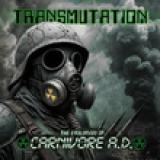
Carnivore A.D. - Transmutation

Carnivore A.D.

Transmutation

12inch426239083198
Apostasy Records
27.03.2026
  • 1: Prologue
  • 2: Transmutation
  • 3: I Stand Alone
  • 4: Social Decomposition
  • 5: Mine Is The Hand

The Evolution Has Begun. Dedicated with love and honor to the memories of Peter Steele and Keith Alexander, Carnivore A.D. emerged as a post armageddon neo barbaric soundscape - a relentless force keeping the primal energy of Carnivore alive on stages and festivals around the world. Formed by NYC Hardcore and Metal veterans Baron Misuraca (vocals & bass – ex-SHEER TERROR), Chuck Lenihan (guitar – ex-CRUMBSUCKERS), and Joe Cangelosi (drums – ex-KREATOR, WHIPLASH, MASSACRE). Co-founded with full endorsement by original drummer Louie Beateaux, Carnivore A.D. has honored its roots by performing the explosive and brilliant works of Peter Steele with intensity, respect and raw power. But now, with the release of their first-ever studio EP "Transmutation", Carnivore A.D. transcends tribute.

They have challenged themselves to write new material - not to replace the original legacy, but to continue its spirit through their own lens. While the legacy of Carnivore remains sacred, Carnivore A.D. has become something more than its origin - a band with its own scars, its own instincts, and now, its own songs. “Think of Carnivore AD as a renowned dining establishment where it’s Chef passed on years ago but the recipes remain and folks still want to dine there instead of cooking the food themselves. And Chef Pete wouldn’t mind because his friends are making it with love.”- Louie Beateaux.

pre-ordina ora27.03.2026

dovrebbe essere pubblicato su 27.03.2026

Seamus Fogarty - Ships LP
  • 1: Come Down To The Square
  • 2: Fire
  • 3: Ships
  • 4: I Passed Your House
  • 5: They Recognised Him
  • 6: Woking
  • 7: Plodder
  • 8: The Last Days Of Watchmaker Joe
  • 9: Doer Undoer
disponibile anche

Pink Vinyl


London-based Irish singer-songwriter Seamus Fogarty returns with 'Ships', his most expansive and uplifting album to date, released March 6, 2026 on limited-edition 12” coloured vinyl, CD and digital formats. Praised for crafting “magical journeys through fable and modern life and back again, often in the same song” (----- – The Guardian), Fogarty blends motorik rhythms, folk traditions and leftfield electronics into a richly detailed collection that channels influences from Tortoise to early ’90s hip hop. Following 2023’s 'Hee Haw EP,' 'Ships' is packed with poignant, funny and deeply human vignettes touching on love, loss, DIY coffins, chance encounters and the quiet determination required to keep going.
Written in the wake of 'A Bag Of Eyes' and road-tested on tour with Lisa O’Neill, 'Ships' was brought to life with an esteemed cast of collaborators including Emma Smith, Chris Vatalaro, Aram Zarikian, Joe Auckland, Leo Abrahams and Mike Lindsay. Recorded across London, St Leonards-on-Sea and Margate, and fine-tuned in Fogarty’s Walthamstow home studio, the album moves effortlessly from the urban hum of ‘Come Down To The Square’ to the romantic sweep of the title track ‘Ships’ and the defiant crescendo of closing track ‘Doer Undoer’. “There’s something strangely uplifting about this collection,” Fogarty says. “It’s more honest than anything I’ve released before.”

pre-ordina ora06.03.2026

dovrebbe essere pubblicato su 06.03.2026

Seamus Fogarty - Ships LP

Seamus Fogarty

Ships LP

12inchLAT048LPC1
Lost Map Records
06.03.2026

London-based Irish singer-songwriter Seamus Fogarty returns with 'Ships', his most expansive and uplifting album to date, released March 6, 2026 on limited-edition 12” coloured vinyl, CD and digital formats. Praised for crafting “magical journeys through fable and modern life and back again, often in the same song” (----- – The Guardian), Fogarty blends motorik rhythms, folk traditions and leftfield electronics into a richly detailed collection that channels influences from Tortoise to early ’90s hip hop. Following 2023’s 'Hee Haw EP,' 'Ships' is packed with poignant, funny and deeply human vignettes touching on love, loss, DIY coffins, chance encounters and the quiet determination required to keep going.
Written in the wake of 'A Bag Of Eyes' and road-tested on tour with Lisa O’Neill, 'Ships' was brought to life with an esteemed cast of collaborators including Emma Smith, Chris Vatalaro, Aram Zarikian, Joe Auckland, Leo Abrahams and Mike Lindsay. Recorded across London, St Leonards-on-Sea and Margate, and fine-tuned in Fogarty’s Walthamstow home studio, the album moves effortlessly from the urban hum of ‘Come Down To The Square’ to the romantic sweep of the title track ‘Ships’ and the defiant crescendo of closing track ‘Doer Undoer’. “There’s something strangely uplifting about this collection,” Fogarty says. “It’s more honest than anything I’ve released before.”

pre-ordina ora06.03.2026

dovrebbe essere pubblicato su 06.03.2026

Bonnie 'Prince' Billy - We Are Together Again LP
  • A1: Why Is The Lion?
  • A2: They Keep Trying To Find You
  • A3: Strange Trouble
  • A4: Life Is Scary Horses
  • A5: (Everybody's Got A) Friend Named Joe
  • B1: Vietnam Sunshine
  • B2: Hey Little
  • B3: Davey Dead
  • B4: The Children Are Sick
  • B5: Bride Of The Lion
disponibile anche

Clear Vinyl


Bonnie 'Prince`Billy kehrt am 6. März 2026 mit dem Album 'We Are Together Again' zurück. Das Album ist warm und persönlich und außerdem so angelegt, dass es mit denselben Worten beginnt und endet: 'Why is the lion still here, outside?'

Thematisch ist das Album tief in Louisville, der Heimatstadt von Bonnie „Prince“ Billy, verwurzelt. Es feiert die Kraft von Freundschaft, lokaler Gemeinschaft und gemeinsamem künstlerischem Schaffen. Damit setzt es bewusst einen Kontrapunkt zur Globalisierung und plädiert stattdessen für Lokalismus. Aufgenommen wurde es live im Studio End of an Ear mit lokalen Musiker:innen, Freund:innen und Familienmitgliedern. Jeder Ton ist direkt und unverfälscht – was im Raum passiert, hört man auch auf der Aufnahme. „We Are Together Again“ nimmt die Ängste einer sich verändernden Welt nicht weg, sondern begegnet ihnen mit Harmonie. Das Album erzählt von Zusammenhalt, von der Freude am Miteinander und davon, wie das gemeinsame Fragen selbst zur Quelle von Hoffnung wird."

pre-ordina ora06.03.2026

dovrebbe essere pubblicato su 06.03.2026

Bonnie 'Prince' Billy - We Are Together Again LP

Bonnie 'Prince`Billy kehrt am 6. März 2026 mit dem Album 'We Are Together Again' zurück. Das Album ist warm und persönlich und außerdem so angelegt, dass es mit denselben Worten beginnt und endet: 'Why is the lion still here, outside?'

Thematisch ist das Album tief in Louisville, der Heimatstadt von Bonnie „Prince“ Billy, verwurzelt. Es feiert die Kraft von Freundschaft, lokaler Gemeinschaft und gemeinsamem künstlerischem Schaffen. Damit setzt es bewusst einen Kontrapunkt zur Globalisierung und plädiert stattdessen für Lokalismus. Aufgenommen wurde es live im Studio End of an Ear mit lokalen Musiker:innen, Freund:innen und Familienmitgliedern. Jeder Ton ist direkt und unverfälscht – was im Raum passiert, hört man auch auf der Aufnahme. „We Are Together Again“ nimmt die Ängste einer sich verändernden Welt nicht weg, sondern begegnet ihnen mit Harmonie. Das Album erzählt von Zusammenhalt, von der Freude am Miteinander und davon, wie das gemeinsame Fragen selbst zur Quelle von Hoffnung wird."

pre-ordina ora06.03.2026

dovrebbe essere pubblicato su 06.03.2026

Hello Spiral - Hallways (TAPE)

Hello Spiral returns to the same North London block, the same triangulated geometry of balconies and courtyard, but with a shift of orientation. His previous record looked outward from the eighth floor, these four new recordings move inside, into the building’s arteries. Joe explores the hallways of the complex where he has lived and listened for years, using the same tool as before, an iPhone and its voice memo app. The recordings were made in situ, each exactly eleven minutes, captured without ceremony.

The hallways feel different. Less private, less scenic, more neutral. They are the connective tissue between hundreds of domestic units, a space of transit rather than rest. The carpet absorbs certain frequencies. The fire doors catch and release pockets of air. The lights hum. Elevators drone in soft cycles of arrival and departure. These are the institutional sounds of shared living, yet once recorded they begin to behave strangely. A kind of internal weather appears.

As with the previous album, Joe remains attentive to what is often overlooked, irrelevant or discarded. The hallways, with their scuffs and signage, their coded access and polite functionalism, provide an unexpectedly rich field. The ambience is not shaped by storms or scaffolding, not by birds or street spill. Instead the material is the building’s own breath, its mechanical rhythms, the low frequency traces of neighbours, the occasional shuffle of footsteps that pass but do not return.

Joe talks about this record as a possible middle chapter in a trilogy. If so, it sits between the exposed openness of the balcony and whatever comes next. A hinge point. These recordings continue Joe’s long practice of defamiliarization, sharpening attention to the unnoticed while withholding narrative. They invite repeated listening, not for revelation, but for the subtle shifts that occur when a familiar space is treated as an instrument.

pre-ordina ora30.01.2026

dovrebbe essere pubblicato su 30.01.2026

Various - Wizzz! French Psychorama Volume 5 (67-75)

The journey through French-speaking pop archives continues with this fifth volume, packed with fuzz, gimmicks, and dissent. Far from the charts, the selected tracks display a great creative freedom, often backed by corrosive humor. Welcome to the surprising, kaleidoscopic, and colorful world of the late sixties and early seventies, Wizzz!
Born in Montauban, Robert Pico stumbled into music by chance when he met René Vaneste, then artistic director at Pathé-Marconi. René brought him to Paris to record his first 45 RPM EP in 1964. A year later, Pierre Perret introduced him to Vogue, where he recorded his second album with Claude Nougaro’s orchestra. Sylvie Vartan then introduced him to RCA, where he recorded four singles, including the astonishing "Chien Fidèle," a track backed by a hair-rising fuzz guitar. Alongside his solo career, he also composed for other artists like Alain Delon (the song was recorded but remains unreleased), Magali Noël, Bourvil, and Georges Guétary. In the Paris of the sixties, he mingled with Mireille Darc, Elsa Martinelli, Marie Laforêt, France Gall, Françoise Hardy, Petula Clark, Régine, Dani, Serge Gainsbourg, Joe Dassin, Franck Fernandel, Charles Level, and Roland Vincent. Despite his efforts and winning a Grand Prix Sacem for his final record, Robert Pico didn’t achieve the expected success in show business and decided to leave Paris and return to the Southwest, where he devoted himself to writing. He is the author of 23 books (including Delon et Compagnie, Jean-Marc Savary Editions 2025, a memoir about his youth and his many encounters). Today, he is relieved to never have become a celebrity and devotes himself to his work with passion.
In 1969, the Franco-Italian movie Erotissimo was released, directed by Gérard Pirès (who later directed Taxi in 1998, written and produced by Luc Besson). This pop comedy features Annie Girardot, Jean Yanne, Francis Blanche, Serge Gainsbourg, Nicole Croisille, Jacques Martin, and Patrick Topaloff. The soundtrack was written by Michel Polnareff and William Sheller, with lyrics by Jean-Lou Dabadie. "La Femme Faux-cils," performed by Annie Girardot. It recounts the feelings of a rich CEO's wife who seeks to develop her sex appeal under the influence of advertisement and magazines. Groovy, sparkling and light, this track, with ITS lush arrangements humorously critiques consumer society and feminine beauty standards.
“Je suis l’Etat” (1967) is the flagship track of the first EP by singer-songwriter Spauv Georges, aka Georges Larriaga, better known as Jim Larriaga (1941-2022). Born into a family of bakers, the young man was initially planning to become a hairdresser when he discovered English-speaking music through Elvis Presley and the Beatles. After this revelation, he decided he would become a songwriter and gave himself five years to succeed. He recorded his first two EP’s independently for RCA under the pseudonym Spauv Georges; meaning “that poor George”, a nickname given to him by the mother of her friend Jean-Pierre Prévotat (future drummer of the Players, Triangle, or Johnny Hallyday). Portraying a depressed and eccentric young man, Spauv Georges created corrosive and amusing songs that didn’t reach a wide audience, despite a TV appearance with Jean-Christophe Averty.
Supported by his loyal friend and fellow songwriter Jean-Max Rivière, Georges Larriaga met the future singer Carlos in the early '70s, then Sylvie Vartan’s assistant. He wrote songs for Carlos, including the popular "La vie est belle," "Y’a des indiens partout," and "La cantine", which went onto become a huge hit in 1972. He also composed for Claude François (“Anne-Marie”, 1971), Charlotte Julian (“Fleur de province”, 1972), helped launch child singer Roméo (who sold 4 million records), and later wrote the hit "Pas besoin d’éducation sexuelle" (1975) for the young Julie Bataille. In 1971, Jim recorded an album for Disc'Az: “L’univers étrange et fou de Jim Larriaga”, which featured pop gems like “La maison de mon père”.
The story of the song "Zoé" began when Pierre Dorsay, artistic director at Vogue Records, asked Swiss singer and musician Pierre Alain to write a song for a new female singer. The inspiration came when he realized that Zoé (the artist's name) was also the name of France's first atomic battery, created in 1948, which consisted of uranium oxide immersed in heavy water! The lyrics reflect a bubbling energy that must be handled with caution, while the instrumentation echoes this atomic theme, notably with the use of a theremin.
Zoé’s career lasted only as long as a single 45 RPM, but it seems Christine Fontane was the vocalist behind this pseudonym, who is known for several EPs, a good "popcorn" album in 1964, and a handful of children’s singles in the '70s. Regardless, the photograph on the cover is of a different girl entirely.
Later, Pierre Alain continued his career, writing songs for himself, Marie Laforêt, Danièle Licari, Alice Dona, Arlette Zola (3rd place in Eurovision 1982), and achieving multiple gold and platinum records in Canada. Also an inventor with several patents, president of the Romande Academy, and head of the French Alliance in Geneva, he now composes atonal music, books, and poetry. Moreover, he is also the host of "Les Mardis de Pierre Alain" at "Le P'tit Music'Hohl" in Geneva.
Filled with oriental choruses and fuzz guitar, "Fou" is from Jacques Da Sylva's only EP released by Vogue in 1967. Despite the quality of this recording, all traces of this singer disappear after this first effort.
Valentin is a baroque pop singer born in Belgium. He is the songwriter and composer of most of the tracks on his three singles released in the late 60s in Canada. A legend says that he reincarnated himself as Jacky Valentin during the 1970s for a rock'n'roll revival career in Belgium, but his older brother sadly debunked this story. Valentin's first two singles were arranged by Claude Rogen, a Parisian session pianist who had come to Canada to promote the song “Mister A Gogo”, a cover of David Bowie’s “Laughing Gnome”, adapted by singer Delphine, his wife at the time. Far from his usual network, Claude Rogen arranged music for Polydor, including the arrangements for “Je suis un vagabond” in 1969, a jerk tune with string arrangements and a furious optimism.
Jacques Malia wrote, composed, and recorded his only 45 EP for Festival in 1966. “Histoire de gitan” is an incredible beat track with bohemian scat that tells the story of a gypsy musician who came to Paris to make it in the Music-Hall, to no avail. The hero of the song and its author probably shared a similar fate, as Jacques Malia faded into anonymity after this remarkable attempt.
Bernard Jamet recorded two EPs for Barclay in the late sixties and co-wrote several songs with Christine Pilzer, Pascal Danel, and prolific songwriters Michel Delancray and Mya Simile. The track “Raison Légale” (1968), his masterpiece, immerses the listener in a courtroom right when a murderer is being judged, with jerk rhythm and free arrangements. A unique, paranoid, judicial, and psychedelic oddity.
Jean-Pierre Lebrot-Millers started his career in show business in 1967 as a singer and songwriter for the Philips label. After three singles, he wrote several songs of a new kind with his friend Pierre Halioche, in the midst of the sexual liberation movement and the democratization of drugs. With provocative lyrics, “Les filles du hasard” and “Barbara au Chapeau Rose” were released on a Philips singles in 1968. The character of Barbara was inspired by a queen of Parisian nightlife during the psychedelic years: model Charlotte Martin, who dated Eric Clapton from 1965 to 1968, then Jimmy Page from 1970 to 1983. Jean-Claude Petit’s arrangements, with a table-filled intro, soul brass, and Hendrixian guitar, emphasize the flamboyance of a hedonistic and sexy character, whose dog is named Junkie because “Junkie est un nom exquis”! The track was recorded live in three takes with a full orchestra.
Upon its release, the record was censored by Europe 1 and RTL due to its references to drug use. Jean-Pierre Lebrot was then banned from the airwaves and later dismissed by his record label. He changed his artist name to Jean-Pierre Millers, while his companion Pierre Halioche became D. Dolby for a new dreamy composition, “Chilla”, which Jean-Pierre produced himself with arrangements by Jean Musy. Once again, the song was immediately censored everywhere. After this setback, he decided to stop singing and started taking on odd jobs to support his Swedish wife and their son until the day he met Jean-Pierre Martin, then production manager at Decca, who had worked with Manu Dibango. Martin offered Jean-Pierre Lebrot-Millers, then employed at Rank Xerox, the position of artistic director at Decca. He accepted and became, a year later, promotion director (radio, press, TV). He worked on Julio Iglesias’s first album for Decca, which became a massive hit and allowed him to meet Claude Carrère. The latter asked him to write new songs and find their performers, much like a “talent scout.” It’s through him that Jean-Pierre discovered Julie Pietri and Corinne Hermès. He composed “Ma Pompadour” for Ringo, Sheila’s husband, and took the microphone again for the syncope hit “Rendez-Vous” in 1982.
That same year, Jean-Pierre Lebrot-Millers tried to release a track for which he had heavily gone into debt: “Si la vie est un cadeau”. Having recorded it in London, he presented it to numerous professionals, all of whom refused to get involved. The same thing happened with Antenne 2 and the Sacem when he proposed the song as France’s entry for Eurovision. He then met Haïm Saban, who was producing cartoon soundtracks and had just launched the Goldorak theme song. Saban, having listened to the song, declared it had the potential to become a hit. He sent Jean-Pierre and Corinne Hermès to meet the CEO of the Luxembourg radio and television network. The latter received them, asked to hear a verse and chorus a cappella in his office, and immediately hired them to represent Luxembourg at Eurovision 1983. They reworked the arrangements and recorded a new version with Haïm Saban as co-producer. The song ended up winning Eurovision 1983, a great comeback for our hero. He continued producing and hung out with the band Nacash in Belgium when a couple came to introduce their daughter for an impromptu audition in a hotel room. The girl sang “Les démons de minuit” while dancing to a radio cassette. Impressed, he had her take singing lessons for a year and composed a song for her (for which he had the melody and title, but no lyrics). This required him to go on the hunt for a lyricist, who ended up being Guy Carlier. They recorded the song, which was initially a ballad, at Bernard Estardy’s CBE studio, and gave the singer a new name: Melody. They showed the song around their industry network without success. Later, Estardy called Jean-Pierre to suggest changing the rhythm and making it pop-rock. Orlando, Dalida’s brother, liked the result and decided to co-produce the track. “Y’a pas que les grands qui rêvent » became a classic hit. The song has since been covered by Juliette Armanet (as a ballad, like the original) and Valentina.

Born into an aristocratic Breton family, Hervé Mettais-Cartier worked as a DJ at Queen Kiss, a nightclub in Poitiers, where he formed the band Les Concentrés with Michel (an actor) and Christian (a radio technician). Together, they created a repertoire of whimsical songs (“Ma bique est morte”, “J’suis un salaud”, “Fils de dégénéré”...) that they performed on stage dressed in white (in homage to “concentrated milk”). They performed at Bliboquet and Olympia in 1968 for the 10th edition of the “Relais de la chanson Française” organized by L’Humanité-Dimanche and Nous les Garçons et les Filles, sponsored by Pepsi Cola. Winners in the author-composer category, alongside Danish singer Dorte, their visibility allowed them to record a 45, and appear on television in Jean-Christophe Averty’s show. The A-side of the disc features Bruno le ravageur, a casatchok dedicated to Bruno Caquatrix, the director of Olympia, nicknamed in the song “Coq Atroce” or “croque-actrices”. The B-side is dedicated to “Fils de dégénéré”, a quirky tribute to Hervé's aristocratic roots, mixing absurdity with sophisticated vocal harmonies.
After Les Concentrés, Hervé Mettais-Cartier formed the duo La Paire et sa Bêtise with his friend Olivier Robert. They performed in Parisian cabarets and toured with Pierre Vassiliu. In the late 1970s, Hervé began a solo career. He recorded two albums for the Motors label in 1978 and 1979, which did not achieve their anticipated success due to lack of promotion. In 1980, he met Bernadette, with whom he started a family and created a “Chansons à voir” (songs to see) show that he performed until his death at the end of 2024.

Publicité comes from the final EP by the Missiles (Ducretet Thomson, 1966), a disc that also includes “La (nouvelle) guerre de cent ans”, featured on Volume 4 of our Wizzz! series. Please refer to the booklet for the story of the band.

“He’s 1.82 meters tall, 28 years old, weighs 135 kg, is black and Belgian”: this is the description of singer Hegesippe on the back of his sole single (Decca, 1967). He appears on the album cover wearing a Greek toga, like a hippie gag – we are at the end of the year 1967. In “Le crédo d’Hegesippe”, this former bodyguard of Antoine and the Charlots plays the delightful card of the thick brute converted to Flower-Power and non-violence, with arrangements by Jean-Daniel Mercier, aka Paul Mille.
“Ethéro-disco” was released on a promotional record for clients of the Maréchal company (Liège, Belgium) for the New Year 1979. Over a funky rhythm, celebrity impersonations (Brigitte Bardot, Jacques Dutronc, Fernandel…) deliver an enigmatic text about pharmaceutical products like ether, bismuth, and aspartate. The track was composed by Dan Sarravah (responsible for Joanna's “Hold-up inusité” featured on Wizzz! Volume 3) and Tony Talado, who was also a singer (one 45 in 1967), songwriter (with over a dozen credits between 1964 and 1985 in various styles from surf music to disco), author (Devenez Végétarien, Dricot Editions, 1985), ad designer, and psychologist.

Décollez-les is on the A-side of Mamlouk's only single, a pseudonym for Marsel Hurten, who is known for his work on several EPs in the late sixties, as well as composing music for Hervé Vilard’s “Capri, c’est fini”, Claude Channes' “La Haine”, Annie Philippe’s “On m’a toujours dit”, and Nancy Holloway’s “Panne de Cœur”.
This strange song, with Afrobeat horns and absurd dialogues between a chef and his kitchen staff, is the result of a collaboration between Marsel Hurten and one of his neighbors, a photographer from Pavillon-sous-Bois (93), where the musician settled after returning from the Algerian War. A music video was shot to promote the record.
Marsel Hurten was born in Tourcoing (59) into a musical family. At a young age, he joined the brass band founded by his grandfather, playing the piston before studying trumpet at the conservatory, as well as teaching himself how to play the guitar. As an orchestra musician, he toured in France, Belgium, Germany, and England. He released a series of solo 45’s between 1965 and 1968 for the DMF and Az labels before stopping recording to focus on working for other artists (Gilles Olivier, Noëlle Cordier…).
“L’amour nu” (Vogue, 1971) is the work of the short-lived Belgian band Mozaïque. The track, written by singer Jacques Albin, closely resembles another of his compositions, “Carré Blanc”, which he recorded in 1969 for Disc’AZ.
Represented by the Lumi Son micro-label based in Marignane (Côte d'Azur), Jean-Marc Garrigues released two 45 RPMs in the late sixties, defending the French jerk sound. The song “Je dis Non” is a short, joyful ode to youth, pop music, and rebellion.
Songwriter and performer Jacques Penuel released three singles. The first one, “Astronef 328” (Fontana, 1969), features a dizzying series of chords punctuated by sound effects, a sci-fi story, and arrangements by Jean-Claude Vannier.

We would like to sincerely thank Pierre Alain, Moon Blaha, Marsel Hurten, Bastien Larriaga, Jean-Pierre Lebrot-Millers, Bernadette Mettais-Cartier, Robert Pico, Olivier Robert, Claude Rogen, Micky Segura.

non in magazzino

Ordina ora e ordineremo l'articolo per te presso il nostro fornitore.


Last In: 3 months ago
Frankie Knuckles & Eric Kupper - The Director’s Cut Collection LP 2x12"
 
8

Limited Edition Transparent Black Vinyl Version - 500 Units Only

There are few people across the globe, who will have not been touched by the work of Frankie Knuckles. Forever regarded as ‘The Godfather of House’ for his unrivalled contribution to the house music we know today; what started as an underground movement in Chicago has grown to international heights thanks to Frankie. His records earned him recognition on a global scale, allowing him to work with some of the globes biggest names including the likes of Diana Ross, Whitney Houston and Michael Jackson.

Five years ago, Frankie passed away in Chicago on 31st March 2014 leaving behind one of the greatest house music legacies spanning almost four decades. Now he is commemorated by long time writing and production partner Eric Kupper. Eric, himself a seasoned DJ producer and writer, has worked on over 116 Billboard #1 Dance Records and played a pivotal role in a many of Frankie’s productions. Having both worked together for many years they established themselves at ‘Director’s Cut’ from 2011 and set about producing original releases and remixes based on the classic ‘Def Mix’ sound while sharing equal credits for their creations.

Together they re-produced and re-purpose classic cuts for modern dancefloors, with reworks including tracks from Marshall Jefferson, Ashford & Simpson, Artful & Ridney and The Sunburst Band, alongside Frankie Knuckles originals. These releases have now been brought together by Eric to feature on special album called ‘The Directors Cut Collection’ on SoSure Music. It includes the Director’s Cut reworks of Frankie’s classic cuts such as ‘Your Love’ and ‘Take You There’ with Jamie Principle, alongside Frankie’s first #1 single - ‘The Whistle Song’ on which Eric shares writing credits.

Within a multitude of classic reworks, highlights include a previously unreleased version of Ashford & Simpson’s ‘Bourgie Bourgie’ and a huge Director’s Cut Retro Signature mix of Marshall Jefferson’s The House Music Anthem (Move Your Body) featuring Curtis McClain.

The Director’s Cut Collection is a fitting tribute to commemorate the fifth anniversary of Frankie’s passing whilst giving Eric a platform to tell his side of the creative story. This album is to be released in collaboration with The Frankie Knuckles Foundation who work to continuing Frankie’s legacy well into the future.

In stock dal15.05.2026


Last In: 34 days ago
Joe Bonamassa - Driving Towards The Daylight LP
  • 1: Dislocated Boy
  • 2: Stones In My Passway
  • 3: Driving Towards The Daylight
  • 4: Who's Been Talking?
  • 5: I Got All You Need
  • 6: A Place In My Heart
  • 7: Lonely Town Lonely Street
  • 8: Heavenly Soulv
  • 9: New Coat Of Paint
  • 10: Somewhere Trouble Don't Go
  • 11: Too Much Ain't Enough Love (W/ Jimmy Barnes)
pre-ordina ora16.01.2026

dovrebbe essere pubblicato su 16.01.2026

Fickle Friends - Fickle Friends LP
  • Bleach
  • Wow
  • Happier
  • Honest
  • Joe
  • Fantasy
  • Swoon
  • Feral
  • Fear
  • Dream
  • Up!

Mit ihrem selbstbetitelten dritten Album schreiben Fickle Friends ihre Geschichte neu. Die LP erscheint über das eigene Label Palmeira Music und ist eine strahlende Indie-Pop-Platte über Glück. Chaotisches, kompliziertes, hart erkämpftes Glück. In ihren 11 Tracks fängt die Band Euphorie und Chaos des Lebens im Hier und Jetzt ein und verbindet eine gemütliche Produktion und große Hooks mit Texten, die sowohl zutiefst persönlich als auch unglaublich nachvollziehbar sind. Komplett in Eigenregie produziert und kreativ geleitet, ist "Fickle Friends" ein echter DIY-Triumph – ein Beweis dafür, was passiert, wenn Künstler ihrem Instinkt vertrauen und sich völlig unabhängig fühlen. Es ist ein Liebesbrief an Freude, Freundschaft und daran, den Weg zurück zu den Dingen zu finden, die einem das Gefühl geben, lebendig zu sein.

pre-ordina ora08.01.2026

dovrebbe essere pubblicato su 08.01.2026

Biboul Darouiche & The Bantu Jazz Connection - Strolling Through The Worlds

Strolling through the world by Biboul Darouiche & The Bantu Jazz Connection marks the first vinyl release on Crispy Water and is a vibrant fusion of African rhythms, jazz improvisation, and soulful storytelling, blending ancestral rhythm with contemporary jazz expression. Recorded with an ensemble of outstanding musicians, the album moves effortlessly between groove, spirit, and freedom — connecting continents through sound.

BIBOUL DAROUICHE is a singer, percussionist, composer and head of the ensemble. By playing the conga, djembe, calimba and - the African treetrunk drum (also called nkul or tam-tam, which by the way should not be missing at any concert!) Darouiche brings a very special color to his music. He works mainly in Europe, but his engagements also take him to the Middle East, the countries of the CIS, Brazil and the USA. Since1995 he has been a member of Klaus Doldinger's Passport. He has also worked with musicians such as Al Di Meola, Pee Wee Ellis, Roy Ayers, Graham Haynes, Paquito D'Rivera and the Jazz Baltica Ensemble.

The Austrian multi-instrumentalist and producer MICHAEL HORNEK, who is part of the permanent cast of Klaus Doldinger's Passport as a keyboardist, plays keyboards, percussion and sings. His free-jazzy percussive playing inspires every listener. Hornek's keyboard skills can be heard on over 750 music productions, and the trend is of course increasing!

Mauritian bassist LINLEY MARTHE is one of the world's best bassists. He was a long time permanent member of the band Joe Zawinul Syndicate,worked with musicians like Dave Liebmann, Richard Galliano, Omar Hakimand many more. Zawinul said of Linley Marthe in an interview: “Linley is a phenomenon. I don't know if anyone can match him in terms of bass playing."

ROGER BIWANDU, french musician born and raised in Bordeaux/France, with roots from Congo (DRC) is an artist resident at l'Apollo bar in Bordeaux since june 1997, he plays there one time per month. He played with a lot of great musicians all over the world, with some heavy weights too, like Joe Zawinul, Salif Keita, Marcus Miller, Lee Ritenour, John Beasley, Dee Dee Bridgewater, Franck McComb, to name a few.

non in magazzino

Ordina ora e ordineremo l'articolo per te presso il nostro fornitore.


Last In: 5 months ago
ensemble 0 - L'Incroyable Femme Des Neiges

ensemble 0 (pronounced zero) is a band /contemporary music ensemble, whose line-up and instruments can change according to the repertoire performed. Directed by Stéphane Garin and Sylvain Chauveau, performing pieces by, mostly, contemporary composers including its own members, and working with numerous collaborators.

The year 0 of ensemble 0 was 2004, when four friends decided to assemble a vessel, essentially dedicated to acoustic music for the present time. A light and adaptable vessel, of varying geometry and geography (its members are based in different cities and countries, including France, Catalonia and Belgium.)

Zero, in cartography, is the reference level from which altitudes are erected. In other words, where the field of possibilities stands. Depending on the chosen direction, the disentangled or deciphered compositions, the musicians and instruments brought in, ensemble 0 performs upon a unique range of reliefs. First, its own compositions are specifically performed by the pulsating heart of the collective, i.e. a trio made of Sylvain Chauveau (acoustic guitar, glockenspiel), Stéphane Garin (metallic percussions) and Joël Mérah (acoustic guitar). Then, with a contemporary repertoire the ensemble expands according to the needs of each work. ensemble 0 occasionally performs pieces by Moondog, Julius Eastman or Ligeti but is particularly keen on living composers such as Tristan Perich, Michael Pisaro or Rachel Grimes.

Here, ensemble 0 plays in according to the movie: L’Incroyable Femme Des Neiges (directed by Sébastien Betbeder with Blanche Gardin and Philippe Katerine) a soundtrack with their own strong and beautiful imprint.

pre-ordina ora28.11.2025

dovrebbe essere pubblicato su 28.11.2025

MARK SLATE & ROTOSPHERE - LIVE

Mark Slate&Rotosphere

LIVE

12inchSLATELP2025
rock 'n' Hall
07.11.2025
  • We Need The Blues Every Day
  • Room No
  • When I Was Young
  • Anytime With You
  • I Wanna Feel Your Rock'n'roll
  • Hard As A Rock
  • One Heart One Soul One Life
  • I Like The Way You Walk
  • I Play The Blues For You
  • Mama Don't Lie To Me

The Band Rotosphere has become a cornerstone of the Blues Festival Baden (Switzerland). Since 2005, led by guitarist and bandleader Nic Niedermann, they"ve been lighting up the festival"s legendary Late Night Jam Sessions. Over the years, they"ve shared the stage with blues icons such as Magic Slim, Susan Tedeschi, Coco Montoya, Justina Lee Brown and Chicago"s own blues harpist, Matthew Skoller. A truly magical moment unfolded in 2022 when Mark Slate took to the stage. The charismatic blues and soul singer captivated the audience from the first note with his powerful voice. Having spent years on the road with the "Joe Cocker Tribute Show", Slate embodies the raw and gritty essence of the blues. Now, performing alongside Rotosphere, they deliver original tracks brimming with energy, passion, and musical fire - an unforgettable experience for every listener!

pre-ordina ora07.11.2025

dovrebbe essere pubblicato su 07.11.2025

Molly Nilsson - Amateur (LP)

The word "amateur" originates from the Latin word "amator," meaning "lover" or "admirer". This Latin term is derived from "amare," which means "to love". The French adopted "amateur" from Latin, and the English then borrowed it from French, initially retaining the sense of someone who loves or is devoted to something. Over time, the English usage of "amateur" also developed a meaning related to a lack of professional skill or experience. How did a word derived from love become a slur? Is love really so defenseless? They say love conquers all, but in reality isn’t love quite ridiculous? It has no intention, no motive, no agenda. How could it possibly prevail? It can’t be bought or sold, or so they say.Its mere existence can't be proven or even measured. What an impossible thing. Trying and failing, time and time again, no wonder cynicism always seems to win. I see “amateurism” as a delighted, even foolish, protest. Protest against everything. Of what’s expected of someone, or expected of someone to desire or strive for. To be elite, to be expert, to be professional, to be a master, to excel and succeed. Where’s the joy in that? I just want to have fun. I want to want. I want to love. And keep doing it, forever. I want to have fun, even when it’s tiring and sometimes even heaven is boring as hell. I want to be bad. I want to do my own thing. “I vant to be alone”. I want to be someone so dedicated to their passion that it starts to seem like there’s something wrong with them. All the way. We can take it all the way, and never get it back. ” - Molly Nilsson Amateur is the 12th studio album by Molly Nilsson. Deep in the teeth of a career that threatens to tip into something resembling a “legacy,” Molly Nilsson celebrates with an album recorded instinctively, quickly and bursting with so many moments of emotional brilliance and clarity it may be her greatest yet. Hers has been a career spent reaching out, perennially powerful in her earnestness, a warrior ridiculously defenceless and armed with a glittering sincerity. Shearing herself of the machinations of the music industry, recording at home, writing direct to the heart. Amateur is a jubilee for losers. A treatise in 13 songs, Amateur states clearly that we should live our life with eternal curiosity, offers us an open hand of comradeship out of the rat race. The songs on the album are both some of the most personal of Nilsson’s career and the most anthemic. First single How Much Is The World asks us to re-evaluate value in the face of a Neo-liberal system squeezing the life out of our loves. Pulsing opener Die Cry Lie satirises the commercialisation of emotion in the form of a shout-along diss-track. With a pounding rhythm track held down by gorgeous chord changes, heartbreaker Valhalla carries the torch for the main themes of the album: never growing up, making mistakes with kindness, moving on. When the drums crash in on the line “It’s going to get better now, you’ll see, going to be much better off without me” there is a world of feeling swirling about in the vocal delivery. One reading of the track might be that it’s a break up song but the subtext is classic Molly Nilsson: by living truthfully, making mistakes, we’re active agents against the myriad oppressions of the world. All The Way takes the theme for a run into the eternal sunset. It’s a manifesto for living fully. “Take it all the way, and never get it back” - it’s the process that’s the important point. The journey not the destination. Big Life, follows on like a part 2: An ode not only to Molly Nilsson’s career of endless gigs, endless connections with people, it’s a massive ode for following your dreams, doing it yourself. Closer The Bitter End is a powerful anthem for friendship, another definition of love infused in Nilsson’s work, A beautifully poignant ode to comradeship til the end, it seems to be the songwriter approaching aging, approaching life’s inevitability with the same vigour and earnestness, the same love of life she enjoyed at the onset of her career. There are moments on Amateur shrouded in reverb, slightly out of focus, forcing the listener to step deeper into the Mollyverse.. Nilsson’s open-armed beseeching to the world permeates every beat, every chord. These are songs exploding with life: the chunky, aggressive bassline on the punker Get A Life can’t hide its massive, catchy chorus. The sweeping Swedish Nightmare might be a tongue-in-cheek self-reference, but at its heart it’s a song about the duality of living life large, what is a dream, what is a nightmare? Molly Nilsson says you can’t have one without the other, and why would you want to? Here’s to making mistakes.

non in magazzino

Ordina ora e ordineremo l'articolo per te presso il nostro fornitore.


Last In: 6 months ago
BIG BLACK - ATOMIZER
  • A1: Jordan, Minnesota
  • A2: Passing Complexion
  • A3: Big Money
  • A4: Kerosene
  • A5: Bad Houses
  • B1: Fists Of Love
  • B2: Stinking Drunk
  • B3: Bazooka Joe
  • B4: Strange Things
  • B5: Cables (Live)
pre-ordina ora04.09.2025

dovrebbe essere pubblicato su 04.09.2025

AZ - Save Them

AZ

Save Them

7"-VinylTKR019
TUFF KONG RECORDS
22.08.2025

In an interview released to Billboard in 2017, east coast veteran AZ explains how this collaboration with legendary DITC producer Buckwild came along:

"The sound was shifting. A lot of brothers in the street were telling me "You got to save us." And I'm like, "Save y'all from what?" So I took that title to save the people, then Buckwild played a joint in the studio called "Save Them," and I was like, "This is it."

The two don't really need no introduction: with the Brooklyn lyricist gracing the mic since the mid 90's beginning with one of his first appearances alongside Nas on "Life's A Bitch" and dropping legendary classics such as "Doe Or Die", and the Bronx producer providing beats to artists that range from old school acts such as The Notorious B.I.G., Jay Z, Kool G Rap, Big Pun, modern day legends such as Vinnie Paz, Meyhem Lauren, Termanology and, last but not least, legendary DITC members Big L, Fat Joe, Diamond D and the list goes on and on.

AZ had to recruit "some brothers who I know respect the craft" and found them in Wu-Tang Clan's own Raekwon alongside the late great Prodigy of Mobb Deep. The song was released in April 2017 and brought a breath of fresh air with its classic vibe, together with a video being released just days before Prodigy's untimely passing in June 2017. The rest, you already know, is straight up hip-hop history.

non in magazzino

Ordina ora e ordineremo l'articolo per te presso il nostro fornitore.


Last In: 8 months ago
Black Hole - A Time For Us (7")

BLKG 7 is an essential triple-threat for collectors who go deep into that jazz-funk-psych crate.

Side A features Joe Pass’ haunting “A Time For Us,” lifted from his slept-on Guitar Interludes LP (1970, World Pacific). Heavy w/ cinematic strings, sparse drums & spacious guitar—perfect for blends, loops, or just zoned-out listening. J Dilla thought the same on “Chopped Thoughts”, & for Slum Village’s “Too Much”, but the original stands alone as pure mood.

Side B is a masterclass in moody grooves: “Enchanted Lady” (Milt Jackson & Ray Brown, Much In Common, 1964) is an underrated modal slow-burner w/ a hypnotic swing. Pete Rock & CL Smooth double dipped in “Caramel City” & Escape”, but others were also inspired: Large Professor “Ijuswannachill”, De La Soul“Dinninit”, Rob Swift“Natural Hight”, Knxwledge “3Koins”, among others.

Then comes “Cross Country” by Archie Whitewater—famously Kanye chopped it for Common’s “Drivin’ Me Wild”, but the OG is all groove: head-nod drums, brass stabs & electric piano that goes there.

non in magazzino

Ordina ora e ordineremo l'articolo per te presso il nostro fornitore.


Last In: 6 months ago
Marcos Valle - Contrasts LP 2x12"

Originally released in 2003, Marcos Valle’s Contrasts combined early noughties production techniques with his trademark Brazilian songwriting brilliance. The album quickly became one of Valle’s most in-demand, with tracks like the triumphant “Parabéns” (which was sampled by Childish Gambino, covered by Tom Misch and remixed by Misa Negra) and bossa beach classic “Agua de Coco”, both becoming firm fan favourites.

Produced by Roc Hunter, and executive produced by Joe Davis, with musicians including Robertinho Silva (percussion), Alex Malheiros (bass), and Marcos’ wife Patricia Alvi (vocals), Contrasts encapsulated Valle’s ever evolving musical vision, bringing together samba, baião, bossa pop, broken beat, house, trip-hop and more, on one era-defining record.

After 22 years, Contrasts is finally set for a double LP vinyl and CD reissue, with the original mix of “Valeu” and “My Nightingale” making it onto the vinyl edition for the first time.

non in magazzino

Ordina ora e ordineremo l'articolo per te presso il nostro fornitore.


Last In: 5 months ago
Mary Chapin Carpenter - Come On Come On
  • 1: The Hard Way
  • 2: He Thinks He Ll Keep Her
  • 3: Rhythm Of The Blues
  • 4: I Feel Lucky
  • 5: The Bug
  • 6: Not Too Much To Ask (With Joe Diffie)
  • 7: Passionate Kisses
  • 8: Only A Dream
  • 9: I Am A Town
  • 10: Walking Through Fire
  • 11: I Take My Chances
  • 12: Come On Come On

Come On Come On isn’t just Mary Chapin Carpenter’s most popular album, with sales of 3 million copies. It’s also a contemporary country landmark. No less than seven of its songs became country hits: “I Feel Lucky,” “I Take My Chances,” “Not Too Much to Ask,” “The Hard Way,” “He Thinks He’ll Keep Her,” and two inspired covers, of Dire Straits’ “The Bug” and Lucinda Williams’ “Passionate Kisses.” More importantly, though, this 1992 release pointed the way towards what country music would become in the 21st century with its savvy seasoning of pop and soft-rock sounds into a more personal style of country songwriting from a female point of view. If you’re thinking that sounds familiar, you’re not wrong; Come On Come On’s prodigious commercial prowess isn’t the only thing this record has in common with the early work of Taylor Swift. But, it also crossed over into the rock realm in a way that, arguably, Swift’s records have not; the flourishing Americana and alt-country audiences of the early ‘90s ate this album up, and guest stars like Rosanne Cash, The Indigo Girls, and Shawn Colvin just upped its street cred. Somehow, this classic record has never (come on!) made it to vinyl; we’re making up for a whole lot of lost time with a grape vinyl pressing housed inside a color inner sleeve with lyrics. Essential!

pre-ordina ora11.07.2025

dovrebbe essere pubblicato su 11.07.2025

Jay Ruttenberg & Lucinda Schreiber - Gabba Gabba We Accept You

Gabba Gabba We Accept You is a children's picture book that tells the story of how a kid who was bullied and felt like a misfit grew up to become a hero to so many as lead singer of The Ramones. This story speaks to one of the greatest silent majorities in the world - all the kids who feel a little off. It contains an essential message that the world of punk rock has always meant to communicate.

All of us, regardless of our diverse and non-exclusive design, have something that we are meant to have and share, in a place that we can call our own. As children, these things may appear to many of us as problems and shortcomings. The challenging passages of life that brought Jeffrey Ross Hyman to the place where he became Joey Ramone provide a natural lesson to young folks navigating their way through the complexities of growing up. Working in collaboration with visual artist Lucinda Schreiber, Jay Ruttenberg guides the story of Gabba Gabba We Accept You in unexpected directions, with Lucinda's lyrical illustrations and colorful design opening the sense of possibility in what feels like the path less traveled on every page.

pre-ordina ora27.06.2025

dovrebbe essere pubblicato su 27.06.2025

Isaiah Collier, William Hooker, William Parker - The Ancients LP 2x12"

The debut recording by The Ancients, the intergenerational coalition of Isaiah Collier, William Hooker, & William Parker formed by parker to play concerts in conjunction with the milford graves mind body deal exhibition at the institute of contemporary art los angeles & now a working group. across x2LPs of side-length long-form improvised sets recorded at 2220 arts & archives in LA & the chapel in San Francisco, The Ancients bring the free jazz trio languages first explored by the Cecil Taylor Unit & Ornette Coleman’s -Golden Circle- band (expanded upon in later eras by Sam Rivers' Trio & Parker’s collective trios with Charles Gayle/Graves & Peter Brötzmann/Hamid Drake) into their own unique & scintillating realms of expression.

As we tumble further into the throes of history’s tides, people of hope & creativity rely on the works of our great artists to lift our spirits & focus our resolve. -ascension- was recorded less than a year after the passage of the civil rights act & four months after the assassination of Malcolm X. -journey in satchidananda- was recorded the month reagan was re-elected governor of California. M’boom made its debut recording weeks after the watergate scandal broke & a couple months after the wounded knee occupation ended. The music of the ancients builds on these great musical legacies. it resounds with the pride of survival & the joys of making & sharing music. It delivers to us hope & balm. something real in you, real in history, & real in the music is shared, right on time.

When Eremite records commenced operations during the 1990s free jazz resurgence, heavyweight freedom-seeking tenor saxophonists such as Fred Anderson, Peter Brötzmann, Charles Gayle, Kidd Jordan, & David S. Ware were at the height of their powers. Isaiah Collier’s tenor playing in the ancients is bracing testimony that the wellspring lives on. to hear the young chicago firebrand blowing freely with veteran improvisers in an entirely open-form group music is a revelatory study of his vast talent, personal voice, & the intensity of his expression —as well as a bold complement to his composition-based albums as a bandleader (including -the almighty-, a new york times' best albums of 2024 selection).

I've admired drummer William hooker since first encountering his music in a hartford ct city park, early ‘90s (on a double bill with Jerry González & Fort Apache Band). From the man himself right off the bandstand i bought his even-then rare 1st recording, the 1976 self-released x2LP opus -is eternal life- (reissued 2019 by superior viaduct). An imposing force on his instrument & an intrepid DIY cat, Hooker’s been exuberantly swinging in&out of free time for 50+ years. informed by the innovations of Sunny Murray & Tony Williams yet entirely himself, there is no other term for it than “pure hooker.” at age 78, with the ancients & everywhere else, THE HOOK is in peak form.

With a discography approaching 600 entries & 50+ years working across the musical maps, including in the history-defining bands of Don Cherry, Cecil Taylor, Bill Dixon, Peter Brötzmann, in his own wondrous ensembles from small group to orchestra to opera, a bastion of compassionate leadership & a poetic champion of his musical community, in tireless service to what he rather egolessly refers to as “the tone world”, multi-instrumentalist, improviser & composer william parker is a living hero of the grassroots & the black mystery musics, not to mention one of the great bassists in the history of jazz. To quote George Clinton, conquering the stumbling blocks comes easier when the conqueror is in tune with the infinite.

Live to 2-track concert recordings by Bryce Gonzales, Highland Dynamics. Mastered by Joe Lizzi, Queens, NY.

non in magazzino

Ordina ora e ordineremo l'articolo per te presso il nostro fornitore.


Last In: 82 days ago
AZYMUTH - MARCA PASSO

Azymuth

MARCA PASSO

12inchFARO251LP-RED
FAR OUT RECORDINGS
30.05.2025

In an ever-expanding musical universe, Azymuth have long existed as a celestial giant, drawing countless artists, musicians and followers into their orbit. Marking fifty years since their 1975 debut album Azimuth, their new album Marca Passo proves that the band’s alchemic brew of Brazilian jazz-funk and cosmic samba soul remains as vital as ever, as the group honours the profound legacy of their departed founders.

Recorded in Rio de Janeiro, Marca Passo is the first full-length release since the passing of founding drummer Ivan "Mamão" Conti in 2023, following the earlier loss of keyboardist José Roberto Bertrami in 2012. Alex Malheiros, the sole remaining original member, sees his stewardship of the band’s musical legacy as his spiritual duty. He is joined by the equally devoted Kiko Continentino (Milton Nascimento, Djavan) on keyboards, who has been with the group since 2016, and new recruit Renato Massa (Marcos Valle, Ed Motta) on drums.

Yet since their earliest recorded music, Azymuth have always been far greater than the sum of their parts. The "three-man orchestra’s" unmistakable sound is rooted in Brazil's MPB studio scene of the 1970s and early 1980s—a time when artists blended traditional Brazilian rhythms with global jazz, rock, and emerging psychedelic and progressive elements. Marca Passo continues this legacy, seamlessly fusing Brazilian musical traditions with global influences while showcasing the exceptional musicianship that powers Azymuth's distinctive, multi-dimensional sound.

The album is produced by studio mastermind Daniel Maunick, responsible for Azymuth’s two previous studio albums, Fênix in 2016 and Aurora in 2011. Daniel’s credits also include albums by Marcos Valle, Sabrina Malheiros and Terry Callier. Azymuth also invited Daniel’s father, British jazz-funk royalty Jean Paul “Bluey” Maunick, of Incognito, to play guitar on a new version of Azymuth’s eighties classic “Last Summer In Rio”, in tribute to the song’s composer, José Roberto Bertrami. Equally, “Samba Pro Mamao” is a new composition dedicated to Azymuth’s beloved original drummer, Ivan “Mamão” Conti.

Credits:

Alex Malheiros - Bass, Acoustic Guitar & Vocals: 1,2, 3, 4, 5, 6, 7, 8, 9, 10
Kiko Continentino - Keyboards, Organ, Vocoder & Vocals: 2, 3, 4, 5, 6, 7, 8, 9, 10
Renato Massa - Drums & Vocals: : 2, 3, 4, 5, 6, 8, 9, 10
Ian Moreira - Percussion: 1, 2, 3, 4, 5, 6, 8, 9, 10
Sidinho Moreira - Percussion: 1, 2, 3, 4, 5, 7, 8, 9, 10
Dudu Viana - Keyboards & Vocals: 1
Victor Bertrami - Drums: 1
Mangueirinha - Repinique: 3
Jean Paul ‘Bluey’ Maunick - Electric Guitar: 5
Jose Carlos Bigorna - Soprano Sax: 9
Daniel Maunick: Additional Percussion, Synths & EFX: 1, 2, 3, 4, 5, 6, 7, 8, 9

Produced, Engineered, Mixed & Arranged by Daniel Maunick
Co-Produced & Arranged by Alex Malheiros
Executive Producer: Joe Davis


Recorded by:
Daniel Maunick & Leonardo Vieira @ Estúdio Nos Trilhos, Santa Teresa, Rio, Brazil
Daniel Maunick & Amadeu Signorelli @ Sigstudio, Niterói, Rio, Brazil
Daniel Maunick & Alex Malheiros @ Estúdio Basslab, Piratininga, Rio, Brazil
Mixed by Daniel Maunick @ The Sugar Shack, Carluke, Scotland


Artwork & Design: Tyler Askew

pre-ordina ora30.05.2025

dovrebbe essere pubblicato su 30.05.2025

Dan Arsenault - Signs Point To Yes LP
  • A1: What Are The Odds
  • A2: Your Wish Is Granted
  • A3: The Persona
  • A4: My Name On The Marquee
  • A5: Déjà Vu
  • B1: Stepping Stones
  • B2: Every Dog Has It’s Day
  • B3: Wind Phone

Singer-songwriter Dan Arsenault’s avant-garde music infuses classic progressive rock and modern hard rock vibes - crafting himself a unique style of accessible songs that truly inspires the listeners. Born and raised in Atlantic Canada - home of many diverse artists, Dan’s taste in music genre greatly varied in his adult life, you can surely spot many of his style influences in his songs, ranging from early progressive rock to modern rock. His lyrical metaphor style along his punched-in odd signature moments, brings a strange complexity to the songs always leaving you discovering something new in each playbacks.

Dan’s first official released music arrived in 2021, with his first full length instrumental album ‘Eminence’ which was nominated for recording of the year at the MNB Awards 2021 and was highly accepted by the progressive music
community and qualified as a hidden jewel. Dan’s new concept album, ‘Signs point to Yes’, will truly showcase his passionate composing and producing skills, through the story journey of a kid on his quest for musical stardom and
happiness, featuring elite artists like Joe Calderone (Arch Echo), Jemma Heigis and Danny Bourgeois.

pre-ordina ora23.05.2025

dovrebbe essere pubblicato su 23.05.2025

Various - NOW Yearbook. THE VAULT: 1980 (3x12")
 
45

"1980 was a huge year in pop music with every genre competing for hits. We have already included many tracks on the records of the 1980 Yearbook, the 80-84 Final Chapter, and their extras so far in our appreciation of the year…

Those tracks were generally the bigger hits of the year, with their chart achievement a factor in their inclusion – however – that’s not the whole singles story of the year, and our celebration of 1980 wouldn’t be complete without shining a light on some of the years’ singles that have been compiled much less frequently over the years.

Welcome to THE VAULT for 1980… Some of the tracks included were Top 40 hits, some missed the chart completely. Some were representative of massive selling albums, and some were big hits in the U.S. and not in the U.K… but all are part of the wonderful pop story of 1980. "

non in magazzino

Ordina ora e ordineremo l'articolo per te presso il nostro fornitore.


Last In: 6 months ago
Poncho Sanchez & His Latin Jazz Band - Live at the Belly Up Tavern
  • 1: A Bientot
  • 2: Poncho’s Beat
  • 3: Sabor, Sabor
  • 4: Llegue
  • 5: Night Dream
  • 6: Aunque Tu
  • 7: Poncho In The One Ways
  • 8: Boogaloo Joe
  • 9: Batiri Cha Cha
  • 10: Guachi Guara (Soul Sauce)

Legendary Latin jazz percussionist Poncho Sanchez returns with his 31st recording, Live at The Belly Up Tavern. Recorded at the iconic venue in Solana Beach, California, this electrifying live album captures the raw energy and passion that have defined Sanchez’s storied career.
A GRAMMY Award winner for Latin Soul (Best Latin Album, 1999), Sanchez has spent decades honoring and expanding the Latin jazz tradition. With a discography that includes classics like Soul of the Conga, Latin Spirits, Out of Sight!, and Psychedelic Blues, his music bridges Afro-Cuban rhythms, hard bop, and soul, bringing the spirit of legends like Dizzy Gillespie and Chano Pozo to a new generation.
Following his tribute album Chano y Dizzy! and the dynamic Live in Hollywood, Sanchez once again delivers a masterful live performance, full of infectious grooves, rich storytelling, and blazing solos. Live at The Belly Up Tavern is a must-have for jazz lovers and fans of high-energy, soulful Latin music.

pre-ordina ora16.05.2025

dovrebbe essere pubblicato su 16.05.2025

Doc Martin/Joeski - Join Hands

Doc Martin/Joeski

Join Hands

12inchVESSELRECORDINGS009
VESSEL RECORDINGS
29.04.2025

Ira James continues the fine curation of his excellent Vessel Recordings label here with a pair of legends taking care of a new three-track EP. Doc Martin and Joeski are long-time house royalty and they open up here with 'Join Hands' which is low-slung tech with rolling drums and some majestic piano chords that light up things with real emotion next to a passionate vocal. 'It's Time' pairs things back and allows a nice live-sounding and funky bassline to shine under percussive drums and 'Roots' has more swing to it as organic sound effects and crunchy snares all add detail.

non in magazzino

Ordina ora e ordineremo l'articolo per te presso il nostro fornitore.


Last In: 8 months ago
Iggy Pop - Apres LP

Iggy Pop

Apres LP

12inchGME999
GM Editions
25.04.2025

10th year anniversary reissue of Iggy Pop's Après cover album with a bonus track, Sacha Distel's La Belle Vie and new artwork, and an exclusive poster. Originally released only in France in 2012, Après is being reissued for the first time and is now finally available outside of France.

pre-ordina ora25.04.2025

dovrebbe essere pubblicato su 25.04.2025

THEE BABY CUFFS & COLD DIAMOND & MINK - THERE AIN'T ENOUGH ROSES
  • There Ain't Enough Roses
  • There Ain't Enough Roses (Instrumental)
disponibile anche

Black Vinyl


If there's a group in this age that faithfully carries the torch of real group soul harmony, it must be these three cats from the US west coast by the name of Thee Baby Cuffs. Currently composed of Joe Narvaez and Reality Jonez, the trio prances on the stage with their new song "There Ain't Enough Roses". Produced together with the Timmion house band Cold Diamond & Mink, these gentlemen lay down pure soulful romantics enough to fill a jacuzzi. Even though they seem to be walking out from the candy and flower shop empty handed to meet their lover, they are equipped with lyrics and falsetto flows that can melt any heart. Continuing with their tried and tested downtempo ballad style, Thee Baby Cuffs deliver a soul boulder just as potent as their previous Timmion releases "My My Baby" and "You're My Reason", not to forget the brilliant work that they have put out on the Raza Del Soul label from California. So hop on in the passenger's seat and let Thee Baby Cuffs serenade you all the way to the sunset. In case you're more for the instrumentals, flip the single over to reveal the flute-led version that'll send you to that sweet Steve Parks lowrider territory in no time.

pre-ordina ora18.04.2025

dovrebbe essere pubblicato su 18.04.2025

THEE BABY CUFFS & COLD DIAMOND & MINK - THERE AIN'T ENOUGH ROSES

If there's a group in this age that faithfully carries the torch of real group soul harmony, it must be these three cats from the US west coast by the name of Thee Baby Cuffs. Currently composed of Joe Narvaez and Reality Jonez, the trio prances on the stage with their new song "There Ain't Enough Roses". Produced together with the Timmion house band Cold Diamond & Mink, these gentlemen lay down pure soulful romantics enough to fill a jacuzzi. Even though they seem to be walking out from the candy and flower shop empty handed to meet their lover, they are equipped with lyrics and falsetto flows that can melt any heart. Continuing with their tried and tested downtempo ballad style, Thee Baby Cuffs deliver a soul boulder just as potent as their previous Timmion releases "My My Baby" and "You're My Reason", not to forget the brilliant work that they have put out on the Raza Del Soul label from California. So hop on in the passenger's seat and let Thee Baby Cuffs serenade you all the way to the sunset. In case you're more for the instrumentals, flip the single over to reveal the flute-led version that'll send you to that sweet Steve Parks lowrider territory in no time.

pre-ordina ora18.04.2025

dovrebbe essere pubblicato su 18.04.2025

Thee Baby Cuffs & Cold Diamond & Mink - There Ain't Enough Roses
  • A1: There Ain’t Enough Roses
  • B2: Instrumental
disponibile anche

Black Vinyl


Authentic group soul harmony that is guaranteed to appeal to fans of downtempo soul ballads. Accompanied with an instrumental version, where the flute plays the lead vocal melody. A recognizable continuation to the previous collaboration between the singers and the Cold Diamond & Mink band. If there’s a group in this age that faithfully carries the torch of real group soul harmony, it must be these three cats from the US west coast by the name of Thee Baby Cuffs. Currently composed of Joe Narvaez and Reality Jonez, the trio prances on the stage with their new song “There Ain’t Enough Roses”. Produced together with the Timmion house band Cold Diamond & Mink, these gentlemen lay down pure soulful romantics enough to fill a jacuzzi. Even though they seem to be walking out from the candy and flower shop empty handed to meet their lover, they are equipped with lyrics and falsetto flows that can melt any heart. Continuing with their tried and tested downtempo ballad style, Thee Baby Cuffs deliver a soul boulder just as potent as their previous Timmion releases “My My Baby” and “You’re My Reason”, not to forget the brilliant work that they have put out on the Raza Del Soul label from California. So hop on in the passenger’s seat and let Thee Baby Cuffs serenade you all the way to the sunset. In case you’re more for the instrumentals, flip the single over to reveal the flute-led version that’ll send you to that sweet Steve Parks lowrider territory in no time.

pre-ordina ora18.04.2025

dovrebbe essere pubblicato su 18.04.2025

Articoli per pagina:
N/ABPM
Vinyl