Disponibile in Stock e pronto per la spedizione
Cerca:j t functions
Hot on the heels of Rapid Eye Movement's journey of discovery and growth comes the EP 'Split: Remixes' featuring reworks of the quartet of cuts originally signed by label founders Memorial Home and VII Circle.
Invited to apply their own reflections onto the material are rising producers Nur Jaber and Wrong Assessment as well as renowned artists on the underground experimental scene Edit Select and Reggy Van Oers.
First up is Nur Jaber's take on VII Circle's 'Metaphysical Functions' showing how the young Berlin-based Lebanese artist is as much inspired on remix duties than in crafting her already much acclaimed productions. The perfect mixture of dark and intense driving techno beat with haunting ambient-driven melodic motifs and dramatic breakdowns encompasses much of what her sophisticated sense of sonic exploration is about.
Up next on a heavier kicking note is 'Dogma' refashioned by Milanese fellow Wrong Assessment who transmits his vision of both minimal and hard pounding techno by merging a strait rugged beat with undulating synth lines and bouncy cymbals that will drive the audience to an insane rave-spirited dance floor venture.
Following the path, Tony Scott a.k.a Edit Select's interpretation of Memorial Home's 'Second Floor' is a clear example of the unique and forward-thinking sound that the Scottish techno scene 'veteran' has developed throughout the years. Deftly combining a tension-building drum and bassline work with layers of hypnotic synth textures that makes the track both suggestive and trippy-hitting in equal measure.
Concluding the journey is Reggy Van Oers (RVO)'s rework of Memorial Home's 'Ampere' which evinces this quest for organic and mental techno soundscapes inspired by classical and cinematic music, characterising the both complex and powerful crafting signature of Dutch Telemorph label's owner.
Between dark shadows and brightness, REM confirms with this new release that quality and free-minded artistry are the key pillars of the platform's curation philosophy.
Ordina ora e ordineremo l'articolo per te presso il nostro fornitore.
Last In: 3 years ago
With the Split EP, the fourth release of their own label Rapid Eye Movement, Memorial Home and VII Circle head the way with two original cuts both and sign another stunning dark and hypnotic techno odyssey with a strong emotional pattern.
The opening track 'Metaphysical Functions', starting with a slow building atmospheric overture, encompasses much of what the VII Circle's sophisticated sound is about. A combination of compelling and dark pulsing kick drums with deep and melodic synth lines and dramatic ethereal breakdowns.
'Dogma' is stamped by a strait cavernous and rugged beat, powerful and catchy basses as well as propelled by uplifting and immersive melodic motifs that have a fierce cosmic appeal.
Following the path, Memorial Home delivers with 'Second Floor' an intense ambient-driven piece, harnessing haunting and misty cinematic textures with a tension-building repetitive bassline which provides a rising magnetic and powerful effect.
Closing the journey or rather keeping the flame high and firm till the deep end, 'Ampere' evinces a more pin-sharp and frantic percussive techno approach overlaid with highly suggestive atmospheric swirling synth effects.
Four captivating weapons which display an aesthetic quest focused and driven both by dancefloor-orientated climax and underground-rooted emotive escapism.
Ordina ora e ordineremo l'articolo per te presso il nostro fornitore.
Last In: 3 years ago
Void Control brings his first release, Ghost Notes EP.
A study in weight, space and erosion, this EP channels the stark presence of brutalist architecture into sound. Concrete forms become low-end pressure, reverb blooms like empty corridors, and repetition functions as both structure and decay. Each track is built from raw materials: processed field recordings, fractured found sounds and analogue textures, shaping immersive environments
dovrebbe essere pubblicato su 11.05.2026
Convergence is an ambient album formed through a series of morning rituals during rehabilitation following a severe medical event and an extended hospital stay. After weeks immersed in the constant alarms, beeps, and environmental signals of medical equipment, the act of listening itself became recalibrated. The music was performed and assembled using glass marimba, flute, and analog synthesizers, with each instrument treated as a source of resonance and gradually dissected through spectral analysis—allowing melody to emerge from fragments through repetition, attention, and daily practice, where synthesis functions not as traditional composition but as an exchange of signals.
Working slowly and intuitively, Stardust Multiplier approaches sound as a communicative medium between humans, the natural environment, and non-ordinary states of perception. Motifs evolve through repetition and subtle variation, informed by ceremonial music, mythic structures, and speculative communication frameworks associated with non-human intelligence—not as narrative devices, but as metaphors for attuned listening and pattern recognition.
Rather than moving toward resolution, Convergence documents moments of alignment—instances where intention, system, and environment briefly synchronize. The result is a restrained, deeply focused record, less concerned with atmosphere than attention, where synthesis functions as both a grounding practice and a method of inquiry.
dovrebbe essere pubblicato su 15.05.2026
- Amaliah - No Way Out
- Call Super - I Love Like Your Men
- Chaos In The Cbd - Orange Blank
- Charlie Dark - Foundation And History
- Dreamcastmoe - In And Out
- Isaac Carter - Take U There
- Joe Armon-Jones Maxwell Owin - Se Discoteque
- Kink Feat. Rachel Row - Its Already Here
- Manami - Scramble Clip
- Marcellus Pittman - #Eastsidechampions
- Mr. Redley Transatlantic Era
- Nat Wendell - Tell Me
- Niks - Lilac Skies
- Suze Ijó - Up There
- Yu Su - Flourish
GALA announce Ten Years of GALA – a compilation marking a decade of independent culture
Ten Years of GALA is both an archive and a horizon: a reflection on where GALA has come from, and a signal of what lies ahead.
Founded in 2016 as a one-day gathering in South London, GALA has grown into a global point of reference for dancers, artists and collectives drawn together by a shared commitment to independence, collaboration and underground music culture. Rather than charting success through scale alone, the festival has consistently prioritised integrity, community and musical curiosity – values that underpin this release.
Spanning fifteen tracks, Ten Years of GALA unfolds as a considered journey. It opens with an intimate spoken contribution from Charlie Dark, grounding the compilation firmly in GALA’s home of Peckham before gradually expanding outward into fuller, club-focused terrain. From there, the record moves between moods and tempos, tracing a path from reflective moments into the physical language of the dancefloor.
The compilation brings together longtime friends of the festival alongside newer voices drawn into its orbit in recent years. Each artist contributes a distinct perspective, but collectively the tracks form a coherent portrait – not of a single sound, but of a shared ethos shaped over ten years of gatherings, collaborations and days spent dancing together.
Rather than a retrospective in the conventional sense, Ten Years of GALA functions as a living document. It captures fragments of past editions, scenes and relationships, while remaining firmly oriented toward the future. These are not museum pieces, but records designed to be played, shared and folded back into the spaces from which they came.
Together, the compilation holds a piece of GALA’s first decade – not as a closed chapter, but as a foundation for what comes next.
dovrebbe essere pubblicato su 15.05.2026
In the rapidly shifting tectonic plates of the global Afrobeats scene, few arrivals have been as seismic as that of Ahmed Ololade—better known to the world as Asake. With his breakout project Mr. Money With The Vibe, the artist didn’t merely debut; he effectively recalibrated the tempo of the Nigerian pop soundscape. The EP functions as a masterclass in synthesis, pulling from the ornate, percussive history of Fuji music and grafting it onto the driving, bass-heavy architectures of contemporary Amapiano. It is a calculated, deeply rhythmic hybridization that manages to feel both nostalgic and jarringly modern.
From a critical vantage point, Mr. Money With The Vibe is defined by its brevity and density. Asake treats each track as a focused vignette, utilizing a vocal delivery that oscillates between a melodic, almost liturgical chant and the staccato urgency of a Lagos street orator. The production—characterized by sharp, frenetic percussion and deceptively simple melodic loops—creates a high-intensity atmosphere that mirrors the relentless pace of urban life. He avoids the pitfall of bloated experimentation; instead, he doubles down on a "street-pop" ethos, prioritizing accessibility without sacrificing the complex rhythmic interplay that gives the genre its distinctive texture.
Ultimately, Mr. Money With The Vibe stands as a pivotal document of the current era, capturing the transition of Afrobeats from a regional powerhouse to a dominant global force. By blending the aspirational "hustle culture" narrative with an increasingly sophisticated sonic palette, Asake established a blueprint that has since influenced a new wave of artists. The project is a testament to the idea that authenticity, when paired with relentless precision, remains the most effective currency in contemporary music.
dovrebbe essere pubblicato su 15.05.2026
- A1: Old Becoming New
- A2: Vessel Diaspora
- A3: Floor Phlegm Hue
- A4: Soft Tissue
- A5: Arriving Through The Front Door
- B1: Moth Ball
- B2: Spin
- B3: Terraforming
- B4: Lilac Sea
- B5: Oumuamua
London experimental spoken word and electronics duo BAG land on Phantom Limb with mesmerising new album This House is a Body, marrying visceral poetry with exploratory production to achieve beguiling, occasionally screwy and occasionally dreamy sonics.
“This album functions as a floor plan, a house in itself, collecting and containing the ecosystems of multiple rooms,” write BAG - Canadian artist and poet Jody DeSchutter and London producer Daniel Allison. “The roles we play can be defined by the room we are in; and it can be near impossible to tell what room we are in without looking from outside. This album maps out a number of rooms which hold such relations, memories, or experiences and builds them all into a single house, a single body.” Formed from Allison’s headspinning, depth-mining production for synthesis, field recording, and acoustic instrumentation, and DeSchutter’s lysergic and prophetic spoken word, the palette of This House is a Body can turn on a dime from claustrophobia and dread to hyperreal dream sequence, illuminated in sunstreamed glory in places and dripping with basement effluvia in others. Throughout, words, meaning, and imagery all dissolve into an architecture of alternately familiar and unknowable sound.
dovrebbe essere pubblicato su 22.05.2026
Death Is Not The End collaborate with Uzbek label Maqom Soul to deliver an LP counterpart to last year's mixtape of the same title, compiling specially picked & fully licensed individual belters from the ex-soviet studios of Central Asian republics between 1978 and 1989 - incl. Uzbek, Tajik, Kurdish & Uyghur artists pulling traditional folk motifs together with pop & rock and psych elements.
"These recordings do not form a smooth or coherent history. They feel more like a sequence of discoveries made at different moments and in different circumstances. Songs and instrumental pieces that once lived inside specific contexts radio broadcasts, philharmonic programs, touring routes now sit side by side, revealing hidden connections as well as clear fractures between them.
Nasiba Abdullaeva appears here as a voice from the end of an era. Trained within a conservatory system, she worked inside the format of the Soviet pop song while filling it with melodic logic that did not come from Moscow or Leningrad. Her voice is soft and sustained, shaped by Eastern melisma, and it never functions as decoration. Even in tightly structured songs there is a sense of resistance, an effort to preserve a musical language rooted in Uzbek tradition rather than fully adapted to an all Union standard.
The ensemble Sintez, later renamed Navo, represents a different path. Beginning as a student rock group, the band was gradually absorbed into the official VIA system with all its limitations and compromises. Yet it was precisely within those boundaries that Sintez and Navo developed a recognizable sound. Electric guitars and jazz rock harmonies do not overpower the folk material but remain in tension with it. Their recordings feel like negotiations between what the musicians wanted to play and what they were allowed to perform.
The Tajik ensemble Gulshan reflects an institutional approach carried to a high professional level. Formed under television and radio structures, the group treated folk material almost as a written score. Carefully constructed arrangements, close attention to orchestration, and restrained use of pop techniques define their sound. There is less spontaneity here, but a strong sense of discipline and structure, where national melody becomes part of a carefully controlled sonic framework.
Koma Wetan occupies a very different space. Formed in the 1970s, this Kurdish rock group approached poetry and folklore as tools of cultural assertion. Their psychedelic rock never feels like a stylistic borrowing. Instead it functions as a contemporary vessel for language and themes that might otherwise have remained unheard. Even today these recordings sound fragile and stubborn at the same time.
The Uyghur ensemble Yashlik, closely connected to a musical drama theatre, operated somewhere between stage performance and popular music. Their songs are built on folk melodies but shaped for wide audiences. What emerges is a constant attempt to preserve the recognizability of Uyghur musical identity without freezing it in a folkloric frame. Yashlik's music exists in a state of balance between representation and development.
Digging Central Asia does not attempt to establish hierarchies or offer a single wayof listening. Names and dates matter less than the sound itself. Tape noise, abrupt transitions, and unexpected timbres remain part of the material rather than flaws to be corrected. This music existed at the crossroads of multiple routes geographic, cultural, and ideological. Heard today in a new context, it no longer feels peripheral. Instead it stands as a reminder that the history of popular music is far more fragmented, layered, and polyphonic than it is usually allowed to be."
Disponibile in Stock e pronto per la spedizione
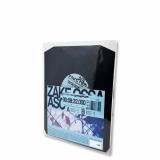
Drawn from the wider Microliths and Momentary Drifts project, this EP finds zak�, Ossa and ASC working in miniature form with signature restraint but real emotional resonance. Each piece functions as a fleeting vignette where tone and texture carry more weight than the structures. ‘Microlith 1’ opens with soft, cascading keys, while ‘Microlith 2’ drifts further into distant, spectral territory. By the time ‘Microlith 8’ arrives, its gentle fade into static leaves a quiet sense of unresolved possibility. It is a concise, thoughtful collection that will have you keen to hear the whole LP.
Disponibile in Stock e pronto per la spedizione
After a six-year hiatus, Efdemin returns with POLY — his fifth studio album, released on the recently revived Berghain-affiliated label, Ostgut Ton.
As the title suggests, POLY explores multiplicity: of rhythm, texture, style, and emotion. Across eleven meticulously sculpted textures, the album weaves a multidimensional web of sonic references, nodding to the origins of techno while pushing resolutely into uncharted terrain. POLY feels like an afterglow—of decades on the dancefloor, of restless sonic exploration, and of a profound connection to the spaces and communities that have shaped Efdemin’s sound.
Over the course of 60 minutes we are taken through different territories and landscapes of sound. Mysterious and swirling, abstract and droning textures over at times fast and stoic rhythmic concepts. Sometimes the sunlight breaks into the opaque and mysterious soundscapes before the pulse is taken over and sucks us back straight into the club.
The overall tone of POLY is mild and playful, introvert and at times dreamy. The music is rich in sonic expression and breathes the spirit of musical concepts that have been refined over the course of decades. What Sollmann has condensed here feels like a culmination of his multilayered and polyphonic personality situated between Club, Museum, Studio and Academy.
The album cover features a striking photograph of a human ear by renowned German artist Isa Genzken. Known for her radical visual language, Genzken’s work here functions as a metaphor for deep listening. The ear symbolises the layered complexity and immersive quality of the music on POLY — an invitation to perceive sound in all its depth, fragility, and force and unlock it’s potential to unite different voices in a distorted reality.
Nach einer sechsjährigen Pause kehrt Efdemin mit POLY zurück – seinem fünften Studioalbum, das auf dem kürzlich wiederbelebten Label Ostgut Ton, dem in-house Label des Berghain erscheint.
Wie der Titel vermuten lässt, beschäftigt sich POLY mit Vielfältigkeit: von Rhythmus,Textur, Style und Emotionen. In elf Stücken webt das Album ein multidimensionales Netz aus klanglichen Referenzen, das auf zurückliegende Ansätze der Klubmusik verweist und gleichzeitig entschlossen in neues Terrain vordringt.
POLY wirkt wie ein Nachglühen – von Jahrzehnten auf der Tanzfläche, von unermüdlicher klanglicher Erkundung und von einer tiefen Verbindung zu den Räumen und Communities, die Efdemins Sound geprägt haben. Im Laufe von 60 Minuten werden die Hörer*innen durch verschiedene Territorien und Klanglandschaften geführt. Mysteriöse und wirbelnde, abstrakte und dröhnende Texturen über teilweise schnellen und stoischen rhythmischen Konzepten. Manchmal bricht das Sonnenlicht in die undurchsichtigen und geheimnisvollen Klanglandschaften ein, bevor der Puls wieder die Oberhand gewinnt und uns direkt zurück in den Klub saugt.
Der Gesamteindruck von POLY ist mild und verspielt, introvertiert und manchmal verträumt. Die Musik ist reich an klanglichem Ausdruck und atmet den Geist musikalischer Konzepte, die im Laufe von Jahrzehnten verfeinert wurden. Was Sollmann hier verdichtet hat, fühlt sich wie eine Kulmination seiner vielschichtigen und polyphonen Identität an, die sich zwischen Klub, Museum, Studio und Akademie bewegt.
Das Albumcover ziert die Nahaufnahme eines menschlichen Ohrs der renommierten deutschen Künstlerin Isa Genzken. Genzken´s Arbeit wirkt hier als Metapher für deep listening. Das Ohr symbolisiert die vielschichtige Komplexität und immersive Qualität der Musik auf POLY – eine Einladung, Klang in seiner ganzen Tiefe, Zerbrechlichkeit und Kraft wahrzunehmen und sein Potenzial zu erschließen, widerstreitende Stimmen in einer verzerrten Realität zu vereinen.
Disponibile in Stock e pronto per la spedizione
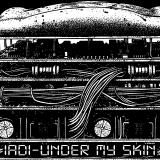
Between flesh and silicon. “Under My Skin” (2026) is the first album by IADI, released by Neo Life. A record like few
others, highly conceptual, cover art included. Its essence lies in the folds of the increasingly ambiguous relationship
between man and machine, where the former designs the latter and, perhaps without fully realizing it, is gradually
destined to adapt and be reprogrammed by it. Each track of “Under My Skin” is, in fact, a sort of interface, connector, or
any other imaginative point of contact between two creative phases, amid emotional impulses and binary calculations.
The sonic architecture oscillates between analog warmth and algorithmic coldness, constructing landscapes in which
pulsating synthesizers and mechanical rhythms seem to question each other. There's no linear narrative, but rather a
progressive immersion in a zone of near-friction, where the comfort of technology coexists with more than a faint
musical uneasiness, like a background noise that never ceases to remind you who's truly in charge. In “Under My Skin”,
the machine is neither an enemy nor a simple instrument: it's a real presence, intimate, even tactile, amplifying desires,
fears, and dreams of dawns beyond the digital realm. Intelligent dance music. Less noise, more sensations. Electronic,
but profoundly human.
The final result, then, is a music project that speaks to the present, yet sounds like an X-ray of the future, capturing that
fragile moment when humanity and technology stop observing each other from afar and begin to merge, track after
track. It's no coincidence that IADI's album opens with “Impulse”, an immediate expression of an electrical impulse, for
both humans and machines, which is also the language of the nervous system, as fast as it is vital—pure energy and
rhythm, a track as intense as it is irregular. And after this introduction, it's the turn of the equally erratic “Axon”, whose
title describes the neuron that transmits the signal over distance, telling the listener to sit back and relax for a new
journey through the notes toward the more melodic “Cortex”. The cerebral cortex, the ultimate seat of thought and
memory, becomes the source from which the musical flow of the first part of the work is drawn.
Then, suddenly, an automatic, or instinctive, response to the constant succession of impulses: “Reflex”, or zerotemperature techno, with a fragmented pace, featuring vocal samples, breaks, and restarts. In the producer's
imagination, the subsequent, and conversely placid, “Neuron” represents the emotional core of the second part of the
work, providing a kind of respite from the seething vibrations. While the neuron is the basic unit of the nervous system,
the synapse is the functional connection point between one neuron and another effector cell, essential for the
transmission of nerve impulses and communication in the nervous system, enabling functions such as learning and
movement. Likewise, a track like “Synapse” once again illuminates the path traced by IADI. The more experimental and
streamlined “Static” instead suggests true ordered chaos. “Dreamstate” is the conclusion suspended in the void, relating
to that dreamlike state between waking and sleeping, where consciousness fades toward infinity and visions begin. Pure
fading into the subconscious. Eternal return to where it all began. Dancing is a form of consciousness. Every beat is a
question. IADI, however, holds all the answers you need.
Disponibile in Stock e pronto per la spedizione
Josh Mason’s new collection, "Wave Salt +7," emerges from an oblique origin. Unearthed from a dormant hard drive, it documents a set of work sessions only partially recoverable, their original continuity and intent fractured by time and technical failure. What remains is a constellation of mercurial gestures that proves, against all odds, to be entirely consonant with Mason’s ongoing musical concerns.
In a sense, the very condition of partiality proves generative, with elision operating on multiple levels - structural, sonic, and archival - shaping both the music itself and the circumstances of its (re)appearance. Phrases surface only to be truncated or displaced, hovering at the edge of resolution, and transitions are implied rather than fully enacted. Absence functions not as a deficit, but as an important compositional resource.
Central to the album’s sound is a distinctive use of vocoding. Deployed not to simulate vocal presence but as a tool for tonal sculpting, it yields a shifting lattice of smeared harmonics, angular melody, and attenuated noise. Sounds are pressed through one another, their edges softened, shifted, or selectively erased, producing surfaces simultaneously articulated and porous. Rather than reconstructing a lost whole, the album posits a mode of listening attuned to gaps, interruptions, and unstable forms. Even so, in keeping with Mason’s broader practice, this music remains grounded in melodic logic and a distinctly human scale, ensuring that its fragmentary structures register not solely as experiments, but as expressions of proximity and feeling.
dovrebbe essere pubblicato su 29.05.2026
Take Me, I’m Yours is the first collaboration album between Alan Abrahams and Jan Jelinek. Released through the latter’s faitiche, it builds upon multi-layered vocal sketches by the former. The Paris-based artist, primarily known for his work as Portable and Bodycode, supplied Jelinek with multi-layered song sketches that the German artist subjected to a rigorous process of manipulation, excavating the ambiguities of the original material and transforming its rhythms into subtle pulses. Take Me, I’m Yours is neither a typical Abrahams record nor a classic Jelinek album—it is something third, mediating between the physicality of the voice and the abstraction of electronic sound design.
The two had crossed paths before really getting to know each other after Abrahams invited Jelinek to play at one of his Süd Electronic parties. The idea of a collaboration emerged slowly. “It started as an experiment, and over the past few years grew from a few tracks into this album,” says Abrahams. He describes recording the basic material as a “tantalizing” process, not knowing how Jelinek would transform his material, some of which was based on wordless chanting, while other tracks were working with lyrical content. However, their mutual trust allowed Jelinek to remove the harmonies, radically reduce the rhythms, and concentrate on Abrahams’ voice.
Jelinek heard something “fragile” in this voice, “moments of doubt and dark premonitions.” He points to Forever as an example. “Alan’s original song reminded me of classic vocal house, but his voice seemed to almost break,” he says. “This contradiction made the piece even bigger, because we hear a singer in the moment of an awakening.” He further accentuated such tensions through arrhythmic synth modulations and time-stretching algorithms, while also adding concrete sounds from a variety of sources. With its dedication to both transforming and amplifying the emotional qualities hidden within Abrahams’ pieces, Take Me, I’m Yours functions as a dialogue between those two singular artists.
dovrebbe essere pubblicato su 29.05.2026
DJ Sprinkles & Hardrock Striker feat. Move D
SKYLAX HOUSE EXPLOSION IV – After The Dancefloor
A defining transmission in the history of Skylax Records. Originally released across different moments of the Skylax catalogue, these recordings are now assembled as the final chapter of the Skylax House Explosion series — a project exploring the architecture, memory and survival mechanisms embedded within house music culture. The record opens with Move D’s “Outer Rim 64”, originally released in 2018 as part of the Skylax House Explosion narrative. Suspended between motion and distance, the track establishes the conceptual perimeter of this final chapter — a space where rhythm no longer functions only as propulsion, but as orientation. Here the listener stands at the outer edge of the dancefloor’s architecture, where structure persists even as its original social conditions begin to disappear. The sequence continues with Hardrock Striker’s “Motorik Life (DJ Sprinkles Dub)”, originally released in 2011. Rather than operating as a conventional remix, the Dub reinforces the motorik continuum of the original composition, transforming repetition into endurance. DJ Sprinkles preserves the infrastructural skeleton of the dancefloor — its capacity to sustain bodies through duration alone, without narrative resolution or emotional release. The record culminates with “Motorik Life (DJ Sprinkles Mountain Of Despair Remix)”, one of the most politically explicit works ever associated with Skylax Records. Through the relentless repetition of the phrase “mountain of despair,” Terre Thaemlitz dismantles the traditional function of dance music, transforming remix culture into structural critique. Referencing Martin Luther King Jr.’s famous metaphor, the remix removes the promise of redemption and leaves only the architecture of struggle. The dancefloor is no longer presented as escape, but as a temporary condition of survival. Together these recordings reveal house music’s true function: not to resolve despair, but to create temporary conditions in which bodies can continue to exist despite it.
AFTER THE DANCEFLOOR
you cannot preserve a dancefloor
by archiving its sound
because the dancefloor was never sound
it was bodies
finding temporary protection
inside systems designed to erase them
house music was never a genre
it was a survival strategy
when the lights disappeared
the structures remained
and so did we
dovrebbe essere pubblicato su 30.05.2026
"MODEM - In itself, as a name invented for a band, it's significant. MO comes from "MOdulazione." DEM comes from ''DEModulazione'', logical functions in analog and digital transmissions. And the signal that the Bologna duo AMIN-PECK want to give us is that "Your Fun" and "Valerie" contain artistic and musical information, especially avant-garde, created in an electronic style with strong new wave tendencies, but absolutely ahead of its time. Among the Italian discos of end 70s that represented a cultural phenomenon that has remained in the collective imagination, ''Picchio Rosso'' stands out. Besides serving as an entertainment venue for thousands of young people, it served as a bridge between DJs and many talented young musicians. The discotheque was the laboratory for 4 Italo-Disco productions, all recorded at the Amin-Peck studios in Bologna, under the direction of Giancarlo Meo, who, after the successes of Easy Going and Vivien Vee and other Claudio Simonetti productions such as Capricorn and Kasso, enjoyed great esteem and prestige. This is how excellent Italo-Disco songs like "Another Song" by Music Service, "Eve of Destruction" by Vivien Vee, "Boogaboo" by The Jugglers, and "Running Straight" by Amin-Peck were born, the latter being the true musical architects of Peecker Melody, including the one-off project MODEM.. What can be said about "Your Fun" and the instrumental "Valerie"? Simple, slightly hypnotic, wellconstructed, and catchy songs. Just as the two songs were mixed by various Picchio Rosso DJs of the time--Luca Zanarini and Silver were the most legendary--Best Record has reissued them, with the same cover designed by Leonard Parker and featuring Claude Gorial, the man who 40 years ago designed the original cover and the current reissue. Same names, same success !!!"
dovrebbe essere pubblicato su 01.06.2026
- A1: Not The Country You Know
- A2: This Ain't That
- A3: Am I Wrong
- A4: Comin Right Back
- A5: Bad For You
- A6: Nasty Player
- B1: God Mode
- B2: Freddy Tiffany
- B3: Is You Cool
- B4: How You Wanna Play
- B5: No Fun
- B6: Ain't Going
- C1: Should I
- C2: Always Something
- C3: Who Am I
- C4: Psychology Of Revenge
- C5: Control What I Can
- C6: What's Really Real
- D1: Plant A Seed
- D2: Chasing
- D3: Massage Envy
- D4: Walk Away
- D5: Bad At Goodbyes
In the evolving landscape of modern Southern hip-hop, the pairing of Starlito and Bandplay stands out as a unique bridge between street-level authenticity and refined, calculated musicality. Their collaborative project, Not The Country You Know, functions less like a standard release and more as a manifesto—a masterclass in the chemistry between a seasoned, introspective lyricist and a producer who possesses an intuitive grasp of the region's pulse. It is an exploration of legacy and adaptation, capturing the tension between where they came from and where the culture is currently headed.
Bandplay, long recognized for sculpting the sonic identity of Memphis icons, brings his signature, trunk-rattling 808s to the project, yet he manages to pivot here. The production feels remarkably expansive, masterfully blending the raw, stripped-back aesthetics of classic Tennessee rap with forward-thinking textures that refuse to be confined to a single sub-genre. Complementing this, Starlito operates with his trademark mix of cynical observation and genuine vulnerability. He navigates these beats with the weary grace of an artist who has weathered the music industry's relentless cycles, treating every bar like a necessary piece of a larger, ongoing story.
The album’s title serves as a direct commentary on these shifting tides. Across the tracklist, the duo investigates the growing disparity between the romanticized South and the cold realities of the streets, alongside the inevitable evolution of the music business itself. There is no frantic chasing of streaming-era trends or algorithmic bait here; instead, the project remains a stubborn, confident assertion of artistic identity. By weaving together Starlito’s "voice-of-reason" flow and Bandplay’s evolving, genre-bending sound, Not The Country You Know challenges the listener to abandon their preconceived notions of the region, offering instead a complex, urgent vision of a South that is as haunting as it is vibrant.
dovrebbe essere pubblicato su 12.06.2026
- 1: A Prophecy
- 2: Weight
- 3: Okie's Song Pt.1
- 4: Okie's Song Pt.2
- 1: Honey
- 2: A Spark
- 3: The Great Fatted Bull (Stone Tablet #6)
Irgendwann um das Jahr 2024 tauchte Vorhex Angel scheinbar aus dem Nichts auf: keine Social-Media-Präsenz, keine Identitäten, lediglich ihr Name tauchte hier und da auf einem Flyer in Nashville oder New Orleans auf. Wer neugierig genug war, um ihre Live-Show zu besuchen, konnte mit einer Vielzahl unerwarteter Dinge konfrontiert werden, die die Sinne anregten: aufwendige Bühnenbilder, Stroboskoplichter (oder alternativ völlige Dunkelheit), brennende Gegenstände, vor dem Auftritt eingenommene Rauschmittel. Die Musik bei diesen Auftritten passte zu dem Mysterium. Sie war laut, unberechenbar und verdammt viszeral. Wenn die beiden Live-Veröffentlichungen der Gruppe und ihr Debüt ,Heavenly" tatsächlich viszeral sind (Raven Sings the Blues nannte sie ja ,Erben des Strudels von High Rise"), dann ist der Nachfolger ,Drain" sicherlich ihr intellektuelles Werk. Seine sieben Tracks führen den Hörer vom Morgen bis zur Nacht, ein weitläufiges experimentelles Doppelalbum mit überlebensgroßen Gitarrensoli, spacigen Drone-Exkursionen und Momenten von kraftvoller Intensität durch das gesamte Werk. Zum ersten Mal sehen wir, wie Vorhex Angel ihren hämmernden Klangangriff gegen stimmungsvolle und dramatischere Gefilde eintauschen. Die Band - bestehend aus den Brüdern Jake und Jamin Orrall von JEFF the Brotherhood und Kunal Prakash von Silver Synthetic - erweitert die Grenzen des Vorhex-Angel-Konzepts, lädt neue Musiker in ihren Kreis ein, geht mehr Risiken ein und erntet dafür umso mehr. ,Drain ist keine Musik, die man im Hintergrund beim Kochen laufen lässt", warnt Kunal, bevor er zwinkert: ,Vielleicht ist sie etwas für besonders abenteuerlustige Köche." Vorhex Angel verspricht, dass noch mehr kommen wird. Mehr Jams, mehr unerwartete Wendungen - allein in diesem Jahr können wir mindestens eine Tour und mindestens zwei (!) weitere Alben erwarten. Vorerst gibt es ,Drain" zu feiern, sich damit auseinanderzusetzen, damit der Hörer wie die Musik selbst ein- und ausatmen kann, mit reichlich Raum für gedankliche Kontemplation. SPA Sometime around 2024, Vorhex Angel emerged seemingly out of the ether: no social media presence, no identities, simply their name popping up in Nashville or New Orleans on a flyer here and there. Those with enough curiosity to attend their live show could be met with any number of unexpected things to spike the senses: elaborate stage dressing, strobe lights (alternatively, complete darkness), burning things, pre-performance ingestibles. The music at those functions matched the mystery. They were loud, unhinged, and visceral as all hell. If the group's two live releases and debut Heavenly are indeed visceral (Raven Sings the Blues did name them "heirs to the maelstrom of High Rise"), then followup Drain is surely their cerebral offering. Its seven tracks guide the listener from morning to night, a sprawling experimental double album with larger than life guitar solos, spaced-out drone excursions, and moments of potent intensity throughout. For the first time, we see Vorhex Angel trade their pummeling sonic onslaught for moody and more dramatic pastures. The band-revealed to be brothers Jake and Jamin Orrall of JEFF the Brotherhood and Silver Synthetic's Kunal Prakash-push the parameters of the Vorhex Angel concept outward, inviting new players into their circle, adding more risk and generating more reward. "Drain is not in-the-background cooking-type music," warns Kunal, before winking: "Maybe it is for particularly adventurous chefs." Vorhex Angel promises there will be more. More jams, more left turns-just this year, we can expect at least one tour and at least two (!) more albums. For now, there is Drain to celebrate, to sit and chew on, to allow the listener to breathe out and in like the music does, with ample room for cerebral contemplation.
dovrebbe essere pubblicato su 12.06.2026
pdqb is an entity without a fixed form, moving through multiple timelines at once, performing in all of them simultaneously.
Every tone on this record was sampled somewhere else: in collapsed futures, unfinished pasts, and inside stress loops that never resolved. The tracks are not composed - they are retrieved, stitched together from moments that already happened and moments that haven't happened yet.
The music is unstable, dependent on who listens, and in which dimension, the tracks re-arrange themselves, revealing different harmonics, different fears, different exits. No two listeners hear the same, even if they play it at the same time.
The überskilled Detroit remixers provide a solution for Earthbound listeners - those unable to time-travel or shapeshift: By filtering pdqb's multidimensional signal through machine discipline, they force a temporary alignment - a version of a track that sounds the same to most listeners. Only then does collective rhythm become possible, a shared timeline where bodies on a dancefloor move to the same future at once.
---
Dr. Paul Dominic Quentin Bernard defines Future Traumatic Stress Disorder as a cognitive condition marked by a reversal of mnemonic orientation. Memory, in this model, no longer operates retrospectively but functions prospectively, encoding anticipated survival outcomes rather than past experience. Affected subjects do not recall what has been lived through; instead, they retain anticipatory memory structures of what will be survived. Bernard notes that this temporal inversion produces sustained psychological stress and warrants further empirical investigation.
Continuum - Vol. 16.219, Peer-Reviewed Scientific Journal
Disponibile in Stock e pronto per la spedizione
Moroccan-born producer Reda Senhaji, better known under the name Cheb Runner, presents 80K, the second installment in Beat Machine’s TERRA TEMPO series. A direct tribute to the cultural heritage of the Souss Massa Darâa region, the release reactivates ancestral rhythms and translates them into a forward-looking electronic language rooted in place, memory, and physical sound.
Drawing from traditions such as Ahwach, Gnawa, and other interconnected practices from the Souss region, the EP preserves original rhythmic skeletons while reimagining them through modern production and club-oriented structures.
Across six tracks, traditional instruments and electronic elements collide fluently, where the 808 functions as a structural force rather than an accent. From the rolling pulse of Iznagn Engines and the evocative contours of Azn Oudrar to the spiritual resonance of Gn-Awa, the B-side expands the journey with the sub-heavy Afouss Adar 808, the atmospheric Tarwan Ganga, and a reinterpreted Gn-Awa by Guedra Guedra, layered with intricate textures and low-end pressure.
Moving between bass, world, and electronic territories, 80K reflects a deliberate balance between preservation and transformation. Music that carries ancestral rhythms into new listening spaces, bridging generations, cultures, and sonic worlds within a single, cohesive experience.
dovrebbe essere pubblicato su 19.06.2026
Arriving twenty-six years after his debut Cell, Particle further sharpens the fractured electronics and muted melodic language explored on 2021’s From Stasis, presenting a crisper, more immediate set of compositions.
Cadoo, also widely known as a founding member of pioneering electronic project Gridlock, has used Dryft as a consistent outlet for his electronic work across decades, bridging early post-industrial IDM with more contemporary, restrained forms.
Long recognized for beat structures that feel precarious, rhythms that seem to strain, erode, and reassemble in real time, he approached Particle with a renewed focus on allowing these patterns to fully resolve. Melodic elements are given a more direct role, actively driving momentum rather than hovering in the margins.
Emphasizing clarity and immediacy, Particle favors tactile sound design and forward-pushing arrangements over density or abstraction. The result is a notably focused Dryft release that functions as an all-encompassing signpost for Cadoo’s electronic output to date, informed by decades of exploration while remaining resolutely forward-looking
Disponibile in Stock e pronto per la spedizione
In early 2025 Oakland-based Jerod S. Rivera released his second full length Dot-Dash, featuring a collaboration with CST co-founder Cat Lauigan and Jonathan James Carr. From the beginning we were mesmerized with the result, a perfect melding of Cat's processed spoken-word and Jerod's Buchla experimentations.
The thought of remixes presented immediately, the material extra ripe for interpolation. Enlisting friends from geographically and sonically disparate locations to present an ideal remix 12". Something for everyone, something for every setting, a tool with multiple functions...
The mysterious dub/techno/leftfield mastermind behind False Aralia dives further into territory explored on iri.gram, uptempo and dancefloor-ready in a more maximal Perlon-ish way while still embracing a half-time dub feel. Philipp Otterbach (Music from Memory, Offen, RIO) goes deeper into the guitar zone he’s been exploring, channeling Earth 2, Boris, and the like for some heavy drone. Oakland duo DJ ML and Wonja adopt their Motoko & Myers moniker (Future Times, Soda Gong), zeroing in on some choice vocal snippets that mesh perfectly with a live drum break and bassline for a Seefeel-esque version that could have come from a 90’s UK studio. Finally, Slowfoam embraces the more experimental elements of the original with a remix that starts sparse and minimal but builds into a glitchy rhythmic climax.
The 12” includes a 2-sided riso insert and a download code with access to an additional remix by close collaborator Jon Carr that twists the vocals into a throbbing industrial caucaphony.
Disponibile in Stock e pronto per la spedizione
Syncretic marks the debut full-length from Australian duo Bhairavi Raman, a Western and Carnatic violinist, and Nanthesh Sivarajah, a mridangam player and versatile percussionist. Both artists share a Tamil heritage, a current that hums across the album. Raman, from South India, and Sivarajah, from Sri Lanka, draw lines that connect Western practice and Carnatic tradition. This hybrid is central to Raman’s approach as a violinist, an instrument itself caught between East and West since the late 18th century. Her playing folds history, lineage and experimentation into music that acknowledges inheritance while gently rewiring its circuitry.
Expanding on traditional music can be a precarious practice, but Syncretic never feels heavy-handed. Raman and Sivarajah exercise measured restraint, letting the Carnatic framework breathe even as it is refracted through contemporary tools. Delays, looping, subtle layering and synthesized harmonies tilt tradition into a new light without disguising it.
Even within a contemporary framework, Raman’s rigorous Carnatic training under gurus Sri S. Varadarajan (India), Sri Murali Kumar (Australia) and Sri Gopinath Iyer (Australia) is unmistakable. She captures the spiritual and emotional essence of each raga: on Seven, the playful raga Bahudari becomes both centrepiece and conduit, while on the traditional piece Thunbam Nergayil, drawn from a Tamil poem, we hear a deeply personal iteration, a weeping euphony of mixed emotions hitting all at once. Tradition here is absorbed, expanded and reframed.
Sivarajah’s command of the mridangam, honed by his gurus Sri Jambunathan (Sri Lanka), Sri Balasri Rasiah (Australia) and Sri T. R. Sundaresan (India), is central to his original composition Guardian. He sustains tradition while extending it through layering and sound-spatialisation. The mridangam here functions as both a structural and ornamental force, mapping continuity between inherited form and contemporary sonic architecture.
Syncretic resonates as a space where Tamil heritage, diasporic memory and contemporary practice coalesce. Culture, like sound, circulates, transforms and persists. Tradition is not an archive but living material, a soundworld that lingers in the ears and the imagination.
Disponibile in Stock e pronto per la spedizione
- A1: Voting Line, Downtown Chicago
- A2: Penny Whistle Seller, Guangzhou
- A3: Sullivan's Island Beach, Charleston
- A4: Basketball Court Feat Macie Stewart
- A5: Walking Home, Los Angeles Feat Patrick Shiroishi
- A6: My Kitchen, Chicago
- A7: Outside, Arrington Feat Colin Held
- A8: Midewin National Tallgrass Prairie, Illinois Feat Corey Smith, Ellie Mejía, Anna Fox
- A9: Train, Antwerp To Amsterdam
- A10: Belzec Extermination Camp Feat Jesse Perlstein
- A11: Home, Los Angeles Feat Claire Rousay
- A12: Amtrak, Hudson Valley
- A13: Home, Portland Feat Steve Rosborough
- A14: Walking Home, Chicago
- A15: Antwerp Central Train Station, Antwerp
- A16: Barcelona (6 13 Am, January 1St)
Various Small Whistles and a Song, the new album by Chicago-based artist Lia Kohl, incorporates notions of space, social relations, and humor. As the title suggests, the album responds to Ed Ruscha’s 1964 photographic artist book Various Small Fires and Milk, which Kohl sees as a wondrous celebration of ordinariness, one that reveals Ruscha’s trademark deadpan humor and depth. In the spirit of that publication, Kohl created her own series of sonic vignettes, with guest appearances from her close community of collaborators including claire rousay, Macie Stewart, Patrick Shiroishi, and others, reflecting the same sense of humor and mundanity.
The structure of the album—16 one-minute tracks—directly mirrors Ruscha’s book, which comprises 15 photographs of fire and one of a glass of milk. Ruscha’s “small fires” are represented here by recordings of whistles—mostly human whistling, with occasional appearances by train whistles, emergency whistles, and a woman selling penny whistles on the street in Guangzhou, China. About this choice of material, Kohl writes: “I’ve always been captivated by whistling—it’s musical but often a bit unconscious; usually solo but often done in public places. There’s something tender and human about hearing someone whistle, a socially acceptable version of hearing their mind wander.” As with Ruscha’s photographs, the whistles are not random snapshots but windows into social situations, narratives, or spaces.
The “milk” of the title — the 16th photograph in Ruscha’s book — is interpreted here as a single recording: a group of people singing together in Barcelona around 6 a.m. on New Year’s morning, captured through the floor of an Airbnb. Kohl describes this as a social, collective sound that contrasts with the solitary nature of whistling. The song functions as a counterbalance—a quiet celebration of shared experience.
Lia Kohl is a composer and sound artist based in Chicago. Her wide-ranging practice includes composition and performance, installation, improvisation, and collaboration. She tours nationally and internationally, working in theater, jazz, rock, and experimental contexts. Her work centers curiosity and patience, an exploration of the mundane and profound possibilities of sound.
Disponibile in Stock e pronto per la spedizione
- A1: Running To The Nearest Body Of Water
- A2: Perfect & Learning
- A3: I Could’ve Cried
- A4: Umlaut
- A5: Windows
- A6: Seven Less Functions (Feat Chloë Lestage)
- A7: Song | 6
- A8: Luca’s Song
- A9: Signs
- A10: A Wish Slanted
- B1: Storytime
- B2: The Primate
- B3: Texas Sundial V1
- B4: Quick Before Something Drastic Happens
- B5: Better Now
- B6: Uptown Lovebug
- B7: Talk / Pleasure
- B8: Cardinal
- B9: Window Seat
- B10: +Ad
For its second anniversary, Samba Jean-Baptiste’s 2023 LP, ‘Cardinal' arrives on vinyl and CD. Two years on from its original release on Samba’s own AM Radio imprint, this physical release via Scenic Route Records celebrates an album that’s quietly built a devoted following for its intimate songwriting, cinematic arrangements, and deeply human detail.
This edition features alternative artwork by Rafi Goudy and, for CD buyers, a 32-page lyric booklet featuring images captured by Samba himself.
An intimate, richly textured record that’s grown into a modern cult classic, ‘Cardinal’ stands as a deeply personal snapshot of a singular artist - now a tactile home experience.
Disponibile in Stock e pronto per la spedizione
MCRV017 – Transient States. Feedback is an evocative four-track compilation that captures the deep essence of dub techno—equally suited for the dancefloor and for immersive, focused listening. Label veterans Eric Louis, Genning, Osman Oz, SUBMINIMAL (with a Tvardovsky remix), and Etzu Mahkayah all contribute. From the very first listen, the EP draws in discerning ears with its richness and detail.
Each track unfolds smoothly, evoking deep emotional textures and building a sensuous, introspective atmosphere. The release moves from subtle cues to vast sonic terrains, weaving through warm harmonics and resonant low-end thumps that captivate the body as much as the mind.
These tracks are ideal for transitional moments in a DJ set, yet stand strong on their own. Whether elevating the narrative arc, introducing mid-set tension, or closing a journey with emotional depth, each piece functions as a zealous tool for navigating sensation—crafted not just for movement, but for lasting memory.
Transient States exudes quiet power beneath a deliberate veil of restraint. Emotionally charged, sonically rich, and full of nuance, this release is a standout addition to any selector’s arsenal.
Limited edition
Disponibile in Stock e pronto per la spedizione
The magic of A Vision of Panorama returns with the new album Serene Architect — a meditative yet rhythmic journey through luminous musical structures. This is a record about space: physical, internal, emotional.
Known for his soft Balearic touch, coastal synths, and an almost telepathic sense of groove, A Vision of Panorama offers something more here — a designed world where every sound functions as a piece of sonic architecture.
The album features tracks previously released on the legendary Café del Mar — On Avance, Baby Konyawa, Rumbabuena, Golden Sand, Neon Whispers - now reimagined in exclusive versions created specifically for vinyl. These new interpretations sound deeper and more expansive, subtly reinforcing the album’s architectural concept: to renew the familiar without destroying its essence. Architecture of calm, harmony in motion - Serene Architect designs sound for open skies and slow dances beneath the sun.
Disponibile in Stock e pronto per la spedizione
The Armenian electronic underground has been quietly brewing something visceral. After years navigating the labyrinth of electronic production from his Yerevan studio, Dave N.A. strips away the excess to reveal six raw, uncompromising cuts that pulse with quiet intensity. Not the manufactured urgency of algorithmic dance floors, but the honest tension of someone who’s spent years refining his craft while the scene evolved around him.
Following his debut ‘Altura EP’ on no•id, where collaborations with freq444 showcased his ability to merge Armenia’s electronic scene with Brussels’ underground pulse, Dave N.A. returns with ‘Echoes EP’ after the label’s necessary creative hibernation. This isn’t about comebacks or grand statements. It’s about persistence. About the kind of restless creativity that emerges when you’ve been grinding in relative obscurity, releasing on labels like Uppers and Downers, Typeless, and Elicit Records, slowly building a sound that refuses easy categorization.
The EP opens hard and unexpectedly with “BLINK,” delivering a throat-cutting and all-consuming bassline. “ECHOES” builds around atmospheric sounds and percussive elements, driven by a straightforward yet effective drum sequence. “SHADO” ventures into darker and faster territory with sparse drum programming and heavy sub-bass emphasis. Both “RUSH” and “ORB” unleash torrents of unrelenting breaks, each percussive hit landing with surgical precision as sub-bass currents pull everything forward into hypnotic repetition. “HUNTER” closes the journey, stalking into frame with predatory low-end and razor-sharp hi-hats slicing through dense atmospheric fog.
The no•id ship continues to chart its course through Brussels’ underground, prioritizing artists who value craft over hype. With Dave N.A.’s return, the label reinforces its commitment to electronic music that functions on multiple levels: cerebral yet visceral, local yet universal.
Questo articolo non è stato ancora rilasciato. È possibile pre-ordinare il prodotto ora.
- Hotel California
- New Kid In Town
- Life In The Fast Lane
- Wasted Time
- Wasted Time (Reprise)
- Victim Of Love
- Pretty Maids All In A Row
- Try And Love Again
- The Last Resort
The moment the instantly recognizable intertwined guitar passage on the title track to the Eagles' Hotel California begins, the record's genius becomes obvious all over again. Ranked the 118th Greatest Album of All Time by Rolling Stone, certified by RIAA as the third best-selling LP in history, and considered the foundation on which the Golden State's mid-‘70s music scene was built, the 1976 landmark is a music staple immune to shifts in trends, eras, and styles. Fearlessly addressing the chaos and consequences of American life, its songs remain strikingly prescient and gain creedence with each passing day.
Mastered from the original analogue master tapes, pressed on MoFi SuperVinyl, and limited to 17,500 numbered copies, Mobile Fidelity's UltraDisc One-Step 180g 45RPM 2LP vinyl box set ensures you will want to permanently check into and never leave this particular Hotel California. Up to the herculean task of standing head and shoulders above all prior reissues, this collectible edition plays with extreme clarity, organic richness, tube-like warmth, massive dynamics, and microscopic levels of detail. You'll be able to practically smell the colitas and feel the breeze in your hair. Songs come across with an epic sweep and feature immersive, front-to-back soundstages that allow the music unprecedented air, roominess, and separation. As for the noise floor? It's basically as invisible as the spirits that waft in the corridors of the unforgettable title song.
Aesthetically, the premium packaging and presentation of the UD1S Hotel California pressing befit its esteemed status. Housed in a deluxe box, it features gorgeous foil-stamped jackets and faithful-to-the-original graphics that illuminate the splendour of the recording. From every angle, this UD1S reissue exists as a curatorial artefact meant to be preserved, touched, and examined. It is made for discerning listeners that prize sound quality and production, and who desire to fully immerse themselves in the art – and everything involved with the album, from the renowned cover art to the meticulous finishes.
Indeed, the opportunity to zero in on all the particulars of the 26-million-selling Eagles record dubbed "a legitimate rock masterpiece" by vaunted Los Angeles Times scribe Robert Hilburn has never been better. A global phenomenon that marked the band debut of guitarist-singer Joe Walsh, Hotel California continues to resonate and connect with listeners of all generations taken by its narrative depth, stark directness, picturesque melodies, daring majesty, and ardent emotionalism. Adorned with a breathtaking exterior photograph of the Beverly Hills Hotel that serves as the simultaneously haunting and alluring cover art, and rounded out by a rear-cover shot of the Lido Hotel lobby that reinforces a notion that teeters between permanence and transience, Hotel California is brilliantly tied to a specific place that functions as a universally understood metaphor for the American Dream.
Confronting the darker undercurrents and oft-ignored constructs attached to that romantic notion, the record's songs revolve around a host of shared themes: excess, mobility, stability, illusion, fame, destruction, and idealism included. Notably, Hotel California appeared at a crucial junction in American history: During the country's bicentennial and amid escalating controversies related to the Vietnam War, energy crisis, and governmental corruption. That the Eagles manage to channel such cultural, social, and economical matters into a cohesive, stately, big-picture statement is alone a stupendous feat. That the album's reach, boldness, vitality, accessibility, and understated intensity have never waned make it a marvel.
Reflecting on Hotel California 40 years after its original release, and indirectly explaining its enduring appeal and increasing relevance, singer-songwriter Don Henley confirmed the record pertains to the "loss of innocence, the cost of naiveté...the difficulties of balancing loving relationships and work, trying to square the conflicting relationship between business and art; the corruption in politics, the fading away of the Sixties dream of ‘peace, love and understanding.'"
It can be argued that Henley and company squarely hit on and drove home those ideas in the surreal title track, chart-topping "Life in the Fast Lane," and grand "The Last Resort" alone. But that would miss the forest for the trees. Experienced as an unbroken whole, complete with the pristinely shot imagery and physical grooves, Hotel California unfolds like a geography-conscious saga by James Michener and plays like colour-saturated movie shot on 70mm film by Martin Scorsese. It's about our collective and individual decisions – and the shape of our past, present, and future. And, just like that conjured by our imaginations, Hotel California continues to take on a life of its own.
More About Mobile Fidelity UltraDisc One-Step and Why It Is Superior
Mobile Fidelity Sound Lab's UltraDisc One-Step (UD1S) technique bypasses generational losses inherent to the traditional three-step plating process by removing two steps: the production of father and mother plates, which are created to yield numerous stampers from each lacquer that is cut. For UD1S plating, stampers (also called "converts") are made directly from the lacquers. Since each lacquer yields only one stamper, multiple lacquers need to be cut. Mobile Fidelity's UD1S process produces a final LP with the lowest-possible noise floor. The removal of two steps of the plating process also reveals musical details and dynamics that would otherwise be lost due to the standard multi-step process. With UD1S, every aspect of vinyl production is optimized to produce the best-sounding vinyl album available today.
MoFi SuperVinyl
Developed by NEOTECH and RTI, MoFi SuperVinyl is the most exacting-to-specification vinyl compound ever devised. Analogue lovers have never seen (or heard) anything like it. Extraordinarily expensive and extremely painstaking to produce, the special proprietary compound addresses two specific areas of improvement: noise floor reduction and enhanced groove definition. The vinyl composition features a new carbonless dye (hold the disc up to the light and see) and produces the world's quietest surfaces. This high-definition formula also allows for the creation of cleaner grooves that are indistinguishable from the original lacquer. MoFi SuperVinyl provides the closest approximation of what the label's engineers hear in the mastering lab.
Questo articolo non è stato ancora rilasciato. È possibile pre-ordinare il prodotto ora.
“Sonically, the Swedish duo SHXCXCHCXSH distort the club context they work from by rendering functionality with an exceptionally refined and idiosyncratic palette. As logophiles, they contort the little descriptive context they afford audiences by imploding language into splintered and barely comprehensible character sequences. The impression is that each is the result of mutual process-driven experiments.
This is all true of '......t', their new album and debut recording for Northern Electronics.
However, working at this scale, SHXCXCHCXSH play with wider parameters and explore broader functions to produce their most comprehensive and focused work to date.
Across fifteen tracks, their bespoke dark matter is stacked with drone pyrotechnics, shredded vocals, and oblique, snatched sounds that eddy into frantic melodic storms. Sublime intensity is spiked with effervescent yet brooding intermissions throughout, staking '......t' as the most crucial volume of their catalogue as it gestures toward new references. ”
Disponibile in Stock e pronto per la spedizione
- A1: World Is Dog
- A2: Cctv (Feat Creature)
- A3: Yottabyte
- A4: Bad Pollen (Feat Billy Woods)
- A5: Slum Of A Disregard
- A6: Rfid
- A7: Instant Transfer (Feat Billy Woods)
- A8: Ikebana
- B1: In The Shadow Of If
- B2: Skp
- B3: Hushpuppies
- B4: 14 4 (Feat. Skech185)
- B5: Voice 2 Skull
- B6: Xolo
- B7: Zigzagzig
We’re teaming up with ELUCID and Fat Possum for a limited edition of 300 copies of a Rush Hour black ice coloured edition.
E L U C I D, one half of the illustrious duo Armand Hammer, is here with the full-length follow-up to 'I Told Bessie'. Further experiments in the sonic, expanding on the 'live' side of music paired with the embracing of chaos. Something you haven't heard, or not so for a very long time. E L U C I D is here to reveal the bleakness of reality.
---------------------------------------------------------------------------------
''There is never time in the future in which we will work out our salvation. The challenge is in the moment; the time is always now.''
James Baldwin
A raw, crackling urgency runs through rapper-producer ELUCID’s new album REVELATOR like an underground power line. There is no space here for sepia-toned reminiscences or indulgent self-mythologizing. Intellectual rabbit holes have been filled in with concrete and rebar ; there is nowhere to hide and no off ramp from the audio Autobahn that ELUCID has fashioned—a renegade Robert Moses with gold fronts, bulldozing the homes of the powerful and the complicit. REVELATOR brims with the energy of now, with a refusal to look away. Carpe diem in a murder one mask.
Born in Jamaica, Queens, ELUCID has been on the cutting edge of New York’s underground scene since the mid-2000s. From the beginning, he has defied both convention and expectation. He ran with Okayplayer darlings Tanya Morgan, but his own music eschewed their throwback charm for glitchy noise experiments and bass-swamped culture jamming. His 2016 debut studio project Save Yourself (re-released in a deluxe edition last year) announced him in earnest. But in recent years, his Armand Hammer releases with partner-in-crime billy woods have received significant attention and acclaim. Serving as a followup to his last solo album—2022’s comparatively balmy I Told Bessie—ELUCID hoped to “re-distinguish” himself with REVELATOR, setting himself apart amidst the increasing attention around the music he and his friends are making together.
For ELUCID, this meant setting bold new challenges for himself. One of these was diving further into live instrumentation than ever before—”getting my Quincy Jones on,” as he puts it. The testing ground for this approach was Armand Hammer’s most recent project, 2023’s We Buy Diabetic Test Strips’ Möbius strip soundscapes, warmed with instrumental flourishes and skin-shedding beat progressions. With REVELATOR, though, ELUCID strove to create an atmosphere of chaos, embracing experimental electronics and atonal sample bursts. He worked on much of the album with co-producer Jon Nellen, who comes from a background in avant-garde and Indian classical music. “I wanted to get as freaky as I could at this moment. I wanted people to hear things, maybe for the first time, or in a way they haven’t for a long while,” the rapper explains.
ELUCID arrived at the studio with a collection of noise sources: non-referential samples, glitches and noises. Together he, Nellen, and others created forms out of them and, as ELUCID recalls, “just started playing drums with it.” Their fried, distorted sound was directly inspired by Miles Davis at his most uncompromising—specifically, the tone-clustering funk track “Rated X” from his 1974 double LP Get Up With It. At times, the pairing of rap with avant-fusion sounds also brings Emergency! from The Tony Williams Lifetime to mind, perhaps in an alternate timeline where the late drummer was listening to Ice Cube’s AmeriKKKa’s Most Wanted.
“The World is Dog,” REVELATOR’s lead single, functions as the album’s aesthetic thesis statement. Like the Davis track, the textures are punishing, the tonality is in free-fall, and the driving breakbeat of a groove cuts in and out unceremoniously. Avant-jazz bassist Luke Stewart, who appears throughout the record, holds the whole thing together just long enough for ELUCID to tightwalk over the beat. This tension is exactly where REVELATOR sets itself apart; in a time of drumless loops, and safe soul samples, this is a high-wire act with no safety net. Similarly, the song announces the themes of the album within just a few phrases, evoking the way societies accept and adjust to new levels of debasement and brutality while suffocating under the weight of history: “Can’t clock the kill, all a mystery/Forced past will eating everyone eventually/The world is dog.”
Many of the songs on REVELATOR grapple obliquely with dissolution and disenfranchisement in America and across the world—the grim realities of our domestic sociopolitical climate and our involvement in foreign conflicts. “Much of my artistic and political sensibility comes from the Black arts movement here in New York,” ELUCID explains. “Recognizing the interconnected global struggles against oppression, artists and thinkers created works and actions in solidarity with freedom movements in South Africa and Palestine.” ELUCID cites intellectuals like Amiri Baraka, Kwame Nkrumah, Audre Lorde, Sonia Sanchez, and Nikki Giovanni among his heroes. (One track on the album is specifically inspired by Lorde’s work, “SKP,” citing the scholar’s paper “Uses of the Erotic: The Erotic As Power.”) Songs like REVELATOR’s insistent closer “ZIGZAGZIG,” find ELUCID applying up-to-the-minute messaging, making explicit reference to the conflict in Gaza: “Feed a war machine…from river to sea, in lieu of peace.”
Despite ELUCID’s preference for cacophonous system overload here, the rapper also provides moments of respite. Recorded at The Alchemist’s Los Angeles studio, the laid-back, wheezing “INSTANT TRANSFER” is a collaboration with billy woods, which crystallizes their shared sense of creative determination. “With much momentum behind us and even more on the horizon, I knew a purpose, and that every step was ordered to that purpose,” ELUCID said of the experience. Meanwhile, the jittery “HUSHPUPPIES” is a playful anomaly on the track list, providing a snapshot of ELUCID watching his grandparents in the kitchen while preparing for Friday night fish fry dinners.
“Love still rules over on this side,” ELUCID says. ”I’m raising a family. We are making meaning and finding joy in the midst of all the fucked up-ness of everything around us because the alternative is cowardice and slow death. We remain rooted. We celebrate our people and our wins. Struggle is necessary.”
“IKEBANA” is one of ELUCID’s strongest statements of purpose on the record, blending the record’s heaviest themes with its most hopeful sentiments. supported by a shoutalong refrain and an urgent prog-funk groove. Breaking away from images of dissolution and crumbling societal systems that populate REVELATOR, ELUCID notes that the only way to navigate life’s bleakest landscapes is to cling to love and believe in those around you—to look forward toward something better that may or may not be possible. For the rapper, one of the album’s most trenchant lines comes during a centerpiece of a beat drop: “Being alive/I must look up.”
“The lyric ‘being alive I must look up’ is important especially in the context of this album. Much of the album imagery is harsh and reflects the actual doom some of us experience. But still I/we exist,” ELUCID explains.
Every artist is, in one way or another, the product of their time, bound by life’s leaden gravity to operate within the space of that which is already known. But there are some who are able to shake free of these ties, to shape the culture as it unfolds, to make the present their own.
Revelation, as a concept, points to the scales falling from people’s eyes—something that has been hiding in plain sight becoming clear. “The revelator relates to things that have been talked about, things that have been forecasted,” ELUCID adds. “And now they’re really here, and everyone sees it. And there’s no escaping.” REVELATOR plays out with the unmitigated power of those storms, laying waste to any genre conventions in pursuit of a certain physicality. Here, ELUCID develops a wholly distinctive musical language to explore our fractured modernity.
REVELATOR's packaging was designed by longtime Armand Hammer / Backwoodz art director, Alexander Richter.
Disponibile in Stock e pronto per la spedizione
Nous'klaer Audio proudly presents Nicola Cruz's latest full-length album, Kinesia. On his third studio album, the Ecuadorian producer masterfully blends rich studio sessions with deep analog synthesis. Kinesia invites the listener to channel an inner voice - to pick up thoughts, words, and messages as if ancient information traveling through time has been received. This album functions as a form of 'antenna,' translating these ideas into compositions and movement. The album begins with a 5/4 rhythm structure, summoning the voice of machina into a textural atmosphere, led by Perma, Nicola's vision of an infinite breaks vortex, and sustains the tension with the meditative Telepathine, a substance fictionally associated with telepathy. Regardless of the tempo, each track is intricately laced with chants, subtle percussion, textures, and spacious details that draw you back for more. With Kinesia, Nicola Cruz continues to evolve his signature sound and takes you along for the ride. While the album is crafted for a deep, introspective journey, the kinetic influence remains ever-present on dance floors.
Disponibile in Stock e pronto per la spedizione
The Błoto quartet had made a comeback six months ago with their first singles in over two years dropping “Szlam” and “Ścieki”. These tracks were pressed on a 7-inch vinyl by Astigmatic Records, but this only whetted the appetites of the band’s mud-loving fans, as the singles sold out instantly. And so, the band's musical onslaught continues. Ahead of their upcoming LP “Grzybnia” set to release in autumn 2024, Błoto is putting out another bacteria-laden 7-inch to conclude this brief series of singles. This time, the release features a remix by none other than the modern funk maestro DāM-FunK, hailing from sunny Pasadena, California.
Wading through the sludge of sewage, one can encounter colonies of bacteria. They are well-known for their dark side – causing serious diseases. Nevertheless, they are with us all the time. They exist in humans and all other living organisms – fungi, plants, and animals. They can be found in soil and water. They are even present in radioactive areas, proving that they are truly hard to eliminate. Such is the music of Błoto. Like a post-apocalyptic bacterium, it’s capable of surviving in the harshest conditions.
Sinister, biting, and primitive – just like colonies of microorganisms. This is Błoto's latest single. Drawing heavily from classic acid house, it can truly infect the mind, inviting you to join a rave in Błoto on the eastern flank of Europe. Quartet’s “Bakteria” is a direct continuation of their first 7-inch release. However, this time, during their collective improvisation at Studio Pasterka, the band has entirely forsaken acoustic instruments in favor of a full array of synthesizers accompanied by drums.
Certainly, the dichotomous nature of these organisms presents a paradox. While capable of causing harm, without bacteria, life as we know it would cease to exist, and human civilization would not have reached its current state. Bacteria fulfill numerous essential roles. They serve as decomposers, crucial in maintaining biogeochemical cycles, and contribute to processes such as fermentation and decay. As symbiotic organisms living within other organisms, they are vital for functions like digestion. Their versatility extends to diverse applications, from biological wastewater treatment to the production of various food products.
Such are the properties of the beneficial probiotic titled “Bakteria Re-Freak” by DāM-FunK (renowned for his classic albums released on Stones Throw, like “Toeachizown” and “7 Days of Funk” with Snoop Dogg). It offers a 180-degree transformation of the dark atmosphere of the original version. The track evolves towards G-Funk, brimming with sunny synths and a drum machine. It portrays a vision of a biopharmaceutical bacterium lazily roaming the streets of warm yet perilous Los Angeles.
The 7-inch will be released on July 19, 2024, by Astigmatic Records. The vinyl single is limited to 700 copies.
Disponibile in Stock e pronto per la spedizione
- A1: Saylo
- A2: Can't Take The Hood To Heaven
- A3: Attack Of The Dreadlocks (Feat Rae Khalil)
- A4: Lynn's Lullaby (Interlude)
- A5: Brownskin Cinnamon
- A6: Grey Seas (Feat Reaper Mook)
- A7: Cowboy Leather (Feat Pink Siifu)
- A8: Overseas Sam
- B1: Bullets From A Butterfly
- B2: Pearly Gates Playlist
- B3: Things Grandma Told Me
- B4: Bygones
- B5: Lagonda (Feat Goya Gumbani)
- B6: The Card Players (Feat Jayellz)
- B7: When I Met Rose
Forest Green Vinyl
Seafood Sam is a futuristic artifact. If that description might sound confusing at first, it matches the eclectic dualities found in true originals. With his effortless cool and timeless style, the North Long Beach native defies convention and exact comparison. He's a virtuosic rapper, a stop-you-in-your tracks singer, and a symphonic producer. Welcome to the lavish life of a laid-back transcontinental man of mystery, rolling in old school Cadillacs, eating caviar with a blade in his pocket, and making plays in vintage Pelle Pelle gear. A blaxploitation icon for the Instagram age, blessed with the bars of a `90s legend and 23rd century swagger. Seafood Sam is a true hero of modernity. On his full-length album debut for up-and-coming label drink sum wtr (Kari Faux, Deem Spencer, Aja Monet) debut, Standing on Giant Shoulders, Sam splits the difference between Snoop Dogg and D' Angelo, Curren$y and David Ruffin. The songs reveal a forward-thinking sensibility rooted in ancestral soul. He creates spiritual hymns for the streets that tap into universal ideals and irrepressible groove. In an era plagued by short-term thinking, his ambitions reveal a crate-digging depth of music history and a meticulous ear for detail. The giant shoulders in the album's title refer to James Brown, Bobby Brown, and Miles Davis - the holy trinity who inspired Sam's process. From the Godfather of Soul, Sam took a perfectionist's rigor and focus. The example of Bobby Brown lent an unshakeable confidence and self-belief. While the constant artistic left turns of the trumpeter that birthed Ccool offered an aspirational archetype. The story starts in the glory days of Long Beach hip-hop. As a young child, the G-Funk era soundtracked rides in Sam's father's car. Some of his earliest memories are trying to memorize Snoop's verse on "Nuthin' But a "G" Thang." Beyond gangsta rap, the LBC has historically doubled as a capital of lowrider soul and carwash oldies. At any intersection, you could hear Dogg Food or Brenton Wood, Warren G or Barbara Lynn. This too was absorbed via osmosis. It also just so happened that the art of performance was always in Sam's blood. So at family functions, he and his sister supplied entertainment by singing karaoke renditions of The Isley Brothers. While his Harlem Shake remains a thing of local lore. Long Beach is a culturally diverse mecca of skate parks and gang life, street fashion and tricky dance moves. This is the place that raised Sam on a diet of Wu-Tang and Nelly Furtado, Lil Bow Wow and Allen Iverson. He was the middle ground between his two older brothers: one who gangbanged, the other who graduated with a master's degree from UC-Santa Barbara. But it wasn't until the end of high school that Sam started to take rap seriously. Alongside long-time collaborators like Huey Briss and Reaper Mook, Sam's name began to make waves on the northside of the city, but he was partially distracted by a modeling career that paid the bills and took him all to way to walk in Paris' fashion week. The first turning point arrived with 2018's "Ramsey," a self-produced, slick-talk anthem with over 10,000,000 streams across all platforms. With each subsequent release, Sam showcased his peerless consistency, building buzz both online and in the city streets. Spin hailed his "smooth and unhurried cadences and understated lyricism_ that sounds like nothing else in Long Beach." Clash raved about Sam's "evolution as an artist, cruising through nostalgic production with slick, witty rhymes." The culmination arrives with Standing on Giant Shoulders. It's the evidence of a master, a young sensei in the model of Quincy Jones. All rhymes, singing, production, and arrangements were handled by Sam - with an assist from his close Long Beach kinsman Tom Kendall from the group Soular System. It's hard-edged and lyrical enough for disciples of Larry June and Roc Marciano, but orchestral and melodic enough for fans of Anderson .Paak and H.E.R.
Disponibile in Stock e pronto per la spedizione
Ten songs that ultimately changed the world. Ten songs pulled from precedent-establishing albums recorded between 1963 and 1966. More than five-million copies sold. In every way, Bob Dylan's Greatest Hits is a fundamental collection for every music lover, and the perfect choice for those seeking an introduction into the legend's vast career. For this is a collection so prized, even the cover photo won a Grammy.
Greatest-hits volumes are often hit-and-miss propositions not because of what they contain, but because of what's missing. Filtering the top selections from the six formative, life-altering albums Dylan made between 1963 and 1966 is an arbitrary process but one performed impeccably on this set. Home to his biggest chart successes as well as his most influential songs, Bob Dylan's Greatest Hits is a veritable template for any aspiring singer-songwriter, an American history lesson, and a seminal release for anyone new to his work – as well as for audiences that find some of his deeper cuts an acquired taste. Every signature facet of Dylan is represented, and done so authoritatively. Serious, protest folk anthems ("Blowin' in the Wind," "The Times Are A-Changin'") sit alongside defiant rock statements ("Positively Fourth Street"), landscape-changing epics ("Like a Rolling Stone"), beautiful blues-inspired odes ("I Want You"), and surrealist dreamscapes ("Subterranean Homesick Blues"). Infused with literary poetry, impassioned emotion, and career-making performances, this material doubles as a definitive account of American culture and society, and functions as a soundtrack to the era's social movements.
Gathered in one place, it's no wonder the songs here gave Dylan what remains the biggest-selling album of his career.
Disponibile in Stock e pronto per la spedizione
One of techno's most joyous experimentators delivers two intriguing uptempo tracks. Instead of hitting hard and heavy 'In Aggregate' and 'Carob' float delicately, with explosive detail blooming freely and high above what feels rather like a bass-ladden undercurrent than a persistent kick drum foundation.
Both tracks expand on Stefan Goldmann's extensive polyrhythmic research and integrate tonal and metric functions within the same units of sound. Somewhat radically, the central sound of 'Carob' is all
in one: beat, bassline and single-note melody. By contrast, 'In Aggregate' unfolds lush layers of exuberant percussion, countered by rounded drops of bass and an occasional vocal snippet ricocheting off of claustrophobia-inducing walls of glass.
As future-forward as they are organic, these offerings come with appropriately idiosyncratic artwork by Jorinde Voigt.
Disponibile in Stock e pronto per la spedizione
We've been writing new material as a trio since the first lockdown in the spring of 2020.
An organic and electro-acoustic impulse that translates both mine and Eliete's need of self-archiving,
re-inventing and auto-cannibalising Tetine's past, present and
future in order to explore other aural
landscapes and modes of composing intuitively, while at the same time, re-experiencing moments of our
trajectory as a hybrid organism.
Music For Breathing was born as a respiratory, meditative, and improvisatory piece of DIY
tropical-mutant-punk "chamber music" written for cello, voice, piano, organ and electronics.
The work responds to the suspended acts of breathing and vertigos experienced in contemporary polluted
environments in political, social and philosophical transitions, whilst investigating the
secret ontologies of inanimate objects and architectures, as well
as the echoes and ethics of modes of operating things.
Recorded during the intense period of heatwaves that hit London between July and August 2022, in
a small studio set up in our flat's kitchen - so that we could capture the acoustic instrumentation
(in particular, for the recording of cellos) without much
noise interference from the street -
this vinyl version of the album comprises of 5 distinct yet complementary reflective movements.
Musically and lyrically, it explores the atmospherics and syntaxes of time and space, voice, rhythm,
as well as themes such as hearing loss, menopause, pollution and respiration. It builds an expanded suite of unexpected
electro-acoustic textures through repetition, minimalistic motives, simple melodies, chromatic
developments, free counterpoint and atonalism. Conceived as an ode to the poetics of slowness,
the sounds you hear give continuity to the music we composed for the performance-film
The Ether - Prelude No.1 over the first lockdown in 2020 as it simultaneously explores the warmth,
melodiousness and power of the cello in conjunction with electronics.
Music For Breathing evokes this transitory moment: a place and time where language runs out,
communication and information lose their functions, sound and meaning do not correspond. Facts do not correspond to contexts. Spaced Out in Paradise. The last degree of the structure, the
loss of memory. The lost voice.
The album also features our 12-year-old daughter Yoko Afi on cello and vocals. It reflects
a period of free sound experimentation influenced both by romantic composers of the late
19th / early 20th centuries and contemporary electronic music. The pieces you hear were composed, arranged, and recorded
with the joy and melancholy of "those who do not know". In other words, "with the arrogance
of a second childhood" as Derek Jarman once put it. 'Agile and candid as a child'(1).
1) Manifesto da Poesia Pau-Brasil, Oswald de Andrade, Correio da Manhã, 18 de Março de 1924.
Disponibile in Stock e pronto per la spedizione
Group Rhoda, the solo project of Mara Barenbaum, returns to Dark Entries with ‘Passing Shades’. An integral member of the Oakland electronic music scene, Barenbaum has been writing, performing, and plunging into oneiric depths as Group Rhoda since 2009. This is the project’s fourth LP, and the third time Barenbaum has collaborated with Dark Entries; previously on the Max & Mara LP ‘Less Ness’ in 2013 and the Group Rhoda LP ‘Wilderless’ in 2017.
Passing Shades is an investigation of the metaphysics of loss and the transitory nature of the material world. But it is not a grim collection; over 8 songs, Group Rhoda diverges through synthesizer-laden symphonics, four-to-the-floor inflections, and cosmic musings. Barenbaum’s striking voice and singular songcraft guide us through this labyrinth. Arpeggiated waltz “Flow” channels wisdom sought through martial arts; “Earthly Ark” sets a Margaret Atwood poem from the God Gardener’s Hymn Book to somber electronics. The vocoded canticle “Nevermore” is dedicated to the memory of a beloved cat. ‘Passing Shades’ is both mystifying and revelatory. Folk forms are echoed only to detour into the alien. Each song functions as both a fragment of a larger puzzle and a koan unto itself.
‘Passing Shades’ was mastered by George Horn at Fantasy Studios. The sleeve was designed by Eloise Leigh, and features a hazy, clouded sky. The back cover uses a photograph by Harry Crofton. A postcard featuring a poem by Barenbaum is included, as well as a digital download.
Disponibile in Stock e pronto per la spedizione
(180 gram pressing, black vinyl) Musique Pour La Danse presents CRON aka TODD SINES 'Scalable Architectures', the classic 1995 EP remastered. For fans of Dopplereffekt, Drexciya, Keith Tucker, Mid-West Electro A highly sought after EP equally blowing your mind and the floor. Cron is a project where Todd Sines focused on his long-running passion for electro music by exploring a specific set of machines composed of a Synton Vocoder SPX216, a Yamaha DX 100 and an Arp Avatar in a vibe completely different from his .xtrak alias or productions released under his own name.
The record visual presentation was equally important as it features 3-D objects created Todd Sines through intentional misuse of mathematical functions, creating unique forms and 'scalable architectures'.
Please find the complete 1995 liner notes below for more informations. Comprising of an intro + five highly danceable futuristic electro tracks of deep, sharp-edged electric grooves and hypnotic warm cuts that are each an exploration of a 'less is more' approach to production.
Disponibile in Stock e pronto per la spedizione