
out of Stock
Order now and we will order the item for you at our supplier.
Order now and we will order the item for you at our supplier.

LOS ANGELES—To celebrate the 40th anniversary of the celebrated Talking Heads and Jonathan Demme’s concert film Stop Making Sense, the set will be re-released as a 2LP and 2CD/Blu-ray set this summer.
Released last year, the sold-out Deluxe Edition of the soundtrack will return as a 2-LP black vinyl on Rhino and 2-LP crystal clear vinyl at retail. Both variants feature a 12-page booklet with liner notes from all four band members –Tina Weymouth, David Byrne, Chris Frantz, and Jerry Harrison—and band photos. The 2CD/Blu-ray version includes the entire 28-page booklet from last year’s Deluxe Edition and a Dolby Atmos mix of the complete concert, mixed by Jerry Harrison and E.T. Thorngren, who also mixed the original release. Both will be available on July 26. Pre-order now.
The band appeared together for a sold-out screening and Q&A last night at the Pantages Theater, the same theater at which Stop Making Sense was recorded. They were joined by Blondshell, who performed “Thank You For Sending Me an Angel.” Another special screening with the band will occur in Brooklyn at the King’s Theater on June 13, with the Q&A hosted by Questlove and The Linda Linda’s performing “Found a Job.” The two events cap off a banner year of celebrations for what many consider to be the best concert film of all time.
The inspiration for Stop Making Sense came when director Jonathan Demme saw Talking Heads perform during the band’s 1983 tour for Speaking in Tongues. Afterward, he approached them with the idea of making the show into a concert film. They agreed and worked together over the next few months to finalize the details. Ultimately, Demme filmed three shows at Hollywood’s Pantages Theater in December 1983 to create Stop Making Sense.
The concert film presents a retrospective of the band up to that point, with a performance that weaves together songs from all six of its studio albums. The show progresses methodically, opening with Byrne onstage performing “Psycho Killer” alone with a drum machine. After each song, he’s joined by a new band member until Weymouth, Frantz, and Harrison are all on stage with him. The group continues to grow throughout the concert as members of the stellar touring band are added: keyboardist Bernie Worrell, percussionist Steve Scales, guitarist Alex Weir, and backup singers Lynn Mabry and Ednah Holt.
The band performs 18 songs in Stop Making Sense, including its recent single at the time, “Burning Down The House.” That summer, the song was in heavy rotation on radio and MTV, helping the song become the band’s first top 10 hit in America. It was, however, a different song from Speaking in Tongues that was destined to deliver one of the film’s signature moments. Talking Heads would perform “Girlfriend Is Better” wearing the now iconic, oversized suit inspired by costumes worn in traditional Japanese theater. For good measure, a picture of David Byrne in the suit also graces the album cover.
Stop Making Sense focuses mainly on music by Talking Heads but does include a few songs recorded outside the band: “Genius Of Love” by Tom Tom Club, “What A Day That Was” and “Big Business” from Byrne’s 1981 album, The Catherine Wheel. Limited edition vinyl versions of both of these albums, along with Harrison’s The Red And The Black, were released for this year’s Record Store Day.
When it arrived in September 1984, Stop Making Sense was an artistic and commercial triumph. The film had people dancing in theatre aisles, and the soundtrack sold over two million copies. Just last year, the Library of Congress added Stop Making Sense to the National Film Registry in recognition of its cultural, historical, and aesthetic significance.
Weymouth praises Demme as a collaborator: “…Jonathan was a very enthusiastic, highly adaptive, and imaginative guy who was just as good a listener as he was a talker and collaborator. From the get-go you just got the impression he was as flexible as he was disciplined. Being team players, that boded well for a great relationship and a great film!”
Harrison says the film still holds up today: “To me, Stop Making Sense has remained relevant because the staging and lighting techniques could have been created in a much earlier time period. For example, Vari-Lights, lights with motors to re-aim them, had just come into vogue. Had we used them, there would have been a timestamp on the film, and it eventually would have felt dated...The absence of interviews, combined with the elegant and timeless lighting, created a film that can be watched over and over.”
Byrne says it’s interesting that this album was – for many people – an introduction to Talking Heads. “We had done a live album before this, but coupled with the film, and with the improved mixes and sound quality, this record reached a whole new audience. As often happens, the songs got an added energy when we performed them live and were inspired by having an audience. In many ways, these versions are more exciting than the studio recordings, so maybe that’s why a lot of folks discovered us via this record.”
Frantz recalls the sheer joy surrounding the entire Stop Making Sense experience. “I’m talking about real, conscious, transcendent joy… I’m talking about what the Southern gospel people call ‘getting happy,’ which means ‘to be filled with the Spirit.’ That is what happened to us onstage every night, and from my seat behind the drums, I recognized that this was happening to the audience too. Joy was visible in front of me and all around me every night.”
On Stock and ready to ship

Emerging from the suburbs of North London in the early 1990s, Hulusi was an experimental electronic music collective formed by four friends of multi-ethnic origin: Cypriot, Caribbean, Indian and English heritage. Cultivating their musical practice within very specific parameters of time and space, Hulusi instills the essence and spirit of the acid house movement (and its aftermath) that had taken much of England by storm from 1988 onwards. The ‘Dream’ EP was the collective's first release of their self-funded and limited output, offering up a categorically elusive record that could soundtrack the most esoteric and life affirming club moments, whilst simultaneously satisfying the ears and obscure desires of those found dwelling in the heavily occupied ‘chill out’ rooms and nocturnal after parties. As the emerging UK rave scene aligned with newfound accessibility of music production, the late 80s and early 90s became a fertile ground for experimental electronic music, spawning a generation of bedroom and basement producers interacting with and creating music for often the very first time. Like many, Hulusi was a musical project that connected the dots between DIY spirit, technological advancements and the burgeoning cultural phenomenon of acid house. The project operated outside of the then perceived, traditional band conventions, instead developing their sound and exchanging ideas through the format of demo tapes and floppy disks, nurturing their work through individual bedroom studios and feedback sessions. Considered a crucial and possibly defining element of the record, is Hulusi’s unconscious exploration of the groups hybrid cultural identity. Rooted in a shared desire for self-invention, the Dream EPreflects Hulusi's response to a world of rapid musical and technological change. Each track on the record draws inspiration from both Western and Eastern musical frameworks, symbolized through the record’s structure. The ‘Western Side’, featuring "Dream," echoes the ambient techno and acid house influences of early rave culture and bands like 808 State and Orbital. In contrast, the ‘Eastern Side’ of the record is highly decorated with samples, yet stripped back, through its purposeful use of organic sounds, reflecting the group's fascination with blending Western modernism with imagined Eastern themes. Despite operating in near obscurity, Hulusi - The Dream EP acts as an audible catalyst to transport the listener to a different time and place, offering a lucid snapshot into the musical and cultural explorations of the past whilst simultaneously remaining a timeless piece of music.
On Stock and ready to ship
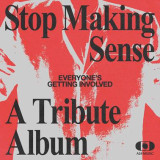
Nach Paramores Coverversion von "Burning Down The House", Teezo Touchdowns "Making Flippy Flop" und Lordes "Take Me To The River" hat A24 Music nun das vollständige Tracklisting und das Veröffentlichungsdatum für “Everyone's Getting Involved: A Tribute to Talking Heads' Stop Making Sense” bekannt gegeben. Das Projekt wird am 17. Mai digital erscheinen, die physischen Formate folgen am 26. Juli und können ab sofort vorbestellt werden. Die 16 frischen, aufregenden und überraschenden Neuinterpretationen umfassen die gesamte Tracklist des Originalalbums und schaffen neue Inhalte für langjährige Talking Heads-Fans, während sie eine neue Generation mit der Magie dieser Songs bekannt machen. Die brillante Auswahl der Künstler kontextualisiert Stop Making Sense in der populären Musik und Kultur neu, wobei der Schwerpunkt auf der generations- und stilübergreifenden Bandbreite liegt.
expected to be published on 26.07.2024

LOS ANGELES—To celebrate the 40th anniversary of the celebrated Talking Heads and Jonathan Demme’s concert film Stop Making Sense, the set will be re-released as a 2LP and 2CD/Blu-ray set this summer.
Released last year, the sold-out Deluxe Edition of the soundtrack will return as a 2-LP black vinyl on Rhino and 2-LP crystal clear vinyl at retail. Both variants feature a 12-page booklet with liner notes from all four band members –Tina Weymouth, David Byrne, Chris Frantz, and Jerry Harrison—and band photos. The 2CD/Blu-ray version includes the entire 28-page booklet from last year’s Deluxe Edition and a Dolby Atmos mix of the complete concert, mixed by Jerry Harrison and E.T. Thorngren, who also mixed the original release. Both will be available on July 26. Pre-order now.
The band appeared together for a sold-out screening and Q&A last night at the Pantages Theater, the same theater at which Stop Making Sense was recorded. They were joined by Blondshell, who performed “Thank You For Sending Me an Angel.” Another special screening with the band will occur in Brooklyn at the King’s Theater on June 13, with the Q&A hosted by Questlove and The Linda Linda’s performing “Found a Job.” The two events cap off a banner year of celebrations for what many consider to be the best concert film of all time.
The inspiration for Stop Making Sense came when director Jonathan Demme saw Talking Heads perform during the band’s 1983 tour for Speaking in Tongues. Afterward, he approached them with the idea of making the show into a concert film. They agreed and worked together over the next few months to finalize the details. Ultimately, Demme filmed three shows at Hollywood’s Pantages Theater in December 1983 to create Stop Making Sense.
The concert film presents a retrospective of the band up to that point, with a performance that weaves together songs from all six of its studio albums. The show progresses methodically, opening with Byrne onstage performing “Psycho Killer” alone with a drum machine. After each song, he’s joined by a new band member until Weymouth, Frantz, and Harrison are all on stage with him. The group continues to grow throughout the concert as members of the stellar touring band are added: keyboardist Bernie Worrell, percussionist Steve Scales, guitarist Alex Weir, and backup singers Lynn Mabry and Ednah Holt.
The band performs 18 songs in Stop Making Sense, including its recent single at the time, “Burning Down The House.” That summer, the song was in heavy rotation on radio and MTV, helping the song become the band’s first top 10 hit in America. It was, however, a different song from Speaking in Tongues that was destined to deliver one of the film’s signature moments. Talking Heads would perform “Girlfriend Is Better” wearing the now iconic, oversized suit inspired by costumes worn in traditional Japanese theater. For good measure, a picture of David Byrne in the suit also graces the album cover.
Stop Making Sense focuses mainly on music by Talking Heads but does include a few songs recorded outside the band: “Genius Of Love” by Tom Tom Club, “What A Day That Was” and “Big Business” from Byrne’s 1981 album, The Catherine Wheel. Limited edition vinyl versions of both of these albums, along with Harrison’s The Red And The Black, were released for this year’s Record Store Day.
When it arrived in September 1984, Stop Making Sense was an artistic and commercial triumph. The film had people dancing in theatre aisles, and the soundtrack sold over two million copies. Just last year, the Library of Congress added Stop Making Sense to the National Film Registry in recognition of its cultural, historical, and aesthetic significance.
Weymouth praises Demme as a collaborator: “…Jonathan was a very enthusiastic, highly adaptive, and imaginative guy who was just as good a listener as he was a talker and collaborator. From the get-go you just got the impression he was as flexible as he was disciplined. Being team players, that boded well for a great relationship and a great film!”
Harrison says the film still holds up today: “To me, Stop Making Sense has remained relevant because the staging and lighting techniques could have been created in a much earlier time period. For example, Vari-Lights, lights with motors to re-aim them, had just come into vogue. Had we used them, there would have been a timestamp on the film, and it eventually would have felt dated...The absence of interviews, combined with the elegant and timeless lighting, created a film that can be watched over and over.”
Byrne says it’s interesting that this album was – for many people – an introduction to Talking Heads. “We had done a live album before this, but coupled with the film, and with the improved mixes and sound quality, this record reached a whole new audience. As often happens, the songs got an added energy when we performed them live and were inspired by having an audience. In many ways, these versions are more exciting than the studio recordings, so maybe that’s why a lot of folks discovered us via this record.”
Frantz recalls the sheer joy surrounding the entire Stop Making Sense experience. “I’m talking about real, conscious, transcendent joy… I’m talking about what the Southern gospel people call ‘getting happy,’ which means ‘to be filled with the Spirit.’ That is what happened to us onstage every night, and from my seat behind the drums, I recognized that this was happening to the audience too. Joy was visible in front of me and all around me every night.”
Order now and we will order the item for you at our supplier.

Toy Tonics going New Wave Disco with Baby’s Berserk’s self-titled debut album (to be released on 29 September).
There are many shades of funk in dance music. Berlin’s Toy Tonics label brings up artists that reflect many of these different aspects in dance music. Now the label comes up with a band! A band that is inspired by 1980ies New Wave as well as the Y2K Indie dance scene. Two guys and 2 girls from Amsterdam and Montreal called Baby’s Berserk.
Baby’s Berserk is about taking the freedom to be who you want to be, about being comfortable. Having played in all-girl punk bands since the age of 14, the bands singer Lieselot is an expert on female empowerment. “Dress like a girl and act like a boy,” is a catchphrase she lives up to every day and it clearly is a message that resonates with the band’s wild fans.
In the great tradition of Roxy Music, Throbbing Gristle and Malcolm McLaren, Baby’s Berserk is not just about the edgy music, but also about a very strong own visual style. They readily blend their sounds with underground fashion. What you see is what you get and seeing Baby’s Berserk is feeling right at home. Lieselot is a visionary when it comes to stage presence. Have you always wanted to see an electronic band with a punk attitude perform wearing a mix of haute couture and Flintstone-style rags? Look no further, it’s Baby’s Berserk.
Following on the critically acclaimed singles ‘What I Mean’ (2020) and ‘Toxic Kisses’ (2022), Baby Berserk’s highly anticipated self-titled full-length is now finally about to see the light on Berlin’s Toy Tonics records. Sonically designed for gritty rock venues as well as up-to-date edgy dance clubs, Mano’s lush compositions smoothly intertwine with the highly associative lyrics written by Puggy and Lieselot. Poets and literary addicts may think they’ve just discovered the rock & roll equivalents of Sylvia Plath, Kurt Vonnegut and Allen Ginsberg. To tell you the truth: their wild guess is pretty accurate as the works by these greats lie scattered around the Baby’s Berserk studio for inspiration.
The band was born in a laboratory back in 2019. Tired of being in bands with unruly and unpredictable humans, Mano Hollestelle set out to create a group of high precision robots to create the post-punk sound he had in mind. His outdated technology of floppy disks and cassette tapes worked well to program the androids, until one day a 90s rave mixtape was mistakenly entered into his computer. House music is a feeling and the punk bots instantly got hooked on it upon hearing it for the first time. They could never be reset to factory settings again. Mano worked tirelessly with his androids, currently known by their humanoid names of Lieselot Elzinga, Puggy Beales and Eva Wijnbergen, to fulfil his evil plan to make the rockers dance and the dancers rock. Baby’s Berserk is the fiendish extension of this plot. Beware, the band’s bass driven grooves and computerized beats have been known to cast a spell upon all within earshot.
So what do the songs on ‘Baby’s Berserk’ tell you? That it’s totally fine to have lots of fun in life! To have a boyfriend as an accessory (‘Accessories’), to get inspired by Sponge Bob (‘Dancing with the Fish’) and to blend your spirits with mixers whenever the hell you feel like it (‘Rum ‘n’ Kola’).
Baby’s Berserk member Puggy Beales on ‘Limousine’: “Decant the wine from my tip jar to yours. Soon we'll be on easy street, chauffeured home from the rat race each evening. Is it everything you'd hoped it would be?”
Check not only the debut album but also the forthcoming Remix EP with remixes by Each Other, Niklas Wandt, Sam Ruffillo, Kris Baha and Nicolini.
Order now and we will order the item for you at our supplier.

Order now and we will order the item for you at our supplier.

WRWTFWW Records is thrilled to announce the first ever release of the soundtrack for the sci-fi Amiga demoscene wonder Odyssey by the Alcatraz group, with music from Greg - and what is possibly the first ever vinyl release for an Amiga demoscene soundtrack, if not the first ever vinyl release for a demoscene soundtrack whatsoever!
The special limited edition vinyl features the complete soundtrack of the demo sourced from the original masters as well as printed innersleeves, a 24x24 inch double-sided poster with extensive liner notes on the fascinating history of the Amiga demoscene on one side and a floppy disk print on the other, and a WRWTFWW sticker sheet. Odyssey is also available in digital format.
Wikipedia says: The demoscene is an international computer art subculture focused on producing demos: self-contained, sometimes extremely small, computer programs that produce audiovisual presentations. The purpose of a demo is to show off programming, visual art, and musical skills. Demos and other demoscene productions (graphics, music, videos, games) are shared at festivals known as demoparties, voted on by those who attend and released online.
In the demoscene galaxy, one era was particularly exciting: the Amiga years during which the demos were created for the Commodore Amiga home computer - a time of intense rivalry between programmers, graphics artists, and computer musicians, testing the limits of the (fixed) Amiga hardware.
The Odyssey demo was one of the largest productions ever released by an Amiga group, a real sci-fi movie on five floppy disks made with 3D sequences. It was presented at a demoscene party in 1991 and won the competition, setting a new standard for Amiga demo possibilities.
One of the highlights of the demo was the funky cosmic music from Swiss composer Greg, a true space opera, the 90s galactic soundscape you didn’t know was missing from your life! And so here it is, available for the first time, 10 tracks of pure video game music joy, adventurous computer pop, pixelated techno-trance, Star Wars gone floppy disk, and interstellar beats for days.
Order now and we will order the item for you at our supplier.

On textstar+ Jan Jelinek brings together the material from the CMYK series, four EPs he released between 1999 and 2002 under the pseudonym farben (the German word for both colours and paints), on a vinyl double LP for the first time. The selection of tracks has been remastered from the original tapes, joined by two additional pieces that appeared on compilations during the same period.
A Polaroid. Still life with tangled leads and consumer electronics, late twentieth century. Black and various shades of dirty white are the dominant non-colours. The image’s spatial depth remains diffuse, the links between its elements speculative. A note stuck to the wall (a legend, perhaps, or an all-explaining blueprint in text form?) is impossible to decipher. You can’t see what connects the picture’s signs. You have to hear it.
farben says: Every sound is a text. A bearer of meaning in search of a reader. Hoping the ideas inscribed in its autonomous existence will be understood as intended. While its beauty lies precisely in misunderstanding, in reading the coded message a new way every time. A thousand colours of sound, a thousand different ways to hear, to see, to understand.
On textstar+ Jan Jelinek brings together the material from the CMYK series, four EPs he released between 1999 and 2002 under the pseudonym farben (the German word for both colours and paints), on a vinyl double LP for the first time. The selection of tracks has been remastered from the original tapes, joined by two additional pieces that appeared on compilations during the same period. Another new element is the Polaroid, showing the origins of a world: Jelinek’s home studio in Berlin at the time.
farben says: Move your body! The project has its roots in Jelinek’s love of house as a reductionist vision of soul. Of four to the floor as a proposition that can be accessed anywhere. Of electronic dance music as a realm of possibility that can be continually expanded. farben was written as contemporary house music. As a text about excitement and euphoria. The arrangements were made directly while recording to DAT, on a twelve-channel mixing desk. Several track titles suggest a link to live concerts, coupled with the context of machine music and bedroom recording. Others affirm pop music’s most extravagant stock phrases about various states of love.
Jelinek produced the tracks with the aim of making music for dancefloors. An idea that failed very productively. In the locations to which it was originally addressed, the project barely figured. But people did listen, and they listened all the more closely to this music that opened up new acoustic and associative scope for house. farben is the opposite of genre: a music spawning new terms (clicks & cuts, micro-house) that never manage to fully capture it.
farben says: Signifiers. The four CMYK EPs are designed as a network of references that cannot be missed but that can also never be precisely deciphered. The vectors of sound, word and image point to Isaac Hayes and Ornette Coleman, to Detroit and the first generation of the Red Army Faction, to Karl Marx and Friedrich Engels. So multifarious that they are distorted to the point of recognition. Overall we hear sonic docufictions whose appealing vagueness derives precisely from this oscillation between clarity and ambiguity, which is also the source of their poetry: the lyricism of the pure circulation of signs.
The artwork is based on photographs of former Red Army Faction members, broken down into the four colours of the CMYK model. The motifs dissolve into individual dots of a single colour, so close to the faces that their expressions are only hinted at. Taken together, the individual colours compose a new whole out of fragmentary material, defying definition and thus maintaining their vibrancy. The same occurs on the level of sound. The sampler Jelinek used for these tracks had to be fed with floppy disks, imposing a memory limit of 1.44 megabytes per audio quotation from soul or jazz records. As a necessary consequence of this, the individual references, like the dots of colour, are dissolved into details and abstractions. They appear as splinters that recombine in new ways to create new meanings. The joy of collapsing metaphors.
farben says: New departures. Even two decades after its original release, textstar+ does not come across as an epitaph to the modern era. Instead, it appears as a euphoric affirmation of the utopias of the twentieth century, translated into new sound texts via the aesthetic strategies of abstraction, collage, networking and speculation. 1.44 megabytes of history, one thousand signifiers, one album. From “Live ...” to “... Love”.
Arno Raffeiner, 2021
Order now and we will order the item for you at our supplier.

Dark Entries reissue the 3rd full length from Carolyn Fok / CYRNAI, an Asian-American female solo artist from the Bay Area. Carolyn's adventures in sound began with recording stories on a tape recorder at age 9 in 1976. A short time later, exploring the scattering of musical instruments and effects units her father left lying around the family home. She became especially fascinated by his TEAC reel-to-reel recorder that set off a lifelong fascination with sound design. By the age of 16 Carolyn had become inspired by industrial electronic act Cabaret Voltaire, as well as anarcho-punks Crass. Creating the stage name CYRNAI, a rearranging alphabet of Carolyn Fok, she played in several Bay Area bands including Treason, A State Of Mind, Trial and Rhythm & Noise between 1983 and 1991.
In 1987, towards the end of art school, Carolyn won another award from the New York Society of Illustrators. During the trip to New York to accept the award, she met electronic/dulcimer musician, Dan Joseph. After writing some letters they decided to make a split cassette titled 'Hypno-Seizure'. CYRNAI contributed 30 minutes of music to Side A of the cassette, 10 untitled pieces that ran into each other. She had just bought a round-the-world ticket going from China to Europe via Eurails, to Egypt, where she liked to wander. She picked up instruments from several countries and recorded the sounds of her new surroundings. Technology was changing into early sampling and she used a Commodore 64 with large floppy disks to record loops. Originally self-released in 1988, this reissue adds 3 unreleased bonus tracks recorded during the same period. Each copy includes a double sided insert with lyrics, photos and notes by Carolyn. All songs have been remastered by George Horn at Fantasy Studios.
expected to be published on 07.09.2018
