pas en stock
Commandez maintenant et nous commanderons l'article pour vous chez notre fournisseur.
Last In: 7 months ago
Commandez maintenant et nous commanderons l'article pour vous chez notre fournisseur.

Canto Ostinato is the new volume of classical minimalism from musician and producer Erik Hall. Written for four pianos in 1979 by Dutch composer Simeon ten Holt, the piece is freshly framed as an intimate, hour-long solo performance consisting of multitracked grand pianos, electric piano, and organ. Modern yet warm, ethereal yet tangible, Hall's Canto Ostinato expertly bridges a revered piece of meditative concert repertoire with a tactile and highly personal studio setting. Chicago-born and Michigan-based, Erik Hall is known as a multi-instrumental pillar for the groups NOMO, Wild Belle, and his own songwriting moniker In Tall Buildings. He has composed music for feature films, and as a producer/engineer he has shaped records for Natalie Bergman and Western Vinyl labelmates Lean Year. In a 2020 creative pivot, he chose to reinvent composer Steve Reich's monumental contemporary classical masterpiece Music for 18 Musicians as a solo undertaking, applying the piece's score to the familiar keyboards, guitars, and synthesizers in his studio. "At the time I think I was working through my identity as a musician and an artist," Hall explains, "and on a level there was some sort of exorcism of a long held pop spirit." The album was celebrated for being "freshly thrilling" and "legible in history but assertive of the moment" (Pitchfork) and "beguiling, meditational, and magical" (Electronic Sound). It won the 2021 Libera Award for Best Classical Record, and it quickly joined the canon of the piece's quintessential recordings. "There is a pseudo-meditational benefit to working on a longform piece that's built on repetition," Hall says. "Every stage- from internalizing the music, to executing the performance, to editing and mixing the record- requires deep and sustained presence of mind. I've always been drawn to a hallucinatory combination of harmony and repetition, and I found the entire process addictive." An apt second chapter, Canto Ostinato is inherently vast, and its score gives great creative license to the performer. Comprising 106 sections, complete freedom is given to repeat each one as many or as few times as desired. Additional leeway is given with regard to dynamics, articulation, and even instrumentation. On the heels of his previous, rather maximal arrangement, Hall chose to limit this album's palette to three foundational keyboards of his studio: a 1962 Hammond M-101 organ, a 1978 Rhodes Mark I electric piano, and his family-heirloom 1910 Steinway grand piano. "This particular piece brought the added challenge of rekindling my dexterity as a pianist, something I haven't maintained in earnest since I was a teenager," he admits. The ensuing five-note rhythmic motif- the piece's primary building block- is steady and workmanlike, forgoing virtuosic flare for depth, texture, and resonance, and eventually giving way to the stunning gratification of a gorgeously lyrical left turn. As with Music for 18 Musicians, Hall employed no loops nor quantization nor any programmed or sequenced instruments of any kind. Every part was performed live in a room and captured with microphones, one at a time, each informed by, and reacting to the last. In this way the record breathes with interplay and an organic humanity, complete with flaws, noise, and the faint sound of turning pages. The recording quality is nonetheless toneful and saturated, characteristic of Hall's production style and straying from the usual transparency of classical albums by using gear with tubes, transformers, and various stages of compression in the signal path. Always there is unmistakable realism and the feeling of being present in the room, sitting among the keys, hammers, and tines. Ten Holt said: "Time, patience and discipline are the prerequisites for making a genetic code productive." His landmark composition provides Hall once again with a wondrous space in which to reverently embody this sentiment and deftly convey the elegant beauty of this music.
il devrait être publié sur 24.02.2023

Irgendwann im Jahr 2020 hörte ich zum ersten Mal ,Canto Ostinato" und war sofort fasziniert von diesem Werk. Ich war fasziniert von seiner besonderen Mischung aus Harmonie, Wiederholung und Tempo. Im Frühjahr 2023 hatte ich meine eigene Solointerpretation komponiert und veröffentlicht, und ich ging davon aus, dass meine Arbeit mit der Komposition damit abgeschlossen sei. Allerdings unterschätzte ich ihre Anziehungskraft. Im folgenden Jahr war ich erneut davon eingenommen, nachdem ich von Andrew Cyr vom Metropolis Ensemble eingeladen worden war, auf der Grundlage meiner Arbeit mit dem Stück weiterzuentwickeln. Bald darauf war ich in Brooklyn, in einem neu gegründeten Team von sechs Personen, das von Cyr geleitet wurde. Im folgenden Jahr war ich erneut in seinen Bann gezogen worden, nachdem ich von Andrew Cyr vom Metropolis Ensemble eingeladen worden war, auf der Grundlage, die ich mit dem Stück geschaffen hatte, weiterzuarbeiten. Bald darauf befand ich mich in Brooklyn, in einem neu gegründeten sechsköpfigen Team mit Cyr und den Mitgliedern von Sandbox Percussion, und war begeistert, an der Gestaltung eines brandneuen Arrangements von Canto Ostinato für ein großes Ensemble für eine Sommer-Sonnenwende-Aufführung im Brooklyn Botanic Garden mitzuwirken. Wir taten dies, und unsere Gruppe wuchs um die Studenten des Sandbox Percussion Summer Seminar der New School sowie die Komponisten David Leon, Ben Wallace und Ledah Finck und das Bergamot Quartet. Das Ergebnis war ein beeindruckendes, mitreißendes und sehr bewegendes Erlebnis, das ich nie vergessen werde. Ich bin sehr dankbar für diese Erfahrung und die Möglichkeit, die Musik von John Cage zu interpretieren und zu spielen. Wir taten dies, und unsere Gruppe wuchs um die Teilnehmer des Sandbox Percussion Summer Seminar der New School sowie um die Komponisten David Leon, Ben Wallace und Ledah Finck und das Bergamot Quartet. Es war ein Tag, an den wir uns alle erinnern werden - mitreißend, traumhaft und wie eine perfekte Krönung. Aber selbst dann ... zog das Stück weiterhin seine Fäden, und es wurde unumgänglich klar, dass diese neue Orchestrierung die Produktion eines Studioalbums erforderte - eine bleibende Dokumentation unserer nun gemeinsamen Leidenschaft. Über ein Jahr lang wurde das Stück verfeinert, und es wurde immer deutlicher, dass die neue Orchestrierung die Produktion eines Studioalbums erforderte - eine bleibende Dokumentation unserer nun gemeinsamen Leidenschaft. Doch selbst dann noch übte das Stück eine große Anziehungskraft aus, und es wurde unumgänglich klar, dass diese neue Orchestrierung die Veröffentlichung eines Studioalbums erforderte - eine bleibende Dokumentation unserer nun gemeinsamen Begeisterung. Diese Darbietung, die über ein Jahr lang verfeinert und 2025 in New York aufgenommen wurde, interpretiert das Stück neu in einem imposanten Rahmen aus Mallet-Percussion, Holzbläsern, Streichern und Klavier. Es ist unser aufrichtiger Versuch, die Schönheit und Größe von Canto in seiner ganzen kaleidoskopischen Harmonie, Dynamik, Spannung und Entspannung zu vermitteln. Ich bin erneut voller Ehrfurcht vor Simeon ten Holts monumentaler Schöpfung. Es ist unser aufrichtigster Versuch, die Schönheit und Größe von Canto in all seiner kaleidoskopischen Harmonie, Dynamik, Spannung und Entspannung zu vermitteln. Ich bin erneut beeindruckt von Simeon ten Holts monumentaler Schöpfung, und ein Teil dieses besonderen Klanggefüges zu sein, ist eine der größten Freuden meines musikalischen Lebens. Ich gehe nicht davon aus, dass wir noch einmal so viel Glück haben werden ... aber wer weiß ... - ERIK HALL
il devrait être publié sur 03.04.2026

Mit englischem Charme, ausnehmendem Talent und kreativer Offenheit begeistert die junge britische Musikerin Anna Lapwood nicht nur die Kritiker*Innen, sondern ein Millionen-Publikum bei Social Media. Auf ihrem Sony Classical Debüt-Album "Luna" gibt sie einen Einblick in ihren umfassenden musikalischen Kosmos. Die fünfzehn Titel des Albums beleuchten ihre Vielseitigkeit und verbinden traditionelles Repertoire von Johann Sebastian Bach, Claude Debussy und Philip Glass mit zeitgenössischen Kompositionen von Max Richter, Ludovico Einaudi und Hans Zimmer. Auf "Luna" ist Anna Lapwood in erster Linie als Organistin zu erleben, aber auch andere Facetten ihres musikalischen Lebens kommen zur Geltung, wenn sie den Pembroke College Chapel Choir bei zwei Titeln dirigiert. Anna Lapwood spielt Orgel, Geige und Harfe und ist als Dirigentin und Orchester-Leiterin aktiv. 1995 in der Grafschaft Oxfordshire geboren, erhielt sie als erste Frau in der Geschichte des Magdalen College Oxford ein Orgelstipendium. 2016 wurde sie die jüngste musikalische Direktorin in Cambridge und leitet seitdem die Chöre und Ensembles des Pembroke College. Nach Feierabend und bei Einbruch der Dunkelheit erhält sie als Associate Artist der Royal Albert Hall besonderen Zugang zu dem majestätischen Instrument in der Royal Albert Hall. Dies hat zu einigen spektakulären Kollaborationen geführt. Die berühmteste davon mit dem Elektronik-Musiker Bonobo. Auf TikTok erreicht sie mit solchen gleichermaßen lockeren wie spektakulären musikalischen Ausflügen mehr als 550.000 Follower.
Disponible en stock et prêt pour l'expédition

The first ASFON release has been a year-long labour of love that has come into being from what felt like a lucid dream, off in the distance, too crazy to believe was real. From our first meeting in the Freerotation yurt to late-night exchanges in Bristol, Winkles (Jamie Slater) has been sharing tracks that lingered long after the party ended. Their raw textures and warped sense of time found a natural home in our sets, eventually leading to the emergence of ‘The Unavoidable EP’, a collection of four diverse tracks which form a singular, immersive experience.
On A1 journey, The Unavoidable Consequence Of Familiarity, a knocking kick opens the door to this new sound world, introducing us to the granular clicks, crazed telephony and vocoded grunts which populate the deep space of Winkles’ imagination. Machines whir and perception shifts in the space between distant synth stabs, while a pulsating bassline battles to break through the filter and create a throbbing low end. Hallucinatory and deep, this is the perfect introduction to both the EP and the ASFON outlook.
Semi Stretches sees Winkles pick up a signal from beyond the outer rim, fire up the hyperdrive and lock into the rolling hum of intergalactic techno. Juggernaut bass forms the perfect counterpoint to the rapid fire rim shots trembling away up top as this Venusian club craft battles static, drives through the milky cosmic and transports the dancing bodies to a Multicoloured Plasticine Universe.
Cutting the engines and switching to suspended animation, Winkles lets us drift through a hazy dream-space where there’s no up or down, where twinkling arps, insectile electronics and hazy sirens coalesce into a psychotropic swirl.
Out of this multicoloured mirage comes Osaka-based astral traveller Erik Luebs, who translates that peak-time ambient bubbler into a Balearic chugger which emerges from the ether to add another dimension to the EP. Rubberised bass, velvet pads and nuanced percussion ensure this is perfect for poolside play in a land of pink sand and sideways tides.
Disponible en stock et prêt pour l'expédition

Aarset and Bang have collaborated since the early 1990s in constellations with, among others, Nils Petter Molvaer, Bugge Wesseltoft, Sly & Robbie and Jon Hassell. 'Snow Catches on her Eyelashes' (2020) was their first recording as a duo, an album that was widely praised, inspiring John Eyles of All About Jazz to write: "Aarset, Bang and company go from strength to strength, as does the Norwegian scene. Onward and upward."
'Last Two Inches of Sky' further expands this sonic universe - onward and upward. Like its predecessor, the new recording is an amalgam of styles, linked together by Jan Bang's hallmark sampling technique and Eivind Aarset's continuous exploration of the guitar. Now, the rhythm section of Audun Erlien (bass) and Anders Engen (drums) are prominent on most tracks, and the arrangements are enhanced by guests like Gianluca Petrella (trombone), Adam Rudolph (percussion), Emanuel Birkeland- Bang (drum programming) and Erik Honore (samples, lyrics on "Legion").
Disponible en stock et prêt pour l'expédition
RX-101 has quietly been making waves in the IDM/electronic music underground for the past few years, through a series of archival releases — material recorded in the late-90s, but previously unreleased until Suction Records began compiling and releasing these records in 2016. What’s truly mind-boggling about RX-101’s output is the sheer quantity of stunning, top-drawer material that Dutch producer Erik Jong recorded over the period of just 3 years, 1997-1999. Many have suggested that the whole thing is a publicity stunt — some insisting that this is all new material masquerading as vintage, while others have proposed that the material may in fact be a secret alias for Aphex Twin to release gems from his own legendary ’90s audio archive. RX-101 has absolutely nailed the sound, and quality, of early-90s AFX/Rephlex, that much is true. “Serenity,” this latest full-length RX-101 release, is no exception.
Just as RX-101’s last album, 2019’s Dopamine, concentrated on one hallmark of Aphex Twin’s sound — the smooth melodic techno of his Selected Ambient Works 1985-1992 LP — so too does Serenity reference another classic early-Aphex era, but this time it’s a completely different beast. Don't let the title fool you - Suction Records' latest dive into RX-101's 1997-1999 tape archives is not all lush, serene melodies. On Serenity, scorched, crunchy jackhammer beats combine with emotional, plaintive pads, delivering a classic set of vintage-Rephlex-style bliss, à la AFX, Caustic Window, and Cylob. It was Cylob who coined the term Industrial Folk Songs for his classic 1995 LP, and that release is clearly a blueprint for RX-101’s latest collection.
Standout cut Hearts Utd., featuring a stunning music video by Aidan Fantinatto and I Dream Of Wires’ director Robert Fantinatto, not only nails the magic of AFX’s trademark, irresistible jackhammer-beats-meets-plaintive-melody device, it arguably rivals the master at his own sound. As a whole, what could be a harsh and monotonous collection is lifted by RX-101’s subtle diversity and skill, particularly in his ability to create eerie, evocative moods, with gorgeous melodies that speak volumes of emotion.
Disponible en stock et prêt pour l'expédition
Dublin-born, thirty years an immigrant. That's the spine of henryohenry's debut, Apocrypha, not as a concept but as a condition. He's spent three decades in the United States working in the trades, absorbing the country's mythologies and building what he calls "an idiosyncratic American language" out of them, something closer to Whitman's vision than what he found. He is, by his own account, "formally and informally not a musician" — all but two of the songs were written on a $6 charity-shop guitar with a repaired headstock and strings that distorted unpredictably. It doesn't appear on the record. Produced by filmmaker Rick Alverson, the album is anchored by guitarist Eamon O'Leary and his son Ned Steves, recording together for the first time, without rehearsal. Erik Hall mixed and contributed overdubs; Emilie Rex of Lean Year lends harmonies to three songs; poet Callie Garnett appears on another. Album standout "There" captures something harder to name: how powerful feelings drive you to the page, and how the thing you make can outlast the feelings that made it. "It feels like a triumph over something," he says, "even if you're a bit embarrassed by some of the sentiment."
Apocrypha arrives as a debut but carries the patience of a life lived in full. For fans of John Cale, Nick Drake, Leonard Cohen.
il devrait être publié sur 18.09.2026
John Tchicai (1936 – 2012) was one of the most important free improvising saxophonists of the 20th Century: an artist of rare vision and aptitude whose lines soared and stood out even in the most hallowed company, and whose body of work as a leader / composer is among the most singular and distinct within the entire canon of that music. But Tchicai’s importance doesn’t end there. Born in Copenhagen, Denmark, to a Danish mother and a Congolese father, his life and career represent a crucial bridge between the European and American traditions of free jazz. Initially trained on violin as a child, Tchicai shifted his focus to the clarinet and alto saxophone during his mid-teens, and began touring Europe as a professional musician by his early 20s, which landed him at a socialist youth festival in Helsinki, Finland, where he met the trumpeter Bill Dixon and saxophonist Archie Shepp. Impressed by what they heard, Dixon and Shepp encouraged the young saxophonist to move to New York, and in so doing changed the history of jazz forever.
Tchicai’s arrival in New York marks the rare occurrence of a European player joining the intimate circle that was first wave of American free jazz. Following his landing in the city in November of 1962, in addition to regularly sitting in with Don Cherry’s group, Tchicai began playing with Bill Dixon's band alongside Archie Shepp and Roswell Rudd, forming the nucleus of the foundation of the New York Contemporary Five - one of the most important groups of the era - which counted Tchicai, Shepp, Cherry, Don Moore, and J. C. Moses as its members. From the ashes of this group, Tchicai would go on to found the legendary ensemble, New York Art Quartet, with Roswell Rudd, Milford Graves, and Lewis Worrell, as well as working within Albert Ayler's band, recording “New York Eye and Ear Control”, Shepp’s band, recording “Four for Trane”, the ensemble that recorded John Coltrane's “Ascension”, and the Jazz Composer's “Orchestra”.
By the time he decided to return to Denmark in 1966, had Tchicai chosen to record little else, his legacy within the history of music would have been ensured. Incredibly ambitious, his arrival home marked the beginning of an incredible period of activity which saw him radically expanding his creative explorations, which by the end of the decade would include becoming a founding member of Amsterdam's Instant Composers Pool and helping to record John Lennon and Yoko Ono's “Unfinished Music No.2: Life with the Lions”. This, however, was proceeded the formation of a new orchestra, Cadentia Nova Danica, led by Tchicai, dedicated to radical cross-disciplinary exploration. Remaining together between 1966 and 1971, the group and its shifting membership regularly fell into collaboration with artists and composers, notably Musica Elettronica Viva, who existed beyond the realms of jazz, as well as participating within multi-media events that incorporated the visual realms.
Cadentia Nova Danica’s only two LPs - “Cadentia Nova Danica” (Polydor, 1968), and “Afrodisiaca” (MPS, 1969) - are effectively Tchicai recorded efforts as a leader, and are legendary. There’s little mystery, once heard, why the later landed on Thurston Moore’s iconic “Top Ten from the Free Jazz Underground”, published by Grand Royal in 1996. Sadly, despite playing extensively during their five year run, with exception of a CD documenting a performance at Jazzhus Montmartre, in 1966, until now there has been no other publicly available recordings that allow us to capture a glimpse of this astounding band at work. Alga Marghen / Formalibera’s vinyl pressing of a never before released body of recordings, made in Copenhagen between 1969 and 1970, changes that in the most exciting of ways.
Comprising three pieces - “Mc Gub Gub, (I–VIII)”; “Ode to Skt. John”; and “Pladepip” - the material on this stunning LP comes from two specific events. The first, which encompasses the first side, “Mc Gub Gub, (I–VIII)” was recorded by Cadentia Nova Danica - in this instance, Tchicai, Sune Weimar, Theo Rahbek, Christian Kyhl, Niels Holt, Jørgen Thorup, Michael Schou, Morgens Bollerup, Allan Gregersen, Ole Matthiessen, Pierre Dørge, Willy Jaegert, Anthony Barnett, and Jon Finsen - on May 29th, 1969, at the ABC-Theatre in Copenhagen. Penned by Tchicai, the piece is a sprawling, evolutionary composition at the outer reaches of free jazz, rooted in large blocks of colliding tonality and rhythm - a sound only accessible to larger ensembles - that push territories explored by Charles Mingus to previously unimagined heights, threaded by moments of hard blown fire. Writhing like a stormy sea - skronking and devilish - “Mc Gub Gub, (I–VIII)” is a work of profound complexity that singlehandedly illuminates not only Tchicai’s singular vision as a composer, but also the power and uniqueness of Cadentia Nova Danica during the band’s most vital period.
The two pieces - “Ode to Skt. John” and “Pladepip” - taking up the flip side, were recorded on February 21st, 1970, at the Danish Broadcasting Corporation’s Radio House, and are the outcome of Cadentia Nova Danica’s extended residency there between 1969 and 1970. In many ways, these two recordings offer some of the best insights into the broad collaborative approaches that defined the band, in this case encountering them working with Danish experimental composer, Svend Erik Werner, who was among the earliest in his country to embrace stylistic pluralism and the use historical forms within a modern context. “Ode to Skt. John” - based on aspects of Gregorian music - was penned by Werner, incorporating heady improvisation by the members of Cadentia Nova Danica, this time made up by Tchicai, Sune Weimar, Hugh Steinmetz, Theo Rahbek, Christian Kyhl, Michael Schou, Morgens Bollerup, Ole Kühl, Torben Enghoff, Mauritz Tchikai, Kjeld Ipsen, Willy Jaegert, Ole Matthiessen, Ole Thilo, Pierre Dørge, Steffen Andersen, Jon Finse, and Clause Bøje. The piece is a fascinating binary of the composed and improvised, utilising the band’s large scale to introduce a remarkable sound within its slow progressions and furious, driving free moments, in this incredible meeting of worlds.
The album’s final piece, “Pladepip”, is arguably its most historically significant: an entirely singular piece, unlike anything in Tchicai’s recorded canon as his foray into musique concréte. Drawing upon two recordings of full-band improvisations by Cadentia Nova Danica, for its creation Tchicai also gouged the surfaces of 78rpm records in his collection to skip and create repeated phrases and patterns, creating a stunning sound collage of hard angles and abrupt phrase, that creates a striking counterpoint to the band’s flowing improvisations that bookend those passages. The result is an engrossing listen and easily one of the most unique and culturally important gestures in the entire history of musique concréte.
Truly incredible, Alga Marghen / Formalibera’s vinyl pressing of this never before released body of recordings, made by John Tchicai’s Cadentia Nova Danica, in Copenhagen between 1969 and 1970, offers an unprecedented window into one of the most important groups working in Europe during that period, significantly expanding their rare and slim discography to date. Accompanied by extensive exploratory liner notes by veteran jazz writer, Ed Hazell, this is easily one of the most historically important archival releases of the year and is impossible to recommend enough. Absolutely essential on every count.
il devrait être publié sur 28.08.2026
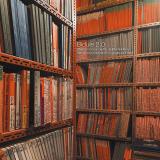
Bidule 2.0 is an unique reinterpretation of Pierre Henry’s little-known sound heritage combined with ErikM’s original composition. The album explores previously unused raw materials, transformed through ErikM’s highly digital approach, balancing fixed composition and unexpected sonic events, a singular sonic experience where where historical archives and contemporary creation converge.
"Bidule 2.0 is a composition by ErikM that revisits a selection of the unused sonic heritage of composer Pierre Henry, covering the period from 1950 to 1974, sourced from the Son/Ré studio and digitized by the BnF (Bibliothèque nationale de France). Over the decades, Pierre Henry and his team accumulated a vast collection of sonic materials from their studio research.This sound library, recorded on analog tape, is a testimony to the recording techniques of that era — including the quality of microphones and recording media, as well as the acoustics of the recording spaces — all of which define the sound of a time. Not wanting to create a remix from the composer’s iconic sounds, I chose instead to work with selections of raw material from unused recording sessions, 168 sequences ranging from one to twenty-two minutes each. Isabelle Warnier and Bernadette Mangin provided me with sessions of prepared piano, series of electronic sounds, feedbacks, and voice recordings. Pierre Henry’s analog sounds were, for the most part, processed through successive stages (up to five generations of transformation), using a custom electronic device: Idiosyncrasie 9.3, built on Max/MSP and Lemur." - ErikM
il devrait être publié sur 30.07.2026

Deaf Center member Otto A Totland’s 2014 debut LP, an intricate work for solo piano.
Otto A Totland's modern compositional elements are most widely recognized as half of the Norwegian duo Deaf Center, where his melancholic, intricate piano work provides haunting relief to the beds of noise and deep strings from Erik K Skodvin. Pinô is the first full-length release by Totland, though his solo work has been released once, as the 5-minute A-side of Sonic Pieces 7inch Harmony From the Past. Otto's previously brief vignettes are now expanded into a fully personal realization of his own style.
Initial track Open fills itself with heavy, knowing pauses that quickly become overwhelmed with the desire to understand what's to come. Each silence leads into quick flutters of keys, preparing the listener for a vast terrain of giddy beauty, bleak depths, and true contentedness. Pinô quickly recalls deep winter; in front of a fireplace for days on end, you lose how far along you've ventured into the 18 tracks without any idea how far is left to go. The experience feels inevitable, with no other option but to curl up somewhere cozy and appreciate the sense of timelessness that Totland has created. His album is a haunting modern compositional treasure, expressed through instrumentals completely unique to Totland and captured masterfully by Nils Frahm at Durton Studios.
With Pinô, Otto A Totland appears out of the Norwegian landscape, sharing an achievement that will provide a relief during the brooding winter darkness. Though a highly personal endeavor, the recognizable continuation of Totland’s compositions will attract fans of Deaf Center, and the cinematic and classical components of his solo work will hold sway for those familiar with Harold Budd or Dustin O’Halloran.
Commandez maintenant et nous commanderons l'article pour vous chez notre fournisseur.

This audio trip is provided for you by Erika Halliday an artist hailing from Argentinian capital Buenos Aires. She has provided four original cuts for our listening pleasure in her dark flavored signature electro house vibe. The EP is named after a late-night show “El Club de los Desvelados” airing in Argentina in 2017 and has this nocturnal flavor throughout the vinyl as the show did. The four tracks are stylistically gluing together well and are displaying the passage into the artist’s skill and the vision of music. It is an honor to welcome Erika to the label with this masterfully crafted disc absolutely in line with the label’s aesthetic and vision. Let’s all have a conversation together into the late night with loosing track of time in “El Club de los Desvelados” style.
Commandez maintenant et nous commanderons l'article pour vous chez notre fournisseur.

il devrait être publié sur 18.10.2024

Repress!
Today – Friday 9th July – artist, producer, DJ and club culture icon Peggy Gou releases the second of a pair of summer singles. Released via Gou’s own Gudu Records, “I Go” is an incredible piece of club-focused electronic music and showcases a very different sound to previous single “Nabi”.
Described by The FADER as “the kind of dazzlement you get from light dancing off of ocean water on a hot day: pure dopamine activating bliss” and Resident Advisor as “a refreshingly low-key jam”, “Nabi” was an evocative piece of slow-burning, 98bpm electronic pop, inspired by 80s synth classics, the piano pieces of renowned composer Erik Satie and the 80s and 90s Korean songs Gou's mother used to play at home during her childhood.
“I Go” takes inspiration from a similar era but this time the energy comes from Gou’s love of 90’s dance anthems, many of which she revisited during lockdown and an enforced break from touring. Both retain the hallmarks of Peggy Gou’s unique take on electronic music; at once both nostalgic and totally modern. But on “I Go”, the tempo, 808s and 909s are dialled right up for a self-motivating anthem that is set to soundtrack a summer when we can all hopefully dance together in our thousands again.
Talking about “I Go”, Peggy says:
“When I was a teenager in Korea, we didn’t have rave culture like there was in the UK. “I Go” is a tribute to that era, my own reimagination of the sounds I grew up loving. The lyrics are inspired by a note I wrote on my phone in 2019, staring at myself in the mirror of an airport toilet – I looked so exhausted but there was no way I wasn’t going to keep going! “I Go” is basically me motivating myself, finding courage and returning to a feeling of innocence. I hope people feel the same sense of positivity when they hear it”
Meanwhile, Peggy Gou is set to make a handful of DJ appearances in Europe over the summer. These include a huge sold out London event in August in the form of The Pleasure Gardens; an outdoor party in Finsbury Park created and curated by Gou herself and featuring a stellar supporting line up including DJ Harvey, Anz and Spencer.
Track List:
Commandez maintenant et nous commanderons l'article pour vous chez notre fournisseur.

Mika Miko were a band from Los Angeles from 2003-2010 playing a mix of danceable, post punk and late 70's style power pop and street punk. Formed by sisters Jennifer and Jessie Clavin (who would later form Bleached) with high school friends Michelle Suarez, Jenna Thornhill and drummer Jon Erik Edrosa. After a 7" EP in 2004 (PPM) they signed to Kill Rock Stars in 2006 with new drummer Kate Hall to release "C.Y.S.L.A.B.F." which would see them tour throughout the US, Europe and Japan. Returning to PPM in 2007 to release their "666" EP, and their second and final LP (with another new drummer, Seth Densham) "We Be XUXA" in 2009, they disbanded in 2010. Mika Miko were highly influential and integral to the LA scene in the early and mid aughts surrounding the all ages club The Smell. This limited edition of 300, silk screened cover + poster LP is a "Best Of" compilation of their previous work compiled by the band.
il devrait être publié sur 28.06.2024

Phase O' Matic, an eccentric treasure hunter, ventures to the Parcel Islands after hearing about Erik and Huber's psychedelic antics. Intrigued by tales of a telepathic shark guarding a hallucinogenic treasure (Shadowfin), he dives deep into the South China Sea wearing his signature glowing shark tooth necklace.
Amidst swirling colors and cosmic jellyfish, Phase communicates telepathically with the school of sharks and ends up locating something he did not expect to find: hundreds of aged vials labelled 'Acid Lean'. Phase O' Matic quickly realized that the 'Acid Lean' vials were the very eau de vie Serb and Paramedic initially sought. He decides to deliver the treasure to Qassem Acidmani himself, hoping to claim the elusive reward promised by Gandalf OG.
Commandez maintenant et nous commanderons l'article pour vous chez notre fournisseur.

Erik K Skodvin's alter persona “Svarte Greiner” re-appears with another chapter in his “zen music for disturbed souls” series, channeling both spiritual distress and meditation in a live recording from the bunkers of a bombed out brewery.
The first piece, entitled “Devolving Trust” is recorded live in the bunkers of Schneider Brewery in Berlin, 2018. Erik explains : “I was invited to use the vast old cellars located underneath the site for a performance / installation. Wet and hollow with a dark past and long reverb, it was a perfect location to channel a cello and electro-acoustic improvisation in the spirit of my two long-form, meditative albums Black Tie & Moss Garden. As a 30 minute piece, it was left looping in the room for hours after it ended as an echo of the performance, allowing people to walk around and soak up the sounds and empty hallways alone.
I am usually not into the idea of releasing a live recording, as there are so many factors that are lost in the translation from being present and listening to it in another space. The eyes, ears and body can often see beyond small mistakes once a live performance unfolds in front of you. The details are usually lost in translating it to a pure recording. I made an exception for this as I feel it translates the live feeling in a way I like. Very personal and full of small mistakes it creates its own life. Also, as an improvisation, I am very happy with it, and have been listening to it on and off since a few years. With this in mind I decided I want it to be another document in my ongoing series of longform, atmospheric pieces following the aforementioned two albums.
The second track simply called “Devolve” is mostly constructed out of fragments from the performance as a sort of minimal, reversed echo, further tunnelling into the unknown. These pieces has given me calmness, reflection and escape from the madness escalating outside of our doors. I hope it can do the same for you”.
Commandez maintenant et nous commanderons l'article pour vous chez notre fournisseur.

WRWTFWW Records couldn't be happier to announce the release of Yutaka Hirose’s never-heard before 11-track collection TRACE: Sound Design Works 1986-1989, available on double LP and double CD, with liner notes from the artist.
TRACE is a collection of 11 unreleased tracks produced by Yutaka Hirose between 1986 and 1989, during the Sound Process Design sessions, right after the release of his classic Soundscape series album Nova. Sound Process Design was Satoshi Ashikawa's label, home of the Wave Notation trilogy (Hiroshi Yoshimura’s Music For Nine Postcards, Satsuki Shibano's Erik Satie 1866-1925 and Satoshi Ashikawa's Still Way). Following Wave Notation, Sound Process Design worked with museums, cafes and bars to create site-specific soundscapes, starting with the sound design of the Kushiro Museum. Yutaka Hirose was called to work on these projects.
Rather than simply providing pre-recorded compositions, Hirose sought to create a "sound scenery". To achieve this, he participated in the conception of the space and paid particular attention to the accidental combination of sounds by placing the speakers, using a multi-sound source, and following the concept of "sculpturing time through sound".
The composer explains: "sculpturing time through sound means that time, the space itself, the sound played in it, and the audience all become one sculpture. It is close to the idea of a Japanese tea ceremony where you use all of your 5 (or 6) senses to taste the tea."
TRACE: Sound Design Works 1986-1989 is divided into two parts. The Reflection segment is based on an ambient soundscape. It narrates "a sleep that starts with the sound of water droplets at dawn and slowly disappears into darkness" and feels like a natural and soothing progression of Nova. It was played in entrance halls, at events, in cafes and bars. The Voice from Past Technology segment expresses the dream world born out of that sleep and is based on what Yukata Hirose calls hardcore ambient, environmental music with a noise approach. It was played in museums and science centers.
All in all, TRACE is a crucial addition to every Japanese environmental music fan’s collection, alongside Midori Takada’s Through The Looking Glass, Hiroshi Yoshimura’s Green, Satoshi Ashikawa’s Still Way, Motohiko Hamase’s Notes of Forestry, Inoyamaland’s Danzindan-Pojidon, and Yutaka Hirose’s very own Nova.
Commandez maintenant et nous commanderons l'article pour vous chez notre fournisseur.

There is a moment on Sides, the new album from Richmond, Virginia-based duo Lean Year, in which a hospital room floor is filled with white chrysanthemums. This imagery, based on an opiate-induced hallucination experienced by vocalist Emilie Rex's mother as she recovered from surgery, is a perfect encapsulation of the band's second album: dreamlike and beautiful, yet burdened with cold, stark reality. Sides is a harrowing journey through realms of grief and memory, a meditation woven into a tapestry of synth pads, woodwinds, and Rex's instantly recognizable voice. The duo of Rex and Rick Alverson - who also works as a film director (The Mountain, Entertainment, The Comedy) - originally set out to write an album about conflict, but during the writing and recording process, they were confronted with a number of personal tragedies. Alverson lost both of his parents in rapid succession, Rex's mother received a cancer diagnosis, and the couple's beloved family dog, Orca, died. These events transformed the album into an exploration of loss - an attempt at processing the painful, complex, and private emotions that bubble to the surface when confronted with death. "We thought we'd do a concept album called Sides where we could reflect on all of the division in the world, and some in our own families, but then COVID transformed everything / everyone, and we suffered our own specific losses. The record became about loss and grief," Rex explains. "In this way, the title Sides was still appropriate: our individual grief and collective grief, the margins of before and after, the act and feeling of during and enduring. It felt like straddling a threshold between two opposing sides - the moment before conflict and the moment after it passes, life and death, the act of living and the memory of the act. Grief feels like a contention between what you knew and what you now know, and often both feel real and unreal at once." Sides - produced by Alverson alongside Erik Hall (In Tall Buildings) and featuring contributions from Elliot Bergman (Nomo, Wild Belle) and Joseph Shabason (Destroyer, The War on Drugs) - as a distinctly cinematic quality, perhaps due in part to Alverson's other career. Moments of jazz, slowcore, and dirgelike R&B find their way into the sorrowful, ambient suite, lulling the listener into a state of calm while the lyrics speak of ghosts, childhood, and mortality. Despite the gravity of the subject matter, Sides succeeds in mastering a balancing act between pathos and pop. Each song is indelible and haunting, with melodies that have the kind of broad appeal reminiscent of Karen Dalton, Aldous Harding, and FKA twigs.
Commandez maintenant et nous commanderons l'article pour vous chez notre fournisseur.

Eighteen sacred psychedelic suppositories from the laboratory of mad scientist and scalpel-happy pop mutilator Jean-Pierre Massiera. Includes
the rarest and most sought after fuzz funk, spooked surf and
interplanetary prog from ‘The French Joe Meek’ and all his schizoid splitpersonalities and freakish friends - The Maledictus Sound, Chico
Magnetic Band, Visitors, Human Egg, The Pirhana Sound and Jesus
himself.
Let Finders Keepers introduce you to some old friends of theirs - Charlie Mike Sierra, Jean-Pierre Areisam, JPM and Co. Erik, The Horrific Child, Jesus, Les Maledictus Sound, Human Egg... This might sound like they’re flicking through the imaginary LP racks in the record shop from ‘A Clockwork Orange’ or perhaps congratulating the runners up in a
Halloween fancy dress competition but for the previously uninitiated you
have just been ordained into the congregation of the many split
personalities of one Mr. Jean-Pierre Bernard Massiera. Bow down to the
nine-headed monster as he mutates and shape-shifts back through time
to his humble beginnings in a Buenos Aires province ravaging and
pillaging the music of the European people for his own twisted
benediction along the way.
This might, as intended, sound a little bit dramatic but if there is one
single ingredient that gives the eccentric Jean-Pierre Massiera his
distinct flavour it’s a large dollop of drama. Add sprinklings of
schizophrenia, shock, myth and macabre and you are on the way to a Bmovie broth with an acquired taste that has, like all the best cheese,
taken over thirty years to mature to perfection. Like all the best monsters,
his split personality is the key to his infamy and the secret of his blood
sucking success.
This is why Jean-Pierre Massiera is (un)commonly known for two key
periods in his career which, like a worm, can be split down the middle to
thrive and flourish independently. To cut a long story short, Massiera is,
above all, a lover and purveyor of musique fantastique, and is willing and
able to hijack whichever stylistic vehicle that passes him buy in order to
do feed his lust. In the earlier part of his career he honed his sordid craft
amongst psychedelic circles in Nice and Quebec. From late 1972
onwards he moved to Antibes and started a disco revolution and
became an in demand cosmic record producer. For years, prog rock
obsessives and disco aficionados have wondered if there was two
unrelated freak merchants called Jean-Pierre Massiera but, in this rare
instance, exploito-maniacs from both sides of the cosmic coin are united
by the work of this singular, single-handed monstrous music
manufactory.
Remastered and available once again on deluxe black vinyl since the
initial Finders Keepers limited edition 2009 pressing
il devrait être publié sur 08.07.2022

Fragments repräsentiert eine Einladung an elektronische Künstler, traditionelle und moderne Musik zu kombinieren. Regelmäßig wird Fragments von einem neuen Komponisten inspiriert werden. Hieraus entsteht eine Serie von Alben, welche eine Bandbreite elektronischer Künstler dazu einlädt, einen ganz neuen Blickwinkel auf die Werke eines renommierten Komponisten zu werfen.
Fragments ist ein Projekt, das zwischen Welten schwingt. Zwischen klassischer und elektronischer Musik - zwischen alt und neu.
Beginnen wird die Serie mit Erik Satie: dem französischen Pionier der ‚Minimal Music‘, ein spitzfindiger Künstler, beliebt im Pariser Nachtleben seiner Zeit, ein Ambient Komponist avant la lettre, wiederentdeckt von einer Generation 100 Jahre nach seiner Lebzeit.
Beim Suchen und Finden der kollaborierenden Künstler, wurde das Projekt Fragments mit einstimmigem
Enthusiasmus empfangen. Das Resultat ist eine Kollektion großartiger Remixe & Reworks, welche monatlich zwischen August 2021 und Mai 2022 erscheinen.
Commandez maintenant et nous commanderons l'article pour vous chez notre fournisseur.
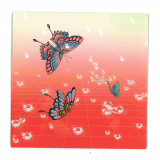
Peggy Gou returns with 'Nabi' - her first single in over two years and the follow up to 2019's global crossover, 'Starry Night'.
'Nabi' is an incredible piece of slow-burning, 98bpm electronic pop, inspired by 80s synth classics, the piano pieces of renowned composer Erik Satie and the 80s and 90s Korean songs Gou’s mother used to play at home during her childhood. Showcasing a less familiar side of Gou’s diverse sound and influences, it retains the hallmarks of her unique take on electronic music; at once both nostalgic and totally modern.
‘Nabi’ - which translates as ‘Butterfly’ - is also Gou’s first ever vocal collaboration, as she teams up with fellow Korean sensation OHHYUK, the lead singer and guitarist in Hyukoh. It’s set to build on the widespread acclaim for her 2020 production collaboration with Baltimore techno legend Maurice Fulton (on his ‘Jigoo’ release for Gudu), ‘Nabi’ is the first of two songs Peggy Gou will release over the coming months.
While the forthcoming follow up is set to dial up the tempo, kicks, 808’s and 909s to soundtrack a summer where we can all (hopefully) dance together in our thousands again, ‘Nabi’ is very much the sound of now – a lowkey anthem fuelled by feelings of hope, freedom and positivity for what’s to come.
Commandez maintenant et nous commanderons l'article pour vous chez notre fournisseur.

Active since the late 1990s, Brussels-based Frenchman Sylvain Chauuveau is an unsung pioneer of a now burgeoning scene and was making elegant post-classical compositions years ahead of celebrated current peers like Max Richter, Nils Frahm, Olafur Arnalds, Dustin O’Halloran and Hauschka.
Now reissued in a remastered, first-ever vinyl edition, ‘Simple’ was originally released in 2012 as a CD collection of Sylvain’s works for cinema - a set of out-of-print, rare, and unreleased tracks composed between 1998-2010 that span stark / minimal electronic drones, processed guitar explorations, chamber pieces, solo piano and two 40-piece string orchestra recordings.
Chauveau’s work here sounds as fresh and relevant today as it did back then and its author is long overdue some recognition / reappraisal of his role in helping prepare the ground for today’s scene. His music has been praised by numerous peers - Ryuichi Sakamoto listed ‘Nocturne Impalpable’ as one of his Top 5 records; Hauschka and Peter Broderick have admitted his influence and Jóhann Jóhannsson, Adam Wiltzie (A Winged Victory / Stars Of The Lid) and Fennesz have also praised his work.
“Occupies the twilit area where downbeat, muted experimental electronic music melts into downbeat, muted chamber music” - Pitchfork “One of the most brilliant minds of French Music” - Les
InRocks
For fans of Max Richter, Olafur Arnalds, Nils Frahm, Johann Johannsson, Erik Satie, Arvo Pärt, Labradford, Mogwai, Peter Broderick and Hauschka.
Commandez maintenant et nous commanderons l'article pour vous chez notre fournisseur.
