Search:used

Styles
All
Various - When There Is No Sun Vol. 1

From Detroit’s techno resistance to Berlin’s elastic minimalism, Lusaka’s ancestral futurism to Chicago’s house communion, When There Is No Sun is a recording project, uniting visionary electronic music producers to reimagine the universe of Sun Ra. One of the most radical musical pioneers of the 20th century, Sun Ra used jazz, electronics, poetry, and performance to expand the possibilities of sound, identity, and imagination. Commissioned by Omni Sound and curated by Ricardo Villalobos, the series brings together Underground Resistance, Chez Damier & Ben Vedren, Calibre, A Guy Called Gerald, She Spells Doom, Barış K, and Ricardo Villalobos himself. Drawing from Omni Sound’s recordings of Living Sky by the Sun Ra Arkestra and My Words Are Music of Sun Ra’s poetry, the producers pull fragments of sound and text into their own creative orbits, passing through the portal that Sun Ra opened into a realm where the impossible is possible. Saul Williams, Tunde Adebimpe, Mahogany L. Browne, Abiodun Oyewole, Anthony Joseph and Tara Middleton are the featured voices that turn rhyme into rhythm and revelation into resistance Rooted in deep reverence for Sun Ra’s legacy, yet reaching forward as a living, generative force, When There Is No Sun is not a tribute but a continuum, balancing the pulse of electronic music with the spirit of experimentation, embodying Sun Ra’s promise that ‘there are other worlds’ if you are willing to see them.

out of Stock

Order now and we will order the item for you at our supplier.


Last In: 36 days ago
Various - When There Is No Sun Vol. 2

From Detroit’s techno resistance to Berlin’s elastic minimalism, Lusaka’s ancestral futurism to Chicago’s house communion, When There Is No Sun is a recording project, uniting visionary electronic music producers to reimagine the universe of Sun Ra. One of the most radical musical pioneers of the 20th century, Sun Ra used jazz, electronics, poetry, and performance to expand the possibilities of sound, identity, and imagination. Commissioned by Omni Sound and curated by Ricardo Villalobos, the series brings together Underground Resistance, Chez Damier & Ben Vedren, Calibre, A Guy Called Gerald, She Spells Doom, Barış K, and Ricardo Villalobos himself. Drawing from Omni Sound’s recordings of Living Sky by the Sun Ra Arkestra and My Words Are Music of Sun Ra’s poetry, the producers pull fragments of sound and text into their own creative orbits, passing through the portal that Sun Ra opened into a realm where the impossible is possible. Saul Williams, Tunde Adebimpe, Mahogany L. Browne, Abiodun Oyewole, Anthony Joseph and Tara Middleton are the featured voices that turn rhyme into rhythm and revelation into resistance Rooted in deep reverence for Sun Ra’s legacy, yet reaching forward as a living, generative force, When There Is No Sun is not a tribute but a continuum, balancing the pulse of electronic music with the spirit of experimentation, embodying Sun Ra’s promise that ‘there are other worlds’ if you are willing to see them.

out of Stock

Order now and we will order the item for you at our supplier.


Last In: 36 days ago
Christina Kubisch - TUNING

Christina Kubisch

TUNING

12inchFAIT-41LP
Faitiche
17.04.2026

Faitiche welcomes a new artist: Christina Kubisch belongs to the first generation of sound artists. Her practice ranges from performances, concerts, to works with video and visual art, but she is best known for her sound installations and electro-acoustic compositions.

TUNING brings together three pieces by Christina Kubisch from different periods of her oeuvre. What they have in common is the way they transform sound phenomena originally considered “non-music” into compositions.

Jan Jelinek: Gaming in Silence (2024) is the most recent work on this compilation. It’s a collage of electromagnetic waves, voice, and abstract sound textures. How did this combination come about?

Christina Kubisch: Gaming was commissioned as a fixed-media composition for the Sound Dome at ZKM Karlsruhe. Since Resonances: The Electromagnetic Bodies Project (2005), I’ve been making recordings in the old and new server rooms at the ZKM and in their permanent collection of historical computer games. Computer games like Asteroids (Atari, 1979) and Poly-Play (VEB Polytechnik, 1986) have specially generated analogue electromagnetic waves that interest me in particular on account of their density, rhythms and textures. I originally studied painting and to me the work of composition often feels like painting an abstract picture. I alter my source material as little as possible, layering and overlapping until a distinctive sound space emerges. In recent pieces, I sometimes combine magnetic waves with field recordings or live instruments. In Gaming it’s my recording of a Chinese song about silence.

JJ: Two persons walking through a street in Madrid (2004) is a recording from your Electrical Walks series. Here we should give a brief explanation of one of your best known works: participants in an Electrical Walk move through public spaces wearing prepared headphones that allow them to receive electromagnetic waves from their surroundings – for example from security gates, ATMs or neon signs. They discover a situation that normally is inaudible to the human ear and they can actively shape it by choreographing their movements. I really admire this piece, not least because there’s no clear dividing line between participants and artist. What exactly do we hear in Two persons walking through a street in Madrid (2004)?

CK: With this early work, I wanted to understand what is heard by people participating in an Electrical Walk in the same place but moving in different ways. The Spanish composer Miguel Alvarez-Fernàndez and I set off from opposite ends of a major shopping street in Madrid, met briefly in the middle, and then continued to the end. We both recorded our walks and I then layered them over one another. You might call it a work of electromagnetic conceptualism.

JJ: Diapason (2009 version) is an installation that plays a composition based on sounds from fifteen tuning forks. This setting is audible in the recording: there’s no dramatic arc, no beginning or end – instead, it recalls a piece of aleatoric music focussing on the decay phase. How did you come to make this work and could you tell us something about your compositional method?

CK: Diapason is part of a series of three pieces that deal with “non-instruments” or instruments that no longer exist: electrical mine bells used to send signals to the workers underground; a historical glass harmonica originally used for medicinal purposes; and tuning forks that were used by doctors to test people’s hearing. All of these methods are no longer in use. The sound of the tuning forks, audible only if held close to the ear, was recorded at the electronic studio at Berlin’s Technical University in such a way that even their decay remained audible. The frequencies range between 64 and 2048 Hertz and they can be adjusted at micro-intervals using small movable weights. The sequence and the duration of the pauses are dictated by chance and were not defined in advance. The 2009 version was created for an installation in the historic Holy Cross Church (Korskirken) in Bergen. Visitors could enter and leave the space at any time, deciding for themselves where and for how long they wished to listen to the sounds played back over an array of small loudspeakers placed on the floor of the apse.

Credits:

Gaming in Silence: commission of the ZKM/Hertzlab, Karlsruhe 2023
elektronic sound processing: Tom Thiel
sound engineering and mixing: Eckehard Güther

Diapason: produced at Elektronisches Studio of TU Berlin
rearrangement: Eckehard Güther

Christina Kubisch, published by Edition Christina Kubisch / Random Musick Publishing

image front: Transitionen 2021 by C. Kubisch, sonagrams of electronic waves (courtesy: Galerie Mazzoli Berlin)
image back: Diapason Tuning Fork, property of Folkmar Hein, Photo: Archiv Christina Kubisch

design by Tim Tetzner
mastered by Giuseppe Ielasi
Thanks to Miguel Álvarez-Fernández, Folkmar Hein, Dominik Kautz and Mario Mazzoli

pre-order now17.04.2026

expected to be published on 17.04.2026

PENNY ARCADE - DOUBLE EXPOSURE

PENNY ARCADE

DOUBLE EXPOSURE

12inchTR6071
Tapete
17.04.2026
  • Regrets
  • Memory Lane
  • Worst Trip
  • You've Got The Key
  • Everything's Easy
  • Early Morning
  • Rear View Mirror
  • Time
  • Instrumental No.1
  • We Used To Be Good Friends
  • Mercy
  • Riverside Drive

Double Exposure ist das neue Album des britischen Multiinstrumentalisten James Hoare, bekannt aus Bands wie Veronica Falls, Ultimate Painting und Proper Ornaments. Unter seinem Solo-Pseudonym Penny Arcade präsentiert er ein Werk, das noch roher, spontaner und experimenteller klingt als sein Debüt Backwater Collage (2024). Die Songs entstanden größtenteils schnell und intuitiv - aufgenommen auf einer 16-Spur-Bandmaschine, mit alten Drumcomputern, schwebenden Orgeln und reduzierten Arrangements. Gitarre ist erstmals nicht das zentrale Element, auch wenn Stücke wie "Regrets" zeigen, wie eindringlich Hoares Gitarrenarbeit bleibt. Das Album bewegt sich zwischen psychedelischen Folk-Momenten, Lo-Fi-Experimenten, souligen Anklängen und analogen Klanglandschaften, die an die Offenheit von Syd Barrett oder die Tape-Ästhetik von White Fence erinnern. Songs wie "Worst Trip", "Rear View Mirror" oder das träumerisch-verrauchíte "We Used To Be Good Friends" wirken wie spontane Momentaufnahmen - unfertig im besten Sinne, atmosphärisch dicht und voller subtiler Melodien. Double Exposure ist ein Album der Stimmungen und Schichten: ein intuitiver, unprätentiöser Blick in Hoares kreative Innenwelt, geprägt von Umbrüchen, Ortswechseln und der Schönheit des Ungefilterten.

pre-order now17.04.2026

expected to be published on 17.04.2026

ISAO SUZUKI - STRING BAND (1978)
  • A1: Nica's Dream
  • A2: Avenue
  • B1: Greensleeves
  • B2: Lamento
  • B3: Sheila's Song

This album was recorded by Isao Suzuki with an international string band lineup featuring Hank Jones, Roy Haynes, and Ron Carter. Widely supported by jazz fans both in Japan and abroad, it remains highly sought after and continues to command strong popularity on the used market.

Bass (Piccolo Bass): Isao Suzuki
Bass: Ron Carter
Piano: Hank Jones
Drums: Roy Haynes

pre-order now17.04.2026

expected to be published on 17.04.2026

Various - Tchic Tchic: French Bossa Nova 1963-1974  Colored Edition LP 2x12"
  • A1: Les Masques - Il Faut Tenir (1969)
  • A2: Isabelle Aubret - Casa Forte (1971)
  • A3: Christianne Legrand - Hlm Et Ciné Roman (1972)
  • A4: Jean Constantin - Pas Tant D'chichi Ponpon (1972)
  • A5: Billy Nencioli & Baden Powell - Si Rien Ne Va (1969)
  • B1-: Marpessa Dawn - Le Petit Cuica (1963)
  • B2: Jean-Pierre Sabar - Vai Vai (1974)
  • B3: Sophia Loren - De Jour En Jour (1963)
  • B4: Isabelle - Jusqu’à La Tombée Du Jour (1969)
  • B5: Sylvia Fels - Corto Maltesse (1974)
  • C1: Frank Gérard - Comme Une Samba (1972)
  • C2: Ann Sorel - La Poupée Des Favellas (1971)
  • C3: Charles Level - Un Enfant Café Au Lait (1971)
  • C4: Andrea Parisy - Les Mains Qui Font Du Bien (1970)
  • C5: Audrey Arno - Quand Jean-Paul Rentrera (1969)
  • C6: Aldo Frank - T’as Vu Ce Printemps (1970)
  • D1: Christianne Legrand - Cent Mille Poissons Dans Ton Filet (1972)
  • D2: Clarinha - Lemenja (1970)
  • D3: Hit Parade Des Enfants - Aquarela (1976)
  • D4: Jean-Pierre Lang - Tendresse (1965)
  • D5: Magalie Noël - Une Énorme Samba (1970)
  • D6: Françoise Legrand - La Lune

Ever since the late 1950s bossa-nova revolution, Brazil’s influence on French music has been undeniable. Pierre Barouh, Georges Moustaki and a vast array of lesser known artists, all made the Musica Popular Brasileira (MPB) an axis of promotion at the service of a cool and metaphysical, modern and mixed Brazilian lifestyle. Some were seduced by the poetic languors of the bossa, some were looking for fun, and others just loved the American hybridization of jazz-bossa, jazz-samba.


What is bossa nova? One of its creators, Joao Gilberto said: "Its style, cadence, everything is samba. At the very start, we didn't call it bossa nova, we sang a little samba made up of a single note - Samba de uma nota so .... The discussion around the origins of bossa nova is therefore useless”. It is nevertheless useful to remember that these magnificent Brazilian songs, which the guitarist describes as samba, were shifted and balanced around improbable chords. "I like things that lean, the in-betweens that limp with grace," said Pierre Barrouh, quoting Jean Cocteau.


With emotion, arrangements for violin and supple guitar licks, bossa nova rapidly changed. A transformation that can be heard in the Tchic, tchic, French Bossa Nova 1963-1974 compilation, the result of a cultural reappropriation, which traveled through the United States and supplemented itself in France.

A musical revolution that has remained significant, bossa nova was born in Rio. From 1956 to 1961, Brazil lived through its golden years. In five years, the country had invented its modernist style. Elected president in 1956, Juscelino Kubitschek de Oliveira, an elegant man with a broad forehead, brandished a promising slogan: "Fifty years of progress in five years". He quickly got to work. Not worried about increasing debt, he launched the project for a new federal capital, Brasilia, designed by the communist architect Oscar Niemeyer. Volkswagen opened state-of-the-art factories and created the “fusquinha”, the Beetle. In Rio, the Vespa made its first appearance. The Arpoador Surf Club crew run into the “girl” from Ipanema, Helô Pinheiro - the tanned garota ("chick"), between a flower and mermaid, who at 17 walked by the Veloso bar, where the fiery author and composer, Tom Jobim and Vinicius de Moraes, were getting drunk on whiskey. From then on, bossa symbolized cool.

In 1958, Joao Gilberto recorded Chega de Saudade, which the directors of Philips denied, calling it "music for fagots". The marketing director, who believed in it, secretly pressed 3000 78-inch vinyls and distributed them at schools around Rio, creating a tidal wave.

American jazzmen then took over. In particular, trumpeter Dizzy Gillespie and guitarist Charlie Byrd. In November 1962, the Brazilian Ministry of Foreign Affairs funded a "Bossa-Nova" concert at Carnegie Hall in New York, inviting the genre’s pioneers. Unprepared, the show soon turned to disaster. But the troupe was invited to the White House by Jackie Kennedy. The first lady loved "the new beat" and in particular Maria Ninguem, a song by Carlos Lyra, later covered by Brigitte Bardot.

In Brazil, the 1964 military coup quickly ended this euphoria. The destructive atmosphere that ensued pushed many Brazilian musicians to leave, if not to exile. Thus, Tom Jobim, Sergio Mendes and Joao Gilberto arrived to the United States. In New York, Joao Gilberto met saxophonist Stan Getz. At the time, he was married to the Bahianese Astrud Weinert Gilberto, who had a German father. She had never sung before, but she knew how to speak English. Getz therefore asked her to replace her husband on The Girl From Ipanema. The Getz/Gilberto record with Tom Jobim on piano, was released in March 1964. Phil Ramone, the "pope of pop" was in charge of sound.

Bossa nova arrived in Paris through the classic “guitar-voice” channel (Pierre Barouh, Baden Powell, Moustaki…) But France loved jazz and Paris had already welcomed its American contributors. All these good people were to pass through Saint-Germain-des-Prés. The cabaret l'Escale became the Mecca of Latin American sound where one could find Pierre Barrouh and his friends, such as the Camara Trio, samba-jazz aces, whose only record was published by the Saravah label. With a band strangely called Les Masques (a band that included Nicole Croisille and Pierre Vassiliu, among others), the Camara Trio recorded an interesting Brazilian Sound, including the track Il faut tenir which is present on this tasty compilation of rarities.

Other enlightened musicians can also be found on the compilation, such as Jean-Pierre Sabar (songwriter for Hardy, Auffray, Leforestier ...) and the French pop rock organist Balthazar. In 1975, Sabar recorded Aurinkoinen Musiikkimatka on a Finnish label, which featured the crazy Vai, Vai, included on this record. We are now following the footsteps of Brazilian electronic musicians such as Sergio Mendes, Eumir Deodato or Marcos Valle who created funk and disco sounds on their keyboards and synthesizers. A style that influenced Véronique Sanson when she wrote Jusqu’à la Tombée de la nuit in 1969 for Isabelle de Funès, the niece of Louis and a great friend of Michel Berger - Sanson did end up singing this track on her 1992 Sans Regret record.


The pinnacle of exoticism and travel, Sylvia Fels’ Corto Maltese includes bongos, sea mist and ocean sounds. The title was taken from Jacky Chalard’s concept album written in 1974, Je suis vivant, mais j’ai peur (I am alive, but I am scared), based on Gilbert Deflez’s science fiction novel.


However, bossa nova extended the scope of popularity. "In the 1970s, I was a fan of Sergio Mendes, Getz / Gilberto. I fell in love with this music that I knew because I had been an orchestral singer, " explained Isabelle Aubret, who in 1971 delivered a composite record of covers by the very funky Jorge Ben, Orfeu Negro, Tom Jobim, Vinicius de Morais and Jean Ferrat. "I recorded this album for Meys Records in Paris, far from Brazil, with wonderful musicians, François Raubert, Roland Vincent, Alain Goraguer...". The latter wrote the arrangements for Casa Forte, a very percussive title borrowed from Edu Lobo, one of the initiators of the bossa who spent time in California. "Jazz and bossa came together and produced very rhythmic music. I love singing, it allows me to dream, to have fun, to feel a high on stage, and these songs brought me joy, made me swing, my singing felt like a dance.”


The world tours of French singers and their desire for the tropics, often brought them to Rio with its hills, forests, caipirinhas and tanned bodies. There are surprises though, like this Iemenja (Iemenja is the goddess of the sea in the Afro-Brazilian candomblé religion). Not unlike the composer and musician Jean-Pierre Lang, based in Sao Paulo, Claire Chevalier taught Brazil to Brazil. In 1970, the singer and painter published a 45-inch vinyl, Mon mari et mes amants (My husband and my lovers), under the improbable pseudonym of Clarinha (little Claire). She was then living in Rio, with her husband, Joël Leibovitz, who founded a band called Azimuth, and who owned a record label specialized in "sambas enredos" songs for samba school parades.


For its B side, she asked Pierre Perret to come up with lyrics for a song composed by Carlos Imperial: "Oh goddess of the sea, o goddess Iemenja, I bring a white rose to adorn your long hair ..." . "Perret came to see us, and we had fun, remembers Joël Leibovitz. We wrote Lemenja for fun, we recorded it at the Havaí studio, behind the Central do Brasil the central station. Erlon Chaves, the arranger who worked with Elis Regina, joined us" adding his share of Afro-Brazilian percussions and funky brass to the mix.

There is a common misunderstanding in Franco-Brazilian history: that bossa, admittedly hedonistic, is perceived as funny, even though the poets who wrote the texts are often philosophizing on the human condition. Its French interpreters pull it towards a carnival inspired universe, far removed from its fundamental essence. Thus, Jean Constantin covered the famous Samba da minha terra, an ode to the art of samba written by the classic Bahian composer Dorival Caymmi, renaming it with the enticing title of Pas tant de tchi tchi pompon: "On your pier there is no tchi tchi / when you arch your back, you know everything is alright ”(lyrics by Gérard Calvi). This expedited bossa aims for the absurd, but retains a certain elegance.

Indeed, Jean Constantin was not an idiot, the rather large man had a huge mustache and liked fantasy, (Les pantoufles à papa, Le pacha, inspired by cha-cha-cha-cha, salsa and jazz) but he was also the lyricist of Mon manège à moi interpreted by Edith Piaf, the composer of Mon Truc en plume by Zizi Jeanmaire and the soundtrack of François Truffaut’s 400 Blows. Le Poulpe, published in 1970, from which this bossa is extract, was arranged by Jean-Claude Vannier, an accomplice of Serge Gainsbourg’s Melody Nelson. In short: "There is enough of samba / By looking at the parasol / Because my poor cabeza / Is going to die in the sun".

Even the American actress Marpessa Down, who was at the heart of the bossa nova revolution with her role as Euridyce in Marcel Camus’ film Orfeu Negro, winner of the 1959 Cannes Palme d'or, fed the clichée with Je voudrais parler au petit cuica - "Tell me how you manage to always make people want to dance / It's true, I must admit that I cannot resist your magic" - in consequence, once can hear the cuica, a little drum inherited from the Bantu.


But bossa nova had many angles. Societal, of course, pushing actresses who were symbols of women's liberation like Brigitte Bardot, Jeanne Moreau, or Sophia Loren to engage in the exercise of accelerated bossa. In February of 1963, Sophia Loren made a record in French in Rome, Je ne t'aime plus, featuring the song De jour en jour, a bossa written by two Italians, Armando Trovajoli and Tino Fornai, which was released a little later by Barclay. Bossa accompanied the 1960s, a decade of moral liberation. Ann Sorel, who interpreted La Poupée des favellas, caused a sensation with L’amour à plusieurs, a provocative song written by Frédéric Bottom and Jean-Claude Vannier. As for the actress Andrea Parisy, she displayed her bourgeois cheekiness in Marcel Carné's Les Tricheurs before interpreting Les mains qui font du bien. And Magalie Noël, the friend of Boris Vian, who sung Johnny fais-moi mal, was hired to sing Une énorme Samba, composed by Alain Goraguer (arranger to Gainsbourg, Bobby Lapointe and Jean Ferrat) with lyrics by Frédéric Botton.

But in the end, of what wood is bossa nova made of? The answer is given by Christianne Legrand, daughter of Raymond the conductor, and sister to Michel the composer: "With me, with jà" - jà means "immediately" in Portuguese. In 1972, the singer, an expert in vocal jazz and a member of the Double Six, published Le Brésil de Christianne Legrand. Two songs included on the Tchic Tchic compilation that demonstrate how bossa, jazz, funk, rock, etc. work like a swiss army knife: the music is used to denounce broken systems, or miracles, HLM et ciné roman, Cent mille poissons dans ton filet, two songs from the O Cafona soundtrack, a successful telenovela broadcast, at the time in black and white, on TV Globo. The first was adapted in French by the fighter and friend of the Legrand tribe, Agnès Varda. The second is content with a play on words, jostling them into a summer fun.


Véronique Mortaigne

pre-order now17.04.2026

expected to be published on 17.04.2026

PETER KARP - JERSEY TOWN

PETER KARP

JERSEY TOWN

12inchMMD199
Make My Day
17.04.2026
  • 1: Mojo Jam (Special Guest Dennis Gruenling)
  • 2: Baby Hold Tight
  • 3: House Full Of Love
  • 4: That Smile (Special Guest Sue Foley)
  • 5: The Man I Used To Be
  • 6: Faith
  • 7: Tooth And Nail (Special Guest Rick Vito)
  • 8: Fate Is A Train
  • 9: This Road (Special Guest Rick Vito)
  • 10: What Has Happened Here?
  • 11: Without You (Special Guests John Ginty And Mark Johnson

Peter Karp gehört zu den unverwechselbaren Stimmen der amerikanischen Americana-, Blues- und Roots-Szene. Seine Musik verbindet kraftvolle Emotionen, feines Storytelling und eine tiefe Verwurzelung in den Klangtraditionen des amerikanischen Südens. Aufgewachsen zwischen New Jersey, New York City und Alabama, entwickelte er früh ein Gespür für die Energie urbaner Songkultur ebenso wie für die Ursprünglichkeit des Blues. Künstler wie Robert Johnson, Muddy Waters oder Howlin" Wolf prägten ihn ebenso wie die poetische Kraft von John Prine und die erdige Direktheit von Joe Ely. Karp schreibt Songs, die das Leben so zeigen, wie es ist: ehrlich, rau, humorvoll und voller beobachteter Details. Seine markante Stimme, sein expressives Gitarren- und Pianospiel und sein Gespür für melodische Hooks machen ihn zu einem der respektiertesten Songwriter seines Genres. Kritiker loben seine Fähigkeit, Blues, Folk, R&B und Americana zu einem eigenen, zeitlosen Stil zu verbinden. Peter Karp steht für authentische amerikanische Musik - tiefgründig, mitreißend und voller Charakter. Ein Künstler, der die große Tradition des Songwritings fortführt und gleichzeitig seine ganz eigene Handschrift setzt.

pre-order now17.04.2026

expected to be published on 17.04.2026

The Last Ten Seconds of Life - The Dead Ones
  • 1: The Dead Ones
  • 2: Make It To Heaven
  • 3: Rat Trap
  • 4: Freak Reflection
  • 5: 1-800-Do You Want To Die?
  • 6: Stiletto
  • 7: Stereo
  • 8: Dollar To A Dime
  • 9: Corruption Concerto
  • 10: Xxxxxxxxxx

Intense and intensely personal, The Dead Ones marks The Last Ten Seconds of Life’s Metal Blade label debut. 10 original tracks of pulverizing deathcore produced by Carson Slovak and Grant McFarland of Pennsylvania’s Atrium Audio. In creating The Dead Ones, “everyone took what we learned from the past two releases and assembled what we thought would bring out the best of us from song structure, tonality of instruments, the mix/master, and the lyrical themes,” furthers McLaughlin.

The end result reflects a more personal and human experience rather than the philosophical and fictional approach used on earlier releases. The Dead Ones follows 2024’s acclaimed No Name Graves in the theme of death and rebirth, but in contrast, is directly focused on the human experience and the band members’ own struggles.

pre-order now17.04.2026

expected to be published on 17.04.2026

LIS FEATURING VERONIKA RUD WESSBER - IN THE WAKE OF BLUE
  • 1: The Promise
  • 2: Longing
  • 3: In The Wake Of Blue
  • 4: Flux
  • 5: Vapor
  • 6: When Birds Flock
  • 7: The Endless Thread
  • 8: The Quiet Edge
  • 9: Shadows In Bloom

April Records proudly presents the new album from Danish trombonist and composer Lis Wessberg. Her most personal album to date, In The Wake of Blue is a song-driven work exploring transience, love, and transformation. Expanding her writing while remaining rooted in her distinctive instrumental voice, Wessberg creates an intimate musical landscape where lyric, melody, and texture carry equal weight. Wessberg has established herself as a leading voice on the European jazz scene through her band Yellow Map and a series of acclaimed releases on April Records. Her previous album, Twain Walking (2024), marked her first step into English-language songwriting and earned a Danish Music Award nomination in 2025 for the track Behind the Walls. In The Wake of Blue develops this direction further. The album draws on images from nature - sea, tides, clouds, mist, and birds - used as emotional anchors rather than abstractions. These elements frame songs that move from uncertainty and loss toward openness, connection, and renewal. The title reflects this arc: "blue" as melancholy, depth, and memory, and what emerges in its wake. Vocalist Veronika Rud is central to the album"s sound, bringing vulnerability and clarity to the songs. Rather than a traditional singer-led project, the music unfolds as a dialogue between voice and trombone, with Wessberg"s warm, airy tone mirroring and extending each song"s emotional core. At times the two move in close unison; elsewhere, they diverge and reconnect. The core ensemble - Steen Rasmussen (piano and keys), Lennart Ginman (bass), and Jeppe Gram (drums) - provides a responsive, understated foundation, while string quartet Live Strings appear on two tracks, expanding the ensemble"s depth and resonce. In The Wake of Blue offers a quietly assured statement from an artist continuing to refine a voice that speaks as clearly through brass as it does through words.

pre-order now17.04.2026

expected to be published on 17.04.2026

BCUC - The road is never easy

BCUC – Bantu Continua Uhuru Consciousness – have been channeling the spirit of Soweto for over twenty years. Indigenous funk, hip-hop consciousness, and punk rock energy fused into something utterly original and deeply rooted. Their mantra: Music for the people, by the people, with the people. From humble beginnings rehearsing in a shipping container, a stone's throw from the church where Desmond Tutu organized the escape of the most wanted anti-Apartheid activists, they kept believing in their dream of self-empowerment. Today they command festival stages worldwide: Glastonbury West Holts, Roskilde, Afropunk Brooklyn, WOMAD, Fusion, Sziget, FMM Sines, Beaches Brew, Boomtown, Colours of Ostrava, Couleur Café – to name just a few. In 2023, BCUC were honoured with the prestigious WOMEX Artist Award, an accolade usually reserved for more established artists, in recognition of their fearless work and transcendent live performances.

THE ROAD IS NEVER EASY

The Road Is Never Easy is BCUC's fifth album and their debut on Outhere Records. On this new offering, BCUC take listeners on another Afro-psychedelic journey into the soul of Soweto. It feels like a gospel sermon colliding with a punk concert, "guaranteed to touch untapped corners of your soul" (OkayAfrica). BCUC's music is deeply rooted in history and echoes the voices of the ones who came before. The road was never easy for the people of Soweto who originally came to work in the mines of Egoli, the City of Gold, Johannesburg. When apartheid finally ended after a long struggle, it was hoped that life would improve. But more than 30 years later, many of those initial hopes and dreams are still waiting to be fulfilled. This album is about that struggle. The album contains 10 brand new songs – a record for BCUC, whose previous albums featured an average of 3 songs. It represents the culmination of more than two decades of performing together and building a reputation as a powerful live act. These ten songs encapsulate that same live energy, each one building gradually and drawing you into BCUC's Afro-psychedelic stream of consciousness. It's a seismic tour de force through life in Soweto today. Songs like Amakhandela (Breaking All the Chains) connect history to daily life: "How is this precious metal inflicting so much pain in us," sing BCUC, "this government has been telling us we are free, but we don't benefit from being free." The album also talks about all the hopes and dreams that remain: "I have too many wishes and dreams in my head," BCUC sing in Um duma khanda, "I think I am losing my mind". The album ends with the soothing Matla a rona ke Bophelo, "our strength is life", praising the spirits and thanking the elders for protection. The Road Is Never Easy is about the harsh reality of life in Soweto, where "people always carry heavy loads". BCUC are street poets trying to deal with that burden: sometimes revolutionary, sometimes soothing, but always hopeful and compassionate. "When you are from Soweto you can't retreat nor surrender." (Sebenzela)

RECORDING

The album was largely recorded in Munich, Germany during tour breaks over two sessions, each three days long. It took place in a small studio located in a German WW II bunker converted into rehearsal spaces. The songs were recorded in one take altogether in one room, with only a few overdubs added, mainly backing vocals, by BCUC at Fourways studio in Johannesburg. BCUC have created their own distinctive way of writing, or rather, finding and creating their songs. The recording process is like an improvised live performance. They bring their ideas into a zone where the music, the rhythm and the spirits take over until the song starts to form. In this Afro-psychedelic zone BCUC create their unique poetry that feeds on the dreams still dreamt, the hopes, the fears and the temptations lingering everywhere. BCUC's songs need to breathe and time to build. The right take was the one when the song took over, and just like their live performances, no one knew beforehand where the song would take them. During the recording, BCUC just let it all flow out: inner turmoil, cries of rebellion, but also resilience and a search for healing, love, unity and compassion. You don't have to be from Soweto to feel the deep meaning and impact of this music. In these times of so much hate and division, BCUC are like a campfire for people to gather around.

PRODUCTION & ARTWORK

"BCUC have a unique magic," says Outhere's Jay Rutledge, who produced the album. "It blew our minds. It's like punk and pure gospel at the same time. Their music can make you dance and it can make you cry, all at the same time. And when the song is over, you feel you're not alone in this world anymore. We felt compelled to do this." The album cover is based on a matchbox design, matches being a common household item in South Africa even today. "These were the matches people used to burn government buildings and cars," explain BCUC. Little messages, addresses, or phone numbers used to be scribbled on the back of these boxes; each one a reminder of the strength, resilience, and resistance that once drove the struggle for freedom in Soweto. BCUC keep this flame burning. The Road Is Never Easy is a heavy spiritual road trip, a deep dive into the subconscious of Soweto and a quest for truth, justice and sanity in this crazy world. BCUC tackle the harsh realities of the voiceless, guided by the spirit world of their ancestors. Rather than reinforcing stereotypes of poverty, BCUC's portrayal of Africa is one rich in tradition, rituals and beliefs. "We bring fun and Afro-psychedelic fire from the hood," says vocalist Kgomotso Mokone.

out of Stock

Order now and we will order the item for you at our supplier.


Last In: 28 days ago
Hoavi - Architectonics LP

Hoavi

Architectonics LP

12inchPEAK28
Peak Oil
13.04.2026

Returning to Peak Oil for a second expedition, veteran Russian producer Kirill Vasin, aka Hoavi, explores an untrodden path on 'architectonics', drawing from his lifelong appreciation of Indonesian gamelan musics to mastermind a rhythmelodic hybrid sound that's sinuous, subtle and remarkably dubby. Over the last three and a half years, Vasin has used the music's methodologies and rhythmic forms to evolve his existing processes and signatures and transform his musical philosophy. To start the exercise, he knew he needed percussion, so used his phone and a contact microphone to pick up nearby sounds, drumming on various tables, railings, empty glasses and other objects to create a library of textured, tonally complex percussive sounds. But the work wasn't done yet - in fact, it was just the beginning of a long process of trial and error: Vasin created two full versions of the album before 'architectonics' was finished.

There are still echoes of the chrome-plated sci-fi atmospheres and complex, stuttering beatscapes that underpinned 2021's 'Invariant', but 'architectonics' asks very different questions, prompting fresher, more innovative responses. Leaning on his bank of organic percussive sounds, Vasin is able to concoct a tactile aura that he fills with eerie fluctuating repetitions that shift subtly, sometimes imperceptibly. The cavernous reverb and booming bass that supported his last few albums is still present, now employed as scaffolding for different architectures: skittering sequences and ornamented overlapping phrases that owe as much to Steve Reich's hallowed minimalist compositions as they do to Indonesian traditional forms. Lulling, almost hypnotic tessellations appear like fractals on the polished surfaces, morphing from jazz to techno and dub while retaining gamelan's haunting xenharmonic resonances and Vasin's concept becomes crystal clear. 'architectonics' isn't an attempt to make a gamelan album, it's Vasin's way of developing his own artistic process by looking far beyond the traditional boundaries of electronic music.

out of Stock

Order now and we will order the item for you at our supplier.


Last In: 43 days ago
CITY SAINTS - GUNS OF GOTHENBURG
  • 1: United We Stand
  • 2: Fuck The Upper Class
  • 3: P.o.l.i.c.e
  • 4: Life Through A Stereo
  • 5: Kids Of The Street
  • 6: Boot Up Your Ass
  • 7: Mr Greed
  • 8: Passa Dig!
  • 9: Comin' Home
  • 10: Street Punk Bop
  • 11: Praise That Working Man
  • 12: Scum
  • 13: Guns Of Gothenburg

Ready for 10 Years since "Guns of Gothenburg"? Here's the last collector's reissue of the "rare and sold out since years"-CS albums on vinyl! The Swedish Punkrockers often heard that their 3rd album "Guns of Gothenburg" is still their best release! The combination of riot street punk, pub rock anthems, some high energy glam-elements and melodic rough'n'tough Oi! was considered as an absolute genre-highlight 2016 "Guns of Gothenburg features 12 songs like "Kids from the Streets", "United we stand", "Fuck the Upper Class" or "Street Punk Bop", which is still the encore-highlight at every City Saints show Stefan, singer and bandleader about the new release: "When we released Guns of Gothenburg on CD back in 2016, we felt that the songs were good, but we soon began having doubts about the mix of the album. In 2017, when we were approached to release it on vinyl, we had it remixed and remastered with a new song order. This version never made it onto the streaming services, and the limited edition of the LP has been out of print for a long time. Now we're thrilled to present this re-release of Guns of Gothenburg. The original painting used for the cover has been dusted off and restored and the recording has been remastered once again to bring it closer to our original vision. We sincerely hope you enjoy it. "Guns of Gothenburg" comes on 180gr. strongly limited vinyl in classic black and two multi-colored variants (only 333 copies all in all)

pre-order now10.04.2026

expected to be published on 10.04.2026

CITY SAINTS - GUNS OF GOTHENBURG

Ready for 10 Years since "Guns of Gothenburg"? Here's the last collector's reissue of the "rare and sold out since years"-CS albums on vinyl! The Swedish Punkrockers often heard that their 3rd album "Guns of Gothenburg" is still their best release! The combination of riot street punk, pub rock anthems, some high energy glam-elements and melodic rough'n'tough Oi! was considered as an absolute genre-highlight 2016 "Guns of Gothenburg features 12 songs like "Kids from the Streets", "United we stand", "Fuck the Upper Class" or "Street Punk Bop", which is still the encore-highlight at every City Saints show Stefan, singer and bandleader about the new release: "When we released Guns of Gothenburg on CD back in 2016, we felt that the songs were good, but we soon began having doubts about the mix of the album. In 2017, when we were approached to release it on vinyl, we had it remixed and remastered with a new song order. This version never made it onto the streaming services, and the limited edition of the LP has been out of print for a long time. Now we're thrilled to present this re-release of Guns of Gothenburg. The original painting used for the cover has been dusted off and restored and the recording has been remastered once again to bring it closer to our original vision. We sincerely hope you enjoy it. "Guns of Gothenburg" comes on 180gr. strongly limited vinyl in classic black and two multi-colored variants (only 333 copies all in all)

pre-order now10.04.2026

expected to be published on 10.04.2026

CITY SAINTS - GUNS OF GOTHENBURG

Ready for 10 Years since "Guns of Gothenburg"? Here's the last collector's reissue of the "rare and sold out since years"-CS albums on vinyl! The Swedish Punkrockers often heard that their 3rd album "Guns of Gothenburg" is still their best release! The combination of riot street punk, pub rock anthems, some high energy glam-elements and melodic rough'n'tough Oi! was considered as an absolute genre-highlight 2016 "Guns of Gothenburg features 12 songs like "Kids from the Streets", "United we stand", "Fuck the Upper Class" or "Street Punk Bop", which is still the encore-highlight at every City Saints show Stefan, singer and bandleader about the new release: "When we released Guns of Gothenburg on CD back in 2016, we felt that the songs were good, but we soon began having doubts about the mix of the album. In 2017, when we were approached to release it on vinyl, we had it remixed and remastered with a new song order. This version never made it onto the streaming services, and the limited edition of the LP has been out of print for a long time. Now we're thrilled to present this re-release of Guns of Gothenburg. The original painting used for the cover has been dusted off and restored and the recording has been remastered once again to bring it closer to our original vision. We sincerely hope you enjoy it. "Guns of Gothenburg" comes on 180gr. strongly limited vinyl in classic black and two multi-colored variants (only 333 copies all in all)

pre-order now10.04.2026

expected to be published on 10.04.2026

Jessie Ware - Superbloom LP

Jessie Ware returns with her new album ‘Superbloom’ – the crescendo of her latest era – out 10th April via Island EMI Records.

Superbloom’ erupts into a glittering rush of Studio 54-inflected groove-pop. Expanding Ware’s increasingly euphoric body of work as she explores our shared craving for touch, pleasure, intimacy and connection.

The album features recent single ‘I Could Get Used To This’, hailed as her “ultimate entry into divahood” and the first track to fully capture the record’s assured, expansive spirit, carried by cascading strings and a sense of full-bodied release

pre-order now10.04.2026

expected to be published on 10.04.2026

Nathan Fake - Evaporator LP

Nathan Fake

Evaporator LP

12inchIF1104STD
Infine
10.04.2026

As Nathan Fake rises from the nocturnal subterranea and rave catharsis of his previous records, on Evaporator, he resurfaces into the domain of daylight, bringing a tangible sense of air rushing against your face, of big skies, and endless landscapes.

The idea of pop accessibility that trickled into 2023’s Crystal Vision is refracted here through the prism of sweeping ambient, deep electronica, and trance uplift. Evaporator is Fake’s idea of “airy daytime music”, with each track a different barometer reading across the album’s varying atmospheres, which range from vibrant sunbursts, bracing rainscapes, and fine mists of clement melodics. “It’s not overtly confrontational electronic club music,” states Fake. “It’s quite pleasant, it’s accessible. As I was progressing through making the tracklist, I called it a daytime album. It doesn’t feel like an afterparty album.” For the past decade Fake has been gingerly introducing collaborations with heroes and friends alike into his lone, idiosyncratic working process.

Border Community alumni Dextro AKA Ewan Mackenzie transmutes his ferocious drumming for Pigs Pigs Pigs Pigs Pigs Pigs Pigs into the blurred choral thump of ‘Baltasound’. ‘Orbiting Meadows’, meanwhile, is his second collaboration with Clark, an eerily idyllic duet where microtonal 18EDO piano clangs slowly twirl around wailing pads. Evaporator marks the junction point of old technology and ever fresh creativity for Nathan. The trusty “dinosaur” age software, particularly Cubase VST5, that has powered two decades of music is rarely updated. “I used to sort of feel a bit ashamed of using such old software, and then I kind of had an epiphany – that’s just how I work”, comments Fake. “That’s just how I play. I’m very fond of these old tools, and I get the most joy out of them, but now I’ve incorporated new technology too.” When an artist accumulates so much synergy with their instrument, music making becomes instinctual. By Fake’s account, much of Evaporator just fell into place. The album title arrived randomly in his head (“it felt completely perfect. Airy.”), ideas looped and developed until things locked into place and just felt right. ‘The Ice House’ is a fleeting glimpse of the sonic world he taps into in this creative state, its glassy FM synths built around a counterpoint between rough-hewn crystalline arpeggios and sparse yet gravitas-bearing bass. “That riff I just wrote out on the keyboard, I just played it forever and ever and ever.

The original track ended up being really short. Here you go, and it’s gone!” These unplanned channellings of sound call forth records from Fake’s past while he looks ahead, perhaps getting at the very essence of his musicianship. The opener ‘Aiwa’ (“the breeziest,” he muses) reminds of the introspection that characterised Providence, excited by the fire and grit of Steam Days’ textural experiments, its chunky slams and clatters surging into a flood of harmonic buzzing as they reach out for old wisdom. ‘Hypercube’ stampedes in a similar chronological confluence, infusing an incessant synth line reminiscent of the golden age of rave with the crackling, ecstatic energy of modern festival anthems. Like the vaporisation of liquid to particles, everything that Evaporator presents has a mutant desire to be amorphous. Sounds rarely settle; the irradiated garage beat of ‘Bialystok’ is pitched downwards to driving, rebounding effect, while ‘You’ll Find a Way’ warps static into shivering energy, cinematic synth strings building anticipation into a gradual gush of chords. This translates into a more expansive stereo field than Fake has explored before.


‘Slow Yamaha’ saves the wildest, most kinetic transformations for last with a cornucopia of crispy melodies and fried drums; a sibilance of cymbals on the left, a susurrus of shakers on the right, and kaleidoscopic lasers pulsing and fizzing all around. Evaporation culminating in pure excited atoms.

out of Stock

Order now and we will order the item for you at our supplier.


Last In: 47 days ago
Skeptical - Blimp LP

Skeptical

Blimp LP

12inchRUBI004
Rubi Records
09.04.2026

Ashley Tindall, AKA Skeptical, returns in peak form with Blimp EP — the fourth release on his Rubi Records imprint — delivering four meticulously crafted cuts of uncompromising drum & bass.

Opening with the title track, Blimp sets the tone with a deep, steppy wobbler that nods subtly to the title track from his second Rubi Records release, Capsize EP. All the signature Skeptical hallmarks are here: hypnotic, pared-back metronomic drums and shimmy-inducing, undulating subs that demand movement. Yet this time there's a noticeable shift — warm, underlying melodic pads bring an unexpected emotional depth. It's not dreamy, but it is more introspective than we're used to, showing another layer to his sonic palette.

So Good flips the script entirely. A dark, cinematic growler, it leans into ghosted vocal fragments and a futuristic film-noir aesthetic. Tense, claustrophobic rhythms and sinister textures create an unsettling atmosphere — tailor-made for those lights-out, pressure-heavy dancefloor moments.

Third comes the undeniable monster of the EP, Technology. Trademark "stink-face" Skeppiness is in full effect from the first bar. Disjointed sci-fi stabs and eerie pads collide with clinical, almost militaristic drum programming, all anchored by a devastatingly weighty bassline. Movement isn't optional — this is pure Skeptical, uncompromising and lethal.

Closing the EP is Bad Generation, a sound system–influenced weapon that finds Skeptical operating at his dubwise best. Fusing minimal D&B with heavyweight, roots-inspired rhythms is no easy task, but here it's executed with effortless authority. It's equally suited to shelling down a rave or getting lost in a deep, eyes-closed session.

Four tracks. Four distinct moods. 100% Skeptical.
Blimp EP confirms once again that his sound continues to evolve — sharper, deeper, and more refined with every release.

Support: Ben UFO, Joy Orbison, Gilles Peterson, dBridge, Break, DLR, Doc Scott, Mefjus, Kasra, Kings of the Rollers, Alix Perez, Jubei, Dub Phizix, Flight, Tasha, Loxy, Lens.

out of Stock

Order now and we will order the item for you at our supplier.


Last In: 19 days ago
DJ Rosvil - We Can Fly

DJ Rosvil

We Can Fly

12inchREMSG-004
Remedy Sound
08.04.2026

A track built around bass, drums and horns that carry the groove from the very first bar.

The beat breaks into an explosive breakdown featuring a bongo solo performed by Borja Vizcaíno, adding tension and organic energy to the composition.

On the B-side, Rosvil keeps it straight to the point with a Battle version designed for the floor: pure, direct and functional rhythm. The 7” also includes a bonus Beats version — a DJ tool with drums and percussion ready to be remixed or used in session.

The EP will be available on 7-inch vinyl and across all digital platforms.

Artwork by graffiti writer Hize.
Mixed and mastered by Jorge Alamar.

out of Stock

Order now and we will order the item for you at our supplier.


Last In: 49 days ago
Mix-o-rap - Eyes Of A Key

I wrote this album in prison. I went to the music room every week to play on their keyboards. I studied different styles of beat patterns and sound recording to be a recording engineer. I wanted to create this new sound, so I took go-go, hip-hop, house, and drum and bass to blend up a new pattern of beats with a DJ sway. So I rapped on it. I need a perfect mix sound so I used a reverb gate, small room because I was in a small room. I used my moms blankets to trap the sound waves in the room. I use a digital mic from radio shack and was rapping with a blanket over my head to trap the sound waves. I played my keys in F flat to deepen the tone. I put tom toms on it to fill the spaces with handclaps to have that snap. Then I put a reverb gate on every instrument to get the lo-fi audio sound. I mastered it with all knobs on zero. Equalizer on zero. I mastered my own sound by tweeking and listening with cheap headphones. So that's why I call myself Mix-0-Rap because I master my mix and DJ rap style with a touch go-go rapping. Thank you for supporting me and my music, I hope you enjoy this.

out of Stock

Order now and we will order the item for you at our supplier.


Last In: 8 years ago
Chris Acker - Famous Lunch LP

Chris Acker

Famous Lunch LP

12inchLPGRHL024C2
GAR HOLE RECORDS
03.04.2026

Chris Acker’s latest collection of songs, Famous Lunch, is in his words, a “growing pains album.” When writing the record, the New Orleans' based folk musician found himself hunting for a voice that wasn’t just an imitation of the one he’d been using on the last 30 songs he’d made. “At the same time, I worked hard to find a certain voice for myself over the previous 3 records and I didn’t want to abandon that.”

While the album finds him continuing to transcribe life’s fleeting and provocative banalities with refreshing grace, the songs on Famous Lunch are intentionally more absurd, stylizing his lyricism as both poetic and disarming simultaneously— commencing with “Sh*t Surprise”—an earworm with a vernacular that stays true to its title. Inspired by George Saunders and Sasha Pearl (and wanting to make a song that sounds like Eagles saying the word “sh*t” over and over), “Sh*t Surprise” is the most Chris Acker song possible, in that its earnestness arrives in spades and comes varnished with a one-of-a-kind, spectacular gnarliness. “We’d match our breath in the upstairs room and we’d hold together ‘til I smelled like you,” Acker sings, before nose-diving into that unforgettable chorus about stepping in a smelly, disgusting pile of sh*t.

More than anything else, Famous Lunch finds Chris Acker at his most sentimental and grateful, as he sings about Bunn coffee machines, gas pumps smelling like “the underside of a fingernail” in August, “10-inching” bread, stealing country club lawn-mower motors, father-son fables, impatient buffet lines, and a broom that “hasn’t been used since the last time I used it.” Acker’s eye for detail remains, and his lexicon includes phrasings that spin out like a hypnotic wash cycle. Seeing the world through his eyes, language remains something worth falling into—growing pains and all.

pre-order now03.04.2026

expected to be published on 03.04.2026

Prince Istari Meets Erik Satie - Inna Heavy Dub Encounter LP

Green Sleeve 2026 Repress

The earliest musical memories of young Prince Istari are of his mother beautifying the home with her piano playing. She would repeatedly play the tranquil pieces of Erik Satie. Skipping school and sitting in the sun, young Prince would listen to these catchy, calm compositions.

In the first week of 2024, the older Prince Istari rediscovered himself and found a box containing his mother's old sheet music. He transferred them to his computer and began spinning dub versions from them. It became a tapestry. As his mother used to say: "To weave a net, one must first spin." The form of the pieces dictated the direction each would take. The heavy dub transforms here into a light weightiness until it dissolves into a pure piano piece accompanied by a synthesizer. However, the last piece is much older, from the time when Prince was still known as Istari Lasterfahrer. The ending includes a distorted recording of Huberta, Prince's mother, playing a Gnossienne by Satie. At the end, she turns the sheet music, and the record can be turned back to the beginning.

In the essence of its material, this record rejects the Loudness War. The originality of the compositions guided the dub within their tracks, thereby imparting to each a form descriptive of its essence.

out of Stock

Order now and we will order the item for you at our supplier.


Last In: 21 months ago
Various - Listen Up! - Ska LP

Welcome to the SKA BEAT!.
The sound that came from Jamaica between 1961-67.
Based on the American RnB and Doo-Wop records that Sound Systems in Kingston Town used to play.
The American records style started to mellow out while the Jamaican preferred a more upbeat sound..
So to meet this demand the Sound System bosses became record producers to cater for this demand.
Sir Coxonne and Duke Reid lead the way by putting the top musicians on the Island in the studio to make this Ska Sound!!
Here for your enjoyment is a selection of the some of the top tunes that made Ska so great...
We hope you enjoy the best....

out of Stock

Order now and we will order the item for you at our supplier.


Last In: 8 years ago
CJ Fly & Stoic - Piranha [deluxe] (LP)

Released in November 2023, "Piranha" is the electrifying collaboration album between Brooklyn's own CJ Fly, the lyri-cal virtuoso of Pro Era fame, and masterful producer Stoic. Dive deep into the sonic depths of this mesmerizing pro-ject as CJ Fly's razor-sharp lyricism cuts through the beats crafted by Stoic with surgical precision for a sonic feast that devours everything in its path.

With guest appearances including the likes of Mick Jenkins, Nyck Caution, Lord Apex, Blvck Svm and AMARAH, as well as young legend Lord Sko on one of the bonus tracks featured on this deluxe edition, each track on "Piranha" is a testament to the raw talent and creativity of its collaborators.

With Stoic's immersive production providing the perfect backdrop for CJ Fly's impassioned delivery, "Piranha" is an album that demands your attention from start to finish, a tidal wave sure to leave a lasting impression on hip-hop heads everywhere.

pre-order now03.04.2026

expected to be published on 03.04.2026

Good Flying Birds - Talulah's Tape

Good Flying Birds

Talulah's Tape

CassettePINK EDITION
Carpark Records
03.04.2026

Talulah’s Tape is the debut offering from magnetic Midwest-jangle collective Good Flying Birds. Across a patchwork mixtape of stripped-down home recordings that span the independent-guitar spectrum, the band delivers colorful, intricate pop songs perched between the immediacy of DIY punk and the intimate sweetness of twee. Breakbeats, memes, and noise glue everything together, making the album feel as chronically online as it is timeless.

Originally released on cassette in January 2025 by Midwest-punk legend Martin Meyers’s Rotten Apple label, the tape sold more than 300 copies in under a month and quickly became an out-of-print and coveted item. Meyers called it “certified catnip for popheads.” Now, with a refined track list and a fresh master from Greg Obis, Talulah’s Tape returns on LP and CD via Carpark and Smoking Room in October 2025.

While production and approach vary, a through-line of sensitive self-contemplation rests on bright, scrappy guitars and hyperactive melodic bass. Opener “Down on Me” rides a buoyant bass line while jangling guitars frame reflections on overcoming trauma: “I see you in the mirror every time I cry / I hear your voice every time I try.” Next, the guitars trade twinkling counter-melodies on “I Care for You,” pairing sugary, lovestruck lyrics with effervescent strums: “You catch me when I fall / You build me up so tall.”

The rosy grin occasionally twists into a wicked smirk. “Dynamic” warns, “You used to paint the face, but now you’re just the clown,” while “Glass” asks, “Is it lonely at the top when everyone follows the trend, and you hold the pen?” Both tracks brim with sparkling guitar interplay. By the closing, nearly five-minute “Last Straw,” Good Flying Birds stand far beyond conventional indie-pop or 4-track punk, unveiling a roller-coaster of unpredictable changes, vocal harmonies, and instrumental cross-talk.

Altogether, Talulah’s Tape is a pastel-yellow, candy-coated shell filled with thoughtful juxtapositions and melodic experiments. Standing on the same ground as idiosyncratic songwriters like Connie Converse and Daniel Johnston, Good Flying Birds find sweetness in sadness, tear stains on a colorful flower-print couch. Simultaneously, it’s packed with the scratchy guitars and vibrant rhythms of Scottish guitar groups like The Pastels, Orange Juice, and Josef K. It’s a tremendous opening statement from a band just getting started.

pre-order now03.04.2026

expected to be published on 03.04.2026

Bear McCreary - God of War LP 2x12"
  • God Of War
  • Memories Of Mother
  • Witch Of The Woods
  • Lullaby Of The Giants
  • Ashes
  • Peaks Pass
  • A Giant's Prayer
  • The Dragon
  • Mimir
  • Magni And Modi
  • Echoes Of An Old Life
  • Helheim
  • The Healing
  • The Reach Of Your Godhood
  • Stone Mason
  • Valkyries
  • Deliverance
  • Salvation
  • The Ninth Realm
  • The Summit
  • Epilogue

"The multiple award-winning action-adventure game God of War was first released in 2005, but became such an instant hit, that Santa Monica Studio created seven more versions of the game. The most recent one, released in 2018 for the PlayStation 4, focusses on main character Kratos' journey in the Greek world together with his son Atreus, following a path of vengeance as a result of being tricked into killing his family by Olympian gods. God of War received universal acclaim for its story, design, graphics, combat system, characters, and music. It was awarded 'Game of the Year' by numerous media outlets and award shows. God of War (2018) performed well commercially, selling over five million copies within a month of its release. It became one of the best-selling PlayStation 4 games. The official soundtrack won a BAFTA Award and is composed by Bear McCreary. It is set up around themes he created around primary characters in the game. Inspired by Viking folk music, McCreary used exotic instrumentation and languages from various Northern European folk traditions. It resulted in a score featuring deep choirs, pounding drums, shrieking brass and features Faroese singer-songwriter Eivør (Pálsdóttir). The American composer Bear McCreary is best known for his work on TV shows like Battlestar Galactica, Outlander, The Walking Dead and won an Emmy Award for the main title of Da Vinci's Demons. God of War is available on black vinyl. This package contains a 4-page booklet with liner notes by Bear McCreary."

God Of War by Bear Mccreary, released 15 March 2024, includes the following tracks: "Witch of The Woods", "Ashes", "A Giant's Prayer", "Mimir" and more.

This version of God Of War comes as a 2xLP in a(n) Gatefold Sleeve packaging. This release comes with (a) Booklet.

pre-order now03.04.2026

expected to be published on 03.04.2026

Nené Vasquez & Super Oud - Agogo Makes The World Go Round 2 (7")

This 7" record by Agogo Records features two remixes by Mo' Horizons. Track one is a cover of Nat King Cole's "Calypso Blues", performed by percussionist and singer Nené Vasquez, who is part of the Mo' Horizons family and used to play in Shakira's band in a former life. Super Oud is a musical project from Bremen, Germany, combining traditional Middle Eastern sounds with modern electronic grooves.

a. Nené Vasquez - Calypso Blues (Mo' Horizons Remix)
Written by Nat King Cole & Don George. Published by Crestview Music.
Original production by Nené Vasquez. Remix production by Ralf Droesemeyer.
Lead Vocals by Inna Vizotska. Additional Remix Vocals by Frankie Figueroa.

b. Super Oud - Zala (Mo' Horizons Remix)
Written by Claas Bösling & David Niedermayer.
Original production by Claas Bösling. Remix production by Ralf Droesemeyer.
Oud by David Niedermayer. Remix Vocals by Marriam.

out of Stock

Order now and we will order the item for you at our supplier.


Last In: 35 days ago
Pablove Black & 12 Tribes Band - Africa Awaiting / Sons of the Most High (7")
  • A1: Africa Awaiting
  • B1: Sons Of The Most High

More excellent and previously unreleased instrumental 1970s roots from 12 Tribes musical director Pablove Black and cohorts. Side A has an instrumental cut of the sublime rhythm used for Ewan Naptali's classic "Africa Awaiting Its Creator", the flip side has another instru titled "Sons of the Most High", which we think was voiced by Dan Hutson but never released.

pre-order now30.03.2026

expected to be published on 30.03.2026

Iivana Mišukka & Arja Kastinen - Iivana Mišukka (Tape)
  • 01: Maanitus &Amp; Tšiižik
  • 02: Markka
  • 03: Melkutus
  • 04: Letška
  • 05: Kuuen Parin Hoirola
  • 06: Brišatka
  • 07: Tšiižik
  • 08: Kirkonkellot
  • 09: Kirkonkellot Korkea
  • 10: Hoirola, 3 Parin
  • 11: Lippa
  • 12: Kyngäkiža
  • 13: Ristakondra
  • 14: Vanha Polkka
  • 15: Viistoista
  • 16: Vanha Valssi
  • 17: Kiberä
  • 18: Maanitus Kuokan Kanteleella
  • 19: Tuuti Lasta Nukkumahe
also available

Vinyl


Death Is Not The End present a further volume of Arja Kastinen's eerie amalgamations of 110 year old wax cylinders with her own meticulously transcribed takes, this time focussing in on Armas Otto Väisänen's field recordings of kantele player Iivana Mišukka (b. 1861 d.1919).

"Ivana Mišukka (1861–1919) was one of the Karelian kantele players recorded by the folk music researcher Armas Otto Väisänen on wax cylinders in 1916 and 1917. In the early 20th century, the remote areas of Border Karelia were undergoing the final phase of a transformation in musical culture, with the ancient runo song tradition giving way to newer forms of music. This transition is reflected in Mišukka's repertoire and choice of instrument. The ancient small kantele, hollowed out of a single piece of wood, was already rare at the turn of the century. Mišukka's kantele was a new type of instrument with 26 strings, constructed of several parts, but he played it using the traditional plucking technique. Like other Border Karelian kantele players, his repertoire consisted of music rooted in runosong culture, as well as newer dances and songs from the east and west. Most of the recorded material falls into the latter category.

Ivan Bogdanov Mišukka was born out of wedlock in Suursara village, Suistamo, on 1 May 1861. He began playing the kantele at the age of five or six, quickly mastering the instrument. In adulthood, he was considered one of the area's best master players. Mišukka was landless for most of his life and lived in different parts of the Suistamo parish. His first wife, Tekla Markintytär, died in 1897 at the age of 40, and his second wife, Jevdokia Filipintytär Jeminen, died in 1907 at the age of 50. Seven children were born from the first marriage, two of whom died young. The third wife, Maria Ignatintytär Gurnan (Kuurnanen), was a well-known master of lamentations. Together with Maria, Iivana Mišukka worked as a tenant farmer in the village of Suursara. Mišukka suffered from rheumatism, which prevented him from participating in physical work like Maria. This was apparently partly the reason why Iivana Mišukka went to earn extra money by playing the kantele on gig trips. He often had other traditional artists from Suistamo as his travelling companions, such as the runosingers Konstantin Kuokka and Iivana Onoila. Iivana Mišukka died in Leppäsyrjä village, Suistamo, on 18 May 1919 at the age of 58, and his kantele was donated to Teppana Jänis.

Mišukka only used 14 of the 26 strings on his kantele, playing the same tunes either a fourth higher or lower. He tuned his kantele to the major scale using fifths, except for a low seventh scale degree on the upper strings, but not below the fundamental. Since he did not use the seventh note of the scale on the upper strings at all, he could use the major scale both lower and a fourth higher with this tuning. According to Mišukka, the sound of higher, or 'finer', strings is 'more beautiful', while that of lower ones is 'greater'. Among runosingers, the size of the thirds varied, ranging from major to minor to neutral. A similar phenomenon can be observed in kantele tunings, where the third, sixth and seventh scale degrees vary in a comparable way.

During a meeting, Väisänen suggested that Mišukka play the smaller kantele belonging to Konstantin Kuokka. The idea was to bring it closer to the horn to improve the recording quality. However, the kantele was completely out of tune, and now Mišukka tuned it to the Lydian scale (track 18).

Using the old plucking technique, Mišukka placed his right middle finger on the fundamental tone, his right index finger on the second scale degree, his left middle finger on the third scale degree and his left index finger on the fourth scale degree, and his right thumb on the fifth. The thumb also played the notes above the fifth note of the scale. As Mišukka remarked to Väisänen: 'Peigaloll' tuloo enemb ruadoa' (the thumb has to do more work). However, he did not use the seventh note of the scale on the upper strings at all. Below the fundamental note, he played the seventh and sixth notes of the scale with his right middle finger of and the fifth note of the scale with his right ring finger. This fifth scale degree below the fundamental is almost always used as a drone. Sometimes, when the melody required it, Mišukka, like other players, also varied the fingering. He would also occasionally strike the same string with the side of his fingernail after plucking it.

The wax cylinder recordings of Karelian kantele players are kept in the archives of the Finnish Literature Society in Helsinki, Finland. Copies were made of them onto reel-to-reel tapes in both the 1960s and 1980s. The 1960s copies are mono and the 1980s copies are stereo. However, not all kantele recordings from these decades have survived.

The sound of the kantele is difficult to hear in wax cylinder recordings due to its low volume, and it occasionally becomes completely obscured by noise. During the copying process, the cylinder sometimes rotates unevenly, resulting in breaks or jumps in the music. Additionally, the rotation speed of the cylinder in the copies does not correspond to the performance speed of the original music, which alters the pitch. However, since Väisänen's precise notes are available in the archive, it is possible to deduce the melodies, their speed, and the tuning level of the kantele in the recordings. Of the copies of the original recordings from the 1960s and 1980s, I have selected the one that best met the requirements of this publication and adjusted the speed of the recording to align with Väisänen's notes. To enhance the listening experience, I have replayed the songs, which now partly overlap the old recordings on this release."

— Arja Kastinen

pre-order now27.03.2026

expected to be published on 27.03.2026

Iivana Mišukka & Arja Kastinen - Iivana Mišukka LP

Death Is Not The End present a further volume of Arja Kastinen's eerie amalgamations of 110 year old wax cylinders with her own meticulously transcribed takes, this time focussing in on Armas Otto Väisänen's field recordings of kantele player Iivana Mišukka (b. 1861 d.1919).

"Ivana Mišukka (1861–1919) was one of the Karelian kantele players recorded by the folk music researcher Armas Otto Väisänen on wax cylinders in 1916 and 1917. In the early 20th century, the remote areas of Border Karelia were undergoing the final phase of a transformation in musical culture, with the ancient runo song tradition giving way to newer forms of music. This transition is reflected in Mišukka's repertoire and choice of instrument. The ancient small kantele, hollowed out of a single piece of wood, was already rare at the turn of the century. Mišukka's kantele was a new type of instrument with 26 strings, constructed of several parts, but he played it using the traditional plucking technique. Like other Border Karelian kantele players, his repertoire consisted of music rooted in runosong culture, as well as newer dances and songs from the east and west. Most of the recorded material falls into the latter category.

Ivan Bogdanov Mišukka was born out of wedlock in Suursara village, Suistamo, on 1 May 1861. He began playing the kantele at the age of five or six, quickly mastering the instrument. In adulthood, he was considered one of the area's best master players. Mišukka was landless for most of his life and lived in different parts of the Suistamo parish. His first wife, Tekla Markintytär, died in 1897 at the age of 40, and his second wife, Jevdokia Filipintytär Jeminen, died in 1907 at the age of 50. Seven children were born from the first marriage, two of whom died young. The third wife, Maria Ignatintytär Gurnan (Kuurnanen), was a well-known master of lamentations. Together with Maria, Iivana Mišukka worked as a tenant farmer in the village of Suursara. Mišukka suffered from rheumatism, which prevented him from participating in physical work like Maria. This was apparently partly the reason why Iivana Mišukka went to earn extra money by playing the kantele on gig trips. He often had other traditional artists from Suistamo as his travelling companions, such as the runosingers Konstantin Kuokka and Iivana Onoila. Iivana Mišukka died in Leppäsyrjä village, Suistamo, on 18 May 1919 at the age of 58, and his kantele was donated to Teppana Jänis.

Mišukka only used 14 of the 26 strings on his kantele, playing the same tunes either a fourth higher or lower. He tuned his kantele to the major scale using fifths, except for a low seventh scale degree on the upper strings, but not below the fundamental. Since he did not use the seventh note of the scale on the upper strings at all, he could use the major scale both lower and a fourth higher with this tuning. According to Mišukka, the sound of higher, or 'finer', strings is 'more beautiful', while that of lower ones is 'greater'. Among runosingers, the size of the thirds varied, ranging from major to minor to neutral. A similar phenomenon can be observed in kantele tunings, where the third, sixth and seventh scale degrees vary in a comparable way.

During a meeting, Väisänen suggested that Mišukka play the smaller kantele belonging to Konstantin Kuokka. The idea was to bring it closer to the horn to improve the recording quality. However, the kantele was completely out of tune, and now Mišukka tuned it to the Lydian scale (track 18).

Using the old plucking technique, Mišukka placed his right middle finger on the fundamental tone, his right index finger on the second scale degree, his left middle finger on the third scale degree and his left index finger on the fourth scale degree, and his right thumb on the fifth. The thumb also played the notes above the fifth note of the scale. As Mišukka remarked to Väisänen: 'Peigaloll' tuloo enemb ruadoa' (the thumb has to do more work). However, he did not use the seventh note of the scale on the upper strings at all. Below the fundamental note, he played the seventh and sixth notes of the scale with his right middle finger of and the fifth note of the scale with his right ring finger. This fifth scale degree below the fundamental is almost always used as a drone. Sometimes, when the melody required it, Mišukka, like other players, also varied the fingering. He would also occasionally strike the same string with the side of his fingernail after plucking it.

The wax cylinder recordings of Karelian kantele players are kept in the archives of the Finnish Literature Society in Helsinki, Finland. Copies were made of them onto reel-to-reel tapes in both the 1960s and 1980s. The 1960s copies are mono and the 1980s copies are stereo. However, not all kantele recordings from these decades have survived.

The sound of the kantele is difficult to hear in wax cylinder recordings due to its low volume, and it occasionally becomes completely obscured by noise. During the copying process, the cylinder sometimes rotates unevenly, resulting in breaks or jumps in the music. Additionally, the rotation speed of the cylinder in the copies does not correspond to the performance speed of the original music, which alters the pitch. However, since Väisänen's precise notes are available in the archive, it is possible to deduce the melodies, their speed, and the tuning level of the kantele in the recordings. Of the copies of the original recordings from the 1960s and 1980s, I have selected the one that best met the requirements of this publication and adjusted the speed of the recording to align with Väisänen's notes. To enhance the listening experience, I have replayed the songs, which now partly overlap the old recordings on this release."

— Arja Kastinen

pre-order now27.03.2026

expected to be published on 27.03.2026

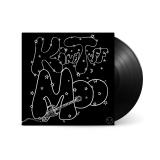
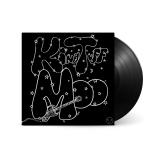
King Tuff - MOO

King Tuff

MOO

12inchMUP003EXC
MUP
27.03.2026
  • 1: Twisted On A Train
  • 2: Stairway To Nowhere
  • 3: Invisible Ink
  • 4: Landline
  • 5: Crosseyed Critters
  • 6: Oil Change
  • 7: East Of Ordinary
  • 8: Unglued
  • 9: Delusions
  • 10: Backroads
also available

Black Vinyl


Moo is the first wide release on my new label MUP! When I decided to make a new record, it only seemed right to go back to what brings me the most joy, which is, Rock & Roll music. I got my Tascam 388 fixed, the same tape machine I had used to record my first album, King Tuff Was Dead. It had been sitting in my parent’s house in Vermont for the past 14 years, but I had finally dragged it out to LA. I stopped caring if there were mistakes. There’s not enough mistakes. I played my old, blue, Gibson SG, Jazijoo, and she spewed mangled electrified gold. For once, I sang and I didn’t hate my voice. I played the drums badly and bounced them in mono to one track and it sounded like glorious shit. I wish it sounded even worse. Rock & Roll is the music of rodents and bugs. It should sound like it crept from a decrepit trashcan or a crypt or a toilet. It is not chill or vibey, autotuned or on the grid. It is not perfect, which is why it’s perfect. And I don’t care if it’s dead or alive, cool or uncool: when I hear it, and when I play it, as a chubby and balding 43 year old punk weirdo, I FEEL ENERGIZED. All in all, MOO is a full circle moment. A return to form. A return to rock. A return to Vermont. A return to myself. Reconnecting the dots. Restarting the engine. Plugging in the stack. Finally letting King Tuff be King. Fucking. Tuff.

pre-order now27.03.2026

expected to be published on 27.03.2026

King Tuff - MOO

King Tuff

MOO

12inchMUP003LP
MUP
27.03.2026
  • 1: Twisted On A Train
  • 2: Stairway To Nowhere
  • 3: Invisible Ink
  • 4: Landline
  • 5: Crosseyed Critters
  • 6: Oil Change
  • 7: East Of Ordinary
  • 8: Unglued
  • 9: Delusions
  • 10: Backroads
also available

Indie Exclusive Vinyl


Moo is the first wide release on my new label MUP! When I decided to make a new record, it only seemed right to go back to what brings me the most joy, which is, Rock & Roll music. I got my Tascam 388 fixed, the same tape machine I had used to record my first album, King Tuff Was Dead. It had been sitting in my parent’s house in Vermont for the past 14 years, but I had finally dragged it out to LA. I stopped caring if there were mistakes. There’s not enough mistakes. I played my old, blue, Gibson SG, Jazijoo, and she spewed mangled electrified gold. For once, I sang and I didn’t hate my voice. I played the drums badly and bounced them in mono to one track and it sounded like glorious shit. I wish it sounded even worse. Rock & Roll is the music of rodents and bugs. It should sound like it crept from a decrepit trashcan or a crypt or a toilet. It is not chill or vibey, autotuned or on the grid. It is not perfect, which is why it’s perfect. And I don’t care if it’s dead or alive, cool or uncool: when I hear it, and when I play it, as a chubby and balding 43 year old punk weirdo, I FEEL ENERGIZED. All in all, MOO is a full circle moment. A return to form. A return to rock. A return to Vermont. A return to myself. Reconnecting the dots. Restarting the engine. Plugging in the stack. Finally letting King Tuff be King. Fucking. Tuff.

pre-order now27.03.2026

expected to be published on 27.03.2026

LEROY HUTSON - THANK YOU / THE GHETTO ‘74 (7")

Whilst considering the “Hutson Sevens” series, there was a LeRoy Hutson record that stood out like a sore thumb for us when sifting through the amazing LeRoy Hutson portfolio to identify which pieces of music had not yet been made available on 7-inch vinyl. Many of you will know the story of LeRoy Hutson and Donny Hathaway being roommates at Howard University and together writing the legendary rare groove track "The Ghetto". In 1974, LeRoy Hutson used his artistic licence and adapted the track to feature on his album "The Man!" and subtly retitled the track "The Ghetto '74".
Home of The Good Groove Records are delighted to include this magnificent track on 7-inch vinyl for the very first me.

We are always trying our best to compliment each side of the 7-inch records we are releasing in the "Hutson Sevens" series. For the A-side on our third release we have chosen an outstanding track, which again is previously unreleased. Recorded at the Curtom studios in April 1977 "Thank You" is a fabulous “easy to the ear” piece of smooth soul music that has the classic Hutson groove. One for the soul music lovers, and a possible future sing along favourite to end a night of dancing.

out of Stock

Order now and we will order the item for you at our supplier.


Last In: 64 days ago
Nathan Fake - Evaporator

Nathan Fake

Evaporator

12inchIF1104STD
InFiné
23.03.2026

As Nathan Fake rises from the nocturnal subterranea and rave catharsis of his previous records, on Evaporator, he resurfaces into the domain of daylight, bringing a tangible sense of air rushing against your face, of big skies, and endless landscapes. The idea of pop accessibility that trickled into 2023’s Crystal Vision is refracted here through the prism of sweeping ambient, deep electronica, and trance uplift. Evaporator is Fake’s idea of “airy daytime music”, with each track a different barometer reading across the album’s varying atmospheres, which range from vibrant sunbursts, bracing rainscapes, and fine mists of clement melodics. “It’s not overtly confrontational electronic club music,” states Fake. “It’s quite pleasant, it’s accessible. As I was progressing through making the tracklist, I called it a daytime album. It doesn’t feel like an afterparty album.” For the past decade Fake has been gingerly introducing collaborations with heroes and friends alike into his lone, idiosyncratic working process. Border Community alumni Dextro AKA Ewan Mackenzie transmutes his ferocious drumming for Pigs Pigs Pigs Pigs Pigs Pigs Pigs into the blurred choral thump of ‘Baltasound’. ‘Orbiting Meadows’, meanwhile, is his second collaboration with Clark, an eerily idyllic duet where microtonal 18EDO piano clangs slowly twirl around wailing pads. Evaporator marks the junction point of old technology and ever fresh creativity for Nathan. The trusty “dinosaur” age software, particularly Cubase VST5, that has powered two decades of music is rarely updated. “I used to sort of feel a bit ashamed of using such old software, and then I kind of had an epiphany – that’s just how I work”, comments Fake. “That’s just how I play. I’m very fond of these old tools, and I get the most joy out of them, but now I’ve incorporated new technology too.” When an artist accumulates so much synergy with their instrument, music making becomes instinctual. By Fake’s account, much of Evaporator just fell into place. The album title arrived randomly in his head (“it felt completely perfect. Airy.”), ideas looped and developed until things locked into place and just felt right. ‘The Ice House’ is a fleeting glimpse of the sonic world he taps into in this creative state, its glassy FM synths built around a counterpoint between rough-hewn crystalline arpeggios and sparse yet gravitas-bearing bass. “That riff I just wrote out on the keyboard, I just played it forever and ever and ever. The original track ended up being really short. Here you go, and it’s gone!” These unplanned channellings of sound call forth records from Fake’s past while he looks ahead, perhaps getting at the very essence of his musicianship. The opener ‘Aiwa’ (“the breeziest,” he muses) reminds of the introspection that characterised Providence, excited by the fire and grit of Steam Days’ textural experiments, its chunky slams and clatters surging into a flood of harmonic buzzing as they reach out for old wisdom. ‘Hypercube’ stampedes in a similar chronological confluence, infusing an incessant synth line reminiscent of the golden age of rave with the crackling, ecstatic energy of modern festival anthems. Like the vaporisation of liquid to particles, everything that Evaporator presents has a mutant desire to be amorphous. Sounds rarely settle; the irradiated garage beat of ‘Bialystok’ is pitched downwards to driving, rebounding effect, while ‘You’ll Find a Way’ warps static into shivering energy, cinematic synth strings building anticipation into a gradual gush of chords. This translates into a more expansive stereo field than Fake has explored before. ‘Slow Yamaha’ saves the wildest, most kinetic transformations for last with a cornucopia of crispy melodies and fried drums; a sibilance of cymbals on the left, a susurrus of shakers on the right, and kaleidoscopic lasers pulsing and fizzing all around. Evaporation culminating in pure excited atoms. In a world where music has increasingly become background content, making albums remains lifeblood for Fake: “It makes me realise how long; twenty years is ages! It’s weird to see how much the world has changed. Release day back then you did fuck all, now you spend all day on socials. When I grew up the people who made the electronic music I was into were quite mysterious, and the artwork was very abstract. There was a massive distance between you and that music, and that was a key part of it, really. Now it helps to be an extrovert, and I'm just not, but the album marks the first time my face has graced the cover art. I’ve never wanted to do this before, I'm very shy, and generally I don’t like being seen,” he professes. “But, twenty years in, I supposed I could try something new. I'm very lucky that I'm somehow surviving in this world, where the media world favours extroverts and interesting looking people. It’s not my world but somehow I’m still in it.” Evaporator continues to prove Nathan’s necessary presence, with some of his most engaging, varied, and magical music yet.

out of Stock

Order now and we will order the item for you at our supplier.


Last In: 65 days ago
Supertramp - Breakfast In America LP
  • A1: Gone Hollywood
  • A2: The Logical Song
  • A3: Goodbye Stranger
  • A4: Breakfast In America
  • A5: Oh Darling
  • B1: Take The Long Way Home
  • B2: Lord Is It Mine
  • B3: Just Another Nervous Wreck
  • B4: Casual Conversations
  • B5: Child Of Vision

Supertramp are releasing the definitive vinyl pressings of their studio albums. Breakfast In America audio was transferred at Abbey Road Studios by Miles Showell and overseen by album co-producer Peter Henderson, where they cut the 1/2 speed master used to press the vinyl. The LP is pressed on 180g black vinyl. This is the group’s sixth studio album released in 1979.

pre-order now20.03.2026

expected to be published on 20.03.2026

Supertramp - Even In The Quietest Moments LP
  • A1: Give A Little Bit
  • A2: Lover Boy
  • A3: Even In The Quietest Moments
  • A4: Downstream
  • B1: Babaji
  • B2: From Now On
  • B3: Fool's Overture

Supertramp are releasing the definitive vinyl pressings of their studio albums. Even In The Quietest Moments audio was transferred at Abbey Road Studios by Miles Showell and overseen by album engineer Peter Henderson, where they cut the 1/2 speed master used to press the vinyl. The LP is pressed on 180g black vinyl. This is the group’s fifth studio album.

pre-order now20.03.2026

expected to be published on 20.03.2026

Supertramp - Famous Last Words LP
  • A1: Crazy
  • A2: Put On Your Old Brown Shoes
  • A3: It's Raining Again
  • A4: Bonnie
  • A5: Know Who You Are
  • B1: My Kind Of Lady
  • B2: C'est Le Bon
  • B3: Waiting So Long
  • B4: Don't Leave Me Now

Supertramp are releasing the definitive vinyl pressings of their studio albums. Famous Last Words audio was transferred at Abbey Road Studios by Miles Showell and overseen by co-producer Peter Henderson, where they cut the 1/2 speed master used to press the vinyl. The LP is pressed on 180g black vinyl. Released in 1982, this is the group’s seventh studio album and final release with Roger Hodgson.

pre-order now20.03.2026

expected to be published on 20.03.2026

Temudo - And The Pattern Repeats

This EP marks a natural convergence for Primal Instinct. Built around pure dancefloor intent, it presents a focused spectrum of moods, unified by intent. Each track is unmistakably Temudo, and unmistakably Primal Instinct: physical, driven, and designed to move bodies first and foremost.
The release is the result of close collaboration between Temudo and the label. A shared framework took shape, allowing Temudo to adapt to the vision without altering his sound, forming a joint effort where two aesthetics align.
Visually, an image rooted in memories of Carnival in Temudo's hometown becomes the perfect symbol: chaotic, social, and in constant motion, reflecting the absurdity of life and the human condition.

out of Stock

Order now and we will order the item for you at our supplier.


Last In: 70 days ago
The Notwist - News from Planet Zombie

With »News from Planet Zombie«, The Notwist return to view after years of exploration and experiment with an album rich in both melancholy and positivity, sketched across a suite of thrilling, fiercely committed pop songs. It’s an album reflecting a chaotic world, but responding with warmth and generosity, to achieve creative and spiritual consolidation. Recorded in their home base of Munich, it reconnects with the security of the local to explore the troubles of the global: a guiding impulse writ large across this album’s eleven songs. It’s also the first studio album since 1995’s »12« that the entire band recorded together in the studio in its expanded live formation.

A new album by The Notwist is always a curious endeavour; their musical language is as consistent and resilient as the contexts for creativity are unpredictable and ever shifting. For »News from Planet Zombie«, the core trio of Markus and Micha Acher and Cico Beck embraced the plural possibilities of writing together, bringing songs to the collective and then arranging, rehearsing and recording that material live, in the studio.

The result is an album that’s energised, fully in ›the now‹, with spectacular moments where you can hear the magic bubbling up in the dynamic between the Achers, Beck, and fellow members Theresa Loibl, Max Punktezahl, Karl Ivar Refseth, and Andi Haberl. If »Teeth« begins »News from Planet Zombie« quietly and reflectively, by »X-Ray« everyone’s supercharged, blasting out future anthems with the collective energy cranked up high. The chiming keys of »Propeller« skim the instrumental’s surface like stones across burbling water; »The Turning« clangs its way into one of the album’s most heartwarming melodies.

»News from Planet Zombie« was recorded over one week at Import Export, a non-profit space for arts and music. You can tell, too; there are some pleasingly rough edges here, as though The Notwist’s striving for hazy perfection means they’re also confident enough to let the songs breathe and mutate between our ears. That openness to chance also takes in guest turns from friends both local and international, reflective of a cosmopolitan Munich: Enid Valu joins in on vocals, while Haruka Yoshizawa guests on taishōgoto and harmonium, Tianping Christoph Xiao on clarinet, and Mathias Götz on trombone.

The Notwist aren’t best known for cover versions, but »News from Planet Zombie« features two: a gorgeous version of Neil Young’s »Red Sun« (from 2000’s »Silver & Gold«), which the group originally developed for a theatre play directed by Jette Steckel, and a take on Athens, Georgia folk-pop gang Lovers’ »How the Story Ends«. They slot into the album’s narrative perfectly, nestling in like old friends, revealing The Notwist as poetic interpreters. Played well, the cover version is both acknowledgement of fellow travellers and act of generosity, and The Notwist nail both aspects here.

And that narrative, the way the album plays out? »News from Planet Zombie« acknowledges the distress of our current geopolitical impasse, while reminding us there are collective ways forward. Fed through the figure of the zombie, Markus Acher explores our anxieties: »In the title and some lyrics I reference B- and horror-movies, which is a reference to the crazy world at the moment, which seems to be like a really bad and unrealistic B-movie.« But there’s a reminder here not to lose the thread entirely, that these things, too, will pass.

»The river here in Munich I often go to has been there forever and will be there long after us,« Acher reflects, pinpointing an important source of succour for him, »always the same but always changing. Very calming, but also always reminding me that like this river time only flows into one direction and you can’t go back. Every moment is very precious.«

Artwork by Marie Vermont

The Notwist:
Markus Acher: vocals, guitar
Micha Acher: bass, sousaphone, euphonium, trumpet
Cico Beck: electronics, keyboards, guitar, recorder, percussion
Theresa Loibl: bassclarinet, clarinet, piano, harmonium, organ
Max Punktezahl: guitar
Karl Ivar Refseth: marimbaphone, vibraphone, glockenspiel, congas, percussion
Andi Haberl: drums, dulcimer
+
Enid Valu: vocals on 1, 2, 3, 4, 5, 7, 9, 10, 11
Haruka Yoshizawa: taishōgoto on 6, harmonium on 9, 10, 11
Tianping Christoph Xiao: clarinet on 4, 10, 11
Mathias Götz: trombone on 4, 10, 11

pre-order now13.03.2026

expected to be published on 13.03.2026

Colton Bowlin - Grandpa's Mill
  • 1: Clinton County
  • 2: Time For Sale
  • 3: Don't Come Home
  • 4: Man I Used To Be
  • 5: Dirty River
  • 6: On My Way
  • 7: Missed The Dance
  • 8: State Lines
  • 9: Greenbrier Road
  • 10: Set Me Free
  • 11: Keep Your Word
  • 12: Grandpa's Mill

Colton Bowlin grew up in the hills of Albany, Kentucky, where hard work and family shaped everything he knew. He grew up working six days a week at his late grandfather’s feed mill, grounding his songwriting in genuine small-town values and working-class experiences. On his new album Grandpa’s Mill, Bowlin traces memory, legacy, and the passing of time with the same quiet honesty that’s always been at the heart of his work, blending songs about his real life experiences with hard lessons learned and tales of rural life in Appalachia. The album was recorded and produced in Athens, Georgia with David Ferguson (Sturgill Simpson, Tyler Childers, Johnny Cash).

pre-order now13.03.2026

expected to be published on 13.03.2026

Items per Page:
N/ABPM
Vinyl