Search:the sound of arrows

Styles
All
  • 1
Gold Panda - TON UP LP 2x12"

Gold Panda

TON UP LP 2x12"

2x12inchBARN133
Studio Barnhus
26.06.2026

Gold Panda returns with TON UP, a brilliantly stubborn new album for Studio Barnhus: eight rough-hewn dance tracks and two cozy little service-station interludes, all crafted with the robust determination of a producer who knows that 140 bpm is not so much a tempo as a way of life.
Made with Derwin Dicker’s unmistakable sampler-bashing touch, the tracks on Ton Up carry the raw knock of old-school hip-hop instrumentals, pushed through pumping house-music machinery and ready to cause absolute trouble on any half-decent sound system.
Here you’ll find zero of that dreaded, over-explained “maturity” usually demanded of beloved electronic artists several albums deep into the game. Instead, Gold Panda just sounds as happily locked in as ever, carelessly chasing the physical joys of pressure, swing and repetition.
TON UP is functional, funny and oddly tender club music, arriving just when the world needed it the most (June 26 that is.)

pre-order now26.06.2026

expected to be published on 26.06.2026

Death Is Not The End - A Night to Remember: UK Soundsystem Flyers, 1972-1994 (Book)

300 pages, 175 x 129mm paperback book w/ french flaps.

DINTE mint their short run book publishing imprint, The End books, with this vast collection of flyers for dances, clashes and blues parties from across the UK between the early 1970s and mid 1990s. Comes complete with intro by David Katz (People Funny Boy: The Genius of Lee 'Scratch' Perry, Solid Foundation: An Oral History of Reggae) and outro by Kevin Le Gendre (Don't Stop the Carnival: Black British Music, Children of the Ghetto: Black Music in Britain). Colour scans sit alongside scuzzy photocopies amassed over several years with the assistance of multiple archivists. The material presented in A Night to Remember is not just valuable musical history, but the story of a community and a culture that revolutionised sound culture in the UK.

"The flyers collected in A Night To Remember speak to the burgeoning sound system underground that flourished in Britain in the 1970s, 80s and early 90s. There are held events on hallowed ground as well as lesser-known sets. Flyers for house parties remind that shebeens remained an important feature of social life in black communities and the many sound clash and cup clash events emphasise the rivalry and camaraderie that has always been at the heart of the culture, as friends go head-to-head with their dub plates, vying for that definitive crown. Dances featuring guest appearances by name-brand artists such as Sugar Minott, Lone Ranger, Barrington Levy and Admiral Bailey, as well as sound systems such as Jack Ruby, King Jammies, Ray Symbolic, Arrows, Black Scorpio and Metro Media remind how closely the local sound systems remained to their Jamaican roots, even as sounds such as Saxon, Unity, Java and Diamonds carved out a distinctly British niche. All hail the enduring sound systems of Britain – long may they reign!" — David Katz

In Stock

On Stock and ready to ship

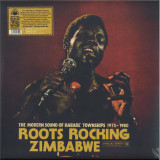
Various - Roots Rocking Zimbabwe: The Modern Sound Of Harare' Townships 1975-1980 LP 2x12"
 
25

Analog Africa doesn't do anything other than special releases really, but this one tracing the label's origins back to Zimbabwe over 20 years ago is a real standout. A carefully curated collection of 25 tracks with a fine booklet proving plenty of extra context, it captures the birth of the country's modern music scene and brims with the creative sound explosion of the 70s and 80s. Before genres were fully defined, artists blended rock, rumba, soul and traditional rhythms in bold, experimental ways that still stand up and get diggers and dancers excited in 2025. Included are never-before-released tracks from Thomas Mapfumo, Oliver Mtukudzi and more and they all add up to rich and dynamic snapshot of Zimbabwe's peerless musical evolution during what was a transformative era.

In Stock

On Stock and ready to ship

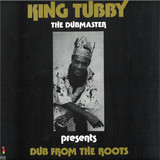
King Tubby - Dub From The Roots

Tubby did three original dub albums, “Dub From The Roots, “The Roots Of Dub” and the third is “Brass Rockers” with Tommy McCook ’pon the flying cymbals. Where he mixed it with the horn going in and out in a dub way and one named “Shalom Dub” you can call Tubby’s too because he mixed the versions as they were off the forty fives.

King Tubby and Producer Bunny “Striker” Lee are intertwined in the birth of Dub Music. After discovering a mistake that made a “serious joke” (more of which later…) they went on to release the first pressings of this new musical genre namely “Dub Music”. Tubby’s vast knowledge of electronics and Bunny’s vast catalogue of rhythms would lay the foundations of what today is taken as a standard…. The Remix / Version cuts to an existing vocal tune.

Osborne “King Tubby” Ruddock was born in Kingston, Jamaican the 28th January 1941 and grew up in the High Holborn Street area of downtown Kingston. He studied electronics at Kingston’s National Technical College and also on two correspondence courses from the USA. When he had qualified, Tubby began repairing radios and other electrical appliances in a shack in the back yard of his mother’s home. His work in the early days included winding transformers and building amplifiers for Kingston’s Sound Systems. Tubby built his first Sound System in 1957 playing jazz and Rhythm and Blues at local weddings and birthday parties His reputation as a man who knew and understood both electronics and music grew steadily and as the sixties drew to a close. Tubby purchased his own basic two track equipment. He installed this alongside his dub cutting machine, a homemade mixing console and his impressive collection of Jazz albums in the back bedroom of his home at 18 Dromilly Avenue which he christened his music room.

Dynamic Sounds upgraded to sixteen track recording in 1972 and Tubby purchased, again with the help of a deal brokered by Bunny Lee. The old four track equipment and the MCI console from their Studio B. The four tracks now gave him far wider scope to work with and he began to create a new musical form where the bass and drum parts were brought up while the faders allowed Tubby to ease the vocal and rhythm in and out of the mix. It was only a matter of time before Tubby’s dub plate experiments began to make it on to vinyl and the first ever long playing King Tubby releases would feature a collection of his mixes to a selection of Striker’s rhythms. So please sit back and enjoy this historic set of sounds. Lovingly restored and with a few extra gems added to the CD editions. These releases were the first to carry the name of King Tubby and the first to credit the great musicians that contributed so much to the rhythms that made these albums possible.

Hope you enjoy the set……

In Stock

On Stock and ready to ship

Various - Little Bangers from Richard Hawley's Jukebox Volume 2 (2x12")
 
28

In 2023 Ace Records released the album “28 Little Bangers From Richard Hawley’s Jukebox” where the acclaimed Sheffield musician, singer and songwriter compiled together some of his favourite records. These were instrumentals and vocals records that he had collected over the years and found musically addictive. The album received fantastic reviews and allowed his
extensive fanbase to discover and enjoy tracks like Ronny Kae’s ‘Swinging Drums’ and King Curtis’ ‘Hot-Rod’ that were on the juke box in his home.

Now, three years later, Richard has lifted the lid, taken those 7” out and replaced them with another favoured selection. One again, this second version of “Little Bangers” is full of cracking records such as Chet Atkins ‘Boo Boo Stick Beat’, Frank Minion’s ‘Watermelon’, Johnny Todd’s ‘Pink Cadillac’, Sunshine Theatre’s ‘Mountain’, Jet Harris’ ‘Man From Nowhere’, Tracy Rogers ‘Baby’ and the Ventures ‘Fuzzy And Wild’.

A with the first album there are 28 tracks spread across two albums or shoehorned onto one CD. The extensive liner notes see Richard discussing each and every track and what the record or artist meant to him. As he states himself in the introduction, “the record you hold in your hand is the result of a lifetime obsession.”
Listen for yourself and you will discover that this was time well spent.

pre-order now20.01.2026

expected to be published on 20.01.2026

LESLIE GRAVES & TOBY GOODSHANK - BETWEEN WORLDS
  • Chariot Year
  • To Belong
  • Solid Ground
  • Stay Long Enough
  • The Natural Way
  • Between Worlds
  • Baby Boy
  • Apple
  • Chubby's Song
  • Where Are We Going

Brooklyn-based artists Leslie Graves and Toby Goodshank have joined creative forces on their album Between Worlds (BB*ISLAND), Toby Goodshank (The Moldy Peaches, The Pizza Underground) of the OG New York Antifolk scene, is known for his precise and acrobatic vocals over nuanced acoustic guitar in songs that have been described as "a zesty thumb of the nose at domesticated bullshit." (Myles Manley) Leslie Graves (GOLD, Endless Arrows) is a performing songwriter and recording artist who takes folk subgenres into evocative and intriguing directions, including "sounding like something you could hear Donna Hayward dancing to at the Bang Bang Bar." (Ronan Conroy, "Hidden In the Days" album review) Her voice has been described as "darkwave-meets-folk" with comparisons to Lana Del Rey, Cat Powers, Mazzy Star and Julee Cruise. Acoustic guitar and vocal harmonies make up the core of their music. a slightly psychedelic, at times dream pop-like folkrock. It just draws from a variety of folk and rock. You might hear hints of Sybil Baer, Judee Sill, REM, Linda Perhacs, and Jessica Pratt, but the intersection of Toby and Leslie is truly a place of its own, warm and enchanting, or perhaps a glimmer from the spaces in between worlds. Many instrumental threads are interwoven throughout with the invaluable skills of Jake Nicoll (The Burning Hell) who lovingly engineered and embellished the recordings. Ariel Sharrat of The Burning Hell assisted him and is also featured on saxophone or bass or on some songs here. Speaking to their process, Leslie writes, "Toby is great at composing song structures quickly. It was fun to feel into the emotion of the chords and write from there. The process was like chiseling away at a stone to reveal the sculpture underneath. I like when songs come like that - when it feels that they are teaching us as they are revealed."

pre-order now12.09.2025

expected to be published on 12.09.2025

Great Grandpa - Patience, Moonbeam

Six years removed from their last release, Seattle’s Great Grandpa return with Patience, Moonbeam - an ambitious and deeply moving new album that almost didn’t happen. A decade of making music together was put on pause while each of the band’s were called indifferent directions. But as with any good relationship built on mutual love, trust, and a mountain of shared history, the quintet reunited, scrapped most ideas of songs they had put together, and started fresh to work on what would become their best album to date, due out in March on Run For Cover Records. Whereas 2019’s Four of Arrows mostly came together in the pressure cooker atmosphere of the studio with the help of an outside producer, Patience, Moonbeam emerged slowly through a generous demoing process. With fewer constraints and more control, the band had the opportunity to experiment and take their time, leading to a collection that feels and sounds more fully, confidently, themselves. Built on an “open door policy” for writing and recording, Patience, Moonbeam is the result of how seamlessly all five members contributed to the creation of the album. The result is a record that swings like a pendulum from heavy to tender, playful to weighty, painting a sonic illustration of the pains and pleasures of being alive across eleven songs. What could suffer from a kitchen-sink approach instead comes together brilliantly, a testament to the band’s musical and spiritual connection. With Patience, Moonbeam, Great Grandpa has crafted a triumphant document of what happens when your collaborators become your chosen family.

pre-order now28.03.2025

expected to be published on 28.03.2025

Great Grandpa - Patience, Moonbeam
  • A1: Sleep
  • A2: Never Rest
  • A3: Junior
  • A4: Emma
  • A5: Ladybug
  • A6: Kiss The Dice
  • B1: Doom
  • B2: Task
  • B3: Top Gun
  • B4: Patience, Moonbeam
  • B5: Ephemera
  • B6: Kid
also available

Blue Vinyl


Six years removed from their last release, Seattle’s Great Grandpa return with Patience, Moonbeam - an ambitious and deeply moving new album that almost didn’t happen. A decade of making music together was put on pause while each of the band’s were called indifferent directions. But as with any good relationship built on mutual love, trust, and a mountain of shared history, the quintet reunited, scrapped most ideas of songs they had put together, and started fresh to work on what would become their best album to date, due out in March on Run For Cover Records. Whereas 2019’s Four of Arrows mostly came together in the pressure cooker atmosphere of the studio with the help of an outside producer, Patience, Moonbeam emerged slowly through a generous demoing process. With fewer constraints and more control, the band had the opportunity to experiment and take their time, leading to a collection that feels and sounds more fully, confidently, themselves. Built on an “open door policy” for writing and recording, Patience, Moonbeam is the result of how seamlessly all five members contributed to the creation of the album. The result is a record that swings like a pendulum from heavy to tender, playful to weighty, painting a sonic illustration of the pains and pleasures of being alive across eleven songs. What could suffer from a kitchen-sink approach instead comes together brilliantly, a testament to the band’s musical and spiritual connection. With Patience, Moonbeam, Great Grandpa has crafted a triumphant document of what happens when your collaborators become your chosen family.

pre-order now28.03.2025

expected to be published on 28.03.2025

SHANE PARISH - REPERTOIRE LP

"Imagine: It’s sometime in the back half of the 19th century, America. You’re sitting in the parlor of your mansion, or in the only room of your shack; things are dusty and smell like sweat and hair, no matter how wealthy you may be. You don’t own a phonograph, and you don’t know who Tony Hawk is, but you have an inkling of how good the word 'shred' is going to feel when it enters the local slang. Suddenly, a tall, elegant figure with beautifully maintained fingernails emerges from some corner of the room, carrying a guitar. He says in a soft voice, 'I have a transmission for you, from the coming few centuries. Would you like to hear it? I figured you wouldn’t have a dongle, so I brought my guitar.' You may be apprehensive, but you shouldn’t be. Shane happens to be an internationally renowned virtuoso of the guitar. Specifically, he’s the kind of virtuoso who is as deep on style as he is on technique. His technical prowess is almost maddeningly complete; aiming paradoxically for the yards-long target called “breadth” he’s somehow hit all of it, 500 arrows piercing every pore of the landscape. He has that much technique not for the sake of guitar worship but to best bring the music forth clearly and in his own hand, like a pearl formed in a specific sea. I know this because I’ve sat next to him in multiple countries and American states and seen him deliver transmissions of that extreme honesty, with that extreme capability. Like Derek Bailey’s 'Ballads,' this record brings you into the room and the breath of a true musician whose mastery does not overshadow his appreciation of the music that inspired it. The title, 'Repertoire,' underscores the beautiful songs he chose to perform, all standards of 20th century musical excellence. The in-time persistence of his blues-walked 'Lonely Woman.' The grand registral descent he performs on 'Pithecanthropus Erectus,' like a rare document of the trip down from Everest. Dig how 'Better Get Hit in Your Soul,' emphasizes the folk blues water coursing through Mingus’s Ellingtonia, how Aphex Twin’s 'Avril 14' and the Minutemen’s 'Cohesion' sound so much older than Cage’s 'Totem Ancestors.' 'Repertoire' puts forth the idea that time is arrangement: time and arrangement are each only as successful as they are faithful to their origins and expansive in their style. Again, lest you fear the alien smoothness some associate with the concept 'virtuoso,' remember here we’re dealing with a time- traveler. His virtuosity is home grown, born of human work rather than some abstract or divine touch; the aim is not to go beyond the realm of human technical possibility but to expand it in the direction of human, meaning, timely. This guy can play anything, and for you, for this record, which sounds intimate and as present as a transmission from a time-traveler, he chooses to."—Wendy Eisenberg

pre-order now17.05.2024

expected to be published on 17.05.2024

Wukir Suryadi - Siklus dan Doa LP

Born in 1977, in Malang, East Java, Wukir Suryadi began playing music for theatre at the age of 12 with the Idiot The-ater Studio, and later with the Rendra Theater Workshop. In his solo work, and as a member of Senyawa, Error Scream, Bendera Hitam Setengah, Potro Joyo and other groups, Wukir breaks the boundaries of traditional music, death metal and avant-garde performance. On this new release, “Cycle and Prayer,” recorded in 2023, he expands the edges of his unique artistic world further, by digging in to meditative improvisation, art, and community building in his home workshop in the mountains of central Java. These recordings vibrate inwards, toward the microcosmic ecologies of forests and rivers; they distort outwards, resonating with global waves of apocalyptic change that are forcing all living beings to the edges of existence on earth. The result is a meditative poem that moves, as its titles an-nounce, from phenomena to phenomena, praying that humans find a way out from the depths of the depths to the light that illuminates the soul.
An essential mode of creative work for Wukir is the creation of unique instruments, using these sound sources as “bullets of expression.” In addition to the spear-like tube zither Bambu Wukir, he has created the Solet, Enthong, Garu, Luku, Arrows, and Industrial Mutant instruments, which in addition to being used in live performance, have been exhibited in the Instrument Builders Project and the 2017 Jakarta Biennale. In the past few years, Wukir has begun to collaborate with local guitar makers, carpenters, and suppliers of native endemic wood in the mountain region of Salatiga. Using earthen bricks along with local woods (suren, coconut, mindi, and waru lengis) as building materials, he constructed a new studio and workshop space in Tingkir, where this album was made. The trees, water and air of the local environment have exerted a powerful influence in Wukir’s documentations of instrumental sound. On this recording, he uses the simple Cetta guitar, an instrument designed in Bali and made for Indonesian children and local communities of folk and popular musicians, in order to explore the different sonic characteristics of a more “normal” instrument built from local wood.
The themes of the album -- cycle and prayer -- arise from a foreboding series of meta-events that shook Indonesia and the world over the past years, following one after the other: the COVID-19 pandemic, the Ukrainian-Russian war, the Kanjuruhan Stadium tragedy in which football supporters were gassed and killed by police, revelations of govern-ment failures and corruption, the rise of personal vehicles, the increasing disturbance of natural patterns of the rainy season and other ecological cycles. “In these waves of technology and narratives of truth made for certain interests, playing a sound at a certain frequency and repeating can try to bring images and feelings to a certain point of con-sciousness,” Wukir told me. “Sound is a prayer that creates a change, whether gradual or rapid, in the behaviour of living things, to face the demands of the time, as humans struggle to live according to what they believe.” The draw-ings and sketches used for the cover spontaneously emerged alongside the recordings, as an instinctive depiction of “time and sound, nature that is outside of oneself, and nature that is within.”

out of Stock

Order now and we will order the item for you at our supplier.


Last In: 2 years ago
Euroboys - Soft Focus LP 2x12"

Euroboys

Soft Focus LP 2x12"

2x12inchLPNORSKEALBUMKLASSI003
Norske Albumklassikere
12.04.2024

The nineties are often described as a hedonistic decade, a party decade when all arrows pointed upwards. In music culture, first things that comes to mind is the peak of club music, big-mouthed and drunken British rock bands, extreme Black Metal, and the high-energy "Scandi-rock" - a scene that the Euroboys members themselves were part of, in bands like Gluecifer, Team Spirit, Fair Fuck and Turbonegro. "Soft Focus" broke out from the noise after the nineties, and started introducing new vibes in the rock genre. With inspiration from the music scene that grew out of Laurel Canyon and California in the early seventies, Euroboys came up with a rock album that was soft on the edges, warm sounding with bittersweet melodies. Today, names like Fleetwood Mac, Eagles and David Crosby are of course gods on the retro sky, but it wasn't like that in 2004. This first time on vinyl reissue of "Soft Focus" has been remastered from the original tapes, and also features two bonus tracks that resurfaced in the process, mixed and released for the first time.

pre-order now12.04.2024

expected to be published on 12.04.2024

Saint Abdullah & Eomac - Chasing Stateless LP

Saint Abdullah & Eomac is a long distance, ongoing collaboration between New York based Iranian-Canadian brothers Mohammad and Mehdi Mehrabani (Saint Abdullah) and Ian McDonnell a.k.a. Eomac, based in Wicklow in Ireland. They tested the waters with their first album on Nicolas Jaar's Other People label last year, but 'Chasing Stateless' is their fullest expression so far.

The creative mindset behind the album starts with bravery and eschews escapism. Says Saint Abdullah's Mohammad, "As a collective, we exist to test the revolutionary possibilities within sound and sonic storytelling. As a means to finding a vision of the future and for building cultural dialogue today. Our belief is that the expressiveness of this vision should be pushed to its utmost limits to reveal anew. I always felt that the intensity of the middle eastern soul needs to be revealed more potently. Ian and the Irish have it too. I suspect most historically oppressed cultures do."

The music on 'Chasing Stateless' avoids easy middle eastern tropes — "I think what we're proposing here is that you don't need to water down our culture, you don't need to take only the bits that fit your idea of who we are, what we are. You ought to take it in its entirety."

Musically, the album approaches established genres and re-orientates them towards middle eastern rhythm and melody with an iron soul. Songs are rough and intense. Rusty polyrhythms, daf drums wrapped in a thick coating of distortion or punchy kicks with micro-edited samples of middle eastern life spiralling across them. Mournful melodies are squeezed out until the music teeters on the edge of rhythmic collapse. 'Chasing Stateless' is rough and energetic but also tender and reflective too. It's a human sound, utilising technology but not about technology. Sample heavy with expressions of anger, sadness and hope present and deeply felt.

The album's title speaks to a loss of collective societal imagination; of 'chasing status'. As Moh says "This generation, man, we're really good at putting up walls, despite all our openness. But where does this all lead to? What exactly are we chasing? This is where I especially love the name 'Chasing Stateless,' because if all this continues, we indeed will end up stateless, society-less, community-less, neighbor-less. Just a bunch of same-sies, living in an imaginary bubble, where we all look / think / say / CHASE the same things."

out of Stock

Order now and we will order the item for you at our supplier.


Last In: 8 months ago
CATERINA BARBIERI - ECSTATIC COMPUTATION LP

Three years after the original release date of Caterina Barbieri’s career defining album Ecstatic Computation, the Italian artist reissues the record on her newly found own label light-years.

Caterina Barbieri is an Italian composer who explores themes related to machine intelligence and object oriented perception in sound through a focus on minimalism. Ecstatic Computation revolves
around the creative use of complex sequencing techniques and pattern-based operations to explore the artefacts of human perception and memory processes by ultimately inducing a sense of ecstasy and contemplation. Computation is turned from being a formal, automatic writing technique into a creative, psychedelic practice to generate temporal hallucinations. A state of trance and wonder where the perception of time is distorted and challenged.


Equally nervous and ecstatic, the fast permutation of patterns can create a state where time stands still whilst simultaneously being in motion. Is this propulsive music moving forward or backward? As
long as the perception of the present is constantly enhanced and refreshed in an endless sense of loss, re-discovery and the search for self-orientation this question lies mute aside the thrilling and perplexing moment of the matter at hand.

out of Stock

Order now and we will order the item for you at our supplier.


Last In: 2 years ago
Steve Jolliffe - TATTOO - The Unreleased Music from the 1975 John Samson Documentary

Incredible jazz / prog / folk score to groundbreaking tattoo film by maverick filmmaker. Unreleased until now, so don’t go saying it’s a reissue because it isn’t, but I’m sure some people will because they always do.

John Samson (1946 - 2004) was a truly great documentary maker. He must be as I’ve been obsessed with his work for many years. Educated first at Glasgow School Of Art (circa 1963) and then finally in the art of film making at The National Film And Television School in Beaconsfield - he headed there in its opening year of 1971 having made a short film that got him a scholarship.

It was at the NFTS that Samson met Mike Wallington, who was to become his right hand man and eventual producer; together as a quite brilliant team they made a handful of inspiring, entertaining and hugely prescient films about important, overlooked, unseen and marginal fringes in society. Tattoo (1975) Exploring the rather clandestine world of tattooing in the UK. Dressing For Pleasure (1977) Exploring the rather clandestine world of festish in the UK. Brittania (1979) A film about railway enthusiasts and a steam train restoration.

Arrows (1979) The life of dart player Eric Bristow. Drag Ball (1981) An unreleased film about the annual Porchester Hall Drag Ball. The Skin Horse (1983) BAFTA winning film about The Outsiders Club, a dating agency for disabled people. The subject matter in all films was always unusual for the time, and Samson managed to navigate his way with compassion, interest and subtlety, immersing himself in the chosen scene and producing moving, fascinating and sometimes darkly amusing situations. His documentaries also do not rely on traditional voiceovers, with stories, facts and narrative threads being dictated by the subjects.

I’ve tried for a long time to find the music for a couple of his early films (there was actually an original 7” for Arrows) - so far this is the only unreleased soundtrack I have found. This one was written by Steve Jolliffe, who met Samson at the NFTS. Joliffe was the resident composer and had a room at the college complex where he could work on scores for the fledgling film makers. Jolliffe was and still is a multi-instrumentalist and prolific composer who had met Edgar Froese at the Berlin Konservatorium in the late 1960s and played in an early incarnation of Tangerine Dream. He toured with blues rock outfit Steamhammer, before hanging out at the NFTS, making this recording (and many others) and eventually rejoining Tangerine Dream in the late 1970s. Jolliffe still writes, records and releases today and once i had made contact with him we traced the original Tattoo master tape to a box at his brother’s house. Musically it’s charming, slightly folky, a touch baroque, there’s a whiff of prog too, and it perfectly suited this early documentary about the art and desire of tattoos. I only wish it was longer. But the film is only 16 minutes long. Seek it out if you can. Try and find all the Samson films, they really are a joy.

As well as featuring intimate footage of tattooed people, the film also includes a rare and very early interview with Alan Oversby (better known as Mr Sebastian), a seminal character in the development of tattoos and body modifications worldwide - it was he who eventually was to tattoo and pierce Genesis P-Orridge.

The images for this vinyl release were all found in Mike Wallington’s Tattoo documentary research folder from 1974, and were photos sent in to Mike and John by people who wanted to feature in the film. Most answered an advert in Time Out, and others included people from my home town of Aldershot where tattooist Bill Skuse and his wife, Rusty (the most tattooed woman in Britain at the time, and featured in the film) were based. His parlour was situated at the back of the arcade where we all used to lose all our pocket money in the slot machines.
The Musicians:
Steve Jolliffe - keyboards, flute, sax Geoff Jolliffe - bass guitar Julian Furniss - guitar Mick Kirby - drums

pre-order now04.08.2023

expected to be published on 04.08.2023

CATERINA BARBIERI - ECSTATIC COMPUTATION

Three years after the original release date of Caterina Barbieri’s career defining album Ecstatic Computation, the Italian artist reissues the record on her newly found own label light-years.

Caterina Barbieri is an Italian composer who explores themes related to machine intelligence and object oriented perception in sound through a focus on minimalism. Ecstatic Computation revolves
around the creative use of complex sequencing techniques and pattern-based operations to explore the artefacts of human perception and memory processes by ultimately inducing a sense of ecstasy and contemplation. Computation is turned from being a formal, automatic writing technique into a creative, psychedelic practice to generate temporal hallucinations. A state of trance and wonder where the perception of time is distorted and challenged.


Equally nervous and ecstatic, the fast permutation of patterns can create a state where time stands still whilst simultaneously being in motion. Is this propulsive music moving forward or backward? As
long as the perception of the present is constantly enhanced and refreshed in an endless sense of loss, re-discovery and the search for self-orientation this question lies mute aside the thrilling and perplexing moment of the matter at hand.

out of Stock

Order now and we will order the item for you at our supplier.


Last In: 2 years ago
Ian Sweetness - Since You've Been Away

Ian Haywood aka Ian Sweetness was born in Kingston, Jamaica. Gifted with talent, this versatile singer of culture Reggae music and Lover’s Rock, started at the age of nine with the church choirs. Bob Marley, Dennis Brown, Beres Hammond, Frankie Paul and the old school Reggae foundation artists are his greatest inspiration. His first recording was at the age of nineteen at the Creative Sounds Studio in Kingston. The tune’s title was “Rude Bwoy” feat. Simpleton. After that, he started to work with sound systems in his area, and from there he began to spend time in studios around Jamaica, such as Arrows Studio, King Tubby’s, King Jammy’s, Penthouse, Bobby Digital, and more.
Ian recorded tunes with different producers and labels, for example, Jah Life, and Bobby Digital, and was based at Arrows Studios, but still working with producers in Jamaica & overseas.

pre-order now10.02.2023

expected to be published on 10.02.2023

LIPSTICK KILLERS - STRANGE FLASH: STUDIO & LIVE 78-81 (2x12")
also available

Black Vinyl


ALL THEIR LEGENDARY RECORDINGS, PLUS LOADS OF UNRELEASED STUFF!

“The Lipstick Killers were easily one of the greatest live bands I've witnessed in my 65 yrs. on this planet” – Keith Morris (Black Flag/Circle Jerks/Off!!)

HINDU GODS ARE CALLING YOU!!! Grown Up Wrong! Records is thrilled beyond belief to present the LONG-AWAITED anthology of material by the legendary Lipstick Killers, who blazed a trail in late ‘70s post-Radio Birdman Sydney before gigging with the likes of the Gun Club and the Flesh Eaters in Los Angeles where they crashed and burned in 1981.

The Lipstick Killers released just one single in their life time – the perfect ’79 Deniz Tek-produced pairing of “Hindu Gods of Love” and ”Shakedown USA” on their own Lost in Space Records and Greg Shaw’s Voxx Records - but a posthumous live album and a couple of archival releases followed. It was all incredible. All that material is included here, as is a plethora of additional stuff, all from the best-available sources (mostly original tapes).

The Lipstick Killers’ enigmatic and high-energy sound – heavily inspired by the Stooges and the ‘60s psychedelic punk sounds of bands like the Thirteenth Floor Elevators and the Chocolate Watchband – bridged the gap between Radio Birdman and subsequent Sydney groups like the Sunnyboys (whose first-ever show was opening for the Lipstick Killers), Lime Spiders, Hoodoo Gurus, the Screaming Tribesmen and the Psychotic Turnbuckles. And of course they anticipated generation after generation of other bands with similar things in mind, right up to today’s ‘60s-inspired freaks like The Straight Arrows, The Living Eyes and Thee Oh Sees.

pre-order now15.07.2022

expected to be published on 15.07.2022

Joyful Joyful - Joyful Joyful LP

Having initially met more than a decade ago at a local community radio station, sometimes doing guest slots on each other’s live, improvised noise shows, Cormac Culkeen and Dave Grenon knew they had a mutual interest in working with sonic textures. They listened to each other’s bands for a handful of years, and in 2017, “made good on a threat” that they’d been making for quite a long time: to start a band. At Cormac’s gentle but clear urging—declaring that they’d gone ahead and booked a space in which to record a video—the two wrote their first song, “Sebaldus,” an ambitious 12-minute trip, which also serves as the fireworks finale to their self-titled debut album. With surges of pathos that smooth out into something more soothing in turn, Cormac goes: “The hunter, you’ve seen him / The archer, his arrows are strong / And hunger, you’ve known her / I know the winter is long.” The track is as much about enduring a Canadian winter as it is about the eponymous 8th century hermit, shot through with sublimated desire. As Cormac put it, Joyful Joyful’s songs are “a little bit outside of time.” But while the lyrics beg close, oblique reading unto themselves, there’s also a distinct sense that they’re only one of many more ways that the duo shapes sound. Cormac, whose voice is like a sea with irregular tides, lights up about an idea in traditional sean-nós Irish music that songs already exist and are out there; it’s up to the singer to become the conduit. This belief in music as something to be channelled, and something more than sound, resonates with the singer’s fundamentalist religious past. To paraphrase: lots of group singing, harmonies, no instrumentation, totally unmediated, no priest, congregational—not choral, not a performance, not about talent, the spirit moves through people. “Of course that informs how I think about singing,” Cormac says. So, when they were exiled from the church because of their queerness, they took the music with them, dislocating it from its dogmatic bounds but not from its transcendent potential. This record might be thought of, then, as a kind of queering of sacred, devotional traditions—or at the very least, a space where all of these things can be held at once. Perhaps perceivable by some as contradictions, these intersecting influences create the conditions for an incredibly singular sound. Dave is steady and exploratory in his handling of this multiplicity, arranging sounds as they’re revealed, corralling them, coaxing them into form. “Because Dave is there,” Cormac says, “I get to sing three times higher, and three times lower, and faster, and backwards, and all of these sounds! That are there. They’re all there.” When asked about early musical memories, Cormac recalled an immediate fascination with harmony: from demanding that the first person they ever heard singing it explain what they were doing, to always (still, to this day) singing in harmony with their twin sister around the house, to being part of a children’s choir that sang soprano in Handel’s Messiah—not realizing until they entered the room with all the other ranges that their learned melody was but one part of the whole. Just as tellingly, Dave reflects on his early attraction to “abstraction and becoming abstract,” describing childhood afternoons messing with microphone and speaker feedback loops, producing long, enduring sounds with almost undetectable variations. In a way unique to the coalescing of these two listeners, notions of harmony are central to their output. Dave samples field recordings, old keyboards and synths, and vocal drones, running the live singing through four or five parallel effects chains, sampling and treating everything again in the moment. “Another way to put it is that Cormac’s voice comes into the board and then comes back out shifted, delayed, and shattered; Cormac and I hear it, live with it, and respond,” Dave says. This work is contingent not only on a deep intuition (neither of them read sheet music) of polyphony and due proportion (something St Thomas Aquinas famously listed as an attribute of beauty) but also on their connection to each other and ability to read subtle cues. Dave says they’d hold each other’s hands while performing if it was more convenient to do so, riffing on something else Cormac mentioned about traditional Irish singing: that someone would always hold the singer’s hand, for fear that without a tether to the ground they might find themselves utterly lost, unsure how to return. Joyful Joyful doesn’t shy away from offering such experiences of departure; they’re willing to unsettle their audiences because they themselves are unsettled. Their shared penchant for spooky, heavy music, and self-described “omnivorous” listening practices equip them with an array of sonic concepts that support this effort; Diamanda Galás, The Rankin Family, Pan Sonic, Pauline Oliveros, Keith Fullerton Whitman, Yma Sumac, and Catholic hymnody were just a few that came up. Observing their audience gives them insight about the effect of each song—something they considered while arranging the album. Its arc is marked by soft, sometimes sudden oscillations between cacophony and euphony, day and night (listen for insects), and from sexual, visceral entanglements to more ephemeral, celestial ones. Front to back, it arouses expansion, unraveling. Of lightning, Vicki Kirby writes: “quite curious initiation rites precede these electrical encounters. An intriguing communication, a sort of stuttering chatter between the ground and the sky, appears to anticipate the actual stroke.” By all accounts, something similar seems to happen at Joyful Joyful shows, between those on the stage and those off it, between what’s earthly and what’s beyond. “A lightning bolt is not a straightforward resolution of the buildup of a charge difference between the earth and a cloud … there is, as it were, some kind of nonlocal communication effected between the two,” writes Karen Barad, extrapolating on Kirby’s thought. Cormac acknowledges that while they and Dave play a role in this mysterious charge that comes about, they’re not solely responsible. However ineffable it may be, it’s undoubtedly a form of communion—and a sensuously shocking one at that

pre-order now10.06.2022

expected to be published on 10.06.2022

Various - SOMEWHERE BETWEEN: MUTANT POP

LTD. COLORED VINYL

Somewhere Between: Mutant Pop, Electronic Minimalism & Shadow Sounds of Japan 1980–1988 hovers vibe–wise between two distinct poles within Light In The Attic’s acclaimed Japan Archival Series—Kankyō Ongaku: Japanese Ambient, Environmental & New Age Music 1980–1990 and Pacific Breeze: Japanese City Pop, AOR & Boogie 1976–1986. All three albums showcase recordings produced during Japan’s soaring bubble economy of the 1980s, an era in which aesthetic visions and consumerism merged. Music echoed the nation’s prosperity and with financial abundance came the luxury to dream.

Sonically, Somewhere Between mines the midpoint between Kankyō Ongaku’s sparkling atmospherics and Pacific Breeze’s metropolitan boogie. The compilation encompasses ambient pop, underground electronics, liminal minimalism and shadow sounds—all descriptors emphasizing the hazy nature of the nebula. Out–of–focus rhythms wear ethereal accoutrements, ballads are shrouded in static, and angular drums snake skyward on transcendent tones. From the Avant–minimalism of Mkwaju Ensemble and Yoshio Ojima, to the leftfield techno-pop of Mishio Ogawa and Noriko Miyamoto (featuring members of YMO), and highlights from the groundbreaking Osaka underground label Vanity Records, these are blurry constellations defying collective categorization.

These tracks also exist in a space of transition when the major label grip on the Japanese recording market began to give way to the escalation of independents. Thanks to the idyllic economic climate and innovations in domestically–manufactured music gear, creators on the edges were empowered to focus on satisfying their artistic visions in the open headspace of home studios. While labels like Warner Music and Nippon Columbia explored new sounds through traditional channels, it was possible for Vanity, Balcony and other indie labels, not to mention self–released artists like Ojima and Naoki Asai, to publish their work via affordable media such as cassettes, 7" vinyl, and flexi–discs.

Expertly curated by Yosuke Kitazawa and Mark “Frosty” McNeill (dublab), Somewhere Between is a collection of music, much of it released for the first time outside Japan, that is bound more by energetic vibration than shared history, genre or scene. They are the sounds of transition and searching—a celebration of the freedom found in floating.

Note: The track “Days Man” by Yoshio Ojima is only available on the LP and Cassette versions.

out of Stock

Order now and we will order the item for you at our supplier.


Last In: 2 years ago
Various - Eddie Piller Presents More of The Mod Revival 2x12"
  • A1: The Nips - Gabrielle
  • A2: Dolly Mixture - New Look Baby
  • A3: The Blades- Revelations Of Heartbreak
  • A4: The Crooks - Modern Boys
  • A5: Inspiral Carpets - Saturn 5
  • A6: The Users - Kicks In Style
  • A7: Untamed Youth - Untamed Youth
  • B1: Les Elite - Get A Job
  • B2: The Gents - The Faker
  • B3: The Name - Fuck Art Let’s Dance
  • B4: The Scene - Something That You Said
  • B5: The Killermeters - Why Should It Happen To Me
  • B6: The Accidents - Blood Spattered With Guitars
  • C1: The Fixations - No Way Out
  • C2: The Leepers - Paint A Day
  • C3: The Variations - Fight Back
  • C4: The Same - Movements
  • C5: The Kick - Stuck On The Edge Of A Blade
  • C6: Daggermen - Ivor The Engine Driver
  • C7: New Hearts - Only A Fool
  • D1: The Long Ryders - Looking For Lewis And Clark
  • D2: Ocean Colour Scene - The Day We Caught The Train
  • D3: Nine Below Zero - Pack Fair & Square
  • D4: The Jolt - I Can’t Wait
  • D7: The Moment - Sticks & Stones
  • D5: The Inmates - Dirty Water
  • D6: Scarlet Party - 101 Dam-Nations

In 1979 as a 15-year-old Eddie Piller was perfectly placed to be at the epicentre of the Mod revival. An inquisitive passion
for music, a family connection to Mod royalty The Small Faces, and an attitude that saw him travelling his home city, then
the country and then the world to take in the sounds that were emerging. In the years since, Piller has been a legendary
figure within the music industry setting up and continuing to own the ground-breaking Acid Jazz label, signing multiplatinum artists such as Jamiroquai and The Brand New Heavies collaborating on compilations with Martin Freeman and as
an award winning broadcaster even setting up his own Totally Wired Radio station. In The Mod Revival he looks back at the
movement that set him on his way.
• Mod is a sixties youth movement original built on sharp clothes, American soul music and nights on the town, that has never
really died. The originals added young British groups to their likes and then moved on, but their influence echoed on
through the 1970s in Northern Soul clubs, and in the sixties influenced bands of the pub rock era. When punk arrived, it was
supposed to sweep away the past, but instead the Sex Pistols were covering the Small Faces. The Clash brought in Mod DJ
Guy Stevens to produce London’s Calling, The Buzzcocks sounded closer to the Hollies than The Ramones and in The Jam’s
Paul Weller there was a musical and sartorial nod to the past of The Who, The Beatles and pop art arrows.
• Weller had spent the 1970s becoming obsessed by mod and saw punk as having a similar youthful energy to the era he had
missed by being born a decade too late. For others Weller’s style proved an inspiration, and as the Jam broke through in late
1978, they saw a wave of bands follow in their wake, and they themselves influenced others to form their own groups. But
there were other things. In bleak late 70s Britain the glorious optimism of the 1960s looked bright and shiny, and as it was
only a decade or so in the past, it was easy to pick up original records, clothes and books for pennies, and as you bought
these you met other like-minded souls who did the same. For those a little too young for punk, it was a community of gigs,
scooters, clothes, bands and records, and for many it developed on through.
• Eddie never stopped being a mod and has a unique perspective having now lived through four decades of being intimately
involved in the music that has emerged from the mod scene. In this part two double vinyl edition (Part 1 and its CD
equivalent reached #14 in the UK compilations charts) Ed guides us through some of his favourite music from the scene. He
guides us through a plethora of bands whose influences include The Who, The Kinks and the Jam, to sixties soul and R&B,
those with an eye on psychedelia. The records have a vitality and a certain stylish swagger to them, that marks them out as
mod. In the deluxe booklet, Piller has written a 5000 word note describing what it meant to him and has granted access to
his own scrapbooksfrom his many years of gig-going from which pages and memorabilia are reproduced.
• Eddie Piller’s Mod Revival is a personal appraisal from the founder of The Modcast, on what the mod explosion of the late
70s and 80s means to him…

pre-order now23.07.2021

expected to be published on 23.07.2021

Red Fang - Arrows

Red Fang

Arrows

12inchRR42631
Relapse Records
04.06.2021

RED FANG return with their highly anticipated new album, Arrows! Their first album in five years, everyone's favorite beer-crushing, zombie-killing, air-guitar-contest-judging metal heroes are back in action, doing what they do best- AND MORE. “This record feels more like Murder The Mountains to me than any record we’ve done before or since,” bassist/vocalist Aaron Beam ventures. “It doesn’t sound like that record, but Murder the Mountains was us doing whatever the fuck we wanted, and that’s what this is, too.” Arrows was recorded at Halfling Studios in the band’s hometown of Portland, OR, with longtime collaborator Chris Funk, producer of Murder The Mountains and 2013’s Whales and Leeches. “Chris is a major influencer as far as the weird ambient stuff in between the songs and the creepy incidental noises within the songs,“ guitarist Bryan Giles points out. “I think he definitely creates an added layer of atmosphere that we wouldn’t have otherwise.” Arrows is also a proper title track, which is new territory for the band. “This is the first time we’ve named an album after a song that’s actually on the album,” Beam explains. “We have other albums that are named after songs of ours that are not on those albums. So this time we’re really fucking with you because we didn’t fuck with you.” Similarly, fans might not believe what the song “Arrows” is partially about. “If you’re confused by some of the lyrics to the song, that makes sense,” Beam explains. “But it makes reference to meditation. I started meditating six years ago, but I can only do it when I’m not feeling too anxious. So, when I don’t need it, that’s when I can do it.” Elsewhere, “Fonzi Scheme” was named after legendary Happy Days cool guy Arthur Fonzarelli—if only because it’s in the key of his famous catchphrase, “Aaay.” Producer Chris Funk came up with the idea of bringing in string players from the Portland Cello Project to class up the track. Meanwhile, the opening riff of closer “Funeral Coach” was written 11 years ago. But it took until recently for the song to blossom into its full double-entendre glory. “I was driving around and I saw a hearse that said ‘funeral coach services’ on the back,” Beam explains. “So the first thing that popped into my head was a dude with a headset and a clipboard going, ‘Alright, dudes—more tears! Five minutes in is when the tears are critical, or no one’s gonna believe that anyone cares that this person died.’” In a nod to tradition, Arrows will be available in formats that include all the drums, bass, guitars and vocals. But it could’ve gone another way. “Our original idea was to release the album with no vocals or guitar solos,” Beam explains. “If you want the guitar solos, it’s an extra five bucks. If you want the vocals, it’s an extra ten bucks. So basically people should feel lucky that we didn’t do that. You get to buy the whole thing altogether.” RED FANG think of it as a generous display of gratitude toward their fans. “Yeah,” says Sherman, “Thank you for buying our album, you lucky bastards.”

pre-order now04.06.2021

expected to be published on 04.06.2021

LIPSTICK KILLERS - STRANGE FLASH: STUDIO & LIVE 78-81 (2x12")
also available

Red Vinyl


ALL THEIR LEGENDARY RECORDINGS, PLUS LOADS OF UNRELEASED STUFF!

“The Lipstick Killers were easily one of the greatest live bands I've witnessed in my 65 yrs. on this planet” – Keith Morris (Black Flag/Circle Jerks/Off!!)

HINDU GODS ARE CALLING YOU!!! Grown Up Wrong! Records is thrilled beyond belief to present the LONG-AWAITED anthology of material by the legendary Lipstick Killers, who blazed a trail in late ‘70s post-Radio Birdman Sydney before gigging with the likes of the Gun Club and the Flesh Eaters in Los Angeles where they crashed and burned in 1981.

The Lipstick Killers released just one single in their life time – the perfect ’79 Deniz Tek-produced pairing of “Hindu Gods of Love” and ”Shakedown USA” on their own Lost in Space Records and Greg Shaw’s Voxx Records - but a posthumous live album and a couple of archival releases followed. It was all incredible. All that material is included here, as is a plethora of additional stuff, all from the best-available sources (mostly original tapes).

The Lipstick Killers’ enigmatic and high-energy sound – heavily inspired by the Stooges and the ‘60s psychedelic punk sounds of bands like the Thirteenth Floor Elevators and the Chocolate Watchband – bridged the gap between Radio Birdman and subsequent Sydney groups like the Sunnyboys (whose first-ever show was opening for the Lipstick Killers), Lime Spiders, Hoodoo Gurus, the Screaming Tribesmen and the Psychotic Turnbuckles. And of course they anticipated generation after generation of other bands with similar things in mind, right up to today’s ‘60s-inspired freaks like The Straight Arrows, The Living Eyes and Thee Oh Sees.

pre-order now25.05.2021

expected to be published on 25.05.2021

LIPSTICK KILLERS - STRANGE FLASH: STUDIO & LIVE 78-81

ALL THEIR LEGENDARY RECORDINGS, PLUS LOADS OF UNRELEASED STUFF!

“The Lipstick Killers were easily one of the greatest live bands I've witnessed in my 65 yrs. on this planet” – Keith Morris (Black Flag/Circle Jerks/Off!!)

HINDU GODS ARE CALLING YOU!!! Grown Up Wrong! Records is thrilled beyond belief to present the LONG-AWAITED anthology of material by the legendary Lipstick Killers, who blazed a trail in late ‘70s post-Radio Birdman Sydney before gigging with the likes of the Gun Club and the Flesh Eaters in Los Angeles where they crashed and burned in 1981.

The Lipstick Killers released just one single in their life time – the perfect ’79 Deniz Tek-produced pairing of “Hindu Gods of Love” and ”Shakedown USA” on their own Lost in Space Records and Greg Shaw’s Voxx Records - but a posthumous live album and a couple of archival releases followed. It was all incredible. All that material is included here, as is a plethora of additional stuff, all from the best-available sources (mostly original tapes).

The Lipstick Killers’ enigmatic and high-energy sound – heavily inspired by the Stooges and the ‘60s psychedelic punk sounds of bands like the Thirteenth Floor Elevators and the Chocolate Watchband – bridged the gap between Radio Birdman and subsequent Sydney groups like the Sunnyboys (whose first-ever show was opening for the Lipstick Killers), Lime Spiders, Hoodoo Gurus, the Screaming Tribesmen and the Psychotic Turnbuckles. And of course they anticipated generation after generation of other bands with similar things in mind, right up to today’s ‘60s-inspired freaks like The Straight Arrows, The Living Eyes and Thee Oh Sees.

pre-order now25.05.2021

expected to be published on 25.05.2021

Various - SOMEWHERE BETWEEN: MUTANT POP

Somewhere Between: Mutant Pop, Electronic Minimalism & Shadow Sounds of Japan 1980–1988 hovers vibe–wise between two distinct poles within Light In The Attic’s acclaimed Japan Archival Series—Kankyō Ongaku: Japanese Ambient, Environmental & New Age Music 1980–1990 and Pacific Breeze: Japanese City Pop, AOR & Boogie 1976–1986. All three albums showcase recordings produced during Japan’s soaring bubble economy of the 1980s, an era in which aesthetic visions and consumerism merged. Music echoed the nation’s prosperity and with financial abundance came the luxury to dream.

Sonically, Somewhere Between mines the midpoint between Kankyō Ongaku’s sparkling atmospherics and Pacific Breeze’s metropolitan boogie. The compilation encompasses ambient pop, underground electronics, liminal minimalism and shadow sounds—all descriptors emphasizing the hazy nature of the nebula. Out–of–focus rhythms wear ethereal accoutrements, ballads are shrouded in static, and angular drums snake skyward on transcendent tones. From the Avant–minimalism of Mkwaju Ensemble and Yoshio Ojima, to the leftfield techno-pop of Mishio Ogawa and Noriko Miyamoto (featuring members of YMO), and highlights from the groundbreaking Osaka underground label Vanity Records, these are blurry constellations defying collective categorization.

These tracks also exist in a space of transition when the major label grip on the Japanese recording market began to give way to the escalation of independents. Thanks to the idyllic economic climate and innovations in domestically–manufactured music gear, creators on the edges were empowered to focus on satisfying their artistic visions in the open headspace of home studios. While labels like Warner Music and Nippon Columbia explored new sounds through traditional channels, it was possible for Vanity, Balcony and other indie labels, not to mention self–released artists like Ojima and Naoki Asai, to publish their work via affordable media such as cassettes, 7" vinyl, and flexi–discs.

Expertly curated by Yosuke Kitazawa and Mark “Frosty” McNeill (dublab), Somewhere Between is a collection of music, much of it released for the first time outside Japan, that is bound more by energetic vibration than shared history, genre or scene. They are the sounds of transition and searching—a celebration of the freedom found in floating.

Note: The track “Days Man” by Yoshio Ojima is only available on the LP and Cassette versions.

out of Stock

Order now and we will order the item for you at our supplier.


Last In: 4 years ago
Yas-Kaz - Jomon-Sho

Yas-Kaz

Jomon-Sho

12inchGLOSSY004
Glossy Mistakes
06.11.2020

Peaceful, percussive and idyllic new age from Japanese composer and student of gamelan music, Yas-Kaz. This seminal album is a cornerstone to understand the Japanese ambient and environmental movement. He rose to musical prominence composing for the dance troupe led by one of the founders of Butoh, Tatsumi Hijikata. The album features a wide range of entirely acoustic instruments and field recordings and was made for stage performance by Sankai Juku Butoh Group at Theatre de la Ville, Paris.

Yas-Kaz has influenced quite a few important artist (Ryuichi Sakamoto, Midori Takada, Geino Yamashiro-Gumi) over 4 decades. However, he remains somewhat "unsung": Glossy Mistakes unveils his art throughout this special edition. His composition/music is not focused on any specific genre/style of music either. Especially in his work for dance theatre he often delivers bare abstract sound/resonance which might not be recognized as "musical" from the Western perspective. He lived in Bali, Indonesia in the 70s introducing the gamelan Balinese sounds and culture to Ryuichi Sakamoto (collaborated in the album "Esperanto), Midori Takada, Shoji Yamashiro (leader of Geino Yamashiro-gumi who later created the soundtrack for "Akira”) among others.

A unique and unseen masterpiece unveiled again throughout a remastered edition.

out of Stock

Order now and we will order the item for you at our supplier.


Last In: 5 years ago
Foo Fighters - Concrete And Gold

Foo Fighters

Concrete And Gold

12inch88985456011
Columbia
26.03.2019

I wanted it to be the biggest sounding Foo Fighters record ever. To make a gigantic rock record but with Greg Kurstin's sense of melody and arrangement... Motorhead's version of Sgt. Pepper... or something like that.'

So speaks Dave Grohl of the mission statement made manifest in Foo Fighters' ninth epic, the aptly-titled Concrete and Gold, due out September 15 worldwide on Columbia Records and available for pre-order now.

Concrete and Gold marries some of the most insanely heavy Foo Fighters riffs ever with lush harmonic complexities courtesy of a first time team-up with producer Greg Kurstin (Adele, Sia, Pink). The first taste of which came in the form of anthem of the summer Run' which was described by The Times as 'epic', Music Week as 'Classic' and Shortlist as 'the best thing they've done in years'.

Concrete and Gold was written and performed by Foo Fighters, produced by Greg Kurstin and Foo Fighters, and mixed by Darrell Thorp.

Foo Fighters are Dave Grohl, Taylor Hawkins, Nate Mendel, Chris Shiflett, Pat Smear and Rami Jaffee.

out of Stock

Order now and we will order the item for you at our supplier.


Last In: 7 years ago
Shigeo Tanaka - Yumi-kagura

Shigeo Tanaka

Yumi-kagura

12inchEM1154LP
EM Records
06.02.2017

'Deep session! It is rare to hear folk music from Japan in such beautiful fidelity and incredible dynamics. This recording is intensely gorgeous and hauntingly disarming. This should open up a whole new world of adventurous listening for folks outside (and inside!) Japan.'Brian Shimkovitz (Awesome Tapes From Africa)

'Sounds absolutely great! Super interesting and engaging.'Ben UFO

'Just Give Me That Old Time Religion, It's Good Enough For Me.'Japan Blues

A hotline to the gods! Kagura is a thousand-year-old form of Japanese Shinto sacred music and dance, accompanying the chanting of myths; the word "kagura" can be translated as "god-entertainment". Passed down over countless generations, the music is rare and recordings even rarer. Shigeo Tanaka was a master of the yumi (bow), an uncommon single-string percussion instrument, which is a true bow: arrows are fired off at the end of each ceremony to fend off evil sprits. The instrument is difficult to play; it's hard to draw out the proper sound and maintain the rhythm.
Yumi kagura is the oldest of all the various forms of kagura. The Tanaka family, based in rural Joge-cho, Hiroshima prefecture, has passed down this yumi kagura tradition for hundreds of years; this lineage continues to this day in the person of his daughter Ritsuko Tanaka. The Joge-cho yumi kagura, which prays for family well-being, bountiful crops and good fortune, was designated an Important Intangible Cultural Property in 1971. The piece featured here, "Takusa saimon", based on the myth "Ama no iwato" (The Rocky Celestial Cave), is mesmeric, reaching back across ages to the time before time, with Tanaka's voice and yumi, accompanied by flute and metal percussion, drawing us closer to the primal activities of the gods. Listeners may find affinities with aspects of musics as diverse as German electronic minimalism like E2-E4, certain Ethiopian music, "spiritual jazz" and more, all tapping into the deep root of forever. Previously available only on a ridiculously obscure 1990 cassette release, Yumi kagura is the first collaborative release by EM Records and Riyo Mountains, a Japanese folk song research team. Available on LP and CD, with the CD featuring a bonus track: "Inagahachiman jinja yumi kagura hono" recorded in 2016 by Tanaka's daughter and successor Ritsuko Tanaka.

+ Direction/liner notes by Riyo Mountains
+ English liner notes & lyrics

out of Stock

Order now and we will order the item for you at our supplier.


Last In: 9 years ago
Broken Arrows - So Few Truths

Broken Arrows are the powerhouse duo of Londonís Bill Ambrose and Spruxx. United over an envy inducing collection of vintage and modern synths and drum machines. Broken Arrows are the sound of a slime coated pansexual Club DíAmore as populated by malfunctioning ED-209s getting real freaky. Taking cues from classic EBM, Minimal Synth, these three dark-fucking-wave destroyers are complimented by a remix from the one-man-brutalist-factory known as Drvg Cvltvre, taking the title track and twisting it into a reimagined 8-bit NES grinder / grindr. Including download code.

out of Stock

Order now and we will order the item for you at our supplier.


Last In: 10 years ago
  • 1
Items per Page:
N/ABPM
Vinyl