quête:the gestures

Genres
Tout
Yusaku Arai - A two LP

Yusaku Arai

A two LP

12inchWILL002
Will records
30.05.2023

The Kyoto-based musician Yusaku Arai is known for his production work in the avant-garde scenes of Japanese hip-hop and R&B. On this solo album, though, he offers more lengthy, piano-centric meditations that use the techniques of musique concrète.

Arai’s compositions on the A-side emerged out of a reflection on the corporeal and interwoven relationship between his own body and things he encountered in the world—the ocean, a flower petal, a plastic sheet, a hand. His intent is to represent a process in which colors gently well up in inside of an object, pass through its entirety—and eventually permeate into the body itself. The B-side consists mostly of a long composition, which is about an unavoidable surplus that crops up in communication, whether of gestures or of language. This narrative work describes humans as beings torn between enthusiasm and emptiness.

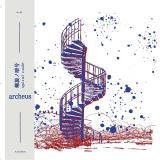
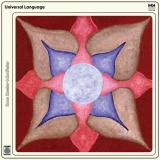
The album’s artwork is by photographer Azusa Yamaguchi and designer Hejiro Yagi. Mastering by Sean McCann of Recital. An 18x24 inch poster is included.

En stock

Disponible en stock et prêt pour l'expédition

LDS - Algo5

Lds

Algo5

12inchBLUEHOUR020
BLUE HOUR
04.01.2023

After successful releases on Transatlantic and Monnom Black, German FM synthesis wizard Luca Daniel Schwarz (aka LDS) presents his latest record ‘algo5’. The EP captures a wide range of sonic ground with innovative and futuristic edge.

’nbdfoil’ the opening track starts the voyage with mesmerising awe before sliding into ‘kizzt_VF’ where reality distorts and mind-warping events unfold. Closing out the A side the interlude ‘<13’ stumbles along with playful weirdness and explorative sonic gestures. Back in more familiar territory the B-side’s ‘fl+’ and ‘Vone’ propel dynamic rhythms through the ether until arriving at the final track, ‘mfäg’ where fragmented arps and cinematic ambience give an emotional sense of closure.

LDS’s ability to compose to a high level of depth and intrigue is unmistakably a significant feat for any electronic dance music producer and testament to the possibilities of modern sound design.

En stock

Disponible en stock et prêt pour l'expédition

Various - Sneaker presents Give'n'Take 2

Eight years after Cuthead's "Give'n'Take", it's Sneaker's turn to put together four of his favorite tracks for Uncanny Valley's compilation series. The artwork is once again by Planetluke com aka Luca Lozano. "This record is a vista of my world where music inhabits the air between people. As an exchange of genius, emotions, gestures - even conventions, rituals, and love. Dedicated to L.B. BaD, whose music I inhaled and whose records inspired me on my quest for deepness. You will be missed!" (Sneaker) Besides L.B. BaD's wonderful "Late In The Evening (Music's Seeping Thru)" you'll get three absolute bangers on top. The Optimistic Misanthropes are Mystic Bill, VeXaTioN and Sneaker himself. One of the most influential Chicago House DJs, true to the underground for over three decades now, and once part of the Trax Records roster... Mystic Bill. VeXaTioN already got to know him back in the days but is currently hailing from Mexico City. His track was born in Los Angeles and remixed by Sneaker in Berlin. Also, Left Unknown's "Maedchen" got the jacking Midas touch from Sneaker, a touch you've come to recognize. Behind the one-off project is Saxonian Gnista aka DJ Detox and somebody who wants to remain incognito. Jacob Korn however is well-known since the early days of Uncanny Valley and is above all Sneaker's best buddy at TailOut Studio, Dresden.

En stock

Disponible en stock et prêt pour l'expédition

Ireen Amnes - In The Land Of Silence LP

In The Land of Silence is the first full length album by experimental artist Ireen Amnes. The founder of the London based collective Under My Feet. debuts on Sonic Groove with an immaterial journey contemplating suffering, liberation, the importance of affection and unity. This ambient album reveals a hidden connection between these human emotions. From anger and rejection, to love and unity, the sounds explored by the artist represent a recent journey within. Recollections of distant memories are expressed with nostalgic sounds; by contrast, darker tracks are symbolic of those moments when it is more dif ficult to accept reality for what it is. Ireen expresses in this album that there wouldn’t be any joy without suffering.

Sounds created out of emotions that cannot be spoken. Beats that pulse out of gestures that can no longer be performed. Tones that screech out of bodies that can no longer be human. Echoes of all unspoken words reverb into the wounds of time; that constant ebb and flow of existence; that relentless stomping of exchanges. The slur of life is now noise – she collects its torn pieces with her bare hands and holds them close to her pounding flesh. She now sways in and out of consciousness, transported by nothing but his will to life, his ecstatic memory, his murmured love that now forms this soundtrack to her life.

En stock

Disponible en stock et prêt pour l'expédition

JC Leisure Group - Low Tide, Hi Grypus! (TAPE)

»Low Tide, Hi Grypus!« is the new live-iteration of JC Leisure as JC Leisure Group. Documenting an encounter and a communication between human improvisers and atlantic grey seals. The record presents responsive improvisation as a form of cross-species collaboration.

The project began on Porthdinllaen, Wales, where Leisure recorded seal vocalisations from a local colony at low tide. Back in their Liverpool studio, Leisure developed a performance system that translates human musical gestures – pitch, timbre, rhythm, density, presence - into triggers for these seal expressions. The resulting system is dual-active, as in it simultaneously acts and is acted upon in the horizontal instance. It creates a new-music non-linear threshold that cannot be replicated.

»Low Tide, Hi Grypus!« was recorded live at 1210 Berlin and captures one instance of this concept. Local improvisers were invited to encounter the performance system. Recorded in one take, pedal-steel, woodwinds, strings, piano, organ, and electronics gradually learn to listen and respond to the marine voices. This interspecific group moves from intimate duets (that's human, seal) into full ensemble works (humans, seals) over the course of one night.

Rather than treating field recordings as static material, the extensive seal archive functions as an active collaborator: shaping form, pacing, and interaction in real-time. Now that’s marine biology meets human communication!

JC Leisure has previously released work on Sun Ark, Warm Winters Ltd, Not Not Fun and collaboratively with Dialect as Raft of Trash. He has composed a radio play commissioned and broadcast by BBC Radio.

pré-commande20.03.2026

il devrait être publié sur 20.03.2026


Last In: 2026 years ago
ARN4L2 - TIERRA BOMBA

ARN4L2

TIERRA BOMBA

12inchBARN129
Studio Barnhus
16.03.2026

Studio Barnhus presents ARN4L2, a producer from Cartagena, who debuts on the Stockholm label with the striking EP TIERRA BOMBA, a record built from the fractured memory of an island in the
Colombian Caribbean, understood as a surface in motion.
The project draws on tools present in the early development of the Champeta genre – the Yamaha RY30 drum machine, the Yamaha DD-14 drum pad, and the Pyramid mixer – alongside percussive
gestures and guitars characteristic of the style. On songs like the effortlessly bouncy title track and the gaita-laced curveball BULLA, featuring the characteristic melodic flute of the region, ARN4L2’s instinct for propulsion and detail comes into focus, while vocal tracks like the energetic closer LA ÑAPA integrate the artist’s voice as texture, without hierarchy or center.
TIERRA BOMBA becomes a point of convergence, where technology, sonic practices, and fragments of local popular culture meet in the present tense. Released through Studio Barnhus on
12'' vinyl and all digital platforms on March 13.

Text written by Edna Martinez.

pas en stock

Commandez maintenant et nous commanderons l'article pour vous chez notre fournisseur.


Derniere entrée: 10 jours
Vanessa Wagner, Philip Glass - Figures of Glass: Piano Etudes - Edits
  • A1: _Etude No. 1 (Edit) - 04:36
  • A2: _Etude No. 2 (Edit) - 03:37
  • A3: _Etude No. 3 (Edit) - 02:28
  • A4: _Etude No. 5 (Edit) - 05:08
  • A5: _Etude No. 6 (Edit) - 03:27
  • B1: _Etude No. 8 (Edit) - 03:45
  • B2: _Etude No. 10 (Edit) - 03:27
  • B3: _Etude No. 16 (Edit) - 03:41
  • B4: _Etude No. 17 (Edit) - 05:23
  • B5: _Etude No. 18 (Edit) - 03:19

With Figures of Glass (Piano Etudes – Edits), Vanessa Wagner offers a new listening perspective on Philip Glass’s Piano Études, shaping a curated selection of edited versions drawn from her acclaimed recording of the complete cycle. These edits do not alter the substance of the works; rather, they refine their temporal focus, revealing their emotional force with renewed clarity.

Conceived in parallel with Figures of Glass, a hybrid project developed with visual arts collective Scale, the release extends a dialogue between piano and light, sound and space. Between piano and light, Vanessa Wagner interprets Glass’s Études at the heart of a scenographic installation, exploring the visual imagination embedded in the composer’s music. Minimal structures become spatial gestures; repetition opens onto perception, colour, and resonance. Taken together, these edits form a coherent arc through Glass’s language: from tension and propulsion to suspension and introspection, from rhythmic urgency to contemplative stillness. Wagner’s approach is marked by precision, restraint, and a deep attention to resonance, allowing each piece to unfold with an assumed expressive sobriety.

Figures of Glass also exists as a live creation, presented for the first time in Paris at the Théâtre du Châtelet on April 7, 2026. In both recorded and staged forms, the project invites contemporary listening contexts — from focused headphone listening to immersive visual environments — while reaffirming the Piano Études as a major landmark of 21st-century repertoire. Bridging modern classical piano, minimalist writing, and spatial listening formats, Figures of Glass (Piano Etudes – Edits) speaks equally to traditional classical audiences and new listeners discovering Philip Glass through curated, editorial-driven experiences.

pré-commande13.03.2026

il devrait être publié sur 13.03.2026


Last In: 2026 years ago
Oker - Aerial

Oker

Aerial

12inchAE024
Aspen Edities
27.02.2026

Aspen Edities is pleased to present Aerial, the third album of the experimental quartet Oker.

Whereas their album debut Husene våre er museer (2018) and its follow-up Susurrus (2021) focused on collective and individual compositions, Aerial features two longform pieces of fully improvised music, sculpted from the recognizable acoustic sound palette that the quartet has developed across a decade of extensive touring. The titles, Aerial, Equinoctial Tide and Crepuscular Rays refer to meteorological and planetary phenomena, and in Oker’s interplay we hear light, wind, clouds, and tidal cycles transpire as shimmering, roaring, rubbing, coalescing and diverging environments of sound. The sonic stoicism and minimalism in their expression is challenged by frictioning micro-chaoses, combining to create calm, winding paths of musical detail and form. Echoing our planet and its meteorological reality, Aerial yields both consistency and perpetual change.

Bringing together some of the most compelling musicians from the Norwegian improvised music scene, Oker operates as an acoustic experimental quartet devoted to the amalgamation of improvised and composed modes of expression. Their music combines fine-tuned tonalities, deconstructed grooves, acoustic noise and other sonic events, taking their rather conventional instrumentation as a point of departure. Textures in gradual change coexisting with responsive and spontaneous gestures create a varied but coherent musical ecosystem which can be airy or dense, dry or blooming. A certain minimalist or stoic approach to sound production is an overarching and recurring element in all of Oker’s music, differentiating their sound from the majority of music in the field of improvised music or free jazz.

pré-commande27.02.2026

il devrait être publié sur 27.02.2026


Last In: 2026 years ago
Yorgos Stavridis - Solo Percussion

Athens-based percussionist and sound artist Yorgos Stavridis makes a stark, physical debut for Heat Crimes with »Solo Percussion«, a set of one-take improvisations that approach percussion as a field of friction between body, objects, space, and sound. Working with membranes, metals, found objects, and feedback systems, Stavridis foregrounds timbre, texture, and spatial presence, collapsing distinctions between instrument, environment, and recording apparatus.

Microphones and speakers are treated as unstable instruments in their own right, introducing opaqueness, resistance, and feedback into the performative chain. Scrapes, low-end pressure, brittle metallic chatter, and sudden bursts of resonance emerge through close bodily engagement with surfaces and materials, each piece documenting a specific configuration of objects, gestures, and acoustic conditions. Performed and recorded live, »Solo Percussion« captures sound in its most contingent state; situational, physical, and irreducibly present. Eschewing narrative, pulse, or formal development, the record sits squarely in Heat Crimes’ lineage of process-led, uncompromising sonic research, where listening becomes an active, tactile act and sound itself is the primary event.

pré-commande20.02.2026

il devrait être publié sur 20.02.2026


Last In: 2026 years ago
Rafael Anton Irisarri - Points of Inaccessibility

A chance meeting in Mexico City set Points of Inaccessibility into motion. When Ibero-American composer Rafael Anton Irisarri crossed paths with Dutch media artist Jaco Schilp at MUTEK in 2024, a conversation about how technology shapes perception revealed an unexpected common ground. Schilp invited Irisarri to a spring 2025 residency at Uncloud, the Utrecht-based collective he co-founded, where Irisarri's sound began to take form amid an environment shaped by Schilp’s visual research.

The Uncloud studio was located inside the former Pieter Baan Centre, a forensic psychiatric prison where suspects of violent crimes were once confined. Its long history of silence and containment shaped the atmosphere in which the project developed. Within this setting, Irisarri coaxed long bowed-guitar tones through a network of pedals and looping systems. The raw gestures thickened into a vaporous and architectural field of sound. Schilp processed the material through a custom point-cloud software patch that produced images in continuous flux. The visuals flickered, dissolved and reformed like memories that resist coherence, functioning as a digital Rorschach that reflected the observer’s own perception.

Amid these spectral echoes, the project evolved into an examination of how the past persists within present signals. Memory endures as residue and interference, continually shaping perception even when its source has faded.

Schilp’s visual process required a continuous stream of sound in real time. Irisarri improvised throughout the residency, generating material that allowed the visuals to develop in parallel. Once back in his New York studio, he began shaping the recordings by carving pathways through the improvisations and mapping selected passages into MIDI. This process allowed him to build outward from the bowed-guitar material with minimal overdubs, adding Prophet 5 textures, Moog bass and strings that expanded the harmonic field while keeping the original performances at the center. To refine the structure, Abul Mogard provided editorial input, working with Irisarri’s stems to guide transitions and strengthen the overall pacing. The material, originally created under conditions of immediacy and constraint, evolved into a fully realized work through careful revision, patience and sustained reworking.

The title engages the geographic concept of the Poles of Inaccessibility, locations defined solely by their distance from all surrounding points. Irisarri adapts this idea to the conditions of digital life, where new forms of inaccessibility arise through the informational enclosures that structure perception. What appears to be a fully connected network often produces a deeper kind of separation, one shaped by the filtering logic of the systems that mediate experience. In this sense, the digital sphere mirrors its geographic counterpart. We inhabit spaces saturated with signals, yet the possibility of genuine contact becomes increasingly remote.

At its core, Points of Inaccessibility considers what can be understood as the new rituals of capitalist realism. Irisarri uses the term digital shamanism to describe the forms of simulated connection that organize contemporary life. These systems promise comfort through algorithms, influencers and AI interlocutors, yet they often reproduce the same conditions that generate loneliness in the first place. What appears as connection becomes the echo of connection, a sequence of gestures that imitate solidarity while withholding it. Like the geographic poles, these rituals are defined by distance. They pull us into environments where everything is illuminated, yet meaningful proximity becomes increasingly rare. In this sense, the work approaches a hauntology of the present, a reflection on futures that have stalled and intimacies that have been thinned by the algorithmic infrastructures that surround us.

This thematic tension unfolds across the album’s four movements. Faded Ghosts of Clouds introduces the work with textures that rise and dissipate in slow cycles, creating an atmosphere that resists clear definition. Breaking the Unison occupies a pivotal position in the sequence and focuses on the moment when the individual and the system fall out of alignment. Its shifting patterns trace the scattering of signals that once suggested connection, revealing the instability at the heart of contemporary perception. Signals from a Distant Afterglow forms the center of the album and features vocals by Karen Vogt, whose presence enters the sound field like a fragile transmission shaped by distance and delay. The closing piece, Memory Strands, follows motifs that appear, recede and briefly intersect before returning to quiet. Across these movements, the album outlines a landscape in which emergence and disappearance continually inform one another.

Listening to Points of Inaccessibility is an encounter with a sound field that is constantly in flux. Elements surface briefly, shift position and recede, creating a sense of motion that resists stable interpretation. The music moves between closeness and vastness, carrying traces of memory while withholding a clear point of resolution.

The album’s visual identity completes the project’s conceptual arc. In Mexico City, where Irisarri and Schilp first met, Daniel Castrejón transformed stills from Schilp’s point-cloud visuals into the cover image. The final artwork captures a single suspended frame of the digital material, a moment extracted from a field that is normally in constant motion. Its surface recalls the texture and abstraction found in the work of Catalan artist Antoni Tàpies, where material presence and erasure coexist within the same plane.

What emerges is a work that examines the tension between technological systems and human presence. Points of Inaccessibility asks whether connection is still possible within environments shaped by mediation and delay, or whether we have become isolated points within the very networks that promise proximity. What possibilities for relation persist within environments organized by algorithms and interruption? And how are we meant to understand presence when so much of it is constructed at a distance?

Points of Inaccessibility will be released on BioVinyl on February 6, 2026, with audiovisual performances planned throughout 2026.

Mastered by Stephan Mathieu
Artwork by Jaco Schilp
Design and layout by Daniel Castrejón
Artist photo by Iulia Alexandra Magheru.

pas en stock

Commandez maintenant et nous commanderons l'article pour vous chez notre fournisseur.


Derniere entrée: 30 jours
DAVID WALTERS - TI LOVE LP 2x12"

In his own time, in his own tone and in his own company.

‘Win and lose without losing oneself’’ This line from French rapper Oxmo Puccino greatly accompanied David Walters while composing his fourth studio album. Over the eleven tracks on ‘Ti Love’, David took his time to find the right tone and in turn, tell his truth.

‘Ti Love’, is a French-Creole abbreviation for “petite love”, meaning ‘little love’, evoking that sweet fondness found in those small gestures and little acts of kindness.

Think of things like young kids' brotherly love or a stranger lending you a helping hand, while expecting nothing in return. It’s these motions that allow this album to feel full of real life, carried by beating drums that also pull at our heart strings.

Basing himself in a small village in Martinique, where David had not long since scattered the ashes of his late mother, the multi-instrumentalist decided to remain there and let the writing of Ti Love pour out from deep inside him. Taking influence from around the island, the energy from his makeshift studio set up in Fort de France, allowing a resilient yet grieving man to recount, let go and come to terms with his recent loss.

So embracing these new circumstances, on the rugged coastal Caribbean island of Martinique, David took up an artist’s residency in the island’s capital Fort de France, located near the town’s port is the ‘Manoir des Artistes’, a bustling recording studio space. A place where the walls shake as the latest sounds being created are blasted by locals and visitors alike. Most studio doors are wide open; as music here is a huge part of everyday life, feedback from encouraging neighbouring musicians is on hand and welcomed. A contrast to the isolation often assumed with working in more traditional music studios.

It was here in this stimulating environment that David recorded Ti Love’s initial demos.

With his first collaborator onboard, Neeweed, a 25-year-old producer and gospel expert who David met at the Martinique Jazz Festival.

Of the album’s initial versions of the record David recollects: ‘It took me three years to write it, then I rewrote it, reworked it. In the end I'm really glad I stepped back and listened to myself.’ I found a great ally in GUTS, who ended up being the artistic director of the record”

David surrounded himself with the right people who helped him express himself in the best possible way. He called on other friends and musical comrades; album opener and title track, ‘Ti Love’ features the incomparable Fatoumata Diawara (World Circuit Records / Africa Express) and further along additional production came in from; Izem, Art Of Tones, and GUTS himself, who all added just the right amount of ‘little love’ to this

project. Further helping hands came from Californian producer and DJ Captain Planet, who David was introduced to a few years ago. Closer to home, here in Europe, the German producer Bluestaeb appears on two tracks: the very catchy disco funk ‘Mr Maraboo’ and ‘Kite Koule’, the latter being the first single lifted from the album, where David invited Nigerian guitarist Keziah Jones.

Elsewhere on the album, fellow Heavenly Sweetness recording artist Blundetto contributed two tracks; the reggae ‘Voodoo Love’, which is David's tribute to Studio One, and the very sweet and resilient ‘Bon Voyage’, which closes the album... "It's gold, it doesn't need anything changing.” remarked David - ‘Bon Voyage’ is a goodbye to his mother, whose voice called him from the bottom of the sea one night while he was surfing during the full Moon.

Released almost 20 years after his debut album ‘AWA’ released on French imprint Ya Basta, home to Gotan Project and many others, David boasts a long list of radio supporters including; Gilles Peterson, Cerys Matthews and Don Letts at the BBC, while further field Cosmo Radio in Germany, and KCRW in Los Angeles.

On this new record, David has shown sincerity and vulnerability, while still honouring the infectious groove that he is known for the world over. Despite the upsets, a little love can indeed go a long way.

CREDITS:
Produced by Bluestaeb / Blundetto / Captain Planet / Izem / Art of Tones
A&R : Guts
Mixed by Mr Gib @ Onetwopassit
Except "Bon Voyage” and "Voodoo Love" mixed by Jerome “Blackjoy” Carron
Mastered by Benjamin Joubert @ Biduloscope
Art by Elliott Walters

pas en stock

Commandez maintenant et nous commanderons l'article pour vous chez notre fournisseur.


Derniere entrée: 41 jours
Hyunhye Seo - Continuation

Hyunhye Seo

Continuation

12inchUBK002
Ubi Ku
13.02.2026

For over a decade, Hyunhye Seo a core member of Xiu Xiu, in her solo work navigates the precarious edges where composition dissolves into pure gesture. Through ecstatic piano improvisations, restless percussive attacks and an expansive use of acoustic space, she constructs layered sonic environments that move across the boundaries of noise, avant-garde jazz, ambient and contemporary classical music. Her performances reveal an unfiltered process of listening and creation - a practice in which thinking becomes the enemy, and surrender the only viable strategy.

Continuation captures one such surrender. Recorded live at MAO - Museo d'Arte Orientale in Turin during the exhibition Rabbit Inhabits the Moon – The Art of Nam June Paik in the Mirror of Time, this cascading piano improvisation unfolds as a dialogue between performer, space and the particular acoustics of a museum built to house contemplative objects. Jamie Stewart processes the sound in real time; Giuseppe Ielasi shapes the final mix. What emerges is a work of charged immediacy - restless gestures giving way to passages of unexpected tenderness, noise and silence trading places in continuous exchange. The title is precise: this is music that refuses conclusion, that exists in a state of perpetual becoming. On Side B, Continuous Extension offers an unprecedented response. Phew - the pioneering figure of Japanese avant-garde music since the late 1970s - was invited by curators Chiara Lee and Freddie Murphy to reinterpret Seo's performance. Working with synthesizer and subtle processing, Phew distills the resonances of Continuation into a new electronic landscape - waves of abstraction that echo like reflections in sound, tracing the harmonic tensions of Seo's playing into territories she herself did not visit.

The accompanying booklet includes an essay by Bruno Lo Turco exploring the deep connections between improvisation and Buddhist thought, and a written reflection by Seo on her own practice of surrender and listening.

Continuation is released on Ubi Kū, the record label of the Unione Buddhista Italiana. The cover reproduces Avalokitesvara "Water and Moon" from the Museo d'Arte Orientale "E. Chiossone" in Genoa - the bodhisattva of compassion gazing at the reflection of the moon in water. Like that reflection, this music exists fully in the present, complete and unrepeatable.

pré-commande13.02.2026

il devrait être publié sur 13.02.2026


Last In: 2026 years ago
Força Maior - Morte Lilás LP

Força Maior

Morte Lilás LP

12inchPERF004
Perf
09.02.2026

Força Maior combines the vital saxophone explorations of Pedro Alves Sousa with the infinitely subtle electronic processing of Pedro Tavares. Sousa (aka Má Estrela) is known for manipulating his woodwind through guitar pedalboards & amplifiers, creating far-from-ordinary sonics rooted in unceasing curiosity. For his part, Tavares (aka funcionário) conjoins video & sound work to create space for the pensive wanderings where memory and imagination interlace.

The album Morte Lilás was recorded over a week in June 2023 in Pedro Alves Sousa's family farm, located in the village of Ferreirim, near Lamego, in Portugal. The partly abandoned farm served as the residency, studio, and inspiration for the album: it is a 400-year-old granite farm that belonged to a member of the "40 conspirators"—a group that led the revolution for Portugal's independence from Spain in the 17th century.

Morte Lilás is a remarkable album of committed meditation. Each day on the farm was a recording day for the two Pedros: Sousa on sax & electronics, Tavares on sampler & processing. Apart from slight sonic incursions from the surrounds—the birds on 'Quinta à tarde'—and the sporadic use of sine tones, the source sounds all start from the saxophone. It is then processed both by Sousa & Tavares. The album unfolds as a saxophonic tapestry that breathes with quiet intensity. Each piece invites close listening, revealing fine gestures and tonal shifts that shape a contemplative, ambient space. Força Maior move with calm precision.

The album opens with the unhurried overture 'Quinta à Tarde' a Portuguese pun on Eno's Thursday Afternoon that announces the textures at play. Sousa's breathy entrance is paired with a soft, delicately shifting, backdrop. As the track progresses, time seems to stretch. The arrangement resists urgency, favouring subtle evolution over dramatic turns. Pensive layers shift & drift, creating a sense of suspended motion that brings the listener into the environs of Morte Lilás. 'Quinta à Tarde' is a long-form fade, shifting emphasis from Sousa to Tavares.

'Cubos' continues the gauzy feel, but with a more up-tempo tilt. Rhythmic clicks & pings setup a swung time for the sax to interpose melodic lines that are fed back & bent with cascading delays. Força Maior in distilled form.

Força Maior is in top form on the title track 'Morte Lilás', a sprawling centrepiece that showcases their command of atmosphere & emotional pacing. By turning up the reverberation & leaning into a continuous format, they dissolve the gap between hypnotic trance & articulate reverie. Then, a moment of stillness. The track pauses, not abruptly but like a tide pulling back, revealing the contours beneath. What follows is a return to the album's more relaxed architecture: understated rhythms, softened textures, and a sense of spaciousness that opens space for reflection. It is a transition that feels organic, as if the song itself needed to exhale before settling back into its contemplative groove.

'Menta' is another short-form miniature of the band's signature contours: beautiful loops of air pressure gradients that carry an emotive weight & light.

The album closes with 'Cascata do Inferno'. The title suggests violence, but the music whispers instead—an atmospheric cascade of breath & tone that emerges in slow, deliberate waves. Short melodic cycles are matched by shimmering electronic chords. It's a piece that rewards patience, draws the listener in to drift downstream, eyes closed, into the serene turbulence of its current.

pré-commande09.02.2026

il devrait être publié sur 09.02.2026


Last In: 2026 years ago
Charlemagne Palestine - The Organ is the World’s Greatest Synthesizer

For over six decades, Charlemagne Palestine (b. 1947, New York) has been a pioneering composer, performer, and multimedia artist, celebrated for his ecstatic sonic explorations and ritualistic, metaphysical performances. Emerging from the cross-disciplinary New York art scene of the 1960s and ’70s, he helped shape a heretical edge of minimalism alongside figures like Conrad, Riley, Niblock, and Glass. Trained as a Jewish cantor and later as the carillonneur at St. Thomas Church, Palestine cultivated a deep fascination with resonance and overtone—an obsession that evolved through his use of percussion, early synthesizers, and monumental piano works, influencing artists from John Cale to Nick Cave.

Animated by a spirit of ecstatic play and what he calls his »meschugge« (Yiddish for »crazy«) sensibility, Palestine’s universe blends the sacred and the absurd, filled with soft toys, ritual gestures, and immersive sound environments. Rejecting the »minimalist« label in favor of a maximalist, »spontanimalist« approach, he creates long-form, resonant performances that transform spaces into vibrating, living organisms—opening portals into the nature of time, sound, and devotion.

In the same vein, the aptly titled live record »The Organ is the World’s Greatest Synthesizer« – performed during the Sonic Acts Festival at Amsterdam’s Oude Kerk in 2025, and taking its title and cover art from a drawing realized by Palestine himself during the concert – adds to his opaque yet vibrant personal mythology and intimate transcendence, marking a return to the Staalplaat catalog after »Fffroggssichorddd« (2020) and »Music for Big Ears« (2001).

Beginning with a resonating bell and his falsetto overtone singing, then surrendering to the endless, wild soundscapes of tone-feeling and beat frequencies generated by the church’s organ, across 40+ minutes, single sound sources evolve into clusters, entangle fully with one another, and establish their own spatial existence and aural architectures. We witness the traces of something that can be described as a perpetual performance, a test for the ever-changing interaction between artist, instrument, space and, ultimately, us.

Since Palestine has always defined his execution as a form of anti-composition - of simply »being in the music« as if inhabiting a space - the true power of »The Organ is the World’s Greatest Synthesizer« lies in encapsulating a moment of Palestine’s practice in its most authentic, live dimension. Sound becomes at once subtle substance and strange telluric force, animating physical forms from some unknown channel beyond and within, accessible only through our sensorium. The point in this liminal temple of tone, timbre and frequency is not to learn anything but to simply enter. Palestine earns once again his self-given title of contemporary shaman by keeping this sonic portal open, allowing us to witness and make it last.

»I have always felt and heard and mixed the sounds in my world as liquids not as solids. Sonic liquids are material that is endlessly transformable. But I’m not crazy about people who go around defining stuff.«

pré-commande23.01.2026

il devrait être publié sur 23.01.2026


Last In: 2026 years ago
NEW MISERABLE EXPERIENCE - GILD THE LILY
  • Heartsick
  • Ordinary People
  • The Devil We Know
  • In The House Of Denial
  • Infinite Sadness
  • Payback From God
  • Yours To Bury
  • Perfect Things
  • Letters To Insomnia
  • Perfect Blue
  • Running The Fear Of It Dry
  • Ataraxia

NEW MISERABLE EXPERIENCE are a Philadelphia-rooted collective that reshapes heavy-music rigour into expansive, melody-forward songs through alternative synth-rock. What started as a file-trading collaboration between vocalist/bassist David Grossman (ex- ROSETTA) and multi-instrumentalist Joshua Mahesh Kost expanded into a full band that now includes ROSETTA drummer Bruce "B.J." McMurtrie Jr., technical-metal bassist Brett Bamberger (REVOCATION), and guitarist Brody Uttley (RIVERS OF NIHIL). The group forgoes technical exhibitionism in favour of mood and melody, composing introspective songs designed to reward close listening. Across the twelve tightly arranged tracks of 3rd album "Gild The Lily", the band pares its palette to essential elements: clear melodies, precise dynamics, and richly textured production. The album trades overt bombast for craft, building emotional weight through small gestures and patient arrangements rather than moments of spectacle. "We started saying `infinite sadness' as a bit of a catch phrase with the last album. I think that sums up the vibe of the album and project overall. We are very much in the `sadboi' world with Jeff Buckley, Puma Blue, Radiohead, Deftones, The Black Queen", says Grossman. Sonically, `Gild the Lily' combines alternative synth rock with chorus-tinted guitars, and a rhythm section that alternates between taut propulsion and roomy, reverb-soaked space. The arrangements both electronic and instrumental negotiates smooth and slick danceability alongside sinister edges. The band's aesthetic is one of deliberate economy: textures are chosen to serve mood and narrative rather than technical exhibitionism, and arrangements reveal their depth across repeated listens. Slick, sorrowful and cinematic in atmosphere, `Gild the Lily' is an eclectic collection that can not only groove in vibe and inspire movement, but also pierce to the nerve in ethereal lamentation. RIYL Crosses * Black Queen * Ulver * Vowws * Rosetta * Revocation * Rivers of Nihil

pré-commande23.01.2026

il devrait être publié sur 23.01.2026


Last In: 2026 years ago
Suzan Peeters - Cassotto

Suzan Peeters

Cassotto

12inchBLICKWINKEL21LP
blickwinkel
15.01.2026

Brussels-based accordionist Suzan Peeters releases her debut album Cassotto on the Belgian label blickwinkel. With Cassotto, she opens a door into a hidden chamber of sound. The title refers to the “cassotto” — a small resonating chamber inside the accordion that warms, softens, and deepens its tone. Listening to this record feels as if you’ve stepped into that room yourself, enveloped in a world where intimacy and grandeur collide.

Although this is her first release, Peeters is already recognised as one of the most promising names in Belgium’s experimental music scene. Her distinctive live shows — from leading venues across Belgium to a packed Café Oto in London — have earned her a reputation for combining accordion, electronics and unconventional objects such as a massage board into a compelling whole where contrasts come together in an unexpected way. Cassotto captures this approach in recorded form, giving listeners the same sense of immediacy as her concerts, but framed within the intimate space suggested by the album’s title.

While the cassotto chamber naturally gives the accordion a soft and velvety voice, Peeters harnesses that warmth to explore extremes — from hushed detail to bold, expansive gestures that fill the room. As such, the album moves between the acoustic and the electronic, the tender and the abrasive, the static and the dynamic, the traditional and the experimental.

With Cassotto, Suzan Peeters presents a debut that places the accordion at the centre of an adventurous and contemporary sound world — one that invites to discover how far an accordion can reach when tradition and imagination intertwine.

Suzan Peeters (*1999) is a Belgian accordionist, composer, and experimentalist. She is constantly looking for new timbres and sound textures within the accordion, pushing its acoustic spectrum to its limits by manipulating the interplay between her body and the body of her instrument.
Suzan studied classical accordion at KASK & Conservatorium in Ghent and at the Royal Danish Academy of Music in Copenhagen. She is currently studying Live Electronics at the Royal Conservatory of Brussels.

pas en stock

Commandez maintenant et nous commanderons l'article pour vous chez notre fournisseur.


Derniere entrée: 70 jours
Filippo Ansaldi & Simone Sims Longo - Solo Suono (TAPE)

Solo Suono is the first collaboration between saxophonist Filippo Ansaldi and electronic musician Simone Sims Longo, both based in Cuneo, Italy. Solo Suono is an album between acoustic gesture and electronic treatment, beyond the classical while starting from the classical. Breath, amplified mechanics, residual sounds, expressive freedom, and different forms that integrate electroacoustic composition. Passing through looped gestures, electronic processes, and concrete sound explorations, it investigates textures that blur the line between organic and synthetic, emphasizing subtle timbral shifts, evolving patterns, and the interaction between chance and structure. Fragile, immersive, and at times meditative, the music opens a space where the listener can inhabit both the immediacy of performance and the expanded sound world of electronic manipulation. Solo Suono is a phrase open to multiple interpretations, a naïve description of music.

pré-commande09.01.2026

il devrait être publié sur 09.01.2026


Last In: 2026 years ago
Boris Divider - Time To Face EP

In TIME TO FACE, Boris Divider seems to operate from an invisible sub-layer of the system, where machines no longer execute orders—they interpret, react and reconfigure themselves.

Each track works as a fragment of a world in mutation, a territory where the friction between algorithm and synthetic consciousness generates brief sparks of humanity.

On Walls, structures rise like barriers erected by the network itself, while Time To Face opens the first emotional fracture within this controlled environment.

Benchmark Test #T08A2 acts as a short diagnostic interlude, an internal check-up that prepares the ground for Rival, where the tension amplifies and takes shape as an open confrontation between forces that can no longer turn back. A cold, persistent inner pulse suggests that something is about to break—or awaken.

It is in Time To Face and, especially, Your Fate that this fracture becomes pure emotion. Divider introduces melodies that do not intend to move you, yet inevitably do; minimal gestures that feel like residual memory trapped between cables and predictive models.

Rival works as the bridge between diagnosis and collapse, driving the narrative toward a point of no return.

Each frequency feels like a message transmitted from an eroded future, where technology no longer imitates the human—it analyses it, reflects it and confronts it. TIME TO FACE confirms Divider’s singular approach: advanced electronic music that is direct and elegant, built on a constant balance of tension, detail and a deeply personal futuristic sensibility.

pas en stock

Commandez maintenant et nous commanderons l'article pour vous chez notre fournisseur.


Last In: 3 months ago
Piotr Kurek - Songs and Bodies

Piotr Kurek

Songs and Bodies

12inchUNS013
Unsound
21.11.2025

'Songs and Bodies' is best described as hypnagogic post-rock, an impressionistic blur of dissociated riffs, jazzy rhythms and half-heard voices that casts a beguiling digital silhouette of '90s indie music. The album began as a personal experiment, a question that emerged as Piotr Kurek cast his mind back to the era that birthed bands like Gastr del Sol, Bark Psychosis, Labradford and The Sea and Cake. Curious how this music might sound in today’s cultural climate, he started recording sketches at home on guitar and keyboard, applying the same advanced processing, editing and manipulation techniques that had nourished his last run of albums. Early on, he brought in drummer Mateusz Rychlicki and bassist Wojciech Traczyk, layering their performances into the evolving material. These ideas might have remained in that unvarnished state had Unsound not suggested a live performance of the work in October 2024. Spurred by the invitation, Kurek hardened his resolve, finishing a crumpled, uncanny set of half-songs that extend the chimerical sonic universe of the jazz-inspired 'Smartwoods' and its baroque predecessor 'Peach Blossom'.

Not an exercise in nostalgia, 'Songs and Bodies' is an examination of the '90s and '00s experimental rock canon that isolates its humanity as the world stares down a new technological dawn. At a glance, Kurek's songs are remarkably organic, diaphanous guitar-led meditations embellished with era-specific organ and electric piano vamps, cryptic vocal utterances and dusty drums, but it's all an illusion. Listen a little closer and the wrinkles appear—the robotic, garbled articulations, awkward tempo fluctuations and charming hiccups.

Kurek distills these vulnerabilities and blemishes to present a deeply personal but relatable abstraction of familiar sounds and gestures. It's the closest the composer has come to old-fashioned songwriting, but the end result is the same: an invitation to look beyond the frosted glass of an increasingly digital existence.

pas en stock

Commandez maintenant et nous commanderons l'article pour vous chez notre fournisseur.


Derniere entrée: 31 jours
Akhira Sano - To Material Past (TAPE)

Akhira Sano is a Tokyo-based artist working across sound, drawing, installation, and video. His practice finds generative potential for music in life's fleeting incidents, etching meaning from unassuming spaces and resonances. With releases on 12k, LAAPS, IIKKI, and The Trilogy Tapes, Sano has steadily carved out a distinctive voice within minimal and experimental music - one that privileges attentiveness and patience over spectacle.

"To Material Past", Sano's debut for SWIMS, carries this thread with a single 30-minute work built solely using glockenspiel tones and field recordings from his local neighbourhood. This is a night walk with no map or end point; Sano follows irregular, coiling fragments that extend to form a tessellating luminous whole - like a subliminal mass of tree roots quietly shifting the concrete slabs beneath our feet.

Under this faded gauze of gestures and interactions, Sano's glockenspiel interjects like a grandfather clock, softly marking the partitions that make up a day's collected experience; clicking and chiming like the sleeping brain, as it sifts and catalogues a lifetime's ephemera of thoughts, faces and puzzles.

pré-commande07.11.2025

il devrait être publié sur 07.11.2025


Last In: 2026 years ago
Sergio Armaroli & David Toop - Decay Music n.10: And I Entered Into Sleep

Returning with its final instalments, Die Schachtel's Decay Music series extends its explorations of inspired contemporary experimental efforts of the ambient, ethereal, and emotively abstract with Luigi Turra and Elio Martusciello’s “Liminale” and Sergio Armaroli and David Toop’s “And I Entered Into Sleep”, two astounding electroacoustic gestures of blurred space and time, plumbing complexity of meaning bound to sonority. Creatively groundbreaking and inspired, radically rethinking the terms of what ambient music can be perceived to be, they stand among the most striking efforts to appear within the series to date.

Reconfiguring the notion of bridge building on a multitude of terms, it feels fitting that the tenth and final installment of Die Schachtel’s Decay Music series, Sergio Armaroli and David Toop’s “And I Entered Into Sleep”, was co-created by an artist whose work featured in the first suite of LPs issued by Brian Eno’s Obscure Records in 1975, the groundwork toward which Decay Music’s own efforts nod. Since that auspicious debut, “New and Rediscovered Musical Instruments” — his split with Max Eastley — David Toop has been regarded as a pioneer in British experimental and improvised music: a sonic voyager who has continuously challenged the sources and materiality of sound through rigorously thoughtful performances, a vast catalog of recordings, and a steady flow of highly influential texts. Be it as a member of Alterations, his group breaking group with Peter Cusack, Terry Day, and Steve Beresford that ran between 1977 to 1986, or through is noteworthy work with artists like Rie Nakajima, Thurston Moore, Paul Burwell, Rhodri Davies, Lee Patterson, Ryuichi Sakamoto, Akio Suzuki, Elaine Mitchener, and numerous others, collaboration has always played a central role within Toop’s singular practice, but few can claim the sprawling sense of beauty and intimacy that’s achieved by “And I Entered Into Sleep”, his first recorded outing with Sergio Armaroli.

A composer, percussionist, vibraphonist, and multidisciplinary artist, Armaroli has been issuing radical and forward-thinking musical gestures for decades, working as one of Italy’s most noteworthy interpreters of composer’s like Giacinto Scelsi, John Cage, Franco Evangelisti, Giancarlo Schiaffini, and Walter Branchi, as both a solo performer and member of the highly regarded Rib Trio, as well as forging a singular practice as a composer, intertwining his efforts as a painter, concrete percussionist, fragmentary poet and sound artist, within a total art, rooted “within the language of jazz and improvisation” as an “extension of the concept of art”. Like Toop, Armaroli’s career has been populated by many collaborators, notably with Riccardo Sinigaglia, Alvin Curran, and Walter Prati, among others, setting the stage for a remarkable meeting between the pair.

Featuring Armaroli on vibraphone and prepared vibraphone and Toop on electronics, “And I Entered Into Sleep” is “a sonic journey, a Proustian suggestion à la Recherche, into the unconscious between electronic and acoustic sounds”. Using a bell that sounds at the beginning of Proust’s “À la Recherché du Temps Perdu”, which reappears more than 3,000 pages later — signaling a transition of phases, as well an auditory trigger of memory — as a departure point, as an association to the percussive vibraphone pulses that thread the album’s two sides, the pair weave a striking interior world of immersive psychological depth. Feeling almost subaquatic at times, like captured glimpses of rumbling, shadowy ecosystems lost within murky ambiences, before washing ashore in a series of pointillistic, highly detailed alien landscapes of the mind, each artist’s markedly different sound-sources, and treatment of the subsequent material elements, dance in abstract grace, incorporating subtle nods to minimalism, free jazz, and musique concrète within its seamless total form of sparse texture and tone.

Easily one of the most striking and memorable releases by either artist to appear in recent years, Sergio Armaroli and David Toop’s “And I Entered Into Sleep” traverses uncharted realms at the borders of literary reference, sound art, ambience and abstraction through delicately musical sounds, revealing new depths at every turn. Issued as the tenth and final album in Die Schachtel’s Decay Music series, highlighting inspired contemporary experimental efforts of the ambient, ethereal, and emotively abstract.

pas en stock

Commandez maintenant et nous commanderons l'article pour vous chez notre fournisseur.


Last In: 5 months ago
Luigi Turra & Elio Martusciello - Decay Music n.9: Liminale

Returning with its final instalments, Die Schachtel's Decay Music series extends its explorations of inspired contemporary experimental efforts of the ambient, ethereal, and emotively abstract with Luigi Turra and Elio Martusciello’s “Liminale” and Sergio Armaroli and David Toop’s “And I Entered Into Sleep”, two astounding electroacoustic gestures of blurred space and time, plumbing complexity of meaning bound to sonority. Creatively groundbreaking and inspired, radically rethinking the terms of what ambient music can be perceived to be, they stand among the most striking efforts to appear within the series to date.

An aural bridge between two distinct generations of Italian experimental musicians, “Liminale” is the debut collaborative outing from the creative partnership of Luigi Turra and Elio Martusciello. Active within the context for roughly two decades, Turra (b. 1975) is a reductionist/electroacoustic composer, noted from his tense deployment of concrete and acoustic sources — particularly small sounds and noises — whose work threads the balance between silence, tactile auditory perception, and aleatoric music. Martusciello (b. 1959), on the other hand, is a musician and composer working across the fields of acousmatic and electroacoustic composition, sound installation, multi-media and audiovisual art, and computer music improvisation, who is widely celebrated for both his solo efforts and his collaborations with Eugene Chadbourne, Mike Cooper, Alvin Curran, Chris Cutler, Rhodri Davies, Iancu Dumitrescu, Michel Godard, Tim Hodgkinson, Lawrence D. "Butch" Morris, Jérôme Noetinger, Tony Oxley, Evan Parker, Z'EV, and others.

A single, nearly 40 minute work, extending across the two sides of the LP, “Liminale” — as its title eludes — is an exploration of the liminal through sonic means: “places that exist on the threshold, transitional spaces suspended between a before and an after, between the real and the evanescent” conceiving the soundscape as “a liminal place, a space to be inhabited without the certainty of where it leads.” Unfurling like a labyrinth navigated in darkness, the piece’s first half is marked by sparseness and restraint, as slow-paced guitar tones and harmonics thread silences and resonant ambience within a sprawling sense of space, delicately populated by tiny sounds, fleeting punctuations drawn from undeterminable sources, vocal utterances, and the unexpected appearance of intoxicating piano tones.

As “Liminale” progresses into its second half, Turra and Martusciello enter a more densely populated notion of the in between. No less defined by the presence of space and mystery, discreet textures rustle and writhe within passages of pure concrete abstraction and a fragmented, stretched sense of musicality: long-tones, metallic pulses, minimal vibrations, processed vocalizations, guitar harmonics, and deconstructed piano melodies, buried in spectral, gauzy hazes drifting from beyond arm’s reach within an imagistic and immersive landscape of profoundly meditative scope, where each sonic element flirts the line between emergence and disappearance.

Intimate, fragile, and achingly beautiful, “Liminale”, Luigi Turra and Elio Martusciello’s debut collaboration, is a masterstroke in sound-craft and composition, revealing the potency of meaning locked within transitional spaces and the undefined, and imbuing silence with monumental gravity and weight. Mastered for vinyl by Giuseppe Ielasi, and taking electroacoustic minimalism to an etherial extreme, “Liminale” is issued as the ninth entry in Die Schachtel’s Decay Music series, highlighting inspired contemporary experimental efforts of the ambient, ethereal, and emotively abstract.

pas en stock

Commandez maintenant et nous commanderons l'article pour vous chez notre fournisseur.


Last In: 5 months ago
Valentino Mora - Biotope (2x12")

On Biotope, Valentino Mora ventures even further from the dancefloor, delving into a rich, psychoacoustic realm shaped by modular and spectral synthesis. Built primarily around the Rossum Panharmonium, a module that analyzes and re-synthesizes audio into evolving harmonic clusters in real time, the album conjures an imagined ecosystem, where sound behaves with the logic and fluidity of organic life. Eschewing traditional field recordings, Mora instead sculpts textures and gestures that feel deeply natural yet are entirely synthetic. Inspired by elements such as soil composition, air, humidity, light, temperature, and the chemical properties of both land and aquatic environments and the living creatures that inhabit them, the soundscapes emerge as a kind of sonic biology. The result is a collection of slow-moving, tension-laden compositions that blur the boundaries between physical sensation and abstract design. Biotope unfolds like a closed ecosystem: modular synthesis treated as a breathing entity, shaped by resonance, friction, and organic motion. It embodies a kind of mystical biology, where textures mimic living forms, and frequencies pulse with intent. This is music to be felt as much as heard, Biotope invites you to listen with your skin, not just your ears.

pas en stock

Commandez maintenant et nous commanderons l'article pour vous chez notre fournisseur.


Derniere entrée: 56 jours
KUNTARI - MUTU BETON LP

KUNTARI

MUTU BETON LP

12inchCHANTS9916
99CHANTS
27.08.2025

Indonesian duo Kuntari make music that's so distinctive, they had to devise their own genre: primal-core. On Mutu Beton, multiinstrumentalist Tesla Manaf and percussionist Rio Abror dialog with both history and their tropical surroundings in Bandung, West Java's mountainous capital. Using the cornet and hulusi, a free reed instrument made from a bottle gourd and bamboo pipes, Manaf echoes the bellows of local elephants, orangutans and rhinos, grazing Abror's ancestral Indonesian rhythms with potent overdriven riffs and evocative microtonal chimes.

It's music that's profoundly atmospheric and simultaneously raw, recorded live to fully encapsulate the dynamic and deeply human interaction between the two seasoned players. There are elements of sludge metal, noise and post-hardcore, references to traditional folk music and jazz, and gestures towards sound art, 20th century minimalism and dark ambient, but what Kuntari do is completely idiosyncratic -- it's hardly surprising it needed a similarly unique categorization.

Manaf started Kuntari as a solo project, debuting in 2020 with Black Shirt Attracts More Feather and animating his nimble instrumental improvisations with bold electronic processes and booming synthetic drums. And by the time he recorded 2022's acclaimed Last Boy Picked, his approach had evolved significantly; prioritizing organic sounds, he played prepared cornet and piano, bringing in additional percussionists to help devise a ritualistic rhythm section. Abror was one of those performers, and ended up sticking around, playing on 2023's furious LARYNX/STRIDULA, the stylistic precursor for Mutu Beton. At this stage, the duo have racked up a litany of accolades and collaborated with a spectrum of like-minded artists, from noise deity Keiji Haino to fellow Indonesian free-thinker Rully Shabara, who's best known for his work with Senyawa and avant-garde supergroup Osmium. Mutu Beton plays like a lap of honor, showcasing their most kinetic and most feral recordings to date. Kuntari surpass their own high standards, folding history and geography in on itself and suggesting a trailblazing Indonesian cultural movement that's not restricted by highbrow Western conventions. It's not just automation and technology that drives progression, it's interaction and observation. And there's nothing more primal, or revolutionary, than that.

pas en stock

Commandez maintenant et nous commanderons l'article pour vous chez notre fournisseur.


Last In: 6 months ago
TOR LUNDVALL - BEAUTIFUL ILLUSIONS

LTD. CLEAR BLUE VINYL

New York painter and musician exploratory industrialist Tor Lundvall initially envisioned his 14th album, Beautiful Illusions, as an entirely instrumental affair, "inspired by memories of sitting in a church or cathedral watching the shifting sunlight through stained glass." Although he ultimately chose to wreath the majority of the tracks with hushed, poetic vocals, his original muse still resonates. These are certainly songs of shadowplay and vaulted skies, the quiet grandeur of dusk deepening on the horizon. Lundvall characterizes the lyrical subject matter, too, in ways both specific and surreal, exploring "the doubts, the anxieties and even the bleak fantasies the mind spirals into during moments of isolation, separation and distance." Tricks of the eye, mind, and ear, magnified by silence and the looming long winter. Shivering pulses and muted bass lines tread the twilight while icicle synths and wiry guitar map the melody until the voice enters, narrating oblique moods of essence and absence, tenderness and truth. Glimpses of dark humor flicker in the wordplay but the greater sonic landscape is one of falling leaves and failing light, small gestures rendered as revelation, cloaked in reverb and spatial fog. Lundvall's mastery of nuance and negative space continues to heighten, whispered brushstrokes of the invisible and the unsaid, what lies beneath and what lies beyond: "Behind the shields and false fronts is usually a sadness. The heartbreaking reflections of what might have been."

pas en stock

Commandez maintenant et nous commanderons l'article pour vous chez notre fournisseur.


Last In: 7 months ago
Anamanaguchi - Anyway LP

Anamanaguchi

Anyway LP

12inchPRC5081
Polyvinyl
08.08.2025

Last summer, after living across the country from each other for several years, the four members of Anamanaguchi decided to try something new. Their label Polyvinyl had rescued the famed American Football house from potential destruction, so the band took the opportunity to move in and write together. Over the course of a month, Anamanaguchi – pioneers of hyper-melodic 8-bit rock, whose extraordinary ascent has led them to topping charts with virtual pop star Hatsune Miku and scoring Scott Pilgrim vs. the World: The Game and Netflix’s Scott Pilgrim Takes Off – flipped their typically meticulous digital process on its head. Anyway, the result, is the most personal record of their career. And it's a rock record for the ages.

Recorded straight to tape by Grammy-winning rock producer Dave Fridmann (The Flaming Lips, MGMT, Sleater-Kinney), Anyway united the members around live instruments and lyrics sung by everybody in the band. As Anamanaguchi has always been an instrumental band, the decision to sing suddenly confronted them with the question of what the band’s voice would ultimately be. They explore this newfound power in every song, making it their most emotionally resonant work yet.

Anyway captures a band creatively and personally energized by the experience of four best friends reviving their connection in a disconnected world. On “Rage (Kitchen Sink),” the band confront loneliness and boredom, two epidemics of the digital age that seem to be humanity’s only common bond. The power-pop ballad “Darcie” finds inspiration in small gestures from a local unsung hero, who brightens their lives and allows unforeseen amounts of fun to happen. Taut and dynamic, “Buckwild” is a rock sing-along that serves as the album’s genesis story: a band making an effort to do something new, while accepting the risks that may bring.

USA, Anamanaguchi’s critically-acclaimed second album and debut for Polyvinyl, anticipated a crucial cultural shift in moving from escapist, nostalgic fantasy to a more introspective exploration of digital identity. Described by Pitchfork as the band’s “most emotionally grounded record,” USA laid the foundation for the openness and honesty that defines Anyway. Where USA made sense of life online, their third album Anywayventures into the world outside the front door.

pré-commande08.08.2025

il devrait être publié sur 08.08.2025


Last In: 2026 years ago
Frankie Cosmos - Next Thing

Frankie Cosmos

Next Thing

12inchBR010LP
Bayonet
04.08.2025
  • 1: Floated In
  • 2: If I Had A Dog
  • 3: Fool
  • 4: Embody
  • 5: Too Dark
  • 6: Tour Good
  • 7: Interlude
  • 8: I’m 20
  • 9: On The Lips
  • 10: Sinister
  • 11: Is It Possible
  • 12: Outside With The Cuties
  • 13: Sappho
  • 14: What If
  • 15: O Dreaded C Town

Greta Kline's musical output as Frankie Cosmos exemplifies the generation of musicians born out of online self-releasing. Kline initially built a reputation with her prolific catalogue of bedroom recordings and as a performer and advocate of New York's All Ages DIY scene. The beauty in Kline's writing does not lie within immense statements and large gestures, but instead can be found in her ability to examine situations and relationships with heartbreaking sincerity. In 2014 Kline released her first studio album, Zentropy. Within months of its release, Zentropy became one of the most critically acclaimed independent albums of the year and was named New York Magazine's #1 Pop album of 2014. In 2015 Kline signed to Bayonet Records, immediately releasing an EP where she experimented with writing in an electronic setting. The EP Fit Me In was well received and garnered a Best New Track from Pitchfork. Kline then began recording her next album appropriately titled, Next Thing. Like Zentropy, Kline approached Next Thing by fleshing out several old home recordings, and by writing half of the album from scratch. Next Thing explores new emotional and instrumental territory for Kline.

pré-commande04.08.2025

il devrait être publié sur 04.08.2025


Last In: 2026 years ago
Jürg Frey - Extended Circular Music

Jürg Frey

Extended Circular Music

12inchBLUME026
Blume Editions
01.08.2025

Since its founding back in 2014, Blume has carved a unique place in cultural landscape, issuing free-standing works, spanning the historical and contemporary, that represent singular gestures of creativity within the field of experimental sound. Joining their broad efforts in building networks of context and understanding that already includes the works by Werner Durand, Sarah Hennies, Bruce Nauman, John Butcher, Jocy de Oliveira, Mary Jane Leach, Valentina Magaletti, Alvin Curran, Julius Eastman, Alvin Lucier, and following the first ever vinyl release to attend to James Tenney's legendary Postal Pieces, the label now presents the first LP published by the visionary Swiss composer Jürg Frey. Drawing from the transformative power of breath and resonance, this release represents one of the most profound explorations of musical metamorphosis to emerge from the contemporary experimental landscape.

The completed work represents a "conjunction of these two artists" that has "activated a transformative form of experimentalism." These renderings "dance with an airy lightness, humour, and play, imbuing them with a beauty and emotiveness that can be rare within experimental music." They exist as "breaths, carrying the curiosities of life, belonging to no time and all time, to no one and everyone: a human music to be inhaled and pondered, for which the outcome remains unknown." In this liminal space between composition and interpretation, between breath and resonance, Zurria and Frey have created something that transcends the boundaries of experimental music itself, offering what might be called a metaphysical cartography of sound in its most essential form. As Bradford Bailey observes in his penetrating liner notes, "music is rarely a fixed entity," existing instead in a state of perpetual flux, "taking on the influences of its interpreters and performers." This fundamental truth finds its most eloquent expression in the transformative collaboration between Italian flutist Manuel Zurria and Frey, longtime member of the Wandelweiser Group. Where conventional recordings might preserve a definitive version, this release activates what Bailey calls "states of unknowing and continued experimentation," allowing Frey's compositions to evolve into entirely new dimensional territories. The original string quartet and piano works dissolve into breath-carried architectures of sound, where "the original remains in a constant dialogue with its transformation." This is not mere arrangement but ontological metamorphosis - an alchemical process through which crystalline harmonies are reborn as atmospheric phenomena.

The metaphysical dimensions of this transformation become clear through detailed analysis of the musical result. Where Frey's original compositions operate through what he calls "basic confidence in the clear and restricted material," Zurria's interpretation activates entirely new perceptual territories. Space holds almost atomic sense of weight against the airy punctuations of timbres, textures, and tones, creating "suspensions of time within which questions and identities posed by instrumentation fade." The Extended Circular Music pieces - each comprising "a small number of bars to be repeated an undetermined number of times" - become organizations of sound that defy being definitive or fixed. Originally scored for different combinations of violin, viola, cello, and piano, these works now exist as pure phenomena of breath and resonance, where "hanging, breath-length utterances dance and intertwine amongst complex harmonic clusters and conjunctions."

The philosophical implications of this transformation illuminate a lineage of composers who have moved "away from abstraction and responding to the need to create" something beyond mere technique. Drawing parallels to Morton Feldman's understanding of non-functional harmony, Zurria's approach represents "a transformative form of experimentalism" that activates what Frey calls the "thaumaturgic power" of music - its capacity to heal and transform consciousness itself. The result is "a radical reimagining of ambience: sprawling sonorities and resonances adrift in space, carrying the liberated traces of the work's former incarnations and their truths." In Zurria's interpretation, Frey's String Quartet n.3 becomes something approaching "an organ played in slow motion, its seals leaking," while the Extended Circular Music pieces transform into "glacial chords from a diverse palette of voicings, harmonies, timbres, and tones."

Performed by Manuel Zurria. Recorded and mixed by Zurria at BigCardo, Catania between 2022-2024, with mastering by Bruno Germano at Vacuumstudio, Bologna, this Blume release represents a profound exploration of musical transformation.

pré-commande01.08.2025

il devrait être publié sur 01.08.2025


Last In: 2026 years ago
Plume Girl - Unnameable Glory (TAPE)

For her second full-length as Plume Girl, Sowmya Somanath crafts a space where boundaries of language, feeling, and sound start to dissolve. ‘Unnameable Glory’ ruminates on the limits of expression, and the luminous freedom that emerges when we let go of the need to name. Elaborating on the exploratory songs of her debut, Plume Girl continues to bring together Hindustani classical improvisation, ambient soundscapes, and experimental pop.

Somanath’s voice—from gentle murmur to radiant call—guides the listener through dreamlike arrangements: sunrise guitar arpeggios, humming choirs, heartbeat kickdrums, and synths tremble. Elsewhere field sounds and old family recordings are collaged, a woman’s giggle transposed into a piano melody, a sloshing body of water mirrored by synth bleeps. Plume Girl conjures moments of revelation, drawing from the natural beauty and intuition, that unnameable glory.

Is there a divinity or a wholeness that exists beyond language, belief, or tradition? Unnameable Glory both celebrates and gently challenges the notion: Can we honour the creative richness of culture while also seeing through the divisions it creates? Can we meet the world—and each other—without assumption, without fear, with eyes made new? In these songs, the sacred is found not in grand gestures, but in the anonymous freedom of simply being: the iridescence of oil and water on a street, the smile of a stranger, the hush that settles by a creek.

At the heart of the album is a sense of curiosity and surrender—a willingness to listen without judgment, to let the moment be unnameable, to allow wonder to arise and dissolve. And yet, as Somanath notes, there’s an impulse to capture that’s tough to ignore; a need to replicate and remember. Unnameable Glory dwells in this tension: between holding and letting go, between the urge to define and the beauty of what cannot be contained. There is a quiet, revolutionary joy in simply living and sensing together. Music becomes a meeting place for the whole, the holy, and the unnamable.

pré-commande11.07.2025

il devrait être publié sur 11.07.2025


Last In: 2026 years ago
CD3 - Rules For Living

Cd3

Rules For Living

12inchZORN111
Aguirre Records
13.06.2025

Listening to CD3, I'm reminded of how the Vincent Over The Sink record '22 Coloured Bull Terriers' made me feel all those years ago. There's a free ranging quality to it.

It feels calmly capable of doing whatever it wants. It feels mysterious and self-generating, almost aloof to the humans who made it. I adored that record; it cascaded into so many epiphanies.

I don't want to implicate Cooper and David's music in any fleeting desire towards currency, but listening to this CD3 record over the last few weeks has felt weirdly, thematically correct. There's an echo-ey kind of referentiality to it. Not to particular styles of music, but to the recently elapsed histories those styles of music evoke. It's something that Th Blisks kind of gestures towards, but which this project seems to own entirely.

It's a kind of melted reconfiguration of popular (occasionally popular-on-the-fringes) styles. These familiar sounds are reconfigured and muddied. Hindsight frames the sources in an almost primordial light, to the extent that they feel like folk art.

Glyphted and Franzbranntwein sound like pop songs stripped to their bones and distorted, as if the styles they vaguely recall are as old as time. It's a stunningly weird effect. Songs like The Duchess and Farmhand exacerbate this impression. The record comes to feel yearningly ahistorical. But in a way that feels pertinent?

It might just be where my head is at, but the implacable nature of the record feels important to me, somehow. It's something far, far north of post-modern but... ancient too. - Shaun Prescott

pré-commande13.06.2025

il devrait être publié sur 13.06.2025


Last In: 2026 years ago
Beebe Gallini - Begged, Borrowed and Stealed LP

The original line up of all women featured Sally Sweet of Minneapolis garage bands THE CAVEGURLS and THE BLUE UP. After some time the original line up morphed into a mixed band of men and women and the group released a 45 on Ramo Records. This caught the attention of Boston record label RUM BAR RECORDS, who would release the BEEBE GALLINI album 'Pandemos', a collection of material made during the worldwide pandemic. A well-received collection ranging from garage nuggets to 60's BEE GEES' hit and original material.

For their next project producer and drummer for the group Travis Ramin brought the group into the legendary Kay Bank Studio in Minneapolis. A studio rich in musical history where everything from DAVE DUDLEY's Six Days on the Road and THE FENDERMEN's Muleskinner Blues to THE TRASHMEN's Legendary Surfin Bird and all of Soma Records' Big Hits Of Mid America were recorded. The early GUESS WHO recorded there and decided on their name in the building even ... the list goes on and on!

Travis' idea for a record was to re- record some Minnesota garage classics that were originally recorded there in the same room and invite some of their garage rockin' friends to join them. Run Run Run by THE GESTURES and Why by THE ACCENTS would feature on lead guitar Keith Patterson (formerly of THE FUNSEEKERS, THE SPECTORS, and THE CONQUERORS). I Believe from THE HIGH SPIRITS would feature Melanie Vammen of THE PANDORAS organ solo and Russell Quan famously of THE MUMMIES, FLAKES and DUKES OF HAMBURG would take lead vocal on THE KAN- DELS raucous Cry Girl. The session was so successful that it expanded into the full- length album "Begged, Borrowed and Stealed" and batch of material expanding beyond the Minnesota borders, with tunes from DAVE DEE, DOZY, BEAKY, MICK & TICH, OTIS REDDING, BEEBE themselves and more! Recording in the sacred space made for a special rock and roll party album which also features the artwork of legend Cliff Mott! So, get ready for an all-star cast and a little dose of Minnesota Garage Rock and Soul!

pré-commande23.05.2025

il devrait être publié sur 23.05.2025


Last In: 2026 years ago
Abul Mogard - Quiet Pieces

Abul Mogard

Quiet Pieces

12inchECH001LP
Soft Echoes
21.05.2025

'Quiet Pieces' initiates Abul Mogard’s personal imprint Soft Echoes with a definitive self-portrait of calm, contemplative, and discreet inner landscapes made audible. It is the first solo album on vinyl in four years. RIYL Alessandro Cortini, William Basinski, The Caretaker.

While sifting through archived material left idle from earlier projects, a chance encounter with a late uncle’s trove of beloved 78rpm classical and opera records prompted the reworking and completion of what would eventually become the album. Spinning dusty records at 33 and 45rpm, Abul Mogard recombined their enduring spectres with unfinished sketches from his archive. The resulting soundscape blurs distinctions between his memories and those of another, exquisitely short-circuiting the senses with its waking, dream-like lucidity.

This was a process I hadn’t explored in my earlier works. I began sampling brief moments from these records, altering them with studio effects and playing them at slower speeds. In many cases, I wasn’t entirely sure how the original music sounded. These fragments, once further processed, became a source of inspiration for my new compositions. Over time, I realised that the old pieces from the archive and the new material derived from the samples naturally complemented each other.”

The resulting pieces hover over a threshold, a liminal space that harmonises the old and older material. Voluminous waves of quiet and loud undulate between consonance and dissonance, conjuring imagery of a decaying grandeur that humanity’s decadence has surrendered to the elements. Abul Mogard’s seemingly abandoned yet vast landscapes are nevertheless intimate with timbral frissons of red-lined distortion. Elusive, yet as tangible as sea spray or smog, they affect the olfactory senses with a rarified, synesthetic quality that modestly engages one’s emotional register – a hypnotic, distinguishing feature long hailed as one of the hallmarks of his work. A fidelity to memory and dream recall is sensitively probed in the journey from the stately symphonic stasis of 'Following a dream' to the almost industrial, untethered brutality evoked by a looming silhouette that’s never fully visible in 'Constantly slipping away', culminating in the foreboding coda of 'Like a bird'. Those pieces appear to shield the album’s sentimental core, where the tempestuous play of light and shadow of 'In a studded procession' escalates to breathtaking, panoramic climax, while 'Through whispers' evokes an out-of-body-like experience encountered with visceral poignancy.

Looking back, Mogard notes an unexpected influence: “I realise being inspired by Phill Niblock, whose work I had barely known at the time but explored after his passing in 2024. His album 'Boston Tenor Index' changed the way I approached dissonance. It encouraged me to push my sound further, to the edge of a space where I began to feel uncomfortable.”

The album artwork, created by longtime collaborator Marja de Sanctis, features a photograph taken at the Temple of Jupiter Anxur, an archaeological site overlooking the Mediterranean Sea. Captured with an iPhone, the image traces the residual presence of construction techniques and architectural forms of the Romans, where material history is transcribed through contemporary tools. The convergence of ancient and modern technology aims to reverberate the site’s lasting spiritual presence – an echo persisting in what is now perceived as a quiet, emptied space. The spiral gestures towards infinity and light. Past and present dissolve into one another, reflecting 'Quiet Pieces' meditation on sound, memory, and time.

RIYL Alessandro Cortini, William Basinski, The Caretaker

pas en stock

Commandez maintenant et nous commanderons l'article pour vous chez notre fournisseur.


Derniere entrée: 70 jours
Miłosz Kędra - their internal diapasons

The compositions of Miłosz Kędra (b. 2001) explore synthetic sound, electroacoustic music, and self-built acoustic instruments, seeking diverse timbres, tunings, and textures. His main field of work is the pipe organ. Through minimalist motifs, he has transported the instrument’s sound beyond the church space by synthetically processing its tones. He is currently pursuing a Master’s degree in New Media Music at the Academy of Music in Poznań and recently completed a Bachelor’s degree in Electroacoustic Composition, during which he built his own pipe organ from scavenged pipes.

~ Liner notes ~

Miłosz Kędra - "their internal diapasons"

The pipes that Miłosz Kędra used to craft his own organ emulator have lived many lives. They come from churches scattered across Greater Poland—some trimmed for a more presentable façade, others left to gather dust in parish houses until, stripped of purpose, they were cast away. Their first voices have faded, their inner resonance unsettled, yet with patience, one can teach them to sound again—to sing in their altered state, to be gently coaxed out of silence.

Audiomancy—the conjuring of lost sounds—is the word that lingers when I try to grasp the lore crystallizing with Kędra’s second album.

The resolve with which the musician and composer has inhabited his self-built instrument recalls Witold Szalonek and his search for “unexploited properties of wind instruments in classical music.” Szalonek sought to map these hidden voices into a system of multiphonics, revealing over 160 on the oboe alone by 1968. Some sound eerily alike, yet emerge through distinct gestures—“a particular breath, a precise choreography of levers and apertures, the seamless fusion of the two.”

The splitting of a single note into its spectral fragments—allowing a melodic instrument to speak in two, three, even four voices at once—enabled Szalonek to bend the rigid structures of Western music. "their internal diapasons" follows a similar path: an aesthetic bypass through which Kędra taps into the sacred gravity of the church organ, only to reveal it as a domesticated echo of something far older—the primal theater of transformation. To listen closely to an instrument is to learn its flaws, to turn its imperfections into a new way of speaking.

Each of the nine compositions on "their Internal diapasons" is an invitation—to approach the material world with the intent of letting it speak beyond expectation. An instrument that is at once a sculpture, a performance, and a manifesto of voicing the discarded suggests that its creator—following the path of Didier Eribon (Returning to Reims)—might take as his motto, a principle of asceticism, Sartre’s words: “What matters is not what is made of us, but what we ourselves make of what is made of us.”

Filip Szałasek

pré-commande05.05.2025

il devrait être publié sur 05.05.2025


Last In: 2026 years ago
SATOMIMAGAE - TABA

Satomimagae

TABA

12inchRVNGNL119
RVNG International
25.04.2025
  • Ishi
  • Many
  • Tonbo
  • Horo Horo
  • Mushi Dance
  • Spells
  • Nami
  • Wakaranai
  • Dottsu
  • Kodama
  • Tent
  • Metallic Gold
  • Omajinai
  • Ghost

Taba voices a subtle yet surprising shift for the Japanese musician and producer Satomimagae. Observing and absorbing the fleeting scenes and sounds of life flowing outside of her home studio, Taba unfolds as a series of vignettes that document the personal and the universal. Satomi sings beyond herself in an orbit of souls and systems known and unknown, seen and unseen, in the present and in the strange flux of memory, leaving linear songwriting to rest for circuitous stories expanded and expansive in tone and texture. Following the logic of taba, a Japanese term for a bunch, bundle or grouping together of different things, the album is assembled as a loose collection of short stories. Shapeshifting into something like a poet-narrator, Satomi casts her writer's eye to the often perplexing shapes that form from quotidian events and exchanges defining our increasingly alienated age. Where Satomi's last full-length, 2021's Hanazono, bloomed from the lush soil of a private inner sphere, the bird's eye of Taba searches to place the artist_somewhere, somehow_within a wider, wilder world. Collaborations with other artists and musicians close to Satomi's universe further elevate the album's sweeping sonics. Synthesizer lines from Norio, who also helps define the album's visual identity through photo and video, enliven the tender ballad "Kodama." The bell-like Rhodes piano ringing in and around Satomi's guitar on "Dottsu" is played by Akhira Sano, who created the cover art for her 2021 Colloid EP. Yuya Shito's clarinet was the missing puzzle piece that completed "Spells," and it was also Yuya who mixed Taba with an ear for its organic textures and elegantly frayed edges, giving utterance to a distinctly different energy than Satomi's earlier expressions. The tonal and rhythmic play that lay the foundation of these songs also animates a colorful palette of melodic gestures, noisy resonances and pointed moments captured by Satomi's close-at-hand recorder. While Taba is still carried by the innate intimacy that has defined Satomi's music to date, these songs channel her newly spacious and inquisitive songwriting approach, unlocking unusual layers in the process. Some are subsumed in the speculative poetics of sound design, while others peer through the window of bedroom pop. Gathering imagistic reflections, tracing vast ideations and quietly lingering in humble moments, Taba connects vivid lines between the individual and the collective, the constructed and the cosmic, the articulated and the felt. Satomi's sonic tales gain an eloquent coherence by the simple fact of existing in conversation, humming a harmony of parts that buzzes with the tangled circuitry of a life in motion. Taba is the fifth album from Japanese musician, songwriter and dream traveler Satomimagae, following her 2021 album Hanazono and the 2023 reissue of her debut album Awa, both for RVNG Intl. On Taba, Satomimagae leaves linear songwriting to rest for circuitous stories expanded and expansive in tone and texture, unfolding as a series of vignettes that document both the personal and the universal. Some of the songs on Taba feature intimate moments captured on Satomi's hand recorder, poetic moments of sound design animated by tonal and rhythmic bedroom pop foundations. As with Hanazono, Taba's album artwork features a wooden block print by Satomi's sister, the artist Natsumi Magae.

pré-commande25.04.2025

il devrait être publié sur 25.04.2025


Last In: 2026 years ago
CHRIS ABRAHAMS & OREN AMBARCHI & ROBBIE AVENAIM - PLACELESSNESS
  • Placelessness I
  • Placelessness Ii

Following nearly 20 years of working together as a trio, and numerous cross-collaborations in different configuration between them, Ideologic Organ presents Placelessness, the debut full-length by Chris Abrahams, Oren Ambarchi, and Robbie Avenaim, comprising two long-form works at juncture of ambient music, minimalism, rigorous experimentalism and improvisation, and machine music. Having carved distinct pathways across a diverse number of musical idioms for decades, Chris Abrahams, Oren Ambarchi, and Robbie Avenaim are each, respectively, among the most noteworthy and groundbreaking figures to have emerged from Australia's thriving experimental music scene. Ambarchi and Avenaim first encountered Abrahams when seeing the Necks - the project that has served as the primary vehicle for his singular approach to the piano since its founding in 1987 - together during the late 1980s, not long after having met in Sydney's underground music community. The pair's collaborations date back more than 35 years, criss-crossing Ambarchi's pioneering solo and ensemble work for guitar and Avenaim's visionary efforts for SARPS (Semi Automated Robotic Percussion System), robotic and kinetic extensions to his drum kit. In 2004, fate brought the three together in a trio performance at the What Is Music? Festival, the annual touring showcase of experimental music founded and run by Ambarchi and Avenaim between 1994-2012. For the nearly two decades since, Abrahams, Ambarchi, and Avenaim have intermittently reformed in exclusively live contexts, in Australia and abroad, cultivating and refining the fertile ground first tilled in that early meeting. Placelessness is the first album to present this remarkable trio's efforts in recorded form. Placelessness is the joining of three highly individualised streams, working in perfect harmony; the point at which friendship, mutual respect, and decades of creative exploration produce a singular spectrum of sound. Featuring Abrahams on piano, Ambarchi on guitar, and Avenaim on drums, the album's two sides draw on each artist's enduring dedication to long-form composition. Its two pieces, Placelessness I and Placelessness II, initially began as a single, 40 minute work, before being divided and reworked into distinct, complimentary gestures for the corresponding sides of the LP. Beginning with restrained clusters of reverberant piano tones, Placelessness I progresses at an almost glacial pace, with Abrahams' interventions increasing met by sparse responses, darting within vast ambiences, on guitar and percussion by Ambarchi and Avenaim. Remarkably conversational within its convergences of tonal, rhythmic, and textural abstraction, over the work's duration a progressive sense of tension unfurls and contracts, refusing release, as each of the ensemble's members contribute to an increasingly tangled sense of density at its resolve.While an entirely autonomous work, Placelessness II rapidly realises a distillation of the energy hinted at across the length of its predecessor. Following a luring passage of harmonious calm, Abrahams' launches into shimmering lines of repeating arpeggios, complimented at each escalation of tempo by Avenaim's machine gun fire percussion work and Ambarchi's masterful delivery of tonality and texture, as the trio collectively generate dense sheets of pointillistic ambience within which individual identity is almost lost, before slowly unspooling into unexpected abstractions and dissonances that deftly intervene with the work's inner logic and calm. What could easily be termed a maximalist take on Minimalism, Placelessness is a masterstroke of contemporary, real time composition, that blurs the boundaries between ambient music, experimentalism, free improvisation, and machine music. Drawing on Chris Abrahams, Oren Ambarchi, and Robbie Avenaim's decades of respective solo and collaborative practice, and the culmination of nearly twenty years of working together as a trio, it's two durational pieces - Placelessness I and Placelessness II - take form with a startling sense of effortlessness and grace, neither shying away from explicit beauty or rigorously tension within their forms

pré-commande25.04.2025

il devrait être publié sur 25.04.2025


Last In: 2026 years ago
Various Artists ( Chez Damier, Awoke, Jack Buser, Souls Found, Joshua Iz ) - Signs & Gestures

Signs & Gestures is a various artists limited vinyl pressing which will be available digitally later this year. The vinyl version was mastered by Todd Mariana at Chicago's newest cutting studio, Deep Grooves Mastering.

The compilation features four tracks. Longtime friends Awoke (aka John Griffin) and Jack Buser write the two cuts on the A-side. These guys have known each other for many years and the complimentary nature of their tracks echo their years long relationship. Both use analog gear in their productions. In fact, that is an understatement as both are engineers by day and admitted audio gear junkies by night. Awoke's Untitled #2843 is a quirky drama builder throwing the In My House vocal over squelches and acid lines. Buser's Midi Boson is a classic exercise in simplicity. Drums from an MPC and a lead from Elektron's Monomachine are all it takes for this groove to rattle the dance floor.

Side B is also the work of two close friends. Nathan Drew Larsen remixes Little Turtles by Souls Found. Mazi edits Nathan's remix (released earlier on Fresh Meat's When Bad People Cook Good Food Volume 3) to 6 minutes, removing the atmospheric outro and reducing some of the extended sections. What remains is an energetic workout that is uncommonly melodic and emotional. As Audio Soul Project, Mazi's remix 3 of Sentimental Love combines sections from the first two of his remixes of this song released on Vizual Records back in 2011. This new version will hopefully express the care and love that went into preserving the message of Joshua Iz and Chez Damier's original.

pas en stock

Commandez maintenant et nous commanderons l'article pour vous chez notre fournisseur.


Last In: 11 months ago
Merzbow - Collection 001-010 (LP 10x1" Box + Book)
  • Collection 001 - 001 A 23:46
  • Collection 001 - 001 B 23:48
  • Collection 002 - 002 A 18:12
  • Collection 002 - 002 B 20:54
  • Collection 003 - 003 A 22:14
  • Collection 003 - 003 B1 09:33
  • Collection 003 - 003 B2 05:25
  • Collection 004 - 004 A 16:11
  • Collection 004 - 004 B1 07:08
  • Collection 004 - 004 B2 09:52
  • Collection 005 - 005 A1 08:38
  • Collection 005 - 005 A2 08:54
  • Collection 005 - 005 B1 07:14
  • Collection 005 - 005 B2 03:53
  • Collection 005 - 005 B3 03:57
  • Collection 005 - 005 B4 04:03
  • Collection 006 - 006 A1 17:35
  • Collection 006 - 006 A2 05:12
  • Collection 006 - 006 B 23:12
  • Collection 007 - Merzrock B1 + Dubbing 5 11:21
  • Collection 007 - Merzrock A1 + Anemic Pop 1 02:00
  • Collection 007 - Merzrock A1 + Anemic Pop 2 08:32
  • Collection 007 - E-Study #3-1 + Merzsolo 1 15:49
  • Collection 007 - E-Study #3-1 + Merzsolo 2 05:58
  • Collection 008 - Concrete Tape Ph#1~ 05:19
  • Collection 008 - E8 A1 + 006 A1 06:03
  • Collection 008 - Merzsolo 10/6.81 A1 10:36
  • Collection 008 - E8 B2/Concrete Tape Ph#1~ 06:28
  • Collection 008 - Sans Titre Merz 1 + Tape Loops 04:54
  • Collection 008 E6 A3 + Concrete Tape Ph#1~ 06:46
  • Collection 008 - Merzsolo 10/6.81 A5 + Violin 03:21
  • Collection 009 - N.a.m.4 + E-8 06:11
  • Collection 009 - Telecom 1/3 + N.a.m.5 17:32
  • Collection 009 - E-3-1-1 11:24
  • Collection 009 - E-3-1-2 01:50
  • Collection 009 - Tape Loop + Noise 1 (Concrete Tapes) 02:39
  • Collection 009 - Tape Loop + Noise 2 (Concrete Tapes) 04:25
  • Collection 010 - 007 B1 + Ah Corps 11:47
  • Collection 010 - E3 B2 + Ah Corps 11:28
  • Collection 010 - N.a.m.6 With Radio & Tapes 22:47

Carrying on their longstanding dedication to the seminal output of Merzbow, Urashima returns with what is unquestionably their most ambitious release to date: “Collection 001-010”, a deluxe, 10 LP vinyl box set limited to 299 copies, gathering together the entirety of the project’s first ten releases, originally released in 1981. Encountering the band in its early incarnation of the duo of Masami Akita and Kiyoshi Mizutani, raw, exposed and bristling with energy, foreshadowing numerous trajectories they would follow over the coming years, these astounding full lengths - the majority of which have never been released on vinyl - come housed in a beautifully produced, deluxe wooden box, with each LP in its own individual sleeve reproducing the original artwork, and a LP-sized 32-page book containing reproductions of artworls and collages by Masami Akita, an interview conducted by Jim O'Rourke, and liner notes penned by Lasse Marhaug, Thurston Moore, and Akita himself, amounting to what is unquestionably one of the most historically significant releases we’re likely to encounter in 2025.

Deluxe Edition of 299 copies, remastered from the original analog tapes by Masami Akita, each LP comes in its individual sleeve reproducing the original artwork, also includes a LP-sized 32-page book. ** Since its founding during the late 2000s, the Italian imprint, Urashima, has become a definitive voice in the landscape of noise. Bringing forth beautiful limited edition releases, they’ve sculpted a singular vision of one of the most vibrant and revolutionary bodies of experimental sound to have graced the globe. Among the many projects that they have supported over the decades, there has been an undeniable dedication to the output of the seminal Japanese noise outfit, Merzbow, making a significant amount of the project’s out of print back catalog available across a range of formats. Now they return with what is arguably their most stunning and ambitious release dedicated to the project to date: “Collection 001-010”, gathering the entirety of Merzbow’s first ten releases, largely privately released by the band on cassette across 1981, in a deluxe, 10 LP vinyl box set. Representing what is effectively ground zero in Japanese noise and collectively amounting to some of the most sought after releases ever produced within that movement, Urashima’s truly beautiful collection comes fully remastered by Masami Akita himself from the original tapes, presenting all but a small number in their first ever vinyl pressings, with each LP housed in its own individual sleeve reproducing the original artwork, alongside a LP-sized 32-page book containing reproductions of artworks and collages by Masami Akita, an interview conducted by Jim O'Rourke, and liner notes penned by Lasse Marhaug, Thurston Moore and Akita himself. Towering with energy and groundbreaking creative vision, within the realms of noise and experimental music, releases don’t get more monumental or historically important than this!

Merzbow came roaring onto the Tokyo scene in 1979, and remains, to this day, one of the most prolific and aggressively forward-thinking projects in experimental music. Eventually becoming the solo vehicle for the efforts of Masami Akita, in its earliest incarnation the project was the duo of Akita and Kiyoshi Mizutani, taking their name from German artist Kurt Schwitters' pre-war architectural assemblage, The Cathedral of Erotic Misery or Merzbau, and quickly set out to challenge entrenched notions of what music could be. Embracing technology and the machine, even in its earliest iterations, Merzbow pushed toward new territories of the extreme, arriving at a space of pure, unadulterated sonic onslaught that has continued, for over 40 years, to set the pace for the entire genre of noise, and has remained one of the movement’s most important, definitive voices, continuously laying the groundwork for countless artists who have followed in its wake.

When dealing with historical gestures, there’s an invertible aura surrounding original line-ups and early statements, and rightfully so. It is often within a band’s debut that we catch the purest glimpse of the raw energy and creative ferment that made them what they are. This is certainly the case when regarding the coveted early releases of Merzbow, capturing the emergence of the project in its form as the duo of Masami Akita and Kiyoshi Mizutani as they helped set the blue print from the then emerging movement of Japanese noise. Over the course of its nearly five decades of activity, Merzbow has always been noted for how prolific and ambitious the project is. This was no less the case in the very beginning. While they were active for roughly two years prior, in 1981 alone they issued ten self-released cassettes numerically titled “Collection 001-010”, albums which have both individually and collectively become holy grails in the realms of noise, with only two - “Collection 007” and “Collection 009” - ever receiving vinyl reissues prior to now.

As Lasse Marhaug deftly articulates in the newly commissioned liner notes for “Collection 001-010”, despite having been recorded in different location across a span of time, the sum total of Merzbow’s first ten releases might be best regarded as a single release to be listened to in the same, durational sitting, with the material standing well apart from what most came to expect from Merzbow, while foreshadowing numerous trajectories the project would take over the coming years. Not only do these recordings feature a vast array of instrumentation - tapes, acoustic and electric guitar, violin, drums, voice, recorder, organ, found sounds, clarinet, homemade and prepared instruments, a vast arsenal of effects and electronics, and piano, to only begin to scratch the surface - the majority of which would disappear from the project’s active sources of sound generation over the subsequent years, but there is a slow pacing and raw sense of openness and exposure that reveals strong connections to the avant-garde improvisations of groups like AMM, Musica Elettronica Viva, and Gruppo di Improvvisazione Nuova Consonanza, the psychedelia of groups like Taj Mahal Travellers and Flower Traveling band (both of whom Akita mentions having seen in youth within his interview with Jim O’Rourke), and rock in general - albeit in fully abstracted forms - unspooling as brittle, pointillistic, textural, raw and abrasive forms, that occasionally flirts with unexpected tonal sensibilities. As Marhaug describes it in his excellent liner notes: «Sonically, “Collection” sounds more sparse and stripped. It’s dry sounding, up-front, no reverb, and there’s less heavy low-end grime and thin on the signature frequency sweeps. Viewed in a 1981 context, musically, it’s more akin to what the LAFMS (Los Angeles Free Music Society) pool of artists were doing at that time than what was happening in industrial music... There’s a strong playfulness throughout, like the sound objects are being explored for the first time, without neither restraint nor hurry. Events are allowed to be fully examined before the music moves on, or simply cuts off. To a large degree, the music on “Collection” feels acoustic in nature, although a Electro-Harmonix ring-modulator features prominently throughout.»

Easily described as a rarely encountered revelation into the original and earlier documented studio sound of Merzbow, “Collection 001-010” collectively amounts to an engrossing sonic journey in its own right, while also allowing for important, often overlooked connections drawn from numerous other creative wellsprings, notably free jazz, underground rock, the output of European and Japanese avant-garde music, as well as Dada, Fluxus, and Mail Art, much of which, beyond the illumination made possible by the sounds, Jim O’Rourke’s fantastic interview with Akita, published in the booklet, further explores, offering great insights into the origins of Merzbow and the thinking behind the project, as well as aspects of the earliest days of Japanese noise.

pré-commande18.04.2025

il devrait être publié sur 18.04.2025


Last In: 2026 years ago
Definition - Lion, The Lion (2*12")

Lion, The Lion is Definition's summary of a phase of life. It roars with an unmistakable sense of strength, woven into every resonating beat and drifting melody.
Through shimmering synth textures, driving basslines, and subtle vocal traces, it carries you across a spectrum of emotional states—from feverish, pulsing energy to meditative introspection. Each track feels like a small yet significant battle won, a testament to resilience in the face of challenges. Percussion elements build tension, then dissolve into moments of calm, highlighting the dynamic interplay of fragility and power. Beneath its surface lies a constant wave of determination, anchoring the album’s softer elements in a foundation of raw strength.
Twisting tempos and sudden shifts in atmosphere propel you forward, ensuring that no section remains complacent or still. There is both grit and grace here, fused together in a complete experience that summons courage from the very first note. As the journey unfolds, a quiet resolve emerges, a promise of hope amid challenging times. Ultimately, the record stands as a moving ode to perseverance, asserting that true might resides not in grand gestures, but in the steady, unwavering pulse that keeps us going.

pas en stock

Commandez maintenant et nous commanderons l'article pour vous chez notre fournisseur.


Last In: 10 months ago
MICHAEL GRIGONI/PAN•AMERICAN - New World, Lonely Ride

The album’s title, New World, Lonely Ride, gestures toward its meditative orientation. The duo offers a series of reflections on the zeitgeist of our present moment, the spirit of our age: the isolation and loneliness that continues to echo in the wake of the pandemic; the fractures that mar our political discourse; the uncertainty that has stamped itself on the future of democracy. The vast geography of America and the absence of a common ground, a shared political vision, have contributed to the affective landscape of contemporary American life—of what it feels like to live in the United States today.

Using instrumental voices and textures drawn from the traditional American forms of folk, country, bluegrass and blues, and informed with a modern sense of ambience and space, the sound is both contemporary and deeply rooted. With New World, Lonely Ride, Grigoni and Pan American join countless American artists who have drawn upon this landscape—physical and affective— giving it a voice and shape, listening to its character. And in starting there, with listening, offer a response for the future.

pas en stock

Commandez maintenant et nous commanderons l'article pour vous chez notre fournisseur.


Derniere entrée: 24 jours
Articles par page:
N/ABPM
Vinyl