
4
out of Stock
Order now and we will order the item for you at our supplier.
Last In: 8 months ago
Order now and we will order the item for you at our supplier.

After persistently fine crafting their sound in the studio for two years, the dynamic duo Blame The Mono return to Molekul with a powerful second opus.
Pulse Persisters is an explosive 4-track EP showcasing their vision of fun, creative and genre-bending techno.
Podgorica sets the tone of the EP with its swelling lowend, 2000s evocative acid bassline and intense breakbeat build-up.
Flip The Phase sends you on a face melting journey strewn with stuttering dub chords, playful vocal chops and a jungle section that completely flips the script.
Digital Diva loops a catchy 80s pop diva vocal and combines it with a frantic dub-tinged groove for effective dancefloor results.
Molly Pop sees the duo collaborate with German producer Lifka on an unrelenting psy-influenced peaktime weapon that closes the EP on a strong note.
Order now and we will order the item for you at our supplier.

Crane de Poule releases her first EP on vinyl under her label, CDP REC. The title track, Twerk of The Apocalypse, comes in two original versions - one with a bouncy breakbeat vibe infused with hip-hop energy, and the other built on a 4/4 minimal techno rhythm. The vocals were written and performed by Crane de Poule. Reboot and Enzo Leep deliver their own takes on Twerk of The Apocalypse, offering unique and irresistibly catchy remixes. Mastering by TIJN, Illustration and Artistic Direction by Crane de Poule
Order now and we will order the item for you at our supplier.

Ende der Achtziger hatte sich Thrash Metal auch in Deutschland etabliert und spielte weltweit sogar eine führende Rolle. Bereits zu dieser Zeit war es einigen Bands nicht mehr genug, einfach nur schnell und aggressiv zu spielen. Der Thrash Metal wurde in vielen Fällen anspruchsvoller und technischer. In den USA trieben das Watchtower auf die Spitze, in Deutschland folgten gleich mehrere Bands auf dem Aaarrg-Records Label (Mekong Delta, Target).
Während andere Acts erst noch straight agierten und dann im Verlauf ihrer Karriere mit progressiven Elementen liebäugelten (Holy Moses, Deathrow, Destruction), schnürten die Hamburger MEGACE schon nach der Bandgründung 1988 ein anspruchsvolles Thrashpaket. Mit der Sängerin Melanie Bock hatte man zudem ein besonderes As im Ärmel, denn sie kann Beides: Das kehlige Thrash-Shouting und melodischen Gesang. Das hob MEGACE direkt von anderen Bands ab, was ihnen direkt eine Chancen bot, die auch genutzt wurden.
Nach einigen Demotapes, die auch von der internationalen Presse gelobt wurden, erhielten sie einen Plattenvertrag bei 1MF Records, das Label des ehemaligen Sänger von Angel Dust und Scanner, S.L. Coe. Im Juli 1991 wurde dann in den Dust Music Studios (Dark Millenium, Torchure, Morbid Jester, Sacrosanct) das Debütalbum „Human Errors“ aufgenommen, welches in der Presse durchweg gelobt wurde und auch heute noch Fans auf der ganzen Welt hat. 2025: Golden Core veröffentlicht die erste (offizielle) Neuauflage dieses Genreklassikers. Die CD-Version enthält die bisher unveröffentlichten Aaarrg Records Demos, die im Studio von Ralph Hubert (Mekong Delta) 1989 aufgenommen wurden. Die CD enthält ein 16seitiges Booklet, die LP einen bedruckten Einleger. Separate Master für LP und CD!
expected to be published on 04.07.2025
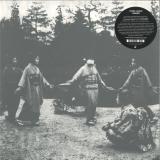
Black Truffle is pleased to announce a new edition of Kassel Jaeger’s Fernweh, returning François J. Bonnet’s electroacoustic project to the label five years after the acclaimed Meith (BT069). Originally released on Giuseppe Ielasi and Jennifer Veillerobe’s impeccably curated Senufo Editions in 2012, Fernweh stands near the beginning of the gradual expansion of Bonnet’s approach after the austere acoustic textures of Aerae and Algae (both released on Senufo), leading to the lush, layered environments of recent solo works on Shelter Press and the epic electronic expeditions undertaken in duo projects with Stephen O’Malley and Jim O’Rourke.
A major work in the Kassel Jaeger oeuvre, stretching over two LP sides, Fernweh draws together synthesized and musique concrète materials into a drifting assemblage. Its title’s meaning is close to the concept of ‘Wanderlust’, fitting for this music that moves freely and unexpectedly between what Bonnet calls ‘climates’. Beginning with fizzing electronics whose rhythm of gradual approach suggests breaking waves, the clinical atmosphere is soon haunted by intangible traces of lived reality. Textures call up wind, water, insects, the crunch of feet on sand or the clinking of glasses, yet they can never be identified with any certainty. At times these concrete elements possess a vivid ‘closeness’; at others, the sounds shade into a formless distance. Though the listener forms no clear picture from the concrete sounds, these elements aerate the music, lending it their space.
Drawing from the rigorous formal language and conceptual apparatus of the French musique concrète tradition—with which Bonnet, as director of the GRM and researcher into its deepest archival recesses, is intimately familiar—the music of Kassel Jaeger is equally informed by how underground experimental music has rethought electroacoustic techniques, with Fernweh at times calling up the grit and grime of para-industrial eccentrics like Maurizio Bianchi or the Toniutti brothers, and at other moments suggesting the slow-moving grandeur of early Olivia Block. Subtle features of dynamics and rhythm act as connective tissue between the numerous ‘scenes’, with wave-like envelopes, rapid pulsations, and short, tape-loop patterns all recurring throughout the piece, shared ambiguously between electronic and concrete sounds. Amid these shifting, often inharmonic textures, the electronic elements sometimes cohere into melodic shapes and chordal patterns, cutting through the fog in distorted arcs or underpinning the layered surface with slow-moving harmonies. Like his friend and collaborator Jim O’Rourke, Bonnet displays a radical openness at odds with academic tradition, allowing unabashed emotion to coexist with rigorous experimentation. As Fernweh dies away with mysterious shudders, listeners are left at once moved and unsure of exactly what they just heard.
Order now and we will order the item for you at our supplier.

The Argentinian punk-noise-queer combo Blanco Tet ais back with a new album from the underground scene of Buenos Aires. La debacle de las divas is a raw, satiric and emotional album about capitalism"s obsession with youth, and the burnout of always having to keep yourself "new." It dives into the sounds of pop and rock, noise, no wave and even metal and grunge, and it"s a record for the working-class divas, the Flixbus divas - too broke, too tired, too late, but still loud. Recorded live in one room, no overdubs, no edits-just the urgent chaos of cables, bodies and feedback. It"s danceable, glitchy, and full of heartache and rage. Fuck meritocracy. Fuck techno-feudalism. This is survival music for the ones paying subscriptions to platforms that censor them. La debacle de las divas is a shelter and also a call to arms for outdated divas.
expected to be published on 04.07.2025

Netherlandsbased artist Heckerman delivers four tracks of surrealist and textured techno on 47. Laced with swirling sequences, snarling basslines and jagged motifs, 47046 swells with soaring to more introspective moods, streaked with an idiosyncratic flair. 47046 is out July 4th available
Order now and we will order the item for you at our supplier.
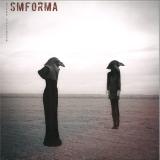
SMFORMA returns with Quiet Collapse, their third EP, continuing to explore the boundaries between techno, industrial, and EBM. With a career defined by hard-hitting, direct sounds, their new work reinforces their identity through three original tracks where rhythmic tension and raw energy merge uncompromisingly.
Additionally, the EP features remixes by Statiqbloom, Radical G, and Nghtly—key names in the European EBM-Techno scene—who each bring their own vision to SMFORMA’s sonic power. Expect sweeping bass, electric textures, and a sound crafted for both the club and immersive listening.
Order now and we will order the item for you at our supplier.

LDF (Lello Di Franco) makes a powerful return to Skylax, this time teaming up with Detroit's own Javonntte. Following his stellar release with Gari Romalis, LDF delivers a release that is pure gold for fans of the original Detroit sound. If you appreciate the styles of Moodymann, Theo Parrish, or Omar S, this record is bound to resonate deeply. The EP opens with "Disco One (All Night Long)," a groove-heavy track that embodies the essence of classic Detroit house. It pulses with soulful basslines and infectious rhythms, setting a hypnotic tone that's perfect for late-night sessions. "Saved" ventures into Chicago acid territory, a tribute to the raw, driving energy of classic acid house. With its punchy 303 basslines and tight, snappy percussion, it channels the best of Chicago's underground with a fresh, modern edge. "After Midnight" offers a smooth, after-hours vibe, balancing deep, jazzy chords with a pulsating rhythm that keeps the energy simmering. It's a track that brings warmth and intimacy, ideal for closing sets or introspective moments. "Martha" is a lush, emotionally rich track that embodies LDF's Italian roots while staying grounded in Detroit's heritage. With warm melodies and a rolling bassline, it delivers a balance between soulful warmth and a classic dancefloor feel. "Love Anthem" is a heartfelt groove, merging lush pads and laid-back percussion with a sense of nostalgic euphoria. It's a track that brings people together, a true love letter to house music. "People From Mars" pays homage to Omar S, with its stripped-down, gritty approach. The track has a rough, analog feel, capturing the raw energy and spirit of Detroit's underground. Finally, "The Dirty Digital Show" closes the EP on an intense note, with a driving rhythm and futuristic soundscapes. As an Italian DJ and producer from Naples, LDF brings his decades of experience—starting from his early inspirations in house and techno in 1993—into this record. Also, as co-owner of Frole Records and co-founder of Basic Frame Distribution, his knowledge of the scene is profound, and it's reflected in each meticulously crafted track. This release is a testament to the timelessness and diversity of house music.
Artwork done by legendary french cult designer H5 (Daft Punk, Air, Etienne de Crecy …)
Order now and we will order the item for you at our supplier.

Resilience
the elastic, technological noise crafted from the streets of Detroit
DRIVETRAIN - “Persuasion”
To be enchanted and beat down simultaneously
DJ CENT - “Send Me”
An unrelenting subsonic rhythm assault
Distant Lover - “Green Eyes”
The disco groove intent to ignite the dance floor
MARSHALL APPLEWHITE - “ “Front to Back”
Fast and furious high tech beats
Order now and we will order the item for you at our supplier.

Originally published by Tomlab in 2001, “Seleya” is the second full- length issued by Kristian Peters’ Novisad project. Twenty-four years after its initial release, the album’s thirteen loop-based arrangements continue to resonate with striking clarity. Keplar presents Seleya with a previously unreleased bonus track from 2004 and a fresh vinyl cut by LUPO.
These evocative miniatures feel haunted with the passage of time, bearing traces of the exploratory studio workflows, tactile imperfections, and emerging technologies that would have given birth to them: plain DAW manipulations, aliasing digitalia, the tones and timbres of the “misused” equipment ambient musicians utilized before Ableton, Eurorack, and the rise of the boutique electronics that have streamlined electronic music production.
In our present epoch, these compositions feel almost eerily nostalgic, documenting the sort of trembling, wide-eyed spirit and enviable naivety that characterizes cultural production as it ventures into new waters, unfettered by the sediments of established methodology and trend. This tendency to avoid aesthetic orthodoxy results in music that refuses to settle into predictability. Subtle frequencies drift and collide, counterpoint loops run in quiet opposition, and elegant dissonance gives rise to unexpected harmony. The album’s emotional power lies in these tensions, in the way it balances melancholy with beauty and familiarity with complexity.
Order now and we will order the item for you at our supplier.

Order now and we will order the item for you at our supplier.

California mail-order mystic Master Wilburn Burchette was first known from his ads, hidden in the back pages of Fate Magazine, Beyond Reality, and Gnostica News. On his 1972 sophomore album, Burchette channels dreamy early music, druid folk, electric fingerstyle, psychedelic balladry, and new age ontology to create a visionary guitar technique all his own. This faithful reproduction includes the original 12-page full color instruction book for the secret method of piercing the psychic heart.
Order now and we will order the item for you at our supplier.

“We go through life. We shed our skins. We become ourselves.”
This line from Patti Smith was going round and round Felix Manuel’s head as he gradually constructed Under Tangled Silence, his first album in six years and a record of a literal creative rebirth. Felix originally began it in earnest in 2020 Covid lockdown, but a catastrophic hard-drive meltdown destroyed almost all his work and sent him close to psychic collapse himself. However, ultimately this pushed him to rebuild from scratch and in so doing to confront and reassess every part of his musical and psychological processes.
The result is utterly extraordinary. Felix was a child prodigy as an instrumentalist and his advanced musicality has always been prominent in his music, but here he has put himself front and centre as pianist, harpist and more. And this sense of exposure as a performer interweaves with an unflinching emotional openness too. Where sometimes electronic production as advanced as this can use intellect and techniques as shields from soul-baring, this is the sound of someone who can boldly say “I feel things, I cry all the time, and I'm not afraid to say it or show it in the music.”
But this doesn’t mean there’s a move away from the soundsystems and dancefloors where Felix made his name as a uniquely innovative vinyl DJ. Even just in the opening track “A Tune for Us”, minimalist piano ripples and jazz drumming flow into the breaks of vintage jungle – and as the structure of the LP unfolds, a deep ambient meditation like “Hold” can sit very naturally in between the futurist dancehall of “L’Ancienne” and the high-definition acid house mind movie of “Galaxy in Silence”. In fact, as with the hands-on musicianship, that gutsy big-speaker electronic impact is delivered with more certainty, more expertise, more personal flourishes than ever. And all of those elements are more integrated than ever too: the sound of a total musical personality emerging afresh is truly something to behold. An already remarkable talent has been refreshed, reborn and is making the music of his life.
Order now and we will order the item for you at our supplier.

Order now and we will order the item for you at our supplier.

Detroit’s own Brian Kage returns with Timeless Times Remixed, a interstellar re-imagination of his album "Timeless Times" featuring an all-star lineup of remixers. Timeless Times Remixed brings together some of the finest minds in house and techno, delivering deep, timeless grooves with Detroit soul.
Brian Kage, a staple of Detroit’s electronic music scene, brings together a heavyweight lineup of producers to rework key tracks from his latest album. The legendary Delano Smith infuses Detroit Techno City with his signature deep and hypnotic touch, while Scotland's Milton Jackson reworks Just The Groove with a dose of his classic rolling house energy. The collaborative Reference (Luke Hess & Brian Kage) Remix of Nordhouse leans into peak time dub-techno atmospheres, while Detroit's newest and finest young talent from the Submerge crew Max Watts takes Galaxian into raw, driving 808 Electro terrain.
This essential four-tracker bridges deep house, techno, electro, and dub, while staying true to the classic and timeless sounds of Detroit’s roots.
Order now and we will order the item for you at our supplier.

Detroit's own DJ 3000 returns with a futuristic techno-electro offering in the form of the Waiting in the Dark EP, featuring heavyweight remixes from electro pioneers Aux 88 and DJ Stingray 313. Set for a limited vinyl release, this project captures the essence of Motor City’s deep-rooted heritage while pushing sonic boundaries forward.The title track, Waiting in the Dark, receives two distinctive remastered remixes—Aux 88 injects their signature bass-heavy funk, transforming it into a machine-driven electro roller, while DJ Stingray 313 pushes the tempo with his unmistakable high-velocity precision. Both remixes have been carefully remastered, enhancing their depth and impact for a new era of listeners.DJ 3000’s own Midnight Mix offers a shadowy, groove-laden interpretation,capturing the hypnotic essence of the original, while Voyager (The JourneyMix) propels listeners through deep, evolving rhythms, combining layered melodies with driving percussion. These two previously unreleased mixes showcase DJ 3000’s seamless fusion of soulful depth and forward-thinking production.Limited vinyl copies will be available—don’t miss this essential Detroit techno release.
Order now and we will order the item for you at our supplier.

Biz is one of a number of Australian artists who are having a big impact on the sound of contemporary techno, and he has been playing a key role in the scene since the late 1980s. His sound mixes deep basslines with uplifting melodies and he has collaborated with a number of legends as well as releasing music on labels like Transmat and COD3QR. Now on Acquit, he explores the outer edges of our galaxy with celestial synth lines, sci-fi melodies and deep, Detroit-inspired techno grooves that are brilliantly cinematic and evocative. 'Soul Within' is our favourite with its widescreen synths and floating pads.
Order now and we will order the item for you at our supplier.

expected to be published on 30.06.2025

With a clutch of EPs under his belt spanning a wealth of pallets, Henzo narrows the focus on his debut studio album “The Poems We Write For Ourselves” - a culmination of persistent iterations over several years, distilling his sonic milieu into something that feels decidedly his own. The album proper is coupled with a debut live performance which reinterprets the tracks and splices them with omitted material from the time of writing - recorded in full in the intimate confines of Manchester’s growingly infamous Stage and Radio basement. Honing his craft in the shadows of Lancashire, Poems is an expansive reflection of the producer’s time spent away committing to the scope of an LP.
A thread of stratified sound design weaves throughout the record, but with a discerning dancefloor proclivity mostly prevalent. Cold opener “Noggin” riffs on noughties Raster-Noton a la Byetone rebuilt with fractal tear out DnB, with closer “Indulgence” following suit on a puckered plod of Dub Techno ambience. More club-focussed moments come in the form of “Rustica Slump” and “Blue Will...”, the former’s sickly sweet vocals resolved by the latter’s stoic UKG/Techno rudeness. “A Bouquet of Clumsy Words” channels mechanical shuffle with a stripped back 2/4 pulse whilst maintaining a firmly FWD>>energy alongside “Plant Your Roots In Me” on a similar vector - swapping out a straight kick pattern for a bludgeoning 808 assault on an early Hessle-indebted tip.
“Take Stock, Touch Grass” harks to golden era ClekClekBoom and Night Slugs with a bare bones kick and vocal motif, updating the formula with a tweaking lead line that places it firmly in the contemporary space. “Swell:Shrink” sings from the same sheet with a shrieking, space age wobble doing the heavy lifting, knocking the pace back to a shoulder-lean swagger on a slow fast conundrum Henzo has shown his flair for on previous releases.
The outliers to Henzo’s more known approach, “Worm Grunting” with Belfast’s Emby, an amalgamation of halfest time DnB and illest mannered Road Rap, plus “The Rest Is The Mess You Leave”, a starkly anti-retro Ghettotek endeavour, give grounds to the LP. Clearly rooted in the comfortable universe of the dancefloor, these tracks expand the producer’s realm into loftier heights as he graduates into long play land.
Order now and we will order the item for you at our supplier.

2023 Repress
It's the quiet ones we should watch, they always say. Which is particularly astute advice right now, when loud, constant self-declaration and saturated 'brand' visibility have become the norm. But above the babble and brightness, some voices will always speak quiet volumes - with calm eloquence and the kind of certitude that comes from valuing the playing out, not just the prize.
Sweden's José González is just such a voice. He first charmed his way into the UK's earshot via the murmurous and elegant, classically finger-picked folk pop of his 2005 album, Veneer, which has since sold over a staggering 430, 000 copies in UK alone. Two years later came In Our Nature, a further exploration of José's influences (Argentinian Folklore, the '60s US folk tradition and the British pastoral folk-pop style of the same era), on which he resisted the temptation to beef up his alluringly introvert aesthetic. The albums made the UK Top 10 and Top 20 respectively.
Conceived as the natural third part in an acoustic trilogy, Vestiges & Claws is a(nother) hushed and delicate solo set that forefronts the artist and guitarist's compellingly intimate vocal style and intricate playing technique, but it's often strikingly rhythmic in nature and cohere's perfectly, with hand claps and taps on the body of his instrument underlining the songs' mantric rise-and-fall pattern, while elsewhere, over-dubbed guitar parts and multi-tracked vocal harmonies entwine to sweetly immersive effect.
The title refers to both cultural practices and biological features that survive despite having lost their original function, and to currently useful tools, ie the 'claws' of modern life.
Vestiges & Claws was recorded almost entirely by José and self-produced, mostly in his Gothenburg home, using computer plug-ins to achieve a warm, analogue sound. He prefers working alone, mainly for artistic reasons. 'There were a couple of things that enabled me to complete this record: one was curiosity, to be able to play percussion and do a lot of harmonies and also to produce and mix the album; the other was aesthetics. I love to listen to Arthur Russell and Shuggie Otis, to music that has been done mostly by one person in their solitary state.'
As José sees it, the record is his personal, 'zoomed-out eye on humanity on a small, pale blue dot in a cold, sparse and unfriendly space. The amazing fact that we are all here, an attempt at encouraging us to understand ourselves and to make the best of the one life we know we have - after birth and before death.
expected to be published on 30.06.2025

The Spanish Queen (of the Piano)
She had small, square hands. She was 1.52 m tall. As a child, she banged her head on the floor to be allowed to play the piano. She was Catalan. She was a pianist—one of the greatest. Her mission? To spread the Spanish repertoire. Her name was Alicia de Larrocha.
When she passed away in 2009 at age 89, Nelson Freire wrote, "I truly loved her; she was a modest woman, and her playing shone like the sun." Acclaimed worldwide, she stood alongside Victoria de Los Angeles as one of Spain’s finest artists.
Larrocha’s journey began at three, seated at a piano. At four, she studied under Frank Marshall, a student of Granados. By six, she was performing publicly; by eleven, she played Mozart’s Coronation Concerto with Madrid’s Symphony Orchestra, astonishing audiences. Despite her small hands, she developed an airy, precise touch, even daring to record Rachmaninov’s Third Concerto. But beyond technical mastery, her playing held a profound sense of life and imagination.
Though trained in Bach, Mozart, and Chopin, Larrocha fought to bring Spanish composers to global audiences. Albéniz and Granados owe much of their fame to her. Her international breakthrough came in the 1950s when an American impresario heard her Spanish recordings and invited her to the U.S., where she triumphed.
Her performances honored Spain’s musical heritage. From Soler’s sonatas to Granados' Goyescas, she infused each note with nuance. She brought Goya’s paintings to life in El Pelele and mastered the dark contrasts of Surinach’s Canción y Danza. Albéniz’s Iberia demanded both power and delicacy—qualities she commanded effortlessly.
Her final tribute was to her friend Francis Poulenc, performing his Toccata—a soaring farewell.
As one admirer put it in 1982, "She walked toward a piano too big for her, sat, placed her hands on the keys… and became the queen."
Alicia De Larrocha, Piano
expected to be published on 30.06.2025

HUGE CONGRATULATIONS TO MOXIE AND THE LOVE INTERNATIONAL X TEST PRESSING TEAM FOR WINNING THE BEST COMPILATION IN THE DJ MAG BEST OF BRITISH AWARDS 2025
“I feel really chuffed as a lot of work went into building this compilation,” beams Moxie, when we congratulate her on the award. “I also worked alongside a great team, including Dave Harvey, Ellie Stokes, Chez de Milo and everyone at Prime Distribution. I’d been manifesting working on a project like this for years, so when it all came together I was so happy with it. But to have recognition from the DJ Mag public vote is the cherry on the cake.”
Few artists have shaped their local scene quite like Alice Moxom under her celebrated Moxie alias. A born-and-bred Londoner, Moxie is a dance music powerhouse whose influence runs deep—from the grassroots to global stages. Her trajectory spans early teenage years digging for garage records, to dubstep sets at legendary club nights, to running her long-standing and beloved NTS Radio residency. For over a decade, she’s been a midweek staple on NTS, championing deep house, Detroit techno, and all things dubby, groovy, and percussive, while regularly platforming artists through guest mixes and interviews with icons like Jeff Mills, Four Tet, and Or:la.
Her latest endeavor, the Love International compilation, brings that wealth of experience to life. 'I’d secretly been manifesting this for a while,' Moxie admits. 'Love International has such a specific energy, and I wanted the compilation to reflect that—dubby, fun, euphoric, deep. It’s all the styles of music I love, pulled together in harmony. Being at Love International always feels like coming home. Whether it’s dancing in Barbarellas or sharing a smile with a stranger on the dancefloor, there’s this sense of unity that’s hard to describe. That’s why I chose ‘U Skladu’ for the sleeve—because that’s what it feels like: in harmony.'

expected to be published on 30.06.2025

Introducing ''Sleek Vibra,'' the debut vinyl EP from Alessandro Gramaccioni (AFM), a compelling young Italian artist whose unique sonic vision has been forged through his involvement with the Amen Rave collective and a previous digital EP on Lapsus Records' CEE imprint. This powerful six-track offering for Adepta Editions sees AFM expertly fuse and reimagine a spectrum of genres, weaving together IDM, rave-oriented sounds, bass music, techno, and Afro-Arab rhythms. The result is an immersive sonic tapestry, where memory and tangible form converge into a cohesive audio-tactile experience. ''Sleek Vibra'' invites listeners on a futuristic journey through shadowy sonic landscapes, where the mechanical relentlessly intertwines with the organic. This intense sonic declaration holds nothing back, painting a vivid and uncompromising picture of sonic annihilation in its wake.
expected to be published on 30.06.2025

Markantonio returns to vinyl with Radici, a bold statement that dives deep into his origins, both in name and sonic identity. This four-track EP marks a pivotal moment in his artistic journey, bridging the raw energy of early techno with his signature funky groove-driven approach.
A vital force in shaping the Neapolitan techno identity since 2001, AnalyticTrail now takes a new step in its evolution with the release of Radici. Markantonio, the label's founder and one of Italy's most influential techno figures, makes a striking return to the forefront. This release doesn't just mark his comeback to vinyl, it reflects a renewed connection to his roots and a forward-thinking vision that continues to drive the underground movement.
Opening with Welcome to Disco, the A-side sets the tone with an infectious rhythm, pulsating basslines, and shimmering synths that light up the floor with hypnotic flair. Rising Dutch talent Isaiah delivers a bold reinterpretation with his Rework, injecting a darker, more driving edge layered with brooding atmospheres and relentless percussion. On the B-side, the title track Radici dives deeper into tribal-infused territory, blending hypnotic loops with raw percussive energy, while Groover rounds out the EP with a stripped-back, minimalist roller designed for late-night momentum.
A must-have for techno lovers, Radici captures the essence of where it all began and where it's headed next.
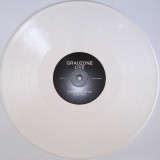
WRWTFWW Records is very happy to release Swiss cult band Grauzone’s recording of their April 12th 1980 live show at Gaskessel in their hometown of Bern. The 9-track album, documenting the very beginnings of the group, is available as a limited edition white vinyl LP in heavy 350gsm sleeve with special artwork by band member Stephan Eicher.
Experience the early Grauzone days, live from Bern, Switzerland, with a concert recorded at legendary local venue Gaskessel, with Martin Eicher on guitar and vocals, Christian G.T. Trüssel on bass, Marco Repetto on drums, Stephan Eicher on synth, and Claudine Chirac on saxophone. The performance is a true time capsule of the early 80s underground, showcasing the punk side of Grauzone with renditions of songs that were never officially released, as well as future fan-favorite “Moskau”. A piece of Swiss music history, This limited release is a must have for all Grauzone fans and DIY archivists.
About Grauzone:
The pioneering band from Bern (Switzerland) had a short-lived but highly-regarded career which birthed a cult discography that still fascinates and resonates today. Consisting of core members Martin Eicher, Stephan Eicher, and Marco Repetto, and on-and-off participants Christian GT Trüssel, Claudine Chirac, and Ingrid Berney, the elusive group broke new grounds in the early 80s, experimenting with punk and industrial music, early techno sounds, minimalism, new wave, pop, and various electronics. With an innovative and polished approach to design, visuals, performance, and all around style and philosophy on top of their superb music, the constantly transforming unit developed a whole experience - the Grauzone experience: wild and unpredictable, yet sophisticated and cohesive, or as Swiss music historian Lurker Grand would call it, "an Art band with a Punk attitude".
Completely rejecting the music industry rules and refusing to play the game of promotion, touring, release schedules, and TV appearances even though they had a multi-platinum international hit with the song "Eisbär", the band quickly disintegrated in full convention-defying glory, leaving behind an inspiring music legacy for the world to discover and discover again, one generation after the other.
Stephan Eicher went on to be, arguably, the most successful Swiss musician ever, with an international career extending from pop chanson to experimental escapades and collaborations with Moondog, artists Sophie Calle and Sylvie Fleury, and author Martin Suter among many other luminaries. Marco Repetto flourished as a techno and ambient producer, releasing multiple projects including releases on Aphex Twin’s Rephlex label.
Order now and we will order the item for you at our supplier.

Order now and we will order the item for you at our supplier.

This is an album made during a crucial period in South Africa’s history during which there was a palpable feeling of a slow turning towards the collapse of the apartheid state side by side with an increasingly well-organised culture of resistance through the formation of the United Democratic Front (UDF) and various affiliated bodies. However, as a result, there was increased pushback from the state security establishment, a turning to dirty tricks and the formation of hit squads whose members murdered and tortured many of our friends and created chaos throughout South Africa as well as neighbouring countries.
This album is situated in this political environment however it took advantage of the new do-it-yourself music technologies available at that time. Technologies that made it possible to make and release records without interference from traditional record company executives. Two musician friends of mine pooled their resources after their respective bands had broken up. Ivan Kadey (National Wake) and Lloyd Ross (Radio Rats) built an 8-track recording studio control room and fitted it out in a second hand caravan and called it Shifty. They parked it in a garage attached to the only house left in a demolished and derelict mining village near Soweto on the outskirts of Johannesburg.
All the work on this album was completed there, mainly after hours and mostly alone where I enjoyed an exhilarating freedom to develop a whole new set of musical skills and ideas, incorporating my love of a wide range of music I’d grown up with. Influences of 1970s progressive/kraut/and psychedelic rock combined with mbaqanga bass styles, early reggae/dub and Indian tabla rhythms. Stockhausen, early Zappa and Holgar Czukay were radio text and shredding influences, and Chris Cutler’s band Henry Cow & Art Bears helped me see a way to political expression. Mostly though was the exciting post-punk and no-wave music coming through to us from Europe and America: bands like This Heat, the Mekons, Raincoats, Sonic Youth and Pere Ubu were immensely important to me as was my reading from the period: J.M.Coetzee’s first 3 novels are strong influences on Free State Fence; the stark landscape, superstition, ritual, and sexual repression are in many of his settings. JG Ballard was a constant presence throughout that period, especially whilst living in such a surreal environment, surrounded by mine dumps, but mostly I think the whole French post-modern philosophical movement—Derrida, Foucault and of course, Baudrillard’s Simulacra and Simulation—set out a new sense of possibilities, possible ways to express oneself, ways to think, and ways to try and analyse the political intersection of public and private life. Most important at that time was the influence of sound recordings I had made and experiences garnered from working as a sound recordist on documentary films. These financed my work and later the studio and were consistent employment throughout the 1980s. Film work also enabled me to experience much of South Africa that was hidden from most. The track Independence Day is a good example; drawn from some time spent in the rural homeland of Venda. This then was the first full length Kalahari Surfers album, completed in summer of 1984 it was taken to EMI pressing plant but rejected by the cutting engineer as being ""political, pornographic and anti religious"". Chris Cutler at Recommended Records took up the challenge and released the album through his label. He wrote the original liner note
expected to be published on 27.06.2025

Da Taylor Nordberg und Jeramie Kling den Titel der 1992er Massacre-EP "Inhuman Condition" als Namen für ihre neue Band wählten, nachdem sie das Death-Metal-Flaggschiff 2020 verlassen hatten, erscheint es plausibel, dass in den letzten fünf Jahren an diesem bewährten Old-School-Sound festgehalten haben. Das dritte Inhuman-Condition-Album "Mind Trap" ist jedoch mehr als nur Massacre 2.0 und markiert eine Steigerung auf allen Ebenen. Die Tatsache, dass sich das ursprüngliche Trio, das durch den altgedienten Bassisten Terry Butler (zu verschiedenen Zeiten ebenfalls Mitglied von Massacre) vervollständigt wird, bei der Arbeit an neuem Material nie Ziele setzt, hat sich als Segen erwiesen: "Wir haben das Gefühl, dass wir unsere Identität gefunden haben und endlich über die Verbindung zu Massacre hinweg sind", sagt Nordberg. "Beim Schreiben, Aufnehmen, Mischen und so weiter wurde nichts überstürzt. Dieses Album zeichnet sich durch eine gewisse Behaglichkeit aus, hat aber immer noch diese knallharte Kante." Die Songs auf "Mind Trap" sind dem Gitarristen zufolge ein "Kommentar zu der Welt, in der wir leben". "Einige meiner Texte befassen sich mit dem erdrückenden Einfluss der Technologie auf unsere Spezies. Die Platte hat alles - Blut, Eingeweide, Serienmörder, Sci-Fi-Horror, schlechte Menschen." Die Band produzierte das Album vollständig in ihrem eigenen Studio, und das Ergebnis kann sich mehr als hören lassen. "Mind Trap" kommt mit einem weiteren bestechenden Artwork von Dan Goldsworthy (Accept, Alestorm) und zeugt von der besonderen Chemie des produktiven Duos hinter Inhuman Condition.
expected to be published on 27.06.2025
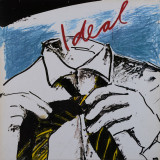
45 Jahre alt – und jetzt so frisch wie nie:
Am 27. Juni erscheint das selbstbetitelte Ideal-Debütalbum von 1980 in einer neu abgemischten Version. Für den „2025 Mix“ wurden die originalen Mehrspurbänder digitalisiert und von Moritz Enders (u.a. Kraftklub, Casper) und Annette Humpe neu abgemischt. Das Ergebnis klingt verblüffend direkt, greifbar und gegenwärtig – als wäre die Berliner Band gerade erst ins Studio gestiegen.
Der Clou: Für den neuen Mix kam ausschließlich Technik zum Einsatz, die bereits 1980 zur Verfügung stand. Der Sound ist also nicht einfach nur neu – sondern neu gedacht im Geist der alten Zeit. „Ideal (2025 Mix)“ ist nicht bloß ein nostalgischer Rückblick, sondern ein eindrucksvolles Update: Songs wie „Berlin“, „Blaue Augen“ oder „Hundsgemein“ wirken heute so kompromisslos, radikal und relevant wie eh und je.
expected to be published on 27.06.2025

LP - First Pressing in White Color Vinyl - Limited to 150
Includes: Gatefold. stickers + poster (60cm x 60cm) + download code
5 Years, All Ears, All Heart. Fifteen years ago there wasn't a grand plan, no vision board or 10-year strategy. It wasn't about fame and acclaim, it has always been about feelings and encounters. Meeting people who made music, loved music, were music. Fast forward a bit and the family just kept expanding. It wasn't just producers and DJs anymore, designers, writers, random hype people, "vinyl faced" ones... Everyone brought something different to the table and somehow, through our filter, it took us here. House, Jazz, Techno, Experimental, it didn't matter. The only rule was that the music had to feel alive, with a Jazzy twist, where "Jazzy" means a propensity to improvisation, not just music. This is not a story about numbers or streams. It's about people and places. Every track has a face behind it: the producer who turned a three-note loop into gold, the designer who nailed an album cover in one chaotic night, the heads who spun the story for the release and the friends who supported and listened. That is the soul of Apparel Music and that's why the cover for this "B-Day15" isn't gleaming or shiny, it's real. It's a celebration of encounters. The messy, magical moments when people connect and make something bigger than themselves. It's a big THANK YOU to all the characters who hopped on this ride. This record, dropping in both vinyl and digital formats and featuring artists from all over the world, is the symbol of the Apparel Music essence. From the USA with Osunlade to Australia with Erin Buku & Inkswel; from Denmark with Ghosten (featuring Francesca Touré and IZZY NU) to Italy with 2KS and Kisk; Argentina and Brazil with Eduardo and HNQO (with Collateral Lab), Spain with Tuccillo, Germany and The Netherlands with Marcel Vogel & LYMA. It's about exploring genres, diving into far-off worlds, being curious about other places, other people and figuring out how to make them all feel comfy under the same roof, chilling in the same room. A room we've been furnishing for a while with our little treasures, some fancy furniture, some not-so-fancy, but always with passion. There's more music to make, more stories to discover, more people to meet. Apparel Music is not just a label anymore, it's a big, instinctive, unplanned love letter to everyone who's been and who'll be a part of it. 15 Years, All Ears, All Heart.
Order now and we will order the item for you at our supplier.

BPitch Berlin setzt die Erweiterung seiner Klangwelt fort und präsentiert die neunte Ausgabe von WE ARE NOT ALONE, einer 12-Track-Compilation, die eine Brücke zwischen verschiedenen Formen und Rahmen schlägt, die von einer echten Liebe für den Underground zusammengehalten werden.
Jede WE ARE NOT ALONE-Compilation ist ein Beweis für die stilistische und genreübergreifende Vielfalt, die BPitch ausmacht, und bietet einen Einblick in verschiedene Subkulturen und verbindet Künstler aus aller Welt mit einer gemeinsamen Vision. Von Acid bis Industrial, von EBM bis Trance - Genrebezeichnungen verpuffen und machen einem Gefühl Platz, das jedem Künstler die Möglichkeit gibt, seine eigene Interpretation einer Energie zu dokumentieren, die das Label und die Veranstaltungsreihe seit ihren Anfängen getragen hat. Verspielt wie immer, ohne dabei den funktionalen Kern von Techno aus den Augen zu verlieren, ist WE ARE NOT ALONE pt. 9 ein Versuch, ein Gefühl zu dokumentieren, und eine wichtige Momentaufnahme einiger der aufregendsten Stimmen der elektronischen Musik.
Order now and we will order the item for you at our supplier.

Kulture Galerie returns with its fourth vinyl compilation, showcasing a futuristic collection of Techno and Tech House tracks infused with hints of Braindance, Electro, and Acid. The compilation opens with tracks from London’s rising star YSANNE (Semi Delicious) and Rare Happiness, both delivering perfect dancefloor destroyers that have already been tested in clubs across Europe.
Next, analogue enthusiast Perseus Traxx presents a relentless live jam packed with squelchy sounds, while on the flip side, Uncanny Valley’s Herzel teams up with North Macedonia's own L.O.V.D to deliver a slow and chuggy Electro cut.
The compilation closes with Barcelona’s mysterious and multitalented artist Sal Abi and his track “Mariani,” a unique machine-made beat full of soul and magic. Following this is the fast-paced groove of “Expandy” by Acid maestro FLX, and finally, the record concludes with the blissful and timeless “Parking” by Global Aphasia.
Order now and we will order the item for you at our supplier.

"Wind, Again" is Sary Moussa’s fourth studio album and second album on Other People. Based between France and Lebanon, Moussa returns with a riveting electro-acoustic album informed by his ever-changing relationships to space, listening, and resonance as well as his growing interest in the study of harmonics in electronic and electro-acoustic music.
Years in the making, “Wind, Again” approaches distinct musical worlds and languages by bringing together improvisations by musicians performing on Western and West Asian instruments such as the Hammond organ, clarinet, saz, and buzuk with electronic arrangements and textures. Rather than force a rapprochement of these musical worlds through the instruments, and keenly aware of the weighty sonic histories they carry, Moussa proposes another way through which they can exist together in contemporary electronic composition.
Composed of six tracks, each of which demonstrate an array of recording and processing techniques, the album generates moments of tension produced by the synthesis of textural, tonal, and harmonic encounters that Moussa calls “shadows”, which outline an impressionistic musical language, existing at the edge of familiarity. Such moments permeate tracks like “Everywhere at once” and “Violence” that open with the Hammond organ and the saz respectively and slowly reveal an expansive field of sounds that showcases each of the musicians’ characteristic performances and Moussa’s densely layered textures. It is a latent yet unrelenting tension through which the composer invokes rather than represents a collective experiential state, especially familiar to those who know his environment. In “Wind, Again” these shadows are articulations of sounds steeped in traditions they are never quite tethered to. Such articulations are implied and alluded to, they play within a musical reference without the latter explicitly existing in the recording, always teetering, never completely here nor there.
Sonically and musically, the album is fueled by the cultural, social, and personal realities that Moussa was brought up and lives in.
Both personal and musical ties with the musicians who feature on the album is central to Moussa’s practice. In the title track “I will never write a song about you”, musician Julia Sabra opens with rolled piano chords, followed by Paed Conca on clarinet and Abed Kobeissy on buzuk, before Moussa’s electronic processing pieces together, lifts, and sustains the melodic direction of the track that emerged from the musicians’ separate improvisations. For Moussa: “The initial connection between the three performances was made on a track that no longer existed, the original recording was both an obstacle and necessary step for the track we hear on the record. It’s as if we were all telling different stories and I pulled on the thread that held them together”. The track, and more generally the record, is tinged with a melancholy of things lost, though it never fully succumbs to it.
“Everything inside a circle”, Moussa’s most personal track and for which he provides the only vocals on the record, harkens back to a childhood memory of listening to music with his mother in a car: “There was a sound I was looking for — a memory of a sound and how I first heard it. This track is a hybrid of that memory and what I wanted to make of it”. The track relies heavily on generativesystems and perhaps embodies most the ambiguous quality of the record’s music in its refusal to be pinned down by one musical tradition or another.
“Wind, Again” is both familiar and alien, cold and warm; it pays homage to the mechanics, materials, and tactility of the instruments and converges acoustic and synthetic spaces. What anchors the sound of the album are the elements of a whole that cannot find its own idiosyncrasy and that is precisely why Moussa’s album is a tour de force.
Order now and we will order the item for you at our supplier.
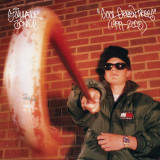
"Chasing the funky symphonies that filled my head and my dreams..."
December 25th, 2023 - an Instagram post. Stimulator Jones shared half a dozen FIRE tracks from his beat tape archive. We were immediately drawn to the rough hewn boom bap.
"I'd release that", Rob commented.
Hours of material was shared and the result is this: Cool Green Trees (1999-2005). A collection of beats and loops Stimulator Jones created between the ages of 14-20 at home in his basement, bedroom and computer room in Roanoke, Virginia.
You will not believe the profound soulful genius contained within these naive schoolboy melodies.
December 25th, 1998 - 25 years ago to the day and his much-coveted Yamaha SU10 sampler was finally bestowed upon young Stimmy AKA Sam Lunsford: "I immediately hooked up a CD Walkman to the input jack and looped the beginning two bars of Grover Washington Jr.'s "Mercy Mercy Me". I don't know what exactly was so thrilling about hearing two measures of music repeating over and over but it was so infectious and hypnotizing and enthralling to me. I'll never forget that ecstatic rush of making my first loop - an uncontrollable, gleeful smile plastered all over my face." When you hear the pocket breakbeat symphonies featured here on Cool Green Trees, you'll feel the same sense of frisson.
In the wake of his Stones Throw breakthrough - Exotic Worlds & Master Treasures - Stimulator Jones was pegged by many as a 90s throwback artist. However, he literally IS a 90s artist. He's been recording music most of his life and he's now 40. He created the bulk of Cool Green Trees as a teenager. Everything before 2004 was recorded when Sam was still in school. He was in 8th grade when he made the 1999 tracks - he didn't even have his learner's permit. This album is a snapshot of a young man in a simpler time. Things were still mysterious back then and he was flying blind, relying on his ears and having to figure things out for himself: "I had no road map for becoming a beatmaker. I have been collecting music since I was a kid, I am a lifelong digger and seeker of cool and interesting sounds. I was there in the golden age of Hip Hop, and while I may have been a suburban white kid in Roanoke, Virginia, I was tuned in and I bought so many classic albums when they came out. I was attracted to Hip Hop because of the musical and poetic quality. I was hypnotized by the rhythms, partially because I was a drummer. I didn't brag about collecting my breakbeat records or making beats - it was something I did in isolation. It wasn't something I generally wanted to bring attention to and it didn't really score me any cool points. I certainly wasn't flexing on social media about it."
Hell, he can do that now!
Opener "Pharoah Jones" was inspired by Yesterday's New Quintet and Madlib's ability to capture that classic 70s sound whilst playing all the instruments. Sam created this one stoned afternoon by laying down a 2 bar loop and a shaker loop on his Yamaha SU700 sampler. He hung a microphone from the ceiling and played his Yamaha Stage Custom drum kit over the top before adding ender Rhodes and playing his dad's Selmer tenor sax through an Electro Harmonix Memory Man echo pedal. Yes! Up next, "Ghost Gospel" utilises a dope loop from a gospel record and adds some soul-funk drums overtop, whilst working that filter knob. Says Sam: "The loop reminded me of something Ghostface would rap over. The sample was in 3/4 waltz time but I flipped it for a 4/4 groove, a technique I picked up from RZA. "Ill Feeling" uses sped-up pieces from a dusty old funk record and putting them over a classic NOLA drum loop; gain chopping up a slow, bluesy 3/4 time signature and bending it to a 4/4 groove. Classy shit. "Capital Punishment" features drums tapped in live, inspired by MF Doom's Special Herbs series. "Do Not Adjust" consists loops found on a compilation of 70s French music at Happy's Flea Market, a classic Roanoke digging spot.
The sublime, evocative title track, "Cool Green Trees" was created when Sam was still living at home. He dumped samples off his SU10 into the family desktop and arranged them in a demo version of Pro Tools: "This track was sort of my ode to the DJ Shadow style of sample based production. Super spacey, slow, and moody. The heavily filtered drums were inspired by Alec Empire's 'Low on Ice' album. I later added some scratches and sounds from a Spider Man storybook record." "Chill Scratch" snags the final bit of a bossanova record and pairs it with a drum loop before adding experimental scratching run through an Electro Harmonix Memory Man echo pedal. "Poisonous Fumes" was made using a sampler, mixer and a turntable; a kind of mixtape beat collage with added scratches and sounds from various records. Using dialogue from superhero records was a nod to Madlib. "Welcome Aboard The Starship" is dark, downtempo trip-hop with a spooky bent. Sam paired a slow, hard drum loop with a guitar sample grabbed off a psychedelic rock record. To finish, he added various backwards sounds and weird atmospheric effects and a little scratching. Swoon.
Side B opens with "Keep On Runnin", made on a borrowed Roland SP202 sampler. Having always loved the sound of the Lo-Fi filter on those machines, reminiscent of the Emu SP1200, Sam always imagined Del or another of the Hieroglyphics crew rapping over this beat. You can certainly hear why. "Sounds Impossible" sees Sam experimenting with layering multiple kick samples at different volumes to create patterns similar to those heard by Showbiz and Lord Finesse during their God-level 1995 period. "Painted Faces" was made by chopping up a REDACTED record which he had gotten from Happy's Flea Market and paired it with a REDACTED drum loop. By the time Sam recorded "The Knew Style", he had acquired a shitty old 1960s portable turntable off eBay. It didn't function properly when he bought it but his brother opened it up, cleaned it out and got it working: "I remember he told me that there was a bunch of sand inside of it when he opened it up, as if its previous owner had taken it to the beach. I would take that turntable on my Happy's Flea Market digs so I could preview records...that's how I found this loop."
"Chicken Wing Blues Sauce" loops up a classic blues joint and pairs it with some REDACTED drums. A bit of filtering and arranging et voilà! "Kool Breeze", from 1999, is one of Sam's oldest surviving beats, as is "Sexx Bullets". The Roots sampled the same record, leaving Sam frustrated yet vindicated. "Soul Child" was an early SU10 creation, looping a dusty old Soul Children 45 and pairing it with 70s rock drum loops to great effect. "Take Off Runnin" was another loop found digging with a portable turntable. Paired with some boom bap drums it makes for a hypnotic head-nod groove. "Centurian" was intended to be a little beat interlude a la Pete Rock. The sample is from a sun-dappled soft-psych record and it's paired with a Robin Trower drum loop that just happens to fit perfectly. Sometimes you slap things together kind of haphazardly and magic happens. "Bozack" was the first beat Sam made using Pro Tools, his first foray into using chopped sounds instead of loops, an exciting new world. "Church" is beat interlude using a Phil Upchurch loop with the "Long Red" drums - a favourite break of Dilla et al. Sam was really on a tear in late 2004, probably because he was unemployed and phoneless and able to just make beats all day. He made "Splash One" on a borrowed Yamaha SU700 and again was experimenting with tapping the drums in live with his fingers, instead of using a loop or sequenced pattern. Channeling 9th Wonder, Sam used a water splash sound effect from a Batman record as a percussive element, hence the title (also a 13th Floor Elevators reference). The main loop is a backwards portion of one of his favourite Roy Ayers songs.
"Hank" is another fun little beat interlude thing, created on a borrowed Roland SP202 sampler with the fantastic Lo-Fi effect that resembled the Emu SP1200 at a fraction of the price. "73 goatee", from 99, is another of his oldest surviving beats, created in his bedroom with his Yamaha SU10 and his brother's Vestax MR-300 4-track recorder: "This one will always feel special. I can remember having a feeling all the way back then on the night that I created it that this was a solid beat with a catchy loop. There was something in the Fender Rhodes melody that resonated with me emotionally, and I had never heard a producer sample that portion before. I felt like I had found my own unique sound, my own unique loop. It came from an Ahmad Jamal '73. I actually even recorded myself rapping and scratching over this beat way back then, I still have that version in all its imperfect sloppy glory."
Sam explains just how much these tracks mean to him: "They all have immense historical and sentimental value and I'm proud of them. These beats come from an innocent, simple time when I was just figuring out how to craft these sounds. They're something very personal to me. They are the initial part of a journey that I really was taking *alone*. There was no YouTube. I couldn't Google shit. I didn't even know any other beatmakers, producers or DJs in my town that could teach me anything. It was always just me, alone, in a room with some equipment - chasing the funky symphonies that filled my head and my dreams. What I was doing wasn't cool. Most of my peers thought I was a weirdo and couldn't care less. Creating these sounds was an anti-social endeavour. In a sense, I felt like it was me against the world, and all I had to instruct and assist me were the recordings produced by my heroes - RZA, DJ Premier, Erick Sermon, Beatminerz, Showbiz, Diamond D, Beatnuts, Prince Paul, The Bomb Squad, Pete Rock, Q-Tip, E-Swift, Mista Lawnge, DJ Shadow, Cut Chemist, Peanut Butter Wolf, El-P and so many more...I dedicate this collection to them, and to my older brother Joe who has always been a musical and technical guiding light for me.
This was a time before every kid was a self-described producer and beatmaker, before everyone had a DAW, before Kanye and "chipmunk soul", before Red Bull beat battles, before there was any social media beyond chat rooms and AOL Instant Messenger, before Soundcloud, before SP-404 mania, before lo-fi beats to study to, before Splice, before targeted ads for MIDI chord packs, etc. In 99 when I told people that I had a sampler and made beats I was mostly met with bewildered confusion and indifference. Kids and adults alike would wonder why I got this weird machine for Christmas instead of something worthwhile like a Playstation or a mountain bike or even a guitar for that matter because at least that could be used to make "real music". Back then, sampling was still not widely respected as an art form - it was seen as lazy, talentless and unoriginal at best and outright criminal theft at worst. I had gotten respect for playing drums and guitar and things of that nature but this was a step in the wrong direction in the eyes of many."
The cover photo is a picture of Sam standing on his back porch in the latter part of 1998, just before he got his first sampler. He was 13 years old, in 8th grade. His dad took the picture with his 35mm film camera: "I actually wanted to be pointing my dad's .22 pistol at the camera lens but he wouldn't let me. He gave me an old walking cane to use instead. The Tommy Hilfiger puffer jacket came from the lost and found at William Fleming High School where my mom worked as a secretary. I was thrilled when she brought it home because we never spent money on expensive name brand clothing like that - we were for the most part strictly a sale rack, bargain bin, thrift store, yard sale, flea market kind of family when it came to clothes. My watch is some cheap off-brand fake gold department store watch." Mastering for this vinyl edition was overseen by Be With regular Simon Francis and it was cut by the esteemed Cicely Balston at Abbey Road Studios to be pressed in the Netherlands by Record Industry.
Order now and we will order the item for you at our supplier.

Andy Jenkins neues Album Since Always entstand aus dem Loslassen von Selbstwahrnehmungen, Erwartungen und Annahmen. Jenkins fand Raum in sich selbst als Gitarrist seinen eigenen Songs zu vertrauen, und Produzent Nick Sanborn schlüpfte in eine neue Art von Produktionsrolle, indem er Ideen entwarf und filterte sie gemeinsam durch. Kurzum, es war ein sehr erwachsenes Vorgehen, zwei Fans, die zusammenarbeiten, um etwas zu schaffen; eine Platte, auf der der Verlust und die Liebe, der Kompromiss und der Gewinn des Erwachsenseins sichtbar werden. Beide waren in ihren jeweiligen, aber miteinander verflochtenen Musikszenen in Richmond und Durham, schon seit Jahren Fans voneinander, hatten aber nie offiziell zusammengearbeitet. Jenkins hatte ein paar Jahre damit verbracht, Songs für den Nachfolger seines 2018 erschienenen Debüts "Sweet Bunch" zu sammeln; die neuen Songs waren kunstvoll gestaltete Oden an die verschiedenen Zusicherungen und Ängste, die damit einhergehen können, ein gewisses Maß an Zufriedenheit zu finden, wenn man auf die 30 zugeht. Als Jenkins seine Stücke einspielte, hörte Sanborn zu und ließ seiner seiner Fantasie freien Lauf und überflutete Jenkins mit Ideen - Rhythmusverschiebungen, Keyboard-Verzierungen, Gesangseffekten. Es gab ein Doppel-Takt-Piano, einen Fehler in ,Too Late", den sie beide liebten. Da war die Vocoder-Auswahl während ,Emptiness Is", eine Wahl, die es dem Paar ermöglichte einen großen Teil des Songs allein mit Bass und Schlagzeug zu bestreiten. Da war die Sequenz, die unter ,Leaving Before" brodelt, ein Spiegel des lyrischen nervösen Herzens. Als Amelia Meath und Jenn Wasner von Flock of Dimes im Studio herumhingen im Studio herumhingen, fragte Sanborn, ob sie bei ein paar Stücken singen wollten. Das ist Meath bei ,Blue Mind", die Jenkins' Zeilen über den Zauber der Liebe singt, als würde sie eine Beschwörung anbieten, und Wasner erhebt sich durch die statische Morgendämmerung von ,Lovesick". ,Andy wollte jemanden, der Entscheidungen trifft, die er nie treffen würde", erinnert sich Sanborn. ,Es war diese Minenarbeit, die wir zusammen machen mussten." Als die Songs jedoch immer mehr zusammenwuchsen, bestand Jenkins darauf, dass es endlich an der Zeit war, seine Gitarren abzulegen. ,Ich war noch nie ein besonders kompetenter Gitarrist", sagt er jetzt mit einem kleinen Lachen, aber Sanborn liebte die eigenwillige Art und Weise, wie sich seine Gitarrenschläge mit seiner Stimme verbanden, also hielt er sie hin. Sie würden auf Jenkins' langjährigen Mitarbeiter, ein Ass namens Alan Parker, warten, der aus Richmond kommen und die Teile ersetzen sollte. Als Parker kam, hörte er dasselbe wie Sanborn - ja, er war technisch versierter, aber seine Overdubs hatten nicht dieselbe Persönlichkeit, nicht die gleiche erzählerische Wahrheit. Jenkins lenkte ein, und so blieben seine Gitarren und verankern das Album.
expected to be published on 27.06.2025

"Word on the Street" ist das amerikanische Debütalbum der kanadischen Avant-Pop-Singer-Songwriterin und Performance-Künstlerin Elle Barbara und geht auf das Konto von Elle Barbara's Black Space - einer Gruppe von Instrumentalisten aus Montreal, die Barbara zusammengerufen hat, um mit anderen schwarzen Musikern ins Gespräch zu kommen und dabei nicht den Erwartungen an den Klang schwarzer Musiker zu entsprechen. "Word on Street" wurde von Elle Barbara in enger Zusammenarbeit mit Renny Wilson geschrieben, komponiert, arrangiert und produziert. Renny Wilson hat das Album über einen Zeitraum von acht Jahren aufgenommen, bearbeitet und abgemischt, in denen Elle, eine schwarze Trans-Person, sich sozial und medizinisch neu orientieren musste, während sie von Sozialhilfe lebte und sich häufig von nur 11 CAD pro Woche ernährte. In diesem Sinne ist "Word on the Street" ein Sieg gegen Klassenkampf und Vetternwirtschaft und ein unverschämtes Zeugnis dafür, wie eine einkommensschwache, von der Sozialhilfe unterstützte, schwarze Mann-zu-Frau-Transsexuelle mittleren Alters es geschafft hat, alle Ressourcen zu nutzen, um die Musik zu machen, die ihr vorschwebt, und die Konventionen der Musikindustrie völlig zu ignorieren. "Word on the Street" ist auch vehement radikal und unabhängig; ein Meisterwerk der DIY-Prog-High-Production, inspiriert von der Art und Weise, wie das Konsumverhalten und die gegenwärtige technologische Zeit dazu führen, dass sich unser Leben verschlechtert und wir uns zunehmend voneinander entfremdet fühlen. Mit einer breiten Palette von Einflüssen, darunter Todd Rundgrens "A Wizard, a True Star", Prince and the Revolution mit "Purple Rain" und "Running Out of Time" von Rexy, beschwört jeder Track auf "Word on the Street", abgesehen davon, dass sie sehr melodisch sind, einzigartige Bilder herauf, die sich aus scheinbar unvereinbaren Bildern zusammensetzen, wie z. B. korrupte Justizsysteme, die Prophezeiungen von Nostradamus und das Eishockeyteam Montreal Canadiens. "Word on the Street" ist eine gemischte Tüte, deren verschwörerische Ästhetik eine antikonsumistische Haltung verbirgt, die zum Widerstand gegen den Aufstieg der künstlichen Intelligenz und anderer Werkzeuge der technologischen Unterdrückung aufruft und außerhalb der aktuellen Überwachungssysteme arbeitet, was wiederum mit Elle Barbaras Vorstoß für Low-Tech-Unterstützung wie Vinyl-Schallplatten übereinstimmt.
expected to be published on 27.06.2025

The first and most independent of all independent producers, Joe Meek needs little introduction. He was the first to chart in both the UK and the USA with an independently produced song -which was actually recorded in his home’s kitchen- when The Tornados' Telstar took the world in 1962. Meek was, of course, one of the most in vogue producers of the first half of the 1960s, providing the soundtrack to the evolution of UK Rock’n'Roll to Swinging London, scoring hits with actors like John Leyton (Johnny Remember Me), showmen like Screaming Lord Sutch and bands like The Outlaws and The Tornados. He also produced a wide stream of R&B and freakbeat 45s that are nowadays hardly sought after by the collectors with the biggest bank accounts.
Joe Meek experimented with all kinds of recording techniques in his home studio, his tricks and gimmicks won his productions chart placement and critical and public acclaim, but none of his projects was so advanced and way out as the avantgarde experimentation showed in his I Hear a New World electronic symphony from 1960. Aided by The Blue Men formed by Rod Freeman (group leader, guitar, vocals), Ken Harvey (tenor sax, vocals), Roger Fiola (Hawaiian Guitar), Chris White (guitar), Doug Collins (bass), Dave Golding (drums) -also known as Rodd-Ken and The Cavaliers- who provided a tight base to his electronically produced sounds, Meek came up with what he envisioned as the soundtrack of the future, the sounds he envisioned were to be heard in outer space. It was too way out for its time, certainly. To the point that of all the opus, only four tracks saw the light of day on a 7" EP released on Triumph, Meeks very own label. It wouldn’t be until 1991 that the whole recordings from the I Hear a New World sessions would see the light of day on a CD issued by the RPM label.
Wah Wah offers a new reissue of this now classic early electronics masterpiece, housed in a beautiful front-laminated back-flapped sleeve and offered as a limited 400 copies only black vinyl version and an ultra-limited 100 copies only transparent purple vinyl. Get yours before they fly!
RIYL : Delia Derbyshire and The BBC Radiophonic Workshop, Louis and Bebe Barron’s soundtrack to Forbidden Planet, Raymond Scott, Tom Dissevelt & Kid Baltan, Morton Subotnick…
expected to be published on 27.06.2025

The first and most independent of all independent producers, Joe Meek needs little introduction. He was the first to chart in both the UK and the USA with an independently produced song -which was actually recorded in his home’s kitchen- when The Tornados' Telstar took the world in 1962. Meek was, of course, one of the most in vogue producers of the first half of the 1960s, providing the soundtrack to the evolution of UK Rock’n'Roll to Swinging London, scoring hits with actors like John Leyton (Johnny Remember Me), showmen like Screaming Lord Sutch and bands like The Outlaws and The Tornados. He also produced a wide stream of R&B and freakbeat 45s that are nowadays hardly sought after by the collectors with the biggest bank accounts.
Joe Meek experimented with all kinds of recording techniques in his home studio, his tricks and gimmicks won his productions chart placement and critical and public acclaim, but none of his projects was so advanced and way out as the avantgarde experimentation showed in his I Hear a New World electronic symphony from 1960. Aided by The Blue Men formed by Rod Freeman (group leader, guitar, vocals), Ken Harvey (tenor sax, vocals), Roger Fiola (Hawaiian Guitar), Chris White (guitar), Doug Collins (bass), Dave Golding (drums) -also known as Rodd-Ken and The Cavaliers- who provided a tight base to his electronically produced sounds, Meek came up with what he envisioned as the soundtrack of the future, the sounds he envisioned were to be heard in outer space. It was too way out for its time, certainly. To the point that of all the opus, only four tracks saw the light of day on a 7" EP released on Triumph, Meeks very own label. It wouldn’t be until 1991 that the whole recordings from the I Hear a New World sessions would see the light of day on a CD issued by the RPM label.
Wah Wah offers a new reissue of this now classic early electronics masterpiece, housed in a beautiful front-laminated back-flapped sleeve and offered as a limited 400 copies only black vinyl version and an ultra-limited 100 copies only transparent purple vinyl. Get yours before they fly!
RIYL : Delia Derbyshire and The BBC Radiophonic Workshop, Louis and Bebe Barron’s soundtrack to Forbidden Planet, Raymond Scott, Tom Dissevelt & Kid Baltan, Morton Subotnick…
expected to be published on 27.06.2025
