
out of Stock
Order now and we will order the item for you at our supplier.
Last In: 8 months ago
Order now and we will order the item for you at our supplier.
Ston Elaióna is John Also Bennett’s first album for Shelter Press since his 2019 solo debut Erg Herbe. The American born, Athens, Greece, based flautist, synthesist, and composer weaves a strikingly singular electroacoustic excursion for bass flute and Yamaha DX7ii, largely recorded in the golden haze of the early morning hours - bending time at the otherworldly juncture of consciousness and place. Translating from Greek as “in the olive grove”, Ston Elaióna is permeated with the ambiences of the ancient and present world, guided into form by a playfully rigorous approach to sound.
Initially emerging during the mid 2000s as part of Columbus, Ohio’s noise scene, before relocating to NYC around 2010, Bennett’s diverse activities picked up an increasing sense of pace over the following decade - performing and recording as a solo artist (JAB), with the trio Forma and with CV &JAB, his prolific duo with his partner Christina Vantzou, as well as playing in Jon Gibson’s ensemble among many other multifaceted collaborations. However, since 2020 the flautist and electroacoustic composer has existed in a semi nomadic state: drifting between Brooklyn, Brussels, extensive tours, and Greece, where he finally came to rest in Athens last year.
Drawing upon a carefully honed attentiveness to the environments and experiences of everyday life, Ston Elaióna is a suite of nine pieces (with an additional track exclusive to physical formats), many of them composed and played live as the early morning sun touched the Parthenon, in full view from Bennett’s studio window in Athens. Bennett’s refinement and restraint, honed over his years adrift, led him to adopt a limited palette focused on his primary instrument, the bass flute, and a Yamaha DX7ii synthesizer tuned to just intonation scales. Alongside a handful of other keyboards, digital oscillators triggered by his flute, and occasional field recordings, this simple palette is reflected by the deeply emotive sense of minimalism that permeates the album’s two sides. Following two solo albums defined by outward facing temperaments - 2022’s Out there in the middle of nowhere (Poole Music), which used a lap steel guitar and generative oscillators to evoke the surreal landscapes of the South Dakota badlands, and the largely synthetic atmospheres of the 2024 anthology Music For Save Rooms 1 & 2 (Editions Basilic) - the shift in Bennett’s worldly circumstances offered an intuitive return to the calm, inward states of creative exploration that have historically defined JAB’s sound. In parallel, context provided clear sources of inspiration for many of the album’s themes, as well as sources for some of its sounds. The aura of Greece, from the ancient to the present, from its stones and olive groves to its traffic, figures heavily across Ston Elaióna’s two sides. John Also Bennett’s Ston Elaióna forms an elegantly rigorous world of electroacoustic sonority, bridging the expanse of time with the immediacies of environment and happening in the here and now: a profound sonic mediation on the countless dimensions unlocked by life in Greece.
Order now and we will order the item for you at our supplier.

Dharmacide is a Spanish band known for their eclectic fusion of genres, blending elements of shoegaze and dreampop music. Their sound is marked by intricate guitar riffs, powerful drumming, and deep, emotive vocals that create a unique atmosphere. The band, with members of Alcalá Norte and Depresión Sonora, has made a huge impact on various stages, performing at renowned venues and festivals, including iconic spots in their home country as well as internationally, earning praise for their high-energy performances and thoughtful compositions. Their latest singles have been produced, mixed and mastered by Mark Gardener from Ride. "Tougher Than the Rest" is their awaited second album. They take a step forward with a darker sound with gloomy riffs and ethereal voices in which they describe perfectly how the sound of a night full of random events -that surely, we all have experienced- would be like. Their sound is influenced by today's bands like Diiv, Warpaint or Beach House but also by classic artists like Cocteau Twins, Nick Cave and the Bad Seeds or Tom Waits. 'The Cigs, The Light, The Coffee and Crying' is the first single in which we find a powerful reverb-laden riff with a solo vocal melody in the middle of the chaos until breaking into a powerful chorus. Their debut LP "Cult Band Member" (2021) is sold out and the growing interest in the band anticipates that copies of this new album will not last long.
expected to be published on 05.12.2025

expected to be published on 02.12.2025

Hania Rani ist eine mehrfach preisgekrönte Komponistin und Pianistin, die mühelos zwischen der Welt der
klassischen und der experimentellen Musik wechselt.
Aufgenommen in den Abbey Road Studios mit einem 45-köpfigen Orchester, markiert „Non Fiction“ einen
neuen Abschnitt in Ranis Karriere, da sie von den elektronischen Klängen ihres gefeierten Albums „Ghosts“
in den symphonischen Bereich übergeht und eine Brücke zwischen ihrem eleganten Experimentalismus und
ihrer klassischen Ausbildung schlägt.
Non Fiction ist Ranis erstes Klavierkonzert und symphonisches Werk. Es ist auch eine Reaktion auf die Entdeckung der Kompositionen des jungen Musikwunderkindes, Josima Feldschuh, die während der Schrecken
des Zweiten Weltkriegs im Warschauer Ghetto entstanden sind. Bewegt von der Geschichte des jungen
Mädchens, beschloss Rani, sie durch die Linse der aktuellen Schreckenssituationen in der Ukraine und im
Gazastreifen zu betrachten und zu untersuchen, wie wir diese durch moderne Medien wahrnehmen. Dabei
erforscht Rani die ständige Koexistenz von Harmonie und Unordnung, schafft eine klangliche Metapher
für das Überleben des menschlichen Geistes angesichts von Gewalt und nutzt den emotionalen Wert von
Klängen, um diese irgendwie fernen Konflikte für uns auf menschlicher Ebene nachvollziehbarer zu machen.
Order now and we will order the item for you at our supplier.

With Processing Music, Dutch composer and electronic musician Casimir Geelhoed offers a compelling meditation on sound transformation as a metaphor for psychological and emotional processing. Operating at the intersection of overstimulation, introspection and fragility, the album unfolds as a deeply immersive and personal exploration — one that invites the listener to inhabit a space of their own projection, memory and reflection.
Rather than imposing a fixed compositional structure, Processing Music follows a bottom-up approach, allowing form to emerge organically from the interaction of sonic materials. Digital signal processing is not used here as a mere technical tool, but as a poetic device: transformation as narrative, delay as memory, distortion as tension. Through slowly eroding loops, gently collapsing textures and shifting layers of timbre and space, Geelhoed crafts a delicate sound world that is charged with friction.
What may at first seem abstract gradually reveals an emotional core. The album evokes the suspended time of a largo, the layering of memory like an excavation, the psychological tension of perceived spatial expansion. These are not literal themes, but associative keys to a music that operates in a distinctly human sonic language.
Emerging from a series of live performances, Processing Music retains a performative sensibility: the music breathes, transforms, and invites attention to nuance. It slowly unfolds a landscape shaped by the subtle interplay between structure and dissolution.
Casimir Geelhoed has presented performances and installations at festivals such as CTM, Sonic Acts, Rewire, Fiber, SPATIAL, and Aural Spaces. He studied computer science, composition, music technology, and sonology in Amsterdam, The Hague, and Utrecht.
expected to be published on 21.11.2025

Ursprünglich in kleinen, ausverkauften Auflagen selbst veröffentlicht, fangen La vida de alguien más (2021) und Obrigaggi (2023) Diles Que No Me Maten auf dem Höhepunkt ihrer unermüdlichen Kreativität ein - sie bewegen sich fließend zwischen krautrockigen Grooves, Free-Jazz-Chaos und spektralen, traumartigen Meditationen. La vida ist ein berauschender 34-minütiger Ausbruch von Post-Punk-Dringlichkeit und improvisierten Wendungen, während Obrigaggi, aufgenommen in einem Haus am Flussufer in Veracruz, mit intimer, jenseitiger Anmut dahinschwebt. Nun werden diese Alben zum ersten Mal gemeinsam neu aufgelegt und über Moonlight Activities vertrieben. Diese Alben markieren die Entwicklung der Band von Underground-Lieblingen in Mexiko-Stadt zu einer der experimentierfreudigsten Rockbands auf der internationalen Bühne.
expected to be published on 21.11.2025

Sasha & Henry Saiz deliver evocative new single 'Love Is All You Need'
Henry Saiz and Sasha are two of electronic music’s most visionary figures, each renowned for blending emotional depth with cutting-edge production. Saiz is a DJ, producer, and live artist who crafts genre-defying soundscapes on his own Natura Sonoris as well as Sasha’s Last Night On Earth. His work resonates far beyond the dancefloor, much like that of Sasha, a pioneer with an enduring creative streak who continues to push boundaries, most recently through collaborations with forward-thinking producers like Artche, Jody Barr, and Joseph Ashworth. Together on this new single, the pair balance transportive grooves with meticulous synth work to perfection.
The wonderfully luminous 'Love Is All You Need' radiates breezy melodic charm while riding a light, uplifting rhythm that feels as airy and warm as the rush of a new romance. Shimmering, sun-kissed melodies evoke the glow of an outdoor Ibizan party with emotive female vocals drenched in reverb, adding a dreamy, blissful layer to round out this hazy and heartfelt electronic trip.
Order now and we will order the item for you at our supplier.

Elations Recordings presents "Depois do Silêncio", an intimate, forward-looking acoustic bass, digital keyboard and synthesiser recording by Brazilian avant-garde jazz luminaries Zeca Assumpção and Lelo Nazario. This release celebrates almost fifty years of the duo's friendship and musical affinity, continuing a musical dialogue between long-time collaborators. The duo began working together with Hermeto Pascoal's "Grupo Vice Versa" in the mid 1970s before forging one of Brazil's most adventurous experimental jazz groups "Grupo Um" in 1976; releasing three albums with a shared avant-garde and lateral, exploratory approach to sound fusing jazz and contemporary synthesis with expanded and prepared acoustic playing.
"Depois do Silêncio" reflects the duo's long development of a shared conception of music, resulting in a work that is both timeless and modern. The music on the album was primarily recorded in Nazario's UTOPIA Studio, São Paulo, in 1994, featuring Assumpção on acoustic bass and Nazario on his newly acquired Ensoniq TS-12; these recordings were supplemented with acoustic bass for "Quintal da Memória" in 2018 and completed with an additional layer of rich, complex analog and virtual synthesis following their rediscovery of the material in 2022.
Assumpção's deeply expressive acoustic bass playing forms the backbone of these compositions, augmented by Nazario's expansive and exploratory approach to synthesis, its constantly shifting timbres "making music a living organism, which adapts to situations as they appear." Nazario explains that "although the themes are written, much of the music is improvised based on an organic development of ideas, all intertwined and interrelated exactly as happens in a living organism".
The album title "Depois do Silêncio" (After Silence) references a phrase by the writer Aldous Huxley; "after silence, that which comes nearest to expressing the inexpressible is music". Assumpção and Nazario continue a search for new forms of musical expression, and here they succeed in creating music that "expands the sound of musical instruments, so opening new horizons in the minds of listeners".
Order now and we will order the item for you at our supplier.
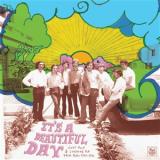
"It's a Beautiful Day" brings together 12 outstanding songs recorded between 1971 and 1976, reminiscent of sunshine pop, psych folk and soft rock with Peruvian touches, taken from extremely hard to find records, some of them reissued here on vinyl for the first time. A mindblowing look at a really stunning musical moment in Peru. Unusual instruments and exceptional vocal play also feature in the ten original songs and two cover versions, all performed by Lima-based groups. MAG has been, since its foundation in 1953, an essential label in the music scene of Peru, allowing the development of the careers of both tropical artists and musicians of other genres. At the head was Don Manuel Antonio Guerrero, its founder, whose name comes from the acronym of the label itself (M.A.G.). In 2021 MAG was acquired by the Spanish company Distrolux SL, owner of the Munster and Vampisoul record labels, after years of previous collaborations in which some of the most emblematic titles in the catalog were already reissued for the international market: Nils Jazz Ensemble, Sonora Casino, Traffic Sound, Al Valdez, Pax... Following our recent release "14 MAGníficos Bailables", comprising some of the best tropical music on MAG, this new compilation brings together 12 songs recorded between 1971 and 1976, reminiscent of sunshine pop, folk psych and soft rock but with Peruvian touches. The lyrics range from youthful reflections, environmental awareness, paradigm changes to all shades of love that the youth of the day experienced. Unusual instruments and exceptional vocal play also feature in the ten original songs and two cover versions, all performed by Lima-based groups.
expected to be published on 31.10.2025

Chris Menist pares his sound right back for A book of imaginary beings, his fourth Awkward Corners outing with a project of electronic and abstracted global grooves. Experimenting with simple melodies and uncluttered arrangements, as well as taking inspiration from the Borges' short stories alluded to in the title, the project took shape in the early part of 2025, in the shorter days and dark evenings of January.
The initial challenge was to knock a basic track into shape each evening after work, then refine it later. There's a melancholy in the air in late winter, compounded by the creeping threat of national and geopolitical instability. Ulla, Natural Information Society, Jabu, Torso and Dawuna formed some of the background soundtrack as each tune took shape.
The track titles came after sitting with the sounds for a while, giving shape to images of people, creatures and their stories for a book that is yet to be written.
Two former friends sets the tone for the album perfectly as a minimal electronic piece with a slowly simmering synth bassline underpinning the groove whilst the trademark Awkward sound of the Shahi Baaja enters drenched in effects. It's the first demonstration of Chris' unique ability to create a world from apparently very little.
Dance of the silver beetles is completely unique in that we can hear chopped up Illimba samples seemingly playing backwards and forewords sometimes alone, sometimes together in duet with Chris' conga rhythms. Add to that a more conventional Illimba melody and added shaker percussion and you have one of A book of imaginary beings most curious chapters.
Anxious shadow puppets is closer to the Awkward Corners sound from previous albums as electronic pulses move around the arrangement with the urgency that the track title suggests. Chris' percussive roots move to the fore with the congas that tie down the Paradise Bangkok Molam International Band's sound. Here, the bassline is more playful and works together with one of Chris' many African Illimbas.
Fans of Chris' adventures on his Roland 808 will dig A leopard with no spots, although the minimal mood continues to flow through on this track. The lolloping, but hard-hitting rhythm track provides the grounding for strange and twisting feedback-sounding tones to work the soundscape.
Abandoned boy (left in charge of the family business) is Awkward Corners at his atmospheric best. Drift off to the sublime sounds of Chris exploring the Shahi Baaja, whilst a soft, repetitive synth line and abstracted pads give the listener that feeling of meditation and peace.
Flamingo with bandaged neck is A book of imaginary beings' perfect coda and is exclusively Shahi Baaja draped in reverbs and delays. It feels like the resolution and the closing of a book that – as of yet – remains unwritten.
Awkward Corners is Chris Menist, a musician, DJ and writer. It started life as a small project in Islamabad, where Chris was living at the time. Initial recordings were made with local musicians in Pakistan and then subsequently in Thailand. This culminated in the Sweet Decay LP that came out on Finders Keepers' Disposable Music in 2014, and in turn led to a limited tape release on Boomkat/Reel Torque of original compositions and re-edits of Thai 45s the same year. Chris released – Dislocation Songs – his second LP proper with Shapes of Rhythm in May 2020, collaborating on many of the tracks with award-winning performer Sarathy Korwar. The LP was picked up by many radio stations including NTS, Resonance FM, BBC 6 Music, Balamii and many more. It made Tom Ravenscroft's LPs of 2020. Amateur Dramatics, Chris' second LP arrived just a year later in 2021 and was a more ambitious project featuring more jazz-focussed compositions and featuring Tamar Osborn and Kitty Whitelaw. Shortly after that came another pivot with the heavier, dancefloor-friendly EP Somebody Somewhere. Somebody Somewhere is Dancing in a Field brought the House (yes House!) vibes, whilst Hector Plimmer turned in a remix of No Words in the same club mood.
As one of NTS Radio's longest-standing presenters, Chris continues to hold down the Paradise Bangkok show. Playing drums and percussion since he was a kid, Chris is the percussionist for The Paradise Bangkok Molam International Band as well as co-founding the record label of the same name. Chris has curated compilations for labels such as Finders Keepers, Soundway and Dust-To-Digital. He has been featured on the Boiler Room, Vinyl Factory Collections, played at the Four Tet curated Nuits Sonores festival, and has put together an edition of Volumes which featured unreleased Awkward Corners compositions.
[d] 04: All the Goodbyes (You Tried to Defer) [Original]
[j] 10: Abandoned Boy (Left in Charge of the Family Business) [Original]
expected to be published on 31.10.2025

Indulge in a delicious audiophile epilogue to Princess P's Infinite Sonore compilation with this 2x12" musical offering.
Swiss DJ Princess P, known for her wide-ranging selections, that resonates equally on the dancefloor and in immersive listening spaces, has been a dynamic presence in the Swiss electronic scene since the mid ’90s and has cultivated a genre-defying style. Her sets have become staples at clubs like Zukunft and festivals such as Watching Trees and Convenanza, where she showcases her iconoclastic musical knowledge and maverick flair.
Order now and we will order the item for you at our supplier.

This curated collection highlights hard-to-find salsa 45s from the Discos Fuentes vaults-deep cuts that have long flown under the radar but still light up dance floors today. These tracks, once pressed in small numbers, feature top tier musicianship, fiery brass, unforgettable grooves, and lyrical gems that reflect the rich diversity of Colombia's musical landscape. Among the featured artists are: Super Combo "Los Famosos" with their irresistible barrio anthem 'El Bailador de la esquina', capturing the spirit of Cali's street life, Sexteto Manaure, delivering a poignant son that blends regional pride with poetic nostalgia, La Protesta de Colombia, a revolutionary Barranquilla outfit that gave a young Joe Arroyo his early spotlight and channeled the rebellious pulse of the times. This compilation also includes a range of studio experiments and covers-where artists like Piper Pimienta, Galileo y Su Banda, and La Integración reimagined beloved hits, from boleros to vallenatos, through a distinctly Colombian salsa lens. These obscure gems, long scattered across dusty crates and forgotten jukeboxes, now find new life. They speak not just to the past, but to a timeless rhythm that still moves dancers and dreamers alike.
expected to be published on 24.10.2025

The Sator Arepo, or Sator Square, is an ancient word puzzle comprising five palindromes that's etched on various historical sites throughout the Western world. Its origins are unknown, but the square has long been thought to hold magical properties, used as a charm against illness and evil, to cure insanity or to determine whether someone was guilty of witchcraft. Self-styled "punk ethnomusicologist", acoustician and musician Julien Hairon uses this mystical symbol as the starting point for his debut Judgitzu album in an attempt to reconnect with his Celtic heritage, exploring how its hallowed messages might harmonize with contemporary Tanzanian dance music.Hairon has been traveling across the world for over a decade, collecting field recordings from countries such as Indonesia, Australia, Cambodia, China and Bangladesh, and presenting them on his Les Cartes Postales Sonores label, re-issuing any curious cassettes and CDs he came across on the PetPets' TAPES imprint. It was during this time that he became fascinated by rituals that involved spirits, prompting him to examine his own ancestry when he returned to Brittany. "Many artifacts in the landscape remain," Hairon explains, "and the power of spirits is still palpable." He represents this Celtic mysticism on 'Sator Arepo' with murky drones and magickal synth tones, using xenharmonic scales (tuning outside of standard 12-tone equal temperament) that reach back to the ancient world. These sounds are augmented with fast-paced, sci-fi rhythms informed by his time in Tanzania; "Singeli has contaminated me," admits the producer.The most astonishing example of this is 'Miracle', a thrusting soundsystem experiment that layers serpentine, bagpipe-esque electronic wails over extravagant clusters of blocky percussion. Driven by the frenetic 175BPM pulse that echoes through the streets of Dar Es Salaam - popularized globally by forward-thinking producers like Sisso, Duke and Jay Mitta - Hairon opens up a rare conversation, seeking to draw parallels between today's most urgent dance forms and the archaic rituals of antiquity. On 'Vitalimetre', Hairon drives his sonic palette into the red, harmonizing with Dutch hardstyle and gabber, and splaying distorted drones over maddeningly blown-out kicks and ratcheting percussion. 'L'or Des Fous' takes a more meditative route, prioritizing Hairon's eccentric tonality with expressive sheets of pitch-warped sound that ghost walk across energized, rattling beats.If you heard Hairon's last Judgitzu release 'Umeme / Kelele', described by Boomkat as "one of 2019's deadliest dancefloor sessions," then you'll know how mindboggling this material can be. And with 'Sator Arepo', the French producer deepens his reach, grasping a world that we've almost forgotten and juxtaposing it with a landscape most of us barely comprehend.
Order now and we will order the item for you at our supplier.

Returning to Die Schachtel with his fourth full-length with the label, the Genoa born, Bologna based, guitarist and electroacoustic composer, Stefano Pilia, delivers “Lacinia”, a new, immersive cycle of compositions, delving deeper into the realm of metaphysical, spiritual, and divine meaning, weaving astounding arrangements of sonority from a palette of synths, strings, brass, organ, various electroacoustic instruments, and percussion. Resting at a refined intersection of the acoustic and electroacoustic, drone, and chamber music - overwhelmingly beautiful, delicate, and bold, - “Lacinia” stands as a high-water mark in Pilia’s already remarkable and forward-looking career.
Since its founding in Milan during the early years of the new millennium, Die Schachtel has occupied a singular place in the landscape of experimental music, issuing a carefully curated body of reissues and archival releases by historically significant figures and projects like Christina Kubisch, Luciano Cilio, Marino Zuccheri, Prima Materia, Claudio Rocchi, Lino Capra Vaccina, Gruppo di Improvvisazione Nuova Consonanza, Roland Kayn, and numerous others, balanced against bristling contemporary counterparts by the likes of Jim O'Rourke, Giovanni Di Domenico, Nicola Ratti, Luigi ArchettI, Valerio Tricoli, etc. Running like a spine through the label’s output is a deep dedication to the work of the Italian guitarist and electroacoustic composer Stefano Pilia. Now Die Schachtel returns with “Lacinia”, Pilia’s forth full-length with the label and their first release of 2024. Building on the ground of deeply personal engagement with metaphysical, spiritual, and divine meaning, explored within his previous LP with Die Schachtel, 2022’s “Spiralis Aurea”, “Lacinia” encounters the composer working in close calibration with various ensembles, including the Bologna based Ensemble Concordanze and Comunale di Bologna String Orchestra, weaving synths, strings, brass, organ, various electroacoustic instruments, and percussion into an astounding reconfiguration of immersive, contemporary minimalism that stands among Pilia’s most noteworthy releases to date. Issued by Die Schachtel in two special double vinyl editions and a CD edition, “Lacinia” features artwork by Bruno Stucchi/Dinamomilano, and is an absolute marvel that draws you in and doesn’t let go.
First emerging during the early 2000s, over the past two decades – via solo releases and numerous collations with artists like Oren Ambarchi, Valerio Tricoli, Alessandra Novaga, Z'EV, Andrea Belfi, David Grubbs, and numerous others - the Genoa born, Bologna based, guitarist and electroacoustic composer, Stefano Pilia has presented a singular voice within Italian experimental music, harnessing visceral energy and hands-on immediacy within delicately woven tapestries of sonority, each investigating the sculptural properties of sound and illuminating its relationship to space, memory, and the suspension of time. “Lacinia”, Pilia’s forth solo venture with Die Schachtel, encounters the composer reentering his longstanding practice of collaboration with various ensemble forms, including the Bologna based Ensemble Concordanze, for the albums central piece, “Lacinia Off Axis”, spinning stunning string confirmations by Pietro David Carami and Elena Maury on violin, Alessandro Savio on viola, and Mattia Cipolli on cello.
A new, important cycle of compositions by Pilia, “Lacinia” (meaning "lace" in Latin) builds upon the exploration of the metaphysical, spiritual, and divine dimensions through numbers, geometry, and the creation of tonal forms explored by 2022’s “Spiralis Aurea”, mirroring archetypal, immutable forms at the juncture of the abstract realm of mathematics and architectural structures in the physical world, expands the poetics and compositional ideas featured in its predecessor. Regraded by Pilia as both a series of individual compositions and a single work, “Lacinia” was conceived to “define a circular path (a sort of "rhizomatic lace") where the beginning and end touch, suggesting the concept of time not only as linear but also cyclical and ritualistic—an eternal return, a process of transformation where matter changes, its state changes, but without altering the invisible internal principle of mutation”, embarking upon a a series of “steps, degrees, and energetic quanta in a progression of archetypal whole numbers and transcendent creation.”
The resulting 16 tracks unfold as a series of complex sonic meditations. While deeply resonant with the minimalism of composers like Arvo Pärt, LaMonte Young, Pauline Oliveros, and Eliane Radigue, Pilia digs deep and moves far beyond the predictable tonal relationships and structures of that idiom, echoing the ancient liturgical and devotional music of composers like Gesualdo da Venosa, Monteverdi, and John Dowland, at a refined intersection of the acoustic and electroacoustic, drone, and chamber music.
Fascinatingly structured as a whole to include a number of motif returns, across which we encounter works like “Lacinia Off Axis” appearing in slightly different rendering, states, or evolutions three times, and compositions like “Eve” appearing twice in subtly different forms and arrangements - first for four oscillators, guitar and voice and then for string orchestra - as well “Maris Stella”, which similarly makes two appearances, first for horn trio, organ and percussion, and then for string orchestra, with “Lacinia” Pilia delves further into the world of chamber music than ever before, creating a deeply inward, mediative body of work the totality of which, guided by its rich string arrangements of arching, sorrowful tone, feels almost like a mass for some unproclaimed loss; simultaneously locked in the nuances of a moment, while managing to suspend time.
Perhaps most remarkable is Pilia's ability to create a remarkable sense of sonic cohesion while using such a varied number of ensembles and instrumentation. From the sprawling string arrangements delivered by Comunale di Bologna String Orchestra, under the direction of Paolo Mancini, and Ensemble Concordanze, and a flute trio (Cadux / Plectere) brilliantly played by Manuel Zurria, to pieces for sax, organ and percussion, violin duo and percussion, organ and percussion, Pilia manages to create a sense of singular, encompassing world that flows forward like a shifting stream.
Overwhelmingly beautiful, delicate, and bold, “Lacinia” is unquestionably a high-water mark in Stefano Pilia’s already remarkable, forward-looking career. Nothing short of a marvel of contemporary Minimalism that, through its shifting arrangements of harmonics, tonality, and texture draws flickering images of ancient forms of music into the present day, “Lacinia” is Issued by Die Schachtel in two special editions on double vinyl and a CD edition, featuring artwork by Bruno Stucchi/Dinamomilano. This is an immersive all-consuming listen that can’t be missed.
Order now and we will order the item for you at our supplier.
Furthering the passionate exploration of cinema that has guided her two previous LPs - 2017’s ‘Fassbinder Wunderkammer’ and 2020’s ‘I Should Have Been a Gardener’ - the Milanese guitarist/composer, Alessandra Novaga, returns to Die Schachtel with ‘The Artistic Image Is Always a Miracle’, two sides off shimmering, tense compositions – culminating as one of her most creatively ambitious and conceptually rich outings to date – freely inspired by the life and work of the Russian director Andrej Tarkovsky and the music of Johann Sebastian Bach.
Classically trained at the Musik Akademie in Basel, Switzerland, over the last decade Alessandra Novaga has emerged as one of the leading figures within northern Italy’s thriving new, experimental, and improvised music scene, rendering striking solo efforts, in addition to collaborations with Loren Connors, Stefano Pilia, Elliott Sharp, Nicola Ratti, Paula Matthusen, Sandro Mussida, Kid Millions, Travis Just, Francesco Gagliardi, and others. Remarkably ambitious and forward thinking, her approach to the guitar embarks upon a relentless deconstruction and rethinking of her instrument’s unique properties through distinct applications of structure, resonance, space, and tone, creating in a deeply personal and emotive music, seeking narrative and meaning within the abstractions of sound.
In 2017, with the LP, ‘Fassbinder Wunderkammer’, issued by Setola Di Maiale, Novaga embarked upon the exploration of her love of film. Having begun with Rainer Werner Fassbinder, this was followed in 2020 by Die Schachtel’s release of ‘I Should Have Been a Gardener’, a deeply intimate mediation on the life and work of Derek Jarman. Rather than focusing on a fixed point of inspiration or a single film to work from, these pieces achieve a form of abstract portraiture, distilling elements drawn from these filmmaker’s life and work into ambient networks of texture and tonality. ‘The Artistic Image Is Always a Miracle”’ freely inspired by the Russian director Andrej Tarkovsky and the music of Johann Sebastian Bach, finds Novaga radically expanding her sonic palette within this approach.
The seeds of ‘The Artistic Image Is Always a Miracle’ can be traced to a conversation that Novaga had with Alan Licht (contained in the highly regarded Common Tones: Selected interviews with artists and musicians 1995–2020, Blank Forms, 2021), relating to the connections between music and cinema, which led her to consider Andrej Tarkovsky’s use of Bach's music within a symbiotic framework: how the music illuminates the imagism of the films, and the film illuminates new dimensions of the music. Slowly developing over the subsequent years, the resulting album comprises six individual works, some of which draw directly upon pieces of Bach’s music that Tarkovsky used in his films – specifically 'Erbarme dich, Mein Gott', 'Das alte Jahr vergangen ist', and 'Ich ruf zu dir, Herr Jesu Christ' - while others draw upon the sensibilities and moods evoked in the imagination by the director’s films.
As a point of departure and illumination into the process and spirit that underscored the creation of the album, Novaga points toward a passage in Tarkovsky’s "Sculpting in Time”:
“Art is born and takes hold wherever there is a timeless and insatiable longing for the spiritual, for the ideal: that longing which draws people to art. Modern art has taken a wrong turn in abandoning the search for the meaning of existence in order to affirm the value of the individual for its own sake. What purports to be art begins to look like an eccentric occupation for suspect characters who maintain that any personalized action is of intrinsic value simply as a display of self-will. But in artistic creation the personality does not assert itself, it serves another, higher and communal idea.”
‘The Artistic Image Is Always a Miracle’ can be understood as a realisation of the collectivism of which Tarkovsky speaks, in the service of something far beyond the expression of self. Encountering Novaga moving into fairly uncharted waters, three of the album’s pieces incorporate the human voice we encounter the voices of others: that of the poet Arsenij Tarkovsky, the director’s father; a singer from Bach’s ‘Erbarme dich, Mein Gott’, capturing a broadcast in an underground parking lot, and Novaga’s own, rendering the melody from Bach’s “Ich ruf zu dir, Herr Jesu Christ”. Roughly alternating between solo excursions on guitar and bristling electroacoustic pieces, over the course of the album’s two sides Novaga weaves one of her most abstract and ambitious bodies of recordings to date, shifting between the complex tonal mediations generated by the six strings of her instrument, and phycological densities activated by the expanded pallet of sonority made possible by the tactics and approaches of musique concrète.
An immersive, deeply engaging meeting of beauty and melancholy within a labyrinth of voices and ideas, ‘The Artistic Image Is Always a Miracle’ transfigures the life and work of Andrej Tarkovski – one of the greatest auteurs in the history of cinema – into a singular, experimental statement of collective truth. Belonging to recent, ambitious stream of contemporary new music releases on Die Schachtel that’s already included Novaga’s ‘I Should Have Been a Gardener’, Stefano Pilia’s ‘Spiralis Aurea’, Jim O'Rourke & Giovanni Di Domenico’ ‘Immanent In Nervous Activity’, Claudio Rocchetti’s ‘Labirinto Verticale’, and Damāvand’s ‘As Long As You Come To My Garden’, among others, ‘The Artistic Image Is Always a Miracle’ is available on as a limited edition of 300 dark turquoise vinyl LPs released on June 21, 2024. The LP, designed by Bruno Stucchi / dinamomilano, comes with an 8-pages insert illuminated by Alessandra’s text as well as the lovely and intense photographs of Matilde Piazzi.
Order now and we will order the item for you at our supplier.

Returning with its final instalments, Die Schachtel's Decay Music series extends its explorations of inspired contemporary experimental efforts of the ambient, ethereal, and emotively abstract with Luigi Turra and Elio Martusciello’s “Liminale” and Sergio Armaroli and David Toop’s “And I Entered Into Sleep”, two astounding electroacoustic gestures of blurred space and time, plumbing complexity of meaning bound to sonority. Creatively groundbreaking and inspired, radically rethinking the terms of what ambient music can be perceived to be, they stand among the most striking efforts to appear within the series to date.
An aural bridge between two distinct generations of Italian experimental musicians, “Liminale” is the debut collaborative outing from the creative partnership of Luigi Turra and Elio Martusciello. Active within the context for roughly two decades, Turra (b. 1975) is a reductionist/electroacoustic composer, noted from his tense deployment of concrete and acoustic sources — particularly small sounds and noises — whose work threads the balance between silence, tactile auditory perception, and aleatoric music. Martusciello (b. 1959), on the other hand, is a musician and composer working across the fields of acousmatic and electroacoustic composition, sound installation, multi-media and audiovisual art, and computer music improvisation, who is widely celebrated for both his solo efforts and his collaborations with Eugene Chadbourne, Mike Cooper, Alvin Curran, Chris Cutler, Rhodri Davies, Iancu Dumitrescu, Michel Godard, Tim Hodgkinson, Lawrence D. "Butch" Morris, Jérôme Noetinger, Tony Oxley, Evan Parker, Z'EV, and others.
A single, nearly 40 minute work, extending across the two sides of the LP, “Liminale” — as its title eludes — is an exploration of the liminal through sonic means: “places that exist on the threshold, transitional spaces suspended between a before and an after, between the real and the evanescent” conceiving the soundscape as “a liminal place, a space to be inhabited without the certainty of where it leads.” Unfurling like a labyrinth navigated in darkness, the piece’s first half is marked by sparseness and restraint, as slow-paced guitar tones and harmonics thread silences and resonant ambience within a sprawling sense of space, delicately populated by tiny sounds, fleeting punctuations drawn from undeterminable sources, vocal utterances, and the unexpected appearance of intoxicating piano tones.
As “Liminale” progresses into its second half, Turra and Martusciello enter a more densely populated notion of the in between. No less defined by the presence of space and mystery, discreet textures rustle and writhe within passages of pure concrete abstraction and a fragmented, stretched sense of musicality: long-tones, metallic pulses, minimal vibrations, processed vocalizations, guitar harmonics, and deconstructed piano melodies, buried in spectral, gauzy hazes drifting from beyond arm’s reach within an imagistic and immersive landscape of profoundly meditative scope, where each sonic element flirts the line between emergence and disappearance.
Intimate, fragile, and achingly beautiful, “Liminale”, Luigi Turra and Elio Martusciello’s debut collaboration, is a masterstroke in sound-craft and composition, revealing the potency of meaning locked within transitional spaces and the undefined, and imbuing silence with monumental gravity and weight. Mastered for vinyl by Giuseppe Ielasi, and taking electroacoustic minimalism to an etherial extreme, “Liminale” is issued as the ninth entry in Die Schachtel’s Decay Music series, highlighting inspired contemporary experimental efforts of the ambient, ethereal, and emotively abstract.
Order now and we will order the item for you at our supplier.

Returning with its final instalments, Die Schachtel's Decay Music series extends its explorations of inspired contemporary experimental efforts of the ambient, ethereal, and emotively abstract with Luigi Turra and Elio Martusciello’s “Liminale” and Sergio Armaroli and David Toop’s “And I Entered Into Sleep”, two astounding electroacoustic gestures of blurred space and time, plumbing complexity of meaning bound to sonority. Creatively groundbreaking and inspired, radically rethinking the terms of what ambient music can be perceived to be, they stand among the most striking efforts to appear within the series to date.
Reconfiguring the notion of bridge building on a multitude of terms, it feels fitting that the tenth and final installment of Die Schachtel’s Decay Music series, Sergio Armaroli and David Toop’s “And I Entered Into Sleep”, was co-created by an artist whose work featured in the first suite of LPs issued by Brian Eno’s Obscure Records in 1975, the groundwork toward which Decay Music’s own efforts nod. Since that auspicious debut, “New and Rediscovered Musical Instruments” — his split with Max Eastley — David Toop has been regarded as a pioneer in British experimental and improvised music: a sonic voyager who has continuously challenged the sources and materiality of sound through rigorously thoughtful performances, a vast catalog of recordings, and a steady flow of highly influential texts. Be it as a member of Alterations, his group breaking group with Peter Cusack, Terry Day, and Steve Beresford that ran between 1977 to 1986, or through is noteworthy work with artists like Rie Nakajima, Thurston Moore, Paul Burwell, Rhodri Davies, Lee Patterson, Ryuichi Sakamoto, Akio Suzuki, Elaine Mitchener, and numerous others, collaboration has always played a central role within Toop’s singular practice, but few can claim the sprawling sense of beauty and intimacy that’s achieved by “And I Entered Into Sleep”, his first recorded outing with Sergio Armaroli.
A composer, percussionist, vibraphonist, and multidisciplinary artist, Armaroli has been issuing radical and forward-thinking musical gestures for decades, working as one of Italy’s most noteworthy interpreters of composer’s like Giacinto Scelsi, John Cage, Franco Evangelisti, Giancarlo Schiaffini, and Walter Branchi, as both a solo performer and member of the highly regarded Rib Trio, as well as forging a singular practice as a composer, intertwining his efforts as a painter, concrete percussionist, fragmentary poet and sound artist, within a total art, rooted “within the language of jazz and improvisation” as an “extension of the concept of art”. Like Toop, Armaroli’s career has been populated by many collaborators, notably with Riccardo Sinigaglia, Alvin Curran, and Walter Prati, among others, setting the stage for a remarkable meeting between the pair.
Featuring Armaroli on vibraphone and prepared vibraphone and Toop on electronics, “And I Entered Into Sleep” is “a sonic journey, a Proustian suggestion à la Recherche, into the unconscious between electronic and acoustic sounds”. Using a bell that sounds at the beginning of Proust’s “À la Recherché du Temps Perdu”, which reappears more than 3,000 pages later — signaling a transition of phases, as well an auditory trigger of memory — as a departure point, as an association to the percussive vibraphone pulses that thread the album’s two sides, the pair weave a striking interior world of immersive psychological depth. Feeling almost subaquatic at times, like captured glimpses of rumbling, shadowy ecosystems lost within murky ambiences, before washing ashore in a series of pointillistic, highly detailed alien landscapes of the mind, each artist’s markedly different sound-sources, and treatment of the subsequent material elements, dance in abstract grace, incorporating subtle nods to minimalism, free jazz, and musique concrète within its seamless total form of sparse texture and tone.
Easily one of the most striking and memorable releases by either artist to appear in recent years, Sergio Armaroli and David Toop’s “And I Entered Into Sleep” traverses uncharted realms at the borders of literary reference, sound art, ambience and abstraction through delicately musical sounds, revealing new depths at every turn. Issued as the tenth and final album in Die Schachtel’s Decay Music series, highlighting inspired contemporary experimental efforts of the ambient, ethereal, and emotively abstract.
Order now and we will order the item for you at our supplier.
Among the true Keiji Haino devotees, Nijiumu’s Era of Sad Wings (released on P.S.F. in 1993) has always held a special place in the pantheon. Operating for only a few years in the early 90s and apparently only performing a handful of shows, Nijiumu operated at the opposite end of the dynamic spectrum to Haino’s famed power trio Fushitsusha, dwelling in a hushed, meditative realm of mysterious droning sonorities and free-floating melodies that occasionally erupts into violence. Black Truffle is pleased to announce a new double-LP edition of a lesser-known 1994 Nijiumu recording, When I sing, I slip into the microphone. Into that void, I bring comrade “prayers”, then, turning to face the outside, together we explode. Here, Nijiumu is the trio of Haino, Tetuzi Akiyama and the obscure Takashi Matsuoka, the three performing on a wide variety of string, wind and percussion instruments, as well as electric guitar and bass, and Haino’s unmistakeable voice.
Like on the early solo Haino album that shares the group’s name (released on P.S.F. in 1993), the instrumentation swims in reverb (the use of which Akiyama recalls as ‘a kind of point of the band’), often obscuring the instrumental sources. On the short opening piece, a distant reed instrument arcs long buzzing melodies over a bed of cymbals and gongs, like a psychedelic take on Tibetan music. The epic second part, occupying almost 50 minutes, begins as a splayed, near-formless cloud of electric guitar and bass, shadowed by bowed and plucked strings, the three elements working through twisting atonal shapes. At various points in the recording, we hear what seems to be the sounds of musicians moving between instruments, their shuffling and bumps fitting seamlessly into this radically open music. Eventually, what sounds like electric guitar moves closer to the foreground, fixing on a repeated melodic cell around which hover mysterious clouds of long tones and a sporadic shaker. At the half-hour mark, the music begins to build to a violently emotive climax, Haino’s impassioned vocal cries punctuating a lumbering, bass-heavy murk, contrasted at points by what sounds like a tin whistle. Suddenly, the volume drops to a near-whisper, opening the way for the stunning final moments, which touch on the slow-motion balladry of Haino’s classic Affection, here given an eccentric twist by an occasional woodblock hit. The third piece opens with a hazy trio of rumbling bass, bowed strings and abstracted slide guitar, the latter calling to mind some of Akiyama’s later solo work. Eventually joined by Haino’s voice, its fragile, haunted tone might remind the listener of the man in black’s documented love of the madrigals of the murderous Count Gesualdo, before the recording abruptly breaks off mid-note. In this new edition, the Nijiumu trio recording is supplemented by a piece recorded solo by Haino in 1973, a bracing electronic blowout stretching almost half an hour. Using a homemade electronics setup to unleash a barrage of crunching distortion and shuddering harmonic fuzz, it takes its place in the canon of extreme live electronics next to Robert Ashley’s Wolfman and Walter Marchetti’s Osmanthus fragrans, looking forward to extreme noise years before Merzbow. Taken as a whole, these four sides of music are a stunning document of some of the lesser-known waystations of Haino’s singular creative path.
Order now and we will order the item for you at our supplier.

Soul Jazz Records delve into the vast vaults of Discos Fuentes, one of the oldest and largest record companies in Latin America, known as "the Motown of Colombia". Discos Fuentes played a major role in spreading Afro-Latin sounds both to Colombia and around the world and this album explores that legacy. Latin Fire! features legendary Colombian artists such as Fruko, The Latin Brothers, Michi Sarmiento, Afrosound, Pedro Laza, Wganda Kenya and more and showcases the wide-ranging variety of styles that Discos Fuentes made unique to their sound. The album features music from the golden era of Fuentes; from late 50s and 1960s Cumbia through to the emergence of heavyweight and hardcore salsa and Afro-funk in the 1970s and up to the early 1980s.
Order now and we will order the item for you at our supplier.

A Milan-born multi-instrumentalist of Venetian heritage, Alberto Baldan Bembo was a gifted vibraphonist, organist, pianist, arranger, and composer whose work bridged jazz, pop, and film music. By the early 1960s, he was performing with Italy’s leading ensembles, including I Menestrelli del Jazz and Bruno De Filippi’s group, and soon became an in-demand session musician. For several years, he toured with the legendary Mina, providing the piano and organ backbone to her live shows—a role that sharpened the cinematic sensibility and refined musicianship that would later define his soundtrack work. In the years to come, he would be celebrated for his scores to films such as L’Amica Di Mia Madre (1975) and Lingua Argento (1976), earning a place alongside Piero Umiliani, Alessandro Alessandroni, Berto Pisano, and other luminaries of Italy’s golden age of soundtrack and library music.
Io E Mara is the soundtrack to a film that was never made. Originally released on the CGD label in 1969, this debut album from the brilliant Maestro Baldan Bembo is a sophisticated concept-album tracing 24 hours in the life of two young lovers. Told entirely through music, the record unfolds as a continuous suite of ten tracks, where cinematic lounge, bossa, and jazz flavors mingle to create a dreamlike atmosphere. Baldan Bembo’s signature piano and organ are masterfully complemented by Mara’s ethereal vocals, while immersive soundscapes of crashing waves, seagulls, and rain showers enhance the feeling of a deeply personal and intimate journey. A cast of exceptional musicians brings this vision to life, including Bruno De Filippi on electric guitar and sitar, Carlo Milano on electric bass, Rolando Ceragioli on drums, and Pasquale Liguori on sound effects. This singular work not only showcases the burgeoning talent of a future soundtrack master but also features the original pop art front cover by Italian cult illustrator Guido Crepax.
expected to be published on 03.10.2025

D: Zaho de Sagazan und die fünfzig Musiker des Orchestre National de Lyon haben sich zusammengetan,
um ein einzigartiges Meisterwerk zu schaffen: „La symphonie des éclairs (Orchestral Odyssey)“.
Ein symphonisches Album in vier Sätzen und sechzehn Liedern, dass die Tür zu einem ganz neuen Horizont
öffnet. Eine eindringliche Stimme, die zwischen Schreien und Flüstern wechselt, eine transzendente Partitur,
ein beispielloser Wirbelwind der Emotionen... Von intim bis grandios – das ist das Versprechen dieser Reise.
Erhältlich ist „La Symphonie des éclairs“ als 2LP und CD.
F:
Zaho de Sagazan et les cinquante musiciens de l’Orchestre National de Lyon unissent leurs forces pour
créer un chef-d’œuvre exceptionnel : « La Symphonie des éclairs (Orchestral Odyssey) ».
Un album symphonique en quatre mouvements et seize chansons qui ouvre de nouveaux horizons sonores
et emmène l’auditeur dans un voyage unique.
Les chansons sont issues de l’album studio, mais ont été entièrement réenregistrées avec l’orchestre, dé-
ployant ainsi une puissance et une dimension qui leur sont propres.
Une voix pleine d’intensité, oscillant entre murmure et cri, portée par une partition bouleversante – un
tourbillon d’émotions insoupçonnées.
De l’intimité à la grandeur majestueuse, cette œuvre promet une expérience inoubliable.
”La Symphonie des Eclairs” est disponible en vinyle (2LP) et CD.
expected to be published on 03.10.2025

his ultimate 6LP Boxset presents the works of Pascal Comelade from 1984 to 2024 and his 40 years producing instrumental music. Each vinyl has been thought as an album in itself , with its own identity, that could be listened as it is. According to the artist, "Improperies- compositions et enregistrements magnétiques (1984-2024)" is a music puzzle which doesn't obey to any rule with the exception of Pascal Comelade's creation and art thoughts that kept moving over the years.
Limited numbered to 500 copies - 6 x Black Vinyl in spineless sleeve, heawyweight cardboard slipcase/custod numbered at the back, includes an insert-photo signed by the artist. The boxset artwork is an original creation by Miquel Barceló.
expected to be published on 26.09.2025

Leila Gamal’s ‘Abaleeh Abalingi’
At the height of Pan-Arabism, when the United Arab Republic fused Egypt and Syria in a fleeting but bold experiment, a new wave of popular music was emerging—vibrant, infectious, and universally danceable. Among its lesser-known stars was actress Leila Gamal, whose voice—delicate yet rich with longing—embodied the golden era of Egyptian cinema. Born in Alexandria to Syrian roots, Gamal’s vocals were a magnetic blend of sweetness and passion, with a timeless allure that echoed the silver-screen sweethearts of her time.
Abaleeh Abalingi pulses with the hypnotic drive of funky organ riffs, reminiscent of the blind visionary Ammar El Sheriyi, creating a sound both cinematic and undeniably catchy. The delicate lyrics by Khairi Fouad place the track firmly in the lineage of the Middle East’s most iconic pop divas, from Angham to Nawal El-Zoughbi who he subsequently wrote for. This reissue, lovingly remastered, brings this long-lost gem back to life, where it belongs—spinning on turntables, teasing dance floors, and transporting listeners to Egypt in the late sixties.
Adel Osman’s “Oriental Eyes”
Oriental Eyes captures the essence of the 60s Egyptian Franco-Arab movement, blending Western (often jazz) influences with Arabic melodies to mesh mystique with sensuality. Osman’s commanding yet delicate vocals deliver the bilingual lyrics with captivating sincerity, his voice effortlessly gliding over the swells of the arrangement. The trumpet, possibly connecting him to Zaki Osman of Salah Ragab’s legendary Cairo Jazz Band, adds a layer of flair, enriching the track’s Tarantino-esque eclecticism. Now remastered, ‘Oriental Eyes’ is not only a nostalgic gem but a timeless reminder of the boundary-defying spirit that defined the 1960s musical landscape.
Given the ongoing war efforts against Israel, this record wasn’t pressed by Sono Cairo till much later in 1975 once Egypt had recaptured the Sinai and restored national pride. Sono Cairo (Sawt el-Qahira) was the first Arab-owned and by far the largest record label in the Middle East, amassing an unmatched catalogue of music. With exclusive rights over much of Umm Kulthum’s works, Sono Cairo played a crucial role in disseminating the sounds of Arab Nationalism and projecting Egypt’s soft power across the region.
Muhammad Al-Najjar
London, April 2025
credits
Audio restoration and vinyl mastering: Colin Young
Lacquer cut: Timmion cutting lab
Sleeve and label artwork: Grotezk Studio
Under License of Sono Cairo
Order now and we will order the item for you at our supplier.

Maggid Tewfik – Mazzika Nicab Parts 1 & 2:
Released in 1973, Mazzika Nicab by Egyptian film director and iconic figure Maggid Tewfik is a trippy instrumental journey into the experimental realms of baladi music. Known for his prolific career as a director and DOP in over 30 Coptic films, Tewfik’s composition, split in two parts, presents a moody yet undeniably cheeky tune that is unlike anything found in Egyptian music over the ages.
The track is a hypnotic blend of Eastern rhythms and Latin grooves, featuring an early drum machine that guides the track through its jubilant and stormy atmosphere. This mechanical beat is paired with funky garage sounds, creating a psychedelic fusion that evokes images of an epic cinematic score, where belly dance meets the raw energy of late-60s experimental rock. Belly-dance sci-fi perhaps..?
Muhammad Al-Najjar
London, April 2025
credits
Audio restoration and vinyl mastering: Colin Young
Lacquer cut: Timmion cutting lab
Sleeve and label artwork: Grotezk Studio
Under License of Sono Cairo
Order now and we will order the item for you at our supplier.

Black Truffle is thrilled to present the first ever solo Donso n’goni recording from octogenarian Swedish multi-instrumentalist Christer Bothén. Active in the Swedish jazz and improvisation scene since the 1970s, often heard on bass clarinet, Bothén travelled to Mali in 1971, eventually making his way to the Wassoulou region in the country’s south where he encountered the Donso n’goni, the sacred harp of the hunter caste of Wassoulou society. Though playing the instrument has traditionally been restricted to those who belong to the hunters’ brotherhood, Bothén found an enthusiastic teacher in Brouema Dobia, who, after many months of intensive one-on-one lessons, gave Bothén his blessing to play the instrument both traditionally and in his own style. Returning to Sweden, he would go on to pass on what he had learned to Don Cherry and play the Donso n’goni in a wide variety of inventive settings, including the driving Afro-jazz-fusion of his Trancedance (reissued as BT118).
The seven pieces of Christer Bothén Donso n’goni offer up a stunning showcase of Bothén’s work on this remarkable instrument, heard entirely unaccompanied, except for the final piece where he is joined on a second Donso n’goni by his student and collaborator, the virtuoso bassist Kansan/Torbjorn Zetterberg, and Marianne N’Lemvo Linden on the metal Karanjang scraper. Recorded in three sessions in Stockholm between 2019 and 2023 in richly detailed high fidelity, the instrument’s buzzing, sonorous bass strings make an immediate, overwhelming sonic impression. Hyper-focused on hypnotically repeating pentatonic patterns, the seven pieces are at once relentlessly single-minded and endlessly rich in subtle variations. The concentrated listening environment turns small details, such as the deployment of the instrument’s segesege rattle on two of the pieces, into major events. Six of the seven pieces are traditional, with Bothén contributing the remaining ‘La Baraka’, but the line between tradition and the individual talent is imaginary here: as Bothén explained in a recent interview with The Wire’s Clive Bell, ‘I play traditional and untraditional, and I play the music forward and backward’. While the traditional Wassoulou pieces provide the rhythmic and harmonic elements, Bothén’s individuality as a performer is alive in every moment, felt acutely in boundless variations of attack, improvisational flourishes, and unexpected accelerations and decelerations. Captured entirely live and bristling with spontaneity, this music is undeniably the product of almost half a decade of Bothén’s devotion to the Donso n’goni and its traditional music.
Accompanied by detailed new liner notes by Bothén and stunning colour photos from his time in Mali, Christer Bothén Donso n’goni is a stunning document of a remarkable instrument, played with an almost spiritual intensity by one of contemporary music’s great explorers.
Order now and we will order the item for you at our supplier.

In Guadeloupe, many people think that jazz and ka music are like a ring and a finger. To some extent, the same could be said about so called Latin music and the music played in the French West Indies.
Both aesthetics were born in the Caribbean and bear so many connections that they can easily be considered cousins. In constant dialogue, there are lots of examples of their fruitful alliance and have been for a while. The English country dance that used to be practiced in European lounges came to be called kadrille in Martinique and contradanza in Cuba. They both featured additional percussion instruments inherited from the transatlantic deportation. Drawing from shared feelings about the same traumatized identity – later to be creolized – it would be hard not to assume that they were meant to inspire each other. The golden age of the orchestras that graced the Pigalle nights during the interwar period further proves the point. As soon as the 1930s, Havana-born Don Barreto naturally mixed danzón and biguine music in a combo based at Melody's Bar. In the following decade, Félix Valvert, a conductor who was born and raised in Basse-Terre in Guadelupe, also worked wonders in Montparnasse with La Coupole, which was an orchestra made up of eclectic musicians. Afro- Caribbean performers of various origins were often hired on rhythm and brass sections in jazz bands, which used to enliven the typical French balls of the capital. In the 1930s and onwards, Rico’s Creole Band was one of them.
Martinican violinist-clarinettist Ernest Léardée, who would become the king of biguine music as well as the main figure of French Uncle Ben's TV commercials (a dark stigma of post-colonial stereotypes), had musicians from the whole Caribbean sphere play at his Bal Blomet – and they all enchanted "ces Zazous-là" (according the words of Léardée's biguine-calypso piece). In les Antilles (French for French West Indies), music history started to speed up in the 1950s, when trade expanded and radio stations grew bigger. The Guadelupean and Martiniquais youth tuned in their old galena radio sets to South American and Caribbean music. As for the women traders, les pacotilleuses, they bought and sold goods across different islands (the "passing of items through various hands" was thought to be most pleasurable) and brought back countless sounds in their luggage. Such was the case of Madame Balthazar, who once returned from Puerto Rico with the first 45rpm and 33rpm to ever enter Martinique.
Out of this adventure was created the famous Martinican label La Maison des Merengues, a music business she opened and undertook with her husband and which proved to be a major landmark. At the end of the 1950s, in Puerto Rico, Marius Cultier competed in the Piano International Contest playing a version of Monk's Round 'Midnight. He won the first prize and this distinction foreshadowed everything that was to come. Cultier, the heretic Monk of jazz, was quickly praised for writing superb melodies, always tinged with a twist that conferred a unique sound to his music. It didn't take long for the gifted self-taught musician to get to play with Los Cubanos, making a name for himself thanks to his impressive maestria on merengues.
The rest is history. Besides, in the late 1950s, Frantz Charles-Denis, born into the upper middle class in Saint-Pierre and better known by his first name Francisco, went back home after working at La Cabane Cubaine – a club located rue Fontaine where he had caught the Latin fever. Francisco's music was therefore heavily marked by his Cuban cousins' influence, which gave the combos he led a specific style and also led to renewal. Things were swinging hard in La Savane, located in the main square in Fort-de-France. He set up the Shango club close by and tested out the biguine lélé there, a new music formula spiced up with Latin rhythms. Soon afterwards, fate had him fly to Puerto Rico and Venezuela.
As for percussionist Henri Guédon (percussions were only a part of his many talents), he was born in Fort-de-France in May 22nd 1944, the day marking the celebration of the abolition of slavery. As an old man, he could remember that in " his father's Teppaz, a lot of hectic 6/8 music was constantly playing...". In the opening lines of his Lettre à Dizzy, a small illustrated collection of writings published by Del Arco, he highlighted the huge impact that cubop had on him as a teenage boy, around 1960. He eventually turned out to be the lider maximo in La Contesta, a big band steeped in Latin jazz. He was also the one who originated the word zouk to describe music which brought the sound of the New York barrio to Paris. It was the culmination of a journey that started in Sainte-Marie: "a mythical place for bélé, the equivalent of Cuban guaguancó". In the early 1960s, the tertiary economy developed to the detriment of agriculture. Yet rural life was where roots music emerged in Martinique and in Guadeloupe.
Record companies played a major part in the process of Latin versions sweeping across the islands – before reaching everywhere else. Producer Célini, boss of the great Aux Ondes label, and Marcel Mavounzy, both the head of Émeraude records - a firm which was founded in 1953 - as well as the brother of famous saxophonist Robert Mavounzy, were big names to bear in mind. Although there were many of them - all of whom are featured on this record - Henri Debs was definitely the major figure in the recording adventure. He proved to be so influential that he even got compared to Berry Gordy. In the mid 1950s, when he acquired his first Teppaz, he worked on his first compositions: a bolero and a chachacha. Then, he became the one man who made people discover Caribbean music, from calypso to merengue. He was among the first ones to rush out to San Juan, Puerto Rico, to buy records and distribute them through a store run by one of his brothers in Fort-de-France. He had members of the Fania All Star come and perform there, which he was madly proud about. He was also the first one to pay attention to Haitian music, such as compas direct and various other rhythms which would soon flood the market. As a result, many of the combos hitting his legendary studio would end up boosted by widespread "Afro-Latin" rhythms. However, he never denied his identity: gwo ka drums were given a major role, although they were instruments which had long been banned from the "official" music spheres. The present selection bears witness to such a creative swarming. Here are fourteen tracks of untimely yet unprecedented cross-fertilization: all types of music rooted in the Creole archipelago have found their way, whatsoever, to the tracklisting. Whether originating from the city or being more rural, they all go back to what Edouard Glissant, in an interview about the place of West Indian music in the Afro-American scope, called "the trace of singing, the one which got erased by slavery." "It is so in jazz, but also in reggae, calypso, biguine, salsa... This trace also manifests through the drums, whether Guadelupean, Dominican, Jamaican or Cuban... None of them being quite the same. They all point to the idea of a trace, seeking it out and connecting to each other through it. This is the hallmark of the African diaspora: its ability to create something new, in relation to itself, out of a trace. It may be the memory of a rhythm, the crafting of a drum, a means of expression which doesn't resort to an old language but to the modalities of it." The opening track features one of the emblematic orchestras of this aesthetic identity, criscrossing many music types from the archipelago. The 1974 Ray Barretto guajira – Ray Barretto was a major New York drummer influenced by Charlie Parker and Chano Pozzo – is magnificently performed by Malavoi, a legendary Fayolais group (i.e from Fort-de-France). Additionally, the compilation ends on a piece by Los Martiniqueños de Francisco. It symbolically closes the circle as it is a genuine potomitan of Martinique culture which also functions as a tireless campaigner for Afro-Caribbean music. Practicing the danmyé rounds (a kind of capoeiria) to the rhythm of the bèlè drum, it delivers a terrific Caterete, a kind of champeta of Afro- Colombian obedience which was originally composed by Colombian Fabián Ramón Veloz Fernández for the group Wgenda Kenya. The icing on the cake is Brazilian Marku Ribas, who found refuge in Martinique in the early 1970s, bringing his singing to the last trance-inducing track. These two "versions" convey the whole tone of a selection composed of rarities and classics of the tropicalized genre, swarming with tonic accents and convoluted rhythms. It is the sort of cocktail that the West Indians never failed to spice up with their own ingredients. For instance, the Los Caraïbes cover of Dónde, a famous Cuban theme composed by producer Ernesto Duarte Brito, has a typical violin and features renowned Martinique singer Joby Valente and his piquant voice.
The track used to be – or so we think – their only existing 45rpm. The meaningful Amor en chachachá by L'Ensemble Tropicana, a band which included Haitian musicians among whom was composer and leader Michel Desgrotte, also recalls how Latin music was pervasive in the tropics in the mid-1960s. They were the ones keeping people dancing at Le Cocoteraie in Guadelupe and La Bananeraie in Martinique. Around the same time, another "foreign" band, Congolese Freddy Mars N'Kounkou's Ryco Jazz, achieved some success on both islands by covering Latin jazz classics – such as their adaptation of Wachi Wara, a "soul sauce" by Dizzy Gillespie and Chano Pozo whose interweaving of strings and percussions can have anyone hit the dancefloor. How can you resist Dap Pinian indeed, a powerful guaguancó by Eugene Balthazar, performed by the Tropicana Orchestra and published by the Martinique-founded La Maison des Merengues? It also acts as a symbol of the maelstrom at work. Going by the name Paco et L'orchestre Cachunga, Roger Jaffory used to play guaguancó too: his Fania-inspired Oye mi consejo is one example of his style. Baila!!!!! Dancing was also one of the Kings' focus points. Oriza is a Puerto Rican bomba and a "classic" originally composed by Nuevayorquino trumpeter Ernie Agosto, which reserves major space for brasses, giving it a special sheen.
Emerging from the New York barrios crucible was also La Perfecta, a Martinique group originating from Trinidad, whose name directly references the totemic Eddie Palmieri figure as well as his own band, also called La Perfecta. Here they borrow Toumbadora from Colombian producer and composer Efraín Lancheros and interpret it by emphasizing percussions, which set fire to the track even more than the wind instruments. The same goes for Martinique's Super Jaguars, who use Tatalibaba – a composition by Cuban guitarist Florencio "Picolo" Santana which was made famous by Celia Cruz & La Sonora Matencera – as a pretext for sending their cadences into a frenzy. In a more typically salsa vein, the Super Combo, a famous Guadelupean orchestra from Pointe-Noire that was formed around the Desplan family and had Roger Plonquitte and Elie Bianay on board, adapt Serana, a theme by Roberto Angleró Pepín, a Puerto Rican composer, singer and musician also known for his song Soy Boricua. Here again, their vision comes close to surpassing the original. In the 1970s, L'Ensemble Abricot provided a handful of tracks of different syles, hence reaching the pinnacle of the art of achieving variety and giving pleasure. They played boleros, biguines, compas direct, guaguancó and even a good old boogaloo - the type they wanted to keep close to their hearts for ever, "pour toujours", as they sang along together in one of their songs. Léon Bertide's Martinican ensemble excelled at the boogaloo which had been composed by Puerto Rican saxophonist Hector Santos for the legendary El Gran Combo.
Three years later, in 1972, Henri Guédon, with the help of Paul Rosine on the vibraphone, tackled the Bilongo made famous by Eddie Palmieri. Such a classic!!!!! And so were the Aiglons, the band from Guadelupe: choosing to execute Pensando en tí, a composition by Dominican Aniceto Batista, on a cooler tempo than the original, they noticeably used a wonderfully (un)tuned keyboard in place of the accordion. On the high-value collectible single – the first one released by Les Aiglons under the Duli Disc label – there is a sticker classifying the track under the generic name "Afro". Now that is what we call a symbol. Jacques Denis
Order now and we will order the item for you at our supplier.

Das von Kritiker:innen gefeierte niederländische Elektronik-Duo, Weval (bestehend aus Harm Coolen und Merijn Scholte Albers) ist mit seinem lang erwarteten neuen Album, „CHOROPHOBIA“, auf dem Ninja Tune-Sublabel Technicolour zurück!
Als es darum ging, ihr viertes Album, „CHOROPHOBIA“, zu produzieren, stellten sich Weval ihren Ängsten. Obwohl Harm Coolen und Merijn Scholte Albers seit ihrer 2013 veröffentlichten Debüt-EP, „Half Age“, in der Dance-Szene verankert sind und mit ihrer fünfköpfigen Band Festivalbühnen wie Nuits Sonores, Lowlands, Primavera, Best Kept Secret, Pukkelpop und DGTL Amsterdam bespielten, haben sie sich aktiv davon entfernt, als Floorfiller-Act bekannt zu sein. Doch als die beiden vor kurzem über den Begriff Chorophobie stolperten - was so viel bedeutet wie Angst vor dem Tanzen -, beschlossen sie, sich der Ironie hinzugeben und aus ihrer Komfortzone herauszukommen. „Bis zu diesem Zeitpunkt hatten wir immer mit einer ‚Zuhör‘-Mentalität an unseren Platten gearbeitet.“, sagt Harm über die Herangehensweise beim zweiten und dritten Weval-Album („The Weight“ von 2019 und „Remember“ von 2023), „und uns wurde klar, dass wir während unserer gesamten Reise als Produzenten Angst davor hatten, Tanzmusik zu machen.“.
Der Sprung ins kalte Wasser hat zu Wevals bisher extrovertiertesten Tracks geführt. Während sie diese neue Richtung bereits mit der groovigeren „Night Versions“-EP von 2024 für Technicolour angedeutet hatten, erforderte das Loslassen ihrer Hemmungen eine geduldige künstlerische Entwicklung. „Wir wollten uns auf eine Art und Weise engagieren, die sich noch immer befreiend und wahrhaftig anfühlt.“, erklärt Harm und fügt hinzu, dass die Bezeichnung als Dance-Album sich nicht nur wie eine Kehrtwende anfühlt, sondern sie auch von den Grenzen und Klischees bestimmter Kategorien befreit.
expected to be published on 05.09.2025

Order now and we will order the item for you at our supplier.
Aura Sonora return with a second release to follow up the fantastic first one, this time it brings together two meticulous studio craftsmen, DYL & Tammo Hesselink. Their Moire Patterns EP kicks off with 'Pattern 1', a deep and rhythmic slice of rubbery techno that rides broken beats with atmospheric pulses up top. 'Pattern 2 slows down to a predatory crawl with icy pads making fro a dystopian vibe then 'Pattern 3' brings a sense of mystic tribal ritual deep in some futuristic jungle and 'Pattern 4' closes down with more fantastically crafted, dubby, broken rhythms that are topped with organic percussion and almost impossible not to move to. Pure rhythm science brilliance.
Order now and we will order the item for you at our supplier.
Der schwüle Ton von Eliana Glass ist nicht zu überhören - sie wechselt zwischen einer unkonventionellen, suchenden Qualität und ihrer ergreifenden, ehrfurchtgebietenden Bandbreite. Auch ihr Klavierspiel besitzt dieses mitreißende Hin und Her zwischen dem Jenseitigen und dem schmerzlich Menschlichen - jede Melodie ist ihr eigenes, einzigartiges, schmerzhaftes Reich. Glass' spärliche, meditative Musik fängt oft, wie sie sagt, die ,Verdichtung des Alltags" ein, ein Bild, das zu der bittersüßen, flüchtigen und abstrakten Natur ihrer Arbeit passt. Glass' Debütalbum E erscheint bei Shelter Press und ist nicht nur ein zärtliches Porträt ihrer lebenslangen Beziehung zum Klavier, sondern auch eine Destillation ganzer Lebenszeiten. Vier Jahre lang arbeitete Glass mit dem Mitbegründer und Produzenten von Public Records, Francis Harris (Frank & Tony, Adultnapper), und dem Tontechniker Bill Skibbe (Shellac, Jack White) zusammen, um das Album E in verschiedenen Studios in Nashville, Brooklyn, Memphis und Benton Harbor, Michigan, aufzunehmen. Glass' experimentelle, improvisatorische Werke erinnern an den sinnlichen Minimalismus von Annette Peacock, die freudige Rätselhaftigkeit von Carla Bley und die wehmütige Intimität von Sibylle Baier. Ihre Verehrung für die Größen des Leftfield Jazz und der freien Improvisation ist unüberhörbar, aber immer gefiltert durch ihren unverwechselbaren, naturalistischen Sound. ,Dreams" ist eine majestätische Interpretation von Peacocks gleichnamigem Stück aus dem Jahr 1971, ,Sing Me Softly the Blues` ist eine minimale, fesselnde Neuinterpretation von Baiers Jazzstandard mit einem von der norwegischen Sängerin Karin Krog adaptierten Text, und ,Emahoy` ist eine schmachtende Hommage an die äthiopische Pianistin, Komponistin und Nonne Emahoy Tsegué-Maryam Guèbrou und ihre 2006 erschienene Kompilation Éthiopiques. Glass' Musik basiert auf einem taktilen, sprunghaften Klang und ihrer stimmlichen Kraft und Vielseitigkeit. E's glatte Stöße von Kontrabass und Schlagzeug kitzeln den Gehörgang und betonen die Schlagfertigkeit ihrer unverwechselbaren tiefen Stimme, die sonore, androgyne Gelassenheit mit flatterhafter Zartheit verbindet. E hat auch eine rätselhafte elektronische Note, die die verschwommenen Emotionen von Glass' Songwriting noch verstärkt. Von Hintergrundrauschen und windigem Gesang bis hin zu kaleidoskopischen Synthesizern stammen diese subtilen, geschmackvollen Verzierungen oft von speziellem analogem Equipment: einer unterirdischen Echokammer aus den 1960er Jahren, einem Cooper Time Cube (im Grunde das Hardware-Äquivalent der Audioverarbeitung durch einen Gartenschlauch) und einem AEA-Bandmikrofon aus den 1940er Jahren. Aber das bedeutet nicht, dass E veraltet klingt - Glass' Songs sind von einem zukunftsweisenden Geist durchdrungen und fungieren letztlich als Vehikel für ihre berauschenden Emotionen und fragmentierten Erinnerungen und Träume. Glass' eigentümliche stimmliche Alchemie und ihre lebhaften Klavierausflüge sind meisterhaft und ganz und gar ihre Sache, und ihr Debütalbum ist ein Geschenk von klangvoller Schönheit und lohnender Mehrdeutigkeit. Als Musikerin und Improvisatorin ist Glass von der Suche nach Bedeutung, nach Klängen, nach Neuem, nach Verbindung begeistert und beherrscht diese. Und wie Krog 1975 in ,Sing Me Softly the Blues" sang: ,Life's so thrilling / if you search."
Order now and we will order the item for you at our supplier.

Buh Records presents "El tiempo quiere cantar" ("Time Wants to Sing") the debut album by Pacha Wakay Munan, a duo formed by Peruvian musicians and researchers Dimitri Manga Chávez and Ricardo López Alcas. This album explores the sonic possibilities of pre-Hispanic instruments in a contemporary musical context. Through their performance, they explore their tonal possibilities, the interaction between their frequencies, and their ability to generate new dialogues. The work of Pacha Wakay Munan aligns with the tradition of sound explorers such as the Peruvians Arturo Ruiz del Pozo and Luis David Aguilar or the Colombians Yaki Kandru. The album's repertoire consists of pieces that explore diverse sonorities and musical concepts. "Pacha Wakay Munanqa" introduces the timbral variety of the instruments used. "El Taki Onkoy" draws inspiration from historical accounts and the meaning of its name ("Sick Song"), based on a Culina chant documented by Rodolfo Holzmann. It features vocals by the experienced singer Ximena Menéndez. "Mundo Posible" is a reinterpretation of an improvisation session with musicologist Chalena Vásquez Rodríguez, where the piano dialogues with ceramic antaras. Other pieces delve into the sonic construction of these instruments in relation to their cultural contexts. "Machu Tara" explores the concept of tara, a rough and vibrant sound quality found in certain Andean musical traditions. "Túpac Huaca" references the Huaca Aliaga in Lima, creating a sound palette where pututos, whistling vessels, and quenas converge. "Agua, Cuarzo y Viento" introduces quartz sikus and bowls tuned to different frequencies, evoking the interaction between natural elements and resonant vibrations. In the piece "Qinray Tema", Camilo Angeles plays the metal transverse flute, creating a contrast with the pre-Hispanic ceramic flutes and pelican bone flutes.
expected to be published on 15.08.2025

Order now and we will order the item for you at our supplier.

Formerly managed by DJ Ghost — a key figure of the hard trance scene and one half of the legendary Cherry Moon Traxx duo alongside Youri Parker — Ghoststyle has now joined the Diki Records family. The label remains a true reflection of the raw energy and hard-hitting sounds that define Ghost’s dynamic DJ sets.
With Traky 2025 Remixes, Ghoststyle brings new life to a cult classic: Traky, originally produced by the group People of Cactus, reimagined here in a series of explosive remixes made for the most demanding dancefloors. This release gathers a powerhouse lineup of Belgian artists: DJ Ghost & Danny Corten, DJ Furax & Sandy Warez, Lethal MG, Binum, Greg S, and the timeless 1998 version by DJ HS.
Each remix breathes fresh energy into this iconic track, blending rave power, acid lines, and intense build-ups. A selection that perfectly fuses raw drive, retro vibes, and modern edge — a must-have to ignite any set.
Français
Anciennement géré par DJ Ghost — figure emblématique de la scène hard trance et moitié du duo légendaire Cherry Moon Traxx avec Youri Parker — Ghoststyle rejoint désormais l'équipe de Diki Records, fidèle reflet de l'énergie brute et des sonorités percutantes qui résonnent dans les sets de son fondateur.
Avec Traky 2025 Remixes, Ghoststyle ressuscite un classique culte : Traky, signé par le groupe People of Cactus, dans une série de relectures explosives taillées pour les dancefloors les plus exigeants. Ce package réunit une sélection d’artistes phares de la scène belge : DJ Ghost en tandem avec Danny Corten, DJ Furax & Sandy Warez, Lethal MG, Binum, Greg S, et la version intemporelle de 1998 par DJ HS.
Chaque remix insuffle une nouvelle vie à ce titre mythique, oscillant entre puissance rave, lignes acid, et montées frénétiques. Une sélection qui mêle parfaitement énergie brute, ambiance rétro et modernité — un incontournable pour faire vibrer les platines.
Early support from Mark With A K, Anonymize, Manu Kenton, Franky Kloeck, Jan Vervloet, DJ Wout, Bestien, DJ Dinamyk, Don Diablo, Tom Leclercq, DJ Liberty, N.O.B.A, etc…
Order now and we will order the item for you at our supplier.
Since its founding back in 2014, Blume has carved a unique place in cultural landscape, issuing free-standing works, spanning the historical and contemporary, that represent singular gestures of creativity within the field of experimental sound. Joining their broad efforts in building networks of context and understanding that already includes the works by Werner Durand, Sarah Hennies, Bruce Nauman, John Butcher, Jocy de Oliveira, Mary Jane Leach, Valentina Magaletti, Alvin Curran, Julius Eastman, Alvin Lucier, and following the first ever vinyl release to attend to James Tenney's legendary Postal Pieces, the label now presents the first LP published by the visionary Swiss composer Jürg Frey. Drawing from the transformative power of breath and resonance, this release represents one of the most profound explorations of musical metamorphosis to emerge from the contemporary experimental landscape.
The completed work represents a "conjunction of these two artists" that has "activated a transformative form of experimentalism." These renderings "dance with an airy lightness, humour, and play, imbuing them with a beauty and emotiveness that can be rare within experimental music." They exist as "breaths, carrying the curiosities of life, belonging to no time and all time, to no one and everyone: a human music to be inhaled and pondered, for which the outcome remains unknown." In this liminal space between composition and interpretation, between breath and resonance, Zurria and Frey have created something that transcends the boundaries of experimental music itself, offering what might be called a metaphysical cartography of sound in its most essential form. As Bradford Bailey observes in his penetrating liner notes, "music is rarely a fixed entity," existing instead in a state of perpetual flux, "taking on the influences of its interpreters and performers." This fundamental truth finds its most eloquent expression in the transformative collaboration between Italian flutist Manuel Zurria and Frey, longtime member of the Wandelweiser Group. Where conventional recordings might preserve a definitive version, this release activates what Bailey calls "states of unknowing and continued experimentation," allowing Frey's compositions to evolve into entirely new dimensional territories. The original string quartet and piano works dissolve into breath-carried architectures of sound, where "the original remains in a constant dialogue with its transformation." This is not mere arrangement but ontological metamorphosis - an alchemical process through which crystalline harmonies are reborn as atmospheric phenomena.
The metaphysical dimensions of this transformation become clear through detailed analysis of the musical result. Where Frey's original compositions operate through what he calls "basic confidence in the clear and restricted material," Zurria's interpretation activates entirely new perceptual territories. Space holds almost atomic sense of weight against the airy punctuations of timbres, textures, and tones, creating "suspensions of time within which questions and identities posed by instrumentation fade." The Extended Circular Music pieces - each comprising "a small number of bars to be repeated an undetermined number of times" - become organizations of sound that defy being definitive or fixed. Originally scored for different combinations of violin, viola, cello, and piano, these works now exist as pure phenomena of breath and resonance, where "hanging, breath-length utterances dance and intertwine amongst complex harmonic clusters and conjunctions."
The philosophical implications of this transformation illuminate a lineage of composers who have moved "away from abstraction and responding to the need to create" something beyond mere technique. Drawing parallels to Morton Feldman's understanding of non-functional harmony, Zurria's approach represents "a transformative form of experimentalism" that activates what Frey calls the "thaumaturgic power" of music - its capacity to heal and transform consciousness itself. The result is "a radical reimagining of ambience: sprawling sonorities and resonances adrift in space, carrying the liberated traces of the work's former incarnations and their truths." In Zurria's interpretation, Frey's String Quartet n.3 becomes something approaching "an organ played in slow motion, its seals leaking," while the Extended Circular Music pieces transform into "glacial chords from a diverse palette of voicings, harmonies, timbres, and tones."
Performed by Manuel Zurria. Recorded and mixed by Zurria at BigCardo, Catania between 2022-2024, with mastering by Bruno Germano at Vacuumstudio, Bologna, this Blume release represents a profound exploration of musical transformation.
expected to be published on 01.08.2025

GASTEROPODES KILLERS présente Poison Ideas son nouvel album aux sonorités punk-rock-ska. Nos Escargots Tueurs se sont formés il y a 33 ans en Seine St Denis, avant de ramper, lentement mais sûre-ment, jusqu’en Charente sans bave ni lé-zard !
Amateurs de punk-rock, de hardcore et de ska, ils revendiquent haut et fort leurs influences : Clash, Parabellum, Mano Negra, Bérurier Noir, Garçons Bouchers, Wampas, La Souris Déglinguée, Madness, Bad Manners, Specials, Total Chaos, Exploited, Agnostic Front et autres Poison Idea.
Ces Assassins à Coquille se composent de Nath (chant & basse), de Droopy (chant & guitare), de Drunk (choeurs & guitare) et de Boul (batterie & chant). Chacun puise dans l’actualité, son quotidien, ses expériences personnelles ou dans le cinéma pour produire chansons et musiques tranchantes. Et puis, si le dessinateur Chester assure la pochette, alors l’humour est aussi de mise.
Attention, nos Colimaçons Criminels n’en sont pas à leur première sortie discographique et connaissent le « Do It Yourself » sur le bout de la langue. Maîtres dans l’art de la reptation et en totale indépendance, les GASTEROPODES KILLERS ont enregistré et mixé ce neuvième album dans leur studio La Coquille 2.
C’est le retour des Mollusques Terrestres Meurtriers, il est temps de relever vos antennes et de prendre la coquille en marche !!!
expected to be published on 30.07.2025

Diese brandneue Deluxe-Edition ist Teil des Jubiläumsprogramms von Decca zum 100. Todestag des großen
Opernkomponisten Giacomo Puccini. Die im Januar 1974 in den Wiener Sofiensälen entstandene Aufnahme
präsentiert die beste Besetzung der damaligen Zeit: angeführt von Mirella Freni und Luciano Pavarotti
sowie unter der Leitung von Herbert von Karajan. Bei ihrer Erstveröffentlichung wurde die Einspielung
von Kritikern und Musikliebhabern gleichermaßen gelobt. Das Magazin Gramophone beschrieb sie als „ein
Set zum Träumen“. Dieses Erbe wird mit der neu präsentierten Edition fortgesetzt. Die Aufnahme wurde
von den Original-Bändern aus dem Jahr 1975 neu gemastert und ist nun auf audiophilem Vinyl sowie als
Hybrid-SACD mit einer Auflösung von 192 kHz/24 Bit erhältlich.
a1 E Soffitto E Pareti (LP1: Act 1) (2:19)
a2 Sorride Vostro Onore? (3:26)
a3 Dovunque Al Mondo Io Yankee Vagabondo (2:00)
a4 America For Ever (2:47)
a5 Ier L'altro Il Consolato Sen; Venne A Visitar (3:43)
a6 Ecco. - Son Giunte Al Sommo Del Pendio (2:51)
a7 Gran Ventura (3:40)
a8 L'imperial Commissario, L'Ufficiale Del Registro, I Congiunti (3:50)
a9 Vieni, Amor Mio! VI Piace La Casetta (2:13)
b1 E Un Presente Del Mikado (3:52)
b2 Tutti Zitti! (5:21)
b3 O Kami! O Kami! (4:36)
b4 Cio-cio-san! Cio-cio-san! Abbominazione! (1:15)
b5 Bimba, Bimba, Non Piangere (3:52)
b6 Viene La Sera (4:33)
b7 Vogliatemi Bene (3:19)
c1 E Izaghi Ed Izanami (LP2: Act 2 - part 1) (4:15)
c2 Un Bel Di, Vedremo Levarsi Un Fil Di Fumo (2:59)
c3 C'e - Entrate (3:17)
c4 Si Sa Che Aprir La Porta E La Moglie Cacciar (4:41)
c5 Udiste? (3:20)
c6 Ora A Noi - Sedete Qui (4:22)
c7 Ebbene. Che Fareste, Madame Butterfly (3:11)
c8 E Questo? E Questo? (3:16)
d1 Che Tua Madre Dovra Prenderti In Braccio (3:13)
d2 Vespa! Rospo Maledotto! (4:05)
d3 Una Nave Da Guerra (2:47)
d4 Scuoti Quella Fronda Di Ciliegio (4:35)
d5 Or Vienmi Ad Adornar (4:27)
d6 Humming Chorus - Summchor (5:09)
e1 Intermezzo - Oh Eh! Oh Eh! (LP3: Act 2 - part 2) (2:16)
e2 Twittering Of Birds From The Garden (2:59)
e3 Gia Il Sole! Cio-Cio-San! (2:30)
e4 Chi Sia? (2:27)
e5 Io So Che Alle Sue Pene Non Ci Sono Conforti! (2:09)
e6 Non Ve L'avevo Detto? (4:20)
e7 Addio, Fiorito Asil Di Letizia E D'amor (2:48)
e8 Suzuki! Suzuki! Dove Sei? (2:36)
f1 Tu, Suzuki, Che Sei Tanto Buona, Non Piangere! (3:39)
f2 Come Una Mosca Prigioniera L'ali Batte Il Piccolo Cuor! (5:15)
f3 "Con Onor Muore Chi Non Puo Serbar Vita Con Onore" (5:10)
Order now and we will order the item for you at our supplier.

The Island Festival presents its first vinyl sampler — a celebration of groove and unity
Born from the spirit of one of northern France’s most beloved electronic gatherings, The Island Festival unveils its very first vinyl sampler on its freshly launched label, The Island.
Held annually on the stunning Île des Saules, The Island has become a beacon for house and electronic music lovers. This limited-edition record captures that magic with four carefully selected tracks, bridging international talent and local energy.
The sampler features:
• A standout cut by Italian duo The Deepshakerz (Great Stuff, Defected, Toolroom, Crosstown Rebels), bringing their trademark blend of funky, percussive house.
• A feel-good track from Etienne & Eddsax, offering sun-soaked grooves and uplifting vibes.
• A deep and dreamy voyage by The Sandman, blurring the lines between groove and introspection.
• And the iconic “Midnight in New York” by Michael Sanctorum.
This release is a sonic snapshot of the festival’s soul. From open-air euphoria to late-night intimacy, The Island Sampler EP 1 is both a collector’s item and a dancefloor weapon.
Français
The Island Festival dévoile son premier vinyle sampler — une célébration du groove et de l’unité
Né de l’esprit de l’un des festivals électroniques les plus emblématiques du nord de la France, The Island Festival présente son tout premier vinyle sampler, lancé sur son propre label : The Island.
Organisé chaque année sur la magnifique Île des Saules, The Island est devenu un rendez-vous incontournable pour les amoureux de house et de musique électronique. Cette édition limitée en vinyle capture l’essence du festival à travers quatre titres soigneusement sélectionnés, mêlant talents internationaux et énergie locale.
Ce sampler réunit :
• Un titre percutant du duo italien The Deepshakerz (Great Stuff, Defected, Toolroom, Crosstown Rebels), fidèles à leur style house percussif et groovy.
• Un morceau feel-good signé Etienne & Eddsax, aux accents ensoleillés et aux rythmes entraînants.
• Une plongée onirique et profonde avec The Sandman, à la frontière entre groove hypnotique et ambiance introspective.
• Et le classique intemporel “Midnight in New York” de Michael Sanctorum.
Cette sortie est un instantané sonore de l’âme du festival. De l’euphorie en plein air à l’intimité des sets nocturnes, The Island Sampler EP 1 s’impose comme un objet de collection autant qu’une arme pour le dancefloor.
Order now and we will order the item for you at our supplier.

Celia Cruz was the undisputed Queen of Salsa. 23 gold albums and seven Grammy Awards attest to her longevity and popularity, and she was active right up until the year before her death in 2003. Eight years later, the United States Postal Service celebrated her life and legacy with a commemorative postage stamp, one of five honouring Latin music greats. She was the most influential female in the history of Afro-Cuban Music (as the Virgin Encylopedia of `Popular Music termed her) and her music lives on. Enjoy this 180g vinyl release and dance and drink a toast to her memory.
expected to be published on 11.07.2025

An F-bomb saturated hip-hop call & response club cut...from Sun Ra?!
While the most renown track in this omniversal opus is the atomic expletive-filled repartee “Nuclear War,” there is so much more to this dark mysterious journey through the mind of Sun Ra. The sprawling, suite-like 20-minute title track sustains a lyrical edge in spite of an open framework and textures, which encourage sonorities to surface and emerge from the band as if there was no human intention behind them. In opposition to “Nuclear War,” Ra's organ playing here was built less on bombast and sonic terror than it is on whispers, stutters, shivers, and swells. Fireside Chat offers a wide stylistic array, as was the artist’s intent, reflecting his eclectic, seemingly irreconcilable approach to compositional extremes. With Sun Ra you get everything... except predictability. Pressed on lime green vinyl!
expected to be published on 11.07.2025
