Search:son of chi

Styles
All
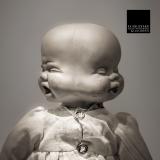
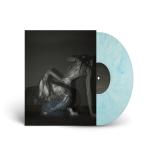
Jolanda Moletta - Oceanine

Jolanda Moletta

Oceanine

12inchBNSD098
Beacon Sound
01.05.2026

Oceanine, Jolanda Moletta’s third album and her first for Beacon Sound, is a powerful and ethereal statement of artistic community. Expanding on her previous work, each track represents a collaboration with a different female vocalist, with the foundational elements being generated entirely by her own voice. By turns haunting, enchanting, and inspiring, you won’t want to come up for air once you’ve been pulled under. Representing a
musical practice that is distinctly feminist, this is an album with a longer view in mind, to an age when the altars were to goddesses and women were centered as powerful beings representing the earth’s cycles of regeneration and renewal. Oceanine then, in all its beauty, can be viewed as an album of survival. It is deeply transportive, accessing something that lies within all of us. As the late, great Lithuanian folklorist and archaeologist Marija Gimbutas noted, “We must refocus our collective memory. The necessity for this has never been greater as we discover that the path of 'progress' is extinguishing the very conditions for life on earth.”

Jolanda Moletta is a multimedia artist and one-woman electronic choir. She creates wordless compositions through extended vocal techniques, integrating wearable-controlled live processing, alongside symbolic visuals. Moletta considers her performances to be a collective ritual and creates her Sonic & Visual Spells following the cycles of nature and the moon. Jolanda's 2022 critically acclaimed album Nine Spells was released on the Ambientologist label, followed by Night Caves on Whitelabrecs in 2025. Moletta’s artistic practice is a radical and spiritual journey through sound art, ritual, and the symbolic archaeology of the feminine.

Oceanine is inspired by sirens, water nymphs, and the timeless call of the sea. At its core lies Jolanda’s deep, lifelong connection to the Mediterranean Sea and to the ancient and modern myths and folklore that have emerged from its waters. Growing up by the Mar Ligure, Jolanda was surrounded by stories carried by salt, wind, and waves: legends of sirens, echoes of ancient voices, and the sea as both origin and oracle. This intimate relationship with the Mediterranean is not merely a backdrop, but a living source that shapes Oceanine’s emotional, symbolic, and sonic world.

Each track features a different female vocalist, creating a rich tapestry of voices, styles, and perspectives. This artistic choice not only broadens the album’s sonic palette, but also deepens its narrative core: celebrating the power, beauty, and mystique of feminine energy through myth, history, and sound.

The entire album is built exclusively from the human voice, processed and layered, yet always remaining voice, and nothing else. For each piece, Jolanda invited every vocalist involved to contribute a raw stem: a short, unedited melodic fragment of just a few seconds, inspired by the album’s themes. These intimate vocal seeds became the foundation of each track: the guest artists’ voices appear as brief, melodic stems, while the entire surrounding “orchestral” fabric is created solely from Jolanda’s own layered and processed voice. In this way, Jolanda’s voice becomes the Ocean itself, embracing, absorbing, and carrying the sirens’ calls within a vast, immersive soundscape. Every song is a unique expression of the feminine experience, revealing its depth, complexity, and emotional range, echoing the call of the sea and the many faces of the siren archetype.

The figure of the siren has transformed across centuries. In myths of Ancient Greece and Rome, sirens were hybrid beings, part woman, part bird, whose irresistible songs lured sailors to their doom. During the Middle Ages, the image shifted toward the half-woman, half-fish figure, often associated with temptation and danger. Historically, the voice of women has often been feared. Sirens were considered harbingers of misfortune not simply because they seduced or destroyed, but because they were powerful liminal beings.

In Ancient Greek, sirens functioned as psychopomps: figures who existed between worlds and guided souls, especially between life and death. Their songs were believed to carry forbidden knowledge, including prophetic insight and the ability to reveal truths about fate and the future. The danger of the sirens lay in what they revealed: knowledge that humans were not meant, or ready, to hear.

Oceanine confronts this legacy head-on. The voices heard throughout the album are not merely beautiful: they are dark and luminous, wild and enchanting, magical, soothing, dreamy, and at times fractured or distorted. They whisper, lament, beckon, and enchant. Like sirens, they skim the surface of the water and sink into its depths, hovering on the edge between tenderness and danger, vulnerability and power. They rise toward the sky, dissolve into mist, and return as echoes charged with raw, elemental emotion: voices that seduce, warn, mourn, and remember. They refuse to be reduced to decoration.

Alongside the album’s release in May, Oceanine will also unfold as a visual and performative work through a short art film. The film includes a live session recorded inside a sea cave facing the Mar Ligure, the very coastline where Jolanda spent her childhood, dreaming of sirens and listening to the sea as if it were speaking directly to her. This site-specific performance reconnects the music to its place of origin, allowing the voice to resonate within stone, water, and air, and transforming the cave into both a sanctuary and a threshold between myth and reality.

What if the sirens’ songs were considered dangerous because they carried another truth, an ancient truth long forgotten?

Oceanine embraces the idea that we are still deeply woven into myth. Though we may see ourselves as rational and modern beings, our world is saturated with ancient symbols and archetypes, often distorted, simplified, or stripped of their original meaning. And if those symbols are allowed to shift, if the mirror once held by the siren becomes an invitation to look beyond appearances and into what has been obscured, then we may finally uncover a deeper truth and reclaim the voice that was always ours.

Oceanine is not just an album. It is a reclamation, a spell, and a call from the depths.

pre-order now01.05.2026

expected to be published on 01.05.2026

White Flowers - Dreams For Somebody Else LP
  • 1: Spinning
  • 2: Heaven
  • 3: Backseat
  • 4: Tear
  • 5: Lamp
  • 6: Heart Breaks
  • 7: Visual
  • 8: In The Sky
  • 9: Dreams For Somebody Else
  • 10: Thinking Of You

Preston duo White Flowers announce new album, Dreams For Somebody Else - due for release 1st May 2026 via The state51 Conspiracy.
White Flowers, the long-running collaboration between Joey Cobb and Katie Drew, exists within what they call “the realm” – a shared creative space, wherein time, rather than being a restrictive force, is fluid and boundless, and music exists as an endless conversation with their past and present selves. Adopting what the band describe as a “sketchbook” approach to writing, White Flowers is the product of a decade’s worth of recordings - snippets nestled away on hard drives, only to truly make sense years later.
On Dreams For Somebody Else, the band expand upon the dark-hued dream pop of their debut, channeling the catharsis of dance music via repetitive structures and “sad, euphoric sounds”. Working alongside LCD Soundsystem and Hot Chip’s Al Doyle on production, the album maps out a mosaic of soaring choruses that swirl around imposing arrays of synths, guitars, and percussion.
Through this new lens, the band explore themes of isolation, dissociation and identity - drawing inspiration from Annie Ernaux’s The Years. “Whilst recording the songs for ‘Dreams For Somebody Else’, we really connected with the concept of Annie Ernaux’s book, ‘The Years’ - a ‘collective autobiography’ pieced together from mismatched fragments from her past, conjuring the effect that she’s merely an observer of her own life. This concept merges into the White Flowers world, where time, rather than being restrictive, is fluid and boundless, with our music existing as an endless conversation with versions of ourselves at different stages of our lives.”
“The album has that same feeling of disassociating from your own life, because you’re just blending into everyone else”, the band explains. “There’s a sadness there, because it’s as if you’re looking back on things that happened to you, and they feel like they don’t belong to you anymore”. It’s the dull ache of nostalgia intertwined with a sense of wonder at what could lie ahead - the hopeful optimism and endless loss that defines the human experience. “It’s this idea of identity not being a fixed thing, but something that’s always changing. It’s a fluid thing, similar to time. Things aren’t really fixed, but rather in a constant state of change. It’s important to remember that we’re all going through that.”

pre-order now01.05.2026

expected to be published on 01.05.2026

Evil Blizzard - Death Songs and Lullabies LP
  • 1: Off With Their Heads
  • 2: Down Down Down
  • 3: Black Square
  • 4: Wake The Dead In Bedlam
  • 5: Questions // Answers
  • 6: Four Letter Words
  • 7: Hater Creator
  • 8: Warpaint

With multiple bass players (at one point eight of them) and an array of rubber masks that give both children and adults sleepless nights, somehow, against all the odds, Evil Blizzard are set to release their fifth studio album of nightmare inducing noise and visuals. Titled, the new album sees Evil Blizzard pushing the boundaries further afield from their early sound of 'multiple bass psych', seeing elements of dub, krautrock and goth to provide a much more Post Punk vibe than previous work. Reference points were 'Metal Box', 'Ritual De Lo Habitual', Can and Discharge (whose singer JJ joins the band on the track 'Wake The Dead In Bedlam') as well as the omnipresent Hawkwind, Stooges and Sabbath vibes. By far the band's most stylistically varied and challenging album and yet their most cohesive body of work since their critically acclaimed second album 'Everybody Come To Church'. As well as their trademark 'multi bass onslaught', this album sees sequencing, sampling and even the use of string instruments made from bone.

Recorded between September and November 2025 at Rock Hard Studios, Blackpool, improvised sessions were edited down into more 'song' structures, then reworked into the final pieces. "Recording this was the hardest work we've done," claims Filthydirty. "Previously, we'd just turn up, turn up louder, press record and sieve through the debris and call it 'an album'. On this album we only had two, maybe three tracks that were finished when we went in, and the rest were worked out in reverse; ploughing through improvisations and jams and seeing what actually had any bones or gristle to work with. “Consequently, we had the time and focus to reappraise what we'd done in the past, highlight what we'd done right and realise where perhaps self-indulgence or lack of focus were overlooked instead of time or budget restraints, he continues. “The result is an album that reflects all our record collections. Lyrically it's been impossible to not absorb the chaos and anger transmitting on every news channel recently, and while we'd never write specifically about a certain issue or matter, the shitshow that is the 2020's definitely made its mark or our thinking.

pre-order now01.05.2026

expected to be published on 01.05.2026

Momoko Kikuchi - Ocean Side LP

Momoko Kikuchi

Ocean Side LP

12inchWRWTFWW107CLRD
WRWTFWW Records
01.05.2026
  • A1: Ocean Side
  • A2: Shadow Surfer
  • A3: Blind Curve
  • A4: Summer Eyes
  • A5: Futari No Night Dive
  • B1: Seishun No Ijiwaru
  • B2: Evening Break
  • B3: So Many Dreams
  • B4: I Will

WRWTFWW Records is very excited to announce the first release from its new City Pop Series with Japanese singer, actress, entertainer, scholar and all-around legend Momoko Kikuchi’s sun-drenched classic Ocean Side album, available now as a limited-edition transparent vinyl LP in a heavyweight sleeve with obi.

A cult classic among Japanese music collectors, Ocean Side was originally released in 1984 by mythical label VAP and features lush compositions and arrangements by J-Pop icon Tetsuji Hayashi (Mariya Takeuchi, Miki Matsubara, Omega Tribe, Junichi Inagaki, Urusei Yatsura anime, soundtrack…). Momoko Kikuchi’s city pop gem is a flawless mix of heartwarming beachside funk, breezy grooves, and silky-smooth vocals - the feel-good music we all need in our life right now.

The 9-track summer-is-forever adventure notably includes the ultra-funky megahit “Blind Curve”, the fan-favorite title song, and the insanely romantic ballad “Futari No Night Drive”. A vibrant reflection of summer in 1980s Japan, Ocean Side masterfully balances nostalgia and elegance, and provides part of the origin story for revered modern music genres such as chillwave, and future funk, and vaporwave.

The official reissue licensed from VAP, Inc. is sourced from the original masters with an audiophile-cut by Sidney Meyer at Emil Berliner Studios.

WRWTFWW’s City Pop Series and its Lopetz/Büro Destruct-designed logo also includes jazz-fusion-AOR-mellow-funk treasure Safari (1984), a limited capsule collection of merch, and much more to come in the near future.

out of Stock

Order now and we will order the item for you at our supplier.


Last In: 33 days ago
Cyril Cyril, Le Syndicat du Futur - Le petit bonhomme orange / Le gros Hit (7")
  • A1: Le Petit Bonhomme Orange
  • B1: Le Gros Hit

For the second time, the Geneva-based duo Cyril Cyril hands the microphone to the Syndicat du Futur. Behind this small group campaigning for a better future are Jeannot and Marilou, Zoé, Marlowe and Lenaïs — the respective children of Cyril (Yeterian) and Cyril (Bondi). Two years after La Météo / Le Monde Embêtant, the crew is back. The voices have grown and changed, but the sharp perspective remains, and the adult world had better watch out.

On Le Petit Bonhomme Orange, a certain D. Trump takes a hit. Seen from a child’s point of view, the war leader and his gesticulations look less like a figure of authority than a ridiculous scarecrow ruling through fear. And when power turns grotesque, it stops being intimidating.

With Le Gros Hit, it’s time for the absurd. A song that builds itself in plain sight, stacking lines with no apparent logic and embracing its own laziness. A reminder that you can make a track with three ideas and a chorus, and sometimes that’s all it takes.

pre-order now01.05.2026

expected to be published on 01.05.2026

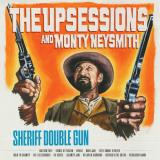
The Upsessions & Monty Neysmith - Sheriff Double Gun LP
  • 01: Sheriff Double Gun
  • 02: Little Bonny Revolver
  • 03: Hot Like Scorcher
  • 04: Calamity Jane
  • 05: Fat Coyote
  • 06: Train To Calamity
  • 07: Mary Jane
  • 08: Bad Cow Thief
  • 09: Crimes Of Passion
  • 10: Chickenbody Dandy
  • 11: Nothing In The Coffin
  • 12: No Law In Deadwood
  • 13: Apache

This album features reggae legend Monty Neysmith: co-founder and composer for Symarip. The Symarip debut album is one of the best-selling albums on Trojan Records.

Songs by Monty Neysmith have been covered by Bad Manners, Judge Dread and The Specials, among others.

The Upsessions will promote the album by touring all over Europe with The Pioneers.

pre-order now01.05.2026

expected to be published on 01.05.2026

Ghia - Tender Rain LP

Ghia

Tender Rain LP

12inchEDGE-043
The Outer Edge
30.04.2026

Call it soulful dream pop, proto-trip hop or downtempo jazz - "Tender Rain" is the follow-up LP to the successful "This Is" album and continues to deliver Ghia's unmistakable sonic magic. On this release, the band shares a selection of previously unreleased vocal songs alongside instrumental pieces, all carried by their trademark chilled and almost meditative atmosphere. Most of the recordings date from the early 1990s, while early demo versions of "New Love" and "Teardrops in Your Eyes" may reach back as far as the late 1980s.

The album opens with the title track "Tender Rain," where smooth vocal jazz harmonies merge effortlessly with soulful pop elements. The track originally appeared only on CD in 1993 on the small Mikado label run by renowned German guitarist Ulli Bögershausen. The band recalls that the piece was first pre-recorded using MIDI equipment and a Tascam 16-track recorder before being completed in the studio with drums by legendary drummer Mickie Stickdorn (Carsten Bohn's Bandstand, Cyklus, Elephant, Lake), percussion by Corinna Ludzuweit, and the final touch-Lisa Ohm's remarkable vocals.

At the time, Mikado was also looking for instrumental material for radio and synchronization use. They selected the track "Tropfstein" for a sampler CD and requested more pieces. In response, "und recken ihre schlanken Glieder" (roughly translated as "and stretching their slender limbs") was composed especially for the project, as Frank Simon remembers. Both tracks appeared on the now rare Mikado sampler CD under the alias z. Zt., short for "zur Zeit" ("at present" or "these days").

Several further pieces in a similar vein were created during this period, including the previously unissued "Auf unserm grünen Sofa," "Reise bei Nacht," and "Was ich Dir noch sagen wollte." These tracks are beautifully crafted downtempo pieces featuring smooth, jazzy piano lines combined with touches of ambient and New Age aesthetics. "Auf unserm grünen Sofa" stands out in particular and will likely resonate with all downtempo enthusiasts. Lutz Boberg recalls that many of these recordings were captured during a single afternoon in the studio, fueled by spontaneous ideas and creative momentum.

On tracks such as "Teardrops in Your Eyes," "New Love," and the haunting Dark Spirits Mix of Ghia's song "What's Your Voodoo?", singer Lisa Ohm delivers soulful pop performances with her clear and captivating voice. "Change Your Sex," the third track previously featured on the Mikado sampler, leans more toward late-1980s funk and was aimed at radio and DJs at the time. Its subject matter was relatively daring for the period, telling the story of someone contemplating a change of sex "to get rid of the troubles."

Together with "This Is" and "Curacao Blue", "Tender Rain" forms another essential chapter in the rediscovery of the band's work. More than thirty years after their creation, these recordings still sound strikingly fresh, reflecting a unique style that in many ways anticipated the rise of trip-hop in the early to mid-1990s.

pre-order now30.04.2026

expected to be published on 30.04.2026

Kumachan Seal - Kumachan Seal LP

Kumachan Seal: solo project of Japanese vocalist / songwriter / producer Sairi Ojima, who has been playing in numerous indie bands, including Neco Nemuru, since her teens. She began her solo career in 2013, and released her first cassette in 2017. This EM Records release is her first CD/LP album, with all compositions by Ojima, who co-produced the album. Each of the eleven songs reveals beguiling layers of detailed and surprising sounds, with Ojima's DIY sonic core embroidered by vibrant and colorful beats and guitar from EM artist Le Makeup and the quintessential ambient-pop synths and keyboards of fellow EM-er Takao. Le Makeup mixed ten of the eleven songs, with Takao mixing "China Sandwich". The heart of Ojima's musical identity is her clear, aque- ous voice; apart from one instrumental, all the tracks here feature that mellifluous voice, but in an interesting twist, only half the songs have lyrics, with the remainder employing her wordless voice as melodic and textural elements. Although Kumachan Seal can be heard as a sort of bedroom pop filtered through ambient music and the new-age revival, listeners will note that the final two songs, "Atsumono" and "Tiny Cell", are respectively a slightly skewed four-on-the-floor track and a lightly skanking Doo-wop- flavored confection, slightly reminiscent of the UK's Brenda Ray. This album, full of Ojima's calm and cool observation of the world, is available on CD, LP and DL, and includes an English lyric sheet.

out of Stock

Order now and we will order the item for you at our supplier.


Last In: 27 days ago
Anané - It Looks Like Love
 
2

Anané’s colourful life in music has seen her do everything from singing at the famous pre-game show at Super Bowl XLI as part of the group Elements of Life, DJ at hotspots like Hi Ibiza, Pacha NYC and Ushuaïa to name a few, while also curating her own monthly residency Nulu Movement, now ten years strong at Le Bain NYC, release unique blends of Afro, house, and pop on labels like Vega Records, and head up her own imprints, Nulu Music and Nulu Electronic. The Cape Verdean-born DJ, producer, vocalist, and songwriter has had countless club hits and has released acclaimed albums like ‘Ananésworld’ and ‘Chapters Of Becoming’, often with a lush, live, and orchestrated style that is truly unique.

With this release, Anané steps forward with her first solo production to date. Here she serves up the sumptuous ‘It Looks Like Love’, a poised, elegant house sound with her own smoking, soulful vocals and classy strings bringing colour to an Afro groove packed with infectious bounce. Neat guitar riffs and silky synths all enrich this most sophisticated sound. The first mix sees Anané link up with veteran Italian Christian Mantini, who has hosted Sunset Ritual parties with Anané and Louie Vega since 2013. Their dub is rooted in warm, rubbery drums that are even deeper and more immersive than the original.

Manda Moor & Sirus Hood are a red-hot contemporary pair who run the Mood label and are defining the contemporary underground. Their remix is more driving, but it retains the soulful vibe with breezy pads and jazzy motifs drifting in and out above the swaggering groove.

Rotterdam-based Chicagoan Jamie 3:26 is a master at blending disco, soul, and house into timeless sounds, and here he delivers a loopy rework that pairs deep drive and sun-kissed vibes with funky, Chic-style bass guitar motifs.

stock from26.05.2026


Last In: 6 days ago
Fatboi Sharif & Child Actor - Crayola Circles (Tape)

Backwoodz Studioz is excited to announce the release of Crayola Circles, a collaboration between rapper Fatboi Sharif and producer Child Actor. While both artists have long standing connections to Backwoodz, this album marks their first collaboration of any kind and breaks new artistic ground for all parties.


Sharif’s previous album, Decay, released on Backwoodz in 2023, was a haunting experimental rap masterpiece, an acid trip in a mental hospital. On Crayola Circles Sharif trades menacing psychedelia for a simmering stew of blacklight expressionism, his verses slipping effortlessly through the swells and tides of Child Actor’s masterful production. No matter how uneasy the waves grow, Sharif is at ease, a truth teller whispering anti-riddles in your ear. This album feels like a new chamber for Child Actor, as well. The producer has been on an impressive run since dropping CINE- a collaboration with rapper Cavalier- on Backwoodz in late 2024. Child Actor has shown up in the liner notes of everyone from Navy Blue (The Sword & The Soaring) to Earl Sweatshirt (Live, Laugh, Love) to ELUCID (Revelator) to Open Mike Eagle (Neighborhood Gods Unlimited), to Ghais Guevara (A Quest to Self-Mythologize), amongst others. On Crayola Circles Child Actor’s production is dynamic, shifting and sliding into new phases and movements in an instant. The beats are full and knotty, leaning into jazz and folk, while remaining tethered to the tender minimalism that is his signature. It’s a difficult balance for any producer, and here it is executed perfectly, placing us in a world of wood and brass, cowhide and undersea piano. On any other record, this soundscape would steal the show — and it very nearly does — but Sharif’s command never wavers, ever in control; a lucid dreamer in an induced coma.
There are no guests, no skits, and no interludes. There might not even be songs, instead Crayola Circles seems akin to a great river; singular, traversing forest and jungle, mountain and valley, running from mouth to endless sea.

pre-order now24.04.2026

expected to be published on 24.04.2026

Steve Wilson - Enduring Sonance
  • 1: Quiet Girl
  • 2: A Volta
  • 3: The Eyes Of Love
  • 4: Helen's Song
  • 5: The Surest Things Can Change
  • 6: Pieces Of Dreams
  • 7: How Long?
  • 8: Francisco

On "Enduring Sonance," saxophonist and flutist Steve Wilson reflects on a lifetime of lyrical, deeply felt songs drawn from jazz, pop, and film—brought to life by an all-star ensemble featuring Renee Rosnes, Joe Locke, Jay Anderson, and Kendrick Scott. *** Certain songs have a way of lingering in the imagination—resonating long after we’ve last heard them, sometimes for a lifetime. On his breathtaking new album "Enduring Sonance," veteran saxophonist and flutist Steve Wilson celebrates the music that has left the deepest imprint on his musical life. “Some of the tunes on this record have stayed with me for, in some cases, over 50 years from the time that I first heard them,” Wilson says. “I wanted to put some music out there that people can connect with, no matter what kind of music they like.” Originally conceived as a ballads project, Enduring Sonance evolved into something broader and more personal. Rather than focusing on tempo or style, Wilson gravitated toward a sense of lyricism—music whose emotional clarity and melodic resonance endure across genres, decades, and listening habits.

To realize this vision, Wilson assembled a deeply intuitive ensemble featuring pianist and arranger Renee Rosnes, vibraphonist Joe Locke, bassist Jay Anderson, and drummer Kendrick Scott, with special guest Kevin Newton (French horn, Imani Winds) appearing on two tracks. Each musician brings a rare sensitivity to melody, texture, and space, allowing the material to unfold with warmth, restraint, and quiet authority. The repertoire draws from a wide musical landscape, including works by close collaborators and modern jazz masters Billy Childs and George Cables, alongside enduring songs by Michel Legrand, Quincy Jones, Milton Nascimento, Gino Vannelli, Bill Lee, and Eliane Elias. These are not standards in the traditional sense, but deeply personal selections—songs that have accompanied Wilson through different chapters of his life. The album opens with Childs’ “Quiet Girl,” its subtle rhythmic motion enhanced by Newton’s luminous French horn, and travels through cinematic ballads, soulful grooves, and reflective lyricism. The title Enduring Sonance speaks both to the lasting resonance of these songs and to Wilson’s enduring musical relationships—most notably with Rosnes, whom he has known for nearly four decades and whose sensitive arrangements help unify the album’s diverse repertoire. “These songs are the soundtrack of my life,” Wilson says. “I’d love it if listeners came away from this album with the same kind of enduring sound and feeling.”

pre-order now24.04.2026

expected to be published on 24.04.2026

Elephanz - LOVE. HURT. REPEAT LP
  • A1: Follow Your Love
  • A2: That's In My Head
  • A3: The Novel Of Our End
  • A4: Mother
  • A5: I Don't Wanna Know
  • B1: My Feet On The Ground
  • B2: Invisible
  • B3: Streets Of Rage
  • B4: In A Porcelain Shop
  • B5: What Is Love

Fifteen years after their first album "Time for a Change", and drawing on the experience of two others ("Elephanz" 2017, and "Rien de personnel" 2023), ELEPHANZ now returns with a fourth album that carries the scent of first loves, the kind you sing from the heart with your hands gripping a guitar.

"Love. Hurt. Repeat." tells, across ten songs, the story of a return to oneself, like coming home after years spent roaming the world, only to realize that everything you needed to understand yourself was already there at the starting line.

To help you understand what this new album makes me feel, I'd like to tell you about my first meeting with Jon and Max in 2009, when I became the band's bassist. Sixteen years ago, I discovered these two young men and set off in their family Kangoo van on my very first tour.

Through our early rehearsals around the piano of their childhood, I discovered their love for pop music in all its breadth, always in search of harmonies and melodies that touch the heart in the simplest way and gently ease your sorrows along the way. With them, I learned to appreciate the mainstream hits I had previously dismissed on principle, and I discovered the demanding art of melody as I listened to them sing about love and friendship through unforgettable catchphrases.

Listening today to some of the songs from their new album, I think back to those two young men with a big-city rock look, shut away in the living room of their family home, talking only about leaving that dull countryside behind to live the big life in the capital (Streets of Rage). What I once took for a kind of revenge against the hostile environment of their adolescence was in fact an almost vital need to find their place among others, to feel understood in order to feel at ease in their own skin.

Today, I find them again with the same guitar and the same inexpensive Juno as back then, but with the confidence shaped by years of concerts, writing, studio encounters, and all kinds of experimentation. The music of this fourth album has never been so close to that of their earliest days, but their voices have been set free. They no longer sing about who they dreamed of becoming, but about who they have always been, their most distant concerns, sometimes even their darkest ones, yet always in search of the light.

It is as if ELEPHANZ had to travel all the way around the world to come face to face with themselves again. There is no longer any shame in being who you are, and it is even the best way to understand yourself, to exist and to heal. To heal from grief and heartbreak, to understand the child you once were and the one who carried them (Mother), to forgive yourself and finally learn to love yourself.

That is what makes this record as sensitive as it is powerful and strikingly truthful. It was written and recorded like a cry, live, in just a few weeks, using the instruments of their beginnings: sharp bass and drums, powerful guitars, and synthesizers that are at times soaring, at times carriers of liberating melodies. The art of ballads remains, as does that of universal pop songs.

There is a beautiful urgency here, the urgency of finding oneself again in order to understand oneself through both pain and beauty, and "Love. Hurt. Repeat." is its most perfect expression.

pre-order now24.04.2026

expected to be published on 24.04.2026

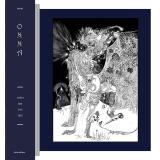
Onna - Onna Last Live 1983 LP 2x12"

Onna Last Live 1983 includes the final performance by the original line-up of Onna, the psych-rock project of revered Japanese manga artist, Keizo Miyanishi. Onna’s legend has largely rested, until now, on one self-released and self-titled seven-inch from 1983. Reissued by Holy Mountain in 2009, its rediscovery, along with several archival live and studio sets that leaked out across the 2000s, signalled to a wider audience the power of Miyanishi’s strikingly hypnotic songwriting. With Onna Last Live 1983, though, we hear the group’s perfect line-up performing at its peak.

While Miyanishi was the core member and conceptualist of Onna, the other members of the group would also go on to make significant contributions to the Japanese underground. Guitarist Michio Kurihara would eventually be known for his membership of YBO2, Ghost and White Heaven, and collaborations with the likes of Boris and Damon & Naomi. Drummer Ken Matsutani formed Marble Sheep & The Run-Down Sun’s Children and The Mickey Guitar Band, while also running the Captain Trip label. Joined by the late bass player Yasui Yutaka, to whom the album is dedicated, this quartet only performed live in 1983; the live set here was recorded at Silver Elephant.

It’s a different line-up to the Onna duo that’s documented on their single. After Miyanishi and fellow manga artist Mafuyu Hiroki recorded that material, Miyanishi decided he wanted to start playing gigs; Hiroki left, and Kurihara, Matsutani and Yutaka joined soon after. This line-up allowed Miyanishi to significantly expand Onna’s powers, leading to a sound that Kurihara once described to Ptolemaic Terrascope magazine as “repetitive and heavy, yet quite orthodox.”

The songs here are simple yet deeply effective in their repetitive power, generally revolving around two or three simply strummed chords for guitar. Bass and drums repeatedly lock into mantra-like grooves as Kurihara’s guitar scales the walls, with Miyanishi’s consumptive moans and sighs sent torquing through FX. The cumulative effect of the seven songs here is very heavy indeed; if the prologue “Always…” drifts beautifully through five minutes of placid, beseeching melancholy, the epilogue, “Never Seen A Light Like This”, spirals out into sixteen minutes of glazed-over psych-rock, completely monomaniacal and thrilling in its slow-motion tumult.

Throughout, you can hear Miyanishi and co. reaching for something ineffable, something beyond and between the notes. It’s a phenomenal performance; it’s also no surprise that the group disintegrated after this show, given its intensity. Matsutani and Yutaka left after the Silver Elephant show, with Miyanishi and Kurihara continuing through the first half of 1984 firstly as a duo, and then a trio with new drummer Yoshiki Ueonyama. Kurihara left soon after. But Onna Last Live 1983 is proof plenty of the powers of the original Onna quartet, sending their Rallizes/Velvets dream-mantras off into darkened, stormy skies.

pre-order now24.04.2026

expected to be published on 24.04.2026

GAIA BANFI - LA MACCAIA

GAIA BANFI

LA MACCAIA

12inchTRB75
Trovarobato
24.04.2026
  • 1: Macaia
  • 2: Piazza Centrale
  • 3: Il Lungoriva Di Genova
  • 4: Amar
  • 57:
  • 6: Congelati
  • 7: Seia

Preceded by Piazza Centrale and the subsequent Seia the album of the singer-songwriter, producer, and multi-instrumentalist, new promise of the Italian music scene, moves along the traces of memories to tell a timeless story, using a very personal language in which singer-songwriter music, pop, and electronic experimentation naturally coexist. Hypnotic and magnetic, her music is a subtle, elusive seduction, an emotion that delicately insinuates itself into the mind, an invitation to get lost in its beauty. A passion that touches the deepest chords of the soul, without the overwhelming rush of the senses, but with the intensity of a pure and profound feeling. Gaia Banfi was born in Milan, has been living in Bologna for years, but in her album, it is Genoa that resonates, the place of her childhood, which here becomes an imaginary setting for a symbolic dimension in which everyone can recognize themselves, through seven tracks in which all those melancholies that swell as we grow up, the lacks, the turbulent and dark loves, the unrequited ones, but also the vitality, the discovery, the absence of judgment, and finally the awareness, the inner conquests, the clemency, and the love for oneself, take voice.

pre-order now24.04.2026

expected to be published on 24.04.2026

Reimaki - 妖精の通る道 / Yosei no toru michi

妖精の通る道 (The Path Where Fairies Pass) is the debut vinyl release by Reimaki, the duo of Rei Yokoyama (Triggers Flowers, Stakaidan, Lapiz Trio, 新井薬師自警団, and Fujio, Chiko Hige and Rei), and Maki Miura (Tsubamegami, Les Rallizes Dénudés, Shizuka, Fushitsusha, Ohkami No Jikan and Katsurei). The duo has been an understated presence in Tokyo, playing occasional under-the-radar shows and self- releasing a few CD-Rs, but they’ve recently started to break cover, with a recent cassette on UFO Creations, released in support of a late 2024 tour of China. It’s also a welcome reappearance on the scene for both musicians; Miura’s musical history, in particular, is being reevaluated thanks to a recent string of welcome Shizuka reissues.

But the music Reimaki make together is a different thing entirely, much as it shares some psychological and aesthetic interests with both Miura’s and Nokoyama’s other projects. Their sound is split between two main interests – an extension of glacial, deoxygenating psychedelic improvisations, and a deep interest in medieval European music. They’ve also been known to cover compositions by English prog/improv musician Fred Frith. These various elements of the Reimaki aesthetic are all present through 妖精の通る道, from the fragility of the opening “Novel Amor” through to the smeared, hazy textures of the three extended pieces that comprise the album’s flipside.

There’s a beautiful sympathy in these performances, and a generous simplicity, too; you can sense that this music is informed by decades of finding just the right way to say the right thing in the clearest manner possible. Yokoyama and Miura never overstate things; make the statement, play the song, let it hang in the air for a while, and then move on to the next essential expression. The music is unburdened by self- consciousness. Their take on medieval music cuts to the core of melody and melancholy; their psych- improv side is blurred and drifting without ever lapsing into rote generic gestures.

There’s some shared space with other artists who suspend the timeless within the kaleidoscopic possibilities of the psychedelic – Kendra Smith & The Guild of Temporal Adventurers; Emmanuelle Parrenin; Rosina de Peira – and a tangled folksiness that might put listeners in mind of Jan Dukes De Grey, Comus, Current 93, and Tower Recordings. Accompanied by beautiful photography from street photographer Takehiko Nakafuji, who was also personally chosen by Mizutani to document Les Rallizes Dénudés, 妖精の通る道 is a most unique and necessary trip.

pre-order now

This item has not yet been released. You can pre-order the product now.

Whirlwind - 1640
  • 1: 640 (Intro)
  • 2: Days Of Doom
  • 3: Rage Of The Conqueror
  • 4: Winds Of Ash And Dust
  • 5: Lese Majesty (Corpus De Sang)
  • 6: Through Fire And Blood
  • 7: Ready To Explode
  • 8: By The Blood In Our Veins
  • 9: Marching To Victory

DYING VICTIMS PRODUCTIONS is proud to present WHIRLWIND’s highly anticipated second album, 1640, on CD and vinyl LP formats. WHIRLWIND was originally conceived as a studio-project by Mark Wild, from Körgull The Exterminator among other extreme metal bands, to satisfy his will to make a classic heavy metal album, a style that changed his life during his childhood – influenced mostly by ‘80s German metal bands like early Running Wild, early Helloween, Accept, Heaven’s Gate, Gravestone, Tyrant, Grave Digger, Steeler, and Stormwitch among others, but also all kinds of classic heavy metal like Mercyful Fate, Manowar, Iron Maiden, and Judas Priest. In 2022, WHIRLWIND released their debut album, 1714, marking the band’s beginning. WHIRLWIND also established a live lineup to bring their songs to life onstage, with musicians from other known bands, like Redshark, joining as permanent members of the band. The album immediately generated a big buzz in the underground scene and led them to perform at some of the best-known festivals in Spain like Pounding Metal Fest and Skulls of Metal, alongside such bands as Visigoth, Attic, Omen, Tentation, Mindless Sinner, Witchtower, IRON CURTAIN, and Phantom Spell. Now arrives WHIRLWIND’s second album, 1640. Like its predecessor, the album is focused on historical and epic episodes of their homeland; specifically, this album revolves around the Thirty Years War that took place around Europe and the inner conflicts within Spain.

Musically, WHIRLWIND deliver a masterclass in cruising, classy Teutonic metal, running from more traditional-minded mid-tempo stompers to surging, up-tempo gallops of glory. Riff and lead form a lethal tandem, balancing both energy and color, while the rhythm section stays locked in no matter the dynamic. The production, too, of 1640 honors the mid ‘80s with authenticity – underground in spirit, Big League in execution. All told, the album is true heavy metal for true heavy metal people: no more, but definitely no less. By the blood in their veins, WHIRLWIND are marching to victory, ready to explode!

pre-order now24.04.2026

expected to be published on 24.04.2026

The Reds, Pinks and Purples - Acknowledge Kindness LP

Acknowledge Kindness expands San Francisco based The Reds, Pinks And Purples' distinctive brand of emotional pop, music built for the quiet hours and the restless mind. Evolving naturally from the heavier, melancholic indie rock of previous releases, the mood here feels more exposed and reflective, blossoming into lush dreamscapes that recall the bittersweet sorrow of The Cure or the tenderly gloomy transcendence of California by American Music Club. Created from a new headspace, the album finds main man Glenn Donaldson observing both the present and the weight of what came before it. Songs lean into a deeper sense of nostalgia, allowing him to look back with intent and revisit moments that once carried a sting. Donaldson's vocals are captured in high fidelity, raw and immediate, with lyrical abstraction underpinned by chiming acoustic guitars and achingly beautiful piano. Across its 11 tracks, Acknowledge Kindness expands The Reds, Pinks And Purples' emotional and sonic panorama, with Donaldson's ongoing world-building remaining both warmly nostalgic and strikingly original. "Donaldson's best work hides allure within a bigger picture, like a jangle-pop egg hunt" Pitchfork FFO The Smiths, Guided By Voices, The Chills, Leonard Cohen, The Go-Betweens, Robert Wyatt, Twee-, Jangle- & Sophisticated Guitar Pop. Coloured vinyl LP versions and digisleeve CD available

pre-order now24.04.2026

expected to be published on 24.04.2026

Degiheugi - Endless Smile 2 LP 2x12"
  • A1: The Last Opening (Feat. N’zeng)
  • A2: So Good
  • A3: I Need Scratch
  • A4: Ain’t Goin’ Down
  • B1: Sympathique & Sympa
  • B2: Vem O Mar
  • B3: Naked
  • B4: She Worries
  • C1: Love Is Blind (Feat. Miscellaneous)
  • C2: Si Rien Ne Va
  • C3: Savoir Danser
  • C4: Ipanemax
  • D1: Juanita Bonita
  • D2: Ouh Baby !
  • D3: Once I Was Alone (Feat. Chima Anya)
  • D4: Enivrez-Vous

In 2026, the sample alchemist returns to his first love with his 11th album, Endless Smile 2. A 16-track project conceived as a tribute to his landmark 2015 album Endless Smile, which featured his iconic tracks “Betty” and “Qu’attendez-vous de moi”.

Born from a desire to return to the essentials, Endless Smile 2 focuses on instrumental compositions enriched with samples and organic textures inspired by the 70s. The album develops a warm and sun-soaked atmosphere, crossed by the melancholic touch that defines Degiheugi’s musical universe.

Recorded between 2023 and 2025 in his studio Endless Smile Records and mixed by his longtime collaborator Mr. Gib, the album opens with the trip-hop anthem “The Last Opening”. Far from being a simple introduction, it acts as a true gateway into Degiheugi’s new sonic journey. Keyboards set the tone, the horn section led by N’Zeng invites listeners into the groove, while guitars and organic keyboards immerse us fully into his musical world. The scene is set: he’s back.

Among the standout tracks, “Ain’t Goin Down” delivers a reggae-influenced groove driven by a message of hope, while “Vem O Mar” (feat. Hugo Kant) explores funk and tropical soundscapes. “Ipanemax”, a nod to the classic “The Girl From Ipanema”, and “Ouh Baby” extend this Brazilian atmosphere, while “Savoir Danser” leans toward oriental textures and “Juanita Bonita” ventures into a bold fusion of cumbia and dub.

The album also reveals Degiheugi’s signature melancholic side. An addictive loop settles deep into the listener’s mind as “Sympathique et sympa” balances nostalgia with urban groove. The haunting strings of “Naked” and the soul ballad “She Worries” respectively reflect on mortality and the fragility of romantic relationships. Guest artist Miscellaneous addresses gender-based violence on “Love Is Blind”, telling the story of a woman trapped in a toxic relationship.

Endless Smile 2 closes with “Enivrez-vous”, an outro inspired by Charles Baudelaire’s poem, bringing the album to a contemplative conclusion. With this release, Degiheugi masterfully completes a musical journey that began ten years ago.

pre-order now24.04.2026

expected to be published on 24.04.2026

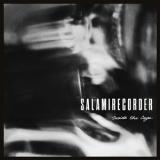
SALAMIRECORDER - INSIDE THE CAGE
  • 1: Brothers & Sisters
  • 2: Lies Of My Own
  • 3: Love
  • 4: Black Clouds
  • 5: Swim O Swim
  • 6: Theme From The Dropouts
  • 7: All Over The World
  • 8: Gimme Some
  • 9: Fight 'Em
  • 10: Goodbye

Der Wiener SALAMIRECORDER präsentiert mit seinem aktuellen Album "Inside The Cage" wieder einmal stilsicheren 60s-Garage Sound. Nach seiner letzten LP auf Bachelor Records, die er noch mit seiner Band "The Hi-Fi Phonos" eingespielt hat, hat er für "Inside The Cage" zehn Songs zur Gänze allein mit 4-track Taperecorder aufgenommen. "If you have to describe the music, its probably like a weird slightly annoyed outsider but with a melting heart for love songs. A perfect shake between 60s Back from the Grave Garage punk and a little breeze of early trash mixtape Powerpop. or something... ...weird, loud, rocknroll noise!!!" (Elmar, Bachelor Rec.) Natürlich ist der 23-jährige SALAMIRECORDER viel zu jung, um selbst die weltverändernden Zeiten des Rock'n'Roll erlebt zu haben. Doch seine Persona als trägt dessen historisch aufsässiges Programm in sich. Stilprägend war dabei seine beim Skateboard-Fahren entwickelte frühe Leidenschaft für Genre-Größen der 2010er wie Ty Segall oder Bass Drum of Death. Dieser Tage ist Salamirecorder bestens vernetzt, aber weniger per Sozialen Medien als im echten Leben. Er genießt Respekt, sowohl bei Beat-begeisterten jungen Kids als auch bei ergrauten Szene-Altvorderen wie Wild Evil & The Trashbones oder den Jaybirds, spielt bejubelte Gigs mit seiner perfekt eingespielten Begleit-Combo The Hi-Fi Phonos und gehört als Schlagzeuger, Gitarrist und Sänger Bands wie Laundromat Chicks, Sux Sux Sux und Telebrains an. Als Produzent hat er neulich das Solo-Debüt von Vic Velvet auf Band gebannt. Das Analoge ist ihm dabei nicht bloß puristisches Glaubensprinzip, sondern eine ebenso praktische künstlerische wie - ja doch! - politische Entscheidung. In einer Welt endloser digitaler Möglichkeiten findet der Salamirecorder eine paradoxe Freiheit, indem er sich selber auch ein bisschen limitiert.

pre-order now24.04.2026

expected to be published on 24.04.2026

The Milk Carton Kids - Lost Cause Lover Fool
  • 1: Blue Water
  • 2: My Place Among The Stones
  • 3: A Friend Like You
  • 4: I'll Go Home From Here
  • 5: Lost Cause Lover Fool
  • 6: Blinded And Smiling
  • 7: Sad Song
  • 8: Ribbon
  • 9: Young Love
also available

Color Vinyl


On their seventh studio album, Lost Cause Lover Fool (due April 24th on Far Cry/Thirty Tigers), The Milk Carton Kids deliver 9 songs that, more than ever, invite listeners to lean in close and hover in the small moments the album magnifies. Much has changed since The Milk Carton Kids — Los Angeles-based singer-songwriters Kenneth Pattengale and Joey Ryan — burst on the Folk scene in 2011. And The Milk Carton Kids have changed too. But at least one constant remains. Pattengale and Ryan continue to make music that entices us turn down the volume on a chaotic world and dwell as long as possible on what matters most. With rootsy arrangements, Lost Cause Lover Fool expands on the duo’s signature minimalist sound their fans love while also, somehow, making it even smaller. Lost Cause Lover Fool begins with the lonesome pluck and strum of the banjo on “Blue Water.”

Often employed either for lightning-speed or rhythm, here the banjo is handled carefully, with reticence, so that it feels more like light cast across a stretch of grass than a whole bluegrass instrument. Lyrically, this album-opener zooms in on a snapshot of a man walking along a riverside, remembering the child that used to lay on his chest who has now grown to share his worried mind. It’s a moment so small it might easily have been dismissed, except that it holds an emotion as universal as it is fleeting. Lost Cause Lover Fool magnifies many such small moments, turns them into mesmerizing worlds, and reminds us — pleads with us — to pay attention to them as they go by.

pre-order now24.04.2026

expected to be published on 24.04.2026

Fatboi Sharif & Child Actor - Crayola Circles LP

Backwoodz Studioz is excited to announce the release of Crayola Circles, a collaboration between rapper Fatboi Sharif and producer Child Actor. While both artists have long standing connections to Backwoodz, this album marks their first collaboration of any kind and breaks new artistic ground for all parties.


Sharif’s previous album, Decay, released on Backwoodz in 2023, was a haunting experimental rap masterpiece, an acid trip in a mental hospital. On Crayola Circles Sharif trades menacing psychedelia for a simmering stew of blacklight expressionism, his verses slipping effortlessly through the swells and tides of Child Actor’s masterful production. No matter how uneasy the waves grow, Sharif is at ease, a truth teller whispering anti-riddles in your ear. This album feels like a new chamber for Child Actor, as well. The producer has been on an impressive run since dropping CINE- a collaboration with rapper Cavalier- on Backwoodz in late 2024. Child Actor has shown up in the liner notes of everyone from Navy Blue (The Sword & The Soaring) to Earl Sweatshirt (Live, Laugh, Love) to ELUCID (Revelator) to Open Mike Eagle (Neighborhood Gods Unlimited), to Ghais Guevara (A Quest to Self-Mythologize), amongst others. On Crayola Circles Child Actor’s production is dynamic, shifting and sliding into new phases and movements in an instant. The beats are full and knotty, leaning into jazz and folk, while remaining tethered to the tender minimalism that is his signature. It’s a difficult balance for any producer, and here it is executed perfectly, placing us in a world of wood and brass, cowhide and undersea piano. On any other record, this soundscape would steal the show — and it very nearly does — but Sharif’s command never wavers, ever in control; a lucid dreamer in an induced coma.
There are no guests, no skits, and no interludes. There might not even be songs, instead Crayola Circles seems akin to a great river; singular, traversing forest and jungle, mountain and valley, running from mouth to endless sea.

out of Stock

Order now and we will order the item for you at our supplier.


Last In: 32 days ago
YASUHA - Friday Chinatown (7")
  • A1: Friday Chinatown
  • B1: Morning Date

A coloured vinyl edition celebrating the 45th anniversary of her debut.

"Friday Chinatown" is a classic, representative of the city pop movement that has taken the world by storm.

Her debut song, released at just 20 years old, is also her signature song!

She debuted as a singer-songwriter in 1981 with "Friday Chinatown," released by Polydor Records.

Music by Yasuha, lyrics by Toyohisa Araki, and arrangement by Akira Inoue.

At the time, it peaked at #69 on the charts, but this masterpiece is more memorable than its record.

pre-order now22.04.2026

expected to be published on 22.04.2026

JORGE BEN - Jorge Ben (1969) LP
  • A1: Criola (Jorge Ben)
  • A2: Domingas (Jorge Ben)
  • A3: Cadê Teresa (Jorge Ben)
  • A4: Barbarella (Jorge Ben)
  • A5: País Tropical (Jorge Ben)
  • B1: Take It Easy My Brother Charles (Jorge Ben)
  • B2: Descobri Que Eu Sou Um Anjo (Jorge Ben)
  • B3: Bebete Vãobora (Jorge Ben)
  • B4: Quem Foi Que Roubou A Sopeira De Porcelana Chinesa Que A Vovó Ganhou Da Baronesa? (Jorge Ben)
  • B5: Que Pena (Jorge Ben)
  • B6: Charles, Anjo 45 (Jorge Ben)

Jorge Ben’s 1969 self-titled LP is a bright, energetic landmark of Brazilian music. Mixing samba, soul, and pop with effortless charm, the album captures Ben at a moment of bold creativity.
His warm guitar lines, catchy melodies, and rhythmic drive shape songs that feel both relaxed and full of life. This masterpiece helped define a modern, upbeat sound that influenced generations of artists. More than fifty years later, this LP still stands out for its simplicity, groove, and unmistakable style—an essential snapshot of an artist who transformed Brazilian popular music.

out of Stock

Order now and we will order the item for you at our supplier.


Last In: 33 days ago
Various - NOW Yearbook – THE VAULT: 1983
  • Orchestral | Manoeuvres In The Dark - Telegraph
  • Blancmange | - That’s Love, That It Is
  • China | Crisis - Tragedy And Mystery
  • Adam | Ant - Strip
  • Divine | - Love Reaction
  • Yello | - I Love You
  • Talk | Talk - My Foolish Friend
  • Japan | - Canton
  • Fun | Boy Three – The More I See (The Less I Believe)
  • Tracie | – Give It Some Emotion
  • The | Teardrop Explodes - You Disappear From View
  • Xtc | - Love On A Farmboy's Wages
  • The | Stranglers - Midnight Summer Dream
  • The | Kinks - Don’t Forget To Dance
  • Mari | Wilson - Cry Me A Rive
  • Bauhaus | - Lagartija Nick
  • Marc | And The Mambas - Black Heart
  • The | Glove - Like An Animal
  • Freur | - Doot Doot
  • The | B-52'S - Song For A Future Generation
  • Wall | Of Voodoo - Mexican Radio
  • Joe | Jackson - Breaking Us In Two
  • Oliver | Cheatham - Get Down Saturday Night
  • Rockers | Revenge - The Harder They Come
  • Freeez | - Pop Goes My Love
  • Malcolm | Mclaren - Soweto
  • Culture | Club - I'll Tumble 4 Ya
  • The | Belle Stars - Indian Summer
  • Level | 42 - Out Of Sight Out Of Mind
  • Daryl | Hall & John Oates - One On One
  • Sparks | & Jane Wiedlin - Cool Places
  • The | Romantics - Talking In Your Sleep
  • The | Fixx - Saved By Zero
  • The | Motels - Suddenly Last Summer
  • Modern | English - I Melt With You
  • Missing | Persons - Walking In L A
  • Naked | Eyes - Always Something There To Remind Me
  • Taco | – Puttin On The Ritz
  • Electric | Light Orchestra - Secret Messages
  • Men | At Work - Overkill
  • Pat | Benatar - Little Too Late
  • Journey | - Separate Ways (Worlds Apart)
  • Styx | - Mr Roboto
  • Giorgio | Moroder & Joe Esposito - Lady, Lady
  • Stephen | Bishop - It Might Be You
also available

The Vault: 1984


The year that NOW’s story began, and where we started our ‘Yearbook’ series back in 2021. An incredible year in Pop music, and a fabulous selection of the years’ hits have featured on that first ‘Yearbook’, and on the ‘80-84 Final’ as part of our appreciation of 1983. Those tracks were generally the bigger hits of the year, with their Chart achievement a factor in their inclusion. However, that’s not the whole story, and our celebration of 1983 wouldn’t be complete without shining a light on some of the year’s singles that have been compiled much less frequently over the past 40 years. Welcome to the THE VAULT for 1983…Some of the tracks were Top 40 hits, some missed the Chart completely, and some were huge in the U.S. and not in the U.K. – but all are part of the wonderful Pop story of 1983. Released as 80 tracks across 4-CDs, available as a standard 4CD and as a a special edition 4CD in ‘hardback book’ packaging featuring a 28-page track by track guide, original singles artwork and a quiz and 45 tracks across 3-LPs, pressed on stunning translucent red vinyl -

out of Stock

Order now and we will order the item for you at our supplier.


Last In: 34 days ago
Sun Ra - Jazz By Sun Ra

Sun Ra

Jazz By Sun Ra

12inchJWR4645LP
JAZZ WAX
20.04.2026
  • A1: Brainville 4’12
  • A2: Call For All Demons 5’11
  • A3: Transition 3’38
  • A4: Possession 4’55
  • A5: Street Named Hell 3’36
  • B1: Lullaby For Realville 4’40
  • B2: Future 2’51
  • B3: New Horizons 3’03
  • B4: Fall Off The Log 3’56
  • B5: Sun Song 3’38

Jazz by Sun Ra, Vol. 1.


Released in 1957 on the Transition label, this album is important because it features Sun Ra's first recordings before the Saturn sessions, recorded in 1956 when the Chicago musicians were searching for something more, something beyond.

pre-order now20.04.2026

expected to be published on 20.04.2026

Various - Tchic Tchic: French Bossa Nova 1963-1974  Colored Edition LP 2x12"
  • A1: Les Masques - Il Faut Tenir (1969)
  • A2: Isabelle Aubret - Casa Forte (1971)
  • A3: Christianne Legrand - Hlm Et Ciné Roman (1972)
  • A4: Jean Constantin - Pas Tant D'chichi Ponpon (1972)
  • A5: Billy Nencioli & Baden Powell - Si Rien Ne Va (1969)
  • B1-: Marpessa Dawn - Le Petit Cuica (1963)
  • B2: Jean-Pierre Sabar - Vai Vai (1974)
  • B3: Sophia Loren - De Jour En Jour (1963)
  • B4: Isabelle - Jusqu’à La Tombée Du Jour (1969)
  • B5: Sylvia Fels - Corto Maltesse (1974)
  • C1: Frank Gérard - Comme Une Samba (1972)
  • C2: Ann Sorel - La Poupée Des Favellas (1971)
  • C3: Charles Level - Un Enfant Café Au Lait (1971)
  • C4: Andrea Parisy - Les Mains Qui Font Du Bien (1970)
  • C5: Audrey Arno - Quand Jean-Paul Rentrera (1969)
  • C6: Aldo Frank - T’as Vu Ce Printemps (1970)
  • D1: Christianne Legrand - Cent Mille Poissons Dans Ton Filet (1972)
  • D2: Clarinha - Lemenja (1970)
  • D3: Hit Parade Des Enfants - Aquarela (1976)
  • D4: Jean-Pierre Lang - Tendresse (1965)
  • D5: Magalie Noël - Une Énorme Samba (1970)
  • D6: Françoise Legrand - La Lune

Ever since the late 1950s bossa-nova revolution, Brazil’s influence on French music has been undeniable. Pierre Barouh, Georges Moustaki and a vast array of lesser known artists, all made the Musica Popular Brasileira (MPB) an axis of promotion at the service of a cool and metaphysical, modern and mixed Brazilian lifestyle. Some were seduced by the poetic languors of the bossa, some were looking for fun, and others just loved the American hybridization of jazz-bossa, jazz-samba.


What is bossa nova? One of its creators, Joao Gilberto said: "Its style, cadence, everything is samba. At the very start, we didn't call it bossa nova, we sang a little samba made up of a single note - Samba de uma nota so .... The discussion around the origins of bossa nova is therefore useless”. It is nevertheless useful to remember that these magnificent Brazilian songs, which the guitarist describes as samba, were shifted and balanced around improbable chords. "I like things that lean, the in-betweens that limp with grace," said Pierre Barrouh, quoting Jean Cocteau.


With emotion, arrangements for violin and supple guitar licks, bossa nova rapidly changed. A transformation that can be heard in the Tchic, tchic, French Bossa Nova 1963-1974 compilation, the result of a cultural reappropriation, which traveled through the United States and supplemented itself in France.

A musical revolution that has remained significant, bossa nova was born in Rio. From 1956 to 1961, Brazil lived through its golden years. In five years, the country had invented its modernist style. Elected president in 1956, Juscelino Kubitschek de Oliveira, an elegant man with a broad forehead, brandished a promising slogan: "Fifty years of progress in five years". He quickly got to work. Not worried about increasing debt, he launched the project for a new federal capital, Brasilia, designed by the communist architect Oscar Niemeyer. Volkswagen opened state-of-the-art factories and created the “fusquinha”, the Beetle. In Rio, the Vespa made its first appearance. The Arpoador Surf Club crew run into the “girl” from Ipanema, Helô Pinheiro - the tanned garota ("chick"), between a flower and mermaid, who at 17 walked by the Veloso bar, where the fiery author and composer, Tom Jobim and Vinicius de Moraes, were getting drunk on whiskey. From then on, bossa symbolized cool.

In 1958, Joao Gilberto recorded Chega de Saudade, which the directors of Philips denied, calling it "music for fagots". The marketing director, who believed in it, secretly pressed 3000 78-inch vinyls and distributed them at schools around Rio, creating a tidal wave.

American jazzmen then took over. In particular, trumpeter Dizzy Gillespie and guitarist Charlie Byrd. In November 1962, the Brazilian Ministry of Foreign Affairs funded a "Bossa-Nova" concert at Carnegie Hall in New York, inviting the genre’s pioneers. Unprepared, the show soon turned to disaster. But the troupe was invited to the White House by Jackie Kennedy. The first lady loved "the new beat" and in particular Maria Ninguem, a song by Carlos Lyra, later covered by Brigitte Bardot.

In Brazil, the 1964 military coup quickly ended this euphoria. The destructive atmosphere that ensued pushed many Brazilian musicians to leave, if not to exile. Thus, Tom Jobim, Sergio Mendes and Joao Gilberto arrived to the United States. In New York, Joao Gilberto met saxophonist Stan Getz. At the time, he was married to the Bahianese Astrud Weinert Gilberto, who had a German father. She had never sung before, but she knew how to speak English. Getz therefore asked her to replace her husband on The Girl From Ipanema. The Getz/Gilberto record with Tom Jobim on piano, was released in March 1964. Phil Ramone, the "pope of pop" was in charge of sound.

Bossa nova arrived in Paris through the classic “guitar-voice” channel (Pierre Barouh, Baden Powell, Moustaki…) But France loved jazz and Paris had already welcomed its American contributors. All these good people were to pass through Saint-Germain-des-Prés. The cabaret l'Escale became the Mecca of Latin American sound where one could find Pierre Barrouh and his friends, such as the Camara Trio, samba-jazz aces, whose only record was published by the Saravah label. With a band strangely called Les Masques (a band that included Nicole Croisille and Pierre Vassiliu, among others), the Camara Trio recorded an interesting Brazilian Sound, including the track Il faut tenir which is present on this tasty compilation of rarities.

Other enlightened musicians can also be found on the compilation, such as Jean-Pierre Sabar (songwriter for Hardy, Auffray, Leforestier ...) and the French pop rock organist Balthazar. In 1975, Sabar recorded Aurinkoinen Musiikkimatka on a Finnish label, which featured the crazy Vai, Vai, included on this record. We are now following the footsteps of Brazilian electronic musicians such as Sergio Mendes, Eumir Deodato or Marcos Valle who created funk and disco sounds on their keyboards and synthesizers. A style that influenced Véronique Sanson when she wrote Jusqu’à la Tombée de la nuit in 1969 for Isabelle de Funès, the niece of Louis and a great friend of Michel Berger - Sanson did end up singing this track on her 1992 Sans Regret record.


The pinnacle of exoticism and travel, Sylvia Fels’ Corto Maltese includes bongos, sea mist and ocean sounds. The title was taken from Jacky Chalard’s concept album written in 1974, Je suis vivant, mais j’ai peur (I am alive, but I am scared), based on Gilbert Deflez’s science fiction novel.


However, bossa nova extended the scope of popularity. "In the 1970s, I was a fan of Sergio Mendes, Getz / Gilberto. I fell in love with this music that I knew because I had been an orchestral singer, " explained Isabelle Aubret, who in 1971 delivered a composite record of covers by the very funky Jorge Ben, Orfeu Negro, Tom Jobim, Vinicius de Morais and Jean Ferrat. "I recorded this album for Meys Records in Paris, far from Brazil, with wonderful musicians, François Raubert, Roland Vincent, Alain Goraguer...". The latter wrote the arrangements for Casa Forte, a very percussive title borrowed from Edu Lobo, one of the initiators of the bossa who spent time in California. "Jazz and bossa came together and produced very rhythmic music. I love singing, it allows me to dream, to have fun, to feel a high on stage, and these songs brought me joy, made me swing, my singing felt like a dance.”


The world tours of French singers and their desire for the tropics, often brought them to Rio with its hills, forests, caipirinhas and tanned bodies. There are surprises though, like this Iemenja (Iemenja is the goddess of the sea in the Afro-Brazilian candomblé religion). Not unlike the composer and musician Jean-Pierre Lang, based in Sao Paulo, Claire Chevalier taught Brazil to Brazil. In 1970, the singer and painter published a 45-inch vinyl, Mon mari et mes amants (My husband and my lovers), under the improbable pseudonym of Clarinha (little Claire). She was then living in Rio, with her husband, Joël Leibovitz, who founded a band called Azimuth, and who owned a record label specialized in "sambas enredos" songs for samba school parades.


For its B side, she asked Pierre Perret to come up with lyrics for a song composed by Carlos Imperial: "Oh goddess of the sea, o goddess Iemenja, I bring a white rose to adorn your long hair ..." . "Perret came to see us, and we had fun, remembers Joël Leibovitz. We wrote Lemenja for fun, we recorded it at the Havaí studio, behind the Central do Brasil the central station. Erlon Chaves, the arranger who worked with Elis Regina, joined us" adding his share of Afro-Brazilian percussions and funky brass to the mix.

There is a common misunderstanding in Franco-Brazilian history: that bossa, admittedly hedonistic, is perceived as funny, even though the poets who wrote the texts are often philosophizing on the human condition. Its French interpreters pull it towards a carnival inspired universe, far removed from its fundamental essence. Thus, Jean Constantin covered the famous Samba da minha terra, an ode to the art of samba written by the classic Bahian composer Dorival Caymmi, renaming it with the enticing title of Pas tant de tchi tchi pompon: "On your pier there is no tchi tchi / when you arch your back, you know everything is alright ”(lyrics by Gérard Calvi). This expedited bossa aims for the absurd, but retains a certain elegance.

Indeed, Jean Constantin was not an idiot, the rather large man had a huge mustache and liked fantasy, (Les pantoufles à papa, Le pacha, inspired by cha-cha-cha-cha, salsa and jazz) but he was also the lyricist of Mon manège à moi interpreted by Edith Piaf, the composer of Mon Truc en plume by Zizi Jeanmaire and the soundtrack of François Truffaut’s 400 Blows. Le Poulpe, published in 1970, from which this bossa is extract, was arranged by Jean-Claude Vannier, an accomplice of Serge Gainsbourg’s Melody Nelson. In short: "There is enough of samba / By looking at the parasol / Because my poor cabeza / Is going to die in the sun".

Even the American actress Marpessa Down, who was at the heart of the bossa nova revolution with her role as Euridyce in Marcel Camus’ film Orfeu Negro, winner of the 1959 Cannes Palme d'or, fed the clichée with Je voudrais parler au petit cuica - "Tell me how you manage to always make people want to dance / It's true, I must admit that I cannot resist your magic" - in consequence, once can hear the cuica, a little drum inherited from the Bantu.


But bossa nova had many angles. Societal, of course, pushing actresses who were symbols of women's liberation like Brigitte Bardot, Jeanne Moreau, or Sophia Loren to engage in the exercise of accelerated bossa. In February of 1963, Sophia Loren made a record in French in Rome, Je ne t'aime plus, featuring the song De jour en jour, a bossa written by two Italians, Armando Trovajoli and Tino Fornai, which was released a little later by Barclay. Bossa accompanied the 1960s, a decade of moral liberation. Ann Sorel, who interpreted La Poupée des favellas, caused a sensation with L’amour à plusieurs, a provocative song written by Frédéric Bottom and Jean-Claude Vannier. As for the actress Andrea Parisy, she displayed her bourgeois cheekiness in Marcel Carné's Les Tricheurs before interpreting Les mains qui font du bien. And Magalie Noël, the friend of Boris Vian, who sung Johnny fais-moi mal, was hired to sing Une énorme Samba, composed by Alain Goraguer (arranger to Gainsbourg, Bobby Lapointe and Jean Ferrat) with lyrics by Frédéric Botton.

But in the end, of what wood is bossa nova made of? The answer is given by Christianne Legrand, daughter of Raymond the conductor, and sister to Michel the composer: "With me, with jà" - jà means "immediately" in Portuguese. In 1972, the singer, an expert in vocal jazz and a member of the Double Six, published Le Brésil de Christianne Legrand. Two songs included on the Tchic Tchic compilation that demonstrate how bossa, jazz, funk, rock, etc. work like a swiss army knife: the music is used to denounce broken systems, or miracles, HLM et ciné roman, Cent mille poissons dans ton filet, two songs from the O Cafona soundtrack, a successful telenovela broadcast, at the time in black and white, on TV Globo. The first was adapted in French by the fighter and friend of the Legrand tribe, Agnès Varda. The second is content with a play on words, jostling them into a summer fun.


Véronique Mortaigne

pre-order now17.04.2026

expected to be published on 17.04.2026

Kathryn Mohr - Carve (Tape)

Kathryn Mohr

Carve (Tape)

CassetteFR191MC
Flenser Records
17.04.2026

Carve is the second full-length by Bay Area artist Kathryn Mohr. Written over the course of five years and recorded over several weeks in a rural singlewide in the Mojave Desert, the album centers on love experienced as a form of grief, not as an aftermath of loss, but as a condition of intimacy itself.

Mohr describes Carve as an album about how memory exists outside the body, embedded in places and landscapes. It is shaped by her first return to the American Southwest since a childhood road trip at age five, and by the experience of moving through terrain that holds emotional weight long after its origins fade. The record considers how intimacy feels after years of isolation, and what it takes to carve out a life that allows for trust, presence, and feeling rather than mere survival. The project took form after a difficult tour that ended in Joshua Tree. Mohr pointed her car into the desert and drove alone, crisscrossing the Mojave on dirt roads. Months later, she returned to record the album, working alone with an acoustic guitar, a field recorder, and limited supplies. Following that period, Mohr began to allow for intimacy and connection. The time she spent recording Carve in the desert did not create isolation so much as mirror it. Working alone out of an old, western-themed jail Airbnb, the physical enclosure reflected the emotional conditions under which much of the record had been written: distance, restraint, and long stretches of stillness. In that context, love was not experienced as escape, but as something inseparable from impermanence and the awareness of loss.

This tension between connection and inevitability sits at the center of Carve. Some of the album’s songs were written earlier, during a prolonged period marked by emotional distance and apathy. Over those four years, Mohr was working through unprocessed childhood memories and their long-term effects on her ability to connect with others. The work was slow and difficult, involving a fundamental reshaping of how she related to herself and to the world. Carve was mixed by Richard Chowenhill of Flenser labelmates Agriculture. Rather than offering resolution, the album documents the act of remaining present within tension. Carve is not about escaping grief, but about accepting it as inseparable from love itself. Kathryn Mohr’s previous effort “Waiting Room” received the coveted ‘Best New Music' designation and a score of 8.4 from Pitchfork.

pre-order now17.04.2026

expected to be published on 17.04.2026

Generation Radio - Take Two
  • 1: Montana Sky
  • 2: The Melody
  • 3: These Days
  • 4: Maybe Monday
  • 5: Grass Is Greener
  • 6: Love History
  • 7: Last Night's Whiskey
  • 8: Here I Go Again
  • 9: You're The Inspiration
  • 10: I'm Alright
  • 11: For A Soldier
  • 12: Hate This Heart

GENERATION RADIO return with "Take Two", the eagerly awaited follow-up to their acclaimed debut, delivering another masterclass in AOR/West Coast rock infused with just the right touch of the Nashville sound. Produced by founding members Jay DeMarcus (Rascal Flatts) and Jason Scheff (former Chicago), the band features an all-star lineup: Steve Ferrone (Tom Petty & the Heartbreakers, Average White Band) joins on drums, replacing the formidable Deen Castronovo (who returned to Journey as full-time member), while Tom Yankton (guitar, vocals) and Chris Rodriguez (guitar, vocals) round up the powerhouse ensemble. “Take Two” is rich with pristine harmonies, unforgettable hooks, and timeless songwriting—hallmarks of the genre delivered with class and authenticity.

Tracks like the widescreen, harmony-laden “Montana Sky,” the hook-filled “The Melody,” and the emotionally charged ballad “Hate This Heart” showcase the band’s signature blend of melodic precision and heartfelt performance. Adding depth to the album’s appeal, Generation Radio also offers reimagined versions of timeless classics that shine in their live sets: Whitesnake’s “Here I Go Again,” Chicago’s “You’re the Inspiration,” Kenny Loggins’ “I’m Alright,” and a rock version of Rascal Flatts’ classic “These Days.” With "Take Two," Generation Radio not only honors the legacy of AOR and West Coast rock—they elevate it, combining elite musicianship and genre-crossing influences into a record that’s as fresh as it is nostalgic.

pre-order now17.04.2026

expected to be published on 17.04.2026

LOS FELCAS - SABOR A FELCAS

LOS FELCAS

SABOR A FELCAS

12inchVAMPI348
Vampisoul
17.04.2026
  • 1: Un Go Go Para Ti
  • 2: Dame Un Besito
  • 3: El Son De Los Ros
  • 4: El Ayayero
  • 5: Tu Bello Cuerpo
  • 6: La Cuzqueñita
  • 7: Santa Rosa De Lima
  • 8: El Leoncito
  • 9: Sabor A Felca
  • 10: La Maconita
  • 11: Duérmete Mi Niña
  • 12: La Chusquita
  • 13: Manzanita Coloradita
  • 14: Mi Per

Los Felcas were one of the best bands to come out of Peru during the golden years of the cumbia and tropical sounds explosion. This compilation brings together their finest recordings, taking from albums and obscure 45s, blending a wide range of influences-from psychedelic vibes to rhythms closer to guaracha and chicha-and now being reissued for the first time. In Lima, founding member, guitarist Florentino "Tino" León, quickly joined the Peruvian cumbia tropical movement led by electric guitarists Enrique Delgado (Los Destellos) and Berardo Hernández "Manzanita". This new style was soon practiced by other groups from Lima, such as Los Ecos, Los Beta 5, Los Diablos Rojos, and, a bit later, by bands from the rest of the country. This movement became a massive phenomenon. Nelson Ferreyra and the multifaceted singer Pablo Villanueva Branda "Melcochita", who had become fans, introduced them to the MAG record label. In mid-1973, they recorded their first 45 RPM singles, with 'Sabor a Felcas' being their most popular release. They recorded several albums during the late 70s and 80s, mostly on MAG: "La Blanquiñosa", "Tu bello cuerpo", "La cusqueñita" y "Manzanita coloradita". In the early 1990s, chicha music became popular in Argentina, especially in the north, where 'Boquita perfumada' by Los Felcas was a hit.

pre-order now17.04.2026

expected to be published on 17.04.2026

Christina Kubisch - TUNING

Christina Kubisch

TUNING

12inchFAIT-41LP
Faitiche
17.04.2026

Faitiche welcomes a new artist: Christina Kubisch belongs to the first generation of sound artists. Her practice ranges from performances, concerts, to works with video and visual art, but she is best known for her sound installations and electro-acoustic compositions.

TUNING brings together three pieces by Christina Kubisch from different periods of her oeuvre. What they have in common is the way they transform sound phenomena originally considered “non-music” into compositions.

Jan Jelinek: Gaming in Silence (2024) is the most recent work on this compilation. It’s a collage of electromagnetic waves, voice, and abstract sound textures. How did this combination come about?

Christina Kubisch: Gaming was commissioned as a fixed-media composition for the Sound Dome at ZKM Karlsruhe. Since Resonances: The Electromagnetic Bodies Project (2005), I’ve been making recordings in the old and new server rooms at the ZKM and in their permanent collection of historical computer games. Computer games like Asteroids (Atari, 1979) and Poly-Play (VEB Polytechnik, 1986) have specially generated analogue electromagnetic waves that interest me in particular on account of their density, rhythms and textures. I originally studied painting and to me the work of composition often feels like painting an abstract picture. I alter my source material as little as possible, layering and overlapping until a distinctive sound space emerges. In recent pieces, I sometimes combine magnetic waves with field recordings or live instruments. In Gaming it’s my recording of a Chinese song about silence.

JJ: Two persons walking through a street in Madrid (2004) is a recording from your Electrical Walks series. Here we should give a brief explanation of one of your best known works: participants in an Electrical Walk move through public spaces wearing prepared headphones that allow them to receive electromagnetic waves from their surroundings – for example from security gates, ATMs or neon signs. They discover a situation that normally is inaudible to the human ear and they can actively shape it by choreographing their movements. I really admire this piece, not least because there’s no clear dividing line between participants and artist. What exactly do we hear in Two persons walking through a street in Madrid (2004)?

CK: With this early work, I wanted to understand what is heard by people participating in an Electrical Walk in the same place but moving in different ways. The Spanish composer Miguel Alvarez-Fernàndez and I set off from opposite ends of a major shopping street in Madrid, met briefly in the middle, and then continued to the end. We both recorded our walks and I then layered them over one another. You might call it a work of electromagnetic conceptualism.

JJ: Diapason (2009 version) is an installation that plays a composition based on sounds from fifteen tuning forks. This setting is audible in the recording: there’s no dramatic arc, no beginning or end – instead, it recalls a piece of aleatoric music focussing on the decay phase. How did you come to make this work and could you tell us something about your compositional method?

CK: Diapason is part of a series of three pieces that deal with “non-instruments” or instruments that no longer exist: electrical mine bells used to send signals to the workers underground; a historical glass harmonica originally used for medicinal purposes; and tuning forks that were used by doctors to test people’s hearing. All of these methods are no longer in use. The sound of the tuning forks, audible only if held close to the ear, was recorded at the electronic studio at Berlin’s Technical University in such a way that even their decay remained audible. The frequencies range between 64 and 2048 Hertz and they can be adjusted at micro-intervals using small movable weights. The sequence and the duration of the pauses are dictated by chance and were not defined in advance. The 2009 version was created for an installation in the historic Holy Cross Church (Korskirken) in Bergen. Visitors could enter and leave the space at any time, deciding for themselves where and for how long they wished to listen to the sounds played back over an array of small loudspeakers placed on the floor of the apse.

Credits:

Gaming in Silence: commission of the ZKM/Hertzlab, Karlsruhe 2023
elektronic sound processing: Tom Thiel
sound engineering and mixing: Eckehard Güther

Diapason: produced at Elektronisches Studio of TU Berlin
rearrangement: Eckehard Güther

Christina Kubisch, published by Edition Christina Kubisch / Random Musick Publishing

image front: Transitionen 2021 by C. Kubisch, sonagrams of electronic waves (courtesy: Galerie Mazzoli Berlin)
image back: Diapason Tuning Fork, property of Folkmar Hein, Photo: Archiv Christina Kubisch

design by Tim Tetzner
mastered by Giuseppe Ielasi
Thanks to Miguel Álvarez-Fernández, Folkmar Hein, Dominik Kautz and Mario Mazzoli

pre-order now17.04.2026

expected to be published on 17.04.2026

Kink Gong - The Lisu LP

Kink Gong

The Lisu LP

12inchCREP114
Discrepant
17.04.2026
  • A1: The Lisu Mix A Side
  • B1: The Lisu Mix B Side

One of the longest standing figures amidst the Discrepant wolfpack, the unstoppable alias of sound collector Laurent Jeanneau returns to the fold 2 years after 'Tanzania II' with this 2.0 update of the celebrated 'The Lisu' sort-of-mixtape released way back in 2014.

Based on recordings of music from the Lisu communities in China and Thailand captured on site, this mix shows Gong more like a selector or dj, restricting electronic processing to a bare minimum in order to convey different histories, places and timeframes within the same mesmerising continuum. A respectful and deeply vivid evocation of all the richness and diversity found among the different strands of lisu music, from ceremonial vocal incantations through a chibeu string instrument "processed" in loco through saturated street speakers to moments of pure poetic radiance, 'The Lisu' flows gracefully with the keen sense of wonder and knowledge of one of this century's most thoughtful and insightful sonic travellers.

pre-order now17.04.2026

expected to be published on 17.04.2026

Bill Plummer And The Cosmic Brotherhood - Bill Plummer And The Cosmic Brotherhood LP
  • 1: Journey To The East
  • 2: Pars Fortuna = Part Of Fortune
  • 3: The Look Of Love
  • 4: Song Plum
  • 5: Arc 294°
  • 6: Lady Friend
  • 7: Antares

Welcome to the mind-expanding 1968 jazz recording of Bill Plummer and The Cosmic Brotherhood—where Eastern and psychedelic influences meld together to produce one of the trippiest jazz albums on Impulse Records. This LP is a much-sought-after sonic travelogue, with the pop-psych spoken-word sitar freakout of “Journey To The East” to Bill Plummer’s swinging, rapid fire/cool jazz compositions, to his covers that go straight to the heart of any 60’s genre-crossing jazz fans. Featuring an incredible who's who of the high-caliber talent bubbling over in the Los Angeles music scene at the time: Carol Kaye (legendary bass player of The Wrecking Crew), Maurice Miller (drummer in The Jazz Corps), Dennis Budimir (guitarist with Chico Hamilton Quintet, Ravi Shankar & Frank Zappa), Mike Lang (Piano with Flamin’ Groovies & Hal Blaine), Tom Scott (Saxophone with Gabor Szabo & Thelonious Monk), Ray Neopolitan (Bass for The Doors & Leonard Cohen), Milt Holland (Percussionist with The Wrecking Crew &
Captain Beefheart), Bill Goodwin (Drums for Mose Allison & Tom Waits).
Housed in a beautiful gatefold sleeve with iconic liner notes by Frank Kofsky, who comes out swinging hard in favor of the album, while shaking the dust off any jazz snobs left in the '60s who still were not ready to embrace the future of jazz. Produced by Bob Thiele who produced everyone from John
Coltrane, Art Blakey to Charles Mingus, this sonic rarity is yet another impressive vinyl reissue from the folks at Jackpot Records.

pre-order now17.04.2026

expected to be published on 17.04.2026

Sofia Isella - Something Is A Shell LP
  • 1: Numbers 3:7-8
  • 2: Out In The Garden
  • 3: Star V
  • 4: The Chicken Is Naked And Afraid
  • 5: Above The Neck
  • 6: Evergreen Soldier

Isella doesn’t flinch from the horror stitched into the fabric of the feminine experience. Citing writers like Plath Margaret Atwood, and Mona Awad as germinal influences on her lyricism, Isella plunges into the underbelly of expectations of good-girlhood, of valiant womanhood. In her songs she splays out the stakes of it all, plumbing the viscera, unearthing the blood, guts, dirt, and decay lurking beneath. By the time she hit fifteen, Isella’s taste had expanded and grown darker and more mature. Artists like Nine Inch Nails and Tom Waits became a conduit for the kind of raw intensity she’d always been drawn to, and gave her permission to push herself to new depths of expression. This is evidenced on her latest EP; That freedom that Reznor et al. endowed to the songwriter are evidenced on her latest EP; Something is a shell . Isella’s vocals swing from coolly detached to emotional detonation, often in the span of the same song. She brings listeners into a world colored by feminist hyper-realism, challenging listeners to re-define ideas of femininity, and safety; to see that things are not okay.

pre-order now17.04.2026

expected to be published on 17.04.2026

ACCESSORY - DUST

ACCESSORY

DUST

12inchACXLP4
LOVE SONG DANCE
17.04.2026
  • Other World
  • World Of Pain
  • Angelfire
  • Wherever You Are Tonight
  • Calcium
  • Safeword
  • This Is Not Your Life (Static)
  • Dogbite
  • Sunshine
  • Blood (Magnetic)
  • Lightning

Accessory ist das Soloprojekt von Jason Balla (von Dehd), einem in Chicago lebenden Songwriter und multidisziplinären Künstler. Ihre Arbeit dreht sich um den Konflikt zwischen Optimismus und Melancholie, wobei sie ihr scheinbar unendliches Gewicht mit gleicher Perspektive und Anmut halten und auf ihre Entsprechung durch neugierige und komplexe melodische Erfahrungen hinweisen, die die Spannung der natürlichen und digitalen Welt nachahmen. Ihr Debütalbum ,Dust" ist der Ort, an dem das Himmlische auf das Molekulare trifft. Engel, Sternschnuppen und Blitze unterhalten sich mit Blut, Serotonin und Kalzium. In einer Zeit von live gestreamtem Schmerz und überwältigender Apathie komponierte Balla diese Songs, um seine Welt in Ordnung zu bringen, um zum menschlichen Kern von allem vorzudringen und den Verfall für sich selbst und für alle anderen zu verarbeiten, die den Schmerz des Pessimismus und der Hoffnungslosigkeit spüren. Das Album ist eine Reise durch die Welt der Musik, die sich durch ihre Vielseitigkeit und ihre Fähigkeit auszeichnet, den Zuhörer in eine andere Dimension zu versetzen. Die Musik von Accessory ist eine Mischung aus Rock, Pop, Folk und elektronischen Klängen, die sich durch ihre Vielseitigkeit und ihre Fähigkeit auszeichnet, den Zuhörer in eine andere Dimension zu versetzen.

pre-order now17.04.2026

expected to be published on 17.04.2026

THE TYDE - ONCE

THE TYDE

ONCE

12inchDM3
DUST AND MEMORY
17.04.2026

Originally released in 2001, Once is the debut album by The Tyde and a quietly influential title from the late-'90s / early-2000s West Coast indie pop scene. Rooted in warm melodic guitars, subtle psychedelic textures, and introspective songwriting, the album occupies a distinctive space between indie pop, folk-rock, and California psychedelia. While never a mainstream release, Once steadily built a loyal following over the years, earning its reputation as a cult classic among fans and collectors. Its understated production, emotional restraint, and timeless melodies have allowed the album to age exceptionally well, making it as relevant today as it was upon release. This 25th anniversary reissue offers a strong opportunity to reintroduce an overlooked catalogue gem to both established fans and new listeners. With the continued demand for high-quality reissues and historically important indie titles, Once fits perfectly within current collector and indie-focused retail trends. The album's enduring appeal, combined with the anniversary context, gives it solid long-term catalogue value beyond initial release interest.

pre-order now17.04.2026

expected to be published on 17.04.2026

Flaer - Translations

Flaer

Translations

12inchODA06M
ODDA Recordings
16.04.2026

Artist and multi-instrumentalist Flaer embraces the search for quiet miracles on first full-length LP Translations.

In 2023, Realf Heygate - who makes music as Flaer - released his debut mini-album Preludes, composed on his mother’s piano and his childhood cello.Returning to ODDA for his debut full-length album, Heygate is now looking in another direction. A record that embraces transition and movement, Translations is in many ways more internal, less rooted to a single place and reflective of the process of laying new foundations in Cornwall.

Like Preludes, Translations is coloured with found sounds and field recordings, from the starlings which can be heard singing through the open window of his studio, to the brittle recordings of his mother, who was a linguist, learning Spanish on a set of language tapes. In both cases, Heygate embraced the translations and memories inherent to the sounds.

“When I digitised my mother’s tapes, they warped and stuttered in a very similar way to the starling’s song,” he explains. “They had this uncanny rhythm and pulse that I couldn’t quite decode, but was saying something." These decayed transmissions hint at loss, resisting clarity in favour of the ineffable.

Translations is also a record of ambiguities and in-betweens, suggested by the double meaning of the album’s opening track ‘Entre’. At once intricate and expansive, threaded with birdsong and acoustic guitar motifs, this and ‘Starling Descends’ (a reference to Vaughan Williams’ ‘The Lark Ascending’) act as a bridge away from the pastoral themes of Preludes towards a more assertive sound. At times intimate in its textured instrumentation and at others more overtly grand in orchestration, reflecting awider palette of influences.

“Flaer began in many ways when I picked up my mother’s instruments, seeking a form of reconnection. Where words evaded me, they became the tools through which I found a language for grief – and above all, for love.”

Recorded between 2023 and 2025 – what Heygate calls “A gradual process of sowing and harvesting ideas rather than a single intense creative period” - each track follows a rhythm similar to the small maquettes and sculptures he has been working on in his visual practice, whereby structures and melodies form intuitively in moments that are as rare as they are fleeting.

“It's that feeling of searching that I really enjoy,” Heygate continues. “I never know what the destination of the composition is going to be, and I never really find what it is."

Translations is released on limited edition off-white vinyl LP (500 copies worldwide) with one of five signed and numbered handmade risograph prints. It's also available as standard black vinyl LP and digitally.

out of Stock

Order now and we will order the item for you at our supplier.


Last In: 39 days ago
WILL WOOD & THE TAPEWORMS - SELF-ISH

WILL WOOD & THE TAPEWORMS

SELF-ISH

12inchHCDWWV34
HOSTILE CITY
15.04.2026

SELF-iSH is a quick but intensely dramatic concept album with dark psychedelic themes and nonstop experimental energy. Will Wood and the Tapeworms quickly grabbed attention in the punk scene following "Everything is a Lot" due to Wood's unique writing and refusal to break character even backstage and the band's dangerously high-energy shows. Face paint, confetti, and on-stage violence became the project's calling card, making SELF-iSH's dark and intense drama an inevitable direction for Wood. Mere months after the debut, producer Kevin Antreassian offered Wood a deal on his follow-up but only had a narrow time window, so Wood improvised. Bringing together a new lineup and with the help of guitarist Mike Bottiglieri, Wood wove scraps of discarded or unfinished songs together and created a tight yet abstract psychedelic concept album with the intent of taking every risk and trying every off-kilter idea he had. SELF-iSH began its highly conceptual production process during the holiday season in 2015, and the studio became littered with notepads, graphic charts, and teeth. The result was a manic little album featuring screaming, theremin, kazoo, power drills, the sound of breaking furniture, and an almost heavy-metal twist on Wood's off-kilter vision. By the time the album was finished, the piano was bloody, and the studio was wrecked. The album became what Wood described as the "bastard child" of his discography. Will Wood's early career can be primarily defined by his experimental vocal delivery, honky-tonk piano smashing, and darkly edgy songwriting. While his stylings have matured and taken on a more precise approach, his refusal to conform to expectations and constant shifts in the genre have continued to be hallmarks of his songwriting and production. In his "Will Wood and the Tapeworms" releases (Everything Is A Lot in 2015, SELF-iSH in 2016), audiences can see the first glimpses into what would eventually become his signature style, presented in a uniquely raw and chaotic state of potential.

out of Stock

Order now and we will order the item for you at our supplier.


Last In: 40 days ago
Zé Ibarra - Afim

Zé Ibarra

Afim

12inchMRBLP324
Mr Bongo
13.04.2026

Mr Bongo proudly presents, ‘AFIM’, the second solo album by one of Brazil’s most exciting new talents, Zé Ibarra. You may be familiar with the hypnotic, entrancing tones of Ibarra’s vocals through his work with the Latin Grammy award-winning, four-piece, Bala Desejo and the band Dônica. He has also toured with the musical titan, Milton Nascimento, performing guitar and vocals, which is quite the honour and a testament to Ibarra's craft. As a solo artist, he has performed headline solo shows in Japan, Portugal and the US, as well as recently completing a support tour with the great, Seu Jorge.

‘AFIM’ is comprised of eight tracks, featuring Zé’s own compositions as well as cover versions of tracks by contemporaries and friends, Sophia Chablau, Tom Veloso, and Dora Morelenbaum. It combines elements of MPB, jazz, pop and progressive rock in a bold, authoritative style. The album represents the intersection between different facets of the artist, from the stripped-down, intimate, guitar singer-songwriter, to dense arrangements with sweeping strings sections. Writing this album allowed Ibarra "to explore sides of myself that had not yet been organized in an album: a certain darkness, a more cinematic musicality, a desire for new soundscapes.

The album features the single, 'Transe', a song with an instantly comforting tone reminiscent of classic Brazilian songs of the past (think Caetano Veloso). It is built on a rhythmic guitar that supports dynamic sound layers, opening space for Ibarra's intense interpretation. Cinematic atmospheres that lend an air of mystery come courtesy of string arrangements by Jaques Morelenbaum.

His unique cover version of Sophia Chablau's 'Segredo' is equally compelling, taking Sophia's punky-indie original in a different direction and making it feel like his own. 'Essa Confusão', a song celebrating the intensity of love and co-written by Dora Morelenbaum, is steered into epic, 70's AOR, singer-songwriter territory with wind arrangements by Ibarra, Jorge Continentino and strings by Jaques Morelenbaum.

The album is the result of the collaboration of experienced musicians and long-time partners of Ibarra. Fellow Bala Desejo and Dônica member Lucas Nunes co-produced the album. The core band featured on the record consists of Lucas Nunes on organs, Alberto Continentino on bass, Daniel Conceição and Thomas Harres on drums and percussion, Rodrigo Pacato on additional percussion, Chico Lira on Fender Rhodes and Guilherme Lírio on guitar.

The overall feel of the record is archetypically quintessential without slipping into retro mode. It is a stunning album from one of the finest musicians of his generation. A true star of Brazil’s blooming contemporary scene.

out of Stock

Order now and we will order the item for you at our supplier.


Last In: 45 days ago
Guilty Razors - Complete Recordings 1977 - 1978

UILTY RAZORS, BONA FIDE PUNKS.


Writings on the topic that go off in all directions, mind-numbing lectures given by academics, and testimonies, most of them heavily doctored, from those who “lived through that era”: so many people today fantasize about the early days of punk in our country… This blessed moment when no one had yet thought of flaunting a ridiculous green mohawk, taking Sid Vicious as a hero, or – even worse – making the so-called alternative scene both festive and boorish. There was no such thing in 1976 or 1977, when it wasn’t easy to get hold of the first 45s by the Pistols or the Clash. Few people were aware of what was happening on the fringes of the fringes at the time. Malcolm McLaren was virtually unknown, and having short hair made you seem strange. Who knew then that rock music, which had taken a very bad turn since the early 1970s, would once again become an essential element of liberation? That, thanks to short and fast songs, it would once again rediscover that primitive, social side that was so hated by older generations? Who knew that, besides a few loners who read the music press (it was even better if they read it in English) and frequented the right record stores? Many of these formed bands, because it was impossible to do otherwise. We quickly went from listening to the Velvet Underground to trying to play the Stooges’ intros. It’s a somewhat collective story, even though there weren’t many people to start it.
The Guilty Razors were among those who took part in this initial upheaval in Paris. They were far from being the worst. They had something special and even released a single that was well above the national average. They also had enough songs to fill an album, the one you’re holding. In everyone’s opinion, they were definitely not among the punk impostors that followed in their wake. They were, at least, genuine and credible.

Guilty Razors, Parisian punk band (1975-1978). To understand something about their somewhat linear but very energetic sound, we might need to talk about the context in which it was born and, more broadly, recall the boredom (a theme that would become capital in punk songs) coupled with the desire to blow everything off, which were the basis for the formation of bands playing a rejuvenated rock music ; about the passion for a few records by the Kinks or the early Who, by the Stooges, by the Velvet mostly, which set you apart from the crowd.
And of course, we should remember this new wave, which was promoted by a few articles in the specialized press and some cutting-edge record stores, coming from New York or London, whose small but powerful influence could be felt in Paris and in a handful of isolated places in the provinces, lulled to sleep by so many appalling things, from Tangerine Dream to President Giscard d’Estaing...
In 1975-76, French music was, as almost always, in a sorry state ; it was still dominated by Johnny Hallyday and Sylvie Vartan. Local rock music was also rather bleak, apart from Bijou and Little Bob who tried to revive this small scene with poorly sound-engineered gigs played to almost no one.
In the working class suburbs at the time, it was mainly hard rock music played to 11 that helped people forget about their gruelling shifts at the factory. Here and there, on the outskirts of major cities, you still could find a few rockers with sideburns wearing black armbands since the death of Gene Vincent, but it wasn’t a proper mass movement, just a source of real danger to anyone they came across who wasn't like them. In August 1976, a festival unlike any other took place in Mont-de-Marsan – the First European Punk Festival as the poster said – with almost as many people on stage as in the audience. Yet, on that day, a quasi historical event happened, when, under the blazing afternoon sun, a band of unknowns called The Damned made an unprecedented noise in the arena, reminiscent of the chaotic Stooges in their early adolescence. They were the first genuine punk band to perform in our country: from then on, anything was possible, almost anything seemed permissible.

It makes sense that the four+1 members of Guilty Razors, who initially amplified acoustic guitars with crappy tape recorder microphones, would adopt punk music (pronounced paink in French) naturally and instinctively, since it combines liberating noise with speed of execution and – crucially – a very healthy sense of rebellion (the protesters of May 1968 proclaimed, and it was even a slogan, that they weren’t against old people, but against what had made them grow old. In the mid-1970s, it seemed normal and obvious that old people should now ALSO be targeted!!!).
At the time, the desire to fight back, and break down authority and apathy, was either red or black, often taking the form of leafleting, tumultuous general assemblies in the schoolyard, and massive or shabby demonstrations, most of the time overflowing with an exciting vitality that sometimes turned into fights with the riot police. Indeed, soon after the end of the Vietnam War and following Pinochet’s coup in Chile, all over France, Trotskyist and anarcho-libertarian fervour was firmly entrenched among parts of the educated youth population, who were equally rebellious and troublemakers whenever they had the chance. It should also be noted that when the single "Anarchy in the UK" was first heard, even though not many of us had access to it, both the title and its explosive sound immediately resonated with some of those troublemakers crying out for ANARCHY!!! Meanwhile, the left-wing majority still equated punks with reckless young neo-Nazis. Of course, the widely circulated photos in the mainstream press of Siouxsie Sioux with her swastikas didn’t necessarily help to win over the theorists of the Great Revolution. It took Joe Strummer to introduce The Clash as an anti-racist, anti-fascist and anti-ignorance band for the rejection of old-school revolutionaries to fade a little.

The Lycée Jean-Baptiste Say at Porte d’Auteuil, despite being located in the very posh and very exclusive 16th arrondissement of Paris, didn’t escape these "committed" upheavals, which doubled as the perfect outlet for the less timid members of this generation.
“Back then, politics were fun,” says Tristam Nada, who studied there and went on to become Guilty Razors’ frontman. “Jean-Baptiste was the leftist high-school in the neighbourhood. When the far right guys from the GUD came down there, the Communist League guys from elsewhere helped us fight them off.”
Anything that could challenge authority was fair game and of course, strikes for just about any reason would lead to increasingly frequent truancy (with a definitive farewell to education that would soon follow). Tristam Nada spent his 10th and 11th unfinished grades with José Perez, who had come from Spain, where his father, a janitor, had been sentenced to death by Franco. “José steered my tastes towards solid acts such as The Who. Like most teenagers, I had previously absorbed just about everything that came my way, from Yes to Led Zeppelin to Genesis. I was exploring… And then one day, he told me that he and his brother Carlos wanted to start a rock band.” The Perez brothers already played guitar. “Of course, they were Spanish!”, jokes their singer. “Then, somewhat reluctantly, José took up the bass and we were soon joined by Jano – who called himself Jano Homicid – who took up the rhythm guitar.” Several drummers would later join this core of not easily intimidated young guys who didn’t let adversity get the better of them.

The first rehearsals of the newly named Guilty Razors took place in the bedroom of a Perez aunt. There, the three rookies tried to cover a few standards, songs that often were an integral part of their lives. During a first, short gig, in front of a bewildered audience of tough old-school rockers, they launched into a clunky version of the Velvet Underground's “Heroin”. Challenge or recklessness? A bit of both, probably… And then, step by step, their limited repertoire expanded as they decided to write their own songs, sung in a not always very accurate or academic English, but who cared about proper grammar or the right vocabulary, since what truly mattered was to make the words sound as good as possible while playing very, very fast music? And spitting out those words in a language that left no doubt as to what it conveyed mattered as well.
Trying their hand a the kind of rock music disliked by most of the neighbourhood, making noise, being fiercely provocative: they still belonged to a tiny clique who, at this very moment, had chosen to impose this difference. And there were very few places in France or elsewhere, where one could witness the first stirrings of something that wasn’t a trend yet, let alone a movement.

In the provinces, in late 1976 or early 1977, there couldn’t be more than thirty record stores that were a bit more discerning than average, where you could hear this new kind of short-haired rock music called “punk”. The old clientele, who previously had no problem coming in to buy the latest McCartney or Aerosmith LP, now felt a little less comfortable there…
In Paris, these enlightened places were quite rare and often located nex to what would become the Forum des Halles, a big shopping mall. Between three aging sex workers, a couple of second-hand clothes shops, sellers of hippie paraphernalia and small fashion designers, the good word was loudly spread in two pioneering places – propagators of what was still only a new underground movement. Historically, the first one was the Open Market, a kind of poorly, but tastefully stocked cave. Speakers blasted out the sound of sixties garage bands from the Nuggets compilation (a crucial reference for José Perez) or the badly dressed English kids of Eddie and the Hot Rods. This black-painted den was opened a few years earlier by Marc Zermati, a character who wasn’t always in a sunny disposition, but always quite radical in his (good) choices and his opinions. He founded the independent label Skydog and was one of the promoters of the Mont-de-Marsan punk festivals. Not far from there was Harry Cover, another store more in tune with the new New York scene, which was amply covered in the house fanzine, Rock News (even though it was in it that the photos of the Sex Pistols were first published in France).
It was a favorite hang-out of the Perez brothers and Tristam Nada, as the latter explained. “It’s at Harry Cover’s that we first heard the Pistols and Clash’s 45s, and after that, we decided to start writing our first songs. If they could do it, so could we!”
The sonic shocks that were “Anarchy in the UK”, “White Riot” or the Buzzcocks’s EP, “Spiral Scratch” – which Guilty Razors' sound is reminiscent of – were soon to be amplified by an unparalleled visual shock. In April 1977, right after the release of their first LP, The Clash performed at the Palais des Glaces in Paris, during a punk night organised by Marc Zermati. For many who were there, it was the gig of a lifetime…
Of course, Guilty Razors and Tristam were in the audience: “That concert was fabulous… We Parisian punks were almost all dressed in black and white, with white shirts, skinny leather ties, bikers jackets or light jackets, etc. The Clash, on the other hand, wore colourful clothes. Well, the next day, at the Gibus, you’d spot everyone who had been at this concert, but they weren’t wearing anything black, they were all wearing colours.”

It makes sense to mention the Gibus club, as Guilty Razors often played there (sometimes in front of a hostile audience). It was also the only place in Paris that regularly scheduled new Parisian or Anglo-Saxon acts, such as Generation X, Siouxsie and the Banshees, the Slits, and Johnny Thunders who would become a kind of messed-up mascot for the venue. A little later, in 1978, the Rose Bonbon – formerly the Nashville – also attracted nightly owls in search of electric thrills… In 1977, the iconic but not necessarily excellent Asphalt Jungle often played at the Gibus, sometimes sharing the bill with Metal Urbain, the only band whose aura would later transcend the French borders (“I saw them as the French Sex Pistols,” said Geoff Travis, head of their British label Rough Trade). Already established in this small scene, Metal Urbain helped the young and restless Guilty Razors who had just arrived. Guitarist for Metal Urbain Hermann Schwartz remembers it: “They were younger than us, we were a bit like their mentors even if it’s too strong a word… At least they were credible. We thought they were good, and they had good songs which reminded of the Buzzcocks that I liked a lot. But at some point, they started hanging out with the Hells Angels. That’s when we stopped following them.”

The break-up was mutual, since, Guilty Razors, for their part, were shocked when they saw a fringe element of the audience at Metal Urbain concerts who repeatedly shouted “Sieg Heil” and gave Nazi salutes. These provocations, even still minor (the bulk of the skinhead crowd would later make their presence felt during concerts), weren’t really to the liking of the Perez brothers, whose anti-fascist convictions were firmly rooted. Some things are non-negotiable.
A few months earlier (in July 1978), Guilty Razors had nevertheless opened very successfully for Metal Urbain at the Bus Palladium, a more traditonally old-school rock night-club. But, as was sometimes the case back then, the night turned into a mass brawl when suburban rockers came to “beat up punks”.

Back then, Parisian nights weren’t always sweet and serene.

So, after opening as best as they could for The Jam (their sound having been ruined by the PA system), our local heroes were – once again – met outside by a horde of greasers out to get them. “Thankfully,” says Tristam, “we were with our roadies, motorless bikers who acted as a protective barrier. We were chased in the neighbouring streets and the whole thing ended in front of a bar, with the owner coming out with a rifle…”
Although Tristam and the Perez brothers narrowly escaped various, potentially bloody, incidents, they weren’t completely innocent of wrongdoing either. They still find amusing their mugging of two strangers in the street for example (“We were broke and we simply wanted to buy tickets for the Heartbreakers concert that night,” says Tristam). It so happened that their victims were two key figures in the rock business at the time: radio presenter Alain Manneval and music publisher Philippe Constantin. They filed a complaint and sought monetary compensation, but somehow the band’s manager, the skilful but very controversial Alexis, managed to get the complaint withdrawn and Guilty Razors ended up signing with Constantin with a substantial advance.

They also signed with Polydor and the label released in 1978 their only three-track 45, featuring “I Don't Wanna be A Rich”, “Hurts and Noises” and “Provocate” (songs that exuded perpetual rebellion and an unquenchable desire for “class” confrontation). It was a very good record, but due to a lack of promotion (radio stations didn’t play French artists singing in English), it didn’t sell very well. Only 800 copies were allegedly sold and the rest of the stock was pulped… Initially, the three tracks were to be included on a LP that never came to be, since they were dropped by Polydor (“Let’s say we sometimes caused a ruckus in their offices!” laughs Tristam.) In order to perfect the long-awaited LP, the band recorded demos of other tracks. There was a cover of Pink Floyd's “Lucifer Sam” from the Syd Barrett era – proof of an enduring love for the sixties’ greats –, “Wake Up” a hangover tale and “Bad Heart” about the Baader-Meinhof gang, whose actions had a profound impact on the era and on a generation seeking extreme dissent... On the album you’re now discovering, you can also hear five previously unreleased tracks recorded a bit later during an extended and freezing stay in Madrid, in a makeshift studio with the invaluable help of a drummer also acting as sound engineer. He was both an enthusiastic old hippie and a proper whizz at sound engineering. Here too, certain influences from the fifties and sixties (Link Wray, the Troggs) are more than obvious in the band’s music.

Shortly after a final stormy and rather barbaric (on the audience’s side) “Punk night” at the Olympia in June 1978, Tristam left the band ; his bandmates continued without him for a short while.

But like most pioneering punk bands of the era, Guilty Razors eventually split up for good after three years (besides once in Spain, they’d only played in Paris). The reason for ceasing business activities were more or less the same for everyone: there were no venues outside one’s small circuit to play this kind of rock music, which was still frightening, unknown, or of little interest to most people. The chances of recording an LP were virtually null, since major labels were only signing unoriginal but reassuring sub-Téléphone clones, and the smaller ones were only interested in progressive rock or French chanson for youth clubs. And what about self-production? No one in our small safety-pinned world had thought about it yet. There wasn’t enough money to embark on that sort of venture anyway.

So yes, the early days of punk in France were truly No Future!
out of Stock

Order now and we will order the item for you at our supplier.


Last In: 45 days ago
Lisa Decker - Soliloquise LP

2026 Repress

Lisa Decker returned with her second studio album "Soliloquise" one year after her debut album "Serendipity" in 2021 with Japanese Jazz trio Nautilus from Tokyo and a superb single remix of "Everytime" by Pat Van Dyke featuring rapper John Robinson.

For this project she worked on eight new songs. Half of the album is arranged by Nautilus and the other half is produced by SaturnVybz who is known for his works with/and projects like Slick Walk, The Ruff Cats and Jazzanova.

Getting a step forward and conceptually a bit different this release gets the "Oonops Drops" FLIP SERIES treatment which means: Side A and Side B are made by different artists or differentiate from each other like the first volume with Nautilus X Anna Sato & Toshiyuki Sasaki (OD006LP).

Songs like "Free", "Let's Wake Up" and "Summer Child" with their feel warm note of groovy, jazzy pop and the more swing-jazz tune "Rimy Whitewater" meet guitar-electronic touched songs like "Love And Hope", "On My Way" and "True Blue" or her dreamt away track "Stay With Me" with smooth bouncy beats and with an atmosphere for being the perfect soundtrack for a night ride on deserted streets.

Lisa is careful about the artwork and after working together with renowned artist Lindsey Kustusch from San Francisco on her first album she collaborates with local artist Sebastian Maria Otto who is known for his signature art style and exhibitions from Germany to Japan.

Lisa will perform live in Hanover, the 20th May at roof top of the Historical Museum together with Nautilus. Japan meets Germany. Lucky coincidence or: "Serendipity".

out of Stock

Order now and we will order the item for you at our supplier.


Last In: 3 years ago
Items per Page:
N/ABPM
Vinyl