Cerca:sam ball

Generi
Tutto
Imagination - I'm Always Right - The WDR Tapes 1977

We are proud to present "I'm Always Right" by Imagination, an unreleased jazz rock LP from 1977. Comprised of five tracks with a playtime of roughly 30 minutes, you will hear one of the finest German late-70s rock-tinged electric jazz albums of the era. The recording is a delightful stand-out with unique compositions, aspiring solo work, and a soulful spirit throughout. Additionally, the album veritably glows with exceptional sound quality, as it has been remastered from original tapes that were cut more than four decades ago at the WDR Funkhaus, Cologne.

Here is the story of how label founder John Raincoatman became aware of these lost tapes:
"I first got in touch with members of Imagination from Düsseldorf (not to be confused with the UK disco band under the same name) in 2017 for licensing the track "Strawberry Wine" from their collectible "Shake It" album from 1980. A couple of months later, when I was speaking with Willi Hövelmann, the guitarist for Imagination, he told me about some recordings the band had made a couple of years before, when they had been invited to to the studio of the WDR, a major German broadcaster. A couple of weeks later, when Hövelmann finally sent me the files that he had requested from the WDR, I could not believe what I heard - not only that the songs were totally different from what I expected, but that they were also very very good! The music wasn't comparable to any other kind of fusion release that I knew of. These five songs were straight forward, tight and soulful electric jazz rock, a combination rarely heard from Germany from that time period."

How come Imagination - at that time a young newcomer band consisting of musicians between 19 and 22 years of age - was able to record at the well-equipped Funkhaus studio of German radio and television? Hövelmann explains: "The WDR got to know us from a newcomer band competition called "Pop am Rhein" (Pop at the Rhine) which was set up to support local bands and was promoted by several bigger newspapers. Imagination was one of the 5 contestants which were picked from 59 bands by a jury of music journalists and our band was invited to play a concert at the Philipshalle in front of about 3500 guests. Although a band called "Accept" won the contest (yes, the heavy metal band that gained international success in the following years!) and Imagination only made 3rd place, we were invited by music host and journalist Wolfgang Neumann to record in a professional studio."

Neumann's broadcasting show at the WDR was called "Rock Studio", and one of his special goals was to help push newcomer bands by giving them airplay. As a side note, Neumann actually compiled a series of three LPs on the Harvest label from 1979-1982, each of them featuring four bands. However, the earlier recordings of Imagination had only been used for broadcasting reasons, they were aired a couple of times but never made it to a vinyl or CD release.
So, on October 10th, 1977, it was time for the band to show up and prove themselves in the studio. The tracks were all recorded in one afternoon, mainly as one takes. In some cases flute, saxophone were overdubbed, as well as the vocals on "Love is Genesis", as Hövelmann remembers.

The first song, "Jazzgang" can probably be seen as Imagination's most characteristic composition out of their early period: heavy bass, saxophone leads and speedy solos by the band members. A genuine, rough, yet funky uptempo jazz rock tune. But it's "I'm Always Right", the second track on the album, that raises the bar as the key track of the release with its 10-minute length. The song starts with a great piano solo by Mario F. Demonte. In fact, "Demonte" was a pseudonym of Ratko Delorko, a classically trained piano virtuoso who is still active today as conductor, composer and performer. At that time, it was simply impossible for him to officially be part in a band like Imagination and hence the alias was invented. Anyway, the speedy intro leads to a very soulful mid-tempo jazz funk groove that offers space and time for the band members to perform a solo. First off is Uwe Ziss with sax and flute combined. The second solo belongs to Willi "Sultan" Hövelmann on electric guitar. For the furious ending the pace is set back to high speed. Delorko serves us with one of the most brilliant uptempo piano solos you may have heard in a while on a jazz record.

The next song stylistically stands out from the rest. "Biting My Time" incorporates a rhythm and blues feel with a 60s soul jazz attitude. The track was composed by Uwe Ziss who leads through the track with aspiring flute solos which feel like an easy summer breeze after the first two rock tinged tunes.

"Himalaya" sees Imagination move away from jazz quite a bit, rather approaching the psychedelic rock genre with a vibe reminiscent of the sound of the early 70s. Again starting with a piano solo by Ratko Delorko the pace is quickly at 150 bpm with the full band laying down an energetic jazz rock sound. Just after a little over one-and-a-half minutes there is a breakdown to a slower tempo with overdubbed mysterious vocals and psyche-y screams which may remind more of the legendary krautrock band Can than what is typically known as "jazz". The mood continues with tense saxophone and guitar solos, just to speed up again towards the end with furious drumming by Andreas Oelschläger.

"Love Is Genesis" concludes the release. It was composed and sung by former bassist Robert Schlickmann. Though most of the band members didn't really like the song at that time it still is a one-of-a-kind soft rock pop ballad which partly reminds of some of the vocal song tracks later to be found on the "Shake It" LP from 1980. The track manifested that Imagination were never really supposed to be solely an instrumental band.

We are now happy to have cleared the exclusive rights for this recording from the WDR and are proud to re-present this amazing collection of songs. It should appeal to fusion, jazz rock and jazz funk aficionados but also to late krautrock collectors. We are also certain that it will also please fans of the "Shake It" album, simply in terms of being such a bright and soulful debut with great music overall.

non in magazzino

Ordina ora e ordineremo l'articolo per te presso il nostro fornitore.


Last In: 3 years ago
Ezéchiel Pailhès - Mélopée

On his fourth solo album, much as in Oh! (2020), the French composer, pianist and vocalist follows his ongoing exploration of the crossroads between poetry and songs, piano and synth, old-time verses and contemporary sounds. Inspired by the rhythms, effects and speech patterns of urban music, he also delivers, with a warm and moving voice, the texts of three poetesses from the past.
Since 2013, Ezéchiel Pailhès has been crafting a unique French synth pop. On his first three albums, he switched between songs inspired by poetry, instrumental ballads and electronica with hummed
choruses. This latest record is a collection of eleven new songs, two of which he wrote: "Opaline" and "Ni toi, ni moi" (neither you nor me). The others are adaptations of poems written in the 16th, 18th and
19th centuries by French poetesses Louise Labé (1524-1566), Marceline Desbordes-Valmore (1786- 1859) and Renée Vivien (1877-1909).
Poetesses from the past...
From classical music to songs, poetry adaptation is an old French tradition. "My universe has always embraced the musicality of this literary genre," the artist recalls. He actually started this project in 2017 with poems and sonnets by William Shakespeare, Pablo Neruda, Victor Hugo and above all Marceline Desbordes-Valmore, who can be heard again on songs such as "Dors-tu?" (Are you sleeping?),
"Élégie" or "L'attente" (The wait). A figure of romanticism, the author left her mark on the early 19th century through the quality of her texts and her formal inventions, particularly praised by Balzac, and
apparently a decisive influence on Verlaine and Baudelaire. "Marceline's poetry is very musical," says Ezéchiel admiringly. "Her use of rhythm and repetition sounds great and takes on a new perspective when set to music. In fact, she wrote some of her texts with singing in mind.”
“Ces longs secrets dont l'amour nous accuse, Viens-tu les rompre en songe à mes genoux ? Dors-tu, ma vie ! ou rêves-tu de moi ?”
“These long secrets for which love accuses us, Do you come to my knees to break them in a dream?
Are you sleeping, my life! or do you dream of me” (“Dors-tu ?”, after “Les pleurs” (the tears), 1833)
Besides her, we find the more famous, and rebellious, Renée Vivien, whose texts inspired three songs, "Regard en arrière" (Looking backwards), "Mélopée" (Melopoeia) and "La fille de la nuit" (The
night girl). Sometimes nicknamed "Sapho 1900", this figure of lesbian culture and, more broadly, of female genius, combined in her work the themes of desire, dreams, melancholy and the relationship with nature.
“Ta forme est un éclair
Ton sourire est l’instant Tu fuis, lorsque l’appel
T’implore, ô mon Désir !”
"Your shape is a spark of lightning
Your smile, the very moment
You flee, when the calling
Begs you, O my Desire!"
(After “Parle-moi, de ta voix pareille à l’eau courante” (Speak to me, with a voice like flowing waters) and “Ta forme est un éclair” (Your shape is a spark of lightning), Renée Vivien, 1901)
Lastly, with "Tant que mes yeux" (As long as my eyes), Ezéchiel was inspired by a 1555 poem by Renaissance poet Louise Labé, whose main topic explored female love, physical and spiritual desire,
and the torments and pains they generate.
" At the start of the project ", Ezéchiel continues, " I was interested in many poets, men and women, past and present, before my selection was narrowed down to these three female authors. Their works,
often written in difficult or secret conditions, express a raging romanticism, a passionate soul, fuelled by desperate and tormented love. I found it interesting, as a man coming from another world and time, to face this otherness, to trade viewpoints. Obviously, I could loudly claim that the album was the result of a concept, that it reflects today's world, and that it allows me to explore the notion of gender,
giving visibility to the work of a few women, while at the same time pairing these ancient texts with a more modern and rhythmic music, and obviously, there is some truth in that. But more than anything, I
wanted to serve the text itself, to express the emotion and connection I felt with these works.”
Today's rhythms and prosody...
Ezéchiel Pailhès combines texts from French literature with electronic music, its effects and rhythms, as well as a form of scansion that echoes rap, R&B or the current fusion between hip hop and pop,
which is part of our musical background and that of younger generations. "I wanted to cross-reference texts from the beginning of the century with this type of music. I wanted to use today’s techniques to tell the tale of different daily lives and experiences.
The album is thus marked by contemporary electronic orchestrations, in which he drops his favourite instrument, the piano, and his digital collage technique to use more extensive synth melodies, enhanced by drum machines, bringing a gentle and bright vibe to the romantic texts. Lastly, we can hear slight digital tones of Auto-Tune, which Ezéchiel uses sparingly and inventively.

Beyond its sophistication, the term "melopoeia" means a "sung declamation", a "recitative song", sometimes interpreted in a monotonous way. On this album, it could also refer to a sense of phrasing, which does not come from rap, but rather from jazz, Ezéchiel's first love. " In the past, I tried to hide my jazz culture, but it naturally came back on this new album, as can be heard, for instance, in Regard en arrière.” With its verses anchored in our literary memory, the following track "Mélopée", perfectly illustrates the album's vision. It manages to transcend eras, mixing past romanticism with a modern
prosody, fuelled by the nonchalance of hip hop and the warm chords of jazz.
“Qu’un hasard guide enfin mon désespoir tranquille
Vers l’eau d’une oasis ou les berges d’une île,
Où je puisse dormir, mon voyage accompli,
Dans la sécurité profonde de l’oubli”
"May chance guide my quiet sorrow, at last
To the water of an oasis, the shores of an island,
Where I may sleep, having traveled my way,
In the safe depths of oblivion".
(After “Sillages” (Trails), René Vivien, 1908)

non in magazzino

Ordina ora e ordineremo l'articolo per te presso il nostro fornitore.


Last In: 3 years ago
Richard Marx - Songwriter LP 2x12"

Richard Marx

Songwriter LP 2x12"

2x12inch750958012050
Shelter
30.09.2022

"I grew up loving all different kinds of music. I loved everyone from Elvis to the Eagles to Merle Haggard to Earth, Wind and Fire to Queen. As a songwriter, I’ve had not only the great opportunity but pretty decent success writing songs in multiple genres. I felt it was finally time to embrace the same opportunity not only as a writer but as a singer. It’s my voice that supplies the common thread of all the different types of songs I wrote for this album”, says Richard. Songwriter showcases four sides of Richard Marx with 20 brand new songs crossing four musical genres - Pop, Rock, Country and Ballads on red colored double vinyl. Co-writers on the set include Keith Urban, Darius Rucker and Burt Bacharach.

TRACKLIST: POP 1.. Same Heartbreak Different Day 2. Only A Memory 3. Anything 4. Moscow Calling 5. Believe In Me ROCK 1. Shame On You 2. My Love, My Enemy 3. Just Go 4. One More Yesterday 5. We Are Not Alone COUNTRY 1. Everything I’ve Got 2. Misery Loves Company 3. One Day Longer 4. Breaking My Heart 5. We Had It All BALLADS 1. Always 2. Still In My Heart 3. Maybe 4. As If We’ll Never Love Again 5. Never After

pre-ordina ora30.09.2022

dovrebbe essere pubblicato su 30.09.2022

Julia, Julia - Derealization

Julia,Julia

Derealization

12inchSSQ195LPC1
Suicide Squeeze
30.09.2022

Debut solo album from Julia Kugel (The Coathangers). Limited edition first LP pressing on heartbeat pink color vinyl, includes DL (1500 copies). If you can’t trust yourself, who can you trust? This is the crucial question at the core of Julia, Julia, the moniker for Julia Kugel, founding member of garage punk icons The Coathangers and the dream pop duo Soft Palms. On her first solo full-length album Derealization, Kugel shifts her focus from collaboration and band dynamics towards a singular artistic vision and private self-discovery. Steeped in the beguiling pop elements of her past work, Derealization is a meditative deep dive into the mind of a person struggling to understand a crumbling internal and external world. The album traverses a landscape of ethereal folk, atmospheric deconstructed pop, and dubbed-out country ballads, all centered around straight forward and direct lyrics. This juxtaposition of nebulousness and lucidity gives the album a sense of clarity emerging from the haze, an apt refection of Kugel's personal growth and journey toward self-acceptance. Derealization is based on weaving the unreal, unsaid, and unknown into an undulating sonic fabric. Vocal layering and abstract instrumentation convey a blurred desperation to connect to an emotional and psychological focal point. Moody, dark, and sumptuous, the record is a flow chart of Julia Kugel coming into herself as an artist and songwriter. The album finds Julia playing almost all the instruments and taking her first stab at engineering at COMA, her and her husband's home recording studio in Long Beach, CA. “You know how touring musicians often speak of whether home is real or tour is real? Well, it can lead you to lose grasp on ‘reality,’ especially when touring is taken away and you are left to wonder if anything was ever real, including yourself. Like you we're just playing a character,” Kugel says of her headspace leading up to the creation of Derealization. “Honestly, I kinda lost it, and through making this record I made peace with it and reconciled myself as a real person. I forgave myself and in turn forgave those around me. The song ‘Forgive Me’ is the apology I wanted to say and to hear. I wrote every song from that place and gained the confidence I was pretending to possess.” This raw and personal approach to the lyrics is present throughout Derealization. On the opening track "I Want You," Kugel creates a woozy sense of space with reverb-soaked drums and spaghetti western guitars while she lists off her desires for a mysterious “you.” Is she actually listing off her desires for herself? For the people around her? As she repeats "do you feel it?" in the song’s chorus, it feels as if she’s conjuring a magical thread by which we are all connected, showing us how our desires are all the same. On "Fever In My Heart" the listener is treated to a lush, acoustic techno track detailing the exhilarating madness of an emotional breakdown. Simple truths percolate to the surface on "Words Don't Mean Much,” as if clearing away the murk of platitudes and empty gestures. The journey continues on the detached and conflicted "Do It Or Don't,” an alluring walk through the winding road of lonely choices. The name for the project Julia, Julia is a look in the mirror, a reflection of what is hidden and unanswered, of what is real and what is transient. The experience of living life not as you planned it but as it unfolded, and the mysterious, magical pain that creates meaning.

Tracklisting 1. I Want You 2. Forgive Me 3. Impromptu 4. Fever In My Heart 5. Words Don’t Mean Much 6. Do It Or Don't 7. No Hard Feelings 8. Big Talkin' 9. Paper Cutout 10. Where Did You Go 11. Corner Town

pre-ordina ora30.09.2022

dovrebbe essere pubblicato su 30.09.2022

The Gqom Trilogy - The Gqom Trilogy	LP 3x12"

DJ Scriby - Izingoma zeGqomu / DJ MARIIO - ZULU MAN / DJ Skothan – Nevegation. Highlighting the continuing evolution of Durban's globally influential gqom sound, this special trilogy of releases showcases three separate artists from South Africa's fertile musical landscape. The set captures a fresh wave of gqom innovation from veteran producer DJ Skothan/DJ Scoturn, DJ Scriby, and 20-year-old DJ MaRiiO. DJ Skothan/DJ Scoturn has been a key figure in Durban's underground scene for many years, producing alongside Phelimuncasi, Bhejani, Tweeyking, Lafaristo, MaRiiO and DJ MP3. His gqom and house tracks have quietly provided a rumbling engine for the city's scene, and "Nevegation" is his debut full-length, providing a complex diagram of his dancefloor versatility. This isn't the gqom you might expect to hear: immediately on opener 'The Gringo' familiar sounds - shovel kicks, chopped vocals, sampled gasps, horror movie strings - are shuffled into atypical patterns, creating jerky soundscapes rather than the expected four-on-the-floor bump. 'Salut to DJ Lag' pays respect to Durban's Beyoncé-approved pioneer, but twists the template into a propulsive new form, adding rolling and evolving percussion that teases fractal shapes each bar. But the album's most unexpected and forward-thinking moment arrives with the aptly titled 'The King of Gqom', a track that simmers the genre's percussive sounds into limber sci-fi club futurism, tweaking the bass sounds into patterns that nod to dubstep, Jersey club and ballroom. 25-year-old DJ Scriby has been working behind the scenes since 2013, assisting the first wave of gqom innovators promote their sound both inside Durban and beyond. In 2017 he joined London's Trax Couture to release "The Clermont EP", and here he introduces his long-awaited follow-up "Izingoma zeGqomu". Scriby's approach to gqom is well-studied and self-aware, which gives him the ability to stretch the sound's scope across the diaspora: just peep the Atlanta trap synths on the dynamic 'Friday 13th', or the absorption of tight grime snares on opening track 'Goi'. Scriby's engineering skill pushes his productions to the next level, lending slithering downtempo tracks like 'Ouuu1' and 'Igqom Libuye' a widescreen, big-room punch without losing the genre's undulating funk. And the producer even eyes the EDM mainstage with 'Qumqum!!', balancing saccharine synths with jerky kicks, claps and rolling toms. The youngest artist featured in the collection, DJ MaRiiO started producing when he was just 12 years old, watching YouTube production videos. "No one told me how to use FL Studio," he admits, "and no one helped me doing different genres." This might be why his music sounds so completely unique; the basic structure of gqom is still present, but MaRiiO augments these elements with youthful energy and carefree use of unusual sounds and production methods. "Zulu Man" opener 'GQom NyeGe' manages to mash together trance synths, DMZ bass and a driving woodblock rhythm that reminds you of its Durban roots, while the bizarre 'Ngom ya Phesh', featuring MaRiiO's regular collaborator Hot Chicks on vocals, pushes the gqom template into the red, with overdriven kicks and disorienting environmental sounds. All three records provide a 360 degree view of Durban's contemporary underground, nodding to the past, present and future of gqom. It's a genre that's constantly in flux as it moves from South Africa's bedrooms and basements to main stages and movie screens across the globe.

pre-ordina ora30.09.2022

dovrebbe essere pubblicato su 30.09.2022

Sudden Infant - Lunatic Asylum

Joke Lanz and Sudden Infant once again return in their razor-sharp trio setting whereby the absurdist nature that Joke’s work is already cut with is reconfigured in a gnarled and beefy punk-fucked contorted rock setting. Short bursts of angular flex are heavily propelled by depth-charge rhythms, wry lyrical musings on modern living, and sensibilities hatched from years of experience in the worlds of sound art, abstract music, industrialised junk-noise and related areas have manifested in the perfect follow up to 2018’s Buddhist Nihilism album on Harbinger Sound. Aided by Christian Weber on bass and Alexandre Babel on drums, Joke lays on a battery of electronics, loops, field recordings and samples to complement mostly semi-spoken vocals that appear like they’ve been swept from the overflowing gutters of a shopping centre into a huge ball of malaise that can only be laughed at as world leaders look on perplexed. Exactly as the title suggests, 'Lunatic Asylum' depicts a world in absolute disarray as the seams binding it together slowly fall apart to reveal jesters whose best attempts to glue everything back in place are built on bigger lies more transparent than ever. Meanwhile, citizens of the developed world turn on each other for the stupidest of reasons or grow fatter with their descent into an ignorance nourished by half-baked cultural nuggets pre-packaged and sold as great and awe-inspiring work. And everything has to be recorded, photographed and shared as brain cells are decimated by false ideals, propaganda, exaggerated lifestyles and a huge tub of popcorn swimming in indiscernible yellow gloop. Such are the snapshots that resonate as Lunatic Asylum takes some well-aimed swipes at the human condition of the 21st Century. Featuring a fantastic guest appearance by Franz Treichler (The Young Gods) on ' Il y a des Enfants', each of the 12 songs that constitute Lunatic Asylum are bold, heavy, playful and rife with surprising twists and turns Joke’s mostly English splatter-poetry helps guide into a space that’s about as accessible as the outer reaches of rock can get. In a perfect world, this is the stuff even daytime airwaves should be pregnant with but, since the world is presently tripping over its own feet more so than ever, we will have to suffice with wherever this can nudge with the help of Fourth Dimension Records. One day, hopefully, more will catch up. The CD version of Lunatic Asylum features two exclusive bonus tracks. It was released in April 2022. TRACKLIST 1/Good Morning! 2/Head 3/I Ghore Es Gloeggli 4/Mood Swings 5/Damage Control 6/Happiness to Go 7/Pain is a Pain 8/Il y a des Enfants 9/The Lived Body 10/Ah-Ah-Ah 1921 11/Mika the Dog 12/Tuba Manifesto

pre-ordina ora29.09.2022

dovrebbe essere pubblicato su 29.09.2022

Lee Tracy & Isaac Manning - Is it What You Want LP

As the sun sets on a quaint East Nashville house, a young man bares a piece of his soul. Facing the camera, sporting a silky suit jacket/shirt/slacks/fingerless gloves ensemble that announces "singer" before he's even opened his mouth, Lee Tracy Johnson settles onto his stage, the front yard. He sways to the dirge-like drum machine pulse of a synth-soaked slow jam, extends his arms as if gaining his balance, and croons in affecting, fragile earnest, "I need your love… oh baby…"

Dogs in the yard next door begin barking. A mysterious cardboard robot figure, beamed in from galaxies unknown and affixed to a tree, is less vocal. Lee doesn't acknowledge either's presence. He's busy feeling it, arms and hands gesticulating. His voice rises in falsetto over the now-quiet dogs, over the ambient noise from the street that seeps into the handheld camcorder's microphone, over the recording of his own voice played back from a boombox off-camera. After six minutes the single, continuous shot ends. In this intimate creative universe there are no re-takes. There are many more music videos to shoot, and as Lee later puts it, "The first time you do it is actually the best. Because you can never get that again. You expressing yourself from within."

"I Need Your Love" dates from a lost heyday. From some time in the '80s or early '90s, when Lee Tracy (as he was known in performance) and his music partner/producer/manager Isaac Manning committed hours upon hours of their sonic and visual ideas to tape. Embracing drum machines and synthesizers – electronics that made their personal futurism palpable – they recorded exclusively at home, live in a room into a simple cassette deck. Soul, funk, electro and new wave informed their songs, yet Lee and Isaac eschewed the confinement of conventional categories and genres, preferring to let experimentation guide them.

"Anytime somebody put out a new record they had the same instruments or the same sound," explains Isaac. "So I basically wanted to find something that's really gonna stand out away from all of the rest of 'em." Their ethos meant that every idea they came up with was at least worth trying: echoed out half-rapped exhortations over frantic techno-style beats, gospel synth soul, modal electro-funk, oddball pop reinterpretations, emo AOR balladry, nods to Prince and the Fat Boys, or arrangements that might collapse mid-song into a mess of arcade game-ish blips before rallying to reach the finish line. All of it conjoined by consistent tape hiss, and most vitally, Lee's chameleonic voice, which managed to wildly shape shift and still evoke something sincere – whether toggling between falsetto and tenor exalting Jesus's return, or punctuating a melismatic romantic adlib with a succinct, "We all know how it feels to be alone."

"People think we went to a studio," says Isaac derisively. "We never went to no studio. We didn't have the money to go to no studio! We did this stuff at home. I shot videos in my front yard with whatever we could to get things together." Sometimes Isaac would just put on an instrumental record, be it "Planet Rock" or "Don't Cry For Me Argentina" (from Evita), press "record," and let Lee improvise over it, yielding peculiar love songs, would-be patriotic anthems, or Elvis Presley or Marilyn Monroe tributes. Technical limitations and a lack of professional polish never dissuaded them. They believed they were onto something.

"That struggle," Isaac says, "made that sound sound good to me."

In the parlance of modern music criticism Lee and Isaac's dizzying DIY efforts would inevitably be described as "outsider." But "outsider" carries the burden of untold additional layers of meaning if you're Black and from the South, creating on a budget, and trying to get someone, anyone within the country music capital of the world to take your vision seriously. "What category should we put it in?" Isaac asks rhetorically. "I don't know. All I know is feeling. I ain't gonna name it nothing. It's music. If it grabs your soul and touch your heart that's what it basically is supposed to do."

=

Born in 1963, the baby boy of nine siblings, Lee Tracy spent his earliest years living amidst the shotgun houses on Nashville's south side. "We was poor, man!" he says, recalling the outhouse his family used for a bathroom and the blocks of ice they kept in the kitchen to chill perishables. "But I actually don't think I really realized I was in poverty until I got grown and started thinking about it." Lee's mom worked at the Holiday Inn; his dad did whatever he had to do, from selling fruit from a horse drawn cart to bootlegging. "We didn't have much," Lee continues, "but my mother and my father got us the things we needed, the clothes on our back." By the end of the decade with the city's urban renewal programs razing entire neighborhoods to accommodate construction of the Interstate, the family moved to Edgehill Projects. Lee remembers music and art as a constant source of inspiration for he and his brothers and sisters – especially after seeing the Jackson 5 perform on Ed Sullivan. "As a small child I just knew that was what I wanted to do."

His older brother Don began musically mentoring him, introducing Lee to a variety of instruments and sounds. "He would never play one particular type of music, like R&B," says Lee. "I was surrounded by jazz, hard rock and roll, easy listening, gospel, reggae, country music; I mean I was a sponge absorbing all of that." Lee taught himself to play drums by beating on cardboard boxes, gaining a rep around the way for his timekeeping, and his singing voice. Emulating his favorites, Earth Wind & Fire and Cameo, he formed groups with other kids with era-evocative band names like Concept and TNT Connection, and emerged as the leader of disciplined rehearsals. "I made them practice," says Lee. "We practiced and practiced and practiced. Because I wanted that perfection." By high school the most accomplished of these bands would take top prize in a prominent local talent show. It was a big moment for Lee, and he felt ready to take things to the next level. But his band-mates had other ideas.

"I don't know what happened," he says, still miffed at the memory. "It must have blew they mind after we won and people started showing notice, because it's like everybody quit! I was like, where the hell did everybody go?" Lee had always made a point of interrogating prospective musicians about their intentions before joining his groups: were they really serious or just looking for a way to pick up girls? Now he understood even more the importance of finding a collaborator just as committed to the music as he was.

=

Isaac Manning had spent much of his life immersed in music and the arts – singing in the church choir with his family on Nashville's north side, writing, painting, dancing, and working various gigs within the entertainment industry. After serving in the armed forces, in the early '70s he ran The Teenage Place, a music and performance venue that catered to the local youth. But he was forced out of town when word of one of his recreational routines created a stir beyond the safe haven of his bohemian circles.

"I was growing marijuana," Isaac explains. "It wasn't no business, I was smoking it myself… I would put marijuana in scrambled eggs, cornbread and stuff." His weed use originated as a form of self-medication to combat severe tooth pain. But when he began sharing it with some of the other young people he hung out with, some of who just so happened to be the kids of Nashville politicians, the cops came calling. "When I got busted," he remembers, "they were talking about how they were gonna get rid of me because they didn't want me saying nothing about they children because of the politics and stuff. So I got my family, took two raggedy cars, and left Nashville and went to Vegas."

Out in the desert, Isaac happened to meet Chubby Checker of "The Twist" fame while the singer was gigging at The Flamingo. Impressed by Isaac's zeal, Checker invited him to go on the road with him as his tour manager/roadie/valet. The experience gave Isaac a window into a part of the entertainment world he'd never encountered – a glimpse of what a true pop act's audience looked like. "Chubby Checker, none of his shows were played for Black folks," he remembers. "All his gigs were done at high-class white people areas." Returning home after a few years with Chubby, Isaac was properly motivated to make it in Music City. He began writing songs and scouting around Nashville for local talent anywhere he could find it with an expressed goal: "Find someone who can deliver your songs the way you want 'em delivered and make people feel what you want them to feel."

One day while walking through Edgehill Projects Isaac heard someone playing the drums in a way that made him stop and take notice. "The music was so tight, just the drums made me feel like, oh I'm-a find this person," he recalls. "So I circled through the projects until I found who it was.

"That's how I met him – Lee Tracy. When I found him and he started singing and stuff, I said, ohhh, this is somebody different."

=

Theirs was a true complementary partnership: young Lee possessed the raw talent, the older Isaac the belief. "He's really the only one besides my brother and my family that really seen the potential in me," says Lee. "He made me see that I could do it."

Isaac long being a night owl, his house also made for a fertile collaborative environment – a space where there always seemed to be a new piece of his visual art on display: paintings, illustrations, and dolls and figures (including an enigmatic cardboard robot). Lee and Issac would hang out together and talk, listen to music, conjure ideas, and smoke the herb Isaac had resumed growing in his yard. "It got to where I could trust him, he could trust me," Isaac says of their bond. They also worked together for hours on drawings, spreading larges rolls of paper on the walls and sketching faces with abstract patterns and imagery: alien-like beings, tri-horned horse heads, inverted Janus-like characters where one visage blurred into the other.

Soon it became apparent that they didn't need other collaborators; self-sufficiency was the natural way forward. At Isaac's behest Lee, already fed up with dealing with band musicians, began playing around with a poly-sonic Yamaha keyboard at the local music store. "It had everything on it – trumpet, bass, drums, organ," remembers Lee. "And that's when I started recording my own stuff."

The technology afforded Lee the flexibility and independence he craved, setting him on a path other bedroom musicians and producers around the world were simultaneously following through the '80s into the early '90s. Saving up money from day jobs, he eventually supplemented the Yamaha Isaac had gotten him with Roland and Casio drum machines and a Moog. Lee was living in an apartment in Hillside at that point caring for his dad, who'd been partially paralyzed since early in life. In the evenings up in his second floor room, the music put him in a zone where he could tune out everything and lose himself in his ideas.

"Oh I loved it," he recalls. "I would really experiment with the instruments and use a lot of different sound effects. I was looking for something nobody else had. I wanted something totally different. And once I found the sound I was looking for, I would just smoke me a good joint and just let it go, hit the record button." More potent a creative stimulant than even Isaac's weed was the holistic flow and spontaneity of recording. Between sessions at Isaac's place and Lee's apartment, their volume of output quickly ballooned.

"We was always recording," says Lee. "That's why we have so much music. Even when I went to Isaac's and we start creating, I get home, my mind is racing, I gotta start creating, creating, creating. I remember there were times when I took a 90-minute tape from front to back and just filled it up."

"We never practiced," says Isaac. "See, that was just so odd about the whole thing. I could relate to him, and tell him about the songs I had ideas for and everything and stuff. And then he would bring it back or whatever, and we'd get together and put it down." Once the taskmaster hell bent on rehearsing, Lee had flipped a full 180. Perfection was no longer an aspiration, but the enemy of inspiration.

"I seen where practicing and practicing got me," says Lee. "A lot of musicians you get to playing and they gotta stop, they have to analyze the music. But while you analyzing you losing a lot of the greatness of what you creating. Stop analyzing what you play, just play! And it'll all take shape."

=

"I hope you understood the beginning of the record because this was invented from a dream I had today… (You tell me, I'll tell you, we'll figure it out together)" – Lee Tracy and Isaac Manning, "Hope You Understand"

Lee lets loose a maniacal cackle when he acknowledges that the material that he and Isaac recorded was by anyone's estimation pretty out there. It's the same laugh that commences "Hope You Understand" – a chaotic transmission that encapsulates the duality at the heart of their music: a stated desire to reach people and a compulsion to go as leftfield as they saw fit.

"We just did it," says Lee. "We cut the music on and cut loose. I don't sit around and write. I do it by listening, get a feeling, play the music, and the lyrics and stuff just come out of me."

The approach proved adaptable to interpreting other artists' material. While recording a cover of Whitney Houston's pop ballad "Saving All My Love For You," Lee played Whitney's version in his headphones as he laid down his own vocals – partially following the lyrics, partially using them as a departure point. The end result is barely recognizable compared with the original, Lee and Isaac having switched up the time signature and reinvented the melody along the way towards morphing a slick mainstream radio standard into something that sounds solely their own.

"I really used that song to get me started," says Lee. "Then I said, well I need something else, something is missing. Something just came over me. That's when I came up with 'Is It What You Want.'"

The song would become the centerpiece of Lee and Isaac's repertoire. Pushed along by a percolating metronomic Rhythm King style beat somewhere between a military march and a samba, "Is It What You Want" finds Lee pleading the sincerity of his commitment to a potential love interest embellished by vocal tics and hiccups subtlely reminiscent of his childhood hero MJ. Absent chord changes, only synth riffs gliding in and out like apparitions, the song achieves a lingering lo-fi power that leaves you feeling like it's still playing, somewhere, even after the fade out.

"I don't know, it's like a real spiritual song," Lee reflects. "But it's not just spiritual. To me the more I listen to it it's like about everything that you do in your everyday life, period. Is it what you want? Do you want a car or you don't want a car? Do you want Jesus or do you want the Devil? It's basically asking you the question. Can't nobody answer the question but you yourself."

In 1989 Lee won a lawsuit stemming from injuries sustained from a fight he'd gotten into. He took part of the settlement money and with Isaac pressed up "Saving All My Love For You" b/w "Is It What You Want" as a 45 single. Isaac christened the label One Chance Records. "Because that's all we wanted," he says with a laugh, "one chance."

Isaac sent the record out to radio stations and major labels, hoping for it to make enough noise to get picked up nationally. But the response he and Lee were hoping for never materialized. According to Isaac the closest the single got to getting played on the radio is when a disk jock from a local station made a highly unusual announcement on air: "The dude said on the radio, 107.5 – 'We are not gonna play 'Is It What You Want.' We cracked up! Wow, that's deep.

"It was a whole racist thing that was going on," he reflects. "So we just looked over and kept on going. That was it. That was about the way it goes… If you were Black and you were living in Nashville and stuff, that's the way you got treated." Isaac already knew as much from all the times he'd brought he and Lee's tapes (even their cache of country music tunes) over to Music Row to try to drum up interest to no avail.

"Isaac, he really worked his ass off," says Lee. "He probably been to every record place down on Music Row." Nashville's famed recording and music business corridor wasn't but a few blocks from where Lee grew up. Close enough, he remembers, for him to ride his bike along its back alleys and stumble upon the occasional random treasure, like a discarded box of harmonicas. Getting in through the front door, however, still felt a world away.

"I just don't think at the time our music fell into a category for them," he concedes. "It was before its time."

=

Lee stopped making music some time in the latter part of the '90s, around the time his mom passed away and life became increasingly tough to manage. "When my mother died I had a nervous breakdown," he says, "So I shut down for a long time. I was in such a sadness frame of mind. That's why nobody seen me. I had just disappeared off the map." He fell out of touch with Isaac, and in an indication of just how bad things had gotten for him, lost track of all the recordings they'd made together. Music became a distant memory.

Fortunately, Isaac kept the faith. In a self-published collection of his poetry – paeans to some of his favorite entertainment and public figures entitled Friends and Dick Clark – he'd written that he believed "music has a life of its own." But his prescience and presence of mind were truly manifested in the fact that he kept an archive of he and Lee's work. As perfectly imperfect as "Is It What You Want" now sounds in a post-Personal Space world, Lee and Isaac's lone official release was in fact just a taste. The bulk of the Is It What You Want album is culled from the pair's essentially unheard home recordings – complete songs, half-realized experiments, Isaac's blue monologues and pronouncements et al – compiled, mixed and programmed in the loose and impulsive creative spirit of their regular get-togethers from decades ago. The rest of us, it seems, may have finally caught up to them.

On the prospect of at long last reaching a wider audience, Isaac says simply, "I been trying for a long time, it feels good." Ever the survivor, he adds, "The only way I know how to make it to the top is to keep climbing. If one leg break on the ladder, hey, you gotta fix it and keep on going… That's where I be at. I'll kill death to make it out there."

For Lee it all feels akin to a personal resurrection: "It's like I was in a tomb and the tomb was opened and I'm back… Man, it feels so great. I feel like I'm gonna jump out of my skin." Success at this stage of his life, he realizes, probably means something different than what it did back when he was singing and dancing in Isaac's front yard. "What I really mean by 'making it,'" he explains isn't just the music being heard but, "the story being told."

Occasionally Lee will pull up "Is It What You Want" on YouTube on his phone, put on his headphones, and listen. He remembers the first time he heard his recorded voice. How surreal it was, how he thought to himself, "Is that really me?" What would he say to that younger version of himself now?

"I would probably tell myself, hang in there, don't give up. Keep striving for the goal. And everything will work out."

Despite what's printed on the record label, sometimes you do get more than one chance.

non in magazzino

Ordina ora e ordineremo l'articolo per te presso il nostro fornitore.


Last In: 3 years ago
Herman Hitson - Let The Gods Sing LP

In the music business, there are certain sidemen — players who back the stars — who play with such prowess that they gain fame of their own. By all rights, Herman Hitson should be one of those people. Over the years, he played with Jimi Hendrix, James Brown, Joe Tex, Bobby Womack, Wilson Pickett, Garnet Mimms, Major Lance, Jackie Wilson, the Drifters, the Shirelles, Hank Ballard & the Midnighters and many others. “I played behind Jackie Wilson and Sam Cooke on the same doggone show,” he said, recalling one night at the Royal Peacock. Along the way, he picked up every style of music that was popular in the early years of his career. Arguably, the original seeds of psychedelic rock were planted after Hitson and Hendrix became running buddies in the early 1960s. Both were playing the Chitlin’ Circuit, tours that would load somewhere between ten and two dozen African American musicians on a bus and tour the South, playing Black nightclubs. The two spent weeks together, Herman says. As the 1970s rolled in, Herman wound up playing funk guitar, recording some tracks with the Ohio Players and releasing some of his own funk singles, including the powerful “Ain’t No Other Way,” a number firmly in the James Brown vein which he reprised on ‘Let The Gods Sing.’ In the mid-1960s, he moved to New York City, where he once again hooked up with Hendrix. Early in 1966, Herman began work on his own psychedelic rock album under the title “Free Spirit.” Hermon sang and played lead guitar, and Hendrix played bass on a few tracks that went unreleased by ATCO at the time. Those recordings wound up being the source of a controversy in the 1980s that brought Hermon’s name into the limelight in a different way. The title song of the album, “Free Spirit,” was released on two albums of music allegedly recorded by Hendrix and then “lost” to history. “That’s my song,” Herman says today. "He Hendrix didn’t never play no lead on nothing of mine. And he didn’t sing on nothing of mine. In fact, back then he thought he couldn’t sing. We had to keep pushing him". Jimi would say, ‘I can’t sing.’ I’d say, ‘Man, you don’t have to be Wilson Pickett. All you got to do is sing like you sing.” Recorded and co-produced by Bruce Watson at his Delta Sounds Studio in Memphis, Hitson’s backed on the new album by guitarist and co-producer Will Sexton and some of Memphis’ best musicians.

pre-ordina ora23.09.2022

dovrebbe essere pubblicato su 23.09.2022

N8Noface - Bound To Let You Down

N8NOFACE assembled a collection of 20 songs deriving from the
ongoing stories built through the lens of his continued new realities
This collection of 1-2 minute minimalist distorted dark synth movements and raw
acoustic micro rage- ballads, challenges every listener to accept what the real
world sounds like, and dares the complacent to be shocked out of their musical
safety net of never-ending sameness

pre-ordina ora23.09.2022

dovrebbe essere pubblicato su 23.09.2022

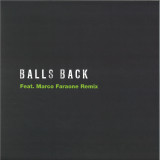
Josh Wink - Balls Back

Josh Wink

Balls Back

12inchOVM319
Ovum
16.09.2022

Global techno titan Josh Wink returns to his own Ovum Recordings for big new single 'Balls Back', which comes with a remix from Marco Faraone. Philly-born DJ, legendary producer and the man behind many of techno's most iconic cuts, Josh Wink remains as prominent now as he did a quarter of a century ago. That is because of the constant sense of innovation in all he does, as well as his rare understanding of dance floor dynamics and mastery of his studio. Says Josh of his latest track, “Every time I play this people rush over asking 'what is this track that says “get your balls back”?' Its reaction after playing has been amazing and reassuring that it hits hard, works on the floor, and sticks in people's heads.“ He's not wrong: the powerful 'Balls Back' is a spatial, acid-tinged techno stormer that builds and builds until it ultimately explodes in signature Josh Wink fashion. The 303s are saturated in deep processing along with heavy 909 percussion and a ‘slap-you-in-your-face’ vocal sample that will lead to dance floor devastation. The dub version is a raw, stripped down and faster-paced bass jacker that turns up the heat, and a Balls Tool is also included for dexterous DJ deployment. Italian Marco Faraone is a fellow techno heavyweight and one of the scene’s most versatile producers. He has brought his always impactful sounds to labels like Drumcode, Rekids and Etruria Beat. His remix is typically robust: vast, rolling drums power it along while glitchy percussion peels off the groove and the percussion gets ever more wild and heavy. It's a real main room monster. This is no-nonsense techno that perfectly marries form and function into a dynamite package.

non in magazzino

Ordina ora e ordineremo l'articolo per te presso il nostro fornitore.


Last In: 15 months ago
Oberst & Buchner - Marble Arch 2x12"

Grey Marbled Vinyl

Clear water hits the surface of a grainy ball. The stream slowly dissolves and flows down the spherical structure until it finally drops on a candle. The flame extinguishes; fragile streaks of smoke ascend until they hit the rough surface of the colossal globe again.
The cover art to Marble Arch, the second long-player of Vienna- and Berlin-based artists Oberst & Buchner, depicts masterly the dramatic juxtapositions the musicians have always been reflecting in their musical outcome.
The massive density of a giant sound wall is contrasted by spacious openness. Fragile sonic details are sparkling out of colossal pitch-black clouds. The songs are filled with gentle warmth and cold roughness, bright digital clarity and deep analogue crackle, ranging in style from pulsating dark-disco over classic pop to experimental ambient.
The duo's two-week artist residency in a 250-year-old house, located in the mystic landscape of the Bavarian woods set this specific mood for the 10-track album which became a mixture of electronic synthesis, organic instrumentals and field recordings. Heavy-weight basslines in combination with bitter-sweet orchestral instrumentation and the minutiae of precise percussion recordings and drum programming are the characteristics that formed the sound of Marble Arch.
Oberst & Buchner's way to deal with tension is in how they compose their song structures as extreme arcs of suspense in a near classical manner. Their intense dynamic arrangements always alternate between rise and explosion or implosion and fall. This way the compositions pick up the motive of creation and destruction throughout the long-player in the same way as the cover-art.
Taken together, all these fragments form the duo`s signature cinematic articulation of dramatic slowed down club music and moments of surprise.

BIO
Oberst & Buchner are two friends and musicians living in Vienna and Berlin. They look back on a mutual musical journey that is as rich in variety as it is more then 15 years long. For one thing, countless high-energy DJ sets in clubs and at festivals all over Europe in recent years have earned them a reputation as a dynamic duo infernale. At the same time, their own productions draw from the full palette of moods and emotions.
Boiled down to the very essence, there's one common denominator running through the duo's musical works: colossally massive elements are masterfully set against a shimmering backdrop of incredibly detailed layers. Each so full of subtle suspense that they feel like the first raindrops before a monstrous thunderstorm. You can literally hear the calm before the storm in every break they build up, then feel the force of the wind in your face when it hits you.
Ranging from pulsating electronica over slow organic sounds derived from both nature and acoustic instruments to deep dance pop ballads, their songs are full of suspense and packed with drama. In their productions, the two friends conjure up soundscapes that are extremely dense and at the same time infinitely open and spacious. Within this framework, they play with stark contrasts of antithetic elements: repetition and improvisation, functionality and emotions, emptiness and overload, clarity and crackling.

non in magazzino

Ordina ora e ordineremo l'articolo per te presso il nostro fornitore.


Last In: 2 years ago
Colorado - Colorado / Para Ti

"Matasuna Records" returns to Mexico for a third time to dig for rare treasures. They got their hands on a special gem - two obscure Latin/Jazzfunk tunes by a band called "Colorado" from "Mexico City". The songs were released in 1976 on the Mexican label Peerless and the super rare original 7inch is virtually unavailable. Fortunately, the release is finally available for the first time as an official reissue in a remastered edition. An unjustly under-the-radar Latin jazzfunk highlight!

The song "Colorado", named after the band, opens the "A-side" of the single. The hypnotic fender rhodes puts the listener in the right mood right from the start, before the drums and percussion set the rhythm. The horns also add depth and melodiousness before the song takes a turn and reveals its funky side with guitars, synths and bass. A nice guitar solo also reveals the affinity for rock music without losing sight of the vibe of the song or tipping it a different direction. Definitely a fabulous song that comes up with a lot of ideas and inspirations, offering an unexpected richness in the under 3-minute running time.

The "B-side" also continues musically energetic in the same way with "Para Ti". Here, too, you can feel and hear the playfulness and experimentation of these extraordinary musicians. Atmospherically dense passages alternate with quieter phases and solo parts, before the tension rises again and literally explodes. As in the song "Colorado", rhodes, brass, guitars & bass offer a great and varied interplay. The secret highlight, however, might be the drum and percussion parts in the middle of the track, which will surely enchant not only the B-Boys and B-Girls.

Artist info:

The internet, a source of almost endless knowledge, offers no information about the band Colorado. All the more fortunate that one of the band's founding members, "Emilio Espinosa Becerra", provides detailed info for the reissue.

In 1968 the three brothers "Luis", "Francisco" and "Emilio Espinosa Becerra" from Mexico City started to rehearse together to play wellknown rock & pop songs at friends or family parties. At first, they played on Japanese guitars and a Teisco bass borrowed from a school friend. They saved up money to then buy guitar & bass amps and a microphone, which they always had to rent until then. However, the budget was only enough for Mexican replicas of the legendary Fender Bassman and the Fender Super Reverb. Original equipment was simply unaffordable.

Shortly thereafter, more members joined the band. Three musicians from the school band "Tepeyac": "Marco Nieto Bermudez" (trumpet), "Raymundo Mier Garza" (tenor saxophone) and "Alfonso Romero" (trombone). Another classmate named "Carlos Mauricio Fernández Ordóñez", who studied piano, also joined the group. His father had a chemical factory in the United States and helped bring equipment (amplifiers and a Farfisa Fast 5 organ) - hidden in the back of a truck - to Mexico. In the time that followed, more instruments were acquired, including bass and guitars (from Gibson, Rickenbacher and Fender) and microphones (from Shure) for vocals and horns.

With a larger band and new equipment, they played many parties in their district of "Lindavista" in "Mexico City" and neighboring areas from 1970 to 1973, as well as gigs at various festivals and school events. The group's band name at the time was "Sound Core Brass". However, more and more often people with turntables and speakers showed up at parties, which were also able to heat up. The so-called "Sonideros", a sound system culture that was emerging in the 1960s, charged less than a multi-piece live band, so the band's performances declined.

During those years, three other "Espinosa Becerra" family members joined the band: "Jorge Rafael" (trombone), "Sergio Alejandro" (tenor saxophone) and "Felipe de Jesus" (drums and percussion).

A brother of the musicians, "Carlos Espinosa Becerra", studied electrical engineering at the University. Together with another fellow student, he designed and built a 10-channel console with a variety of functions and features that far surpassed the devices available at the time. They also went to the US again to buy JBL speakers & tweeters to build their own sound system. On another trip to Los Angeles, they bought Phase Linear amplifiers, which offered enormous power by the standards of the time and had an extremely low distortion factor. With this equipment they could turn up the volume really loud and noise-free.

This was also the time when they stopped playing music from English bands & youth groups and changed their repertoire completely. They played mambos, chachachas, pasodobles and tangos on special occasions in big ballrooms and halls. Also, every now and then they hired a string quartet of well-known Mexican violinists to provide the musical entertainment at dinner events.

During those years, classmate "Pablo Rached Diaz" joined the band, playing tenor saxophone. Pablo was very active and organized many parties. He was also the one who helped the band to record on the Mexican label "Peerless". So in 1975 they were asked by Peerles Records to record their own songs. They had recorded a total of 12 songs - six of these songs were released on three vinyl singles (45rpm). Most of the songs were composed by "Gustavo Ruiz de Chavez Sr.". The band was asked to adopt a more commercial name, and so they had chosen the band name "Colorado". In the course of the releases, the band made some promotional tours and appeared in shows on "Televisa", the most important television station in Mexico in those years.

Later, several members of "Colorado" graduated and began to pursue regular professions. They didn't stop playing at events, but priority was given to more formal duties and the band was no longer as active as it had been in its heyday.

About 8 years ago, the band got back together to play again. The next generation of musicians also joined the band: two sons, a nephew and a brother-in-law of the original band members. Currently, they are back playing at friends' parties and family gatherings in Mexico City.

non in magazzino

Ordina ora e ordineremo l'articolo per te presso il nostro fornitore.


Last In: 3 years ago
THE GQOM TRILOGY - THE GQOM TRILOGY LP (3x12")

Highlighting the continuing evolution of Durban's globally influential gqom sound, this special trilogy of releases showcases three separate artists from South Africa's fertile musical landscape. The set captures a fresh wave of gqom innovation from veteran producer DJ Skothan/DJ Scoturn, DJ Scriby, and 20-year-old DJ MaRiiO. DJ Skothan/DJ Scoturn has been a key figure in Durban's underground scene for many years, producing alongside Phelimuncasi, Bhejani, Tweeyking, Lafaristo, MaRiiO and DJ MP3. His gqom and house tracks have quietly provided a rumbling engine for the city's scene, and "Nevegation" is his debut full-length, providing a complex diagram of his dancefloor versatility. This isn't the gqom you might expect to hear: immediately on opener 'The Gringo' familiar sounds - shovel kicks, chopped vocals, sampled gasps, horror movie strings - are shuffled into atypical patterns, creating jerky soundscapes rather than the expected four-on-the-floor bump. 'Salut to DJ Lag' pays respect to Durban's Beyoncé-approved pioneer, but twists the template into a propulsive new form, adding rolling and evolving percussion that teases fractal shapes each bar. But the album's most unexpected and forward-thinking moment arrives with the aptly titled 'The King of Gqom', a track that simmers the genre's percussive sounds into limber sci-fi club futurism, tweaking the bass sounds into patterns that nod to dubstep, Jersey club and ballroom. 25-year-old DJ Scriby has been working behind the scenes since 2013, assisting the first wave of gqom innovators promote their sound both inside Durban and beyond. In 2017 he joined London's Trax Couture to release "The Clermont EP", and here he introduces his long-awaited follow-up "Izingoma zeGqomu". Scriby's approach to gqom is well-studied and self-aware, which gives him the ability to stretch the sound's scope across the diaspora: just peep the Atlanta trap synths on the dynamic 'Friday 13th', or the absorption of tight grime snares on opening track 'Goi'. Scriby's engineering skill pushes his productions to the next level, lending slithering downtempo tracks like 'Ouuu1' and 'Igqom Libuye' a widescreen, big-room punch without losing the genre's undulating funk. And the producer even eyes the EDM mainstage with 'Qumqum!!', balancing saccharine synths with jerky kicks, claps and rolling toms. The youngest artist featured in the collection, DJ MaRiiO started producing when he was just 12 years old, watching YouTube production videos. "No one told me how to use FL Studio," he admits, "and no one helped me doing different genres." This might be why his music sounds so completely unique; the basic structure of gqom is still present, but MaRiiO augments these elements with youthful energy and carefree use of unusual sounds and production methods. "Zulu Man" opener 'GQom NyeGe' manages to mash together trance synths, DMZ bass and a driving woodblock rhythm that reminds you of its Durban roots, while the bizarre 'Ngom ya Phesh', featuring MaRiiO's regular collaborator Hot Chicks on vocals, pushes the gqom template into the red, with overdriven kicks and disorienting environmental sounds. All three records provide a 360 degree view of Durban's contemporary underground, nodding to the past, present and future of gqom. It's a genre that's constantly in flux as it moves from South Africa's bedrooms and basements to main stages and movie screens across the globe.

non in magazzino

Ordina ora e ordineremo l'articolo per te presso il nostro fornitore.


Last In: 3 years ago
Various - DUSTY BALLROOM 03 - SOMETHING'S GOING ON IN MY ROOM!! LP

Es geschah gegen Ende des Jahres 2008, als drei Liebhaber der 7"-Single beschlossen, in Berlin eine neue Vinyl-only Clubnacht zu starten. Mit dem Ziel, die Fixierung auf einen speziellen Musikstil, den bis dahin die anderen Vintage Dances zelebrierten, zu durchbrechen. Es sollte keine Grenzen geben, also begaben unsere drei sich auf eine lange Reise, immer auf der Suche nach neuem schwarzem Kleinvinyl für die Sammlung, möglichst oskur, aber mit der Prämisse, den Tanzboden zu füllen. Und hier nun findet sich die 3. Sammlung aus dem Dusty Ballroom Schatzkästchen - eine spannende, aber eklektische Mischung aus 40er Jahre Jump Blues, 50er Jahre Exotica, einer Prise DooWop, Surf mit Eastern Vibe, Rock & Roll aus Hawaii, Burlesque Tunes und mehr. Funktioniert in jeder Lebenslage!

pre-ordina ora09.09.2022

dovrebbe essere pubblicato su 09.09.2022

Pestilence - Testimony Of The Ancients

An iconic landmark album within Death Metal. “Testinomy of the Ancients” gets the well-deserved reissue! Two years after releasing one of the best death metal albums ever to surface from The Netherlands, Pestilence hit jackpot again with their 1991 album “Testimony Of The Ancients”. The biggest differences with their previous effort “Consuming Impulse” are simple: The production is more clean, short intermezzos between all the songs, the average pace is lower and Patrick Mameli has taken over lead vocals. Pestilence has had a well-deserved place in the first wave death metal elite, mentioned in one breath with the likes of Death, Sepultura, Cynic, Atheist and the likes. Rightly so, because their progression up untill this album is comparable to, say, Carcass. With every album they developed their sound so no release sounds alike but still stays Pestilence undeniably. Their previous album “Consuming Impulse” was unprecedented in brutality and morbidness. ‘Testimony of the Ancients” is less relentless, but it makes up for that with an onimous dose of morbid melodies, great lyrics and an all out Lovecraftian atmosphere. The highlight of this album is definately the guitars. Patrick Mameli and Patrick Uterwijk are a great tandem, combining melodic (twin) soloing with screeches and crashes of tremolo filled chaos. Take for example the song “Land Of Tears”. The guitar solo starts out very emotional, almost ballad like and then switches into high gear, so that all listeners who were dreaming away immediately abbandon all hope for solution of the saddening first guitar part. Noteworthy also are the supportive keyboard samples, never obnoxious, always morbid. Other album highlights are the title track (with truly frightening and insane lyrics), ‘Twisted Truth’ with its catchy dynamics, ‘Profetic Revelations’ (excellent chorus) and basically the whole album is perfect. Special attention to the final track (the album sticks together with samples, which are all great by the way) ‘Stigmatized’. This is death metal perfection, combining Slayer, Death and even Iron Maiden to create a masterpiece of metal.

pre-ordina ora09.09.2022

dovrebbe essere pubblicato su 09.09.2022

GRATITUDE TRIO - BIRTH LP

Gratitude Trio

BIRTH LP

12inchWERF202LP
DE W.E.R.F.
02.09.2022

After 11 years of existence, Gratitude Trio releases on September 2nd, 2022 its 4th album " Birth" on the remarkable Belgian label W.E.R.F. RECORDS in partnership with Mercury and Collectif Koa from Montpellier, France.

Protagonists Jeroen Van Herzeele (sax, analog synths), Alfred Vilayleck (electric bass, fx) and Louis Favre (drums, fx) worked for more than a year on this new album, continuing to develop the musical framework of the previous album: a blend of sensitivity and groove, contemplative vocals and raging solos.

Mixing acoustic and electronic sounds, the compositions of reflecting realities that inhabit them: to let oneself be touched by the beauty and the dark sides of life, to be amazed by nature, to accept what we cannot change, to create bonds, to commit ourselves to fulfill ourselves.

Music that is both sophisticated and organic, with an energy and boldness that characterize them.

Gratitude Trio is a Belgian/French band based in Brussels known for their strength and sensitivity that open people's hearts. The music of this power trio is tinged with spacy sounds, African rhythms, sexy grooves, endless trances, sensitive ballads, crazy free jazz, and a large dose of unpredictability. Gratitude exists since 2010 and has performed in prestigious venues in Europe. Their two first albums «Gratitude» and «alive» released in 2012 and 2015 under the label El Negocito Records have been very well received by the critics and the enthusiastic audience. The 3rd album «Gratitude III» was released in April 2018: new sound, new approach, but same soul. Gratitude Trio impressed! Indeed, voices and EWI (Electronic Wind Instrument) enrich the sound palette while the musicians have developed a new way to create together.

The brand new 4th album "Birth" is an absolute masterpiece, a synthesis of a decade of adventurous musical explorations.

pre-ordina ora02.09.2022

dovrebbe essere pubblicato su 02.09.2022

THE BILL EVANS TRIO - MOON BEAMS

There have been many great Jazz Pianists, but foremost amongst them is Bill Evans.
Accepted by all fans as being supremely influential for defining the format and scope of the
Jazz trio, Evans entered his first purple patch in the mid to late fifties and refined his playing
with a series of album. Over the years he recorded many trio albums with frequent changes
of members, with the most lauded being his first and second line-ups. By May 1962 Evans
cut what would be his seventh album for Riverside . New Bassist, Chuck Israels, joined the
group, and together this second classic line-up cut two albums in the same sessions. The
first was Moon Beams which contained ballads, while the second one, How My Heart Sings,
had the up-tempo numbers. These were recorded as a mixture during the sessions as
producer Orrin Keepnews wanted to release an album of just ballads from Evans, and so
made up the album from the varied session tracks. During the recordings, Evans only
revealed the tracks to his trio at the session itself. Fans and critics alike were more than
appreciative of Chuck Israels' ability to meld into the trio with his punchy lines, meshing in
especially well with Motian

pre-ordina ora30.08.2022

dovrebbe essere pubblicato su 30.08.2022

Damion - Special Interest

Damion

Special Interest

12inchLPEL252LE
EARTH LIBRARIES
30.08.2022

"After 11 pm, you stop hearing regular rock on the classic hits radio
station and start hearing more strange stuff, one-hit wonders from 1976,
or really minor singles from artists I thought I didn't like because I just
hadn't heard this one weird song before," says Bloomington, Indianabased singer-songwriter Damion - Rather than let those offbeat classics
fade into the twilight on his late-night drives, Damion returned home and
went straight to the Tascam cassette machine - Inspired by both the
sound and the bleary-eyed ambiguity, the result of that late-night
recording is the bronzy Special Interest, a record bathed in memory and
the antigravity of '70s AM radio
Once he had finished demoing songs at home, Damion brought the nine tracks
that would make up the album to his preferred studio, Russian Recording, and
worked with Ben Lumsdaine and Lewis Rogers to polish them up. Aesthetically,
Damion aimed to fit within the limits of the era that inspired the songs.
"Recording to cassette tape, you either have to play the part right or learn to love
the way it sounds wrong, so even in the studio we abided by those same
limitations," he says. Rather than limitations, the structures and styles of vintage
rock perfectly suit the album's lithe falsetto, eerily familiar melodies, and hazy
storytelling--the listener immersed in a soup of poetic fragments, Damion himself
always at a beguiling arm's length. On lead single and opener "Company Man",
resonant acoustic guitar and Super Ball bass provide a platform for Damion's
knowing ability to split the difference between confident swagger and laid-back
charm. The singer-songwriter pulls joy out of musical echos and lyrical wordplay,
in part coming from his love of classic songwriters and long history as a
performer. "I am mostly inspired by singer- songwriters like Carole King, Todd
Rundgren, etc.

pre-ordina ora30.08.2022

dovrebbe essere pubblicato su 30.08.2022

The A’s - Fruit

The A’s

Fruit

12inchPSY018LP
PSYCHIC HOTLINE
29.08.2022

Alexandra Sauser-Monnig and Amelia Meath have been yodeling together for upwards of fifteen years – in the backseat of a Prius while on their first cross-country tour, on back porches and backstages. It’s what led them to Fruit, their debut release as The A’s – a joyous ten-song collection spanning genre and decades, with interpretations of traditionals, lullabies, and an original song, it weaves between the weird and the wonderful. “Why I’m Grieving,” originally recorded by the DeZurik Sisters, was the inspiration for the A’s existence. The A’s reach into the past to hold hands with the DeZurik Sisters, two farm girls from rural Minnesota who taught themselves to yodel amongst all their animals, in a continuing celebration of the tradition of folk eccentricity and whimsy. The A’s played their first show together in 2013 after Sauser-Monnig first moved to North Carolina, where Meath had been living at the time, but it wasn’t until summer 2021 that they thought seriously about making Fruit. They decamped to Sylvan Esso’s Chapel Hill studio, Betty’s, for two weeks in the midst of a balmy and blooming Carolinian summer. They rehearsed during the day, deconstructing yodeling parts phonetically and staring absurdly into each other’s eyes as they practiced tongue twisting harmonies - and recorded in the nighttime, candles lit, a flickering glow against the windows framing the violet twilight outside. “There was a lot of giggling during the session,” Sauser-Monnig explains. “At one point I was getting a tangle out of my hair and was like, oh, my God, that sounds really cool – the sound of my hands in my hair. And then I thought, what if we recorded hair for a percussion track? And then it just sort of snowballed.” Across the record, the A’s employ a bizarre-o ghost orchestra of strange noises that are percussive and melodic. The credits include nylon shorts, string (singular), hair, shoes, ice chunk, gravel, frog sample, and shoelace, among other unexpected makeshift instrumentation. The backing band is built out by a more traditional group of players: saxophone from Sam Gendel on “Copper Kettle,” backing vocals from Jenn Wasner (Flock of Dimes, Wye Oak) on “When I Die,” string arrangements from Gabriel Kahane on “He Needs Me,” and more. Fruit is made up simply of songs the A’s love to sing – there are lullabies and love songs; “He Needs Me,” written by Harry Nilsson and first released by Shelley Duvall in the 1980 Popeye film; traditional ballads like “Swing and Turn Jubilee,” “Copper Kettle” and closer “Buckeye Jim,” a multiplying song about frogs and nature. The sole original track to appear on the album is the penultimate “When I Die,” written by Meath. It contains both wishes and instructions for the celebration of her death, a low synth bubbling beneath Sauser-Monnig and Meath’s voices. It’s a collection of ten seemingly incongruous songs, but with the throughline of Sauser-Monnig and Meath’s vocals and sense of humor working in tandem, they fit together into a cosmic yodeling-folk masterpiece. Fruit feels like blowing the dust off a precious artifact of decades past, but also winking and modern. Sauser-Monnig sums up their ethos on the project succinctly: “If it doesn’t make you cackle or cry, it doesn’t belong.”

pre-ordina ora29.08.2022

dovrebbe essere pubblicato su 29.08.2022

Mice Parade - lapapọ

Mice Parade

lapapọ

12inchBBC0077LPC1
Bubble Core Records
22.08.2022

Mice Parade returns from a decade of silence to release lapapọ, an album that spans the many styles of their storied career,and features guest singer appearances by Angel Deradoorian (Dirty Projectors) and Arone Dyer (Buke & Gase). The rock is louder; the West-African-inspired highlife breaks are chubbier; the dueling drumkits are more complex, the instrumental passages more serene. What started as a home recording project in the late 90s soon morphed into a formidable and completely unique live band of incredible musicians from around the globe, all live-mixed and effected by legendary UK engineer Brandon Knights (aka Dub Warrior), the longtime sound engineer for Lee Scratch Perry, Soul II Soul, Gladiators and others. After 9 albums and nearly 15 years years of worldwide touring, including festivals across the UK, Iceland, mainland Europe, Turkey and Japan, and supporting Stereolab across the US, Mice Parade fans can finally hear some new music, and the live band hopes to safely reunite later this year. Throughout it all, Adam has mostly recorded with same ethos: allowing only one take for each track, forcing him to either leave in mistakes or address them with mutes or distractions, and embracing the Bob Ross concept of 'happy accidents.' This was a strict rule for the first several albums, and while he eventually became less strict about it, it's still a goal that is achieved more often than not. Perfection is not the goal - indeed, there should be no such thing in music. Most songs are not even written before pressing the record button, but instead are built piece by piece in improvised fashion. lapapọ is a Yoruba word meaning something akin to "totally" or "altogether."

non in magazzino

Ordina ora e ordineremo l'articolo per te presso il nostro fornitore.


Last In: 3 years ago
Silversun Pickups - Physical Thrills LP (2x12")

Silversun Pickups kehren mit ihrem sechsten Studioalbum "Physical Thrills "zurück, das am 19. August über das bandeigene Label New Machine Recordings erscheint. Physical Thrills, der Nachfolger des 2019 erschienenen Albums Widow's Weeds, wurde von Butch
Vig (Nirvana, Garbage, Smashing Pumpkins, Green Day, Foo Fighters) produziert und von Billy Bush gemischt.

Physical Thrills umfasst eine eklektische Mischung aus verzerrten Synthesizern, tanzbaren Pop-Melodien, reduzierten Balladen und einer Sammlung von "Dream Shanties"-Melodien, die alle miteinander zu einem kohärenten Gesamtwerk verbunden sind. Das Kunstdesign
stammt von Lawrence Azerrad (Grammy®-Gewinner für The Voyager, Wilco).

pre-ordina ora19.08.2022

dovrebbe essere pubblicato su 19.08.2022

Xiorro - Enter The Zone EP

Following an outing on DJ Mag nominated breakthrough label of the year 10 PILLS MATE in October, Atlanta-based and NYC-born producer Xiorro readies his Lobster Theremin debut with four cuts of heavy yet varied techno, heavily influenced by the sounds you might hear at ALKHEMY - a collective co-founded by the artist, whose genesis is dedicated to spreading diversity within techno and making space for marginalised, people of colour and women to play - their The Black Hole parties helping to re-shape the NYC soundscape.

'A Quien No Le Gusta Duro?' - 'Who Doesn't Like It Hard?' - attempts to answer its own question across six minutes of ravey hardcore and industrial techno before diverting to a more soulful vibe on 'Get Down To This'; it's choppy vocal samples and groove giving off the energy of an NYC ballroom.

'Shock To The System' is trance-techno without the cheese; ethereal malfunctions and transcendental atmospherics create something that feels spiritual in its release, while 'Say It With Your Chest' closes with a deafening cry of protest on an uncompromising and inspired cut of concrete.

non in magazzino

Ordina ora e ordineremo l'articolo per te presso il nostro fornitore.


Last In: 3 years ago
John Turrell - The Kingmaker LP

John Turrell

The Kingmaker LP

12inchJAL252V
Jalapeno
05.08.2022

British soul royalty John Turrell's classic debut solo album 'The Kingmaker' is given a much-deserved release on a limited edition yellow vinyl LP. Delivering eleven stunning raw vocal performances on emotionally searing tracks, Turrell manages to span upbeat northern soul jaunts, downtempo bluesy groovers and emotive ballads in a cohesive collection that never ceases to treat the listener.

Created with writing partner and producer Nick Faber as a reflection and meditation on the ebb and flow of a normal man's life, authenticity and relatability are two key characteristics of the writing style on this record. While it is an album that references a diverse set of influences there is an unmistakable soul and blues sensibility that courses throughout the tracks. There are the same recognisable soaring vocals and heartfelt lyricism from the 'Smoove & Turrell' frontman that long term fans are used to (Smoove even lent a helping hand with engineering duties on the record) however this is undoubtedly a case of John running his own show.

LIMITED NEON YELLOW LP with gatefold insert and digital download card.

pre-ordina ora05.08.2022

dovrebbe essere pubblicato su 05.08.2022

Vanderwolf - 12 Little Killers

Vanderwolf re-emerges with '12 Little Killers' an eclectic collection that
includes the deliciously oozing slice of psychedelia of the single Glisten,
which is heavily-slanted toward melting analogue synthesizers (Sam
Sallon) and rich layers of acoustic guitars (Chris Cordoba) and an
exquisite vocal by Max Vanderwolf
Recorded by producer Chris Wyles at his south London studio, the 12 songs were
selected, mixed and compiled by keyboardist and co- producer Sam Sallon. It's
available in a limited pressing of 500.
Vanderwolf's music spans a wide-range of genres from global beats to hard blues
to fragile balladry to prog- rock monstrosities and beyond. With a vast back
catalogue of songs to release, Vanderwolf is set to get his wild and restless
music out to the world.
Born in NYC, working in London and as of 2020 residing in Los Angeles, Max
Vanderwolf has recorded several albums and countless songs. Most of them
remain unreleased. Notably, he was vocalist and creative-force behind the semilegendary London band, Last Man Standing, whose sole album in 2008 received
plaudits from many including Mojo and Uncut.
Concurrent to his life in music, Vanderwolf has worked under an assumed name
as a music programmer and concert producer in some of the worlds' most
celebrated clubs and venues. He went from overseeing the legendary
underground downtown NYC's Knitting Factory to overseeing London's Royal
Festival Hall, where for 9 years he produced the Meltdown Festival where he
worked closely with David Bowie, Patti Smith, Jarvis Cocker, Massive Attack and
others. He has produced concerts in Brooklyn, Rome and Paris working closely
with John Cale, Sparks and the Residents.

pre-ordina ora22.07.2022

dovrebbe essere pubblicato su 22.07.2022

Gilbert O’Sullivan - Driven

Gilbert O’Sullivan, one of the greatest singer-songwriters of his generation will return in 2022 with his new studio album, following the release of his Ethan Johns-produced, self-titled 2018 album which was awarded four-stars in MOJO and Q Magazine as well as rave notices in Uncut and the Sunday Times.
Gilbert’s twentieth studio album finds him working with a new producer, the revered Andy Wright (Simple Minds, Simply Red, Eurythmics and Jeff Beck) recording with a full band at London’s famous RAK Studios. The direction of the album is an organic and raw affair, featuring a mix of ballads as well as upbeat songs, all written by an inimitable master craftsman. In a unique addition to this new album, Gilbert O’Sullivan has collaborated on duets with Mick Hucknall (Simply Red) and KT Tunstall.
Gilbert O’Sullivan’s unique blend of melodic craftsmanship, witty wordplay, topical acuity and surrealist humour has given him an enduring and endearing career. His song writing knack has outlived and transcended fashion, global million-sellers, critical acclaim, and an occasional tendency to reclusiveness. Now recognised as one of our great singer-songwriters, he’s been championed in recent years by everyone from Paul Weller, Nina Simone, Mick Hucknall, Squeeze’s Difford & Tilbrook, Neil Diamond to Gary Barlow (whose Crooner Sessions Gilbert duetted on earlier this year), Empire Of The Sun, Boy George and The Charlatans’ Tim Burgess whose acclaimed The Listening Party recently featured Gilbert’s Himself and Back To Front albums.
Gilbert O’Sullivan’s career has spanned 50 years. His first single success Nothing Rhymed was released in 1970 and almost overnight it achieved Top 10 status In the UK and Europe charts.
His debut album Himself was littered with the most perfect examples of his art and craftsmanship. His second 1972 “Back To Front” firmly cemented Gilbert amongst the world’s best. Top 10 singles and no. 1’s around the world including the classic “Alone Again (Naturally)” which topped the US charts for six weeks and earned him three Grammy nominations.
British recognition soon followed with the songs Clair and Get Down reaching the summit of the UK singles charts and his LP Back To Front topping the album charts. In the same year at the 18th Ivor Novello Awards Gilbert was named ‘Song Writer of the Year’. To date he has won three Ivor’s and in recent times performed alongside other artists at BBC Proms in the Park. He has also made three appearances at Glastonbury including the main stage, and toured extensively throughout the UK, Ireland, Europe, Japan and Australia.

pre-ordina ora22.07.2022

dovrebbe essere pubblicato su 22.07.2022

Gilbert O’Sullivan - Driven

Gilbert O’Sullivan, one of the greatest singer-songwriters of his generation will return in 2022 with his new studio album, following the release of his Ethan Johns-produced, self-titled 2018 album which was awarded four-stars in MOJO and Q Magazine as well as rave notices in Uncut and the Sunday Times.
Gilbert’s twentieth studio album finds him working with a new producer, the revered Andy Wright (Simple Minds, Simply Red, Eurythmics and Jeff Beck) recording with a full band at London’s famous RAK Studios. The direction of the album is an organic and raw affair, featuring a mix of ballads as well as upbeat songs, all written by an inimitable master craftsman. In a unique addition to this new album, Gilbert O’Sullivan has collaborated on duets with Mick Hucknall (Simply Red) and KT Tunstall.
Gilbert O’Sullivan’s unique blend of melodic craftsmanship, witty wordplay, topical acuity and surrealist humour has given him an enduring and endearing career. His song writing knack has outlived and transcended fashion, global million-sellers, critical acclaim, and an occasional tendency to reclusiveness. Now recognised as one of our great singer-songwriters, he’s been championed in recent years by everyone from Paul Weller, Nina Simone, Mick Hucknall, Squeeze’s Difford & Tilbrook, Neil Diamond to Gary Barlow (whose Crooner Sessions Gilbert duetted on earlier this year), Empire Of The Sun, Boy George and The Charlatans’ Tim Burgess whose acclaimed The Listening Party recently featured Gilbert’s Himself and Back To Front albums.
Gilbert O’Sullivan’s career has spanned 50 years. His first single success Nothing Rhymed was released in 1970 and almost overnight it achieved Top 10 status In the UK and Europe charts.
His debut album Himself was littered with the most perfect examples of his art and craftsmanship. His second 1972 “Back To Front” firmly cemented Gilbert amongst the world’s best. Top 10 singles and no. 1’s around the world including the classic “Alone Again (Naturally)” which topped the US charts for six weeks and earned him three Grammy nominations.
British recognition soon followed with the songs Clair and Get Down reaching the summit of the UK singles charts and his LP Back To Front topping the album charts. In the same year at the 18th Ivor Novello Awards Gilbert was named ‘Song Writer of the Year’. To date he has won three Ivor’s and in recent times performed alongside other artists at BBC Proms in the Park. He has also made three appearances at Glastonbury including the main stage, and toured extensively throughout the UK, Ireland, Europe, Japan and Australia.

pre-ordina ora22.07.2022

dovrebbe essere pubblicato su 22.07.2022

Jitwam - Third LP

Jitwam

Third LP

12inchROYA014LP
Roya
21.07.2022

Auf 'Third' hebt Jitwam seine Fähigkeiten als Beatmaker und Produzent auf ein neues Niveau, verschmilzt Live-Musik mit Samples und Edits, garniert sie mit Features von Melanie Charles und Akhtari und weckt Erinnerungen an die Suche nach Frieden im Chaos des täglichen Lebens. Inspiriert von seiner Zeit in NYC kombiniert Jitwam mit trunkener Unbekümmertheit Einflüsse aus Latin, Soul, Punk und einer Menge Disco zu einem einzigartigen, reichhaltigen Sound. Die 10 ansteckenden Songs aus moduliertem Gesang und traditioneller Instrumentierung vermengen sich mit dem Schwung von Soul-House und Jazz. Entsprechend erhält Jitwam Support von Gilles Peterson, Moodymann und Matthewdavid.

non in magazzino

Ordina ora e ordineremo l'articolo per te presso il nostro fornitore.


Last In: 3 years ago
Roxy Music - Stranded LP

Roxy Music

Stranded LP

12inch0746023 / RMLP3
Virgin UK
15.07.2022

(2022 Reissue)

Roxy Music veröffentlichen am 13. Mai eine neue Half-Speed gemasterte Version ihres Albums „Stranded“.

Der dritte Longplayer von Roxy Music bescherte der Band nicht nur ihr erstes Nummer-1-Album in Großbritannien, sondern war auch das erste, das einem breiteren US-Publikum bekannt wurde. „Stranded“ ist eine gelungene Sammlung von Songs, die von Anfang bis Ende begeistert - vom Album-Opener und der HitSingle „Street Life“ über die ergreifende Ballade „Just Like You“ bis hin zum epischen Titel „Mother Of Pearl“, der als eine der größten Bryan Ferry-Kompositionen aller Zeiten gilt.

Anlässlich des 50-jährigen Jubiläums von Roxy Music wurde ”Stranded” von Miles Showell in den Abbey Road Studios in London neu gemastert. Um die verbesserte Audioqualität widerzuspiegeln, wurde das Artwork überarbeitet und mit einer glänzenden Laminierung versehen, sodass das Album nicht nur eine Schallplatte, sondern ein Kunstwerk ist

non in magazzino

Ordina ora e ordineremo l'articolo per te presso il nostro fornitore.


Last In: 3 years ago
Alex Crispin - Alex Crispin LP

Alex Crispin

Alex Crispin LP

12inchCBDL-0012
Cobblers
11.07.2022

He might be vocalist in bands such as Brighton-based progressive act Diagonal and psychedelic outfit Baron, but when it comes to his solo work Alex Crispin has typically worked in more wordless fields. Last year the songwriter, vocalist and producer released a triptych of ambient albums, consisting of two older albums in 'Idle Worship' and 'Open Submission', as well as new meditative work in 'Resubmergency'. On his new self-titled album, however, Crispin re-emerges from the cavernous soundscapes to – for the first time – put his vocal and song writing stamp on a record under his own name. “I personally find it easier to create more guarded, moody music, but I was at a point where I wanted to embrace a more universal, intimate and open side to what I might say” Crispin says. “Over time I’d got over certain blocks or preoccupations and so wanted to create something accessible and open hearted, which became a big driver for this record.” Pointedly self-titled to reflect the newfound confidence in his song writing away from the collective of a band, the album’s nine tracks are a warm embrace amidst troubled times. Musically there’s nods to everything from tropicalia and Brazilian MPB, to 80’s dusk pop balladeers The Blue Nile and Paul Simon’s explorations into African music. Lyrically aware of the snowballing turbulence that surrounds us, Crispin in reaction tries to see hope and looks around at the relationships and connections in his life that provide him strength. He opens 'Invisible (To Us)' with the words “Before the world did end, there was just one moment when, everybody thought there might be time, to look around again, to laugh to cry to sing.” Elsewhere, 'Listen & Learn' strikes at the heart of other underlying themes of the record, of the rarity of people opening up, taking on new ideas and allowing change. It’s accompanied with a rich, maximal sound palette of flute and sax that play around each other as Crispin’s vocal chips in with gentle encouragement. “One of the main markers on the album that I was aware of from the start, was to let myself express joy and positivity in the music” he says. “I have come to greatly prize the power of accessibility and universality over artistic 'coolness or trend', much in the same way that so often for me, the greatest pieces of art humans make nowadays are things like Pixar movies, with their combination of undeniable human talent and craft, alongside genuinely moving and accessible themes.” Indeed, there is a cinematic feel to much of Crispin’s own music, something brought over from his ambient creations – although his self-titled album possesses a panorama all of its own. Something like 'When I Reach The Ocean' has a hazy, pastoral feel to it like something out of the Canterbury Folk scene; there’s space between the notes though, which in turn pushes the track out to a greater expanse than the comparatively soft-edged and modest sound palette used to create it. Similarly, the likes of 'Effert' revel in the space afforded to them - in the case of the aforementioned in particular, Crispin lets his voice take a back seat and creates an open wash of sound that he allows the guitar to probe and explore within. “In making any music I am definitely conscious of trying to put in only what is effective” Crispin says. “It is so easy to clutter tracks without realising it, just having the ability to add stuff can just become addictive as it’s so easy to do with recording setups now.” The album started coming together at the end of 2020, with Crispin getting most of the songs to a concrete state, before starting recording in May 2021 with Diagonal bandmates Luke Foster (drums) and Daniel Pomlett (Bass), who put down rhythm tracks. Jazz saxophonist Rob Milne then added parts which would become the glue that held the whole organic aesthetic of the album together. There’s no doubt that lockdown played a part in proceedings, with a kind of forced focus resulting in a need for joyful expression. However, Crispin and his partner also suffered a bereavement which led to her travelling for large periods of time. “It was a very intense and difficult time and I think some of the intensity of emotion of that situation coupled with being alone must have inevitably contributed to the work itself” he says. It's perhaps why when even in moments of sheer happiness, such as the 'Sabu’s' breezily euphoric opener, Crispin ponders: “No-one really cares beyond this moment, and even when it's here, it's never here”. It’s the first of several bittersweet moments on the record that give the album its weight. On this new LP, Crispin recognises that sadness doesn’t mean throwing out hope, and that even in moments of joy there’s still a path ahead of you to take.

pre-ordina ora11.07.2022

dovrebbe essere pubblicato su 11.07.2022

The Times - 'I Helped Patrick McGoohan Escape 7"

Part of The Optic Sevens 4.0 Reissue Series.
Limited to 1000 copies worldwide.
Pressed on White Vinyl Includes postcard and poster.
Edward Ball was a member of cult band The Television Personalities alongside his school friend Dan Treacy before leaving to concentrate on The Times.
‘I Helped Patrick McGoohan Escape’ (inspired by cult TV series The Prisoner) Is probably the best known track from them, originally released on the Artpop! label in 1982.
The second single from The Times reissued here with an extra track from the 12” (released a year later in 1983). We have also decided to use the same sleeve that was used for the original 12”

non in magazzino

Ordina ora e ordineremo l'articolo per te presso il nostro fornitore.


Last In: 3 years ago
Valentina Goncharova - Ocean

Valentina Goncharova's fundamental conceptual musical work released in full uncut form as part of Hidden Harmony Lost Tapes series (HHLTS01). Restored and mastered from the original 6.3 mm analog tapes. A large-scale work comprising eleven parts of varied, brooding, mystical reflection in which the author alters the instrumentation to fit both programmatic and musical character of each section.
Includes a 12-page booklet, which detailly explains the album's conceptual basis, background and creation context, and provides insights into unique sound recording and technical solutions adapted during the album recording in 1988. Created and written with direct involvement of V. Goncharova and I. Zubkov.

From the Liner notes:

"My task is to allow the listener to penetrate deeper into the music. The music is wholly improvisational. It has no concept in the rational sense of the word. It’s concept is purely intuitive. It presumes The Law of Analogies: “As above so below. Man is the same as the Universe. The Universe is the same as Man.” ("Emerald Tablet” by Hermes Trismegistus"). This intuition is a kind of rephrased logic which uses many more symbols which contain not only philosophical but also imaginative meanings/ visionary interpretations.

This music is a stream of consciousness in its purest form: not an imitation of a stream, as in the ‘suggestive poetry’ of the 20th century, but a stream where one flow is superimposed on another (a multilateral passage of recording). And, if we think this flow of music will be better understood under the influence of a verbal flow, then the verbal flow should also be more intuitive and associative, as objective for this short write-up you are currently reading.

Ocean did not appear within the coordinate system of logical scientific thinking of the last four centuries. It can be said that it is based on an intuitive concept of representations of the world which are captured in music figuratively. Similar to how myths were created in time immemorial with only partial support from verbal associations. Ocean is an experience of passing the Human Soul and Mind through the different states of the material world: birth, development, and achievement of perfection, transformation at the points of The Way and Silence, the manifestation of the harmony of the world (Om), which until then had remained in a latent state. It is averse to both mainstream contemporary physics and fringe scientific research. It exists outside their explanatory power.

Ocean is the source of all forms that can receive their life within time and space. Here it is. It has everything: beautiful and terrible, good and evil, self-sacrifice and betrayal. Boundless love and inspired creativity. But contact does not happen immediately. The memory of a bygone civilization is still fresh, and of the dearest things left with it."

Written, performed and produced by Valentina Goncharova
Composition A1 to C4 recorded in Kose subdistrict, Tallinn, Estonia (Recording period August-October 1988)
Composition D1 recorded in artist´s home studio in Lasnamäe subdistrict, Tallinn, Estonia (Recording period May 2021)

pre-ordina ora01.07.2022

dovrebbe essere pubblicato su 01.07.2022

Strawberry Guy - Sun Outside My Window

Tiptoe between the toadstools of Liverpool’s city parks, and amongst the foliage you might find a Strawberry Guy, contemplating his next chord-progression. Composing hi-fi symphonies from within his humble abode, the Welsh-born songwriter is ready to share the fruits of his labour with debut album Sun Outside My Window. A timeless vista of ethereal balladry looking towards 19th Century musical maestros and works of art, it brings new meaning to the term ‘Modern Classic’ and is the most optimistic of lockdown records yet.
“It’s about seeing the simple things in life and them making you happy,” tells Alex Stephens, the Guy behind the Strawberry. “I remember this day when I was really down… looking out the window, the sun beaming in was beautiful, it made me want to go outside – it was simple but made me so happy in that instance.”
A one-man impressionist, painting majestic soundscapes, Strawberry Guy blends truthful lyrics with lush arrangements to conjure new emotive worlds. Inspired by composers of the Romantic period, or Debussy, Ravel, and other classical artists of the 1800s, his wonderland moves like a Monet painting where arpeggios dance between meadows of dazzling dynamics and dramatic key changes. As former keyboard player of The Orielles and Trudy and The Romance, the light through his floor to ceiling windows has caused a dramatic Greenhouse Effect and now ripening on solo terms, his innocent uploads of ‘Without You’ and ‘F-Song’ comfort 2 million Spotify listeners a month. ‘Mrs Magic’ has received 40 million streams, landing at #13 in its chart and countless fan-created videos have appeared on YouTube. “Throughout history composers have tried to capture emotion, painting their own impressionist pictures with musical brush strokes… I guess I’m just trying to do the same and people enjoy that,” he suggests modestly.
Named by musical friends Her’s after his impeccable taste in milkshakes, Strawberry Guy upturns ‘bedroom artist’ perception, as each idea is crafted into a widescreen wonder where vocals tag-team instrumentals and countermelodies flourish within the Georgian walls of his Liverpool flat’s small space. “I want it to sound like I’ve squeezed an 80-piece orchestra into my room, and for listeners to wonder how all those strings got there,” he says. “Working on the 4-part harmonies, the orchestra became real; I began believing in myself.”
Imitating nature’s effect on emotion, like 70s songwriters, or the fantastical soundtracks accompanying vibrant scenes in the Japanese animated Studio Ghibli films and video games, landscape is brought to the fore. Monet’s picturesque Meadow at Giverny features as the album’s accompanying artwork – perhaps a reminder of the rural Welsh countryside views through his childhood home’s window; “I was inspired by how calm and peaceful the image felt. Its painted lines show real-life scenes in a magical way, which to me reflects my music.”
Just as the first Strawberry Guy EP Taking My Time To Be offered a slowing down for the soul, Sun Outside My Window is musically unhurried, written and recorded over 2 years. “Recording as a lone berry meant I could run with my emotions in the moment and deliver something true; it would have been an entirely different album had it been recorded in a studio,” he says.
Modern Classic? Only time will tell. For now this Guy’s happy-sad world is here to get the juices flowing and with, pandemic permitting, a US tour in 2022, life looks a whole lot sweeter. Until then, take it slow, be at one with the wilderness and remember, when life gives you lemons, swap them for Strawberries.

non in magazzino

Ordina ora e ordineremo l'articolo per te presso il nostro fornitore.


Last In: 3 years ago
Stranded Horse - Grand Rodeo

A multicultural explosion of West African, French and Brighton sounds
Stranded Horse is a touring machine centered around composer, songwriter and
instrument maker Yann Tambour.Whilst he had developed his own kora playing
and teamed up with local player Boubacar Cissokho (cousin and protege of
erstwhile Tambour collaborator Ballake Sissoko) In terms of repertoire, there is
nothing to stop him from covering Joy Division, the Smiths or even Jackson C.
Frank and the moving "My Name is Carnival".Behind Yann Tambour and his band
Stranded Horse lies a faith in chance encounters, a belief that renewal is born out
of chaos. They strive to skirt conventions and labels and wed together
unexpected genres, rules and habits in an album of erratic wanderings, dance and
trance, at a time when more and more get walled off by reluctance and suspicion.
But a strange spell, it seems, was cast on our stranded horse since he chose to
hit the dancefloor for the first time the very year nobody could. Yann Tambour
was first known as Encre at the turn of the millennium. He was then whispering
and stacking orchestral samples into a kind of spoken word electronica with an
acoustic tinge. But in 2005, he decided to return to his early love for arpeggios
and dusted off his classical guitar, all the while growing a fascination for the kora,
an instrument symbolic of West-Africa.
But Stranded Horse doesn't forget to draw on the indie heritage that is still very
much present, as evidenced by "In A Sharper Fairway", which may remind the
most passionate folk fans of the folk- mindedness of Jackson C Franck. As for
the choice of English or French, it is a natural one, whether it is a question of
immersing oneself into the contemplative and poignant "Sparks Turn To Stone" or
entering the frenzied dance of the irresistible "Rumba du trépas", the richness of
the lyrics is reinforced by a voice stripped of all artifice, making each composition
sincere and authentic. The same is true when, with Youssou N'Dour's permission,
Stranded Horse adapts Star Band de Dakar's heady and vast "Thiely" from Wolof
to French.

pre-ordina ora30.06.2022

dovrebbe essere pubblicato su 30.06.2022

Stranded Horse - Grand Rodeo LP 2x12"

A multicultural explosion of West African, French and Brighton sounds
Stranded Horse is a touring machine centered around composer, songwriter and
instrument maker Yann Tambour.Whilst he had developed his own kora playing
and teamed up with local player Boubacar Cissokho (cousin and protege of
erstwhile Tambour collaborator Ballake Sissoko) In terms of repertoire, there is
nothing to stop him from covering Joy Division, the Smiths or even Jackson C.
Frank and the moving "My Name is Carnival".Behind Yann Tambour and his band
Stranded Horse lies a faith in chance encounters, a belief that renewal is born out
of chaos. They strive to skirt conventions and labels and wed together
unexpected genres, rules and habits in an album of erratic wanderings, dance and
trance, at a time when more and more get walled off by reluctance and suspicion.
But a strange spell, it seems, was cast on our stranded horse since he chose to
hit the dancefloor for the first time the very year nobody could. Yann Tambour
was first known as Encre at the turn of the millennium. He was then whispering
and stacking orchestral samples into a kind of spoken word electronica with an
acoustic tinge. But in 2005, he decided to return to his early love for arpeggios
and dusted off his classical guitar, all the while growing a fascination for the kora,
an instrument symbolic of West-Africa.
But Stranded Horse doesn't forget to draw on the indie heritage that is still very
much present, as evidenced by "In A Sharper Fairway", which may remind the
most passionate folk fans of the folk- mindedness of Jackson C Franck. As for
the choice of English or French, it is a natural one, whether it is a question of
immersing oneself into the contemplative and poignant "Sparks Turn To Stone" or
entering the frenzied dance of the irresistible "Rumba du trépas", the richness of
the lyrics is reinforced by a voice stripped of all artifice, making each composition
sincere and authentic. The same is true when, with Youssou N'Dour's permission,
Stranded Horse adapts Star Band de Dakar's heady and vast "Thiely" from Wolof
to French.

pre-ordina ora30.06.2022

dovrebbe essere pubblicato su 30.06.2022

Grant-Lee Phillips - Little Moon

Grant-Lee Phillips

Little Moon

12inchLPYEP2203C
Yep Roc
30.06.2022

With golden voice and silver-dipped pen Grant-Lee Phillips presents
another milestone in a career brimming with the like - Little Moon is track
after track of well-anchored classic American music - rock and folk swirl
under clouds of cinematic strings for a primer on the art of the timeless
tune
His legendary well of melody is in full display on Little Moon, with even the most
lilting piano ballad standing comfortably on a thick, powerful trunk ('Older Now').
Long one of Los Angeles' most sought after songwriters, Grant-Lee meets Little
Moon with positive inspirations including the birth of his daughter Violet ('Violet')
and a creative calm that saw the songs well up organically from earlier live
collaborations with drummer Jay Bellerose, producer bassist Paul Bryan and
keyboardist Jamie Edwards. Captured live in the studio with limited overdubs, the
album keenly chronicles the sunny day feel of the songs and that ever-elusive in
the moment groove of a finely- tuned band working out equally finely- crafted.
Upon Little Moon's 2009 release, American Songwriter named it "His strongest
album ever." This limited edition pressing is on burgundy colour vinyl and limited
to 1,000 copies worldwide.

pre-ordina ora30.06.2022

dovrebbe essere pubblicato su 30.06.2022

Charles Mingus - Mingus Mingus Mingus Mingus Mingus 2x12"

"The album features the two sides of Mingus' compositional genius: the beautiful balladry that I always feel has a bit of a film-noir feel to it, alongside those joyous upbeat numbers that are filled with an organized chaos that categorizes much of the bassist's best work. ... Throw in the fact that it also features Jaki Byard (who is just phenomenal on this recording and remains criminally underrated), Booker Ervin, Dannie Richmond and Eric Dolphy and you have some of Mingus' finest sidemen driving his compositions to the fantastical places they seemed preordained to go. ... Mingus, Mingus, Mingus, Mingus, Mingus is a record that has more than stood the test of time and is an everlasting testament to the talents of Mingus and the players who had the ability to follow his musical vision." — The Jazz Record

Mingus, Mingus, Mingus, Mingus, Mingus was Charles Mingus' last major studio recording of the 1960s (the solo Mingus Plays Piano would also be released the same year in 1964) and it's a real treasure in the great jazz bassist's discography

Two of the tracks ("Celia" and "I X Love") were recorded at the sessions for The Black Saint And The Sinner Lady, while the rest were laid down eight months later with a group that included Booker Ervin, Eric Dolphy and Jaki Byard (Byard also played on the two earlier tracks). Both sessions featured groups of 11 players, all of whom were in top form in performing Mingus' notoriously complex compositions, writes jazzrecord.

All but two tracks on Mingus, Mingus, Mingus, Mingus, Mingus were re-interpretations of songs from the bassist's earlier catalogue, only "Celia" rates as a new original number, and "Mood Indigo" is a cover of the famous tune by Mingus's hero Duke Ellington. If you happen to have lost your Mingus decoder ring, the remaining tracks correlate to their past counterparts as such:


For Mingus, Mingus, Mingus, Mingus, Mingus Mingus collaborated with arranger/orchestrator Bob Hammer to score the music for the large ensemble of brass and saxophones. Recorded January 20 and September 20, 1963 in New York City.

pre-ordina ora27.06.2022

dovrebbe essere pubblicato su 27.06.2022

Half-handed Cloud - Flutterama LP

The (seventh) new Half-handed Cloud album, ‘Flutterama’, is
a record of 18 jubilant indie-pop songs by John Ringhofer
that investigate spiritual incompetence with lively
arrangements and radiant melodies that skilfully dissolve into
deterioration using herky-jerky tape manipulation, analogue
wow-and-flutter, and an animated orchestra of homerecorded sound effects.
 Ringhofer’s work on ‘Flutterama’ was inspired by Frances
Mary Hunter Gordon’s adolescent liturgies (recorded at
Abbey Road during The Beatles era), turbid sights and
sounds in Guy Maddin films, audaciously bold forms in Sister
Corita Kent’s devotional printmaking, the exquisite brittleness
of Elizabeth Cotten’s voice, Alberto Burri’s stitched wound
burlap assemblages, Alvar Aalto church design, Andrea
Büttner’s poverty-informed artwork, Lou Barlow/Dinosaur Jr’s
lo-fi ‘Poledo’ sound collage (which namechecks Jesus), Julie
Canlis book ‘A Theology of the Ordinary’, Wallace Berman’s
visual collage, and The Raincoats’ magnificently shaky DIY
aesthetic.
 The album’s tape-fiddled tunes - recorded on the very same
16-track recorder last serviced by a sound technician who
also worked with The Beach Boys in their home studio -
employ surprisingly little synthesizer (“it felt like cheating,”
says Ringhofer) - he preferred to craft most of the album’s
effects the long way, frequently going behind the back of rock
instrumentation by hand-feeding ½” magnetic reel recordings
of chord organs, deflating balloons, some guitars, piano
(occasionally tracked with a baby on his lap), brass,
tablecloth swipes, and a quickly-cranked half-speed music
box. He was assisted by long-time Half-handed Cloud
contributor Brandon Buckner on drums, and single song
backing vocals from Anacortes, WA songsmith John Van
Deusen.
 LP pressed on Opaque Brown vinyl

pre-ordina ora17.06.2022

dovrebbe essere pubblicato su 17.06.2022

Bobby Cole - A Point Of View

LIMITED TO 500 COPIES // HIGH-QUALITY TIP-ON COVER // INCL. DOWNLOAD CODE

OFFICIAL RE-ISSUE, DONE IN COOPERATION WITH THE FAMILY OF BOBBY COLE !!!

If you lived in New York during the 1950s through the 1990s and liked jazz, you knew about Bobby Cole. He played piano, sang, composed, arranged and, in 1967, released an album of original compositions titled "A Point of View" (Concentric Records). He had fans but avoided becoming mainstream. He stayed contemporary without becoming current. Jazz, folk, rock, modern dance scores…he wrote and performed them all. He smoked too much, drugged too much, drank too much. He was also cerebral, curious, a prodigious reader of poetry, philosophy, theology, and an uncommonly intelligent and literate lyricist.

On a December night in 1996, he had a heart attack while walking to work. An ambulance brought him to New York Hospital where, a few hours later, he died. Bobby Cole performed throughout Manhattan for forty years, but he spent most of the 1960s headlining at Jilly's, the midtown bistro owned by Frank Sinatra and his friend Jilly Rizzo. Sinatra called Bobby "my favorite saloon singer."

Bobby Cole caught the attention of Judy Garland, who visited Jilly's one night in 1964. She was hosting a weekly television show, and in the midst of a feud with her special materials arranger, Mel Torme. Three weeks later, Mel was out, and Bobby was in. He performed on Judy's show with his Trio. Bobby was scarcely 30 years old and it was his first time on television, but he was unruffled, sophisticated, and so damn cool. After Judy's show ended, Bobby occasionally arranged and conducted for her until she died.

Today, Jilly's is called the Russian Samovar and the piano is in the same spot. My husband and I ate there a few years ago. As we enjoyed our meal, I talked about Jilly's in the Sinatra era. Jilly had an apartment on the upper floor. I pointed up to the apartment and the balcony, where Jilly and Frank would sometimes drop water-balloons on unsuspecting pedestrians below. Another story described Jilly's as "tough, and you had to be tough to work there. Bobby Cole was tough. Frank and Jilly used to throw firecrackers at him to see if they could rattle him, but nothing rattled Bobby Cole. He ignored them and kept on playing." In the 1980s, Bobby headlined at a club called the Café Versailles. His daughter sometimes visited with her friends. She recalled that when she and her father would exit the club after work, a panhandler would be waiting for him. Bobby, who fought his own losing battle with the bottle, would slip the guy twenty dollars and wryly admonish him, "Be sure not to spend it on food." The night my husband and I visited the Russian Samovar there was a guy playing piano there, very young, and trying hard. I talked to him a little bit between his numbers about Bobby and the history of Jilly's and he was sweet, but I could tell he didn't care. I felt like one of those old people who bore young people to death with stories about things that happened before they were born – which, let's face it, is what I was. Nonetheless, when we were ready to leave, I put twenty dollars in his tip jar and said, "This is with compliments from Bobby Cole." After we left my husband said I should have added, "Be sure not to spend it on food."

Marie Hegeman (December 2021)

pre-ordina ora03.06.2022

dovrebbe essere pubblicato su 03.06.2022

Trance Farmers & Kourtney Roy - Queen Of Nowhere

"Queen Of Nowhere" is the result of the photographic works by Kourtney Roy and the musician Dayve Samek (Trance Farmers) initiated by IIKKI, between November 2021 and March 2022.

The man behind the name Trance Farmers is Dayve Samek, a wanderer from Los Angeles to Louisiana, and his music has picked up just about every influence it can along the way. He has recorded his first album in 2014 on Leaving Records (Stones Throw Records). Not sure how to classify his music ranges, but something between sweaty, garage-born ballads brush shoulders with drifter anthems and gasoline drenched doo wop with at some points some beats close from the past Anticon works should make the point.

The Canadian photographer Kourtney Roy was born in Northern Ontario in 1981. Intrigued by the possibility of creating a tragic mythology of the self, she conjures an intimate universe pervaded by both wonder and mystery. Her photographer’s eye is drawn to places and settings whose lyrical qualities underscore the sublime banality of everyday life.

Roy’s studies in photography, at Emily Carr University of Art and Design in Vancouver and later at the Ecole Nationale Supérieure des Beaux-Arts in Paris, inspired her to develop her finicky aesthetic, which lends itself particularly well to both glossy paper and film. Roy works extensively as an independent photographer/filmmaker in the art world. Instilled with a dark sense of humor, taking their clues as much from the grotesque nature of seemingly placid settings as from the tensions simmering just under the surface, her photographs have garnered many prizes, including the Prix Picto in 2007, The Emily Award in Canada in 2012 and the Prix Carte Blanche PMU/Le Bal in 2013 and the Pernod Ricard Carte Blanche in 2018.

pre-ordina ora27.05.2022

dovrebbe essere pubblicato su 27.05.2022

Trance Farmers & Kourtney Roy - Queen Of Nowhere

"Queen Of Nowhere" is the result of the photographic works by Kourtney Roy and the musician Dayve Samek (Trance Farmers) initiated by IIKKI, between November 2021 and March 2022.

The man behind the name Trance Farmers is Dayve Samek, a wanderer from Los Angeles to Louisiana, and his music has picked up just about every influence it can along the way. He has recorded his first album in 2014 on Leaving Records (Stones Throw Records). Not sure how to classify his music ranges, but something between sweaty, garage-born ballads brush shoulders with drifter anthems and gasoline drenched doo wop with at some points some beats close from the past Anticon works should make the point.

The Canadian photographer Kourtney Roy was born in Northern Ontario in 1981. Intrigued by the possibility of creating a tragic mythology of the self, she conjures an intimate universe pervaded by both wonder and mystery. Her photographer’s eye is drawn to places and settings whose lyrical qualities underscore the sublime banality of everyday life.

Roy’s studies in photography, at Emily Carr University of Art and Design in Vancouver and later at the Ecole Nationale Supérieure des Beaux-Arts in Paris, inspired her to develop her finicky aesthetic, which lends itself particularly well to both glossy paper and film. Roy works extensively as an independent photographer/filmmaker in the art world. Instilled with a dark sense of humor, taking their clues as much from the grotesque nature of seemingly placid settings as from the tensions simmering just under the surface, her photographs have garnered many prizes, including the Prix Picto in 2007, The Emily Award in Canada in 2012 and the Prix Carte Blanche PMU/Le Bal in 2013 and the Pernod Ricard Carte Blanche in 2018.

Fine Art Book, Ltd. to 700 copies:
Hardcover book printed on Arctic G-Snow 150g/m2 // 132 pages, 24cm x 22cm, 95 photos // Logo, slot and circle embossed // Hand-numbered, hand-stamped

pre-ordina ora27.05.2022

dovrebbe essere pubblicato su 27.05.2022

Articoli per pagina:
N/ABPM
Vinyl