En stock
Disponible en stock et prêt pour l'expédition
Derniere entrée: 89 jours
Disponible en stock et prêt pour l'expédition

Disponible en stock et prêt pour l'expédition

New album by SABA ALIZADEH, a groundbreaking voice in contemporary Iranian music who blends classical Persian traditions with avantgarde experimentation.
Born in Tehran in 1983 as son of the world renowned tar and setar virtuoso HOSSEIN ALIZADEH, SABA ALIZADEH established himself not only as a true master on the Iranian spike fiddle kamancheh but one of the groundbreaking voices in contemporary Iranian music, blending classical Persian traditions with avantgarde experimentation. His music, praised by THE WIRE as "a bridge between the ancient and the contemporary", turns sound and image into powerful narratives of memory and resistance. Over the past years, ALIZADEH (who relocated to the Netherlands a few years ago) has appeared at key festivals and venues such as Reeperbahn Festival, CTM, Flow Festival, Philharmonie Berlin, Kölner Philharmonie, solidifying his reputation as a singular live performer.
After the critically acclaimed releases "Scattered Memories" (his international debut, released on Karlrecords in 2019), "I May Never See You Again" (2021) and last year's "Temple of Hope", his new album fascinates again with a unique artistic voice, weaving together centuries-old sonic heritage and the urgency of the present through deeply immersive, meditative landscapes in two epic pieces. "Rituals Of The Last Dawn" may feel like a sad or resigned title (compared to the positively fierce "Temple Of Hope"), but at the same time the highly meditative music provides a good lot of contemplative strength. Appealing to an open-minded "world music" audience as well as fans of current streams of ambient or drone in its most subtle forms, ALIZADEH's latest work is a strongly needed soul food in bitter times. Created on the spot with his musical partners PIETRO CARAMELLI (guitar and electronics on "First Ritual") and LIEW NIYOMKARN (lap steel and electronics on "Last Ritual"), "Rituals Of The Last Dawn" is a pure, unfiltered emotional expression from one of contemporary Iranian music's leading artists.
Commandez maintenant et nous commanderons l'article pour vous chez notre fournisseur.

On his debut album “Scattered Memories”, the composer, musician and true master on the Iranian spike fiddle kamancheh SABA ALIZADEH blends his instrumental virtuosity with spherical electronics, samples of Persian music instruments and field recordings from his hometown Tehran.
Born in Tehran in 1983 as son of the world renowned Tar and Setar virtuoso HOSSEIN ALIZADEH, SABA ALIZADEH studied the Iranian spike fiddle with SAEED FARAJPOURY and KEYHAN KALHOR plus photography and later experimental sound art with MARK TRAYLE at the California Institute of the Arts, Los Angeles. His musical activities that lead him all around the globe for performances (a.o. at Carnegie Hall) branch into 2 different areas: on the one side ALIZADEH is a highly reputated virtuoso on his traditional instrument, on the other he likes to approach music from a more experimental / technological aspect in his electronic / electro-acoustic pieces. This not being enough, he founded Noise Works in 2014, a platform and label for organizing experimental concerts and for the transfer of knowledge of music technologies among young Iranian musicians which makes him a central figure at the forefront of the current, very vivid Persian music scene that gained a lot of attention through artists like SIAVASH AMINI, PORYA HATAMI and of course SOTE who included a track by ALIZADEH on the compilation “Girih: Iranian Sound Artists” that he had curated.
In 2018, ALIZADEH self-released his debut “Scattered Memories” on CD in Iran which now, in a reworked version, sees its deserved world-wide release as LP and DL. Over the course of 10 tracks ALIZADEH melts his 2 musical worlds into 1: tradition meets modernism, eastern sounds meet western production, folklore meets contemporary electronics. An album that will appeal to an open-minded “world music” audience as well as fans of current streams like ambient or drone in its most subtle forms.
Commandez maintenant et nous commanderons l'article pour vous chez notre fournisseur.

Wie lässt sich eine Ahnung von Schönheit finden inmitten von Angst und Grausamkeit. Wie lässt sich all das Unsagbare hörbar machen, aber auch Wut, Zuversicht und unbedingter Lebenswille. Mit seinem dritten Album "Temple Of Hope_Ç hat der iranische Komponist Saba Alizadeh eine bewegende Hommage an die Menschen seiner Heimat geschaffen. Die Geschehnisse während der "Woman Life Freedom_Ç-Bewegung, aber auch die Kämpfe der Bevölkerung in den Jahren zuvor setzt er in eindringliche electro-akustische Musik um. Intensiviert durch Gesang und Lyrik von Andreas Spechtl, Sanam Maroufkhani und Leila Rahimi. In seinen Kompositionen kombiniert Saba Alizadeh das traditionelle Saiteninstrument Kamanche und Streicher mit modularem Synthesizer und No-Input-Mixer. So entsteht ein spannungsgeladener Sound, der vor allem die Sprachlosigkeit und Zerrissenheit zwischen Leid, Aufbegehren und Hoffnung auslotet. Historische Radio-Sequenzen verwurzeln seine Stücke in der Kultur und Geschichte des Landes. Die starke Verfremdung und Dekonstruktion dieser akustischen Elemente verweist wiederum auf das Unbegreifliche. Auf existentielle Erschütterungen und Auflösungsprozesse. In seinem "Temple Of Hope_Ç versammeln sich Mut und Zuversicht. Denn Saba Alizadehs vielschichtige Stücke mögen zwar oftmals wie ein Widerhall des Entsetzens wirken. Doch zugleich entfalten sie eine eigene erschütternde Schönheit.
Commandez maintenant et nous commanderons l'article pour vous chez notre fournisseur.

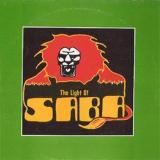
« A Fantastic mixture of Brakka, Reggae & Afrobeat Recorded between 1980 and 1984 from the underground Afropean boxer Mushapata »
“Saba-Saba Fighting” or fighting for peace, is the message that Mushapata, a legend of the African reggae underground scene in Paris with an extraordinary destiny, has fought for all his life.
Born in Bukavu, a city nowadays located in the Democratic Republic of Congo at the border with Burundi, Mushapata arrived in France at the end of the 1970s to pursue his career as a boxer. A few years later, revolted by the professional sports industry, he became a personal protection agent on the advice of his manager. He escorted many celebrities among whom Bob Marley during his legendary French tour of 1980. This encounter awakened the musician hidden behind the boxing champion. Mushapata had stepped out of the ring but he kept fighting with music, lyrics and his band Saba-Saba Fighting.
Ignored by the record labels of the time, his first self-produced recordings reveal a rough mix of lo-fi reggae, afrobeat rhythms accompanied by a brass section close to Free jazz. The nonchalant sounding voices of Mushapata and Tshayi complete this explosive cocktail and carry, in Swahili language, the Pan-African ideas of Lumumba and other great figures of African-American struggles.
This maxi single, conceived as a mini-compilation tribute, includes 4 titles from the first two albums recorded between 1980 and 1984. Limited edition!
il devrait être publié sur 20.10.2024

Commandez maintenant et nous commanderons l'article pour vous chez notre fournisseur.

First studio recording collaboration from Saba, Mick Jenkins, and Noname. The song has over 2M streams on Spotify. Saba, Mick Jenkins, and Noname counted among the top Hip Hop artists of their generation. This single is part of the Closed Sessions 45 series, which also features Westside Gunn, Currency, Open Mike Eagle, Raekwon, Blu, and more. Colour Sleeve 7". Limited to 500 copies WW. "Realer Than Most" is the 8th entry in the Closed Sessions 45 series, featuring rare recordings with some of the most exciting and respected Hip Hop emcees and producers. "Realer Than Most" was recorded in 2014 - during the peak of a nasty Polar Vortex. In the studio, with the heat on full blast - promising emcees Saba, Noname, and Mick Jenkins and producers OnGaud, linked with Closed Sessions for their first-ever collaborative track. "Realer Than Most" went on to be a fan favorite, and was a step for each artist on their path to breakout success. Saba, Mick, and Noname continue to be at the top of their game, and this song shows that promise in full display. The vinyl includes the original and instrumental, new front cover art by Spectacular Diagnostics, back design featuring original artwork from Niko Washington.
il devrait être publié sur 05.04.2024

.- "Wishah" (meaning veil in Arabic) is a composition in five stages, written by Youmna Saba between 2021 and 2022, for voice, oud and electronics. Following her previous solo works "Njoum" (2014) and "Arb’een" (40) (2017), this album marks a significant turning point in Saba's journey. Created after leaving Beirut and settling in Paris, "Wishah" reveals a profound shift in her musical expression, informed by rigorous research in the sonic properties of sung Arabic phonemes and their role in shaping synthesised electronic sounds. The album employs a digital extension for the oud, a concept developed by Saba in her research project 'Taïma’. This device enhances the oud's sonic range, seamlessly integrating synthesised electronics. It also amplifies subtle, often overlooked sounds generated during playing, such as resonances and fingerboard friction. The composition is organized into five distinct stages, each contributing to a process of gradual revelation. As the tracks unfold, they strip away layers of constructed emotions and perceptions that have been intricately woven over time, to expose a space that no longer exists. Wishah is a farewell to home. Youmna Saba (born in Beirut, 1984) is a musician, composer and musicologist. Her current research focuses on instrument and space resonances in different sonic and musical contexts. With four albums to this date, she has collaborated with musicians of different musical expressions such as Kamilya Jubran, Floy Krouchi, Mike Cooper and the Neue Vocalsolisten ensemble, and has taken part in numerous artist residencies. She is the laureate of the first sound residency at Quai Branly Museum, Paris (2022-2023) with her research project and installation “La Réserve des Non-Dits”, now on view at the museum; and a laureate of the music residency program at the Cité Internationale des Arts, Paris (2020-2021).
il devrait être publié sur 22.12.2023

Mit "I May Never See You Again" veröffentlicht der iranische Komponist, Musiker und Virtuose der Kamanche-Geige, Saba Alizadeh am 08. Juli 2021 sein erstes Album auf dem neu gegründeten Hamburger Label 30M. Wie schon auf seinem Debütalbum "Scattered Memories" aus dem Jahr 2019 vermischt der 37-jährige Saba Alizadeh seine instrumentale Virtuosität mit sphärischer Elektronik, Samples persischer Musikinstrumente und Feldaufnahmen aus seiner Heimatstadt Teheran. Geboren 1983 in Teheran als Sohn des weltberühmten Tar- und Setar-Virtuosen Hossein Alizadeh, studierte Saba die iranische Kamanche-Geige mit Saeed Farajpoury und Keyhan Kalhor sowie Fotografie und später experimentelle Klangkunst mit Mark Trayle am California Institute of the Arts, Los Angeles. Geprägt von den konzeptuellen Herangehensweisen, wie sie dort gelehrt wurden, basiert Saba Alizadeh seine Musik auf iranischen Traditionen und Skalen, um sie im nächsten Schritt zu dekonstruieren und zu abstrahieren. Im Ergebnis begeistern die neun meist instrumentalen Tracks auf "I May Never See You Again" als klanglich ausdifferenzierte Meditationen über das Thema Erinnerung - einerseits wird die Glaubwürdigkeit und Belastbarkeit der eigenen Erinnerung musikalisch seziert, andererseits geht Saba Alizadeh z.B. in dem Track "Silences Inbetween" durchaus auch konzeptuell vor, wenn er die Atempausen der Stille in Reden von Diktatoren aus vergangenen Zeiten in akustischen Hallräumen so sehr verstärkt, dass diese Stille als Distortion hörbar wird. "Wie", fragt Saba Alizadeh, "hätte sich die Weltgeschichte verändert, wenn das Publikum in diesen Atempausen nicht andächtig geschwiegen, sondern aufbegehrt hätte?" Das Schweigen der Massen, davon berichtet "Silences Inbetween", ist also keineswegs bloß neutraler Klang oder Geräusch, sondern es besteht aus hochgradig aufgeladenen Schwingungen, die, an historischen Orten bis zur Unkenntlichkeit amplifiziert, von einer (nicht eingetretenen) Utopie berichten, einem anderen Verlauf der Weltgeschichte. Es ist in diesem Sinne vermutlich eine Fügung des Schicksals, dass sich Saba Alizadeh 2016 in Berlin mit Andreas Spechtl, dem Sänger der Band Ja, Panik anfreundete, kurz bevor Spechtl im Rahmen einer Artist Residency für ein einige Monate nach Teheran zog. Andreas Spechtl wurde im deutschsprachigen Raum vor allem dank seiner Songtexte berühmt, in denen er die Wörter ähnlich abstrakt dekonstruiert wie Saba Alizadeh die Musik. Auf "I May Never See You Again" kollaborieren Spechtl und Alizadeh auf den beiden Tracks "Phasing Shadows" und "Touch". Saba Alizadeh kollaborierte zudem noch mit der elektroakustischen Soundkünstlerin Rojin Sharafi, einer gebürtigen Iranerin, die mittlerweile in Wien lebt. Mit ihr komponierte Saba den Track "Hybrid". Nicht zuletzt wegen der anhaltenden Pandemie arbeiteten die beiden virtuell zusammen, indem sie sich Tonspuren über das Internet austauschten - auch daher der Titel "Hybrid". Mit seinen handverlesenen Kollaborationen und vor allem dank seines ausdifferenzierten Klangraums ist "If I Ever See You Again" bereits jetzt eines der herausragenden elektroakustischen Alben des Jahres. Beeinflusst von iranischer Harmonik, Musique concrète und ausgefeilter, zukunftsweisender Beat Science stehen die insgesamt neun Songs von Saba Alizadeh für einen unfassbar spannenden Akt gegenseitiger Inspiration - wenn sich iranische Skalen und westliches elektroakustisches Verständnis kraftvoll vereinigen.
il devrait être publié sur 09.07.2021

Bartellow has long been associated with the ESP Institute though Tambien, a trio formed alongside Bavarian cohorts Marvin and Valentino, who have released seminal dancefloor material over recent years. With his debut album Panokorama, we are invited into a completely different world of Bartellow's creation—a place where influences become a melting pot of mood, nuance and texture, and where instrumentation is abstracted from a variety of cultures, including those that exist solely within his imagination. Bartellow has found a way to merge Primitivism with Retrofuturism, identifying their point of intersection and reveling in their union across ten songs. While his academic background as a Jazz musician certainly informs both his progressive approach to composition and non-linear production, it is his obsession with electronics and synthesis that shape his current musical climate. The title Panokorama stems from Bartellow's visualization of the album, a surreal landscape with a foreign presence centrally embedded, a 'panorama' punctuated by a 'ko'—although a hybrid word that reads as nonsense, it somehow feels and sounds just right.
Commandez maintenant et nous commanderons l'article pour vous chez notre fournisseur.

Muyei Power or Orchestre Muyei (muyei means 'our country') was one of the top dance bands of the1970s in Sierra Leone. Soundway Records' first collection of music from this West African country ('Muyei Power: Sierra Leone in 1970s USA') is an album of rock-infused, 'afro' music from a group that traveled the world throughout the mid 1970s. Fusing elements of electric Congolese and Nigerian music with fast, syncopated, uptempo modernised arrangements of traditional music, Muyei Power produced a series of unique single-only releases that have been unavailable for 35 years. The rare recordings featured here are a glimpse of a dynamic and powerful band at the very height of its powers.
Even though lyrically Orchestre Muyei focused on traditional themes and songs, the arrangements and formulation of the instrumental side of things still very much reflected the mixed nature of urban Sierra Leone music, exemplified by a small collection of bands that also included Afro National, Sabanoh 75 and Super Combo.
For the early part of 1970s the band toured extensively throughout Sierra Leone, Liberia and Côte d'Ivoire before making a handful of 45s in local TV and radio studios. The recordings featured here however come from a period of touring the college circuit in California during late 1975 and early 1976. Later that year, as they played the colleges of the east coast, they gave the tracks to the owner of the African Record Centre in Brooklyn, New York. He initially released two of them on his in-house Makossa Records label as 7-inch 45rpm singles in 1976. The tracks from 1975/6 were then not heard of again until 1979/80 when the African Record Centre released many of them on a series of Makossa Records 12's that sounded far superior than the records that had been released a few years earlier.
Orchestre Muyei Power finally split up in 1979 leaving no proper album releases and only a handful of recordings for us to enjoy all these years later.
il devrait être publié sur 05.10.2026
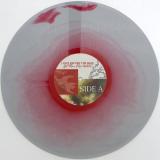
Two voices at the frontier of deep, hypnotic and experimental electronic music converge with four-track split EP that moves between first light and subsurface dark.
Lost Few’s productions inhabit the hazy threshold between ambient and dancefloor music - textured, atmospheric productions built around mood and motion. On the A-side, Broken Dawn opens with a sense of slow emergence: layered pads and rhythmic pulse conjuring beauty before sunrise, when sound feels closer to dream than waking. Light Before The Haze deepens the journey; a longing, weightless piece that traces the diffuse glow that precedes full light — melodic, restrained, and deeply felt.
Dino Sabatini needs no introduction; his productions have bolstered the underground electronic music scene while sculpting a new narrative for deep, modern electronic music. On the B-side, Subsurface Light is characteristically Sabatini: a hypnotic descent into pressurised depths, where rhythm becomes ritual and texture carries the weight of ancient resonance. He then reimagines Lost Few's Light Before The Haze as a closing meditation — pulling it further inward, slowing its pulse, and casting it in the particular deep-techno shadow he has made his own.
Together, the four tracks form a coherent arc from the pre-dawn quiet of Lost Few's introspective electronics to the subterranean intensity of Sabatini's world — a release that rewards both patient listening and late-night movement.
Disponible en stock et prêt pour l'expédition
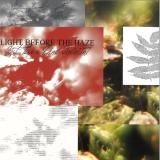
Two voices at the frontier of deep, hypnotic and experimental electronic music converge with four-track split EP that moves between first light and subsurface dark.
Lost Few’s productions inhabit the hazy threshold between ambient and dancefloor music - textured, atmospheric productions built around mood and motion. On the A-side, Broken Dawn opens with a sense of slow emergence: layered pads and rhythmic pulse conjuring beauty before sunrise, when sound feels closer to dream than waking. Light Before The Haze deepens the journey; a longing, weightless piece that traces the diffuse glow that precedes full light — melodic, restrained, and deeply felt.
Dino Sabatini needs no introduction; his productions have bolstered the underground electronic music scene while sculpting a new narrative for deep, modern electronic music. On the B-side, Subsurface Light is characteristically Sabatini: a hypnotic descent into pressurised depths, where rhythm becomes ritual and texture carries the weight of ancient resonance. He then reimagines Lost Few's Light Before The Haze as a closing meditation — pulling it further inward, slowing its pulse, and casting it in the particular deep-techno shadow he has made his own.
Together, the four tracks form a coherent arc from the pre-dawn quiet of Lost Few's introspective electronics to the subterranean intensity of Sabatini's world — a release that rewards both patient listening and late-night movement.
Disponible en stock et prêt pour l'expédition

XAMAN is the collaborative project of Dino Sabatini and Luigi Tozzi, where two distinct artistic paths converge into a shared musical language shaped through years of independent research and mutual exchange.
Across eight compositions, XAMAN takes shape through gradual transformation. Every element is introduced with intention, allowing subtle shifts in density, tension and space to shape the music over time, revealing its full form through uninterrupted listening.
Released as a double vinyl on Outis Opera Series, the curated imprint of Outis Music, XAMAN reflects a process shaped through listening, exchange and time.
il devrait être publié sur 23.10.2026

The Discos Panorama series heads back to Colombia again for PAN016, pairing a heavyweight cumbia classic from Andrés Landero Y Conjunto with a wild Colombian take on one of the great Afro-funk records.
On the A-side, “La Pava Congona” is Landero in full flight. Known as El Rey de la Cumbia, Landero had that rare ability to make the accordion feel raw, hypnotic and completely dancefloor-ready. This one is all about the rolling rhythm, the call-and-response feel, and that unmistakable sabanero swing. Proper Colombian cumbia with weight behind it.
On the flip, Afrosound take on Manu Dibango’s “Soul Makossa” and send it straight from Colombia’s northern coast. Where the original is already a landmark Afro-funk groove, Afrosound bring their own Colombian flavour to it: fuzzed-out guitar, tropical percussion and loose psychedelic touches and that brilliant energy that made their records so special. A track that when we heard Hugo “Crucial Juice” spin, we knew we had to reissue.
Together, it’s exactly what the Discos Panorama series is about.
As always, PANORAMA Records is here to bring rare and essential music back into circulation with care, respect and admiration. Proper records, properly pressed, and ready for the dancers.
il devrait être publié sur 23.10.2026

2026 repress
Dino Sabatini welcomes Concrete Records owner Maurizio Cascella to Outis Music.
Together they created their Chiron EP, an important chapter on Outis, bringing Sabatini’s immersive hypno grooves and the captivating sonorities of Cascella together. The duo explores mythological and archetypal themes, intertwining the intensity of mental techno with dark and transcendental atmospheres.
il devrait être publié sur 13.11.2026

Disponible en stock et prêt pour l'expédition

New single by Romperayo on 7-inch vinyl spinning at 45 rpm, released by the Austrian label discos
elgozo.
This record is a tribute to the sound of Cumbia Sabanera de Acordeón from Colombia, in dialogue with
Mexico’s Cumbia Sonidera. It also pays homage to the melodic line of the first generation of
Colombian accordion masters of Cumbia Sabanera such as Joaquín Betín, Emiro Caicedo, and
Policarpo Calle.
The two tracks are built on a solid rhythmic foundation of bass and percussion, accompanying a
melodic interplay between accordion and analog synthesizer.Mixed and produced by Pedro Ojeda Acosta at Romperayo Studios, both songs were recorded live, in
quartet format, at Mambo Negro Studios in Bogotá, Colombia, by Daniel Michel, featuring Iván
Medellín on accordion, Nicolás Eckardt on electric bass, Juan Manuel Toro on analog synth, and Pedro
Ojeda on percussion.
This single offers a first taste of Romperayo’s upcoming LP, set for release in early 2026 — once again
on discos elgozo.
Disponible en stock et prêt pour l'expédition

Compiled by Argentinian Djs and producers Ric Piccolo and Ariel Harari, Danza Secreta: Lost and Hidden Grooves From Argentina (1970-1980) is an emotional archive made up of music that never belonged to a single, unified scene, but shared a common spirit: a desire to experiment, to make people dance, to break away from dominant genres. The compilation, issued as a 22 track bonanza on double vinyl, also represents a tangible history of musical resistance to the dark days of the Far-Right authoritarian, fascist and military oppression that blighted Argentina and its people throughout the 1970s and into the early 1980s. Featuring tracks originally self-released on small record labels and emerging from underground studio sessions and composed and recorded against a backdrop of the monitoring of 'subversive' music by the authorities, Danza Secreta is testament to the underground spirit of resistance in a blend of Soul, Funk and Disco with distinctive Argentinian signatures. Ric Piccolo and Ariel Harari are renowned Djs and producers from Buenos Aries who share their time and DJ appearances between clubs in their homeland and those in Berlin, Barcelona, Zurich, Vienna and Paris focusing on playing Disco, Italo House and Rare Grooves with leftfield vibes. Danza Secreta: Lost and Hidden Grooves From Argentina (1970-1980) is released as a digital download and and as a gatefold sleeve, double vinyl LP with all tracks remastered at the Grammy nominated The Carvery. It also comes with a bi-lingual booklet and liner notes that serve as a written history of this magnificent music of dance floor resistance.
Disponible en stock et prêt pour l'expédition
Disponible en stock et prêt pour l'expédition

DJ Amir takes another deep dive into the back catalogue of Detroit's legendary Strata Records to curate a 2nd volume in his Strata Records – The Sound of Detroit compilations. Whereas volume one took in the soulful edge of the Strata canon this volume, as Amir says, 'leans into the label's groovier, funkier edges whilst still celebrating its bold, avant-garde spirit.' DJ Amir's relationship to the Strata label has resulted in the release of the long lost Charles Mingus live 'Jazz in Detroit' box set released on BBE Music along with re-issues from The Lyman Woodard Organisation and re-imaginings of Strata's genre defying music by Berlin based DJ and producer collective, Jazzanova as well as remixes from Kai Alce, Wajeed, Henrik Schwarz, re.decay and DJ Amir himself and, of course, volume one of The Sound of Detroit. Featuring music from The Soulmates, Fito Foster, Keith Boone & Janice Coombs and The Contemporary Jazz Quintet amongst others, The Sound of Detroit volume 2 absolutely exemplifies the importance of Strata Records in the history of innovative Black music as well as its place in the cultural landscape of Detroit as a powerhouse city for art and music. Released by BBE Music in collaboration with 180 Proof Records as a triple vinyl LP and high res. digital download DJ Amir presents Strata – The Sound of Detroit volume 2 really is a gem of a compilation to grace any serious music head's record collection.
Disponible en stock et prêt pour l'expédition

- For all fans of the Wamono series!
- All tracks selected by DJ Yoshizawa Dynamite. Includes the first ever vinyl release of The Peanuts' "Ohara Bushi" track, originally released only on tape in 1970.
- Fully licensed King Records masters.
- Mastering and lacquer cut by Jukka Sarapaa at Timmion Cutting Lab, Helsinki, Finland.
- 180g heavy vinyl pressing, reverse board jacket.
- Artwork by Nicolas Kerembellec (Nker).
---
Active as a professional DJ in Japan since the late eighties, DJ Yoshizawa Dynamite is also a renowned remixer, compiler and producer. An avid record collector and an expert of Wamono music, Yoshizawa has published in 2015 the now-classic Wamono A to Z records guide book, which instantly sold-out. The book unveiled a myriad of beautiful and rare records from a highly prolific, but still then unknown, Japanese groove scene. He has also selected a large part of the music in our highly acclaimed Wamono compilations.
For this brand new chapter in the series, Yoshizawa explores King Records' legendary catalog and unearths exceptional, rare and unknown musical gems. King Records has been releasing music since 1931 and is one of the most prestigious labels in Japan. Traditional Japanese music, known as "Minyo", are ancient songs once sung by fishermen, coal miners and sumo wrestlers. They are reimagined here with vibrant afro latin, rock, rare groove and funky arrangements in this killer selection of music released on King between 1963 and 1979. Also worth mentioning is the track Ohara Bushi by The Peanuts, which was released only on tape in 1970 and is now available for the first time ever on vinyl format.
Put the needle on the record, turn up the volume and dig right now into the Wamono sound - the cream of the Japanese funk, soul, rare groove and disco music developed throughout the years since the end of the fifties in Japan!
---
180GWALP08 - Manufactured and distributed by 180g.
Disponible en stock et prêt pour l'expédition

SNOMIR is the collaboration between Mirko Iobbi and Sabatino Matteucci, blending live musicianship with clubfocused electronic production. The A-side features “Air” and “Fire,” two jazz-driven house tracks where expressive sax lines glide over warm, groove-led rhythms. Organic, fluid and built for movement. On the B-side, “Caveman” shifts into deeper dub techno territory. Hypnotic structures, textured low-end and sax riffs woven directly into the sonic fabric.
The accompanying remix pushes the track further inward — stripped back, immersive and late-night focused.
Disponible en stock et prêt pour l'expédition

Disponible en stock et prêt pour l'expédition

Ausdrucksstarke Gesänge in freien Versen, begleitet von gleitenden Violinen, gehämmertem Santouri, Gitarre und Oud - die hybriden Klänge des Mittelmeerraums zu Beginn des 20. Jahrhunderts. ,Aman Aman" rufen die Sänger auf diesen Aufnahmen, deren Stimmen auf 78-U/min-Schallplatten aus den Jahren 1911 bis 1935 verewigt sind. Der Ausdruck bedeutet in etwa ,Gnade" und ist ein Ausdruck der Verzweiflung, aber auch der Freude und Bewunderung. Auf vielen dieser Platten wird die ganze Bandbreite dieser Emotionen auf einmal vermittelt. Einige dieser Künstler sind Legenden, andere sind in Vergessenheit geraten. Fast die Hälfte sind Sängerinnen, die einen großen Teil der Tradition des Cafe Aman ausmachen, aber in zeitgenössischen Veröffentlichungen nicht so stark vertreten sind. Alle waren von den Konflikten betroffen, die zur Kleinasiatischen Katastrophe von 1923 führten, sowie von den Zwangsmigrationen zwischen Griechenland und der Türkei davor und danach. Ihre Werke spiegeln diese Reisen wider - erschütternde Gedichte über den Verlust der Liebe und der Heimat, begleitet von einigen der besten Musiker der damaligen Zeit. Nach jahrelanger intensiver Recherche hören wir die präzisen, einfühlsamen und überwältigend kraftvollen Stimmen von Künstlern wie Antonis ,Dalgas" Diamantidis, Sofrouniou und Stellakis Perpiniadis, zusammen mit aufschlussreichen Aufnahmen von weitgehend unbekannten Musikern, deren Werke hier zum ersten Mal veröffentlicht werden. Die LP wurde von Jordan McLeod im Osiris Studio sorgfältig remastered und restauriert und enthält detaillierte historische und diskografische Anmerkungen von Stavros Kourousis sowie poetische Übersetzungen der Texte von Tony Klein. Gepresst auf hochwertigem Vinyl bei Smashed Plastic in Chicago und gemeinsam mit dem großartigen Label Olvido Records veröffentlicht.
Disponible en stock et prêt pour l'expédition

Fruits Records proudly presents ‘Let Peace Reign’, the brand new instrumental single by Nat Birchall and The 18th Parallel.
Hailed by Gilles Peterson as ‘one of the best musicians in the UK’, jazz and reggae saxophonist Nat Birchall has grabbed listeners attention with his soulful sound and inspirational spiritual music. He has produced some of the finest vintage roots reggae instrumentals including majestic works with Vin Gordon and Al Breadwinners. His ethereal tone reminiscent of reggae giant Cedric ‘Im’ Brooks (Light of Saba) is the perfect match to The 18th Parallel raw and heavy sound.
Recorded fully live on 2-inch tape by the Swiss rhythm section, the session captures the raw, authentic energy of roots reggae at its purest. With warm, organic tones and a timeless feel, ‘Let Peace Reign’ not only pays homage to the greatest days of instrumental music and to the golden era of reggae recording, but also send a much needed message to a troubled world: Let Peace Reign. Pressed with care on 7-inch vinyl, with a super heavy dub mix on B side by French duet Dub Shepherds, this release is more than just a record – it’s a tribute to the culture of collecting records, preserving sound, and sharing vibes across generations.
Disponible en stock et prêt pour l'expédition

Produced by French duo Froid Dub who here step out of their digi-dub groove to slip into the synthetic post-punk colors of FOTOGENICO, the film by Marcia Romano and Benoît Sabatier, which follows the wanderings of a father in search of the story of his deceased daughter, with only the music she recorded as a clue. Featuring covers of tracks by The Field Mice, Luna and 1000 Ohm, this soundtrack is a pivotal element of the movie.
Disponible en stock et prêt pour l'expédition

It was less than a year ago that Italy-born but Denmark-based musical artist Alex Puddu released his latest album Deliria, an enticing blend of erotic disco, soulful grooves and electronica inspired by Italian pop music of the late 70s / early 80s, which went on to enjoy extended radio play across the globe including on BBC 6, NTS, KCRW, and national Spanish station Radio 3, to name a few.
But it wasn’t long thereafter that indefatigable groove purveyor Puddu travelled back to Rome for a new musical adventure, heading straight to The Sound Work Shop, the recording studio of legendary Italian composer Piero Umiliani, where he recorded the 10 new tracks that are included in his latest musical opus, Professione Reporter, another funky and soulful adult-oriented disco-pop album entirely sung by himself in Italian.
Professione Reporter tells the story of a photo reporter who travels the world following and stalking rich recently-widowed women whose husbands died in mysterious circumstances. Attracted by their charm and wealth, our protagonist transforms himself into a gigolo, becoming a dedicated lover-boy to these rich sugar mamas and a slave to the sweet life, going so far as to become an accomplice in their criminal plans to ensure the inheritance of their dead husbands.
Once again Alex Puddu has hit the mark with a collection of polished and ear-friendly grooves that tell the alluring story of a private eye embroiled in a web of love affairs, wealth and deceit, evoking images of satin sheets, champagne and dim lights set against the backdrop of one of the most hedonistic decades so far.
Disponible en stock et prêt pour l'expédition

Disponible en stock et prêt pour l'expédition

Oversized custom cut LP jackets (13” / 33.02 cm width)
Silkscreened with bespoke iridescent citrus green ink by Mark Rice
Short story by Natalia Zuluaga
Flexi 7”:
steaming mescaline (extended mix by bad lsd trips)
Citrus green metallic foil stamp
Pressed in full stereo
Edition of 150
I.
bad lsd trips is the collaborative duo of makers doris dana and domingo castillo flores. Respectively the two have fostered practices that have sprawled out through various approaches and, whether in the lanes of the musical or the contemporary arts, the phenomenology of the social and inclusive prevails. On ultrafest, this motif continues through the psychedelia of its eight time-defying recordings, welcoming the listener into an open temporal architecture of the stereo field as a signifier of environment. It is worth noting that the group began collaborating in Miami, Florida with longer form improvisations recorded to a stereo cassette deck. In these recordings, the paved geographical sprawl and oceanic view permeated the approach to amassing long swaths of sound material. Listening back on that work at the time of this writing, each track feels as though one is walking into an active space, arriving to an event already in full swing and finding your place inside of it. On ultrafest (this album) something different occurs. The space and events are built around you as you move through the record.
II.
The name of the album is ultrafest, which should effectively provoke your mind's eye the imagery of young people dancing, salivating, grinding, and imbibing chemical compounds to the perversely formalized musical genres of “Electronic Dance Music” and latter-era Dubstep often heard in European Uber rides and energy drink commercials. A far distance from the icy and machinic reverie of Techno’s finest rave eras or the notable historical contributions of Miami’s cerebral producers to IDM’s global output, ultrafest is a libidinal catharsis as festival scaled to a multinational corporation of hedonistic excess. The festival has been a hallmark of Miami cultural industry production and optical enticement for tourism, purportedly bringing in nearly a billion dollars in revenue to the city since 2012. Scores of documentation exist wherein this decadent escapism leaves the concertgoer, usually in some neon garment on a near nude body potentially adorned with fluffy faux fur leg warmers, facing a comedown from the combination of volume, sun, dehydration, and methylenedioxy-methylamphetamine. This MDMA experience characterizes an aspect of the way bad lsd trips employs vocals and pitch on this album. The detached, high octaved longing of a high pitched vocal is decoupled from its typical auditory body of song. High-pass clicks and pops touch the (h)air on the back of the neck, promising goosebumps and teasing towards euphoric rushes of dopamine, yet also exist decoupled from the body of song. As the dopamine depletes and the sun imposes itself, Miami’s downtown of skeleton real estate is your company as you meander towards your parked vehicle to rest your fatigued senses, elevated heart rate, and quench the need for air conditioning on your skin. The immediacy of bombastic social immersion to architectural alienation palpable here.
III...
- Nick Klein
Disponible en stock et prêt pour l'expédition

Mit "Rise of Akhenaton" feiern die Melodic Power Metal Stars SERIOUS BLACK nicht nur ihr 10-jähriges Jubiläum. Es markiert auch eine triumphale Rückkehr zu den Wurzeln der Band. Gleichzeitig wird mit moderner Produktion und Abwechslungsreichtum eine neue Ära eingeläutet. Von der adrenalingetriebenen Hymne "Metalized" bis zu den ansteckenden Mitsing-Parts von "Take Your Life".
Mit einem Jahrzehnt unerbittlicher Leidenschaft zur Musik und gleich mehreren Metal-Hymnen im Gepäck sind SERIOUS BLACK zurück, um die Flagge des klassischen Power Metal hochzuhalten. Mit elf elektrisierenden Tracks markiert "Rise of Akhenaton" eine triumphale Rückkehr zu den Wurzeln der Band, während gleichzeitig mit moderner Produktion und Abwechslungsreichtum eine neue Ära eingeläutet wird. Von der adrenalingetriebenen Hymne "Metalized" über die ansteckenden Mitsing-Refrains von "Take Your Life" bis hin zur ergreifenden Ballade "When I'm Gone" ist jeder Moment von "Rise of Akhenaton" ein Zeugnis für die beeindruckende Entwicklung von Serious Black.
For Fans Of: Sabaton, Hammerfall, Helloween, Gamma Ray, Powerwolf , Beast in Black, Battle Beast , Avantasia , Edguy
Disponible en stock et prêt pour l'expédition

Reunion's major musical genre, Maloya, becomes "gazé" (crazy) through the sounds composed by Grèn Sémé for this new EP.
A gassed maloya that combines direct inspiration from the purest line of this traditional réunionese music with the highly contemporary evolution that is the Grèn Sémé group's signature.
Composed during the studio sessions for their latest album, "Zamroza", the first three tracks on this new EP reveal the sunny side of the Creole band.
You can taste their love of lyrics and their thirst for discovery. And the right mix of compositions. Inspired by the tradition of the greatest song/percussion pieces in the island's history, Grèn Sémé offers three anthems that lend themselves perfectly to the remix exercise.
Deluxe bonus: the 3 Remixes of Voilaaa + La Dame + Guiss Guiss Bou bess
Voilaaa and the fabulous Bruno Patchworks take on "Siko" to create a Cape Verdean ballroom hit.
funana with its heady melodies, it's ultra danceable!
La Dame, producer and DJ from Belgium, remixes the eponymous track into an effective batida for the dancefloor, DJs and dancers alike.
Guiss Guiss Bou Bess take remixing a step further, adding Senegalese sabars and the vocals of group leader Mara Seck to Carlo de Sacco's Alkol.
Disponible en stock et prêt pour l'expédition

Life might be a predominantly linear affair, but when lived right, it’s nevertheless a turbulent experience. It’s a system of trial and error, ebb and flow, order and chaos, action and reaction. And paradoxically, this system somehow still feels balanced amid all this turmoil. In fact, the same can be said about Keope’s second longplayer for Bigamo. Easily.
Keope might be a duo consisting of Marcus Rossknecht and Toni Bruna, but they actually sound like a collective of rather nomadic - and heavily gifted - musicians on their ever-present quest to reach different musical spheres. Everything is in motion, everything is in constant flux. Everything, everywhere, all at once. Their previous record “Triangulo“ already provided the audience an idea of their elaborate rhythmic vocabulary, but it’s the cryptically titled “Flikka Flokka“, which sees their multilayered compositions bloom into a fully-formed, new musical Esperanto.
You can immediately sense that Keope must be a phenomenal live act because the twelve tracks on “Flikka Flokka“ sound as if they were born from endless jam sessions fueled by a whole variety of influences. As a result, the work of Rossknecht and Bruna presents itself as a prime example of sound in motion that responds solely to its very own pulse by taking the aforementioned influences and making them completely their own. Now, let’s dance!
Disponible en stock et prêt pour l'expédition

Disponible en stock et prêt pour l'expédition

The Belgian vibraphonist Guy Cabay has played with Toots Thielemans, Philip Caherine or Raoul Faisant. Composer, arranger, musicologist and singer, he also wrote and recorded two extraordinary albums in Liege Walloon. Tricatel is happy to make them available at last, 46 years after their publication.
"Gravity kills us. Perhaps that is the meaning of Adam's Fall. We are condemned to be Newton's apple, not the balloon carried away by the wind. But it happens nevertheless that, by the grace of music in particular, we escape gravity, that time escapes time, that another breath inflates our lungs, so much lighter than the one that usually suffocates us.
We don't take light music seriously, and that's good. Only serious music deserves to be treated so badly. Guy Cabay's music flows from a purer source and speaks to us in a more tender voice. One can obviously describe it as one labels export product. Origin: Belgium. Ingredients: jazz, bossa nova, tropicalism, song - proportions may vary. Calorific value: none.
Non-perishable product. But this would say as much about what this music really is as if, in. order to evoke what the foggy blue of a Norman sky inspires, one were to take note of the variations in the percentage of humidity in the atmosphere at Etretat and make a learned presentation on the laws of refraction.
Guy Cabay did pass through Brazil and still lives there a little, a Brazil that is not the one ofcartographers or travel agencies, a Brazil that is as real as the Far West in which Fenimore Cooper's child readers lived, as blurred and limpid as a dream. It is not the Amazon thatflows through this Brazil, but the Ourthe, a tributary of the Meuse, which makes it morefamiliar, stranger and even more poetic.
To let oneself be bathed in this melancholichappiness, to let oneself be carried by this river is sweet, as sweet as the fluid consonants of the Walloon language, this 'd' which becomes 'dj' in his mouth, as in Portuguese, by the way. To know how to create melodies that hold on a note like Jobim's samba, like a fildeferist above a waterfall of chords, is not given to everyone. It is a gift. Knowing how to lace others on dozens of points, as on Tot a-fet rote cou d'zeur cou d'zos, a poignant encounter between Randy Newman and Robert Wyatt, is another. These are not the only ones that the fairies offered to Guy Cabay and that, by an almost miracle, he offers us again today. Hearts up."
Bertrand Burgalat
Disponible en stock et prêt pour l'expédition

Global pointing Brazilian jazz trio releases their new album Agôra, that sparkles with electric funk and Herbie-esque eclecticism. It features a myriad of guest vocalists and musicians including Brazilians Xênia França and Zé Leônidas, Jembaa Groove's Ghanaian singer Eric Owusu and South African artists Bongani Givethanks & Mpho Nkuzo
Re-wiring the concept of 'fusion' for 2023, Agôra is Brazilian trio Caixa Cubo's resurgent new record with the title referring to 'now', based upon the intuitive and fluid nature of the trio's method, and this inspired recording. With shoots to black music culture, from Brazil to Brooklyn, Ghana and South Africa, Agôra is the group's ninth album yet is their first where they've invited guests, mainly singers, onto each track and follows their last, Angela from 2020, released on Heavenly Records, which won a BBC 6 Music Album of the Year (Huey Morgan's selection) granting them much deserved international recognition.
The core musical elements of Caixa Cubo are Henrique Gomide (keys), João Fideles (drums) and Noa Stroeter (bass), all from São Paulo, Brazil and where they met as teenagers and would continue their friendship and musical bond at the Royal Conservatory in The Hague, Netherlands. Now all in their mid thirties, João and Noa live back in the city where it all started but Henrique has settled in Cologne, Germany where the recording of Agôra took place, over the course of 3 days, at the home cum studio of Chris 'Dusty' Doepke, their friend and owner of the label they signed to, Jazz & Milk.
In line with all their creations where flow and energy provide the magic, allowing what the moment provides, the album shines not only for its virtuosity but for its minimalism, the depth of space, and for the first time, the ability to figure in and outside of the jazz fold, as the trio decided, for the first time, to bring in singers and add a new aesthetic to their sound.
"Agôra is a wake-up call to reality, a reminder that the infinite possibilities of technological progress should not disconnect us from the earth, from eye-to-eye relationships, and from moments lived in person" the band are keen to point out. "And that we must not be consumed by greed, for all we truly possess.... is the NOW."
Turning hope and metaphor into music, the debut single Sábado, an electrified future- jazz-fizz reflects perfectly the spontaneity that permeated the entire recording of the album. "When we got to the studio, we had no idea what we were going to record. We started playing a groove, kind of inspired by Gilberto Gil's 80s albums, and our drummer João started singing this funny song 'Sábado Barrigudão' (Big Belly Saturday) alongside the bass groove and that was that". Inspired by their city of birth, São Paulo, it features long time collaborator and vocalist Zé Leônidas, with cuicas, tamborim, agogo and shakers providing the most obvious Brazilian affect from the album.
Dreams is the band's first foray into R'n'B melding the group's simple and sporadic instrumentation of drums, keys and bass into a Jill Scott inspired song that could have been born in Brooklyn yet sung by Brazilian singer and Grammy nominated Xênia França and Zé Leônidas in both English and Portuguese. Xênia recently performed online for hip-to-it website Colors and it's her latest collaboration with Caixa Cubo, having first met in 2009 for a series of live performances.
South African artists Bongani Givethanks & Mpho Nkuzo come to the record with a wholly different approach on Ndiyakhangela, providing spoken word and vocal refrains on top of an Afro-Brazilian percussion jam with a delivery and verse in Xhosa, Zula and Ndebele. Asase is the album opener and features vocals of Eric Owusu who is part of highlife pioneer Pat Thomas's live band and most recently, co-leader of Jembaa Groove, an Afro-soul band from Berlin. It's a synth wig out with djembe grooves and offers a brand new take on Afro-soul-jazz.
Other contributions come from Cologne based jazz singer Rebekka Ziegler (Oblique Sunshine), São Paulo based guitarist Eduardo Camargo (Caio & Eric) and trumpet player Matthias Schriefl on Kismeti, a gorgeous and rolling number that ebbs and flows, exemplifying the group's effortless ability to craft a sound energised by a belief in one-self and the idea of having faith without the need to look at each other for verification.
As drummer and percussionist João Fideles perfectly surmised upon arriving for the recording session, "What drums do you have? Whatever you have, I'll use it". Agôra is testament to nearly 20 years of camaraderie, friendship and most importantly, trust.
Disponible en stock et prêt pour l'expédition

Magnificent Wolof drum music, performed by an extended griot family over seven consecutive days, in the mystical setting of Lac Rose, outside Dakar.
Doudou Ndiaye Rose — who died in 2015 — is a key drummer in the musical history of the world. He developed a system of five hundred original drumming patterns, ancient and new. Amongst the modern rhythms here is Bench Mi — ‘under the Baobab tree,’ a spot where problems get solved. Also Hibar Yi — ‘passing on information’ — the theme-tune of Senegalese TV national news for decades — and Les Rosettes, the signature rhythm of Senegal’s first ever all-female percussion group, convened by Doudou, and named after his grandmother.
These original compositions sit alongside important traditional rhythms, familiar to every Sabar player, such as Farwu Jar (a courtship game sometimes resulting in a wedding), Ceebu Jin (also the name of the national dish of fish and rice), and Gumbé, often played after a successful harvest.
Recorded in joyful single takes, with no overdubs, mastered by Rashad Becker, the music is deep and thrilling, polyrhythmic to the bone, with a complex, pointillistic intensity at times evoking Jeff Mills in full flight.
Disponible en stock et prêt pour l'expédition
il devrait être publié sur 18.09.2026

il devrait être publié sur 18.09.2026
