
No en stock
Haga su pedido ahora y le encargaremos el artículo en nuestro proveedor.
Ültimo hace: 6 Años
Haga su pedido ahora y le encargaremos el artículo en nuestro proveedor.

Lady Jane Beach land on Slacker 85 with their lo-slung label debut, ‘Binman’. A short, sharp shot of minimal rhythm and rhyme, ‘Binman’ is the sound of the enigmatic London-based trio soundtracking their trips around the capital’s outer ringroads seeking adventure, trouble and corrupted drum machines. Blessed with loose, confident production and verses like glue, Slacker boss Seth Troxler doubles down on his support with a beefed-up, roadtested club edit.
An undisputed trailblazer of UK rave, Zed Bias fires up his studio for two contrasting takes on ‘Binman’, each capturing split sides of the soundsystem culture he helped define. Zed’s ‘Weighty Dub’ goes unapologetically raw, transitioning between skippy beats, heavy bass drops and a fusebox melody out of the darkness. From the basement straight through to the beach club, the ‘Nostalgia Mix’ makes good on its promise of misty-eyed reverie, recalling the first-wave of UKG domination with lush strings and steppin’ drums that still sound like a bright future.
From one generation to the next, fast-rising DJ and producer HalfPint is already familiar to dancers of Circoloco's famed Terrace and Garden. His take on ‘Binman’ finds a fresh frequency, converting the rhymes of the original into a precision-tooled tech house groove, primed for the summer season.
debe ser publicado en 08.05.2026
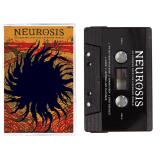
‘An Undying Love For A Burning World follows Converge’s Love Is Not Enough this year as a pivotal metal album about acknowledging the darkness for what it is and trying to accept it.’ - the QUIETUS
‘Neurosis Know You’re Hurting. Their Stunning New Album Is a Life Preserver.
An Undying Love for a Burning World, the band’s first album with new member Aaron Turner, is a reminder of how even the darkest music can be a guiding light’ - 9/10 ROLLING STONE
Evolution can be ugly and beautiful, painful and euphoric. An Undying Love For A Burning World is the first new release from Neurosis in a decade, and a potent statement of intent and rebirth - one that marks the first new steps of resolve and resilience.
An Undying Love For A Burning World is an epic album of colossal hypnotism - beautiful, fearsome and utterly compelling in a way that only Neurosis can be. Aaron Turner (Sumac, Isis) joins the band on vocals and guitar, a name whose legacy is intertwined with the band’s own and a true kindred spirit.
“From the moment I first heard Neurosis over 30 years ago, I felt this was the music my heart and mind had been seeking but not yet heard. Now after many years travelling along various musical paths of my own, the singular sound and spirit embodied by Neurosis continues to speak to the depths of my being. It is an honor and a true pleasure to have been welcomed so warmly into a band that not only shaped my perspective on the limitless possibilities of music - but has lived and exemplified the necessity of upholding creative integrity and camaraderie above all else.” - AARON TURNER
Neurosis have never been afraid of change, and here they embrace endless regeneration, surrendering to the emotional exorcism through heaviness and distortion that their music incites. Just as the universe tends towards balance, Neurosis’cacophony of noise, rhythm and dissonance always resolves towards moments of beauty. The addition of Turner's powerful vocals and wildly creative and unhinged approach to guitar proves to be a vital force as Neurosis find themselves again at the mercy of evolution and expression.
On every song in the band’s history, Neurosis shifts restlessly between tension and relief, invoking a feeling both feral and transcendent in listeners. The band describe their songwriting process as an inescapable impulse to create with each other - a need rather than a choice. Indeed, the band insist that their return is “not a reunion - we never broke up.”
The album was recorded by Scott Evans (Kowloon Walled City, Sumac, and Great Falls) at Studio Litho in Seattle during three weekends this winter, and mixed in three days just six weeks before release at Evan's Antisleep Audio in Oakland.
Neurosis will play their first show in seven years on the traditional lands of the Blackfeet Nation in Montana as part of Fire in the Mountains festival by special invitation of Firekeeper Alliance, a non-profit dedicated to reducing youth suicide in Indian Country.
FITM, is a unique festival known for bringing epic music to epic landscapes with the intent of reconnecting and immersing oneself with the natural world, and strengthening our ancestral roots as human beings - an aim which aligns directly with Neurosis’ deep-rooted power.
Stay tuned for further news over the coming months.
PREVIOUS PRESS:
‘In less skilful hands, this relentless sonic oppression would be gruelling, but by expressing human frailty with such visceral abandon, Neurosis have once again turned darkness into euphoria.’ - 4/5 THE GUARDIAN
‘The Oakland band has evolved from gritty metallic punk to harrowing post-hardcore prog to the majestic doom of their current phase’ - 7.9 PITCHFORK
‘It’s not often an album of such stature exceeds one’s anticipations, but Honor is too astounding to not be revered.’ - The QUIETUS
“Fires Within Fires is the summation of thirty years of experimentation in tonality and texture. Yes, NEUROSIS are firmly positioned within the extreme metal underground yet their music, with its ability to generate images of beauty akin to those many of us have experienced in our own lives – not to mention the loss that accompanies them – challenges this categorization. ‘’ - WIRE MAGAZINE - FULL PAGE REVIEW.
"Their intensity remains undimmed on Fires Within Fires...The already converted will take heart from the evidence that age is unable to wither the fury of this heaviest of bands." - KERRANG! 4K REVIEW
"Every monstrous sludge riff gnashes menacingly for the right amount of time and every delicate moment of folk-inspired drift is emotionally exacting. Neurosis continue to create art without equal, and Fires Within Fires is another worthy addition to an awe-inspiring canon containing a number of truly pioneering and timeless albums." - METAL HAMMER - 8/10 LEAD REVIEW
debe ser publicado en 15.05.2026
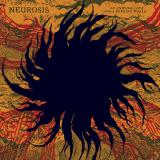
‘An Undying Love For A Burning World follows Converge’s Love Is Not Enough this year as a pivotal metal album about acknowledging the darkness for what it is and trying to accept it.’ - the QUIETUS
‘Neurosis Know You’re Hurting. Their Stunning New Album Is a Life Preserver.
An Undying Love for a Burning World, the band’s first album with new member Aaron Turner, is a reminder of how even the darkest music can be a guiding light’ - 9/10 ROLLING STONE
Evolution can be ugly and beautiful, painful and euphoric. An Undying Love For A Burning World is the first new release from Neurosis in a decade, and a potent statement of intent and rebirth - one that marks the first new steps of resolve and resilience.
An Undying Love For A Burning World is an epic album of colossal hypnotism - beautiful, fearsome and utterly compelling in a way that only Neurosis can be. Aaron Turner (Sumac, Isis) joins the band on vocals and guitar, a name whose legacy is intertwined with the band’s own and a true kindred spirit.
“From the moment I first heard Neurosis over 30 years ago, I felt this was the music my heart and mind had been seeking but not yet heard. Now after many years travelling along various musical paths of my own, the singular sound and spirit embodied by Neurosis continues to speak to the depths of my being. It is an honor and a true pleasure to have been welcomed so warmly into a band that not only shaped my perspective on the limitless possibilities of music - but has lived and exemplified the necessity of upholding creative integrity and camaraderie above all else.” - AARON TURNER
Neurosis have never been afraid of change, and here they embrace endless regeneration, surrendering to the emotional exorcism through heaviness and distortion that their music incites. Just as the universe tends towards balance, Neurosis’cacophony of noise, rhythm and dissonance always resolves towards moments of beauty. The addition of Turner's powerful vocals and wildly creative and unhinged approach to guitar proves to be a vital force as Neurosis find themselves again at the mercy of evolution and expression.
On every song in the band’s history, Neurosis shifts restlessly between tension and relief, invoking a feeling both feral and transcendent in listeners. The band describe their songwriting process as an inescapable impulse to create with each other - a need rather than a choice. Indeed, the band insist that their return is “not a reunion - we never broke up.”
The album was recorded by Scott Evans (Kowloon Walled City, Sumac, and Great Falls) at Studio Litho in Seattle during three weekends this winter, and mixed in three days just six weeks before release at Evan's Antisleep Audio in Oakland.
Neurosis will play their first show in seven years on the traditional lands of the Blackfeet Nation in Montana as part of Fire in the Mountains festival by special invitation of Firekeeper Alliance, a non-profit dedicated to reducing youth suicide in Indian Country.
FITM, is a unique festival known for bringing epic music to epic landscapes with the intent of reconnecting and immersing oneself with the natural world, and strengthening our ancestral roots as human beings - an aim which aligns directly with Neurosis’ deep-rooted power.
Stay tuned for further news over the coming months.
PREVIOUS PRESS:
‘In less skilful hands, this relentless sonic oppression would be gruelling, but by expressing human frailty with such visceral abandon, Neurosis have once again turned darkness into euphoria.’ - 4/5 THE GUARDIAN
‘The Oakland band has evolved from gritty metallic punk to harrowing post-hardcore prog to the majestic doom of their current phase’ - 7.9 PITCHFORK
‘It’s not often an album of such stature exceeds one’s anticipations, but Honor is too astounding to not be revered.’ - The QUIETUS
“Fires Within Fires is the summation of thirty years of experimentation in tonality and texture. Yes, NEUROSIS are firmly positioned within the extreme metal underground yet their music, with its ability to generate images of beauty akin to those many of us have experienced in our own lives – not to mention the loss that accompanies them – challenges this categorization. ‘’ - WIRE MAGAZINE - FULL PAGE REVIEW.
"Their intensity remains undimmed on Fires Within Fires...The already converted will take heart from the evidence that age is unable to wither the fury of this heaviest of bands." - KERRANG! 4K REVIEW
"Every monstrous sludge riff gnashes menacingly for the right amount of time and every delicate moment of folk-inspired drift is emotionally exacting. Neurosis continue to create art without equal, and Fires Within Fires is another worthy addition to an awe-inspiring canon containing a number of truly pioneering and timeless albums." - METAL HAMMER - 8/10 LEAD REVIEW
debe ser publicado en 15.05.2026

For AI-41 Astral Industries presents a vinyl reissue of Robert Henke’s multifaceted concept album ‘Layering Buddha’. An erudite masterclass on sampling and composition, ‘Layering Buddha’ encapsulates the material process of metamorphosis and a well of nascent, ever-present potentialities. This new edition comes remastered by Henke himself.
Originally released in 2006, ‘Layering Buddha’ began with a curious encounter with the ‘Buddha Machine’ - a pocket-sized, battery powered playback device that, over the past two decades, has quietly achieved a cult status around the world. Conceived by the Beijing-based group FM3 (Christiaan Virant, Zhang Jian), the machine takes inspiration from Tibetan Buddhist prayer boxes and consists of nine sound loop compositions of varying length, which can be toggled with a single switch. Due to low production cost and manufacturing imperfections, each Buddha Machine is unique, giving slight variations in sound, pitch and duration.
Using a state of the art A/D converter Henke made high quality recordings from a single machine, providing the source material for the album. Through various processing and arrangement methods, new pieces emerged, most of them all deriving from a single source loop. The pieces were then set up on the computer as generative arrangements, living as continuously permutating structures that could theoretically go on forever - just as the loops do within the Buddha Machines…
The final pieces featured on the album are rendered excerpts of these infinite permutations, and therefore exist as momentary views on a perpetual machinery, as opposed to closed works. Upon initial exploration, it also became a natural development to format the work into an immersive multi-speaker performance - which premiered on January 31, 2007.
Within the music, subtle artefacts and idiosyncrasies are transmuted into new realms of texture and timbre. Through the extractive hand of subtle augmentations, an array of ethereal dimensions emerge from the vast unseen ocean. Suspended in a sense of timelessness, their undulating rhythms point to a pool of endless mysteries.
En el almacen y preparando para el envío
Celebrated DJ, producer, and sonic explorer Auntie Flo (aka Brian d’Souza) — described by The Guardian as “one of global club culture’s most vital voices” — returns this autumn with ‘Birds of Paradise’: a rhythmically rich, emotionally resonant, and ecologically grounded new album, out 23 October via his A State of Flo imprint. The album will be launched with a special live show at London’s Jazz Caféon the same day.
‘Birds of Paradise’ draws on d’Souza’s global club experience while deepening his connection with the natural world. Built around classic Roland drum machines and iconic vintage synths, the record is a joyful, body-driven celebration of rhythm and movement, but one grounded in ecology and place. The album’s spiritual centre lies in Saligao, Goa, near d’Souza’s maternal homeland where his Auntie Florie (where the name is derived from) is buried. Where he found his ‘paradise’ nearby, staying in a converted fisherman’s hut and recorded dawn choruses from a riverside studio overlooking mangrove-lined waters. Environmental textures from Japan also make their way into the music, creating a sonic map rooted in lived experience.
“Birds of Paradise is about finding beauty and rhythm in a chaotic world. It’s about listening, to nature, to our bodies, to what’s real. It’s a reminder that dance music can be both joyful and grounded.” The album blends Afro-Latin polyrhythms with Western 4/4 patterns, fusing instinctive, dancefloor energy with field recordings that anchor the music in the earth. Described by d’Souza as “tropical with a few deeper edges, a balance of light and dark.”
The new record follows the acclaimed ‘In My Dreams, I’m A Bird and I’m Free’, which earned 4 stars and Global Album of the Month from The Guardian, featured in Disco Pogo’s Albums of the Year, and received support from Luke Una, Resident Advisor, Juno, Bandcamp, Mixmag, DJ Mag, Electronic Sound, The Skinny, Beatport, Ban Ban Ton Ton, and more. The album’s launch show at Omeara London sold out. Other recent projects include the ‘Outernational Dance’ EP on cult label Multi Culti, event series ‘Plants Can Dance (and Mushroom’s Sing)’ which explore plant and fungi bioelectricity as a means of live composition, and ‘Black Beacon’, a haunting cassette release and soundwalk series recorded on the abandoned military island of Orford Ness. There, d’Souza explored the eerie intersection of nature, decay, and deep time, gaining special access to restricted buildings to capture long-form soundscape compositions.
Alongside his production work, d’Souza has emerged as a leading voice at the intersection of sound and science. He curated music for Imperial College’s groundbreaking psychedelic therapy trials, developing six-phase playlists to guide participants through psilocybin-assisted sessions treating conditions such as fibromyalgia and gambling addiction. His five-hour ambient set at Watching Trees Festival, selected as Resident Advisor’s Mix of the Day, continued this exploration into the therapeutic potential of sound in altered states. He also spent six months collaborating with BBC producer Tom Raine on a documentary for BBC World Service, centred on a two-week journey through Kenya and Goa. There, he performed live, led plant music workshops, and joined a deep listening retreat rooted in field recording. “I realised my studio isn’t just four soundproofed walls filled with instruments — it’s the journey itself. It’s the people I meet, the natural world I listen to, and the connections I feel.”
This same commitment to deep listening fuels his live concept Plants Can Dance, a project that combines the biosonification of plants and fungi with modular synthesis. The next event, on 14 September at Hideout Hackney Wick, will feature performances by Stella Z and Lapalace, with d’Souza and resident Lamine playing live alongside responsive plants in collaboration with Repot Hackney Wick and the label Music To Watch Seeds Grow By. “I’ve spent years exploring how electronic music can connect us, not just to each other, but to the natural world. Whether it’s translating mushroom data into melody or capturing birdsong at dawn, it’s about finding resonance across bodies, ecosystems, and machines.”
Rooted in his Goan and Kenyan heritage and shaped by years of travel and collaboration, d’Souza’s creative mission is simple: to reconnect the electronic world with the natural one. Through A State of Flo, he continues to blur the boundaries between club culture, sound art, and ecological awareness.
En el almacen y preparando para el envío

Formed by George Thompson, Kyle Martin and Jonathan Nash, Kommune were active between 2014-2015. As close friends living near each other, their musical journeys were intertwined; Nash and Martin had recently completed their debut album as Land Of Light, while Thompson (aka Black Merlin), at that time putting the finishing touches to his debut album ‘Hipnotik Tradisi’, was also working with Martin as part of the duo Spectral Empire. Sharing equipment and ideas, Kommune arose organically, serving as a creative outlet for exploring analogue machine music in an improvisational context.
Sessions in their North London studios led to a handful of gigs at venues including Hamburg’s legendary Golden Pudel and London’s LN-CC. This fleeting chapter of musical history may well have gone entirely undocumented had it not been for the fortuitous decision to meet up for a recording session in October 2014. Filling a car with their machines, they drove to a converted barn in the south of England, proceeded to set up, settle in and hit the record button. Over the course of two days, fuelled by the experiences of recent performances, the trio immersed themselves in the machines, crafting subtly evolving, long-form compositions with an enchanting balance and flow.
Across the four long-form compositions that make up ‘Oast’, the trio summons barely controllable scrapes, acid-like bubbles, and bleeps from their machines, leaning on dub mixing techniques to give the tracks a sense of depth, dynamism and organic ambience. Mastery of the TR-808 drum machine is central, with remarkably nuanced drum programming imparting a hypnotic rhythm to the work, allowing other elements to emerge and unfold at a beautifully measured tempo.
Recorded entirely live and improvised without any overdubs, ‘Oast’ offers a profound journey into minimalist electronic music while serving as a tribute to friendship, curiosity, and the spirit of experimentation.
Sleeve art and design by Michael Willis.
En el almacen y preparando para el envío

*all original recordings from mid 90s Estonian released cassettes. Fascinating interpretations of the UK breakbeat and Jungle sounds recorded when the world felt like a much bigger place.
Since hearing the first breakbeats via the Finnish radio nightly shows introducing the burgeoning UK scene, Virko Veskoja, later head figure of Lu:k, was completely swept away by this new technological language that sounded like machines trying to initiate contact with people. The fluttering rhythm patterns, strings and vocal lines haunting the pathways of the infinite network. Like hip hop taken over by Skynet.
Reimagining it all in mid-90’s Estonia, a fresh and dirt-poor republic newly welcomed to the family of sovereign states on the outskirts of Eastern Europe, was challenging, to say the least. Finally, with the help of entry level music programs, custom-made soundcards and self-built computers by the other Lu:k-head Tõnis Valk, Lu:k took the first tentative steps in the history of Estonian jungle.
Eight Lu:k cuts have been compiled into a handy selection, a true sign of the times when uncertainty came with certain hope and optimism – new territories to chart, new frontiers to conquer. A time of innocence captured so sublimely in Lu:k’s music.
The compilation starts with menacing orchestration that sounds like the birth of a civilization, like in „2001: A Space Odyssey“, or the arrival of Godzilla, only to give way to sweeeet strings and the inimitable Minnie Riperton in “Lovin U”, combining all the essential elements of Lu:k in a track that has remained uncorroded by time since its inception in 1994.
The following “Demo 3” is its antithesis – fast and nervous, a harbinger of the darker days of neurofunk and techstep ahead. More in line with the social realities of the time, when something (or someone) could materialise out of thin air and attack you just as violently as those beats here.
“La:v” was Lu:k’s signature track throughout their brief career that went on only for a few years, 1994-1997. Lifted to heaven’s by Petula Clarks’s wonderful vocals, it perfectly captures the pure essence of creation. “I made it in my bedroom. Something like that just came out. Sorry”, says Virko apologetically.
From the themes of love we are led towards darker scenarios again with “Drunk-Drive”, a more vengeful cut reminiscent of early Ram Records’ nocturnal dangers, skylines shaped by basslines. Previously only available on the uber-rare “Raadiomaja valvelauas” CD compilation from 2005.
“In the Limelight” is lifted from their second album “Dreams in Drums” from 1996 (only released on cassette), and if it’s meant to address their new-found underground celebrity status in Estonia, there is surprisingly little elation here – the track rather consists of introspective strings and beats that sound almost melancholic.
Out of the remaining three tracks, “Proov2mix” and “Kadunud leitud” are the result of a treasure hunt amongst the old, obsolete harddrives – little nuggets that were condemned to obscurity until now. Between them, another vocal-led cut “010”, a non-album track only featured on two comps until now, is a strong reminder of Lu:k’s prodigious ability to handle vocal lines and morph them together with their own weaving synthetic melodies, strong pads and commanding beats.
Lu:k’s music has been largely unavailable for the better part of this century, with original tapes and CD’s changing hands for a small fortune. This vinyl release couldn’t come at a better time, bringing a seminal chapter of Estonian dance music’s mythical history to light again, both for the old-school acolytes and new converts.
All music by Virko Veskoja
En el almacen y preparando para el envío

BCUC – Bantu Continua Uhuru Consciousness – have been channeling the spirit of Soweto for over twenty years. Indigenous funk, hip-hop consciousness, and punk rock energy fused into something utterly original and deeply rooted. Their mantra: Music for the people, by the people, with the people. From humble beginnings rehearsing in a shipping container, a stone's throw from the church where Desmond Tutu organized the escape of the most wanted anti-Apartheid activists, they kept believing in their dream of self-empowerment. Today they command festival stages worldwide: Glastonbury West Holts, Roskilde, Afropunk Brooklyn, WOMAD, Fusion, Sziget, FMM Sines, Beaches Brew, Boomtown, Colours of Ostrava, Couleur Café – to name just a few. In 2023, BCUC were honoured with the prestigious WOMEX Artist Award, an accolade usually reserved for more established artists, in recognition of their fearless work and transcendent live performances.
THE ROAD IS NEVER EASY
The Road Is Never Easy is BCUC's fifth album and their debut on Outhere Records. On this new offering, BCUC take listeners on another Afro-psychedelic journey into the soul of Soweto. It feels like a gospel sermon colliding with a punk concert, "guaranteed to touch untapped corners of your soul" (OkayAfrica). BCUC's music is deeply rooted in history and echoes the voices of the ones who came before. The road was never easy for the people of Soweto who originally came to work in the mines of Egoli, the City of Gold, Johannesburg. When apartheid finally ended after a long struggle, it was hoped that life would improve. But more than 30 years later, many of those initial hopes and dreams are still waiting to be fulfilled. This album is about that struggle. The album contains 10 brand new songs – a record for BCUC, whose previous albums featured an average of 3 songs. It represents the culmination of more than two decades of performing together and building a reputation as a powerful live act. These ten songs encapsulate that same live energy, each one building gradually and drawing you into BCUC's Afro-psychedelic stream of consciousness. It's a seismic tour de force through life in Soweto today. Songs like Amakhandela (Breaking All the Chains) connect history to daily life: "How is this precious metal inflicting so much pain in us," sing BCUC, "this government has been telling us we are free, but we don't benefit from being free." The album also talks about all the hopes and dreams that remain: "I have too many wishes and dreams in my head," BCUC sing in Um duma khanda, "I think I am losing my mind". The album ends with the soothing Matla a rona ke Bophelo, "our strength is life", praising the spirits and thanking the elders for protection. The Road Is Never Easy is about the harsh reality of life in Soweto, where "people always carry heavy loads". BCUC are street poets trying to deal with that burden: sometimes revolutionary, sometimes soothing, but always hopeful and compassionate. "When you are from Soweto you can't retreat nor surrender." (Sebenzela)
RECORDING
The album was largely recorded in Munich, Germany during tour breaks over two sessions, each three days long. It took place in a small studio located in a German WW II bunker converted into rehearsal spaces. The songs were recorded in one take altogether in one room, with only a few overdubs added, mainly backing vocals, by BCUC at Fourways studio in Johannesburg. BCUC have created their own distinctive way of writing, or rather, finding and creating their songs. The recording process is like an improvised live performance. They bring their ideas into a zone where the music, the rhythm and the spirits take over until the song starts to form. In this Afro-psychedelic zone BCUC create their unique poetry that feeds on the dreams still dreamt, the hopes, the fears and the temptations lingering everywhere. BCUC's songs need to breathe and time to build. The right take was the one when the song took over, and just like their live performances, no one knew beforehand where the song would take them. During the recording, BCUC just let it all flow out: inner turmoil, cries of rebellion, but also resilience and a search for healing, love, unity and compassion. You don't have to be from Soweto to feel the deep meaning and impact of this music. In these times of so much hate and division, BCUC are like a campfire for people to gather around.
PRODUCTION & ARTWORK
"BCUC have a unique magic," says Outhere's Jay Rutledge, who produced the album. "It blew our minds. It's like punk and pure gospel at the same time. Their music can make you dance and it can make you cry, all at the same time. And when the song is over, you feel you're not alone in this world anymore. We felt compelled to do this." The album cover is based on a matchbox design, matches being a common household item in South Africa even today. "These were the matches people used to burn government buildings and cars," explain BCUC. Little messages, addresses, or phone numbers used to be scribbled on the back of these boxes; each one a reminder of the strength, resilience, and resistance that once drove the struggle for freedom in Soweto. BCUC keep this flame burning. The Road Is Never Easy is a heavy spiritual road trip, a deep dive into the subconscious of Soweto and a quest for truth, justice and sanity in this crazy world. BCUC tackle the harsh realities of the voiceless, guided by the spirit world of their ancestors. Rather than reinforcing stereotypes of poverty, BCUC's portrayal of Africa is one rich in tradition, rituals and beliefs. "We bring fun and Afro-psychedelic fire from the hood," says vocalist Kgomotso Mokone.
Haga su pedido ahora y le encargaremos el artículo en nuestro proveedor.
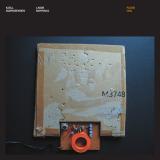
Some years ago, Kjell Bjørgeengen and Keith Rowe attempted to convert video signals into sound by setting up Rowe’s pickups next to an old CRT monitor, turning its magnetic field into a sound generator. Rowe further developed the system with David Jones at Alfred University, slimming down the setup using a copper coil, a circuit board, a video input, and a telephone pickup. Jones named it the »Flood Coil«, and it’s that instrument you can see on the album’s front cover and that lies at the core of these recordings, made without any physical live input from the artists themselves. In essence, it’s generative music in its purest form.
Bjørgeengen’s video feed is generated by oscillators, then routed into Marhaug’s pedals and then back into the Flood Coil, so any visual shifts alter the sound, and any modification to the sound changes the video. The duo have played this setup live many times, but for this studio version they left the system to do its thing without any intervention for two minutes at a time before moving onto the next idea. They recorded hours and hours using this process and then selected 18 highlights for this album, extracting harsh noise, power electronics, lulling feedback drone, and peculiar rhythmic snippets to show the scope of their technique.
A wall of growling, hi-octane Pulse Demon-style noise opens the set, gradually exposing us to more asymmetric textures, shifting through unstable repetitions that transform Merzbow’s metal-inspired screams into »Aaltopiiri«-era rhythmic noise. It’s remarkable, actually, how much Marhaug and Bjørgeengen can squeeze from the system, chancing on shivering, lower-case chugs and pops, galloping drums, soundsystem subs, and grinding blast beats that sound like Napalm Death’s »Scum« piped through a broken amp stack. It ain’t pretty, but noise/industrial freaks will revel in the fierce delights inside.
debe ser publicado en 10.04.2026

In the pantheon of classic free jazz, Noah Howard's The Black Ark looms large. Recorded at Bell Sound Studios in New York City in 1969 – just prior to the alto saxophonist's relocation to Europe – the album was eventually released in 1972.
The Black Ark exhibits not only the power and imagination of Howard's playing, but also his breadth as a composer and bandleader. Listeners expecting unrelenting blasts of "energy music" might be surprised to find a cohesion atypical of free jazz; amidst the wild, impassioned solos, Howard weaves in Latin rhythms and fat-bottomed grooves.
The first side, consisting of "Domiabra" and “Ole Negro,” sets the album's tone. Both tracks sound as if they could have appeared on some of Blue Note's proto-spiritual jazz, groove-heavy releases – evoking the likes of Lou Donaldson or Horace Silver – before ceding the floor to the horn players' anarchic firepower.
As John Corbett writes in the liner notes, "Two players stand out. Bassist Norris Jones – who would soon consolidate his name into a one-word reversed amalgamation/permutation of the two, Sirone – is given ample room, largely unaccompanied; his corporal approach foreshadows later work with the Revolutionary Ensemble. But the secret weapon on The Black Ark is Arthur Doyle. Straight from basement rehearsal sessions with Milford Graves, whose ensemble he had joined and who remained a favorite of the drummer for decades, Doyle is a human flamethrower."
Trumpeter Earl Cross' guttural, vocal effects complement Doyle's take-no-prisoners approach, while the estimable combination of Muhammad Ali (Rashied's brother) on drums and Juma Sultan on congas adds an ever-shifting propulsion. The septet is rounded out by the enigmatic pianist Leslie Waldron, who anchors the group with imaginative accompaniment and occasional boppish flourishes.
Every bit worthy of its reputation as an "out-jazz" holy grail, The Black Ark only sounds better with age. It remains the ideal record to convert the remaining free-jazz skeptics.
debe ser publicado en 06.03.2026

The journey through French-speaking pop archives continues with this fifth volume, packed with fuzz, gimmicks, and dissent. Far from the charts, the selected tracks display a great creative freedom, often backed by corrosive humor. Welcome to the surprising, kaleidoscopic, and colorful world of the late sixties and early seventies, Wizzz!
Born in Montauban, Robert Pico stumbled into music by chance when he met René Vaneste, then artistic director at Pathé-Marconi. René brought him to Paris to record his first 45 RPM EP in 1964. A year later, Pierre Perret introduced him to Vogue, where he recorded his second album with Claude Nougaro’s orchestra. Sylvie Vartan then introduced him to RCA, where he recorded four singles, including the astonishing "Chien Fidèle," a track backed by a hair-rising fuzz guitar. Alongside his solo career, he also composed for other artists like Alain Delon (the song was recorded but remains unreleased), Magali Noël, Bourvil, and Georges Guétary. In the Paris of the sixties, he mingled with Mireille Darc, Elsa Martinelli, Marie Laforêt, France Gall, Françoise Hardy, Petula Clark, Régine, Dani, Serge Gainsbourg, Joe Dassin, Franck Fernandel, Charles Level, and Roland Vincent. Despite his efforts and winning a Grand Prix Sacem for his final record, Robert Pico didn’t achieve the expected success in show business and decided to leave Paris and return to the Southwest, where he devoted himself to writing. He is the author of 23 books (including Delon et Compagnie, Jean-Marc Savary Editions 2025, a memoir about his youth and his many encounters). Today, he is relieved to never have become a celebrity and devotes himself to his work with passion.
In 1969, the Franco-Italian movie Erotissimo was released, directed by Gérard Pirès (who later directed Taxi in 1998, written and produced by Luc Besson). This pop comedy features Annie Girardot, Jean Yanne, Francis Blanche, Serge Gainsbourg, Nicole Croisille, Jacques Martin, and Patrick Topaloff. The soundtrack was written by Michel Polnareff and William Sheller, with lyrics by Jean-Lou Dabadie. "La Femme Faux-cils," performed by Annie Girardot. It recounts the feelings of a rich CEO's wife who seeks to develop her sex appeal under the influence of advertisement and magazines. Groovy, sparkling and light, this track, with ITS lush arrangements humorously critiques consumer society and feminine beauty standards.
“Je suis l’Etat” (1967) is the flagship track of the first EP by singer-songwriter Spauv Georges, aka Georges Larriaga, better known as Jim Larriaga (1941-2022). Born into a family of bakers, the young man was initially planning to become a hairdresser when he discovered English-speaking music through Elvis Presley and the Beatles. After this revelation, he decided he would become a songwriter and gave himself five years to succeed. He recorded his first two EP’s independently for RCA under the pseudonym Spauv Georges; meaning “that poor George”, a nickname given to him by the mother of her friend Jean-Pierre Prévotat (future drummer of the Players, Triangle, or Johnny Hallyday). Portraying a depressed and eccentric young man, Spauv Georges created corrosive and amusing songs that didn’t reach a wide audience, despite a TV appearance with Jean-Christophe Averty.
Supported by his loyal friend and fellow songwriter Jean-Max Rivière, Georges Larriaga met the future singer Carlos in the early '70s, then Sylvie Vartan’s assistant. He wrote songs for Carlos, including the popular "La vie est belle," "Y’a des indiens partout," and "La cantine", which went onto become a huge hit in 1972. He also composed for Claude François (“Anne-Marie”, 1971), Charlotte Julian (“Fleur de province”, 1972), helped launch child singer Roméo (who sold 4 million records), and later wrote the hit "Pas besoin d’éducation sexuelle" (1975) for the young Julie Bataille. In 1971, Jim recorded an album for Disc'Az: “L’univers étrange et fou de Jim Larriaga”, which featured pop gems like “La maison de mon père”.
The story of the song "Zoé" began when Pierre Dorsay, artistic director at Vogue Records, asked Swiss singer and musician Pierre Alain to write a song for a new female singer. The inspiration came when he realized that Zoé (the artist's name) was also the name of France's first atomic battery, created in 1948, which consisted of uranium oxide immersed in heavy water! The lyrics reflect a bubbling energy that must be handled with caution, while the instrumentation echoes this atomic theme, notably with the use of a theremin.
Zoé’s career lasted only as long as a single 45 RPM, but it seems Christine Fontane was the vocalist behind this pseudonym, who is known for several EPs, a good "popcorn" album in 1964, and a handful of children’s singles in the '70s. Regardless, the photograph on the cover is of a different girl entirely.
Later, Pierre Alain continued his career, writing songs for himself, Marie Laforêt, Danièle Licari, Alice Dona, Arlette Zola (3rd place in Eurovision 1982), and achieving multiple gold and platinum records in Canada. Also an inventor with several patents, president of the Romande Academy, and head of the French Alliance in Geneva, he now composes atonal music, books, and poetry. Moreover, he is also the host of "Les Mardis de Pierre Alain" at "Le P'tit Music'Hohl" in Geneva.
Filled with oriental choruses and fuzz guitar, "Fou" is from Jacques Da Sylva's only EP released by Vogue in 1967. Despite the quality of this recording, all traces of this singer disappear after this first effort.
Valentin is a baroque pop singer born in Belgium. He is the songwriter and composer of most of the tracks on his three singles released in the late 60s in Canada. A legend says that he reincarnated himself as Jacky Valentin during the 1970s for a rock'n'roll revival career in Belgium, but his older brother sadly debunked this story. Valentin's first two singles were arranged by Claude Rogen, a Parisian session pianist who had come to Canada to promote the song “Mister A Gogo”, a cover of David Bowie’s “Laughing Gnome”, adapted by singer Delphine, his wife at the time. Far from his usual network, Claude Rogen arranged music for Polydor, including the arrangements for “Je suis un vagabond” in 1969, a jerk tune with string arrangements and a furious optimism.
Jacques Malia wrote, composed, and recorded his only 45 EP for Festival in 1966. “Histoire de gitan” is an incredible beat track with bohemian scat that tells the story of a gypsy musician who came to Paris to make it in the Music-Hall, to no avail. The hero of the song and its author probably shared a similar fate, as Jacques Malia faded into anonymity after this remarkable attempt.
Bernard Jamet recorded two EPs for Barclay in the late sixties and co-wrote several songs with Christine Pilzer, Pascal Danel, and prolific songwriters Michel Delancray and Mya Simile. The track “Raison Légale” (1968), his masterpiece, immerses the listener in a courtroom right when a murderer is being judged, with jerk rhythm and free arrangements. A unique, paranoid, judicial, and psychedelic oddity.
Jean-Pierre Lebrot-Millers started his career in show business in 1967 as a singer and songwriter for the Philips label. After three singles, he wrote several songs of a new kind with his friend Pierre Halioche, in the midst of the sexual liberation movement and the democratization of drugs. With provocative lyrics, “Les filles du hasard” and “Barbara au Chapeau Rose” were released on a Philips singles in 1968. The character of Barbara was inspired by a queen of Parisian nightlife during the psychedelic years: model Charlotte Martin, who dated Eric Clapton from 1965 to 1968, then Jimmy Page from 1970 to 1983. Jean-Claude Petit’s arrangements, with a table-filled intro, soul brass, and Hendrixian guitar, emphasize the flamboyance of a hedonistic and sexy character, whose dog is named Junkie because “Junkie est un nom exquis”! The track was recorded live in three takes with a full orchestra.
Upon its release, the record was censored by Europe 1 and RTL due to its references to drug use. Jean-Pierre Lebrot was then banned from the airwaves and later dismissed by his record label. He changed his artist name to Jean-Pierre Millers, while his companion Pierre Halioche became D. Dolby for a new dreamy composition, “Chilla”, which Jean-Pierre produced himself with arrangements by Jean Musy. Once again, the song was immediately censored everywhere. After this setback, he decided to stop singing and started taking on odd jobs to support his Swedish wife and their son until the day he met Jean-Pierre Martin, then production manager at Decca, who had worked with Manu Dibango. Martin offered Jean-Pierre Lebrot-Millers, then employed at Rank Xerox, the position of artistic director at Decca. He accepted and became, a year later, promotion director (radio, press, TV). He worked on Julio Iglesias’s first album for Decca, which became a massive hit and allowed him to meet Claude Carrère. The latter asked him to write new songs and find their performers, much like a “talent scout.” It’s through him that Jean-Pierre discovered Julie Pietri and Corinne Hermès. He composed “Ma Pompadour” for Ringo, Sheila’s husband, and took the microphone again for the syncope hit “Rendez-Vous” in 1982.
That same year, Jean-Pierre Lebrot-Millers tried to release a track for which he had heavily gone into debt: “Si la vie est un cadeau”. Having recorded it in London, he presented it to numerous professionals, all of whom refused to get involved. The same thing happened with Antenne 2 and the Sacem when he proposed the song as France’s entry for Eurovision. He then met Haïm Saban, who was producing cartoon soundtracks and had just launched the Goldorak theme song. Saban, having listened to the song, declared it had the potential to become a hit. He sent Jean-Pierre and Corinne Hermès to meet the CEO of the Luxembourg radio and television network. The latter received them, asked to hear a verse and chorus a cappella in his office, and immediately hired them to represent Luxembourg at Eurovision 1983. They reworked the arrangements and recorded a new version with Haïm Saban as co-producer. The song ended up winning Eurovision 1983, a great comeback for our hero. He continued producing and hung out with the band Nacash in Belgium when a couple came to introduce their daughter for an impromptu audition in a hotel room. The girl sang “Les démons de minuit” while dancing to a radio cassette. Impressed, he had her take singing lessons for a year and composed a song for her (for which he had the melody and title, but no lyrics). This required him to go on the hunt for a lyricist, who ended up being Guy Carlier. They recorded the song, which was initially a ballad, at Bernard Estardy’s CBE studio, and gave the singer a new name: Melody. They showed the song around their industry network without success. Later, Estardy called Jean-Pierre to suggest changing the rhythm and making it pop-rock. Orlando, Dalida’s brother, liked the result and decided to co-produce the track. “Y’a pas que les grands qui rêvent » became a classic hit. The song has since been covered by Juliette Armanet (as a ballad, like the original) and Valentina.
Born into an aristocratic Breton family, Hervé Mettais-Cartier worked as a DJ at Queen Kiss, a nightclub in Poitiers, where he formed the band Les Concentrés with Michel (an actor) and Christian (a radio technician). Together, they created a repertoire of whimsical songs (“Ma bique est morte”, “J’suis un salaud”, “Fils de dégénéré”...) that they performed on stage dressed in white (in homage to “concentrated milk”). They performed at Bliboquet and Olympia in 1968 for the 10th edition of the “Relais de la chanson Française” organized by L’Humanité-Dimanche and Nous les Garçons et les Filles, sponsored by Pepsi Cola. Winners in the author-composer category, alongside Danish singer Dorte, their visibility allowed them to record a 45, and appear on television in Jean-Christophe Averty’s show. The A-side of the disc features Bruno le ravageur, a casatchok dedicated to Bruno Caquatrix, the director of Olympia, nicknamed in the song “Coq Atroce” or “croque-actrices”. The B-side is dedicated to “Fils de dégénéré”, a quirky tribute to Hervé's aristocratic roots, mixing absurdity with sophisticated vocal harmonies.
After Les Concentrés, Hervé Mettais-Cartier formed the duo La Paire et sa Bêtise with his friend Olivier Robert. They performed in Parisian cabarets and toured with Pierre Vassiliu. In the late 1970s, Hervé began a solo career. He recorded two albums for the Motors label in 1978 and 1979, which did not achieve their anticipated success due to lack of promotion. In 1980, he met Bernadette, with whom he started a family and created a “Chansons à voir” (songs to see) show that he performed until his death at the end of 2024.
Publicité comes from the final EP by the Missiles (Ducretet Thomson, 1966), a disc that also includes “La (nouvelle) guerre de cent ans”, featured on Volume 4 of our Wizzz! series. Please refer to the booklet for the story of the band.
“He’s 1.82 meters tall, 28 years old, weighs 135 kg, is black and Belgian”: this is the description of singer Hegesippe on the back of his sole single (Decca, 1967). He appears on the album cover wearing a Greek toga, like a hippie gag – we are at the end of the year 1967. In “Le crédo d’Hegesippe”, this former bodyguard of Antoine and the Charlots plays the delightful card of the thick brute converted to Flower-Power and non-violence, with arrangements by Jean-Daniel Mercier, aka Paul Mille.
“Ethéro-disco” was released on a promotional record for clients of the Maréchal company (Liège, Belgium) for the New Year 1979. Over a funky rhythm, celebrity impersonations (Brigitte Bardot, Jacques Dutronc, Fernandel…) deliver an enigmatic text about pharmaceutical products like ether, bismuth, and aspartate. The track was composed by Dan Sarravah (responsible for Joanna's “Hold-up inusité” featured on Wizzz! Volume 3) and Tony Talado, who was also a singer (one 45 in 1967), songwriter (with over a dozen credits between 1964 and 1985 in various styles from surf music to disco), author (Devenez Végétarien, Dricot Editions, 1985), ad designer, and psychologist.
Décollez-les is on the A-side of Mamlouk's only single, a pseudonym for Marsel Hurten, who is known for his work on several EPs in the late sixties, as well as composing music for Hervé Vilard’s “Capri, c’est fini”, Claude Channes' “La Haine”, Annie Philippe’s “On m’a toujours dit”, and Nancy Holloway’s “Panne de Cœur”.
This strange song, with Afrobeat horns and absurd dialogues between a chef and his kitchen staff, is the result of a collaboration between Marsel Hurten and one of his neighbors, a photographer from Pavillon-sous-Bois (93), where the musician settled after returning from the Algerian War. A music video was shot to promote the record.
Marsel Hurten was born in Tourcoing (59) into a musical family. At a young age, he joined the brass band founded by his grandfather, playing the piston before studying trumpet at the conservatory, as well as teaching himself how to play the guitar. As an orchestra musician, he toured in France, Belgium, Germany, and England. He released a series of solo 45’s between 1965 and 1968 for the DMF and Az labels before stopping recording to focus on working for other artists (Gilles Olivier, Noëlle Cordier…).
“L’amour nu” (Vogue, 1971) is the work of the short-lived Belgian band Mozaïque. The track, written by singer Jacques Albin, closely resembles another of his compositions, “Carré Blanc”, which he recorded in 1969 for Disc’AZ.
Represented by the Lumi Son micro-label based in Marignane (Côte d'Azur), Jean-Marc Garrigues released two 45 RPMs in the late sixties, defending the French jerk sound. The song “Je dis Non” is a short, joyful ode to youth, pop music, and rebellion.
Songwriter and performer Jacques Penuel released three singles. The first one, “Astronef 328” (Fontana, 1969), features a dizzying series of chords punctuated by sound effects, a sci-fi story, and arrangements by Jean-Claude Vannier.
We would like to sincerely thank Pierre Alain, Moon Blaha, Marsel Hurten, Bastien Larriaga, Jean-Pierre Lebrot-Millers, Bernadette Mettais-Cartier, Robert Pico, Olivier Robert, Claude Rogen, Micky Segura.
Haga su pedido ahora y le encargaremos el artículo en nuestro proveedor.

François and Sylvain Rabbath have turned six years of touring into a joint album that patiently and intensely distills a variety of musical flavors gathered from around the world.
Since the early 1960s, François Rabbath's double bass has resonated through enough landmark recordings to fill several shelves in a record collection. As an arranger, composer, and musician, his imprint on music goes far beyond his collaborations with Barbara, Paco Ibáñez, Charles Aznavour, or Édith Piaf. Aspiring double bassists owe him a groundbreaking method for learning the instrument. Born into a lush musical universe that quickly became his own, his son Sylvain first accompanied him on his travels before settling at the piano and sharing stages around the world at his side.
Those years of accumulating visas in their passports were put to good use by father and son. The continents, countries, and cities they passed through became a rich source of inspiration for composing Amall, the album by the Rabbath Electric Orchestra.
Long hours spent in the air or on the road, watching passing landscapes that never stayed the same, were transformed into compositions imbued with the atmospheres of the places they crossed or visited. Inspiration sometimes struck with force, like a green oasis appearing in a desert of stone—unexpectedly, as glowing red rocks suddenly dominated an otherwise open landscape with an endless horizon, while the mind wandered into a state between meditation and introspection.
Born from these travels, the pieces took on their final colors once brought into the studio, refined, and finally arranged to welcome the guitars of Keziah Jones and Matthieu Chedid, the piano of Laurent de Wilde, the bass of Victor Wooten, the saxophone of Raphaël Imbert, and the percussion of Minino Garay. Enhanced by the scale of the jazz-soul orchestrations, by the richness of arrangements bursting from strings, brass, rhythms, or keyboards, the epic breath of vast plains became ingrained. The urban tension of funk, echoing their movements, found its place—alongside more electric expressions or the ambience of a darkened room.
Melancholic and melodious, expressive and edgy, the bowed double bass—played in the high register where few dare to go—emerged as the musical guide. One that draws a path between Seville and Minneapolis, connects François Rabbath's native Syria to France, and bridges South America to Europe. It sets the tone to follow—the emotion that will carry the piece, and if not filled with light, will carry it there nonetheless.
Musical visions packed in luggage, transported in cargo holds, or imprinted in their minds just long enough to cover the distances to the next stop—father and son deepened their bond, beyond family and art. And their hands have never held each other more tightly.
François et Sylvain Rabbath ont fait fructifier six ans de tournées pour un album commun distillant patiemment et intensément la variété de parfums musicaux récoltés autour du monde.
Depuis le début des 60’s, la contrebasse de François Rabbath résonne dans assez de références pour combler plusieurs étagères d’une collection de disques. Arrangeur, compositeur, musicien, l'empreinte laissée dans la musique va bien au-delà de ses collaborations avec Barbara, Paco Ibanez, Charles Aznavour, ou Edith Piaf. C’est à lui que les
apprentis contrebassistes doivent une méthode novatrice pour apprendre l’instrument.
Né dans un univers musical luxuriant qui est vite devenu aussi le sien, c’est d’abord dans ses voyages que son fils Sylvain l’a accompagné, avant de s’installer au piano, et parcourir les scènes du monde à ses côtés. Ces années où les visas se sont entassés sur leurs passeports, père et fils les ont mises à profit. Continents, pays, et villes qui se sont succédés sont devenues un gisement pour composer Amall, l’album du Rabbath Electric Orchestra.
Les longs moments passés dans les airs ou sur la route à contempler un paysage qui défile sans pour autant rester le même, se sont convertis en compositions habitées par les ambiances de ces endroits traversés ou visités. Là où l’inspiration s’est imposée parfois brutalement, sous
la forme d’un oasis de verdure surgissant au milieu d’un désert de pierres. Au hasard d’imposantes roches rougeoyantes s’invitant dans un paysage jusqu’alors dégagé sur un horizon sans fin, quand l’esprit se laisse aller à un mélange de méditation et d'introspection.
Nés de ces pérégrinations, les titres ont pris leurs couleurs définitives une fois ramenés en studio, peaufinés puis, enfin, pensés pour y inviter les guitares de Keziah Jones et de Matthieu Chedid, le piano de Laurent de Wilde, la basse de Victor Wooten, le saxophone de Raphaël Imbert, les percussions de Minino Garay. Sublimé par la dimension des orchestrations jazz-soul, par la richesse des arrangements jaillissant des cordes, des cuivres, des rythmiques ou des claviers, le souffle épique des plaines immenses s’est imprimé.
La nervosité citadine du funk rythmant les déplacements a trouvé sa place, non loin d’une expression plus électrique ou d’une atmosphère de salle obscure.
Mélancolique et mélodieuse, expressive et nerveuse, la contrebasse jouée à l’archet, dans les notes hautes du manche où peu s’aventurent, s’est érigée en guide musical. Celui qui trace le chemin entre Séville et Minneapolis, relie la Syrie natale de François Rabbath à la France,
réduit la distance entre l’Amérique du Sud et l’Europe. Donne la note à suivre, l’émotion qui traversera le morceau qui, s’il n’est pas habité par la lumière, le portera néanmoins jusque là.
Visions musicales mises dans le coffre, transportées en soute ou imprimées dans l’esprit le temps de couvrir les distances qui les mèneront aux prochaines, c’est côte à côte que père et fils ont prolongé leur lien par delà des seules limites familiales et artistiques. Et leurs mains ne se sont jamais serrées aussi fort.
credits
debe ser publicado en 19.09.2025

DESCRIPTION
Having endured no less than three long-players and a brace of singles featuring the caterwauling of Messrs Hampshire and Childish, the Milkshakes’ audience figured it might be time for an instrumental outing. In response the group gave them just that. But this was to be no run-of-the-mill effort – no Dick Dale-esque surf marathons or Shadowsy twangers are apparent here. These tunes are more ‘rhythm-and-mood’-based compositions; occasionally leaning more towards the Link Wray end of the spectrum – as you would probably expect. This IVth album (hence the name) was recorded in 1983 at Oakwood Studios – as were all previous releases – but this was the first in their new facilities in a converted church near Canterbury, which opened up a whole new golden vista of shimmering, silvery sounds in atmospheric conditions. Of course, the Milkshakes were having none of that. We suggest you plonk the wax on your gramophone and let whatever happens happens. Hasty bananas.
debe ser publicado en 13.06.2025

Listen to This.” As the original working title for Bitches Brew, the instruction and invitation remains to this day as the best way to approach a record that shattered conventions, altered music history, and, 55 years later, still sounds far ahead of its time. The template for jazz fusion, Bitches Brew is rightly ranked by virtually every significant outlet among the 100 greatest albums ever made. Sewn together with vibrant colors, voodoo textures, and ethereal moods, the 1970 landmark emerges with supreme detail and nonpareil feeling on Mobile Fidelity’s UltraDisc One-Step 180g 33RPM 2LP vinyl set.
Sourced from the original master tapes, strictly limited to 5,000 numbered copies, and pressed at Fidelity Record Pressing in California, this definitive-sounding 55th anniversary reissue enhances every element of a double album that established new possibilities for studio recording techniques. You’ll hear wide and deep soundstages, separation between instruments, and an extremely broad dynamic range. If ever a jazz album can be said to have gone to outer space and back, this is it.
Sourced from the original master tapes, strictly limited to 5,000 numbered copies, and pressed at Fidelity Record Pressing in California, this definitive-sounding 55th anniversary reissue enhances every element of a double album that established new possibilities for studio recording techniques. You’ll hear wide and deep soundstages, separation between instruments, and an extremely broad dynamic range. If ever a jazz album can be said to have gone to outer space and back, this is it.
Davis conceived Bitches Brew by having the musicians stand in a semi-circle. There, he pointed at them with vague directions for tempo, solos, and cues. The collective improvisation and interplay spawned a galaxy of melodies and grooves that were later spliced together by producer Ted Macero. Benefitting from the ultra-low noise floor and superb groove definition of this pressing, these distinct creations take shape with utmost realism. Compositions stretch across jet-black backgrounds and paint canvases laden with millions of colors and shades. Juxtaposed percussion, loose jams, and melodic segues explode with impressionistic verve.
Bitches Brew also boasts visionary artwork. By design, the lavish packaging and gorgeous presentation of the UD1S Bitches Brew set call attention to such matters. Housed in a deluxe slipcase, it features special foil-stamped jackets and faithful-to-the-original graphics that illuminate the splendor of the recording. It is made for discerning listeners who desire to fully immerse themselves in everything surrounding the album, from the images to the tones. And this is one effort where every last detail matters.
Gathering a Hall of Fame-worthy lineup of musicians and tweaking it according to his desires, Davis follows through on his idea to “put together the greatest rock and roll band you ever heard.” Central to his proposition is the presence of two (and sometimes three) drummers and two bassists, a tactical move that makes rhythms a central focus. Akin to the futuristic album cover art, the drum-driven suites head toward distant universes and uncharted territories. At once hypnotizing and grooving, they chart maverick adventures via quixotic rock, funk, and R&B elements.
A without-a-net experiment involving interchangeable double-quintet lineups, Bitches Brew explores the previously unimaginable with electrified instruments — Fender Rhodes piano, processed trumpet, dissonant guitars, and bass among them — and an emphasis on feeling over composition. Mesmerizing and soothing, jarring and smooth, overt and subtle: The music seemingly covers an entire map of emotions and sensations, and like no record before, ties together the groundbreaking creativity of the multiple disciplines that were changing popular culture at the end of the 1960s and dawn of a new decade.
Conceptually, Davis described Bitches Brew as “a novel without words” and “an incredible journey of pain, joy, sorrow, hate, passion, and love.” The vast psychedelic expanses of warped echoes, liquid reverb, and tape loops confirm such ambitious contrasts of light and dark, fear and hope. Yet the most absolute characteristic of the watershed effort lies in how it resists definitive interpretation and encourages free thought — the very principles Davis used to conceive Bitches Brew.
More About Mobile Fidelity UltraDisc One-Step and Why It Is Superior
Mobile Fidelity Sound Lab’s UltraDisc One-Step (UD1S) technique bypasses generational losses inherent to the traditional three-step plating process by removing two steps: the production of father and mother plates, which are created to yield numerous stampers from each lacquer that is cut. For UD1S plating, stampers (also called “converts”) are made directly from the lacquers. Since each lacquer yields only one stamper, multiple lacquers need to be cut. Mobile Fidelity's UD1S process produces a final LP with the lowest-possible noise floor. The removal of two steps of the plating process also reveals musical details and dynamics that would otherwise be lost due to the standard multi-step process. With UD1S, every aspect of vinyl production is optimized to produce the best-sounding vinyl album available today.
debe ser publicado en 30.04.2025

2023 Repress
Robag Wruhme, working on the material. On the very same piece. And performing two different movements. First, thinking in category Album: who will hear it where? also: mood, position, length. Second, thinking in category Maxisingle: a spinning-tool for the club – another form of another functionality: accelerating the rhythm, lowering the harmonicmelodious, still preserving the nature of the song. And each version should make you HOT for the other!
Nata Alma, a voice loses itself in the infinite, a car brakes, a horse whinnies, the sun scorches relentless. Further, further on, towards the flickering, stoically. Water, flames on the horizon, Fata Morgana, a mirage. »And you might say, we've got no place to go?« - okay? no notokay at all!: Shuffle!
Nata Alma, melancholic Eight-minute-forty. A love song, a wave good-bye: »And you might say, that you need me no more?« sings Sidsel Endresen alongside Bugge Wesseltoft's swells and ebb-aways – metal never sounded so longing; a buzzing swing, a siren call from afar.
Robag Wruhme takes a seat at the organ and plays minor bass notes. He gets up, leaves the room and lays down a dry rock of funk: wooden kick on wooden snare, tight-cut voices, driving hi-hats and shakers, gated synth danglers and percussion loops. Relentless, stoically. »And you might say, that it's over?« – relentless, maybe, but that's how he creates the Further: keep going! dance it off! a new day rising!
And right here. Flip it and keep on moving: Venq Tolep. A summer meadow, grass-stains, a gentle breeze, an early smell of hay. Venq Tolep. Endorphins tickle under the skin. A
percussive spectacle, dance of the insects. Hopping around in flat shoes, the beat is phat and reverberated by a cluster of trees. Stabs on the e-piano set in, picturing the euphoric moment when Loving-feelings walk hand-in-hand with a Hint of Melancholy.
Robag Wruhme, Nata Alma and Venq Tolep - music for dance floors, inside and outside, music for the summer, day and night, and for convertibles on the way there.
Haga su pedido ahora y le encargaremos el artículo en nuestro proveedor.

A gem-diol is a type of organic compound in chemistry that contains two hydroxyl (–OH) groups attached to the same carbon atom. The term “geminal” refers to the fact that these hydroxyl groups are located on the same carbon, making the compound unique. Gem-diols can be formed through the hydration of aldehydes or ketones and are often unstable, readily converting back to their original carbonyl forms. They play significant roles in various chemical reactions and are intriguing due to their ability to influence the properties of molecules, making them important in organic synthesis.
In this EP by Abo Abo and Spekki Webu, the two DJs and sound artists draw inspiration from the properties of gem-diols, creating unstable and parallel dimensions. Each soundscape invites exploration, offering a dynamic experience that shifts and evolves over time.
This collaboration captures the essence of fast-paced techno, blending organic influences with expansive, textured soundscapes that evoke the vibrant rave culture of the ’90s. Each track features pulsating rhythms and immersive sonic environments, with nods to tekno and psytrance, making it perfectly suited for the dancefloor. The EP invites listeners to lose themselves in the interplay of frequencies and textures, creating an immersive and contemporary dance experience.
Haga su pedido ahora y le encargaremos el artículo en nuestro proveedor.

`Think Differently' is the debut LP by the duo of Callahan & Witscher. Jeff Witscher has been one of the most daring voices in underground American music for two decades, highlighted by releases on Pan and NNA Tapes. Jack Callahan's focused, uncompromising approach to sound caught the attention of both Demdike Stare's DDS label and Swiss composer Jürg Frey, who took Callahan on as his first composition student. Fans of their individual work might expect opacity, disruption, or rhythmic irregularity from their collaboration, but `Think Differently' sounds like a pitbull in a convertible, a sand-kicking beach party, the dopamine hit you get from 311 or Smash Mouth. It's a punchy, crunchy, highly infectious record. How did Callahan & Witscher cut the path from the ghostly margins of avant garde musics to the gutters of post-grunge American hard rock? In the words of Callahan, "at some point, you start to need a stronger drug." The most potent characteristic of this stronger drug is the guitar. And not just any guitar, but a sassy, contagious, blithe guitar. Its presence is a drastic shift for two guys who've combined to make dozens of records over the years, not a single one of which has a recognizable guitar sound on it. Alongside the cool breezes and hyperactive fretwork of Callahan's guitar playing, the songs are backboned by strutting, groove-happy vocals: all bark, all bite. Every song is a careful collage, light but dense, ornate with gang choruses, soulful femme vocals, autotune and whisper scratches. This accumulation almost manages to hide the record's potent undertow of dread. `Think Differently' unfolds carefully, a slow-motion demolition that reveals the anxiety of second guessing, the exhaustion of tour, creative bankruptcy, willful misunderstanding, the pain of caring. Setting this lyrical cynicism against such sonic glee isn't a spoonful of sugar, it isn't a bait-and-switch, it isn't a prank. After all, the dumb bliss of Sugar Ray's "Fly" shades a song about Mark McGrath's mom dying. "All Star" is about climate change. Most Sublime lyrics are a bummer. But there's still room for a raised beer, for a dumb grin. Like these ancestors, Callahan & Witscher aim at maximum uplift, at sounds that warm and dazzle like a sped-up sunrise. In spite of overdraft fees, in spite of bad art, in spite of self-doubt.
debe ser publicado en 06.09.2024

Mario Rusca is most probably the biggest living Italian jazzman. His major influences are Duke Ellingtons composing abilities and Hampton Hawes' brilliant sound. He immersed himself in the harmonic inventions of the incredible pianists of the 60s and 70s: from Bud Powell to Bobby Timmons, Wynton Kelly and Bill Evans. Mario Rusca has been the house pianist of Capolinea, the most important Italian jazz club of the 70s and 80s. He went on to perform in important national and international settings-representing Italy in the "Piano Solo'' category of the "International Festival of Varsavia" and participating with his quintet at the "International Festival of Montreal". He has collaborated with a multitude of prestigious names: Chet Baker, Tony Scott, Curtis Fuller, Gerry Mulligan, Lou Donaldson, Art Farmer, Bob Berg, Lee Konitz, Dusko Gojkovic, Al Gray, Kay Winding, as well as Stefano Bagnoli, Enrico Rava, Tullio De Piscopo, Kenny Clarke, Stan Getz, Jimmy Owens, Toots Thielemans, Gianni Basso, Pepper Adams, Steve Lacy, Steve Grossman, Franco Ambrosetti, Woody Shaw, and Eddie "Lockjaw" Davis. With Gerry Mulligan, in particular, he toured in 1976 and with Lee Konitz, he recorded Wheres The Blues? at the end of the 90s. In this regard, Suspension in 1975 with Tullio De Piscopo and Recreations in 1976 with the phenomenal Larry Nocella playing saxophone are still very beautiful and modern recordings. As Mario says, "In jazz, you choose the companions that you can dialogue the most with.there needs to be an interplay, there needs a...a way of feeling, which is why you choose musicians because they feel like you, or, if nothing else, they follow you". The chemistry between the three of them is perfectly aligned, synergistic. Tonys drums and Riccardos bass create a soft and essential rhythmic tapestry that never hinder the creative prowess of the band leader. Here Mario Rusca is interpreting the most dynamic jazz standards. Blues for Gwen by McCoy Tyner, Blues Walk by Lou Donaldson, Blue Minor by Sonny Clark, Turnaround by Ornette Coleman, Bass Blues by John Coltrane or even Super Jet by Tadd Dameron. You cant help but imagine yourself on top of a convertible, smiling and carefree, while they travel through the soloist progressions of Turnaround and Super Jet. We need to underline the four originals included in this recording: Blue Dream (for Allerim), Tempo Blues, Double Horn e Monochrome Blues, extremely suggestive compositions, rich of intuitions and which well exhibit Mario Rusca composition skills and his ability to play the blues. MONOCHROME BLUES is a winning trio album which will deeply please the most demanding jazz hears. The musicians Mario Rusca (piano) Riccardo Fioravanti (bass) Tony Arco (drums)
debe ser publicado en 05.07.2024

Yuko Kureyama returns to TAL with the album Heart Fresh, her first ever full length release under her Kopy moniker. All tracks for the album were recorded in Tokyo in June 2023 at the famous live house Ochiai Soup. For the recordings of the ten tracks, Ochiai Soup was swiftly converted into a recording studio as the intimate atmosphere of the club and its perfect room acoustics gave Kopy the chance to record her music like in a live situation.
Amazingly Kopy‘s instrumentation on Heart Fresh consists only of a Jomox x Base 09 rhythm machine and an Elektron Digitakt mini sampler. In the hands of Kopy this fairly basic and common gear creates an unmistakeably intuitive and original approach to drum programming, which is recognizably her very own.
Due to extensive live playing in the past two years, Kopy has garnered a lot of admiration for her consistently unpredictable and fearless club performances and has easily become one of the most exciting and inventive live acts from the ever vibrating electronic music scene in Japan.
However, Heart Fresh seems even more focused, urgent and ambitious than its predecessors, the Paredo EP (TAL12 including a remix by Lena Willikens), the Eternal EP (TAL 24 featuring a remix by Elena Colombi) and the split album Super Mild (TAL15). Nothing on Heart Fresh is subdued. The entire production is resonating with its peculiar frequencies, it is wonderfully evocative, open hearted, full of life and intelligence.
The album opens with Night Sarkas with quirky snare rolls played against slashing, nervy chunks of melody. Samples of organ and chimes evoke an rollercoaster spinning out of tune and synch. Hole Hole is a beat driven and melody free short story for bass drum, snare and hi hat with constantly changing bpm‘s. Tir Tone marks the arrival of annunciatory rhythm patterns and a lovely sprinkling of distorted synths. The album's final track Moonlight Pool is the perfect closer for an album of taut, free wheeling figurations of meter and tone, a nod to classical ambient music as well as to contemporary more experimental digressions.
However, the album’s most startling and unexpected moments come when Kopy follows her futuristic inclinations and matches them with dissonant excoriations that shuttle the mind into a completely different place where all kinds of different activities seem to follow their own individual compasses. Imagine to walk down the noisy streets in Tokyo and you hear all kinds of different sounds infiltrating your ears independently from different sources and directions. In that sense Heart Fresh is the most appropriate soundtrack we can imagine for the contemporary era.
debe ser publicado en 29.03.2024

This Is Street Funk” is part of a new series aimed at vinyl buyers who want a genre specific compilation to excite their ears. They will appeal to long-standing, discerning music acolytes and recent converts alike. Two sides of fantastic music, at an affordable price, hand-picked with TLC from Ace and its associated catalogues.
Compiled by Dean Rudland, who also writes the liner notes, “This Is Street Funk” brings you 14 tracks of hard hitting, heavy funk, and sums up the sound of 70s Black America. A combination of fatback drums, syncopated bass, rhythmic guitars and explosive vocals.
The line-up of tracks includes classics from the Fatback Band and Millie Jackson, dancefloor favourites from Billy Garner and Billy Sha-Rae and screaming organ instrumentals from the Fame Gang and Larry & Tommy.
This is fourteen tracks that defy you to start dancing.
debe ser publicado en 29.03.2024

The music of Atlanta trio Omni has always swung fast and hit hard. And Souvenir, their fourth album and second for Sub Pop, packs their biggest punch yet. Inactive during the majority of the pandemic-the longest downtime in their history-they approached this recording with lots of pent-up energy. Guitarist Frankie Broyles, singer/bassist Philip Frobos, and drummer Chris Yonker converted their creative fuel into sharp, driving songs that land immediately, sporting chopping riffs, staccato beats, and wiry melodies. Why does Souvenir sound so sharp? Because each track is a compact unit that stands on its own, reflecting the time and place in which it was created. That's why Omni called the album Souvenir: it's a collection of audio objects, a stash of musical miniatures. Think of it as a family photo album, a binder of rare playing cards, a shoebox holding precious gems. Take "Plastic Pyramid," the first song Omni wrote after coming out of lockdown. Filled with twists and turns, it's a journey unto itself, charged by clanging chords, spinning rhythm, and Frobos trading lines with Izzy Glaudini of Automatic, with whom Omni toured with last fall. (Glaudini sings on two other Souvenir tracks, the first guest vocalist the band has collaborated with). Or take opener "Exacto," a slicing web of intertwined guitar and bass. Its razor-fine notes and syncopated beats perfectly match pointillist Frobos lyrics such as "Exacto, de facto, concise, quite right"-a line that could well be an Omni mantra. The precision and clarity of Souvenir comes from some new Omni developments. For one, this is their first album with Yonker as their full-time drummer, and his forceful playing adds exclamation points to every pointed moment on Souvenir. In addition, the trio worked with Atlanta-based engineer Kristofer Sampson for the first time. Sampson pushed the band to a higher degree of power, with Frobos's vocals more upfront in his pulsing mix and the rest of the music leaping out of the speakers. You might notice that Frobos' singing is a bit more emotional and even nostalgic this time around. In crafting his vocals, he was inspired by the early college radio rock of formative favorites like REM, the Cure, and Big Audio Dynamite-the kind of bands whose melodies could have been top 40 hits in an alternative universe. The lyrics on Souvenir are also by turns funny, absurd, and even cryptic. A wry humor has always coursed through Omni's songs, and this time, it comes in shades of both dark and light. In "Granite Kiss," an "astronomical" love story concludes with the hope that "we can decay together," while in "PG," a romantic walk in the park includes a rose-colored mugging. Immediacy rushes throughout every moment of Souvenir, making it the band's most powerful album to date. Omni has truly crafted a musical keepsake-a set of songs that you'll want to keep close, an aural memento you'll cherish for the rest of time.
debe ser publicado en 16.02.2024

When Billy Eckstine’s band dissolved in the mid-1940s, adventurous drummer Art Blakey spent two years in Africa, where he briefly converted to Islam; back in New York, he gigged with Miles and Monk, before fronting his own Jazz Messengers. 1957’s Orgy In Rhythm drew on the sounds of North Africa and the Middle East, Blakey’s unfettered drumming accompanied by Latin percussionists such as Potato Valdez and Evilio Quintero, with Herbie Mann on flute. The musical arrangement is stunning, at times melodic or primordially rhythmic, but never short of pure brilliance. Overall, an excellent and astounding release!
El artículo no se ha publicado. Tú puedes reservar ahora el artículo y después de ser pagado se te será enviado.

Van Halen did more than announce to the world the earthshaking arrival of a revolutionary guitarist. Performed by an enterprising California quartet that took its name from two of its principal members, the 1978 debut ripped headlines away from punk, injected fresh energy into a then-moribund rock 'n' roll scene, reimagined how heavy music and throwback pop could coexist, and invited everyone to experience the top-down pleasures of a beach-front Saturday night every day of the week no matter where they lived. Painstakingly restored by Mobile Fidelity Sound Lab, and the first of a multi-album series in an exciting partnership between the famous reissue label and Van Halen, Van Halen delivers feel-good thrills and hormonally charged desires like never before.
Limited to 12,000 numbered copies, pressed on dead-quiet MoFi SuperVinyl at RTI, and mastered from the original analogue master tapes, Mobile Fidelity's ultra-hi-fi UltraDisc One-Step 180g 45RPM 2LP collector's edition pays tribute to the record's merit and allows fans to experience Van Halen's original blend of raw power, Hollywood flair, and vaudeville fun for generations to come. Playing with reference-setting sonics that elevate a 10-times-platinum landmark whose importance cannot be quantitatively measured, this definitive version provides a clear, clean, transparent, balanced, and turn-the-volume-up-to-11 view of an album that birthed entirely new styles. Since MoFi's unique SuperVinyl compound allows you to crank the decibels to your wildest desires without risking noise-floor interference, prepare to not only hear but feel Van Halen in your chest, no fifth-row concert seat necessary.
The premium packaging and gorgeous presentation of the UD1S Van Halen pressing befit its extremely select status. Housed in a deluxe box, it features special foil-stamped jackets and faithful-to-the-original graphics that illuminate the splendor of the recording. No expense has been spared. Aurally and visually, this UD1S reissue exists as a curatorial artefact meant to be preserved, touched, and examined. It is made for discerning listeners that prize sound quality and production, and who desire to fully immerse themselves in the art – and everything involved with the album, from the iconic cover art to the meticulous finishes and, yes, of course, Eddie Van Halen's pioneering fretwork and his brother Alex's double-bass percussion.
Indeed, could a piece of music that transformed how countless guitarists approached their instrument be more fittingly named than "Eruption"? Likely not, and in just 102 seconds, Eddie Van Halen rewrote, reimagined, and reconfigured a vocabulary last significantly updated a decade earlier by fellow six-string wizard Jimi Hendrix. Akin to the Washington State legend, Eddie Van Halen developed his own techniques and tones all the while making his seismic accomplishments seem effortless. Devoid of the pretence, ego, and showiness that infected many of his imitators, the Dutch native sticks to a straightforward approach that underlines the authority, prowess, and visionary scope of his playing and then-unheard-of finger-tapping skills. Throughout Van Halen, he establishes himself as an instant idol – a savant whose otherworldly combination of breadth, poise, feel, speed, force, and melody seems beamed in from another galaxy.
As does nearly every song on the record, whose cohesiveness and dynamic put into perspective the advanced chemistry and one-for-all spirit the youthful band had out of the gates. Having paid its dues for years in bars and clubs – going as far as recording a 24-track demo for Kiss bassist Gene Simmons at Village Recorders only to be spurned by management companies that felt its music wouldn't go anywhere – Van Halen finally got a deserved break when Warner Bros. executives signed the group in 1977. The subsequent recording sessions further testify on behalf of the band's synergy and alignment. Completed in just a few weeks with producer Ted Templeman, Van Halen was primarily cut live in the studio with minimal overdubs and edits. The explosiveness, energy, and electricity remain definitive, and as heard on this UD1S set, put the group on a private stage – humming amplifiers, Frankenstrat guitar, bright spotlights, sweaty headbands, and then some.
Van Halen yielded just one hit in the form of a Top 40 single (a breathless cover of the Kinks' "You Really Got Me") but practically every song on the revered LP has become a staple. Named the 202nd Greatest Album of All Time by Rolling Stone and considered by countless experts as one of the best debuts in history, the record displays what can happen with four distinct talents gel and strive for the same purposes. In Van Halen's case, the latter almost always involved partying, freedom, sex, and, in the immortal words of singer David Lee Roth, living "life like there's no tomorrow." The celebration manifests from the opening notes of the strutting "Runnin' with the Devil" – announced with the blare of droning car horns, Michael Anthony's robust bass line, and Alex Van Halen's thumping drumming – and continues through the conclusion of the white-hot "On Fire," goosed by Eddie Van Halen's race-track-ready lines, Roth's flamboyant deliveries, and the rhythm section's cat-like pounce.
Picking out individual highlights on Van Halen is akin to trying to count all the stars in a clear nighttime desert sky: There are far too many to identify, once you see one you notice another dozen you didn't spot before, and the cluster is best enjoyed as a whole. What's evident over repeat listens is the sheer diversity, a fact that's often overlooked: The high harmonies and background funk of "Jamie's Cryin'"; the insistent cane-and-a-tophat shuffle and doo-wop shoo-bop vocal break on "I'm the One"; the throwback acoustic blues that spreads into fast-paced, single-entendre wildfire on the Roth-led standout interpretation of John Brim's "Ice Cream Man." Like the man says, on Van Halen, all the flavours are guaranteed to satisfy.
More About Mobile Fidelity UltraDisc One-Step and Why It Is Superior
Instead of utilizing the industry-standard three-step lacquer process, Mobile Fidelity Sound Lab's new UltraDisc One-Step (UD1S) uses only one step, bypassing two processes of generational loss. While three-step processing is designed for optimum yield and efficiency, UD1S is created for the ultimate in sound quality. Just as Mobile Fidelity pioneered the UHQR (Ultra High-Quality Record) with JVC in the 1980s, UD1S again represents another state-of-the-art advance in the record-manufacturing process. MFSL engineers begin with the original master recordings, painstakingly transfer them to DSD 256, and meticulously cut a set of lacquers. These lacquers are used to create a very fragile, pristine UD1S stamper called a "convert." Delicate "converts" are then formed into the actual record stampers, producing a final product that literally and figuratively brings you closer to the music. By skipping the additional steps of pulling another positive and an additional negative, as done in the three-step process used in standard pressings, UD1S produces a final LP with the lowest noise floor possible today. The removal of the additional two steps of generational loss in the plating process reveals tremendous amounts of extra musical detail and dynamics, which are otherwise lost due to the standard copying process. Every conceivable aspect of vinyl production is optimized to produce the most perfect record album available today.
MoFi SuperVinyl
Developed by NEOTECH and RTI, MoFi SuperVinyl is the most exacting-to-specification vinyl compound ever devised. Analogue lovers have never seen (or heard) anything like it. Extraordinarily expensive and extremely painstaking to produce, the special proprietary compound addresses two specific areas of improvement: noise floor reduction and enhanced groove definition. The vinyl composition features a new carbonless dye (hold the disc up to the light and see) and produces the world's quietest surfaces. This high-definition formula also allows for the creation of cleaner grooves that are indistinguishable from the original lacquer. MoFi SuperVinyl provides the closest approximation of what the label's engineers hear in the mastering lab.
debe ser publicado en 22.12.2023

Shrouded in darkness for over a decade, ever since the disturbing events that lead to the band's inception, B R I Q U E V I L L E have been bewitchingaudiences with a hypnotizing dirge that evokes the heaviest elements of doom metal and post-rock before mixing them with eerie field recordings, found sounds and haunting traditional instrumentation. On November 3rd, 2023, as winter takes back the night, B R I Q U E V I L L E will unveil `IV' - their latest exploration into the darkest depths of the soul. The Belgian collective's pulsating, repetitive rhythms and penetrating, guttural guitar work return alongside a more prominent vocal presence with ethereal melodies and brooding lyricism further exploring the deeper, richer sonic palette first heard on 2020's `Quelle.' Drawing from members of different local scenes, B R I Q U E V I L L E first assembled with the ambition of improvising around a single, droned note. Having latched onto something raw and powerful, the band suddenly found themselves confronted by a stranger telling tales of a hatred years in the making. Floored by such a fateful meeting, B R I Q U E V I L L E have anonymised themselves behind sweeping black robes and occult golden masks ever since; unifying the collective as one sound, a singular faceless force hellbent on converting audiences around the world. With `IV' however, B R I Q U E V I L L E are beginning to lift the veil. Alongside the aural despair that the band have been handcrafting ever since their eponymous debut full-length in 2014, `IV' is imbued with an intriguing duplicity. Within the mournful melancholy and grinding, icy orchestration is the faintest glimmer of hope as the collective explores the idea of creativity free from the confinement of morals, expectations and time. `IV' sees subtle, tonal shifts and brief periods of warmth and richness now intersperse the band's fearsome outbursts of unrivalled heaviness in a new, intoxicating transformation of their formidable sound. DO be careful though, B R I Q U E V I L L E may be stepping out of the shadows, but they can easily drag us back. FFO Sleep, Bong, ISIS, Pelican, Mogwai, Sunn O))), Godspeed You! Black Emperor, Amenra Ltd Single Coloured XX Edition Vinyl, sleeve w/ gold foil embossing!
debe ser publicado en 03.11.2023

Haga su pedido ahora y le encargaremos el artículo en nuestro proveedor.

United by a shared love of performing bluesy, soulful music in the most intimate and acoustic of settings, Blicher Hemmer Gadd's hard- swinging 4th album recreates the excitement and energy of the late- night sets they've performed around the world together. The album also features two special songs that were recorded during lockdown in Michael's studio in Copenhagen.
Formed after a chance encounter more than 11 years ago, they continue with this joyful project, which has flourished despite the 3,000+ miles, 40+ years and 3 busy touring schedules which separate them.
After decades performing stadiums with the likes of Eric Clapton, James Taylor and Steely Dan, Gadd relishes the opportunity to rediscover the sound and feel of playing almost acoustically "This is honest Music" he says, "no one plays like this anymore."
"It's bluesy, swinging and soulful jazz played by exceptional musicians" - Rhythm Magazine
The album has been produced together with Brinkmann (Germany), one of the world's leading producers of hi- end turntables. To deliver the highest possible sound quality, on both LP and CD the record has been mastered using MQA technology and converted to analog with a Brinkmann Audio Nyquist Mk II Streaming Digital- to- Analog Converter. The MQA Master has been directly fed from the DAC into the cutting machine. A Brinkmann Audio Bardo direct drive turntable is employed for quality control.
debe ser publicado en 08.09.2023

Fredfades is finally ready with his second album as a solo artist. The producer and DJ and has remained active as a musician ever since his debut single in 2008. Since he released his debut solo album 'Warmth' six years ago he's ben diving into a bunch of different genres and cross-ing musical landscapes such as ambient, hip-hop and house, which has led to releases and productions across labels like his own Mutual Inten-tions imprint, as well as bigger labels like Stones Throw, Fresh Selects and Jakarta Records. This sonic voyage has resulted in ‘Caviar’ - an album that tells the story of a producer who's ready to let go of his youthful love and indulge himself to electronic music.
Fredfades name is more often seen on foreign club posters than back home in Norway. This has colored the musical expression of the Oslo-born multi-artist, and on ‘Caviar’ he is gathering inspiration from every corner of the world where he has traveled. You can clearly hear the inspi-rations from the sounds of Rome, Manchester, South-Africa, Detroit, New York, Berlin, Paris and the Balearic ocean, which are all well repre-sented throughout the album's eight tracks. If you close your eyes and put your ears close to the speakers you will hear loons, running water, African percussion instruments, roaring saxophones, bit-crushed samples, moaning women, TB 303’s, bottom-heavy basslines and recordings of whales communicating at the bottom of the ocean. Everything seamlessly put together for Fredfades’ own sonic world view. The album features a bunch of talented friends of Fred, such as Telephones or the vocalists MoRuf and Kristian Hamilton.
Despite being known as more of a progressive and edgy DJ that haunts down a lot of indie and private press electronic music, Fredfades has cultivated a more elegant and controversial output in his own music. His progressions often consist of dwelling jazz chords from electric pianos or mellow sub-filtered synth patches that creates space where he can unleash rowdy basslines, rhythm sections and leads just as confident and captivating as the man himself. On the jazzy ‘Tenerife 1994’ you can hear a tribute to one of Fred’s greatest heroes in music: Pharoah Sanders, while on ‘My Heart Is On The Edge’ and ‘Summer of Love’ the energy and euphoria is boiling over and directs your mind towards the summer raves which Fredfades is known to throw down in Oslo.
On the LP covers backside Fredfades is posing with a Korg Wavestation in front of the block where he grew up in the suburbs outside Oslo, while the front cover is showing an airbrushed illustration of Caviar from sturgeon - ‘From block to Beluga’. The black vinyl contains magic grooves created by an electronic musical convertite, with the power to transport the listener from a perpetual winter to the 90s warm dance floors and the 'Second Summer of Love’.
Haga su pedido ahora y le encargaremos el artículo en nuestro proveedor.

After almost two years of work, we're glad to invite you to a new journey through the fog of time and enjoy the upcoming reissue of the great Ambient/Folk record from 1984. A well-known to collectors but extremely rare record by Jon Iverson a multi-instrumentalist from Palo Alto and his college friend, mandolinist Tom Walters. They shared a love for singer/songwriter fare and gigged around campus playing covers of Neil Young, CSN, and Loggins/Messina in the late '70s.
"First Collection" was recorded during the Spring of 1984 in a small garage that had been converted to a one-room apartment in the seaside community of Los Osos, California.
With an instrumentation of 12-string guitar, piano, mandolin, analog synthesizers, and sampler, the duo has recorded nine bright, weightless, and diverse compositions where electronic experiments mix with ethnic rhythms, sweeping through inspired folk reminiscent of the work of William Ackerman, John Fahey, Master Wilburn Burchette, and Robbie Basho, to homemade pastoral space folk exuding sophisticated, pale, lunar sonic moods that somehow might remind of the work of Roedelius from the early 80s.
Equipment used for tracking included a rented 1/2" 8-track Otari MX5050 analog tape machine and assorted mics. With only a few thousand albums pressed, First Collection has become a collectable in some circles.
Now, almost forty years later, First Collection has been remixed and remastered from the original 1/2" tapes for this release.
debe ser publicado en 31.03.2023

2 LPs-set (3 sides)
Recorded in Paris, November 22 and December 17, 1958.
Original issues: LP Fontana 680.202 ML & EP Fontana 460.642 MR.
”I’ve never played for such an audience” declared Art Blakey in tears. lt was November 22nd, 1958, and he’d just come offstage after one of the “Jazz Wednesdays” concerts at the Paris Olympia. For a first appearance by the “Jazz Messengers”, they’d made quite an impression. Not content with pulling a huge crowd off the Boulevard des Capucines (the demand was so great that a second concert had to be staged on December 17th), they’d converted everybody to the “Hard Bop” religion in two sets where, united in a kind of exultant communion, jazzmen, jazzophiles and curious bystanders alike had been crushed together in high spirits, paying no attention to the presence of Brigitte Bardot escorted by Sacha Distel. That night Blues March had almost replaced the Marseillaise anthem (and Moanin’ the Oignons). Yet none of the Messengers had ever been to Paris. They’d get to that later, and then some, but for the moment they were perfect strangers. Not only strangers to the public, but unknown even to a sizeable group of jazz fans : the next issue of “Jazz Hot” magazine (most of it devoted to them) arrived like an invasion by the carabimeri… the blaze lit at the Olympia had gone out, of course, and Blakey had moved into the “Club St. Germain” to light others; there, each of his gigs could have been a remake of the famous cabin scene in the Marx Brothers’ “A Night At The Opera”…
Among the Messengers’ “greatest hits”, only Moanin’ came close to Blues March. Constructed in the manner of a gospel, with the piano in the role of the preacher, and the orchestra that of the congregation, punctuating the sermon with shouts of approval, the theme was by pianist Bobby Timmons, whose fiery spirit can be explained by his educayion: “… the fact I played rhythm ‘n’ blues had a great influence on my style, and for me, it’s the foundation of jazz.” Moanin’ had sent the Olympia fans Into transports of delight, and even excited the curiosity of Hugues Panassié, who chanced to be passing by (“Bop”, in any form, being hardly his cup of tea) : he was prompted to go backstage and ask what it was he’d heard… Decidedly, in 1958, the Jazz Messengers were miracle-workers!
debe ser publicado en 27.01.2023

Dark night creatures creep through the tunnels and chambers in the abandoned sites of the former dwarven industry. Greenish-black energy flows through the empty halls as skeletons of the dead rise to dance, accompanied by the shaking of skulls, and the rattling of bones. Be warned, this spectacle is not for the faint of heart. Necromancy is an impressive school of magic, but also a dangerous one – it is better not to mess with necromancers.
K.O.P. 32, a studied alchemist of sound prepared this mythical and enchanting debut 12-inch filled with fast-paced tribal rhythm sorcery, psyish texture spells and mushroom spore acid.
Mana Abundance assumes no responsibility for zombifications, mummifications, or paralyzations. All claims for due compensation in silver are entirely excluded, including (but not limited to) shapeshifting processes such as converting into a werewolf or changeling. Under no circumstances should students of magic under the age of 18 attend the ceremony! Additionally, house elves and other magical creatures are to be kept away from this record.
Haga su pedido ahora y le encargaremos el artículo en nuestro proveedor.

Many Worlds Interpretation is a collection of cosmic Americana for electronics, guitar, and percussion culled from Jon Iverson’s extensive home-studio archive. 1984, Los Osos, California. In a small cinderblock cottage, hand-painted with bright psychedelic flora, Jon Iverson created vibrant new worlds. He spent long days and nights immersed in sound, perfecting home recording on his 8-track reel-to-reel, combining his love for kosmische and Berlin School electronics with an infatuation with ethnographic sounds and expansive guitar music. In a duo with fellow sonic traveler Thomas Walters, Iverson released missives from the studio on a self-titled LP released on country legend Guthrie Thomas’ Eagle Records. That release featured
three electro-acoustic compositions (“Naningo”, “River Fen”, and “Fox Tales”) as well as a gathering of guitar duo tapestries. Many Worlds Interpretation re-imagines those interplanetary works alongside several unreleased compositions that also feature synthesizer, guitar, and percussion, creating a re-visioned album which leans into Iverson’s electronic studio wizardry.
All songs have been carefully transferred from analog tape to high resolution digital, retaining their vintage studio warmth, but mixed and mastered for modern ears and audio systems. The album is pressed at 45rpm, further enhancing the audiophile experience.
Artist Statement
I worked in a Harley Davidson parts warehouse in the summer of 1976 in the San Francisco Bay Area. The goal was to save enough money to buy transportation for college and a Teac 4 track 1/4" reel to reel tape machine. By September there was a rusting monkey-vomit green car in the driveway and shiny new Teac with a Sony condenser microphone in the bedroom. At this point I had been playing guitar for a dozen years and like most children of the sixties, dreamed of joining
a band.
Went to college instead to study business.
But all was not lost. 1978-1979 was spent as Weird Al Yankovic's roommate and we recorded and created enough songs to play shows around San Luis Obispo, California, where we were attending college. Many of those recordings have yet to be heard by the public, including the first performances of My Bologna and many other parodies of pop songs of the day. We sent tapes to Dr. Demento, we auditioned for The Gong Show and were barred from playing at the local college after one memorable performance. Wild times.
I, however, was more intent on working on "serious" music, with albums from Vangelis, Tangerine Dream and Jean Michel Jarre providing inspiration. DJing at the local college radio station and then public radio outlet provided exposure to an endless stream of obscure albums (Sky Records from Germany was a particular favourite). Most of them would never make it to the air, but my buddies and I would pass them around like exotic treasure.
Fast forward a couple more years and I had picked up a Mini-Moog and eventually a Prophet V synthesizer as well as starting a collection of instruments from around the world. The Teac and synths formed the basis for a growing DIY studio that had taken over a modest-size garage (pictured on the cover) that had been converted into a two room cottage in Los Osos, California.
The Teac was eventually joined by a rented Otari 1/2" 8-track and then finally a vintage MCI JH-100 2" 16-track. The compositions on this album were recorded on these three machines between 1982 and 1989. At some point an Apple II computer with Alpha Syntauri sound card and keyboard were added and then later the first personal computer sampling hardware/software kit, the Decillionix DX-1. The DX-1 forms the rhythm track for “Fox Tales” and the Alpha Syntauri was programmed to create the pulsing synth for “Naningo”. “River Fen” was tracked with both the Alpha Syntauri and the Prophet V.
I knew this music wasn't commercial, but didn't care. It was inspiring working with the first computer-based synths and semi-pro gear. Home studios were still rare in the early 80s until the Tascam Portastudio blew the DIY door wide-open. But I was more interested in sound quality so stuck with reels of tape instead of lower fidelity cassettes.
During the time these songs were recorded, I was also collaborating with my good friend and mandolinist, Tom Walters. “River Fen”, “Naningo” and “Fox Tales”, were solo recordings that also ended up on the first Iverson & Walters album, First Collection. The other four pieces on this new LP were never fully finished or released until now.
— Jon Iverson, September 2022
Haga su pedido ahora y le encargaremos el artículo en nuestro proveedor.

Created and conducted by Sam McLoughlin (N.Racker, Sam and the plants) & David Chatton Barker (Folklore Tapes), Environmental Meditation Music (EMM) is a collaborative project with the natural world, where handmade instruments are placed in the environment and are played by the wind, rain, grass, snow and rivers. The instruments capture and channel the innate rhythms and frequencies of the elements, converting them into a fluid and detailed blend of modulating drones, birdsong, dripping water and the sounds of distant polyrhythmic drumming, overtone flutes and ringing chimes. The instruments include River Harps, Water Gongs, Clock Chimes and Aeolian Flutes, and are made using a variety of materials ranging from guitar strings, rubber bands, saw blades and jars, many of which are amplified using contact microphones. Since 2017 the duo have collected many hours of recorded material, which has been hewn into a long form digital edition and this two-sided 46min long playing record. For the record sleeves, a paintbrush was suspended on a branch using string. The sleeve was cut and placed upon a table with string passed around four bamboo canes in order to keep the brush contained above the card. Windy days were chosen to animate the brush. The brush was dipped into black drawing ink and begun at the middle of the card. Lastly the sleeve was left under rain drops. In total 305x card sleeves were created using this process and so each edition of the record is unique.
debe ser publicado en 25.11.2022

As on Under A Burning Eclipse, between each song on Sacred Rites & Black Magick is an intricately positioned interlude building the ambiance and steering the thematic intensity of the album. Beginning with echoing, clean dual acoustic guitars, introductory interlude “Hymns Of The Slumbering Race” begins the procession of grand ascension and hair raising riffage to come. “Internal Fulmination Of The Grand Deceivers” flashes STORMRULER’s brand of Imperial Black Metal Warfare, shining with heavy bass and blastbeats before cascading into icy atmosphere topped by smoke-cloaked vocals. Entrancing guitars match an ebb and flow of carefully paced interludes and merciless, speeding fury, showcasing standout leads and a blazing solo. Similar epic songwriting, lush lyricism and skillful dynamics can be witnessed on tracks such as the brooding “Entranced Within The Moon Presence”, intricate “In The Shaded Vlasian Forest” and introspective, glistening “Along The Appian Way”. “To Bear The Twin Faces Of The Dragon” stages some of the most menacing sonic escapades and memorable leads of the 20-track offering, combining chants of sorcery with searing screams and waves of crushing melody, while tracks such as “Upon Frozen Shores” weave a sonic tale of occult doom atop triumphant soundscapes, breakneck rhythms and ghostly melodic passages. Standout title offering “Sacred Rites & Black Magick” sets the supreme lyrical and musical mood of the album itself, depicting just how deftly STORMRULER conjure lucid black metal as they inject energetic, unforgettable grooves and riffs into their scorching delivery – succeeding in convincing even the newest of genre converts.
debe ser publicado en 14.10.2022

Clear Vinyl
An album such as this obviously owes a lot to the atmosphere in which it was recorded, which we can imagine was magical. We know it took place in Fromentel, Normandy, in a farm converted into a studio by the producer Jacques Denjean, known for his work with Dionne Warwick or Françoise Hardy as well as having been a member of the Double Six. It was also at Fromentel, that Denjean would record two fantastic albums with Albert Marcoeur. When Emmanuelle Parrenin followed in his footsteps a year later she was in good company: the sound engineer at the studio was her partner and therefore uniquely capable (we imagine) of creating an adequate soundscape for her delicate universe. What is more, five years previously, Bruno Menny, the sound engineer partner, recorded his first and only album, but what an album: in electroacoustic terms we can hear things which make him appear as the spiritual son of his mentor Iannis Xenakis!
What makes Maison Rose unique is exactly this fusion between the two conceptions of Emmanuelle Parrenin and Bruno Menny, creating a perfect marriage of tradition and experimentation. The tradition comes from the songs collected by Emmanuelle Parrenin in rural areas, in a similar vein to the work carried out by Alan Lomax and Shirley Collins. The experimentation is in the sound captured by Bruno Menny, who both arranged and recorded the album. This is not to forget those who came with their guitar (Denis Gasser), or their lyrics (no less a figure than Jean-Claude Vannier). On the one hand we have the humble and non-demonstrative singing, with melodies which remind us of songs we would sing to calm a child's nightmares, and on the other hand a pronounced rhythmic intensity at certain points, such as on "Topaze" where the drums in particular evoke the Motorik of krautrock legends Faust.
A real haven of peace, Maison Rose is enchanting with its aura of mystery and spirituality, with soft, gentle songs which seem both ancestral and futurist. Originally published by Ballon Noir in 1977, this album follows on from other folk marvels such as Le Galant Noyé from the pre-Mélusine period. On the subject of Maison Rose, if we had to risk a few comparisons we would mention Vashti Bunyan, Linda Perhacs, Joanna Newsom, Collie Ryan, Shirley Collins, Trees Community, Sourdeline and Véronique Chalot as those which spring spontaneously to mind. But this is too reductive for the timeless singularity of Emmanuelle Parrenin: because Maison Rose was recorded in 1977, in the midst of the punk revolution.
debe ser publicado en 16.09.2022

REPRESS
Acid bass, slow funk and cosmic energy make for a mind expanding trip in the Liquid Canoe.
Load up on edibles, make it a macro-dose and let the music lead the way.
Whether you’re hard at work on a Hamburg allotment, basking in the heat of a Balinese beach or enjoying the cool waters of the Salish Sea, remember that the same sky stretches over all of us.
And if you forget your finger for a minute and soak in the heavenly beauty instead, you might just catch the cosmic vibrations of Liquid Canoe, the latest members of the Growing Bin family.
A loose ensemble, Liquid Canoe is the brainchild of Wolfgang Matthes, a lost Angelino who’s swapped the rush and push of a mega city for the space of the Pacific Northwest - and listening to this eight track offering, you’ll realise that space is the place. Armed with an array of vintage synths and programmed rhythms, Wolfgang sketched out a slew of inter dimensional transmissions, inspired by the commune electronics and space rock of 70s Germany and inhabited by the spirit of the boogie. Inviting friends to drop by and lend their own instrumental skill, Wolfgang quickly turned Liquid Canoe into a true collaboration. Finalised in a converted stable on Galiano Island, the LP is a perfect marriage of the electronic and organic, shimmering arps and spheric synth bass intertwined with American primitive guitar, nuanced hand percussion and glassy chimes. As this mind expanding collection stretches out towards infinity, you’ll hear Floyd-ian funk, cosmic dub, tangerine daydreams and micro-dosed ambience, all imbued with the memories of New York lofts, Bay Area warehouses, skyscraping pines or the world wide web of fungi. Liquid Canoe taking you on an oarsome trip.
Haga su pedido ahora y le encargaremos el artículo en nuestro proveedor.

"Ésta sí es salsa!" is one of the most sought-after records in the impressive catalog of the Discos Fuentes tropical all-star group Los Corraleros de Majagual. The record is high on collectors' want lists for many reasons: excellent sound quality, diverse and highly danceable repertoire infusing its grooves, and the inclusion of the Cuban genres of descarga and charanga. The album includes outstanding cover versions of '60s New York salsa but featuring the unusual sound of the accordion and the heavy bass playing of Julio Estrada. First time reissue. "Ésta sí es salsa!" is one of the most sought-after records in the impressive catalog of the Discos Fuentes tropical all-star group Los Corraleros de Majagual. It was released in 1970, nine years after the band was first conceived by Alfredo Gutiérrez, Calixto Ochoa and label boss Don Antonio Fuentes as an orchestra to play mostly typical folkloric Colombian genres like porro, cumbia and paseo and the occasional guaracha or pachanga, but with a fully orchestrated big band sound that combined the accordion with a complete rhythm and brass section. The record is high on collectors' want lists for many reasons, not least of which is its excellent sound quality and the diverse repertoire infusing its grooves, ranging from expected coastal tropical Colombian rhythms like paseaíto, paseo and pasebol (all related to cumbia and vallenato), to more exotic modes like sonsonete, casatschok, and the Cuban genres of descarga and charanga. There was never any doubt with the label's intentions of introducing this "new" genre of salsa on this LP, albeit as seen through the lens of Colombian musicians only recently converted to the movement, and indeed, the title unequivocally proclaims: "¡Ésta sí es salsa!" ("This is definitely salsa!"). The proof is in the fascinating (and long) cover versions of Nuyorican artists from the burgeoning Big Apple salsa scene that are the centerpiece of the album. Two massive dance tracks on the record are 'Ocho días' and 'Amanací tomando', but neither was inspired by exposure to New York salsa, as they are very "typical" Colombian numbers. First time reissue.
Haga su pedido ahora y le encargaremos el artículo en nuestro proveedor.

Finally the 4th volume of "The Encyclopedia of Civilizations" is here! This time it is not a split LP, but a collaboration. Modular synth maestro M. Geddes Gengras and left-field pop priestess Leyna Noel aka Psychic Reality join forces to compose together their new project inspired by Zoroaster: M.Goddess. An exquisite modern ambient record mixing leftfield, kosmische, new age, dub vibes... Very original and rich compositions with genius arrangements combining spacey synth sequences, dreamy guitars, modular sounds, weird rhythms... Along the lines of Craig Leon, Conrad Schnitzler, or the Mecánica Clásica's contemporary approach to the kosmische masters. "Zoroastrianism is an ancient religion that is still actively practiced today by a small population of people worldwide and has had a massive influence on western culture. Many things that appear to be integral to western thinking (and thus “wholesome”) indeed have their roots in ancient Iran. Dualities such as good and evil, light and dark, heaven and hell—even paradise is an old Persian word. For this project, we are exploring this Zoroaster moment—set in the bread basket of the Iranian plateau, six to seven millennia before the Common Era—that’s like a cross-fade. The fading of goddess worship and the first strains of the patriarchy. Not the -ism of today’s still-living religion, but the moment when this man Zoroaster came along and created a new religion that centred one god instead of the many. Forcing the divine feminine underground, if not fully occulted, obscured and engulfed into the mainstream enough to be forgotten. Goddesses that before had their own dedicated cults were converted into lesser players. We’re reviving those flames too."
debe ser publicado en 11.07.2022

Strictly limited to 10,000 numbered copies, pressed on MoFi SuperVinyl at RTI, and mastered from the original master tapes, Mobile Fidelity's ultra-hi-fi UltraDisc One-Step 180g 45RPM 2LP collector's edition enhances the blockbuster work for today – and the ages to come. Surpassing the sonics of any prior version, it peels away any remaining limitations to provide a transparent, lively, ultra-nuanced presentation of a record that won six Grammy Awards – including prizes for Album of the Year, Best Male Rock Vocal Performance, and Best Rock Song. The expanse and depth of the soundstage, fullness of tones, natural snap and extension of the guitar strings, realistic rise and decay of individual notes, and roll of Clapton's vocals all attain demonstration-grade levels.
Housed in a deluxe box, the UD1S Unplugged pressing features special foil-stamped jackets and faithful-to-the-original graphics that illuminate the splendor of the recording and the reissue's premium quality. No expense has been spared. Aurally and visually, this UD1S reissue exists as a curatorial artifact meant to be preserved, touched, and examined. It is made for discerning listeners that prize sound quality and production, and who desire to fully immerse themselves in the art – and everything involved with the album, from the images to the finishes.
Truly, everything about Unplugged matters. Having sold more than 10 million copies in the U.S. and more than 26 million copies worldwide, the 1992 work resonates with listeners of all generations and speaks a universal language. Recorded for MTV before a very small audience on January 16, 1992, the 14-track set became the signpost for future acoustic-based endeavours that witnessed artists of all stripes re-examining their catalogues and, in many instances, as Clapton does here, placing familiar originals in fresh contexts and unveiling spirited versions of cover material. Needless to say, Clapton's session turned MTV's series into can't-miss programming for which the likes of Rod Stewart, Tony Bennett, Nirvana, Pearl Jam, and more would soon participate.
Kicking off his performance with a spirited instrumental to establish the mood, Clapton immediately wades into the style that originally caught his attention as a British teenager in the early 1960s: American blues. Backed by a superb band that includes guitarist Andy Fairweather Low, pianist Chuck Leavell, bassist Nathan East, and drummer Steve Ferrone, Slowhand delivers a rhythmic, toe-tapping rendition of Bo Diddley's "Before You Accuse Me" that announces he's come to reconnect with his muse. What follows over the course of nearly the next hour stirs the heart, shakes the soul, moves the mind, and invigorates the senses.
Of course, there's no talking about Unplugged without keying in on "Tears in Heaven," the striking ballad Clapton penned about the death of his four-year-old son. More emotional, direct, spare, and healing than the studio version released a year prior, it crackles with an intimacy, maturity, poignancy, honesty, sweetness, and integrity that inform the entire concert. Indeed, how Clapton frames other favorites here – transforming "Layla" into a relaxed, comfortable stroll and ruminating on the seasoned ripples flowing throughout "Old Love," for example – indicate both a creative rebirth and gleeful acceptance of the next phase of his career.
And that very direction (two of Clapton's next three albums would be all-blues projects) is what really makes Unplugged so indispensable. Equivalent in mastery if not in volume to the output that earned him his "God" nickname, interpretations of Jesse Fuller's "San Francisco Bay Blues" (complete with kazoo!), Big Bill Broonzy's "Hey Hey," Robert Johnson's "Walkin' Blues" and "Malted Milk," and Muddy Waters' "Rollin' & Tumblin'" showcase a learned professor in his element and all the wheels turning.
In every regard, Clapton's Unplugged session was appointment listening when it came out in August 1992. With the arrival of MoFi's UD1S pressing, that sensation is more urgent than before.
More About Mobile Fidelity UltraDisc One-Step and Why It Is Superior
Instead of utilizing the industry-standard three-step lacquer process, Mobile Fidelity Sound Lab's new UltraDisc One-Step (UD1S) uses only one step, bypassing two processes of generational loss. While three-step processing is designed for optimum yield and efficiency, UD1S is created for the ultimate in sound quality. Just as Mobile Fidelity pioneered the UHQR (Ultra High-Quality Record) with JVC in the 1980s, UD1S again represents another state-of-the-art advance in the record-manufacturing process. MFSL engineers begin with the original master tapes and meticulously cut a set of lacquers. These lacquers are used to create a very fragile, pristine UD1S stamper called a "convert." Delicate "converts" are then formed into the actual record stampers, producing a final product that literally and figuratively brings you closer to the music. By skipping the additional steps of pulling another positive and an additional negative, as done in the three-step process used in standard pressings, UD1S produces a final LP with the lowest noise floor possible today. The removal of the additional two steps of generational loss in the plating process reveals tremendous amounts of extra musical detail and dynamics, which are otherwise lost due to the standard copying process. The exclusive nature of these very limited pressings guarantees that every UD1S pressing serves as an immaculate replica of the lacquer sourced directly from the original master tape. Every conceivable aspect of vinyl production is optimized to produce the most perfect record album available today.
MoFi SuperVinyl
Developed by NEOTECH and RTI, MoFi SuperVinyl is the most exacting-to-specification vinyl compound ever devised. Analog lovers have never seen (or heard) anything like it. Extraordinarily expensive and extremely painstaking to produce, the special proprietary compound addresses two specific areas of improvement: noise floor reduction and enhanced groove definition. The vinyl composition features a new carbonless dye (hold the disc up to the light and see) and produces the world's quietest surfaces. This high-definition formula also allows for the creation of cleaner grooves that are indistinguishable from the original lacquer. MoFi SuperVinyl provides the closest approximation of what the label's engineers hear in the mastering lab.
SACD
Mastered from the original master tapes, Mobile Fidelity's numbered hybrid SACD enhances the blockbuster work for today – and the ages to come. Peeling away remaining sonic limitations to provide a transparent, lively, ultra-nuanced presentation of a record that won six Grammy Awards (including prizes for Album of the Year, Best Male Rock Vocal Performance, and Best Rock Song), it places Clapton and company in your room. The expanse and depth of the soundstage, fullness of tones, natural snap and extension of the guitar strings, realistic rise and decay of individual notes, and roll of Clapton's vocals all attain demonstration-grade levels. A perennial audiophile favourite, Unplugged now tosses its hat into the ring as a demonstration disc.
debe ser publicado en 10.06.2022
Fractal head rearrangement from Keith Fullerton Whitman on his first vinyl release in what feels like years, here blessing Japan’s NAKID label with a new instalment in his forever-evolving Generators project, arcing from bleeping post-Kosmische sounds into completely unexpected drum mutations in footwork and grime modes. It’s properly head melting gear that links the algorithmic mind-fukkery of Laurie Spiegel with the floor-bending rhythmic experimentation of Mark Fell, Rian Treanor or Jana Rush, and the first in a three part series that offers some of the strongest gear we’ve heard from one of the very best in the game.
Modular synth scientist, critic and historian Keith Fullerton Whitman first debuted his »Generators« set in 2009, using a modular setup to create non-repeating melodic patterns that basically came close to generating themselves. Over the course of hundreds of live shows (and a handful of releases on Root Strata, Editions Mego and other labels), Whitman glacially honed his process and allowed the concept to slither down different avenues, mutating as it picked energy from the various venues it was situated in. His rigorous method meant ‘Generators’ was never played out the same way twice, veering from psychedelic Kosmische experimentation to obliterated, off-grid Techno.
In 2019, on the tenth anniversary of the project, Whitman was invited by the GRM in Paris to set up in Studio C, where he avoided the arsenal of pristine, museum-worthy modular synthesizers and instead reprogrammed his classic ‘Generators’ patch. Recorded in a single take using luxe analog- to-digital convertors, the result is a 45-minute durational piece, split into two distinct sides for this release.“Very little manual interaction happened,” Whitman explains. The music is, as its title suggests, generative, and at this point basically sounds as if it reached its most advanced, final form. The first few minutes of the opening side mine the original theme, with clocked LFO shapes triggering oscillator blips in mind-expanding non-looping patterns. Soon, percussion enters the matrix, at first wrong-footing us with a 4/4 fake-out - possibly nodding to the piece’s 2010 Root Strata iteration - before splitting into staccato polyrhythmic abstractions of the most loose- limbed and deadly variety.
General MIDI drums can sound almost hilariously boxed-in, but handled by Whitman they show off a plastic cultural sheen to piercing effect, deployed in a way that re-draws the rhythmic bass music of someone like Jlin while nodding to Mark Fell and Rian Treanor’s quasi-generative dance explorations. These comparisons take on even more weight on the second side, where Whitman opens up his filters to allow the synth bleeps to sing even more loudly, introducing that all- important clap/hat interplay that dialogues with Atlanta and Chicago simultaneously.
debe ser publicado en 20.05.2022
