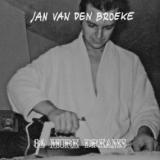
4
"4 more additions (under various guises around 1984) to the beautiful world of Jan Van den Broeke in response to the almost 10 year anniversary of `11000 Dreams` "
pre-ordina ora23.10.2026
dovrebbe essere pubblicato su 23.10.2026
"4 more additions (under various guises around 1984) to the beautiful world of Jan Van den Broeke in response to the almost 10 year anniversary of `11000 Dreams` "
dovrebbe essere pubblicato su 23.10.2026

In the realm of past-life regression hypnotherapy, there is a concept known as “Life Between Lives,” wherein a sacred exchange of energy occurs between two souls in the spirt world, helping a spirit fully understand and forgive a being who hurt them in a past life. This exchange – called “passing the cup of sorrows” – became the unexpected inspiration for William Basinski’s first new album in six years.
While sinking deeper into the daily abyss of our collective negativity bias, William Basinski stumbled upon a video describing the spiritual hypnotherapy exercise known as “passing the cup of sorrows.” Fixed on the glow of a screen that projected mounting anxiety and cynicism at a seemingly interminable pace, Basinski found the testimonials of this fascinating therapeutic practice to be profoundly moving. He sat at his piano, translating the transformation of those traumatic memories of past lives into cathartic tears of the present day.
Channeling the quiet curiosity and asymmetrical patterns of pioneering 20th Century composer, Morton Feldman, Passing the Cup of Sorrows is a single 40-minute piece that employs a solitary piano and subtle electronics to truly haunting effect. It recalls fragments of traumatic memories and projects them as fractals in a slow-moving soft focus that’s as eerie as it is enlightened.
dovrebbe essere pubblicato su 23.10.2026
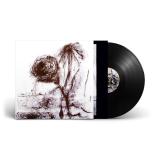
In the realm of past-life regression hypnotherapy, there is a concept known as “Life Between Lives,” wherein a sacred exchange of energy occurs between two souls in the spirt world, helping a spirit fully understand and forgive a being who hurt them in a past life. This exchange – called “passing the cup of sorrows” – became the unexpected inspiration for William Basinski’s first new album in six years.
While sinking deeper into the daily abyss of our collective negativity bias, William Basinski stumbled upon a video describing the spiritual hypnotherapy exercise known as “passing the cup of sorrows.” Fixed on the glow of a screen that projected mounting anxiety and cynicism at a seemingly interminable pace, Basinski found the testimonials of this fascinating therapeutic practice to be profoundly moving. He sat at his piano, translating the transformation of those traumatic memories of past lives into cathartic tears of the present day.
Channeling the quiet curiosity and asymmetrical patterns of pioneering 20th Century composer, Morton Feldman, Passing the Cup of Sorrows is a single 40-minute piece that employs a solitary piano and subtle electronics to truly haunting effect. It recalls fragments of traumatic memories and projects them as fractals in a slow-moving soft focus that’s as eerie as it is enlightened.
dovrebbe essere pubblicato su 23.10.2026
Tresor Records announces GODSPEED, a new EP from NVST, out on October 23, 2026. From its origins in the Motor City and through to the themes of interstellar travel, techno has always been a genre focussed on forward movement, a tradition that GODSPEED continues boththrough music and title.
The EP is a collection that brings to mind the spirit of early, non-conformist releases on Tresor, full of hypnotic synth loops, spacious FX, and breakbeats, yet with a crisp and modern sonic palette. Side A embarks with two tracks that combine a low, buzzing bassline with trippy melodies and percussion that ventures close to breaks and electro, while the B-side moves intothe fast lane with driving acid and more regimented drums. Digital bonus track "Firliner" combines both approaches across its seven-and-a-half minutes, as a buzzy bassline and spluttering beat ignite into a steady trance-induction.
The EP title arrived the way the best ones do: not so much chosen as absorbed from the aether, the word kept popping up during the creative process until it became the ideal name for this collection, given its connotation with setting out on a journey.
"You remember the nights where you've been on the floor for hours without realising how much time has passed, the conversations you can't fully recall, or how unexpectedly open you've been to everything around you. The music speaks the language of substance not as a statement, but as a way of describing perception. It's about experimenting with yourself, your body, your hearing, your emotions. About reaching a point where things that once felt permanent suddenly lose their grip, even if only for a moment. These recordings come from that place. They capture moments where movement replaces thought, memories blur into feeling, and vulnerability becomes part of the process. They're documents of a very
specific time, but also of something much more familiar: trying to lose yourself just enough to find a different version of who you are." NVST
This fast-paced forward travel is implicit in the word speed, but once this word indicated power or prosperity so that godspeed is a wish for success, forming an appropriate double meaning for this first full release of NVST on Tresor.
dovrebbe essere pubblicato su 23.10.2026

With his last three records all landing within a calendar year (2024-25), enigmatic Swedish producer Civilistjävel! (aka Tomas Bodén) is on a hot streak of releases, his singular vision increasingly ambitious and expansive. There are few artists working at this level so consistently right now, reinventing, revising and continually developing their language. Following on from 2025’s radically re-worked ‘Versions’ (of Mayssa Jallad’s ‘Marjaa…’), Bodén returns to break further fresh ground with his new album, ‘Älvgång’. Featuring contributions from Soccer Committee, Carrier and guest (aka Jabu’s Jasmine Butt), ‘Älvgång’ foregrounds a more brittle and insistent rhythm-based sound, whilst comprising his most broad-ranging collection of material to date.
‘Älvgång’ grew out of a series of sketches made from late ‘24 and throughout the whole of ‘25 at Stockholm’s renowned EMS Studios, which gave Boden free rein to its extensive collection of vintage analogue equipment and rare modular synthesizers such as the Serge and Buchla systems. As a loose framework of tracks began to take shape, so did a reflection of sorts, on family and foundations, underpinned or influenced by sounds that drifted into Tomas consciousness around this time - ancient Swedish pastoral music, Georgian lithurgical chants, gongs, chimes. An idea settled into place, a dedication to his Grandfather, as the earlier release Fyra Platser (tr. ‘Four Places’) was to his Grandmother. Älvgång is grounded with the sense of time and place of an old family photograph, with the tracks over each side bearing one of two names that are more or less the same location - Strinne was the old name for a this loose collection of villages. These days it is more commonly known as Bjärtrå. Metaphorically speaking, the river runs through both.
Civilistjävel! conjures so many adjectives and descriptors, ‘glacial’ and ‘ambient’ frequently among them - but while not altogether untrue, such terms belie the tension and drama so often present in Tomas’ music. Listening to ‘Älvgång’ is not a passive experience. The eight tracks here feel like a patchwork of memories that bathe in the same ethereal, otherworldly glow of Tarkovsky’s polaroids’.
The machine pulses that dominate this landscape are reigned in and tempered by a human hand; lithe, untethered coils, breathing in and out. ‘Strinne Ett’ sets out with purpose, sensing awe and wonder through the murk, but as the final tone unfurls like a question mark, another chapter begins, unfolding/building like a Tarjei Vesaas novel. These lyrical, abstract miniatures combine to reveal a wider context, fragile humanity standing alone against nature.
Guest appearances on Civilistjävel! records have become a regular occurrence (including recent collaborations with Mayssa Jallad, Laila Sakini, Cucina Povera, Thomas Bush, Eldon + Withdrawn), but are used sparingly and with increasing precision. On ‘Strinne Tre’ Mariska Baars’ (Soccer Committee) voice feels like a balm, a clearing. But as her simple, three-word incantation drifts further into fog, the meaning changes, and her words seem to curdle. Carrier’s beats widen the parameters on ‘Strinne Fyra’, a skittering promise that builds tension then refuses to release it; all false starts, Photek gongs, and trinkling modulars. Jabu’s Jasmine Butt pulls all the threads together for the final track, Thomas Tallis’ ghost walking over offset machine impulses, that work against their own symmetry.
Side two begins inquisitively, scanning bleached, alien surroundings, its sparse pads recalling Aphex Twin’s ‘Selected Ambient works Vol 2’. 'Bjärtrå Två’ picks up the baton from ' Strinne Fyra’ with a ruptured Simmons SDS200 analogue drum synth set free from its shackles, the rhythm eventually slotting into the spaces that were hiding in plain sight. What follows seems like an epiphany; ‘Bjärtrå Tre’ is achingly beautiful, a euphoric, winding ascent that leads to devotional plainsong. ‘Bjärtrå Fyra‘s final unheralded shift feels both tragic and haunting.
dovrebbe essere pubblicato su 23.10.2026
Tokyo-based producer aus debuts on Squama with his new album Mere Meer.
Grounded in the question of how a specific environment can emerge through voice and memory, rather than through recording of an objective reality, the album stands in the tradition of modern Japanese Ambient and Kankyo Ongaku.
aus is the solo project of composer, producer, and curator Yasuhiko Fukuzono. His music is characterized by a precise combination of cinematic strings, acoustic instrumentation, and concrete sound design derived from everyday life.
In recent years, he released music on EM Records, WRWTFWW and his own flau imprint. As a remixer, he put his touch on tracks by Matthew Herbert, Tenniscoats and Craig Armstrong, among others.
His sonic research also extends beyond traditional formats into spatial sound installations and site-specific works, collaborating with experimental figures like Ulla, Li Yilei, and Hinako Omori for institutions such as the Tokyo National Museum.
Much of the album consists of sketches made with synthesizer and voice. Sampled from social media clips, field recordings or a heavily processed version of Fukuzono's own vocals, the voice became a central element of the record. "I have long been interested in the relationship between words and melody.", aus says. In his former work as a speech therapist, he witnessed patients with severe dementia or aphasia, who all of a sudden could recall lyrics when they were sung with familiar melodies. An experience that left a deep impression on him.
During the Covid years, when hearing voices of friends and family sometimes was the only way to feel connected to the outside world, aus began reflecting on the connection between voice and environment. "Every voice represents an encounter with a person, but it's also an encounter with a place."
Unable to travel as freely as before, that limitation became part of his method: rather than just recording actual field material capturing the real world, he would write and perform melodies that simulate a sense of place - an imagined room, an imagined street.
"My interest lies not in the dichotomy between artificial and environmental sounds, but in how they collectively shape a single perceptual field."
By observing and mapping our world, aus creates his own and his new record is a prime example of that process.
dovrebbe essere pubblicato su 23.10.2026

After almost twenty years of releasing music, Sven Tasnadi finds himself circling back to some of the sounds that first drew him into house music. Explorer was written at home following a longer break from producing and after moving out of his studio, a change of setting that coincided with a shift in priorities. "The tracks on this EP came together at home after a longer break from music and after I moved out of my studio," he explains. "Musically they are very deep and minimal, at times almost meditative. They were inspired by a new chapter in my life as well as my never-ending love and connection to artists like Lawrence from Smallville and Frank & Tony from Scissor and Thread."
That sense of returning to something runs through the whole record. For much of Tasnadi's career, producing and DJing were closely connected, with many releases naturally shaped by the club. Things have changed. "DJing is no longer my main focus, so I can dedicate myself to these deep and minimal sounds again, free from pressure or expectations," he says. "In a way, after almost twenty years of releasing music, things have come full circle for me."
"Atlas (Chapter 1)" and "Atlas (Chapter 2)" grew from the same initial idea but followed separate paths during production. Chapter 2 came first, while Chapter 1 emerged later from a variation Tasnadi discovered while the track was still essentially a loop. "I was still looking for the right theme for the original idea when another version suddenly opened up," he recalls. He saved that variation for later so he could stay focused on the first version. When he returned to it, the two had developed distinct enough identities to stand independently. Their shared DNA is still audible in the restrained rhythms, slowly shifting details and the way small changes carry much of the movement.
The title track moves further into dub techno, another longstanding passion for Tasnadi. "Explorer is almost a classic dub techno track," he says. "Subtle movements within a constantly repeating pattern create a particular atmosphere. It feels like the track could just keep going forever." It is a patient approach to repetition that he connects to artists such as Moritz von Oswald and his friend Daniel Stefanik.
"Megasektor", one of the first tracks Tasnadi made at home with a new equipment setup, brings the EP into deep house territory. "To me it's almost classic deep house, or at least how I define deep house for myself." Warm, compact and gently propulsive, it provides a natural closing point for a record that is ultimately less about changing direction than reconnecting with an instinct that has always been there.
Explorer captures Tasnadi at a point where making music has become more personal again. The four tracks come from following ideas for their own sake and from rediscovering the deeper, more minimal sounds that have stayed with him throughout his career.
dovrebbe essere pubblicato su 23.10.2026
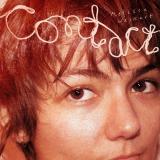
Melissa Weikart and her piano have proceeded through life in step, from her early classical
training to the experimental practice that defines her work today, a blending of sounds and forms that has never been so clear—and so fully realized—as on her new album, Contact. Across twelve shifting and evocative tracks that examine the connective tissue binding us to ourselves and others, the Franco-American musician’s voice and piano navigate personal and emotional terrain with clarity and nuance, forging a rich dialogue between artist and instrument, artist and self, and artist and listener.
Winner of the 2022 Nancy Jazz Pulsations emerging artist award and the instrumentalist prize at the 2023 La Défense National Jazz Competition, Weikart has released two EPs and an album as a solo artist, and one EP and an album—Surprise and Secret—with her electronic duo Beatrice Melissa. A student of jazz and ’70s folk-pop, and a keen lover of improvisation since her time at the New England Conservatory in Boston, Weikart has always conjured the confessional candor of the singer- songwriter in her music, even as she dispenses her lyrics across rich, shifting, dreamlike tableaux.
On Contact, written and arranged entirely by Weikart (aside from “New angles”), she pushes her sound further than ever before. The album is animated by a pressing need for connection, observing what brings us together and what drives us apart, and the life-saving revelations that emerge along the way. The album’s opener, “Crash,” is a dreamy telephone-hour ode, a message in a bottle, to connections new and old. On the wistful “Mesurer le vent,” Weikart conjures Debussy or Ravel, layering contrasting sounds like an Impressionist painting. The title track begins as a showcase of Weikart’s frank lyricism, a splice-reel of missed connections and wasted time, then glides into a hazy, euphoric galaxy of pleas, circling around her thesis—“I wanted to make contact”—that ushers us into “The Intersection,” a song that recalls her the beginning of her career, when it was just Weikart and her keys. “Appétit.e” is built around a sample of her down-the-hall neighbor’s drumming—another subtle, affecting gesture toward proximity and connection—while pulsating synths reminiscent of Air lend the track an unsteady atmosphere. On the Carpenters-inspired “Expectations,” Weikart muses on the relationship patterns, universal and specific, that have always been a hallmark of her songwriting.
The psychedelic “L’amour de construit” is a slow-motion fall down the rabbit hole, as Weikart
considers the way her own emotions are captured and commodified by the confining ways we think about love. The interlude—“L’amour pt. 2”—finds her near the end of that trip, shouting into the void as a last-ditch effort to rescue herself from the fall. The drums near the end of the interlude warn us that there may be no cushion for, until she is saved, again, by the power of revelation, on the confident, resilient “Not Right”—on which a show-stopping, frenetic conversation between singer and piano is gracefully interrupted by a rush of transcendent strings, lifting her back up.
On solid ground anew, “New angles,” featuring Manu Delta, creates a percussion-less groove that relies on experimental synth sounds. The 11-o’clock stunner “Catching up”—composed in a church—meets the singer in a state of ecstatic confession, bringing her to the formative memory that propels “Bicycle,” the album’s closer. Younger, more wide-eyed, she reflects on her move from Boston to Strasbourg, those early days, when Weikart had no other companion than that loyal hunk of scrap metal that took her to the shores of her own soul. She seems to suggest, on “Bicycle,” that a backward-glance is not always troublesome, not always anxiety-producing, but can be grounding: a reminder of where we come from, so that we can keep moving forward.
dovrebbe essere pubblicato su 23.10.2026
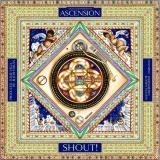
There's a moment during every great dance floor experience when the music takes over and everyone becomes part of something bigger. "SHOUT!", the latest release from 2SoulFusion Presents Ascension, captures that feeling in its purest form. Featuring the powerhouse voices and ad-libs of Dames Brown and Dawn Tallman, along with an all-star ensemble of master vocalists including Josh Milan, Rahsaan Patterson, Lisa Fischer, Cindy Mizelle, Audrey Wheeler, Ramona Dunlap, and Lea Lorien, this joyful anthem is an invitation to let go, lift your spirit, and celebrate through music.
Produced, written, arranged, and mixed by 2SoulFusion—Louie Vega and Josh Milan—"SHOUT!" draws inspiration from the communal spirit of gospel while embracing the energy and freedom of house music. Driven by simple yet powerful affirmations—"Shout," "Sing," "Move," "Love," "Get Up On Your Feet," "Listen Up," and "Let This Music Take You Higher"—the song transforms into an experience where every voice becomes part of the celebration. It's a journey of anthemic hooks, soaring harmonies, infectious grooves, and unforgettable melodies designed to ignite dance floors, uplift hearts, and remind us that music has the power to unite people through rhythm, joy, and love.
The inspiration for "SHOUT!" was born from a creative exchange between Louie Vega and Charaf Tajer, founder and creative director of the internationally acclaimed fashion house Casablanca. Introduced by longtime friend Joseph Capriati, Charaf shared a bold vision—to bring together the worlds of fashion, gospel, and house music for one unforgettable Casablanca runway presentation in Paris.
Louie Vega recalls: “Charaf was introduced to me by my friend Joseph Capriati, who said Charaf was looking to meet me about an idea he had. His vision was to marry fashion, gospel, and house music within Casablanca's collection. At first, he wanted me to DJ and play gospel house music. I said, 'Instead of playing existing music, why don't I create an original song with a gospel house flavor?' I immediately got together with my 2SoulFusion partner Josh Milan, and together we came up with 'SHOUT!'”
That vision came to life during Casablanca's spectacular Paris presentation inside a breathtaking cathedral, where Louie Vega premiered the original twelve-minute and nine-second composition live. As the music echoed through the cathedral, Dames Brown joined the London House Gospel Choir in a soul-stirring performance while the models walked the aisle on Casablanca's carpet made of their signature green color and a dashing vibrating giant mirror echoing the runway visually. Renowned DJs Luciano and Chloé Caillet were among those who walked the runway, while friends of Charaf Tajer and special guests—including Jaden Thompson, Folamour, Dimitri From Paris, Kapela, and many others—were in attendance, making it an unforgettable gathering where music, spirituality, fashion, and culture merged into one extraordinary experience.
Inspired by that magical evening in Paris, Louie Vega and Josh Milan returned to the studio to expand the original composition into the powerful recording heard today. Built around rich live musicianship, Josh Milan's keyboards, organ, piano and synth bass provide the foundation alongside Axel Tosca's expressive grand piano recorded live, Sherrod Barnes' soulful guitar, and Gene Perez's unmistakable bass groove. Together they create an infectious, organic driving sound that allows the vocals to soar while delivering the unmistakable musical depth and musicianship that define 2SoulFusion.
Leading the celebration are Dames Brown and Dawn Tallman, whose commanding performances are elevated by an extraordinary choir of world-class vocalists. Dames Brown's spirited sermon and ad-libs, and Dawn Tallman’s powerful ad-lib vamping out together with the soaring harmonies of Lisa Fischer, Cindy Mizelle, Audrey Wheeler, Rahsaan Patterson, Ramona Dunlap, Lea Lorien, and Josh Milan, recreate the feeling of a joyful gospel congregation—not confined to four walls, but alive on dance floors around the world. Every chorus encourages listeners to get up, listen up, feel it, sing, move, love, and become part of the experience. Recorded between Honeycomb Studios in Pennsylvania, The Hub Ibiza and Manhattan Center Studios, New York City, and mixed at The Hub Ibiza, "SHOUT!" reflects the continuing vision of the Ascension project, where spirituality, musicianship, community, fashion, and dance music become one.
dovrebbe essere pubblicato su 23.10.2026

2026 Repress
DJ Koze's 2013 album opus Amygdala has continued to bewitch all who encounter it since its release. Tipped as his own personal Sgt. Pepper, the sublime long-player revealed a fully-realised and personal body of work, complete with a classic songwriting at its core, House in its heart, and veins coursing with psychedelic color. La Duquesa' was the album's dreamy single standout, a journey into deep, tropical ecstasy. XTC' begins in the same spirit, and captures the all the blissful allusions of its name, but its initial gentility belies the deep intensity to come. Floating pads glow with celestial ambience as a kick drum is gradually coaxed into solid form, and the introduction of spoken text begins the second act. Many people are experimenting with the drug Ecstasy,' it says, ...is the drug like the lie and meditation the truth Or am I missing something that could really help me". XTC' then transforms: sweetly imploring tones become demanding, gentle gradients between chords turn hard-edged, and sharp hi-hats cut through the haze. Complete with Koze's signature percussive quirks, it drives towards the track's final pay off: an undeniable, all-consuming, irresistible high. Knee On Belly' recalls Koze at his most tongue-in-cheek and overt, it is bright, bold and literally brassy, using cut-up horns of all shapes and sizes to patchwork together his own unique arrangement. With the highs and mid ranges accounted for, Koze adds in a swollen, thrumming bass line to mix to bring this floor-filler to life. Knee on Belly' recalls a raw, filtered and funky approach to groove, with a nod to disco house and the art of artful sampling, as it orbits between its own neon highs and simmering lows.
Disponibile in Stock e pronto per la spedizione
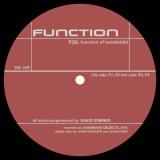
Function has long since cemented his legacy in the underground world but it's always worth reminding yourself where an artist's story began. In David Summer's case, that's with this EP, which dropped on Damon Wild's Synewave, who now reissue it in full, 30 years on. It's an impressively fully-formed sound for a debut: 'F1' is a jacked-up techno rhythm with a fat bassline and frazzled synths that bring it to life. 'F2' is a more experimental and beatless piece with modular pulses, echoing frequencies and decaying sine waves then 'F3 rides a dreamy dub rhythm that undulates gently amid some gorgeous sustained pads that recall Thebes of Detroit. 'F4' comes with more Millsian-style minimal that fires up your brain.
dovrebbe essere pubblicato su 26.10.2026

The seminal psych-rock classic The Evil One by Roky Erickson And The Aliens is reissued by Fire Records in a deluxe 15-track edition, restoring the original front cover from San Francisco’s 415 Records release for the first time since 1981. Presented across two LPs cut at 45 rpm for maximum sonic depth and clarity, the release brings together the complete recordings from the legendary 1978 and 1979 sessions. The package includes a collector’s booklet with liner notes by acclaimed Austin music journalist Joe Nick Patoski, who attended a recording session for The Evil One in 1979. Alongside rare photographs and archival images from the collection of Roky’s then manager, Craig Luckin.
Following his release from Rusk State Hospital in 1974, Erickson formed The Aliens and channelled his experiences and fascination with horror and science fiction into a singular new sound. Moving beyond the psychedelic garage blues of the 13th Floor Elevators, the band created harder, more ferocious rock built around jagged guitars, strange melodies and a propulsive rhythm section.
Produced by Creedence Clearwater Revival bassist Stu Cook, The Evil One includes some of Erickson’s most celebrated recordings, including ‘Two Headed Dog’, ‘I Walked With A Zombie’ and ‘It’s A Cold Night For Alligators’. Erickson’s unmistakable voice and surreal lyrics, populated by zombies, demons, vampires and atomic monsters, gave the album a character unlike anything else in rock. Both the LP and CD editions feature rare photographs and images from the archive of Erickson’s then manager and the sessions’ executive producer, Craig Luckin.
The Evil One has since become a landmark of cult rock, with its songs covered by generations of artists and its influence extending across punk, alternative and psychedelic music. As Craig Luckin recalls, “Roky considers The Evil One to be his favourite album that he ever recorded. He really loves that album.”
Austin music journalist Joe Nick Patoski, who attended one of the album’s 1979 sessions, contributes a new essay to the LP and CD packaging, exploring Erickson’s extraordinary career, enduring influence and place in Texas rock history.
More than a standalone reissue, this deluxe edition of The Evil One opens an exciting new series honouring Roky Erickson’s extraordinary body of work, with Gremlins Have Pictures and Don’t Slander Me to follow in 2027.
dovrebbe essere pubblicato su 30.10.2026

The seminal psych-rock classic The Evil One by Roky Erickson And The Aliens is reissued by Fire Records in a deluxe 15-track edition, restoring the original front cover from San Francisco’s 415 Records release for the first time since 1981. Presented across two LPs cut at 45 rpm for maximum sonic depth and clarity, the release brings together the complete recordings from the legendary 1978 and 1979 sessions. The package includes a collector’s booklet with liner notes by acclaimed Austin music journalist Joe Nick Patoski, who attended a recording session for The Evil One in 1979. Alongside rare photographs and archival images from the collection of Roky’s then manager, Craig Luckin.
Following his release from Rusk State Hospital in 1974, Erickson formed The Aliens and channelled his experiences and fascination with horror and science fiction into a singular new sound. Moving beyond the psychedelic garage blues of the 13th Floor Elevators, the band created harder, more ferocious rock built around jagged guitars, strange melodies and a propulsive rhythm section.
Produced by Creedence Clearwater Revival bassist Stu Cook, The Evil One includes some of Erickson’s most celebrated recordings, including ‘Two Headed Dog’, ‘I Walked With A Zombie’ and ‘It’s A Cold Night For Alligators’. Erickson’s unmistakable voice and surreal lyrics, populated by zombies, demons, vampires and atomic monsters, gave the album a character unlike anything else in rock. Both the LP and CD editions feature rare photographs and images from the archive of Erickson’s then manager and the sessions’ executive producer, Craig Luckin.
The Evil One has since become a landmark of cult rock, with its songs covered by generations of artists and its influence extending across punk, alternative and psychedelic music. As Craig Luckin recalls, “Roky considers The Evil One to be his favourite album that he ever recorded. He really loves that album.”
Austin music journalist Joe Nick Patoski, who attended one of the album’s 1979 sessions, contributes a new essay to the LP and CD packaging, exploring Erickson’s extraordinary career, enduring influence and place in Texas rock history.
More than a standalone reissue, this deluxe edition of The Evil One opens an exciting new series honouring Roky Erickson’s extraordinary body of work, with Gremlins Have Pictures and Don’t Slander Me to follow in 2027.
dovrebbe essere pubblicato su 30.10.2026
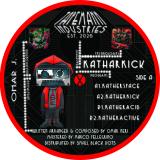
Omar Neri aka Omar J Born & live in Arezzo, Dj Professionist from 1991, play and produced under name PRESSLABOYS with Luigi Gori since 2011. In1996 instead, while they were in his basement during a storm, the study got flooded and they looked like homeless people holding all them instruments. Here born Presslab Records & two Years later Presslaboys Team, after various names used before. Today, never forget but never look back, keep moving forward, it’s time to fly… my creature, Tapemann, who lives the eternal dilemma linked to his nature, of tapa, grappling with the future, progress and the loss of certain values that leave room for AI. So, let’s start this totally hybrid journeys, in sounds ranging from house to prog house contexts (sometimes Deep and Dub) but with a sound and structure that recalls minimal, in the choice of reverbs and lengths of the sounds... all immersed in a decidedly acidic context. A melting pot from an artist who has spanned three decades of music, we couldn't expect anything different.
dovrebbe essere pubblicato su 30.10.2026
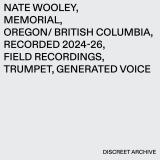
»Memorial« grew out of Nate Wooley’s work alongside Annea Lockwood recording the Columbia River, and in particular from a visit to Kettle Falls in northern Washington, once one of the river’s great salmon fishing and meeting grounds and a place of enormous importance to the Sinixt and other Indigenous peoples of the Upper Columbia. The falls disappeared from view following the construction of the Grand Coulee Dam in 1940, submerged beneath what is now Lake Roosevelt, yet beneath the still surface of the reservoir, a fast current continues to move across the buried cliffs. That tension between what remains and what can only be recovered through memory runs throughout »Memorial«.
In the essay accompanying the record, Wooley returns repeatedly to the idea of translation: the attempt to carry an experience from one form into another, from river to recording, memory to sound, landscape to music. He moves between Lockwood’s sound maps, John Ashbery’s rain falling on canal machinery, Ravel’s attempts to make water move through a piano, Christian Wolff’s »Stones«, and the Sinixt First Salmon Ceremony, where rocks struck together recall the sound of salmon once moving through the river in their thousands. These translations cannot restore what has been lost; however, they allow us to revisit what remains beneath in another form.
»Memorial« exists as an uncertainty, concerned with the distance between a place and its recording, between an event and what survives of it, and with the way listening itself becomes entangled with memory. Kettle Falls remains submerged, the river constrained and radically altered, but the water continues to move over the old rock beneath the reservoir. »Memorial« tries to listen for that persisting memory.
dovrebbe essere pubblicato su 05.11.2026

2024 Repress!
The eye of the storm: welcome to Tornado Wallace's debut album! The accumulation of about four years of work, with tracks written in Berlin and Melbourne, 'Lonely Planet' is nothing like you may have expected from the Australian expat. No stranger to fans and followers of ESP Institute, Beats in Space and Music From Memory's sister Label Second Circle, Tornado Wallace's strain of releases so far merged functionality with a musical playfulness that led him to find himself as one of the producer's behind José Padilla's International Feel album. Here, he leaves the needs of the dance floor behind in order to create a magical mystery tour de trance into his and our inner jungle. How about some references New Age sounds meet new wave melodies, Grace Jones runs into the Dire Straits at Compass Point, while a Korg Mini Pops and a Roland CR78 make amends for Sly & Robbie's absence, Michael Mann pictures Joseph Conrad's 'Heart of Darkness', Robert Rauschenberg tries his luck at naturalism and an imagined Wally Badarou echoes through all of it. Sandwiched between the title track and the yearning beauty of the album's final point 'Healing Feeling', you get all of that as well as collaborations with and contributions of NO ZU, David Hischfelder and the voice of Sui Zhen on 'Today', who would easily make Anna Domino take her proverbial hat off. Tornado Wallace created an album that supersedes the requirements and expectations of a debut. Like a lost Island Records or a never released Made to Measure album, 'Lonely Planet' soundtracks notions and ideas that recall the nostalgic future in the past as much as it looks ahead.
dovrebbe essere pubblicato su 06.11.2026

Twenty-five years after its original release, Markus Guentner's debut album In Moll returns in a special anniversary reissue on Black Knoll Editions, reaffirming its place as one of the defining ambient recordings of the early 21st century.
Released in 2001 during the formative years of Kompakt's influential Pop Ambient series, In Moll emerged from a period of rapid transformation in electronic music. New technologies, expanding digital networks, and shifting creative possibilities allowed artists to imagine entirely new sonic worlds. Amid this fertile landscape, Guentner's music stood apart. Combining delicate melodic fragments, slow-moving harmonies, and a remarkable sense of spatial depth, In Moll introduced a distinct artistic voice whose impact can still be felt a quarter-century later.
The album arrived shortly after Guentner's contributions to the inaugural Pop Ambient compilation, including the now-beloved "Regensburg 1," named after his Bavarian hometown. Those early recordings immediately captured the attention of Kompakt founders Michael Mayer and Wolfgang Voigt. Recalling his first encounter with the music, Mayer describes listening to a demo CDR with Voigt while wandering through Cologne late into the night, replaying the tracks for hours. "We knew that we had found something outrageously beautiful and we wanted the whole world to listen."
Across its running time, In Moll unfolds like a series of dreamlike landscapes, inviting the listener into a world that feels both familiar and strangely other. Bells, hisses, distant textures, and slow-moving bass tones drift through vast expanses of atmosphere while luminous synthesizer washes seem to blur the horizon in a fine digital mist. The album's transportive qualities are matched by a remarkable sense of compositional discipline. Every gesture feels deliberate, every texture carefully placed. Balancing warmth and melancholy with restraint, Guentner created a body of work that rewards both close listening and complete surrender.
Reflecting on the album twenty-five years later, Wolfgang Voigt describes Guentner as "one of the first, but also one of the most important ambient artists" associated with Kompakt, calling his music "an integral, timeless part of the long history of pop ambient." Music critic and former Pitchfork Editor-in-Chief Mark Richardson, who reviewed In Moll upon its original release, similarly noted that the album "marked the arrival of an important new voice," and today regards it as "one of the finest ambient releases of the decade."
The album's influence continues to extend far beyond its original audience. For many listeners, In Moll served as an entry point into a new understanding of what ambient music could be. Black Knoll boss Rafael Anton Irisarri first encountered the album shortly after its release in 2001. "It immediately opened a door to a world of music I didn't know existed," he recalls. "At a time when I was still discovering my own creative voice, Markus showed me entirely new possibilities for what electronic music could communicate." Simply put, "The Sight Below would not have existed without In Moll paving the way."
Far from a historical curiosity, In Moll continues to feel strikingly contemporary. What once sounded futuristic now feels timeless, its patient pacing, attention to detail, and sense of wonder remaining entirely intact. The album's enduring power lies not only in its influence, but in the curiosity it continues to inspire, inviting listeners to step inside its world and lose themselves within it.
To mark its twenty-fifth anniversary, Black Knoll Editions presents the most complete edition of In Moll to date. Newly remastered in full analog by Rafael Anton Irisarri, this expanded release pairs the original album with a newly reworked interpretation by Markus Guentner himself, revisiting the material through the lens of twenty-five years of artistic development. The anniversary edition also features a new visual presentation designed by Guentner, offering a visual counterpart to the album's continued evolution. Together, these recordings and visuals celebrate both the enduring legacy of In Moll and its ability to reveal new dimensions twenty-five years later.
This 25th Anniversary Edition on Black Knoll Editions celebrates a recording whose quiet impact has only grown with time, preserving a work that remains as evocative, singular, and essential today as it was in 2001.
dovrebbe essere pubblicato su 06.11.2026

Twenty-five years after its original release, Markus Guentner's debut album In Moll returns in a special anniversary reissue on Black Knoll Editions, reaffirming its place as one of the defining ambient recordings of the early 21st century.
Released in 2001 during the formative years of Kompakt's influential Pop Ambient series, In Moll emerged from a period of rapid transformation in electronic music. New technologies, expanding digital networks, and shifting creative possibilities allowed artists to imagine entirely new sonic worlds. Amid this fertile landscape, Guentner's music stood apart. Combining delicate melodic fragments, slow-moving harmonies, and a remarkable sense of spatial depth, In Moll introduced a distinct artistic voice whose impact can still be felt a quarter-century later.
The album arrived shortly after Guentner's contributions to the inaugural Pop Ambient compilation, including the now-beloved "Regensburg 1," named after his Bavarian hometown. Those early recordings immediately captured the attention of Kompakt founders Michael Mayer and Wolfgang Voigt. Recalling his first encounter with the music, Mayer describes listening to a demo CDR with Voigt while wandering through Cologne late into the night, replaying the tracks for hours. "We knew that we had found something outrageously beautiful and we wanted the whole world to listen."
Across its running time, In Moll unfolds like a series of dreamlike landscapes, inviting the listener into a world that feels both familiar and strangely other. Bells, hisses, distant textures, and slow-moving bass tones drift through vast expanses of atmosphere while luminous synthesizer washes seem to blur the horizon in a fine digital mist. The album's transportive qualities are matched by a remarkable sense of compositional discipline. Every gesture feels deliberate, every texture carefully placed. Balancing warmth and melancholy with restraint, Guentner created a body of work that rewards both close listening and complete surrender.
Reflecting on the album twenty-five years later, Wolfgang Voigt describes Guentner as "one of the first, but also one of the most important ambient artists" associated with Kompakt, calling his music "an integral, timeless part of the long history of pop ambient." Music critic and former Pitchfork Editor-in-Chief Mark Richardson, who reviewed In Moll upon its original release, similarly noted that the album "marked the arrival of an important new voice," and today regards it as "one of the finest ambient releases of the decade."
The album's influence continues to extend far beyond its original audience. For many listeners, In Moll served as an entry point into a new understanding of what ambient music could be. Black Knoll boss Rafael Anton Irisarri first encountered the album shortly after its release in 2001. "It immediately opened a door to a world of music I didn't know existed," he recalls. "At a time when I was still discovering my own creative voice, Markus showed me entirely new possibilities for what electronic music could communicate." Simply put, "The Sight Below would not have existed without In Moll paving the way."
Far from a historical curiosity, In Moll continues to feel strikingly contemporary. What once sounded futuristic now feels timeless, its patient pacing, attention to detail, and sense of wonder remaining entirely intact. The album's enduring power lies not only in its influence, but in the curiosity it continues to inspire, inviting listeners to step inside its world and lose themselves within it.
To mark its twenty-fifth anniversary, Black Knoll Editions presents the most complete edition of In Moll to date. Newly remastered in full analog by Rafael Anton Irisarri, this expanded release pairs the original album with a newly reworked interpretation by Markus Guentner himself, revisiting the material through the lens of twenty-five years of artistic development. The anniversary edition also features a new visual presentation designed by Guentner, offering a visual counterpart to the album's continued evolution. Together, these recordings and visuals celebrate both the enduring legacy of In Moll and its ability to reveal new dimensions twenty-five years later.
This 25th Anniversary Edition on Black Knoll Editions celebrates a recording whose quiet impact has only grown with time, preserving a work that remains as evocative, singular, and essential today as it was in 2001.
dovrebbe essere pubblicato su 06.11.2026
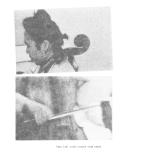
Faitiche presents the debut solo album by cellist, sound artist, and composer Topu Lyo: “quiet scenes from tokyo” brings together sixteen miniatures for solo cello and tape echo that oscillate between abstracts drones and rhythmic pizzicato sketches – all recorded at Topu’s Tokyo apartment. The constant traffic noise from a nearby highway has become an accompanying soundtrack for his compositions and can be heard on the recordings. Topu’s playing is marked by a distinctive idiom oriented more towards abstract electronic studio effects than classical technique.
The artist spoke to Jan Jelinek about his work:
JJ: A solo cello album may seem like an odd fit for a label that has to date released only music that is electronic in the broadest sense. But I think “quiet scenes from tokyo” complements the Faitiche repertoire exceptionally well. Its sixteen miniatures showcase the cello in all its complexity: the bowed passages sometimes recall a tape feedback drone; the pizzicato playing conjures up the percussion recordings of Moondog; and the abstract textures might be mistaken for the product of a granular sampler rather than rapid finger work on the cello. I’m constantly surprised by just how rich and varied this album is – without ever losing the charm of its sketch-like quality. Could you say a few words about the making of your album – first of all, from a rather technical perspective: what production tools did you use, and why?
TL: My production tools were very sparse. Just a solo cello and my Roland 301 Space Echo, which I only used at the end, running everything through it during mixing, tape only. After years of working with electronics, pedals, and synthesizers, moving to Tokyo pushed me toward minimizing my setup. But my aesthetics shifted too, toward simplicity. I wanted to strip everything back to just the acoustic cello and see how far I could push it — replicating some of my favorite electronic effects through extended technique: slow portamento, LFOs, filters, detune, noise. I’d also been listening to a cassette of ocean sounds for years. When I moved to Tokyo I was horrified to find myself living directly across from a freeway. Eventually the freeway started sounding almost identical to the ocean — and that ended up playing a prominent part in the recording.
JJ: That’s super interesting: mimicking electronic production as a compositional idea for the cello! You say the sound of the freeway is crucial to the album: I, too, tend to interpret steady traffic noise as a positive soundscape – do we hear the freeway on the album? I can also hear other field recordings, for example on “a street car with announcements”. Can you say a bit about how these field recordings influence your playing?
TL: Yes, you can hear the freeway on the album! The freeway is most prominent in “old trees in lonely spring”, “yuyake koyake”, and “the moon” (you can clearly hear individual cars). When I first began recording I had my balcony door shut tightly, but after a while I began leaning into the highway sound and slowly opening the door little by little to control the amount of noise. “streetcar with announcements” was a moment I was recording and a car passed by making announcements in the background. I loved how it sounded! Same thing with “yuyake koyake”, and later I realized that every day at 5pm the same song plays to mark sunset, telling children it’s time to go home. Having this bedrock of sound puts less pressure on me to put music on top or to play more notes.
JJ: It’s astonishing how much this differs from what I’d imagined: I’d been picturing peaceful landscape recordings, but had never thought of a freeway. Which goes to show how open to interpretation traffic noises are. So the room by the freeway had a major influence on the album – how are you going to perform it live?
TL: The contrast between the freeway and the beautiful landscape in my head couldn’t have been starker. I too was imagining a beautiful landscape in which to create the album, but somehow it still worked out. I've been going back and forth a lot on live shows and I think the most honest way is to have it the most stripped down. I was thinking of using traffic samples etc., but I think the duet really comes from the background sounds from every unique venue/environment. So as it stands, I’ll just be doing acoustic solo cello.
dovrebbe essere pubblicato su 06.11.2026
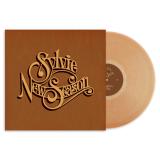
If Sylvie’s New Season were a movie, Ben Schwab would be the auteur, screenwriting and directing the vision, articulating his story through a cast of actors. In truth, New Season is a record of the freewheeling country-rock variety, Sylvie’s first with Ghostly International, and it finds the Los Angeles-based artist at the helm of a rotating ensemble, arriving at pure, joyous expression and renewed faith in the face of hardship. It’s a rare and refined kind of musical gesture, both intimate and all-embracing, self-produced, penned singularly, delivered collectively. An invitation to find beauty in life's trials and to trust that even the longest winters can give way to a new season. Like Sylvie’s self-titled effort, New Season still rings of the sunny, lighthearted, and smooth 1960s and ’70s pop, rock, and country sonics that have become the project’s signature. While Schwab constructed that 2021 project mainly with friends in his orbit, stemming from his time playing in Drugdealer’s band and other peripheral projects, he has broadened the scope tenfold for his full-length debut, New Season. The shapeshifting collective executes on an alluring mix of nostalgic and modern sensibilities, recalling the free-spiritedness of Laurel Canyon and bohemian-era Nashville with a contemporary sheen.
dovrebbe essere pubblicato su 06.11.2026
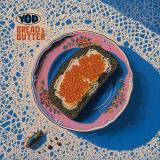
In a cultural landscape trending toward mindless diversion, Your Old Droog has defied the odds, building a thriving career through musical depth and captivating songwriting. In pursuit of hip-hop immortality, the Brooklyn artist engages listeners with inventive metaphors, genuine reflections, and sophisticated rhyme architecture. Now, Your Old Droog is back with his tenth full length album, Bread & Butter. Recalling his humble immigrant family stretching caviar across slices of bread shortly after arriving from Ukraine, YOD has crafted a testament to making the best of any situation. This philosophy runs throughout Bread & Butter, as Droog chronicles the turbulence of rap success, ruminates on youthful memories, and dismisses unworthy challengers with clever precision. The project’s rich sonic texture is shaped by beats from Flying Lotus, Conductor Williams, Ohbliv, and more, while hip-hop luminaries Evidence, Oddisee, and Masta Ace make memorable appearances, along with South African star A-Reece and acclaimed singer Georgia Anne Muldrow. Grounded in resilience, perspective, and self-determination, Bread & Butter is an inspired statement from a truly distinct talent. Transforming personal history into universal truth, the album reaffirms Your Old Droog's place among the most thoughtful and compelling voices in modern hip hop.
dovrebbe essere pubblicato su 06.11.2026
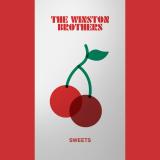
From deep in the hard funk pocket, the Winston Brothers return to Colemine after four years with a second helping of sounds rooted in horn-heavy, 70s-style soul cinema, taking cues from the soundtrack work of Issac Hayes, Willie Hutch, Roy Ayers, and JJ Johnson. Helmed by multi-instrumentalist/producer Sebastian Nagel and longtime collaborator Lucas Kochbeck on drums, Sweets serves as a timely reminder of how Hamburg, Germany’s music scene helps shape and influence today’s soul sound.
Ultimately, bringing musicians like Kimo Eiserbeck (sax and flute) and Hans Stephan (trumpet), alongside some additional drum contributions by Max Whitefield (née Weissenfeldt), demonstrates the close-knit nature of these musicians. From influential bands like Bacao Rhythm & Steel Band to Angels of Libra and the Mighty Mocambos, Hamburg’s deep groove scene has sired its share of worthy soul and funk acolytes.
These musicians have shared stages and studios over the years, with various
configurations finding their way in the aforementioned bands. “We started as a school project… we were just kids,” Sebastian recalls. “It’s a family thing, and we really know each other well.” Sweets is more than just another addition to this scene’s collective musical canon; it is a vibrant dispatch from funk’s leading edge.
dovrebbe essere pubblicato su 06.11.2026
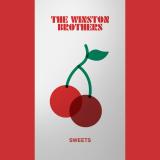
From deep in the hard funk pocket, the Winston Brothers return to Colemine after four years with a second helping of sounds rooted in horn-heavy, 70s-style soul cinema, taking cues from the soundtrack work of Issac Hayes, Willie Hutch, Roy Ayers, and JJ Johnson. Helmed by multi-instrumentalist/producer Sebastian Nagel and longtime collaborator Lucas Kochbeck on drums, Sweets serves as a timely reminder of how Hamburg, Germany’s music scene helps shape and influence today’s soul sound.
Ultimately, bringing musicians like Kimo Eiserbeck (sax and flute) and Hans Stephan (trumpet), alongside some additional drum contributions by Max Whitefield (née Weissenfeldt), demonstrates the close-knit nature of these musicians. From influential bands like Bacao Rhythm & Steel Band to Angels of Libra and the Mighty Mocambos, Hamburg’s deep groove scene has sired its share of worthy soul and funk acolytes.
These musicians have shared stages and studios over the years, with various
configurations finding their way in the aforementioned bands. “We started as a school project… we were just kids,” Sebastian recalls. “It’s a family thing, and we really know each other well.” Sweets is more than just another addition to this scene’s collective musical canon; it is a vibrant dispatch from funk’s leading edge.
dovrebbe essere pubblicato su 06.11.2026
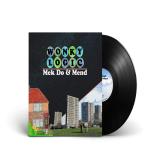
This November, Brownswood Recordings will release Mek Do & Mend, the debut album from self-taught producer, multi-instrumentalist, composer and artist Wonky Logic. Although his name may not yet be familiar to everyone, Wonky Logic (AKA Dwayne Kilvington) has spent the past two decades quietly becoming one of the UK's most respected musical collaborators. His career has moved comfortably between London's jazz, electronic and contemporary music scenes, performing and recording with artists including Nala Sinephro, Yussef Dayes, Nightmares On Wax, Shabaka Hutchings and Emma-Jean Thackray. Alongside his work as a producer and composer, he's been musical director for projects with Eddie Chacon, John Carroll Kirby and I.G Culture's LCSM, scored the feature documentary Zandra With A Zed, contributed music to A24's The Smashing Machine, and continues to lead music workshops with young people, refugees and people experiencing incarceration.
Far more than a collection of compositions, Mek Do & Mend is a deeply personal reflection on the people, places and experiences that have shaped Kilvington throughout his life. It's the story of growing up on a Leeds council estate, where music became both a creative outlet and a way of understanding the world. Making music often meant working with whatever was available: a second-hand keyboard, a makeshift studio desk or ageing equipment that simply had to last a little longer. The title itself came from a conversation with his mother, capturing the resourcefulness that defined his upbringing and continued into the making of the album itself, which was written and produced to a tight deadline around touring, family life and Kilvington's work as a musician and educator.
Built from material spanning more than fifteen years, Mek Do & Mend brings together some of Wonky Logic's earliest compositions alongside brand new pieces written during the making of the record itself. Childhood ideas sit alongside music conceived only months before recording, creating an album that draws together a lifetime of writing rather than documenting a single moment. Running throughout are voice notes from family members, teachers, friends, mentors and collaborators—not simply as interludes, but as a reminder that no creative life is ever self-made. Rather than telling his own story outright, Kilvington invites listeners to discover him through the people who've shaped him: an aunt remembering him playing in church as a child, lifelong friends recalling early experiments making beats together, fellow musicians from different stages of his career and his mother describing him in her own words. Together they reveal the invisible network of relationships, philosophies, communities and experiences behind the music. "The album exists somewhere between being a biography and an autobiography," says Dwayne. "The biography is in the voice notes and how other people see me. The autobiography is in the music."
That same philosophy extends to the musicians who appear on the record. Every contributor has played a meaningful role in Wonky Logic's life beyond the studio. Long-time collaborator Luke Wynter, Steam Down drummer Benji Appiah, partner Vanessa Rani, Jonathan Enser, Joe Bristow, Brother Portrait and Nubiya Imani all feature not simply because of their musicianship, but because they form part of the album's story.
Across its fourteen tracks, Mek Do & Mend moves effortlessly between dynamic jazz arrangements, pulsating broken rhythms, delicate, twinkling piano passages, interstellar synth textures and elegant brass lines. Album opener and first single 'Strange Attractor' begins with a shimmering introduction before unfolding into an exhilarating surge of rhythm and momentum. Named after the mathematical concept of the same name, it serves as the conceptual point of origin for the album. Written when Kilvington was just seventeen, the composition reflects the idea that even the most unpredictable lives are guided by hidden patterns that often only become visible with time. Second single 'A Thousand Hands' features the unmistakable vocal tones of Brother Portrait, whose cerebral lyricism drifts over a low-slung, constantly shifting groove as woozy synth lines ebb and flow overhead. At its heart, the track celebrates the family, friends, mentors and collaborators whose often unseen influence shapes who we become, echoing the album's belief that every achievement is, in some way, a collective one. LP focus track 'BAME (Beyond All Marginalised Expectations)' is a lush, spiralling composition, brimming with both emotion and resolve. Reclaiming an acronym long imposed on racialised communities in the UK, the piece transforms it into a statement of possibility rather than limitation: a defiant rejection of stereotypes and a refusal to let identity be defined by other people's expectations.
The album itself only exists because other people believed in it. Isabel Gracefield made the RAK sessions possible, Rick David brought the record together with his characteristically thoughtful mix, and Gilles Peterson committed to releasing it on Brownswood before hearing any of the music. Away from the stage, Kilvington works with the charity Finding Rhythms, writing and producing original records with people experiencing incarceration, while also leading workshops with Arts Train and Dovetail Orchestra.
Recorded live in a single day in Studio One at RAK, Mek Do & Mend was mixed by Rick David through an analogue Cadac console before being mastered by Stuart Hawkes at Metropolis. The aim wasn't nostalgia or audiophile perfection, but to create a record people could return to throughout their lives, discovering something new with each listen.
As Dwayne puts it: "I don't want this body of work to be reduced to a jazz record. It's more like a novel about life told through music."
dovrebbe essere pubblicato su 13.11.2026

Tyler, The Creator made a deliberate swerve away from the dense, personal Chromakopia with 2025's Don't Tap The Glass, which much more chases brevity and fun over concept. Across a brisk 28 minutes, he leans into rough-edged, danceable grooves that recall the rowdier Cherry Bomb era, from the House of Pain-esque opener to the Off The Wall-style disco bliss of 'Ring Ring Ring' and the r&b 'Sucka Free,' which could well be his catchiest vocal turn since IGOR. Despite Tyler's insistence there's no deep concept here, the tracks flow together with real cohesion across a playful but tightly sequenced ride.
Disponibile in Stock e pronto per la spedizione
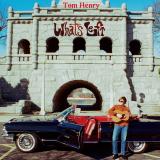
What's Left is the new album by Tom Henry, releasing November 20th, 2026 on Royal Oakie Records. Where his debut album Songs to Sing and Dance To leaned into big dreams, What's Left is a record about what remains once the dust settles, delivered with the wit and charm of a young rocker in his prime. The familiar influences are still there — Paul McCartney and Big Star loom large (though there's a little more Third/Sister Lovers this time around), but now the songs are lush and polished, with new sounds creeping in around Henry’s trademark power pop hooks. On a handful of tracks you can even hear strains of Syd Barrett influenced acid-folk alongside psychedelic rock that recalls The Brian Jonestown Massacre or The Beatles at their most lysergic.
Produced in collaboration with David Glasebrook (Patti Smith, Peter Case, Sugar Candy Mountain), and engineered by Glasebrook and Stephen Shirk, the album was tracked across two cities at Shirk Studios in Chicago, IL and The Garden Shed in Oakland, CA, where Glasebrook also handled mixing and mastering. The record's cross-continental origins reflect the movements of Tom’s own life over the past half decade, which found him departing his native Chicago for Los Angeles before returning home four years later, and lend the album its distinctive sound of Midwestern grit mixed with California sunshine across all twelve tracks.
Opener "Someone I Need" sets the tone: an old-fashioned, up-beat rocker built for a roadside diner jukebox somewhere out along the backroads of your mind — it's crunchy tape tones and horn arrangement lending warmth to the song as the narrator asks for a dance and beckons the listener along for the ride. By "It's Not Meant to Be," the record turns inward, wrestling with the exhaustion of trying to find love in the modern age — especially for someone who wears their heart on their sleeve and often comes to find their suitor's wardrobe doesn't have room. "Silverlake Song," reminiscent of early Donovan, kicks off with otherworldly sitar — a wry postcard from the west, tracing how the shimmering promise of L.A.'s Silver Lake enchants, bargains with, and ultimately tries to ruin the starry-eyed dreamer — and very nearly succeeds.
In addition to Tom–who sang and played guitar, bass, and keys–the album features musical contributions from co-producer David Glasebrook, Brian Daley, Joe Daley, Finn Swingley, Lewis Patzner, and labelmates Graham Patzner, Charles Lloyd, and Simon Beins. Liner notes come courtesy of Ian F. Svenonius, who — in the guise of one Johnny Sincere of Integrated Star Management Ltd. — recounts his company's failed attempt to sell Tom Henry a gimmick: a space suit, a coal miner's neckerchief, a lounge pianist's dead-eyed shades. Tom turned them all down. As Svenonius tells it, when reminded that every story's been told and every gimmick's been used, that all that's left is to admire the photographs of what's gone before, Tom simply shrugged: rock 'n' roll is an eternal spring, and if this is what's left, that's just fine with him — it's what he likes to do.
dovrebbe essere pubblicato su 20.11.2026
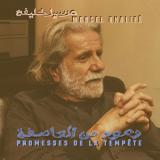
Half a century after its original release, legendary Lebanese musician and singer Marcel Khalife—renowned oud player and global icon of both music and activism—returns with a new recording. On this album, he reinterprets four of the five tracks from his debut, Promises of the Storm. A bold defiance of time and history.
Why revisit the same album, 50 years later? The reasons are many, but one stands above the rest: history itself seems to be repeating. The narrative unfolds once more in the same dire circumstances as half a century ago, as if time has folded in on itself, returning everything to its starting point. The urgency, the necessity—it all remains, pressing and inescapable. We must begin again.
In 1976, a young Marcel Khalife found himself exiled in Paris, fleeing the Lebanese Civil War and his family’s Christian village, where his progressive, left-wing ideas had placed him under a kind of house arrest. He was one of the few to openly and unwaveringly champion the Palestinian cause. The situation quickly became untenable, especially since, just a month before the war began in March 1975, Khalife—fresh out of the conservatory—had given his first public concert to great acclaim. Then, everything collapsed. What does one do when trapped at home? Read books, play the oud, and turn those readings into songs. In his family’s de facto prison, Khalife began setting the poetry of the great Palestinian poet Mahmoud Darwish to music. These songs, born of confinement, he carried with him into exile, driving to Paris where a producer offered him the chance to record an album. Naturally, the tracks were the ones he had been improvising at home from Darwish’s poems. The album’s title, Promises of the Storm, echoed the war that was just beginning. Khalife recalls that the album became a hit after a concert at the Fête de l’Huma, where 500 copies were sold in a single day. “Everything started there, and it never stopped,” he remembers. He would meet Mahmoud Darwish shortly after, at a dinner organized by mutual friends. From that moment, a deep friendship blossomed between the two men.
With Darwish’s words and Khalife’s music, the songs of Promises of the Storm are imbued with a powerful evocative force—melancholy, tenderness, and poetic resistance in the face of violence. The album catapulted Khalife to international stardom, leading to endless tours and recordings, yet he never abandoned his commitments.
Now, 50 years later, Promises of the Storm returns in a fresh recording, because history is repeating itself. After the Israeli bombings in Lebanon at the end of 2024, Khalife, who was on tour, found himself stranded in Paris. He remembered a recurring request from his son, musician Bachar Mar-Khalife, who had often urged him to re-record his now-classic debut album. One morning, oud in hand, Marcel knocked on his son’s door and said, “Shall we? I’m ready to record.”
These new versions are stripped down, raw, and intimate—just the solitary strings of the oud. Khalife sings as never before, his voice no longer marked by the fragility of youth but imbued with something deeper, freer, unshackled. It soars high yet resonates low, always clear, as if to escape sadness, to evoke love and violence, desire and exile. In just four songs, Khalife encapsulates a lifetime, and a philosophy of life. Rita tells of a love of Darwish’s, with the haunting line (translated from Arabic): “Between Rita’s eyes and mine, a rifle.” Oummi invokes the figure of the mother as a metaphor for the lost land. Promises of the Storm is a meditation on revolution, the hope for change, the melancholy of defeat, and the power of thought. Passport captures, through poetry, the feeling of being stateless—a citizen of everywhere and nowhere.
Time has only strengthened these texts and this music. History never repeats itself without a valid, indispensable reason for the present. That reason is fully contained in Marcel Khalife’s new interpretations, which have never sounded so clear, so right, so essential.
dovrebbe essere pubblicato su 20.11.2026

After a year in the making, Laolu completes his Mascara EP with the release of its final single, ‘Mental'. A beautifully instinctive collaboration with Benni Ola that captures the magic of spontaneity and creative connection.
The foundations of the track were first laid in Bali, where Laolu began experimenting with a guitar recording from another project. Drawn to Benni Ola’s unmistakable vocal energy after repeatedly playing his music, the producer immediately felt a connection between the unfinished instrumental and Benni’s voice. Months later, the pair met during a writing camp in Portugal, instantly establishing a creative chemistry that would eventually lead them to Los Angeles, where Mental was recorded in a single, fluid session.
Built around intuition and emotion rather than overthinking, the collaboration unfolded almost effortlessly. What began as a loose idea quickly transformed into a record overflowing with memorable hooks, as both artists leaned fully into the moment and trusted the energy in the room. Benni Ola described the experience as feeling “electrified” from the instant the track played, recalling the session as something almost channelled rather than consciously written. One of those rare creative moments where everything simply falls into place.
That sense of immediacy and freedom runs throughout Mental. Warm, soulful, and emotionally charged, the track balances hypnotic grooves with expressive vocal delivery, creating a record that feels both intimate and euphoric.
Together with previous singles Mascara and Velvet Blooms featuring Paul Brenning, Mental completes the ‘Mascara' EP. A rich and deeply expressive body of work that highlights Laolu’s ability to fuse emotion, groove, and collaboration into something truly timeless.
As with all releases on Siembra, the single is tied to artwork inspired by Magic Carpet - a painting by Laolu’s late father, created in Nigeria in the early 1980s. It’s a personal and cultural thread running through each release, defining the visual identity of Siembra as the label evolves.
Disponibile in Stock e pronto per la spedizione

Finnish-American producer Tin Man aka Johannes Auvinen has spent much of his career updating 80s Chicago acid house for a new era and on 2006's now reissued 'Love Sex Acid', the three 303-driven cuts recall the acid work of Laurent Garnier and Ludovic Navarre. 'Falling Acid' opens with a gloomy intro before building into clattering snares and a slowly intensifying 303 wig out. 'Let's Do It Acid' writhes hypnotically with a snake-like bassline and a haunting whispered sample, while 'Love And Sex Acid' leans into deep house, with tasty electric piano licks over acid textures. A still well-crafted new take on acid's roots that hasn't aged in the 20 years since the revered Finnish label Sahko first issued it.
dovrebbe essere pubblicato su 23.11.2026

Tokyo producer Calm supplies a steady shore's lapping of sound with his next album, Ambient Jazz, not far after his previous records Before and Quiet Music Under The Moon. After a period of sharp emotional whiplash, Calm sets in again to moll the nerves here, serving a full plate of smooth new age and sonic draperies, recalling the night time jazz chasms of John Hassell especially. Between prefectures Tokyo and Yamagata, trusted collaborators are once again folded in, Calm asking them to prioritise tone over improvisation; saxophonist Kato takes central improv stage again on the plainly titled 'Jazz Acid 2' and 'After Dark', while deeper sus-chord shades stark jazz on the likes of 'Space Ritual'.
Disponibile in Stock e pronto per la spedizione

Toka Project was a collective from Nottingham's fertile 90s party scene, including members Andrew Macari, Andy Riley and Steve Walker amongst others, and they dropped their 'One Day' EP in 1999 on Filter Flow, which now revisits the title cut with a new set of remixes. The original is a deep house sound with a rough metallic edge and humid pads infused with whispered vocals. Di Saronno remixes it into something more light and airy, with a subtle skip in the drums that recalls the best of Melchior LTD. Andrew Macari's version has a little cheeky wiggle and sunny synth work, then Latenight Society remixes it into a slower sound with a swirling backdrop of pastoral melodic colours. A dreamy close to a fine set of new versions.
dovrebbe essere pubblicato su 30.11.2026
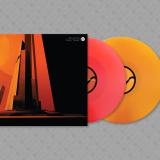
Enter the debut LP of the now Spatial regular Chronicle - Expect a joyous, varied blend of old school brand new atmospherics from one of the scene’s most talented producers. A1 - 20th Century Man Straight into the beats for the deliciously cheery opening, 20th Century Man encapsulates so much of what Chronicle does best - old school breakbeat sensibilities delivered with an inimitable atmospheric charm, strongly reminiscent of that peak Good Looking era we all adored. Incredible synthwork and analogue drums layered with danceable 2-step breaks and melodies take your mind exactly where you want to be. A2 - Terraformers Seminal synths and birdsong effects prepare us for an impossibly crisp breakbeat and 808 bassline to drive this track along, coloured by a myriad of subtle blips and bleeps, delicately flecked across a detailed and optimistic soundscape. Very DJ-friendly from the first to the final bar, the purity of Chronicle’s approach to atmospheric drum & bass is once again at its best here on Spatial. B1 - Boundless Space Playful twittering birds, gentle hi-hats and panning synths introduce Boundless Space, a blissful, serene treat for the senses which soon kicks into flourishing life with the timeless Circles break. Vocal samples punctuate the soothing breakdown with exquisitely programmed effects dotted here, there and everywhere, completing a stunning composition that both reflects on the past and looks forward in equal measure. B2 - Ephemeral Style A light, delicately calming pad-laden intro with echoing melodies opens Ephemeral style, soon punctuated by a sublime 808 bassline preceding the drop. Chronicle showcases his dancefloor breakbeat prowess with an energetic 2-step break pattern, expertly programmed and riddled with detail and density, creating a wonderful collage of sound and a perfect addition to any era-spanning atmospheric set. C1 - Modular Expansion Eerily reminiscent tones harking back to the golden, ultra-classic Good Looking era introduce us to Modular Expansion, a track which quickly adds layer upon layer of original identity to the vibe with crisp breaks, a wonderful metallic backdrop snare and subtle vocal samples. The joyously retrospective breakdown complements the energy of the track beautifully, capping off another gem for the record box. C2 - Limbic System Chronicle introduces Limbic System with swathes of swirling pads and synths, straddled with a subtle yet enigmatic melody carrying us through the drop, where we are treated to a lusciously constructed old school break pattern with a modern twist. Enter the breakdown and the keen ear will spot sampled quotes from Total Recall, which fit the vibe perfectly. “You went to Recall?” - yes, we sure did. And we enjoyed the trip! D1 - Non-Euclidian Continuing the blissful retrospective atmospheric tone of the album, Chronicle serves up Non-Euclidian which opens with a wonderfully synthy intro flecked with old school break samples and an earworm melody, before the onslaught of layered breaks provides variety as well as a thoroughly danceable pattern to unleash on the discerning dancefloor. Trademark dotted effects punctuate the track throughout. D2 - Deep Thought Capping off the LP we have Deep Thought, setting a calming and quietly brooding vibe before impossibly crisp beats kick in and elevate proceedings nicely. Chronicle effortlessly leads the listener through the drop with an analogue punch, earthy basslines and fluttering effects with the kind of flair we’ve come to love from such a vastly experienced and talented producer - perfectly complementing the vibe here at Spatial. Words by Chris Hayes (Spatial / Red Mist)
Disponibile in Stock e pronto per la spedizione

CEPX002 is around the corner and marks the second chapter of the X Series on CEP Records. With this release we welcome vinyl head Eubo from Glasgow to the label. From the first track he sent us it was clear that this is the direction we want to push. A strong old-school influence, shaped by vinyl culture and the energy of the early two thousands. The connection felt natural from the start.
A1 'Iron' is probably the most intense track on the record. A rolling bassline, sharp and slippy drums, and a lead that lays over the track with deep mids. It brings a short moment of calm, while the drive stays constant. A2 'Aluminium' stands out with its clear high hats and a modular synth that recalls sweaty and dark mornings. The sound has a slightly hypnotic and metallic touch. On the B side, 'Steel' moves through the interplay of its synths. The kick and bass stay steady and driving. A timeless track that can underline the peak moments in a DJ set. Closing the release is 'Lead'. It brings a funky bass together with serious, almost contrasting synth stabs.
Mastering by Paul Mac
Disponibile in Stock e pronto per la spedizione

Deeppa Records kicks off a new 7" series here that aims to pair emerging artists with established names from the label's artistic circle. The opening release introduces Tolyatti producer Pasadena with 'Vodichka Nice', a laid-back, groove-led gem that recalls 'Stepoing Into Tomorrow' era Donald Byrd with its seductive drums, squelchy slow-bass and soft-focus melodic wonder. It's already becoming a fave on the scene and on the reverse, respected producers Scruscru and Tony Lavrutz reshape the original with a remix that leans into deeper club territory, though keeps the bright melodies and inviting horizontal feel. Two sides, two moods, two essential cuts.
Disponibile in Stock e pronto per la spedizione

ABOUT PHONE ME TONIGHT
Phone Me Tonight was recorded in 1981 at Studio Maïa in Bondy, just outside Paris - a creative hub where many artists of the African diaspora shaped their sound. On this track, Eko Roosevelt collaborates with producer Gabriel Nahas, known for his work with artists such as Pasteur Lappe, Marthe Zambo, Toto Guillaume, and Manu Dibango. The result is a shimmering blend of synth-driven groove and Eko’s signature ‘Funky Disco Music’ sound, capturing a moment where analogue warmth met futuristic ambition.
For this 2026 reissue, Phone Me Tonight has been carefully restored and remastered, breathing new life into Eko’s iconic Yamaha DX7 synth lines. The track has been subtly tightened to the grid, making it perfectly suited for contemporary dancefloors & dj’s while preserving its original spirit and charm.
This EP also offers a glimpse into Eko’s creative world: rare photographs of his home studio in Lobé, featuring the very DX7 synth used during the original recording. In addition, you’ll discover exclusive footage from the Phone Me Tonight video shoot, filmed at the breath-taking Lobé Waterfalls, documented together with Lobé’s community throughout 2025 and 2026.
ABOUT LOBE MON AMI
Lobé Mon Ami was written by Eko Roosevelt in 1981 as a heartfelt tribute to his home community of Lobé in Cameroon. Two versions of the song exist; this EP presents the rare and original version, restored and remastered here for the very first time. Using the download code, listeners can also access an exclusive alternate version of Lobé Mon Ami and the full EP in digital formats.
The song weaves together multiple languages, including Batanga and French, reflecting the rich cultural fabric of the region. Through its lyrics, Eko tells the story of his life - born and raised in Lobé, venturing abroad in pursuit of music, yet always drawn back home. Each return rekindles his deep connection to Lobé. In a poetic gesture, he names surrounding villages in various languages such as Batanga throughout the song, turning it into both a personal memoir and a cultural map.
ABOUT EKO ROOSEVELT
Born on November 13, 1946, to princess Kethy Mbenyo and William Roosevelt, Eko Roosevelt has led a life filled with mythical appeal and musical excellence. Local lore recalls how, at the age of ten, he bravely fought off and killed a serpent near the waterfalls of Lobé. An event that became part of his local legend prior to his enduring legacy as a musician and traditional chief.
Eko Roosevelt discovered his passion for music in church before furthering his studies in Dakar, where he met his wife, Nicole. Together they moved to France, where Eko launched his recording career - first with the Dikalo Group, and later as a solo artist. His discography includes standout releases such as Kilimandjaro My Home, Funky Disco Music, and the hit single Nalandi. In 2020 he renewed his status as hitmaker through his work with Disclosure on the revised version of his single ‘Tondoho Mba’, originally released in 1982. His enduring legacy and pioneership within Makossa and Funky Disco music helped shape the sound of many DJ’s and producers such as Gilles Peterson, Disclosure, Folamour, Diplo, ANOTR, Jax Jones, Sonny Fodera and Daphni.
Over the years, he shared stages and collaborations with renowned artists including Claude François, Nino Ferrer, Manu Dibango, and Miriam Makeba. As a producer and arranger, he became a respected figure across the African diaspora, working with talents such as Toto Guillaume, Marthe Zambo, M'Pongo Love, and experimenting in the studio with visionary artist Francis Bebey.
In 1998, Eko returned to Kribi, where he continues to live, create, and perform. Alongside his musical career, he has composed three albums of Catholic music, still awaiting release, and is currently working on new material. Today, he remains a beloved figure both locally and internationally.
Since 1996, he formally assumed his role as traditional chief of Lobé (usually reffered to as 'Chef Traditionnel'), following in the footsteps of his grandfather; his majesty ‘Bevigna Eko Louis’ - an enduring source of inspiration throughout Eko Roosevelt’s life. Despite his royal duties, he continues to perform regularly across Cameroon. When he takes the stage, entire crowds sing along to Lobé Mon Ami and classics like Nalandi and Attend-Moi, celebrating a legacy that bridges generations.
Balancing tradition and music, his majesty Eko Roosevelt Louis remains deeply committed to both his community and his art. This reissue of Phone Me Tonight / Lobé Mon Ami marks a renewed chapter in sharing his rich musical legacy, and his musical future with the world.
Disponibile in Stock e pronto per la spedizione

Maria is the debut album from renowned Brazilian electric bassist and composer Moyses Dos Santos. A homecoming for the London-based artist, Moyses’ debut reconnects him with his North-Eastern roots while assembling an international cast of collaborators including legendary Brazilian arranger Arthur Verocai, US trumpet sensation Theo Croker and London-based vocal star Lynda Dawn.
After relocating from Brazil to London in the early 2000s, Moyses dos Santos quickly became one of the capitals’ most in-demand players, sharing stages, studios, and writing credits with best-selling artists including Nile Rodgers, Janelle Monáe, Emile Sandé, Gregory Porter and Omar.
In 2022, Moyses toured with Brazilian jazz-funk legends Azymuth, completing the rhythm section alongside Brazilian drumming master Ivan "Mamão" Conti. "It felt like he was my wise Brazilian grandfather figure." Moyses recalls. "When you spend so many years working internationally, you unconsciously start to leave certain parts of yourself behind. Mamão encouraged me to reconnect with Brazilian music, and that's where this record really began."
Brazil’s North-east, where African, indigenous and European traditions collided and fused most intensely, produced a musical heritage unlike anything else on earth, Moyses dos Santos is a product of this syncretism. On Maria, named after his mother, Moyses brings the musical vocabularies of his youth to the fore. From the soul of the church band where he began to learn his trade as a musician, to the rolling batucadas – maractus, baiaos, sambas and frevos – which he played throughout his teenage years.
Drawing on the lineage of North American electric bass giants like George Duke, Jaco Pastorius, and Stanley Clarke, Moyses runs Brazilian musical traditions through jazz, funk, soul and disco: his sound charged with the cosmopolitan energy of London's contemporary jazz scene.
Lead single and album opener “Boa Viagem’ is joyous, carnivalesque dancefloor jazz: a timeless groove for the nightclub and street party alike. Calling directly to a higher power “Brazilian Spirit” is an astral-jazz phenomenon, featuring the transcendent trumpet playing of Grammy nominated Theo Croker. On “Saudade” Moyses calls upon iconic Brazilian maestro Arthur Verocai, whose signature string arrangements cascade around the divine vocals of ascendant London artist Lynda Dawn.
With impeccable style, charisma, warmth and virtuosity, Moyses steps forward with his stunning debut Maria: out on vinyl, LP, CD and digitally on the 12th June 2026.
Disponibile in Stock e pronto per la spedizione

Australian producer Inkswel is back on the Cosmocities label in France with more of his superbly soulful sounds, this time with none other than Chicago legend Robert Owens. The lush 'Space Love' is a playful deep house jam with the sort of cosmic synths that recall early Fingers Inc and Owens's smoky tones only heighten that feeling. Steve Spacek provides a mix that rides on broken beats with elastic bass but just as much cosmic energy and a Fluterumental gets all loose-limbed and seductive. On the flip side are two Yoruba Soul mixes that bring extra rich soul vibes and shimmering pad work. A classy and timeless EP for sure.
Questo articolo non è stato ancora rilasciato. È possibile pre-ordinare il prodotto ora.

Jolene Cuts returns with a 5-track vinyl-only masterpiece that channels the golden era of 1998 French House while pushing it into the future. No edits—just 100% original productions from Danny & Mike, two true craftsmen of filtered house grooves. “Jackpot” kicks things off with a euphoric, sample-driven floor-burner, dripping in funk and irresistible filter sweeps that recall the raw magic of classic Roule and Crydamoure records. “Voiture” follows with a sleek, late-night ride through hypnotic basslines and shimmering disco loops, perfect for peak-time club moments. On the flip, “So Cruel” brings soulful vocal chops and deep, rolling grooves in a way that nods to the emotional side of the French Touch era. “Love U” injects pure joy into the mix—swinging drums, warm filters, and a seductive disco flair designed to light up any dancefloor. Closing it all, “Disco Road” is a driving, high-energy weapon blending pulsating bass and filtered hooks that feel like 3 a.m. in Paris circa ’98. This is a love letter to French House—strictly vinyl, strictly limited, five unmissable club bombs. Perfect for DJs who crave that raw filtered energy, vinyl purists, and anyone who knows the true essence of French Touch: groove, soul, and pure dancefloor ecstasy. Once it’s gone, it’s gone.
Questo articolo non è stato ancora rilasciato. È possibile pre-ordinare il prodotto ora.

Carly Simon’s No. 1 smash “You’re So Vain” lingers as one of the most clever and famous songs ever recorded. The subject of mass speculation ever since its release, soon after which it occupied the top spot on multiple Billboard charts for weeks, the anthem kept a captive public guessing at the identity of its smug subject for decades. The question surrounding the protagonist’s identity remained perhaps the only mystery on the otherwise sexually open and autobiographically daring No Secrets, Simon’s commercial breakthrough and ‘70s singer-songwriter staple.
Sourced from the original master tapes, pressed at Fidelity Record Pressing in California, strictly limited to 3,000 numbered copies, and housed in a Stoughton gatefold jacket, Mobile Fidelity’s 180g 45RPM 2LP set affords the platinum-certified 1972 effort the finest sonic treatment it’s received on vinyl. Helmed by Richard Perry and recorded at London’s Trident Studios — where Beatles, David Bowie, and Elton John captured landmark LPs — No Secrets touts exceptional production qualities highlighted by this restorative reissue.
Audiophiles and record collectors, take note: This is the first time No Secrets has been available on 45RPM. The wider grooves and dead-quiet surfaces pay instant dividends. Simple, elegant, and disarming, songs seemingly float amid wide, deep soundstages. Simon’s voice takes on a confident, assertive tenor that emerges with accurate imaging, balanced tonality, and palpable presence. String arrangements and backing vocals come through with similar realism.
Enhanced by an all-star cast — Simon’s then-husband James Taylor, Paul and Linda McCartney, Mick Jagger, Lowell George, Klaus Voorman, Bobby Keys, Jim Keltner, Nicky Hopkins, and Bonnie Bramlett are among the renowned musicians who lend a hand — No Secrets advances Simon’s themes of personal introspectiveness, no-holds-barred reflectiveness, and feminist-inspired boldness. She makes every moment of No Secrets worth savoring. Simon invests her all in the songs, handling beautiful ballads, sassy folk-rock numbers, and bluesy fare with calm, composure, and candor.
While acknowledging her own regrets (“You’re So Vain”) and loss (“The Carter Family”), Simon champions the highs (“The Right Thing to Do”) and pains (“His Friends Are More Than Fond of Robin”) of love in a sincere manner indicative of her maturity as both an artist and singer. The New York native distinguishes “When You Close Your Eyes” with deep-rooted spirituality, recalls childhood joys via charming sentimentality on “It Was So Easy,” and and takes ownership of her persona on a cover of Taylor’s “Night Owl.”
“We have no secrets
/We tell each other everything,” Simon sings at the record’s midpoint, encapsulating both the themes and bravura of an effort that was nominated for four Grammy Awards and saw her write or co-write every song but one. Combined with Perry’s savvy instrumental arrangements, her self-assured performances and forthright lyrics grant No Secrets an edginess and relevance immune to the ravages of time.
Questo articolo non è stato ancora rilasciato. È possibile pre-ordinare il prodotto ora.

Questo articolo non è stato ancora rilasciato. È possibile pre-ordinare il prodotto ora.
