Buscar:random method

Estilos
Todo
  • 1
Nicolás Jaar - Piedras 1 & 2 (LP 2x12" + Bonus Download)

he initial seed for this project was planted in 2020 when Nicolás Jaar wrote the song “Piedras” for a concert at the Museum of Memory & Human Rights in Santiago, Chile, which commemorates the victims of human rights violations during the military dictatorship led by Augusto Pinochet between 1973 and 1990. Between 2022-2023 it took on a new form as a radio play entitled 'Archivos de Radio Piedras', which was shared on a dedicated Telegram channel. In 2024, the play was converted into a 24 channel installation at the University Museum of Mexico City (MUAC), where it was exhibited for 5 months.

Piedras 1 and 2 is a collection of the tracks featured within the play, all new music by Jaar, but partly presented within the play as the music of Salinas Hasbún (the name a composite homage to Jaar's grandmothers, Graciela Salinas and Miriam Hasbún).

The play follows two friends mourning the disappearance of Salinas Hasbún, a musician and writer who vanished in the early 2020s. Although they live in a future where technology is advanced, they
resort to DIY radio methods because the anonymous group “Las 0cho” has launched a worldwide attack on undersea internet cables, causing a global internet blackout.

The play's central theme revolves around the idea that truths, memories and identities speak from the cracks (“rasgaduras”), or the "in-between" spaces ("en el entre"). This concept is supported by the
way much of the narration unfolds - in the liminal spaces between radio frequencies. The instability and transitory nature of a constantly shifting radio dial becomes not just a metaphor but the structure of the play itself. It’s in these moments of noise, static and interference that the deeper revelations of the story emerge. This disjointed, ever-changing medium mirrors the way memory and trauma operate within the play - non-linear, slipping through the gaps, found in fragments or ordinary moments, rather than direct transmissions of “official” historical accounts.

This notion reaches its climax at the end of the narrative, when a text is discovered in which Salinas speaks of finding a new number in a small pond in a cave mentioned in the first episodes of the radio play. This pond, inside the “cochlea of the world”, is seen as a way to introduce real-life randomness to computation. Embodied in the salt lakes of northern Chile, home to the world’s oldest bacteria, this randomness disrupts the rigid order of binary code, paving the way for a transformation of digital life.

First solo release by Nicolás Jaar since 2020’s Telas and Cenizas.

Disponible

En el almacen y preparando para el envío

Julien Gasc - Re Eff LP

Julien Gasc

Re Eff LP

12inchCD002
Corps Double
16.09.2022

Originally Re Eff (pronounced Ri Èf) was a bunch of texts. One hundred and fifty pages that Julien Gasc wrote by trying his hand at the art of cut-up: a literary and political act of counter-fiction based on William Burroughs’s method. It was also Julien Gasc’s response to the isolation of 2020, while he was seeking refuge in the Southwest of France, with time as far as the eye could see, and a piano.

For a long while, it hadn’t been about songs, but about expressing the indescribable by cutting randomly from books and his own notes, attempting to fleetingly strike a balance, find a beauty, a happy accident. Incidentally, it was almost by accident, while recycling a piece that he’d composed for steel guitar pedal, that Julien Gasc sketched the first draft of “Ce soir les bouteilles dansent” (“Tonight the Bottles Are Dancing”). This was combined with a version of “Rosario Bléfari”, recorded on an inexpensive Casio synthesizer. These were Re Eff’s baby steps.

While everything was at a standstill, in stasis, Julien Gasc wanted to send a group message to some friends, to his family, a message from a confinee to those who weren’t answering, friend or foe, imaginary or otherwise. It was this collective recipient that he nicknamed Re Eff. The name comes from “re” (re-) and “effacer” (erase), words found during a cut-up and transformed into ri èf for added euphony, like a facetious grief (grievance, reproach in French) without the “g”.

Like its title, a kind of serious joke, the album is one long interplay between humour and gravitas, sense and nonsense, shadow and light, aiming to fully describe feelings in terms of their ambiguous and contradictory elements.

Through a return to regular piano practice, calm recovered at a holiday resort town, and literary experimentations, to which he added transcribed dreams, as in “La scie de la vision modern” (“The Saw of Modern Vision”), Julien Gasc composed ten demos on his computer. These demos were then rerecorded at Syd Kemp’s Haha Sound studio in London, in December 2021. The mix was completed there again, in February 2022, by Syd and Julian.

Play to play and write to write, those are the keywords of Re Eff, in which memories are freely combined (“À travers le regard de l’indienne” / “Through the Amazon’s Eyes”), the theme of enclosure and passion (“Amour velours” / “Velvet Love”), melodrama ("Délivrance"), and romantic novella (“Tout ne peut pas nécessairement donner quelque chose” / “Not Everything Leads to Something”). Music resolutely oriented towards the piano, towards bold and filmic harmonic movements that make a successful form of lyrical poetry possible. Because all in all, by singing about current events – his own and those of the world – in an elegiac tone, like bards, Julien Gasc was gradually transformed from pop singer into poet.

Disponible

En el almacen y preparando para el envío
Christina Kubisch - TUNING

Christina Kubisch

TUNING

12inchFAIT-41LP
Faitiche
17.04.2026

Faitiche welcomes a new artist: Christina Kubisch belongs to the first generation of sound artists. Her practice ranges from performances, concerts, to works with video and visual art, but she is best known for her sound installations and electro-acoustic compositions.

TUNING brings together three pieces by Christina Kubisch from different periods of her oeuvre. What they have in common is the way they transform sound phenomena originally considered “non-music” into compositions.

Jan Jelinek: Gaming in Silence (2024) is the most recent work on this compilation. It’s a collage of electromagnetic waves, voice, and abstract sound textures. How did this combination come about?

Christina Kubisch: Gaming was commissioned as a fixed-media composition for the Sound Dome at ZKM Karlsruhe. Since Resonances: The Electromagnetic Bodies Project (2005), I’ve been making recordings in the old and new server rooms at the ZKM and in their permanent collection of historical computer games. Computer games like Asteroids (Atari, 1979) and Poly-Play (VEB Polytechnik, 1986) have specially generated analogue electromagnetic waves that interest me in particular on account of their density, rhythms and textures. I originally studied painting and to me the work of composition often feels like painting an abstract picture. I alter my source material as little as possible, layering and overlapping until a distinctive sound space emerges. In recent pieces, I sometimes combine magnetic waves with field recordings or live instruments. In Gaming it’s my recording of a Chinese song about silence.

JJ: Two persons walking through a street in Madrid (2004) is a recording from your Electrical Walks series. Here we should give a brief explanation of one of your best known works: participants in an Electrical Walk move through public spaces wearing prepared headphones that allow them to receive electromagnetic waves from their surroundings – for example from security gates, ATMs or neon signs. They discover a situation that normally is inaudible to the human ear and they can actively shape it by choreographing their movements. I really admire this piece, not least because there’s no clear dividing line between participants and artist. What exactly do we hear in Two persons walking through a street in Madrid (2004)?

CK: With this early work, I wanted to understand what is heard by people participating in an Electrical Walk in the same place but moving in different ways. The Spanish composer Miguel Alvarez-Fernàndez and I set off from opposite ends of a major shopping street in Madrid, met briefly in the middle, and then continued to the end. We both recorded our walks and I then layered them over one another. You might call it a work of electromagnetic conceptualism.

JJ: Diapason (2009 version) is an installation that plays a composition based on sounds from fifteen tuning forks. This setting is audible in the recording: there’s no dramatic arc, no beginning or end – instead, it recalls a piece of aleatoric music focussing on the decay phase. How did you come to make this work and could you tell us something about your compositional method?

CK: Diapason is part of a series of three pieces that deal with “non-instruments” or instruments that no longer exist: electrical mine bells used to send signals to the workers underground; a historical glass harmonica originally used for medicinal purposes; and tuning forks that were used by doctors to test people’s hearing. All of these methods are no longer in use. The sound of the tuning forks, audible only if held close to the ear, was recorded at the electronic studio at Berlin’s Technical University in such a way that even their decay remained audible. The frequencies range between 64 and 2048 Hertz and they can be adjusted at micro-intervals using small movable weights. The sequence and the duration of the pauses are dictated by chance and were not defined in advance. The 2009 version was created for an installation in the historic Holy Cross Church (Korskirken) in Bergen. Visitors could enter and leave the space at any time, deciding for themselves where and for how long they wished to listen to the sounds played back over an array of small loudspeakers placed on the floor of the apse.

Credits:

Gaming in Silence: commission of the ZKM/Hertzlab, Karlsruhe 2023
elektronic sound processing: Tom Thiel
sound engineering and mixing: Eckehard Güther

Diapason: produced at Elektronisches Studio of TU Berlin
rearrangement: Eckehard Güther

Christina Kubisch, published by Edition Christina Kubisch / Random Musick Publishing

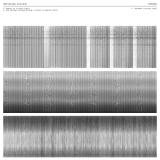
image front: Transitionen 2021 by C. Kubisch, sonagrams of electronic waves (courtesy: Galerie Mazzoli Berlin)
image back: Diapason Tuning Fork, property of Folkmar Hein, Photo: Archiv Christina Kubisch

design by Tim Tetzner
mastered by Giuseppe Ielasi
Thanks to Miguel Álvarez-Fernández, Folkmar Hein, Dominik Kautz and Mario Mazzoli

Reservar17.04.2026

debe ser publicado en 17.04.2026

TORSO - FACES

Torso

FACES

12inchOZT-003
Ozato Records
01.08.2025

*JAPANESE PRESSING* ** Limited Edition** *** Unique hand silk-screened cover details*
Note: the colours delivered are random - examples shows above**

Enchanting and highly focussed material on a self released LP ** BIG TIP!!

TORSO's 2nd vinyl release.
TORSO (トルソ) is a unit formed by Kenji (flute, sax, etc.) & Orie (cello, voice, etc.), a married couple based in Tokyo, JP.

Technical:

Mastering and cutting were carried out by Graeme Durham of THE EXCHANGE mastering studio, established by the former "Sound Clinic" mastering and cutting section of Island Records UK. This ensures deep grooves and exceptional dynamics.

Kenji: Flute, Sax
Orie: Cello, Voice, Piano
Mixed by: Naoyuki Uchida
Mastering & Cutting by: Graeme Durham (The Exchange)
Press: Toyokasei Japan

The album cover features new artwork by Masaya Nakahara aka HAIR STYLISTICS, with the album title hand-printed using a silk-screen method in 7 colours, individually finished for each of the 500 copies.

Reservar01.08.2025

debe ser publicado en 01.08.2025

Tony Touch - ‘The Piece Maker 3: Return Of The 50 Mc's (LP 2x12")
 
25

Originally released in 2013 and previously unreleased on vinyl, we are proud to present the 3rd volume in the Piece Maker series by legendary DJ Tony Touch. Featuring an incredible line up of MC's that includes Busta Rhymes, Reek da Villain, Roc Marciano, Lil' Fame, Too Short, Xzibit, Kurupt, B-Real, Papoose, Uncle Murda, Black Thought, Styles P, Sheek Louch, Jadakiss, Raekwon, Ghostface Killah, RZA, Eminem, Twista, Bun B, Action Bronson, Prodigy, Joell Ortiz, Royce da 5'9", KRS-One, Crooked I, Redman, Method Man, N.O.R.E. and Erick Sermon among others.

Reservar05.07.2024

debe ser publicado en 05.07.2024

Innode - Grain LP

Innode

Grain LP

12inchEMEGO311V
Editions Mego
19.04.2024

Grain is the third Innode release following on from Gridshifter in 2013 and syn in 2021.

A new methodology to make the album is applied yet again from the trio of Bernhard Breuer, Steven Hess and Stefan Németh. The approach is more an anti approach where the trio let the process of creation itself steer the development of the recording, without any prior conceptual agenda.

Irregular rhythmic patterns often served as the initial springboard for each piece with Breuer creating a loop either by playing drums or with the aid of a modelling percussion synthesizer. The results often bypass existing formulaic grids. The outfit embraced these anti-precision steps building shapes around the tarnished templates.

The process of building upon the core structures laid forth alters throughout. In the case of "Splitter" you can hear an example of Bernhard´s core loops dominating a skeletal audio sphere. The title of the track "Impactopium" reflects the process of its construction being a conglomeration of individual titles meshed into a whole. The audio is a non-linear compendium of several fragments of individual elements. A conscious method of exploring a more decentralised architecture saw three disparate elements layered randomly on top of each other with some synths added as a sonic seasoning at the later stages.

Elsewhere sonic elements are restructured in unusual ways. One member's contribution is completely stripped away, quiet sounds captured with contact mics are highly amplified, the last track introduces twisted themes of the first track.

The title Grain refers to the roughness resulting from these explorations. It also takes note of the term grain as used in analogue photography or in the case of audio as a distorted signal, or "noise". All of these elements, normally eschewed, are here embraced as a thematic thread to instigate the exploratory proceedings.

This is a playbox of inventiveness, a hall of mirrors and an endless search for unusual tactics and fresh results.

Tackling the initial loop tracks from a wide variety of strategic approaches Innode has concocted a strangely cohesive work. From sparse source material to heavy overdubs of overdubs grain is a uplifting collection of works from this relentlessly curious and exploratory Austrian outfit. Humans make the work but the random embracing of unexpected processes means the gentleman of the outfit is not fully ruling what becomes of these works.

Reservar19.04.2024

debe ser publicado en 19.04.2024

Die Anarchistische Abendunterhaltung - Musik für animierten Tonspurfilm LP

"Musik für animierten Tonspurfilm", the twelfth album by Die Anarchistische Abendunterhaltung (or DAAU, as they are commonly known), is the soundtrack to a series of short, abstract animation films by Rudy Trouvé, who also acted as a creative director during the recording process.

The music originates from acoustic improvisation sessions by accordionist Roel Van Camp, clarinetist Han Stubbe, double bass player Hannes D'Hoine and percussionist Jeroen Stevens. These took place according to conceptual guidelines set by Trouvé. Sometimes the starting point was a play on words or a random chord sequence, sometimes a specific atmosphere, but the playing field was always kept deliberately limited. Hence, the musicians were forced to build a musical structure with minimal means. The result was cut on cassette, after which the Antwerp enfant terrible - Rudy Trouvé-, known from his work with dEUS, Kiss My Jazz, Gore Slut and I H8 Camera among others, happily hit the tracks with a virtual sledge hammer. DAAU's pieces were cut up, sampled, drastically restructured and pasted together again, a method that had been applies earlier on the retrospective album 'Hineininterpretierung' (2017). On top of that audio collage, the musicians added new electronic layers, using a digital accordion, synths, digital bass and marimba. DAAU says: 'On the soundtrack, like on the older record, we were looking for a symbiosis between an acoustic and electronic sound. And there too we messed around with dub and Krautrock references'.

Reservar17.11.2023

debe ser publicado en 17.11.2023

Kemialliset Ystävät - Alas Rattoisaa Virtaa

Jan Anderzén and his partners celebrate the transcendental power of ecstatic music. Alas Rattoisaa Virtaa is the first Kemialliset Ystävät album in four years. It is the result of chance enhancing online collaboration methods, desire to get lost in the sound archives and the high art of meticulous editing. The album title is from visions of rivers running down from Heart of Darkness to the City of Joyful Noise. If contemporary music is a high speed train passing by then KY's music would be an orgy of light under a railway bridge.

A band member Lars Mattila experiences the music of Alas Rattoisaa Virtaa in spatial terms:

"There are worlds accessed only through our auditory system. I hear a Wunderkammer of freestanding sound objects. Rhythms like sequences of seemingly random stuff laid out on the forest floor: a pair of thrones, a Henry Moore sculpture, a watermelon, two thrones, a Moore sculpture, a melon... I trust the path to go on even if I can't see behind the hill. There's motion, wether it be drunk driving or super human rapid eye movement. The sheer amount of detail makes it impossible to take everything in at once. One's perception and shifting focus reshape the experience on each listen. I remember my visit to Cappella Palatina in Palermo where Normann architecture, Arabic arches and Byzantine dome form a harmonious whole. Various cultural and spiritual influences are recognized as equals. The sense of space also brings to mind the end scene of The Lawnmower Man when the dude is trying to escape the virtual world."

Reservar21.10.2022

debe ser publicado en 21.10.2022

Automatisme - Alter 2x12"

ALTER- : A REACTION TO THE ALTERMODERNISM IN SOUND ART
For the Automatisme - Alter- album. I am inspired by how the art historian Nicolas Bourriaud defines the Altermodernism. Bourriaud understands the term "Alter" as a way to mean "other". The altermodernism would be another modernity that is different from the avant-garde modernism and post-modernism. More precisely, this is a new paradigm from the XXIe century with alternative ways to motivate artists to be more radical in art by traveling in the physical and digital world, by cutting the frontiers and by creating other time lines. I apply the "alter" subject to time and to landscape and those, to the rhythmic and the ambient glitch music.

1- THE ALBUM HAS A RHYTHMIC SIDE AND A LANDSCAPE SIDE.
1- a : The rhythmic tracks are named Alter-Rate. That means that I offer other types of rhythms by calculating beats with time rate experimentations. The form of the rhytmic tracks, expresses a course, a wandering, which, in the altermodern life, is not just in a standard 4/4 , or just grid based or non-grid based, but it's in a complex hybrid of all of those.

1- b : The ambient tracks are named Alter-Scape. That means that I offer another type of landScapes by a paused temporality and not by a random time or by the time of the nature. Alter-Scape tracks mimic the saturated globalized soundscapes of the XXIe century.

2- THE GLOBALISED AND SATURATED TIME
For Bourriaud, the artists respond to a new globalised perception. They traverse a cultural landscape saturated with signs and create new pathways between multiple formats of expressions and communications1. The Alter- album tracks have saturated rhythms Rates and static ambient soundScapes. The specific context within which we live is the age of globalisation2. In this album, it means that globalised or always evolving rhythm Rates are in constant movements and are also different every time an Alter-Rate track is exported or performed. On the other hand, a globalised landScape is an ambient track with a motionless temporality. In the era of the altermodern, displacement has become a method of depiction3. The movement of the sound in the Alter- album is two sound spaces. The first is the rhythms that make time movement become apparent and the second is an ambient paused or static time that makes possible to feel and to analyze the movement effect of our surroundings.

3- THE CONSTANT TENSION STATE OF ART
For Gilles Deleuze, art is in a constant state of tension, in as much as it oscillates between the poles of chaos and order4. The Alter- album is a tension between chaos and order in rhythmic beat tracks and ambient soundscapes tracks. It is a deterritorialization of the rhythms and the ambiences of today's natural and digital landscapes and it brings them into the computer glitch music format.

By pushing new softwares to their limits, I push at the extreme the software capacity to calculate and to generate sounds. The Alter-Rate tracks are experimentations with time rates and rhythms with the use of probability and artificial intelligence based sequencers. The partition signal starts from a master sequencer that gets into all instruments on a track. Each instrument receives this signal and modulates it with other sequencers that are each programmed differently for every instrument. Finally, all the instruments signals return to a master output that contains a stutter effect. This master channel is sequencing all other channels into one single rhythm. In short, a single rate merges and expands into a vast archipelago of rates and the transformed signal becomes a new single rate. The Alter-Scape tracks are experimentations with midi triggers that give the sensation of a timelessness. Multiple reverb effects are also routed into each other to create soundscapes of continuity. About the type of sounds created in this album, I do experimentations with deep frequency modulation synthesises (FM) on all Alter-Rate and Alter-Scape tracks.

I put a few layers in the tracks to be able to focus on the time space and perception. The tracks are generative and every parameter uses probabilities to be programmed. This is something that was not possible some years ago. The computers are enough powerful to generate that now. I export many times the tracks and i push the computers to their limits by making hard for them to calculate and to generate the tracks with a deep, a pointillist and an extreme software programming. These techniques do different versions every time that I export or perform a track and in my opinion, that opens a fresh and innovative way to do new experimental club music and ambient music. The computer has its own limits too.


Reviews in The Wire, Gonzo, A Closer Listen, Datacide, African Paper, Silent and Sound, and more

No en stock

Haga su pedido ahora y le encargaremos el artículo en nuestro proveedor.


Ültimo hace: 5 Años
Driftmachine - Spume & Recollection

Driftmachine

Spume & Recollection

12inchUR130LP-RE
Umor-Rex
11.06.2021

Repress

Punctual like a Swiss watch, Driftmachine presents a new album that once again astounds and delights. We know their trademark: solid mechanical percussions, forceful bass and melodies systematically built around circular patterns. "Spume & Recollection" is the sixth Umor Rex album by the Berlin duo, and what better way to celebrate the label's 15th anniversary than with a new record from the masters of labyrinthine cables and patches. Regarding "Nocturnes" (UR 2014), their debut album, we described their sound as precise and symmetrical, identical concrete blocks mounted and articulated in a random order. Their already obsessive style continued to evolve with their third record, "Colliding Contours" (UR 2016), now pushing further into abstract dub, ultra-tense grooves, and even more kinetic loops, moving further away from conventional musical structures. Between these two albums they released the remarkable "Eis Heauton" (UR 2015), a kind of hypnotic experiment informed by shadowy atmospheres, chance, and an intuitive dialogue with their musical machines, a unique situation in which they acted as bemused observers in hunt for epiphanies, resulting in an exquisite amalgamation of lucid dream-logic and mechanical precision. A one-of-a-kind soundtrack for minute and wordless scenes unfolding in pitch-black back alleys and hidden, alchemical basements. A similar map was explored with "Shunter" (UR 2018), a superb secret meeting between avant-garde phantasmagoria and concrete experimentation. "Radiations" (UR 2017) offered B-sides and bonus tracks, in addition to collaborations with Shackleton and The Sight Below, a kind of preamble that united Driftmachine’s different expressions and leanings.

When Andreas Gerth and Florian Zimmer come up with new material, one listens with high expectation. Looking back on their discography, one could safely anticipate a high quality album densely layered with their familiar leitmotifs. And yet, "Spume & Recollection" takes us by surprise and finds a new way to transfix. Fresh methods and ideas are introduced to their dynamics and formula. Yes, of course, you can still expect a healthy dose of kosmische, which is one of the dominant features in Driftmachine’s DNA; but this is now entwined with novel materials, semi-material patterns of alien code stretching over exhilaratingly tense and detailed grooves, clouds of gas shifting on top of deep dub architecture and blocking out the sun for prismatic effect. Even more of a surprise is the immediate, streamlined nature of these tracks, making "Spume & Recollection" their most accessible record and, perhaps, the most addictive (and this without sacrificing the essential mystery and strangeness at the core of Driftmachine’s sound).

We have previously described their work as post-industrial-dub; right now, we might just call it hypno-music for man and machine to dance and dream together. "Spume & Recollection" takes this concept as far as it can go without breaking, and finds some strange new feelings, and weirdly danceable grooves, to shed some light on this dark and dazzling ride.

All songs written & produced by Andreas Gerth & Florian Zimmer in Berlin Mastered by John Tejada Artwork & Photos by Daniel Castrejón

No en stock

Haga su pedido ahora y le encargaremos el artículo en nuestro proveedor.


Ültimo hace: 4 Años
Various - NO RECORDING II

Various

NO RECORDING II

CassetteNORECORDINGII
No Recording
03.12.2020

Killer tape from YPY, group A, Kohhei Matsuda(Bo Ningen), Kenichi Iwasa + Tot Onyx(group A).

group A's charity compilation series "NO Recording" spotlights on over 1000 unreleased tracks, improv sessions and random recordings from our past. In order to act fast to emergency campaigns, fundraisings and people who are in need of help, the strict "no additional recordings" rule is set and instead we challenge ourselves to cook with what we have in our fridge. Rough edges and unfinishedness are left partially unintentionally; most of the demos and jam sessions were recorded direct to stereo, hence the mixing is limited, and partially intentionally as a part of the process of chance operations (we also just like it rough). This method allows us to break our own preconceptions and discover new comprehensions.

Vol.2 features YPY(goat), Kohhei Matsuda(Bo Ningen), Kenichi Iwasa, Tot Onyx(group A) and group A. This time all of us naturally took a more bricolage way of composing, which gave us a lot of new inspirations and comprehensions. It's going to be limited to 150 cassettes with hand-made covers (incl. digital DL code). This release celebrates 75years anniversary of Hiroshima and Nagasaki atomic bombing and we will donate all the proceeds to ICAN, The International Campaign to Abolish Nuclear Weapons.

About "NO Recording"

We started this charity compilation series this year in order to keep donating to communities in need of help, while we ourselves are having a financially difficult time due to the cancelation of tours and shows. We don't have money to spare but instead plenty of time. Vol.1 was self-released digitally on our Bandcamp page on Juneteenth, all the proceeds were/are donated to NAACP. Vol.1

No en stock

Haga su pedido ahora y le encargaremos el artículo en nuestro proveedor.


Ültimo hace: 5 Años
Ghédalia Tazartès - Diasporas

Originally recorded in 1977, following a limited release in 1979, Ghédalia Tazartès debut album, Diasporas, introduced listeners to the surreal, mysterious and truly unclassifiable statement of Tazartès and his out-of-time place in the French avant-garde canon. Born in Paris in 1947 to Judaeo-Spanish parents of Greek descent, Tazartès spent his early career as an autodidact utilizing his knowledge of repetition and collage, coupled with his Ladino linguistic heritage, to create some of the most unique recordings of the late 20th century. Interest in the works of Tazartès truly sparked when artist Steve Stapleton included his follow up album, Tazartès' Transports, in his famed "Nurse With Wound List," thus adding endless curiosity to the folklore behind Tazartès and his mystical entrée.

From the onset of Diasporas, looping incantations seemingly pile up at the behest of Tazartès. In almost a prayer-like decree, Tazartès chants to the gods in an undefined whail that is both haunting and spiritually divine. Tazartès unique use of tape loops to capture the disappearing traditions of his family's past creates an atmospheric texture that unexpectedly complements his cut-up, manipulated vocal experiments. While contemporaries within the French avant-garde maneuvered academic theory and rigid tradition, Diasporas strays away from these boundaries, working in Tazartès' invented practice of 'impromuz', a method in which he endlessly records for hours and edits only the moments that display any sense of spontaneous enlightenment. Further emboldening the obtuse nature of Diasporas are the seemingly random recitation of poet Stéphane Mallarmé and the traditional 'Parisian-style' piano accompaniment of experimental composer Michel Chion.

Since its initial release over 40 years ago, both Dais Records and Alga Marghen have released reissues of Diasporas in various formats, all of which quickly fell out of print. Dais Records presents an official reissue, newly remastered by Josh Bonati, utilizing the original artwork of Diasporas in its sole album form, for the first time in over four decades.

No en stock

Haga su pedido ahora y le encargaremos el artículo en nuestro proveedor.


Ültimo hace: 5 Años
Ghédalia Tazartès - Diasporas

Ghédalia Tazartès

Diasporas

12inchDAIS21LPC2
Dais Records
31.03.2020

Originally recorded in 1977, following a limited release in 1979, Ghédalia Tazartès debut album, Diasporas, introduced listeners to the surreal, mysterious and truly unclassifiable statement of Tazartès and his out-of-time place in the French avant-garde canon. Born in Paris in 1947 to Judaeo-Spanish parents of Greek descent, Tazartès spent his early career as an autodidact utilizing his knowledge of repetition and collage, coupled with his Ladino linguistic heritage, to create some of the most unique recordings of the late 20th century. Interest in the works of Tazartès truly sparked when artist Steve Stapleton included his follow up album, Tazartès' Transports, in his famed "Nurse With Wound List," thus adding endless curiosity to the folklore behind Tazartès and his mystical entrée.

From the onset of Diasporas, looping incantations seemingly pile up at the behest of Tazartès. In almost a prayer-like decree, Tazartès chants to the gods in an undefined whail that is both haunting and spiritually divine. Tazartès unique use of tape loops to capture the disappearing traditions of his family's past creates an atmospheric texture that unexpectedly complements his cut-up, manipulated vocal experiments. While contemporaries within the French avant-garde maneuvered academic theory and rigid tradition, Diasporas strays away from these boundaries, working in Tazartès' invented practice of 'impromuz', a method in which he endlessly records for hours and edits only the moments that display any sense of spontaneous enlightenment. Further emboldening the obtuse nature of Diasporas are the seemingly random recitation of poet Stéphane Mallarmé and the traditional 'Parisian-style' piano accompaniment of experimental composer Michel Chion.

Since its initial release over 40 years ago, both Dais Records and Alga Marghen have released reissues of Diasporas in various formats, all of which quickly fell out of print. Dais Records presents an official reissue, newly remastered by Josh Bonati, utilizing the original artwork of Diasporas in its sole album form, for the first time in over four decades.

No en stock

Haga su pedido ahora y le encargaremos el artículo en nuestro proveedor.


Ültimo hace: 5 Años
Clark - Kiri Variations

Clark

Kiri Variations

12inchTHROT002LP
Throttle Records
30.07.2019

On July 26th the top-ranking leftfield star Clark will release ‘Kiri Variations’, via his own label Throttle Records – and as always, he has musically metamorphosized into something fresh and new.

This album of plaintive beauty, eerie wyrd arcadian horror and childlike outsider music epitomises his constant ability to flip-the-script and coherently organise an abundance of new ideas.

Mysterious and morbidly beautiful pieces driven by piano, harpsichord, clarinet, strings, electronics and voice are interspersed with fabulously unusual and highly original curveballs:

Odd-in-a-brilliant-way, the faux naïve ‘Kiri’s Glee’, evokes traveling minstrels of yore accidentally eating the wrong ‘shrooms, and ‘Coffin Knocker’ has diffracted psych feel, like David Axelrod’s work with the Electric Prunes, but chopped, screwed and scorched.

‘Forebode Knocker’ is darkly funky, like the kind of lost diggers’ nugget unearthed and sampled by RZA, whilst the sonically-perfect ‘Primary Pluck’ unfurls exquisitely, swaying slowly ever forward like a funeral march.

‘Cannibal Homecoming’ is nothing short of Clark’s most song-based composition ever, featuring augmented human voice as evident elsewhere and also a fully-fledged vocal sung by him.

‘Kiri Variations’ started life as the score to the BAFTA-nominated TV program ‘Kiri’, but only a small (and highly effective) portion of the music recorded was used – intentionally sparingly – by director Euros Lyn. That first incarnation has since grown and morphed intosomething entirely of its own being; a proper artist album.

“In addition to my usual methods of controlled randomness and tangential ideas, the TV commission was a prominent spark for new approaches. It’s a great balancing contrast with the solipsistic studio album”, Clark explains.

The record allows simplicity and playfulness to shine through: “It’s a skeleton of an album, reduced to bare essentials, although it started out rather dense - the thing that takes time is making it succinct."explains Clark. “Certain parts are also what you could call anti muso – for example the recorder on ‘Kiri’s Glee’ is totally out of tune – but it sounds so colourful. I can’t resist the primary paint of acoustic instruments; it’s an antidote to frictionless digital music.

No en stock

Haga su pedido ahora y le encargaremos el artículo en nuestro proveedor.


Ültimo hace: 6 Años
ELpH vs Coil - Worship The Glitch

Elphvs.Coil

Worship The Glitch

2x12inchDAIS115LPX
Dais Records
08.08.2018

Dais Records Is Proud To Announce The Official Reissue Of "elph Vs Coil - Worship The Glitch". Remastered By Engineer Josh Bonati And Supervised By Coil's Drew Mcdowall, The Vinyl Release Is Pressed Onto Double 12" Lp Vinyl (from The Original 10" Release), And Is Packaged In A Gorgeous 24pt Stock Matte Gatefold Lp With Sticker And Vellum Track Listing Insert. . Also Available On Digipack Cd And Digital.

"unexplainable" May Well Be The Best Explanation For The Members Of The Uk Based Electronic Outfit Coil. Making A Radical Shift From Intentional Accessibility, By Means Of Traditional Pop Songwriting, To Abstract Happenstance, Coil Had Entered Into A New Phase In Their Career...uncharted Waters Utilizing What Was Then The Newest Computer Technology, Digital And Analog Synthesis And The Newly Formed Ideas That Something Outside Of Themselves Was Steering The Ship.

During The Studio Sessions That Developed Into What Would Become 'worship The Glitch'. Coil Became Aware Of Random Compositions Emitting From Their Gear, And Were At Odds With Constant 'accidents' That Were Perpetually Plaguing The Recordings. The Band Called These Unintentional Emissions "elph": A Conceptual Being That Is One Part Physical Equipment, One Part Celestial Being...constantly Playing The Role Of Trickster, Throwing A Wrench Into Coil's Methodology. Eventually, These Accidents And Mistakes Were Embraced By The Band, And The Process Of Misusing Audio Software To Create Intentional "errors" Was Adopted As A Musical Technique. The Acceptance Of The "mistake", And The Use Of Discovered Mistakes As Intentional Elements Slowly Became The Drive And Concept Behind The Album, Thus Birthing The Title 'worship The Glitch'.

Originally Released In 1995 On Coil's In-house Imprint Eskaton, Worship The Glitch Was Coil's First Proper Album-length Attempt At Conceptual Ambient Composition, With A Radical Focus On Chance. Seamless Vignettes Of Shattered Electronics (though Ebbing Softly And In Delicate Balance With Each Other) Provide An Underlying Uncertainty And Discomfort To The Listener.

No en stock

Haga su pedido ahora y le encargaremos el artículo en nuestro proveedor.


Ültimo hace: 7 Años
ElpH vs Coil - Worship The Glitch

Elphvs.Coil

Worship The Glitch

2x12inchDAIS115LP
Dais Records
30.07.2018

Dais Records is proud to announce the official reissue of "ELpH vs Coil - Worship the Glitch". Remastered by engineer Josh Bonati and supervised by Coil's Drew McDowall, the vinyl release is pressed onto double 12" LP vinyl (from the original 10" release), and is packaged in a gorgeous 24pt stock matte gatefold LP with sticker and vellum track listing insert. . Also available on digipack CD and Digital.

"Unexplainable" may well be the best explanation for the members of the UK based electronic outfit COIL. Making a radical shift from intentional accessibility, by means of traditional pop songwriting, to abstract happenstance, Coil had entered into a new phase in their career...uncharted waters utilizing what was then the newest computer technology, digital and analog synthesis and the newly formed ideas that something outside of themselves was steering the ship.

During the studio sessions that developed into what would become 'Worship the Glitch'. Coil became aware of random compositions emitting from their gear, and were at odds with constant 'accidents' that were perpetually plaguing the recordings. The band called these unintentional emissions "ELpH": a conceptual being that is one part physical equipment, one part celestial being...constantly playing the role of trickster, throwing a wrench into Coil's methodology. Eventually, these accidents and mistakes were embraced by the band, and the process of misusing audio software to create intentional "errors" was adopted as a musical technique. The acceptance of the "mistake", and the use of discovered mistakes as intentional elements slowly became the drive and concept behind the album, thus birthing the title 'Worship the Glitch'.

Originally released in 1995 on Coil's in-house imprint Eskaton, Worship the Glitch was Coil's first proper album-length attempt at conceptual ambient composition, with a radical focus on chance. Seamless vignettes of shattered electronics (though ebbing softly and in delicate balance with each other) provide an underlying uncertainty and discomfort to the listener.

No en stock

Haga su pedido ahora y le encargaremos el artículo en nuestro proveedor.


Ültimo hace: 7 Años
Glyn Bigga Bush - Sunken Foal Stories

Glyn Bigga Bush has been producing electronic and sample-based music since the early 90s when he formed Rockers Hi Fi, going on to release numerous albums. Since the turn of the century he has produced and DJ'd as BiggaBush as well as various side projects such as Lightning Head (Sonar Kollektiv), the Dandelion Set (Buried Treasure) and the Magic Drum Orchestral (Tru Thoughts).

Bigga's latest project 'Sunken Foal Stories' represents a departure from much of his other work in that it is not primarily based on beats. Instead, his working method was to go with fascinating samples, accidental juxtapositions and irregular loops - inspired by pioneers of sound such as Faust and the audio experiments of Julian House as well as early stereo test records, soundtracks and library music.

The 21 concise tracks of Sunken Foal Stories link into two 15 minute segments on the LP. Bush explores the random elements created by overlaying disparate samples, where chimes of baroque psychedelia clash with ascending classical strings, or a haunting Eastern European folk song is looped into an eternal cadence of longing. Various voices float over the speakers, lost poets, disturbing therapists, dreaming vampires, chuckling cabaret singers. Sourced almost entirely from charity shops and carboot sales, the source material speaks of a forgotten yet relatively recent period, when stereo was something new and exciting, when home entertainment first came into its own and suburban homes thrilled to the exotic sounds of home organs, primitive beatboxes, LPs bought in unusual holiday destinations and 'glamorous' soundtracks.

No en stock

Haga su pedido ahora y le encargaremos el artículo en nuestro proveedor.


Ültimo hace: 7 Años
Jemh Circs - (untitled) Kingdom 2x12"

Black To Comm's Marc Richter returns under his Jemh Circs guise for a 2nd album of sonic abstractions. In contrast to Black To Comm's analogue tape and vinyl based sound, in Jemh Circs he works with digital sources by primarily sampling modern Pop Music (and various other oddities) on YouTube (et al.) and sending chunks of it through a variety of arcane transformations and mutations.Using similar esoteric methods as on his 2016 debut album but with very different results the record deconstructs the hypermodern sound of Pop Music with a Post Punk attitude, energy and primitivism. Richter's combining disparate elements that shouldn't really work together but somehow all the chaos is making strange sense creating a collection of oddly diverging sonic vignettes with a surreal and anarchic spirit. This is music deeply rooted in the present but still difficult to pinpoint to a certain year or style."(untitled) Kingdom" converts a seemingly one-dimensional concept into a complex puzzle of ideas, sounds and narratives, completely assimilating the original sources and transforming them into novel entities with an unexpected melodic and rhythmic quality.Some press clips for previous releases:The overall effect is quite remarkable. Each track is like a hologram of pop music itself, a tiny part that reflects the whole. You almost feel that you could open them out and re-create entire popular music cultures. We'll be grateful for that when the next solar storm fries all of our hard drives. (Ian Sherred / The Sound Projector) In that way Jemh Circs is a record about process - not just how Richter loops and distorts and mutates his samples, but how the sounds of pop music create a particular sonic signature, one that gets more interesting the farther they're pulled from their original context. (Marc Masters / The Out Door) Recycling random audio off YouTube, Jemh Circs' process couldn't be less sentimental, but the results turn out to be sneakily emotive. (Philip Sherburne / Pitchfork)

No en stock

Haga su pedido ahora y le encargaremos el artículo en nuestro proveedor.


Ültimo hace: 7 Años
Nyz - Xnotnl

Nyz

Xnotnl

CassetteTTW101
The Tapeworm
19.02.2018

Written and produced by David Burraston. Recorded at Noyzelab, 2014-2017. Random artwork, generated using seed number 0xAF30F0843192FC4, by Matthew Petty.

After a happy chance meeting at an event in the National Portrait Gallery in London, NYZ was invited to make a tape for The Tapeworm. On returning to Australia he went into the studio, digging up some recent-ish pieces from the last few years, and also making a handful of new ones. The music on this tape is a mix of Cellular Automata sequencing hooked up to various synthesis/FX methodologies including: Frequency Modulation, Phase Modulation, Sampling, old school hardware DSP and ROMplers. Musically this tape covers a range of different tunings and intervals, designed to take you on journey through the obscurities of NYZ's approach to experimental sound and music making.

No en stock

Haga su pedido ahora y le encargaremos el artículo en nuestro proveedor.


Ültimo hace: 8 Años
Art Alfie - Reveries Of

Art Alfie

Reveries Of

2x12inchBARN047LP
Studio Barnhus
06.03.2017

The reveries begin with a simple electrical hum - a starting signal for the appearance of a vibrant array of sound, shifting before us in seemingly random motion. Before we know it, all those pulsating melodies, razor-cut hifi-house beats and drunken robot jazz ensembles start forming into patterns, secretly & perfectly designed by one Art Alfie. A long time operator in Stockholm's small but insistent underground music scene, Oscar Wedrén broke through internationally in 2012 with the Karlovak project, founded with on-off studio and dj partner Rudolf Nordström, a.k.a. Mr. Tophat. The duo's inexplicably fresh takes on classic dance music tropes is as much a result of a brilliantly odd pairing of personalities as of a defined concept and a precise method in searching for the perfect house groove. While writing Reveries Of, released early spring 2017 through Studio Barnhus, Art Alfie freed himself of all conceptual footholds, delving instead deep into his archives of old and new memories and feels, working with improptu field recordings and emotionally-guided sampling processes. He came back with an intricate and personal debut album and he didn't lose his groove on the way.

No en stock

Haga su pedido ahora y le encargaremos el artículo en nuestro proveedor.


Ültimo hace: 8 Años
  • 1
Artículos por página
N/ABPM
Vinyl