Buscar:quiet men

Estilos
Todo
H.C. MCENTIRE - EVERY ACRE

H.c. Mcentire

EVERY ACRE

12inchMRGLPC1802
Merge
27.01.2023

Orange Viny

If naming is a form of claiming, of being claimed, how is one tethered to both the physical landscape that surrounds us, as well as our own internal emotional landscape_at times calm, at times turbulent, and ever changing? H.C. McEntire's new album Every Acre grapples with those themes_themes that encompass grief, loss, and links to land and loved ones. And naming_claiming land, claiming self, being claimed by ancestry and heritage_permeates the hauntingly beautiful landscape that is this poignant collection of songs. The songs straddle the line between music and poetry. In "New View," McEntire cites poets "Day, Ada, and Laux, Berry, and Olds"_fixtures in the world of writing, whose works are beacons of light over bleak horizons. The beginning of the song is backed by soft guitar plucks that fall on the downbeat and spangle like stars, and, throughout, guitar, bass, and drums swell together gently, mimicking ebbing and flowing tides under the moon. McEntire's voice (at once tender and fierce) intones the truth of both giving and taking, releasing and claiming: "Bend me, break me, split me right in two. Mend me, make me_I'll take more of you." Permeated by heartbeat-like drums, "Shadows" develops quiet ruminations on surrender and loss_reminiscing, moving on. This ponderous, dreamlike song asks the question of how "to make room." How does one make room, for self and for renewal and surrender, when it is so difficult to leave what you know behind? Playing with slivers of descending chromatics, along with the occasional downward-stepping bass, here McEntire yearns for home, and for nesting. Perhaps one of the more grief-stricken songs, "Rows of Clover" is a lamentation, one that touches on the loss of a "steadfast hound." The lone piano in the beginning of the song is rhythmically hymn-like. The stark verse arrangement gradually leads to a chorus that reads like a moody exhale, swollen with lush guitar strums and a Bill Withers-esque understated soul groove. But what stands out the most is an image of being "down on your knees, clawing at the garden"_the only explicit mention of a person in the song. "It ain't the easy kind of healing," sings McEntire, seemingly from further and further away as her voice echoes; and healing ta;kes time, time takes time_truths that linger painfully. "Dovetail" is a song that tells of various women. The song moves back and forth between solo piano and the addition of bass and drums under vocals. McEntire's gentle, trembling vibrato_harmonized in thirds in a celebratory manner_calls to mind a rejoicing psalm and shines through these images, leaving the listener cuttingly fraught with emotions_such as wonder, sadness, nostalgia_that can only arise with these juxtapositions. Gracious (and graceful) with its lilting melodies and lush harmonies, Every Acre ex - plores the acres of our physical and emotional homes. These songs are reaching for the kind of home that we all seek: one where we can rest and lay down (or tuck away) our burdens of loss. And maybe, moving through every acre of a world that often tries to tear our sense of identity and heritage down, McEntire sheds light on what it is to be human in this life_both stingy and gracious, both hurtful and kind.

Reservar27.01.2023

debe ser publicado en 27.01.2023

H.C. McEntire - Every Acre

H.c. Mcentire

Every Acre

12inchMRG802LP
Merge Records
27.01.2023

If naming is a form of claiming, of being claimed, how is one tethered to both the physical landscape that surrounds us, as well as our own internal emotional landscape at times calm, at times turbulent, and ever changing? H.C. McEntire’s new album Every Acre grapples with those themes that encompass grief, loss, and links to land and loved ones. And naming claiming land, claiming self, being claimed by ancestry and heritage permeates the hauntingly beautiful landscape that is this poignant collection of songs. The songs straddle the line between music and poetry. In “New View,” McEntire cites poets “Day, Ada, and Laux, Berry, and Olds” fixtures in the world of writing, whose works are beacons of light over bleak horizons. The beginning of the song is backed by soft guitar plucks that fall on the downbeat and spangle like stars, and, throughout, guitar, bass, and drums swell together gently, mimicking ebbing and flowing tides under the moon. McEntire’s voice (at once tender and fierce) intones the truth of both giving and taking, releasing and claiming: “Bend me, break me, split me right in two. Mend me, make me I’ll take more of you.” Permeated by heartbeat-like drums, “Shadows” develops quiet ruminations on surrender and loss reminiscing, moving on. This ponderous, dreamlike song asks the question of how “to make room.” How does one make room, for self and for renewal and surrender, when it is so difficult to leave what you know behind? Playing with slivers of descending chromatics, along with the occasional downward-stepping bass, here McEntire yearns for home, and for nesting. Perhaps one of the more grief-stricken songs, “Rows of Clover” is a lamentation, one that touches on the loss of a “steadfast hound.” The lone piano in the beginning of the song is rhythmically hymn-like. The stark verse arrangement gradually leads to a chorus that reads like a moody exhale, swollen with lush guitar strums and a Bill Withers–esque understated soul groove. But what stands out the most is an image of being “down on your knees, clawing at the garden” the only explicit mention of a person in the song. “It ain’t the easy kind of healing,” sings McEntire, seemingly from further and further away as her voice echoes; and healing takes time, time takes time truths that linger painfully. “Dovetail” is a song that tells of various women. The song moves back and forth between solo piano and the addition of bass and drums under vocals. McEntire’s gentle, trembling vibrato harmonized in thirds in a celebratory manner calls to mind a rejoicing psalm and shines through these images, leaving the listener cuttingly fraught with emotions such as wonder, sadness, nostalgia that can only arise with these juxtapositions. Gracious (and graceful) with its lilting melodies and lush harmonies, Every Acre explores the acres of our physical and emotional homes. These songs are reaching for the kind of home that we all seek: one where we can rest and lay down (or tuck away) our burdens of loss. And maybe, moving through every acre of a world that often tries to tear our sense of identity and heritage down, McEntire sheds light on what it is to be human in this life both stingy and gracious, both hurtful and kind.

Reservar27.01.2023

debe ser publicado en 27.01.2023

Second Layer - Courts Or Wars

Second Layer

Courts Or Wars

12inch1972-11
1972-
20.01.2023

Red Vinyl

Adrian Borland and Graham Bailey might be better known as members of legendary post-punk group The Sound, but the two were childhood friends and had been playing together even earlier in The Outsiders, and continued their deep musical rapport as a duo, creating these intense and engaging songs as Second Layer at the same time as their higher profile band output.

Combining their early recordings, including the 1979 Flesh As Property EP and 1980 State Of Emergency EP, Courts Or Wars takes its title from the first song that served as the pair’s introduction to listeners. Right from the beginning you are enveloped in what The Quietus described as, “a monochrome worldview morbidly obsessed with the dehumanizing effect of war, nuclear weapon annihilation, and the fracturing and negation of the self within an increasingly distorted and technologically mediated society.” Where The Sound fit snugly next to Echo And The Bunnymen, Second Layer had far more in common with the pulsing menace of Suicide.

Borland’s familiar vocals and sense of melody hold a connection to his other songwriting, but within these songs he takes far more risks in his guitar work to suit the subject matter. What really drives everything is Bailey’s propulsive bedrock, formed by his homemade pre-drum machine rhythm generators, creating an innovative mechanical approach that somehow inserts a jittery neurotic touch that merges perfectly with his electronic layers driven by the wasp synth, various unique effects boxes or tape loops. Adding in Bailey’s own distinctive bass playing, the results feel personal and experimental, pointed and harsh, while also bracingly accessible and covered in dark manic energy.

Over forty years later, these recordings feel shockingly appropriate. In painting a bleak reality and frightening future, there is real desperate beauty here.

Reservar20.01.2023

debe ser publicado en 20.01.2023

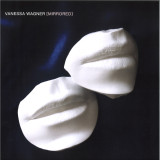
Vanessa Wagner - Mirrored

Vanessa Wagner

Mirrored

12inchIF1077LP
InFiné
11.01.2023

French pianist Vanessa Wagner collects solo piano studies of graceful minimalism and rare finesse for new album Mirrored.

Quickly following March 2022’s Study of the Invisible album, Vanessa Wagner returns with a new collection of work that paints in many colours. The application of shadow in Mirrored evokes haunting poignancy; the care and delicateness of its negative space leaves room for undulating melodic motifs to ebb and flow; its bold splashes of luminescence are striking and rich. And while the album collates re-interpretations of works by composers as varied as Philip Glass, Nico Muhly, Moondog, Leo Ferré and Camille Pepin, the potency and effect of the collection as a whole reflects only Vanessa Wagner and the extraordinary breadth of her abilities.

Performing solo, exposed to timbre, tempo and clarity, many of the pieces here - such as “Sea Horses” by (Vanessa’s one-time mentor) Moondog or Philip Glass’ “Etude 4” - demand virtuosic abilities as a performer and interpreter. But in Vanessa Wagner’s hands, they are not only made her own, but made mesmeric and magical by the sensitivity of her touch.

No en stock

Haga su pedido ahora y le encargaremos el artículo en nuestro proveedor.


Ültimo hace: 3 Años
I Like To Sleep - Sleeping Beauty

In 2021, nyMusikk's annual festival of sound, "Only Connect", commissioned an interpretation from I LIKE TO SLEEP of the first movement of Olivier Messiaen’s Turangalila symphony. A project which initially led to a 15-minute piece performed at the festival, with the trio re-writing the music of Messiaen, but also rewriting the music of their own. Messiaen as a reference and compositional tool may be heard in the album for those really listening for references. With “Sleeping Beauty” the trio also explore even heavier riffs than before, seasick grooves and tempi, and deeper ambient soundscapes. Through extensive improvisation, the effects and processing of the sounds are way more extreme than before, almost awakening the sleeping beauty. During the pandemic, the band also had to find new ways to write music without the presence of every member, introducing the vibe-samples from the old Mellotron sound gallery to the band. Quarantillity, one of the themes which appears several times throughout the album - almost used in a similar way as the flower theme in the Turangalila symphony - is a direct result of sitting alone in quarantine, playing the Mellotron while listening to vibraphone extraordinaire Bobby Hutcherson. This theme could also be seen as a continuation of the previous album tracks named Pause I & Pause II from “Bedmonster” (2017) and “Daymare” (2020). Like “Daymare”, “Sleeping Beauty” was recorded in Duper Studio in Bergen, co-produced with the band’s all-time favourite sound wizard Jørgen Træen. It is also mixed and mastered by Træen, making the music sound as brutal, intense and intimate as experiencing I LIKE TO SLEEP in a live setting. “Infernal, scrotum-shrivelling energy sorely missing in today's music” said Jazzwise about their previous album, mentioning King Crimson, Magma, Tony Williams Lifetime, electric Miles and 60s free energy jazz as possible references. But that’s only one side of the story, there are plenty of quieter moments at work here, and the dynamic range is wide. Nicolas and Øyvind first met in high school in Trondheim before they joined up with Amund in a youth big band. It soon became apparent that they shared the same musical background centered around 70s progressive rock, classical music, jazz and improvisation. Taking their name from a Thelonious Monk quote, I LIKE TO SLEEP was formed, first for fun, but soon with higher ambitions, winning the prestigious "Young Jazz Musicians of the Year" award in 2018. Still only in their early 20s and still studying jazz at NTNU in Trondheim, they are also active as composers, freelancers and in other projects and are among the most promising on Norwegian scene. Amund Storløkken Åse – vibraphone and Mellotron Nicolas Leirtrø - baritone guitar, bass-VI and Mellotron Øyvind Leite – drums Tracks

Reservar

El artículo no se ha publicado. Tú puedes reservar ahora el artículo y después de ser pagado se te será enviado.

Këkht Aräkh - Night & Love LP
También disponible

Metallic Silver Vinyl


Këkht Aräkh is the Ukrainian project founded in 2018 by Dmitry Marchenko. The debut album Night & Love was initially released on the Finnish label Livor Mortis in 2019 and it’s now seeing a worldwide reissue via Brooklyn label Sacred Bones.

Dmitry’s intent to experiment with standard black metal canons previously seen at play in Through the Branches to Eternity EP (2018) solidify further on Night & Love, he mentions “back then I had an idea of combining Darkthrone’s Transilvanian Hunger type of black metal with early Internazionale or Croatian Amor vibe.”

Described as ambient or atmospheric black metal, this debut presents Këkht Aräkh’s signature dichotomy of harsh traditional early Norwegian black metal and the more ethereal and delicate melodies. On the other hand the lyrics are romantic and melancholic, clearly influenced by a stark Gothic imagery, and serve as an extra layer of mystery to the already suggestive body of work. The album beings with a soft acoustic intro in “As the Night Falls…” before descending into the raw and raucous “Elegy for the Memory of Me” and “Den Venstre Hånd På Den Høyre”, both songs that are drenched in the more traditional black metal style of raspy, high-pitched vocals, dense, tremolo- picked riffs and fast paced drums. It is however songs like “Night” and “Love” that really set this album apart. “Night” is a softly spoken word ambient track that with a beautiful piano synth work that permeates throughout it aids in the romantic delivery and conjuring of imagery of the night. “Love” is a spellbinding and melancholic song, equal in its romanticism but one that displays a deeper sorrow and tenderness supported by calming field recordings of trickling water.

The intertwining of black metal, dark folk and ambient repeats itself, culminating in a quietly hummed outro “...And Never Ends (Eternal Love)” that alludes to and completes the album’s first track.

Reservar18.11.2022

debe ser publicado en 18.11.2022

Këkht Aräkh - Night & Love LP
También disponible

Black Vinyl


Këkht Aräkh is the Ukrainian project founded in 2018 by Dmitry Marchenko. The debut album Night & Love was initially released on the Finnish label Livor Mortis in 2019 and it’s now seeing a worldwide reissue via Brooklyn label Sacred Bones.

Dmitry’s intent to experiment with standard black metal canons previously seen at play in Through the Branches to Eternity EP (2018) solidify further on Night & Love, he mentions “back then I had an idea of combining Darkthrone’s Transilvanian Hunger type of black metal with early Internazionale or Croatian Amor vibe.”

Described as ambient or atmospheric black metal, this debut presents Këkht Aräkh’s signature dichotomy of harsh traditional early Norwegian black metal and the more ethereal and delicate melodies. On the other hand the lyrics are romantic and melancholic, clearly influenced by a stark Gothic imagery, and serve as an extra layer of mystery to the already suggestive body of work. The album beings with a soft acoustic intro in “As the Night Falls…” before descending into the raw and raucous “Elegy for the Memory of Me” and “Den Venstre Hånd På Den Høyre”, both songs that are drenched in the more traditional black metal style of raspy, high-pitched vocals, dense, tremolo- picked riffs and fast paced drums. It is however songs like “Night” and “Love” that really set this album apart. “Night” is a softly spoken word ambient track that with a beautiful piano synth work that permeates throughout it aids in the romantic delivery and conjuring of imagery of the night. “Love” is a spellbinding and melancholic song, equal in its romanticism but one that displays a deeper sorrow and tenderness supported by calming field recordings of trickling water.

The intertwining of black metal, dark folk and ambient repeats itself, culminating in a quietly hummed outro “...And Never Ends (Eternal Love)” that alludes to and completes the album’s first track.

Reservar18.11.2022

debe ser publicado en 18.11.2022

Sarah Mary Chadwick - Flipped It

To listen to Sarah Mary Chadwick's music is to be a quiet observer to her
thoughts on love, death and mental health - Sometimes anguish bears
itself in sullen, dreamy vs dreary moments, but more often torment
manifests at the break of Chadwick's voice as she sings painfully
vulnerable, self-aware lyrics
Chadwick is a singer/ songwriter and visual artist, based in Melbourne. After
moving to Australia from New Zealand to pursue a career in music, Chadwick
spent a decade fronting the grunge band Batrider. In 2012 she shifted focus to
her now prolific solo career. Essentially Chadwick's work is basic reportage of
events and observations from her own life, creating something exactly realised
yet completely relateable. Chadwick's performance remains singular and complex
as she simultaneously savors and is repelled by the podium that her creativity
affords her, acknowledging that it's a position of power being on a microphone
and how ..it's a desperate demand to be seen. It's funny and really sad. These
days, I just want to be an entertainer.''
I always write a lot so I love it when songs can find homes in the outside world.
Track one 'Flipped It' was recorded in the "Me and Ennui" session, and I couldn't
find a comfortable place for it on that record. Track Two 'All the things...' was
recorded during the "Please Daddy" sessions, earlier that same year in 2019.
Pressed on 7" White Color vinyl.

Reservar18.11.2022

debe ser publicado en 18.11.2022

Charbel Haber - A Common Misunderstanding of the Speed of Light

Charbel Haber is Lebanese musician, performer, visual artist and composer from Beirut. His work has seen him collaborate with artists from a wide range of disciplines - film, video art, visual art, theatre, dance - both in Lebanon and abroad.

As a solo artist and as a member of post-punk band Scrambled Eggs, he has composed music for directors Khalil Joreige and Joana Hadjithomas, Ghassan Salhab, Mohamad Malas, video artists Lamia Joreige and Akram Zaatari, Maqamat dance company and playwrights Rabih Mroueh and Lina Saneh, to name but a few. His prolific and collaborative career includes free improv group Johnny Kafta Anti-Vegetarian Orchestra, psychedelic Arabic music ensembles Malayeen and Orchestra Omar, cold wave band The Bunny Tylers and minimal ambient duo Good Luck In Death. He is the founder of Those Kids Must Choke and co-founder of Johnny Kafta's Kids Menu - two experimental record labels - and he has recorded and collaborated with notable artists from the fields of free rock and improv such as Oiseaux-Tempête, Radwan Moumneh, Tarek Atoui, Jean Francois Pauvros, The Ex, Michael Zerang, Mats Gustafson, Eddie Prevost, Xavier Charles and Tony Buck.

And once again, here I am telling you to go look for the truth and its beauty in the words of dead poets, in the little tales of ravaged cities, in aborted dreams, in the melancholy of the ruins of tomorrow, in meaningless plastic totems, in the enigmatic end of restless fools.

I'll be here long after you all disappear.

These are the first and last sentences from Charbel Haber's latest offering, A Common Misunderstanding of the Speed of Light: a multi-media musing on the chronic and the chronological, the subversive nature of time. This combination of a record and book observes the slow passing of life and the illusion of retrogradation in his every day. Simply by documenting - via image, text and tune - Haber assigns value to everything that is cast in amber by this project. There's an acceptance and appreciation of the destitution he witnesses, it is an homage given in overlapping forms.

ACMOTSOL has two parts. The book, hardcover in an embossed orange, features photographs and texts taken from Haber's personal digital diary spanning from 2020 to the start of 2022. Broken into six chapters - named for the six tracks on the record - the entries are an artist's log of sorts during a peculiar period of global hyper stagnation and navigating the aftermath of the Beirut explosions. The 96 pages highlight Haber's interest in decay, negative space and the temporality of the human condition. Instead of presenting the images and texts as they were originally paired online, they're reordered and recontextualized in the book. New connections are formed, as tenuous and fleeting as the content they surround. The images interrupt the texts in many instances, forcing pauses and inviting distraction.

At the center of the book is a sudden burst of orange pages, with stylized pluckings of the text framing a QR-code that grants access to the record. With the brilliant orange covers and matching innards, pregnant with the music at the core, it's almost as if these central pages act as a way to turn the book inside out. There, the book's purpose is altered, fixated on a mirror image of itself. It forms a self-completing arc for the project, a loop.

ACMOTSO's second half is that mirrored album. Six tracks totalling just under 52 minutes. The music could be a continuation of his solo albums Of Palm Trees and Decompositions (2016) and It Ended Up Being a Good Day Mr. Allende (2012), an exploration into the expansiveness of seemingly simple loops of a lilting guitar. Careful electronic effects add dimensions or reground the listener. There's a swelling of sound, the illusion of the push of space before it retracts back into itself or fades into the distance. Much like the images and texts the music complements, the songs challenge the purity of cycles. Endings are beginnings, beginnings are endings or is everything just the middle? Haber is quietly and elegantly grappling with the troublesome act of place-making. In music, in words and in visual storytelling.

ACMOTSOL is a work that can be calming or disorienting, depending on what is requested of it. Similar to the way loops and cycles can signify both meditation and mania. The tendrils of Haber's past - his home of Beirut, fictional and real characters encountered, authors read, films watched, composers listened, walks taken - knit themselves together for a presentation of our immediate present. An evidence of a happening. A considered project of time.

All photographs, texts and music by Charbel Haber. Album mixed by Radwan Ghazi Moumneh. Design by Maziyar Pahlevan. Printed by Albe De Coker in Belgium.

This dual-part project will be released on XX XXX 2022 on 'Other People.'

Description by Nereya Otieno.

Reservar11.11.2022

debe ser publicado en 11.11.2022

Favourite People - Favourite People LP

For most of us, life is a series of human interactions; some good, some bad, some happy, some sad. But what would life be without those peripheral characters who plant themselves into our worlds through the sheer force of their presence? Whether we speak to them or not, those vibrant contrasts to the everyday tide of ordinary people are a magical part of the human experience. Oddballs and misfits, flamboyant instigators or low-key game changers, we all clock them on our own hectic journeys, and they make the day a little brighter. Everyone has their favourite people.

Following the runaway success of their first one-shot single in 2020, Favourite People reconvene for a full-length of blues-tinged cuts stemming from sessions at Selva Studios in Brooklyn. The project’s roots predate the studio, from scattered jams and sweaty nights in New York nightspots to impromptu recordings on cruise ships, but the flashpoint of inspiration that truly set the album in motion was the arrival of a blonde 1960s Fender Telecaster. From there, the motley crew of sharp-shooting string slingers and sticks men set about crafting paeans to those striking souls who make the world a more colourful place.

The emphasis here is on the kind of forward-facing, electrically charged mix you felt (whether you realised it or not) hearing early Sabbath or Priest for the first time. With their undeniable bias towards vintage soul, Favourite People are far from heavy metal, but the same lineage of blues and by extension jazz informs the music, while the tonal crunch of that 70s era guides the sound. Feasting on tasteful overdrive and leaning on the unmistakable flavour of tape for much of the recording, the deal was sealed on this purposeful exercise in vibe thanks to the near-mythical texture of Guy Davie’s EMI Nigeria console at Electric Mastering.

Across the album there are mellow shades and bursts of good-time get-down exuberance, but the lead singles capture the essence of the band in no uncertain terms.

‘Promise Of Nibbles’ brings the Favourite People MO into sharp relief with a low-slung, hard swinging blues confection full of overheating organ and duelling guitars in pursuit of Southern-stewed boogie (im)perfection.

‘We’ll Be Late To The Party’ turns up the tempo and dials in the fuzz, striking an anthemic note which lands somewhere between urgent highway escapism and euphoric communal revelation.

‘Mass and Mustiness’ leans in on the funk dimension of the group’s sound with the sweetest licks and chops on that fabled telecaster backed up by an acutely angled beat and the slinkiest of b-lines.

These are but three of the vibrant vignettes laid down by this quietly unassuming collective of heads down jammers, loose groovers and vintage sound freaks –heavy grooving instrumentals pulled from their own moments of pure musical magic and captured on disc for your listening, dancing, living, loving pleasure.

No en stock

Haga su pedido ahora y le encargaremos el artículo en nuestro proveedor.


Ültimo hace: 3 Años
Darren Hayman - You Will Not Die

2LP black vinyl in a gatefold sleeve, polylined inners and download code. 2 x CD in 6 panel digifile sleeve.
When Darren Hayman made his debut in 1997 with the acclaimed indie band Hefner his lyrical remit was the broken hearted. His early songs told the story of the lonesome and lost, and broken dreams of love on the back streets of London. After Hefner, Hayman’s palette grew to include a unique take on place and memory. In the early 2000s he wrote a trilogy of albums around the history of Essex. In 2012 he made an instrumental album describing the tranquillity of Lidos. In 2016 Darren was awarded ‘Hardest Working Musician’ by the Association of Independent Music for his epic project on Thankful Villages, the 55 villages that survived the Great War with no casualties. His most recent record, 12 Astronauts, tells the personal story of the only men to have walked on the Moon. Darren is continually obsessed with the idea of what songs can be, and the stories they can tell. As he explains, “With projects like Thankful Villages, I became interested in what a record could be, using field recordings, interviews and songs to make sound collages. I wanted to return to the stricter art of song writing and try and make the twelve best compositions I could. I wanted to make useful songs, words that could be comfort, not just thoughts that would depress.” // "bold and unique" The Sunday Times // "Its delicately observed song cycle unfolds like a novella or short film, with tracks that might seem slight in isloation gaining resonance in situ." Q // “Bugbears is a rich and warming curio, and there’s something quietly noble about Hayman dragging the thoughts of these long-dead writers back into the light.” Mojo // “uniquely intimate and very satisfying” - BBC // “Hayman has hit a creative purple patch… a treat”. Mojo

Reservar04.11.2022

debe ser publicado en 04.11.2022

David Westlake - My Beautiful England LP

We love nothing more than belated success, from the Nightingales' rise to top cult band, to the string of five marvelous Blue Orchids LPs in six years (as much as Martin Bramah had managed in the previous four decades) . . . so give us more. Like David Westlake. The release of NME's C86 cassette heralded a new generation of artists who'd emerged since the preceding C81 assembled a set of acts who'd coaxed new dialects out of punk, rhythms, reggae and the avant-garde. Though variable, C86 became a phenomenon, making a bigger splash and enduring longer than anyone could have predicted. The evolution by 1986 of "independent" or "alternative" music into "indie" brought a modified focus. From C81's post-punk negotiations of politics and cross-cultural influence to C86's compact blasts of, on the one hand, effervescent melodic pop and, on the other, jagged Beefheart-esque racket. Tiny Global Productions has proudly presented already one of the best from C86. The Wolfhounds' leader David Callahan's talent evolved masterfully into Moonshake, and more recently to a strain of blistering raga-folk psychedelia which deals with sociopolitical issues in brilliantly idiosyncratic fashion. And what of another of the best from C86 - the Servants, David Westlake's band? Ambivalent about the invitation to be on C86, Westlake gave the NME a wrong-footing b-side, before keeping a distance from the noise around the compilation. Subsequent releases from Westlake and The Servants and Westlake attracted fine reviews but settled quietly into relative obscurity, despite musical involvement from various Housemartins, Go-Betweens and Triffids, a quest by Stuart from Belle & Sebastian to find Westlake and form a band; not to mention Luke Haines' own five-year presence in the Servants before forming The Auteurs, Baader Meinhof and Black Box Recorder. Westlake went first into the law, then spent years in literary academia. Now the surprise arrival of My Beautiful England. The album is a masterpiece of concept, composition and performance, a conceptual work of truths and reflections of difficult but deft and unflinching expression. "It is not only fashionable now to denigrate England and its past; it is heresy to recognise good in it. The place that made me is disappearing. Its values and traditions. Among them: good manners, humility and clemency, resilience and perseverance, good humour. History is being refashioned – in spirit and material fact – by ideologues unshakeably certain they are in the right, and people are being distanced from their pasts. Some find themselves forced into passive acceptance of new distortions of the past, out of imitativeness or cowardice. I resist. This album is a memorial. Intentionally, a museum piece. It is a personal tribute to the England I knew."

Reservar30.10.2022

debe ser publicado en 30.10.2022

Lee Tracy & Isaac Manning - Is it What You Want

As the sun sets on a quaint East Nashville house, a young man bares a piece of his soul. Facing the camera, sporting a silky suit jacket/shirt/slacks/fingerless gloves ensemble that announces "singer" before he's even opened his mouth, Lee Tracy Johnson settles onto his stage, the front yard. He sways to the dirge-like drum machine pulse of a synth-soaked slow jam, extends his arms as if gaining his balance, and croons in affecting, fragile earnest, "I need your love… oh baby…"

Dogs in the yard next door begin barking. A mysterious cardboard robot figure, beamed in from galaxies unknown and affixed to a tree, is less vocal. Lee doesn't acknowledge either's presence. He's busy feeling it, arms and hands gesticulating. His voice rises in falsetto over the now-quiet dogs, over the ambient noise from the street that seeps into the handheld camcorder's microphone, over the recording of his own voice played back from a boombox off-camera. After six minutes the single, continuous shot ends. In this intimate creative universe there are no re-takes. There are many more music videos to shoot, and as Lee later puts it, "The first time you do it is actually the best. Because you can never get that again. You expressing yourself from within."

"I Need Your Love" dates from a lost heyday. From some time in the '80s or early '90s, when Lee Tracy (as he was known in performance) and his music partner/producer/manager Isaac Manning committed hours upon hours of their sonic and visual ideas to tape. Embracing drum machines and synthesizers – electronics that made their personal futurism palpable – they recorded exclusively at home, live in a room into a simple cassette deck. Soul, funk, electro and new wave informed their songs, yet Lee and Isaac eschewed the confinement of conventional categories and genres, preferring to let experimentation guide them.

"Anytime somebody put out a new record they had the same instruments or the same sound," explains Isaac. "So I basically wanted to find something that's really gonna stand out away from all of the rest of 'em." Their ethos meant that every idea they came up with was at least worth trying: echoed out half-rapped exhortations over frantic techno-style beats, gospel synth soul, modal electro-funk, oddball pop reinterpretations, emo AOR balladry, nods to Prince and the Fat Boys, or arrangements that might collapse mid-song into a mess of arcade game-ish blips before rallying to reach the finish line. All of it conjoined by consistent tape hiss, and most vitally, Lee's chameleonic voice, which managed to wildly shape shift and still evoke something sincere – whether toggling between falsetto and tenor exalting Jesus's return, or punctuating a melismatic romantic adlib with a succinct, "We all know how it feels to be alone."

"People think we went to a studio," says Isaac derisively. "We never went to no studio. We didn't have the money to go to no studio! We did this stuff at home. I shot videos in my front yard with whatever we could to get things together." Sometimes Isaac would just put on an instrumental record, be it "Planet Rock" or "Don't Cry For Me Argentina" (from Evita), press "record," and let Lee improvise over it, yielding peculiar love songs, would-be patriotic anthems, or Elvis Presley or Marilyn Monroe tributes. Technical limitations and a lack of professional polish never dissuaded them. They believed they were onto something.

"That struggle," Isaac says, "made that sound sound good to me."

In the parlance of modern music criticism Lee and Isaac's dizzying DIY efforts would inevitably be described as "outsider." But "outsider" carries the burden of untold additional layers of meaning if you're Black and from the South, creating on a budget, and trying to get someone, anyone within the country music capital of the world to take your vision seriously. "What category should we put it in?" Isaac asks rhetorically. "I don't know. All I know is feeling. I ain't gonna name it nothing. It's music. If it grabs your soul and touch your heart that's what it basically is supposed to do."

=

Born in 1963, the baby boy of nine siblings, Lee Tracy spent his earliest years living amidst the shotgun houses on Nashville's south side. "We was poor, man!" he says, recalling the outhouse his family used for a bathroom and the blocks of ice they kept in the kitchen to chill perishables. "But I actually don't think I really realized I was in poverty until I got grown and started thinking about it." Lee's mom worked at the Holiday Inn; his dad did whatever he had to do, from selling fruit from a horse drawn cart to bootlegging. "We didn't have much," Lee continues, "but my mother and my father got us the things we needed, the clothes on our back." By the end of the decade with the city's urban renewal programs razing entire neighborhoods to accommodate construction of the Interstate, the family moved to Edgehill Projects. Lee remembers music and art as a constant source of inspiration for he and his brothers and sisters – especially after seeing the Jackson 5 perform on Ed Sullivan. "As a small child I just knew that was what I wanted to do."

His older brother Don began musically mentoring him, introducing Lee to a variety of instruments and sounds. "He would never play one particular type of music, like R&B," says Lee. "I was surrounded by jazz, hard rock and roll, easy listening, gospel, reggae, country music; I mean I was a sponge absorbing all of that." Lee taught himself to play drums by beating on cardboard boxes, gaining a rep around the way for his timekeeping, and his singing voice. Emulating his favorites, Earth Wind & Fire and Cameo, he formed groups with other kids with era-evocative band names like Concept and TNT Connection, and emerged as the leader of disciplined rehearsals. "I made them practice," says Lee. "We practiced and practiced and practiced. Because I wanted that perfection." By high school the most accomplished of these bands would take top prize in a prominent local talent show. It was a big moment for Lee, and he felt ready to take things to the next level. But his band-mates had other ideas.

"I don't know what happened," he says, still miffed at the memory. "It must have blew they mind after we won and people started showing notice, because it's like everybody quit! I was like, where the hell did everybody go?" Lee had always made a point of interrogating prospective musicians about their intentions before joining his groups: were they really serious or just looking for a way to pick up girls? Now he understood even more the importance of finding a collaborator just as committed to the music as he was.

=

Isaac Manning had spent much of his life immersed in music and the arts – singing in the church choir with his family on Nashville's north side, writing, painting, dancing, and working various gigs within the entertainment industry. After serving in the armed forces, in the early '70s he ran The Teenage Place, a music and performance venue that catered to the local youth. But he was forced out of town when word of one of his recreational routines created a stir beyond the safe haven of his bohemian circles.

"I was growing marijuana," Isaac explains. "It wasn't no business, I was smoking it myself… I would put marijuana in scrambled eggs, cornbread and stuff." His weed use originated as a form of self-medication to combat severe tooth pain. But when he began sharing it with some of the other young people he hung out with, some of who just so happened to be the kids of Nashville politicians, the cops came calling. "When I got busted," he remembers, "they were talking about how they were gonna get rid of me because they didn't want me saying nothing about they children because of the politics and stuff. So I got my family, took two raggedy cars, and left Nashville and went to Vegas."

Out in the desert, Isaac happened to meet Chubby Checker of "The Twist" fame while the singer was gigging at The Flamingo. Impressed by Isaac's zeal, Checker invited him to go on the road with him as his tour manager/roadie/valet. The experience gave Isaac a window into a part of the entertainment world he'd never encountered – a glimpse of what a true pop act's audience looked like. "Chubby Checker, none of his shows were played for Black folks," he remembers. "All his gigs were done at high-class white people areas." Returning home after a few years with Chubby, Isaac was properly motivated to make it in Music City. He began writing songs and scouting around Nashville for local talent anywhere he could find it with an expressed goal: "Find someone who can deliver your songs the way you want 'em delivered and make people feel what you want them to feel."

One day while walking through Edgehill Projects Isaac heard someone playing the drums in a way that made him stop and take notice. "The music was so tight, just the drums made me feel like, oh I'm-a find this person," he recalls. "So I circled through the projects until I found who it was.

"That's how I met him – Lee Tracy. When I found him and he started singing and stuff, I said, ohhh, this is somebody different."

=

Theirs was a true complementary partnership: young Lee possessed the raw talent, the older Isaac the belief. "He's really the only one besides my brother and my family that really seen the potential in me," says Lee. "He made me see that I could do it."

Isaac long being a night owl, his house also made for a fertile collaborative environment – a space where there always seemed to be a new piece of his visual art on display: paintings, illustrations, and dolls and figures (including an enigmatic cardboard robot). Lee and Issac would hang out together and talk, listen to music, conjure ideas, and smoke the herb Isaac had resumed growing in his yard. "It got to where I could trust him, he could trust me," Isaac says of their bond. They also worked together for hours on drawings, spreading larges rolls of paper on the walls and sketching faces with abstract patterns and imagery: alien-like beings, tri-horned horse heads, inverted Janus-like characters where one visage blurred into the other.

Soon it became apparent that they didn't need other collaborators; self-sufficiency was the natural way forward. At Isaac's behest Lee, already fed up with dealing with band musicians, began playing around with a poly-sonic Yamaha keyboard at the local music store. "It had everything on it – trumpet, bass, drums, organ," remembers Lee. "And that's when I started recording my own stuff."

The technology afforded Lee the flexibility and independence he craved, setting him on a path other bedroom musicians and producers around the world were simultaneously following through the '80s into the early '90s. Saving up money from day jobs, he eventually supplemented the Yamaha Isaac had gotten him with Roland and Casio drum machines and a Moog. Lee was living in an apartment in Hillside at that point caring for his dad, who'd been partially paralyzed since early in life. In the evenings up in his second floor room, the music put him in a zone where he could tune out everything and lose himself in his ideas.

"Oh I loved it," he recalls. "I would really experiment with the instruments and use a lot of different sound effects. I was looking for something nobody else had. I wanted something totally different. And once I found the sound I was looking for, I would just smoke me a good joint and just let it go, hit the record button." More potent a creative stimulant than even Isaac's weed was the holistic flow and spontaneity of recording. Between sessions at Isaac's place and Lee's apartment, their volume of output quickly ballooned.

"We was always recording," says Lee. "That's why we have so much music. Even when I went to Isaac's and we start creating, I get home, my mind is racing, I gotta start creating, creating, creating. I remember there were times when I took a 90-minute tape from front to back and just filled it up."

"We never practiced," says Isaac. "See, that was just so odd about the whole thing. I could relate to him, and tell him about the songs I had ideas for and everything and stuff. And then he would bring it back or whatever, and we'd get together and put it down." Once the taskmaster hell bent on rehearsing, Lee had flipped a full 180. Perfection was no longer an aspiration, but the enemy of inspiration.

"I seen where practicing and practicing got me," says Lee. "A lot of musicians you get to playing and they gotta stop, they have to analyze the music. But while you analyzing you losing a lot of the greatness of what you creating. Stop analyzing what you play, just play! And it'll all take shape."

=

"I hope you understood the beginning of the record because this was invented from a dream I had today… (You tell me, I'll tell you, we'll figure it out together)" – Lee Tracy and Isaac Manning, "Hope You Understand"

Lee lets loose a maniacal cackle when he acknowledges that the material that he and Isaac recorded was by anyone's estimation pretty out there. It's the same laugh that commences "Hope You Understand" – a chaotic transmission that encapsulates the duality at the heart of their music: a stated desire to reach people and a compulsion to go as leftfield as they saw fit.

"We just did it," says Lee. "We cut the music on and cut loose. I don't sit around and write. I do it by listening, get a feeling, play the music, and the lyrics and stuff just come out of me."

The approach proved adaptable to interpreting other artists' material. While recording a cover of Whitney Houston's pop ballad "Saving All My Love For You," Lee played Whitney's version in his headphones as he laid down his own vocals – partially following the lyrics, partially using them as a departure point. The end result is barely recognizable compared with the original, Lee and Isaac having switched up the time signature and reinvented the melody along the way towards morphing a slick mainstream radio standard into something that sounds solely their own.

"I really used that song to get me started," says Lee. "Then I said, well I need something else, something is missing. Something just came over me. That's when I came up with 'Is It What You Want.'"

The song would become the centerpiece of Lee and Isaac's repertoire. Pushed along by a percolating metronomic Rhythm King style beat somewhere between a military march and a samba, "Is It What You Want" finds Lee pleading the sincerity of his commitment to a potential love interest embellished by vocal tics and hiccups subtlely reminiscent of his childhood hero MJ. Absent chord changes, only synth riffs gliding in and out like apparitions, the song achieves a lingering lo-fi power that leaves you feeling like it's still playing, somewhere, even after the fade out.

"I don't know, it's like a real spiritual song," Lee reflects. "But it's not just spiritual. To me the more I listen to it it's like about everything that you do in your everyday life, period. Is it what you want? Do you want a car or you don't want a car? Do you want Jesus or do you want the Devil? It's basically asking you the question. Can't nobody answer the question but you yourself."

In 1989 Lee won a lawsuit stemming from injuries sustained from a fight he'd gotten into. He took part of the settlement money and with Isaac pressed up "Saving All My Love For You" b/w "Is It What You Want" as a 45 single. Isaac christened the label One Chance Records. "Because that's all we wanted," he says with a laugh, "one chance."

Isaac sent the record out to radio stations and major labels, hoping for it to make enough noise to get picked up nationally. But the response he and Lee were hoping for never materialized. According to Isaac the closest the single got to getting played on the radio is when a disk jock from a local station made a highly unusual announcement on air: "The dude said on the radio, 107.5 – 'We are not gonna play 'Is It What You Want.' We cracked up! Wow, that's deep.

"It was a whole racist thing that was going on," he reflects. "So we just looked over and kept on going. That was it. That was about the way it goes… If you were Black and you were living in Nashville and stuff, that's the way you got treated." Isaac already knew as much from all the times he'd brought he and Lee's tapes (even their cache of country music tunes) over to Music Row to try to drum up interest to no avail.

"Isaac, he really worked his ass off," says Lee. "He probably been to every record place down on Music Row." Nashville's famed recording and music business corridor wasn't but a few blocks from where Lee grew up. Close enough, he remembers, for him to ride his bike along its back alleys and stumble upon the occasional random treasure, like a discarded box of harmonicas. Getting in through the front door, however, still felt a world away.

"I just don't think at the time our music fell into a category for them," he concedes. "It was before its time."

=

Lee stopped making music some time in the latter part of the '90s, around the time his mom passed away and life became increasingly tough to manage. "When my mother died I had a nervous breakdown," he says, "So I shut down for a long time. I was in such a sadness frame of mind. That's why nobody seen me. I had just disappeared off the map." He fell out of touch with Isaac, and in an indication of just how bad things had gotten for him, lost track of all the recordings they'd made together. Music became a distant memory.

Fortunately, Isaac kept the faith. In a self-published collection of his poetry – paeans to some of his favorite entertainment and public figures entitled Friends and Dick Clark – he'd written that he believed "music has a life of its own." But his prescience and presence of mind were truly manifested in the fact that he kept an archive of he and Lee's work. As perfectly imperfect as "Is It What You Want" now sounds in a post-Personal Space world, Lee and Isaac's lone official release was in fact just a taste. The bulk of the Is It What You Want album is culled from the pair's essentially unheard home recordings – complete songs, half-realized experiments, Isaac's blue monologues and pronouncements et al – compiled, mixed and programmed in the loose and impulsive creative spirit of their regular get-togethers from decades ago. The rest of us, it seems, may have finally caught up to them.

On the prospect of at long last reaching a wider audience, Isaac says simply, "I been trying for a long time, it feels good." Ever the survivor, he adds, "The only way I know how to make it to the top is to keep climbing. If one leg break on the ladder, hey, you gotta fix it and keep on going… That's where I be at. I'll kill death to make it out there."

For Lee it all feels akin to a personal resurrection: "It's like I was in a tomb and the tomb was opened and I'm back… Man, it feels so great. I feel like I'm gonna jump out of my skin." Success at this stage of his life, he realizes, probably means something different than what it did back when he was singing and dancing in Isaac's front yard. "What I really mean by 'making it,'" he explains isn't just the music being heard but, "the story being told."

Occasionally Lee will pull up "Is It What You Want" on YouTube on his phone, put on his headphones, and listen. He remembers the first time he heard his recorded voice. How surreal it was, how he thought to himself, "Is that really me?" What would he say to that younger version of himself now?

"I would probably tell myself, hang in there, don't give up. Keep striving for the goal. And everything will work out."

Despite what's printed on the record label, sometimes you do get more than one chance.

No en stock

Haga su pedido ahora y le encargaremos el artículo en nuestro proveedor.


Ültimo hace: 3 Años
Ezéchiel Pailhès - Mélopée

On his fourth solo album, much as in Oh! (2020), the French composer, pianist and vocalist follows his ongoing exploration of the crossroads between poetry and songs, piano and synth, old-time verses and contemporary sounds. Inspired by the rhythms, effects and speech patterns of urban music, he also delivers, with a warm and moving voice, the texts of three poetesses from the past.
Since 2013, Ezéchiel Pailhès has been crafting a unique French synth pop. On his first three albums, he switched between songs inspired by poetry, instrumental ballads and electronica with hummed
choruses. This latest record is a collection of eleven new songs, two of which he wrote: "Opaline" and "Ni toi, ni moi" (neither you nor me). The others are adaptations of poems written in the 16th, 18th and
19th centuries by French poetesses Louise Labé (1524-1566), Marceline Desbordes-Valmore (1786- 1859) and Renée Vivien (1877-1909).
Poetesses from the past...
From classical music to songs, poetry adaptation is an old French tradition. "My universe has always embraced the musicality of this literary genre," the artist recalls. He actually started this project in 2017 with poems and sonnets by William Shakespeare, Pablo Neruda, Victor Hugo and above all Marceline Desbordes-Valmore, who can be heard again on songs such as "Dors-tu?" (Are you sleeping?),
"Élégie" or "L'attente" (The wait). A figure of romanticism, the author left her mark on the early 19th century through the quality of her texts and her formal inventions, particularly praised by Balzac, and
apparently a decisive influence on Verlaine and Baudelaire. "Marceline's poetry is very musical," says Ezéchiel admiringly. "Her use of rhythm and repetition sounds great and takes on a new perspective when set to music. In fact, she wrote some of her texts with singing in mind.”
“Ces longs secrets dont l'amour nous accuse, Viens-tu les rompre en songe à mes genoux ? Dors-tu, ma vie ! ou rêves-tu de moi ?”
“These long secrets for which love accuses us, Do you come to my knees to break them in a dream?
Are you sleeping, my life! or do you dream of me” (“Dors-tu ?”, after “Les pleurs” (the tears), 1833)
Besides her, we find the more famous, and rebellious, Renée Vivien, whose texts inspired three songs, "Regard en arrière" (Looking backwards), "Mélopée" (Melopoeia) and "La fille de la nuit" (The
night girl). Sometimes nicknamed "Sapho 1900", this figure of lesbian culture and, more broadly, of female genius, combined in her work the themes of desire, dreams, melancholy and the relationship with nature.
“Ta forme est un éclair
Ton sourire est l’instant Tu fuis, lorsque l’appel
T’implore, ô mon Désir !”
"Your shape is a spark of lightning
Your smile, the very moment
You flee, when the calling
Begs you, O my Desire!"
(After “Parle-moi, de ta voix pareille à l’eau courante” (Speak to me, with a voice like flowing waters) and “Ta forme est un éclair” (Your shape is a spark of lightning), Renée Vivien, 1901)
Lastly, with "Tant que mes yeux" (As long as my eyes), Ezéchiel was inspired by a 1555 poem by Renaissance poet Louise Labé, whose main topic explored female love, physical and spiritual desire,
and the torments and pains they generate.
" At the start of the project ", Ezéchiel continues, " I was interested in many poets, men and women, past and present, before my selection was narrowed down to these three female authors. Their works,
often written in difficult or secret conditions, express a raging romanticism, a passionate soul, fuelled by desperate and tormented love. I found it interesting, as a man coming from another world and time, to face this otherness, to trade viewpoints. Obviously, I could loudly claim that the album was the result of a concept, that it reflects today's world, and that it allows me to explore the notion of gender,
giving visibility to the work of a few women, while at the same time pairing these ancient texts with a more modern and rhythmic music, and obviously, there is some truth in that. But more than anything, I
wanted to serve the text itself, to express the emotion and connection I felt with these works.”
Today's rhythms and prosody...
Ezéchiel Pailhès combines texts from French literature with electronic music, its effects and rhythms, as well as a form of scansion that echoes rap, R&B or the current fusion between hip hop and pop,
which is part of our musical background and that of younger generations. "I wanted to cross-reference texts from the beginning of the century with this type of music. I wanted to use today’s techniques to tell the tale of different daily lives and experiences.
The album is thus marked by contemporary electronic orchestrations, in which he drops his favourite instrument, the piano, and his digital collage technique to use more extensive synth melodies, enhanced by drum machines, bringing a gentle and bright vibe to the romantic texts. Lastly, we can hear slight digital tones of Auto-Tune, which Ezéchiel uses sparingly and inventively.

Beyond its sophistication, the term "melopoeia" means a "sung declamation", a "recitative song", sometimes interpreted in a monotonous way. On this album, it could also refer to a sense of phrasing, which does not come from rap, but rather from jazz, Ezéchiel's first love. " In the past, I tried to hide my jazz culture, but it naturally came back on this new album, as can be heard, for instance, in Regard en arrière.” With its verses anchored in our literary memory, the following track "Mélopée", perfectly illustrates the album's vision. It manages to transcend eras, mixing past romanticism with a modern
prosody, fuelled by the nonchalance of hip hop and the warm chords of jazz.
“Qu’un hasard guide enfin mon désespoir tranquille
Vers l’eau d’une oasis ou les berges d’une île,
Où je puisse dormir, mon voyage accompli,
Dans la sécurité profonde de l’oubli”
"May chance guide my quiet sorrow, at last
To the water of an oasis, the shores of an island,
Where I may sleep, having traveled my way,
In the safe depths of oblivion".
(After “Sillages” (Trails), René Vivien, 1908)

No en stock

Haga su pedido ahora y le encargaremos el artículo en nuestro proveedor.


Ültimo hace: 3 Años
Favourite People - Favourite People LP

For most of us, life is a series of human interactions; some good, some bad, some happy, some sad. But what would life be without those peripheral characters who plant themselves into our worlds through the sheer force of their presence? Whether we speak to them or not, those vibrant contrasts to the everyday tide of ordinary people are a magical part of the human experience. Oddballs and misfits, flamboyant instigators or low-key game changers, we all clock them on our own hectic journeys, and they make the day a little brighter. Everyone has their favourite people.

Following the runaway success of their first one-shot single in 2020, Favourite People reconvene for a full-length of blues-tinged cuts stemming from sessions at Selva Studios in Brooklyn. The project’s roots predate the studio, from scattered jams and sweaty nights in New York nightspots to impromptu recordings on cruise ships, but the flashpoint of inspiration that truly set the album in motion was the arrival of a blonde 1960s Fender Telecaster. From there, the motley crew of sharp-shooting string slingers and sticks men set about crafting paeans to those striking souls who make the world a more colourful place.

The emphasis here is on the kind of forward-facing, electrically charged mix you felt (whether you realised it or not) hearing early Sabbath or Priest for the first time. With their undeniable bias towards vintage soul, Favourite People are far from heavy metal, but the same lineage of blues and by extension jazz informs the music, while the tonal crunch of that 70s era guides the sound. Feasting on tasteful overdrive and leaning on the unmistakable flavour of tape for much of the recording, the deal was sealed on this purposeful exercise in vibe thanks to the near-mythical texture of Guy Davie’s EMI Nigeria console at Electric Mastering.

Across the album there are mellow shades and bursts of good-time get-down exuberance, but the lead singles capture the essence of the band in no uncertain terms.

‘Promise Of Nibbles’ brings the Favourite People MO into sharp relief with a low-slung, hard swinging blues confection full of overheating organ and duelling guitars in pursuit of Southern-stewed boogie (im)perfection.

‘We’ll Be Late To The Party’ turns up the tempo and dials in the fuzz, striking an anthemic note which lands somewhere between urgent highway escapism and euphoric communal revelation.

‘Mass and Mustiness’ leans in on the funk dimension of the group’s sound with the sweetest licks and chops on that fabled telecaster backed up by an acutely angled beat and the slinkiest of b-lines.

These are but three of the vibrant vignettes laid down by this quietly unassuming collective of heads down jammers, loose groovers and vintage sound freaks –heavy grooving instrumentals pulled from their own moments of pure musical magic and captured on disc for your listening, dancing, living, loving pleasure.

Reservar07.10.2022

debe ser publicado en 07.10.2022

Lee Tracy & Isaac Manning - Is it What You Want LP

As the sun sets on a quaint East Nashville house, a young man bares a piece of his soul. Facing the camera, sporting a silky suit jacket/shirt/slacks/fingerless gloves ensemble that announces "singer" before he's even opened his mouth, Lee Tracy Johnson settles onto his stage, the front yard. He sways to the dirge-like drum machine pulse of a synth-soaked slow jam, extends his arms as if gaining his balance, and croons in affecting, fragile earnest, "I need your love… oh baby…"

Dogs in the yard next door begin barking. A mysterious cardboard robot figure, beamed in from galaxies unknown and affixed to a tree, is less vocal. Lee doesn't acknowledge either's presence. He's busy feeling it, arms and hands gesticulating. His voice rises in falsetto over the now-quiet dogs, over the ambient noise from the street that seeps into the handheld camcorder's microphone, over the recording of his own voice played back from a boombox off-camera. After six minutes the single, continuous shot ends. In this intimate creative universe there are no re-takes. There are many more music videos to shoot, and as Lee later puts it, "The first time you do it is actually the best. Because you can never get that again. You expressing yourself from within."

"I Need Your Love" dates from a lost heyday. From some time in the '80s or early '90s, when Lee Tracy (as he was known in performance) and his music partner/producer/manager Isaac Manning committed hours upon hours of their sonic and visual ideas to tape. Embracing drum machines and synthesizers – electronics that made their personal futurism palpable – they recorded exclusively at home, live in a room into a simple cassette deck. Soul, funk, electro and new wave informed their songs, yet Lee and Isaac eschewed the confinement of conventional categories and genres, preferring to let experimentation guide them.

"Anytime somebody put out a new record they had the same instruments or the same sound," explains Isaac. "So I basically wanted to find something that's really gonna stand out away from all of the rest of 'em." Their ethos meant that every idea they came up with was at least worth trying: echoed out half-rapped exhortations over frantic techno-style beats, gospel synth soul, modal electro-funk, oddball pop reinterpretations, emo AOR balladry, nods to Prince and the Fat Boys, or arrangements that might collapse mid-song into a mess of arcade game-ish blips before rallying to reach the finish line. All of it conjoined by consistent tape hiss, and most vitally, Lee's chameleonic voice, which managed to wildly shape shift and still evoke something sincere – whether toggling between falsetto and tenor exalting Jesus's return, or punctuating a melismatic romantic adlib with a succinct, "We all know how it feels to be alone."

"People think we went to a studio," says Isaac derisively. "We never went to no studio. We didn't have the money to go to no studio! We did this stuff at home. I shot videos in my front yard with whatever we could to get things together." Sometimes Isaac would just put on an instrumental record, be it "Planet Rock" or "Don't Cry For Me Argentina" (from Evita), press "record," and let Lee improvise over it, yielding peculiar love songs, would-be patriotic anthems, or Elvis Presley or Marilyn Monroe tributes. Technical limitations and a lack of professional polish never dissuaded them. They believed they were onto something.

"That struggle," Isaac says, "made that sound sound good to me."

In the parlance of modern music criticism Lee and Isaac's dizzying DIY efforts would inevitably be described as "outsider." But "outsider" carries the burden of untold additional layers of meaning if you're Black and from the South, creating on a budget, and trying to get someone, anyone within the country music capital of the world to take your vision seriously. "What category should we put it in?" Isaac asks rhetorically. "I don't know. All I know is feeling. I ain't gonna name it nothing. It's music. If it grabs your soul and touch your heart that's what it basically is supposed to do."

=

Born in 1963, the baby boy of nine siblings, Lee Tracy spent his earliest years living amidst the shotgun houses on Nashville's south side. "We was poor, man!" he says, recalling the outhouse his family used for a bathroom and the blocks of ice they kept in the kitchen to chill perishables. "But I actually don't think I really realized I was in poverty until I got grown and started thinking about it." Lee's mom worked at the Holiday Inn; his dad did whatever he had to do, from selling fruit from a horse drawn cart to bootlegging. "We didn't have much," Lee continues, "but my mother and my father got us the things we needed, the clothes on our back." By the end of the decade with the city's urban renewal programs razing entire neighborhoods to accommodate construction of the Interstate, the family moved to Edgehill Projects. Lee remembers music and art as a constant source of inspiration for he and his brothers and sisters – especially after seeing the Jackson 5 perform on Ed Sullivan. "As a small child I just knew that was what I wanted to do."

His older brother Don began musically mentoring him, introducing Lee to a variety of instruments and sounds. "He would never play one particular type of music, like R&B," says Lee. "I was surrounded by jazz, hard rock and roll, easy listening, gospel, reggae, country music; I mean I was a sponge absorbing all of that." Lee taught himself to play drums by beating on cardboard boxes, gaining a rep around the way for his timekeeping, and his singing voice. Emulating his favorites, Earth Wind & Fire and Cameo, he formed groups with other kids with era-evocative band names like Concept and TNT Connection, and emerged as the leader of disciplined rehearsals. "I made them practice," says Lee. "We practiced and practiced and practiced. Because I wanted that perfection." By high school the most accomplished of these bands would take top prize in a prominent local talent show. It was a big moment for Lee, and he felt ready to take things to the next level. But his band-mates had other ideas.

"I don't know what happened," he says, still miffed at the memory. "It must have blew they mind after we won and people started showing notice, because it's like everybody quit! I was like, where the hell did everybody go?" Lee had always made a point of interrogating prospective musicians about their intentions before joining his groups: were they really serious or just looking for a way to pick up girls? Now he understood even more the importance of finding a collaborator just as committed to the music as he was.

=

Isaac Manning had spent much of his life immersed in music and the arts – singing in the church choir with his family on Nashville's north side, writing, painting, dancing, and working various gigs within the entertainment industry. After serving in the armed forces, in the early '70s he ran The Teenage Place, a music and performance venue that catered to the local youth. But he was forced out of town when word of one of his recreational routines created a stir beyond the safe haven of his bohemian circles.

"I was growing marijuana," Isaac explains. "It wasn't no business, I was smoking it myself… I would put marijuana in scrambled eggs, cornbread and stuff." His weed use originated as a form of self-medication to combat severe tooth pain. But when he began sharing it with some of the other young people he hung out with, some of who just so happened to be the kids of Nashville politicians, the cops came calling. "When I got busted," he remembers, "they were talking about how they were gonna get rid of me because they didn't want me saying nothing about they children because of the politics and stuff. So I got my family, took two raggedy cars, and left Nashville and went to Vegas."

Out in the desert, Isaac happened to meet Chubby Checker of "The Twist" fame while the singer was gigging at The Flamingo. Impressed by Isaac's zeal, Checker invited him to go on the road with him as his tour manager/roadie/valet. The experience gave Isaac a window into a part of the entertainment world he'd never encountered – a glimpse of what a true pop act's audience looked like. "Chubby Checker, none of his shows were played for Black folks," he remembers. "All his gigs were done at high-class white people areas." Returning home after a few years with Chubby, Isaac was properly motivated to make it in Music City. He began writing songs and scouting around Nashville for local talent anywhere he could find it with an expressed goal: "Find someone who can deliver your songs the way you want 'em delivered and make people feel what you want them to feel."

One day while walking through Edgehill Projects Isaac heard someone playing the drums in a way that made him stop and take notice. "The music was so tight, just the drums made me feel like, oh I'm-a find this person," he recalls. "So I circled through the projects until I found who it was.

"That's how I met him – Lee Tracy. When I found him and he started singing and stuff, I said, ohhh, this is somebody different."

=

Theirs was a true complementary partnership: young Lee possessed the raw talent, the older Isaac the belief. "He's really the only one besides my brother and my family that really seen the potential in me," says Lee. "He made me see that I could do it."

Isaac long being a night owl, his house also made for a fertile collaborative environment – a space where there always seemed to be a new piece of his visual art on display: paintings, illustrations, and dolls and figures (including an enigmatic cardboard robot). Lee and Issac would hang out together and talk, listen to music, conjure ideas, and smoke the herb Isaac had resumed growing in his yard. "It got to where I could trust him, he could trust me," Isaac says of their bond. They also worked together for hours on drawings, spreading larges rolls of paper on the walls and sketching faces with abstract patterns and imagery: alien-like beings, tri-horned horse heads, inverted Janus-like characters where one visage blurred into the other.

Soon it became apparent that they didn't need other collaborators; self-sufficiency was the natural way forward. At Isaac's behest Lee, already fed up with dealing with band musicians, began playing around with a poly-sonic Yamaha keyboard at the local music store. "It had everything on it – trumpet, bass, drums, organ," remembers Lee. "And that's when I started recording my own stuff."

The technology afforded Lee the flexibility and independence he craved, setting him on a path other bedroom musicians and producers around the world were simultaneously following through the '80s into the early '90s. Saving up money from day jobs, he eventually supplemented the Yamaha Isaac had gotten him with Roland and Casio drum machines and a Moog. Lee was living in an apartment in Hillside at that point caring for his dad, who'd been partially paralyzed since early in life. In the evenings up in his second floor room, the music put him in a zone where he could tune out everything and lose himself in his ideas.

"Oh I loved it," he recalls. "I would really experiment with the instruments and use a lot of different sound effects. I was looking for something nobody else had. I wanted something totally different. And once I found the sound I was looking for, I would just smoke me a good joint and just let it go, hit the record button." More potent a creative stimulant than even Isaac's weed was the holistic flow and spontaneity of recording. Between sessions at Isaac's place and Lee's apartment, their volume of output quickly ballooned.

"We was always recording," says Lee. "That's why we have so much music. Even when I went to Isaac's and we start creating, I get home, my mind is racing, I gotta start creating, creating, creating. I remember there were times when I took a 90-minute tape from front to back and just filled it up."

"We never practiced," says Isaac. "See, that was just so odd about the whole thing. I could relate to him, and tell him about the songs I had ideas for and everything and stuff. And then he would bring it back or whatever, and we'd get together and put it down." Once the taskmaster hell bent on rehearsing, Lee had flipped a full 180. Perfection was no longer an aspiration, but the enemy of inspiration.

"I seen where practicing and practicing got me," says Lee. "A lot of musicians you get to playing and they gotta stop, they have to analyze the music. But while you analyzing you losing a lot of the greatness of what you creating. Stop analyzing what you play, just play! And it'll all take shape."

=

"I hope you understood the beginning of the record because this was invented from a dream I had today… (You tell me, I'll tell you, we'll figure it out together)" – Lee Tracy and Isaac Manning, "Hope You Understand"

Lee lets loose a maniacal cackle when he acknowledges that the material that he and Isaac recorded was by anyone's estimation pretty out there. It's the same laugh that commences "Hope You Understand" – a chaotic transmission that encapsulates the duality at the heart of their music: a stated desire to reach people and a compulsion to go as leftfield as they saw fit.

"We just did it," says Lee. "We cut the music on and cut loose. I don't sit around and write. I do it by listening, get a feeling, play the music, and the lyrics and stuff just come out of me."

The approach proved adaptable to interpreting other artists' material. While recording a cover of Whitney Houston's pop ballad "Saving All My Love For You," Lee played Whitney's version in his headphones as he laid down his own vocals – partially following the lyrics, partially using them as a departure point. The end result is barely recognizable compared with the original, Lee and Isaac having switched up the time signature and reinvented the melody along the way towards morphing a slick mainstream radio standard into something that sounds solely their own.

"I really used that song to get me started," says Lee. "Then I said, well I need something else, something is missing. Something just came over me. That's when I came up with 'Is It What You Want.'"

The song would become the centerpiece of Lee and Isaac's repertoire. Pushed along by a percolating metronomic Rhythm King style beat somewhere between a military march and a samba, "Is It What You Want" finds Lee pleading the sincerity of his commitment to a potential love interest embellished by vocal tics and hiccups subtlely reminiscent of his childhood hero MJ. Absent chord changes, only synth riffs gliding in and out like apparitions, the song achieves a lingering lo-fi power that leaves you feeling like it's still playing, somewhere, even after the fade out.

"I don't know, it's like a real spiritual song," Lee reflects. "But it's not just spiritual. To me the more I listen to it it's like about everything that you do in your everyday life, period. Is it what you want? Do you want a car or you don't want a car? Do you want Jesus or do you want the Devil? It's basically asking you the question. Can't nobody answer the question but you yourself."

In 1989 Lee won a lawsuit stemming from injuries sustained from a fight he'd gotten into. He took part of the settlement money and with Isaac pressed up "Saving All My Love For You" b/w "Is It What You Want" as a 45 single. Isaac christened the label One Chance Records. "Because that's all we wanted," he says with a laugh, "one chance."

Isaac sent the record out to radio stations and major labels, hoping for it to make enough noise to get picked up nationally. But the response he and Lee were hoping for never materialized. According to Isaac the closest the single got to getting played on the radio is when a disk jock from a local station made a highly unusual announcement on air: "The dude said on the radio, 107.5 – 'We are not gonna play 'Is It What You Want.' We cracked up! Wow, that's deep.

"It was a whole racist thing that was going on," he reflects. "So we just looked over and kept on going. That was it. That was about the way it goes… If you were Black and you were living in Nashville and stuff, that's the way you got treated." Isaac already knew as much from all the times he'd brought he and Lee's tapes (even their cache of country music tunes) over to Music Row to try to drum up interest to no avail.

"Isaac, he really worked his ass off," says Lee. "He probably been to every record place down on Music Row." Nashville's famed recording and music business corridor wasn't but a few blocks from where Lee grew up. Close enough, he remembers, for him to ride his bike along its back alleys and stumble upon the occasional random treasure, like a discarded box of harmonicas. Getting in through the front door, however, still felt a world away.

"I just don't think at the time our music fell into a category for them," he concedes. "It was before its time."

=

Lee stopped making music some time in the latter part of the '90s, around the time his mom passed away and life became increasingly tough to manage. "When my mother died I had a nervous breakdown," he says, "So I shut down for a long time. I was in such a sadness frame of mind. That's why nobody seen me. I had just disappeared off the map." He fell out of touch with Isaac, and in an indication of just how bad things had gotten for him, lost track of all the recordings they'd made together. Music became a distant memory.

Fortunately, Isaac kept the faith. In a self-published collection of his poetry – paeans to some of his favorite entertainment and public figures entitled Friends and Dick Clark – he'd written that he believed "music has a life of its own." But his prescience and presence of mind were truly manifested in the fact that he kept an archive of he and Lee's work. As perfectly imperfect as "Is It What You Want" now sounds in a post-Personal Space world, Lee and Isaac's lone official release was in fact just a taste. The bulk of the Is It What You Want album is culled from the pair's essentially unheard home recordings – complete songs, half-realized experiments, Isaac's blue monologues and pronouncements et al – compiled, mixed and programmed in the loose and impulsive creative spirit of their regular get-togethers from decades ago. The rest of us, it seems, may have finally caught up to them.

On the prospect of at long last reaching a wider audience, Isaac says simply, "I been trying for a long time, it feels good." Ever the survivor, he adds, "The only way I know how to make it to the top is to keep climbing. If one leg break on the ladder, hey, you gotta fix it and keep on going… That's where I be at. I'll kill death to make it out there."

For Lee it all feels akin to a personal resurrection: "It's like I was in a tomb and the tomb was opened and I'm back… Man, it feels so great. I feel like I'm gonna jump out of my skin." Success at this stage of his life, he realizes, probably means something different than what it did back when he was singing and dancing in Isaac's front yard. "What I really mean by 'making it,'" he explains isn't just the music being heard but, "the story being told."

Occasionally Lee will pull up "Is It What You Want" on YouTube on his phone, put on his headphones, and listen. He remembers the first time he heard his recorded voice. How surreal it was, how he thought to himself, "Is that really me?" What would he say to that younger version of himself now?

"I would probably tell myself, hang in there, don't give up. Keep striving for the goal. And everything will work out."

Despite what's printed on the record label, sometimes you do get more than one chance.

No en stock

Haga su pedido ahora y le encargaremos el artículo en nuestro proveedor.


Ültimo hace: 3 Años
Samuel Rohrer - HUNGRY GHOSTS LP

With his Arjunamusic label and a growing catalog of category-defying releases, Samuel Rohrer
continues to quietly, yet confidently, make a name for himself as a genuinely unique figure within
the European electronic music realm. Over the past decade he has assembled a repertoire of
music that fills a sadly neglected gap in the modern musical landscape. That is to say, he has
made a number of “electronically”-aided works that never seem to make “electronic-ism” the main
selling point or raison d'être. Rohrer understands that we inhabit a networked media landscape
that no longer sees a novelty value in every synthetic or technological sound, and by realizing
this, he makes a music that fully engages with the present without completely disregarding the
exciting speculative sensibility that has allowed electronic music to solidify into a tradition. His
latest solo album, Hungry Ghosts, again shows the high quality of sonic design that can be
achieved by conceptualizing musical passages as living, breathing entities rather than as
signposts to some still distant reality.
Maybe more so than any of Rohrer’s solo records to date, Hungry Ghosts is the one that
most unambiguously displays the artist as a kind of inspired sound “cultivator” or landscaper
rather than just a straightforward “producer”. The emphasis here seems to be biological growth
processes rendered in musical form, and in fact some track titles namechecking the biodiversity
of the external world (“Slow Fox”, “Ctenophora”) and neurochemistry (“Serotonin”) lend some
additional credence to this interpretation.
As with previous outings, Rohrer starts with his skills as a genre-resistant percussionist
and builds from there, with dense clusters of drum hits and icy cymbal exclamations leading the
way into a wide-open atmosphere full of fragmented phrases, marked with strange reversals or
compressions of time. The percussive portions and other ambiences merge together in such a
way that the latter seems like a kind of shifting, holographic camouflage for the former; an effect
which makes for a greater than usual number of shifts in mood. Rohrer’s already established
ambiguity and mystery are the moods that permeate throughout, to be sure, but there are also
surprising moments of humorous whimsy (the flourishes of cartoon mischief and teasing silences
on the tracks “Human Regression” and “Bodylanguage”), reverence (the optimistic organ swells
and steady sequencer guiding “Ceremonism”), and meditative focus (the slow-motion spectral
waltz of “Treehouse”). Also notable here are very brief etudes, such as “Window Pain,” whose
dark, lush ebb and flow actually seem tailored to repeated or looped listening.
It’s particularly remarkable that almost all of this material is recorded solo and in a “live /
no overdubs” mode, given how much it feels like well-rehearsed ensemble playing, and given the
impeccable timing involved in continually exchanging the sounds at the very forefront of the mix.
And here we come full circle to the idea of “electronic music” mentioned at the beginning here:
instead of making us feel that we are in the presence of some fully-realized form brought back
from “the future,” Rohrer invites us instead to witness fascinating processes of transition and
mutation, and to value them for what they are now as much as for where they are headed.

No en stock

Haga su pedido ahora y le encargaremos el artículo en nuestro proveedor.


Ültimo hace: 3 Años
Skinshape - Arrogance Is The Death Of Men LP

Second album in less than a year from the prolific William Dorey. Includes the singles ‘Another Day, ‘Behind The Sun’ and ‘Losing My mind’. CD packaging is gatefold with choice of 5 inserts to ‘choose your own cover’. Building on the success of 2018’s ‘Filoxiny’ (listed as one of Q Magazine’s ‘354 Albums to Blow Your Mind’) and this year’s ‘Umoja’ (“a pleasure to listen to from start to finish” – Songlines magazine) – both of whose singles have peppered the playlists of BBC 6 Music and have lead to his helming of a Bandcamp takeover - Skinshape returns with the witheringly, prophetically titled ‘Arrogance is the Death of Men’. Written and recorded between November 2019 and July 2020, Skinshape bids torecreate something akin to the ‘old style’ of ‘Oracolo’ (2015) and ‘Life & Love’ (2017). With ‘Arrogance…’, Will Dorey’s blueprint points to a simple formula, aligning a bank of fresh drum breaks recorded at the end of 2019 to whatever he had to hand, for a long player recorded in the majority at home due to the COVID-19 lockdown. Forever balanced between sweetness and a sigh, as per his position ‘Behind the Sun’, the Skinshape essence, intricate yet always reachable, at times tailored in a single session and sourcing archive bric-a-brac when required, is all around on the sweetly strummed ‘Tomorrow’ and ‘The Eastern Connection’, featuring Ivan Kormanak on drums. Maintaining an incisive knowledge of global sounds that keeps him in the filmic company of Khruangbin and El Michels Affair, Dorey’s listening to vintage Vietnamese music and Asian film scores provides the basis of ‘Sound of Your Voice’ and ‘Flight of the Erhu’, starring Wan Pinchu on Erhu violin. Acutely aware of the world’s ongoing health crisis without preaching about the whys and wherefores, the title track and ‘Losing My Mind’ reflect enforced confinement as tranquil songs of both quiet consideration yet powerful release. Dorey’s guitar pieces and wraith-like soul continue to flicker with fascination as Indian Summers and fireside retreats beckon, with ‘Watching From The Shadows’ - about “standing up for yourself, and avoiding the limelight for your own good”– and ‘Outro’ gently bringing the album to rest.

No en stock

Haga su pedido ahora y le encargaremos el artículo en nuestro proveedor.


Ültimo hace: 3 Años
Julia Sabra and Fadi Tabbal - Snakeskin

Julia SabraandFadi Tabbal

Snakeskin

12inchBNSD069 / RPTD042
Beacon Sound
16.09.2022

Gazelle Twin, Lali Puna, This Mortal Coil, Slow Walkers, Atlas Sound, Bowery Electric, Broadcast Press Release: Snakeskin is an album of visionary electronic dream pop, shapeshifting above ambient and industrial undercurrents. It is moody, unsettling, luminous – the culmination of a decade of collaboration and friendship between Lebanese producer/musician/ engineer Fadi Tabbal and singer-songwriter Julia Sabra from Beirut-based indie trio Postcards. The duo began working on Snakeskin in the aftermath of the August 2020 Beirut port explosion, which killed at least 218 people, injured 7,000, and left over 300,000 people homeless. Indeed, Julia's home was destroyed by the explosion and her partner and bandmate Pascal badly injured. The first song that they wrote together afterwards was 'Roots', which closes out the album and was composed for the Ruptured-curated series The Drone Sessions in the fall of 2020. Snakeskin utilizes tape loops, synthesizers, vocals, and drum machines, combining Julia’s pop-inspired melodies and choral roots (an echo from her religious upbringing) with Fadi’s affinity for minimalism and musique concrète. The album seamlessly incorporates the melancholy electro-pop of 'All The Birds', the quiet menace of 'In Our Garden' (long-lost treasures, ancient lies / another buried paradise), and the beat-driven 'Signs'. The title track sums up their frame of mind, beginning as a lullaby and evolving into a glittering tapestry of distortion and feedback. As the artists write, Snakeskin is a product of "the disappearance of life as we know it, and with it the decay of nature and living creatures. There is no rebirth, no renewal. It’s about what it means to feel at home in such a place." Some tracks were also inspired by events happening in the surrounding region, such as the invasion of Armenia by Azerbaijan and the Palestinian uprising of May 2021 in Sheikh Jarrah - both events shedding light on relationships to home and land across the wider region. That such compelling art can emerge from unceasing tragedy may be the ultimate testament to human resilience and the pursuit of freedom and justice. "The moon speaks in tongues we can't discern / A plastic dove hangs from a cypress branch / Haven't you heard? / Nothing grows here anymore / The air is burnt / Nothing grows..." Highlights: – This is the second volume in the Corrosion Series, a collaborative effort by Beacon Sound and Ruptured, and the sixth collaboration between the two labels. – Fadi used samples of Julia's voice on his fifth solo album Subject to Potential Errors and Distortions (2020, Beacon Sound/Ruptured) – The Tunefork Studios team, led by Fadi, administered the Beirut Musician's Fund after the port explosion, as covered by Pitchfork, NME, and the Financial Times. – Julia's band Postcards released their third full-length album After The Fire, Before The End on Berlin label T3 Records in 2021 and are currently touring Europe. Credits: All music composed, performed and produced by Julia Sabra and Fadi Tabbal between November 2020 and December 2022. Lyrics by Julia Sabra. Drum samples by Pascal Semerdjian. Recorded by Fadi Tabbal, mixed by Sary Moussa and Fadi Tabbal at Tunefork Studios, Beirut. Cover photo by Lujain Jo. Design by Josette 'ZOoz' Khalil. Mastered by Rashad Becker. Bios: Julia Sabra is a Lebanese musician, songwriter and composer. She co-founded acclaimed Lebanese dream-pop outfit Postcards in 2013 and is the band’s multi-instrumentalist, lead singer and lyricist. Postcards have released two EPs (2013, 2015) and three albums (2018, 2020, 2021) and have been regularly touring Europe and the Middle East since 2015. She has been the manager of Tunefork Studios since 2017. Lebanese musician, producer, and sound engineer Fadi Tabbal’s work consist of minimalist pieces ranging from ambient and electronic to drone and contemporary classical. He has released six solo albums and has collaborated with various musicians, artists and filmmakers through the years. Often referred to as “the hardest-working person in Lebanon’s alternative music scene”, Tabbal established Tunefork Studios, a collective of producers, engineers and musicians, which has helped shape Beirut's contemporary music scene since 2006.

Reservar16.09.2022

debe ser publicado en 16.09.2022

MOUNTAIN MOVERS - WORLD WHAT WORLD LP

Experimental and improvisational psychedelic rock, for fans of White Heaven, Les Rallizes Denudes, Headroom, Düngen, Heron Oblivion, Comets On Fire, The Renderers, Bardo Pond. Mountain Movers arguably are the perfect band for all the true "heads" out there. The New Haven quartet have been at it for 15 years, and the "newest" lineup (now at it for well over a decade; vocalist/guitarist Dan Greene, bassist Rick Omonte, guitarist Kryssi Battalene and drummer Ross Menze) have firmly grasped what it takes to fry brains; achingly beautiful melodies buoyed by a life raft of white-hot guitar scree and mind-melting feedback. "World What World" is the band's eighth album and third for Trouble In Mind Records. "World What World" is the newest chapter of the group's continued explorations and efforts to refine their sound. The lyrics of "World What World"s songs all imply a protagonist on a quest; the title itself is an implied query with no question mark; is it a question, or a statement?. The one-two punch of opener "I Wanna See The Sun" and "Final Sunset" lay out what's in store; Crazy Horse-inspired sandpaper melodies sit comfortably next to improvised, PSF-influenced six-string ragers. The group performs together effortlessly and telepathically, subverting the loud/quiet/loud dynamic that has saturated independent music since the late-Eighties. The loud parts and quiet parts are like waves; indistinguishable from each other, creating a fluid dynamism and intensity that swallows the listener up in its current, sweeping it toward oblivion. Hyperbole, you say? Watch out for midway through "Then The Moon" when the tune's lilting waltz pivots into a casually blistering solo by Battalene before fading into the melancholic "Haunted Eyes" - beckoning you with a mournful sidelong glance. Side Two opens with "Staggering With A Lantern", an elegant, lumbering instrumental improvisation again showcasing the synergistic shredding of the group's guitarists. The sticky lyrical hooks and sideways jangle of "Way Back To The World" and "The Last City"s midnight-hour, mellow singe come next, before concluding "World What World"s journey with "Flock of Swans". The song is the perfect closer and culmination of the album's mission statement. The subjects that populate Greene's songs and visual imagery augment his elegiac lyrics, awash in magical realism and fantastic symbolism; knights, fighters, dragons, masks. Poetic missives are launched from the heart straight into the neural pathways, guided by the rhythm section's otherworldly chemistry and Battalene's masterful control over her instrument. Mountain Movers have been at it too long to care about acclaim. They do it because the music calls out to them, and they let it carry them away.

Reservar08.07.2022

debe ser publicado en 08.07.2022

Whytwo - Ghost 2x12"

Whytwo

Ghost 2x12"

2x12inchBMTLP016
BLU MAR TEN RECORDS
13.06.2022

"Don’t be afraid, old son, it’s only me,
though not as I’ve appeared before,
on the battlements of your signature,
or margin of a book you can’t throw out"
~ Michael Donaghy

Whytwo is a young, enigmatic artist from Scotland, UK. A talented multi-instrumentalist and performer with an extraordinarily broad range.
First coming to Blu Mar Ten's attention after entering their 2017 remix competition, Whytwo created a wildly different take on their track 'Titans', bending it into a skittering, menacing groove while somehow maintaining a playful edge.

Fast-forward a little and we've now arrived at Whytwo's debut LP, 'Ghost', an exhilarating and elasticated take on Drum & Bass that exists in the hinterland between elation, melancholy and longing.

Mirroring Whytwo's music, the album's title, 'Ghost', is richly layered word, meaning, in different places and at different times; a memory of something or someone; to disappear without communication; to move quietly and quickly; to secretly do work for another; and, of course, a being caught between worlds.
From the old English, 'Gast', meaning 'breath' or 'spirit', the word eventually transformed into 'Ghost' coming to describe "a slight suggestion, mere shadow or semblance". All of these definitions relate, in some way, to the album now before us.

In conversations with Whytwo, he describes how his Jazz musician Grandfather was the person responsible for first giving him music-making software, and whose clarinet features on some of the album tracks. At the same time that 'Ghost' was being created, Whytwo was looking after a young child and some of the drums on 'Ghost' are recordings of the child hitting things. Whytwo describes the feeling of existing between these two extreme states, young & old, naive & experienced, primitive & advanced, and taking the role of a medium 'caught between worlds' whose task was to stitch together this generational fabric.

The result is nothing less than spectacular. Despite having its roots in Drum & Bass, the rules and conventions of the style are ruthlessly disobeyed resulting in glittering cascades of melody, harmony and rhythm that somehow burst with both sadness and joy, hope & loss, memory and anticipation. The music swoops and dips, briefly casting shadows before blasting them away with sunlight, evoking memories both personal and collective. This is 'Lost Soul Music' that manages to speak to all of us.

Despite being deceptively listenable, Whytwo insists this is not relaxing background music. Listeners should fully engage with the music beyond its attractive surface and absorb it at the same deep human level where it was created. 'Ghost's production levels are astoundingly high but focussing on those would be a mistake. They only serve to carry the spiritual content of the music across to the audience and unlock the valves of feeling. The beauty here is not the machine, but the ghost in the machine.

No en stock

Haga su pedido ahora y le encargaremos el artículo en nuestro proveedor.


Ültimo hace: 3 Años
Useless Idea / Seven Nights Alone - [split]

It’s been more than a year since our last release on Suction Records, and we’re excited to be back with the introduction of a new artist to the label’s roster. In fact, this split 12” serves as an introduction to both Useless Idea, and Seven Nights Alone, two aliases from the same Italian artist and producer, Cesare Bignotti. The split also serves as a taster for two forthcoming Suction Records full-length LPs, coming soon from both aliases.

Useless Idea, with previous under-the-radar cassette album releases on WéMè Records (2018’s “Acid Hologram”) and EVES Music (2020’s “Xa Peh”), has been quietly recording his own brand of inventive, playful, and melodic IDM/braindance for more than 20 years. We’ve been slowly compiling Useless Idea’s debut vinyl full-length for several years now, and the resulting “Glitch In The Colors” will be released later this year on 2LP vinyl, covering the span of his 20+ years of recording. From “Glitch…” we’ve included standout cut “Mello Tron” alongside two tracks that are exclusive to this split 12”.

Seven Nights Alone is a more recent alias, and outside of 1 track released on a compilation, this marks the new alias’ debut release. There is an undeniable Boards Of Canada influence here, but this is a unique and sophisticated take on BOC’s woozy and melancholy electronica. Both “Soft Where” (a menacing, futuristic instrumental hip hop killer) and “Walkman” (like a BoC “Campfire Headphase” outtake but on an optimistic tip) are taken from Seven Nights Alone’s debut 2LP vinyl full-length “Another Place”, to be released on Suction Records in 2023, alongside a 3rd track that’s exclusive to this split 12”.


Vinyl is limited to 200 copies, and comes with a Bandcamp download card.

No en stock

Haga su pedido ahora y le encargaremos el artículo en nuestro proveedor.


Ültimo hace: 3 Años
Tülay German & François Rabbath - S/T & Hommage to Nazım Hikmet LPs

Remastered vinyl reissues of the two essential albums by Turkish folk singer Tülay German, starting with the self-titled release (1980) and followed by "Hommage to Nazım Hikmet" (1982) in early 2022.

Referring heavily on turkish poets and the tradition of aşıks (singer-poets and wandering bards) these two albums represent unique and modern interpretations of turkish folk songs unmatched to this day. A matured artist with full conviction at the height of her powers!
Back in the 60s Tülay German (*1935 in Istanbul, Turkey) shook the turkish music landscape with several 7" records. Most notably her first 7" record "Burçak Tarlası" (1964) is now considered the cornerstone of what was to become the Anadolu Rock/ Pop movement and underlines her rebellious nature and sense of justice.
But due to the increasing repression Tülay German and her lifelong partner and intellectual impetus Erdem Buri decided to leave Turkey a few years later. In fact, an impending prison sentence for Erdem Buri for translating Hegel's "Dialectic and Science of Logic" and
Plekhanov's "Fundamental Problems of Marxism" led the couple to emigrate to France.

In France Tülay German signs a major contract with Philips resulting in many 7" releases sung in french under her french moniker Toulaϊ. In the long run Tülay German doesn't feel quite comfortable with this major deal. And thus, despite the success and recognition she had
gained, she decides to quit the contract with Philips!
Later on she signs to independent world-music label Arion to pursue her actual artistic goals more in line with her origin and temperament. Back to her mother tongue, Tülay German records above mentioned albums for Arion under full artistic freedom, the only full-lenghths
in her 20+ years career. Alongside with double-bass virtuoso and turkophil François Rabbath (*1931 in Aleppo, Syria) the albums consist of aşık traditionals and intonated poems mainly
by Nazım Hikmet. Her passionate voice and the restrained arrangements of François Rabbath turn these centuries old melodies and poems into glowing manifestos for love and
justice. The fruitful collaboration of these artists-in-exile adds significantly to the rich heritage of turkish folk music.

The self-titled debut, which was awarded with the prestigious "Grand Prix du Disque" of Académie Charles Cros in 1981, is now seeing a vinyl reissue after 40 years.
Tülay German ended her musical career in 1987 and after the death of Erdem Buri in 1993 she retired from public life completely, leading a quiet life in Paris where she still lives to this day. In 2021 Tülay German was awarded with the Lifetime Achievement Award by the Istanbul Foundation for Culture and Arts, Turkey.

No en stock

Haga su pedido ahora y le encargaremos el artículo en nuestro proveedor.


Ültimo hace: 4 Años
Tom Rogerson - Retreat to Bliss

Previous album released on Dead Oceans. Previous album was a collaboration with Brian Eno. Past press coverage from Pitchfork, SPIN, The Guardian, Drowned in Sound, Dusted, The Quietus, and many more. Since the release of his last album 2017’s Finding Shore, a collaboration with Brian Eno pianist and singer-songwriter Tom Rogerson’s life has undergone a number of dramatic transformations. While writing his new album Retreat to Bliss, Rogerson had a child, lost a parent, and received his own diagnosis of a rare form of blood cancer. The new decade brought him from Berlin to the Suffolk of his childhood, composing profound pieces of minimal songwriting in the church next to his parents’ home. Rogerson studied composition at the Royal Academy of Music under mentors like Harrison Birtwistle, and he made his live debut as an improvising pianist in 2002, before releasing an improvised record with Reid Anderson (Bad Plus) and Mike Lewis (Happy Apple, Bon Iver) in 2004. He formed the band Three Trapped Tigers in 2007, expertly blending elements of electronic, jazz and noise rock into a cohesive whole. The band earned a reputation for innovative live shows and went on to perform and collaborate with artists like Brian Eno, Deftones, and the Dillinger Escape Plan. It was working with Eno, another Suffolk native, that eventually led Rogerson back to his roots and back to a place where he could write Retreat to Bliss, his solo debut album. “All my life, the piano has been my constant companion, my confessor, my best friend, and my worst enemy,” Rogerson explains. “I’ve always written music on and for the piano, but it felt too personal, too private to release.” Indeed, listening to Retreat to Bliss feels almost like eavesdropping, as though you’re crouched in the belfry of a Suffolk church, bearing witness to a form of musical bloodletting. For the first time in his noteworthy career, Rogerson has combined masterful piano playing and subtle electronics with the texture of his own voice, an attempt to express deeply private emotions that were difficult to articulate using instrumental music alone. “The last few years have brought some struggle, some joy, and a lot of change. My response has been to retreat to what I trust the most: the piano, my voice, and the landscape I grew up in. That’s how the album got its title, and how I came to be ready finally to release a solo record.” The eleven tracks that make up Retreat to Bliss were recorded by Leo Abrahams (Brian Eno, David Byrne, Grace Jones) over the course of just a few days, a process that emphasized spontaneity and the artist’s own commitment to improvisation. Secular yet devotional, intensely personal yet profound, the experience of listening to Retreat to Bliss seems to evade characterization. It’s physical and emotional, a glimpse into the mind of an artist who has chosen exposure over withdrawal, who uses his command of the piano to chart an unflinching path forward, never looking back. UK press campaign by Someone Great. Press Quotes "A meeting of minds that is full of rewarding surprises, challenging and surprising one another, and their listeners, with music that feels alive and wondrous…” Pitchfork // "Both mournful and dazzlingly optimistic, a taste of the conflict found so ofen in nature and reflected so elegantly across the course of the record.” The Line of Best Fit // "Many avant-garde instrumental albums exist to craf a mood; Rogerson and Eno merge these moods, sounds and themes together efortlessly and radiantly on Finding Shore” Exclaim // Track List 01 Descent 02 Oath 03 Buried Deep 04 Toumani 05 Drone Finder part 2 06 Chant 07 Rapture 1 08 Open Out Span Wide View 09 A Clearing 10 Retreat To 11 Coda

Reservar25.03.2022

debe ser publicado en 25.03.2022

Heiko Voss - 3:30 Minutes To Live LP

Heiko Voss has earned near mythical status as a torchbearer for the emotional, deeply felt and quietly radical style of electronic music. The blissed-out radiance of his Kompakt Pop single, “I Think About You” remains one of the label catalog highlights and a stellar run of collaborative singles as Schaeben & Voss; others might know him for his stewardship of the excellent, much-underrated Firm imprint. But with his new album, 3:30 Minutes To Live, released by Michael Mayer’s label Imara, Voss returns after a long silence with a beautiful collection of songs that hymn heartbreak with a lusciously melodic touch.

There is something definitive and newly confident in 3:30 Minutes To Live that has it feeling like a real statement of intent if compared to his earlier releases. “Although it’s not, 3:30 Minutes To Live feels like my debut album,” Voss reflects. “All releases before were more song sketches or electronic dance tracks.” Bunkering down in Teary Eyes Studio, Voss worked up somewhere between thirty and forty sketches of songs, which he whittled down to the twelve collected here, all of them situated in a unique space, but very much in accord with Voss’s defining aesthetic, which he describes as “indie pop music with a lot of guitar, electronic elements and a great love for melancholic ‘80s synth-lines.”

Voss is sensitive to both variety and consistency – 3:30 Minutes To Live sits together as an assured, vibrant collection of pop songs, but it’s marked by all kinds of surprising incident, like the guitar solo that erupts out of “This Is My Life”, or the acoustic guitar-led melancholy of the closing “This Summer”. It’s all borne of the alchemy of the studio process and the intimate romance of music-making. “If you constantly feel a little bit like you’re in love while writing and producing your music – simply because of the sound of the synth flowing warmly and gently through the room, or because the sequence of notes awakens something in you, or even a randomly arising groove in the loop of a guitar lick makes you shout, ‘Ha!!’ – then it usually becomes a beautiful song,” Voss nods. “Those moments make me happy.”

There’s also a delicious tension between the push of the music, its melodic lushness and gliding, ballerina-like movement, and the darker currents that pull through Voss’s lyrics, inspired by a “short, dramatic and toxic love affair.” This may read like familiar terrain for a pop album, but the way Voss weaves language through both the extra-linguistic joys of music and the inarticulate speech of the heart somehow allows for direct communication that is simultaneously plain-spoken and deeply profound. “Say It” is a simple, devastatingly effective plaint of alienation; “She Wasn’t Lonely” a simple portrait of everyday living set to chiming, clacking guitars, the music in the bridge taking astral flight as the titular character ‘lets herself go.’

A smart and sharp collection of songs that captures you with its gorgeous melodicism just as it blindsides you with its aching heart, 3:30 Minutes To Live is Heiko Voss at his most assured and open-hearted best.

Heiko Voss hat sich als Fackelträger einer emotionalen, von ganzem Herzen kommenden und nicht auf den ersten Blick radikalen Spielart von elektronischer Musik einen nahezu mythischen Status erarbeitet. Das schiere Glück, welches seine Kompakt Pop-Single "I Think About You" aus dem Jahr 2003 immer noch ausstrahlt, macht sie nach wie vor zu einem der Highlights des Label-Katalogs, wo sie neben einer ganzen Reihe hervorragender Singles als Schaeben & Voss steht; andere kennen Heiko vielleicht durch das tolle und vielfach unterschätzte Label Firm, für das er zusammen mit Thomas Schaeben verantwortlich war. Mit seinem neuen Album “3:30 Minutes To Live”, das am 4. März 2022 auf Michael Mayers Label Imara erscheint, kehrt Voss nun nach einer langen Pause mit einer wunderschönen Sammlung von Songs zurück, die den Herzschmerz – getragen auf den Schwingen unwiderstehlicher Melodien – ausgiebig besingen.

“3:30 Minutes To Live” kommt mit einer gehörigen Portion Überzeugung und Selbstbewusstsein daher, was im Vergleich zu seinen früheren Veröffentlichungen wie ein bewusstes Statement wirkt. "Obwohl es das nicht ist, fühlt sich ‘3:30 Minutes To Live’ wie mein Debütalbum an", meint Voss. "Alle meine vorherigen Veröffentlichungen waren eher Song-Skizzen oder elektronische Dance-Tracks."

Im Teary Eyes Studio arbeitete Voss zwischen dreißig und vierzig Songskizzen aus, die er auf die zwölf hier versammelten Songs reduzierte, die alle ihren eigenen Raum einnehmen, dabei aber sehr gut mit Voss' übergeordneter Ästhetik harmonieren, die er als "Indie-Pop-Musik mit viel Gitarre, elektronischen Elementen und einer großen Liebe für melancholische 80er-Jahre-Synthies" beschreibt.

Voss ist sowohl für Abwechslung als auch für Konsistenz empfänglich - “3:30 Minutes To Live“ ist eine selbstsichere, lebendige Sammlung von Popsongs, die aber auch von allerlei Überraschungen geprägt ist, wie dem Gitarrensolo, das aus “This Is My Life” herausbricht, oder die von einer Akustikgitarre getragene Melancholie des abschließenden “This Summer”.

Das alles ist entstanden aus der besonderen Alchemie des Studioprozesses und der intimen Romantik des Musikmachens. "Wenn du beim Schreiben und Produzieren deiner Musik ständig das Gefühl hast, ein bisschen verliebt zu sein – einfach weil der Klang des Synthesizers warm und sanft durch den Raum fließt, oder weil die Notenfolge etwas in dir weckt, oder sogar ein zufällig auftauchender Groove im Loop eines Gitarren-Licks dich ein 'Ha!' ausrufen lässt – dann wird daraus meist ein schöner Song", nickt Voss. "Diese Momente machen mich glücklich."

Es entsteht eine besondere Spannung zwischen dem positiven Elan der Musik, ihrer melodischen Verschwendungssucht, den gleitenden, Ballerina-artigen Bewegungen und den dunkleren Strömungen, die durch Voss' Texte ziehen, die von einer "kurzen, dramatischen und giftigen Liebesaffäre" inspiriert sind. Das mag sich wie ein vertrautes Terrain für ein Pop-Album anhören, aber die Art und Weise, wie Voss die Sprache sowohl durch die nonverbalen Elemente der Musik als auch durch den nicht artikulierten Ausdruck des Herzens verwebt, ermöglicht eine Art direkte Kommunikation, die gleichzeitig ausgesprochen klar und trotzdem tiefgründig ist. “Say It" ist eine erschütternd einprägsame Anklage von Entfremdung; "She Wasn't Lonely" ist ein einfaches Porträt des alltäglichen Lebens, untermalt von klappernden Gitarren, in dem die Musik einen astralen Flug unternimmt, während die Titelfigur sich "gehen lässt".

“3:30 Minutes To Live“ ist eine kluge und scharfsinnige Sammlung von Songs, die den Zuhörenden mit ihren wunderschönen Melodien fesseln, aber auch mit einer Menge schmerzenden Gefühlen konfrontiert. Ein Album, auf dem Heiko Voss ganz bei sich ist und Euch dabei mehr als nur sein Herz öffnet.

No en stock

Haga su pedido ahora y le encargaremos el artículo en nuestro proveedor.


Ültimo hace: 4 Años
Fit For An Autopsy - Oh What The Future Holds LP

Survival depends on evolution. As conditions change and tides turn, we must change with them in order to stay one step ahead of the coming challenges. It’s clear that Fit For An Autopsy have embraced that mantra as they continue to perpetually evolve with each subsequent body of work. Not just blurring, but eradicating the lines between technical metal virtuosity, death metal menace, hardcore intensity, melodic insidiousness, and abstract approaches, the New Jersey band embody an uncompromising vision of their own.

The six-piece—Joseph Badolato vocals, Patrick Sheridan guitar, Timothy Howley guitar, Will Putney [guitar], Peter Blue Spinazola [bass], and Josean Orta Martinez [drums]—perfect this approach on their sixth full-length offering, Oh What The Future Holds [Nuclear Blast Records].

Fit For An Autopsy have never stopped moving forward though. Following their caustic 2011 debut The Process of Human Extermination, the group quietly carved out a place among extreme metal’s modern vanguard with their second LP Hellbound. Revolver cited 2015’s Absolute Hope Absolute Hell among “15 Essential Deathcore Albums.” And In the wake of The Great Collapse two years later, the band had truly created their own space in the realm of what could be described as “post-deathcore”. This ascent reached another level on the 2019 opus The Sea of Tragic Beasts. Widespread praise from the fans and press alike is all but too common for their refreshing approach to modern aggressive music both on record and in concert.

When the Global Pandemic changed everyone’s tour plans, Fit For An Autopsy dove into writing in spring 2020 and made the most of their time off the road.
“We had no real timeline, so we didn’t feel much pressure,” says Putney. “Once we realized touring wasn’t opening up, we decided to have fun with the process. I got to spend more time than I usually do on records. We definitely took some of the songs into new places because of that. It’s our longest album. We composed more than we ever have and it was a rewarding feeling to put real work into all these ideas.”

In early 2021, Fit For An Autopsy congregated in-person at Putney’s Graphic Nature Audio and recorded Oh What The Future Holds. Now, they introduce the album with the single “Far From Heaven.” Swirling as a perfect storm, airy guitar cuts through a pummeling percussive groove as melodic vocals slip into a guttural groan offset by neck-snapping riffs and powerful dynamics.
“The world we exist in is clearly “far from heaven”. Institutions are exploited, and people are taken advantage of. There’s a power struggle between those in control and those who aren’t. This is a fairly literal reflection on the world today.”

In the end, Fit For An Autopsy haven’t just personally evolved on Oh What The Future Holds; they’ve brought heavy music with them.

Reservar14.01.2022

debe ser publicado en 14.01.2022

Earl Young - Take Them In Prayer

Born the seventh child and the youngest of Rev. and Mrs. Clougies Young in the city of Lake Charles, La.Raised in the Church of God in Christ in Lake Charles, La. Earl began singing in church as early as six years of age.

He performed in my church choir and high school Gospel Choir in San Francisco under the mentoring of Professor Johnny Land.

Before forming his own group Earl did background vocals for Patti Labelle's song Quiet Time in 1978 after which he formed his small group and recorded this one solitary single in 1983.

Probably one of the finest gospel bangers every cut to vinyl, that's all that needs said.

No en stock

Haga su pedido ahora y le encargaremos el artículo en nuestro proveedor.


Ültimo hace: 4 Años
Clint Mansell - In The Earth (Original Music)

Clint Mansell's incredible synth score to Ben
Wheatley’s ‘In The Earth’.
 The score is pressed on 180g black vinyl and
housed in a deluxe spined sleeve with double
sided printed insert and digital download card.
 For the score, Mansell actually captured the sound
of singing plants via the PlantWave MIDI Sprout
machine, in keeping with the vegetal themes of the
film.
 “It’s big, ominous, sometimes beautiful and often
eerie - think Blade Runner or ‘Annihilation’ - not to
mention unsettling at times,” says Clint. “Paranoia,
isolation, anxiety, synths, plants... something for
everyone!”
 ‘In The Earth’ was made by Ben Wheatley during
lockdown and was one of the most talked about
films of Sundance Film Festival. As the world
searches for a cure to a devastating virus, a
scientist and a park scout venture deep into the
woods. As night falls, their journey becomes a
terrifying voyage through the heart of darkness as
the forest comes to life around them.
 Press - Features in Brooklyn Vegan, Empire, The
Guardian, The Quietus, Dead Central.

[a] Mycorrhiza [60-250 Hz]


[f] Mycorrhiza [250-500 Hz]


[i] Mycorrhiza [2-4 Hz]

Reservar05.11.2021

debe ser publicado en 05.11.2021

Facehugger and Deviant - The Parasite EP

FacehuggerandDeviant

The Parasite EP

12inchPLATES002
Plates
06.09.2021

A selection of exclusive tracks from a dusty shoebox full of cassettes and DAT tapes, recorded by Facehugger and Deviant between 1995 and 1997.

The Parasite EP showcases their first batch of live analogue jams that mash the boundaries of experimental house, deep electro, acid and the hazy bustling sounds of the city – a soundtrack of travelling to raves, staying up late, coming home and making wild mixtapes until early Monday morning.

Despite the untimely passing of his production partner, Deviant, in 2009, Facehugger has remained a dedicated and unique beatmaker, close personal friend and unsung hero of the scene, not to mention “unofficial” manager of the Plates record shop, known for his outspoken, boisterous and loud opinions about any new releases which came in!

Now, nearly 30 years on, nestled in the quiet suburb of Carlton (Nottingham), Facehugger loads up his drum machines and starts to create, with the promise of a new wave of music on the horizon…

DJ support from: Charlie Bones (NTS), Bradley Zero, Coco Bryce, OK Williams, Glenn Astro

No en stock

Haga su pedido ahora y le encargaremos el artículo en nuestro proveedor.


Ültimo hace: 4 Años
Karkhana - Al Azraqayn

Karkhana

Al Azraqayn

2x12inchKR086
Karlrecords
23.07.2021

The furious double LP "AL AZRAQAYN" documents KARKHANA (with members of KONSTRUKT, THE DWARFS OF EAST AGOUZA, LAND OF KUSH, PETER BRÖTZMANN CHICAGO TENTET, "A" TRIO) at their very best and intense: live on stage.

Consisting of seven of the most adventurous and innovative artists from the Middle Eastern experimental scene (and a veteran jazz percussionist from Chicago), KARKHANA are surely among the most unique and interesting ensembles around. When MAURICE LOUCA (THE DWARFS OF EAST AGOUZA), SAM SHALABI (LAND OF KUSH, THE DWARFS OF EAST AGOUZA), UMUT ÇAĞLAR (KONSTRUKT), MAZEN KERBAJ ("A" TRIO, JOHNNY KAFTA ANTI-VEGETARIAN ORCHESTRA), MICHAEL ZERANG (PETER BRÖTZMANN CHICAGO TENTET), SHARIF SEHNAOUI ("A" TRIO, ORCHESTRA OMAR) and TONY ELIEH (ORCHESTRA OMAR, JOHNNY KAFTA ANTI-VEGETARIAN ORCHESTRA ) come together to perform and / or record, the result is as diverse as their individual musical backgrounds. The septet's sound is neither retro nor avantgarde, not folklore nor jazz or rock – it's an astonishing blend of all these different styles and elements where seductive oriental melodies can intensify and turn into a psychedelic freak-out, fuelled by reeds, guitars and electronics, only to re-start again from quiet sounds till the ensemble seeks catharsis in a collective improv outburst! Defying simple categorization, and in lack of proper terms for the intense experience of KARKHANA's music (as well as the member's other projects mentioned before), someone labelled it "free Middle Eastern music".

And it's not surprising that these skilled musicians are at their best live on stage – as documented on this live recording from a furious, highly energetic concert at Bimhuis / Amsterdam!

Reservar23.07.2021

debe ser publicado en 23.07.2021

Ruby - Salt Peter

Ruby

Salt Peter

12inchMOVLP2443R
Music On Vinyl
16.07.2021

Lesley Rankine (Silverfish) and Mark Walk (Skinny Puppy) formed Ruby in 1995. Ruby’s first album, Salt Peter, was released in 1995. The album would produce three singles, all of which would chart in the UK. It was made almost entirely using computers and without a band. Salt Peter’s first single was “Paraffin”, released in November 1995. The compilation New Voices vol. 3 from Rolling Stone featured this song as its second track. It was followed up with what is perhaps Ruby’s best known song, “Tiny Meat”, which was also released in 1995. It would be the only song by the band to chart in the United States, reaching at #22 on the Modern Rock Tracks list. This song was also included in the compilation MTV Fresh 2. Another single, “Hoops” came out in early 1996. Later in that year the promotion-only single for the track “Swallow Baby” was put out for radio play. Additionally, the song “This Is” was used on the soundtrack to the popular 1996 film The Cable Guy.

Salt Peter is a dark, eerie fusion of trip-hop and industrial, with quietly menacing beats and droning synths. Provocative, as well as well- written. Salt Peter remains a promising debut. It is released as a limited edition of 500 individually numbered copies on “Tiny Meat” (transparent red & black mixed) coloured vinyl.

Reservar16.07.2021

debe ser publicado en 16.07.2021

ELLA FITZGERALD & LOUIS ARMSTRONG - ELLA & LOUIS

180g Coloured Vinyl Series. Contains New Specially Prepared Liner Notes By Penguin Guide To Jazz’s Writer Brian Morton And By Paris’ Prestigious Jazz Magazine. “....The mood of their Verve recording together, though, was deliberately gentler, less taxing, more intimate. These tunes, light in their way, almost homespun, are invested with an extraordinary humanity. There isn’t an ounce of sentiment in “Under a Blanket of Blue” or “Isn’t This a Lovely Day?”, but there is deep feeling and a profound sense of human solidarity. They were not singing about civil rights, there is no erotic charge in the encounter; when they sing about breaking hearts, it’s clear that everything is mendable. The challenge of bebop had been met and quietly negotiated. Here was jazz with its original message: the individual matters, but others matter, too. The mutual respect with which Ella Fitzgerald, Louis Armstrong and the other four exceptional musicians go through a repertoire of unforgettable standards selected by Granz is readily apparent. Songs like “They Can’t Take That Away from Me”, “Tenderly” and “April in Paris” make Ella & Louis a jewel of simplicity and timeless humanity.” Vocals; Louis Armstrong, Trumpet & Ella Fitzgerald Vocals; Oscar Peterson, Piano; Herb Ellis, Guitar; Ray Brown, Bass; Buddy Rich, Drums Hollywood, August 16, 1956. Original Session Produced By Norman Granz. *Bonus track: Ella Fitzgerald (vc), Louis Armstrong (tp, vc) with Bob Haggart & His Orchestra. New York, January 18, 1946. 5 Stars - Down Beat Magazine Ella & Louis is one of the very, very few albums to have been issued in this era of the LP flood that is sure to endure for decades.” (Nat Hentoff)

Reservar16.07.2021

debe ser publicado en 16.07.2021

BIG|BRAVE - Vital

Big|Brave

Vital

12inchLORD287LP
Southern Lord
09.07.2021

“Montreal’s genre-defying post-rock combo BIG|BRAVE could very well be the most noteworthy recent heavy curiosity to come out of the city in recent years.” - NOISEY

“…combines elements of Björk, Neurosis and Sunn O))) into a cohesive whole; but this whole is an ever evolving and challenging sonic mass.
- THE QUIETUS

Minimalism and instinct, structure/freedom and meticulous timing form the cornerstones of their precise, rhythmical sound.
Lyrically, the album explores the weight of race and gender, endurance and navigating other people’s behaviours, observation and protest. The band further comment “this album involves what it means navigating the outside world in a racialized body and what it does to the psyche as a whole while finding individual worth within this reality.”
This time featuring the core trio Robin Wattie, Mathieu Ball and Tasy Hudson, for their most collaborative record they’ve made so far. The band elaborate “having cut our teeth in very different musical backgrounds respectively, our intuitions vary, which has an interesting effect on our individual approaches and ears.”
For this record, BIG | BRAVE once again made the trek down to Rhode Island to record with Seth Manchester at Machines with Magnets. They remark “we fully trust his instinct as an engineer and his creative output, getting to experiment with textures, concepts, layers, and with pretty much every single recorded sound, the process of making records with Seth is an absolute journey and pleasure.”
With the initial seeds planted in 2012, with no other goal than simply experimenting with the instruments in their possession, Robin Wattie and Mathieu Ball started writing subtle ambient/minimalistic folk songs together. When long time friend Louis Alexandre Beauregard joined on drums, the goal still remained to play as tranquil as possible. After an incident where Wattie’s acoustic guitar broke, and having borrowed a friend’s electric as a replacement, larger amps that Ball had in storage from previous bands started to get incorporated to the outfit. Now with amplitude as a compositional tool, BB never lost interest in the power of minimalism and fragility. It became clear that loud volume would become just as effective as the lowest possible ones and the juxtaposition of both would become something BB still uses as their main MO to this day.
After self-releasing Feral Verdure in 2014, the band had the opportunity to open for Thee Silver Mt Zion in Montreal QC. After which, Efrim Manuel Menuck found something meaningful in the members and the band and invited them to open on future shows with Mt Zion and with Godspeed! You Black Emperor.
In 2015, the band entered the studio with Menuck and recorded “Au De La”. With no home for the record, they decided to take a chance in writing to Southern Lord. As luck would have it, Greg Anderson happened upon their email among hundreds and responded. Since then, the band has had a home with Southern Lord Records. (Along with Au De La, Southern Lord has released Ardor in 2017, A Gaze Among Them in 2019 and VITAL in 2021).
After Beauregard’s departure in 2018, the band traveled down to Rhode Island with Loel Campbell on drums to make a first record with Seth Manchester at Machines with Magnets. After the album’s release, with Campbell unable to tour, Tasy Hudson joined the ranks and the band spent most of the year touring their 2019 album “A Gaze Among Them”.
In 2020, the core trio of Ball, Wattie and Hudson once again made the trek down to Machines with Magnets to record their 5th LP “VITAL”.
Since their inception, the band has had many honours and privileges of touring a number of times in North America and Europe with bands such as Sunn O))), MY DISCO, The Body, Thou, Primitive Man and Thee Silver Mt Zion.

Reservar09.07.2021

debe ser publicado en 09.07.2021

Clint Mansell & Clint Walsh - Berlin

Clint Mansell&Clint Walsh

Berlin

12inchINV247LP
Invada
18.06.2021

Clint Mansell and Clint Walsh’s reimagining of Lou
Reed’s 1973 album ‘Berlin’ as a tribute to
Mansell’s late partner Heather who passed away
in 2014. Now available on vinyl.
Pressed on neon pink vinyl and housed in a deluxe
spined sleeve with spot varnish polaroid image.
The record itself comes housed in a double sided
printed inner sleeve with digital download card
included.
Mansell is best known as the former lead singer of
Pop Will Eat Itself and as a composer for films
such as ‘Requiem for a Dream’ and ‘Black Swan’.
Walsh is a multi-instrumentalist and founding
member of Tweaker and is known for his work with
Courtney Love, Gnarls Barkley and many others.
Mansell and Walsh worked previously together on
the score for ‘Black Mirror’ episode ‘San Junipero’.
“The ‘Berlin’ they've made together isn't a copy in
style, however: instead, it conjures up the sounds
of jangly goth-pop, early ‘90s synth, and classic
singer-songwriter balladry.” - The Quietus

Reservar18.06.2021

debe ser publicado en 18.06.2021

Miriam Makeba - Keep Me In Mind (Remastered)

“Any other singer can sing a love song and the audience will think about lovers lost and found. When I sing a love song it is a metaphor for the yearning of a subjugated people to be free.”

Miriam Makeba’s ‘Keep Me In Mind’ was her last album for Reprise and reflected major changes in both her own personal life and politically within the USA. After becoming a national star globally following the success of ‘Pata Pata’ in 1967, she had fallen out publicly with her mentor and ‘Big Brother’, Harry Belafonte. Makeba made the decision to return to Africa following an invitation from President Sékou Touré of Guinea. In Conakry, Makeba met Stokely Carmichael, President of civil rights organisation the SNCC and they would later marry. “With the Vietnam War, the student protests and the riots in the ghettos, everyone is scared,” Makeba said. “Everyone is afraid that there will be a great black uprising.” Makeba’s concerts were widely cancelled and both her and Carmichael were followed relentlessly by the FBI.
Reprise also terminated her contract but brought in producer Lewis Merenstein for her final recording for the label, best known for his work with Van Morrison on ‘Astral Weeks’. Merenstein suggested two Van songs for Makeba to cover, ‘Brand New Day’ from the ‘Moondance’ sessions and ‘I Shall Sing’ and further songs were added to reflect both the political climate and Makeba’s own memories including Stephen Stills’ ‘For What It’s Worth’ and Lennon & McCartney’s wistful ‘In My Life’. New compositions by Makeba and her daughter Bongi included ‘Lumumba’, a personal tribute to Congolese independence leader, Patrice Lumumba. Reflective of the times, the album is infused with a palpable despair but, as in all of her music, a quiet determination still shines through.
This new reissue of ‘Keep Me In Mind’ is presented in its original artwork and features rare photos and new extensive liner notes by Francis Gooding of The Wire. Remastered from the original tapes by The Carvery.

- Definitive edition of Miriam Makeba’s final album for Reprise in 1970
- Remastered by The Carvery from original reel to reel tapes
- 1LP and 1CD feature brand new sleeve notes by Francis Gooding of The Wire + rare photos

Reservar04.06.2021

debe ser publicado en 04.06.2021

MIRIAM MAKEBA - KEEP ME IN MIND (REMASTERED)

Miriam Makeba's 'Keep Me In Mind' was her last album for Reprise and reflected major changes in both her own personal life and politically within the USA. After becoming a national star globally following the success of 'Pata Pata' in 1967, she had fallen out publicly with her mentor and 'Big Brother', Harry Belafonte. Makeba made the decision to return to Africa following an invitation from President Sékou Touré of Guinea. In Conakry, Makeba met Stokely Carmichael, President of civil rights organisation the SNCC and they would later marry. "With the Vietnam War, the student protests and the riots in the ghettos, everyone isscared," Makeba said. "Everyone is afraid that there will be a great black uprising." Makeba's concerts were widely cancelled and both her and Carmichael were followed relentlessly by the FBI. Reprise also terminated her contract but brought in producer Lewis Merenstein for her final recording for the label, best known for his work with Van Morrison on 'Astral Weeks'. Merenstein suggested two Van songs for Makeba to cover, 'Brand New Day' from the 'Moondance' sessions and 'I Shall Sing' and further songs were added to reflect both the political climate and Makeba's own memories including Stephen Stills' 'For What It's Worth' and Lennon &McCartney's wistful 'In My Life'. New compositions by Makeba and her daughter Bongi included 'Lumumba', a personal tribute to Congolese independence leader, Patrice Lumumba. Reflective of the times, the album is infused with apalpable despair but, as in all of her music, a quiet determination still shines through.

No en stock

Haga su pedido ahora y le encargaremos el artículo en nuestro proveedor.


Ültimo hace: 4 Años
Toby Whyle - A Mood Of Its Own

Songs zu schreiben ist für Toby Whyle eine Selbstverständlichkeit, im Musikkosmos ist er seit langer Zeit ein bekanntes Gesicht. Neu ist die Erkenntnis, dass Songwriting für ihn einer der wenigen Wege ist, die grelle, schnelllebige Außenwelt auszublenden. "A Mood Of Its Own" ist der Anfang eines neuen Abenteuers, auf das sich Toby erstmals alleine begibt. Vorbehaltlos setzt er sich den Anziehungskräften von elektronischer Musik und Gitarrenpop aus, umkreist beide immer wieder knapp, lässt sich aber nie ganz fangen. Jeder Song folgt dabei einer eigenen Umlaufbahn, gewährt neue Einblicke in Tobys Gedankenwelten.

Der Titel "A Mood Of Its Own" entstammt einer Textzeile der ersten Single "No One Moves", mit der Toby gleich mal auf dem ersten Platz der Radio FM4 Charts landete. Der Song beschreibt eine Schreibblockade, die zweite Single "Quiet The Silence" begleitet das Auseinanderdriften zweier Menschen, "Pity" erzählt von Stolpersteinen und einem Neubeginn und "How It Feels" von der Suche nach Konstanten in einer schnelllebigen Welt. Auf seiner ersten Solo-EP zeigt Toby Whyle die volle Bandbreite seines Songwritings, lässt einen oft energiegeladen aber nachdenklich zurück. Gemeinsam mit Produzent Maximilian Walch hat Toby unterschiedliche Stimmungen eingefangen, auf das Wesentliche reduziert und eine verbindende Ästhetik geschaffen.

No en stock

Haga su pedido ahora y le encargaremos el artículo en nuestro proveedor.


Ültimo hace: 4 Años
David John Morris - Monastic Love Songs

Debut solo album by the Red River Dialect songwriter. Recorded at the Hotel2Tango, Montreal, by Howard Bilerman. Featuring Thor Harris (Swans, Thor & Friends, Shearwater) on drums and Thierry Amar (GYBE!, ASMZ) on bass, with guest appearances from Tom Relleen (RIP) (Tomaga, Melos Kalpa), Catrin Vincent (Another Sky) and Coral Rose (The Silver Field, Red River Dialect).
David has written five critically acclaimed collections of songs under the Red River Dialect name. The last two albums (released by Paradise of Bachelors) achieved a glowing Pitchfork review and a Folk Album of the Month award from the Guardian. Selected press below.
“Folk Album of the Month. Alert, anti-colonialist folk. Songwriter David Morris brings alternate seduction and disquiet on this worldly album steeped in the British landscape... a wide-eyed, curious creature, willingly alert to the world.” – 4/5 The Guardian
“Animated with a new intensity, the Cornwall band’s fifth album may be its most ingenious and immersive mix of folk and rock yet. It’s also Morris’ most compelling set of songs. He invests small sensations with outsize power, finding joy in sensory pleasures as well as in the mystical inquests that music allows. Even as the record is steeped in the long history of British folk music, that balance of the tactile and the spiritual anchors these songs in the present moment.” – Pitchfork
“The most underrated folk-rock band in Britain. The idea of them as a Cornish-born, Buddhist-inclined Waterboys is more potent than ever. Their fifth album of elementally-battered, rueful and rousing folk-rock ... is as stirringly anthemic as they've managed thus far.” – MOJO
“A beguilingly atmospheric record… imagine Steve Gunn transplanted to Kernow.” – Clash
“Gorgeous and moving, anchored by the heft of the physical but reaching for more. The epic spareness, the way it manages to be both still and an enveloping swirl, reminds me most of Talk Talk. There’s a prayerful intensity to the quiet bits, a listening, wondering awe, that makes the rock payoffs more powerful. The album works as a restless, searching, gorgeous whole. Morris and his band have never been better.” – Dusted
“It’s not often that a band comes along and over the course of nine songs both plays to the tradition and stands it on its ear. RRD has taken the challenge of playing with reckless abandon to heart, generating an album that stands on the shoulder of giants showing no fear.” Folk Radio

Monastic Love Songs continues the tradition that David has established over the course of five albums with Red River Dialect: using a song cycle to articulate a relationship with inner and outer landscapes, inspired by the Taoist approach of observing the movement of the heavens in order to understand the cosmos within, and vice versa. The joyful closing track Inner Smile was initially written as a poem of thanks to his Tai Chi teacher Hollis and takes its name from a Taoist practice.
The songs were written during the final weeks of a nine-month retreat at Gampo Abbey, a Buddhist monastery in Nova Scotia where David took ordination as Buddhist monk. The album title is sincere, with a little tongue-in-cheek. The songs mostly explore human relationships within the community, with outliers: Gone Beyond shimmers with cosmic devotion, in Rhododendron a reverie grows from the shadow of a flower. Steadfast concerns the love to be found beyond the urge to like and be liked, when you can’t avoid that difficult person. Leonard Cohen, on his six years living in a monastery:
“You know, there’s a Zen saying: ‘Like pebbles in a bag, the monks polish one another.’
David considers this album to be a follow up to 2015’s Tender Gold and Gentle Blue. The cover of that lp featured an image of him on top of Skellig Michael, in the years before the island was made famous as the home of the Jedi. He considers the visit to that abandoned Celtic monastic site to be one of the influences that stirred up his motivation. Skeleton Key speaks of what was given up to go, and what he was giving up to leave, referencing the Tibetan concept of the ‘bardo of becoming’.
The album came about through a series of fortunate encounters. David’s friend Tom Relleen visited him at the Abbey in May 2019, mentioning a postponed plan to visit the Hotel2Tango. A spark was sown: this studio had long figured in David’s imagination. Many of the releases on Constellation Records, which he had become a die-hard fan of in his teens, were recorded there. Tom contributed some Buchla synthesizer to the opener New Safe, which concerns healing in emptiness and light.
In May David was given permission by the senior monastics to acquire a guitar, which was swiftly baptised as “Malibu Barbie”. Having let the identity of being a songwriter loosen up, not playing an instrument in six months, he was unsure what would happen. In the single hour he was permitted to practice each day, songs began to cascade. The first, Purple Gold, concerns a reacquaintance with first love. David wrote to the Hotel2Tango asking if they had any days available in mid-July?
Engineer and studio co-owner Howard Bilerman replied that they did, and a date was set. Did Howard know any local drummers or bass players who might do a session? He did, too many to choose from, what kind of style? David decided to ask for his ideal: did Thierry from Godspeed ever do sessions? Howard sent him the demos. Thierry was up for it. On the day he went deep into the cover of traditional song Rosemary Lane, his double bass singing on this and on Circus Wagon.
David asked if there were any local drummers he would recommend? Thierry said “many, what style?” David tried his luck again, “two of my favourite drummers are Thor Harris and Jim White.” Thierry said let’s invite them. Thor, having met David a decade earlier, flew from Austin to Montreal for that July day in the studio. Nine months of watching thoughts come and go in meditation helped David recognise this as an opportunity to practice enjoying the day without expectations.
He is, however, grateful that this album came out the way it did, channelling some of what it was like to live those nine months in a monastery overlooking the Gulf of St Lawrence, frozen and flowing.

Mixed by Jimmy Robertson at SNAFU, London, mastered by DenisBlackham.

Reservar21.05.2021

debe ser publicado en 21.05.2021

Enzo Orro "RBM" ‎ - All tracks 04

A side first tune brings at first a grindy noise tekno mental, quiet dark... Textures sounding a bit like live extracts.
Then comes a very structured tune, full of breakbeat jungly bridges leading to bangers parts.


The flip bring at first a pumping "classic" tribe tune. Old school tribe is it ?
the final track is Hardfloor solid kicker, a freekore tune with a wide open ambient/synth. A dynamite.

No en stock

Haga su pedido ahora y le encargaremos el artículo en nuestro proveedor.


Ültimo hace: 3 Años
Quiet Marauder (feat. Kadesha Drija) - The Gift

Quiet Marauder(feat.Kadesha Drija)

The Gift

12inchBWR054
Bubblewrap
09.04.2021

For Fans Of: The Burning Hell; Belle & Sebastian; Iron & Wine.

Following swiftly on from last year’s Tiny Men Parts EP, Quiet Marauder re-enter the sonic fray with their latest Bubblewrap Collective long-player, The Gift, on 9th April 2021. Taking a strong divergence from the bombastic pop-punk of its predecessor, The Gift sees backing vocalist Kadesha Drija step to the foreground for the majority of the album, standing afront a richly crafted, multi-instrumental acoustic-folk backdrop.

Recorded pre-pandemic, January 2020, in The Burning Hell’s (Canada) pop-up Snowbird Studios, aka an art deco villa in Riofreddo, near Rome (Italy), this release marks another chapter in the ongoing international collaboration between the bands. For this album, Quiet Marauder’s (Wales) contributions of acoustic guitar, bass, trumpet and layered lead and backing vocals are granted further textural depth from their Canadian counterparts. These include minimalist harmonic splashes of flute, piano, organ (Jake Nicoll), electric guitar, bouzouki (Darren Browne) and bass clarinet (Ariel Sharratt).

Returning to the conceptual songwriting approach of previous releases MEN and The Crack And What It Meant, The Gift charts the narrative of a troubled teenage girl (Willow) haunted by visions of a mysterious house fire. Willow’s path is traced through well-meaning foster parents, teenage love interests, time-bending superpowers, distrust of domestic appliances and, ultimately, her own memories; covering themes of self-identity and the fallibility of human recall. Though the album marks a more overtly serious tone for the band, the sensitive subject matter is delicately handled through their trademark low-key, observational and, sometimes, darkly humorous lyrics.

Reservar09.04.2021

debe ser publicado en 09.04.2021

Artículos por página
N/ABPM
Vinyl