Search:play paul

Styles
All
Periode - Grapes of Nothingness LP

Waiting is the essence of travel. Patience is its own reward.

Two people. A Telecaster guitar with a few effect pedals. A drum machine. An audio interface is connected to a laptop. The ingredients are simple yet effective.

But any suggestion of four-track cassette machines and vintage bedsit productions is quickly dispelled by digital dubbiness and refined arrangements. A tail of reversed echos. The crystalline flourish of octave-pitched delays. Riddled hi-hats tickle and taunt. A bass drum asserts its space.

Winkler's guitar patterns have a fragmented, almost haphazard connotation. Searching in a shimmer of reverb. Until the beat, the framework, sets in to reveal structure. Intentionality. Reihse's programmed rhythms go just to the point of a groove, holding the moment of tension, knowingly delaying the gratification. Beats that have scratchy patina anda subtly playful edge; their crispness stands in contrast to the contemplative drift of the guitar. Is it a trance? Or a dance? Yes.

There are some apparent references here: a good portion of Les Disques du Crépuscule, some kraut-esque electronica, even a smidgen of Morricone / Spaghetti Western, blending into a kind of Musique Noir – yet these serve as a set of orientational coordinates, rather than quotations.

This is so far the most assured release by Periode, perhaps eschewing some of the naiveté that was wilfully cultivated in earlier output – there is no cheeky cover version this time. And no singing either. The nine pieces have the quality of a series, a variation on a mood, or a subset of moods. What emerges is an inviting swagger in the face of bleakness. There is a profound melancholy, but it is not the darker kind, and does not exclude humour.

First impressions may suggest that this is purely nocturnal music. Yet it equally evokes the harsh sunlight and baking summer heat. Or a rainy day. And transportation: the music suggests the motion of travel, even if that travel only happens within the mind. And waiting. Waiting while doing nothing much. Because that's all you can do. (Alexander Paulick)

pre-order now30.01.2026

expected to be published on 30.01.2026

Various - Wizzz! French Psychorama Volume 5 (67-75)

The journey through French-speaking pop archives continues with this fifth volume, packed with fuzz, gimmicks, and dissent. Far from the charts, the selected tracks display a great creative freedom, often backed by corrosive humor. Welcome to the surprising, kaleidoscopic, and colorful world of the late sixties and early seventies, Wizzz!
Born in Montauban, Robert Pico stumbled into music by chance when he met René Vaneste, then artistic director at Pathé-Marconi. René brought him to Paris to record his first 45 RPM EP in 1964. A year later, Pierre Perret introduced him to Vogue, where he recorded his second album with Claude Nougaro’s orchestra. Sylvie Vartan then introduced him to RCA, where he recorded four singles, including the astonishing "Chien Fidèle," a track backed by a hair-rising fuzz guitar. Alongside his solo career, he also composed for other artists like Alain Delon (the song was recorded but remains unreleased), Magali Noël, Bourvil, and Georges Guétary. In the Paris of the sixties, he mingled with Mireille Darc, Elsa Martinelli, Marie Laforêt, France Gall, Françoise Hardy, Petula Clark, Régine, Dani, Serge Gainsbourg, Joe Dassin, Franck Fernandel, Charles Level, and Roland Vincent. Despite his efforts and winning a Grand Prix Sacem for his final record, Robert Pico didn’t achieve the expected success in show business and decided to leave Paris and return to the Southwest, where he devoted himself to writing. He is the author of 23 books (including Delon et Compagnie, Jean-Marc Savary Editions 2025, a memoir about his youth and his many encounters). Today, he is relieved to never have become a celebrity and devotes himself to his work with passion.
In 1969, the Franco-Italian movie Erotissimo was released, directed by Gérard Pirès (who later directed Taxi in 1998, written and produced by Luc Besson). This pop comedy features Annie Girardot, Jean Yanne, Francis Blanche, Serge Gainsbourg, Nicole Croisille, Jacques Martin, and Patrick Topaloff. The soundtrack was written by Michel Polnareff and William Sheller, with lyrics by Jean-Lou Dabadie. "La Femme Faux-cils," performed by Annie Girardot. It recounts the feelings of a rich CEO's wife who seeks to develop her sex appeal under the influence of advertisement and magazines. Groovy, sparkling and light, this track, with ITS lush arrangements humorously critiques consumer society and feminine beauty standards.
“Je suis l’Etat” (1967) is the flagship track of the first EP by singer-songwriter Spauv Georges, aka Georges Larriaga, better known as Jim Larriaga (1941-2022). Born into a family of bakers, the young man was initially planning to become a hairdresser when he discovered English-speaking music through Elvis Presley and the Beatles. After this revelation, he decided he would become a songwriter and gave himself five years to succeed. He recorded his first two EP’s independently for RCA under the pseudonym Spauv Georges; meaning “that poor George”, a nickname given to him by the mother of her friend Jean-Pierre Prévotat (future drummer of the Players, Triangle, or Johnny Hallyday). Portraying a depressed and eccentric young man, Spauv Georges created corrosive and amusing songs that didn’t reach a wide audience, despite a TV appearance with Jean-Christophe Averty.
Supported by his loyal friend and fellow songwriter Jean-Max Rivière, Georges Larriaga met the future singer Carlos in the early '70s, then Sylvie Vartan’s assistant. He wrote songs for Carlos, including the popular "La vie est belle," "Y’a des indiens partout," and "La cantine", which went onto become a huge hit in 1972. He also composed for Claude François (“Anne-Marie”, 1971), Charlotte Julian (“Fleur de province”, 1972), helped launch child singer Roméo (who sold 4 million records), and later wrote the hit "Pas besoin d’éducation sexuelle" (1975) for the young Julie Bataille. In 1971, Jim recorded an album for Disc'Az: “L’univers étrange et fou de Jim Larriaga”, which featured pop gems like “La maison de mon père”.
The story of the song "Zoé" began when Pierre Dorsay, artistic director at Vogue Records, asked Swiss singer and musician Pierre Alain to write a song for a new female singer. The inspiration came when he realized that Zoé (the artist's name) was also the name of France's first atomic battery, created in 1948, which consisted of uranium oxide immersed in heavy water! The lyrics reflect a bubbling energy that must be handled with caution, while the instrumentation echoes this atomic theme, notably with the use of a theremin.
Zoé’s career lasted only as long as a single 45 RPM, but it seems Christine Fontane was the vocalist behind this pseudonym, who is known for several EPs, a good "popcorn" album in 1964, and a handful of children’s singles in the '70s. Regardless, the photograph on the cover is of a different girl entirely.
Later, Pierre Alain continued his career, writing songs for himself, Marie Laforêt, Danièle Licari, Alice Dona, Arlette Zola (3rd place in Eurovision 1982), and achieving multiple gold and platinum records in Canada. Also an inventor with several patents, president of the Romande Academy, and head of the French Alliance in Geneva, he now composes atonal music, books, and poetry. Moreover, he is also the host of "Les Mardis de Pierre Alain" at "Le P'tit Music'Hohl" in Geneva.
Filled with oriental choruses and fuzz guitar, "Fou" is from Jacques Da Sylva's only EP released by Vogue in 1967. Despite the quality of this recording, all traces of this singer disappear after this first effort.
Valentin is a baroque pop singer born in Belgium. He is the songwriter and composer of most of the tracks on his three singles released in the late 60s in Canada. A legend says that he reincarnated himself as Jacky Valentin during the 1970s for a rock'n'roll revival career in Belgium, but his older brother sadly debunked this story. Valentin's first two singles were arranged by Claude Rogen, a Parisian session pianist who had come to Canada to promote the song “Mister A Gogo”, a cover of David Bowie’s “Laughing Gnome”, adapted by singer Delphine, his wife at the time. Far from his usual network, Claude Rogen arranged music for Polydor, including the arrangements for “Je suis un vagabond” in 1969, a jerk tune with string arrangements and a furious optimism.
Jacques Malia wrote, composed, and recorded his only 45 EP for Festival in 1966. “Histoire de gitan” is an incredible beat track with bohemian scat that tells the story of a gypsy musician who came to Paris to make it in the Music-Hall, to no avail. The hero of the song and its author probably shared a similar fate, as Jacques Malia faded into anonymity after this remarkable attempt.
Bernard Jamet recorded two EPs for Barclay in the late sixties and co-wrote several songs with Christine Pilzer, Pascal Danel, and prolific songwriters Michel Delancray and Mya Simile. The track “Raison Légale” (1968), his masterpiece, immerses the listener in a courtroom right when a murderer is being judged, with jerk rhythm and free arrangements. A unique, paranoid, judicial, and psychedelic oddity.
Jean-Pierre Lebrot-Millers started his career in show business in 1967 as a singer and songwriter for the Philips label. After three singles, he wrote several songs of a new kind with his friend Pierre Halioche, in the midst of the sexual liberation movement and the democratization of drugs. With provocative lyrics, “Les filles du hasard” and “Barbara au Chapeau Rose” were released on a Philips singles in 1968. The character of Barbara was inspired by a queen of Parisian nightlife during the psychedelic years: model Charlotte Martin, who dated Eric Clapton from 1965 to 1968, then Jimmy Page from 1970 to 1983. Jean-Claude Petit’s arrangements, with a table-filled intro, soul brass, and Hendrixian guitar, emphasize the flamboyance of a hedonistic and sexy character, whose dog is named Junkie because “Junkie est un nom exquis”! The track was recorded live in three takes with a full orchestra.
Upon its release, the record was censored by Europe 1 and RTL due to its references to drug use. Jean-Pierre Lebrot was then banned from the airwaves and later dismissed by his record label. He changed his artist name to Jean-Pierre Millers, while his companion Pierre Halioche became D. Dolby for a new dreamy composition, “Chilla”, which Jean-Pierre produced himself with arrangements by Jean Musy. Once again, the song was immediately censored everywhere. After this setback, he decided to stop singing and started taking on odd jobs to support his Swedish wife and their son until the day he met Jean-Pierre Martin, then production manager at Decca, who had worked with Manu Dibango. Martin offered Jean-Pierre Lebrot-Millers, then employed at Rank Xerox, the position of artistic director at Decca. He accepted and became, a year later, promotion director (radio, press, TV). He worked on Julio Iglesias’s first album for Decca, which became a massive hit and allowed him to meet Claude Carrère. The latter asked him to write new songs and find their performers, much like a “talent scout.” It’s through him that Jean-Pierre discovered Julie Pietri and Corinne Hermès. He composed “Ma Pompadour” for Ringo, Sheila’s husband, and took the microphone again for the syncope hit “Rendez-Vous” in 1982.
That same year, Jean-Pierre Lebrot-Millers tried to release a track for which he had heavily gone into debt: “Si la vie est un cadeau”. Having recorded it in London, he presented it to numerous professionals, all of whom refused to get involved. The same thing happened with Antenne 2 and the Sacem when he proposed the song as France’s entry for Eurovision. He then met Haïm Saban, who was producing cartoon soundtracks and had just launched the Goldorak theme song. Saban, having listened to the song, declared it had the potential to become a hit. He sent Jean-Pierre and Corinne Hermès to meet the CEO of the Luxembourg radio and television network. The latter received them, asked to hear a verse and chorus a cappella in his office, and immediately hired them to represent Luxembourg at Eurovision 1983. They reworked the arrangements and recorded a new version with Haïm Saban as co-producer. The song ended up winning Eurovision 1983, a great comeback for our hero. He continued producing and hung out with the band Nacash in Belgium when a couple came to introduce their daughter for an impromptu audition in a hotel room. The girl sang “Les démons de minuit” while dancing to a radio cassette. Impressed, he had her take singing lessons for a year and composed a song for her (for which he had the melody and title, but no lyrics). This required him to go on the hunt for a lyricist, who ended up being Guy Carlier. They recorded the song, which was initially a ballad, at Bernard Estardy’s CBE studio, and gave the singer a new name: Melody. They showed the song around their industry network without success. Later, Estardy called Jean-Pierre to suggest changing the rhythm and making it pop-rock. Orlando, Dalida’s brother, liked the result and decided to co-produce the track. “Y’a pas que les grands qui rêvent » became a classic hit. The song has since been covered by Juliette Armanet (as a ballad, like the original) and Valentina.

Born into an aristocratic Breton family, Hervé Mettais-Cartier worked as a DJ at Queen Kiss, a nightclub in Poitiers, where he formed the band Les Concentrés with Michel (an actor) and Christian (a radio technician). Together, they created a repertoire of whimsical songs (“Ma bique est morte”, “J’suis un salaud”, “Fils de dégénéré”...) that they performed on stage dressed in white (in homage to “concentrated milk”). They performed at Bliboquet and Olympia in 1968 for the 10th edition of the “Relais de la chanson Française” organized by L’Humanité-Dimanche and Nous les Garçons et les Filles, sponsored by Pepsi Cola. Winners in the author-composer category, alongside Danish singer Dorte, their visibility allowed them to record a 45, and appear on television in Jean-Christophe Averty’s show. The A-side of the disc features Bruno le ravageur, a casatchok dedicated to Bruno Caquatrix, the director of Olympia, nicknamed in the song “Coq Atroce” or “croque-actrices”. The B-side is dedicated to “Fils de dégénéré”, a quirky tribute to Hervé's aristocratic roots, mixing absurdity with sophisticated vocal harmonies.
After Les Concentrés, Hervé Mettais-Cartier formed the duo La Paire et sa Bêtise with his friend Olivier Robert. They performed in Parisian cabarets and toured with Pierre Vassiliu. In the late 1970s, Hervé began a solo career. He recorded two albums for the Motors label in 1978 and 1979, which did not achieve their anticipated success due to lack of promotion. In 1980, he met Bernadette, with whom he started a family and created a “Chansons à voir” (songs to see) show that he performed until his death at the end of 2024.

Publicité comes from the final EP by the Missiles (Ducretet Thomson, 1966), a disc that also includes “La (nouvelle) guerre de cent ans”, featured on Volume 4 of our Wizzz! series. Please refer to the booklet for the story of the band.

“He’s 1.82 meters tall, 28 years old, weighs 135 kg, is black and Belgian”: this is the description of singer Hegesippe on the back of his sole single (Decca, 1967). He appears on the album cover wearing a Greek toga, like a hippie gag – we are at the end of the year 1967. In “Le crédo d’Hegesippe”, this former bodyguard of Antoine and the Charlots plays the delightful card of the thick brute converted to Flower-Power and non-violence, with arrangements by Jean-Daniel Mercier, aka Paul Mille.
“Ethéro-disco” was released on a promotional record for clients of the Maréchal company (Liège, Belgium) for the New Year 1979. Over a funky rhythm, celebrity impersonations (Brigitte Bardot, Jacques Dutronc, Fernandel…) deliver an enigmatic text about pharmaceutical products like ether, bismuth, and aspartate. The track was composed by Dan Sarravah (responsible for Joanna's “Hold-up inusité” featured on Wizzz! Volume 3) and Tony Talado, who was also a singer (one 45 in 1967), songwriter (with over a dozen credits between 1964 and 1985 in various styles from surf music to disco), author (Devenez Végétarien, Dricot Editions, 1985), ad designer, and psychologist.

Décollez-les is on the A-side of Mamlouk's only single, a pseudonym for Marsel Hurten, who is known for his work on several EPs in the late sixties, as well as composing music for Hervé Vilard’s “Capri, c’est fini”, Claude Channes' “La Haine”, Annie Philippe’s “On m’a toujours dit”, and Nancy Holloway’s “Panne de Cœur”.
This strange song, with Afrobeat horns and absurd dialogues between a chef and his kitchen staff, is the result of a collaboration between Marsel Hurten and one of his neighbors, a photographer from Pavillon-sous-Bois (93), where the musician settled after returning from the Algerian War. A music video was shot to promote the record.
Marsel Hurten was born in Tourcoing (59) into a musical family. At a young age, he joined the brass band founded by his grandfather, playing the piston before studying trumpet at the conservatory, as well as teaching himself how to play the guitar. As an orchestra musician, he toured in France, Belgium, Germany, and England. He released a series of solo 45’s between 1965 and 1968 for the DMF and Az labels before stopping recording to focus on working for other artists (Gilles Olivier, Noëlle Cordier…).
“L’amour nu” (Vogue, 1971) is the work of the short-lived Belgian band Mozaïque. The track, written by singer Jacques Albin, closely resembles another of his compositions, “Carré Blanc”, which he recorded in 1969 for Disc’AZ.
Represented by the Lumi Son micro-label based in Marignane (Côte d'Azur), Jean-Marc Garrigues released two 45 RPMs in the late sixties, defending the French jerk sound. The song “Je dis Non” is a short, joyful ode to youth, pop music, and rebellion.
Songwriter and performer Jacques Penuel released three singles. The first one, “Astronef 328” (Fontana, 1969), features a dizzying series of chords punctuated by sound effects, a sci-fi story, and arrangements by Jean-Claude Vannier.

We would like to sincerely thank Pierre Alain, Moon Blaha, Marsel Hurten, Bastien Larriaga, Jean-Pierre Lebrot-Millers, Bernadette Mettais-Cartier, Robert Pico, Olivier Robert, Claude Rogen, Micky Segura.


out of Stock

Order now and we will order the item for you at our supplier.


Last In: 4 months ago
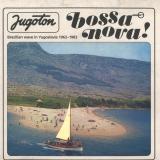
Various - Jugoton Bossa Nova  2x12"

Various

Jugoton Bossa Nova 2x12"

2x12inchEVERLAND-YU009LP
Everland
20.01.2026
 
20

Rich musical history of Yugoslavia reveals a long-lasting love for the music of Latin America.
Entwined in Afro-Cuban rhythms, ballrooms were shakin', swayin' and swingin', gathering musicians who were heavily into jazz bands and orchestras, most notably in Ljubljana, Zagreb, and Belgrade. Jazz could be heard on the streets of Split way back in 1919 when dancing became a symbol of freedom. Radio was the most loved household item, newest sheet music was in demand and collecting records was hip like today. In the aftermath of Second World War, jazz went underground but little by little, things changed and Ella, Satchmo, Dizzy and Miles came to visit, among others. Music festivals shaped the music for entertainment and variety of popular styles showed influences from all over the world. In the early sixties, one particular rhythm crashed on the coast of the Adriatic Sea: the rhythm of bossa nova!

In the whirlwind of various musical styles, Latin American music still played important part of the scene in the early sixties Yugoslavia. Beguine, tango, rhumba, samba, calypso, mambo and cha-cha-cha all found their place on the festivals inspired by famous Sanremo, festival of Italian popular song that largely shaped the musical taste of Europe. It was the era of instrumental rock, R & B and rock'n'roll - sounds of "imperialist America" now played freely on imported and hand-made electric guitars. While dancing halls had been turning into concert venues, bossa nova has come! Eydie Gorme with Blame It on the Bossa Nova and Paul Anka with Eso Besso (That Kiss!) tried to make us learn some new dance moves but it was Joao Gilberto's gentle singing and his new way of playing samba songs, along with Tom Jobim's modern dissonant harmonies and poetry of Vinicius de Moraes that created the magic. When American alto saxophonist and flautist Bud Shank visited Zagreb and Ljubljana in 1963 (with Boško Petrović in his quintet) "it was the first time we heard bossa nova!" remembers Stjepan Braco Fučkar. Jugoton, the biggest record company in Yugoslavia, released 4-track EP Bossa Nova by Bogdan Dimitrijević and his ensemble that same year! While not being fully accepted or understood completely, the archives of Jugoton reveal to us various interpretations of this new trend from their vast catalogue.

out of Stock

Order now and we will order the item for you at our supplier.


Last In: 4 months ago
Faces - Long Player LP

Faces

Long Player LP

12inch603497810659
Rhino
09.01.2026
  • A1: Bad 'N' Ruin
  • A2: Tell Everyone
  • A3: Sweet Lady Mary
  • A4: Richmond
  • A5: Maybe I'm Amazed
  • B1: Had Me A Real Good Time
  • B2: On The Beach
  • B3: I Feel So Good
  • B4: Jerusalem

Faces' second album, 'Long Player,' gets a much-anticipated vinyl repress on standard black vinyl, showcasing the band at the height of their powers. This ragged, yet cohesive, rock and roll masterpiece captures the band's ferocious energy and collaborative songwriting. Featuring standout tracks like "Bad 'n' Ruin" and a soaring cover of Paul McCartney's "Maybe I'm Amazed".

pre-order now09.01.2026

expected to be published on 09.01.2026

JOHN COLTRANE - Coltrane Jazz LP 2x12"
  • A1: Little Old Lady
  • A2: Village Blues
  • B1: My Shining Hour
  • B2: Fifth House
  • C1: Harmonique
  • C2: Like Sonny
  • D1: I'll Wait And Pray
  • D2: Some Other Blues

Analogue Productions (Atlantic 75 Series) Celebrating the 75th Anniversary of Atlantic Records! Coltrane playing with his former Miles Davis bandmates Featuring originals "Harmonique" and "Like Sonny" 180-gram 45 RPM double LP Pressed at Quality Record Pressings Tip-on old style gatefold double pocket jacket by Stoughton Printing The first album to hit the shelves after Giant Steps, Coltrane Jazz was recorded in November and December 1959, although one of the eight tracks ("Villiage Blues") was recorded in late 1960.

On everything save the aforementioned "Village Blues," Coltrane used the Miles Davis rhythm section of pianist Wynton Kelly, bassist Paul Chambers, and drummer Jimmy Cobb AllMusic describes Coltrane Jazz as the saxophone legend's preparation for his launch into his peak years of the 1960s. There are three standards aboard, but the group reaches their peak on Coltrane's original material, particularly "Harmonique" with its melodic leaps and upper-register saxophone strains and the winding, slightly Eastern-flavored principal riffs of "Like Sonny," dedicated to Sonny Rollins. The moody "Village Blues" features the lineup of McCoy Tyner on piano, Elvin Jones on drums, and Steve Davis on bass; with the substitution of Jimmy Garrison on bass, that personnel would play on Coltrane's most influential and beloved 1960s albums. Sound excellence can be found on this definitive deluxe 180-gram 45 RPM 2LP Analogue Productions (Atlantic 75 Series) reissue of Coltrane Jazz.

pre-order now

This item has not yet been released. You can pre-order the product now.

Project Pat - Mista Don't Play: Everythangs Workin LP 2x12"
  • A1: Chickenhead (Feat. La Chat & Three 6 Mafia)
  • A2: Cheese And Dope • A3 Whole Lotta Weed
  • B1: Don't Save Her (Feat. Crunchy Black)
  • B2: If You Ain't From My Hood (Feat. Dj Paul & Juicy J)
  • B3: Gorilla Pimp (Feat. Namond Lumpkin)
  • B4: Break Da Law 2001 (Feat. Three 6 Mafia)
  • B5: So Hi (Feat. Lord Infamous)
  • B6 20: 1 Phone Call (Skit)
  • C1: We Can Get Gangsta
  • C2: Ski Mask (Feat. Crunchy Black)
  • C3: Life We Live (Feat Namond Lumpkin & Edgar Fletcher)
  • C4: Y'all Niggaz Some Hoes
  • C5: Ooh Nuthin
  • D1: We Ain't Scared Hoe
  • D2: Aggravated Robbery
  • D3: North North
  • D4: Fuckin' With The Best Feat Hypnotize Camp Posse
  • D5: Mission Impossible (Pt. 5 Million) (Outro)

Project Pat, the older brother of Three 6 Mafia’s Juicy J, is a legend in the Memphis rap scene. He began rapping in the 90s with Killa Klan Kaze and released several independent mixtapes. In 1999 he released his debut album Ghetty Green via Hypnotize Minds/Loud Records. In December of 2000, he released a new single and video “Chickenhead” which blew up on the charts and led to the release of his second album Mista Don’t Play: Everythangs Working. Mista Don’t Play produced by Three 6 Mafia’s DJ Paul and Juicy J was certified Gold a mere two months after its release.

pre-order now12.12.2025

expected to be published on 12.12.2025

Britta Virves - Simple Things LP
  • 1: Intro
  • 2: Simple Things
  • 3: Forever
  • 4: Road To Braemar
  • 5: Before & After
  • 6: Mirrors
  • 7: Days Of Lily
  • 8: Stepping Stones
  • 9: Hope
  • 10: Bravery
  • 11: Chances
  • 12: Stepping Out

Drawing from her constant searching for her own unique sound she filters her love of rhythm and groove through her Nordic sensibility to create an accessible, compelling blend of excitement and introspection. Growing up on the island of Saaremaa in her native Estonia, Britta Virves was a keen piano student playing a strictly classical repertoire. A chance encounter introduced her to jazz: "I wanted to learn guitar. So I went to my teacher Tit Paulus, and he told me to stay with piano, and introduced me to Keith Jarrett, Herbie Hancock, Bill Evans - my mind was blown - a new world opened up." Britta immersed herself in the music and her talent soon attracted attention.

Moving to Sweden to further her studies, she was soon touring Europe with the acclaimed Norrbotten Big Band, under the direction of Joakim Milder, working closely with featured guest vocalist Genevieve Artadi and accompanying Artadi on a duo tour opening for Louis Cole. Each tune on the album draws inspiration from an aspect of Britta's own life. "Simple Things" has the directness of a pop song married to the depth of jazz, as Genevieve Artadi's ethereal vocals float over an insistent backbeat that supports limpid depths of harmony.Other tracks include "Bravery", whoch showcases the subtlety and dynamic control of the rhythm team and is one of Britta's favorite tracks on the album - "I feel it's like a big waterfall that's rushing down and making its path just by flowing naturally." By contrast, "Chances" plays with a neatly delivered set of accents that tie the roots effortlessly

pre-order now12.12.2025

expected to be published on 12.12.2025

Paul Haslinger - EXIT GHOST II LP

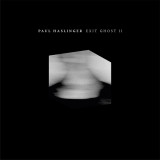
Die Cut Sleeve with download. It’s a strange betweenworld, bookended by sleep and the jolt of being wide awake in a place where you wonder how you got there. You know the feeling… It seems familiar but the colours are, well, unreal. In a high-ceilinged room, a grand piano plays lush melodies as, meanwhile, somewhere, an Alice In Wonderland clock ticks, cellos are bowed, a swarm of something vibrates and the hallucinatory crowd around Rosemary’s Baby babble. An echoey electronic hum builds and falls like a 50s refrigerator passed through and effects board, things run backwards, staccato strings are plucked… and that’s not the half of it. “I’ve never been happy staying in one particular school of musical thought. The fun has been turning things on their heads, to try something you were not supposed to do.” We’re on an immersive and adventurous travelogue with the former member of the legendary Tangerine Dream, Paul Haslinger - this is a man who knows how to build tension, hold moods, illustrate contempt, lies, passion and pleasure; He can create fear, loathing and love - he’s been unlocking the nuances of such emotions in a hugely successful career as a TV and film soundtrack composer (Halt And Catch Fire, Underworld and the Golden Globe-nominated Sleeper Cell). ‘Exit Ghost’ is his long thought out opus, a moment caught in time, flicking through reference points, taking an ethereal excursion that permeates musical genres as it becomes awash with intricate sounds and cross-pollinating rhythms. Built originally from the warmth of his grand piano ‘Exit Ghost’ resonates with purity and power, from an eerie and evocative betweenworld, that’s at once expansive and rolling, then intoxicating and suffocating in equal measures; modern composition at its most uplifting; cerebral, celebratory, intense and beautiful. “The soul searching in connection with this record was extensive. Finding places of resonance, giving a colour to your memories. It was more challenging because it’s not somebody else’s narrative. Finding the core of your own story can be the most difficult task of all.” Created over the span of eight years and filled with literal and personal references, the album itself is a testament to the search - a quest filled with hints, particles and suggestions.

pre-order now05.12.2025

expected to be published on 05.12.2025

Secret Affair - Live at The Scala LP 2x12"
  • A1: Glory Boys (3.28)
  • A2: Shake And Shout (3.05)
  • A3: Going To A Go Go (2.52)
  • A4: Get Ready (3.21)
  • A5: Don’t Look Down (2.39)
  • A6: One Way World (3.24)
  • A7: Only Madmen Laugh (3.44)
  • B1: One Day (In Your Life) (4.35)
  • B2: New Dance (4.53)
  • B3: Life’s A Movie Too (3.20)
  • B4: The Sound Of Confusion (3.04)
  • B5: Three Wise Monkeys (3.38)
  • C1: Soho Strut (4.05)
  • C2: Lost In The Night (3.33)
  • C3: Somewhere In The City (2.41)
  • C4: I Could Be You (If I Wanted To) (2.53)
  • C5: Dance Master (3.35)
  • C6: Let Your Heart Dance (2.44)
  • D1: My World (4.30)
  • D2: I’m Not Free (But I’m Cheap) (9.25)
  • D3: Time For Action (2.34)
  • D4: Big Beat (2.56)

In April 2003, Secret Affair returned to the stage at London’s legendary Scala for a show that captured everything fans love about the band: sharp songs, soulful playing, and the unmistakable fire of the Mod revival spirit.
Live at the Scala brings the energy of that night back to life, presented in stunning audio across double vinyl & 2CD. From the driving beat of Time for Action to the passion of Let Your Heart Dance and the punch of My World, the Scala setlist is a powerful reminder of why Secret Affair remain one of the defining bands of their era.
RECORDED AT THE SCALA, LONDON, 18th JUNE 2003 and released on vinyl for the first time.
The Original Secret Affair Line-up
Ian Page - Vocals, Trumpet
David Cairns - Guitar, Backing Vocals
Dennis Smith - Bass
David Winthrop - Drums
Paul Bultitude – Saxophone

pre-order now28.11.2025

expected to be published on 28.11.2025

Paul Abbott - Slip LP 2x12"

Paul Abbott

Slip LP 2x12"

2x12inchROKU041LP
OTOroku
21.11.2025
  • A1: Off Stage—Med Dark Fade Out (Exit) (Starts Edit)
  • A2: On Stage—Strike (Falls) (A) (Vinyl Edit)
  • A3: Off Stage—Walk (A) (Vinyl Edit)
  • A4: On Stage—Crystal
  • B1: Off Stage—Pile & Surfaces (B)
  • B2: Off Stage—Leaf K2
  • B3: Off Stage—K2 Line (Vinyl Edit)
  • B4: Strike Ftx (B) (Vinyl Edit)
  • C1: On Stage—Strike Ftx (C)
  • C2: Off Stage—Stick & Clap (D1)
  • C3: Off Stage—Tree Transition (A)
  • C4: Off Stage—Stick Walk (Crystal Approach)
  • C5: On Stage—Crystal (Rush)
  • D1: Reiy C & Swing Mic (B) (Vinyl Edit)
  • D2: Off Stage—Surfaces (All) (Vinyl Edit)
  • D3: Off Stage—Leaf K2X
  • D4: Alt Stage—Drom (A) (Billy Fulcrum)
  • D5: On Stage—Everybody Cycles (Vinyl Edit)
  • D6: On Stage—Strike Snx (Vinyl Edit)
  • D7: Med Dark Fade Out (Vinyl Edit)

Slip is Paul Abbott’s response to his 3 day residency at OTO in 2023. It’s a continued exploration of the acoustic-digital hybrid drum setup Abbott has been developing for some time, which involves drum kit and synthetic sounds combined closely—through an entanglement of limbs and cables—in an intimate but strange relationship with each other.

Paul Abbott hasn’t had any formal musical training, but has a long history of making music, having collaborated for years with Seymour Wright, Pat Thomas, Michael Speers, Cara Tolmie, Anne Gillis and many others. Eventually, led by a profound suspicion of what is fixed or limited, Abbott began finding other ways to organise sound - or what he calls ‘material’:

“I wanted a way to 'persuade' or guide the possibility of something happening - my activity or the events of an algorithmic composition - for example, but without certainty or formalism. It felt to me, during playing, that certain ideas had a particular sort of shape, but more than the form of a line. I began to write alongside (before/after) playing the drums, and ‘characters’ began to enter the scene as a more wobbly, and therefore appropriate option to notation. Working with these characters allowed me to simultaneously approach body, imagination, language and music: without dividing things up or separating these aspects from each other. It allowed me to leave things messy and entangled, whilst trying to deal with form and specificity: wanting to have some things feel or respond differently to other things at other times.”

In approaching his residency, Abbott developed a fixed cast of characters - crystal, lleaf, reiy.F, reiy.C, strike, nee, qosel, sphu and aahn. They each communicate using different kinds of movement and drum kit/s, and Abbott choreographed them as ‘dances’ based on different feelings, or outlines of behaviours suggestive of ways of moving (body, drums, sounds). He then arranged these characters into ‘compositions’: one for each performance day, with each composition featuring multi-layered activity - options for behaviours, ways to move around the rooms, play drums, develop synthetic sounds, change the lights or re-distribute the sound in the space.

After the performances, Abbott took home 9 hours of recordings split into up to 28 multitrack channels for each day, and re-organised his cast once more into a performance for 2LP, CD and digital. It’s an enormous amount of work - but Abbott is activated by the process. For him, the pleasure of unstable edges, possibilities, slippages, is the vital attraction. Like all living organisms, Abbott’s characters have malleability and responsivity. They stimulate a bundle of possible behaviours, a tendency to act a certain way, a temperament, a boundary of respective limits or affordances.

It’s an affective way of working, inclusive of Roscoe Mitchell, Sun Ra, Nathaniel Mackey and Milford Graves. In ‘Pulseology’(2022), Milford Graves reminds us, ‘Breath varies, so cardiac rhythm never has that (metronomic) tempo. It’s always changing. All the alignments of the heart are determined based on the needs of the cells, specifically tissues and organs. The heart knows if it needs to speed up.’ In Slip, to slip, in a heartbeat, is to descend not into the grid of the even metre accorded to the heartbeat, but into a play of mutability and modality. To change is the condition of the heart.

pre-order now21.11.2025

expected to be published on 21.11.2025

Toyah - Ophelia’s Shadow

Toyah

Ophelia’s Shadow

12inchDEMREC1298PD
Demon Records
21.11.2025
  • A1: Ophelia’s Shadow
  • A2: The Shaman Says
  • A3: Brilliant Day
  • A4: Prospect
  • A5: Turning Tide
  • B1: Take What You Will
  • B2: Ghost Light
  • B3: The Woman Who Had An Affair With Herself
  • B4: Homeward
  • B5: Lords Of The Never Known

Toyah’s 1991 solo album Ophelia's Shadow is issued on limited edition picture disc vinyl for the first time ever.

The picture disc features colour images on each side of the vinyl and is housed in special die-cut vinyl outer sleeves containing previously unseen colour photography from the album shoot.

A personal favourite album of her catalogue, Toyah confirms: “Above all, this is the one album I have made that truly represents me. I’m fiercely proud of it. Ophelia’s Shadow is not just a record, it’s a reflection of who I was, who I am, and who I continue to become. It’s the sound of resilience, reinvention, and raw truth.”

The album features a band line-up including Trey Gunn on stick, Paul Beavis on drums and Tony Geballe on guitar. Two tracks, Brilliant Day and Lords Of The Never Known feature Robert Fripp on guitar and were originally played live by Sunday All Over The World, the band Toyah & Robert Fripp toured and recorded with in the late 1980s.

pre-order now21.11.2025

expected to be published on 21.11.2025

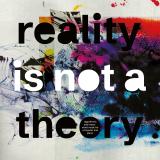
Mark Fell & Pat Thomas - Reality Is Not A Theory LP

Recorded in concert at the University of Sheffield in March 2025, Reality Is Not A Theory is the first collaboration between Mark Fell and Pat Thomas. Major figures in British experimental music since the 1990s, Fell and Thomas have developed their rigorous practices from radically different backgrounds and perspectives: where Fell’s singular take on synthetic abstraction emerged from Sheffield’s electronic underground, Thomas is a virtuoso improvising pianist steeped in jazz and modernist art music who has simultaneously worked with sampler-based electronics for decades. As the record’s wonderfully academic subtitle explains, we are presented here with two sides of ‘algorithmic and improvised music for computer and piano’, exemplifying both players’ insatiable search for new (and sometimes uncomfortable) playing situations.

The performance begins with Fell’s electronics close to the timbres of acoustic percussion, attacks that suggest wood, metal or glass threaded along a rapid pulse while Thomas focuses on the lowest registers of the piano, deadening the strings. As Fell’s electronics start to ring out and occupy more harmonic space, Thomas turns to wide, repeated clusters, which slowly expand into patterns of chords. Like in his recent solo recordings and his trio work with Joel Grip and Anton Gerbal, Thomas’ playing combines extreme dissonance with a deep lyrical sense. Fell’s work gradually shifts its focus toward drum sounds, drawing on the microtemporal processes that have characterized his practice in recent decades. Heard together with Thomas’ probing piano, the computer sounds call up unexpected associations with the klangfarben antics of improv drummers like Paul Lovens or Tony Oxley. Throughout its second half, the music grows increasingly frenetic, as Thomas sounds out rapid, irregularly repeated figures and beautifully sour chords in the upper register, while Fell’s percussion develops into angular pan-pipe-like feedback and waves of glissandi.

With great confidence and patience, Fell and Thomas often let their individual contributions remain rhythmically distinct and unsynchronised, allowing unexpected correspondence and coincidence to guide the music’s development. Recorded in a hall named after Sheffield steel manufacturer and Master Cutler Mark Firth, the location might suggest a model for understanding how Fell and Thomas interact here: two workers in the same workshop, each immersed in their own part of the production process. Arriving in a striking sleeve designed by Mark Fell, with liner notes by Francis Plagne, Reality Is Not A Theory is an invigorating document of the meeting of two mavericks of contemporary music.

pre-order now21.11.2025

expected to be published on 21.11.2025

Count Jaakola - Kind Eyes LP
  • 1: Redcurrants
  • 2: Healing
  • 3: Placeholder
  • 4: Erica
  • 5: Number's Game
  • 6: Dead Inside
  • 7: Kind Eyes
  • 8: Boy Bingo

From the humdrum to the huge; Tiia explores heartbreak, disappointment, climate change, and dying house plants. The record plays with contrasts, light and shadow, fizz and gloom. Keys melt into darker textures before guitars and drums lift them back into sparkle. It's heaviest moment is the title track, written in an airport bathroom after Tiia's father passed, yet even here, hope breaks through in irresistible vocal harmonies and inventive melodies. "To me, 'Kind Eyes' is a feelings record," Tiia says. "The grief for my dad passing sits at the centre and expands towards the edges, but there's a range of other feelings too. Sometimes they're hard to pin down and navigate but the songs are my map, trying to chart where you are and where you're going. And listeners should remember that sometimes X does mark the spot."

Lead single 'Healing' hits like a mascara- smeared midnight drive through Lynch's America. First sketched with Prince in mind, it finally found its teeth on a long, lonely walk in north-east London: a rock song hiding in plain sight. Tiia says "As soon as I had a rough idea for the driving beat, I knew I had to get Sean Berry (fellow bandmate from the once mighty Comet Sands) involved on the guitar, and the hooks all fell into place". Dusted with plush keys, on 'Numbers Game', Tiia leans into classic rock drama - warmth turning suddenly cold, the floor falling away from underneath you. "The lesson here is don't spy on your exes, but when you do, be prepared to write a song about it. It was the first track I asked Paul Rains (of Allo Darlin' fame) to play guitar on and he instantly got where I was trying to go with it. Now he's my partner, I have no idea how he feels about the lyrics!" Tiia laughs. Having also worked with Tiia's previous cult all-girl indie band The Minor Characters, Seb Kellig lent his trademark dub- inspired production influences at the legendary sonic heaven of Sausage Studios, east London, which Tiia calls "My happy place".

Tiia will again be playing keys for Allo Darlin's four UK tour dates this October followed by tour dates as Count Jaakola. 'Kind Eyes' is set for release 21st November 2025 via Tip Top Recordings (Mandrake Handshake, Japanese Television, Pearl & The Oysters, Golden Toad).

pre-order now21.11.2025

expected to be published on 21.11.2025

BRIDGE - WAITING PATIENTLY / LOVE'S IN YOUR CORNER (7")

BRIDGE - WAITING PATIENTLY b/w LOVE’S IN YOUR CORNER

Paul Tillman Smith is a significant figure within in the music community of The San Francisco Bay Area, California. His connections and collaborations read like a who’s who of famous musicians.

As leader of 70s Buddah Records group VITAMIN E and then BRIDGE, the subsequent band cut an album in 1981 for the CBS distributed Bang label that never saw the light of day.

It was released by First Experience Records as a double LP and CD in 1999 and is recognised as being one of the finest unreleased discoveries within its genre.

IZIPHO SOUL revisit the album and release two gems from this magnificent body of work.

WAITING PATIENTLY - Modern Soul with all the right ingredients - lead vocal Derick Hughes, backing vocals courtesy of The Satin Shadows, driven along by Butch Haynes’ conga playing. Presented here as an extended version crafted by Phil Ward.

On the flip - LOVE’S IN YOUR CORNER (Remastered) featuring the supreme voice of Debravon Lewis (RIP) and Larry Sampson. There’s importance in documenting this great song, as this demo paved the way for the Norman Connors’ version.

out of Stock

Order now and we will order the item for you at our supplier.


Last In: 4 months ago
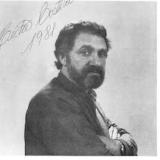
HECTOR COSTITA - 1981

HECTOR COSTITA

1981

12inchJB9
Jazzybelle
14.11.2025
  • 01: Lou
  • 02: Divagação 6/8
  • 03: Phil Night
  • 04: Surprise Blues
  • 05: Avessos
  • 06: Divagação Nº 1

Born in Buenos Aires in 1934, Hector 'Costita' Bisignani is one of the leading figures in Latin American jazz. Settling in São Paulo in the late 1950s,
he quickly established himself as one of Brazil's most renowned flutists and saxophonists, collaborating with major artists such as Sérgio Mendes, Elis Regina,
Hermeto Pascoal, João Donato, and Gato Barbieri. His career also led him to play alongside Michel Legrand, Lalo Schifrin, Burt Bacharach, and Ray Conniff,

demonstrating his international influence. A founding member of Sérgio Mendes' Sexteto Bossa Rio, he contributed to the rise of Brazilian jazz by incorporating
local rhythms and bold compositions. He is also renowned as a teacher, making him a respected figure for several generations of musicians. With a career
spanning more than 70 years, he remains a pioneering figure in the history of Latin American jazz. 1981, now reissued, perfectly illustrates this creative freedom.

Recorded in the exuberant spirit of the 1970s and 1980s, it blendsbaião, jazz-funk, and Braziliansoul. Ledbyhissaxophone, flute,and clarone,andbackedbyhisGalleryClubband,

thisrarerecordingembodies the vibrant energy of a scene where experimentation and virtuosity went hand in hand.

pre-order now14.11.2025

expected to be published on 14.11.2025

Zanias - Cataclysm LP

Zanias

Cataclysm LP

12inchF//032B/B
FLEISCH
11.11.2025

‘Cataclysm’ is a poignant call for revolution of both politics and consciousness, conveyed through ten distinct songs written and produced by Zanias between 2020 and 2024. Each piece of music inhabits its own aesthetic universe and rhythm, featuring elemental fusions of coldwave, italo disco, witchhouse, trance, breakbeats, hyperpop and even a touch of drum and bass. The unique amalgamation is best described as post-industrial ethereal wave, of Zanias’s very own signature. The subject matter grapples with how to move forward through times when civilisation and the entire ecosystem of the planet feel like they are on the brink of total collapse, while gazing back over hundreds of thousands of years of human survival in total awe of how far we’ve come. The lyrics aim for a balance of vulnerability and poetic strength, as the audience is beckoned to “thread the power through the pain”. While darker atmospheres are conjured through the sound design and instrumentation, the album ultimately directs itself steadfast toward the glittering sheen of hope. As the tempo ascends through the course of the album’s tracklist, so too does Zanias’s deep attachment to our sacred humanity and refusal to give in to despair.

‘Cataclysm’ represents an ambitious defiance of genre tropes in pursuit of pure artistry, with a potent political message delivered with assertive fervour and playful sincerity. Additional production was contributed by mixing engineer Trey Frye, best known for his work in the band Korine, and the album was mastered by Alain Paul.

out of Stock

Order now and we will order the item for you at our supplier.


Last In: 6 months ago
BJ Smith - Dedications to the Greats Four  'Don't Be Cruel' featuring Joe Harvey-Whyte

Long-time NuNorthern Soul contributor, B.J. Smith is a man in demand, dividing his time between solo work, playing guitar in Crazy P man James Baron’s popular JIM outfit, collaborating in a variety of well-regarded projects (Smith & Mudd, Bison and White Elephant amongst them) and composing for TV. Due to this impressive list of musical commitments, solo releases have been few and far between of late, with Smith’s most recent NuNorthern Soul release, a stripped back version of his Big Sur single, dropping late 2023.

It's been ever longer since he delivered a volume in his popular and ongoing Dedications To The Greats series, where the singer-songwriter and composer successfully turns his hand to other people’s songs. Since debuting the series on NuNorthern Soul in 2013 via revelatory and inspired covers of tracks by Mos Def and the Pharcyde, Smith has covered cuts by Outkast, Prefab Sprout and Soul II Soul.

On volume four, Smith’s first volume in the series for five years, he delivers a “cover of a cover” – a revolutionary and imaginative interpretation of Billy Swan’s ‘Don’t Be Cruel’, itself a version of a song first made famous by Elvis Presley. It was their mutual love of Swan’s version that brought Smith together with the release’s most prominent guest artist, Joe Harvey-Whyte, whose lilting, bittersweet and deeply emotive pedal steel performances can be heard across the EP.

Smith provides three contrasting takes. The EP is led by the ‘Mother Earth’ version, a slowly unfurling epic in which waves of effects-laden pedal steel and sun-splashed picking acoustic guitars usher in Smith’s eyes-closed vocalisations, settling into a groove reminiscent of his collaborative work with long-time friend and collaborator Paul ‘Mudd’ Murphy that showcases Harvey-Whyte centre stage to joyful effect. As the 14-minute epic progresses, we’re treated to long, languid electric guitar solos, percussion-laden slow-motion builds and hazy, stretched-out organ solos. It’s a breathlessly brilliant concoction that’s a million miles away from either Swan or Presley’s versions.

In contrast, the similarly epic ‘Earth Heart’ version – available in full vocal and instrumental takes – pushes the song front and centre. Following an extended build up, where Tamar Osborn’s gorgeous and fluid flute motifs rub shoulders with languid guitar solos and Harvey-Whyte’s pedal steel, Smith takes to the mic, delivering an emotive performance of the song’s heartfelt lyrics over a hushed, slow-motion groove. The track builds in waves as it progresses, with Smith layering up instrumentation as it rolls towards a fine conclusion.

Completing a superb package is the ‘Root Heart Version’, a Balearic-meets-Americana take built around shuffling drums, toasty bass guitar, extended pedal steel instrumentation, flashes of flute and Smith’s sun-bright acoustic guitar. Loved-up and more than a little saucer-eyed, it’s a bona-fide sunset delight.

out of Stock

Order now and we will order the item for you at our supplier.


Last In: 14 days ago
X-Ray Spex - Germfree Adolescents LP
  • A1: Art-I-Ficial
  • A2: Obsessed With You
  • A3: Warrior In Woolworths
  • A4: Let's Submerge
  • A5: I Can't Do Anything
  • A6: Identity
  • B1: Genetic Engineering
  • B2: I Live Off You
  • B3: I Am A Poseur
  • B4: Germ Free Adolescents
  • B5: Plastic Bag
  • B6: The Day The World Turned Dayglo

X-Ray Spex was a British punk rock band that emerged in the late 1970s, known for their distinctive sound, socially conscious lyrics, and the dynamic frontwoman Poly Styrene. The band was active during the first wave of punk rock and played a significant role in the punk movement.
Lead vocalist and songwriter Poly Styrene was known for her unique vocal style and often cited as an influential figure in the punk scene.
Other band members on ‘Germfree Adolescents are Jak Airport: Guitarist / Paul Dean: Bassist / Rudi Thompson: Sax / B P Hurding: Drummer.
X-Ray Spex released their debut album, "Germfree Adolescents," in 1978, featuring the title track, "Germfree Adolescents." The album is considered a classic of the punk era.

Poly Styrene's lyrics often addressed social and consumerist issues, and her unconventional fashion sense and energetic stage presence added to the band's overall identity.

pre-order now31.10.2025

expected to be published on 31.10.2025

Incognito feat. Joy Rose - It's About Time (10")

We're absolutely thrilled to share the brand new single from the legendary Incognito, featuring the magnificent Joy Rose on lead vocals. This track, "It's About Time," is a powerful, feel-good slice of modern soul and jazz-funk that we genuinely feel is perfectly positioned for major radio playlists and feature coverage!


"It's About Time" delivers everything you expect from the Incognito collective, sounding fresh and vital for 2025. Written by Jean-Paul (Bluey) Maunick, Richard Bull, and Joy Rose, the original version is characterised by its signature lush instrumentation, soulful brass arrangements, infectious grooves, and an immediately uplifting chorus. This release also includes a deep and driving Soulful House Remix from Richard Bull.


We believe this track is a huge, optimistic record that will resonate deeply with audiences, further cementing Incognito's legacy.

out of Stock

Order now and we will order the item for you at our supplier.


Last In: 76 days ago
Acid Pauli - Den Mahlstrom rauf

For Martin Gretschmann, the ever-evolving Berlin artist known as both Acid Pauli and Console, music has always been a deeply personal journey.
His new imprint, All Is Acid, is the destination, a creative home for his uncompromising and experimental sound. Breaking from the cycle of trends, the label is a return to the essential, offering just a few curated releases a year. Each is intended as a timeless artifact for deep listening, primarily showcasing Acid Pauli's own intricate and intimate productions.
The label debuts with a newly remastered version of his classic 2010 EP "Den Mahlstrom rauf." But the release is given a powerful new dimension by a standout remix from Italian artist Adiel. Their collaboration was sparked by pure serendipity: a fan video of Acid Pauli playing her music in Milan reached Adiel, who responded with a short film for Vogue. In it, she revealed that "Den Mahlstrom rauf" was a formative influence and one of the very first records she ever bought.
Inviting her to remix the track that helped shape her sound was a full-circle moment, artistically and emotionally. Her bold, reverent reinterpretation honors the original's spirit while imprinting it with her own unique signature. With this release, All Is Acid launches not just with music, but with a story of connection, community and a shared artistic lineage

out of Stock

Order now and we will order the item for you at our supplier.


Last In: 29 days ago
King Tubby And The Aggrovators - Shalom Dub
 
16

2024 Reissue

“Tubby did three original dub albums, ‘Dub From The Roots’. ‘The Roots of Dub’ and the third is ‘Brass Rockers’ with Tommy McCook ‘pon the flying cymbals. Where he mixed it with the horn going in and out in a dub way and one named ‘Shalom Dub’ you can call Tubby’s too because he mixed the versions as they were off forty fives’’
Bunny ‘Striker‘ Lee

King Tubby and Producer Bunny ‘Striker’ Lee are intertwined in the birth of Dub Music. After discovering a mistake that made a ‘serious joke’ ( more of which later...) they went on to release the first pressings of this new musical genre namely ‘Dub Music’. Tubby’s vast knowledge of electronics and Bunny’s vast catalogue of rhythms would lay the foundations of what today is taken as a standard... the Remix / Version cuts to an existing vocal tune.

Osbourne ‘King Tubby’ Ruddock was born in Kingston, Jamaica on 28th January 1941 and grew up in the High Holborn Street area of downtown Kingston. He studied electronics at Kingston’s National Technical College and also on two correspondence courses from the U.S.A... When he had qualified Tubby began repairing radios and other electrical appliances in a shack in the back yard of his mother’s home. His work in the early days included winding transformers and building amplifiers for Kingston’s Sound Systems. Tubby built his first Sound System in 1957 playing jazz and Rhythm & Blues at local weddings and birthday parties. His reputation as a man who knew and understood both electronics and music grew steadily and as the sixties drew to a close. Tubby purchased his own basic two track equipment. He installed this alongside his dub cutting machine, a home made mixing console and his impressive collection of Jazz albums in the back bedroom of his home at 18 Dromilly Avenue which he christened his music room.

Tubby and Striker were at Treasure Isle Studio’s one day while Ruddy from Spanish Town was working with the engineer Byron Smith....

“Tubby and myself was talking when Ruddy was cutting some dub but Smithy (engineer) made a mistake through we were talking and forgot to put in the voice. It was two track recording in those days. Ruddy said ‘No Man! Make it stay! and so they cut the rhythm. When I went over to Ruddy’s that Saturday night a dance was in progress and when they played the vocal to the tune... then he said we’re going to play ‘Part Two’. They never called it ‘Version’..and then he played the rhythm track. The song was a catchy song and everybody started to sing along and the deejay started to toast so everything went down well. On Monday morning I went up and I said ‘Tubbs the mistake we made was a serious joke.It mash up Spanish Town! The people went wild. So you have to start to do that now ‘cause when the man put on the ‘Part Two’ everyone start singing this song. It played about twenty times. I said you try Tubbs!’...Well the next Saturday night now when Tubby strung up down the farm U Roy said he’s going to play ‘Part Two’ but Tubby did it different now. He started with the voice then dropped it out and let the rhythm run and then he brought in the voice in the middle and from there Tubby started to get really popular.’’
Bunny ‘Striker’ Lee

Dynamic Sounds upgraded to sixteen track recording in 1972 and Tubby purchased, again with the help of a deal brokered by Bunny Lee. The old four track equipment and the MCI console from their Studio B. The four tracks now gave him far wider scope to work with and he began to create a new musical form where the bass and drum parts were brought up while the faders allowed Tubby to ease the vocal and rhythm in and out of the mix. It was only a matter of time before Tubby’s dub plate experiments began to make it on to vinyl and the first ever long playing King Tubby releases would feature a collection of his mixes to a selection of Strikers rhythms. So please sit back and enjoy this historic set of sounds. Lovingly restored and with a few extra gems added to the CD Editions. These releases were the first to carry the name of King Tubby and the first to credit the great musicians that contributed so much to the rhythms that made these albums possible.

out of Stock

Order now and we will order the item for you at our supplier.


Last In: 7 months ago
Big Surge - Project A / Project AA

DJ Support: Raresh, Ben UFO, Alex Kassian, Hamish & Toby, Chris Stussy, Dr. Banana, NIKS, Carista, Enzo Siragusa and more.

For their fourth release, Moonworks reissue a UK house rarity from 1995: Big Surge – Project A / Project AA.

Originally produced by Paul Kelly, Andrew Grimwood and John Viney in a small North London studio, the record has since become a secret weapon for seasoned selectors. Original copies are thin on the ground and command serious prices on the second-hand market, making this official reissue a welcome rescue.

The release channels the playful spirit of London’s mid-90s underground, full of character and unmistakable charm. ‘Project A’ is a rolling, bass-heavy progressive cut loaded with lush synths and chopped vocal snippets. Alongside it sits a brand-new edit from Kyiv-born Nizar Sarakbi, who strips things back into a subtle, driving version tailored for today’s floors. On the flip, ‘Project AA’ brings a euphoric rush of rumbling low-end, vocoder hooks and peak-time piano riffs – a timeless floor-filler through and through.

As with previous outings, Moonworks have worked directly with the original artists to remaster the tracks and refresh the artwork, giving this lost gem a proper return to circulation.

out of Stock

Order now and we will order the item for you at our supplier.


Last In: 74 days ago
PHYLIPE NUNES ARAUJO - Phylipe Nunes Araujo  LP

Phylipe Nunes Araújo's songs are as rich and varied as the diverse landscapes they were written in. The hills of Pernambuco, the lagoons of Alagoas, and the beaches of Bahia are all woven into his stripped-back, folk-inspired Brazilian songwriting. As part of a wider movement of musicians originating from Brazil's Northeast, Phylipe sees the process of music-making as the search for beauty itself.

Collaborating with fellow Northeastern artists Bruno Berle, Batata Boy and Nyron Higor among others, Phylipe's debut album represents the latest flowering of this exceptionally talented community's creative search.

The Northeast holds an almost sacred importance in Brazil's collective cultural imagination. The region bore witness to the brutal histories of Portuguese colonization and the African slave trade, while simultaneously amalgamating the diverse cultures, religions and traditions of those who have called it home. Countless Brazilian music greats - Gilberto Gil, Caetano Veloso, Hermeto Pascoal, Djavan and Luiz Gonzaga - have emerged from this vast cultural melting pot.

Born in Caruaru, Pernambuco state, and raised in the city of Santa Cruz do Capibaribe (famed for its textiles industry), Phylipe describes his music simply as "Brazilian music from the Agreste of Pernambuco". His masterful compositions thread together regional rhythm, folk poetry and sophisticated harmony.

Phylipe's musical foundations were laid in youth, listening to the local elders rehearsing their forrós, attending São João street parties in front of his house and watching the Junina Quadrilhas dance through his neighborhood. At street fairs he would read the Literatura de Cordel (handcrafted pamphlets of Brazilian folk literature), and watch the rhyme battles between cantadores, violeiros, and repentistas, who improvise verses on daily life, social commentary and philosophy. This tradition of Northeastern folk poetry proved particularly formative for Phylipe as a lyricist. "I always try to write things as simply as possible. I believe that beauty must be easily understood. If I can facilitate the path to the message, there's no reason not to. It's something I learned from the traditional poetry here: it's more beautiful if everyone understands."

At the age of 11, Phylipe first got access to the internet. As he explains: "Still in adolescence I was also able to discover things like The Beatles and Nick Drake - I started to get to know music from the rest of the world and later to correlate that with my local musical experiences." Rich with extended chords and artful dissonances, it's clear from his compositions that jazz and bossa nova also took hold, but he's quick to eschew stereotypes. "Inevitably, people associate a Brazilian musician playing a nylon-string guitar with bossa nova..." "But the foundation is another story," he asserts, "It's the Northeast."

On the guitar Phylipe experiments with the binary rhythms inherent in traditional Northeastern music. Coco, frevo, maracatu and baião are recontextualised, placed alongside Brazilian popular music (MPB), gentle lullabies and stunning ballads. "In these 10 songs, I am experimenting with making pop music on a nylon-string guitar with my foundation in the Northeastern songbook."

The contemporary musical community which Phylipe belongs to developed initially in Pernambuco's neighbouring state Alagoas. Phylipe lived in its capital Maceió for three years, where he built friendships and musical bonds with Bruno Berle and Batata Boy who together produced his album. Bruno also sings in unison with Phylipe on the duet "Valise", a song Phylipe wrote aged just 15.

In recent years, Phylipe, Bruno and Batata have migrated south to São Paulo, where the majority of the album was recorded. Other collaborators on the album include Alici, who provides vocals for the ebb and flow of "Temperim", Nyron Higor who plays drums on lead single "Asa" and the sweet indie moment "Ziz"", bassist Meno Del Picchia who plays on the mystical baião "Bixin" and the propulsive "Subindo a Ladeira", and Raphael Coelho who joins Bruno and Batata on percussion for "Santa Cruz", Phylipe's hypnotically powerful portrait of his hometown.

out of Stock

Order now and we will order the item for you at our supplier.


Last In: 7 months ago
Francis Lai - Play It Like Francis
  • A1: Robert & Robert (Mother Remix By Play Paul)
  • A2: London Airport (Remix Xavier Jamaux)
  • A3: Dans La Poussière Du Soleil / Un Amour De Soleil (Remix Kid Loco)
  • A4: L’amour D’aimer (Remix Marc Collin – Nouvelle Vague)
  • A5: L’aventure C’est L’aventure (Remix Alex Revox Jr)
  • B1: Child Under A Leaf (Remix Vicarious Bliss)
  • B2: Saint-Tropez (Remix Jazzy By Alex Revox Jr)
  • B3: Retour De Lourdes (Remix Dj Cam)
  • B4: Concerto Pour La Fin D’un Amour (Remix Play Paul)
  • B5: Plus Fort Que Nous (L’amour Est) {Remix Philippe Cohen Solal (Gotan Project)
  • B6: Young Freedom (Remix The Breathin’ Canyon)

Thierry Wolf und Frédéric Lai (Sohn des Komponisten) wählten rund zehn DJs aus, darunter bekannte Vertreter der French Touch-Szene, die für Sammlungen wie Hôtel Costes bekannt sind. Diese Künstler wurden mit der Aufgabe betraut, die Werke von Francis Lai neu zu interpretieren. Die DJs, die oft weniger bekannte Stücke auswählten, überraschen mit persönlichen Entscheidungen. So wählte Play Paul (Bruder von Guy-Manuel von Daft Punk) „Robert & Robert“, da es das letzte Stück war, das er mit seinem Vater hörte. Auch Philippe Cohen Solal von Gotan Project wählte „L’Amour est bien plus fort que nous“ als Epigraph auf dem Grabstein seiner Eltern.

Dieses Projekt verbindet musikalisches Erbe, Emotion und Innovation. Durch die Remixe erhält die Musik von Francis Lai eine frische Perspektive, während gleichzeitig seinem Pioniergeist gehuldigt wird.

pre-order now17.10.2025

expected to be published on 17.10.2025

LUTHER DICKINSON - Dead Blues Volume 1

"While playing for Phil Lesh, I became friends with his son, Grahame, and we started booking shows called Dead Blues, a Phil and Friends offshoot that used the traditional blues and folk songs from the Dead catalog as a vehicle to bring new musicians from the blues and rock scene into Phil’s orbit. For example, we brought Phil together for the first time with the Blind Boys of Alabama, Charlie Musselwhite, G Love, JD Simo and many others new to Phil’s community.
Dead Blues was a great concept for live shows but I never considered making an album until I met singer Datrian Johnson, one of the most moving singers I’ve ever worked with. John Medeski brought Datrian into the community and we instantly became friends and collaborators and began recording the songs on Dead Blues Volume 1, reinterpreting the American classics.
The tracks feature North Mississippi Alumni Cody Dickinson and Rayfield “Ray Ray” Hollowman, as well as old friends from Memphis, Paul Taylor/New Memphis Colorways also on drums, bass and guitars and Steve Selvidge on Space Funk guitar. I found that writing the music on bass (then adding keys and guitar) led the music down a funky, jazzy avenue and Datrian worked his magic, reinterpreting the classic blues lyrics and melodies with his soulful vocals."

pre-order now17.10.2025

expected to be published on 17.10.2025

EMILY SPRAGUE A. - Cloud Time
  • Tokyo 1
  • Osaka
  • Nagoya
  • Matsumoto (Beginning)
  • Matsumoto (Ending)
  • Hokkaido
  • Tokyo 2
  • Each Story
also available

Black Vinyl


Emily A. Sprague's Cloud Time traces an audio-spiritual journey through time and place, recorded across a long-awaited debut tour of Japan in the fall of 2024. Compiled from environmental improvisations captured in and for the moment, material at once welcoming, responsive, and inimitable, the album distills a voyage guided by psychic wayfaring, unbound presence, and activating performance for a reciprocal exchange with space, listener, and each fully engaged instant. The Japanese tour documented on Cloud Time held an almost mythic significance for Sprague, taking on properties of her own sonic white whale. After many near-departures and dropped plans to play in the country, "the empty spaces of cancelled trips and forgotten music turned into strange little misty spirits that I felt followed by," she says. "When I began preparing for the tour, I couldn't shake a sense that the invitation to Japan was more about opening myself up to this new place instead of bringing something into it tightly under my control. Improvisation has always been such a pillar in my music practice, and I really wanted to meet the country, spaces and people through that process." To amplify these intuitive whispers on-stage, Sprague reimagined her time-tested live rig, designed to be as free from error as possible, as a looser, more flexible set up that would allow her to interface with what was essentially a blank sonic canvas every night. Each performance became a collaboration between environment and instinct, Sprague processing the events, energies, and emotions informing the evening through her new sound ecosystem, and projecting an entirely present and unique version of herself to each open-eared and hearted crowd. "It was very much more than just an act of playing for me, but a total experience of time and place," she says. The seven long-form pieces that plot the course of Cloud Time, excerpted from over eight hours of recordings archived on the artist's on-stage recorder and generously shared on the album with no additional mixing and only minimal editing, invite listeners to become still in these deep-rooted moments of presence as the album moves from city to city, venue to venue. Cloud Time chronicles material recorded at each tour stop, Sprague selecting and sequencing the album around mood-based storytelling more so than linear chronology. "I tried to make the whole album flow in the way that any one of the complete live performances did," she explains, "while also keeping the spirit of the whole thing as a journey." The result is equal parts travelog, love letter, and impressionistic collage channeled from the potent ferment of a now encased in the glowing amber of memory. Intrinsically inspired by kankyo ongaku, an environmental music philosophy, known both in and widely outside of Japan that tunes into the similarly expansive ethos as Pauline Oliveros' deep listening practice and posits the listener as composer, Cloud Time is ambient music that seems to be listening right back, grounded in heartfelt synthesized frequencies that abundantly hold and heal. Pieces like "Nagoya," "Tokyo 1," and the ten minute "Matsumoto" in particular hum with the atomic resonance of gently tended landscapes, offering space for tuning way in and dropping far out from perspectives that stifle and bind. Cloud Time is an invitation to embrace each moment as both fleeting and eternal, floating by with nothing to grasp onto and absolutely everything to gain. The exercise in acceptance and letting go that Sprague practiced throughout the tour deeply impacted her understanding of self as both a guest and venerable performer. "The process of loving wherever I am, being present and focusing on a clear channel of communication for mind and emotion, rooted so deeply in respect for the space, those within it, and myself, ended up being profoundly healing," she says. "My vision and hope is that this album can be released as a gift back to anyone who either was or wasn't there. A cloud time of life passing by."

pre-order now16.10.2025

expected to be published on 16.10.2025

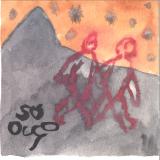
Wolfgang Pérez - Só Ouço

"Taking influence from the pioneers of Música Popular Brasileira, Wolfgang Pérez has crafted an exquisite album of summery experimental pop music that encapsulates the beauty and chaos of modern Brazil. A must-listen for fans of Tom Zé, Gilberto Gil, Kiko Dinucci, Negro Leo, Ricardo Dias Gomes, and João Gilberto.

Genre-blending songwriter, arranger, and guitarist Wolfgang Pérez is set to release his highly anticipated new album Só Ouço in July 2025 on Hive Mind. Known for his unique fusion of influences, the German-Spanish artist first captured attention with his 2021 debut WHO CARES WHO CARES (Fun In The Church), followed by the critically acclaimed Spanish-language album AHORA (BAUMUSIK, 2024).

Só Ouço is the fruit of an 18-month creative residency in Rio de Janeiro, where Pérez collaborated with a group of young Brazilian musicians. Deeply inspired by the city's sounds and rhythms, the album marks an exciting chapter in Pérez’s evolving artistic journey.

In 2022, Wolfgang Pérez arrived in Rio de Janeiro on a university exchange to study composition, and quickly found himself immersed in the city’s rich musical landscape. Introduced early on to Rio icons like Thiago Nassif, Arto Lindsay, and Ana Frango Elétrico, what began as a semester turned into a transformative three-semester stay. Pérez absorbed the city's contrasts - it's beauty, its people, it's chaos and violence, all it's contradictions and life - while deeply studying Brazilian music at UFRJ/UNIRIO under the guidance of masters Josimar Carneiro, Marcello Gonçalves and Almir Cortes.

Wolfgang spent the first 6 months or so soaking in as much as possible, going to shows, to the baile funk parties, walking the streets, hiking the mountains in and around Rio, listening to music, making friends, learning where to go and where not to, learning the language, learning the slang, incorporating the culture. He used the time to forget himself in the vibrance of the city.

After this the band came together through a series of chance encounters and happy accidents...some loose jam sessions led to shows around Rio, where Wolfgang, alongside Luis Magalhães (bass), Pedro Fonte (drums) and Paulo Emmery (electric guitar), started to flesh out some of Wolfgang's compositions. At a show at Audio Rebel they met Angelo Wolf (owner of Wolf Estúdio and engineer for artists such as Bala Desejo, Dora Morelenbaum, Zé Ibarra, Marcos Valle, Antonio Neves and Ana Frango Elétrico); moved by the music, Wolf offered Pérez residency and studio time at Wolf Estúdio, providing the foundation for Só Ouço. Angelo was a catalyst for the production of Só Ouço, his openness and generosity helping to shape the sound of the record. Carol Maia, a young guitarist, lyricist and singer brought a sensitivity and tenderness to the songs, while Antonio Neves helped to pull together the brass and woodwind players who would complete the lush sound of the album.

Meticulously arranged, and beautifully composed, Só Ouço is a joy to listen to and surprising at every turn. Classic songwriting and cutting edge production blend to produce an album that is by turns tender and gentle, abrasive and unsettling, a joyful celebration of life in all its complexity."

out of Stock

Order now and we will order the item for you at our supplier.


Last In: 7 months ago
VARIOUS - One Hit Wonders LP 2x12"
 
20

"One Hit Wonders" ist eine dynamische Doppel-LP-Zusammenstellung, die die unvergesslichen Songs feiert, die den Äther beherrschten und zu zeitlosen Klassikern wurden. Diese Sammlung vereint legendäre Hits aus verschiedenen Jahrzehnten und Genres, von den energiegeladenen Beats von "You Spin Me Round (Like a Record)" von Dead or Alive bis zum sanften Yacht-Rock von "Steal Away" von Robbie Dupree. Mit Tanzhymnen, gefühlvollen Balladen und genredefinierenden Titeln ist dieses Album eine nostalgische Reise durch Songs, die trotz der Tatsache, dass sie die einzigen großen Chartstürmer ihrer Künstler waren, in der Musikgeschichte unverzichtbar geblieben sind.

Diese sorgfältig zusammengestellte Auswahl umspannt die Welten von Pop, Rock, Funk, R&B und Hip-Hop. LP1 enthält Wohlfühl-Hits wie "Walking on Sunshine" von Katrina and the Waves, den Synthie-Pop-Charme von "Wouldn't It Be Good" von Nik Kershaw und die eindringliche Schönheit von "Only the Lonely" von The Motels. LP2 hält die Energie hoch mit funkgetriebenen Grooves wie "Play That Funky Music" von Wild Cherry, der filmischen Magie von "Neverending Story" von Limahl und sanften Balladen wie "Because I Love You" von Stevie B. Jeder Track auf dieser Compilation ist einkultureller Meilenstein, der von der ersten Note an erkennbar ist.

"One Hit Wonders", herausgegeben von MPO, ist ein Muss für Musikliebhaber, Sammler und Fans von klassischen Hits, die Generationen überdauern. Ob Sie diese Hymnen wiederentdecken oder zum ersten Mal erleben, dieses Album fängt die Magie von Songs ein, die Geschichte geschrieben haben, auch wenn ihre Schöpfer nie wieder denselben Erfolg in den Charts hatten. Sichern Sie sich noch heute Ihr Exemplar und lassen Sie sich von der Musik in die Momente zurückversetzen, in denen diese Titel die Charts beherrschten und und die Welt in ihren Bann zogen.
Tracklisting

out of Stock

Order now and we will order the item for you at our supplier.


Last In: 7 months ago
ZERO BOYS - PLAYBACK IS HELL
  • Make It
  • Anatomically Incorrect
  • Birds
  • Twin
  • Stick My Hands
  • Fly Bite
  • Godless Girl
  • In The Back Of My Mind
  • Purely Intentional
  • Shade
  • Green Army Jacket
  • Trust Anyone
  • So Excited
  • Parasite Man
  • Bleach Blanket Boi Oi Oi

Es gab eine Zeit - nennen wir sie Saturn-Rückkehr, nennen wir sie die frühen 90er Jahre, nennen wir sie den letzten Atemzug, bevor das Internet alles verschlang - als wir von den Zero Boys uns plötzlich einer ganz anderen Art von Feuer gegenüberstanden. Wir waren aus unserer Hardcore-Haut herausgewachsen - nicht aus Ablehnung, sondern aus einer Weiterentwicklung heraus. Wir waren unruhig. Songs kamen nicht mehr in Ausbrüchen purer Geschwindigkeit; sie verdrehten sich, dehnten sich aus, stellten Fragen. Struktur war nicht mehr der Feind. Wir ließen die Songs atmen, und im Gegenzug erzählten sie uns Dinge, die wir nicht erwartet hatten. Die hier versammelten Songs aus ,Make It Stop" (1991) und ,The Heimlich Maneuver" (1992) fangen diesen Moment ein. Diese beiden Alben, die innerhalb eines Jahres entstanden sind, sind Dokumente einer Zeit, in der wir unserem Instinkt folgten - die Grenzen unseres eigenen Sounds ausloteten und persönliche spirituelle Erkundungen durch den Fuzz und die Wut hindurchflochten. Es war nicht religiös. Es war eine Suche. Der Versuch, das Selbst im Lärm der Welt zu finden. Der Versuch, ehrlich über Verwirrung, Widerstand und die Teile von uns selbst zu sprechen, die nicht so einfach in Slogans oder Genres passen. Damals wussten wir, dass wir uns veränderten, aber wir wussten nicht, in welche Richtung. Jetzt, Jahrzehnte später, offenbart das Zurückhören etwas Klareres. Diese Songs - textlich, musikalisch, emotional - fühlen sich heute dringlicher an als damals. Die politischen Aussagen sind gut gealtert, was sowohl ein Triumph als auch eine Tragödie ist. Was wir in einem Moment kreativer Verbrennung geschrieben haben, klingt jetzt wie Warnsignale - über Institutionen, über Gewalt, über das stille Bedürfnis nach Sinn unter all dem. Also ja, ,Playback is Hell". Aber nicht die Hölle der Qualen. Die Hölle des Feuers. Die Hölle der Transformation. Die Hitze der Erinnerung und Bedeutung, die plötzlich wieder aufsteigt. Danke fürs Zuhören - damals, heute und in Zukunft. - Paul Mahern, 2025

pre-order now10.10.2025

expected to be published on 10.10.2025

Stefano Pilia - Lacinia LP 2x12"

Stefano Pilia

Lacinia LP 2x12"

2x12inchDSZEIT19-LP
Die Schachtel
10.10.2025

Returning to Die Schachtel with his fourth full-length with the label, the Genoa born, Bologna based, guitarist and electroacoustic composer, Stefano Pilia, delivers “Lacinia”, a new, immersive cycle of compositions, delving deeper into the realm of metaphysical, spiritual, and divine meaning, weaving astounding arrangements of sonority from a palette of synths, strings, brass, organ, various electroacoustic instruments, and percussion. Resting at a refined intersection of the acoustic and electroacoustic, drone, and chamber music - overwhelmingly beautiful, delicate, and bold, - “Lacinia” stands as a high-water mark in Pilia’s already remarkable and forward-looking career.

Since its founding in Milan during the early years of the new millennium, Die Schachtel has occupied a singular place in the landscape of experimental music, issuing a carefully curated body of reissues and archival releases by historically significant figures and projects like Christina Kubisch, Luciano Cilio, Marino Zuccheri, Prima Materia, Claudio Rocchi, Lino Capra Vaccina, Gruppo di Improvvisazione Nuova Consonanza, Roland Kayn, and numerous others, balanced against bristling contemporary counterparts by the likes of Jim O'Rourke, Giovanni Di Domenico, Nicola Ratti, Luigi ArchettI, Valerio Tricoli, etc. Running like a spine through the label’s output is a deep dedication to the work of the Italian guitarist and electroacoustic composer Stefano Pilia. Now Die Schachtel returns with “Lacinia”, Pilia’s forth full-length with the label and their first release of 2024. Building on the ground of deeply personal engagement with metaphysical, spiritual, and divine meaning, explored within his previous LP with Die Schachtel, 2022’s “Spiralis Aurea”, “Lacinia” encounters the composer working in close calibration with various ensembles, including the Bologna based Ensemble Concordanze and Comunale di Bologna String Orchestra, weaving synths, strings, brass, organ, various electroacoustic instruments, and percussion into an astounding reconfiguration of immersive, contemporary minimalism that stands among Pilia’s most noteworthy releases to date. Issued by Die Schachtel in two special double vinyl editions and a CD edition, “Lacinia” features artwork by Bruno Stucchi/Dinamomilano, and is an absolute marvel that draws you in and doesn’t let go.

First emerging during the early 2000s, over the past two decades – via solo releases and numerous collations with artists like Oren Ambarchi, Valerio Tricoli, Alessandra Novaga, Z'EV, Andrea Belfi, David Grubbs, and numerous others - the Genoa born, Bologna based, guitarist and electroacoustic composer, Stefano Pilia has presented a singular voice within Italian experimental music, harnessing visceral energy and hands-on immediacy within delicately woven tapestries of sonority, each investigating the sculptural properties of sound and illuminating its relationship to space, memory, and the suspension of time. “Lacinia”, Pilia’s forth solo venture with Die Schachtel, encounters the composer reentering his longstanding practice of collaboration with various ensemble forms, including the Bologna based Ensemble Concordanze, for the albums central piece, “Lacinia Off Axis”, spinning stunning string confirmations by Pietro David Carami and Elena Maury on violin, Alessandro Savio on viola, and Mattia Cipolli on cello.

A new, important cycle of compositions by Pilia, “Lacinia” (meaning "lace" in Latin) builds upon the exploration of the metaphysical, spiritual, and divine dimensions through numbers, geometry, and the creation of tonal forms explored by 2022’s “Spiralis Aurea”, mirroring archetypal, immutable forms at the juncture of the abstract realm of mathematics and architectural structures in the physical world, expands the poetics and compositional ideas featured in its predecessor. Regraded by Pilia as both a series of individual compositions and a single work, “Lacinia” was conceived to “define a circular path (a sort of "rhizomatic lace") where the beginning and end touch, suggesting the concept of time not only as linear but also cyclical and ritualistic—an eternal return, a process of transformation where matter changes, its state changes, but without altering the invisible internal principle of mutation”, embarking upon a a series of “steps, degrees, and energetic quanta in a progression of archetypal whole numbers and transcendent creation.”

The resulting 16 tracks unfold as a series of complex sonic meditations. While deeply resonant with the minimalism of composers like Arvo Pärt, LaMonte Young, Pauline Oliveros, and Eliane Radigue, Pilia digs deep and moves far beyond the predictable tonal relationships and structures of that idiom, echoing the ancient liturgical and devotional music of composers like Gesualdo da Venosa, Monteverdi, and John Dowland, at a refined intersection of the acoustic and electroacoustic, drone, and chamber music.

Fascinatingly structured as a whole to include a number of motif returns, across which we encounter works like “Lacinia Off Axis” appearing in slightly different rendering, states, or evolutions three times, and compositions like “Eve” appearing twice in subtly different forms and arrangements - first for four oscillators, guitar and voice and then for string orchestra - as well “Maris Stella”, which similarly makes two appearances, first for horn trio, organ and percussion, and then for string orchestra, with “Lacinia” Pilia delves further into the world of chamber music than ever before, creating a deeply inward, mediative body of work the totality of which, guided by its rich string arrangements of arching, sorrowful tone, feels almost like a mass for some unproclaimed loss; simultaneously locked in the nuances of a moment, while managing to suspend time.

Perhaps most remarkable is Pilia's ability to create a remarkable sense of sonic cohesion while using such a varied number of ensembles and instrumentation. From the sprawling string arrangements delivered by Comunale di Bologna String Orchestra, under the direction of Paolo Mancini, and Ensemble Concordanze, and a flute trio (Cadux / Plectere) brilliantly played by Manuel Zurria, to pieces for sax, organ and percussion, violin duo and percussion, organ and percussion, Pilia manages to create a sense of singular, encompassing world that flows forward like a shifting stream.

Overwhelmingly beautiful, delicate, and bold, “Lacinia” is unquestionably a high-water mark in Stefano Pilia’s already remarkable, forward-looking career. Nothing short of a marvel of contemporary Minimalism that, through its shifting arrangements of harmonics, tonality, and texture draws flickering images of ancient forms of music into the present day, “Lacinia” is Issued by Die Schachtel in two special editions on double vinyl and a CD edition, featuring artwork by Bruno Stucchi/Dinamomilano. This is an immersive all-consuming listen that can’t be missed.

out of Stock

Order now and we will order the item for you at our supplier.


Last In: 7 months ago
Sergio Armaroli & David Toop - Decay Music n.10: And I Entered Into Sleep

Returning with its final instalments, Die Schachtel's Decay Music series extends its explorations of inspired contemporary experimental efforts of the ambient, ethereal, and emotively abstract with Luigi Turra and Elio Martusciello’s “Liminale” and Sergio Armaroli and David Toop’s “And I Entered Into Sleep”, two astounding electroacoustic gestures of blurred space and time, plumbing complexity of meaning bound to sonority. Creatively groundbreaking and inspired, radically rethinking the terms of what ambient music can be perceived to be, they stand among the most striking efforts to appear within the series to date.

Reconfiguring the notion of bridge building on a multitude of terms, it feels fitting that the tenth and final installment of Die Schachtel’s Decay Music series, Sergio Armaroli and David Toop’s “And I Entered Into Sleep”, was co-created by an artist whose work featured in the first suite of LPs issued by Brian Eno’s Obscure Records in 1975, the groundwork toward which Decay Music’s own efforts nod. Since that auspicious debut, “New and Rediscovered Musical Instruments” — his split with Max Eastley — David Toop has been regarded as a pioneer in British experimental and improvised music: a sonic voyager who has continuously challenged the sources and materiality of sound through rigorously thoughtful performances, a vast catalog of recordings, and a steady flow of highly influential texts. Be it as a member of Alterations, his group breaking group with Peter Cusack, Terry Day, and Steve Beresford that ran between 1977 to 1986, or through is noteworthy work with artists like Rie Nakajima, Thurston Moore, Paul Burwell, Rhodri Davies, Lee Patterson, Ryuichi Sakamoto, Akio Suzuki, Elaine Mitchener, and numerous others, collaboration has always played a central role within Toop’s singular practice, but few can claim the sprawling sense of beauty and intimacy that’s achieved by “And I Entered Into Sleep”, his first recorded outing with Sergio Armaroli.

A composer, percussionist, vibraphonist, and multidisciplinary artist, Armaroli has been issuing radical and forward-thinking musical gestures for decades, working as one of Italy’s most noteworthy interpreters of composer’s like Giacinto Scelsi, John Cage, Franco Evangelisti, Giancarlo Schiaffini, and Walter Branchi, as both a solo performer and member of the highly regarded Rib Trio, as well as forging a singular practice as a composer, intertwining his efforts as a painter, concrete percussionist, fragmentary poet and sound artist, within a total art, rooted “within the language of jazz and improvisation” as an “extension of the concept of art”. Like Toop, Armaroli’s career has been populated by many collaborators, notably with Riccardo Sinigaglia, Alvin Curran, and Walter Prati, among others, setting the stage for a remarkable meeting between the pair.

Featuring Armaroli on vibraphone and prepared vibraphone and Toop on electronics, “And I Entered Into Sleep” is “a sonic journey, a Proustian suggestion à la Recherche, into the unconscious between electronic and acoustic sounds”. Using a bell that sounds at the beginning of Proust’s “À la Recherché du Temps Perdu”, which reappears more than 3,000 pages later — signaling a transition of phases, as well an auditory trigger of memory — as a departure point, as an association to the percussive vibraphone pulses that thread the album’s two sides, the pair weave a striking interior world of immersive psychological depth. Feeling almost subaquatic at times, like captured glimpses of rumbling, shadowy ecosystems lost within murky ambiences, before washing ashore in a series of pointillistic, highly detailed alien landscapes of the mind, each artist’s markedly different sound-sources, and treatment of the subsequent material elements, dance in abstract grace, incorporating subtle nods to minimalism, free jazz, and musique concrète within its seamless total form of sparse texture and tone.

Easily one of the most striking and memorable releases by either artist to appear in recent years, Sergio Armaroli and David Toop’s “And I Entered Into Sleep” traverses uncharted realms at the borders of literary reference, sound art, ambience and abstraction through delicately musical sounds, revealing new depths at every turn. Issued as the tenth and final album in Die Schachtel’s Decay Music series, highlighting inspired contemporary experimental efforts of the ambient, ethereal, and emotively abstract.

out of Stock

Order now and we will order the item for you at our supplier.


Last In: 7 months ago
EMILY A. SPRAGUE - CLOUD TIME
  • Tokyo 1
  • Osaka
  • Nagoya
  • Matsumoto (Beginning)
  • Matsumoto (Ending)
  • Hokkaido
  • Tokyo 2
  • Each Story
also available

Cloudy White Vinyl


Emily A. Sprague's Cloud Time traces an audio-spiritual journey through time and place, recorded across a long-awaited debut tour of Japan in the fall of 2024. Compiled from environmental improvisations captured in and for the moment, material at once welcoming, responsive, and inimitable, the album distills a voyage guided by psychic wayfaring, unbound presence, and activating performance for a reciprocal exchange with space, listener, and each fully engaged instant. The Japanese tour documented on Cloud Time held an almost mythic significance for Sprague, taking on properties of her own sonic white whale. After many near-departures and dropped plans to play in the country, "the empty spaces of cancelled trips and forgotten music turned into strange little misty spirits that I felt followed by," she says. "When I began preparing for the tour, I couldn't shake a sense that the invitation to Japan was more about opening myself up to this new place instead of bringing something into it tightly under my control. Improvisation has always been such a pillar in my music practice, and I really wanted to meet the country, spaces and people through that process." To amplify these intuitive whispers on-stage, Sprague reimagined her time-tested live rig, designed to be as free from error as possible, as a looser, more flexible set up that would allow her to interface with what was essentially a blank sonic canvas every night. Each performance became a collaboration between environment and instinct, Sprague processing the events, energies, and emotions informing the evening through her new sound ecosystem, and projecting an entirely present and unique version of herself to each open-eared and hearted crowd. "It was very much more than just an act of playing for me, but a total experience of time and place," she says. The seven long-form pieces that plot the course of Cloud Time, excerpted from over eight hours of recordings archived on the artist's on-stage recorder and generously shared on the album with no additional mixing and only minimal editing, invite listeners to become still in these deep-rooted moments of presence as the album moves from city to city, venue to venue. Cloud Time chronicles material recorded at each tour stop, Sprague selecting and sequencing the album around mood-based storytelling more so than linear chronology. "I tried to make the whole album flow in the way that any one of the complete live performances did," she explains, "while also keeping the spirit of the whole thing as a journey." The result is equal parts travelog, love letter, and impressionistic collage channeled from the potent ferment of a now encased in the glowing amber of memory. Intrinsically inspired by kankyo ongaku, an environmental music philosophy, known both in and widely outside of Japan that tunes into the similarly expansive ethos as Pauline Oliveros' deep listening practice and posits the listener as composer, Cloud Time is ambient music that seems to be listening right back, grounded in heartfelt synthesized frequencies that abundantly hold and heal. Pieces like "Nagoya," "Tokyo 1," and the ten minute "Matsumoto" in particular hum with the atomic resonance of gently tended landscapes, offering space for tuning way in and dropping far out from perspectives that stifle and bind. Cloud Time is an invitation to embrace each moment as both fleeting and eternal, floating by with nothing to grasp onto and absolutely everything to gain. The exercise in acceptance and letting go that Sprague practiced throughout the tour deeply impacted her understanding of self as both a guest and venerable performer. "The process of loving wherever I am, being present and focusing on a clear channel of communication for mind and emotion, rooted so deeply in respect for the space, those within it, and myself, ended up being profoundly healing," she says. "My vision and hope is that this album can be released as a gift back to anyone who either was or wasn't there. A cloud time of life passing by." Emily A. Sprague's Cloud Time will be released Friday, October 10th in vinyl, Japanese import CD (via Plancha), and digital editions.

pre-order now10.10.2025

expected to be published on 10.10.2025

Teddy Douglas - Don't Turn Your Back On Me

'Don't Turn Your Back On Me feat. Pauline Taylor' originally featured on US house innovator and Basement Boys co-founder Teddy Douglas's ‘I’m Here’ album in late 2024. It's a true soulful house anthem with funky bass and a glorious vocal that was primed for a A-list remix package. Douglas himself opens up this package with joyous organ chords and soft melodies lighting up the smooth, seductive drums. Swiss DJ and producer Shaka goes next as an artist who has spent decades blending acid, Chicago, and Detroit influences into his own tunes on top labels like Nervous, GooD MooD, and Mister Bear Records. His 12-inch Club version strips things back to go deep and dubby before rebuilding with sunny melodies, expressive organs, and proggy guitar licks that bring joyous energy and real dance floor unity.

Next is NYC DJ Tedd Patterson, a true originator, resident at Ladyfags’ Battle Hymn party and a regular at Horse Meat Disco, Berghain’s Panorama Bar, and Glitterbox, as well as releasing on Strictly Rhythm, Nervous, Defected, and more. His sophisticated remix boasts a warm and bouncy sound, complemented by soulful vocals that lend richness. Then it's seminal NYC favourite Danny Krivit, who is part of the cult Body and Soul crew, is a renowned remixer and editor with hundreds of credits to his name on the most important labels in the scene, and is resident DJ at New York’s legendary 718 Sessions. He draws on his vast experience to edit the original into a playful disco stomper, complete with neat guitar riffs and zippy synths, all bursting with joy as the funky beats roll on and the lush vocals soar to new heights.

out of Stock

Order now and we will order the item for you at our supplier.


Last In: 7 days ago
Simone Mazzer & Cotonete - Simone Mazzer & Cotonete LP

In 2005, when they formed Cotonete, the Parisian musicians secretly dreamed of playing 70s Brazilian funk in Brazil. Having become specialists in the style, the dream became a reality 12 years later thanks to Brazilian singer and actress Simone Mazzer (awarded Newcomer of the Year), who decided to hire the Parisian group to record her second album.
The engagement quickly turned into a collaboration, with Cotonete taking part in the selection of the repertoire, the arrangements, and the production of the album. It was prepared and recorded in Paris at Studio Prado in July 2016. It would be mixed and released in Brazil in 2017.
And so, Simone finally invited Cotonete to come and set foot on Brazilian soil. Five concerts, including two wonderful ones at the SESC Copacabana in Rio, were organized for the album's release. It was during this tour that the band met singer Di Mélo, with whom they recorded the album "Atemporel" in Sao Paulo, featuring the track "A.E.I.O.U."

Nearly 10 years after its recording, the album "Simone Mazzer & Cotonete" is finally being reissued on vinyl on Prado Records. It has been remixed for the occasion by Fabien Girard.
Simone Mazzer will be in France in September 2025 and performing at the Studio de l'Ermitage on September 19th for the official vinyl release.

pre-order now03.10.2025

expected to be published on 03.10.2025

HISS GOLDEN MESSENGER - JUMP FOR JOY LP

It's spring of 2023 in the North Carolina Piedmont, and songwriter and singer M.C. Taylor - leader of the band Hiss Golden Messenger - is feeling alive. Joyful. Eternal, he might say. For the Grammy-nominated musician, whose albums have traced an internal path through adulthood, fatherhood, spirituality, and depression for well over a decade, this is something new. "The tunes on Jump for Joy were composed in free moments throughout 2022, a year during which Hiss was on the road more or less constantly," explains Taylor. "And perhaps because the post-pandemic energy out in the world felt so chaotic and uncertain, I found myself thinking a lot about the role that music has played in my life and how exactly I ended up in the rarefied position of leading a band and crew all over the globe through dingy graffiti-scrawled green rooms, venerated music halls, dust-blown roadside motels.

Sometimes playing in front of 5,000; sometimes 200. Sleeping sitting up. Laughing until my stomach hurts. Not being able to fall asleep at 3 a.m. in some anonymous bed because my mind is spinning with anxiety or depression or adrenaline, or because my ears are still ringing. Robbing Peter to pay Paul, then robbing Paul to pay Peter back. Over and over again. It's an outlaw life but one, I'm coming to realize, that makes me happy." The songs that make up Jump for Joy - the sharpest and most autobiographical that Taylor has written under the Hiss name - read as a sort of epistolary, postcards between the present-day songwriter and his alias Michael Crow, a teenaged dreamer very much like Taylor himself, who trips his way through the 14 tunes that make up the record. In this way, Jump for Joy is a meditation on a life lived with art, and the ways that our hopes and dreams and decisions bump up against_ and, with a little bit of luck, occasionally merge with real life. "Creating this character became the way that I could explore these vulnerable, tender moments that were so decisive in my life, even if I didn't know it at the time," explains Taylor.

Produced by Taylor and engineered by longtime Hiss compatriot Scott Hirsch over two weeks in the late fall of 2022 at the fabled Sonic Ranch studio in Tornillo, TX, just a short walk from the Mexican border, Jump for Joy dances with joyful, spontaneous energy that feels like a fresh chapter in the Hiss Golden Messenger oeuvre. Taylor is accompanied throughout the album by his crack live band: guitarist Chris Boerner, bassist Alex Bingham, keyboardist Sam Fribush, and drummer Nick Falk, a collection of musicians that have helped make Hiss Golden Messenger's live performances legendary affairs

out of Stock

Order now and we will order the item for you at our supplier.


Last In: 8 months ago
Various - DISCO BERLIN

Various

DISCO BERLIN

12inchECLIPSER20
Eclipser Chaser
19.09.2025

Berlin vibes in full effect!
Eclipser Chaser hits release number 20 with a heavyweight lineup: Daniel Paul, Estimulo, Stenger, Phazer & Bass Cab deliver a deep, funky blend of disco-infused grooves and dubby house flavours. Warm, raw and playful - this is BIG FUN for lovers of characterful, analog-rooted dance music.

out of Stock

Order now and we will order the item for you at our supplier.


Last In: 21 days ago
YVES JARVIS - ALL CYLINDERS

On his new album All Cylinders, Yves Jarvis expresses a brazen songcraft and pure musicianship. 11 tracks he played himself, without a single additional contributor, transforming his now four-time-Polaris-nominated vision into the stuff of verses and choruses, hooks and hits, vibrating like a cosmic anthropology. Whereas once he had fetishized analog tape, now Jarvis appreciated the value of working without any such preciousness: much of All Cylinders was recorded on bare-bones Audacity, sans plugins, channeling the spirit of Paul McCartney’s II.

Jarvis is an omnivore, and All Cylinders smashes together a stunning array of influences: Serge Gainsbourg, Judee Sill, Sheryl Crow, Captain Beefheart, Jackson Browne, Throbbing Gristle, Ray Charles, Brian Eno, Fleetwood Mac… All distilled into tunes that feel like taking sips from a cup, or drags from a cigarette. Vivid and self-contained songs that are just two or three minutes long. “I feel like this is the least contrived thing I’ve ever done,” Jarvis declares. Lyrics that matter. Vocals up front, where people will actually hear them. “If something’s true to you,” he explains, “it’s probably true to a million other people.”

The first run of All Cylinders on limited edition vinyl sold out, leading to this highly anticipated second pressing. This edition includes 4 bonus tracks from the forthcoming deluxe release, making it an essential piece for fans and collectors alike. Originally released via In Real Life to critical acclaim from Pitchfork, Financial Times, NPR, Aquarium Drunkard, Far Out Magazine, New Noise, Out Front, KCRW, RANGE, Atwood Magazine, The Luna Collective, Billboard Canada, The Fader, Blamo! Podcast, Stereogum, and Guitar World.

pre-order now19.09.2025

expected to be published on 19.09.2025

HISS GOLDEN MESSENGER - JUMP FOR JOY LP

Indie exclusive Peak Edition on Orange & Black Swirl Vinyl, in a gatefold cover + poster.


It's spring of 2023 in the North Carolina Piedmont, and songwriter and singer M.C. Taylor - leader of the band Hiss Golden Messenger - is feeling alive. Joyful. Eternal, he might say. For the Grammy-nominated musician, whose albums have traced an internal path through adulthood, fatherhood, spirituality, and depression for well over a decade, this is something new. "The tunes on Jump for Joy were composed in free moments throughout 2022, a year during which Hiss was on the road more or less constantly," explains Taylor. "And perhaps because the post-pandemic energy out in the world felt so chaotic and uncertain, I found myself thinking a lot about the role that music has played in my life and how exactly I ended up in the rarefied position of leading a band and crew all over the globe through dingy graffiti-scrawled green rooms, venerated music halls, dust-blown roadside motels.

Sometimes playing in front of 5,000; sometimes 200. Sleeping sitting up. Laughing until my stomach hurts. Not being able to fall asleep at 3 a.m. in some anonymous bed because my mind is spinning with anxiety or depression or adrenaline, or because my ears are still ringing. Robbing Peter to pay Paul, then robbing Paul to pay Peter back. Over and over again. It's an outlaw life but one, I'm coming to realize, that makes me happy." The songs that make up Jump for Joy - the sharpest and most autobiographical that Taylor has written under the Hiss name - read as a sort of epistolary, postcards between the present-day songwriter and his alias Michael Crow, a teenaged dreamer very much like Taylor himself, who trips his way through the 14 tunes that make up the record. In this way, Jump for Joy is a meditation on a life lived with art, and the ways that our hopes and dreams and decisions bump up against_ and, with a little bit of luck, occasionally merge with real life. "Creating this character became the way that I could explore these vulnerable, tender moments that were so decisive in my life, even if I didn't know it at the time," explains Taylor.

Produced by Taylor and engineered by longtime Hiss compatriot Scott Hirsch over two weeks in the late fall of 2022 at the fabled Sonic Ranch studio in Tornillo, TX, just a short walk from the Mexican border, Jump for Joy dances with joyful, spontaneous energy that feels like a fresh chapter in the Hiss Golden Messenger oeuvre. Taylor is accompanied throughout the album by his crack live band: guitarist Chris Boerner, bassist Alex Bingham, keyboardist Sam Fribush, and drummer Nick Falk, a collection of musicians that have helped make Hiss Golden Messenger's live performances legendary affairs

out of Stock

Order now and we will order the item for you at our supplier.


Last In: 8 months ago
Various - Dolores: Salsa & Guaracha From 70's French West Indies

In Guadeloupe, many people think that jazz and ka music are like a ring and a finger. To some extent, the same could be said about so called Latin music and the music played in the French West Indies.

Both aesthetics were born in the Caribbean and bear so many connections that they can easily be considered cousins. In constant dialogue, there are lots of examples of their fruitful alliance and have been for a while. The English country dance that used to be practiced in European lounges came to be called kadrille in Martinique and contradanza in Cuba. They both featured additional percussion instruments inherited from the transatlantic deportation. Drawing from shared feelings about the same traumatized identity – later to be creolized – it would be hard not to assume that they were meant to inspire each other. The golden age of the orchestras that graced the Pigalle nights during the interwar period further proves the point. As soon as the 1930s, Havana-born Don Barreto naturally mixed danzón and biguine music in a combo based at Melody's Bar. In the following decade, Félix Valvert, a conductor who was born and raised in Basse-Terre in Guadelupe, also worked wonders in Montparnasse with La Coupole, which was an orchestra made up of eclectic musicians. Afro- Caribbean performers of various origins were often hired on rhythm and brass sections in jazz bands, which used to enliven the typical French balls of the capital. In the 1930s and onwards, Rico’s Creole Band was one of them.


Martinican violinist-clarinettist Ernest Léardée, who would become the king of biguine music as well as the main figure of French Uncle Ben's TV commercials (a dark stigma of post-colonial stereotypes), had musicians from the whole Caribbean sphere play at his Bal Blomet – and they all enchanted "ces Zazous-là" (according the words of Léardée's biguine-calypso piece). In les Antilles (French for French West Indies), music history started to speed up in the 1950s, when trade expanded and radio stations grew bigger. The Guadelupean and Martiniquais youth tuned in their old galena radio sets to South American and Caribbean music. As for the women traders, les pacotilleuses, they bought and sold goods across different islands (the "passing of items through various hands" was thought to be most pleasurable) and brought back countless sounds in their luggage. Such was the case of Madame Balthazar, who once returned from Puerto Rico with the first 45rpm and 33rpm to ever enter Martinique.

Out of this adventure was created the famous Martinican label La Maison des Merengues, a music business she opened and undertook with her husband and which proved to be a major landmark. At the end of the 1950s, in Puerto Rico, Marius Cultier competed in the Piano International Contest playing a version of Monk's Round 'Midnight. He won the first prize and this distinction foreshadowed everything that was to come. Cultier, the heretic Monk of jazz, was quickly praised for writing superb melodies, always tinged with a twist that conferred a unique sound to his music. It didn't take long for the gifted self-taught musician to get to play with Los Cubanos, making a name for himself thanks to his impressive maestria on merengues.

The rest is history. Besides, in the late 1950s, Frantz Charles-Denis, born into the upper middle class in Saint-Pierre and better known by his first name Francisco, went back home after working at La Cabane Cubaine – a club located rue Fontaine where he had caught the Latin fever. Francisco's music was therefore heavily marked by his Cuban cousins' influence, which gave the combos he led a specific style and also led to renewal. Things were swinging hard in La Savane, located in the main square in Fort-de-France. He set up the Shango club close by and tested out the biguine lélé there, a new music formula spiced up with Latin rhythms. Soon afterwards, fate had him fly to Puerto Rico and Venezuela.

As for percussionist Henri Guédon (percussions were only a part of his many talents), he was born in Fort-de-France in May 22nd 1944, the day marking the celebration of the abolition of slavery. As an old man, he could remember that in " his father's Teppaz, a lot of hectic 6/8 music was constantly playing...". In the opening lines of his Lettre à Dizzy, a small illustrated collection of writings published by Del Arco, he highlighted the huge impact that cubop had on him as a teenage boy, around 1960. He eventually turned out to be the lider maximo in La Contesta, a big band steeped in Latin jazz. He was also the one who originated the word zouk to describe music which brought the sound of the New York barrio to Paris. It was the culmination of a journey that started in Sainte-Marie: "a mythical place for bélé, the equivalent of Cuban guaguancó". In the early 1960s, the tertiary economy developed to the detriment of agriculture. Yet rural life was where roots music emerged in Martinique and in Guadeloupe.

Record companies played a major part in the process of Latin versions sweeping across the islands – before reaching everywhere else. Producer Célini, boss of the great Aux Ondes label, and Marcel Mavounzy, both the head of Émeraude records - a firm which was founded in 1953 - as well as the brother of famous saxophonist Robert Mavounzy, were big names to bear in mind. Although there were many of them - all of whom are featured on this record - Henri Debs was definitely the major figure in the recording adventure. He proved to be so influential that he even got compared to Berry Gordy. In the mid 1950s, when he acquired his first Teppaz, he worked on his first compositions: a bolero and a chachacha. Then, he became the one man who made people discover Caribbean music, from calypso to merengue. He was among the first ones to rush out to San Juan, Puerto Rico, to buy records and distribute them through a store run by one of his brothers in Fort-de-France. He had members of the Fania All Star come and perform there, which he was madly proud about. He was also the first one to pay attention to Haitian music, such as compas direct and various other rhythms which would soon flood the market. As a result, many of the combos hitting his legendary studio would end up boosted by widespread "Afro-Latin" rhythms. However, he never denied his identity: gwo ka drums were given a major role, although they were instruments which had long been banned from the "official" music spheres. The present selection bears witness to such a creative swarming. Here are fourteen tracks of untimely yet unprecedented cross-fertilization: all types of music rooted in the Creole archipelago have found their way, whatsoever, to the tracklisting. Whether originating from the city or being more rural, they all go back to what Edouard Glissant, in an interview about the place of West Indian music in the Afro-American scope, called "the trace of singing, the one which got erased by slavery." "It is so in jazz, but also in reggae, calypso, biguine, salsa... This trace also manifests through the drums, whether Guadelupean, Dominican, Jamaican or Cuban... None of them being quite the same. They all point to the idea of a trace, seeking it out and connecting to each other through it. This is the hallmark of the African diaspora: its ability to create something new, in relation to itself, out of a trace. It may be the memory of a rhythm, the crafting of a drum, a means of expression which doesn't resort to an old language but to the modalities of it." The opening track features one of the emblematic orchestras of this aesthetic identity, criscrossing many music types from the archipelago. The 1974 Ray Barretto guajira – Ray Barretto was a major New York drummer influenced by Charlie Parker and Chano Pozzo – is magnificently performed by Malavoi, a legendary Fayolais group (i.e from Fort-de-France). Additionally, the compilation ends on a piece by Los Martiniqueños de Francisco. It symbolically closes the circle as it is a genuine potomitan of Martinique culture which also functions as a tireless campaigner for Afro-Caribbean music. Practicing the danmyé rounds (a kind of capoeiria) to the rhythm of the bèlè drum, it delivers a terrific Caterete, a kind of champeta of Afro- Colombian obedience which was originally composed by Colombian Fabián Ramón Veloz Fernández for the group Wgenda Kenya. The icing on the cake is Brazilian Marku Ribas, who found refuge in Martinique in the early 1970s, bringing his singing to the last trance-inducing track. These two "versions" convey the whole tone of a selection composed of rarities and classics of the tropicalized genre, swarming with tonic accents and convoluted rhythms. It is the sort of cocktail that the West Indians never failed to spice up with their own ingredients. For instance, the Los Caraïbes cover of Dónde, a famous Cuban theme composed by producer Ernesto Duarte Brito, has a typical violin and features renowned Martinique singer Joby Valente and his piquant voice.


The track used to be – or so we think – their only existing 45rpm. The meaningful Amor en chachachá by L'Ensemble Tropicana, a band which included Haitian musicians among whom was composer and leader Michel Desgrotte, also recalls how Latin music was pervasive in the tropics in the mid-1960s. They were the ones keeping people dancing at Le Cocoteraie in Guadelupe and La Bananeraie in Martinique. Around the same time, another "foreign" band, Congolese Freddy Mars N'Kounkou's Ryco Jazz, achieved some success on both islands by covering Latin jazz classics – such as their adaptation of Wachi Wara, a "soul sauce" by Dizzy Gillespie and Chano Pozo whose interweaving of strings and percussions can have anyone hit the dancefloor. How can you resist Dap Pinian indeed, a powerful guaguancó by Eugene Balthazar, performed by the Tropicana Orchestra and published by the Martinique-founded La Maison des Merengues? It also acts as a symbol of the maelstrom at work. Going by the name Paco et L'orchestre Cachunga, Roger Jaffory used to play guaguancó too: his Fania-inspired Oye mi consejo is one example of his style. Baila!!!!! Dancing was also one of the Kings' focus points. Oriza is a Puerto Rican bomba and a "classic" originally composed by Nuevayorquino trumpeter Ernie Agosto, which reserves major space for brasses, giving it a special sheen.

Emerging from the New York barrios crucible was also La Perfecta, a Martinique group originating from Trinidad, whose name directly references the totemic Eddie Palmieri figure as well as his own band, also called La Perfecta. Here they borrow Toumbadora from Colombian producer and composer Efraín Lancheros and interpret it by emphasizing percussions, which set fire to the track even more than the wind instruments. The same goes for Martinique's Super Jaguars, who use Tatalibaba – a composition by Cuban guitarist Florencio "Picolo" Santana which was made famous by Celia Cruz & La Sonora Matencera – as a pretext for sending their cadences into a frenzy. In a more typically salsa vein, the Super Combo, a famous Guadelupean orchestra from Pointe-Noire that was formed around the Desplan family and had Roger Plonquitte and Elie Bianay on board, adapt Serana, a theme by Roberto Angleró Pepín, a Puerto Rican composer, singer and musician also known for his song Soy Boricua. Here again, their vision comes close to surpassing the original. In the 1970s, L'Ensemble Abricot provided a handful of tracks of different syles, hence reaching the pinnacle of the art of achieving variety and giving pleasure. They played boleros, biguines, compas direct, guaguancó and even a good old boogaloo - the type they wanted to keep close to their hearts for ever, "pour toujours", as they sang along together in one of their songs. Léon Bertide's Martinican ensemble excelled at the boogaloo which had been composed by Puerto Rican saxophonist Hector Santos for the legendary El Gran Combo.


Three years later, in 1972, Henri Guédon, with the help of Paul Rosine on the vibraphone, tackled the Bilongo made famous by Eddie Palmieri. Such a classic!!!!! And so were the Aiglons, the band from Guadelupe: choosing to execute Pensando en tí, a composition by Dominican Aniceto Batista, on a cooler tempo than the original, they noticeably used a wonderfully (un)tuned keyboard in place of the accordion. On the high-value collectible single – the first one released by Les Aiglons under the Duli Disc label – there is a sticker classifying the track under the generic name "Afro". Now that is what we call a symbol. Jacques Denis

out of Stock

Order now and we will order the item for you at our supplier.


Last In: 76 days ago
PETER MURPHY - LOVE HYSTERIA (INDIGO VINYL)

1988's Love Hysteria was produced by Simon Rogers, who at the time was also playing with The Fall. It contains eight songs written by Peter with Paul Statham, plus a cover of Iggy Pop's "Funtime". Record Collector said that the album's songs "All Night Long, Indigo Eyes, Dragnet Drag and Blind Sublime managed to combine direct rock power with Murphy's vocal gymnastics and imaginative way with lyrics."

out of Stock

Order now and we will order the item for you at our supplier.


Last In: 8 months ago
Items per Page:
N/ABPM
Vinyl