
12
In Stock
On Stock and ready to ship
On Stock and ready to ship

New Parisian label, Disques Messager, presents its new and second release. As its name suggests, the label has a simple leitmotiv: to place itself among the best messengers for rarities and sought-after gems of the international rare groove. A mission which began like fire last year with a 7inch reissue release including two Brazilian Disco bangers by Cristina Camargo. For this second efforts, the label doesn’t deviate from the artistic and quality path taken, however also making quite a U-turn, this time presenting 2 underrated kind of musical UFO, both from the French scene.
Not many info can be found about Yoanson & Karamie, two young artists from the French African diaspora, who randomly met with Nessim Saroussi and his label Ness Music in the late 80s. Nessim himself doesn’t remind much about the 2 guys, except that he quickly offered to produce them, which resulted in their only EP release, Kalimba (1988). Part of this EP, “African Leaders” is a stunning track melting Afro-Tropical percussions, Disco bass, Early-Electro beats and Leftfield vocals in a way that could remind of Doctor L or Arthur Russel productions.
On the contrary, Philippe de Lacroix-Herpin (aka Prof Jah Pinpin) has a long musical career started in the mid-70s and became a renowned saxophonist playing and recording for many famous French acts such as Jean-Jacques Goldman, Alain Chamfort, FFF, or even rap band NTM. In 1994, he moved definitely to the Reunion Island where he quickly launched the Prof Jah Pinpin 4tet, in his own words willing to play “free/funk/jazz/rock/tropical” music… Quite a vast and large musical tag, but which immediately make sense when listening to the surprising “The Final Bird” track. Only released as CD in 1996, this instrumental production has indeed a unique sound and flavor mixing all kinds of elements together (even samples of Weather Report).
Well as you can understand, words are not the best way to describe these 2 hidden treasures, so we strongly recommend the spinning to make your own view!
On Stock and ready to ship

Over the past decade, Be.lanuit has made a name for himself in Ibiza, both as a DJ, artist and fashion designer. Across disciplines he radiates a deep-rooted bohemian spirit harkening back to the philosophy on which the Ibiza-scene was originally founded. This creative hearth of soulful hedonism has now borne a full-length album, one that reveals a sprawling composing talent and complete mastery of the melodic downtempo terrain.
Be.lanuit says:
“Hippie Picasso is an album inspired by the life of a hypothetical Pablo Picasso with a hippie soul. I have a deep interest in Picasso that sparked when a work by him caught my eye at the Louisiana in Denmark, incidentally on a trip with Kenneth Bager who runs Music For Dreams. Since then, reading his biographies and visiting Malaga where he was born, where the Mediterranean culture, especially through music, spreads out to the world.
The tracks revolve around Picasso’s artworks and moments in his life, all from the point of view of a dream of an imagined life on the island of Ibiza. The melodies are all reminiscent of the Mediterranean with flamenco airs, sometimes melancholic. Jazz has a subtle presence alongside the electronics. The Spanish classical guitar as well, one of his favorite instruments.”
The album features a range of artists from around the world such as the legendary multi-instrumentalist Tupac Peralta, DJ Pippi, Melón Jimenez, Lara Wong, The Swan and The Lake, Jonas Krag, WALTHER and OliO.
On Stock and ready to ship

Varhat unveils fresh music for his Up The Stuss debut ‘Breaking Out’, with Canadian favourite Paolo Rocco returning on remix duties.
When it comes to artists who have managed to carve out and command their own unique place within the modern minimal and house scene, French DJ/producer and live artist Varhat is a name you have to include at the top end of your list. The creative behind an endless list of aliases, plus multiple Unknown Artist projects and mysterious labels via Paris’ illustrious Yoyaku, he now readies an impressive outing on Chris Stussy’s Up The Stuss imprint, delivering an eclectic selection of house cuts for all hours and settings.
From the delicate electronics and hazy tones of the opener and title cut ‘Breaking Out’ to the acid-laced, driving rhythms of ‘Nobody’ and the slinking, signature sounds found within ‘Mopho’, the EP is a celebration of all things house music from one of its modern contemporaries. Add in a deep, dubby and cosmic trip from the returning Paolo Rocco on remix duties, and there’s a slice of genius here for everyone to enjoy. Tip!
On Stock and ready to ship

On Stock and ready to ship
2023 Repress
fantastic man teams up with tokyo’s mule musiq to deliver his debut lp in 2020. comprising of nine tracks, utopioid advances further into the realm of sci-fi influenced club and esoteric electronica - a vacation through an imaginary pleasure-dome by means of am-bient house, airy dub and at-times schizophrenic breakbeat.
written in 2019 and 2020 across berlin, the carioca spheres of rio and his hometown of mel-bourne, utopioid expands and adapts fantastic man’s much loved musical tropes for long for-mat. it’s a well-balanced and deeply crafted album and features a cameo by fellow melbourne rising-star memphis lk on ‘mazes’, resurrects the spirit of the nineties rompler on ‘forbidden fiction’ and glides you through peak-acid euphoria with ‘d’oxygen’ and ‘diaspora’.
utopioid follows a series of recent 12s, which include ‘dj mentality’ on his own superconscious records and ’solar surfing’ on stuttgart’s kitjen along with his 2016 lp titled ‘altitude attitudes’ under the alias mind lotion on parisian label antinote.
On Stock and ready to ship

Death Is Not The End's 333 sub-label follows the reissue of Devon Russell's Darker Than Blue LP late last year with a first-time reissue of a veritable reggae-dancehall holy grail - Robert Ffrench's 1985 LP 'Wondering'.
Pioneering artist and producer (and cousin of the late, great Pat Kelly) Robert Ffrench was born in central Kingston in 1962, recording his first records in 1979 at the age of 17. Coming out off the back of a slew of roots & early dancehall-style 45s cut with a wide range of producers thoughout the early '80s, the Wondering LP followed closely after two acclaimed LP sets ('Showcase' produced with Lord Koos & 'The Favourite' for Ossie Thomas' Black Solidarity label - plus a split showcase LP with Anthony "Gunshot" Johnson for Jah Thomas' Midnight Rock label).
Ffrench would write and produce the Wondering LP himself in it's entirity, laying down the tracks at Herman Chin-Loy's Aquarius & Michael Carroll's Creative Sounds studios with the help of engineer Christopher Daley. Representing the sound of an artist first confidently sriking out on his own, the album elegantly mixes a classic rub-a-dub & lovers rock-inspired sound with nascent digi-esque flourishes. It boasts an enviable list of contributors too, incl. Sly & Robbie, Dwight Pinkney, Robbie Lyn, Nelson Miller (Burning Spear) and Ronald "Nambo" Robinson among others, with Beres Hammond also providing backing vocals in places.
Following the release of Wondering, Ffrench would continue to write and produce, soon after releasing two further self-produced LPs for Edgar White's Parish label - and founded his own 'France' label in the late 80s, through which his productions would start to hit big, most notably alongside Courtney Melody on 'Modern Girl', and with US rapper Heavy D on the track 'More Love'. Robert's productions released through later label 'Ffrench' would go on to boast the cream of the crop of dancehall artists throughout the 90s and early 2000s, and he is often credited with discovering Buju Banton (producing his first single "Ruler" on the Stamina riddim). Ffrench is still actively producing music of his own to this day, having released singles 'Everyday of My Life' and 'Black Is a Colour' in late 2022 and Feb 2023 respectively, available through all digital platforms now.
333, under exclusive license from Robert Ffrench.
On Stock and ready to ship

Derek Carr, one of the most creative Techno producers in recent years, was kind enough to give an exclusive access to his production hard-drive and share some amazing music with Pariter. After few months of digging, Derek and label head Yossi Amoyal put together a very exciting and extended compilation.
This beautiful 4x12” gatefold set inc. 16 rare and unreleased cuts that were written sometime between the late 90’s and early 00’s. Here you will find some of the best, strong recordings of the Irish mastermind, raw 909 grooves, hypnotic acid lines and beautiful Detroit-influenced melodies.
An essential compilation of Derek Carr and Sushitech sub label - Pariter. Monstrous!
On Stock and ready to ship

18 track compilation of cult '80s French rock band Les Calamités,
includes their biggest hit "Vélomoteur" and tracks with the bands the
Dogs and The Barracudas Available as a digipak CD with 36-page booklet and vinyl with 8 page booklet and download code, with liner notes in French and English. Wouldn't it do them justice to rid Les Calamités (literally "the calamities") of the embarrassing phrase "girl band", durably stuck to their skins and plaited skirts? It's nothing but a pink puffy cloud obscuring their true importance as a "band" full stop, as well as their fleeting though mind-bending trajectory. In just a few months after going on stage with a handful of original songs recorded here and there, they became, from Dijon to Rouen, Paris to Toulouse, Bordeaux to Strasbourg, the darlings of an uncompromising rockers' demanding scene. Tolerated by some, maybe, they were also consecrated, certainly (should they have needed the accolade). The trade-off was a succession of quick and distinctive verse-choruses for which the adjectives "fresh" and "light" seemed to have been invented again.
They delivered just as many covers, which gave an idea of the origins of their songwriting: one foot in the fifties (on the dancefloor), the other in the sixties (in the garage). All of this leading to their final hit, a successful incursion in the top sales with a popular song for everyone to hum at ease, from seaside campsites to the cool kids of the capital.
Everything the Calamités touched, with their classy, rigorous, casual ways - plus just enough amused detachment - turned into gold.
On Stock and ready to ship

Opaz celebrates 30 years in urban music with a compilation featuring some of their most sought after tracks. Featuring Martine Girault, Mica Paris, Maysa Leak, Cartier Fraser, Imaani, Natasha Campbel, Patrick Jean-Paul-Denis, George Howard, Mary Jane and Ray Hayden.
The compilation will be supported with a month advertising on Solar radio, as well as a two hour show featuring Ray's Productions, remixes and songwriting for the likes of Will Smith, Marvin Gaye, Omar, Mary J Blige, Incognito, Tyrese, Sade, Swing Out Sister, Guru and artists from the label. We expect some support from online magazines and soul music sites. Opaz has a FB promo page with 294 DJ's and taste makers from around the world who support the label and have contributed to the 1.2 million streams on average a year.
On Stock and ready to ship
Restock
Marcela Dias Sindaco's music captures the essence of Gated as a label, sitting half way between so many genres: bass-heavy electro, funky breaks, squelchy synth-boogie... but driven by Marcela's breathy Portuguese vocals, expressing the depths of her carioca soul. Marcela grew up in Rio de Janeiro, and as a classically trained pianist and cellist, music was in her blood, but it was her dad's obsession with Krautrock that influenced her early music taste. Later, travelling around Europe as a model, she discovered the clubs of Berlin, Paris and Milan and incorporated what she heard into her own music, using a studio filled with analogue equipment. The result joins the dots between heads-down club stompers, electrofunk, Prince, and Brazilian samba. In a word: fresh!
On Stock and ready to ship

FanFar'On : 'Musician and born in the south of France, Fabien Gienero is the first artist signed of FanFar’on Records, he has delivered a three tracks ep include a Silat Beksi remix. Into the music world, the magic happened when you can navigate & collaborate through different vibes. Already supported by people like Chez Damier or Ben Vedren, the young producer located in Paris now has shown his skills & brought different types of vibe, you will first notice the typical groove coming from a bass player, injecting his musical & funky background with "Nice After", and "Milode" which is more on a Rominimal vibe and also different.
And let the Fanfare begin!'
Big support by:
Raresh, Vlad Caia, Jennifer Loveless, Francois K, Thor, DJ Autumn, Per Hammar, Andrey Pushkarev, Tobi Neumenn, Jorge Savoretti, Rossko, Satoshi Tomiie, Rich NxT, Enzo Siragusa, Julietta, OHM, Terry Francis, Ilario Alicante, Mr. V, Dubtil, Okain...
On Stock and ready to ship

Luca LTJ Trevisi (LTJ Xperience) began his dj/producer career in the 80s. As resident dj in two of the most famous Italian clubs of the
time, Kinky in Bologna and Cap Creus in Imola, he was one of the first Italian jocks to spin House and to re-propose those black music,
jazz and latin-bossa classics from the 70s that at the end of the same decade would have given birth to the Acid Jazz and Rare Groove
movements. His first single release in 1988, titled First Job, together with Kekkotronics, was also the first release ever on Bologna
based Irma Records. It was featured in a lot of compilations of the time and entered several playlists, rapidly reaching cult status for
many UK and US djs. During the early 90s LTJ delivered a couple of singles in a kind of pre-breakbeat style: Dont Stop The Sax, released all over Europe, and Funky Superfly. He also produced US singer Tameka Starrs single Going In Circles, always for Irma Records, still a classic in the downtempo/r&b field. In the second half of the nineties Luca began to produce acid jazz bands like Bossa
Nostra, still today one of Irma Records main acts. Their first album had Vicky Anderson as special guest and today is still considered
one of the most important European acid jazz albums. In the following years he concentrated on developing his activity as collector
and rare vinyl merchant, which gave him the chance to get in touch with djs from all over the World and to discover many forgotten
gems from the past years. Thanks to this experience he was able to create two extremely successful rarities series on Irma Records:
Groovy and Suono Libero. In the meanwhile LTJ started to dj outside Italy too, performing in important venues like the Blue Note and
Jazz Café in London, Giant Step in New York and Montreux Jazz Festival in Switzerland. In 1999 saw the release of his first solo
album under the LTJ Xperience moniker. The album was produced with the collaboration of fellow Irma artist and producer Ohm Guru
and had Taka Boom and Jackson Sloan among the guests. Two of the main tracks on the album are brazil house classic Sombre
Guitar and title track Moon Beat, which became a true hit of the Chill Out genre, featured in dozens of important compilations.
After making countless productions for Irma Records, including their second album When The Rain Begins To Fall (with the participation
of the historic Spanish-American singer Joe Bataan), and the recents singles as ORGAN MIND / I LOVE YOU (favorite track by Larry
Heard ) & ON THE FLOOR / SOUND MACHINE, LTJ is devoted almost exclusively to re-edit and reconstruct tracks from the past with
the addition of sounds and rhythms in post production for labels like SUPER VALUE, SMALL WORLD DISCO, HOT GROOVY RECORDS, OH CRISTO! increasing the production of this new musical genre that is currently defined as beatdown/slo-mo, working with
international labels such as Far Out Recordings, Sleazy Beats, Future Classics, E.A.R. Music For Dreams, Apersonal Music, Roam
Recordings, !K7.
The latest three CDs on the Irma label “I Don’t Want This Groove To Ever End” (2012), “Ain’t Nothing But A Groove” (2013), “Don’t Let
The System Get You Down” (2015) and “Beggar Groove” (2017) show the funkiest and grooviest side of LTJ !
In the last years LTJ has literally toured the world, some really important and popular Festivals have booked him for his reknown DJ
Set performances, Scottish Soul Weekender (Dumfries, Scotland), Mareh Festival (Boipeba Island, Brazil), Garden Festival (Tisno,
Croatia), Jazz Refound Festival (Vercelli, Italy)
And visiting Cities like: Tel Aviv, Skopje(Macedonia), Belfast e Derry (Ireland), London, New York, Berlin, Bucarest, Amsterdam, Paris,
Marsille, Barcelona, and Vilnius (Lithuania). just to name a few.
Deepening of a Groove is the new album, the fifth dedicated to the research of sounds Disco Funk from its origins revisited by today's
rhythms and the dancefloor feeling of 2000. For the first time on this album 4 sung songs appear. Bad Side (already released in single
version) and Infiltrator are sung by Anduze, soul singer from Los Angeles also known for his collaboration with Parov Stelar. I'm Gonna
Funk U and Stranger are sung by the Marche singer AdniL for the first time in collaboration with LTJ.
On Stock and ready to ship

Emerging from the shadows, Hesperius Draco returns to Frigio with a solo release for the first time since his 2016 album Actus Tragicus.
Directive V conjures up the magic of giallo horror, silver screen slashers and smoky synthlines, while exploring something altogether new. Tempered percussion and low bass-lines introduce the 12” with “Lexploitation”. Cinematic influences percolate in the steady percussion and lonesome elation of “Memories of Sex Desire.” The mood changes on the flip with “Leaders In Space.” Guitar strings and breathy samples blend to create a leering late lounge track spiked with acid notes and vocoder bitterness. The finale brings something totally different. The gurgling acid line is amplified as Hesperius Draco unveils “Cyber Bondage.” Floor centric and machine steeped, stabbing synth-lines, rusted rhythms and an inchoate energy course through this finale to display yet another side of Alessandro Parisi’s sound.
On Stock and ready to ship

Sampled by Dr.Dre and Jay-Z, cult combo CALIBRO 35 release the new studio album "DECADE" and celebrate 10 years.
Italian super cult combo CALIBRO 35 release their 6th much awaited studio album "DECADE" on February the 9th 2018. "DECADE" marks 10 years of Calibro 35's releases and it's the very first album recorded by Calibro with an orchestral-inspired enlarged line-up that features horns, strings and percussions. Mixed and recorded by CALIBRO's usual suspect and Grammy Award winner Tommaso Colliva, on the album all the influences collected by the band during their last ten years' journey like music, collaborations, movies, gigs, books find their space. "DECADE" is CALIBRO 35's "time capsule" and is as rare and complex as a timeless work.
Musically CALIBRO 35's inner influences like Ennio Morricone, listen for instance to the epic journey of the album's end credits "Travelers", Luis Bacalov and David Axelrod are still there but are now mixed with elements from afrobeat or cosmic jazz. "Psycheground" sounds like Tony Allen involved in writing a score for a vintage Hollywood production while Sun Ra lurks on "Modo". Everything is mixed up with new influences from modern musical languages. References to Jaga Jazzist, Budos Band or Alternative Jazz and Alternative Hip Hop new acts such as Makaya McCraven, Yussef Kamaal, Oddisee can all be found on the album. In tracks such as "Modulor "you realize that Decade is certainly not a point of arrival and expresses the ambition of the band to look further and evolve. All classic Calibro's vintage instruments such as clavinet, eco, analog synths, fuzz guitars are now supported by new ones such as Dan Bau, Balafon and Waterphone ("Polymeri") in the band's new wall of sound. Thanks to the enlarged line-up and the orchestrated parts involved, which pushed the band to experiment new methods of composition, Calibro 35 on "DECADE" sound strong, full and tight as never before.
Active since 2008 CALIBRO 35 enjoys a worldwide reputation as one of the coolest independent band around. During their ten years career, they have been sampled by Dr. Dre on his Compton album, Jay-Z Love Child & Damon Albarn, they shared stages worldwide with the likes of Roy Ayers, Muse, Sun Ra Arkestra, Sharon Jones, Thundercat, Headhunters and as unique musicians they've collaborated with, amongst others PJ Harvey, Mike Patton, John Parish and Stewart Copeland and Nic Cester (The Jet). Described by Rolling Stone magazine's as "the most fascinating, retro-maniac and genuine thing, that happened to Italy in the last years", Calibro 35 now count on a number of aficionados worldwide which includes VIP's fans such as Dj Food (Ninja Tune), Mr Scruff and Huey Morgan (Fun Lovin' Criminals) among others.
On Stock and ready to ship

Founded in 2016, the Molekül label celebrates its fifth anniversary with this compilation that brings together the 6 members of the Parisian crew.
The collective asserts its identity, wishing to highlight the effervescence of the self-produced techno labels of the 2000's, through a rave and old school music that unabashedly dismantles the sounds of the past, to compose tracks full of influences in a modern way.
In this album, each artist expresses his own vision and asserts his style within the label. The project also features exclusive collaborations between the different members, giving it an extra originality.
On Stock and ready to ship

After the great success of the first two releases of the RE-TOUCHED SERIES, Conform Records continues its journey by giving us a new gem to collect. Gaetano Parisio seems to have no intention of stopping and calls other 5 legends to get their hands on tracks of his label's catalog. The third release contains four tracks plus one digital only bonus with heavyweights Deetron, Steve Bicknell, Ken Ishii, Oscar Mulero and Alexander Kowalski all stepping up.
Once again Swiss legend DEETRON, through his class, hits the mark. His Vesuvius edit of Gaetek's is a slamming track with driving drums and worms synths that bring it into the present day with a real sense of style.
STEVE BICKNELL is another techno legend who runs his own 6dimensions label. His edit of a track from Gaetano's Ritmatica goes as usual directly to the point. Steve stays true to the original sense of the track by masterfully adding his "Lost" touch through reverbs and percussion.
KEN ISHII, a true Japanese techno titan, incredibly manages to bring color and life to Gaetek's Advanced Series Vol. II. The result is amazing! The track is a dance floor killer. Its vintage charm is the key!
The Spanish Maestro, OSCAR MULERO, brings his dark and hypnotic style to the original Gaetek track. His Ømre Edit totally distorts the original one using percussion and filters giving that hypnotic flow for which the Madrid artist has always been known and respected throughout the techno underground scene.
To close this majestic EP ALEXANDER KOWALSKI, the backbone of the German techno scene, through his incredible talent creates a true masterpiece. His edit of Gaetano Parisio's Quake is undoubtedly something special. The syncopated rhythm and the addition of synths, create a third millennium atmosphere. His crystal clear talent as a producer is captured in these 6.25 mins.
Lovers of true techno will not be disappointed. This is for sure!
On Stock and ready to ship

Transversales Disques proudly presents Pharoah Sanders - Live in Paris (1975). A never-before released ORTF recording performed live at studio 104, Maison de la Radio, Paris. First official release with the full permission and cooperation of the National Audiovisual Institute. Deluxe edition, Classic Tip-On Gatefold jacket, including exclusive liner notes and pictures. Mastered from the original master tapes.
On Stock and ready to ship

There must be something in the air just now over in Italy with a steady stream of brilliant disco and house releases emanating from the country. Of all artists doing the business recently DJ Rocca has definitely stood out as being behind more than his fair share of incredible music.
Rocca is a veteran of the scene producing since the 1990’s. Recently he has had stand out tracks working with some of the key artists of the scene including Dimitri From Paris and Daniele Baldelli. There have also been a huge number of solo projects and remixes for everyone from Blaze to Andrew Weatherall to Soul Clap. It’s a varied and expansive list which shows the depth of his production skills.
His latest release a three track EP ‘Journey to Kizimkazi’ comes courtesy of one of the stand-out labels of 2019 in Samosa Records. This one is heavy on the Afro Disco feels with Combo Rox, Ju Ju Jackie and Kuma Rox all coming from slightly different angles of the genre.
Lead track ‘Combo Rox’ is peak-time hands-in-the-air disco goodness. Huge brass hooks cruise next to a bounce of a bassline, ever so funky guitars, smooth keys and a monster vocal hook. This is a track with everything in needs to cause a serious dancefloor commotion.
On the flip ‘Ju Ju Jackie’ combines a much heavier percussive drum line with multiple percussive motifs, it’s a track which will take no prisoners. Yet more off the wall vocal hooks merge perfectly with the carnival atmosphere of the percussion and some crazy brass licks. A unique and exciting track.
Last up is Kuma Rox a deeper hypnotic groove of a track, warm tribal vocals, smooth keys, a sparse but hooky bassline and brilliant percussion give this one a real timeless class.
Another top of the class release from Samosa.
On Stock and ready to ship

It was in 1973, on the 14 of October, late in the afternoon; on a pretty Sunday under the Big Top in the heart of the “Parc de la Pépinière”, in Nancy; it was the “premiere”, the world
first hearing, and it has so far remained the only one commissioned by composer and trumpet player lvan Jullien, for the first international Nancy Jazz Pulsations festival. In order to complete this work of composition and orchestration, Ivan asked the great Eddie Louiss on organ, and chose to do without a double bassist who would have been drowned in a telluric outburst, for the best drummers in Europe and beyond had accepted out of sympathy to offer their contribution to such a festival. The only melodist with Louiss was the English John Surman (born in 1944) here on soprano saxophone, discharging torrents of incandescent lava.
Conversing with drums, cymbals, xylophones, kettledrums, vibraphones, tumbas, djembes and all other percussive things that you’ll like to imagine – a bunch of talents such as those
of the French André Ceccarelli, Daniel Humair or Bernard Lubat, the New Yorker Stu Martin, who reminds of Paul Motian in his “breaks”, South African Louis Mo-Holo, young Lamont Hampton, the great trombonist “Slide” Hampton’s son and the Malagasy Franck
Raholison, the Senegalese Lamine Konte. And we will scrupulously refrain from omitting the four musketeers, here representing
percussion in classical music, namely the Percussion Quartet of Paris under the leadership of Mr. Lucien Lemaire.
On Stock and ready to ship

Madame E. is a musical setting of Georges Bataille's 'Madame Edwarda', a short novel that interlaces themes of eroticism, religiosity and death, and was written under the pseudonym Pierre Angelique in 1941, during the occupation of Paris.
Composer Mirco Magnani wrote eleven electronic pieces and presented them to actor/singer Ernesto Tomasini. They turned them into songs by adding vocal melodies and together they produced a libretto based on Bataille's French text. The result of their dynamic interpretation is a hypnotically spellbinding performance where the audience is transported through worlds - ancient and new - and where Tomasini's haunting falsetto conveys the tormented emotions in Bataille's work and becomes the instrument that articulates the writer's famously obscure themes.
The experimental operatic performance captures the atmosphere of heightened human passion, reminiscent of opera seria and revisited through hazy and minimalistic lens. The resulting dark and twitchy mood amalgamates old vintage electronic devices, string piano and Stella Veloce´s touching violoncello. The stage becomes a space where Eros and Thanatos, real and virtual, analogue and digital, cluster and melody, spirituality and technology are intermixed and turned unidentifiable, hence collapsing the binary logic of dualism.
Written by Magnani/Tomasini and produced by Mirco Magnani, with lyrics taken from "Madame Edwarda" by Georges Bataille, Madame E. was developed between Berlin and London where Magnani and Tomasini are respectively based. Recorded in Berlin, mastered by Murcof and released by Magnani's label Undogmatisch, a collective that also includes Nicolas Defawe (Urban Spree) and Valentina Bardazzi, the painter responsible for the album artwork.
On Stock and ready to ship

Fuckthegovernment.Ltd, a.k.a. F.T.G (Alfredo Trastulli) and Music Box head honcho, Marco Riff, return to the Skylax fold in 2016 with a cache of house nuggets for our listening pleasure. Their last venture on Skylax saw F.T.G collaborate with a bunch of his friends, resulting in some of the best tracks we'd heard all year, including the unforgettable Fuckthegovernment theme. Their tracks have been celebrated and hailed by some of the best DJs in the game, names such as Derrick May, Ricardo Villalobos, Raresh, and DJ Harvey. The bar set by the first record remains sky high, and somehow, these two manage to raise the bar even higher. It may be the biggest cliche going when talking about an album, but the duo certainly do take us on a journey, through the past and present of house music. It's a record not too dissimilar in tone to Paranoid London's from a few years back, but F.T.G and Marco strip things back even further than those guys did, in our opinion; The sound is more raw with less frills, and no track names to predispose feelings in the listener either. This eight track project is cohesive and elaborate, with movements through sounds both acid and jazzy, minimal and maximal. It explores sounds that came to prominence in famous house locales such as Detroit and Chicago over in the U.S., but the underground European influence is definitely present, from Paris to Berlin, and of course F.T.G and Marco's home of Italy. With this album, these guys add to the underground sound that has cultivated in the city of Perugia for years now, a place that has seen the likes of Simoncino and Nicholas hone their craft.Don't miss out on a piece of Skylax history!
On Stock and ready to ship

Expand is the fourth release from French producer Antoine Bourachot. The EP features five original tracks, including the standout singles Sailing Away and Who Said?, with soulful vocals form Sodade.
Also included are two special live recordings of Sailing Away and Who Said?, captured at the legendary Motorbass studio in Paris with a ten-piece band.
The release closes with a bonus track, Far Too Long.
expected to be published on 28.05.2026
For the first time in its 27-year history, Defected compile its greatest hits, underground anthems and bonafide house music classics into a five volume triple vinyl collectors series.
Volume One collects twelve of Defected’s most established and sought after releases.
Featuring arguably ‘the' Defected anthem; Kings of Tomorrow ‘Finally’ alongside Solomon’s huge Noir & Haze remix, Ibiza anthems ‘Guitarra G’, ‘At Night’ and ‘Coma Cat’ plus productions and remixes from Louie Vega, Dennis Ferrer and Dimitri From Paris.
An essential addition to your record collection.

* Edition of 500 colored vinyl (transparent purple)
* Artwork developed in collaboration with Paris-based visual artist Caroline Ventura
* Including download code
i got a song, it’s gonna make us millions is the highly anticipated new album by Sirens Of Lesbos, led by sisters Jasmina and Nabyla Serag. The dynamic release is a vibrant showcase of the group's expansive musical range, blending R’n’B/Soul, Afrobeats, electronic music, and lo-fi indie pop into a rich, genre-defying experience. With its eclectic sound and captivating melodies, the album solidifies Sirens Of Lesbos as a standout force in modern music.
Featuring on the album are the singles “Room 333” feat. Kendrick-Lamar-collaborator Zacari, a futuristic R’n’B song with progressive club beats; the epic “Call Me Back” (feat. Drake-co-signed rapper SadBoi and the Kabusa Oriental Choir); and dub-infused reggae song “Let It Hurt”, plus new song “My Moon”, which draws inspiration from artists like Bruce Hornsby, Justin Vernon, and Jai Paul. Sirens Of Lesbos have earned widespread acclaim from outlets like CLASH, COLORS, Dork, Tsugi and Earmilk, with BBC 1Xtra’s CassKidd calling the collective “magical.”
As Black women living in the diaspora, Jasmina and Nabyla navigate the intersection of their parents’ collectivist North-East African culture and the Western emphasis on individuality. Questions of identity have always been central to their journey. While society often demands clear-cut definitions, the sisters have come to embrace their multifaceted identities: “We have always been many things.”
Both artists are deeply rooted in the technical and philosophical dimensions of sound. Jasmina recently completed her Sound Arts degree, and Nabyla is now finishing hers. Their academic pursuits have included creating abstract sound installations in exhibition spaces. However, their focus for the foreseeable future is on elevating the Sirens Of Lesbos project, writing and producing standout indie pop tracks, performing live, and delivering unforgettable experiences for their audiences.
—
The vinyl version of i got a song, it’s gonna make us millions is published by Präsens Editionen, a Switzerland-based publishing house and music label. Founded in 2011 in the process of launching zweikommasieben Magazin, Präsens Editionen has since released music on vinyl, cassette, CD, and digital formats—alongside magazines, books, and other printed matter. Recent audio releases include works by Martina Lussi, spalarnia, Magda Drozd, Anom Vitruv, Belia Winnewisser, and Red On, among others.
This item has not yet been released. You can pre-order the product now.

4/5 Mojo review: ‘Sparse, hypnotic big-room techno that builds from the bass drum up
Double LP is released on 140gm black vinyl in a transparent gloss foil sleeve, artwork and design by Ian Anderson for Designers Republic. Circuitry Electronic launches with a release that stands as a statement of intent - an artist with few true peers within English electronic music, with an album that jumps out of the speakers and slaps you around the chops. G-Man is Gez Varley - one half of Sheffield pioneers LFO, and thirty years into his solo career, with his first vinyl album release since Avanti on Force Inc way back in 2002. Speaking to DJ magazine in 2014 Gez recalled his early days working with Mark Bell as LFO: “We were influenced by groups like 808 State. Unique 3, Nightmares On Wax and also stuff like Kraftwerk, Detroit techno and early electro. So when we first hooked up and made tunes together we just wanted to rock the dancefloor at our local club The Warehouse”.
Their eponymous track ‘LFO’ – a classic of the bleep and bass techno movement – was one of the first releases on the Warp label, gate- crashing the UK’s Top 20 whilst annoying Simon Mayo along the way. Having worked with the likes of Richie Hawtin, Karl Bartos, Laurent Garnier, Art of Noise, Radiohead, YMO and Alan Wilder, in addition to the LFO output, you'd expect Gez to know his way around a techno dancefloor rhythm and drum pattern, and this is an inventive funk-filled journey that never veers too far into experimental territory yet avoids the cliches and generic tropes that too often lose the listener when techno manifests in album form.
Order now and we will order the item for you at our supplier.
Persistence of Sound releases a new work by Brunhild Ferrari called »L’oreille Voleuse« (The Thieving Ear). The LP features an extraordinary live reinterpretation by Eiko Ishibashi and Jim O’Rourke, recorded in October 2025 in Paris.
»No, without listening at doors, the ear captures noises here and there and unexpected sounds without choice, but remains attentive to the messages of each one picked up over the years. It gathers surprises and impressions, bringing them together in a simple mix. In waking up these ear memories again, which were mostly recorded on magnetic tapes, I am very happy about the collaboration of Eiko Ishibashi and Jim O'Rourke in playing on this mix tape.« Brunhild Ferrari
Eiko Ishibashi is a Japanese composer, singer, and multi-instrumentalist who has developed a unique body of work blending experimental pop, improvisation, and film music. Her work, praised for its expressive intensity and sensitivity to sonic textures, has led her to collaborate with numerous musicians on the international scene, including Jim O'Rourke, with whom she forms a long-standing duo. She is also the composer of several film scores, notably for the films of Ryusuke Hamaguchi (Drive My Car, Evil Does Not Exist), which have helped to bring her work to a wider audience beyond experimental music circles.
Jim O'Rourke is an American composer, producer, and multi-instrumentalist, and has been a major figure in experimental and independent music since the 1990s. His work spans rock, improvised music, electronic music, and contemporary music. A former member of Sonic Youth and a collaborator with Wilco, Gastr del Sol, and Merce Cunningham, he has released numerous solo albums and film scores. Based in Japan since the early 2000s, he continues to pursue a rich and multifaceted musical practice, where formal rigor and freedom of invention coexist.
Persistence of Sound was founded in 2019 by Iain Chambers (Langham Research Centre, Rubbish Music). The label explores the world of electroacoustic music, contemporary global field recordings, and the unclassifiable music spanning these genres.
expected to be published on 22.05.2026

In the spring of 1971, somewhere between Brussels, Paris and a collective pop fever dream, Le Monde Fabuleux Des Yamasuki landed on vinyl. It sounded like nothing else then and it still does not today. More than half a century later, Sdban Records proudly presents a reissue of this singular cult album, available from April 3, 2026 on vinyl.
The album was produced by Jean Kluger and written both by Jean and Daniel Vangarde (aka Bangalter, later the father of Thomas Bangalter of Daft Punk), who were alreadywell ahead of their time, long before electronic music rewrote the rules of pop culture.
Released under the name Yamasuki, also referred to as The Yamasuki Singers, or The Yamasuki's, the project was never intended as a conventional band. It was a studio-born fantasy, a concept album disguised as a pop record. What began as a standalone single quickly expanded into a full-blown pan-cultural pop opera that ignored genres and common sense with joyful abandon.
Musically, the album sits at a delirious crossroads. Psychedelic pop collides with funk rhythms, samba and bubblegum melodies, full of chants and choruses in a phonetic pseudo-Japanese, written with the help of a dictionary. Kluger and Vangarde famously recruited a children's choir to perform the vocals, and for added spectacle, they brought in a Japanese judo grandmaster, whose ritualistic shouts and battle cries erupt throughout the record.
Several singles were released. One of them, Yamasuki, with accompanying dance move, appeared in the United Kingdom and France on John Peel's Dandelion label, a fitting home for a record that thrived on the margins of pop culture. Its B-side, Aieaoa, proved even more potent. In 1975, the song was reborn as A.I.E. (A Mwana) by Black Blood, an African group recording in Belgium, this time sung in Swahili. That melody would travel even further. Aie a Mwana became the debut single of English pop group Bananarama, and in 2010 it resurfaced once more as Helele, an official song of the FIFA World Cup, recorded by South African singer Velile Mchunu with Danish percussion duo Safri Duo. That version became the most widely known incarnation of the song. With Jean Kluger directly involved, it was less a cover than a continuation of the original idea.
The album's afterlife did not stop there. Over the years, Yamasuki has been quietly sampled, covered, and featured across media far beyond the realm of novelty pop. Kono Samourai was sampled in The Healer by Erykah Badu (2007), produced by Madlib, while Yama Yama has found its way into recent pop culture as well: appearing in the television series Fargo, on Angus Stone's project Dope Lemon, and on the 2008 Late Night Tales compilation curated by Arctic Monkeys drummer Matt Helders. Proof, if any were needed, that this strange little record carries a deeper musical DNA than its playful exterior might suggest.
This new reissue of Le Monde Fabuleux Des Yamasuki proves the renewed interest and respect for this cult album, faithful to the original spirit while finally giving it back the physical presence it deserves. In an era obsessed with genres and algorithmic neatness, Yamasuki still laughs, dances and karate-kicks its way past definitions. It reminds us that pop music can be playful without being disposable, strange without being cynical and joyfulwithout explanation. The world of Yamasuki was always fabulous, we are just lucky it found its way back to us!
Order now and we will order the item for you at our supplier.
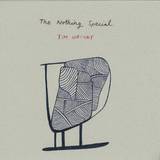
Tim Wright is a musician, composer and video artist based in York. He is perhaps best known as a producer of unusual electronic dance music released under his own name and the pseudonym Tube Jerk. His music has been released by some of the key labels in the field including Tresor, Mute/Novamute, Sativae and GPR. Remix credits range from scorn through Cristian Yogel to Laurent Garnier and Goldfrapp.
Tim also works for the Japanese choreographer Saburo Teshigawara as a composer and sound designer. his compositions for Teshigawara include the original music for metamorphosis (2014), a commission for Goteborgsoperans Danskompani, Sweden; darkness is hiding black horses (2013) for the ballet de l'opera de paris, France; and compositions for installations at the Yokohama Triennale 2008, the Shanghai Zendai museum of modern art and the ikon gallery in Birmingham.
Order now and we will order the item for you at our supplier.

JoeyStarr is the co-founder of the famous French rap duo Suprême NTM. Originally starting out as breakdancers and graffiti writers, the duo is known for representing the perspective of minorities residing in the underprivileged neighbourhoods of Paris and beyond through dark, gritty, politically-conscious lyrics. Despite achieving record sales with their four albums, they split in 1998.
After a few detours away from the music business, in 2006 JoeyStarr dropped his first solo album. Egomaniac, released in 2011, is his second album and includes some high-profile collaborations; on "Mamy..." he works together with Nicoletta on a rework of her 1971 hit single "Mamy Blue" and the interlude "Appel À La Resistance" features a speech by leading left-wing politician Olivier Besancenot. After its initial release, the vinyl edition went out of print so we're happy we can finally make it available again.
Egomaniac is available as 15th anniversary edition of 1000 individually numbered copies on orange vinyl and includes an 8-page booklet.
expected to be published on 15.05.2026

New album by french rapper Sheldon, including featurings with Chilly Gonzales, Jazzy Bazz, Tuerie, Asfar Shamsi...
Monsters are never where we expect them to be. They take shape in silences, in vague fears, in the baggage we carry without always understanding it. Sometimes, we also encounter them along the course of a life. On this new album, Sheldon chooses to dance with them, to tame them with wit, grace, and a sense of peace.
Following a powerful return with Grünt 75, an iconic format to which the 75e Session collective brought particularly ambitious visual staging, Sheldon unveils a fourth album that unfolds across fourteen tracks like a chiaroscuro landscape, revealing the full depth of his emotional and musical range. Through intimate narratives, the record explores identity (Être une fille), family and fatherhood (La Fenêtre and Les Monstres, the title track), as well as friendship (Eh le reuf). These are themes that run through all of us, approached here with writing that is vivid, demanding, and deeply sensitive.
Driven by a strong narrative arc, the album features songs like Être une fille, which challenges and questions us. On it, Sheldon reflects on his relationship to gender, his doubts and discomfort with the codes of masculinity, and the idea that he has sometimes imagined himself elsewhere. Tracks like La Fenêtre and Avec ça illuminate the album like moments of communion, sincere, warm, and unifying, carried by a childlike lightness that makes tomorrow disappear.
True to his open minded and ever curious artistic approach, Sheldon draws from a wide range of musical genres while keeping rap as the album’s guiding thread, giving each song its own singular identity and contributing to the balance of the whole. To shape the project, Sheldon surrounded himself with a new generation of musicians and beatmakers whose influences span rap, indie rock, pop, and experimental music. Among them are Johnny Ola, who has notably composed for Zamdane, Jazzy Bazz, and Edge, Rodolphe Babignan, Carbonne’s flamenco guitarist, and Jeune Oji, an artist signed to Friends of Friends Music. Together, they bring melodic and acoustic richness, as well as a collective generosity that deepens the album’s intimacy.
This new album also opens the door to new collaborations.
On L’école primaire, Chilly Gonzales joins Sheldon for an unconventional piano and vocals piece, driven by cinematic, deeply intimate storytelling. Using his primary school as a point of reference, Sheldon retraces his path from childhood to adulthood, somewhere between nostalgia and serenity.
On Cowgirl, Tuerie joins Sheldon for a soft, melodic ballad with an 80s tint, capturing the weightlessness of a sunlit summer.
On Sidequest, Sheldon reunites with Asfar Shamsi, who had already appeared on his Grünt. Over a delicate cloud trap production, the two artists open up about everyday pain, finding in introspection a way to put things into perspective.
Finally, Vol de nuit brings Jazzy Bazz and Sheldon together for an intimate exchange over an ethereal, mysterious production, as both artists look back on their journeys with calm and clarity.
Conceived alongside Sheldon’s closest circle, the project celebrates family, friendship, and love as its founding pillars. Sheldon chooses to step away from the images, allowing his story to be embodied instead through the faces and gestures of those around him. This approach runs through all of the project’s visuals. Rejecting the excess of spectacular image making, he chose instead to hand a camera to his loved ones so they could offer their own vision of a song from the album. By opening a small window onto his intimacy, and that of the people closest to him, Sheldon finds a way to say a great deal with very little, turning deeply personal trajectories into something universal.
Like the music videos, the album cover is rooted in a deliberately simple approach, where the fantasy of childhood disrupts reality. Designed by Tenzin, the graphic designer behind Sheldon’s recent projects, Ptite Sœur, and also work for Jul, it is based on an archival photograph taken during a traditional carnival in Tenzin’s native village. With no staging involved, the image captures children in costume mid parade, caught in a spontaneous burst of movement, embodying the free innocence of childhood.
Les Monstres marks a new chapter in Sheldon’s journey. Like a rainbow after the storm, this fourth album reveals new colours in the artist’s discography, as he delivers a record that is both demanding and accessible, intimate and open, one in which music becomes a love letter to friendship and to love itself. Set for release on April 24, 2026, the album will be followed by a tour culminating at La Cigale in Paris on December 3, 2026.
expected to be published on 15.05.2026

When The Style Council’s debut album Café Bleu was released in 1984, Weller and wing-man Mick Talbot unveiled a cosmopolitan blend of jazz, soul, and pop that felt effortlessly sophisticated and daringly fresh. Café Bleu was more than a debut—it was a statement of intent, redefining what British pop could sound like in a new decade.
Since then, fans have been waiting for a deep dive into the Style Council vaults eager to hear any unreleased material. And now the wait is over.
The Café Bleu Special Edition is a treasure trove for Style Council devotees and music lovers alike - an immersive journey into one of the most inventive eras of Paul Weller’s career. This lavish release unveils a wealth of previously unheard material, including early demos, alternate takes, and unreleased songs that showcase the band’s restless drive for experimentation and evolution.
Order now and we will order the item for you at our supplier.
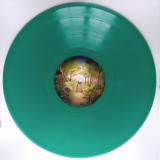
Repress
The Collaboration - Having toured together over the years, Lattimore and Barwick now join forces to co-write and record this full-length album. Their creative synergy brings together harp, voice, and analog synths in a deeply emotional, immersive sound journey. The album was recorded at the Philharmonie de Paris with co-producer Trevor Spencer (Fleet Foxes, Beach House). This album continues a unique series of collaborations between the label and the Musée de la Musique, featuring historical instruments in contemporary composition. Since 2017, InFiné and the Philharmonie de Paris have co-developed a series of albums designed to highlight the extraordinary instrument collection of the Musée de la Musique. Following the albums InBach by Arandel (2020) and Saturn 63 by Seb Martel (2022), this third release is a meeting of two iconic contemporary ambient voices: Mary Lattimore and Julianna Barwick. The project offers the artists full access to the museum’s playable instruments for recording, sound conservation, and creative reinterpretation.
--
Tragic Magic brings together Julianna Barwick and Mary Lattimore, two of contemporary ambient, experimental and electronic music’s most celebrated composers, for a unique collaboration at the Philharmonie de Paris, with extraordinary access to the Musée de la Musique’s instrument collection, in partnership with the French label InFiné. The album features seven immersive, evocative compositions guided by the human spirit – intimate, grounded in friendship, both earthly and cosmic – and part of a greater continuum, reflecting the solace and transformative power of artistry across generations.
Co-produced by Trevor Spencer (Fleet Foxes, Beach House), Tragic Magic was created in just nine days, a testament to the “musical telepathy” that has developed between Barwick and Lattimore over years of touring and friendship. Arriving in Paris from Los Angeles shortly after the 2025 wildfires, their sessions combined improvisation with the emotions and experiences they carried, in a setting both inspiring and deeply supportive. Lattimore selected harps tracing the instrument’s evolution from 1728 to 1873, while Barwick chose several iconic analog synthesizers, including the Roland JUPITER and Sequential Circuits PROPHET-5. In freeform dialogue between voice and instrument, they create a meditation on tragedy, wonder, and the restorative power of shared experience.
The duo, often joined by Spencer, also explored the city, sharing meals and visiting museums and landmarks, each encounter leaving an impression on their next session. The experience allowed them to work intimately with rare instruments, blending their personal sensibilities with centuries of history, resulting in music that honors the past while remaining a deeply authentic expression of the present.
Throughout Tragic Magic, Barwick and Lattimore find something beyond themselves: a sense that while everything may not be okay, beauty persists. Their approach – transforming life into music, observing, feeling, and creating – continues a lineage of creative expression and visionary invention, embodied in the very instruments they employed for this project.
Order now and we will order the item for you at our supplier.
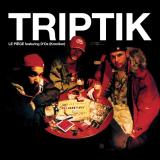
More than 25 years after its original release, Beatsqueeze Records brings back a classic of French rap: “Le Piège” by TRIPTIK.
Originally released in 2000 featuring D’Oz and Cutee B, this cult track is being reissued for the first time on 45 RPM vinyl.
A must-have for French rap fans and vinyl collectors alike.
The year 2000 was a turning point in TRIPTIK’s career.
The Parisian trio, then close to Cut Killer, released the maxi “Dat Shit” with the New York group Blahzay Blahzay, on the label of the famous French DJ.
At the same time, a 2-track maxi from Blahzay hit the shelves. It included the same track… but without the French MCs and without crediting the group’s beatmaker, Drixxxé.
Side B featured another of his productions, again without any credits.
In response, TRIPTIK decided to reclaim the appropriated beat. This reaction gave birth to the legendary “Le Piège”, featuring D’Oz and Cutee B.
expected to be published on 01.05.2026

Matias Aguayo drops debut single on Rekids‘El Internet’ is a prelude to the Coméme founder’ upcoming album on the label. Chile’s Matias Aguayo debuts on Rekids with ‘El Internet’, the first single of his upcoming album on Radio Slave’s acclaimed label. Coméme co-founder Aguayo’s ‘El Internet’ is a dancefloor-tested, pumping and uptempo track with personal, intimate vocals phoning in.
“El Internet” tells about walking through the city in hot summer nights looking for the perfect dancefloor and about moments in life where you feel (musical) freedom and change, revolutions in music and dreams in community, about YouTube, MySpace, Fotolog and about people who dance in their houses, yards and on the streets to primitive, raw, and direct music (like the rhythm of the track itself).” - Matias Aguayo
Chilean-born musician and DJ Matias Aguayo has been active for three decades, co-founding the Cómeme label in 2009 and releasing work on the likes of Kompakt, Pschent, Hard Fist, and Permanent Vacation. Beyond music, he has organised underground parties and led social projects, including a theatre production at Le Châtelet in Paris.
Radio Slave’s Rekids was founded in 2006 and has since spawned successful offshoots with the Techno-focused Rekids Special Projects in 2017 and its newest sublabel, REK’D, in 2024. With Matt Edwards as the sole A&R, Rekids has been crucial in developing early artist careers and has become a haven for established acts operating in House and adjacent genres, having recently featured the likes of Hilit Kolet, William Kiss, Tal Fussman, Tiger Stripes, Harry Rimero, The Hacker, Sean Johnston, and many more.
Order now and we will order the item for you at our supplier.

Ever since the late 1950s bossa-nova revolution, Brazil’s influence on French music has been undeniable. Pierre Barouh, Georges Moustaki and a vast array of lesser known artists, all made the Musica Popular Brasileira (MPB) an axis of promotion at the service of a cool and metaphysical, modern and mixed Brazilian lifestyle. Some were seduced by the poetic languors of the bossa, some were looking for fun, and others just loved the American hybridization of jazz-bossa, jazz-samba.
What is bossa nova? One of its creators, Joao Gilberto said: "Its style, cadence, everything is samba. At the very start, we didn't call it bossa nova, we sang a little samba made up of a single note - Samba de uma nota so .... The discussion around the origins of bossa nova is therefore useless”. It is nevertheless useful to remember that these magnificent Brazilian songs, which the guitarist describes as samba, were shifted and balanced around improbable chords. "I like things that lean, the in-betweens that limp with grace," said Pierre Barrouh, quoting Jean Cocteau.
With emotion, arrangements for violin and supple guitar licks, bossa nova rapidly changed. A transformation that can be heard in the Tchic, tchic, French Bossa Nova 1963-1974 compilation, the result of a cultural reappropriation, which traveled through the United States and supplemented itself in France.
A musical revolution that has remained significant, bossa nova was born in Rio. From 1956 to 1961, Brazil lived through its golden years. In five years, the country had invented its modernist style. Elected president in 1956, Juscelino Kubitschek de Oliveira, an elegant man with a broad forehead, brandished a promising slogan: "Fifty years of progress in five years". He quickly got to work. Not worried about increasing debt, he launched the project for a new federal capital, Brasilia, designed by the communist architect Oscar Niemeyer. Volkswagen opened state-of-the-art factories and created the “fusquinha”, the Beetle. In Rio, the Vespa made its first appearance. The Arpoador Surf Club crew run into the “girl” from Ipanema, Helô Pinheiro - the tanned garota ("chick"), between a flower and mermaid, who at 17 walked by the Veloso bar, where the fiery author and composer, Tom Jobim and Vinicius de Moraes, were getting drunk on whiskey. From then on, bossa symbolized cool.
In 1958, Joao Gilberto recorded Chega de Saudade, which the directors of Philips denied, calling it "music for fagots". The marketing director, who believed in it, secretly pressed 3000 78-inch vinyls and distributed them at schools around Rio, creating a tidal wave.
American jazzmen then took over. In particular, trumpeter Dizzy Gillespie and guitarist Charlie Byrd. In November 1962, the Brazilian Ministry of Foreign Affairs funded a "Bossa-Nova" concert at Carnegie Hall in New York, inviting the genre’s pioneers. Unprepared, the show soon turned to disaster. But the troupe was invited to the White House by Jackie Kennedy. The first lady loved "the new beat" and in particular Maria Ninguem, a song by Carlos Lyra, later covered by Brigitte Bardot.
In Brazil, the 1964 military coup quickly ended this euphoria. The destructive atmosphere that ensued pushed many Brazilian musicians to leave, if not to exile. Thus, Tom Jobim, Sergio Mendes and Joao Gilberto arrived to the United States. In New York, Joao Gilberto met saxophonist Stan Getz. At the time, he was married to the Bahianese Astrud Weinert Gilberto, who had a German father. She had never sung before, but she knew how to speak English. Getz therefore asked her to replace her husband on The Girl From Ipanema. The Getz/Gilberto record with Tom Jobim on piano, was released in March 1964. Phil Ramone, the "pope of pop" was in charge of sound.
Bossa nova arrived in Paris through the classic “guitar-voice” channel (Pierre Barouh, Baden Powell, Moustaki…) But France loved jazz and Paris had already welcomed its American contributors. All these good people were to pass through Saint-Germain-des-Prés. The cabaret l'Escale became the Mecca of Latin American sound where one could find Pierre Barrouh and his friends, such as the Camara Trio, samba-jazz aces, whose only record was published by the Saravah label. With a band strangely called Les Masques (a band that included Nicole Croisille and Pierre Vassiliu, among others), the Camara Trio recorded an interesting Brazilian Sound, including the track Il faut tenir which is present on this tasty compilation of rarities.
Other enlightened musicians can also be found on the compilation, such as Jean-Pierre Sabar (songwriter for Hardy, Auffray, Leforestier ...) and the French pop rock organist Balthazar. In 1975, Sabar recorded Aurinkoinen Musiikkimatka on a Finnish label, which featured the crazy Vai, Vai, included on this record. We are now following the footsteps of Brazilian electronic musicians such as Sergio Mendes, Eumir Deodato or Marcos Valle who created funk and disco sounds on their keyboards and synthesizers. A style that influenced Véronique Sanson when she wrote Jusqu’à la Tombée de la nuit in 1969 for Isabelle de Funès, the niece of Louis and a great friend of Michel Berger - Sanson did end up singing this track on her 1992 Sans Regret record.
The pinnacle of exoticism and travel, Sylvia Fels’ Corto Maltese includes bongos, sea mist and ocean sounds. The title was taken from Jacky Chalard’s concept album written in 1974, Je suis vivant, mais j’ai peur (I am alive, but I am scared), based on Gilbert Deflez’s science fiction novel.
However, bossa nova extended the scope of popularity. "In the 1970s, I was a fan of Sergio Mendes, Getz / Gilberto. I fell in love with this music that I knew because I had been an orchestral singer, " explained Isabelle Aubret, who in 1971 delivered a composite record of covers by the very funky Jorge Ben, Orfeu Negro, Tom Jobim, Vinicius de Morais and Jean Ferrat. "I recorded this album for Meys Records in Paris, far from Brazil, with wonderful musicians, François Raubert, Roland Vincent, Alain Goraguer...". The latter wrote the arrangements for Casa Forte, a very percussive title borrowed from Edu Lobo, one of the initiators of the bossa who spent time in California. "Jazz and bossa came together and produced very rhythmic music. I love singing, it allows me to dream, to have fun, to feel a high on stage, and these songs brought me joy, made me swing, my singing felt like a dance.”
The world tours of French singers and their desire for the tropics, often brought them to Rio with its hills, forests, caipirinhas and tanned bodies. There are surprises though, like this Iemenja (Iemenja is the goddess of the sea in the Afro-Brazilian candomblé religion). Not unlike the composer and musician Jean-Pierre Lang, based in Sao Paulo, Claire Chevalier taught Brazil to Brazil. In 1970, the singer and painter published a 45-inch vinyl, Mon mari et mes amants (My husband and my lovers), under the improbable pseudonym of Clarinha (little Claire). She was then living in Rio, with her husband, Joël Leibovitz, who founded a band called Azimuth, and who owned a record label specialized in "sambas enredos" songs for samba school parades.
For its B side, she asked Pierre Perret to come up with lyrics for a song composed by Carlos Imperial: "Oh goddess of the sea, o goddess Iemenja, I bring a white rose to adorn your long hair ..." . "Perret came to see us, and we had fun, remembers Joël Leibovitz. We wrote Lemenja for fun, we recorded it at the Havaí studio, behind the Central do Brasil the central station. Erlon Chaves, the arranger who worked with Elis Regina, joined us" adding his share of Afro-Brazilian percussions and funky brass to the mix.
There is a common misunderstanding in Franco-Brazilian history: that bossa, admittedly hedonistic, is perceived as funny, even though the poets who wrote the texts are often philosophizing on the human condition. Its French interpreters pull it towards a carnival inspired universe, far removed from its fundamental essence. Thus, Jean Constantin covered the famous Samba da minha terra, an ode to the art of samba written by the classic Bahian composer Dorival Caymmi, renaming it with the enticing title of Pas tant de tchi tchi pompon: "On your pier there is no tchi tchi / when you arch your back, you know everything is alright ”(lyrics by Gérard Calvi). This expedited bossa aims for the absurd, but retains a certain elegance.
Indeed, Jean Constantin was not an idiot, the rather large man had a huge mustache and liked fantasy, (Les pantoufles à papa, Le pacha, inspired by cha-cha-cha-cha, salsa and jazz) but he was also the lyricist of Mon manège à moi interpreted by Edith Piaf, the composer of Mon Truc en plume by Zizi Jeanmaire and the soundtrack of François Truffaut’s 400 Blows. Le Poulpe, published in 1970, from which this bossa is extract, was arranged by Jean-Claude Vannier, an accomplice of Serge Gainsbourg’s Melody Nelson. In short: "There is enough of samba / By looking at the parasol / Because my poor cabeza / Is going to die in the sun".
Even the American actress Marpessa Down, who was at the heart of the bossa nova revolution with her role as Euridyce in Marcel Camus’ film Orfeu Negro, winner of the 1959 Cannes Palme d'or, fed the clichée with Je voudrais parler au petit cuica - "Tell me how you manage to always make people want to dance / It's true, I must admit that I cannot resist your magic" - in consequence, once can hear the cuica, a little drum inherited from the Bantu.
But bossa nova had many angles. Societal, of course, pushing actresses who were symbols of women's liberation like Brigitte Bardot, Jeanne Moreau, or Sophia Loren to engage in the exercise of accelerated bossa. In February of 1963, Sophia Loren made a record in French in Rome, Je ne t'aime plus, featuring the song De jour en jour, a bossa written by two Italians, Armando Trovajoli and Tino Fornai, which was released a little later by Barclay. Bossa accompanied the 1960s, a decade of moral liberation. Ann Sorel, who interpreted La Poupée des favellas, caused a sensation with L’amour à plusieurs, a provocative song written by Frédéric Bottom and Jean-Claude Vannier. As for the actress Andrea Parisy, she displayed her bourgeois cheekiness in Marcel Carné's Les Tricheurs before interpreting Les mains qui font du bien. And Magalie Noël, the friend of Boris Vian, who sung Johnny fais-moi mal, was hired to sing Une énorme Samba, composed by Alain Goraguer (arranger to Gainsbourg, Bobby Lapointe and Jean Ferrat) with lyrics by Frédéric Botton.
But in the end, of what wood is bossa nova made of? The answer is given by Christianne Legrand, daughter of Raymond the conductor, and sister to Michel the composer: "With me, with jà" - jà means "immediately" in Portuguese. In 1972, the singer, an expert in vocal jazz and a member of the Double Six, published Le Brésil de Christianne Legrand. Two songs included on the Tchic Tchic compilation that demonstrate how bossa, jazz, funk, rock, etc. work like a swiss army knife: the music is used to denounce broken systems, or miracles, HLM et ciné roman, Cent mille poissons dans ton filet, two songs from the O Cafona soundtrack, a successful telenovela broadcast, at the time in black and white, on TV Globo. The first was adapted in French by the fighter and friend of the Legrand tribe, Agnès Varda. The second is content with a play on words, jostling them into a summer fun.
Véronique Mortaigne
expected to be published on 17.04.2026

This 18- track selection spans Edith Piaf' s career from the years 1946 to 1961. It includes all of her big hits, such as 'La Vie en rose', 'Non, je ne regrette rien', 'Hymne a l'amour', 'Milord', 'La Foule', 'L'Accordeoniste', and 'Padam Padam', among many others. Regarded as France's national chanteuse, singer songwrite, and actress Edith Piaf (1915-1963), also became one of the country's greatest international stars. Her music was often autobiographical with her songs reflecting her own personal life. Piaf's specialties were the chanson and torch ballads, particularly those of love, loss, and sorrow.
[q] Le Chevalier De Paris [aka Les Pommiers Doux]
expected to be published on 17.04.2026
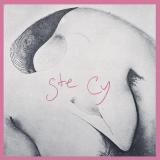
Ste Cy, the latest studio offering from the trio of Jac Berrocal, Vincent Epplay, and Timo van Luijk, ripens like a forbidden fruit—born of an improvised instrumental session captured in the secluded hush of Kulta Saha by Timo van Luijk. These raw recordings were later reshaped into 12 songs by Vincent Epplay at Studio Villejuif in Paris. And over it all drifts the poetry of Jac Berrocal— sensual and incendiary, seeping into the music like spice into flesh.
expected to be published on 17.04.2026

UILTY RAZORS, BONA FIDE PUNKS.
Writings on the topic that go off in all directions, mind-numbing lectures given by academics, and testimonies, most of them heavily doctored, from those who “lived through that era”: so many people today fantasize about the early days of punk in our country… This blessed moment when no one had yet thought of flaunting a ridiculous green mohawk, taking Sid Vicious as a hero, or – even worse – making the so-called alternative scene both festive and boorish. There was no such thing in 1976 or 1977, when it wasn’t easy to get hold of the first 45s by the Pistols or the Clash. Few people were aware of what was happening on the fringes of the fringes at the time. Malcolm McLaren was virtually unknown, and having short hair made you seem strange. Who knew then that rock music, which had taken a very bad turn since the early 1970s, would once again become an essential element of liberation? That, thanks to short and fast songs, it would once again rediscover that primitive, social side that was so hated by older generations? Who knew that, besides a few loners who read the music press (it was even better if they read it in English) and frequented the right record stores? Many of these formed bands, because it was impossible to do otherwise. We quickly went from listening to the Velvet Underground to trying to play the Stooges’ intros. It’s a somewhat collective story, even though there weren’t many people to start it.
The Guilty Razors were among those who took part in this initial upheaval in Paris. They were far from being the worst. They had something special and even released a single that was well above the national average. They also had enough songs to fill an album, the one you’re holding. In everyone’s opinion, they were definitely not among the punk impostors that followed in their wake. They were, at least, genuine and credible.
Guilty Razors, Parisian punk band (1975-1978). To understand something about their somewhat linear but very energetic sound, we might need to talk about the context in which it was born and, more broadly, recall the boredom (a theme that would become capital in punk songs) coupled with the desire to blow everything off, which were the basis for the formation of bands playing a rejuvenated rock music ; about the passion for a few records by the Kinks or the early Who, by the Stooges, by the Velvet mostly, which set you apart from the crowd.
And of course, we should remember this new wave, which was promoted by a few articles in the specialized press and some cutting-edge record stores, coming from New York or London, whose small but powerful influence could be felt in Paris and in a handful of isolated places in the provinces, lulled to sleep by so many appalling things, from Tangerine Dream to President Giscard d’Estaing...
In 1975-76, French music was, as almost always, in a sorry state ; it was still dominated by Johnny Hallyday and Sylvie Vartan. Local rock music was also rather bleak, apart from Bijou and Little Bob who tried to revive this small scene with poorly sound-engineered gigs played to almost no one.
In the working class suburbs at the time, it was mainly hard rock music played to 11 that helped people forget about their gruelling shifts at the factory. Here and there, on the outskirts of major cities, you still could find a few rockers with sideburns wearing black armbands since the death of Gene Vincent, but it wasn’t a proper mass movement, just a source of real danger to anyone they came across who wasn't like them. In August 1976, a festival unlike any other took place in Mont-de-Marsan – the First European Punk Festival as the poster said – with almost as many people on stage as in the audience. Yet, on that day, a quasi historical event happened, when, under the blazing afternoon sun, a band of unknowns called The Damned made an unprecedented noise in the arena, reminiscent of the chaotic Stooges in their early adolescence. They were the first genuine punk band to perform in our country: from then on, anything was possible, almost anything seemed permissible.
It makes sense that the four+1 members of Guilty Razors, who initially amplified acoustic guitars with crappy tape recorder microphones, would adopt punk music (pronounced paink in French) naturally and instinctively, since it combines liberating noise with speed of execution and – crucially – a very healthy sense of rebellion (the protesters of May 1968 proclaimed, and it was even a slogan, that they weren’t against old people, but against what had made them grow old. In the mid-1970s, it seemed normal and obvious that old people should now ALSO be targeted!!!).
At the time, the desire to fight back, and break down authority and apathy, was either red or black, often taking the form of leafleting, tumultuous general assemblies in the schoolyard, and massive or shabby demonstrations, most of the time overflowing with an exciting vitality that sometimes turned into fights with the riot police. Indeed, soon after the end of the Vietnam War and following Pinochet’s coup in Chile, all over France, Trotskyist and anarcho-libertarian fervour was firmly entrenched among parts of the educated youth population, who were equally rebellious and troublemakers whenever they had the chance. It should also be noted that when the single "Anarchy in the UK" was first heard, even though not many of us had access to it, both the title and its explosive sound immediately resonated with some of those troublemakers crying out for ANARCHY!!! Meanwhile, the left-wing majority still equated punks with reckless young neo-Nazis. Of course, the widely circulated photos in the mainstream press of Siouxsie Sioux with her swastikas didn’t necessarily help to win over the theorists of the Great Revolution. It took Joe Strummer to introduce The Clash as an anti-racist, anti-fascist and anti-ignorance band for the rejection of old-school revolutionaries to fade a little.
The Lycée Jean-Baptiste Say at Porte d’Auteuil, despite being located in the very posh and very exclusive 16th arrondissement of Paris, didn’t escape these "committed" upheavals, which doubled as the perfect outlet for the less timid members of this generation.
“Back then, politics were fun,” says Tristam Nada, who studied there and went on to become Guilty Razors’ frontman. “Jean-Baptiste was the leftist high-school in the neighbourhood. When the far right guys from the GUD came down there, the Communist League guys from elsewhere helped us fight them off.”
Anything that could challenge authority was fair game and of course, strikes for just about any reason would lead to increasingly frequent truancy (with a definitive farewell to education that would soon follow). Tristam Nada spent his 10th and 11th unfinished grades with José Perez, who had come from Spain, where his father, a janitor, had been sentenced to death by Franco. “José steered my tastes towards solid acts such as The Who. Like most teenagers, I had previously absorbed just about everything that came my way, from Yes to Led Zeppelin to Genesis. I was exploring… And then one day, he told me that he and his brother Carlos wanted to start a rock band.” The Perez brothers already played guitar. “Of course, they were Spanish!”, jokes their singer. “Then, somewhat reluctantly, José took up the bass and we were soon joined by Jano – who called himself Jano Homicid – who took up the rhythm guitar.” Several drummers would later join this core of not easily intimidated young guys who didn’t let adversity get the better of them.
The first rehearsals of the newly named Guilty Razors took place in the bedroom of a Perez aunt. There, the three rookies tried to cover a few standards, songs that often were an integral part of their lives. During a first, short gig, in front of a bewildered audience of tough old-school rockers, they launched into a clunky version of the Velvet Underground's “Heroin”. Challenge or recklessness? A bit of both, probably… And then, step by step, their limited repertoire expanded as they decided to write their own songs, sung in a not always very accurate or academic English, but who cared about proper grammar or the right vocabulary, since what truly mattered was to make the words sound as good as possible while playing very, very fast music? And spitting out those words in a language that left no doubt as to what it conveyed mattered as well.
Trying their hand a the kind of rock music disliked by most of the neighbourhood, making noise, being fiercely provocative: they still belonged to a tiny clique who, at this very moment, had chosen to impose this difference. And there were very few places in France or elsewhere, where one could witness the first stirrings of something that wasn’t a trend yet, let alone a movement.
In the provinces, in late 1976 or early 1977, there couldn’t be more than thirty record stores that were a bit more discerning than average, where you could hear this new kind of short-haired rock music called “punk”. The old clientele, who previously had no problem coming in to buy the latest McCartney or Aerosmith LP, now felt a little less comfortable there…
In Paris, these enlightened places were quite rare and often located nex to what would become the Forum des Halles, a big shopping mall. Between three aging sex workers, a couple of second-hand clothes shops, sellers of hippie paraphernalia and small fashion designers, the good word was loudly spread in two pioneering places – propagators of what was still only a new underground movement. Historically, the first one was the Open Market, a kind of poorly, but tastefully stocked cave. Speakers blasted out the sound of sixties garage bands from the Nuggets compilation (a crucial reference for José Perez) or the badly dressed English kids of Eddie and the Hot Rods. This black-painted den was opened a few years earlier by Marc Zermati, a character who wasn’t always in a sunny disposition, but always quite radical in his (good) choices and his opinions. He founded the independent label Skydog and was one of the promoters of the Mont-de-Marsan punk festivals. Not far from there was Harry Cover, another store more in tune with the new New York scene, which was amply covered in the house fanzine, Rock News (even though it was in it that the photos of the Sex Pistols were first published in France).
It was a favorite hang-out of the Perez brothers and Tristam Nada, as the latter explained. “It’s at Harry Cover’s that we first heard the Pistols and Clash’s 45s, and after that, we decided to start writing our first songs. If they could do it, so could we!”
The sonic shocks that were “Anarchy in the UK”, “White Riot” or the Buzzcocks’s EP, “Spiral Scratch” – which Guilty Razors' sound is reminiscent of – were soon to be amplified by an unparalleled visual shock. In April 1977, right after the release of their first LP, The Clash performed at the Palais des Glaces in Paris, during a punk night organised by Marc Zermati. For many who were there, it was the gig of a lifetime…
Of course, Guilty Razors and Tristam were in the audience: “That concert was fabulous… We Parisian punks were almost all dressed in black and white, with white shirts, skinny leather ties, bikers jackets or light jackets, etc. The Clash, on the other hand, wore colourful clothes. Well, the next day, at the Gibus, you’d spot everyone who had been at this concert, but they weren’t wearing anything black, they were all wearing colours.”
It makes sense to mention the Gibus club, as Guilty Razors often played there (sometimes in front of a hostile audience). It was also the only place in Paris that regularly scheduled new Parisian or Anglo-Saxon acts, such as Generation X, Siouxsie and the Banshees, the Slits, and Johnny Thunders who would become a kind of messed-up mascot for the venue. A little later, in 1978, the Rose Bonbon – formerly the Nashville – also attracted nightly owls in search of electric thrills… In 1977, the iconic but not necessarily excellent Asphalt Jungle often played at the Gibus, sometimes sharing the bill with Metal Urbain, the only band whose aura would later transcend the French borders (“I saw them as the French Sex Pistols,” said Geoff Travis, head of their British label Rough Trade). Already established in this small scene, Metal Urbain helped the young and restless Guilty Razors who had just arrived. Guitarist for Metal Urbain Hermann Schwartz remembers it: “They were younger than us, we were a bit like their mentors even if it’s too strong a word… At least they were credible. We thought they were good, and they had good songs which reminded of the Buzzcocks that I liked a lot. But at some point, they started hanging out with the Hells Angels. That’s when we stopped following them.”
The break-up was mutual, since, Guilty Razors, for their part, were shocked when they saw a fringe element of the audience at Metal Urbain concerts who repeatedly shouted “Sieg Heil” and gave Nazi salutes. These provocations, even still minor (the bulk of the skinhead crowd would later make their presence felt during concerts), weren’t really to the liking of the Perez brothers, whose anti-fascist convictions were firmly rooted. Some things are non-negotiable.
A few months earlier (in July 1978), Guilty Razors had nevertheless opened very successfully for Metal Urbain at the Bus Palladium, a more traditonally old-school rock night-club. But, as was sometimes the case back then, the night turned into a mass brawl when suburban rockers came to “beat up punks”.
Back then, Parisian nights weren’t always sweet and serene.
So, after opening as best as they could for The Jam (their sound having been ruined by the PA system), our local heroes were – once again – met outside by a horde of greasers out to get them. “Thankfully,” says Tristam, “we were with our roadies, motorless bikers who acted as a protective barrier. We were chased in the neighbouring streets and the whole thing ended in front of a bar, with the owner coming out with a rifle…”
Although Tristam and the Perez brothers narrowly escaped various, potentially bloody, incidents, they weren’t completely innocent of wrongdoing either. They still find amusing their mugging of two strangers in the street for example (“We were broke and we simply wanted to buy tickets for the Heartbreakers concert that night,” says Tristam). It so happened that their victims were two key figures in the rock business at the time: radio presenter Alain Manneval and music publisher Philippe Constantin. They filed a complaint and sought monetary compensation, but somehow the band’s manager, the skilful but very controversial Alexis, managed to get the complaint withdrawn and Guilty Razors ended up signing with Constantin with a substantial advance.
They also signed with Polydor and the label released in 1978 their only three-track 45, featuring “I Don't Wanna be A Rich”, “Hurts and Noises” and “Provocate” (songs that exuded perpetual rebellion and an unquenchable desire for “class” confrontation). It was a very good record, but due to a lack of promotion (radio stations didn’t play French artists singing in English), it didn’t sell very well. Only 800 copies were allegedly sold and the rest of the stock was pulped… Initially, the three tracks were to be included on a LP that never came to be, since they were dropped by Polydor (“Let’s say we sometimes caused a ruckus in their offices!” laughs Tristam.) In order to perfect the long-awaited LP, the band recorded demos of other tracks. There was a cover of Pink Floyd's “Lucifer Sam” from the Syd Barrett era – proof of an enduring love for the sixties’ greats –, “Wake Up” a hangover tale and “Bad Heart” about the Baader-Meinhof gang, whose actions had a profound impact on the era and on a generation seeking extreme dissent... On the album you’re now discovering, you can also hear five previously unreleased tracks recorded a bit later during an extended and freezing stay in Madrid, in a makeshift studio with the invaluable help of a drummer also acting as sound engineer. He was both an enthusiastic old hippie and a proper whizz at sound engineering. Here too, certain influences from the fifties and sixties (Link Wray, the Troggs) are more than obvious in the band’s music.
Shortly after a final stormy and rather barbaric (on the audience’s side) “Punk night” at the Olympia in June 1978, Tristam left the band ; his bandmates continued without him for a short while.
But like most pioneering punk bands of the era, Guilty Razors eventually split up for good after three years (besides once in Spain, they’d only played in Paris). The reason for ceasing business activities were more or less the same for everyone: there were no venues outside one’s small circuit to play this kind of rock music, which was still frightening, unknown, or of little interest to most people. The chances of recording an LP were virtually null, since major labels were only signing unoriginal but reassuring sub-Téléphone clones, and the smaller ones were only interested in progressive rock or French chanson for youth clubs. And what about self-production? No one in our small safety-pinned world had thought about it yet. There wasn’t enough money to embark on that sort of venture anyway.
So yes, the early days of punk in France were truly No Future!
Order now and we will order the item for you at our supplier.

Born in Victoria, B.C., and shaped by formative years in Vancouver, artist and producer Sophia Stel found a rapt cult fanbase with her 2024 debut EP Object Permanence, a fiercely vulnerable collection of genre-agnostic earworms fueled by her full-bodied, affecting alto. By following her intuition and going against the grain of online fads, Stel is setting trends, not chasing them - always creating from a place of true originality. Her self-directed, sometimes spurâÇ`ofâÇ`theâÇ`moment digicam visuals for tracks like "I"ll Take It" and "You Could Hate Me" have the fuzzy realism of vintage photos or cherished memories: effortlessly cool without ever trying to be. In addition to earning co-signs from Troye Sivan and A.G. Cook and being selected for this year"s DAZED 100, she recently made her runway debut at Ann Demeulemeester"s PFW SS26 show and embarked on her first headline tour, which included a performance at Pitchfork Festival in Paris, following the release of her sophomore EP How to Win At Solitaire. Continuing to push the boundaries of today"s music landscape while honing a truly singular, post-genre sound that"s all her own, Stel is currently working on her debut album.
Order now and we will order the item for you at our supplier.
