quête:one of nine

Genres
Tout
Micke Bjorklof & Blue Strip - Outtakes

Outtakes is a retrospective album featuring nine previously unreleased tracks
from Micke Bjorklof & Blue Strip - This unique collection contains songs,
recorded over the years but for various reasons, were left off past albums,
capture the band's evolving sound and dedication to blues-rock excellence
We usually had a few extra songs when we went into the studio to record the album in
case some of the songs didn't "take off" as expected. Sometimes the direction of
production can also change as the process progresses, which affects the album as a
whole. However, a lot of effort has been put into these songs and they have been
carefully prepared for the album and produced to completion. It is at least justified to
give them another chance to reach listeners, and we felt they deserved a platform of
their own. Although the songs are from different eras, I think they formed a very good
and balanced whole" says Micke Bjorklof.
Spanning from the early 2000s to the present, Outtakes showcases the shifting styles
and influences of one of Finland's most celebrated blues-rock bands. Outtakes is not
only a collection of rare tracks but also a kind of time travel through the arc of the
band's musical and sonic evolution from the early 2000s to the present day. Each
song reflects the shifting moods, styles, and influences the band has embraced over
the years, capturing the essence of one of Finland's most celebrated blues-rock bands
over 30-year journey in the blues-rock scene.

pré-commande16.05.2025

il devrait être publié sur 16.05.2025

AAA Gripper - We Invented Work For The Common Good
  • Lower Demons
  • Wasp Women
  • The Arcade Claw King
  • The Saucer Makers Boy
  • Let Me See Your Hands
  • Angel Washes
  • Young Paunchy
  • Hair Vampire
  • The Gold Sells Out

AAA Gripper have seemingly dropped out of nowhere but the story goes back. The idea was conjured in the summer of 2023 at the first Wrong Speed Records festival in the town of Glastonbury. Inspired by a weekend of radical sounds and fine company a decision was made - 'let's try something'.
Recording hours and hours of bass and drums in deep Somerset then editing it down to a sharp and concise 32 minutes. From Can's Lost Tapes boxset to No Means No's 0+2=1 via a thousand song structure decisions. Wild guitar strafe and precise hyper vocal added. Nine tight tunes magically appeared. The band raised a glass of tea. The band was born. The 'something' had worked.
We Invented Work For The Common Good is a deep dive into the world of the working person. How we end up. Why we climb onto the conveyer belt and never get off. The front cover is one of many of the same photo taken every day, on the walk to work, the dark mills looming - KEEP THEM BUSY, THEY WON'T RISE UP.
Music is therapy. They think it's part of the bread and circuses. We know it's armour. We know it's weaponry.
Gigs being planned.

pré-commande16.05.2025

il devrait être publié sur 16.05.2025

Trinity & Grant Dell - Jah Mi Protector

NINE CHANNEL is a new label from GRANT DELL and is the sister label to LEGSMAN records which brings a more STEPPERS - DIGI DUB - DUBBY TECHNO vibe to the offering. Tuff rhythms built by Grant Dell and featuring vocals from some of reggae’s most revered artists, like, TRINITY - MAX ROMEO - JOSEY WALES - SYLFORD WALKER - DELTON SCREECHIE - GEORGE NOOKS - FRED LOCKS and the UK’s COREYSAN. With remixes coming from Techno don BEN SIMS and Andrew Weatherall’s prolific writing partner NINA WALSH where both join the dots between Dub and their respected genres. The First release is from toasting legend TRINITY. Sadly, one of his last recordings before his untimely passing. JAH MI PROTECTOR has all the hall marks of Trinity’s righteous chanting style, reminiscent of his chat on the classic FIVE MAN ARMY song from 1982

pas en stock

Commandez maintenant et nous commanderons l'article pour vous chez notre fournisseur.

Last In: 16 months ago
TAPE - PRELUDES
  • Lights Out
  • Naukluft Plateau
  • Golden Gain
  • Tangential Thoughts
  • On The Accordeon Bus
  • On The Accordeon Bus

Following a trio of quick sell out, limited lathe cut 45 to kick off 2025, Feral Child now embark on a stash of more widely available full lengths (from the likes of Lake Ruth, The Jonny Halifax Invocation and Polypores amongst others). First up is a wonderful follow up to 2023’s “Refrains” 10” EP from Swedish band TAPE. “Refrains” figured in 2 or 3 notable UK stores’ end of year polls, noticeably Monorail in Glasgow where Stephen Pastel gave it a top 3 for 2023 nomination. “Preludes” is -if anything- even more majestic and acts as a superb follow up. The record is released 11th April on Feral Child as one time pressing 10” vinyl only release, featuring beautiful artwork once more from Peter Liversidge and the calligraphic hand of Klas Augustsson. The return of Swedish trio Tape has been reassuringly slow motion. They’ve always moved at their own pace, these three peripatetic musicians – brothers Andreas and Johan Berthling, and companion Tomas Hallonsten – though it’s been over a decade since their last full-length, 2014’s Casino. Not a disappearing act, rather a break for consideration, time to explore other avenues of creativity, perhaps… But their reappearance, with the Refrains 10”, was one of 2023’s most encouraging moments; doubly so, as it was proof they’d not lost their way, at all, in the intervening nine years. The Tape modus operandi is one of deceptive simplicity and artful innocence. On Preludes, a typically right, one-word Tape title, this means five wordless songs that move between fully fleshed out, lovingly tended folk threnodies – the beautiful opener, “Lights Out”, that spins webs via simple, hypnotically repeating guitar – and textural conceits that hover, appealingly, in a kind of no-place. “Naukluft Plateau” is lovingly dappled, with ruminative piano adrift on a cascading tonal waterfall. Then, feather-fall strums of guitar meet huffing harmonium and electronic scrum on the brief “Golden Gain”. Is there a more perfect song title for Tape than “Tangential Thoughts”? It sums up the way their music, nimble and dainty but also carefully tended, lends itself to the reverie, the meander, the anfractuous. The madeleine-like power of this song’s two-chord figure allows the music to take flight: rustling organ, oscillating cymbal, droplets of percussion, a spinney of sound. And Preludes slips away “On The Accordeon Bus”: there’s something lovely about the way that title collapses transit, articulation and bellows, reflected in the see-sawing sway and glitch-like rivulets of sound that course through the song. So, Preludes, then – alive to the moment, both gentle and sturdy. A copse of tone, and a most gorgeous wool-gathering.

pré-commande09.05.2025

il devrait être publié sur 09.05.2025

Steve Bicknell - Several Streams of Thought LP 2x12"

Steve Bicknell returns to KR3, once again unleashing his mastery of power electronics!
Following his two reinterpretations of last year's "JK Flesh Remixes" and four years after his solo EP "A Day In The Life" in 2021, Bicknell takes us deep into the realms of his sonic mysticism, marking a significant milestone in the fifth anniversary of the label.
Several Streams of Thought LP - is an unrelenting and immersive odyssey, presented through nine tracks, seven of which will be available on a double 12-inch vinyl, with two exclusive cuts in a limited 7-inch format.
The album hits hard, straight to the brain, with no warning, across sides A, B, and C. Each side is a raw, untamed techno experience, with Bicknell's unmistakable signature dominating throughout, delivering unwavering intensity and relentless impact.
However, on side D, a transformation takes place: a 15-minute soundscape that turns the embedded waves into breath - a blinding light emerging from the darkness. It's a moment of tribalism and evocative magic, offering a refreshing pause, a return to balance after the intensity of the shadows.
The 7-inch, available in a limited edition under the title "the eye of the invisible world", contains two tracks - one on side E and the other on side F.
The mystical sounds complete this dual experience: one part filled with dark, untamed energy, while the other brings a sense of mental lightness, emphasizing breathwork and emotional self-
healing.
S | B is back, stronger than ever!

pas en stock

Commandez maintenant et nous commanderons l'article pour vous chez notre fournisseur.

Last In: 11 months ago
Paper Castles - I'm Sad As Hell and I'm Not Going To Fake It Anymore (TAPE)

I’m Sad as Hell and I’m Not Going to Fake It Anymore is the best, sharpest, briefest, and fourth record from Paper Castles, the band fronted by Jericho, Vermont’s Paddy Reagan. In one way, it’s a simple and modest collection of nine fuzzy guitar-led pop songs. The title, a play on the iconic scene from Network (written by Paddy Chayefsky), can be clocked as nothing more than that at first glance, playful. But like the music behind it, Reagan thinks you can sit with the title if you want.

I'm Sad as Hell... was tracked by Benny Yurco (Michael Nau, Lily Seabird, Robber Robber) in a little over eight hours across two days, a testament to the quartet’s perfection of these songs on stage, and to Yurco’s comfortable Little Jamaica Recordings in Burlington.

Tompkins and Mangan lock into a wonderful foundation for Kitz’s lolling guitar lines on “Clean + Organized,” while on “Avalon,” the band sings harmony for the most ironic line in the waltz (“We don’t really want company”) before their instruments explode into technicolor. “Lying Here” showcases PC deftly navigating washed out verses and tight knit, twangy choruses, all in a tidy, under-three minute package.

Lyrically, Reagan is at his finest: playful and savage, biting and beautiful. Double entendres and clever wordplay abound—a line like “it's not the ideals but the high heels that’ll make you a man” from “Modern Myth” will make you wish John Prine was still around to hear it. On “Name Changer,” when Reagan sings “I’ll never change my name again / Got a real good handle and I don’t want to give it in,” what kind of “handle” is he referring to? I’d like to think Elvis Costello would smile at most lines in the Attractions rave-up “Content Creator.”

pré-commande09.05.2025

il devrait être publié sur 09.05.2025

Miłosz Kędra - their internal diapasons

The compositions of Miłosz Kędra (b. 2001) explore synthetic sound, electroacoustic music, and self-built acoustic instruments, seeking diverse timbres, tunings, and textures. His main field of work is the pipe organ. Through minimalist motifs, he has transported the instrument’s sound beyond the church space by synthetically processing its tones. He is currently pursuing a Master’s degree in New Media Music at the Academy of Music in Poznań and recently completed a Bachelor’s degree in Electroacoustic Composition, during which he built his own pipe organ from scavenged pipes.

~ Liner notes ~

Miłosz Kędra - "their internal diapasons"

The pipes that Miłosz Kędra used to craft his own organ emulator have lived many lives. They come from churches scattered across Greater Poland—some trimmed for a more presentable façade, others left to gather dust in parish houses until, stripped of purpose, they were cast away. Their first voices have faded, their inner resonance unsettled, yet with patience, one can teach them to sound again—to sing in their altered state, to be gently coaxed out of silence.

Audiomancy—the conjuring of lost sounds—is the word that lingers when I try to grasp the lore crystallizing with Kędra’s second album.

The resolve with which the musician and composer has inhabited his self-built instrument recalls Witold Szalonek and his search for “unexploited properties of wind instruments in classical music.” Szalonek sought to map these hidden voices into a system of multiphonics, revealing over 160 on the oboe alone by 1968. Some sound eerily alike, yet emerge through distinct gestures—“a particular breath, a precise choreography of levers and apertures, the seamless fusion of the two.”

The splitting of a single note into its spectral fragments—allowing a melodic instrument to speak in two, three, even four voices at once—enabled Szalonek to bend the rigid structures of Western music. "their internal diapasons" follows a similar path: an aesthetic bypass through which Kędra taps into the sacred gravity of the church organ, only to reveal it as a domesticated echo of something far older—the primal theater of transformation. To listen closely to an instrument is to learn its flaws, to turn its imperfections into a new way of speaking.

Each of the nine compositions on "their Internal diapasons" is an invitation—to approach the material world with the intent of letting it speak beyond expectation. An instrument that is at once a sculpture, a performance, and a manifesto of voicing the discarded suggests that its creator—following the path of Didier Eribon (Returning to Reims)—might take as his motto, a principle of asceticism, Sartre’s words: “What matters is not what is made of us, but what we ourselves make of what is made of us.”

Filip Szałasek

pré-commande05.05.2025

il devrait être publié sur 05.05.2025

Neil Ardley - Harmony Of The Spheres LP

NEIL ARDLEY’S HARMONY OF THE SPHERES RETURNS TO VINYL FOR THE FIRST TIME IN OVER 40 YEARS
Analogue October Records proudly presents the long-awaited LICENSED reissue of Harmony of the Spheres, Neil Ardley’s cosmic jazz masterpiece, originally released in 1979 by Decca. This marks the first vinyl reissue of the album since its original release, offering fans a rare opportunity to experience this extraordinary record in its purest form.

A Visionary Fusion of Jazz and Science
Recorded at the legendary Morgan Studios and produced by the esteemed Martin Levan, Harmony of the Spheres is another bold evolution in Ardley’s ever-expanding musical journey. A unique blend of jazz, electronic synthesis, and progressive rock, the album explores the ancient Greek concept that planets create celestial harmonies as they move through space. Using precise astronomical calculations, Ardley transposed planetary orbits into a nine-note chord—one that extends beyond the range of traditional acoustic instruments, making synthesizers the only means of fully realizing this cosmic sound.
The album features an all-star lineup, including the visionary John Martyn on guitar, saxophonist Barbara Thompson, Tony Coe, Ian Carr, and keyboardist Geoff Castle, alongside the formidable rhythm section of Billy Kristian (bass), Richard Burgess (drums), and Trevor Tomkins (percussion).

A True AAA Reissue – Cut Direct from the Original Master Tapes
Following the reissue success of Journey to the Urge Within (1986) by Courtney Pine (AOR-001-ST), Analogue October Records’ founder Craig Crane embarked on a mission to restore Harmony of the Spheres to its full sonic glory. Working with Gearbox and using Decca’s original 15ips 2-track stereo master tapes, this reissue is a true AAA release—an all-analogue production with no digital step. The album was meticulously cut directly from the tapes and pressed to the highest standards at Optimal in Germany.
Inside the deluxe package, fans will discover an 8-page booklet featuring an in-depth essay by Jazzwise magazine editor Mike Flynn, along with never-before-seen photos from the original recording sessions.

Continuing the Legacy
This reissue is just the beginning—Analogue October Records is committed to further explorations of Neil Ardley’s work, alongside other deep cuts from the UK’s vibrant 1970s jazz fusion and jazz-rock scene.
Whether you’re rediscovering Harmony of the Spheres or experiencing it for the first time, this release is a testament to the artistry and innovation of Neil Ardley.

pré-commande02.05.2025

il devrait être publié sur 02.05.2025

Pitch Black - Rude Mechanicals LP 2x12"

Our fourth album finally gets the vinyl pressing it so richly deserves.

Originally released in 2007, Rude Mechanicals found us firing on all cylinders. The nine years since our debut had been spent touring our cutting-edge audio-visual show round the world, playing everywhere from Tokyo to Tauranga, Portland to Paris, Leeds to Las Vegas, finding fans and absorbing new sounds along the way.

We successfully combined and refined the stand-out elements of our previous releases to create an album that is alternately danceable and meditative: a genre busting excursion in sound, heaving with warm basslines and complex rhythms, topped up by haunting melodies and immersive soundscapes.

From the evocative opening South of the Line to the stepping 1000 Mile Drift, the dub is strong, as one would expect, and so is the influence of drum’n’bass on the bottom-heavy Bird Soul and the atmospheric Please Leave Quietly; trance on the pulsating Sonic Colonic (Live at Minikami) and slinky Transient Transmission (fig.2); ambient on the burbling Harmonia and softly snarling Fragile Ladders. The title track, meanwhile, finds us addressing climate change and greed, with lyrics by Auckland MC KP.

To create the double-vinyl release, Angus McNaughton re-mastered the original audio files, while Hamish Macaulay polished the source artwork by Tom Quarelle and created a brand new collage for the centrefold using pictures taken at the time.

Rude Mechanicals will be released on 11th April 2025, except in Aotearoa New Zealand, where it will be released on 12th April 2025 as part of Record Store Day.

pas en stock

Commandez maintenant et nous commanderons l'article pour vous chez notre fournisseur.

Last In: 17 months ago
Frequencies Of Love - Frequencies Of Love EP

For their 21st release, Not An Animal Records welcomes the Northeast-of-England's Tom Rankin, aka Frequencies Of Love to the fold for his first-ever release. A half-step away from their usual low-slung sound, the EP is a bright and sepia-tinted affair bringing prime-time energy to the label. It is rooted squarely on the dancefloor and steeped with glimmering synthesizers and lashings of keys. Despite this stylistic departure, the ever-present driving grooves make it feel right at home.

The EP begins with Tucan, delicately shifting and changing synthesizer arps flow throughout, weaving a delightful tapestry of past and present.

The record glides smoothly into round 2 with Bpsyde pulling no punches; it has a distinct atmosphere of the old-school about it. A one-two of percussive breaks on the one hand and progressive bass on the other with LFO Arps, keys and nineties vocal chops completing the combo.

Pegasus is a shimmering whirlpool off the Adriatic coast. An antiphonal of choral chanting and female spoken word endlessly circle the groove, occasionally combining in a viscous duetto of wacky, Italo-flavored deliciousness.

For the remix, groove deconstruction connoisseur Fantastic Man gives Pegasus the Midas treatment. Riding a throbbing and reprogrammed bassline, key elements from the original mix cameo throughout the track, rounded off by piano chord progressions to complete the pensive sound that constitutes the glue throughout the EP.

pas en stock

Commandez maintenant et nous commanderons l'article pour vous chez notre fournisseur.

Derniere entrée: 47 jours
THE REVOLUTIONARY ARMY OF THE INFANT JESUS - DEVOTION TO A NOBLE IDEAL
  • A1: Equinox (Jon Lawton Remix)
  • A2: After the Silence (Dorothy Bird Remix)
  • B1: Avatars (The Orchestra of the Northern Territories Remix)
  • B2: Voices (Blood of Achilles Remix)

‘Devotion to a Noble Ideal’ is the first EP release on vinyl from The Revolutionary Army of the Infant Jesus. Part retrospective and part reimagining of their work – the EP contains 4 tracks, each produced in collaboration with a different creative partner, offering a sometimes radical reinterpretation of three previous works as well as one new piece. It is a startling body of material from the Liverpool based art house collective that, nearly 40 years since its inception, continues to evolve. Formed in Liverpool in 1985, the Revolutionary Army of the Infant Jesus is a unique experimental ensemble whose work goes beyond music. Their mesmerising recorded material is influenced by diverse cultural perspectives and stimulates a deeply personal and subjective awakening. Ethereal vocals, ambient compositions, chants, acoustic instrumentation and field recordings generate beautiful and emotionally intense soundscapes. Includes a double sided 12” insert of illustrations by Mr John Varley, Mr Prince and Miss Macfarlane from the publication THOUGHT-FORMS by Annie Besant and C.W. Leadbeater

pré-commande25.04.2025

il devrait être publié sur 25.04.2025

Eluveitie - Ànv LP

Eluveitie

Ànv LP

12inch4065629637378
Nuclear Blast
25.04.2025
  • A1: Emerge
  • A2: Taranoías
  • A3: The Prodigal Ones
  • A4: Ànv
  • A5: Premonition
  • A6: Awen
  • B1: Anamcara
  • B2: The Harvest
  • B3: Memories of Innocence
  • B4: All Is One
  • B5: Aeon of the Crescent Moon
  • B6: The Prophecy

Pressed on Bio Mint Vinyl LP

Eluveitie, formed in 2002 by Chrigel Glanzmann, has consistently merged modern metal with Celtic musical traditions. Originating from the Swiss Alps and deeply rooted in Celtic history, mythology, and spirituality, the band has become a cornerstone of the modern metal scene.Their debut, "Vên" (2004), set the stage for a unique blend of melodic death metal and traditional folk. Subsequent albums like "Slania," "Everything Remains (As It Never Was)," "Helvetios," and "Origins" solidified their reputation. The acoustic albums "Evocation I – The Arcane Dominion" and "Evocation II – Pantheon" showcased their versatility.

In 2022, Eluveitie released the singles "Aidus" and "Exile of the Gods," marking a new chapter in their musical journey and thematical cycle pursuing the lyrical
concept opened by their last studio album "Ategnatos". These tracks were followed by the announcement of their upcoming album, "ÀNV," set for release in April 2025. The first single from this album, "Premonition," has just been unveiled, offering a glimpse into the band's evolving sound.

Over the years, Eluveitie has undergone lineup changes, including their latest addition with Lea-Sophie Fischer on violin in May 2024. Despite these changes, the band's essence and soul remains untouched. With nine studio albums, numerous tours all around the globe, and headline shows worldwide, Eluveitie continues to be a dynamic force in the metal genre.

As they approach the release of "ÀNV", Eluveitie remains committed to their roots while exploring new musical horizons. Coming as one of their most profound and earnest albums, "ÀNV" presents a result of more than 20 years of intense involvement with Celtic mythology and spirituality, translating deeply pagan knowledge for a modern generation.

Eluveitie's journey reflects a dedication to authenticity and innovation, ensuring their place as a defining presence in modern metal.

pré-commande25.04.2025

il devrait être publié sur 25.04.2025

THE ALL SEEING I - Pickled Eggs And Sherbet LP 2x12"
  • A1: Walk Like A Panther
  • A2: No Return
  • A3: Beat Goes On
  • B1: Sweet Music
  • B2: Mary
  • B3: 1st Man In Space
  • C1: Drive Safely Darling
  • C2: Stars on Sunday
  • C3: Big Pecker
  • C4: I Peggio
  • D1: I Walk
  • D2: Happy Birthday Nicola
  • D3: Plastic Diamond

" Pickled Eggs and Sherbet is the sole album by English electronic group All Seeing I - the production trio of Dean Honer, Jason Buckle and Richard Barrett (aka DJ Parrot).

" Part of the late nineties big beat / trip hop scene, it brought together many disparate threads of the Sheffield's music scene past (and then) present including contributions from the likes of cabaret crooner Tony Christie, Human League frontman Phil Oakey and Pulp's Jarvis Cocker.

" Lead single "The Beat Goes On" which had a huge viral moment on TikTok and social media in 2022, becoming one of the most widely used 'Sounds' in recent years accruing 2.4 billion views and 162k creations.

" The follow up 'Walk Like A Panther' peaked at #10 in the UK Singles Chart. Featuring vocals from Tony Christie, it became his first hit single in 25 years.

" London Records have remastered & re-issued the cult-classic album :
1. for the very first time on vinyl ! As collector Red & Yellow Double LP.
2. with an expanded and remastered 2CD edition to boot, including rare b-sides from lost CD singles, new mixes from DJ Parrot and more.

pré-commande25.04.2025

il devrait être publié sur 25.04.2025

The Spouse - The Spouse

The Spouse's self-titled album is a captivating compilation of nine tracks that embody their signature vintage sound and reverb-soaked vocals, featuring singles originally crafted as soundtracks for some of Indonesia's most acclaimed films directed by notable filmmakers such as Joko Anwar and Razak Robby Ertanto between 2015 and 2022.

pré-commande25.04.2025

il devrait être publié sur 25.04.2025

Lil Peep - CALIFORNIA GIRLS
  • 1: california world
  • 2: pray i die
  • 3: beat it
  • 4: beamer boy
  • 5: let me bleed
  • 6: lil kennedy

CALIFORNIA GIRLS is a six-track collaborative EP between Lil Peep and producer Nedarb Nagrom. Recorded throughout the winter of 2015-16, it was made entirely via email before the two met in person and features one of Peep’s biggest hits, “Beamer Boy”. Nine years since its initial release, CALIFORNIA GIRLS remains a favorite amongst fans for its emotive lyrics and catchy hooks. For the 9 year anniversary, CALIFORNIA GIRLS will be available on vinyl, CD, and cassette.

pré-commande25.04.2025

il devrait être publié sur 25.04.2025

Ibex Band - Stereo Instrumental Music LP 2x12"

The Ibex Band, with Giovanni Rico and Selam Woldemariam at the creative helm, provided the musical backbone for legends like Aster Aweke, Girma Beyene, Tilahun Gessesse, Mulatu Astatke, and Mahmoud Ahmed, including the iconic album Ere Mela Mela, shaping modern Ethiopian music as we know it today. This 1976 album (Ge’ez Year 1968) played a pivotal role in that legacy and has now resurfaced to set the record straight.

There’s a tendency to talk about the seventies as a golden age of Ethiopian music. There are good reasons for that, and just as good reasons against it. However, the notion of a golden past privileges the role of Western explorers and suggests that the pinnacle of Ethiopia’s musical culture is something only a foreigner can appreciate and unearth. It downplays the complexities of Ethiopia’s culture and history, creating an artificial divide between then and now. And it underestimates the constantly evolving sound that has followed.

The legendary musical outfit The Ibex Band, later metamorphosed into The Roha Band, has played a central role in defining the sound of many of the greatest stars on the music scene of Ethiopia from the mid-seventies onwards–but their golden output has never really waned. The story of the origins of the band that provided the musical backbone for greats such as Aster Aweke, Girma Beyene, Tilahun Gessesse, backing the solo career of group member Mahmoud Ahmed as well as backing Mulatu Astatke and many others has yet to be properly told.

Two misconceptions plague the image of Ethiopian music, one is that the music is pure because it is, by some notion, unexploited, the other is that it is all traditional. To begin with, a combination of political changes between the late sixties and the mid-nineties created an environment where only the most dedicated and skilled musicians struggled on and pursued a musical career against fierce odds. The whole Ibex Band, with Giovanni Rico and Selam “Selamino” Seyoum Woldermarian at the creative helm, are arguably the origo of the vibrant scene in the mid-seventies, and the said pair are foremost responsible for not only navigating the band through troubled times, but also modernizing the 6/8 chickchicka rhythm to a contemporary form. Giovanni laid the rhythmic foundation with heavy looped basslines that reinvented traditional melodies as dance music, and with Selamino’s innovative guitar work they influenced scores of musicians from Abegaz Kibrework Shiota to Henock Temesgen. Even Giovanni’s Fender bass and Selamino’s Gibson guitar inspired younger musicians in their choice of instruments. Not only in choice of instruments but also in sound–even as the digital revolution hit Ethiopian music, a lot of popular music still took its cue from the masters from Ibex and Roha.

Ibex emerged out of the ashes of the sixties group the Soul Echos band, adding Giovanni and Selamino to their ranks and taking their cues from a slew of influences, such as Motown and The Beatles, fused with traditional music. A tighter-knit unit than most bands at the time – Ibex has remained six to seven members throughout their whole career, compared to many bands that were as large as fifteen or sixteen men strong when Ibex set out. Their playing has been viciously focused, economical yet heavy. Just a year before the recording sessions of the album in your hands, Giovanni and Selamino made a contribution to the popular musical lexicon of Ethiopia that was simply defining the popular sound: their arrangement and recording of bandmate Mahmoud Ahmed’s solo effort and real commercial breakthrough tune and eponymous album, Ere Mela Mela, from 1975.

Selamino has never limited himself to being an adroit lead guitarist, but has always been a scholar of history, and as such he has probably contributed as much to modern Ethiopian music with his guitar playing and compositions as with a deepened understanding of modern or contemporary – Zemenawi – Ethiopian music. Selamino’s contributions serve as a metaphor for those of the whole band, at one and the same time creating and defining a new, danceable and updated sound anchored in Giovanni’s bass, whilst also elevating the broader scene through their support for others on the scene and on top of that, increasing the understanding of the music.

There is an understandable desire to romanticize the musical heyday Ibex and Roha were at the forefront of, because so much of the output is sorrowfully hard to come by. Ibex creativity was nothing short of ridiculously fierce compared to many of their Western contemporaries. Based on their sheer recorded output alone they could have usurped the title “hardest working in show business” from James Brown, recording more than 250 albums or 2500 songs in the seventies and eighties. Some only surface as cassettes today, others were never given full LP release, and some are simply impossible to find today. In the light of that, it’s nothing short of a miracle that the recording Stereo Instrumental Music from 1976 (Ge’ez Year 1968) has resurfaced. Unearthed in perfect condition on a chrome cassette, this is musical history comes alive–to set the future straight. Stereo Instrumental Music was recorded in collaboration with Karl-Gustav Lundgren, a Swedish national working for the Radio Voice of the Gospel. It took two sessions at the Ras Hotel ballroom in Addis Ababa. The Ibex Band was the first band in Ethiopia to employ a four-track recorder for their recording (the first available in the country, lent by Karl-Gustav). Later the same week, Giovanni and Selamino realized that, lengthwise, the recorded material fell short of what they wished for, so they recorded four more tracks in one more session on a single-track recorder. The Ras Hotel and Ghion Hotel, where the Ibex Band held musical residencies were to Ethiopia in general and Addis Ababa in particular what Motown was to the USA and Detroit a few years earlier – a hotbed of musical creativity and showmanship.

The most astonishing thing about Ethiopian music of the last half century is how tradition and modernity are intertwined. Because of this feature, it’s kind of hard to tell when there ever was or when we are in a “golden age”. So much of music from the past has been criminally neglected, but because of the hardships in the past, it would be an oversimplification to say that said past was a golden age. Probably, the golden age is what we are approaching, because for the first time both the past and future are accessible, and the monumental contributions from before can lay a firm foundation for a thriving music scene today. The Ibex Band stands firmly in the past, present and the future. That, if anything, is golden.

The detailed history of Stereo Instrumental Music is in many ways unique. To begin with, it couldn’t have been recorded earlier (there were no four-track recorders available) and it really couldn’t have been recorded afterwards either, at least not in the years directly following, because of the toll the musical scene took from the unfavorable political climate that followed when the nascent Derg regime and rival groups tried to assert themselves, the musical equipment lent from The Voice of Gospel Radio simply disappeared from Ethiopia when the radio station folded in 1977. Karl-Gustav Lundgren,
the Swedish foreign national who assisted during the recording, worked with the Ethiopian Evangelical Church Mekane Yesus at the time, recalls how they only had about fifteen minutes to get the microphones in place for the recording as to not alert neither the management at Ras Hotel nor the authorities and most importantly, to complete the recording before the curfew came into effect at midnight. In leaping to the opportunity to use previously unavailable equipment to push their sound forward and improvising to meet the logistical challenges, the Ibex Band displayed the very avant-gardism and adaptability that explains their longevity as a band through the years. The recording of Stereo Instrumental Music is from a given time in history, but it sounds as beyond time.
Much of the energy that burst out of the scene that Stereo Instrumental Music came out of dissipated or got sidetracked during the societal changes Ethiopia went through in the 1970s and 80s. Whilst leaders might have professed to be revolutionary, the work ethic of the Ibex Band can truly be described as that. They never called it quits, but adapted, toured extensively abroad in Africa, Europe, and the Middle East, and found ways to work even in the face of the curfew that curtailed a lot of musical life. They even played major arenas in the nineteen eighties, despite said curfew and restrictions. The whole extent of their legacy has never been told, but their music speaks louder than words, so therefore… tune in to the Ibex Band’s Stereo Instrumental Music.

pas en stock

Commandez maintenant et nous commanderons l'article pour vous chez notre fournisseur.

Last In: 15 months ago
Enrico Sangiuliano - Transcendence EP

Techno tastemaker Enrico Sangiuliano returns to his influential NINETOZERO label with his bold new Transcendence EP featuring two very different but equally powerful sounds; one track is to dance to, the other one to listen to.

This new release caps off an impressive year for the Italian underground icon. Coming just a couple of months after his Interconnection EP and a packed season of headline shows, it marks yet another subtle evolution of his always hard-to-classify sound. The EP is a collaboration with psychedelic trance pioneers GMS, who have been making their mark since the 90s. The award-winning pair have had their music used in a trio of Tony Scott movies and have dropped several vital albums and EPs.

“GMS and I met many years ago in their studio in Ibiza and spontaneously cemented our relationship through our passion for sound”, says Enrico Sangiuliano. “They are a pillar of psytrance, and collaborating with them to interpret the concept of Transcendence was the perfect way for us to finally merge our creative visions. With this release, we transcend our individual musical paths to create something entirely new. We explore the theme of elevation, challenging ourselves to move beyond the tangible. Here, music becomes a portal, expanding consciousness and providing an escape from material reality. Together, we shaped our sounds to build an immersive experience, with a guiding voice to lead you through it. Transcendence is an invitation to let go, release mental constructs, and flow with the sound. It's a journey into a timeless realm where what you feel and who you are become one. To transcend is to connect with your deepest self—and beyond.”

Superb opener 'Transcendence' is a sleek and futuristic soundscape with dynamic drums that take you up amongst the stars. The smeared pads bring a cosmic atmosphere, the lush arps layer in plenty of trance-tinged emotion, and smart spoken words add a cinematic feel to this most escapist track. 'The Inner World' is then a suspenseful two-minute synthscape with wise spoken words that muse on inner strength. It is a rousing piece of emotional electronic grandeur.

The Transcendence EP is another strong statement from the forward-looking creative mind of Enrico Sangiuliano.

pas en stock

Commandez maintenant et nous commanderons l'article pour vous chez notre fournisseur.

Derniere entrée: 6 jours
Robin Verheyen - Lift Off
  • Tripping in Times Square
  • The Bounce
  • Sur La Route de Tamba
  • Soul Searching
  • A Feather
  • Sophie's Musings
  • Over The Rainbow
  • Saudades
  • Liftoff
  • Slow Eleven
  • The Path

'Liftoff', an album created by saxophonist Robin Verheyen featuring a jazz trio with legendary drummer Billy Hart (Miles Davis, Herbie Hancock, Stan Getz) and renowned bassist Drew Gress; musicians from three generations at one with each other, communicating ideas without borders, resulting in inspirational and memorable music Featuring nine original compositions by the leader, including a waltz dedicated to Wayne Shorter, a composition where African drumming meets harmony, a beautiful rendition ofHarold Arlen's Over the Rainbow,and a composition by pianist Marc Copland.

Robin Verheyen: tenor saxophone
Drew Gress: bass
Billy Hart: drums
Recorded April 2024

pré-commande11.04.2025

il devrait être publié sur 11.04.2025

Dennis Brown - Tribulation Times

Dennis Brown has always been cited as Jamaica’s favourite singer. While Bob Marley set out to conquer the world, Dennis’s popularity on the island grew with every year. Overseas success also came Browns way with crossover hits like the massive ‘Money In My Pocket’. He will always be fondly remembered on the sound systems across the caribbean as the Crown Prince of Reggae.

Dennis Brown (b Dennis Emanuel Brown,1957, Kingston, Jamaica) began his illustrious career at the grand age of eleven like many of the other child singers at Coxsonne Dodds Studio One stable. His first hit in 1969 a cover of Van Dykes ‘No Man Is An Island’ still stands the tests of time and also its follow up cut ‘If I Follow My Heart’ as Reggae classics. The 1970’s saw Dennis build on his reputation by working with all the top Jamaican producers and
studio’s perfecting his sound. Lloyd Daley, Impact, Joe Gibbs, Aquarius and Derrick Harriott to name but a few. But it was his work with producer Winston ‘Niney’ Holness that he enjoyed the most success and many say recorded his best work for. Where many of the other producers stayed with the tried and tested Lovers Rock formula that did prove so popular with Dennis’s voice, producer Niney the Observer as he is fondly called, pushed him into a more roots led direction, over stark rhythms created by Niney’s studio band Soul Syndicate.

Two outstanding albums were put together ‘Just Dennis’ (1975) built on a collection of singles they had recorded together, ’Cassandra’, ’Westbound Train’, ’No More Will I Roam’ and ‘Conqueror’. The second 1977 set ‘Wolf and Leopards’ made up again of singles the prolific two had cut including, ‘Here I Come’ (a live favourite that Dennis always liked to start his set with) and ‘Children of Israel’ made these both strong roots era albums.

We have stayed with this period for our Dennis Brown album. Some of the above-mentioned cuts are present alongside the timeless crossover hit ‘Money In My Pocket’ (1979) produced by Niney but often credited as a Joe Gibbs production as it was released (and sweetened by adding Orchestration for the foreign market place) on his label. By the way this is the original Jamaican version (unsweetened) that you will find on this album a more truthful version in our humble opinion. His voice reigns supreme across these Niney produced cuts ‘Smile like An Angel’ ‘Silver Words’, ‘Play Girl’ and the fantastic ‘Poor Side Of Town’ (helped along by the great harmonies of the Heptones group), ‘Tribulation’ and ‘We Will Be Free’. Dennis Brown’s prolific catalogue of tunes that also found an outlet on his own DEB inprint (named after his initials) stands to show what a great artist he was and what a fine team he and Niney made when in the studio creating these magical moments. So sit back and enjoy a killer set of tunes compiled by Niney himself...Tribulation Times indeed and long may the records of the Crown Prince of Reggae Dennis Brown rule the world.....

pas en stock

Commandez maintenant et nous commanderons l'article pour vous chez notre fournisseur.

Last In: 17 months ago
Laura Nyro - Walk the Dog & Light the Light
  • Oh Yeah Maybe Baby (the Heebie Jeebies)
  • A Woman of the World
  • The Descent of Luna Rose
  • Art of Love
  • Lite a Flame (the Animal Rights Song)
  • Louise's Church
  • Broken Rainbow
  • Walk the Dog & Light the Light (Song of the Road)
  • To a Child
  • I'm So Proud/Dedicated To the One I Love

Laura Nyro's album “Walk the Dog & Light the Light” was released on August 17, 1993, marking her return to studio recordings after a nine-year hiatus since “Mother’s Spiritual” in 1984. This album is notable as it was the last collection of original material she released during her lifetime. The album features a mix of original compositions and covers, showcasing Nyro's distinctive blend of pop, soul, and jazz influences. Notably, the track "Broken Rainbow" was previously featured in the Academy Award-winning documentary of the same name, which addressed the relocation of the Navajo people. Musicians contributing to the album include Bernard Purdie on drums, Freddie Washington on bass guitar, and guitarists Elliott Randall, Michael Landau, and Ira Siegel. The album was co-produced by Nyro and Gary Katz, known for his work with Steely Dan. The sound is smooth and soulful, with Nyro's rich and smokier vocals singing her lyrics concerning topics such as feminism, animal rights and Native American rights.

pré-commande04.04.2025

il devrait être publié sur 04.04.2025

Various - ECHOES OF ITALY – THE BIRDS OF PARADISE – EARLY 90S HOUSE VIBES VOL.2 (2x12")

Googling “paradise house”, the first results to pop up are an endless list of European b&b’s with whitewashed lime façades, all of them promising “…an unmatched travel experience a few steps from the sea”. Next, a little further down, are the institutional websites of a few select semi-luxury retirement homes (no photos shown, but lots of stock images of smiling nurses with reassuring looks). To find the “paradise house” we’re after, we have to scroll even further down. Much further down.

It feels like yesterday, and at the same time it seems like a million years ago. The Eighties had just ended, and it was still unclear what to expect from the Nineties. Mobile phones that were not the size of a briefcase and did not cost as much as a car? A frightening economic crisis? The guitar-rock revival?! Certainly, the best place to observe that moment of transition was the dancefloor. Truly epochal transformations were happening there. From America, within a short distance one from the other, two revolutionary new musical styles had arrived: the first one sounded a bit like an “on a budget” version of the best Seventies disco-music – Philly sound made with a set of piano-bar keyboards! – the other was even more sparse, futuristic and extraterrestrial. It was a music with a quite distinct “physical” component, which at the same time, to be fully grasped, seemed to call for the knotty theories of certain French post-modern philosophers: Gilles Deleuze, Félix Guattari, Paul Virilio... Both those genres – we would learn shortly after – were born in the black communities of Chicago and Detroit, although listening to those vinyl 12” (often wrapped in generic white covers, and with little indication in the label) you could not easily guess whether behind them there was a black boy from somewhere in the Usa, or a girl from Berlin, or a pale kid from a Cornish coastal town.

Quickly, similar sounds began to show up from all corners of Europe. A thousand variations of the same intuition: leaner, less lean, happier, slightly less intoxicated, more broken, slower, faster, much faster... Boom! From the dancefloors – the London ones at least, whose chronicles we eagerly read every month in the pages of The Face and i-D – came tales of a new generation of clubbers who had completely stopped “dressing up” to go dancing; of hot tempered hooligans bursting into tears and hugging everyone under the strobe lights as the notes of Strings of Life rose up through the fumes of dry ice (certain “smiling” pills were also involved, sure). At this point, however, we must move on to Switzerland.

In Switzerland, in the quiet and diligent town of Lugano, between the 1980s and 1990s there was a club called “Morandi”. Its hot night was on Wednesdays, when the audience also came from Milan, Como, Varese and Zurich. Legend goes that, one night, none less than Prince and Sheila E were spotted hiding among the sofas, on a day-off of the Italian dates of the Nude Tour… The Wednesday resident and superstar was an Italian dj with an exotic name: Don Carlos. The soundtrack he devised was a mixture of Chicago, Detroit, the most progressive R&B and certain forgotten classics of old disco music: practically, what the Paradise Garage in New York might have sounded like had it not closed in 1987. In between, Don Carlos also managed to squeeze in some tracks he had worked on in his studio on Lago Maggiore. One in particular: a track that was rather slow compared to the BPM in fashion at the time, but which was a perfect bridge between house and R&B. The title was Alone: Don Carlos would explain years later that it had to be intended both in the English meaning of “by itself” and like the Italian word meaning “halo”. That wasn’t the only double entendre about the song, anyway. Its own very deep nature was, indeed, double. On the one hand, Alone was built around an angelic keyboard pattern and a romantic piano riff that took you straight to heaven; on the other, it showcased enough electronic squelches (plus a sax part that sounded like it had been dissolved by acid rain) to pigeonhole the tune into the “junk modernity” section, aka the hallmark of all the most innovative sounds of the time: music that sounded like it was hand-crafted from the scraps of glittering overground pop.

No one knows who was the first to call it “paradise house”, nor when it happened. Alternative definitions on the same topic one happened to hear included “ambient house”, “dream house”, “Mediterranean progressive”… but of course none were as good (and alluring) as “paradise house”. What is certain is that such inclination for sounds that were in equal measure angelic and neurotic, romantic and unaffective, quickly became the trademark of the second generation of Italian house. Music that seemed shyly equidistant from all the rhythmic and electronic revolutions that had happened up to that moment (“Music perfectly adept at going nowhere slowly” as noted by English journalist Craig McLean in a legendary field report for Blah Blah Blah magazine). Music that to a inattentive ear might have sounded as anonymous as a snapshot of a random group of passers-by at 10AM in the centre of any major city, but perfectly described the (slow) awakening in the real world after the universal love binge of the so-called Second Summer of Love.

For a brief but unforgettable season, in Italy “paradise house” was the official soundtrack of interminable weekends spent inside the car, darting from one club to another, cutting the peninsula from North to centre, from East to West coast in pursuit of the latest after-hours disco, trading kilometres per hour with beats per minute: practically, a new New Year’s Eve every Friday and Saturday night. This too was no small transformation, as well as a shock for an adult Italy that was encountering for the first time – thanks to its sons and daughters – the wild side of industrial modernity. The clubbers of the so-called “fuoriorario” scene were the balls gone mad in the pinball machine most feared by newspapers, magazines and TV pundits. What they did each and every weekend, apart from going crazy to the sound of the current white labels, was linking distant geographical points and non-places (thank you Marc Augé!) – old dance halls, farmhouses and business centres – transformed for one night into house music heaven. As Marco D’Eramo wrote in his 1995 essay on Chicago, Il maiale e il grattacielo: “Four-wheeled capitalism distorts our age-old image of the city, it allows the suburbs to be connected to each other, whereas before they were connected only by the centre (…) It makes possible a metropolitan area without a metropolis, without a city centre, without downtown. The periphery is no longer a periphery of any centre, but is self-centred”.

“Paradise house” perfectly understood all of this and turned it into a sort of cyber-blues that didn’t even need words, and unexpectedly brought back a drop of melancholic (post?)-humanity within a world that by then – as we would wholly realise in the decades to come – was fully inhuman and heartless. A world where we were all alone, and surrounded by a sinister yellowish halo, like a neon at the end of its life cycle. But, for one night at least, happy."

pas en stock

Commandez maintenant et nous commanderons l'article pour vous chez notre fournisseur.

Last In: 3 months ago
SAM WILKES - DRIVING - SUNSET EDITION

Sunset edition - 300 copies

Driving is Sam Wilkes’ Indie Rock record. Iit is the first release on Wilkes Records, an imprint borne of the artist’s emergent need to self-release. The songs presented here exist comfortably within the ever-expanding Wilkesian cosmos, characterized as they are by virtuosity, torqued experimentalism, and collaboration with a range of talented musicians. But Driving’s influences, its sincerity, and its allegiance to a certain pop sensibility reflects a departure for an artist who has primarily staked his claim within the experimental jazz idiom.

Take the first track, “Folk Home,” which inaugurates the album’s fecundity—a bright, green, humid, summer feel. A swirling, freakout coda of reversed vocals gives way, in no short order, to a caterwaul of flute work that conjures Van Morrison’s (in)famous Astral Weeks sessions. Standing beside Morrison, the usual suspects are all present, if somewhat abstractedly. Dylan, The Dead, Joni, the Fab Four. Wilkes has developed a reputation as an experimental jazz luminary, but his deep affinity for the pop/rock/folk idiom of the latter twentieth century rings clear throughout Driving. More so than any Wilkes release to date, Driving is a collection guided by and dedicated to the man’s attention to songcraft.

Written and recorded during a period of rain-damage induced renter’s itinerance (and the attendant desire to produce a kind of therapeutic, self-soothing, home-feeling music), Driving loosely charts the trajectory/experience of “a protagonist,” both Wilkes and not, “who has figured out how to live an enlightened and fulfilled life, but is unable to do so because he thinks about it too much.” This friction is surely relatable — a symptom of our compulsively self-aware present. But Wilkes avoids the obvious pitfalls of public hand-wringing. Rather, Driving’s nine tracks evince a genuine, and mature searching-ness, both sonically and lyrically. The ending refrain of “Own” serves like something close to a thesis— “Letting go // isn’t a concept // it’s an action.” In an attempt to beat back ego, hyper-cogitation, language itself, Wilkes arrives at an axiom that feels so true and familiar, you’d swear you’d heard it one hundred times before.

Driving’s final third is, fittingly, its most emotive and cathartic. Tracks seven and eight, “Again, Again” and “And Again,” form a diptych, joined most obviously by the jangling, recursive grooves of guitarist Daryl Johns. Wilkes is said to have encouraged Johns to go “full Lindsey Buckingham” (clearly a welcome and resonant prompt), but one also catches stray Knopfler vibes, some intermittent Fripp, and (perhaps more-so in tone than technique) the spirit of DIY prophet and jangling man himself, Martin Newell (the Cleaners from Venus). Wilkes has stated that he finds joy in creating musical environments suitable to the contribution and flourishing of his favorite musicians. Throughout Driving, and in these two tracks especially, he has more than succeeded.

The record closes with the titular track: a story-song that, according to Wilkes, poured out of him (melody, composition, and lyrics) in a single sitting. The tale is told plainly, bravely, starkly; a mistake was made, regrets have been had, and all is wrapped up in the recollection of a deeply felt adolescent heartsickness—a time when the narrator was first afire with music and automotive freedom. The song captures the moment when meaning inexplicably falls into place, when a long-nagging memory suddenly assumes narrative form, and the subsequent sense of lightness and unburdening. It is fitting that Driving, a record conceived as a form of self-therapy, should culminate with a sense of humble revelation. That Wilkes is plainly eager to share the vulnerable fruits of this labor constitutes Driving’s joyful offering.

Words by Emmett Shoemaker

pré-commande28.03.2025

il devrait être publié sur 28.03.2025

TAPPA ZUKIE - HORNS UP - DUBBING WITH HORNS

Tappa Zukie is not only one of Jamaica’s greatest DJ’s, is also a much respected producer and arranger. Looking back through his master tapes we have found a lost release that due to being a worldwide recording artist and the pressures that this carries, it has stayed on his musical shelf and been passed over... until now.

When rhythm was King way back in the 1970’s, the predominant feature of the final mix down would in most cases be the drums and bass. Bringing drums and bass to the fore, the other instruments that create the tunes mood would take a back seat in the mix. With such fine musicians in the horn sections as Vin Gordon, Deadly ‘Headley’ Bennett and the unstoppable Tommy McCook, it sometimes felt, their services if nothing else were slightly underused.

So one way of rectifying this situation was one that Tappa himself instigated, putting a release together by picking some of his favourite productions that carried classic horn lines alongside those tightly recorded rhythms. Pushing those horn lines up in the mix and so making a feature of some of those touches that although added some colour to the original cut, laid back in the mix to the more Sound System friendly drum and bass cut.

When looking at the music with this approach, some of the other influences that were also in Tappa’s mind can be noticed more. Maybe it’s a Jazzier / Bluesy feel shining through. A strange thing happens that almost takes the song down the avenue of a soundtrack album. An unreleased film score to accompany an unreleased film.

So sit back and enjoy a lost release that time and place did not find time to see the light of day. As the opening track testifies and in the immortal words of Mr Tappa Zukie himself.. “Your Musical Daddy is back... Horns Up !!!!”

pas en stock

Commandez maintenant et nous commanderons l'article pour vous chez notre fournisseur.

Last In: 18 months ago
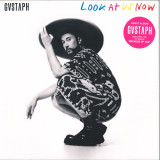
Gustaph - Look At Us Now LP

Gustaph

Look At Us Now LP

12inch5411146
541 Label
27.03.2025

Look At Us Now: the long-awaited debut album from Song Festival sensation Gustaph!

"I wanted to make a record that makes people feel good about themselves."

Good things come to those who wait: after more than 20 years as a musician, Gustaph is releasing his debut album, Look At Us Now. The title is a phrase from the song Because Of You, which won him seventh place at the Eurovision Song Contest in 2023.

"Look At Us Now may be taken literally," Gustaph explains. "Look where we are now after 20 years of hardwork. And look where we are with the queer movement: as a queer artist, I can openly be myself and sing about the things that are important to me."

Gustaph's soulful voice takes us through various themes, from believing in yourself and fickle lovers to chosen family and loss.

Look At Us Now is a pop record infused with nineties house, dance and disco, but we also spot a ballad (Miss You The Most) and two Scandi-pop tracks: Like You, an ode to love and Darker Days, an epic track that will pull you through bleak periods with panache.

"I wanted to make a record that makes people feel good about themselves," Gustaph says. "One that they put on while getting ready to go out or just to start the day. A little pick-me-up that makes them think: Yes, now I can kick ass."

When you play the record for the first time, you'll already be able to sing along to a bunch of tracks: there's Because Of You of course, butalso more recent singles like Already Know, Faith In What You Feel and Calls Your Name.

The record was produced in London with Richard X, known for his work with Róisín Murphy, Alison Goldfrapp and Pet Shop Boys, among others. "That's very close to who I am as an artist, so that collaboration just made sense," Gustaph explains.

Look At Me Now sounds like a party where everyone is welcome. The club tour kicks off at Ancienne Belgique. Come celebrate!

pas en stock

Commandez maintenant et nous commanderons l'article pour vous chez notre fournisseur.

Last In: 17 months ago
EL LEON PARDO - VIAJE SIDERAL

El Leon Pardo

VIAJE SIDERAL

Pict-VinylAYALP17
Aya Records
21.03.2025
  • INVOCACIóN
  • VIAJE SIDERAL
  • URMAH
  • CUMBIA ESPACIAL
  • EL PORRO DEL OLVIDO
  • CUANDO EL RíO SUENA
  • SOFI ENTRE CONSTELACIONES
  • EL TIGRILLO MONO
  • LA PERICA

It's hard to imagine El León Pardo, a loyal advocate of some of the most advanced projects in which folklore is the road map and the destination itself, without his kuisi. It's hard to see him with his hands free. Always holding on to that ancestral instrument, that pre-Colombian flute that survived the conquest and has become a symbol of resistance, overcoming the ravages of time, the imposition of ideologies, dogmas and religions. Despite all that, the kuisi continues with its liberating sound, the power of its cry, its invitation to dance, its sound a cure and a blessing. That's why it leads the way in this Viaje Sideral ("Space Voyage"), an astral journey in which the kuisi is the vehicle and the life force of the rhythm. Viaje Sideral feels like floating eternally in the infinite cosmos. This second long player from El León Pardo is inspired by humanity's relationship with the stars, escaping to mythical planes and led into a trance by Caribbean percussions, analog synths, deep bass, electric guitars and the hypnotic vibrations of the kuisis and trumpets that complete the soundtrack of this voyage. Through these nine songs, El León Pardo continues to create a sound of his own, evolving in his intention to pay tribute to the psychedelia of the tropical world of the Caribbean in the 1970s and 80s, but this time also taking as reference artists like Terry Riley, Kraftwerk and Mad Professor, including the roots of ambient and electronic music with the characteristic sound of the kuisi, an encounter of dreamlike and astral sounds, with the music of the bandas pelayeras of the tropics and figures like Pedro Laza and Juan Lara. In this new universe the Cartagena trumpeter dialogs with the past, processing the ideas that have emerged over the years and morphed into his personal search that gives an identity to his ideas, nurtured by figures like producer Diego Gómez (Llorona Records, Discos Pacífico, Cerrero) who awoke his interest in electronic instruments, Edson Velandia and kuisi maestros like Juan Carlos Medrano and Fredy Arrieta. In his sound there is a particular feature, one that contains histories of personal experiences, accompanied by the kuisi, including ancient Zenú flutes dating from between 600 and 800 AD and which helped create the atmosphere of "Invocación." "Viaje Sideral," the song that gives the album its name, was born from a dream in which two stars speed towards the earth and an imminent collision. As the record continues, the stellar connection becomes clear with songs like "Urmah" with Edson Velandia, inspired by an article about extra-terrestrial races and how the Urmah were a race of hominid felines, the greatest geneticists of the universe; and "Cumbia espacial," featuring rapping from N. Hardem, seeking to create that aura of immensity and consciousness of the infinity of the universe.

pré-commande21.03.2025

il devrait être publié sur 21.03.2025

Drinking Boys and Girls Choir - Linda Linda

Drinking BoysandGirls Choir

Linda Linda

7"-VinylDAMNABLY115
DAMNABLY
21.03.2025

Korean skate punk trio Drinking Boys and Girls Choir cover one of Japanese
punk band The Blue Hearts' most beloved songs, 'Linda Linda' in Japanese
and Korean versions
B side with their original ode to their hometown of Daegu 'BIG NINE', Let's Go'

pré-commande21.03.2025

il devrait être publié sur 21.03.2025

Jp Harris - Jp Harris is a Trash Fire

JP’s historic restoration carpentry has continued to be a baseline for his relationship to music; the yin to his yang, the Burt to his Ernie, the Dolly to his Porter. It was through this concurrent line of work that he met another twice-initialed singer with a penchant for old Americana music, obscure film, and overly elaborate ethnic meal preparations: one JD McPherson. The two became fast friends and would eventually, through many twists, turns, false starts, and biblically-proportionate plagues, enter a modest studio in Nashville to record Harris’ latest album.

Over the course of nine months in 2023, they recorded a sometimes lush, sometimes sparse, and sometimes jarring country album of Harris’ originals, loudly and violently squelching any attempt to pigeon-hole a song into any subgenre of country music. Only albums by Lee Hazelwood and an obscure folk album Waylon Jennings made when his hair was still short were allowed to be mentioned in reference. Featuring the guest vocals of Erin Rae, The Watson Twins, Shovels & Rope, and producer JD McPherson himself, the record is equal parts satire, reflection, and apology to those that would listen.

In a musical landscape of period-correct reproduction, “outlaw” internet posturing, and flavor-of-the-month variants on country,

“JP Harris Is A Trash Fire” burns bright as a dumpster in a Walmart parking lot on a moonless night; some will fear it, some will gravitate to its acrid warmth, and most will have no idea what to make of the situation. Harris has been steadily elbowing the definitive boundaries of “country music” wider with every album, both sonically and lyrically, and his latest piece of self described “Avant-Country” is no exception.

pré-commande14.03.2025

il devrait être publié sur 14.03.2025

Sonny Boy Williamson - Down And Out Blues
  • Don't Start Me To Talkin
  • Cross My Heart
  • All My Love In Vain
  • The Key (To Your Door)
  • Keep It To Yourself
  • Dissatisfied
  • Your Imagination
  • Nine Below Zero
  • Fattening Frogs For Snakes
  • Wake Up Baby
  • Your Funeral And My Trial / 99
  • I Don't Know
  • Let Me Explain
  • Lonesome Cabin
  • Help Me
  • Stop Right Now

Sonny Boy Williamson (Alex Miller 1912 - 1965) was one of the most inspiring
harmonica players in blues history. Though he took his name from another well-known
harmonica player, no one really sounded like him. Williamson developed his own
signature harmonica style, always showing a metronome like timing and an endlessly
inventive technique.
This release consists of Sonny Boy's complete debut LP, Down And Out Blues ,
originally released in 1959 on the Chess Records subsidiary label, Checker. Featuring
Muddy Waters, Jimmy Rogers, Willie Dixon, and Otis Spann, among others.
Sonny Boy Williamson toured England with American Folk Blues Festival in 1963 and
1965 and appeared on the iconic tv music show Ready Steady Go (8 January 1965)
backed by UK band,The T-Bones with Gary Farr.

pré-commande14.03.2025

il devrait être publié sur 14.03.2025

JOE PRICHARD - JOE PRICHARD & GIBRALTAR

Very little is known about Joe Prichard or his sidekicks, except that the band, which hailed from Missouri, drew its inspiration from influences far and wide, resulting in each of the five tracks being very different in character, ranging from the power chords and staccato guitar breaks of the Jimmy Page variety, to the throaty sax of 12-bar blues specialists Climax as well as the dual guitars of ZZ Top. There’s even a nine-minute jam a la Jethro Tull or Traffic with flute and sax giving a decidedly jazzy feel to proceedings. Originally released in 1974, this is another extremely rare record now reissued by Riding Easy Records. "Pro-sounding 1970s rarity with a ballsy rock sound and songs ranging from ambitious prog over bluesy bar-rock into macho FM rock postures. It’s solid across the board with excellent guitar leads, soulful vocals, and a versatile band. Keyboards, woodwinds and elaborate arrangements provide a prog-AOR vibe that may turn some off, although there’s enough groove to keep one’s attention throughout the four long tracks." – (Acid Archives)

pré-commande14.03.2025

il devrait être publié sur 14.03.2025

Various - Led Zeppelin Origins (2x12")
 
28

Find all the titles that influenced one of the greatest rock band of all times, on a double vinyl. With: B.B. King, John Lee Hooker, Elvis Presley, Little Richard, Bob Dylan, Joan Baez, Muddy Waters, Sonny By Williamson I... The tracklist was made up by the journalist Lionel Eskenazi, who is a true specialist of the what many consider as the best rock band ever

pas en stock

Commandez maintenant et nous commanderons l'article pour vous chez notre fournisseur.

Last In: 18 months ago
Stiff Richards - State Of Mind

Stiff Richards

State Of Mind

12inchDRUNKENSAILOR134
Drunken Sailor
04.03.2025

First things first - you don’t need me to tell you about the significance of Australia in the history of punk. I mean, what am I, Jon Savage? Google it yourself, FFS. Instead, let’s just agree that the speedy, feral racket thrown together by the likes of The Saints, Radio Birdman and The Scientists in the mid-late ‘70s is AT LEAST as deliriously entertaining as anything concocted by their UK/US counterparts, sowing the seeds for seemingly endless garage-inflected noisemakers in the land down under. No one likes using words like ‘tradition’ or ‘heritage’ here - the punk rock clusterbomb is far too messy for any of that business - but also emerging from Australian rock’s primordial soup is the addictive sneer of Stiff Richards. Like their predecessors, the band are a gleefully wracked mess of full throttle energy and barrelling power chords, with songs like ‘Kids Out On The Grass’ and ‘Point of You’ proving at least the equal of ‘(I’m) Stranded’ or ‘Aloha Steve And Danno’. Nine tracks in less than 30 minutes, all winners and all determined to leave you flipping over couches and smashing your TV set. And let’s face it, you may as well; there’s nothing good on. It all builds towards frantic closer ‘Fill In The Blanks’, which rattles around your speakers like the UK Subs trying to play Ed Kuepper riffs at the centre of an earthquake, before grinding to a halt as a voice says, “That’s the one.” Does it sound self-satisfied? Hey, it’s got good reason to - this is the best no-frills garage rock party since Gino & The Goons’ ‘Do The Get Around’, and the only appropriate response is to declare yourself betrothed to Stiff Richards because you can’t imagine your life without ‘em. Don’t believe me? Sort out your ears and get ‘State Of Mind’ in ‘em. Rock’n’roll as it’s supposed to be played.

pas en stock

Commandez maintenant et nous commanderons l'article pour vous chez notre fournisseur.

Last In: 18 months ago
La Pembele - Naci Mestizo

La Pembele

Naci Mestizo

12inchDEG-LP02C
discos elgozo
28.02.2025
  • A1: Para no Olvidar
  • A2: La Bella y La Culebra
  • A3: El Mañana
  • B1: Nací Mestizo ft. Nicoyembe
  • B2: Amargura
  • B3: Son Cimarrón
  • B4: Perdi Mi Corazón
également disponible

Black


La Pambelé Unveils Nací Mestizo, A Bold New Album Reviving Salsa with a Contemporary Twist Bogotá’s heavy guaguancó orchestra, La Pambelé, proudly presents their highlyanticipated second studio album, Nací Mestizo, now available on all major digital platforms as of November 27th. This album pays tribute to the golden era of salsa, particularly the 1970s, while breathing new life into the genre with modern lyrics and stories that resonate deeply with Latin communities.

All while maintaining a distinct Bogotan essence that highlights the city’s unique cultural flavor. Nací Mestizo seamlessly blends the timeless salsa brava sound with contemporary themes, reflecting the everyday lives of people across Latin neighborhoods. The album’s songs capture the struggles, passions, and joys of ordinary people, presented through the vibrant rhythms of salsa, creating a musical experience that connects the past with the present. Building on Their Rising Popularity Prior to the album’s release, La Pambelé debuted the singles “Amargura” and “Perdí mi Corazón”, which quickly captivated audiences and set the stage for the full album's success. The band’s electric performance of these tracks at the MedPlus Coliseum in Bogotá, before an audience of 22,000 attendees awaiting Marc Anthony, was met with enthusiasm as fans danced and applauded.

This moment marked a significant milestone for the orchestra, cementing their place as a rising force in the global salsa scene. Additionally, La Pambelé’s growing visibility has been marked by their appearances at major festivals such as Salsa al Parque and features on prominent radio stations, including Radio Nacional de Colombia and Latina Stereo. These platforms have helped introduce La Pambelé’s signature sound to a wider audience, building anticipation for the release of Nací Mestizo and reaffirming their influence in Colombia’s tropical and alternative music scenes. A Contemporary Salsa Sound with Classic Roots La Pambelé’s unique blend of traditional salsa brava and contemporary Latin storytelling is showcased through their distinctive nine-piece orchestra, which includes piano, conga, flute, trumpet, trombone, timbales, bongos, and baby bass. The dynamic vocals of Miguel RoRebolledo and Lorena Contento elevate the album’s themes, creating a sound that invites listeners to their feet and onto the dance floor. Under the direction of Camilo Toro Morato, the orchestra has honed its signature style, pushing the boundaries of salsa while staying true to its roots. As a proud defiance of stereotypes about Bogotá’s musical abilities, La Pambelé’s name pays homage to legendary Colombian boxer Kid Pambelé, symbolizing resilience and strength.

The name also draws from the Bantú language, meaning "defender of one's own," reinforcing the band’s connection to their Colombian heritage and pride in their distinctive sound. Global Recognition and Continuing Influence Since the release of their self-titled debut album in 2022, La Pambelé has gained international recognition, especially within the vinyl collector community. Theirdebut album was released in both 45” and LP vinyl editions, further solidifying their unique position in the contemporary salsa movement. Influenced by salsa greats such as Markolino Dimond, Eddie Palmieri, Edy Martínez, and Ismael Miranda, La Pambelé has carried forward the torch of salsa brava with passion and innovation. Nací Mestizo marks a significant evolution in the orchestra’s journey, melding the old and the new, and cementing La Pambelé as a driving force in the future of salsa music. A Collector’s Dream With their 2022 debut album garnering international recognition, La Pambelé’s vinyl releases—including 45” and LP editions—have become coveted items for salsa collectors worldwide. Their music is a bridge between classic salsa traditions and a modern vision, appealing to seasoned fans and new listeners alike. About La Pambelé La Pambelé is a heavy guaguancó orchestra from Bogotá, Colombia, known for their vibrant, rhythm-driven sound that blends 1970s salsa brava with modern Latin influences. With a unique nine-piece lineup and powerful vocals, the band continues to break boundaries, defying expectations and inspiring audiences around the world

pré-commande28.02.2025

il devrait être publié sur 28.02.2025

Various - Double Copy Sampler

2025 Repress

Running Back’s Double Copy subsidiary for house music history returns with four musical masterpieces from Chicago, London and an international cast from Italy on its first various artist sampler.
Originally released on Roy Davis Jr.’s Undaground Therapy outlet, Destination Heaven by the enigmatic Earth Boys project delivers a piece of cloud-nine-deep-house that was a staple at Frankfurt’s Wild Pitch Club and during the early days of its successor Robert Johnson. Produced by Cloudy Eyes and Cole Brooks, we unfortunately have never heard from the duo again. Luckily, Family of Few have been a little bit more productive. Also known as Mind Readers, Kevin Elliot and Billy ‚Jack“ Williams produced some of the more tender moments on Detroits 430 West label. Intervoles is amongst the most peculiar and catchy tracks that slow-burning dance floors can hope for.
The flip side turns the attention to the conclusions that Europe drew from its US-role-models. Released in 1992 on Rena Records with the involvement of New York’s JoVonn (a distinct genius of deep grooves himself), the keyboard skills of Pierre Audetat and the production work of I. Betti, M. Clemente and W. Brown, Dummy Head is one of a kind. Swirly echoes, dubby textures and a heavy bass line mate on the Edit Mix of I Have Been Wanting You to create one of the very first examples of fully formed dub-house.
Similar pioneering properties can be ascribed to the work of Rob Mello. We don’t have enough room here to list all his merits, but rest assured that the UK’s house scene wouldn’t be the same without him (Luxury Service Records, Classic et al). Under the Karim guise, Mello delivered a unique stroke of genius. Distilling the essence of deep house, while looking far into the future, In My Mind is many things at once: broken beat, electro, house with embracing chords, and – if you will – a warm-up banger. and does, what all the tracks in here do: turning heads then, turning heads now. Hardcore Deep House!

pas en stock

Commandez maintenant et nous commanderons l'article pour vous chez notre fournisseur.

Last In: 6 months ago
Muireann Bradley - I Kept These Old Blues
  • CANDYMAN
  • RICHLAND WOMAN BLUES
  • POLICE DOG BLUES
  • SHAKE SUGAREE
  • VESTAPOL
  • STAGOLEE
  • GREEN GREEN ROCKY ROAD
  • FRANKIE
  • POLICE SERGEANT BLUES
  • BUCK DANCERS CHOICE
  • DELIA
  • FREIGHT TRAIN
également disponible

Cassette


Muireann Bradley is a young blues, ragtime, roots and folk guitarist and singer based in Ballybofey in County Donegal Ireland. “This is my first album. Most of these tunes were originally recorded by the great blues men and women who were making records from the 1920s and 1930s right up in some cases to the early 1970s. I have also found inspiration for the renditions recorded here in the playing of some of the musicians who began recording this music in the 1960s and later, and who in some cases learned at the feet of the greats. Many of these guitarists played pivotal roles in the 1960s blues revival and subsequent “rediscovery” of many of the greats of country blues. I grew up steeped in these old blues in the hills overlooking the valley of the River Finn just outside the town of Ballybofey in County Donegal. My father would play this music constantly at home and wherever we went in the car and talk about it endlessly whether anyone was listening or not, telling stories about the lives of these musicians as if they were legend, mythology or the evening news. My father could of course play all this stuff on guitar, I remember watching him when I was very young and thinking “I want to be able to do that”. When I was nine he agreed to teach me and bought me my first little travel guitar. I worked hard to learn how to play but as time wore on I seemed to have less and less time to practice as I became more and more invested in the combat sports I was regularly training and competing in. Then in March 2020 the first Covid lockdowns happened and all contact sports were shut down. I was lost for a while but soon found my way back to the guitar. I was now listening, playing and practicing with a new intensity and focus. In a very serious moment, I wrote out a list of tunes I was going to learn. The first tune on that list was Blind Blake’s “Police Dog Blues”. I’m not sure now how long it took to get that arrangement together but when it was ready we videoed me performing it and posted it on YouTube. It ended up getting a lot of attention, I remember my parents being quite shocked and soon after that Josh Rosenthal got in touch… and here we are! Each individual track on this album was recorded live in the studio and represents one entire take with me singing and backing myself up on guitar simultaneously. Most are either first or second takes. Nothing has been added or taken away, no overdubs or modern recording tricks of any kind have been used at all so at least in some respects this album has been recorded in the same way as those classics of the 1920s and 1930s

pré-commande28.02.2025

il devrait être publié sur 28.02.2025

Liminal - Keep Coming Back EP

Meet Leng’s latest signings, Liminal – a Danish duo comprised of guitarist, multi-instrumentalist and producer David Rosenkilde, and DJ, producer and sound engineer Morten Troest.

The pair first met when Rosenkilde was booked to perform as a session musician at Troest studio. They clicked immediately so with Troest’s studio skills and inherent knowledge of what works on dancefloors paired with Rosenkilde’s abilities as a musician they decided to produce their own music together working to one simple rule: try out every idea, however outlandish!

Since then Rosenkilde and Troest have been recording their debut album that’s set for release on Leng later in 2025. First, though, we get a taste of their talents via ‘Keep Coming Back To Me’, an impressive debut single that blends electric and electronic instrumentation while keeping its focus fixed on the dancefloor.

Ushered in by shakers, rubbery bass and flanged guitar licks, ‘Keep Coming Back To Me’ giddily blurs the boundaries between colourful nu-disco, low-slung dub disco and the sun-splashed beauty of the more club-friendly end of the Balaeric spectrum. It boasts a hazy, multi-tracked and lightly glassy-eyed lead vocal, as well as a nagging TB-303 acid line that works its way to the fore as the track progresses, adding extra layers of excitement and energy as it unfolds.

Remixer Ray Mang (AKA long-time friend of the label Raj Gupta) takes the latter element as his inspiration on a stunning, nine-minute plus remix that brilliantly re-frames the track as a blend of tactile 21st century nu-disco colour, hypnotic proto-house and analogue-rich, acid-fired Chicago jack. Re-playing the bassline in an early Chicago house style and reaching for lo-fi and spacey synth sounds, the veteran British producer frequently strips the track back to the groove before re-introducing the vocal and the dreamiest of chords.

Liminal also display their sonic diversity on bonus cut ‘The Moon Is Changing’, a wonderfully atmospheric and star-lit affair in which spacey ambient chords, twinkling electric piano keys and intergalactic electronics slowly usher in a mid-tempo Norse nu-disco groove. The pair build slowly, adding vocals and layered guitar licks. The results are hard to pigeonhole but thoroughly impressive, offering a tantalising glimpse of what’s to come on their must-check debut album.

pas en stock

Commandez maintenant et nous commanderons l'article pour vous chez notre fournisseur.

Last In: 14 months ago
Le Motel - Odd Numbers / Số Lẻ

Le Motel

Odd Numbers / Số Lẻ

12inchBALMAT15
Balmat
24.02.2025

It took a village to create Le Motel’s Odd Numbers / Số Lẻ. Beneath its pulsing, shimmering tones, the record is alive with the sounds of everyday life—purring mopeds, idle whistling, the din of kitchens and whisper of rain, voices joyful and contemplative, scenes of bustling cities and domestic intimacy.

Le Motel—who runs the Brussels-based record label Maloca—gathered sounds, photographs, and videos while traveling in Vietnam in 2023. From Hanoi he ventured to Hmong communities in the mountains near the border with China, building out a network of contacts gathered from friends and friends of friends. But Odd Numbers / Số

Lẻ—which takes its title from traditional Vietnamese numerological beliefs and customs—is wholly unlike the extractive product typical of exploitative modes of Western tourism; the album’s final shape was deeply dependent upon the participation of the people the artist met in Vietnam.

Back in Brussels after his travels, as Le Motel began working with his materials, he sent early drafts to his contacts, inviting their input. This back-and-forth eventually yielded a dynamic collective effort in which nine of the album’s 15 tracks feature multiple composer credits. Among the album’s diverse collaborators are Yvonne Quỳnh-Lan Dươn, an educator and ethnomusicologist; Chi Chi, the daughter of a Hmong shaman; and Phapxa Chan, who contributes three poems inspired by landscape and Le Motel’s own music (and, in one case, psychedelics).

The result is an album that is not about making sound, broadcasting it as a one-way communication, but instead about the empathic practice of listening—about listening as an integral and even ethical part of musical creation, even (especially!) when that music is created on a computer, rather than conjured by a group of players sharing space in real time. It’s an album that adopts many of the traditional trappings of ambient music while reminding us of the importance of intentional modes of creation. Brian Eno famously said that ambient music must be as ignorable as it is interesting, but Le Motel’s Odd Numbers / Số Lẻ suggests, to the contrary, the richness of experience available to us should we make the effort to open our ears.

Complementing the album, Le Motel’s Odd Numbers / Số Lẻ also takes the form of a multimedia exhibition including photographs, video, and text-based works created in collaboration with Belgian designer and programmer Antoine Jaunard and Vietnamese poet Phapxa Chan. The exhibition is on view from January 23 until March 2, at Brussels’ 254Forest gallery, as part of Photo Brussels Festival 2025.

pas en stock

Commandez maintenant et nous commanderons l'article pour vous chez notre fournisseur.

Last In: 12 months ago
MAUD THE MOTH - THE DISTAFF LP

Maud The Moth

THE DISTAFF LP

12inchLAR001/LRP034
THE LARVARIUM
21.02.2025
  • 1: Canto de enramada
  • 2: A temple by the river
  • 3: Exuviae
  • 4: Burial of the patriarchs
  • 5: Siphonophores
  • 6: Despe?aperros
  • 7: O Rubor
  • 8: Fiat Lux
  • 9: Kwisatz Haderach
également disponible

Coloured Vinyl


Maud the moth, the solo project of Spanish-born and Scotland-based pianist, singer and songwriter Amaya Lopez-Carromero announces her new album, The Distaff, to be released via The Larvarium (digital +CD) and La Rubia Producciones (vinyl) Amaya has long used the mantle of Maud the moth as an alter-ego, a séance-like conduit to explore themes of rootlessness, identity and trauma. The Distaff in particular refers to the stick or spindle onto which wool or flax is wound for spinning, and an object which has historically been used across multiple cultures as a symbol wielded by the “virtuous woman”, an authoritarian ideal around which much of the trauma surrounding the feminine coalesces. The album takes the form of a sort of self reflective and surreal autobiography. It was in part inspired by the poem of the same name written by the Greek poet Erinna, as she mourns her friend's loss of individuality and agency in exchange for marriage - and therefore safety and acceptance in the eyes of society. The album exists in an ethereal but violent world of aesthetic overlaps where time stands still and fictional and reimagined folk sits at the table with Maud the moth’s usual sonic menagerie. It is the result of a lifetime of obsession with sound and music, where glimpses of musical genre offer insight into Amaya’s artistic interests and her participation in the underground European scene for many years, in bands such as healthyliving. Heavier, darker, and more exposed than any of her previous works it features some highly accomplished artists, such as Seb Rochford (Patti Smith, Polar Bear, Sons of Kemet, Pulled by magnets, etc.) on drums, Alison Chesley (Helen Money) on cello, Fay Guiffo on violin and Scott McLean (Ashenspire, healthyliving, Falloch) on guitar, saxophone and synthesiser. Maud the moth shares the video for "Siphonophores". About the track, Maud the moth says; I wrote "Siphonophores" on guitar, during the first lockdown, a period where I was kind of trapped between an almost empty flat in Edinburgh and Dresden. It was an incredibly harrowing time, but also one of hope and where important new things were being birthed. I felt incredibly sensitive to everything, almost like life was happening in slow motion. I´m not a confident guitarist since I am completely self-taught, but, probably because of this, I feel that this instrument allows me to focus on aspects of the songwriting that I normally overlook when writing on piano, and I think it was a necessary step for this song to exist. Something else which I've been really exploiting lately and features strongly in the album is the percussive capabilities of the piano, and in particular, of the sustain pedal when mic'd up. This can be heard very clearly at the beginning of "Siphonophores". Written and arranged by Amaya, with some contributions in the later role from the aforementioned collaborators, the album presents nine tracks originally written entirely on acoustic piano as accompanied voice pieces, in pure singer-songwriter fashion. The album was co-produced and recorded by Scott and Amaya in different studios across the UK between January and July of 2024, in a process that started shortly after the 2020 pandemic and finished alongside the album recordings in a detailed, organic and at times obsessive process aimed primarily at capturing the natural dynamics and expression of free performance. The Distaff was mixed in its entirety by Scott and mastered at Abbey Road by Alex Wharton (Radiohead, My Bloody Valentine, Aurora, Kathryn Joseph etc.) Despite being born of a very personal point of view, the album lacks a specific narrator and was conceived almost as a sonic trousseau, where the needle point, silks and other family heirlooms have been swapped for out-of-the-corner-of-the-eye memories of rural Spain by the vineyards, family disputes, old tales of wartime pains, generational breaches and finally the conflict of migration and estrangement. The songs paint dystopian pastoral scenes which evolve throughout the span of one fictional day outside of time and coherent locations and where imagination (often the only account surviving from traumatic events and gaslighting) has become indistinguishable from fact. The Distaff attempts to acknowledge past trauma, comprehend and process some of the more difficult aspects which have contributed to our darker self and offer closure and solace through creative catharsis.

pré-commande21.02.2025

il devrait être publié sur 21.02.2025

MAUD THE MOTH - THE DISTAFF LP

Maud The Moth

THE DISTAFF LP

12inchLAR001/LRP034X
THE LARVARIUM
21.02.2025

Maud the moth, the solo project of Spanish-born and Scotland-based pianist, singer and songwriter Amaya Lopez-Carromero announces her new album, The Distaff, to be released via The Larvarium (digital +CD) and La Rubia Producciones (vinyl) Amaya has long used the mantle of Maud the moth as an alter-ego, a séance-like conduit to explore themes of rootlessness, identity and trauma. The Distaff in particular refers to the stick or spindle onto which wool or flax is wound for spinning, and an object which has historically been used across multiple cultures as a symbol wielded by the “virtuous woman”, an authoritarian ideal around which much of the trauma surrounding the feminine coalesces. The album takes the form of a sort of self reflective and surreal autobiography. It was in part inspired by the poem of the same name written by the Greek poet Erinna, as she mourns her friend's loss of individuality and agency in exchange for marriage - and therefore safety and acceptance in the eyes of society. The album exists in an ethereal but violent world of aesthetic overlaps where time stands still and fictional and reimagined folk sits at the table with Maud the moth’s usual sonic menagerie. It is the result of a lifetime of obsession with sound and music, where glimpses of musical genre offer insight into Amaya’s artistic interests and her participation in the underground European scene for many years, in bands such as healthyliving. Heavier, darker, and more exposed than any of her previous works it features some highly accomplished artists, such as Seb Rochford (Patti Smith, Polar Bear, Sons of Kemet, Pulled by magnets, etc.) on drums, Alison Chesley (Helen Money) on cello, Fay Guiffo on violin and Scott McLean (Ashenspire, healthyliving, Falloch) on guitar, saxophone and synthesiser. Maud the moth shares the video for "Siphonophores". About the track, Maud the moth says; I wrote "Siphonophores" on guitar, during the first lockdown, a period where I was kind of trapped between an almost empty flat in Edinburgh and Dresden. It was an incredibly harrowing time, but also one of hope and where important new things were being birthed. I felt incredibly sensitive to everything, almost like life was happening in slow motion. I´m not a confident guitarist since I am completely self-taught, but, probably because of this, I feel that this instrument allows me to focus on aspects of the songwriting that I normally overlook when writing on piano, and I think it was a necessary step for this song to exist. Something else which I've been really exploiting lately and features strongly in the album is the percussive capabilities of the piano, and in particular, of the sustain pedal when mic'd up. This can be heard very clearly at the beginning of "Siphonophores". Written and arranged by Amaya, with some contributions in the later role from the aforementioned collaborators, the album presents nine tracks originally written entirely on acoustic piano as accompanied voice pieces, in pure singer-songwriter fashion. The album was co-produced and recorded by Scott and Amaya in different studios across the UK between January and July of 2024, in a process that started shortly after the 2020 pandemic and finished alongside the album recordings in a detailed, organic and at times obsessive process aimed primarily at capturing the natural dynamics and expression of free performance. The Distaff was mixed in its entirety by Scott and mastered at Abbey Road by Alex Wharton (Radiohead, My Bloody Valentine, Aurora, Kathryn Joseph etc.) Despite being born of a very personal point of view, the album lacks a specific narrator and was conceived almost as a sonic trousseau, where the needle point, silks and other family heirlooms have been swapped for out-of-the-corner-of-the-eye memories of rural Spain by the vineyards, family disputes, old tales of wartime pains, generational breaches and finally the conflict of migration and estrangement. The songs paint dystopian pastoral scenes which evolve throughout the span of one fictional day outside of time and coherent locations and where imagination (often the only account surviving from traumatic events and gaslighting) has become indistinguishable from fact. The Distaff attempts to acknowledge past trauma, comprehend and process some of the more difficult aspects which have contributed to our darker self and offer closure and solace through creative catharsis.

pré-commande21.02.2025

il devrait être publié sur 21.02.2025

Various - ECHOES OF ITALY - ARTISTS IN WONDERLAND – EARLY 90S HOUSE VIBES VOL.1 LP 2x12"

Volume 1 of this expertly curated project of 90s Italian House - put together by Don Carlos.

If Paradise was half as nice… by Fabio De Luca.

Googling “paradise house”, the first results to pop up are an endless list of European b&b’s with whitewashed lime façades, all of them promising “…an unmatched travel experience a few steps from the sea”. Next, a little further down, are the institutional websites of a few select semi-luxury retirement homes (no photos shown, but lots of stock images of smiling nurses with reassuring looks). To find the “paradise house” we’re after, we have to scroll even further down. Much further down.

It feels like yesterday, and at the same time it seems like a million years ago. The Eighties had just ended, and it was still unclear what to expect from the Nineties. Mobile phones that were not the size of a briefcase and did not cost as much as a car? A frightening economic crisis? The guitar-rock revival?! Certainly, the best place to observe that moment of transition was the dancefloor. Truly epochal transformations were happening there. From America, within a short distance one from the other, two revolutionary new musical styles had arrived: the first one sounded a bit like an “on a budget” version of the best Seventies disco-music – Philly sound made with a set of piano-bar keyboards! – the other was even more sparse, futuristic and extraterrestrial. It was a music with a quite distinct “physical” component, which at the same time, to be fully grasped, seemed to call for the knotty theories of certain French post-modern philosophers: Gilles Deleuze, Félix Guattari, Paul Virilio... Both those genres – we would learn shortly after – were born in the black communities of Chicago and Detroit, although listening to those vinyl 12” (often wrapped in generic white covers, and with little indication in the label) you could not easily guess whether behind them there was a black boy from somewhere in the Usa, or a girl from Berlin, or a pale kid from a Cornish coastal town.

Quickly, similar sounds began to show up from all corners of Europe. A thousand variations of the same intuition: leaner, less lean, happier, slightly less intoxicated, more broken, slower, faster, much faster... Boom! From the dancefloors – the London ones at least, whose chronicles we eagerly read every month in the pages of The Face and i-D – came tales of a new generation of clubbers who had completely stopped “dressing up” to go dancing; of hot tempered hooligans bursting into tears and hugging everyone under the strobe lights as the notes of Strings of Life rose up through the fumes of dry ice (certain “smiling” pills were also involved, sure). At this point, however, we must move on to Switzerland.

In Switzerland, in the quiet and diligent town of Lugano, between the 1980s and 1990s there was a club called “Morandi”. Its hot night was on Wednesdays, when the audience also came from Milan, Como, Varese and Zurich. Legend goes that, one night, none less than Prince and Sheila E were spotted hiding among the sofas, on a day-off of the Italian dates of the Nude Tour… The Wednesday resident and superstar was an Italian dj with an exotic name: Don Carlos. The soundtrack he devised was a mixture of Chicago, Detroit, the most progressive R&B and certain forgotten classics of old disco music: practically, what the Paradise Garage in New York might have sounded like had it not closed in 1987. In between, Don Carlos also managed to squeeze in some tracks he had worked on in his studio on Lago Maggiore. One in particular: a track that was rather slow compared to the BPM in fashion at the time, but which was a perfect bridge between house and R&B. The title was Alone: Don Carlos would explain years later that it had to be intended both in the English meaning of “by itself” and like the Italian word meaning “halo”. That wasn’t the only double entendre about the song, anyway. Its own very deep nature was, indeed, double. On the one hand, Alone was built around an angelic keyboard pattern and a romantic piano riff that took you straight to heaven; on the other, it showcased enough electronic squelches (plus a sax part that sounded like it had been dissolved by acid rain) to pigeonhole the tune into the “junk modernity” section, aka the hallmark of all the most innovative sounds of the time: music that sounded like it was hand-crafted from the scraps of glittering overground pop.

No one knows who was the first to call it “paradise house”, nor when it happened. Alternative definitions on the same topic one happened to hear included “ambient house”, “dream house”, “Mediterranean progressive”… but of course none were as good (and alluring) as “paradise house”. What is certain is that such inclination for sounds that were in equal measure angelic and neurotic, romantic and unaffective, quickly became the trademark of the second generation of Italian house. Music that seemed shyly equidistant from all the rhythmic and electronic revolutions that had happened up to that moment (“Music perfectly adept at going nowhere slowly” as noted by English journalist Craig McLean in a legendary field report for Blah Blah Blah magazine). Music that to a inattentive ear might have sounded as anonymous as a snapshot of a random group of passers-by at 10AM in the centre of any major city, but perfectly described the (slow) awakening in the real world after the universal love binge of the so-called Second Summer of Love.

For a brief but unforgettable season, in Italy “paradise house” was the official soundtrack of interminable weekends spent inside the car, darting from one club to another, cutting the peninsula from North to centre, from East to West coast in pursuit of the latest after-hours disco, trading kilometres per hour with beats per minute: practically, a new New Year’s Eve every Friday and Saturday night. This too was no small transformation, as well as a shock for an adult Italy that was encountering for the first time – thanks to its sons and daughters – the wild side of industrial modernity. The clubbers of the so-called “fuoriorario” scene were the balls gone mad in the pinball machine most feared by newspapers, magazines and TV pundits. What they did each and every weekend, apart from going crazy to the sound of the current white labels, was linking distant geographical points and non-places (thank you Marc Augé!) – old dance halls, farmhouses and business centres – transformed for one night into house music heaven. As Marco D’Eramo wrote in his 1995 essay on Chicago, Il maiale e il grattacielo: “Four-wheeled capitalism distorts our age-old image of the city, it allows the suburbs to be connected to each other, whereas before they were connected only by the centre (…) It makes possible a metropolitan area without a metropolis, without a city centre, without downtown. The periphery is no longer a periphery of any centre, but is self-centred”.

“Paradise house” perfectly understood all of this and turned it into a sort of cyber-blues that didn’t even need words, and unexpectedly brought back a drop of melancholic (post?)-humanity within a world that by then – as we would wholly realise in the decades to come – was fully inhuman and heartless. A world where we were all alone, and surrounded by a sinister yellowish halo, like a neon at the end of its life cycle. But, for one night at least, happy.

pas en stock

Commandez maintenant et nous commanderons l'article pour vous chez notre fournisseur.

Derniere entrée: 66 jours
BIIG PIIG - 11:11 LP

Biig Piig

11:11 LP

12inch19802866271
Sony UK
07.02.2025

Debut studio album by the Irish singer and rapper. Biig Piig is London-based songwriter Jess Smyth, who, since 2017, has made smouldering hip-hop and neo-soul jams with homespun production. Biig Piig is a genuinely unique modern era pop star. Having come of age through musical experimentation, self-exploration and collaboration she started 2023 with the release of her critically acclaimed debut mixtape ‘Bubblegum’ and continues with the release of her upcoming debut studio album, 11:11. Radiating creative might throughout her releases, Biig Piig has seamlessly woven through various genres and languages to deliver stories and songs that speak effortlessly of youth culture. Her unpredictable and excellent discography encompasses tracks with NiNE8, Meronomy, Emotional Oranges, Lava La Rue and her musical versatility, from nonchalant rap to melancholic lament and melody, has garnered attention from Billie Eilish, Bella Hadid, Lil Nas X and the late Virgil Abloh to name a few. Biig Piig has built a nascent global audience for her instantly identifiable sound via world- wide tour dates and promo across platforms such as Triple J, Studio Brussels, 3FM, DLF, Radio 4, KCRW and more. She splits her time between the US and UK having established a support network of creatives and inventive energy that keeps things feeling fresh and fluid. A standard Black, x11 trk LP Vinyl & CD. The Retail exclusive format is a Transparent/Clear LP Vinyl. Extensive promo & marketing activity.

pré-commande07.02.2025

il devrait être publié sur 07.02.2025

Articles par page:

Language

N/ABPM
Vinyl