
Reservar21.03.2025
debe ser publicado en 21.03.2025
debe ser publicado en 21.03.2025

Hardcover Book which includes a 208-page book documenting Louisville's rich Black Gospel music legacy and access to a comprehensive digital archive.
In the mid-20th century, Louisville gospel music was occasionally recorded when members of the local gospel community pressed 45rpm records and LPs, and released them through grassroots record labels such as Sensational Sounds, Grace, Blessed, and D.J.S. Over the years, a substantial body of work was produced in our city, but those recordings are in danger of being lost forever.
The Louisville Story Program has been working with dozens of people in the local gospel music community to locate, digitize, and preserve hundreds of these recordings and to develop a book that documents and honors the legacies of the people and communities that produced them.
For decades, the passion, hard work, and support of countless people across dozens of Black church communities in Louisville have nurtured and sustained a rich gospel music ecosystem. This music has served as a central part of people's religious practice and as an expression of Black pride, joy, affirmation, love, dignity, determination, and hope. This legacy continues to this day.
With support from The Owsley Brown II Family Foundation and Owsley Brown III Philanthropic Foundation, LSP has partnered with members of the gospel community and a local advisory group of local gospel historians and luminaries:
To locate, clean, and digitize gospel records of local artists released by small local labels
To accompany the local Black gospel music community in developing a 4 CD box set that includes a 200+ page hardcover book with first-person documentation of their rich history
To create an accompanying double LP featuring 26 of those songs
To create and maintain a public-facing digital archive of 1,000 songs and 1,000 photographs
To celebrate the final release with a large concert at the Brown Theatre (September 28, 2024)
En el almacen y preparando para el envío

Soul Music legend Candi Staton returns to her down-home Alabama roots on her 32nd album, Back to My Roots. The twelve-track Americana set features an array of Staton-penned originals and some well-chosen covers.
"These songs represent my roots," Staton adds as she reflects on her many trials and triumphs. "Even the new songs on some level represent something I've experienced and that's what real soul music is about." Back to My Roots was produced by Staton with her second eldest son, Marcus Williams, a professional drummer who has toured with the likes of Peabo Bryson, Isaac Hayes, and Tyler Perry. They brought in Mark Nevers of Lambchop fame, who produced three of Staton’s prior Americana albums for Honest Jon’s and Thirty Tigers, to sweeten certain tracks. “Some of the first songs I ever heard were songs like `Peace in the Valley’ and `It’s Gonna Rain,’” says Staton. “The new songs or cover songs are tracks that remind me of that era when I was growing up as a child and evolving as a young woman. That’s why I named the album Back to My Roots because I’m going back to the roots that made me who I am.”
Staton received the Americana Music Association UK’s highest honour, the International Lifetime Achievement Award, at the UK Americana Music Awards ceremony at Hackney Church in London last year for her southern soul work that stretches from her 1969 Muscle Shoals hits to her more recent collaborations with the likes of Americana kings Jason Isbell and John Paul White.
The album opens with a mid-tempo Bonnie Raitt-styled contemporary blues “I Missed the Target Again” that finds Harry Connick Jr.’s longtime guitarist Jonathan DuBose Jr. (aka the Prophesying Guitarist) showing off his skills that set the tone for the song and the album.
Staton’s older sister, Maggie Staton Peebles (who alongside Staton was a member of the Jewel Gospel Trio in the 1950s), joins her for two duets. The first, “It’s Gonna Rain,” features just a drum, steel guitar and vocals. “My mother used to sing that song to us all the time when I was a child,” Staton recalls. “It’s a really soulful kind of song I wanted to revisit.” They then take turns leading Thomas Dorsey 1939 gem “There Will Be Peace in the Valley” that Elvis Presley popularized in the 1950s.
“Hang on in There” is a new, mid-tempo song that has an old school gospel flavour and features vocals from veteran bluesman, Larry McCray.
While in Europe in 2023 for her farewell concert tour that took her to the Glastonbury Festival and Love Supreme, Staton and her British band, PUSH, went into a London studio to record a new version of The Rolling Stones’ 1972 gem, “Shine A Light.” “I love the way that came out,” Staton says. “We put a big choir on it and put our own twist on it.”
From there, Staton revives another Thomas Dorsey classic, “The Lord Will Make a Way Somehow,” with a bluesy vibe. When Al Green started recording gospel in the early 1980s, he re-introduced this song into the culture.
“God’s Gonna Use Me Anyway” is a new mid-tempo blues with subtle Caribbean influences.
The mood takes a turn on “1963.” It’s a poignant, spoken-word reflection on September 15, 1963, when four black girls were killed in the Birmingham Church bombing. “I was in the city that day and I remember the chaos and horror after the bombing,” Staton recalls. “Just thinking of how racism and hatred caused those men to kill those girls was so emotional for me that I could only do it in one take.”
It's a perfect segue into "Reach Down and Touch Heaven," a haunting, plea for divine intervention into the affairs of mankind. "That's straight Baptist," she says. "I used to be a church pianist back in the 1960s. I've never played piano on one of my records before so that's a unique song for me because I’m finally playing on one of my records. The message of that song is about the homeless. It came to me when a homeless person on the street asked me for $5. When God touches your heart to help somebody else that’s heaven to God’s hears. So, when we reach into our purse or wallet to help someone, we’re touching heaven."
Staton offers love as an antidote to hate on the bouncy, Motown-styled, “Love Breakthrough.”
Her publicist brought Aaron Frazer & the Flying Stars of Brooklyn NY’s 2017 cut “My God Has a Telephone” to Staton’s attention. She shifts the track from a retro 1960s groove to more of a 1980s Malaco Records arrangement, a subtle but distinct variation. Staton brought in her longtime friend and STAX Records legend, William Bell (“I Forgot to Be Your Lover” and “Trying to Love Two”), to add raspy seasoning to the track.
The album closes with the wistful, “In God’s Hands We Rest Untroubled,” that was originally written and recorded by the late country star, Lari White, who died in 2017 at the age of 52. “Lari sent me that song to consider at least ten years ago and I always loved it,” Staton says. “The record label didn’t want it on the album or something, so I just held it.”
Staton says, “I grew up hearing a lot of these old songs when they were new songs. I toured with the Jewel Gospel Trio in the 1950s and we got to know people like Mahalia Jackson, Sam Cooke and others who sang these types of songs. So, I’m sort of paying tribute to them and the influence they had on me by refreshing these songs and making new songs in the old style.”’
debe ser publicado en 31.07.2026
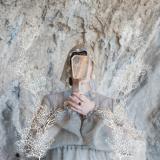
Oceanine, Jolanda Moletta’s third album and her first for Beacon Sound, is a powerful and ethereal statement of artistic community. Expanding on her previous work, each track represents a collaboration with a different female vocalist, with the foundational elements being generated entirely by her own voice. By turns haunting, enchanting, and inspiring, you won’t want to come up for air once you’ve been pulled under. Representing a
musical practice that is distinctly feminist, this is an album with a longer view in mind, to an age when the altars were to goddesses and women were centered as powerful beings representing the earth’s cycles of regeneration and renewal. Oceanine then, in all its beauty, can be viewed as an album of survival. It is deeply transportive, accessing something that lies within all of us. As the late, great Lithuanian folklorist and archaeologist Marija Gimbutas noted, “We must refocus our collective memory. The necessity for this has never been greater as we discover that the path of 'progress' is extinguishing the very conditions for life on earth.”
Jolanda Moletta is a multimedia artist and one-woman electronic choir. She creates wordless compositions through extended vocal techniques, integrating wearable-controlled live processing, alongside symbolic visuals. Moletta considers her performances to be a collective ritual and creates her Sonic & Visual Spells following the cycles of nature and the moon. Jolanda's 2022 critically acclaimed album Nine Spells was released on the Ambientologist label, followed by Night Caves on Whitelabrecs in 2025. Moletta’s artistic practice is a radical and spiritual journey through sound art, ritual, and the symbolic archaeology of the feminine.
Oceanine is inspired by sirens, water nymphs, and the timeless call of the sea. At its core lies Jolanda’s deep, lifelong connection to the Mediterranean Sea and to the ancient and modern myths and folklore that have emerged from its waters. Growing up by the Mar Ligure, Jolanda was surrounded by stories carried by salt, wind, and waves: legends of sirens, echoes of ancient voices, and the sea as both origin and oracle. This intimate relationship with the Mediterranean is not merely a backdrop, but a living source that shapes Oceanine’s emotional, symbolic, and sonic world.
Each track features a different female vocalist, creating a rich tapestry of voices, styles, and perspectives. This artistic choice not only broadens the album’s sonic palette, but also deepens its narrative core: celebrating the power, beauty, and mystique of feminine energy through myth, history, and sound.
The entire album is built exclusively from the human voice, processed and layered, yet always remaining voice, and nothing else. For each piece, Jolanda invited every vocalist involved to contribute a raw stem: a short, unedited melodic fragment of just a few seconds, inspired by the album’s themes. These intimate vocal seeds became the foundation of each track: the guest artists’ voices appear as brief, melodic stems, while the entire surrounding “orchestral” fabric is created solely from Jolanda’s own layered and processed voice. In this way, Jolanda’s voice becomes the Ocean itself, embracing, absorbing, and carrying the sirens’ calls within a vast, immersive soundscape. Every song is a unique expression of the feminine experience, revealing its depth, complexity, and emotional range, echoing the call of the sea and the many faces of the siren archetype.
The figure of the siren has transformed across centuries. In myths of Ancient Greece and Rome, sirens were hybrid beings, part woman, part bird, whose irresistible songs lured sailors to their doom. During the Middle Ages, the image shifted toward the half-woman, half-fish figure, often associated with temptation and danger. Historically, the voice of women has often been feared. Sirens were considered harbingers of misfortune not simply because they seduced or destroyed, but because they were powerful liminal beings.
In Ancient Greek, sirens functioned as psychopomps: figures who existed between worlds and guided souls, especially between life and death. Their songs were believed to carry forbidden knowledge, including prophetic insight and the ability to reveal truths about fate and the future. The danger of the sirens lay in what they revealed: knowledge that humans were not meant, or ready, to hear.
Oceanine confronts this legacy head-on. The voices heard throughout the album are not merely beautiful: they are dark and luminous, wild and enchanting, magical, soothing, dreamy, and at times fractured or distorted. They whisper, lament, beckon, and enchant. Like sirens, they skim the surface of the water and sink into its depths, hovering on the edge between tenderness and danger, vulnerability and power. They rise toward the sky, dissolve into mist, and return as echoes charged with raw, elemental emotion: voices that seduce, warn, mourn, and remember. They refuse to be reduced to decoration.
Alongside the album’s release in May, Oceanine will also unfold as a visual and performative work through a short art film. The film includes a live session recorded inside a sea cave facing the Mar Ligure, the very coastline where Jolanda spent her childhood, dreaming of sirens and listening to the sea as if it were speaking directly to her. This site-specific performance reconnects the music to its place of origin, allowing the voice to resonate within stone, water, and air, and transforming the cave into both a sanctuary and a threshold between myth and reality.
What if the sirens’ songs were considered dangerous because they carried another truth, an ancient truth long forgotten?
Oceanine embraces the idea that we are still deeply woven into myth. Though we may see ourselves as rational and modern beings, our world is saturated with ancient symbols and archetypes, often distorted, simplified, or stripped of their original meaning. And if those symbols are allowed to shift, if the mirror once held by the siren becomes an invitation to look beyond appearances and into what has been obscured, then we may finally uncover a deeper truth and reclaim the voice that was always ours.
Oceanine is not just an album. It is a reclamation, a spell, and a call from the depths.
debe ser publicado en 01.05.2026

The year is 1989 and it's the peak of the Belgium New Beat craze. Not limited to records and clubs, the New Beat lifestyle was marketed to death with all sorts of fashion items, a plethora of accessories, and at least one erotic movie.
Fast forward a few decades. In the middle of nowhere, Switzerland, tucked inside a long-forgotten video store that closed its doors in 1999 and sat untouched for 20 years, we stumbled upon a strange treasure amongst tons of VHS hidden in the adult section. A mysterious VHS labeled "Erotiques New Beat."
What we found was pure 1989 Belgian erotica-low budget, fog-drenched, and neon-soaked. Minimalist sets. Girls in PVC. Flashing lights. Mirrors. Fog machines. Loud colors. It was erotic, sure-but also oddly sweet, almost innocent in its surreal, lo-fi dreaminess.
And then came the soundtrack.
That's what really floored us. A collection of New Beat gems, raw, simple, irresistible. Somehow, it captured the full spectrum of the genre: 100-110 bpm grooves with shades of EBM, sleazy coldwave rhythms, sensual synths, proto-Goa pulses, monk choirs, oriental melodies, and a healthy dose of movie samples. It felt alive. Timeless. Utterly perfect.
We had to know more. We dug, tracked down the source, and in 2020, reissued the soundtrack on vinyl. It sold out fast. Now, five years later, we thought about pressing one final batch. A special edition on picture disc, featuring the original smileys from the VHS.
Haga su pedido ahora y le encargaremos el artículo en nuestro proveedor.

The album opens with "Hypnagogia," an ode to the space between sleep and wakefulness where we are open to other realms of consciousness. The song slowly builds along a steady pulse provided by bassist Pickle (Nicole Smith) and drummer Rikki Styxx. Tripped out saxophone bleats from guest player Gabe Flores swirl on top of the organ drones laid out by guest keyboardist Gregg Foreman. The band's choral objectives for Under the Spell of Joy are established right off the bat, with Bonnie Bloomgarden's melodic invocations bolstered by a choir, giving the album a rich and vibrant wall-of-sound aesthetic. The song ominously builds on its hypnotic foundation until it opens up into a raucous revelry at the four-minute mark. The portentous simmer of the opening track yields to the ecstatic rocker "Hold My Hand," where verses reminiscent of Velvet Underground's "I'm Waiting For The Man" explode into big triumphant choruses. From there the band launches into the title track, which marries the griminess of The Stooges with an innocence provided by a children's choir chanting the album's primary mantra "under the spell of joy / under the spell of love." Death Valley Girls have always vacillated between lightness and darkness, and on "Bliss Out" they demonstrate their current exuberant focus with a patina-hued pop song driven by an irrepressibly buoyant organ line laid down by keyboardist The Kid (Laura Kelsey). A similar cosmic euphoria is obtained on "The Universe," where alternating chords on the organ help elevate soaring saxophone and keyboard lines out beyond the stratosphere. If you're looking for transcendental rock music, look no further.
debe ser publicado en 11.07.2025

Named after a (US) West Coast grocery store chain, The Whitefronts started out in 1982 as a quartet of art and theater students attending UCSB. The band quickly mutated into a sextet. In 1984, they moved north to establish themselves as part of the SF DIY culture. Live shows usually consisted of open jams drawing from what the band was obsessing about at the time—free jazz, The Velvet Underground, Caribbean music, improv noise—as well as their own unheralded genres that popped in and out of existence like subatomic particles. Shows with local bands like Slovenly, Camper Van Beethoven, Caroliner Rainbow, Vomit Launch, Barnacle Choir and Barbara Manning provide some context as to their eccentric position within the indie scene of the era.
In 1985, the band released their sole LP, Roast Belief, on their own Bogden label. This was an ambitious attempt to document the various ideas that were happening live. Though practically unknown today, it’s an extraordinary record—a mid-80s classic serving up eclectic derangement on a par with contemporaries like the Butthole Surfers, Meat Puppets, Sun City Girls, Tuxedomoon and Eugene Chadbourne.
The Mamo Waves LP was compiled from recordings made between 1982-1987. As with Roast Belief LP, it’s a mind-melting jumble of the genres explored by Whitefronts throughout their existence. It was originally supposed to be released by Camper Van’s Pitch-A-Tent imprint, as a couple of WF members were touring with CBV in 1987, but the release fell through the cracks when CBV was airlifted to Virgin Records in 1988. Today, it’s clear that Mamo Waves belongs to the same 1980s Californian sub-underground aesthetic that nurtured mythical 80s bands like Departmentstore Santas and Prominent Disturbance. It’s a real WTF m.o. that still sounds like the future.
debe ser publicado en 27.06.2025

Auf den 12 Tracks von "God Games" stoßen Alison Mosshart und Jamie Hince in neue klangliche Gefilde vor, ohne dabei die für die Band typische Bravour zu verlieren. Nach der Doppelsingle "New York/LA Hex" vom Juli 2023 wird die Albumankündigung am 30. August von der Single "103" begleitet. Während "LA Hex" seinen Blick auf die emotionalen und zwischenmenschlichen Realitäten des modernen Lebens in Los Angeles richtete, beleuchtet "103" (Fahrenheit) die brutale Realität der beängstigenden Unbewohnbarkeit der Stadt durch die Linse eines dunklen, verdrehten Liebesliedes - Mosshart singt schneidende Texte wie "stick with me under the last palm tree / and sip a little water from the dirty fountain meant to be / the sum of it all".
"God Games" konzentriert sich auf das ursprüngliche Call-and-Response zwischen Mossharts ganzkörperlicher Stimmkatharsis und Hince' schwadronierendem, guillotine-glatten Gitarrenspiel. Sie haben den typischen Sound der beiden erweitert und sich entschieden, aus neuen Perspektiven zu schreiben. Zum ersten Mal hat das Duo hauptsächlich auf dem Klavier geschrieben und innovative Elektronik- und Bläsertexturen, eine kristallklare Produktion und zutiefst menschliche Texte sowie eine Zusammenarbeit mit dem Compton Kidz Club Choir bei "LA Hex" und "My Girls My Girls" einbezogen. Die Arbeit am Album begann 2019 und das Duo zog in eine alte Kirche, um das Album mit dem Academy®- und GRAMMY®-Award-prämierten Produzenten Paul Epworth Adele, Paul McCartney aufzunehmen, der 2002 ihr allererster Soundmann war.
debe ser publicado en 27.10.2023

Auf den 12 Tracks von "God Games" stoßen Alison Mosshart und Jamie Hince in neue klangliche Gefilde vor, ohne dabei die für die Band typische Bravour zu verlieren. Nach der Doppelsingle "New York/LA Hex" vom Juli 2023 wird die Albumankündigung am 30. August von der Single "103" begleitet. Während "LA Hex" seinen Blick auf die emotionalen und zwischenmenschlichen Realitäten des modernen Lebens in Los Angeles richtete, beleuchtet "103" (Fahrenheit) die brutale Realität der beängstigenden Unbewohnbarkeit der Stadt durch die Linse eines dunklen, verdrehten Liebesliedes - Mosshart singt schneidende Texte wie "stick with me under the last palm tree / and sip a little water from the dirty fountain meant to be / the sum of it all".
"God Games" konzentriert sich auf das ursprüngliche Call-and-Response zwischen Mossharts ganzkörperlicher Stimmkatharsis und Hince' schwadronierendem, guillotine-glatten Gitarrenspiel. Sie haben den typischen Sound der beiden erweitert und sich entschieden, aus neuen Perspektiven zu schreiben. Zum ersten Mal hat das Duo hauptsächlich auf dem Klavier geschrieben und innovative Elektronik- und Bläsertexturen, eine kristallklare Produktion und zutiefst menschliche Texte sowie eine Zusammenarbeit mit dem Compton Kidz Club Choir bei "LA Hex" und "My Girls My Girls" einbezogen. Die Arbeit am Album begann 2019 und das Duo zog in eine alte Kirche, um das Album mit dem Academy®- und GRAMMY®-Award-prämierten Produzenten Paul Epworth Adele, Paul McCartney aufzunehmen, der 2002 ihr allererster Soundmann war.
debe ser publicado en 27.10.2023

My name is King So So.
I am, because you are.
I created the Disco in the Sky solely for you, and it is now, finally ready for your glorious arrival. Here, I will welcome you, to dance in the light with me, where you will have fellowship with me, and with one another, and gone will be the days of darkness. Listen, I now stand at your door, Hippie Dance. I am knocking. If you have an ear, hear my voice and let me in. Grant me the pleasure and honour to sit with all of you, and I will allow you to sit with me on my throne in the Sky. Hear what the Spirit of So So says to you: Come dance in the Disco in the Sky, and swim in the Lake of Sweet Dreams with me and there I will manifest myself to you. If you love me, I will give you my Word that I will teach you all things sound and bring you memories of the light for you to return to the Sky. Peace I leave with you. Summon your friends, Hippie Dance. Tell them that I am waiting for all of you. I am ready for you. Tell them to arise! Tell them to go forth to the Disco in the Sky where we will be together until the Kingdom goes.
Yours, like I am, sincerely, King So So“
Haga su pedido ahora y le encargaremos el artículo en nuestro proveedor.

What Are People For? make the perfect kind of dystopic dance music for our times. Born from a collaboration between artist Anna McCarthy and musician/producer Manuela Rzytki, the band could be the illicit lovechild of Tom Tom Club and Throbbing Gristle, displaying the ideal balance of hip shaking vibes and dark provocative content.
On their collaborative debut, McCarthy and Rzytki share songwriting duties. The album was produced by Rzytki herself. They are joined by Paulina Nolte on backing vocals and Tom Wu on drums, while Keith Tenniswood mastered the record.
The whole project stems from a publication and exhibition by McCarthy laying the foundations for the content and lyrics of the album, which is humorous, poetic and political. As a lyricist, McCarthy uses her storytelling ability to explore anxieties and desires, digging into free surreal word associations reminiscent of Su Tissues’ tongue in cheek experiments with Suburban Lawns, but also explosive and gripping like a Kae Tempest rap.
Rzytki’s precise sonic palette and talent at penning structured bangers perfectly complement McCarthy’s playful and subversive language manipulations. Rzytki's beats are rooted in old school Hiphop loop principles and an authentic love for the analog. Her use of an array of synthesizers and other "real" instruments adds to WAPF's depth, soul and sincerity.
The album opens with a joyful anthem, full of energy and melodic hooks. The audience is confronted with the quintessential titular question What Are People For? and told that they are just a mere disposable commodity. Throughout the album, lyrical themes revolve around underground aspects of society, violence, political ideologies, sexuality and mysticism. The content is deep but the album is as danceable as it is biting.
73, with its drum machine hysteria and hypnotic synth basses is a a text collage written on the 73 bus through London, consisting of situations and conversation snippets encountered along the way. Drones indulges in the narrator’s paranoia as they feel they are being watched by cigarette machines, whilst the haunting choir is half spoken, half sung, ending on the orgasmic chanting of the word “mummy”. Nursery Rhyme brings more soothing incantations. There is definitely an affinity for fairytales, albeit adult ones and especially the anarchistic ones such as The Moomins, who were a consistent influence on the band. The artwork for the record, created by McCarthy, is a beautiful children's book-style painting of the group in a forest, seemingly about to engage in a magical encounter to which we are invited.
WAPF? have absorbed and digested a variety of influences. Trip hop, Punk and Techno are rubbing shoulders on Party Time. 1977 was coined “Summer of Hate” in the UK and unsurprisingly in WAPF?’s Summer of War, ethereal singing alternates with a powerful marching Garage/Grime chorus reminiscent of street protests and UK culture.
Mz. Lazy starts like an invitation to meditation and references Gertrude Stein’s book Ida in which she develops the idea that publicity is a new religion and people are now famous for being famous. Repressed anger explodes into violence and freedom at the end of the song as our heroine eventually grabs an axe to destroy her oppressors.
Fantasize, on its part, is raw, sexual and liberating while the closing track Bring Back the Dirt is a welcome hymn into a world that is becoming more and more sanitised.
While exploring deep subject matters throughout their album, WAPF? manage to remain satirical, exciting and funny. Each and everyone of their songs have a cathartic quality.
The visual identity of the band is intrinsic to their appeal. Live, they are eccentric, wild and unapologetic, wearing see-through costumes, bright miniskirts and intricate headpieces while delivering their songs with sharp intensity. Their performances radiate queer sexiness and transcend B52's thrift store aesthetics, creating a space for collective dreaming.
WAPF? is a rare combination of contemporary punk energy, irresistible groove, absurdist dry humour and astounding depth of field. They have the mighty power to create a party with their music and soon you will find yourself lifting your arms as if controlled by an external force, to chant: WAPF? WAPF? WAPF?
– Marie Merlet (Malphino, Little Trouble Girls, London)
debe ser publicado en 21.10.2022
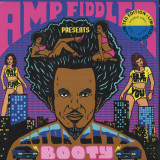
South Street delve into the The Sound Of Detroit from one of its unsung heroes, reissuing Amp Fiddler's 'Motor City Booty' LP on Yellow & Blue vinyl respectively. Coming straight off the D Funk assembly line, it's a full on dance floor affair from Motown to P-Funk, Techno and Neo Soul.
This 12 track album produced by Amp Fiddler & Yam Who? includes the massive 'Soul Fly' sounding like a Mark Ronson production had he been hanging out with George Clinton's Parlet followed by the bonafide P-Funk anthem 'Steppin' both featuring the stunning vocals by the Dames Brown girls.
Amp Fiddler is credited for taking both a young J Dilla and also Q-Tip under his wing teaching them his Akai MPC techniques, setting the path for some of Hip Hop's finest recordings which have defined the shape of things to come.
His musical collaborations & current duties include: Moodymann's musical maestro, keyboard wizard for Theo Parrish's live band, a longstanding Funkadelic member, co-writer for Sly & Robbie, Prince, Maxwell, Jamiroquai & Seal to name a few.
Haga su pedido ahora y le encargaremos el artículo en nuestro proveedor.

Arre! Arre! is the Swedish punk band that during the last decade have
won multiple awards, been booked to festivals such as Roskilde & SXSW and have gotten hand-picked to open for hardcore legends Refused'
On their new LP, the band have maintained their core inspiration from the 90s Riot Grrrl scene, while at the same time broadening their sound to include a wider range of influences - from post- punk and 60's ballads, to James Brown, to the Spice Girls. As usual, the album has a strong underlying theme throughout - this time of motorbikes and female biker gangs, with the band even going to the extreme of recording local bikers driving around the car park of the Studio Sickan
to sample within the tracks. Combined with the other new production quirks such as ABBA- inspired choirs and galloping percussion, 'We Ride The Universe' has turned into a markedly cohesive and unique album for the band, sure to impress fans both new and old. The album is out on PNKSLM Recordings (ShitKid, Les Big Byrd etc.).
debe ser publicado en 15.04.2022

Haga su pedido ahora y le encargaremos el artículo en nuestro proveedor.

First ever Ennio vinyl box set covering his classic Westerns.
Includes an 8 page booklet featuring liner notes on each soundtrack by Italian music journalist, writer and film music expert Claudio Fuiano.
BTF Italy and Light In The Attic present an exceptional collection of Ennio Morricone westerns soundtracks – including classics such as Once Upon A Time In The West , A Fistful of Dollars, The Good, The Bad and The Ugly – all available for the first time ever in a gorgeous colored 10 x LP set!
This box-set is a precious collector’s item that contains ten iconic soundtracks by Ennio Morricone composed for the Italian Western film genre. Morricone’s name has been linked to directors such as Sergio Leone, Giulio Petroni, Tonino Valerii, Sergio Corbucci, Mario Caiano, Alberto De Martino. From these special bonds between music and moving images many masterpieces of film music were born, splendidly functional in films and equally spectacular on record off-screen. In these ten LP’s the listener will have the great honor of listening to exceptional soloists such as Bruno Nicolai at the organ and usual conductor of Ennio Morricone, the choir of Alessandro Alessandroni’s Cantori Moderni, the solo voice by Edda Dell’Orso, the harmonica by Franco De Gemini, Alessandroni’s whistle and guitar, Michele Lacerenza and Nicola Culasso’s trumpets, just to name a few, extraordinary performers who contributed to Morricone’s epic sound for Western. Through the ten records contained here, the listener will be able to travel musically through wild territories where heroic cowboys defend beautiful girls fighting against the villain of the moment.
The box set contains the following LPs:
- LE PISTOLE NON DISCUTONO (Bullets don’t argue) - PER UN PUGNO DI DOLLARI (A Fistful of Dollars) - PER QUALCHE DOLLARO IN PIÙ (For a Few Dollars More) - IL BUONO, IL BRUTTO, IL CATTIVO (The Good, the Bad and the Ugly) - C’ERA UNA VOLTA IL WEST (Once Upon a Time in the West) - TEPEPA - VAMOS A MATAR, COMPAÑEROS (Compañeros) - LA VITA, A VOLTE, È MOLTO DURA, VERO PROVVIDENZA? (Life is Tough, Eh Providence?) - CI RISIAMO, VERO PROVVIDENZA? (Here We Go Again, Eh Providence?) - IL MIO NOME È NESSUNO (My Name is Nobody)
debe ser publicado en 17.12.2021

LP pressed exclusively for National Album Day 2021 on gold vinyl in
single-pocket jacket with custom dust sleeve and digital download
coupon.
Through ‘Titanic Rising’, Weyes Blood, aka Natalie Mering, has
designed her own universe to soulfully navigate life’s mysteries.
Manoeuvring through a space time continuum, she plays the role of
melodic, sometimes melancholic, anthropologist.
Tellingly, Mering classifies ‘Titanic Rising’ - written and recorded during
the first half of 2018, after three albums and years of touring - as The
Kinks meeting WWII or Bob Seger meets Enya. The latter captures the
album’s wilful expansiveness (“You can tell there’s not a guy pulling the
strings in Enya’s studio,” she notes, admiringly). The former relays her
imperative to connect with listeners. “The clarity of Bob Seger is
unmistakable. I’m a big fan of conversational songwriting,” she adds. “I
just try to do that in a way that uses abstract imagery as well.”
The Weyes Blood frontwoman grew up singing in gospel and madrigal
choirs. (Listen closely to ‘Titanic Rising’ and you’ll also hear the jazz of
Hoagy Carmichael mingle with the artful mysticism of Alejandro
Jodorowsky and the monomyth of scholar Joseph Campbell.)
‘Something To Believe’, a confessional that makes judicious use of the
slide guitar, touches on that cosmological upbringing. “Belief is
something all humans need. Shared myths are part of our psychology
and survival,” she says. “Now we have a weird mishmash of capitalism
and movies and science. There have been moments where I felt very
existential and lost.”
As a kid, she filled that void with ‘Titanic’. (Yes, the movie.) “It was
engineered for little girls and had its own mythology,” she explains.
Mering also noticed that the blockbuster romance actually offered a story
about loss born of man’s hubris. “It’s so symbolic that The Titanic would
crash into an iceberg, and now that iceberg is melting, sinking
civilization.” Today, this hubris also extends to the relentless adoption of
technology, at the expense of both happiness and attention spans.
But Weyes Blood isn’t one to stew. Her observations play out in an
ethereal saunter: far more meditative than cynical. To Mering, listening
and thinking are concurrent experiences. “There are complicated
influences mixed in with more relatable nostalgic melodies,” she says.
“In my mind my music feels so big, a true production. I’m not a huge,
popular artist, but I feel like one when I’m in the studio. But it’s never
taking away from the music. I’m just making a bigger space for myself.”
debe ser publicado en 15.10.2021

The 10th anniversary of a milestone in the history of LCD Soundsystem will arrive August 6, when DFA Records partners with Parlophone / Warner Music to celebrate The Long Goodbye: LCD Soundsystem Live At Madison Square Garden; a 5-LP vinyl unabridged recording of LCD Soundsystem’s near four-hour April 2, 2011 show at New York’s Madison Square Garden, and released on 3CD for the very first time.
Produced and mixed by LCD founder and frontman James Murphy, The Long Goodbye is the ultimate audio document of LCD Soundsystem’s legendary — if not quite final — sold-out Madison Square Garden performance.
The Long Goodbye show was the lengthiest, most career-spanning LCD Soundsystem has played to date. The album finds the LCD core live band of Murphy, Pat Mahoney, Nancy Whang, Al Doyle, Gavilán Rayna Russom and Tyler Pope joined by a choir, string and horn sections — plus special guest performances including Win Butler and Regine Chassagne of Arcade Fire, Reggie Watts, the Juan MacLean, Shit Robot, Planningtorock, and Shannon Funchess of Light Asylum.
Haga su pedido ahora y le encargaremos el artículo en nuestro proveedor.

Limited edition gold vinyl edition.
Hamburg's funk adventurers at the top of their game with special guests Ice-T, Charlie Funk, Peter Thomas, Gizelle Smith, Lee Fields, JSwiss & the Mocambo Kidz.
Original press release note (2019):
Carrying blistering funk lines in their fingers and worldly influences in their hearts, the unique and distinctive Mocambo sound is not one to be confused with retro bands trying to recapture an era. Eschewing traditional recording methods, this DIY crew are committed to driving forwards, and 2066 sees them at the height of their powers, broadcasting a call for unity.
After reaching new audiences worldwide and earning critical praise for their two long players on Brooklyn's Big Crown Records in their tropical guise as Bacao Rhythm & Steel Band, the band have reassembled and refocused in their original form, the workhorses behind dozens of 45s on the Mocambo label and beyond. Crossing generations, this album introduces some of the world's youngest funk talent to step up and rub shoulders with soul and rap legends, soul sisters, an elder statesman composer/arranger and a brand new emerging artist out of New York.
As with all Mocambo releases, the two sides of the record have been meticulously sequenced by the
band. Side A welcomes us aboard with joyous instrumental stomper Preaching To The Choir, and a call to build bridges from Mocambo chanteuse and percussionist Nichola Richards, duetting with emerging rap talent, New York MC JSwiss. B-girls and b-boys are called to the dancefloor as Superstrada and Concrete Stardust commence, all buzzing synth lines and relentless drums. New Jersey legend and Big Crown associate Mr Lee Fields is guest of honour for Where Do We Go From Here before a horn workout brings us to a close with Macumba. It's time for a breather.
The B side kicks off with the grand return of the Golden Girl of Funk, Gizelle Smith, a sister who's been busy taking on the world. Composer and presenter Peter Thomas narrates a Return To Space to mark the centenary of the debut of his score to sci-fi show Space Patrol, which first broadcast in 1966. We're back down to Earth and the mean streets for the furious drums and car chase workout of Golden Shadow. Today slows down the pace for a reflective ballad with Nichola front and centre - and here's the next generation: the Mocambo Kidz sing along to their parents' instrumentation for Here We Go, a new kids' block party anthem... with no sleep 'til bedtime. The album closer makes it clear that the Mocambos are nowhere near powering down as Ice T and Charlie F unk bring their A-game for an old school attack which, since you're up bouncing anyway, gives you no excuse not to flip the LP and drop the needle right back on to Side A. Onwards!
A summation of their journey so far and a celebration in anticipation of what's to come, the album is set
to take its place in a legacy of open minded, organically recorded music, showering listeners with the crew's maze of tantalising sounds pulled from funk, afro, hip hop with cinematic composition and storytelling.
Haga su pedido ahora y le encargaremos el artículo en nuestro proveedor.

South Street delve into the The Sound Of Detroit from one of its unsung heroes, reissuing Amp Fiddler's 'Motor City Booty' LP on suitably swanky purple and pink vinyl respectively. Coming straight off the D Funk assembly line, it's a full on dance floor affair from Motown to P-Funk, Techno and Neo Soul.
This 12 track album produced by Amp Fiddler & Yam Who? includes the massive 'Soul Fly' sounding like a Mark Ronson production had he been hanging out with George Clinton's Parlet followed by the bonafide P-Funk anthem 'Steppin' both featuring the stunning vocals by the Dames Brown girls.
Amp Fiddler is credited for taking both a young J Dilla and also Q-Tip under his wing teaching them his Akai MPC techniques, setting the path for some of Hip Hop's finest recordings which have defined the shape of things to come.
His musical collaborations & current duties include: Moodymann's musical maestro, keyboard wizard for Theo Parrish's live band, a longstanding Funkadelic member, co-writer for Sly & Robbie, Prince, Maxwell, Jamiroquai & Seal to name a few.
Haga su pedido ahora y le encargaremos el artículo en nuestro proveedor.
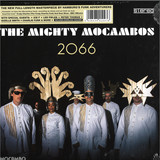
In a world awash with negativity and fear, you are invited to climb aboard the Mocambo mothership where all colours and creeds are celebrated. The Mighty Mocambos have returned - stronger, tighter and hungrier than ever.
Carrying blistering funk lines in their fingers and worldly influences in their hearts, the unique and distinctive Mocambo sound is not one to be confused with retro bands trying to recapture an era. Eschewing traditional recording methods, this DIY crew are
committed to driving forwards, and 2066 sees them at the height of their powers, broadcasting a call for unity.
After reaching new audiences worldwide and earning critical praise for their two long players on Brooklyn's Big Crown Records in their tropical guise as Bacao Rhythm & Steel Band, the band have reassembled and refocused in their original form, the workhorses behind dozens of 45s on the Mocambo label and beyond. Crossing generations, this album introduces some of the world's youngest funk talent to step up and rub shoulders with soul and rap legends, soul sisters, an elder statesman composer/arranger and a brand new emerging artist out of New York.
___ As with all Mocambo releases, the two sides of the record have been meticulously sequenced by the
band. Side A welcomes us aboard with joyous instrumental stomper Preaching To The Choir, and a call to build bridges from Mocambo chanteuse and percussionist Nichola Richards, duetting with emerging raptalent,NewYorkMCJSwiss.B-girlsandb-boysarecalledtothedancefloorasS uperstradaand Concrete Stardust commence, all buzzing synth lines and relentless drums. New Jersey legend and Big Crown associate Mr Lee Fields is guest of honour for Where Do We Go From Here before a horn workout brings us to a close with Macumba. It's time for a breather.
The B side kicks off with the grand return of the Golden Girl of Funk, Gizelle Smith, a sister who's been busy taking on the world. Composer and presenter Peter Thomas narrates a Return To Space to mark the centenary of the debut of his score to sci-fi show Space Patrol, which first broadcast in 1966. We're back down to Earth and the mean streets for the furious drums and car chase workout of Golden Shadow. Today slows down the pace for a reflective ballad with Nichola front and centre - and here's the next generation: the Mocambo Kidz sing along to their parents' instrumentation for Here We Go, a new kids' block party anthem... with no sleep 'til bedtime. The album closer makes it clear that the Mocambos are nowhere near powering down as Ice T and Charlie F unk bring their A-game for an old school attack which, since you're up bouncing anyway, gives you no excuse not to flip the LP and drop the needle right back on to Side A. Onwards!
___ A summation of their journey so far and a celebration in anticipation of what's to come, the album is set
to take its place in a legacy of open minded, organically recorded music, showering listeners with the crew's maze of tantalising sounds pulled from funk, Afro, hip hop with cinematic composition and storytelling.
Agent J
l 12 Bounce That Ass (RMX) feat. Ice-T & Charlie Funk
Haga su pedido ahora y le encargaremos el artículo en nuestro proveedor.

Originally released digitally on Luke Solomon & Derrick Carter's Classic Music Company last summer; Girls of the Internet's deep-house-dub-techno-afro ballad 'When U Go' is now being pressed up to vinyl on RAMP Recordings. Since it's release, 'When U Go' has been burning up some of the more discerning dancefloors worldwide, with club support from DJ's as diverse as Mark Farina, Stacey Pullen, Eli Escobar, Oliver $, François K, Soul Clap, Roger Sanchez, Carl Craig, Booker T, Serverino, Riva Star, Doc Martin, Karizma, Marco Carola, Tensnake & Mousse T. Peckham's finest pervayers of Deep House, Bradley Zero approved duo FYI Chris, turn in an exclusive dubby West Coast-vibed remix of the track available only on this vinyl.
The B side is a brand new track from Girls of the Internet - 'Running' featuring Nattlie Maddix, of the House Gospel Choir. Mixing live instruments with synths and drum machines, 'Running' is a soulful yet driving disco tinged deep house track. To finish off this massive package, Local Action's Finn delivers a genre-straddling remix of 'Running'.
Haga su pedido ahora y le encargaremos el artículo en nuestro proveedor.
