
No en stock
Haga su pedido ahora y le encargaremos el artículo en nuestro proveedor.
Ültimo hace: 4 Años
Haga su pedido ahora y le encargaremos el artículo en nuestro proveedor.

Kaleidoscope is the fourth album (and third solo piano album) by French- Georgian concert pianist Khatia Buniatishvili. The album features a unique combination of challenging pieces in which she shows her true virtuosic playing style. Some of the pieces taken on by Buniatishvili on this record are the beloved “Pictures at an Exhibition” by Moderst Mussorgsky on side A, as well as Ravel’s “La Valse” and Stravinsky’s “Petruschka”. Available on vinyl for the very first time. The two LP’s are housed in a heavyweight sleeve with gloss laminate finish. The package includes a 4-page insert. This edition is a feast for both the ears and the eyes.
debe ser publicado en 26.02.2021

After a first track on last year's Paerels II compilation, the Brussels based producer Lawrence Le Doux returns to Nous'klaer Audio with a full twelve inch. Five tracks combining Lawrence's signature ambient excursions in the opening and closing act, with three fluorescent rhythmic tracks in the middle. An effervescent record full of brilliant textures and bubbling drums, in anticipation of a brighter year.
Haga su pedido ahora y le encargaremos el artículo en nuestro proveedor.

Culminating at 430m of altitude, mount Aïdour has been looking over the city of Oran for centuries. Legendary tales and myths are born in this place that have been inspiring writers through generations. It is there that the seeds and the roots of this record were planted, inspiring me to tell a story as well. 4 tracks about 4 destinations through a country of splendor. From North to South, East to West, from one century to another.Based on local field recordings associated with modern machines, this is the continuation of the legends started generations ago.
Bab is a member of French collectives 404 and Pardonnez Nous. He's currently making a documentary about Algerian Raï music which led him to visit the country multiple times recently and inspired him to do this dark and haunted EP, reminiscing of Muslimgauze.
Haga su pedido ahora y le encargaremos el artículo en nuestro proveedor.

Born in Croydon, UK in 1960 and working in Switzerland for decades, Michal Turtle has led a storied career as a composer, arranger, technician and producer, consistently aligned with some
of the most exciting bands and projects within the realms of pop and experimental music. A figure as masterful in the realm of expansive ambient recordings as advertising jingles, it’s only in recent
years that Michal’s solo productions have gained acclaim and a cult following that continues to grow ever wider.
Turtle made a long-awaited return earlier in 2020 with the extended ‘On a Canvas Lived a Baby’, a one-sided twelve of new material released on Planisphere Editorial. Now, the Basel based label
invites a diverse and international cross-section of electronic musicians to reinterpret the artist’s back-catalogue, each delivering a thoughtful remix driven by the same sense of curiosity,
exploration and genre-blurring that Turtle himself helped pioneer. Each track on the remixes collection was originally recorded between 1980 and 1985, in between Turtle’s regular tours with established bands. Opening the collection, Laurel Halo adopts her LH alias for a textural and tripping revisit to ‘Phantoms of Dreamland’, transporting the haunting original to a hyper-detailed alternate dimension. Zoning back in, Neue Grafik finds typically eclectic form with ‘Men in Green’, turning the dials and blending ideas as if tuning between the emerging musical scenes that defined Turtle’s early-eighties life in Camden, London. In stark contrast, avant-garde polymath Felicia
Atkinson designs a ‘Fennel and Moon’ version, weaving between earthy field recordings and an aching piano line, conjuring an almost ritualistic atmosphere, far from the city. Radical musical turns continue to define the collection as son of Detroit, Jimmy Edgar takes
‘Rainwater Fijit’ down a dark, damp tunnel, expanding on the pitter patter of Turtle’s more outlandish studio experiments, blending vocal experiments with fresh funk. Colombian experimentalist Lucrecia Dalt pulls further bizarre shapes from a patchwork of samples, a heaving,
gasping industrial shuffle, before French producer D.K. returns a stronger rhythm, both building on Turtle’s lovingly naive tributes to the legacy of sample culture and his trusty ARP2600.
Ostgut Ton mainstay and Panorama Bar resident Nick Höppner proceeds to sensitively rewire ‘Maid Of The Mist’ into a blossoming, introspective celebration of melody and ambience, an
almost weightless experience that lends itself well as a breather before Luca Duran’s analogue, acid-tinged take on Spookie Boogie takes Turtle’s esoteric touches back into the direction of the
funk and italo records at the heart of his initial inspiration.
The Remixes final chapter continues to expand in distinct and wide-reaching sonic directions. London’s Object Blue seems to slow time itself across her sublime interpretation of ‘Ball Of Fire’.
Initially Turtle’s tribute to Howard Hawks 1941 film classic and the legacy of old Hollywood, worlds further collide into rolling, weightless bliss.
Fellow Swiss citizen Mehmet Aslan stirs an enchanting, percussive mystery that unfolds with great
pleasure on El Teb, while Parco Palaz conjures not one but two radically different remixes of ‘Are
You Psychic?’, demonstrating both their imaginative nous, as well as the depth of Turtle’s legacy.
Finally, an irresistible vocal contribution from Oso Leone adds even further colour and joy to ‘Maid
of The Mist’, sending off this ambitious collection on a transformative, dream-pop high.
With further details set to be revealed, there is an ongoing development focused around the
accompanying art and visuals. The Peruvian born and now Amsterdam based graphic designer
Jonathan Castro leads the art direction, along with visual artist Chris Harnan. Both artists look to
explore the intersection between sound, imagery and its reorientation, exhibited through the
musical contributors and visual translation.
“I am happy and honoured to have been the spark for this remarkable compilation.
The magnificent work done by this collection of very special people speaks for itself, so listen and
be transported. It has been half a lifetime since my original tracks were written, and I am gratified
to know that they are somehow still relevant enough to be reworked and reinvented.”
Haga su pedido ahora y le encargaremos el artículo en nuestro proveedor.

After a decade gap, northern soul legend Dean Parrish has once more hooked up with Acid Jazz Records to release a new single. ‘It’s Time - Purple Mountain Majesty’ is a towering slice of psychedelic soul, that references the work of Norman Whitfield and like those records, comes with a powerful message.
Known predominately in the UK as ‘the Northern Soul star that sold over one million records’, Dean is an esoteric musician who has worked with the likes of Jimi Hendrix, Santana, Herbie Mann and Bob Marley. All whilst following a career as an actor too, appearing in hit US TV series The Sopranos
The iconic status of his hit records such as I’m On My Way, Tell Her & Bricks, Broken Bottles and Sticks has meant that Dean has always been welcome in the UK. In the noughties, he released records with Acid Jazz and was the subject of a Radio 2 documentary by the late and much missed Pete Mitchell. Now 79, Dean has not stopped writing & recording. This latest single presents us with a stunning return to form.
Haga su pedido ahora y le encargaremos el artículo en nuestro proveedor.

Hardfloor sévère, gros gras kick. Doodax tape fort avec ses deux tracks puissantes qui font de la face A de ce disque un vrai petit bijoux qui cache un acidcore lointain, comme une teuf perdue dans les champs là bas, et on entend très très fort le bruit de nos pas qui nous y guident....
Avec la face B on sombre dans une mental acide ciselée à la perfection. pas un poil ne dépasse mais ça reste libre dans la compos, avec des structures naturelles, conventionnelles en apparence car toujours au rendez-vous, mais en vrai, ça reste assez peu formaté.
un très bon disque de passionné, bien pressé chez Vinyle de paris.
Classe.
debe ser publicado en 31.01.2021

Es ist das größte klassische Musikereignis der Welt, wird in mehr als 90 Länder übertragen und in Deutschland von mehr als 4 Millionen Menschen im Fernsehen und im Rundfunk verfolgt.Die Wiener Philharmoniker, für dieses Repertoire unstrittig das beste Orchester der Welt, präsentieren zum Jahreswechsel wieder ein heiteres und zugleich besinnliches Programm mit Walzern, Tänzen und Polkas aus dem reichen Repertoire der Johann Strauss-Dynastie und deren Zeitgenossen. Das Orchester möchte mit diesem Konzert allen Menschen einen Gruß im Geiste von Hoffnung, Freundschaft und Frieden übermitteln.Im Herzen von Wien, in einem der klangbesten und schönsten Klassik-Säle der Welt interpretiert, werden die Wiener Philharmoniker das Klassik-Jahr eröffnen, dieses Mal unter der Leitung des berühmten und exzellenten italienischen Dirigenten Riccardo Muti, dessen enge musikalische Zusammenarbeit mit dem Orchester bereits Jahrzehnte umspannt. Muti hat im Verlaufe seiner außerordentlichen Karriere die prominentesten Orchester der Welt, wie die Berliner Philharmoniker, das Symphonieorchester des Bayerischen Rundfunks, die New Yorker Philharmoniker und das Orchestre National de France dirigiert, hat aber zu den Wiener Philharmonikern ein besonders inniges Verhältnis. Er wird das interessante Programm des Neujahrskonzertes 2021 sicherlich mit italienischer "Grandezza" bereichern. Neben unsterblichen Hits wie dem "Frühlingsstimmen-Walzer" von Johann Strauss, dem "Kaiserwalzer", "An der schönen blauen Donau" und dem "Radetzky-Marsch", gibt es 2021 auch wieder zahlreiche Premieren beim Neujahrskonzert von entdeckenswerten Walzern und Polkas u.a. von Franz von Suppé, Carl Zeller, Carl Millöcker, Karl Komzák, Josef Strauss und Johann Strauss Vater.Ein eleganter, beschwingter Gute-Laune-Auftakt 2021 mit Klassik der Extraklasse!
Haga su pedido ahora y le encargaremos el artículo en nuestro proveedor.

Ever since his early teenager days Kareem El Morr has been working on tracks in the studio. Techno was and has always been the basis. Dirty, raw and in a positive way escalating are his sets, which he has been playing since the mid of the noughties. Not being limited when playing in the clubs or producing in the studio makes him undisputedly one of the most versatile artists in Munich. How multi-faceted he is, is now being shown on his latest RFR release.
“Supersonic” throws the gate open wide to electroid sceneries. Not a few will be reminded of I-F’s “Playstation” by the first sounds of the decently wobbeling bassline. Sick bassline variations, breaky drum parts and a pinch of Neo-Goa – any questions? „Quake“ portrays Morr’s infinite and unconditional love to Techno. Reminiscences of Detroit’s High Tech Jazz are floating relentlessly through widely varied rooms, which we absolutely adore since the Basic Channel era.
On the flip Morr expands his driving functionality by a melodic component. “Blaze” kicks in with a lot of delay, distorted bells and Highspeed drums. This ain’t no dance, this is a ceremony! „Trance with Benefits“ marks the ending of the “Supersonic EP”. Pictures of wafts of mist, whose intensity is being ruptured by the first rays of sunlight penetrating the club on an early Sunday morning. Happy people lying in each other’s arms, unified by the principle that Techno would be nothing without Trance.
Haga su pedido ahora y le encargaremos el artículo en nuestro proveedor.

Niscitam is the debut album by Australian musician and songwriter Blake Scott. Better known as a member of The Peep Tempel, Blake is revered for his character driven lyrics and pointed songwriting, evident across the band’s three critically acclaimed albums.
Written in the months leading up to the birth of his first child and during a period of extended sobriety, Niscitam is a recollection and reflection on dreams, memories and the pressures of everyday existence. Blake partnered with multiinstrumentalist and engineer John Lee to produce the album at Phaedra Studios in Melbourne with musicians Jacey Ashton and Nick Finch.
It remains voluminous and bold in arrangement, whilst taking a more introspective path lyrically. On one hand, the album explores the fear, anxiety, and questions of adequacy ahead of pending parenthood. On the other, it celebrates health & mobility, love & possibility and is an attempt by the artist to reconcile with his past, as well as cultivating a positive and nourishing path forward. The result is an astonishing debut album.
debe ser publicado en 22.01.2021

2023 Restock
Within the elusive confines of this film awaits an unreleased album that defies categorisation by a musician who in a different time and space would be revered amongst some of the most important exponents of progressive rock, dark ambient, Krautrock and pioneering synthesiser composition - not to mention sound design and art-house film scores. As a protégé of François Bayle and Luc Ferrari who had studied classical music before immersing himself in found-sound manipulation and oscillators, Alain Pierre quickly became an enthusiastic go-to man for sound sculpture and technical studio proficiency in Belgium’s small film industry.
To the many generations of dedicated fans of the visual work of Philippe Druillet it might seem virtually impossible to adequately “score” the alien, futurist landscapes of the man who many called the “space architect” (on account of his space age reductions of Gothic cathedrals, Art Nouveau, and Indian temples), but once you have heard the sonic reactions of Alain Pierre on this the first-ever dedicated Druillet documentary, Ô Sidarta, complete with his own equivalent sound palette, it will be difficult to “hear” Druillet’s world via any other composer. Despite Druillet’s truly incredible record sleeve designs for projects like cosmic disco ensemble Black Sun, concept albums such as Attention by Jean-Pierre Mirouze (composer of Le Mariage Collectif), Parisian metal bands like Sortilège, gatefold portraits of Jimi Hendrix, later period albums by William Sheller and most relevantly on albums by Igor Wakhévitch (Docteur Faust, 1971) as well as separate releases by both Richard Pinhas and Georges Grünblatt (both from the cosmic prog outfit Heldon), it is fair to say that this criminally unreleased album by Alain Pierre would conjure up the closest synergy between sound and vision that either artist would come close to.
The almost twelve of continuous music that Alain Pierre supplied for Ô Sidarta in 1974 fortunately appears in its entirety, unedited, as it does here for the first time ever away from its original broadcasts. Broadcast on Belgian and French TV that autumn, the film received a warm reception from Druillet fans, prospective film producers and space rock fans lucky enough to catch the short feature.
Throughout his career Alain’s commitment to conceptual music excelled within both cinematic realms as well as with the live arena. Never shying away from the constraints of transporting heavy synthesiser technolog and unpredictable analogue equipment to public spaces, Alain took his self-initiated “live” work very seriously. It was within his lesser-documented performances that you would find the closest sound to the music on Ô Sidarta, proving that the Druillet collaboration was naturalistic and conceptually close to Alain’s personal stylistic agenda. A rare recording of a one-off concert at the Université libre de Bruxelles in October 1976 reveals a very similar set of movements and soundscapes found on Ô Sidarta. This rare artefact has been included on the second side of this record under its original title Notions de physique intérieure (Notions Of Interior Physics) and stands as a perfect companion piece to Ô Sidarta - complete with a very similar “kit list” including the welcome addition of an Arp Sequencer, a Korg Vocoder and a Theremin (a back line whose total would far surpass any stationary studio of the era never mind a live show!).
By looking back at his original composition for one of his very first solo soundtrack commissions, Ô Sidarta, you can hear that back in 1974 Alain had already successfully managed to combine more unlikely musical influences, experimental techniques, and previously unheard soundscapes and studio tricks in to one twelve-minute score than most musicians fail to cram in to a whole discography. But still there is so much music yet to be discovered and Ô Sidarta is just the tip of the iceberg in the middle of a cosmic sea. Much like a character from one of Philippe Druillet’s books, Alain Pierre is a rogue pilot, steering his own ship in to the unknown, uncharted, unnoticed and quite unbelievable.
debe ser publicado en 11.12.2020

Otik joins the Shall Not Fade family serving up five killer jams for their new ‘Basement Tracks’ series.
London based DJ // Producer Otik has been putting out some eclectic records over the past few years, including stand out twelves on Keysound, Nous & DEXT, amongst others. His latest outing sees him share some of his finest work to date, dark, moody synths dance gracefully with heavy drum sequences and weight basslines on ‘Zero-Sum Game’ EP.
Haga su pedido ahora y le encargaremos el artículo en nuestro proveedor.

The fifth record on New York Trax IMPORTS was produced by Le Talium who is a legend to any connoisseur of the obscure fringes of hard French electronics. “Inalterable” EP, as profound as it is abrasive, is a journey from otherworldly glitchy soundscapes all the way to a relentless hardcore maelstrom.
Haga su pedido ahora y le encargaremos el artículo en nuestro proveedor.

Take Five is probably one of the jazz titles that is best-known to a mass audience. It was composed by Paul Desmond and it appeared on the album Time Out by the Dave Brubeck Quartet.
Pianist Brubeck had studied veterinary medicine before turning to music, and in 1949 he formed an octet, and then in 1951 his famous quartet with Paul Desmond playing saxophone. He signed with Columbia in 1954 and built up an excellent reputation, but in 1959 he became famous around the globe thanks to two titles, Take Five and Blue Rondo à la Turk.
In France, the singer Claude Nougaro made the quartet’s work popular when he wrote the French lyrics for versions of Three to get ready (adapted as Le jazz et la Java) and Blue Rondo a la Turk (with the title A bout de souffle). Dave Brubeck was “quiet man”, far from the legends and excess often linked with jazz: he would spend six decades in a world where life, and jazz, was “cool.”
Haga su pedido ahora y le encargaremos el artículo en nuestro proveedor.

Le nouvel album de Pascal Comelade, dont la réalisation court sur 3 ans , expose avec frénésie ses éternelles obsessions pour la Muzak dégénérée, la répétition combinée aux rhizomes, les guitares bruitistes,les trompettes en plastique, les boites de conserves,les pianos désaccordés (qui sonnent comme un orchestre),l’auto-réduction de jouets sonores, les orgues à piles et à distorsion intégrée,les déviations chromatiques, la mélodie degenre, le Riff conducteur et le grand trémolométaphysique. On y retrouve entre autre Richard Pinhas (pionnier de l’électronique en France et compagnon de route depuis 1974, des figures historiques du Bel Canto Orquestra, et pour la 1ère fois en 45 ans de production : la présence d’un quatuor à cordes et d’ un « assez long solo de piano ».
Pascal Comelade has been working for 3 years to achieve his brand new album. Not only it features all of his musical obsessions & trademarks , some long time partners and friends such as Richard Pinhas & members of his former backing band Bel Canto Orquestra but for the very time in 45 years, ladies and gentlemen there is “quite a long piano solo” and a string quartet in the album.
Haga su pedido ahora y le encargaremos el artículo en nuestro proveedor.

Nous'klaer Audio is proud to present the new concept album by Koraal: La Casa del Volcan. A voyage of nine tracks echoing the spectacular landscape of Lanzarote, from damp, fathomless caves to deserted planes of volcanic rock, from a solitary palm tree to a fertile oasis. Intense, spacial atmospheres and reverberating drums combined with dark textures and dubby rhythms. All written and produced in chronological order in November 2019 by Oriol Riverola, in a three-night session on the island. The album cover comes in eight different versions with pictures taken by Oriol during his stay there. Heavy weight sleeve and vinyl.
Haga su pedido ahora y le encargaremos el artículo en nuestro proveedor.

Part 2 of the compilation series sees the journey evolving, this time with a more upbeat affair. Not much has changed in terms of selection, as we continue to draw inspiration from the wider world, we bring to you the sounds of artists originating from Argentina, Japan, Netherlands, Portugal, Brazil and the UK. Beyond the restrictions of this physical realm, let you ears nourish the mind & soul as they traverse the world for you…
Argentinian resident Silvio Astier introduces us to the record with the aptly named ’Santa Maria del Buen Ayre’ - the former name of his hometown Buenos Aires. Easing us in with a wonderfully atmospheric piece, carefully mixing simple percussion patterns with his own well-crafted luscious guitar work.
Next up, we have Japan native/Berlin resident Kotoe continuing the flow of downtempo sounds that slowly settle us into this compilation. ‘Ondami’ conjures up images of a distant dream… the floating vocals and echoing chimes capable of drifting the listener to a place of blissful escapism.
The tempo is turned up a notch for the last track of side A, provided by UK born folklorica maestro El Buho. Renowned for his love of merging the traditional and natural sounds of South America with modern electronica, ’Swifts’ certainly ticks those boxes with an added touch of dance-floor-ready groove.
Portuguese native duo Oxhala continue to push the sounds on the flip side into heavier territory. ’Earth Spirit’ builds from an amalgamation of stomping tribal drums, hypnotically playful keys and distorted vocals, channeling the listener to our innate primitive spirit - this is one for the body & mind.
Dutch party-starter Mytron’s contribution ’Oil’ provides the fuel for the party as he turns to fast-paced conga rhythms, cowbells and elephant trumpets. These exotic sounds bounce along with ever-persistent energy to create the soundtrack to a hedonistic carnivalesque celebration of all things wild.
If you haven’t already peaked with the previous offering, Brazilian native El Peche wraps things up nicely with track ‘Rastro De Fogo’ (ft. Mari Branco). Tripped out vocals phase in and out as the track is dominated by a tight bassline before delicate keys bring in a softer element to finish.
Haga su pedido ahora y le encargaremos el artículo en nuestro proveedor.

The 80s owed everything to the punk revolution ... and betrayed it time and again.
ln 76-77, the incredible explosion of English-speaking bands focused the energies of a whole generation of Western youth - rebels ready to pick up a guitar and use it like a weapon. Yet more than punk music itself, it was the creative burst it triggered that radically shaped 80s pop and heralded an unending stream of inspired performers.
Although we often speak of the British and American golden age of post-punk from 78 to 84, with artists that included Talking Heads, Joy Division, PIL and Devo, France (together with Switzerland and Belgium) joined the movement too. Today, on a new album, the group Nouvelle Vague have paid tribute to this sumptuous "Frenchy" period clothed in the nihilism of punk, along with bitterness fuelled by the economic crisis and, paradoxically, the bewitching spirit of pop.
lts title, Couleurs sur Paris (Colours on Paris) is based on both a famous postcard collection and Oberkampf's 1981 punk anthem, and reflects the period, which oscillated between elation and despair. Written by artists sometimes known as "the modern young people" and including faux naïf electropop nursery rhymes by Elli & Jacno ("Anne cherchait l'amour", 1979), Lio ("Amoureux solitaires" , 1980)
and Etienne Daho ("Week-end à Rome", 1984), along with Lili Drop ("Sur ma mob", 1979) and Taxi Girl ("Je suis déjà parti", 1986), the songs clearly express the hopes and disappointments of the day.
The sense of melancholy suggested by the disenchanted lyrics of "Déréglée" - performed in 1977 by Marie-France, an icon of Paris nightlife - is even more noticeable on the 1981 hit by The Civils, who cynically sang, "Tonight, they're dying in Chad, but l'm buying my dream Walkman" before taking it to the chorus: "The economic crisis is fantastic, decadence is the right feel".
The punk shockwave con also be felt in the music of bands who radically shaped French culture and song. Like Rouen, with Les Dogs ("Sandy, Sandy", 1982), every provincial town and city in France began to produce bands at the end of the 70s and the start of the 80s. Wunderbach's 1983 punk pamphlet "Oublions l'Amérique" was a foretaste of what is now called alternative punk, a genre that won acclaim in 1988 with Mano Negra's "Mala Vida". Indochine, French pop legends for the last thirty years, also encouraged the trend in the summer of 1983 with "L'aventurier", after a first single brimming with the spirit of rebellion, "Dizzidence Politik".
Rita Mitsouko, the duo that emerged from the underground Parisian punk scene of the late 70s, rocketed to stardom in 1984 with "Marcia Baïla". Equally baroque, TC Matic - the first band fronted by Belgian singer Arno - released an ironic, political underground hit in 1983: "Putain, putain". Other artists fuelled a post-punk movement that explored the romanticism of machines and the darkness of new wave, including the cult, much-neglected duo from Nancy, Kas Product ("So Young but so Cold", 1982) and Switzerland's Stephan Eicher, whose "Two People ln A Room" (1985) followed on from "Eisbaer", a hit in a more underground style written with Grauzone in 1981. However, the genre's most influential practitioners were certainly Noir Désir. From their first single in 1987 ("Où veux-tu qu' je r'garde?"), they won mainstream success with their unique fusion of 80s gloom and power rock. Beyond from the meteoric success of Bordeaux's Gamine ("Voilà les anges", 1988) and the subversive spirit of Jad Wio ("Ophélie", 1989), French post-punk reached its climax with the success of Noir Désir, Rita Mitsouko, Stephan Eicher and Manu Chao, whose albums reigned supreme in the 90s French charts. From the underground scene to gold records: the eternal story of pop.
Haga su pedido ahora y le encargaremos el artículo en nuestro proveedor.

Having previously brought together world-renowned Theremin soloist Carolina Eyck and electronic producer Eversines for a specially commissioned collaborative mini album, yeyeh founder Pieter Jansen has now conjured up another unlikely but inspired joint album, this time featuring award-winning free-jazz vocalist Greetje Bijma and leftfield house, techno and ambient producer Oceanic.
The project has its roots in a chance meeting between Jansen and Bijma, a legendary figure on the Dutch jazz scene who in 1990 became the first woman to win the country’s top jazz accolade, the VPRO/Boy Edgar award. Apart from having previously worked with the likes of Anna Homler (aka Breadwoman), Jasper van ’t Hof, Han Bennink, Louis Andriessen and Willem Breuker and her own solo projects, she’s in a league of her own.
Jansen is a big fan of Bijma’s 1996 heavily electronic collaboration with Jasper van’t Hof and Pierre Favre, Freezing Screens, and was with the friend who first introduced him to it when he bumped into Bijma.
Excited to meet someone who had made one of his favourite records, Jansen took the opportunity to ask Bijma if she would be interested in working with young electronic music producers. To Jansen’s delight, Bijma quickly agreed.
Weeks later, Bijma stepped into the studio with Oceanic, a rising star of the Dutch electronic underground whose releases as Oceanic for Nous’klaer Audio and BAKK Plafond revolve around mechanical rhythms, opaque ambient textures, minimalist melodic movements and effervescent electronics. The pair quickly connected on an emotional and musical level, with Bijma taking her cues from Oceanic’s electronic sounds and rhythms, and Oceanic drawing inspiration from Bijma’s dexterous, mind- bending and otherworldly vocalizations.
After two hugely productive days, the cross-generational duo had completed a couple of mesmerizing songs – breathlessly haunting album opener “Swallow a Party” and chilly ambient closer “A Window Drifting” – and recorded several hours or improvisations that Oceanic later edited, layered-up and re-modelled.
The results are little less than spellbinding. The range and versatility of Bijma’s vocalizations is breathtaking, while Oceanic’s music – which cleverly incorporates the free-jazz singer’s vocal notes, tones and proclamations – swings between becalmed beauty and breathless intensity.
Some of the set’s most striking moments are those where Oceanic re-contextualizes Bijma’s varied vocal sounds with the dancefloor in mind. On the pulsating “Technicolour Memories”, up-tempo “Step Snakes” and hypnotic “Never Done”, Bijma’s scat outbursts not only ride Oceanic’s rhythms, but also form part of the densely layered percussion tracks beneath.
Like the release’s more downtempo and ethereal moments, these hybrid organic- synthetic compositions defy easy categorization, offering a unique brand of alien electronic/acoustic musical fusion that lingers long in the memory.
Haga su pedido ahora y le encargaremos el artículo en nuestro proveedor.
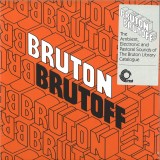
Rare musical magic from the Bruton library catalogue – ambient, spacey, pastoral and electronic. Music by John Cameron, Alan Hawkshaw, Fran-cis Monkman, Brian Bennett and more – all total masters of the scene. All very cool. All very now. All will sell very fast.
Over the last three decades Jonny Trunk has collected and written about library music. But he’s never had a great deal of luck with the Bruton catalogue. By this he means that he’s never stumbled across a massive stash, or lucked-out buying a huge run for practically nothing –that’s the kind of thing that used to happen in the 1990s and the early noughties if you were out there looking hard for library music. But he did manage to get about 25 in one hit about 20 years ago when the BBC shut down their “TV Training Department” near Lime Grove and also when a box of Brutons ended up being dumped at a hospital radio, and they didn’t want the records, so Jonny got a call.
There are lots of Bruton albums in existence – over 330 LPs in the vinyl catalogue, issued between 1978 and 1985. That’s a lot of music to wade through if you are looking for sublime modern day sounds. For many years now the “trophies” from the Bruton catalogue have been the beat or action driven LPs – the two Drama Montage albums (BRJ2 and BRJ8) have always been the big hitters, and others such as High Adventure (BRK2) too.
But Jonny has always found himself drawn to the lime green LPs, the pastoral, peaceful albums (The BRDs), which were full of the kind of gentle, lovely music that would turn up in Take Hart as Tony was paint-ing a woodpecker or a badger or an Autumn tree. The other Brutons he likes are the orange ones (The BRIs) simply because they are full of ex-perimental futuristic electronics and would remind him of 1980s ITV backgrounds. This LP series includes Brian Bennett’s cosmic classic Fantasia (BRI 10). Jonny has been knows to refer to this style of library music as “Krypton Factor library”, because it’s exactly what that strange but successful 1980s TV quiz show sounded like.
In recent years as interest in library music has expanded, we’ve watched
the price of a handful of Brutons really going through the roof - not the just the action and drama ones, but the more esoteric and experimental LPs too – like the BRDs and the BRIs. Jonny gets the vibe that people fi-nally want to hear this other more interesting and experimental side of the Bruton catalogue. So what better time than now to put together a compilation of such sublime period sounds.
Not only does this album bring together a set of fabulous cues that would cost the average man in the street a month’s wages (if the origi-nals were all wanted and if you could even track them all down), but it also chops out the need to listen to other tracks on library albums that are nowhere near as good.
The cues here all date from between 1978 and 1984. They come from the BRD, BRI, BRH, BRJ, BRM, BRR and BRs catalogues.
The composers are all legends within the genre, and here, were doing what great library composers do best – fulfilling a brief and utilising modern studio equipment to both commercial and beguiling effect.
Haga su pedido ahora y le encargaremos el artículo en nuestro proveedor.

1988: Six years after entering the music scene, and just a few months after the release of the teen, 80s earworm, “Bonne bonne humeur ce matin” by Tristan, the producer and arranger, Michel Bassignani, recorded “Tu me tues” in Belgium. Dissatisfied with the result, Michel went back to the drawing board at Waldbery Studios in Paris recording all instrumentals (except sax). After hearing his new work, Dominique, a high school pal, proposed to sing for Bassignani. Dominique's stage name became Maureen, and in addition to the single and extended versions, the duo recorded a “Dance mix”. We asked Jkriv to express is talent to produce a new version of this classic music track. Pardonnez-nous, but check it out!
Haga su pedido ahora y le encargaremos el artículo en nuestro proveedor.

Avant-garde percussionist, singer, self-taught trumpet player, composer and author,
Edmony Krater, since the late 1970s has been a go to reference for French Caribbean music and all things Gwakasonné.
This Guadelopean great had been somewhat quiet since the mid 80s, however in 2019, after the recording of a live show for Cult Berlin club night, African Acid Is The Future that received a release via The Vinyl Factory, his light was relit.
Prior to this, in 2015, along with Diggers Digest, Paris based Heavenly Sweetness reissued the highly sought after 1988 album, ‘Ti Jan Pou Velo’ and Edmony began to stir up rumours of new material coming.
2018 saw his first foray into new recordings, Heavenly Sweetness released ‘An Ka Sonjé’, a record garnishing praise from Pan African Music, and he now readies his second for the label with, ‘J’ai Traversé La Mer’ (I’ve Crossed The Sea)
Like the hundreds of thousands before him, Edmony Krater also crossed the sea. Pulled from Africa, caught up in the violent and absurd logic of triangular trade. Slaves were forced to America, the Caribbean and Europe, where many descendants have since become famous writers, poets, leaders, athletes and of course, musicians.
Haga su pedido ahora y le encargaremos el artículo en nuestro proveedor.

Acoustic Resistance ist ein Projekt, das von den Musikern Julien Decoret (Joon Moon, Nouvelle Vague) und Julien Boyé (Gush, Nouvelle Vague) ins Leben gerufen wurde, wobei sie die riesige Instrumentensammlung nutzen, die sie auf ihren Reisen im Laufe der Jahre zusammengetragen haben. Die Band kreiert rhythmische, hypnotische Tanzmusik, die in ihrem Stil und ihrer Form an elektronische Musik anknüpft und gleichzeitig einen kritischen Blick auf die moderne Welt wirft.
Haga su pedido ahora y le encargaremos el artículo en nuestro proveedor.

L’Escalier des Aveugles, or The Stairway of the Blind, was commissioned in November 1990 by Spanish National Radio (Radio Nacional de España). Asked for a piece to premiere as part of the European Day of Music, Luc Ferrari returned with a radiophonic concept that organised his anecdotal music into montage form, sequencing short, elusive narratives in a successive way.
The completed composition is formed of thirteen chapters containing a mixture of environmental and synthesised sound, commentary, chatter, and encounters with people and places. Each focuses on a small event within this playbook, and Ferrari notes that each “in addition to being a realistic photograph, will be the subject of a ‘setting to music’: fragments of voice and atmosphere will be sampled and will produce musical matter or a ‘song’.”
The sonic language of Madrid forms the setting to which Ferrari lays out the persistent theme of the piece, that of the composer being guided throughout the city by a young woman. Using a game-like structure (liners for this edition include Ferrari’s “Regles de Jeu”, or “Rules of the Game” which act as a script or score to the piece) the motivation is posed: imagine that one day you are told “I know a place in Madrid that sounds amazing (or bizarre)”, to which you reply “Let’s go to it together.” The recordings toy with the relationships between guide and tourist, translator, director and actress, and masculine and feminine that emerge as Ferrari and the actresses follow this action, documenting the shared experience and connections they make as they visit these places.
Six actresses guide Ferrari (and the listener) through locations simultaneously ordinary and sonically rich: the metro; the El Corte Inglés department store where we hear the gossip from changing rooms set against music emanating from the PA; vagabonds declaiming their political stance in the Conde de Barajas plaza; interactions buying apples in a market; the reverberant and spacious halls of the Prado Museum where one actress gives a moving description of her favourite painting - Goya’s The 3rd of May 1808.
Ferrari replies in French to their comments in Spanish, and there are several self-referential plots, devices, and word games that flirt with the poetics and rhythm of language and sound. A recital of Lorca’s poem "La Casada Infiel" in “Hommage À Lorca” in amongst the location recordings feels striking, and the call and response of “La Nouvelle de L’Escalier”, where one of the actresses descends the staircase of the blind - a long stone stairway in Madrid proposed to Ferrari as an interesting location to visit during the trip by producer José Iges. She replies to Ferrari’s vocal enunciation of the place (and title) in French - L’Escalier des Aveugles - with the place-name in Spanish: La Escalera de los Ciegos.
Using this repeated title and image of the staircase of the blind as a symbolic place, a line is drawn to a situational landscape experienced and diffused through snapshots and allusion rather than holistically overviewed, sound conjuring pictures within the imagination. In the sensorial qualities of Ferrari’s treatment of emotion and language—fortified with electro-acoustic motifs and musical properties—the piece accelerates towards a render that is truthful, beautiful, yet also surreal; somewhere between theatre and reality, a gonzo cinema of the ear.
Haga su pedido ahora y le encargaremos el artículo en nuestro proveedor.

The premise for Quindi Records is simple – to represent music with a universality at its core.
Without adhering to specific genre tropes, the releases are intended to have a meaning and purpose in all kinds of situations – a social soundtrack as much as a stimulating experience,
feeding emotions and the psyche with a sentimental palette of sounds. Lovers’ music, loners’ music, music for friends and family alike.
Woo makes for a perfect choice to meet this loose concept head-on – the music of Clive and Mark Ives straddles disparate worlds and finds its own peculiar balance. On one hand it’s delicate synthesizer music with a minimalist bent, while on the other their joyous, twinkling harmonies have an immediacy that speaks to the soul. You can detect privacy in their craft – the brothers originally recorded their music in relative isolation in London in the 70s, 80s and early 90s. It’s only in recent years their sublime work has enjoyed a wider audience through an extensive run of reissues.
Arcturian Corridor ? presents a rare, previously unreleased piece of music from Woo – the expansive suite of the title track that unfurls across five parts. It’s an enchanting listen that shows a new breadth and depth to the duo – detailed drum programming and a broader palette of synth tones cascading in elegant unison. The name refers to Arcturus, the fourth brighteststar in the night sky. As Woo themselves explain, “The Arcturian Corridor is said to be a channel of light that brings unconditional love and wisdom from Arcturus to Earth.”
In addition to the 20-minute A-side piece, Woo also presents a new version of “Love On Other Planets”, a standout piece from their 1990 album ?Into The Heart of Love? . The fragile subtlety of the original has been embellished here with rich new passages that turn it into a kind of electronica epic, although still marked out with the sensitivity one expects from a Woo record.
Two remixes complete the set, both furthering Quindi’s modus operandi as a genre-agnostic force for cosmically charged music. Dublin’s Wah Wah Wino collective present their Wino Wagon manifestation for a tastefully strange house version of the fifth part of “Arcturian Corridor” that channels the freakiness of Pepe Bradock, the robo-funk of Metro Area and a soupcon of pop nous. British duo Ultramarine maintain the stylistic ambiguity as they channel decades of expressive experimentation between live band dynamics and machine soul on their version of the title track’s second chapter.
Haga su pedido ahora y le encargaremos el artículo en nuestro proveedor.

Repress
Leading lights of the neo ambient rhizome alongside Huerco S’ West Mineral label, Experiences Ltd has already amassed a cult following after just one release - ULLA’s ‘Tumbling Towards A Wall’, now returning to relay a sublime, probing debut of crackling, cross-continental communications from mdo, Ultrafog, and Nikolay Kozlov, aka Folder.
Weft from dematerialised ambient tropes spooled between their respective bases in Kansas City, Tokyo, and Samara in Russia, ‘New Path’ slots fuzzily into an expanding prism of contemporary ambient music which echoes the purpose and effect of the original thing via traces of ‘90s/‘00s experimental techno and minimalist rhythms. Their sound effectively recalls K. Leimer’s systems music as much as the Pole’s eerie dub malfunctions; running a lushly frayed and decentralised style that embraces a gently psychedelic sort of chaos and lysergic, hallucinatory vision in an up-to-the-moment way shared by the likes of Huerco. S and uon.
If original ambient was analogous to THC and LSD, and in the ‘90s MDMA, then the effect of Folder’s music, and that of their peers, adds the putative, lushly dissociative effect and non-linearity of Ketamine and psilocybin to that formula. As such ‘New Path’ attempts to follow new routes through your neurons, sparking at new junctures of style and form that better reflect and counter a current psychic state of stasis and anxious anticipation.
Coming from the label behind those cult ‘bblisss’ volumes of 2016-2018, listeners can trust their needs for relaxation and otherworldly curiosity will be sated by ’New Path’, as it courses from iridescent ambient noise in the titular opener, to the laminal diffractions of ‘Plasma’, and soothing textural abstraction of ‘Reset’, shoring up in ‘Node’ as though oceanic ambient currents have individually lead them to this bobbing buoy inthe middle of a noumenal ocean.
Haga su pedido ahora y le encargaremos el artículo en nuestro proveedor.

2x12"
„Room With A View“ sees Rone returning to his musical roots and the set-up of his early albums: purely electronic, solitarily conceived without any musical collaborators. At the same time he was able to leave his comfort zone through a new kind of artistic liaison. The album was produced alongside a live show commissioned by the Théâtre du Châtelet in Paris and developed together with choreography collective (LA) HORDE and 20 dancers of the Ballet National de Marseille. This new kind of collaborative approach allowed Rone to produce his most sincere and far-reaching music in some time. Inspired by discussions of collapsologie and climate change, „Room With A View“ offers food for thought on how to deal with one of the most pressing issues of humanity.
The Fenchman manages to let his trademark sound shine in a new light, pleasing early fans as well as every electronica enthusiast. Typically melodic beats like „Ginkgo Biloba“ nestle against tracks that exhibit classic influences from Boards of Canada („La Marbrerie“) to SAW-era Aphex Twin („Raverie“), euphoric dancefloor rhythms sit next to contemplative synth work. Tracks like „Sophora Japonica“ showcase Rone’s mastership in atmosphere, which sometimes requires no drums at all. Elsewhere, Rone is clearly reviving the club-centric vibe of „Tohu Bohu“ and experimenting with elements of dub. It all makes for and adventurous and rewarding listen.
Most importantly, Rone is redefining the notion of „organic“ in electronic music through use of field and voice recordings. Be it his own child chattering, Aurelien Barrau or Alain Damasio debating, or the dance troupe rehearsing and discussing the show. "Because the writing process of the album was very machine focused, it seemed appropriate to feed back a human touch into the music and to still have bodies involved". Thus „Esperanza“ uses the steps of the dancers as a rhythm to start a new track, while in „Human“ they serve as a choir. This idea of extended human collaboration becomes apparent also on the album cover.
Haga su pedido ahora y le encargaremos el artículo en nuestro proveedor.

2x12" Marbled Vinyl
„Room With A View“ sees Rone returning to his musical roots and the set-up of his early albums: purely electronic, solitarily conceived without any musical collaborators. At the same time he was able to leave his comfort zone through a new kind of artistic liaison. The album was produced alongside a live show commissioned by the Théâtre du Châtelet in Paris and developed together with choreography collective (LA) HORDE and 20 dancers of the Ballet National de Marseille. This new kind of collaborative approach allowed Rone to produce his most sincere and far-reaching music in some time. Inspired by discussions of collapsologie and climate change, „Room With A View“ offers food for thought on how to deal with one of the most pressing issues of humanity.
The Fenchman manages to let his trademark sound shine in a new light, pleasing early fans as well as every electronica enthusiast. Typically melodic beats like „Ginkgo Biloba“ nestle against tracks that exhibit classic influences from Boards of Canada („La Marbrerie“) to SAW-era Aphex Twin („Raverie“), euphoric dancefloor rhythms sit next to contemplative synth work. Tracks like „Sophora Japonica“ showcase Rone’s mastership in atmosphere, which sometimes requires no drums at all. Elsewhere, Rone is clearly reviving the club-centric vibe of „Tohu Bohu“ and experimenting with elements of dub. It all makes for and adventurous and rewarding listen.
Most importantly, Rone is redefining the notion of „organic“ in electronic music through use of field and voice recordings. Be it his own child chattering, Aurelien Barrau or Alain Damasio debating, or the dance troupe rehearsing and discussing the show. "Because the writing process of the album was very machine focused, it seemed appropriate to feed back a human touch into the music and to still have bodies involved". Thus „Esperanza“ uses the steps of the dancers as a rhythm to start a new track, while in „Human“ they serve as a choir. This idea of extended human collaboration becomes apparent also on the album cover.
Haga su pedido ahora y le encargaremos el artículo en nuestro proveedor.

Following on from an excellent debut in 2019, with ‘Karoussel’, Mow Records unveils its second album. A further exploration of label head Mowgan’s penchant for house music and authentic African sounds, ‘Soya’ features percussion and vocals from Solo Sanou, an artist whose roots lie in Burkina Faso - though he’s based in Toulouse, where the album was recorded.
Comprised seven Afro house cuts that utilise organic instrumentation and Solo’s raw, emotive voice, the album is the second installment in a series of five long-players recorded by Mowgan in the space of a year. This new LP goes deep into the heart of Africa’s rich musical culture, delivering contagious rhythms, rousing atmospherics and a pure, organic, unadulterated sound that has been cultivated through electrifying jam sessions at Mowgan’s studio. Also featured on ‘Soya’ are Yoan Hernandez and Yaya Dembele who play guitar, Gauthier Djalate on bass, alongside Mamadou ‘Madou’ Dembele, a multi-instrumentalist who plays flute and ngoni, while also handling backing vocals with Adama Coulibaly aka Demsi and teaming up for a duet with Solo on ‘Badenya’. Another vocalist, Fanta, was intrinsic to this LP. The granddaughter of renowned Malian performer Kandia Kouyaté, Fanta appears on ‘Fatanya’ and is a crucial component of the album’s conception…
The story goes that Mowgan was making an album with Fanta when he realised he needed a percussionist. Fanta brought in Solo Sanou, who was very timid to begin with. Mowgan liked his style and decided to work on some music with Solo separately. As the relationship blossomed, and they recorded more music, Solo brought more and more instruments to Mowgan’s studio. During those sessions Mowgan gently encouraged Solo to try using his voice, eventually he did and, when he heard how good it sounded, ended up singing across the whole LP. So, the beauty of this album, beyond the wonderful instrumentation, is the fact that you’re hearing Solo Sanou sing for the very first time.
With all the songs recorded in his native languages, Bobo and Bambara, ‘Soya’ is an exhilarating blend of electronic production and African influences that emanates a feeling of authenticity throughout. From the opening cut ‘Adamine’, which is about Solo’s first meeting with Mowgan, to ‘Badenya’ which refers to family bonds - “There may be quarrels, but it will never catch fire,” Solo says.
There is social commentary, such as that featured on ‘Fantaya’, which is about poverty - “While some people worry about what they will eat at night, others have fun without worrying about them,” he says.
A soul-nourishing, vibrant and utterly contagious collection of raw, authentic Afro house, ‘Soya’ marks another step forward for Mow Records and a triumph for all the artists involved. Look out for further installments…
Haga su pedido ahora y le encargaremos el artículo en nuestro proveedor.

Multi-instrumentalist producer Emma-Jean Thackray presents the ‘Rain Dance’ EP, launching her new label Movementt - cuts to nourish the body, the mind and the soul. As a musician, composer, singer, bandleader and DJ, Emma is just as at home working with the
London Symphony Orchestra as she is hosting her show on Worldwide FM. A former RBMA alumna, co-signed by Gilles Peterson and previously worked with Makaya McCraven. Across the whole record, the music was created through a variety of ways that Emma likes to work; directing her band live, sampling herself to create
new worlds and producing solo as a self-contained one-woman band.
Recent solo release ‘Ley Lines’ on The Vinyl Factory follows Emma-Jean’s acclaimed ‘Walrus’ EP and maintains her trajectory as one of the most talented young musicians whose ambitions go far beyond narrow genre tags. 180g vinyl in printed inners and CMYK sleeve with
3mm spine.
Haga su pedido ahora y le encargaremos el artículo en nuestro proveedor.

Haga su pedido ahora y le encargaremos el artículo en nuestro proveedor.

debe ser publicado en 28.02.2020

"Art Is A Cat" is The Dining Rooms' eighth studio album - thirteenth if we also consider five remix and rework records - in over twenty years of career. It comes out five years after the fully instrumental "Do Hipsters Love Sun (Ra)?", and shows itself as a new milestone in the artistic path of the Milanese duo formed by Stefano Ghittoni and Cesare Malfatti.
In fact, "Art Is A Cat" hosts every facet of The Dining Rooms' music, mostly nourishing the intuitions delivered in past albums such as "Experiments in Ambient Soul" (2005) and "Ink" (2007). It preserves all the characteristics of their typical signature: songs balanced between folk and soul, dub expansions, instrumental hip hop and cinematic atmospheres. Not to renounce to any of these aspects and given the high quality of the recorded material, Stefano and Cesare decided not to sacrifice anything, and wrote and produced a 19-song full-length for a total duration of about sixty minutes.
"Art Is A Cat" also hosts a large group of guest singers, both historical voices of the band and absolute novelties, who also co-wrote the lyrics; the vocal parts are interspersed with the group's instrumental classics, from funk-fueled visionary downtempos to more experimental micro-songs. Sean Martin and Georgeanne Kalweit therefore return with two songs each (one of the two sung by Georgeanne has its lyrics written by Jake Reid, a London-based singer who already collaborated with The Dining Rooms in "Lonesome Traveler" in 2011).
Among the new entries we have, first of all, the Italian-Tunisian Rahma Hafsi on the sensual ballad "Little Girl" sung both in English and Arabic, while the very young Italian-Salvadoran Beatrice Velasco Moreno sings, together with Sean on backing vocals, the spoken-word "Teach Me To Dance", the spiritual "Sweet Love" and the title-track, an orchestral folk moment among the most inspired ones in the entire band's history; Lola Kola, queen of Tropicantesimo, also brings an absolute novelty in the world of The Dining Rooms, presenting for the first time an Italian-sung piece: "Nella Sua Loca Realtà", a post-melodic song dedicated to the fragility of love.
The vocal parts series ends with two episodes in which Stefano resumes his past as a singer (in the '80s with Peter Sellers & The Hollywood Party) with the Indian-flavoured "Ohm And Raga" and the existentialist ballad "She Says I'm Bad".
"Art Is A Cat" is therefore a complete and very fascinating album, destined to excite and leave its mark.
Haga su pedido ahora y le encargaremos el artículo en nuestro proveedor.

TERANGA BEAT proudly presents MAR SECK, a delicate singer and songwriter who marked the history of Senegalese music. TIP!A cross over between Cuban compositions and Senegalese Folklore, his songs gave birth to Salsa-Mbalax, the popular dance music of '70s Senegal that went onto influence a new generation of Senegalese musicians including a young Youssou N'Dour. Featuring 12 tracks recorded over three different sessions, ‘Vagabonde’ focuses on the best of MAR SECK’s career. The first recordings are taken from a raw and unreleased 1969 session at the Dakar National Radio. Recorded with his first group SUPER CAP-VERT from Rufisque, it captures an 18-year old MAR singing the first version of his now famous composition “Vagabonde”. The remaining six tracks from the session includes a beautiful cover of Fonseca’s “Sibouten”. A 1973 live recording is also featured here, made with the STAR BAND de DAKAR in Saint Louis. Previously unreleased, it comes from a time when MAR was establishing his name playing at the legendary Miami Club in Dakar, the “École de Passage” for all great Senegalese musicians. The final two tracks (one of them unreleased) finds MAR accompanied by the most complete band of Senegal, the NUMBER ONE de DAKAR. The 2LP & CD booklet includes photos and liner notes outlining MAR’s career. LP version comes with silk screen print, European 60s style, gatefold sleeve. All tracks are mastered & mixed from the original recording tapes.
Haga su pedido ahora y le encargaremos el artículo en nuestro proveedor.

Haga su pedido ahora y le encargaremos el artículo en nuestro proveedor.

Haga su pedido ahora y le encargaremos el artículo en nuestro proveedor.

Following his critically acclaimed 2017 debut album Apeiron, enigmatic artist Noumen, aka Andriy Vezdenko, returns to CPU with his second album 'Obscurium'.
Vezdenko demonstrates mastery in the studio again with his signature melodic, uneasy and challenging rhythms. Obscurium travels down a path seldom trod in experimental electronic music; thoroughly enjoyable and brimming with musicality.
Quintessential abstract electronics.
If you like Autechre's LP5 or Jega's Geometry you will love this.
Haga su pedido ahora y le encargaremos el artículo en nuestro proveedor.

Reissue of the fantastic debut LP from France's pioneer avant-electronic unit ART & TECHNIQUE. Originally released in 1981 by Hi-Tech records. Haunting obscure minimal electronic sounds, ambient and atmospheric ventures, abstract minimal wave with some ethnic elements. And excellent use of rhythm boxes, sound generators and strange vocals, reminds of 23 Skidoo's “7 songs”, early Muslimgauze, O Yuki Conjugate´s sound and the atmospheres of Jon Gibson or Jon Hasell.
Re-mastered by former member Bernard Filipetti. Limited edition of 300 copies.
Haga su pedido ahora y le encargaremos el artículo en nuestro proveedor.

Vienna-based DJ and producer, Heap, lands on Mechatronica White with a radiant and hypnotic vision of forward thinking dance music, assisted by Gamma Intel's menacing slow-burner on the flip.
Starting from this release, EPs in the Mechatronica White series will be released via one limited pressing of hand-numbered and hand-stamped white label 12" vinyls, as well as in digital format.
Haga su pedido ahora y le encargaremos el artículo en nuestro proveedor.

Halav Av is a Tel Avivian super-group consisting of members of the Israeli alternative music scene. Alonzo and Amitkes of The Crotches, Niv of Red Axes, Yovav of Shame on Us and Adiel of Hila Ruach & Future Shock.
This summer the band will release their first album, the first singles to meet the public’s ears will be To Live, Talk to Me and Mt. Beitar. These singles and the rest of the album were recorded by Uri Mixmonster of The Apples straight onto two-inch tape like the good ol’ days.
In addition to Mixmonster’s recording expertise, the album features Cello virtuoso Noa Ayali of The White Screen and Keyboardist Shay Landa of The RPS Surfers.
Wrapped up in a cover by the praised Israeli artist David Tartakover, the songs in this album are meant to be short and ticklish just like a father’s bristles. Because Father’s Milk is the essence of male gentleness. It is romantic, optimistic, nostalgic and naive. It’s childhood. It’s longing. It’s longing for childhood. Father’s Milk is the feeling of fatherhood, even if without offsprings. Father’s Milk is love, it’s music, it’s nourishing music.
Haga su pedido ahora y le encargaremos el artículo en nuestro proveedor.
