Buscar:nobody

Estilos
Todo
Loyle Carner - hugo LP

Loyle Carner

hugo LP

12inchEMIV2068
EMI / Virgin
02.12.2022

In hugo, there’s a central question that Loyle Carner keeps coming back to: “I’m young, Black, successful and have a platform - but where do I go next?” The answer is explored in this epic scream of a third album. With urgent delivery and gloriously widescreen production, Carner confronts both the deeply personal (“You can’t hate the roots of a tree, and not hate the tree. So how can I hate my father without hating me?) and the highly political (“I told the black man he didn’t understand I reached the white man he wouldn’t take my hand”). Cinematic in scale and scope, hugo is both a rallying war cry for a generation forged in fire and a study of the personal internal conflict that drives the rest of the album - as a mixed-race Black man, as an artist, as a father and as a son. With Mercury and Brits nominations, NME Awards and appearances in global brand campaigns (Nike, YSL, Timberland), Carner has undoubtedly had a meteoric rise to the top, culminating with his second album Not Waving, But Drowning charting at number 3 in the UK albums chart in 2019. However, hugo sees Carner taking a sharp detour from his previous work, putting it down to lockdown and the “hedonistic side of career being stripped away. There were no shows, no backstage, no festivals, no photoshoots”. By continuing to write in these tumultuous times with a renewed clarity and sense of artistic freedom, Carner reached deeper beneath the surface than he ever had before. The result is his most cathartic and ambitious record yet, a coruscating journey into the heart of what it means to be alive in these tumultuous times, and one which looks set to neatly cement his position as one of the most potent and vital young talents around today. Working alongside renowned producer kwes. (Solange, Kelela, Nao), Carner leaves no stone unturned on this album, in both its sound and its stories. In a 10-track album that moves from gorgeous neo-soul moments to thundering hip hop, with immediate, infectious bangers and sampled interludes from non musicians (mixed-race Guyanese poet John Agard and youth activist and politician Athian Akec) Carner shifts seamlessly from micro to macro, confronting everything from strained relationships with family to the societal tears caused by class stratification. It also lays bare bruises in his personal life that he has never revealed before – often in painful, deeply uncomfortable ways, focusing on Carner's experience of becoming a father in the context of growing up without contact with his biological father. With the song “Polyfilla”, against the backdrop of a warm melodic beat, Carner explores his desire to “break the chains in the cycle” of dysfunctional Black fatherhood, commenting on the narrative of fatherhood in the genre, and saying a key part of the process was realising that his father “grew up in a world where nobody showed him how to love or nurture”. The follow up track “A Lasting Place” is an exploration of the MC’s failure and inability to be perfect in this mission. The album closer is a powerful statement of love and forgiveness; with his signature lyrical dexterity, Carner declares his relentless commitment to his son and sees forgiving his father as a key part of this. The song closes with an emotional ending of Carner telling his dad “still I’m lucky yo that we talk”. There’s a striking duality of hugo’s bold, multilayered tracks and its often starkly intimate and tender lyricism, and that dichotomy is deliberate - it is a message for young Black men, but really, anyone, who is listening. Cognizant of the immense pain and fear and confusion that we are faced with everyday, Carner has thrown down the gauntlet, defying us not to rise above the fray, wake up each day and be ambitious. Ambitious in building strong personal relationships. Ambitious in our pursuit of our goals. Ambitious in never refusing to back down against injustice. Rejecting the title of leader, Loyle Carner sees himself “as holding up a mirror”, and that clearly translates into the album's universal messages.

No en stock

Haga su pedido ahora y le encargaremos el artículo en nuestro proveedor.


Ültimo hace: 3 Años
Thomas Barnett - Motorize

Thomas Barnett

Motorize

12inchXRD010
Exarde
01.12.2022

Extremely rude, extremely powerful, extremely Detroit. You will never miss this one if you are on the dance floor. The boss of Visillusion records was one of the first music producers and DJ’s who dipped his toes into the deep black pond of techno. Actually, that was so long ago that nobody knew the name of this genre at the time. From 1987 he has appeared under different monikers around the globe for many occasions and he is definitely cannot be stopped.

Fresh three-tracker from Thomas Barnett is a gold horse. Moscow-based Exarde has got you covered if you are one of those DJ’s who like lifting heavy weights. Just pop the A-side on the deck without even looking and let this warehouse bounce. But don’t forget to flip it in a few minutes because the B-side has a more experimental feel if we might say and just can’t be missed by any electronic music aficionado.

No en stock

Haga su pedido ahora y le encargaremos el artículo en nuestro proveedor.


Ültimo hace: 19 Meses
VARIOUS - 100% WOMEN JAZZ 2x12"
Reservar25.11.2022

debe ser publicado en 25.11.2022

Donna Regina - Weihnachten Woanders / Christmas With You

Berlin electronic duo Donna Regina recorded two songs for the 10th edition of the Snowflakes Christmas Singles Club. In ‘Weihnachten Woanders’ (‘Christmas Somewhere Else’), singer Regina Janssen reflects on how it feels to spend Christmas away from home. Somewhere else, in a strange town where nobody knows your name and no one is waiting for you. You miss the familiar sounds of Christmas, like the child that sings ‘Stille Nacht’ and you dream of being home again. It’s a feeling many people can relate to. Especially this year, a year in which so many people were forced to flee from their homes. Günter Janssen, the other half of Donna Regina and Regina’s husband, lays down a minimalistic tapestry of synths and drum rolls. A loop of street sounds, a sample taken from sound artist Paula Schopf’s 2021 album ‘Especios En Soledad’, forces its way into the song, and in the end overpowers voice and other instruments. ‘Weihnachten Woanders’ very much captures the year 2022 and the worrying times we are living in, in both lyrics and music.

‘Christmas With You’, the B-side of the single, was originally written and recorded by Polish indie band Old Time Radio for their 2009 Christmas album 'Sketches For Another Christmas Songbook'. Donna Regina again goes for a minimalistic electronic sound, but also adds a certain melancholy to the song. Partly due to the synths that in places resemble the sound of an organ, an instrument that appeared on so many Christmas recordings from the 1950s and early 1960s. The love-hate relationship many people have with Christmas is perfectly laid down in the lyrics: “We watch the cartoons / We sing out of tune / Kiss by the fireplace / Listen to those horrible songs / Do we know / It’s Christmas time at all?”.

Regina and Donna Janssen debuted as Donna Regina in 1990 with the single 'Avec Le Temps' and released their debut album 'Lazing Away' in 1992 on Our Choice, a German sublabel of Rough Trade. In 1999, after four albums on Strange Ways Records, they signed to their current label Karaoke Kalk. Since then, they have released eight albums for the label. In 2015, Karaoke Kalk also released 'Dis Cover', a compilation of Donna Regina songs recorded by other artists like Dean & Britta, Bernard Burgalat, Mouse On Mars and many others. Donna Regina’s songs have been featured on compilations of labels like Rough Trade, Sonar Kollektiv, Klant Elektronik, Milan and Rolling Stone. Donna Regina was not Günther’s first band. In the early 1980s he was part of a Neue Deutsche Welle act with a very Christmas-related name: Heilige 3 Köninge ('Holy 3 Kings'). Their sole album, 1982's 'Zum Teufel Met Dem Kamel' has become very collectable. Günther was also featured as songwriter and musician on German singer Romie Singh's 1986 CBS album 'Masters' and later ventured into writing music for television and film. Regina Janssen also recorded as a vocalist with French musician Bertrand Burgalat, and sang several songs on his 2005 album ‘Portrait-Robot”.

Reservar18.11.2022

debe ser publicado en 18.11.2022

Esbjörn Svensson - HOME.S.

Esbjörn Svensson

HOME.S.

12inchACTLP9053-1
Act Music
18.11.2022
También disponible

White Vinyl


There are only a few figures in music whose work influences and
shapes a genre as a whole. This is undoubtedly true of the Swede
Esbjörn Svensson. With his trio e.s.t., the pianist and composer
wowed audiences beyond age and genre affiliations. And his
influence on jazz as a whole reverberates to this day and already
within the second and third generation of musicians worldwide.
‘HOME.S.’ is Esbjörn Svensson’s only solo album and the sheer
existence of such a recording and its completely unexpected
discovery over a decade after its creation are nothing less than a
sensation: Since the early 1990s, Svensson focused almost his entire
creative energy and recording activities on his work with e.s.t.. Thus,
these new recordings are not only the first, but practically the only
ones that show Svensson in a setting other than that of the trio:
Intimate, concentrated and completely one with himself. The
recordings for ‘HOME.S.’ were made only a few weeks before
Esbjörn Svensson’s sudden death on June 14, 2008. Svensson
recorded the music in his Swedish home.
For almost ten years afterwards, the album rested untouched in his
wife Eva Svensson’s personal archive. Here, she tells the story
behind the discovery of the album and the music: “After Esbjörn’s
passing, I made sure all the contents of his computer were saved to
backup hard drives. And then I basically left them untouched for the
next ten years. At the point where I eventually felt ready to look into
the material, I soon realised that there was something I wanted to
look into.
“I took the hard drive and went to Gothenburg to meet with Åke
Linton, the sound engineer who had worked on all e.s.t. albums as
well as on their live shows. He was also the one who had helped me
to save the material from Esbjörn’s computer in the first place. So he
probably already knew that there was something hidden in there. But
nobody had listened to it.
“We went to his studio. And we pressed the start button. Then there
was a total silence and we couldn't speak for the entire time the music
was playing. After it finished, at first we were not able to say anything,
because we were both so touched and surprised that it was all there,
and that it was so beautiful. The tracks seemed to follow one another
like pearls on a string. After we just had sat there for a while we
agreed: This is really good. Musically, but also from a sound
perspective.”

Reservar18.11.2022

debe ser publicado en 18.11.2022

The Jive Aces - Diggin’ The Roots Vol 1 & 2 (2x12")

The Jive Aces are the UK's top jive and swing band and are renowned for their high-energy jump jive and spectacular stage show in their hallmark yellow suits. The band’s repertoire stretches from the timeless tunes of the swing era to the glitz of the Rat Pack, with a dash of rhythm & blues, swinging jazz and the roots of Rock ‘n’ Roll and Elvis.
Originally forming in London the band gained steady success year by year and are the first live band to reach the semi-finals of "Britain’s Got Talent" famously putting grumpy Simon Cowell “in a good mood”. This was followed by a performance to the late Her Majesty The Queen as part of her Diamond Jubilee celebrations. They are unquestionably the UK’s finest band in their genre.
They performed at hundreds of festivals including Glastonbury, Montreux Jazz Festival and The Hop Farm Festival to name a few. They also headlined and sold out the first ever swing dance at the Royal Albert Hall. By popular demand the band will be featuring in their own show in London’s West End at the Aldwych Theatre this December.
During the pandemic, the band performed consecutively for over 500 days with free concerts on line to cheer people up and help get through the tough times.The band has a one month US tour scheduled for 2023 and diary full of shows throughout UK and Europe. They are in constant demand.

FIRST VINYL (VOL. 1)
SIDE 1:
1. I’m Gonna Sit Right Down And Write Myself A Letter
2. On A Slow Boat To China
3. Sweet Sue, Just You
4. On The Sunny Side Of The Street
5. Jeepers Creepers
6. It’s Been A Long, Long Time
SIDE 2:
7. I Can’t Give You Anything But Love
8. It Had To Be You
9. Wrap Your Troubles in Dreams
10. Ain’t She Sweet
11. I’m Confessin’ That I Love You/ It’s Only A Paper Moon
12. Ain’t Misbehavin’

SECOND VINYL (VOL. 2)
SIDE 3:
1. Rock ’n’ Roll Movie Star
2. Feeling Happy
3. Mama, He Treats Your Daughter Mean
4. No. 13 (Fruit Boots)
5. Choo Choo Ch’Boogie
6. Giddy Up A Ding Dong
SIDE 4:
7. Bad News
8. Alright, OK, You Win
9. I Want You to Be My Baby
10. Rock ’n’ Roll Boogie
11. Ain’t Nobody Here But Us Chickens
12. Jump, Jive and Wail

Reservar18.11.2022

debe ser publicado en 18.11.2022

Jemma Freeman And The Cosmic Something - Miffed

Outsider, alt, psych, power trio Jemma Freeman and The Cosmic Something are the aural equivalent of a distorted photograph capturing the hinterland found between emotions and actions. Emerging like joyous sci-fi warriors, the songs either overtly or indirectly demonstrate solidarity with anyone that’s ever identified feeling off kilter with the rest of the universe and needed an equally wonky soundtrack to back it. An introspective journey through psychedelic glam-rock nightmares, woozy flows of self discovery and beguiling lyrics delivered with subtlety and intensity. Jem, Samuel Nicholson (bass) and Jason Ribeiro (drums) are your astral guides in this strange country, illuminating a path, in reality they’re as lost as the listener. In this limbo, thoughts tumble on top of each other through twisted rhythmic guitar, bass and drum lines that interchange and play with each other in a frenzied cosmic dance. // “An onslaught of guitar...” – Popoptica // "lush guitar work and rapid fire energy.. part Kate Jackson part PJ Harvey.” - For The Rabbits // Tracklisting: 1. Big Bread 2. Easy Peeler 3. Nobody Ever 4. Huge 5. Lump 6. Maersky 7. Bugles 8. I Thought Too Much 9. Sicilian Mousse 10. Take Me

Reservar18.11.2022

debe ser publicado en 18.11.2022

Lord Of The Isles - Night Of The Endless Beyond LP 2x12"

'Night Of The Endless Beyond', the sophomore album by Lord Of The Isles AKA Neil McDonald for the ESP Institute, had almost become a mythical piece of work. The tracks very slowly crept into formation from the lowest depths of 2021, and once the completed album finally made the leap from creation into manufacturing, an entirely new onslaught of follies and delays awaited at the pressing plant. We began to laugh, for not only did Mario Hugo’s otherworldly sleeve artwork visually translate this music so well, but it was an uncanny premonition to the album being lost in space, falling through a black hole, evaporating into the aether like a dream that never really happened. But, at long last, ground control has confirmed contact! It did happen, it will arrive, and it’s not a myth.
Listening to 'Night Of The Endless Beyond' now feels like the return of a strayed friend, one whose distance left us pining for an embrace. Although this Techno relies on unassuming means, there is a remarkably complex and persuasive emotional statement embedded here, insisting we learn to endure the long game and allow ourselves patience to investigate and appreciate the minutiae contained not only within the notes, but their negative space. From its introduction, through its mellow crests and valleys, there is a conveyance of restraint — subtle dynamics that quietly beg for attention, repetition so hypnotic that imaginary melodies are inescapable, transient peaks so deliberately scaled that we mourn the subsequent decay. In accordance with Neil’s ESP debut, 'In Waves', we never feel attacked by instrumentation but shielded from sharp edges, able to step inside the music, breathe the air it occupies and know its true intentions, whether bright or bleak.
Just prior to the album close, a film dialogue excerpt summarizes everything quite honestly by proposing, “The truth of the universe is waiting … the truth of what is … it’s all going to go away … everything … into blackness … the void … and nobody is in charge.”
“…and what do you do with that?”
We stare long into the 'Night Of The Endless Beyond' and answer… “You smile.”

No en stock

Haga su pedido ahora y le encargaremos el artículo en nuestro proveedor.


Ültimo hace: 2 Años
Robert Lester Folsom - Sunshine Only Sometimes: Archives Vol. 2, 1972–1975

Sunshine Only Sometimes: Archives Vol. 2, 1972–1975 continues Anthology Recordings’ excavation, and exploration, of southern singer, songwriter, and psychedelic serviceman Robert Lester Folsom’s bountiful archives. Recorded across Georgia in various bedrooms, a barn, and a motel room with a reel-to-reel and a revolving cast of whip smart studio musicians in the first half of a dazed and confused decade, Sunshine Only Sometimes furthers Folsom’s place in the canon of long lost but eventually found independently spirited, high-flying American folk rock. When Anthology’s reissue of Music and Dreams, the sole contemporaneous album released in 1976 by Folsom, surfaced in 2010, little else was known of Folsom’s nearly five-decade deep archive of unreleased demos and fully formed studio recordings.

Reservar11.11.2022

debe ser publicado en 11.11.2022

Sick Of It All - Based On A True Story

2010 release from the New York Hardcore outfit. With a career spanning 20 years and hundreds of thousands of albums sold worldwide, Based On A True Story adds an exhilarating new chapter to the Sick Of It All legend. Doubtlessly the band's hardest hitting effort to date, Based On A True Story easily meets the high quality of its predecessor and offers tons of soon-to-be-classic Hardcore hymns like 'Dominated', 'Long As She's Standing', 'The Divide' and 'Lowest Common Denominator. It features the most catchy and powerful material the band has ever written. The album was recorded with Tue Madsen, this time at Starstruck Studios in Copenhagen, Denmark, resulting in a massive metallic heaviness.

Reservar11.11.2022

debe ser publicado en 11.11.2022

Nick Lowe - At My Age (15th ANNIVERSARY)

There's a certain winking resignation to the title of Nick Lowe's At My
Age, as if it were designed to be spoken with a soft, knowing sigh
Now in his late fifties, Lowe is hardly running away from his advancing years --
quite the contrary, the singer/songwriter is comfortable in his skin and his years.
Certainly, he's comfortable in his music, since At My Age marks the fourth time
that he's mined the intimate, well-worn country-rock vibe of The Impossible Bird,
and if at this point it no longer is a revelation, it's hardly lost its appeal, either. Part
of that lies in Lowe's ever-potent charm, and to overlook an album as exquisitely
crafted as At My Age is to be a fool, because nobody does this kind of relaxed
Americana as well as Lowe, who is still writing songs that stand proudly
alongside his previous classics. For instance, there's "I Trained Her to Love Me," a
song as wickedly witty and bitterly self- loathing as "Cruel to Be Kind" or "The
Beast in Me," a tune that's balanced by the wry new-love anthem "Hope for Us All,"
which has its share of gently funny lines but is nevertheless a ringing, sincere
endorsement of love, worthy of the man who wrote "(What's So Funny 'Bout)
Peace, Love and Understanding?" And that's always been one of Lowe's greatest
gifts, that he is possessed with rare humor but also a big heart, which is what
gives his music great resonance. This 15th anniversary edition of At My Age is
pressed on silver vinyl and limited to 2,500 copies worldwide. This marks the first
time this long- out- of- print classic has ever been available on color
vinyl.Packaging; LP jacket; silver vinyl

Reservar11.11.2022

debe ser publicado en 11.11.2022

Puff Daddy & The Family - No Way Out LP 2x12"

Puff Daddy&The Family

No Way Out LP 2x12"

2x12inch0603497841387
Warner UK
07.11.2022

No Way Out is the classic rap album helmed by Puff Daddy and featuring his Family of labelmates and trusted collaborators from across the Bad Boy universe and the music industry at large. Debuting in the Summer of 1997, the Grammy Award winning album sold well over half a million copies in its first week of release—securing the Number One spot on the Billboard 200 chart. It also spawned several Billboard Hot 100 singles, including the international chart-topping Biggie tribute “I’ll Be Missing You” which sat in the top spot for 11 consecutive weeks and has the distinction of being the first ever rap song to debut at Number One on the Hot 100 chart.

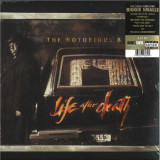
Originally conceived as an ode to Harlem and a nod to the mob narratives of Scorsese and Puzzo, Puff changed course (and album titles!) following the death of his friend and fellow Bad Boy artist The Notorious BIG. Assembling a powerhouse production team of rotating talent known collectively as “The Hitmen” and stowing away to Trinidad, they spent weeks expanding on the project. What came of those sessions were not only major hit records for No Way Out, but also tracks that appear on Life After Death and various other Bad Boy releases throughout the late 90’s.

Since his debut 25 years ago as a bona fide solo artist, Diddy has gone on to develop countless other talented performers and produce a myriad of projects that reach beyond music into fashion, film and television. Yet and still, No Way Out—which has been RIAA certified 7x Platinum—remains one of Puffy’s most successful, highest grossing albums to date.

No en stock

Haga su pedido ahora y le encargaremos el artículo en nuestro proveedor.


Ültimo hace: 3 Años
Fauness - The Golden Ass

Fauness

The Golden Ass

12inchCSN171LPC2
Cascine
31.10.2022

Opaque pink vinyl LP. For fans of: Tirzah, Caroline Polachek, Erika de Casier, Oklou, Smerz. Between the ages of 2 and 18, Cora Gilroy-Ware lived in a haunted place. On the outside, this small edge of Connecticut coastline was a quintessential New England town. Yet beneath its quaint surface was a netherworld that got steadily darker over the course of those sixteen years. From a serious drug problem to environmental pollution leading to deadly illnesses, frequent suicides and an above average number of fatal accidents, something about this place was cursed. Amid this world Cora was an outsider, someone who preferred pop and RnB to the music of her peers, who mostly subscribed to the dregs of a Deadhead culture that was more nihilistic than utopian. Still, she found herself on weekends drinking in the woods with the rest of them, playing along until it was time to leave. Christmas breaks and summer months were spent across the Atlantic in a completely antithetical environment. In London, the city of her birth, Cora spent her teen years taking the bus home at dawn after raves under the railroad arches, or riding the tube to her cousin’s house in Camden. For a long time, Cora’s life was composed of these two strands—ghostly East Coast suburbia and inner-city London—which she was forced to fold in and out of one another like a two-strand French braid. She quickly learned to adapt and be whoever the particular moment demanded. Her outsider status was intensified by the fact that, being of mixed Afro-Caribbean and European descent, her family didn’t look like the others in Connecticut. In the 2000s, this meant Cora had to contend with a deeply ingrained kind of folk-racism, both conscious and unconsciously expressed. Nobody talked about these things back then, and she internalized a lot of shame. The ability to shape-shift became integral to Cora’s artistic practice. Her survival mechanism at school was to carve out her own worlds through visual art and dance. Music was less of a creative outlet than a way of life, something like a form of religion for her family, who all played instruments and saw music as the form to which all art aspires. She studied violin and learned enough guitar chords to write her first songs. Cora always wanted to be a performer, but, having moved around constantly, craved stability and independence. Eager to make her own way in the world, she began to write about painting and sculpture, which eventually led to time spent working in Naples, Italy and a day job teaching the History of Art at university level. It wasn’t until 2018 that Cora first shared her first songs with the wider world. Having collaborated and played live with Jam City (Jack Latham, who has co-produced each of her releases), she finally embarked on a solo career, which for her felt inevitable, only a matter of time. Following four acclaimed EPs—Toxic Femininity (2018), Lashes in a Landfill (2019), Dreamcatcher (2020) and Maiden No More (2021), this year will see the release of her debut album The Golden Ass. For her artist name she chose, “Fauness”: a play on the Latin faunus, a woodland god with the body of a man and the horns, ears, and legs of a goat. The feminine equivalent—fauness—is a modern invention, made up by rococo sculptors in 18th century France. Cora was drawn to this pseudonym because of its temporal layers and amalgamation of beauty and beast, which, for her, captures something of her complex personal story. an utterly individual voice in underground pop music" - The FADER // "a sparkling sweet pop ride" – NYLON // “It is hard to write a perfect pop song. It’s even harder to make it look as easy as London artist Fauness” - GUARDIAN GUIDE // Tracks 01. Lonely 02. Mystery 03. Peaches 04. Hours 05. Siena 06. Grape & Grain 07. Laura 08. High 09. Cinnamon 10. Girl In The Moon

Reservar31.10.2022

debe ser publicado en 31.10.2022

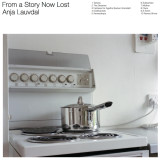
ANJA LAUVDAL - FROM A STORY NOW LOST LP

Produced by Laurel Halo and released via Norway's respected Smalltown Supersound label, Anja Lauvdal's first solo release, From a Story Now Lost, is a gorgeous musical essay reflecting on time, its perception, and lost histories rediscovered. Finally exploring her own voice after more than a decade of collaborative improvisational playing - starting at her time in jazz conservatory in Trondheim - the album is a jewel of subtle beauty and innovative detail. A freeform musician on piano, synthesizers, and electronics, Lauvdal's discography stretches back to 2013 and includes her participation in a myriad of ensembles and collaborations exploring the limits of sound and music in many forms, including noise, jazz, and more. Following her move to Oslo after graduation, she became deeply embedded in the music community there, touring with Jenny Hval as well as playing on her records. When pandemic hit and isolation was the norm, Lauvdal began working on her own, recording her improvisations in an attempt to capture something new for herself. Connecting to Laurel Halo via Smalltown's founder Joakim Haugland, the acclaimed American artist agreed to work with Lauvdal in shaping her solo record, becoming integral to its creation through all of its stages. Lauvdal credits Halo as a deep listener and gentle "thought-provoker", who contributed ideas as well as helping to shape the finished versions (Halo also worked alongside Rashad Becker on the final mix of the album). Together, they found a method of recording Lauvdal's improvisations, making small loops from those, feeding them back into the synthesizers, and making synthesizers out of the improvisations, which Lauvdal would then re-improvise with. She describes the end result, "like seeing different pieces of time around in the universe." While the record is based on Lauvdal's improvisations, some tracks were inspired Agathe Backer Grondahl, a Norwegian classical pianist and composer from the latter half of the 19th century. Lauvdal notes that Grondahl is not widely known, although her best friend Edvard Grieg is still considered Norway's most famous composer. Yet now, partly through Lauvdal, her story resurfaces and persists. "From a Story Now Lost means the story is still there," Lauvdal explains. "It hasn't gone anywhere even though nobody heard it, or maybe you're hearing it for the first time. And actually it was told a long time ago - maybe you weren't ready to hear that story at the time." This hints at the limitless nature of her music, as well as its new emotional texture. Direct in its vulnerability, immediate in its tenderness, From a Story Now Lost is a sophisticated evocation over restrained artistry spilling over with meaning.

Reservar28.10.2022

debe ser publicado en 28.10.2022

VARIOUS - INTACT AND SMILING - THE WEIRD & WONDERFUL WORLD OF TAP LP (2x12")

20 years of Tapete Records - Our first release, if memory serves, was in 2002. Damn, time flies so fast when you"re having fun. The world has changed a lot in the last 20 years but one detail has remained the same: We"re still putting out great music. That"s a bit reassuring, isn"t it? So we thought in our Tapete Building at Stahltwiete 10 in Hamburg-Altona: Let"s look back and start a series of good, old-fashioned, fantastic label compilations in the style of "Shadow Facory", "Tamla Motown Is Hot! Hot! Hot!" or "Wanna Buy A Bridge?"...something like that. And so here is "Intact & Smiling - The Weird & Wonderful World Of Tapete Records Vol.1". It wasn"t that easy to choose 28 out of about 5000 released songs, but what"s easy? Therefore a series. "Intact & Smiling Vol. 1" concentrates on the poppy side of Tapete Records, the basic tone is upbeat and uplifting. Can"t hurt these days. The title comes from the John Howard & The Night Mail song which says: "Intact and smiling, an independent soul, nobody"s slave". What could be more fitting? We would like to thank all the great artists who have released music with us over the last two decades, especially the bands and artists who have so kindly and unbureaucratically made available their great songs for this compilation. And of course a big thank you to you who listen to, buy and stream (well, yes) Tapete Records albums and songs. So close your eyes, open your ears, open your hearts, open up a bottle and step into The Weird & Wonderful World Of Tapete Records Vol. 1.

Reservar28.10.2022

debe ser publicado en 28.10.2022

JAMES BROWN - SOUL SYNDROM (HENRY STONE RECORDS) LP
  • 1: Rapp Payback (Where Iz Moses?)
  • 2: Mashed Potatoes
  • 3: Funky Men
  • 4: Smokin' & Drinkin
  • 5: Stay With Me
  • 6: Honky Tonk

By 1980 James Brown did one album for Henry Stone"s T.K. While this doesn"t have Brown bubbling over with innovation, he still provided a more substantial alternative to disco. On this album, we have a sublime sped-up version of "The Payback," which rocks like nobody"s business. Or on the remake of "Mashed Potatoes", Brown is reuniting with Bobby Byrd. Shortly afterward they both go through a travelogue of cities and states like it"s "Night Train" all over again. Soul Syndrome has Brown still full of ideas. The inane "Funky Men" has a killer reggae/funk guitar riff and a fantastic Latin horn arrangement...In the end, it makes it a nice album that counts in the rich carrer of the master of Funk !

Reservar28.10.2022

debe ser publicado en 28.10.2022

Lady Blackbird - Black Acid Soul LP (Deluxe Edition) 2x12"

Set for release on 28th October, the deluxe edition of Lady Blackbird’s debut album ‘Black Acid Soul’ comes with a staggering 11 additional songs, encompassing brand new material such as stunning single ‘Feel It Comin’ and remixes commissioned by the likes of electronic, jazz, funk luminaries Emma-Jean Thackray, Colleen 'Cosmo' Murphy and Greg Foat.

Originally released in 2021, ‘Black Acid Soul’ received enormous critical acclaim; The Sunday Times named her their Breaking Act, stating that she “brings a singing voice of extraordinary nuance and immaculate phrasing to a selection of covers/reworkings and pindrop originals” in a 4* review. The Guardian awarded the album a 5* review, remarking that Blackbird “finds her calling with an extraordinary collection of songs and performances that burn deep into you”.

No en stock

Haga su pedido ahora y le encargaremos el artículo en nuestro proveedor.


Ültimo hace: 3 Años
WHITMER THOMAS - THE OLDER I GET, THE FUNNIER I WAS

The Older I Get, the Funnier I Was, which follows Thomas’ brilliant 2020 HBO special The Golden One and his Can't Believe You're Happy Here EP released earlier this year, surveys a range of emotion and offers a broad sonic palette, moving between pop punk, electro, and the obvious influence of the singer-songwriters he grew up listening to in early childhood. It conjures the ennui of Bright Eyes alongside the barefaced storytelling of John Prine, the overstuffed lists of Fred Thomas with the lackadaisical humor of Colleen Green, among many others.

Thomas attributes the dexterity of the record to Duterte, who recorded and engineered most of it in addition to serving up plenty of encouragement when Thomas got down on the process. “As a comic, I used to test out new songs during sets to see if the funny bits were hitting, but since I wrote this in isolation I ended up writing lyrics and worrying less about making jokes,” Thomas says. That said, the album’s plenty funny. Stand-out and lead single “Rigamarole” opens with a Thomas-voiced infomercial that recalls his oft-cited lookalike Jim Carrey as the Grinch, before launching into a buoyant pop song about being depressed.

Whitmer Thomas will admit that when he traveled home to small town Gulf Shores, Alabama to record his HBO stand-up special, The Golden One, he expected to be greeted as a returning hero, a conquering king, or at minimum, a guy with a moderately successful career as an entertainer in Los Angeles. “I expected a big welcome home, open arms, but when I went back I realized: nobody fucking knows me. Nobody remembers me,” Thomas says. “In the years I’d been performing that show, I’d been romanticizing my childhood in this mythologized place, but the visit made me see that I’m not really from there anymore.”

The sense of alienation compounded when Thomas recognized how few people in town remembered his mom, to whom The Golden One is dedicated and largely about. Thomas grew up watching her perform with her twin sister at the legendary Flora-Bama Lounge, where he set the special, and still counts her as one of his musical influences. His new album, The Older I Get, the Funnier I Was, isn’t overtly about his mom, her presence is deeply felt throughout. While in Gulf Shores, Thomas discovered dozens of her old recordings, all of which had been wrecked by Katrina, but upon returning to LA, Thomas paid “a fancy place in Hollywood” to fix the tapes and hired Melina Duterte (Jay Som, Bachelor, Routine) to mix them. The two struck up a collaborative friendship, and Thomas had the sound of his mom’s voice back. “I was listening to songs she recorded when she was about my age, just these heartfelt, sweet Americana songs,” he says. “I decided then that I wanted to lose the Ian Curtis voice I always sing with; I wanted to do what came naturally, because my mom always sounded like herself, even when she was singing some cheesy reggae song about, like, Jamaica.”

Thus he went into The Older I Get, the Funnier I Was knowing it was time to retire his darkwave persona, and leaning into his natural, chirpier voice, which he says sounds “like a 12-year-old’s.” It makes sense: much of the album chronicles what Thomas calls “being a kid and feeling like you have no control and overcompensating by being annoying.” “So much of the album is about witnessing drug and alcohol addiction as a kid and seeing what it does to people, but also realizing that there's nothing you can do about it,” Thomas says. It’s familiar territory (see: “Partied to Death”) but the methodology is different this time around; true to its title, The Older I Get, the Funnier I Was isn’t always looking for laughs. Thomas might’ve left his hometown behind, but his kid self is still tagging along, a Peter Pan shadow he can’t untether himself from. The first line he sings on The Older I Get, the Funnier I Was is: “There should be a room at every party where you can just sit and watch a movie.” Find a 12-year-old who wouldn’t say the same.

Reservar21.10.2022

debe ser publicado en 21.10.2022

Lee Tracy & Isaac Manning - Is it What You Want

As the sun sets on a quaint East Nashville house, a young man bares a piece of his soul. Facing the camera, sporting a silky suit jacket/shirt/slacks/fingerless gloves ensemble that announces "singer" before he's even opened his mouth, Lee Tracy Johnson settles onto his stage, the front yard. He sways to the dirge-like drum machine pulse of a synth-soaked slow jam, extends his arms as if gaining his balance, and croons in affecting, fragile earnest, "I need your love… oh baby…"

Dogs in the yard next door begin barking. A mysterious cardboard robot figure, beamed in from galaxies unknown and affixed to a tree, is less vocal. Lee doesn't acknowledge either's presence. He's busy feeling it, arms and hands gesticulating. His voice rises in falsetto over the now-quiet dogs, over the ambient noise from the street that seeps into the handheld camcorder's microphone, over the recording of his own voice played back from a boombox off-camera. After six minutes the single, continuous shot ends. In this intimate creative universe there are no re-takes. There are many more music videos to shoot, and as Lee later puts it, "The first time you do it is actually the best. Because you can never get that again. You expressing yourself from within."

"I Need Your Love" dates from a lost heyday. From some time in the '80s or early '90s, when Lee Tracy (as he was known in performance) and his music partner/producer/manager Isaac Manning committed hours upon hours of their sonic and visual ideas to tape. Embracing drum machines and synthesizers – electronics that made their personal futurism palpable – they recorded exclusively at home, live in a room into a simple cassette deck. Soul, funk, electro and new wave informed their songs, yet Lee and Isaac eschewed the confinement of conventional categories and genres, preferring to let experimentation guide them.

"Anytime somebody put out a new record they had the same instruments or the same sound," explains Isaac. "So I basically wanted to find something that's really gonna stand out away from all of the rest of 'em." Their ethos meant that every idea they came up with was at least worth trying: echoed out half-rapped exhortations over frantic techno-style beats, gospel synth soul, modal electro-funk, oddball pop reinterpretations, emo AOR balladry, nods to Prince and the Fat Boys, or arrangements that might collapse mid-song into a mess of arcade game-ish blips before rallying to reach the finish line. All of it conjoined by consistent tape hiss, and most vitally, Lee's chameleonic voice, which managed to wildly shape shift and still evoke something sincere – whether toggling between falsetto and tenor exalting Jesus's return, or punctuating a melismatic romantic adlib with a succinct, "We all know how it feels to be alone."

"People think we went to a studio," says Isaac derisively. "We never went to no studio. We didn't have the money to go to no studio! We did this stuff at home. I shot videos in my front yard with whatever we could to get things together." Sometimes Isaac would just put on an instrumental record, be it "Planet Rock" or "Don't Cry For Me Argentina" (from Evita), press "record," and let Lee improvise over it, yielding peculiar love songs, would-be patriotic anthems, or Elvis Presley or Marilyn Monroe tributes. Technical limitations and a lack of professional polish never dissuaded them. They believed they were onto something.

"That struggle," Isaac says, "made that sound sound good to me."

In the parlance of modern music criticism Lee and Isaac's dizzying DIY efforts would inevitably be described as "outsider." But "outsider" carries the burden of untold additional layers of meaning if you're Black and from the South, creating on a budget, and trying to get someone, anyone within the country music capital of the world to take your vision seriously. "What category should we put it in?" Isaac asks rhetorically. "I don't know. All I know is feeling. I ain't gonna name it nothing. It's music. If it grabs your soul and touch your heart that's what it basically is supposed to do."

=

Born in 1963, the baby boy of nine siblings, Lee Tracy spent his earliest years living amidst the shotgun houses on Nashville's south side. "We was poor, man!" he says, recalling the outhouse his family used for a bathroom and the blocks of ice they kept in the kitchen to chill perishables. "But I actually don't think I really realized I was in poverty until I got grown and started thinking about it." Lee's mom worked at the Holiday Inn; his dad did whatever he had to do, from selling fruit from a horse drawn cart to bootlegging. "We didn't have much," Lee continues, "but my mother and my father got us the things we needed, the clothes on our back." By the end of the decade with the city's urban renewal programs razing entire neighborhoods to accommodate construction of the Interstate, the family moved to Edgehill Projects. Lee remembers music and art as a constant source of inspiration for he and his brothers and sisters – especially after seeing the Jackson 5 perform on Ed Sullivan. "As a small child I just knew that was what I wanted to do."

His older brother Don began musically mentoring him, introducing Lee to a variety of instruments and sounds. "He would never play one particular type of music, like R&B," says Lee. "I was surrounded by jazz, hard rock and roll, easy listening, gospel, reggae, country music; I mean I was a sponge absorbing all of that." Lee taught himself to play drums by beating on cardboard boxes, gaining a rep around the way for his timekeeping, and his singing voice. Emulating his favorites, Earth Wind & Fire and Cameo, he formed groups with other kids with era-evocative band names like Concept and TNT Connection, and emerged as the leader of disciplined rehearsals. "I made them practice," says Lee. "We practiced and practiced and practiced. Because I wanted that perfection." By high school the most accomplished of these bands would take top prize in a prominent local talent show. It was a big moment for Lee, and he felt ready to take things to the next level. But his band-mates had other ideas.

"I don't know what happened," he says, still miffed at the memory. "It must have blew they mind after we won and people started showing notice, because it's like everybody quit! I was like, where the hell did everybody go?" Lee had always made a point of interrogating prospective musicians about their intentions before joining his groups: were they really serious or just looking for a way to pick up girls? Now he understood even more the importance of finding a collaborator just as committed to the music as he was.

=

Isaac Manning had spent much of his life immersed in music and the arts – singing in the church choir with his family on Nashville's north side, writing, painting, dancing, and working various gigs within the entertainment industry. After serving in the armed forces, in the early '70s he ran The Teenage Place, a music and performance venue that catered to the local youth. But he was forced out of town when word of one of his recreational routines created a stir beyond the safe haven of his bohemian circles.

"I was growing marijuana," Isaac explains. "It wasn't no business, I was smoking it myself… I would put marijuana in scrambled eggs, cornbread and stuff." His weed use originated as a form of self-medication to combat severe tooth pain. But when he began sharing it with some of the other young people he hung out with, some of who just so happened to be the kids of Nashville politicians, the cops came calling. "When I got busted," he remembers, "they were talking about how they were gonna get rid of me because they didn't want me saying nothing about they children because of the politics and stuff. So I got my family, took two raggedy cars, and left Nashville and went to Vegas."

Out in the desert, Isaac happened to meet Chubby Checker of "The Twist" fame while the singer was gigging at The Flamingo. Impressed by Isaac's zeal, Checker invited him to go on the road with him as his tour manager/roadie/valet. The experience gave Isaac a window into a part of the entertainment world he'd never encountered – a glimpse of what a true pop act's audience looked like. "Chubby Checker, none of his shows were played for Black folks," he remembers. "All his gigs were done at high-class white people areas." Returning home after a few years with Chubby, Isaac was properly motivated to make it in Music City. He began writing songs and scouting around Nashville for local talent anywhere he could find it with an expressed goal: "Find someone who can deliver your songs the way you want 'em delivered and make people feel what you want them to feel."

One day while walking through Edgehill Projects Isaac heard someone playing the drums in a way that made him stop and take notice. "The music was so tight, just the drums made me feel like, oh I'm-a find this person," he recalls. "So I circled through the projects until I found who it was.

"That's how I met him – Lee Tracy. When I found him and he started singing and stuff, I said, ohhh, this is somebody different."

=

Theirs was a true complementary partnership: young Lee possessed the raw talent, the older Isaac the belief. "He's really the only one besides my brother and my family that really seen the potential in me," says Lee. "He made me see that I could do it."

Isaac long being a night owl, his house also made for a fertile collaborative environment – a space where there always seemed to be a new piece of his visual art on display: paintings, illustrations, and dolls and figures (including an enigmatic cardboard robot). Lee and Issac would hang out together and talk, listen to music, conjure ideas, and smoke the herb Isaac had resumed growing in his yard. "It got to where I could trust him, he could trust me," Isaac says of their bond. They also worked together for hours on drawings, spreading larges rolls of paper on the walls and sketching faces with abstract patterns and imagery: alien-like beings, tri-horned horse heads, inverted Janus-like characters where one visage blurred into the other.

Soon it became apparent that they didn't need other collaborators; self-sufficiency was the natural way forward. At Isaac's behest Lee, already fed up with dealing with band musicians, began playing around with a poly-sonic Yamaha keyboard at the local music store. "It had everything on it – trumpet, bass, drums, organ," remembers Lee. "And that's when I started recording my own stuff."

The technology afforded Lee the flexibility and independence he craved, setting him on a path other bedroom musicians and producers around the world were simultaneously following through the '80s into the early '90s. Saving up money from day jobs, he eventually supplemented the Yamaha Isaac had gotten him with Roland and Casio drum machines and a Moog. Lee was living in an apartment in Hillside at that point caring for his dad, who'd been partially paralyzed since early in life. In the evenings up in his second floor room, the music put him in a zone where he could tune out everything and lose himself in his ideas.

"Oh I loved it," he recalls. "I would really experiment with the instruments and use a lot of different sound effects. I was looking for something nobody else had. I wanted something totally different. And once I found the sound I was looking for, I would just smoke me a good joint and just let it go, hit the record button." More potent a creative stimulant than even Isaac's weed was the holistic flow and spontaneity of recording. Between sessions at Isaac's place and Lee's apartment, their volume of output quickly ballooned.

"We was always recording," says Lee. "That's why we have so much music. Even when I went to Isaac's and we start creating, I get home, my mind is racing, I gotta start creating, creating, creating. I remember there were times when I took a 90-minute tape from front to back and just filled it up."

"We never practiced," says Isaac. "See, that was just so odd about the whole thing. I could relate to him, and tell him about the songs I had ideas for and everything and stuff. And then he would bring it back or whatever, and we'd get together and put it down." Once the taskmaster hell bent on rehearsing, Lee had flipped a full 180. Perfection was no longer an aspiration, but the enemy of inspiration.

"I seen where practicing and practicing got me," says Lee. "A lot of musicians you get to playing and they gotta stop, they have to analyze the music. But while you analyzing you losing a lot of the greatness of what you creating. Stop analyzing what you play, just play! And it'll all take shape."

=

"I hope you understood the beginning of the record because this was invented from a dream I had today… (You tell me, I'll tell you, we'll figure it out together)" – Lee Tracy and Isaac Manning, "Hope You Understand"

Lee lets loose a maniacal cackle when he acknowledges that the material that he and Isaac recorded was by anyone's estimation pretty out there. It's the same laugh that commences "Hope You Understand" – a chaotic transmission that encapsulates the duality at the heart of their music: a stated desire to reach people and a compulsion to go as leftfield as they saw fit.

"We just did it," says Lee. "We cut the music on and cut loose. I don't sit around and write. I do it by listening, get a feeling, play the music, and the lyrics and stuff just come out of me."

The approach proved adaptable to interpreting other artists' material. While recording a cover of Whitney Houston's pop ballad "Saving All My Love For You," Lee played Whitney's version in his headphones as he laid down his own vocals – partially following the lyrics, partially using them as a departure point. The end result is barely recognizable compared with the original, Lee and Isaac having switched up the time signature and reinvented the melody along the way towards morphing a slick mainstream radio standard into something that sounds solely their own.

"I really used that song to get me started," says Lee. "Then I said, well I need something else, something is missing. Something just came over me. That's when I came up with 'Is It What You Want.'"

The song would become the centerpiece of Lee and Isaac's repertoire. Pushed along by a percolating metronomic Rhythm King style beat somewhere between a military march and a samba, "Is It What You Want" finds Lee pleading the sincerity of his commitment to a potential love interest embellished by vocal tics and hiccups subtlely reminiscent of his childhood hero MJ. Absent chord changes, only synth riffs gliding in and out like apparitions, the song achieves a lingering lo-fi power that leaves you feeling like it's still playing, somewhere, even after the fade out.

"I don't know, it's like a real spiritual song," Lee reflects. "But it's not just spiritual. To me the more I listen to it it's like about everything that you do in your everyday life, period. Is it what you want? Do you want a car or you don't want a car? Do you want Jesus or do you want the Devil? It's basically asking you the question. Can't nobody answer the question but you yourself."

In 1989 Lee won a lawsuit stemming from injuries sustained from a fight he'd gotten into. He took part of the settlement money and with Isaac pressed up "Saving All My Love For You" b/w "Is It What You Want" as a 45 single. Isaac christened the label One Chance Records. "Because that's all we wanted," he says with a laugh, "one chance."

Isaac sent the record out to radio stations and major labels, hoping for it to make enough noise to get picked up nationally. But the response he and Lee were hoping for never materialized. According to Isaac the closest the single got to getting played on the radio is when a disk jock from a local station made a highly unusual announcement on air: "The dude said on the radio, 107.5 – 'We are not gonna play 'Is It What You Want.' We cracked up! Wow, that's deep.

"It was a whole racist thing that was going on," he reflects. "So we just looked over and kept on going. That was it. That was about the way it goes… If you were Black and you were living in Nashville and stuff, that's the way you got treated." Isaac already knew as much from all the times he'd brought he and Lee's tapes (even their cache of country music tunes) over to Music Row to try to drum up interest to no avail.

"Isaac, he really worked his ass off," says Lee. "He probably been to every record place down on Music Row." Nashville's famed recording and music business corridor wasn't but a few blocks from where Lee grew up. Close enough, he remembers, for him to ride his bike along its back alleys and stumble upon the occasional random treasure, like a discarded box of harmonicas. Getting in through the front door, however, still felt a world away.

"I just don't think at the time our music fell into a category for them," he concedes. "It was before its time."

=

Lee stopped making music some time in the latter part of the '90s, around the time his mom passed away and life became increasingly tough to manage. "When my mother died I had a nervous breakdown," he says, "So I shut down for a long time. I was in such a sadness frame of mind. That's why nobody seen me. I had just disappeared off the map." He fell out of touch with Isaac, and in an indication of just how bad things had gotten for him, lost track of all the recordings they'd made together. Music became a distant memory.

Fortunately, Isaac kept the faith. In a self-published collection of his poetry – paeans to some of his favorite entertainment and public figures entitled Friends and Dick Clark – he'd written that he believed "music has a life of its own." But his prescience and presence of mind were truly manifested in the fact that he kept an archive of he and Lee's work. As perfectly imperfect as "Is It What You Want" now sounds in a post-Personal Space world, Lee and Isaac's lone official release was in fact just a taste. The bulk of the Is It What You Want album is culled from the pair's essentially unheard home recordings – complete songs, half-realized experiments, Isaac's blue monologues and pronouncements et al – compiled, mixed and programmed in the loose and impulsive creative spirit of their regular get-togethers from decades ago. The rest of us, it seems, may have finally caught up to them.

On the prospect of at long last reaching a wider audience, Isaac says simply, "I been trying for a long time, it feels good." Ever the survivor, he adds, "The only way I know how to make it to the top is to keep climbing. If one leg break on the ladder, hey, you gotta fix it and keep on going… That's where I be at. I'll kill death to make it out there."

For Lee it all feels akin to a personal resurrection: "It's like I was in a tomb and the tomb was opened and I'm back… Man, it feels so great. I feel like I'm gonna jump out of my skin." Success at this stage of his life, he realizes, probably means something different than what it did back when he was singing and dancing in Isaac's front yard. "What I really mean by 'making it,'" he explains isn't just the music being heard but, "the story being told."

Occasionally Lee will pull up "Is It What You Want" on YouTube on his phone, put on his headphones, and listen. He remembers the first time he heard his recorded voice. How surreal it was, how he thought to himself, "Is that really me?" What would he say to that younger version of himself now?

"I would probably tell myself, hang in there, don't give up. Keep striving for the goal. And everything will work out."

Despite what's printed on the record label, sometimes you do get more than one chance.

No en stock

Haga su pedido ahora y le encargaremos el artículo en nuestro proveedor.


Ültimo hace: 3 Años
DJ Tennis - Repeater

Dj Tennis

Repeater

12inchAUS176
Aus Music
14.10.2022

Life and Death founder Manfredi Romano aka DJ Tennis debuts on Aus with ‘Repeater’ - here he delves deep into his own cosmos creating two cuts that are uniquely spacey whilst playful and powerful. DJ Seinfeld needs no introduction. His DJ Kicks mix and debut album for Ninja Tune have both been critically acclaimed. His ravey mix of 'Repeater' is a tension builder, his version simmers away for seven minutes patiently dropping metallic stabs and detroit fm synths licks. Manfredi’s career spans over two decades as agent, manager, promoter, label owner, dj and producer. His releases are few and far between so, it’s an honour for him to trust us with his art.

No en stock

Haga su pedido ahora y le encargaremos el artículo en nuestro proveedor.


Ültimo hace: 2 Años
Betty Boo - Boomerang LP

Betty Boo

Boomerang LP

12inchBOOLP01
absolute:
14.10.2022

Betty Boo is a Brit and Ivor Novello Award winning singer/songwriter/producer from West London. After a chance meeting in McDonalds on Shepherds Bush Green, she ended up supporting Public Enemy on tour in the US with her Hip Hop trio The She Rockers. In 1989, she featured as guest vocalist on The Beatmasters Top 10 single - Hey DJ/I Can't Dance (To That Music You're Playing). Betty Boo released two albums - Boomania and GRRR! Its Betty Boo - and then mostly retired from the public eye. Earlier this year, she released the Human League sampling banger Get Me To The Weekend - her first solo music in three decades.
2022 sees the return of Betty Boo as a brand new album is set for release entitled Boomerang.

Reservar14.10.2022

debe ser publicado en 14.10.2022

Betty Boo - Boomerang

Betty Boo

Boomerang

CassetteBOOTAPE01
absolute:
14.10.2022

Betty Boo is a Brit and Ivor Novello Award winning singer/songwriter/producer from West London. After a chance meeting in McDonalds on Shepherds Bush Green, she ended up supporting Public Enemy on tour in the US with her Hip Hop trio The She Rockers. In 1989, she featured as guest vocalist on The Beatmasters Top 10 single - Hey DJ/I Can't Dance (To That Music You're Playing). Betty Boo released two albums - Boomania and GRRR! Its Betty Boo - and then mostly retired from the public eye. Earlier this year, she released the Human League sampling banger Get Me To The Weekend - her first solo music in three decades.
2022 sees the return of Betty Boo as a brand new album is set for release entitled Boomerang.

Reservar14.10.2022

debe ser publicado en 14.10.2022

Stiff Little Fingers - Live At Rockpalast 1980

The longest-tenured Irish punk band is undoubtedly Stiff Little Fingers –
who have been bashing and thrashing since 1977
And the vinyl, “Live at Rockpalast 1980”, shows that the band remained a vital live
band (and also, stayed true to their roots) throughout the ‘80s, despite a five-year
hiatus smack dab in the middle of the decade. Singer/guitarist Jake Burns has
been the band’s leader since their inception – with bassist Ali McMordie standing
right alongside Jake most of the time – which saw Stiff Little Fingers being a part
of the first- wave of Euro punk bands, which included the lofty likes of the Sex
Pistols, the Clash, and the Damned, the Buzzcocks, the Jam, etc. And in the
process, Stiff Little Fingers issued such classic punk LP’s as “Inflammable
Material”, “Nobody’s Heroes” and “Go for It” plus the punk anthems “Alternative
Ulster", “Suspect Device” and “At the Edge”. Jake Burns still remembers: "The
place was packed and the audience were with us from the first note. They were
wonderful, singing and bouncing along. It really felt like a "home game" to use a
football analogy. I thought we played really well too, apart from a slight timing
mistake during "Back to Front", a new song we were still learning. (See if you can
spot my giving Jim the "look of death" at that point! LOL!)."

Reservar14.10.2022

debe ser publicado en 14.10.2022

VARIOUS - FUNK DIGGIN' LP

Various

FUNK DIGGIN' LP

12inch3419766
Wagram
30.09.2022

Some are looking for gold or oil and others are passionately looking for forgotten music treasures! Those who can be described as "sound gold diggers" criss cross record shops or confidential places to unearth musical nuggets previously kept in the dark. This practice began with sampling in the 80s and has now become a way of safeguarding the world's musical heritage. With our new "Diggin' Collection", we invite you to discover soul, funk or disco gems from the 70s and the 80s available on three nice vinyls for your pleasure.

No en stock

Haga su pedido ahora y le encargaremos el artículo en nuestro proveedor.


Ültimo hace: 2 Años
Rac - Ego LP 2x12"

Rac

Ego LP 2x12"

2x12inchCOUNT108C
COUNTER RECORDS
30.09.2022

2x LTD CLEAR VINYL
Limitiertes, durchsichtiges Doppelvinyl inklusive Downloadcode!

Grammygewinner RAC veröffentlicht sein lang erwartetes neues Album auf Counter Records!

Aufgenommen in Anjos' Heimstudio in Portland und bei Sessions in L.A., finden sich auf RAC's neuem Album Kollaborationen mit u.a. Rivers Cuomo von Weezer, Vampire Weekends Rostam, MNDR, ST. Lucia, KNA und Joywave. - EGO ist Anjos ambitioniertestes, geschlossenstes und persönlichstes Werk und zeigt deutlich seine organische Weiterentwicklung als Künstler auf. Geboren und aufgewachsen in Portugal, lernte Anjos in seiner Jugend Klavier und Gitarre und spielte in lokalen Bands. Später zog er in die USA, um Musikbusiness am Greenville College in Illinois zu studieren, bevor er sich in Portland, Oregon, niederließ. Anjos gründete RAC im Schlafzimmer seines Studentenwohnheims und gewann fortan ein stetig wachsendes Publikum für sich, wodurch offizielle Remix-Aufträge für u.a. Lana del Rey, Yeah Yeah Yeahs, Ellie Goulding, Foster The People, Phoenix, Imagine Dragons, Two Door Cinema Club und The Shins enstanden. Seine erste Grammy-Nominierung erhielt Anjos schon 2016 für seinen Remix von ODESZAs - Say My Name und bei den diesjährigen Verleihungen gewann er mit seinem Remix für Bob Moses' - Tearing Me Up .

Mit seinem ersten Song, - Hollywood , begann RAC 2012 eigenes Material zu veröffentlichen und unterstrich mit seinem Debütalbum - Strangers von 2014 seinen Qualitäten als Songwriter. Darauf enthalten waren die Singles - Let Go mit Kele von Bloc Party und MNDR sowie - Cheap Sunglasses mit Matthew Koma. Außerdem absolvierte er bereits gefeierte Auftritte auf den weltbekannten Festivals Coachella, Electric Zoo und Lollapalooza.

Reservar30.09.2022

debe ser publicado en 30.09.2022

Chayse Porter - Chay's Palace

Some people choose the pages of a diary to spill their innermost feelings
and recount their trials and tribulations - Instead, Chayse Porter has a
palace - It's this metaphorical place where I can go to express myself and
feel safe, he explains
It's this place where you can get all your secrets out in the open and feel at home.
But rather than luxuriate in his regal mental abode, Porter's latest for Earth
Libraries takes listeners on a grand tour, revealing the nooks and crannies of his
heart and mind.Recording on vintage gear and working with producer Brad Timko
redoubles that sense of intimacy, imbuing every take with a bronzy finish. € I've
always really appreciated records that opt for analog, so this one is all just raw
performance, straight to tape, € Porter says. € It gives me time to sit with each
part of the composition, to live more within the song. €
As the album rolls ever forward to its conclusion, the rough edges of the pain and
suffering have softened, and Porter has come to a sense of hopefulness. "It was
very tumultuous to put this album together and express myself openly in this way,
but at the end of the album I'm reassuring myself that there's an opportunity for
growth both personally and interpersonally, having gone through this challenging
time and coming out the other side, € Porter says. At the end of the long and
fascinating tour of Chay's Palace, Porter makes the listener feel the warmth at its
core that he himself has found.
Tracks: Purpling Dawn / Jet Lag / Nobody Wants You (More Than Me) / Penny /
Heat Lamp / Theme from Chay's Palace / Palace Doors / Pacific Inn / Purpling
Dawn Pt. 2 / Blue Star / Yoshi

Reservar30.09.2022

debe ser publicado en 30.09.2022

Rebecca Trescher - Paris Zyklus - The Spirit of the Streets

May one say that nobody has composed for jazz like Rebecca
Trescher?" (Frankfurter Allgemeine Zeitung) The composer, clarinettist
and bandleader Rebecca Trescher has been leading her own large
ensemble for almost 10 years and has made an excellent name for
herself in the German jazz scene
She has also received numerous prizes and grants (e.g. Wolfram-von-Eschenbach
Prize 2021, Artist in Residence at the Cité Internationales des Arts de Paris 2019,
Bavarian Art Promotion Prize 2017, scholarship holder of the Baden-Württemberg
Art Foundation 2014). Now she is presenting the new album Paris Cycle - The
Spirit of the Streets with her tentett. The four- part work cycle was inspired by
Trescher's six-month Composer in Residence at the renowned Cité Internationale
des Arts in Paris. The composer walked the streets of Paris a lot and was
nspired by the spirit of the city. Become part of a musical journey through Paris.
The composer is looking forward to a live concert with a real audience! With the
unique and multifaceted line- up of her ten- piece Large Ensemble of trumpet,
saxophone, clarinet, cello, concert harp, piano, vibraphone, bass and drums,
Rebecca Trescher creates a refreshing, modern sound that moves experimentally
between jazz and classical music. Under her leadership, the ensemble weaves a
fascinating musical network that is based on Trescher's contemporary
compositional style, but also on the musicians' shared experience, precise
coordination and mutual trust.

Reservar30.09.2022

debe ser publicado en 30.09.2022

Los Peyotes - Virgenes

Los Peyotes

Virgenes

12inchDWC1120LP
Dirty Water
29.09.2022

Ten releases in the space of seven years and then…puff, then nothing (in Europe). Los Peyotes seemingly vanished into the smoke that they knew full well did us wrong. But now they’re back, ripping up the rule book once again to shower us with evil-hearted, spitfire garage punk rock'n'roll on an album that takes in and mashes up straight from the grave garage rock with doses of savage psychedelia and hip-shaking yé-yé. Prepare to be beaten, bastardised, and left twitching on the floor as they hit you with 13 brand new tracks. "They say we’re all the same. Long-haired freaks. Drugs, sex, and into everything filthy. Haters of authority. But Los Peyotes don’t give a damn." As they spit on the opening track, "People are sh+t", but hey, at least their dog ain’t! Screw the haters and critics, everyone thinks they’re one. Take a look around. But who cares when Los Peyotes are biting back with all the force they have? Cranked guitars, a stabbing Farfisa and those ever-present wild-eyed howls. Theirs is, and has always been, a garage that draws lines straight back to their furious forefathers; Los Saicos, The Sonics, Los Shakers, The Seeds; and on their new album, Virgenes, they keep not only the flame but the whole goddamn sin-fuelled incinerating city burning. They rise up in swirling insanity on tracks like No Puedo Aguantar Mas (I Can’t Take Anymore) before bringing everything crashing down on songs like the riotously spooky Dame Dinamita (Gimme Dynamite). And yeah, of course, everything is sung in Spanish, drawing a line firmly back to their musical ancestors who cranked up that British Invasion sound like nobody else to pave the way for proto-punk. All hail Los Peyotes! Prepare to get dosed once again. - Sir Nathan Whittle de Manchester Genre: Alternative / Garage / Punk

Track list: 01 La Gente Es Una Mierda 02 Soy La Droga 03 No Puedo Aguantar Mas 04 El Hombre De Dos Cabezas 05 Terrorista De La Musica 06 Mi Chica 07 Mi Planeta Rosa 08 No Quiero Crecer 09 Soy Asi 10 Cumbia Del Dolor 11 Dame Dinamita 12 Peyolove 13 Nada Pude Ver

Reservar29.09.2022

debe ser publicado en 29.09.2022

Lee Tracy & Isaac Manning - Is it What You Want LP

As the sun sets on a quaint East Nashville house, a young man bares a piece of his soul. Facing the camera, sporting a silky suit jacket/shirt/slacks/fingerless gloves ensemble that announces "singer" before he's even opened his mouth, Lee Tracy Johnson settles onto his stage, the front yard. He sways to the dirge-like drum machine pulse of a synth-soaked slow jam, extends his arms as if gaining his balance, and croons in affecting, fragile earnest, "I need your love… oh baby…"

Dogs in the yard next door begin barking. A mysterious cardboard robot figure, beamed in from galaxies unknown and affixed to a tree, is less vocal. Lee doesn't acknowledge either's presence. He's busy feeling it, arms and hands gesticulating. His voice rises in falsetto over the now-quiet dogs, over the ambient noise from the street that seeps into the handheld camcorder's microphone, over the recording of his own voice played back from a boombox off-camera. After six minutes the single, continuous shot ends. In this intimate creative universe there are no re-takes. There are many more music videos to shoot, and as Lee later puts it, "The first time you do it is actually the best. Because you can never get that again. You expressing yourself from within."

"I Need Your Love" dates from a lost heyday. From some time in the '80s or early '90s, when Lee Tracy (as he was known in performance) and his music partner/producer/manager Isaac Manning committed hours upon hours of their sonic and visual ideas to tape. Embracing drum machines and synthesizers – electronics that made their personal futurism palpable – they recorded exclusively at home, live in a room into a simple cassette deck. Soul, funk, electro and new wave informed their songs, yet Lee and Isaac eschewed the confinement of conventional categories and genres, preferring to let experimentation guide them.

"Anytime somebody put out a new record they had the same instruments or the same sound," explains Isaac. "So I basically wanted to find something that's really gonna stand out away from all of the rest of 'em." Their ethos meant that every idea they came up with was at least worth trying: echoed out half-rapped exhortations over frantic techno-style beats, gospel synth soul, modal electro-funk, oddball pop reinterpretations, emo AOR balladry, nods to Prince and the Fat Boys, or arrangements that might collapse mid-song into a mess of arcade game-ish blips before rallying to reach the finish line. All of it conjoined by consistent tape hiss, and most vitally, Lee's chameleonic voice, which managed to wildly shape shift and still evoke something sincere – whether toggling between falsetto and tenor exalting Jesus's return, or punctuating a melismatic romantic adlib with a succinct, "We all know how it feels to be alone."

"People think we went to a studio," says Isaac derisively. "We never went to no studio. We didn't have the money to go to no studio! We did this stuff at home. I shot videos in my front yard with whatever we could to get things together." Sometimes Isaac would just put on an instrumental record, be it "Planet Rock" or "Don't Cry For Me Argentina" (from Evita), press "record," and let Lee improvise over it, yielding peculiar love songs, would-be patriotic anthems, or Elvis Presley or Marilyn Monroe tributes. Technical limitations and a lack of professional polish never dissuaded them. They believed they were onto something.

"That struggle," Isaac says, "made that sound sound good to me."

In the parlance of modern music criticism Lee and Isaac's dizzying DIY efforts would inevitably be described as "outsider." But "outsider" carries the burden of untold additional layers of meaning if you're Black and from the South, creating on a budget, and trying to get someone, anyone within the country music capital of the world to take your vision seriously. "What category should we put it in?" Isaac asks rhetorically. "I don't know. All I know is feeling. I ain't gonna name it nothing. It's music. If it grabs your soul and touch your heart that's what it basically is supposed to do."

=

Born in 1963, the baby boy of nine siblings, Lee Tracy spent his earliest years living amidst the shotgun houses on Nashville's south side. "We was poor, man!" he says, recalling the outhouse his family used for a bathroom and the blocks of ice they kept in the kitchen to chill perishables. "But I actually don't think I really realized I was in poverty until I got grown and started thinking about it." Lee's mom worked at the Holiday Inn; his dad did whatever he had to do, from selling fruit from a horse drawn cart to bootlegging. "We didn't have much," Lee continues, "but my mother and my father got us the things we needed, the clothes on our back." By the end of the decade with the city's urban renewal programs razing entire neighborhoods to accommodate construction of the Interstate, the family moved to Edgehill Projects. Lee remembers music and art as a constant source of inspiration for he and his brothers and sisters – especially after seeing the Jackson 5 perform on Ed Sullivan. "As a small child I just knew that was what I wanted to do."

His older brother Don began musically mentoring him, introducing Lee to a variety of instruments and sounds. "He would never play one particular type of music, like R&B," says Lee. "I was surrounded by jazz, hard rock and roll, easy listening, gospel, reggae, country music; I mean I was a sponge absorbing all of that." Lee taught himself to play drums by beating on cardboard boxes, gaining a rep around the way for his timekeeping, and his singing voice. Emulating his favorites, Earth Wind & Fire and Cameo, he formed groups with other kids with era-evocative band names like Concept and TNT Connection, and emerged as the leader of disciplined rehearsals. "I made them practice," says Lee. "We practiced and practiced and practiced. Because I wanted that perfection." By high school the most accomplished of these bands would take top prize in a prominent local talent show. It was a big moment for Lee, and he felt ready to take things to the next level. But his band-mates had other ideas.

"I don't know what happened," he says, still miffed at the memory. "It must have blew they mind after we won and people started showing notice, because it's like everybody quit! I was like, where the hell did everybody go?" Lee had always made a point of interrogating prospective musicians about their intentions before joining his groups: were they really serious or just looking for a way to pick up girls? Now he understood even more the importance of finding a collaborator just as committed to the music as he was.

=

Isaac Manning had spent much of his life immersed in music and the arts – singing in the church choir with his family on Nashville's north side, writing, painting, dancing, and working various gigs within the entertainment industry. After serving in the armed forces, in the early '70s he ran The Teenage Place, a music and performance venue that catered to the local youth. But he was forced out of town when word of one of his recreational routines created a stir beyond the safe haven of his bohemian circles.

"I was growing marijuana," Isaac explains. "It wasn't no business, I was smoking it myself… I would put marijuana in scrambled eggs, cornbread and stuff." His weed use originated as a form of self-medication to combat severe tooth pain. But when he began sharing it with some of the other young people he hung out with, some of who just so happened to be the kids of Nashville politicians, the cops came calling. "When I got busted," he remembers, "they were talking about how they were gonna get rid of me because they didn't want me saying nothing about they children because of the politics and stuff. So I got my family, took two raggedy cars, and left Nashville and went to Vegas."

Out in the desert, Isaac happened to meet Chubby Checker of "The Twist" fame while the singer was gigging at The Flamingo. Impressed by Isaac's zeal, Checker invited him to go on the road with him as his tour manager/roadie/valet. The experience gave Isaac a window into a part of the entertainment world he'd never encountered – a glimpse of what a true pop act's audience looked like. "Chubby Checker, none of his shows were played for Black folks," he remembers. "All his gigs were done at high-class white people areas." Returning home after a few years with Chubby, Isaac was properly motivated to make it in Music City. He began writing songs and scouting around Nashville for local talent anywhere he could find it with an expressed goal: "Find someone who can deliver your songs the way you want 'em delivered and make people feel what you want them to feel."

One day while walking through Edgehill Projects Isaac heard someone playing the drums in a way that made him stop and take notice. "The music was so tight, just the drums made me feel like, oh I'm-a find this person," he recalls. "So I circled through the projects until I found who it was.

"That's how I met him – Lee Tracy. When I found him and he started singing and stuff, I said, ohhh, this is somebody different."

=

Theirs was a true complementary partnership: young Lee possessed the raw talent, the older Isaac the belief. "He's really the only one besides my brother and my family that really seen the potential in me," says Lee. "He made me see that I could do it."

Isaac long being a night owl, his house also made for a fertile collaborative environment – a space where there always seemed to be a new piece of his visual art on display: paintings, illustrations, and dolls and figures (including an enigmatic cardboard robot). Lee and Issac would hang out together and talk, listen to music, conjure ideas, and smoke the herb Isaac had resumed growing in his yard. "It got to where I could trust him, he could trust me," Isaac says of their bond. They also worked together for hours on drawings, spreading larges rolls of paper on the walls and sketching faces with abstract patterns and imagery: alien-like beings, tri-horned horse heads, inverted Janus-like characters where one visage blurred into the other.

Soon it became apparent that they didn't need other collaborators; self-sufficiency was the natural way forward. At Isaac's behest Lee, already fed up with dealing with band musicians, began playing around with a poly-sonic Yamaha keyboard at the local music store. "It had everything on it – trumpet, bass, drums, organ," remembers Lee. "And that's when I started recording my own stuff."

The technology afforded Lee the flexibility and independence he craved, setting him on a path other bedroom musicians and producers around the world were simultaneously following through the '80s into the early '90s. Saving up money from day jobs, he eventually supplemented the Yamaha Isaac had gotten him with Roland and Casio drum machines and a Moog. Lee was living in an apartment in Hillside at that point caring for his dad, who'd been partially paralyzed since early in life. In the evenings up in his second floor room, the music put him in a zone where he could tune out everything and lose himself in his ideas.

"Oh I loved it," he recalls. "I would really experiment with the instruments and use a lot of different sound effects. I was looking for something nobody else had. I wanted something totally different. And once I found the sound I was looking for, I would just smoke me a good joint and just let it go, hit the record button." More potent a creative stimulant than even Isaac's weed was the holistic flow and spontaneity of recording. Between sessions at Isaac's place and Lee's apartment, their volume of output quickly ballooned.

"We was always recording," says Lee. "That's why we have so much music. Even when I went to Isaac's and we start creating, I get home, my mind is racing, I gotta start creating, creating, creating. I remember there were times when I took a 90-minute tape from front to back and just filled it up."

"We never practiced," says Isaac. "See, that was just so odd about the whole thing. I could relate to him, and tell him about the songs I had ideas for and everything and stuff. And then he would bring it back or whatever, and we'd get together and put it down." Once the taskmaster hell bent on rehearsing, Lee had flipped a full 180. Perfection was no longer an aspiration, but the enemy of inspiration.

"I seen where practicing and practicing got me," says Lee. "A lot of musicians you get to playing and they gotta stop, they have to analyze the music. But while you analyzing you losing a lot of the greatness of what you creating. Stop analyzing what you play, just play! And it'll all take shape."

=

"I hope you understood the beginning of the record because this was invented from a dream I had today… (You tell me, I'll tell you, we'll figure it out together)" – Lee Tracy and Isaac Manning, "Hope You Understand"

Lee lets loose a maniacal cackle when he acknowledges that the material that he and Isaac recorded was by anyone's estimation pretty out there. It's the same laugh that commences "Hope You Understand" – a chaotic transmission that encapsulates the duality at the heart of their music: a stated desire to reach people and a compulsion to go as leftfield as they saw fit.

"We just did it," says Lee. "We cut the music on and cut loose. I don't sit around and write. I do it by listening, get a feeling, play the music, and the lyrics and stuff just come out of me."

The approach proved adaptable to interpreting other artists' material. While recording a cover of Whitney Houston's pop ballad "Saving All My Love For You," Lee played Whitney's version in his headphones as he laid down his own vocals – partially following the lyrics, partially using them as a departure point. The end result is barely recognizable compared with the original, Lee and Isaac having switched up the time signature and reinvented the melody along the way towards morphing a slick mainstream radio standard into something that sounds solely their own.

"I really used that song to get me started," says Lee. "Then I said, well I need something else, something is missing. Something just came over me. That's when I came up with 'Is It What You Want.'"

The song would become the centerpiece of Lee and Isaac's repertoire. Pushed along by a percolating metronomic Rhythm King style beat somewhere between a military march and a samba, "Is It What You Want" finds Lee pleading the sincerity of his commitment to a potential love interest embellished by vocal tics and hiccups subtlely reminiscent of his childhood hero MJ. Absent chord changes, only synth riffs gliding in and out like apparitions, the song achieves a lingering lo-fi power that leaves you feeling like it's still playing, somewhere, even after the fade out.

"I don't know, it's like a real spiritual song," Lee reflects. "But it's not just spiritual. To me the more I listen to it it's like about everything that you do in your everyday life, period. Is it what you want? Do you want a car or you don't want a car? Do you want Jesus or do you want the Devil? It's basically asking you the question. Can't nobody answer the question but you yourself."

In 1989 Lee won a lawsuit stemming from injuries sustained from a fight he'd gotten into. He took part of the settlement money and with Isaac pressed up "Saving All My Love For You" b/w "Is It What You Want" as a 45 single. Isaac christened the label One Chance Records. "Because that's all we wanted," he says with a laugh, "one chance."

Isaac sent the record out to radio stations and major labels, hoping for it to make enough noise to get picked up nationally. But the response he and Lee were hoping for never materialized. According to Isaac the closest the single got to getting played on the radio is when a disk jock from a local station made a highly unusual announcement on air: "The dude said on the radio, 107.5 – 'We are not gonna play 'Is It What You Want.' We cracked up! Wow, that's deep.

"It was a whole racist thing that was going on," he reflects. "So we just looked over and kept on going. That was it. That was about the way it goes… If you were Black and you were living in Nashville and stuff, that's the way you got treated." Isaac already knew as much from all the times he'd brought he and Lee's tapes (even their cache of country music tunes) over to Music Row to try to drum up interest to no avail.

"Isaac, he really worked his ass off," says Lee. "He probably been to every record place down on Music Row." Nashville's famed recording and music business corridor wasn't but a few blocks from where Lee grew up. Close enough, he remembers, for him to ride his bike along its back alleys and stumble upon the occasional random treasure, like a discarded box of harmonicas. Getting in through the front door, however, still felt a world away.

"I just don't think at the time our music fell into a category for them," he concedes. "It was before its time."

=

Lee stopped making music some time in the latter part of the '90s, around the time his mom passed away and life became increasingly tough to manage. "When my mother died I had a nervous breakdown," he says, "So I shut down for a long time. I was in such a sadness frame of mind. That's why nobody seen me. I had just disappeared off the map." He fell out of touch with Isaac, and in an indication of just how bad things had gotten for him, lost track of all the recordings they'd made together. Music became a distant memory.

Fortunately, Isaac kept the faith. In a self-published collection of his poetry – paeans to some of his favorite entertainment and public figures entitled Friends and Dick Clark – he'd written that he believed "music has a life of its own." But his prescience and presence of mind were truly manifested in the fact that he kept an archive of he and Lee's work. As perfectly imperfect as "Is It What You Want" now sounds in a post-Personal Space world, Lee and Isaac's lone official release was in fact just a taste. The bulk of the Is It What You Want album is culled from the pair's essentially unheard home recordings – complete songs, half-realized experiments, Isaac's blue monologues and pronouncements et al – compiled, mixed and programmed in the loose and impulsive creative spirit of their regular get-togethers from decades ago. The rest of us, it seems, may have finally caught up to them.

On the prospect of at long last reaching a wider audience, Isaac says simply, "I been trying for a long time, it feels good." Ever the survivor, he adds, "The only way I know how to make it to the top is to keep climbing. If one leg break on the ladder, hey, you gotta fix it and keep on going… That's where I be at. I'll kill death to make it out there."

For Lee it all feels akin to a personal resurrection: "It's like I was in a tomb and the tomb was opened and I'm back… Man, it feels so great. I feel like I'm gonna jump out of my skin." Success at this stage of his life, he realizes, probably means something different than what it did back when he was singing and dancing in Isaac's front yard. "What I really mean by 'making it,'" he explains isn't just the music being heard but, "the story being told."

Occasionally Lee will pull up "Is It What You Want" on YouTube on his phone, put on his headphones, and listen. He remembers the first time he heard his recorded voice. How surreal it was, how he thought to himself, "Is that really me?" What would he say to that younger version of himself now?

"I would probably tell myself, hang in there, don't give up. Keep striving for the goal. And everything will work out."

Despite what's printed on the record label, sometimes you do get more than one chance.

No en stock

Haga su pedido ahora y le encargaremos el artículo en nuestro proveedor.


Ültimo hace: 3 Años
Pixy Jones - Bits n Bobs

Pixy Jones

Bits n Bobs

12inchSTR057LP
Strangetown
23.09.2022

El Goodo guitarist and songwriter 'Pixy Jones' has announced that his debut album entitled 'Bits n Bobs' is due for release on 16th of September via Strangetown Records. 
After 4 albums with El Goodo, Welsh psych scene stalwart Pixy Jones has himself compiled a truly remarkable collection of tracks that fluctuate from 60's harmony-rich psych pop, to Alt-Country with ringing tremelo guitar. 

The swaggering 'I'm Not There' is the first single to be taken from 'Bits n Bobs' accompanied by a magical version of Beatles track 'And Your Bird Can Sing' as it's B SIde, which will be released digitally on Friday 1st of July.

Pixy had this to say about the release: 
The album was originally intended as a solo project under the pseudonym of “Wallace Russell”. I recorded it alongside the recording of Zombie (El Goodo) whenever I could get in the studio. There are some really old songs that have always been overlooked for 'El Goodo' albums for one reason or another, a few new ones which I wrote specifically for this, and a couple that would have probably ended up on the intended double album version of Zombie if we’d kept going with the double album idea. I’ve since ditched the 'Wallace Russell' name and gone back to 'Pixy Jones' as I figured there’s no need to have a pseudonym if nobody knows who you are in the first place. Even though I dropped the name I’ve kept the walrus mask for now as it is more photogenic than my actual face.
I had no recording budget so I had to fund it by quitting smoking and saving the money up to pay for studio time. It took, I think, two and a half years to record, which is by far the quickest I’ve ever recorded an album.

Originally I wanted it to just be a quickly recorded slap dash and get it out sort of thing but I had a year and a half during Covid to think about it a bit more and ended up taking more care to get it done properly. It was just me there so I played most of it myself apart from Stephen Black (Sweet Baboo) who played brass and woodwind on one song and Rhodri Brooks (AhGeeBe) plays some pedal steel on a couple. 

Elliott and Canny from 'El Goodo' played drums and bass on Wind Street during the ‘Zombie’ recording sessions. 

The album was recorded and mixed in Aerial Studios with Tim Lewis, (Thighpaulsandra), a couple of songs were finished in the house during the lockdowns.

No en stock

Haga su pedido ahora y le encargaremos el artículo en nuestro proveedor.


Ültimo hace: 3 Años
DIVINO NINO - LAST SPA ON EARTH LP

Divino Niño are no strangers to bold reinvention. When Camilo Medina and Javier Forero_friends whose bond dates back to their childhoods in Bogotá, Colombia_moved to Chicago and recruited guitarist Guillermo Rodriguez to form a band, they were psych-pop outsiders playing live shows with a drum machine. With the addition of drummer Pierce Codina, their 2019 breakthrough and debut LP for Winspear, Foam, solidified their place as local indie rock mainstays. Soon after, multi-instrumentalist Justin Vittori joined to round out their lineup. Once again, with their masterful, unpredictable, and eminently danceable new album, the band has done something radical: They totally upended the way they write songs, eschewing practice room jams for unrelentingly collaborative beats, implied grooves for immersive dance floor heaters, and mellow vibes for frenetic doses of reggaeton, electropop, and trap on their most adventurous and ambitious work to date. Welcome to the Last Spa on Earth. Written and recorded over the past two years, Last Spa on Earth deals in release and catharsis: confronting your darkest moments and coming out better for it. The album artwork, done by Medina, a longstanding visual artist, depicts a dreamy, yet graffiti-tagged spa, void of physical bodies so listeners can envision themselves in this unique environment. It represents the yin and yang approach Divino Niño took while creating the album: the serenity of the spa and the chaos of the party. Ultimately, the band's desire is to provide healing in the same way one feels after sweating, shivering, stretching, and resting at the spa against the backdrop of the world's darkness. Last Spa on Earth is the cathartic product of Divino Niño letting go of their musical preconceptions, past traumas, and future anxieties to embrace change, chaos, and each other's contributions both to these songs and to each other.

Reservar23.09.2022

debe ser publicado en 23.09.2022

DIVINO NINO - LAST SPA ON EARTH LP

Divino Nino

LAST SPA ON EARTH LP

12inchWSPLPC140
Winspear
23.09.2022

Divino Niño are no strangers to bold reinvention. When Camilo Medina and Javier Forero_friends whose bond dates back to their childhoods in Bogotá, Colombia_moved to Chicago and recruited guitarist Guillermo Rodriguez to form a band, they were psych-pop outsiders playing live shows with a drum machine. With the addition of drummer Pierce Codina, their 2019 breakthrough and debut LP for Winspear, Foam, solidified their place as local indie rock mainstays. Soon after, multi-instrumentalist Justin Vittori joined to round out their lineup. Once again, with their masterful, unpredictable, and eminently danceable new album, the band has done something radical: They totally upended the way they write songs, eschewing practice room jams for unrelentingly collaborative beats, implied grooves for immersive dance floor heaters, and mellow vibes for frenetic doses of reggaeton, electropop, and trap on their most adventurous and ambitious work to date. Welcome to the Last Spa on Earth. Written and recorded over the past two years, Last Spa on Earth deals in release and catharsis: confronting your darkest moments and coming out better for it. The album artwork, done by Medina, a longstanding visual artist, depicts a dreamy, yet graffiti-tagged spa, void of physical bodies so listeners can envision themselves in this unique environment. It represents the yin and yang approach Divino Niño took while creating the album: the serenity of the spa and the chaos of the party. Ultimately, the band's desire is to provide healing in the same way one feels after sweating, shivering, stretching, and resting at the spa against the backdrop of the world's darkness. Last Spa on Earth is the cathartic product of Divino Niño letting go of their musical preconceptions, past traumas, and future anxieties to embrace change, chaos, and each other's contributions both to these songs and to each other.

Reservar23.09.2022

debe ser publicado en 23.09.2022

DIVINO NINO - LAST SPA ON EARTH LP

Divino Nino

LAST SPA ON EARTH LP

CassetteWSPCASS40
Winspear
23.09.2022

Divino Niño are no strangers to bold reinvention. When Camilo Medina and Javier Forero_friends whose bond dates back to their childhoods in Bogotá, Colombia_moved to Chicago and recruited guitarist Guillermo Rodriguez to form a band, they were psych-pop outsiders playing live shows with a drum machine. With the addition of drummer Pierce Codina, their 2019 breakthrough and debut LP for Winspear, Foam, solidified their place as local indie rock mainstays. Soon after, multi-instrumentalist Justin Vittori joined to round out their lineup. Once again, with their masterful, unpredictable, and eminently danceable new album, the band has done something radical: They totally upended the way they write songs, eschewing practice room jams for unrelentingly collaborative beats, implied grooves for immersive dance floor heaters, and mellow vibes for frenetic doses of reggaeton, electropop, and trap on their most adventurous and ambitious work to date. Welcome to the Last Spa on Earth. Written and recorded over the past two years, Last Spa on Earth deals in release and catharsis: confronting your darkest moments and coming out better for it. The album artwork, done by Medina, a longstanding visual artist, depicts a dreamy, yet graffiti-tagged spa, void of physical bodies so listeners can envision themselves in this unique environment. It represents the yin and yang approach Divino Niño took while creating the album: the serenity of the spa and the chaos of the party. Ultimately, the band's desire is to provide healing in the same way one feels after sweating, shivering, stretching, and resting at the spa against the backdrop of the world's darkness. Last Spa on Earth is the cathartic product of Divino Niño letting go of their musical preconceptions, past traumas, and future anxieties to embrace change, chaos, and each other's contributions both to these songs and to each other.

Reservar23.09.2022

debe ser publicado en 23.09.2022

ERIC COPELAND & JOSH DIAMOND - RIDERS ON THE STORM LP

Basslines like a clumsy, exuberant puppy. A braid of guitar notes tickling your neck. The jittery buoyance of a marimba, so cartoonish you can picture its unblinking technicolor eyes. A snare that cracks like every friend knocking on your door at once. These are the fragmentary beats and visions that Josh Diamond and Eric Copeland spent the last two years exchanging, the magnetic, romantic, completely unashamed chunks stacked into the bubbling delight of "Riders on the Storm." These two are, yes, known for vastness, transcendence, and suffocation. Eric is a founding member of Black Dice, weaponizers of volume, misdirection, and alien language. Josh is a founding member of Gang Gang Dance, whose haunted, murky explorations drag listeners to infinite, irreversible revelations. Given these pedigrees, it's natural to anticipate their collaboration as an itchy, opaque monolith. Within the shit and terror of 2022 it's even understandable to yearn for something like that. But "Riders" with its light heart and wiggle and squirm is actually the record we need. "It's intentional," confirmed Josh of the record's lightness: "just wanting to make the opposite of what's going on outside." Eric reinforced this feeling of liberation and inversion, recalling the freedom of sharing unfinished ideas, of trusting Josh's creativity. "Nobody was vying for anything," he explained, "we were just trying to do it for each other." The completed exchange of sound unrolls like a laughter-filled conversation, Josh and Eric each banking on the other's improvements and re-configurations. The most remarkable thing about this trust, this generosity, is how their pair have managed to invite listeners into it, making everyone a part of this free-spirited dance. "Riders on the Storm" is the first full length collaboration between Josh Diamond and Eric Copeland, following their contribution to Mary Staubitz and Russ Waterhouse's 2020 `Distant Duos' project. It was recorded and mixed with the guidance of Ivan Berko (Hidden Fees, Ghost Exits). In addition to their work with Black Dice and Gang Gang Dance, Eric and Josh are both solo artists. Diamond released his debut solo album, "Seek Rips," in 2021. Copeland released his 16th solo album, "Spiral Stairs," in 2022.

Reservar23.09.2022

debe ser publicado en 23.09.2022

Sandy Denny - Sandy

Sandy Denny

Sandy

12inchUMCLP007
PROPER RECORDS
23.09.2022

Known for her time as vocalist in Fairport Convention and respected
globally , Sandy Denny left a beguiling, ever-evolving body of work - Kate
Bush was to namecheck her in song, and Denny's influence can be heard
in generations of singer-songwriters
From its David Bailey cover photo inwards, 1972's Sandy is arguably the definitive
Sandy Denny album. Recorded at John Wood's Sound Techniques studio, and
produced by Trevor Lucas, it adds some special guests into its mix – 'Sneaky'
Pete Kleinow from The Flying Burrito Brothers enhances It'll Take A Long Time
with his unmistakable pedal steel playing, and New Orleans legend Allan
Toussaint adds a brass arrangement to For Nobody To Hear. But it is Denny's
album. Often, it is impossible not be stopped in your tracks by that beautiful, long
gone yet so-full-of-life voice, especially on two of her career-bests – The Lady and
Listen, Listen. Out of print on LP for a number of years, this re- issue faithfully
replicates the original 1972 Island Records UK release with gatefold sleeve and is
pressed onto high quality 180g vinyl.

Reservar23.09.2022

debe ser publicado en 23.09.2022

Artículos por página
N/ABPM
Vinyl