
pas en stock
Commandez maintenant et nous commanderons l'article pour vous chez notre fournisseur.
Last In: 3 years ago
Commandez maintenant et nous commanderons l'article pour vous chez notre fournisseur.

The Hill District were a group of working musicians assembled by bassist Walter “Sonny” Hughes who following one afternoon rehearsal session together the very same evening recorded their only ever 45 outing the somewhat elusive and now sort after amongst group harmony collectors “Your Scared Of Falling In Love”. The other group members were Sonny’s brother Richard Hughes (Lead Guitar), Anthony Law (Keyboards), William M. Standard Jr (Piano), Mark Smith (Drums) and Daniel S. Lee Jr (Lead Vocals). The groups name was taken from a grouping of African American neighbourhoods in the city of Pittsburgh P.A. locally referred to as ‘The Hill’. The recording session was held under the direction of record producer and song writer James Richard Calloway (A.K.A) Rich Calloway. Calloway would go on to release “Your Scared Of Falling In Love” on his own ‘C-Way Records’ label featuring a instrumental version on the flipside. Rich Calloway hailed from Uniontown P.A. with Uniontown being known affectionately by the local black community as ‘Oniontown’ the name which Calloway adopted for his publishing company. Unfortunately for the Hill District the final mastering of their song left something be desired (a scenario we’ve now rectified with our release) and as a result local Pittsburgh Disc jockeys refused to plug their song leaving their one and only 45 outing to fade into obscurity with the group members going their own separate ways to continue their careers as session musicians with other ensembles. Producer and lyricist Rich Calloway also continued with his own C-way Productions company later composing both sides of The Cleveland Ohio group ‘The Entertains’1975 outing for Steel Town records “Love Will Turn It Around/Why Couldn’t I Believe Them”. Calloway was no stranger to Cleveland having been earlier employed by Way Out Records owner Lester Johnson to compose the lyrics to Jesse Fisher’s “Your Not Loving A Beginner”, the songs arrangement’s being originally laid down by members of the Way Out group The Soul Notes, William Bell (A.K.A Bill Spoon), John Washington and Ricki Dannison under the working title of “I’ve Been Waiting For Your Love”. Prior to the Hill’s District release Rich Calloway had penned and released a 45 single on another local Pittsburgh artist Richie Merrett. The 1973 outing You’ll Always Have Yesterday Standing By” b/w “I Gave It Up” (C-Way 103). Merritt a professional singer who performed with several groups including The Electron’s on their 1968 outing “Turn On Your Lovelight (Shock 209) recorded his first solo outing on the Nashville Deltron label “Can I Get A Rebate/It’s Never Too Late” which he later released again on his own R.A.M label followed by two early 90’s outings, the modern soul favourite’s “Where Did I Go Wrong” and “You Got Problems”. Richie still performs today doing one off shows in between his solo performances aboard 7 Day Cruise ships travelling between Los Angeles and Sant Cabos, Mexico. “You’ll Always Have Yesterday Standing By” was later produced by Walt Maddox under the shortened title of “Yesterday’s Standing By” on his own group ‘These Gents’.
Therefore Soul Junction brings you two 70’s soul/Lowrider in demanders back to back for your delectation.
il devrait être publié sur 11.04.2022

Motown Collected brings together the biggest names in the rich history of this legendary label. From very early singles to the artists that made Motown a household name for decades to come and the cross-over pop success of the late 70's and 80's. Featuring legendary artists like Marvin Gaye, Stevie Wonder, The Supremes, Jackson Five, Smokey Robinson and The Commodores, as well as gems from the likes of Marv Johnson, Barrett Strong, The Marvelettes and Tom Clay and pop superstars Rick James, Michael Jackson, Diana Ross, Lionel Richie and Debarge: just a selection of the 33 incredible tracks featured on Motown Collected.
il devrait être publié sur 08.04.2022
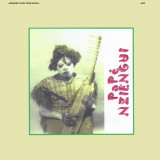
Kadi Yombo, published in 1989, is the most successful album in the quest for a fusion between tradition and modernity in Bwiti harp music of the Tsogho people of Gabon. Combining beating rattles with a layer of synthesizers, Papé Nziengui blends in a contrapuntal dialogue characteristic of harp playing: male song in appeal and female choir in response, male voice of the musical arc and rhythms of female worship. But above all it’s Tsogho ritual music and modern studio orchestration. The result is an initiatory itinerary of 10 musical pieces which are all milestones likely to be simultaneously listened to, danced, meditated on, and soon acclaimed. In the years since, Nziengui has traveled he world from Lagos to Paris, from Tokyo to Cordoba, from Brussels to Mexico City to become a true icon, the emblem of Gabonese music.
Like Bob Dylan, "electrifying" folk and Bob Marley mixing rock with reggae, some purists have criticized Nziengui for having distorted the music of harp by imposing a cross with modern instruments. They even went so far as to claim that Nziengui was just an average harpist covering his shortcomings with stunts that were only good for impressing neophytes; like playing a harp placed upside down behind his back or playing two or three harps simultaneously. Sincere convictions or venomous defamations, in any case, Nziengui never gave in to such attacks, imposing himself on the contrary to pay homage to the elders (Yves Mouenga, Jean Honoré Miabé, Vickoss Ekondo) while instructing the maximum of young people. He is thus the promoter of many young talents, the most prominent of which is certainly his nephew Jean Pierre Mingongué. In a conservative society where the sacred is confused with secrecy, exposing the mysteries of Bwiti in broad daylight can be punished by exclusion or even execution.
Papé Nziengui has always claimed that he faces such risks because he never felt enslaved to a community that governs his life, that regulates his conduct, that has a right of censorship over his activities. Like Ravi Shankar, the famous sitarist, Papé Nziengui is a man of rupture but also of openness, a transmitter of culture. As proof, he has established himself in Libreville, Gabo’s capital, as the main harpist for sessions and concerts, accompanying the greatest national artists (Akendengué, Rompavè, Annie-Flore Batchiellilys, Les Champs sur la Lowé, etc.) as well as foreign artists (Papa Wemba, Manu Dibango, Kassav', Toups Bebey, etc.). In 1988, he was the first harpist to release an album in the form of a cassette produced by the French Cultural Center (Papé Nziengui, Chants et Musiques Tsogho). At the same time, he created his own group (Bovenga), combining traditional music instruments (musical bow, drums, various percussion instruments, etc.) in the framework of a true national orchestra, which gave the first concert and the first tours of a traditional music that was both modern and dynamic, thus "democratizing" the harp, to the dismay of certain purists.
On the other hand, in modern music, dominated by the logic of profit or even commercialism, artistic creation must often be adjusted for a specific audience based on reason rather than heart. But instead of allowing himself to be distorted, Papé Nziengui has always tried to produce music that is not a caricature, worthy in its expression as in its content, of the sacredness and transcendence of the music of the Origins. This is what makes Nziengui not only the musician, but the man someone whose age hasn’t altered any of his freshness or authenticity
il devrait être publié sur 08.04.2022

Kadi Yombo, published in 1989, is the most successful album in the quest for a fusion between tradition and modernity in Bwiti harp music of the Tsogho people of Gabon. Combining beating rattles with a layer of synthesizers, Papé Nziengui blends in a contrapuntal dialogue characteristic of harp playing: male song in appeal and female choir in response, male voice of the musical arc and rhythms of female worship. But above all it’s Tsogho ritual music and modern studio orchestration. The result is an initiatory itinerary of 10 musical pieces which are all milestones likely to be simultaneously listened to, danced, meditated on, and soon acclaimed. In the years since, Nziengui has traveled he world from Lagos to Paris, from Tokyo to Cordoba, from Brussels to Mexico City to become a true icon, the emblem of Gabonese music.
Like Bob Dylan, "electrifying" folk and Bob Marley mixing rock with reggae, some purists have criticized Nziengui for having distorted the music of harp by imposing a cross with modern instruments. They even went so far as to claim that Nziengui was just an average harpist covering his shortcomings with stunts that were only good for impressing neophytes; like playing a harp placed upside down behind his back or playing two or three harps simultaneously. Sincere convictions or venomous defamations, in any case, Nziengui never gave in to such attacks, imposing himself on the contrary to pay homage to the elders (Yves Mouenga, Jean Honoré Miabé, Vickoss Ekondo) while instructing the maximum of young people. He is thus the promoter of many young talents, the most prominent of which is certainly his nephew Jean Pierre Mingongué. In a conservative society where the sacred is confused with secrecy, exposing the mysteries of Bwiti in broad daylight can be punished by exclusion or even execution.
Papé Nziengui has always claimed that he faces such risks because he never felt enslaved to a community that governs his life, that regulates his conduct, that has a right of censorship over his activities. Like Ravi Shankar, the famous sitarist, Papé Nziengui is a man of rupture but also of openness, a transmitter of culture. As proof, he has established himself in Libreville, Gabo’s capital, as the main harpist for sessions and concerts, accompanying the greatest national artists (Akendengué, Rompavè, Annie-Flore Batchiellilys, Les Champs sur la Lowé, etc.) as well as foreign artists (Papa Wemba, Manu Dibango, Kassav', Toups Bebey, etc.). In 1988, he was the first harpist to release an album in the form of a cassette produced by the French Cultural Center (Papé Nziengui, Chants et Musiques Tsogho). At the same time, he created his own group (Bovenga), combining traditional music instruments (musical bow, drums, various percussion instruments, etc.) in the framework of a true national orchestra, which gave the first concert and the first tours of a traditional music that was both modern and dynamic, thus "democratizing" the harp, to the dismay of certain purists.
On the other hand, in modern music, dominated by the logic of profit or even commercialism, artistic creation must often be adjusted for a specific audience based on reason rather than heart. But instead of allowing himself to be distorted, Papé Nziengui has always tried to produce music that is not a caricature, worthy in its expression as in its content, of the sacredness and transcendence of the music of the Origins. This is what makes Nziengui not only the musician, but the man someone whose age hasn’t altered any of his freshness or authenticity
il devrait être publié sur 08.04.2022
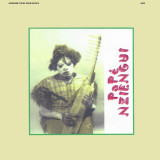
Kadi Yombo, published in 1989, is the most successful album in the quest for a fusion between tradition and modernity in Bwiti harp music of the Tsogho people of Gabon. Combining beating rattles with a layer of synthesizers, Papé Nziengui blends in a contrapuntal dialogue characteristic of harp playing: male song in appeal and female choir in response, male voice of the musical arc and rhythms of female worship. But above all it’s Tsogho ritual music and modern studio orchestration. The result is an initiatory itinerary of 10 musical pieces which are all milestones likely to be simultaneously listened to, danced, meditated on, and soon acclaimed. In the years since, Nziengui has traveled he world from Lagos to Paris, from Tokyo to Cordoba, from Brussels to Mexico City to become a true icon, the emblem of Gabonese music.
Like Bob Dylan, "electrifying" folk and Bob Marley mixing rock with reggae, some purists have criticized Nziengui for having distorted the music of harp by imposing a cross with modern instruments. They even went so far as to claim that Nziengui was just an average harpist covering his shortcomings with stunts that were only good for impressing neophytes; like playing a harp placed upside down behind his back or playing two or three harps simultaneously. Sincere convictions or venomous defamations, in any case, Nziengui never gave in to such attacks, imposing himself on the contrary to pay homage to the elders (Yves Mouenga, Jean Honoré Miabé, Vickoss Ekondo) while instructing the maximum of young people. He is thus the promoter of many young talents, the most prominent of which is certainly his nephew Jean Pierre Mingongué. In a conservative society where the sacred is confused with secrecy, exposing the mysteries of Bwiti in broad daylight can be punished by exclusion or even execution.
Papé Nziengui has always claimed that he faces such risks because he never felt enslaved to a community that governs his life, that regulates his conduct, that has a right of censorship over his activities. Like Ravi Shankar, the famous sitarist, Papé Nziengui is a man of rupture but also of openness, a transmitter of culture. As proof, he has established himself in Libreville, Gabo’s capital, as the main harpist for sessions and concerts, accompanying the greatest national artists (Akendengué, Rompavè, Annie-Flore Batchiellilys, Les Champs sur la Lowé, etc.) as well as foreign artists (Papa Wemba, Manu Dibango, Kassav', Toups Bebey, etc.). In 1988, he was the first harpist to release an album in the form of a cassette produced by the French Cultural Center (Papé Nziengui, Chants et Musiques Tsogho). At the same time, he created his own group (Bovenga), combining traditional music instruments (musical bow, drums, various percussion instruments, etc.) in the framework of a true national orchestra, which gave the first concert and the first tours of a traditional music that was both modern and dynamic, thus "democratizing" the harp, to the dismay of certain purists.
On the other hand, in modern music, dominated by the logic of profit or even commercialism, artistic creation must often be adjusted for a specific audience based on reason rather than heart. But instead of allowing himself to be distorted, Papé Nziengui has always tried to produce music that is not a caricature, worthy in its expression as in its content, of the sacredness and transcendence of the music of the Origins. This is what makes Nziengui not only the musician, but the man someone whose age hasn’t altered any of his freshness or authenticity
il devrait être publié sur 08.04.2022

The disjointed space between personal happiness and global sorrow is
where Smrtdeath's new album it's fine makes its home
Written and recorded during the pandemic, one of the most dramatically isolating
experiences of our lives, the album finds Smrtdeath's Mike Skwark in a
surprisingly contented state, newly coupled up and living in bliss.'It's Fine' was
produced by Matt Malpass, who Skwark calls "fucking incredible." He's a Grammynominated producer who has worked extensively with Blink 182, along with other
artists surfing across similar genre borderlines as Smrtdeath, like Trippie Redd,
Machine Gun Kelly, and 311. His bombastic approach to sound blends perfectly
with Smrtdeath's near-spiritual use of harmony.
it's fine is loaded with amazing featured artists, a who's who in the pop punk
scene. The first song recorded for the album , "Adding Up," features Blink 182's
Mark Hoppus on vocals and guitar, and his presence brings an epicness to the
track. On "Sober," it's clear that falling in love has helped him grow up—but not too
much. Skwark calls the song, which features both Lil Lotus and Lil Aaron, the
result of "an internal conversation I've been having." It balances both the
seriousness of the subject with the fun he wants to leave behind perfectly.
"I like this album the most out of anything I've done, and I want everyone to like it
the most," Skwark says. He hopes to tour the record when the pandemic allows,
with a live band. "I want to do something less familiar to everyone, something
more like, Whoa. Something where I'm larger than myself," he says.
il devrait être publié sur 08.04.2022

In March 2020, Tahiti 80 had a plan to start recording their new album in the studio. That plan, of course, along with everything else in the world, got derailed. But the five-piece group was resilient and resourceful. They quickly shifted to a socially distanced plan B that included file swapping and virtual sessions, all refereed by producer Julien Vignon. The result, due for release in March 2022, is the buoyant Here With You, a collection of eleven upbeat songs that unfold like a prescription for a post-pandemic panacea.
“When lockdown in France happened, we said, 'We're not going to stay at home not doing anything,'” says singer-guitarist Xavier Boyer. “And our new plan became a hopeful thing, waking up every morning and seeing what the other guys had worked on. It wasn't always easy, but this new method allowed a freer approach where we could really go all the way with an idea without being influenced by each other’s suggestions. It must've been overwhelming for Julien, who ended up selecting all our arrangements. But he stayed positive all the way through.”
To help stay inspired and focused during their time in isolation, the band created a mood board, with the centerpiece a photo of an early '90s rave in the UK.
Boyer says, “Whenever you see pictures from this era, people seem very innocent. There are no cell phones and everybody is in to what they are experiencing. We kept that picture in mind as a kind of mantra that would help everyone feel connected to this idea of people celebrating, gathering and just having fun. We were missing the connection with people, and thought it would be great if we could create music that would inspire that kind of emotion.”
Indeed, the songs on Here With You are brimming the feeling of communion that we've all been missing over the past two years. It's there in the catchy opener Lost in the Sound, which walks the walk with Chic guitar flicks, urban nightfall sparkles and an inviting chorus (“Your heart grooves like a thousand 808s on the right time”). It's there in the Jackson 5-style syncopated bounce of “Vintage Creem,” the lush, dreamy “Breakfast in L.A.” and the panoramic sweep of “UFO.” And it's there in the first single “Hot,” which matches an irresistible groove with a neon-lit, percolating arrangement that evokes the disco clubs of 1979.
What's remarkable is that though Tahiti 80 displays a clear affection for sounds of the past, from bubble gum to '70s soul, they never trade in mere pastiche. Their take is more a slightly warped and playful carnival mirror mash-up of classic pop styles, given depth through Boyer's hang-gliding, coolly emotive vocals and lyrics that often rub against the euphoric grain of the music.
“I like to think of songs as a three-minute drama,” says Boyer. “This concept of drama definitely adds different levels to our music. There's the melody, the lyrics, then the production that can maybe emphasize or counterbalance the interaction between the yin and yang in a song.
“There's a difference between the very upbeat, sunshine-y soft rock and the lyrics, even on our past albums,” he continues. “Not dark, but a little more melancholy, and also looking for some kind of motivation, talking to yourself. Like with a lot of Motown songs, you get that feeling where you body’s dancing while your mind’s reflecting, reminiscing.”
That alluring blend of happy-sad has been a signature part of the Tahiti 80 sound from the time Boyer and bassist Pedro Resende formed the group in 1993, as students at the University of Rouen. Taking their name from a souvenir t-shirt given to Boyer's father in 1980, the duo recruited guitarist Mederic Gontier in 1994, and with the addition of drummer Sylvain Marchand a year later, the lineup was complete. The foursome released a self-produced and self-financed EP, 20 Minutes, in 1996, which resulted a record deal with French label Atmospheriques in 1998. Their full-length debut Puzzle, produced with Ivy's Andy Chase and mixed by Tore Johansson, went gold and featured the international hit “Heartbeat” that established the band throughout Europe and Asia.
In the years since, Tahiti 80 – with the additions of Raphaël Léger on drums and Hadrien Grange on keys - has released eight acclaimed albums. The band has fused what MOJO called a “glorious entente of old and new technology” (including singles like “Yellow Butterfly,” “1000 Times,” “Sound Museum,” “Crush!” and “Big Day,” which was featured on a FIFA video game soundtrack), while collaborating with such producers and arrangers as Richard Swift, Tony Lash and Richard Anthony Hewson, who famously arranged The Beatles' “Long and Winding Road.” Boyer has also put out two solo albums, the first under the anagram Axe Riverboy and the second under his name. In 2019, the band released Fear of an Acoustic Planet, a stripped-down reimagining of some of their best-loved tracks from the previous twenty years. It served not only as a look back but a reminder of their formidable songwriting skills.
Boyer is definitely a student of the timeless three-minute pop song format pioneered by '60s artists like The Beatles and The Beach Boys. He says, “I see it as kind of a frame for a painting. Most of the songs on this album, I wrote a verse, pre-chorus and chorus. There aren't many middle eights. I wanted it to be very concise. I feel like people have less attention. There's so much music. It's too easy to switch off or skip to another track, so I want to hook the listener. The three-minute song is kind of an easy code to crack, but at the same time you have to figure out a new way to tell the stories that we've heard before.”
And the stories on Here With You are very much about the longing for connection. Of the album title, Boyer says, “In the world right now, that can mean a lot of different things. Like missing our fans, missing going to concerts. In a way, it can be a statement of what happened last year, and a wish of 'I want to be here with you again.' It's our ninth album. We've had some had some very open, conceptual titles like Puzzle, Activity Center. Sometimes they were more specific like Fosbury orWallpaper for the Soul. Here with You, seems more personal, more engaging in terms of relationships. When I suggested that title, everyone in the band said, 'Yeah, that's it.'”
Until Tahiti 80 can resume a full tour schedule, Boyer says he hopes the new record will make that personal connection. “If I see from the point of view as a music fan, sometimes I see albums I like as companions throughout my life. So if we can be a part of people's existence, even if it's a song that reminds them of the time they were driving with the windows open and it was sunny. Or a sad song that resonates with them after a breakup. That's what we're all looking for when we're making music. You do this very personal thing and you want it to touch as many people as possible.”
il devrait être publié sur 08.04.2022

Loraine James' new ambient-minded alias, Whatever The Weather, follows her 2021 solo LP Reflection (Hyperdub). In contrast to her club music sensibilities, this mode embraces keyboard improvisations and vocal experimentation, foregoing percussive structure in favor of shaping atmosphere and tone. From this divergent headspace emerged new coordinates and climates, a new outlet: Whatever The Weather. A longtime fan of ambient-adjacent Ghostly International artists such as Telefon Tel Aviv (who she'd ask to master the album), HTRK (whose singer Jonnine Standish features on Nothing), and Lusine (whom she remixed at the start of 2021), James saw the label as the ideal home for this eponymous album of airy, transportive tracks as they began to formulate. The titling on Whatever The Weather works in degrees; simple parameters allowing James to focus on the nuances as a mood-builder. Her suspended universe fluctuates; freezing, thawing, swaying and blooming from track to track. James describes her jam-based approach for the sessions as "free-flowing, stopping when I felt like I was done," allowing her subconscious to lead. The improvisations have an intrinsic fluidity to them, akin to sudden weather events passing over a single environment - the location feels fixed while the conditions vary. The album opens at "25°C," a sunshower of soft hums and keys. As the longest piece, it serves to establish stability, the inflection point where any move above or below this temperate breeze breaks the bliss. Given James' proclivity for organized chaos in her production, this scene is fleeting, naturally. From that utopia, we plummet to the most melancholic read on the meter, "0°C," its isolated synth line traversing a hailstorm of steely beats and static. Next, the dial jumps for the propulsive standout "17°C." Like a timelapse of springtime in the city, the single accelerates across a frenzy of frames; car horns, screeching brakes, and crosswalk chatter fill the pauses between rapid jolts of multi-shaped percussion. For portions of the work, James leans neo-classical, rendering pensive vignettes of cascading piano keys and warm delay. "2°C (Intermittent Rain)" ends the A-Side on a short and stormy loop; a resulting sense of reset permeates the B-Side's opener, "10°C." The producer mingles intuitively on echoed organ, locking into and abandoning atypical rhythms that suggest her jazz-oriented interests. "4°C" and "30°C" display the range of James' vocal experiments. The former chops and pitches her voice to a rhythmic, otherworldly effect, the latter reveals James at her most straightforward (she cites Deftones' Chino Moreno and American Football's Mike Kinsella as inspirations), singing tenderly and unobstructed for nearly the duration before beats collide in the climax. Whatever The Weather closes at "36°C," while a sweltering heat by any standards the track eases along comfortably on a chorus of synth waves, acting as an apt bookend for this evocative, sky-tracing collection that started in a similar state. Cyclical, seasonal, and unpredictable, true to its namesake.
il devrait être publié sur 08.04.2022

Growing up in the Californian sprawl and the vast suburbs of Phoenix, Arizona, Caleb Dailey largely dismissed the country and western music that surrounded him. Instead, he was drawn to independent rock, experimental zones, and other genre-defying forms, which led him to create skewed rock music with Bear State and establish the “minimal art label” Moone Records with his brother Micah Dailey in 2013. But in the early half of the 2010s, Dailey began to hear things differently. Drawn into the left-of-center works of artists like Gram Parsons and Blaze Foley, a more idiosyncratic take on country, folk, and roots music began to swirl in his imagination.
Wandering into the form’s cowboy chords and lonesome scenes, Dailey found himself wondering what his own country album might sound like. The result is his debut solo album, a collection of covers called Warm Evenings, Pale Mornings; Beside You Then. Produced by John Dieterich of Deerhoof, Keiko Beers, and Dailey himself, it’s a melancholy charmer, rooted in traditional ideas but free roaming in its scope. Laced with synths, pedal steel, acoustic guitars, and commanded by Dailey’s full and woozy voice, it owes as much to the busted waltzes of Lambchop and the homespun lo-fi folk of Little Wings (whose Kyle Field appears on the album via a spoken intermission) as it does to the songwriters and performers who provide its source material, which include Parsons, Foley, Elvis Presley associate Chips Moman, steel guitarist Buddy Emmons, and others.
“The subversive nature of country music isn’t as much at the surface as some other genres,” Dailey says. “But the deeper down the ‘country hole’ I went, the more I wanted to be part of it. It is truly a strange world.”
The hands of Dailey and his collaborators, which includes a wide roster of DIY experimentalists like James Fella of art punks Soft Shoulder, Jay Hufman (Gene Tripp), Lonna Kelley of Giant Sand, Japanese DIY hero’s Koji Shibuya and Tori Kudo, Nicholas Krgovich, Markus Acher of The Notwist, and more, that strangeness is accentuated. Dailey doesn't aspire to retro Nashville fetishism or sanctioned notions of “realness” so much as a genuine outsider authenticity. Take his version of Gordon Lightfoot’s “If You Could Read My Mind” for example: a highlight of the record, it pairs familiar genre signifiers like pedal steel and guitar strums with warbled synths. Then there’s his read of “Dreaming My Dreams,” originally made famous by Waylon Jennings (who also did time in the Arizona desert), which morphs from a mournful ballad into a wash of far-off sonic noise.
The attention here is on the songcraft itself, with Dailey inhabiting these songs and turning them inside out to reveal unexpected tenderness and playfulness.
Recorded at home with an acoustic guitar and 4-track, Dailey began open correspondences with his collaborators, who fleshed out ideas and added touches, often working with skeletal frames before Dieterich and Dailey shaped it into a cohesive whole. “John is the reason this album exists,” Dailey says. “He sculpted all these parts together in such an otherworldly way. He is truly a magician.” Deeply allergic to insincerity, Dailey avoids any trace of irony. He’s created a cohesive gem out of disparate parts, uniting Americana songcraft with experimental disassemblage. From this bric-à-brac, he’s made something touching and beautifully strange.
il devrait être publié sur 08.04.2022

With vivid flows that radiate effortless complexity, Detroit rapper Elzhi is among the most masterful lyricists on the planet. The gifted emcee rose to fame as the youngest member of legendary group Slum Village, but has since graduated from prodigy to sensei, with a thriving solo career bolstered by several acclaimed projects, plus memorable collaborations with artists like Westside Gunn, Royce Da 5’9”, Ghostface Killah, Conway, Danny Brown, Little Brother, and many more.
Georgia Anne Muldrow is a supremely talented musician, producer, and vocalist whose eclectic work blends elements of jazz, hip-hop, funk, soul, rock, and beyond. The prolific artist has released more than 20 albums, earned a Grammy nomination without a major label, and worked with the likes of Erykah Badu, Mos Def, Madlib, Bilal, Kool G Rap, Robert Glasper, and more.
Now, Elzhi and Georgia Anne Muldrow are joining forces for the collaborative album "Zhigeist". A carefully crafted mix of psychedelic instrumentation and whirlwind lyricism, the project is entirely produced by Georgia, who also contributes vocals on several tracks. An inspired fusion of styles and textures, Zhigeist is an aesthetic triumph infused with an undeniable message.
il devrait être publié sur 08.04.2022

Loraine James' new ambient-minded alias, Whatever The Weather, follows her 2021 solo LP Reflection (Hyperdub). In contrast to her club music sensibilities, this mode embraces keyboard improvisations and vocal experimentation, foregoing percussive structure in favor of shaping atmosphere and tone. From this divergent headspace emerged new coordinates and climates, a new outlet: Whatever The Weather. A longtime fan of ambient-adjacent Ghostly International artists such as Telefon Tel Aviv (who she'd ask to master the album), HTRK (whose singer Jonnine Standish features on Nothing), and Lusine (whom she remixed at the start of 2021), James saw the label as the ideal home for this eponymous album of airy, transportive tracks as they began to formulate. The titling on Whatever The Weather works in degrees; simple parameters allowing James to focus on the nuances as a mood-builder. Her suspended universe fluctuates; freezing, thawing, swaying and blooming from track to track. James describes her jam-based approach for the sessions as "free-flowing, stopping when I felt like I was done," allowing her subconscious to lead. The improvisations have an intrinsic fluidity to them, akin to sudden weather events passing over a single environment - the location feels fixed while the conditions vary. The album opens at "25°C," a sunshower of soft hums and keys. As the longest piece, it serves to establish stability, the inflection point where any move above or below this temperate breeze breaks the bliss. Given James' proclivity for organized chaos in her production, this scene is fleeting, naturally. From that utopia, we plummet to the most melancholic read on the meter, "0°C," its isolated synth line traversing a hailstorm of steely beats and static. Next, the dial jumps for the propulsive standout "17°C." Like a timelapse of springtime in the city, the single accelerates across a frenzy of frames; car horns, screeching brakes, and crosswalk chatter fill the pauses between rapid jolts of multi-shaped percussion. For portions of the work, James leans neo-classical, rendering pensive vignettes of cascading piano keys and warm delay. "2°C (Intermittent Rain)" ends the A-Side on a short and stormy loop; a resulting sense of reset permeates the B-Side's opener, "10°C." The producer mingles intuitively on echoed organ, locking into and abandoning atypical rhythms that suggest her jazz-oriented interests. "4°C" and "30°C" display the range of James' vocal experiments. The former chops and pitches her voice to a rhythmic, otherworldly effect, the latter reveals James at her most straightforward (she cites Deftones' Chino Moreno and American Football's Mike Kinsella as inspirations), singing tenderly and unobstructed for nearly the duration before beats collide in the climax. Whatever The Weather closes at "36°C," while a sweltering heat by any standards the track eases along comfortably on a chorus of synth waves, acting as an apt bookend for this evocative, sky-tracing collection that started in a similar state. Cyclical, seasonal, and unpredictable, true to its namesake.
il devrait être publié sur 08.04.2022

The next release on Cultivated Electronics Ltd shines a light on some of the fresh talent emerging from within the Electro scene across this double-vinyl 12" which will be pressed on balck and colour vinyl editions. IMOGEN has enjoyed a whirlwind rise, and her reputation as one of the most talented newcomers is well recognised. Her discography includes releases on Earwiggle, Shared Meanings and fabric where she is also a resident DJ, and presents a monthly radio show on NTS. She opens the compilation with the tough beats and twisted melodies of 'Anatta'. ARMEC (Robbie Mecrow) is an Electro and Acid producer from Manchester who has already impressed with releases on Nebulae, Echocentric, Further Electronix and most notably 20/20 Vision. His beat-led track 'Acute' delivers a serious punch with plenty of sub-bass. Russia's SERGEY TIMOSHOV is the promoter and resident DJ at Warehouse, held weekly at the Propaganda club in Moscow. Here he utilises that experience in fine style for his club-ready 'Electro Beats 1'. UK artists OBSERV and CYPHON collaborated on their debut EP for Gunfinger Food last year, but here they deliver 1 track apiece. Obzerv brings pure destruction on his tumultuous track 'Octro'. While Cyphon, known for his live hardware sets, supporting artists like Assembler Code, Radioactive Man and Afrodeutsche, plus releases on International Chrome and Blind Allies brings dark phunk to 'Nightmare'. KHALILIAN is probably best known as one half of US duo Joonam (with Elon Admony) who have been self-releasing on their Balagan label for the last few years. 'Valda' pitches things down with Detroit-esque chords and a deep, subterranean atmosphere. TOM FAZAK is a 21 year old DJ/Producer from Cardiff now based in Bristol. Better known as a DJ, he's spent the past 9 year collecting records and garnering inspiration from all aspects of dance music. For the last 3 years he's focused on production and draws on cosmic influences for his contribution, 'Weightless'. LINDSAY GREEN is one half of Co-Accused, long-standing residents of Glasgow's prolific underground club scene via their club nights in Paisley's Club 69 and the launch of their Co-Accused Records label in 2021. Going solo for the closing track, 'Creepin' bridges to gaps between Electro, Techno and Acid.
Commandez maintenant et nous commanderons l'article pour vous chez notre fournisseur.

LTE presents its debut release titled Long Term Evolution, a 6-track compilation bringing together pieces from six artists from around the world. Music we fell in love with, sounds we find appealing, paths to explore. Between now and then.
LTE is a newly-born music label from Prague. Its goal is to build a platform for local and foreign musicians, producers and sound artists. Label's focus lies on contemporary electronic music and a wide spectrum of genres. Learning, trying and experimenting. Putting love, time and effort.
Bad times, good timing.
Commandez maintenant et nous commanderons l'article pour vous chez notre fournisseur.

Stalactite is a collaborative recording project by renown Japanese artist and multi-instrumentalist Susumu Mukai AKA Zongamin and producer Drew Brown, whose discography ranges from his own group Off World to a variety of integral productions for artists such as Blonde Redhead and Beck. Their self-titled debut for the ESP Institute is a grand gesture, a broad stroke that illustrates both singular focus and vast complexity, which is no easy feat considering the almost oppressive immediacy and availability of tools at the disposal of contemporary artists. There’s a level of creative confidence and discipline needed to work so fundamentally, and whether or not the listener has an appetite refined enough to process the tasteful subtleties throughout this production, these same subtleties accumulate regardless and land that listener in a highly considered and developed space. The deceptively naive melodic approach consistent across these nine tracks can feel transparent, familiar to a point the listener can anticipate its path, but when listening with acute focus we find a variable range of texture, temperature, depth and negative space. As alumni of the Minimal, Cold Wave, Synth Pop era, Susumu and Drew successfully personify a motley crew of synthesizers to work in concert, reduced to their core personalities and presented as their most honest selves — austere, shy, cinematic, percolating, bulbous, glistening, cantankerous, rubberized, clumsy and animated. Each masterfully paired with complimentary counterparts, these players assemble into a sound-stage we typically find in live recordings, enveloping and inviting us to the center of an acoustic cavern to wade through sonic impressions of monolithic stalactites.
Commandez maintenant et nous commanderons l'article pour vous chez notre fournisseur.

Gondwana Records sign LA bassist and composer Seth Ford-Young's Phi-Psonics project and announce a remastered deluxe-edition of The Cradle featuring bonus material
Phi-Psonics is a meditative, immersive instrumental group from Los Angeles, led by bassist Seth Ford-Young and featuring Sylvain Carton on woodwinds, Mitchell Yoshida on electric piano, and Josh Collazo on drums. Their deeply soulfulmusic draws on jazz and classical influences together with Ford-Young's own musical experiences, relationships, and his introduction to spirituality, yoga and philosophy at a young age, to create something uniquely its own. Phi-Psonics' name and ultimate aim is to find 'Phi' – the golden mean – in art, nature and self. Ford-Young explains:
"It's a bit of a cliché, but music saved my life many times and instilled in me a belief in the great power of healing through art. It is my hope and intention that this music provides healing to someone somewhere."
Originally from Washington DC area, Ford-Young moved to California in the early 90s and fell in love with the deep sounds of the upright bass and the music of Charles Mingus, John and Alice Coltrane, and Duke Ellington along with Bach, Chopin, Pärt, and Satie. He immersed himself deeply in music and keen to learn combinedintense personal study with collaborations, tours, and recordings with artists such as Tom Waits, Beats Antique, and John Vanderslice. In 2010 he moved from the San-Francisco Bay area to the Los Angeles hills and continued his explorations. But great music is rarely just about music and Ford-Young's meditative, soulful music draws on more than just the twin wellsprings of jazz and classical music:
"My mother was a yoga teacher from the early 70's until recently and taught me yoga and meditation at an early age, my stepfather is an Aikido instructor and student of the teachings of Gurdjieff. Those were all early areas of study that I came back to many times throughout my life. Phi-Psonics has been a project that unapologetically synthesizes some of these ideas into our music".
It's this mixture of influences, musical and extramusical, that gives the music of Phi-Psonics it's immersive quality and quiet power. Revealingly the music that would becomeThe Cradle, wasn't written specifically for an album, originally Ford-Young was just writing down what was coming through. As time went by and the album began to take shape, the world situation seemed to be getting darker and his compositions aim to offer hope as a response to the negative influences that abound today. Remarkably for such a beautiful sounding record, it was recorded at the composer's home, rather than in a studio, but the relaxed nature of this process gives the music an airy lightness that propels the music to some magical spaces.
Originally self-released on vinyl in a limited run just as the world went into lockdown, The Cradle reached Matthew Halsall (founder of Gondwana Records) when he aws looking for music for his Worldwide FM show and he was blown away, hearing a kindred spirit at work. Halsall explains:
"Phi-Psonics make beautiful, humble and honest music, it's not showy, but it has a deep vibe that will elevate your mind and soul if you let it. When we heard The Cradle we reached out and are really super delighted to welcome Seth and his band to our label". Whereas for Ford Young: "Connecting with Matthew and the Gondwana records family has been a light in the darkness of the last years - to have my music make connections even as we are more isolated."
Ford-Young is currently putting the finishing touches to the second Phi-Psonics record, but aware that only a select few had heard The Cradle, let alone had the chance to buy a copy, and entranced by its deceptive simplicity and elevating energy, Halsall suggested that Gondwana present the album as a remastered 'deluxe edition' with an extended running time featuring extra tracks and new artwork from Daniel Halsall.
The Cradle starts with First Step, perfectly setting the tone for the whole album, it is a beautiful, soulful slice of musical calm gently propelled by Ford-Young's resonant bass and elevated by sublime flute and Wurlitzer electric piano solos. The seductive title track The Cradle was written way back in 2011 during a time of great personal change that led the composer to a feeling of newness and nurture. The magical, winsome Desert Ride is inspired by many rides through the grandly cinematic Mojave Desert. You can experience how incredibly full of life it's harsh landscape is if you slow down to its tempo. The gentle, sublime Mama is a tribute to mothers of all kinds, beautiful and heroic. Drum Talk was largely improvised, Ford-Young and the band agreed on a topic and recorded their conversation. Choosing their notes based on how Josh's drums were tuned. Like Glass is named for the special properties of Glass. Like some music, glass is delicate, yet has structure. The first of the two bonus tracks Still Dancing was written during the early days of 2020 in response to the challenges we all were facing then. It's a reminder that the figurative dance continues and that real dancing is essential. And the second, The Searcher, also written as a response to 2020, is a gently hypnotic song about the introspection and growth that can spring from a difficult situation.
This then is The Cradle, a quiet self-contained masterpiece, life-affirming and elevating in equal measure and the first offering from a wonderful new voice in spiritual jazz and the latest members of the global Gondwana Records family.
Commandez maintenant et nous commanderons l'article pour vous chez notre fournisseur.

Haze - released via Ki Records - is Greek producer and composer, Hior Chronik's latest creation. Aligning with his previous critically acclaimed album, Descent, Haze creates an electro-ambient world which accentuates modern classical minimalism. It is an album which deeply embodies tranquility, fulfilment and meaningful connection, aspirations born out of Hior Chronik's past in Athens, and realised by his relocation near to a forest in Berlin, where he can truly feel at-home, surrounded by the awe-inspiring beauty of nature. Through 15 tracks, Hior Chronik guides his listeners in an immersive journey which features magical soundscapes built using DX7 and Roland synthesizers, beats from the Lofi drum machine and Volca samples. Inspired by the best of his previous work in moody electro soundscapes, alongside his own history as a listener and lover of early 90's electronic music, artists like, Lali Puna, Solvent and Remote Viewer, this album demonstrates a new dimension to Hior Chronik's artistry which exudes light optimism.
Commandez maintenant et nous commanderons l'article pour vous chez notre fournisseur.

Open Space Club Tools is back with another versatile pack of useful machinery. Sticky drum beats and tricky rhythms for the explorative club deejay. Volume 2 features a wide range of club styles from Korean prodigy Mogwaa, Miami’s best kept secret Bong Soup, New York heavyweight Will Dimaggio, and Canadian-turned-Berliner Logan Sturrock aka FlØrist.
Commandez maintenant et nous commanderons l'article pour vous chez notre fournisseur.

In the vast musical archive that is Roman Flügel’s discography, Ro70 holds a special place. Written, performed and produced between January and July 1995, it is his debut album as a full-fledged solo artist. Enquired and inspired by a certain David Moufang from Heidelberg, who used to share a classroom with Jörn Elling Wuttke at the SAE Institute and revealed himself to be an Acid Jesus fan and also of the Roman IV 12“ project, it seemed like a good fit for his (and Jonas Grossmann’s) Source Records label.
In the days before file sharing that meant going back and forth with various DATs in his mom’s Volkswagen Polo Fox for actual listening sessions between Darmstadt and Heidelberg. The time was as special and idiosyncratic one as was the sound of Source Records and of course Ro 70 itself. While the rave-olution was ready to eat its kids with the commercial outlook of former underground phenomena looked bright and the scene’s prophecy seemed grim, enterprises like Source and artist like Roman Flügel were defying any competition out of those corners with their own means.
Listening back to the ten tracks of Ro 70, it proves them, their taste and artistic vision right. Probably still being put into the ambient, downtempo, electronica or chill out sections of most record shops, this music could have been made, relished and cherished anytime between 1995 and now. Made in Roman’s home studio in his parent’s house or in the Klangfabrik studio in Egelsbach, this was made for before or after the rave – or for people who din’t want to have to do anything with it at all. His signature is all over it. Well balanced soundscapes with an almost uncanny presence and clarity. Bittersweet symphonies that doesn’t seem to be in an inferior position to modern classical or electronic studies.
It is also a very personal testament to a time in the artists’s life that was ready to get caught in the maelstrom of the oscillating techno city called Frankfurt am Main and its halcyon days between the Delirium record shop, Sven Väth’s marathon sets, the early days of the label triumvirate Playhouse, Klang & Ongaku. In a musical journal without lyrics, those memories will have to stay pantomimic and private. All for the better, that we can at least still listen to them.
Commandez maintenant et nous commanderons l'article pour vous chez notre fournisseur.

Repressed! When asked at the time about what to expect from this collaboration with Edo G, the legend Masta Ace fired back without hesitation: “People are gonna be surprised when they hear the mixture of styles. We both have a different approach. It’s like the old Reeses commercial... Ya got peanut butter walking down the street. Coming from the other direction is chocolate. Someone trips and blam, a peanut butter cup was born. Something new and amazing was created that no one had ever thought of!” When one thinks of Boston and New York, the first thing that comes to mind is the infamous Red Sox/Yankees rivalry. But this time when Boston met New York, it was a collaborative effort to bring the world one of the tightest Hip Hop efforts of 2009. Two of the game’s most exceptionally creative and well-rounded artists, Edo. G and Masta Ace brought the two cities together with Arts & Entertainment. Like their home cities, these artists have a long history and have influenced the world. Hailing from Brownsville, Brooklyn, Masta Ace got his proper introduction setting off the quintessential Juice Crew posse cut, “The Symphony.” Not long after, Edo G’s debut Life Of A Kid In The Ghetto and it’s lead single “I Got To Have It” went to the top of the Billboard Rap Singles chart with heavy rotation on Yo! MTV Raps. Both Ace and Edo have continued to stay relevant, drop albums, tour the globe, and influence up and coming artists everywhere. Joining the duo on Arts & Entertainment was a notable list of prominent artists from NYC and the Bean including Posdnuos of De La Soul, Large Professor, DJ Spinna, KRS-One, Marsha Ambrosius, Mr. Lif, Akrobatik, Chester French, Double O of Kidz in the Hall, M Phases, and more. The album continues to be a fan favorite to this day, especially the never-gets-old cuts “Little Young” and “Dancin’ Like A White Girl,” and this re-issue is sure to be well received once again.
il devrait être publié sur 01.04.2022

Hip Hop Collected will take you on a musical journey through the history of hip hop. This 2LP covers the first 20 years of the genre, showcasing 25 early pioneers who participated in the rise of hip hop. This compilation features music from the new labels that started to rise from the underground scene, like Sugar Hill Records, Profile and of course Def Jam. Including artists that defined a genre, a lifestyle and most of all, artists that inspired millions of young kids with both socially critical lyrics as well as classic party anthems.
This hip hop compilation album is part of the new Collected compilation series, which is a collaboration between Universal Music and Music On Vinyl. The compilations bring together the biggest and best names of its genre, combined with forgotten hits and less discovered gems, giving the listener an experience of both nostalgia and uncovering new musical grounds at the same time.
The 2LP features Kurtis Blow “The Breaks”, Grand Master Flash & The Furious Five “The Message”, Beastie Boys “She’s On It”, Rob Base & DJ E-Z Rock “Get On The Dancefloor”, and Eric B. & Rakim “Paid In Full” amongst many others.
Hip Hop Collected is available as a limited edition of 5000 individually numbered copies on red (LP1) and white (LP2) coloured vinyl. The album includes an insert with liner notes, photos and credits.
Commandez maintenant et nous commanderons l'article pour vous chez notre fournisseur.

Some things take time to happen, some things perhaps take a bit longer than they should but, finally, we are delighted to present an issue of the iconic, and sought-after, Brazilian album 'Alucinolândia' by Zito Righi e Seu Conjunto from 1969.
The trippy, surrealist 60s cover design with hands holding eyeballs is somewhat confusing. Rather than the stoner acid rock record that the art may suggest, 'Alucinolândia' is actually a quintessential 60s gem, mixing samba, MPB, bossa nova, quirky organ-led mod-jazz groovers and easy-listening crooners with a relaxed cool swagger.
Zito Righi aka Isidoro Righi, the Brazilian saxophonist, instrumentalist, conductor and composer brought together an illustrious cast for this masterpiece, including the much-loved vocalist Sônia Santos. Sônia delivers a masterclass on the album's opener, and maybe its crown-jewel 'Poema Ritmico Do Malandro’. The song is fierce and driving with an enticing funk intro that bursts into a Samba / Batucada workout. A real monster that works magic on the dancefloor. Sônia would later re-visit this track in 1971 on a recording for Copacabana Records, which Mr Bongo released as part of the Brazil45 series. The Brazilian songwriter Roberval penned three tracks on the record, including another highlight and the far too short 'Birimbau'; a catchy Brazilian jazzy-samba dancer at its finest. Other musicians include the drummer Fernando who also recorded with the greats Dila & Guilherme Coutinho.
The fact the record was released in 1969 meant it was probably a bit out of step with its contemporaries in comparison to the works of artists such as Os Mutantes, Gilberto Gil et al. The core of 'Alucinolândia' is that of a more optimistic early to mid-sixties party feelgood vibe rather than the angsty, psychedelia, and rebellion of the Tropicália movement. Over 50 years since its release, the work can finally be judged on its own merit; and what a beauty it is.
Commandez maintenant et nous commanderons l'article pour vous chez notre fournisseur.

dutch sound artist albert van abbe now joins the raster family, with an unexpected collaboration with founder olaf bender aka byetone titled DUAL. having spent time working side by side in ’s-hertogenbosch at the willem twee studio, the result of their collaboration is both smooth and haptic, rounding out as an expressive camaraderie between the two veteran producers. jovial and innocent, DUAL alludes to the experimental research process of finding common ground. fully embracing the haphazard richness of live recordings, the result is a remarkable fusion of contrasting outputs; intricate collaborative efforts and byproducts woven together with an eager indifference towards expectation. the artists embrace a skewed navigation through pronounced highlights, intricate lulls and moments of temporal stasis, intermittently punctuated as a means of intentionally avoiding notions of rigid perfection. with ‘real-time’ approach directing DUAL’s creation, the pair effectively shies away from any meticulous planning, and the music runs free and negates any rigid parameters one might have expected. quirky titles exude the collaged form of the release, and underline its innocent charm. as a whole, DUAL focuses on the creative process and fully engages listeners with its own dialogue, though it is very outspoken, at times even abrasive.
Commandez maintenant et nous commanderons l'article pour vous chez notre fournisseur.

Die „britischen Eagles“ sind im Anflug. Am 15. Oktober erschien„Enjoy The Ride“, das neue Werk der
Frontm3n!
Das zweite Studioalbum von Peter Howarth (The Hollies), Pete Lincoln (Ex-The Sweet) und Mick Wilson (Ex-10cc) beeindruckt mit tollen Melodien, eindrucksvollem Harmoniegesang, frischem Sound und feinstem Songwriting!
Anders als bei ihrem 2018er Debutalbum, als das Star-Trio den Fans in der Mehrzahl noch tolle NeuArrangements der Mega-Hits ihrer „alten“ Bands servierten, enthält die neue Scheibe zwölf nagelneue,
selbstgeschriebene und von Mick Wilson fein produzierte Songs, die dennoch 1:1 nach Frontm3n klingen und auch Fans von Toto und den Eagles komplett auf ihre Kosten kommen lassen. - Jetzt auch als 2LP!
il devrait être publié sur 01.04.2022

Reuben's Daughters is not a band, it's a name for all of the musical works by Reuben Myles Tyghe, a pure product of Bath's musical scene. Reuben performs solo, write and record albums featuring a wide pool of guests, collaborate with other artists, has a six piece live band... it's all Reuben's Daughters. The daughters part of the name allows all of his musical endeavours to have a fluidity... And the album is full of this light and smotth fluidity that gets directly to the listener's hear without fighting it. Or, in the words of Keely Stoltz: "“Playful and adventurous pop where solid grooves undulate underneath technicolor island slide guitars. Who knew some of the sunniest new music in the world could be crafted in the southwest of England?”
il devrait être publié sur 01.04.2022

Mimms is an American R&B artist and a pioneer of the early ”soul” sound. He is best known for his 1963 R&B #1 hit “Cry Baby” famously covered by Janis Joplin. It was also a favourite live track of U.K. rockers Led Zepplin.
Our chosen A-side was originally released in the U.S. on United Artists in 1965 to absolutley no acclaim at the time. It was also released in the U.K. coupled with the hit “I’ll Take Good Care Of You” but still failed to make the charts and remains rare to this day. Our B-side, “As Long As I Have You” was only released on 45 in France and is incredibly rare (note: the U.K. release on United Artists in 1967 is a “live” version). As with the aforementioned “Cry Baby”, “As Long As I Have You” was also a favourite of Led Zepplin and they performed a 15-minute version on their International tours.
il devrait être publié sur 31.03.2022

When producer, songwriter and multi-instrumentalist Diogo Strausz arrived in France for the first time, he already had an impressive CV. First, as part of the duo Balako, his music was released on Razor-N-Tape, Barefoot Beats and Greco-Roman after gaining the attention of Joe Goddard of Hot Chip. His tracks also have been played by Gilles Peterson on BBC 6. He also produced Brazilian indie artists such as Castello Branco and Alice Caymmi and remixed a track by Brazilian legend Gal Costa. Arrived in France, it is by signing the co-production of the disc "Les Bruits de la Ville" of Voyou or tracks for Julia Jean-Baptiste that he drew attention.
Freshly signed on Goutte d'Or Records, affiliated label of Cracki Records, to whom we can thank for Agar Agar, Saint DX or Alma Elste, Diogo Strausz will present his first EP Flight of Sagittarius in April 2022. Flight of Sagittarius is both retro and current. Between the old school boogie of Marcos Valle and the jazz funk of Azymuth but also the sunny groove of Nu Genea or the electro-funk productions of Guts.
Commandez maintenant et nous commanderons l'article pour vous chez notre fournisseur.

Genuine, warm, almost primal house music to celebrate the first release of Time To Play Records, a label founded by Filippo Tazzer on the wave of the ten-year Vicenza party dedicated mainly to black music. The debut of the label bears the signature of Reekee, Emilian producer founder of Wrong Notes Records and globally recognized for the releases on Uzuri Rec. And the prestigious collaborations with artists such as Kai Alcé, Erik Rico, Patrice Scott and Alex Attias .Side A opens with “Don’t look back”, which will then also be the title of the ep, in which you breathe the air of Detroit for the construction of a powerful and hypnotic rhythm, embellished with refined piano turns. Then follows Butterfly, who blends the intense bond between Reekee’s exquisitely house background and his passion for jazz, which is touched with light keyboard virtuosity.On the B-side, Reekee “completes his work with Wanna be Away” by flirting with his Drum machine to reach the territories of the broken beat. The ep is completed by a remix of Don’t look back signed by Colosimo (it will be his second release of Time to Play records), capable of essentially working on the drums of the song and giving it an acid touch perfect for the most energetic tracks.
Commandez maintenant et nous commanderons l'article pour vous chez notre fournisseur.

“Little” Anthony Gourdine and the Imperials were originally a late Fifties U.S. doo-wop group who had a million-selling hit with their first single “Tears On My Pillow” in 1958. More hits followed, into the Sixties, including “I’m On The Outside Looking In”, “Goin’ Out Of My Head” and “Hurt So Bad”. But, our two chosen sides from 1966: “Better Use Your Head” and “Gonna Fix You Good (Everytime You’re Bad)” taken from the album Payin’ Our Dues failed to cause a stir at the time. Both earned U.K. releases on United Artists but would have to wait a further ten years before seeing any U.K. chart action, peaking at #42 when reissued back-to-back on U.A.’s Silver Spotlight Series. However, both sides became undergound Northern Soul favourites, first at Manchesters Twisted Wheel when “…Fix You Good” filled the floor and later, in 1975, when “Better Use Your Head” packed the ballroom at the legendary Wigan Casino.
il devrait être publié sur 31.03.2022

This compilation album collects Decca tracks from
1942 onwards and covers Jordan's golden period;
featuring 11 Number 1's and 5 charting in the top 10.
Louis Jordan has left a real lasting legacy, as without
his ground breaking musical journey in the 40's & 50's,
we can genuinely say that none of the music we knew
and loved thereafter may have happened. Can't say
that about many artists, can you?
il devrait être publié sur 31.03.2022

This collection is drawn from throughout the 60's, though it does not
entirely fit the commonly held belief that Northern Soul records are all
ultra-rarities, because half of the tracks here actually were major hits in the US, and four of them were top twenty entries! Included among the twelve artists are people who maintained long careers, some who had great success as writers, and one who went on to have a major No 1 in the seventies. We finish with Charles Sheffield (aka Mad Dog or Prince Charles) and his 1961 gem It’s Your Voodoo Working. A well known track among some classic hits and some perhaps lesser known songs, which is the nature of this must-have collection.
il devrait être publié sur 31.03.2022

‘Aloha Got Soul’ encompasses a vibrant era of contemporary music made in Hawai’i during the 1970s to the mid-1980s as jazz, rock, funk, disco and R&B co-existed alongside Hawaiian folk music. Hawai’i’s identity had undergone huge change: statehood into America in ‘59 and the Vietnam War were the backdrop as Hawai’i’s youth found inspiration in a new wave of international music led initially by The Beatles and Stones and, later, by US R&B bands like Earth Wind & Fire and Tower Of Power. Garage bands flourished during the ‘60s and, by the ‘70s, live music was at its peak. Waikiki was filled with clubs: The Point After, Infinity’s, Hawaiian Hut, Spats and more.
For the ‘70s generation of artists, some came through the talent contest ‘Home Grown’ and its accompanying compilation LP. In 1978, Hawaiian was made the official state language and a huge movement arose to revive hula and traditional music. Steve & Teresa’s ‘Kaho’olawe Song’ longs for an island long gone: the US military had used Kaho’olawe as a bombing range since Pearl Harbor. Nohelani Cypriano sang about the once sleepy town of Kailua, now a popular tourist destination: “Kailua needs no high-rise with her blue skies, not for our eyes. Can you realize?” Leading Hawaiian artists like Aura, Mike Lundy and keyboardist Kirk Thompson’s Lemuria took time in high quality facilities like Broad Recording Studio to make albums. Others grabbed studio time when they could: Tender Leaf’s Murray Compoc worked for the city bus by day and recorded an album during night sessions. Other albums were spontaneous. In 1983, Steve Maii & Teresa Bright recorded an acoustic set in just 3 hours after being invited to a studio following a gig.
For the artists of the ‘70s, the climate for music changed rapidly during the mid-‘80s as DJ culture grew and live venues shut down. Hawai’i’s R&B era shone brightly and relatively briefly but, despite brilliant musicians, regular gigs and LP releases, most of the music barely made it to the mainland. Thanks largely to Aloha Got Soul’s Roger Bong, a new interest in this fertile era of Hawaiian music has grown, culminating in this compilation of overlooked gems. ‘Aloha Got Soul’ is compiled and annotated by Bong and features rare photos and original artwork.
Commandez maintenant et nous commanderons l'article pour vous chez notre fournisseur.

Backward Futura, exploring the sounds and vibes of 80’s and 90’s electronica thru the lenses of the new Millennium.
First EP by Linear Sound Delivery, one of Italy’s most interesting artists under a new secretive moniker.
Commandez maintenant et nous commanderons l'article pour vous chez notre fournisseur.

Lost somewhere between the mysterious alleys of 70s Istanbul and the scorching sun and crystal blue sea of Jaffa, Tel Aviv, Şatellites self-titled debut album is set to be released on Batov Records on April 1st.
The Şatellites’ sound shimmers between traditional Turkish folk and instrumentation, ethereal psychedelic guitar leads and groovy dance floor baselines. The resulting concoction of songs draws on cross continental influence yet at its core is a desire to illuminate the vivid qualities of classic Turkish music, honouring the Anatolian folk and psych artists from this golden era of music. From the funky disco beat of Disko Arabesque to the celestial lead guitar in Yağmur Yağar Taş Üstüne, the band add fire and flair to time-honoured pieces of Turkish music giving them new meanings. Covering important tracks such as female singer Kamuran Akkor’s track Olurmu Dersin, and musician and guitarist Zafer Dilek’s Yekte, the album covers an array of original pieces of different musical styles and sounds, that once have and continue to flow out of Turkey. The band boasts six members; Ariel Harrosh (Bass) Lotan Yaish (Drums), Yuli Shafriri (Vocals), Tsuf Mishali (Keys and Synths), Tal Eyal (Percussion) and Itamar Kluger (Diwan saz, both electric and acoustic, electric baglama, Greek 4 double string bouzouki). They came together some years after band leader Itamar Kluger discovered the saz whilst travelling the Kaçkar mountains in Turkey’s eastern region. The saz being a long necked, plucked stringed instrument native to the rural areas of the country, which remains an integral part of Şatellites’ union, and plays predominance throughout the bands’ album and music.
In the same way the guitar was electrified in the 1930s, the electrification of the saz in the 1960s led to an explosion of rock music dredged in middle eastern influence, a musical genre fittingly called “Anatolian Rock” and based on the principles of Anglo-American and psychedelic rock music, yet incorporating the style, rhythm, and scales of traditional Anatolian folk music.
As such, throughout the creation of the album, the band conceived the idea of intertwining differing elements such as the groove of funk, the rhythm of disco, and reverb of psychedelic, with traditional middle-eastern rhythm and structure, opening up the wealth of Turkish music to the western world, so that anyone and everyone can relate to something from the album. With that said, Şatellites emphasise that their music is not fundamentally Turkish music, on the contrary, they merely try to sound as close to the genre as possible. Their sole aim is to honour this amazing culture and to present it to the world in a more accessible and attainable form.
Commandez maintenant et nous commanderons l'article pour vous chez notre fournisseur.

The Brkn Record is a new project led and produced by Jake Ferguson, the co-founder and bass player for the UK's foundational deep jazz outfit the Heliocentrics. With fellow Heliocentrics co-founder and legendary drummer Malcolm Catto, Ferguson has been a regular collaborator with globally recognised artists including Archie Shepp, Mulatu Astatke, Melvin Van Peebles, Orlando Julius and many others. The Architecture of Oppression Part 1 represents Ferguson's debut as a bandleader and orchestrator, and manifests as a committed and soulful response to ongoing and systemic anti-black racism, social oppression and state violence both at home in London and across the globe. Combining poetry, testimony and song with rich and cinematic backdrops, Ferguson has produced a sui generis sound that conjures flavours of Arthur Verocai, Ennio Morricone, classic library productions, Madlib-style deep-jazz beat science, and psychedelic soul. With bandmate Malcolm Catto on drums, Ferguson draws on their long years of collaborative experience in the Heliocentrics to build an album of striking texture and depth.
il devrait être publié sur 30.03.2022

The Brkn Record is a new project led and produced by Jake Ferguson, the co-founder and bass player for the UK's foundational deep jazz outfit the Heliocentrics. With fellow Heliocentrics co-founder and legendary drummer Malcolm Catto, Ferguson has been a regular collaborator with globally recognised artists including Archie Shepp, Mulatu Astatke, Melvin Van Peebles, Orlando Julius and many others. The Architecture of Oppression Part 1 represents Ferguson's debut as a bandleader and orchestrator, and manifests as a committed and soulful response to ongoing and systemic anti-black racism, social oppression and state violence both at home in London and across the globe. Combining poetry, testimony and song with rich and cinematic backdrops, Ferguson has produced a sui generis sound that conjures flavours of Arthur Verocai, Ennio Morricone, classic library productions, Madlib-style deep-jazz beat science, and psychedelic soul. With bandmate Malcolm Catto on drums, Ferguson draws on their long years of collaborative experience in the Heliocentrics to build an album of striking texture and depth.
il devrait être publié sur 30.03.2022

Ltd to 100 copies
Yearly compilation album RADAR by KEROXEN, introducing the second volume in the series of themed based albums showcasing the talents and misfortunes of carefully selected musicians/bands based in the Canary Islands.
Where Radar Vol.1 (KXN012, 2020) focused its sights on rock oriented music, Vol.2 looks at the more experimental, free flowing side of electronic and sample based music, also Made in Tenerife this last year (2021).
The format stays the same as Vol.1: 4 different artists are invited to contribute 2 tracks, no rules other than do their own thing. The result being an extraordinary amalgamation of various genres and styles of the electronic music cannon including: smoky dub beats by King L. Man, tropical casiotone divagations by Usted, inverted & polyrhythmic workouts from the Tupperwear duo, ultra precise dub-tech-2step edits by Postman and organic psychedelics by freak trio Lagoss.
Yet another crucial document from a region you usually do not associate with forward thinking music, more than a simple compilation, RADAR 2 unveils the thin veil of new and uncompromising music being produced in and around the orbit of the Keroxen Collective.
It seems the Atlantic isolation works as a catalyser here, judging from the copious amount of different and challenging music we’ve been seeing from this corner of the world over the last few years. We invite you to dive with us, in the wild remote tropical waters of RADAR vol.2.
Commandez maintenant et nous commanderons l'article pour vous chez notre fournisseur.

Rock Steady Cool is another fine collection of Rocksteady hits. The ‘Cool’ subtitle could not be more relevant to an album, as around 1966, an extreme heatwave hit the Jamaican island. This would not stop the all night dances from going ahead but the jerky Ska Rhythms proved too strenuous of an activity to partake in, so a new slower beat to suit this extreme weather had to be found and the ever resourceful music entrepreneurs came up with the slower paced beat and Rocksteady was born.
This two-year Rocksteady period ran until 1968 and would see some of the power escape from the big three producers, Clement ‘Coxone’ Dodd, Prince Buster and Duke Reid. It was time to make room for a new wave of up-and-coming producers that also had something to offer the people. Such names as Joel Gibson (Joe Gibbs), Sonia Pottinger, Derrick Harriott and most prolific of them all, Mr Bunny Lee would step forward and add some new musical touches to the island.
Rocksteady was an inspirational and somewhat overlooked sound that provided us with some outstanding music. So, sit back and enjoy some Rocksteady straight from the dances of Jamaica.
Hope You enjoy the set….
Commandez maintenant et nous commanderons l'article pour vous chez notre fournisseur.

At the beginning of the eighties reggae music became increasingly in tune with what was happening in Kingston’s dance halls… probably more so than at any time since the sound system operators had started to make their own shuffle and boogie recordings in the late fifties. The international audience and the critics were too busy looking for a new Bob Marley to appreciate what was happening downtown and failed to acknowledge that this was a return to the real, raw roots of the music. Brash, confident, young record producers who were totally in tune with the youth audience stepped forward and seized the moment…
Oswald ‘Ossie’ Thomas began his apprenticeship in the music business at the age of fourteen and served his time as a record salesman for Bunny ‘Striker’ Lee and Winston ‘Niney The Observer’ Holness before moving on to Miss Sonia Pottinger’s Tip Top Records.
“I ended up working in three record stores on Orange Street from 1976 to 1981… Yeah man! Me deh ‘pon me bicycle till I buy my motorcycle! Them days records were coming out left, right and centre… every day!” Ossie Thomas
It was during his time with Miss Pottinger that Ossie began to produce records for himself and in 1979 Ossie and Phillip Morgan began the Black Solidarity label based deep in the Kingston ghetto on Delamere Avenue. Phillip initially inspired Ossie to start the label and soon Triston Palma, Phillip Frazer and “a youth named Gary Robertson” joined in although Gary later left for Canada.
The Soul Syndicate rehearsed in the Delamere Avenue area and Tony Chin gave Ossie a cut of a rhythm that he used for Triston Palma’s ‘A Class Girl’… the label’s inaugural release. The record was a sizeable success and paved the way for hit after hit after hit on Black Solidarity. Ossie worked with just about everybody who was anybody during this critical period of the music’s development including vocalists Robert Ffrench, Little John, Sugar Minott, Frankie Paul and most notably Triston Palma.
“But Delamere must be considered as a music street sheltering as it does such artists as Junior Byles, Don Angelo, Triston Palma, Phillip Frazer and producer Ossie of the Black Solidarity label…” Beth Lesser
And the man who had made his name in the business selling other people’s records now became one of the most important and influential record producers of the era.
With grateful thanks to: Paul Coote, Nick Hodgson & Hasse Huss
Commandez maintenant et nous commanderons l'article pour vous chez notre fournisseur.

Remastered vinyl reissues of the two essential albums by Turkish folk singer Tülay German, starting with the self-titled release (1980) and followed by "Hommage to Nazım Hikmet" (1982) in early 2022.
Referring heavily on turkish poets and the tradition of aşıks (singer-poets and wandering bards) these two albums represent unique and modern interpretations of turkish folk songs unmatched to this day. A matured artist with full conviction at the height of her powers!
Back in the 60s Tülay German (*1935 in Istanbul, Turkey) shook the turkish music landscape with several 7" records. Most notably her first 7" record "Burçak Tarlası" (1964) is now considered the cornerstone of what was to become the Anadolu Rock/ Pop movement and underlines her rebellious nature and sense of justice.
But due to the increasing repression Tülay German and her lifelong partner and intellectual impetus Erdem Buri decided to leave Turkey a few years later. In fact, an impending prison sentence for Erdem Buri for translating Hegel's "Dialectic and Science of Logic" and
Plekhanov's "Fundamental Problems of Marxism" led the couple to emigrate to France.
In France Tülay German signs a major contract with Philips resulting in many 7" releases sung in french under her french moniker Toulaϊ. In the long run Tülay German doesn't feel quite comfortable with this major deal. And thus, despite the success and recognition she had
gained, she decides to quit the contract with Philips!
Later on she signs to independent world-music label Arion to pursue her actual artistic goals more in line with her origin and temperament. Back to her mother tongue, Tülay German records above mentioned albums for Arion under full artistic freedom, the only full-lenghths
in her 20+ years career. Alongside with double-bass virtuoso and turkophil François Rabbath (*1931 in Aleppo, Syria) the albums consist of aşık traditionals and intonated poems mainly
by Nazım Hikmet. Her passionate voice and the restrained arrangements of François Rabbath turn these centuries old melodies and poems into glowing manifestos for love and
justice. The fruitful collaboration of these artists-in-exile adds significantly to the rich heritage of turkish folk music.
The self-titled debut, which was awarded with the prestigious "Grand Prix du Disque" of Académie Charles Cros in 1981, is now seeing a vinyl reissue after 40 years.
Tülay German ended her musical career in 1987 and after the death of Erdem Buri in 1993 she retired from public life completely, leading a quiet life in Paris where she still lives to this day. In 2021 Tülay German was awarded with the Lifetime Achievement Award by the Istanbul Foundation for Culture and Arts, Turkey.
Commandez maintenant et nous commanderons l'article pour vous chez notre fournisseur.
