Search:nervous records

Styles
All
THE BOYS WITH THE PERPETUAL NERVOUSNESS - DEAD CALM (DELUXE EDITION)

Bobo Integral Records announces the Deluxe Edition of "Dead Calm", the debut album by The Boys With The Perpetual Nervousness, available September 13, 2024. This edition enriches the original tracks (now remastered), which were met with immediate success and critical acclaim, with new material and acoustic demos. Also incorporates an expected insert with all lyrics. Upon its initial release in 2019 by Pretty Olivia Records, "Dead Calm" was celebrated for its melodic craftsmanship. Purepopradio praised it asa "masterpiece of melody and harmony", Powerpopaholic rated it 9/10 and included it in their "best of 2019 list for best power pop this year", and Section 26 recommended it as "Presque indispensable". After two other records, "Songs From Another Life" and "The Third Wave Of_", that are now cult classics in the genre, it's the time to come back to the record that started it all. The Deluxe Edition offers fans an exclusive track from the original sessions, "Wouldn't Be Anywhere Else", and six acoustic demos that provide insight into the band's creative process. Reflecting their musical influences, such as The Byrds, R.E.M., Big Star, The Go-Betweens, Teenage Fanclub and the classic power pop era, the band's sound is a contemporary homage to these inspirations. Andrew Taylor is the leader and soul of Dropkick, a wonderful Scottish power pop group with touches of altcountry. Gonzalo Marcos is part of the cult Spanish indie pop group El Palacio de Linares and founder of the Bobo Integral Records label. The two forged a friendship during Dropkick's first tour of Spain and Dropkick ended up releasing a couple of albums on the label. "The most perfect voice in jangle/power-pop at present (sorry Teenage Fanclub fans!)" - Janglepophub

pre-order now13.09.2024

expected to be published on 13.09.2024

Various - From Punk To Ultra: the Plurex Story LP 2x12"

The label that ignited the Dutch post-punk scene! Homogeneity be damned, these early Plurex tracks are a head-turning snapshot of what was happening in the late ‘70s Netherlands underground! Includes an interview with Plurex founders and all of the singles from 1978-‘80! Some of the bands would never release another record, but for the label and many of the artists there was yet more history to be made, not least of which was Minny Pops’ ascendance to seminal status, and Plurex’s emergence at the center of the envelope-pushing Dutch music scene that came to be known as Ultra. “It’s extreme, that’s what that word stands for,” explains van Middendorp of the movement, “It stands for something that’s clearly outspoken, and that’s what we tried to do.” From the confrontational clang of their early punk releases to the electronic art attacks that arrived soon after, Plurex was about saying something new, loudly enough for all to hear. When those records were made,” says van Middendorp, “I never expected that we would have a conversation about them 40 years later if not longer. At the time nobody was even thinking for one minute that this might happen.... That so many years down the line there’s still people out there that will discover this music. And the great thing about The Plurex Story is that it’s also on a format that I’m a big fan of, because who gives a shit about the stream? It’s nice to have a physical album in your hands.”

pre-order now19.07.2024

expected to be published on 19.07.2024

Soul Jazz Records presents - PUNK 45: Kill The Hippies! Kill Yourself! NEW RSD 2024 EDITION LP 2x12"
 
21

Soul Jazz Records’ new 10th anniversary one-off limited-edition heavyweight special-edition orange coloured vinyl pressing (+ download code) exclusively for Record Store Day 2024 of their long out of print Punk 45: Kill the Hippies! Kill Yourself! Soul Jazz Records’ debut Punk 45 album charts the rise of underground punk across the United States of America in the years 1973-1980. This album is fully remastered, relicensed with new tracks exclusively for RSD 24 and includes new tracks from Iggy & The Stooges, Nervous Eaters, The Angry Samoans and more!


The Punk 45 album features a collection of seminal, classic, obscure and rare punk and proto-punk 45 singles from the likes of Electric Eels, The Pagans, The Deadbeats, The Randoms, The Lewd and many more - a lightning-rod journey across the states of America - Cleveland, Detroit, Los Angeles, Akron, New Orleans, Philadelphia – tracing the rise of punk music in these various towns and cities. The album comes complete with extensive text, biographies on each of the bands, exclusive photos and original record artwork.

out of Stock

Order now and we will order the item for you at our supplier.


Last In: 8 months ago
Bawrut vs Lele Sacchi - B2B2

For the second release of the Back to Back series of Stolen Goods goes for two stables of the scene: label manager and old school pillar of the Italian scene Lele Sacchi and Italo Spanish beat master Bawrut.
After B2B1 saw the funky deep sound of Rogue D feat Joe Le Groove and the raw house grooves of Ruff Stuff got played by Laurent Garnier on his show and by peeps like Jamie Jones and Oliver Dollar in their sets and chosen by Beatport in most of their weekend picks here we are ready for two bangers for clubbing prime time! Bawrut's fame goes a long way back to in the best of Europe's crossover of electronic dancefloor music and indie and urban flavours. An album on Ransome Note, hits for Life & Death, Correspondant and tracks supported by Dixon, Jennifer Cardini, Ricardo Villalobos Sven Bath and playing B2B with Kink and Skream in festival and clubs like Sonar, Nuits Sonores, Fabric, Sub Club, Nitsa, etc. and now this massive hands in the hair, goosebumps in the back monster of retro future rave piece of music!
Lele Sacchi is known to have an ear for bangers having been behind the decks all over the world for nearly 30 years, so whenever and with various aliases he turns into producer is quite normal to find his music out on labels like Snatch, Soul Clap, Nervous, Internasjonal, Crosstown Rebels, Pokerflat, Rebirth and more and more classic underground dance stables. This time he keeps his know funkier deep groove but adds a kille stab in the breakdown to represent a vein of peaktime monster attitude.
Again a message 'From Clubbers to Clubbers' as we love to say here at Stolen Goods records.

out of Stock

Order now and we will order the item for you at our supplier.


Last In: 4 months ago
Toronto Hustle & Sean Roman ft. Javonntte - The Detoronto EP

When great music minds get together, good things happen and this latest Freerange outing is testament to that. Bridging the gap between Toronto and Detroit, the Detoronto EP is the result of Mark Kufner aka Toronto Hustle’s vision of deep, underground house music and Sean Roman’s production prowess. With decades of experience promoting nights, DJing and running his own brilliant vinyl-only label Selections, Mark teamed up with production partner and fellow Toronto DJ, Sean Roman. Sean has worked with a diverse selection of imprints such as Nervous Records, Local Talk, Strictly Rhythm, as well as his own imprint Lately Bass.

On the vocals, Detroit’s ubiquitous Javonntte rounds out the artists for this heavyweight EP. Classic deep, raw, late night house sounds are the order of the day here. Deep In This is just the kind of fat, swinging groove to warm up the dance floor with. Simple yet robust, the square wave bassline brings the right amount of attitude whilst Javonntte’s vocal’s draw you into his world.

Next up, the duo give us their own Light Night Dub of Deep In This which strips out the harmonic elements, putting all the focus on the drums, bass and vocals. This makes for the perfect club tool, sounding massive on a nice system and guaranteed to get the floor locked into its unrelenting groove.

Flip over for a brilliant remix of Fall In Love by another legend of the Toronto house scene - Demuir. This guy is a production powerhouse whose soulful, funky, jacking house sound has seen him releasing on such diverse labels as Yoruba, Classic, Heist, Hot Creations, Robsoul and Desolat. Here he brings his trademark, loose and jazzy drums and funky AF Moog bassline which is accompanied by a beautiful, filtering piano loop.

Closing out this brilliant EP we have Fall In Love, another late night basement jam featuring the vocals of Javonntte. Classic rhodes stabs add a rolling energy to the chunky drum groove making this one of those classic B2 tracks destined to become a secret weapon in your sets.

out of Stock

Order now and we will order the item for you at our supplier.


Last In: 2 years ago
Chet Baker - Signature LP

Chet Baker

Signature LP

12inchRR1233411
Red Records
25.04.2024

Limited edition - 180g vinyl - deluxe gatefold sleeve, remastered from the original tapes by Rinaldo Donati, Maxine Studio, Milano. Cut and pressed by German audiophile specialist, Pallas Group. 1985 was perhaps the best year of the last phase of Baker's career and his recordings with Philip Catherine and Jean-Louis Rassinfosse are clear proof of this. These, in general, are of great artistic standing and show that the trio, born almost extemporaneously, had turned into a real group, in which the musicians conversed with each other, but also had ample spaces to express themselves as soloists. A trio without piano and drums in which the lyricism of Baker's trumpet, Catherine's nervous guitar phrasing, as well as the solidity of Rassinfosse's constant rhythmic drive, ensured the music a surprising balance based on contrasts.

pre-order now25.04.2024

expected to be published on 25.04.2024

Mouchoir Étanche - Le jazz homme

Le jazz homme is the 2nd album of Black To Comm related entity Mouchoir Ètanche. This time heavily influenced by French Jazz (?) as well as the usual suspects: Nurse With Wound, Luc Ferrari, JG Ballard, Surrealism. The human entity has finally been replaced.

"Program music, instrumental music that carries some extramusical meaning, some “program” of literary idea, legend, scenic description, or personal drama. It is contrasted with so-called absolute, or abstract, music, in which artistic interest is supposedly confined to abstract constructions in sound. It has been stated that the concept of program music does not represent a genre in itself but rather is present in varying degrees in different works of music." (Encyclopædia Britannica)

Prompt 1: Pascal Comelade's toy piano falling down the stairs , Hector Zazou pushing from behind, laughing

Prompt 2: Cool jazz played on antique mellotron, low in fidelity, and sad, Glenn Miller‘s grandma crying silently

Prompt 3: A hippie commune version of jazz as played by a cheap computer fed by Chat GPT with medieval buisine fanfare information and samples, trained on the entire Amon Düül II history, heavily looped yet unsynchronized

Prompt: 4: Same, but flutes and synths and trance and chants

Prompt 5: French female artist philosophizes about Shirley Temple, mysterious atmosphere, insensitive homme laughing nervously, heavily looped, hynotic 18th century orgue de salon underneath

Prompt 6: Cool jazz, Echoplex, strange rhythm, Blue Note daydreaming

Prompt 7: Hammond jazz with fake Cyro Baptista loop, Madagascar indri indri lemurs chanting fake sax solos in Malagasy language, electronic bells

Prompt 8: German jazz and artificial prayers, and Shirley Temple returning, with defect Publison recorded at GRM, destroying the voice recording

Prompt 9: Andrei Tarkovsky's moustache meets Johann Sebastian Bach's wig, a well gently lapping in the background, fifths, car crashing into a poor violent onsen geisha

Marc Richter records as Black To Comm for Thrill Jockey and under the Mouchoir Ètanche and Jemh Circs monikers (and solo) for his own Cellule 75 imprint. He collaborated with visual artists such as Ho Tzu Nyen, Jan van Hasselt and Mike Kelley. He also produces soundtracks and acousmatic multichannel installations for institutions such as INA GRM Paris, ZKM Karlsruhe and Kunstverein Hamburg.

pre-order now15.03.2024

expected to be published on 15.03.2024

DJH - Unfinished Biznizz Pt.2

Djh

Unfinished Biznizz Pt.2

12inchAB-VFS011
Amen Brother
16.02.2024

At 15 years of age Danny aka DJH worked at his Dad’s record shop at the weekends in Kings Lynn. He also built himself a basic studio in the back of the shop where he linked up with a local customer and started to make music. These tracks would form an EP called The Bass Project which went on to be one of the most sought after hardcore records, being offered for up to £750 a copy. Not bad for a 15 year old kid who made his one and only release back in 1993.

26 years later and Danny has linked up with Vinyl Fanatiks and entrusted the label to reissue his childhood gem. And from the success of that EP, long since sold out on Vinyl Fanatiks, came a slew of fresh music, transporting an older DJH back to his youth with a succession of Eps on Amen Brother, under the Unfinished Bizzniz series. This is Part 2 of that series and DJH continues to delve through his samples to bring fresh takes on the hardcore scene that helped him cut his teeth in the business and eventually getting him signed to Nervous Records with his Tech House output.

Part 3 of this series has already been cut and ready for release in 2022. So don’t sleep on this top selektion my selekta!

out of Stock

Order now and we will order the item for you at our supplier.


Last In: 3 years ago
Alan Tew - Drama Suite Part I LP
 
28
also available

Part II


It's the pair you've all been waiting for! FINALLY!

Alan Tew's driving jazz-rock, sleuth-funk masterpiece, Drama Suite Part I is finally reissued to sate your appetites for arguably the very best library two-parter in existence. If you don’t know, get to know. Originally released in 1976 but wonderfully timeless, Drama Suite Part I is at the top of every library funk collectors' list. It's easy to see why...

Racing out the gate, the gritty crime funk of "The Detectives" makes for a thrilling, wild ride. A dramatic action theme, it's packed with strident playing and bags of attitude. There follows 10 (ten!) drama-tinged, horn-heavy, wah-wah-laced, conga-enhanced, synth-riddled links for neat segues and maximum funk fever. "Helicop" is another fast paced and energetic dramatic action background with great breaks and horns. "The Big One (Prelude)" has an ace bassline and creeps along superbly to create expectation and contains an amazing rolling piano loop that just stops you dead in your tracks. It's all building to "The Big One", a driving, dramatic, full-band action with fantastic funk breaks, heavy horns and *that* piano refrain. It was sampled by Jay-Z, and you can't really blame him, can you? The brief, tense "Headlights" and (even briefer) burner "The Burn" add some - you guessed it - deep drama over insistent rhythms to close out Side A.

Flip over for "The Detectives (Slow Version)", a relaxed, thoughtful version featuring synths. You might recognise it as being sampled by Domo Genesis and Evidence for "Tallulah" from their brilliant collaboration a few years ago. "The Detectives (Interlude)" is another slow, pensive version featuring electric piano and a trombone solo in the centre section. There follows 6 further links, Detectives versions essentially, with guitars, electric pianos, flugelhorns - all very cool and relaxed rhythms. The strutting majesty of big-time highlight "The Build Up" is next. It's a medium-slow drama background with occasional light statements of The Detectives theme peppered throughout. Nice. The fantastically-titled "Snout" is a slow, tense background theme which features a repetitive guitar figure with alto flutes over the top. The tense, stabby funk of "The Prowler" rounds out proceedings, with nervous figures over a slow, insistent cymbal beat.

As with all of our KPM re-issues, the audio for Drama Suite Part I comes from the original analogue tapes and has been remastered for vinyl by Be With regular Simon Francis. And as usual, the sleeve reproduction duties were handed over to Richard Robinson, the current custodian of KPM’s brand identity. We're not quite sure what else to say about this landmark record, other than, GET IT!

out of Stock

Order now and we will order the item for you at our supplier.


Last In: 2 years ago
Lady Starlight - Choose EP

red marbled vinyl

After early work with Lady Gaga, Lady Starlight immediately entered techno's upper echelons playing live alongside Surgeon, earning the respect of one of the genre's most legendary hard asses, no small feat for an artist only then emerging. Forming a strong alliance with Len Faki's Figure reinforced her upward trajectory, so it's with considerable stature we introduce 'Choose', her first full solo EP since 2020.

'Choose' makes its choice from the beginning when the mutated, squealing vocal sample and insistent percussion command dancers to the floor. She adds sophistication with melodic ideas, quick breakdowns, and constantly shifting drums, the instability maintaining momentum. 'Permian-Triassic' could refer to earlier eras of techno Lady Starlight seeks to bury, although droning pads poke out of her deep soundscapes like fossils from the 90s framed elegantly. Excited like its title, 'In a Tizzy' centers its nervous energy around a seesawing motif until it breaks apart halfway through, then rides it into oblivion on top of rapid-fire drum fills and a return of the theme. The title track closes in the darkest mode, its tricked-out breakbeat evading dancer's expectations and the heavily-processed noises squalling in the background providing no respite.

out of Stock

Order now and we will order the item for you at our supplier.


Last In: 2 years ago
Jovonn - Goldtones LP 2x12"

Jovonn

Goldtones LP 2x12"

2x12inchC#CC027LP
Clone Classic Cuts
21.12.2023

2023 Repress

New York, early 90's, the haydays of the New York and Jersey clubhouse! With labels such as NuGroove, Nervous, Freeze, Strictly Rhythm, Henry Street Music taking all the spot light, there is Jovonn working on a small but sensational catalogue of music that somehow gets overshadowed by the popular releases on the mentioned labels. The honest productions, jazzy melodies and playful vocals (rooted in gospel) were taking things into a more musical, more spiritual way, lacking gimmicks or dispensable samples. For the real diggers, the true lovers of House music Jovonn always was a name to watch, a producer of some of their favorite NY house tracks, tracks that have a raw edge combined with a sincere human touch and pure underground house vibes. People such as Rex resident Dj Deep was a huge fan, and also collaborated on couple later productions with Jovonn. Slowly he started getting recognition from europe which resulted in a handfull of records on European labels such as Distance, Coco Soul and Estereo. Now after almost 25 years since his first release the man's small discography on his own Goldtone label and Emotive records stand out with his unique musical personality. More then 20 years after their original release dates these tunes are still very relevant and stand for many things we love about house music! We are happy to offer this selection of his hard to find early works remastered by Alden Tyrell and pressed on fresh clean high quality vinyl.

out of Stock

Order now and we will order the item for you at our supplier.


Last In: 13 months ago
DJ Manny - Hypnotized

DJ Manny's new album 'Hypnotized' is full of fresh ideas which push the footwork format of 160bpm hyper-rhythmic music in really enjoyable new directions. He builds on the romantic themes of his last album 'Signals In My Head' and evolves them with shades of blue, taking very natural sounding experimentation into new moods and musical colour while never making the album inaccessible. Arguably this is a fine successor to the ground broken by DJ Rashad's 'Double Cup' album, which of course Manny also worked on. 'Hypnotized' solidifies Manny's style, from relaxed r'n'b rollers to moments of romantic distress - like 'WTF Goin On' and the reflective 'You N You (ft. DJ Phil)', to more intense moments like the dubstep inflected 'Ooh Baby' from the vaults, co-produced by DJ Rashad himself. Other tracks like 'Want U Bad' retool Robert Hood style minimal techno whereas dark, nervous belters like 'Turn Me Up' sound like Paul Johnson at his most wild but welded to footwork rhythms and a pumping jump up drum & bass-line. There are also moments of enjoyably hype daftness like the acid and diva head-fuck of 'Opera' or the old school Bukem style jungle homage 'Lost In Da Jungle'. 'Hypnotized' is an album that expands footwork's template with natural ease and outstanding skill.

out of Stock

Order now and we will order the item for you at our supplier.


Last In: 2 years ago
JEIGO - Hatchet's Cave

Jeigo

Hatchet's Cave

12inchTR003
Tread Records
23.11.2023

Jeigo dropped a thrilling debut album Cerulean back at the end of 2022, worked in a tune with Elkka for her DJ-Kicks mix and also remixed Bicep not long ago.

Now he follows all that up with a firing four-track EP on Tread Records that again collides different club sounds, great samples and hooky melodies. 'Hatchet's Cave' is hands-in-the-air house euphoria with blistering drums and warped pads, then 'Move X' is a gritty tech bouncer and 'Compulsions' is a bubbly one with crisp hits.

Nervous Horizons label boss Anunaku remixes the title track into a bass-heavy banger and four locked grooves feature on this 12" for adventurous DJs to play with.

out of Stock

Order now and we will order the item for you at our supplier.


Last In: 11 months ago
JACKIE LEVEN - Straight Outta Caledonia…The Songs Of Jackie Leven LP

Straight Outta Caledonia is the first commercially available “Greatest Hits” of the outsider songwriter Jackie Leven, an artist
who has largely remained in obscurity in his native Scotland despite being one of the greatest wordsmiths – and singers – it ever
produced. A well-travelled musician who began making psychedelic, progressive music in the late 60s before emerging as an
epic storyteller full of pathos, humour and humanity in the 90s, Leven lived and wrote like many of the fragile, gregarious
characters of his songs; large, full of life and empathy. Leven passed away in 2011 after recording 30+ albums under different
guises or with his briefly successful New Wave band Doll by Doll. Straight Outta Caledonia is a compilation collated by Night
School Records on its Archival label School Daze that seeks to introduce Leven’s music to new generations.
In an age of isolation, alienation and loss of visceral experience, Jackie Leven’s music can be massive and welcoming. It feels
connected to some universal humanity and vibrates with vitality. His songs are often full of tragedy and comedy simultaneously,
cutting straight to the heart, often plugging directly into the nervous system of the listener. His lyrics are rich, dense with imagery
that can veer from apocalyptic to the comically banal in a sentence, with a songwriting panache that can be heavy handed to
almost bursting point before skewering the song with a clownish, warm punchline. His productions ranged from Bob Dylan’s
Rolling Thunder Revue style rock band orchestrations with strings and organ as on the epic Ancient Misty Morning or they could
be pared down to the purest form of folk song as on Poortoun: Leven on stage alone with an acoustic guitar, albeit played with a
mastery of the instrument that he often only hinted at. Musically his sound can bend traditional structures or stay completely
confined within them yet still forever push towards an ecstatic release, as on the cinematic Snow In Central Park.
The most exciting, jaw-droppingly effective tool at Leven’s disposal was his voice. A multi-octave instrument that, though
damaged during a savage assault in Fife, he used with flair; he had both a brazen disregard for the rules and a deep humility, all
of which is evidenced with every phrasing. A baritone that could flit up through the register – always touched by his gentle
Kirkcaldy accent – it’s the prime delivery method for his songs. Leven’s voice enabled him to inhabit the characters in his songs to
an uncanny degree, a skill that in turn enables the listener to empathise with them and, subsequently, the singer. It’s most evident
in stand out song The Sexual Loneliness Of Jesus Christ, a breathtaking re-telling of the life of its protagonist, not as a pure,
sinless messiah but as a sexually frustrated, solitary man condemned to an existential loneliness no one else will ever feel. In
many ways the track is the archetypal Jackie Leven song. Produced by Pere Ubu’s David Thomas, what strikes the ear first –
after the samples of unemployed workers in Glasgow following the closing of the Clyde shipyards – is the audacious, rhythmic
tremolo effect Leven employs through the verses before the production opens up to allow Leven’s vocal to lift into a soar, a
freeing glide powered both by the force of the singer’s chutzpah and the inherent, doomed destiny of the protagonist. With any
other singer such subject matter could come across as gauche or worse, pretentiously sonorous, but Jackie Leven’s genius was
such that he could be this cinematic and brazen while touching something elemental and true in the beholder. It’s a skill evident in
every song on Straight Outta Caledonia, the trademark of a songwriter who revelled and excelled in intensity with a lightness of
touch.
In his lifetime, Jackie Leven toured, wrote and recorded at a ferocious rate. He recorded under aliases to avoid record contract
restrictions, played house shows in Europe after or instead of official concerts, events which were often spoken word story telling
masterclasses as well as performances of his often bewilderingly dense songbook. His music has traditionally been catalogued
as “folk” music and has been largely banished to a small, dedicated group of international fans and apostles both private and well
known, like author Ian Rankin or Glenn Matlock. Since his passing in 2011 however, there has been a growing recognition
amongst a newer generation, with artists like James Yorkston or Molly Nilsson publicly stating the influence of the unsung
troubadour on their own craft. Jackie Leven’s fairytales for hard men are often forensic deconstructions of masculinity, sad and
ecstatic, light and shadow, always endlessly rich, a resource as bountiful as Leven himself’s human spirit undoubtedly was.

out of Stock

Order now and we will order the item for you at our supplier.


Last In: 2 years ago
Mattias Barjed - Handelser Vid Vatten Vol. 2 LP

The music is heartfelt but blunt, primitive yet refined and multi faceted, naïve yet occasionally black- minded. Music to disappear into just like you did in the TV series' slow but nervous storytelling that didn't lead to the end... think they dared Marcimain and Bärjed... to deliberately do something that doesn't really lead to the end. Like a thin thread that is stretched and stretched but does not break.

Beautiful, anxious, nervous and incomplete like life itself.

pre-order now22.09.2023

expected to be published on 22.09.2023

Mattias Barjed - Handelser Vid Vatten Vol. 1 LP

The music is heartfelt but blunt, primitive yet refined and multi faceted, naïve yet occasionally black- minded. Music to disappear into just like you did in the TV series' slow but nervous storytelling that didn't lead to the end... think they dared Marcimain and Bärjed... to deliberately do something that doesn't really lead to the end. Like a thin thread that is stretched and stretched but does not break.

Beautiful, anxious, nervous and incomplete like life itself.

pre-order now22.09.2023

expected to be published on 22.09.2023

Various - Italia No! Contaminazioni No Wave Italiane 1980-1985

Taking up the gauntlet thrown down by New York's no wave scene, many Italian bands of the early '80s, playing far from the footlights of the world's stage, began creating compelling, and often cutting edge, hybrid sounds. This kind of experimenting soon went viral along the entire peninsula: from Southern Italy to the Alps, creating a brave new Italian take on post-punk. From the nervous white funk of Neopolitans Bisca, to the instrumental explorations of Confusional Quartet, to the "fake jazz" of the Hi-Fi Bros (who even had a track produced by Arto Lindsay), to Band Aid, this collection testifies to one of the most creative periods of the Italian underground. Also features: Eazycon, Modern Model, Die Form, Funkwagen, Nofun, Hakkah, Illogico, Rinf, and State Of Art. Includes CD; CD features the previously unreleased bonus track by La Maison, "Noise Express".

pre-order now22.09.2023

expected to be published on 22.09.2023

Human League - Secrets LP 2x12

Human League

Secrets LP 2x12

2x12inchDEMREC1128
Demon Records
31.08.2023
  • 03: Love Me Madly?
  • 01: All I Ever Wanted
  • 02: Nervous 2:04
  • 04: Shameless 3:55
  • 01: 122.3 Bpm 1:39
  • 02: Never Give Your Heart 3:48
  • 03: Ran 0:49
  • 04: The Snake 4:25
  • 05: Ringinglow 3:23
  • 01: Liar 3:21
  • 02: Lament 1:12
  • 03: Reflections 6:37
  • 01: Brute 2:26
  • 02: Sin City 4:23
  • 03: Release 1:58
  • 04: You'll Be Sorry 4:00

Following a greatest hits compilation in the late 90s the Human League signed to the Papillon label. The line-up
of Philip Oakey, Susan Sulley and Joanne Catherall recorded the “Secrets” album, with keyboard player Neil
Sutton, who co-wrote most of the songs with Oakey, and programmer David Beevers providing the trademark
Human League sound.
• The album’s release in 2001 was preceded by the single “All I Ever Wanted”, but both the single and album lost
promotion and sales when Papillon ran into financial difficulties and was closed shortly after the album’s release.
• This 2LP new edition has been expertly mastered by Cicely Balston at AIR Mastering from the original stereo
tapes using precision half-speed mastering. Half-speed mastering is a vinyl cutting technique that improves
groove accuracy and transient information creating an incredibly detailed stereo image with a natural high
frequency response.
• Presented in its original sleeve, pressed on 2 x 180 gram heavyweight black vinyl, featuring an obi strip and
housed in a poly-lined inner sleeve, with all the lyrics and credits on the 4 page insert.

a 01. All I Ever Wanted Dave Bascombe Mix 3:31

[c] 03. Love Me Madly? [Dave Bascombe Mix] 4:08

pre-order now31.08.2023

expected to be published on 31.08.2023

Tripped - A Thing About Something 2x12"

Tripped's second full length album has arrived, roughly one year after Unboxed (PRSPCT273) and is once again ready to take you on another journey through hard techno, industrial, acid, breaks & hardcore techno.

Tripped digs deeper into raw & analog techniques that will teleport you back to the wastelands of 90's warehouse raves.
While slowly building in Bpm and intensity, It features both emotional and kickheavy tracks ready to take on any dancefloor.
It also includes a Slave To Society remix of 'Tank', earlier released on MADINCH003.

While we once again recognise the artwork style from past releases (painted by himself) we notice another personal concept linked to the album . 'A Thing About Something' addresses mental health issues, anxieties & depression and aspires to keep fighting the daily struggles.

out of Stock

Order now and we will order the item for you at our supplier.


Last In: 2 years ago
Timmy P - Mylo’s Groove EP

Hailing from Oxford in the United Kingdom, Timmy P has become a staple in the house scene across the past decade, racking up releases on the likes of Local Talk, Strictly Rhythm, What NxT, Nervous and of course Cécille where he returns here following 2022’s ‘Words Fail, Music Speak’ EP.

Title-cut ‘Mylo’s Groove’ leads and sees Timmy P employing a classic filter house feel via an amalgamation of choppy vocal chants ebbing and flowing amongst one another while a sturdy drum groove, gritty stab sequences and pulsating bass keep things swinging throughout.
On the flip-side is ‘Vintage B’, as the name would suggest the composition harkens back to the golden era of US, layering jazzy keys, acid squelches, brass licks and hypnotic voices atop a robust 909 drum workout.

out of Stock

Order now and we will order the item for you at our supplier.


Last In: 5 months ago
Kleistwahr - Down But Defiant Yet/Acceptance is Not Respect  2x12"

In August 2020, following some typical delays at the plant, Fourth Dimension Records released the limited edition 2LP (and now sold out) set of Kleistwahr's This World Is Not My Home and Over Your Heads Forever albums, originally released by the same label in 2014 and 2016 respectively. Packaged together in a single sleeve with printed inners reproducing all the artwork found on the original CDs, the 2LP was always designed to represent the first volume in a series of them. This next volume gathers everything on the next two albums, Down But Defiant Yet and Acceptance is Not Respect, both also initially released on CD in, respectively, 2017 and 2018, and presented in the exact same way. 2017's long sold out at source album, Down But Defiant Yet, collects four lengthy cuts which catch Gary Mundy (also known for Ramleh, Breathless and Broken Flag Records) furrowing his distinct and recognisable take on a kinda contemporary psychedelia with dystopian leanings. Each piece nods towards the fug generated by certain ‘krautrock’ groups whilst retaining threads of those uncompromising power-noise surges he built his reputation on, this is music guaranteed to take you to new spaces before forcing you to nervously look over your shoulder. 2018's Acceptance is Not Respect collects two lengthy pieces themselves broken down into seven parts often tempered to the point restraint assumes new, often disturbed (and disturbing) psychedelic or even filmic, properties, this music arrives like a spitting and foaming scream into the insanity of the void and the myriad challenges and questions it inexorably keeps hurling at us. Whereas Ramleh captures the sound of at least two people dealing as best they know how with the constantly rising rivers of shit around us, Kleistwahr is akin to one man having scaled a great height poking out of an infinite chasm and wondering why he bothered. This is uneasy listening sometimes renderedvirtually elegiac by dint of a prowess rarely found in such realms. Of this, Gary himself quite prophetically, in light of how events have shaped the world since said, “I was trying to make the music more spiritual sounding this time as the album is about belief. The first half is about personal and political belief and the second half about religious belief. I was wondering about whether in the 21st Century, you can seriously get anyone to completely change their beliefs and [am] asking is there anything you believe that you would be willing to die for, and the difference between the way that most beliefs have been accepted/tolerated and [are] supposedly respected in recent times in [the UK]. Now our society is starting to break down, it becomes clear that that acceptance tends not to actually be the same thing as respect at all.”

pre-order now23.06.2023

expected to be published on 23.06.2023

Cassi - Request

Cassi

Request

12inchHOTC211
HOT CREATIONS
22.05.2023

Jamie Jones and Lee Foss welcome Brazilian newcomer Cassi to Hot Creations as he unveils his two-track EP, ‘Request’.

A new name quickly catching a lot of attention within the tech house world, Brazilian DJ/producer Cassiano Salbego, aka Cassi, only released his debut record via Amine Edge & DANCE’s CUFF Records in August of last year. However, the months since have seen the exciting South American drop a sprinkling of follow-ups and downloads to begin to showcase his sound and style, with a growing list of supporters added by the day. Next up, he gets set for his biggest release to date, making his debut appearance on James Jones and Lee Foss’ internationally renowned label Hot Creations with two new originals across ‘Request’.

Opening with rolling drums, slinking bass groove and hooky warped vocals, arpeggiated lead synths soon take hold of ‘Request’ as the track builds into a cascading surge of energy, while ‘Nervousinha’ is a stripped back yet impactful cut that sees further vox snippers paired with trippy and resonant melodies.

out of Stock

Order now and we will order the item for you at our supplier.


Last In: 8 months ago
TM Solver - Subtraktiv Additiv LP 2x12"

I was dancing when I was out, I was dancing when I was in. Is it strange to dance so late? Is it strange to dance so soon? Cosmic dancers always ball. Dancing with themselves, dancing space away. Right into the smallest hole a human brain can create: the inner cosmos, a psychedelic region, where time gets space and space turns to haze.

Berlin based producer TM Solver is such a kind of cosmic dancer. He has danced late. And so soon. Since 2008 he released yearly one, sometimes two albums via the German Berlin School dedicated label Syngate and its experimental subdivision Luna. Intensely meandering synthesizer journey music, that is pirouetting on inner universes, genuinely crafted in the tradition of Berlin School and Krautrock. You can catch the unearthly nuances of Can and the spaciously swinging psychedelic corners of Amon Dül, Embryo, Tangerine Dream, or Klaus Schulze. As TM Solver has been a lover of analog synthesizers for almost 30 years, all pulsates on analogue sound orbs under the zigzagging guidance of machines like Moog Prodegy, Korg MS20 and GRP A4, as well as state-of-the-art systems as ASM Hydrasynth and Korg Wavestate. When he got in touch with the Berlin club scene and all its propelling grooves in 2006, a new rhythmic universe joined his vast musical space of sound latitudes. “Tinkering around with sound structures is my thing. Leading the listener into a combination of music and sound spaces.“ he reveals on his emotive musical art. How affecting it works, is now displayed with four epic compositions for R.i.O., Berlin Wedding’s label of novel ways for caved rhythmic patterns. Grooving between 90 to 240 BPM, they offer a vast variety of emotional landscapes, slowing down, rolling up, drifting into genuinely layered tonality magic. Headspace music for vigilant wanderers. Utterly psychedelic and yet so clear. His R.i.O. debut “Subtraktiv Additiv“ comes with five additional remixes, fashioned by R.i.O. conspirator Benedikt Frey, Amsterdam based DJ and producer Mayo, “Die Orakel” magician O-Wells from Frankfurt, Siamese Twin Records co-runner Sunju Hargun, and the versatile club and beyond production duo Red Axes. They all respect TM Solver’s analogue zones and pitch them into the 115 to 130 BPM districts, while transcending his absorbing synth compositions into the world of nervous acid-laden ambient, slow-mo techno, industrial bass, post-trance, and all that hallucinogenic echo house. Nine subtle energy vibrations, epic and full of countless facets, shaped to turn on, tune in, and drop out.

out of Stock

Order now and we will order the item for you at our supplier.


Last In: 9 months ago
PRINCESS CHELSEA - EVERYTHING IS GOING TO BE ALRIGHT LP

Die neuseeländische Musikerin und Produzentin Princess Chelsea präsentiert ihr kommendes "nervous breakdown album" "Everything Is Going To Be Alright", das im pastoralen Aotearoa Neuseeland aufgenommen wurde und eine Art Trostspender ist. Es sind keine traurigen Lieder, sondern die beiden Eröffnungs- und Schlusstracks erzählen von Chelseas Genesung und sind als kathartischer Hörgenuss für alle gedacht, die es brauchen könnten. "If you feel you want to die / trust me darling / it just takes time", singt sie in "Time". In der Zwischenzeit zeigen Chelseas sorgfältig geschichtete Gesangsmelodien über Mellotron-Flöten und Harfe, verwoben mit Live-Cello und Violine, ihre Fähigkeiten als Arrangeurin und Produzentin. Princess Chelseas cineastischer, verträumter Pop hat sich in elf Jahren, fünf Alben, einer EP und elf Singles weiterentwickelt. Ihre Vortragsweise und ihr Songwriting zeichnen sich dadurch aus, dass sie eine fast naive Ernsthaftigkeit mit zynischem, augenzwinkerndem Witz und akustischen Funken überlagert. Ihr Grunge-Girlgroup-Song "I Love My Boyfriend" aus dem Jahr 2018 und ihr von Nancy & Lee inspiriertes "Cigarette Duet" aus dem Jahr 2011 haben ihren Bekanntheitsgrad durch den Einfluss einer neuen TikTok-Generation in das öffentliche Bewusstsein gerückt. Für dieses Album wurden Chelseas Instrumentalarrangements von ihrer Live-Band inspiriert, die die Schlafzimmerdemoaufnahmen mit einem überraschenden Sound interpretiert hat. Es klingt anders, als man vielleicht erwarten würde. "The Forest" wurde live in einem Take mit Chelsea und der gesamten Band im beliebten neuseeländischen "The Lab" aufgenommen und zeigt dynamische Gitarrenwände und eine leidenschaftliche Gesangsperformance. Es ist eine markante Abweichung von ihrem bisherigen Schaffen und stellt eine weitere Einführung in das dar, was sie seit der Veröffentlichung der verträumten und doch düsteren Single "Everything is Going To Be Alright" im Februar als ihr "Gitarrenalbum" bezeichnet hat. Chelseas Fähigkeiten als Arrangeurin und Produzentin kommen auf dem Album voll zur Geltung, aber oft in Form von komplizierten Gitarrenarrangements, die an The Cars und die Breeders ("Forever is a Charm") und an klassische neuseeländische Flying Nun-Bands der 80er und 90er Jahre ("Love is More") erinnern. Obwohl das Album eine deutliche musikalische Entwicklung darstellt, sind ihre Markenzeichen immer noch da - klassische 80er Jahre Synths (Yamaha DX7, Roland D-50), vielschichtige Melodien, orchestrale Instrumente, verträumter Gesang, verdrehter Pop, der oft Vergleiche mit Julee Cruise oder Enya gezogen hat.

out of Stock

Order now and we will order the item for you at our supplier.


Last In: 3 years ago
CONSTANT SMILES - KENNETH ANGER

Over the last half decade, the music collective Constant Smiles has produced a prolific output of acclaimed music, culminating in their forthcoming record Kenneth Anger, masterfully brought to life by engineer Jonathan Schenke (Parquet Courts, Liars, Dougie Pool). The group is known most recently for their much-praised debut album for Sacred Bones records, Paragons, an emotionally resonant offering of indie folk masterpieces that all confront the internal ways we process our struggles with intimacies, addiction and humanity produced by Ben Greenberg. Constant Smiles' primary singer/songwriter Ben Jones uses the creative process as a tool for working through deeply transformative periods in his life. The band's indie folk music lays bare this internal process, but on Kenneth Anger, the music shifts to synth pop and looks externally, examining creativity, community, ritual, and their place in the healing process. Ritual takes a primary role in the eponymous Kenneth Anger. Not only is auteur Kenneth Anger himself known for his sensorial depictions of ritual, Jones often used the films as a silent visual back drop during his song writing sessions, a ritual that grounded the creation of the album. And while the director's use of saturated color inspired the warm `80s synth style production, the director's trailblazing spirit of authenticity also pushed Jones through his most vulnerable expression to date. While the narrative undertones of the songs deal with fear and isolation and anxiety, the songs themselves were created through the healing process of ritual, and enriched with collaboration, community and trust. The resulting music produces a balm that can genuinely recalibrate the nervous system. The listener journeys through the depths of every track while being lifted and guided by the music's transformative, hypnotic power and this illustrates one of the foundational accomplishments of the album. Just as a Kenneth Anger film explores the underbelly of the unconscious through often soothing visuals, Kenneth Anger the album conjures the underworld into a series of synth pop classics.

pre-order now03.03.2023

expected to be published on 03.03.2023

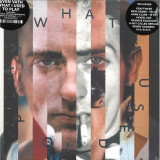
Sven Väth - What I Used To Play (12x12" boxset)
 
36

For this uniquely personal retrospective spread over twelve vinyl discs, Sven Väth takes us back to the early days of his DJ career. On What I Used To Play we meet great pioneers of electronic music, gifted percussionists, obscure wave bands, and innovative producers of a bygone 'new electronic' era. Rough beats and irresistible grooves from the identification stage of house, techno, and acid remind us not just how far electronic music has evolved over the past four decades, but how great it was to dance to EBM, techno, and house for the very first time.

If there is one protagonist of the electronic music scene who has remained curious, innovative and at the very cutting edge of music for over four decades, it's Sven Väth. His multi-layered artist albums and Sound of the Season mix compilations have been defining the genre for over two decades, and even today, he is constantly on the lookout for the next top tune to add to the highlights of his next set. At least, that's the case when he's not producing them himself as an artist or remixer. "Actually, it's always been part of my DNA to think ahead," and nothing had been further from his mind than looking back at his past, but when in spring of 2020 the international DJ circuit had to be scaled down to virtually zero, the 'restless traveler' suddenly had time. Time to stop and reflect on "how it actually was back then, at the very beginning of my career..."

"It was a great trip and with every track, beautiful memories came flooding back".
In the London apartment, he had just moved into, Sven has set up a "little music room", where he cocooned himself for several days, "to look way back for the first time and review my musical journey through the eighties, so to speak."

The interim result was six thematically oriented playlists with a grand total of 120 tracks from 'early 80s' to 'Balearic late 80s', together with excursions into afrobeat, European new wave, and EBM sounds and a few epochal techno/house tracks from the USA in between. From these 'Best of Sven Väth's favorites', the project What I Used To Play crystallized. Sven remembers how the Cocoon team reacted to his proposal: "They found the idea of making a compilation out of it MEGA from the beginning and everyone said 'Sven, go for it', but then, of course, the work really started, namely, to clear the rights and to get clean sounding masters of the up to 40-year-old tracks. There was also disappointment, of course. We couldn't clear certain titles because the rights holders in the USA had fallen out with each other or simply disappeared from the scene. In short, it wasn't easy, but now I can safely say we got the most important tracks."

Finally, after two years of research, curation, design, and administrative fine-tuning, the "little retrospective" from 1981 to 1990 is available. The exquisitely packaged, and three-kilo heavy box set is not only physically impressive, WIUTP is also the definitive record of Sven Väth's musical development. On each of the twenty-four sides of vinyl, you can trace track by track, what influenced him during which phase, and how he took off as a DJ from his parents' Queen's Pub straight into the spotlight at Dorian Gray. There and at Vogue (later OMEN), Sven became the style-defining player in the DJ booth that he still is today.


1981 - 1990: Future Sounds of Now

In the early eighties, the crowd in clubs like Vogue and Dorian Gray danced to what nowadays we call 'dance classics' - mainly disco, funk, soul, and chart pop. It was up to a new generation of DJs, including Sven Väth, the youngest protagonist in the Rhine-Main area at the time, to create their own club-ready music mix. Good new tracks and potential floor-fillers were rarities that had to be sought out and found, in order to prove oneself worthy.
Without MP3s, internet streaming, or other digital download possibilities, music didn't just gravitate to the DJ, instead, it had to be tracked down. In well-stocked record stores in Frankfurt and Wiesbaden or even in Amsterdam, London, or New York, Sven and friends sourced the material for countless magical nights. On WIUTP we can follow Sven's very personal journey through this wild, innovative era in which synth-pop, funk, hip-hop, and disco were successively replaced as 'club music' by house, techno, acid, and breakbeat. By the end of the decade, it was clear to see that these once exotic 'fringe' phenomena would soon become 'mass' phenomena.


Early 80s

Dirty Talk by the Italian-American duo Klein & M.B.O. represents the most innovative phase of the Italo-disco genre in the early eighties like no other track. Mario Boncaldo (I) and Tony Carrasco relied entirely on the original synthetic drum and percussion sounds of the Roland TR-808, coupled with the raunchy vocals of Rossana Casale and guitar accents of Davide Piatto. Of course, other tracks from this period were also influential in style, most notably Unit by Logic System, which worked as the perfect soundtrack to the laser lighting system at the legendary Dorian Gray club. With stomping beats and robotic rap interludes, Bostich by Yello also belongs on Sven's eternal playlist - after all, it caught the attention of Afrikaa Bambaataa, who invited the Swiss duo to perform at the Roxy in New York in 1983.


EBM Wave - Mid 80s

From today's point of view, the almost ten-minute-long, downtempo track Giant by Matt Johnson's band project The The, would probably not be considered an obvious club classic. However, a closer (re)listen reveals the rhythmic intricacies of the percussion overdubs by JG Thirlwell (aka Foetus) on Johnson's composition, and it becomes clear why this exceptional piece of music is one of Sven's absolute favorites. Other classics from this phase include Kaw-Liga by the mysterious The Residents, the hypnotic-synthetic Our Darkness by Anne Clark (and David Harrow), and last but not least, the somber, monotonous anthem Where Are You? by 16Bit, one of Sven Väth's projects together with Michael Münzing, Luca Anzilotti from 1986.


US House - Late 80s

You certainly can't talk about Chicago house without mentioning Frankie Knuckles. The resident DJ at the Warehouse not only gave the name to an entire genre, but also produced epochal floor fillers on the Trax label like the timeless Your Love, sung (and moaned) by Jamie Principle. Acid house protagonists Phuture also hail from Chicago, and on We Are Phuture (also released on Trax) we hear the chirping acid sounds of the legendary Roland TB-303 in full effect. Another featured classic is No UFO's by Detroit's Model 500 aka Juan Atkins, who is rightly considered the 'Godfather of Techno' even if the genre-defining track from 1985 still breathes with the spirit of hip-hop and electro from the first breakdance era.


Afrobeat

Le Serpent, by Algerian-born Abdelmadjid Guemguem, is a track that sounds completely different from everything else on WIUTP. Made in 1978, it's a monumental, rousing groove created without bass or synths, just with five congas! Even though Guem sadly passed away in 2021, his immortal, acoustic beats are understood all over the world and will continue to enrich many thousands of DJ sets for years to come. Another classic that not only Sven appreciates beyond measure is Hugh Masekela's Don't Go Lose it, Baby. In addition to being one of the most important jazz pioneers, the trumpeter and freedom fighter from Johannesburg was very experimental, integrating electronic sounds into his music in later years, in a similar vein to Miles Davis and Herbie Hancock. Dutch jazz pianist Jasper van't Hof's afrobeat project Pili Pili has also aged well. The trance-like, almost sixteen-minute-long track of the same name, manages to fill a whole side on the seventh of twelve vinyl discs in the WIUTP box.


UK-US-Euro - Late 80s

Time for a change of scene, in the truest sense of the word, and from a musical perspective, this section is like landing on another planet. First up is Andrew Weatherall's classic remix of Primal Scream's Loaded, featuring the iconic Peter Fonda sample (lifted from the 1966 biker film Wild Angels) that came to personify the mood triggered by the British Second Summer of Love in the late eighties: "We wanna be free to do what we wanna do, and we wanna get loaded...". This period also saw the emergence of M/A/R/R/S whose only single, 1987's Pump Up The Volume, became a club classic with support from DJ legend CJ Mackintosh. In this most eclectic of sections, we also encounter New York house and reggae producer Bobby Konders and his seminal Nervous Acid.


Balearic - Late 80s

Those who know him, know that Sven had already lost his heart to the 'magic island' of Ibiza as a teenager, so with that in mind, the WIUTP project couldn't end without a Balearic chapter. Inspired by Manuel Göttsching's E2-E4, the immortal, eponymously titled Sueño Latino belongs in there without question. Equally popular on the island was, and still is Break 4 Love by Raze, which thinking about it, would also fit perfectly into the house chapter. Last, but not least, there's an overdue reunion with Sven Väth himself, in his role as frontman of the successful Frankfurt trio OFF. Together with Michael Münzing and Luca Anzilotti (later of Snap!) this 'Organization For Fun' created the off-the-wall club hit Electric Salsa in 1986 which incidentally turned into an international chart smash, putting Sven in the enviable position of having to decide between pop stardom and a DJ career. Well, we all know how that decision turned out and the rest, as they say, is history. A not insignificant part of his story is What I Used To Play. Enjoy!

out of Stock

Order now and we will order the item for you at our supplier.


Last In: 10 months ago
Ataxia - Out Of Step LP 2x12"

Having torn up raves for well over a decade, the Detroit duo Rickers and Ted Krisko AKA Ataxia present their debut longplayer ‘Out Of Step’. Featuring guest spots from close peers DJ Minx, Andrés and Mr Joshooa, they twist house, techno, electro, breakbeat and rave into revitalized new shapes; embellished with a touch of soul, funk and hip hop. With backgrounds in hardcore and punk, Ataxia’s debut is suffused with that energy, attitude, and approach; this is raw, lean and unashamedly no-nonsense dance floor tackle that goes straight for the jugular. Heavily analogue, the album experiments with tape saturation, which harks back to the duo’s formative years in bands, recording demos to cassettes. These straight-up, in-the-red tracks give preference to overdriven drum machines, rather than generic polished sheen, but conversely, it’s all deceptively well-crafted too; ‘Out Of Step’ is a standout record that’s big in character, bringing to mind the renegade spirit of Underground Resistance, and the bombastic brilliance of The Prodigy and Chemical Brothers.

Defiantly optimistic despite the state of the world, a “life is good” vocal sample meets minor chords sliding over 808 hats on the exemplary house/techno pumper ‘Detroit Gospel’, before a lighter moment on the album, but no less impactful with its hefty low-end thump, is ‘Pine Island’ featuring Motor City hero Andrés. Together they cook up a Motown-inspired house cut awash with horn swells and backup singers, bouncing to wide swung funk bass, in classic 313 style. ‘Language’ turns the club on its head – busting out one of the most distinct basslines in recent times, and bristling with buzzy, undulating chords, whilst ‘Maxia’ features influential Detroit royalty DJ Minx. Inspired by her classic ‘A Walk In The Park’, with a fat distorted kick and stealthy bass groove, this is low-slung, stripped-back, heads-down coolness. The high-tech funk of ‘Spit In Your Percolator’, is laser-guided in its efficiency, with a strobe-like, increasingly intensifying energy, peppered with clever, tripped up vocal chops. With the next cut, conveyor belt noises and fast churning low-end gives way to a dubbed-out breakdown, on the deep breakbeat roller ‘98 Degrees’. Charged with a blistering, rave intensity, ‘Number Streets’, is a futuristic distorted techno workout that booms through the subs, whilst ‘The Formulator’ mixes filtered snippets, abstract synth noises and melodic bleeps with a bassline echoing Paperclip People’s ‘The Floor’. Closer to the UK definition of hardcore, combining 4/4 and breakbeat, ‘The Pusher’ evokes the spirit of late 80s orbital raves, adding a natty keys solo, and deadly bass used sparingly, for even deadlier effect. ‘Feels Like’ sees Rickers and Ted team up their studiomate and fellow TV Lounge resident and club booker, Mister Joshooa. Inspired by Photek but also almost UKG in style, this breakbeat session is stamped with MJ’s signature chopped vocals and intricate rhythmic interplay. The bubbling, wobbly loose swing of ‘WM’ is constructed around a classic chopped-up MTV cribs sample, with a filtered vocal creating a far out psychedelic effect – all of which is propelled apace by a huge bruising LFO. The LP concludes in fine style with ‘Dance The Bridge’, where bouncy beats and wigged-out keys meet bright, gently uplifting synth chords that bring a clear-skied mood; ending the record as it began, on an optimistic note.

‘Out Of Step’ marks another chapter in the ongoing relationship between Life and Death co-founder DJ Tennis and Ataxia. Their connection goes back to the earliest days of the label, where they played gigs together on some of Tennis’ initial visits to Detroit. It’s a friendship that’s blossomed organically over the last decade through their shared love of punk and hardcore, and led to the fruition of one of Ataxia’s most compelling projects to date. Labels to release Ataxia’s output include legendary Detroit techno imprints Planet E and KMS, plus the seminal American house label Nervous Records. Their catalogue also includes music for Visionquest, Leftroom, 20/20 Vision and Seth Troxler’s Play It Say It.

out of Stock

Order now and we will order the item for you at our supplier.


Last In: 14 months ago
Sunda Arc - Tides

Sunda Arc

Tides

12inchGONDLP035LE
Gondwana Records
08.11.2022

Sunda Arc are brothers Nick Smart and Jordan Smart. Best known as key members of folk and jazz influenced minimalists Mammal Hands, their Sunda Arc project takes inspiration from the likes of Jon Hopkins, Rival Consoles, Moderat and Nils Frahm as well as their own music world. Their debut EP 'Flicker' was released in December 2018 and now the duo are set to release their debut LP, 'Tides' on 7th February 2020.

Named for a volcanic arc in the Indian Ocean, created by the process of massive tectonic plates colliding, Sunda Arc strives to mingle electronic and acoustic sounds until they become almost indistinguishable from each other. It's a process where they draw the acoustic properties and quirks out of electronic sounds and find the electronic potential in acoustic sounds. "Finding the ghost in the machine or blending the human elements of playing live is something we are always trying to explore in our work.

Experimentation is a large part of our process and we tend to combine carefully composed material with chaotic ideas to find the balance between the two" — Sunda Arc 'Tides', their debut album, takes its name from the idea of unseen forces that can affect our lives in myriad ways, being pushed and pulled and at the whim of powerful forces outside of our control as well as offering a nod to things such as the tides on our planet, tectonic plate movements and weather systems. There are often chaotic elements in these systems that function in a way that produce a type of controlled randomness on a large scale. This is something they try to reflect in their music by adopting some of the ways these systems work into musical sequences, and using ideas such as chaos theory to control musical parameters. "Tides is a reference to themes we were thinking a lot about during the making of this album. These include the similarities between macro and micro systems, or the circulatory and nervous systems in the body. Things that produce a type of controlled randomness on a large scale". — Sunda Arc 'Hymn', the first single from the album, uses Nick's voice sampled and played back through a keyboard to create a human yet electronic feel.

It mixes soft vocals with heavier electronic elements to create a danceable yet human sound world. 'Dawn', is best described as uplifting-techno, its use of repeated phrases building in intensity and variations to put you into a hypnotic state whilst also being industrial and danceable. 'Daemon' is one of the tracks that really resonates live. Drawing on the sound of UK dubstep it's intense but fun and the bass clarinet blends with synths at the end to create a sound almost like a vocal. 'Secret Window' brings forward another side of the band, focusing around a lo-fi recording of felted piano and bass clarinet.

These are blended with granularised and processed versions of themselves which emerge like ghosts of the instruments throughout the track. 'Cluster' is another key track. It utilises a small group of notes looped in an unusual way to create a sense of cascading patterns over a solid danceable drum groove. It emphasises soprano sax blended into the sound world half-way through to lift into the final section.

out of Stock

Order now and we will order the item for you at our supplier.


Last In: 3 years ago
Lee Tracy & Isaac Manning - Is it What You Want

As the sun sets on a quaint East Nashville house, a young man bares a piece of his soul. Facing the camera, sporting a silky suit jacket/shirt/slacks/fingerless gloves ensemble that announces "singer" before he's even opened his mouth, Lee Tracy Johnson settles onto his stage, the front yard. He sways to the dirge-like drum machine pulse of a synth-soaked slow jam, extends his arms as if gaining his balance, and croons in affecting, fragile earnest, "I need your love… oh baby…"

Dogs in the yard next door begin barking. A mysterious cardboard robot figure, beamed in from galaxies unknown and affixed to a tree, is less vocal. Lee doesn't acknowledge either's presence. He's busy feeling it, arms and hands gesticulating. His voice rises in falsetto over the now-quiet dogs, over the ambient noise from the street that seeps into the handheld camcorder's microphone, over the recording of his own voice played back from a boombox off-camera. After six minutes the single, continuous shot ends. In this intimate creative universe there are no re-takes. There are many more music videos to shoot, and as Lee later puts it, "The first time you do it is actually the best. Because you can never get that again. You expressing yourself from within."

"I Need Your Love" dates from a lost heyday. From some time in the '80s or early '90s, when Lee Tracy (as he was known in performance) and his music partner/producer/manager Isaac Manning committed hours upon hours of their sonic and visual ideas to tape. Embracing drum machines and synthesizers – electronics that made their personal futurism palpable – they recorded exclusively at home, live in a room into a simple cassette deck. Soul, funk, electro and new wave informed their songs, yet Lee and Isaac eschewed the confinement of conventional categories and genres, preferring to let experimentation guide them.

"Anytime somebody put out a new record they had the same instruments or the same sound," explains Isaac. "So I basically wanted to find something that's really gonna stand out away from all of the rest of 'em." Their ethos meant that every idea they came up with was at least worth trying: echoed out half-rapped exhortations over frantic techno-style beats, gospel synth soul, modal electro-funk, oddball pop reinterpretations, emo AOR balladry, nods to Prince and the Fat Boys, or arrangements that might collapse mid-song into a mess of arcade game-ish blips before rallying to reach the finish line. All of it conjoined by consistent tape hiss, and most vitally, Lee's chameleonic voice, which managed to wildly shape shift and still evoke something sincere – whether toggling between falsetto and tenor exalting Jesus's return, or punctuating a melismatic romantic adlib with a succinct, "We all know how it feels to be alone."

"People think we went to a studio," says Isaac derisively. "We never went to no studio. We didn't have the money to go to no studio! We did this stuff at home. I shot videos in my front yard with whatever we could to get things together." Sometimes Isaac would just put on an instrumental record, be it "Planet Rock" or "Don't Cry For Me Argentina" (from Evita), press "record," and let Lee improvise over it, yielding peculiar love songs, would-be patriotic anthems, or Elvis Presley or Marilyn Monroe tributes. Technical limitations and a lack of professional polish never dissuaded them. They believed they were onto something.

"That struggle," Isaac says, "made that sound sound good to me."

In the parlance of modern music criticism Lee and Isaac's dizzying DIY efforts would inevitably be described as "outsider." But "outsider" carries the burden of untold additional layers of meaning if you're Black and from the South, creating on a budget, and trying to get someone, anyone within the country music capital of the world to take your vision seriously. "What category should we put it in?" Isaac asks rhetorically. "I don't know. All I know is feeling. I ain't gonna name it nothing. It's music. If it grabs your soul and touch your heart that's what it basically is supposed to do."

=

Born in 1963, the baby boy of nine siblings, Lee Tracy spent his earliest years living amidst the shotgun houses on Nashville's south side. "We was poor, man!" he says, recalling the outhouse his family used for a bathroom and the blocks of ice they kept in the kitchen to chill perishables. "But I actually don't think I really realized I was in poverty until I got grown and started thinking about it." Lee's mom worked at the Holiday Inn; his dad did whatever he had to do, from selling fruit from a horse drawn cart to bootlegging. "We didn't have much," Lee continues, "but my mother and my father got us the things we needed, the clothes on our back." By the end of the decade with the city's urban renewal programs razing entire neighborhoods to accommodate construction of the Interstate, the family moved to Edgehill Projects. Lee remembers music and art as a constant source of inspiration for he and his brothers and sisters – especially after seeing the Jackson 5 perform on Ed Sullivan. "As a small child I just knew that was what I wanted to do."

His older brother Don began musically mentoring him, introducing Lee to a variety of instruments and sounds. "He would never play one particular type of music, like R&B," says Lee. "I was surrounded by jazz, hard rock and roll, easy listening, gospel, reggae, country music; I mean I was a sponge absorbing all of that." Lee taught himself to play drums by beating on cardboard boxes, gaining a rep around the way for his timekeeping, and his singing voice. Emulating his favorites, Earth Wind & Fire and Cameo, he formed groups with other kids with era-evocative band names like Concept and TNT Connection, and emerged as the leader of disciplined rehearsals. "I made them practice," says Lee. "We practiced and practiced and practiced. Because I wanted that perfection." By high school the most accomplished of these bands would take top prize in a prominent local talent show. It was a big moment for Lee, and he felt ready to take things to the next level. But his band-mates had other ideas.

"I don't know what happened," he says, still miffed at the memory. "It must have blew they mind after we won and people started showing notice, because it's like everybody quit! I was like, where the hell did everybody go?" Lee had always made a point of interrogating prospective musicians about their intentions before joining his groups: were they really serious or just looking for a way to pick up girls? Now he understood even more the importance of finding a collaborator just as committed to the music as he was.

=

Isaac Manning had spent much of his life immersed in music and the arts – singing in the church choir with his family on Nashville's north side, writing, painting, dancing, and working various gigs within the entertainment industry. After serving in the armed forces, in the early '70s he ran The Teenage Place, a music and performance venue that catered to the local youth. But he was forced out of town when word of one of his recreational routines created a stir beyond the safe haven of his bohemian circles.

"I was growing marijuana," Isaac explains. "It wasn't no business, I was smoking it myself… I would put marijuana in scrambled eggs, cornbread and stuff." His weed use originated as a form of self-medication to combat severe tooth pain. But when he began sharing it with some of the other young people he hung out with, some of who just so happened to be the kids of Nashville politicians, the cops came calling. "When I got busted," he remembers, "they were talking about how they were gonna get rid of me because they didn't want me saying nothing about they children because of the politics and stuff. So I got my family, took two raggedy cars, and left Nashville and went to Vegas."

Out in the desert, Isaac happened to meet Chubby Checker of "The Twist" fame while the singer was gigging at The Flamingo. Impressed by Isaac's zeal, Checker invited him to go on the road with him as his tour manager/roadie/valet. The experience gave Isaac a window into a part of the entertainment world he'd never encountered – a glimpse of what a true pop act's audience looked like. "Chubby Checker, none of his shows were played for Black folks," he remembers. "All his gigs were done at high-class white people areas." Returning home after a few years with Chubby, Isaac was properly motivated to make it in Music City. He began writing songs and scouting around Nashville for local talent anywhere he could find it with an expressed goal: "Find someone who can deliver your songs the way you want 'em delivered and make people feel what you want them to feel."

One day while walking through Edgehill Projects Isaac heard someone playing the drums in a way that made him stop and take notice. "The music was so tight, just the drums made me feel like, oh I'm-a find this person," he recalls. "So I circled through the projects until I found who it was.

"That's how I met him – Lee Tracy. When I found him and he started singing and stuff, I said, ohhh, this is somebody different."

=

Theirs was a true complementary partnership: young Lee possessed the raw talent, the older Isaac the belief. "He's really the only one besides my brother and my family that really seen the potential in me," says Lee. "He made me see that I could do it."

Isaac long being a night owl, his house also made for a fertile collaborative environment – a space where there always seemed to be a new piece of his visual art on display: paintings, illustrations, and dolls and figures (including an enigmatic cardboard robot). Lee and Issac would hang out together and talk, listen to music, conjure ideas, and smoke the herb Isaac had resumed growing in his yard. "It got to where I could trust him, he could trust me," Isaac says of their bond. They also worked together for hours on drawings, spreading larges rolls of paper on the walls and sketching faces with abstract patterns and imagery: alien-like beings, tri-horned horse heads, inverted Janus-like characters where one visage blurred into the other.

Soon it became apparent that they didn't need other collaborators; self-sufficiency was the natural way forward. At Isaac's behest Lee, already fed up with dealing with band musicians, began playing around with a poly-sonic Yamaha keyboard at the local music store. "It had everything on it – trumpet, bass, drums, organ," remembers Lee. "And that's when I started recording my own stuff."

The technology afforded Lee the flexibility and independence he craved, setting him on a path other bedroom musicians and producers around the world were simultaneously following through the '80s into the early '90s. Saving up money from day jobs, he eventually supplemented the Yamaha Isaac had gotten him with Roland and Casio drum machines and a Moog. Lee was living in an apartment in Hillside at that point caring for his dad, who'd been partially paralyzed since early in life. In the evenings up in his second floor room, the music put him in a zone where he could tune out everything and lose himself in his ideas.

"Oh I loved it," he recalls. "I would really experiment with the instruments and use a lot of different sound effects. I was looking for something nobody else had. I wanted something totally different. And once I found the sound I was looking for, I would just smoke me a good joint and just let it go, hit the record button." More potent a creative stimulant than even Isaac's weed was the holistic flow and spontaneity of recording. Between sessions at Isaac's place and Lee's apartment, their volume of output quickly ballooned.

"We was always recording," says Lee. "That's why we have so much music. Even when I went to Isaac's and we start creating, I get home, my mind is racing, I gotta start creating, creating, creating. I remember there were times when I took a 90-minute tape from front to back and just filled it up."

"We never practiced," says Isaac. "See, that was just so odd about the whole thing. I could relate to him, and tell him about the songs I had ideas for and everything and stuff. And then he would bring it back or whatever, and we'd get together and put it down." Once the taskmaster hell bent on rehearsing, Lee had flipped a full 180. Perfection was no longer an aspiration, but the enemy of inspiration.

"I seen where practicing and practicing got me," says Lee. "A lot of musicians you get to playing and they gotta stop, they have to analyze the music. But while you analyzing you losing a lot of the greatness of what you creating. Stop analyzing what you play, just play! And it'll all take shape."

=

"I hope you understood the beginning of the record because this was invented from a dream I had today… (You tell me, I'll tell you, we'll figure it out together)" – Lee Tracy and Isaac Manning, "Hope You Understand"

Lee lets loose a maniacal cackle when he acknowledges that the material that he and Isaac recorded was by anyone's estimation pretty out there. It's the same laugh that commences "Hope You Understand" – a chaotic transmission that encapsulates the duality at the heart of their music: a stated desire to reach people and a compulsion to go as leftfield as they saw fit.

"We just did it," says Lee. "We cut the music on and cut loose. I don't sit around and write. I do it by listening, get a feeling, play the music, and the lyrics and stuff just come out of me."

The approach proved adaptable to interpreting other artists' material. While recording a cover of Whitney Houston's pop ballad "Saving All My Love For You," Lee played Whitney's version in his headphones as he laid down his own vocals – partially following the lyrics, partially using them as a departure point. The end result is barely recognizable compared with the original, Lee and Isaac having switched up the time signature and reinvented the melody along the way towards morphing a slick mainstream radio standard into something that sounds solely their own.

"I really used that song to get me started," says Lee. "Then I said, well I need something else, something is missing. Something just came over me. That's when I came up with 'Is It What You Want.'"

The song would become the centerpiece of Lee and Isaac's repertoire. Pushed along by a percolating metronomic Rhythm King style beat somewhere between a military march and a samba, "Is It What You Want" finds Lee pleading the sincerity of his commitment to a potential love interest embellished by vocal tics and hiccups subtlely reminiscent of his childhood hero MJ. Absent chord changes, only synth riffs gliding in and out like apparitions, the song achieves a lingering lo-fi power that leaves you feeling like it's still playing, somewhere, even after the fade out.

"I don't know, it's like a real spiritual song," Lee reflects. "But it's not just spiritual. To me the more I listen to it it's like about everything that you do in your everyday life, period. Is it what you want? Do you want a car or you don't want a car? Do you want Jesus or do you want the Devil? It's basically asking you the question. Can't nobody answer the question but you yourself."

In 1989 Lee won a lawsuit stemming from injuries sustained from a fight he'd gotten into. He took part of the settlement money and with Isaac pressed up "Saving All My Love For You" b/w "Is It What You Want" as a 45 single. Isaac christened the label One Chance Records. "Because that's all we wanted," he says with a laugh, "one chance."

Isaac sent the record out to radio stations and major labels, hoping for it to make enough noise to get picked up nationally. But the response he and Lee were hoping for never materialized. According to Isaac the closest the single got to getting played on the radio is when a disk jock from a local station made a highly unusual announcement on air: "The dude said on the radio, 107.5 – 'We are not gonna play 'Is It What You Want.' We cracked up! Wow, that's deep.

"It was a whole racist thing that was going on," he reflects. "So we just looked over and kept on going. That was it. That was about the way it goes… If you were Black and you were living in Nashville and stuff, that's the way you got treated." Isaac already knew as much from all the times he'd brought he and Lee's tapes (even their cache of country music tunes) over to Music Row to try to drum up interest to no avail.

"Isaac, he really worked his ass off," says Lee. "He probably been to every record place down on Music Row." Nashville's famed recording and music business corridor wasn't but a few blocks from where Lee grew up. Close enough, he remembers, for him to ride his bike along its back alleys and stumble upon the occasional random treasure, like a discarded box of harmonicas. Getting in through the front door, however, still felt a world away.

"I just don't think at the time our music fell into a category for them," he concedes. "It was before its time."

=

Lee stopped making music some time in the latter part of the '90s, around the time his mom passed away and life became increasingly tough to manage. "When my mother died I had a nervous breakdown," he says, "So I shut down for a long time. I was in such a sadness frame of mind. That's why nobody seen me. I had just disappeared off the map." He fell out of touch with Isaac, and in an indication of just how bad things had gotten for him, lost track of all the recordings they'd made together. Music became a distant memory.

Fortunately, Isaac kept the faith. In a self-published collection of his poetry – paeans to some of his favorite entertainment and public figures entitled Friends and Dick Clark – he'd written that he believed "music has a life of its own." But his prescience and presence of mind were truly manifested in the fact that he kept an archive of he and Lee's work. As perfectly imperfect as "Is It What You Want" now sounds in a post-Personal Space world, Lee and Isaac's lone official release was in fact just a taste. The bulk of the Is It What You Want album is culled from the pair's essentially unheard home recordings – complete songs, half-realized experiments, Isaac's blue monologues and pronouncements et al – compiled, mixed and programmed in the loose and impulsive creative spirit of their regular get-togethers from decades ago. The rest of us, it seems, may have finally caught up to them.

On the prospect of at long last reaching a wider audience, Isaac says simply, "I been trying for a long time, it feels good." Ever the survivor, he adds, "The only way I know how to make it to the top is to keep climbing. If one leg break on the ladder, hey, you gotta fix it and keep on going… That's where I be at. I'll kill death to make it out there."

For Lee it all feels akin to a personal resurrection: "It's like I was in a tomb and the tomb was opened and I'm back… Man, it feels so great. I feel like I'm gonna jump out of my skin." Success at this stage of his life, he realizes, probably means something different than what it did back when he was singing and dancing in Isaac's front yard. "What I really mean by 'making it,'" he explains isn't just the music being heard but, "the story being told."

Occasionally Lee will pull up "Is It What You Want" on YouTube on his phone, put on his headphones, and listen. He remembers the first time he heard his recorded voice. How surreal it was, how he thought to himself, "Is that really me?" What would he say to that younger version of himself now?

"I would probably tell myself, hang in there, don't give up. Keep striving for the goal. And everything will work out."

Despite what's printed on the record label, sometimes you do get more than one chance.

out of Stock

Order now and we will order the item for you at our supplier.


Last In: 3 years ago
MFMB - Sugar

Mfmb

Sugar

12inchAR12364
ADRIAN RECORDS
30.09.2022

After almost a decade-long hiatus, cult 6-piece MFMB announced their
return with the long-awaited album - Sugar
The followup to 2012's critically- acclaimed "Colossus", "Sugar" revives the dark
and driven alt- rock the Swedes made their name with - equal parts rigor and
finesse, wracked with nervous tension. This time around, however, a democratic
approach to the writing process was decided on, with each member contributing
equally to the sound and feel of the record. The result is unmistakably the sound
of MFMB, but reinvented for these tempestuous times. The making of the album
is a story in itself. "Sugar" is seven years in the making. It has been a bumpy ride.
They were not always the best of friends. Priorities changed. Members quit, then
joined again. It was never easy. We believe you can hear it on the album, how
every song is a result of differing opinions fighting it out until they landed. In the
end, it's MFMB, but ringing purer than ever before. MFMB have remained prolific
throughout their hiatus, which includes Joakim Lindberg becoming one of the
underground scene's most in- demand producers, working with the likes of Hey
Elbow, Spunsugar, This Is Head, and many more.

pre-order now30.09.2022

expected to be published on 30.09.2022

Lee Tracy & Isaac Manning - Is it What You Want LP

As the sun sets on a quaint East Nashville house, a young man bares a piece of his soul. Facing the camera, sporting a silky suit jacket/shirt/slacks/fingerless gloves ensemble that announces "singer" before he's even opened his mouth, Lee Tracy Johnson settles onto his stage, the front yard. He sways to the dirge-like drum machine pulse of a synth-soaked slow jam, extends his arms as if gaining his balance, and croons in affecting, fragile earnest, "I need your love… oh baby…"

Dogs in the yard next door begin barking. A mysterious cardboard robot figure, beamed in from galaxies unknown and affixed to a tree, is less vocal. Lee doesn't acknowledge either's presence. He's busy feeling it, arms and hands gesticulating. His voice rises in falsetto over the now-quiet dogs, over the ambient noise from the street that seeps into the handheld camcorder's microphone, over the recording of his own voice played back from a boombox off-camera. After six minutes the single, continuous shot ends. In this intimate creative universe there are no re-takes. There are many more music videos to shoot, and as Lee later puts it, "The first time you do it is actually the best. Because you can never get that again. You expressing yourself from within."

"I Need Your Love" dates from a lost heyday. From some time in the '80s or early '90s, when Lee Tracy (as he was known in performance) and his music partner/producer/manager Isaac Manning committed hours upon hours of their sonic and visual ideas to tape. Embracing drum machines and synthesizers – electronics that made their personal futurism palpable – they recorded exclusively at home, live in a room into a simple cassette deck. Soul, funk, electro and new wave informed their songs, yet Lee and Isaac eschewed the confinement of conventional categories and genres, preferring to let experimentation guide them.

"Anytime somebody put out a new record they had the same instruments or the same sound," explains Isaac. "So I basically wanted to find something that's really gonna stand out away from all of the rest of 'em." Their ethos meant that every idea they came up with was at least worth trying: echoed out half-rapped exhortations over frantic techno-style beats, gospel synth soul, modal electro-funk, oddball pop reinterpretations, emo AOR balladry, nods to Prince and the Fat Boys, or arrangements that might collapse mid-song into a mess of arcade game-ish blips before rallying to reach the finish line. All of it conjoined by consistent tape hiss, and most vitally, Lee's chameleonic voice, which managed to wildly shape shift and still evoke something sincere – whether toggling between falsetto and tenor exalting Jesus's return, or punctuating a melismatic romantic adlib with a succinct, "We all know how it feels to be alone."

"People think we went to a studio," says Isaac derisively. "We never went to no studio. We didn't have the money to go to no studio! We did this stuff at home. I shot videos in my front yard with whatever we could to get things together." Sometimes Isaac would just put on an instrumental record, be it "Planet Rock" or "Don't Cry For Me Argentina" (from Evita), press "record," and let Lee improvise over it, yielding peculiar love songs, would-be patriotic anthems, or Elvis Presley or Marilyn Monroe tributes. Technical limitations and a lack of professional polish never dissuaded them. They believed they were onto something.

"That struggle," Isaac says, "made that sound sound good to me."

In the parlance of modern music criticism Lee and Isaac's dizzying DIY efforts would inevitably be described as "outsider." But "outsider" carries the burden of untold additional layers of meaning if you're Black and from the South, creating on a budget, and trying to get someone, anyone within the country music capital of the world to take your vision seriously. "What category should we put it in?" Isaac asks rhetorically. "I don't know. All I know is feeling. I ain't gonna name it nothing. It's music. If it grabs your soul and touch your heart that's what it basically is supposed to do."

=

Born in 1963, the baby boy of nine siblings, Lee Tracy spent his earliest years living amidst the shotgun houses on Nashville's south side. "We was poor, man!" he says, recalling the outhouse his family used for a bathroom and the blocks of ice they kept in the kitchen to chill perishables. "But I actually don't think I really realized I was in poverty until I got grown and started thinking about it." Lee's mom worked at the Holiday Inn; his dad did whatever he had to do, from selling fruit from a horse drawn cart to bootlegging. "We didn't have much," Lee continues, "but my mother and my father got us the things we needed, the clothes on our back." By the end of the decade with the city's urban renewal programs razing entire neighborhoods to accommodate construction of the Interstate, the family moved to Edgehill Projects. Lee remembers music and art as a constant source of inspiration for he and his brothers and sisters – especially after seeing the Jackson 5 perform on Ed Sullivan. "As a small child I just knew that was what I wanted to do."

His older brother Don began musically mentoring him, introducing Lee to a variety of instruments and sounds. "He would never play one particular type of music, like R&B," says Lee. "I was surrounded by jazz, hard rock and roll, easy listening, gospel, reggae, country music; I mean I was a sponge absorbing all of that." Lee taught himself to play drums by beating on cardboard boxes, gaining a rep around the way for his timekeeping, and his singing voice. Emulating his favorites, Earth Wind & Fire and Cameo, he formed groups with other kids with era-evocative band names like Concept and TNT Connection, and emerged as the leader of disciplined rehearsals. "I made them practice," says Lee. "We practiced and practiced and practiced. Because I wanted that perfection." By high school the most accomplished of these bands would take top prize in a prominent local talent show. It was a big moment for Lee, and he felt ready to take things to the next level. But his band-mates had other ideas.

"I don't know what happened," he says, still miffed at the memory. "It must have blew they mind after we won and people started showing notice, because it's like everybody quit! I was like, where the hell did everybody go?" Lee had always made a point of interrogating prospective musicians about their intentions before joining his groups: were they really serious or just looking for a way to pick up girls? Now he understood even more the importance of finding a collaborator just as committed to the music as he was.

=

Isaac Manning had spent much of his life immersed in music and the arts – singing in the church choir with his family on Nashville's north side, writing, painting, dancing, and working various gigs within the entertainment industry. After serving in the armed forces, in the early '70s he ran The Teenage Place, a music and performance venue that catered to the local youth. But he was forced out of town when word of one of his recreational routines created a stir beyond the safe haven of his bohemian circles.

"I was growing marijuana," Isaac explains. "It wasn't no business, I was smoking it myself… I would put marijuana in scrambled eggs, cornbread and stuff." His weed use originated as a form of self-medication to combat severe tooth pain. But when he began sharing it with some of the other young people he hung out with, some of who just so happened to be the kids of Nashville politicians, the cops came calling. "When I got busted," he remembers, "they were talking about how they were gonna get rid of me because they didn't want me saying nothing about they children because of the politics and stuff. So I got my family, took two raggedy cars, and left Nashville and went to Vegas."

Out in the desert, Isaac happened to meet Chubby Checker of "The Twist" fame while the singer was gigging at The Flamingo. Impressed by Isaac's zeal, Checker invited him to go on the road with him as his tour manager/roadie/valet. The experience gave Isaac a window into a part of the entertainment world he'd never encountered – a glimpse of what a true pop act's audience looked like. "Chubby Checker, none of his shows were played for Black folks," he remembers. "All his gigs were done at high-class white people areas." Returning home after a few years with Chubby, Isaac was properly motivated to make it in Music City. He began writing songs and scouting around Nashville for local talent anywhere he could find it with an expressed goal: "Find someone who can deliver your songs the way you want 'em delivered and make people feel what you want them to feel."

One day while walking through Edgehill Projects Isaac heard someone playing the drums in a way that made him stop and take notice. "The music was so tight, just the drums made me feel like, oh I'm-a find this person," he recalls. "So I circled through the projects until I found who it was.

"That's how I met him – Lee Tracy. When I found him and he started singing and stuff, I said, ohhh, this is somebody different."

=

Theirs was a true complementary partnership: young Lee possessed the raw talent, the older Isaac the belief. "He's really the only one besides my brother and my family that really seen the potential in me," says Lee. "He made me see that I could do it."

Isaac long being a night owl, his house also made for a fertile collaborative environment – a space where there always seemed to be a new piece of his visual art on display: paintings, illustrations, and dolls and figures (including an enigmatic cardboard robot). Lee and Issac would hang out together and talk, listen to music, conjure ideas, and smoke the herb Isaac had resumed growing in his yard. "It got to where I could trust him, he could trust me," Isaac says of their bond. They also worked together for hours on drawings, spreading larges rolls of paper on the walls and sketching faces with abstract patterns and imagery: alien-like beings, tri-horned horse heads, inverted Janus-like characters where one visage blurred into the other.

Soon it became apparent that they didn't need other collaborators; self-sufficiency was the natural way forward. At Isaac's behest Lee, already fed up with dealing with band musicians, began playing around with a poly-sonic Yamaha keyboard at the local music store. "It had everything on it – trumpet, bass, drums, organ," remembers Lee. "And that's when I started recording my own stuff."

The technology afforded Lee the flexibility and independence he craved, setting him on a path other bedroom musicians and producers around the world were simultaneously following through the '80s into the early '90s. Saving up money from day jobs, he eventually supplemented the Yamaha Isaac had gotten him with Roland and Casio drum machines and a Moog. Lee was living in an apartment in Hillside at that point caring for his dad, who'd been partially paralyzed since early in life. In the evenings up in his second floor room, the music put him in a zone where he could tune out everything and lose himself in his ideas.

"Oh I loved it," he recalls. "I would really experiment with the instruments and use a lot of different sound effects. I was looking for something nobody else had. I wanted something totally different. And once I found the sound I was looking for, I would just smoke me a good joint and just let it go, hit the record button." More potent a creative stimulant than even Isaac's weed was the holistic flow and spontaneity of recording. Between sessions at Isaac's place and Lee's apartment, their volume of output quickly ballooned.

"We was always recording," says Lee. "That's why we have so much music. Even when I went to Isaac's and we start creating, I get home, my mind is racing, I gotta start creating, creating, creating. I remember there were times when I took a 90-minute tape from front to back and just filled it up."

"We never practiced," says Isaac. "See, that was just so odd about the whole thing. I could relate to him, and tell him about the songs I had ideas for and everything and stuff. And then he would bring it back or whatever, and we'd get together and put it down." Once the taskmaster hell bent on rehearsing, Lee had flipped a full 180. Perfection was no longer an aspiration, but the enemy of inspiration.

"I seen where practicing and practicing got me," says Lee. "A lot of musicians you get to playing and they gotta stop, they have to analyze the music. But while you analyzing you losing a lot of the greatness of what you creating. Stop analyzing what you play, just play! And it'll all take shape."

=

"I hope you understood the beginning of the record because this was invented from a dream I had today… (You tell me, I'll tell you, we'll figure it out together)" – Lee Tracy and Isaac Manning, "Hope You Understand"

Lee lets loose a maniacal cackle when he acknowledges that the material that he and Isaac recorded was by anyone's estimation pretty out there. It's the same laugh that commences "Hope You Understand" – a chaotic transmission that encapsulates the duality at the heart of their music: a stated desire to reach people and a compulsion to go as leftfield as they saw fit.

"We just did it," says Lee. "We cut the music on and cut loose. I don't sit around and write. I do it by listening, get a feeling, play the music, and the lyrics and stuff just come out of me."

The approach proved adaptable to interpreting other artists' material. While recording a cover of Whitney Houston's pop ballad "Saving All My Love For You," Lee played Whitney's version in his headphones as he laid down his own vocals – partially following the lyrics, partially using them as a departure point. The end result is barely recognizable compared with the original, Lee and Isaac having switched up the time signature and reinvented the melody along the way towards morphing a slick mainstream radio standard into something that sounds solely their own.

"I really used that song to get me started," says Lee. "Then I said, well I need something else, something is missing. Something just came over me. That's when I came up with 'Is It What You Want.'"

The song would become the centerpiece of Lee and Isaac's repertoire. Pushed along by a percolating metronomic Rhythm King style beat somewhere between a military march and a samba, "Is It What You Want" finds Lee pleading the sincerity of his commitment to a potential love interest embellished by vocal tics and hiccups subtlely reminiscent of his childhood hero MJ. Absent chord changes, only synth riffs gliding in and out like apparitions, the song achieves a lingering lo-fi power that leaves you feeling like it's still playing, somewhere, even after the fade out.

"I don't know, it's like a real spiritual song," Lee reflects. "But it's not just spiritual. To me the more I listen to it it's like about everything that you do in your everyday life, period. Is it what you want? Do you want a car or you don't want a car? Do you want Jesus or do you want the Devil? It's basically asking you the question. Can't nobody answer the question but you yourself."

In 1989 Lee won a lawsuit stemming from injuries sustained from a fight he'd gotten into. He took part of the settlement money and with Isaac pressed up "Saving All My Love For You" b/w "Is It What You Want" as a 45 single. Isaac christened the label One Chance Records. "Because that's all we wanted," he says with a laugh, "one chance."

Isaac sent the record out to radio stations and major labels, hoping for it to make enough noise to get picked up nationally. But the response he and Lee were hoping for never materialized. According to Isaac the closest the single got to getting played on the radio is when a disk jock from a local station made a highly unusual announcement on air: "The dude said on the radio, 107.5 – 'We are not gonna play 'Is It What You Want.' We cracked up! Wow, that's deep.

"It was a whole racist thing that was going on," he reflects. "So we just looked over and kept on going. That was it. That was about the way it goes… If you were Black and you were living in Nashville and stuff, that's the way you got treated." Isaac already knew as much from all the times he'd brought he and Lee's tapes (even their cache of country music tunes) over to Music Row to try to drum up interest to no avail.

"Isaac, he really worked his ass off," says Lee. "He probably been to every record place down on Music Row." Nashville's famed recording and music business corridor wasn't but a few blocks from where Lee grew up. Close enough, he remembers, for him to ride his bike along its back alleys and stumble upon the occasional random treasure, like a discarded box of harmonicas. Getting in through the front door, however, still felt a world away.

"I just don't think at the time our music fell into a category for them," he concedes. "It was before its time."

=

Lee stopped making music some time in the latter part of the '90s, around the time his mom passed away and life became increasingly tough to manage. "When my mother died I had a nervous breakdown," he says, "So I shut down for a long time. I was in such a sadness frame of mind. That's why nobody seen me. I had just disappeared off the map." He fell out of touch with Isaac, and in an indication of just how bad things had gotten for him, lost track of all the recordings they'd made together. Music became a distant memory.

Fortunately, Isaac kept the faith. In a self-published collection of his poetry – paeans to some of his favorite entertainment and public figures entitled Friends and Dick Clark – he'd written that he believed "music has a life of its own." But his prescience and presence of mind were truly manifested in the fact that he kept an archive of he and Lee's work. As perfectly imperfect as "Is It What You Want" now sounds in a post-Personal Space world, Lee and Isaac's lone official release was in fact just a taste. The bulk of the Is It What You Want album is culled from the pair's essentially unheard home recordings – complete songs, half-realized experiments, Isaac's blue monologues and pronouncements et al – compiled, mixed and programmed in the loose and impulsive creative spirit of their regular get-togethers from decades ago. The rest of us, it seems, may have finally caught up to them.

On the prospect of at long last reaching a wider audience, Isaac says simply, "I been trying for a long time, it feels good." Ever the survivor, he adds, "The only way I know how to make it to the top is to keep climbing. If one leg break on the ladder, hey, you gotta fix it and keep on going… That's where I be at. I'll kill death to make it out there."

For Lee it all feels akin to a personal resurrection: "It's like I was in a tomb and the tomb was opened and I'm back… Man, it feels so great. I feel like I'm gonna jump out of my skin." Success at this stage of his life, he realizes, probably means something different than what it did back when he was singing and dancing in Isaac's front yard. "What I really mean by 'making it,'" he explains isn't just the music being heard but, "the story being told."

Occasionally Lee will pull up "Is It What You Want" on YouTube on his phone, put on his headphones, and listen. He remembers the first time he heard his recorded voice. How surreal it was, how he thought to himself, "Is that really me?" What would he say to that younger version of himself now?

"I would probably tell myself, hang in there, don't give up. Keep striving for the goal. And everything will work out."

Despite what's printed on the record label, sometimes you do get more than one chance.

out of Stock

Order now and we will order the item for you at our supplier.


Last In: 3 years ago
While She Sleeps - Sleeps Society Special Edition LP (2x12")

Für eine Band, die mehr als ein Jahrzehnt damit verbracht hat, den modernen Metal neu zu definieren, scheint für While She Sleeps das Beste noch bevorzustehen, denn 2022 werden sie auf einigen der größten Sommerfestivals der Welt spielen, in den USA und Australien unterwegs sein und im Herbst eine große

Europatournee mit Parkway Drive absolvieren. Mit ’SLEEPS SOCIETY (SPECIAL EDITION)’ erweitert die Band das erfolgreiche Sleeps Society-Album um drei neue Tracks sowie eine akustische Neubearbeitung von ’YOU ARE ALL YOU NEED’ und ’SYSTEMATIC’ mit Gastgesang von Rou Reynolds von Enter Shikari. Und die Tracks sind nicht einfach nur ”Add-Ons” - sie sind komplett in das Tracklisting des Albums integriert - was ein völlig neues Hörerlebnis
für die Fans schafft!

pre-order now12.08.2022

expected to be published on 12.08.2022

While She Sleeps - Sleeps Society Special Edition LP (2x12")

Für eine Band, die mehr als ein Jahrzehnt damit verbracht hat, den modernen Metal neu zu definieren, scheint für While She Sleeps das Beste noch bevorzustehen, denn 2022 werden sie auf einigen der größten Sommerfestivals der Welt spielen, in den USA und Australien unterwegs sein und im Herbst eine große

Europatournee mit Parkway Drive absolvieren. Mit ’SLEEPS SOCIETY (SPECIAL EDITION)’ erweitert die Band das erfolgreiche Sleeps Society-Album um drei neue Tracks sowie eine akustische Neubearbeitung von ’YOU ARE ALL YOU NEED’ und ’SYSTEMATIC’ mit Gastgesang von Rou Reynolds von Enter Shikari. Und die Tracks sind nicht einfach nur ”Add-Ons” - sie sind komplett in das Tracklisting des Albums integriert - was ein völlig neues Hörerlebnis
für die Fans schafft!

pre-order now12.08.2022

expected to be published on 12.08.2022

DJ JM - SQUASH LP

Dj Jm

SQUASH LP

12inchMLC007
Maloca Recordings
11.08.2022

Following on from Le Motel’s knockout release in February, Brussel-based producer DJ JM lands on Maloca Records with a new EP ‘Squash’. The prolific producer is known for his impressive output of production-only mixes and releases on labels such as Nervous Horizon, Goon Club Allstars, and Even The Strong. The DJ JM project was first established in Vilnius, Lithuania in 2015, becoming quickly known for off-kilter club records. Heavily driven by percussion, DJ JM continues his powerful stride, this time providing six weird and wonky dancefloor anthems. With the Maloca Records ethos built upon global collaborations, on this record DJ JM teams up with Ugandan MC Swordman Kitala on ‘Funicular’. Launching Maloca Records in 2020, Le Motel aims to bring together an international network of makers which was highlighted on the label’s first compilation, Maloca Vol. 1. The release focused on a terrestrial and borderless percussive sound that has been bubbling in clubs and Le Motel’s orbit, featuring tracks from Nick León, OMAAR, DJ JM, Dengue Dengue Dengue, Coen, DJ N.K. and Tsongo. Maloca has also released solo EPs from Howie Lee, Farsight and Griffit Vigo.

out of Stock

Order now and we will order the item for you at our supplier.


Last In: 3 years ago
Cocoon Records - Cocoon Compilation T 6x12"

Cocoon Recordings presents: Cocoon Compilation T

Limited Vinyl Box Set including 6x blue vinyl & download code

Another year, another expertly curated compilation touches down courtesy of Cocoon Recordings. Somehow, the world keeps turning and with it the Cocoon universe keeps expanding, causing subtle yet persuasive shifts in the sonic soundscape that continue to
capture and captivate the imagination. In time-honored tradition the old guard and the new combine with devastating effect, to define the current state of play…
Veteran Techno producer Stephen Brown makes it clear the compilation series is back with a bang, opening things up in epic fashion with the lucid dreamscape ‘Level Steps’ - a true work of art. Another heavy-weight hitter steps straight up in the form of Claude von Stroke, who adds his own unique swagger to proceedings with those trademark shuffling beats and freaky, hypnotic bleeps scuffling for dominance on ‘Moody Fuse’. Denis Horvat then slows things down on ‘Monomono’, with post-raveNew Release Information
abstractions and disobedient synth-patches causing mayhem before the track finally unfolds in all its terrifying beauty.
Motoring on, the collection wastes no time reaching that familiar tipping point as we enter the techno phase of the journey. A very special appearance from Daniel Avery makes it all the more worthwhile amid a dense forest of chiming melodies and blistering electrical surges on ‘Your Future Looks Different In The Light’, before Jeroen Search’s aptly titled ‘Subversive Elements’ lead us deeper and
deeper, into the matrix.
Marco Bailey then kicks off a triptych of trance with some massive filtered piano action on ‘Kanai’ that’s destined to trigger a serotonin smile with everyone it touches. Revisiting the huge,
ever-growing pulsating brain of planet Orb, Damiano van Erckert continues the loved-up vibe on the gorgeously titled ‘500 People 500 Hearts 1 Love’, expertly complimenting the classic ambience with
some slick 909 snare and cymbal interplay. The melodic pull of ‘Vision99’ then signifies that the party is peaking at just the right moment as YOKTO concocts a glistening, psychedelic groove. The
emotional resonance climbs ever higher with brittle melodies endlessly circling a lush, throbbing bass drone to create the sense of something stirring out of reach.

Just when you think the acid sound is done and dusted, up pops a track like Jonathan Kaspar’s ‘CCC’ that somehow manages to offer an entirely new perspective. Riding in on a wave of expectant
arpeggios, the squelching bass and noise filter go toe to toe before Kaspar gets busy with a freaky tempo excursion that’ll be destroying dance floors all year long. ‘The Art of Electronics’ is, as the title
suggests, another superlative example of pure analogue fire, served up by UK legend, Andrew Meecham aka The Emperor Machine. The funk starts to flow as the bass drops, the machines cut loose and a swarm of cascading bleeps ride the trans-europa express to oblivion.
Electro overlord Carl Finlow, has come to define the UK take on the genre over the last couple of decades. Here, he makes his long overdue label debut, taking us into the closing straight with a
nervous sliver of dystopian futurism, complete with molten basslines and a fuzzy logic that underpins the tight, laser-guided groove on ‘Surface Control’. DeFeKT then draws this great adventure to a close
with the deliciously dark robo-disco overtones of ‘Terraform’ creating a dusky landscape that skillfully seduces the listener before the tension finally breaks in a wash of ecstatic chords.
All in all, it’s a supremely ambitious collection of tracks, generously featuring some of the most inspirational and durable artists of their respective generations. In fact, is this perhaps the best Cocoon
Compilation to date

out of Stock

Order now and we will order the item for you at our supplier.


Last In: 7 months ago
MFMB - Sugar

Mfmb

Sugar

12inchARAR12364
ADRIAN RECORDS
22.07.2022

After almost a decade-long hiatus, cult 6-piece MFMB announced their
return with the long-awaited album "Sugar"
The followup to 2012's critically- acclaimed "Colossus", "Sugar" revives the dark
and driven alt- rock the Swedes made their name with - equal parts rigor and
finesse, wracked with nervous tension. This time around, however, a democratic
approach to the writing process was decided on, with each member contributing
equally to the sound and feel of the record. The result is unmistakably the sound
of MFMB, but reinvented for these tempestuous times. The making of the album
is a story in itself. "Sugar" is seven years in the making. It has been a bumpy ride.
They were not always the best of friends. Priorities changed. Members quit, then
joined again. It was never easy. We believe you can hear it on the album, how
every song is a result of differing opinions fighting it out until they landed. In the
end, it's MFMB, but ringing purer than ever before. MFMB have remained prolific
throughout their hiatus, which includes Joakim Lindberg becoming one of the
underground scene's most in- demand producers, working with the likes of Hey
Elbow, Spunsugar, This Is Head, and many more.

pre-order now22.07.2022

expected to be published on 22.07.2022

YOUNG GUV - GUV III & IV LP 2x12"

Young Guv

GUV III & IV LP 2x12"

2x12inchRFCLP240 / RFC240LPC3
Run For Cover Records
15.07.2022

In the spring of 2020, Ben Cook _ a.k.a. Young Governor, Young Guv, or just Guv _ was holed up in the New Mexico high desert, his U.S. tour having been abruptly covid-cancelled during a southwest swing. He and his bandmates were living moment to moment in something called an Earthship, a solar-rigged adobe structure sustainably constructed with, among other things, recycled bottles and tires. And out there in the serene vastness, as a short ride-it-out stint turned into a nine-month sojourn, Ben was writing music, slowly, little by little, mostly at night while the others slept. By the New Year, almost in spite of himself, he had created a new album, two new albums actually, and through the ordeal he was forever changed. In a place he never expected to be, under circumstances no one could have predicted, and in the face of physical isolation, emotional desolation, and existential dread, Ben created GUV III & IV, a collection of songs dedicated and testifying to the eternal healing power of love _ how to find it in the world, in others, and most importantly, in himself. Written in the New Mexico wilderness and produced in Los Angeles, the double album will finally be available in it's entirety this summer via Run For Cover. Young Guv's talent as a songwriter has been with us for a long time. From forming iconic hardcore act No Warning in 1998 to joining Toronto legends Fucked Up, Ben Cook started writing songs as Guv in 2008 between a slew of other projects that were ambitiously working to define the genres they operated in. When he first started working with Run For Cover in 2019, the plan was to release a single record - but with too many songs to turn away, the project expanded into his first double album, GUV I & II. GUV III & IV finds the same ambition and expertise in hit-making, but this time the individual records hone into specific parts of Guv's sonic palette. GUV III is full of iconic hooks, power-pop guitar riffs and dancable-rock songs, while GUV IV takes notes from psych rock, electro pop and Laurel Canyon jangle to make something that as a whole, can only be defined as definitively GUV

pre-order now15.07.2022

expected to be published on 15.07.2022

Items per Page:
N/ABPM
Vinyl