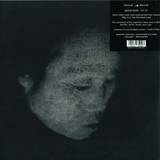
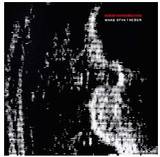
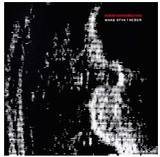
Operating out of London's Cable Street studios, Moon Zero is the project of producer and composer Tim Garratt. This self-titled debut album is the culmination of the exploratory drone work of his first EPs, 2014's 'Tombs' and 'Loss' (Denovali). Drawing on the micro-polyphony of classical modernism and analogue-leaning contemporary electronic music, it's the finest incarnation yet of an aesthetic that's both minimal and cinematic. The music spools out of Garratt's mind in the form of extensively screwed up synthesizers, bowed cymbals, liquidated instruments and detuned tape loops. Bounced between effects chains, music software, mixing desks and tape, his materials are then inflated and tampered with, in different venues of a particular significance or suggestive atmosphere. The results are enigmatic, hypnotic and register a note of mourning. They are mercifully free of the obligatory club references of electronic music that's destined for a different mood but nonetheless confines itself to bygone 'post-club' tropes. 'I was listening to a lot of William Basinski, Bowie's 'Low', Swans, Messiaen, Stars of the Lid, Cluster, Eno... Carl Sagan,' remembers Garratt. Garratt seeks out spaces in the city which can be turned into echo chambers for his ambient, avant-gardist material. Yearning to derive some meaning from a point in space-time, these resonances turn back and pacify some of the frenzied and alienating forces in both the human and the place. Like the preceding EPs, 'Moon Zero' was recorded at St George in the East in Shadwell, London. Religious themes pervade the album, drones imported from ancient sects and the never-silent industrial era - a convergence that is mirrored by the dead history of the Thames and present-day flows of money and data outside his Limehouse studio. In the time between the project's inception and the 'Moon Zero' sessions, Garratt worked on readying his material to perform live. 'Because of the lack of pre-recorded material, and as the previous EPs were largely improvised, it meant that I was constantly performing new sets each time I'd play a show. So with this album I wanted to write a more coherent piece of music which could be loosely recreated in a live scenario.'