
deleted
The Item is out of Stock. We will send You an Email as soon as it´s available again if you click on "in Stock Mail"
The Item is out of Stock. We will send You an Email as soon as it´s available again if you click on "in Stock Mail"

REPRESS!! Although he is still completely unknown to Western audiences, for Ethiopians, Tlahoun Gèssèssè (pronounced Guèssèssè) is THE VOICE.The first-ever pan-Ethiopian star, he has embodied such nonstop unanimity since the end of the 1950s that is a role-model and a point of reference.
This item has not yet been released. You can pre-order the product now.

London’s own Trev appeared on our first release, Body Music Vol 1, as well as other key releases on CoOp Presents and Local Talk. We’ve been fans from the start and, after Trev joined the family, his music went from strength to strength. It was already out-of-this-world production, with serious attention to detail, and this EP is nothing short of excellent! He told us 'there’s no hiding that this EP is, in essence, a long love letter to Brazil', but that it’s also written to 'Iran, London, Lisbon, Japan, probably more - too many to remember!'. Trev described his process as 'listening, learning, combining my favourite elements of all this music that has brought me so much joy over the years'. Right on!
This EP is fresh, different and sonically on point. It’s Bruk, it’s Brazilian, it’s Bass, it’s… all-round-really-good dance music! Trev is a real modern musician, an awesome keys player as well as a producer. He understands the importance of musicality and originality, together with weighty beats and bass, working just as well on the dance floor as they do at a house party… or dinner party, for that matter!
'Nightjar', the title track, draws you in with hypnotic plucks like crickets on a hot summer’s night. Eerie pads float in building tension before the beat drops - Pandeiro and Caxixi serving broken-beat with the kick - pumping the sonic palette and pumping the dancefloor. Deep sinister chords pulse in and out, percussive melodies bring love from the middle east, and we reach a beautiful jazz-harmony break - then it’s straight back to the body movement - this time letting loose with the cowbells and the shakers. Think Brazil, think Persia, think Jazz, think dance-floor, it’s all in there!
'Late Flip' pulls us into a more ethereal intro, with the Koto and skate sounds laying our dream scene. Morphing out of flutes, modular synth plucks pay tribute to the sounds of Lisbon as we drop - a rolling broken beat punch, playful Rhodes and distant vocal chops ring out with the Koto dripping in warm echoes. A truly amazing composition and arrangement that leaves you wanting more!
'Beijo' is one of our faves on this EP. We’re straight in with a kiss - MWAH! - a classic Baile rhythm gets a warm Bruk embrace. It’s passionate and dark and tells a story as old as history. Get lost in the movements between drums and percussion, in the flutes and cicadas, until the organ bass calls it - time to get moving. This really is Trev’s signature dance floor style. A banger with a naughty-yet-subtle bassline, and its own game of perspective - feel this rhythm in more ways than one. Vocal chops and Tamborim place São Paulo’s influence front and centre.
'Grey' takes us on a dusty House/Bruk journey with filtering chords that grow patiently until the beat drops - getting your feet moving and neck bopping! Burning slow, Trev is playful with the harmony, keeping the fun with a roller of a bassline that pulls it all together. It’s a six-and-a-half-minute rich musical journey that feels more like half that time!?
Complete your Dance Regular Vinyl collection with this absolute killer EP from the one called Trev.
Order now and we will order the item for you at our supplier.

Bruk OG Big Mac returns to the CoOp with a new 3 track E.P for some heavyweight fling foot biznizz. Expect Dub wise heavy Basslines, syncopated drums, crunchy crisp snares n soul claps with hypnotic stabs and electro hooks. immediate bruk floor fillers for the footwork massive. Available at all your usual music emporiums and outlets. Seek and destroy.
expected to be published on 02.12.2023

Kalita are proud to present the first ever reissue of Papa Yankson’s highly sought-after 1989 disco-infused highlife masterpiece 'Party Time'! Showcasing the late Ghanaian superstar at his very best, ‘Party Time’ encapsulates the blending of deep, rhythmic West African highlife with synthesizers and electronic styles that had exploded during the decade. Now, thirty-five years after initial release, and with original copies having reached grail status on the second-hand collector’s scene, Kalita brings this phenomenal record back to life, with extensive liner notes detailing Papa Yankson’s musical career.
A recipient of the Grand Medal of Ghana for his contribution to Ghanaian music, Papa Yankson was a key member of C.K. Mann’s Carousel Seven outfit during the 1970s, releasing joint albums together on the infamous Essiebons label to great success.
However, it was at the end of the following decade that Papa released ‘Party Time’, highlighting his forward-thinking musical style with its numerous hypnotic and driving up-tempo disco-soaked highlife cuts. Originally released in a small run on the short-lived Marriot Promotion label, the album features the standouts ‘Wonma Yenko Po’ and ‘Mumumde’, each showcasing deep highlife melodies, heavy drum patterns and phenomenal horn performances from the ingenious Sammy Lartey Jr on saxophone and Nana Asare on trumpet to boot.
With original copies selling for eye-watering amounts on the rare occasion that they come up for sale, the time is ripe for Kalita to celebrate this true Ghanaian 80’s grail, accompanied by liner notes and never-before-seen contemporary photos of Papa Yankson.
The Item is out of Stock. We will send You an Email as soon as it´s available again if you click on "in Stock Mail"

Modern Afrobeat productions.
"New collaboration with the impeccable and diverse studio skills of Spanish producer Kiko Navarro, pairing him with the vocals of veteran Beninois powerhouse Kaleta and the indefatigable talents of The Ibibio Horns, who are both fast becoming a label staple.
On the title track Kiko lays down a superbly inspired afro groove which takes its lead from the funk, disco & afrobeat which were causing profuse sweating and serious inflammation of dancefloors across Nigeria and West Africa in the late 1970s. Over these rhythms The Ibibio Horns conjure up a powerful concoction with their blazing horn section and scintillating keys, peppered with Afla Sackey's bouncing balafon. Kaleta reigns supreme on the vocal delivery, serving a challenge with his call to the dance... "Funky man dey sleep? You go wake him up!"
On the flipside Kiko drops the clutch and sets the thrusters to full force. In his tougher KOKI guise he jettisons the live bass and horns, switching up the groove with an insistent and throbbing, acid inspired, electronic bassline. Weighted down by chunky electronic beats KOKI turns away from the funkier vibes and looks toward a more house oriented vision. Over this solid framework Kaleta's vocals stand front & centre while the synth stylings of Scott Baylis lift the groove into the outer atmosphere. Both versions provide instrumental mixes which allow the arrangements to breathe deeply, the non-vocal elements to shine and provide serious creative tools for the club jocks."
The Item is out of Stock. We will send You an Email as soon as it´s available again if you click on "in Stock Mail"

For its second release, NUBIPHONE is proud to present you SUNSHINE, a privately pressed Afro-Jazz-Folk UFO album recorded in 1980 by the Cameroonian Singer, Musician, Actress, Seamstress & Poetess LIZA NGWA. Individually-numbered Official Deluxe Edition, limited to 500 copies! Comes with a beautiful exclusive poster, a handwritten insert from Liza Ngwa herself with the lyrics of the album and a download card.
Order now and we will order the item for you at our supplier.
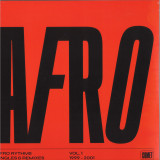
Comet Records is excited to present Afro Rhythms Vol. 1 the first repress since 1999 of Singles and Remixes out of Black Voices’s LP from Tony Allen Afrobeat pioneer, along with the iconic Psyco On Da
Bus creating a new sound between experimental, electronica and afrobeat, both albums produced by sound activist Doctor L
The compilation is a proper trawl through the vault of the early years of Comet Records featuring producers and artists as IG Culture, Eska, Catalyst aka Alex Attias, Psycho On Da Bus Featuring Doctor L and Tony Allen, Cinematic Orchestra and the legendary Parisian duo Chateau Flight.
The tracks "The Drum" and "Brotherhood" produced respectively by IG Culture (Son Of Scientist) and Cinematic Orchestra are part of The Allenko Brotherhood Ensemble project, a collaboration between the
unique drumming style of Tony Allen and the best in contemporary producers.
Comet label continues its hypnotic elliptical orbit through radical funk realms and dancefloor wormholes, connecting to five decades of music from four continents and still heading for the future, a pure and positive light to guide our way on.
Order now and we will order the item for you at our supplier.

Important document from Zambia, 1987. A deep treasure this one.
Despite notable forays into the global sounds of rock and disco, the local heart and soul of Zambian popular music in the 20th century lies in the Kalindula sound. With it’s ceremonial tribal roots on homespun guitars, traditional double bass and percussion, Kalindula evolved into a modern, electric sound over the course of the Zamrock years in the 1970s and lived it’s golden age as Zambia’s most popular groove in the 1980s. There to document the prodigious outpouring of creativity was Zambia Music Parlour, the independent outfit that had launched the likes of WITCH, Ngozi Family and Amanaz a decade earlier. One of the label’s principal Kalindula talents was the Mashabe Band, led by songwriter James Chisenga. Deeply Afrocentric with a name that refers to mystical spirits, the Mashabe Band often performed in traditional dress with body paint. Of the band’s three albums and numerous singles issued by ZMPL, Mandela from 1987, named to honour the political prisoner who would go on to lead South Africa’s first democratic administration in 1994, is the group’s most compelling point of entry and an excellent primer for the Kalindula style as a whole. Restored from the master tape vault of the Zambia Music Parlour label, Sharp-Flat presents an essential slice of Zambian music history from a period ripe for investigation and rediscovery. Complex African rhythms with crisp electric amplification and tribal roots presentation, the Mashabe Band formula is mesmerising and infectious.
The Item is out of Stock. We will send You an Email as soon as it´s available again if you click on "in Stock Mail"
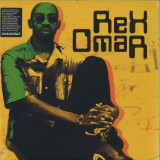
Modern highlife luminary Rex Omar has been a force within
the Ghanaian music scene for over 30 years. Now Soundway
presents five of his premier cuts remastered for a new self-titled
EP.
Over his career Rex Omar has evolved the genre, pushing
boundaries and dazzling listeners. A definitive piece of his
repertoire comes via his Dangerous album: while it was selfproduced and recorded in London circa 1997, upon CD
release it saw success mainly within his homeland of Ghana.
An irresistible blend of street-soul-come-highlife, with elements
of bouncing 90s RnB/hip-hop, it was developed with help
from Ibibio Sound Machine’s Kari Bannerman and prolific
Jamaican producer Bill Campbell. From this album rising
London producer and DJ Aroop Roy revisits the four-to-the-floor
excursion ‘Dada’, repurposing for today’s dancefloor with the
addition of fizzing synth chords and stabs.
While Omar regularly raps on his earlier works, on ‘Kele
Ngele’ (taken from his 2004 album Ajala) we hear a yearning
melodic vocal over a more laid back RnB beat. This rounds out
the new Rex Omar EP for the discerning listener to experience
the full breadth of his inventive output.
On Stock and ready to ship

The 4th release on the low-key label run by Going Good co-founder Salik.
LNS shows her versatile production and writing skills with this eclectic EP, leaning more towards an organic, percussive, folk inspired sound, with a hint of dub added for good measure. A style which might not be as familiar as her more ‘electronic’ sounding releases over the years on labels such as, Freakout Cult, 1080p, Wania and Tresor.
The organic feel is highlighted through guest appearance on flute by Nadia Sparrow (A2. Birch / B1. Shale) and the hypnotic Ukrainian folk singers’ chanting on title track Misiats. As well as the percussive work out, Pizzica Tarantata n.014 rework, remastered for this EP.
a A1. Pizzica Tarantata n.014 rework (2023 Remaster) 4:54
b A2. Birch - featuring Nadia Sparrow (flute) 6:56
c B1. Shale - featuring Nadia Sparrow (flute) 6:10
6:54
The Item is out of Stock. We will send You an Email as soon as it´s available again if you click on "in Stock Mail"

Gebrüder Teichmann & Wura Samba combine the energy of Wura Sambas yoruba drumming and chants with jacking raw analogue live electronic, live sampling and processing by Gebrüder Teichmann. Together they create an energetic trip full of playfullness, improvisation and direct comunication in order to dance.
The Nigerian percussionist and singer Wura Samba and Berlins electronic multitalents Gebrüder Teichmann met in Lagos, Nigeria through the TEN CITIES Project, where they were producing music together with Pinch, Rob Smith and Perera Elsewhere. After their debut on Soundway Records (V.A. - Ten Cities) and the "2 Cities / Berlin - Lagos" EP on NOLAND they have started performing as a trio right before the pandemic. Their new EP GUDUGUDU features two keytracks of their live sets: Iba Eledua by Wura Samba and an interpetation of Eniyan Bi Aparo by Tunji Oyelano.
Order now and we will order the item for you at our supplier.

For this album Ghetto Kumbé has enlisted an all-star roster of artists from four different continents, they’ve put together a fresh version of their debut album that’s been specifically geared to the world’s diverse slate of dancefloors, whether at home or in the club, this double 12” 45 RPM is the perfect format to experience this music. There's no denying the power of the drum. It's primal, it cuts across borders and most importantly, it makes you want to move. Ghetto Kumbé don't just understand that they celebrate it, and it's why the tambor was at the heart of the Bogotá-based trio's 2020 self-titled debut album. Rooted in mysticism and the Afro-Caribbean rhythms they'd grown up with all their lives, the critically acclaimed LP thrillingly updated the traditional Latin template, folding in elements of modern hip-hop, house and bass music while also delivering a transportive Afro-futurist vision. On Clubbing Remixes, that vision has been further amplified, as Ghetto Kumbé who were already one of Colombia's most prominent alternative acts have now gone fully global; enlisting an all-star roster of artists from four different continents, they've put together a fresh version of their debut album that's been specifically geared to the world's diverse slate of dancefloors. As the title implies, the new LP is meant for the club, which is why Ghetto Kumbé have turned to Latin music heavyweights like Trooka a multiple Grammy winner whose resume includes work with Lin-Manuel Miranda and Residente and Monte (a.k.a. Bomba Estéreo founder Simón Mejía), along with top-shelf DJs like Nickodemus and Uproot Andy, two NYC artists who've spent decades championing Afro-Latin rhythms. True to the LP's global spirit, the record also includes reworks from batida maestro DJ Firmeza, fellow Afro-Portuguese outfit Studio Bros and Parisian house groovers Les Enfants Sauvages, plus genre-blurring remixes from sonically adventurous Colombians Montoya (himself another ZZK artist) and Cero39. Even the artwork on Clubbing Remixes is a remix, as Ghetto Kumbé have tapped Uganda's Denzel Muhumuza to transform the cover of their debut album into a new, explicitly Afro-futuristic illustration. Depicting a strong Black face and glowing neon fauna beneath a sparkling moonlit sky, the fantastical image speaks to both the ritual magic and Afro-indebted heritage of Ghetto Kumbé's music, and thanks to Clubbing Remixes, the group's passionate, drum-fueled sounds will soon be blasting out of soundsystems around the globe.a
Order now and we will order the item for you at our supplier.

Die Wiederveröffentlichung zum 50zigen Jahrestag von Fela Kutis Album 'Shakara' von 1972.
'Shakara' ist ein hauptsächlich instrumentales Stück mit einem kurzen, auf Yoruba gesungenen Text, der vor Prahlern und Angebern warnt. In 'Lady' hebt Fela die Übernahme europäischer sozialer Gewohnheiten zum Nachteil der afrikanischen Kultur hervor. Das Album ist der Sound der Reifung des Afrobeat zu einer globalen Musik. Felas Texte in Pidgin-Englisch erweitern das Publikum seiner Musik über Yoruba-Sprecher:innen hinaus und machen seine Worte in der gesamten anglophonen Welt verständlich. Wie schon bei seinen anderen Veröffentlichungen in den frühen 70er Jahren hat Fela jede Seite seiner LPs genutzt, um einen intensiven Groove zu kreieren, der die Hörer:innen in seinen Bann zieht und von metaphorischen Texten begleitet wird, die den korrupten Kolonialismus kritisieren.
Auf pinkes Vinyl gepresst und mit einer zusätzlichen gelben 7" enthält die Jubiläumsversion auch ein kurzes Essay über das Album und Fela Kutis globalen Einfluss auf die Musikwelt. Darüber hinaus gibt es zwei Remixes des Ezra Collective aus UK.
Order now and we will order the item for you at our supplier.

You are about to embark on a new intergalactic journey into black space, fuelled by funk, powered by computers. Soul Jazz Records" new second collection of twisted hyperspace electro/funk "Space Funk 2: Afro Futurist Electro Funk in Space 1976-84", continues its intergalactic journey. Featuring rare and off-the-wall space funk and electro rarities and obscurities, all released on small independent USA record labels in the late 1970s and 1980s. Artists on this release include Alien Starr, Bobby Demo, Maggatron, Mid-City Crew, Tribe, Junie, Rich Cason and the Galactic Orchestra and many more intergalactic space warriors! This is space age bionic funk, programmed to make you dance!!!
Order now and we will order the item for you at our supplier.

Born in 1981 in Mdantsane in the Eastern Cape, Ayanda Sikade is one of South African jazz’s most in-demand and respected drummers, a familiar face on the scene for years and a driving force behind its growing prominence on the world stage.
Dedicated to his grandmother who raised him, Sikade’s long-awaited sophomore album as a bandleader, Umakhulu, follows his 2018 debut Movements. Recorded in Johannesburg in early 2021, it features the talents of frequent collaborator Nduduzo Makhathini on piano, young Simon Manana on alto sax and Nhlanhla Radebe on bass. The album’s nine tracks, composed and produced by Sikade, pay homage to the artist’s heritage — most noticeably on ‘Mdantsane’ and ‘Nxarhuni River’ — while forging onwards to a brave new world on others, like ‘Imithandazo Yeengelosi’ (Prayer of Angels) and ‘Space Ship’.
The Item is out of Stock. We will send You an Email as soon as it´s available again if you click on "in Stock Mail"
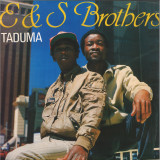
Highly sort after S.A. LP from 1986 - diggers delight.
E & S Brothers’ 1985 album Taduma holds a unique yet overlooked place in the history of South African dance music. When Shadrack Ndlovu and Ernest Segeel teamed up with Dane Stevenson, owner of Blue Tree Studio in downtown Johannesburg, and journeyman producer Taso Stephanou, South Africa’s bubblegum era had just begun, spurred on by the success of Shangaan disco. The relative success of their debut 12” ‘Don’t Bang The Taxi Door’, marketed aggressively at taxi ranks throughout the country, helped put the Blue Tree label on the map and E & S were invited back to record a full album: Taduma, featuring on keyboards Dr Buke, an in-demand session player from Soweto.
Rooted in Africa, yet purely electronic, Taduma was a moderate hit, spurred by tracks like ‘Taxi Door’ and ‘Mhane’, its hypnotic refrain ‘Mhane, famba na wena’ meaning ‘Mother, I am going to you’. Other tracks like ‘Mapantsula’ and ‘Be Careful’ place Taduma within the street-savvy ‘pantsula’ style and dance synonymous with consecutive waves of music from disco to kwaito, house and beyond, while ‘Sikele Masike’ repurposes a traditional Shangaan work song. Vocally E & S are closer to rapping than singing, in a combination of English and vernacular – predating other credited pioneers of kwaito in SA like Senyaka and Spokes H. Driving the music instead of vocals are waves of searing synths over rudimentary but explosive drum machine sounds – the word ‘Taduma’ meaning the sound of the drum.
Remastered from the original tapes and reissued for the first time, Taduma will be available on vinyl and digital platforms from early 2022 via Afrosynth Records.
The Item is out of Stock. We will send You an Email as soon as it´s available again if you click on "in Stock Mail"
Moar is back with a new double single with afro disco vibes.
The M side is a haunting vocoder disco vibe that some fans may recognize while the MM side is a dubbed version of a big classic afro that has influenced so many producers!
No doubt that this 7 inch will find its place in several circumstances of dj set.
The Item is out of Stock. We will send You an Email as soon as it´s available again if you click on "in Stock Mail"
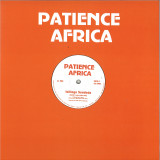
Two edits of tracks taken from Patience Africa's rare 'Let's Groove Tonight' LP. On the A-side Antal extends 'Isilingo Sendoda' with one cut - it's so nice but just too short. On the B-side Bonnefooi works his edit skills on ''Let's Groove Tonight'', changing the song structure to his liking. South African nuggets from 1980, Officially licensed via Gallo and now available again in edited form on a expertly remastered 12''
The Item is out of Stock. We will send You an Email as soon as it´s available again if you click on "in Stock Mail"

Francis The Great "Look Up In The Sky " is taken from the 1977 Ravissante Baby album later re-issued by French label Hot Casa back in 2015 from which this version is licensed. This hypnotic instrumental re edit version has the track's main focus immersed in the irresistible afro funk groove highlighting the pounding bass from Victor Edimo & Toto Guillaume on guitar over 7 minutes . Hand-numbered to 400 only copies with the b side being a unique full side lazer etching of the Mukatsuku label logo.
Order now and we will order the item for you at our supplier.

Los Caneyes was the first ever solo project from Cuban funk master Juan Pablo Torres and now Future Rootz - in collaboration with Canal Sounds and EGREM - is serving up a first-ever vinyl release of his early singles 'No Estabas No estabas Tu' and 'Oye Ven Y Baila Mi Son' on 7". These two superbly funky Afro-Cuban tracks were recorded in 1973 by this influential musical innovator. The first is a flame-hot and percussion-laden groove that is loose-limbed and sure to get those bones shaking and the second is similar - pure Latin heat for the floor.
Order now and we will order the item for you at our supplier.

Side A / Double A / The Game
Are you ready to play the game? More big drums heat for the dance floor, courtesy of label boss, Double A. Breaks everywhere, huge fills, horn stabs, some sneaky dancehall vocal samples, and a cheeky breakdown keep this one rolling. 1970’s afro funk business for sure, with plenty of elements across multiple genres to pique the interest of any crowd.
Side B / DJ Fleg (feat. Lean Rock) / Dimension Five / Latin Escapades
If you’re a b-boy or b-girl then there’s no introduction necessary here for Fleg or Lean Rock.
For everyone else, get ready for a party breaks master class. Fleg brings the classic loop heat on “Dimension Five”. Expertly produced, this one snaps hard. If you didn’t know, you’d never guess it started its life as a mellow jazz track. For “Latin Escapades” Fleg teams up with Lean Rock for some completely bananas breaks action over latin horn stabs. Both of these are instant party starters and versatile enough for any funky set.
Order now and we will order the item for you at our supplier.
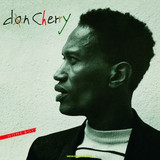
Don Cherry's downtown Paris funk masterwork produced in 1985 by Ramuntcho Matta and originally released by Barclay in France only, finally gets a worldwide release on Wewantsounds. Featuring French post-punk muse Elli Medeiros, avant garde poet Brion Gysin and cult Senegalese drummer Abdoulaye Prosper Niang (Xalam), this is a unique soundbite of Paris in the early 80s at its coolest when funk, jazz and new wave were mingling with sounds from Africa, Jamaica and Latin America. Newly Remastered, the album is augmented by a second LP worth of bonus tracks and a deluxe gatefold sleeve with a new essay by French journalist Jacques Denis (Liberation).
expected to be published on 08.09.2023

The first ever release of electronic Jaglara, an obscure dance music being innovated in an area near the Sudan, Ethiopia, and Eritrea border called Fashaga.
Among the most raucous, hypnotic, addictive, and celestial dance styles being made anywhere in Africa, this heavy, mysterious sound is being led by one man: Jantra, which translates as "craziness," a moniker bestowed to celebrate both his personality and sound. Jantra is a rather unknown quantity even in Sudan, outside of the circles which have granted him cult status to perform at their humble gatherings or at street parties far from the gaze of the cities.
Jaglara, which roughly translates as improvisation, has no songs. Jantra simply freestyles a combination of his melodies incessantly for hours on end, acting as a live producer and DJ for emphatic crowds, where the energy of his 155 - 168 BPM music is known to inspire the odd gunslinger to raise and fire his pistol in the middle of the dance floor. His music is hopeful in a hopeless world, uplifting in spirit, ancient and new, childish and mature, familiar yet refreshingly obscure, fueled by the hypnotic Sera rhythm. His Yamaha keyboard is specially tweaked to achieve what you're hearing — the perfect, sweet key tone, literally universal in its appeal.
A hybrid reissue-contemporary album, Ostinato combined extracted individual melodic patterns, rhythms, and MIDI data from Jantra's Yamaha keyboard with his older cassette and digital recordings to recreate his lengthy sessions into individual dance tracks for a worldwide audience to reach the enviable frenzy of Sudanese crowds. This promising new dance music emerging from the deepest reaches of Sudan has never made its way outside of Jantra's parties, let alone outside of the country.
This record is confirmation that the many electronic styles being exported from Africa have a worthy sibling and rival—Jantra's signature electronic Jaglara from the Fashaga underground. It is a privilege of the highest order to be exposed to this unheralded, incredibly well kept rural Sudanese secret.
Order now and we will order the item for you at our supplier.

Let Me Die Loved is now available in a limited edition white vinyl pressing. Vinyl contains an oversized 11” x 11” 16 page book that tells the story of modern Ethiopian music and Mesfin’s role within it. Ayalew Mesfin stands aside the likes of Mulatu Astake, Mahmoud Ahmed, Hailu Mergia and Alemayehu Eshete as a legend of 1970s Ethiopia. Mesfin’s music is some of the funkiest to arise from this unconquerable East African nation. Mesfin’s recording career, captured in nearly two dozen 7” singles and numerous reel-to-reel tapes, shows the strata of the most fertile decade in Ethiopia’s 20th century recording industry, when records were pressed constantly by both independent upstarts and corporate behemoths, even if they were only distributed within the confines of this East African nation. Though Mesfin was forced underground by the Derg regime that took control of Ethiopia in 1974, he has returned almost 50 years later with this triumphant set albums – the first time that his music has been presented in this form. These albums give us a chance to discover a rare and beautiful moment in music history, in anthologies built from Mesfin’s uber-rare 7” single releases and from previously unreleased recordings taken from master tapes. Tewedije Limut gives us a chance to discover a rare & beautiful moment in music history, in an anthology built from his uber-rare 7” single releases.
expected to be published on 15.09.2023
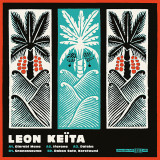
Hier hatten sich die Klänge aus dem nahen Mali und Guinea mit den lokalen Stilen vermischt und eine reiche Musikszene hervorgebracht: Bands wie Bembeya Jazz, Super Djata Band und andere Mandingue-Giganten gehörten zu den Bestsellern der Region. Leon Keïta, eine feste Größe in der malischen Musikszene, wurde 1947 in Conakry an der Atlantikküste von Guinea geboren. Leon half bei der Gründung der legendären Rail-Band, die zu einer gefeierten Stütze des Nachtlebens in Bamako wurde und die internationalen Karrieren von Salif Keita, Mory Kanté u.v.a. begründete. Leon selbst schloss sich Les Ambassadeurs Internationaux an, mit denen er durch Westafrika tourte, bevor er sich der Arbeit an seinen eigenen Kompositionen zuwandte. Als Leon bereit war, ins Aufnahmestudio zu gehen, lud er seine Freunde von Les Ambassadeurs Internationaux ein, ihm als Begleitband zu dienen; aus dieser Zusammenarbeit gingen zwei Platten hervor, die beide 1978 auf dem Label Papa Disco veröffentlicht wurden. Ein Jahr später veröffentlichte Leon "Rythmes et Mélodies du Mali", das er gemeinsam mit seinem Bruder Germain geschrieben hatte und das vom großartigen Orchestre Black Santiago begleitet wurde. Obwohl Leon nicht viele Soloaufnahmen gemacht hat, erwecken seine Lieder weiterhin die Verehrung aller, die das Glück haben, sie zu hören. In den letzten Jahren wurde der Song "Dalaka" von Carlos Estrada, dem Betreiber des Soundsystems in Barranquilla, wiederentdeckt und wurde zu einem unerwarteten Hit an der kolumbianischen Karibikküste. Zwölf Jahre nach der Veröffentlichung der von der Kritik hochgelobten Bambara Mystic Soul Compilation taucht diese neue Zusammenstellung erneut tief in die Mandingue-Kultur ein, die während Leon Keïtas legendären Sessions Ende der 70er Jahre aufgenommen wurden.
expected to be published on 06.10.2023

2022 limited edition of this Japanese no wave gem from 1982. With extended liner notes and interviews with band members about the recordings of the album, as well as unpublished photographs from 1981 by Jibiki Yuichi.
The Japanese punk rock movement known as Tokyo Rockers began in the summer of 1978. It incubated an independent music culture as well as a host of fascinating, individualistic musicians. One of the more striking units was the male-female duo Maria 023. NON played bass for them, and it was here that she first attracted attention. However, Maria 023 was short-lived, and NON would not reappear until the following year, August 1979, on stage at the legendary concert event "Drive to 80s". Her unbilled performance at the event consisted of several songs for solo bass and vocals, and her combination of intensity and a distinctly female emotionality made a striking impression. In the months that followed, NON continued to play solo and she became a pivotal presence among the female rockers on the scene at the time.
Finally she shifted from solo to group performance, and formed NON BAND. After several member changes, the line-up stabilized into a unique trio with Kinosuke Yamagishi on violin and clarinet, and Mitsuru Tamagaki on drums. It was with this line-up that the group reached a musical peak. At the same time, the Japanese punk and new wave rock scene was moving in a new direction, as a second generation of artists appeared and mushrooming independent labels began to play an increasingly important role. I myself started a label called Telegraph Records in 1981 and worked hard on record releases and building a distribution network.
Since starting the label, I had wanted to release a record by NON BAND. There were many vicissitudes before it could happen, but in February 1982 NON BAND's first album was released as a 10-inch LP on Telegraph Records, the label's fifth release. In the early Japanese indies scene, if a release sold 1000 copies it was counted as a significant success. The NON BAND album went through several repressing and sold 2000 copies. The album was a hit and the band's critical reception and popularity suddenly took off.
The shows that followed the release of the album were given a boost by the addition of two female rockers, the guitarist Kummy and keyboard player Mitsuwa. The group was reaching a real musical peak and everyone expected more great developments, but just six months after the release of the album the group would grind to a halt. Members quit the band one after another, and with no possible replacements to be found, NON herself faded away from the scene.
NON BAND's career in the early Japanese indies scene was thus short-lived. But their sole album was reissued twice on CD, and remained popular with listeners. However, the group's history was to have a second chapter.
NON ended up returning to her hometown, snowy Hirosaki in the far northern prefecture Aomori. There she raised two children and took over the running of the family business, an arts supplies store. Her thoughts turned once again towards music, and in 1999 she took up her bass again and began to sing. She invited two fabulous musicians, Keiji Haino and Tatsuya Yoshida, to Hirosaki, and performed together with them as well as solo. This marked the beginning of a new phase for her, and she played live in Tokyo and released a solo album, "ie". She got back in touch with Yamagishi and Tamagaki and reformed NON BAND. They added Emi Sasaki on accordion and began to play a handful of gigs each year, bringing a mature depth to their undiminished power and dazzling a new generation of fans. In 2012 the group released an album of recent live performances entitled " NON BAND Liven' 2009-2012". I released the album on the newly reanimated Telegraph Records.
NON still lives in the north, in Hirosaki. The city is famous for its summer Neputa festival. The first track on this album, "Duncan Dancin'" is almost a theme song for NON BAND, but its rhythm is taken from the ohayashi music that is performed in this festival, as large floats and troupes of dancers wind their way through the streets. The title refers to the legendary dancer, Isadora Duncan. The image perfectly represents NON herself: Isadora Duncan dancing to the earthy rhythms bubbling up out of the north land.
Nov 9, 2016 Jibiky Yuichi (Telegraph Factory)
In order to achieve a meticulous sound quality the reissue version is cut on 12" vinyl instead of the original 10" format. The original cover artwork has been reproduced and there are liner notes by Jibiky Yuichi with unpublished photos of NON BAND.
Order now and we will order the item for you at our supplier.

Captain Planet has teamed up with 2 long-time collaborators (Zuzuka Poderosa & Raphael Futura) for a new Brazilian disco funk song, "Moqueca." The song harkens back to Brazil's legendary funk parties in the 70's and early 80's - where soundsystems bumped legends like Tim Maia, Sandra Da Sa & Gilberto Gil - while infusing some fresh contemporary energy and extra thump for today's dancefloors. Zuzuka's bright vocals bounce over a bubbly bassline, syncopated percussion and wormy vintage synthesizers, while an additional punch is brought in the form of horn arrangements by the prolific maestro Todd Simon, another frequent Captain Planet collaborator.
"Moqueca" takes inspiration from the Brazilian dish of the same name, a nationally famous fish stew that varies across the regions of Brazil. In her lyrics, Zuzuka talks about the origins and variations of Moqueca, starting with the style from Espirito Santo, her home state, and continuing to Moqueca Baiana, from Bahia, which incorporates African influences and ingredients. The result is a song that is as much an homage to Brazilian music as it is its food, culture and people.
Order now and we will order the item for you at our supplier.

* Clear with Purple Center Vinyl * Fully printed inner sleeves * Liner notes by Larry Mizell Jr. // The album is named for the combs used to maintain an Afro hairstyle, and that's significant. The group's Ishmael "Butterfly" Butler said it summed up what they wanted to do with it: "It means the utilization of the natural, a natural style," he has said. Like with 1993's debut _Reachin' (A New Refutation of Time and Space)_, 'utilizing the natural' meant creating hip hop that blended jazz with the formidable rap skills of the aforementioned Butterfly, Craig 'Doodlebug' Irving and Mary Ann 'Ladybug Mecca' Vieira. Unlike that debut, it meant broadening to include guests such as Gang Starr's Guru, Jeru the Damaja, and Jazzy Joyce. Following the gold-selling commercial success of their debut, they here set out to prove their artistic prowess. This is intelligent, alternative hip hop that sounded like party music. Its lyrics are dense with wit, social commentary and politics - and its original inner sleeve was modeled on the newspaper of the Black Panther movement.
Order now and we will order the item for you at our supplier.

Raised on Colombia's Caribbean coast and united by its capital, Bogota, Ghetto Kumbé combines the rich musical heritage of their home, to invoke the spirit of digital rumba in audiences all over the world. The secret behind their irresistible electronic ritual lies in their powerful percussion base; Caribbean house beats and traditional afro-Colombian rhythms inherited from West Africa. The album's co-producer, The Busy Twist, adds all the legacy of UK's Bass scene to the Afrofuturistic sounds of the 3 Colombians. Inspired by the different revolutionary movements emerging all over the world, Ghetto Kumbé will release their first full-length album in July 2020 on pioneering Latin Ameri-can electronic label ZZK. Their self-titled debut is visceral, committed, and rebellious, denouncing through frantic rhythms the inequalities and abuses imposed by corrupt governments, while simultaneously enticing listeners to join in the fight. Dance mingles with awareness to create a global community, where family, friends, and strangers come together through our shared love of music and activate change amongst themselves. Using musical motifs from Africa and Colombia's Caribbean coast such as the gaita, call-and-response vocals, and an array of hand drums and rhythms, coupled with the elegant electronic production of Tech/House, Ghetto Kumbé creates an Afro-futurist soundscape with lyrics to motivate, elevate, and inspire. Their first single to come out, `Vamo a Dale Duro', is a fluorescent criticism of the unjust divide between the poor and the rich, the rising prominence of dirty politicians, and the ethics of the capitalist sys-tem while encouraging people to stand up and fight for a dignified existence. The al-bum's tone fluctuates fluidly between tracks that include ancestral chants, voices both deep and resounding, and anthems to uplift and inspire, as well as features by up-and-coming Réunion island artist Melanie and the Palenque-based folk/hip-hop band Kombilesa Mi. In the Americas, Ghetto Kumbé has become one of the most important alternative groups to come out of Colombia. They've played Barranquilla's world famous Carnival, Bogotá's recent Boiler Room, and have even opened for Radiohead. The ancient yet modern sound of the three powerful musicians has made them a legitimate representative of the new Afrohouse scene burgeoning all over the world.
Order now and we will order the item for you at our supplier.

Angolan producer 'Nazar' coined the term “Rough Kuduro” as an interpretation of the Kuduro musical style, translating the upbeat sound to expose the uglier side of what he saw in Angola, heard first on 2019’s astonishing six track ‘Enclave’ EP.
‘Guerrilla’, Nazar’s debut album, examines his family’s collective memory and country's past, threading together oral histories, political realities, and artful re-imaginings of direct horrors, to document his personal story of the 25 year Angolan civil war and it's aftermath in a detailed and episodic manner, particularly how his father's rank as a Rebel General led to a prolonged and continuing separation of his family across continents.
Nazar tells his story both impressionistically, and at times with stark directness. Rumbling bass overlaid with piercing synths mixes with field-recorded Ovimbundu folk song and a distant waterfall. The sound of a cocking gun leads into tumbling Kuduro beats and driving low-end bass. Elsewhere, slow, menacing dub suggests violent civil unrest, while reversed vocal shouts and protesting Portuguese rhymes evoke a pervasive atmosphere of chaos.
... Further in, we hear Nazar’s mother recalling the day she left home aged 16 to join the rebel movement, his sisters harmonising in the background over field recordings made in the ruins of his grandparent's home. After the housey ‘FIM-92 Stinger’, the album snaps back to the ferocity of conflict with the guttural ‘Immortal’, its deep bass shrouded in haunting shrieks driven by clicks and distortion, reflecting a time in the very early years of the rebel movement when witchcraft was used to procure immortality.
‘End Of Guerrilla’ is the final reprieve, reflecting the euphoria and melancholy that came with eventual ceasefire … “It’s about the end, but also dignity and remaining standing despite being mutilated. Making your voice heard despite not having anything to say.”
The Item is out of Stock. We will send You an Email as soon as it´s available again if you click on "in Stock Mail"

In 2015, Optimo’s Autonomous Africa label released Youth Stand Up! A triangular recording project hatched at Glasgow’s Green Door Studio that brought together young musicians from Belize, Ghana and Glasgow for ten tracks of cross-cultural collaboration. The result was an infectious cocktail of traditional Caribbean and West African rhythms, hip hop, highlife and Glaswegian post-punk, featuring contributions from Optimo Music regulars Golden Teacher and Whilst, among others.
The proceeds from that project went directly back to the youth groups in Ghana and Belize, helping the musicians from Ghana’s Tafi Cultural Institute build a recording studio and performance space in their village. Two years later, a grant from Creative Scotland’s Open Fund spawned the sequel to Youth Stand Up!: Youth Stand United, recorded both at Green Door and at TCI’s new studio in Ghana (with Golden Teacher’s Laurie Pitt at the controls), and mixed by Green Door’s Stuart and Emily Evans.
Youth Stand United features backing tracks contributed by members of Golden Teacher, Pu$$y Mothers, Whilst, Kaputt, and Sordid Sound System, with vocals provided by the musicians from TCI.
Over 6 songs, it oscillates from the left-field disco of Diloeshutubui to the Juju-electro odyssey of Gidi to the Joe-Meek-meets-William Onyeabor space age gospel pop of Nobody Knows.
Proceeds from Youth Stand United will go towards a scholarship fund for musicians from Tafi Atome, Ghana.
The Item is out of Stock. We will send You an Email as soon as it´s available again if you click on "in Stock Mail"
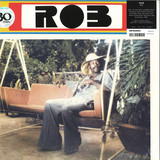
The Accra-born pianist and frontman only released a few albums in small quantities, yet two of them are among the most sought-after records from 70's Africa. This was the first.
So what do we know After learning his craft in Benin and playing with the likes of Orchestre Poly-Rythmo de Cotonou, ROB returned to Accra to write his own material and find a sound.
Hooked on the driving funk and raw soul of stars such as James Brown and Otis Redding, he would often imitate his heroes on his father's piano during school holidays.
The title track sets the pace with a JBs-like rhythm, ROB almost shamanic with his sparse yet commanding vocal. The organ and wah-wah guitar spin us out before those imperious horns bring us back in.
And what better way to close this set than with 'More', swept up in a call and response between Rob and his backing singers as a 'Blow Your Head' synth flares and the brass blasts. Good times guaranteed.
As the man himself says, 'Funky music is in my blood. What you hear is the coming out of my mind.' No one sounds like Rob, because there is no one like Rob.
The Item is out of Stock. We will send You an Email as soon as it´s available again if you click on "in Stock Mail"

Ahemaa Nwomkro, which means queens of Nwomkro, are Victoria Osei and Theresa Owusuaa. Nwomkro is an old Ashanti musical style, which played an influential role in the origin of the typical more roots-like Highlife style of Kumasi, the cultural capital of Ghana in the middle of the jungle.
On this release the two singers have teamed up with the young generation of Highlife muicians of Kumasi. On guitar is Akule Pepe, who served for years in the group of Highlife legend Alex Konadu, the most on demand band in its time. The two songs are a rare example of how good pure Nwomkro gets together with typical Highlife.
Order now and we will order the item for you at our supplier.

Ayalew Mesfin stands aside the likes of Mulatu Astake, Mahmoud Ahmed, Hailu Mergia and Alemayehu Eshete as a legend of 1970s Ethiopia.
Mesfin’s music is some of the funkiest to arise from this unconquerable East African nation. Mesfin’s recording career, captured in nearly two dozen 7” singles and numerous reel-to-reel tapes, shows the strata of the most fertile decade in Ethiopia’s 20th century recording industry, when records were pressed constantly by both independent upstarts and corporate behemoths, even if they were only distributed within the confines of this East African nation. Though Mesfin was forced underground by the Derg regime that took control of Ethiopia in 1974, he has returned almost 50 years later with this triumphant set albums – the first time that his music has been presented in this form.
These albums give us a chance to discover a rare and beautiful moment in music history, in anthologies built from Mesfin’s uber-rare 7” single releases and from previously unreleased recordings taken from master tapes. Che Belew gives us a chance to discover a rare & beautiful moment in music history, in an anthology built from his uber-rare 7” single releases.
expected to be published on 28.07.2023

Cameroonian Joe Bisso's earliest musical influences didn't come primarily from his homeland, but more from the neighbouring Congo, where the kind of early 60's Congolese Rumba played by the likes of Franco / TP Ok Jazz, and Tabu Ley Rochereau was establishing itself as a musical force in the region.
Alongside this exuberant, swinging, jazz influenced sound, the growing impact of the all conquering US soul titans became inescapable, and sprinkled with a bit of Johnny Halliday & Co's smooth chanson over the top, we get a snapshot of where Jo Bisso and friends post school musical experimentation was headed in the late 60's.
As that decade drew to a close, the single minded Bisso headed off to France to begin his quest for the future, and by 1972 could afford the journey to the US that he'd long dreamed of.
Enrollment at the Berkeley School of Music in Boston soon lead to a new band coming together, and by 1974 the all conquering, multi faceted approach that marks Bisso's musical career, meant he'd written, produced and sung on his debut single for the mighty Decca Records. 'Flying To The Land Of Soul' drew heavily from James Brown's propulsive dancefloor funk, whilst wearing it's African colours loud and proud via 'African Express' chants, and drums front and centre.
At the same time, Bisso and friends had started to immerse themselves in the fast emerging disco sound pulsing outwards from Downtown NYC into the Boston nightclubs, and by the time his debut album 'Dance To It' was released on France's influential Le Disques Esperance in 1976, it was the driving, 4/4 floor power of disco that was to define Bisso's sound on that, and the following two albums.
Whilst Bisso's immersion in Disco was based around it's energy and musicality (rather than any associated hedonism), 'African Disco Experimentals (1974 to 1978)' paints a picture of an artist dedicated to the underground club side of the scene, rather than focused exclusively on the fast emerging pop potential of the sound at the time.
The album's tone is set by 3.20 mins of building, tribal percussion and rolling rhythms of the opener 'Love Beat', a 'strictly dancefloor' approach mirrored in the near 11 mins of 'Love Somebody', building from soulful keys to deep bass funk, extended percussion breaks, joyous squelchy Moog licks, breathy vocals and more (interesting footnote : Bisso is credited as Producer / Writer / Arranger, but 'Recorded by' is attributed to Joe Chiccarelli, better known in recent years for his work with The White Stripes, Shins, and Broken Social Scene.)
Still clocking in at a healthy 6 mins plus, "The Mystery With Me" (1978) makes a nod towards more radio friendly waters with it's hooky, floaty choruses and tight structures (a then 22 year old Arthur Baker is credited as sole writer on Discogs - Bisso himself doesn't seemed convinced by this idea, but that's another story...)
'Let's Keep it Together' (1977) loops the song title over a slower groove, with free form electric guitar licks adding new textures, whilst 'Disco Madonna' (1976) showcases Bisso at his most playful, combining spoken word Hispanic vocals, rattling percussion and more of the always welcome Moog, switching up keys at the end for an unselfconsciously camp finale.
And if anything sums up the ambition of Bisso's work in the field at the time, 'Play Me' (1978) can lay claim to being the magnum opus. It's presented here as a continuous 16 minute extravaganza (as opposed to the 4 parts it came in originally) : lush strings, hypnotic vocal sections, irresistible basslines, crisp drums, the odd Barry White style interjection, disco moans, the occasional nod to a chorus vocal. None of it seeming in much of a hurry to go anywhere in particular, choosing instead to joyfully revel in the expansiveness of the form.
Order now and we will order the item for you at our supplier.

It is with great pleasure that we announce Mitchum Yacoub's debut album Living High in the Brass Empire a showcase in unique stylings of tropical funk, afrobeat, cumbia, and soul; a musical patchwork threaded by a heavy, hypnotic rhythm section and powerfully vibrant horn lines. What sounds like a 12-piece ensemble was actually mostly recorded and performed by Yacoub at his home in San Diego, featuring a few close friends from local groups Sure Fire Soul Ensemble and Boostive. The horn section is comprised of Travis Klein, Bradley Nash, and Wesley Etienne (featuring Todd Simon on "Los Muñequitos"), each with distinguished performances that send the music to higher heights. Nuanced vocalist Divina Jasso lends humanity and introspection throughout the head-nodding soul sounds of "Never Knew", latin dance anthem "Cumbia Divina", and the syncopated funk of "Empire". You'll hear rhythms from Colombia, folkloric percussion of Cuba, interlocking grooves à la Fela Kuti, 70's r&b influence, and something in between it all. Drawing many inspirations into a refreshing and unified record, we think you'll enjoy Living High in the Brass Empire.
expected to be published on 14.07.2023

In March 2022, EMPIRE assembled some of Africa's finest singers and songwriters, the musical equivalent of Ocean's Eleven, at a writing camp in San Francisco. The result is Where We Come From, Vol. 1, a 15-track compilation featuring Afrobeats royalty Wande Coal, Tiwa Savage and Olamide as well as Tanzanian duo Navy Kenzo, Cape Verde's June Freedom and a host of other stars across Nigeria and Ghana - KiDi, Fireboy DML, Kizz Daniel, Tolani and more. The sounds traverse East, West and South of the continent, incorporating drill, amapiano, trap and Afrobeats in fashioning an album that at once sandwiches luxury between lust and love while also being a flagpost to hedonism. The cover art, created by Nigerian artist Dricky Stickman, incorporates all 15 songs into the final product, illustrating unity, community and culture. “This project ‘Where We Come From, Vol. 1’ is a perfect example of music having no limitations,” Kareem Mobalaji, Regional Head West Africa said. “Yes we are from Africa, but we are truly determined to reach the entire world with our voice, which is music.”
Order now and we will order the item for you at our supplier.

After "Afro Exotique - Adventures In The Leftfield, Africa 1972-88" was enthusiastically embraced by heads, collectors and core Africa Seven enthusiasts alike, we dived back down into the vaults, and hope we've come up with another volume of listenable esoterica from roughly the same period.
"The Quest", courtesy of fleeting 1978 leftfield supergroup Afro Cult Foundation (featuring Joni Haastrup, Remi Kabaka and friends) sets the tone-bar high and sideways, with 4.50 mins of atmospheric, effected solo piano drift to get things started.
Congolese ensemble band "Orchestre Lipua Lipua" introduces gently lilting Soukous with 1977's, "Distingue", before BG and Fibre's "Thanks and Praises" introduces some wobbly, Moog tinged Lagos reggae shuffle to proceedings.
Akwassa's 1974 funker "I Don't Want Nobody" peels off into a Hammond / wah wah / moog mini odyssey half way through, before Tongolese chanteuse Akofa Akoussah's stirring "Ramer San Rame" introduces emotional charge into proceedings.
Francis Bebey's "La Condition Masculine" (1976) is a centre piece of the album, with it's skippy drum machine rhythm and spoken world vocal, but we'll admit, we probably wouldn't have used it if we'd read a translation of that vocal first.
Benis Cletin's "Jungle Magic" (1979) acid funk intro then gives way to a blatant, and at times slightly unhinged homage to the all conquering (at the time) "I Feel Love", Sorry Bamba's "M'Bife Je T'Aime" keeps the leftfield funk groove rolling, before the mournful, immersive croon of Gregoire Lawani's "Elle M'a Mordu La Langue" brings proceedings to a reflective close.
Order now and we will order the item for you at our supplier.

Back In Stock!
Ajo Se Po is the third album by alto-saxophonist and percussionist Kevin Haynes, released with his band Grupo Elegua. The album integrates musical elements with references to his deepening spiritual understanding. Haynes has created a modal harmonic language incorporating Afro-Cuban melodies and classical kora playing - his alto-sax, infusing the album with a personal 'voice'.
Yoruba spirituality is at the heart of Haynes' musical thinking which also includes both Nigerian and Cuban dimensions. This is especially reflected by the use of recitation and Cuban bata drumming being employed on all tracks, with each piece growing out of a particular bata rhythm. Each such rhythm is dedicated to a particular Orisha, or divinity.
As well as influences from Afro-Cuban, Native Nigerian and folkloric Bata, Haynes' music is a fusion of contemporary jazz incorporating Mandinga folk and praise songs and hard bop.
Kevin Haynes and Grupo Elegua have performed at renowned jazz festivals including Havana Jazz Festival, Cuba and Salamanca Jazz Festival, Spain. Haynes has also featured on Moses Boyd's hit album Displaced Diaspora.
Previously available on digital only, Ajo Se Po is now released on vinyl.
Order now and we will order the item for you at our supplier.
