Search:lost soul

Styles
All
Feater - Positive People

Running Back regular Feater aka Daniel Meuzard puts his newly-transplanted studio through its paces for the first time since relocating from Vienna, swapping out the bustle of the city for the fresh mountain breeze of the West Alps. The Positive People EP proves that a change is as good as a rest, as the wide open nature not only had some rejuvenating effects on the creative process - it also gave Feater some room in his head to ponder questions about nature, nurture, and whether our inner morality is externally programmed.

The taut jazz funk of opening track Coding springs into action like the montage music of a lost ‘70s TV show, while the title track Positive People plays on the ambiguity of its title, with cascading synth notes, tastefully dubby 303 stabs, and an afro-cuban drum figure that forms the foundation for a spaced-out dancefloor workout. It's a combo of tracks that should appeal to chat room moderators and serotonin programmers alike.

Expensive Zeit kicks off sounding like grime maverick XTC had been brought up on Murder Capital electro rather than East London garage - before it morphs into a bumpin electrofunk and percussion session, with its sights set firmly on an aquatic worm hole. The EP rounds out with Decline All Cookies, which breaks out of a flanged-out half-time drum 'n' effects intro to reveal a lush chord progression, flipping a soul jazz piano mood into a trippy slice of modern instrumental funk.


Can man be the master of his own destiny? It seems with this change of location and musical direction, Feater might just have figured out the answer.

out of Stock

Order now and we will order the item for you at our supplier.


Last In: 3 years ago
Poor Performer - Like Yr Wounds

After the relative success of The Bitter Springs' last album, The Odd Shower, Simon Rivers promptly disbanded the long-running group and began recording his first solo album, Like Yer Wounds Too, under the name Poor Performer. As Jim Wirth wrote of a recent Bitter Springs reissue, "Weaving the messy threads of suburban life into dense tapestries, he has something of the Go-Betweens' gift for melody, something of Mark E Smith’s ear for language, something of Vic Godard’s common touch, and almost none of the acclaim that should have been his due." This holds true for Poor Performer's debut album, though the songs seem based around a loose concept of issues dealing with middle-age self-reflection . . . though nothing nearly as navel-gazing as that statement might imply! Rivers: "For as long as I can remember, I've been either making records or planning to make them. But for once, this is a record I didn't really plan to make. The strange circumstances of the Covid lockdown led to its coming together. I'd lost my Dad to a demential-related death, retired from work due to mental stress, and was shielded for seven months . . . I took my banjo, my Dad's Yamaha keyboard and a few of my guitars, and booked a month of studio days at One Cat with the brilliant Jon Clayton at the controls . . . after a week or so of recording backing tracks, Jon said, "I think 57 songs is a bit ambitious, Si", so together made the decisions that shaped this record and its accompanying EP." With 7" 45s now nearly as expensive to make as a full vinyl LP, a decision was made to include likely contenders on a bonus CD EP, which certainly rivals the album in quality and perhaps generally exceeds it in immediacy, but Like Yer Wounds Too is more of a grower than anything yet released by Tiny Global Productions, and one of the releases we're most proud to present to the public. Humour, insight and brilliance abound. Album tracks: Golden London Leaves / Kempton Park / Life U Chose / Hard To Be Happy / Lil' Bro / Sleepy Little Town / No Escape From Me And You / Right As Rain / The Point / Our Souls / The Frog's Tale / Can You Whistle? / Something's Gonna Kill Ya ep tracks: The World Has Had Enough / 2 Hard 2B Happy / For A While / Get Up Them Stairs / Daylight Robbery

pre-order now25.11.2022

expected to be published on 25.11.2022

INSTANT HOUSE (JOE CLAUSSELL) - LOST HORIZONS EP

Before he co-founded the legendary Sunday afternoon event Body & Soul with fellow New York DJs Danny Krivit and Francois Kevorkian in 1996, Joaquin "Joe" Claussell was the driving force behind Instant House, an eclectic production outift who released a series of uplifting deep house records, several of which were spun by David Mancuso at the 90s iteration of his influential Loft parties.

In 1993, Instant House released their deepest single, Lost Horizons, through Jungle Sounds Recordings. The A-side, ‘Lost Horizons (The Mind Travel Saturday Night Sunday Morning Mix)’ is a seventeen-minute and twenty-second sojourn into the vibrant club sounds of early 90s NYC. Driven by a Latin-accented man-machine beat that marches into infinity, it comes backed by two shorter mixes, ‘Lost Horizons’ and ‘Lost Horizons (Percussion Bonus)’. Twenty-nine years later, Isle of Jura presents an official vinyl and digital reissue of this slow-burning deep cut.

The Instant House story begins in the late 80s at Dance Tracks, an East Village record store established by the businessman, DJ, and graphic designer Stan Hatzakis. Patronised by New York trendsetters like Frankie Knuckles and Larry Levan, Dance Tracks was considered one of the world's best underground dance music retailers.

During the winter of 1991, Stan got together with one of his best customers, Tony Confusione, to make music. A wall street guy by day and a keyboardist by night, Tony was also a serious DJ. Not long after their first recording sessions, they invited another Dance Tracks fixture, Joaquin "Joe" Claussell, to join them in Tony’s state-of-the-art home studio in Long Island. He brought a vibrant, percussive edge to the sample-based tracks Stan and Tony were cooking up. Emboldened, the three DJs began recording together as Instant House. That year, they released the Dance Trax EP.

In 1992, after Instant House had dropped two certified classics, 'Over' and 'Awade', for Jungle Sounds Records, Stan exited the group and sold Dance Tracks to Joe and his business partner, Stefan Prescott. Following Stan's departure, Joe and Tony headed into the studio for a special recording session. “I just remember how powerful the connection was while we were making that record,” explains Joe, recalling the creation of ‘Lost Horizons (The Mind Travel Saturday Night Sunday Morning Mix)’. “It was a very spiritual encounter in the studio.”

While laying out the drum patterns, sound effects, and arrangement, Joe explained the vibe to Tony, who played the lush cosmic chords and an effortless keyboard saxophone line over the top. “That was Tony completely feeling himself,” Joe reflects. “He performed majestically.”

After the release of the Lost Horizons 12”, Joe received a phone call from Cisco International Corp. A plane flight later, he was sitting in their label offices in Tokyo, talking to a senior record executive who wanted to introduce Lost Horizons to Japan. “What they were primarily doing at the time was pressing classical records - we’re talking thousand dollar plus classical reissues - and they wanted to license and distribute Lost Horizons,” Joe remembers. Three years later, Joe and Tony released 'Asking Forgiveness', their final 12” as Instant House, before parting ways with full hearts.

In the context of his career as a DJ, remixer, and producer, Joe is known for long songs and compositions. As Lost Horizons illustrates, he’s carried that impulse with him since his foundational days. “When I produce, I don’t believe in the beginning or endpoint of anything,” Joe explains. “I really despise the rules. To me, that’s not true to the art of creation. I just believe there is a flow in creation. When we were making music in the 90s, we were restricted by format, but that record could have gone on forever.”

The 12” is housed in a full sleeve jacket by Bradley Pinkerton based on the original release design.

out of Stock

Order now and we will order the item for you at our supplier.

Warkings - Morgana

Warkings

Morgana

12inchNPR1137VINYL
Napalm Records
17.11.2022

"WARKINGS Warriors beware, the mighty warriors are back with an unexpected ally – none other than the legendary Sorceress Morgana le Fay! The sister of Arthur and mistress of the lost souls has joined the four kings on the fourth chapter of the WARKINGS saga, Morgana, to be unleashed on November 11, 2022 via Napalm Records! Forging their musical steel in the tradition of Powerwolf, Sabaton, HammerFall and Running Wild, the WARKINGS burst onto the battlefields in 2018. They gathered their Warriors around the world and entered the Official German Album Charts 2021 at #13 with Revolution. Gathered in the golden halls of Valhalla, the four ancient kings – a roman Tribune, a wild Viking, a noble Crusader and a martial Spartan – are now back with Morgana, having already escaped from the underworld, fought the Monarchs of the dusk and called for Revolution. Back in the realms of the dead, they were captivated by the eerie and extraordinary chanting voice of “evil” sorceress Morgana La Fey. Obsessed with the idea of telling humanity her own version of her story, the witch inspired the WARKINGS to include Morgana in their circle as they fought their next battles – a covenant made for eternity! In their trademark manner, the WARKINGS – armed with weapons made of pure Heavy Metal – tell their stories in songs forged of pure steel. Morgana's haunting voice rises to tell her story in four acts: The first chapter ""Hellfire"", tells of her love-hate relationship with King Arthur, ""Monsters"" of the dark side in each of us, and ""Heart of Rage"" of her desire to grant forgiveness to all who have hurt her, before revealing in ""Immortal"" how she and Arthur's immortal souls are reborn again and again. In the last two chapters of the battle, Arthur himself speaks out and implores Morgana not to give up, before he himself narrates the Arthurian saga in the crowning finale! Of course, the WARKINGS themselves raise their voices to tell their stories – recounting their battles with Hereward the Wake, the naval battle of Salamis and a man unjustly enslaved. As a special gift, the WARKINGS offer “To The King” – a hymn in honor of the most loyal of the faithful WARKINGS Warriors, who stand side by side with the mighty kings in all battles! Raise your swords and join the next fight in the WARKINGS saga with Morgana!"

pre-order now17.11.2022

expected to be published on 17.11.2022

Dream Theater - Lost Not Forgotten Archives: Old Bridge, New Jersey (1996) Dream Theater - Lost Not Forgotten Archiv

Ursprünglich 2006 auf YtseJam Records veröffentlicht, enthält 'Old Bridge, New Jersey (1996)' eine komplette Show von Dream Theaters kurzer 'Escape from the Studio'-Tour, die vor der Veröffentlichung ihres 1997er Albums 'Falling Into Infinity' stattfand. Sie enthält frühe Versionen von Tracks, die auf dem Album landen sollten, darunter 'Peruvian Skies', 'Lines in the Sand' & 'Burning My Soul', sowie einige Stücke aus der 'A Change Of Seasons'-Suite. Die neueste Ergänzung zu den Lost Not Forgotten Archives ist als Special Edition 2CD Digipak, Gatefold 180g 3LP+2CD & als Digitales Album erhältlich.

pre-order now11.11.2022

expected to be published on 11.11.2022

Eric Hilton - Lost Dialect LP

Auf seinem beeindruckenden neuen Album 'Lost Dialect' spricht Eric Hilton die 12-Bit-Sprache des Trip-Hop, ein Genre, das er als Mitbegründer der legendären elektronischen Downtempo-Band Thievery Corporation mitinitiiert hat. Auf zehn expansiven Tracks nutzt der Produzent die Old Skool-Skills, um den Nu Skool-Chill zu schaffen. Alte Wege bleiben stark. Sprechen auch Sie den 'Lost Dialect', Eric Hiltons Weiterentwicklung des Trip-Hop, auf Montserrat House Music.

out of Stock

Order now and we will order the item for you at our supplier.


Last In: 2 years ago
THE BEATERS - LOST MEMORIES LP

For their fourth release, Selected Works are reissuing the classic South African record from the legendary Beaters, Lost Memories. Fusing R&B, Funk and Soul this collection of tight instrumentals was initially released on CBS in the late 60s. This band would later morph into the legendary South African outfit Harari. Psychedelic soul masterpiece on the CBS LAB imprint. First ever reissue only from Selected Works. Deluxe vinyl repress based on the original CBS pressing with all original artwork in Tip On Covers. Fully licensed and remastered.

out of Stock

Order now and we will order the item for you at our supplier.


Last In: 3 years ago
J. Caesar - Take To The Sky EP

Take To The Sky is a sun soaked EP with four dance floor heaters soundtracking the summer; capturing the euphoria and release of collectively gracing sweaty dance floors again. Inspired by nostalgic 90s UK club music/Summer of Love, incorporating broken-beat, garage and street-soul rhythms carried by melodic ear-worm vocals performed and produced by J. Caesar with co-production and mixing by Z Lovecraft (Rhythm Section). This year the East London based producer, singer/songwriter blessed the BBC airwaves with the EP title track, ‘Take To The Sky’ premiered on 1Xtra by Jamz Supernova originally featured on the well-received Scenic Route compilation and has been testing out dubs at his club night, Space Ghettos co-run by Qendresa and Albertina.

The opening track “I Told You” is a balearic love letter of gratitude to his friends, “ all I had was love, love of my friends, love of music and love of living.” his sentiment of meaningful relationships evoked through his sparse vocal arrangements, sprinkled over downtempo street soul drums. Take To The Sky, similarly paying homage to the underground Black dance music of the 90's, is a tale of escapism whilst Give Me To The Night is a celebration of hedonism featuring Jim’s sultry vocals punctuated by broken-beat drums. Lost In Space co-produced by Z Lovecraft is a moody, Garage/D’n’B infused B-side with disorientating breaks capturing the essence of romantic turmoil he found himself in during COVID. In his words “Take To The Sky EP is an ode to freedom”.

Support from Jamz Supernova BBC 1Xtra, CC:Disco Track IDs, Stamp The Wax, NTS; Anu, Zakia,

out of Stock

Order now and we will order the item for you at our supplier.


Last In: 3 years ago
VARIOUS - PENNY & THE QUARTERS & FRIENDS LP

"You and Me" by Penny & the Quarters simply refused to stay lost. For 40 years, the song sat silent in a box of reels before heartthrob Ryan Gosling selected it to star in 2010's indie weeper Blue Valentine. The power of the track set off an international treasure hunt in pursuit of the mysterious artists behind it. Since then, "You and Me" has soundtracked thousands of weddings, spawned hundreds of YouTube covers, and tugged heartstrings for scores of advertisements and films. Fifteen years after "Eccentric Soul: The Prix Label" became Numero's worst selling compilation, we've reanalyzed the tapes and selected 11 equally-as-fascinating rehearsals caught by engineer Clem Price in Columbus, Ohio, in 1970.

pre-order now04.11.2022

expected to be published on 04.11.2022

VARIOUS - PENNY & THE QUARTERS & FRIENDS LP

"You and Me" by Penny & the Quarters simply refused to stay lost. For 40 years, the song sat silent in a box of reels before heartthrob Ryan Gosling selected it to star in 2010's indie weeper Blue Valentine. The power of the track set off an international treasure hunt in pursuit of the mysterious artists behind it. Since then, "You and Me" has soundtracked thousands of weddings, spawned hundreds of YouTube covers, and tugged heartstrings for scores of advertisements and films. Fifteen years after "Eccentric Soul: The Prix Label" became Numero's worst selling compilation, we've reanalyzed the tapes and selected 11 equally-as-fascinating rehearsals caught by engineer Clem Price in Columbus, Ohio, in 1970.

pre-order now04.11.2022

expected to be published on 04.11.2022

Various - Penny & the Quarters & Friends

“You and Me” by Penny & the Quarters simply refused to stay lost. For 40 years, the song sat silent in a box of reels before heartthrob Ryan Gosling selected it to star in 2010’s indie weeper Blue Valentine. The power of the track set off an international treasure hunt in pursuit of the mysterious artists behind it. Since then, “You and Me” has soundtracked thousands of weddings, spawned hundreds of YouTube covers, and tugged heartstrings for scores of advertisements and films. Fifteen years after Eccentric Soul: The Prix Label became Numero’s worst selling compilation, we’ve reanalyzed the tapes and selected 11 equally-as-fascinating rehearsals caught by engineer Clem Price in Columbus, Ohio, in 1970.

pre-order now04.11.2022

expected to be published on 04.11.2022

Various - Penny & the Quarters & Friends

“You and Me” by Penny & the Quarters simply refused to stay lost. For 40 years, the song sat silent in a box of reels before heartthrob Ryan Gosling selected it to star in 2010’s indie weeper Blue Valentine. The power of the track set off an international treasure hunt in pursuit of the mysterious artists behind it. Since then, “You and Me” has soundtracked thousands of weddings, spawned hundreds of YouTube covers, and tugged heartstrings for scores of advertisements and films. Fifteen years after Eccentric Soul: The Prix Label became Numero’s worst selling compilation, we’ve reanalyzed the tapes and selected 11 equally-as-fascinating rehearsals caught by engineer Clem Price in Columbus, Ohio, in 1970.

pre-order now04.11.2022

expected to be published on 04.11.2022

Paddy Fred - Spells

Paddy Fred

Spells

7"-VinylESP006
Extra Soul Perception
31.10.2022

Next on Extra Soul Perception, we're very proud to welcome a new artist to the label, Paddy Fred, with three tracks of antipodean psych soul for his 'Spells' 7".

Paddy Fred is a musician based on the south coast of Wellington, New Zealand, where he grew up. He's played guitar since he was a teen, and went on to study music performance, and toured with a number of bands throughout his twenties. When these bands dissolved in 2011, he began beat making and music production of his own, losing himself in the freedom of making music on his terms.

Inspired after hanging with Flying Lotus & the Brainfeeder crew and clubbing at Low End Theory in Los Angeles, Paddy created his first release, 'Laminate', which dropped in 2013; the same year Paddy entered fatherhood.

After emerging from the "survival zone" of the first five years of parenting, Paddy emerged a little lost, separated from the momentum of his musical career. There then followed a period of self-reflection. As he ran up and over the same coastal path repeatedly, he slowly but surely rekindled his passion for music making, and the work began again…

Paddy came to the attention of the Extra Soul Perception crew courtesy of fellow New Zealander, Mara TK (who provided the label's highly acclaimed 2021 album 'Bad Meditation'). When the guys heard the demos, they signed him on sight.

The lead track 'Spells' consists of big sludgy drums, a growling synth bass, ethereal guitars and spacey vocals, mixing the washed-out slow-mo beat construction of Toro Y Moi with the heady psychedelic soul of Tame Impala and Mildlife. On the flipside 'Found You' is a more tranquil affair, with languorous drums befitting DJ's Khruangbin rhythm section, whilst closer 'Kids' (digital only) offers a robust yet airy finish with an uptempo instrumental akin to the sound palette of late 00s Four Tet.

'Spells' is the first taste of Paddy's new material. Inspired by lost love, babies feet, social fatigue and universes held within rock-pools, this is Paddy Fred at his most true to self, and just a small sample of what's to come.

out of Stock

Order now and we will order the item for you at our supplier.


Last In: 3 years ago
JAIRUS SHARIF - WATER & TOOLS LP

Freedom is both an integral and multi-layered topic for improvised music, describing its mechanics, aesthetics, and values and often an underlying political dimension as well. In the case of free jazz specifically, the word carries additional weight given the music's deep connection to the black liberation movement of the 1960's and 70's.

The passionate and unclassifiable work of Calgary-based improviser Jairus Sharif embraces each of these definitions of freedom and others, albeit strictly on its own personal and idiosyncratic terms. Since early 2020, the 34 year-old autodidact has been generating a steady stream of homespun solo recordings that forge unprecedented connections between hip-hop abstraction, cosmic skronk, outsider jazz, and staunch post-punk DIY ethos.

Leading up to the pandemic, Sharif's immersion in spiritual and exploratory jazz had culminated in him deciding to purchase an alto saxophone. Unbeknownst to him this instrument would be a catalyst for him to discover his own ardently individualistic artistic voice.

Prior to that point, he had always been somewhat of a solitary musical traveler. In 2002, he acquired his first instrument—a pair of Technics 1200s — but struggled to find local collaborators that had equal investment in hip hop culture. Ultimately, Sharif picked up the guitar, turning to the resilient local punk community, that had also nurtured both of his mothers some time earlier.

As Black Lives Matter gained momentum in the wake of George Floyd's murder, Sharif was suddenly flooded with an acute awareness of his own identity. It compelled him to zealously plunge headlong into open-ended spontaneous solo creation. Water & Tools, his strange and stirring debut for Toronto's Telephone Explosion Records (home to full-lengths from the likes of Brodie West's Eucalyptus, Mas Aya, and Joseph Shabason), offers a glimpse into this ongoing hermetic journey.

As Sharif dedicated himself to uncovering his own deeper musical truths, he assembled a home studio in his basement, cobbling together a drum kit from bits his bandmate had left at his house pre-pandemic, chaining effects together and outfitting the entire space with microphones. Somewhere between the chaos of child's treehouse and the tidy import of a shrine, this space (pictured on the album's back cover) consecrated his own imagination. He laid it out to maximize access to any and every tool in his arsenal, providing him a freedom to explore that he had never permitted himself to consummate before.

Within this cozy private universe, his recent purchase—the saxophone—assumed new meaning. It furnished a tangible connection to the black radicalism that mobilized free jazz, but also something far more personal. From a technical standpoint, the instrument was completely unfamiliar to him, yet rather than this being a hindrance to Sharif, his inexperience opened fruitful path forward, unencumbered by preconceptions. Resolving to shirk formal training, convention, and build his own understanding of it from scratch, allowed him to access his most raw, fundamental creative impulses. The Saxophone's inseverable bond with breath compounded this effect, echoing revelatory discoveries he had been making about breathing through yoga, research, and psychotherapy. Of course, the parallels with BLM's harrowing rallying cry—“I can't breathe”—were not lost on him either.

Water & Tools is a dense, contradictory statement with a blustery surface that shelters a soulful heart. It's generous music, exuding profound vulnerability—grappling with the loss of one his mothers, Lisa—all the while brimming with electric wide-eyed wonder. Almost every one of the nine pieces seems to carry some semblance of a groove, while remaining completely untethered from pulse. For Sharif, this collection is an expression of newfound lucidity, however for the listener his sonic concoctions act as powerful psychotropics. At points, there's a timelessness that's conveyed through the music's processional, ritualistic tenor, and yet there's an endless amount of wild, futuristic detail waiting to unspool at any given moment. Similarly, while this recording emerges from Sharif's private pilgrimage and personal emancipation, he also leaves room for collaboration. Woven throughout Sharif's one-man-ensemble textures, one finds Maxmilian Turnbull (of Badge Epoque, U.S. Girls, and Cosmic Range infamy) providing sundry keyboards and treatments, as well as his mixing skills.

Whether conjuring effusive psychedelia or plumbing introspective depths, the music that Jairus Sharif produces is singular, visceral, and wondrously unpredictable. Water & Tools sketches a raw, firsthand account of his nascent explorations within his own unbridled imagination.

pre-order now31.10.2022

expected to be published on 31.10.2022

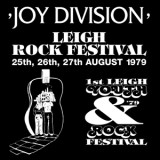
Joy Division - Leigh Rock Festival 1979

A new pressing, limited to 500 copies on red vinyl. Joy Division live at the Leigh Rock Festival in 1979. It has a gatefold sleeve with previously unseen Leigh festival images. This item will only be manufactured for a short period of time so will be very limited. Order now. The Leigh Rock and Music Festival was a 3-day mini-festival co-hosted by Zoo Records and Factory Records, held in Leigh on 25, 26 & 27 August 1979. Factory gave the event the catalogue number Fac 15 and the title 'Zoo Meets Factory Half-way'. The roster included A Certain Ratio, Joy Division, Crawling Chaos, The Teardrop Explodes, OMD, and Echo and the Bunnymen. The event was so titled because the town Leigh is Half-way between Liverpool (the home of Zoo) and Factory. Catalogue number also allocated to a poster for the event which was designed by Peter Saville. Tracklisting : Side One : 1 Disorder/ Stage Announcements 2 Leaders Of Men 3 Colony 4 Insight 5 Digital. Side Two : 6 Dead Souls 7 Shadow Play 8 She’s Lost Control 9 Transmission 10 Interzone 11 Sound Of Music- Intro.

pre-order now31.10.2022

expected to be published on 31.10.2022

Kill Your Boyfriend - Voodoo LP

Treviso, Italy-based two piece Kill Your Boyfriend will release their fourth album 'Voodoo' on October 14th via Sister 9 Recordings (Europe), Little Cloud Records (North America) and Shyrec (Itay). A frantic and hypnothising bacchanalia of Psych & Industrial tinged soundwaves, the new album is a collection of reverb laden necromantic charms, summoning the souls and bones of the greats in the Rock & Roll pantheon of the 1950s. The duo delivers such glittery dark enchantment via 7 hoodoo hymns, travelling with a crumbling, ghostly and magically whizzing Rocket 88, in the company of Marie Laveau and madame Lalaurie. It's a relentless whirl of Voodoo-Psych, Industrial-Billy, Electro-GrisGris, which you can dance to. The new LP follows 'Killadelica', where Kill Your Boyfriend had refined their debut signature sound, bridging the gap between the semi-obscure but hauntingly fascinating tradition of Veneto's Post-Punk (Death In Venice, Evabraun, Pyramids, etc.) and contemporary Psych-Nouveau. With 'Voodoo', Matteo Scarpa and Antonio Angeli, explore new genres and expand the sonic borders, without losing their original intent. They replace the synth bass with a bass-guitar, adding more fluidity and weight to a renewed and punchier rhythmic section. Electronic and acoustic percussion are fuller and heavier, and the band's new stomp-machine is a hyper-convulsive version of the saturated Rock & Roll and R&B drumming, from the cheap garage studios of 1950s indie labels. Sida A is the most Rock & Roll of the two, and it is inspired by Michael Ventura's essay "Hear that Long Snake Moan", which brought forward the idea that "the Voodoo rite of possession by the god became the standard of American performance in Rock’n’Roll" where the performers "let themselves be possessed not by any god they could name but by the spirit they felt in the music”. Each song invokes one or a set of the lost souls of the Rock & Roll era, with 'The Day The Music Died' referring to the infamous 3rd of February 1959. Side B descends deeper into the magic swamps of Creole magic, with music taking on a much more liturgical function, conjuring shamanic possessions via extra layers of tribal percussion. The band says of side B: "we see it as a one long ritualistic descent into a psychedelic underworld made of echoing voices, claustrophobic spaces populated by lost souls, enchanters and witchdoctors."

TRACKLIST 1. The King 2. The Man In Black 3. Mr Mojo 4. Buster 5. The Day The Music Died 6. Papa Legba 7. Vodoo

pre-order now30.10.2022

expected to be published on 30.10.2022

Lady Blackbird - Black Acid Soul LP (Deluxe Edition) 2x12"

Set for release on 28th October, the deluxe edition of Lady Blackbird’s debut album ‘Black Acid Soul’ comes with a staggering 11 additional songs, encompassing brand new material such as stunning single ‘Feel It Comin’ and remixes commissioned by the likes of electronic, jazz, funk luminaries Emma-Jean Thackray, Colleen 'Cosmo' Murphy and Greg Foat.

Originally released in 2021, ‘Black Acid Soul’ received enormous critical acclaim; The Sunday Times named her their Breaking Act, stating that she “brings a singing voice of extraordinary nuance and immaculate phrasing to a selection of covers/reworkings and pindrop originals” in a 4* review. The Guardian awarded the album a 5* review, remarking that Blackbird “finds her calling with an extraordinary collection of songs and performances that burn deep into you”.

out of Stock

Order now and we will order the item for you at our supplier.


Last In: 3 years ago
Lee Tracy & Isaac Manning - Is it What You Want

As the sun sets on a quaint East Nashville house, a young man bares a piece of his soul. Facing the camera, sporting a silky suit jacket/shirt/slacks/fingerless gloves ensemble that announces "singer" before he's even opened his mouth, Lee Tracy Johnson settles onto his stage, the front yard. He sways to the dirge-like drum machine pulse of a synth-soaked slow jam, extends his arms as if gaining his balance, and croons in affecting, fragile earnest, "I need your love… oh baby…"

Dogs in the yard next door begin barking. A mysterious cardboard robot figure, beamed in from galaxies unknown and affixed to a tree, is less vocal. Lee doesn't acknowledge either's presence. He's busy feeling it, arms and hands gesticulating. His voice rises in falsetto over the now-quiet dogs, over the ambient noise from the street that seeps into the handheld camcorder's microphone, over the recording of his own voice played back from a boombox off-camera. After six minutes the single, continuous shot ends. In this intimate creative universe there are no re-takes. There are many more music videos to shoot, and as Lee later puts it, "The first time you do it is actually the best. Because you can never get that again. You expressing yourself from within."

"I Need Your Love" dates from a lost heyday. From some time in the '80s or early '90s, when Lee Tracy (as he was known in performance) and his music partner/producer/manager Isaac Manning committed hours upon hours of their sonic and visual ideas to tape. Embracing drum machines and synthesizers – electronics that made their personal futurism palpable – they recorded exclusively at home, live in a room into a simple cassette deck. Soul, funk, electro and new wave informed their songs, yet Lee and Isaac eschewed the confinement of conventional categories and genres, preferring to let experimentation guide them.

"Anytime somebody put out a new record they had the same instruments or the same sound," explains Isaac. "So I basically wanted to find something that's really gonna stand out away from all of the rest of 'em." Their ethos meant that every idea they came up with was at least worth trying: echoed out half-rapped exhortations over frantic techno-style beats, gospel synth soul, modal electro-funk, oddball pop reinterpretations, emo AOR balladry, nods to Prince and the Fat Boys, or arrangements that might collapse mid-song into a mess of arcade game-ish blips before rallying to reach the finish line. All of it conjoined by consistent tape hiss, and most vitally, Lee's chameleonic voice, which managed to wildly shape shift and still evoke something sincere – whether toggling between falsetto and tenor exalting Jesus's return, or punctuating a melismatic romantic adlib with a succinct, "We all know how it feels to be alone."

"People think we went to a studio," says Isaac derisively. "We never went to no studio. We didn't have the money to go to no studio! We did this stuff at home. I shot videos in my front yard with whatever we could to get things together." Sometimes Isaac would just put on an instrumental record, be it "Planet Rock" or "Don't Cry For Me Argentina" (from Evita), press "record," and let Lee improvise over it, yielding peculiar love songs, would-be patriotic anthems, or Elvis Presley or Marilyn Monroe tributes. Technical limitations and a lack of professional polish never dissuaded them. They believed they were onto something.

"That struggle," Isaac says, "made that sound sound good to me."

In the parlance of modern music criticism Lee and Isaac's dizzying DIY efforts would inevitably be described as "outsider." But "outsider" carries the burden of untold additional layers of meaning if you're Black and from the South, creating on a budget, and trying to get someone, anyone within the country music capital of the world to take your vision seriously. "What category should we put it in?" Isaac asks rhetorically. "I don't know. All I know is feeling. I ain't gonna name it nothing. It's music. If it grabs your soul and touch your heart that's what it basically is supposed to do."

=

Born in 1963, the baby boy of nine siblings, Lee Tracy spent his earliest years living amidst the shotgun houses on Nashville's south side. "We was poor, man!" he says, recalling the outhouse his family used for a bathroom and the blocks of ice they kept in the kitchen to chill perishables. "But I actually don't think I really realized I was in poverty until I got grown and started thinking about it." Lee's mom worked at the Holiday Inn; his dad did whatever he had to do, from selling fruit from a horse drawn cart to bootlegging. "We didn't have much," Lee continues, "but my mother and my father got us the things we needed, the clothes on our back." By the end of the decade with the city's urban renewal programs razing entire neighborhoods to accommodate construction of the Interstate, the family moved to Edgehill Projects. Lee remembers music and art as a constant source of inspiration for he and his brothers and sisters – especially after seeing the Jackson 5 perform on Ed Sullivan. "As a small child I just knew that was what I wanted to do."

His older brother Don began musically mentoring him, introducing Lee to a variety of instruments and sounds. "He would never play one particular type of music, like R&B," says Lee. "I was surrounded by jazz, hard rock and roll, easy listening, gospel, reggae, country music; I mean I was a sponge absorbing all of that." Lee taught himself to play drums by beating on cardboard boxes, gaining a rep around the way for his timekeeping, and his singing voice. Emulating his favorites, Earth Wind & Fire and Cameo, he formed groups with other kids with era-evocative band names like Concept and TNT Connection, and emerged as the leader of disciplined rehearsals. "I made them practice," says Lee. "We practiced and practiced and practiced. Because I wanted that perfection." By high school the most accomplished of these bands would take top prize in a prominent local talent show. It was a big moment for Lee, and he felt ready to take things to the next level. But his band-mates had other ideas.

"I don't know what happened," he says, still miffed at the memory. "It must have blew they mind after we won and people started showing notice, because it's like everybody quit! I was like, where the hell did everybody go?" Lee had always made a point of interrogating prospective musicians about their intentions before joining his groups: were they really serious or just looking for a way to pick up girls? Now he understood even more the importance of finding a collaborator just as committed to the music as he was.

=

Isaac Manning had spent much of his life immersed in music and the arts – singing in the church choir with his family on Nashville's north side, writing, painting, dancing, and working various gigs within the entertainment industry. After serving in the armed forces, in the early '70s he ran The Teenage Place, a music and performance venue that catered to the local youth. But he was forced out of town when word of one of his recreational routines created a stir beyond the safe haven of his bohemian circles.

"I was growing marijuana," Isaac explains. "It wasn't no business, I was smoking it myself… I would put marijuana in scrambled eggs, cornbread and stuff." His weed use originated as a form of self-medication to combat severe tooth pain. But when he began sharing it with some of the other young people he hung out with, some of who just so happened to be the kids of Nashville politicians, the cops came calling. "When I got busted," he remembers, "they were talking about how they were gonna get rid of me because they didn't want me saying nothing about they children because of the politics and stuff. So I got my family, took two raggedy cars, and left Nashville and went to Vegas."

Out in the desert, Isaac happened to meet Chubby Checker of "The Twist" fame while the singer was gigging at The Flamingo. Impressed by Isaac's zeal, Checker invited him to go on the road with him as his tour manager/roadie/valet. The experience gave Isaac a window into a part of the entertainment world he'd never encountered – a glimpse of what a true pop act's audience looked like. "Chubby Checker, none of his shows were played for Black folks," he remembers. "All his gigs were done at high-class white people areas." Returning home after a few years with Chubby, Isaac was properly motivated to make it in Music City. He began writing songs and scouting around Nashville for local talent anywhere he could find it with an expressed goal: "Find someone who can deliver your songs the way you want 'em delivered and make people feel what you want them to feel."

One day while walking through Edgehill Projects Isaac heard someone playing the drums in a way that made him stop and take notice. "The music was so tight, just the drums made me feel like, oh I'm-a find this person," he recalls. "So I circled through the projects until I found who it was.

"That's how I met him – Lee Tracy. When I found him and he started singing and stuff, I said, ohhh, this is somebody different."

=

Theirs was a true complementary partnership: young Lee possessed the raw talent, the older Isaac the belief. "He's really the only one besides my brother and my family that really seen the potential in me," says Lee. "He made me see that I could do it."

Isaac long being a night owl, his house also made for a fertile collaborative environment – a space where there always seemed to be a new piece of his visual art on display: paintings, illustrations, and dolls and figures (including an enigmatic cardboard robot). Lee and Issac would hang out together and talk, listen to music, conjure ideas, and smoke the herb Isaac had resumed growing in his yard. "It got to where I could trust him, he could trust me," Isaac says of their bond. They also worked together for hours on drawings, spreading larges rolls of paper on the walls and sketching faces with abstract patterns and imagery: alien-like beings, tri-horned horse heads, inverted Janus-like characters where one visage blurred into the other.

Soon it became apparent that they didn't need other collaborators; self-sufficiency was the natural way forward. At Isaac's behest Lee, already fed up with dealing with band musicians, began playing around with a poly-sonic Yamaha keyboard at the local music store. "It had everything on it – trumpet, bass, drums, organ," remembers Lee. "And that's when I started recording my own stuff."

The technology afforded Lee the flexibility and independence he craved, setting him on a path other bedroom musicians and producers around the world were simultaneously following through the '80s into the early '90s. Saving up money from day jobs, he eventually supplemented the Yamaha Isaac had gotten him with Roland and Casio drum machines and a Moog. Lee was living in an apartment in Hillside at that point caring for his dad, who'd been partially paralyzed since early in life. In the evenings up in his second floor room, the music put him in a zone where he could tune out everything and lose himself in his ideas.

"Oh I loved it," he recalls. "I would really experiment with the instruments and use a lot of different sound effects. I was looking for something nobody else had. I wanted something totally different. And once I found the sound I was looking for, I would just smoke me a good joint and just let it go, hit the record button." More potent a creative stimulant than even Isaac's weed was the holistic flow and spontaneity of recording. Between sessions at Isaac's place and Lee's apartment, their volume of output quickly ballooned.

"We was always recording," says Lee. "That's why we have so much music. Even when I went to Isaac's and we start creating, I get home, my mind is racing, I gotta start creating, creating, creating. I remember there were times when I took a 90-minute tape from front to back and just filled it up."

"We never practiced," says Isaac. "See, that was just so odd about the whole thing. I could relate to him, and tell him about the songs I had ideas for and everything and stuff. And then he would bring it back or whatever, and we'd get together and put it down." Once the taskmaster hell bent on rehearsing, Lee had flipped a full 180. Perfection was no longer an aspiration, but the enemy of inspiration.

"I seen where practicing and practicing got me," says Lee. "A lot of musicians you get to playing and they gotta stop, they have to analyze the music. But while you analyzing you losing a lot of the greatness of what you creating. Stop analyzing what you play, just play! And it'll all take shape."

=

"I hope you understood the beginning of the record because this was invented from a dream I had today… (You tell me, I'll tell you, we'll figure it out together)" – Lee Tracy and Isaac Manning, "Hope You Understand"

Lee lets loose a maniacal cackle when he acknowledges that the material that he and Isaac recorded was by anyone's estimation pretty out there. It's the same laugh that commences "Hope You Understand" – a chaotic transmission that encapsulates the duality at the heart of their music: a stated desire to reach people and a compulsion to go as leftfield as they saw fit.

"We just did it," says Lee. "We cut the music on and cut loose. I don't sit around and write. I do it by listening, get a feeling, play the music, and the lyrics and stuff just come out of me."

The approach proved adaptable to interpreting other artists' material. While recording a cover of Whitney Houston's pop ballad "Saving All My Love For You," Lee played Whitney's version in his headphones as he laid down his own vocals – partially following the lyrics, partially using them as a departure point. The end result is barely recognizable compared with the original, Lee and Isaac having switched up the time signature and reinvented the melody along the way towards morphing a slick mainstream radio standard into something that sounds solely their own.

"I really used that song to get me started," says Lee. "Then I said, well I need something else, something is missing. Something just came over me. That's when I came up with 'Is It What You Want.'"

The song would become the centerpiece of Lee and Isaac's repertoire. Pushed along by a percolating metronomic Rhythm King style beat somewhere between a military march and a samba, "Is It What You Want" finds Lee pleading the sincerity of his commitment to a potential love interest embellished by vocal tics and hiccups subtlely reminiscent of his childhood hero MJ. Absent chord changes, only synth riffs gliding in and out like apparitions, the song achieves a lingering lo-fi power that leaves you feeling like it's still playing, somewhere, even after the fade out.

"I don't know, it's like a real spiritual song," Lee reflects. "But it's not just spiritual. To me the more I listen to it it's like about everything that you do in your everyday life, period. Is it what you want? Do you want a car or you don't want a car? Do you want Jesus or do you want the Devil? It's basically asking you the question. Can't nobody answer the question but you yourself."

In 1989 Lee won a lawsuit stemming from injuries sustained from a fight he'd gotten into. He took part of the settlement money and with Isaac pressed up "Saving All My Love For You" b/w "Is It What You Want" as a 45 single. Isaac christened the label One Chance Records. "Because that's all we wanted," he says with a laugh, "one chance."

Isaac sent the record out to radio stations and major labels, hoping for it to make enough noise to get picked up nationally. But the response he and Lee were hoping for never materialized. According to Isaac the closest the single got to getting played on the radio is when a disk jock from a local station made a highly unusual announcement on air: "The dude said on the radio, 107.5 – 'We are not gonna play 'Is It What You Want.' We cracked up! Wow, that's deep.

"It was a whole racist thing that was going on," he reflects. "So we just looked over and kept on going. That was it. That was about the way it goes… If you were Black and you were living in Nashville and stuff, that's the way you got treated." Isaac already knew as much from all the times he'd brought he and Lee's tapes (even their cache of country music tunes) over to Music Row to try to drum up interest to no avail.

"Isaac, he really worked his ass off," says Lee. "He probably been to every record place down on Music Row." Nashville's famed recording and music business corridor wasn't but a few blocks from where Lee grew up. Close enough, he remembers, for him to ride his bike along its back alleys and stumble upon the occasional random treasure, like a discarded box of harmonicas. Getting in through the front door, however, still felt a world away.

"I just don't think at the time our music fell into a category for them," he concedes. "It was before its time."

=

Lee stopped making music some time in the latter part of the '90s, around the time his mom passed away and life became increasingly tough to manage. "When my mother died I had a nervous breakdown," he says, "So I shut down for a long time. I was in such a sadness frame of mind. That's why nobody seen me. I had just disappeared off the map." He fell out of touch with Isaac, and in an indication of just how bad things had gotten for him, lost track of all the recordings they'd made together. Music became a distant memory.

Fortunately, Isaac kept the faith. In a self-published collection of his poetry – paeans to some of his favorite entertainment and public figures entitled Friends and Dick Clark – he'd written that he believed "music has a life of its own." But his prescience and presence of mind were truly manifested in the fact that he kept an archive of he and Lee's work. As perfectly imperfect as "Is It What You Want" now sounds in a post-Personal Space world, Lee and Isaac's lone official release was in fact just a taste. The bulk of the Is It What You Want album is culled from the pair's essentially unheard home recordings – complete songs, half-realized experiments, Isaac's blue monologues and pronouncements et al – compiled, mixed and programmed in the loose and impulsive creative spirit of their regular get-togethers from decades ago. The rest of us, it seems, may have finally caught up to them.

On the prospect of at long last reaching a wider audience, Isaac says simply, "I been trying for a long time, it feels good." Ever the survivor, he adds, "The only way I know how to make it to the top is to keep climbing. If one leg break on the ladder, hey, you gotta fix it and keep on going… That's where I be at. I'll kill death to make it out there."

For Lee it all feels akin to a personal resurrection: "It's like I was in a tomb and the tomb was opened and I'm back… Man, it feels so great. I feel like I'm gonna jump out of my skin." Success at this stage of his life, he realizes, probably means something different than what it did back when he was singing and dancing in Isaac's front yard. "What I really mean by 'making it,'" he explains isn't just the music being heard but, "the story being told."

Occasionally Lee will pull up "Is It What You Want" on YouTube on his phone, put on his headphones, and listen. He remembers the first time he heard his recorded voice. How surreal it was, how he thought to himself, "Is that really me?" What would he say to that younger version of himself now?

"I would probably tell myself, hang in there, don't give up. Keep striving for the goal. And everything will work out."

Despite what's printed on the record label, sometimes you do get more than one chance.

out of Stock

Order now and we will order the item for you at our supplier.


Last In: 3 years ago
Benoit & Sergio - Lost Decade LP

The first full length album from renowned electronic dance artists Benoit & Sergio.

The next album announced from FourFour Records, the new label from Jonathan Galkin, co-founder of DFA Records.

Mixed by Beatriz Artola (Fleet Foxes, Adele, A$AP Rocky) and Mastered by Heba Kadry (Bjork, Ryuichi Sakamoto, Nicolas Jaar).

Benoit & Sergio have previously released music on DFA, Ghostly, Hot Creations & Soul Clap Records.

out of Stock

Order now and we will order the item for you at our supplier.


Last In: 3 years ago
Nuback - When The Party Is Over / Heartbeat Summe 7"

Growing Bin say sayonara to summer with these bittersweet Balearic gems from Japan’s Nuback. Emotional pop and daydream dub to make you feel younger than yesterday. While the Discogs hipsters hastily hunt down the last, lost street soul OGs, Growing Bin choose instead to indulge in a little Nuback swing. Enlisting the talents of Tokyo’s Dai Nakamura, Hamburg’s home for sensitive sounds provide a much needed vinyl release for the misty-eyed ‘When The Party Is Over’ and ‘Heartbeat Summer’. Largely operating through his own Too Young Records, Nuback trades in textured soul, sympathetic synthesis and forlorn funk - a master at making you move while breaking your heart. Back in 2013, he waved ‘Goodbye To Summer, Again’, giving a digital release to these two tracks, which lurked a little low for the radar until Dai and Basso met somewhere beyond the algorithm, soon bringing this release to bloom. Opening with a fanfare of featherlight pads and full bodied bass, ‘When The Party Is Over’ is pure sonic seduction, holding both Balearic boogie and City Pop in a tender embrace. Delicate guitar and sparkling sequences tug the heartstrings with nostalgic beauty, and Dai’s smooth vocals are made to make you swoon. Emotional pop at its finest folks. On the B-side, ‘Heartbeat Summer’ drops the tempo and soaks up the sun, losing its cares in a haze of loved up dub. As soulful keys sink into spring reverb and steam kettle synths ride a rolling bassline, this downbeat delight lays back in the long grass, making shapes from the clouds and sipping a cool koshu. For summer lovers everywhere; A facemask ruins a first kiss, so start your romance right with Nuback.

out of Stock

Order now and we will order the item for you at our supplier.


Last In: 3 years ago
Various - Too Slow to Disco Vol. 4 2x12"

mp3 Download PostCard

After smooth detours into Soul covers, French Neo-Disco, modern Sunset Disco and Brazilian AOR, in 2022 DJ Supermarkt's Too Slow to Disco series makes a joyous return to its original Westcoast AOR/Yacht roots. Celebrating the 10th TSTD compilation. Who would have thought….
The Berlin curator releases a killer 4th edition of the original compilation art form, "Too Slow to Disco", featuring forgotten and overseen gems from the mid 70s to the early 80s from a global world of smooth, brilliant lost and overproduced tracks from Finland via London and L.A. to Trinidad and beyond.
The great 'un-vanisher' of lost lazy classics, DJ Supermarkt once again unearthed some incredible music that labels, publishers (in many cases also those, who actually own the rights to those tracks…) and streaming services have often long overlooked. You're welcome, world!

out of Stock

Order now and we will order the item for you at our supplier.


Last In: 10 months ago
Sam Moss - Blues Approved

GREAT LOST ALBUM BY NC LEGEND SAM MOSS IS DISCOVERED, MIXED
FOR DELUXE RELEASE produced by Chris Stamey In Winston-Salem, NC,
guitarist Sam Moss is a legend - A superior, highly versatile musician
whose advocacy for the blues and mastery of the nuances of electric
blues-based soloing somewhat paralleled Mike Bloomfield's in Chicago,
Moss was an inspiring, charismatic mentor to generations of North
Carolina rockers, including Let's Active and The dB's
He was a larger- than- life character whose club appearances astounded local
audiences, yet he never released a record in his lifetime. So, producer Chris
Stamey was thrilled to discover, in 2020, on the end of an old tape, forgotten
masters of Blues Approved, a spectacular Stax- and Muscle Shoalsinfluenced
solo record, made with Mitch Easter in 1977.This "great lost" record reveals that
Moss was also a soulful songwriter and singer. It has now been carefully remixed
and produced for release, with a deluxe booklet featuring detailed liner notes and
bio, session notes by Easter, and lots of vivid color photos. Peter Holsapple (The
dB's) says, "Sam Moss was an inspiration to so many of us; with the release of
Blues Approved, people everywhere will understand why.
Mitch Easter of Let's Active recalls: "Sam wrote interesting songs that almost
always had a blues angle, but he brought in a lot of elements from elsewhere." But
the material then sat on the shelf, unreleased, as Moss opened a vintage guitar
store, selling internationally to rock stars and other celebrities for several
decades.
On July 30, 2021, the City of Winston-Salem honored Moss with a sidewalk star in
the city's Walk of Fame downtown.

pre-order now14.10.2022

expected to be published on 14.10.2022

Various - MIDNIGHT TO SIX...FIRST TIME FROM JAMAICA

2022 Repress

The legendary gig that Joe Strummer, singer from the Punk Rock band 'The Clash' attended and inspired his writing their classic 'White Man In Hammersmith Palais' took place on the 05th June 1977.
At the Hammersmith Palais venue on Shepherd's Bush Road W6, London during the height of Punk Mania. The full line up for the show were all Jamaican artists Dillinger, Leroy Smart, Delroy Wilson (all the first time from Jamaica) and Ken Boothe.
'Ken Boothe for UK pop reggae' who had already scored some hits with 'Everything I own' and 'Crying Over You' in 1974. Joe Strummer was expecting Roots, Rock, Reggae but the Sound System this evening 'Admiral Ken Sound' was playing 'Four Tops all night' as in soul and northern soul that were staple crowd pleasers at the time to warm up the audience, but in Joe's eyes the music should have reflected more Jamaican roots based music. The song also deals with bigger issues of black and white unity, but some people including the Punk Rockers.
'They're all too busy fighting, for a good place under the lighting'. Joe Strummer himself was looking for fun. 'I'm the Whiteman in the Palais....Just Looking for Fun'

The artwork supplied by Punk Artist MAL-ONE has used the two posters that were made for this gig, the reggae promoters 'Star Promotions' poster, that contained a picture of Ken Boothe and the venue's own poster that used text to announce it's line up for that evenings performance. Alongside these lost relics he has also combined the groups own poster for the 'White Man In Hammersmith Palais' single that incorporated the use of rifle target sights, perhaps enhancing the air of violence contained in the songs message.
MAL-ONE has collaged these together joining the two stories as indeed the song lyrics reflected. People often forget that the songs release was in fact as year after the actual gig, we have tied this release to the 40th anniversary of the song's release. Joe Strummer was one of the few voices from the Punk Era that used his lyrics as a weapon to tell the events that were happening around him and their relevance to those times.
The song itsel a Clash Classic and also a Punk Anthem, released on the 16th June 1978. We have compiled this album with songs by these artists, most of which you would have heard that night. As a post script to this story when the Hammersmith Palais sadly closed its doors for the last time after 82 years' service in 1999, the owners thought it fitting to present Joe Strummer with a sign from the venue's entrance. Mr Strummer's understated reply 'I guess I'll have to send a man with a van round to pick it up'.
Hope you Enjoy the set....

out of Stock

Order now and we will order the item for you at our supplier.


Last In: 3 years ago
Imagination - Shake It

Imagination

Shake It

12inchTAC-009
The Outer Edge
14.10.2022

We are proud to present the official 40-year anniversary issue of Imagination's debut album Shake It. Remastered from original tapes, this deluxe edition is a double vinyl LP with gatefold sleeve, featuring a newly available lyric insert.

Shake It covers a diverse spectrum of styles and sounds, all combining to a unique soulful amalgam that ranges from sunshine AOR funk ("Mornin' Lights") and leftfield disco ("Strawberry Wine") to psychy, epic, downtempo, vocoder grooves ("Can't Stand Without You") and more. Originally released in 1980, it fast became one of Germany's most collectible privately-pressed LPs.

Shake It was the creation of young thoroughbreds working hard on becoming professional musicians, trying to take their next big step in the music business. Starting out as a pure jazz-rock combo in the mid '70s (as we hear on the recently released lost studio tapes, I'm Always Right (The WDR Tapes 1977)) Imagination left behind their instrumental roots, incorporating new musical trends and styles.

Uwe Ziss, their saxophonist and flutist, became one of two lead singers in Imagination. He would be joined by the younger Roger Mork, a student of original guitarist Willi Hövelmann, around 1979. Roger's voice would best be heard on the aforementioned "Mornin' Lights", one of the various standout tracks on Shake It. However, there is much more that this album offers.

There are brilliant soulful soft rock ballads like "Clouds Flee Before The Wind" and "Waitin for your Call" or the catchy "California" song that switches from a dreamy Westcoast sound (as the title implies) to danceable rhythm & blues with equal ease. Last but not least, we have unearthed three unissued bonus cuts. On one, the demo take of "Clouds Flee Before The Wind", we hear, for the first time ever, the original refrain of this song, which, for some strange reason, was taken out from the final mix on Shake It.

When all eight original songs were recorded and mastered in June, at the well-equipped West Aix-La-Chapelle studio, the stage was set for Imagination's long-desired career push. They'd initially press about 2500 copies of Shake It selling it mainly, locally, directly to their hometown fanbase in Düsseldorf. Meanwhile, their manager would attempt to arrange a record deal with a music label. Unfortunately, this became more difficult than expected. Negotiations with a smaller publishing company were made by Imagination, and Shake It was repressed on Nash Records in 1981 without their consent, under the false promises of a nationwide promotional tour which would never come to fruition. At the same time, the group would face a UK band under the same name achieving mainstream success, making it difficult (not to say entirely impossible) to perform as "Imagination". Though the band would remain active after Shake It, they'd split shortly after Nash's duplicitous reissue hit store shelves.

Luckily, through time, Shake It itself has remained worthwhile, creatively, for those who stumbled upon it and financially, too, becoming quite the sought after gem in record collecting circles. This deluxe anniversary double vinyl issue makes the LP available once again at a far more reasonable price, featuring the original, illustrious, eye-catching, Roy Lichtenstein-influenced banana art, as well as previously unavailable press pictures and more.

out of Stock

Order now and we will order the item for you at our supplier.


Last In: 3 years ago
Imagination - I'm Always Right - The WDR Tapes 1977

We are proud to present "I'm Always Right" by Imagination, an unreleased jazz rock LP from 1977. Comprised of five tracks with a playtime of roughly 30 minutes, you will hear one of the finest German late-70s rock-tinged electric jazz albums of the era. The recording is a delightful stand-out with unique compositions, aspiring solo work, and a soulful spirit throughout. Additionally, the album veritably glows with exceptional sound quality, as it has been remastered from original tapes that were cut more than four decades ago at the WDR Funkhaus, Cologne.

Here is the story of how label founder John Raincoatman became aware of these lost tapes:
"I first got in touch with members of Imagination from Düsseldorf (not to be confused with the UK disco band under the same name) in 2017 for licensing the track "Strawberry Wine" from their collectible "Shake It" album from 1980. A couple of months later, when I was speaking with Willi Hövelmann, the guitarist for Imagination, he told me about some recordings the band had made a couple of years before, when they had been invited to to the studio of the WDR, a major German broadcaster. A couple of weeks later, when Hövelmann finally sent me the files that he had requested from the WDR, I could not believe what I heard - not only that the songs were totally different from what I expected, but that they were also very very good! The music wasn't comparable to any other kind of fusion release that I knew of. These five songs were straight forward, tight and soulful electric jazz rock, a combination rarely heard from Germany from that time period."

How come Imagination - at that time a young newcomer band consisting of musicians between 19 and 22 years of age - was able to record at the well-equipped Funkhaus studio of German radio and television? Hövelmann explains: "The WDR got to know us from a newcomer band competition called "Pop am Rhein" (Pop at the Rhine) which was set up to support local bands and was promoted by several bigger newspapers. Imagination was one of the 5 contestants which were picked from 59 bands by a jury of music journalists and our band was invited to play a concert at the Philipshalle in front of about 3500 guests. Although a band called "Accept" won the contest (yes, the heavy metal band that gained international success in the following years!) and Imagination only made 3rd place, we were invited by music host and journalist Wolfgang Neumann to record in a professional studio."

Neumann's broadcasting show at the WDR was called "Rock Studio", and one of his special goals was to help push newcomer bands by giving them airplay. As a side note, Neumann actually compiled a series of three LPs on the Harvest label from 1979-1982, each of them featuring four bands. However, the earlier recordings of Imagination had only been used for broadcasting reasons, they were aired a couple of times but never made it to a vinyl or CD release.
So, on October 10th, 1977, it was time for the band to show up and prove themselves in the studio. The tracks were all recorded in one afternoon, mainly as one takes. In some cases flute, saxophone were overdubbed, as well as the vocals on "Love is Genesis", as Hövelmann remembers.

The first song, "Jazzgang" can probably be seen as Imagination's most characteristic composition out of their early period: heavy bass, saxophone leads and speedy solos by the band members. A genuine, rough, yet funky uptempo jazz rock tune. But it's "I'm Always Right", the second track on the album, that raises the bar as the key track of the release with its 10-minute length. The song starts with a great piano solo by Mario F. Demonte. In fact, "Demonte" was a pseudonym of Ratko Delorko, a classically trained piano virtuoso who is still active today as conductor, composer and performer. At that time, it was simply impossible for him to officially be part in a band like Imagination and hence the alias was invented. Anyway, the speedy intro leads to a very soulful mid-tempo jazz funk groove that offers space and time for the band members to perform a solo. First off is Uwe Ziss with sax and flute combined. The second solo belongs to Willi "Sultan" Hövelmann on electric guitar. For the furious ending the pace is set back to high speed. Delorko serves us with one of the most brilliant uptempo piano solos you may have heard in a while on a jazz record.

The next song stylistically stands out from the rest. "Biting My Time" incorporates a rhythm and blues feel with a 60s soul jazz attitude. The track was composed by Uwe Ziss who leads through the track with aspiring flute solos which feel like an easy summer breeze after the first two rock tinged tunes.

"Himalaya" sees Imagination move away from jazz quite a bit, rather approaching the psychedelic rock genre with a vibe reminiscent of the sound of the early 70s. Again starting with a piano solo by Ratko Delorko the pace is quickly at 150 bpm with the full band laying down an energetic jazz rock sound. Just after a little over one-and-a-half minutes there is a breakdown to a slower tempo with overdubbed mysterious vocals and psyche-y screams which may remind more of the legendary krautrock band Can than what is typically known as "jazz". The mood continues with tense saxophone and guitar solos, just to speed up again towards the end with furious drumming by Andreas Oelschläger.

"Love Is Genesis" concludes the release. It was composed and sung by former bassist Robert Schlickmann. Though most of the band members didn't really like the song at that time it still is a one-of-a-kind soft rock pop ballad which partly reminds of some of the vocal song tracks later to be found on the "Shake It" LP from 1980. The track manifested that Imagination were never really supposed to be solely an instrumental band.

We are now happy to have cleared the exclusive rights for this recording from the WDR and are proud to re-present this amazing collection of songs. It should appeal to fusion, jazz rock and jazz funk aficionados but also to late krautrock collectors. We are also certain that it will also please fans of the "Shake It" album, simply in terms of being such a bright and soulful debut with great music overall.

out of Stock

Order now and we will order the item for you at our supplier.


Last In: 3 years ago
Ruas - All the Way Down

Ruas

All the Way Down

7"-VinylKMPN009
KAMPANA
11.10.2022

Kampana put together arguably their hottest 7" so far, with two heavily in demand tracks from Brazilian producer Ruas, who shows his creativity, blending unique samples with live musicians.

"All the Way Down" is a monster jazzy disco-house number, with freshly recorded drums and up-front bassline, taking the groove levels off the chart on a retro soul vocal.

On the flip, "Like You" sees Ruas digging deep to find the unmistakable voice of a true 'royal' legend hyping the crowd in a rare live interlude. Ruas went into the studio with his crew of Brazilian musicians to record a full instrumental to blend with the vocals. The result is a jazz-heavy track that sounds like it could easily have been discovered in the artist's lost archives and will cause a riot on the dancefloor.

out of Stock

Order now and we will order the item for you at our supplier.


Last In: 5 months ago
B. Bravo - Vizionz EP

B. Bravo (aka Adam Mori) returns to Bastard Jazz with the long-awaited follow-up to his 2017 debut LP, "Paradise," with a fresh full-length offering: "Vizionz." Replete with his signature future funk vibes, infectiously soulful grooves, and talkbox excursions, "Vizionz" sees the multifaceted artist take the classic West Coast into outer space. If B. Bravo's last album sought to get lost in paradise - enjoying the moment here and now - "Vizionz" looks forward, feet placed firmly in an established LA vibe, while the matured eyes of a veteran producer gaze keenly to the future.

"Vizionz" arrives following a slew of diverse singles, which highlight B. Bravo's stunning versatility as a songwriter, producer, and collaborator. Last year's "Lifted (What U Waiting 4)" came first, at the end of May, 2020, pairing g-funk talk-box verses and synth lines with rich vocal harmonies and a dance-floor-ready beat. Frequent collaborator Reva DeVito (Miami Horror, Kaytranada) makes a standout vocal appearance on "Fly Bye," the second single. Here, Adam surrounds Reva's vocals with ambient pads, a Dilla-inspired beat, and an irresistible bassline, while Reva's dreamily sings about getting away from it all. The final single, "Believe," sees Chuck Inglish (of the famed duo The Cool Kids) rhyme in his distinctive baritone over a bass-heavy instrumental meant to rattle some car stereos.

The singles offer a view into the rest of the album: Solo B. Bravo joints include "Moon Bounce," a talk-box boogie jam begging for late-night drives with the top down; the largely-instrumental synth improvisation, "Midnight Rider;" the upbeat "Penelope," which showcases Adam's vocal and harmonic prowess; a bumping g-funk interlude, with "Flip Out;" as well as the laid back album opener, "Da Essence."

Further vocal assists come by way of Sally Green on the flirty "10/10," and Rojai on the slow jam ""No Regrets" . Both singers have worked on B. Bravo projects in the past, with Rojai additionally joining forces with Adam to form the duo Kool Customer, whose self-titled debut album was released on Bastard Jazz in 2018. Two more hip-hop-leaning tracks are aided by Def Sound ("Back Times Two") and Nico Fasho ("Ms. Stardust"); leaning heavy into outerspace G-Funk Hip-Hop vibes.

Taken as a whole, "Vizionz" is a much needed boost of serotonin: Uncompromisingly positive, sometimes nostalgic, sometimes aspirational, but always funky. The range of styles is a testament to Adam's indelible production chops, songwriting skill, and ability to collaborate. While it has been a long 5 years since "Paradise," "Vizionz" proves more than worth the wait.

Born and raised in California, with roots in Japan, B. Bravo's signature style of Cosmic Funk and late night synth grooves have made him a favorite among DJ's, dancers, and music lovers worldwide. A tasteful producer, sought after remixer, party rocking DJ, master of the talkbox, band leader, and alumnus of the Red Bull Music Academy, Mr. Bravo is an accomplished performer both at home and abroad.

Heavily inspired by the synthesizer-enhanced R&B grooves of the late '70s and early '80s, B. Bravo debuted in 2009 with the seven-track "Analog Starship" EP. A deeper impression was made the following year with a shorter extended play, "Computa Love," the title track of which was supported by BBC DJ Benji B months prior to release. Additional strides were made with a batch of singles and EPs that followed throughout the next few years, as Bravo toured and performed at numerous festivals around the world.

His relationship with the Brooklyn tastemaker label, Bastard Jazz Recordings, began in 2016 with the 7" single "I'm For Real / Stay The Night' (which notably featured a Mr. Carmack remix of the latter). Bravo's debut solo LP quickly followed with 2017's critically acclaimed "Paradise" - which shone a light on vocalists and frequent collaborators Reva DeVito, Trailer Limon, Kissey, and Lauren Faith - with a remix album appearing six months later.

Additional solo releases have found a home on Gilles Peterson's Brownswood Recordings and Frite Nite, while production credits have appeared on releases from the legendary Blue Note Records, HW&W, All City, Friends of Friends, and Tokyo Dawn. B. Bravo has worked on projects with the likes of Salva, Mr. Carmack, Teeko, DJ Lean Rock, Reva DeVito, Lauren Faith, and Kate Stewart.

Having toured throughout the US, Latin America, Europe and Asia, he's shared the stage with performers like Erykah Badu, Flying Lotus, DāM-FunK, Hudson Mohawke, at a world-spanning range of festivals such as Detroit Electronic Music Fest, HARD LA, Northern Nights, Laneway Singapore, Sonar in Barcelona, Snowglobe, SXSW, Basscoast, Do-Over, Low End Theory, Boiler Room, and Soulection.

B. Bravo's "Vizionz" LP is out on Brooklyn's Bastard Jazz Recordings Spring, 2022.

out of Stock

Order now and we will order the item for you at our supplier.


Last In: 3 years ago
FRENCH THEORY - LOST ON THE WAY TO DESTELBERGEN LP

Here at last is the reissue of the most sought-after track by French New Beat band French Theory. Originally released in 2008, this tribute to Boccacio (the revered temple of New Beat and EBM, located in Belgium) struck at the heart of the movement’s soul. It quickly gained cult status for its gloomy atmosphere, heavy industrial beats and catchy melodies that propelled the classic New Beat sound into the 21st century.

Out of print since then, it’s back in a limited edition, with the added energy of a powerful remaster by cult techno and acid master Thomas P. Heckmann (Trope, Drax, etc.), plus a brand new diversion exclusive to this vinyl on the flip. Get ready to wave the white glove again, and get lost in the music!

French theory is the New Beat alias of Guillaume U. Chifflot, one of the few French techno veterans in the New Beat & Techno-house genre, who started releasing tracks in the early 90s on his own multimedia label n9. Relaunched in the mid-2000s, the label releases techno and electronica, while pioneering an upgrade of New Beat in the wake of the Techno Body Music movement.

out of Stock

Order now and we will order the item for you at our supplier.


Last In: 3 years ago
Lee Tracy & Isaac Manning - Is it What You Want LP

As the sun sets on a quaint East Nashville house, a young man bares a piece of his soul. Facing the camera, sporting a silky suit jacket/shirt/slacks/fingerless gloves ensemble that announces "singer" before he's even opened his mouth, Lee Tracy Johnson settles onto his stage, the front yard. He sways to the dirge-like drum machine pulse of a synth-soaked slow jam, extends his arms as if gaining his balance, and croons in affecting, fragile earnest, "I need your love… oh baby…"

Dogs in the yard next door begin barking. A mysterious cardboard robot figure, beamed in from galaxies unknown and affixed to a tree, is less vocal. Lee doesn't acknowledge either's presence. He's busy feeling it, arms and hands gesticulating. His voice rises in falsetto over the now-quiet dogs, over the ambient noise from the street that seeps into the handheld camcorder's microphone, over the recording of his own voice played back from a boombox off-camera. After six minutes the single, continuous shot ends. In this intimate creative universe there are no re-takes. There are many more music videos to shoot, and as Lee later puts it, "The first time you do it is actually the best. Because you can never get that again. You expressing yourself from within."

"I Need Your Love" dates from a lost heyday. From some time in the '80s or early '90s, when Lee Tracy (as he was known in performance) and his music partner/producer/manager Isaac Manning committed hours upon hours of their sonic and visual ideas to tape. Embracing drum machines and synthesizers – electronics that made their personal futurism palpable – they recorded exclusively at home, live in a room into a simple cassette deck. Soul, funk, electro and new wave informed their songs, yet Lee and Isaac eschewed the confinement of conventional categories and genres, preferring to let experimentation guide them.

"Anytime somebody put out a new record they had the same instruments or the same sound," explains Isaac. "So I basically wanted to find something that's really gonna stand out away from all of the rest of 'em." Their ethos meant that every idea they came up with was at least worth trying: echoed out half-rapped exhortations over frantic techno-style beats, gospel synth soul, modal electro-funk, oddball pop reinterpretations, emo AOR balladry, nods to Prince and the Fat Boys, or arrangements that might collapse mid-song into a mess of arcade game-ish blips before rallying to reach the finish line. All of it conjoined by consistent tape hiss, and most vitally, Lee's chameleonic voice, which managed to wildly shape shift and still evoke something sincere – whether toggling between falsetto and tenor exalting Jesus's return, or punctuating a melismatic romantic adlib with a succinct, "We all know how it feels to be alone."

"People think we went to a studio," says Isaac derisively. "We never went to no studio. We didn't have the money to go to no studio! We did this stuff at home. I shot videos in my front yard with whatever we could to get things together." Sometimes Isaac would just put on an instrumental record, be it "Planet Rock" or "Don't Cry For Me Argentina" (from Evita), press "record," and let Lee improvise over it, yielding peculiar love songs, would-be patriotic anthems, or Elvis Presley or Marilyn Monroe tributes. Technical limitations and a lack of professional polish never dissuaded them. They believed they were onto something.

"That struggle," Isaac says, "made that sound sound good to me."

In the parlance of modern music criticism Lee and Isaac's dizzying DIY efforts would inevitably be described as "outsider." But "outsider" carries the burden of untold additional layers of meaning if you're Black and from the South, creating on a budget, and trying to get someone, anyone within the country music capital of the world to take your vision seriously. "What category should we put it in?" Isaac asks rhetorically. "I don't know. All I know is feeling. I ain't gonna name it nothing. It's music. If it grabs your soul and touch your heart that's what it basically is supposed to do."

=

Born in 1963, the baby boy of nine siblings, Lee Tracy spent his earliest years living amidst the shotgun houses on Nashville's south side. "We was poor, man!" he says, recalling the outhouse his family used for a bathroom and the blocks of ice they kept in the kitchen to chill perishables. "But I actually don't think I really realized I was in poverty until I got grown and started thinking about it." Lee's mom worked at the Holiday Inn; his dad did whatever he had to do, from selling fruit from a horse drawn cart to bootlegging. "We didn't have much," Lee continues, "but my mother and my father got us the things we needed, the clothes on our back." By the end of the decade with the city's urban renewal programs razing entire neighborhoods to accommodate construction of the Interstate, the family moved to Edgehill Projects. Lee remembers music and art as a constant source of inspiration for he and his brothers and sisters – especially after seeing the Jackson 5 perform on Ed Sullivan. "As a small child I just knew that was what I wanted to do."

His older brother Don began musically mentoring him, introducing Lee to a variety of instruments and sounds. "He would never play one particular type of music, like R&B," says Lee. "I was surrounded by jazz, hard rock and roll, easy listening, gospel, reggae, country music; I mean I was a sponge absorbing all of that." Lee taught himself to play drums by beating on cardboard boxes, gaining a rep around the way for his timekeeping, and his singing voice. Emulating his favorites, Earth Wind & Fire and Cameo, he formed groups with other kids with era-evocative band names like Concept and TNT Connection, and emerged as the leader of disciplined rehearsals. "I made them practice," says Lee. "We practiced and practiced and practiced. Because I wanted that perfection." By high school the most accomplished of these bands would take top prize in a prominent local talent show. It was a big moment for Lee, and he felt ready to take things to the next level. But his band-mates had other ideas.

"I don't know what happened," he says, still miffed at the memory. "It must have blew they mind after we won and people started showing notice, because it's like everybody quit! I was like, where the hell did everybody go?" Lee had always made a point of interrogating prospective musicians about their intentions before joining his groups: were they really serious or just looking for a way to pick up girls? Now he understood even more the importance of finding a collaborator just as committed to the music as he was.

=

Isaac Manning had spent much of his life immersed in music and the arts – singing in the church choir with his family on Nashville's north side, writing, painting, dancing, and working various gigs within the entertainment industry. After serving in the armed forces, in the early '70s he ran The Teenage Place, a music and performance venue that catered to the local youth. But he was forced out of town when word of one of his recreational routines created a stir beyond the safe haven of his bohemian circles.

"I was growing marijuana," Isaac explains. "It wasn't no business, I was smoking it myself… I would put marijuana in scrambled eggs, cornbread and stuff." His weed use originated as a form of self-medication to combat severe tooth pain. But when he began sharing it with some of the other young people he hung out with, some of who just so happened to be the kids of Nashville politicians, the cops came calling. "When I got busted," he remembers, "they were talking about how they were gonna get rid of me because they didn't want me saying nothing about they children because of the politics and stuff. So I got my family, took two raggedy cars, and left Nashville and went to Vegas."

Out in the desert, Isaac happened to meet Chubby Checker of "The Twist" fame while the singer was gigging at The Flamingo. Impressed by Isaac's zeal, Checker invited him to go on the road with him as his tour manager/roadie/valet. The experience gave Isaac a window into a part of the entertainment world he'd never encountered – a glimpse of what a true pop act's audience looked like. "Chubby Checker, none of his shows were played for Black folks," he remembers. "All his gigs were done at high-class white people areas." Returning home after a few years with Chubby, Isaac was properly motivated to make it in Music City. He began writing songs and scouting around Nashville for local talent anywhere he could find it with an expressed goal: "Find someone who can deliver your songs the way you want 'em delivered and make people feel what you want them to feel."

One day while walking through Edgehill Projects Isaac heard someone playing the drums in a way that made him stop and take notice. "The music was so tight, just the drums made me feel like, oh I'm-a find this person," he recalls. "So I circled through the projects until I found who it was.

"That's how I met him – Lee Tracy. When I found him and he started singing and stuff, I said, ohhh, this is somebody different."

=

Theirs was a true complementary partnership: young Lee possessed the raw talent, the older Isaac the belief. "He's really the only one besides my brother and my family that really seen the potential in me," says Lee. "He made me see that I could do it."

Isaac long being a night owl, his house also made for a fertile collaborative environment – a space where there always seemed to be a new piece of his visual art on display: paintings, illustrations, and dolls and figures (including an enigmatic cardboard robot). Lee and Issac would hang out together and talk, listen to music, conjure ideas, and smoke the herb Isaac had resumed growing in his yard. "It got to where I could trust him, he could trust me," Isaac says of their bond. They also worked together for hours on drawings, spreading larges rolls of paper on the walls and sketching faces with abstract patterns and imagery: alien-like beings, tri-horned horse heads, inverted Janus-like characters where one visage blurred into the other.

Soon it became apparent that they didn't need other collaborators; self-sufficiency was the natural way forward. At Isaac's behest Lee, already fed up with dealing with band musicians, began playing around with a poly-sonic Yamaha keyboard at the local music store. "It had everything on it – trumpet, bass, drums, organ," remembers Lee. "And that's when I started recording my own stuff."

The technology afforded Lee the flexibility and independence he craved, setting him on a path other bedroom musicians and producers around the world were simultaneously following through the '80s into the early '90s. Saving up money from day jobs, he eventually supplemented the Yamaha Isaac had gotten him with Roland and Casio drum machines and a Moog. Lee was living in an apartment in Hillside at that point caring for his dad, who'd been partially paralyzed since early in life. In the evenings up in his second floor room, the music put him in a zone where he could tune out everything and lose himself in his ideas.

"Oh I loved it," he recalls. "I would really experiment with the instruments and use a lot of different sound effects. I was looking for something nobody else had. I wanted something totally different. And once I found the sound I was looking for, I would just smoke me a good joint and just let it go, hit the record button." More potent a creative stimulant than even Isaac's weed was the holistic flow and spontaneity of recording. Between sessions at Isaac's place and Lee's apartment, their volume of output quickly ballooned.

"We was always recording," says Lee. "That's why we have so much music. Even when I went to Isaac's and we start creating, I get home, my mind is racing, I gotta start creating, creating, creating. I remember there were times when I took a 90-minute tape from front to back and just filled it up."

"We never practiced," says Isaac. "See, that was just so odd about the whole thing. I could relate to him, and tell him about the songs I had ideas for and everything and stuff. And then he would bring it back or whatever, and we'd get together and put it down." Once the taskmaster hell bent on rehearsing, Lee had flipped a full 180. Perfection was no longer an aspiration, but the enemy of inspiration.

"I seen where practicing and practicing got me," says Lee. "A lot of musicians you get to playing and they gotta stop, they have to analyze the music. But while you analyzing you losing a lot of the greatness of what you creating. Stop analyzing what you play, just play! And it'll all take shape."

=

"I hope you understood the beginning of the record because this was invented from a dream I had today… (You tell me, I'll tell you, we'll figure it out together)" – Lee Tracy and Isaac Manning, "Hope You Understand"

Lee lets loose a maniacal cackle when he acknowledges that the material that he and Isaac recorded was by anyone's estimation pretty out there. It's the same laugh that commences "Hope You Understand" – a chaotic transmission that encapsulates the duality at the heart of their music: a stated desire to reach people and a compulsion to go as leftfield as they saw fit.

"We just did it," says Lee. "We cut the music on and cut loose. I don't sit around and write. I do it by listening, get a feeling, play the music, and the lyrics and stuff just come out of me."

The approach proved adaptable to interpreting other artists' material. While recording a cover of Whitney Houston's pop ballad "Saving All My Love For You," Lee played Whitney's version in his headphones as he laid down his own vocals – partially following the lyrics, partially using them as a departure point. The end result is barely recognizable compared with the original, Lee and Isaac having switched up the time signature and reinvented the melody along the way towards morphing a slick mainstream radio standard into something that sounds solely their own.

"I really used that song to get me started," says Lee. "Then I said, well I need something else, something is missing. Something just came over me. That's when I came up with 'Is It What You Want.'"

The song would become the centerpiece of Lee and Isaac's repertoire. Pushed along by a percolating metronomic Rhythm King style beat somewhere between a military march and a samba, "Is It What You Want" finds Lee pleading the sincerity of his commitment to a potential love interest embellished by vocal tics and hiccups subtlely reminiscent of his childhood hero MJ. Absent chord changes, only synth riffs gliding in and out like apparitions, the song achieves a lingering lo-fi power that leaves you feeling like it's still playing, somewhere, even after the fade out.

"I don't know, it's like a real spiritual song," Lee reflects. "But it's not just spiritual. To me the more I listen to it it's like about everything that you do in your everyday life, period. Is it what you want? Do you want a car or you don't want a car? Do you want Jesus or do you want the Devil? It's basically asking you the question. Can't nobody answer the question but you yourself."

In 1989 Lee won a lawsuit stemming from injuries sustained from a fight he'd gotten into. He took part of the settlement money and with Isaac pressed up "Saving All My Love For You" b/w "Is It What You Want" as a 45 single. Isaac christened the label One Chance Records. "Because that's all we wanted," he says with a laugh, "one chance."

Isaac sent the record out to radio stations and major labels, hoping for it to make enough noise to get picked up nationally. But the response he and Lee were hoping for never materialized. According to Isaac the closest the single got to getting played on the radio is when a disk jock from a local station made a highly unusual announcement on air: "The dude said on the radio, 107.5 – 'We are not gonna play 'Is It What You Want.' We cracked up! Wow, that's deep.

"It was a whole racist thing that was going on," he reflects. "So we just looked over and kept on going. That was it. That was about the way it goes… If you were Black and you were living in Nashville and stuff, that's the way you got treated." Isaac already knew as much from all the times he'd brought he and Lee's tapes (even their cache of country music tunes) over to Music Row to try to drum up interest to no avail.

"Isaac, he really worked his ass off," says Lee. "He probably been to every record place down on Music Row." Nashville's famed recording and music business corridor wasn't but a few blocks from where Lee grew up. Close enough, he remembers, for him to ride his bike along its back alleys and stumble upon the occasional random treasure, like a discarded box of harmonicas. Getting in through the front door, however, still felt a world away.

"I just don't think at the time our music fell into a category for them," he concedes. "It was before its time."

=

Lee stopped making music some time in the latter part of the '90s, around the time his mom passed away and life became increasingly tough to manage. "When my mother died I had a nervous breakdown," he says, "So I shut down for a long time. I was in such a sadness frame of mind. That's why nobody seen me. I had just disappeared off the map." He fell out of touch with Isaac, and in an indication of just how bad things had gotten for him, lost track of all the recordings they'd made together. Music became a distant memory.

Fortunately, Isaac kept the faith. In a self-published collection of his poetry – paeans to some of his favorite entertainment and public figures entitled Friends and Dick Clark – he'd written that he believed "music has a life of its own." But his prescience and presence of mind were truly manifested in the fact that he kept an archive of he and Lee's work. As perfectly imperfect as "Is It What You Want" now sounds in a post-Personal Space world, Lee and Isaac's lone official release was in fact just a taste. The bulk of the Is It What You Want album is culled from the pair's essentially unheard home recordings – complete songs, half-realized experiments, Isaac's blue monologues and pronouncements et al – compiled, mixed and programmed in the loose and impulsive creative spirit of their regular get-togethers from decades ago. The rest of us, it seems, may have finally caught up to them.

On the prospect of at long last reaching a wider audience, Isaac says simply, "I been trying for a long time, it feels good." Ever the survivor, he adds, "The only way I know how to make it to the top is to keep climbing. If one leg break on the ladder, hey, you gotta fix it and keep on going… That's where I be at. I'll kill death to make it out there."

For Lee it all feels akin to a personal resurrection: "It's like I was in a tomb and the tomb was opened and I'm back… Man, it feels so great. I feel like I'm gonna jump out of my skin." Success at this stage of his life, he realizes, probably means something different than what it did back when he was singing and dancing in Isaac's front yard. "What I really mean by 'making it,'" he explains isn't just the music being heard but, "the story being told."

Occasionally Lee will pull up "Is It What You Want" on YouTube on his phone, put on his headphones, and listen. He remembers the first time he heard his recorded voice. How surreal it was, how he thought to himself, "Is that really me?" What would he say to that younger version of himself now?

"I would probably tell myself, hang in there, don't give up. Keep striving for the goal. And everything will work out."

Despite what's printed on the record label, sometimes you do get more than one chance.

out of Stock

Order now and we will order the item for you at our supplier.


Last In: 3 years ago
Jean-Claude Vannie - La bête noire / Paris n’existe pas
 
27

With a discography held in such high esteem amongst fans of conceptual French pop and soundtrack composition, the likelihood of finding an unturned stone amongst maestro Jean-Claude Vannier’s fertile psychedelic rockery falls somewhere between slim and skeletal. Even the most intrepid explorers of the most fearless and fastidious nature should naturally expect to encounter one or two shadowy characters when braving the oblique corners of the Vannier vault, but few lost souls cast a darker silhouette than the cinematic obscurity known only as La Bête Noire (The Black Beast).

Lost and presumed missing for decades the soundtrack tapes to this lesser-known 1983 French thriller (featuring a cast culled from films such as Alphaville, The Modern Couple and Sweet Movie) captures the revered composer and arranger of Serge Gainsbourg’s Histoire De Melody Nelson embarking on a darker exploration of free jazz, frenzied batucadas and cyclic carousel psychedelia. Counting key players of the French jazz scene within its ranks, The Insolitudes group comprises a crack team of Palm/Futura/Actuel/Saravah regulars such as saxophonist Philippe Mate´ (Acting Trio/Mate´-Vallancien/Tacet) alongside drummer Bernard Labat (Mad Ducks) and legendary Arpadys/Voyage rhythm masters Marc Chantereau and Pierre-Alain Dahan (Brutus Drums) all of whom alongside Michel Zanlonghi (Ensemble De Percussion De Paris) make up this thunderous, tumultuous, four-headed rhythm machine bridging an authentic gap between The Jef Gilson Groups and France’s signature “cosmic” revolution. Naturally these previously unheard compositions are spearheaded by lead pianist and composer Vannier and for devotee’s of his 1972 concept album L’Enfant Assassin Des Mouche there is much to admire and cross-reference herein.

Having been the most loyal and long-running guardians of Jean-Claude’s monster archive over the past two decades Finders Keepers Records are proud to present this first catch of newfound vintage Vannier discoveries on this limited and unlikely free jazz 45 single (which should find a perfect home between coveted Euro jazz 7”s by Krzysztof Komeda, Franc¸ois Tusques and Brussels Art Quintet). Almost 15 years since Finders Keepers once liberated the

pre-order now16.09.2022

expected to be published on 16.09.2022

Various - Tickets For Doomsday: Heavy Psychedelic Funk, Soul, Ballads & Dirges 1970-1975

Last years Black Friday release now available in the Now Again catalogue. The compilation features a collection of small run releases and private press releases. All long out of print and impossible to find. Now-Again’s follow up to one of its most well-loved compilations, Forge Your Own Chains, and this, as the title hints, a recollection and rumination of what might befall the human race made especially salient by the past year’s trials and tribulations as performed by prison funk ensembles, Krautrock legends, Turkish teenagers, Icelandic prog-rock bands and even E-40’s uncle, the man to first distribute No Limit, and the creator of this album’s title track, St. Charles “Chucky” Thurman. Tracks: A Side. 1. Golden Wing - Hari Yang Mulya 2. Beybonlar - Nenni? 3. Icecross - Sad Sad Man 4. Paternoster – Realization 5. Christopher - In Your Time. B Side. 1. Chucky Thurmon - Tickets For Doomsday 2. Upheaval - Paradise Lost 3. DR Hooker - The Bible 4. Jean and Donella - Get Ready (For That Day)

pre-order now16.09.2022

expected to be published on 16.09.2022

ROBOHANDS - Green LP

Robohands

Green LP

12inchPLP7889
P-Vine Japan
12.09.2022

A stellar piece of ambient jazz finally getting the vinyl treatment. 'Green' was Robohands (aka Andy Baxter) debut LP that combines ambient, jungle and hip-hop sensibilities into a relaxing jazz package that rightfully earned its popularity on YouTube. Described as a future classic, 'Green' is an effortless and high quality piece of jazz coming direct from the underground with zero promotion - the talent speaks for itself. 'Lost' is an immediate favourite, a lowkey drum breakbeat over soulfull piano lends itself to a near tropical vibe. 'Dream' is a cozy banger, reminiscent of the instrumentation from Solange in her more recent works, while 'Ascend' feels like an extract from a Studio Ghibli movie - Baxter's concept of setting and atmosphere are perfect. Fans of lo-fi hip-hop and ambient as a genre need to know the name Robohands.

pre-order now12.09.2022

expected to be published on 12.09.2022

A Mountain Of One - Custards Last Stand (Dennis Bovell Remix)

ElectronicaA Mountain Of One are set to return to the musical landscape with their brand new track “Custard’s Last Stand”, released 6th August through their new label AMORE via Above Board distribution. It is the first new piece of music the band have released in over a decade.

”Custard’s Last Stand” shows the band, made up of musical soulmates Mo Morris and Zeben Jameson, have lost nothing in the past decade. Recorded over Skype during the coronavirus pandemic, with Mo now in Bali and Zeben in west London, it is a shimmering, modern classic, experimental but accessible, melodic and adventurous. As ever, it is utterly unique, made in a musical universe all of their own.

“Custard’s Last Stand” EP is out 27th August, and will come with an incredible Dub Versions from dub pioneer Dennis Bovell MBE, as well as another new track “Stars, Planets, Dust, Me”. He has also provided a rare vocal performance.

The forthcoming album will be released this autumn. The whole project has been mastered then remixed for a forthcoming album by the legendary Ricardo Villalobos.

When A Mountain Of One AMO1first started performing, they quickly became one of the most-acclaimed bands out there, with the likes of i-D, Sunday Times Culture, Pitchfork, NME and more raving about them and their inspired and original approach, led by Mo and Zeben’s almost telepathic understanding.

Sold-out shows and awesome reviews followed with “Collected Works” and “Institute of Joy”, two phenomenal records that have stood the test of time, criss-crossing Balearic, folk, jazz, dance, rock and psychedelia.

A Mountain Of One have collaborated to create a coming together of music and virtual reality. With NYX VX, the band have developed a virtual world, one that will help provide inspired opportunities for artists looking to identify, connect and engage with audiences on multiple levels. This is the first stage of a new world that people will be building out and inhabiting, as venue for performances, home for musical and visual archives, space for play and exploration. Welcome to 'Stars, Planets, Dust, Me'.

Watch the teaser, soundtracked by new single “Custard’s Last Stand” HERE

The band also supplied the music for the stunning short film from acclaimed director Daniel Lindegren, filmed in London over lockdown. Check that out HERE

out of Stock

Order now and we will order the item for you at our supplier.


Last In: 3 years ago
Various - Brunswick Funk LP

Various

Brunswick Funk LP

12inchDEMREC697
Demon Records
09.09.2022

The legendary record label Brunswick Records is home to a
plethora of amazing recordings from classic soul to rhythm &
blues. In this collection we trawl through the vaults to present you
with twelve of the finest funk inspired tracks which are sure to get
you perspiring on the dance-floor.

Classics come in the way of Gene Chandler’s scintillating cover
of James Brown’s There Was A Time, Erma Franklin’s Light My
Fire from her timeless album Soul Sister and Exit 9 with Miss
Funky Fox - a remarkable addition to the Brunswick catalogue
given these musicians were only between the ages 16-20.
Dig a little deeper and we have supreme album cuts from Jackie
Wilson, The Eliminators, The Young-Holt Unlimited, The Lost
Generation, Total Eclipse and Willie Henderson. All of which will
get your reaching for your original album copy.

Pressed on 140g black vinyl with a printed inner sleeve and
artwork reflecting the original Brunswick releases. This is an
essential addition to anyone’s record collection.

out of Stock

Order now and we will order the item for you at our supplier.


Last In: 3 years ago
Various - Too Slow to Disco Vol. 4 2x12"

LP ltd colored vinyl, 140 gram, gatefold, mp3 Download PostCard

After smooth detours into Soul covers, French Neo-Disco, modern Sunset Disco and Brazilian AOR, in 2022 DJ Supermarkt's Too Slow to Disco series makes a joyous return to its original Westcoast AOR/Yacht roots. Celebrating the 10th TSTD compilation. Who would have thought….
The Berlin curator releases a killer 4th edition of the original compilation art form, "Too Slow to Disco", featuring forgotten and overseen gems from the mid 70s to the early 80s from a global world of smooth, brilliant lost and overproduced tracks from Finland via London and L.A. to Trinidad and beyond.
The great 'un-vanisher' of lost lazy classics, DJ Supermarkt once again unearthed some incredible music that labels, publishers (in many cases also those, who actually own the rights to those tracks…) and streaming services have often long overlooked. You're welcome, world!

out of Stock

Order now and we will order the item for you at our supplier.


Last In: 3 years ago
Pestilence - Testimony Of The Ancients

An iconic landmark album within Death Metal. “Testinomy of the Ancients” gets the well-deserved reissue! Two years after releasing one of the best death metal albums ever to surface from The Netherlands, Pestilence hit jackpot again with their 1991 album “Testimony Of The Ancients”. The biggest differences with their previous effort “Consuming Impulse” are simple: The production is more clean, short intermezzos between all the songs, the average pace is lower and Patrick Mameli has taken over lead vocals. Pestilence has had a well-deserved place in the first wave death metal elite, mentioned in one breath with the likes of Death, Sepultura, Cynic, Atheist and the likes. Rightly so, because their progression up untill this album is comparable to, say, Carcass. With every album they developed their sound so no release sounds alike but still stays Pestilence undeniably. Their previous album “Consuming Impulse” was unprecedented in brutality and morbidness. ‘Testimony of the Ancients” is less relentless, but it makes up for that with an onimous dose of morbid melodies, great lyrics and an all out Lovecraftian atmosphere. The highlight of this album is definately the guitars. Patrick Mameli and Patrick Uterwijk are a great tandem, combining melodic (twin) soloing with screeches and crashes of tremolo filled chaos. Take for example the song “Land Of Tears”. The guitar solo starts out very emotional, almost ballad like and then switches into high gear, so that all listeners who were dreaming away immediately abbandon all hope for solution of the saddening first guitar part. Noteworthy also are the supportive keyboard samples, never obnoxious, always morbid. Other album highlights are the title track (with truly frightening and insane lyrics), ‘Twisted Truth’ with its catchy dynamics, ‘Profetic Revelations’ (excellent chorus) and basically the whole album is perfect. Special attention to the final track (the album sticks together with samples, which are all great by the way) ‘Stigmatized’. This is death metal perfection, combining Slayer, Death and even Iron Maiden to create a masterpiece of metal.

pre-order now09.09.2022

expected to be published on 09.09.2022

SUNNY & THE SUNLINERS - IF I COUD SEE YOU NOW

Big Crown Records is proud to present another strong 7" offering from the legendary Sunny & The Sunliners. Pulling two very in demand tunes from Sunny's Keyloc Records catalog and making one unstoppable reissue 45 that will put these tunes back in the mix around the globe. Since we released the first Mr Brown Eyed Soul compilation in 2017 the price of Sunny's records have skyrocketed. We are sure a lot of people will be happy to be able to get their hands on these tunes and it will be great to see them getting spins in a whole world of new circles. The A side, "If I Could See You Now" is a classic dance floor burner from Mr Brown Eyed Soul. From the first note of the organ intro those in the know will be grinning ear to ear, as soon as the beat drops and Sunny starts singing anyone who never heard this tune before will be hooked. "Give Me Time" is a bit of a sleeper in Sunny's catalog. Not one of the flagship tunes that everyone knows but absolutely worthy of reissue and becoming one of the classics alongside "Should I Take You Home", "Smile Now, Cry Later", etc. The band is as sharp as the man himself on this one, running through the beautiful arrangement while Sunny pleads for time to get over his lost love.

pre-order now02.09.2022

expected to be published on 02.09.2022

Your Old Droog - YOD Wave

Your Old Droog

YOD Wave

12inchNSD215LP
Nature Sounds
26.08.2022

Your Old Droog has been releasing music at a remarkable pace lately, and he isn't showing any signs of slowing down, as the prolific Brooklyn emcee is back with the new album “YOD Wave”.

Featuring appearances by Mach-Hommy and Tha God Fahim, the collection is pure hip-hop euphoria, with Droog’s sophisticated rhymes levitating over soulful loops. “YOD Wave” is entirely produced by famed Montreal artist Nicholas Craven, who has worked with the likes of Roc Marciano, Westside Gunn, Conway, Boldy James, Styles P, and more.

pre-order now26.08.2022

expected to be published on 26.08.2022

Items per Page:
N/ABPM
Vinyl