Suche:léa sen

Styles
Alle
Chuwee - Wizards on Waverly

Chuwee

Wizards on Waverly

12inchRISK003
Risk Reward
29.04.2026

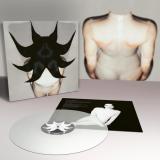
Risk/Reward’s third installment comes from Brooklyn-based California native Chuwee, a rising star with records in the bags of the scenes most discerning selectors. Teaming up with homies Sasta, Seb Hall and Gaspar Muniz to form the Wizards on Waverly, they deliver a wildly creative and versatile collection of funk-drenched floor fillers.

On the a side: 4TJADEN combines crunchy electro house drums with a twisting, monstrous analog bass lead and 80s synth pop strings, before euphoric chords and a killer acid line send this one in to the cosmos!

Let’s Talk About Sex is a big, bad, booty bouncing slice of West Coast electro funk. An ultra groovy and addictive bass line, naughty vocals, spooky synth lines and rays of acid sunshine straight from California, make for an infectious party cut that gets the floor rocking every time.

On to the b-side: Slippy Jim’s is a laid back, dubwise, chugger, perfect for warming up, day time sessions or late in the afters. Crunchy analog drums patter over a warm, playful bass groove, speckled with dubby stabs, an imposing synth lead and vintage Jamaican spoken word vocals transport you to Kingston after party where the rum and vibes flow in equal measure.

Pioneer of the dub tech house sound Grant Dell delivers a gargantuan remix, with enough weight to break even the sturdiest of scales. Chunky yet detailed drums, a sub-heavy & driving bass line, acid squelchs and dubbed out stabs create an absolute weapon of a track, with a truly epic breakdown featuring a legendary vocal that gets right under your skin and stays there.

Heavy support from Enzo Siragusa, Harry McCanna, Bushwacka!, Dyed Soundorom, Anna Wall, CHKLTE and more.

nicht am Lager

Bestelle jetzt und wir bestellen den Artikel für dich beim Lieferanten.


Last In: vor 3 Tagen
Red Axes - fabric presents Red Axes (2x12") + 10"

Red Axes step into the fabric presents series with a release that feels both inevitable and deeply personal. Known for their hypnotic, psychedelic approach to club music, the Tel Aviv–based duo bring a narrative-driven sensibility that aligns seamlessly with fabric’s legacy of long-form storytelling and forward-thinking curation.

Across years of performances at fabric and other key global institutions, Red Axes have developed a reputation for sets that unfold patiently and unpredictably, drawing dancers into a world where groove, tension, and atmosphere take precedence over genre or trend. Their contribution to the fabric presents series reflects this ethos: a carefully sculpted journey that prioritises mood, momentum, and emotional depth, while remaining firmly rooted in the physical language of the dancefloor.

Formed by Dori Sadovnik and Niv Arzi, Red Axes emerged from Tel Aviv’s underground with a sound shaped by post-punk, acid, krautrock, and cosmic disco influences. Over the past decade, they have built a catalogue defined by raw textures, twisted melodies, and a distinctly human looseness, qualities that translate as powerfully in the club as they do on record. Their releases and remixes for labels such as Phantasy, Correspondant, Running Back, Dark Entries, and Permanent Vacation have established them as artists who consistently operate just outside the expected.

As DJs, Red Axes are celebrated for their ability to stretch time on the dancefloor, weaving obscure selections, unreleased material, and leftfield classics into slow-burning, trance-inducing narratives. This approach has seen them invited to venues and festivals including Panorama Bar, De School, Bassiani, Dekmantel, Sonar, and Primavera Sound, where their sets are defined not by peaks alone, but by the tension built between them.

With the forthcoming fabric presents Red Axes release, the duo deliver a statement that captures years of shared musical intuition and a deep respect for the club as a communal, transformative space. It is a mix that rewards close listening as much as physical immersion, a snapshot of Red Axes at their most focused, expressive, and uncompromising.

To mark the launch of their forthcoming fabric presents album, the duo unveil the lead single, “Hot Rod To Hell”, a bold reworking of Man Parrish and Roy Garrett’s 14-minute spoken-word electro epic, reimagined through Red Axes’ signature psychedelic lens.

Stripped back and refocused, the original’s narrative tension is transformed into a hypnotic, downtempo house track built for late-night immersion. A rolling, elastic groove anchors the track, while pulsing low-end, subtly warped synth lines, and tightly controlled percussion create a sense of slow, smouldering momentum. The spoken vocal elements drift through the mix like fragments of memory, lending the track a ritualistic, cinematic quality without overwhelming the dancefloor.

nicht am Lager

Bestelle jetzt und wir bestellen den Artikel für dich beim Lieferanten.


Last In: vor 12 Tagen
Cloud Management & Vivien Goldman - Whoops Wrong Planet

Cloud Management return to Altin Village & Mine for a unique collaboration with New York writer and creative polymath Vivien Goldman.

A pairing spanning generations and geography, but with a musical overlap that is quite fitting in both process and result. Cloud Management’s jammy, improvisational approach to their dubby electronics blends well with Goldman’s idiosyncratic vocal style, which has its origins in the early days of post–punk and UK dub experimentalism. Cloud Management blend many historical aspects of German electronic music into something distinctly their own, while retaining a view well beyond those borders or any particular era. This approach fits well with Goldman’s deep multidisciplinary career, not easily defined because of its eclectic abundance across disciplines, yet always orbiting around music as its foundation.

When it comes down to it, these are great tracks created in the same way they sound: loose but refined, circling and turning inwards and outwards, back onto themselves. A dub of a dub of a dub, but never falling too far from the source — the minimalism necessary to deliver a direct, steady resolve and a gripping listen.

The B–Side of the record features three remixes by artists from across the globe, all with strong connections to the front line of dancehall, dub, and electronic music experimentalism. Longtime Equiknoxx member Time Cow from Kingston (Jamaica), delivers a version of »Quick Cover Up« that represents a major overhaul of the original. This remix strips away much of the looseness of the source material and leans into a lush yet slightly darker atmosphere, created by layered synths and a masterful use of underlying percussion and melodic stabs.

Up next are Twin Cities, Minnesota–based Feel Free Hi Fi, who take on »Judge Judge.« The duo tighten things up, overlaying weighty vintage string synths and digi–flute melodies. This version feels designed for smoky, late–night dub sound system sessions, harkening back to dub’s foundations.

Last but not least is London’s Pat Orburn. Stripped way down, the remix rides an interplay between alternating minimalism and a more lo-fi but lush exuberance, somewhat reminiscent of a bossa nova–esque minimal synth sound. This version’s lo–fi pop sensibility provides a fitting contrast and completes an eclectic yet copacetic trio of remixes for the record.

nicht am Lager

Bestelle jetzt und wir bestellen den Artikel für dich beim Lieferanten.


Last In: vor 12 Tagen
Various - NOW That's What I Call 70s Soul (3x12")
  • A1: Al Green – Let's Stay Together
  • A2: Marvin Gaye - What's Going On
  • A3: Diana Ross - Ain't No Mountain High Enough (Single Version)
  • A4: Stevie Wonder - Signed, Sealed, Delivered (I'm Yours)
  • A5: Commodores - Easy (Album Version)
  • A6: Bill Withers - Ain't No Sunshine
  • A7: The Stylistics - You Make Me Feel Brand New (Let's Put It All Together Version)
  • A8: Rose Royce – Wishing On A Star
  • B1: Jackson 5 - I Want You Back (Single Version)
  • B2: Smokey Robinson & The Miracles - The Tears Of A Clown (Single Version / Mono)
  • B3: The Supremes - Nathan Jones
  • B4: Frankie Valli And The Four Seasons - The Night (1972 Album Version)
  • B5: Chairmen Of The Board – Give Me Just A Little More Time
  • B6: The Trammps - Hold Back The Night
  • B7: The O'jays - Love Train
  • B8: The Blackbyrds – Walking In Rhythm
  • B9: Heatwave - Always And Forever (Single Version)
  • C1: The Temptations - Papa Was A Rollin' Stone (Edited)
  • C2: Isaac Hayes - Theme From "Shaft" (Remastered 1991 Album Version)
  • C3: Ike & Tina Turner - Proud Mary
  • C4: James Brown - Get Up I Feel Like Being A Sex Machine
  • C5: Edwin Starr - War
  • C6: Sly & The Family Stone - Family Affair (Single Version)
  • C7: The Delfonics - Didn't I (Blow Your Mind This Time)
  • C8: Billy Paul - Me And Mrs Jones (Single Version)
  • D1: The Floaters - Float On (Single Version)
  • D2: Minnie Riperton - Lovin' You
  • D3: The Isley Brothers - Summer Breeze, Pt 1
  • D4: William Devaughn - Be Thankful For What You Got (Part I)
  • D5: Detroit Emeralds – Feel The Need In Me
  • D6: The Moments - Jack In The Box
  • D7: Raydio - Jack And Jill
  • D8: The Tymes - Ms Grace
  • E1: Barry White - Can't Get Enough Of Your Love, Babe
  • E2: Aretha Franklin – Until You Come Back To Me (That's What I'm Gonna Do)
  • E3: Al Green – Tired Of Being Alone
  • E4: Gladys Knight & The Pips - Midnight Train To Georgia
  • E5: Timmy Thomas – Why Can’t We Live Together (7" Glades Version) (2013 Remaster)
  • E6: George Benson – The Greatest Love Of All
  • E7: Diana Ross - Theme From Mahogany (Do You Know Where You're Going To) (Single Version)
  • E8: Jackson 5 - I'll Be There
  • F1: Freda Payne – Band Of Gold
  • F2: Ann Peebles - I Can't Stand The Rain
  • F3: Marvin Gaye - Let's Get It On (Single Version)
  • F4: Harold Melvin & The Blue Notes Featuring Teddy Pendergrass - If You Don't Know Me By Now
  • F5: The Stylistics - Can't Give You Anything (But My Love)
  • F6: The Three Degrees - When Will I See You Again (Single Version)
  • F7: Deniece Williams - Free (Single Version)
  • F8: Earth, Wind & Fire - After The Love Has Gone (Single Version)
  • F9: Commodores - Three Times A Lady (Single Version)

NOW That’s What I Call 70s Soul brings together 50 era-defining tracks from one of the most powerful decades in soul music, featuring classics from Motown legends, Philly Soul pioneers, smooth balladeers and funk innovators – all pressed across 3LPs on beautiful blue vinyl… Out April 24th!

LP1 opens with one of the decade’s most recognisable love songs: Al Green’s ‘Let’s Stay Together’, a US #1 and UK Top 10 hit that became his signature recording. It’s followed by Marvin Gaye’s ‘What’s Going On’, the socially conscious masterpiece and title track from his landmark 1971 album, and Diana Ross’ Ain’t No Mountain High Enough’, which topped the US chart and became her first solo #1. Stevie Wonder’s ‘Signed, Sealed, Delivered (I’m Yours)’ remains one of Motown’s most joyful recordings and comes before Commodores’ ‘Easy’ introducing Lionel Richie’s smooth ballad vocals. The side also includes Bill Withers’ timeless ‘Ain’t No Sunshine’, a Grammy-winning classic, and The Stylistics’ lush ballad ‘You Make Me Feel Brand New’, a UK Top 3 smash, before closing with Rose Royce’s beautiful ‘Wishing On A Star’, one of the most loved soul ballads of the era.

Flip the LP over and The Jackson 5’s ‘I Want You Back’ – the group’s explosive debut single opens the side. Smokey Robinson & The Miracles’ ‘The Tears Of A Clown’ became a UK #1 and is followed by The Supremes’ Nathan Jones’ showcasing the group’s evolving psychedelic-soul sound. Northern Soul classics from Frankie Valli & The Four Seasons with ‘The Night’, Chairmen Of The Board’s Top 3 smash ‘Give Me Just A Little More Time’ and The Trammps’ ‘Hold Back The Night’. The O’Jays’ joyous ‘Love Train’ leads to The Blackbyrds’ Walking In Rhythm’, before the side closes with the romantic classic ‘Always And Forever’ from Heatwave.

LP2 opens with The Temptations’ epic ‘Papa Was A Rollin’ Stone’, a Grammy-winning US #1 remains one of the most stunning recordings from the Motown catalogue, is followed by Isaac Hayes’ ‘Theme From “Shaft”’, an Academy Award-winner and a US #1 smash. More funk follows from Ike & Tina Turner, James Brown with one of his key tracks ‘Get Up (I Feel Like Being A) Sex Machine’, Edwin Starr’s powerful anti-Vietnam protest song ‘War’, and Sly & The Family Stone’s hugely influential ‘Family Affair’. The Delfonics’ sublime ‘Didn’t I (Blow Your Mind This Time)’ comes ahead of Billy Paul’s timeless ‘Me And Mrs. Jones’ which closes the side…the other side begins with the 1977 #1 from The Floaters with ‘Float On’, before the breathtaking vocals of Minnie Riperton on ‘Lovin’ You’. The Isley Brothers’ Summer Breeze’ and William DeVaughn’s ‘Be Thankful For What You Got’ have become enduring classics and are followed by a run of ‘80s pop-chart crossover hits completing LP2 from Detroit Emeralds, The Moments Raydio and The Tymes’ #1 ‘Ms. Grace’.

LP3 opens with the unmistakable voice of Barry White and his US #1 hit ‘Can’t Get Enough Of Your Love, Babe’, before Aretha Franklin’s ‘Until You Come Back To Me (That’s What I’m Gonna Do)’, delivers one of her smoothest performances. Al Green’s ‘Tired Of Being Alone’ and Gladys Knight & The Pips’ ‘Midnight Train To Georgia’ are followed by minimalist soul classic ‘Why Can’t We Live Together’ from Timmy Thomas, and the side closes with a trio of defining ballads:- George Benson’s ‘The Greatest Love Of All’ Diana Ross’ ‘Theme From Mahogany (Do You Know Where You’re Going To)’ and The Jackson 5’s ‘I’ll Be There’, their biggest hit…while over on the final side…Freda Payne’s #1 ‘Band Of Gold’, opens alongside Ann Peebles’ influential and much covered ‘I Can’t Stand The Rain’.Marvin Gaye’s sensual ‘Let’s Get It On’ became another US #1, while Harold Melvin & The Blue Notes featuring Teddy Pendergrass deliver the contemporary standard ‘If You Don’t Know Me By Now’. Three massive UK #1s are next…The Stylistics with ‘Can’t Give You Anything (But My Love)’, The Three Degrees’ peerless ‘When Will I See You Again’ and Deniece Williams’ ‘Free’. This amazing collection closes with two timeless ballads: Earth, Wind & Fire’s ‘After The Love Has Gone’, a Grammy-winning classic, along with ‘Three Times A Lady’, a huge worldwide #1 for the Commodores.


NOW That’s What I Call 70s Soul, 50 defining tracks from one of music’s greatest decades. Out April 24th.

nicht am Lager

Bestelle jetzt und wir bestellen den Artikel für dich beim Lieferanten.


Last In: vor 13 Tagen
PPJ - Joker
  • A1: Me Pega
  • A2: Tem Carnaval
  • A3: Sexy Doce
  • B1: Coeur
  • B2: Então Tá Bem
  • B3: Para Ser Feliz
  • B4: Tô Nem Aí

Fresh from releasing projects on Method 808 and Future Classic, landing a huge collaboration with Chloé Caillet, and delivering an official remix for Fatboy Slim, PPJ are entering a new chapter in full force. Their expansive take on global street sounds, ranging from neoperreo to Miami bass, gets a cool re-coating.

Led by the magnetic vocalist Páula, with production from Povoa (individually supported by Four Tet, Ben UFO, and Barry Can't Swim, with recent releases on Live From Earth), the duo operates in maximalist mode: playful, sensual, and slightly unhinged.PPJ’s new era, JOKER, embraces a figure that appears everywhere from card decks to carnival culture as a symbol that mirrors their own DNA: funny, eerie, seductive, unpredictable. The EP leans further into club territory, but rather than polishing their edges, PPJ amplify them.

At the emotional core of the record sits “Coeur,” co-produced with Chloé Caillet. It begins with an MPB-tinged foundation flirting with bossa nova. It’s unmistakably Brazilian, bathed in sunset hues before being sped up and twisted into a dance-floor-ready electronic form. The groove shimmers with tension: warm percussion, elastic basslines, and Páula’s voice hovering between intimacy and tease. It feels like a remix of itself, romantic, but slightly untrustworthy.

If “Coeur” glows, “To Nem Ai” is a slow burner. A very deep and downtempo house cut, it unfolds slowly, almost luxuriously, guided by sensual vocals that feel whispered directly into the ear of the listener. A hypnotizing piano sample that feels like a late-night confession. It’s the kind of record that transforms a dancefloor into something tactile.

Elsewhere, “Me Pega” is a high-energy reinterpretation of the tech-house sounds from Santa Catarina, one of southern Brazil’s most feverish party states, twisted and accelerated for ferocious impact. Drawing direct inspiration from Sarro, a raw and vibrant Brazilian street dance, the track captures physical intensity in its purest form: sweat, bass pressure, collective release.

Its counterpart, “Tem Carnaval” channels Páula’s vivid storytelling into a thunderous ode to Rio’s carnival spirit, euphoric, chaotic, cinematic landed just in time for this year’s celebrations.

On “Sexy Doce,” rugged electroclash melodies collide with unexpected references. “It was inspired by Budots, which is dance music from the streets in the Philippines,” Povoa explains. “Then we mixed it with Páula’s Brazilian vocals. Baile funk is similarly from the streets, so there is a connection.” The result is raw yet futuristic, a cross-continental flirtation that feels both underground and explosive.

With this new EP, PPJ make music like they’re tuning into a dozen pirate frequencies at once. Pirate radio from Rio to Berlin to Manila intercepting fragments of street culture, sensuality, and chaos, and stitching them into something deliriously cohesive.
JOKER doesn’t just nod to club culture. It challenges it, twists expectation and leaves a lasting impression.

vorbestellen24.04.2026

erscheint voraussichtlich am 24.04.2026

Kiran Leonard - Real Home LP
  • 1: Pass Between Houses
  • 2: Theatre For Change
  • 3: Real Home
  • 4: Treat Me A Stranger
  • 5: Utopia Of Bog
  • 6: Void Attentive
  • 7: My Love, Let's Take The Stage Tonight
  • 8: The Kiss
  • 9: He Had Always Led

Cathartic avant-rock, literate DIY folk & experimental composition exploring displacement, love, climate change, belonging & the places we call home - RIYL Jim O’Rourke, Richard Youngs, This Heat, Richard Dawson, Flying Nun. ‘Real Home’ is the new album by the Manchester-born, London-based artist Kiran Leonard. His sixth album proper (not including innumerable tour-only CD-Rs and short-run cassettes), since his precocious debut in 2013, ‘Real Home’ finds Leonard invigorated by inspiration and experience, making passionate, literate, and mercurial music that explores displacement, love, memory, climate change, connections to home and more. Encompassing songs recorded after moving to South London, ‘Real Home’ reflects on ideas of belonging and domesticity through folkloric, stream-of-consciousness songwriting. Across nine tracks, Leonard traces lived impressions of the household and the city, expressing sentiments of dislocation, alienation and stasis, but contentment too. Infusing the avant-rock effervescence, terraced dynamics and visionary lyricism of his music with what he defines as a greater sense of openness, Leonard is as versatile, fervent and imaginative as ever on ‘Real Home’, yet his music is somehow more intimate, affecting, and acutely expressive. Shaped by dual considerations of simplicity and formalism, ‘Real Home’ is by turns beautiful, allusive, and ruminative, an album on which Leonard considers what his songs have resembled in the past and what they mean now. In recent years, Leonard has crafted eloquent chamber music inspired by the likes of James Joyce and Clarice Lispector (‘Derevaun Seraun’), responded to contemporary politics and communication breakdown in the digital age (‘Western Culture’), and compiled solo works and ensemble recordings for a longform ode to Jonas Mekas and to one of Leonard’s enduring themes; home (‘Trespass On Foot’). On ‘Real Home’, Leonard reiterates this abiding thematic focus yet ascends to new, different heights, in music of cathartic delicacy and dissonance where all the myriad dimensions of his work to date seem to crystallize. There are sinuous songs about struggle and defying the pace of city life through drift and diversion (‘Pass Between Houses’), stirring songs of intense feeling and crescendo, described as a form of speculative detective fiction (‘Theatre for Change’). There are touching solo piano ballads (the title track), symbolic contentions with carbon capture and climate change (‘Utopia of Bog’), modes of experimental minimalism (‘Void Attentive’), and other profuse feats of compositional range, embroidered with wild tendrils of narrative and lyrical depth. A record to pore over, and get lost in. Exemplifying the vast aesthetic scope of Leonard’s music, lead single ‘My Love, Let’s Take The Stage Tonight’ is inspired by country lodestar Hank Williams, Russian poetry and a late period love poem by William Carlos Williams. Yet for Leonard, the song signals a sense of accessible materiality, and is the product of a more linear approach to writing songs: “My imitation of the great Hank Williams, in spirit if not in substance…This is one of the best efforts on Real Home at a song-as-object. Looking at it now I realise I was trying to write a song that made itself known as a song to the listener, and I wonder whether that’s crucial if you want a song to transcend its context. And that this is either accomplished through a total openness – by being inviting, by laying the tricks of the song out plain to see, as Williams and his many ghostwriters did so well – or by adopting a knowing aloofness, positioning oneself against the listener but letting it be known that that’s what it’s doing. In this song I try both, but mostly the former: as in, I wanted to write a song where every line follows on from the next.” Imbuing the endlessly elaborate and inventive qualities of his music with a newfound streak of candid, clear-cut melodicism, Leonard has reached a special place in his artistry, on a record that feels familial, and expresses closeness. Assembled with affiliates including Lauren Auder, Otto Willberg, Jasper Llewellyn (caroline), Tom Hardwick-Allan (Shovel Dance Collective), Magda McLean (caroline, The Umlauts), Alex Mckenzie (caroline, Shovel Dance Collective), Isabelle Thorn (Dear Laika) & more, the recording process had a significant influence on the subject matter of ‘Real Home’, in sessions defined by close-knit camaraderie and artistic eccentricity: “The theme of the home obviously recurs throughout the record; the album was mostly recorded in domestic spaces with friends, and the name of the album is Real Home. I like the qualifier ‘real’, like you’re getting past the cloak of the word and towards the thing-itself…also nearly all the percussion in this record was recorded on items from my dad’s shed (jam jars, sandpaper, blocks of wood, etc). Real home record!” ‘Real Home’, like anything by Kiran Leonard, is a record of dazzling multiplicity. Yet it’s a companionable prospect with a central premise; a collection of songs where listeners old and new can find a home. An album led by a scene; of Leonard standing at the threshold, ready to welcome you inside. “Exceptional songs that linger” - The Guardian // “An autodidact of amazing talent & energy” – Pitchfork // “A ridiculous amount of talent…confrontational, celebratory, provocative or perverse – he manages all of these emotions & more” - The Quietus /

vorbestellen24.04.2026

erscheint voraussichtlich am 24.04.2026

The Reds, Pinks and Purples - Acknowledge Kindness LP

Acknowledge Kindness expands San Francisco based The Reds, Pinks And Purples' distinctive brand of emotional pop, music built for the quiet hours and the restless mind. Evolving naturally from the heavier, melancholic indie rock of previous releases, the mood here feels more exposed and reflective, blossoming into lush dreamscapes that recall the bittersweet sorrow of The Cure or the tenderly gloomy transcendence of California by American Music Club. Created from a new headspace, the album finds main man Glenn Donaldson observing both the present and the weight of what came before it. Songs lean into a deeper sense of nostalgia, allowing him to look back with intent and revisit moments that once carried a sting. Donaldson's vocals are captured in high fidelity, raw and immediate, with lyrical abstraction underpinned by chiming acoustic guitars and achingly beautiful piano. Across its 11 tracks, Acknowledge Kindness expands The Reds, Pinks And Purples' emotional and sonic panorama, with Donaldson's ongoing world-building remaining both warmly nostalgic and strikingly original. "Donaldson's best work hides allure within a bigger picture, like a jangle-pop egg hunt" Pitchfork FFO The Smiths, Guided By Voices, The Chills, Leonard Cohen, The Go-Betweens, Robert Wyatt, Twee-, Jangle- & Sophisticated Guitar Pop. Coloured vinyl LP versions and digisleeve CD available

vorbestellen24.04.2026

erscheint voraussichtlich am 24.04.2026

Natrus - Natrus

Natrus

Natrus

12inchNEMYLP023
Needle Mythology
24.04.2026
  • 1: Mash It (Ft. Ranking Glad(Stone))
  • 2: Freedom Inna Babylon
  • 3: Don’t Cry (Never Gonna Run)
  • 4: Free At Last
  • 5: Come From Africa
  • 6: Time Has Come
  • 7: Free At Last Dub
  • 8: Don’t Cry (Never Gonna Run) Dub

FOR THE FIRST TIME EVER: THE LONG-LOST RECORDINGS OF BIRMINGHAM ROOTS REGGAE PIONEERS NATRUS Mastered from the original tapes by Guy Davie at Electric Needle Mythology, the label founded by music writer, author and broadcaster Pete Paphides, is thrilled to announce the archival release of newly-discovered recordings by Birmingham reggae band Natrus. Comprising members of the same family – seven in total – Natrus were a ubiquitous presence of the live circuit within and beyond the West Midlands in the late 1970s. Used as an ad hoc “Wrecking Crew” by local producer and promoter Toney Owens, NATRUS frequently provided live accompaniment to visiting Jamaican artists such as Sugar Minott, Johnny Osbourne and Freddie McKay. With an age span ranging from 9 to 25, NATRUS’S live work had to be structured around the educational obligations of their younger members. But when they weren’t playing live, they would frequently hone their own compositions at Owens’ studio in Saltley, Birmingham.

During their collective lifetime, NATRUS released one very limited edition single Mash It, with a stellar guest vocal from deejay Ranking Glad(Stone). Featured alongside Mash It on this release are a selection of recordings previously thought lost by the group who laid them down. They were only discovered after Toney Owens’ alerted Needle Mythology’s Pete Paphides to the existence of some 60 quarter-inch reels featuring all the music recorded by Owens over a period of ten years or so. When Paphides finally tracked down NATRUS rhythm guitarist Owen Taylor, he was stunned to hear of their existence. After a meeting with Taylor and his siblings, Needle Mythology collaborated with NATRUS on the restoration and remastering of the tracks featured on this, their very belated debut album. As well as Mash It and its original flipside Come From Africa, highlights on ‘NATRUS’ include a superb version of Slim Smith’s The Time Has Come and the deep roots entreaties of Freedom Inna Babylon, both showcasing the soulful vocal of lead singer Fitzdonald “Fitz” English and the almost psychic sense of musical attunement that percolates right down the the formidable rhythm section of Beverley Stewart (bass) and Clinton Gordon (drums).

vorbestellen24.04.2026

erscheint voraussichtlich am 24.04.2026

John Corabi - New Day
  • 1: New Day
  • 2: That Memory
  • 3: Faith, Hope And Love
  • 4: When I Was Young
  • 5: One More Shot
  • 6: 199
  • 7: Laurel
  • 8: Good To Be Back Here Again
  • 9: Love That’ll Never Be
  • 10: Cosi´ Bella
  • 11: Your Own Worst Enemy
  • 12: Everyday People

Rock legend John Corabi—renowned for his work with Mötley Crüe, The Scream, Union, ESP, and The Dead Daisies—steps into the spotlight with “New Day” his first full-length solo album of original material. Recorded in Nashville during the summer of 2025 and produced by multi-platinum songwriter and producer Marti Frederiksen (Aerosmith, Ozzy Osbourne, Buckcherry), the album fuses classic ’70s rock, soul, and blues influences into a sound that is both timeless and deeply personal. The record features the previously released singles “Così Bella (So Beautiful)” (2021) and “Your Own Worst Enemy” (2022), now fully integrated into a rich collection of tracks that showcase Corabi’s commanding vocals, heartfelt lyrics, and masterful songwriting.

Throughout the album, Corabi is joined by Marti Frederiksen, who adds backing vocals, guitars, piano, and percussion; Evan Frederiksen, providing drums, bass, B3 organ, electric guitar, mandolin, and programming; Richard Fortus (Guns N’ Roses) on lead guitar; and Paul Taylor (Winger, Steve Perry) contributing piano, organ, and clavinet. Together, they create an organic, instrument-driven sound built on real performances, melodic interplay, and soulful energy. A trip down to memory lane mostly with a nostalgic mood offering intimate everything that is in between acoustic moments to richly layered arrangements rockers: “New Day” is a journey through the heart of rock, infused with soul and blues sensibilities, and inspired by the melodic grandeur of early Boston and Queen. With a European tour planned for February/March 2026 and additional shows through late spring and summer, Corabi is poised to bring this music directly to fans, delivering both powerful live energy and emotional resonance. More than just a solo debut, “New Day” is John Corabi’s personal testament to rock’s enduring spirit—an exploration of melody, soul, and authenticity, played with passion and conviction at every turn.

vorbestellen24.04.2026

erscheint voraussichtlich am 24.04.2026

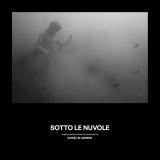
Daniel Blumberg - Sotto le Nuvole (Pompeii: Below The Clouds) (Original Motion Picture Soundtrack) LP
  • 1: Nuvole I
  • 2: Nuvole Ii
  • 3: Nuvole Iii
  • 4: Nuvole Iv
  • 5: Nuvole Ix
  • 6: Nuvole V
  • 7: Nuvole Vi
  • 8: Nuvole Vii
  • 9: Nuvole Viii
  • 10: Nuvole X

In Gianfranco Rosi’s portrait of Naples, Sotto le Nuvole, the ground shakes periodically. Between Mount Vesuvius and the Tyrrhenian Sea, the fumaroles of the Phlegraean Fields hiss volcanic gas and steam. Below the sleeping volcano, modern day Naples emerges in black and white and fills with voices, with lives. From the traces of history and the concerns of the present, Rosi documents a city immersed in its continuous past, with Daniel Blumberg’s minimal soundscape hovering in a sonic space between liquid and air.
Tasked with creating a soundscape that would suspend space within Rosi’s film, Blumberg called upon the extended technique of saxophonists Seymour Wright and John Butcher to create a gossamer fabric of traces and sounds abstracted from their instruments. Having transitioned from theoretical physics to the saxophone, John Butcher has always deeply considered space in the context of his playing. His concerns are with flow, density and how the saxophone is situated in the living world. Zeroing in on the core sonic properties of the mechanical and acoustic components of the saxophone, Seymour Wright has integrated its every breath, reed vibration, keypad clatter and hissed microtone of his alto into his own, unique improvisational language. In his work with these two seminal players, Blumberg makes his most concentrated soundtrack to date - reinforcing the film's sense of overlapping time and space, and pushing at the limits of experimentation.

Initially recorded in Daniel’s flat in London, Butcher and Wright centre themselves around long, consistent tones, so soft that it seems breath is being gently pulled from the saxophone's bell by an invisible hand. Blumberg himself adds haunting bass harmonica, and recordings of Wright’s launeddas - a traditional and ancient triple pipe polyphonic reed instrument from Sardinia, Italy. Blumberg then travelled to the volcanic region of Baia, next to Pompeii. Once a flourishing classical Roman city loved by Nero, Baia slowly sank under hydrothermal pressure, leaving the city in a kind of geological purgatory. Using specialised geophones and hydrophones, Blumberg took those initial recordings and amplified them underwater, sending them calling out across the ruins of Baia’s mosaics, Nymphaeum statues and villas.

“It was important to me that the music was whispered in the same landscape that Gianfranco has worked for the past three years, so that you can hear the volcanic air gulping, the lapping of the waves, the steam and bubbles popping against John and Seymour’s saxophone breaths – an echo from a suspended time.”
What emerges is deeply melancholic, tender, subtle and right at the edges of audio technology. Submerged in an aquarian mausoleum, the mysterious vibrations of the saxophone and its bell become an echo of an echo, wading from the future into the past. ‘Sotto le Nuvole’ is less a soundtrack than a process of aeration - a sonic puncture in the material of the film which allows its central message to breathe, and a remarkable experiment at the limits of the saxophone’s possibility.

vorbestellen24.04.2026

erscheint voraussichtlich am 24.04.2026

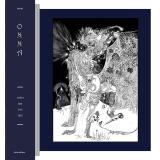
Onna - Onna Last Live 1983 LP 2x12"

Onna Last Live 1983 includes the final performance by the original line-up of Onna, the psych-rock project of revered Japanese manga artist, Keizo Miyanishi. Onna’s legend has largely rested, until now, on one self-released and self-titled seven-inch from 1983. Reissued by Holy Mountain in 2009, its rediscovery, along with several archival live and studio sets that leaked out across the 2000s, signalled to a wider audience the power of Miyanishi’s strikingly hypnotic songwriting. With Onna Last Live 1983, though, we hear the group’s perfect line-up performing at its peak.

While Miyanishi was the core member and conceptualist of Onna, the other members of the group would also go on to make significant contributions to the Japanese underground. Guitarist Michio Kurihara would eventually be known for his membership of YBO2, Ghost and White Heaven, and collaborations with the likes of Boris and Damon & Naomi. Drummer Ken Matsutani formed Marble Sheep & The Run-Down Sun’s Children and The Mickey Guitar Band, while also running the Captain Trip label. Joined by the late bass player Yasui Yutaka, to whom the album is dedicated, this quartet only performed live in 1983; the live set here was recorded at Silver Elephant.

It’s a different line-up to the Onna duo that’s documented on their single. After Miyanishi and fellow manga artist Mafuyu Hiroki recorded that material, Miyanishi decided he wanted to start playing gigs; Hiroki left, and Kurihara, Matsutani and Yutaka joined soon after. This line-up allowed Miyanishi to significantly expand Onna’s powers, leading to a sound that Kurihara once described to Ptolemaic Terrascope magazine as “repetitive and heavy, yet quite orthodox.”

The songs here are simple yet deeply effective in their repetitive power, generally revolving around two or three simply strummed chords for guitar. Bass and drums repeatedly lock into mantra-like grooves as Kurihara’s guitar scales the walls, with Miyanishi’s consumptive moans and sighs sent torquing through FX. The cumulative effect of the seven songs here is very heavy indeed; if the prologue “Always…” drifts beautifully through five minutes of placid, beseeching melancholy, the epilogue, “Never Seen A Light Like This”, spirals out into sixteen minutes of glazed-over psych-rock, completely monomaniacal and thrilling in its slow-motion tumult.

Throughout, you can hear Miyanishi and co. reaching for something ineffable, something beyond and between the notes. It’s a phenomenal performance; it’s also no surprise that the group disintegrated after this show, given its intensity. Matsutani and Yutaka left after the Silver Elephant show, with Miyanishi and Kurihara continuing through the first half of 1984 firstly as a duo, and then a trio with new drummer Yoshiki Ueonyama. Kurihara left soon after. But Onna Last Live 1983 is proof plenty of the powers of the original Onna quartet, sending their Rallizes/Velvets dream-mantras off into darkened, stormy skies.

vorbestellen24.04.2026

erscheint voraussichtlich am 24.04.2026

Niklas Paschburg - L'Ècho De Bretagne LP
  • 01: Paimpol
  • 02: Marché
  • 03: Le Port
  • 04: À La Maison
  • 05: La Vie Lente
  • 06: Bandes
  • 07: Adieu

A century-old grand piano, a secluded house surrounded by the greenery of Brittany, no internet connection, and a reel-to-reel recorder.L'Écho de Bretagne, the new EP by Niklas Paschburg, set for release from fall 2025 via Nettwerk Music Group, is a solo piano record as essential as it is intense. An album made of silences, space, slowness. A music that doesn't chase impact, but truth.

the album release is march 26th - 2026.

If his previous work, Mexican Alps (2025), marked the first time the German composer and producer created an ambient-electronic album without his instrument of choice, the piano, L'Écho de Bretagne emerges as a direct response to that absence. "It was exactly the lack of piano that brought about the need for this new record, which instead puts that instrument, so vital to me, at the very center, stripping everything else away," Niklas explains.

Born in 1994, Paschburg has shaped over the years a musical path deeply connected to travel, nature, and introspection. From his debutTuur Mang Welten(2016) toOceanic(2018),Svalbard(2020),Panta Rhei(2023), and the aforementionedMexican Alps— alongside soundtracks, remixes, and collaborations with artists like RY X, Hania Rani, Ásgeir, and Bryan Senti — his sound bridges neoclassical, electronic, ambient, and pop-driven composition.

WithL'Écho de Bretagne, the Hamburg-born, Berlin-based musician continues his exploration by seeking solitude in nature, much like he did onSvalbard, but this time with an even more radical choice: disconnecting completely from the internet, and switching off both computer and smartphone for a while, in order to fully immerse himself in his new music. "I rented an old cottage in Paimpol, Brittany, where I knew there was a grand piano," he recounts. "When I got there, I discovered that not only was the piano more than a hundred years old, but it was also of an unknown brand, never restored, and quite difficult to play. But that gave it a unique character, and I didn't give up. Sure, it was an instrument left to its own fate, I couldn't play anything too fast. But how fascinating was that? I'm convinced that setting limits, instead of giving yourself total freedom when composing, can become an extraordinary source of inspiration."

As for the decision to temporarily detach from a life that demands we stay constantly connected, Niklas describes it as both a creative and human experiment. "I had my laptop and phone with me, just in case, but I kept them turned off. That choice made me wantL'Écho de Bretagneto be a fully analog work, even in how it was recorded." A way of clearing the mind. "I don't think I've ever been as calm as I was during those days in Paimpol. Even though I was working on a very specific project and didn't have much time, that period was more relaxing than any vacation."

Not that it was free of hiccups. "I'd borrowed a reel-to-reel recorder small enough to travel with me, but after recording a session on the piano, I realized it wasn't working properly, the sound was distorted, full of crackles. I got worried, because I wasn't near any big city where I could find a technician. Luckily, I figured out the problem was the old tape reels I had brought along. That was the only time I had to go online, to order new ones. But it was just for a moment. I shut everything off again right after." At that point, Niklas was waiting for the new tapes to arrive. He found out, completely by chance, from a local UPS courier that they had been delivered to a nearby village. "Since my phone was off, I couldn't track the shipment. So one day I asked this delivery guy, who didn't know anything about it. But from that point on, we'd see each other daily and talk… That's what being disconnected also means: reconnecting with people around you, even strangers. It was thanks to that courier that I found out where the tapes had ended up. And he even helped me get them back, writing directions for me on a scrap of paper."

But there's another element that makes this new EP unique.L'Écho de Bretagnewas recorded entirely live; its tracks are all improvised, complete with their imperfections. This approach leads to a sound that is pure, profoundly organic, and deeply authentic, intentionally preserved to give the listener the feeling of a live performance happening in their own living room. The touch of fingers on the keys, the breath of the wood, the tension of the vibrating string, all become part of the music. There is no construction, only expression. "Even now, when I listen back to it, I feel that moment I gave myself to step away from everything: from reality, from words, from noise." The result is a collection of suspended melodies and atmospheres, reflecting a state of the soul. A refuge from the rush of time. A pause from the world.

vorbestellen24.04.2026

erscheint voraussichtlich am 24.04.2026

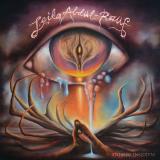
Leila Abdul-Rauf - Andros Insidium LP
  • 1: Descent Into Kur
  • 2: Stripped Before The Eye Of Death
  • 3: Eros Anima
  • 4: Senex Rule
  • 5: Fractured Body
  • 6: Andros Insidium
  • 7: A Requiem For Ishtar
  • 8: Return To Anu

Through her work across five Vastum albums, Leila Abdul-Rauf has been a sonorous contributor to 20 Buck Spin’s discography for more than 15 years now. Concurrent to that she’s also amassed an impressive body of solo work whereby she could showcase the full range of her multi-instrumental artistic and vocal talents. We now bring that part of Leila’s output to 20 Buck Spin showcasing her darkest and most confrontational material to date with new album ‘Andros Insidium’. On ‘Andros Insidium’ Leila draws us into a ceremonial descent, through the architecture of shadow itself. Unfolding like a ritual text etched in obsidian, each movement traces the violent and sacred geometry of transformation. The presence and wisdom of the feminine divine looms throughout, as an ancient and uncompromising force, in conflict with everything buried, exiled and made monstrous by the machinery of societal pressures and unrealistic expectations. The album delves deep into the dark vastness of the psyche of woman: wild, ugly, vulnerable and powerful. Sonically ‘Andros Insidium’ is a mutation of the cinematic dark-ambient, industrial and ritual folk expressed in prior releases, now sharpened into something far darker, more narrative and intimate. Leila’s vocal work becomes a new focus with a wider variety of styles and characters, exorcising the demons of patriarchal fragmentation and revenge fantasy as lived myth. In its most potent moments, ‘Andros Insidium’ suggests that wholeness is not purity or light, but the terrifying act of reclaiming everything that was discarded, and learning to speak with its voice. * New solo album of Leila-Abdul Rauf of VASTUM (also has played in Amber Asylum, Hammers of Misfortune, and others) * Dark and heavy mix of Dark Ambient, Industrial, Ritual / Neo Folk, Electronic

* FFO: Dead Can Dance, Diamanda Galas, Arcana, Amber Asylum, Jarboe/Swans, Chelsea Wolfe, Cold Meat Industry

vorbestellen24.04.2026

erscheint voraussichtlich am 24.04.2026

Miss Grit - Under My Umbrella LP

Miss Grit

Under My Umbrella LP

12inchSTUMM523
Mute
24.04.2026
  • A1: Tourist Mind
  • A2: Mind Disaster
  • A3: Won’t Count On You
  • A4: It Feels Like
  • B1: Where Is My Head
  • B2: Stranger
  • B3: You Will Change
  • B4: Overflow
  • B5: Waste Me

For their second full-length album, Under My Umbrella, Miss Grit has lifted the lid on their internal world, lasering in on the anxieties and heartbreak of the past two years, following their acclaimed debut Follow the Cyborg.

On this album, Margaret Sohn – aka Miss Grit (they/she) – channels the noirish atmosphere of classic trip-hop bands, while adding a hefty dose of maximalism and a dream-pop sensibility. The title is a nod to the iconic Rihanna song and embraces Sohn “…letting people in more on this record and trying not to shy away from that. I’m leaving the cyborg behind, I’m letting it all out.”

This record started to take shape when Sohn returned from an intense touring schedule where they’d driven themself around North America totally alone. When they returned home, Sohn found themselves yearning to capture that specific, less restrained energy of playing live.

Under My Umbrella not only presents Sohn’s gift for complex production, but also the boldness of finding your voice, and ultimately is about coming to terms with yourself, your imperfections, and your complex interior world.

vorbestellen24.04.2026

erscheint voraussichtlich am 24.04.2026

Elephanz - LOVE. HURT. REPEAT LP
  • A1: Follow Your Love
  • A2: That's In My Head
  • A3: The Novel Of Our End
  • A4: Mother
  • A5: I Don't Wanna Know
  • B1: My Feet On The Ground
  • B2: Invisible
  • B3: Streets Of Rage
  • B4: In A Porcelain Shop
  • B5: What Is Love

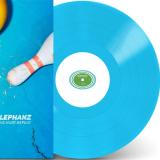
Fifteen years after their first album "Time for a Change", and drawing on the experience of two others ("Elephanz" 2017, and "Rien de personnel" 2023), ELEPHANZ now returns with a fourth album that carries the scent of first loves, the kind you sing from the heart with your hands gripping a guitar.

"Love. Hurt. Repeat." tells, across ten songs, the story of a return to oneself, like coming home after years spent roaming the world, only to realize that everything you needed to understand yourself was already there at the starting line.

To help you understand what this new album makes me feel, I'd like to tell you about my first meeting with Jon and Max in 2009, when I became the band's bassist. Sixteen years ago, I discovered these two young men and set off in their family Kangoo van on my very first tour.

Through our early rehearsals around the piano of their childhood, I discovered their love for pop music in all its breadth, always in search of harmonies and melodies that touch the heart in the simplest way and gently ease your sorrows along the way. With them, I learned to appreciate the mainstream hits I had previously dismissed on principle, and I discovered the demanding art of melody as I listened to them sing about love and friendship through unforgettable catchphrases.

Listening today to some of the songs from their new album, I think back to those two young men with a big-city rock look, shut away in the living room of their family home, talking only about leaving that dull countryside behind to live the big life in the capital (Streets of Rage). What I once took for a kind of revenge against the hostile environment of their adolescence was in fact an almost vital need to find their place among others, to feel understood in order to feel at ease in their own skin.

Today, I find them again with the same guitar and the same inexpensive Juno as back then, but with the confidence shaped by years of concerts, writing, studio encounters, and all kinds of experimentation. The music of this fourth album has never been so close to that of their earliest days, but their voices have been set free. They no longer sing about who they dreamed of becoming, but about who they have always been, their most distant concerns, sometimes even their darkest ones, yet always in search of the light.

It is as if ELEPHANZ had to travel all the way around the world to come face to face with themselves again. There is no longer any shame in being who you are, and it is even the best way to understand yourself, to exist and to heal. To heal from grief and heartbreak, to understand the child you once were and the one who carried them (Mother), to forgive yourself and finally learn to love yourself.

That is what makes this record as sensitive as it is powerful and strikingly truthful. It was written and recorded like a cry, live, in just a few weeks, using the instruments of their beginnings: sharp bass and drums, powerful guitars, and synthesizers that are at times soaring, at times carriers of liberating melodies. The art of ballads remains, as does that of universal pop songs.

There is a beautiful urgency here, the urgency of finding oneself again in order to understand oneself through both pain and beauty, and "Love. Hurt. Repeat." is its most perfect expression.

vorbestellen24.04.2026

erscheint voraussichtlich am 24.04.2026

Jah Rueben Mystic / Gaudi - We Can Do It Better

Powerful lyrics are voiced by Jah Rueben Mystic, with the inspirational Ital Horns brass section.

Jah Rueben Mystic vocal evokes the fighting spirit and hopefulness of a message sent out to defeat the arrogance and greed of the capitalistic leaders of the world.

Lock up riddim, composed by Kieko De Stefanis is an original Roots Dub tune.

The Dub -produced by Gaudi- is a musical journey through the sound of 70's roots, Gaudi here adds his own analogue trademark creativity and psychedelic-dub mastery effects to the track.

nicht am Lager

Bestelle jetzt und wir bestellen den Artikel für dich beim Lieferanten.


Last In: vor 17 Tagen
Various - GLOME ( 2 )

Various

GLOME ( 2 )

12inchIOGL002
IO
23.04.2026

This year’s edition of our Glome series leans into a deep, driving, club-focused sound. The A-side opens with Mitra’s signature bass-heavy, bubbly textures, setting a warm, energetic tone before moving into Mordio’s relentless
groove, where the rhythm is lifted by chords that carry a subtle dub-like glow. On the B-side, Tenzia brings his unmistakable sense of groove and an uplifting, wide-open sound palette that feels both playful and effortlessly fluid until the record wraps up with Vanta’s eerie, enveloping atmospheres that creeps right under your skin. Each track carries the unique fingerprint of its artist while staying true to the evolving sonic identity the label is shaping.

nicht am Lager

Bestelle jetzt und wir bestellen den Artikel für dich beim Lieferanten.


Last In: vor 18 Tagen
inrain - RISE

inrain

RISE

12inchMFM082
MUSIC FROM MEMORY
23.04.2026

Music From Memory presents inrain, a collaborative project by Rudy Tambala of A.R. Kane and Alison Shaw of Cranes, originally recorded in the early 1990s.

inrain brought together two artists who were at the time shaping distinct yet quietly influential currents within alternative music. Through A.R. Kane, Tambala had helped redefine the possibilities of guitar music, placing atmosphere, abstraction, and emotional ambiguity at its centre in ways that would later resonate across dream pop, shoegaze, trip hop and experimental pop. At the same time, Shaw’s work with Cranes was establishing a singular vocal presence and a deeply intuitive approach to mood and space. inrain emerged at the intersection of these sensibilities.

The project began after Tambala was introduced to Shaw by Geoff Travis, leading to sessions at H.Ark! Studios in Stratford, East London. Working outside the expectations of their primary bands, the pair recorded informally over several months, building songs from minimal foundations. Early sampling technology, drum machines, acoustic guitar, and voice were used sparingly, with arrangements left open and space treated as an active element within the music. Vocals were often improvised, first takes preserved, and the atmosphere of the studio — calm, unhurried — became part of the sound itself.

Originally released in limited form during the early 1990s, the recordings carried subtle traces of the surrounding musical landscape: the low-end experimentation of emerging jungle, dub-influenced rhythmic structures, and a restrained melodic sensibility shaped as much by classical textures as by contemporary underground culture. Though modest in scale, the music feels quietly expansive — intimate, patient, and emotionally direct.

For this release, all tracks have been newly remastered from the original DAT tapes. This edition also includes the additional track 'Biology', written and recorded in 2012

nicht am Lager

Bestelle jetzt und wir bestellen den Artikel für dich beim Lieferanten.


Last In: vor 6 Tagen
REGAL - FORGOTTEN HEROES

Regal delivers his first full EP on Backspin, marking a defining moment for the label he founded. More than just another release, the Forgotten Heroes EP captures the essence of Regal's vision: groovy, forward-moving techno that balances raw club energy with atmosphere, emotion and narrative.

The title track 'Forgotten Heroes' sets the EP in motion with a sense of controlled urgency. A rolling, slightly breaktinged groove pushes forward relentlessly, while an eerie, almost nostalgic synth melody hovers in the background, giving the track an emotional pull. 'Concentrate' shifts the focus inward_ bleeping motifs, tight claps and restless hihats circle around spoken fragments that feel like thoughts caught between the peak of the night and the quiet hours before sunrise.

On the B-side, 'Forte' accelerates into pure momentum: sharp, bleep-led sequences and forward pressure combine into a rush that feels like racing through the city at night. 'Soft Killer' deepens the mood with a darker, dominant edge, its stripped back power and razor-sharp sounds cutting clean through the mix. Closing track 'Wild Magic' offers a final release of tension, slowing the pace into a lighter, more house-leaning groove. Warm pads and a catchy, uplifting melody bring a sense of air and openness, letting the EP drift out on a hopeful, almost euphoric note.

Regal's comeback EP 'Forgotten Heroes' stands as a personal statement and a cornerstone release for Backspin. It's techno built on groove, contrast and character, made to leave a lasting impression on the dancefloor.

nicht am Lager

Bestelle jetzt und wir bestellen den Artikel für dich beim Lieferanten.


Last In: vor 5 Tagen
Various - Point Winona Sound Library Vol 1 (LP 2x12")

LA underground hubs DISCOS XXX aka DX3 and Elbow Grease join forces to proudly present Point Winona Sound Library Vol 1 — featuring 20 distinct artists from the inspired local dance music scene, working under one unified studio roof in various collaborative
formation at the mighty Los Feliz hilltop palace Point Winona, overseeing the city they collectively represent. These timeless warehouse-wrecking tracks all stand on their own, but the compilation as a whole offers a solid geographic sonic statement with shared rhythmic DNA and bold rooted-futurist production blueprints, guided by the champion efforts of studio executive producers/curators Tavish DJ and Dave Aju.
The BPS stage-setting opener evokes crispy A.M. hours with lush Detroit-meets-Cali feels on “Within Reason” — then studio dream team 5 ATMs bring the dubwise floor vibes up a notch on “A Dub Called Mondo” and Chitown-to-LA legend Scott K lays down an FM bass-laced acid house heater with “Tighter & Tighter”. Nashville-born producer Gryph funks things up on the live space boogie bump of “Winona at Sunset” while SSRI, comprised of Underground Resistance’s DJ Dex/Nomadico, Aju, and Black Lodge’s fearless leader Kosmik, drop fierce robo-Italo bliss on “Omnicallora”. Things take a further psychedelic twist with the PW edit of Scotty Coats’ sublime midtempo tripper “Be Work Zone Alert”, then Omakase’s own Gold Code alongside longtime rave brother Aju drop the nasty J Saul-salute “Yolo Jungle”, and Warehouse Preservation Society aka Tavish DJ & TK fully detonate floors inna raucous Wicked Crew stylee with “Data Bliss”. Undisputed LA scene queen Stacy Christine arrives with her shining debut “Smart Move”, where she and Aju trade sly vox lines of party advice over a bouncing tech banger for the ages, before the “Obsesion Romantica (Free Winona Dub)” sees Sisters Of Sound aka Maddy Maia and Tottie's, OG track getting stripped back and fired up to acidic peak time form. Then Dave Aju and SF homies Moniker aka EO & Kenneth Scott unleash wild uptempo melodic bruk heaven on “Chuy Luis”, and Vastir sends us home with the stratospheric drum n bass closer "Turnpike"

lagernd ab12.05.2026


Last In: vor 19 Tagen
ARYA - PRONTO

ARYA

PRONTO

12inchSGH00021
Irma Records
20.04.2026
  • A1: Piano Terra (Intro) – 01:02
  • A2: Ricordati Di Me – 01:29
  • A3: Sono In Un Van – 03:11
  • A4: Onda Feat. Lauryyn – 03:07
  • A5: Attesa (Skit) – 01:19
  • A6: 10 Days Feat. Sup Nasa – 02:47
  • A7: Avevo Un Sogno – 03:18
  • B1: Ideal – 02:15
  • B2: No Answer (Skit) – 00:58
  • B3: La Noche En Que Te Fuiste – 03:29
  • B4: Della Morte E Della Grazia – 02:28
  • B5: Ikyk – 04:10
  • B6: Calma – 02:22
  • B7: Ultimo Piano (Outro) – 00:53

"PRONTO" is the debut album by ARYA, an Italian-Venezuelan artist who grew up in Milan. ARYA arrives with this first full-length album after the EPs
Peace of Mind (2021) and Punto Zero (2023), collaborations (Mahmood, Venerus, Ghemon, Dardust, Calibro35, and many others), and an intense live
activity, which have made her one of the most interesting voices on the Italian neo-soul/R&B scene.
Born from a personal journey of therapy and awareness, "PRONTO" takes shape as a concept album, transforming the emotional investigation into a
coherent and layered musical narrative. The title captures the meaning of the project: "Pronto" is a word that crosses all the languages present on the
album—Italian, English, and Spanish—taking on different meanings ("subito," "presto"), and is also the first word uttered in the intro. A term that introduces the listener to a space of availability, anticipation, and presence.
The entire album was produced by Claudio La Rocca (Sup Nasa), a key figure in building the project's sonic identity. Giuseppe Seccia, Matteo D'Ignazi,
Martina Tedesco, Tiziano Codoro, Stefano De Vivo, and Giulia Gentile also contributed to the album, recording the instrumental parts and contributing
to the arrangements and production of some tracks.
With "PRONTO," ARYA takes the listener on a journey through different levels of her emotional history, until the elevator starts moving again and leaves room for a new possibility of balance.
ARYA (AryaDelgado) is an Italian-Venezuelan artist born in Milan in 1994. Daughter of salsa singer Orlando Watussi, she grew up surrounded by music
and quickly developed a sensibility that blends Latin roots, nu-soul, and contemporary R&B, with a strong focus on the emotional and narrative dimensions of her writing. In 2021, she released her debut EP, Peace of Mind, followed in 2023 by Punto Zero. These releases attracted press attention
and led to collaborations with artists such as Mahmood, Venerus, Ghemon, Dardust, and Calibro35. Over the years, she has consolidated an increasingly recognizable presence, alternating songwriting, solo production, and an intense live schedule in Italy and abroad. In 2024, she accompanied Mahmood on tour and released the single, "Si Potesse Tornare." In 2025, La Noche En Que Te Fuiste and Onda were released, songs that marked the
beginning of a new artistic chapter and anticipated the release of “PRONTO,” her debut album, released in February 2026. An intimate and layered
work, which focuses on vulnerability as a language and confirms ARYA as one of the most personal and aware voices of the new Italian soul scene.

vorbestellen20.04.2026

erscheint voraussichtlich am 20.04.2026

Intercommunal Free Dance Music Orchestra - Vol. 2 Concert A Prades Le Lez

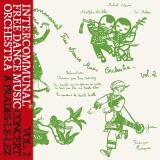
Concert at Prades-le-Lez marks the origins of the Intercommunal Free Dance Music Orchestra. In 1974, François Tusques and his companions (Michel Marre, Jo Maka, Adolf Winkler and Guem), in the spirit of Don Cherry or Chris McGregor, playfully dismantle all borders and all styles of creative music.

On this second volume, the Intercommunal builds unprecedented soundscapes around a song of revolt, a dance tune, or a burst of dissonance. The journey is unforgettable, no question about it. On repeat listening, it even becomes… lunar!

“The music that we make is primarily meant to be listened to live,” warned a leaflet from the Intercommunal Free Dance Music Orchestra. This is precisely why the (restored!) reissue of the two volumes of Concert at Prades-le-Lez, recorded on January 25 and 26, 1974 by François Tusques and his comrades, is such an important event.

In 1971, after recording a series of albums that would leave a lasting mark on French jazz (Free Jazz, of course, with Michel Portal, François Jeanneau, Bernard Vitet, Beb Guérin and Charles Saudrais, but also Le Nouveau Jazz with Barney Wilen, or the solo Piano Dazibao), François Tusques founded the Intercommunal—a grouping whose very name called for the fraternization of the various communities making up the country: Our music will help, we hope, to resolve the contradictions that exist between workers be longing to different communities, by breaking down various forms of national chauvinism, and more particularly the chauvinism of certain French people toward the cultures of Third World countries… Long live the friendship between the peoples of the whole world!

Among the great records made by the Intercommunal Free Dance Music Orchestra, the two volumes of Concert at Prades-le-Lez come first, before L’Inter Communal, Vol. 4, Le Musichien, and Après la marée noire (four titles already reissued by Souffle Continu). François Tusques and his companions (Michel Marre and Jo Maka on saxophones, Adolf Winkler on trombone, and Guem on percussion) performed on January 25 and 26, 1974 at the Moulin de Prades-le-Lez, a few kilometers from Montpellier. It was thus in the southern region of Occitanie that the first echoes of this musical vision of a borderless brotherhood were recorded.

“We’re not among the Colonels,” the Intercommunal reassures us right away, performing a stride piano tune carried by African winds that the audience cannot resist for long. The energy is already striking and it never lets up throughout these two recordings, from start to finish: jazz, blues, traditional music, minimalism, even funk… The musicians of the Intercommunal have heard a lot of great music and now delight in reinventing it by mixing it all together.

“We want the song form to take its place as a weapon in the struggle against capitalist exploitation and all those who oppress us morally and materially,” declared an Intercommunal leaflet, quoting Jean-Baptiste Clément, author of the lyrics to “Le Temps des cerises.” The struggle was therefore serious—but it did not prevent François Tusques and his group from waging it in a festive spirit: each piece on Concert at Prades-le- Lez sends out a call for love and fraternity. Fifty years later, the message remains as relevant as ever—and once again, it is François Tusques who makes it heard.

vorbestellen17.04.2026

erscheint voraussichtlich am 17.04.2026

Intercommunal Free Dance Music Orchestra - Vol. 1 Concert A Prades Le Lez
  • On N'est Pas Chez Les Colonels
  • Intercommunal Blues
  • Mazir
  • Kan-Ha-Diskan - We Shall Over Come
  • African Rythm-N-Logy
auch erhältlich

2


Concert at Prades-le-Lez marks the origins of the Intercommunal Free Dance Music Orchestra. In 1974, François Tusques and his companions (Michel Marre, Jo Maka, Adolf Winkler and Guem), in the spirit of Don Cherry or Chris McGregor, playfully dismantle all borders and all styles of creative music.

On this first volume, the Intercommunal takes its audience from New Orleans to Brittany and on to North Africa. The journey was bold, without a doubt—and its memory remains unforgettable.

“The music that we make is primarily meant to be listened to live,” warned a leaflet from the Intercommunal Free Dance Music Orchestra. This is precisely why the (restored!) reissue of the two volumes of Concert at Prades-le-Lez, recorded on January 25 and 26, 1974 by François Tusques and his comrades, is such an important event.

In 1971, after recording a series of albums that would leave a lasting mark on French jazz (Free Jazz, of course, with Michel Portal, François Jeanneau, Bernard Vitet, Beb Guérin and Charles Saudrais, but also Le Nouveau Jazz with Barney Wilen, or the solo Piano Dazibao), François Tusques founded the Intercommunal—a grouping whose very name called for the fraternization of the various communities making up the country: Our music will help, we hope, to resolve the contradictions that exist between workers be longing to different communities, by breaking down various forms of national chauvinism, and more particularly the chauvinism of certain French people toward the cultures of Third World countries… Long live the friendship between the peoples of the whole world!

Among the great records made by the Intercommunal Free Dance Music Orchestra, the two volumes of Concert at Prades-le-Lez come first, before L’Inter Communal, Vol. 4, Le Musichien, and Après la marée noire (four titles already reissued by Souffle Continu). François Tusques and his companions (Michel Marre and Jo Maka on saxophones, Adolf Winkler on trombone, and Guem on percussion) performed on January 25 and 26, 1974 at the Moulin de Prades-le-Lez, a few kilometers from Montpellier. It was thus in the southern region of Occitanie that the first echoes of this musical vision of a borderless brotherhood were recorded.

“We’re not among the Colonels,” the Intercommunal reassures us right away, performing a stride piano tune carried by African winds that the audience cannot resist for long. The energy is already striking and it never lets up throughout these two recordings, from start to finish: jazz, blues, traditional music, minimalism, even funk… The musicians of the Intercommunal have heard a lot of great music and now delight in reinventing it by mixing it all together.

“We want the song form to take its place as a weapon in the struggle against capitalist exploitation and all those who oppress us morally and materially,” declared an Intercommunal leaflet, quoting Jean-Baptiste Clément, author of the lyrics to “Le Temps des cerises.” The struggle was therefore serious—but it did not prevent François Tusques and his group from waging it in a festive spirit: each piece on Concert at Prades-le- Lez sends out a call for love and fraternity. Fifty years later, the message remains as relevant as ever—and once again, it is François Tusques who makes it heard.

vorbestellen17.04.2026

erscheint voraussichtlich am 17.04.2026

Christina Kubisch - TUNING

Christina Kubisch

TUNING

12inchFAIT-41LP
Faitiche
17.04.2026

Faitiche welcomes a new artist: Christina Kubisch belongs to the first generation of sound artists. Her practice ranges from performances, concerts, to works with video and visual art, but she is best known for her sound installations and electro-acoustic compositions.

TUNING brings together three pieces by Christina Kubisch from different periods of her oeuvre. What they have in common is the way they transform sound phenomena originally considered “non-music” into compositions.

Jan Jelinek: Gaming in Silence (2024) is the most recent work on this compilation. It’s a collage of electromagnetic waves, voice, and abstract sound textures. How did this combination come about?

Christina Kubisch: Gaming was commissioned as a fixed-media composition for the Sound Dome at ZKM Karlsruhe. Since Resonances: The Electromagnetic Bodies Project (2005), I’ve been making recordings in the old and new server rooms at the ZKM and in their permanent collection of historical computer games. Computer games like Asteroids (Atari, 1979) and Poly-Play (VEB Polytechnik, 1986) have specially generated analogue electromagnetic waves that interest me in particular on account of their density, rhythms and textures. I originally studied painting and to me the work of composition often feels like painting an abstract picture. I alter my source material as little as possible, layering and overlapping until a distinctive sound space emerges. In recent pieces, I sometimes combine magnetic waves with field recordings or live instruments. In Gaming it’s my recording of a Chinese song about silence.

JJ: Two persons walking through a street in Madrid (2004) is a recording from your Electrical Walks series. Here we should give a brief explanation of one of your best known works: participants in an Electrical Walk move through public spaces wearing prepared headphones that allow them to receive electromagnetic waves from their surroundings – for example from security gates, ATMs or neon signs. They discover a situation that normally is inaudible to the human ear and they can actively shape it by choreographing their movements. I really admire this piece, not least because there’s no clear dividing line between participants and artist. What exactly do we hear in Two persons walking through a street in Madrid (2004)?

CK: With this early work, I wanted to understand what is heard by people participating in an Electrical Walk in the same place but moving in different ways. The Spanish composer Miguel Alvarez-Fernàndez and I set off from opposite ends of a major shopping street in Madrid, met briefly in the middle, and then continued to the end. We both recorded our walks and I then layered them over one another. You might call it a work of electromagnetic conceptualism.

JJ: Diapason (2009 version) is an installation that plays a composition based on sounds from fifteen tuning forks. This setting is audible in the recording: there’s no dramatic arc, no beginning or end – instead, it recalls a piece of aleatoric music focussing on the decay phase. How did you come to make this work and could you tell us something about your compositional method?

CK: Diapason is part of a series of three pieces that deal with “non-instruments” or instruments that no longer exist: electrical mine bells used to send signals to the workers underground; a historical glass harmonica originally used for medicinal purposes; and tuning forks that were used by doctors to test people’s hearing. All of these methods are no longer in use. The sound of the tuning forks, audible only if held close to the ear, was recorded at the electronic studio at Berlin’s Technical University in such a way that even their decay remained audible. The frequencies range between 64 and 2048 Hertz and they can be adjusted at micro-intervals using small movable weights. The sequence and the duration of the pauses are dictated by chance and were not defined in advance. The 2009 version was created for an installation in the historic Holy Cross Church (Korskirken) in Bergen. Visitors could enter and leave the space at any time, deciding for themselves where and for how long they wished to listen to the sounds played back over an array of small loudspeakers placed on the floor of the apse.

Credits:

Gaming in Silence: commission of the ZKM/Hertzlab, Karlsruhe 2023
elektronic sound processing: Tom Thiel
sound engineering and mixing: Eckehard Güther

Diapason: produced at Elektronisches Studio of TU Berlin
rearrangement: Eckehard Güther

Christina Kubisch, published by Edition Christina Kubisch / Random Musick Publishing

image front: Transitionen 2021 by C. Kubisch, sonagrams of electronic waves (courtesy: Galerie Mazzoli Berlin)
image back: Diapason Tuning Fork, property of Folkmar Hein, Photo: Archiv Christina Kubisch

design by Tim Tetzner
mastered by Giuseppe Ielasi
Thanks to Miguel Álvarez-Fernández, Folkmar Hein, Dominik Kautz and Mario Mazzoli

vorbestellen17.04.2026

erscheint voraussichtlich am 17.04.2026

Kiioto & Lou Rhodes - Black Salt LP

Kiioto & Lou Rhodes

Black Salt LP

12inchKIIOTOLP01
Kiioto
17.04.2026
  • 01: Moth
  • 02: Butterfly
  • 03: Warpaint
  • 04: Walking Backwards
  • 05: Lost Map
  • 06: Zero Gravity
  • 07: Little Axe
  • 08: Paper Ships
  • 09: White Noise
  • 10: Five Eight

Black Salt is the second album from Kiiōtō (Mercury Music Prize nominated singer/songwriter Lou Rhodes, former lead vocalist and co-founder of Lamb and award-winning songwriter and pianist Rohan Heath). Their debut album, As Dust We Rise, was released in 2024 to critical acclaim.


Stylistically Black Salt leans further into Jazz, broken beat and soul textures than the debut,with references as diverse as Carole King, Khruangbin and Alice Coltrane. The resulting album is impossible to define by genre, but is fused by the unique interplay of Heath's melodic sensibilities and Rhodes inimitable voice.

Written primarily in Kiiōtō's home studio in North London, Black Salt features guest appearances from a melting pot of musicians, notably guitarist Hawi Gondwe (Amy Winehouse), double-bassist Andy Hamill (4 Hero, Carleen Anderson), drummer Mykey Wilson (Corrine Bailey Rae), and even some impromptu guitar by the one and only David Arnold.


BLACK SALT is out April 2026.

vorbestellen17.04.2026

erscheint voraussichtlich am 17.04.2026

Various - Tchic Tchic: French Bossa Nova 1963-1974  Colored Edition LP 2x12"
  • A1: Les Masques - Il Faut Tenir (1969)
  • A2: Isabelle Aubret - Casa Forte (1971)
  • A3: Christianne Legrand - Hlm Et Ciné Roman (1972)
  • A4: Jean Constantin - Pas Tant D'chichi Ponpon (1972)
  • A5: Billy Nencioli & Baden Powell - Si Rien Ne Va (1969)
  • B1-: Marpessa Dawn - Le Petit Cuica (1963)
  • B2: Jean-Pierre Sabar - Vai Vai (1974)
  • B3: Sophia Loren - De Jour En Jour (1963)
  • B4: Isabelle - Jusqu’à La Tombée Du Jour (1969)
  • B5: Sylvia Fels - Corto Maltesse (1974)
  • C1: Frank Gérard - Comme Une Samba (1972)
  • C2: Ann Sorel - La Poupée Des Favellas (1971)
  • C3: Charles Level - Un Enfant Café Au Lait (1971)
  • C4: Andrea Parisy - Les Mains Qui Font Du Bien (1970)
  • C5: Audrey Arno - Quand Jean-Paul Rentrera (1969)
  • C6: Aldo Frank - T’as Vu Ce Printemps (1970)
  • D1: Christianne Legrand - Cent Mille Poissons Dans Ton Filet (1972)
  • D2: Clarinha - Lemenja (1970)
  • D3: Hit Parade Des Enfants - Aquarela (1976)
  • D4: Jean-Pierre Lang - Tendresse (1965)
  • D5: Magalie Noël - Une Énorme Samba (1970)
  • D6: Françoise Legrand - La Lune

Ever since the late 1950s bossa-nova revolution, Brazil’s influence on French music has been undeniable. Pierre Barouh, Georges Moustaki and a vast array of lesser known artists, all made the Musica Popular Brasileira (MPB) an axis of promotion at the service of a cool and metaphysical, modern and mixed Brazilian lifestyle. Some were seduced by the poetic languors of the bossa, some were looking for fun, and others just loved the American hybridization of jazz-bossa, jazz-samba.


What is bossa nova? One of its creators, Joao Gilberto said: "Its style, cadence, everything is samba. At the very start, we didn't call it bossa nova, we sang a little samba made up of a single note - Samba de uma nota so .... The discussion around the origins of bossa nova is therefore useless”. It is nevertheless useful to remember that these magnificent Brazilian songs, which the guitarist describes as samba, were shifted and balanced around improbable chords. "I like things that lean, the in-betweens that limp with grace," said Pierre Barrouh, quoting Jean Cocteau.


With emotion, arrangements for violin and supple guitar licks, bossa nova rapidly changed. A transformation that can be heard in the Tchic, tchic, French Bossa Nova 1963-1974 compilation, the result of a cultural reappropriation, which traveled through the United States and supplemented itself in France.

A musical revolution that has remained significant, bossa nova was born in Rio. From 1956 to 1961, Brazil lived through its golden years. In five years, the country had invented its modernist style. Elected president in 1956, Juscelino Kubitschek de Oliveira, an elegant man with a broad forehead, brandished a promising slogan: "Fifty years of progress in five years". He quickly got to work. Not worried about increasing debt, he launched the project for a new federal capital, Brasilia, designed by the communist architect Oscar Niemeyer. Volkswagen opened state-of-the-art factories and created the “fusquinha”, the Beetle. In Rio, the Vespa made its first appearance. The Arpoador Surf Club crew run into the “girl” from Ipanema, Helô Pinheiro - the tanned garota ("chick"), between a flower and mermaid, who at 17 walked by the Veloso bar, where the fiery author and composer, Tom Jobim and Vinicius de Moraes, were getting drunk on whiskey. From then on, bossa symbolized cool.

In 1958, Joao Gilberto recorded Chega de Saudade, which the directors of Philips denied, calling it "music for fagots". The marketing director, who believed in it, secretly pressed 3000 78-inch vinyls and distributed them at schools around Rio, creating a tidal wave.

American jazzmen then took over. In particular, trumpeter Dizzy Gillespie and guitarist Charlie Byrd. In November 1962, the Brazilian Ministry of Foreign Affairs funded a "Bossa-Nova" concert at Carnegie Hall in New York, inviting the genre’s pioneers. Unprepared, the show soon turned to disaster. But the troupe was invited to the White House by Jackie Kennedy. The first lady loved "the new beat" and in particular Maria Ninguem, a song by Carlos Lyra, later covered by Brigitte Bardot.

In Brazil, the 1964 military coup quickly ended this euphoria. The destructive atmosphere that ensued pushed many Brazilian musicians to leave, if not to exile. Thus, Tom Jobim, Sergio Mendes and Joao Gilberto arrived to the United States. In New York, Joao Gilberto met saxophonist Stan Getz. At the time, he was married to the Bahianese Astrud Weinert Gilberto, who had a German father. She had never sung before, but she knew how to speak English. Getz therefore asked her to replace her husband on The Girl From Ipanema. The Getz/Gilberto record with Tom Jobim on piano, was released in March 1964. Phil Ramone, the "pope of pop" was in charge of sound.

Bossa nova arrived in Paris through the classic “guitar-voice” channel (Pierre Barouh, Baden Powell, Moustaki…) But France loved jazz and Paris had already welcomed its American contributors. All these good people were to pass through Saint-Germain-des-Prés. The cabaret l'Escale became the Mecca of Latin American sound where one could find Pierre Barrouh and his friends, such as the Camara Trio, samba-jazz aces, whose only record was published by the Saravah label. With a band strangely called Les Masques (a band that included Nicole Croisille and Pierre Vassiliu, among others), the Camara Trio recorded an interesting Brazilian Sound, including the track Il faut tenir which is present on this tasty compilation of rarities.

Other enlightened musicians can also be found on the compilation, such as Jean-Pierre Sabar (songwriter for Hardy, Auffray, Leforestier ...) and the French pop rock organist Balthazar. In 1975, Sabar recorded Aurinkoinen Musiikkimatka on a Finnish label, which featured the crazy Vai, Vai, included on this record. We are now following the footsteps of Brazilian electronic musicians such as Sergio Mendes, Eumir Deodato or Marcos Valle who created funk and disco sounds on their keyboards and synthesizers. A style that influenced Véronique Sanson when she wrote Jusqu’à la Tombée de la nuit in 1969 for Isabelle de Funès, the niece of Louis and a great friend of Michel Berger - Sanson did end up singing this track on her 1992 Sans Regret record.


The pinnacle of exoticism and travel, Sylvia Fels’ Corto Maltese includes bongos, sea mist and ocean sounds. The title was taken from Jacky Chalard’s concept album written in 1974, Je suis vivant, mais j’ai peur (I am alive, but I am scared), based on Gilbert Deflez’s science fiction novel.


However, bossa nova extended the scope of popularity. "In the 1970s, I was a fan of Sergio Mendes, Getz / Gilberto. I fell in love with this music that I knew because I had been an orchestral singer, " explained Isabelle Aubret, who in 1971 delivered a composite record of covers by the very funky Jorge Ben, Orfeu Negro, Tom Jobim, Vinicius de Morais and Jean Ferrat. "I recorded this album for Meys Records in Paris, far from Brazil, with wonderful musicians, François Raubert, Roland Vincent, Alain Goraguer...". The latter wrote the arrangements for Casa Forte, a very percussive title borrowed from Edu Lobo, one of the initiators of the bossa who spent time in California. "Jazz and bossa came together and produced very rhythmic music. I love singing, it allows me to dream, to have fun, to feel a high on stage, and these songs brought me joy, made me swing, my singing felt like a dance.”


The world tours of French singers and their desire for the tropics, often brought them to Rio with its hills, forests, caipirinhas and tanned bodies. There are surprises though, like this Iemenja (Iemenja is the goddess of the sea in the Afro-Brazilian candomblé religion). Not unlike the composer and musician Jean-Pierre Lang, based in Sao Paulo, Claire Chevalier taught Brazil to Brazil. In 1970, the singer and painter published a 45-inch vinyl, Mon mari et mes amants (My husband and my lovers), under the improbable pseudonym of Clarinha (little Claire). She was then living in Rio, with her husband, Joël Leibovitz, who founded a band called Azimuth, and who owned a record label specialized in "sambas enredos" songs for samba school parades.


For its B side, she asked Pierre Perret to come up with lyrics for a song composed by Carlos Imperial: "Oh goddess of the sea, o goddess Iemenja, I bring a white rose to adorn your long hair ..." . "Perret came to see us, and we had fun, remembers Joël Leibovitz. We wrote Lemenja for fun, we recorded it at the Havaí studio, behind the Central do Brasil the central station. Erlon Chaves, the arranger who worked with Elis Regina, joined us" adding his share of Afro-Brazilian percussions and funky brass to the mix.

There is a common misunderstanding in Franco-Brazilian history: that bossa, admittedly hedonistic, is perceived as funny, even though the poets who wrote the texts are often philosophizing on the human condition. Its French interpreters pull it towards a carnival inspired universe, far removed from its fundamental essence. Thus, Jean Constantin covered the famous Samba da minha terra, an ode to the art of samba written by the classic Bahian composer Dorival Caymmi, renaming it with the enticing title of Pas tant de tchi tchi pompon: "On your pier there is no tchi tchi / when you arch your back, you know everything is alright ”(lyrics by Gérard Calvi). This expedited bossa aims for the absurd, but retains a certain elegance.

Indeed, Jean Constantin was not an idiot, the rather large man had a huge mustache and liked fantasy, (Les pantoufles à papa, Le pacha, inspired by cha-cha-cha-cha, salsa and jazz) but he was also the lyricist of Mon manège à moi interpreted by Edith Piaf, the composer of Mon Truc en plume by Zizi Jeanmaire and the soundtrack of François Truffaut’s 400 Blows. Le Poulpe, published in 1970, from which this bossa is extract, was arranged by Jean-Claude Vannier, an accomplice of Serge Gainsbourg’s Melody Nelson. In short: "There is enough of samba / By looking at the parasol / Because my poor cabeza / Is going to die in the sun".

Even the American actress Marpessa Down, who was at the heart of the bossa nova revolution with her role as Euridyce in Marcel Camus’ film Orfeu Negro, winner of the 1959 Cannes Palme d'or, fed the clichée with Je voudrais parler au petit cuica - "Tell me how you manage to always make people want to dance / It's true, I must admit that I cannot resist your magic" - in consequence, once can hear the cuica, a little drum inherited from the Bantu.


But bossa nova had many angles. Societal, of course, pushing actresses who were symbols of women's liberation like Brigitte Bardot, Jeanne Moreau, or Sophia Loren to engage in the exercise of accelerated bossa. In February of 1963, Sophia Loren made a record in French in Rome, Je ne t'aime plus, featuring the song De jour en jour, a bossa written by two Italians, Armando Trovajoli and Tino Fornai, which was released a little later by Barclay. Bossa accompanied the 1960s, a decade of moral liberation. Ann Sorel, who interpreted La Poupée des favellas, caused a sensation with L’amour à plusieurs, a provocative song written by Frédéric Bottom and Jean-Claude Vannier. As for the actress Andrea Parisy, she displayed her bourgeois cheekiness in Marcel Carné's Les Tricheurs before interpreting Les mains qui font du bien. And Magalie Noël, the friend of Boris Vian, who sung Johnny fais-moi mal, was hired to sing Une énorme Samba, composed by Alain Goraguer (arranger to Gainsbourg, Bobby Lapointe and Jean Ferrat) with lyrics by Frédéric Botton.

But in the end, of what wood is bossa nova made of? The answer is given by Christianne Legrand, daughter of Raymond the conductor, and sister to Michel the composer: "With me, with jà" - jà means "immediately" in Portuguese. In 1972, the singer, an expert in vocal jazz and a member of the Double Six, published Le Brésil de Christianne Legrand. Two songs included on the Tchic Tchic compilation that demonstrate how bossa, jazz, funk, rock, etc. work like a swiss army knife: the music is used to denounce broken systems, or miracles, HLM et ciné roman, Cent mille poissons dans ton filet, two songs from the O Cafona soundtrack, a successful telenovela broadcast, at the time in black and white, on TV Globo. The first was adapted in French by the fighter and friend of the Legrand tribe, Agnès Varda. The second is content with a play on words, jostling them into a summer fun.


Véronique Mortaigne

vorbestellen17.04.2026

erscheint voraussichtlich am 17.04.2026

EAVES WILDER - LITTLE MISS SUNSHINE
  • 1: Hurricane Girl
  • 2: Just Say No!
  • 3: Everybody Talks
  • 4: Mountain Sized
  • 5: The Great Plains
  • 6: English Tea
  • 7: Ropeburn
  • 8: La
  • 9: Daisy Chain Reaction
  • 10: Summer Rolls

Im April 2026 bringt Eaves Wilder ihr heiß erwartetes Debütalbum ,Little Miss Sunshine" raus. Die Platte ist ein krasser Entwicklungssprung für die Singer-Songwriterin aus Nord-London, die 2020 mit 16 Jahren mit ihrem selbst aufgenommenen Lockdown-Release ,Won't You Be Happy" zum ersten Mal auf sich aufmerksam gemacht hat. Eaves begann mit der Arbeit an ,Little Miss Sunshine" nach einer Phase des Nachdenkens, in der sie sich fragte, ob sie der Musik in ihrem Kopf letztlich gerecht werden könnte. Wer sich mit dem Album beschäftigt, entdeckt zehn Songs, die sich an den Zyklen der Natur orientieren, um die emotionalen Stimmungen zu erklären und zu feiern, die uns zu Menschen machen. ,Als ich am Boden war", erinnert sich Eaves, die an einer Stelle sogar lacht, als sie sich daran erinnert, wie sie beschloss, die Musik ganz aufzugeben, um in ein Kloster einzutreten: ,Ich wollte einfach nur unmenschlich, gefühllos und unbewegt sein. Wie ein Berg oder ein Baum. Oder der Himmel. Das sind alles Dinge, die einen Zweck haben, aber ich wusste nicht, was mein Zweck war. Und so musste ich es herausfinden, Song für Song." Auf Little Miss Sunshine wird diese Geschichte in spannenden Episoden erzählt, angefangen mit den ersten Sekunden des Albums und der Lead-Single Hurricane Girl, einer sensationellen Synergie aus durchscheinenden Shoegaze-Harmonien und elementaren Rockgitarren, inspiriert durch Dokumentarfilme über Sturmjäger, wobei die Metapher verwendet wird, um ein Licht auf Freunde zu werfen, die gezwungen waren, stürmische Beziehungen zu suchen. ,Ich habe das Gefühl, dass dies mein Pearl-Jam-Song ist", erklärt sie. ,Das erste Mal, als ich Pearl Jam hörte, war ich auf einem riesigen Berg in Wales. In derselben Woche hörte ich auch zum ersten Mal Jagged Little Pill von Alanis Morissette." Von hier aus, bis hin zu seinem schmerzlich bewegenden Requiem an die Kindheit Summer Rolls fungiert jeder Song auf Little Miss Sunshine als leuchtender Koordinatenpunkt in einem Bogen der Selbstfindung. Da ist der hochfliegende Klangrausch Everybody Talks, mit seinem ansteigenden Crescendo aus aufdringlichen Stimmen, der auf beiden Seiten des Atlantiks große Unterstützung im Radio fand. Für Mountain Sized bezog sie sich auf Lily Allens Single The Fear aus dem Jahr 2009 - ,weil da diese eine Frau ist, die ganz beiläufig all die schlimmsten Dinge über sich selbst aufzählt, Dinge, die man sich eigentlich nicht trauen würde zuzugeben". In Eaves' Song wird diese aufkommende Angst jedoch durch einen panoramischen Refrain ausgelöscht, in dem sie die Grenzen ihrer realen Welt durchbricht, um zu verkünden: ,But in my mind/But in my mind/I am taller than the highest mountain sides." In dem schmerzlich melodiösen ,The Great Plains" hinterfragt Eaves ihre frühesten Erinnerungen, in denen sie ihre ältere Schwester Dora vergötterte. ,Sie war so zurückhaltend und wie eine Meerjungfrau", erinnert sich Eaves, ,und ich wurde von meinen Emotionen beherrscht - und je mehr ich versuchte, das nicht zu sein, desto mehr wurde mir klar, dass ich niemals wie sie sein könnte." In dem Song findet Eaves eine Art Selbstakzeptanz, indem sie auf die Natur schaut, um zu erfahren, dass es okay ist, so zu sein, wie sie ist: "As I erupt into a blaze / It's ok the sky will do the same/Let no-one bat an eye when / Every year I'll hibernate till May / Because no-one blames the clouds for rain / So take me as I am, tears down my face." Als die Sessions an Fahrt gewannen, fand Eaves Inspiration in zeitgenössischen Veröffentlichungen. Beispiele dafür waren Wolf Alice (,die einzige Band, die die Balance gefunden hat, die ich immer suche - die Kombination aus schweren Gitarren und hohen, ätherischen Vocals"), Mannequin Pussy (,sie gaben mir etwas von dem, was ich in der Ära von Riot Grrrl vermisst habe, als L7 und Babes In Toyland auf Tour waren") und CMATs ,geradlinig brillantes Songwriting". Weitere Highlights auf einem Album, das von ihnen geprägt ist, sind Daisy Chain Reaction, dessen glitzernder Power-Pop-Glanz einen Text über die Kultur des Wettbewerbs rund um Essstörungen verbirgt, und der unangenehme, mechanisierte Angriff von Just Say No, ein Song, der auf den brutalen Wahrheiten basiert, die Eaves und ihre Freundinnen in ihren Auseinandersetzungen mit missbräuchlichen Männern gesammelt haben. Zwei Jahre lang hat Eaves unermüdlich daran gearbeitet, jeden einzelnen Vers, Refrain, Pre-Chorus und Middle Eight auf Little Miss Sunshine zu verfeinern, bevor sie mit dem Co-Produzenten des Albums, Andy Savours (My Bloody Valentine, The Killers, The Horrors), ins Studio ging. Dies ist ein Album, auf dem jedes einzelne Detail seinen Platz verdient hat und das Zeugnis ablegt von der einzigartigen musikalischen Vision seiner Schöpferin.

vorbestellen17.04.2026

erscheint voraussichtlich am 17.04.2026

Vaudou Game - Apiafo (2025 Repress)
  • A1: No Problem
  • A2: Dangerous Bees
  • A3: Pas Contente Feat Roger Damawuzan
  • A4: Meva
  • A5: Happiness
  • B1: Ata Calling
  • B2: Wrong Road
  • B3: No Way To Go
  • B4: Djin Ku Djin
  • B5: Think Positive

Repress of the 1 st album of the fresh Afro funk sensation ! Recorded on analog equipment in Lyon in 2014 !


Peter Solo is a singer and composer born in Aného-Glidji, Togo, the birthplace of the Guin tribe and a major site of the Voodoo culture. He was raised with this tradition’s values of respect for all forms of life and the environment. With his new band, Vaudou Game, Peter Solo claims, and spreads this spiritual and musical heritage. Chants are at the heart of the Voodoo practice, but for times immemorial, harmonic instruments have never accompanied them. No balafon, no kora - only the “skins” support the singers. However, in 2012, Peter, along with his band based in Lyon, France, decided to explore and codify the musical scales that are found in sacred or profane songs of Beninese and Togolese Voodoo so they can be played easily on modern instruments. Peter composed the album Apiafo, using the two main musical scales of this tradition. The first musical scale on Apiafo leans towards raw Funk with a sound similar to the famous 70’s bands, L’Orchestre Poly Rythmo De Cotonou and El Rego. Funk, is the skeletal structure of this record, and provided the opportunity for Peter to invite his uncle, Roger Damawuzan - the famous pioneer of the 70s Soul scene - on two tracks. Their collaboration on “Pas Contente” is a highlight on this 100% analog album. Apiafo was entirely recorded, mixed and mastered with old tapes and vintage instruments. The second scale, which had never before been transposed for instruments, evokes deeper feelings and a sacred ambiance. The moving song Ata, an invocation to a supreme divinity is another highlight of this record. Even if some can recognize similarities between this scale and Ethiopian scales, they are in fact different. Peter, the only African band member, introduced the other musicians to the universal values of Voodoo and he taught them his native language. On the recording of Apiafo and during their live performances, the musicians all sing and answer Peter in the Mina language. The strive for authenticity, the analog sound and vintage looks don’t mean that Vaudou Game is looking backwards. This is Togolese funk, born in the post-colonial era but that never before explored its ancient roots so deeply and proudly.


Antoine RAJON

vorbestellen17.04.2026

erscheint voraussichtlich am 17.04.2026

I Am An Instrument - Vol. 2 & 3

I Am An Instrument

Vol. 2 & 3

12inchIAAI003
IAAI Music
17.04.2026out soon

The recordings on Volume II were captured in Copenhagen, Denmark on January 18, 2020. Guided as much by human instinct as by musical intention, the ensemble moved through the evening with a shared sensitivity…listening, responding, and trusting the moment as it unfolded. Though Morten McCoy admits to having felt quite ill that evening, nothing in the music suggests restraint. Instead, what remains is a vivid, playful exchange, where McCoy and Johannes Wamberg carry both Part I and Part II as a flowing conversation, speaking through sound rather than words.

Part I begins abruptly, almost throwing the listener back in time to the exact moment the improvisation was born. Jonathan Bremer steps to the forefront, providing a solid, melodic bassline as Kristoffer and Eliel, perfectly in sync, lay down a steady foundation for whichever voice chooses to rise above the rhythm.

This is also one of the few I Am An Instrument recordings to feature two guitarists. Johannes Wamberg leads the way, shaping the harmonic direction, while Steven Jess Borth II adds subtle rhythmic textures through muted palm work, deepening the groove without ever stepping into the foreground.

Part II unfolds with Morten McCoy on his Moog One, delivering a beautiful, expansive solo. Using a carefully chosen patch, the sound pulses through the rhythm, moving with the groove rather than above it, riding the beat like a wave through the ocean.
Shaped by trust, presence, and collective improvisation, Volume II captures a group deeply attuned to one another, allowing intuition and momentum to guide the unfolding form.
——
Volume III was recorded in Copenhagen on March 5, 2020. Little did anyone know that only days later, the world would be placed on pause for years. Captured just before that moment of global stillness, this session carries a heightened sense of presence, a final gathering before silence reshaped everything. Recorded in a space more commonly associated with a club atmosphere, the music draws on a different kind of energy and immediacy. With Eliel Lazo unable to attend, the group invited Victor Dybbroe of Girls In Airports to join on percussion, subtly reshaping the ensemble while preserving its core spirit. Part I opens with Steven Jess Borth II calling out on tenor saxophone, answered by Morten McCoy on Wurlitzer electric piano. The piece gradually unfolds into a meditative groove, patient and expansive, carrying the listener through an eight-minute journey of layered rhythm and restraint.

Part II begins with Jonathan Bremer on stand up bass, slowly joined by the rest of the ensemble as each voice enters with intention. Midway through, an unexpected vocal melody from Borth emerges, drenched in reverb and delay, later reappearing as a melodic line on the tenor saxophone.

Part III is led by Morten McCoy on Wurlitzer electric piano. His signature melodic language sets the direction, guiding the ensemble while leaving ample space for the music to breathe and evolve through collective improvisation. Reprise returns to the closing moments of Part II, its title reflecting its origin. The familiar groove reappears, transformed into a distinctly Jamaican-influenced rhythm, over which Borth delivers a final tenor saxophone solo, bringing the conversation to rest.

Any questions about any of these products feel free to get in touch and we'll help you out!

[a] a1. Part I [Vol.2]
[b] a2. Part II [Vol.2]
[c] a3. Part I [Vol.3]
[d] b1. Part II [Vol.3]
[e] b2. Part III [Vol.3]
[f] b3. Reprise [Vol.3]

vorbestellen

Der Artikel ist noch nicht erschienen. Du kannst den Artikel jetzt vorbestellen, dieser ist nach Wareneingang für dich versandbereit.

Jérôme Bouve & Delphine Dora - Vents d’aether LP
  • Vent D'aether
  • Réville V
  • Levast Ill
  • Le Vast Iv
  • Le Vast Xiii
  • Montfarville V

»Vents d’aether« is the first collaborative album by sound artist Jérôme Bouve and composer-performer Delphine Dora. The six pieces are based on live improvisations on organ and harmonium. They were recorded in different churches on the Cotentin peninsula in France’s Normandy region and later enriched with additional field recordings by SA~RA. This adds an extra layer to compositions which were created both in and out of the moment and which quite literally resonate with the histories of the instruments and the buildings that were so integral to their emergence. »Vents d’aether« is to be understood as a dialogue between sound and space that takes place across time and place.

Bouve carried the idea of working with the organs and harmoniums that can be found in the churches and chapels in the Val de Saire in the Northeast of Cotentin around with him for years. When he got to know Dora, he found the perfect musical partner with whom to finally make a record »about the wind, the wood, the stones of the Val de Saire.« In September 2024, the duo embarked on a short but fruitful journey during which they stopped by at several different churches. They recorded hours-long improvised sessions dedicated to »capturing the moment, letting space and time shape gestures and sound, seizing fleeting epiphanies in their greatest simplicity,« as Dora notes in the album’s linernotes.

She took the lead behind the instruments, however Bouve assisted her on drawbars for the last two pieces on »Vents d’aether,« thus adding an even more unusual touch to the recordings. They formed the basis for an album that Dora calls »the testimony of a sensory quest, a collection of memories suspended in time.« Indeed, starting with the epic 20-minute-long titular piece up until the ringing of church bells near the end of the closing piece »Montfarville V,« this overwhelming yet intimate record blurs the boundaries between different times and spaces altogether.

vorbestellen17.04.2026

erscheint voraussichtlich am 17.04.2026

LOS RETROS - ODISEA LP 2x12"

LOS RETROS

ODISEA LP 2x12"

2x12inchSTH2522LP
Stones Throw
17.04.2026
  • 1: Odisea
  • 2: The World
  • 3: Shape Of Things To Come
  • 4: Cielos
  • 5: Doves (Ft. Hikari)
  • 6: Sobre Las Ruinas
  • 7: Outskirts
  • 1: Just Us
  • 2: Joven Pobre Y Sabio
  • 3: Monte Calvario
  • 4: Secret Admirer
  • 5: Things That Burst" (Ft. Hitomitoi)

Odisea is the new album, actually the real debut from Los Retros, out in April on Stones Throw. It draws inspiration from 1980s Japanese City Pop, and marks a new creative chapter from Mauri Tapia shaped by growth, reflection, and renewed purpose. It's been a journey since Tapia first captured hearts with the lo-fi magic of "Someone To Spend Time With", recorded at the age of 17 on a humble four-track in his parents' living room. Now 25, the Oxnard native has stepped into an entirely new season of life - he married his high school sweetheart, became a father to two daughters, and embraced spiritual faith. Earlier this year, he revisited his start with Early Days (2016-2019), a compilation of unreleased music from Mauri's teen years. "Jazz fusion has become my favorite genre and greatest inspiration of all time," Mauri says. "I made this album for the version of me that first fell in love with music. It's my full-circle moment - a sonic hat tip to my beginnings - as well as a nod to the forefathers of jazz fusion and city pop for leaving us with great music." Through it all, he's kept the same DIY spirit, writing and recording every note himself, only now in a home studio of his own. On Odisea, Tapia blends neon-lit City Pop with the melodic sensibility of Latin American soft rock. Mauri's deep love for 70s and 80s jazz fusion records anchors the album, yet Tapia filters those influences through a modern lens. Odisea features two Japanese vocalists, - Hikari and HITOMITOI. Also check out Los Retros new compilation "Early Days" released simultaneously. RIYL soul, bedroom pop, indie, modern jazz, downtempo, soft rock, Mac DeMarco, Thee Sacred Souls, Skinshape, Men I Trust

vorbestellen17.04.2026

erscheint voraussichtlich am 17.04.2026

Elizabeth and the Catapult - Responsible Friend LP
  • Love You Still
  • Learning To Drive
  • 50:
  • Responsible Friend
  • Bored Of Myself
  • When The Doctor Needs A Doctor
  • Goodbye Wisdom
  • 90: Years Long
  • Lost Time
  • Cellophane
  • Stay

Responsible Friend is an album about the ways in which we show up for one another. What does it mean to be a responsible friend - to be there for someone you love without trying to save them - in a society steeped in conflict and injustice? Some of the songs on Responsible Friend are joyful dedications while others feel more like letters Elizabeth wasn't sure she wanted to send. Taken together, it's a record about slowing down in a world that keeps accelerating. It's a commitment to friends, family, and self, at a time when everyone seems to be carrying more than they can reasonably hold.

vorbestellen17.04.2026

erscheint voraussichtlich am 17.04.2026

B. Fleischmann - Music for Shared Rooms LP 2x12"

»Music for Shared Rooms« is B. Fleischmann’s eleventh solo album and his first since 2018. It is also not an album, or at least not in the conventional sense of the word. These 16 instrumental pieces provide a kaleidoscopic glimpse of a forward-thinking musician at home in many different musical worlds, including experimental and abstract music, pop and more classically-minded compositional forms. These pieces were culled from an archive of roughly 600 compositions for theatre pieces and films written throughout the past twelve years. The Österreichischer Filmpreis-awarded composer, however, aimed for more than simply documenting his extensive work in and with different media. To do so, he edited and re-mixed the individual recordings for this release, taking them out of their contexts and reworking them for an audience who can experience them in a different setting. »Music for Shared Rooms« makes it possible for its listeners to engage with the sounds and to fill the spaces they open up with their own imagination.

Roughly speaking, music for theatre or film can serve two functions: it either takes the lead, or underscores what is happening on stage or screen. The marvelous thing about these pieces is that they manage to do both. Fleischmann’s work as a prolific producer has always drawn on contrasts, at times combining pop sentiment with rigid experimentation, the seemingly naive with the intricate and complex. This approach also marks the tracks collected here: bringing together acoustic elements and electronic sounds, at times working with conventional structures but always de- and re-contextualising them, Fleischmann constructs a vivid dramaturgy out of discrete singular compositions, letting them interact across the record.

Take, for example, the opener »Träumerei« and the following »Brenne«: after the soothing acoustic sounds of the former, the latter quickly picks up speed with hard-hitting drum machine rhythms. It’s a stark contrast sonically and stylistically, however both tracks are tied together by a certain harmonic sensibility. This sort of dramaturgical interconnectedness of varied musical materials is the thread that runs through »Music for Shared Rooms«. A droney piece for string instruments like »Sehnsucht« is followed by a trip-hop beat, before »Schock« lives up to its title with skittering beats and piercing high frequencies. The differences between the pieces may be striking, but the progression from one to the other is subtle. It goes on like this through different moods and tempos. There’s soothing-yet-eerie piano pieces like the »Für Elise«-inspired »Der Lärmkrieg«, gentle house grooves, joyful synthesizer excursions and, finally, »Die Erde ist mir fremd geworden«, a collage of abstract textures and concrete sounds.

All these pieces create distinct situations through the juxtaposition of diverse musical elements, but are also bound together by a single vision. Writing music for theatre pieces or film requires a composer and his pieces to engage with people and their movements in space, which is exactly what Fleischmann offers on this record. He breaks down the fourth wall and invites his listeners into his world, a wide-ranging musical panorama. »Music for Shared Rooms« is indeed not an album in the conventional sense of the word, but more like a photo album in which each page opens up a new space to get lost in; recreates different scenes in which you can immerse yourself. These are shared rooms indeed.

nicht am Lager

Bestelle jetzt und wir bestellen den Artikel für dich beim Lieferanten.


Last In: vor 25 Tagen
The Four Owls - Nature´s Greatest Mystery

The Four Owls

Nature´s Greatest Mystery

2x12inchHFRLP026B
HIGH FOCUS RECORDS
14.04.2026

The Four Owls debut album ’Nature’s Greatest Mystery’ returns on 2x12” Black and Yellow Galaxy Repress across 500 copies (never to be repressed in this colourway).

Celebrating FIFTEEN YEARS since the original release (and with rumours of a new album in the works) ’Nature’s Greatest Mystery’ Black and Yellow Galaxy Repress is a critically acclaimed UKHH classic!

The Four Owls are Big Owl (Fliptrix), Rusty Take-Off (BVA), Bird T (Verb T) and Deformed Wing (Leaf Dog) who also handles all of the production.

’Nature’s Greatest Mystery' features guest appearances from Q-Unique (Arsonists), Dirty Dike and Jam Baxter. A critically acclaimed modern day UKHH classic!

Limited edition pressing of 500 copies.

Black and yellow galaxy vinyl, full colour 350gsm reverse board gatefold sleeve. 14-track album. Shrink wrapped.

nicht am Lager

Bestelle jetzt und wir bestellen den Artikel für dich beim Lieferanten.


Last In: vor 27 Tagen
Oren Ambarchi - Hubris (10th Anniversary Remaster) (LP)

Newly remastered version of Oren Ambarchi’s long out-of-print classic Hubris originally released on Editions Mego in 2016. Expertly remastered by audio wizard Joe Talia who worked with the original mixes, highlighting the myriad details of the audio with forensic precision, previously unheard up until now.

From the 2016 press release:
Hubris continues the exploration of relentless, driving rhythms heard on Ambarchi’s Sagittarian Domain (2012) and Quixotism (2014). Where those records looked to Krautrock and techno for their starting points, the sidelong opening track here begins from the perhaps unlikely inspirations of disco and new wave, drawing particularly from Ambarchi’s love of Wang Chung’s soundtrack to William Friedkin’s To Live and Die in L.A. Leaving behind the song-forms of these reference points, Ambarchi weaves a sustained and pulsating web of layered palm-muted guitars from which individual voices rise up and recede, eventually setting the stage for some lush guitar synth from Jim O’Rourke. Arnold Dreyblatt collaborator Konrad Sprenger contributes overtone-rich motorized guitar, pushing the piece into a satisfying intersection of shimmering minimalism and rhythmic drive that smoothly builds up until the entrance of Mark Fell’s electronic percussion in its final section.
After a short second part, in which Ambarchi, O’Rourke and crys cole pay tribute to the skewed harmonic sense of Albert Marcoeur with a track built from layered guitar figures and abstracted speech, the long final piece pushes the concept of the first side into darker and denser areas. Joined by electronics from Ricardo Villalobos and the twin drums of Will Guthrie and Joe Talia, the layered guitars of the first piece are transformed into a raw and tumbling fusion-funk groove that calls to mind early Weather Report or even the first Golden Palominos LP. As this stellar rhythm section rides a single repeated chord change into oblivion, a series of spectacular events emerge in the foreground: first, aleatoric synthesizer burbles from Keith Fullerton Whitman, then slashing skronk guitar from Arto Lindsay, until finally Ambarchi’s own fuzzed-out harmonics take center stage as the piece builds to an ecstatic frenzy. Few artists could hope to include such an incredible variety of collaborators on one record and still hope for it to have a unique identity, but Ambarchi manages to do just that, crafting three pieces that emerge directly out of his previous work while also pushing ahead into new dimensions.
Players: Oren Ambarchi, crys cole, Mark Fell, Will Guthrie,
Arto Lindsay, Jim O’Rourke, Konrad Sprenger, Joe Talia, Ricardo Villalobos, Keith Fullerton Whitman.

nicht am Lager

Bestelle jetzt und wir bestellen den Artikel für dich beim Lieferanten.


Last In: vor 27 Tagen
Guilty Razors - Complete Recordings 1977 - 1978

UILTY RAZORS, BONA FIDE PUNKS.


Writings on the topic that go off in all directions, mind-numbing lectures given by academics, and testimonies, most of them heavily doctored, from those who “lived through that era”: so many people today fantasize about the early days of punk in our country… This blessed moment when no one had yet thought of flaunting a ridiculous green mohawk, taking Sid Vicious as a hero, or – even worse – making the so-called alternative scene both festive and boorish. There was no such thing in 1976 or 1977, when it wasn’t easy to get hold of the first 45s by the Pistols or the Clash. Few people were aware of what was happening on the fringes of the fringes at the time. Malcolm McLaren was virtually unknown, and having short hair made you seem strange. Who knew then that rock music, which had taken a very bad turn since the early 1970s, would once again become an essential element of liberation? That, thanks to short and fast songs, it would once again rediscover that primitive, social side that was so hated by older generations? Who knew that, besides a few loners who read the music press (it was even better if they read it in English) and frequented the right record stores? Many of these formed bands, because it was impossible to do otherwise. We quickly went from listening to the Velvet Underground to trying to play the Stooges’ intros. It’s a somewhat collective story, even though there weren’t many people to start it.
The Guilty Razors were among those who took part in this initial upheaval in Paris. They were far from being the worst. They had something special and even released a single that was well above the national average. They also had enough songs to fill an album, the one you’re holding. In everyone’s opinion, they were definitely not among the punk impostors that followed in their wake. They were, at least, genuine and credible.

Guilty Razors, Parisian punk band (1975-1978). To understand something about their somewhat linear but very energetic sound, we might need to talk about the context in which it was born and, more broadly, recall the boredom (a theme that would become capital in punk songs) coupled with the desire to blow everything off, which were the basis for the formation of bands playing a rejuvenated rock music ; about the passion for a few records by the Kinks or the early Who, by the Stooges, by the Velvet mostly, which set you apart from the crowd.
And of course, we should remember this new wave, which was promoted by a few articles in the specialized press and some cutting-edge record stores, coming from New York or London, whose small but powerful influence could be felt in Paris and in a handful of isolated places in the provinces, lulled to sleep by so many appalling things, from Tangerine Dream to President Giscard d’Estaing...
In 1975-76, French music was, as almost always, in a sorry state ; it was still dominated by Johnny Hallyday and Sylvie Vartan. Local rock music was also rather bleak, apart from Bijou and Little Bob who tried to revive this small scene with poorly sound-engineered gigs played to almost no one.
In the working class suburbs at the time, it was mainly hard rock music played to 11 that helped people forget about their gruelling shifts at the factory. Here and there, on the outskirts of major cities, you still could find a few rockers with sideburns wearing black armbands since the death of Gene Vincent, but it wasn’t a proper mass movement, just a source of real danger to anyone they came across who wasn't like them. In August 1976, a festival unlike any other took place in Mont-de-Marsan – the First European Punk Festival as the poster said – with almost as many people on stage as in the audience. Yet, on that day, a quasi historical event happened, when, under the blazing afternoon sun, a band of unknowns called The Damned made an unprecedented noise in the arena, reminiscent of the chaotic Stooges in their early adolescence. They were the first genuine punk band to perform in our country: from then on, anything was possible, almost anything seemed permissible.

It makes sense that the four+1 members of Guilty Razors, who initially amplified acoustic guitars with crappy tape recorder microphones, would adopt punk music (pronounced paink in French) naturally and instinctively, since it combines liberating noise with speed of execution and – crucially – a very healthy sense of rebellion (the protesters of May 1968 proclaimed, and it was even a slogan, that they weren’t against old people, but against what had made them grow old. In the mid-1970s, it seemed normal and obvious that old people should now ALSO be targeted!!!).
At the time, the desire to fight back, and break down authority and apathy, was either red or black, often taking the form of leafleting, tumultuous general assemblies in the schoolyard, and massive or shabby demonstrations, most of the time overflowing with an exciting vitality that sometimes turned into fights with the riot police. Indeed, soon after the end of the Vietnam War and following Pinochet’s coup in Chile, all over France, Trotskyist and anarcho-libertarian fervour was firmly entrenched among parts of the educated youth population, who were equally rebellious and troublemakers whenever they had the chance. It should also be noted that when the single "Anarchy in the UK" was first heard, even though not many of us had access to it, both the title and its explosive sound immediately resonated with some of those troublemakers crying out for ANARCHY!!! Meanwhile, the left-wing majority still equated punks with reckless young neo-Nazis. Of course, the widely circulated photos in the mainstream press of Siouxsie Sioux with her swastikas didn’t necessarily help to win over the theorists of the Great Revolution. It took Joe Strummer to introduce The Clash as an anti-racist, anti-fascist and anti-ignorance band for the rejection of old-school revolutionaries to fade a little.

The Lycée Jean-Baptiste Say at Porte d’Auteuil, despite being located in the very posh and very exclusive 16th arrondissement of Paris, didn’t escape these "committed" upheavals, which doubled as the perfect outlet for the less timid members of this generation.
“Back then, politics were fun,” says Tristam Nada, who studied there and went on to become Guilty Razors’ frontman. “Jean-Baptiste was the leftist high-school in the neighbourhood. When the far right guys from the GUD came down there, the Communist League guys from elsewhere helped us fight them off.”
Anything that could challenge authority was fair game and of course, strikes for just about any reason would lead to increasingly frequent truancy (with a definitive farewell to education that would soon follow). Tristam Nada spent his 10th and 11th unfinished grades with José Perez, who had come from Spain, where his father, a janitor, had been sentenced to death by Franco. “José steered my tastes towards solid acts such as The Who. Like most teenagers, I had previously absorbed just about everything that came my way, from Yes to Led Zeppelin to Genesis. I was exploring… And then one day, he told me that he and his brother Carlos wanted to start a rock band.” The Perez brothers already played guitar. “Of course, they were Spanish!”, jokes their singer. “Then, somewhat reluctantly, José took up the bass and we were soon joined by Jano – who called himself Jano Homicid – who took up the rhythm guitar.” Several drummers would later join this core of not easily intimidated young guys who didn’t let adversity get the better of them.

The first rehearsals of the newly named Guilty Razors took place in the bedroom of a Perez aunt. There, the three rookies tried to cover a few standards, songs that often were an integral part of their lives. During a first, short gig, in front of a bewildered audience of tough old-school rockers, they launched into a clunky version of the Velvet Underground's “Heroin”. Challenge or recklessness? A bit of both, probably… And then, step by step, their limited repertoire expanded as they decided to write their own songs, sung in a not always very accurate or academic English, but who cared about proper grammar or the right vocabulary, since what truly mattered was to make the words sound as good as possible while playing very, very fast music? And spitting out those words in a language that left no doubt as to what it conveyed mattered as well.
Trying their hand a the kind of rock music disliked by most of the neighbourhood, making noise, being fiercely provocative: they still belonged to a tiny clique who, at this very moment, had chosen to impose this difference. And there were very few places in France or elsewhere, where one could witness the first stirrings of something that wasn’t a trend yet, let alone a movement.

In the provinces, in late 1976 or early 1977, there couldn’t be more than thirty record stores that were a bit more discerning than average, where you could hear this new kind of short-haired rock music called “punk”. The old clientele, who previously had no problem coming in to buy the latest McCartney or Aerosmith LP, now felt a little less comfortable there…
In Paris, these enlightened places were quite rare and often located nex to what would become the Forum des Halles, a big shopping mall. Between three aging sex workers, a couple of second-hand clothes shops, sellers of hippie paraphernalia and small fashion designers, the good word was loudly spread in two pioneering places – propagators of what was still only a new underground movement. Historically, the first one was the Open Market, a kind of poorly, but tastefully stocked cave. Speakers blasted out the sound of sixties garage bands from the Nuggets compilation (a crucial reference for José Perez) or the badly dressed English kids of Eddie and the Hot Rods. This black-painted den was opened a few years earlier by Marc Zermati, a character who wasn’t always in a sunny disposition, but always quite radical in his (good) choices and his opinions. He founded the independent label Skydog and was one of the promoters of the Mont-de-Marsan punk festivals. Not far from there was Harry Cover, another store more in tune with the new New York scene, which was amply covered in the house fanzine, Rock News (even though it was in it that the photos of the Sex Pistols were first published in France).
It was a favorite hang-out of the Perez brothers and Tristam Nada, as the latter explained. “It’s at Harry Cover’s that we first heard the Pistols and Clash’s 45s, and after that, we decided to start writing our first songs. If they could do it, so could we!”
The sonic shocks that were “Anarchy in the UK”, “White Riot” or the Buzzcocks’s EP, “Spiral Scratch” – which Guilty Razors' sound is reminiscent of – were soon to be amplified by an unparalleled visual shock. In April 1977, right after the release of their first LP, The Clash performed at the Palais des Glaces in Paris, during a punk night organised by Marc Zermati. For many who were there, it was the gig of a lifetime…
Of course, Guilty Razors and Tristam were in the audience: “That concert was fabulous… We Parisian punks were almost all dressed in black and white, with white shirts, skinny leather ties, bikers jackets or light jackets, etc. The Clash, on the other hand, wore colourful clothes. Well, the next day, at the Gibus, you’d spot everyone who had been at this concert, but they weren’t wearing anything black, they were all wearing colours.”

It makes sense to mention the Gibus club, as Guilty Razors often played there (sometimes in front of a hostile audience). It was also the only place in Paris that regularly scheduled new Parisian or Anglo-Saxon acts, such as Generation X, Siouxsie and the Banshees, the Slits, and Johnny Thunders who would become a kind of messed-up mascot for the venue. A little later, in 1978, the Rose Bonbon – formerly the Nashville – also attracted nightly owls in search of electric thrills… In 1977, the iconic but not necessarily excellent Asphalt Jungle often played at the Gibus, sometimes sharing the bill with Metal Urbain, the only band whose aura would later transcend the French borders (“I saw them as the French Sex Pistols,” said Geoff Travis, head of their British label Rough Trade). Already established in this small scene, Metal Urbain helped the young and restless Guilty Razors who had just arrived. Guitarist for Metal Urbain Hermann Schwartz remembers it: “They were younger than us, we were a bit like their mentors even if it’s too strong a word… At least they were credible. We thought they were good, and they had good songs which reminded of the Buzzcocks that I liked a lot. But at some point, they started hanging out with the Hells Angels. That’s when we stopped following them.”

The break-up was mutual, since, Guilty Razors, for their part, were shocked when they saw a fringe element of the audience at Metal Urbain concerts who repeatedly shouted “Sieg Heil” and gave Nazi salutes. These provocations, even still minor (the bulk of the skinhead crowd would later make their presence felt during concerts), weren’t really to the liking of the Perez brothers, whose anti-fascist convictions were firmly rooted. Some things are non-negotiable.
A few months earlier (in July 1978), Guilty Razors had nevertheless opened very successfully for Metal Urbain at the Bus Palladium, a more traditonally old-school rock night-club. But, as was sometimes the case back then, the night turned into a mass brawl when suburban rockers came to “beat up punks”.

Back then, Parisian nights weren’t always sweet and serene.

So, after opening as best as they could for The Jam (their sound having been ruined by the PA system), our local heroes were – once again – met outside by a horde of greasers out to get them. “Thankfully,” says Tristam, “we were with our roadies, motorless bikers who acted as a protective barrier. We were chased in the neighbouring streets and the whole thing ended in front of a bar, with the owner coming out with a rifle…”
Although Tristam and the Perez brothers narrowly escaped various, potentially bloody, incidents, they weren’t completely innocent of wrongdoing either. They still find amusing their mugging of two strangers in the street for example (“We were broke and we simply wanted to buy tickets for the Heartbreakers concert that night,” says Tristam). It so happened that their victims were two key figures in the rock business at the time: radio presenter Alain Manneval and music publisher Philippe Constantin. They filed a complaint and sought monetary compensation, but somehow the band’s manager, the skilful but very controversial Alexis, managed to get the complaint withdrawn and Guilty Razors ended up signing with Constantin with a substantial advance.

They also signed with Polydor and the label released in 1978 their only three-track 45, featuring “I Don't Wanna be A Rich”, “Hurts and Noises” and “Provocate” (songs that exuded perpetual rebellion and an unquenchable desire for “class” confrontation). It was a very good record, but due to a lack of promotion (radio stations didn’t play French artists singing in English), it didn’t sell very well. Only 800 copies were allegedly sold and the rest of the stock was pulped… Initially, the three tracks were to be included on a LP that never came to be, since they were dropped by Polydor (“Let’s say we sometimes caused a ruckus in their offices!” laughs Tristam.) In order to perfect the long-awaited LP, the band recorded demos of other tracks. There was a cover of Pink Floyd's “Lucifer Sam” from the Syd Barrett era – proof of an enduring love for the sixties’ greats –, “Wake Up” a hangover tale and “Bad Heart” about the Baader-Meinhof gang, whose actions had a profound impact on the era and on a generation seeking extreme dissent... On the album you’re now discovering, you can also hear five previously unreleased tracks recorded a bit later during an extended and freezing stay in Madrid, in a makeshift studio with the invaluable help of a drummer also acting as sound engineer. He was both an enthusiastic old hippie and a proper whizz at sound engineering. Here too, certain influences from the fifties and sixties (Link Wray, the Troggs) are more than obvious in the band’s music.

Shortly after a final stormy and rather barbaric (on the audience’s side) “Punk night” at the Olympia in June 1978, Tristam left the band ; his bandmates continued without him for a short while.

But like most pioneering punk bands of the era, Guilty Razors eventually split up for good after three years (besides once in Spain, they’d only played in Paris). The reason for ceasing business activities were more or less the same for everyone: there were no venues outside one’s small circuit to play this kind of rock music, which was still frightening, unknown, or of little interest to most people. The chances of recording an LP were virtually null, since major labels were only signing unoriginal but reassuring sub-Téléphone clones, and the smaller ones were only interested in progressive rock or French chanson for youth clubs. And what about self-production? No one in our small safety-pinned world had thought about it yet. There wasn’t enough money to embark on that sort of venture anyway.

So yes, the early days of punk in France were truly No Future!
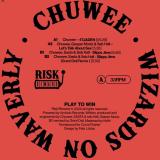
nicht am Lager

Bestelle jetzt und wir bestellen den Artikel für dich beim Lieferanten.


Last In: vor 31 Tagen
Tara Clerkin Trio - On The Turning Ground

Bristol's Tara Clerkin Trio return to World of Echo and the EP format for a five song collection of quixotic, emotional redolence. But do not mistake their absence for inertia. If their musical output has been a little sparse during those in-between years, limited to a few solo ventures and an astonishing ten minute long piece as a trio, their time has otherwise been richly spent: continuous writing and recording, extensive live performances across Europe and Japan, a cultivation of local and more far-flung artistic connections (musical and otherwise), and a monthly NTS show that, through the voice of others, speaks most obviously to their own unorthodox interests. It's the conflux of that winding activity that leads indirectly to On The Turning Ground, 26 minutes of probing, thoughtful composition that draws from no one specific source. Their inspirations might be centreless, but the trio still possess a very obvious anchor in the form of their hometown. Bristol stands as a city of multitudes, heterogenous and vibrant in such a way as to allow it to renew and remake time and again. Tara Clerkin Trio drink from that same well, duly reflecting a rich musical heritage built on fwd-facing electronic subcultures and experimental urges.

As such, On The Turning Ground finds them subject to their own subtle internal evolution, the pervasive sense that you've caught them mid-bloom, on their way to becoming but never anything but themselves. The two instrumental pieces that bookend the EP stand as a perfect case in point, displaying an increasing mastery of compositional space. Pensive and restrained, 'Brigstow' and 'Once Around' both emanate an interstitial quality that's not so much after- as in-between-hours, miniature dub-folk symphonies held together by the kind of tacit understanding that remains the preserve of only the closest of family units. If those two tracks are shaped by a sense of shifting temporality, then the three vocal-led pieces that comprise the record's core feel like a gentle ossifying of aesthetic into something approaching their own unique form of avant-pop. 'Pop' is, of course, a broadly subjective concept, but there's no avoiding the overt sparkling melodicism of songs like 'Marble Walls' and 'The Turning Ground', undeniable re-directions of that late 90s impulse to bend pop sensibilities into off-centre terrain, to render the familiar new again. This is what Tara Clerkin Trio do, gently pulling the ground from under your feet, turning you to face something you'd not quite seen before. To view the world as they do: sideways, sometimes, all of the time.

nicht am Lager

Bestelle jetzt und wir bestellen den Artikel für dich beim Lieferanten.


Last In: vor 2 Jahren
Yoshio Ikeda Quintet - Sketch Of My Life LP

the first-ever reissue on studio mule of the debut album by japanese jazz legend and bassist yoshio ikeda.

having performed with such illustrious figures as sadao watanabe, masabumi kikuchi, and terumasa hino, ikeda’s first album as a leader features pianist and vocalist ichiko hashimoto—also known for her involvement with yellow magic orchestra—berlin-based jazz pianist aki takase, and leading japanese drummer motohiko hino.

avant-garde yet imbued with a distinctly japanese sense of melancholy, this is a work that resonates profoundly with the present moment.

the gem “whispering weeds,” highlighted by thrilling piano and hashimoto’s evocative scat vocals, was also included on a compilation by bbe.

remastered from the original master tapes by kuniyuki, the album has been revived with a richer, more lustrous sound in this definitive reissue.

vorbestellen10.04.2026

erscheint voraussichtlich am 10.04.2026

Sugar Horse - Not A Sound In Heaven LP
  • 1-: Fire Graphics
  • 2: Secret Speech
  • 3: Ex-Human Shield
  • 4: History's Biggest T-Shirts
  • 5: Not A Sound In Heaven
  • 6: Company Town
  • 7: You Can't Say Dallas Doesn't Love You

Bristol experimental band SUGAR HORSE are delighted to announce that their third album, Not A Sound In Heaven, will be released on 10th April 2026 via Fat Dracula Records.

To celebrate the news, the band are sharing the bruising lead single ‘Secret Speech’, available to stream on all good digital service providers from 12th February 2026.

Also announced today are a run of April 2026 UK album headline tour dates and an appearance at StrangeForms Festival 2026, with tickets on sale now (see below for full listings).

“We are fortunate enough to live in what is generally known as ‘The West’,” says front man Ash Tubb of the lyrical themes behind the new track. “I say fortunate with gritted teeth, because I know—as I’m sure the reader knows—that living in the West isn’t always rosy. The vast majority of people struggle everyday to feed, clothe and house themselves. Let alone receive adequate healthcare, schooling and workers’ rights.”

“We are, however, where all the world’s wealth is hoarded. We are at the centre of Empire. The people outside of this empire—those of the Global South—have had their resources extracted and their populations exploited by our own governments, with very little given back in return. This won’t go on forever. It will inevitably end, as all great empires do.”

“We in The West have a choice to make in the meantime; either help create a new, fairer world, or let the greed of our ruling classes become the undoing of all of us.”

The first glimpse of new material from the quartet, ‘Secret Speech’ starts as Not A Sound In Heaven means to go on—a politically-charged wrecking ball of a song that smashes its way through the often unbelievable chaos and brutality of the 21st century with vitriolic malice.

How do you capture the machinations of the geo-political industrial war machine—and all the horrors that go with it—in the studio, without seeming trite or crass? That’s the question that Sugar Horse have posed themselves on their forthcoming third album Not A Sound In Heaven, and they must surely be one of the only bands in existence capable of delivering on just that premise with both musical substance and cutting philosophical insight.

“Ever since I was born I can remember visions of war, famine, and death being beamed directly into my living room via the magic of television,” says Tubb of the record. “These visions were accompanied by newsreader narratives designed to either humanise or dehumanise the people involved. We humanise our government’s allies and dehumanise their enemies. This is taken as common sense, or even wisdom to some degree. People watch the news and accept it as fact, simple and true.”

“As a person gets older they move in one of three different directions with this acceptance of reality; They embrace what they’re being told, they fall into a kind of trust free nihilism or they learn that there are deeper narratives at play.”

“Not A Sound In Heaven is an aged acceptance of the latter. An acceptance of sitting at the centre of a global empire of both military and economic dimensions. An acceptance that the stories we’re told as a nation, or what’s generally in the zeitgeist, isn’t necessarily reality itself.”

“How does a person cope with the weight—and, frankly, the guilt—of a society that perpetuates such distinct inequalities? A society that thinks a bit of killing abroad is fine, as long as it improves the lives of people at home. You can see why so many choose to embrace it. Hell, nihilism seems pretty sensible. Once a person decides upon pursuing a degree of truth however, things get a bit depressing. Beyond depressing...maddening.”

“This album explores this kind of breezy, frivolous subject matter in a manner that will no doubt be uplifting to the listener and massively financially rewarding for the artist.”

The new album follows on from their standalone AA single ‘What’s Your ETA? Let’s Have A Tear Up’/‘Would You Like Me To Be The Cat?’ which was released late last year as a surprise double drop.

vorbestellen10.04.2026

erscheint voraussichtlich am 10.04.2026

Esa Williams - Dala What We Must LP 2x12"

Esa Williams

Dala What We Must LP 2x12"

2x12inch199350128066
BBE Music
10.04.2026out soon
  • A1: Ita Ayelala
  • A2: Yanga
  • B1: Kwanini
  • B2: Nakupenda
  • C1: Summerskin
  • C2: Vanguard Drive
  • D1: Cruisin Kruga
  • D2: Dala What We Must

Marking twenty years since South African producer and DJ Esa Williams left Cape Town, Dala What We Must is a deeply personal and expansive debut LP, an exploration of movement, memory, and sound shaped by two decades of creative evolution.

Co-created with collaborator and multi-instrumentalist Robin G. Breeze, the album deftly combines field recordings, layered instrumentation, and emotionally resonant compositions into a nuanced, globally influenced body of work. It also stands as Esa’s most collaborative release to date, featuring contributions from musicians across London, Oaxaca, Nairobi, and Cape Town, each adding their own creative energy to a project built on openness, trust, and shared experience.

The album draws inspiration from Esa’s recent ventures into documentary scoring and soundtracking, with projects like Cursed (Audible) and The Invisible Hand teaching him to listen differently, to honour space, to serve the story. That sensibility permeates the album, resulting in music that breathes, lingers, and listens as much as it speaks.

The title, Dala What We Must, is a South African call to action: a reminder to do what’s necessary, even in uncertainty. Finalised in the months leading up to Esa’s transition into fatherhood, the record carries a sense of grounding, care, and quiet transformation.

Dala What We Must is a sonic reflection of journey and community, a deeply collaborative project rooted in connection and guided by intention.

vorbestellen

Der Artikel ist noch nicht erschienen. Du kannst den Artikel jetzt vorbestellen, dieser ist nach Wareneingang für dich versandbereit.

Artikel pro Seite:
N/ABPM
Vinyl