Cerca:later version

Generi
Tutto
White Flowers - Dreams For Somebody Else LP
  • 1: Spinning
  • 2: Heaven
  • 3: Backseat
  • 4: Tear
  • 5: Lamp
  • 6: Heart Breaks
  • 7: Visual
  • 8: In The Sky
  • 9: Dreams For Somebody Else
  • 10: Thinking Of You

Preston duo White Flowers announce new album, Dreams For Somebody Else - due for release 1st May 2026 via The state51 Conspiracy.
White Flowers, the long-running collaboration between Joey Cobb and Katie Drew, exists within what they call “the realm” – a shared creative space, wherein time, rather than being a restrictive force, is fluid and boundless, and music exists as an endless conversation with their past and present selves. Adopting what the band describe as a “sketchbook” approach to writing, White Flowers is the product of a decade’s worth of recordings - snippets nestled away on hard drives, only to truly make sense years later.
On Dreams For Somebody Else, the band expand upon the dark-hued dream pop of their debut, channeling the catharsis of dance music via repetitive structures and “sad, euphoric sounds”. Working alongside LCD Soundsystem and Hot Chip’s Al Doyle on production, the album maps out a mosaic of soaring choruses that swirl around imposing arrays of synths, guitars, and percussion.
Through this new lens, the band explore themes of isolation, dissociation and identity - drawing inspiration from Annie Ernaux’s The Years. “Whilst recording the songs for ‘Dreams For Somebody Else’, we really connected with the concept of Annie Ernaux’s book, ‘The Years’ - a ‘collective autobiography’ pieced together from mismatched fragments from her past, conjuring the effect that she’s merely an observer of her own life. This concept merges into the White Flowers world, where time, rather than being restrictive, is fluid and boundless, with our music existing as an endless conversation with versions of ourselves at different stages of our lives.”
“The album has that same feeling of disassociating from your own life, because you’re just blending into everyone else”, the band explains. “There’s a sadness there, because it’s as if you’re looking back on things that happened to you, and they feel like they don’t belong to you anymore”. It’s the dull ache of nostalgia intertwined with a sense of wonder at what could lie ahead - the hopeful optimism and endless loss that defines the human experience. “It’s this idea of identity not being a fixed thing, but something that’s always changing. It’s a fluid thing, similar to time. Things aren’t really fixed, but rather in a constant state of change. It’s important to remember that we’re all going through that.”

pre-ordina ora01.05.2026

dovrebbe essere pubblicato su 01.05.2026

ZERO NETCOST - TEN YEARS LATER EP

Zero Netcost returns with “Ten Years Later”: an elegant downtempo cut driven by delicate piano and a spellbinding vocal. To beef up the maxi, the legendary duo Bent reunites once again with Zero Netcost, delivering two remixes packed with warm, finely textured detail. And there’s more heavy company: Funki Porcini drops an instrumental version with an oblique, late-night twist. A vinyl made to glide from warm-up to after-hours without losing the thread.

non in magazzino

Ordina ora e ordineremo l'articolo per te presso il nostro fornitore.

Last In: 4 months ago
MARI CRUZ SORIANO Y LOS QUE AFINAN SU PIANO - EL VATICANO VA A ARDER
  • 1: EL VATICANO VA A ARDER
  • 2: MATAR JIPIS EN LAS CIES
  • 3: LAS TETAS DE MI NOVIA

At the genesis of one of the most essential bands in Spanish pop-rock of the 1980s, this rarity presents early versions of what would later become some of the most chanted songs in Siniestro Total's repertoire: 'Matar jipis en las Cíes' and 'Las tetas de mi novia,' along with Germán Coppini's original composition 'El Vaticano va a arder.' With limited resources but plenty of energy and humor, a three-song demo was recorded in August 1981, now available here on vinyl for the first time. The songs came first, and only later did the band take a name-initially Mari Cruz Soriano y los que afinan su piano, and shortly after, Siniestro Total. 'Matar jipis en las Cíes' is an original composition by the band's founding members Alberto Torrado, Julián Hernández, and Miguel Costas, while 'Las tetas de mi novia' is a loose version of the song 'I'm a Rocket' by the Dutch band Gruppo Sportivo. 'El Vaticano va a arder' was contributed by Germán Coppini, the mysterious fourth member of this singular lineup, inspired by 'Religion,' the anti-religious rant included on Public Image Limited's debut album. This single is an essential document for both Siniestro Total fans and Spanish-language punk enthusiasts. First-ever vinyl edition.

pre-ordina ora17.04.2026

dovrebbe essere pubblicato su 17.04.2026

Guilty Razors - Complete Recordings 1977 - 1978

UILTY RAZORS, BONA FIDE PUNKS.


Writings on the topic that go off in all directions, mind-numbing lectures given by academics, and testimonies, most of them heavily doctored, from those who “lived through that era”: so many people today fantasize about the early days of punk in our country… This blessed moment when no one had yet thought of flaunting a ridiculous green mohawk, taking Sid Vicious as a hero, or – even worse – making the so-called alternative scene both festive and boorish. There was no such thing in 1976 or 1977, when it wasn’t easy to get hold of the first 45s by the Pistols or the Clash. Few people were aware of what was happening on the fringes of the fringes at the time. Malcolm McLaren was virtually unknown, and having short hair made you seem strange. Who knew then that rock music, which had taken a very bad turn since the early 1970s, would once again become an essential element of liberation? That, thanks to short and fast songs, it would once again rediscover that primitive, social side that was so hated by older generations? Who knew that, besides a few loners who read the music press (it was even better if they read it in English) and frequented the right record stores? Many of these formed bands, because it was impossible to do otherwise. We quickly went from listening to the Velvet Underground to trying to play the Stooges’ intros. It’s a somewhat collective story, even though there weren’t many people to start it.
The Guilty Razors were among those who took part in this initial upheaval in Paris. They were far from being the worst. They had something special and even released a single that was well above the national average. They also had enough songs to fill an album, the one you’re holding. In everyone’s opinion, they were definitely not among the punk impostors that followed in their wake. They were, at least, genuine and credible.

Guilty Razors, Parisian punk band (1975-1978). To understand something about their somewhat linear but very energetic sound, we might need to talk about the context in which it was born and, more broadly, recall the boredom (a theme that would become capital in punk songs) coupled with the desire to blow everything off, which were the basis for the formation of bands playing a rejuvenated rock music ; about the passion for a few records by the Kinks or the early Who, by the Stooges, by the Velvet mostly, which set you apart from the crowd.
And of course, we should remember this new wave, which was promoted by a few articles in the specialized press and some cutting-edge record stores, coming from New York or London, whose small but powerful influence could be felt in Paris and in a handful of isolated places in the provinces, lulled to sleep by so many appalling things, from Tangerine Dream to President Giscard d’Estaing...
In 1975-76, French music was, as almost always, in a sorry state ; it was still dominated by Johnny Hallyday and Sylvie Vartan. Local rock music was also rather bleak, apart from Bijou and Little Bob who tried to revive this small scene with poorly sound-engineered gigs played to almost no one.
In the working class suburbs at the time, it was mainly hard rock music played to 11 that helped people forget about their gruelling shifts at the factory. Here and there, on the outskirts of major cities, you still could find a few rockers with sideburns wearing black armbands since the death of Gene Vincent, but it wasn’t a proper mass movement, just a source of real danger to anyone they came across who wasn't like them. In August 1976, a festival unlike any other took place in Mont-de-Marsan – the First European Punk Festival as the poster said – with almost as many people on stage as in the audience. Yet, on that day, a quasi historical event happened, when, under the blazing afternoon sun, a band of unknowns called The Damned made an unprecedented noise in the arena, reminiscent of the chaotic Stooges in their early adolescence. They were the first genuine punk band to perform in our country: from then on, anything was possible, almost anything seemed permissible.

It makes sense that the four+1 members of Guilty Razors, who initially amplified acoustic guitars with crappy tape recorder microphones, would adopt punk music (pronounced paink in French) naturally and instinctively, since it combines liberating noise with speed of execution and – crucially – a very healthy sense of rebellion (the protesters of May 1968 proclaimed, and it was even a slogan, that they weren’t against old people, but against what had made them grow old. In the mid-1970s, it seemed normal and obvious that old people should now ALSO be targeted!!!).
At the time, the desire to fight back, and break down authority and apathy, was either red or black, often taking the form of leafleting, tumultuous general assemblies in the schoolyard, and massive or shabby demonstrations, most of the time overflowing with an exciting vitality that sometimes turned into fights with the riot police. Indeed, soon after the end of the Vietnam War and following Pinochet’s coup in Chile, all over France, Trotskyist and anarcho-libertarian fervour was firmly entrenched among parts of the educated youth population, who were equally rebellious and troublemakers whenever they had the chance. It should also be noted that when the single "Anarchy in the UK" was first heard, even though not many of us had access to it, both the title and its explosive sound immediately resonated with some of those troublemakers crying out for ANARCHY!!! Meanwhile, the left-wing majority still equated punks with reckless young neo-Nazis. Of course, the widely circulated photos in the mainstream press of Siouxsie Sioux with her swastikas didn’t necessarily help to win over the theorists of the Great Revolution. It took Joe Strummer to introduce The Clash as an anti-racist, anti-fascist and anti-ignorance band for the rejection of old-school revolutionaries to fade a little.

The Lycée Jean-Baptiste Say at Porte d’Auteuil, despite being located in the very posh and very exclusive 16th arrondissement of Paris, didn’t escape these "committed" upheavals, which doubled as the perfect outlet for the less timid members of this generation.
“Back then, politics were fun,” says Tristam Nada, who studied there and went on to become Guilty Razors’ frontman. “Jean-Baptiste was the leftist high-school in the neighbourhood. When the far right guys from the GUD came down there, the Communist League guys from elsewhere helped us fight them off.”
Anything that could challenge authority was fair game and of course, strikes for just about any reason would lead to increasingly frequent truancy (with a definitive farewell to education that would soon follow). Tristam Nada spent his 10th and 11th unfinished grades with José Perez, who had come from Spain, where his father, a janitor, had been sentenced to death by Franco. “José steered my tastes towards solid acts such as The Who. Like most teenagers, I had previously absorbed just about everything that came my way, from Yes to Led Zeppelin to Genesis. I was exploring… And then one day, he told me that he and his brother Carlos wanted to start a rock band.” The Perez brothers already played guitar. “Of course, they were Spanish!”, jokes their singer. “Then, somewhat reluctantly, José took up the bass and we were soon joined by Jano – who called himself Jano Homicid – who took up the rhythm guitar.” Several drummers would later join this core of not easily intimidated young guys who didn’t let adversity get the better of them.

The first rehearsals of the newly named Guilty Razors took place in the bedroom of a Perez aunt. There, the three rookies tried to cover a few standards, songs that often were an integral part of their lives. During a first, short gig, in front of a bewildered audience of tough old-school rockers, they launched into a clunky version of the Velvet Underground's “Heroin”. Challenge or recklessness? A bit of both, probably… And then, step by step, their limited repertoire expanded as they decided to write their own songs, sung in a not always very accurate or academic English, but who cared about proper grammar or the right vocabulary, since what truly mattered was to make the words sound as good as possible while playing very, very fast music? And spitting out those words in a language that left no doubt as to what it conveyed mattered as well.
Trying their hand a the kind of rock music disliked by most of the neighbourhood, making noise, being fiercely provocative: they still belonged to a tiny clique who, at this very moment, had chosen to impose this difference. And there were very few places in France or elsewhere, where one could witness the first stirrings of something that wasn’t a trend yet, let alone a movement.

In the provinces, in late 1976 or early 1977, there couldn’t be more than thirty record stores that were a bit more discerning than average, where you could hear this new kind of short-haired rock music called “punk”. The old clientele, who previously had no problem coming in to buy the latest McCartney or Aerosmith LP, now felt a little less comfortable there…
In Paris, these enlightened places were quite rare and often located nex to what would become the Forum des Halles, a big shopping mall. Between three aging sex workers, a couple of second-hand clothes shops, sellers of hippie paraphernalia and small fashion designers, the good word was loudly spread in two pioneering places – propagators of what was still only a new underground movement. Historically, the first one was the Open Market, a kind of poorly, but tastefully stocked cave. Speakers blasted out the sound of sixties garage bands from the Nuggets compilation (a crucial reference for José Perez) or the badly dressed English kids of Eddie and the Hot Rods. This black-painted den was opened a few years earlier by Marc Zermati, a character who wasn’t always in a sunny disposition, but always quite radical in his (good) choices and his opinions. He founded the independent label Skydog and was one of the promoters of the Mont-de-Marsan punk festivals. Not far from there was Harry Cover, another store more in tune with the new New York scene, which was amply covered in the house fanzine, Rock News (even though it was in it that the photos of the Sex Pistols were first published in France).
It was a favorite hang-out of the Perez brothers and Tristam Nada, as the latter explained. “It’s at Harry Cover’s that we first heard the Pistols and Clash’s 45s, and after that, we decided to start writing our first songs. If they could do it, so could we!”
The sonic shocks that were “Anarchy in the UK”, “White Riot” or the Buzzcocks’s EP, “Spiral Scratch” – which Guilty Razors' sound is reminiscent of – were soon to be amplified by an unparalleled visual shock. In April 1977, right after the release of their first LP, The Clash performed at the Palais des Glaces in Paris, during a punk night organised by Marc Zermati. For many who were there, it was the gig of a lifetime…
Of course, Guilty Razors and Tristam were in the audience: “That concert was fabulous… We Parisian punks were almost all dressed in black and white, with white shirts, skinny leather ties, bikers jackets or light jackets, etc. The Clash, on the other hand, wore colourful clothes. Well, the next day, at the Gibus, you’d spot everyone who had been at this concert, but they weren’t wearing anything black, they were all wearing colours.”

It makes sense to mention the Gibus club, as Guilty Razors often played there (sometimes in front of a hostile audience). It was also the only place in Paris that regularly scheduled new Parisian or Anglo-Saxon acts, such as Generation X, Siouxsie and the Banshees, the Slits, and Johnny Thunders who would become a kind of messed-up mascot for the venue. A little later, in 1978, the Rose Bonbon – formerly the Nashville – also attracted nightly owls in search of electric thrills… In 1977, the iconic but not necessarily excellent Asphalt Jungle often played at the Gibus, sometimes sharing the bill with Metal Urbain, the only band whose aura would later transcend the French borders (“I saw them as the French Sex Pistols,” said Geoff Travis, head of their British label Rough Trade). Already established in this small scene, Metal Urbain helped the young and restless Guilty Razors who had just arrived. Guitarist for Metal Urbain Hermann Schwartz remembers it: “They were younger than us, we were a bit like their mentors even if it’s too strong a word… At least they were credible. We thought they were good, and they had good songs which reminded of the Buzzcocks that I liked a lot. But at some point, they started hanging out with the Hells Angels. That’s when we stopped following them.”

The break-up was mutual, since, Guilty Razors, for their part, were shocked when they saw a fringe element of the audience at Metal Urbain concerts who repeatedly shouted “Sieg Heil” and gave Nazi salutes. These provocations, even still minor (the bulk of the skinhead crowd would later make their presence felt during concerts), weren’t really to the liking of the Perez brothers, whose anti-fascist convictions were firmly rooted. Some things are non-negotiable.
A few months earlier (in July 1978), Guilty Razors had nevertheless opened very successfully for Metal Urbain at the Bus Palladium, a more traditonally old-school rock night-club. But, as was sometimes the case back then, the night turned into a mass brawl when suburban rockers came to “beat up punks”.

Back then, Parisian nights weren’t always sweet and serene.

So, after opening as best as they could for The Jam (their sound having been ruined by the PA system), our local heroes were – once again – met outside by a horde of greasers out to get them. “Thankfully,” says Tristam, “we were with our roadies, motorless bikers who acted as a protective barrier. We were chased in the neighbouring streets and the whole thing ended in front of a bar, with the owner coming out with a rifle…”
Although Tristam and the Perez brothers narrowly escaped various, potentially bloody, incidents, they weren’t completely innocent of wrongdoing either. They still find amusing their mugging of two strangers in the street for example (“We were broke and we simply wanted to buy tickets for the Heartbreakers concert that night,” says Tristam). It so happened that their victims were two key figures in the rock business at the time: radio presenter Alain Manneval and music publisher Philippe Constantin. They filed a complaint and sought monetary compensation, but somehow the band’s manager, the skilful but very controversial Alexis, managed to get the complaint withdrawn and Guilty Razors ended up signing with Constantin with a substantial advance.

They also signed with Polydor and the label released in 1978 their only three-track 45, featuring “I Don't Wanna be A Rich”, “Hurts and Noises” and “Provocate” (songs that exuded perpetual rebellion and an unquenchable desire for “class” confrontation). It was a very good record, but due to a lack of promotion (radio stations didn’t play French artists singing in English), it didn’t sell very well. Only 800 copies were allegedly sold and the rest of the stock was pulped… Initially, the three tracks were to be included on a LP that never came to be, since they were dropped by Polydor (“Let’s say we sometimes caused a ruckus in their offices!” laughs Tristam.) In order to perfect the long-awaited LP, the band recorded demos of other tracks. There was a cover of Pink Floyd's “Lucifer Sam” from the Syd Barrett era – proof of an enduring love for the sixties’ greats –, “Wake Up” a hangover tale and “Bad Heart” about the Baader-Meinhof gang, whose actions had a profound impact on the era and on a generation seeking extreme dissent... On the album you’re now discovering, you can also hear five previously unreleased tracks recorded a bit later during an extended and freezing stay in Madrid, in a makeshift studio with the invaluable help of a drummer also acting as sound engineer. He was both an enthusiastic old hippie and a proper whizz at sound engineering. Here too, certain influences from the fifties and sixties (Link Wray, the Troggs) are more than obvious in the band’s music.

Shortly after a final stormy and rather barbaric (on the audience’s side) “Punk night” at the Olympia in June 1978, Tristam left the band ; his bandmates continued without him for a short while.

But like most pioneering punk bands of the era, Guilty Razors eventually split up for good after three years (besides once in Spain, they’d only played in Paris). The reason for ceasing business activities were more or less the same for everyone: there were no venues outside one’s small circuit to play this kind of rock music, which was still frightening, unknown, or of little interest to most people. The chances of recording an LP were virtually null, since major labels were only signing unoriginal but reassuring sub-Téléphone clones, and the smaller ones were only interested in progressive rock or French chanson for youth clubs. And what about self-production? No one in our small safety-pinned world had thought about it yet. There wasn’t enough money to embark on that sort of venture anyway.

So yes, the early days of punk in France were truly No Future!

non in magazzino

Ordina ora e ordineremo l'articolo per te presso il nostro fornitore.

Last In: 5 months ago
AL MANFREDI - Blue Gold LP
  • A1: Of The Sea
  • A2: I Don't Live Today
  • A3: Five Six
  • A4: Blue Gold
  • A5: Foggy Night
  • A6: Empty Of Your Possession
  • B1: What A Way To Be Laughing
  • B2: Let It Alone
  • B3: Never With You (Acoustic Version)
  • B4: To Catch The Sun
  • B5: Don't Move Girl

Born into a musical family Al Manfredi started writing songs when he was child. As a teenager in 1965, he formed the Nuts & Bolts in the small beach town of San Clemente, California. Inspired by the Kinks, the Beatles and the Byrds, the group separated themselves from the pack by also performing original material written by Manfredi and band mate Mike Ingram. In late 1966 they changed their name to the Lost & Found and relocated to Phoenix, Arizona, where they cut a rare single, “Don’t Move Girl” b/w “To Catch the Sun,” which now commands high coin from ‘60s garage collectors. When they returned to San Clemente in early 1967 their music had taken a more psychedelic direction. The Lost & Found were riding high that year, until tragedy struck. Ingram was found hanged under suspicious circumstances and soon after Lost & Found drummer Mike Ryer died of cancer at the age of 19. Heartbroken, Manfredi gave up on the band scene completely and moved to Garden Grove to teach at his family’s music store. But alone, behind closed doors, he kept writing songs and working on his music, recording hours of tapes, often tracking all the instruments himself. In 1973 he chose six of his best songs, some of them written back in the Lost & Found days, and had them custom-pressed as an LP. Only a handful of copies were pressed, and most of these were sent out to various record companies in the hope of landing a deal. Despite the outstanding quality of the music, there were no takers. But decades later, collectors discovered the Al Manfredi album and hailed it a West Coast rock masterpiece. In his Acid Archives book, Patrick Lundborg called its discovery a deus ex machina and compared it to David Crosby’s first solo album and Hawaii-era Merrell Fankhauser, “not just the acutely captured mellowness, but the self-confidence and the talent.”This little-known West Coast rock masterpiece was rediscovered and celebrated by Acid Archives founder Patrick Lundborg and others around the time that Manfredi died in 1995. This version of the album, overseen by Manfredi’s son Exile, and with Manfredi’s story told by Ugly Things’ founder Mike Stax, presents the complete package of an incredible lost and found artist. Contains the album, as originally issued, on side A with unreleased music on side B.

pre-ordina ora10.04.2026

dovrebbe essere pubblicato su 10.04.2026

Tucker Zimmerman - I Wonder If I'll Ever Come True  LP
  • 1: It All Depends On the Pleasure Man
  • 2: Watching Heroes Come and Go
  • 3: Slide On
  • 4: So It Goes
  • 5: Let's Start Over Again
  • 6: Taoist Tale
  • 7: Welcome to Mass Media
  • 8: Song
  • 9: Advertisement for Amerika

Orange Vinyl with exclusive illustrated notes/lyric insert ltd to 300 w/w.“Zimmerman conjures up a kind of Arcadian folk surrealism that is utterly his own” MOJO Never released before collection featuring Ian A Anderson & Maggie Holland recorded 72-80 is among Tucker’s finest - Free-ranging, Playful, Intimate - his Songpoet imagination unbound and in full bloom now on colour Vinyl for first time with (exclusive to this version) illustrated lyric insert with notes from Tucker.Recorded between 1972-80 this is the first ever release for ‘I Wonder If I’ll Ever Come True’ a stunningly beautiful, homegrown collection by Songpoet Tucker Zimmerman and friends. The range and depth is astonishing. From the heady surreal journey of ‘It All Depends’ Upon the Pleasure Man’, to the uplifting Gene Clark-esque 'So It Goes’, to some of his most beautiful & touching love songs in ‘Let’s Start Over Again’ & ‘Song’. Only one song has seen the the light of day before now - ‘Taoist Tale’ from his 1984 album ‘Word Games’. This recording from a decade earlier loses no power in its folkier stripped down style driven by Tucker’s strong narrative.

While living in bucolic seclusion in Belgium with Marie-Claire, Tucker invited visiting musicians (Derroll Adams, Wizz Jones, Maggie Holland, Dave Evans, Ian Anderson) into his home studio to play and live tape whatever songs he had at hand. Maggie Holland and Ian A Anderson feature, while Tucker found a freeing simplicity in just guitar, ’70s organ, bass and piano. We are so grateful to Ian A Anderson, who carefully kept and curated these recordings from 50 years ago. “Every time I would leave, Tucker would hand me another tape full of songs”. Ian worked with Tucker and ourselves to present this wonderful album. The collection is among Tucker’s finest - free-ranging, playful, intimate - his Songpoet imagination unbound and in full bloom. The ethos, the playing, the freedom, feels like Ronnie Lane’s time in the Welsh Borders. Unhurried, liberated, down-home and cosmic. Extraordinary music made among friends.
"Startling collection of intimate, home-recorded songs from the cult singer-songwriter adored by David Bowie and Big Thief alike.

When I first interviewed Tucker Zimmerman back in 2015 neither of us had any idea that, a decade later, he would be venerated by a new coterie of young fans, touring with maximal folk-rockers Big Thief and recipient of a concerted reissue campaign by the wonderful Big Potato Records. Last year I eulogised the “Arcadian folk surrealism” of his 1974 LP *Over Here In Europe but, if anything, this informal collection of intimate home-studio recordings is even better. Recorded between 1973 and 76 whilst living in Belgium and hosting such visiting folk musicians as Derroll Adams, Wizz Jones, Maggie Holland, Dave Evans, and Ian A. Anderson this is the kind of assured, organic freewheeling folk music that has the mellow, introspective rough-edged feel of some lost private-press LP, the kind rightly revered by Endless Boogie’s Paul Majors as “real people” music. A true find.” Andrew Male MOJO 4/5
“Here's a charming oddity: an unreleased album dating from the mid-Seventies by an American-born songwriter beloved of David Bowie and, more recently, Adrianne Lenker of the folk-rock band Big Thief. Zimmerman's a bohemian type who eschewed the big time for a life of gigging around Europe. He, his wife, Marie-Claire, and a handful of friends recorded these songs in seclusion in the Belgian countryside, and what songs they are. Slide On could have come from the Byrds when they discovered country music, Let's Start Over Again captures the dreamlike experience of being in love with unsettling clarity. This is a real unearthed gem.” 4/5 The Times

pre-ordina ora10.04.2026

dovrebbe essere pubblicato su 10.04.2026

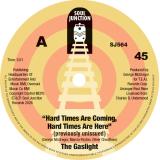
The Gaslight - Hard Times Are Coming, Hard Times Are Her (7")

The earliest foundations of the Detroit Harmony group ‘The Gaslight’ came when future lead singer Oliver “Butch” Cheatham via an introduction by his sister Jackie joined a group known as ‘The Young Sirs’ who recorded, “There’s Something The Matter (With Your Heart/African Love” for Magic City during 1969. The group included Oliver’s future brother -in-law Allen Cocker (Jackie’s future husband).

Oliver and Allen went on to form a new vocal quartet with Curtis “Kippy” Anderson and Michael Eatmon. Under the group name of ‘The Gaslight’ they signed to Uptight Productions Incorporated, a local production company founded by local businessmen Marvin Figgins and Arnold Wright. The Gaslight were the only vocal harmony group signed to Uptight Productions and as such, it was they who made the most recordings across two label imprints Grand Junction and Black Rock. The Gaslight’s first single “I Can’t Tell A Lie/Here’s Missing You” was released on Grand Junction (GJ1001) in 1970, For the groups second single Figgin’s placed them under the guidance of legendary producer/songwriter, the late George McGregor under whom they recording “Drifting Away/If You See Her” Grand Junction (GJ1002) released in 1971 For their next release Figgin’s switched the group to his Black Rock label to record “Out Of My Hand/I’m Only A Man” Black Rock (2002) under the pseudonym of Butch & The Newport’s With “Butch” being Oliver’s nickname. A later, second release of “I’m Only A Man” but with a different flip side “I’m Gonna Get You” came out on Grand Junction (GJ1100) in 1973 with the performing artist credits reverting back to ‘The Gaslight’.

Upon leaving Uptight Production’s the group found a new home when George McCregor took them to a new fledgling label T.E.A.I (an abbreviation for “Tellin’ Everybody About It”) owned by ‘The Dramatics’ Road Manager Charles Underwood. ‘The Gaslight’s’ first and only release for T.E.A.I, was the mellifluous 1975 double sider “Just Because Of You/It’s Just Like Magic”. Underwood had precured a working relationship with Polydor Records who picked the release up for national distribution three months later. As good as the record was due to poor promotion it failed to make any notable noise and eventually sank with the group soon after breaking up.

During Soul Junction’s later dealings with the late Oliver Cheatham, respected UK Collector Andy Rix mentioned he owned a three track acetate containing the two mentioned T.E.A.I/Polydor tracks plus a third unissued dance track “Hard Times” which through a licensing deal with Charles Underwood Soul Junction now present to you on a three track 45, released under its full title “Hard Times Are Coming, Hard Times Are Here” backed with a previously unissued mix of “Just Because Of You” alongside the issued 45 version of “It’s Just Like Magic”.

non in magazzino

Ordina ora e ordineremo l'articolo per te presso il nostro fornitore.

Last In: 3 months ago
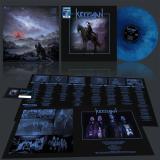
Kerrigan - Wayfarer LP

Kerrigan

Wayfarer LP

12inchHRR1060LPGX
HIGH ROLLER RECORDS
03.04.2026
  • 1: Torchbearer
  • 2: Asylum
  • 3: The Ice Witch
  • 4: Surrender
  • 5: Wayfarer
  • 6: Blood and Steel
  • 7: Dystopia
  • 8: Fighter
  • 9: Red Light Tower
disponibile anche

Black Vinyl


Kerrigan are one of the most promising newcomers from Germany playing traditional heavy metal. The band was formed in Freiburg in 2019 by Bruno Schotten (guitars, bass) and Jonas Weber (vocals, guitars). The duo recorded a demo tape consisting of original compositions “Intruders”, “Force And Will” and “Heavy Metal 2020” plus a cover version of “Rest In Peace” by Wolf (UK). »Heavy Metal 2020« was later released by Fucking Kill Records on tape and vinyl (re-issued by High Roller). For their first full-length album »Bloodmoon«, Kerrigan inked a deal with High Roller Records. »Bloodmoon« was recorded with the help of session drummer Jonathan Döring, an old friend of the band, and received very favorable reviews in the metal press when it was released back in 2023. Together with Jakob on bass, Jonathan is now a regular member of Kerrigan. Three years after »Bloodmoon«, it’s time for the follow-up album by the name of »Wayfarer«. “Dreamy, melancholic and pretty versatile,” this is how guitarist and singer Jonas Weber describes the second Kerrigan album. For him, »Wayfarer« is more or less a direct continuation of »Bloodmoon«. Who knows, maybe Kerrigan have indeed achieved to write a modern heavy metal classic!

pre-ordina ora03.04.2026

dovrebbe essere pubblicato su 03.04.2026

Kerrigan - Wayfarer LP

Kerrigan

Wayfarer LP

12inchHRR1060LP
HIGH ROLLER RECORDS
03.04.2026
  • 1: Torchbearer
  • 2: Asylum
  • 3: The Ice Witch
  • 4: Surrender
  • 5: Wayfarer
  • 6: Blood and Steel
  • 7: Dystopia
  • 8: Fighter
  • 9: Red Light Tower
disponibile anche

Galaxy Effect Vinyl


Kerrigan are one of the most promising newcomers from Germany playing traditional heavy metal. The band was formed in Freiburg in 2019 by Bruno Schotten (guitars, bass) and Jonas Weber (vocals, guitars). The duo recorded a demo tape consisting of original compositions “Intruders”, “Force And Will” and “Heavy Metal 2020” plus a cover version of “Rest In Peace” by Wolf (UK). »Heavy Metal 2020« was later released by Fucking Kill Records on tape and vinyl (re-issued by High Roller). For their first full-length album »Bloodmoon«, Kerrigan inked a deal with High Roller Records. »Bloodmoon« was recorded with the help of session drummer Jonathan Döring, an old friend of the band, and received very favorable reviews in the metal press when it was released back in 2023. Together with Jakob on bass, Jonathan is now a regular member of Kerrigan. Three years after »Bloodmoon«, it’s time for the follow-up album by the name of »Wayfarer«. “Dreamy, melancholic and pretty versatile,” this is how guitarist and singer Jonas Weber describes the second Kerrigan album. For him, »Wayfarer« is more or less a direct continuation of »Bloodmoon«. Who knows, maybe Kerrigan have indeed achieved to write a modern heavy metal classic!

pre-ordina ora03.04.2026

dovrebbe essere pubblicato su 03.04.2026

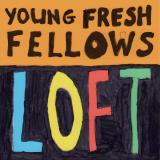
Young Fresh Fellows - Loft LP

To celebrate the legendary Young Fresh Fellows' 40th anniversary remix/re-release of their first album The Fabulous Sounds of the Pacific Northwest, the band took one day off their hectic touring schedule to head to Wilco's The Loft studio in Chicago. The band got GRAMMY-Award winner Tom Schick behind the boards, cut 11 brand new songs, and later added some legendary friends across the album, including Neko Case (sings lead on "Destination"), John Stirratt of Wilco (harmony vocals), Morgan Fisher of Mott the Hoople (keyboards), Jonathan Segel of Camper Van Beethoven (violin), Jenny Conlee of The Decemberists (accordion, harmony vocals), Mark Greenberg of Eleventh Dream Day (vibraphone), Peter Buck of R.E.M. (12-string guitar), and Dave "Max" Crawford of Poi Dog Pondering (trumpet). This fully realized version, Loft, has never been released before, and the cover is a faded/fated tie-in with 40th anniversary of YFF's second LP Topsy Turvy, released November 1985.

pre-ordina ora03.04.2026

dovrebbe essere pubblicato su 03.04.2026

SOUL SUPREME - FOLLOW ME

SOUL SUPREME

FOLLOW ME

7"-VinylGAMM200A
GAMM Recordings
01.04.2026

GAMM REACH 200 !!
And what better way to celebrate than 3 unbelievably amazing remix 7's of their very first release ?

A track that defined GAMM's identity and helped pave the way for everything they've achieved since. Now, 23 years later, GAMM has reached its landmark 200th release.

To mark this anniversary and honour our dear friend Fredrik Lager (aka Red Astaire), who sadly and unexpectedly passed away three years ago, we are re-releasing 'Follow Me' alongside remixes from some of our favourite producers. The remixes will be released across three separate 7-inch EPs featuring Soul Supreme, DJ Spinna, Ukokos, and Kampinos.

On the first EP, Amsterdam-based keyboardist and producer Soul Supreme delivers a masterful cover version featuring live instrumentation, programmed beats, and fresh vocals. It is a beautiful tribute that honours the original while evolving the track from its sample-based roots into a full-scale production. The EP features two takes: a Jazz-Funk infused original and a Samba/Bossa-inspired version ('Follow My Samba').

Timeless music

non in magazzino

Ordina ora e ordineremo l'articolo per te presso il nostro fornitore.

Last In: 4 months ago
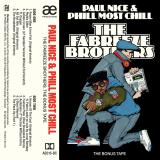
Paul Nice & Phill Most Chill - The Fabreeze Brothers (Tape)

Expanded Edition Double Cassette Box Set including main album and Bonus Cassette with unique download cards


AE Productions in association with Sure Shot Recordings and In Effect Recordings are pleased to announce a 10 Year Anniversary Edition of the critically acclaimed Phill Most Chill and Paul Nice album as the Fabreeze Brothers.

The hugely successful first edition which was pressed on colour vinyl and supplied in double fold out sleeve sold out in only 2 weeks from release date and then the 2nd pressing black vinyl edition sold out a little while later but has for years been out of print but is increasingly requested by shops, via email, social media, AE Productions website back in stock requests, etc…

As it has been 10 years since original release back in 2015 at the time of proceeding with manufacturing, it was the perfect opportunity to do a 3rd pressing to mark the anniversary but we had to pull out all the stops for a 3rd run of this incredible album and also make it subtly different again in packaging design from the 1st and 2nd pressings so that each has it’s own particular feel and quality.

With help from the original designer and all-round vinyl artwork supremo Mr Krum we have found some nice adjustments for the gatefold sleeve where the detail from the insert sheet found in the original issues is incorporated into the inside panels of the sleeve. We have also tweaked the hype sticker to mark the 10th Anniversary Edition and updated the vinyl labels so as to work better with the new Splatter vinyl which follows the original red and yellow vinyl but each splattered with the opposite colour.

For something a little extra we have compiled a Limited Expanded Edition Double Cassette Box Set that includes the original album and also a ‘Bonus Tape’ which features all of the remixes, alternate versions, Original Versions of album cuts and bonus tracks found on B-sides of the array of singles and we included for good measure 2 tracks that only appeared on the promotional only LP sampler that ended up being different on the final release. This is limited to cassette just for the non-vinyl heads as all of these tracks already appear on vinyl. The outer box is A5 card in black with gold foil Fabreeze Brothers logo and comes with discography booklet.

‘The Bonus Tape’ from the box set is also available as a standalone cassette release with alternate j-card art work so that it has it’s own flavour and so that anyone that purchased one of the original run of cassettes that sold out before we could even ship any copies, did not need to purchase the main album again unnecessarily and to make it noticeable from the Expanded Edition Box Set version.

This version also has an alternate shell design in keeping with the clear shell with dark liner that was commonplace back in the 90’s and the cassette geeks may note the red text on the spine as was also a common design back then – giving this a pseudonym of ‘the 90’s tape’ during the design process.

We couldn’t stop there so we also have an extremely low quantity Limited Edition Mini Disc version which is the main album plus 8 of the bonus tracks from The Bonus Tape – only missing the 2 least significant alternate versions but clocking in at just a few seconds under 80 minutes – the absolute maximum for the format! Mini Disc???!!! You’re probably asking – yes!

While looking into the cassette duplication options we realised that the duplicator also offers Mini Disc production so we thought that it may be worth doing a very small run just because not only are professionally manufactured Mini Disc’s rare in Hip Hop, they are rare within the entire music industry as they never really took off as a medium to purchase music but ended up as the choice for home recorded Walkman and car use. Indeed, AE boss Mr Fantastic still has his main machine, portable and old discs. Amazingly also, the sleeve artwork transferred brilliantly to the Mini Disc template. They are manufactured using high quality Sony discs using ATRAC 4.5 codec.

All releases are supplied with unique free download codes on cards that are included inside the packaging but also with the Expanded Edition cassette and Mini Disc having 2 cards – 1 for the main album and a 2nd card for ‘The Bonus Tape’. The free downloads are supplied direct from Phill Most Chill’s Bandcamp page keeping it independent.

pre-ordina ora27.03.2026

dovrebbe essere pubblicato su 27.03.2026

Coil - Backwards (2x12")

Coil

Backwards (2x12")

2x12inchCSRLPW203
Cold Spring
27.03.2026

Double LP in matt-laminate gatefold sleeve with silver detail. We mark a decade since we first released COIL's landmark album 'Backwards', with a special 10 year anniversary vinyl reissue. After the ground-breaking release of 1990's "Love's Secret Domain" album, Coil were not dormant; the main project was "Backwards", which was started in 1992, updated considerably between 1993 and 1995, and transferred in 1996 to New Orleans, where it was finished in the magic of the Nothing studios of Trent Reznor (Nine Inch Nails). The album saw the fruition of Jhonn Balance's recent vocal coaching, producing haunting, passionate vocals, while reaching new heights. 23 years after its initiation, these tracks have been beautifully preserved by Danny Hyde and are finally available in highest quality audio. Differing substantially from the later, remixed incarnation, "The New Backwards" (2008), "Backwards" contains the original versions of Coil's much-loved tracks; 'A Cold Cell' and 'Fire Of The Mind', which have appeared on various compilations over the years, and are now presented as originally intended. his album is the essential bridge between "LSD" and the later "Musick To Play In The Dark" series. It is an essential conduit, to understand the journey that was taken. It was to be released... it should have been released... but because of issues with grey men it wasn't. It is now, so enjoy. (Danny Hyde).

pre-ordina ora27.03.2026

dovrebbe essere pubblicato su 27.03.2026

&Co. - Staycation

&Co.

Staycation

12inchQV003
The Quiet Village
24.03.2026

&Co. debut on A Quiet Village. The US-based trio drop the third release on Quiet Village’s eponymous imprint March 20th. &Co. Is a project from multi-hyphenate and Bianca Chandon founder, Alex Olson, pianist, composer and producer Alberto Bof (known for his work on ®Oscar ®Bafta ®Golden Globe and ®Grammy award winning ’A Star is Born’) and DJ/fashion luminary, Paul Takahashi. The trio’s second release, ‘Staycation’ follows 2015’s ‘Best of Friends’, and sees these rare talents create a two-tracker that explores a uniquely evocative, cinematic and dubby Balearic aesthetic. ‘Staycation began as a follow-up to the first EP, Best Friends.

As a result, ‘Staycation’ came together in fragments. The first track was built over a handful of short studio sessions, each only about an hour long, driven by brainstorming and reworking ideas. With Alex away, Alberto and I continued refining the piece in Los Angeles, sharing updates for Alex’s approval until it was completed. The track remained unmastered and was quietly circulated to a small circle as a promotional piece. The second track, “Lean Like a Cello,” was initially conceptualized together. However, with Alex now based in New York and less available, we completed the arrangement in Los Angeles, sending versions back and forth for Alex’s input and feedback. Nearly a decade later, the idea resurfaced, and the recordings were finally mastered and released. A friend, Justin Van Der Volgen, handled the mastering. What began as a plan to give the tracks away as a promo evolved when Justin encouraged the group to shop the release. With help from Eric Duncan of Rub N Tug, the music reached Matt (Edwards, aka Radio Slave/ 1/2 of Quiet Village).

Ten years after the first sessions, Staycation arrives as a document of distance, collaboration, and time. A project shaped as much by separation as by shared intention.’ (Paul Takahashi, Feb 2026)
A piece of art from a powerhouse creative team operating at the intersection of skate culture, music, design and fashion, ‘Staycation’ by &Co. Arrives on The Quiet Village 12” and digital/streaming on March 20th.

non in magazzino

Ordina ora e ordineremo l'articolo per te presso il nostro fornitore.

Last In: 70 days ago
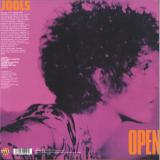
Julie Driscoll, Brian Auger & The Trinity - Open LP

Released in 1967, Open marked a bold debut for Brian Auger & The Trinity, featuring the dynamic vocals of Julie Driscoll. Music and its makers were rapidly evolving in ‘67, the UK's Jazz and R&B scenes were being influenced by pop and psychedelia and socially, musicians of many styles found common ground in London’s clubs like The Cromwellian and The Scotch Of St James where the The Beatles, US legends Wilson Pickett and Jimi Hendrix mingled with the capitals jazzers and pop stars, often loudly jamming together in even louder 'Lord Byron' shirts. 'Open' fully embraced this spirit by fusing together those genres and attitudes of the era. From the outset Auger displays his jazz rooted approach on the A side with 'In and Out' and 'Isola Natale' (later covered by one of his American jazz heroes Richard ‘Groove’ Holmes). Both showcase the Trinity's musicianship and Brian's improvisational flair. Auger himself takes on vocal duties on the raucous ‘Black Cat’, a track that became a club hit. Open is marked by its eclecticism; 'Lament for Miss Baker' is a tender, piano ballad influenced by Duke Ellington, reflecting Auger’s jazz and classical influences whilst 'Goodbye Jungle Telegraph' is a wild and crazy percussive freak out. Brian displayed not only his virtuosity but also his surrealist sense of humour with bizarre sound effects, inspired by Spike Milligan's The Goons' radio show interspersed between the tracks.

Julie Driscoll’s arrival on the album’s B side brings a sharp shift in tone. Her smoky, emotive vocals inject a soulful depth, notably on covers of Otis Redding & Carla Thomas hit 'Tramp', Aretha's 'Save Me' and The Staples Singers ‘Why Am I Treated So Bad". With original numbers 'Break It Up' and 'A Kind Of Love In' we hear the Auger / Driscoll pop infused R&B at its very best, whilst the version of Donovan’s 'Season of the Witch' stretches out into a slow-burning epic. In 2025, Open is viewed as a cult classic and testament to a unique period when genre boundaries were fluid and artistic risk-taking was the norm. Brian Auger & The Trinity’s debut captures the adventurous energy of the late 1960s. 58 years later, its importance in the development of British jazz fusion and progressive bands that followed is undeniable, with The Charlatans Tim Burgess recently commenting on Auger's Instagram that The Trinity were a 'huge influence'.

non in magazzino

Ordina ora e ordineremo l'articolo per te presso il nostro fornitore.

Last In: 6 months ago
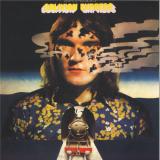
Brian Auger’s Oblivion Express - Oblivion Express LP

Strut Records presents a fresh look at Oblivion Express, the 1971 album that marked Brian Auger’s shift into a new musical frontier. After years spent shaping the sound of British jazz-soul with the Trinity, Auger stepped into the new decade with a leaner, electrified ensemble and a renewed sense of purpose. This record captures the moment that transformation took shape.

Oblivion Express introduced a sound that was distinctly Auger’s own. Rather than echoing the fusion emerging in the United States, Auger developed a language rooted in the UK’s jazz underground, culminating in a spaced out jazz- rock / prog-fusion album awash with larger than life drum fills and Auger’s virtuosic organ playing. Between bassist Barry Dean and drummer Robbie McIntosh the album moves effortlessly between tight, articulated phrases and broader, improvisational passages. The trio’s interplay forms the backbone of the album and sets the tone for the sound that would define the early years of the Express.

Album opener “Dragon Song” launches with a restless drive that immediately signals Auger’s new direction. Auger chose to record this version of John McLaughlin’s piece (his friend and former bandmate in 'The Niddy Griddys') after hearing McLaughlin’s album Devotion during its mix at New York’s Record Plant Studios. Auger was blown away, recalling, “Oh my god, this is amazing. I wanted to record that myself - and I did!”. Pieces like “Total Eclipse” demonstrate the Oblivion Express’ command of dynamic contrast, and title track “Oblivion Express” explores the cinematic and compositional prowess of the group through stripped back, building moments vs. explosive melodic breakdowns. Riff-heavy “The Sword” later became known through Madlib’s usage in 2014 tracks “Yeti Movie” and “Parodies”.

In retrospect, Oblivion Express stands as a jazz leaning, prog-rock masterpiece and foundational moment in Auger’s catalogue. It captures the starting point of a new sound that is more focused, more urgent, and fully committed to the possibilities of jazz-rock at the dawn of the seventies. The album remains a vivid document of a band discovering its identity and setting the stage for the further array of influential releases that would follow.

non in magazzino

Ordina ora e ordineremo l'articolo per te presso il nostro fornitore.

Last In: 6 months ago
TURMA DA BÊNÇÃO - CONJUNTO ANGOLA 70 E PAULO FLORES

Turma da Bênção – A Semba Gathering Across Generations

Conjunto Angola 70 & Paulo Flores

The Turma da Bênção project brings together Conjunto Angola 70, a collective dedicated to recreating and preserving the golden-era sound of Angolan music from the 1970s, and Paulo Flores, one of the most important ambassadors of semba worldwide and one of the creators of kizomba. Throughout his career, Flores has built bridges between tradition and modernity, helping shape the global understanding of contemporary Angolan music.

Recorded in Lisbon in 2018 in an intimate “roda de semba” setting, informal jam sessions rooted in collective rhythm and storytelling, Turma da Bênção gathers legendary musicians such as Botto Trindade (guitar), Joãozinho Morgado (congas) and Teddy N’Singui (guitar); mid-generation artists including Galiano Neto (percussion), Paulo Flores (vocals and artistic direction) and Pirika Duia (viola); and younger creators such as Mayo Bass (bass), Jéssica Pina (trumpet) and Armando Gobliss (keys).

The result is a powerful dialogue between eras. Classic Angolan repertoire meets new compositions, all deeply rooted in semba — the rhythmic and poetic foundation from which kizomba later emerged.

The album revisits emblematic songs such as Runfo da Liberdade, Memórias de Gui and Lamento de Duia, while introducing new works including Morgadinho, Catuta 45, Boas Festas Conterrâ and Réveillon, the latter awarded Semba of the Year at the Angola Music Awards in 2020.

Before this LP, Keep On Pushin Records released the singles Turma da Bênção presents: Joãozinho Morgado and Turma da Bênção presents: Botto Trindade, building anticipation for what now becomes the label’s first full-length vinyl release.

Issued on vinyl in the year Angola celebrates 50 years of Independence, Turma da Bênção stands as a symbolic statement, honoring the elders, empowering the present generation, and ensuring that the pulse of semba continues to resonate across borders.

Turma da Bênção is more than an album. It is a rare intergenerational encounter and a living celebration of Angola’s musical heritage.

non in magazzino

Ordina ora e ordineremo l'articolo per te presso il nostro fornitore.

Last In: 3 months ago
Oden & Fatzo - Lauren EP

Oden & Fatzo

Lauren EP

12inchLAU1201
B1 Recordings
09.03.2026

2026 Repress

After the promo version flew off the sleeves, now comes the full picture sleeve, yellow vinyl version of French live trio, Oden & Fatzo’s chart topping, house smash hit, ‘Lauren’ limited to 1000 copies. A bootleg experiment that got out of hand, Oden & Fatzo’s Radio 1 A-listed single is the accidental hit that everyone is talking about.

So how do you go about making an ‘accidental hit’, by accident of course... The track came about when French DJ Fatzo tried to demonstrate the difference between an edit and a remix to his dad, “... I took a song from the band Men I Trust, sped it up and added a drum beat and violin. After playing it to Oden, they loved it, and in turn, added their secret ingredients.”

Unlike the name might suggest, Oden & Fatzo consists of three people: The Parisian underground collective are a powerful fusion of the electronic live duo Oden, and house DJ Fatzo. Back in 2020 a bootleg version of ‘Lauren’ was uploaded to the YouTube channel of the electronic label Novaj, kicking off an unforeseeable wave of enthusiasm. That video is now approaching 3 million views. Enthralled listeners begged for a commercial release, a year later Ministry of Sound/B1 cleared the sample and the track started its march across the airwaves and up the charts.

With its captivating beat and nostalgic catchiness, ‘Lauren’ makes up for the party nights lost to the pandemic lockdowns, and sees people dancing in their homes and on the streets, as concerts, parties, and live sets are finally making a return. As the trio put it: “This song was all about hope, freedom and a party atmosphere at a time when you couldn't go anywhere. We think it gave everyone who heard it a little bit of an escape, including us.”

Meanwhile in the UK, the track has seen early support, not only by names like Franky Wah, Danny Howard, Pete Tong, Annie Mac, Jax Jones, Jodie Harsh, HUGEL, Bakermat, Cut Snake, Salomé Le Chat, Piem, David Gausa and many more, but also by the incredibly ecstatic party crowds.


Press:

6th week A List at Radio 1
Plays from Radio 2 and added to Hits Radio Pride playlist
Airplay up +3% week on week
#1 Cool Cuts Chart
#1 Upfront Club Chart
#1 Pop Club Chart
#5 UK Shazam Chart
Holding at #12 on Shazam – over 200k tags for the track in the UK to date
Over 8.6m+ streams WW now across all platforms
Over 200k+ views for the music video
Averaging 50k daily streams in the UK
47k+ sales across UK OCC to date
#1 on Beatports Deep House for 16 consecutive weeks

In stock dal01.10.2026

Last In: 3 days ago
Oronzo De Filippi - Meccanizzazione LP
  • 01: Architettura Industriale
  • 02: Fabbrica - I Versione
  • 03: Fabbrica - II Versione
  • 04: Termomeccanica
  • 05: Dinamica
  • 06: Raffineria
  • 07: Dinamica - II Versione
  • 08: Meccanizzazione Agraria
  • 09: Industria Metallurgica
  • 10: Chimica Industriale

First-ever official reissue - 180g black vinyl edition

In the late 1960s, a distinctive musical movement began to flourish in Italy—while also gaining momentum abroad, particularly in France and the United Kingdom. Known as library music (or sonorization), this genre consisted of genuine music libraries created specifically to accompany audiovisual productions such as television programs, commercials, documentaries, and films.

Produced under conditions of complete artistic freedom, these recordings often defy clear categorization, as they are not tied to any single musical genre. This creative independence allowed composers—frequently working in total anonymity—to experiment boldly, crafting avant-garde and forward-thinking sounds that, in many cases, anticipated musical trends that would only become widespread years later.

Oronzo De Filippiis known not only for his contributions to library music, but also for being part of the projectThe Braen's MachinealongsideAlessandro Alessandroni, one of the most significant figures in this field.

Meccanizzazione is a fully instrumental album—as is typical of the genre—literally dominated by the distinctive sound of the harpsichord. The record essentially alternates between two main compositional approaches: on one hand, more accessible and "friendly" tracks with a refined jazz-lounge and bossa nova flavor; on the other, darker and more hypnotic pieces, whose repetitive structures vividly evoke the rhythms and mechanical pulse of the industrial world.

pre-ordina ora06.03.2026

dovrebbe essere pubblicato su 06.03.2026

Michel Houellebecq & Frédéric Lo - SOUVENEZ-VOUS DE L'HOMME LP
  • 01: Le bleu du ciel central
  • 02: Ils chevauchaient le vent
  • 03: La mémoire de la mer
  • 04: Fin de partie
  • 05: Le dialogue des machines
  • 06: Autoroute B
  • 07: Le lendemain de l'explosion
  • 08: Perdus dans des rêves inutiles
  • 09: En attendant l'envahisseur
  • 10: Les contrées solitaires
  • 11: L'ancienne voie romaine
  • 12: L'ultime archipel

Michel Houellebecq is, of course, well-known for his novels, translated into more than 40 languages, and his Goncourt Prize (The Map and the Territory, 2010), but perhaps less so for his debut album, released exactly a quarter of a century ago on Tricatel label. One can sense the influence of Serge Gainsbourg's L'Homme à la Tête de Chou, a disillusioned Procol Harum and a world-weary Burt Bacharach hovering over Houellebecq's poems in Présence Humaine, a now cult classic album orchestrated by Bertrand Burgalat and the musicians of Eiffel. Twelve thousand copies sold and a few concerts later, the writer decided (or so we thought) to bid farewell to the stage, only to generate more media attention though his literary success. Frédéric Lo is, of course, known as an exceptional lyricist, composer, arranger, and producer, author of a sublime fourth solo album (L'Outrebleu, released last March) and a master of collaborative work, notably with Bill Pritchard, Peter Doherty and Daniel Darc. Initially, Michel Houellebecq and Frédéric Lo met for the tribute album that the latter was planning for the tenth anniversary of Daniel Darc's death, but their recording of "Psalm XXIII" was, to their great disappointment, rejected by the label and therefore did not appear on the final version of Cœur Sacré (2023). Fortunately, every cloud has a silver lining, and the two men decided to take their collaboration a step further. Lo decided to set the writer's words to music, in his studio in Pantin. Raw, stripped-down music draped in electronica, adorned with piano and antediluvian drum machines, often minimalist, sometimes repetitive, provides the perfect backdrop for twelve tracks that question and reflect on humanity's past and future (if indeed there is one). Reflections on the human condition, 21st-century style, a work of speculative fiction conceived by two eternally modern "young lads," Souvenez-Vous de l'Homme (Remember Man) is an album that might occasionally evoke The Stranglers' La Folie, and, given the title, that's probably no coincidence. But above all, it's a hypnotic and melancholic album, uncompromising and captivating. Most importantly, it's an album like no other.

pre-ordina ora06.03.2026

dovrebbe essere pubblicato su 06.03.2026

Various - 12 INCH LOVERS 11 LP 2x12"

Since 2020, 12 Inch Lovers have been releasing new samplers every year, eagerly anticipated by collectors. These samplers have now become a staple and are easily added to vinyl collections across Europe. They offer timeless classics and rare tracks that are often hard to find elsewhere.

With Samplers 11 & 12, they surprise again with a mix of modern classics and tracks that have never been released on vinyl or are difficult to find. By adding unique and exclusive tracks, the 12 Inch Lovers samplers remain innovative and high-quality. They are a must-have for DJs, collectors, and fans of contemporary classics!

SAMPLER 11

A1) Paul Kalkbrenner - No Goodbye (2019)

Berlin techno producer Paul Kalkbrenner became world-famous with his 2008 hit Sky & Sand. Since then, he has released one record after another and performed all over the world in the biggest venues and at the most renowned festivals. No Goodbye is one of his more recent hits, released in the summer of 2019.

The track was created using an a cappella he received on a demo tape while on tour. He was immediately inspired by the vocal and built his own sound and production around it. Interestingly, Kalkbrenner rarely uses vocals, but for No Goodbye he collaborated with Australian singer Chiara Hunter, giving the track a unique and instantly recognisable character. The result is a stylish, dance-floor-friendly track with a rolling house groove that quickly became a modern classic on dance floors worldwide.

A2) Water World - Give Me Love (2000)

This trance classic by Water World appeared in 2000 on the French label Adequat Records and is the perfect tune for a sunny summer evening. Warm melodies and pulsing beats instantly create that beach feeling, as if you were dancing with your feet in the sand. The record recalls Beachball by Nalin & Kane, sharing the same dreamy, sun-drenched vibe.

Behind Water World were producers Laurent David and Frédéric De Backer-names well known to many trance fans. In the nineties De Backer was active with projects such as Global Trance Mission (Dream Mission) and Y-Traxx, the trio that released the 1997 classic Mystery Land.

Give Me Love clearly bears their combined signature: euphoric, warm and melodic, with a timeless build that perfectly balances emotion and energy. The track was released on vinyl as part of Trance E.P. Vol. 01 and remains a fixture in retro-trance sets to this day.

B1) Panoramic - Colors (1996)

Colors by Panoramic is a Belgian trance classic released in 1996 on the legendary label XTC Records, a sub-label of Bonzai Records. Panoramic was a collaboration between Belgian techno icon Marco Bailey and Mauro Mirisola. The duo, also known under playful aliases such as The Coke Man & Sniff, released an EP featuring two powerful trance tracks.

We chose Colors, a tune with pure Belgian trance DNA: driving rhythm, dreamy synths and a catchy female vocal. The combination of Bailey's production expertise and Mirisola's creative touch resulted in a timeless track that still appears in many classic playlists.

B2) Natasha Bedingfield - Pocketful Of Sunshine (StoneBridge Club Remix) (2008)

British singer-songwriter Natasha Bedingfield released the album Pocketful of Sunshine in 2008, featuring the title track as a single. The original pop version became a major hit in North America, reaching the Top 5 in the US. Swedish DJ and producer StoneBridge (Sten Hallström) reworked the song into a groovy house version, released in the summer of 2008.

StoneBridge gave the upbeat pop tune a club-ready beat and an infectious piano riff that made it shine on dance floors worldwide. It was not his first time transforming pop into house gold-he had already achieved global fame with his remix of Robin S - Show Me Love (1992), one of the greatest house anthems of all time. He also remixed Sia - The Girl You Lost to Cocaine in 2008, another club favourite.

The StoneBridge Club Remix of Pocketful of Sunshine appeared on a special remix EP in July 2008 and was played endlessly in clubs-by us too, in the venues where we performed. The result is a timeless, sun-soaked house classic thatmakes sitting still impossible.

C1) Y-Traxx - Mystery Land (Fred Baker vs Mr Sam's Magical Mystery Dub Mix) (original release 1995)

Y-Traxx was a nineties trance project by DJs Laurent David and Fred Baker. This trance classic first appeared in 1995 as a B-side but gained real attention when it featured on a Paul Oakenfold mix album. Thanks to that success it received an official re-release in 1998 on the respected French label FFRR (Full Frequency Range Recordings).

In 2003 an excellent remix by Mr. Sam & Fred Baker followed on the Nebula label. That version is highly sought after on vinyl by trance collectors, and we are proud to feature it on our new sampler.

C2) Weiss - Feel My Needs (2018)

Feel My Needs by British producer Weiss (alias Richard Dinsdale) is the tune with that unmistakable old-school piano and catchy vocal that instantly pulls you onto the dance floor. Released in May 2018on the UK label Toolroom Records, the track is pure feel-good house with a modern touch. From the very first piano riff, hands go up in the air.

Toolroom even called it a "future anthem" for the summer of 2018, and indeed Feel My Needs became a huge floor-filler. The record charted high on global dance lists and gained massive popularity at festivals and clubs that year. With its warm piano chords, tight beat and soulful vocal, this is a modern house classic that will stay in the collective club memory for a long time.

D1) The Killers - Mr. Brightside (Jacques Lu Cont's Thin White Duke Mix) (2005)

American band The Killers formed in 2001 and scored a massive hit a few years later with Mr Brightside. Taken from their debut album Hot Fuss (2004), it became their biggest and best-known track-a true rock-pop anthem.

In 2005 the song was given an electronic twist when renowned producer and remixer Jacques Lu Cont (the alias of Stuart Price) created an eight-minute dance version titled Mr Brightside (Jacques Lu Cont's Thin White Duke Mix). This remix replaced the raw rock energy with a more progressive and electronic vibe, driven by a steady beat and long build-up.

The track found a second life in club culture and quickly became a dance-floor favourite. For vinyl collectors it was an instant must-have, and to this day it stands as the perfect party closer. The Killers themselves loved it so much that they often used the remix live as an outro, followed by the original version. A remix that perfectly bridged rock and club culture-and has since become a genuine classic.

D2) Sia - Drink To Get Drunk (Different Gear Remix) (2001)

The legendary ice-cube sleeve says it all: Drink to Get Drunk was a huge club hit in the early 2000s. Released in 2001 on the UK label INCredible, a sub-label of Sony Music, it was a collaboration between British DJ duo DifferentGear (Gino Scaletti & Quinn Whalley) and singer Sia.

The producers took Sia's original song Drink to Get Drunk from her album Healing Is Difficult and gave it a complete transformation, keeping her distinctive vocal and placing it over a hypnotic progressive-house groove.

The combination of Sia's unmistakable voice and the deep, driving production hit hard: the track became hugely popular in Belgian clubs and turned into an anthem of its time. In Belgium it even reached number one in the dance chart in early 2001, and it also performed strongly in the UK and the Netherlands.

To this day it remains a nostalgic crowd-pleaser that perfectly captures the atmosphere of the early 2000s.

non in magazzino

Ordina ora e ordineremo l'articolo per te presso il nostro fornitore.

Last In: 10 days ago
MASCARA - See You In L.A. (7")

MASCARA

See You In L.A. (7")

7"-VinylEXS052
Expansion
27.02.2026

A limited edition tribute to Chris Hill who recorded this record in 1979. Features Luther Vandross!


Recorded jointly in Germany and the USA, Mascara were the creation of soul legend and Mafia club DJ, the late Chris Hill. The vocalists are Ula Hedwig, David Lasley, and Luther Vandross . Ula was a former member of The Harlettes with Sharon Redd and Charlotte Crosley who used to support Bette Midler. David Lasley was also a supporting singer for Bette Midler, and later Luther Vandross, David Lasley’s prolific career as songwriter alone spans more than 30 years. He is best-known as a composer for the hundreds of songs he has written recorded by the likes of Anita Baker ("You Bring Me Joy"), Boz Scaggs ("JoJo"), He sang backgrounds on numerous classic disco hits for acts including Chic ("Everybody Dance", "Le Freak", "I Want Your Love"), Sister Sledge’s ("We Are Family", "He’s The Greatest Dancer") and together with Luther for Odyssey on "Native New Yorker".

non in magazzino

Ordina ora e ordineremo l'articolo per te presso il nostro fornitore.

Last In: 7 months ago
Slam - Dark Channel 2x12"

2026 Repress

As electronic music pioneers and co-founders of Soma Records, Slam have continually shaped the landscape of underground techno. With their forthcoming album, Dark Channel, they present a raw, club-focused record that stands as both a reflection of our turbulent times and a celebration of the dance floor's enduring power.

In 2025, the world feels fractured, dominated by division and extremism. Amidst this chaos, the dance floor remains a rare sanctuary-one of unity, self-expression, and collective escape. Dark Channel is an unapologetic tribute to this sacred space, where rhythm dissolves barriers and music serves as a universal language. Through relentless energy, deep textures, and hypnotic grooves, the album embodies the essence of club culture: a place where we reconnect with ourselves and each other.

Slam make no mistake when it comes to the sonic tone of the album as it opens with the tribalistic Use It, Lose It before the discordant sounds of title track Dark Channel hints at the relentless nature of things to come. The intensity continues with Parametric Factor & Glide - both pushing a pulsating, synth driven trip; the later leading on a more traditional Slam percussive workout. The dance floor warping Morganatic pursues dark territory while Infinit Spaces adds trippy FX to an already animated synth hook. The beautifully crafted Kuture Version delves into a more immersive sound as more direct, chord driven elements take the lead. The pace quickens yet again with Ghost Dancer highlighting sub tones whilst still crafting ominous intonations with its modulating FX. Approaching the conclusion, the ferocious Beat On The Drum delivers a lesson in rhythm and energy before the contorted Irregular Object completes proceedings in a suitably hypnotic fashion.

Mastered By Conor Dalton @ Glowcast Mastering

non in magazzino

Ordina ora e ordineremo l'articolo per te presso il nostro fornitore.

Last In: 5 months ago
Mark Fry - Not On The Radar (The Demos) LP
  • Only Love
  • Big Red Sun
  • Stormy Sunday
  • Where The Water Meets The Land
  • Not On The Radar
  • Daybreak
  • Where Would I Be
  • Jamais A L'Heure
  • Rainbow Days
  • If I Could

Includes demos of every track from the original album, stripped back to (mainly) guitar and voice. Originally a Norman Records exclusive, these are the last few copies available from a limited pressing of just 300. Mark Fry is a France- based, English singer- songwriter/ artist whose debut album, 'Dreaming With Alice,' released in Italy in 1971, became a much-bootlegged "acid-folk" classic three decades later. Fry returned to recording in 2008 and has since released 4 more acclaimed studio albums. These days, far less "acid" than in his youth, Fry still knows his way around a beautiful melody. This album of sketches is resplendent with love songs, the beauty of nature and the passing of time Fry is certainly no stranger to the preparatory sketch. An artist in the truest sense of the word, renowned equally for his decades- long career as a painter of vibrant abstracts and as a cult psychedelic minstrel turned intimate, evocative singersongwriter, his atelier, housed in a converted stable building at his Normandy home, literally doubles as his music studio. It was in this space that Mark's fifth solo album, 'Not On The Radar,' released back in May, was recorded in the summer of 2024, with the singer pushing back his easels to accommodate a four-piece live band and vanloads of miscellaneous accompanying paraphernalia.

Before that, the studio had been a considerably emptier space in which working versions of the album's ten languidly bucolic compositions were first demoed by the solitary songwriter (although some emergent tracks were also captured at Balintore - the home studio of Mark's regular guitarist, Iain Ross, housed on the latter's London-moored canal barge). With those sketches presented here in the same running order as on the mothership longplayer, this new album stands as a document of process - offering the opportunity for track- by- track comparison for those already familiar with Not On The Radar. Crucially, it also makes for a very fine standalone album in its own right, which, if nothing else, bears testament to the inherent robustness of Mark Fry's songwriting.

pre-ordina ora20.02.2026

dovrebbe essere pubblicato su 20.02.2026

King Tubby - The Roots Of Dub

“Tubby did three original dub albums, ‘Dub From The Roots’. ‘The Roots of Dub’ and the third is ‘Brass Rockers’ with Tommy McCook ‘pon the flying cymbals. Where he mixed it with the horn going in and out in a dub way and one named ‘Shalom Dub’ you can call Tubby’s too because he mixed the versions as they were off forty fives’’

Bunny ‘Striker’ Lee

King Tubby and Producer Bunny ‘Striker’ Lee are intertwined in the birth of Dub Music. After discovering a mistake that made a ‘serious joke’ (more of which later...) they went on to release the first pressings of this new musical genre namely ‘Dub Music’. Tubby’s vast knowledge of electronics and Bunny’s vast catalogue of rhythms would lay the foundations of what today is taken as a standard... the Remix / Version cuts to an existing vocal tune.

Osbourne ‘King Tubby’ Ruddock was born in Kingston, Jamaica on 28th January 1941 and grew up in the High Holborn Street area of downtown Kingston. He studied electronics at Kingston’s National Technical College and also on two correspondence courses from the U.S.A... When he had qualified Tubby began repairing radios and other electrical appliances in a shack in the back yard of his mother’s home. His work in the early days included winding transformers and building amplifiers for Kingston’s Sound Systems. Tubby built his first Sound System in 1957 playing jazz and Rhythm & Blues at local weddings and birthday parties. His reputation as a man who knew and understood both electronics and music grew steadily and as the sixties drew to a close. Tubby
purchased his own basic two track equipment. He installed this alongside his dub cutting machine, a home-made mixing console, and his impressive collection of jazz albums in the back bedroom of his home at 18 Dromilly Avenue which he christened his music room.

Tubby and Striker were at Treasure Isle Studio’s one day while Ruddy from Spanish Town was working with the engineer Byron Smith....

“Tubby and myself was talking when Ruddy was cutting some dub but Smithy (engineer) made a mistake through we were talking and forgot to put in the voice. It was two track recording in those days. Ruddy said ‘No Man! Make it stay! and so they cut the rhythm. When I went over to Ruddy’s that Saturday night a dance was in progress and when they played the vocal to the tune... then he said we’re going to play ‘Part Two’. They never called it ‘Version’..and then he played the rhythm track. The song was a catchy song and everybody started to sing along and the deejay started to toast so everything went down well. On Monday morning I went up and I said ‘Tubbs the mistake we made was a serious joke.It mash up Spanish Town! The people went wild. So you have to start to do that now ‘cause when the man put on the ‘Part Two’ everyone start singing this song. It played about twenty times. I said you try Tubbs!’...Well the next Saturday night now when Tubby strung up down the farm U Roy said he’s going to play ‘Part Two’ but Tubby did it different now. He started with the voice then dropped it out and let the rhythm run and then he brought in the voice in the middle and from there Tubby started to get really popular.’’
Bunny ‘Striker’ Lee

Dynamic Sounds upgraded to sixteen track recording in 1972 and Tubby purchased, again with the help of a deal brokered by Bunny Lee. The old four track equipment and the MCI console from their Studio B. The four tracks now gave him far wider scope to work with and he began to create a new musical form where the bass and drum parts were brought up while the faders allowed Tubby to ease the vocal and rhythm in and out of the mix. It was only a matter of time before Tubby’s dub plate experiments began to make it on to vinyl and the first ever long-playing King Tubby releases would feature a collection of his mixes to a selection of Strikers rhythms. So please sit back and enjoy this historic set of sounds. Lovingly restored and with a few extra gems added to the CD Editions. These releases were the first to carry the name of King Tubby and the first to credit the great musicians that contributed so much to the rhythms that made these albums possible.

non in magazzino

Ordina ora e ordineremo l'articolo per te presso il nostro fornitore.

Last In: 13 days ago
BJÖRK - CORNUCOPIA : LIVE LP 3x12"

i am so thrilled to share the film for my concert cornucopia with you . this has been a long journey with hundreds of people helping out . i am so beyond enormously grateful to every single one of them .

i feel the modern concert film is a matriarchially friendly construct , welcomed in the current climate . where female musicians can share their worlds uncorrupted . in cornucopia , i was joined by musical director and multi instrumentalist bergur þórisson , percussionist manu delago , flute septet Viibra , harpist katie buckley and the hamrahlid choir .

i spent last decade working with 360-degree sound and visual software in virtual reality and animation, creating Biophilia and later Vulnicura as a VR album . i was deeply inspired by the idea of a fully-immersive experience spreading Utopia and Fossora into fully surround speakers . my intention was to bring what we had created for 21st-century VR into a 19th-century theatre - taking it from the headset to the stage .

this vision was realised with 27 moving curtains that captured projections on different textures and LED screens , creating a digitally animated show : a "modern lanterna magica" for live music . i also wanted to feature bespoke instruments: a magnetic harp , an aluphone , a circular flute , and a reverb chamber , specially built with an audio architect to enhance the most intimate version of a performance—in a personal chapel .

throughout this tale, there is a subplot woven in : a second story of an avatar—a modern marionette who alchemically mutates , from puppet to puppet , from the injury of a heart wound to a fully healed state . i hope you enjoy it . warmness , björk

non in magazzino

Ordina ora e ordineremo l'articolo per te presso il nostro fornitore.

Last In: 7 months ago
Esa Pethman - In Belgium 1967

Esa Pethman

In Belgium 1967

7"-VinylWJ075001
WE JAZZ
06.02.2026

We Jazz Records kicks off their new series of archival 7" releases with Esa Pethman "In Belgium 1967" released 23 September 2022. The two-tracker is licensed from the Belgian VRT radio archives and both of the pieces are previously unreleased. Finnish jazz legend Pethman, heard here on alto flute and tenor sax, joins forces with European jazz greats such as Heinz Bigler, Uffe Karskov and Jean Fanis. This is a small but valuable piece of unheard European jazz history from the early heyday of modern jazz. The physical release is a quality "inside-out"-styled EP with 3mm spine and small center hole on the 45rpm vinyl.

An excerpt from the liner notes by Mikko Mattlar:

"Esa Pethman (b. 1938) was one of the key figures of modern Finnish jazz in the 1960s. His album The Modern Sound Of Finland was the first Finnish modern jazz album and his composition "The Flame" a true modern Fenno-jazz evergreen.

Pethman was born in Kuusankoski, 135 kilometres from Helsinki in the Kymenlaakso area. The jazz scene was active even though it was an area of rural landscapes and paper mills. Pethman discovered jazz when he heard a Charlie Parker record being played at a local music shop in the late 1940s. Following Parker, bebop became his favourite style of jazz.

Young Pethman played flute and saxophone in local bands who accompanied schlager singers. They played tangos and waltzes for dancers, but usually started a typical dance event with an hour of jazz. In 1959 Pethman moved to Helsinki to study music at the Sibelius Academy. Back then it was a strictly classical music academy, but Pethman later described the studies as crucial for his development and career. He quickly made his way to studio sessions and into the best orchestras in Helsinki.

As a student of composition, Pethman also began writing his own music. "The Flame" was a melody he just got on his mind one night, and he decided to write it down. The catchy composition was released as a 7" single in 1964, a year before Pethman's debut album. Both records stand as benchmarks for modern Finnish jazz. The album consisted entirely of Pethman's compositions, not versions of jazz standards like a lot of the Finnish jazz released until then.

In the mid 1960s, Finnish jazz was also taking its first international steps. Pethman's quintet took part in the first Montreux Jazz Festival in Switzerland in June 1967. At the Montreux jazz band competition, the quintet came in fourth of the twelve contestants. Despite not winning the competition, the band got an honourable mention, and Pethman was now recognized outside Finland.

In December 1967 Pethman travelled to Brussels. His visit was organised by the national Finnish broadcasting company Yleisradio and their jazz program producer Matti Konttinen. Konttinen was supposed to go to Brussels with Pethman, but the musician ended up traveling alone.

In the Decca recording studios Pethman played two songs. He recorded a version of his most famous composition "The Flame", where he played the alto flute and was accompanied by Belgian musicians. On Swiss saxophonist Heinz Bigler's composition "Like Steel", Pethman played the tenor saxophone. The band was now more international, consisting of Bigler, the Italian Francesco Santucci, the Dane Uffe Karskov, a Belgian rhythm section and Pethman. After 55 years, Pethman still remembers Bigler's remarkable skills as a saxophonist.

The two-day visit included the recording session, a dinner and a concert. Pethman and the other non-Belgian musicians came to Brussels mainly to play at a jazz concert organised by the European Broadcasting Union EBU. They played at the studio first, and the concert was held the following day. Pethman and all the other soloists played as members of an international big band. The studio and live session were produced by the Belgian Radio and Television jazz section leader Elias Gistelinck."

non in magazzino

Ordina ora e ordineremo l'articolo per te presso il nostro fornitore.

Last In: 3 years ago
Peter Patzer - PATTERNS LP

Peter Patzer

PATTERNS LP

12inchJBH111LP
Trunk
02.02.2026

Once again Trunk Records comes through with an album of sublime 1980s new age synthwave
music from an artist and library company you have never heard of.

With most Trunk LPs we write the story about how Jonny came across the music. And yes, this LP is no different...over to Jonny…

“My first encounter with Peter Patzer was when I was writing and researching the updated and fully expanded version of The Music Library Book, published by Fuel. The initial book - called The Music Library, was the first ever overview of library music and the wild, unpredictable graphic art of their sleeves. It was first published in 2005 and featured about 400 sleeves and about 120 library companies over 200+ pages. The book was based on over a decade of intense library LP collecting by myself and a handful of other geeky weirdos and made for fascinating and revealing reading and looking. It was a great education for many entering this odd, hidden musical world for the first time. The book quickly sold out.

A few years later the price of the original book had gone bananas. But the geeky weirdos like me had all carried on voraciously consuming and collecting library music so I strongly felt the first book could easily be doubled in size with new info, new sleeves and many newly discovered lost library companies. Which is exactly what I set about doing. The Music Library expanded edition came out in 2015. You have to realise here that The Music Library book was very much a first - until its unexpected arrival (and even the arrival of the much larger expanded edition) there was no published survey, accessible catalogue or anything about international library music. It was still an odd old world shrouded in some historical mystery - even the internet had not really caught up. And I was still finding unusual British one-off library LPs, more unusual Italian library diversions, hidden French funky things and then I finally found Peter Patzer. From Germany.

Hidden away in a very obscure music library corner. All on his own.Peter was unusual in that he was an artist and musician who made his own music and issued it all on his own library, called Crea Music, based out of Bremen in North Germany. Over a series of eight whitevinyl LPs produced in the 1980s Peter Patzer created synth heavy experiments for possible use in film, TV, video and anything else coming along. All his LPs had the same simple red, white and blue sleeve and a typed name and number. Across the eight LPs Peter goes to musical space, creates post-disco funk,travels to Vegas, goes all geological and more.

The eight Peter Patzer / Crea Music LPs are as follows:

01 - Puddy’s Bus 02 - Straight Line 03 - Pos-Attractions 04 - Patterns 05 - Canyons 06 - MIls Maniac 07 - Classic Themes 08 - Formation 17

This is a compilation of some of the music featured across those eight LPs, and yes, it was initially
licensed a few years ago but I held it back as I wasn’t sure people were quite ready for the plugged-inway out drifting 1980s electro sound of Peter Patzer with his synth washes, rhythms and chords. Or maybe I wasn’t ready. Anyway it’s here now... and if this sells out there could be another Peter Patzer LPbut with all his longer 7 minute compositions which there wasn’t room for here.

non in magazzino

Ordina ora e ordineremo l'articolo per te presso il nostro fornitore.

Last In: 7 months ago
Various - Wizzz! French Psychorama Volume 5 (67-75)

The journey through French-speaking pop archives continues with this fifth volume, packed with fuzz, gimmicks, and dissent. Far from the charts, the selected tracks display a great creative freedom, often backed by corrosive humor. Welcome to the surprising, kaleidoscopic, and colorful world of the late sixties and early seventies, Wizzz!
Born in Montauban, Robert Pico stumbled into music by chance when he met René Vaneste, then artistic director at Pathé-Marconi. René brought him to Paris to record his first 45 RPM EP in 1964. A year later, Pierre Perret introduced him to Vogue, where he recorded his second album with Claude Nougaro’s orchestra. Sylvie Vartan then introduced him to RCA, where he recorded four singles, including the astonishing "Chien Fidèle," a track backed by a hair-rising fuzz guitar. Alongside his solo career, he also composed for other artists like Alain Delon (the song was recorded but remains unreleased), Magali Noël, Bourvil, and Georges Guétary. In the Paris of the sixties, he mingled with Mireille Darc, Elsa Martinelli, Marie Laforêt, France Gall, Françoise Hardy, Petula Clark, Régine, Dani, Serge Gainsbourg, Joe Dassin, Franck Fernandel, Charles Level, and Roland Vincent. Despite his efforts and winning a Grand Prix Sacem for his final record, Robert Pico didn’t achieve the expected success in show business and decided to leave Paris and return to the Southwest, where he devoted himself to writing. He is the author of 23 books (including Delon et Compagnie, Jean-Marc Savary Editions 2025, a memoir about his youth and his many encounters). Today, he is relieved to never have become a celebrity and devotes himself to his work with passion.
In 1969, the Franco-Italian movie Erotissimo was released, directed by Gérard Pirès (who later directed Taxi in 1998, written and produced by Luc Besson). This pop comedy features Annie Girardot, Jean Yanne, Francis Blanche, Serge Gainsbourg, Nicole Croisille, Jacques Martin, and Patrick Topaloff. The soundtrack was written by Michel Polnareff and William Sheller, with lyrics by Jean-Lou Dabadie. "La Femme Faux-cils," performed by Annie Girardot. It recounts the feelings of a rich CEO's wife who seeks to develop her sex appeal under the influence of advertisement and magazines. Groovy, sparkling and light, this track, with ITS lush arrangements humorously critiques consumer society and feminine beauty standards.
“Je suis l’Etat” (1967) is the flagship track of the first EP by singer-songwriter Spauv Georges, aka Georges Larriaga, better known as Jim Larriaga (1941-2022). Born into a family of bakers, the young man was initially planning to become a hairdresser when he discovered English-speaking music through Elvis Presley and the Beatles. After this revelation, he decided he would become a songwriter and gave himself five years to succeed. He recorded his first two EP’s independently for RCA under the pseudonym Spauv Georges; meaning “that poor George”, a nickname given to him by the mother of her friend Jean-Pierre Prévotat (future drummer of the Players, Triangle, or Johnny Hallyday). Portraying a depressed and eccentric young man, Spauv Georges created corrosive and amusing songs that didn’t reach a wide audience, despite a TV appearance with Jean-Christophe Averty.
Supported by his loyal friend and fellow songwriter Jean-Max Rivière, Georges Larriaga met the future singer Carlos in the early '70s, then Sylvie Vartan’s assistant. He wrote songs for Carlos, including the popular "La vie est belle," "Y’a des indiens partout," and "La cantine", which went onto become a huge hit in 1972. He also composed for Claude François (“Anne-Marie”, 1971), Charlotte Julian (“Fleur de province”, 1972), helped launch child singer Roméo (who sold 4 million records), and later wrote the hit "Pas besoin d’éducation sexuelle" (1975) for the young Julie Bataille. In 1971, Jim recorded an album for Disc'Az: “L’univers étrange et fou de Jim Larriaga”, which featured pop gems like “La maison de mon père”.
The story of the song "Zoé" began when Pierre Dorsay, artistic director at Vogue Records, asked Swiss singer and musician Pierre Alain to write a song for a new female singer. The inspiration came when he realized that Zoé (the artist's name) was also the name of France's first atomic battery, created in 1948, which consisted of uranium oxide immersed in heavy water! The lyrics reflect a bubbling energy that must be handled with caution, while the instrumentation echoes this atomic theme, notably with the use of a theremin.
Zoé’s career lasted only as long as a single 45 RPM, but it seems Christine Fontane was the vocalist behind this pseudonym, who is known for several EPs, a good "popcorn" album in 1964, and a handful of children’s singles in the '70s. Regardless, the photograph on the cover is of a different girl entirely.
Later, Pierre Alain continued his career, writing songs for himself, Marie Laforêt, Danièle Licari, Alice Dona, Arlette Zola (3rd place in Eurovision 1982), and achieving multiple gold and platinum records in Canada. Also an inventor with several patents, president of the Romande Academy, and head of the French Alliance in Geneva, he now composes atonal music, books, and poetry. Moreover, he is also the host of "Les Mardis de Pierre Alain" at "Le P'tit Music'Hohl" in Geneva.
Filled with oriental choruses and fuzz guitar, "Fou" is from Jacques Da Sylva's only EP released by Vogue in 1967. Despite the quality of this recording, all traces of this singer disappear after this first effort.
Valentin is a baroque pop singer born in Belgium. He is the songwriter and composer of most of the tracks on his three singles released in the late 60s in Canada. A legend says that he reincarnated himself as Jacky Valentin during the 1970s for a rock'n'roll revival career in Belgium, but his older brother sadly debunked this story. Valentin's first two singles were arranged by Claude Rogen, a Parisian session pianist who had come to Canada to promote the song “Mister A Gogo”, a cover of David Bowie’s “Laughing Gnome”, adapted by singer Delphine, his wife at the time. Far from his usual network, Claude Rogen arranged music for Polydor, including the arrangements for “Je suis un vagabond” in 1969, a jerk tune with string arrangements and a furious optimism.
Jacques Malia wrote, composed, and recorded his only 45 EP for Festival in 1966. “Histoire de gitan” is an incredible beat track with bohemian scat that tells the story of a gypsy musician who came to Paris to make it in the Music-Hall, to no avail. The hero of the song and its author probably shared a similar fate, as Jacques Malia faded into anonymity after this remarkable attempt.
Bernard Jamet recorded two EPs for Barclay in the late sixties and co-wrote several songs with Christine Pilzer, Pascal Danel, and prolific songwriters Michel Delancray and Mya Simile. The track “Raison Légale” (1968), his masterpiece, immerses the listener in a courtroom right when a murderer is being judged, with jerk rhythm and free arrangements. A unique, paranoid, judicial, and psychedelic oddity.
Jean-Pierre Lebrot-Millers started his career in show business in 1967 as a singer and songwriter for the Philips label. After three singles, he wrote several songs of a new kind with his friend Pierre Halioche, in the midst of the sexual liberation movement and the democratization of drugs. With provocative lyrics, “Les filles du hasard” and “Barbara au Chapeau Rose” were released on a Philips singles in 1968. The character of Barbara was inspired by a queen of Parisian nightlife during the psychedelic years: model Charlotte Martin, who dated Eric Clapton from 1965 to 1968, then Jimmy Page from 1970 to 1983. Jean-Claude Petit’s arrangements, with a table-filled intro, soul brass, and Hendrixian guitar, emphasize the flamboyance of a hedonistic and sexy character, whose dog is named Junkie because “Junkie est un nom exquis”! The track was recorded live in three takes with a full orchestra.
Upon its release, the record was censored by Europe 1 and RTL due to its references to drug use. Jean-Pierre Lebrot was then banned from the airwaves and later dismissed by his record label. He changed his artist name to Jean-Pierre Millers, while his companion Pierre Halioche became D. Dolby for a new dreamy composition, “Chilla”, which Jean-Pierre produced himself with arrangements by Jean Musy. Once again, the song was immediately censored everywhere. After this setback, he decided to stop singing and started taking on odd jobs to support his Swedish wife and their son until the day he met Jean-Pierre Martin, then production manager at Decca, who had worked with Manu Dibango. Martin offered Jean-Pierre Lebrot-Millers, then employed at Rank Xerox, the position of artistic director at Decca. He accepted and became, a year later, promotion director (radio, press, TV). He worked on Julio Iglesias’s first album for Decca, which became a massive hit and allowed him to meet Claude Carrère. The latter asked him to write new songs and find their performers, much like a “talent scout.” It’s through him that Jean-Pierre discovered Julie Pietri and Corinne Hermès. He composed “Ma Pompadour” for Ringo, Sheila’s husband, and took the microphone again for the syncope hit “Rendez-Vous” in 1982.
That same year, Jean-Pierre Lebrot-Millers tried to release a track for which he had heavily gone into debt: “Si la vie est un cadeau”. Having recorded it in London, he presented it to numerous professionals, all of whom refused to get involved. The same thing happened with Antenne 2 and the Sacem when he proposed the song as France’s entry for Eurovision. He then met Haïm Saban, who was producing cartoon soundtracks and had just launched the Goldorak theme song. Saban, having listened to the song, declared it had the potential to become a hit. He sent Jean-Pierre and Corinne Hermès to meet the CEO of the Luxembourg radio and television network. The latter received them, asked to hear a verse and chorus a cappella in his office, and immediately hired them to represent Luxembourg at Eurovision 1983. They reworked the arrangements and recorded a new version with Haïm Saban as co-producer. The song ended up winning Eurovision 1983, a great comeback for our hero. He continued producing and hung out with the band Nacash in Belgium when a couple came to introduce their daughter for an impromptu audition in a hotel room. The girl sang “Les démons de minuit” while dancing to a radio cassette. Impressed, he had her take singing lessons for a year and composed a song for her (for which he had the melody and title, but no lyrics). This required him to go on the hunt for a lyricist, who ended up being Guy Carlier. They recorded the song, which was initially a ballad, at Bernard Estardy’s CBE studio, and gave the singer a new name: Melody. They showed the song around their industry network without success. Later, Estardy called Jean-Pierre to suggest changing the rhythm and making it pop-rock. Orlando, Dalida’s brother, liked the result and decided to co-produce the track. “Y’a pas que les grands qui rêvent » became a classic hit. The song has since been covered by Juliette Armanet (as a ballad, like the original) and Valentina.

Born into an aristocratic Breton family, Hervé Mettais-Cartier worked as a DJ at Queen Kiss, a nightclub in Poitiers, where he formed the band Les Concentrés with Michel (an actor) and Christian (a radio technician). Together, they created a repertoire of whimsical songs (“Ma bique est morte”, “J’suis un salaud”, “Fils de dégénéré”...) that they performed on stage dressed in white (in homage to “concentrated milk”). They performed at Bliboquet and Olympia in 1968 for the 10th edition of the “Relais de la chanson Française” organized by L’Humanité-Dimanche and Nous les Garçons et les Filles, sponsored by Pepsi Cola. Winners in the author-composer category, alongside Danish singer Dorte, their visibility allowed them to record a 45, and appear on television in Jean-Christophe Averty’s show. The A-side of the disc features Bruno le ravageur, a casatchok dedicated to Bruno Caquatrix, the director of Olympia, nicknamed in the song “Coq Atroce” or “croque-actrices”. The B-side is dedicated to “Fils de dégénéré”, a quirky tribute to Hervé's aristocratic roots, mixing absurdity with sophisticated vocal harmonies.
After Les Concentrés, Hervé Mettais-Cartier formed the duo La Paire et sa Bêtise with his friend Olivier Robert. They performed in Parisian cabarets and toured with Pierre Vassiliu. In the late 1970s, Hervé began a solo career. He recorded two albums for the Motors label in 1978 and 1979, which did not achieve their anticipated success due to lack of promotion. In 1980, he met Bernadette, with whom he started a family and created a “Chansons à voir” (songs to see) show that he performed until his death at the end of 2024.

Publicité comes from the final EP by the Missiles (Ducretet Thomson, 1966), a disc that also includes “La (nouvelle) guerre de cent ans”, featured on Volume 4 of our Wizzz! series. Please refer to the booklet for the story of the band.

“He’s 1.82 meters tall, 28 years old, weighs 135 kg, is black and Belgian”: this is the description of singer Hegesippe on the back of his sole single (Decca, 1967). He appears on the album cover wearing a Greek toga, like a hippie gag – we are at the end of the year 1967. In “Le crédo d’Hegesippe”, this former bodyguard of Antoine and the Charlots plays the delightful card of the thick brute converted to Flower-Power and non-violence, with arrangements by Jean-Daniel Mercier, aka Paul Mille.
“Ethéro-disco” was released on a promotional record for clients of the Maréchal company (Liège, Belgium) for the New Year 1979. Over a funky rhythm, celebrity impersonations (Brigitte Bardot, Jacques Dutronc, Fernandel…) deliver an enigmatic text about pharmaceutical products like ether, bismuth, and aspartate. The track was composed by Dan Sarravah (responsible for Joanna's “Hold-up inusité” featured on Wizzz! Volume 3) and Tony Talado, who was also a singer (one 45 in 1967), songwriter (with over a dozen credits between 1964 and 1985 in various styles from surf music to disco), author (Devenez Végétarien, Dricot Editions, 1985), ad designer, and psychologist.

Décollez-les is on the A-side of Mamlouk's only single, a pseudonym for Marsel Hurten, who is known for his work on several EPs in the late sixties, as well as composing music for Hervé Vilard’s “Capri, c’est fini”, Claude Channes' “La Haine”, Annie Philippe’s “On m’a toujours dit”, and Nancy Holloway’s “Panne de Cœur”.
This strange song, with Afrobeat horns and absurd dialogues between a chef and his kitchen staff, is the result of a collaboration between Marsel Hurten and one of his neighbors, a photographer from Pavillon-sous-Bois (93), where the musician settled after returning from the Algerian War. A music video was shot to promote the record.
Marsel Hurten was born in Tourcoing (59) into a musical family. At a young age, he joined the brass band founded by his grandfather, playing the piston before studying trumpet at the conservatory, as well as teaching himself how to play the guitar. As an orchestra musician, he toured in France, Belgium, Germany, and England. He released a series of solo 45’s between 1965 and 1968 for the DMF and Az labels before stopping recording to focus on working for other artists (Gilles Olivier, Noëlle Cordier…).
“L’amour nu” (Vogue, 1971) is the work of the short-lived Belgian band Mozaïque. The track, written by singer Jacques Albin, closely resembles another of his compositions, “Carré Blanc”, which he recorded in 1969 for Disc’AZ.
Represented by the Lumi Son micro-label based in Marignane (Côte d'Azur), Jean-Marc Garrigues released two 45 RPMs in the late sixties, defending the French jerk sound. The song “Je dis Non” is a short, joyful ode to youth, pop music, and rebellion.
Songwriter and performer Jacques Penuel released three singles. The first one, “Astronef 328” (Fontana, 1969), features a dizzying series of chords punctuated by sound effects, a sci-fi story, and arrangements by Jean-Claude Vannier.

We would like to sincerely thank Pierre Alain, Moon Blaha, Marsel Hurten, Bastien Larriaga, Jean-Pierre Lebrot-Millers, Bernadette Mettais-Cartier, Robert Pico, Olivier Robert, Claude Rogen, Micky Segura.

non in magazzino

Ordina ora e ordineremo l'articolo per te presso il nostro fornitore.

Last In: 7 months ago
BUNDLE OF HISS - AUDIO DESIGN SESSIONS: 1987-1988
  • SWAMP
  • SLEEP NO MORE
  • AMPHETAMINE
  • WHITE
  • DROWN
  • WHAT DREAMS MAY COME
  • RABIES
  • STROBE
  • 12: GAUGE

This release resurrects a long-lost cornerstone of Seattle's early grunge history, showcasing Bundle of Hiss, featuring future Mudhoney and TAD guys and singer Jamie lane, one of the genre's missing links. Between 1986 and 1988, when Seattle was still a circuit of small clubs, four-track tapes and bands sharing drummers and singers, Jack Endino went in to record one of the most solid - and most unfairly invisible - outfits of that scene: BUNDLE OF HISS. Two sessions (1986 at Reciprocal and 1987/88 at Audio Design) fell into limbo, stored in the basement of Mudhoney-Drummer Dan Peters and for years they were a kind of pre-grunge legend, everyone knew they existed, but there was no record, until Loveless Records from NYC released both on CD. The second one, Audio Design Sessions, now sees the light of vinyl for the first time, just as it should have come out in the late '80s: a basement document turned into a collectible artifact. For those who want real grunge, not the domesticated version. It gathers the core of those 1987-1988 recordings done by Endino: the moment when the band is tighter, darker and closer to what the press would later call the "Seattle sound": minor-key melodies, thick fuzz, vocals on the edge, and that mix of hard rock, punk and Sabbath-like heaviness we'd later hear in Mudhoney, TAD or early Soundgarden. And Jack Endino himself summed up these sessions: "Vintage Seattle grunge from one of the original practitioners_ I always felt sad that this hard-working band never managed to get a record out and was almost lost to history. It was a pleasure -and a technical pain!- to resurrect all this." Kinda key release of the early grunge days, first-generation material, recorded by the scene's producer, at the exact moment Seattle was shifting from noisy punk to that heavy, shadowy rock that later blew up. It sounds raw, young and dangerous: this is not a polished compilation, it's a snapshot of the scene.

pre-ordina ora30.01.2026

dovrebbe essere pubblicato su 30.01.2026

NOOTHGRUSH - KASHYYK LP
  • 1: Gage
  • 2: Sith
  • 3: Dianoga
  • 4: Imperial March / Alderaan
  • 5: Jundland Wastes
  • 6: Bric-a-Brac
  • 7: Gage (1996 demo version)

Kashyyyk was originally released in late 1995. Each copy was recorded onto a blank cassette, almost never new. We'd find boxes of tapes at flea markets and dub the demo over one side of them. Never knew what was on the other side. The collage on the cover evolved over time. Early copies had a sparse cover and later copies had a cover collages like this one. The text also changed over time. Edits were made, the thanks list grew, and the address changed. The text on this rereleases is the same as the last copies made in the '90s, with only tiny changes. Three of these songs were recorded in August of 1995 and originally released as the 8D8 demo. We made an unknown number of copies before we recorded again with Matt on guitar. We added our three new songs to the old and named the demo demo after Chewbacca's home planet. The other collages were put together specifically for this 30th anniversary release. Bonus track: Gage recorded January 19, 1996. This is the original version with Matt on vocals. Gary re-recorded the vocals before it was released on Cry Now Cry Later vol. 4.”—Noothgrush

pre-ordina ora30.01.2026

dovrebbe essere pubblicato su 30.01.2026

Saba Alizadeh - Scattered Memories

On his debut album “Scattered Memories”, the composer, musician and true master on the Iranian spike fiddle kamancheh SABA ALIZADEH blends his instrumental virtuosity with spherical electronics, samples of Persian music instruments and field recordings from his hometown Tehran.

Born in Tehran in 1983 as son of the world renowned Tar and Setar virtuoso HOSSEIN ALIZADEH, SABA ALIZADEH studied the Iranian spike fiddle with SAEED FARAJPOURY and KEYHAN KALHOR plus photography and later experimental sound art with MARK TRAYLE at the California Institute of the Arts, Los Angeles. His musical activities that lead him all around the globe for performances (a.o. at Carnegie Hall) branch into 2 different areas: on the one side ALIZADEH is a highly reputated virtuoso on his traditional instrument, on the other he likes to approach music from a more experimental / technological aspect in his electronic / electro-acoustic pieces. This not being enough, he founded Noise Works in 2014, a platform and label for organizing experimental concerts and for the transfer of knowledge of music technologies among young Iranian musicians which makes him a central figure at the forefront of the current, very vivid Persian music scene that gained a lot of attention through artists like SIAVASH AMINI, PORYA HATAMI and of course SOTE who included a track by ALIZADEH on the compilation “Girih: Iranian Sound Artists” that he had curated.

In 2018, ALIZADEH self-released his debut “Scattered Memories” on CD in Iran which now, in a reworked version, sees its deserved world-wide release as LP and DL. Over the course of 10 tracks ALIZADEH melts his 2 musical worlds into 1: tradition meets modernism, eastern sounds meet western production, folklore meets contemporary electronics. An album that will appeal to an open-minded “world music” audience as well as fans of current streams like ambient or drone in its most subtle forms.

non in magazzino

Ordina ora e ordineremo l'articolo per te presso il nostro fornitore.

Last In: 5 months ago
Lloydie Slim - The Lion Dub Wise LP
  • A1: Silver Rock
  • A2: Satta Satta
  • A3: Big M Jamming
  • A4: Wipe Your Tears
  • A5: Unity Rock
  • A6: Johnny Clarke - I'll Never Fall In Love
  • B1: Baldhead Ransom
  • B2: Virgo Special
  • B3: Walking Stick
  • B4: Down False Leader
  • B5: Head Of A Devil
  • B6: The Best Version

Another excellent find here, an unreleased dub/instrumental album compiled by Lloydie Slim at the end of the 70s, featuring exclusive dubwise & instrumental cuts to many of his rhythms from earlier in the decade. As a bonus we've added 2 more tracks to the original 10 track album tape - the vocal & dub cuts to Johnny Clarke's "I'll Never Fall in Love Again", one of Slim's personal favorites of his productions. This single was originally released in 1975 in JA on his Don One label, and again in New York a few years later on his namesake Ivanhoe the Conqueror label. This album is a great listen which reminds us of the classic Channel 1 Revolutionaries instrumentals of the mid/late 70s.

pre-ordina ora26.01.2026

dovrebbe essere pubblicato su 26.01.2026

The Just Joans - Romantic Visions of Scotland LP
  • A1: ) Think Fast, Make Conversation
  • A2: ) Here Come The Rugby Boys
  • A3: ) Limpet
  • A4: ) Drinking On A Weeknight
  • A5: ) Back On The Meds
  • A6: ) The Day We Missed The Train
  • B1: ) Oh Veronica, How Right You Are
  • B2: ) Romantic Visions (Prepare For Disappointment)
  • B3: ) Strictly Presbyterian
  • B4: ) Everybody’s Moving To Australia
  • B5: ) Say You’ll Never Leave Me

The Just Joans' new album Romantic Visions of Scotland finds the Glasgow band in characteristically melancholic form, pairing shambling indie pop with sharp observations on romantic pratfalls and everyday dis-appointments, all delivered with sardonic Scottish wit, fronted by siblings David and Katie Pope, whose wry lyrics and heartfelt vocals remain at the heart of the band’s distinctive sound.
Originally inspired by a grandiose exhibition title spotted on Glasgow buses in 2019 for a show at the Nation-al Museum of Scotland called Wild and Majestic: Romantic Visions of Scotland, the new album arrives six years later as a collection of semi-autobiographical snapshots from the Central Belt of Scotland. Whilst some of the details have been exaggerated for comic (or tragic) effect, the songs are based on personal experience of mundane failings, bitter regrets and missed opportunities that make up an unremarkable life.
Recurring themes of nostalgia for a bygone era and the fear of being left behind by lovers, friends and peers run throughout the album. Musically and lyrically, the band channels Village Green-era Kinks, with nods to The Television Personalities, The Smiths and Dolly Mixture.
In the past they have always recorded by themselves in a variety of bedrooms, living rooms – and the occasional toilet. For the first time they have abandoned their DIY recording practices to create what songwriter David Pope calls, “a corporate behemoth in an actual studio.” The album was recorded at Chem19 in Blan-tyre with Paul Savage, who is best known as a founding member of local legends The Delgados. He has also produced and recorded the likes of Teenage Fanclub, Arab Strap and Camera Obscura, and has captured a slightly more muscular version of the band while retaining their ramshackle charm.
The album artwork by vocalist and painter Katie Pope depicts Motherwell Train Station – an ordinary, boring place that speaks to the subject matter of the songs, but with a hint of potential escape. As David Pope ex-plains, “For me, the painting reminds me of the ending of Billy Liar in which Billy tries and fails to leave his hometown for the bright lights of London. Half the band also live in Motherwell, so it seemed appropriate.”
Funded by Creative Scotland, the recording allowed the band to bring in bass and cello arrangements, adding depth and a sheen of musical proficiency to their signature sound.
About The Just Joans - The Just Joans were formed in Glasgow in 2005 by songwriter David Pope. Early demos were collected together and released as a loose concept album, Last Tango in Motherwell, in 2006. Chris Elkin joined on guitar and was followed shortly after by David’s younger sister, Katie, on vocals and Fraser Ford on bass. Over the years they have released EPs and albums on WeePOP! and Fika Records and have gained a cult following as Scottish pop miserabilists.
The current line-up consists of Katie Pope (vocals), David Pope (vocals, guitar), Chris Elkin (lead guitar), Fraser Ford (bass), Arion Xenos (keyboards) and Jason Sweeney (drums).
Press Quotes:
“They fit snugly into the scratchy, low budget Scottish indie tradition of The Delgados and Arab Strap… There’s mischief in this miserabilism.” - Mojo 4*s
“Glasgow’s The Just Joans have documented the romantic pratfalls of a generation of indie kids with sardonic wit and a shambling musical style where Stephin Merrit lies down with The Vaselines.” - Uncut
“Funny and sad, it’s the kind of song that made Red House Painters, The Magnetic Fields and The Wedding Present’s early albums so easy to embrace; an unpretentious sharing of relatable gloom.” - Record Collector

pre-ordina ora23.01.2026

dovrebbe essere pubblicato su 23.01.2026

Various - Little Bangers from Richard Hawley's Jukebox Volume 2 (2x12")
 
28

In 2023 Ace Records released the album “28 Little Bangers From Richard Hawley’s Jukebox” where the acclaimed Sheffield musician, singer and songwriter compiled together some of his favourite records. These were instrumentals and vocals records that he had collected over the years and found musically addictive. The album received fantastic reviews and allowed his
extensive fanbase to discover and enjoy tracks like Ronny Kae’s ‘Swinging Drums’ and King Curtis’ ‘Hot-Rod’ that were on the juke box in his home.

Now, three years later, Richard has lifted the lid, taken those 7” out and replaced them with another favoured selection. One again, this second version of “Little Bangers” is full of cracking records such as Chet Atkins ‘Boo Boo Stick Beat’, Frank Minion’s ‘Watermelon’, Johnny Todd’s ‘Pink Cadillac’, Sunshine Theatre’s ‘Mountain’, Jet Harris’ ‘Man From Nowhere’, Tracy Rogers ‘Baby’ and the Ventures ‘Fuzzy And Wild’.

A with the first album there are 28 tracks spread across two albums or shoehorned onto one CD. The extensive liner notes see Richard discussing each and every track and what the record or artist meant to him. As he states himself in the introduction, “the record you hold in your hand is the result of a lifetime obsession.”
Listen for yourself and you will discover that this was time well spent.

pre-ordina ora20.01.2026

dovrebbe essere pubblicato su 20.01.2026

El Sabor De Nacho - Que Se Sepa 7"

We keep the fire burning with PAN009, a scorching slice of Latin soul from Puerto Rico’s own Nacho Sanabria, better known as El Sabor De Nacho. Originally released in 1973, his version of “Que Se Sepa” takes the Roberto Roena classic and injects it with a new energy — fiery brass, driving percussion, and that unmistakable swagger that defines the golden age of salsa.

Born in Cataño, Puerto Rico in 1929, Nacho Sanabria grew up surrounded by the rhythms of bomba and plena, performing on stage as early as age nine. After relocating to New York in the late 1940s, he became a key figure in the Latin dance scene, performing with groups like Sonora Boricua, Orquesta Panamericana, and later Rafael Cortijo’s Combo. By the mid-1960s, Sanabria formed his own band, El Sabor De Nacho, combining tight horn arrangements, sharp percussion, and his signature charismatic delivery. His 1970s recordings — including Alma Primitiva and Salsa Caliente — stand as shining examples of Puerto Rican salsa at its peak.

Sanabria’s version isn’t a straight cover — it’s his own Puerto Rican interpretation, full of character and swing. The rhythm section stays tight and earthy, the horns punch with intent, and his vocal delivery brings that effortless charm only a seasoned bandleader could deliver. A proper Latin soul mover that sits somewhere between the barrio and the dancefloor, perfect for warm evenings and deeper DJ sets.

Rescued from obscurity and lovingly restored for today’s floors, PANORAMA Records continues its mission to reintroduce rare and essential music to new generations. From deep funk, jazz and global grooves to Latin dancefloor heat, the label’s 45s series shines a light on overlooked gems that still sound fresh today. Supported by tastemakers like Gilles Peterson, Patrick Forge, and the Mr Bongo DJs, this one’s destined to move both hips and feet.

non in magazzino

Ordina ora e ordineremo l'articolo per te presso il nostro fornitore.

Last In: 17 days ago
Midnight Magic - I Found Love EP

2026 Repress

HOLY GRAIL ALERT!!! Following on 2021’s massive reboot of Midnight Magic’s seminal classic Beam Me Up, Razor-N-Tape have now unearthed a bit of NYC indie disco history with 'I Found Love.'

Although recorded over 10 years ago in Midnight Magic’s nascent early period that produced many of their legendary hits, the song never received an official release; until now it has been heard only by select ears and lucky concert-goers. The package comes with a grip of luminous remixes by Dimitri From Paris & DJ Rocca, Sophie Lloyd, Perel, some solicited at the time of recording and some brand new, but all exceptionally fresh!

Here are some words about the song by the band:

“'I Found Love' was recorded in a fever on the heels of releasing 'Beam Me Up' New York dance music wizard Tommie Sunshine approached us about a co-write saying we should go as big as possible. So we did, it is one of our all time favorite vocal performances from our singer, Tiffany Roth. We had big plans, too, for a release but nothing quite felt right until meeting the Razor N Tape crew almost a decade later. Finally the stage is set, the lights are on, and we're ready. This song is very special to us because it is the last unreleased recording of our original lineup. We dedicate its release to our late bandmates Andrew Frawley and Jason Disu.”

non in magazzino

Ordina ora e ordineremo l'articolo per te presso il nostro fornitore.

Last In: 81 days ago
Miles Davis - Agharta LP 2x12"

Miles Davis

Agharta LP 2x12"

2x12inchMOVLP134C
Music On Vinyl
Release unknown
  • A1: (Part I)
  • B1: Prelude (Part II)
  • B2: Maiysha
  • C1: Interlude
  • C2: Theme from Jack Johnson

The capstone of Miles Davis’ electric period, Agharta reigns as a funk-rock fireball — a blazing comet streaked energy and elan, a fearless organism feasting on adventure and freedom, a seven-headed Godzilla stomping its way through Osaka, Japan. Recorded on February 1, 1975 at Osaka Festival Hall at the first of a two-show stand, the double album offers an endless abundance of surprises and shifts — as well as a road-proven ensemble whose chemistry and abilities equal that of any of Davis’ celebrated bands. If the true measure of jazz is the capacity to adapt to the moment and challenge perception, Agharta is consummate.

Sourced from the original master tapes, housed in a Stoughton gatefold jacket, and pressed at Fidelity Record Pressing in California, Mobile Fidelity’s numbered-edition 180g 33RPM 2LP set of this epic live release presents it in audiophile sound on a domestic pressing for the first time. Offering greater degrees of separation, detail, and richness than the compressed CD editions and more clarity, openness, and presence than older vinyl copies, this version of the 1975 release helps bring the concert stage to your home. Just make sure your turntable and speakers are up to the challenge of Davis and Co.’s explosive performances — and producing the decibels they demand.

Teeming with vibrant colors, tones, and pace, Mobile Fidelity’s reissue captures the hear-it-to-believe-it flow, sweep, and moodiness of the music. Though the group honors looseness and freedom with religious verve, the specificity and scale rendered by this remaster allows you to detect methods behind the alleged madness that are often otherwise harder to discern. This insight extends to the understated changes in volume, harmonics, and phrasings. In many ways, you can listen as Davis himself did that early February evening as he helped coordinate the overall direction and decided on whether to blow his wah-wah-wired trumpet or take a turn on the organ.

Tellingly, Agharta would likely never have been made if not for Davis’ ventures overseas and, specifically, to the Land of the Rising Sun. Having for years faced a backlash on his native soil for his choices to experiment and blow past all known borders, Davis was welcomed with open arms in Japan. The concert documented on Agharta — as well as the day’s later show, captured on the equally exciting Pangea — stemmed from a sold-out three-week tour that would ultimately mark Davis’ final public appearances for years, as he soon settled into semi-retirement and nursed the wounds connected to an unprecedented stretch of restless and relentless output.

For all the band-fueled merit of Agharta — and there’s plenty, given the cast of saxophonist Sonny Fortune, bassist Michael Henderson, drummer Al Foster, percussionist James Mtume, and guitarists Reggie Lucas and Pete Cosey seemingly blasts off to outer space and travels distant galaxies by the time this minimally edited record runs its course — Davis’ own playing often remains overlooked. As critics Richard Cook and Brian Morton observed, it is “often fantastically subtle, creating surges and ebbs in a harmonically static line, allowing him to build huge melismatic variations on a single note.” He attacks like a man on a mission, out to prove naysayers wrong and bent on trailblazing another new path forward. Convention and skeptics be damned.

Noisy and furious, dark and discordant, abstract and off-balance, radical and intense, abrasive and atmospheric, strangely beautiful and hypnotically eccentric: Agharta evades simple description, and refuses to be pinned down in any established category — rock, jazz, punk, ambient, prog, avante-garde, or otherwise. Shot through with trench-deep grooves, screaming riffs, scalding solos, and free-improv leads, its cosmic thrust comes on as the equivalent of an animated pointillist painting comprised of millions of textured dots, dashes, and dabs that hold your attention so raptly you want to revisit the ideas again and again.

Always steps ahead of everyone else, Davis knew what he was doing even when Agharta debuted in Japan before later hitting U.S. markets. Though “Maiysha” and “Theme from Jack Johnson” are identified in the track listing, the record contains a number of uncredited references to other Davis works, including a nod to “So What.” This decision to bypass labels only adds to the art of the reveal — the rare black magic in which Agharta expertly deals.

pre-ordina ora

Questo articolo non è stato ancora rilasciato. È possibile pre-ordinare il prodotto ora.

The Psycheground Group - Psychedelic and Underground Music LP

The Psycheground Group has been a completely mysterious band for a very long time, about whom nothing was known except the fact
that they released an obscure LP in 1970, with a red front cover with a stylized drawing of a male face wearing a coloured bandana.

Only in recent times it has finally been revealed that “Psychedelic and Underground Music” was played and recorded –
and sung on very rare occasions – by musicians from Nuova Idea, who would debut only a year later with the LP “In the Beginning”,
the first in a trilogy of albums that would leave an important and indelible mark on the Italian Progressive Rock story.

“Psychedelic and Underground Music” is a fully instrumental album – with the exception of some vocal harmonization –
of rhythm & blues, pop and psychedelic music with a strongly British imprint: it is no coincidence that for a
long time it was mistakenly believed that The Psycheground Group were a English group.

“Psychedelic and Underground Music” is a wonderful cult album, impossible to find in its first edition
which is valued thousands of Euros in the collectors’ market. It is now reissued in an original-like version, on clear red vinyl.

pre-ordina ora

Questo articolo non è stato ancora rilasciato. È possibile pre-ordinare il prodotto ora.

JAMES BROWN - Sex Machine (2x12")
  • A1: Get Up I Feel Like Being a Sex Machine
  • A2: Brother Rapp (Part I & Part II)
  • A3: Bewildered
  • A4: I Got the Feeling
  • B1: Give It Up or Turnit a Loose
  • B2: I Don’t Want Nobody to Give Me Nothing
  • B3: Licking Stick
  • C1: Lowdown Popcorn 9.Spinning Wheel
  • C2: If I Ruled the World
  • C3: There Was a Time
  • C4: It’s a Man’s Man’s Man’s World
  • D1: Please, Please, Please
  • D2: I Can’t Stand Myself (When You Touch Me)
  • D3: Mother Popcorn

James Brown wants to know one thing before he and his band begin Sex Machine. “Can I get into the thing, really?,” he asks. His cohorts enthusiastically respond in the affirmative. And for the next hour and change, Mr. Dynamite gets into it and more, turning in a sweat-soaked, feet-moving, hip-swiveling, emotion-purging, in-the-red, drop-everything-you’re-doing-and-dance performance for the ages. Ranked by Rolling Stone among the 500 Greatest Albums of All Time, the sweeping 1970 effort towers as a testament to Brown’s inimitable legacy as well as the peak powers of his voice, vibrancy, and bands.

Sourced from the original master tapes, pressed at Fidelity Record Pressing, and housed in a Stoughton gatefold jacket, Mobile Fidelity’s numbered-edition 180g 33RPM 2LP set presents Sex Machine in audiophile sound for the first time. It explodes with the energy the lightning-strike music demands. Dynamic, immediate, present, airy: Everything from the brassiness and fluidity of the horns to the snap and decay of the snare to the swell and carry of the organ comes across in full-range perspective.

Then there’s Brown’s superhuman singing, which here emerges with a purity, naturalism, and transparency that ensure you feel everything. Screeching, shouting, pleading, moaning, preaching, stinging, commanding, testifying, crooning, humming: The Godfather of Soul contributes one of the finest vocal performances known to man. This definitive 55th anniversary reissue of Brown’s monster funk statement further exhibits a combination of clarity, solidity, separation, and imaging that helps bring to light what he and his crack ensembles committed to tape. Both in the studio and on the stage.

Just how lifelike does this reissue sound? Senior Mobile Fidelity Sound Lab engineer Krieg Wunderlich, who handled the remaster, notes: “There were some artifacts that sounded a bit like mistracking. But they turned out to be breath blasts on the vocal microphone. That is part of history. JB was workin' hard, and breathin' hard. And there was an edit the timing of that was truly strange. Again, a part of history.”

Originally marketed as a live album, Sex Machine contains six songs recorded in the studio and later overdubbed with canned crowd noise and reverberation. Save for “Low Down Popcorn,” the tracks on the latter half stem from a phenomenal performance captured in October 1969 at Bell Auditorium in Brown’s adopted hometown of Augusta, GA. The special relationship between the singer, the audience, and the location is palpable.

As the 1960s gave way to a new decade, Brown experienced immense success and dealt with unexpected change. Soul Brother Number One soon expanded his idea for an official live album captured in Augusta when the ensemble that backed him on that date morphed into the original version of the world-famous J.B.’s just months after the show. The virtuosic abilities, sticky chemistry, and rhythm-forward nature of the J.B.’s prompted him to book a one-off session in Cincinnati, OH, on a late July night.

Anchored by brothers William “Bootsy” Collins and Phelps “Catfish” Collins, the group — as well as two different drummers — laid down a nearly 11-minute rendition of “Get Up I Feel Like Being Like a Sex Machine” and a thrilling medley of “Bewildered,” “I Got the Feeling,” and “Give It Up or Turnit a Loose.” A pair of then-recent studio singles cut in separate locations in 1969, “Brother Rapp” and “Low Down Popcorn,” each featuring his prior group, took care of the second LP worth of material that complements the originally planned live set.

Complicated? Somewhat. Unusual? Definitely. But just as he elevated the expectations for all present and future R&B artists, Brown not only makes it all work. He makes it positively electrifying.

“Get Up I Feel Like Being Like a Sex Machine” is alone deserving of a dissertation on the art of funk music, seeing it moves up and down akin to an oil derrick, witnesses Brown unleashing a trademark series of grunts, squeaks, and “good god” asides, and glides to a hypnotic groove that won’t quit. Or look to the syncopated rhythms of “Brother Rapp (Part I and Part II),” one of multiple pieces here that signify the point where Brown began viewing every instrument as a percussive tool. Brown closes the three-song medley with his new band with a skedaddling “Give It Up or Turnit a Loose,” which provides jolts on the order of sticking your finger into a socket.

Not that the actual live material falls short in any way. Setting an insistent tempo for the vitality that follows, “I Don’t Want Nobody to Give Me Nothing” positions Brown as a role model, leader, and self-sufficient entrepreneur. All simmer and boil, the short and sweet “Licking Stick” dares you to keep pace. The floating, almost comforting “Spinning Wheel” spotlights the instrumental prowess of Maceo Parker and company, and functions as a seamless segue into the tender, horn-saluted “If I Ruled the World.”

And Brown and his mates still aren’t done. Just try to resist the one-two closing punch of “I Can’t Stand Myself (When You Touch Me)” and “Mother Popcorn.” Mercy.

Ain’t it funky? Sure ‘nuff.

non in magazzino

Ordina ora e ordineremo l'articolo per te presso il nostro fornitore.

Last In: 9 months ago
Articoli per pagina:

Language

N/ABPM
Vinyl