Buscar:last session

Estilos
Todo
Amara Toure - Amara Toure 2x12"

The enigmatic Amara Touré from Guinée Conakry finally getting a well deserved compilation showcasing all of the 10 songs ever released between 1973 and 1980. Cuban influenced music of a different kind featuring amazing spaced-out guitar works!! Analog Africa compiles a complete collection of Amara Touré's Afro-Cuban compositions, originally released between 1973 and 1980."Lamento Cubana and Temedy are the two finest Afro-Cuban compositions ever recorded. As if they were played in a smokey, poorly lit ballroom where dark rum was sipped ever so slowly" - Vikram Sohonie - Ostinato Records
Analog Africa to release a compilation by Amara Toure, the enigmatic Afro-Cuban musician from Guinea-Conakry, showcasing all of the 10 songs he ever released between 1973 and 1980.
"Latin music, is it really foreign to us Africans I don't think so. Listen to the drums, to the rhythm. It all seems very close to us - it feels like it's our own culture," declared enigmatic singer Amara Toure. It is the late 50s, and Senegal is going crazy to the groove of Son Montuno and Patchanga. Brought to West Africa by Cuban sailors in the early 40s, these styles were immediately adopted by a flourishing music scene that did not hesitate to embrace the Caribbean sound, mixed it with their own Folklore, and, in the process, created something new. Through the unique cultural fusion of West African and Caribbean influences, Latin music took on a new and unique sound - the format was reinvented. Producer Ibra Kasseì and his Miami nightclub acted as the spearheads of this movement. They brought a breath of fresh air into Dakar's nightlife, further energising one of West Africa's most exciting cities. The demand for ballroom parties and live acts exploded, attracting numerous musicians from surrounding countries. One of the musicians who answered this call was percussionist and singer Amara Toureì, from Guinea-Conakry. Spotted by Kasseì while performing with Dexter Johnson, Toureì was asked if he would like to be part of a new project. Little did he know that this project would become a phenomenon.Immensely important for the development of Senegalese modern music, Le Star Band de Dakar, led by Mady Konate, became a sort of musical incubator and workshop, where many musicians learned and practiced their trade before moving on to become stars in their own right. Toureì's talent on percussion was undeniable, but it was his powerful and raw voice that captivated the producer. The fascinating way Toure interpreted Cuban music was unparalleled, and it was this feature that encouraged Kasse to recruit the unknown artist.
Although already brimming with incredible talent, Amara Toure's joining of Le Star Band de Dakar in 1958 began the band's meteoric rise to the top. The band quickly became Dakar's number one orchestra, and it cemented the reputation of the Miami nightclub as the hottest spot in the country. The place was packed nightly, and Dakar was boiling.
Amara Toure's Senegalese adventure lasted for ten years when he received an irrefutable offer and in 1968, joined by a few talented Senegalese musicians, headed to Cameroon and immediately formed the Black and White ensemble. Many live gigs later and it was time for the first songs to be recorded. A total of three singles were produced between 1973 and 1976. These singles, representing the first six songs on this compilation, fully epitomise and distill the essence of what Toureì had learned during his career. His Mandingue roots fused with the Senegalese sound that he had mastered - the perfect foundation for the Toureì's Cuban interpretations.
If Toure's intention was to create the most sensual music ever recorded in Africa, he might very well have reached this goal. The musicians on the recording sound like they are playing in a smokey, poorly lit juke joint, where dark rum was sipped ever so slowly, and the pulse of the music took up a life of its own. How many couples have danced, swayed, and melted together to the distinct sound of Amara Toure Nobody can say for sure ...
Amara Toureì's success poured across the borders of Cameroon, and in 1980 he went to Libreville, Gabon, to team up with the powerful Orchestre Massako. Toureì recorded an LP at that time which is hailed by many music aficionados as one of the very best African albums. The songs from that LP are the last four on this compilation. It took only ten songs for Amara Toureì to become a legend. These ten treasures, representing Toure ìs complete discography, have been carefully re-mastered from original session tapes and vinyl records, and will be released by Analog Africa on 22 June 2015. After the release of his LP in 1980, Toureì seems to have disappeared. Apparently he was last seen in Cameroon but it is unknown if he is still alive today. His music though is definitely alive.

No en stock

Haga su pedido ahora y le encargaremos el artículo en nuestro proveedor.


Ültimo hace: 3 Años
Lay Far - So Many Ways Remixed Part 1

Lay-Far's critically acclaimed debut album "So Many Ways" which took him worldwide gets a friendly treatment from the global music family! In the first installment of the remix series we have artistic versions from Atjazz, Inkswel, Jonny Miller and Thatmanmonkz!

The legendary producer Martin Iveson kicks off the EP with a masterpiece of a remix for one of the highlights of the album - electronic ballad "Stand Up" featuring Pete Simpson. When the strings come in you realize - it's Atjazz at his best - conscious boogie for the soul! We believe it may easily become future classics!

Next we have a sound bomb from the Australian bad boy and one of the most hard-working producers in the scene now - Inkswel. His version of "When I'm Seeing You" is soaked in the warm sound of distorted drum machines and tape delays. Be warned - this heavy-hitter can actually damage your speakers!

The B-side opens with the deep and sophisticated afro house of Jonny Miller!
His remix of "Summer Vacation" featuring the beautiful voice of Yannah Valdevit immediately teleports you to the open air party in the Adriatic Sea coast. Barbarellas Discotheque vibes!

Last but not the least we have Sheffield's own Thatmanmonkz revisiting "That Dream". Inspired heavily by classic blaxploitation movies, Shadeleaf Music label boss comes up with a dynamic soundtrack for the imaginary chase scene. Badass!


Set up as a logical continuation of In-Beat-Ween Sessions podcast, started by Alexander Lay-Far in 2008, In-Beat-Ween Music is here to join the dots in-beat-ween jazz and dub, techno and soul, funk and house. The label is devoted to music in-beat-ween genres, categories or trends - music for your mind, body and soul.

No en stock

Haga su pedido ahora y le encargaremos el artículo en nuestro proveedor.


Ültimo hace: 3 Años
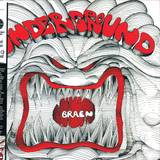
The Braen's Machine - Underground

During the '70s, work days at Umiliani's Sound Workshop Studios were hectic; thousands of sessions were held in order to keep up with a very busy Italian movie industry: Hundreds of soundtracks alongside with music library were recorded and released on vinyl in very limited quantities for TV and film production use only. Those LPs are now proper collectors' items, extremely hard to find.

Filled with hypnotic bass lines, heavy drums and screaming fuzz guitars "Underground", the first LP of the fictitious group known as Braen's Machine, is one of the rarest and the most expensive of them all, always "reaching" sky high prices throughout the second hand vinyl market. A fast-beat jam with hammond scales and a twin lead guitar theme ("Flying") opens the A Side soon followed by "Imphormal", a classicfunk-beat-meetsfender- rhodes-and-psychedelic-guitar number. The music then switch to "thriller territories" with "Murder" which is based on prepared piano swells and a deeply hypnotic walking bass, reminiscent of the best Morricone's soundtracks for Dario Argento's movies. Two highly percussive songs complete the A Side: "Gap" is an improvised song with guitar and keyboards dwelling over an infectious drum rhythm while a marching snare and a vibraslap effect are the special features on "Militar Police".

The mood relaxes slightly on the opening of the B Side with a lazy jazz groove on "New Experience" but the rock influences are soon brought back on the following track "Fall Out". "Obstinacy" is all about keyboards with syncopated rhodes themes and distorted hammond sustained notes whilst the fuzz guitar is back again screaming through the left channel on the last song of the album, "Description". We could happly say that that was the golden age of the Italian music library. But who's behind the name "Braen's Machine" On the original cover the songs are credited to the composers Braen and Gisteri. Braen was a pseudonym often used by Alessandro Alessandroni, an extremely skilled and versatile musician, and one of Umiliani's closestcollaborators. He could write, conduct and arrange, he could sing (ever heard "Mah Na Mah Na"), he could whistle (ever heard Morricone's "For a fistful of dollars") and he could play almost anything: guitar, bass tuba, accordion, sitar and the list grows..... His first album "Alessandro Alessandroni e il suo complesso" (Sermi, 1969), had transformed the Italian library music from orchestral sound beds into the psychedelia we all love; the extremely fuzzy guitars are very "present" on "Underground" too. For a long time Gisteri's real identity was rather mysterious; often wrongly attributed to Umiliani. Gisteri was the pseudonym of Oronzo De Filippi, art name of Rino De Filippi, music supervisor to the Italian public broadcast company (RAI) between the '60s and the '70s. De Filippi composed other notable pieces such as "Riflessi" (Edipan, 1975) and "Nel mondo del lavoro" (Sermi, 1972).

De Filippi passed away few years ago but we were able to contact Alessandroni to talk about this LP. Remembering "Underground" recording session as one of the thousands he took part of, Alessandroni told us that this record was produced very quickly, in two days maximum. This was made possible by a team of wonderfully capable session musicians and the creative genius behind the mixing desk; this incredible combination helped to focus on the mood of each track even more. Unfortunately there are no liner notes but Alessandroni's memories and speculations, based on other music tracked in the same period at Soundworkshop by resident engineer Claudio Batussi, led us to identify this as the most probable lineup: Munari on drums, Majorana on bass, Vannucchi on keyboards and Alessandroni himself on guitar. For this reissue the sound has been restored and the cover art reproduced exactly as it was.

No en stock

Haga su pedido ahora y le encargaremos el artículo en nuestro proveedor.


Ültimo hace: 10 Años
A Different Jimi - Hi5, Sweet Canfy

Hi5 is the latest prank from A Different Jimi, aka Jimi Siebels. It's is a bitchy chicago house smasher in a surprisingly refreshing kinship to New York's hard bop of the 1960s, without ever being in danger of becoming acid jazz. Because in order to create his own definition of jazz-infected-house, Jimi makes no use of already overstrained rare groove samples, but a classic range of instruments and musical friends who he invites to recording sessions in his studio. So we hear RVDS (It's / smallville) at the piano, Hayo Doin (Die Boys / Deichkind) on drums and last but not least DJ Björnski (dérive) on guitar. And yet everything comes together to be pushing electronic music. Hi5 is like the joy of a child over a bucket of water on a hot summer day. And after the refreshment the B side reveals a deep disco pearl in brilliance, plain beauty and a warm, vespertine elegance, that has been created due to the cooperation between a different Jimi and Björnski, the dérive label tycoon himself. 'Hi 5 & Sweet Fancy Moses' is a vinyl-become-south-sea-island in an ocean of tears of joy.

No en stock

Haga su pedido ahora y le encargaremos el artículo en nuestro proveedor.


Ültimo hace: 4 Años
Jack Dice - Sip Paint

Jack Dice

Sip Paint

12inchLOVE93
Modern Love
24.02.2014

The second EP from Jack Dice sees a huge leap in ambition for the project, a 5 track session that's more addictive, direct and heady than its predecessor.
'Sip Paint' centres around 'Stash's Theme' featuring rapper and producer Stash Marina, a track that deploys crisp triplets and saturated production straddling mainstream signatures on the one hand and a world of analogue/deviant recording techniques on the other. It's an odd, hyper-addictive track - available here in both vocal and instrumental versions.
'Low Glo', 'Kerosene' and 'Radium Dial' are more subdued and immersive; you could draw lines straight through the material here to a number of different projects Twells has been involved with through the last decade, though he seems to benefit immeasurably from Chambliss' presence. The pair find a perfect balance between their respective disciplines, resulting in an EP that at different points throws stylistic references to everything from Prince's Black Album to The Art of Noise, Drake, Philip Jeck and Evian Christ's DUGA 3 sessions - without ever sounding overworked or too knowing, a feat in itself.

No en stock

Haga su pedido ahora y le encargaremos el artículo en nuestro proveedor.


Ültimo hace: 11 Años
Springintgut - Where We Need No Map

Springintgut

Where We Need No Map

12inchPINGIPUNG37LP
Pingipung
12.04.2013

Six years have passed since the last album by Andi Otto alias Springintgut, ("Park and Ride", City Centre Offices, 2007). In this period, Otto has done nothing less than inventing a new instru- ment: His "Fello" is a cello with movement sensors attached to the bow and a corresponding software. The development has been kicked off at STEIM in Amsterdam already in 2007. Since then, Otto has achieved vital refinements of the system, cooperated with artists of various fields as diverse as choreographers in Macedonia, theatre in Nigeria and Techno DJs in the Berghain Kantine in Berlin or the Fusion Festival. He even played solo with his instrument on different continents. For this third album, "Where We Need No Map" Otto takes the "Fello" to his studio in Hamburg for the first time. He records his instrument which has until today only been presented live on stage. In these Fello Sessions, the bow gestures immediate- ly modulate and process the amplified cello sound. In the subsequent editings he selects and cuts these sessions and merges them with other styles, such as Skweee, House and Jazz. Springintgut's trademark sound, this unique playfulness, is pre- sent throughout, while the live-processed cello adds an unrivaled deepness. The artist's expeditions even add more colour. Two tracks have been recorded in India. The lead voi- ce in "Bangalore Kids" is a field recording of a schoolboy in Cubbon Park, Bangalore. Andi Otto spends three months in Japan as artist- in-residence in the Villa Kamogawa in Kyoto. Du- ring this concentrated period he produces the more contemplative tracks of the album, like "Ka- mogawa Cycling" and "Western Kyoto". In Sri Lan- ka, finally, he meets Sasha Perera, the voice of Berlin's Dub Techno band Jahcoozi. They record two songs together. Especially in "Bullet" one can sense the lazy, muggy, peaceful heat of the after- noons in which this beautiful track has been com- posed. These stories may help to locate the music's orig- ins but still the sound of "Where We Need No Map" points us to unknown territories. The journey itself is the reward, let's listen!

Sechs Jahre sind seit dem letzten Album "Park and Ride" (City Centre Offices, 2007) von Andi Otto alias Springintgut bereits vergangen. Diese Zeit hat der Pingipung-Mitinhaber genutzt, nicht weni- ger als ein eigenes Instrument zu erfinden: das "Fello", ein Cello mit Bewegungssensoren auf dem Bogen und einer dazu gehörigen Soft- ware. Die Grundlagen dafür entstehen bereits 2007 am STEIM in Amsterdam. In der Folgezeit gelingt es Otto, das Instrument immer weiter zu verfeinern, mit unterschiedlichen Künstlern zu kooperieren und international aufzutreten. Für "Where We Need No Map" trägt Otto das Fello erstmals ins Hamburger Studio und nimmt unzählige Sessions auf, in denen die Gesten des Bogens direkt den verstärkten Sound des Cellos verändern und neu formen. Diese Fello-Sitzungen werden anschließend editiert und mit anderen Ein- flüssen vermengt, die von Skweee über House bis hin zum Jazz reichen. Der Markenzeichen-Sound von Springintgut, diese ureigene Verspieltheit, ist weiterhin vorhanden, gewinnt durch das live-pro- zessierte Cello aber eine bisher unerreichte Tiefe. Weitere Farbe erhält das Album durch Ottos zahl- reiche Tourneen in ferne Länder. Zwei Stücke ent- stehen in Indien. Die Stimme von "Bangalore Kids" ist eine Feldaufnahme eines Schuljungen im Cubbon Park in Bangalore. In Japan verbringt Andi Otto drei Monate als "Artist in Residence" in der Villa Kamogawa in Kyoto. Während dieser kon- zentrierten Zeit entstehen die ruhigeren Tracks des Albums wie "Kamogawa Cycling" und "Western Kyoto". In Sri Lanka lernt er dann Sasha Perera kennen, die Stimme von Jahcoozi. Sie nehmen zwei Songs zusammen auf. Vor allem in "Bullet" kann man der faulen Nachmittagshitze nachspü- ren, in der die Stücke entstanden sind. So lassen sich die vielfältigen Entstehungspunk- te von "Where We Need No Map" zwar karto- graphieren, aber der Sound des Albums schickt einen trotzdem in unbekanntes Terrain. "Der Weg ist das Ziel, frag nicht viel, hör mal..."

No en stock

Haga su pedido ahora y le encargaremos el artículo en nuestro proveedor.


Ültimo hace: 9 Años
Winston Wright - The Liquidator Strikes Back

*Winston Wright is another unsung hero from the Jamaican musical
cannon. Although many might not know his name, you will have
heard him on many records in your collections. When we say that
it was he who played that classic Hammond organ riff on the
1969 'Liquidator' classic, as part of the Harry J Allstars, we might
begin to appreciate his talents that bit more. But not only this, many
1970's classics carry his organ, piano and arranging skills and
even before that time, many tunes cut in the 1960's,as part of Duke
Reid's house band Tommy McCook's Supersonics, carried the

Winston Wright signature sound.

Winston Wright (b 1944 , Jamaica) began his musical career in
the 1960's as a session player and soon became an integral part
of the Treasure Isle Studio house band, that became known as
Tommy McCook's Supersonics . He played on many of the
Rocksteady era hits that Duke Reid ruled the island with between
1966-1968.His mastery of the Hammond organ made him an in
demand session player. One such was Harry J studio's that had a
massive hit in the UK in 1969 with 'Liquidator' as the Harry J
Allstars of which Winston was a member. The same year saw him
cut some great tunes as part of Clancy Eccles' Dynamites.
The 1970's saw Winston Wright working closely with Dynamic
Sounds Studios' nucleus of musicians Cutting material for all the top
producers of the time including numerous sides for Bunny 'Striker'
Lee, which we have focused on for this set of tunes. From 1975
onwards Winston Wright was a member of Toots and the Maytals'
touring band, but we celebrate here his mighty fine studio work.
Adding his touches to many a fine rhythm as only Winston could
we hope you enjoy the set.

No en stock

Haga su pedido ahora y le encargaremos el artículo en nuestro proveedor.


Ültimo hace: 13 Años
Rocket Juice & The Moon - Lp

Up and away / To your journey to the sun / Drink your rocket juice / Fly away (Hey, Shooter).
High up in the skies, amongst the clouds, Rocket Juice & The Moon was born. Literally. It happened back in 2008, when Damon Albarn, Flea and Tony Allen convened on the same Lagos flight, to play and exchange musical ideas in that city as part of the Africa Express collective. Relishing a shared enthusiasm for one another's work, and bonding immediately, there and then the triumvirate laid down the blueprint for Rocket Juice.
Still, more than a year passed before conditions were set for three weeks together at Albarn's West London studio, recording and refining two-dozen startlingly out and deeply funky instrumental grooves. The next stage was to invite onboard some extremely talented friends, with further sessions in Dallas, New York, Chicago and Paris... Erykah Badu, no less, queen of contemporary soul. Three companions from Africa Express: Malian singer Fatoumata Diawara, whose debut album has topped World Music charts since its release last Autumn; her multi-talented compatriot Cheick Tidiane Seck, whose prodigious keyboardism has lit up releases by artists ranging from Youssou N'Dour to Hank Jones; the young, Ghanaian rapper M.anifest, quizzically existential, switching seamlessly between Twi and English. And the Hypnotic Brass Ensemble, long-time stalwarts in the Honest Jon's set-up — since one of the team discovered them busking near the shop in Portobello Road, on his lunchbreak — with a second album for the label due in May... Finally, the tracks were dispatched for mixing to Berlin, to be meticulously honed, polished and envenomed by Mark Ernestus, one half of the legendary Basic Channel and Rhythm & Sound partnerships.
The result is Rocket Juice & The Moon — out March 26, 2012, on Honest Jon's Records — a triumphant exploration and proliferation of kinetic Afro-funk rhythms: organic, exuberant, communal music-making, evidenced by the project's live debut on stage as part of the Honest Jon's Chop Up in late 2011, which hit London, Marseille, Dublin, and Cork to such great acclaim (witness the flurry of smart-phone film-clips uploaded in the days thereafter).
From the inaugural bars — that absurdly funky slice of instructional timekeeping, 1-2-3-4-5-6 — the liquid pulse of Fela Kuti's classic recordings drives the action through a suite of 18 shape-shifting compositions. The greatest drummer in the world has never sounded so good as he does here. His intricate cross-patterns jostle and lock with Flea's nimble, rumbling bass riffs. Joined by Seck on There and Extinguished — 'when you dispose of something burning, be sure it's out' — Albarn's keyboards spray synth fusillades up top, over, and under... splicing into the mess of wires running between the freaked Afro-disco of William Onyeabor and the space-jazz-moog of Sun Ra. The HBE brings extra intensity and drama to Leave-Taking — likewise Flea's trumpet to Rotary Connection — teasing out the haunting melody coiled in the mix.
Where the best of vintage Afrobeat sides sustained their concentrated energies over the course of sprawling, marathon jams, RJ & TM manages something altogether different: the group bottles the idiom into capsules of funk... and real songs. Beautifully buoyed by Erykah Badu's unmistakable vocals, Hey, Shooter brilliantly traverses metaphysical spaceways sans any semblance of noodling. Lolo and Follow-Fashion — featuring the open-hearted sensuality of Diawara's singing, M.anifest's quick, brawny science, and more brass blasts — play like its musical cousins or codas. Indeed, the album's shrewd sequencing creates the composite effect of tracks working both individually or within the context of an extended song-cycle.
The lovely ballad, Poison, is bittersweet and ruminative: 'If you're looking for love, beware the signs / They will paralyze you one by one / Poison, it will only break your heart.' Down-tempo and dubby, Check Out and Worries amplify the range of styles and moods. And by the time of Fatherless — a chugging Afro blues that evokes John Lee Hooker lost in Lagos, one gets the sneaking suspicion there's very little outside the reach of this collective's inventive musical grasp.
There is, in fact, a palpable openness pervading Rocket Juice & The Moon — the sense of a limber willingness to follow creative impulse — right down to how the group acquired its name. When Ogunajo Ademola — the Lagotian commissioned to do the album's cover artwork — dubbed his submission 'Rocket Juice & The Moon', it quickly morphed into the formal name of the project, like trying to hold onto mercury.
Surely, the stars above also approved.

No en stock

Haga su pedido ahora y le encargaremos el artículo en nuestro proveedor.


Ültimo hace: 5 Años
A Guy Called Gerald - Tronic Jazz The Berlin Sessions 12" Vol 2
 
3
También disponible

Part 4


The new album will be released across a series of 4 limited edition 12" vinyls. This is the 2nd 12 inch From Tronic Jazz The Berlin Sessions. A Guy Called Gerald has spent the last couple of years flitting through shadows, turning up on labels like Perlon, Beatstreet and Sender like a peripatetic prophet of the Berlin underground, seeding the scene with cryptic singles that return to the past to suggest alternate futures. Now he returns to Berlin's Laboratory Instinct label with the follow-up to 2006's Proto Acid: The Berlin Sessions, the album that re-established Gerald as an acid hero and techno auteur. Tronic Jazz: The Berlin Sessions builds upon the foundation established by its predecessor to create an even more powerful statement of intent, one that communicates more persuasively than ever Gerald's vision for techno in its third decade of existence. One immediate difference stands out, this time around. Where Proto Acid offered a seamless mix of 24 cuts, recorded in one epic session, Tronic Jazz collects 13 standalone tracks. That's welcome news to DJs. After so many years of digital anything-goes, you might have forgotten the kind of sounds that are possible with "old" machines: the way a lead stacked against tuned percussion and shrouded in pads can evoke still other sounds, hidden in the mix, or maybe not really there at all. It's a ghostly, suggestive presence, a kind of evocation of infinite possibility within the context of a limited set of inputs. In that sense, Tronic Jazz follows a certain minimalist impulse, but it's far too lush ever to be mistaken for the dread "mnml" of recent years. This stuff is wide-eyed and full of life. When it funks, it funks hard, and when it smoothes out, it can be as intimate as a hand-written note left on a lover's pillow. As "class ic" as Tronic Jazz may be, the album refutes any notion that "class ic" equals "retro," that the ideas have all been expressed before. Tronic Jazz takes the foundations of house and techno as though they were a kind of language, and speaks volumes with them.

No en stock

Haga su pedido ahora y le encargaremos el artículo en nuestro proveedor.


Ültimo hace: 3 Años
Broshuda - Contemplative Figuration

With Contemplative Figuration we see Broshuda pushing his amorphous, impossible-to-pin-down music in exciting new directions. Stitched together in various European cities over the last few years, it is the artist’s most dynamic and ambitious release thus far, drawing equally from musique concrete, beat research, ambient, tape collage, and spoken word. Episodic in nature, the collection functions well as a sort of impressionistic travelogue, with romantic, hazy atmospheres coaxed from borrowed equipment, serendipitous recording sessions with old friends, and even a drum sequence programmed with Mario Paint, among other curios and sleights of hand. Broshuda deftly wrings bonafide cohesion and balance from these disparate source materials, tools, and locations, as on opener “Kakigori,” which allows a snaking harmonic drone the space to evolve before exploding it into a sort of seething, dubbed out pointillism. Later, “Lied Für Hase” concocts a potent, humid atmosphere of beautifully evolving acoustic piano loops and elegant narration. Taken as a whole, Contemplative Figuration is a weightless, transportive record, one that is bursting at the seams with ideas, mischief, and a restless spirit.

Mastered by Helmut Erler at D&M, Artwork by Alex McCullough and Niall Wynne Lewis.

No en stock

Haga su pedido ahora y le encargaremos el artículo en nuestro proveedor.


Ültimo hace: 5 Años
Artículos por página
N/ABPM
Vinyl