pré-commande30.09.2026
il devrait être publié sur 30.09.2026
il devrait être publié sur 30.09.2026

il devrait être publié sur 18.09.2026

Classic Johnny Clarke album from 1980 restored and re-mastered for best ever sound. Features the hit singles "Every Knee Shall Bow" , "Can't Keep A Good Man Down" along with the Jah Shaka sound system anthem "Bad Days Are Going".
Produced by mixed at Channel One, King Tubby's and NYC by Bunny Lee, Brad Osbourne & Johnny Clarke
'Originally Mr Clarke' delivers in full on every track making it one of THE essential reggae album releases.
Jamaican artist of the year in both '75 & '76 Johnny signed to Virgin Records and released two highly acclaimed albums for Virgin's Front Line label. Still performing and recording today, Johnny also tasted crossover success when his 'Everyday Wondering' hit made number 2 in the UK charts with it's Rupie Edwards 'Irie Feelings' dub deconstruction while Johnathan Richman turned Johnny's Earl Zero penned 'None Shall Escape The Judgement' hit into the international chart topper 'Egyptian Reggae' in 1977.
il devrait être publié sur 04.09.2026
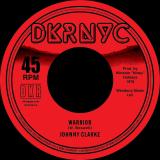
Back to back deep roots here. Both sides produced by Niney the Observer on one of Augustus Pablo's all time masterpieces, the 555 Crown Street rhythm. The A-side is Johnny Clarke chanting out "Warrior", then flip it over for Ranking Trevor, one of the most underrated deejays ever, breezing out over a dubbed cut with plenty of our beloved bleeps. These were undoubtedly dubplates at the time they were made in the '70s, but both first released later, the Johnny Clarke on CD in the 1990's, and the Ranking Trevor actually much earlier in 1979, when the late great Dave Hendley released it on his Sufferers Heights label. Both tunes have been issued in a couple forms since, but not in quite a while, and we just love them and felt they were too good to remain unavailable; top shelf essential material.
il devrait être publié sur 15.05.2026

il devrait être publié sur 31.10.2025

il devrait être publié sur 30.05.2025

2024 Repress
Johnny Clarke stands tall as one of the great vocalists that ruled the Jamaican reggae scene from the mid 1970's to the early 1980's Dancehall period. This re-issue of his 'Don't Stay Out Late' set shows his versatility to sing any song that was put in front of him and make it his own. Under producer Bunny 'Striker' Lee's guidance, Mr Clarke produced a run of singles and albums few could match.
Johnny Clarke (b 1955, Jamaica, West Indies) cut his first record 'God Made the See and Sun', after winning a local singing contest in the Bull Bay area of Jamaica. Although the single was not a hit, it led to two follow up tracks for producer Rupie Edwards, '
Everyday Wandering' and 'Julie' that fared much better, both on the island and overseas in England and Canada. These tracks also brought the singer to the attention of producer Bunny Lee and a working relationship that would go on to produce a prolific catalogue of music.
Johnny Clarke's Dread Conscious/ Love Song style were to grace many hits around this time in 1974. Such tunes as 'None Shall Escape The Judgement' , 'Move Out Of Babylon' , 'Rock With Me Baby' , 'Enter The Gates With Praise' to name but a few. All new songs added to a host of cover tunes, recommended by Bunny Lee, many taken from singer John Holt's catalogue, that suited Clarke's vocal style.
The rhythms were cut at various studios around the Island. Randy's Studio 17, Channel I, Treasure Isle, Dynamic Sounds and Harry J's by a group of musicians loosely called The Aggravators and voiced King Tubby's studio.
All great tracks backed by great rhythms, cut by Mr Johnny Clarke with a voice that few could equal.
Commandez maintenant et nous commanderons l'article pour vous chez notre fournisseur.

Commandez maintenant et nous commanderons l'article pour vous chez notre fournisseur.

Commandez maintenant et nous commanderons l'article pour vous chez notre fournisseur.

il devrait être publié sur 20.12.2023

il devrait être publié sur 20.12.2023

il devrait être publié sur 20.12.2023

il devrait être publié sur 20.12.2023

il devrait être publié sur 20.12.2023

Commandez maintenant et nous commanderons l'article pour vous chez notre fournisseur.

Commandez maintenant et nous commanderons l'article pour vous chez notre fournisseur.

Commandez maintenant et nous commanderons l'article pour vous chez notre fournisseur.

Reissued on vinyl for the first time here, this legendary Johnny Clarke recordings - originally released in 1982 on UK label Arts & Crafts - is something you wouldn't miss. Completely written by the Jamaican singer himself - backed here by Roots Radics (the Channel One studio session group) - and arranged by Clarke and Stafford Douglas (alias Mafia Tone). »Can't Get Enough« witnesses the peak of his career with his first British production. The beginning of a period that would bring Clarke to London and see him churn out a string of hits with Douglas's production, before returning to work with Bunny Lee and Mad Professor, King Tubby, Errol Thompson, Prince Jammy. Roots reggae at its best here.
il devrait être publié sur 21.10.2022

Johnny Clarke ruled the Dancehall in the mid 1970’s, using the cleaver 'Flyers Rhythms' that gave some of his tunes an edge with the Sound Systems. But his voice was always.
bigger than this and his versatility to sing a wide range of vocal styles, has seen him cut through the decades as one of Reggae’s best voices.
Johnny Clarke (b.1955.Jamaica) cut his musical teeth at the age of seventeen, recording his first song ‘God made the sea and sun’ for Producer Clancy Eccles. A low-key release but one that led to Johnny catching Producer Rupie Edwards eye, when he appeared at a talent contest at Bull Bay. Impressed by his voice both live and on disc, Rupie cut a few tunes with Johnny, ’Don’t Go Julie’ and ‘Everyday Wondering’ the latter of which had success not only in Jamaica, but also in the UK reggae market. The back bones of ‘Everyday Wandering’ now voiced by Rupie himself would lead onto an even bigger hit in the 70’s with the classic ‘Irie Feelings’.
Johnny Clarke’s decision to move on around this time coincided with producer Bunny ‘Striker’ Lee looking for a new singer to compete in the ever-moving Dancehall arena. Johnnie’s break came in a strange way, having provided backing vocals initially to a Bunny Lee produced cut, Earl Zero’s ‘None Shall Escape the Judgment’. The very same session the drummer on the track, Carlton ‘Santa’ Davis, when asked by Bunny to come up with some new sound and while working the High - Hat cymbals, hitting it when open, then when shut (based on the Philadelphia Disco Sound known as the Phili - Sound) gave what the reggae world would call a ‘Flyers Sound’. On transferring the tune to four tracks to mix down at King Tubby’s studio, Earl Zero’s vocal was mistakenly left off. Johnny Clarke being present at King Tubby’s and knowing the track already inside out, then sang the lead vocal. The track became a smash Sound System favourite and the rest as they say is history.
Johnny Clarke became one of Bunny’s main vocalists during the heyday that was the 1970’s. It’s from this vast cannon that we have selected some of the singer’s finest cuts. His soulful voice worked the musical field from Dread to Rockers to Lovers Rock.A great gift that on playing this album we hope you’ll agree carries through with the tests of time.
Commandez maintenant et nous commanderons l'article pour vous chez notre fournisseur.
il devrait être publié sur 01.08.2022

Johnny Clarke ruled the dancehall in the mid '70s, using the clever "Flyers Rhythms" that gave some of his tunes an edge with the sound systems. But his voice was always bigger than this and his versatility to sing a wide range of vocal styles has seen him cut through the decades as one of reggae's best voices. Produced by Bunny Lee, mixed at King Tubby's studio, an absolute reggae/roots classic.
il devrait être publié sur 30.05.2022

Rough Signal Records featured Johnny Clarke who is living legendary artist from Jamaica. This is the keyword in this release that is “UNITY”. We are describing reality some people disconnect from community and now we need it more “UNITY” in this world what we made it for. The riddim feels like 80s one drop roots and with sorrow mood of Johnny Clarke lyrics . And also we featured Colourman of youth promotion as the deejay cut. On the B side has wickedest dub mix and riddim by Dub Kazman.
Commandez maintenant et nous commanderons l'article pour vous chez notre fournisseur.

Commandez maintenant et nous commanderons l'article pour vous chez notre fournisseur.

Commandez maintenant et nous commanderons l'article pour vous chez notre fournisseur.

Johnny Clarke is one of the great vocalists that ruled the Jamaican Dancehall scene from the mid – 1970’s to the early 1980’s. While Bob Marley was out conquering the world, Dennis Brown, Gregory Issacs and Johnny Clarke were winning the hearts of the Jamaican people .Johnny Clarke’s use of the ‘Flying Cymbal‘ sound took the Island by storm and produced a run of hit singles few could match.
Johnny Clarke (b.1955, Jamaica, West Indies) cut his first record ‘God Made The Sea and Sun’, after winning a local singing contest in the Bull Bay area of Jamaica. Although the single was not a hit, it led to two follow up tracks for producer Rupie Edwards, ’Everyday Wandering’ and ‘Julie’ that fared much better, both on the island and oversees in England and Canada. These tracks also brought the singer to the attention of producer Bunny Lee and a working relationship that would go on to produce a prolific catalogue of music. Johnny Clarke’s Dread Conscious / Love Song style were to grace many hits around this time in 1974. Such tunes as ‘None Shall Escape The Judgement’, ‘Move Out of Babylon’, ‘Rock With Me Baby’, ‘Enter The Gates With Praise’ to name but a few. All new songs added to a host of cover tunes, recommended by Bunny Lee, many taken from the singer John Holt’s catalogue, that suited Clarke’s vocal style. The rhythms were cut at various studios around the Island. Randy’s Studio 17, Channel 1, Treasure Isle, Dynamic Sounds and Harry J’s, by a group of musicians loosely called the Aggrovators and some tunes incorporating the ‘Flying Cymbal’ sound again introduced by Bunny Lee, working the Hi-Hat in fine style. The tracks were then taken to King Tubby’s studio where Johnny Clarke’s vocals would be voiced.
Another phenomenon that was happening in the early 1970’s, was the version cuts to vocal tracks. This is when the tunes were cut back to the bass and drums and the vocals were dropped in and out in a dubbed style, and reverb and echo and various effects were added to these tracks. The main exponent to this style was King Tubby himself, and as was the fashion at the time, each vocal track would carry a version as its B-Side. Producer Bunny Lee lead this style working closely with King Tubby and all of his singles from then on would carry a Dub cut on its flipside. As Johnny Clarke was one of Bunny’s main singers at the time, we would hear a great selection of popular songs getting the dub treatment and in many cases the single was purchased for its more exciting dub cut, again made popular at the various dances where the dubplates were played out. We have compiled some of the best of these dubs from the time and put them together for this release, hope you enjoy the great voice of Johnny Clarke alongside the productions of Bunny Lee and the creative genius of King Tubby, a great combination we hope you will agree….
Commandez maintenant et nous commanderons l'article pour vous chez notre fournisseur.

Commandez maintenant et nous commanderons l'article pour vous chez notre fournisseur.

Original in-demand back to back roots anthems at last receive official Greensleeves 12' single repress. Classic golden age coupling showcasing two of Johnny Clarke's finest performances both delivered with rock-stone back up from The Revolutionaries. Two heavyweight sound-system favorites cut loud and proud and housed in the classic Greensleeves 12' bag.
Commandez maintenant et nous commanderons l'article pour vous chez notre fournisseur.

Commandez maintenant et nous commanderons l'article pour vous chez notre fournisseur.

il devrait être publié sur 25.07.2016

The Rockers Sound (aka Steppas) came from the mid 70's and was created during sessions with The Revolutionaires band at Channel 1.
Drummer Sly Dunbar came up with a new 'Militant' style double drumming on the snare drum that seemed to add some credence to the political /Rasta based lyrics that were so prominent around this time.
So for this compilation we have pulled together some of the best cuts from this period when producer Bunny Lee was on the top of his game and the sound in town to get on board with was 'Rockers'...
So sit back and enjoy another period in Reggae's history that still sounds as good as when it was created way back when...
EVERYTHING ROCKERS....
D a4 | DEVIL'S THRONE - Junior Delgado
Disponible en stock et prêt pour l'expédition

2024 Reissue
“Tubby did three original dub albums, ‘Dub From The Roots’. ‘The Roots of Dub’ and the third is ‘Brass Rockers’ with Tommy McCook ‘pon the flying cymbals. Where he mixed it with the horn going in and out in a dub way and one named ‘Shalom Dub’ you can call Tubby’s too because he mixed the versions as they were off forty fives’’
Bunny ‘Striker‘ Lee
King Tubby and Producer Bunny ‘Striker’ Lee are intertwined in the birth of Dub Music. After discovering a mistake that made a ‘serious joke’ ( more of which later...) they went on to release the first pressings of this new musical genre namely ‘Dub Music’. Tubby’s vast knowledge of electronics and Bunny’s vast catalogue of rhythms would lay the foundations of what today is taken as a standard... the Remix / Version cuts to an existing vocal tune.
Osbourne ‘King Tubby’ Ruddock was born in Kingston, Jamaica on 28th January 1941 and grew up in the High Holborn Street area of downtown Kingston. He studied electronics at Kingston’s National Technical College and also on two correspondence courses from the U.S.A... When he had qualified Tubby began repairing radios and other electrical appliances in a shack in the back yard of his mother’s home. His work in the early days included winding transformers and building amplifiers for Kingston’s Sound Systems. Tubby built his first Sound System in 1957 playing jazz and Rhythm & Blues at local weddings and birthday parties. His reputation as a man who knew and understood both electronics and music grew steadily and as the sixties drew to a close. Tubby purchased his own basic two track equipment. He installed this alongside his dub cutting machine, a home made mixing console and his impressive collection of Jazz albums in the back bedroom of his home at 18 Dromilly Avenue which he christened his music room.
Tubby and Striker were at Treasure Isle Studio’s one day while Ruddy from Spanish Town was working with the engineer Byron Smith....
“Tubby and myself was talking when Ruddy was cutting some dub but Smithy (engineer) made a mistake through we were talking and forgot to put in the voice. It was two track recording in those days. Ruddy said ‘No Man! Make it stay! and so they cut the rhythm. When I went over to Ruddy’s that Saturday night a dance was in progress and when they played the vocal to the tune... then he said we’re going to play ‘Part Two’. They never called it ‘Version’..and then he played the rhythm track. The song was a catchy song and everybody started to sing along and the deejay started to toast so everything went down well. On Monday morning I went up and I said ‘Tubbs the mistake we made was a serious joke.It mash up Spanish Town! The people went wild. So you have to start to do that now ‘cause when the man put on the ‘Part Two’ everyone start singing this song. It played about twenty times. I said you try Tubbs!’...Well the next Saturday night now when Tubby strung up down the farm U Roy said he’s going to play ‘Part Two’ but Tubby did it different now. He started with the voice then dropped it out and let the rhythm run and then he brought in the voice in the middle and from there Tubby started to get really popular.’’
Bunny ‘Striker’ Lee
Dynamic Sounds upgraded to sixteen track recording in 1972 and Tubby purchased, again with the help of a deal brokered by Bunny Lee. The old four track equipment and the MCI console from their Studio B. The four tracks now gave him far wider scope to work with and he began to create a new musical form where the bass and drum parts were brought up while the faders allowed Tubby to ease the vocal and rhythm in and out of the mix. It was only a matter of time before Tubby’s dub plate experiments began to make it on to vinyl and the first ever long playing King Tubby releases would feature a collection of his mixes to a selection of Strikers rhythms. So please sit back and enjoy this historic set of sounds. Lovingly restored and with a few extra gems added to the CD Editions. These releases were the first to carry the name of King Tubby and the first to credit the great musicians that contributed so much to the rhythms that made these albums possible.
Commandez maintenant et nous commanderons l'article pour vous chez notre fournisseur.

Rastafarianism came to prominence in the late 1960's/ 1970's and had a huge influence on the musical culture in Jamaica. The sentiments of the songs reflected the struggles of life, as reggae music always did but now with an added spiritual/conscious element to the lyrics. By the mid 1970's most, if not all the top flight singers were following the doctrine and growing their har to dreadlocks.
Everything was truly 'Dread'.
At the heart of this musical explosion was again Bunny 'Striker' Lee a man who was always at the heart of the action and many times in his career ahead of the musical game. As Bunny Lee's stable of singers were at this time nearly all Rasta's and with the worldwide acceptance of Bob Marley, in especially the foreign territories, this musical style was the way forward for reggae music in the mid 1970's. The visual focal point of this new turn in reggae music would be a call to all things 'Dread'. Add to the mix Bunny Lee's close working relationship with studio wizard King Tubby, again not a Rasta himself, but someone who could sonically bring what was needed to the table and enable the whole musical chemistry to fall into place.
Heavy rhythms were created to match the heavy and serious lyrics and 'Versions Galore' as they say were coming out fast and furious.
We have compiled a set of conscious tunes that not only match the 'Dread' criteria, but also are just great tunes. The great Jacob Miller's 'Zion Gates', Cornell Campbells 'Two Faced Rasta', Horace Andy's 'It's Gonna Be Dread' alongside Linval Thompson's 'Never Conquer Jah'. Two timeless cuts from the 'The Abyssinians' get a fresh outing by two great singers, firstly Don Carlos' cut to 'Satta Massaganna' and the prince of reggae himself, Dennis Brown works 'Declaration of Rights' in fine style. Johnny Clarke's 'Man like Me' and 'Dem Say Rasta' still sound as fresh today as when they were first laid down and Wayne Jarrett's 'Live On Jah' and Frankie Jones 'Satta and Praise Jah' add to this great selection. All great 'Dread' tunes that were cut or voiced at King Tubby's giving them that extra shine.
So if you are Rasta or not this is a great set of tunes to make you move and also like all of the best things in life, make you think.........
Track 14 WICKED BABYLON - LINVAL THOMPSON
Commandez maintenant et nous commanderons l'article pour vous chez notre fournisseur.

2022 Repress
The Sound of Studio One can be identified by the great singers that it cultivated along the many great songs that these singers released. But as studio 1's dominance was slowly pulled away by the up and coming new breed of producers many of the artists would inevitably end up working for these new camps and so the songs and singers found a new audience. The reggae sound of the Studio 1 would make a great combination and the man to pull this was together Bunny Lee.
The 1960's in Jamaica was run by two main factions, Coxsonne's Studio 1 and Duke Reid's Treasure Isle. These two leading protagonists saw what some of the other great Sound System men like ' Tom The Great Sebastian' had not taken onboard, that when the tunes they imported began to dry up from the USA, their future lied in producing music. Tunes that suited the musical styles that the people of Jamaica still enjoyed. By the late 1960's thse supremacy was being challenged by the up and coming new producers on the scene, Lee Perry being one, and the other being 'Ghost of the Studios' himself, Bunny Lee. Bunny 'Striker' Lee may have inherited the moniker 'Striker' from his liking of a particular TV show called 'The Hitch-Hiker', but it would soon stand also for the considerable hits he would obtain as he was declared producer of the year in Jamaica in 1969, 1970,1971 and 1972.
For this release, we have compiled many of the great Studio hits that Bunny Lee recorded with the singers that had originally cut at the famed Studio 1. Bunny Lee's sprinkling of magic over some classic tunes....the sound of Studio 1 backed up this time Bunny 'Striker' Lee's set of star musicians The Aggravators. Proving you can't keep a good tune down, or a great producer pushing forward.....Bunny Lee strikes back....
Hope you enjoy the set.....
Commandez maintenant et nous commanderons l'article pour vous chez notre fournisseur.

King Tubby's Hometown Hi-Fi was one the great Sound Systems in Jamaica. It also proved a fantastic outlet for the Dub Plate Specials cut at Tubby's studio, providing exclusive cuts to be played out and to intice the dance's audience. The tracks at the time were mainly cut over producer Bunny 'Striker' Lee rhythms, that Bunny stored at Tubby's studio which was in fact his home, 18 Drumilly Avenue,Kingston, Jamaica.The versions were given exclusive plays at Tubby's sound
before some finding their way on to vinyl, as the b-side version cut to it's a-side vocal, proving so popular that the records were often brought for its version side over its vocal counterpart. King Tubby and Producer Bunny 'Striker' Lee are intertwined in the birth of Dub Music, after discovering a mistake that made a 'serious joke' (more of which later...) they went on to release the first pressings of this new musical genre namely 'Dub Music'. Tubby's vast knowledge of electronics and Bunny's vast catalogue of rhythms would lay the foundations of what today is taken as a standard... the Remix / Version cuts to an existing vocal tune. Osbourne 'King Tubby' Ruddock was born in Kingston, Jamaica on 28th January 1941 and grew up n the High Holborn Street area of downtown Kingston. He studied electronics at Kingston's
Source: Declaration of Rights / Johnny Clarke
Source: Top Ranking / Johnny Clarke
Source: The Stal-O-Watt / Cornell Campbell
Source: Power Of Love / Ronnie Davis
Source: African People / Johnny Clarke
Source: Pumps And Pride / Leroy Smart
Source: Girl I Love You / Johnny Clarke
Source: King Of The Arena / Johnny Clarke
Source: Stealing Stealing / Johnny Clarke
Source: Satta Dread Wayne Jarrett
Source: Crazy Baldhead / Johnny Clarke
Source: Dread A Dread / Johnny Clarke
Source: No Love / Leroy Smart
Commandez maintenant et nous commanderons l'article pour vous chez notre fournisseur.
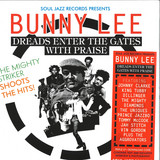
Johnny Clarke & King Tubby & Dillinger & Prince Jazzbo feat. Tommy McCook & The legendary Aggrovators & The Mighty Diamonds - Soul Jazz Records presents Bunny Lee: Dreads Enter the Gates with Praise - The Mighty Striker Shoots the Hits!
Soul Jazz Records presents this new collection featuring the heavy 70s roots reggae of Bunny
Lee - a living legend, one of the last of the great Jamaican record producers who helped shape
and define reggae music in the 1970s from a small island sound into an internationally
successful musical genre.
From teenage fan to young record plugger for Duke Reid, Sir Coxsone and other early
pioneering Jamaican musical entrepreneurs, Lee has spent his whole professional life inside the
Kingston music industry. In the 1970s he rose up to become one of the major record producers
in Jamaica alongside Lee 'Scratch' Perry and the other 'small axe' producers who broke the
dominance of the 'big tree' producers that had ruled Jamaican music in the 1960s.
Featuring some of the heaviest Jamaican artists, including Johnny Clarke, King Tubby, Dillinger,
Prince Jazzbo, Tommy McCook, The legendary Aggrovators (featuring Sly and Robbie), The
Mighty Diamonds and more, the album is a rollercoaster ride of rare, deep and classic 1970s
roots, dub and DJ sounds.
During this era, 'flying cymbals', crashing reverbs, dark echoing thunderclap gunshots and
other 'implements of sound' filled his record productions as Bunny Lee explored the outer limits
of dub with his friend King Tubby in the mix on wild versions that accompanied any 45. A
Bunny Lee record provides a creative and mysterious hidden guide to reggae music itself, a
double-sided three-minute intangible history lesson etched in wax.
Bunny Lee was one of the first Jamaican producers to travel to England in the late 1960s, at
the beginning of the nascent British reggae music industry as record companies such as
Trojan, Pama and others began licensing Jamaican music in the UK to supply the expanding
West Indian communities living up and down England. Lee encouraged other Jamaican
producers to do the same, including Lee Perry, Harry J and Niney The Observer and also
became a conduit between the British music industry and numerous younger Island-based
producers - a frequent flyer reggae ambassador, a musical courier exchanging tapes for
royalties.
Bunny Lee's first recordings in the late 1960s were mainly rock steady but as the 70s
approached the music soon began to mutate and slow down into 'reggae' as the sound became
heavier, more rootsy and the sound itself began to change with the explosion of dub.
Lee was at the forefront to this dramatic musical shift into roots reggae and by this time had
become a major producer, capable of working with whoever he chose as world-famous singers,
DJs and musicians lined up to work with the charismatic man. Lee also employed a fluid but
stable set of crack session musicians who he named The Aggrovators.
Most of the recordings featured here come from the mid 70s, a time when Bunny Lee was
definitely in the zone, releasing heavyweight singles at an almost unstoppable rate. Bunny
Lee's career stretches over five decades and he has upwards of 2,000 production credits on
vinyl.
This album comes with extensive sleevenotes, an interview with Bunny Lee and exclusive
photography. The album is available as a CD pack with 24-page booklet, massive triple LP vinyl
with digital download code, house inner and full notes, as well as digital album.
Commandez maintenant et nous commanderons l'article pour vous chez notre fournisseur.

King Tubby's Hometown Hi-Fi was one of the great Sound System in Jamaica.
It also proved a fantastic outlet for the Dub Plate Specials cut at Tubby's studio, providing exclusive cuts to be played out and to entice the dance's audience.
The tracks at the time were mainly cut over producer Bunny'Striker'Lee rhythms, that Bunny stored at Tubby's studio, 18 Drumilly Avenue, Kingston, Jamaica.
The versions were given eclusive plays at Tubby's sound before some finding their way on to vinyl, ass the b-side version cut to it's a-side vocal.
It proved so popular that the records were often brought fir its version side over its vocal counterpart.
We have compiled a selection of cuts that were all tried and tested on Tubby's Home Town Hi-Fi Sounf System and that worked a great set of Bunny Lee's rhythms in fine style.
Some of these cuts found a release as version b-sides but many on this set were exclusive Dub Plates unreleased until now.
As Cornell Campbell says on track one of the set 'King Tubby and Bunny Lee will never go away'
Hope you enjoy the set......
Commandez maintenant et nous commanderons l'article pour vous chez notre fournisseur.

Commandez maintenant et nous commanderons l'article pour vous chez notre fournisseur.

1973-1976 was a period in Reggae's history when the music coming from Kingston,Jamaica was at its peak.
So many talented singers,who sang soulful/righteous songs found their way onto tape.
Maybe it was the competition between the studios like Randys,Channel 1 and Harry J's and the quality of the singers available to sing these tunes.But whatever caused the explosion the mighty voices of Horace Andy,Cornell Campbell,Johnny Clarke and Ronnie Davis never sounded better....
The tracks as you can see here were culled together from sessions recorded at the fore mentioned legendary studios.Then taken to King Tubby's home style studio at 18 Drummlie Ave in the Waterhouse district of Kingston.This is where the great Dubmaster himself would record the vocal tracks.
A method in which he preferred to work and then mix the tracks Tubby style...We have travelled to Jamaica and listened to hours of master tapes to bring this set to you.
So please sit back and enjoy what we believe to be a wicked set by Kingston's finest..
ALLSTARS one and all........
One more tiem Mr.Tubby if you please ..roll that tape....
Commandez maintenant et nous commanderons l'article pour vous chez notre fournisseur.

Bunny 'Striker' Lee's standing in the Jamaican recording business has remained unassailable for over four decades.Known by many aliases including 'Gorgon'.
The legend of the Gorgon originated in Greek mythology some three thousand years ago and has become a common image in art, literature and in Jamaica...Music.
The name actually derives from the ancient Greek word gorgos which means 'dreadful' ,appropriate when one considers that the avalanche of Gorgon inspired records came as a direct result of the influence of the Rastafarian movement on the Jamaican musical mainstream and the dread locked hair of the Rasta brethren was likened to that of the Gorgon sisters.
''About her shoulders she flung the tasselled aegis, fraught with terror...and therein is the head of the dread monster, the gorgon, dread,awful....'' Homer
Commandez maintenant et nous commanderons l'article pour vous chez notre fournisseur.

* TO CELEBRATE JAMAICA'S 50 YEARS OF INDEPENDANCE 1962-2012 We have put together a set of releases that cover the musical styles that reggae mutated into through it's history, SKA, ROCKSTEADY, ROOTS REGGAE, DUB, DJ STYLE &DANCEHALL.... So Listen Up! and enjoy!Welcome to the Dancehall Sound from Jamaica. The sound that grew out of the dances in Jamaica around the beginning ofthe 1980's.The musical style again slowed
the reggae beat down to give an uncluttered, sparce backdrop, allowing the singers and DJ's more space to express
themselves. Dancehall has never stopped but turned to a digital beat around the mid - 1980's. So Listen Up ! to some early Dancehall classics that set the style for the years that followed....
Commandez maintenant et nous commanderons l'article pour vous chez notre fournisseur.
