pre-ordina ora09.10.2026
dovrebbe essere pubblicato su 09.10.2026
dovrebbe essere pubblicato su 09.10.2026

The only existing audio recording of the legendary 1962 concerts featuring Antonio Carlos Jobim, Vinicius de Moraes, Joao Gilberto, and Os Cariocas together. In August 1962, Brazilian producer Aloysio de Oliveira created a landmark moment in music history by uniting the founding trio of the Bossa Nova genre on stage for the very first time. Over the course of six weeks, Antonio Carlos Jobim, Vinicius de Moraes, and Joao Gilberto - joined by the vocal group Os Cariocas , with Milton Banana on drums and Otavio Bailly on double bass - captivated audiences at the Au Bon Gourmet nightclub in Copacabana, one of Rio de Janeiro's most iconic music neighbourhoods.
dovrebbe essere pubblicato su 26.06.2026

Gathering his most iconic early recordings, this collection captures the pure essence of the man who laid the foundations of Bossa Nova. From the tender intimacy of "Corcovado" and "Chega de Saudade" to the gentle swing of "Desafinado" and "Bim Bom", widely considered the very first Bossa Nova song, every track radiates Gilberto's unmatched grace and rhythmic subtlety. Pressed on high- quality vinyl, Luz de Corcovado invites you to rediscover the soft pulse and poetic warmth that changed Brazilian music forever.
dovrebbe essere pubblicato su 13.03.2026

dovrebbe essere pubblicato su 10.01.2026

dovrebbe essere pubblicato su 26.06.2025

dovrebbe essere pubblicato su 31.01.2025

Ordina ora e ordineremo l'articolo per te presso il nostro fornitore.
dovrebbe essere pubblicato su 16.08.2024

Specially prepared liner notes by renowned music writer Brian Morton. Brazilian singer/ song writer Joao Gilberto was a legend of bossa nova. While Antonio Carlos Jobim set the standard for the creation of bossa nova in the mid-'50s (with songs like The Girl from Ipanema and Desafinado), it was Gilberto who brilliantly reimagined defined the genre.
In 1959 Gilberto presented his first LP, Chega de Saudade presented here. The title song turned into a massive hit, launching Gilberto's career and the bossa nova craze.
"In 1959, before I left my hometown, I heard Joao Gilberto. And hearing Joao Gilberto was a revolution in my mind; it was an enlightenment, really. I knew that something had to happen, something was already happening, and that Brazil could be freer and bigger and could make some kind of original contribution for world
civilization." - Caetano Veloso (Brazilian singer/composer)
dovrebbe essere pubblicato su 09.08.2024

Ordina ora e ordineremo l'articolo per te presso il nostro fornitore.

Ordina ora e ordineremo l'articolo per te presso il nostro fornitore.

dovrebbe essere pubblicato su 23.02.2024

1STEP Process 180g 45rpm Double LP Pressed on VR900-Supreme Vinyl!
Mastered From The Original Analogue Master Tapes by Bernie Grundman!
Super-Luxe "Monster Pak" Jacket with a Rich 36-Page Booklet & Striking Outer Slipcase!
New lacquers cut for every 500 pressings!
Strictly Limited To 7,500 Numbered Pressings!
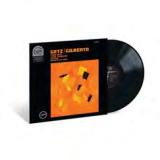
There have been more than 40 U.S. releases (and hundreds more worldwide) of Stan Getz's cultural touchstone album and for good reason: few recordings better capture the breezy warmth and easy-going sophistication of Brazilian bossa nova for an American jazz audience. Fewer recordings can replicate the you-are-there presence and flawlessly tight studio acoustics. Only Getz/Gilberto has Billboard Top-10-charting singles like "The Girl from Ipanema." When Impex Records jumps into this densely-populated fray with our own production, we need to bring maximum value and prestige to it. Challenge accepted. We worked directly with Stan's wife Monica Getz and their son Nicolaus to create the most authentic, best-presented Getz/Gilberto ever.
Exclusive to Impex's 1STEP Getz/Gilberto includes an insightful new interview/essay by Charles Granata featuring Monica reminiscences of the making of this record, the subsequent cultural phenomenon, and Stan's battles with some pretty heavy demons. Also unique to this release are two bonus tracks: an alternate mono 7" mix of "The Girl from Ipanema" (without the added echo, thank you very much) and a live recording of "Corcovado" from Carnegie Hall. Finally, the large-format, 36-page booklet features dozens of rare photos, the original album notes, and a fascinating personal remembrance from Monica Getz herself, celebrating her late husband's work and an inside look at Stan's family life while making the record!
Using the original analog master tapes and no computers at all, Bernie Grundman at Bernie Grundman Mastering sought to keep the sense of space and tone on the master tape intact without unnecessary embellishment. Impex 1STEPs get you closer to the source, not the ideal.
We know you have many choices when it comes to enjoying this singular album. The Impex 1STEP of Getz/Gilberto cuts above all other releases with added-value content that takes you deeper into Stan Getz's life and process in a way never previously possible.
The 1STEP Process:
The Impex 1STEP process relies on short, tightly-controlled runs that require a new lacquer after each 500 pressings. This unforgiving format has the lacquer skipping the regular father-mother process, going right to a single convert and then pressing. Though this dramatically increases mastering and production costs, it also assures each run is more consistent from disc to disc, with less noise, clearer details and deeper bass.
Reducing production complexity to just a single "convert" disc between the lacquer and the press greatly improves groove integrity, diminishes non-fill anomalies and increases signal integrity from the master tape to your system.
Features:
The only release of this fundamental jazz classic crafted with the full participation of the Getz family, including never-before-seen photos and notes from Monica and Nick Getz
Exclusive new interview essay about Getz's life and the recording of the album by noted producer and historian Charles L. Granata
Exclusive ultra-luxe Impex 1STEP packaging featuring a deluxe 36-page booklet within a heavy-stock two-sleeve Monster Pack jacket and striking colour-matched slip case
Two all-analogue bonus tracks: an alternate mono 7" mix of "The Girl from Ipanema" and a live recording of "Corcovado" from Carnegie Hall
Limited to 7,500 copies
dovrebbe essere pubblicato su 20.12.2023

Ordina ora e ordineremo l'articolo per te presso il nostro fornitore.
dovrebbe essere pubblicato su 15.07.2023

In summer 1958, João Gilberto -an unknown 28 year-old Brazilian guitarist and singer from Bahia- made his recording debut as a singer with two songs "Chega de Saudade" and "Bim Bom." With a new rhythmic feeling, batida, and rich harmonies he laid the basis of the modern Brazilian samba, now known as Bossa Nova. Underpinned by his insouciantly swinging guitar, Joãos seductive, vibratoless vocals caressed both ear and soul in a mesmerizing, highly addictive combination, refreshing and modern. Chega de Saudade was a hit, launching Gilbertos career and the bossa nova craze. Soon, singers and guitarists were trying to imitate him and composers were all on a Desafinado (the second Gilbertos hit) and Chega de Saudade kick. The longawaited renewal of the Brazilian samba was now a fact. Antonio Carlos Jobim said: Gilberto appeared as a light, as a big star in the firmament, in the heavens. He became a focus, because he was pulling the guitar in one way and singing the other way, which created a third thing that was profound. Yes, the guy who brought the Bossa Nova beat to the world was João Gilberto.
dovrebbe essere pubblicato su 13.01.2023

Born in Juazeiro, Bahia, Brazil on June 10, 1931 (and 87 years .old at this writing), singer/song writer Joao Gilberto is a living legend of bossa nova. While Antonio Carlos Jobim set the standard for the creation of bossa nova in the mid-’50s (with songs like “The Girl from Ipanema” and “Desafinado”), it was Gilberto who brilliantly reimagined (and, arguably, defined) the genre. The first bossa nova song, titled “Bim-Bom”, was written as Gilberto watched passing
laundresses on the banks of the Sao Francisco River balance loads of clothes on their heads. In 1956 he went to Rio de Janeiro and struck up old acquaintances, most significantly Antonio Carlos Jobim, who was by then working as a composer, producer and arranger with Odeon Records. Jobim was impressed with Gilberto’s new style of guitar playing, and set about finding a suitable song to pitch the style to Odeon management. In 1959 Gilberto presented his first LP, Chega de Saudade. The title song turned into a hit, launching Gilberto’s career and the bossa nova craze. Besides a number of Jobim compositions, the album featured older sambas and popular songs from the 1940s and 1950s, all performed in Gilberto’s distinctive style. This album was followed by two more in 1960 and 1961, by which time the singer featured new songs by a younger generation of performer/composers such as Carlos Lyra and Roberto Menescal.
By 1962, bossa nova had been embraced by North American jazz musicians such as Herbie Mann, Charlie Byrd, and Stan Getz, who invited Gilberto and Jobim to collaborate on what became one of the best-selling jazz albums of all time, Getz/Gilberto. Chega de Saudade was issued in the United States as The Warm World of Jo o Gilberto.
Ordina ora e ordineremo l'articolo per te presso il nostro fornitore.

Back to the roots of one of the most influential south-american songwriter and composer. A pioneer of the musical genre of bossa nova in the late 1950s, Joao was often called "father of bossa ", while in his native Brazil he was referred to as "O Mito" ("The Legend"). This compilation investigates his early career, showing the many sides of his sophisticated art.
dovrebbe essere pubblicato su 10.08.2021

dovrebbe essere pubblicato su 30.07.2021

First released in Brazil in 1960 this is Joao Gilberto's second studio effort. A seminal album that just one year later introduced Bossa Nova to the United States. Joao Gilberto, one of the true masters of the genre, displays a great selection of songs including various Tom Jobim's classic gems such as "Samba de Uma Nota Só" ("One Note Samba"), "Corcovado" and "Outra Vez". An essential piece of work in the whole history of Brazilian music.
dovrebbe essere pubblicato su 05.05.2021

Die bereits mehrfach für die GRAMMYs nominierte brasilianische Sängerin Bebel Gilberto veröffentlicht ihr mittlerweile achtes Studioalbum 'João'. Das Album ist eine Sammlung von Liedern ihres Vaters João Gilberto, der weithin als Erfinder und Wegbereiter des Bossa Novas gilt und 2019 nach einer 70-jährigen Musikkarriere verstarb. Bebel begann schon als kleines Kind mit ihm zu singen und die Lieder, die sie nun in neuem Gewand präsentiert, begleiten sie schon ihr ganzes Leben - 'João' ist ihr ganz persönlicher Liebesbrief an João Gilberto und seine Musik.
Disponibile in Stock e pronto per la spedizione

Selva Discos is proud to present its latest release: the EP by the band Discoteca Tropicana. This record features 4 original tracks that celebrate the rhythms that have influenced Brazilian disco music, showcasing the best of this fusion: the swing and tropical flavour that bring sunshine to any dance floor.
The project is the result of a collaboration between Kiko Costato, the enfant terrible of the Brazilian music scene, and Zé Nigro, a producer and multi-instrumentalist who has won two Grammy Awards and has worked with major names in Brazilian and international music such as João Donato, Antonio Carlos & Jocafi and Natasha Diggs.
This EP is based on 4 different themes. For each one, Kiko and Zé Nigro recruited some of Brazil’s finest studio musicians – people who work with Seu Jorge, Céu, Criolo, Metá Metá, Cidadão Instigado and Tulipa Ruiz – as well as pioneering artists from the Brazilian Black music scene, such as the backing vocalists who work with the legendary Gilberto Gil.
“Corpos Celestes” is a more classic “disco diva” track, featuring string arrangements and a grand piano, as if it were the start of the evening, a magical moment straight from the heyday of disco in the United States; “Corpo Treme” is the sweat, the vuco-vuco, a song for that moment when you’ve already let yourself go, a sprint to the frenetic rhythm of the carimbó; “Tobina” is the meeting of Brazil and Africa, from which Brazilian swing is born, an original chant straight from the Congo, with a characteristic African guitar, adapted to Brazilian rhythms, just like the afoxé. Finally, the dancefloor hit “Não Pode Acabar”, a more urban disco track, which works just as well for kicking off a party with the right vibe as for closing a set with the highest energy.
dovrebbe essere pubblicato su 16.10.2026
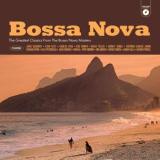
Mit der neuen Ausgabe der Vintage Sounds Vinyl Collection kehrt ein echter musikalischer Schatz zurück - diesmal ganz im Zeichen der Bossa Nova. Diese liebevoll kuratierte Zusammenstellung präsentiert 16 zeitlose Klassiker, die den unverwechselbaren Klang Brasiliens geprägt haben und bis heute weltweit für entspannten Groove und federleichte Eleganz stehen. Auf dem Album versammeln sich die wichtigsten Künstler einer Ära, die Musikgeschichte geschrieben hat: Joao Gilberto, Baden Powell, Silvia Telles, Quincy Jones und natürlich Antônio Carlos Jobim, dessen Kompositionen bis heute als Herzstück des Genres gelten. Freuen Sie sich auf unvergängliche Perlen wie "Chega De Saudade", "Garota De Ipanema", "Desafinado", "Corcovado", "A Felicidade", "Soul Bossa Nova", "O Barquinho" oder "Meditaçao" - alle sorgfältig ausgewählt und auf hochwertigem Vinyl neu erlebbar gemacht.
Disponibile in Stock e pronto per la spedizione

For his sixth solo album, Ezéchiel Pailhès returns with a new collection of songs infused by a sunny wandering spirit.
Within each of the twelve songs on SOL is a thread of melancholic happiness that has permeated much of Pailhès’ music and songwriting. He addresses love, the passing of time, hope, lost illusions, fleeting moments of grace, the temptation of forgetting, a need to escape, and desire. All this is
insulated by understated orchestrations that blend acoustic and electronic instrumentation with deft confidence.
The Portuguese and Brazilian concept of saudade—a form of melancholic longing and nostalgia— pervades, thanks in part to Pailhès decision to record the album in Rio de Janiero and to reinterpret some of the finest works of Música Popular Brasileira (MPB). In particular, he revisits a handful of
lesser known classics from the mid-century samba and bossa nova era—originally written or performed by talents including Vinícius de Moraes, João Gilberto, Tom Zé, Dorival Caymmi, João Donato, Os Tincoãs, and Ataulfo Alves.
The shift from Brazilian Portuguese to French and the decision to adapt rather than perform a straightforward cover versions, allows Pailhès to invent a form of prosody and euphony (the musicality and harmonious combination of words) that feels vibrant and unlike anything else in today’s French
chanson landscape.
“Some lyrics are simple translations from Portuguese, in what I’d call an expanded version. For others, I started from a single word or a single phrase and embroidered an entirely new text that carried me elsewhere,” explains Pailhès. “I allowed myself great interpretive freedom, while preserving the humanist dimension of the original songs. I’ve always been deeply moved by the way Brazilians transfigure reality through heightened emotion. I love this visceral and spontaneous country, which always seems to live through emotion. And above all, I love its music both popular and unifying,
bringing together all social classes. In that sense, it’s very political music, but even more so utopian, made by the people and for the people.”
On this new album, however, the French artist was keen to avoid cliché. Each song is therefore built around a carefully balanced interplay between Pailhès’ piano and synthesizers, alongside restrained arrangements of percussion, brass, bass, and cavaquinho (a small four-string plucked guitar). These parts were recorded in Rio de Janeiro with two musicians who regularly perform alongside the legendary Caetano Veloso—Kainã Do Jêje and Alberto Continentino—joined by Thomas Harres, Antônio Neves, Eduardo Neves, and Gabriel Loddo.
Since the 1960s, France and Brazil have shared a long-standing cultural and musical relationship. Some Brazilian artists, most famously Gilberto Gil, took refuge in France during the dictatorship years (1964–1985). But above all, French chanson quickly fell in love with the richness and ingenuity of
bossa nova and samba, translating and reinventing them in the language of Molière. Throughout the 1960s and 1970s, albums and hits by Henri Salvador, Georges Moustaki, Pierre Barouh, Pierre Vassiliu, and Claude Nougaro all drew from the MPB repertoire.
Fifty years later, with SOL, Ezéchiel Pailhès reinvents this rich Franco-Brazilian musical legacy, bringing to it a personality and modernity that stand confidently alongside those of his forbears.
Disponibile in Stock e pronto per la spedizione
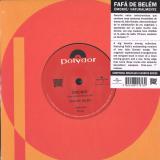
A longtime favorite among Brazilian music collectors! Fafá de Belém’s take on Joao Donato´s ‘Êmoriô’ and ‘Naturalmente’ strip away the originals’ sophisticated arrangements in favor of a more driving groove and a raw, funky edge that makes them absolute dancefloor weapons.
First time 7” reissue, cut at 45 RPM !
--------------------------------------------------------------------
Singer and actress Fafá de Belém is one of Brazil’s most beloved and popular artists. This vinyl single from 1975 marked the very beginning of her long and successful career in Brazilian popular music and, over the years, has become a highly sought-after collector’s item among DJs worldwide.
The record features two tracks, ‘Êmoriô’ and ‘Naturalmente’, written by João Donato alongside Gilberto Gil and Caetano Veloso, originally released on his album “Lugar Comum” that same year. Fafá de Belém’s versions, however, strip away the originals’ sophisticated arrangements in favor of a more driving groove and a raw, funky edge that makes them absolute dancefloor weapons.
Disponibile in Stock e pronto per la spedizione

Global pointing Brazilian jazz trio releases their new album Agôra, that sparkles with electric funk and Herbie-esque eclecticism. It features a myriad of guest vocalists and musicians including Brazilians Xênia França and Zé Leônidas, Jembaa Groove's Ghanaian singer Eric Owusu and South African artists Bongani Givethanks & Mpho Nkuzo
Re-wiring the concept of 'fusion' for 2023, Agôra is Brazilian trio Caixa Cubo's resurgent new record with the title referring to 'now', based upon the intuitive and fluid nature of the trio's method, and this inspired recording. With shoots to black music culture, from Brazil to Brooklyn, Ghana and South Africa, Agôra is the group's ninth album yet is their first where they've invited guests, mainly singers, onto each track and follows their last, Angela from 2020, released on Heavenly Records, which won a BBC 6 Music Album of the Year (Huey Morgan's selection) granting them much deserved international recognition.
The core musical elements of Caixa Cubo are Henrique Gomide (keys), João Fideles (drums) and Noa Stroeter (bass), all from São Paulo, Brazil and where they met as teenagers and would continue their friendship and musical bond at the Royal Conservatory in The Hague, Netherlands. Now all in their mid thirties, João and Noa live back in the city where it all started but Henrique has settled in Cologne, Germany where the recording of Agôra took place, over the course of 3 days, at the home cum studio of Chris 'Dusty' Doepke, their friend and owner of the label they signed to, Jazz & Milk.
In line with all their creations where flow and energy provide the magic, allowing what the moment provides, the album shines not only for its virtuosity but for its minimalism, the depth of space, and for the first time, the ability to figure in and outside of the jazz fold, as the trio decided, for the first time, to bring in singers and add a new aesthetic to their sound.
"Agôra is a wake-up call to reality, a reminder that the infinite possibilities of technological progress should not disconnect us from the earth, from eye-to-eye relationships, and from moments lived in person" the band are keen to point out. "And that we must not be consumed by greed, for all we truly possess.... is the NOW."
Turning hope and metaphor into music, the debut single Sábado, an electrified future- jazz-fizz reflects perfectly the spontaneity that permeated the entire recording of the album. "When we got to the studio, we had no idea what we were going to record. We started playing a groove, kind of inspired by Gilberto Gil's 80s albums, and our drummer João started singing this funny song 'Sábado Barrigudão' (Big Belly Saturday) alongside the bass groove and that was that". Inspired by their city of birth, São Paulo, it features long time collaborator and vocalist Zé Leônidas, with cuicas, tamborim, agogo and shakers providing the most obvious Brazilian affect from the album.
Dreams is the band's first foray into R'n'B melding the group's simple and sporadic instrumentation of drums, keys and bass into a Jill Scott inspired song that could have been born in Brooklyn yet sung by Brazilian singer and Grammy nominated Xênia França and Zé Leônidas in both English and Portuguese. Xênia recently performed online for hip-to-it website Colors and it's her latest collaboration with Caixa Cubo, having first met in 2009 for a series of live performances.
South African artists Bongani Givethanks & Mpho Nkuzo come to the record with a wholly different approach on Ndiyakhangela, providing spoken word and vocal refrains on top of an Afro-Brazilian percussion jam with a delivery and verse in Xhosa, Zula and Ndebele. Asase is the album opener and features vocals of Eric Owusu who is part of highlife pioneer Pat Thomas's live band and most recently, co-leader of Jembaa Groove, an Afro-soul band from Berlin. It's a synth wig out with djembe grooves and offers a brand new take on Afro-soul-jazz.
Other contributions come from Cologne based jazz singer Rebekka Ziegler (Oblique Sunshine), São Paulo based guitarist Eduardo Camargo (Caio & Eric) and trumpet player Matthias Schriefl on Kismeti, a gorgeous and rolling number that ebbs and flows, exemplifying the group's effortless ability to craft a sound energised by a belief in one-self and the idea of having faith without the need to look at each other for verification.
As drummer and percussionist João Fideles perfectly surmised upon arriving for the recording session, "What drums do you have? Whatever you have, I'll use it". Agôra is testament to nearly 20 years of camaraderie, friendship and most importantly, trust.
Disponibile in Stock e pronto per la spedizione

(Produced, Arranged and Conducted by Claus Ogerman)
Not long after the dawn of her career, as a teenager in Rio de Janeiro, Joyce was declared “one of the greatest singers” by Antonio Carlos Jobim. Yet despite reputable accolades and the fact that she has since recorded over thirty acclaimed albums, Joyce never quite achieved the international recognition of the likes of Jobim, João Gilberto and Sergio Mendes, all of whom became global stars after releasing with major labels in the US.
There was a moment when it seemed she might be on the cusp of an international breakthrough. While living in New York, Joyce was approached by the great German producer Claus Ogerman. Ogerman had already played a pivotal role in the development and popularisation of Brazilian music in the 1960s, recording with some of the all-time greats like Jobim and João Gilberto, as well as North American idols like Frank Sinatra, Billie Holiday and Bill Evans.
"I met him in New York City, in 1977”, recalls Joyce. “I was living and playing there, and João Palma, Brazilian drummer who used to play with Jobim, introduced me to Claus. We had an audition, he liked what we were doing and decided to produce an album with us.”
Featuring fellow Brazilian musicians Mauricio Maestro (who wrote/co-wrote four of the songs), Nana Vasconcelos and Tutty Moreno, and some of the most in-demand stateside players including Michael Brecker, Joe Farrell and Buster Williams, the recordings for Natureza took place at Columbia Studios and Ogerman produced the album, provided the arrangements and conducted the orchestra.
But mysteriously, Natureza was never released, and what should have been Joyce’s big moment never happened. As Joyce remembers, “I returned home, but Claus and I remained in contact, by letters and phone calls. He was very enthusiastic about the album and tried to hook me up with Michael Franks. He wanted me to go back to NYC in order to re-record the vocals in English with new lyrics, which I actually wasn’t too happy about. But then I got pregnant with my third child and could not leave Brazil. And little by little our contact became rare, until I lost track of him completely. And that was it. I never heard from him again."
While Claus was known to be something of an elusive character, the album’s disappearance might also have been a result of timing. The Brazilian craze was coming to an end, making way for disco and new wave at the end of the seventies, and Ogerman struggled to find a major label interested in a new Brazilian sensation. Additionally, as Joyce mentions, it wasn’t quite finished. Ogerman wanted to add finishing touches to the mix and to record alternative English lyrics for the US and international markets - a critical artistic difference between Joyce and Ogerman.
As the military dictatorship’s grip on Brazil began to subside in the 1980s, Joyce had a handful of hits in her home county, including a tribute to her daughters ‘Clareana’, and the iconic ‘Feminina’ - an intergenerational conversation between mother and daughter about what it means to be a woman. But already a feminist pioneer, these successes were hard fought. Joyce had caused controversy as a nineteen-year-old when she became the first in Brazil to sing from the first-person feminine perspective, and the institutional sexism she faced was worsened by the dictatorship who would often censor her music. Even once the Junta was out of the way, Joyce found herself up against the male-dominated major record companies in Brazil, who sought to dictate her career and sexualise her image, before dropping her for refusing to play along.
A few years after the success of her albums Feminina and Agua E Luz in Brazil, Joyce’s music began to find its way to the UK, Europe and Japan, and “Feminina” and “Aldeia de Ogum” became classics on the underground jazz-dance scenes of the mid to late-eighties and early-nineties.
The full-length version of “Feminina” from the Natureza sessions was first heard on a Brazilian Jazz compilation in 1999 and “Descompassadamente” was licensed for a CD compiling the work of Claus Ogerman in 2002. Following these, word began to get out about an unreleased Joyce album with Claus Ogerman and the legend of Natureza grew.
Forty-five years since it was recorded, Natureza finally sees the light of day, as Joyce intended: with her own Portuguese lyrics and vocals. Featuring the fabled 11-minute version of ‘Feminina’, as well as the never before heard ‘Coração Sonhador’ composed and performed by Mauricio Maestro, Natureza’s release is a landmark in Brazilian music history and represents a triumphant, if overdue victory for Joyce as an outspoken female artist who has consistently refused to bow to patriarchal pressure.
***Disclaimer! While “Feminina” and “Descompassadamente'' were mixed by legendary engineer Al Schmitt and mastered from the original master tapes, the remaining five tracks are unmixed. Due to significant deterioration of the master-tapes, the best audio source for these tracks was an unmixed tape copy Joyce had kept of the recordings. The best care has been taken in the restoration and mastering of this release, but the sound quality may differ from other releases on Far Out Recordings. We advise listening to sound clips before buying where possible.
Disponibile in Stock e pronto per la spedizione

Im Oktober 1962, als das Bossa-Nova-Fieber in den USA gerade erst um sich zu greifen begann, gab
der Tenorsaxofonist Ike Quebec dem neuen Stil aus Brasilien auf seinem Album “Bossa Nova Soul Samba”
eine ganz eigene Note. Sein sinnlicher Ton durchdrang die luftige brasilianische Atmosphäre mit einer
seelenvollen Prise Blues und schuf so ein melodiöses Meisterwerk, zu dem auch der Gitarrist Kenny Burrell
erheblich beitrug. Dabei mied Quebec geschickt die Bossa-Nova-Hits von Tom Jobim, João Gilberto und
Luiz Bonfá. Stattdessen stellte er ein sublimes Repertoire aus Eigenkompositionen, weniger bekannten
brasilianischen Stücken sowie zwei klassischen Kompositionen von Antonín Dvořák und Franz Liszt zusammen. Umso tragischer war es, dass dies sein letztes Album sein sollte: Nur drei Monate später starb Quebec
im Alter von 44 Jahren an Lungenkrebs.
dovrebbe essere pubblicato su 07.08.2026

Deluxe 12" Tip-On (pasted card) Gatefold Edition (Limited Edition)
A new solo album from Seu Jorge reveals his 'other side' on this new solo album featuring Beck and Maria Rita. Produced by Mario Caldato Jr. (Beastie Boys), the album moves between jazz and bossa nova and is the result of a 16-year musical journey.
Seu Jorge is ready to present to the world the most ambitious project of his international career. After 16 years in the making, “The Other Side” finally arrives on streaming platforms in May. A departure from the soul and samba that defined his solo career, the new album is a sophisticated orchestral celebration of Brazilian music, moving between jazz and bossa nova.
The seed for this meeting between the Brazilian soul and orchestral sophistication was planted by a longtime friend and admirer: the legendary producer Mario Caldato Jr., known for his work with the Beastie Boys and Jack Johnson. The partnership, however, goes back further. “It’s not often that you find a voice and talent as vibrant and powerful as Seu Jorge’s. That’s what I felt in 1999, when I met him in Los Angeles,” recalls Caldato. “Since then, our friendship and admiration have only grown, allowing us to create music together with total freedom.”
The spark for “The Other Side” came from a moment of pure sensitivity. “This album was born when I recorded Jorge playing a simple version of ‘Girl You Move Me,’ by the band Cane and Able, on a nylon-string guitar. The performance was very sensitive and dynamic, which moved me deeply,” says the producer.
It was then that Caldato had the idea to invite multi-instrumentalist and arranger Miguel Atwood-Ferguson to orchestrate that demo. The partnership, which began in 2009, blossomed organically. “I shared some ideas with Miguel, and he understood perfectly, creating a beautiful arrangement that elevated the song to a much more luxurious and sophisticated dimension. That experience planted the seed for this orchestral adventure. "
With his characteristically deep, velvety voice, Seu Jorge guides the listener through a repertoire that revives gems of MPB. The artist cites as references the catalog of the German label ECM Records and the arrangements of Claus Ogerman, a conductor who worked with Tom Jobim and João Gilberto.
Recorded in stages between 2009 and 2018, the album is a true work of musical
craftsmanship, created with calm and friendship. The live rhythmic foundations were
provided by Seu Jorge’s band. “Jorge has a lot of confidence in and pride for his musicians, allowing them to express themselves freely. Each one brings a special flavor to every song; this was their album too, ” notes Caldato Jr.
“It was a week of pure joy for me and for all of us, recording and capturing that magical spirit and vibe,” adds the producer, who saw the work come together with arrangements by Miguel Atwood-Ferguson. “When it came time for mixing, everything felt very natural. The album revealed itself and came together magnificently. For me, it’s a timeless album.”
The album features covers of songs such as “Crença” by Milton Nascimento (from his 1969 debut album); “Caboclo” by Arthur Verocai, in a version with psychedelic guitars; and, of course, “Girl You Move Me” by the Canadian band Cane & Able, which inspired the project. Among the tracks featuring guest artists, “Vento de Maio” by Márcio Borges (a hit with Lô Borges and Elis Regina) features an intense duet with Maria Rita. Another major collaboration is with American singer Beck, a self-proclaimed fan of Brazilian music and Grammy winner. Together, they perform “River Man” by the revered British singer Nick Drake.
Ordina ora e ordineremo l'articolo per te presso il nostro fornitore.

Ever since the late 1950s bossa-nova revolution, Brazil’s influence on French music has been undeniable. Pierre Barouh, Georges Moustaki and a vast array of lesser known artists, all made the Musica Popular Brasileira (MPB) an axis of promotion at the service of a cool and metaphysical, modern and mixed Brazilian lifestyle. Some were seduced by the poetic languors of the bossa, some were looking for fun, and others just loved the American hybridization of jazz-bossa, jazz-samba.
What is bossa nova? One of its creators, Joao Gilberto said: "Its style, cadence, everything is samba. At the very start, we didn't call it bossa nova, we sang a little samba made up of a single note - Samba de uma nota so .... The discussion around the origins of bossa nova is therefore useless”. It is nevertheless useful to remember that these magnificent Brazilian songs, which the guitarist describes as samba, were shifted and balanced around improbable chords. "I like things that lean, the in-betweens that limp with grace," said Pierre Barrouh, quoting Jean Cocteau.
With emotion, arrangements for violin and supple guitar licks, bossa nova rapidly changed. A transformation that can be heard in the Tchic, tchic, French Bossa Nova 1963-1974 compilation, the result of a cultural reappropriation, which traveled through the United States and supplemented itself in France.
A musical revolution that has remained significant, bossa nova was born in Rio. From 1956 to 1961, Brazil lived through its golden years. In five years, the country had invented its modernist style. Elected president in 1956, Juscelino Kubitschek de Oliveira, an elegant man with a broad forehead, brandished a promising slogan: "Fifty years of progress in five years". He quickly got to work. Not worried about increasing debt, he launched the project for a new federal capital, Brasilia, designed by the communist architect Oscar Niemeyer. Volkswagen opened state-of-the-art factories and created the “fusquinha”, the Beetle. In Rio, the Vespa made its first appearance. The Arpoador Surf Club crew run into the “girl” from Ipanema, Helô Pinheiro - the tanned garota ("chick"), between a flower and mermaid, who at 17 walked by the Veloso bar, where the fiery author and composer, Tom Jobim and Vinicius de Moraes, were getting drunk on whiskey. From then on, bossa symbolized cool.
In 1958, Joao Gilberto recorded Chega de Saudade, which the directors of Philips denied, calling it "music for fagots". The marketing director, who believed in it, secretly pressed 3000 78-inch vinyls and distributed them at schools around Rio, creating a tidal wave.
American jazzmen then took over. In particular, trumpeter Dizzy Gillespie and guitarist Charlie Byrd. In November 1962, the Brazilian Ministry of Foreign Affairs funded a "Bossa-Nova" concert at Carnegie Hall in New York, inviting the genre’s pioneers. Unprepared, the show soon turned to disaster. But the troupe was invited to the White House by Jackie Kennedy. The first lady loved "the new beat" and in particular Maria Ninguem, a song by Carlos Lyra, later covered by Brigitte Bardot.
In Brazil, the 1964 military coup quickly ended this euphoria. The destructive atmosphere that ensued pushed many Brazilian musicians to leave, if not to exile. Thus, Tom Jobim, Sergio Mendes and Joao Gilberto arrived to the United States. In New York, Joao Gilberto met saxophonist Stan Getz. At the time, he was married to the Bahianese Astrud Weinert Gilberto, who had a German father. She had never sung before, but she knew how to speak English. Getz therefore asked her to replace her husband on The Girl From Ipanema. The Getz/Gilberto record with Tom Jobim on piano, was released in March 1964. Phil Ramone, the "pope of pop" was in charge of sound.
Bossa nova arrived in Paris through the classic “guitar-voice” channel (Pierre Barouh, Baden Powell, Moustaki…) But France loved jazz and Paris had already welcomed its American contributors. All these good people were to pass through Saint-Germain-des-Prés. The cabaret l'Escale became the Mecca of Latin American sound where one could find Pierre Barrouh and his friends, such as the Camara Trio, samba-jazz aces, whose only record was published by the Saravah label. With a band strangely called Les Masques (a band that included Nicole Croisille and Pierre Vassiliu, among others), the Camara Trio recorded an interesting Brazilian Sound, including the track Il faut tenir which is present on this tasty compilation of rarities.
Other enlightened musicians can also be found on the compilation, such as Jean-Pierre Sabar (songwriter for Hardy, Auffray, Leforestier ...) and the French pop rock organist Balthazar. In 1975, Sabar recorded Aurinkoinen Musiikkimatka on a Finnish label, which featured the crazy Vai, Vai, included on this record. We are now following the footsteps of Brazilian electronic musicians such as Sergio Mendes, Eumir Deodato or Marcos Valle who created funk and disco sounds on their keyboards and synthesizers. A style that influenced Véronique Sanson when she wrote Jusqu’à la Tombée de la nuit in 1969 for Isabelle de Funès, the niece of Louis and a great friend of Michel Berger - Sanson did end up singing this track on her 1992 Sans Regret record.
The pinnacle of exoticism and travel, Sylvia Fels’ Corto Maltese includes bongos, sea mist and ocean sounds. The title was taken from Jacky Chalard’s concept album written in 1974, Je suis vivant, mais j’ai peur (I am alive, but I am scared), based on Gilbert Deflez’s science fiction novel.
However, bossa nova extended the scope of popularity. "In the 1970s, I was a fan of Sergio Mendes, Getz / Gilberto. I fell in love with this music that I knew because I had been an orchestral singer, " explained Isabelle Aubret, who in 1971 delivered a composite record of covers by the very funky Jorge Ben, Orfeu Negro, Tom Jobim, Vinicius de Morais and Jean Ferrat. "I recorded this album for Meys Records in Paris, far from Brazil, with wonderful musicians, François Raubert, Roland Vincent, Alain Goraguer...". The latter wrote the arrangements for Casa Forte, a very percussive title borrowed from Edu Lobo, one of the initiators of the bossa who spent time in California. "Jazz and bossa came together and produced very rhythmic music. I love singing, it allows me to dream, to have fun, to feel a high on stage, and these songs brought me joy, made me swing, my singing felt like a dance.”
The world tours of French singers and their desire for the tropics, often brought them to Rio with its hills, forests, caipirinhas and tanned bodies. There are surprises though, like this Iemenja (Iemenja is the goddess of the sea in the Afro-Brazilian candomblé religion). Not unlike the composer and musician Jean-Pierre Lang, based in Sao Paulo, Claire Chevalier taught Brazil to Brazil. In 1970, the singer and painter published a 45-inch vinyl, Mon mari et mes amants (My husband and my lovers), under the improbable pseudonym of Clarinha (little Claire). She was then living in Rio, with her husband, Joël Leibovitz, who founded a band called Azimuth, and who owned a record label specialized in "sambas enredos" songs for samba school parades.
For its B side, she asked Pierre Perret to come up with lyrics for a song composed by Carlos Imperial: "Oh goddess of the sea, o goddess Iemenja, I bring a white rose to adorn your long hair ..." . "Perret came to see us, and we had fun, remembers Joël Leibovitz. We wrote Lemenja for fun, we recorded it at the Havaí studio, behind the Central do Brasil the central station. Erlon Chaves, the arranger who worked with Elis Regina, joined us" adding his share of Afro-Brazilian percussions and funky brass to the mix.
There is a common misunderstanding in Franco-Brazilian history: that bossa, admittedly hedonistic, is perceived as funny, even though the poets who wrote the texts are often philosophizing on the human condition. Its French interpreters pull it towards a carnival inspired universe, far removed from its fundamental essence. Thus, Jean Constantin covered the famous Samba da minha terra, an ode to the art of samba written by the classic Bahian composer Dorival Caymmi, renaming it with the enticing title of Pas tant de tchi tchi pompon: "On your pier there is no tchi tchi / when you arch your back, you know everything is alright ”(lyrics by Gérard Calvi). This expedited bossa aims for the absurd, but retains a certain elegance.
Indeed, Jean Constantin was not an idiot, the rather large man had a huge mustache and liked fantasy, (Les pantoufles à papa, Le pacha, inspired by cha-cha-cha-cha, salsa and jazz) but he was also the lyricist of Mon manège à moi interpreted by Edith Piaf, the composer of Mon Truc en plume by Zizi Jeanmaire and the soundtrack of François Truffaut’s 400 Blows. Le Poulpe, published in 1970, from which this bossa is extract, was arranged by Jean-Claude Vannier, an accomplice of Serge Gainsbourg’s Melody Nelson. In short: "There is enough of samba / By looking at the parasol / Because my poor cabeza / Is going to die in the sun".
Even the American actress Marpessa Down, who was at the heart of the bossa nova revolution with her role as Euridyce in Marcel Camus’ film Orfeu Negro, winner of the 1959 Cannes Palme d'or, fed the clichée with Je voudrais parler au petit cuica - "Tell me how you manage to always make people want to dance / It's true, I must admit that I cannot resist your magic" - in consequence, once can hear the cuica, a little drum inherited from the Bantu.
But bossa nova had many angles. Societal, of course, pushing actresses who were symbols of women's liberation like Brigitte Bardot, Jeanne Moreau, or Sophia Loren to engage in the exercise of accelerated bossa. In February of 1963, Sophia Loren made a record in French in Rome, Je ne t'aime plus, featuring the song De jour en jour, a bossa written by two Italians, Armando Trovajoli and Tino Fornai, which was released a little later by Barclay. Bossa accompanied the 1960s, a decade of moral liberation. Ann Sorel, who interpreted La Poupée des favellas, caused a sensation with L’amour à plusieurs, a provocative song written by Frédéric Bottom and Jean-Claude Vannier. As for the actress Andrea Parisy, she displayed her bourgeois cheekiness in Marcel Carné's Les Tricheurs before interpreting Les mains qui font du bien. And Magalie Noël, the friend of Boris Vian, who sung Johnny fais-moi mal, was hired to sing Une énorme Samba, composed by Alain Goraguer (arranger to Gainsbourg, Bobby Lapointe and Jean Ferrat) with lyrics by Frédéric Botton.
But in the end, of what wood is bossa nova made of? The answer is given by Christianne Legrand, daughter of Raymond the conductor, and sister to Michel the composer: "With me, with jà" - jà means "immediately" in Portuguese. In 1972, the singer, an expert in vocal jazz and a member of the Double Six, published Le Brésil de Christianne Legrand. Two songs included on the Tchic Tchic compilation that demonstrate how bossa, jazz, funk, rock, etc. work like a swiss army knife: the music is used to denounce broken systems, or miracles, HLM et ciné roman, Cent mille poissons dans ton filet, two songs from the O Cafona soundtrack, a successful telenovela broadcast, at the time in black and white, on TV Globo. The first was adapted in French by the fighter and friend of the Legrand tribe, Agnès Varda. The second is content with a play on words, jostling them into a summer fun.
Véronique Mortaigne
Ordina ora e ordineremo l'articolo per te presso il nostro fornitore.

Tudo is an album by world renowned Grammy-nominated singer/songwriter Bebel Gilberto, originally released in 2014.
Gilberto, daughter of bossa nova immortal João Gilberto, is one of the most internationally famous and beloved of Brazilian musicians. Tudo, which means "everything" in English, showcases Bebel's ethereal vocals and wistful, dreamy song writing in each of the 12 tracks.
Bebel reunites with Mario Caldato Jr., who produced her first landmark album Tanto Tempo.
With Bebel singing in French, English, and Portuguese, Tudo is a shimmering, sweet summery collection that includes original songs along with songs by João Gilberto, Antonio Carlos Jobim and Neil Young, as well as soulful duet with Seu Jorge.
The gorgeous melodies are shaped by touches of electronica and Bebel's intimate vocals hint at a fantastical Rio de Janeiro, a style that has earned her a devoted fanbase worldwide.
Tudo is available on black vinyl and includes a 4-page booklet with pictures and lyrics.
dovrebbe essere pubblicato su 08.05.2026

Mit Brazil Greatest Hits veröffentlicht Wagram eine musikalische Reise durch die farbenfrohe Welt Brasiliens - von zeitlosen Bossa-Nova-Klassikern bis zu modernen Latin-Grooves. Auf zwei sorgfältig zusammengestellten Vinyl-LPs versammeln sich legendäre Aufnahmen und internationale Club-Favorites, die den Spirit von Rio, die Leichtigkeit des Samba und den warmen Sound des Tropenlands einfangen. Die erste LP präsentiert ikonische Stimmen und Instrumentalstücke der goldenen Bossa-Nova-Ära - voller Eleganz, Rhythmus und Melodie. Auf LP 2 geht es moderner und tanzbarer weiter: brasilianische Funk-Einflüsse, Remix-Perlen und energiegeladene Tracks zeigen, wie lebendig und vielfältig die Musikszene Brasiliens bis heute ist.
dovrebbe essere pubblicato su 27.02.2026
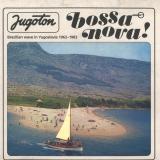
Rich musical history of Yugoslavia reveals a long-lasting love for the music of Latin America.
Entwined in Afro-Cuban rhythms, ballrooms were shakin', swayin' and swingin', gathering musicians who were heavily into jazz bands and orchestras, most notably in Ljubljana, Zagreb, and Belgrade. Jazz could be heard on the streets of Split way back in 1919 when dancing became a symbol of freedom. Radio was the most loved household item, newest sheet music was in demand and collecting records was hip like today. In the aftermath of Second World War, jazz went underground but little by little, things changed and Ella, Satchmo, Dizzy and Miles came to visit, among others. Music festivals shaped the music for entertainment and variety of popular styles showed influences from all over the world. In the early sixties, one particular rhythm crashed on the coast of the Adriatic Sea: the rhythm of bossa nova!
In the whirlwind of various musical styles, Latin American music still played important part of the scene in the early sixties Yugoslavia. Beguine, tango, rhumba, samba, calypso, mambo and cha-cha-cha all found their place on the festivals inspired by famous Sanremo, festival of Italian popular song that largely shaped the musical taste of Europe. It was the era of instrumental rock, R & B and rock'n'roll - sounds of "imperialist America" now played freely on imported and hand-made electric guitars. While dancing halls had been turning into concert venues, bossa nova has come! Eydie Gorme with Blame It on the Bossa Nova and Paul Anka with Eso Besso (That Kiss!) tried to make us learn some new dance moves but it was Joao Gilberto's gentle singing and his new way of playing samba songs, along with Tom Jobim's modern dissonant harmonies and poetry of Vinicius de Moraes that created the magic. When American alto saxophonist and flautist Bud Shank visited Zagreb and Ljubljana in 1963 (with Boško Petrović in his quintet) "it was the first time we heard bossa nova!" remembers Stjepan Braco Fučkar. Jugoton, the biggest record company in Yugoslavia, released 4-track EP Bossa Nova by Bogdan Dimitrijević and his ensemble that same year! While not being fully accepted or understood completely, the archives of Jugoton reveal to us various interpretations of this new trend from their vast catalogue.
Ordina ora e ordineremo l'articolo per te presso il nostro fornitore.

Nora is back! This is a brand-new 2025 EM Records re-pressing of Nora Guthrie's ultra-rare "Emily's Illness", a lost gem of songcraft originally released in 1967, in the same 7-inch vinyl format (b/w "Home Before Dark") as the original. Featuring the radiant vocals of the then-17-year-old daughter of Woody Guthrie, "Emily's Illness" was written by Eric Eisner (The Strangers) and impeccably arranged by Artie Schroeck. A romantic amalgam of psychedelia, pop, and acid-folk, informed by the harmonic and rhythmic subtleties of João Gilberto and jazz. Both songs here are wistfully melodic gems, framed by lovely orchestration.
dovrebbe essere pubblicato su 28.11.2025

Der zurückgezogen lebende Elektronikmusiker Jeremy Dower aus Melbourne kündigt eine Compilation mit bisher unveröffentlichten Stücken aus einem Vierteljahrhundert an, die in zwei Hälften unterteilt ist, um sein unaussprechliches Ambient-Techno-Projekt Tetrphnm aus den 90er Jahren sowie die melancholischen Faux-Jazz-Aufnahmen, die er später unter seinem eigenen Namen veröffentlichte, zu präsentieren. Personal Computer Music, 1997-2022 ist der Höhepunkt der laufenden Reissue-Reihe von Chapter Music für Jeremy. Im August veröffentlichte Chapter seine früheren Alben erstmals digital - Sentimental Dance Music For Couples (ursprünglich 2000 über das US-Label Plug Research, Heimat von Veröffentlichungen von Flying Lotus und Jon Tejada) und Music For the Young and the Restless (ursprünglich 2004 auf dem japanischen Label Bit Of Heaven). Zunächst inspiriert von strengem deutschen Techno wie Monolake und Mouse on Mars, wuchs Jeremys Klangwelt und nahm so unterschiedliche Einflüsse wie The Sea and Cake, Joao Gilberto, Jaki Liebezeit und Alain Goraguer auf. Jeremy arbeitete jedoch ganz allein auf der anderen Seite der Welt an diesen Meilensteinen und improvisierte Systeme der ,subtraktiven Komposition" mit billigen Soundkarten aus den 90er Jahren, 12-Bit-Samplern und gebufferten Noise Gates. Seine Musik entwickelte sich in einer parallelen, aber separaten Welt zu Genres, die später als IDM oder Microhouse bezeichnet wurden, aber eigentlich klingt sie wie nichts anderes als Jeremy Dower - magisch einfallsreich, berührend und persönlich. Efficient Space hat einen Tetrphnm-Track auf ihrer beliebten 2018er-Compilation mit australischer Elektronikmusik der 90er Jahre, 3AM Spares, veröffentlicht. Aber Personal Computer Music, 1997-2022 ist Ihre erste Gelegenheit, Jeremy Dowers faszinierende Musikgeschichte mit der Tiefe zu erkunden, die sie verdient.
dovrebbe essere pubblicato su 14.11.2025

"Imagine More is the follow-up to Lophae's acclaimed debut Perfect Strangers (January 2025).
Recorded live to 2-inch,16-track analogue tape with the band all in one room, engineered and mixed by Benedic Lamdin (Nostalgia 77), and mastered by Caspar Sutton-Jones (Gearbox Studios), this second offering from guitarist and composer Greg Sanders' quartet ventures deeper into their distinctive blend of modern jazz, psychedelic exploration, and world music flourishes.
Four gifted improvisers navigate Sanders' compositions with mercurial dialogue and musical communion, weaving melodic elegance with rhythmic complexity, creating sound-worlds that echo Jeff Parker, Joao Gilberto, and Blake Mills while channeling the sophistication of Stan Getz, Bill Frisell, and Edu Lobo.
Fizzing electric guitar, flowing saxophone lines, and skittering rhythmic interplay transport listeners from north-west London's Fish Factory recording studio to the musical capitals of New York, New Orleans, Rio De Janeiro, Bamako, and Johannesburg - anchored by Sanders' unmistakable compositional voice and the quartet's intuitive sensitivity."
dovrebbe essere pubblicato su 30.10.2025

Phylipe Nunes Araújo's songs are as rich and varied as the diverse landscapes they were written in. The hills of Pernambuco, the lagoons of Alagoas, and the beaches of Bahia are all woven into his stripped-back, folk-inspired Brazilian songwriting. As part of a wider movement of musicians originating from Brazil's Northeast, Phylipe sees the process of music-making as the search for beauty itself.
Collaborating with fellow Northeastern artists Bruno Berle, Batata Boy and Nyron Higor among others, Phylipe's debut album represents the latest flowering of this exceptionally talented community's creative search.
The Northeast holds an almost sacred importance in Brazil's collective cultural imagination. The region bore witness to the brutal histories of Portuguese colonization and the African slave trade, while simultaneously amalgamating the diverse cultures, religions and traditions of those who have called it home. Countless Brazilian music greats - Gilberto Gil, Caetano Veloso, Hermeto Pascoal, Djavan and Luiz Gonzaga - have emerged from this vast cultural melting pot.
Born in Caruaru, Pernambuco state, and raised in the city of Santa Cruz do Capibaribe (famed for its textiles industry), Phylipe describes his music simply as "Brazilian music from the Agreste of Pernambuco". His masterful compositions thread together regional rhythm, folk poetry and sophisticated harmony.
Phylipe's musical foundations were laid in youth, listening to the local elders rehearsing their forrós, attending São João street parties in front of his house and watching the Junina Quadrilhas dance through his neighborhood. At street fairs he would read the Literatura de Cordel (handcrafted pamphlets of Brazilian folk literature), and watch the rhyme battles between cantadores, violeiros, and repentistas, who improvise verses on daily life, social commentary and philosophy. This tradition of Northeastern folk poetry proved particularly formative for Phylipe as a lyricist. "I always try to write things as simply as possible. I believe that beauty must be easily understood. If I can facilitate the path to the message, there's no reason not to. It's something I learned from the traditional poetry here: it's more beautiful if everyone understands."
At the age of 11, Phylipe first got access to the internet. As he explains: "Still in adolescence I was also able to discover things like The Beatles and Nick Drake - I started to get to know music from the rest of the world and later to correlate that with my local musical experiences." Rich with extended chords and artful dissonances, it's clear from his compositions that jazz and bossa nova also took hold, but he's quick to eschew stereotypes. "Inevitably, people associate a Brazilian musician playing a nylon-string guitar with bossa nova..." "But the foundation is another story," he asserts, "It's the Northeast."
On the guitar Phylipe experiments with the binary rhythms inherent in traditional Northeastern music. Coco, frevo, maracatu and baião are recontextualised, placed alongside Brazilian popular music (MPB), gentle lullabies and stunning ballads. "In these 10 songs, I am experimenting with making pop music on a nylon-string guitar with my foundation in the Northeastern songbook."
The contemporary musical community which Phylipe belongs to developed initially in Pernambuco's neighbouring state Alagoas. Phylipe lived in its capital Maceió for three years, where he built friendships and musical bonds with Bruno Berle and Batata Boy who together produced his album. Bruno also sings in unison with Phylipe on the duet "Valise", a song Phylipe wrote aged just 15.
In recent years, Phylipe, Bruno and Batata have migrated south to São Paulo, where the majority of the album was recorded. Other collaborators on the album include Alici, who provides vocals for the ebb and flow of "Temperim", Nyron Higor who plays drums on lead single "Asa" and the sweet indie moment "Ziz"", bassist Meno Del Picchia who plays on the mystical baião "Bixin" and the propulsive "Subindo a Ladeira", and Raphael Coelho who joins Bruno and Batata on percussion for "Santa Cruz", Phylipe's hypnotically powerful portrait of his hometown.
Ordina ora e ordineremo l'articolo per te presso il nostro fornitore.
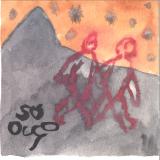
"Taking influence from the pioneers of Música Popular Brasileira, Wolfgang Pérez has crafted an exquisite album of summery experimental pop music that encapsulates the beauty and chaos of modern Brazil. A must-listen for fans of Tom Zé, Gilberto Gil, Kiko Dinucci, Negro Leo, Ricardo Dias Gomes, and João Gilberto.
Genre-blending songwriter, arranger, and guitarist Wolfgang Pérez is set to release his highly anticipated new album Só Ouço in July 2025 on Hive Mind. Known for his unique fusion of influences, the German-Spanish artist first captured attention with his 2021 debut WHO CARES WHO CARES (Fun In The Church), followed by the critically acclaimed Spanish-language album AHORA (BAUMUSIK, 2024).
Só Ouço is the fruit of an 18-month creative residency in Rio de Janeiro, where Pérez collaborated with a group of young Brazilian musicians. Deeply inspired by the city's sounds and rhythms, the album marks an exciting chapter in Pérez’s evolving artistic journey.
In 2022, Wolfgang Pérez arrived in Rio de Janeiro on a university exchange to study composition, and quickly found himself immersed in the city’s rich musical landscape. Introduced early on to Rio icons like Thiago Nassif, Arto Lindsay, and Ana Frango Elétrico, what began as a semester turned into a transformative three-semester stay. Pérez absorbed the city's contrasts - it's beauty, its people, it's chaos and violence, all it's contradictions and life - while deeply studying Brazilian music at UFRJ/UNIRIO under the guidance of masters Josimar Carneiro, Marcello Gonçalves and Almir Cortes.
Wolfgang spent the first 6 months or so soaking in as much as possible, going to shows, to the baile funk parties, walking the streets, hiking the mountains in and around Rio, listening to music, making friends, learning where to go and where not to, learning the language, learning the slang, incorporating the culture. He used the time to forget himself in the vibrance of the city.
After this the band came together through a series of chance encounters and happy accidents...some loose jam sessions led to shows around Rio, where Wolfgang, alongside Luis Magalhães (bass), Pedro Fonte (drums) and Paulo Emmery (electric guitar), started to flesh out some of Wolfgang's compositions. At a show at Audio Rebel they met Angelo Wolf (owner of Wolf Estúdio and engineer for artists such as Bala Desejo, Dora Morelenbaum, Zé Ibarra, Marcos Valle, Antonio Neves and Ana Frango Elétrico); moved by the music, Wolf offered Pérez residency and studio time at Wolf Estúdio, providing the foundation for Só Ouço. Angelo was a catalyst for the production of Só Ouço, his openness and generosity helping to shape the sound of the record. Carol Maia, a young guitarist, lyricist and singer brought a sensitivity and tenderness to the songs, while Antonio Neves helped to pull together the brass and woodwind players who would complete the lush sound of the album.
Meticulously arranged, and beautifully composed, Só Ouço is a joy to listen to and surprising at every turn. Classic songwriting and cutting edge production blend to produce an album that is by turns tender and gentle, abrasive and unsettling, a joyful celebration of life in all its complexity."
Ordina ora e ordineremo l'articolo per te presso il nostro fornitore.

Gatefold 2LP
Far Out Recordings proudly presents a landmark discovery in Brazilian jazz: the long lost album by drumming pioneer Edison Machado. Recorded in New York City in early 1978 but never released, Edison Machado & Boa Nova captures a pivotal figure in Brazilian music history at the height of his artistic powers.
Combining North and South American jazz traditions with Machado's revolutionary samba innovations, Edison Machado & Boa Nova represents a triumph against the odds. After facing persecution under Brazil's military dictatorship and being forced to sell his drum kit in 1976, Machado found renewed creative purpose in New York with the Boa Nova ensemble. The resulting album captures the essence of his genius - sophisticated yet wild, controlled yet daring, leading an ensemble of some of the best jazz, samba and bossa nova players of the day.
At just fifteen years old, Machado revolutionized Brazilian music through an accident that would change everything - when his snare drum broke during a performance, he began playing samba rhythms on the cymbal. This innovation, known as "samba no prato" (samba on the cymbals), brought new layers of dynamism to samba and proved instrumental in the development of bossa nova alongside contemporaries like Antonio Carlos Jobim and João Gilberto.
A complex and passionate figure, Machado was notorious for his militant perfectionism and "attacking" style of drumming. Having spent some years of his youth in the Brazilian army, musicians often remarked that he played as if he were at war. But his innovative style, while exhibiting complete control and sophistication, somehow so often danced right on the edge of chaos and wild abandon.
After making his name in Rio's legendary Beco das Garrafas (Bottles Alley) in the 1950s and early '60s, Machado went on to form Bossa Três - the world's first instrumental bossa nova group. His influence spread internationally through collaborations with Stan Getz, Sergio Mendes, Antônio Carlos Jobim, Milton Nascimento, and Chet Baker, while his 1964 album Edison Machado É Samba Novo stands as a masterpiece of Brazilian jazz.
At 80 minutes in length, Edison Machado & Boa Nova, the lost 1978 New York sessions, is a singular achievement in Brazilian jazz. The format itself is a rarity in the canon. It’s packed full of exceptional technical precision and creative vitality, with sophisticated arrangements and masterful improvisation from its exceptional sextet of Brazilian and US musicians: Paulinho Trompete (flugelhorn/trumpet), Ion Muniz (tenor saxophone), Steve Sacks (baritone saxophone), Mozar Terra (piano), and Ricardo dos Santos (double bass).
The album features unheard compositions by Brazilian masters Dom Salvador (Salvador Trio, Harry Belafonte, Edu Lobo), Guilherme Vergueiro (Raul De Souza, Leon Ware, Joyce), Aloisio Aguiar (Arthur Verocai, Airto) amidst the plethora of captivating original material by the members of the Boa Nova ensemble.
Ordina ora e ordineremo l'articolo per te presso il nostro fornitore.
"The film soundtrack for Marcel Camus' film Black Orpheus, written by Antônio Carlos Jobim, Luiz Bonfá, Vinícius de Moraes & Antônio Maria. Among the musicians heard here are Luiz Bonfá and Roberto Menescal on guitar, as well as the vocals of Elizeth Cardoso and Agostinho dos Santos. Includes the classic songs ""Manhã de Carnaval"" and ""Samba de Orpheus."" Three songs from the film recorded shortly after by the great Joâo Gilberto have been added as a bonus.
THE COMPLETE ALBUM + 3 BONUS TRACKS - 180-GRAM VINYL - LIMITED EDITION"
dovrebbe essere pubblicato su 21.03.2025
