Suche:jack rock

Styles
Alle
FES - Altstadtking

Fes

Altstadtking

7"-VinylFUNKSCAPES006
FUNKSCAPES
06.05.2024

" Official reissue of a German pop rap obscurity in addition with a bombastic HADE rework. Comes in picture sleeve with the original artwork. Limited to 300 copies.

The project fes consisted at its core of Fred Schwalbacher and Herry Schmitt. Their impetus was to combine the local dialect of the German Saar area with modern musical styles. After a full length release in 1984, the single 'Altstadtking' was released in 1986.

At that time musicians were encountered with rap music and some experimented with and included it into their musical output. 'Altstadtking' (old town king) is the result. The old town part of Saarlouis was a mecca for all kind of braggadocio back then, it was all about seeing and beeing seen. This tongue-in-cheek song is the story of a man showing off and bragging at nighttime while living an ordinary life at daytime.

For the flipside jack of all trades and any-bpm-powerhouse HADE (baumusik, OYE Records, Razor-N-Tape) did a stunning rework. He chopped and cooked down all instrumental parts of the original into a new dub version, added keys & bass on top and an extra punch to the mixdown for his vision of a dancefloor-ready 'Altstadtking'.

Rock it! "

Auf Lager

Bei uns am Lager und sofort versandfertig

Ederlezi - Ederlezi LP

Ederlezi

Ederlezi LP

12inchLEGO309VL
LEGERE RECORDINGS
18.03.2024

Hannah Nicholson and David Page are London based boat dwellers who have cruised the river Thames whilst writing, playing and self-producing their debut album. Named after their boat Ederlezi it became their muse, refuge and recording studio during 2023.

Ederlezi have taken inspiration from the classic songwriting of the 1960s. Hannah is influenced by songwriters such as Scott Walker, Jackson Browne, Joni Mitchell and is always looking for a story. David is influenced by the guitar based Rock'n'roll of the 50s, the psychedelic 60s and the bass styles of Serge Gainsbourg with some prog rock mixed in.

David is the bass player in The Pretenders and has worked with Jonathan Jeremiah, Young Gun Silver Fox, Rio 18, His Lordship, Nell Bryden, Edwyn Collins, The Black Pumas as a guitarist, bass player, singer and collaborator touring extensively around the world. Hannah is a solo artist in her own right, a prominent troubadour and songwriter on the London Folk scene. She has also worked with Hannah Williams & The Affirmations, Ellie Goulding, Gary Barlow, Jonathan Jeremiah and Nell Bryden as a backing singer and instrumentalist.

Auf Lager

Bei uns am Lager und sofort versandfertig

WITCH - MOVIN' ON LP

Witch

MOVIN' ON LP

12inchSF15
Sharp Flat
11.03.2024

Sourced from the analog master tapes for the first time, Sharp-Flat presents the WITCH disco albums as you've never heard them before in sleeves that replicate the original album artwork.

Over the course of the 1970s, WITCH delivered an impressive run of garage, rock and prog releases. By 1980, the band was ready for a new chapter. Shuffling their lineup and relocating to Zimbabwe, they undertook their mythical transformation into an African R&B, soul and funk powerhouse. With access to a state of the art recording studio in Harare, WITCH produced two exquisite albums from 1980 to 1984.

With crisp beats, funky bass, swirling synths and tight horns, 1980's Movin' On was a sharp departure from the group's Zamrock roots and made no bones about the fact that the WITCH was ready to embrace the sound and spirit of a new decade. Trading lead vocals with founding member Chris Mbewe are newcomers Christine Jackson and Stanford Tembo, making for a well rounded set that combines dance floor burners with mid-tempo boogie grooves. A carefully crafted, great sounding album from a seasoned ensemble, Movin' On is an African pop classic.

Auf Lager

Bei uns am Lager und sofort versandfertig

BRIGHT MAGUS - JUNGLE CORNER

Bright Magus is an instrumental quintet born under the influence of Miles Davis' metaphysical electric period, a visceral and magical passion always shared by Giovanni Calella and Leziero Rescigno. Davis' most eclectic and psychedelic period, that of recordings for Columbia from 1969 throughout the 70s. Albums like “In a Silent Way”, “Bitches Brew”, “A tribute to Jack Johnson”, “On The Corner”, “Big Fun” made them immerse themselves in one of the most fascinating experiments that Miles has generated in his long and prolific career. We are talking about music that is difficult to fit into one genre, in these masterpieces you can feel the contemporaneity of that historical period. Electric Jazz, Funk, Psychedelia, Rock, Afrobeat, Ambient, drag you into something absolutely new, mysterious and sometimes furious. Just a year ago Giovanni and Leziero took courage and started recruiting musicians who had to have the right attitude and knowledge. Guitarist Alberto Turra was the first to be interested in the project, then came Mauro Tre, pianist and keyboard player and Gianni Sansone on trumpet. All seduced by Miles and in love with that magical period.

Before making the first album "Jungle Corner", the band did some live shows to amalgamate all the ideas that came out during the improvs recorded by Tullio Treffiletti in the trumpeter's home studio (later baptized Selim Studio). At the Isola Studio in Manuel Agnelli's space and with the help of the very talented Guido Andreani, Bright Magus then recorded in three days live all the material which in the meantime had been enriched with more structured melodic themes and less casual drafts . Mauro's contribution was very important in this. The finalization of the album was then managed by them in the small "Diabolicus Studio" taking care of editing, post production and mixing.

Guest on the album in two songs, Enrico Gabrielle of Calibro 35 on flute and clarinet.

The cover design is a work by Barba Ughi alias BAX.

Auf Lager

Bei uns am Lager und sofort versandfertig

DORTMUND - TITANIC / THE DEEP

Dortmund

TITANIC / THE DEEP

7"-VinylFUNKSCAPES005
FUNKSCAPES
08.02.2024

Official reissue of Dortmund's self-released single from 1981. For those in the know a sought-after gem, for everybody else the single you didn't know you need in your life! Comes in picture sleeve with the original artwork. Limited edition.

'Titanic' - quite self-explanatory - is about the queen of the ocean and her sinking as a ship believed as unsinkable. Starting off with its morse code-like sounds it evolves into a heavy grooving mélange of alternative rock, funk, new wave and synth pop.

The B-Side 'The Deep' explores depths you didn't know about. This instrumental jazz boogie funk fusion piece takes you on a five minute journey that will be your life-saver on any day.

In the early 1980s the scene of the Ruhr area was alive and kicking but still under the radar. Musicians played in different bands and projects of various styles. Three guys gathered simply under their city name "Dortmund" and did their own thing which led to this conceptual single - their only release.

Before that Elmar Krohn (keyboards) and Thomas Meyer (vocals, bass, guitar, keyboards) were part of the "Mardi Gras Band", a funk and soul band with a great reputation for their live shows. They were also involved in writing 'Blame It On The Boogie' which got performed by "The Jacksons" in 1978 but that is another story. On the drums they were joined by Siegfried Hermes who also played in the band "Die Salinos".

Auf Lager

Bei uns am Lager und sofort versandfertig

GAZAEBAL - TALK: SELECTED ELECTRONICS FROM Y2K SOUTH-KOREA LP

Korean artist and musician Jin Won Lee (이진원), otherwise known as Gazaebal, began his career in New York. Working as a sound engineer, alongside such illustrious artists as the Wu-Tang Clan and Janet Jackson, led him to develop a keen ear for dexterous audio design, melodic flair and catchy rhythm. But his true interest lay in uncovering the unique textures and synthetic qualities of electronic music. From the late 1990s to the early 2000s, Gazaebal focused on developing himself as a producer, synergising a uniquely potent take on club music, releasing three albums and appearing on numerous collaborations.

An established figure in the realm of contemporary art, Jin Won Lee is well-known for his hybrid, highly technological practice. In 2008, together with Jang Jaeho, he formed The Tacit Group, a collective for computer-coded art. Presenting works that manipulate audio and visuals in real-time through programming, the group has performed at the FAMS Choice selection, Lincoln Center in New York, at the Seoul branch of the Museum of Contemporary Art and the Sejong Center for the Performing Arts, among many others. As a solo practitioner, he initiated in 2023, a project that examines sound as abstracted vibration. brings together Jin Won Lee’s decades long investigations into sonic experimentation and the physicality of noise.

Outside the avant-garde, Gazaebal has enjoyed mainstream success, collaborating with Big Hit Productions founder and BTS songwriter Mr. "Hitman" Bang on remixes and arrangements for K-POP albums. They also formed the two-man group Banana Girl, with Gazaebal focusing on composition while Bang handled vocals, achieving a big hit with their 2000s track ‘Butt.’

Another crucial figure in Gazaebal’s life is his wife Nine who operates as his agent and business partner. Initially released in 1999 on Nine’s independent imprint dmstrax, the titular track ‘Talk’ first appeared on techno@kr, a compilation CD of Korean electronica. Together, they co-founded G Records, which was partly absorbed into Bighit Entertainment in 2005. Appearing as the inaugural record on Bighit, the original version of 'And So On' – featuring Bang’s vocal production – was not available for re-release due to licensing difficulties. But thankfully the multitrack was well preserved. Utilising these components, Nawon Ha (AKA Korean-but-Amsterdam-based artist Naone) re-imagines the song for Betonska Records.

A combination of un- and self-released material, Talk is an album that firmly belongs to the millennium while sounding utterly outside of space and time. A cosmic trance trip that draws on rock’s steely drive, wiggy acid basslines and warbling dub, the record is presented as a mix-friendly mini-album, with the 6 tracks ideally tailored to DJ-level quality and loudness. As much suited to the psychedelic rave scene of yesteryear as they are to present-day dancefloors, Gazaebal’s productions are defined by his idiosyncrasies. Melding the sheen of tight production and pop sensibilities with a flagrant DIY spirit, his music assuages the high-commercialism of the 2000s, resulting in a style that’s as definitely punchy as it is precise

Auf Lager

Bei uns am Lager und sofort versandfertig

Jackie Mittoo and The Soul Brothers - Last Train To Skaville LP 2x12"

Jackie Mittoo is one of the most important artists in the history of Jamaican music. As founding member of the legendary Skatalites, as in-house arranger/producer at Studio One and as a solo artist in his own right leading groups such as The Soul Brothers, Sound Dimension and Soul Vendors.

These classic and rare recordings were made in the mid 1960's at Studio One. The Soul Brothers bridged the gap between Ska and the arrival of Rocksteady mixing it all up with Funk, Jazz and Latin styles. The Soul Brothers recorded at Studio One between 1965-1967. This was the transitionary period between Ska and Rocksteady where the music was a mixture of Funk, Latin and Jazz sometimes with a reminder of Ska and the hint of Rocksteady.

The previous era of Ska had been dominated by the Skatalites, the first in-house band at Studio One who created classic hits such as "Guns of Navaronne", "Man in the Street", "El Pussy Cat" and many more. Unfortunately the strong personalities in the group meant that The Skatalites stayed together for less than two years. It was also around this time that the mentally unwell Don Drummond was arrested for the murder of his girlfriend, the dancer Margerita.

In August 1965, barely a week after the demise of the original Skatalites, The Soul Brothers (featuring ex-Skatalites members Jackie Mittoo, Roland Alphonso, Johnny Moore and Lloyd Brevitt) were up and running as the new house band at Studio One.

The Soul Brothers were essentially a collective, releasing material under their own name or under a nominal leader (usually Jackie Mittoo or Rolando Alphonso). The group line-up changed over time with Bobby Ellis (trumpet), Bryan Atkinson (bass), Dennis Campbell (Sax), Harry Haughton (guitarist) and Joe Isaacs (drummer) replacing various members alongside the ever present Jackie Mittoo.

REVIEWS

"Jackie Mittoo was a true star of Jamaican music; a founder member of The Skatalites, a prolific composer and the keyboard powerhouse behind many a classic tune. His simple, often hypnotic approach, to ska, rocksteady and reggae made him one of the most distinctive sounding musicians of the era." BBC.

"Jackie Mittoo was one of the great names in Jamaican music, manning the keyboards for the Skatalites, the Soul Vendors, and Sound Dimension-- three of the greatest house bands of the 60's
(and I mean anywhere, not just in Jamaica)." PITCHFORK.

Auf Lager

Bei uns am Lager und sofort versandfertig

EL CLAN ANTILLANO - EL CLAN ANTILLANO LP

Debut album of heavy Colombian salsa by the obscure and short-lived El Clan Antillano. Founded in 1975 by singer Jacky Carazo and radio personality / composer Mike Char and backed by a studio orchestra comprised mostly of Fruko Y Sus Tesos band members. The record has been remastered from the original tapes, with an additional three bonus cuts taken from two rare 45 singles, including the sought after track ‘Alma’. First time reissue. 180g Vinyl.

El Clan Antillano was an obscure, short-lived salsa group started in 1975 by singer Jacky “El Caballo” Carazo, originally from Cartagena, and radio host / song composer Mike Char, from Barranquilla. The band was active only until 1977, with a mere two albums to its name. Carazo and Char, “los amigos costeños” (friends from the Caribbean coastal area) created El Clan Antillano as a fresh start after the previous group Carazo had been the lead singer for, El
Afrocombo, had become inactive.

Char primary passion was music, especially songwriting. One of his skills in this area was adapting foreign songs, often in a different language, rhythm, arrangement or genre, and refashioning the tune in an uptempo Caribbean dance mode as a salsa or cumbia. This formula, as well as his own original compositions, soon brought him success not only with costeño friends like Carazo and Vicentini, but also with Medellín’s Fruko, allowing him to make a name for himself with record labels in that city. It was at this juncture, in 1975, that El Clan Antillano was born. This is their first album and was recorded with local studio musicians. It’s been said that most on the first album were from Fruko Y Sus Tesos (the voice of Joe Arroyo can be heard on coro) as well as others involved with various groups like La Protesta (de Colombia) and Juan Piña’s La Revelación.

The album kicks off with ‘Donde ‘sta? Donde ‘sta?’, a medley of costeño lyrical phrases quoting various popular porros. Gradually changing the vibe, this is followed by Enrique Aguilar’s ‘El baile del
ratón’, a humorous cumbia that changes into a salsa halfway through. As if El Clan Antillano were not entirely confident about featuring purely salsa from the start, the same cumbia/salsa hybrid formula is used in the third piece, a faithfully rendered version of Eddie Palmieri’s ‘Mi cumbia’.

‘Estás equivocada’ rocks hard like the best Venezuelan salsa of the time. ‘Esta mañana’ is a cover version of an obscure bolero from Curaçao’s Erwin Castaneer with Super Combo Castaneer. ‘En la oscuridad’ is an interesting mashup of Puerto Rican bomba and New York style pachanga. ‘El despertar’ is a sunny sounding pop song reinvented as a Nelson y sus Estrellas style salsa/cumbia hybrid with a fantastic ‘montuno’ section.

Up next is a hard salsa jam in the ‘pregón’ (street vendor’s cry) genre, written by Fruko Y Sus Tesos percussionist Álvaro Velásquez (composer of ‘El preso’). The original album track list closes out with a fantastic rendition of Puerto Rican singer/composer Bobby Capó’s classic ‘El negro bembón’ that the world first leaned to love through Cortijo y Su Combo. Three bonus tracks have been added to the album as it was originally very short. Interestingly, there were four songs from two 45 singles cut by the band that were never included on either long play. While the ephemeral El Clan Antillano may not be as well known as the groups it’s related to, namely El Afrocombo and Fruko Y Sus Tesos, it certainly deserves credit as a worthy participant in the historical evolution of salsa colombiana.

Auf Lager

Bei uns am Lager und sofort versandfertig

The Poets of Rhythm - Discern / Define LP 2x12"

4/5 REVIEW IN SHINDIG! ''Incorporating afrobeat and a more spiritual sound in amongst its heavy beats and super-tight musicianship''

As pioneers in the burgeoning modern funk scene of the '90s The Poets of Rhythm created new standards, transcending the parameters lesser groups were defined by. With Discern / Define the Poets took their brand of classic funk to the next level by blending elements of rock, psychedelia, afro-beat, jazz and heavy, heavy drums to create a wholly original brand of transcendent, funky soul.

Anyone who has tried to cop an OG in the last twenty years knows how difficult of a task that has proven to be - not necessarily due to rarity, but more to the fact that people simply DO NOT get rid of this album. It's a testament to the fact that Discern / Define has no shelf life. It's a bonafide classic that any discerning funk and soul fan must have in their collection. Now sporting a deluxe gatefold jacket with reimagined artwork, it is an honor to get these back on the shelves of a record shop near you. Cop one today!

"They have the unique power of being able to depart from tradition in order to bring advancement music and unsuspecting listeners, yet still please the purists with home-cooked "Funk-of-Ages" values"
- Lyrics Born

Auf Lager

Bei uns am Lager und sofort versandfertig

Studio 1 Ska Fever - More Ska Sounds From Sir Coxsone's Downbeat LP  2x12"

Repress!

A blistering collection of ska tunes from Clement 'Sir Coxsone' Dodd's legendary Studio One Records, Jamaica's foundation label of reggae music. Featuring classic cuts from the originators of Ska - The Skatalites, The Wailers, Lee Perry - alongside a heavy dose of superb rarities from the might vaults of 13 Brentford Road - pure Ska Fever !

Soul Jazz Records new Studio One Ska Fever returns back to the early 1960s when Ska was the soundtrack to Jamaica's Independence and Sir Coxsone ruled the land and The Skatalites and Studio One were creating history on a daily basis with an endless stream of blistering, scorching classic tunes.

This album includes an incredible line-up of only the finest artists in reggae music, including Roland Alphonso, The Gaylads, The Ethiopians, Don Drummond, Jackie Opel and many more. An all-star cast from Studio One, as Chris Blackwell famously noted, the 'University of Reggae'.

The accompanying booklet contains extensive sleeve-notes from Studio One historian Rob Chapman (author of Never Grow Old and Downbeat Special), with information on musicians, tracks, label scans and more. Soul Jazz Records' Studio One Ska Fever is released in
CD- jewel case, 24-page booklet with card slipcase, as well as a heavyweight double-vinyl edition in deluxe strong gatefold sleeve (with full sleeve notes).

Auf Lager

Bei uns am Lager und sofort versandfertig

ROBIN VERHEYEN - PLAYING THE ROOM LP

In the fall 2021, Belgian saxophone player Robin Verheyen was invited by Kunstencentrum KAAP and W.E.R.F. records to play a solo concert during AMOK festival in the beautiful Bruges baroque church Walburga. The haunting concert was recorded in its entirety and additionally an extra recording session was scheduled in the Chamber Music Hall of the Bruges Concertgebouw. Both rooms have one thing in common: special acoustics. The playful dialogue Robin created with both spaces created an extremely unique sound and formed the basis for the title of this first solo album: Playing The Room.
Over the past two decades, Robin Verheyen has proven to be not only one of Belgium's brightest saxophonists of his generation, but also that he is a musical jack-of-all trades. Within his band with dEUS frontman Tom Barman - TaxiWars - he demonstrated his ability to rock, while with Bach Riddles he showed that he is no stranger to baroque music either. In his own bands he was often surrounded with illustrious American jazz greats like Joey Baron or Marc Copland, but with 'Playing The Room' Robin proves that he can hold his own as well and what an exceptional musician and improviser he is.
Playing The Room offers the listener a musical journey full of discoveries on the edge of spirituality and virtuosity. The album will be officially released on W.E.R.F records on Friday, May 5, and will be available in a limited edition on vinyl. An absolute must-have for any musical connoisseur.

Auf Lager

Bei uns am Lager und sofort versandfertig

BRAND NUBIAN - IN GOD WE TRUST (30th ANNIVERSARY) LP 2x12"

It was released on February 2, 1993 and is celebrating its 30th Anniversary. Lead MC Grand Puba left the group to pursue a solo career in 1991, following the release of their revered debut One for All. DJ Alamo also left to work with Puba, leaving MC's Sadat X and Lord Jamar, who enlisted DJ Sincere to join the group. It was a safe bet that In God We Trust wouldn't have attempted any new jack swing crossovers or tie-dyed imagery. Though the makeover is drastic, it is convincing, with Lord Jamar and Sadat X stepping up with some of the era's fiercest, most intense rhymes and lyrics that were extremely militant reflecting the group's identity adhering to the philosophy of the Nation of Gods and Earths. The album produced two singles, Punks Jump Up to Get Beat Down and Love Me or Leave
Me Alone which both charted on the Billboard Hot 100 chart.

Auf Lager

Bei uns am Lager und sofort versandfertig

Terry Farley & Wade Teo feat. Kameelah Waheed - Why We Dance

Terry Farley & Wade Teo ‘Why We Dance’ on Rekids featuring Kameelah Waheed.

The jacking house track, out this October, is backed with alternate mixes and a remix from Kevin Swain (DOP).

Founder of Boy’s Own and Junior Boys Own and an active part of Defected sub-label Faith, Terry Farley is a bonafide house legend. Teaming up with XOYO and Music Box Radio resident Wade Teo, the duo recruit New York-based spoken word artist Kameelah Waheed for a party-starting house cut on Radio Slave’s Rekids.

Across the A-side, robust drums, rocking low end, and piano stabs combine to provide the perfect backdrop for Kameelah Waheed’s infectious vocal performance. On the flip, Farley and Teo deliver their ‘Lonely Dancer Remix’ to kick off the B-side, adding subtle percussions and floating pads for a grooving rework. Rounding out the release, Farley recruits Kevin Swain for the collaborative ‘Angels Take Control’ remix, with dubbed-out claps, menacing low-end combining for a heads-down closing track.

Auf Lager

Bei uns am Lager und sofort versandfertig

DAZION - GROOVEBOXX LP 2x12"

DAZION

GROOVEBOXX LP 2x12"

2x12inchDKMNTL093
Dekmantel Records
28.10.2022

Welcome to Dazion’s Grooveboxxx – a maxi-sized love letter to The Hague’s 80s and 90s club scene crafted with minimal tools and loaded with vibe. It’s no coincidence it arrives on Dekmantel, a label with its own roots in the same Dutch city’s electronic music culture.

Dazion is The Hague’s Cris Kuhlen, previously spotted releasing on Second Circle, Safe Trip and Animals Dancing. He cut his teeth clubbing and working at long-since closed clubs like Eau, described in Kuhlen’s own words as, “clubs with blocks to dance on, lazers, decorations, crazy extravert sic parties.”

In capturing the spirit of Eau and the other formative parties of his youth, Kuhlen limited himself to just one machine to make his longest work to date – the Roland MC-303 Groovebox. While these entry level units from the mid-90s had stripped down functionality in the wider spectrum of studio gear, they contained all the iconic Roland sounds in a Rompler style, giving the user access to everything necessary to make raw, immediate club tracks without requiring an entire studio’s worth of hardware.

The brash gear of choice set the tone for a record of rough, ready and playful jams which end up more sophisticated than you’d expect from such limited means. ‘La DS’ jacks with a freaky, bleep techno intensity, while ‘Kimberly & Nance Backstage Rehearsal’ rides an angular groove tooled to inspire the weirdest dance moves of the night. Every track is named in reference to a particular nightspot, a hazy memory or moment from Kuhlen’s formative raving years.

This is the sound of Dazion having the time of his life. You might well hear a nod to the odd rock totem being given a re-version in irreverent new beat style or some gnarly US acid breaks vibes riding underneath helium rap licks. But for all the cheekiness, the tracks stand up both as nods to halcyon days and relevant workouts for the sweatiest parties in the here and now. As MC Paul T says in dramatic style heralding the intro of Grooveboxxx, “This movement will live on forever.”

Auf Lager

Bei uns am Lager und sofort versandfertig

Horsey - Debonair LP

Horsey

Debonair LP

12inchUR007
Untitled (Recs)
21.10.2022

Horsey’s critically acclaimed debut album Debonair arrives on vinyl via London label untitled (recs). Made up of Jacob Read, Theo McCabe, Jack Marshall and George Bass, Horsey have built a cult live following having toured with the likes of King Krule, Goat Girl and Hinds, as well as playing sold-out shows across their hometown venues with the likes of YOWL, Hotel Lux, Norman, Ugly, Lazarus Kane and more. Horsey refused to be pigeonholed at every turn. “Debonair” is propelled forwards from the opener with an incomparable wide-eyed intensity that blurs the lines between dark, glam inflected noise-rock, surreal jazz breakouts, wonky apocalyptic pop, emphatic rock opera-esque histrionics and melancholic lo-fi without abating. The juxtaposition between maturity and immaturity is central to the album’s themes, and this contrast is not only found in the album’s dynamic instrumentation but is also prominent in Horsey’s intoxicating and coltish lyrical prose, which is all at once deeply personal, tumultuous and utterly abstract. Though often delivered with overtones of sardonic humour the subject matter carries a sincere message, one that channels the spirit of when the band first met in nursery whilst tackling the tropes of modern living. The result is a gripping and exuberant reminder that there is great value in applying some childlike lateral mentality to the all too serious events of adult life. Tracklist: A1/Sippy Cup A2/Arms and Legs A3/Underground A4/Everyone’s Tongue A5/Wharf B1/Lagoon B2/1070 B3/Clown B4/Leaving Song B5/Seahorse (Feat. King Krule)

Auf Lager

Bei uns am Lager und sofort versandfertig

Tacit Group - Tacit Group 2X12"

Tacit Group

Tacit Group 2X12"

2x12inchWESA001
Wesa
24.06.2022

Clear Vinyl

Tacit Group is an audio-visual group founded in 2008 with a vision of creating new art for the 21st century. Based in Seoul but working globally, the group comprises composer Jaeho Chang and electronic musician Gazaebal(Lee Jinwon).

With audio-visual art as its core content, Tacit Group has expanded in a contemporary and experimental way in multimedia performances, interactive installations, and music installations. Representative works such as ‘Hun-Min-Jeong-Ak,’ ‘Game Over,’ ‘Morse ㅋung ㅋung,’ combine a systematic worldview weaved through intuitive materials and technology inspired by normal everyday activities such as games and text chatting. In particular, works that utilize the beauty and communica- tion power of characters are among their most striking.

“It’s like wind chimes,” says Tacit Group’s Jeaho Chang. “The creator makes the pipes, but the wind makes the music.” He’s talking about the algorithmic music that Tacit Group creates. Jaeho and Gazaebal create audio/visual systems using code that the pair work within to unleash their utterly compelling AV performances, each show, each track, as unique as a snowflake. The pair met at Korea National University of Arts in 2006. Jaeho Chang was a media installation artist and composer who’d studied classical composition in Korea and electronic music at Den Haag’s Conservatoire. Gazaebal, who’d moved to the US as a teen, had worked at the renowned Quad group studios as a sound engineer, recording acts including Rage Against The Machine, Wu Tang and Janet Jackson. Returning to Korea, he had found success as a K-Pop producer, (founding the act Banana Girl, and writing their No.1 Korean hit ‘Shake Your Ass’) and DJing under the moniker Gazaebal, before deciding to go ‘back to school’ to learn to create more challenging music.
The quiet and reserved Jae and the more outgoing Gazaebal bonded over a shared vision, forming Tacit Group in 2008. And until recently, everything they have done has been through the medium of their globally acclaimed live shows, playing all over the world from Lincoln Center in NY, the Museum of Contemporary Art in Chicago, MMCA (National Museum of Modern and Contemporary Art) and Nam June Paik Art Center in Korea, Aarhus Festival in Denmark, Stereolux in France and NYU Abu Dhabi.

Each show an utterly unique and compelling event, a synthesis of music and visual art that has echoes of the concept of synesthesia: “we love the idea that the audience can ‘see’ the music.” says Gazaebal, “the way that you can hear a painting like Edvard Munch’s ‘The Scream’.” The frameworks and systems are created in advance using code such as C++ and max/M- SP(sometimes combined with analog and modular synthesizers), often growing out a of a simple idea (one of their first composi- tions, ‘Game Over’ explored the idea of a Tetris gameplay as a musical score) while on stage the pair react to the audience, creating new inputs and variables that can lead the performance in ways that are unexpected and even self sustaining - some of their installations could in theory continue to evolve and run on into infinity.

For Tacit Group, the process is as important as the outcome, and every bit as fascinating for the audience, who’ve been known to react like the crowd at a rock band gig to tracks / installations like ‘Hun-Min-Jeong-Ak’ which sees abstract geometric shapes based on the Korean alphabet evolve (through the process of live text interchanges between the pair) to become almost an immersive call and response.With that in mind, the duo have long been reluctant to commit to the idea of releasing via a ‘fixed medium’ it was actually the release of an acclaimed (and beautifully designed) book Tacit.print0_Anthology that convinced them to share their work more widely through an album.

Auf Lager

Bei uns am Lager und sofort versandfertig

The Brooks - Anyday Now LP 2x12"

Named "best kept secret of Canadian funk" by the Quebecois newspaper La Presse, The Brooks are a band of accomplished musicians, well-known in the soul/funk scene across the Atlantic. Expert instrumentalists led by Alexandre Lapointe create a dazzling combo with frontman Alan Prater— an incredibly energetic showman who has worked alongside some of the biggest names in the music industry. This passionate and experienced band fan the sacred fire every time they perform! Thanks to a solid realization, their musical message comes across beautifully. The Brooks go beyond mere interpretation and style exercises: they are a powerful groove machine and a driving force in their sector. 50 years of African American music are condensed in the band's aesthetic. In their live shows and in their records, you can hear James Brown's meticulousness, D'Angelo's delightfulness, Fela Kuti's radiance, Herbie Hancock's intergenerational openness, and J. Dilla's innovative spirit. These heroes of music didn't let rules and trends dictate their messages, and neither do The Brooks. Just like these history makers, they built their reputation with sweat and rigor, outside of conventional channels. The Brooks are incredibly hard workers united in a project where pleasure and complete artistic freedom are the only key words. After 8 years of existence, with an EP and two albums, they have already won many awards and nominations (GAMIQ, Independent Music Awards, ADISQ...) and built a solid reputation in the Quebec indie world.

Who are The Brooks? First, there's the icon, Alan Prater! This Florida-born musician can boast that he shared the stage with the Jacksons! Thanks to his many trips and experiences, he became a key member of Montreal jazz. He is the band's biggest asset: if The Brooks were a sports team, Alan Prater would be captain. Then, at the drums: Maxime Bellavance, one half of the Beat Market duo, whose "dancy and retro futurist" groove can be heard in several major and underground projects in Canada. Philippe Look aces guitar and vocals. His experience as a session musician working with famous bands for 20 years allowed him to take part in different projects: rock, downtempo, trip hop, electro… As one of the founding members of The Brooks, he also wrote many of the band's songs. Keyboardist Daniel Thouin is an integral part of the Montreal jazz scene. He is both an accomplished acoustic piano player and synthesizer player, well versed in writing as well as in improvising, in organic sounds as well as in the latest technologies. Thouin possesses a double vision, which allows him to both exalt and lead productions. Composer Sébastien Grenier wows us with his saxophone. Thanks to his theoretical knowledge and his 20 years of experience, acquired through continuous training all around the world, he is a true guiding force. French trumpetist Hichem Khalfa begun learning the instrument at 7 years old. He attended a musical conservatory before going to the Haute École de Musique and finally pursuing his studies at McGill University. He won prizes at Rimouski International Jazz Festival and received the François Marcaurelle prize at Montreal Off Festival. His successful jazz projects allowed him to work with famous musicians like Blitz the Ambassador, Nomadic Massive, Rhonda Ross and Kalmunity. Philippe Beaudin can be considered an apostle of Afro-Latin percussions, which he teaches and practices with great passion. Thanks to his participation in several projects, you can discover his talent both on stage and onscreen. The Brooks' philosophy is based on art in its rawest form, on perfectionism in musical practice. The choices they make and the directions they take are motivated mostly by instinctive feelings. This is how The Brooks recently crossed the path of Underdog Records during a trip in France. It was love at first sight for the two groups who share a passion for soul. Their chemistry allows them to be completely free in their creative process and natural as ever in their conception-creation-communication approach.

Auf Lager

Bei uns am Lager und sofort versandfertig

Soul Jazz Records Presents - Hustle! Reggae Disco: Kingston, London, New York

Soul Jazz Records' are releasing their long-out-of-print album 'Hustle! Reggae Disco' in a new expanded 2017 edition which now features five extra tracks. This ground-breaking album features non-stop killer reggae versions of original funk and soul classics in a disco style. Reggae disco updates of seminal classics by Anita Ward ('Ring
My Bell'), Chaka Khan ('I'm Every Woman'), Michael Jackson 'Don't Stop 'til You Get Enough,' Sugarhill Gang ('Rappers Delight' here performed by Derrick Laro and Trinity for producer Joe Gibbs) and more, all showing the hidden but inseparable link between the dance floors of New York, Kingston and London.

New bonus tracks to this collection include Derrick Harriott's funky take on Eddie Drennon's 'Do It Nice and Easy', the classic disco reggae of Risco Connection's take on McFadden and Whitehead's 'Ain't No Stopping Us Now' and the London rare groove lovers rock take on Barbara Acklin's soul classic 'Am I The Same Girl'.
'Hustle! Reggae Disco' has been one of Soul Jazz Records' best-selling releases since its first release 15 years ago (and subsequently featured heavily in the early Grand Theft Auto games!). This new edition comes complete fully re-mastered and with all original titles plus new tracks. This new expanded edition now comes a triple album (+ download code), CD and digital album.

'The effect of American R&B and soul music on Jamaican reggae is well documented, but the story doesn't stop there, for disco (and more so now for rap and hip-hop) have also been subsumed into the reggae mix, and while one might suspect that the resulting hybrid would die of its own implausibility, the feral mix of disco with reggae rhythms is so darn infectious that it hardly matters. Once you take your brain out of the frame and just let your feet go, this collection is a dancer's delight all done up in full-blown disco style, but with huge dub-style rhythm tracks ... if you're looking for an impossibly infectious dance collection, this is
it.' All Music

Auf Lager

Bei uns am Lager und sofort versandfertig

Cassius - 15 Again

Cassius

15 Again

2x12inchBEC5156509
Because Music
27.06.2016

What if we took you back to your untroubled teenage days, when all seemed complicated and easy to reach at the same time That is exactly what Cassius managed to transpose in 15 Again: a carefree music, coloured by some deep songs; like an emancipated soul, but always tormented. The hit 'Toop Toop", sampled by Madonna or David Guetta, among others, and the intense 'La Notte' illustrate perfectly this state of mind of the youth. Pharrell Williams is present on the song 'Eye Water", a beautiful ode to our planet and its natural resources, and Cassius has got further exciting surprises for you. We're releasing their third album once again for this summer, a real shot of freshness to relieve you from the heat!

Auf Lager

Bei uns am Lager und sofort versandfertig

Various - Tchic Tchic: French Bossa Nova 1963-1974  Colored Edition LP 2x12"
  • A1: Les Masques - Il Faut Tenir (1969)
  • A2: Isabelle Aubret - Casa Forte (1971)
  • A3: Christianne Legrand - Hlm Et Ciné Roman (1972)
  • A4: Jean Constantin - Pas Tant D'chichi Ponpon (1972)
  • A5: Billy Nencioli & Baden Powell - Si Rien Ne Va (1969)
  • B1-: Marpessa Dawn - Le Petit Cuica (1963)
  • B2: Jean-Pierre Sabar - Vai Vai (1974)
  • B3: Sophia Loren - De Jour En Jour (1963)
  • B4: Isabelle - Jusqu’à La Tombée Du Jour (1969)
  • B5: Sylvia Fels - Corto Maltesse (1974)
  • C1: Frank Gérard - Comme Une Samba (1972)
  • C2: Ann Sorel - La Poupée Des Favellas (1971)
  • C3: Charles Level - Un Enfant Café Au Lait (1971)
  • C4: Andrea Parisy - Les Mains Qui Font Du Bien (1970)
  • C5: Audrey Arno - Quand Jean-Paul Rentrera (1969)
  • C6: Aldo Frank - T’as Vu Ce Printemps (1970)
  • D1: Christianne Legrand - Cent Mille Poissons Dans Ton Filet (1972)
  • D2: Clarinha - Lemenja (1970)
  • D3: Hit Parade Des Enfants - Aquarela (1976)
  • D4: Jean-Pierre Lang - Tendresse (1965)
  • D5: Magalie Noël - Une Énorme Samba (1970)
  • D6: Françoise Legrand - La Lune

Ever since the late 1950s bossa-nova revolution, Brazil’s influence on French music has been undeniable. Pierre Barouh, Georges Moustaki and a vast array of lesser known artists, all made the Musica Popular Brasileira (MPB) an axis of promotion at the service of a cool and metaphysical, modern and mixed Brazilian lifestyle. Some were seduced by the poetic languors of the bossa, some were looking for fun, and others just loved the American hybridization of jazz-bossa, jazz-samba.


What is bossa nova? One of its creators, Joao Gilberto said: "Its style, cadence, everything is samba. At the very start, we didn't call it bossa nova, we sang a little samba made up of a single note - Samba de uma nota so .... The discussion around the origins of bossa nova is therefore useless”. It is nevertheless useful to remember that these magnificent Brazilian songs, which the guitarist describes as samba, were shifted and balanced around improbable chords. "I like things that lean, the in-betweens that limp with grace," said Pierre Barrouh, quoting Jean Cocteau.


With emotion, arrangements for violin and supple guitar licks, bossa nova rapidly changed. A transformation that can be heard in the Tchic, tchic, French Bossa Nova 1963-1974 compilation, the result of a cultural reappropriation, which traveled through the United States and supplemented itself in France.

A musical revolution that has remained significant, bossa nova was born in Rio. From 1956 to 1961, Brazil lived through its golden years. In five years, the country had invented its modernist style. Elected president in 1956, Juscelino Kubitschek de Oliveira, an elegant man with a broad forehead, brandished a promising slogan: "Fifty years of progress in five years". He quickly got to work. Not worried about increasing debt, he launched the project for a new federal capital, Brasilia, designed by the communist architect Oscar Niemeyer. Volkswagen opened state-of-the-art factories and created the “fusquinha”, the Beetle. In Rio, the Vespa made its first appearance. The Arpoador Surf Club crew run into the “girl” from Ipanema, Helô Pinheiro - the tanned garota ("chick"), between a flower and mermaid, who at 17 walked by the Veloso bar, where the fiery author and composer, Tom Jobim and Vinicius de Moraes, were getting drunk on whiskey. From then on, bossa symbolized cool.

In 1958, Joao Gilberto recorded Chega de Saudade, which the directors of Philips denied, calling it "music for fagots". The marketing director, who believed in it, secretly pressed 3000 78-inch vinyls and distributed them at schools around Rio, creating a tidal wave.

American jazzmen then took over. In particular, trumpeter Dizzy Gillespie and guitarist Charlie Byrd. In November 1962, the Brazilian Ministry of Foreign Affairs funded a "Bossa-Nova" concert at Carnegie Hall in New York, inviting the genre’s pioneers. Unprepared, the show soon turned to disaster. But the troupe was invited to the White House by Jackie Kennedy. The first lady loved "the new beat" and in particular Maria Ninguem, a song by Carlos Lyra, later covered by Brigitte Bardot.

In Brazil, the 1964 military coup quickly ended this euphoria. The destructive atmosphere that ensued pushed many Brazilian musicians to leave, if not to exile. Thus, Tom Jobim, Sergio Mendes and Joao Gilberto arrived to the United States. In New York, Joao Gilberto met saxophonist Stan Getz. At the time, he was married to the Bahianese Astrud Weinert Gilberto, who had a German father. She had never sung before, but she knew how to speak English. Getz therefore asked her to replace her husband on The Girl From Ipanema. The Getz/Gilberto record with Tom Jobim on piano, was released in March 1964. Phil Ramone, the "pope of pop" was in charge of sound.

Bossa nova arrived in Paris through the classic “guitar-voice” channel (Pierre Barouh, Baden Powell, Moustaki…) But France loved jazz and Paris had already welcomed its American contributors. All these good people were to pass through Saint-Germain-des-Prés. The cabaret l'Escale became the Mecca of Latin American sound where one could find Pierre Barrouh and his friends, such as the Camara Trio, samba-jazz aces, whose only record was published by the Saravah label. With a band strangely called Les Masques (a band that included Nicole Croisille and Pierre Vassiliu, among others), the Camara Trio recorded an interesting Brazilian Sound, including the track Il faut tenir which is present on this tasty compilation of rarities.

Other enlightened musicians can also be found on the compilation, such as Jean-Pierre Sabar (songwriter for Hardy, Auffray, Leforestier ...) and the French pop rock organist Balthazar. In 1975, Sabar recorded Aurinkoinen Musiikkimatka on a Finnish label, which featured the crazy Vai, Vai, included on this record. We are now following the footsteps of Brazilian electronic musicians such as Sergio Mendes, Eumir Deodato or Marcos Valle who created funk and disco sounds on their keyboards and synthesizers. A style that influenced Véronique Sanson when she wrote Jusqu’à la Tombée de la nuit in 1969 for Isabelle de Funès, the niece of Louis and a great friend of Michel Berger - Sanson did end up singing this track on her 1992 Sans Regret record.


The pinnacle of exoticism and travel, Sylvia Fels’ Corto Maltese includes bongos, sea mist and ocean sounds. The title was taken from Jacky Chalard’s concept album written in 1974, Je suis vivant, mais j’ai peur (I am alive, but I am scared), based on Gilbert Deflez’s science fiction novel.


However, bossa nova extended the scope of popularity. "In the 1970s, I was a fan of Sergio Mendes, Getz / Gilberto. I fell in love with this music that I knew because I had been an orchestral singer, " explained Isabelle Aubret, who in 1971 delivered a composite record of covers by the very funky Jorge Ben, Orfeu Negro, Tom Jobim, Vinicius de Morais and Jean Ferrat. "I recorded this album for Meys Records in Paris, far from Brazil, with wonderful musicians, François Raubert, Roland Vincent, Alain Goraguer...". The latter wrote the arrangements for Casa Forte, a very percussive title borrowed from Edu Lobo, one of the initiators of the bossa who spent time in California. "Jazz and bossa came together and produced very rhythmic music. I love singing, it allows me to dream, to have fun, to feel a high on stage, and these songs brought me joy, made me swing, my singing felt like a dance.”


The world tours of French singers and their desire for the tropics, often brought them to Rio with its hills, forests, caipirinhas and tanned bodies. There are surprises though, like this Iemenja (Iemenja is the goddess of the sea in the Afro-Brazilian candomblé religion). Not unlike the composer and musician Jean-Pierre Lang, based in Sao Paulo, Claire Chevalier taught Brazil to Brazil. In 1970, the singer and painter published a 45-inch vinyl, Mon mari et mes amants (My husband and my lovers), under the improbable pseudonym of Clarinha (little Claire). She was then living in Rio, with her husband, Joël Leibovitz, who founded a band called Azimuth, and who owned a record label specialized in "sambas enredos" songs for samba school parades.


For its B side, she asked Pierre Perret to come up with lyrics for a song composed by Carlos Imperial: "Oh goddess of the sea, o goddess Iemenja, I bring a white rose to adorn your long hair ..." . "Perret came to see us, and we had fun, remembers Joël Leibovitz. We wrote Lemenja for fun, we recorded it at the Havaí studio, behind the Central do Brasil the central station. Erlon Chaves, the arranger who worked with Elis Regina, joined us" adding his share of Afro-Brazilian percussions and funky brass to the mix.

There is a common misunderstanding in Franco-Brazilian history: that bossa, admittedly hedonistic, is perceived as funny, even though the poets who wrote the texts are often philosophizing on the human condition. Its French interpreters pull it towards a carnival inspired universe, far removed from its fundamental essence. Thus, Jean Constantin covered the famous Samba da minha terra, an ode to the art of samba written by the classic Bahian composer Dorival Caymmi, renaming it with the enticing title of Pas tant de tchi tchi pompon: "On your pier there is no tchi tchi / when you arch your back, you know everything is alright ”(lyrics by Gérard Calvi). This expedited bossa aims for the absurd, but retains a certain elegance.

Indeed, Jean Constantin was not an idiot, the rather large man had a huge mustache and liked fantasy, (Les pantoufles à papa, Le pacha, inspired by cha-cha-cha-cha, salsa and jazz) but he was also the lyricist of Mon manège à moi interpreted by Edith Piaf, the composer of Mon Truc en plume by Zizi Jeanmaire and the soundtrack of François Truffaut’s 400 Blows. Le Poulpe, published in 1970, from which this bossa is extract, was arranged by Jean-Claude Vannier, an accomplice of Serge Gainsbourg’s Melody Nelson. In short: "There is enough of samba / By looking at the parasol / Because my poor cabeza / Is going to die in the sun".

Even the American actress Marpessa Down, who was at the heart of the bossa nova revolution with her role as Euridyce in Marcel Camus’ film Orfeu Negro, winner of the 1959 Cannes Palme d'or, fed the clichée with Je voudrais parler au petit cuica - "Tell me how you manage to always make people want to dance / It's true, I must admit that I cannot resist your magic" - in consequence, once can hear the cuica, a little drum inherited from the Bantu.


But bossa nova had many angles. Societal, of course, pushing actresses who were symbols of women's liberation like Brigitte Bardot, Jeanne Moreau, or Sophia Loren to engage in the exercise of accelerated bossa. In February of 1963, Sophia Loren made a record in French in Rome, Je ne t'aime plus, featuring the song De jour en jour, a bossa written by two Italians, Armando Trovajoli and Tino Fornai, which was released a little later by Barclay. Bossa accompanied the 1960s, a decade of moral liberation. Ann Sorel, who interpreted La Poupée des favellas, caused a sensation with L’amour à plusieurs, a provocative song written by Frédéric Bottom and Jean-Claude Vannier. As for the actress Andrea Parisy, she displayed her bourgeois cheekiness in Marcel Carné's Les Tricheurs before interpreting Les mains qui font du bien. And Magalie Noël, the friend of Boris Vian, who sung Johnny fais-moi mal, was hired to sing Une énorme Samba, composed by Alain Goraguer (arranger to Gainsbourg, Bobby Lapointe and Jean Ferrat) with lyrics by Frédéric Botton.

But in the end, of what wood is bossa nova made of? The answer is given by Christianne Legrand, daughter of Raymond the conductor, and sister to Michel the composer: "With me, with jà" - jà means "immediately" in Portuguese. In 1972, the singer, an expert in vocal jazz and a member of the Double Six, published Le Brésil de Christianne Legrand. Two songs included on the Tchic Tchic compilation that demonstrate how bossa, jazz, funk, rock, etc. work like a swiss army knife: the music is used to denounce broken systems, or miracles, HLM et ciné roman, Cent mille poissons dans ton filet, two songs from the O Cafona soundtrack, a successful telenovela broadcast, at the time in black and white, on TV Globo. The first was adapted in French by the fighter and friend of the Legrand tribe, Agnès Varda. The second is content with a play on words, jostling them into a summer fun.


Véronique Mortaigne

vorbestellen17.04.2026

erscheint voraussichtlich am 17.04.2026

LOVING DARKS - LOS AMANTES OSCUROS
  • 1: Complicado
  • 2: No Quiero Llegar A Viejo
  • 3: El Adivino
  • 4: Mi Imposible
  • 5: Ven Debajo De Mi Bote
  • 6: A Través De Las Lgrimas
  • 7: Psicosis
  • 8: Vino Dulce
  • 9: Conexin
  • 10: Llmame
  • 11: Algo De Ttere
  • 12: Toad

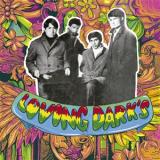
Los Amantes Oscuros" brings together for the first time on vinyl the recordings made between 1968 and 1969 by pioneers of Bolivian garage rock, Loving Darks, originally released on their three EPs. A selection packed with proto-punk covers of hits by the Stones, Cream, Tony Hatch, and more-often surpassing the originals in attitude and power. Their original records are highly sought after and are virtually impossible to find in any condition_ If we had to choose the Latin American country where the rawest and wildest garage and beat records of the '60s were recorded, Bolivia would be one of the clearest contenders. For some strange reason-surely related to the country's extreme conditions, its high altitude, and the influence of huayno-Bolivian recordings are truly unique and fascinating. A multitude of bands sprang up under the influence of groups-mainly British-that dominated the international charts. From the ashes of two of Bolivia's most important seminal bands, Los Black Byrds and The Turtles, two new groups fundamental to the history of Bolivian rock would be born: the mythical Climax and the legendary Loving Darks. "Los Amantes Oscuros" brings together for the first time on vinyl the recordings this band made between 1968 and 1969, originally released across three EPs on the local Lyra label. Their repertoire is packed with covers such as 'El Adivino,' a sped-up reinterpretation of 'Fortune Teller,' or even 'Algo de títere,' a reworking of 'Jumpin' Jack Flash.' They also adapt the classic 'Call Me' by Tony Hatch and 'Toad' by Cream, from whom they borrow the cover of one of their most iconic albums for the artwork of their EP "Complicado." In fact, 'Complicado'-a proto-punk version of the Rolling Stones' 'Complicated' and their signature track-is a perfect example of how a Bolivian band could outdo the British giants in attitude and power. Their importance lies in having paved the way for new sounds, styles, and aesthetics within a still-emerging scene. This compilation is a joint release with the Peruvian label Rey Record and includes an insert with notes on the band's history. First time vinyl reissue.

vorbestellen17.04.2026

erscheint voraussichtlich am 17.04.2026

Chessie + Contriva - Black Jacket LP 2x12"

Chessie + Contriva

Black Jacket LP 2x12"

2x12inchWAT09LP
Watusi
16.04.2026

“Black Jacket” is a love letter between two bands separated by continents but united by mutual admiration. Contriva, of Berlin, and Chessie of Washington, DC, first came together in 2001 when sharing a stage, sparking a deep connection over their respective takes on textural, emotive, and mostly instrumental music that merges post-rock, ambient, and experimental elements into unique visions. Fast forward two decades and many trips to their respective studios and we now have “Black Jacket”, a double LP of musical alchemy that builds upon the expressionistic, idiosyncratic sounds of these two groups. A new classic that proves far greater than the sum of its parts.

Begun in the mid 1990's, Washington DC's Chessie is Stephen Gardner (also of noisy shoegaze pioneers, Lorelei) and Ben Bailes, whose various LP's for Slumberland's Dropbeat imprint and Plug Research pair abstract electronics and melancholy post-rock in search of the sounds and feelings of railways and train travel.

Berlin's Contriva, (Monika Enterprises, Lok Musik, and Morr Music) features Masha Qrella (known for her solo works for Morr Music), Max Punktezahl (also of Munich indie legends the Notwist and Berlin's Jersey and Saroos), Hannes Lehmann and Rike Schuberty. For over a decade beginning in the mid-1990's, Contriva crafted compelling instrumentals, grafting experimental textures onto beautiful and complex indie songs.

Together, the six of them have created “Black Jacket.”

nicht am Lager

Bestelle jetzt und wir bestellen den Artikel für dich beim Lieferanten.

Guilty Razors - Complete Recordings 1977 - 1978

UILTY RAZORS, BONA FIDE PUNKS.


Writings on the topic that go off in all directions, mind-numbing lectures given by academics, and testimonies, most of them heavily doctored, from those who “lived through that era”: so many people today fantasize about the early days of punk in our country… This blessed moment when no one had yet thought of flaunting a ridiculous green mohawk, taking Sid Vicious as a hero, or – even worse – making the so-called alternative scene both festive and boorish. There was no such thing in 1976 or 1977, when it wasn’t easy to get hold of the first 45s by the Pistols or the Clash. Few people were aware of what was happening on the fringes of the fringes at the time. Malcolm McLaren was virtually unknown, and having short hair made you seem strange. Who knew then that rock music, which had taken a very bad turn since the early 1970s, would once again become an essential element of liberation? That, thanks to short and fast songs, it would once again rediscover that primitive, social side that was so hated by older generations? Who knew that, besides a few loners who read the music press (it was even better if they read it in English) and frequented the right record stores? Many of these formed bands, because it was impossible to do otherwise. We quickly went from listening to the Velvet Underground to trying to play the Stooges’ intros. It’s a somewhat collective story, even though there weren’t many people to start it.
The Guilty Razors were among those who took part in this initial upheaval in Paris. They were far from being the worst. They had something special and even released a single that was well above the national average. They also had enough songs to fill an album, the one you’re holding. In everyone’s opinion, they were definitely not among the punk impostors that followed in their wake. They were, at least, genuine and credible.

Guilty Razors, Parisian punk band (1975-1978). To understand something about their somewhat linear but very energetic sound, we might need to talk about the context in which it was born and, more broadly, recall the boredom (a theme that would become capital in punk songs) coupled with the desire to blow everything off, which were the basis for the formation of bands playing a rejuvenated rock music ; about the passion for a few records by the Kinks or the early Who, by the Stooges, by the Velvet mostly, which set you apart from the crowd.
And of course, we should remember this new wave, which was promoted by a few articles in the specialized press and some cutting-edge record stores, coming from New York or London, whose small but powerful influence could be felt in Paris and in a handful of isolated places in the provinces, lulled to sleep by so many appalling things, from Tangerine Dream to President Giscard d’Estaing...
In 1975-76, French music was, as almost always, in a sorry state ; it was still dominated by Johnny Hallyday and Sylvie Vartan. Local rock music was also rather bleak, apart from Bijou and Little Bob who tried to revive this small scene with poorly sound-engineered gigs played to almost no one.
In the working class suburbs at the time, it was mainly hard rock music played to 11 that helped people forget about their gruelling shifts at the factory. Here and there, on the outskirts of major cities, you still could find a few rockers with sideburns wearing black armbands since the death of Gene Vincent, but it wasn’t a proper mass movement, just a source of real danger to anyone they came across who wasn't like them. In August 1976, a festival unlike any other took place in Mont-de-Marsan – the First European Punk Festival as the poster said – with almost as many people on stage as in the audience. Yet, on that day, a quasi historical event happened, when, under the blazing afternoon sun, a band of unknowns called The Damned made an unprecedented noise in the arena, reminiscent of the chaotic Stooges in their early adolescence. They were the first genuine punk band to perform in our country: from then on, anything was possible, almost anything seemed permissible.

It makes sense that the four+1 members of Guilty Razors, who initially amplified acoustic guitars with crappy tape recorder microphones, would adopt punk music (pronounced paink in French) naturally and instinctively, since it combines liberating noise with speed of execution and – crucially – a very healthy sense of rebellion (the protesters of May 1968 proclaimed, and it was even a slogan, that they weren’t against old people, but against what had made them grow old. In the mid-1970s, it seemed normal and obvious that old people should now ALSO be targeted!!!).
At the time, the desire to fight back, and break down authority and apathy, was either red or black, often taking the form of leafleting, tumultuous general assemblies in the schoolyard, and massive or shabby demonstrations, most of the time overflowing with an exciting vitality that sometimes turned into fights with the riot police. Indeed, soon after the end of the Vietnam War and following Pinochet’s coup in Chile, all over France, Trotskyist and anarcho-libertarian fervour was firmly entrenched among parts of the educated youth population, who were equally rebellious and troublemakers whenever they had the chance. It should also be noted that when the single "Anarchy in the UK" was first heard, even though not many of us had access to it, both the title and its explosive sound immediately resonated with some of those troublemakers crying out for ANARCHY!!! Meanwhile, the left-wing majority still equated punks with reckless young neo-Nazis. Of course, the widely circulated photos in the mainstream press of Siouxsie Sioux with her swastikas didn’t necessarily help to win over the theorists of the Great Revolution. It took Joe Strummer to introduce The Clash as an anti-racist, anti-fascist and anti-ignorance band for the rejection of old-school revolutionaries to fade a little.

The Lycée Jean-Baptiste Say at Porte d’Auteuil, despite being located in the very posh and very exclusive 16th arrondissement of Paris, didn’t escape these "committed" upheavals, which doubled as the perfect outlet for the less timid members of this generation.
“Back then, politics were fun,” says Tristam Nada, who studied there and went on to become Guilty Razors’ frontman. “Jean-Baptiste was the leftist high-school in the neighbourhood. When the far right guys from the GUD came down there, the Communist League guys from elsewhere helped us fight them off.”
Anything that could challenge authority was fair game and of course, strikes for just about any reason would lead to increasingly frequent truancy (with a definitive farewell to education that would soon follow). Tristam Nada spent his 10th and 11th unfinished grades with José Perez, who had come from Spain, where his father, a janitor, had been sentenced to death by Franco. “José steered my tastes towards solid acts such as The Who. Like most teenagers, I had previously absorbed just about everything that came my way, from Yes to Led Zeppelin to Genesis. I was exploring… And then one day, he told me that he and his brother Carlos wanted to start a rock band.” The Perez brothers already played guitar. “Of course, they were Spanish!”, jokes their singer. “Then, somewhat reluctantly, José took up the bass and we were soon joined by Jano – who called himself Jano Homicid – who took up the rhythm guitar.” Several drummers would later join this core of not easily intimidated young guys who didn’t let adversity get the better of them.

The first rehearsals of the newly named Guilty Razors took place in the bedroom of a Perez aunt. There, the three rookies tried to cover a few standards, songs that often were an integral part of their lives. During a first, short gig, in front of a bewildered audience of tough old-school rockers, they launched into a clunky version of the Velvet Underground's “Heroin”. Challenge or recklessness? A bit of both, probably… And then, step by step, their limited repertoire expanded as they decided to write their own songs, sung in a not always very accurate or academic English, but who cared about proper grammar or the right vocabulary, since what truly mattered was to make the words sound as good as possible while playing very, very fast music? And spitting out those words in a language that left no doubt as to what it conveyed mattered as well.
Trying their hand a the kind of rock music disliked by most of the neighbourhood, making noise, being fiercely provocative: they still belonged to a tiny clique who, at this very moment, had chosen to impose this difference. And there were very few places in France or elsewhere, where one could witness the first stirrings of something that wasn’t a trend yet, let alone a movement.

In the provinces, in late 1976 or early 1977, there couldn’t be more than thirty record stores that were a bit more discerning than average, where you could hear this new kind of short-haired rock music called “punk”. The old clientele, who previously had no problem coming in to buy the latest McCartney or Aerosmith LP, now felt a little less comfortable there…
In Paris, these enlightened places were quite rare and often located nex to what would become the Forum des Halles, a big shopping mall. Between three aging sex workers, a couple of second-hand clothes shops, sellers of hippie paraphernalia and small fashion designers, the good word was loudly spread in two pioneering places – propagators of what was still only a new underground movement. Historically, the first one was the Open Market, a kind of poorly, but tastefully stocked cave. Speakers blasted out the sound of sixties garage bands from the Nuggets compilation (a crucial reference for José Perez) or the badly dressed English kids of Eddie and the Hot Rods. This black-painted den was opened a few years earlier by Marc Zermati, a character who wasn’t always in a sunny disposition, but always quite radical in his (good) choices and his opinions. He founded the independent label Skydog and was one of the promoters of the Mont-de-Marsan punk festivals. Not far from there was Harry Cover, another store more in tune with the new New York scene, which was amply covered in the house fanzine, Rock News (even though it was in it that the photos of the Sex Pistols were first published in France).
It was a favorite hang-out of the Perez brothers and Tristam Nada, as the latter explained. “It’s at Harry Cover’s that we first heard the Pistols and Clash’s 45s, and after that, we decided to start writing our first songs. If they could do it, so could we!”
The sonic shocks that were “Anarchy in the UK”, “White Riot” or the Buzzcocks’s EP, “Spiral Scratch” – which Guilty Razors' sound is reminiscent of – were soon to be amplified by an unparalleled visual shock. In April 1977, right after the release of their first LP, The Clash performed at the Palais des Glaces in Paris, during a punk night organised by Marc Zermati. For many who were there, it was the gig of a lifetime…
Of course, Guilty Razors and Tristam were in the audience: “That concert was fabulous… We Parisian punks were almost all dressed in black and white, with white shirts, skinny leather ties, bikers jackets or light jackets, etc. The Clash, on the other hand, wore colourful clothes. Well, the next day, at the Gibus, you’d spot everyone who had been at this concert, but they weren’t wearing anything black, they were all wearing colours.”

It makes sense to mention the Gibus club, as Guilty Razors often played there (sometimes in front of a hostile audience). It was also the only place in Paris that regularly scheduled new Parisian or Anglo-Saxon acts, such as Generation X, Siouxsie and the Banshees, the Slits, and Johnny Thunders who would become a kind of messed-up mascot for the venue. A little later, in 1978, the Rose Bonbon – formerly the Nashville – also attracted nightly owls in search of electric thrills… In 1977, the iconic but not necessarily excellent Asphalt Jungle often played at the Gibus, sometimes sharing the bill with Metal Urbain, the only band whose aura would later transcend the French borders (“I saw them as the French Sex Pistols,” said Geoff Travis, head of their British label Rough Trade). Already established in this small scene, Metal Urbain helped the young and restless Guilty Razors who had just arrived. Guitarist for Metal Urbain Hermann Schwartz remembers it: “They were younger than us, we were a bit like their mentors even if it’s too strong a word… At least they were credible. We thought they were good, and they had good songs which reminded of the Buzzcocks that I liked a lot. But at some point, they started hanging out with the Hells Angels. That’s when we stopped following them.”

The break-up was mutual, since, Guilty Razors, for their part, were shocked when they saw a fringe element of the audience at Metal Urbain concerts who repeatedly shouted “Sieg Heil” and gave Nazi salutes. These provocations, even still minor (the bulk of the skinhead crowd would later make their presence felt during concerts), weren’t really to the liking of the Perez brothers, whose anti-fascist convictions were firmly rooted. Some things are non-negotiable.
A few months earlier (in July 1978), Guilty Razors had nevertheless opened very successfully for Metal Urbain at the Bus Palladium, a more traditonally old-school rock night-club. But, as was sometimes the case back then, the night turned into a mass brawl when suburban rockers came to “beat up punks”.

Back then, Parisian nights weren’t always sweet and serene.

So, after opening as best as they could for The Jam (their sound having been ruined by the PA system), our local heroes were – once again – met outside by a horde of greasers out to get them. “Thankfully,” says Tristam, “we were with our roadies, motorless bikers who acted as a protective barrier. We were chased in the neighbouring streets and the whole thing ended in front of a bar, with the owner coming out with a rifle…”
Although Tristam and the Perez brothers narrowly escaped various, potentially bloody, incidents, they weren’t completely innocent of wrongdoing either. They still find amusing their mugging of two strangers in the street for example (“We were broke and we simply wanted to buy tickets for the Heartbreakers concert that night,” says Tristam). It so happened that their victims were two key figures in the rock business at the time: radio presenter Alain Manneval and music publisher Philippe Constantin. They filed a complaint and sought monetary compensation, but somehow the band’s manager, the skilful but very controversial Alexis, managed to get the complaint withdrawn and Guilty Razors ended up signing with Constantin with a substantial advance.

They also signed with Polydor and the label released in 1978 their only three-track 45, featuring “I Don't Wanna be A Rich”, “Hurts and Noises” and “Provocate” (songs that exuded perpetual rebellion and an unquenchable desire for “class” confrontation). It was a very good record, but due to a lack of promotion (radio stations didn’t play French artists singing in English), it didn’t sell very well. Only 800 copies were allegedly sold and the rest of the stock was pulped… Initially, the three tracks were to be included on a LP that never came to be, since they were dropped by Polydor (“Let’s say we sometimes caused a ruckus in their offices!” laughs Tristam.) In order to perfect the long-awaited LP, the band recorded demos of other tracks. There was a cover of Pink Floyd's “Lucifer Sam” from the Syd Barrett era – proof of an enduring love for the sixties’ greats –, “Wake Up” a hangover tale and “Bad Heart” about the Baader-Meinhof gang, whose actions had a profound impact on the era and on a generation seeking extreme dissent... On the album you’re now discovering, you can also hear five previously unreleased tracks recorded a bit later during an extended and freezing stay in Madrid, in a makeshift studio with the invaluable help of a drummer also acting as sound engineer. He was both an enthusiastic old hippie and a proper whizz at sound engineering. Here too, certain influences from the fifties and sixties (Link Wray, the Troggs) are more than obvious in the band’s music.

Shortly after a final stormy and rather barbaric (on the audience’s side) “Punk night” at the Olympia in June 1978, Tristam left the band ; his bandmates continued without him for a short while.

But like most pioneering punk bands of the era, Guilty Razors eventually split up for good after three years (besides once in Spain, they’d only played in Paris). The reason for ceasing business activities were more or less the same for everyone: there were no venues outside one’s small circuit to play this kind of rock music, which was still frightening, unknown, or of little interest to most people. The chances of recording an LP were virtually null, since major labels were only signing unoriginal but reassuring sub-Téléphone clones, and the smaller ones were only interested in progressive rock or French chanson for youth clubs. And what about self-production? No one in our small safety-pinned world had thought about it yet. There wasn’t enough money to embark on that sort of venture anyway.

So yes, the early days of punk in France were truly No Future!

nicht am Lager

Bestelle jetzt und wir bestellen den Artikel für dich beim Lieferanten.


Last In: vor 7 Tagen
The Appetizers - Keep Your Step LP
  • 01: Feel Like Dancing
  • 02: Thicker Than Water
  • 03: A Message From The Meters
  • 04: Catch This
  • 05: Fussy Girl
  • 06: Cool And Deadly
  • 07: The Life
  • 08: Keep Your Step
  • 09: Make It Reggay
  • 10: Behind My Shoulders
  • 11: Stormy Weather
  • 12: We Shall Overcome

Killer Groove Records proudly presents "Keep Your Step", the explosive comeback by Italian rock steady & early reggae ambassadors The Appetizers, a soulful celebration of reggae's timeless spirit.


"Keep Your Step" marks the band's much-awaited return, landing April 10th on limited edition LP, CD digipack and digital format featuring two exclusive bonus tracks.

The Appetizers deliver a masterclass in roots reggae music with their highly anticipated second studio album, bridging Jamaica's golden age with contemporary relevance. "Keep Your Step" is a heartfelt sonic journey where the band blends rocksteady and early reggae with funk and soul influences to create a sound that's both genuine and refreshingly modern.

The fourteen tracks move fluidly between infectious dancefloor fillers and socially conscious lyrics. From the laid-back swing of "Feel Like Dancing" to the hypnotic rhythm of "Thicker Than Water", the band demonstrates their versatility while remaining true to the roots of Jamaican sound. "A Message from The Meters" pays tribute to the legendary funk pioneers, while the instrumental "Catch This" and "Make It Reggay" highlight the band's musical prowess and the deep connections between reggae and funk.

Meanwhile, tracks like "Fussy Girl" and "Behind My Shoulders" explore love's complexities with humor and soul. The album's heart lies in its social consciousness. "Cool and Deadly", "The Life", "Stormy Weather" and the album title track "Keep Your Step" tell stories of perseverance through life's struggles.

With the hopeful anthem "We Shall Overcome," The Appetizers deliver a timely message about genuine human connection in a social media-dominated era. The digital edition closes with "Get Some Rollin'" and "Swing and Sway," rounding out the journey with two additional gems.

"Keep Your Step" pays homage to Jamaican music legends, from Jackie Mittoo and Tommy McCook to Toots & the Maytals, while carving out The Appetizers' own distinctive sound. This is a groove made for both the dance floor and the soul, proving that reggae's power to inspire, unite, and uplift remains as vital as ever.

The production stays true to The Appetizers' signature sound: organic tones, deep groove, and that live-room vibe you only get when real musicians are locked in together. Luca Monza and Claudio Mambrini, the band's core members, handled the artistic production. Mastering came courtesy of the great JJ Golden (Black Pumas, Sharon Jones & The Dap-Kings, Jr. Thomas & The Volcanos, The Frightnrs) at Golden Mastering in Ventura, California. JJ is one of the most trusted engineers working in this sound, ensuring every ounce of warmth and authenticity came through.

The Appetizers are a rocksteady and early reggae band formed in Milan in 2020 by musicians deeply embedded in the Italian and international reggae scene. Musicians from different paths united by a shared vision: recreating that vintage Caribbean and American sound with authenticity, respect and a forward-thinking edge.

Drawing inspiration from Jamaica's golden era and channeling the soul of Delroy Wilson, Alton Ellis, the early Wailers, and The Upsetters, The Appetizers carry forward the essence of bass culture with a pure, fully organic approach.

Their debut album Listen Up! (2022), released via Belgian imprint Badasonic Records (home to The Slackers, The Aggrolites, David Hillyard & Victor Rice), featured ten original tracks and a dub cut by Victor Rice. Distributed across Europe, the UK, the US, and Japan, it quickly earned international recognition among reggae connoisseurs and selectors worldwide.

Following extensive touring, including shows with The Slackers, Black Uhuru, Skip Marley, and more, the band returned to the studio to record "Keep Your Step", their second album produced by Killer Groove Records. Here the band expands its musical language, weaving together the spirit of historic Jamaican labels like Studio One and Treasure Isle with '60s funk, arriving at a warm, organic, and timeless sound: soul, Jamaican roots, and modern sensibility in perfect balance. Their lyrics explore heartbreak, social issues, and reflections on life and music, performed with dedication and respect for tradition while always pushing forward.


If you're into The Skatalites, The Ethiopians, and those classic Caribbean rhythms, this one's for you.

vorbestellen10.04.2026

erscheint voraussichtlich am 10.04.2026

Marion Brown - Awofofora

First time reissue of JP / US free jazz rarity.

The 1970s were Marion Brown’s most searching decade, a period during which he sought to move beyond the free jazz of the previous era and find more personal approaches to structuring improvisation and composition. After leaving New York for Europe in 1967, Brown began reshaping his music into what he described as “a more deliberate kind of music that had more structure to it,” pacing it so that moods and modes could develop over time. Albums such as In Sommerhausen, Afternoon of a Georgia Faun, Geechee Recollections, and Sweet Earth Flying trace this evolution: rhythmic structures moved to the foreground, harmony receded, and composition became a matter of orchestrating interlocking rhythmic parts as one would polyphonic lines.

Released in 1976, Awofofora is an overlooked but crucial entry in that sequence. At the time, its use of funk and reggae beats, electric guitars, and grooves drawn from contemporary Black popular music led some to misread it as a jazz-rock detour. In retrospect, it is entirely consistent with Brown’s methodology. As he admired in the Art Ensemble of Chicago, the stimulus comes from within the community. Here Brown filters Afro-Caribbean rhythms and funk through his own sensibility, abstracting their structural qualities rather than adopting surface style.

“La Placita,” making its first recorded appearance, layers distinct rhythmic phrases in a manner reminiscent of African drum ensembles, over which Brown and trumpeter Ambrose Jackson spin extended improvisations. The standard “Flamingo” is reshaped through diasporic rhythm and lyrical soloing, while “Pepi’s Tempo” and “Mangoes” harness crisp funk and reggae grooves to generate what Brown called a “manifestation of community” through collective improvisation. Even the overdubbed solo feature “And Then They Danced” reflects his structural thinking, ingeniously re-voicing a duet composition for two alto saxophones performed by one player.

This was the only recording by a short-lived band that briefly polarized audiences during festival appearances in 1976. Yet Brown consistently sought unity across change: different sounds, same principles — rhythm as structure, melody as architecture, collective improvisation, and above all, the primacy of tone. Awofofora stands not as a departure, but as a vivid synthesis of the elements he had been refining since the late 1960s, its grooves and golden alto lines conveying a sound drawn, in his words, “from life and from the world of experience.”

vorbestellen10.04.2026

erscheint voraussichtlich am 10.04.2026

Stephan Eicher - Spielt Noise Boys

2025 Reissue.


Münchenbuchsee, a suburb of Bern, Switzerland. Stephan Eicher is the youngest of three children. His father, a radio and TV repairman, is also a jazz violinist and a sound tinkerer in his spare time. In the family home's converted fallout shelter turned studio, Mr. Eicher experiments with homemade sequencers, tortures handcrafted drum machines, and abuses reel-to-reel tape recorders—all under the fascinated gaze of young Stephan.

The boy quickly develops a musical curiosity, exploring sound through various experiments and wanderings. Alongside his younger brother Martin, Stephan crafts audio plays on a homemade multi-track recorder (essentially several cassette decks hooked together!), which they write, record, add sound effects to, and perform for family and friends. Just a couple of nice kids, really...

Then comes 1972, and Lou Reed's Transformer album changes everything for the Eicher kids. For 13-year-old Stephan, it's a revelation—especially "Vicious", the opening track, which he plays on repeat for months. He convinces his father to buy him an electric guitar. Not stopping there, his father also builds him a tube amp using an old radio.

Then comes adolescence. A rough one. Stephan leaves home at 16 and moves to Zurich. With obvious artistic talent, he persuades his art teacher to help him get into F+F, a radical, alternative art school—despite his young age. Accepted, he starts learning video techniques, determined to become a filmmaker.

At F+F, Stephan organizes Dada-style happenings and concerts with a group of friends known as the Noise Boys. Among them: one of his teachers on bass, Veit Stauffer on drums (who would later found ReR/Recommended Records), his girlfriend Sacha on vocals, and Stephan on guitar. In one of their early performances, they release a remote-controlled mouse covered in dull razor blades into the audience to create panic and chaos. Keeping with this aggressive, confrontational spirit, they once played a concert while wearing headphones blasting Tristan and Isolde, trying to perform their own songs simultaneously—to maximize the cacophony. The goal was always the same: clear the room.

Their “songs,” if you can call them that, followed suit. Take "Hungeriges Afrika", for instance—performed entirely with power drills and some drum feedback.

To make ends meet, Stephan returns to Bern on weekends to work as a waiter at the Spex Club, the city’s main punk venue. On September 16, 1980, during a show by proto-electro group Starter, the police raid the club and arrest everyone. Stephan, who manages to avoid arrest, seizes the opportunity to “borrow” Starter’s gear left behind. He suddenly finds himself in possession of a Roland Promars synth, a Korg MS20, and a gorgeous CR78 drum machine, which he runs through a Big Muff distortion pedal to get that perfect gritty sound.

He then sets out to reinterpret some Noise Boys tracks, reworking them during impromptu sessions recorded on a dictaphone (yes, a dictaphone—now the lo-fi sound makes more sense, doesn’t it?). He ironically titles the resulting cassette "Stephan Eicher spielt Noise Boys" ("Stephan Eicher plays Noise Boys"). This gem features seven tracks, which are the ones reissued here.

Back in Zurich, he visits his friends Andrew Moore and Robert Vogel, who have a DIY cassette duplication setup. They make 25 copies of Stephan Eicher spielt Noise Boys for Stephan and his friends. Robert encourages him to visit Urs Steiger of Off Course Records and play him the tape.

Without much hope, Stephan shows up at Urs’s office. But Urs is instantly hooked and suggests releasing a 7” single. Due to space constraints, they reluctantly drop two of the seven tracks ("Hungeriges Afrika" and "One Second"). As for the musical score featured on the cover—it was randomly chosen and remains a mystery to this day. Calling all music theory nerds!

The 7-inch is pressed in 750 copies and released in the first week of December 1980—a date Stephan remembers well, as it’s the same week John Lennon was killed. Smartly, Urs sends a promo copy to François Murner, Switzerland’s answer to John Peel, who hosts a show on alternative station Sounds. Murner falls in love with the record and starts giving it airtime. To Stephan’s surprise, sales follow—and people actually seem interested in his music.

Even this modest underground success scares Stephan a bit. He stops making music for a year and moves to Bologna, where he works as a programmer at Radio Città, a feminist radio station.

Meanwhile, Stephan’s younger brother Martin, who’s also involved in the punk scene, joins the band Glueams as a singer and guitarist. Glueams, named after the fanzine run by two of its members (drummer Marco Repetto and bassist GT), eventually rebrands as Grauzone. Stephan is invited to their shows to project hacked Super 8 visuals live on stage.

Urs Steiger, now working on a compilation titled Swiss Wave – The Album, asks Grauzone to contribute alongside bands like Liliput, Jack and the Rippers, The Sick, and Ladyshave (Fall 1980).

For the album, Martin tasks Stephan with producing their recording sessions. Under Stephan's artistic direction, two tracks emerge: "Raum" and "Eisbär". During "Eisbär", Martin plays a minimalist bass line borrowed from post-punk band The Feelies (just an open string). Drummer Marco Repetto struggles to keep time. Later that evening, unhappy with the takes, Stephan builds a four-bar drum loop from a ¼-inch tape and uses it instead of the flawed original. He then adds bleepy synths and wind sounds to complete the track’s icy vibe before handing it over to Urs.

The Swiss Wave – The Album compilation is released quietly at first, but things snowball thanks to "Eisbär", which eventually becomes a smash hit—selling over 600,000 singles.

Meanwhile, Stephan plays in a rockabilly band called SMUV (named after Switzerland’s social security agency) and begins producing artists, including the debut album of Starter (1981), which includes a more pop-oriented version of "Minijupe".

By early 1982, Stephan starts spending time with the post-punk girl band Liliput (formerly Kleenex). They’re older than him, and he happily drives them around in his Renault Major, acting as their roadie.

By 1983, Grauzone—signed to the major label EMI, which turned out to be a misstep—is falling apart. Stephan begins to pivot toward a more mainstream pop sound with his debut solo album Les Chansons Bleues.

But that... is already another story.

nicht am Lager

Bestelle jetzt und wir bestellen den Artikel für dich beim Lieferanten.


Last In: vor 7 Tagen
The Beths - Expert In A Dying Field LP

REPRESS ON SILVER VINYL . COMES WITH 24”x24” POSTER + DOWNLOAD CARD + GATEFOLD JACKET.


On The Beths’ album Expert In A Dying Field, Elizabeth Stokes’ songwriting positions her somewhere between being a novelist and a documentarian. The songs collected here are autobiographical, but they’re also character sketches of relationships – platonic, familial, romantic – and more importantly, their aftermaths. The shapes and ghosts left in absences. The question that hangs in the air: what do you do with how intimately versed you’ve become in a person, once they’re gone from your life?

The third LP from the New Zealand quartet houses 12 jewels of tight, guitar-heavy songs that worm their way into your head, an incandescent collision of power-pop and skuzz. With Expert, The Beths wanted to make an album meant to be experienced live, for both the listeners and themselves. They wanted it to be fun -- to hear, to play -- in spite of the prickling anxiety throughout the lyrics, the fear of change and struggle to cope.

Most of Expert was recorded at guitarist Jonathan Pearce’s studio on Karangahape Road in Tāmaki Makaurau, Aotearoa (Auckland, New Zealand) -- and sometimes in the building's cavernous stairwell at 1am -- toward the end of 2021, until they were interrupted by a four-month national lockdown. They traded notes remotely for months, songwriting from afar and fleshing out the arrangements alone, the first time they’d written together in such a way. The following February, The Beths left the country for the first time in more than two years to tour across the US, and simultaneously finish mixing the album on the road. That latter half felt more collaborative, with everyone on-hand to trade notes in real time, until it all culminated in a chaotic three-day studio mad-dash in Los Angeles. There, Expert finally became the record they were hearing in their heads.

Expert is an extension of the same skuzzy palette the band has built across their catalog, pop hooks embedded in incisive indie rock. The album’s title track “Expert In A Dying Field” introduces the thesis for the record: “How does it feel to be an expert in a dying field? How do you know it’s over when you can’t let go?” Stokes asks. “Love is learned over time ‘til you’re an expert in a dying field.”

The rest is a capsule of The Beths’ most electrifying and exciting output, a sonic spectrum: “Your Side” is a forlorn and sincere love song, emotive; while “Silence is Golden,” with its propulsive drum line and stop-start staccato of a guitar line winding up and down, is one of the band’s sharpest and most driving. “When You Know You Know” skews a bit groovier, pure pop and a natural addition to the band’s live set. “Knees Deep” was written last minute, but yields one of the best guitar lines on Expert. There’s a certain chaos across the 12 tracks, the palpable joy of playing music with long-time friends colliding with the raw nerves of pain.

Stokes strings it all together through her singular songwriting lens, earnest and self-effacing, zeroing in on the granules of doubt and how they snowball. Did I do the wrong thing? Or did you? And are we still good people at the end of it? She isn’t interested in villains, but instead interested in just telling the story. That insecurity and thoughtfulness, translated into universality and understanding, has been the guiding light of The Beths’ output since 2016. In the face of pain, there’s no dwelling on internal anguish - instead, through The Beths’ music, our shortcomings are met with acceptance. And Expert In A Dying Field is the most tactile that tenderness has been.

vorbestellen03.04.2026

erscheint voraussichtlich am 03.04.2026

JACKE SCHWARZ - PO PUCU UNTERWEGS
  • Immer Ärger In Der Stadt
  • Jj Cale
  • Wer Wirst Du Gewesen Sein
  • Tuta Lubosc
  • Irgendwann Zu Spät
  • Zarz Me Ksuse
  • Moja Wutroba
  • Pytas A Namakas
  • Die Welt Ist Grausam
  • New Orleans
  • Bevor Du Gehst
  • Wer Bist Du
  • Werden Wir Jemals
  • Kommt Die Nacht
  • Willis Traum

Die 15 Songs sind eine Reise und zaubern uns mit der klassischen Rock-Group (Gitarre, Bass, Schlagzeug) sowie mit Slideguitar, Geige, Nyckel-Harpa, Chor, Klavier- und Orgelsounds bunte Bilder in den Kopf. Eine Mischung aus erdigem Blues - Country und Folkrock mit prägnanten Lyrics auf deutscher und sorbischer Sprache.Die Musik öffnet mit ruhigen, tiefen, gospelartigen Passagen Räume und bewegt sich bis hin zum Punkrock.Textlich handelt das Album vom Weg, den du mit der Zeit gehst, von den damit verbundenen Sorgen, vom Ringen mit dem Guten und dem Bösen, von Liebe, von Freundschaft aber vor allem von Hoffnung. Der Sound von J.J.Cale, Neil Young und Ry Cooder verschmilzt mit modernem Postpunk und kreiert etwas ganz eigenes. Ein Album mit vielen Ecken, Kanten und Rundungen.Jacke selbst nennt seine Musik Lusitzana, was eine Anspielung auf den Begriff Americana ist. Hier gehts jedoch um das Leben in den langsam austrocknenden Sümpfen und Wäldern der Lausitz, rund um die Spree - Wo die Wölfe heulen und die Schafe ins Gras beißen. Aber die Hoffnung stirbt zuletzt und der Rock wird siegen! (Henne)

vorbestellen27.03.2026

erscheint voraussichtlich am 27.03.2026

Raekwon - Only Built 4 Cuban Linx... Pt. II - THE INSTRUMENTALS, Shaolin Noir Edition (2x12")
 
24

First released in 2009, Only Built 4 Cuban Linx… Pt. II stands as Raekwon’s celebrated sequel to the Purple Tape, expanding his cinematic mafioso rap universe.

This newly designed instrumental edition removes the vocals to place full focus on the album’s production, featuring beats by J Dilla, Dr. Dre, RZA, Pete Rock, The Alchemist, and more.

For the first time ever on vinyl, the instrumentals are presented as a standalone listening experience, revealing the album’s grit, mood, and layered sound design.

Pressed on classic black vinyl and housed in a heavy matte-finish jacket with spot gloss text, the Shaolin Noir Edition keeps the spotlight on the music itself, serving as a clean, essential companion to one of Raekwon’s most acclaimed releases.

vorbestellen27.03.2026

erscheint voraussichtlich am 27.03.2026

SLUICE - COMPANION
  • Beadie
  • Ratchet Strap
  • Wtf
  • Gator
  • The Ephemeral Stream
  • Torpor
  • Unknowing
  • Overhead
  • Zillow
  • Vegas

Als Justin Morris 2019 nach einem Leben in North Carolina nach New York City zog, hatte er vor, das Gegenteil von dem zu machen, wofür die Leute normalerweise in die Stadt ziehen: seinen Traum aufzugeben. Seit seiner Kindheit war dieser Traum einfach: Songs schreiben, in Bands spielen, im ,Indie-Rock" leben. Aber als er für einen der größten Indie-Stars der Zeit Merchandise verkaufte, geriet diese Überzeugung ins Wanken. Von seinem Platz im Bus aus betrachtet, schien der Alltag auf Tournee nicht zu den faszinierenden Shows zu passen; Zugaben wichen einer Arbeitsrealität, die ihm die berufliche Seite von etwas zeigte, das er immer nur romantisiert hatte, und ihn fragen ließ, wo der Glanz geblieben war. Für seine naive Weltanschauung war die Kluft zwischen der Fantasie, ,es zu schaffen", und der Realität erschütternd. Wenn das ,der Traum" war, dachte er, musste er vielleicht überdacht werden. New York sollte ein Neuanfang sein, vielleicht sogar der Ort, an dem er einen anderen Beruf erlernen und die Musik hinter sich lassen würde. Doch weniger als einen Tag nach seinem Einzug in die Untermiete in Bushwick trat ein Mann mit einer Waffe seine Schlafzimmertür ein, zwang ihn auf den Boden und fesselte seine Hände mit Fernsehkabeln. In den Tagen nach dem Raubüberfall, in denen er nur noch durch Songs einen Sinn in den Dingen erkennen konnte, begann er wieder zu schreiben. Diese Songs wurden zum Beginn eines neuen Projekts, das er Sluice nannte. Sluice ist jetzt eine vierköpfige Band aus Durham, North Carolina - mit Morris an der Gitarre und am Gesang, Oliver Child-Lanning am Bass und verschiedenen Instrumenten, Avery Sullivan am Schlagzeug und Libby Rodenbough an der Geige - mit Companion, ihrem dritten Album und Debüt bei Mtn Laurel Recording Co. Es folgt auf Radial Gate aus dem Jahr 2023, das still geliebte Album, das Morris aufgenommen hatte, nachdem er aus New York geflohen war und sich mit dem damals noch unbekannten Child-Lanning in einem Haus in Hillsborough niedergelassen hatte, das er über Craigslist gefunden hatte. Dort nahm er Songs im Sylvan Essos Studio Bettys auf, während er als Zimmermann arbeitete. ,Companion" ist ein Album über das Dating, über das Verlieben zu den weitläufigen Refrains von Kenny Chesney und Alan Jackson. Der ,Begleiter" ändert seine Form: Manchmal hat er einen Namen (Sara, Bluey, Of Doe Eyes), manchmal ist er ein Hund, der morgens aus der Tür schlüpft, manchmal ist es Morris selbst, der sein Spiegelbild im Badezimmerspiegel sieht und murmelt: ,Junge, ich liebe dich." Manchmal sind es die Tischler, die Stadtbewohner, die Bandkollegen, die alten Tourkollegen, die wieder in sein Leben treten. In seinem sachlichen, ironiefreien lyrischen Stil, den Pitchfork einmal als ,eine Umerziehung in Aufrichtigkeit" beschrieb, wirken diese Menschen real, weil sie es sind. Und immer in greifbarer Nähe ist die Musik selbst, die Begleiterin, die fast verloren gegangen wäre.

vorbestellen27.03.2026

erscheint voraussichtlich am 27.03.2026

NINA HAGEN - HiGHWAY TO HEAVEN LP

NINA HAGEN

HiGHWAY TO HEAVEN LP

12inchLPGRON314
Grönland
27.03.2026

180g, Gatefold, schwarzes Vinyl. Fünfzehn Jahre nach Personal Jesus kehrt Nina Hagen mit HiGHWAY TO HEAVEN zu ihrer großen Gospel-Leidenschaft zurück. Gemeinsam mit Produzent Warner Poland, ihrer Band sowie Freundinnen wie Nana Mouskouri und Gitte Hænning interpretiert sie Klassiker neu - von Mahalia Jackson über Sister Rosetta Tharpe bis zu Kitty Wells. Das Album verbindet Southern Gospel, Americana, Reggae und Punk: Von der kraftvollen Neubearbeitung von "Somebody Prayed for Me" bis zur Americana-Version von "Never Grow Old" und einer deutschen Fassung von "Everybody Wanna Go to Heaven". HiGHWAY TO HEAVEN ist ein lebendiges, genreoffenes Gospel-Rock-Pop-Album, voller Spielfreude, Spiritualität und unverkennbarer Nina-Hagen-Persönlichkeit.

vorbestellen27.03.2026

erscheint voraussichtlich am 27.03.2026

NINA HAGEN - HiGHWAY TO HEAVEN LP

Nina Hagen

HiGHWAY TO HEAVEN LP

12inchLPGRONT314
Grönland
27.03.2026
  • Everybody Gonna Have A Wonderful Time Up There
  • Never Grow Old Ft Nana Mouskouri
  • Walk With Me Jesus
  • Trouble Of The World
  • Somebody Prayed For Me
  • Needed Time
  • Hand It Over Ft Daniel Welbat
  • Let's Be Happy
  • Theres A Highway To Heaven Ft Gitte Hænning
  • Everything's Gonna Be Alright
  • Dust On The Bible
  • Dry Bones
  • Alle Wollen In Den Himmel
  • Gospel Ship
auch erhältlich

Black Vinyl


180g, Gatefold, White Vinyl, limitiert auf 1000 Exemplare. Fünfzehn Jahre nach Personal Jesus kehrt Nina Hagen mit HiGHWAY TO HEAVEN zu ihrer großen Gospel-Leidenschaft zurück. Gemeinsam mit Produzent Warner Poland, ihrer Band sowie Freundinnen wie Nana Mouskouri und Gitte Hænning interpretiert sie Klassiker neu - von Mahalia Jackson über Sister Rosetta Tharpe bis zu Kitty Wells. Das Album verbindet Southern Gospel, Americana, Reggae und Punk: Von der kraftvollen Neubearbeitung von "Somebody Prayed for Me" bis zur Americana-Version von "Never Grow Old" und einer deutschen Fassung von "Everybody Wanna Go to Heaven". HiGHWAY TO HEAVEN ist ein lebendiges, genreoffenes Gospel-Rock-Pop-Album, voller Spielfreude, Spiritualität und unverkennbarer Nina-Hagen-Persönlichkeit.

vorbestellen27.03.2026

erscheint voraussichtlich am 27.03.2026

The Pale White - Inanimate Objects of the 21st Century LP
  • A1: Moth In The Headlights
  • A2: Float Away
  • A3: Göbekli Tepe
  • A4: Absolute Cinema
  • A5: Oh Brother
  • A6: Medusa
  • B1: Carpe Diem
  • B2: Mannequin
  • B3: This Fascination
  • B4: Disappoint Me
  • B5: All I Have To Do Is Dream

With their third album, Inanimate Objects of the 21st Century, Newcastle’s The Pale White prove once again that there’s no slowing them down. Following the success of their introspective sophomore album The Big Sad, brothers Adam (vocals/guitar) and Jack Hope (drums) return louder, sharper, and more defiant than ever. This third full-length is their most expansive yet: a record that blends the anthemic punch of classic rock with the urgency and edge of modern alternative.The title, Inanimate Objects of the 21st Century, is a nudge to the uncomfortable irony of our time – as technology accelerates, humanity feels increasingly frozen in place. Lead singer Adam Hope says: “Technology is moving, but we are not. Human civilization entered the 21st century wide-eyed and naive with mobile phones that would barely fit in our pockets. Fast forward a few decades and we’re so far from where we were that it almost looks like a bad 80’s sci-fi movie. Back then, that film would be watched in packed-out cinemas after an eagerly anticipated release, but now they stand emptier than they once were, attended mainly as a nostalgic experience in the age of Netflix and doomscrolling.

The birth of AI, algorithms, cryptocurrency, drones, holographic concerts, autonomous cars… we’re living in a strange transitional period which is both fascinating and terrifying in equal measure. We humans have now in fact become the inanimate objects - mannequins.After our softer, melancholic second album ‘The Big Sad’, we felt it was only right to move as fast as our world is moving and release our next within the year. ‘Inanimate Objects of the 21st Century’ is the evil twin, the Yin to The Big Sad’s Yang.”

vorbestellen27.03.2026

erscheint voraussichtlich am 27.03.2026

Various - Minyo Groove 1963-1979 - Japan Meets Latin, Rock, Rare Groove & Funky Vibes (Selected by DJ Yoshizaw

- For all fans of the Wamono series!

- All tracks selected by DJ Yoshizawa Dynamite. Includes the first ever vinyl release of The Peanuts' "Ohara Bushi" track, originally released only on tape in 1970.

- Fully licensed King Records masters.

- Mastering and lacquer cut by Jukka Sarapaa at Timmion Cutting Lab, Helsinki, Finland.

- 180g heavy vinyl pressing, reverse board jacket.

- Artwork by Nicolas Kerembellec (Nker).

---

Active as a professional DJ in Japan since the late eighties, DJ Yoshizawa Dynamite is also a renowned remixer, compiler and producer. An avid record collector and an expert of Wamono music, Yoshizawa has published in 2015 the now-classic Wamono A to Z records guide book, which instantly sold-out. The book unveiled a myriad of beautiful and rare records from a highly prolific, but still then unknown, Japanese groove scene. He has also selected a large part of the music in our highly acclaimed Wamono compilations.

For this brand new chapter in the series, Yoshizawa explores King Records' legendary catalog and unearths exceptional, rare and unknown musical gems. King Records has been releasing music since 1931 and is one of the most prestigious labels in Japan. Traditional Japanese music, known as "Minyo", are ancient songs once sung by fishermen, coal miners and sumo wrestlers. They are reimagined here with vibrant afro latin, rock, rare groove and funky arrangements in this killer selection of music released on King between 1963 and 1979. Also worth mentioning is the track Ohara Bushi by The Peanuts, which was released only on tape in 1970 and is now available for the first time ever on vinyl format.

Put the needle on the record, turn up the volume and dig right now into the Wamono sound - the cream of the Japanese funk, soul, rare groove and disco music developed throughout the years since the end of the fifties in Japan!

---

180GWALP08 - Manufactured and distributed by 180g.

nicht am Lager

Bestelle jetzt und wir bestellen den Artikel für dich beim Lieferanten.


Last In: vor 32 Tagen
Various - NOW – Yearbook 1983

Various

NOW – Yearbook 1983

3x12inchLPYBNOW83
Universal UK
11.03.2026
  • A1: Orchestral Manoeuvres In The Dark– Telegraph
  • A2: Blancmange– That's Love, That It Is
  • A3: China Crisis– Tragedy And Mystery
  • A4: Adam Ant– Strip
  • A5: Divine– Love Reaction
  • A6: Yello – I Love You
  • A7: Talk Talk– My Foolish Friend
  • A8: Japan– Canton (Live)
  • B1: Fun Boy Three– The More I See (The Less I Believe)
  • B2: Tracie*– Give It Some Emotion
  • B3: The Teardrop Explodes– You Disappear From View
  • B4: Xtc– Love On A Farmboy's Wages
  • B5: The Stranglers– Midnight Summer Dream
  • B6: The Kinks– Don't Forget To Dance
  • B7: Mari Wilson– Cry Me A River
  • C1: Bauhaus– Lagartija Nick
  • C2: Marc And The Mambas– Black Heart
  • C3: The Glove– Like An Animal
  • C4: Freur– Doot Doot
  • C5: The B-52'S– Song For A Future Generation
  • C6: Wall Of Voodoo– Mexican Radio
  • C7: Joe Jackson– Breaking Us In Two
  • D1: Oliver Cheatham– Get Down Saturday Night
  • D2: Rockers Revenge– The Harder They Come
  • D3: Freeez– Pop Goes My Love
  • D4: Malcolm Mclaren– Soweto
  • D5: Culture Club– I'll Tumble 4 Ya
  • D6: The Belle Stars– Indian Summer
  • D7: Level 42– Out Of Sight Out Of Mind
  • D8: Daryl Hall & John Oates– One On One
  • E1: Sparks & Jane Wiedlin– Cool Places
  • E2: The Romantics– Talking In Your Sleep
  • E3: The Fixx– Saved By Zero
  • E4: The Motels– Suddenly Last Summer
  • E5: Modern English– I Melt With You
  • E6: Missing Persons– Walking In L A
  • E7: Naked Eyes– Always Something There To Remind Me
  • E8: Taco– Puttin' On The Ritz
  • F1: Electric Light Orchestra– Secret Messages
  • F2: Men At Work– Overkill
  • F3: Pat Benatar– Little Too Late
  • F4: Journey– Separate Ways (Worlds Apart)
  • F5: Styx– Mr Roboto
  • F6: Giorgio Moroder & Joe Esposito– Lady, Lady
  • F7: Stephen Bishop– It Might Be You

Celebrating the first year of ‘NOW That’s What I Call Music’ – 1983. ‘Now Yearbook’ presents a stellar selection of 1983’s biggest and best hits… 80 huge chart hits from the year, alongside enduring and well-loved classics on 4 CDs. 1983 saw British artists achieving unprecedented success across the world with ‘Every Breath You Take’ from The Police being the year’s biggest seller in the U.S., and ‘Karma Chameleon’ from Culture Club being the top seller in the U.K. Breakthrough acts, achieving their first big hits – all here – include a staggering line-up of future superstars: U2, Eurythmics, Wham!, Paul Young, The Style Council, Marillion and Thompson Twins, to name a few..' Released on a LTD 4CD SET: This will be a limited run of 5000 4CD units housed in ‘hard-back book’ packaging and featuring a 28-page booklet that includes an overview of the chart music of 1983, a track by track guide including chart stats and fun facts, a selection of original picture sleeves and a quiz. 2CD Standard set and also a limited edition of 3000 units, pressed on 3LP translucent red vinyl...

nicht am Lager

Bestelle jetzt und wir bestellen den Artikel für dich beim Lieferanten.


Last In: vor 37 Tagen
Jesper Lindell - 3614 Jackson Highway LP

Jesper Lindell and his band have come a long way in a short time.

Since the release of the acclaimed 2022 album “Twilights”, they played well over 100 shows all over Europe to an ever growing number of fans.
The new album “Before the Sun” will establish Jesper Lindell as a major Swedish and international artist. Ten brilliant songs steeped in a classic, timeless sound!

Press quotes “Twilights”;
“soulful Americana… a roots sensation” - PopMatters
“Can a Swedish ex-soccer player sing soulful roots music with as much warmth, heart and feeling as Van Morrison or The Band? The answer, which will be obvious as soon as you hit play on Jesper Lindell’s second album, is a resounding “oh yeah”.” - Holler
“it’s clear that Lindell is destined for big things” - Glide Magazine
“a near-perfect wedding of deeply affecting, imaginatively arranged Americana/rock material, soulful, raspy vocals, and consummate performances” - BlogCritics

nicht am Lager

Bestelle jetzt und wir bestellen den Artikel für dich beim Lieferanten.


Last In: vor 37 Tagen
Artikel pro Seite:
N/ABPM
Vinyl