Search:it is

Styles
All
The Strokes - Is This It

The Strokes

Is This It

12inch19658801691
RCA
12.01.2024

Das von der Kritik hochgelobte Debüt-Studioalbum der amerikanischen Rockband The Strokes. Aufbauend auf ihrer 2001 erschienenen EP "The Modern Age" formten die Bandmitglieder ihre Kompositionen hauptsächlich durch Live-Takes während der Aufnahmesessions, während Songwriter und Leadsänger Julian Casablancas weiterhin das Leben und die Beziehungen der urbanen Jugend detailliert beschrieb. Aus dem Album wurden drei Singles veröffentlicht: "Hard to Explain"/"New York City Cops", "Last Nite" und "Someday". Jetzt auf rotem Vinyl erhältlich.

pre-order now12.01.2024

expected to be published on 12.01.2024


Last In: 2026 years ago
Hit The Lights - This Is A Stick Up... Don't Make It Murder LP

Erstmals auf Vinyl: Das Debütalbum der US-Pop-Punk-Band Hit The Lights, 'This Is A Stick Up... Don't Make It A Murder' aus 2006, auf rotem Vinyl. Produziert von Matt Squire (Panic! At the Disco), enthält es frühe Hits wie 'Bodybag' und 'Speakers Blown', Titel ihrer EP 'Until We Get Caught' (2005), sowie den zusätzlichen LP-exklusiven Bonustrack 'Her Eyes Say Yes'.

pre-order now22.12.2023

expected to be published on 22.12.2023


Last In: 2026 years ago
Saul - This Is It... The End Of Everything (2x12")

Das Quartett aus Iowa bringt das Publikum mit einem Doppelschlag aus treibenden Metal-Grooves und beeindruckenden Melodien zusammen. Mit mehreren Millionen Streams und positiver Resonanz von Revolver, Guitar World, Loudwire und vielen anderen, festigt die Gruppe auf ihrem zweiten Album "This Is It… The End Of Everything" via Spinefarm eine unzerbrechliche Bindung zu ihren Hörern. Für dieses Album arbeitete die Band mit dem Produzenten Kile Odell (Motionless In White, Nita Strauss) zusammen.

Saul kamen 2017 aus dem Mittleren Westen und bahnten sich unermüdlich einen Weg an die Spitze des modernen Rock. Sie traten an der Seite von Motionless In White, Atreyu, August Burns Red, Crown The Empire, Bush, 10 Years, HELLYEAH und Nonpoint auf und zierten die Bühnen von Festivals wie Rebel Rock, Rock Fest, Rock USA, Inkcarceration und Blue Ridge Rock Fest mit Rob Zombie, Mudvayne und Slipknot. Mit Brother", einer Hommage an den verstorbenen Bruder Caleb der Mitbegründer, landete die Gruppe einen echten Hit. Es war ihr erster Nummer-1-Hit auf Sirius/XM Octane und erreichte über 9 Millionen Spotify-Streams und ebnete den Weg für ihr Debütalbum Rise As Equals, das 2020 erscheint.

pre-order now03.11.2023

expected to be published on 03.11.2023


Last In: 2026 years ago
TAXICAB VERSES - Is What You Make It

TaxiCab Verses, Is What You Make It, is a project that was created by Athens musician, Jim Wilson. It’s an international collaborative project between TaxiCab Verses (a name inspired by the phrases
covering the backs of taxis Jim observed during his travels in Ghana) and Ghana’s Kofi Atentenben and the Warriors. The 10-track album is named Is What You Make It, and according to Flagpole Magazine it's "aggressive and propulsive, even on tracks lesser musicians would let devolve into simple swing patterns (like the darkly jazz-tinged “Step By Step”)...my only regret is that I didn’t write about it the moment it came out. It’s righteously excellent." Overall, 22 musicians contributed to this between Athens and West Africa. TaxiCab Verses was originally released on CD only in 2012 and became a sort of hidden gem of Athens. The album was mastered by Greg Calbi (Bob Dylan, Drive-By Truckers, Paul Simon, The National) and was produced by Drew Vandenberg (Faye Webster, S.G. Goodman).

Patterson Hood of the Drive-By Truckers also had a big role in the creation of this album. He says that he is "so filled with love and pride for what Jim, Drew and all of those amazing musicians from two continents have created. Kudos to George Fontaine and the Strolling Bones Records folks for spotlighting this amazing chapter of Athens music history (and beyond) and finally making this record available for the whole world to hear."

pre-order now20.10.2023

expected to be published on 20.10.2023


Last In: 2026 years ago
Terrell Drayton - Running Away Is Easy It’s The Leaving That’s Hard

In the midst of all saturation and all great music that is been released these days Terrell returns with his first debut album, 7 tracks that can Voyage from House to a new type of "New Wave" of Electronic music, the warming leads and the unusual percussions, conveying Innovation and a new sound aesthetic

out of Stock

Order now and we will order the item for you at our supplier.


Last In: 2 years ago
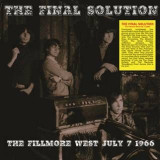
FINAL SOLUTION - THE FILLMORE WEST JULY 7 1966 LP

Previously unreleased live soundboard recordings from this groovy group from the '60s San Francisco Bay Area scene. Along with The Sopwith Camel, The Beau Brummels, The Mystery Trend, The Great Society, Jefferson Airplane, The Warlocks and The Grateful Dead, The Final Solution were part of the first wave of San Francisco rock bands having formed in 1965. They were very popular all over the Bay Area and appear on countless early posters of the period, but they never released anything. If you dig The Great Society and The Warlocks 'Emergency Crew' demos, this is for you!

pre-order now03.10.2023

expected to be published on 03.10.2023


Last In: 2026 years ago
COYOTE / ROLO MCGINTY - Marijuana
 
1

A case of things turning full circle if ever there was one, as Rolo McGinty of The Woodentops fame - the indie stars who discovered E and featured on the very first Balearic Beats collection - teams up with Coyote for a one sided 12" that pays homage to the laughing herb that is 'Marijuana' and particularly partaking in its delight in the shade on a hot day. McGinty delivers a cool acoustic guitar riff and a deep, resonant vocal, while the Coyote boys do the slow motion beat shuffling. Anthemic glory.

out of Stock

Order now and we will order the item for you at our supplier.


Last In: 2 years ago
Joshua Ray Walker - What Is It Even?

Joshua Ray Walker announces NEW RECORD “What Is It Even?” - lending his signature alt-country style to iconic pop songs - paying homage to female-identified powerhouse vocalists and their influence on global culture. Launching with his reimagination of Lizzo’s “Cuz I Love You,” Walker pushes himself and his band to respectfully and artfully build a bridge between two seemingly polar styles of music. What Is It Even? Album Rollout 6/2 - “What Is It Even?” Preorder launch & IG1 “Cuz I love You” 7/7 - "Linger" 8/4 - “What Is It Even?” Street Date The catalyst of Joshua Ray Walker’s new album, What Is It Even?, was sparked on the patio of the Tulsa, Oklahoma music venue and dive bar Mercury Lounge, a fitting origin story for any country record. But this is far from an ordinary country record. It was on that Tulsa patio, deep into tour, when Walker and drummer Trey Pendergrass were half joking about what their gospel jump blues version of Whitney Houston’s “I Wanna Dance With Somebody” would sound like, wondering “what if the Blues Brothers covered a Whitney Houston song?” At that point, it was still unclear how the Dallas native would follow up his trio of critically acclaimed, interconnected albums, all of which were packed tight with character-driven songs that put multiple national-tours worth of crowds on the precipice of staining their shirts with either beers or tears, depending on the song. The third of the trio, See You Next Time, led to Walker appearing on The Tonight Show and CBS Saturday Morning, brought with it performances at the Ryman Auditorium in Nashville and Gruene Hall in Texas, landed him on Rolling Stone’s “Best of 2021” list, and prompted SPIN to call him “one of country’s most exciting storytellers.” Those stories about dive bar dwellers running out of last chances made listeners feel a gauntlet of emotions. What Is It Even?, a 10-track covers album consisting of songs made famous by female pop acts, produced with John Pedigo and arranged alongside his touring band of Pendergrass, bassist Billy Bones, and pedal-steel player Adam Kurtz, was born out of wanting to make people feel joy.

pre-order now04.08.2023

expected to be published on 04.08.2023


Last In: 2026 years ago
Betty Davis - Is It Love Or Desire LP

Betty Davis was a musical maverick with vision. Image, substance, sex, and grit combined with a badass band that could deliver the funk bed backbone to the sultry music between the sheets. After cutting two notorious discs for the Just Sunshine label (Betty Davis and They Say I’m Different), and Nasty Gal for Island Records, Davis went to work on her most personal and expressive record yet. After capturing 10 hard-hitting tracks in 1976 at the remote Studio In The Country (Louisiana), a creative difference with her then label caused the platter to be unexpectedly shelved. Davis would cut one final album and soon retreat from the music business, completely disappearing from the public eye.

Is It Love Or Desire is a little-known gem in the Davis catalog. Mastered from the original tapes, and untouched for over 30 years, this release features detailed liner notes, the originally intended artwork housed in a lavishly packaged digipak, rare photos, archival material, and recent interviews with Davis and her skin-tight band Funk House.

Never bootlegged, never released, never heard until now, the secret story of this lost album will finally enter the history books and cement this bold soul sisters contributions to music and popular culture. Its time to get down…

pre-order now31.07.2023

expected to be published on 31.07.2023


Last In: 2026 years ago
Ben Howard - Is It?

Ben Howard

Is It?

12inch5522968
Island Records
16.06.2023
  • A1: Could Not Make It Up
  • A2: Walking Backwards
  • A3: Days Of Lantana
  • A4: Life In The Time Of Captivity
  • A5: Moonraker
  • A6: Richmond Avenue
  • A7: Interim Of Sense
  • A8: Total Eclipse
  • A9: Spirit
  • A10: Little Plant
also available

Blue Vinyl


BRIT Award & Ivor Novello Award Gewinner Ben Howard veröffentlichte bereits die erste Single „Couldn’t Make It Up” aus seinem kommenden Album “Is It?”. Nun legt er mit seiner zweiten Single „Walking Backwards“ nach und bietet seinen Fans damit einen weiteren vielversprechenden Vorgeschmack auf sein bald erscheinendes Album.

„Is It?“ wird sein fünftes Studioalbum sein, welches insgesamt 10 Songs umfasst. Es entstand in der Zeit, als der Brite ganz unerwartet zwei kleine Schlaganfälle erlitt. Ben Howard selbst beschreibt diese Zeit als „verwirrend“. Diese Verwirrung schlägt sich in den unterschiedlichen Nuancen nieder, die auf dem Album zu finden sind.

Howard sagt dazu: ”Ich fand es unmöglich, nicht über die Absurdität nachzudenken, dass man mit einem winzigen Klumpen alle Fähigkeiten verlieren kann. Das hat sich wirklich in das Schreiben der Platte eingebrannt”. Der englische Singer-Songwriter kann bis heute beeindruckende 800 Millionen Streams (über alle DSPs) verzeichnen. Ben wird diesen Sommer auf mehreren Festivals in der EU und Großbritannien auftreten und hat kürzlich seine großen Shows im Londoner Alexandra Palace Park für Juli angekündigt. Im Juli dieses
Jahres wird er außerdem auch drei Shows in Berlin, Hamburg und München spielen.

pre-order now16.06.2023

expected to be published on 16.06.2023


Last In: 2026 years ago
Ben Howard - Is It?

Ben Howard

Is It?

12inch5522969
Island Records
16.06.2023

BRIT Award & Ivor Novello Award Gewinner Ben Howard veröffentlichte bereits die erste Single „Couldn’t Make It Up” aus seinem kommenden Album “Is It?”. Nun legt er mit seiner zweiten Single „Walking Backwards“ nach und bietet seinen Fans damit einen weiteren vielversprechenden Vorgeschmack auf sein bald erscheinendes Album.

„Is It?“ wird sein fünftes Studioalbum sein, welches insgesamt 10 Songs umfasst. Es entstand in der Zeit, als der Brite ganz unerwartet zwei kleine Schlaganfälle erlitt. Ben Howard selbst beschreibt diese Zeit als „verwirrend“. Diese Verwirrung schlägt sich in den unterschiedlichen Nuancen nieder, die auf dem Album zu finden sind.

Howard sagt dazu: ”Ich fand es unmöglich, nicht über die Absurdität nachzudenken, dass man mit einem winzigen Klumpen alle Fähigkeiten verlieren kann. Das hat sich wirklich in das Schreiben der Platte eingebrannt”. Der englische Singer-Songwriter kann bis heute beeindruckende 800 Millionen Streams (über alle DSPs) verzeichnen. Ben wird diesen Sommer auf mehreren Festivals in der EU und Großbritannien auftreten und hat kürzlich seine großen Shows im Londoner Alexandra Palace Park für Juli angekündigt. Im Juli dieses
Jahres wird er außerdem auch drei Shows in Berlin, Hamburg und München spielen.

pre-order now16.06.2023

expected to be published on 16.06.2023


Last In: 2026 years ago
Coco De La Isla - La Guitarra

Ibiza legend and all round well respected industry man Chris Coco is back with more of his seaside sounds. This time his Mediterranean magic is cast over 'La Guitarra' which as the title hints has Flamenco style acoustics with tropical house drums and heartfelt synths. There is a pair backed and delicious dub also, and then modern disco don Rune Lindbaek comes through with a mesmeric take that is laidback and lush in its design. Last of all is Daniel Braca with a Deep In Brooklyn remix thing brings some fine Latin house styles.

out of Stock

Order now and we will order the item for you at our supplier.


Last In: 2 years ago
ABBA - Love isn’t easy (But it sure is hard enough) / I Am just a girl 7" Orange Picture Vinyl

ABBA feiern das 50-jährige Jubiläum ihres Debütalbums Ring Ring mit einer neuen Kollektion von Vinylprodukten. Das 2LP-Format besteht aus 180g schwerem schwarzem Vinyl in einer Klapphülle mit Obi-Streifen und Echtheitszertifikat. Das Album ist in hochwertiger Half-Speed-Audioqualität erhältlich, gemastert von Miles Showell in Abbey Road. Die 7ff Picture Discs ”He Is Your Brother / Santa Rosa”, ”People Need Love / Merry-Go-Round”, ”Ring Ring (Englisch) / She’s My Kind of Girl”, ”Ring Ring (Schwedisch) / Åh, vilka tider”, ”Love Isn’t Easy (But It Sure Is Hard Enough) / I Am Just A Girl” zeigen klassische Bilder der Band aus der ursprünglichen Ära und enthalten jeweils einen B-Seiten-Begleittrack.

Das Album ist nun als Ltd. 2LP und jeweils als Ltd. 7” Picture Vinyl erhältlich.

pre-order now19.05.2023

expected to be published on 19.05.2023


Last In: 2026 years ago
Statues - Clear Skies

Statues

Clear Skies

12inchIIB064
Is It Balearic
08.05.2023

Essex-based trio Statues have made their presence felt with a string of impressive singles for a variety of labels from Sweden's Lovely and Plastic Idol in the US. Here they offer up their timely summer breezer 'Clear Skies' with crystal cleat synth lines evocative of John Carpenter or Tangerine Dream powered by a simple but effective groove. Coyote Ambient are the first of two guests invited to remix it, and theirs is more of a classic 90s chillout reworking, while Vendetta Suite combine a similar vibe with some soaring solar guitars and live drums. Another original from Statues, 'The Creek ', completes the package, with arpeggios melded with organic voices and guitars.

out of Stock

Order now and we will order the item for you at our supplier.


Last In: 2 years ago
Ali Renault - Piano For The People (remixes)

Always fun house craftsman Ali Renault secured another big tune with his 'Piano For The People' which is a chuggy groover that locks you in with its rich atmospheres. Now it gets offered up with remixes from, firstly, Aikhi, who flip it with laidback downtempo drums and some classic and well known chords. Calm then brings his Mellow Acid Dub to sink you in even further and last of all Double Geography bring some more crunchy drum textures and psyched-out synth sounds with echoing vocals and dark, late night sense of mischief.

out of Stock

Order now and we will order the item for you at our supplier.


Last In: 2 years ago
Coyote - Mystery Light Remixes

Is It Balearic finally offer up four cuts from Coyote's fantastic The Mystery Light album. First up is Dan Lissvik on the remix of 'Simpsons Sky' with its loose-limbed Balearic drum funk and tropical synth work. Then come Reverso 68 who layer in some superb arpeggiators for the silky piano sounds of sunset gem 'Copacetic.' Japanese downtempo boss Calm brings his signature mellow acid lushness to 'Outsider' and last of all Chris Massey reworks Coyote's 'Cami Sa Valeta' which was a tribute to Tony Pike. Here it is a go-slow, blissed out and cosmic star-gazer.

out of Stock

Order now and we will order the item for you at our supplier.


Last In: 2 years ago
Coyote - Baka/No Entry

Coyote

Baka/No Entry

12inchIIB062
Is It Balearic
07.12.2022

Last year's 'Will We Ever Dance Again' 12" was a big one for Coyote who now follow it up and impress once more. First up they do so on 'Baka Re-Rub' by paying their respects to the iconic Jon da Silva remix of The FADS track. It's steamy, tropical, full of loose drum energy and jangling synths that lightened up any club. On the flip you find 'No Entry' which is a big house anthem plenty of classic tops, uplifting arpeggios and pianos, and dramatic strings next to big acid lines. It's an all out, hands in the air gem that brings the good times.

out of Stock

Order now and we will order the item for you at our supplier.


Last In: 3 years ago
DURAND JONES &THE INDICATIONS - MAKE A CHANGE/ IS IT ANY WONDER

When Durand Jones & The Indications debut album was released they didn't have "buzz". They didn't have a following. They didn't have the measured flash of more polished operations. But as the final mixes spun off of the master reel, Colemine knew what they did have was one remarkable soul record. To everyone's delight, the record was a smash and their no-frills LP continues to fly off the shelves and Colemine released a 45 featuring cuts from the debut album. The politically poignant and fiercely funky "Make A Change" is backed with the lowrider anthem "Is It Any Wonder" featuring drummer Aaron Frazer's silvery falsetto.

out of Stock

Order now and we will order the item for you at our supplier.


Last In: 3 years ago
THE SOFT PINK TRUTH - IS IT GOING TO GET ANY DEEPER THAN THIS? LP (2x12")

Hot on the heels of the sold-out limited ep Was It Ever Real?, The Soft Pink Truth releases a super catchy, sexy contemporary disco banger Is It Going To Get Any Deeper Than This?, Throughout the ten songs of the album, the provocation to go "deeper" prompts promiscuous moves across the genres of disco, minimalism, ambient, and jazz, sliding onto and off of the dancefloor, sweeping higher and lower on the scale of frequencies, engaging both philosophical texts re-set as pop lyrics and wordless glossolalia. Throughout, Is It Going To Get Any Deeper Than This? aims for a kind of psychedelic poolside take on disco, using the steady 120 bpm rhythmic chassis of the music as a launchpad for reverie rather than big room EDM bluster. Sidestepping retro kitsch but paying homage to highly personal interpretations of disco such as Arthur Russell, Don Ray, Dr. Buzzard"s Original Savannah Band, and Mandré, or the jazz-funk of Creed Taylor and CTI Records. Its emphasis on slowly morphing deep house grooves will also appeal to fans of DJ Sprinkles, Moodymann, and Theo Parrish. At once catchy and spacey, poppy and perverse, Is It Going To Get Any Deeper Than This? shows a restless musician trying to square the circle of dance music and meditation, repetition, and change.

out of Stock

Order now and we will order the item for you at our supplier.


Last In: 3 years ago
THE SOFT PINK TRUTH - IS IT GOING TO GET ANY DEEPER THAN THIS? LP (2x12")

Hot on the heels of the sold-out limited ep Was It Ever Real?, The Soft Pink Truth releases a super catchy, sexy contemporary disco banger Is It Going To Get Any Deeper Than This?, Throughout the ten songs of the album, the provocation to go "deeper" prompts promiscuous moves across the genres of disco, minimalism, ambient, and jazz, sliding onto and off of the dancefloor, sweeping higher and lower on the scale of frequencies, engaging both philosophical texts re-set as pop lyrics and wordless glossolalia. Throughout, Is It Going To Get Any Deeper Than This? aims for a kind of psychedelic poolside take on disco, using the steady 120 bpm rhythmic chassis of the music as a launchpad for reverie rather than big room EDM bluster. Sidestepping retro kitsch but paying homage to highly personal interpretations of disco such as Arthur Russell, Don Ray, Dr. Buzzard"s Original Savannah Band, and Mandré, or the jazz-funk of Creed Taylor and CTI Records. Its emphasis on slowly morphing deep house grooves will also appeal to fans of DJ Sprinkles, Moodymann, and Theo Parrish. At once catchy and spacey, poppy and perverse, Is It Going To Get Any Deeper Than This? shows a restless musician trying to square the circle of dance music and meditation, repetition, and change.

out of Stock

Order now and we will order the item for you at our supplier.


Last In: 3 years ago
Girls In Synthesis - The Rest Is Distraction
also available

Grey Vinyl


Experimental post-punk outfit GIRLS IN SYNTHESIS are set to release the eagerly anticipated follow-up to 2020’s incendiary debut, ‘Now Here’s An Echo From Your Future’. Entitled ‘The Rest Is Distraction’ and available this coming October 14th via the band’s own label Own It/Cargo Records, its mix of fractured guitar, crushing drums and bass, intense vocals and lyrical content - create as challenging a record as you will hear this year. Formed in 2016, GIRLS IN SYNTHESIS are John Linger (bass / vocals), Jim Cubitt (guitar / keys) and Nicole Pinto (drums). The trio’s double a-sided debut single ‘The Mound’/’Disappear’ came out in the early part of 2017, and since then they have established themselves as the most forward thinking, viscerally challenging band around with unmissable live shows that continue to excite and astound in equal measure. Recorded last year amidst the uncertainty of continuous lockdowns as a result of the global Covid-19 pandemic, ‘The Rest Is Distraction’ is far darker in content than its predecessor. Mainly exploring internal and mental struggles as opposed to external current affairs, it focuses on the claustrophobia of emotional anguish and continues to bravely delve into previously un-ventured topics. Featuring frequent collaborators funkcutter and Stanley Bad on horns and violin, respectively, two songs also see Eleni Poulou, ex-The Fall, on keyboards. The album was mixed by long-term collaborator Max Walker and features stunning landscape photography by Bea Dewhurst. The album was mastered in France by Ayumu Matsuo. Sonically atramentous and less one dimensional than the band’s debut, ‘The Rest Is Distraction’ takes its cues from ‘Join Hands’ era Siouxsie & The Banshees, Brainiac and Crass’ ‘Christ The Album’, among others. From the first crackle of electricity on the opening track, to the heart wrenching taped voice-recording on the final outro, this LP triumphantly retains every ounce of intensity and vitality that makes Girls In Synthesis the most captivating band to emerge from the UK DIY underground in recent years. Listeners will find ‘The Rest Is Distraction’ a challenging, yet ultimately cathartic listen. Prepare yourselves for a sonic cleansing, Girls In Synthesis style. Side A 1- It’s All Beginning To Change 2- Watch With Mother 3- Total Control 4- Swallowed Pill 5- Screaming
6- My Husband Side B 1- Cottage Industry 2- Not As I Do 3- Lacking Bite 4- Your Prayers Have Changed 5- To A Fault

pre-order now30.10.2022

expected to be published on 30.10.2022


Last In: 2026 years ago
Girls In Synthesis - The Rest Is Distraction
also available

Black Vinyl


Experimental post-punk outfit GIRLS IN SYNTHESIS are set to release the eagerly anticipated follow-up to 2020’s incendiary debut, ‘Now Here’s An Echo From Your Future’. Entitled ‘The Rest Is Distraction’ and available this coming October 14th via the band’s own label Own It/Cargo Records, its mix of fractured guitar, crushing drums and bass, intense vocals and lyrical content - create as challenging a record as you will hear this year. Formed in 2016, GIRLS IN SYNTHESIS are John Linger (bass / vocals), Jim Cubitt (guitar / keys) and Nicole Pinto (drums). The trio’s double a-sided debut single ‘The Mound’/’Disappear’ came out in the early part of 2017, and since then they have established themselves as the most forward thinking, viscerally challenging band around with unmissable live shows that continue to excite and astound in equal measure. Recorded last year amidst the uncertainty of continuous lockdowns as a result of the global Covid-19 pandemic, ‘The Rest Is Distraction’ is far darker in content than its predecessor. Mainly exploring internal and mental struggles as opposed to external current affairs, it focuses on the claustrophobia of emotional anguish and continues to bravely delve into previously un-ventured topics. Featuring frequent collaborators funkcutter and Stanley Bad on horns and violin, respectively, two songs also see Eleni Poulou, ex-The Fall, on keyboards. The album was mixed by long-term collaborator Max Walker and features stunning landscape photography by Bea Dewhurst. The album was mastered in France by Ayumu Matsuo. Sonically atramentous and less one dimensional than the band’s debut, ‘The Rest Is Distraction’ takes its cues from ‘Join Hands’ era Siouxsie & The Banshees, Brainiac and Crass’ ‘Christ The Album’, among others. From the first crackle of electricity on the opening track, to the heart wrenching taped voice-recording on the final outro, this LP triumphantly retains every ounce of intensity and vitality that makes Girls In Synthesis the most captivating band to emerge from the UK DIY underground in recent years. Listeners will find ‘The Rest Is Distraction’ a challenging, yet ultimately cathartic listen. Prepare yourselves for a sonic cleansing, Girls In Synthesis style. Side A 1- It’s All Beginning To Change 2- Watch With Mother 3- Total Control 4- Swallowed Pill 5- Screaming
6- My Husband Side B 1- Cottage Industry 2- Not As I Do 3- Lacking Bite 4- Your Prayers Have Changed 5- To A Fault

pre-order now30.10.2022

expected to be published on 30.10.2022


Last In: 2026 years ago
Cypress Hill - Break It Up/Real Estate/Stoned Is The Way Of The Walk

When Cypress Hill came with their debut self-titled album 30 years ago, they made an immediate spark that captivated the Hip Hop audience, critics, and then the world. Led by B-Real with his nasal, singsong delivery, and Sen Dog to play the perfect hypeman, Cypress’ debut fueled tales of revenge, revolution, recreational drug use, gangbanging, and cultural pride. Like Public Enemy before them, the production was also a key factor in what made this debut so groundbreaking. DJ Muggs was able to craft a blueprint that would change Hip Hop production with his innovative stoned-out beats. Cuts like "How I Could Just Kill a Man", "Pigs", "Stoned is the Way of the Walk" and "Hand on the Pump" made Cypress Hill an instant classic. Since its release, the album has won acclaim as one of Rolling Stone's Essential Recordings of the 90s and Top 100 Best Rap Albums by The Source Magazine.

pre-order now30.10.2022

expected to be published on 30.10.2022


Last In: 2026 years ago
Lee Tracy & Isaac Manning - Is it What You Want

As the sun sets on a quaint East Nashville house, a young man bares a piece of his soul. Facing the camera, sporting a silky suit jacket/shirt/slacks/fingerless gloves ensemble that announces "singer" before he's even opened his mouth, Lee Tracy Johnson settles onto his stage, the front yard. He sways to the dirge-like drum machine pulse of a synth-soaked slow jam, extends his arms as if gaining his balance, and croons in affecting, fragile earnest, "I need your love… oh baby…"

Dogs in the yard next door begin barking. A mysterious cardboard robot figure, beamed in from galaxies unknown and affixed to a tree, is less vocal. Lee doesn't acknowledge either's presence. He's busy feeling it, arms and hands gesticulating. His voice rises in falsetto over the now-quiet dogs, over the ambient noise from the street that seeps into the handheld camcorder's microphone, over the recording of his own voice played back from a boombox off-camera. After six minutes the single, continuous shot ends. In this intimate creative universe there are no re-takes. There are many more music videos to shoot, and as Lee later puts it, "The first time you do it is actually the best. Because you can never get that again. You expressing yourself from within."

"I Need Your Love" dates from a lost heyday. From some time in the '80s or early '90s, when Lee Tracy (as he was known in performance) and his music partner/producer/manager Isaac Manning committed hours upon hours of their sonic and visual ideas to tape. Embracing drum machines and synthesizers – electronics that made their personal futurism palpable – they recorded exclusively at home, live in a room into a simple cassette deck. Soul, funk, electro and new wave informed their songs, yet Lee and Isaac eschewed the confinement of conventional categories and genres, preferring to let experimentation guide them.

"Anytime somebody put out a new record they had the same instruments or the same sound," explains Isaac. "So I basically wanted to find something that's really gonna stand out away from all of the rest of 'em." Their ethos meant that every idea they came up with was at least worth trying: echoed out half-rapped exhortations over frantic techno-style beats, gospel synth soul, modal electro-funk, oddball pop reinterpretations, emo AOR balladry, nods to Prince and the Fat Boys, or arrangements that might collapse mid-song into a mess of arcade game-ish blips before rallying to reach the finish line. All of it conjoined by consistent tape hiss, and most vitally, Lee's chameleonic voice, which managed to wildly shape shift and still evoke something sincere – whether toggling between falsetto and tenor exalting Jesus's return, or punctuating a melismatic romantic adlib with a succinct, "We all know how it feels to be alone."

"People think we went to a studio," says Isaac derisively. "We never went to no studio. We didn't have the money to go to no studio! We did this stuff at home. I shot videos in my front yard with whatever we could to get things together." Sometimes Isaac would just put on an instrumental record, be it "Planet Rock" or "Don't Cry For Me Argentina" (from Evita), press "record," and let Lee improvise over it, yielding peculiar love songs, would-be patriotic anthems, or Elvis Presley or Marilyn Monroe tributes. Technical limitations and a lack of professional polish never dissuaded them. They believed they were onto something.

"That struggle," Isaac says, "made that sound sound good to me."

In the parlance of modern music criticism Lee and Isaac's dizzying DIY efforts would inevitably be described as "outsider." But "outsider" carries the burden of untold additional layers of meaning if you're Black and from the South, creating on a budget, and trying to get someone, anyone within the country music capital of the world to take your vision seriously. "What category should we put it in?" Isaac asks rhetorically. "I don't know. All I know is feeling. I ain't gonna name it nothing. It's music. If it grabs your soul and touch your heart that's what it basically is supposed to do."

=

Born in 1963, the baby boy of nine siblings, Lee Tracy spent his earliest years living amidst the shotgun houses on Nashville's south side. "We was poor, man!" he says, recalling the outhouse his family used for a bathroom and the blocks of ice they kept in the kitchen to chill perishables. "But I actually don't think I really realized I was in poverty until I got grown and started thinking about it." Lee's mom worked at the Holiday Inn; his dad did whatever he had to do, from selling fruit from a horse drawn cart to bootlegging. "We didn't have much," Lee continues, "but my mother and my father got us the things we needed, the clothes on our back." By the end of the decade with the city's urban renewal programs razing entire neighborhoods to accommodate construction of the Interstate, the family moved to Edgehill Projects. Lee remembers music and art as a constant source of inspiration for he and his brothers and sisters – especially after seeing the Jackson 5 perform on Ed Sullivan. "As a small child I just knew that was what I wanted to do."

His older brother Don began musically mentoring him, introducing Lee to a variety of instruments and sounds. "He would never play one particular type of music, like R&B," says Lee. "I was surrounded by jazz, hard rock and roll, easy listening, gospel, reggae, country music; I mean I was a sponge absorbing all of that." Lee taught himself to play drums by beating on cardboard boxes, gaining a rep around the way for his timekeeping, and his singing voice. Emulating his favorites, Earth Wind & Fire and Cameo, he formed groups with other kids with era-evocative band names like Concept and TNT Connection, and emerged as the leader of disciplined rehearsals. "I made them practice," says Lee. "We practiced and practiced and practiced. Because I wanted that perfection." By high school the most accomplished of these bands would take top prize in a prominent local talent show. It was a big moment for Lee, and he felt ready to take things to the next level. But his band-mates had other ideas.

"I don't know what happened," he says, still miffed at the memory. "It must have blew they mind after we won and people started showing notice, because it's like everybody quit! I was like, where the hell did everybody go?" Lee had always made a point of interrogating prospective musicians about their intentions before joining his groups: were they really serious or just looking for a way to pick up girls? Now he understood even more the importance of finding a collaborator just as committed to the music as he was.

=

Isaac Manning had spent much of his life immersed in music and the arts – singing in the church choir with his family on Nashville's north side, writing, painting, dancing, and working various gigs within the entertainment industry. After serving in the armed forces, in the early '70s he ran The Teenage Place, a music and performance venue that catered to the local youth. But he was forced out of town when word of one of his recreational routines created a stir beyond the safe haven of his bohemian circles.

"I was growing marijuana," Isaac explains. "It wasn't no business, I was smoking it myself… I would put marijuana in scrambled eggs, cornbread and stuff." His weed use originated as a form of self-medication to combat severe tooth pain. But when he began sharing it with some of the other young people he hung out with, some of who just so happened to be the kids of Nashville politicians, the cops came calling. "When I got busted," he remembers, "they were talking about how they were gonna get rid of me because they didn't want me saying nothing about they children because of the politics and stuff. So I got my family, took two raggedy cars, and left Nashville and went to Vegas."

Out in the desert, Isaac happened to meet Chubby Checker of "The Twist" fame while the singer was gigging at The Flamingo. Impressed by Isaac's zeal, Checker invited him to go on the road with him as his tour manager/roadie/valet. The experience gave Isaac a window into a part of the entertainment world he'd never encountered – a glimpse of what a true pop act's audience looked like. "Chubby Checker, none of his shows were played for Black folks," he remembers. "All his gigs were done at high-class white people areas." Returning home after a few years with Chubby, Isaac was properly motivated to make it in Music City. He began writing songs and scouting around Nashville for local talent anywhere he could find it with an expressed goal: "Find someone who can deliver your songs the way you want 'em delivered and make people feel what you want them to feel."

One day while walking through Edgehill Projects Isaac heard someone playing the drums in a way that made him stop and take notice. "The music was so tight, just the drums made me feel like, oh I'm-a find this person," he recalls. "So I circled through the projects until I found who it was.

"That's how I met him – Lee Tracy. When I found him and he started singing and stuff, I said, ohhh, this is somebody different."

=

Theirs was a true complementary partnership: young Lee possessed the raw talent, the older Isaac the belief. "He's really the only one besides my brother and my family that really seen the potential in me," says Lee. "He made me see that I could do it."

Isaac long being a night owl, his house also made for a fertile collaborative environment – a space where there always seemed to be a new piece of his visual art on display: paintings, illustrations, and dolls and figures (including an enigmatic cardboard robot). Lee and Issac would hang out together and talk, listen to music, conjure ideas, and smoke the herb Isaac had resumed growing in his yard. "It got to where I could trust him, he could trust me," Isaac says of their bond. They also worked together for hours on drawings, spreading larges rolls of paper on the walls and sketching faces with abstract patterns and imagery: alien-like beings, tri-horned horse heads, inverted Janus-like characters where one visage blurred into the other.

Soon it became apparent that they didn't need other collaborators; self-sufficiency was the natural way forward. At Isaac's behest Lee, already fed up with dealing with band musicians, began playing around with a poly-sonic Yamaha keyboard at the local music store. "It had everything on it – trumpet, bass, drums, organ," remembers Lee. "And that's when I started recording my own stuff."

The technology afforded Lee the flexibility and independence he craved, setting him on a path other bedroom musicians and producers around the world were simultaneously following through the '80s into the early '90s. Saving up money from day jobs, he eventually supplemented the Yamaha Isaac had gotten him with Roland and Casio drum machines and a Moog. Lee was living in an apartment in Hillside at that point caring for his dad, who'd been partially paralyzed since early in life. In the evenings up in his second floor room, the music put him in a zone where he could tune out everything and lose himself in his ideas.

"Oh I loved it," he recalls. "I would really experiment with the instruments and use a lot of different sound effects. I was looking for something nobody else had. I wanted something totally different. And once I found the sound I was looking for, I would just smoke me a good joint and just let it go, hit the record button." More potent a creative stimulant than even Isaac's weed was the holistic flow and spontaneity of recording. Between sessions at Isaac's place and Lee's apartment, their volume of output quickly ballooned.

"We was always recording," says Lee. "That's why we have so much music. Even when I went to Isaac's and we start creating, I get home, my mind is racing, I gotta start creating, creating, creating. I remember there were times when I took a 90-minute tape from front to back and just filled it up."

"We never practiced," says Isaac. "See, that was just so odd about the whole thing. I could relate to him, and tell him about the songs I had ideas for and everything and stuff. And then he would bring it back or whatever, and we'd get together and put it down." Once the taskmaster hell bent on rehearsing, Lee had flipped a full 180. Perfection was no longer an aspiration, but the enemy of inspiration.

"I seen where practicing and practicing got me," says Lee. "A lot of musicians you get to playing and they gotta stop, they have to analyze the music. But while you analyzing you losing a lot of the greatness of what you creating. Stop analyzing what you play, just play! And it'll all take shape."

=

"I hope you understood the beginning of the record because this was invented from a dream I had today… (You tell me, I'll tell you, we'll figure it out together)" – Lee Tracy and Isaac Manning, "Hope You Understand"

Lee lets loose a maniacal cackle when he acknowledges that the material that he and Isaac recorded was by anyone's estimation pretty out there. It's the same laugh that commences "Hope You Understand" – a chaotic transmission that encapsulates the duality at the heart of their music: a stated desire to reach people and a compulsion to go as leftfield as they saw fit.

"We just did it," says Lee. "We cut the music on and cut loose. I don't sit around and write. I do it by listening, get a feeling, play the music, and the lyrics and stuff just come out of me."

The approach proved adaptable to interpreting other artists' material. While recording a cover of Whitney Houston's pop ballad "Saving All My Love For You," Lee played Whitney's version in his headphones as he laid down his own vocals – partially following the lyrics, partially using them as a departure point. The end result is barely recognizable compared with the original, Lee and Isaac having switched up the time signature and reinvented the melody along the way towards morphing a slick mainstream radio standard into something that sounds solely their own.

"I really used that song to get me started," says Lee. "Then I said, well I need something else, something is missing. Something just came over me. That's when I came up with 'Is It What You Want.'"

The song would become the centerpiece of Lee and Isaac's repertoire. Pushed along by a percolating metronomic Rhythm King style beat somewhere between a military march and a samba, "Is It What You Want" finds Lee pleading the sincerity of his commitment to a potential love interest embellished by vocal tics and hiccups subtlely reminiscent of his childhood hero MJ. Absent chord changes, only synth riffs gliding in and out like apparitions, the song achieves a lingering lo-fi power that leaves you feeling like it's still playing, somewhere, even after the fade out.

"I don't know, it's like a real spiritual song," Lee reflects. "But it's not just spiritual. To me the more I listen to it it's like about everything that you do in your everyday life, period. Is it what you want? Do you want a car or you don't want a car? Do you want Jesus or do you want the Devil? It's basically asking you the question. Can't nobody answer the question but you yourself."

In 1989 Lee won a lawsuit stemming from injuries sustained from a fight he'd gotten into. He took part of the settlement money and with Isaac pressed up "Saving All My Love For You" b/w "Is It What You Want" as a 45 single. Isaac christened the label One Chance Records. "Because that's all we wanted," he says with a laugh, "one chance."

Isaac sent the record out to radio stations and major labels, hoping for it to make enough noise to get picked up nationally. But the response he and Lee were hoping for never materialized. According to Isaac the closest the single got to getting played on the radio is when a disk jock from a local station made a highly unusual announcement on air: "The dude said on the radio, 107.5 – 'We are not gonna play 'Is It What You Want.' We cracked up! Wow, that's deep.

"It was a whole racist thing that was going on," he reflects. "So we just looked over and kept on going. That was it. That was about the way it goes… If you were Black and you were living in Nashville and stuff, that's the way you got treated." Isaac already knew as much from all the times he'd brought he and Lee's tapes (even their cache of country music tunes) over to Music Row to try to drum up interest to no avail.

"Isaac, he really worked his ass off," says Lee. "He probably been to every record place down on Music Row." Nashville's famed recording and music business corridor wasn't but a few blocks from where Lee grew up. Close enough, he remembers, for him to ride his bike along its back alleys and stumble upon the occasional random treasure, like a discarded box of harmonicas. Getting in through the front door, however, still felt a world away.

"I just don't think at the time our music fell into a category for them," he concedes. "It was before its time."

=

Lee stopped making music some time in the latter part of the '90s, around the time his mom passed away and life became increasingly tough to manage. "When my mother died I had a nervous breakdown," he says, "So I shut down for a long time. I was in such a sadness frame of mind. That's why nobody seen me. I had just disappeared off the map." He fell out of touch with Isaac, and in an indication of just how bad things had gotten for him, lost track of all the recordings they'd made together. Music became a distant memory.

Fortunately, Isaac kept the faith. In a self-published collection of his poetry – paeans to some of his favorite entertainment and public figures entitled Friends and Dick Clark – he'd written that he believed "music has a life of its own." But his prescience and presence of mind were truly manifested in the fact that he kept an archive of he and Lee's work. As perfectly imperfect as "Is It What You Want" now sounds in a post-Personal Space world, Lee and Isaac's lone official release was in fact just a taste. The bulk of the Is It What You Want album is culled from the pair's essentially unheard home recordings – complete songs, half-realized experiments, Isaac's blue monologues and pronouncements et al – compiled, mixed and programmed in the loose and impulsive creative spirit of their regular get-togethers from decades ago. The rest of us, it seems, may have finally caught up to them.

On the prospect of at long last reaching a wider audience, Isaac says simply, "I been trying for a long time, it feels good." Ever the survivor, he adds, "The only way I know how to make it to the top is to keep climbing. If one leg break on the ladder, hey, you gotta fix it and keep on going… That's where I be at. I'll kill death to make it out there."

For Lee it all feels akin to a personal resurrection: "It's like I was in a tomb and the tomb was opened and I'm back… Man, it feels so great. I feel like I'm gonna jump out of my skin." Success at this stage of his life, he realizes, probably means something different than what it did back when he was singing and dancing in Isaac's front yard. "What I really mean by 'making it,'" he explains isn't just the music being heard but, "the story being told."

Occasionally Lee will pull up "Is It What You Want" on YouTube on his phone, put on his headphones, and listen. He remembers the first time he heard his recorded voice. How surreal it was, how he thought to himself, "Is that really me?" What would he say to that younger version of himself now?

"I would probably tell myself, hang in there, don't give up. Keep striving for the goal. And everything will work out."

Despite what's printed on the record label, sometimes you do get more than one chance.

out of Stock

Order now and we will order the item for you at our supplier.


Last In: 3 years ago
Lee Tracy & Isaac Manning - Is it What You Want LP

As the sun sets on a quaint East Nashville house, a young man bares a piece of his soul. Facing the camera, sporting a silky suit jacket/shirt/slacks/fingerless gloves ensemble that announces "singer" before he's even opened his mouth, Lee Tracy Johnson settles onto his stage, the front yard. He sways to the dirge-like drum machine pulse of a synth-soaked slow jam, extends his arms as if gaining his balance, and croons in affecting, fragile earnest, "I need your love… oh baby…"

Dogs in the yard next door begin barking. A mysterious cardboard robot figure, beamed in from galaxies unknown and affixed to a tree, is less vocal. Lee doesn't acknowledge either's presence. He's busy feeling it, arms and hands gesticulating. His voice rises in falsetto over the now-quiet dogs, over the ambient noise from the street that seeps into the handheld camcorder's microphone, over the recording of his own voice played back from a boombox off-camera. After six minutes the single, continuous shot ends. In this intimate creative universe there are no re-takes. There are many more music videos to shoot, and as Lee later puts it, "The first time you do it is actually the best. Because you can never get that again. You expressing yourself from within."

"I Need Your Love" dates from a lost heyday. From some time in the '80s or early '90s, when Lee Tracy (as he was known in performance) and his music partner/producer/manager Isaac Manning committed hours upon hours of their sonic and visual ideas to tape. Embracing drum machines and synthesizers – electronics that made their personal futurism palpable – they recorded exclusively at home, live in a room into a simple cassette deck. Soul, funk, electro and new wave informed their songs, yet Lee and Isaac eschewed the confinement of conventional categories and genres, preferring to let experimentation guide them.

"Anytime somebody put out a new record they had the same instruments or the same sound," explains Isaac. "So I basically wanted to find something that's really gonna stand out away from all of the rest of 'em." Their ethos meant that every idea they came up with was at least worth trying: echoed out half-rapped exhortations over frantic techno-style beats, gospel synth soul, modal electro-funk, oddball pop reinterpretations, emo AOR balladry, nods to Prince and the Fat Boys, or arrangements that might collapse mid-song into a mess of arcade game-ish blips before rallying to reach the finish line. All of it conjoined by consistent tape hiss, and most vitally, Lee's chameleonic voice, which managed to wildly shape shift and still evoke something sincere – whether toggling between falsetto and tenor exalting Jesus's return, or punctuating a melismatic romantic adlib with a succinct, "We all know how it feels to be alone."

"People think we went to a studio," says Isaac derisively. "We never went to no studio. We didn't have the money to go to no studio! We did this stuff at home. I shot videos in my front yard with whatever we could to get things together." Sometimes Isaac would just put on an instrumental record, be it "Planet Rock" or "Don't Cry For Me Argentina" (from Evita), press "record," and let Lee improvise over it, yielding peculiar love songs, would-be patriotic anthems, or Elvis Presley or Marilyn Monroe tributes. Technical limitations and a lack of professional polish never dissuaded them. They believed they were onto something.

"That struggle," Isaac says, "made that sound sound good to me."

In the parlance of modern music criticism Lee and Isaac's dizzying DIY efforts would inevitably be described as "outsider." But "outsider" carries the burden of untold additional layers of meaning if you're Black and from the South, creating on a budget, and trying to get someone, anyone within the country music capital of the world to take your vision seriously. "What category should we put it in?" Isaac asks rhetorically. "I don't know. All I know is feeling. I ain't gonna name it nothing. It's music. If it grabs your soul and touch your heart that's what it basically is supposed to do."

=

Born in 1963, the baby boy of nine siblings, Lee Tracy spent his earliest years living amidst the shotgun houses on Nashville's south side. "We was poor, man!" he says, recalling the outhouse his family used for a bathroom and the blocks of ice they kept in the kitchen to chill perishables. "But I actually don't think I really realized I was in poverty until I got grown and started thinking about it." Lee's mom worked at the Holiday Inn; his dad did whatever he had to do, from selling fruit from a horse drawn cart to bootlegging. "We didn't have much," Lee continues, "but my mother and my father got us the things we needed, the clothes on our back." By the end of the decade with the city's urban renewal programs razing entire neighborhoods to accommodate construction of the Interstate, the family moved to Edgehill Projects. Lee remembers music and art as a constant source of inspiration for he and his brothers and sisters – especially after seeing the Jackson 5 perform on Ed Sullivan. "As a small child I just knew that was what I wanted to do."

His older brother Don began musically mentoring him, introducing Lee to a variety of instruments and sounds. "He would never play one particular type of music, like R&B," says Lee. "I was surrounded by jazz, hard rock and roll, easy listening, gospel, reggae, country music; I mean I was a sponge absorbing all of that." Lee taught himself to play drums by beating on cardboard boxes, gaining a rep around the way for his timekeeping, and his singing voice. Emulating his favorites, Earth Wind & Fire and Cameo, he formed groups with other kids with era-evocative band names like Concept and TNT Connection, and emerged as the leader of disciplined rehearsals. "I made them practice," says Lee. "We practiced and practiced and practiced. Because I wanted that perfection." By high school the most accomplished of these bands would take top prize in a prominent local talent show. It was a big moment for Lee, and he felt ready to take things to the next level. But his band-mates had other ideas.

"I don't know what happened," he says, still miffed at the memory. "It must have blew they mind after we won and people started showing notice, because it's like everybody quit! I was like, where the hell did everybody go?" Lee had always made a point of interrogating prospective musicians about their intentions before joining his groups: were they really serious or just looking for a way to pick up girls? Now he understood even more the importance of finding a collaborator just as committed to the music as he was.

=

Isaac Manning had spent much of his life immersed in music and the arts – singing in the church choir with his family on Nashville's north side, writing, painting, dancing, and working various gigs within the entertainment industry. After serving in the armed forces, in the early '70s he ran The Teenage Place, a music and performance venue that catered to the local youth. But he was forced out of town when word of one of his recreational routines created a stir beyond the safe haven of his bohemian circles.

"I was growing marijuana," Isaac explains. "It wasn't no business, I was smoking it myself… I would put marijuana in scrambled eggs, cornbread and stuff." His weed use originated as a form of self-medication to combat severe tooth pain. But when he began sharing it with some of the other young people he hung out with, some of who just so happened to be the kids of Nashville politicians, the cops came calling. "When I got busted," he remembers, "they were talking about how they were gonna get rid of me because they didn't want me saying nothing about they children because of the politics and stuff. So I got my family, took two raggedy cars, and left Nashville and went to Vegas."

Out in the desert, Isaac happened to meet Chubby Checker of "The Twist" fame while the singer was gigging at The Flamingo. Impressed by Isaac's zeal, Checker invited him to go on the road with him as his tour manager/roadie/valet. The experience gave Isaac a window into a part of the entertainment world he'd never encountered – a glimpse of what a true pop act's audience looked like. "Chubby Checker, none of his shows were played for Black folks," he remembers. "All his gigs were done at high-class white people areas." Returning home after a few years with Chubby, Isaac was properly motivated to make it in Music City. He began writing songs and scouting around Nashville for local talent anywhere he could find it with an expressed goal: "Find someone who can deliver your songs the way you want 'em delivered and make people feel what you want them to feel."

One day while walking through Edgehill Projects Isaac heard someone playing the drums in a way that made him stop and take notice. "The music was so tight, just the drums made me feel like, oh I'm-a find this person," he recalls. "So I circled through the projects until I found who it was.

"That's how I met him – Lee Tracy. When I found him and he started singing and stuff, I said, ohhh, this is somebody different."

=

Theirs was a true complementary partnership: young Lee possessed the raw talent, the older Isaac the belief. "He's really the only one besides my brother and my family that really seen the potential in me," says Lee. "He made me see that I could do it."

Isaac long being a night owl, his house also made for a fertile collaborative environment – a space where there always seemed to be a new piece of his visual art on display: paintings, illustrations, and dolls and figures (including an enigmatic cardboard robot). Lee and Issac would hang out together and talk, listen to music, conjure ideas, and smoke the herb Isaac had resumed growing in his yard. "It got to where I could trust him, he could trust me," Isaac says of their bond. They also worked together for hours on drawings, spreading larges rolls of paper on the walls and sketching faces with abstract patterns and imagery: alien-like beings, tri-horned horse heads, inverted Janus-like characters where one visage blurred into the other.

Soon it became apparent that they didn't need other collaborators; self-sufficiency was the natural way forward. At Isaac's behest Lee, already fed up with dealing with band musicians, began playing around with a poly-sonic Yamaha keyboard at the local music store. "It had everything on it – trumpet, bass, drums, organ," remembers Lee. "And that's when I started recording my own stuff."

The technology afforded Lee the flexibility and independence he craved, setting him on a path other bedroom musicians and producers around the world were simultaneously following through the '80s into the early '90s. Saving up money from day jobs, he eventually supplemented the Yamaha Isaac had gotten him with Roland and Casio drum machines and a Moog. Lee was living in an apartment in Hillside at that point caring for his dad, who'd been partially paralyzed since early in life. In the evenings up in his second floor room, the music put him in a zone where he could tune out everything and lose himself in his ideas.

"Oh I loved it," he recalls. "I would really experiment with the instruments and use a lot of different sound effects. I was looking for something nobody else had. I wanted something totally different. And once I found the sound I was looking for, I would just smoke me a good joint and just let it go, hit the record button." More potent a creative stimulant than even Isaac's weed was the holistic flow and spontaneity of recording. Between sessions at Isaac's place and Lee's apartment, their volume of output quickly ballooned.

"We was always recording," says Lee. "That's why we have so much music. Even when I went to Isaac's and we start creating, I get home, my mind is racing, I gotta start creating, creating, creating. I remember there were times when I took a 90-minute tape from front to back and just filled it up."

"We never practiced," says Isaac. "See, that was just so odd about the whole thing. I could relate to him, and tell him about the songs I had ideas for and everything and stuff. And then he would bring it back or whatever, and we'd get together and put it down." Once the taskmaster hell bent on rehearsing, Lee had flipped a full 180. Perfection was no longer an aspiration, but the enemy of inspiration.

"I seen where practicing and practicing got me," says Lee. "A lot of musicians you get to playing and they gotta stop, they have to analyze the music. But while you analyzing you losing a lot of the greatness of what you creating. Stop analyzing what you play, just play! And it'll all take shape."

=

"I hope you understood the beginning of the record because this was invented from a dream I had today… (You tell me, I'll tell you, we'll figure it out together)" – Lee Tracy and Isaac Manning, "Hope You Understand"

Lee lets loose a maniacal cackle when he acknowledges that the material that he and Isaac recorded was by anyone's estimation pretty out there. It's the same laugh that commences "Hope You Understand" – a chaotic transmission that encapsulates the duality at the heart of their music: a stated desire to reach people and a compulsion to go as leftfield as they saw fit.

"We just did it," says Lee. "We cut the music on and cut loose. I don't sit around and write. I do it by listening, get a feeling, play the music, and the lyrics and stuff just come out of me."

The approach proved adaptable to interpreting other artists' material. While recording a cover of Whitney Houston's pop ballad "Saving All My Love For You," Lee played Whitney's version in his headphones as he laid down his own vocals – partially following the lyrics, partially using them as a departure point. The end result is barely recognizable compared with the original, Lee and Isaac having switched up the time signature and reinvented the melody along the way towards morphing a slick mainstream radio standard into something that sounds solely their own.

"I really used that song to get me started," says Lee. "Then I said, well I need something else, something is missing. Something just came over me. That's when I came up with 'Is It What You Want.'"

The song would become the centerpiece of Lee and Isaac's repertoire. Pushed along by a percolating metronomic Rhythm King style beat somewhere between a military march and a samba, "Is It What You Want" finds Lee pleading the sincerity of his commitment to a potential love interest embellished by vocal tics and hiccups subtlely reminiscent of his childhood hero MJ. Absent chord changes, only synth riffs gliding in and out like apparitions, the song achieves a lingering lo-fi power that leaves you feeling like it's still playing, somewhere, even after the fade out.

"I don't know, it's like a real spiritual song," Lee reflects. "But it's not just spiritual. To me the more I listen to it it's like about everything that you do in your everyday life, period. Is it what you want? Do you want a car or you don't want a car? Do you want Jesus or do you want the Devil? It's basically asking you the question. Can't nobody answer the question but you yourself."

In 1989 Lee won a lawsuit stemming from injuries sustained from a fight he'd gotten into. He took part of the settlement money and with Isaac pressed up "Saving All My Love For You" b/w "Is It What You Want" as a 45 single. Isaac christened the label One Chance Records. "Because that's all we wanted," he says with a laugh, "one chance."

Isaac sent the record out to radio stations and major labels, hoping for it to make enough noise to get picked up nationally. But the response he and Lee were hoping for never materialized. According to Isaac the closest the single got to getting played on the radio is when a disk jock from a local station made a highly unusual announcement on air: "The dude said on the radio, 107.5 – 'We are not gonna play 'Is It What You Want.' We cracked up! Wow, that's deep.

"It was a whole racist thing that was going on," he reflects. "So we just looked over and kept on going. That was it. That was about the way it goes… If you were Black and you were living in Nashville and stuff, that's the way you got treated." Isaac already knew as much from all the times he'd brought he and Lee's tapes (even their cache of country music tunes) over to Music Row to try to drum up interest to no avail.

"Isaac, he really worked his ass off," says Lee. "He probably been to every record place down on Music Row." Nashville's famed recording and music business corridor wasn't but a few blocks from where Lee grew up. Close enough, he remembers, for him to ride his bike along its back alleys and stumble upon the occasional random treasure, like a discarded box of harmonicas. Getting in through the front door, however, still felt a world away.

"I just don't think at the time our music fell into a category for them," he concedes. "It was before its time."

=

Lee stopped making music some time in the latter part of the '90s, around the time his mom passed away and life became increasingly tough to manage. "When my mother died I had a nervous breakdown," he says, "So I shut down for a long time. I was in such a sadness frame of mind. That's why nobody seen me. I had just disappeared off the map." He fell out of touch with Isaac, and in an indication of just how bad things had gotten for him, lost track of all the recordings they'd made together. Music became a distant memory.

Fortunately, Isaac kept the faith. In a self-published collection of his poetry – paeans to some of his favorite entertainment and public figures entitled Friends and Dick Clark – he'd written that he believed "music has a life of its own." But his prescience and presence of mind were truly manifested in the fact that he kept an archive of he and Lee's work. As perfectly imperfect as "Is It What You Want" now sounds in a post-Personal Space world, Lee and Isaac's lone official release was in fact just a taste. The bulk of the Is It What You Want album is culled from the pair's essentially unheard home recordings – complete songs, half-realized experiments, Isaac's blue monologues and pronouncements et al – compiled, mixed and programmed in the loose and impulsive creative spirit of their regular get-togethers from decades ago. The rest of us, it seems, may have finally caught up to them.

On the prospect of at long last reaching a wider audience, Isaac says simply, "I been trying for a long time, it feels good." Ever the survivor, he adds, "The only way I know how to make it to the top is to keep climbing. If one leg break on the ladder, hey, you gotta fix it and keep on going… That's where I be at. I'll kill death to make it out there."

For Lee it all feels akin to a personal resurrection: "It's like I was in a tomb and the tomb was opened and I'm back… Man, it feels so great. I feel like I'm gonna jump out of my skin." Success at this stage of his life, he realizes, probably means something different than what it did back when he was singing and dancing in Isaac's front yard. "What I really mean by 'making it,'" he explains isn't just the music being heard but, "the story being told."

Occasionally Lee will pull up "Is It What You Want" on YouTube on his phone, put on his headphones, and listen. He remembers the first time he heard his recorded voice. How surreal it was, how he thought to himself, "Is that really me?" What would he say to that younger version of himself now?

"I would probably tell myself, hang in there, don't give up. Keep striving for the goal. And everything will work out."

Despite what's printed on the record label, sometimes you do get more than one chance.

out of Stock

Order now and we will order the item for you at our supplier.


Last In: 3 years ago
Hardway Brothers pres. The Summerisle Six - This Is Something EP

Sean Johnston has put together some righteous compadres to form a new project - The Summerisle Six. Featuring Jo Bartlett (Yellow Moon Band) on vocals, Andy Bell (Oasis and Ride amongst others) & Duncan Gray on guitars, Kev Sharkey (That Petrol Emotion, The Undertones, Elvis Costello to name a few) on percussion, Mick Somerset Ward on Sax (Clock DVA, Was Not Was, Crooked Man). This Is Something is a driving pop groover reminiscent of a late 80's early 90's Indie Dance anthem. The Dub mix invites the OG mix to ALFOS, turns the lights off and presses the smoke button for a chuggy heartwarming trip across the dance floor. There are no words to describe Rico Connings mix other than to say this 10 min journey has to be heard to be believed. A genuine Balearic gem.

out of Stock

Order now and we will order the item for you at our supplier.


Last In: 15 months ago
Gracie Abrams - This Is What It Feels Like LP

"This Is What It Feels Like’ is the latest 12-track project from ethereal singer/songwriter, Gracie Abrams.
Since making her debut with “Mean It” in October 2019, Gracie Abrams has emerged as one of the most compelling songwriters of her generation, earning the admiration of such likeminded artists as Lorde, Billie Eilish, and Olivia Rodrigo. A consummate songwriter who names Joni Mitchell as her most formative influence, she penned her first song at the age of eight, then went on to amass a devoted following on the strength of her emotionally intimate lyrics and DIY sensibilities. She is praised her “painfully honest tales of heartbreak draped in delicate melodies that carry much more intrigue than the usual run-of-the-mill singer-songwriter."

pre-order now15.04.2022

expected to be published on 15.04.2022


Last In: 2026 years ago
SYL JOHNSON - IS IT BECAUSE I'M BLACK LP

Ten years into his role as poster boy for pop soul and peak-hour R&B, Syl Johnson did an unlikely about-face and cut the most inspiring and powerful song he'd ever touch. Issued on 45 in September of 1969, "Is It Because I'm Black" struck an immediate chord within the black community, forcing the song up the charts by sheer volume of call-in requests. It would be Syl's biggest hit for Twinight, climbing as high as #11 on the Billboard R&B chart during its 14-week stay, marking the defining moment of what had become more than just an occupation. Syl had his hands on a career and worked tirelessly rehearsing his next opus, an album of songs reflective of the changing times. With "Is It Because I'm Black" still bolding the pages of Billboard, the coming LP's title appeared to Syl plain as day _ or, in this case, black as night. Issued in April 1970 _ a full 13 months before Marvin Gaye's What's Going On _ Is It Because I'm Black can rightly be called the first black concept album, a distinction few give it credit for. But that factoid, whatever its meaning then or now, failed to inspire music buyers: Johnson's record never got a whiff of the two million copies Gaye's did in its first year of availability. Syl lays the blame squarely on the record's lack of marketability to a white audience. The album's cover didn't exactly move units either. Photographer Jerry Griffith dragged Syl to a burned-out building on 43rd Street to shoot the back cover image, and he finger-painted the iconic title over a stock photo of an eroding brick wall. The title track, coupled with the politically charged "I'm Talking About Freedom" and ghetto conscious "Concrete Reservation" sealed the album's cool reception as the work of an "angry black man." Which is unfortunate, as "Together Forever," "Come Together," and "Black Balloons" are positively uplifting, forming their own pot of gold at the end of a grayscale rainbow. The album's closer burns the brightest. "Right On" devolves into a full-on party track, ending with Syl riffing on the line "I'm gonna keep on doing my thing," as if to answer his critics before their needles reached the run-out groove.

out of Stock

Order now and we will order the item for you at our supplier.


Last In: 3 years ago
MY DAD IS DEAD - ...AND HE IS NOT GONNA TAKE IT ANYMORE

Originally released in 1986, the debut album by My Dad
Is Dead is remarkable not only for its strong and varied
material, but also how the aesthetic of MDID’s music was
fully formed and instantly recognizable from the git-go.
Here are the open modal guitar tunings, the primitive
drum machine paired with live drums, the complete
rejection of the pentatonic scale and related 1970s guitar
techniques, and the dry, journalistic language that brings a
distanced, subdued pathos to the harrowing characters and
their situations.
Few artists who traffic in the darker realms of the human
condition do so without some degree of melodrama; Mark
Edwards’s penchant for understatement and distance
brings even more gravity and impact to these songs of lost
souls in a dying city. All these qualities would become
hallmarks of the My Dad Is Dead sound for years to come.
Like Edwards’s next few albums, ...And He’s Not Gonna
Take It Anymore was performed and written entirely by
himself, which only deepens the feeling of isolation that
permeates the album.
This 2021 reissue was remastered by John Golden Sr.
and is a huge sonic improvement over the original pressing
and early ’90s European editions. Best of all, it includes
an entire bonus LP of rare 1985 recordings that were only
issued on cassette at the time. These are raw, primitive
4-track recordings that ooze with post-industrial Cleveland
malaise. They include nine previously unnreleased songs,
and early versions of four songs that were re-recorded for
the album. Fans are certain to find some new favorites here.

pre-order now04.02.2022

expected to be published on 04.02.2022


Last In: 2026 years ago
Ale Hop - Why Is It They Say A City Like Any City?

The new album by the Peruvian-born / Berlin-based experimental artist Ale Hop was conceived in a context of immobility and provides six sonic vignettes that wonder about location, circularity, rootedness and experience. In collaboration with Ana Quiroga,
Concepcion Huerta, Daniela Huerta, Elsa M'balla, Felicity Magan, Fil Uno, Ignacio Briceño, KMRU, Manongo Mujica, Moises Horta, Nicole L'huillier, Raul Jardín, Sukitoa Onamau, Tomas Tello.

Following her explorations on music's inherent fixation to geographic space and time, be it through the longing of home ("Apophenia" 2019) or scientific magnification of invisible worlds ("The Life of Insects" 2020), Berlin-based Peruvian-born experimental composer Ale Hop's fourth album, "Why Is It They Say a City Like Any City?", was conceived in a context of immobility. During the lockdown
months, she started a process of remote collaboration, by sending messages, posted from various cities along a South American trip, to thirteen musicians from around the world. She journaled her impressions upon these places to an intimate fictional character while reflecting on matters of time,
sound, space, cosmology and colonial memory. The thirteen musicians dialogued with this voice by taking upon the challenge of responding to the messages with sound collaborations.
Field recordings, mouth drumming, drone cellos, electronic loops, arrhythmic rhythms and voices came back from this experiment. Ale assembled them, by layering, twisting and turning, into sonic vignettes that wonder about location, circularity, rootedness and experience, making it the first time she's set her guitar aside. Expect no answers to the album's title question, but an innermost psychedelic rumination.

"Despite the technological resources that appear to dilute distances, the simulation of closeness mirrored on the digital space is an emptied body, a state of precarity, a flat surface; unable to withhold an experience of exchange," Ale states. "So, I began this project by asking myself, how can we escape from the reduced experience of the virtual? The idea behind this experiment was that my messages and the places they describe could drive the composition, be a catalyzer, a
score. Thus, to use geography as a tool to remember and imagine, to allow new soundscapes to emerge."
"Memory, diffuse and divergent, sometimes reaches out to the future in its search for form, taking shape from the reflections and echoes that come back … like throwing a rock in a pond and having a rock thrown back at you."

out of Stock

Order now and we will order the item for you at our supplier.


Last In: 4 years ago
TeenCanteen - This Is How It Starts (The Early Recordings)

Rare recordings featuring Carla J Easton & friends with guests Duglas T
Stewart (BMX Bandits) and Eugene Kelly (Vaselines) - This album was
shelved and never saw the light of day but now, for the frst time ever,
these recordings are re-mastered and presented to you on vinyl.In 2011,
Carla J Easton fnished her MFA at Glasgow School of Art armed with a
batch of newly written songs and wanted to start a band - Calling on longtime collaborator Sita Pieraccini and childhood friend Debs Smith, fat
rehearsals ensued and a frst gig was booked at The Arches in Glasgow
Aptly, the night the would debut as TeenCanteen was called The Love Club. Not
long after, Emma Kullander would join the ranks and the 4 headlined Henry's
Cellar Bar in Edinburgh. Through word of mouth, the place was packed. With only
5 songs to their name, a tentative version of All The Lovers by Kylie Minogue was
thrown in as a last minute encore before the band delved into replaying their song
Friends.Studio time was booked at the fedgling 45 A Side in Glasgow resulting in
the recording of How We Met (Cherry Pie), You're So Analog, Under My Cover and
Friends.Calling on mentors from the Glasgow music scene – Duglas T. Stewart
(BMX Bandits) and Eugene Kelly (The Vaselines) turned up to be part of this
session. Duglas, joining TeenCanteen on a heart rendering duet for the song
Under My Cover, and Eugene, providing a blistering electric guitar solo on You're
So Analog.Hearing themselves on record for the frst time, and with Easton's
repertoire for songs growing more, they quickly returned to the studio for another
weekend.Recording the songs Atlas, Fireworks (which would go on to be covered
by BMX Bandits on their album BMX Bandits in Space), It could Be Beautiful and
One More Night, TeenCanteen were ready to release into the world with an
album's world of recorded material.
This is the sound of four friends making music together, learning as they go. At
its core are the luscious three- part harmonies TeenCanteen would go on to
develop further and be known for.
It's not perfect. It's not polished. It's the sound of something new.
It was the precursor to the glorious full pop sound the band would introduce to
the world when their debut album Say It All With A Kiss was released on Last
Night From Glasgow.This is how it starts.

pre-order now14.01.2022

expected to be published on 14.01.2022


Last In: 2026 years ago
Items per Page:
N/ABPM
Vinyl