Cerca:heard

Generi
Tutto
Emanuele Barilli / Scott Andrews - Dialogues Vol.1 EP

Inner Balance kicks off a new series of split EPs under the rubric ‘Dialogues’, featuring two adept
producers from Italy and the UK. On the A, Emanuele Barilli brings summery house grooves on
‘Roots’ and ‘Unknown Na’, drawing on the tried and tested deep house templates of Charles
Webster and catapulting them into today’s dancefloor. Transverse Recordings founder Scott
Andrews takes care of the flip with classy jazzy house in the vein of vintage Larry Heard on
‘Willerminstral’, before the refined, loopy minimal house of ‘Renegade’ closes things out. It’s yet
another well-rounded EP in the superlative Inner Balance catalogue, ready to lift dancers to a higher
plane.

pre-ordina ora

Questo articolo non è stato ancora rilasciato. È possibile pre-ordinare il prodotto ora.

Kumachan Seal - Kumachan Seal LP

Kumachan Seal: solo project of Japanese vocalist / songwriter / producer Sairi Ojima, who has been playing in numerous indie bands, including Neco Nemuru, since her teens. She began her solo career in 2013, and released her first cassette in 2017. This EM Records release is her first CD/LP album, with all compositions by Ojima, who co-produced the album. Each of the eleven songs reveals beguiling layers of detailed and surprising sounds, with Ojima's DIY sonic core embroidered by vibrant and colorful beats and guitar from EM artist Le Makeup and the quintessential ambient-pop synths and keyboards of fellow EM-er Takao. Le Makeup mixed ten of the eleven songs, with Takao mixing "China Sandwich". The heart of Ojima's musical identity is her clear, aque- ous voice; apart from one instrumental, all the tracks here feature that mellifluous voice, but in an interesting twist, only half the songs have lyrics, with the remainder employing her wordless voice as melodic and textural elements. Although Kumachan Seal can be heard as a sort of bedroom pop filtered through ambient music and the new-age revival, listeners will note that the final two songs, "Atsumono" and "Tiny Cell", are respectively a slightly skewed four-on-the-floor track and a lightly skanking Doo-wop- flavored confection, slightly reminiscent of the UK's Brenda Ray. This album, full of Ojima's calm and cool observation of the world, is available on CD, LP and DL, and includes an English lyric sheet.

non in magazzino

Ordina ora e ordineremo l'articolo per te presso il nostro fornitore.


Last In: 40 days ago
Steve Wilson - Enduring Sonance
  • 1: Quiet Girl
  • 2: A Volta
  • 3: The Eyes Of Love
  • 4: Helen's Song
  • 5: The Surest Things Can Change
  • 6: Pieces Of Dreams
  • 7: How Long?
  • 8: Francisco

On "Enduring Sonance," saxophonist and flutist Steve Wilson reflects on a lifetime of lyrical, deeply felt songs drawn from jazz, pop, and film—brought to life by an all-star ensemble featuring Renee Rosnes, Joe Locke, Jay Anderson, and Kendrick Scott. *** Certain songs have a way of lingering in the imagination—resonating long after we’ve last heard them, sometimes for a lifetime. On his breathtaking new album "Enduring Sonance," veteran saxophonist and flutist Steve Wilson celebrates the music that has left the deepest imprint on his musical life. “Some of the tunes on this record have stayed with me for, in some cases, over 50 years from the time that I first heard them,” Wilson says. “I wanted to put some music out there that people can connect with, no matter what kind of music they like.” Originally conceived as a ballads project, Enduring Sonance evolved into something broader and more personal. Rather than focusing on tempo or style, Wilson gravitated toward a sense of lyricism—music whose emotional clarity and melodic resonance endure across genres, decades, and listening habits.

To realize this vision, Wilson assembled a deeply intuitive ensemble featuring pianist and arranger Renee Rosnes, vibraphonist Joe Locke, bassist Jay Anderson, and drummer Kendrick Scott, with special guest Kevin Newton (French horn, Imani Winds) appearing on two tracks. Each musician brings a rare sensitivity to melody, texture, and space, allowing the material to unfold with warmth, restraint, and quiet authority. The repertoire draws from a wide musical landscape, including works by close collaborators and modern jazz masters Billy Childs and George Cables, alongside enduring songs by Michel Legrand, Quincy Jones, Milton Nascimento, Gino Vannelli, Bill Lee, and Eliane Elias. These are not standards in the traditional sense, but deeply personal selections—songs that have accompanied Wilson through different chapters of his life. The album opens with Childs’ “Quiet Girl,” its subtle rhythmic motion enhanced by Newton’s luminous French horn, and travels through cinematic ballads, soulful grooves, and reflective lyricism. The title Enduring Sonance speaks both to the lasting resonance of these songs and to Wilson’s enduring musical relationships—most notably with Rosnes, whom he has known for nearly four decades and whose sensitive arrangements help unify the album’s diverse repertoire. “These songs are the soundtrack of my life,” Wilson says. “I’d love it if listeners came away from this album with the same kind of enduring sound and feeling.”

pre-ordina ora24.04.2026

dovrebbe essere pubblicato su 24.04.2026

Anenon - Dream Temperature (LP)

Saxophonist, producer and composer Brian Allen Simon explores darker hues, transposing waking and altered states under his studio veil Anenon. On the deeply evocative new album 'Dream Temperature', he shifts electronic processing to the foreground, introducing digitized wind instruments and unworldly atmospherics, not heard since his innovating mid-late 2010s output.

A longtime Los Angeles resident, born and raised, Brian Allen Simon has expressively operated under the moniker Anenon, releasing the highly revered 'Petrol' (2016), 'Tongue' (2018) and the viscerally beautiful 'Moons Melt Milk Light' (2023), in a line of unwavering musical dialogues. While the penultimate album was a deliberate, reductive, entirely acoustic detour that was born out of a want to unplug, 'Dream Temperature' sees Brian primed with a newly discovered wind synthesizer as his central compositional tool, alongside acoustic piano and tenor saxophone. The entirety of the album's electronics are triggered by Brian's lungs, generating otherworldly synths modulated by expressive breath control, channelled through the laptop as the core processing chamber for added textural components and field recordings.

A free floating and heavy emotional resonance marks 'Dream Temperature' from beginning to end, invoking the feeling of waking up, still heavy from a night of half-remembered dreams, and continuing one's day in this state. Simon maps out the album's spatial voice early on the statement title track, a deep, yet compact cut, generated from digital saxophone rasps that whistle by in close proximity, along with haze filled textures and sub bass. There is a sonic oscillation of urban grit and pastoral drift throughout as tracks pass by like introspective thoughts, fueling both a tense and ethereal quality that underpins the album. Interluding solo and part-solo piano improvisations 'Last Sun 1' and '2' are positioned adjacent to the buffering digital soundscapes. Their softer, still processed timbres pierce the melancholic exterior, offering a contrasting tenderness that could echo the grace of Ry?ichi Sakamoto, the spiritualist rigor of ECM's Keith Jarrett and a touch akin to Aphex Twin's piano miniatures. 'Nulle Part 1+2' signals the first appearance of an acoustic wind instrument, as tenor saxophone flourishes are juxtaposed against noisy drones, all shouting at the void, with notes resurfacing like lost digital data.

The album was recorded at home during either sunset or nocturnal hours between September of 2024 and October of 2025, a period in which Brian found himself craving more lengthy and intimate studio time as he searched for more pronounced textural qualities amidst his new sonic ambitions. 'When The Light Appears, Boy' shows further evidence of this deeper universe, revealing a grittier edge as the album's essential blueprint is sonically inked. A sprawling expanse of wind synths rhythmically encircle the listener before a dreamy, ghostly ambience blankets 'Toyama'. The sound is evocative of the productions of post dubstep era luminaries such as Burial or the productions of HTRK's Nigel Yang. More isolating and enveloping than the previous all acoustic record, this is music both disorienting and yet warmly inviting all at once. A sonic diarist at heart, personal field recordings were also taken from Sardinia, Japan, Big Sur and LA which intersect at unexpected moments throughout the album's 31-minute play time.

'Dream Temperature' is a vital coalescence of both Simon's electronic and acoustic practices with repositioned electronics akin to earlier works, both haunting and elegant, yet still profoundly personal. Simon continuously resonates as an experimental outlier treading an enthralling, non-linear musical path. This music resolutely glows with an unknowing aura, like an untapped energy source waiting to be discharged.

pre-ordina ora24.04.2026

dovrebbe essere pubblicato su 24.04.2026

EVIL GRAVE - DEATH FROM MALTA
  • 1: Machinery
  • 2: Optica
  • 3: Jam Session 1
  • 4: Screaming Streaks Of Light
  • 5: Satan's Death

Just when you thought you had heard it all.... Evil Grave were an exceptionally unique underground rock band from Malta that shook the islands with uncompromising attitude and dark imagery. In the early 1970s they ruled the Maltese scene and were voted best band in national polls. Heavily influenced by Black Sabbath and early progressive rock with a traditional Maltese flavour, Evil Grave never released any material during their existence. Several low budget demos were recorded at the time but, over the following years, the name Evil Grave simply vanished into obscurity. Until now! During a recent vacation to the islands, label owner Lee Dorrian became aware of the band and has spent the past three years tracking down as much information about them as he possibly could. With the blessing of original guitarist/songwriter John E Zammit Pace, we are excited to release this ungodly artefact upon the work for the very first time. Death From Malta, gathers together all known existing material from the band, the sound quality of which is decidedly lo-fi but, if anything, this only adds to the mysterious vibe of this simply enigmatic band.

pre-ordina ora24.04.2026

dovrebbe essere pubblicato su 24.04.2026

HAMMOCK - NEVERTHELESS

HAMMOCK

NEVERTHELESS

12inchHMKLP96
HAMMOCK Music
24.04.2026
  • 1: Requiem For Johan
  • 2: In Distance Pavilion
  • 3: You Get So Far Away
  • 4: Breath Inside Your Breath
  • 5: Through Nameless Air
  • 6: Without Which Nothing
  • 7: Traces Disappear
  • 8: Like A Sadness We Get Used To
  • 9: Nevertheless
  • 10: Watching You Collapse
  • 11: All Flesh Is Grass

Nevertheless, the latest album from Hammock, exists in a state of awakening. Across 11 ambient guitar string, and piano works, ethereal light crests and contrasts with darkness, giving shape to physical forms and feelings. Amidst sorrow and grief, melodic motifs and refrains echo from the past to reanimate dreams and faded memories. As Nevertheless asks questions of permanence and purpose, beauty takes shape in the intangible_the traceless connections that gave, and give, meaning. "Nevertheless has been one of those words that has outlasted my upbringing," says Hammock's Marc Byrd. "Being from the deep South, I most often heard it said or read at funeral services. It's meant to imply a type of sacred pause . . . a space of in between. Between the grief of being broken by the world and the impossibility of moving into a future that feels more like empty space and less like solid ground. This album is for a friend who lost a daughter and a son to addiction within a couple of years of each other. Requiem for Johan sets up the context for what is to follow throughout the rest of the album. . . a passage through the aftermath of devastation. Unfortunately, and fortunately, these seasons of loss are what we all share in common. Nevertheless . . . we limp on."

pre-ordina ora24.04.2026

dovrebbe essere pubblicato su 24.04.2026

Ransom, Boldy James & Nicholas Craven - Salvation For The Wicked LP
  • A1: Sinners
  • A2: Forgiveness
  • A3: Collection Plates (Feat. Young Chris)
  • A4: Offerings
  • A5: Field Of Nightmares (Feat. Ot The Real)
  • A6: Leather Sandalsa7. 16 Tithes
  • B1: Sinners (Instrumental)
  • B2: Forgiveness (Instrumental)
  • B3: Collection Plates (Instrumental)
  • B4: Offerings (Instrumental)
  • B5: Field Of Nightmares (Instrumental)
  • B6: Leather Sandals (Instrumental)
  • B7: 16 Tithes (Instrumental)

“Salvation for the Wicked” unites Ransom, Boldy James, and producer Nicholas Craven for a gritty, soul-soaked showcase of sharp lyricism and minimalist, dust-laced production. Ransom and Boldy trade vivid, hard-earned reflections over Craven’s haunting loops, joined by standout features from Young Chris and OT The Real. Now on vinyl, the project’s warmth and texture hit even deeper, giving the raw performances and timeless sound the space they deserve in a format built to be felt as much as heard.

pre-ordina ora24.04.2026

dovrebbe essere pubblicato su 24.04.2026

Object Hours - Solved By Walking LP

Leather-jacket krautrock? Indeed. Welcome to the world of Carrboro NC's Object Hours. These generous saviors consist of three Triangle scene lifers who all worship the riff but imagine what happens if the riff fell into the middle of your favorite CAN LP. Yes, it lives up to the hype.

"Solved By Walking" was recorded in the winter of 2025 at Betty's in the Chapel Hill woods, these are mighty rock slabs ready for all seasons. Rock believers have felt the ripples and knew the day was coming. Object Hours is a band that fits right in on stage alongside acts as varied as Kim Gordon and Tropical Fuck Storm, bringing the house down in these and similar moments. These are songs that groove, peel paint, sandblast, inspire unconscious movement, make your head bob - frequently all at the same time. These are the jams inspired by the time that you heard "Fun House" coming out of that dude's car with the windows down in the middle of the summer, the ones inspired by the kids who own 3 copies of "Daydream Nation," the ones who listen to the last 1:30 of Wire's "Too Late" over and over. This is the band that has a timer on stage so they don't keep each song playing for days on end, the band whose Bandcamp bio succinctly summarizes their approach thusly: "We try to keep songs under 25 minutes for your sake." Every word here should be inspiration for you to *want* and *need* to hear this record and every word here is true. Just you wait.

Real heads know and the rest of the heads are getting ready to find out. Get ready for Object Hours' "Solved By Walking".

pre-ordina ora24.04.2026

dovrebbe essere pubblicato su 24.04.2026

Isaac Carter & Biy - Overdue EP

Isaac Carter & Biy

Overdue EP

12inchOCHI009
Ochi
24.04.2026

We’re thrilled to be working with Isaac Carter’s much-lauded Ochi imprint and delighted to kick things off with the debut vinyl release on the London-based label.

This 4-track EP from Isaac Carter & Biyi has been a long time coming. You will no doubt have heard the likes of Ben UFO, Seth Troxler, Floating Points & Moxie to name few, playing these over the past 18 months. By popular demand they are now available for the first time ever, on wax.

non in magazzino

Ordina ora e ordineremo l'articolo per te presso il nostro fornitore.


Last In: 19 days ago
Mm / Km - Velours

Mm / Km

Velours

12inchKIMOCHI62
Kimochi
21.04.2026

MM/KM is German producers Kassem Mosse and Mix Mup who make experimental house and techno fusions that are frayed and rough, lo-fi but high class. It has been quite some time since we heard from the pair so this release on Chicago's Kimochi Sound is a real treat. 'Ford Sierra In Dub' is a flickering late-night dub with loosely outlined rhythms and melancholic sine waves tumbling through the mix. 'Gedanken' is a lone, rugged synth that sounds lost and curious, then 'Velours is perfectly weighted, well swung dub minimalism for heady backrooms. 'Delphinpanik' pairs jazzy cymbals and scattered synth daubs to make for a sparse ambient sound. Typically unique from this duo.

non in magazzino

Ordina ora e ordineremo l'articolo per te presso il nostro fornitore.


Last In: 47 days ago
Various - Soho Scene ’63 Vol 2: Jazz Goes Mod LP
  • A1: Dick Morrissey Quartet - Bang!
  • A2: Emcee Five - Mike's Dilemma
  • A3: Michael Garrick Quintet - Vishnu
  • A4: Vic Lewis & His Bossa Nova All Stars - Last Minute Bossa Nova
  • A5: Johnny Burch Octet - Early In The Morning
  • B1: Pony Poindexter - 4-11-44
  • B2: Terrell Prude - Princess
  • B3: Johnny Hartsman - Soppin
  • B4: Eddie Kochak & Hakki Obadia - Jazz In Port Said
  • B5: Charles Kynard With Clifford Scott - Where's It At
  • B6: Gene Ammons - Jungle Soul

Compare the best of British jazz circa 1963 with American sounds from labels such as Prestige, Tangerine and World Pacific. This album captures the period when rhythm and blues is emerging as the dominant club sound, forcing Soho jazz clubs to change their music policy in order to survive. On the British side, you’ve got Ronnie Scott’s arrangement of Last Minute Bossa Nova; Bang!, taken from Dick Morrissey Quartet’s first session for the BBC’s World Service, recorded around the time of the release of their first album Have You Heard? The version here is take two. You can hear take one along with the rest of the eleven-track session on R&B18 Jazz For Moderns.
Early In The Morning is a Ginger Baker/Jack Bruce arrangement of the traditional work song realized as a repeated blues riff, and is the first ever recording that is recognizably British Blues. Graham Bond features on alto sax along with Bruce and Baker together as members of the Johnny Burch Octet heard playing live at a BBC staff party from March 1963. Side Two features Jazz Stateside, such as West Coast guitarist Johnny Hartsman, Gene Ammons veering into proto jazz-funk on Jungle Soul, aka Ca' Purange plus a couple of top notch Hammond workouts from Terrell Prude and Charles Kynard.

pre-ordina ora18.04.2026

dovrebbe essere pubblicato su 18.04.2026

Keith Tippett - At The BBC 1969-70 (LP)
  • A1: Portishead Suite - 1. First Generation
  • A2: Second Generation
  • A3: Third Generation
  • B4: Charles Fox Speaks
  • B1: Hail Conquering Hero
  • B2: Five After Dawn
  • B3: Green & Orange Night Park

Keith Tippett was just twenty-one when his group recorded the first of these sets for BBC’s Jazz Workshop on May 21st 1969, three months before the recording of his first album, You Are Here – I Am There. Featured on Side One is the three-part “Portishead Suite,” which presents three stylistically different musical portraits of three generations of the Somerset town. The first is comparatively gentle and flowing but the second portrait is more insistent, its 5/4 tempo bringing to mind themes heard on early King Crimson albums. The third portrait has something of the Caribbean in its playful rhythms. “Hail Conquering Hero” can be heard on Side Two, and is described by Tippett as ‘a jazz study of war.’ None of these compositions have ever appeared officially in any form. Also included on Side Two are two tracks from Tippett’s August 1970 session for BBC Top Gear that was advertised as by Keith Tippett & Heavy Friends.
Keith Tippett – piano; Mark Charig – cornet; Nick Evans – trombone; Elton Dean – alto; Gill Lyons – bass; Alan Jackson – drums. Sleevenotes by Duncan Heining

pre-ordina ora18.04.2026

dovrebbe essere pubblicato su 18.04.2026

Intercommunal Free Dance Music Orchestra - Vol. 2 Concert A Prades Le Lez

Concert at Prades-le-Lez marks the origins of the Intercommunal Free Dance Music Orchestra. In 1974, François Tusques and his companions (Michel Marre, Jo Maka, Adolf Winkler and Guem), in the spirit of Don Cherry or Chris McGregor, playfully dismantle all borders and all styles of creative music.

On this second volume, the Intercommunal builds unprecedented soundscapes around a song of revolt, a dance tune, or a burst of dissonance. The journey is unforgettable, no question about it. On repeat listening, it even becomes… lunar!

“The music that we make is primarily meant to be listened to live,” warned a leaflet from the Intercommunal Free Dance Music Orchestra. This is precisely why the (restored!) reissue of the two volumes of Concert at Prades-le-Lez, recorded on January 25 and 26, 1974 by François Tusques and his comrades, is such an important event.

In 1971, after recording a series of albums that would leave a lasting mark on French jazz (Free Jazz, of course, with Michel Portal, François Jeanneau, Bernard Vitet, Beb Guérin and Charles Saudrais, but also Le Nouveau Jazz with Barney Wilen, or the solo Piano Dazibao), François Tusques founded the Intercommunal—a grouping whose very name called for the fraternization of the various communities making up the country: Our music will help, we hope, to resolve the contradictions that exist between workers be longing to different communities, by breaking down various forms of national chauvinism, and more particularly the chauvinism of certain French people toward the cultures of Third World countries… Long live the friendship between the peoples of the whole world!

Among the great records made by the Intercommunal Free Dance Music Orchestra, the two volumes of Concert at Prades-le-Lez come first, before L’Inter Communal, Vol. 4, Le Musichien, and Après la marée noire (four titles already reissued by Souffle Continu). François Tusques and his companions (Michel Marre and Jo Maka on saxophones, Adolf Winkler on trombone, and Guem on percussion) performed on January 25 and 26, 1974 at the Moulin de Prades-le-Lez, a few kilometers from Montpellier. It was thus in the southern region of Occitanie that the first echoes of this musical vision of a borderless brotherhood were recorded.

“We’re not among the Colonels,” the Intercommunal reassures us right away, performing a stride piano tune carried by African winds that the audience cannot resist for long. The energy is already striking and it never lets up throughout these two recordings, from start to finish: jazz, blues, traditional music, minimalism, even funk… The musicians of the Intercommunal have heard a lot of great music and now delight in reinventing it by mixing it all together.

“We want the song form to take its place as a weapon in the struggle against capitalist exploitation and all those who oppress us morally and materially,” declared an Intercommunal leaflet, quoting Jean-Baptiste Clément, author of the lyrics to “Le Temps des cerises.” The struggle was therefore serious—but it did not prevent François Tusques and his group from waging it in a festive spirit: each piece on Concert at Prades-le- Lez sends out a call for love and fraternity. Fifty years later, the message remains as relevant as ever—and once again, it is François Tusques who makes it heard.

pre-ordina ora17.04.2026

dovrebbe essere pubblicato su 17.04.2026

Intercommunal Free Dance Music Orchestra - Vol. 1 Concert A Prades Le Lez
  • On N'est Pas Chez Les Colonels
  • Intercommunal Blues
  • Mazir
  • Kan-Ha-Diskan - We Shall Over Come
  • African Rythm-N-Logy
disponibile anche

2


Concert at Prades-le-Lez marks the origins of the Intercommunal Free Dance Music Orchestra. In 1974, François Tusques and his companions (Michel Marre, Jo Maka, Adolf Winkler and Guem), in the spirit of Don Cherry or Chris McGregor, playfully dismantle all borders and all styles of creative music.

On this first volume, the Intercommunal takes its audience from New Orleans to Brittany and on to North Africa. The journey was bold, without a doubt—and its memory remains unforgettable.

“The music that we make is primarily meant to be listened to live,” warned a leaflet from the Intercommunal Free Dance Music Orchestra. This is precisely why the (restored!) reissue of the two volumes of Concert at Prades-le-Lez, recorded on January 25 and 26, 1974 by François Tusques and his comrades, is such an important event.

In 1971, after recording a series of albums that would leave a lasting mark on French jazz (Free Jazz, of course, with Michel Portal, François Jeanneau, Bernard Vitet, Beb Guérin and Charles Saudrais, but also Le Nouveau Jazz with Barney Wilen, or the solo Piano Dazibao), François Tusques founded the Intercommunal—a grouping whose very name called for the fraternization of the various communities making up the country: Our music will help, we hope, to resolve the contradictions that exist between workers be longing to different communities, by breaking down various forms of national chauvinism, and more particularly the chauvinism of certain French people toward the cultures of Third World countries… Long live the friendship between the peoples of the whole world!

Among the great records made by the Intercommunal Free Dance Music Orchestra, the two volumes of Concert at Prades-le-Lez come first, before L’Inter Communal, Vol. 4, Le Musichien, and Après la marée noire (four titles already reissued by Souffle Continu). François Tusques and his companions (Michel Marre and Jo Maka on saxophones, Adolf Winkler on trombone, and Guem on percussion) performed on January 25 and 26, 1974 at the Moulin de Prades-le-Lez, a few kilometers from Montpellier. It was thus in the southern region of Occitanie that the first echoes of this musical vision of a borderless brotherhood were recorded.

“We’re not among the Colonels,” the Intercommunal reassures us right away, performing a stride piano tune carried by African winds that the audience cannot resist for long. The energy is already striking and it never lets up throughout these two recordings, from start to finish: jazz, blues, traditional music, minimalism, even funk… The musicians of the Intercommunal have heard a lot of great music and now delight in reinventing it by mixing it all together.

“We want the song form to take its place as a weapon in the struggle against capitalist exploitation and all those who oppress us morally and materially,” declared an Intercommunal leaflet, quoting Jean-Baptiste Clément, author of the lyrics to “Le Temps des cerises.” The struggle was therefore serious—but it did not prevent François Tusques and his group from waging it in a festive spirit: each piece on Concert at Prades-le- Lez sends out a call for love and fraternity. Fifty years later, the message remains as relevant as ever—and once again, it is François Tusques who makes it heard.

pre-ordina ora17.04.2026

dovrebbe essere pubblicato su 17.04.2026

Christina Kubisch - TUNING

Christina Kubisch

TUNING

12inchFAIT-41LP
Faitiche
17.04.2026

Faitiche welcomes a new artist: Christina Kubisch belongs to the first generation of sound artists. Her practice ranges from performances, concerts, to works with video and visual art, but she is best known for her sound installations and electro-acoustic compositions.

TUNING brings together three pieces by Christina Kubisch from different periods of her oeuvre. What they have in common is the way they transform sound phenomena originally considered “non-music” into compositions.

Jan Jelinek: Gaming in Silence (2024) is the most recent work on this compilation. It’s a collage of electromagnetic waves, voice, and abstract sound textures. How did this combination come about?

Christina Kubisch: Gaming was commissioned as a fixed-media composition for the Sound Dome at ZKM Karlsruhe. Since Resonances: The Electromagnetic Bodies Project (2005), I’ve been making recordings in the old and new server rooms at the ZKM and in their permanent collection of historical computer games. Computer games like Asteroids (Atari, 1979) and Poly-Play (VEB Polytechnik, 1986) have specially generated analogue electromagnetic waves that interest me in particular on account of their density, rhythms and textures. I originally studied painting and to me the work of composition often feels like painting an abstract picture. I alter my source material as little as possible, layering and overlapping until a distinctive sound space emerges. In recent pieces, I sometimes combine magnetic waves with field recordings or live instruments. In Gaming it’s my recording of a Chinese song about silence.

JJ: Two persons walking through a street in Madrid (2004) is a recording from your Electrical Walks series. Here we should give a brief explanation of one of your best known works: participants in an Electrical Walk move through public spaces wearing prepared headphones that allow them to receive electromagnetic waves from their surroundings – for example from security gates, ATMs or neon signs. They discover a situation that normally is inaudible to the human ear and they can actively shape it by choreographing their movements. I really admire this piece, not least because there’s no clear dividing line between participants and artist. What exactly do we hear in Two persons walking through a street in Madrid (2004)?

CK: With this early work, I wanted to understand what is heard by people participating in an Electrical Walk in the same place but moving in different ways. The Spanish composer Miguel Alvarez-Fernàndez and I set off from opposite ends of a major shopping street in Madrid, met briefly in the middle, and then continued to the end. We both recorded our walks and I then layered them over one another. You might call it a work of electromagnetic conceptualism.

JJ: Diapason (2009 version) is an installation that plays a composition based on sounds from fifteen tuning forks. This setting is audible in the recording: there’s no dramatic arc, no beginning or end – instead, it recalls a piece of aleatoric music focussing on the decay phase. How did you come to make this work and could you tell us something about your compositional method?

CK: Diapason is part of a series of three pieces that deal with “non-instruments” or instruments that no longer exist: electrical mine bells used to send signals to the workers underground; a historical glass harmonica originally used for medicinal purposes; and tuning forks that were used by doctors to test people’s hearing. All of these methods are no longer in use. The sound of the tuning forks, audible only if held close to the ear, was recorded at the electronic studio at Berlin’s Technical University in such a way that even their decay remained audible. The frequencies range between 64 and 2048 Hertz and they can be adjusted at micro-intervals using small movable weights. The sequence and the duration of the pauses are dictated by chance and were not defined in advance. The 2009 version was created for an installation in the historic Holy Cross Church (Korskirken) in Bergen. Visitors could enter and leave the space at any time, deciding for themselves where and for how long they wished to listen to the sounds played back over an array of small loudspeakers placed on the floor of the apse.

Credits:

Gaming in Silence: commission of the ZKM/Hertzlab, Karlsruhe 2023
elektronic sound processing: Tom Thiel
sound engineering and mixing: Eckehard Güther

Diapason: produced at Elektronisches Studio of TU Berlin
rearrangement: Eckehard Güther

Christina Kubisch, published by Edition Christina Kubisch / Random Musick Publishing

image front: Transitionen 2021 by C. Kubisch, sonagrams of electronic waves (courtesy: Galerie Mazzoli Berlin)
image back: Diapason Tuning Fork, property of Folkmar Hein, Photo: Archiv Christina Kubisch

design by Tim Tetzner
mastered by Giuseppe Ielasi
Thanks to Miguel Álvarez-Fernández, Folkmar Hein, Dominik Kautz and Mario Mazzoli

pre-ordina ora17.04.2026

dovrebbe essere pubblicato su 17.04.2026

Various - Tchic Tchic: French Bossa Nova 1963-1974  Colored Edition LP 2x12"
  • A1: Les Masques - Il Faut Tenir (1969)
  • A2: Isabelle Aubret - Casa Forte (1971)
  • A3: Christianne Legrand - Hlm Et Ciné Roman (1972)
  • A4: Jean Constantin - Pas Tant D'chichi Ponpon (1972)
  • A5: Billy Nencioli & Baden Powell - Si Rien Ne Va (1969)
  • B1-: Marpessa Dawn - Le Petit Cuica (1963)
  • B2: Jean-Pierre Sabar - Vai Vai (1974)
  • B3: Sophia Loren - De Jour En Jour (1963)
  • B4: Isabelle - Jusqu’à La Tombée Du Jour (1969)
  • B5: Sylvia Fels - Corto Maltesse (1974)
  • C1: Frank Gérard - Comme Une Samba (1972)
  • C2: Ann Sorel - La Poupée Des Favellas (1971)
  • C3: Charles Level - Un Enfant Café Au Lait (1971)
  • C4: Andrea Parisy - Les Mains Qui Font Du Bien (1970)
  • C5: Audrey Arno - Quand Jean-Paul Rentrera (1969)
  • C6: Aldo Frank - T’as Vu Ce Printemps (1970)
  • D1: Christianne Legrand - Cent Mille Poissons Dans Ton Filet (1972)
  • D2: Clarinha - Lemenja (1970)
  • D3: Hit Parade Des Enfants - Aquarela (1976)
  • D4: Jean-Pierre Lang - Tendresse (1965)
  • D5: Magalie Noël - Une Énorme Samba (1970)
  • D6: Françoise Legrand - La Lune

Ever since the late 1950s bossa-nova revolution, Brazil’s influence on French music has been undeniable. Pierre Barouh, Georges Moustaki and a vast array of lesser known artists, all made the Musica Popular Brasileira (MPB) an axis of promotion at the service of a cool and metaphysical, modern and mixed Brazilian lifestyle. Some were seduced by the poetic languors of the bossa, some were looking for fun, and others just loved the American hybridization of jazz-bossa, jazz-samba.


What is bossa nova? One of its creators, Joao Gilberto said: "Its style, cadence, everything is samba. At the very start, we didn't call it bossa nova, we sang a little samba made up of a single note - Samba de uma nota so .... The discussion around the origins of bossa nova is therefore useless”. It is nevertheless useful to remember that these magnificent Brazilian songs, which the guitarist describes as samba, were shifted and balanced around improbable chords. "I like things that lean, the in-betweens that limp with grace," said Pierre Barrouh, quoting Jean Cocteau.


With emotion, arrangements for violin and supple guitar licks, bossa nova rapidly changed. A transformation that can be heard in the Tchic, tchic, French Bossa Nova 1963-1974 compilation, the result of a cultural reappropriation, which traveled through the United States and supplemented itself in France.

A musical revolution that has remained significant, bossa nova was born in Rio. From 1956 to 1961, Brazil lived through its golden years. In five years, the country had invented its modernist style. Elected president in 1956, Juscelino Kubitschek de Oliveira, an elegant man with a broad forehead, brandished a promising slogan: "Fifty years of progress in five years". He quickly got to work. Not worried about increasing debt, he launched the project for a new federal capital, Brasilia, designed by the communist architect Oscar Niemeyer. Volkswagen opened state-of-the-art factories and created the “fusquinha”, the Beetle. In Rio, the Vespa made its first appearance. The Arpoador Surf Club crew run into the “girl” from Ipanema, Helô Pinheiro - the tanned garota ("chick"), between a flower and mermaid, who at 17 walked by the Veloso bar, where the fiery author and composer, Tom Jobim and Vinicius de Moraes, were getting drunk on whiskey. From then on, bossa symbolized cool.

In 1958, Joao Gilberto recorded Chega de Saudade, which the directors of Philips denied, calling it "music for fagots". The marketing director, who believed in it, secretly pressed 3000 78-inch vinyls and distributed them at schools around Rio, creating a tidal wave.

American jazzmen then took over. In particular, trumpeter Dizzy Gillespie and guitarist Charlie Byrd. In November 1962, the Brazilian Ministry of Foreign Affairs funded a "Bossa-Nova" concert at Carnegie Hall in New York, inviting the genre’s pioneers. Unprepared, the show soon turned to disaster. But the troupe was invited to the White House by Jackie Kennedy. The first lady loved "the new beat" and in particular Maria Ninguem, a song by Carlos Lyra, later covered by Brigitte Bardot.

In Brazil, the 1964 military coup quickly ended this euphoria. The destructive atmosphere that ensued pushed many Brazilian musicians to leave, if not to exile. Thus, Tom Jobim, Sergio Mendes and Joao Gilberto arrived to the United States. In New York, Joao Gilberto met saxophonist Stan Getz. At the time, he was married to the Bahianese Astrud Weinert Gilberto, who had a German father. She had never sung before, but she knew how to speak English. Getz therefore asked her to replace her husband on The Girl From Ipanema. The Getz/Gilberto record with Tom Jobim on piano, was released in March 1964. Phil Ramone, the "pope of pop" was in charge of sound.

Bossa nova arrived in Paris through the classic “guitar-voice” channel (Pierre Barouh, Baden Powell, Moustaki…) But France loved jazz and Paris had already welcomed its American contributors. All these good people were to pass through Saint-Germain-des-Prés. The cabaret l'Escale became the Mecca of Latin American sound where one could find Pierre Barrouh and his friends, such as the Camara Trio, samba-jazz aces, whose only record was published by the Saravah label. With a band strangely called Les Masques (a band that included Nicole Croisille and Pierre Vassiliu, among others), the Camara Trio recorded an interesting Brazilian Sound, including the track Il faut tenir which is present on this tasty compilation of rarities.

Other enlightened musicians can also be found on the compilation, such as Jean-Pierre Sabar (songwriter for Hardy, Auffray, Leforestier ...) and the French pop rock organist Balthazar. In 1975, Sabar recorded Aurinkoinen Musiikkimatka on a Finnish label, which featured the crazy Vai, Vai, included on this record. We are now following the footsteps of Brazilian electronic musicians such as Sergio Mendes, Eumir Deodato or Marcos Valle who created funk and disco sounds on their keyboards and synthesizers. A style that influenced Véronique Sanson when she wrote Jusqu’à la Tombée de la nuit in 1969 for Isabelle de Funès, the niece of Louis and a great friend of Michel Berger - Sanson did end up singing this track on her 1992 Sans Regret record.


The pinnacle of exoticism and travel, Sylvia Fels’ Corto Maltese includes bongos, sea mist and ocean sounds. The title was taken from Jacky Chalard’s concept album written in 1974, Je suis vivant, mais j’ai peur (I am alive, but I am scared), based on Gilbert Deflez’s science fiction novel.


However, bossa nova extended the scope of popularity. "In the 1970s, I was a fan of Sergio Mendes, Getz / Gilberto. I fell in love with this music that I knew because I had been an orchestral singer, " explained Isabelle Aubret, who in 1971 delivered a composite record of covers by the very funky Jorge Ben, Orfeu Negro, Tom Jobim, Vinicius de Morais and Jean Ferrat. "I recorded this album for Meys Records in Paris, far from Brazil, with wonderful musicians, François Raubert, Roland Vincent, Alain Goraguer...". The latter wrote the arrangements for Casa Forte, a very percussive title borrowed from Edu Lobo, one of the initiators of the bossa who spent time in California. "Jazz and bossa came together and produced very rhythmic music. I love singing, it allows me to dream, to have fun, to feel a high on stage, and these songs brought me joy, made me swing, my singing felt like a dance.”


The world tours of French singers and their desire for the tropics, often brought them to Rio with its hills, forests, caipirinhas and tanned bodies. There are surprises though, like this Iemenja (Iemenja is the goddess of the sea in the Afro-Brazilian candomblé religion). Not unlike the composer and musician Jean-Pierre Lang, based in Sao Paulo, Claire Chevalier taught Brazil to Brazil. In 1970, the singer and painter published a 45-inch vinyl, Mon mari et mes amants (My husband and my lovers), under the improbable pseudonym of Clarinha (little Claire). She was then living in Rio, with her husband, Joël Leibovitz, who founded a band called Azimuth, and who owned a record label specialized in "sambas enredos" songs for samba school parades.


For its B side, she asked Pierre Perret to come up with lyrics for a song composed by Carlos Imperial: "Oh goddess of the sea, o goddess Iemenja, I bring a white rose to adorn your long hair ..." . "Perret came to see us, and we had fun, remembers Joël Leibovitz. We wrote Lemenja for fun, we recorded it at the Havaí studio, behind the Central do Brasil the central station. Erlon Chaves, the arranger who worked with Elis Regina, joined us" adding his share of Afro-Brazilian percussions and funky brass to the mix.

There is a common misunderstanding in Franco-Brazilian history: that bossa, admittedly hedonistic, is perceived as funny, even though the poets who wrote the texts are often philosophizing on the human condition. Its French interpreters pull it towards a carnival inspired universe, far removed from its fundamental essence. Thus, Jean Constantin covered the famous Samba da minha terra, an ode to the art of samba written by the classic Bahian composer Dorival Caymmi, renaming it with the enticing title of Pas tant de tchi tchi pompon: "On your pier there is no tchi tchi / when you arch your back, you know everything is alright ”(lyrics by Gérard Calvi). This expedited bossa aims for the absurd, but retains a certain elegance.

Indeed, Jean Constantin was not an idiot, the rather large man had a huge mustache and liked fantasy, (Les pantoufles à papa, Le pacha, inspired by cha-cha-cha-cha, salsa and jazz) but he was also the lyricist of Mon manège à moi interpreted by Edith Piaf, the composer of Mon Truc en plume by Zizi Jeanmaire and the soundtrack of François Truffaut’s 400 Blows. Le Poulpe, published in 1970, from which this bossa is extract, was arranged by Jean-Claude Vannier, an accomplice of Serge Gainsbourg’s Melody Nelson. In short: "There is enough of samba / By looking at the parasol / Because my poor cabeza / Is going to die in the sun".

Even the American actress Marpessa Down, who was at the heart of the bossa nova revolution with her role as Euridyce in Marcel Camus’ film Orfeu Negro, winner of the 1959 Cannes Palme d'or, fed the clichée with Je voudrais parler au petit cuica - "Tell me how you manage to always make people want to dance / It's true, I must admit that I cannot resist your magic" - in consequence, once can hear the cuica, a little drum inherited from the Bantu.


But bossa nova had many angles. Societal, of course, pushing actresses who were symbols of women's liberation like Brigitte Bardot, Jeanne Moreau, or Sophia Loren to engage in the exercise of accelerated bossa. In February of 1963, Sophia Loren made a record in French in Rome, Je ne t'aime plus, featuring the song De jour en jour, a bossa written by two Italians, Armando Trovajoli and Tino Fornai, which was released a little later by Barclay. Bossa accompanied the 1960s, a decade of moral liberation. Ann Sorel, who interpreted La Poupée des favellas, caused a sensation with L’amour à plusieurs, a provocative song written by Frédéric Bottom and Jean-Claude Vannier. As for the actress Andrea Parisy, she displayed her bourgeois cheekiness in Marcel Carné's Les Tricheurs before interpreting Les mains qui font du bien. And Magalie Noël, the friend of Boris Vian, who sung Johnny fais-moi mal, was hired to sing Une énorme Samba, composed by Alain Goraguer (arranger to Gainsbourg, Bobby Lapointe and Jean Ferrat) with lyrics by Frédéric Botton.

But in the end, of what wood is bossa nova made of? The answer is given by Christianne Legrand, daughter of Raymond the conductor, and sister to Michel the composer: "With me, with jà" - jà means "immediately" in Portuguese. In 1972, the singer, an expert in vocal jazz and a member of the Double Six, published Le Brésil de Christianne Legrand. Two songs included on the Tchic Tchic compilation that demonstrate how bossa, jazz, funk, rock, etc. work like a swiss army knife: the music is used to denounce broken systems, or miracles, HLM et ciné roman, Cent mille poissons dans ton filet, two songs from the O Cafona soundtrack, a successful telenovela broadcast, at the time in black and white, on TV Globo. The first was adapted in French by the fighter and friend of the Legrand tribe, Agnès Varda. The second is content with a play on words, jostling them into a summer fun.


Véronique Mortaigne

pre-ordina ora17.04.2026

dovrebbe essere pubblicato su 17.04.2026

Flaer - Translations

Flaer

Translations

12inchODA06M
ODDA Recordings
16.04.2026

Artist and multi-instrumentalist Flaer embraces the search for quiet miracles on first full-length LP Translations.

In 2023, Realf Heygate - who makes music as Flaer - released his debut mini-album Preludes, composed on his mother’s piano and his childhood cello.Returning to ODDA for his debut full-length album, Heygate is now looking in another direction. A record that embraces transition and movement, Translations is in many ways more internal, less rooted to a single place and reflective of the process of laying new foundations in Cornwall.

Like Preludes, Translations is coloured with found sounds and field recordings, from the starlings which can be heard singing through the open window of his studio, to the brittle recordings of his mother, who was a linguist, learning Spanish on a set of language tapes. In both cases, Heygate embraced the translations and memories inherent to the sounds.

“When I digitised my mother’s tapes, they warped and stuttered in a very similar way to the starling’s song,” he explains. “They had this uncanny rhythm and pulse that I couldn’t quite decode, but was saying something." These decayed transmissions hint at loss, resisting clarity in favour of the ineffable.

Translations is also a record of ambiguities and in-betweens, suggested by the double meaning of the album’s opening track ‘Entre’. At once intricate and expansive, threaded with birdsong and acoustic guitar motifs, this and ‘Starling Descends’ (a reference to Vaughan Williams’ ‘The Lark Ascending’) act as a bridge away from the pastoral themes of Preludes towards a more assertive sound. At times intimate in its textured instrumentation and at others more overtly grand in orchestration, reflecting awider palette of influences.

“Flaer began in many ways when I picked up my mother’s instruments, seeking a form of reconnection. Where words evaded me, they became the tools through which I found a language for grief – and above all, for love.”

Recorded between 2023 and 2025 – what Heygate calls “A gradual process of sowing and harvesting ideas rather than a single intense creative period” - each track follows a rhythm similar to the small maquettes and sculptures he has been working on in his visual practice, whereby structures and melodies form intuitively in moments that are as rare as they are fleeting.

“It's that feeling of searching that I really enjoy,” Heygate continues. “I never know what the destination of the composition is going to be, and I never really find what it is."

Translations is released on limited edition off-white vinyl LP (500 copies worldwide) with one of five signed and numbered handmade risograph prints. It's also available as standard black vinyl LP and digitally.

non in magazzino

Ordina ora e ordineremo l'articolo per te presso il nostro fornitore.


Last In: 52 days ago
ANNIE & THE CALDWELLS - WRONG / I MADE IT REMIXES

The history of house and disco music is full of gospel soul singers creating anthemic bangers for the dance floor. Annie and the Caldwells, a family band from West Point, Mississippi, are the latest to join their ranks.

============================

This collection — featuring remixes from musclecars, Kornél Kovács, Alexis Taylor (of Hot Chip), and disco icons Nicky Siano and Justin Strauss — follows the release of the Caldwells’ wildly acclaimed debut Can’t Lose My (Soul) Luaka Bop, Spring 2025. Hailed as “a masterpiece” by The Guardian (★★★★★), and one of the best albums of the year by The Times, MOJO, UNCUT, and The Economist, Can’t Lose My (Soul) found fans all over the world — like Sir Elton John, who called their album “A great, great record that I insist you go out and buy.”

“I was blown away when I first heard the original version of ‘Wrong’,” says Kornel Kovács, whose remix of “Wrong” appears on this white label. “Deborah’s voice floored me, as well as the background singers. One of the greatest vocal performances I’ve heard, let alone worked with. The result is a club-ready take that’s become a highlight in my recent DJ sets.”

Producers Brandon Weems and Craig Handfield (of musclecars) had a similar experience when they heard the family for the first time: “We quickly fell in love with the groovy bassline and the choir vocals,” said Craig. “We thought it’d be fitting to put our own spin on it, while paying homage to those jive brothers from Tulsa. The uplifting keys paired with the punch of the drums, rounded out with that organ…this one is sure to bring a joyful noise!”

Annie Caldwell and her family have since performed in more than twenty countries on four continents, and recently made a star turn on the UK's preeminent music program Later... with Jools Holland. They’re hitting the road again in 2026. Watch this space.


[c] Wrong [You Dropped a Bomb] - Extended Wooden Dance Floor Mix (A Nicky Siano Production) 6:48

non in magazzino

Ordina ora e ordineremo l'articolo per te presso il nostro fornitore.


Last In: 5 days ago
Various - WEDNESDAY MORNING 6AMss (2x12")
  • A1: Evangelina - Hoyt Axton
  • A2: Lady Love - Lou Rawls
  • A3: Castles In The Air - Don Mclean
  • A4: Why Have You Left The One You Left Me For - Crystal Gayle
  • A5: Lost In Love - Air Supply
  • A6: Danny's Song - Anne Murray
  • B1: Train In The Distance - Paul Simon
  • B2: The Bargain Store - Dolly Parton
  • B3: We're Gonna Change The World - Matt Monro
  • B4: Run Like The Wind - Barbara Dickson
  • B5: Stumblin' In - Suzi Quatro & Chris Norman
  • B6: Matrimony - Gilbert O'sullivan
  • C1: You Belong To Me - Carly Simon
  • C2: The Best Is Yet To Come - Clifford T Ward
  • C3: Daylight Katy - Gordon Lightfoot
  • C4: Deeper Than The Night - Olivia Newton-John
  • C5: Warm Feeling - Lindisfarne
  • C6: The Danger Of A Stranger - Stella Parton
  • D1: Who What When Where Why - Dionne Warwick
  • D2: 99 Miles From La - Art Garfunkel
  • D3: Calypso - John Denver
  • D4: Old And Wise - The Alan Parsons Project
  • D5: Theme From 'Taxi' (Angela) - Bob James

Bob Stanley’s latest compilation “Wednesday Morning 6AM” literally turns back the clocks.

In the late 70s and early 80s, there was a parallel world of hits that people only heard when their clock radio went off. BBC Radio 2 had little time for the Top 40 music played by Radio 1 and beamed into living rooms by Top Of The Pops. Radio 2 effectively created a chart of its own playing singles or album tracks that their DJs enjoyed and wanted to share with their listeners. These tracks were given multiple plays on rotation and became earworms for millions of listeners.

“Wednesday Morning 6AM” is the warming soundtrack of eating breakfast or driving to school or to work in the cold and dark early hours to the sound of Art Garfunkel’s ‘99 Miles From LA’, Dolly Parton’s ‘The Bargain Store’, Hoyt Axton’s ‘Evangelina’, Paul Simon’s ‘Train In The Distance’ and Air Supply’s ‘Lost In Love’.
Other featured artists include Gilbert O’Sullivan, Crystal Gayle, Carly Simon, John Denver, Lou Rawls, Lindisfarne, Bob James, Stella Parton and Dionne Warwick.
The 2-LP version includes the bonus track ‘Danny’s Song’ by Anne Murray.

pre-ordina ora13.04.2026

dovrebbe essere pubblicato su 13.04.2026

Guilty Razors - Complete Recordings 1977 - 1978

UILTY RAZORS, BONA FIDE PUNKS.


Writings on the topic that go off in all directions, mind-numbing lectures given by academics, and testimonies, most of them heavily doctored, from those who “lived through that era”: so many people today fantasize about the early days of punk in our country… This blessed moment when no one had yet thought of flaunting a ridiculous green mohawk, taking Sid Vicious as a hero, or – even worse – making the so-called alternative scene both festive and boorish. There was no such thing in 1976 or 1977, when it wasn’t easy to get hold of the first 45s by the Pistols or the Clash. Few people were aware of what was happening on the fringes of the fringes at the time. Malcolm McLaren was virtually unknown, and having short hair made you seem strange. Who knew then that rock music, which had taken a very bad turn since the early 1970s, would once again become an essential element of liberation? That, thanks to short and fast songs, it would once again rediscover that primitive, social side that was so hated by older generations? Who knew that, besides a few loners who read the music press (it was even better if they read it in English) and frequented the right record stores? Many of these formed bands, because it was impossible to do otherwise. We quickly went from listening to the Velvet Underground to trying to play the Stooges’ intros. It’s a somewhat collective story, even though there weren’t many people to start it.
The Guilty Razors were among those who took part in this initial upheaval in Paris. They were far from being the worst. They had something special and even released a single that was well above the national average. They also had enough songs to fill an album, the one you’re holding. In everyone’s opinion, they were definitely not among the punk impostors that followed in their wake. They were, at least, genuine and credible.

Guilty Razors, Parisian punk band (1975-1978). To understand something about their somewhat linear but very energetic sound, we might need to talk about the context in which it was born and, more broadly, recall the boredom (a theme that would become capital in punk songs) coupled with the desire to blow everything off, which were the basis for the formation of bands playing a rejuvenated rock music ; about the passion for a few records by the Kinks or the early Who, by the Stooges, by the Velvet mostly, which set you apart from the crowd.
And of course, we should remember this new wave, which was promoted by a few articles in the specialized press and some cutting-edge record stores, coming from New York or London, whose small but powerful influence could be felt in Paris and in a handful of isolated places in the provinces, lulled to sleep by so many appalling things, from Tangerine Dream to President Giscard d’Estaing...
In 1975-76, French music was, as almost always, in a sorry state ; it was still dominated by Johnny Hallyday and Sylvie Vartan. Local rock music was also rather bleak, apart from Bijou and Little Bob who tried to revive this small scene with poorly sound-engineered gigs played to almost no one.
In the working class suburbs at the time, it was mainly hard rock music played to 11 that helped people forget about their gruelling shifts at the factory. Here and there, on the outskirts of major cities, you still could find a few rockers with sideburns wearing black armbands since the death of Gene Vincent, but it wasn’t a proper mass movement, just a source of real danger to anyone they came across who wasn't like them. In August 1976, a festival unlike any other took place in Mont-de-Marsan – the First European Punk Festival as the poster said – with almost as many people on stage as in the audience. Yet, on that day, a quasi historical event happened, when, under the blazing afternoon sun, a band of unknowns called The Damned made an unprecedented noise in the arena, reminiscent of the chaotic Stooges in their early adolescence. They were the first genuine punk band to perform in our country: from then on, anything was possible, almost anything seemed permissible.

It makes sense that the four+1 members of Guilty Razors, who initially amplified acoustic guitars with crappy tape recorder microphones, would adopt punk music (pronounced paink in French) naturally and instinctively, since it combines liberating noise with speed of execution and – crucially – a very healthy sense of rebellion (the protesters of May 1968 proclaimed, and it was even a slogan, that they weren’t against old people, but against what had made them grow old. In the mid-1970s, it seemed normal and obvious that old people should now ALSO be targeted!!!).
At the time, the desire to fight back, and break down authority and apathy, was either red or black, often taking the form of leafleting, tumultuous general assemblies in the schoolyard, and massive or shabby demonstrations, most of the time overflowing with an exciting vitality that sometimes turned into fights with the riot police. Indeed, soon after the end of the Vietnam War and following Pinochet’s coup in Chile, all over France, Trotskyist and anarcho-libertarian fervour was firmly entrenched among parts of the educated youth population, who were equally rebellious and troublemakers whenever they had the chance. It should also be noted that when the single "Anarchy in the UK" was first heard, even though not many of us had access to it, both the title and its explosive sound immediately resonated with some of those troublemakers crying out for ANARCHY!!! Meanwhile, the left-wing majority still equated punks with reckless young neo-Nazis. Of course, the widely circulated photos in the mainstream press of Siouxsie Sioux with her swastikas didn’t necessarily help to win over the theorists of the Great Revolution. It took Joe Strummer to introduce The Clash as an anti-racist, anti-fascist and anti-ignorance band for the rejection of old-school revolutionaries to fade a little.

The Lycée Jean-Baptiste Say at Porte d’Auteuil, despite being located in the very posh and very exclusive 16th arrondissement of Paris, didn’t escape these "committed" upheavals, which doubled as the perfect outlet for the less timid members of this generation.
“Back then, politics were fun,” says Tristam Nada, who studied there and went on to become Guilty Razors’ frontman. “Jean-Baptiste was the leftist high-school in the neighbourhood. When the far right guys from the GUD came down there, the Communist League guys from elsewhere helped us fight them off.”
Anything that could challenge authority was fair game and of course, strikes for just about any reason would lead to increasingly frequent truancy (with a definitive farewell to education that would soon follow). Tristam Nada spent his 10th and 11th unfinished grades with José Perez, who had come from Spain, where his father, a janitor, had been sentenced to death by Franco. “José steered my tastes towards solid acts such as The Who. Like most teenagers, I had previously absorbed just about everything that came my way, from Yes to Led Zeppelin to Genesis. I was exploring… And then one day, he told me that he and his brother Carlos wanted to start a rock band.” The Perez brothers already played guitar. “Of course, they were Spanish!”, jokes their singer. “Then, somewhat reluctantly, José took up the bass and we were soon joined by Jano – who called himself Jano Homicid – who took up the rhythm guitar.” Several drummers would later join this core of not easily intimidated young guys who didn’t let adversity get the better of them.

The first rehearsals of the newly named Guilty Razors took place in the bedroom of a Perez aunt. There, the three rookies tried to cover a few standards, songs that often were an integral part of their lives. During a first, short gig, in front of a bewildered audience of tough old-school rockers, they launched into a clunky version of the Velvet Underground's “Heroin”. Challenge or recklessness? A bit of both, probably… And then, step by step, their limited repertoire expanded as they decided to write their own songs, sung in a not always very accurate or academic English, but who cared about proper grammar or the right vocabulary, since what truly mattered was to make the words sound as good as possible while playing very, very fast music? And spitting out those words in a language that left no doubt as to what it conveyed mattered as well.
Trying their hand a the kind of rock music disliked by most of the neighbourhood, making noise, being fiercely provocative: they still belonged to a tiny clique who, at this very moment, had chosen to impose this difference. And there were very few places in France or elsewhere, where one could witness the first stirrings of something that wasn’t a trend yet, let alone a movement.

In the provinces, in late 1976 or early 1977, there couldn’t be more than thirty record stores that were a bit more discerning than average, where you could hear this new kind of short-haired rock music called “punk”. The old clientele, who previously had no problem coming in to buy the latest McCartney or Aerosmith LP, now felt a little less comfortable there…
In Paris, these enlightened places were quite rare and often located nex to what would become the Forum des Halles, a big shopping mall. Between three aging sex workers, a couple of second-hand clothes shops, sellers of hippie paraphernalia and small fashion designers, the good word was loudly spread in two pioneering places – propagators of what was still only a new underground movement. Historically, the first one was the Open Market, a kind of poorly, but tastefully stocked cave. Speakers blasted out the sound of sixties garage bands from the Nuggets compilation (a crucial reference for José Perez) or the badly dressed English kids of Eddie and the Hot Rods. This black-painted den was opened a few years earlier by Marc Zermati, a character who wasn’t always in a sunny disposition, but always quite radical in his (good) choices and his opinions. He founded the independent label Skydog and was one of the promoters of the Mont-de-Marsan punk festivals. Not far from there was Harry Cover, another store more in tune with the new New York scene, which was amply covered in the house fanzine, Rock News (even though it was in it that the photos of the Sex Pistols were first published in France).
It was a favorite hang-out of the Perez brothers and Tristam Nada, as the latter explained. “It’s at Harry Cover’s that we first heard the Pistols and Clash’s 45s, and after that, we decided to start writing our first songs. If they could do it, so could we!”
The sonic shocks that were “Anarchy in the UK”, “White Riot” or the Buzzcocks’s EP, “Spiral Scratch” – which Guilty Razors' sound is reminiscent of – were soon to be amplified by an unparalleled visual shock. In April 1977, right after the release of their first LP, The Clash performed at the Palais des Glaces in Paris, during a punk night organised by Marc Zermati. For many who were there, it was the gig of a lifetime…
Of course, Guilty Razors and Tristam were in the audience: “That concert was fabulous… We Parisian punks were almost all dressed in black and white, with white shirts, skinny leather ties, bikers jackets or light jackets, etc. The Clash, on the other hand, wore colourful clothes. Well, the next day, at the Gibus, you’d spot everyone who had been at this concert, but they weren’t wearing anything black, they were all wearing colours.”

It makes sense to mention the Gibus club, as Guilty Razors often played there (sometimes in front of a hostile audience). It was also the only place in Paris that regularly scheduled new Parisian or Anglo-Saxon acts, such as Generation X, Siouxsie and the Banshees, the Slits, and Johnny Thunders who would become a kind of messed-up mascot for the venue. A little later, in 1978, the Rose Bonbon – formerly the Nashville – also attracted nightly owls in search of electric thrills… In 1977, the iconic but not necessarily excellent Asphalt Jungle often played at the Gibus, sometimes sharing the bill with Metal Urbain, the only band whose aura would later transcend the French borders (“I saw them as the French Sex Pistols,” said Geoff Travis, head of their British label Rough Trade). Already established in this small scene, Metal Urbain helped the young and restless Guilty Razors who had just arrived. Guitarist for Metal Urbain Hermann Schwartz remembers it: “They were younger than us, we were a bit like their mentors even if it’s too strong a word… At least they were credible. We thought they were good, and they had good songs which reminded of the Buzzcocks that I liked a lot. But at some point, they started hanging out with the Hells Angels. That’s when we stopped following them.”

The break-up was mutual, since, Guilty Razors, for their part, were shocked when they saw a fringe element of the audience at Metal Urbain concerts who repeatedly shouted “Sieg Heil” and gave Nazi salutes. These provocations, even still minor (the bulk of the skinhead crowd would later make their presence felt during concerts), weren’t really to the liking of the Perez brothers, whose anti-fascist convictions were firmly rooted. Some things are non-negotiable.
A few months earlier (in July 1978), Guilty Razors had nevertheless opened very successfully for Metal Urbain at the Bus Palladium, a more traditonally old-school rock night-club. But, as was sometimes the case back then, the night turned into a mass brawl when suburban rockers came to “beat up punks”.

Back then, Parisian nights weren’t always sweet and serene.

So, after opening as best as they could for The Jam (their sound having been ruined by the PA system), our local heroes were – once again – met outside by a horde of greasers out to get them. “Thankfully,” says Tristam, “we were with our roadies, motorless bikers who acted as a protective barrier. We were chased in the neighbouring streets and the whole thing ended in front of a bar, with the owner coming out with a rifle…”
Although Tristam and the Perez brothers narrowly escaped various, potentially bloody, incidents, they weren’t completely innocent of wrongdoing either. They still find amusing their mugging of two strangers in the street for example (“We were broke and we simply wanted to buy tickets for the Heartbreakers concert that night,” says Tristam). It so happened that their victims were two key figures in the rock business at the time: radio presenter Alain Manneval and music publisher Philippe Constantin. They filed a complaint and sought monetary compensation, but somehow the band’s manager, the skilful but very controversial Alexis, managed to get the complaint withdrawn and Guilty Razors ended up signing with Constantin with a substantial advance.

They also signed with Polydor and the label released in 1978 their only three-track 45, featuring “I Don't Wanna be A Rich”, “Hurts and Noises” and “Provocate” (songs that exuded perpetual rebellion and an unquenchable desire for “class” confrontation). It was a very good record, but due to a lack of promotion (radio stations didn’t play French artists singing in English), it didn’t sell very well. Only 800 copies were allegedly sold and the rest of the stock was pulped… Initially, the three tracks were to be included on a LP that never came to be, since they were dropped by Polydor (“Let’s say we sometimes caused a ruckus in their offices!” laughs Tristam.) In order to perfect the long-awaited LP, the band recorded demos of other tracks. There was a cover of Pink Floyd's “Lucifer Sam” from the Syd Barrett era – proof of an enduring love for the sixties’ greats –, “Wake Up” a hangover tale and “Bad Heart” about the Baader-Meinhof gang, whose actions had a profound impact on the era and on a generation seeking extreme dissent... On the album you’re now discovering, you can also hear five previously unreleased tracks recorded a bit later during an extended and freezing stay in Madrid, in a makeshift studio with the invaluable help of a drummer also acting as sound engineer. He was both an enthusiastic old hippie and a proper whizz at sound engineering. Here too, certain influences from the fifties and sixties (Link Wray, the Troggs) are more than obvious in the band’s music.

Shortly after a final stormy and rather barbaric (on the audience’s side) “Punk night” at the Olympia in June 1978, Tristam left the band ; his bandmates continued without him for a short while.

But like most pioneering punk bands of the era, Guilty Razors eventually split up for good after three years (besides once in Spain, they’d only played in Paris). The reason for ceasing business activities were more or less the same for everyone: there were no venues outside one’s small circuit to play this kind of rock music, which was still frightening, unknown, or of little interest to most people. The chances of recording an LP were virtually null, since major labels were only signing unoriginal but reassuring sub-Téléphone clones, and the smaller ones were only interested in progressive rock or French chanson for youth clubs. And what about self-production? No one in our small safety-pinned world had thought about it yet. There wasn’t enough money to embark on that sort of venture anyway.

So yes, the early days of punk in France were truly No Future!

non in magazzino

Ordina ora e ordineremo l'articolo per te presso il nostro fornitore.


Last In: 58 days ago
CITY SAINTS - GUNS OF GOTHENBURG
  • 1: United We Stand
  • 2: Fuck The Upper Class
  • 3: P.o.l.i.c.e
  • 4: Life Through A Stereo
  • 5: Kids Of The Street
  • 6: Boot Up Your Ass
  • 7: Mr Greed
  • 8: Passa Dig!
  • 9: Comin' Home
  • 10: Street Punk Bop
  • 11: Praise That Working Man
  • 12: Scum
  • 13: Guns Of Gothenburg

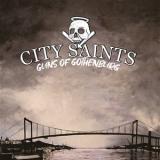
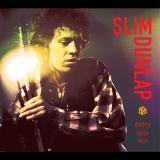
Ready for 10 Years since "Guns of Gothenburg"? Here's the last collector's reissue of the "rare and sold out since years"-CS albums on vinyl! The Swedish Punkrockers often heard that their 3rd album "Guns of Gothenburg" is still their best release! The combination of riot street punk, pub rock anthems, some high energy glam-elements and melodic rough'n'tough Oi! was considered as an absolute genre-highlight 2016 "Guns of Gothenburg features 12 songs like "Kids from the Streets", "United we stand", "Fuck the Upper Class" or "Street Punk Bop", which is still the encore-highlight at every City Saints show Stefan, singer and bandleader about the new release: "When we released Guns of Gothenburg on CD back in 2016, we felt that the songs were good, but we soon began having doubts about the mix of the album. In 2017, when we were approached to release it on vinyl, we had it remixed and remastered with a new song order. This version never made it onto the streaming services, and the limited edition of the LP has been out of print for a long time. Now we're thrilled to present this re-release of Guns of Gothenburg. The original painting used for the cover has been dusted off and restored and the recording has been remastered once again to bring it closer to our original vision. We sincerely hope you enjoy it. "Guns of Gothenburg" comes on 180gr. strongly limited vinyl in classic black and two multi-colored variants (only 333 copies all in all)
pre-ordina ora10.04.2026

dovrebbe essere pubblicato su 10.04.2026

CITY SAINTS - GUNS OF GOTHENBURG

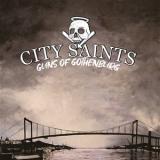
Ready for 10 Years since "Guns of Gothenburg"? Here's the last collector's reissue of the "rare and sold out since years"-CS albums on vinyl! The Swedish Punkrockers often heard that their 3rd album "Guns of Gothenburg" is still their best release! The combination of riot street punk, pub rock anthems, some high energy glam-elements and melodic rough'n'tough Oi! was considered as an absolute genre-highlight 2016 "Guns of Gothenburg features 12 songs like "Kids from the Streets", "United we stand", "Fuck the Upper Class" or "Street Punk Bop", which is still the encore-highlight at every City Saints show Stefan, singer and bandleader about the new release: "When we released Guns of Gothenburg on CD back in 2016, we felt that the songs were good, but we soon began having doubts about the mix of the album. In 2017, when we were approached to release it on vinyl, we had it remixed and remastered with a new song order. This version never made it onto the streaming services, and the limited edition of the LP has been out of print for a long time. Now we're thrilled to present this re-release of Guns of Gothenburg. The original painting used for the cover has been dusted off and restored and the recording has been remastered once again to bring it closer to our original vision. We sincerely hope you enjoy it. "Guns of Gothenburg" comes on 180gr. strongly limited vinyl in classic black and two multi-colored variants (only 333 copies all in all)

pre-ordina ora10.04.2026

dovrebbe essere pubblicato su 10.04.2026

CITY SAINTS - GUNS OF GOTHENBURG

Ready for 10 Years since "Guns of Gothenburg"? Here's the last collector's reissue of the "rare and sold out since years"-CS albums on vinyl! The Swedish Punkrockers often heard that their 3rd album "Guns of Gothenburg" is still their best release! The combination of riot street punk, pub rock anthems, some high energy glam-elements and melodic rough'n'tough Oi! was considered as an absolute genre-highlight 2016 "Guns of Gothenburg features 12 songs like "Kids from the Streets", "United we stand", "Fuck the Upper Class" or "Street Punk Bop", which is still the encore-highlight at every City Saints show Stefan, singer and bandleader about the new release: "When we released Guns of Gothenburg on CD back in 2016, we felt that the songs were good, but we soon began having doubts about the mix of the album. In 2017, when we were approached to release it on vinyl, we had it remixed and remastered with a new song order. This version never made it onto the streaming services, and the limited edition of the LP has been out of print for a long time. Now we're thrilled to present this re-release of Guns of Gothenburg. The original painting used for the cover has been dusted off and restored and the recording has been remastered once again to bring it closer to our original vision. We sincerely hope you enjoy it. "Guns of Gothenburg" comes on 180gr. strongly limited vinyl in classic black and two multi-colored variants (only 333 copies all in all)

pre-ordina ora10.04.2026

dovrebbe essere pubblicato su 10.04.2026

Donato Dozzy / Eric Cloutier - Palinoia LTD 001

Donato Dozzy / Eric Cloutier

Palinoia LTD 001

12inchPALINOIALTD001
Palinoia
10.04.2026

2026 Repress

Kicking off a new concept for Palinoia, I'm presenting a previously unreleased Donato Dozzy track that I first heard in his infamous "DDKH" mix from many moons ago. I regularly harassed Dozzy about this in hopes he had plans for it, but after almost a decade of being questioned he told me to just put it out myself, provided I was doing a track for the B-side.

Knowing full well I couldn't make anything nearly as gorgeous as Donato's underwater techno groover here, I decided to go for something a bit more upbeat and party friendly, all the while as wiggly as the masters' contribution.

In stock dal10.06.2026


Last In: 5 days ago
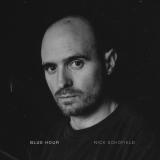
Nick Schofield - Blue Hour LP

Nick Schofield

Blue Hour LP

12inchLPBKWRD040
Backward Music
10.04.2026
disponibile anche

Clear Vinyl


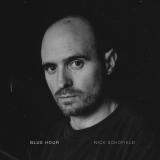
Blue Hour is Nick Schofield’s first foray into ambient jazz music. The album is an ambient ode to Miles Davis’ In A Silent Way, and opens up Schofield’s sonic palette to introduce his childhood instrument, drums, with his contemporary ambient-electronic practice. Blue Hour features the intuitive, and totally improvised, trumpet playing of Scott Bevins (No Cosmos, Busty and the Bass).

Schofield grew up playing drums, but turned to creating experimental-electronic music when studying Electroacoustics at Concordia University. Well-known for his signature ambient aesthetic, Schofield has been called a “dazzling electronic artist” by Aquarium Drunkard and a “synth maven” by Constellation Records. Blue Hour marks the first time that he has merged his percussion practice with his ambient electronic explorations, and it is all in the service of reinterpreting Miles Davis’ 1969 watershed recording In a Silent Way.

Schofield improvised all of the drumming and main synthesizer parts over the course of a single day, recording in a church in Ottawa. These foundational layers comprise tender Moog pulses and Roland Juno-6 pads, some of which would not be out of place on the back half of Another Green World or Music Has the Right to Children.

If this was to be a reflection of In a Silent Way, of course there would need to be trumpet. Schofield invited Bevins to record the missing piece of the album during a one day recording session, where Bevins improvised all his trumpet parts having never heard the songs before. Scott Bevins’ contribution gives the music a leading instrumental voice, and his intuitive approach shows a perfect understanding of how to both integrate and elevate the compositions.

Blue Hour is itself a profound reference, an ambient adaptation, a dream realized and an uncanny synthesis of sounds, styles, and personal history.

pre-ordina ora10.04.2026

dovrebbe essere pubblicato su 10.04.2026

Nick Schofield - Blue Hour LP

Nick Schofield

Blue Hour LP

12inchLPBKWRD040C
Backward Music
10.04.2026
disponibile anche

Black Vinyl


Blue Hour is Nick Schofield’s first foray into ambient jazz music. The album is an ambient ode to Miles Davis’ In A Silent Way, and opens up Schofield’s sonic palette to introduce his childhood instrument, drums, with his contemporary ambient-electronic practice. Blue Hour features the intuitive, and totally improvised, trumpet playing of Scott Bevins (No Cosmos, Busty and the Bass).

Schofield grew up playing drums, but turned to creating experimental-electronic music when studying Electroacoustics at Concordia University. Well-known for his signature ambient aesthetic, Schofield has been called a “dazzling electronic artist” by Aquarium Drunkard and a “synth maven” by Constellation Records. Blue Hour marks the first time that he has merged his percussion practice with his ambient electronic explorations, and it is all in the service of reinterpreting Miles Davis’ 1969 watershed recording In a Silent Way.

Schofield improvised all of the drumming and main synthesizer parts over the course of a single day, recording in a church in Ottawa. These foundational layers comprise tender Moog pulses and Roland Juno-6 pads, some of which would not be out of place on the back half of Another Green World or Music Has the Right to Children.

If this was to be a reflection of In a Silent Way, of course there would need to be trumpet. Schofield invited Bevins to record the missing piece of the album during a one day recording session, where Bevins improvised all his trumpet parts having never heard the songs before. Scott Bevins’ contribution gives the music a leading instrumental voice, and his intuitive approach shows a perfect understanding of how to both integrate and elevate the compositions.

Blue Hour is itself a profound reference, an ambient adaptation, a dream realized and an uncanny synthesis of sounds, styles, and personal history.

pre-ordina ora10.04.2026

dovrebbe essere pubblicato su 10.04.2026

GIMMY - Labour of Love

GIMMY

Labour of Love

12inchLPTDES046
Third Eye Stimuli
10.04.2026

Australian indie and garage-rock firebrand, GIMMY unveils her new EP Labour of Love — a raw, emotionally charged collection that fuses gritty indie rock, post-punk bite and tender poetic expression, all powered by Gemma Owens’ unmistakable vibrato and fiercely honest songwriting.

Where her 2024 debut Things Look Different Now was a slow-burn, two-to-three–year voyage of change and introspection, Labour of Love hits with an entirely new force: intuitive, immediate and deeply connected to Owens’ emotional world. Written over six months and captured in an intense 4–5 day studio burst with producer Sam Joseph (King Gizzard), the EP moves with the urgency of something that needed to be felt and heard, right away.

Across seven compelling tracks, GIMMY dives into social anxiety, grief, falling in love and the chaotic beauty of everyday life, with each song arriving “on its own terms” — born from late-night home writing sessions, snippets of inspiration while travelling and moments of full-band electricity. Sonically, Labour of Love nods to Soft Play, Nick Cave, Fontaines D.C., The Preatures and The Smiths, yet remains unmistakably GIMMY: expressive, gritty, vulnerable, cheeky and alive in every moment.

Ultimately, the EP is an unfiltered snapshot of emotional truth, celebrating life’s highs, lows and everything in between, and showcasing GIMMY at her most dynamic, powerful and compelling to date.

pre-ordina ora10.04.2026

dovrebbe essere pubblicato su 10.04.2026

GIMMY - Labour of Love

GIMMY

Labour of Love

12inchLPTDES46C
Third Eye Stimuli
10.04.2026
disponibile anche

Black Vinyl


Australian indie and garage-rock firebrand, GIMMY unveils her new EP Labour of Love — a raw, emotionally charged collection that fuses gritty indie rock, post-punk bite and tender poetic expression, all powered by Gemma Owens’ unmistakable vibrato and fiercely honest songwriting.

Where her 2024 debut Things Look Different Now was a slow-burn, two-to-three–year voyage of change and introspection, Labour of Love hits with an entirely new force: intuitive, immediate and deeply connected to Owens’ emotional world. Written over six months and captured in an intense 4–5 day studio burst with producer Sam Joseph (King Gizzard), the EP moves with the urgency of something that needed to be felt and heard, right away.

Across seven compelling tracks, GIMMY dives into social anxiety, grief, falling in love and the chaotic beauty of everyday life, with each song arriving “on its own terms” — born from late-night home writing sessions, snippets of inspiration while travelling and moments of full-band electricity. Sonically, Labour of Love nods to Soft Play, Nick Cave, Fontaines D.C., The Preatures and The Smiths, yet remains unmistakably GIMMY: expressive, gritty, vulnerable, cheeky and alive in every moment.

Ultimately, the EP is an unfiltered snapshot of emotional truth, celebrating life’s highs, lows and everything in between, and showcasing GIMMY at her most dynamic, powerful and compelling to date.

pre-ordina ora10.04.2026

dovrebbe essere pubblicato su 10.04.2026

Hank Williams - Classic Hits LP
  • A1: Ramblin Man
  • A2: I Saw The Light
  • A3: Hey, Good Lookin
  • A4: I M So Lonesome I Could Cry
  • A5: Cold, Cold Heart
  • A6: Lovesick Blues
  • A7: (I Heard That) Lonesome Whistle
  • A8: Your Cheatin Heart
  • A9: My Heart Would Know
  • A10: Lost Highway
  • A11: I Ll Never Get Out Of This World Alive
  • A12: Honky Tonkin
  • A13: You Win Again
  • A14: Kaw-Liga
  • A15: I M A Long Gone Daddy
  • A16: Move It On Over
  • A17: Take These Chains From My Heart
  • A18: Mansion On The Hill
  • A19: There Ll Be No Teardrops Tonight
  • A20: Mind Your Own Business
  • A21: Jambalaya (On The Bayou)
  • A22: I Can T Help It (If I M Still In Love With You)

Regarded as one of the most significant and influential musicians of the 20th century, Hank Williams recorded 55 singles that reached the top 10 of the Billboard Country & Western Best Sellers chart, five of which were released posthumously, and twelve of which reached #1. After a life of alcoholism and substance abuse, Hank Williams died on New Year’s Day 1953 at the age of 29 in the back seat of a car, while going to perform a concert in Canton, Ohio. His songs have been covered by hundreds of artists and he influenced the careers of such stars as Chuck Berry, Elvis Presley, Waylon Jennings, Johnny Cash, Bob Dylan, and the Rolling Stones. Presented here are his 22 greatest hits. 22 TRACKS - 180-GRAM VIRGIN VINYL - SPECIAL GATEFOLD - LIMITED EDITION

pre-ordina ora10.04.2026

dovrebbe essere pubblicato su 10.04.2026

Vampire - What Seems Forever Can Be Broken LP
  • Built For Decline
  • Human Market Capital
  • The Zone
  • Endless Chain
  • Polite
  • Words
  • Nothing To Hold
  • Hollow Life
  • Seeing Blind
  • The Letter
  • View From The Tower

10 songs from what is possibly the best anarchopunk band currently in existence. The dynamics of the tracks are refreshingly simple, a powerful yet neutral- sounding recording, with very little embellishment or stylized production to hide behind, approaching filth with distorted guitars, haunting bass lines, and steady drum beats, all elevated by the combination of the three voices perfectly balanced between melody and hatred. In a quantized world, one can perceive an endearing dose of human spirit through their tense and disturbingly melodic expressions. A modern Anarcho Punk classic that is surprising to find 40 years after the wonderful bands that spawned the genre, especially England. Includes poster and insert with lyrics.

Since reviewing Pomegranate Seeds: An International Benefit for Mutual Aid in Gaza, the compilation put out by the DISSIDENTS, I've been hunting for more VAMPIRE material, so when I saw I was assigned this LP I became very excited. VAMPIRE is an Australian band that plays apocalyptic anarcho- punk. A sense of extreme urgency pervades VAMPIRE's sound, and What Seems Forever Can Be Broken is ten songs that combine the demanding hardcore of CONFLICT, with a foundation of CRASS, and the rough-hewn delivery of raw punk. The resulting album is dark, hauntingly mesmeric, but also aggressive with a sense of communal voice. In other words, this is anarchopunk that is of the moment, and articulates exactly what contemporary punk is about without being preachy or elitist. This is that eye-to-eye, in-the-trenches vocalization of criticism that comes off as eye-opening and perspective-altering. What Seems Forever Can Be Broken is by far my favorite release thus far in 2025, but also might be the best album I've heard in a really long time. Like, this is benchmark-level material, so definitely give this a listen.

pre-ordina ora10.04.2026

dovrebbe essere pubblicato su 10.04.2026

Gerry Mulligan & Johnny Hodges - Gerry Mulligan Meets Johnny Hodges LP
  • Sunny
  • What's The Rush
  • Back Beat
  • My Funny Valentine
  • What It's All About
  • 18: Carrots For Rabbit
  • Shady Side
  • Festive Minor

n the late 1950's Norman Granz produced several studio sessions where he paired Gerry Mulligan with some of the most important saxophonists of the day, including Ben Webster, Stan Getz, and alto player Johnny Hodges as heard on this exemplary 1959 session Gerry Mulligan meets Johnny Hodges. includes the bonus tracks 'My Funny Valentine' 'Festive Minor'

pre-ordina ora10.04.2026

dovrebbe essere pubblicato su 10.04.2026

HOZAN YAMAMOTO & YU IMAI - AKUMA GA KITARITE FUE WO FUKU
  • 1: Fuenarinu
  • 2: Kaendaiko
  • 3: Tsubakishishaku No Yuigon
  • 4: Tengindoujiken
  • 5: Kindaichikousuke Nishie Yuku
  • 6: Ougonno Furuuto (Flute)
  • 7: Yubi
  • 8: A=X, B=X A=B
  • 9: Chi To Suna
  • 10: Tabiyukumonoyo
  • 11: Akuma Fuewo Fukite Owaru

We've got a bit of an obsession with Hozan Yamamoto here at Mr Bongo! A legend of Japanese jazz, he is rightly regarded as a true master and was recognised as a "living national treasure" by the Japanese government in 2002. Over five decades he pushed the genre into new directions, absorbing fusion, funk, spiritual jazz and many other sounds, resulting in a discography studded with gems of rare beauty. Exploring his back catalogue has taken us on an engrossing journey that now sees us reissuing another work from this ground-breaking musician.

Though not translating perfectly into English 'Akuma Ga Kitarite Fue Wo Fuku', (kitarite has not been a modern expression in Japanese) roughly means 'The Devil Comes Playing The Flute' / 'The Devil Is Coming While Blowing The Whistle' or 'Devils Flute’. It is the original soundtrack to Kôsei Saitô’s 1979 mystery and suspense movie, ‘Devil’s Flute’. The film is based on a story by the famous author, Seishi Yokomizo, and is centred around a much-loved fictional Japanese detective, Kosuke Kindaichi. A Japanese Sherlock Holmes that has been popular for generations.

Hozan Yamamoto was invited to compose the soundtrack directly by the producer of the film, Haruki Kadokawa. Mr Kadokawa also hired keyboard player and producer Yu Imai as assistant producer on the project, resulting in a stunning cosmic, breaks and beats-laden, funk, disco soundtrack extravaganza.

When it comes to the soundtrack and the technology of the time, Hozan Yamamoto and Yu Imai got inventive, tripped out, funked up, and experimented, creating a quirky soundtrack masterpiece that needed to be heard more outside of Japan. Differing from the more traditional Japanese music orientation of some of his other albums such as 'Beautiful Bamboo-Flute' (also released on Mr Bongo) the album showcases a number of genres, from lush atmospheric incidental music to disco and funk grooves, experimental nuggets, drum and flute workouts, to neo-classical and more.

A special record that showcases the further depths of this wonderful musician's talents.

pre-ordina ora09.04.2026

dovrebbe essere pubblicato su 09.04.2026

ZENA - TEMESGEN

ZENA

TEMESGEN

12inchBWOOD440EP
Brownswood Recordings
09.04.2026

ZENA, the contemporary ethio-jazz duo from London comprised of producer, keyboardist

and synth player Yohan Kebede and bassist/producer Menelik, have announced the forthcoming release of their debut EP ‘TEMESGEN’; is a six-track aural odyssey that balances uncompromising experimentation with a deep sense of home, comfort, and exploration. In accordance with the duo’s mission, the project is seeking to redefine and reimagine Ethiopian music for a new generation.

Speaking on the inspiration behind the EP’s title, Yohan said: “‘TEMESGEN’ means “Thank God” in Amharic, and for me, I never heard my mother receive good news without saying it aloud. After the first couple gigs we did as ZENA, we saw how people reacted to our music and how it resonated with them. It spurred in us a feeling of overwhelming gratitude, after which the EP kind of named itself”

Born out of a mutual love and respect for the music of their shared Ethiopian heritage, ZENA are charting a new endeavour where Ethiopian musical traditions meet the future. Building upon the roots and foundations laid by legendary Ethiopian musicians Haliu Mergia, Alemayehu Eshete and Mulatu Astatke, ZENA fuses the haunting spirituality and earthiness of the ethio-jazz tradition with a modernity, sensuality and sense of disruption that is distinctly London.

Following three sold-out London headline shows, plus appearances at We Out Here Festival and on NTS Radio, ZENA arrive on Brownswood Recordings with a bold debut that’s equally at home across jazz-minded selectors and leftfield crate-diggers. The duo’s momentum is fuelled by Yohan Kebede’s landmark year with Kokoroko; from the release of Tuff Times Never Last to an NPR Tiny Desk, a North American tour, and their biggest headline show yet at O2 Academy Brixton, alongside Menelik’s quietly formidable reputation in London’s inner circle, shaped by time on the road and in the studio with Muva Of Earth and Bill Laurance.


d B1 IT'S YOU (ANTE NEH) ft. Meron T


d B1 IT'S YOU (ANTE NEH) ft. Meron T


[d] B1 IT'S YOU (ANTE NEH) [ft. Meron T]

non in magazzino

Ordina ora e ordineremo l'articolo per te presso il nostro fornitore.


Last In: 39 days ago
Dexter Wansel - The Sweetest Pain/ Theme From The Planets (7")

Two of the most iconic Dexter Wansel recordings are being issue for the first time in the UK back-to-back on 7” single. “The Sweetest Pain” features singer Terri Wells who will be in the UK to perform it live for Dexter with his 33 piece MFSB tribute orchestra on Sunday 12th April at the Eventim Apollo. “Theme from The Planets” opens with a drum break that became one of the most sampled beats in hip-hop history—heard in tracks by Kanye West, Lil Wayne, Drake, Rick Ross, J. Cole, Ice-T, and many more.

non in magazzino

Ordina ora e ordineremo l'articolo per te presso il nostro fornitore.


Last In: 30 days ago
Mathias - Kissa LP

*Kissa* is an immersive ambient electronic project crafted by Mathias, drawing inspiration from the serene and evocative atmosphere of Japanese jazz kissa cafés. These intimate spaces, known for their deep reverence for music, serve as the foundation for *Kissa’s* sonic landscape—where warm nostalgia and futuristic minimalism intertwine. Consisting of eight expansive compositions, *Kissa* abandons traditional rhythmic structures, allowing sound itself to guide the listener. Ethereal textures, evolving drones, and subtle harmonic shifts create a meditative experience that blurs the lines between memory and imagination. Each track is a portal—an invitation to lose oneself in sound, to explore the spaces between notes, and to embrace stillness as a form of movement. With *Kissa*, Mathias redefines the boundaries of electronic music, crafting an experience that is at once deeply personal and universally resonant. Whether serving as a soundtrack for introspection or a companion for late-night contemplation, *Kissa* embodies the essence of timeless listening—where music is felt, not just heard.

pre-ordina ora06.04.2026

dovrebbe essere pubblicato su 06.04.2026

Lipphead - The Long Way LP

Lipphead

The Long Way LP

12inchDFPR33LPC
Def Presse
03.04.2026

A GOOD FUN record, the new album from Lipphead – aka the collaborative NYC duo consisting of the producer Tony Simon (Blockhead) and Eliot Lipp – will be the group’s 3rd official full- length, having released the first two records via Detroit’s Young Heavy Soul label.

Lipphead’s music occupies the sweet spot between Blockhead’s groovy, sample-based hip- hop and Eliot Lipp’s upbeat electronic funk. The duo have performed live at select festivals throughout North America and are booked to tour this album, 17 dates in the US starting right after release, April 3rd. European/UK festivals are confirmed in the summer and are waiting to be announced.

The internationally renowned NYC producer Tony Simon—aka Blockhead—has released 15 albums over the past 15 years, including four acclaimed records for Ninja Tune and numerous production jobs including notable works with Aesop Rock. He is regarded as one of the modern masters of instrumental hip-hop and has more recently been releasing music on other platforms like Future Archive Recordings and Backwoodz Studios.

Eliot Lipp is an electronic musician based in Brooklyn, New York. His work was picked up by Scott Herren of Prefuse 73 (Warp Records) after Herren heard him working the club circuit. In 2004, Lipp released his first studio album, S/T, with Eastern Developments Music, a label owned by Warp Records. Lipp has also released music with Pretty Lights Music and his own label Old Tacoma Records.

“Our process for this album was very much "Take this, and add to it" . We both made beats and sent them to the other to add things to. Eliot would generally start the arrangement process and then I'd come in and give my two cents. Gotta say, these Lipphead albums generally come together seamlessly . We definitely have a simple flow and method as to how we create things together, even though the "together" part comes at the end.” - Blockhead

“This is definitely the goofiest record so far. I imagine Lipphead did a little too much doomscrolling between ‘From The Back’ and this one, based on all the meme samples sprinkled throughout.

One difference this time around was that we made way more music than what ended up coming out. It was tough to figure out how to fit it all on one LP, we’ll definitely have some leftovers to drop later on.” - Eliot Lipp

pre-ordina ora03.04.2026

dovrebbe essere pubblicato su 03.04.2026

Lipphead - The Long Way LP

Lipphead

The Long Way LP

12inchDFPR33LP
Def Presse
03.04.2026
  • 1: Bayou Sexual
  • 2: The Long Way
  • 3: Wet My Whistle
  • 4: Enter The Ricola Man
  • 5: Lightwork
  • 6: Guano Be Startin’ Smethin’
  • 7: Inbred & Butter
  • 8: Candyman
  • 9: Felix Navidaddy
  • 10: Oh Face Killa
  • 11: Mugsy Bogues
  • 12: Castlegar
  • 13: Virginity
disponibile anche

blue vinyl


A GOOD FUN record, the new album from Lipphead – aka the collaborative NYC duo consisting of the producer Tony Simon (Blockhead) and Eliot Lipp – will be the group’s 3rd official full- length, having released the first two records via Detroit’s Young Heavy Soul label.

Lipphead’s music occupies the sweet spot between Blockhead’s groovy, sample-based hip- hop and Eliot Lipp’s upbeat electronic funk. The duo have performed live at select festivals throughout North America and are booked to tour this album, 17 dates in the US starting right after release, April 3rd. European/UK festivals are confirmed in the summer and are waiting to be announced.

The internationally renowned NYC producer Tony Simon—aka Blockhead—has released 15 albums over the past 15 years, including four acclaimed records for Ninja Tune and numerous production jobs including notable works with Aesop Rock. He is regarded as one of the modern masters of instrumental hip-hop and has more recently been releasing music on other platforms like Future Archive Recordings and Backwoodz Studios.

Eliot Lipp is an electronic musician based in Brooklyn, New York. His work was picked up by Scott Herren of Prefuse 73 (Warp Records) after Herren heard him working the club circuit. In 2004, Lipp released his first studio album, S/T, with Eastern Developments Music, a label owned by Warp Records. Lipp has also released music with Pretty Lights Music and his own label Old Tacoma Records.

“Our process for this album was very much "Take this, and add to it" . We both made beats and sent them to the other to add things to. Eliot would generally start the arrangement process and then I'd come in and give my two cents. Gotta say, these Lipphead albums generally come together seamlessly . We definitely have a simple flow and method as to how we create things together, even though the "together" part comes at the end.” - Blockhead

“This is definitely the goofiest record so far. I imagine Lipphead did a little too much doomscrolling between ‘From The Back’ and this one, based on all the meme samples sprinkled throughout.

One difference this time around was that we made way more music than what ended up coming out. It was tough to figure out how to fit it all on one LP, we’ll definitely have some leftovers to drop later on.” - Eliot Lipp

pre-ordina ora03.04.2026

dovrebbe essere pubblicato su 03.04.2026

Slim Dunlap - Every Little Word LP

Every Little Word “The Best of the Bonus Tracks” is an exclusive vinyl release of the best tracks taken from the Slim Dunlap double-cd reissue EVERY LITTLE WORD. “Slim Dunlap, who I don’t know if a lot of people are very familiar with, but he was a member of the Replacements. And he was really a unique guitarist, singer, and songwriter, and one of the deepest and truest rock and roll souls I’ve ever heard. He has two fabulous solo albums out that I would tell everyone to run out and get" - Bruce Springsteen

pre-ordina ora03.04.2026

dovrebbe essere pubblicato su 03.04.2026

VARIOUS - [QR]V.093.STTP!.26

Various

[QR]V.093.STTP!.26

12inch[QR]V093STTP!26
COD3 QR
03.04.2026

From his roots in House, Alex Finkin is a renowned producer and creative director. Working in his Paris studio he has developed numerous projects, notably his own (Roseaux), as well as commissions for radio and television. Meanwhile, with 30 years of production and DJing under his belt, Rocco Rodamaal belongs to the elite circle of House innovators who continue to influence the scene. He's played alongside some of the best in the industry showcasing his versatility and deep understanding of the genre, and remixed artists including Marshall Jefferson, Kerri Chandler, Louie Vega & Moodymann, Todd Terry, Barbara Tucker and Robert Owens to name just a few. Alex Finkin befriended Rocco Rodamaal, who he met via the soulful Parisian club Djoon, where Alex was resident from 2006 to 2014. They have since collaborated on a number of projects together, including "In Da Hood" released on COD3 QR in 2023. Kenny Dope's "O'Gutta" remixes are a series of house and club-focused reworks characterized by raw, gritty and often stripped-back percussion, which he now brings to "In Da Hood".

Ross McMillan, known professionally as Carlos Nilmmns, is a Scottish electronic music producer, DJ and composer originally from Glasgow. Over the years he has collaborated with a range of notable artists, including Grammy-nominated and Grammy-winning figures, including Kenny Dope, Carl Craig, Kevin Saunderson and Davina Bussey, plus respected artists like Niko Marks, Rolando, Laurent Garnier, Santiago Salazar, Hardrock Striker, Karl The Voice, Zadig, Ben Sims, Andrés (who worked with Jay Dilla and Moodymann), and YouANDme. His music has been released on Planet E, Trax, Cocoon, Ornaments, Circus, Virgin, Skylax/Universal Music France and more. His style draws from house, techno and jazz influences, often combining analogue and digital production methods. A returning regular and COD3 QR favourite, he's back with another stunner in "Latin Quarter".

K' Alexi Shelby is a prominent figure in electronic music and with a career spanning decades, he's established a significant influence on House and Techno. Throughout his career he's worked with many well-known artists and remixed tracks that are now key pieces. The cultivation of his massive musical catalogue has overflowed into albums and the three labels he heads. It's also led to legendary collaborations with artists such as The Pet Shop Boys, Robert Owens, Kenny Dixon, Roy Davis Jr., Maurice Joshua, Terry Hunter, Joe Smooth, Steve Silke Hurley, Tyree Cooper, Ron Trent, Glenn Underground, Larry Heard, DJ Pierre, Carl Craig, Felix da Housecat, Marshall Jefferson, Will Smith and countless others. Already respected around the world as a true underground House legend, he delivered "Flame" in 2025 for COD3 QR. Now he's back with "When I", another deep and sexy cut.

Benny Rodrigues a.k.a. ROD unveiled his new moniker, The Lost Souldancer when he dropped "No More Voices" for COD3 QR last year. In his own words, Benny says: "The Lost Souldancer is about coping with the loss of what once was. Finding comfort in the invisible rather than what can be seen. Disconnect to connect in order to be loved rather than liked." He continues this ethos with the delicate and melodic closing track "Life and Death".

non in magazzino

Ordina ora e ordineremo l'articolo per te presso il nostro fornitore.


Last In: 39 days ago
Mungo's Hi Fi - Soundsystem Champions 2 LP

Glasgow reggae collective Mungo’s HiFi celebrate 25 years of pulsating music with a follow-up to game-changing second studio album Soundsystem Champions. Released in 2008, the original Sound System Champions became an instant 21st century classic - thanks to its industrial strength basslines, blazing horns and lineup of scorching microphone talent. To commemorate a quarter century of rocking dances and building rhythms, Mungo’s have created Soundsystem Champions 2. They’ve lovingly assembled some of their biggest dubplates, previously only heard in a soundsystem situation, now available to the world. Fans of the first Sound System Champions will hear musical echoes in the new version. Irrepressible Junglist General Levy rides the Belly Ska riddim that kicked off the 2008 edition, with the militant Gideon Boot. Italy’s Marina P returns to the new record on the expansive Searching, as does Kenny Knots, closing the track list with heartfelt roots anthem Rise and Gravitate. For Soundsystem Champions 2, Mungo’s have invited many more voices from their epic journey. Bristol’s Eva Lazarus revisits Althea and Donna’s immortal Uptown Top Ranking. Reading’s Solo Banton turns his lyrical versatility to hip hop banger Bubble N Wine. The beautiful grainy tones of Ireland’s Cian Finn reimagine the Wailers’ Rainbow Country. With this historic sequel album, Mungo’s look back while going forward, the exclusive becomes the inclusive, and the Sound System comes to you!

non in magazzino

Ordina ora e ordineremo l'articolo per te presso il nostro fornitore.


Last In: 47 days ago
Articoli per pagina:
N/ABPM
Vinyl